US11134126B2 - Adaptive routing of branch traffic in software-defined wide area network (SDWAN) deployments - Google Patents
Adaptive routing of branch traffic in software-defined wide area network (SDWAN) deploymentsDownload PDFInfo
- Publication number
- US11134126B2 US11134126B2US16/294,388US201916294388AUS11134126B2US 11134126 B2US11134126 B2US 11134126B2US 201916294388 AUS201916294388 AUS 201916294388AUS 11134126 B2US11134126 B2US 11134126B2
- Authority
- US
- United States
- Prior art keywords
- vig
- rtt
- forecast
- rtts
- network
- Prior art date
- Legal status (The legal status is an assumption and is not a legal conclusion. Google has not performed a legal analysis and makes no representation as to the accuracy of the status listed.)
- Active, expires
Links
Images
Classifications
- G—PHYSICS
- G06—COMPUTING OR CALCULATING; COUNTING
- G06F—ELECTRIC DIGITAL DATA PROCESSING
- G06F9/00—Arrangements for program control, e.g. control units
- G06F9/06—Arrangements for program control, e.g. control units using stored programs, i.e. using an internal store of processing equipment to receive or retain programs
- G06F9/44—Arrangements for executing specific programs
- G06F9/455—Emulation; Interpretation; Software simulation, e.g. virtualisation or emulation of application or operating system execution engines
- G06F9/45533—Hypervisors; Virtual machine monitors
- G06F9/45558—Hypervisor-specific management and integration aspects
- H04L67/16—
- H—ELECTRICITY
- H04—ELECTRIC COMMUNICATION TECHNIQUE
- H04L—TRANSMISSION OF DIGITAL INFORMATION, e.g. TELEGRAPHIC COMMUNICATION
- H04L67/00—Network arrangements or protocols for supporting network services or applications
- H04L67/50—Network services
- H04L67/51—Discovery or management thereof, e.g. service location protocol [SLP] or web services
- G—PHYSICS
- G06—COMPUTING OR CALCULATING; COUNTING
- G06N—COMPUTING ARRANGEMENTS BASED ON SPECIFIC COMPUTATIONAL MODELS
- G06N20/00—Machine learning
- G—PHYSICS
- G06—COMPUTING OR CALCULATING; COUNTING
- G06N—COMPUTING ARRANGEMENTS BASED ON SPECIFIC COMPUTATIONAL MODELS
- G06N3/00—Computing arrangements based on biological models
- G06N3/02—Neural networks
- G06N3/04—Architecture, e.g. interconnection topology
- G06N3/044—Recurrent networks, e.g. Hopfield networks
- G06N3/0442—Recurrent networks, e.g. Hopfield networks characterised by memory or gating, e.g. long short-term memory [LSTM] or gated recurrent units [GRU]
- G—PHYSICS
- G06—COMPUTING OR CALCULATING; COUNTING
- G06N—COMPUTING ARRANGEMENTS BASED ON SPECIFIC COMPUTATIONAL MODELS
- G06N3/00—Computing arrangements based on biological models
- G06N3/02—Neural networks
- G06N3/08—Learning methods
- G06N3/09—Supervised learning
- H—ELECTRICITY
- H04—ELECTRIC COMMUNICATION TECHNIQUE
- H04L—TRANSMISSION OF DIGITAL INFORMATION, e.g. TELEGRAPHIC COMMUNICATION
- H04L12/00—Data switching networks
- H04L12/66—Arrangements for connecting between networks having differing types of switching systems, e.g. gateways
- H—ELECTRICITY
- H04—ELECTRIC COMMUNICATION TECHNIQUE
- H04L—TRANSMISSION OF DIGITAL INFORMATION, e.g. TELEGRAPHIC COMMUNICATION
- H04L41/00—Arrangements for maintenance, administration or management of data switching networks, e.g. of packet switching networks
- H04L41/16—Arrangements for maintenance, administration or management of data switching networks, e.g. of packet switching networks using machine learning or artificial intelligence
- H—ELECTRICITY
- H04—ELECTRIC COMMUNICATION TECHNIQUE
- H04L—TRANSMISSION OF DIGITAL INFORMATION, e.g. TELEGRAPHIC COMMUNICATION
- H04L43/00—Arrangements for monitoring or testing data switching networks
- H04L43/08—Monitoring or testing based on specific metrics, e.g. QoS, energy consumption or environmental parameters
- H04L43/0852—Delays
- H04L43/0864—Round trip delays
- H—ELECTRICITY
- H04—ELECTRIC COMMUNICATION TECHNIQUE
- H04L—TRANSMISSION OF DIGITAL INFORMATION, e.g. TELEGRAPHIC COMMUNICATION
- H04L45/00—Routing or path finding of packets in data switching networks
- H04L45/302—Route determination based on requested QoS
- H—ELECTRICITY
- H04—ELECTRIC COMMUNICATION TECHNIQUE
- H04L—TRANSMISSION OF DIGITAL INFORMATION, e.g. TELEGRAPHIC COMMUNICATION
- H04L47/00—Traffic control in data switching networks
- H04L47/10—Flow control; Congestion control
- H04L47/28—Flow control; Congestion control in relation to timing considerations
- H—ELECTRICITY
- H04—ELECTRIC COMMUNICATION TECHNIQUE
- H04L—TRANSMISSION OF DIGITAL INFORMATION, e.g. TELEGRAPHIC COMMUNICATION
- H04L67/00—Network arrangements or protocols for supporting network services or applications
- H04L67/01—Protocols
- H04L67/10—Protocols in which an application is distributed across nodes in the network
- H04L67/1001—Protocols in which an application is distributed across nodes in the network for accessing one among a plurality of replicated servers
- H04L67/1004—Server selection for load balancing
- H04L67/101—Server selection for load balancing based on network conditions
- G—PHYSICS
- G06—COMPUTING OR CALCULATING; COUNTING
- G06F—ELECTRIC DIGITAL DATA PROCESSING
- G06F9/00—Arrangements for program control, e.g. control units
- G06F9/06—Arrangements for program control, e.g. control units using stored programs, i.e. using an internal store of processing equipment to receive or retain programs
- G06F9/44—Arrangements for executing specific programs
- G06F9/455—Emulation; Interpretation; Software simulation, e.g. virtualisation or emulation of application or operating system execution engines
- G06F9/45533—Hypervisors; Virtual machine monitors
- G06F9/45558—Hypervisor-specific management and integration aspects
- G06F2009/45595—Network integration; Enabling network access in virtual machine instances
- G—PHYSICS
- G06—COMPUTING OR CALCULATING; COUNTING
- G06N—COMPUTING ARRANGEMENTS BASED ON SPECIFIC COMPUTATIONAL MODELS
- G06N3/00—Computing arrangements based on biological models
- G06N3/02—Neural networks
- G06N3/04—Architecture, e.g. interconnection topology
- G06N3/044—Recurrent networks, e.g. Hopfield networks
- G—PHYSICS
- G06—COMPUTING OR CALCULATING; COUNTING
- G06N—COMPUTING ARRANGEMENTS BASED ON SPECIFIC COMPUTATIONAL MODELS
- G06N3/00—Computing arrangements based on biological models
- G06N3/02—Neural networks
- G06N3/08—Learning methods
- H—ELECTRICITY
- H04—ELECTRIC COMMUNICATION TECHNIQUE
- H04L—TRANSMISSION OF DIGITAL INFORMATION, e.g. TELEGRAPHIC COMMUNICATION
- H04L45/00—Routing or path finding of packets in data switching networks
- H04L45/64—Routing or path finding of packets in data switching networks using an overlay routing layer
Definitions
- a wide area networkmay extend across multiple network sites (e.g. geographical, logical). Sites of the WAN are interconnected so that devices at one site can access resources at another site.
- many services and resourcesare installed at core sites (e.g. datacenters, headquarters), and many branch sites (e.g. regional offices, retail stores) connect client devices (e.g. laptops, smartphones, internet of things devices) to the WAN.
- core sitese.g. datacenters, headquarters
- branch sitese.g. regional offices, retail stores
- client devicese.g. laptops, smartphones, internet of things devices
- Each network sitehas its own local area network (LAN) that is connected to the other LANs of the other sites of the WAN.
- Networking infrastructuresuch as switches and routers, are used to forward network traffic through each of the LANs, through the WAN as a whole, and between the WAN and the Internet.
- Each network site's LANis connected to the wider network (e.g. to the WAN, to the Internet) through a gateway router.
- Branch gateways (BGs)connect branch sites to the wider network
- VIPsvirtual internet gateways, also known as head-end gateways
- SD-WANsoftware defined wide area network
- BGs and VIGseach gateway (BGs and VIGs) controls certain aspects of routing for their respective LAN, but a network orchestrator controls the overall switching and routing across the WAN.
- the network orchestratorcontrols all switching and routing in the WAN and in each LAN by sending control messages to compatible network infrastructure devices (including the BGs and VIGs) across the WAN.
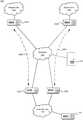
- FIG. 1illustrates an example network that may employ principles of the present disclosure, according to one or more embodiments.
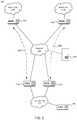
- FIG. 2is a detailed view of some of the hardware components in the network of FIG. 1 , according to some embodiments.
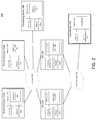
- FIG. 3is a block diagram of a neural network including a roundtrip time time-series input to generate a roundtrip time forecast, according to some embodiments.
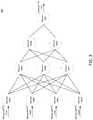
- FIG. 4illustrates a schematic of a neuron for use in a recurrent neural network for forecasting packet roundtrip time values, according to some embodiments.
- FIG. 5is a flow chart illustrating steps in a method for providing continuous feedback to an adaptive routing of branch traffic in SDWAN deployments, according to some embodiments.
- FIG. 6is a chart illustrating multiple predicted roundtrip time values and actual roundtrip time values, according to some embodiments.
- FIG. 7is a flow chart illustrating steps in a method for monitoring and updating an adapting routing of branch traffic in SDWAN deployments, according to some embodiments.
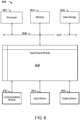
- FIG. 8is a block diagram illustrating an example computer system with which the client and network device of FIG. 1 and the methods of FIGS. 5 and 7 can be implemented.
- branch gatewaysconnect to virtual internet gateways (VIGs) via one or more secure connections.
- VIPsvirtual internet gateways
- These connectionsmay be dedicated links such as multiprotocol label switching (MPLS) links, or they may be shared links such as secure virtual private networking (VPN) tunnels across the Internet.
- Multiple connectionsmay be made between a certain BG and a certain VIG to provide redundancy in case of link failure (among other benefits).
- a sitemay include multiple gateways to provide redundancy in case one of the gateways fails.
- Certain branch sitesmay be small enough that a single BG is used because failure of the BG would not impact the operation of the WAN enough to warrant a redundant BG. However, in comparison, it is much more likely that VIG failure at a core site of the WAN would have a large impact on the operation of the WAN. VIG redundancy is common in most large WANs.
- the redundant VIGs at a core siteare configured in an “active-standby” mode, where one or more VIGs are actively transceiving data, and one or more VIGs are idly standing by, waiting for a failover condition if one or more active VIGs fail.
- Network infrastructure in the core site LANsuch as a core router in an OSPF backbone, as well as gateways in other sites, such as BGs at each branch, are configured to route their data through the active VIG (also known as the primary VIG) and retain the information of the standby VIG (also known as the secondary VIG) in case their connection to the primary VIG fails.
- Core site LANsmay be configured in a network topology that includes a network backbone and other network zones.
- One such example routing paradigmis open shortest path first (OSPF).
- OSPFopen shortest path first
- the routing paradigm used in the core site LANsis not used across the larger WAN or in other (e.g. branch) site LANs.
- the WANmay include a network orchestrator to configure switching and routing across the WAN.
- the network orchestratoroperates in a core site of the WAN.
- the network orchestratoroperates in the cloud.
- the network orchestratormay communicate with command layers of each of the gateways as well as other switching and routing infrastructure throughout the WAN.
- the network orchestratorcannot communicate with the command layers of network infrastructure outside the WAN that is being used to forward network traffic between sites of the WAN (i.e. Internet routers and switches that are not controlled by the administrator of the WAN).
- the network orchestratorcreates and deploys routes for certain network traffic to follow.
- data from a resource in a core site that is destined for a client device on a branch sitemay be routed through the core site LAN to a primary VIG, through a secure tunnel across the Internet to a BG at the branch site, and through the branch site LAN to the client device.
- One of the benefits of a SD-WAN systemis that alterations to the network topology can be implemented with reduced manual configuration from the network administrator.
- the branch gatewaycan be automatically assigned a primary VIG and a secondary VIG by the network orchestrator.
- a single primary VIGis statically assigned for all branches and a single secondary VIG is statically assigned for all branches.
- the primary VIG transceiverall relevant network traffic, and the secondary VIG is idle until and unless the primary VIG or connections between a BG and the primary VIG fail.
- Embodiments as disclosed hereinprovide a network orchestrator that can be configured to dynamically assign VIGs to branch gateways, and that can further predictively assess potential traffic constraints and pre-emptively re-assign VIGs accordingly.
- VIGsare operated in an “active-active” mode, and the network orchestrator adjusts the load on each VIG so that any one of the VIGs is not overloaded.
- the network orchestratorintelligently adjusts assignments of BGs and VIGs to accommodate the changing network.
- the network orchestratormay re-configure devices and systems of the SD-WAN according to different, custom needs arising in any given network location, even before a problem arises. For example, a predictive algorithm may be used by the network orchestrator to determine roundtrip time values between combinations of BGs and VIGs to re-assign VIGs to BGs to improve network functionality.
- Embodiments as disclosed hereinsolve the above technical problem arising in computer network technology by continually monitoring the network traffic to train a predictive tool that enables the assessment of potential future network conditions.
- This approachprovides enhanced network traffic load-balancing between sites of an SD-WAN in a way that reduces adverse data traffic behaviors, such as high latency, high jitter, poor quality of service (QoS), etc.
- Embodiments as disclosed hereininclude the technical solution of predicting a load condition of each VIG of the core site LAN and periodically reassigning BGs to between the VIGs to more optimally balance the load between the VIGs.
- embodiments as disclosed hereinenable network traffic to be dynamically routed by predicting the load condition of the VIGs and reassigning a BG to a less loaded VIG to reduce load on a congested VIG and to balance the overall network traffic load.
- the network orchestratormay collect a roundtrip time (RTT) for a diagnostic packet travelling between a BG and its primary VIG and a RTT for another diagnostic packet travelling between the BG and its secondary VIG. Using those RTTs, along with other network condition data, the network orchestrator may determine that the BG should have a different primary VIG assigned and a different secondary VIG assigned. The network orchestrator may also monitor, over a selected period of time, multiple RTTs for multiple diagnostic packets between the primary VIG and the BG, and between the secondary VIG and the BG in order to identify any recurrent patterns within the RTTs associated with the BG.
- RTTroundtrip time
- the network orchestratormay forecast a potential future RTT for a packet transmitted between the BG and the primary VIG, and forecast a potential future RTT for a packet transmitted between the BG and the secondary VIG. Using those forecast RTTs, the network orchestrator may determine that the BG should be assigned a new primary VIG and a new secondary VIG. Although this disclosure is primarily focused on RTTs to be used by the network orchestrator to make VIG assignment decisions, it is contemplated that any appropriate connection health metric or combination of metrics could be used to make VIG assignment decisions.
- SD-WANs described in this disclosurehave certain numbers of VIGs, BGs, branch LANs, core site LANs, etc., it is contemplated that any appropriate number of such components could be used in a SD-WAN and still be consistent with this disclosure.
- FIG. 1illustrates an example software defined wide area network (SD-WAN) including a core site local area network (LAN) 170 and branch LANs (represented in FIG. 1 by branch gateways 110 - 1 to 110 - n ).
- SD-WAN 100may be a corporate network, an institutional intranet, or any other sufficiently complex managed computer network.
- SD-WAN 100includes multiple LANs, partitioned geographically (e.g. various office sites of the organization), functional (e.g. groups with special security or bandwidth needs), or logical (e.g. sections or regions of a large campus, such as a headquarters).
- LANse.g. various office sites of the organization
- functionale.g. groups with special security or bandwidth needs
- logicale.g. sections or regions of a large campus, such as a headquarters.
- SD-WAN 100includes branch LANs 110 a and 110 b , and core site LAN 170 .
- SD-WAN 100is administered by network orchestrator 140 which is connected to the sites of SD-WAN 100 through Internet 160 .
- Sitese.g. branch LANs 110 , core site LAN 170
- the communication links between the sites of SD-WAN 100may be connected by one or more networking technology, including secure tunnels across Internet connections (e.g. IPSec VPNs), dedicated communication links (e.g. MPLS), or any other appropriate technology.
- Core site LAN 170is a network site of SD-WAN 100 that includes network resources to provide services and applications to network client devices. Although branch LANs 110 may include network resources to provide services and applications (e.g. edge computing), a core site LAN 170 includes a concentrated number of network resources accessible to sites across SD-WAN 100 .
- core site LAN 170is a headquarters site or a datacenter site.
- Core site LAN 170includes a core router 150 to route packets within core site LAN 170 .
- multiple network infrastructure devicese.g. switches, routers
- All features of this disclosure described in relation to core router 150may be applicable to all network infrastructure devices of core site LAN 170 , as appropriate.
- Core site LAN 170also includes virtual internet gateways (VIGs) 120 a and 120 b .
- VIGsalso known as headend gateways
- VIGs 120 a and 120 bestablish connections with one or more branch LANs 110 , respectively.
- Branch LANs 110are sites of SD-WAN 100 that are partitioned from core site LAN 170 . As mentioned herein, Branch LANs 110 may be partitioned for many reasons, including geographical distance, functional difference, or logical separation. In some examples, branch LANs 110 are satellite offices, retail storefronts, or other remote facilities of an organization. Branch LANs 110 may include wired and wireless devices such as point of sale devices, internet of things devices, employee wired and wireless computing devices, etc. Certain data from branch LANs 110 may have a destination of core site LAN 170 , another branch LAN 110 , or Internet 160 .
- Such datamay be routed in one of a variety of ways that would be clear to a person having ordinary skill in the art.
- One exampleincludes routing all data packets through core site LAN 170 before they reach their destination in order to perform certain network functions (e.g. firewall, analytics) using resources of core site LAN 170 .
- Branch LANs 110are connected to the wider network (e.g. Internet 160 , SD-WAN 100 ) through branch gateways 112 .
- Branch gateways 112establish connections with core site LAN 170 through VIGs 120 a and 120 b .
- Each branch gateway 112may establish multiple connections with core site LAN 170 .
- FIG. 1illustrates a single core site LAN 170 and two branch LANs 110 , this is only a simple example of a topology of SD-WAN 100 used for clarity of the concepts herein. It would be clear to a person having ordinary skill in the art that SD-WAN 100 could be configured in one of many different topologies, including topologies with any number of core site LANs 170 , any number of VIGs 120 a and 120 b , any number of branch LANs 110 , any number of branch gateways 112 , any number of connection links, etc.
- Network orchestrator 140controls routing of packets throughout SD-WAN 100 .
- Network orchestrator 140connects to VIGs 120 a and 120 b , and branch gateways 112 to control the routing of packets that pass through each respective gateway.
- network orchestrator 140is executed on a cloud device.
- network orchestrator 140is executed on a server device of core site LAN 170 .
- network orchestrator 140is executed on a controller device of core site LAN 170 .
- Network orchestrator 140may be located in any appropriate network location and executed in any appropriate manner consistent with the operation of SD-WAN 100 .
- Network orchestrator 140sends routing flow information to VIGs 120 a and 120 b and to branch gateways 112 to modify the gateways' operation.
- network orchestrator 140sends the routing flow information through out-of-band control links between network orchestrator 140 and the respective gateway. In some other examples, network orchestrator 140 sends the routing flow information through in-band data links between network orchestrator 140 and the respective gateway. In certain examples, the routing flow information includes information about routing data within core site LAN 170 and/or branch LANs 110 . In certain such examples, the respective gateway for each affected LAN may forward relevant portions of the routing flow information to LAN controllers (not shown) in the respective LAN. In certain other such examples, network orchestrator 140 may forward the routing flow information to the network infrastructure devices of each affected LAN, such as core router 150 .
- network orchestrator 140may forward the routing flow information to the respective gateway for each affected LAN, and LAN controllers for each respective LAN calculate LAN routing rules in accordance with the routing flow information from network orchestrator 140 .
- LAN controllers for each respective LANcalculate LAN routing rules in accordance with the routing flow information from network orchestrator 140 .
- Internet 160represents multiple links that connect sites of SD-WAN 100 via one or more technologies and via one or more service providers. Internet 160 is not fully controlled or administered by the administrator of SD-WAN 100 . Due to the public and uncontrolled nature of Internet 160 , example implementations of SD-WAN 100 use secure tunnels between sites or dedicated links between sites to improve security and reliability of SD-WAN 100 .
- branch LAN 110 ais connected to core site LAN 170 by assigning VIG 120 A as a primary VIG for branch gateway 112 a .
- VIG 120 Aas the primary VIG for branch LAN 110 a
- packets exchanged between core site LAN 170 and branch LAN 110 afollow route 180 a through VIG 120 A and branch gateway 112 a .
- Network orchestrator 140may gather network information regarding SD-WAN 100 , including topology information, device load information, and number of branches assigned to each VIG to determine which VIG to assign to currently initializing branch LAN 110 a .
- network orchestrator 140may assign branch LAN 110 a to VIG 120 A to reduce the skew of assigned branches between VIG 120 A and VIG 120 B.
- network orchestrator 140transmits a network flow route to branch gateway 112 a that routes all traffic with a destination in core site LAN 170 through a communication link that terminates at VIG 120 A.
- network orchestrator 140also transmits a network flow route to VIG 120 A that routes all traffic with a destination of branch LAN 110 a through a communication link that terminates at branch gateway 112 a .
- network orchestrator 140transmits a network flow route to core router 150 so that data traffic within core site LAN 170 and with a destination of a device on branch LAN 110 a is directed to VIG 120 A in order to be forwarded across route 180 a.
- branch LAN 110 bis connected to core site LAN 170 by assigning VIG 120 B as a primary VIG for branch gateway 112 b .
- VIG 120 Bas the primary VIG for branch LAN 110 b
- packets exchanged between core site LAN 180 and branch LAN 110 bfollow route 180 b through VIG 120 B and branch gateway 112 b .
- network orchestrator 140determines that it is beneficial to assign VIG 120 B as the primary VIG for branch LAN 110 b .
- network orchestrator 140may detect that the load on VIG 120 B (which has no branches assigned) is less than the load on VIG 120 A (which has branch LAN 110 a assigned), and thus assign VIG 120 B as the primary VIG for branch LAN 110 b.
- branch gateways 112each establish multiple uplinks to core site LAN 170 . These multiple uplinks may include multiple logical connections originating from the same physical port on the respective branch gateway 112 and multiple physical connections each originating from separate physical ports on the respective branch gateway 112 .
- network orchestrator 140assigns a secondary VIG to each respective branch gateway 112 .
- network orchestrator 140may assign VIG 120 B as secondary VIG to branch LAN 110 a and may assign VIG 120 A as secondary VIG to branch LAN 110 b .
- branch LANs 110 a - bmay load balance their WAN connections across multiple uplinks from branch gateways 112 a - b , and across redundant branch gateways 112 (not shown) in each branch LAN 110 .
- primary and secondary VIGsmay be assigned on a per-branch gateway or per-uplink basis.
- Network orchestrator 140dynamic adapts routing paths between branch gateways 110 and VIGs 120 a and 120 b as new branches are added to the networks.
- Network orchestrator 140collects and analyzes data from SD-WAN 100 to make a VIG assignment determination dynamically when each new branch is added to the network.
- network orchestrator 140may incorporate operating history information and network topology information into an algorithm to determine which VIG to assign to the new branch as primary VIG.
- network orchestrator 140may, at the time when a new branch is added, re-shuffle the assignments of primary VIGs for previously added branches to more properly balance the load between VIGs.
- VIGs 120 a and 120 bcollect load information. Based on the load information provided to network orchestrator 140 from each VIG, the network orchestrator 140 may dynamically assign each new branch a primary VIG with the most available capacity. Each VIG may collect networking load information including operating capacity (operating below capacity, at capacity, or above capacity), operating performances (operating performance is below a critical value, at a critical value, or above a critical value), operational efficacy, and the like. In some embodiments, the VIGs may collect system load information, including computing processing unit (CPU) utilization, a memory utilization, a data throughput, and a data latency, and the like, of the VIG. Measurement points of load information may be collected periodically (e.g., every three minutes), continuously, on interrupt (e.g. counting each time CPU usage spikes above 85%), or in any other appropriate manner.
- CPUcomputing processing unit
- the load information for a certain VIG 120 A or 120 bis used to calculate a load factor for the VIG.
- the VIG 120 A or 120 bcalculates the load factor and forwards the load factor to network orchestrator 140 .
- the VIG 120 A or 120 bforwards the load information to network orchestrator 140 and network orchestrator 140 calculates the load factor for the VIG 120 A or 120 b .
- load factor for a certain VIG 120 A or 120 bmay be calculated at the time that load information for the VIG 120 A or 120 b is collected. For example, if load information is collected at five minute intervals, load factor for VIG 120 A or 120 b may be calculated at the same five minute intervals. In some other examples, load factor for VIG 120 A or 120 b may be calculated independent of the load information collection interval. For example, load information may be collected at five minute intervals, but load factor is calculated on demand when a new branch is added to the network. It will be clear to a person having ordinary skill in the art that any regime of intervals for calculating load factor, whether it be repetitive or ad-hoc, is consistent with this disclosure.
- VIGs 120 a and 120 bmay communicate either their load factors or load information to the network orchestrator 140 .
- VIGs 120 a and 120 bmay communicate the load factors or load information at an interval or in an ad-hoc manner as requested by network orchestrator 140 .
- VIGs 120 a and 120 bmay communicate the load factors to the network orchestrator 140 at time intervals of every five minutes. The time interval is not limited in this regard, and embodiments disclosed are equally applicable to a network that includes a time interval of less than or more than five minutes, as well as to repetition that is ad-hoc, interrupt-based, or triggered by any other appropriate event transpiring.
- the network orchestrator 140may be implemented by one or more computing devices or systems in some embodiments, such as a computing system 800 described in FIG. 8 .
- the network orchestrator 140may also be provided as a service from a cloud provider or a WAN provider.
- network orchestrator 140may be located in core site LAN 170 .
- the network orchestrator 140obtains the load factors of VIGs 120 a and 120 b .
- network orchestrator 140receives load information from each of the VIGs and computes a load factor for the respective VIG based on the load information. In other examples, network orchestrator 140 receives calculated load factors from each respective VIG.
- the network orchestrator 140then assigns one the VIGs as a primary VIG for a branch gateway of a newly added branch, and another VIG as a secondary VIG for the branch gateway of the newly added branch LAN.
- the network orchestrator 140performs the VIG assignments at the time when the branch LAN joins SD-WAN 100 .
- branch gateway 112 amay, when initially configured during setup of branch LAN 110 a , establish a secure tunnel with network orchestrator 140 through Internet 160 .
- Network orchestrator 140(or other initialization services co-located with network orchestrator 140 ) may transmit configuration information through the tunnel to branch gateway 112 a . This configuration information may include a primary VIG assignment and a secondary VIG assignment.
- Network orchestrator 140may determine which VIG 120 A or 120 b to assign to branch LAN 110 a based on load information and/or load factors previously (or concurrently) obtained from VIGs 120 a and 120 b , as well as the primary VIG and secondary VIG assignments for already initialized branch 110 b.
- Network orchestrator 140may assign primary VIG and secondary VIG for a branch by transmitting routes to the relevant branch gateway and to the relevant VIGs that accomplish the behavior of having LAN traffic prefer to pass through the proper WAN uplink to pass between the primary VIG and the branch gateway. For example, network orchestrator 140 may send a command (e.g. a flow) to branch gateway 112 a that directs branch gateway 112 a to forward all traffic with IP addresses allocated to core site LAN 170 through the uplink connection terminating at VIG 120 A. The command from network orchestrator 140 may, in some examples, direct branch gateway 112 a to forward packets destined for certain subnets (e.g.
- network orchestrator 140may also send commands to VIG 120 A and VIG 120 B that adjust the open shortest path first (OSPF) redistribution cost for VIG 120 A to be less than the OSPF redistribution cost for VIG 120 B for certain subnets (e.g. subnets associated with branch LAN 110 a ).
- VIGs 120 a and 120 bmay then transmit a routing update message to core site LAN 170 including the adjusted redistribution costs.
- OSPFopen shortest path first
- core router 150which is an OSPF neighbor of VIG 120 A and VIG 120 B, will prefer to route packets with destination IP addresses within a range associated with branch LAN 110 a through VIG 120 A. If issues arise with the connection between branch gateway 112 a and VIG 120 A, core router 150 and the other routing infrastructure of core site LAN 170 will fall back to using VIG 120 B to transmit packets to branch LAN 110 a.
- network orchestrator 140may establish thresholds within which load factors are used to determine assignment of VIGs. Outside of the thresholds, network orchestrator 140 may use a different method for assignment of VIGs. For example, network orchestrator 140 may determine a skew between a number of branch LANs 110 connected to each VIG 120 A and 120 b . When the determined skew is more than a threshold (e.g., 50%), the network orchestrator 140 relies on the numbers of previously existing branch LANs 110 assigned to each VIG to assign a primary VIG and a secondary VIG to a newly initialized branch LAN 110 a .
- a thresholde.g. 50%
- the network orchestrator 140assigns VIG 120 B as primary VIG for newly initialized branch LAN 110 a .
- the network orchestrator 140assigns VIGs to branches based on the load factors and when the determined skew is greater than the threshold, network orchestrator assigns VIGs to branches in a manner that reduces the skew.
- Network orchestrator 140is programmed to regularly obtain operational information of SD-WAN 100 .
- the operational informationmay include network functionality (e.g. latency, roundtrip time, jitter) metrics as well as device load metrics (e.g. load factors, load information).
- network orchestrator 140is communicates with VIGs 120 to obtain a time-series collection of roundtrip time (RTT) values collected for multiple diagnostic packets over a selected period of time.
- RTTroundtrip time
- network orchestrator 140may initially select a VIG 120 a to assign as a primary VIG for a new BG 112 a .
- Network orchestrator 140may also initially select another VIG 120 b as a secondary VIG for the new BG 112 a .
- network orchestrator 140may determine, based on RTTs for diagnostic packets travelling between BG 112 a and the primary and secondary VIGs, that traffic from branch LAN 110 a (through BG 112 a ) is more efficiently routed in a different way.
- Network orchestrator 140may then reassign a new primary VIG and a new secondary VIG for BG 112 a to more efficiently route traffic between branch LAN 110 a and core site LAN 170 .
- VIGs 120are configured to monitor, over a selected period of time, RTTs for multiple diagnostic packets sent between VIGs 120 and BGs 112 .
- the RTT values measured by the VIGs 120are provided to network orchestrator 140 (e.g., in the form of time-series data) which may, when analyzed by a machine learning algorithm, be used to forecast a possible future RTT value for each respective VIG 120 .
- Network orchestrator 140may include a machine learning algorithm, such as a nonlinear algorithm such as a neural network or a deep learning algorithm, or an artificial intelligence application in order to forecast the possible future RTT values. Based on the forecast RTT values, network orchestrator 140 may determine that a new primary VIG 120 will improve network performance for a given BG 112 .
- network orchestrator 140may reassign the primary VIG for BG 112 a to be VIG 120 b . Further, in some embodiments, network orchestrator 140 may use a skew of active branch gateways in the primary VIG and the secondary VIG to determine whether to reassign primary/secondary VIG designations for each active BG 112 .
- core site router 180routes network traffic in core site LAN 170 based on redistribution costs, such as OSPF redistribution costs.
- redistribution costssuch as OSPF redistribution costs.
- network orchestrator 140reassigns primary and secondary VIGs for a BG
- network orchestrator 140also updates redistribution costs for each VIG relative to the BG such that core site router 180 (and other infrastructure devices of core site LAN 170 ) prefers to send traffic destined to subnets in the respective branch LAN through the new primary VIG.
- FIG. 2is a detailed view of some of the hardware components in SD-WAN 100 , according to some embodiments.
- the core router 150is coupled to VIGs 120 through core site LAN 170 .
- the network orchestrator 140is executed on computing device 280 , which, in the examples of FIG. 2 , is a cloud device.
- VIGs 120are coupled to computing device 280 and to branch gateways 112 via Internet 160 .
- each device(branch gateways 112 a - b , VIGs 120 a - b , core router 150 , computing device 280 ) includes processing circuitry 212 , a network interface device 218 , and memory 220 .
- Each devicemay operate in a common manner of processing circuitry 212 retrieving instructions from memory 220 and executing those instructions.
- Certain instructions in each respective memory 220may, when executed by processing circuitry 212 , access data stored in memory 220 or in other storage (not shown).
- Certain instructions in each respective memory 220when executed by processing circuitry 212 , may utilize network interface device 218 to transceive data across a network.
- Processing circuitries 220may be any appropriate processing circuitry, including one or more CPUs, ASICs, FPGAs, microcontrollers, SoCs, virtualized processors, etc.
- Network interface devices 218may be any appropriate devices, circuitry, or components (e.g. NICs, wireless antennae, modems, Ethernet cards, virtualized network interfaces) that are configured to interface with other devices of SD-WAN 100 to send and receive information, such as data packets, requests, responses, and commands.
- Memories 220may include system memory (e.g. processor cache, RAM, ROM, etc.) as well as storage (e.g. HDD, SSD, NAS, etc.) and virtualized memory and storage that can store instructions and data.
- Branch gateways 112may store configuration parameters 240 in memories 220 .
- Configuration parameters 240may include reference to assigned VIGs, such as a primary VIG and a secondary VIG.
- branch gateway 112 amay include a configuration parameter 240 a referencing VIG 120 as a primary VIG and another configuration parameter 240 a referencing VIG 130 as a secondary VIG.
- branch gateway 112 bmay include a configuration parameter 240 b referencing VIG 130 as a primary VIG and another configuration parameter 240 b referencing VIG 120 a as a secondary VIG.
- VIG 120 a and VIG 120 bmay store redistribution costs 260 in memories 220 .
- Redistribution costs 260may include reference to specific branch LANs through subnets associated with those branch LANs, such as a redistribution cost for subnets associated with the branch LAN of branch gateway 112 a .
- VIG 120 amay include a redistribution cost 260 a of 10 for subnet 174.28.100.0/24, where devices on SD-WAN 100 with IP addresses between 174.28.100.0 and 174.28.100.255 are located on the branch LAN associated with branch gateway 112 a .
- VIG 120 bmay include a redistribution cost 260 b of 15 for subnet 174.28.100.0/24, such that core router 150 and other network infrastructure of core site LAN 170 prefers to route traffic for subnet 174.28.100.0/24 through VIG 120 a .
- VIGs 120once assigned redistribution costs 260 from network orchestrator 140 , may send advertisements to network infrastructure devices of core site LAN 170 , including core router 150 .
- Core router 150may store VIG costs 290 in memory 220 f .
- VIG costs 290are entries in a larger routing table for devices of the wider network.
- Core router 150may, from time to time, receive advertisements from VIG 120 a and VIG 120 b including redistribution costs 260 for certain subnets.
- core router 150may check the routing table including VIG costs 290 , and if the data packet has a destination IP address within a subnet of a branch LAN, will forward the data packet through the primary VIG for that branch LAN.
- the routing table of core router 150may indicate that there are two next-hops available for that packet. One next hop is to VIG 120 a with a cost of 10, and another next hop is to VIG 120 b with a cost of 150. Core router 150 may then forward the packet to VIG 120 a . VIG 120 a may then forward the packet through a secure tunnel to branch gateway 112 a.
- FIG. 3is a block diagram of a neural network 300 including a measured RTT time-series input 310 to generate a forecast RTT value 311 , according to some embodiments.
- the measured RTT values in time-series input 310are measured by a VIG from diagnostic packets transmitted between the VIG and a BG.
- a network orchestratormay retrieve RTT time-series values after a selected period of time, directly from the VIG.
- the VIGscollect RTT time-series input 310 over the selected period of time, and then store these values until the RTT time-series input 310 is transmitted to the network orchestrator.
- RTT time-series input 310 from a certain VIGmay include multiple RTT values corresponding to diagnostic packets sent at different times throughout a time period. For example, measured RTT 310 a may be measured at time t, measured RTT 310 b may be measured at time t+1, measured RTT 310 c may be measured at time t+2, and measured RTT 310 d may be measured at time t+3. Measurements may be taken periodically, or triggered by any other event or interrupt. Neurons 302 , 304 , and 306 may retain information from previous (“historic”) RTT time-series inputs 310 to aid the determination of forecast RTT 311 .
- Input neurons 302receive RTT time-series inputs 310 collected from a certain VIG, and each perform a series of mathematical operations to determine respective outputs that are fed into intermediate neurons 304 as inputs. Similarly, intermediate neurons 304 perform a series of mathematical operations to determine respective outputs that are fed into output neuron 306 . Output neuron 306 likewise performs a series of mathematical operations to determine historic RTT values 301 to produce a forecast RTT value 311 for the VIG.
- FIG. 3illustrates a certain type of neural network that forecasts RTT for a single VIG, this disclosure contemplates any appropriate machine learning algorithm or set of machine learning algorithms to forecast any network health parameter for any number of VIGs.
- Forecast RTT value 311is a predicted RTT for a hypothetical diagnostic packet transmitted between the VIG and the branch gateway associated with time-series input 310 in neural network 300 , at a certain time.
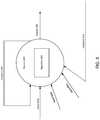
- FIG. 4illustrates a schematic of neuron 400 of a recurrent neural network (RNN) for forecasting packet roundtrip time values, according to some embodiments.
- RNNrecurrent neural network
- neuron 400may receive time-series RTT values as inputs 402 , output a forecast RTT value as output 408 , both, or neither.
- a feedback connection 406feeds an output of algorithm 404 back as an input of neuron 400 .
- the value of feedback connection 406may, in some examples, be the same value as output 408 . In some other examples, the value of feedback connections 406 may be different than output 408 .
- Another feedback connection 410feeds an output of another neuron (e.g.
- output 408may be fed back to prior neurons 400 of the RNN.
- output 408may be an input to a neuron whose output is input 402 a of neuron 400 .
- output 408is calculated by algorithm 404 by combining inputs 402 by a given feedback factor, q.
- algorithm 404 in combination with feedback 406feeds output 408 into algorithm 404 as an input.
- LSTMlong short term memory
- neuron 400may be a recurrent neuron including two layers, a recurrent layer and a linear layer.
- RTT(k ⁇ j) valuesare part of the time-series RTT values and are supplied to neuron 400 as N number of inputs 402 , and the input weight factors IW k ⁇ j are selected by the RNN for each input 402 based on results of training.
- a feedback value 406(RT(t ⁇ 1)) is fed back from the output of the recurrent neuron 400 as an input and is weighted using feedback weight factor FW 2 .
- Another feedback value 410 (RTT(t ⁇ 1)) from another layer of neuron 400e.g. from the output linear layer
- the output of the recurrent layer of neuron 400is further adjusted by a linear bias b 1 , as shown in Eq.(4.1).
- the output of the recurrent layeris then forwarded to a linear stage.
- Equation 4.1Equation 4.1 and 4.2 will be collectively referred to as “Eqs. 4.”
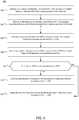
- FIG. 5is a flow chart illustrating steps in a method 400 for providing continuous feedback adaptively route branch traffic in SDWAN deployments, according to some embodiments.
- method 500may include steps performed in an SDWAN deployment as disclosed herein.
- at least one or more stepsmay be performed by a processor in a branch office controller, a virtual internet gateway (VIG), a network orchestrator such as a SDWAN branch orchestrator (SBO), or a backbone router.
- the processorsmay execute instructions stored in memory circuits (e.g., any one of memories 220 ).
- at least some of the blocks in method 500may include storing data (e.g., historical information such as RTT values and the like) in a database.
- Methods consistent with method 500may include at least one of the blocks listed below, executed in any order.
- embodiments consistent with the present disclosuremay include one or more of the blocks in method 500 performed in a different order, in parallel, overlapping in time, or almost simultaneously.
- a first set of roundtrip times (RTTs)is received at a network orchestrator.
- the first set of RTTscorrespond to packets transmitted between a branch gateway (BG) and a first virtual internet gateway (VIG) of a SD-WAN.
- the first VIGis assigned to the BG as primary VIG.
- the first set of RTTsmay correspond to diagnostic packets periodically sent between BG and first VIG to determine the link health for a secure tunnel through the Internet connecting the BG and the first VIG.
- the network orchestratormay receive additional RTTs of the first set on a periodic basis as additional diagnostic packets are transmitted between BG and the first VIG.
- a second set of RTTsis received at the network orchestrator.
- the second set of RTTscorrespond to packets transmitted between the BG and a second VIG of the SD-WAN.
- the second VIGis assigned to the BG as secondary VIG.
- the second set of RTTsmay correspond to diagnostic packets periodically sent between BG and second VIG to determine the link health for a secure tunnel through the Internet connecting the BG and the second VIG.
- the network orchestratormay receive additional RTTs of the second set on a periodic basis as additional diagnostic packets are transmitted between BG and the second VIG.
- a first forecast RTTis determined based on the first set of RTTs for a packet transmitted between the BG and the first VIG.
- the packetis a hypothetical packet to be transmitted at a future time.
- the first forecast RTTis a prediction, using a machine learning algorithm as to future network conditions between the BG and the first VIG.
- the machine learning algorithmeventually receives a measured RTT for the time that the first forecast RTT predicted the network conditions, and the machine learning algorithm may alter itself by comparing the first forecast RTT to the corresponding measured RTT.
- a second forecast RTTis determined based on the second set of RTTs for a packet transmitted between the BG and the second VIG.
- the packetis a hypothetical packet to be transmitted at a future time.
- the second forecast RTTis a prediction, using a machine learning algorithm as to future network conditions between the BG and the second VIG.
- the machine learning algorithmeventually receives a measured RTT for the time that the second forecast RTT predicted the network conditions, and the machine learning algorithm may alter itself by comparing the second forecast RTT to the corresponding measured RTT.
- the network orchestratordetermines whether the first forecast RTT is less than the second forecast RTT. In some examples, if a skew of active branches between the first VIG and the second VIG is not within a predetermined threshold, the network orchestrator assigns the VIG with fewer active branches as primary VIG of the BG. If the first forecast RTT is less than the second forecast RTT, then the network conditions between the first VIG and the BG are likely superior to the network conditions between the second VIG and the BG. In such cases, method 500 proceeds to block 512 . If the first forecast RTT is greater than the second forecast RTT, then the network conditions between the first VIG and the BG are likely inferior to the network conditions between the second VIG and the BG. In such cases, method 500 proceeds to block 514 .
- the first VIGis retained as primary VIG for the BG because the network conditions between the first VIG and the BG are likely superior to the network conditions between the second VIG and the BG.
- the second VIGis assigned as primary VIG for the BG because the network conditions between the second VIG and the BG are likely superior to the network conditions between the first VIG and the BG.
- the second forecast RTTmay be required to be less than the first forecast RTT by a certain amount (e.g. 25%) before method 500 reassigns primary VIG in order to reduce bounce between two similarly conditioned network links.
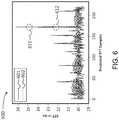
- FIG. 6is a chart 600 illustrating multiple forecast RTT values 602 and actual RTT values 601 , according to some embodiments.
- a network architecture as disclosed hereine.g., SD-WAN 100
- Chart 600shows a difference between actual RTT values 601 and predicted RTT values 602 , leading to a root-mean-square-standard error (RMSE) of about 0.026 (2.6%). Accordingly, an accuracy of 97.4% is achieved.
- RMSEroot-mean-square-standard error
- the accuracy of the modelmay be increased as desired by increasing the relative size of the training data set relative to the sampling data set. For example, an actual peak RTT 611 has been accurately forecasted by forecast RTT peak 612 (e.g., as for the time of occurrence, rather than exact value).
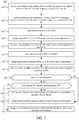
- FIG. 7is a flow chart illustrating blocks in a method 700 for monitoring and updating an adapting routing of branch traffic in SDWAN deployments, according to some embodiments.
- method 700may include steps performed in an SDWAN deployment as disclosed herein.
- at least one or more stepsmay be performed by a processor in a branch office controller, a virtual internet gateway (VIG), a network orchestrator such as a SDWAN branch orchestrator (SBO), or a backbone router.
- the processorsmay execute instructions stored in memory circuits (e.g., any one of memories 220 ).
- at least some of the blocks in method 700may include storing data (e.g., historical information such as RTT values and the like) in a database.
- Methods consistent with method 700may include at least one of the blocks listed below, executed in any order.
- embodiments consistent with the present disclosuremay include one or more of the blocks in method 700 performed in a different order, in parallel, overlapping in time, or almost simultaneously.
- a first set of roundtrip times (RTTs)is received at a network orchestrator.
- the first set of RTTscorrespond to packets transmitted between a branch gateway (BG) and a first virtual interne gateway (VIG) of a SD-WAN.
- the first VIGis assigned to the BG as primary VIG.
- the first set of RTTsmay correspond to diagnostic packets periodically sent between BG and first VIG to determine the link health for a secure tunnel through the Internet connecting the BG and the first VIG.
- the network orchestratormay receive additional RTTs of the first set on a periodic basis as additional diagnostic packets are transmitted between BG and the first VIG.
- a second set of RTTsis received at the network orchestrator.
- the second set of RTTscorrespond to packets transmitted between the BG and a second VIG of the SD-WAN.
- the second VIGis assigned to the BG as secondary VIG.
- the second set of RTTsmay correspond to diagnostic packets periodically sent between BG and second VIG to determine the link health for a secure tunnel through the Internet connecting the BG and the second VIG.
- the network orchestratormay receive additional RTTs of the second set on a periodic basis as additional diagnostic packets are transmitted between BG and the second VIG.
- the first set of RTTsis input into a recurrent neural network (RNN).
- RNNrecurrent neural network
- each of the first set of RTTsis input into a different input neuron of the RNN.
- multiple of the first set of RTTsis input into each input neuron of the RNN.
- each of the first set of RTTsis weighted according to a respective input weight factor.
- the input weight factorsmay be adjusted by the RNN based on training of the RNN using training data and measured RTT data that corresponds to respective forecast data. For example, if the RNN determines that more recent RTTs are more important in determining a forecast future RTT, the input weights for the more recent RTTs of the first set may be larger than the input weights for older RTTs.
- the RNNcalculates the first forecast RTT is determined based in part on the weighted first set of RTTs.
- neurons of the RNNweight inputs and generate outputs which are normalized and input into other neurons. This may be a “forward” process (e.g. information passes from input neurons through successive layers of intermediate neurons to finish in output neurons) and it may also be a “feedback” process (e.g. information passes from the successive layers of neurons to predecessor layers of neurons).
- the overall output of the RNNis the first forecast RTT for a certain future time.
- the second set of RTTsis input into the RNN.
- each of the second set of RTTsis input into a different input neuron of the RNN.
- multiple of the second set of RTTsis input into each input neuron of the RNN.
- each of the second set of RTTsis weighted according to a respective input weight factor.
- the input weight factorsmay be adjusted by the RNN based on training of the RNN using training data and measured RTT data that corresponds to respective forecast data. For example, if the RNN determines that more recent RTTs are more important in determining a forecast future RTT, the input weights for the more recent RTTs of the first set may be larger than the input weights for older RTTs.
- the RNNcalculates the second forecast RTT is determined based in part on the weighted second set of RTTs.
- neurons of the RNNweight inputs and generate outputs which are normalized and input into other neurons. This may be a “forward” process (e.g. information passes from input neurons through successive layers of intermediate neurons to finish in output neurons) and it may also be a “feedback” process (e.g. information passes from the successive layers of neurons to predecessor layers of neurons).
- the overall output of the RNNis the second forecast RTT for a certain future time.
- the network orchestratordetermines whether a skew of active branches is less than a predetermined threshold. If the skew is less, then method 700 proceeds to block 720 . If the skew is not less, then method 700 proceeds to block 724 to assign the least loaded VIG to the BG as primary VIG.
- the network orchestratordetermines whether the first forecast RTT is less than the second forecast RTT. If the first forecast RTT is less than the second forecast RTT, then the network conditions between the first VIG and the BG are likely superior to the network conditions between the second VIG and the BG. In such cases, method 700 proceeds to block 722 . If the first forecast RTT is greater than the second forecast RTT, then the network conditions between the first VIG and the BG are likely inferior to the network conditions between the second VIG and the BG. In such cases, method 700 proceeds to block 724 .
- the first VIGis retained as primary VIG for the BG because the network conditions between the first VIG and the BG are likely superior to the network conditions between the second VIG and the BG.
- the second VIGis retained as secondary VIG for the BG.
- the second VIGis assigned as primary VIG for the BG because the network conditions between the second VIG and the BG are likely superior to the network conditions between the first VIG and the BG.
- the second forecast RTTmay be required to be less than the first forecast RTT by a certain amount (e.g. 25%) before method 700 reassigns primary VIG in order to reduce bounce between two similarly conditioned network links.
- FIG. 8is a block diagram illustrating an example computer system 800 with which the network orchestrator 140 of FIG. 1 and the method of FIGS. 5 and 7 can be implemented.
- the computer system 800may be implemented using hardware or a combination of software and hardware, either in a dedicated network device, or integrated into another entity, or distributed across multiple entities.
- Computer system 800includes a bus 808 or other communication mechanism for communicating information, and a processor 802 coupled with bus 808 for processing information.
- the computer system 800may be implemented with one or more processors 802 .
- Processor 802may be a general-purpose microprocessor, a microcontroller, a Digital Signal Processor (DSP), an Application Specific Integrated Circuit (ASIC), a Field Programmable Gate Array (FPGA), a Programmable Logic Device (PLD), a controller, a state machine, gated logic, discrete hardware components, or any other suitable entity that can perform calculations or other manipulations of information.
- DSPDigital Signal Processor
- ASICApplication Specific Integrated Circuit
- FPGAField Programmable Gate Array
- PLDProgrammable Logic Device
- controllera state machine, gated logic, discrete hardware components, or any other suitable entity that can perform calculations or other manipulations of information.
- Computer system 800can include, in addition to hardware, code that creates an execution environment for the computer program in question, e.g., code that constitutes processor firmware, a protocol stack, a database management system, an operating system, or a combination of one or more of them stored in an included memory 804 , such as a Random Access Memory (RAM), a flash memory, a Read-Only Memory (ROM), a Programmable Read-Only Memory (PROM), an Erasable PROM (EPROM), registers, a hard disk, a removable disk, a CD-ROM, a DVD, or any other suitable storage device, coupled to bus 808 for storing information and instructions to be executed by processor 802 .
- the processor 802 and the memory 804can be supplemented by, or incorporated in, special purpose logic circuitry.
- the instructionsmay be stored in the memory 804 and implemented in one or more computer program products, e.g., one or more modules of computer program instructions encoded on a computer-readable medium for execution by, or to control the operation of, the computer system 800 , and according to any method well-known to those of skill in the art, including, but not limited to, computer languages such as data-oriented languages (e.g., SQL, dBase), system languages (e.g., C, Objective-C, C++, Assembly), architectural languages (e.g., Java, .NET), and application languages (e.g., PHP, Ruby, Perl, Python).
- data-oriented languagese.g., SQL, dBase
- system languagese.g., C, Objective-C, C++, Assembly
- architectural languagese.g., Java, .NET
- application languagese.g., PHP, Ruby, Perl, Python.
- Instructionsmay also be implemented in computer languages such as array languages, aspect-oriented languages, assembly languages, authoring languages, command line interface languages, compiled languages, concurrent languages, curly-bracket languages, dataflow languages, data-structured languages, declarative languages, esoteric languages, extension languages, fourth-generation languages, functional languages, interactive mode languages, interpreted languages, iterative languages, list-based languages, little languages, logic-based languages, machine languages, macro languages, metaprogramming languages, multiparadigm languages, numerical analysis, non-English-based languages, object-oriented class-based languages, object-oriented prototype-based languages, off-side rule languages, procedural languages, reflective languages, rule-based languages, scripting languages, stack-based languages, synchronous languages, syntax handling languages, visual languages, wirth languages, and xml-based languages.
- Memory 804may also be used for storing temporary variable or other intermediate information during execution of instructions to be executed by processor 802 .
- a computer program as discussed hereindoes not necessarily correspond to a file in a file system.
- a programcan be stored in a portion of a file that holds other programs or data (e.g., one or more scripts stored in a markup language document), in a single file dedicated to the program in question, or in multiple coordinated files (e.g., files that store one or more modules, subprograms, or portions of code).
- a computer programcan be deployed to be executed on one computer or on multiple computers that are located at one site or distributed across multiple sites and interconnected by a communication network.
- the processes and logic flows described in this specificationcan be performed by one or more programmable processors executing one or more computer programs to perform functions by operating on input data and generating output.
- Computer system 800further includes a data storage device 806 such as a magnetic disk or optical disk, coupled to bus 808 for storing information and instructions.
- Computer system 800may be coupled via input/output module 810 to various devices.
- Input/output module 810can be any input/output module.
- Exemplary input/output modules 810include data ports such as USB hubs, PCI hubs, etc.
- the input/output module 810is configured to connect to a communications module 812 .
- Exemplary communications modules 812include networking interface cards, such as Ethernet cards and modems.
- input/output module 810is configured to connect to a plurality of devices, such as an input device 814 and/or an output device 816 .
- Exemplary input devices 814include a keyboard and a pointing device, e.g., a mouse or a trackball, by which a user can provide input to the computer system 800 .
- Other kinds of input devices 814can be used to provide for interaction with a user as well, such as a tactile input device, visual input device, audio input device, or brain-computer interface device.
- feedback provided to the usercan be any form of sensory feedback, e.g., visual feedback, auditory feedback, or tactile feedback; and input from the user can be received in any form, including acoustic, speech, tactile, or brain wave input.
- Exemplary output devices 816include display devices, such as an LCD (liquid crystal display) monitor, for displaying information to the user.
- Network orchestrator 140can be implemented using a computer system 800 in response to processor 802 executing one or more sequences of one or more instructions contained in memory 804 . Such instructions may be read into memory 804 from another machine-readable medium, such as data storage device 806 . Execution of the sequences of instructions contained in main memory 804 causes processor 802 to perform the process steps described herein. One or more processors in a multi-processing arrangement may also be employed to execute the sequences of instructions contained in memory 804 . In alternative aspects, hard-wired circuitry may be used in place of or in combination with software instructions to implement various aspects of the present disclosure. Thus, aspects of the present disclosure are not limited to any specific combination of hardware circuitry and software.
- a computing systemthat includes a back-end component, e.g., a data network device, or that includes a middleware component, e.g., an application network device, or that includes a front-end component, e.g., a client computer having a graphical user interface or a Web browser through which a user can interact with an implementation of the subject matter described in this specification, or any combination of one or more such back-end, middleware, or front-end components.
- the components of the systemcan be interconnected by any form or medium of digital data communication, e.g., a communication network.
- the communication networkcan include, for example, any one or more of a LAN, a WAN, the Internet, and the like. Further, the communication network can include, but is not limited to, for example, any one or more of the following network topologies, including a bus network, a star network, a ring network, a mesh network, a star-bus network, tree or hierarchical network, or the like.
- the communications modulescan be, for example, modems or Ethernet cards.
- Computer system 800can include clients and network devices.
- a client and network deviceare generally remote from each other and typically interact through a communication network. The relationship of client and network device arises by virtue of computer programs running on the respective computers and having a client-network device relationship to each other.
- Computer system 800can be, for example, and without limitation, a desktop computer, laptop computer, or tablet computer.
- Computer system 800can also be embedded in another device, for example, and without limitation, a mobile telephone, a PDA, a mobile audio player, a Global Positioning System (GPS) receiver, a video game console, and/or a television set top box.
- GPSGlobal Positioning System
- machine-readable storage mediumor “computer-readable medium” as used herein refers to any medium or media that participates in providing instructions to processor 802 for execution. Such a medium may take many forms, including, but not limited to, non-volatile media, volatile media, and transmission media.
- Non-volatile mediainclude, for example, optical or magnetic disks, such as data storage device 806 .
- Volatile mediainclude dynamic memory, such as memory 804 .
- Transmission mediainclude coaxial cables, copper wire, and fiber optics, including the wires forming bus 808 .
- Machine-readable mediainclude, for example, floppy disk, a flexible disk, hard disk, magnetic tape, any other magnetic medium, a CD-ROM, DVD, any other optical medium, punch cards, paper tape, any other physical medium with patterns of holes, a RAM, a PROM, an EPROM, a FLASH EPROM, any other memory chip or cartridge, or any other medium from which a computer can read.
- the machine-readable storage mediumcan be a machine-readable storage device, a machine-readable storage substrate, a memory device, a composition of matter affecting a machine-readable propagated signal, or a combination of one or more of them.
- the phrase “at least one of” preceding a series of items, with the terms “and” or “or” to separate any of the items,modifies the list as a whole, rather than each member of the list (i.e., each item).
- the phrase “at least one of”does not require selection of at least one item; rather, the phrase allows a meaning that includes at least one of any one of the items, and/or at least one of any combination of the items, and/or at least one of each of the items.
- phrases “at least one of A, B, and C” or “at least one of A, B, or C”each refer to only A, only B, or only C; any combination of A, B, and C; and/or at least one of each of A, B, and C.
Landscapes
- Engineering & Computer Science (AREA)
- Theoretical Computer Science (AREA)
- Software Systems (AREA)
- Physics & Mathematics (AREA)
- Signal Processing (AREA)
- Computer Networks & Wireless Communication (AREA)
- General Physics & Mathematics (AREA)
- General Engineering & Computer Science (AREA)
- Artificial Intelligence (AREA)
- Evolutionary Computation (AREA)
- Computing Systems (AREA)
- Data Mining & Analysis (AREA)
- Mathematical Physics (AREA)
- Biomedical Technology (AREA)
- Computational Linguistics (AREA)
- General Health & Medical Sciences (AREA)
- Biophysics (AREA)
- Molecular Biology (AREA)
- Life Sciences & Earth Sciences (AREA)
- Health & Medical Sciences (AREA)
- Environmental & Geological Engineering (AREA)
- Computer Vision & Pattern Recognition (AREA)
- Medical Informatics (AREA)
- Databases & Information Systems (AREA)
- Data Exchanges In Wide-Area Networks (AREA)
Abstract
Description
Load Factor(LF)=(⅓)CPU load(%)+(⅓)memory usage(%)+(⅓)data throughput(%) Equation (1)
RTT(k)=F(RTT(k−1),RTT(k−2),RTT(k−3),
RT(t)=tansig(Σj=0N(IWk j×RTT(k−j))+FW1×RTT(t−1)+FW2×RT(t−1)+b1) (4.1)
RTT(t)=Linear(LW1×RT(t)+b2) (4.2)
Claims (20)
Priority Applications (1)
| Application Number | Priority Date | Filing Date | Title |
|---|---|---|---|
| US16/294,388US11134126B2 (en) | 2019-03-06 | 2019-03-06 | Adaptive routing of branch traffic in software-defined wide area network (SDWAN) deployments |
Applications Claiming Priority (1)
| Application Number | Priority Date | Filing Date | Title |
|---|---|---|---|
| US16/294,388US11134126B2 (en) | 2019-03-06 | 2019-03-06 | Adaptive routing of branch traffic in software-defined wide area network (SDWAN) deployments |
Publications (2)
| Publication Number | Publication Date |
|---|---|
| US20200287976A1 US20200287976A1 (en) | 2020-09-10 |
| US11134126B2true US11134126B2 (en) | 2021-09-28 |
Family
ID=72335539
Family Applications (1)
| Application Number | Title | Priority Date | Filing Date |
|---|---|---|---|
| US16/294,388Active2039-09-12US11134126B2 (en) | 2019-03-06 | 2019-03-06 | Adaptive routing of branch traffic in software-defined wide area network (SDWAN) deployments |
Country Status (1)
| Country | Link |
|---|---|
| US (1) | US11134126B2 (en) |
Cited By (1)
| Publication number | Priority date | Publication date | Assignee | Title |
|---|---|---|---|---|
| US12316488B2 (en) | 2023-01-30 | 2025-05-27 | Hewlett Packard Enterprise Development Lp | Expediting correction of WAN or LAN traffic loss |
Families Citing this family (61)
| Publication number | Priority date | Publication date | Assignee | Title |
|---|---|---|---|---|
| US10749711B2 (en) | 2013-07-10 | 2020-08-18 | Nicira, Inc. | Network-link method useful for a last-mile connectivity in an edge-gateway multipath system |
| US10454714B2 (en) | 2013-07-10 | 2019-10-22 | Nicira, Inc. | Method and system of overlay flow control |
| US10498652B2 (en) | 2015-04-13 | 2019-12-03 | Nicira, Inc. | Method and system of application-aware routing with crowdsourcing |
| US10135789B2 (en) | 2015-04-13 | 2018-11-20 | Nicira, Inc. | Method and system of establishing a virtual private network in a cloud service for branch networking |
| US10425382B2 (en) | 2015-04-13 | 2019-09-24 | Nicira, Inc. | Method and system of a cloud-based multipath routing protocol |
| US20180219765A1 (en) | 2017-01-31 | 2018-08-02 | Waltz Networks | Method and Apparatus for Network Traffic Control Optimization |
| US11706127B2 (en) | 2017-01-31 | 2023-07-18 | Vmware, Inc. | High performance software-defined core network |
| US10992568B2 (en) | 2017-01-31 | 2021-04-27 | Vmware, Inc. | High performance software-defined core network |
| US20200036624A1 (en) | 2017-01-31 | 2020-01-30 | The Mode Group | High performance software-defined core network |
| US10778528B2 (en) | 2017-02-11 | 2020-09-15 | Nicira, Inc. | Method and system of connecting to a multipath hub in a cluster |
| US10523539B2 (en) | 2017-06-22 | 2019-12-31 | Nicira, Inc. | Method and system of resiliency in cloud-delivered SD-WAN |
| US10999100B2 (en) | 2017-10-02 | 2021-05-04 | Vmware, Inc. | Identifying multiple nodes in a virtual network defined over a set of public clouds to connect to an external SAAS provider |
| US10958479B2 (en) | 2017-10-02 | 2021-03-23 | Vmware, Inc. | Selecting one node from several candidate nodes in several public clouds to establish a virtual network that spans the public clouds |
| US11115480B2 (en) | 2017-10-02 | 2021-09-07 | Vmware, Inc. | Layer four optimization for a virtual network defined over public cloud |
| US11223514B2 (en) | 2017-11-09 | 2022-01-11 | Nicira, Inc. | Method and system of a dynamic high-availability mode based on current wide area network connectivity |
| CN111181747B (en)* | 2018-11-09 | 2023-05-02 | 中兴通讯股份有限公司 | Gateway cooperation realization method and device, internet of things (IoT) gateway and storage medium |
| CN112913198A (en)* | 2019-04-15 | 2021-06-04 | 慧与发展有限责任合伙企业 | Dynamic client balancing between branch gateways |
| US11121985B2 (en) | 2019-08-27 | 2021-09-14 | Vmware, Inc. | Defining different public cloud virtual networks for different entities based on different sets of measurements |
| US11165658B2 (en)* | 2019-09-05 | 2021-11-02 | Cisco Technology, Inc. | Systems and methods for contextual network assurance based on change audits |
| US11611507B2 (en) | 2019-10-28 | 2023-03-21 | Vmware, Inc. | Managing forwarding elements at edge nodes connected to a virtual network |
| US11394640B2 (en) | 2019-12-12 | 2022-07-19 | Vmware, Inc. | Collecting and analyzing data regarding flows associated with DPI parameters |
| US11489783B2 (en) | 2019-12-12 | 2022-11-01 | Vmware, Inc. | Performing deep packet inspection in a software defined wide area network |
| US11438789B2 (en) | 2020-01-24 | 2022-09-06 | Vmware, Inc. | Computing and using different path quality metrics for different service classes |
| US11277326B2 (en)* | 2020-03-31 | 2022-03-15 | Netflix, Inc. | Techniques for detecting changes to circuit delays in telecommunications networks |
| US11296947B2 (en) | 2020-06-29 | 2022-04-05 | Star2Star Communications, LLC | SD-WAN device, system, and network |
| US11477127B2 (en) | 2020-07-02 | 2022-10-18 | Vmware, Inc. | Methods and apparatus for application aware hub clustering techniques for a hyper scale SD-WAN |
| US11363124B2 (en) | 2020-07-30 | 2022-06-14 | Vmware, Inc. | Zero copy socket splicing |
| US11444865B2 (en) | 2020-11-17 | 2022-09-13 | Vmware, Inc. | Autonomous distributed forwarding plane traceability based anomaly detection in application traffic for hyper-scale SD-WAN |
| US11575600B2 (en) | 2020-11-24 | 2023-02-07 | Vmware, Inc. | Tunnel-less SD-WAN |
| US11601356B2 (en) | 2020-12-29 | 2023-03-07 | Vmware, Inc. | Emulating packet flows to assess network links for SD-WAN |
| US12218845B2 (en)* | 2021-01-18 | 2025-02-04 | VMware LLC | Network-aware load balancing |
| CN116783874A (en) | 2021-01-18 | 2023-09-19 | Vm维尔股份有限公司 | Network aware load balancing |
| US11979325B2 (en) | 2021-01-28 | 2024-05-07 | VMware LLC | Dynamic SD-WAN hub cluster scaling with machine learning |
| US12003385B2 (en)* | 2021-03-02 | 2024-06-04 | Cisco Technology, Inc. | Dynamic network routing based on application load |
| WO2022186986A1 (en) | 2021-03-02 | 2022-09-09 | Cisco Technology, Inc. | Dynamic network routing based on application load |
| US11743232B2 (en)* | 2021-04-08 | 2023-08-29 | Cisco Technology, Inc. | Software defined branch single internet protocol orchestration |
| US12368676B2 (en) | 2021-04-29 | 2025-07-22 | VMware LLC | Methods for micro-segmentation in SD-WAN for virtual networks |
| US12009987B2 (en) | 2021-05-03 | 2024-06-11 | VMware LLC | Methods to support dynamic transit paths through hub clustering across branches in SD-WAN |
| US11388086B1 (en)* | 2021-05-03 | 2022-07-12 | Vmware, Inc. | On demand routing mesh for dynamically adjusting SD-WAN edge forwarding node roles to facilitate routing through an SD-WAN |
| US11729065B2 (en) | 2021-05-06 | 2023-08-15 | Vmware, Inc. | Methods for application defined virtual network service among multiple transport in SD-WAN |
| US11489720B1 (en) | 2021-06-18 | 2022-11-01 | Vmware, Inc. | Method and apparatus to evaluate resource elements and public clouds for deploying tenant deployable elements based on harvested performance metrics |
| US12250114B2 (en) | 2021-06-18 | 2025-03-11 | VMware LLC | Method and apparatus for deploying tenant deployable elements across public clouds based on harvested performance metrics of sub-types of resource elements in the public clouds |
| US12015536B2 (en) | 2021-06-18 | 2024-06-18 | VMware LLC | Method and apparatus for deploying tenant deployable elements across public clouds based on harvested performance metrics of types of resource elements in the public clouds |
| US12047282B2 (en) | 2021-07-22 | 2024-07-23 | VMware LLC | Methods for smart bandwidth aggregation based dynamic overlay selection among preferred exits in SD-WAN |
| US11375005B1 (en) | 2021-07-24 | 2022-06-28 | Vmware, Inc. | High availability solutions for a secure access service edge application |
| US12267364B2 (en) | 2021-07-24 | 2025-04-01 | VMware LLC | Network management services in a virtual network |
| US11546257B1 (en) | 2021-08-12 | 2023-01-03 | Hewlett Packard Enterprise Development Lp | Scalable SD-WAN topology and route automation |
| US11943146B2 (en) | 2021-10-01 | 2024-03-26 | VMware LLC | Traffic prioritization in SD-WAN |
| CN116132220B (en)* | 2021-11-15 | 2024-07-02 | 中国联合网络通信集团有限公司 | Data transmission method, device, equipment and storage medium |
| US12041451B2 (en) | 2021-12-10 | 2024-07-16 | Cisco Technology, Inc. | Systems and methods for detecting domain changes in an SD-WAN environment |
| US12184557B2 (en) | 2022-01-04 | 2024-12-31 | VMware LLC | Explicit congestion notification in a virtual environment |
| US12425395B2 (en) | 2022-01-15 | 2025-09-23 | VMware LLC | Method and system of securely adding an edge device operating in a public network to an SD-WAN |
| US11909815B2 (en) | 2022-06-06 | 2024-02-20 | VMware LLC | Routing based on geolocation costs |
| US12166661B2 (en) | 2022-07-18 | 2024-12-10 | VMware LLC | DNS-based GSLB-aware SD-WAN for low latency SaaS applications |
| US12316524B2 (en) | 2022-07-20 | 2025-05-27 | VMware LLC | Modifying an SD-wan based on flow metrics |
| US12348489B2 (en) | 2022-12-27 | 2025-07-01 | Microsoft Technology Licensing, Llc | Automatic selection of encrypted network connection based on predicted latency |
| US12034587B1 (en) | 2023-03-27 | 2024-07-09 | VMware LLC | Identifying and remediating anomalies in a self-healing network |
| US12057993B1 (en) | 2023-03-27 | 2024-08-06 | VMware LLC | Identifying and remediating anomalies in a self-healing network |
| US12425332B2 (en) | 2023-03-27 | 2025-09-23 | VMware LLC | Remediating anomalies in a self-healing network |
| US12355655B2 (en) | 2023-08-16 | 2025-07-08 | VMware LLC | Forwarding packets in multi-regional large scale deployments with distributed gateways |
| US12261777B2 (en) | 2023-08-16 | 2025-03-25 | VMware LLC | Forwarding packets in multi-regional large scale deployments with distributed gateways |
Citations (23)
| Publication number | Priority date | Publication date | Assignee | Title |
|---|---|---|---|---|
| US6269084B1 (en)* | 1997-05-27 | 2001-07-31 | Oki Electric Industry Co., Ltd. | Time delay based solution of a telecommunication route |
| US20020026531A1 (en)* | 2000-04-12 | 2002-02-28 | John Keane | Methods and systems for enabling communication between a processor and a network operations center |
| US20020056008A1 (en)* | 2000-04-12 | 2002-05-09 | John Keane | Methods and systems for managing virtual addresses for virtual networks |
| US20060200543A1 (en)* | 2005-03-04 | 2006-09-07 | Samsung Electronics. Co. Ltd. | Method and apparatus for tightly coupled interworking between cellular network and WLAN network |
| US20070230437A1 (en)* | 2003-09-24 | 2007-10-04 | Johannes Schopf | Load Control Method in a Packet Data Network |
| US20090063675A1 (en)* | 1999-02-26 | 2009-03-05 | Faris Sadeg M | Internet-based method of and system for monitoring space-time coordinate information |
| US20120059934A1 (en)* | 2010-09-08 | 2012-03-08 | Pierre Rafiq | Systems and methods for self-loading balancing access gateways |
| US20120278477A1 (en)* | 2009-04-08 | 2012-11-01 | The University Of North Carolina At Chapel Hill | Methods, systems, and computer program products for network server performance anomaly detection |
| US20130204820A1 (en)* | 2012-02-08 | 2013-08-08 | Qualcomm Incorporated | Methods and apparatus for spiking neural computation |
| US20130238816A1 (en)* | 2010-11-24 | 2013-09-12 | Telefonaktiebolaget L M Ericsson (Publ) | Methods and Arrangements For Enabling Data Transmission Between a Mobile Device and a Static Destination Address |
| US20140098753A1 (en)* | 2012-10-04 | 2014-04-10 | Telefonaktiebolaget L M Ericsson (Publ) | Node and method for uplink detection with an assigned uplink physical layer identity |
| US20140280969A1 (en) | 2013-03-15 | 2014-09-18 | Conrad N. Wood | Load Balancer and Related Techniques |
| US20150195212A1 (en)* | 2014-01-06 | 2015-07-09 | Cisco Technology, Inc. | Dynamic network-driven application packet resizing |
| US20150244617A1 (en)* | 2012-06-06 | 2015-08-27 | Juniper Networks, Inc. | Physical path determination for virtual network packet flows |
| US20150254340A1 (en)* | 2014-03-10 | 2015-09-10 | JamKazam, Inc. | Capability Scoring Server And Related Methods For Interactive Music Systems |
| US20160142474A1 (en)* | 2013-06-25 | 2016-05-19 | Nec Corporation | Communication system, apparatus, method and program |
| US20170111233A1 (en)* | 2015-10-15 | 2017-04-20 | Citrix Systems, Inc. | Systems and methods for determining network configurations using historical and real-time network metrics data |
| US20170347363A1 (en)* | 2016-05-31 | 2017-11-30 | Hughes Network Systems. Llc | Gateway diversity operation in a satellite network |
| US20170353363A1 (en)* | 2016-06-03 | 2017-12-07 | Benjamin James Parker | Systems and methods for managing network operations |
| US9929800B2 (en) | 2016-04-07 | 2018-03-27 | Infinera Corporation | System and method for adaptive traffic engineering based on predicted traffic demand |
| US20180183855A1 (en)* | 2016-12-28 | 2018-06-28 | Intel Corporation | Application computation offloading for mobile edge computing |
| US20180309681A1 (en)* | 2010-12-22 | 2018-10-25 | Cisco Technology, Inc. | Adaptive intelligent routing in a communication system |
| US20190044949A1 (en)* | 2018-09-28 | 2019-02-07 | Intel Corporation | Trust management mechanisms |
- 2019
- 2019-03-06USUS16/294,388patent/US11134126B2/enactiveActive
Patent Citations (23)
| Publication number | Priority date | Publication date | Assignee | Title |
|---|---|---|---|---|
| US6269084B1 (en)* | 1997-05-27 | 2001-07-31 | Oki Electric Industry Co., Ltd. | Time delay based solution of a telecommunication route |
| US20090063675A1 (en)* | 1999-02-26 | 2009-03-05 | Faris Sadeg M | Internet-based method of and system for monitoring space-time coordinate information |
| US20020026531A1 (en)* | 2000-04-12 | 2002-02-28 | John Keane | Methods and systems for enabling communication between a processor and a network operations center |
| US20020056008A1 (en)* | 2000-04-12 | 2002-05-09 | John Keane | Methods and systems for managing virtual addresses for virtual networks |
| US20070230437A1 (en)* | 2003-09-24 | 2007-10-04 | Johannes Schopf | Load Control Method in a Packet Data Network |
| US20060200543A1 (en)* | 2005-03-04 | 2006-09-07 | Samsung Electronics. Co. Ltd. | Method and apparatus for tightly coupled interworking between cellular network and WLAN network |
| US20120278477A1 (en)* | 2009-04-08 | 2012-11-01 | The University Of North Carolina At Chapel Hill | Methods, systems, and computer program products for network server performance anomaly detection |
| US20120059934A1 (en)* | 2010-09-08 | 2012-03-08 | Pierre Rafiq | Systems and methods for self-loading balancing access gateways |
| US20130238816A1 (en)* | 2010-11-24 | 2013-09-12 | Telefonaktiebolaget L M Ericsson (Publ) | Methods and Arrangements For Enabling Data Transmission Between a Mobile Device and a Static Destination Address |
| US20180309681A1 (en)* | 2010-12-22 | 2018-10-25 | Cisco Technology, Inc. | Adaptive intelligent routing in a communication system |
| US20130204820A1 (en)* | 2012-02-08 | 2013-08-08 | Qualcomm Incorporated | Methods and apparatus for spiking neural computation |
| US20150244617A1 (en)* | 2012-06-06 | 2015-08-27 | Juniper Networks, Inc. | Physical path determination for virtual network packet flows |
| US20140098753A1 (en)* | 2012-10-04 | 2014-04-10 | Telefonaktiebolaget L M Ericsson (Publ) | Node and method for uplink detection with an assigned uplink physical layer identity |
| US20140280969A1 (en) | 2013-03-15 | 2014-09-18 | Conrad N. Wood | Load Balancer and Related Techniques |
| US20160142474A1 (en)* | 2013-06-25 | 2016-05-19 | Nec Corporation | Communication system, apparatus, method and program |
| US20150195212A1 (en)* | 2014-01-06 | 2015-07-09 | Cisco Technology, Inc. | Dynamic network-driven application packet resizing |
| US20150254340A1 (en)* | 2014-03-10 | 2015-09-10 | JamKazam, Inc. | Capability Scoring Server And Related Methods For Interactive Music Systems |
| US20170111233A1 (en)* | 2015-10-15 | 2017-04-20 | Citrix Systems, Inc. | Systems and methods for determining network configurations using historical and real-time network metrics data |
| US9929800B2 (en) | 2016-04-07 | 2018-03-27 | Infinera Corporation | System and method for adaptive traffic engineering based on predicted traffic demand |
| US20170347363A1 (en)* | 2016-05-31 | 2017-11-30 | Hughes Network Systems. Llc | Gateway diversity operation in a satellite network |
| US20170353363A1 (en)* | 2016-06-03 | 2017-12-07 | Benjamin James Parker | Systems and methods for managing network operations |
| US20180183855A1 (en)* | 2016-12-28 | 2018-06-28 | Intel Corporation | Application computation offloading for mobile edge computing |
| US20190044949A1 (en)* | 2018-09-28 | 2019-02-07 | Intel Corporation | Trust management mechanisms |
Non-Patent Citations (13)
| Title |
|---|
| Beijing University of Posts and Telecommunications Beijing China, an Adaptive Dynamic Feedback Load Balancing Algorithm Based on QoS in Distributed File System, Sep. 2017, pp. 1-7, Retrieved from the Internet on Oct. 15, 2018 from URL: <link.springer.com/article/10.1007/s41650-017-0029-3>. |
| Belhaj et al., "Modeling and Prediction of the Internet End-to-end Delay using Recurrent Neural Networks", Aug. 2009, Journal of Networks, vol. 4, No. 6, pp. 528-535. |
| Chen et al., "Dynamic Server Cluster Load Balancing in Virtualization Environment with OpenFlow", Research Article, Hindawi Publishing Corporation, International Journal of Distributed Sensor Networks vol. 2015, Article ID 531538, Sep. 8, 2014, pp. 1-9. |
| Citrix Product Documentation, Active-active Site Deployment, Aug. 23, 2018, pp. 1-2, Retrieved from the Internet on Oct. 15, 2018 from URL: <docs.citrix.com/en-us/netscaler/12-1/global-server-load-balancing/deployment-types/active-active-site-deployment.html >. |
| College of Computer Science and Technology, Jilin University, Agent-based Dynamic Adaptive Cluster Load Balancing Model, Mar. 2014, pp. 1-11, Retrieved from the internet on Oct. 15, 2018 from URL:<iaescore.com/journals/index.php/IJEECS/article/download/3221/1364>. |
| Eskander et al (round trip time prediction) 2008 pp. 1-6 (Year: 2008).* |
| Hpe, "Aruba SD-branch", Sep. 13, 2018, available online at <https://web.archive.org/web/20180913075443/https://www.arubanetworks.com/solutions/sd-branch/>, 4 pages. |
| Hpe, "Aruba SD-WAN", Jul. 27, 2018, available online at <https://web.archive.org/web/20180727233720/https://www.arubanetworks.com/products/networking/sd-wan/>, 3 pages. |
| Palestine Polytechnic University, Server Load Prediction Based on Dynamic Neural Networks, pp. 1-13, Retrieved from the Internet on Oct. 15, 2018 from URL: <researchgate.net/publication/266064454_Server_Load_Prediction_Based_on_Dynamic_Neural_Networks>. |
| Round Trip Time Prediction using the Symbolic Function Network Approach, Jul. 2008, pp. 1-6, Retrieved from the Internet on Oct. 15, 2018 from URL: <researchgate.net/publication/1738065_Round_Trip_Time_Prediction_Using_the_Symbolic_Function_Network_Approach>. |
| School of Information Science and Engineering, Lanzhou University, Dynamic Server Cluster Load Balancing in Virtualization Environment with Openflow, Aug. 8, 2014, pp. 1-9, >journals.sagepub.com/doi/pdf/10.1155/2015/531538>. |
| Wang et al., "Dynamic Adaptive Feedback of Load Balancing Strategy", Oct. 2011, Journal of Information & Computational Science, vol. 8, No. 10, pp. 1901-1908. |
| You et al., "Performance Evaluation of Dynamic Load Balancing Algorithms", Apr. 2014, Telkomnika Indonesian Journal of Electrical Engineering, vol. 12, No. 4, pp. 2850-2859. |
Cited By (1)
| Publication number | Priority date | Publication date | Assignee | Title |
|---|---|---|---|---|
| US12316488B2 (en) | 2023-01-30 | 2025-05-27 | Hewlett Packard Enterprise Development Lp | Expediting correction of WAN or LAN traffic loss |
Also Published As
| Publication number | Publication date |
|---|---|
| US20200287976A1 (en) | 2020-09-10 |
Similar Documents
| Publication | Publication Date | Title |
|---|---|---|
| US11134126B2 (en) | Adaptive routing of branch traffic in software-defined wide area network (SDWAN) deployments | |
| US10855575B2 (en) | Adaptive traffic routing in a software-defined wide area network | |
| US11240153B1 (en) | Scoring policies for predictive routing suggestions | |
| US12058010B2 (en) | Adaptive stress testing of SD-WAN tunnels for what-if scenario model training | |
| US10491501B2 (en) | Traffic-adaptive network control systems and methods | |
| US11044191B2 (en) | Coupling reactive routing with predictive routing in a network | |
| Secci et al. | Linking virtual machine mobility to user mobility | |
| US11240122B2 (en) | Event-triggered machine learning for rare event forecasting in a software defined wide area Network (SD-WAN) | |
| EP4136408A1 (en) | Method and system for offline modeling for quality of service prediction for connected vehicles | |
| US11063861B2 (en) | Ensuring backup path performance for predictive routing in SD-WANs | |
| US12231312B2 (en) | Autonomous system bottleneck detection | |
| CN103795805A (en) | Distributed server load balancing method based on SDN | |
| US20220070086A1 (en) | Optimal proactive routing with global and regional constraints | |
| US11005777B2 (en) | Software defined prober | |
| US12034629B2 (en) | Overlay network modification | |
| US11777854B2 (en) | Globally avoiding simultaneous reroutes in a network | |
| Sanagavarapu et al. | Sdpredictnet-a topology based sdn neural routing framework with traffic prediction analysis | |
| US20230379256A1 (en) | Elastic overlay network generation | |
| US20230035691A1 (en) | Avoiding user experience disruptions using contextual multi-armed bandits | |
| US20240340228A1 (en) | Inferring qoe degradation from implicit signals in user behavior | |
| US20240323096A1 (en) | Recommendation grouping for predictive networking | |
| US12143289B2 (en) | SASE pop selection based on client features | |
| US20240235966A9 (en) | Inferring application experience from dns traffic patterns | |
| US11546290B1 (en) | Adjusting DNS resolution based on predicted application experience metrics | |
| US20230027995A1 (en) | Generating long-term network changes from sla violations |
Legal Events
| Date | Code | Title | Description |
|---|---|---|---|
| FEPP | Fee payment procedure | Free format text:ENTITY STATUS SET TO UNDISCOUNTED (ORIGINAL EVENT CODE: BIG.); ENTITY STATUS OF PATENT OWNER: LARGE ENTITY | |
| AS | Assignment | Owner name:HEWLETT PACKARD ENTERPRISE DEVELOPMENT LP, TEXAS Free format text:ASSIGNMENT OF ASSIGNORS INTEREST;ASSIGNORS:THEOGARAJ, ISAAC;GS, MANJUNATHA;MUTHIAH, SIVAPPIRAKASAM;REEL/FRAME:048533/0340 Effective date:20190306 | |
| STPP | Information on status: patent application and granting procedure in general | Free format text:PRE-INTERVIEW COMMUNICATION MAILED | |
| STPP | Information on status: patent application and granting procedure in general | Free format text:NON FINAL ACTION MAILED | |
| STPP | Information on status: patent application and granting procedure in general | Free format text:RESPONSE TO NON-FINAL OFFICE ACTION ENTERED AND FORWARDED TO EXAMINER | |
| STPP | Information on status: patent application and granting procedure in general | Free format text:NOTICE OF ALLOWANCE MAILED -- APPLICATION RECEIVED IN OFFICE OF PUBLICATIONS | |
| STPP | Information on status: patent application and granting procedure in general | Free format text:PUBLICATIONS -- ISSUE FEE PAYMENT VERIFIED | |
| STCF | Information on status: patent grant | Free format text:PATENTED CASE | |
| MAFP | Maintenance fee payment | Free format text:PAYMENT OF MAINTENANCE FEE, 4TH YEAR, LARGE ENTITY (ORIGINAL EVENT CODE: M1551); ENTITY STATUS OF PATENT OWNER: LARGE ENTITY Year of fee payment:4 |