US11100157B2 - Determining recommended media programming from sparse consumption data - Google Patents
Determining recommended media programming from sparse consumption dataDownload PDFInfo
- Publication number
- US11100157B2 US11100157B2US16/292,063US201916292063AUS11100157B2US 11100157 B2US11100157 B2US 11100157B2US 201916292063 AUS201916292063 AUS 201916292063AUS 11100157 B2US11100157 B2US 11100157B2
- Authority
- US
- United States
- Prior art keywords
- media
- entity
- fields
- media program
- matrix
- Prior art date
- Legal status (The legal status is an assumption and is not a legal conclusion. Google has not performed a legal analysis and makes no representation as to the accuracy of the status listed.)
- Active, expires
Links
Images
Classifications
- G—PHYSICS
- G06—COMPUTING OR CALCULATING; COUNTING
- G06F—ELECTRIC DIGITAL DATA PROCESSING
- G06F16/00—Information retrieval; Database structures therefor; File system structures therefor
- G06F16/40—Information retrieval; Database structures therefor; File system structures therefor of multimedia data, e.g. slideshows comprising image and additional audio data
- G06F16/48—Retrieval characterised by using metadata, e.g. metadata not derived from the content or metadata generated manually
- G—PHYSICS
- G06—COMPUTING OR CALCULATING; COUNTING
- G06F—ELECTRIC DIGITAL DATA PROCESSING
- G06F17/00—Digital computing or data processing equipment or methods, specially adapted for specific functions
- G06F17/10—Complex mathematical operations
- G06F17/16—Matrix or vector computation, e.g. matrix-matrix or matrix-vector multiplication, matrix factorization
Definitions
- the present disclosurerelates generally to making recommendations based upon media consumption of a user, and more particularly to devices, non-transitory computer-readable media, and methods for determining entity rankings of entities associated with production of media programs and providing a recommendation based upon the entity rankings.
- Content recommendation servicesmay recommend additional content to a user based upon the current content being consumed, based upon a history of a user's content consumption, or based upon a user profile. For example, content that is deemed similar to a current content being consumed may be recommended to the user. Recommendations may also be based upon content that is deemed popular in general, or that is popular with users who are similar to a user for whom a recommendation is being generated. However, such recommendations may be inaccurate or irrelevant to actual interests of the user when there is no user profile or little content consumption which may be considered.
- the present disclosuredescribes a device, computer-readable medium and method for determining entity rankings of entities associated with production of media programs and providing a recommendation based upon the entity rankings.
- a processormay receive a data set identifying at least one media program presented via a media device and create a preference vector that includes a plurality of fields corresponding to a plurality of content attributes.
- the creating the preference vectorincludes generating preference vector entries in fields of the plurality of fields that correspond to content attributes associated with the at least one media program presented via the media device.
- each of the preference vector entriescomprise a playback duration of one of the at least one media program presented via the media device and a year of the one of the at least one media program presented via the media device.
- the processormay further create a media entity matrix comprising entity vectors for a plurality of entities associated with a production of a plurality of media programs, each entity vector including the plurality of fields corresponding to the plurality of content attributes.
- the creating the media entity matrixincludes, for each entity vector, generating matrix entries in fields that correspond to content attributes associated with at least one media program associated with the entity.
- each matrix entrycomprises a year of one of the at least one media program associated with the entity and a score of the one of the at least one media program associated with the entity, where the score is weighted by an epoch factor that is based upon a time span that is associated with the at least one media program presented via the media device.
- the processormay then determine entity rankings based upon dot products between the preference vector and the entity vectors of the media entity matrix and provide a recommendation based upon the entity rankings.
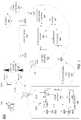
- FIG. 1illustrates an example network related to the present disclosure
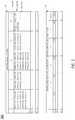
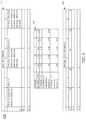
- FIG. 2illustrates an example set of tables comprising a table of raw preference vectors and a table of normalized preference vectors
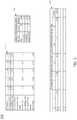
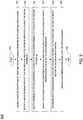
- FIG. 3illustrates an example set of tables comprising a table of preference vector calculations, a table for consumption mode weight calculations, and a table of normalized preference vectors with consumption mode weighting;
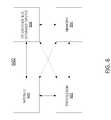
- FIG. 4illustrates an example set of tables associated with converting a raw entity matrix into a media entity matrix that is personalized to a user
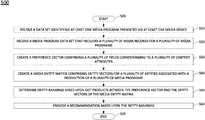
- FIG. 5illustrates a flowchart of a method for determining entity rankings of entities associated with production of media programs and providing a recommendation based upon the entity rankings, according to the present disclosure
- FIG. 6illustrates a high level block diagram of a computing device specifically programmed to perform the steps, functions, blocks and/or operations described herein.
- RSRecommendation Systems
- CBContent Based
- CFCollaborative Filtering
- Examples of the present disclosurecreate an entity matrix comprising rows, or vectors corresponding to different entities associated with different media programs, such as cast members of various film different content, and columns corresponding to attributes of the different media programs, such as keywords, genres, themes, etc.
- a first film in which the cast member has appearedis considered.
- the cast membermay be identified as having appeared in the film based upon public or non-public data source(s).
- the keywords, genres, themes, etc. for the filmare also extracted from the data source(s). Entries are then made in the row for the cast member within the column(s) corresponding to the keywords, genres, themes, etc. that are identified for that particular film.
- Each entry in the entity matrixmay comprise the year of the film and a rating (e.g., scaled from zero to one) for the film.
- the same processis repeated for each film or other media program in which the cast member has appeared.
- the same processis repeated for numerous other cast members in the same film and in different films.
- each cell or fieldi.e., each row-column pair in the entity matrix
- each cell or fieldmay have zero, one, or several entries depending upon whether the particular cast member has appeared in none, few, or many films, shows, etc. which touch upon the keywords, genres, themes, etc. for a column containing the cell or field.
- the entity matrixis normalized based upon the maximum row value for each entity vector, or row.
- a user preference vectormay also be created with columns comprising keywords, genres, themes, and the like. For example, for each media program presentation associated with a user, a device, an account, etc., entries are made in the columns which correspond to the keywords, genres, themes, etc. for the media program.
- the keywords, genres, themes, etc.may be taken from the same data source(s) used to create the entity matrix.
- each columnmay have zero entries, one entry, or more than one entry.
- entries in the user vectormay comprise a year of the media program, a value between zero and one, indicating what percentage of the total duration of the media program was presented, and a weighting factor based upon the mode of consumption, e.g., live programming, on demand, purchase, download, etc.
- a weighting factorbased upon the mode of consumption, e.g., live programming, on demand, purchase, download, etc.
- a user's preferencesare then matched to one or more media entities. In one example, this is accomplished by taking the dot product between the user preference vector and the entity vectors/rows of the entity matrix, and sorting to determine respective ranks. For instance, the top 5, top 10 or some other number of entities that are top ranked may be identified as recommended entities based upon the user's media program consumption history. In one example, media program(s) associated with the recommended entity or entities may also be identified a recommended content.
- the ratings in the entries of the entity matrixmay be weighed against a user epoch.
- entitiessuch as film cast members from decades ago may carry less weight for a user that prefers new content.
- the user epochis considered as the median year among the years of all content that the user has viewed (and a standard deviation).
- the user epochis then used to weight the entity matrix. After weighting, relevance scores between the user and the various entities may be determined (e.g., by the dot product between the user vector and the entity vectors of the entity matrix), and the entities are then sorted into a ranked list, as described above.
- FIG. 1illustrates an example network 100 , related to the present disclosure.
- the network 100connects mobile devices 157 A, 157 B, 167 A and 167 B, and home network devices such as home gateway 161 , set-top boxes (STBs) 162 A, and 162 B, television (TV) 163 A and 163 B, home phone 164 , router 165 , personal computer (PC) 166 , and so forth, with one another and with various other devices via a core network 110 , a wireless access network 150 (e.g., a cellular network), an access network 120 , other networks 140 and/or Internet 145 .
- a wireless access network 150e.g., a cellular network
- an access network 120e.g., other networks 140 and/or Internet 145 .
- wireless access network 150comprises a radio access network implementing such technologies as: global system for mobile communication (GSM), e.g., a base station subsystem (BSS), or IS-95, a universal mobile telecommunications system (UMTS) network employing wideband code division multiple access (WCDMA), or a CDMA3000 network, among others.
- GSMglobal system for mobile communication
- BSSbase station subsystem
- UMTSuniversal mobile telecommunications system
- WCDMAwideband code division multiple access
- CDMA3000CDMA3000 network
- wireless access network 150is shown as a UMTS terrestrial radio access network (UTRAN) subsystem.
- elements 152 and 153may each comprise a Node B or evolved Node B (eNodeB).
- each of mobile devices 157 A, 157 B, 167 A, and 167 Bmay comprise any subscriber/customer endpoint device configured for wireless communication such as a personal computer, a laptop computer, a Wi-Fi device, a Personal Digital Assistant (PDA), a mobile phone, a smartphone, a smart television, or smart TV, an email device, a computing tablet, a messaging device, and the like.
- PDAPersonal Digital Assistant
- any one or more of mobile devices 157 A, 157 B, 167 A, and 167 Bmay have both cellular and non-cellular access capabilities and may further have wired communication and networking capabilities.
- network 100includes a core network 110 .
- core network 110may combine core network components of a cellular network with components of a triple play service network; where triple-play services include telephone services, Internet services and television services to subscribers.
- core network 110may functionally comprise a fixed mobile convergence (FMC) network, e.g., an IP Multimedia Subsystem (IMS) network.
- FMCfixed mobile convergence
- IMSIP Multimedia Subsystem
- core network 110may functionally comprise a telephony network, e.g., an Internet Protocol/Multi-Protocol Label Switching (IP/MPLS) backbone network utilizing Session Initiation Protocol (SIP) for circuit-switched and Voice over Internet Protocol (VoIP) telephony services.
- IP/MPLSInternet Protocol/Multi-Protocol Label Switching
- SIPSession Initiation Protocol
- VoIPVoice over Internet Protocol
- Core network 110may also further comprise a broadcast television network, e.g., a traditional cable provider network or an Internet Protocol Television (IPTV) network, as well as an Internet Service Provider (ISP)) network.
- the network elements 111 A- 111 Dmay serve as gateway servers or edge routers to interconnect the core network 110 with other networks 140 , Internet 145 , wireless access network 150 , access network 120 , and so forth.
- core network 110may also include a plurality of television (TV) servers 112 , a plurality of content servers 113 , a plurality of application servers 114 , an advertising server 117 , and a recommendation server 115 (e.g., an application server).
- TVtelevision
- content servers 113e.g., a plurality of content servers 113
- a plurality of application servers 114e.g., an advertising server
- a recommendation server 115e.g., an application server
- core network 110may include one or more television servers 112 for the delivery of television content, e.g., a broadcast server, a cable head-end, a video-on-demand (VoD) server, and so forth.
- core network 110may comprise a video super hub office, a video hub office and/or a service office/central office.
- television servers 112may interact with content servers 113 , advertising server 117 and recommendation server 115 to select which content to provide to the home network 160 and others.
- content servers 113may store scheduled national television broadcast content for a number of television channels, video-on-demand programming, local programming content, and so forth. For example, content providers may upload various contents to the core network to be distributed to various subscribers.
- advertising server 117stores a number of advertisements that can be selected for presentation to viewers, e.g., in the home network 160 and at other downstream viewing locations. For example, advertisers may upload various advertising content to the core network to be distributed to various viewers.
- the access network 120may comprise a Digital Subscriber Line (DSL) network, a broadband cable access network, a Local Area Network (LAN), a cellular or wireless access network, a 3 rd party network, and the like.
- DSLDigital Subscriber Line
- LANLocal Area Network
- 3 rd party networke.g., the operator of core network 110 may provide a cable television service, an IPTV service, or any other type of television service to subscribers via access network 120 .
- access network 120may include a node 122 , e.g., a mini-fiber node (MFN), a video-ready access device (VRAD) or the like.
- node 122may be omitted, e.g., for fiber-to-the-premises (FTTP) installations.
- Access network 120may also transmit and receive communications between home network 160 and core network 110 relating to voice telephone calls, communications with web servers via the Internet 145 and/or other networks 140 , and so forth.
- the network 100may provide television services to home network 160 via satellite broadcast.
- ground station 130may receive television content from television servers 112 for uplink transmission to satellite 135 .
- satellite 135may receive television content from ground station 130 and may broadcast the television content to satellite receiver 139 , e.g., a satellite link terrestrial antenna (including satellite dishes and antennas for downlink communications, or for both downlink and uplink communications), as well as to satellite receivers of other subscribers within a coverage area of satellite 135 .
- satellite 135may be controlled and/or operated by a same network service provider as core network 110 .
- satellite 135may be controlled and/or operated by a different entity and may carry television broadcast signals on behalf of core network 110 .
- core network 110may include various application servers 114 .
- application servers 114may be implemented to provide certain functions or features, e.g., a Serving—Call Session Control Function (S-CSCF), a Proxy—Call Session Control Function (P-CSCF), or an Interrogating—Call Session Control Function (I-CSCF), one or more billing servers for billing one or more services, including cellular data and telephony services, wire-line phone services, Internet access services, and television services.
- S-CSCFServing—Call Session Control Function
- P-CSCFProxy—Call Session Control Function
- I-CSCFInterrogating—Call Session Control Function
- billing serversfor billing one or more services, including cellular data and telephony services, wire-line phone services, Internet access services, and television services.
- Application servers 114may also include a Home Subscriber Server/Home Location Register (HSS/HLR) for tracking cellular subscriber device location and other functions.
- HSS/HLR
- An HSSrefers to a network element residing in the control plane of an IMS network that acts as a central repository of all customer specific authorizations, service profiles, preferences, etc.
- Application servers 114may also include an IMS media server (MS) for handling and terminating media streams to provide services such as announcements, bridges, and Interactive Voice Response (IVR) messages for VoIP and cellular service applications. The MS may also interact with customers for media session management.
- application servers 114may also include a presence server, e.g., for detecting a presence of a user. For example, the presence server may determine the physical location of a user or whether the user is “present” for the purpose of a subscribed service, e.g., online for a chatting service and the like.
- Application servers 114may further include business information database (BID) storage servers. For instance, the network operator of core network 110 may receive and store third-party information relating to subscribers.
- BIDbusiness information database
- application servers 114may include data storage servers to receive and store third-party information regarding the media programs (e.g., movies, television programming, and other content) maintained within content servers 113 and/or other media content.
- application servers 114comprising one or more data storage servers may receive a media program data set that includes a plurality of media records for a plurality of media programs from a device of a third-party, e.g., via the Internet 145 , other networks 140 , etc.
- the third-partymay comprise, for example, an entity that maintains a database storing information for various media programs, entities that are associated with such media programs, scores, or ratings for such media programs given by critics and/or the general public, and so forth.
- application servers 114may represent a distributed file system, e.g., a Hadoop® Distributed File System (HDFSTM), or the like.
- the application servers 114may receive and store multiple media program data sets from different third-parties.
- the application servers 114may also store user preference vectors and a media entity matrix, which may be generated from one or more media program data sets. It should be noted that the foregoing are only several examples of the types of relevant application servers 114 that may be included in core network 110 for storing information relevant to providing personalized content to a subscriber.
- home network 160may include a home gateway 161 , which receives data/communications associated with different types of media, e.g., television, phone, and Internet, and separates these communications for the appropriate devices.
- the data/communicationsmay be received via access network 120 and/or via satellite receiver 139 , for instance.
- television datais forwarded to set-top boxes (STBs) 162 A, and 162 B to be decoded and forwarded to televisions 163 A, and 163 B for presentation.
- STBsset-top boxes
- telephone datais sent to and received from home phone 164 ;
- Internet communicationsare sent to and received from router 165 , which may be capable of both wired and/or wireless communication.
- router 165receives data from and sends data to the appropriate devices, e.g., personal computer (PC) 166 , mobile devices 167 A, and 167 B, and so forth.
- router 165may further communicate with TV (broadly a display) 163 A and/or 163 B, e.g., where one or both of the televisions is a smart TV.
- core network 110also includes a recommendation server 115 .
- the recommendation server 115may comprise a computing system or server, such as computing system 600 depicted in FIG. 6 , and may be configured to provide one or more operations or functions for determining entity rankings of entities associated with production of media programs and providing a recommendation based upon the entity rankings, as described herein.
- the terms “configure” and “reconfigure”may refer to programming or loading a computing device with computer-readable/computer-executable instructions, code, and/or programs, e.g., in a memory, which when executed by a processor of the computing device, may cause the computing device to perform various functions.
- recommendation server 115may receive a data set identifying at least one media program presented via at least one media device, create a user preference vector based upon the data set, create a media entity matrix based upon a media program data set (e.g., stored by one or more of application servers 114 ), determine entity rankings based upon dot products between the preference vector and entity vectors of the media entity matrix, and provide a recommendation, e.g., a recommended entity, such as an actor/actress, director, composer, etc., or a recommended media program, based upon the ranking.
- a recommendatione.g., a recommended entity, such as an actor/actress, director, composer, etc., or a recommended media program, based upon the ranking.
- the data set identifying at least one media program presented via at least one media devicemay be received from at least one of television servers 112 .
- the at least one of television servers 112may track the presentation of media programs via media devices such as set top boxes 161 A and 162 B, TVs 163 A and 163 B, home gateway 161 , and so forth.
- the at least one of television servers 112may track the presentation of media programs via multiple media devices associated with home network 160 , a subscriber account associated with home network 160 , or for individual viewers associated with home network 160 and/or the subscriber account.
- the data setmay be received from at least one of application servers 114 .
- the at least one of application servers 114may track media programs presented via the media devices mentioned above, as well as media programs presented via PC 166 , mobile devices 157 A, 157 B, 167 A and 167 B, and so forth. For instance, if an individual is a subscriber associated with home network 160 and is also a subscriber associated with mobile device 157 B, then media presented via mobile device 157 B may be tracked and aggregated with media program presentation information relating to the subscriber gathered from media programs that are presented via one or more media devices in home network 160 .
- any one or more devices within home network 160 and/or core network 110may be configured to create a record noting the presentation of a particular media program via a media device and to report the presentation of the particular media program to the at least one of television servers 112 and/or the at least one of application servers 114 .
- the recommendation generated by recommendation server 115may be passed to television servers 112 for presentation via the media device.
- television servers 112may send instructions to STB 162 A and/or STB 162 B via home gateway 161 to display the recommendation via TV 163 A and/or TV 163 B on a portion of a home screen, a screen presenting a programming guide, a screen for video-on-demand media content selection, and so forth.
- the recommendationmay be transmitted to a user/subscriber associated with home network 160 via email, or in connection with the viewing of additional media program(s) via PC 166 , mobile devices 167 A and 167 B, and so forth. Further details regarding the functions that may be implemented by recommendation server 115 are discussed in greater detail below in connection with the example method 500 of FIG. 5 .
- network 100may be implemented in a different form than that illustrated in FIG. 1 , or may be expanded by including additional endpoint devices, access networks, network elements, application servers, etc. without altering the scope of the present disclosure.
- core network 110is not limited to an IMS network.
- Wireless access network 150is not limited to a UMTS/UTRAN configuration.
- the present disclosureis not limited to an IP/MPLS network for VoIP telephony services, or any particular type of broadcast television network for providing television services, and so forth.
- an Internet based music streaming servicemay be provided that tracks the presentation of music content via one or more media devices associated with a user, and may generate recommended songs, albums, artists, bands/groups, etc.
- FIG. 2illustrates an example set 200 comprising a table 210 of raw preference vectors and a table 220 of normalized preference vectors calculated therefrom.
- the table 210includes a number of preference vectors for users U 1 , U 2 . . . Un, where n is the total number of users.
- the raw preference vector for user U 1i.e., the row of table 210 corresponding to U 1
- the fields, or columnscorrespond to different attributes of various media programs that may be presented (e.g., viewed, watched, listened to, etc.) via one or more devices associated with the user U 1 .
- the attributesmay include themes, subject matter, moods, genres, character types, keywords, and the like which relate to the various media programs.
- column 1 in table 210(and the fields of each raw preference vector associated with column 1 ) may relate to a genre of “western”, while column 7 may correspond to “documentary”.
- there may be additional columns/fieldswhich are omitted from the illustration.
- there may be additional columns/fields 2 - 6which relate to other genres.
- the fields/columnshave been omitted from illustration in the figure.
- each entrycomprises a year followed by a colon and a number ranging between 0.01 and 1.
- the yearrelates to a year in which a particular media program was produced.
- the number between 0.01 and 1correspond to a percentage of the total duration of the media program which has been presented via the device(s) associated with the user U 1 .
- the first entry in the field of column 1is “2003:0.72”.
- a media program from the year 2003was presented via a device associated with the user U 1 , and 72 percent of the total media program was presented.
- each media programmay have multiple attributes. For example, a film may be categorized as both a “western” and a “comedy”. Thus, there may be entries in multiple fields/columns for the same media program. In the example, of FIG.
- media program consumption data relating to user U 1may be collected and corresponding entries may be populated into the raw preference vector for user U 1 in the table 210 .
- a normalized preference vectormay then be calculated from the raw user preference and populated into table 220 .
- the raw preference vectormay be created in table 210 and a normalized preference vector may be derived therefrom when user U 1 consumes an initial media program.
- the raw preference vectormay be updated in table 210 as the user U 1 consumes more media programming.
- the normalized preference vectormay also be updated, e.g., as the media programming is consumed, or on a periodic basis or other basis, such as once per hour, once per day, etc.
- a normalized preference vectormay be generated and stored in table 220 .
- the table 220has the same columns as contained in the table 210 (and hence the preference vectors of table 220 have the same fields as the raw preference vectors of table 210 ).
- a (normalized) preference vectormay be calculated, e.g., using sum normalization, as follows. For each field of the raw preference vector for user U 1 in table 210 , the second portions of all of the entries (e.g., the percentage of the total duration of the media program which has been presented) are cumulated/totaled to generate per-field totals.
- the per-field totalsare then summed, and the per-field total for each field is then divided by this sum to generate the entry for the same corresponding field/column within the normalized preference vector for user U 1 within table 220 .
- the results of such calculationsare shown in the fields of the preference vector for user U 1 , i.e., the first row of table 220 corresponding to U 1 .
- Additional normalized preference vectors for users U 2 -Unmay be similarly derived from the corresponding raw preference vectors of table 210 .
- the normalized preference vectors within table 220may also include a field for a user epoch.
- the preference vectorincludes then entry “2000:8” in the “epoch” field/column.
- the epochindicates a time period range associated with the media programming consumption associated with the user. For instance, “2000” indicates the mean of the years of the media programs consumed by user U 1 with a standard deviation of “8” years indicated by the latter part of the entry.
- “2000”indicates the mean of the years of the media programs consumed by user U 1 with a standard deviation of “8” years indicated by the latter part of the entry.
- the purpose of the user epochis described further detail below in connection with the example of FIG. 4 .
- FIG. 3illustrates and additional set 300 comprising a table 310 of preference vector calculations, a table 310 for consumption mode weight calculations, and a table 330 of normalized preference vectors with consumption mode weighting.
- Table 310illustrates calculations for the cumulative and normalized values for the fields of the (normalized) preference vector for user U 1 that appear in table 220 of FIG. 2 . These calculations are illustrated in the first and second rows of table 310 , respectively labeled as “U 1 Cumulative” and “U 1 Normalized”.
- Table 310also illustrates calculations for the cumulative and normalized values for the fields of a preference vector for user U 1 that are consumption mode weighted.
- table 320shows the results of consumption mode weight calculations for four modes of consumption in accordance with Equation 1 and Equation 2 below:
- consumption_mode_interim_factor_ n(mode_ n _count ⁇ total_event_count) ⁇ circumflex over ( ) ⁇ 2/total_event_count Equation 1:
- consumption_mode_weight_ nconsumption_mode_interim_factor_ n /sum_consumption_mode_interim_factors Equation 2:
- “mode_n_count”is the number of times that a mode “n” of consumption was used to present media programs associated with the user
- “total_event_count”is the total number of media programs presented via all modes of consumption under consideration.
- “consumption_mode_weight_n”is the weighting factor to be used in weighting entries associated with the mode “n” of consumption. It should be noted that “consumption_mode_interim_factor_n” is a variable that relates Equation 1 to Equation 2. However, in another example, Equations 1 and 2 may be collapsed into a single equation which omits this variable.
- the calculations of table 320may be related to the consumption of media programs regarding the same user U 1 discussed above in connection with the example of FIG. 2 .
- the quantities of media programming assumed to be consumed by user U 1 in connection with tables 210 and 220are not necessarily a direct correspondence between the quantities of media programming assumed to be consumed by user U 1 in connection with tables 210 and 220 and the quantities of media programming assumed to be consumed by user U 1 in connection with table 320 .
- the example of table 320is provided for illustrative purposes only.
- the consumption_mode_interim_factor_n for the “live” modeis therefore 1.66.
- the consumption_mode_interim_factor_n for the “purchase” mode, the “playback” mode, and the “download” modemay be similarly calculated as 13.06, 9.6 and 13.06 respectively.
- the respective consumption mode weightsare thus calculated as 1.04, 1.35, 1.26 and 1.35.
- consumption mode weightinginvolves, for a respective entry for a media program within a field of a raw preference vector, multiplying the percentage of the total duration of the media program which has been presented of by the consumption mode weighting factor for the mode of consumption that was used in connection with the presentation of that particular media program.
- the consumption mode weighting factorfor the mode of consumption that was used in connection with the presentation of that particular media program.
- the first entrymay be weighted by multiplying the 0.21 by 1.04
- the second entrymay be weighted by multiplying the 0.72 by 1.26
- the third entrymay be weighted by multiplying the 0.80 by 1.35.
- the sum of these weighted entriesis 2.2, which is illustrated in the row of table 310 for “U 1 Cumulative (Consumption Mode Weighted)”, in particular, in the field corresponding to column 20 . Similar calculations may be performed with respect to the entries within fields for the other columns 1 , 7 , 11 and 15 . Example results are illustrated in the further entries within the row of table 310 for “U 1 Cumulative (Consumption Mode Weighted).
- “U 1 Normalized (Consumption Mode Weighted)”may be calculated, e.g., derived from the row of table 310 for “U 1 Cumulative (Consumption Mode Weighted)” in a similar manner as described above in connection with the non-consumption mode weighted (normalized) preference vector of user U 1 that is populated into table 220 of FIG. 2 .
- Additional preference vectors for users U 2 -Unmay be similarly calculated and populated into the table 330 and/or updated as the various users may consume additional media programs.
- FIG. 4illustrates a set 400 of tables associated with converting a raw entity matrix into a media entity matrix 430 that is personalized to a user.
- Table 410is an example of a raw entity matrix.
- the raw entity matrix, table 410comprises a number of raw entity vectors, e.g., rows, for a number of entities E 1 , E 2 . . . En that are associated with the production of various media programs, such as actors/actresses, directors, composers, etc.
- fields of each raw entity vectorare associated with columns of the table 410 . In the present example, there are five columns labeled as columns 1 , 6 , 7 , 9 and 11 , respectively.
- the fields, or columnscorrespond to different attributes of various media programs.
- the fields of each raw entity vector(and hence the columns of the table 410 ) correspond to the same fields as the raw preference vectors and normalized preference vectors described above in connection with tables 210 and 220 of FIG. 2 and table 330 of FIG. 3 .
- various columns/fieldsmay be omitted from table 410 , e.g., columns 2 - 6 , 8 - 10 , etc.
- each entity vector of table 410comprises a year of a media program associated with the entity and a score, or rating for the media program (e.g., scaled between 0 and 1, or zero to 100 percent).
- a number of entriesmay appear in each field, depending upon the number of media programs associated with the entity that relate to the attribute of the field (or column).
- the media programs associated with the entityrelate to at least five attributes, e.g., the attributes assigned to columns 1 , 6 , 7 , 9 and 11 , respectively.
- each media record of the plurality of media recordsincludes: a set of one or more content attributes associated with one of the plurality of media programs, a set of one or more entities associated with the one of the plurality of media programs, a year of the one of the plurality of media programs, and a rating, or score for the one of the plurality of media programs.
- the ratings/scoresmay comprise media critic ratings or average user ratings, for example.
- the attributes of the media programmay be identified by the user who are providing the ratings, by one or more media critics, by an editor or a curator of the media program data set, and so forth.
- Table 420illustrates calculations for generating a normalized entity vector and a normalized, epoch weighted entity vector for entity E 1 .
- the first row “E 1 Cumulative”comprises the cumulative sum of all of the scores/ratings for each of the respective fields/columns.
- the second row “E 1 Normalized”comprises the cumulative sums for each of the respective fields/columns, divided by the highest cumulative sums selected from all of the respective fields in the row above for “E 1 Cumulative”, e.g., a max-value normalization.
- the cumulative sums in the fields of columns 1 , 6 , 7 , 9 , and 11are divided by 5.85, the highest cumulative sum, which is calculated for the field of column 11 .
- the normalized scores/ratingstherefore appear as the entries within the second row of table 420 for “E 1 Normalized”.
- an entity matrix, and the entity vectors therein,may be personalized to a user. More specifically, the entity matrix may be personalized to the user based upon the user epoch.
- the user epochindicates a range of years associated with the media programming consumption of a user. For instance, with respect to the user preference vector for user U 1 contained in table 330 of FIG. 3 , the user epoch is given by “2000:8”, where “2000” indicates the mean of the years of the media programs consumed by user U 1 . A standard deviation of “8” years is indicated by the latter part of the entry. In other words, the user epoch is the year range of 1992-2008.
- weight (y)is a weight factor
- xis one of the limits of the epoch range
- yis the year of a media program
- UDFis a user-defined factor.
- the UDFmay be selected to be 0.9.
- the first entry in field/column 1 for entity E 1 in table 410is “2002:0.71”. Since the year 2002 is within the epoch range of user U 1 (1992-2008), the score, 0.71, is unmodified. However, the next entry is “2012:0.64”. Since 2012 is outside of the epoch range, the weight factor is calculated as 0.9 ⁇ circumflex over ( ) ⁇
- 0.6561 according to Equation 3.
- the score of 0.64is modified by multiplying by the weight factor 0.6561, resulting in a modified score of 0.42 (rounded to two decimal places).
- the entries in the respective fields/columns of the raw entity vector for entity E 1are processed in this way, and then the resulting scores are summed.
- An example of the result of such calculationsis illustrated in the third row of table 420 “E 1 Cumulative (User Epoch Weighted).”
- an entity vector personalized to the user U 1may further be generated by (max-value) normalizing the cumulative (user epoch weighted) scores in each of the fields of the entity vector for entity E 1 .
- the fourth row of table 420 “E 1 Normalized User Epoch Weighted”may comprise the results of dividing each of the entries in the third row of table 420 by the maximum value, e.g., 5.67 from field/column 11 .
- table 430comprises a media entity matrix of entity vectors personalized to a user, e.g., user U 1 .
- a usere.g., user U 1 .
- An exampleis given in the first row where entries of the entity vector for entity E 1 are personalized to the user U 1 .
- the entriesare the same as the entries of the last row in table 420 . Similar calculations may be performed to populate the entity vectors of further rows of the personalized media entity matrix of table 430 .
- examples of the present disclosuremay determine entity rankings of entities associated with production of media programs and provide a recommendation based upon the entity rankings.
- the entity rankingsmay be determined by taking dot products between a user preference vector and the entity vectors of a media entity matrix.
- the columns/fields of the table 430may be the same columns/fields as contained within the table 220 of FIG. 2 and table 330 of FIG. 3 .
- the dot product between a user preference vector for user U 1e.g., from table 220 (non-consumption mode weighted) or table 330 (consumption mode weighted)
- an entity vector for entity E 1e.g., from table 430
- a ranked list of entitiesmay thus be created, where entities having entity vectors resulting in greater valued dot products (e.g., with respect to a normalized preference vector of user U 1 ) may be ranked higher than entity vectors resulting in lower valued dot products.
- the recommendationmay comprise a recommended entity, such as an actor/actress, director, composer, etc., or a recommended media content, based upon the ranking.
- a recommended entitysuch as an actor/actress, director, composer, etc.
- media programming associated with the top entity, the top five entities, the top 10 entities, etc.may be provided as recommended media programming.
- the dot productsmay be calculated with respect to entity vectors from a personalized media entity matrix (e.g., table 430 ).
- a non-personalized media entity matrixmay be utilized.
- a media entity matrixmay include entity vectors that are normalized, such as the second row of table 420 (“E 1 Normalized”), but which have not had entries personalized to a user epoch, e.g., according to Equation 3 above.
- FIGS. 2-4are provided for illustrative purposes, and that different data structures, different operations, and so forth may be implemented in connection with additional examples of the present disclosure.
- the preference vectors of tables 210 and 220 of FIG. 2 and table 330 of FIG. 3are illustrated as comprising rows of the respective tables. However, in another example, the preference vectors may be arranged as columns.
- the raw preference vectors and normalized preference vectorsare illustrated separately in connection with tables 210 and 220 , in another example, a raw preference vector for a user and a corresponding normalized preference vector may be considered as the same data structure, but at different stages of processing, e.g., within the creation of the normalized preference vector being the final stage.
- the entity vectors and the entity matrices of tables 410 and 430 of FIG. 4may similarly take a different form.
- the epochmay be omitted as a field within the normalized preference vectors, and may be stored in a separate table or list of user epochs, for example.
- FIGS. 2-4are described in connection with the media program consumption of various users, it should be understood that the foregoing is equally applicable to media program consumption on a per-device basis, on a per-account basis, etc.
- the preference vectors for “users” U 1 -Unmay represent individual users, individual media devices, or group of devices associated with users, accounts, households, etc. Thus, these and other modifications may be implemented in additional examples of the present disclosure.
- FIG. 5illustrates a flowchart of a method 500 for determining entity rankings of entities associated with production of media programs and providing a recommendation based upon the entity rankings.
- the method 500is performed by the recommendation server 115 of FIG. 1 , any one or more components thereof (e.g., a processor performing operations stored in and loaded from a memory), or any one or more other devices in a communication network, such as communication network 100 of FIG. 1 .
- the method 500may be performed by the recommendation server 115 in conjunction with one or more application servers 114 functioning as data storage devices.
- the method 500may be performed by a set top box.
- the steps, functions, or operations of method 500may be performed by a computing device or system 600 , and/or processor 602 as described in connection with FIG. 6 below.
- the computing device or system 600may represent any one or more components of FIG. 1 that are configured to perform the steps, functions and/or operations of the method 500 .
- the method 500is described in greater detail below in connection with an example performed by a processor, such as processor 502 .
- the method 500begins in step 505 and proceeds to step 510 .
- the processorreceives a data set identifying at least one media program presented via at least one media device.
- the at least one media devicemay be associated with a user and/or a subscriber account.
- the data setmay be received from any one or more of a set top box, a television server, a smart TV, a cellular smart phone or other computing device, and so forth.
- the processormay receive a media program data set that includes a plurality of media records for a plurality of media programs.
- the plurality of media programsmay include the at least one media program presented via the at least one media device.
- each media record of the plurality of media recordsincludes a set of one or more content attributes associated with one of the plurality of media programs, a set of one or more entities associated with the one of the plurality of media programs, a year of the one of the plurality of media programs, and a score for the one of the plurality of media programs.
- the media program data setis received from a device of a third-party, such as an entity that maintains a database storing information for various media programs, entities that are associated with such media programs, ratings for such media programs by critics and/or the general public, and so forth.
- the media programsmay comprise, for example, films, movies, television programing, music programming, and so forth.
- the processormay receive and store multiple media program data sets from different third-parties. For instance, the processor may combine multiple media program data sets into a composite media program data set.
- the processormay receive the media program data set(s) from one or more data storage devices, e.g., of a television service provider network. For instance, the one or more data storage devices may have previously received and stored the media program data set(s).
- the processorcreates a preference vector comprising a plurality of fields corresponding to a plurality of content attributes.
- the creating the preference vectorcomprises generating preference vector entries in fields of the plurality of fields that correspond to content attributes associated with the at least one media program presented via the at least one media device.
- each of the preference vector entriescomprise a playback duration of one of the at least one media program presented via the at least one media device and a year of the one of the at least one media program presented via the at least one media device.
- the processormay retrieve at least one media record associated with the at least one media program from the media program data set received at optional step 520 , retrieve the content attributes from the at least one media record, and create the preference vector entries in the fields of the plurality of fields of the preference vector corresponding to the content attributes.
- a preference vector entryis created in one of the plurality of fields of the preference vector when a content attribute from the media record for the media program corresponds to the one of the plurality of fields.
- each field of the plurality of fields of the preference vectormay have zero preference vector entries, one preference vector entry, or more than one preference vector entry.
- each of the preference vector entries in the fieldrelates to a different media program.
- the creating the preference vectorfurther includes summing playback durations percentages of preference vector entries within the fields of the plurality of fields of the preference vector to generate cumulative playback duration percentages and normalizing the cumulative playback duration percentages, e.g., by sum normalizing.
- the playback duration percentagesare consumption mode weighted prior to the summing.
- the playback duration percentagesmay be consumption mode weighted according to the calculations of the example Equations 1 and 2 above.
- the processorcreates a media entity matrix comprising entity vectors for a plurality of entities associated with a production of a plurality of media programs.
- the plurality of media programscomprises video programs.
- each entity of the plurality of entitiesmay comprise: a cast member, a director, a production company, a composer, a writer, a host, a narrator, an illustrator, etc.
- the plurality of media programscomprises audio programs. Accordingly, each entity of the plurality of entities may comprise: a musician, a performer, a songwriter, a singer, a band, a band member, a record label, a production company, a narrator, a reporter, a host, etc.
- each entity vectorcomprises the plurality of fields corresponding to the plurality of content attributes (i.e., the same content attributes for the fields of the preference vector).
- the creating the media entity matrix at step 540comprises, for each entity vector for each of the plurality of entities, generating matrix entries in fields of the plurality of fields that correspond to content attributes associated with at least one media program associated with the entity.
- each matrix entrycomprises a year of one of the at least one media program associated with the entity and a score of the one of the at least one media program associated with the entity.
- the plurality of media programs of the media program data set received at optional step 520may include the at least one media program presented via the at least one media device and the at least one media program associated with the entity.
- the at least one media program presented via the at least one media device and the at least one media program associated with the entitymay include a same media program or media programs.
- the processormay determine, from the media program data set received at optional step 520 , the content attributes associated with the at least one media program associated with the entity, the year of the one of the at least one media program associated with the entity, and the score of the one of the at least one media program associated with the entity.
- the scoreis weighted by an epoch factor that is based upon a time span that is associated with the at least one media program presented via the media device.
- the time spancomprises a range of years based upon a mean of the years of the at least one media program presented via the media device and a standard deviation.
- the matrix entriesis weighted by the epoch factor by multiplying scores of the matrix entries by the epoch factor.
- the epoch factoris a value of one (1) when the year of the matrix entry is within the range of years, and when the year of the matrix entry is not within the range of years, the epoch factor is a value calculated by raising a distribution factor to a power comprising a difference between a terminal year of the range of years and the year of the matrix entry, e.g., according to Equation 3 above.
- the distribution factorcomprises a value of 0.9.
- the creating the media entity matrixfurther comprises, for each entity vector for each of the plurality of entities: summing scores of matrix entries within the fields of the plurality of fields to generate cumulative scores for the fields of the plurality of fields, and normalizing the cumulative scores.
- the normalizingcomprises max-value normalizing.
- the processordetermines entity rankings based upon dot products between the preference vector and the entity vectors of the media entity matrix. For example, a dot product between the preference vector and one of the entity vectors may measure a relative degree of similarity between the attributes of media programs presented via the at least one media device, and the media programs that are associated with the entity of the entity vector. In one example, a ranked list of entities may thus be created, where entities having entity vectors resulting in greater valued dot products may be ranked higher than entity vectors resulting in lower valued dot products.
- the processorprovides a recommendation based upon the entity rankings.
- the providing the recommendationcomprises transmitting the recommendation to the media device.
- the recommendationincludes a recommended entity based upon the entity rankings.
- the recommended entitymay comprise the top ranked entity based upon the results of step 550 , a top five ranked entity, a top ten ranked entity, or the like.
- the recommendationmay include a recommended media program that is associated with a recommended entity based upon the entity rankings.
- the recommendationmay include a film, television program, a song, an album, or the like that is associated with the recommended entity.
- step 560the method 500 proceeds to step 595 where the method ends.
- one or more steps of method 500may include a storing, displaying and/or outputting step as required for a particular application.
- any data, records, fields, and/or intermediate results discussed in the methodcan be stored, displayed and/or outputted to another device as required for a particular application.
- operations, steps or blocks in FIG. 5 that recite a determining operation or involve a decisiondo not necessarily require that both branches of the determining operation be practiced. In other words, one of the branches of the determining operation can be deemed as an optional step.
- operations, steps or blocks of the above described method(s)can be combined, separated, and/or performed in a different order from that described above, without departing from the example embodiments of the present disclosure.
- FIG. 6depicts a high-level block diagram of a computing device specifically programmed to perform the functions described herein.
- any one or more components or devices illustrated in FIG. 1 or described in connection with the method 500may be implemented as the system 600 .
- FIG. 6depicts a high-level block diagram of a computing device specifically programmed to perform the functions described herein.
- any one or more components or devices illustrated in FIG. 1 or described in connection with the method 500may be implemented as the system 600 .
- FIG. 6depicts a high-level block diagram of a computing device specifically programmed to perform the functions described herein.
- any one or more components or devices illustrated in FIG. 1 or described in connection with the method 500may be implemented as the system 600 .
- FIG. 6depicts a high-level block diagram of a computing device specifically programmed to perform the functions described herein.
- the system 600comprises a hardware processor element 602 (e.g., a microprocessor, a central processing unit (CPU) and the like), a memory 604 , (e.g., random access memory (RAM), read only memory (ROM), a disk drive, an optical drive, a magnetic drive, and/or a Universal Serial Bus (USB) drive), a module 605 for determining entity rankings of entities associated with production of media programs and providing a recommendation based upon the entity rankings, and various input/output devices 606 , e.g., a camera, a video camera, storage devices, including but not limited to, a tape drive, a floppy drive, a hard disk drive or a compact disk drive, a receiver, a transmitter, a speaker, a display, a speech synthesizer, an output port, and a user input device (such as a keyboard, a keypad, a mouse, and the like).
- a hardware processor element 602e.g., a microprocessor,
- the general-purpose computermay employ a plurality of processor elements.
- the general-purpose computermay employ a plurality of processor elements.
- the general-purpose computer of this Figureis intended to represent each of those multiple general-purpose computers.
- one or more hardware processorscan be utilized in supporting a virtualized or shared computing environment.
- the virtualized computing environmentmay support one or more virtual machines representing computers, servers, or other computing devices. In such virtualized virtual machines, hardware components such as hardware processors and computer-readable storage devices may be virtualized or logically represented.
- the present disclosurecan be implemented in software and/or in a combination of software and hardware, e.g., using application specific integrated circuits (ASIC), a programmable logic array (PLA), including a field-programmable gate array (FPGA), or a state machine deployed on a hardware device, a general purpose computer or any other hardware equivalents, e.g., computer readable instructions pertaining to the method(s) discussed above can be used to configure a hardware processor to perform the steps, functions and/or operations of the above disclosed method(s).
- ASICapplication specific integrated circuits
- PDAprogrammable logic array
- FPGAfield-programmable gate array
- instructions and data for the present module or process 405 for determining entity rankings of entities associated with production of media programs and providing a recommendation based upon the entity rankingscan be loaded into memory 604 and executed by hardware processor element 602 to implement the steps, functions or operations as discussed above in connection with the example method 500 .
- a hardware processorexecutes instructions to perform “operations”, this could include the hardware processor performing the operations directly and/or facilitating, directing, or cooperating with another hardware device or component (e.g., a co-processor and the like) to perform the operations.
- the processor executing the computer readable or software instructions relating to the above described method(s)can be perceived as a programmed processor or a specialized processor.
- the present module 605 for determining entity rankings of entities associated with production of media programs and providing a recommendation based upon the entity rankings (including associated data structures) of the present disclosurecan be stored on a tangible or physical (broadly non-transitory) computer-readable storage device or medium, e.g., volatile memory, non-volatile memory, ROM memory, RAM memory, magnetic or optical drive, device or diskette and the like.
- the computer-readable storage devicemay comprise any physical devices that provide the ability to store information such as data and/or instructions to be accessed by a processor or a computing device such as a computer or an application server.
Landscapes
- Engineering & Computer Science (AREA)
- Physics & Mathematics (AREA)
- Theoretical Computer Science (AREA)
- General Physics & Mathematics (AREA)
- Data Mining & Analysis (AREA)
- Mathematical Physics (AREA)
- General Engineering & Computer Science (AREA)
- Databases & Information Systems (AREA)
- Pure & Applied Mathematics (AREA)
- Mathematical Optimization (AREA)
- Mathematical Analysis (AREA)
- Computational Mathematics (AREA)
- Library & Information Science (AREA)
- Multimedia (AREA)
- Algebra (AREA)
- Software Systems (AREA)
- Computing Systems (AREA)
- Two-Way Televisions, Distribution Of Moving Picture Or The Like (AREA)
Abstract
Description
consumption_mode_interim_factor_n=(mode_n_count−total_event_count){circumflex over ( )}2/total_event_count Equation 1:
consumption_mode_weight_n=consumption_mode_interim_factor_n/sum_consumption_mode_interim_factors Equation 2:
weight(y)=UDF{circumflex over ( )}51 x−y| Equation 3:
Claims (20)
Priority Applications (1)
| Application Number | Priority Date | Filing Date | Title |
|---|---|---|---|
| US16/292,063US11100157B2 (en) | 2016-10-10 | 2019-03-04 | Determining recommended media programming from sparse consumption data |
Applications Claiming Priority (2)
| Application Number | Priority Date | Filing Date | Title |
|---|---|---|---|
| US15/289,626US10223359B2 (en) | 2016-10-10 | 2016-10-10 | Determining recommended media programming from sparse consumption data |
| US16/292,063US11100157B2 (en) | 2016-10-10 | 2019-03-04 | Determining recommended media programming from sparse consumption data |
Related Parent Applications (1)
| Application Number | Title | Priority Date | Filing Date |
|---|---|---|---|
| US15/289,626ContinuationUS10223359B2 (en) | 2016-10-10 | 2016-10-10 | Determining recommended media programming from sparse consumption data |
Publications (2)
| Publication Number | Publication Date |
|---|---|
| US20190197051A1 US20190197051A1 (en) | 2019-06-27 |
| US11100157B2true US11100157B2 (en) | 2021-08-24 |
Family
ID=61829662
Family Applications (2)
| Application Number | Title | Priority Date | Filing Date |
|---|---|---|---|
| US15/289,626Active2037-08-23US10223359B2 (en) | 2016-10-10 | 2016-10-10 | Determining recommended media programming from sparse consumption data |
| US16/292,063Active2037-05-23US11100157B2 (en) | 2016-10-10 | 2019-03-04 | Determining recommended media programming from sparse consumption data |
Family Applications Before (1)
| Application Number | Title | Priority Date | Filing Date |
|---|---|---|---|
| US15/289,626Active2037-08-23US10223359B2 (en) | 2016-10-10 | 2016-10-10 | Determining recommended media programming from sparse consumption data |
Country Status (1)
| Country | Link |
|---|---|
| US (2) | US10223359B2 (en) |
Families Citing this family (13)
| Publication number | Priority date | Publication date | Assignee | Title |
|---|---|---|---|---|
| US10223359B2 (en)* | 2016-10-10 | 2019-03-05 | The Directv Group, Inc. | Determining recommended media programming from sparse consumption data |
| US20180109827A1 (en)* | 2016-10-13 | 2018-04-19 | International Business Machines Corporation | User affinity for video content and video content recommendations |
| US10896424B2 (en)* | 2017-10-26 | 2021-01-19 | Mastercard International Incorporated | Systems and methods for detecting out-of-pattern transactions |
| TW201926212A (en)* | 2017-11-29 | 2019-07-01 | 財團法人資訊工業策進會 | Device recommendation system and method |
| CN109993595B (en)* | 2017-12-29 | 2024-06-21 | 北京三星通信技术研究有限公司 | Method, system and device for personalized recommendation of goods and services |
| US10768895B2 (en)* | 2018-11-08 | 2020-09-08 | Movidius Limited | Dot product calculators and methods of operating the same |
| CN110457596A (en)* | 2019-08-01 | 2019-11-15 | 北京明略软件系统有限公司 | A kind of resource recommendation processing method and processing device |
| CN110472151B (en)* | 2019-08-14 | 2022-05-24 | 腾讯科技(深圳)有限公司 | Media data pushing method, device and computer readable storage medium |
| CN113159808B (en)* | 2020-01-22 | 2025-07-18 | 北京京东尚科信息技术有限公司 | Method, device, electronic equipment and medium for recommending objects |
| CN111382352B (en)* | 2020-03-02 | 2021-03-26 | 腾讯科技(深圳)有限公司 | Data recommendation method and device, computer equipment and storage medium |
| CN113190702B (en)* | 2021-05-08 | 2023-07-25 | 北京百度网讯科技有限公司 | Method and device for generating information |
| US12120182B2 (en)* | 2021-07-07 | 2024-10-15 | Daily Rays Inc. | Systems and methods for modulating data objects to effect state changes |
| CN116910346A (en)* | 2023-03-08 | 2023-10-20 | 中国移动通信有限公司研究院 | A method, device and equipment for processing user behavior information |
Citations (77)
| Publication number | Priority date | Publication date | Assignee | Title |
|---|---|---|---|---|
| US5483278A (en) | 1992-05-27 | 1996-01-09 | Philips Electronics North America Corporation | System and method for finding a movie of interest in a large movie database |
| US5583763A (en) | 1993-09-09 | 1996-12-10 | Mni Interactive | Method and apparatus for recommending selections based on preferences in a multi-user system |
| US6438579B1 (en) | 1999-07-16 | 2002-08-20 | Agent Arts, Inc. | Automated content and collaboration-based system and methods for determining and providing content recommendations |
| US6446261B1 (en) | 1996-12-20 | 2002-09-03 | Princeton Video Image, Inc. | Set top device for targeted electronic insertion of indicia into video |
| US6545209B1 (en) | 2000-07-05 | 2003-04-08 | Microsoft Corporation | Music content characteristic identification and matching |
| US20050165782A1 (en)* | 2003-12-02 | 2005-07-28 | Sony Corporation | Information processing apparatus, information processing method, program for implementing information processing method, information processing system, and method for information processing system |
| US20060074861A1 (en)* | 2002-09-30 | 2006-04-06 | Adobe Systems Incorporated | Reduction of seach ambiguity with multiple media references |
| US20080215565A1 (en) | 2007-03-01 | 2008-09-04 | Microsoft Corporation | Searching heterogeneous interrelated entities |
| US7434244B2 (en) | 2003-08-28 | 2008-10-07 | Samsung Electronics Co., Ltd. | Method and system for recommending content |
| US20090138457A1 (en)* | 2007-11-26 | 2009-05-28 | Concert Technology Corporation | Grouping and weighting media categories with time periods |
| US20090222857A1 (en) | 2008-02-28 | 2009-09-03 | Satoshi Nagano | Content recommendation apparatus and method |
| US20100251305A1 (en) | 2009-03-30 | 2010-09-30 | Dave Kimble | Recommendation engine apparatus and methods |
| US20100262570A1 (en) | 2009-04-08 | 2010-10-14 | Kei Tateno | Information Processing Apparatus and Method, and Program Thereof |
| US7840986B2 (en) | 1999-12-21 | 2010-11-23 | Tivo Inc. | Intelligent system and methods of recommending media content items based on user preferences |
| US7853600B2 (en) | 1994-11-29 | 2010-12-14 | Pinpoint, Incorporated | System and method for providing access to video programs and other data using customer profiles |
| US20110125763A1 (en)* | 2009-11-24 | 2011-05-26 | Nokia Corporation | Method and apparatus for determining similarity of media interest |
| US20110145263A1 (en) | 2008-09-05 | 2011-06-16 | Takayuki Sakamoto | Content recommendation system, content recommendation method, content recommendation apparatus, program, and information storage medium |
| US20110191716A1 (en) | 2008-09-05 | 2011-08-04 | Takayuki Sakamoto | Content Recommendation System, Content Recommendation Method, Content Recommendation Apparatus, Program, and Information Storage Medium |
| US20120030020A1 (en) | 2010-08-02 | 2012-02-02 | International Business Machines Corporation | Collaborative filtering on spare datasets with matrix factorizations |
| US20120054278A1 (en) | 2010-08-26 | 2012-03-01 | Taleb Tarik | System and method for creating multimedia content channel customized for social network |
| US8204883B1 (en)* | 2008-04-17 | 2012-06-19 | Amazon Technologies, Inc. | Systems and methods of determining genre information |
| US8266157B2 (en) | 2009-08-30 | 2012-09-11 | International Business Machines Corporation | Method and system for using social bookmarks |
| US8301692B1 (en)* | 2009-06-16 | 2012-10-30 | Amazon Technologies, Inc. | Person to person similarities based on media experiences |
| US20120330444A1 (en) | 2011-06-22 | 2012-12-27 | Sloan James N | Method and device for fantasy sport player recommendations |
| US20130073983A1 (en) | 2011-09-21 | 2013-03-21 | Lars Eilstrup Rasmussen | Integrating structured objects and actions generated on external systems into a social networking system |
| US20130110848A1 (en)* | 2011-11-01 | 2013-05-02 | Lemi Technology, Llc | Systems, methods, and computer readable media for generating recommendations in a media recommendation system |
| JP2013109427A (en)* | 2011-11-17 | 2013-06-06 | Nippon Telegr & Teleph Corp <Ntt> | Content recommendation device and method and program |
| CN103167330A (en) | 2011-12-15 | 2013-06-19 | 盛乐信息技术(上海)有限公司 | Method and system for audio/video recommendation |
| US20130178962A1 (en) | 2012-01-06 | 2013-07-11 | Peter C. DiMaria | User interface to media files |
| US20130179786A1 (en) | 2012-01-06 | 2013-07-11 | Film Fresh, Inc. | System for recommending movie films and other entertainment options |
| US20130268557A1 (en) | 2010-12-22 | 2013-10-10 | Thomson Licensing | Method and system for providing media recommendations |
| US20140040274A1 (en)* | 2012-07-31 | 2014-02-06 | Veveo, Inc. | Disambiguating user intent in conversational interaction system for large corpus information retrieval |
| US20140122590A1 (en)* | 2012-11-01 | 2014-05-01 | Lemi Technology, Llc | Systems, methods, and computer readable media for selecting a playhead in social media playback |
| US8805851B2 (en) | 2005-01-07 | 2014-08-12 | Sony Corporation | Information processing apparatus, information processing method, and program |
| US20140280140A1 (en) | 2013-03-14 | 2014-09-18 | The Directv Group, Inc. | Method and system for displaying recommended content such as movies associated with a cluster |
| US20140280223A1 (en)* | 2013-03-13 | 2014-09-18 | Deja.io, Inc. | Media recommendation based on media content information |
| US8843965B1 (en)* | 2000-09-20 | 2014-09-23 | Kaushal Kurapati | Method and apparatus for generating recommendation scores using implicit and explicit viewing preferences |
| US20140331264A1 (en) | 2013-05-01 | 2014-11-06 | Google Inc. | Content annotation tool |
| US20140351207A1 (en) | 2009-07-14 | 2014-11-27 | Sony Corporation | Content recommendation system, content recommendation method, content recommendation device, and information storage medium |
| US20140358898A1 (en)* | 2013-05-31 | 2014-12-04 | Nokia Corporation | Method and apparatus for presenting media to users |
| US20150019640A1 (en) | 2013-07-15 | 2015-01-15 | Facebook, Inc. | Large Scale Page Recommendations on Online Social Networks |
| US20150046951A1 (en) | 2013-08-08 | 2015-02-12 | Peel Technologies, Inc. | Intelligent url system for recommending video programs |
| US20150052003A1 (en) | 2013-08-19 | 2015-02-19 | Wal-Mart Stores, Inc. | Providing Personalized Item Recommendations Using Scalable Matrix Factorization With Randomness |
| US8990403B2 (en) | 2008-10-23 | 2015-03-24 | Samsung Electronics Co., Ltd. | Method and apparatus for recommending content |
| US8996529B2 (en) | 2010-11-16 | 2015-03-31 | John Nicholas and Kristin Gross Trust | System and method for recommending content sources |
| US20150112801A1 (en)* | 2013-10-22 | 2015-04-23 | Microsoft Corporation | Multiple persona based modeling |
| US20150134653A1 (en) | 2013-11-13 | 2015-05-14 | Google Inc. | Methods, systems, and media for presenting recommended media content items |
| US20150142785A1 (en) | 2013-11-18 | 2015-05-21 | Palo Alto Research Center Incorporated | Generalized graph, rule, and spatial structure based recommendation engine |
| WO2015094311A1 (en) | 2013-12-20 | 2015-06-25 | Thomson Licensing | Quote and media search method and apparatus |
| US20150178379A1 (en) | 2002-12-12 | 2015-06-25 | Sony Corporation | Information-processing apparatus, method, system, computer-readable medium and method for automatically recording or recommending content |
| US20150193548A1 (en) | 2014-01-08 | 2015-07-09 | Rovi Technologies Corporation | Recommendation System With Metric Transformation |
| US20150205511A1 (en)* | 2014-01-17 | 2015-07-23 | Apple Inc. | Systems And Methods For An Animated Graphical User Interface |
| US9110955B1 (en)* | 2012-06-08 | 2015-08-18 | Spotify Ab | Systems and methods of selecting content items using latent vectors |
| US20150234457A1 (en) | 2012-10-15 | 2015-08-20 | Umoove Services Ltd. | System and method for content provision using gaze analysis |
| US20150309844A1 (en) | 2012-03-06 | 2015-10-29 | Sirius Xm Radio Inc. | Systems and Methods for Audio Attribute Mapping |
| US9219736B1 (en)* | 2013-12-20 | 2015-12-22 | Google Inc. | Application programming interface for rendering personalized related content to third party applications |
| US20150379021A1 (en) | 2014-06-27 | 2015-12-31 | Sonos, Inc. | Music Streaming Using Supported Services |
| US20160004699A1 (en) | 2012-08-28 | 2016-01-07 | Tencent Technology (Shenzhen) Company Limited | Method and device for recommendation of media content |
| US20160042076A1 (en) | 2014-08-08 | 2016-02-11 | Baidu Online Network Technology (Beijing) Co., Ltd. | Search recommendation method and device |
| US20160071182A1 (en)* | 2014-09-10 | 2016-03-10 | Microsoft Corporation | Multimedia recommendation based on artist similarity |
| US20160098640A1 (en) | 2012-02-02 | 2016-04-07 | Peel Technologies, Inc. | Content Based Recommendation System |
| US20160112761A1 (en)* | 2014-10-20 | 2016-04-21 | United Video Properties, Inc. | Systems and methods for generating media asset recommendations using a neural network generated based on consumption information |
| US20160147767A1 (en)* | 2014-11-24 | 2016-05-26 | RCRDCLUB Corporation | Dynamic feedback in a recommendation system |
| US20160188725A1 (en) | 2014-12-30 | 2016-06-30 | Yahoo! Inc. | Method and System for Enhanced Content Recommendation |
| US20160196580A1 (en)* | 2015-01-02 | 2016-07-07 | Sk Planet Co., Ltd. | System for content recommendation service, content recommendation device and method of operating the same |
| WO2016114653A1 (en) | 2015-01-12 | 2016-07-21 | Relevancy Data Ltd. | Method and computer system for generating a database of movie metadata relating to a plurality of movies, and in-stream video advertising using the database |
| US20170031920A1 (en)* | 2015-07-31 | 2017-02-02 | RCRDCLUB Corporation | Evaluating performance of recommender system |
| US20170083522A1 (en)* | 2015-09-17 | 2017-03-23 | Yahoo! Inc. | Smart Exploration Methods For Mitigating Item Cold-Start Problem In Collaborative Filtering Recommendation Systems |
| US20170094332A1 (en)* | 2015-09-25 | 2017-03-30 | Rovi Guides, Inc. | Methods and systems for managing media subscriptions |
| US9691035B1 (en) | 2014-04-14 | 2017-06-27 | Amazon Technologies, Inc. | Real-time updates to item recommendation models based on matrix factorization |
| US20170193390A1 (en)* | 2015-12-30 | 2017-07-06 | Facebook, Inc. | Identifying Entities Using a Deep-Learning Model |
| US20170206549A1 (en) | 2016-01-18 | 2017-07-20 | Adobe Systems Incorporated | Recommending Advertisements Using Ranking Functions |
| US20170337481A1 (en) | 2016-05-17 | 2017-11-23 | Xerox Corporation | Complex embeddings for simple link prediction |
| US20180089311A1 (en) | 2016-09-29 | 2018-03-29 | Yahoo! Inc. | User Profile Expansion For Personalization and Recommendation |
| US20180101531A1 (en)* | 2016-10-10 | 2018-04-12 | The Directv Group, Inc. | Determining recommended media programming from sparse consumption data |
| US20180150897A1 (en)* | 2016-11-30 | 2018-05-31 | Apple Inc. | Diversity in media item recommendations |
| US10713702B1 (en)* | 2014-09-29 | 2020-07-14 | Groupon, Inc. | System and method for generating purchase recommendations based on geographic zone information |
- 2016
- 2016-10-10USUS15/289,626patent/US10223359B2/enactiveActive
- 2019
- 2019-03-04USUS16/292,063patent/US11100157B2/enactiveActive
Patent Citations (81)
| Publication number | Priority date | Publication date | Assignee | Title |
|---|---|---|---|---|
| US5483278A (en) | 1992-05-27 | 1996-01-09 | Philips Electronics North America Corporation | System and method for finding a movie of interest in a large movie database |
| US5583763A (en) | 1993-09-09 | 1996-12-10 | Mni Interactive | Method and apparatus for recommending selections based on preferences in a multi-user system |
| US7853600B2 (en) | 1994-11-29 | 2010-12-14 | Pinpoint, Incorporated | System and method for providing access to video programs and other data using customer profiles |
| US6446261B1 (en) | 1996-12-20 | 2002-09-03 | Princeton Video Image, Inc. | Set top device for targeted electronic insertion of indicia into video |
| US6438579B1 (en) | 1999-07-16 | 2002-08-20 | Agent Arts, Inc. | Automated content and collaboration-based system and methods for determining and providing content recommendations |
| US7840986B2 (en) | 1999-12-21 | 2010-11-23 | Tivo Inc. | Intelligent system and methods of recommending media content items based on user preferences |
| US6545209B1 (en) | 2000-07-05 | 2003-04-08 | Microsoft Corporation | Music content characteristic identification and matching |
| US8843965B1 (en)* | 2000-09-20 | 2014-09-23 | Kaushal Kurapati | Method and apparatus for generating recommendation scores using implicit and explicit viewing preferences |
| US20060074861A1 (en)* | 2002-09-30 | 2006-04-06 | Adobe Systems Incorporated | Reduction of seach ambiguity with multiple media references |
| US20150178379A1 (en) | 2002-12-12 | 2015-06-25 | Sony Corporation | Information-processing apparatus, method, system, computer-readable medium and method for automatically recording or recommending content |
| US7434244B2 (en) | 2003-08-28 | 2008-10-07 | Samsung Electronics Co., Ltd. | Method and system for recommending content |
| US20050165782A1 (en)* | 2003-12-02 | 2005-07-28 | Sony Corporation | Information processing apparatus, information processing method, program for implementing information processing method, information processing system, and method for information processing system |
| US8805851B2 (en) | 2005-01-07 | 2014-08-12 | Sony Corporation | Information processing apparatus, information processing method, and program |
| US20080215565A1 (en) | 2007-03-01 | 2008-09-04 | Microsoft Corporation | Searching heterogeneous interrelated entities |
| US20090138457A1 (en)* | 2007-11-26 | 2009-05-28 | Concert Technology Corporation | Grouping and weighting media categories with time periods |
| US20090222857A1 (en) | 2008-02-28 | 2009-09-03 | Satoshi Nagano | Content recommendation apparatus and method |
| US8204883B1 (en)* | 2008-04-17 | 2012-06-19 | Amazon Technologies, Inc. | Systems and methods of determining genre information |
| US20110145263A1 (en) | 2008-09-05 | 2011-06-16 | Takayuki Sakamoto | Content recommendation system, content recommendation method, content recommendation apparatus, program, and information storage medium |
| US20110191716A1 (en) | 2008-09-05 | 2011-08-04 | Takayuki Sakamoto | Content Recommendation System, Content Recommendation Method, Content Recommendation Apparatus, Program, and Information Storage Medium |
| US9558501B2 (en) | 2008-09-05 | 2017-01-31 | Sony Corporation | Content recommendation system, content recommendation method, content recommendation apparatus, program, and information storage medium |
| US8990403B2 (en) | 2008-10-23 | 2015-03-24 | Samsung Electronics Co., Ltd. | Method and apparatus for recommending content |
| US20160212484A1 (en) | 2009-03-30 | 2016-07-21 | Time Warner Cable Enterprises Llc | Recommendation engine apparatus and methods |
| US9215423B2 (en) | 2009-03-30 | 2015-12-15 | Time Warner Cable Enterprises Llc | Recommendation engine apparatus and methods |
| US20100251305A1 (en) | 2009-03-30 | 2010-09-30 | Dave Kimble | Recommendation engine apparatus and methods |
| US20100262570A1 (en) | 2009-04-08 | 2010-10-14 | Kei Tateno | Information Processing Apparatus and Method, and Program Thereof |
| US8301692B1 (en)* | 2009-06-16 | 2012-10-30 | Amazon Technologies, Inc. | Person to person similarities based on media experiences |
| US20140351207A1 (en) | 2009-07-14 | 2014-11-27 | Sony Corporation | Content recommendation system, content recommendation method, content recommendation device, and information storage medium |
| US8266157B2 (en) | 2009-08-30 | 2012-09-11 | International Business Machines Corporation | Method and system for using social bookmarks |
| US20110125763A1 (en)* | 2009-11-24 | 2011-05-26 | Nokia Corporation | Method and apparatus for determining similarity of media interest |
| US20120030020A1 (en) | 2010-08-02 | 2012-02-02 | International Business Machines Corporation | Collaborative filtering on spare datasets with matrix factorizations |
| US20120054278A1 (en) | 2010-08-26 | 2012-03-01 | Taleb Tarik | System and method for creating multimedia content channel customized for social network |
| US8996529B2 (en) | 2010-11-16 | 2015-03-31 | John Nicholas and Kristin Gross Trust | System and method for recommending content sources |
| US20130268557A1 (en) | 2010-12-22 | 2013-10-10 | Thomson Licensing | Method and system for providing media recommendations |
| US20120330444A1 (en) | 2011-06-22 | 2012-12-27 | Sloan James N | Method and device for fantasy sport player recommendations |
| US20130073983A1 (en) | 2011-09-21 | 2013-03-21 | Lars Eilstrup Rasmussen | Integrating structured objects and actions generated on external systems into a social networking system |
| US20130110848A1 (en)* | 2011-11-01 | 2013-05-02 | Lemi Technology, Llc | Systems, methods, and computer readable media for generating recommendations in a media recommendation system |
| JP2013109427A (en)* | 2011-11-17 | 2013-06-06 | Nippon Telegr & Teleph Corp <Ntt> | Content recommendation device and method and program |
| CN103167330A (en) | 2011-12-15 | 2013-06-19 | 盛乐信息技术(上海)有限公司 | Method and system for audio/video recommendation |
| US20130179786A1 (en) | 2012-01-06 | 2013-07-11 | Film Fresh, Inc. | System for recommending movie films and other entertainment options |
| US20130178962A1 (en) | 2012-01-06 | 2013-07-11 | Peter C. DiMaria | User interface to media files |
| US20160098640A1 (en) | 2012-02-02 | 2016-04-07 | Peel Technologies, Inc. | Content Based Recommendation System |
| US20150309844A1 (en) | 2012-03-06 | 2015-10-29 | Sirius Xm Radio Inc. | Systems and Methods for Audio Attribute Mapping |
| US9110955B1 (en)* | 2012-06-08 | 2015-08-18 | Spotify Ab | Systems and methods of selecting content items using latent vectors |
| US20140040274A1 (en)* | 2012-07-31 | 2014-02-06 | Veveo, Inc. | Disambiguating user intent in conversational interaction system for large corpus information retrieval |
| US20160004699A1 (en) | 2012-08-28 | 2016-01-07 | Tencent Technology (Shenzhen) Company Limited | Method and device for recommendation of media content |
| US20150234457A1 (en) | 2012-10-15 | 2015-08-20 | Umoove Services Ltd. | System and method for content provision using gaze analysis |
| US20140122590A1 (en)* | 2012-11-01 | 2014-05-01 | Lemi Technology, Llc | Systems, methods, and computer readable media for selecting a playhead in social media playback |
| US20140280223A1 (en)* | 2013-03-13 | 2014-09-18 | Deja.io, Inc. | Media recommendation based on media content information |
| US20140280140A1 (en) | 2013-03-14 | 2014-09-18 | The Directv Group, Inc. | Method and system for displaying recommended content such as movies associated with a cluster |
| US20140331264A1 (en) | 2013-05-01 | 2014-11-06 | Google Inc. | Content annotation tool |
| US20140358898A1 (en)* | 2013-05-31 | 2014-12-04 | Nokia Corporation | Method and apparatus for presenting media to users |
| US20150019640A1 (en) | 2013-07-15 | 2015-01-15 | Facebook, Inc. | Large Scale Page Recommendations on Online Social Networks |
| US20150046951A1 (en) | 2013-08-08 | 2015-02-12 | Peel Technologies, Inc. | Intelligent url system for recommending video programs |
| US20150052003A1 (en) | 2013-08-19 | 2015-02-19 | Wal-Mart Stores, Inc. | Providing Personalized Item Recommendations Using Scalable Matrix Factorization With Randomness |
| US20150112801A1 (en)* | 2013-10-22 | 2015-04-23 | Microsoft Corporation | Multiple persona based modeling |
| US20150134653A1 (en) | 2013-11-13 | 2015-05-14 | Google Inc. | Methods, systems, and media for presenting recommended media content items |
| US20150142785A1 (en) | 2013-11-18 | 2015-05-21 | Palo Alto Research Center Incorporated | Generalized graph, rule, and spatial structure based recommendation engine |
| WO2015094311A1 (en) | 2013-12-20 | 2015-06-25 | Thomson Licensing | Quote and media search method and apparatus |
| US9219736B1 (en)* | 2013-12-20 | 2015-12-22 | Google Inc. | Application programming interface for rendering personalized related content to third party applications |
| US20150193548A1 (en) | 2014-01-08 | 2015-07-09 | Rovi Technologies Corporation | Recommendation System With Metric Transformation |
| US9454580B2 (en)* | 2014-01-08 | 2016-09-27 | Rovi Technologies Corporation | Recommendation system with metric transformation |
| US20150205511A1 (en)* | 2014-01-17 | 2015-07-23 | Apple Inc. | Systems And Methods For An Animated Graphical User Interface |
| US9691035B1 (en) | 2014-04-14 | 2017-06-27 | Amazon Technologies, Inc. | Real-time updates to item recommendation models based on matrix factorization |
| US20150379021A1 (en) | 2014-06-27 | 2015-12-31 | Sonos, Inc. | Music Streaming Using Supported Services |
| US20160042076A1 (en) | 2014-08-08 | 2016-02-11 | Baidu Online Network Technology (Beijing) Co., Ltd. | Search recommendation method and device |
| US20160071182A1 (en)* | 2014-09-10 | 2016-03-10 | Microsoft Corporation | Multimedia recommendation based on artist similarity |
| US10713702B1 (en)* | 2014-09-29 | 2020-07-14 | Groupon, Inc. | System and method for generating purchase recommendations based on geographic zone information |
| US20160112761A1 (en)* | 2014-10-20 | 2016-04-21 | United Video Properties, Inc. | Systems and methods for generating media asset recommendations using a neural network generated based on consumption information |
| US20160147767A1 (en)* | 2014-11-24 | 2016-05-26 | RCRDCLUB Corporation | Dynamic feedback in a recommendation system |
| US20160188725A1 (en) | 2014-12-30 | 2016-06-30 | Yahoo! Inc. | Method and System for Enhanced Content Recommendation |
| US20160196580A1 (en)* | 2015-01-02 | 2016-07-07 | Sk Planet Co., Ltd. | System for content recommendation service, content recommendation device and method of operating the same |
| WO2016114653A1 (en) | 2015-01-12 | 2016-07-21 | Relevancy Data Ltd. | Method and computer system for generating a database of movie metadata relating to a plurality of movies, and in-stream video advertising using the database |
| US20170031920A1 (en)* | 2015-07-31 | 2017-02-02 | RCRDCLUB Corporation | Evaluating performance of recommender system |
| US20170083522A1 (en)* | 2015-09-17 | 2017-03-23 | Yahoo! Inc. | Smart Exploration Methods For Mitigating Item Cold-Start Problem In Collaborative Filtering Recommendation Systems |
| US20170094332A1 (en)* | 2015-09-25 | 2017-03-30 | Rovi Guides, Inc. | Methods and systems for managing media subscriptions |
| US20170193390A1 (en)* | 2015-12-30 | 2017-07-06 | Facebook, Inc. | Identifying Entities Using a Deep-Learning Model |
| US20170206549A1 (en) | 2016-01-18 | 2017-07-20 | Adobe Systems Incorporated | Recommending Advertisements Using Ranking Functions |
| US20170337481A1 (en) | 2016-05-17 | 2017-11-23 | Xerox Corporation | Complex embeddings for simple link prediction |
| US20180089311A1 (en) | 2016-09-29 | 2018-03-29 | Yahoo! Inc. | User Profile Expansion For Personalization and Recommendation |
| US20180101531A1 (en)* | 2016-10-10 | 2018-04-12 | The Directv Group, Inc. | Determining recommended media programming from sparse consumption data |
| US20180150897A1 (en)* | 2016-11-30 | 2018-05-31 | Apple Inc. | Diversity in media item recommendations |
Non-Patent Citations (6)
| Title |
|---|
| Bi et al., "Learning to Recommend Related Entities to Search Users," WSDM' 15, Feb. 2-6, 2015, Shanghai, China, pp. 139-148. (Year: 2015).* |
| Bu et al., "Music Recommendation by Unified Hypergraph: Combining Social Media Information and Music Content", in Proceedings of the 18th ACM International Conference on Multimedia, Firenze, Itlay, Oct. 25-29, 2010, pp. 391-400. (Year: 2010). |
| Choi, Sang-Min "A Movie Recommendation Algorithm Based on Genre Correlations". Jul. 2012. pp. 1-8. |
| Demartini et al., "A Vector Space Model for Ranking Entities and Its Application to expert Search", M. Boughanem et al. (Eds.): ECIR 2009, LNCS 5478, pp. 189-201, 2009. (Year: 2009). |
| Surcouf et al., "Application of Kolmogorov Complexity to TV Content Similarity," An IP.com Prior Art Database Technical Disclosure, Aug. 19, 2014, pp. 1-8. (Year: 2014).* |
| Wang, Zan "An Improved Collaborative Movie Recommendation System Using Computational Intelligence". 2014. pp. 1-9. |
Also Published As
| Publication number | Publication date |
|---|---|
| US20180101531A1 (en) | 2018-04-12 |
| US10223359B2 (en) | 2019-03-05 |
| US20190197051A1 (en) | 2019-06-27 |
Similar Documents
| Publication | Publication Date | Title |
|---|---|---|
| US11100157B2 (en) | Determining recommended media programming from sparse consumption data | |
| US8695031B2 (en) | System, device, and method for delivering multimedia | |
| US9900656B2 (en) | Method and system for customer management | |
| US20170188102A1 (en) | Method and electronic device for video content recommendation | |
| US10412436B2 (en) | Determining viewership for personalized delivery of television content | |
| US11019385B2 (en) | Content selection for networked media devices | |
| US20210390210A1 (en) | Privacy-aware content recommendations | |
| US9661382B2 (en) | Commercial advertising platform | |
| US20210349883A1 (en) | Automated, user-driven curation and compilation of media segments | |
| US11134284B2 (en) | Devices for presenting video program segments in accordance with definition documents | |
| US20230179542A1 (en) | Predictive network capacity scaling based on customer interest | |
| TW202102003A (en) | Advertising method, client device, server and system | |
| US20210160591A1 (en) | Creating customized short-form content from long-form content | |
| US20250220027A1 (en) | Identifying and targeting communication network events via uniform resource locator sets | |
| US12314996B2 (en) | Method, computer-readable medium, and system for media subscription package management | |
| US20180324472A1 (en) | Video streaming management system for enhanced user engagement in a subscribed network | |
| KR102155488B1 (en) | Method for recommending contents and apparatus therefor | |
| CN110996177B (en) | Video recommendation method, device and equipment for video-on-demand cinema | |
| De Vriendt et al. | Video content recommendation: An overview and discussion on technologies and business models | |
| US12299984B2 (en) | Systems, methods, and apparatuses for selecting/generating visual representations of media content | |
| US20250191030A1 (en) | System and method for delivering customized promotions to reduce churn of television users | |
| Lim | Assessing the Consumption Pattern and Expenditure of Media Streaming Platforms in the Philippines | |
| US20220394338A1 (en) | Modification of content based on user interaction sequences | |
| KS et al. | A Comparative Study on the Pre and Post COVID Impact on OTT Platforms with special reference to college students in Ernakulam District” | |
| KR20130050793A (en) | Server and method for determining play step information of broadcast program based on harmful grade of the broadcast program and providing the play step information to user device, and the user device |
Legal Events
| Date | Code | Title | Description |
|---|---|---|---|
| FEPP | Fee payment procedure | Free format text:ENTITY STATUS SET TO UNDISCOUNTED (ORIGINAL EVENT CODE: BIG.); ENTITY STATUS OF PATENT OWNER: LARGE ENTITY | |
| AS | Assignment | Owner name:THE DIRECTV GROUP, INC., CALIFORNIA Free format text:ASSIGNMENT OF ASSIGNORS INTEREST;ASSIGNORS:HSU, RAYMOND;SAHU, ASHOK;SIGNING DATES FROM 20161101 TO 20170310;REEL/FRAME:048587/0708 | |
| STPP | Information on status: patent application and granting procedure in general | Free format text:DOCKETED NEW CASE - READY FOR EXAMINATION | |
| STPP | Information on status: patent application and granting procedure in general | Free format text:NON FINAL ACTION MAILED | |
| STPP | Information on status: patent application and granting procedure in general | Free format text:RESPONSE TO NON-FINAL OFFICE ACTION ENTERED AND FORWARDED TO EXAMINER | |
| STPP | Information on status: patent application and granting procedure in general | Free format text:NOTICE OF ALLOWANCE MAILED -- APPLICATION RECEIVED IN OFFICE OF PUBLICATIONS | |
| STPP | Information on status: patent application and granting procedure in general | Free format text:PUBLICATIONS -- ISSUE FEE PAYMENT RECEIVED | |
| STPP | Information on status: patent application and granting procedure in general | Free format text:PUBLICATIONS -- ISSUE FEE PAYMENT VERIFIED | |
| AS | Assignment | Owner name:DIRECTV, LLC, CALIFORNIA Free format text:ASSIGNMENT OF ASSIGNORS INTEREST;ASSIGNOR:THE DIRECTV GROUP, INC.;REEL/FRAME:057033/0451 Effective date:20210728 | |
| AS | Assignment | Owner name:CREDIT SUISSE AG, CAYMAN ISLANDS BRANCH, AS COLLATERAL AGENT, NEW YORK Free format text:SECURITY AGREEMENT;ASSIGNOR:DIRECTV, LLC;REEL/FRAME:057695/0084 Effective date:20210802 | |
| STCF | Information on status: patent grant | Free format text:PATENTED CASE | |
| AS | Assignment | Owner name:THE BANK OF NEW YORK MELLON TRUST COMPANY, N.A. AS COLLATERAL AGENT, TEXAS Free format text:SECURITY AGREEMENT;ASSIGNOR:DIRECTV, LLC;REEL/FRAME:058220/0531 Effective date:20210802 | |
| AS | Assignment | Owner name:THE BANK OF NEW YORK MELLON TRUST COMPANY, N.A., AS COLLATERAL AGENT, TEXAS Free format text:SECURITY AGREEMENT;ASSIGNOR:DIRECTV, LLC;REEL/FRAME:066371/0690 Effective date:20240124 | |
| MAFP | Maintenance fee payment | Free format text:PAYMENT OF MAINTENANCE FEE, 4TH YEAR, LARGE ENTITY (ORIGINAL EVENT CODE: M1551); ENTITY STATUS OF PATENT OWNER: LARGE ENTITY Year of fee payment:4 |