CROSS-REFERENCE TO RELATED APPLICATIONSThis application claims the benefit of U.S. Provisional application 62/452,742 filed Jan. 31, 2017, titled “STREAM DATA PROCESSING ON MULTIPLE APPLICATION TIMELINES”, which is incorporated herein by reference in its entirety.
BACKGROUNDComputing systems and associated networks have greatly revolutionized our world ushering in what is now commonly called the “information age”. One of the characteristics of the information age is that queries may be generated and issued against collections of data. For instance, the data collections may include relational databases, or other data stores of structured, or even unstructured data. Now, queries may even be generated against streams of data that are organized in accordance with time. An example of streamed data is a stream of time-stamped events.
When processing streams of data, the processing often occurs assuming that the streamed data arrives in some semblance of temporal order. The assumption of temporal ordering is made for several reasons, mostly for performance optimization. But the assumption is generally well-founded based on the use cases commonly used in streaming data processing. The ideal case is always in-order arrival of streamed data. However, data may arrive out of order due to various environmental or system causes (such as network delays). Thus, out-of-order data arrival is a real-world scenario that requires accommodation but not part of the optimal data processing path.
Out-of-order processing is generally dealt with by a streaming data processor in one of two different ways. In one conventional way, all out of order data is made to be in order at the time that data ingresses into the system. This can be done by waiting a period to sort the out-of-order data to be in order, by adjusting the time-stamp(s) of the out-of-order data to be in order, or by dropping one or more pieces of out-of-order data such that the remaining data is in order. Once data is inside the system, the streaming engine may operate on the data knowing the data is safely in order and optimize for that case. In a second conventional way of dealing with out-of-order data, all processing done within the system accommodates out-of-order data, and it becomes up to the system user to decide what to do when out-of-order data arrival happens.
The subject matter claimed herein is not limited to embodiments that solve any disadvantages or that operate only in environments such as those described above. Rather, this background is only provided to illustrate one exemplary technology area where some embodiments described herein may be practiced.
BRIEF SUMMARYAt least some embodiments described herein relate to accommodating a particular kind of out-of-order data; namely, when data arrives out-of-order because the data is generated in systems that may have different application timelines. As an example, the data may arrive from different sources that each have their own potentially different application times. In accordance with the principles described herein, as data arrives, it arrives with a particular partition key. For instance, the partition key might identify the source of the data. The principles described herein ensures that each data from each partition key is kept in-order with respect to all other data from that same partition key (which property is referred to hereinafter as “in-order intra-key”). That said, data from one key is permitted to have a different timeline as compared to data from any other key. Thus, the data may not be in-order when viewed globally across keys.
However, in accordance with the principles described herein, data is tolerated to be out-of-order globally so long as the lag in the arrived data is within some tolerated lag. If the data arrives having a time that exceeds the maximum tolerated lag, then the system applies some policy to determine what to do with the delayed data. The policy may specify that the data be dropped, that the timestamp of the data be adjusted to be within tolerance, and/or that the data should be reordered to allow the delayed data to be placed globally in-order (or at least globally in-order to within the tolerated lag).
This summary is provided to introduce a selection of concepts in a simplified form that are further described below in the Detailed Description. This Summary is not intended to identify key features or essential features of the claimed subject matter, nor is it intended to be used as an aid in determining the scope of the claimed subject matter.
BRIEF DESCRIPTION OF THE DRAWINGSIn order to describe the manner in which the above-recited and other advantages and features of the invention can be obtained, a more particular description of the invention briefly described above will be rendered by reference to specific embodiments thereof which are illustrated in the appended drawings. Understanding that these drawings depict only typical embodiments of the invention and are not therefore to be considered to be limiting of its scope, the invention will be described and explained with additional specificity and detail through the use of the accompanying drawings in which:
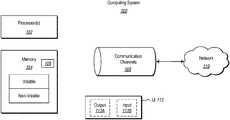
FIG. 1 illustrates an example computer system in which the principles described herein may be employed;
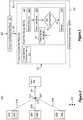
FIG. 2 as follows illustrates a query environment in which a query receives a data stream associated with multiple partition keys;
FIG. 3 illustrates a flowchart of a method for performing query processing on streaming data;
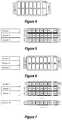
FIG. 4 illustrates an example structure of a query that includes an ingress, multiple operations performed on the ingress, and the result being presented at an egress;
FIG. 5 logically illustrates an example combined query, in which each individual sensor is assigned, in essence, its own query;
FIG. 6 illustrates more physical the combined query ofFIG. 5, which shows that a single query handles all of the data from all partitions;
FIG. 7 illustrates the query ofFIG. 6, except with three additional augmentations, in which it is not known a priori what the set of partitions is to do the computation;
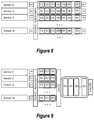
FIG. 8 illustrates an example query that has a global watermark; and
FIG. 9 illustrates an example mixed-mode query.
DETAILED DESCRIPTIONAt least some embodiments described herein relate to accommodating a particular kind of out-of-order data; namely, when data arrives out-of-order because the data is generated in systems that may have different application timelines. As an example, the data may arrive from different sources that each have their own potentially different application times. In accordance with the principles described herein, as data arrives, it arrives with a particular partition key. For instance, the partition key might identify the source of the data. The principles described herein ensures that each data from each partition key is kept in-order with respect to all other data from that same partition key (which property is referred to hereinafter as “in-order intra-key”). That said, data from one key is permitted to have a different timeline as compared to data from any other key. Thus, the data may not be in-order when viewed globally across keys.
However, in accordance with the principles described herein, data is tolerated to be out-of-order globally so long as the lag in the arrived data is within some tolerated lag. If the data arrives having a time that exceeds the maximum tolerated lag, then the system applies some policy to determine what to do with the delayed data. The policy may specify that the data be dropped, that the timestamp of the data be adjusted to be within tolerance, and/or that the data should be reordered to allow the delayed data to be placed globally in-order (or at least globally in-order to within the tolerated lag).
Computing systems are now increasingly taking a wide variety of forms. Computing systems may, for example, be handheld devices, appliances, laptop computers, desktop computers, mainframes, distributed computing systems, datacenters, or even devices that have not conventionally been considered a computing system, such as wearables (e.g., glasses, watches, bands, and so forth). In this description and in the claims, the term “computing system” is defined broadly as including any device or system (or combination thereof) that includes at least one physical and tangible processor, and a physical and tangible memory capable of having thereon computer-executable instructions that may be executed by a processor. The memory may take any form and may depend on the nature and form of the computing system. A computing system may be distributed over a network environment and may include multiple constituent computing systems.
As the principles described herein (and particularly, the queries on data streams) may be performed by a computing system, a computing system will first be described with respect toFIG. 1. Then the principles of query operation will thereafter be described with respect to subsequentFIGS. 2 and 3. Example queries will then be described with respect toFIGS. 4 through 9.
As illustrated inFIG. 1, in its most basic configuration, acomputing system100 typically includes at least onehardware processing unit102 andmemory104. Thememory104 may be physical system memory, which may be volatile, non-volatile, or some combination of the two. The term “memory” may also be used herein to refer to non-volatile mass storage such as physical storage media. If the computing system is distributed, the processing, memory and/or storage capability may be distributed as well.
Thecomputing system100 has thereon multiple structures often referred to as an “executable component”. For instance, thememory104 of thecomputing system100 is illustrated as includingexecutable component106. The term “executable component” is the name for a structure that is well understood to one of ordinary skill in the art in the field of computing as being a structure that can be software, hardware, or a combination thereof. For instance, when implemented in software, one of ordinary skill in the art would understand that the structure of an executable component may include software objects, routines, methods that may be executed on the computing system, whether such an executable component exists in the heap of a computing system, or whether the executable component exists on computer-readable storage media.
In such a case, one of ordinary skill in the art will recognize that the structure of the executable component exists on a computer-readable medium such that, when interpreted by one or more processors of a computing system (e.g., by a processor thread), the computing system is caused to perform a function. Such structure may be computer-readable directly by the processors (as is the case if the executable component were binary). Alternatively, the structure may be structured to be interpretable and/or compiled (whether in a single stage or in multiple stages) so as to generate such binary that is directly interpretable by the processors. Such an understanding of example structures of an executable component is well within the understanding of one of ordinary skill in the art of computing when using the term “executable component”.
The term “executable component” is also well understood by one of ordinary skill as including structures that are implemented exclusively or near-exclusively in hardware, such as within a field programmable gate array (FPGA), an application specific integrated circuit (ASIC), or any other specialized circuit. Accordingly, the term “executable component” is a term for a structure that is well understood by those of ordinary skill in the art of computing, whether implemented in software, hardware, or a combination. In this description, the term “component” may also be used. As used in this description and in the case, this term (regardless of whether the term is modified with one or more modifiers) is also intended to be synonymous with the term “executable component” or be specific types of such an “executable component”, and thus also have a structure that is well understood by those of ordinary skill in the art of computing.
In the description that follows, embodiments are described with reference to acts that are performed by one or more computing systems. If such acts are implemented in software, one or more processors (of the associated computing system that performs the act) direct the operation of the computing system in response to having executed computer-executable instructions that constitute an executable component. For example, such computer-executable instructions may be embodied on one or more computer-readable media that form a computer program product. An example of such an operation involves the manipulation of data.
The computer-executable instructions (and the manipulated data) may be stored in thememory104 of thecomputing system100.Computing system100 may also containcommunication channels108 that allow thecomputing system100 to communicate with other computing systems over, for example,network110.
While not all computing systems require a user interface, in some embodiments, thecomputing system100 includes auser interface112 for use in interfacing with a user. Theuser interface112 may includeoutput mechanisms112A as well asinput mechanisms112B. The principles described herein are not limited to theprecise output mechanisms112A orinput mechanisms112B as such will depend on the nature of the device. However,output mechanisms112A might include, for instance, speakers, displays, tactile output, holograms, virtual reality, and so forth. Examples ofinput mechanisms112B might include, for instance, microphones, touchscreens, holograms, virtual reality, cameras, keyboards, mouse of other pointer input, sensors of any type, and so forth.
Embodiments described herein may comprise or utilize a special purpose or general-purpose computing system including computer hardware, such as, for example, one or more processors and system memory, as discussed in greater detail below. Embodiments described herein also include physical and other computer-readable media for carrying or storing computer-executable instructions and/or data structures. Such computer-readable media can be any available media that can be accessed by a general purpose or special purpose computing system. Computer-readable media that store computer-executable instructions are physical storage media. Computer-readable media that carry computer-executable instructions are transmission media. Thus, by way of example, and not limitation, embodiments can comprise at least two distinctly different kinds of computer-readable media: storage media and transmission media.
Computer-readable storage media includes RAM, ROM, EEPROM, CD-ROM or other optical disk storage, magnetic disk storage or other magnetic storage devices, or any other physical and tangible storage medium which can be used to store desired program code means in the form of computer-executable instructions or data structures and which can be accessed by a general purpose or special purpose computing system.
A “network” is defined as one or more data links that enable the transport of electronic data between computing systems and/or modules and/or other electronic devices. When information is transferred or provided over a network or another communications connection (either hardwired, wireless, or a combination of hardwired or wireless) to a computing system, the computing system properly views the connection as a transmission medium. Transmissions media can include a network and/or data links which can be used to carry desired program code means in the form of computer-executable instructions or data structures and which can be accessed by a general purpose or special purpose computing system. Combinations of the above should also be included within the scope of computer-readable media.
Further, upon reaching various computing system components, program code means in the form of computer-executable instructions or data structures can be transferred automatically from transmission media to storage media (or vice versa). For example, computer-executable instructions or data structures received over a network or data link can be buffered in RAM within a network interface module (e.g., a “NIC”), and then eventually transferred to computing system RAM and/or to less volatile storage media at a computing system. Thus, it should be understood that readable media can be included in computing system components that also (or even primarily) utilize transmission media.
Computer-executable instructions comprise, for example, instructions and data which, when executed at a processor, cause a general purpose computing system, special purpose computing system, or special purpose processing device to perform a certain function or group of functions. Alternatively, or in addition, the computer-executable instructions may configure the computing system to perform a certain function or group of functions. The computer executable instructions may be, for example, binaries or even instructions that undergo some translation (such as compilation) before direct execution by the processors, such as intermediate format instructions such as assembly language, or even source code.
Those skilled in the art will appreciate that the invention may be practiced in network computing environments with many types of computing system configurations, including, personal computers, desktop computers, laptop computers, message processors, hand-held devices, multi-processor systems, microprocessor-based or programmable consumer electronics, network PCs, minicomputers, mainframe computers, mobile telephones, PDAs, pagers, routers, switches, datacenters, wearables (such as glasses or watches) and the like. The invention may also be practiced in distributed system environments where local and remote computing systems, which are linked (either by hardwired data links, wireless data links, or by a combination of hardwired and wireless data links) through a network, both perform tasks. In a distributed system environment, program modules may be located in both local and remote memory storage devices.
Those skilled in the art will also appreciate that the invention may be practiced in a cloud computing environment. Cloud computing environments may be distributed, although this is not required. When distributed, cloud computing environments may be distributed internationally within an organization and/or have components possessed across multiple organizations. In this description and the following claims, “cloud computing” is defined as a model for enabling on-demand network access to a shared pool of configurable computing resources (e.g., networks, servers, storage, applications, and services). The definition of “cloud computing” is not limited to any of the other numerous advantages that can be obtained from such a model when properly deployed.
For instance, cloud computing is currently employed in the marketplace so as to offer ubiquitous and convenient on-demand access to the shared pool of configurable computing resources. Furthermore, the shared pool of configurable computing resources can be rapidly provisioned via virtualization and released with low management effort or service provider interaction, and then scaled accordingly.
A cloud computing model can be composed of various characteristics such as on-demand self-service, broad network access, resource pooling, rapid elasticity, measured service, and so forth. A cloud computing model may also come in the form of various service models such as, for example, Software as a Service (“SaaS”), Platform as a Service (“PaaS”), and Infrastructure as a Service (“IaaS”). The cloud computing model may also be deployed using different deployment models such as private cloud, community cloud, public cloud, hybrid cloud, and so forth. In this description and in the claims, a “cloud computing environment” is an environment in which cloud computing is employed.
Embodiments described herein accommodate a particular kind of out-of-order data; namely, when data arrives out-of-order because the data is generated in systems that may have different application timelines. As an example, the data may arrive from different sources that each have their own potentially different application times. In accordance with the principles described herein, as data arrives, it arrives with a particular partition key. For instance, the partition key might identify the source of the data. The principles described herein ensures that each data from each partition key is kept in-order with respect to all other data from that same partition key (which property is referred to hereinafter as “in-order intra-key”. That said, data from one key is permitted to have a different timeline as compared to data from any other key. Thus, the data may not be in-order when viewed globally across keys.
However, in accordance with the principles described herein, data is tolerated to be out-of-order globally so long as the lag in the arrived data is within some tolerated lag. If the data arrives having a time that exceeds the maximum tolerated lag, then the system applies some policy to determine what to do with the delayed data. The policy may specify that the data be dropped, that the timestamp of the data be adjusted to be within tolerance, and/or that the data should be reordered to allow the delayed data to be placed globally in-order (or at least globally in-order to within the tolerated lag).
FIG. 2 as follows illustrates aquery environment200 in which aquery210 receives a data stream associated with multiple partition keys. Thequery210 may be a component (such as component106) that operates upon a computing system (such as computing system100) bon on a received data stream. For instance,data item source201A generates adata item stream201B as represented byarrow201C and is associated with afirst partition key201D.Data item source202A generates adata item stream202B as represented by arrow202C and is associated with asecond partition key202D.Data item source203A generates adata item stream203B as represented byarrow203C and is associated with a third partition key203D. Each of the data item streams201B,202B and203B combined to form aconsolidated data stream205 that is received by thequery210. Theellipsis204 represents that the number of data items sources that provide data item streams into the consolidated data stream may be any number (one or more) data streams, and may indeed be variable over time for any given query.
FIG. 3 illustrates a flowchart of amethod300 for performing query processing on streaming data. Themethod300 may be performed by, for instance, thequery210 ofFIG. 2. Furthermore, thecomputing system100 may be used by a user to generate the query. Also, thequery210 may operate upon thecomputing system100.
Themethod300 includes receiving a consolidated data stream of data items for multiple partition keys (act301). For instance, inFIG. 2, theconsolidated data stream205 includesdata stream201B associated with partition key201D,data stream202B associated with partition key202D, anddata stream203B corresponding to partition key203D. The query produces a processable data stream (act310) from the received data stream. This is a continuous process as represented by thearrows302 and303.
When producing the processable data stream (act310), the query ensures that, for each key, the data items for that key are temporally in order in the processable data stream (act311). In other words, the query ensures the processable data stream is in-order intra-key. This is also a continuous process as the data stream is received (act301).
Furthermore, the query ensures that each of the data items in the processable data stream does not lag by more than a given tolerance (act320), which is performed continuously as the consolidated data stream is received (act301). To do this, when each data item is received (act321), the query checks the time stamp (act322). If the time stamp shows as lagging less than the current given tolerance (“No” in decision block323), then the data item is provided into the processable data stream (act324). Otherwise, if the time stamp shows as lagging greater than the current given tolerance (“Yes” in decision block323), a remedy is taken in accordance with a policy (act325).
Such a remedy could include dropping the corresponding data item such that the corresponding data item is not included within the processable data stream. Alternatively, such a remedy could include fast forwarding the time-stamp of the data item to be the current timestamp, or at least within the lag tolerance. Alternatively, the remedy could include placing the corresponding time stamp in-order in the processable data stream.
Once the processable data stream is produced (act310), query operations may be performed on the processable data stream (act330). Thearrow304 represents that the processable data stream may perhaps be just a first stage of the query processing, a second stage processable data stream may be generated. In such subsequent stages, there is no need to do act320 when producing the subsequent processable data stream as globally all data items are already within a tolerated lag. The subsequent stage might be a processable data stream in which the data items are ensured to be in-order for each of a different set of keys. Alternatively, the subsequent stage may simply be a globally temporally ordered processable stream.
A few examples will now be provided. Consider a scenario where data is coming from a collection of sensors Si(where “i” is the set of all whole numbers from 1 to the number of sensors in the collection). The data is homogeneous in the sense that all of the data measures the same real-world parameter, such as temperature. Each sensor Sigenerates data in temporal order relative to itself. In other words, for every value i, the data from sensor Siis generated completely in order. In this example, each sensor identifier is a distinct partition key.
That said, the data across sensors may not be in complete total order for a number of reasons. This might be due to the sensors not be in temporal sync. Alternatively or in addition, this might be due to impact of the channels that through which the data from the sensor traveled prior to arrival.
As for the sensors themselves not being temporally synched as a cause for out-of-order data, there might be any number of reasons for this. For instance, the internal clock for one sensor may have drifted relative to other sensors. As another example, the internal clock for one sensor may be with respect to a different time zone as compared to the time zone(s) of other sensors. The latter case might particularly be the case if gathering data from, for instance, mobile phones or computing systems that are globally distributed.
As for the nature of the data channel from the sensor as a cause for out-of-order data, there might be any number of reasons for this as well. The network connections to some sensors may be slower than others. The network connection for a specific sensor may even disappear temporarily and then reconnect, sending all of its data on reconnection in a single burst.
The principles described herein address the real scenarios in which each sensor thus has its own timeline. Let us consider a specific example in which the query receives data fromSensor1,Sensor2 andSensor3. For purposes of discussion and example only, consider the query receiving the following three data streams (each data stream having three data items, and each data item having a value and a timestamp):
- Sensor1: 5 attime 100, 4 attime 108, 8 at time 109
- Sensor2: 6 attime 1, 10 attime 2, 11 attime 3
- Sensor3: 14 attime 4002, 12 attime 4004, 11 at time 4009
In this example, the streams from each sensor arrive at different times, one sensor at a time. However, the streams for the different sensors may have data that arrive in any order. For instance, a stream from one sensor may have some data that has a timestamp before data from another sensor, and some data that has a timestamp after data from that other sensor.
If the data arrives at the query in theorder Sensor2,Sensor1,Sensor3, then all data arrives in temporal order. Recall that the time at which the data arrives at the query need not have any correlation with the time associated with each data item. However, if data arrives in theorder Sensor1,Sensor2,Sensor3, then the data fromSensor2 is now out of order. In that case, if data is expected to arrive in order, then either the data fromSensor2 is fast forwarded (e.g., to time 109—the time that the latest data fromSensor1 was observed) or the data fromSensor2 is dropped, or processing of the data fromSensor1 is blocked until such time as there is surety that other late data has arrived. On the other hand, if data may be allowed to arrive in arbitrary order, then the system holds data fromSensor1 in memory until the system is sure that all relevant data for the query has been encountered, and tells the query just how long to wait to do so. Now imagine the data has arrived in theorder Sensor3,Sensor1,Sensor2 and note that the above problems are exasperated.
The embodiments described herein can be thought of as logically combining several otherwise identical queries into a single query, where each individual query assumes fully in-order data. Physically, however, the story is much more complicated. Think of a streaming query as a single unit that looks as illustrated inFIG. 4:
There is a point of Ingress, where any policies to enforce data ordering is applied. If out-of-order data is to be dropped, it happens at ingress. If processing needs to be held up for a fixed period T to pick up and sort data that arrives out-of-order up to T behind, then this may be performed at ingress. Next, there are the query operators that make up the actual processing of the query. Any selection, projection, aggregation, joining, or other data analytics happens here. Finally, there is a point of Egress, where the final results of the query are sent to whatever downstream consumers may be waiting for it.
So, logically, the combined query looks like that illustrated inFIG. 5. Referring toFIG. 5, each individual sensor is assigned, in essence, its own query. The point of ingress for each query ensures that each individual substream's data is in order, using the same policies that one would apply in a single, uniform query. But those ordering policies are not applied across substreams. Data can progress for each sensor through the query on its own without waiting for other sensors, and without being altered by the progress of other sensors.
Physically, however, the query may appear as show inFIG. 6. Referring toFIG. 6, a single query handles all of the data from all partitions. The query is specified in exactly the same way as if one were specifying a single query over a single partition. However, the logical effect is to produce data for each partition independently of one another.
First, note that ingress is still done on a per-partition (e.g., per-sensor) basis. In one implementation, this is actually done all at the same time in a single physical operator, butFIG. 6 shows each ingress site as different to reinforce the notion that each partition has its disorder policies applied individually. Note next that inFIG. 6 the operators in the query are slightly different (as represented by theoperators01 to0n now being underlined). The exact implementation of each operator are augmented to account for the fact that data is no longer globally in order. Such “augmentation” can be trivial, or complex. From this point forward, consider the term partitioned data mean data that has been assigned some partition key, where all data for any given partition key is in temporal order.
For some operators, there is actually no augmentation required to accommodate the prospect of partitioned data. Such operators fall into two categories—stateless operations that are independent of key, and operators that are done per-key already. Filtering and projection and all operators that do not require augmentation are examples of stateless operators that are not sensitive to the partition key. That is, they do not modify the partition key and thus do not violate the intra-key time-order invariant. These operators act on data as it arrives and is not affected by temporal ordering. Operators that are already done per-key include some kinds of temporal operations. Some operations already naturally act on a per-key basis and are not sensitive to any temporal order across keys. These operators naturally fit into a framework that allows partitioned data.
In a worst case, the partition-aware version of an operator essentially logically keeps the same state and do the same logical processing as N copies of the original operator. There are still many physical optimizations that are possible even in this case. For instance, instead of keeping around N copies of all data structures, the operator can maintain a single data structure with a separate pointer array showing where each partition resides in the larger structure.
However, because the embodiments described herein are not dealing with arbitrary disorder, but only disorder across keys, many operators are able to keep most of their existing memory and speed optimizations, only having to be augmented in the case where a context switch between partitions has some effect.
For example, consider the case of an aggregation operator. For the most part, all of the state computation being done within the aggregation is already being done on a per-key basis. The only change is the case when an incoming data value belongs to a different partition. Rather than advance the time forward for all keys and construct aggregates if necessary, processing can do so for keys that belong to the same partition.
Consider the same sensor data as before. If an aggregate operator sees the value 4 attime 108 fromSensor1, we may already have data being computed forSensors2 and3 in memory. In a uniform setting, the operator would need to move time forward for bothSensors2 and3 if necessary, and compute and return aggregate values if anything has changed. In a partitioned setting, only the aggregate forSensor1 is affected.
Suppose that the previous logical diagram ofFIG. 6 is to have three additional augmentations. It is not known a priori what the set of partitions is to do the computation. This is reflected inFIG. 7. The system does not need to know at any point in time what the set of possible sensors is. At the time the query starts, there may beSensors1,2 and3, but later on one may add Sensors4 through10, thenSensor3 goes offline for a while, then Sensor5 gets blocked but rejoins an hour later, then Sensor26 comes online. The system just identifies, for any given piece of data, to what partition it belongs. It need not belong to a partition that has already seen data even.
Second, the system does allow the query author to establish a relationship across partitions, if requested. The global watermark is a way of being able to specify the following: “For any partition that I see, the time must be constrained to within time T of the partition with the highest time.”FIG. 8 illustrates an example query that has a global watermark.
In this context, consider the following sensor data once again:
- Sensor1: 5 attime 100, 4 attime 108, 8 at time 109
- Sensor2: 6 attime 1, 10 attime 2, 11 attime 3
- Sensor3: 14 attime 4002, 12 attime 4004, 11 at time 4009
If the system specifies a global watermark of 2000 and data fromSensor3 arrives first, then depending on the disorder policy that we specify, the data fromSensors1 and2 are either dropped or adjusted to be within the time window (i.e., 2009).
The system may also allow for a mixed-mode query, where part of the query is partitioned, but at some point, the query must perform some action across partitions, so it must be unified.FIG. 9 illustrates an example of such a mixed-mode query. Referring toFIG. 9, one may want to do part of the query in partitioned mode, where one can try to reduce state size through aggregation or filtration, then finally perform some logic across partitions. One common example is a local-global aggregation, where aggregation is computed across multiple partitions but then state is reduced with a sub-aggregate before having to apply any kind of global reordering. Global reordering can be a costly operation in terms of memory usage, so partitioning, reducing state, and then reordering is a good way to optimize that particular operation.
So, in conclusion, embodiments described herein construction of a query that looks likeFIG. 9, and do so with the simplicity and model as if constructing the query ofFIG. 4.
The present invention may be embodied in other specific forms without departing from its spirit or essential characteristics. The described embodiments are to be considered in all respects only as illustrative and not restrictive. The scope of the invention is, therefore, indicated by the appended claims rather than by the foregoing description. All changes which come within the meaning and range of equivalency of the claims are to be embraced within their scope.