CROSS-REFERENCE TO RELATED APPLICATIONSThis application is a continuation of U.S. patent application Ser. No. 14/385,480 filed Sep. 15, 2014, which is a national stage application of PCT/US2012/066427 filed on Nov. 21, 2012, and entitled “RECIPROCATING RAIL MOVEMENT SUSPENSION SYSTEM,” which claims priority under 35 U.S.C. § 119(e) to U.S. Provisional Patent Application Nos. 61/635,800 filed Apr. 19, 2012, 61/609,927 filed Mar. 12, 2012 and 61/563,292 filed Nov. 23, 2011; the entireties of which are hereby incorporated by reference in their entirety for all purposes.
This application is a continuation-in-part of U.S. patent application Ser. No. 13/215,170 filed Aug. 22, 2011, and entitled “Link Suspension System,” which claims priority under 35 U.S.C. § 119(e) to U.S. Provisional Application No. 61/375,278 filed Aug. 20, 2010; the entireties of which are hereby incorporated by reference for all purposes.
This application further incorporates by reference U.S. patent application Ser. No. 11/229,270 entitled “Rear Suspension System,” now issued as U.S. Pat. No. 7,722,072 in its entirety.
TECHNICAL FIELDExamples disclosed herein relate generally to bicycles, and more particularly, to suspension systems for rear wheels of bicycles.
BACKGROUNDMany bicycles, particularly mountain bicycles, include rear suspension systems. The rear suspension system allows the rear wheel to be displaced relative to the bicycle frame when impact forces are imparted on the rear wheel and, in turn, acts to absorb the impact forces. As such, suspension systems may improve rider comfort, as well as protect the rider and all or part of the bicycle from the roughness of the terrain when traveling or jumping the bicycle by keeping one or both wheels in contact with the ground and allowing the rider's mass to move over the ground in a flatter trajectory.
Many rear suspension systems available on the market allow the rear wheel of the bicycle to travel in a particular path that is dictated by the physical construction of the suspension system. Generally, the rear wheel path is fixed by the rear suspension design, with Attorney Docket No. P223910.US.04 different rear wheel paths causing different reactions in the way that the bicycle handles forces impacting on the rear wheel. The rear suspension systems of different bicycles may have different shock-absorbing properties, so as to provide the dampening effect that is best suited to the terrain most often traversed by the bicycle. A mountain bicycle intended for traversing steep downhill grades may benefit from a shock assembly that causes the rear wheel to travel in a substantially vertical direction, while a trail bicycle intended for traversing small bumps and gradual downhill grades may benefit from a shock that travels in a curved travel path.
SUMMARYOne aspect of the present disclosure relates to a rear suspension system for a bicycle. The rear suspension system acts to absorb forces impacting on the bicycle by allowing a rear wheel of the bicycle to be displaced relative to the rest of the bicycle. The disclosed rear suspension system utilizes a sliding body that is pivotally coupled to the rear frame and engages a linear rail. The rear frame is further pivotally coupled to a rocker link, which causes at least a portion of the rear frame to travel along an arcuate path. The overall structural configuration of the rear suspension system results in a wheel travel path that is curved.
Generally, examples described herein may take the form of a bicycle including a front frame, a rear frame operably associated with the front frame and configured for coupling to a rear wheel, and a suspension system operably associated with the front frame and the rear frame. The suspension system includes a first connection structure operably coupling the front frame to the rear frame and a first sliding body pivotally coupled to the rear frame and configured to travel in a first direction along a substantially linear travel path and in a second direction opposite the first direction along the substantially linear travel path as the suspension system is compressed.
In another example, the first sliding body may be configured to engage a first rail. In a further example, the first connection structure comprises a second sliding body configured to engage a second rail. In another example, the first connection structure includes a link. In some examples, the link may be a rocker link configured to rotate around a fixed pivot axis. Additionally, link may be configured to rotate in a clockwise direction. In other examples, the link may be configured to rotate in a counter-clockwise direction.
In other examples, the bicycle may further include a shock assembly pivotally coupled to the front frame at a first end. In some examples, the shock assembly may be pivotally coupled to the rear frame at a second end. In further examples, the shock assembly may be pivotally coupled to the first connection structure at a second end. In another aspect, the second end of the shock assembly may be configured to travel along an arcuate path. In another example, the first rail may be coupled to the front frame. In a further example, the first sliding body may be configured to travel in the second direction along the substantially linear travel path and in the first direction opposite the second direction along the substantially linear travel path as the suspension system is extended.
In other examples, the rear frame may include a forward member having a top end and a bottom end, a chain stay that extends rearwardly from the bottom end of the forward member to a rear portion, and a seat stay that extends rearwardly from the top end of the forward member to the rear portion. A top end of the forward member may be pivotally coupled to the first connection structure. In another example, a bottom end of the forward member may be pivotally coupled to the first sliding body. In further examples, the first connection structure may be a link and the top end of the forward member may be configured to travel along an arcuate path defined by the link. In a further example, the bicycle may further include a shock assembly defining a first end pivotally coupled to the front frame and a second end operably associated with the rear frame, and the second end of the shock assembly may be configured to travel along an arcuate path that is substantially parallel to the arcuate path traveled by the top end of the forward member. In another example, the first sliding body may be configured to switch directions at an inflection point of a path traveled by the rear wheel.
In another example, the first sliding body may be further configured to engage a second rail that is substantially parallel to the first rail. Additionally, in some examples, the first and second rails together may define a plane that is substantially parallel to a plane defined by the front frame. In a further example, the first and second rails may be joined to a mount that is joined to the front frame. In another example, the mount may have a truncated C shape. In further examples, the mount may have a rectangular shape. In some examples, a vertical component of the substantially linear travel path of the first sliding body is larger than a horizontal component of the substantially linear travel path of the first sliding body. Alternatively, in other examples, a horizontal component of the substantially linear travel path of the first sliding body is larger than a vertical component of the substantially linear travel path of the first sliding body.
Other examples may take the form of a bicycle including a front frame, a rear frame operably associated with the front frame and configured for coupling to a rear wheel, and a suspension system operably associated with the front frame and the rear frame. The suspension system may include a first connection structure operably coupling the front frame to the rear frame and a first sliding body pivotally coupled to the rear frame and configured to engage a first rail. The first sliding body may be configured to travel in a first direction along the first rail and in a second direction opposite the first direction along the first rail as the suspension system is compressed.
In other examples, the first connection structure may include a second sliding body configured to engage a second rail. In further examples, the first connection structure may include a link. In some examples, the link may be a rocker link configured to rotate around a fixed pivot axis. In some examples, the link may be configured to rotate in a clockwise direction. In other examples, the link may be configured to rotate in a counter-clockwise direction. In another example, the bicycle may further include a shock assembly pivotally coupled to the front frame at a first end. In some examples, the shock assembly may be pivotally coupled to the rear frame at a second end. In additional examples, the shock assembly may be pivotally coupled to the first connection structure at a second end.
In another example, the second end of the shock assembly may be configured to travel along an arcuate path. In some examples, the first rail may be coupled to the front frame. In further examples, the first rail may be substantially linear. In another example, the first sliding body may be configured to travel in the second direction along the first rail and in the first direction opposite the second direction along the first rail as the suspension system is extended. In another example, the rear frame may include a forward member having a top end and a bottom end, a chain stay that extends rearwardly from the bottom end of the forward member to a rear portion, and a seat stay that extends rearwardly from the top end of the forward member to the rear portion. A top end of the forward member may be pivotally coupled to the first connection structure. In some examples, a bottom end of the forward member may be pivotally coupled to the first sliding body.
In some examples, the first connection structure may include a link and the top end of the forward member may be configured to travel along an arcuate path defined by the link. In still other examples, the bicycle may include a shock assembly defining a first end pivotally coupled to the front frame and a second end operably associated with the rear frame, and the second end of the shock assembly may be configured to travel along an arcuate path that is substantially parallel to the arcuate path traveled by the top end of the forward member. In additional examples, the first sliding body may be configured to switch directions at an inflection point of a path traveled by the rear wheel.
Additionally, the first sliding body may further be configured to engage a second rail that is substantially parallel to the first rail. In some examples, the first and second rails together may define a plane that is substantially parallel to a plane defined by the front frame. Further, the first and second rails may be joined to a mount that is joined to the front frame. In some examples, the mount has a truncated C shape. In other examples, the mount has a rectangular shape. In one example, the vertical component of a travel path of the first sliding body is larger than a horizontal component of the travel path of the first sliding body. In other examples, a horizontal component of a travel path of the first sliding body is larger than a vertical component of the travel path of the first sliding body. In another example, the first rail may be non-linear.
Other examples may take the form of a bicycle including a front frame, a rear frame operably associated with the front frame and configured for coupling to a rear wheel, and a rear suspension system operably associated with the front and rear frames. The front frame may be coupled to the rear wheel frame by a first connection structure and a second connection structure positioned below the first connection structure. The second connection structure includes a first sliding body configured to travel back and forth along a substantially linear path as the rear suspension system is compressed.
In some examples, first sliding body may be configured to engage a first rail and the substantially linear path is defined by the first rail. In other examples, the first connection structure may include a link. In another example, the first connection structure may include a second sliding body configured to engage a second rail.
The features, utilities, and advantages of the various disclosed examples will be apparent from the following more particular description of the examples as illustrated in the accompanying drawings and defined in the appended claims.
This summary of the disclosure is given to aid understanding, and one of skill in the art will understand that each of the various aspects and features of the disclosure may advantageously be used separately in some instances, or in combination with other aspects and features of the disclosure in other instances.
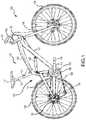
BRIEF DESCRIPTION OF THE FIGURESFIG. 1 is a right side view of a bicycle incorporating a rear suspension system according to one example.
FIG. 2 is a right-front isometric view of the front frame and rear suspension system of the bicycle depicted inFIG. 1.
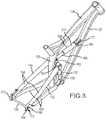
FIG. 3 is a right-rear isometric view of the front frame and rear suspension system of the bicycle depicted inFIG. 1.
FIG. 4 is a top view of the front frame and rear suspension system of the bicycle depicted inFIG. 1.
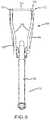
FIG. 5 is a bottom view of the front frame and rear suspension system of the bicycle depicted inFIG. 1.
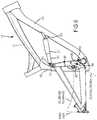
FIG. 6 is a right side view of the front frame and rear suspension system of the bicycle depicted inFIG. 1.
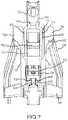
FIG. 7 is a front view of the front frame and rear suspension system of the bicycle depicted inFIG. 1 with the down tube removed.
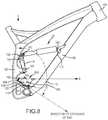
FIG. 8 is a right side view of the front frame and rear suspension system of the bicycle depicted inFIG. 1 with the rear frame removed.
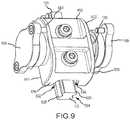
FIG. 9 is an isometric view of the sliding body and rail of the rear suspension system of the bicycle depicted inFIG. 1.
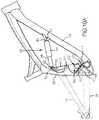
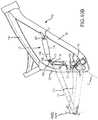
FIG. 10A is a right side view of the front frame and rear suspension system of the bicycle depicted inFIG. 1, with the rear frame shown in dashed lines.
FIG. 10B is a right side view of the front frame and rear suspension system depicted inFIG. 1 in a partially compressed stage, with the rear frame shown in dashed lines.
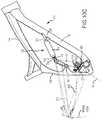
FIG. 10C is a right side view of the front frame and rear suspension system depicted inFIG. 1 in a fully compressed stage, with the rear frame shown in dashed lines.
FIG. 10D is a right side view of the front frame and rear suspension system depicted inFIG. 1 in an uncompressed stage shown in solid lines, in a partially compressed stage shown in dashed lines, and in a fully compressed stage shown in dashed lines.
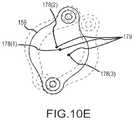
FIG. 10E illustrates a right side view of a portion of an end cap of the sliding body in an uncompressed stage shown in solid lines, in a partially compressed stage shown in dashed lines, and in a fully compressed stage shown in dashed lines.
FIG. 10F is a right side view of the front frame depicted inFIG. 1 in an uncompressed stage.
FIG. 10G is a right side view of the front frame depicted inFIG. 1 in an partially compressed stage.
FIG. 10H is a right side view of the front frame depicted inFIG. 1 in a fully compressed stage.
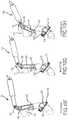
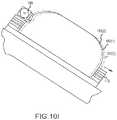
FIG. 10I is a right side view of the sliding body and rail in various stages of compression.
FIG. 11 illustrates a right side view of another example of a front frame and rear suspension system of a bicycle.
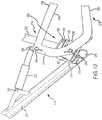
FIG. 12 illustrates a left side view of the front frame and rear suspension system shown inFIG. 11.
FIG. 13 illustrates a rear view of the front frame and rear suspension system shown inFIG. 11.
FIG. 14 illustrates a front view of the front frame and rear suspension system shown inFIG. 11, with the seat tube removed.
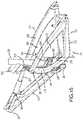
FIG. 15 illustrates a rear left perspective view of the front frame and rear suspension system shown inFIG. 11.
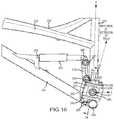
FIG. 16 illustrates a left side view of the front frame and rear suspension system shown inFIG. 11, with the rear frame removed.
FIG. 17 illustrates a left side view of the front frame and rear suspension system shown inFIG. 11, with the rear frame and sliding body housing removed.
FIG. 18 illustrates a cross-sectional view of the front frame and rear suspension system shown inFIG. 11, with the rear frame removed, as taken along line18-18 ofFIG. 16.
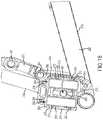
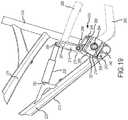
FIG. 19 illustrates a left side view of the front frame and rear suspension system shown inFIG. 11, with the rear frame shown in dashed lines.
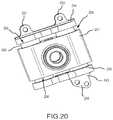
FIG. 20 illustrates a right perspective view of the sliding body assembly shown inFIG. 11.
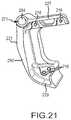
FIG. 21 illustrates a left perspective view of the sliding body assembly shown inFIG. 11.
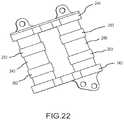
FIG. 22 illustrates a right perspective view of the rails and crowns of the sliding body assembly shown inFIG. 11.
FIG. 23A is a right side view of the front frame and rear suspension system of the bicycle depicted inFIG. 11, with the rear frame shown in dashed lines.
FIG. 23B is a right side view of the front frame and rear suspension system depicted inFIG. 11 in a partially compressed stage, with the rear frame shown in dashed lines.
FIG. 23C is a right side view of the front frame and rear suspension system depicted inFIG. 11 in a fully compressed stage, with the rear frame shown in dashed lines.
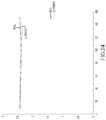
FIG. 24 illustrates a shock rate curve that is achieved in connection with the embodiment of the rear suspension system shown inFIGS. 11-21.
FIG. 25 illustrates the derivative of chain stay length that is achieved in connection with the embodiment of the rear suspension system shown inFIGS. 11-21.
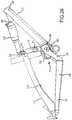
FIG. 26 illustrates a right side view of another example of a front frame and rear suspension system.
FIG. 27 illustrates a left side view of the front frame and rear suspension system shown inFIG. 26.
FIG. 28 illustrates a front view of the front frame and rear suspension system shown inFIG. 26.
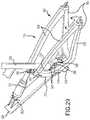
FIG. 29 illustrates a rear left perspective view of the front frame and rear suspension system shown inFIG. 26.
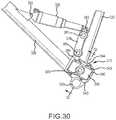
FIG. 30 illustrates a left side view of the front frame and rear suspension system shown inFIG. 26, with the rear frame removed.
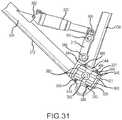
FIG. 31 illustrates a left side view of the front frame and rear suspension system shown inFIG. 26, with the rear frame and sliding body housing removed.
FIG. 32 illustrates a cross-sectional view of the front frame and rear suspension system shown inFIG. 26, with the rear frame removed, as taken along like32-32 ofFIG. 30.
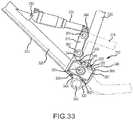
FIG. 33 illustrates a left side view of the front frame and rear suspension system shown inFIG. 26, with the rear frame shown in dashed lines.
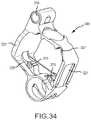
FIG. 34 illustrates a left perspective view of the sliding body mount shown inFIG. 26.
FIG. 35 illustrates a right perspective view of the sliding body mount shown inFIG. 26.
FIG. 36 illustrates a right side perspective view of the sliding body and rails shown inFIG. 26.
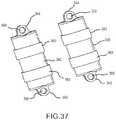
FIG. 37 illustrates a right side perspective view of the rails shown inFIG. 26.
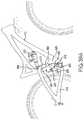
FIG. 38A is a right side view of the front frame depicted inFIG. 26 in an uncompressed stage.
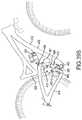
FIG. 38B is a right side view of the front frame depicted inFIG. 26 in an partially compressed stage.
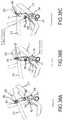
FIG. 38C is a right side view of the front frame depicted inFIG. 26 in a fully compressed stage.
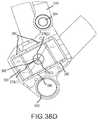
FIG. 38D illustrates a right side view of the sliding body and axle extending through the sliding body in an uncompressed stage shown in solid lines, in a partially compressed stage shown in dashed lines, and in a fully compressed stage shown in dashed lines.
FIG. 39A illustrates a right side view of another example of a front frame and rear suspension system, when fully extended.
FIG. 39B illustrates a right side view of another example of a front frame and rear suspension system, when fully compressed
FIG. 40 illustrates a right side view of another example of a front frame and rear suspension system.
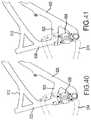
FIG. 41 illustrates a right side view of another example of a front frame and rear suspension system.
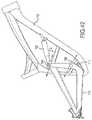
FIG. 42 illustrates a right side view of another example of a front frame and rear suspension system.
DETAILED DESCRIPTIONGenerally, examples described herein take the form of a rear suspension system for a bicycle. The rear suspension system acts to absorb forces impacting on the bicycle by allowing a rear wheel of the bicycle to be displaced relative to the rest of the bicycle. Such forces may be caused from riding over rough terrain (such as rocks, holes in the ground, and the like). Upon displacement of the rear wheel, the rear suspension system can allow the rear wheel to move from a general first position to a second position. The rear suspension system may then act to return the rear wheel to the general first position. The structural and geometrical configurations of the rear suspension system provide a travel path in which the rear wheel moves when acted upon by various forces.
As is known in the art, the leverage ratio of a rear suspension system also can also affect the “feel” of the rear suspension system as sensed by the rider when the rear wheel is displaced. The leverage ratio can be defined as the total rear wheel travel divided by the total shock stroke length, and changes instantaneously throughout the travel path of the rear wheel. The instantaneous leverage ratios at different points along the travel path can be plotted to derive a leverage ratio curve. Generally, a suspension system having higher instantaneous leverage ratios results in an increased mechanical advantage at the rear wheel, allowing for a “softer” suspension, while a system having lower instantaneous leverage ratios results in a decreased mechanical advantage at the rear wheel, allowing for a “firmer” suspension. Different types of leverage ratio curves may be better suited for use with different types of shock assemblies (e.g., an air or liquid shock vs. a spring shock), and with different types of bicycles (e.g., dirt bikes, mountain bikes, road bikes, downhill hikes, cross-country bikes, and so on), to provide a more comfortable riding experience.
As discussed below, one example of a rear suspension system can include a rocker link that is pivotally coupled to the rear frame of a bicycle, the seat tube of the front frame of the bicycle, and the shock assembly. The rear suspension system may further include a sliding body that is pivotally coupled to the rear frame and configured to slidingly engage a linear (or nonlinear) guide rail, such that the sliding body may move back and forth along the rail during a single compression of the shock assembly. Such a rear suspension system design may result in curved or other particular wheel path, or a “softer” suspension, which can be desirable for traversing some types of terrain.
In another embodiment, the sliding body may be configured to slide along a pair of parallel rails. In a further embodiment, the sliding body may be configured to switch directions during a single compression of the shock assembly. Additionally, the sliding body may be configured to travel in an upwards direction and in a downwards direction during a single compression of the shock assembly. In some embodiments, the sliding body may be configured to switch directions at an inflection point of a path traveled by the rear wheel.
Although the rear suspension system is described below with reference to a typical bicycle depicted in the figures, it should be understood the rear suspension system may be used with bicycles having different frame styles than that which is depicted and described herein. Further, although the systems and methods are described below mainly with reference to bicycles, the present invention can be applied to other 2 and 4-wheel human or motor powered vehicles, such as cars, trucks, scooters, and motorcycles.
FIG. 1 shows abicycle100 including arear suspension system102 according to a first example. Thebicycle100 is rollingly supported by afront wheel104 and arear wheel106. A rider can steer thebicycle100 by turning thefront wheel104 toward a desired direction of travel with asteering system108. Thebicycle100 also includes aseat110 connected with afront frame112 which can be used to support the rider. As discussed in more detail below, the rear suspension system includes arear frame114 coupled with thefront frame112 through a suspension system115 including arail113, a slidingbody622, and a shock assembly120 (or some other assembly or mechanism which allows for compression of the rear suspension system115), which may be operably connected between thefront frame112 and therear frame114. Therear frame114 may be fabricated from various members connected together, or as a single piece or member.
As shown inFIGS. 1-5, thefront frame112 can include ahead tube122, atop tube124, adown tube126, abottom bracket128, and aseat tube130. Thetop tube124 extends rearwardly from thehead tube122 to connect with an upper portion of theseat tube130, and thedown tube126 extends rearwardly and downwardly from thehead tube122 to connect with thebottom bracket128. Thefront frame112 described herein utilizes a continuous seat tube design where theseat tube130 extends from thetop tube124 all the way to thedown tube126. It is to be appreciated that in other frame configurations, theseat tube130 may include an interrupted design in which the seat tube does not fully extend from thetop tube124 to connect with thedown tube126. Referring toFIG. 1, the seat orsaddle110, which is used to support the rider, is connected with a seat post132 that may be inserted into theseat tube130. In some configurations, the seat post132 can be adjustably or releasably received within theseat tube130, for example, so the height of the seat relative to thefront frame112 can be adjusted.
As illustrated inFIG. 1, thesteering system108 includes ahandle bar134 connected with an upper portion of afront fork member136. Both thehandle bar134 and thefront fork member136 are rotatably connected with thehead tube122. Thefront wheel104 is rotatably connected with a lower portion of thefront fork member136, as is known in the art. Turning thehandle bar134 in a particular direction causes thefront wheel104 to turn in the same direction. As such, a user can steer thebicycle100 by turning thehandle bar134 in a desired direction of travel.
As described in more detail below, therear wheel106 may be rotatably connected with therear frame114 through arear axle138. It is to be appreciated that therear axle138 may be connected to therear frame114 in many ways, such as by use of drop-out structures or the like, as are known.
As shown inFIGS. 1-3, thebottom bracket128 is connected with a lower end portion of thedown tube126. Thebottom bracket128 rotatably supports acrank shaft140 having crankarms142 extending radially therefrom in opposite directions.Foot pedals144 are rotatably connected with the crank arms. Adrive sprocket146, which is connected with thecrank shaft140, is typically connected through achain148 with arear sprocket assembly150 coupled with therear wheel106. When the rider applies forces to thepedals144, the forces may be translated through thedrive sprocket146 andchain148 to therear sprocket assembly150, causing therear wheel106 to rotate. Rotation of therear wheel106 may translate into forward motion of thebicycle100.
As shown inFIGS. 2-5 and 8, therear frame114 includes right and lefttriangles152,154. Generally, each of the right and lefttriangles152,154 includes aforward member157 connected to achain stay159 that extends from the bottom end of theforward member157 to arear end portion156, and to aseat stay158 that extends diagonally from therear end portion156 of the chain stay159 to the top end of theforward member157. Therear end portions156 of the right and leftrear triangles152,154 may be connected, or, in other examples, therear end portions156 of the right and leftrear triangles152,154 may be unconnected. In the illustrated embodiment, therear end portions156 of the right and lefttriangles152,154 are each connected to a respective rearjoint member168,170. Right and left rearjoint members168,170 includerear axle apertures172 adapted to receive and rotatably support therear axle138 of therear wheel106. As is known, some examples may further include dropouts to allow for detaching theaxle138 of thewheel106 from therear frame114. It is to be appreciated that therear frame114 can be constructed from various types of material, such as aluminum, carbon, titanium, and so on. The members used to construct the rear frame may also define a hollow tubular structure, or may have a solid construction. Therear frame114 may be constructed to facilitate the use of disc brakes, and/or a derailleur structure.
As best shown inFIGS. 2 and 7, theforward members157 of the right and lefttriangles152,154 are connected by twoaxles153,155 that extend between the twotriangles152,154. As will be further discussed below, thefirst axle153 is located at the top end of theforward members157, and extends between the twotriangles152,154 and through, near, or adjacent to an upper end portion of arocker link119 that is positioned between theforward members157 of thetriangles152,154, i.e., such that therocker link119 is sandwiched between the twotriangles152,154. Thesecond axle155 is located at, near, or adjacent to the bottom end of theforward members157, and extends through a slidingbody622 that is positioned between theforward members157, i.e., such that the slidingbody622 is sandwiched between the twotriangles152,154. As is shown, eachaxle153,155 may extend between thetriangles152,154 a direction that is substantially perpendicular to the right and lefttriangles152,154. Theaxles153,155 may be integrally formed with thetriangles152,154 or may be separate components attachable to the triangles. It is contemplated that the left and right triangles of the rear suspension may not have a triangular form, but instead may have more or fewer than three sides. Additionally, the intersections of the sides or lengths of the triangles may not form defined apexes, but instead may define rounded, curved, or other-shaped intersections. The attachment of a portion of this rear frame structures or rear triangles to the front triangle in the manners (including obvious and equivalent variations thereof) described herein is contemplated.
As discussed above, the upper end portion of therocker link119 may be pivotally connected to therear frame114 via anaxle153 that extends between thetriangles152,154. As shown inFIG. 8, which illustrates thefront frame112 with therear frame114 removed, therocker link119 may be bent such that it defines a boomerang-like shape, with a longer bottom section and a shorter top section. In other examples, therocker link119 may have other configurations. For example, therocker link119 may be completely straight or linear, circular, triangular, polygonal, and so on and so forth. In one example, therocker link119 may have a dog bone-type structure, in which twoparallel linkages780,781, are connected by one or morehorizontal components782 that extend between thelinkages780,781.
As best shown inFIG. 8, the top end of therocker link119 may be pivotally connected to a rear end of theshock assembly120 and the bottom end of therocker link119 may be pivotally connected to a protrudedportion785 that protrudes forwardly from theseat tube130 towards the front end of the bicycle, i.e., towards thehead tube122. As previously discussed, the middle portion of therocker link119 may be pivotally coupled to the top ends of theforward members157 of the right and lefttriangles152,154 via anaxle153 that extends through each of therocker link119 and theforward members157. Accordingly, therocker link119 may define threepivot axes182,185, and187, with the first pivot axis182 (located at the top of the rocker link119) being the axis around which theshock120 rotates around therocker link119, the second pivot axis (located in the middle of the rocker link119) being the axis around which the right and lefttriangles152,154 rotate around therocker link119, and the third pivot axis187 (located at the bottom of the rocker link119) being the fixed pivot axis around which therocker link119 rotates relative to theseat tube130.
As best shown inFIGS. 2, 3, 6, and 8, the forward end of theshock120 may be pivotally connected to thedown tube126 via anaxle300 mounted on the forward end of theshock120 and corresponding receiving apertures defined by thedown tube126. Theshock120 may thus rotate relative to thefront frame112 around a fixedpivot axis177. As discussed, the bottom end of theshock120 may be connected to the top end of therocker link119 via anaxle783 that extends through thelinkages780,781 and through an aperture defined at the rear end of theshock120. In one example, theshock120 may be positioned in a substantially horizontal orientation. In other words, theshock120 may be substantially parallel to the x-axis, or may define an angle that is between 0 and 45 degrees with respect to the x-axis. In other examples, theshock120 may be oriented substantially vertically, i.e., such that it is substantially parallel to the y-axis when mounted to thedown tube126 and to therocker link119, or defines an angle that is between 45 and 90 degrees with respect to the y-axis.
In one example, theshock assembly120 may include apiston shaft306 and acylinder body314. Generally, compression of theshock assembly120 causes thepiston shaft306 to be pushed in a forward direction into thecylinder body314, for example, as therear wheel106 is displaced relative to thefront frame112. Fluid contained within thecylinder body306 acts to dampen the movement of thepiston shaft306 within thecylinder body314. As such, theshock120 dampens the tensile and/or compressive forces exerted on thepiston shaft306. Theshock assembly120 may be placed in various stages of compression relative to the amount of forward force applied to an end of theshock assembly120. For example, a larger forward force applied to the end of theshock assembly120 may cause a longer length of thepiston shaft306 to be inserted into thecylinder body314 than a smaller upward force. It is to be appreciated that shock assemblies are known in the art and that various types of shock assemblies and orientation can be utilized with the present disclosure. Some examples of shock assemblies include oil shocks, air shocks, spring return shocks, gas charged shocks, and so on.
In the suspension system shown inFIGS. 1-101, theshock120 is compressed through the rotation of therocker link119, which pushes thepiston shaft306 into thecylinder body314 as it is rotated in a clockwise direction, i.e., towards the forward end of the bicycle, as oriented in the accompanying drawings. Notably, the structural configurations of the rear suspension system can be changed such that the link is rotated in a counter-clockwise direction (i.e., towards the rear end of the bicycle), rather than a clockwise direction. As one non-limiting example, the link may be attached to the top tube of the bicycle such that it extends downwardly, rather than upwardly. As the shock is returned to its uncompressed state, thepiston shaft306 is pushed rearwardly out of thecylinder body314, which, in turn, causes rotation of the connectedrocker link119 in a counter-clockwise direction, i.e., towards the rear end of the bicycle. As will further be discussed below, the rear end of theshock120 travels along an arcuate travel path that is defined by the length of therocker link119, which rotates around a fixedpivot axis187.
As best shown inFIGS. 2, 4 and 6-9, the suspension system further includes aguide rail113 mounted on the front frame, and in this example extends between thedown tube126 and theseat tube130 of the front frame. Theguide rail113 may be substantially linear, as is shown, or nonlinear, as may be the case in other examples. For example, theguide rail113 may be bent along its length or may be curved. Other configurations ofguide rails113 are also possible. Theguide rail113 includes substantially flat top andbottom sides624,626 which are connected with and separated by right and leftsides628,630. Theright side628 of theguide rail113 includes aright groove632, and theleft side630 of theguide rail113 includes aleft groove634. As further discussed below, thegrooves632,634 are adapted to receive one or more bearings (not shown) of a slidingbody622, which are configured to roll along thegrooves632,634 on the sides of theguide rail113, thereby allowing the slidingbody622 to slide back and forth along theguide rail113. Theguide rail113 is joined to a guide rail support member636 (shown inFIG. 8), which in this example is integrally formed with thefront frame112. In one example, the bottom surface of therail113 may be joined to the guiderail support member636, such that theguide rail113 does not move relative to thefront frame112 when joined to the guiderail support member636. While the illustrated example includes a guiderail support member636 that is integral to theframe112, other examples may utilize a guide rail support member that is a separate part that is attachable to thefront frame112, e.g., to the down andseat tubes126,130.
As best shown inFIG. 9, one example of the slidingbody622 includes amain body638 having, in this example, an elongated block shape with a generally flatbottom side641 and a curvedtop side643. As discussed above, aslot648 in thebottom side641 of the slidermain body638 extends from afront side650 to arear side652, and is adapted to receive a portion of theguide rail113. Theguide rail113 may also include one ormore brackets199 mounted at the front and rear ends of therail113 that prevent the slidingbody622 from moving past the ends of theguide rail113 and separating from theguide rail113. For example, thebrackets199 may be configured such they that do not fit within theslot648 defined in the slidingbody622, and instead make contact with the rear652 and/orfront650 faces of the slidingbody622 as it approaches the ends of therail113.
As shown inFIG. 8, the guide rail113 (and the guide rail support member636) may extend at an angle A relative to the y-axis ofFIG. 8. The angle may be, for example, an acute angle or an obtuse angle. Alternatively, theguide rail113 may be oriented such that it is substantially parallel to the x-axis. In other examples, theguide rail113 may be oriented substantially vertically, i.e., such that it is substantially parallel to the y-axis. As discussed above, the orientation of theguide rail113 serves to define the travel path of the slidingbody622, which moves along therail113, as theshock120 is compressed. Therail113 may be straight, as shown, or may be curved in one or more directions.
As shown, therail113 and guiderail support member636 may extend diagonally between the down andseat tubes126,130, such that the rear end of the rail113 (the end closest to the seat tube130) is positioned such that it is higher than the forward end of the rail113 (the end closest to the down tube126). Accordingly, therail113 may be oriented such that it is slanted or sloped downwardly towards the front end of the bicycle. When the rail is positioned such that it slopes down, the slidingbody622 may naturally gravitate towards the forward or front end of the bicycle due to gravitational forces. In other examples, therail113 may be otherwise positioned. For example, the rear end of the rail113 (the end closest to the seat tube130) may be positioned such that it is lower than the front end of the rail113 (the end closest to the down tube126), such that therail113 is slanted or sloped upwardly towards the front end of the bicycle. When therail113 is positioned such that it slopes up, the slidingbody622 may naturally gravitate towards the rear or back end of the bicycle due to gravitational forces. In further examples, therail113 may be relatively level, such that it is not slanted or sloped relative to the x- or y-axes. In such examples, the sliding body would not be inclined to move towards either the front or rear end of the bicycle without the assistance of additional forces imparted by therear frame114.
As previously discussed, the slidingbody622 may be coupled with therail113 through bearings supported in thegroove648 of themain body638. In such embodiments, the slidingbody622 can include seals and/or wipers to help prevent dust and dirt from reaching the bearings inside themain body638. It is to be appreciated that various types of seal assemblies can be used with the slidingbody622 to provide various degrees of protection to the bearings. For example, in one embodiment, the seal assemblies include a metal scraper for removing large particles from the guide rail and a laminated contact scraper for removing fine dust and fluids. Other embodiments include lubricators to lubricate the bearings and guide rail. It is also to be appreciated that the guide rail and sliding body can be made from various types of materials. For example, in one embodiment, the guide rail is made from carbon steel. In another embodiment, the sliding body is made from carbon steel and includes a black chrome coating. As such, various combinations of sliding bodies and rails can be used with the rear suspension system and is not limited that which is depicted and described herein. For example, the sliding body may be a slider link, as shown, or may be some other type of sliding body.
As previously discussed, the slidingbody622 may be pivotally connected to the bottom end portions of theforward members157 of the right and lefttriangles152,154 via anaxle155 that runs between theforward members157. In some examples, the ends of theaxle155 may be capped by twoend caps159, which are joined to each of theforward members157 and allow for rotation of thecaps159 around theaxle155. The end caps159 may be joined to theforward members157 such that they do not move relative to theforward members157 as the right and lefttriangles152,154 are deflected via forces impacting on therear wheel106, and instead rotate with theforward members157. The end caps159, along with theforward members157, may be configured to rotate around acommon pivot axis179.
As the rear suspension system is displaced along with therear wheel106, the slidingbody622 may move back and forth along a portion of the length of theguide rail113.FIG. 10D, which illustrates a comparison ofFIGS. 10A-10C, shows how the slidingbody622 can move along the length of theguide rail113. More particularly,FIG. 10A shows the rear suspension system in an uncompressed stage,FIG. 10B shows the rear suspension system in a partially compressed stage, andFIG. 100 shows the rear suspension system in a fully compressed stage. As will be further discussed below, partial compression of theshock120 first causes the slidingbody622 to move rearwardly along the rail. As such, the slidingbody622 is shown inFIG. 10B as positioned closer to the rear end portion of theguide rail113 than inFIG. 10A. Further compression of the shock (i.e., from partial to full compression), causes the slidingbody622 to switch directions along the rail, such that it begins to move forwardly, rather than rearwardly. As such,FIG. 100 shows the slidingbody622 positioned closer to a front end portion of theguide rail113 than inFIG. 10B. Through this compression of the suspension between relatively uncompressed to compressed positions, the rocker link rotates in one direction (clockwise, relative toFIG. 10A et seq.). As the slidingbody622 moves back and forth along theguide rail113, the ball bearings in the slidermain body638 roll back and forth along thegrooves632,634 in thesides628,630 of theguide rail113. It is to be appreciated that various types of bearings (including friction slider bearings, or none at all) may be used to movably couple the slidingbody622 with theguide rail113.
Although the bearings in the slidingbody622 are free to roll back-and-forth along the right and leftsides628,630 of the guide rail, forces acting on the rear suspension system540 can result in forces that act on the slidingbody622 in upward, downward, and lateral directions. Should the slidingbody622 be subjected to forces in a lateral direction, either right or left with respect to theguide rail113, the bearings and the inner surfaces along theslot648 of themain body638 will engage respective right and leftsides628,630 of theguide rail113, which will act to prohibit the sliding body from disengaging the guide rail. Further, in response to upward and downward forces exerted on the slidingbody622, the bearings and the inner surfaces along theslot648 of themain body638 will engage the upper and lower edges of thegrooves632,634 on thesides628,630 of theguide rail113. In this manner, the slidingbody622 is prevented from disengaging the guide rail.
As shown inFIGS. 10A-10D, therocker link119 may be pivotally coupled to each of the rear end of theshock assembly120,forward members157 of therear frame114, and the protrudedportion785 of theseat tube130. As theshock120 is compressed, therocker link119 pivots relative to theseat tube130 around fixedpivot axis187, such that the top ends of theforward members157 of therear frame114 travel forwardly along an arcuate path defined by the upper end portion of thelink119. Similarly, the bottom end of theshock assembly120 travels forwardly along a second arcuate path that may be parallel to the arcuate path traveled by the top ends of theforward members157.
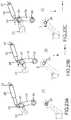
FIGS. 10A-10C and 10E-10H illustrate the relative motion of theshock120, link119, slidingbody622, andrear frame114 relative to thefront frame212 as theshock120 is compressed. Specifically,FIGS. 10A and 10F illustrate therear suspension system102 when theshock120 in an uncompressed state,FIGS. 10B and 10G illustrate therear suspension system102 when theshock120 is in a partially compressed state, andFIGS. 10C and 10H illustrate therear suspension system102 when theshock120 is in a fully compressed state.FIG. 10D illustrates a comparison of the three states shown inFIGS. 10A-10C, with theshock120 shown in the uncompressed state in solid lines, as well as in the partially and fully compressed states in dashed lines. A comparison ofFIGS. 10A and 10F withFIGS. 10B and 10G illustrates that partial compression of theshock120 causes therocker link119 to pivot in a clockwise direction around fixedpivot axis187. Thepivot axis182 located at the top end of thelink119, and thepivot axis185 located along the length of thelink119 are configured to move along arcuate paths defined by the rotation of thelink119 around the fixedpivot axis187. The rear end of theshock120 and the top end of therear triangle114, which are coupled to therocker link119 at the pivot axes182,185, are also configured to move along the arcuate paths defined by the pivot axes182,185. At the same time, the slidingbody622 is configured to travel in a rearward direction, such that thepivot axis179 defined between the slidingbody622 and therear frame114 travels backwardly along the linear path defined by therail113.
A comparison ofFIGS. 10B and 10G withFIGS. 10C and 10H illustrates that further compression of theshock120 due to impaction forces on the bicycle causes therocker link119 to rotate further in a clockwise direction around the fixedpivot axis187, such that theshock120 is also rotated in a counterclockwise direction around fixedpivot axis177. Additionally, the slidingbody622 is configured to switch directions, such that thepivot axis179 defined between the slidingbody622 and therear frame114 travels forwardly along the linear path defined by therail113.
Extension of theshock assembly120 would result in the reverse motion of the components of thesystem102. Decompression or extension of theshock assembly120 from a fully compressed to a partially compressed state causes therocker link119 to rotate in a counter-clockwise direction around the fixedpivot axis187. Additionally, the slidingbody622 would travel rearwardly along the linear path defined by the rail133. Further decompression or extension further causes therocker link119 to rotate further in a counter-clockwise direction around the fixedpivot axis187. Additionally, the slidingbody622 is configured to switch directions, such that it travels forwardly along the linear path defined by the rail133.
FIG. 10E illustrates a magnified view of theend cap159, as well aspivot axis179 of thecap159 around the slidingbody622. As discussed above, the slidingbody622 may be configured to travel in both backwards and forwards directions along the substantially linear path (in this example) defined by therail113 as theshock120 transforms between the uncompressed and fully compressed states. In other words, the slidingbody622 and the attached portion of therear frame114 are configured to move both backwards and forwards along the linear path as the rear wheel travels along the full wheel path during one of compression or extension of theshock120. The back and forth motion of the slidingbody622 andrear frame114 are best shown inFIGS. 10E and 101. InFIG. 10E, the position of thepivot axis179 of thecap159 around the slidingbody622 as the shock is being compressed is represented by numerals178(1),178(2),178(3). Prior to compression of the shock, thepivot axis179 of thecap150 is located at a first position178(1) along theguide rail113. As the rear wheel moves upwardly along the wheel path, which is illustrated inFIG. 10D, the slidingbody622 initially moves rearwardly and upwardly along the linear path defined by therail113. At the same time, the top end of therear frame114 travels forwardly along the arcuate path defined by thelink119. The radius of curvature of the wheel path continually decreases as the rear wheel travels upwardly, resulting in a wheel path that is increasingly curved or concave. Once the slidingbody622 reaches a transition position178(2), thelink622 switches directions along therail113 such that it begins to travel in the opposite direction (in this case, downwardly and forwardly) along the linear path defined by therail113.
It should be noted that the transition position178(2), or the point at which the slidingbody622 switches directions and re-traces its path on therail113 in the opposite direction, is created by the structural and dimensional configuration of the components of the rear suspension system, and may be designed to occur at a desired or select position along the reciprocating motion of the sliding body along the rail to obtain the resulting suspension performance. In other words, the slidingbody622, which initially moves in a rearward and upward direction, and continues to be subjected to forces in the rearward direction, but is pulled forwardly and downwardly by the compression of the shock to a third position178(3), which is the position178(3) of thepivot axis179 of theend cap159 when the shock is fully compressed. Accordingly, the slidingbody622 and the attached portion of therear frame114 are configured to initially move (1) rearwardly and upwardly, and then switch directions such that they move (2) forwardly and downwardly along the linear path defined by therail113 during a single compression or extension of theshock120. While the inflection point or transition is not directly felt by a rider on the bicycle, the rear suspension system allows for better or defined or desired absorption of forces impacting on the rear wheel, and allows for a more comfortable riding experience.
In the illustrated example, the slidingbody622 may first move rearwardly and upwardly along therail113 for approximately 2.77 mm as theshock120 moves from a fully extended to a partially compressed state, and then may switch directions and travel forwardly and downwardly along therail113 for 5.72 mm as theshock120 moves from a partially compressed state to a fully compressed state. In other words, the slidingbody622 may travel for a total of 8.49 mm along therail113 in the illustrated example, with the slidingbody622 traveling almost twice as far whenshock120 moves from the partially compressed to fully compressed states. In other examples, the structural connections of the rear suspension system may be adjusted, such that the slidingbody622 travels further when the shock is initially compressed, or substantially equal distances when the shock is initially compressed as when the shock moves from the partially to fully compressed states.
In other embodiments, the mounting points and configurations of thelink119, shock,120, andrail113 may be adjusted so that the slidingbody622 moves forwardly and downwardly first, and then rearwardly and upwardly along the linear path. Alternatively, in further embodiments, the mounting points and configurations of thelink119, shock,120, andrail113 may be adjusted such that therail113 may be upwardly sloped such that its rear end is positioned lower than itsfront end114. In such embodiments, that the slidingbody622 may move forwardly and upwardly first, and then rearwardly and downwardly along therail113, or vice versa. Many permutations of the orientation of the rail are contemplated, with the forward-rearward movement of the sliding body along the rail during the compression stroke of the rear suspension being evident in at least one aspect of the present disclosure.
While the curvature or concavity of the wheel path does not change sign in the above-described example, the structural and/or dimensional configuration of the components of the rear suspension system can be adjusted in other examples, such that the curvature or concavity of the wheel path changes sign as the wheel travels along the wheel path. In such examples, the rear wheel may hit an inflection point (or particular location) along the wheel path as the curvature or concavity of the wheel path changes sign, and the sliding body may simultaneously reach the transition position, such that the link switches directions along the rail. Other factors than the wheel path curvature changing sign may define a transition position of the sliding body also.
FIG. 10I illustrates the position of the slidingbody623 along therail113 as theshock120 is being compressed. As is shown, the slidingbody623 may be in a first position180(1) along the rail prior to compression of the shock. As theshock120 is compressed, therail113 may be pulled rearwardly and upwardly along therail113 until thelink623 reaches a second transition position180(2), which is the point at which the slidingbody623 begins to switch directions along therail113. As theshock120 is further compressed, the slidingbody623 may be pulled downwardly and forwardly until the shock is fully compressed120, at which point the slidingbody623 is positioned at a third position180(3) along therail113. It should be noted that the illustrated positions180(1)-180(3) are only one example of a travel path of the slidingbody623, and that other embodiments may result in other travel paths. For example, in other embodiments, the slidingbody623 may first be pulled downwardly and forwardly, rather than rearwardly and upwardly. In further embodiments, therail120 may be otherwise oriented relative to the front frame such that the slidingbody623 may be pulled in different directions.
As shown inFIGS. 10E and 101, the travel path of the endcap pivot axis179 may have a larger horizontal component than a vertical component. In other words, the distance traveled in the rearward or forward directions may be greater than the distance traveled in the upward or downward directions. In other embodiments, the mounting points and configurations of thelink119, shock,120, andrail113 may be adjusted such that the travel path of the slidingbody622 has a larger vertical component than a horizontal component. In such embodiments, the distance traveled in the upward or downward directions may be greater than the distance traveled in the rearward or forward directions.
The ICC and the IC for this example may vary and migrate throughout the path traveled by the wheel. The IC is the point for therear frame114 as it is undergoing planar movement, i.e., during wheel travel, which has zero velocity at a particular instant of time. At this instant the velocity vectors of the trajectories of other points in the rear frame generate a circular field around the IC, which is identical to what is generated by a pure rotation. The ICC, as used herein, refers to the ICC with respect to the center point of the rear wheel axle. The ICC can be derived from the radius of curvature at given point along wheel path, or the radius of a circle that mathematically best fits the curve of the wheel path at that point. The center point of this circle is the ICC. As shown inFIG. 10D, the ICC and the IC move in different directions, with the IC defining a substantially straight line that extends downwardly and rearwardly from the slidingbody622 and the ICC defining a curve that extends rearwardly from the slidingbody622. Referring toFIG. 10D, the curve defined by the ICC becomes increasingly concave as the rear wheel travels upwardly, resulting in the aforementioned wheel path in which the curvature of the path changes as the wheel approaches the highest point in its path. Notably, the distance traveled by the wheel in the y-direction is very large as compared to the distance traveled by the slidingbody622 along the x-axis.
FIGS. 11-21 illustrate another embodiment of arear suspension system202 according to a second example. More particularly,FIG. 11 is a right side view showing afront frame212,rear suspension system202, andrear frame214 of a bicycle. Although not depicted inFIG. 11, it is to be appreciated that the bicycle shown inFIG. 11 can include other component parts as described above with reference toFIG. 1, such as the front wheel, steering system, seat, pedals, and so on.
As is shown, therear suspension system202 includes afront frame212 coupled with arear frame214 through arear suspension system202 including arocker link219, as well as slidingbody assembly210 that includes amount290 supporting a slidingbody288. Like therear suspension system102 shown and described inFIGS. 1-101, therear suspension system202 also includes ashock assembly220 operably connected between thefront frame212 and therear frame214. Theshock assembly220 may be similar to the shock assemblies described above.
Similar to therear suspension system102 shown and described inFIGS. 1-101, thefront frame212 may include atop tube224,seat tube230, and adown tube226 defining abottom bracket240. As shown inFIGS. 11-13, the right side of therear frame214 may define a partial rightrear triangle257 including achain stay260, aseat stay258, and abroken forward member279 that extends upwardly from the front end of the chain stay260 towards the front end of theseat stay258. As is shown, theforward member279 of the partialright triangle257 may terminate at an area between the front ends of the chain stay260 and theseat stay258, rather than connecting the chain stay260 and theseat stay258. The left side of therear frame214 may define a leftrear triangle259 including achain stay260, aseat stay258, and aforward member279 extending between the chain stay260 and theseat stay258. In some examples, therear suspension system202 may also include a derailleur structure (not shown), which may be coupled to the front andrear frames212,214, as well as to a chain (not shown) and multiple sprockets (not shown) of different sizes to move the chain from one sprocket to another for maintaining proper tension in the chain while allowing for variations in chain stay length at the same time. As noted above, the rear frame portion of this and any previous and later described examples may not have triangular shapes despite being referred to as triangular herein, unless otherwise provided.
The right and leftrear triangles257,259 may be coupled to each other via twoaxles281 and285, which extend across therear frame214 to connect thetriangles257,259. As best shown inFIGS. 15-21, the top ends of the right and leftrear triangles257,259 may be connected by thefirst axle281, which may be located at the top end of theforward member279 of the leftrear triangle259 and the forward end of the seat stay258 of the partial rightrear triangle257. Thefirst axle281 may extend between the twotriangles257,259 and through and adjacent, near or at an upper end portion of arocker link219, that is sandwiched between the triangles. In some examples, thefirst axle281 may extend in a direction that is orthogonal to the direction of extension of the right and leftrear triangles257,259. Thesecond axle285 may be located at, near, or adjacent to, the bottom end of theforward member279 of the leftrear triangle259 and at, near or adjacent to, the top end of thebroken forward member279 of the rightrear triangle257, and may extend through a slidingbody288 that is positioned between theforward members279. Like thefirst axle281, thesecond axle285 may extend in a direction that is orthogonal to the right and leftrear triangles257,259. Eachaxle281,285 may be integrally formed with thetriangles257,259 or may be formed as separate parts attachable to thetriangles257,259.
The bottom end of therocker link219 that is positioned between thetriangles257,259 may be pivotally connected to the slidingbody mount290 via athird axle284, which is not directly connected to therear frame214. Similar to the first example, therocker link219 may have a dog bone-type structure, in which two parallel linkages are connected by one or more horizontal components that extend between the linkages. In some examples, the slidingbody mount290 to which therocker link219 is connected may be fixedly joined to the seat and downtubes230,226 of thefront frame212, such that it does not move relative to thefront frame212 as the rear wheel is deflected. As such, thethird axle284 may be fixed in position as the suspension system is compressed. As previously mentioned, themount290 may further be configured to support a slidingbody288 that is configured to move relative to themount290 and thefront frame212 in response to deflection of the rear wheel. Themount290 and thefront frame212 may be separate components that are joined together, as shown, or, may be integrally formed.
As best shown inFIG. 15, the top end of therocker link219 may further be pivotally connected to one end of theshock assembly220 via afourth axle286. As previously discussed, the upper end portion of therocker link219 may be pivotally coupled to the right and leftrear triangles257,259 via thefirst axle281, and the bottom end of therocker link219 may be pivotally coupled to the slidingbody mount290, which is fixedly joined to thefront frame212, via thethird axle284, which extends through each of therocker link219 and the slidingbody mount290. Accordingly, therocker link219 may define threepivot axes281,286,284, with the first pivot axis286 (located at the top of the rocker link219) being the axis around which theshock assembly220 rotates relative to therocker link219, the second pivot axis281 (located below the first pivot axis286) being the axis around which the right and leftrear triangles257,259 rotate relative to therocker link219, and the third pivot axis284 (located at the bottom of the rocker link219) being the fixed pivot axis around which therocker link219 rotates relative to themount290 and thefront frame212. While shown as three separate pivot axes in this and previous examples, it is contemplated that the pivot points281 and286 may be common, or may be reversed (e.g. withpivot point281 being abovepivot point286 or further from pivot point284) in order to obtain a desired suspension performance.
As best shown inFIGS. 11-19, the forward end of theshock assembly220 may be pivotally connected to thedown tube226 of thefront frame212 via afifth axle282 mounted on a shock attachment portion. Theshock assembly220 may thus rotate relative to thefront frame212 around a fixed pivot axis defined by thefifth axle282. As discussed above, the rear end of theshock assembly220 may be connected to the top end of therocker link219 via thefourth axle286 that extends through therocker link219 and the rear end of theshock assembly220. In one example, theshock assembly220 may be positioned in a substantially horizontal orientation. In other words, theshock assembly220 may be substantially parallel to the x-axis, or may define an angle that is between 0 and 45 degrees with respect to the x-axis. In other examples, theshock assembly220 may be oriented substantially vertically, i.e., such that it is substantially parallel to the y-axis or defines an angle that is between 0 and 45 degrees with respect to the y-axis when mounted to thedown tube226 and to therocker link219.
As best shown inFIGS. 16-18, a slidingbody assembly210, also referred to as a rail assembly, may be positioned between the right and leftrear triangles257,259 of therear frame214. As previously discussed, the slidingbody assembly210 may include a slidingbody288 that is supported by the slidingbody mount290 that is joined to the down andseat tubes226,230 of thefront frame212. The slidingbody assembly210 may further include atop crown244 that is joined to a top mountingportion227 of themount290 and abottom crown243 that is joined to abottom mounting portion229 of themount290. The top andbottom crowns244,243 are configured to receive the top and bottom ends of a pair of spaced-apartrails245 which extend between the top andbottom crowns244,243. In some examples, therails245 may have a hollow tubular configuration, and may be oriented such that they are substantially parallel to one another when attached to thecrowns244,243. In other embodiments, therails245 may have a solid configuration, and may have acceptable cross sections allowing reciprocating movement along their length as defined below. In still other embodiments, the rails may extend at different angles relative to one another. Therails245 may together define a plane that is substantially parallel to the planes defined by the front andrear frames212,214 when the bicycle is fully assembled. As is best shown inFIG. 20, the top andbottom crowns244,243 may each define one ormore attachment portions201,203,205 that protrude from the top and bottom faces of the top andbottom crowns244,243 and allow for attaching the top andbottom crowns244,243 to themount290. In one example, thetop crown244 may include afirst attachment portion201 that is positioned on the forward end of thetop crown244 and asecond attachment portion203 that is positioned on the rear end of thetop crown244. In contrast, thebottom crown243 may only include asingle attachment portion205 that is positioned on the rear end of thebottom crown243. As is shown, the first andsecond attachment portions201,203 of thetop crown244 and theattachment portion205 of thebottom crown243 may each include one or more apertures configured to receive a fastener, such as a bolt, for joining the top andbottom crowns244,243 to themount290. Other embodiments may include other attachment points for joining the top andbottom crowns244,243 of the slidingbody288 to theslider link mount290. Further, in some embodiments, the top andbottom crowns244,243 of the assembly may be integrally formed with the slidingbody mount290, or may be joined to or integrally formed with thefront frame212 of the bicycle.
One example of a slidingbody mount290 is shown inFIG. 21. The slidingbody mount290 may have a top mountingportion227, abottom mounting portion229, and a connectingportion221 that extends between the top andbottom arms227,229. In one example, the slidingbody mount290 may have a truncated C-shape, in which thetop mounting portion227 of the slidingbody mount290 is longer than thebottom mounting portion229 of the slidingbody mount290, which may be contoured to receive thebottom bracket240. Thetop mounting portion227 of the slidingbody mount290 may define twoapertures216 that correspond to theapertures206 defined by thetop crown244 of the slidingbody assembly210, and thebottom mounting portion229 of the slidingbody mount290 may define twoapertures216 that correspond to theapertures206 defined by the bottom crowns244,243 of the slidingbody assembly210. The C-shaped body mount may have its open side facing rearwardly, generally toward the rear tire, as shown at least inFIG. 11.
As previously discussed, fasteners may be inserted through theapertures206,216 defined by the top andbottom crowns244,243 and by the slidingbody mount290 to join the top andbottom crowns244,243 of the assembly to themount290. The slidingbody mount290 may further be keyed or contoured to receive the top andbottom crowns244,243 of slidingbody assembly210, which may serve to further prevent the top andbottom crowns244,243 from moving relative to the slidingbody mount290,210 as forces are applied to the rear suspension system. Additionally, thetop mounting portion227 of the slidingbody mount290 may define an axle-receivingaperture271 that is configured to receive thethird axle284, which extends through the slidingbody288 and the bottom end of therocker link219. As discussed above, the slidingbody mount290 may be fixedly joined to theseat tube230 of thefront frame212. In some embodiments, the slidingbody mount290 may be joined to theseat tube230 using fasteners, welding, adhesive, or some other joining means. In other embodiments, the slidingbody mount290 may be integrally formed with theseat tube230. In further embodiments, the slidingbody mount290 may be fixedly joined to thedown tube226 of thefront frame212, or to the both the seat and downtubes230,226 of thefront frame212.
The sliding body288 (which may also be referred to as a slider link as noted with respect to the first example) of the slidingbody assembly210 may include anouter housing287 that is configured to engage theguide rails245 extending between the top andbottom crowns244,243. Theouter housing287 is best shown inFIGS. 18-20. In one example, theouter housing287 may have an elongated block shape with two opposing curved side walls, although in other embodiments, theouter housing287 may define other shapes. The top and bottom surfaces of thehousing287 may together define two pairs of vertically-alignedapertures204, with each pair of vertically-alignedapertures204 being configured to receive one of the pair ofrails245 that extends between thecrowns244,245. As will be further discussed below, the slidingbody288 may further include one or more bearings that are adapted to slidingly engage the outer surfaces of theguide rails245, so as to allow the slidingbody288 to move along the guide rails245. Additionally, the front and back surfaces of thehousing287 may define a pair of horizontally-alignedapertures207 that are positioned between therails245. The horizontally-alignedapertures207 may be configured to receive thesecond axle285, which extends through the right and leftrear triangles257,259 and the slidingbody housing287. In some examples, the horizontally-aligned apertures207 (and second axle285) may be located close to or at the center of the slidingbody housing287, such that they are positioned between theguide rails245 and midway between the top and bottom of the guide rails. As such, thesecond axle285 may be positioned between and securely engaged by therails245 to move therealong.
It is contemplated thatapertures207 may be positioned between the guide rails and near or at their top ends, or near or at their bottom ends also. The aperture(s)207 may also be positioned at other locations on the slidingbody housing287, such as in a non-central area at the top or bottom of the slidingbody housing287, and offset forwardly or rearwardly toward the front or rear margins of the slidingbody housing287.
When joined to the slidingbody mount290, the spaced-apartguide rails245 may extend at an angle relative to the x-axis (i.e., the horizontal axis). The angle may be, for example, an acute angle or an obtuse angle. As one non-limiting example, the spaced-apartguide rails245 may extend at a 60 degree angle relative to the x-axis. In other embodiments, theguide rails245 may be oriented such that they are substantially parallel to the x-axis. In further examples, theguide rails245 may be oriented substantially vertically, i.e., such that therails245 are substantially parallel to the y-axis. As will be further discussed, the orientation of theguide rails245 may determine the travel path of the slidingbody288 as theshock220 is compressed.
The internal structure of the slidingbody assembly210 is best shown inFIGS. 17, 18, and22. As is shown, the slidingbody288 may include one or moreinternal bearings283, which may take the form ofbushings283 that are joined to the outer surfaces of therails245. For example, thebushings283 may be sleeves which are inserted over therails245 to provide a smooth bearing surface for allowing the slidingbody288 to slide along therails245. In one embodiment, the slidingbody288 includes a pair ofupper bushings283 and a pair oflower bushings283 that are spaced apart from and positioned below theupper bushings283 along the lengths of therails245. The slidingbody288 may further include one ormore wipers275 that are also positioned around therails245. In some embodiments, a pair oflower wipers275 may be positioned directly below thelower bushings283, and a pair ofupper wipers275 may be positioned directly above the upper bushings. Thewipers275 may have larger outer diameters than thebushings283 and the vertically-alignedapertures204 configured to receive therails245 to prevent dirt or dust entering thehousing287 through theapertures204 from contaminating the bushing surfaces. Thewipers275 may be similar to any of the wipers described above with respect to the first embodiment shown inFIGS. 1-101. In some embodiments, thewipers275 may be defined by the outer slidingbody housing287, although in other embodiments, they may be otherwise attached to thehousing287.
FIGS. 23A-23C illustrate therear suspension system202 in various stages of compression. Specifically,FIG. 23A illustrates therear suspension system202 when theshock assembly220 is in an uncompressed state,FIG. 23B illustrates therear suspension system202 when theshock assembly220 is in a partially compressed state, andFIG. 23C illustrates therear suspension system202 when theshock assembly220 is in a fully compressed state. As discussed above, therocker link219 may be pivotally coupled to each of theshock assembly220,rear frame214, and theseat tube230. As therocker link219 pivots relative to theseat tube230 around the fixed second pivot axis, it causes rotation of the top ends of theforward members279 of the right and leftrear triangles257,259 along an arcuate path defined by therocker219 around the fixedpivot axis284. In addition, the rotation of therocker link219 relative to theseat tube230 further causes rotation of the bottom end of theshock assembly220 along a second arcuate path that is parallel to that traveled by the top ends of theforward members279.
Theforward members279 of the right and lefttriangles257,259 may be pivotally coupled to the slidingbody288, which is configured to slide along therails245. As discussed above, theforward members279 of the right and leftrear triangles257,259 may be configured to rotate relative to the slidingbody288 about thesecond pivot axle285 as the slidingbody288 travels along a substantially linear path defined by therails245.
A comparison ofFIGS. 23A and 23B illustrates that partial compression of theshock assembly220 causes therocker link219 to pivot in a clockwise direction around the fixedthird pivot axle284. Thepivot axis286 located at the top end of the link, and thepivot axis281 located along the length of the link are configured to move along the arcuate paths defined by the rotation of the link around the fixedpivot axis284. The rear end of theshock assembly220 and the top ends of therear triangles257,259, which are coupled to therocker link219 at the third andfirst pivot axles281,286, are also configured to move along the arcuate paths defined by thepivot axles281,286. At the same time, the slidingbody288 is configured to travel in an upward and rearward direction, as defined by theguide rails245, such that thepivot axis285 defined between the slidingbody288 and therear frame214 travels upwardly and rearwardly along the linear path defined by therails245. Therear frame214 further pivots relative to the slidingbody288 as therocker link219 rotates around the fixedthird pivot axle285.
In contrast to the embodiment shown inFIGS. 1-101, the travel path of the slidingbody288 may have a larger vertical component than a horizontal component. This is due, at least in part, to the orientation of therails245 of the slidingbody assembly210. In other embodiments, the mounting points and configurations of thelink219, shock,220, and rails245 may be adjusted such that the travel path of the slidingbody288 has a larger horizontal component than a vertical component. In such embodiments, the distance traveled in the rearward or forward directions may be greater than the distance traveled in the upward or downward directions. However, in concert withFIGS. 1-101 of the first example, the motion and direction of the sliding body, and the point along its path at which it switches direction, is controlled by the dimensions of the rear suspension structure.
A comparison ofFIGS. 23B and 23C illustrates that further compression of theshock assembly220 due to impaction forces on the bicycle causes therocker link219 to rotate further in a clockwise direction around the fixedthird pivot axle284, such that theshock assembly220 is rotated in a counterclockwise direction around the fixedfifth pivot axle282. Additionally, the slidingbody288 is configured to switch directions, such that thepivot axis285 defined between the slidingbody288 and therear frame214 travels downwardly and forwardly along the linear path defined by therails245. Therear frame214 further pivots relative to the slidingbody288 as therocker link219 rotates around the fixedthird pivot axle285. In some embodiments, the linkages described above may be otherwise configured such that the slidingbody288 travels downwardly and forwardly first, and then upwardly and rearwardly, upon compression of theshock assembly220.
Extension of theshock assembly220 would result in the reverse motion of the components of thesystem202. Decompression or extension of theshock assembly220 from a fully compressed to a partially compressed state causes therocker link219 to rotate in a counter-clockwise direction around the fixedpivot axis284. Additionally, the slidingbody622 would travel upwardly and rearwardly along the linear path defined by therails245. Further decompression or extension further causes therocker link219 to rotate further in a counter-clockwise direction around the fixedpivot axis284. Additionally, the slidingbody622 is configured to switch directions, such that it travels downwardly and forwardly along the linear path defined by therails245.
As discussed above, the slidingbody288 may be configured to switch directions as theshock assembly220 transforms between the uncompressed state to the fully compressed state. In other words, the slidingbody288 may travel in a first direction along therails245 as theshock220 transitions from an uncompressed to a partially compressed state, and then travel in a second direction opposite the first direction along therails245 as theshock220 transitions from a partially compressed to a fully compressed state. As the slidingbody288 moves in the second direction, it re-travels at least a portion of the path that it traveled during the initial compression of the shock (i.e., from the uncompressed to the partially compressed positions). In one example, the slidingbody288 and the attached portion of therear frame214 are configured to move both (1) upwardly and rearwardly and (2) downwardly and forwardly along the linear path defined by therails245 as the rear wheel travels along the full wheel path during one of compression or extension of theshock assembly220. This motion of the slidingbody288 andrear frame214 is best shown inFIGS. 23A-23C. As the rear wheel moves upwardly along the wheel path, the slidingbody288 initially moves upwardly and rearwardly along the linear path defined by therails245. At the same time, the top end of therear frame214 travels forwardly along the arcuate path defined by therocker link219, resulting in a wheel path that is increasingly curved or concave (i.e., the radius of curvature of the wheel path decreases as the rear wheel travels upwardly). Once the slidingbody288 reaches a transition point or position, it switches directions such that it begins to travel in the opposite direction (in this case, forwardly and downwardly) along the linear path defined by therails245. Accordingly, the slidingbody288 and the attached portion of therear frame214 are configured to move in opposite directions along the linear path defined by therails245 during each compression or extension of theshock assembly220.
FIG. 24 illustrates the shock rate of therear suspension system202 shown inFIGS. 11-23. The shock rate of therear suspension system202, as defined herein, is the inverse of the leverage ratio of asuspension system202, or the shock stroke length divided by the distance traveled by the rear wheel. As is shown, the shock rate curve defines a substantially straight line as compared to leverage ratios of existing rear suspension systems.
FIG. 25 illustrates the derivative of chain stay length or rate of change in chain stay length of therear suspension system202 shown inFIGS. 11-22. As is shown, the derivative of chain stay length deviates from that of current suspension systems, in that the derivative of chain stay length is high at the beginning and at the end of the wheel travel path. The derivative of chain stay length is explained in U.S. Pat. No. 5,628,524, entitled “Bicycle Wheel Travel Path for Selectively Applying Chainstay Lengthening Effect and Apparatus for Providing Same,” which is incorporated by reference in its entirety herein. As is shown inFIG. 23, the derivative of chain stay length begins above 0.14, and has a negative slope throughout the entire range of wheel travel (i.e., through one full compression of the shock assembly), and in some cases, may end below 0.1. This can be contrasted to the derivative of chain stay length of existing rear suspension systems, also shown inFIG. 25, in which the derivative of chain stay length initially rises (i.e., has a positive slope) and then falls.
FIGS. 26-37 illustrate another example of arear suspension system302, similar to the second example just described. Thisrear suspension system302 is highly similar to therear suspension system302 shown inFIGS. 11-23, with some differences in the configurations of some of the components of the slidingbody assembly310, which will be further described below. As is shown, therear suspension system302 includes afront frame312 coupled with arear frame314 through arear suspension system302 including arocker link319, as well as slidingbody assembly310 that includes amount390 supporting a slidingbody388. Like the other examples ofrear suspension systems102,202 previously described, therear suspension system302 also includes ashock assembly320 operably connected between thefront frame312 and therear frame314. Theshock assembly220 may be similar to the shock assemblies described above.
Thefront frame312 may be substantially identical to that described inFIGS. 1123, and may include a top tube324,seat tube330, and adown tube326 defining abottom bracket340. As in the example shown inFIGS. 11-23, the right side of therear frame314 may define a partial rightrear triangle357 including achain stay360, aseat stay358, and abroken forward member379 that extends upwardly from the front end of the chain stay360 towards the front end of theseat stay358. The left side of therear frame314 may define a leftrear triangle359 including achain stay360, aseat stay358, and aforward member379 extending between the chain stay360 and theseat stay358.
As in the example shown inFIGS. 11-23, the right and leftrear triangles357,359 may be coupled each other via twoaxles381 and385, which extend across therear frame314 to connect thetriangles357,359. The top ends of the right and leftrear triangles357,359 may be connected by thefirst axle381, which may extend between the twotriangles357,359 and through an upper end portion of arocker link319, which is sandwiched between the triangles. Thesecond axle385 may be located at the bottom end of theforward member379 of the leftrear triangle359 and at the top end of thebroken forward member379 of the rightrear triangle357, and extends through a slidingbody388 that is positioned between theforward members379.
The bottom end of therocker link319 may be pivotally connected to the slidingbody mount390 via athird axle384, which is not directly connected to therear frame314. The slidingbody mount390 may be fixedly joined to the seat and downtubes330,326 of thefront frame312, such that it does not move relative to thefront frame312 as the rear wheel is deflected. The top end of therocker link219 may be pivotally connected to the rear end of theshock assembly320 via afourth axle386. The forward end of theshock assembly320 may be pivotally connected to thedown tube326 of thefront frame312 via afifth axle382.
As in the embodiment shown inFIGS. 11-23, the slidingbody assembly310 may include amount390 configured to support a slidingbody388 that is configured to move relative to themount390 along a pair of spaced-apartrails345 that extend between the top and bottom portions of themount390 in response to deflection of the rear wheel. Similar to the prior embodiment, and as shown inFIG. 37, therails345 may be configured to receive a pair ofupper bushings383 and a pair oflower bushings383 that are spaced apart from and positioned below theupper bushings383 along the lengths of therails345 to facilitate sliding of the slidingbody388 along therails345. A comparison ofFIGS. 34-37 andFIG. 21 reveals that therails345 and themount390 shown inFIGS. 26-36 may have different configurations than that shown inFIGS. 11-23. For example, each of the spaced-apartrails345 may define top and bottomattachment end portions344,343, each of which defines a fastener-receivingaperture306. Similar to thecrowns244,243 joined to the ends of therails245 of the slidingbody assembly210 shown inFIGS. 11-23, the top and bottomattachment end portions344,343 of therails345 allow for joining therails345 to the slidingbody mount390.
As best shown inFIGS. 35-36, the slidingbody mount390 may have a top mountingportion327, abottom mounting portion329, and two parallel connectingportions321 that extend between the top andbottom mounting portions327,329, such that the connectingportions321 and top andbottom mounting portions327,329 together define a rectangular-shaped body that surrounds the slidingbody288. Thetop mounting portion327 of the slidingbody mount390 may define twoapertures316 that correspond to theapertures306 defined by thetop end portions344 of therails245, and thebottom mounting portion329 of the slidingbody mount390 may define twoapertures316 that correspond to theapertures306 defined by thebottom end portions343 of therails245. As previously discussed with respect to the embodiment shown inFIGS. 11-24, fasteners may be inserted through theapertures306,316 defined by the top andbottom end portions344,343 of therails245 and by the slidingbody mount390 to join therails245 to themount390. The slidingbody mount390 may further be contoured to receive the top and bottomattachment end portions344,343 ofrails245, which may serve to further prevent therails245 from moving relative to the slidingbody mount390, as forces are applied to the rear suspension system.
A comparison of themount390 shown inFIGS. 34-35 to themount290 shown inFIGS. 11-23 reveals several distinctions. Specifically, the attachment portions where therails345 are joined to the mount390 (i.e., via fasteners inserted throughapertures316 defined by themount390 and the rails306) are more evenly spaced, in that the attachment portions are located on opposite sides of themount390. In contrast, thebottom crown243 of the slidingbody assembly210 shown inFIGS. 11-23 is attached to themount290 on only one side. In some cases, this even spacing of the attachment portions may allow for more even distribution of the stresses imparted by the rear wheel onto themount390, which may help prevent detachment of therails345 from themount390. Additionally, the slidingbody388 of therear suspension system302 shown inFIGS. 26-28 is fully encased on its sides by themount390, which has a rectangular configuration rather than the truncated C-shape of themount290 shown inFIGS. 11-23. As such, themount390 may occupy more space than themount290 shown inFIGS. 11-23, and may require additional material for its manufacture, but may also provide for increased load capabilities and structural reinforcement. Further, themount390 shown inFIGS. 34-35 includes a bottom bracket support that encircles thebottom bracket340. In contrast, themount290 shown inFIGS. 11-23 did not support thebottom bracket240.
As discussed above, therear suspension system302 illustrated inFIGS. 26-28 operates in an identical manner to therear suspension system202 shown inFIGS. 11-24. As such,FIGS. 23A-23D (and the description above describing these figures), which illustrate therear suspension system202 in various stages of compression, are equally applicable to therear suspension system302.
FIGS. 38A-38C illustrate the relative motion of theshock320, link319, slidingbody388, andrear frame314 relative to thefront frame312 as theshock320 is compressed. Specifically,FIG. 3A illustrates therear suspension system302 when theshock320 in an uncompressed state,FIG. 38B illustrates therear suspension system302 when theshock320 is in a partially compressed state, andFIG. 38C illustrates therear suspension system302 when theshock320 is in a fully compressed state.FIG. 38D illustrates a comparison of the three states shown inFIGS. 38A-38C, with the slidingbody388axle385 shown in solid lines in the uncompressed state, and in dashed lines in the partially compressed and fully compressed states. A comparison ofFIGS. 38A and 38B illustrates that partial compression of theshock320 causes therocker link319 to pivot in a clockwise direction around fixedpivot axle384. Thepivot axis386 located at the top end of thelink319, and thepivot axis381 located along the length of thelink319 are configured to move along substantially parallel arcuate paths defined by the rotation of thelink319 around the fixedpivot axis384. The rear end of theshock320 and the top end of therear triangle314, which are coupled to therocker link319 viaaxles381 and386 are also configured to move along the arcuate paths defined by the pivot axes381,386. At the same time, the slidingbody388 is configured to travel in an upward and rearward direction, such that thepivot axis385 defined between the slidingbody388 and therear frame314 travels along the linear path defined by therails345.
A comparison ofFIGS. 38B and 38C illustrates that further compression of theshock320 due to impaction forces on the bicycle causes therocker link319 to rotate further in a clockwise direction around the fixedpivot axis384, such that theshock320 is also rotated in a counterclockwise direction around fixed pivot axis382 (shown in, e.g.,FIG. 30). Additionally, the slidingbody388 is configured to switch directions, such that thepivot axis385 defined between the slidingbody388 and therear frame314 travels downwardly and forwardly along the linear path defined by therails345.
FIG. 38D illustrates a magnified view of thesecond pivot axle385, which defines the pivot axis of therear frame314 around the slidingbody388. As discussed above, the slidingbody388 may be configured to travel in both upwards and downwards directions along the substantially linear path defined by the rails345 (in this example) as theshock320 transforms between the uncompressed and fully compressed states. In other words, the slidingbody388 and the attached portion of therear frame314 are configured to move both upwardly and downwardly along the substantially linear path as the rear wheel travels along the full wheel path during one of compression or extension of theshock320. The back and forth motion of the slidingbody388 andrear frame314 are best shown in FIGS.FIGS. 38A-38C. InFIG. 38D, the position of thesecond pivot axle385 and slidingbody388 as the shock is being compressed is represented by numerals378(1),378(2),378(3). Prior to compression of the shock, thesecond pivot axle285 is located at a first position378(1) along the guide rails345. As the rear wheel moves upwardly along the wheel path, the slidingbody388 initially moves upwardly and rearwardly along the linear path defined by therails345. At the same time, the top end of therear frame314 travels forwardly along the arcuate path defined by thelink319. Once the slidingbody388 reaches a transition position378(2) (or particular location), such as, in one non-limiting example, the point at which point thebody388 switches directions along therails345, it may begin to travel in the opposite direction (in this case, downwardly and forwardly) along the linear path defined by therails345. It should be noted that the transition position378(2), or the point at which the slidingbody388 switches directions and re-traces its path in the opposite direction, is created by the structural and dimensional configuration of the components of the rear suspension system, and may be designed to occur at a desired or select position along the reciprocating motion of the sliding body along the rail to obtain the resulting suspension performance. In other words, the slidingbody388, which initially moves in an upward and rearward direction, and continues to be subjected to forces in the upward direction, but is pulled downwardly by the compression of the shock to a third position378(3), which is the position378(3) of thesecond axle385 when the shock is fully compressed.
The description above with respect toFIGS. 38A-38D is also applicable to the example shown inFIGS. 24-37, which embodies generally the same linkages, axles, and connection points between the rear214 and front212 frames.
While the examples shown inFIGS. 1-11, 11-23 and 26-38 all include a rocker link (119,219,319) that is coupled to the rear frame (119,219,319) and to the shock assembly (120,220,320), other examples may include a system in which the rocker link is not directly coupled to the shock assembly, but is instead is only coupled at one end to the front frame at a fixed pivot axis and to the rear frame at the other end. One such embodiment is shown inFIGS. 39A-39B, which illustrate a system in which therocker link419 is pivotally coupled to thefront frame412 via fixedaxle484, located at the bottom end portion of thelink419, and to therear frame414 viaaxle481, located at the top end portion of thelink419. In such embodiments, the rear end portion of theshock420 may not be directly connected to therocker link419, but may instead be only coupled to therear frame414. In such examples, travel paths of thepivot axle484 connecting theshock420 andrear frame414 and thepivot axle481 connecting therocker link481 and therear frame414 may be different from the prior-described examples, since the path of theaxle484 connecting theshock420 and therear frame414 is no longer confined by thelink419. This is apparent in comparingFIG. 39A, in which theshock420 is fully extended, withFIG. 39B, in which theshock420 is fully compressed.
Also notable in the example shown inFIGS. 39A-39B is the lack of a mount, which in prior examples was used to couple the slidingbody488 to thefront frame412. As shown in the example shown inFIGS. 39A-39B, therails445 of the slidingbody assembly410 may be directly coupled to thefront frame414, rather than to a mount that is, in turn, coupled to thefront frame414. In this example, thedowntube426 forms a mounting block which surrounds the top, bottom, and forward-facing sides of the slidingbody288. The mounting block forms a solid piece that connects thedown tube426 and theseat tube430, with a cut-out portion configured to receive the slidingbody488 and rails445. Other examples offront frames526,626 which may be coupled to the slidingbody288 are shown inFIGS. 40 and 41. In these examples, a connectingtube525,625 extends between theseat tube530 and thedown tube526. The connectingtube625 may be substantially linear, as shown inFIG. 41, or may be bent or curved, as shown inFIG. 40. The examples shown inFIGS. 40 and 41 may, in some cases, be formed by welding (or otherwise joining) multiple pre-formed hollow tubes together to form the front frames512,612. In contrast, thefront frame412 shown inFIGS. 39A and 39B may be formed by welding (or otherwise joining) multiple pre-formed hollow tubes together, along with one or more sheets of material over the tubes in order to form the solid mounting block portion.
FIG. 42 illustrates another example702 of a rear frame, front frame, and rear suspension system. Similar to the example shown inFIGS. 11-23, this example702 may include a first slidingbody788 that is configured to engage afirst rail713. However, this example702 may further include a second slidingbody789 that is configured to engage asecond rail712 that is positioned above thefirst rail713, such that the first slidingbody788 is positioned above the second slidingbody789. In contrast to other examples, in which the rear frame is pivotally coupled to a rocker link and to a sliding body, therear frame714 in this example is pivotally coupled to two sliding bodies, with each slidingbody788,789 being configured to engage acorresponding rail713,712. The second (upper) slidingbody789 may further be pivotally coupled to the rear end of theshock assembly720, such that when theshock720 is compressed, the second slidingbody788 travels forwardly along the second (upper)rail712. This may, in turn, cause the first slidingbody788 to move rearwardly along thelower guide rail713. As the shock is further compressed, the second slidingbody789 may move further in a forward direction along theupper rail712. At the same time, the first (lower) slidingbody788 may switch directions, such that it travels forwardly along thefirst guide rail713. Similarly, extension of theshock assembly720 may cause the upper slidingbody789 to travel rearwardly along the secondupper rail712, while the lower slidingbody788 travels rearwardly and then forwardly along the firstlower guide rail713 during a single compression of theshock720. In other examples, the lower andupper guide rails713,712 and slidingbodies788,789 may be otherwise configured and positioned so as to result in other wheel paths. Further, while the illustrated rails are substantially linear, other examples may include rails which are curved, bent, or otherwise configured. The rails may be parallel to one another, or may extend at different angles relative to one another. Additionally, in other embodiments, therails713,712 may extend at different angles than shown. For example, thelower guide rail713 may extend downwardly in a forward direction or upwardly in a forward direction, and theupper guide rail712 may extend downwardly in a forward direction or upwardly in a forward direction.
It will be appreciated from the above noted description of the various arrangements and examples of the present disclosure that a rear suspension system for a bicycle has been described which includes a first link assembly and a sliding body assembly. The rear suspension system can be formed in various ways and operated in various manners depending upon a user's desired rear wheel path and leverage ratio curve. It will be appreciated that the features described in connection with each arrangement and example of the disclosure are interchangeable to some degree so that many variations beyond those specifically described are possible. It should also be understood that the above-described component parts of the rear suspension need not be connected with the bicycle in the manners described and depicted above, and as such, can be connected with the frame and with each other in various additional locations. It should also be understood that the physical shapes and relative lengths of the rear suspension components are not limited to that which has been depicted and described herein.
Although various representative examples of this disclosure have been described above with a certain degree of particularity, those skilled in the art could make numerous alterations to the disclosed examples without departing from the spirit or scope of the inventive subject matter set forth in the specification and claims. All directional references (e.g., upper, lower, upward, downward, left, right, leftward, rightward, top, bottom, above, below, vertical, horizontal, clockwise, and counterclockwise) are only used for identification purposes to aid the reader's understanding of the examples of the present disclosure, and do not create limitations, particularly as to the position, orientation, or use of the invention unless specifically set forth in the claims. Joinder references (e.g., attached, coupled, connected, and the like) are to be construed broadly and may include intermediate members between a connection of elements and relative movement between elements. As such, joinder references do not necessarily infer that two elements are directly connected and in fixed relation to each other.
In some instances, components are described with reference to “ends” having a particular characteristic and/or being connected with another part. However, those skilled in the art will recognize that the present invention is not limited to components which terminate immediately beyond their points of connection with other parts. Thus, the term “end” should be interpreted broadly, in a manner that includes areas adjacent, rearward, forward of, or otherwise near the terminus of a particular element, link, component, part, member or the like. In methodologies directly or indirectly set forth herein, various steps and operations are described in one possible order of operation, but those skilled in the art will recognize that steps and operations may be rearranged, replaced, or eliminated without necessarily departing from the spirit and scope of the present invention. It is intended that all matter contained in the above description or shown in the accompanying drawings shall be interpreted as illustrative only and not limiting. Changes in detail or structure may be made without departing from the spirit of the invention as defined in the appended claims.
The foregoing has been generally described with respect to particular examples and methods of manufacture. It will be apparent to those of ordinary skill in the art that certain modifications may be made without departing from the spirit or scope of this disclosure. For example, a fiber other than carbon may be used as a strengthening or stiffening element. As one example, certain metals may be used instead, or another type of plastic may be used. Accordingly, the proper scope of this disclosure is set forth in the following claims.