US10764512B2 - Method of image fusion on camera device equipped with multiple cameras - Google Patents
Method of image fusion on camera device equipped with multiple camerasDownload PDFInfo
- Publication number
- US10764512B2 US10764512B2US16/296,317US201916296317AUS10764512B2US 10764512 B2US10764512 B2US 10764512B2US 201916296317 AUS201916296317 AUS 201916296317AUS 10764512 B2US10764512 B2US 10764512B2
- Authority
- US
- United States
- Prior art keywords
- image
- fov
- factor
- zooming
- imaging section
- Prior art date
- Legal status (The legal status is an assumption and is not a legal conclusion. Google has not performed a legal analysis and makes no representation as to the accuracy of the status listed.)
- Active
Links
- 238000000034methodMethods0.000titleclaimsdescription35
- 230000004927fusionEffects0.000titleclaimsdescription10
- 238000003384imaging methodMethods0.000claimsabstractdescription215
- 238000007499fusion processingMethods0.000claimsabstractdescription28
- 230000004044responseEffects0.000claimsabstractdescription28
- 238000000354decomposition reactionMethods0.000claimsdescription18
- 230000007423decreaseEffects0.000claimsdescription13
- 230000003247decreasing effectEffects0.000claimsdescription4
- 230000003213activating effectEffects0.000claims3
- 238000010586diagramMethods0.000description18
- 230000006870functionEffects0.000description9
- 229920006375polyphtalamidePolymers0.000description9
- OXXJZDJLYSMGIQ-ZRDIBKRKSA-N8-[2-[(e)-3-hydroxypent-1-enyl]-5-oxocyclopent-3-en-1-yl]octanoic acidChemical compoundCCC(O)\C=C\C1C=CC(=O)C1CCCCCCCC(O)=OOXXJZDJLYSMGIQ-ZRDIBKRKSA-N0.000description6
- 238000012886linear functionMethods0.000description6
- 238000002156mixingMethods0.000description3
- 230000003287optical effectEffects0.000description3
- 238000012986modificationMethods0.000description2
- 230000004048modificationEffects0.000description2
- 230000007704transitionEffects0.000description2
- 230000008901benefitEffects0.000description1
- 230000009977dual effectEffects0.000description1
- 238000001914filtrationMethods0.000description1
- 230000008569processEffects0.000description1
- 238000005303weighingMethods0.000description1
Images




Classifications
- H—ELECTRICITY
- H04—ELECTRIC COMMUNICATION TECHNIQUE
- H04N—PICTORIAL COMMUNICATION, e.g. TELEVISION
- H04N5/00—Details of television systems
- H04N5/222—Studio circuitry; Studio devices; Studio equipment
- H04N5/262—Studio circuits, e.g. for mixing, switching-over, change of character of image, other special effects ; Cameras specially adapted for the electronic generation of special effects
- H04N5/265—Mixing
- H—ELECTRICITY
- H04—ELECTRIC COMMUNICATION TECHNIQUE
- H04N—PICTORIAL COMMUNICATION, e.g. TELEVISION
- H04N23/00—Cameras or camera modules comprising electronic image sensors; Control thereof
- H04N23/60—Control of cameras or camera modules
- H04N23/67—Focus control based on electronic image sensor signals
- H—ELECTRICITY
- H04—ELECTRIC COMMUNICATION TECHNIQUE
- H04N—PICTORIAL COMMUNICATION, e.g. TELEVISION
- H04N23/00—Cameras or camera modules comprising electronic image sensors; Control thereof
- H04N23/45—Cameras or camera modules comprising electronic image sensors; Control thereof for generating image signals from two or more image sensors being of different type or operating in different modes, e.g. with a CMOS sensor for moving images in combination with a charge-coupled device [CCD] for still images
- H—ELECTRICITY
- H04—ELECTRIC COMMUNICATION TECHNIQUE
- H04N—PICTORIAL COMMUNICATION, e.g. TELEVISION
- H04N23/00—Cameras or camera modules comprising electronic image sensors; Control thereof
- H04N23/60—Control of cameras or camera modules
- H04N23/65—Control of camera operation in relation to power supply
- H—ELECTRICITY
- H04—ELECTRIC COMMUNICATION TECHNIQUE
- H04N—PICTORIAL COMMUNICATION, e.g. TELEVISION
- H04N23/00—Cameras or camera modules comprising electronic image sensors; Control thereof
- H04N23/60—Control of cameras or camera modules
- H04N23/69—Control of means for changing angle of the field of view, e.g. optical zoom objectives or electronic zooming
- H—ELECTRICITY
- H04—ELECTRIC COMMUNICATION TECHNIQUE
- H04N—PICTORIAL COMMUNICATION, e.g. TELEVISION
- H04N23/00—Cameras or camera modules comprising electronic image sensors; Control thereof
- H04N23/90—Arrangement of cameras or camera modules, e.g. multiple cameras in TV studios or sports stadiums
- H—ELECTRICITY
- H04—ELECTRIC COMMUNICATION TECHNIQUE
- H04N—PICTORIAL COMMUNICATION, e.g. TELEVISION
- H04N23/00—Cameras or camera modules comprising electronic image sensors; Control thereof
- H04N23/95—Computational photography systems, e.g. light-field imaging systems
- H04N23/957—Light-field or plenoptic cameras or camera modules
- H04N5/23229—
- H04N5/23296—
- H04N5/247—
- H04N5/2258—
Definitions
- the inventionrelates to a camera, and, in particular, to a camera device and a method for image fusion in a camera device.
- Optical zoomis currently one of the most important smartphone camera features that appeals to users.
- the physical characteristics of a lensmakes it difficult to design a single camera smartphone setup that includes an optical zoom without sacrificing the phone's overall appearance or adding to its thickness.
- a wide-angle plus telephoto dual camera modulehas been developed in recent years and provides the industry with a solution. Since image zooming can be switched between the wide-angle imaging section and the telephoto imaging section in the dual-camera module, the user may have a better experience with a smooth optical zoom function using a smartphone equipped with a wide-angle plus telephoto dual-camera module.
- the wide-angle lens and telephoto lensare usually referred to as the “wide” lens and the “tele” lens, and the focal length of a wide-angle lens in the wide-angle imaging section is smaller than that of a telephoto lens in the telephoto imaging section.
- the wide-angle lensmay have a shorter focal length, and the telephoto lens may have a longer focal length.
- the wide-angle lens and the telephoto lensmay have different FOVs.
- some conventional portable electronic devices on the markethave been equipped with more than 2 cameras in a single camera module (e.g., rear camera module), where each camera in the camera module may have an individual focal length and FOV.
- each camera in the camera modulemay have an individual focal length and FOV.
- the first cameramay have the shortest focal length and the widest FOV
- the second cameramay have the second shortest focal length and the second-widest FOV
- the third cameramay have the longest focal length and the narrowest FOV.
- these conventional portable electronic devicescannot efficiently use images captured by the first, second, and third cameras while performing digital zooming, resulting in poorer image quality.
- a camera devicein an exemplary embodiment, includes: a first imaging section, a second imaging section, a third imaging section, and a processor.
- the first imaging sectionis configured to capture a first image of a scene with a first field of view (FOV).
- the second imaging sectionis configured to capture a second image of the scene with a second FOV.
- the third imaging sectionis configured to capture a third image of the scene with a third FOV.
- the processoris coupled to the first imaging section, the second imaging section, and the third imaging section, and is configured to generate a first output image by performing a first image-fusion process on the first image, the second image, and a third image in response to a zooming factor of the camera device being between a first zooming factor and a second zooming factor.
- the first FOVis wider than the second FOV
- the second FOVis wider than the third FOV
- the second zooming factoris greater than the first zooming factor.
- a method for image fusion in a camera deviceis provided.
- the camera deviceis equipped with a first imaging section, a second imaging section, and a third imaging section.
- the methodincludes the steps of: utilizing the first imaging section, the second imaging section, and the third imaging section to capture a first image, a second image, and a third image of a scene with a first field of view (FOV), a second FOV, and a third FOV, respectively; and generate a first output image by performing a first image-fusion process on the first image, the second image, and a third image in response to a zooming factor of the camera device being between a first zooming factor and a second zooming factor, wherein the first FOV is wider than the second FOV, and the second FOV is wider than the third FOV, and the second zooming factor is greater than the first zooming factor.
- FOVfield of view
- FIG. 2Ais a diagram of the relationship between the zooming factor and the FOVs of the imaging sections in the camera device in accordance with an embodiment of the invention
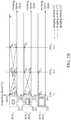
- FIG. 2Bis a diagram of the image-fusion process using images captured by three imaging sections in accordance with the embodiment of FIG. 2A ;
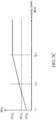
- FIG. 2Cis a diagram of the overall PPA value of output image with respect to the zooming factor in accordance with the embodiment of FIG. 2B ;
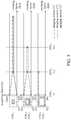
- FIG. 3is a diagram of the image-fusion process using images captured by three imaging sections in accordance with another embodiment of the invention.
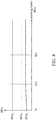
- FIG. 4is a diagram of the PPA values of the imaging sections with respect to the zooming factor in accordance with the embodiment of FIG. 3 ;
- FIG. 5Ais a diagram of the high-frequency component and low-frequency component of an image captured by an imaging section of the camera device in accordance with an embodiment of the invention
- FIG. 5Bis a diagram of the high-frequency component and low-frequency component of an image captured by an imaging section of the camera device in accordance with an embodiment of the invention
- FIG. 5Cis a diagram of the high-frequency components in multiple decomposition levels of the first image and second image captured by an imaging section of the camera device in accordance with an embodiment of the invention
- FIG. 6is a flow chart of a method for image fusion in a camera device in accordance with an embodiment of the invention.
- FIG. 1is a block diagram of a camera device in accordance with an embodiment of the invention.
- the camera device 100includes at least three imaging sections and a processor 140 .
- the number of imaging sections in the camera device 100is 3, namely, imaging sections 110 , 120 , and 130 .
- the imaging section 110includes a lens 111 and an image sensor 112
- the imaging section 120includes a lens 121 and an image sensor 122
- the imaging section 130includes a lens 131 and an image sensor 132 .
- the image sensors 112 , 122 , and 132may be physically separate or may be parts of a single larger image sensor, and the resolutions of the image sensors 112 , 122 , and 132 can be equal to or different from each other.
- the field of views (FOVs) and focal lengths of the lenses 111 , 121 , and 131may be equal to or different from each other.
- the processor 140may be coupled to the imaging sections 110 , 120 and 130 , and configured to receive a first image captured by the imaging section 110 , a second image captured by the imaging section 120 , and a third image captured by the imaging section 130 .
- the processor 140may be configured to perform corresponding image processing on the first image, second image, and third image during image zooming to achieve a smooth zooming function.
- the processor 140may generate a preview image that is fused from information obtained by imaging sections 110 , 120 , and 130 at all zooming levels.
- the camera device 100may further include a display panel 150 for displaying the preview image.
- the display panel 150may be a touch panel, and the processor 140 may render a user interface for the zooming function on the display panel 150 .
- the usermay press on the display panel 150 to adjust the zooming factor for the preview image.
- FIG. 2Ais a diagram of the relationship between the zooming factor and the FOVs of the imaging sections in the camera device in accordance with an embodiment of the invention.
- the camera device 100may include N imaging sections such as imaging sections 211 , 212 , 213 , . . . , and 21 N.
- N imaging sectionssuch as imaging sections 211 , 212 , 213 , . . . , and 21 N.
- the lens in each of the imaging sections 211 ⁇ 21 Nhas a respective FOV, namely, FOV 1 , FOV 2 , FOV 3 , . . . , and FOV N , as illustrated in blocks 221 ⁇ 22 N in FIG. 2A , where FOV 1 >FOV 2 >FOV 3 > . . . >FOV N .
- the focal length of the lens in each of the imaging sections 211 ⁇ 21 Nmay be FL 1 ⁇ FL N , where FL 1 ⁇ FL 2 ⁇ FL 3 ⁇ . . . ⁇ F N .
- k Ndenotes the zooming factor of the imaging section 21 N
- FOV 1denotes the FOV of the imaging section 211
- FOV Ndenotes the FOV of the imaging section 21 N.
- the zooming factor k 2 of the imaging section 212can be calculated as:
- the zooming factormay be a positive number equal to or greater than 1 that is suffixed with an “x”. For example, when the zooming factor is changed from k 1 (e.g., equal to 1) to k 2 , the range of FOV 1 (i.e., block 221 ) will be shrunk to block 222 which is the range of FOV 2 .
- the resolution of the image captured by each of the imaging sections 211 ⁇ 21 Ncan be expressed by the “density” of pixels in a unit of angles, such as pixel per angle (PPA).
- PPApixel per angle
- PPA idenotes the PPA of the i-th imaging section
- # pixel idenote the number of pixels of the image sensor in the i-th imaging section
- FOV idenotes the FOV of the i-th imaging section.
- the number of pixels (i.e., resolution) of the image sensor in each imaging sectionis proportional to the PPA of each imaging section.
- the resolution of the image sensor in each imaging sectioncan be affected by the aperture and some other factors such as the sensor size, pixel size, etc.
- the PPA values of the imaging sections 211 ⁇ 21 Ncan be sorted as PPA N > . . . >PPA 2 >PPA 1 .
- the FOV of each imaging sectioncan be defined in horizontal, vertical, and diagonal directions.
- the variables PPA i and FOV ican be substituted as PPA i j and FOV i j , respectively, where j denotes the horizontal, vertical, and diagonal directions.
- FIG. 2Bis a diagram of the image-fusion process using images captured by three imaging sections in accordance with the embodiment of FIG. 2A .
- FIG. 2Cis a diagram of the overall PPA value of output image with respect to the zooming factor in accordance with the embodiment of FIG. 2B .
- the number of imaging sections in the camera device 100is 3, namely, imaging sections 211 , 212 , and 213 .
- the imaging sections 211 , 212 , 213have PPA values PPA 1 , PPA 2 , and PPA 3 , respectively.
- the FOVs of the imaging sections 211 , 212 , and 213are shown in FIG. 2A , where the FOV 1 of the imaging section 211 corresponds to the zooming factor of 1x, and the FOV 2 of the imaging section 212 corresponds to the zooming factor of k 2 x, and the FOV 3 of the imaging section 213 corresponds to the zooming factor of k 3 x.
- FIG. 2CThe relationship of the PPA values PPA 1 , PPA 2 , PPA 3 of the imaging sections 211 , 212 , and 213 with respect to the zooming factor Kx is shown in FIG. 2C .
- the FOV 1 , FOV 2 , and FOV 3 of the imaging sections 211 , 212 , and 213are illustrated as blocks 211 , 212 , and 21 N in FIG. 2A , respectively.
- the imaging sections 211 , 212 , and 213may be designed for different focal lengths and FOVs.
- block 222shows the range of FOV 2 that is inside block 221 (i.e., FOV 1 )
- block 223shows the range of FOV 3 that is inside block 221 (i.e., FOV 1 ).
- FOV 3is narrower than that of FOV 2 .
- the imaging section 213may have the highest PPA value among three imaging sections 211 ⁇ 213 because the image sensors in the imaging sections 211 ⁇ 213 may have the same resolution (i.e., the same number of pixels) and the imaging section 213 has the narrowest FOV of FOV 3 .
- FOV 1i.e., block 221
- FOV 1can be divided into a first region, a second region, and a third region.
- the first regionmay be FOV 3
- the second regioni.e., block 231
- the third regioni.e., block 232
- the output image generated by the processor 140can be formed by the image-fusion results of the first region, second region, and third region, namely, the first output image, second output image, and third output image, respectively.
- the first output image X 1can be calculated using the first image I 1 , second image I 2 , and third image I 3 .
- I 1 R1 and I 2 R1denote the first image I 1 and the second image I 2 inside the range of FOV 3 (e.g., block 223 ), respectively.
- W 1 , W 2 , and W 3denote the weighting factors of the first image I 1 , second image I 2 , and third image I 3 inside FOV 3 .
- the weighting factor W 1 of the first image I 1is P 1a which is substantially equal to 1, and the weighting factors W 2 (e.g., equal to Q 1a ) and W 3 (e.g., equal to R 1a ) of the second image I 2 and third image I 3 are substantially equal to zero. That is, the whole first image I 1 captured by the imaging section 211 is used as the first output image X 1 in response to the zooming factor being 1x.
- the zooming factor Kx of the camera device 100is gradually adjusted from 1x to k 2 x.
- the weighting factor W 1 of the first image I 1gradually decreases from 1 to 0 or a predetermined ratio P 1b
- the weighting factors W 2 and W 3 of the second image I 2 and third image I 3may gradually increase to predetermined ratios Q 1b and R 1b , respectively.
- the increment rate of the weighting factor W 2is higher than that of the weighting factor W 3 . It should be noted that the sum of the predetermined ratios P 1b , Q 1b , and R 1b are also equal to 1.
- the relationships between the weighting factors W 1 , W 2 , and W 3 with respect to the zooming factor of the camera device 100can be recorded in a lookup table stored in a non-volatile memory (not shown in FIG. 1 ) of the camera device 100 .
- the processor 140may use a linear function or a power function to determine the weighting factors W 1 , W 2 , and W 3 with respect to the zooming factor of the camera device 100 .
- the weighting factor W 1 of the first image I 1gradually decreases from P 1a to 0 (i.e., at zooming factor k p )
- the weighting factors W 2 and W 3 of the second image I 2 and third image I 3may also increase correspondingly.
- the zooming factor Kx of the camera device 100is gradually adjusted from k 2 x to k 3 x.
- the weighting factor W 1 of the first image I 1is maintained at P 1b (e.g., 0), and the weighting factor W 2 of the second image I 2 may gradually decrease from Q 1b to Q 1c (e.g., 0), and the weighting factor W 3 of the third image I 3 may gradually increase from R 1b to R 1c (e.g., 1).
- the relationships of the weighting factors W 1 , W 2 , and W 3 with respect to the zooming factor of the camera device 100can be recorded in a lookup table stored in a non-volatile memory (not shown in FIG. 1 ) of the camera device 100 .
- the processor 140may use a linear function or a power function to determine the weighting factors W 1 , W 2 , and W 3 with respect to the zooming factor of the camera device 100 .
- the zooming factor Kx of the camera device 100is gradually adjusted from k 3 x to a greater zooming factor, the weighting factors W 1 and W 2 are maintained at 0, and the weighting factor W 3 is kept at R 1c (e.g., 1).
- the second output image X 2can be calculated using the first image I 1 and the second image I 2 because the FOV of the imaging section 213 only covers block 223 which is smaller than the FOVs of the imaging sections 211 and 212 .
- I 1 R2 and I 2 R3respectively denote the first image I 1 and the second image I 2 inside the second region 231 which is a region inside FOV 2 (i.e., block 222 ) and outside FOV 3 (i.e., block 223 ).
- W 1 and W 2respectively denote the weighting factors of the first image I 1 and second image I 2 inside FOV 3 .
- the zooming factor Kx of the camera device 100is gradually adjusted from 1x to k 2 x.
- the weighting factor W 1 of the first image I 1may gradually decrease from the predetermined ratio P 2a (e.g., 1) to P 2b (e.g., 0), and the weighting factor W 2 of the second image I 2 may gradually increase from Q 2a (e.g., 0) to Q 2b (e.g., 1).
- the sum of the predetermined ratios P 2b , and Q 1bare also equal to 1.
- the relationships between the weighting factors W 1 , W 2 , and W 3can be recorded in a lookup table stored in a non-volatile memory (not shown in FIG. 1 ) of the camera device 100 .
- the processor 140may use a linear function or a power function to determine the weighting factors W 1 , W 2 , and W 3 .
- the zooming factor Kx of the camera device 100is gradually adjusted from k 2 x to k 3 x.
- the weighting factor W 1 of the first image I 1is maintained at P 2b (e.g., 0), and the weighting factor W 2 of the second image I 2 is maintained at Q 2b (e.g., 1).
- P 2be.g. 0
- Q 2be.g. 1
- the third output image X 3can be calculated using the first image I 1 because only the FOV 1 of the imaging section 211 may cover region 232 which is a region between FOV 1 (i.e., block 221 ) and FOV 2 (i.e., block 222 ). Accordingly, the weighting factor W 1 of the first image I 1 in the third region R 3 can be kept at the predetermined ratio P 1a (e.g., 1). It should be noted that there is no second and third stages in this case because the camera device 100 is zooming into block 222 or 223 which is beyond the range of region 232 .
- the processor 140may perform different image-fusion processes on different regions in the output image using the first image I 1 , second image I 2 , and third image I 3 captured by the imaging sections 211 , 212 , and 213 so as to achieve smooth transition across different image regions in the output image.
- the weighting factors of the first image I 1 , second image I 2 , and third image I 3can be adjusted in different stages of zooming, as described above. Accordingly, the overall PPA of the output image generated by the camera device 100 will gradually increase from PPA 1 to PPA 3 as the zooming factor is gradually changed from 1x to k 3 x, as illustrated in FIG. 2C .
- the weighting factors of the first image I 1 , second image I 2 , and third image I 3may also be affected by some other factors such as the object distance from the object to the camera device 100 , the lighting condition, power consumption constraints of the camera device 100 , or a combination thereof.
- the processor 140may increase the weighting factors of the imaging sections having small PPAs.
- the imaging sections with small PPAse.g., can be determined using a PPA threshold
- the imaging sections with large PPAsmay be not capable of capturing clear images of the object since due the longer focal length and/or narrower FOV.
- the processor 140may shift the control point rightward such as increasing the predetermined zooming factor k p described in the aforementioned embodiments so as to use the images captured by the imaging sections having the small PPAs in a wider range of zooming factors, thereby improving the image quality of the output image.
- the weighting factorscan be determined by DAC (digital-to-analog) values output from the digital-to-analog converter circuitry (not shown) in each imaging section in the camera device 100 while performing autofocusing.
- the relationship between the object distance and the DAC valuescan be recorded in the lookup table in the camera device 100 in advance.
- the processor 140may use a linear function or a power function to determine the weighting factors of the imaging sections, but the invention is not limited thereto.
- the processor 140may increase the weighting factors of the imaging sections having small PPAs.
- the imaging sections with large PPAse.g., can be determined using a PPA threshold
- the processor 140may shift the control point rightward such as increasing the predetermined zooming factor k p described in the aforementioned embodiments so as to use the images captured by the imaging sections having the small PPAs in a wider range of zooming factors, thereby improving the image quality of the output image.
- the weighting factorscan be determined by the ISO value(s) of at least one imaging sections in the camera device 100 when the camera device 100 is in an auto shooting mode (e.g., automatically determining the ISO value of the scene for each imaging section).
- the relationship between the object distance and the ISO valuescan be recorded in the lookup table in the camera device 100 in advance.
- the processor 140may use a linear function or a power function to determine the weighting factors of the imaging sections.
- the processor 140may turn on at most N imaging sections at the same time due to a predefined power consumption threshold, where M is an integer equal to or larger than 3, and N is an integer between 1 and M.
- the processor 140may select N imaging sections with the highest N-th FOV coverages for a given zooming factor from the M imaging sections.
- the “FOV coverage” of a specific imaging section for a given zooming factormay indicate the percentage of pixels in the FOV of the given zooming factor that are covered by the FOV of the specific imaging section.
- the FOV coverage of the specific imaging sectionmay indicate the relative size of the zoomed-in image “seen” by the specific imaging section.
- each imaging sections in the camera device 100has the same power consumption.
- the processor 140may control the imaging sections 211 , 212 , and 213 to operate in a normal mode, and set the imaging section 214 to enter a low-power mode or standby mode, thereby achieving the highest FOV coverages with 3 activated imaging sections.
- the processor 140may select the imaging section with a larger PPA, thereby achieving better image quality.
- the processor 140may determine that the camera device 100 is in a dark scene using well-known techniques, and then activate the imaging section having the smallest PPA, such as the imaging section 211 , and control the remaining image sections to enter the low-power mode.
- the processor 140may activate two imaging sections having the smallest two PPAs, such as the imaging sections 211 and 212 , and control the remaining imaging section such as the imaging section 213 to enter the low-power mode. Because the imaging section 213 has the largest PPA, while performing the image-fusion process, the processor 140 may avoid using the image captured by the imaging section 213 that has more noises in the dark scene, thereby increasing the image quality of the output image.
- the imaging section 110can be regarded as a wide imaging section which has a relatively larger aperture, a relatively shorter focal length, and a relatively wider FOV.
- the imaging section 120 or 130can be regarded as a telephoto (tele) imaging section which has a relatively smaller aperture, a relatively longer focal length, and a relatively narrower FOV.
- the lens 111 and image sensor 112 in the imaging section 110can be regarded as a wide lens and a wide image sensor, respectively.
- the lens 121 and image sensor 122 in the imaging section 120can be regarded as a telephoto lens and a telephoto image sensor, respectively.
- the imaging section 110may have a relatively large aperture and a relatively short focal length.
- the tele image captured by the imaging section 120may usually suffer from a high noise level in a low-light condition, and thus it is difficult to obtain a good de-noising result for the tele image, or the de-noised tele image may lose too many image details.
- a filtering kernel in a larger sizeis required for de-noising the tele image, and it indicates more power consumption.
- the wide image and the tele imagecan be fused to improve the overall image quality of the preview image generated by the processor 140 .
- the imaging section 120i.e., the telephoto imaging section
- the image details in the second FOVis better than those in the same region inside the second FOV.
- the tele imagehas a higher PPA value than the wide image in the region of the second FOV, and thus the tele image can be used for image fusion in the region of the second FOV.
- a method of multi-scale image fusionwill be introduced, and the method is capable of generating images with fine details and suppressing noises at the same time.
- the methodcan be applied to any two imaging sections among at least 3 imaging sections in the camera device 100 .
- FIG. 3is a diagram of the image-fusion process using images captured by three imaging sections in accordance with another embodiment of the invention.
- FIG. 4is a diagram of the PPA values of the imaging sections with respect to the zooming factor in accordance with the embodiment of FIG. 3 .
- the number of imaging sections in the camera device 100is also 3, namely, imaging sections 211 , 212 , and 213 .
- the imaging sections 211 , 212 , 213have PPA values PPA 1 , PPA 2 , and PPA 3 , respectively.
- the FOVs of the imaging sections 211 , 212 , and 213can be referred to in FIG. 2A , where the FOV 1 of the imaging section 211 corresponds to the zooming factor of 1x, and the FOV 2 of the imaging section 212 corresponds to the zooming factor of k 2 x, and the FOV 3 of the imaging section 213 corresponds to the zooming factor of k 3 x.
- the FOV 1 , FOV 2 , and FOV 3 of the imaging sections 211 , 212 , and 213are illustrated as blocks 211 , 212 , and 21 N in FIG. 2A , respectively.
- the imaging sections 211 , 212 , and 213may be designed for different focal lengths and FOVs.
- block 222shows the range of FOV 2 that is inside block 221 (i.e., FOV 1 )
- block 223shows the range of FOV 3 that is inside block 221 (i.e., FOV 1 ).
- FOV 3is narrower than that of FOV 2 .
- the imaging section 213may have the highest PPA value among three imaging sections 211 ⁇ 213 because the image sensors in the imaging sections 211 ⁇ 213 may have the same resolution (i.e., the same number of pixels) and the imaging section 213 has the narrowest FOV of FOV 3 .
- the range of FOV 1(i.e., block 421 ) can be divided into a first region, a second region, and a third region.
- the first regionmay be the range of FOV 3 (i.e., block 423 )
- the second regioni.e., region 431
- the third regioni.e., region 432
- the output image generated by the processor 140can be formed by the image-fusion results of the first region, second region, and third region, namely, the first output image, second output image, and third output image, respectively.
- the first output image X 1can be calculated using the first image I 1 ′, second image I 2 ′, and third image I 3 ′.
- I 1 R1 ′ and I 2 R1 ′denote the first image I 1 and the second image I 2 inside the range of FOV 3 (e.g., block 423 ), respectively.
- W 1 , W 2 , and W 3denote the weighting factors of the first image I 1 ′, second image I 2 ′, and third image I 3 ′ inside the range of FOV 3 .
- the weighting factor W 1 of the first image I 1is equal to 1, and the weighting factors W 2 and W 3 of the second image I 2 and third image I 3 are equal to zero. That is, the whole first image I 1 R1 ′ captured by the imaging section 211 is used as the first output image X 1 in response to the zooming factor being 1x.
- the zooming factor Kx of the camera device 100is gradually adjusted from 1x to a predetermined zooming factor Zx.
- the weighting factor W 1 of the first image I 1gradually decreases from 1 to a predetermined ratio T 1
- the weighting factors W 2 and W 3 of the second image I 2 and third image I 3may gradually increase from 0 to predetermined ratios T 2 and T 3 , respectively.
- the increment rate of the weighting factor W 2may be slightly higher than or equal to that of the weighting factor W 3 .
- the sum of the predetermined ratios T 1 , T 2 , and T 3are also equal to 1.
- the predetermined ratios T 1 , T 2 , and T 3may be equal to or different from each other, but the invention is not limited thereto.
- the second image and third image captured by the imaging sections 212 and 213may have very high noise levels, namely a first noise level and a second noise level, where the second noise level is higher than the first noise level.
- the processor 140may decrease the predetermined ratios T 2 and T 3 for the second image and the third image, so that the noises in the fused output image can be reduced.
- the relationships of the weighting factors W 1 , W 2 , and W 3 with respect to the zooming factor of the camera device 100can be recorded in a lookup table stored in a non-volatile memory (not shown in FIG. 1 ) of the camera device 100 .
- the processor 140may use a linear function or a power function to determine the weighting factors W 1 , W 2 , and W 3 with respect to the zooming factor, but the invention is not limited thereto.
- the relationships of the weighting factors W 1 , W 2 , and W 3 with respect to the zooming factor in a normal scenee.g., the ISO value of the camera device is about 100
- Table 1the relationships of the weighting factors W 1 , W 2 , and W 3 with respect to the zooming factor in a normal scene (e.g., the ISO value of the camera device is about 100) are illustrated in Table 1:
- the predetermined ratios T 1 , T 2 , and T 3may be 0.4, 0.3, and 0.3, respectively.
- the weighting factors W 1 , W 2 , and W 3can also be determined by the ISO values of the imaging sections 211 , 212 , and 230 or the ISO value of the imaging section 211 .
- the ISO value for the camera device 100may range from around 50 or 100 up to around 800 to 8000.
- the processor 140may increase the weighting factor W 1 and decrease the weighting factors W 2 and W 3 .
- the weighting factors W 1 , W 2 , and W 3can be obtained as 0.4, 0.3, and 0.3 according to Table 1, respectively.
- the processor 140may adjust the weighting factors W 1 , W 2 , and W 3 according to Table 2 which records the relationships of the weighing factors W 1 , W 2 , and W 3 with respect to the ISO value using a fixed zooming factor of 2.0x.
- Table 2is designed for a zooming factor of 2.0x.
- the relationships of the weighting factors W 1 , W 2 , and W 3 with respect to the ISO value using a different zooming factorcan be recorded in another lookup table in a similar manner.
- a larger ISO valuemay indicate a “darker” scene in which the camera device 100 is located.
- the noise level of the telephoto imaging sectione.g., imaging section 212 or 213 ) may become higher when the ISO value of the camera device 100 becomes larger.
- the weighting factors W 2 and W 3 for the second image and the third imagemay be decreased to reduce the impact of the noises in the fused output image.
- the zooming factor Kx of the camera device 100is gradually adjusted from Zx to k 2 x, and the weighting factors W 1 , W 2 , and W 3 may be kept at the predetermined ratios T 1 , T 2 , and T 3 , respectively.
- the sum of the predetermined ratios T 1 , T 2 , and T 3are also equal to 1.
- the predetermined ratios T 1 , T 2 , and T 3may be equal to or different from each other, but the invention is not limited thereto.
- the zooming factor Kx of the camera device 100is gradually adjusted from k 2 x to k 3 x, and the weighting factors W 1 , W 2 , and W 3 may be kept at the predetermined ratios T 1 , T 2 , and T 3 , respectively.
- the zooming factor Kx of the camera device 100is gradually adjusted from k 3 x to a greater zooming factor, and the weighting factors W 1 , W 2 , and W 3 may also be kept at the predetermined ratios T 1 , T 2 , and T 3 , respectively.
- the weighting factors W 1 , W 2 , and W 3may be kept at the predetermined ratios T 1 , T 2 , and T 3 .
- the second output image X 2can be calculated using the first image I 1 ′ and second image I 2 ′ because the FOV 3 of the imaging section 213 only covers block 423 which is smaller than the FOV 1 and FOV 2 of the imaging sections 211 and 212 .
- I 1 R2 ′ and I 2 R2 ′respectively denote the first image I 1 ′ and second image I 2 ′, inside the second region 431 which is a region inside FOV 2 (i.e., block 222 ) and outside FOV 3 (i.e., block 223 ).
- W 1 and W 2respectively denote the weighting factors of the first image I 1 ′ and second image I 2 ′, in the second region.
- the zooming factor Kx of the camera device 100is gradually adjusted from 1x to Zx.
- the weighting factor W 1 of the first image I 1 ′may gradually decrease from 1 to a predetermined ratio T 4
- the weighting factor W 2 of the second image I 2 ′may gradually increase from 0 to a predetermined ratio T 5 . It should be noted that the sum of the predetermined ratios T 4 and T 5 are also equal to 1.
- the zooming factor Kx of the camera device 100is gradually adjusted from Zx to k 2 x, and from k 2 x to k 3 x, and the weighting factor W 1 and W 2 are kept at the predetermined ratios T 4 and T 5 , respectively.
- the third output image X 3can be calculated using the first image I 1 ′ because only the FOV 1 of the imaging section 211 may cover the third region 432 which is a region inside FOV 1 (i.e., block 421 ) and outside FOV 2 (i.e., block 422 ). Accordingly, the weighting factor W 1 of the first image I 1 ′ in the third region R 3 can be kept at 1. It should be noted that there is no second, third, and fourth stages in this case because the camera device 100 is zooming into block 422 or 423 which is beyond the range of region 432 .
- the processor 140may perform different image-fusion processes on different regions in the output image using the first image I 1 ′, second image I 2 ′, and third image I 3 ′ captured by the imaging sections 211 , 212 , and 213 so as to achieve smooth transition across different image regions in the output image.
- the weighting factors of the first image I 1 ′, second image I 2 ′, and third image I 3 ′can be adjusted in different stages of zooming, as described above.
- the relationship of the PPA values PPA 1 , PPA 2 , PPA 3 of the imaging sections 211 , 212 , and 213 with respect to the zooming factor Kxis shown in FIG. 4 . It can be understood that the overall PPA of the fused output image may be kept at a constant value due to the aforementioned image-fusion processes in different regions.
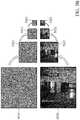
- FIG. 5Ais a diagram of the high-frequency component and low-frequency component of an image captured by an imaging section of the camera device in accordance with an embodiment of the invention.
- FIG. 5Bis a diagram of the high-frequency component and low-frequency component of an image captured by an imaging section of the camera device in accordance with an embodiment of the invention.
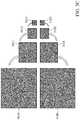
- FIG. 5Cis a diagram of the high-frequency components in multiple decomposition levels of the first image and second image captured by an imaging section of the camera device in accordance with an embodiment of the invention.
- each of the first image, second image, third image captured by the imaging section 211 , 212 , and 213can be divided into a low-frequency component and a high-frequency component using well-known techniques in the art.
- image 500may be the first image captured by the imaging section 211 , and image 500 is divided into a high-frequency component 5010 and a low-frequency component 5020 .
- a multi-scale decomposition methode.g., may include, but not limited to, Gaussian pyramid, Laplacian pyramid, wavelet transform, etc.
- FIG. 1may include, but not limited to, Gaussian pyramid, Laplacian pyramid, wavelet transform, etc.
- the high-frequency component 5010denotes the high-frequency component in decomposition level 0 (i.e., original size of 100%), and high-frequency components 5011 , 5012 , 5013 denote the high-frequency components in decomposition level 1 (i.e., 50% in each dimension), level 2 (i.e., 22.5% in each dimension), and level 3 (i.e., 12.25% in each dimension), respectively.
- the low-frequency component 5020denotes the low-frequency component in decomposition level 0 (i.e., original size of 100%), and low-frequency components 5021 , 5022 , 5023 denote the low-frequency components in decomposition level 1, level 2, and level 3, respectively.
- the second image and third image captured by the imaging sections 212 and 213can also be divided into a respective high-frequency component and low-frequency component (not shown in FIG. 5B ).
- the image-fusion processcan be performed using the high-frequency components of the first image and the second image.
- high-frequency components 5100 , 5101 , 5102 , and 5103denote the high-frequency components of the second image in decomposition level 0, level 1, level 2, and level 3, respectively.
- the first image and the second imagemay overlap within the range of FOV 2
- the first image within the range of FOV 2is up-scaled to match the dimension of the second image.
- the weighting factor for the high-frequency components of the first image and the second imagevary depending on the decomposition level.
- the weighting factor of the high-frequency component 5103may be 100% and that of the high-frequency component 5013 may be 0%, and it indicates that the output high-frequency component in decomposition level 3 may be the whole high-frequency component 5103 .
- the weighting factor of the high-frequency component 5102may be 90% and that of the high-frequency component 5012 may be 10%.
- the weighting factor of the high-frequency component 5101may be 75% and that of the high-frequency component 5011 may be 25%.
- the weighting factor of the high-frequency component 5100may be 50% and that of the high-frequency component 5010 may be 50%. It should be noted that the invention is not limited to the aforementioned weighting factors for the high-frequency components during image blending.
- the resulting high-frequency component in each composition levelcan be calculated by performing image blending using the aforementioned weighting factors. Furthermore, a multi-scale image-reconstruction process well-known to persons skilled in the art can be performed to reconstruct the fused output image using the low-frequency component of the first image and the resulting high-frequency component obtained from the image blending. It should be noted that the low-frequency component of the second image is not used due to its high noise level. Thus, the resulting output image may keep the low-frequency component of the first image and the image details of the blended high-frequency component, thereby achieving better image quality and suppressing the noises of the resulting output image.
- FIG. 6is a flow chart of a method for image fusion in a camera device in accordance with an embodiment of the invention. The method includes the following steps:
- Step S 610utilizing the first imaging section, the second imaging section, and the third imaging section to capture a first image, a second image, and a third image of a scene with a FOV, a second FOV, and a third FOV, respectively.
- the first FOVis wider than the second FOV
- the second FOVis wider than the third FOV
- the second zooming factoris greater than the first zooming factor.
- the first zooming factormay be 1x and the second zooming factor may be 2x. In some other embodiments, the first zooming factor may be 2x and the second zooming factor may be 3x, but the invention is not limited thereto.
- Step S 620generating a first output image by performing a first image-fusion process on the first image, the second image, and a third image in response to a zooming factor of the camera device being between a first zooming factor and a second zooming factor.
- the first image-fusion processcan be performed on the overlapped region (e.g., first region such as the third FOV) between the first image, second image, and third image, and all of the first image, second image, third image are used for the first image-fusion process as possible, such as the zooming factor of the camera device being between the first zooming factor (e.g., 1x for the first imaging section) and the second zooming factor (e.g., k 2 x for the second imaging section).
- a second image-fusion processcan be performed on the first image and the second image inside the second FOV and outside the third FOV, and a portion of the first image that is inside the first FOV and outside the second FOV.
- a camera device and methods for image fusion in the camera devicehave been provided to achieve a better image quality and suppressing noises in the output image during image zooming.
Landscapes
- Engineering & Computer Science (AREA)
- Multimedia (AREA)
- Signal Processing (AREA)
- Computing Systems (AREA)
- Theoretical Computer Science (AREA)
- Human Computer Interaction (AREA)
- Studio Devices (AREA)
Abstract
Description
This application claims the benefit of U.S. Provisional Application No. 62/647,915 filed on Mar. 26, 2018, the entirety of which is incorporated by reference herein.
The invention relates to a camera, and, in particular, to a camera device and a method for image fusion in a camera device.
Optical zoom is currently one of the most important smartphone camera features that appeals to users. Unfortunately, the physical characteristics of a lens makes it difficult to design a single camera smartphone setup that includes an optical zoom without sacrificing the phone's overall appearance or adding to its thickness.
A wide-angle plus telephoto dual camera module has been developed in recent years and provides the industry with a solution. Since image zooming can be switched between the wide-angle imaging section and the telephoto imaging section in the dual-camera module, the user may have a better experience with a smooth optical zoom function using a smartphone equipped with a wide-angle plus telephoto dual-camera module. The wide-angle lens and telephoto lens are usually referred to as the “wide” lens and the “tele” lens, and the focal length of a wide-angle lens in the wide-angle imaging section is smaller than that of a telephoto lens in the telephoto imaging section. For example, the wide-angle lens may have a shorter focal length, and the telephoto lens may have a longer focal length. Additionally, the wide-angle lens and the telephoto lens may have different FOVs.
In addition, with the advent of technology, some conventional portable electronic devices on the market have been equipped with more than 2 cameras in a single camera module (e.g., rear camera module), where each camera in the camera module may have an individual focal length and FOV. Given that there are three cameras such as the first, second, and third cameras in a camera module, the first camera may have the shortest focal length and the widest FOV, and the second camera may have the second shortest focal length and the second-widest FOV, and the third camera may have the longest focal length and the narrowest FOV. However, these conventional portable electronic devices cannot efficiently use images captured by the first, second, and third cameras while performing digital zooming, resulting in poorer image quality.
Accordingly, there is a need for a camera device and a method for image fusion in a camera device to solve the aforementioned problem.
A detailed description is given in the following embodiments with reference to the accompanying drawings.
In an exemplary embodiment, a camera device is provided. The camera device includes: a first imaging section, a second imaging section, a third imaging section, and a processor. The first imaging section is configured to capture a first image of a scene with a first field of view (FOV). The second imaging section is configured to capture a second image of the scene with a second FOV. The third imaging section is configured to capture a third image of the scene with a third FOV. The processor is coupled to the first imaging section, the second imaging section, and the third imaging section, and is configured to generate a first output image by performing a first image-fusion process on the first image, the second image, and a third image in response to a zooming factor of the camera device being between a first zooming factor and a second zooming factor. The first FOV is wider than the second FOV, and the second FOV is wider than the third FOV, and the second zooming factor is greater than the first zooming factor.
In another exemplary embodiment, a method for image fusion in a camera device is provided. The camera device is equipped with a first imaging section, a second imaging section, and a third imaging section. The method includes the steps of: utilizing the first imaging section, the second imaging section, and the third imaging section to capture a first image, a second image, and a third image of a scene with a first field of view (FOV), a second FOV, and a third FOV, respectively; and generate a first output image by performing a first image-fusion process on the first image, the second image, and a third image in response to a zooming factor of the camera device being between a first zooming factor and a second zooming factor, wherein the first FOV is wider than the second FOV, and the second FOV is wider than the third FOV, and the second zooming factor is greater than the first zooming factor.
The invention can be more fully understood by reading the subsequent detailed description and examples with references made to the accompanying drawings, wherein:
The following description is of the best-contemplated mode of carrying out the invention. This description is made for the purpose of illustrating the general principles of the invention and should not be taken in a limiting sense. The scope of the invention is best determined by reference to the appended claims. Terms such as “wide lens”, “wide image”, and “wide image data” are used herein. These terms are used in the context of a camera device that includes a wide-angle lens and a telephoto lens. It will be understood that terms such as “wide lens”, “wide image”, and “wide image data” refer to a “wide-angle lens”, “wide-angle image”, and “wide-angle image data” with respect to a telephoto lens and telephoto image, respectively, as understood by persons skilled in the art.
For example, theimaging section 110 includes alens 111 and animage sensor 112, and theimaging section 120 includes alens 121 and animage sensor 122, and theimaging section 130 includes alens 131 and animage sensor 132. Theimage sensors image sensors lenses
Theprocessor 140 may be coupled to theimaging sections imaging section 110, a second image captured by theimaging section 120, and a third image captured by theimaging section 130. Theprocessor 140 may be configured to perform corresponding image processing on the first image, second image, and third image during image zooming to achieve a smooth zooming function. Specifically, theprocessor 140 may generate a preview image that is fused from information obtained byimaging sections
In an embodiment, thecamera device 100 may further include adisplay panel 150 for displaying the preview image. For example, thedisplay panel 150 may be a touch panel, and theprocessor 140 may render a user interface for the zooming function on thedisplay panel 150. Thus, the user may press on thedisplay panel 150 to adjust the zooming factor for the preview image.
In an embodiment, thecamera device 100 may include N imaging sections such asimaging sections imaging sections 211˜21N are the same, and the lens in each of theimaging sections 211˜21N has a respective FOV, namely, FOV1, FOV2, FOV3, . . . , and FOVN, as illustrated inblocks 221˜22N inFIG. 2A , where FOV1>FOV2>FOV3> . . . >FOVN. In some embodiments, the focal length of the lens in each of theimaging sections 211˜21N may be FL1˜FLN, where FL1<FL2<FL3< . . . <FN.
For example, assuming that theimaging section 211 has a zooming factor k1which is equal to 1, the zooming factors ofother imaging sections 212˜212N can be calculated as using equation (1):
where kNdenotes the zooming factor of theimaging section 21N; FOV1denotes the FOV of theimaging section 211; FOVNdenotes the FOV of theimaging section 21N. For example, the zooming factor k2of theimaging section 212 can be calculated as:
Specifically, the zooming factor may be a positive number equal to or greater than 1 that is suffixed with an “x”. For example, when the zooming factor is changed from k1(e.g., equal to 1) to k2, the range of FOV1(i.e., block221) will be shrunk to block222 which is the range of FOV2.
Accordingly, the resolution of the image captured by each of theimaging sections 211˜21N can be expressed by the “density” of pixels in a unit of angles, such as pixel per angle (PPA). For example, the definition of PPA can be expressed using equation (3):
where PPAidenotes the PPA of the i-th imaging section; # pixelidenote the number of pixels of the image sensor in the i-th imaging section; FOVidenotes the FOV of the i-th imaging section.
Accordingly, the number of pixels (i.e., resolution) of the image sensor in each imaging section is proportional to the PPA of each imaging section. In addition, the resolution of the image sensor in each imaging section can be affected by the aperture and some other factors such as the sensor size, pixel size, etc.
The PPA values of theimaging sections 211˜21N can be sorted as PPAN> . . . >PPA2>PPA1. It should be noted that the FOV of each imaging section can be defined in horizontal, vertical, and diagonal directions. In this regard, the variables PPAiand FOVican be substituted as PPAijand FOVij, respectively, where j denotes the horizontal, vertical, and diagonal directions.
In an embodiment, for purposes of description, the number of imaging sections in thecamera device 100 is 3, namely,imaging sections imaging sections imaging sections FIG. 2A , where the FOV1of theimaging section 211 corresponds to the zooming factor of 1x, and the FOV2of theimaging section 212 corresponds to the zooming factor of k2x, and the FOV3of theimaging section 213 corresponds to the zooming factor of k3x. The relationship of the PPA values PPA1, PPA2, PPA3of theimaging sections FIG. 2C . In addition, in the embodiment, the FOV1, FOV2, and FOV3 of theimaging sections blocks FIG. 2A , respectively.
Specifically, theimaging sections FIG. 2A , block222 shows the range of FOV2that is inside block221 (i.e., FOV1), and block223 shows the range of FOV3that is inside block221 (i.e., FOV1). In addition, the range of FOV3is narrower than that of FOV2. It should be noted that theimaging section 213 may have the highest PPA value among three imagingsections 211˜213 because the image sensors in theimaging sections 211˜213 may have the same resolution (i.e., the same number of pixels) and theimaging section 213 has the narrowest FOV of FOV3.
Thus, different image fusion processes can be performed to different regions inside the range of FOV1, as illustrated inFIG. 2B . For example, FOV1(i.e., block221) can be divided into a first region, a second region, and a third region. The first region may be FOV3, and the second region (i.e., block231) may be a region inside FOV2 and outside FOV3, and the third region (i.e., block232) may be a region inside FOV1and outside FOV2. Additionally, the output image generated by theprocessor 140 can be formed by the image-fusion results of the first region, second region, and third region, namely, the first output image, second output image, and third output image, respectively.
With regard to the first region R1 (i.e., block223), the first output image X1 can be calculated using the first image I1, second image I2, and third image I3. For example, the first output image X1 can be calculated using equation (4):
X1=W1×I1R1+W2×I2R1+W3×I3 (4)
X1=W1×I1R1+W2×I2R1+W3×I3 (4)
where I1R1and I2R1denote the first image I1 and the second image I2 inside the range of FOV3(e.g., block223), respectively. W1, W2, and W3 denote the weighting factors of the first image I1, second image I2, and third image I3 inside FOV3. The weighting factors W1, W2, and W3 are values between 0 and 1, and the relationship between the weighting factors W1, W2, and W3 can be expressed using equation (5):
W1+W2+W3=1 (5)
W1+W2+W3=1 (5)
Specifically, in response to the zooming factor being 1x, the weighting factor W1 of the first image I1 is P1awhich is substantially equal to 1, and the weighting factors W2 (e.g., equal to Q1a) and W3 (e.g., equal to R1a) of the second image I2 and third image I3 are substantially equal to zero. That is, the whole first image I1 captured by theimaging section 211 is used as the first output image X1 in response to the zooming factor being 1x.
In the first stage, the zooming factor Kx of thecamera device 100 is gradually adjusted from 1x to k2x. The weighting factor W1 of the first image I1 gradually decreases from 1 to 0 or a predetermined ratio P1b, the weighting factors W2 and W3 of the second image I2 and third image I3 may gradually increase to predetermined ratios Q1band R1b, respectively. In addition, the increment rate of the weighting factor W2 is higher than that of the weighting factor W3. It should be noted that the sum of the predetermined ratios P1b, Q1b, and R1bare also equal to 1. In some embodiments, the relationships between the weighting factors W1, W2, and W3 with respect to the zooming factor of thecamera device 100 can be recorded in a lookup table stored in a non-volatile memory (not shown inFIG. 1 ) of thecamera device 100. Alternatively, theprocessor 140 may use a linear function or a power function to determine the weighting factors W1, W2, and W3 with respect to the zooming factor of thecamera device 100.
In some embodiments, when the zooming factor Kx of thecamera device 100 is gradually adjusted from 1x to kpx which is a zooming factor greater than k2, the weighting factor W1 of the first image I1 gradually decreases from P1ato 0 (i.e., at zooming factor kp), the weighting factors W2 and W3 of the second image I2 and third image I3 may also increase correspondingly.
In the second stage, the zooming factor Kx of thecamera device 100 is gradually adjusted from k2x to k3x. The weighting factor W1 of the first image I1 is maintained at P1b(e.g., 0), and the weighting factor W2 of the second image I2 may gradually decrease from Q1bto Q1c(e.g., 0), and the weighting factor W3 of the third image I3 may gradually increase from R1bto R1c(e.g., 1). In some embodiments, the relationships of the weighting factors W1, W2, and W3 with respect to the zooming factor of thecamera device 100 can be recorded in a lookup table stored in a non-volatile memory (not shown inFIG. 1 ) of thecamera device 100. Alternatively, theprocessor 140 may use a linear function or a power function to determine the weighting factors W1, W2, and W3 with respect to the zooming factor of thecamera device 100.
In the third stage, when the zooming factor Kx of thecamera device 100 is gradually adjusted from k3x to a greater zooming factor, the weighting factors W1 and W2 are maintained at 0, and the weighting factor W3 is kept at R1c(e.g., 1).
With regard to the second region R2 (i.e., region231), the second output image X2 can be calculated using the first image I1 and the second image I2 because the FOV of theimaging section 213 only covers block223 which is smaller than the FOVs of theimaging sections
X2=W1×I1R2+W2×I2R2 (6)
X2=W1×I1R2+W2×I2R2 (6)
where I1R2and I2R3respectively denote the first image I1 and the second image I2 inside thesecond region 231 which is a region inside FOV2(i.e., block222) and outside FOV3(i.e., block223). W1 and W2 respectively denote the weighting factors of the first image I1 and second image I2 inside FOV3.
In the first stage, the zooming factor Kx of thecamera device 100 is gradually adjusted from 1x to k2x. The weighting factor W1 of the first image I1 may gradually decrease from the predetermined ratio P2a(e.g., 1) to P2b(e.g., 0), and the weighting factor W2 of the second image I2 may gradually increase from Q2a(e.g., 0) to Q2b(e.g., 1). It should be noted that the sum of the predetermined ratios P2b, and Q1bare also equal to 1. In some embodiments, the relationships between the weighting factors W1, W2, and W3 can be recorded in a lookup table stored in a non-volatile memory (not shown inFIG. 1 ) of thecamera device 100. Alternatively, theprocessor 140 may use a linear function or a power function to determine the weighting factors W1, W2, and W3.
In the second stage, the zooming factor Kx of thecamera device 100 is gradually adjusted from k2x to k3x. The weighting factor W1 of the first image I1 is maintained at P2b(e.g., 0), and the weighting factor W2 of the second image I2 is maintained at Q2b(e.g., 1). It should be noted that there is no third stage in this case because thecamera device 100 is zooming intoblock 223 which is beyond the range ofregion 231.
With regard to the third region R3 (i.e., region232), the third output image X3 can be calculated using the first image I1 because only the FOV1of theimaging section 211 may coverregion 232 which is a region between FOV1(i.e., block221) and FOV2(i.e., block222). Accordingly, the weighting factor W1 of the first image I1 in the third region R3 can be kept at the predetermined ratio P1a(e.g., 1). It should be noted that there is no second and third stages in this case because thecamera device 100 is zooming intoblock region 232.
In the embodiments ofFIG. 2B , theprocessor 140 may perform different image-fusion processes on different regions in the output image using the first image I1, second image I2, and third image I3 captured by theimaging sections camera device 100 will gradually increase from PPA1to PPA3as the zooming factor is gradually changed from 1x to k3x, as illustrated inFIG. 2C .
In an embodiment, the weighting factors of the first image I1, second image I2, and third image I3 may also be affected by some other factors such as the object distance from the object to thecamera device 100, the lighting condition, power consumption constraints of thecamera device 100, or a combination thereof.
With regard to the factor of the object distance, when the object to be shot is very close to the camera device100 (i.e., short object distance), theprocessor 140 may increase the weighting factors of the imaging sections having small PPAs. For example, the imaging sections with small PPAs (e.g., can be determined using a PPA threshold) in thecamera device 100 are capable of capturing clear images of an object that is very close to the camera device100 (i.e., short object distance), but the imaging sections with large PPAs may be not capable of capturing clear images of the object since due the longer focal length and/or narrower FOV. In this case, theprocessor 140 may shift the control point rightward such as increasing the predetermined zooming factor kpdescribed in the aforementioned embodiments so as to use the images captured by the imaging sections having the small PPAs in a wider range of zooming factors, thereby improving the image quality of the output image. In addition, the weighting factors can be determined by DAC (digital-to-analog) values output from the digital-to-analog converter circuitry (not shown) in each imaging section in thecamera device 100 while performing autofocusing. Similarly, the relationship between the object distance and the DAC values can be recorded in the lookup table in thecamera device 100 in advance. Additionally or alternatively, theprocessor 140 may use a linear function or a power function to determine the weighting factors of the imaging sections, but the invention is not limited thereto.
With regard to the factor of the lighting condition, in some embodiments, when theprocessor 140 determines that thecamera device 100 is in a dark scene using a well-known technique, theprocessor 140 may increase the weighting factors of the imaging sections having small PPAs. For example, the imaging sections with large PPAs (e.g., can be determined using a PPA threshold) in thecamera device 100 may be equipped with a smaller aperture, resulting in more noises in the dark scene. In this case, theprocessor 140 may shift the control point rightward such as increasing the predetermined zooming factor kpdescribed in the aforementioned embodiments so as to use the images captured by the imaging sections having the small PPAs in a wider range of zooming factors, thereby improving the image quality of the output image. In addition, the weighting factors can be determined by the ISO value(s) of at least one imaging sections in thecamera device 100 when thecamera device 100 is in an auto shooting mode (e.g., automatically determining the ISO value of the scene for each imaging section). Similarly, the relationship between the object distance and the ISO values can be recorded in the lookup table in thecamera device 100 in advance. Additionally or alternatively, theprocessor 140 may use a linear function or a power function to determine the weighting factors of the imaging sections.
With regard to the factor of the power consumption constraints, in some embodiments, when there are M imaging sections in thecamera device 100, theprocessor 140 may turn on at most N imaging sections at the same time due to a predefined power consumption threshold, where M is an integer equal to or larger than 3, and N is an integer between 1 and M. Theprocessor 140 may select N imaging sections with the highest N-th FOV coverages for a given zooming factor from the M imaging sections. For example, the “FOV coverage” of a specific imaging section for a given zooming factor may indicate the percentage of pixels in the FOV of the given zooming factor that are covered by the FOV of the specific imaging section. In other words, the FOV coverage of the specific imaging section may indicate the relative size of the zoomed-in image “seen” by the specific imaging section.
For example, it is assumed that each imaging sections in thecamera device 100 has the same power consumption. Give that (M, N)=(4, 3) and the zooming factor is 1.5x, the FOV coverages of the four imaging sections in thecamera device 100, such as theimaging sections 211˜214, may be 100%, 70%, 40%, and 20%, respectively. Because 100%, 70%, and 40% are the highest three FOV coverage values, theprocessor 140 may control theimaging sections camera device 100 have the same FOV coverage but different PPAs, theprocessor 140 may select the imaging section with a larger PPA, thereby achieving better image quality.
In another example, given that the number of imaging sections in thecamera device 100 is 3 and thecamera device 100 is placed in a dark scene, theprocessor 140 may determine that thecamera device 100 is in a dark scene using well-known techniques, and then activate the imaging section having the smallest PPA, such as theimaging section 211, and control the remaining image sections to enter the low-power mode. Alternatively, theprocessor 140 may activate two imaging sections having the smallest two PPAs, such as theimaging sections imaging section 213 to enter the low-power mode. Because theimaging section 213 has the largest PPA, while performing the image-fusion process, theprocessor 140 may avoid using the image captured by theimaging section 213 that has more noises in the dark scene, thereby increasing the image quality of the output image.
Attention now is directed toFIG. 1 , in some embodiments, theimaging section 110 can be regarded as a wide imaging section which has a relatively larger aperture, a relatively shorter focal length, and a relatively wider FOV. Theimaging section lens 111 andimage sensor 112 in theimaging section 110 can be regarded as a wide lens and a wide image sensor, respectively. Similarly, thelens 121 andimage sensor 122 in theimaging section 120 can be regarded as a telephoto lens and a telephoto image sensor, respectively. Theimaging section 110 may have a relatively large aperture and a relatively short focal length.
The tele image captured by the imaging section120 (i.e., the telephoto imaging section) may usually suffer from a high noise level in a low-light condition, and thus it is difficult to obtain a good de-noising result for the tele image, or the de-noised tele image may lose too many image details. In addition, a filtering kernel in a larger size is required for de-noising the tele image, and it indicates more power consumption.
However, the wide image and the tele image can be fused to improve the overall image quality of the preview image generated by theprocessor 140. For example, although the imaging section120 (i.e., the telephoto imaging section) has a narrower FOV (e.g., second FOV), the image details in the second FOV is better than those in the same region inside the second FOV. Specifically, the tele image has a higher PPA value than the wide image in the region of the second FOV, and thus the tele image can be used for image fusion in the region of the second FOV. In the following sections, a method of multi-scale image fusion will be introduced, and the method is capable of generating images with fine details and suppressing noises at the same time. In addition, the method can be applied to any two imaging sections among at least 3 imaging sections in thecamera device 100.
In the art of the invention, it is a challenge to achieve a better image quality of the output image in a dark scene. Conventional camera devices equipped with a wide imaging section and a telephoto imaging section on the market may use the wide image captured by the wide imaging section as the output image in the dark scene regardless of the zooming factor because the tele image captured by the telephoto imaging section may has a very high noise level. However, the method performed by the conventional camera devices may suffer from poor image quality using digital zooming.
Referring toFIG. 2A andFIG. 3 , in an embodiment, for purposes of description, the number of imaging sections in thecamera device 100 is also 3, namely,imaging sections imaging sections imaging sections FIG. 2A , where the FOV1of theimaging section 211 corresponds to the zooming factor of 1x, and the FOV2of theimaging section 212 corresponds to the zooming factor of k2x, and the FOV3of theimaging section 213 corresponds to the zooming factor of k3x. In addition, in the embodiment, the FOV1, FOV2, and FOV3 of theimaging sections blocks FIG. 2A , respectively.
Specifically, theimaging sections FIG. 2A , block222 shows the range of FOV2 that is inside block221 (i.e., FOV1), and block223 shows the range of FOV3 that is inside block221 (i.e., FOV1). In addition, the range of FOV3 is narrower than that of FOV2. It should be noted that theimaging section 213 may have the highest PPA value among three imagingsections 211˜213 because the image sensors in theimaging sections 211˜213 may have the same resolution (i.e., the same number of pixels) and theimaging section 213 has the narrowest FOV of FOV3.
In the embodiment ofFIG. 3 , different image fusion processes can also be performed to different regions inside FOV1. For example, the range of FOV1 (i.e., block421) can be divided into a first region, a second region, and a third region. The first region may be the range of FOV3 (i.e., block423), and the second region (i.e., region431) may be the range inside the range of FOV2 (i.e., block422) and outside the range of FOV3, and the third region (i.e., region432) may be the range inside the range of FOV1 and outside the range of FOV2. Additionally, the output image generated by theprocessor 140 can be formed by the image-fusion results of the first region, second region, and third region, namely, the first output image, second output image, and third output image, respectively.
With regard to the first region R1 (i.e., block223), the first output image X1 can be calculated using the first image I1′, second image I2′, and third image I3′. For example, the first output image X1 can be calculated using equation (7):
X1=W1×I1R1′+W2×I2R1′+W3×I3 (7)
X1=W1×I1R1′+W2×I2R1′+W3×I3 (7)
where I1R1′ and I2R1′ denote the first image I1 and the second image I2 inside the range of FOV3(e.g., block423), respectively. W1, W2, and W3 denote the weighting factors of the first image I1′, second image I2′, and third image I3′ inside the range of FOV3. The weighting factors W1, W2, and W3 are values between 0 and 1, and the relationship between the weighting factors W1, W2, and W3 can be expressed using equation (5):
W1+W2+W3=1 (8)
W1+W2+W3=1 (8)
Specifically, in response to the zooming factor being 1x, the weighting factor W1 of the first image I1 is equal to 1, and the weighting factors W2 and W3 of the second image I2 and third image I3 are equal to zero. That is, the whole first image I1R1′ captured by theimaging section 211 is used as the first output image X1 in response to the zooming factor being 1x.
In the first stage, the zooming factor Kx of thecamera device 100 is gradually adjusted from 1x to a predetermined zooming factor Zx. The weighting factor W1 of the first image I1 gradually decreases from 1 to a predetermined ratio T1, the weighting factors W2 and W3 of the second image I2 and third image I3 may gradually increase from 0 to predetermined ratios T2 and T3, respectively. In addition, the increment rate of the weighting factor W2 may be slightly higher than or equal to that of the weighting factor W3. It should be noted that the sum of the predetermined ratios T1, T2, and T3 are also equal to 1. In some embodiments, the predetermined ratios T1, T2, and T3 may be equal to or different from each other, but the invention is not limited thereto.
Furthermore, in response to theprocessor 140 detecting that thecamera device 100 being in a dark scene (e.g., the luminance of the scene below a predetermined threshold), theprocessor 140 may dynamically adjust the predetermined ratios T1, T2, and T3, where T1>T2>=T3. Specifically, in response to thecamera device 100 being in the dark scene, the second image and third image captured by theimaging sections processor 140 may decrease the predetermined ratios T2 and T3 for the second image and the third image, so that the noises in the fused output image can be reduced.
In some embodiments, the relationships of the weighting factors W1, W2, and W3 with respect to the zooming factor of thecamera device 100 can be recorded in a lookup table stored in a non-volatile memory (not shown inFIG. 1 ) of thecamera device 100. Alternatively, theprocessor 140 may use a linear function or a power function to determine the weighting factors W1, W2, and W3 with respect to the zooming factor, but the invention is not limited thereto. For example, the relationships of the weighting factors W1, W2, and W3 with respect to the zooming factor in a normal scene (e.g., the ISO value of the camera device is about 100) are illustrated in Table 1:
| TABLE 1 | |||
| Zooming Factor | |||
| 1.0x | 1.5x | 2.0x | 3.0x | ||
| W1 for First | 1.0 | 0.4 | 0.4 | 0.4 | ||
| Image | ||||||
| W2 for Second | 0.0 | 0.3 | 0.3 | 0.3 | ||
| Image | ||||||
| W3 for Third | 0.0 | 0.3 | 0.3 | 0.3 | ||
| Image | ||||||
In Table 1, the predetermined ratios T1, T2, and T3 may be 0.4, 0.3, and 0.3, respectively.
Additionally or alternatively, the weighting factors W1, W2, and W3 can also be determined by the ISO values of theimaging sections imaging section 211. Generally, the ISO value for thecamera device 100 may range from around 50 or 100 up to around 800 to 8000. In response to theprocessor 140 determining that a larger ISO value is used by thecamera device 100, theprocessor 140 may increase the weighting factor W1 and decrease the weighting factors W2 and W3.
For example, given that the zooming factor of thecamera device 100 is 2.0x and the ISO value is 100, the weighting factors W1, W2, and W3 can be obtained as 0.4, 0.3, and 0.3 according to Table 1, respectively. Theprocessor 140 may adjust the weighting factors W1, W2, and W3 according to Table 2 which records the relationships of the weighing factors W1, W2, and W3 with respect to the ISO value using a fixed zooming factor of 2.0x.
| TABLE 2 | |||
| 100 | 1000 | 4000 | 8000 | ||
| W1 for First | 0.4 | 0.5 | 0.6 | 0.8 | ||
| Image | ||||||
| W2 for Second | 0.3 | 0.25 | 0.2 | 0.1 | ||
| Image | ||||||
| W3 for Third | 0.3 | 0.25 | 0.2 | 0.1 | ||
| Image | ||||||
It should be noted that Table 2 is designed for a zooming factor of 2.0x. The relationships of the weighting factors W1, W2, and W3 with respect to the ISO value using a different zooming factor can be recorded in another lookup table in a similar manner. Specifically, a larger ISO value may indicate a “darker” scene in which thecamera device 100 is located. The noise level of the telephoto imaging section (e.g.,imaging section 212 or213) may become higher when the ISO value of thecamera device 100 becomes larger. Thus, the weighting factors W2 and W3 for the second image and the third image may be decreased to reduce the impact of the noises in the fused output image.
In the second stage, the zooming factor Kx of thecamera device 100 is gradually adjusted from Zx to k2x, and the weighting factors W1, W2, and W3 may be kept at the predetermined ratios T1, T2, and T3, respectively. It should be noted that the sum of the predetermined ratios T1, T2, and T3 are also equal to 1. In some embodiments, the predetermined ratios T1, T2, and T3 may be equal to or different from each other, but the invention is not limited thereto.
In the third stage, the zooming factor Kx of thecamera device 100 is gradually adjusted from k2x to k3x, and the weighting factors W1, W2, and W3 may be kept at the predetermined ratios T1, T2, and T3, respectively. In the fourth stage, the zooming factor Kx of thecamera device 100 is gradually adjusted from k3xto a greater zooming factor, and the weighting factors W1, W2, and W3 may also be kept at the predetermined ratios T1, T2, and T3, respectively.
Specifically, in response to the zooming factor being equal to or greater than the predetermined zooming factor Zx, the weighting factors W1, W2, and W3 may be kept at the predetermined ratios T1, T2, and T3.
With regard to the second region R2 (i.e., region431), the second output image X2 can be calculated using the first image I1′ and second image I2′ because the FOV3 of theimaging section 213 only covers block423 which is smaller than the FOV1 and FOV2 of theimaging sections
X2=W1×I1R2′+W2×I2R2′ (6)
X2=W1×I1R2′+W2×I2R2′ (6)
where I1R2′ and I2R2′ respectively denote the first image I1′ and second image I2′, inside thesecond region 431 which is a region inside FOV2 (i.e., block222) and outside FOV3 (i.e., block223). W1 and W2 respectively denote the weighting factors of the first image I1′ and second image I2′, in the second region.
In the first stage, the zooming factor Kx of thecamera device 100 is gradually adjusted from 1x to Zx. The weighting factor W1 of the first image I1′ may gradually decrease from 1 to a predetermined ratio T4, and the weighting factor W2 of the second image I2′ may gradually increase from 0 to a predetermined ratio T5. It should be noted that the sum of the predetermined ratios T4 and T5 are also equal to 1.
In the second stage and third stage, the zooming factor Kx of thecamera device 100 is gradually adjusted from Zx to k2x, and from k2x to k3x, and the weighting factor W1 and W2 are kept at the predetermined ratios T4 and T5, respectively.
With regard to the third region R3 (i.e., region432), the third output image X3 can be calculated using the first image I1′ because only the FOV1 of theimaging section 211 may cover the third region432 which is a region inside FOV1 (i.e., block421) and outside FOV2 (i.e., block422). Accordingly, the weighting factor W1 of the first image I1′ in the third region R3 can be kept at 1. It should be noted that there is no second, third, and fourth stages in this case because thecamera device 100 is zooming intoblock
In the embodiments ofFIGS. 3 ˜4, theprocessor 140 may perform different image-fusion processes on different regions in the output image using the first image I1′, second image I2′, and third image I3′ captured by theimaging sections imaging sections FIG. 4 . It can be understood that the overall PPA of the fused output image may be kept at a constant value due to the aforementioned image-fusion processes in different regions.
In an embodiment, each of the first image, second image, third image captured by theimaging section FIG. 5A , for example,image 500 may be the first image captured by theimaging section 211, andimage 500 is divided into a high-frequency component 5010 and a low-frequency component 5020. In addition, a multi-scale decomposition method (e.g., may include, but not limited to, Gaussian pyramid, Laplacian pyramid, wavelet transform, etc.) can be used to derive various high-frequency components in different scales. As shown inFIG. 5B , the high-frequency component 5010 denotes the high-frequency component in decomposition level 0 (i.e., original size of 100%), and high-frequency components frequency component 5020 denotes the low-frequency component in decomposition level 0 (i.e., original size of 100%), and low-frequency components decomposition level 1,level 2, andlevel 3, respectively. Similarly, the second image and third image captured by theimaging sections FIG. 5B ).
For purposes of description, the image-fusion process can be performed using the high-frequency components of the first image and the second image. For example, referring toFIG. 5C , high-frequency components decomposition level 0,level 1,level 2, andlevel 3, respectively. In addition, since the first image and the second image may overlap within the range of FOV2, the first image within the range of FOV2 is up-scaled to match the dimension of the second image. In the embodiment, the weighting factor for the high-frequency components of the first image and the second image vary depending on the decomposition level. For example, indecomposition level 3, the weighting factor of the high-frequency component 5103 may be 100% and that of the high-frequency component 5013 may be 0%, and it indicates that the output high-frequency component indecomposition level 3 may be the whole high-frequency component 5103. Indecomposition level 2, the weighting factor of the high-frequency component 5102 may be 90% and that of the high-frequency component 5012 may be 10%. Indecomposition level 1, the weighting factor of the high-frequency component 5101 may be 75% and that of the high-frequency component 5011 may be 25%. Indecomposition level 0, the weighting factor of the high-frequency component 5100 may be 50% and that of the high-frequency component 5010 may be 50%. It should be noted that the invention is not limited to the aforementioned weighting factors for the high-frequency components during image blending.
Accordingly, the resulting high-frequency component in each composition level can be calculated by performing image blending using the aforementioned weighting factors. Furthermore, a multi-scale image-reconstruction process well-known to persons skilled in the art can be performed to reconstruct the fused output image using the low-frequency component of the first image and the resulting high-frequency component obtained from the image blending. It should be noted that the low-frequency component of the second image is not used due to its high noise level. Thus, the resulting output image may keep the low-frequency component of the first image and the image details of the blended high-frequency component, thereby achieving better image quality and suppressing the noises of the resulting output image.
Step S610: utilizing the first imaging section, the second imaging section, and the third imaging section to capture a first image, a second image, and a third image of a scene with a FOV, a second FOV, and a third FOV, respectively. For example, the first FOV is wider than the second FOV, and the second FOV is wider than the third FOV, and the second zooming factor is greater than the first zooming factor. In some embodiments, the first zooming factor may be 1x and the second zooming factor may be 2x. In some other embodiments, the first zooming factor may be 2x and the second zooming factor may be 3x, but the invention is not limited thereto.
Step S620: generating a first output image by performing a first image-fusion process on the first image, the second image, and a third image in response to a zooming factor of the camera device being between a first zooming factor and a second zooming factor. For example, the first image-fusion process can be performed on the overlapped region (e.g., first region such as the third FOV) between the first image, second image, and third image, and all of the first image, second image, third image are used for the first image-fusion process as possible, such as the zooming factor of the camera device being between the first zooming factor (e.g., 1x for the first imaging section) and the second zooming factor (e.g., k2xfor the second imaging section). In addition, a second image-fusion process can be performed on the first image and the second image inside the second FOV and outside the third FOV, and a portion of the first image that is inside the first FOV and outside the second FOV.
In view of the above, a camera device and methods for image fusion in the camera device have been provided to achieve a better image quality and suppressing noises in the output image during image zooming.
While the invention has been described by way of example and in terms of the preferred embodiments, it is to be understood that the invention is not limited to the disclosed embodiments. On the contrary, it is intended to cover various modifications and similar arrangements (as would be apparent to those skilled in the art). Therefore, the scope of the appended claims should be accorded the broadest interpretation so as to encompass all such modifications and similar arrangements.
Claims (22)
1. A camera device, comprising:
a first imaging section, configured to capture a first image of a scene with a first field of view (FOV);
a second imaging section, configured to capture a second image of the scene with a second FOV;
a third imaging section, configured to capture a third image of the scene with a third FOV; and
a processor, coupled to the first imaging section, the second imaging section, and the third imaging section, and configured to generate a first output image by performing a first image-fusion process on the first image, the second image, and a third image in response to a zooming factor of the camera device being between a first zooming factor and a second zooming factor,
wherein the first FOV is wider than the second FOV, and the second FOV is wider than the third FOV, and the second zooming factor is greater than the first zooming factor.
2. The camera device as claimed inclaim 1 , wherein the first zooming factor corresponds to the first FOV of the first imaging section, and the second zooming factor corresponds to the second FOV of the second imaging section,
wherein the processor is configured to perform the first image-fusion process on the first image inside a first region, the second image inside a first region, and the third image, and the first region denotes the third FOV.
3. The camera device as claimed inclaim 2 , wherein in response to the zooming factor being between the first zooming factor and the second zooming factor, the processor is configured to decrease a first weighting factor of the first image inside the third FOV to zero in proportion to the zooming factor, and increase a second weighting factor of the second image inside the third FOV to a first determined ratio in proportion to the zooming factor, and increase a third weighting factor of the third image to a second predetermined ratio in proportion to the zooming factor,
wherein a sum of the first predetermined ratio and the second predetermined ratio is equal to 1.
4. The camera device as claimed inclaim 2 , wherein a third zooming factor corresponds to the third FOV of the third imaging section, and the third zooming factor is greater than the second zooming factor,
wherein in response to the zooming factor being between the second zooming factor and the third zooming factor, the processor is configured to decrease the second weighting factor of the second image to zero in proportion to the zooming factor, and increase the third weighting factor of the third image to 1 in proportion to the zooming factor.
5. The camera device as claimed inclaim 2 , wherein the processor is further configured to generate a second output image by performing a second image-fusion process on the first image inside a second region and the second image, and the second region denotes a region inside the second FOV and outside the third FOV,
wherein the processor is further configured to use the first image inside a third region as a third output image in response to the zooming factor being between the first zooming factor and the second zooming factor, and the third region denotes a region inside the first FOV and outside the second FOV.
6. The camera device as claimed inclaim 3 , wherein the processor is further the third weighting factor according to a digital-to-analog converter (DAC) value from respective DAC circuitry of the first imaging section, the second imaging section, and the third imaging section.
7. The camera device as claimed inclaim 3 , wherein the processor is further configured to adjust each of the first weighting factor, the second weighting factor, and the third weighting factor according to an ISO value detected by the first imaging section.
8. The camera device as claimed inclaim 3 , wherein the camera device further comprises M imaging sections including the first imaging section, the second imaging section, and the third imaging section,
where in response to a power-consumption constraint for activating at most N imaging sections of the camera device at the same time, the processor activates N imaging sections having the highest N FOV coverages from the M imaging sections,
wherein M is an integer equal to or larger than 3, and N is an integer between 1 and M.
9. The camera device as claimed inclaim 2 , wherein in response to the zooming factor being between the first zooming factor and a predetermined zooming factor that is smaller than the second zooming factor, the processor is further configured to decrease a first weighting factor of the first image inside the third FOV to a first predetermined ratio in proportion to the zooming factor, and increase a second weighting factor of the second image inside the third FOV to a second determined ratio in proportion to the zooming factor, and increase a third weighting factor of the third image to a third predetermined ratio in proportion to the zooming factor,
wherein a sum of the first predetermined ratio, the second predetermined ratio, and the third predetermined ratio is equal to 1.
10. The camera device as claimed inclaim 9 , wherein in response to an average luminance of the first image being lower than a predetermined luminance and/or an ISO value of the first image being higher than a predetermined threshold, the processor is further configured to increase the first predetermined ratio, and decrease the second predetermined ratio and the third predetermined ratio.
11. The camera device as claimed inclaim 9 , wherein the processor is further configured to perform a multi-scale decomposition method on a respective high-frequency component of each of the first image, the second image, and the third image in the first image-fusion process,
wherein in response to a greater decomposition level of the first image-fusion process, the first weighting factor for a high-frequency component is increased and the second weighting factor and the third weighting factor are reduced.
12. A method for image fusion in a camera device equipped with a first imaging section, a second imaging section, and a third imaging section, the method comprising:
utilizing the first imaging section, the second imaging section, and the third imaging section to capture a first image, a second image, and a third image of a scene with a first field of view (FOV), a second FOV, and a third FOV, respectively; and
generating a first output image by performing a first image-fusion process on the first image, the second image, and a third image in response to a zooming factor of the camera device being between a first zooming factor and a second zooming factor,
wherein the first FOV is wider than the second FOV, and the second FOV is wider than the third FOV, and the second zooming factor is greater than the first zooming factor.
13. The method as claimed inclaim 12 , wherein the first zooming factor corresponds to the first FOV of the first imaging section, and the second zooming factor corresponds to the second FOV of the second imaging section, and the method further comprises:
performing the first image-fusion process on the first image inside a first region, the second image inside a first region, and the third image, and the first region denotes the third FOV.
14. The method as claimed inclaim 12 , further comprising:
in response to the zooming factor being between the first zooming factor and the second zooming factor, decreasing a first weighting factor of the first image inside the third FOV to zero in proportion to the zooming factor, increasing a second weighting factor of the second image inside the third FOV to a first determined ratio in proportion to the zooming factor, and increasing a third weighting factor of the third image to a second predetermined ratio in proportion to the zooming factor,
wherein a sum of the first predetermined ratio and the second predetermined ratio is equal to 1.
15. The method as claimed inclaim 12 , wherein a third zooming factor corresponds to the third FOV of the third imaging section, and the third zooming factor is greater than the second zooming factor, and the method further comprises:
in response to the zooming factor being between the second zooming factor and the third zooming factor, decreasing the second weighting factor of the second image to zero in proportion to the zooming factor, and increasing the third weighting factor of the third image to 1 in proportion to the zooming factor.
16. The method as claimed inclaim 12 , further comprising:
generating a second output image by performing a second image-fusion process on the first image inside a second region and the second image, and the second region denotes a region inside the second FOV and outside the third FOV; and
using the first image inside a third region as a third output image in response to the zooming factor being between the first zooming factor and the second zooming factor, and the third region denotes a region inside the first FOV and outside the second FOV.
17. The method as claimed inclaim 14 , further comprising:
adjusting each of the first weighting factor, the second weighting factor, and the third weighting factor according to a digital-to-analog converter (DAC) value from respective DAC circuitry of the first imaging section, the second imaging section, and the third imaging section.
18. The method as claimed inclaim 14 , further comprising:
adjusting each of the first weighting factor, the second weighting factor, and the third weighting factor according to an ISO value detected by the first imaging section.
19. The method as claimed inclaim 14 , wherein the camera device further comprises M imaging sections including the first imaging section, the second imaging section, and the third imaging section, and the method further comprises:
in response to a power-consumption constraint for activating at most N imaging sections of the camera device at the same time, activating N imaging sections having the highest N FOV coverages from the M imaging sections, wherein M is an integer equal to or larger than 3, and N is an integer between 1 and M.
20. The method as claimed inclaim 13 , further comprising:
in response to the zooming factor being between the first zooming factor and a predetermined zooming factor that is smaller than the second zooming factor, decreasing a first weighting factor of the first image inside the third FOV to a first predetermined ratio in proportion to the zooming factor, increasing a second weighting factor of the second image inside the third FOV to a second determined ratio in proportion to the zooming factor, and increasing a third weighting factor of the third image to a third predetermined ratio in proportion to the zooming factor,
wherein a sum of the first predetermined ratio, the second predetermined ratio, and the third predetermined ratio is equal to 1.
21. The method as claimed inclaim 20 , further comprising:
in response to an average luminance of the first image being lower than a predetermined luminance and/or an ISO value of the first image being higher than a predetermined threshold, increasing the first predetermined ratio, and decrease the second predetermined ratio and the third predetermined ratio.
22. The method as claimed inclaim 20 , further comprising:
performing a multi-scale decomposition method on a respective high-frequency component of each of the first image, the second image, and the third image in the first image-fusion process; and
in response to a greater decomposition level of the first image-fusion process, the first weighting factor for a high-frequency component is increased and the second weighting factor and the third weighting factor are reduced.
Priority Applications (4)
| Application Number | Priority Date | Filing Date | Title |
|---|---|---|---|
| US16/296,317US10764512B2 (en) | 2018-03-26 | 2019-03-08 | Method of image fusion on camera device equipped with multiple cameras |
| TW108110218ATWI720445B (en) | 2018-03-26 | 2019-03-25 | Method and device of image fusion in camera device |
| CN201910232472.2ACN110365894B (en) | 2018-03-26 | 2019-03-26 | Method for image fusion in camera device and related device |
| US16/939,319US11172145B2 (en) | 2018-03-26 | 2020-07-27 | Method of image fusion on camera device equipped with multiple cameras |
Applications Claiming Priority (2)
| Application Number | Priority Date | Filing Date | Title |
|---|---|---|---|
| US201862647915P | 2018-03-26 | 2018-03-26 | |
| US16/296,317US10764512B2 (en) | 2018-03-26 | 2019-03-08 | Method of image fusion on camera device equipped with multiple cameras |
Related Child Applications (1)
| Application Number | Title | Priority Date | Filing Date |
|---|---|---|---|
| US16/939,319ContinuationUS11172145B2 (en) | 2018-03-26 | 2020-07-27 | Method of image fusion on camera device equipped with multiple cameras |
Publications (2)
| Publication Number | Publication Date |
|---|---|
| US20190297275A1 US20190297275A1 (en) | 2019-09-26 |
| US10764512B2true US10764512B2 (en) | 2020-09-01 |
Family
ID=67983810
Family Applications (2)
| Application Number | Title | Priority Date | Filing Date |
|---|---|---|---|
| US16/296,317ActiveUS10764512B2 (en) | 2018-03-26 | 2019-03-08 | Method of image fusion on camera device equipped with multiple cameras |
| US16/939,319ActiveUS11172145B2 (en) | 2018-03-26 | 2020-07-27 | Method of image fusion on camera device equipped with multiple cameras |
Family Applications After (1)
| Application Number | Title | Priority Date | Filing Date |
|---|---|---|---|
| US16/939,319ActiveUS11172145B2 (en) | 2018-03-26 | 2020-07-27 | Method of image fusion on camera device equipped with multiple cameras |
Country Status (3)
| Country | Link |
|---|---|
| US (2) | US10764512B2 (en) |
| CN (1) | CN110365894B (en) |
| TW (1) | TWI720445B (en) |
Cited By (1)
| Publication number | Priority date | Publication date | Assignee | Title |
|---|---|---|---|---|
| US11172145B2 (en)* | 2018-03-26 | 2021-11-09 | Mediatek Inc. | Method of image fusion on camera device equipped with multiple cameras |
Families Citing this family (11)
| Publication number | Priority date | Publication date | Assignee | Title |
|---|---|---|---|---|
| US10523854B2 (en) | 2015-06-25 | 2019-12-31 | Intel Corporation | Array imaging system having discrete camera modules and method for manufacturing the same |
| US11320632B2 (en)* | 2018-07-20 | 2022-05-03 | Samsung Electro-Mechanics Co., Ltd. | Optical imaging system and mobile electronic device |
| CN110913122B (en)* | 2018-09-18 | 2021-08-10 | 北京小米移动软件有限公司 | Multi-camera zooming method, device, equipment and storage medium |
| US11653097B2 (en)* | 2018-10-12 | 2023-05-16 | Samsung Electronics Co., Ltd. | Method and electronic device for switching between first lens and second lens |
| CN109639997B (en)* | 2018-12-20 | 2020-08-21 | Oppo广东移动通信有限公司 | Image processing method, electronic device and medium |
| CN110809101B (en)* | 2019-11-04 | 2022-05-17 | RealMe重庆移动通信有限公司 | Image zooming processing method and device, electronic equipment and storage medium |
| WO2021120188A1 (en)* | 2019-12-20 | 2021-06-24 | Qualcomm Incorporated | Image fusion |
| CN111935397B (en)* | 2020-07-07 | 2022-04-22 | 北京迈格威科技有限公司 | Image processing method and device, electronic equipment and computer readable medium |
| US11405563B2 (en) | 2020-11-10 | 2022-08-02 | Qualcomm Incorporated | Spatial alignment transform without FOV loss |
| CN113747028B (en)* | 2021-06-15 | 2024-03-15 | 荣耀终端有限公司 | Photography method and electronic equipment |
| CN119299814A (en)* | 2021-10-09 | 2025-01-10 | 荣耀终端有限公司 | Image processing method and electronic device |
Citations (11)
| Publication number | Priority date | Publication date | Assignee | Title |
|---|---|---|---|---|
| US20040075741A1 (en)* | 2002-10-17 | 2004-04-22 | Berkey Thomas F. | Multiple camera image multiplexer |
| US20110242356A1 (en)* | 2010-04-05 | 2011-10-06 | Qualcomm Incorporated | Combining data from multiple image sensors |
| US20120081519A1 (en)* | 2010-04-05 | 2012-04-05 | Qualcomm Incorporated | Combining data from multiple image sensors |
| US20140118584A1 (en)* | 2012-10-31 | 2014-05-01 | Jess Jan Young Lee | Devices, methods, and systems for expanded-field-of-view image and video capture |
| US20140232905A1 (en)* | 2013-02-21 | 2014-08-21 | Samsung Electronics Co., Ltd. | Method for dual recording shooting and electronic device thereof |
| US20160112637A1 (en)* | 2014-10-17 | 2016-04-21 | The Lightco Inc. | Methods and apparatus for using a camera device to support multiple modes of operation |
| US9325899B1 (en) | 2014-11-13 | 2016-04-26 | Altek Semiconductor Corp. | Image capturing device and digital zooming method thereof |
| US9485432B1 (en)* | 2015-04-29 | 2016-11-01 | Uurmi Systems Private Limited | Methods, systems and apparatuses for dual-camera based zooming |
| US20190208181A1 (en)* | 2016-06-10 | 2019-07-04 | Lucid VR, Inc. | Digital Camera Device for 3D Imaging |
| US10356300B2 (en)* | 2016-12-23 | 2019-07-16 | Mediatek Inc. | Seamless zooming on dual camera |
| US10506147B2 (en) | 2010-05-03 | 2019-12-10 | Invisage Technologies, Inc. | Devices and methods for high-resolution image and video capture |
Family Cites Families (15)
| Publication number | Priority date | Publication date | Assignee | Title |
|---|---|---|---|---|
| US6304284B1 (en)* | 1998-03-31 | 2001-10-16 | Intel Corporation | Method of and apparatus for creating panoramic or surround images using a motion sensor equipped camera |
| US7206136B2 (en)* | 2005-02-18 | 2007-04-17 | Eastman Kodak Company | Digital camera using multiple lenses and image sensors to provide an extended zoom range |
| KR100808610B1 (en)* | 2006-06-13 | 2008-02-28 | 중앙대학교 산학협력단 | Multi-Focus Digital Image Restoration Method and Device Using Image Fusion Technology |
| US8542287B2 (en)* | 2009-03-19 | 2013-09-24 | Digitaloptics Corporation | Dual sensor camera |
| US20120075489A1 (en)* | 2010-09-24 | 2012-03-29 | Nishihara H Keith | Zoom camera image blending technique |
| JP5578749B2 (en)* | 2011-10-19 | 2014-08-27 | 富士フイルム株式会社 | Variable magnification finder device and display information brightness changing method |
| CN105491278B (en)* | 2014-10-09 | 2018-09-25 | 聚晶半导体股份有限公司 | Image acquisition device and digital zoom display method |
| CN105657237B (en)* | 2014-11-13 | 2019-02-19 | 聚晶半导体股份有限公司 | Image acquisition device and digital zooming method thereof |
| JP6172178B2 (en)* | 2015-02-17 | 2017-08-02 | コニカミノルタ株式会社 | Image processing system, image processing apparatus, and image forming apparatus |
| US9906715B2 (en)* | 2015-07-08 | 2018-02-27 | Htc Corporation | Electronic device and method for increasing a frame rate of a plurality of pictures photographed by an electronic device |
| CN106385541A (en)* | 2016-09-30 | 2017-02-08 | 虹软(杭州)科技有限公司 | Method for realizing zooming through wide-angle photographing component and long-focus photographing component |
| US10142543B1 (en)* | 2017-05-12 | 2018-11-27 | Mediatek Inc. | Power reduction in a multi-sensor camera device by on-demand sensors activation |
| KR102351542B1 (en)* | 2017-06-23 | 2022-01-17 | 삼성전자주식회사 | Application Processor including function of compensation of disparity, and digital photographing apparatus using the same |
| CN107343155B (en)* | 2017-07-10 | 2019-03-29 | Oppo广东移动通信有限公司 | Method and device for inhibiting AEC jump and terminal equipment |
| US10764512B2 (en)* | 2018-03-26 | 2020-09-01 | Mediatek Inc. | Method of image fusion on camera device equipped with multiple cameras |
- 2019
- 2019-03-08USUS16/296,317patent/US10764512B2/enactiveActive
- 2019-03-25TWTW108110218Apatent/TWI720445B/enactive
- 2019-03-26CNCN201910232472.2Apatent/CN110365894B/enactiveActive
- 2020
- 2020-07-27USUS16/939,319patent/US11172145B2/enactiveActive
Patent Citations (11)
| Publication number | Priority date | Publication date | Assignee | Title |
|---|---|---|---|---|
| US20040075741A1 (en)* | 2002-10-17 | 2004-04-22 | Berkey Thomas F. | Multiple camera image multiplexer |
| US20110242356A1 (en)* | 2010-04-05 | 2011-10-06 | Qualcomm Incorporated | Combining data from multiple image sensors |
| US20120081519A1 (en)* | 2010-04-05 | 2012-04-05 | Qualcomm Incorporated | Combining data from multiple image sensors |
| US10506147B2 (en) | 2010-05-03 | 2019-12-10 | Invisage Technologies, Inc. | Devices and methods for high-resolution image and video capture |
| US20140118584A1 (en)* | 2012-10-31 | 2014-05-01 | Jess Jan Young Lee | Devices, methods, and systems for expanded-field-of-view image and video capture |
| US20140232905A1 (en)* | 2013-02-21 | 2014-08-21 | Samsung Electronics Co., Ltd. | Method for dual recording shooting and electronic device thereof |
| US20160112637A1 (en)* | 2014-10-17 | 2016-04-21 | The Lightco Inc. | Methods and apparatus for using a camera device to support multiple modes of operation |
| US9325899B1 (en) | 2014-11-13 | 2016-04-26 | Altek Semiconductor Corp. | Image capturing device and digital zooming method thereof |
| US9485432B1 (en)* | 2015-04-29 | 2016-11-01 | Uurmi Systems Private Limited | Methods, systems and apparatuses for dual-camera based zooming |
| US20190208181A1 (en)* | 2016-06-10 | 2019-07-04 | Lucid VR, Inc. | Digital Camera Device for 3D Imaging |
| US10356300B2 (en)* | 2016-12-23 | 2019-07-16 | Mediatek Inc. | Seamless zooming on dual camera |
Cited By (1)
| Publication number | Priority date | Publication date | Assignee | Title |
|---|---|---|---|---|
| US11172145B2 (en)* | 2018-03-26 | 2021-11-09 | Mediatek Inc. | Method of image fusion on camera device equipped with multiple cameras |
Also Published As
| Publication number | Publication date |
|---|---|
| CN110365894A (en) | 2019-10-22 |
| TW201941156A (en) | 2019-10-16 |
| US11172145B2 (en) | 2021-11-09 |
| TWI720445B (en) | 2021-03-01 |
| US20200358965A1 (en) | 2020-11-12 |
| US20190297275A1 (en) | 2019-09-26 |
| CN110365894B (en) | 2021-05-07 |
Similar Documents
| Publication | Publication Date | Title |
|---|---|---|
| US11172145B2 (en) | Method of image fusion on camera device equipped with multiple cameras | |
| US8391637B2 (en) | Image processing device and image processing method | |
| US8339479B2 (en) | Image capturing device and image synthesis method thereof | |
| US7536097B2 (en) | Autofocusing apparatus of camera and autofocusing method thereof | |
| US9906732B2 (en) | Image processing device, image capture device, image processing method, and program | |
| US9113075B2 (en) | Image processing method and apparatus and digital photographing apparatus using the same | |
| EP4078942B1 (en) | Image fusion | |
| KR20230131831A (en) | Choosing a High Dynamic Range Technique for Image Processing | |
| EP1765005B1 (en) | Imaging method and imaging apparatus | |
| US8004597B2 (en) | Focusing control apparatus and method | |
| JP2005269373A (en) | Video signal processing system, and electronic video apparatus | |
| US10083500B2 (en) | Restoration filter generation device and method, image processing device and method, imaging device, and non-transitory computer-readable medium | |
| CN114745502A (en) | Shooting method and device, electronic equipment and storage medium | |
| US9167150B2 (en) | Apparatus and method for processing image in mobile terminal having camera | |
| US7684688B2 (en) | Adjustable depth of field | |
| US20230292020A1 (en) | Lens distortion correction for image processing | |
| JP2005109623A (en) | Multiple-lens imaging apparatus and mobile communication terminal | |
| JP2011217363A (en) | Imaging apparatus | |
| WO2013031564A1 (en) | Optical system and imaging device | |
| JPWO2006030488A1 (en) | Image processing apparatus, image processing method, and image processing program | |
| CN116017105B (en) | Shooting method, shooting device, electronic equipment and storage medium | |
| CN108496355B (en) | Method and equipment for compensating relative illumination through multiple exposure | |
| CN116132820A (en) | Shooting method, device and electronic equipment | |
| CN118748752A (en) | Face focusing method, device, electronic device and storage medium | |
| CN112788201A (en) | Image pickup system |
Legal Events
| Date | Code | Title | Description |
|---|---|---|---|
| AS | Assignment | Owner name:MEDIATEK INC., TAIWAN Free format text:ASSIGNMENT OF ASSIGNORS INTEREST;ASSIGNORS:LEE, PING-HAN;CHANG, TE-HAO;REEL/FRAME:048537/0717 Effective date:20190304 | |
| FEPP | Fee payment procedure | Free format text:ENTITY STATUS SET TO UNDISCOUNTED (ORIGINAL EVENT CODE: BIG.); ENTITY STATUS OF PATENT OWNER: LARGE ENTITY | |
| STPP | Information on status: patent application and granting procedure in general | Free format text:NOTICE OF ALLOWANCE MAILED -- APPLICATION RECEIVED IN OFFICE OF PUBLICATIONS | |
| STPP | Information on status: patent application and granting procedure in general | Free format text:PUBLICATIONS -- ISSUE FEE PAYMENT RECEIVED | |
| STCF | Information on status: patent grant | Free format text:PATENTED CASE | |
| MAFP | Maintenance fee payment | Free format text:PAYMENT OF MAINTENANCE FEE, 4TH YEAR, LARGE ENTITY (ORIGINAL EVENT CODE: M1551); ENTITY STATUS OF PATENT OWNER: LARGE ENTITY Year of fee payment:4 |