US10657117B2 - Critical situation contribution and effectiveness tracker - Google Patents
Critical situation contribution and effectiveness trackerDownload PDFInfo
- Publication number
- US10657117B2 US10657117B2US15/092,036US201615092036AUS10657117B2US 10657117 B2US10657117 B2US 10657117B2US 201615092036 AUS201615092036 AUS 201615092036AUS 10657117 B2US10657117 B2US 10657117B2
- Authority
- US
- United States
- Prior art keywords
- smes
- information
- program instructions
- critical situation
- sme
- Prior art date
- Legal status (The legal status is an assumption and is not a legal conclusion. Google has not performed a legal analysis and makes no representation as to the accuracy of the status listed.)
- Active, expires
Links
Images


Classifications
- G—PHYSICS
- G06—COMPUTING OR CALCULATING; COUNTING
- G06F—ELECTRIC DIGITAL DATA PROCESSING
- G06F16/00—Information retrieval; Database structures therefor; File system structures therefor
- G06F16/20—Information retrieval; Database structures therefor; File system structures therefor of structured data, e.g. relational data
- G06F16/23—Updating
- G—PHYSICS
- G06—COMPUTING OR CALCULATING; COUNTING
- G06F—ELECTRIC DIGITAL DATA PROCESSING
- G06F16/00—Information retrieval; Database structures therefor; File system structures therefor
- G06F16/20—Information retrieval; Database structures therefor; File system structures therefor of structured data, e.g. relational data
- G06F16/24—Querying
- G06F16/245—Query processing
- G06F16/2457—Query processing with adaptation to user needs
- G06F16/24578—Query processing with adaptation to user needs using ranking
Definitions
- the present inventionrelates generally to the field of incident management, and more particularly to dynamically ranking subject matter experts (SMEs), based on the SMEs' activities during a critical situation.
- SMEssubject matter experts
- Incident managementis a term describing the activities of an organization to identify, analyze, and correct hazards to prevent a future reoccurrence.
- An incidentis an event that could lead to loss of, or disruption to, an organization's operations, services, or functions. If not managed, an incident can escalate into an emergency, a crisis, or a disaster. Incident management is, therefore, the process of limiting the potential disruption caused by such an event, followed by a return to business as usual. Without effective incident management, an incident can rapidly disrupt business operations, information security, IT systems, employees or customers, and other vital business functions.
- aspects of an embodiment of the present inventiondisclose a method, computer program product, and computing system for dynamically ranking subject matter experts (SMEs), based on the SMEs' activities during a critical situation.
- a processoridentifies SMEs to work in a collaboration channel.
- a processormonitors an activity of the SME within the collaboration channel.
- a processorreceives information from the monitored activity.
- a processoranalyzes the information from the monitored activity.
- a processorupdates a database that contains details about a plurality of SMEs.
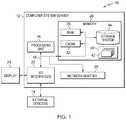
- FIG. 1depicts a block diagram according to an embodiment of the present invention.
- FIG. 2depicts a cloud computing environment according to an embodiment of the present invention.
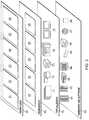
- FIG. 3depicts abstraction model layers according to an embodiment of the present invention.
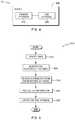
- FIG. 4depicts a block diagram of a computing system according to an embodiment of the present invention.
- FIG. 5depicts a flowchart of the steps of a ranking program, executing within the computing system of FIG. 4 , for dynamically ranking SMEs, based on the SMEs' activities during a critical situation.
- the problem definitioni.e., to define the problem and its associated sub-problems that need to be resolved in order to restore the IT incident or normalcy of operations.
- Embodiments of the present inventionrecognize the recovery of the incident to restore the operations depends on the SMEs engaged in the critical situation and the specialized knowledge that the SMEs possess. Additionally, embodiments of the present invention recognize the need to have effective SMEs who can work at an efficient pace and quickly restore business operations. Embodiments of the present invention recognize the need to measure the effectiveness of relevant SMEs involved in a critical situation. Such a measurement could help SMEs and the management to take suitable actions in terms of identifying, rewarding, and training SMEs for effective and rapid critical situation resolution. Due to the current state of incident management, embodiments of the present invention recognize the need to dynamically rank SMEs, based on the SMEs' activities during a critical situation.
- Cloud computingis a model of service delivery for enabling convenient, on-demand network access to a shared pool of configurable computing resources (e.g. networks, network bandwidth, servers, processing, memory, storage, applications, virtual machines, and services) that can be rapidly provisioned and released with minimal management effort or interaction with a provider of the service.
- This cloud modelmay include at least five characteristics, at least three service models, and at least four deployment models.
- On-demand self-servicea cloud consumer can unilaterally provision computing capabilities, such as server time and network storage, as needed automatically without requiring human interaction with the service's provider.
- Resource poolingthe provider's computing resources are pooled to serve multiple consumers using a multi-tenant model, with different physical and virtual resources dynamically assigned and reassigned according to demand. There is a sense of location independence in that the consumer generally has no control or knowledge over the exact location of the provided resources but may be able to specify location at a higher level of abstraction (e.g., country, state, or datacenter).
- Rapid elasticitycapabilities can be rapidly and elastically provisioned, in some cases automatically, to quickly scale out and rapidly released to quickly scale in. To the consumer, the capabilities available for provisioning often appear to be unlimited and can be purchased in any quantity at any time.
- Measured servicecloud systems automatically control and optimize resource use by leveraging a metering capability at some level of abstraction appropriate to the type of service (e.g., storage, processing, bandwidth, and active user accounts). Resource usage can be monitored, controlled, and reported providing transparency for both the provider and consumer of the utilized service.
- level of abstractionappropriate to the type of service (e.g., storage, processing, bandwidth, and active user accounts).
- SaaSSoftware as a Service: the capability provided to the consumer is to use the provider's applications running on a cloud infrastructure.
- the applicationsare accessible from various client devices through a thin client interface such as a web browser (e.g., web-based e-mail).
- a web browsere.g., web-based e-mail
- the consumerdoes not manage or control the underlying cloud infrastructure including network, servers, operating systems, storage, or even individual application capabilities, with the possible exception of limited user-specific application configuration settings.
- PaaSPlatform as a Service
- the consumerdoes not manage or control the underlying cloud infrastructure including networks, servers, operating systems, or storage, but has control over the deployed applications and possibly application hosting environment configurations.
- IaaSInfrastructure as a Service
- the consumerdoes not manage or control the underlying cloud infrastructure but has control over operating systems, storage, deployed applications, and possibly limited control of select networking components (e.g., host firewalls).
- Private cloudthe cloud infrastructure is operated solely for an organization. It may be managed by the organization or a third party and may exist on-premises or off-premises.
- Public cloudthe cloud infrastructure is made available to the general public or a large industry group and is owned by an organization selling cloud services.
- Hybrid cloudthe cloud infrastructure is a composition of two or more clouds (private, community, or public) that remain unique entities but are bound together by standardized or proprietary technology that enables data and application portability (e.g., cloud bursting for load-balancing between clouds).
- a cloud computing environmentis service oriented with a focus on statelessness, low coupling, modularity, and semantic interoperability.
- An infrastructurecomprising a network of interconnected nodes.
- Cloud computing node 10is only one example of a suitable cloud computing node and is not intended to suggest any limitation as to the scope of use or functionality of embodiments of the invention described herein. Regardless, cloud computing node 10 is capable of being implemented and/or performing any of the functionality set forth hereinabove.
- cloud computing node 10there is a computer system/server 12 , which is operational with numerous other general purpose or special purpose computing system environments or configurations.
- Examples of well-known computing systems, environments, and/or configurations that may be suitable for use with computer system/server 12include, but are not limited to, personal computer systems, server computer systems, thin clients, thick clients, hand-held or laptop devices, multiprocessor systems, microprocessor-based systems, set top boxes, programmable consumer electronics, network PCs, minicomputer systems, mainframe computer systems, and distributed cloud computing environments that include any of the above systems or devices, and the like.
- Computer system/server 12may be described in the general context of computer system-executable instructions, such as program modules, being executed by a computer system.
- program modulesmay include routines, programs, objects, components, logic, data structures, and so on that perform particular tasks or implement particular abstract data types.
- Computer system/server 12may be practiced in distributed cloud computing environments where tasks are performed by remote processing devices that are linked through a communications network.
- program modulesmay be located in both local and remote computer system storage media including memory storage devices.
- computer system/server 12 in cloud computing node 10is shown in the form of a general-purpose computing device.
- the components of computer system/server 12may include, but are not limited to, one or more processors or processing units 16 , a system memory 28 , and a bus 18 that couples various system components including system memory 28 to processor 16 .
- Bus 18represents one or more of any of several types of bus structures, including a memory bus or memory controller, a peripheral bus, an accelerated graphics port, and a processor or local bus using any of a variety of bus architectures.
- bus architecturesinclude Industry Standard Architecture (ISA) bus, Micro Channel Architecture (MCA) bus, Enhanced ISA (EISA) bus, Video Electronics Standards Association (VESA) local bus, and Peripheral Component Interconnect (PCI) bus.
- Computer system/server 12typically includes a variety of computer system readable media. Such media may be any available media that is accessible by computer system/server 12 , and it includes both volatile and non-volatile media, removable and non-removable media.
- System memory 28can include computer system readable media in the form of volatile memory, such as random access memory (RAM) 30 and/or cache memory 32 .
- Computer system/server 12may further include other removable/non-removable, volatile/non-volatile computer system storage media.
- storage system 34can be provided for reading from and writing to a non-removable, non-volatile magnetic media (not shown and typically called a “hard drive”).
- a magnetic disk drivefor reading from and writing to a removable, non-volatile magnetic disk (e.g., a “floppy disk”).
- an optical disk drivefor reading from or writing to a removable, non-volatile optical disk such as a CD-ROM, DVD-ROM or other optical media can be provided.
- memory 28may include at least one program product having a set (e.g., at least one) of program modules that are configured to carry out the functions of embodiments of the invention.
- Program/utility 40having a set (at least one) of program modules 42 , may be stored in memory 28 by way of example, and not limitation, as well as an operating system, one or more application programs, other program modules, and program data. Each of the operating system, one or more application programs, other program modules, and program data or some combination thereof, may include an implementation of a networking environment.
- Program modules 42generally carry out the functions and/or methodologies of embodiments of the invention as described herein.
- Computer system/server 12may also communicate with one or more external devices 14 such as a keyboard, a pointing device, a display 24 , etc.; one or more devices that enable a user to interact with computer system/server 12 ; and/or any devices (e.g., network card, modem, etc.) that enable computer system/server 12 to communicate with one or more other computing devices. Such communication can occur via Input/Output (I/O) interfaces 22 . Still yet, computer system/server 12 can communicate with one or more networks such as a local area network (LAN), a general wide area network (WAN), and/or a public network (e.g., the Internet) via network adapter 20 .
- LANlocal area network
- WANwide area network
- public networke.g., the Internet
- network adapter 20communicates with the other components of computer system/server 12 via bus 18 .
- bus 18It should be understood that although not shown, other hardware and/or software components could be used in conjunction with computer system/server 12 . Examples, include, but are not limited to: microcode, device drivers, redundant processing units, external disk drive arrays, RAID systems, tape drives, and data archival storage systems, etc.
- cloud computing environment 50comprises one or more cloud computing nodes 10 with which local computing devices used by cloud consumers, such as, for example, personal digital assistant (PDA) or cellular telephone 54 A, desktop computer 54 B, laptop computer 54 C, and/or automobile computer system 54 N may communicate.
- Nodes 10may communicate with one another. They may be grouped (not shown) physically or virtually, in one or more networks, such as Private, Community, Public, or Hybrid clouds as described hereinabove, or a combination thereof.
- Thisallows cloud computing environment 50 to offer infrastructure, platforms and/or software as services for which a cloud consumer does not need to maintain resources on a local computing device.
- computing devices 54 A-N shown in FIG. 2are intended to be illustrative only and that computing nodes 10 and cloud computing environment 50 can communicate with any type of computerized device over any type of network and/or network addressable connection (e.g., using a web browser).
- FIG. 3a set of functional abstraction layers provided by cloud computing environment 50 ( FIG. 2 ) is shown. It should be understood in advance that the components, layers, and functions shown in FIG. 3 are intended to be illustrative only and embodiments of the invention are not limited thereto. As depicted, the following layers and corresponding functions are provided:
- Hardware and software layer 60includes hardware and software components.
- hardware componentsinclude: mainframes 61 ; RISC (Reduced Instruction Set Computer) architecture based servers 62 ; servers 63 ; blade servers 64 ; storage devices 65 ; and networks and networking components 66 .
- software componentsinclude network application server software 67 and database software 68 .
- Virtualization layer 70provides an abstraction layer from which the following examples of virtual entities may be provided: virtual servers 71 ; virtual storage 72 ; virtual networks 73 , including virtual private networks; virtual applications and operating systems 74 ; and virtual clients 75 .
- management layer 80may provide the functions described below.
- Resource provisioning 81provides dynamic procurement of computing resources and other resources that are utilized to perform tasks within the cloud computing environment.
- Metering and Pricing 82provide cost tracking as resources are utilized within the cloud computing environment, and billing or invoicing for consumption of these resources. In one example, these resources may comprise application software licenses.
- Securityprovides identity verification for cloud consumers and tasks, as well as protection for data and other resources.
- User portal 83provides access to the cloud computing environment for consumers and system administrators.
- Service level management 84provides cloud computing resource allocation and management such that required service levels are met.
- Service Level Agreement (SLA) planning and fulfillment 85provide pre-arrangement for, and procurement of, cloud computing resources for which a future requirement is anticipated in accordance with an SLA.
- SLAService Level Agreement
- Workloads layer 90provides examples of functionality for which the cloud computing environment may be utilized. Examples of workloads and functions which may be provided from this layer include: mapping and navigation 91 ; software development and lifecycle management 92 ; virtual classroom education delivery 93 ; data analytics processing 94 ; transaction processing 95 ; and ranking program 96 .
- FIG. 4a diagram of a server 400 in cloud computing node 10 is shown, in accordance with one embodiment of the present invention.
- FIG. 4provides an illustration of one embodiment and does not imply any limitations with regard to the environments in which different embodiments can be implemented.
- server 400contains ranking program 410 and SME database 420 .
- Server 400can include components as depicted and described in further detail with respect to FIG. 1 .
- ranking program 410operates to dynamically rank SMEs, based on the SMEs' activities during a critical situation. In doing so, ranking program 410 identifies SMEs. Ranking program 410 monitors the activities of the SMEs. Ranking program 410 receives information from the monitored activities. Ranking program 410 analyzes the information. Ranking program 410 updates the SME database. In the depicted embodiment, ranking program 410 resides on server 400 . In other embodiments, ranking program 410 , or similar programs, can reside on another server or another computing device, provided that ranking program 410 has access to SME database 420 .
- SME database 420can be a repository that can be written to or read by ranking program 410 .
- a program(not shown) can allow a user to define various SMEs with their respective skills and availabilities and store the information to SME database 420 .
- SME database 420resides on server 400 .
- SME database 420or similar databases, can reside on another server or another computing device, provided that SME database 420 is accessible to ranking program 410 .
- Ranking program 410operates to dynamically rank SMEs, based on the SMEs' activities during a critical situation.
- ranking program 410identifies SMEs.
- ranking program 410identifies SMEs from SME database 420 .
- ranking program 410retrieves SME information from SME database, such as, but not limited to: names, schedules, type of expertise, etc.
- ranking program 410identifies SMEs by monitoring various, relevant collaboration channels that contain SMEs who are working to solve a similar problem. Collaboration channels can include, for example, a conference calling bridge, a chat session, a wiki page, and an incident management system.
- ranking program 410identifies SMEs by retrieving information from other programs (not shown) that operate to correlate SMEs with the SMEs', respective, expertise, schedule, other skills, etc.
- ranking program 410monitors the activities of the SMEs.
- ranking program 410monitors the activities of the SMEs in terms of the SMEs' participation in various collaboration channels, the number of suggestions the SMEs are making in reference to solving the problem, how many suggestions turn into actions, feedback from the lead person for the critical situation resolution, how fast the SMEs resolved the outage, etc.
- ranking program 410monitors the activities of the SMEs during the entire time period of a critical situation.
- ranking program 410monitors the activities of the SMEs during a predetermined time period of a critical situation (e.g., from the beginning of a problem being detected until one hour after the detection of the problem).
- ranking program 410receives information from the monitored activities.
- the informationmay include, but is not limited to: the SMEs' participation in various collaboration channels, the number of suggestions the SMEs are making in reference to solving the problem, how many suggestions turn into actions, feedback from the lead person for the critical situation resolution, how fast the SMEs resolved the outage, etc.
- ranking program 410receives information from the monitored activities, automatically, as information becomes available.
- ranking program 410receives information from the monitored activities, automatically, after a critical situation is resolved.
- ranking program 410receives information from the monitored activities after a predetermined time period (e.g., three hours after the detection of a problem).
- ranking program 410analyzes the information.
- ranking program 410analyzes the information by assigning points to the SMEs, based on the information received from the monitored activities.
- ranking program 410analyzes the information by computing the effectiveness of each SME, based on a weighted score that uses the following factors: time spent, contributions to resolutions, number of engagement channels, number of converted actions, positive feedback received, social network influence, speed of resolutions, etc.
- ranking program 410analyzes the information by searching SME database 420 for similar SMEs to the SMEs currently being analyzed, based on the skills associated with the SMEs in SME database 420 and the skills, found from the analysis, of the current SMEs.
- ranking program 410analyzes the information by automatically identifying a substitute SME when performance of the SME in a critical situation falls below a predetermined threshold within a predetermined time interval, based on a ranking of the plurality of SMEs, wherein the ranking is based on a relevance of the SME to the critical situation. Still, in some embodiments, ranking program 410 analyzes the information by performing a sentiment analysis, based on feedback of SMEs working within the collaboration channel. Sentiment analysis, sometimes known as opinion mining, refers to the use of natural language processing, text analysis, and computational linguistics to identify and extract subjective information in source materials.
- ranking program 410updates the SME database.
- ranking program 410updates SME database 420 , automatically, after a critical situation is resolved.
- ranking program 410updates SME database 420 after a predetermined number of critical situations have been resolved (e.g., after five critical situations).
- ranking program 410updates SME database 420 after a predetermined time period (e.g., after every seven days).
- the present inventionmay be a system, a method, and/or a computer program product.
- the computer program productmay include a computer readable storage medium (or media) having computer readable program instructions thereon for causing a processor to carry out aspects of the present invention.
- the computer readable storage mediumcan be a tangible device that can retain and store instructions for use by an instruction execution device.
- the computer readable storage mediummay be, for example, but is not limited to, an electronic storage device, a magnetic storage device, an optical storage device, an electromagnetic storage device, a semiconductor storage device, or any suitable combination of the foregoing.
- a non-exhaustive list of more specific examples of the computer readable storage mediumincludes the following: a portable computer diskette, a hard disk, a random access memory (RAM), a read-only memory (ROM), an erasable programmable read-only memory (EPROM or Flash memory), a static random access memory (SRAM), a portable compact disc read-only memory (CD-ROM), a digital versatile disk (DVD), a memory stick, a floppy disk, a mechanically encoded device such as punch-cards or raised structures in a groove having instructions recorded thereon, and any suitable combination of the foregoing.
- RAMrandom access memory
- ROMread-only memory
- EPROM or Flash memoryerasable programmable read-only memory
- SRAMstatic random access memory
- CD-ROMcompact disc read-only memory
- DVDdigital versatile disk
- memory sticka floppy disk
- a mechanically encoded devicesuch as punch-cards or raised structures in a groove having instructions recorded thereon
- a computer readable storage mediumis not to be construed as being transitory signals per se, such as radio waves or other freely propagating electromagnetic waves, electromagnetic waves propagating through a waveguide or other transmission media (e.g., light pulses passing through a fiber-optic cable), or electrical signals transmitted through a wire.
- Computer readable program instructions described hereincan be downloaded to respective computing/processing devices from a computer readable storage medium or to an external computer or external storage device via a network, for example, the Internet, a local area network, a wide area network and/or a wireless network.
- the networkmay comprise copper transmission cables, optical transmission fibers, wireless transmission, routers, firewalls, switches, gateway computers and/or edge servers.
- a network adapter card or network interface in each computing/processing devicereceives computer readable program instructions from the network and forwards the computer readable program instructions for storage in a computer readable storage medium within the respective computing/processing device.
- Computer readable program instructions for carrying out operations of the present inventionmay be assembler instructions, instruction-set-architecture (ISA) instructions, machine instructions, machine dependent instructions, microcode, firmware instructions, state-setting data, or either source code or object code written in any combination of one or more programming languages, including an object oriented programming language such as Smalltalk, C++ or the like, and conventional procedural programming languages, such as the “C” programming language or similar programming languages.
- the computer readable program instructionsmay execute entirely on the user's computer, partly on the user's computer, as a stand-alone software package, partly on the user's computer and partly on a remote computer or entirely on the remote computer or server.
- the remote computermay be connected to the user's computer through any type of network, including a local area network (LAN) or a wide area network (WAN), or the connection may be made to an external computer (for example, through the Internet using an Internet Service Provider).
- electronic circuitryincluding, for example, programmable logic circuitry, field-programmable gate arrays (FPGA), or programmable logic arrays (PLA) may execute the computer readable program instructions by utilizing state information of the computer readable program instructions to personalize the electronic circuitry, in order to perform aspects of the present invention.
- These computer readable program instructionsmay be provided to a processor of a general purpose computer, special purpose computer, or other programmable data processing apparatus to produce a machine, such that the instructions, which execute via the processor of the computer or other programmable data processing apparatus, create means for implementing the functions/acts specified in the flowchart and/or block diagram block or blocks.
- These computer readable program instructionsmay also be stored in a computer readable storage medium that can direct a computer, a programmable data processing apparatus, and/or other devices to function in a particular manner, such that the computer readable storage medium having instructions stored therein comprises an article of manufacture including instructions which implement aspects of the function/act specified in the flowchart and/or block diagram block or blocks.
- the computer readable program instructionsmay also be loaded onto a computer, other programmable data processing apparatus, or other device to cause a series of operational steps to be performed on the computer, other programmable apparatus or other device to produce a computer implemented process, such that the instructions which execute on the computer, other programmable apparatus, or other device implement the functions/acts specified in the flowchart and/or block diagram block or blocks.
- each block in the flowchart or block diagramsmay represent a module, segment, or portion of instructions, which comprises one or more executable instructions for implementing the specified logical function(s).
- the functions noted in the blockmay occur out of the order noted in the figures.
- two blocks shown in successionmay, in fact, be executed substantially concurrently, or the blocks may sometimes be executed in the reverse order, depending upon the functionality involved.
Landscapes
- Engineering & Computer Science (AREA)
- Theoretical Computer Science (AREA)
- Data Mining & Analysis (AREA)
- Databases & Information Systems (AREA)
- Physics & Mathematics (AREA)
- General Engineering & Computer Science (AREA)
- General Physics & Mathematics (AREA)
- Computational Linguistics (AREA)
- Debugging And Monitoring (AREA)
Abstract
Description
Claims (16)
Priority Applications (1)
| Application Number | Priority Date | Filing Date | Title |
|---|---|---|---|
| US15/092,036US10657117B2 (en) | 2015-09-11 | 2016-04-06 | Critical situation contribution and effectiveness tracker |
Applications Claiming Priority (2)
| Application Number | Priority Date | Filing Date | Title |
|---|---|---|---|
| US14/851,566US10521770B2 (en) | 2015-09-11 | 2015-09-11 | Dynamic problem statement with conflict resolution |
| US15/092,036US10657117B2 (en) | 2015-09-11 | 2016-04-06 | Critical situation contribution and effectiveness tracker |
Related Parent Applications (1)
| Application Number | Title | Priority Date | Filing Date |
|---|---|---|---|
| US14/851,566Continuation-In-PartUS10521770B2 (en) | 2015-09-11 | 2015-09-11 | Dynamic problem statement with conflict resolution |
Publications (2)
| Publication Number | Publication Date |
|---|---|
| US20170075895A1 US20170075895A1 (en) | 2017-03-16 |
| US10657117B2true US10657117B2 (en) | 2020-05-19 |
Family
ID=58236959
Family Applications (1)
| Application Number | Title | Priority Date | Filing Date |
|---|---|---|---|
| US15/092,036Active2038-07-22US10657117B2 (en) | 2015-09-11 | 2016-04-06 | Critical situation contribution and effectiveness tracker |
Country Status (1)
| Country | Link |
|---|---|
| US (1) | US10657117B2 (en) |
Cited By (2)
| Publication number | Priority date | Publication date | Assignee | Title |
|---|---|---|---|---|
| US11630663B2 (en) | 2020-12-15 | 2023-04-18 | International Business Machines Corporation | Compressing multi-attribute vector into a single eigenvalue for ranking subject matter experts |
| US11853750B2 (en) | 2020-12-14 | 2023-12-26 | International Business Machines Corporation | Subject matter expert identification and code analysis based on a probabilistic filter |
Families Citing this family (2)
| Publication number | Priority date | Publication date | Assignee | Title |
|---|---|---|---|---|
| US20190102625A1 (en)* | 2017-09-29 | 2019-04-04 | Microsoft Technology Licensing, Llc | Entity attribute identification |
| US11385726B2 (en)* | 2020-06-01 | 2022-07-12 | Science House LLC | Systems, methods, and apparatus for enhanced presentation remotes |
Citations (76)
| Publication number | Priority date | Publication date | Assignee | Title |
|---|---|---|---|---|
| US5386515A (en) | 1992-05-27 | 1995-01-31 | Intel Corporation | Automatic input/output address conflict resolution |
| US20020194047A1 (en) | 2001-05-17 | 2002-12-19 | International Business Machines Corporation | End-to-end service delivery (post-sale) process |
| US20030004909A1 (en)* | 2000-06-30 | 2003-01-02 | Askme Corporation | Method and system for enhanced knowledge management |
| US20030046308A1 (en) | 2001-07-12 | 2003-03-06 | Annette Weber | Issue tracking system and method |
| US6606744B1 (en) | 1999-11-22 | 2003-08-12 | Accenture, Llp | Providing collaborative installation management in a network-based supply chain environment |
| US6611822B1 (en) | 1999-05-05 | 2003-08-26 | Ac Properties B.V. | System method and article of manufacture for creating collaborative application sharing |
| US20040044542A1 (en)* | 2000-07-13 | 2004-03-04 | Israel Beniaminy | Method and system for sharing knowledge |
| US6735597B1 (en) | 1999-10-12 | 2004-05-11 | Mark W. Paradies | Incident analysis and solution system |
| US20040243422A1 (en) | 2003-05-30 | 2004-12-02 | Weber Goetz M. | Event management |
| US20050086248A1 (en) | 2003-10-16 | 2005-04-21 | Charles Atchison | Issue tracking |
| US20050289168A1 (en) | 2000-06-26 | 2005-12-29 | Green Edward A | Subject matter context search engine |
| US7007235B1 (en) | 1999-04-02 | 2006-02-28 | Massachusetts Institute Of Technology | Collaborative agent interaction control and synchronization system |
| US20060211404A1 (en) | 2005-03-03 | 2006-09-21 | Cromp Robert F | Incident command system |
| US7200592B2 (en) | 2002-01-14 | 2007-04-03 | International Business Machines Corporation | System for synchronizing of user's affinity to knowledge |
| US7298867B2 (en) | 2004-02-20 | 2007-11-20 | Lockheed Martin Corporation | Component association tracker system and method |
| US20080022209A1 (en) | 2006-07-19 | 2008-01-24 | Lyle Ruthie D | Dynamically controlling content and flow of an electronic meeting |
| US20080072158A1 (en) | 2006-09-15 | 2008-03-20 | Antonio Samele | User collaboration system |
| US20080114783A1 (en) | 2006-11-15 | 2008-05-15 | Nguyen Tien M | Method, system, and program product for managing a process and it interlock |
| US20080244418A1 (en) | 2007-03-30 | 2008-10-02 | Microsoft Corporation | Distributed multi-party software construction for a collaborative work environment |
| US20080281915A1 (en) | 2007-04-30 | 2008-11-13 | Elad Joseph B | Collaboration portal (COPO) a scaleable method, system, and apparatus for providing computer-accessible benefits to communities of users |
| US20080288914A1 (en) | 2007-05-18 | 2008-11-20 | Blueshift Collaborative Research, Inc. | Method and software for collaboration |
| US20090006161A1 (en) | 2007-06-27 | 2009-01-01 | Yen-Fu Chen | Systems and methods for managing events of event scheduling applications |
| US20090063387A1 (en) | 2007-08-31 | 2009-03-05 | International Business Machines Corporation | Apparatus And Method For Problem Determination And Resolution |
| US20090083221A1 (en) | 2007-09-21 | 2009-03-26 | International Business Machines Corporation | System and Method for Estimating and Storing Skills for Reuse |
| US7543047B2 (en) | 2002-12-24 | 2009-06-02 | Electronics And Telecommunications Research Institute | Method for data synchronization and update conflict resolution between mobile clients and server in mobile system |
| WO2009076203A1 (en) | 2007-12-05 | 2009-06-18 | Florida Gulf Coast University | System and methods for facilitating collaboration of a group |
| US20100050093A1 (en) | 2007-10-26 | 2010-02-25 | Telcordia Technologies, Inc. | Collaborative Panel Adminstrator |
| US20100057522A1 (en) | 2008-09-04 | 2010-03-04 | International Business Machines Corporation | System and method for a collaborative information technology governance |
| US20100070883A1 (en) | 2008-09-12 | 2010-03-18 | International Business Machines Corporation | Virtual universe subject matter expert assistance |
| US7707249B2 (en) | 2004-09-03 | 2010-04-27 | Open Text Corporation | Systems and methods for collaboration |
| US7716739B1 (en) | 2005-07-20 | 2010-05-11 | Symantec Corporation | Subjective and statistical event tracking incident management system |
| US20100162131A1 (en) | 2008-12-18 | 2010-06-24 | Sap Ag | Collaboration interface for a multi-channel collaboration window with context support |
| US20100250605A1 (en) | 2009-03-26 | 2010-09-30 | Gautham Pamu | Method and Apparatus for Social Trust Networks on Messaging Platforms |
| US20100262610A1 (en)* | 2009-04-09 | 2010-10-14 | International Business Machines Corporation | Identifying Subject Matter Experts |
| US20100318846A1 (en) | 2009-06-16 | 2010-12-16 | International Business Machines Corporation | System and method for incident management enhanced with problem classification for technical support services |
| US20100325206A1 (en) | 2009-06-18 | 2010-12-23 | Umeshwar Dayal | Providing collaborative business intelligence |
| US20110055699A1 (en) | 2009-08-28 | 2011-03-03 | International Business Machines Corporation | Intelligent self-enabled solution discovery |
| US7917815B2 (en) | 2008-08-27 | 2011-03-29 | Sap Ag | Multi-layer context parsing and incident model construction for software support |
| US7937281B2 (en) | 2001-12-07 | 2011-05-03 | Accenture Global Services Limited | Accelerated process improvement framework |
| US20110208822A1 (en) | 2010-02-22 | 2011-08-25 | Yogesh Chunilal Rathod | Method and system for customized, contextual, dynamic and unified communication, zero click advertisement and prospective customers search engine |
| US8200527B1 (en) | 2007-04-25 | 2012-06-12 | Convergys Cmg Utah, Inc. | Method for prioritizing and presenting recommendations regarding organizaion's customer care capabilities |
| US20120226803A1 (en) | 2011-03-03 | 2012-09-06 | Salesforce.Com, Inc. | Method and system for providing status of a machine |
| US8266072B2 (en) | 2009-04-22 | 2012-09-11 | Bank Of America Corporation | Incident communication interface for the knowledge management system |
| EP2498209A1 (en) | 2011-03-07 | 2012-09-12 | Tata Consultancy Services Limited | Collaborative platform for IT service and vendor management |
| US8281248B2 (en) | 2007-02-14 | 2012-10-02 | Software Ag | Collaboration application and method |
| US8346006B1 (en) | 2008-09-17 | 2013-01-01 | Adobe Systems Incorporated | Real time auto-tagging system |
| US8352870B2 (en) | 2008-04-28 | 2013-01-08 | Microsoft Corporation | Conflict resolution |
| WO2013016514A1 (en) | 2011-07-26 | 2013-01-31 | Mine Safety Appliances Company | Incident management and monitoring systems and methods |
| WO2013026095A1 (en) | 2011-08-25 | 2013-02-28 | Matsumoto Yashimasa | Social rating system |
| US20130132318A1 (en) | 2011-11-17 | 2013-05-23 | Steven Tanimoto | Methods and Systems for Collaborative Formulation and Solution of Problems |
| US20130151948A1 (en) | 2011-12-09 | 2013-06-13 | Visual Bearing Limited | Web-based social content aggregation and discovery facility |
| US20130151624A1 (en) | 2011-12-12 | 2013-06-13 | International Business Machines Corporation | Context-Sensitive Collaboration Channels |
| US8473432B2 (en) | 2010-07-22 | 2013-06-25 | International Business Machines Corporation | Issue resolution in expert networks |
| US20130166550A1 (en) | 2011-12-21 | 2013-06-27 | Sap Ag | Integration of Tags and Object Data |
| US20130198290A1 (en) | 2008-01-15 | 2013-08-01 | Owen P. Thomas | Real-time communication and information collaboration system |
| US20130218783A1 (en) | 2012-02-21 | 2013-08-22 | Digital Manufacturing, Inc. | Apparatus and method for real-time data capture and usage for fault repair |
| US8572022B2 (en) | 2010-03-02 | 2013-10-29 | Microsoft Corporation | Automatic synchronization conflict resolution |
| US8589778B2 (en) | 2006-12-27 | 2013-11-19 | International Business Machines Corporation | System and method for processing multi-modal communication within a workgroup |
| US8635283B2 (en) | 2004-04-05 | 2014-01-21 | International Business Machines Corporation | Tagging the seen/not-seen status of a real time message |
| US8639650B1 (en) | 2003-06-25 | 2014-01-28 | Susan Pierpoint Gill | Profile-responsive system for information exchange in human- and device-adaptive query-response networks for task and crowd management, distributed collaboration and data integration |
| US20140149436A1 (en) | 2012-11-26 | 2014-05-29 | The Boeing Company | System and Method of Reduction of Irrelevant Information during Search |
| US20140164525A1 (en) | 2012-12-06 | 2014-06-12 | At&T Intellectual Property I, L.P. | Event management system |
| US8805977B2 (en) | 2011-06-09 | 2014-08-12 | Freescale Semiconductor, Inc. | Method and system for address conflict resolution |
| US20140247460A1 (en) | 2013-03-04 | 2014-09-04 | Joseph P. Gaertner | Conflict resolution and optimization for job definition format instructions |
| US20140279625A1 (en) | 2013-03-15 | 2014-09-18 | Louis Levine Carter | Social Network Based Skill Rating and Performance Feedback System |
| US8929528B2 (en) | 2005-02-11 | 2015-01-06 | Rockstar Consortium Us Lp | Method and system for enhancing collaboration |
| US20150032492A1 (en) | 2013-07-24 | 2015-01-29 | Lithium Technologies, Inc. | Methods of Identifying Relevant Content and Subject Matter Expertise for Online Communities |
| US20150032751A1 (en)* | 2013-07-24 | 2015-01-29 | Lithium Technologies, Inc. | Methods and Systems for Utilizing Subject Matter Experts in an Online Community |
| US20150046643A1 (en) | 2013-08-12 | 2015-02-12 | The Boeing Company | Clustering with Virtual Entities Using Associative Memories |
| US20150179186A1 (en) | 2013-12-20 | 2015-06-25 | Dell Products, L.P. | Visual Audio Quality Cues and Context Awareness in a Virtual Collaboration Session |
| US20160055455A1 (en) | 2014-08-23 | 2016-02-25 | Bryan Alan Hill | Project Governance |
| US20160055553A1 (en) | 2014-08-23 | 2016-02-25 | Bryan Alan Hill | Method and system for collaborative enterprise development |
| US20160072750A1 (en) | 2014-09-08 | 2016-03-10 | Accenture Global Services Limited | Digital collaboration process enablement tool |
| US20160078012A1 (en) | 2014-09-11 | 2016-03-17 | Bmc Software, Inc. | Systems and methods for formless information technology and social support mechanics |
| US20160140186A1 (en) | 2014-11-14 | 2016-05-19 | Manfred Langen | Identifying Subject Matter Experts |
| US9425966B1 (en) | 2013-03-14 | 2016-08-23 | Amazon Technologies, Inc. | Security mechanism evaluation service |
- 2016
- 2016-04-06USUS15/092,036patent/US10657117B2/enactiveActive
Patent Citations (78)
| Publication number | Priority date | Publication date | Assignee | Title |
|---|---|---|---|---|
| US5386515A (en) | 1992-05-27 | 1995-01-31 | Intel Corporation | Automatic input/output address conflict resolution |
| US7007235B1 (en) | 1999-04-02 | 2006-02-28 | Massachusetts Institute Of Technology | Collaborative agent interaction control and synchronization system |
| US6611822B1 (en) | 1999-05-05 | 2003-08-26 | Ac Properties B.V. | System method and article of manufacture for creating collaborative application sharing |
| US6735597B1 (en) | 1999-10-12 | 2004-05-11 | Mark W. Paradies | Incident analysis and solution system |
| US6606744B1 (en) | 1999-11-22 | 2003-08-12 | Accenture, Llp | Providing collaborative installation management in a network-based supply chain environment |
| US20050289168A1 (en) | 2000-06-26 | 2005-12-29 | Green Edward A | Subject matter context search engine |
| US20030004909A1 (en)* | 2000-06-30 | 2003-01-02 | Askme Corporation | Method and system for enhanced knowledge management |
| US20040044542A1 (en)* | 2000-07-13 | 2004-03-04 | Israel Beniaminy | Method and system for sharing knowledge |
| US20020194047A1 (en) | 2001-05-17 | 2002-12-19 | International Business Machines Corporation | End-to-end service delivery (post-sale) process |
| US20030046308A1 (en) | 2001-07-12 | 2003-03-06 | Annette Weber | Issue tracking system and method |
| US7937281B2 (en) | 2001-12-07 | 2011-05-03 | Accenture Global Services Limited | Accelerated process improvement framework |
| US7200592B2 (en) | 2002-01-14 | 2007-04-03 | International Business Machines Corporation | System for synchronizing of user's affinity to knowledge |
| US7543047B2 (en) | 2002-12-24 | 2009-06-02 | Electronics And Telecommunications Research Institute | Method for data synchronization and update conflict resolution between mobile clients and server in mobile system |
| US20040243422A1 (en) | 2003-05-30 | 2004-12-02 | Weber Goetz M. | Event management |
| US8639650B1 (en) | 2003-06-25 | 2014-01-28 | Susan Pierpoint Gill | Profile-responsive system for information exchange in human- and device-adaptive query-response networks for task and crowd management, distributed collaboration and data integration |
| US20050086248A1 (en) | 2003-10-16 | 2005-04-21 | Charles Atchison | Issue tracking |
| US7298867B2 (en) | 2004-02-20 | 2007-11-20 | Lockheed Martin Corporation | Component association tracker system and method |
| US8635283B2 (en) | 2004-04-05 | 2014-01-21 | International Business Machines Corporation | Tagging the seen/not-seen status of a real time message |
| US7707249B2 (en) | 2004-09-03 | 2010-04-27 | Open Text Corporation | Systems and methods for collaboration |
| US8929528B2 (en) | 2005-02-11 | 2015-01-06 | Rockstar Consortium Us Lp | Method and system for enhancing collaboration |
| US20060211404A1 (en) | 2005-03-03 | 2006-09-21 | Cromp Robert F | Incident command system |
| US7716739B1 (en) | 2005-07-20 | 2010-05-11 | Symantec Corporation | Subjective and statistical event tracking incident management system |
| US20080022209A1 (en) | 2006-07-19 | 2008-01-24 | Lyle Ruthie D | Dynamically controlling content and flow of an electronic meeting |
| US20080072158A1 (en) | 2006-09-15 | 2008-03-20 | Antonio Samele | User collaboration system |
| US20080114783A1 (en) | 2006-11-15 | 2008-05-15 | Nguyen Tien M | Method, system, and program product for managing a process and it interlock |
| US8589778B2 (en) | 2006-12-27 | 2013-11-19 | International Business Machines Corporation | System and method for processing multi-modal communication within a workgroup |
| US8281248B2 (en) | 2007-02-14 | 2012-10-02 | Software Ag | Collaboration application and method |
| US20080244418A1 (en) | 2007-03-30 | 2008-10-02 | Microsoft Corporation | Distributed multi-party software construction for a collaborative work environment |
| US8200527B1 (en) | 2007-04-25 | 2012-06-12 | Convergys Cmg Utah, Inc. | Method for prioritizing and presenting recommendations regarding organizaion's customer care capabilities |
| US20080281915A1 (en) | 2007-04-30 | 2008-11-13 | Elad Joseph B | Collaboration portal (COPO) a scaleable method, system, and apparatus for providing computer-accessible benefits to communities of users |
| US20080288914A1 (en) | 2007-05-18 | 2008-11-20 | Blueshift Collaborative Research, Inc. | Method and software for collaboration |
| US20090006161A1 (en) | 2007-06-27 | 2009-01-01 | Yen-Fu Chen | Systems and methods for managing events of event scheduling applications |
| US20090063387A1 (en) | 2007-08-31 | 2009-03-05 | International Business Machines Corporation | Apparatus And Method For Problem Determination And Resolution |
| US20090083221A1 (en) | 2007-09-21 | 2009-03-26 | International Business Machines Corporation | System and Method for Estimating and Storing Skills for Reuse |
| US20100050093A1 (en) | 2007-10-26 | 2010-02-25 | Telcordia Technologies, Inc. | Collaborative Panel Adminstrator |
| WO2009076203A1 (en) | 2007-12-05 | 2009-06-18 | Florida Gulf Coast University | System and methods for facilitating collaboration of a group |
| US20130198290A1 (en) | 2008-01-15 | 2013-08-01 | Owen P. Thomas | Real-time communication and information collaboration system |
| US8352870B2 (en) | 2008-04-28 | 2013-01-08 | Microsoft Corporation | Conflict resolution |
| US7917815B2 (en) | 2008-08-27 | 2011-03-29 | Sap Ag | Multi-layer context parsing and incident model construction for software support |
| US20100057522A1 (en) | 2008-09-04 | 2010-03-04 | International Business Machines Corporation | System and method for a collaborative information technology governance |
| US20100070883A1 (en) | 2008-09-12 | 2010-03-18 | International Business Machines Corporation | Virtual universe subject matter expert assistance |
| US8346006B1 (en) | 2008-09-17 | 2013-01-01 | Adobe Systems Incorporated | Real time auto-tagging system |
| US20100162131A1 (en) | 2008-12-18 | 2010-06-24 | Sap Ag | Collaboration interface for a multi-channel collaboration window with context support |
| US20100250605A1 (en) | 2009-03-26 | 2010-09-30 | Gautham Pamu | Method and Apparatus for Social Trust Networks on Messaging Platforms |
| US20100262610A1 (en)* | 2009-04-09 | 2010-10-14 | International Business Machines Corporation | Identifying Subject Matter Experts |
| US8266072B2 (en) | 2009-04-22 | 2012-09-11 | Bank Of America Corporation | Incident communication interface for the knowledge management system |
| US20100318846A1 (en) | 2009-06-16 | 2010-12-16 | International Business Machines Corporation | System and method for incident management enhanced with problem classification for technical support services |
| US8365019B2 (en) | 2009-06-16 | 2013-01-29 | International Business Machines Corporation | System and method for incident management enhanced with problem classification for technical support services |
| US20100325206A1 (en) | 2009-06-18 | 2010-12-23 | Umeshwar Dayal | Providing collaborative business intelligence |
| US20110055699A1 (en) | 2009-08-28 | 2011-03-03 | International Business Machines Corporation | Intelligent self-enabled solution discovery |
| US20110208822A1 (en) | 2010-02-22 | 2011-08-25 | Yogesh Chunilal Rathod | Method and system for customized, contextual, dynamic and unified communication, zero click advertisement and prospective customers search engine |
| US8572022B2 (en) | 2010-03-02 | 2013-10-29 | Microsoft Corporation | Automatic synchronization conflict resolution |
| US8473432B2 (en) | 2010-07-22 | 2013-06-25 | International Business Machines Corporation | Issue resolution in expert networks |
| US20120226803A1 (en) | 2011-03-03 | 2012-09-06 | Salesforce.Com, Inc. | Method and system for providing status of a machine |
| EP2498209A1 (en) | 2011-03-07 | 2012-09-12 | Tata Consultancy Services Limited | Collaborative platform for IT service and vendor management |
| US8805977B2 (en) | 2011-06-09 | 2014-08-12 | Freescale Semiconductor, Inc. | Method and system for address conflict resolution |
| US20130197951A1 (en) | 2011-07-26 | 2013-08-01 | Christopher Evan Watson | Incident Management and Monitoring Systems and Methods |
| WO2013016514A1 (en) | 2011-07-26 | 2013-01-31 | Mine Safety Appliances Company | Incident management and monitoring systems and methods |
| WO2013026095A1 (en) | 2011-08-25 | 2013-02-28 | Matsumoto Yashimasa | Social rating system |
| US20130132318A1 (en) | 2011-11-17 | 2013-05-23 | Steven Tanimoto | Methods and Systems for Collaborative Formulation and Solution of Problems |
| US20130151948A1 (en) | 2011-12-09 | 2013-06-13 | Visual Bearing Limited | Web-based social content aggregation and discovery facility |
| US20130151624A1 (en) | 2011-12-12 | 2013-06-13 | International Business Machines Corporation | Context-Sensitive Collaboration Channels |
| US20130166550A1 (en) | 2011-12-21 | 2013-06-27 | Sap Ag | Integration of Tags and Object Data |
| US20130218783A1 (en) | 2012-02-21 | 2013-08-22 | Digital Manufacturing, Inc. | Apparatus and method for real-time data capture and usage for fault repair |
| US20140149436A1 (en) | 2012-11-26 | 2014-05-29 | The Boeing Company | System and Method of Reduction of Irrelevant Information during Search |
| US20140164525A1 (en) | 2012-12-06 | 2014-06-12 | At&T Intellectual Property I, L.P. | Event management system |
| US20140247460A1 (en) | 2013-03-04 | 2014-09-04 | Joseph P. Gaertner | Conflict resolution and optimization for job definition format instructions |
| US9425966B1 (en) | 2013-03-14 | 2016-08-23 | Amazon Technologies, Inc. | Security mechanism evaluation service |
| US20140279625A1 (en) | 2013-03-15 | 2014-09-18 | Louis Levine Carter | Social Network Based Skill Rating and Performance Feedback System |
| US20150032492A1 (en) | 2013-07-24 | 2015-01-29 | Lithium Technologies, Inc. | Methods of Identifying Relevant Content and Subject Matter Expertise for Online Communities |
| US20150032751A1 (en)* | 2013-07-24 | 2015-01-29 | Lithium Technologies, Inc. | Methods and Systems for Utilizing Subject Matter Experts in an Online Community |
| US20150046643A1 (en) | 2013-08-12 | 2015-02-12 | The Boeing Company | Clustering with Virtual Entities Using Associative Memories |
| US20150179186A1 (en) | 2013-12-20 | 2015-06-25 | Dell Products, L.P. | Visual Audio Quality Cues and Context Awareness in a Virtual Collaboration Session |
| US20160055455A1 (en) | 2014-08-23 | 2016-02-25 | Bryan Alan Hill | Project Governance |
| US20160055553A1 (en) | 2014-08-23 | 2016-02-25 | Bryan Alan Hill | Method and system for collaborative enterprise development |
| US20160072750A1 (en) | 2014-09-08 | 2016-03-10 | Accenture Global Services Limited | Digital collaboration process enablement tool |
| US20160078012A1 (en) | 2014-09-11 | 2016-03-17 | Bmc Software, Inc. | Systems and methods for formless information technology and social support mechanics |
| US20160140186A1 (en) | 2014-11-14 | 2016-05-19 | Manfred Langen | Identifying Subject Matter Experts |
Non-Patent Citations (6)
| Title |
|---|
| List of IBM Patents or Patent Applications Treated as Related, Dated Apr. 21, 2016, 2 pages. |
| Mell et al., "The NIST Definition of Cloud Computing", NIST National Institute of Standards and Technology, US Department of Commerce, Special Publication 800-145, Sep. 2011, 7 pages. |
| U.S. Appl. No. 14/851,566, filed Sep. 11, 2015, Entitled "Dynamic Problem Statement with Conflict Resolution". |
| U.S. Appl. No. 14/948,670, filed Nov. 23, 2015, Entitled "Dynamic Problem Channel Constructor". |
| U.S. Appl. No. 14/948,670, filed Nov. 23, 2015, Entitled "Real-Time Tagger". |
| U.S. Appl. No. 15/091,882, filed Apr. 6, 2016, Entitled "Automatic Profile Generator and Scorer". |
Cited By (2)
| Publication number | Priority date | Publication date | Assignee | Title |
|---|---|---|---|---|
| US11853750B2 (en) | 2020-12-14 | 2023-12-26 | International Business Machines Corporation | Subject matter expert identification and code analysis based on a probabilistic filter |
| US11630663B2 (en) | 2020-12-15 | 2023-04-18 | International Business Machines Corporation | Compressing multi-attribute vector into a single eigenvalue for ranking subject matter experts |
Also Published As
| Publication number | Publication date |
|---|---|
| US20170075895A1 (en) | 2017-03-16 |
Similar Documents
| Publication | Publication Date | Title |
|---|---|---|
| US10705869B2 (en) | Optimized migration of virtual objects across environments in a cloud computing environment | |
| US20170061287A1 (en) | FAQs UPDATER AND GENERATOR FOR MULTI-COMMUNICATION CHANNELS | |
| US9973460B2 (en) | Familiarity-based involvement on an online group conversation | |
| US11625237B2 (en) | Autonomous contextual software support anomaly detection and playbook automation | |
| US10262266B2 (en) | Identifying and analyzing impact of an event on relationships | |
| US20220050728A1 (en) | Dynamic data driven orchestration of workloads | |
| US20190026348A1 (en) | Mining procedure dialogs from source content | |
| US11978060B2 (en) | Dynamic categorization of it service tickets using natural language description | |
| US11556650B2 (en) | Methods and systems for preventing utilization of problematic software | |
| US10929412B2 (en) | Sharing content based on extracted topics | |
| US10521770B2 (en) | Dynamic problem statement with conflict resolution | |
| US10657117B2 (en) | Critical situation contribution and effectiveness tracker | |
| US10002181B2 (en) | Real-time tagger | |
| US11748304B1 (en) | Insert performance improvement | |
| US20170126485A1 (en) | Providing recommended resolutions for events | |
| US10824974B2 (en) | Automatic subject matter expert profile generator and scorer | |
| US20240028913A1 (en) | Heuristic-based inter-training with few-shot fine-tuning of machine learning networks | |
| US11099924B2 (en) | Preventative system issue resolution | |
| US12210939B2 (en) | Explaining machine learning based time series models | |
| US20180095835A1 (en) | Resilient analytics utilizing dark data | |
| US11307958B2 (en) | Data collection in transaction problem diagnostic | |
| US11217116B2 (en) | Interactive training for application providers | |
| US20200394532A1 (en) | Detaching Social Media Content Creation from Publication | |
| US20220309466A1 (en) | Detecting and mitigating sensitive expression during a meeting | |
| US20230092564A1 (en) | Model update determination |
Legal Events
| Date | Code | Title | Description |
|---|---|---|---|
| AS | Assignment | Owner name:INTERNATIONAL BUSINESS MACHINES CORPORATION, NEW YORK Free format text:ASSIGNMENT OF ASSIGNORS INTEREST;ASSIGNORS:ARORA, PRITPAL S.;KAPPEN, BIJO S.;PINGALI, GOPAL S.;REEL/FRAME:038364/0130 Effective date:20160401 Owner name:INTERNATIONAL BUSINESS MACHINES CORPORATION, NEW Y Free format text:ASSIGNMENT OF ASSIGNORS INTEREST;ASSIGNORS:ARORA, PRITPAL S.;KAPPEN, BIJO S.;PINGALI, GOPAL S.;REEL/FRAME:038364/0130 Effective date:20160401 | |
| AS | Assignment | Owner name:INTERNATIONAL BUSINESS MACHINES CORPORATION, NEW YORK Free format text:CORRECTIVE ASSIGNMENT TO CORRECT THE SECOND INVENTOR EXECUTION DATE PREVIOUSLY RECORDED AT REEL: 038364 FRAME: 0130. ASSIGNOR(S) HEREBY CONFIRMS THE ASSIGNMENT;ASSIGNORS:ARORA, PRITPAL S.;KAPPEN, BIJO S.;PINGALI, GOPAL S.;SIGNING DATES FROM 20160401 TO 20160404;REEL/FRAME:038549/0107 Owner name:INTERNATIONAL BUSINESS MACHINES CORPORATION, NEW Y Free format text:CORRECTIVE ASSIGNMENT TO CORRECT THE SECOND INVENTOR EXECUTION DATE PREVIOUSLY RECORDED AT REEL: 038364 FRAME: 0130. ASSIGNOR(S) HEREBY CONFIRMS THE ASSIGNMENT;ASSIGNORS:ARORA, PRITPAL S.;KAPPEN, BIJO S.;PINGALI, GOPAL S.;SIGNING DATES FROM 20160401 TO 20160404;REEL/FRAME:038549/0107 | |
| STPP | Information on status: patent application and granting procedure in general | Free format text:DOCKETED NEW CASE - READY FOR EXAMINATION | |
| STPP | Information on status: patent application and granting procedure in general | Free format text:NON FINAL ACTION MAILED | |
| STPP | Information on status: patent application and granting procedure in general | Free format text:RESPONSE TO NON-FINAL OFFICE ACTION ENTERED AND FORWARDED TO EXAMINER | |
| STPP | Information on status: patent application and granting procedure in general | Free format text:NOTICE OF ALLOWANCE MAILED -- APPLICATION RECEIVED IN OFFICE OF PUBLICATIONS | |
| STPP | Information on status: patent application and granting procedure in general | Free format text:PUBLICATIONS -- ISSUE FEE PAYMENT VERIFIED | |
| STCF | Information on status: patent grant | Free format text:PATENTED CASE | |
| AS | Assignment | Owner name:KYNDRYL, INC., NEW YORK Free format text:ASSIGNMENT OF ASSIGNORS INTEREST;ASSIGNOR:INTERNATIONAL BUSINESS MACHINES CORPORATION;REEL/FRAME:057885/0644 Effective date:20210930 | |
| MAFP | Maintenance fee payment | Free format text:PAYMENT OF MAINTENANCE FEE, 4TH YEAR, LARGE ENTITY (ORIGINAL EVENT CODE: M1551); ENTITY STATUS OF PATENT OWNER: LARGE ENTITY Year of fee payment:4 |