US10652272B2 - Security network buffer device - Google Patents
Security network buffer deviceDownload PDFInfo
- Publication number
- US10652272B2 US10652272B2US15/602,241US201715602241AUS10652272B2US 10652272 B2US10652272 B2US 10652272B2US 201715602241 AUS201715602241 AUS 201715602241AUS 10652272 B2US10652272 B2US 10652272B2
- Authority
- US
- United States
- Prior art keywords
- network
- security
- secure channel
- network device
- security breach
- Prior art date
- Legal status (The legal status is an assumption and is not a legal conclusion. Google has not performed a legal analysis and makes no representation as to the accuracy of the status listed.)
- Expired - Fee Related, expires
Links
Images




Classifications
- H—ELECTRICITY
- H04—ELECTRIC COMMUNICATION TECHNIQUE
- H04L—TRANSMISSION OF DIGITAL INFORMATION, e.g. TELEGRAPHIC COMMUNICATION
- H04L63/00—Network architectures or network communication protocols for network security
- H04L63/14—Network architectures or network communication protocols for network security for detecting or protecting against malicious traffic
- H04L63/1441—Countermeasures against malicious traffic
- H—ELECTRICITY
- H04—ELECTRIC COMMUNICATION TECHNIQUE
- H04L—TRANSMISSION OF DIGITAL INFORMATION, e.g. TELEGRAPHIC COMMUNICATION
- H04L63/00—Network architectures or network communication protocols for network security
- H04L63/14—Network architectures or network communication protocols for network security for detecting or protecting against malicious traffic
- H04L63/1408—Network architectures or network communication protocols for network security for detecting or protecting against malicious traffic by monitoring network traffic
- H04L63/1416—Event detection, e.g. attack signature detection
Definitions
- This disclosurerelates generally to facilitation of secure private network usage within unknown environments.
- Home or work wireless network environments that are privately managed by an end-userare generally secure for that end-user's goals. However, it is not uncommon for an end-user to want access to a public network when they are outside of their privately managed network. When an end-user gains access to a public network outside of their privately managed network, security guarantees may not be as reliable.
- Some examples of potentially unsecure public networksinclude: open Wi-Fi networks in airports and cafes, wired connectivity in hotels, and prepaid cell data access provided in foreign countries.
- Wi-Fi networksin airports and cafes
- wired connectivity in hotelsin hotels
- prepaid cell data accessprovided in foreign countries.
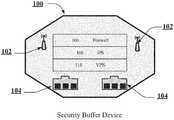
- FIG. 1illustrates an apparatus capable of securely connecting a device to an available network.
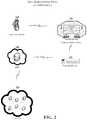
- FIG. 2illustrates a system for securely connecting a device to a network via a security management platform and a network device.
- FIG. 3illustrates a system for securely connecting a device to a network via a network device.
- FIG. 4illustrates a schematic system block diagram of a server in a cloud computing system that can include information stored in a cloud-computing environment.
- FIG. 5illustrates a schematic process flow diagram of a method for securely connecting to a wireless network.
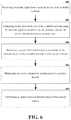
- FIG. 6illustrates a schematic process flow diagram for receiving a signal from an available network and connecting a device to the network.
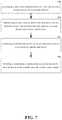
- FIG. 7illustrates a schematic process flow diagram of a connection between a first device and a network device to facilitate a secure connection between a second device and the network device.
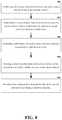
- FIG. 8illustrates a schematic process flow diagram of a connection between a second device and a network device, where a first device disconnects the connection between the second device and the network device during a lockdown function.
- FIG. 9illustrates a block diagram of an example mobile handset operable to engage in a system architecture that facilitates secure wireless communication according to the embodiments described herein.
- FIG. 10illustrates a block diagram of an example computer operable to engage in a system architecture that facilitates secure wireless communication according to the embodiments described herein.
- ком ⁇ онентcan be a processor, a process running on a processor, an object, an executable, a program, a storage device, and/or a computer.
- an application running on a server and the servercan be a component.
- One or more componentscan reside within a process, and a component can be localized on one computer and/or distributed between two or more computers.
- these componentscan execute from various computer readable media having various data structures stored thereon.
- the componentscan communicate via local and/or remote processes such as in accordance with a signal having one or more data packets (e.g., data from one component interacting with another component in a local system, distributed system, and/or across a network, e.g., the Internet, a local area network, a wide area network, etc. with other systems via the signal).
- a signalhaving one or more data packets (e.g., data from one component interacting with another component in a local system, distributed system, and/or across a network, e.g., the Internet, a local area network, a wide area network, etc. with other systems via the signal).
- a componentcan be an apparatus with specific functionality provided by mechanical parts operated by electric or electronic circuitry; the electric or electronic circuitry can be operated by a software application or a firmware application executed by one or more processors; the one or more processors can be internal or external to the apparatus and can execute at least a part of the software or firmware application.
- a componentcan be an apparatus that provides specific functionality through electronic components without mechanical parts; the electronic components can include one or more processors therein to execute software and/or firmware that confer(s), at least in part, the functionality of the electronic components.
- a componentcan emulate an electronic component via a virtual machine, e.g., within a cloud computing system.
- exemplary and/or “demonstrative”are used herein to mean serving as an example, instance, or illustration. For the avoidance of doubt, the subject matter disclosed herein is not limited by such examples.
- any aspect or design described herein as “exemplary” and/or “demonstrative”is not necessarily to be construed as preferred or advantageous over other aspects or designs, nor is it meant to preclude equivalent exemplary structures and techniques known to those of ordinary skill in the art.
- the terms “includes,” “has,” “contains,” and other similar wordsare used in either the detailed description or the claims, such terms are intended to be inclusive—in a manner similar to the term “comprising” as an open transition word—without precluding any additional or other elements.
- the term “infer” or “inference”refers generally to the process of reasoning about, or inferring states of, the system, environment, user, and/or intent from a set of observations as captured via events and/or data. Captured data and events can include user data, device data, environment data, data from sensors, sensor data, application data, implicit data, explicit data, etc. Inference can be employed to identify a specific context or action, or can generate a probability distribution over states of interest based on a consideration of data and events, for example.
- Inferencecan also refer to techniques employed for composing higher-level events from a set of events and/or data. Such inference results in the construction of new events or actions from a set of observed events and/or stored event data, whether the events are correlated in close temporal proximity, and whether the events and data come from one or several event and data sources.
- Various classification schemes and/or systemse.g., support vector machines, neural networks, expert systems, Bayesian belief networks, fuzzy logic, and data fusion engines
- the disclosed subject mattercan be implemented as a method, apparatus, or article of manufacture using standard programming and/or engineering techniques to produce software, firmware, hardware, or any combination thereof to control a computer to implement the disclosed subject matter.
- article of manufactureas used herein is intended to encompass a computer program accessible from any computer-readable device, computer-readable carrier, or computer-readable media.
- computer-readable mediacan include, but are not limited to, a magnetic storage device, e.g., hard disk; floppy disk; magnetic strip(s); an optical disk (e.g., compact disk (CD), a digital video disc (DVD), a Blu-ray DiscTM (BD)); a smart card; a flash memory device (e.g., card, stick, key drive); and/or a virtual device that emulates a storage device and/or any of the above computer-readable media.
- a magnetic storage devicee.g., hard disk; floppy disk; magnetic strip(s); an optical disk (e.g., compact disk (CD), a digital video disc (DVD), a Blu-ray DiscTM (BD)); a smart card; a flash memory device (e.g., card, stick, key drive); and/or a virtual device that emulates a storage device and/or any of the above computer-readable media.
- a magnetic storage devicee.g., hard disk; floppy disk; magnetic
- the methodsare depicted and described as a series of acts. It is to be understood and appreciated that the various embodiments are not limited by the acts illustrated and/or by the order of acts. For example, acts can occur in various orders and/or concurrently, and with other acts not presented or described herein. Furthermore, not all illustrated acts may be required to implement the methods. In addition, the methods could alternatively be represented as a series of interrelated states via a state diagram or events. Additionally, the methods described hereafter are capable of being stored on an article of manufacture (e.g., a computer readable storage medium) to facilitate transporting and transferring such methodologies to computers.
- article of manufactureas used herein, is intended to encompass a computer program accessible from any computer-readable device, carrier, or media, including a non-transitory computer readable storage medium.
- utilizing a configurable security buffer when connecting to publicly accessible wireless networkscan prevent security breaches for end-user devices.
- Described hereinare systems, methods, articles of manufacture, and other embodiments or implementations that can facilitate usage of a private network.
- Facilitating secure private network usagecan be implemented in connection with any type of device with a connection to a communications network (a wireless communications network, the Internet, or the like), such as a mobile handset, a computer, a handheld device, or the like.
- a communications networka wireless communications network, the Internet, or the like
- a security buffer devicecan allow private communication between an end-user device and a public network while eliminating or mitigating security risks associated with a non-secure network device of the public network. Another option for the security buffer device is that it can be implemented of a size that allows for ease of portability during transportation.
- the security buffer devicecan provide the capabilities of a Virtual Private Network (VPN) client, Network Address Translation (NAT), firewall, or Internet Provider Security (IPS) for a limited number of end-users. Wired or wireless capabilities are also possible via Ethernet, Bluetooth, or the like.
- the wired or wireless capabilitiescan be between the end-user device and the security buffer device, or the security buffer device and the chosen network. Available networks can be discovered and accessed by the security buffer device in order to facilitate communication between the end-user device and the available network. Due to a small and well-defined number of functions, the security buffer device can prevent external attacks by unsecured public networks via enforcement of policies held directly on the security buffer device in a security management platform, abstracting the risk away from the end-user device.
- one side of the security buffer devicecommunicates with the end-user device and acts as a gateway to an external network, and the other side of the security buffer device communicates with the external network.
- the security buffer devicecan also communicate with a server, which hosts a security management platform.
- the security management platformcan regulate network traffic between the security buffer device and the wireless network, and dictate how communication takes place between end-user devices and wireless networks.
- the security buffer devicecan take the action of initiating a lockdown mode that can prohibit communication between the network, the security buffer device, and/or the end-user device.
- said network's credentialscan be stored on the security buffer device or forwarded and stored at a security management platform to increase current and future security measures.
- described hereinis a method for securely connecting to a communication network.
- the methodcan determine network availability, monitor the security status of the network, and perform an action based on a security breach.
- an article of manufacturesuch as a computer readable storage medium or the like, can store instructions that, when executed by a computing device, can facilitate receiving a signal from an available network and connecting an end-user device to the network.
- the article of manufacturecan also monitor the connection for a security breach and perform an action based on a security breach.
- an apparatusfor facilitating receiving a signal from an available network and connecting an end-user device to the network.
- the apparatuscan also monitor the connection for a security breach and perform an action based on a security breach.
- a systemthat can facilitate a connection between a first device and a network device and establish a secure channel between the first device and the network device.
- the systemcan also facilitate a secure connection between a second device and a first device and enable communication between the second device and the network device.
- the systemcan include a display component capable alerting a user of a breach in security and/or a change in device status.
- the systemcan also include one or more servers in a cloud-computing environment that can store information about available networks and system preferences set by the user.
- the security buffer device 100can comprise several different components to facilitate secure wireless communication between the end-user device and a public network.
- the security buffer device 100can comprise an independent power supply or have the capabilities to draw power from an external device.
- the security buffer device 100can communicate with end-user devices and networks via wired or wireless means.
- the security buffer device 100can comprise Ethernet ports 104 where one Ethernet port 104 can be used to connect to the end-user device and another Ethernet port 104 can be used to connect to a network device via an Ethernet cord.
- Security buffer device 100can also connect to a network via a wireless means, including but not limited to: Wi-Fi, Bluetooth, 3G, 4G, or the like.
- the security buffer device 100can comprise one or more transceivers 102 .
- the transceivers 102can scan for available networks and facilitate communication between the security buffer device 100 and the available networks.
- the security buffer device 100can defer to the end-user device to allow the end-user device to receive a selection of a preferred available network.
- the security buffer device 100can have a list of user-defined networks stored in a memory. Network selection can also be based on agreement data representing service provider agreements, access to the publicly available wide area networks (WANs) via Wi-Fi, or wired/non-wired preferences.
- the security buffer device 100can also comprise a global positioning system (GPS) or the like, which will allow the security buffer device 100 to determine when it is in an area in which it has identified previous security breached network(s) on prior occasion(s).
- GPSglobal positioning system
- the security buffer device 100can comprise a security stack including, but not limited to, a firewall 106 , an IPS 108 , a VPN 110 , and/or any other security means with similar functionalities can sit between the network and the end-user device. Furthermore, the security buffer device 100 can comprise an audio or visual alert means to provide an indication that a network's security has been breached. An audio alert can be communicated via a speaker or the like and the visual alert can comprise a light emitting diode (LED), a display shown on a display screen, or the like.
- LEDlight emitting diode
- the security buffer device 202can comprise several different components to facilitate secure wireless communication between an end-user device and a network.
- the end-user device 200can connect to the security buffer device 202 via a wired or wireless means.
- the security buffer device 202can comprise Ethernet ports used to connect to a network device via an Ethernet cord.
- Security buffer device 202can also connect to a network 204 via a wireless means, including but not limited to: Wi-Fi, Bluetooth, 3G, 4G, or the like.
- the security buffer devicecan comprise an independent power supply or have the capabilities to draw power from an external device.
- the security buffer device 202can comprise one or more transceivers, which can scan for and communicate with available networks.
- the security buffer device 202can defer to the end-user device 200 to allow the end-user device to receive a selection of a preferred available network 204 or the security buffer device can select the best available network 204 .
- the network 204can include a cloud-computing environment that can enable convenient, on-demand network 204 access to a shared pool of configurable computing resources. Such resources can include information on servers, which can be accessed by various end-user devices 200 , such as a computer or any mobile device. The end-user devices 200 can access information, which can be stored on a server or a network 204 of servers.
- the security buffer device 202can have a list of user-predefined networks 204 stored in a memory; or network 204 selection can also be based on agreement data representing service provider agreements, access to publicly available WANs via Wi-Fi, or wired/non-wired preferences.
- the security buffer device 202can also comprise a global positioning system (GPS) or the like, which allows the security buffer device 202 to know when it is in an area in which it has identified previous security breached network(s) 204 on prior occasion(s). Based on a determination of a geographic area comprising a previously breached network 204 , the security buffer device 202 can perform an action.
- GPSglobal positioning system
- the actioncan include, but is not limited to, presenting a cautionary warning to an end-user device 200 , forwarding such security breach information to the security management platform 208 , and/or lowering the priority of an available network 204 due to a previous security breach.
- the security buffer device 202can also change the status of a once available network 204 to a status of a security breached network 204 and send a message to the end-user device 200 and/or the security management platform 208 .
- the security buffer device 202can comprise a security stack including but not limited to a firewall, an IPS, a VPN, and/or any other security means with similar functionalities can sit between the network 204 and the end-user device 200 . Furthermore, the security buffer device 202 can comprise an audio or visual alert means to indicate that a network's 204 security has been breached. An audio alert can be communicated via a speaker or the like; and the visual alert can comprise a light emitting diode (LED), a display shown on a display screen, or the like.
- LEDlight emitting diode
- the security buffer device 202can also communicate with a server via the network device 206 , which hosts a security management platform 208 ; the security management platform 208 can regulate network 204 traffic between the security buffer device 202 and the network 204 and dictate how communication takes place between end-user device 200 and the networks 204 .
- the security management platform 208can perform a variety of functions including but not limited to: 1) pushing security-based policies to the security buffer device 202 ; or 2) configuring the security buffer device 202 based on a pre-defined user setting.
- Security based-policiescan include but are not limited to: 1) preventing multiple end-user devices 200 connected to the security buffer device 202 from communicating with each other; 2) blocking communication between the network 204 and the network security buffer device 202 during a lockdown; 3) only allowing hypertext transfer protocol (HTTP) traffic to reach the security buffer device 202 ; 4) closing wired or wireless security buffer device 202 ports if there is a security breach; 5) causing the security buffer device 202 to disengage any connected end-user devices 200 ; 6) causing the security buffer device 202 to select another available network 204 ; 7) causing the security buffer device 202 to display an indication that a security breach has occurred; and/or 8) sending a notification that a lockdown has occurred.
- the security management platform 208can also allow a user to predetermine a master device whereby the master device can be the only device, which can unlock the security buffer device 202 .
- the security buffer device 302can comprise several different components to facilitate secure wireless communication between an end-user device and a network.
- the end-user device 300can connect to the security buffer device 302 via a wired or wireless means.
- the security buffer device 302can comprise Ethernet ports used to connect to a network device via an Ethernet cord.
- the security buffer device 302can also connect to a network via a wireless means including, but not limited to: Wi-Fi, Bluetooth, 3G, 4G, or the like.
- the security buffer devicecan comprise an independent power supply or have the capabilities to draw power from an external device.
- the security buffer device 302can comprise one or more transceivers, which can scan for and communicate with available networks.
- the security buffer device 302can defer to the end-user device 300 to allow the end-user device to receive a selection of a preferred available network 304 or the security buffer device can select the best available network 304 .
- the network 304can include a cloud-computing environment that can enable convenient, on-demand network 304 access to a shared pool of configurable computing resources. Such resources can include information on servers, which can be accessed by various end-user devices 300 , such as a computer or any mobile device. The end-user devices 300 can access information, which can be stored on a server or a network 304 of servers.
- the security buffer device 302can comprise a list of user-predefined networks 304 stored in a memory; or network 304 selections can also be based on data representing service provider agreements, access to publicly available WANs via Wi-Fi, or wired/non-wired preferences.
- the security buffer device 302can also comprise a global positioning system (GPS) or the like, which allows the security buffer device 302 to know when it is in an area where it has previously identified security breached networks 304 . Based on a determination of a geographic area comprising a previously breached network 304 , the security buffer device 302 can perform an action.
- GPSglobal positioning system
- the actioncan include but is not limited to presenting a cautionary warning to an end-user device 300 , presenting a cautionary warning at the security buffer device 302 , and/or lowering the priority of an available network 304 due to a previous security breach.
- the security buffer device 302can also change the status of a once available network 304 to a status of a security breached network 304 and send a message to the end-user device 300 and/or the security management platform 308 .
- the security buffer device 302can comprise a security stack including, but not limited to, a firewall, an IPS, a VPN, and/or any other security means with similar functionalities can be situated between the network 304 and the end-user device 300 . Furthermore, the security buffer device 302 can comprise an audio or visual alert means to indicate that a networks 304 security has been breached. An audio alert can be communicated via a speaker or the like; and the visual alert can comprise a light emitting diode (LED), a display shown on a display screen, or the like.
- LEDlight emitting diode
- FIG. 4illustrated is a schematic system block diagram of a security management platform server 400 in a cloud computing system that can include information stored in a cloud-computing environment.
- the informationcan include various components that can facilitate secure network usage and the detection of an unsecured network.
- the security buffer devicecan also communicate, via a network device, with a security management platform server 400 , which hosts a security management platform.
- the security management platform server 400can regulate network traffic between the security buffer device and the network and dictate how communication takes place between an end-user device and a network.
- the security management platform server 400can perform a variety of functions including, but not limited to: 1) pushing security-based policies to the security buffer device; or 2) configuring the security buffer device based on a defined user setting.
- Security based-policiescan include, but are not limited to: 1) preventing multiple end-user devices connected to the security buffer device from communicating with each other; 2) blocking communication between the network and the network security buffer device during a lockdown; 3) only allowing HTTP traffic to the security buffer device; 4) closing wired or wireless security buffer device ports if there is a security breach; 5) causing the security buffer device to disengage any connected end-user devices; 6) causing the security buffer device to select another available network; 7) causing the security buffer device to display an indication that a security breach has occurred; and/or 8) sending a notification that a lockdown has occurred.
- the security management platform server 400can also allow a user to predetermine a master device whereby the master device can be the only device that can unlock the security buffer device.
- the security management platform server 400can include an interface component 400 that can receive a query from a third-party such as a security buffer device.
- the querycan include a search parameter that can include network identification information.
- the security buffer devicecan request a list of all networks that have had a previous security breach.
- the informationcan be accessed by any device that can access either an online search means, such as a weblink, a widget, a web page, or the like, or an offline search means, such as a QR or other barcode, other shortlink means, or the like.
- the security management platform server 400can also include a search component 404 that can search a data store component 406 for a plurality or a subset of secure or unsecure networks.
- the filter component 408can filter the results from the search component 404 according to a criterion.
- the criterioncan be preset criterion, like proximity of location, or set by the user, like a preference-based priority of networks.
- the results isolated by the filer component 408can be displayed by a display component 410 on a screen associated with the device making the query, whereby the device can be the end-user device or the security buffer device.
- the security management platform server 400can also include a verification component 412 that can contact the network if the security policy requires verification.
- Element 500can use transceivers to determine the availability of a network device of a network based on the signal strength received from the network device. Network availability can depend on the network being determined to not have a security breach and/or the security buffer devices location proximate to the network device. Thus, a weak network signal may indicate that the security buffer device is not within range to connect to a specific network.
- Element 502can receive a network status from a network. The status of a network can include, but is not limited to available, unavailable, online, offline, etc. An unavailable network can indicate that the network is prone to security breaches.
- the security buffer devicecan facilitate connection of an end-user device to the network based on the network status. A network status of available can indicate a high probability that an end-user device can be connected to that network via the security buffer device.
- element 506can monitor the network status for an indication of a security breach.
- a security breachcan comprise but is not limited to a virus, malicious software/data, and/or an attempt at unauthorized access to the end-user device. If there is an indication of a security breach at element 506 , the security buffer device can perform an action based on the indication of the security breach.
- Said actioncan include, but is not limited to: 1) preventing multiple end-user devices connected to the security buffer device from communicating with each other; 2) blocking communication between the network and the network security buffer device during a lockdown; 3) only allowing HTTP traffic to the security buffer device; 4) closing wired or wireless security buffer device ports if there is a security breach; 5) causing the security buffer device to disengage any connected end-user devices; 6) causing the security buffer device to select another available network; 7) causing the security buffer device to display an indication that a security breach has occurred; and/or 8) sending a notification that a lockdown has occurred.
- Element 600can use transceivers to receive network signals from a network device of an available network.
- the network signalcan comprise a network status from a network.
- the status of a networkcan include, but is not limited to available, unavailable, online, offline, etc.
- Network availabilitycan depend on the network being determined to not have a security breach and/or the security buffer devices location proximate to a network device.
- An unavailable networkcan indicate that the network is prone to security breaches.
- a weak network signalmay indicate that the security buffer device is not within range to connect to a specific network.
- An unavailable networkcan indicate that the network is prone to security breaches.
- Element 602connects to the available network, via the network signal, to establish a secure channel.
- a channelcan be secure if it presents no or limited security risks.
- the security buffer devicecan monitor the secure channel for an indication of a security breach.
- a security breachcan comprise but is not limited to a virus, malicious software/data, and/or an attempt at unauthorized access to the end-user device. If there is an indication of a security breach at element 606 , the security buffer device can perform an action based on the indication of the security breach.
- Said actioncan include, but is not limited to: 1) preventing multiple end-user devices connected to the security buffer device from communicating with each other; 2) blocking communication between the network and the network security buffer device during a lockdown; 3) only allowing HTTP traffic to the security buffer device; 4) closing wired or wireless security buffer device ports if there is a security breach; 5) causing the security buffer device to disengage any connected end-user devices; 6) causing the security buffer device to select another available network; 7) causing the security buffer device to display an indication that a security breach has occurred; and/or 8) sending a notification that a lockdown has occurred.
- Element 700can facilitate a first secure connection between a security buffer device and a network device of an available network.
- the status of a networkcan include, but is not limited to available, unavailable, online, offline, etc.
- Network availabilitycan depend on the network being determined to not have a security breach and/or the security buffer devices location proximate to a network device.
- An unavailable networkcan indicate that the network is prone to security breaches.
- a weak network signalmay indicate that the security buffer device is not within range to connect to a specific network.
- An unavailable networkcan indicate that the network is prone to security breaches.
- Element 702establishes a secure channel between the security buffer device and the network device of an available network.
- a channelcan be secure if it presents no or limited security risks.
- the security buffer devicecan facilitate a second secure connection between an end-user device and the security buffer device at element 704 .
- communicationis enabled between the end-user device and the network device of an available network via the secure channel.
- a security breachcan comprise but is not limited to a virus, malicious software/data, and/or an attempt at unauthorized access to the end-user device. If there is an indication of a security breach, the security buffer device can perform an action based on the indication of the security breach.
- Said actioncan include, but is not limited to: 1) preventing multiple end-user devices connected to the security buffer device from communicating with each other; 2) blocking communication between the network and the network security buffer device during a lockdown; 3) only allowing HTTP traffic to the security buffer device; 4) closing wired or wireless security buffer device ports if there is a security breach; 5) causing the security buffer device to disengage any connected end-user devices; 6) causing the security buffer device to select another available network; 7) causing the security buffer device to display an indication that a security breach has occurred; and/or 8) sending a notification that lockdown has occurred.
- Element 800can facilitate a first secure connection between a security buffer device and a network device of an available network.
- the status of a networkcan include, but is not limited to available, unavailable, online, offline, etc.
- Network availabilitycan depend on the network being determined to not have a security breach and/or the security buffer devices location proximate to a network device.
- An unavailable networkcan indicate that the network is prone to security breaches.
- a weak network signalmay indicate that the security buffer device is not within range to connect to a specific network.
- Element 802establishes a secure channel between the security buffer device and the network device of an available network.
- a channelcan be secure if it presents no or limited security risks.
- the security buffer devicecan facilitate a second secure connection between an end-user device and the security buffer device at element 804 .
- communicationis enabled between the end-user device and the network device of an available network via the secure channel.
- a security breachcan comprise but is not limited to a virus, malicious software/data, and/or an attempt at unauthorized access to the end-user device. If there is an indication of a security breach, the security buffer device can perform an action based on the indication of the security breach.
- Said actioncan include, but is not limited to: 1) preventing multiple end-user devices connected to the security buffer device from communicating with each other; 2) blocking communication between the network and the network security buffer device during a lockdown; 3) only allowing HTTP traffic to the security buffer device; 4) closing wired or wireless security buffer device ports if there is a security breach; 5) causing the security buffer device to disengage any connected end-user devices; 6) causing the security buffer device to select another available network; 7) causing the security buffer device to display an indication that a security breach has occurred; and/or 8) sending a notification that lockdown has occurred. Therefore, if a security breach is determined at element 808 , the security buffer device can prevent communication between the end-user device and the network device during a lockdown function.
- FIG. 9illustrated is a schematic block diagram of an exemplary end-user device such as a mobile device 900 capable of connecting to a network in accordance with some embodiments described herein.
- a mobile handset 900is illustrated herein, it will be understood that other devices can be a mobile device, and that the mobile handset 900 is merely illustrated to provide context for the embodiments of the disclosure herein.
- the following discussionis intended to provide a brief, general description of an example of a suitable environment 900 in which the various embodiments can be implemented. While the description includes a general context of computer-executable instructions embodied on a computer readable storage medium, those skilled in the art will recognize that the disclosure also can be implemented in combination with other program modules and/or as a combination of hardware and software.
- applicationscan include routines, programs, components, data structures, etc., that perform particular tasks or implement particular abstract data types.
- applicationse.g., program modules
- routinesprograms, components, data structures, etc., that perform particular tasks or implement particular abstract data types.
- systemsincluding single-processor or multiprocessor systems, minicomputers, mainframe computers, as well as personal computers, hand-held computing devices, microprocessor-based or programmable consumer electronics, and the like, each of which can be operatively coupled to one or more associated devices.
- a computing devicecan typically include a variety of computer-readable media.
- Computer readable mediacan be any available media that can be accessed by the computer and includes both volatile and non-volatile media, removable and non-removable media.
- Computer-readable mediacan comprise computer storage media and communication media.
- Computer storage mediacan include volatile and/or non-volatile media, removable and/or non-removable media implemented in any method or technology for storage of information, such as computer-readable instructions, data structures, program modules or other data.
- Computer storage mediacan include, but is not limited to, RAM, ROM, EEPROM, flash memory or other memory technology, CD ROM, digital video disk (DVD) or other optical disk storage, magnetic cassettes, magnetic tape, magnetic disk storage or other magnetic storage devices, or any other medium which can be used to store the desired information and which can be accessed by the computer.
- Communication mediatypically embodies computer-readable instructions, data structures, program modules or other data in a modulated data signal such as a carrier wave or other transport mechanism, and includes any information delivery media.
- modulated data signalmeans a signal that has one or more of its characteristics set or changed in such a manner as to encode information in the signal.
- communication mediaincludes wired media such as a wired network or direct-wired connection, and wireless media such as acoustic, RF, infrared and other wireless media. Combinations of the any of the above should also be included within the scope of computer-readable media.
- the handset 900includes a processor 902 for controlling and processing all onboard operations and functions.
- a memory 904interfaces to the processor 902 for storage of data and one or more applications 906 (e.g., a video player software, user feedback component software, etc.). Other applications can include voice recognition of predetermined voice commands that facilitate initiation of the user feedback signals.
- the applications 906can be stored in the memory 904 and/or in a firmware 908 , and executed by the processor 902 from either or both the memory 904 or/and the firmware 908 .
- the firmware 908can also store startup code for execution in initializing the handset 900 .
- a communications component 910interfaces to the processor 902 to facilitate wired/wireless communication with external systems, e.g., cellular networks, VoIP networks, and so on.
- the communications component 910can also include a suitable cellular transceiver 911 (e.g., a GSM transceiver) and/or an unlicensed transceiver 913 (e.g., WiFi, WiMax) for corresponding signal communications.
- the handset 900can be a device such as a cellular telephone, a PDA with mobile communications capabilities, and messaging-centric devices.
- the communications component 910also facilitates communications reception from terrestrial radio networks (e.g., broadcast), digital satellite radio networks, and Internet-based radio services networks.
- the handset 900includes a display 912 for displaying text, images, video, telephony functions (e.g., a Caller ID function), setup functions, and for user input.
- the display 912can also be referred to as a “screen” that can accommodate the presentation of multimedia content (e.g., music metadata, messages, wallpaper, graphics, etc.).
- the display 912can also display videos and can facilitate the generation, editing and sharing of video quotes.
- a serial I/O interface 914is provided in communication with the processor 902 to facilitate wired and/or wireless serial communications (e.g., USB, and/or IEEE 1394) through a hardwire connection, and other serial input devices (e.g., a keyboard, keypad, and mouse).
- Audio capabilitiesare provided with an audio I/O component 916 , which can include a speaker for the output of audio signals related to, for example, indication that the user pressed the proper key or key combination to initiate the user feedback signal.
- the audio I/O component 916also facilitates the input of audio signals through a microphone to record data and/or telephony voice data, and for inputting voice signals for telephone conversations.
- the handset 900can include a slot interface 918 for accommodating a SIC (Subscriber Identity Component) in the form factor of a card Subscriber Identity Module (SIM) or universal SIM 920 , and interfacing the SIM card 920 with the processor 902 .
- SIMSubscriber Identity Module
- the SIM card 920can be manufactured into the handset 900 , and updated by downloading data and software.
- the handset 900can process IP data traffic through the communication component 910 to accommodate IP traffic from an IP network such as, for example, the Internet, a corporate intranet, a home network, a person area network, etc., through an ISP or broadband cable provider.
- IP networksuch as, for example, the Internet, a corporate intranet, a home network, a person area network, etc.
- VoIP trafficcan be utilized by the handset 800 and IP-based multimedia content can be received in either an encoded or decoded format.
- a video processing component 922(e.g., a camera) can be provided for decoding encoded multimedia content.
- the video processing component 922can aid in facilitating the generation, editing and sharing of video quotes.
- the handset 900also includes a power source 924 in the form of batteries and/or an AC power subsystem, which power source 924 can interface to an external power system or charging equipment (not shown) by a power I/O component 926 .
- the handset 900can also include a video component 930 for processing video content received and, for recording and transmitting video content.
- the video component 930can facilitate the generation, editing and sharing of video quotes.
- a location tracking component 932facilitates geographically locating the handset 900 . As described hereinabove, this can occur when the user initiates the feedback signal automatically or manually.
- a user input component 934facilitates the user initiating the quality feedback signal.
- the user input component 934can also facilitate the generation, editing and sharing of video quotes.
- the user input component 934can include such conventional input device technologies such as a keypad, keyboard, mouse, stylus pen, and/or touch screen, for example.
- a hysteresis component 936facilitates the analysis and processing of hysteresis data, which is utilized to determine when to associate with the access point.
- a software trigger component 938can be provided that facilitates triggering of the hysteresis component 938 when the WiFi transceiver 913 detects the beacon of the access point.
- a SIP client 940enables the handset 900 to support SIP protocols and register the subscriber with the SIP registrar server.
- the applications 906can also include a client 942 that provides at least the capability of discovery, play and store of multimedia content, for example, music.
- the handset 900includes an indoor network radio transceiver 913 (e.g., WiFi transceiver). This function supports the indoor radio link, such as IEEE 802.11, for the dual-mode GSM handset 900 .
- the handset 900can accommodate at least satellite radio services through a handset that can combine wireless voice and digital radio chipsets into a single handheld device.
- FIG. 10there is illustrated a block diagram of a computer 1000 operable to execute a system architecture that facilitates establishing a transaction between an entity and a third party.
- the computer 1000can provide networking and communication capabilities between a wired or wireless communication network and a server and/or communication device.
- FIG. 10 and the following discussionare intended to provide a brief, general description of a suitable computing environment in which the various aspects of the disclosure can be implemented to facilitate the establishment of a transaction between an entity and a third party. While the description above is in the general context of computer-executable instructions that can run on one or more computers, those skilled in the art will recognize that the disclosure also can be implemented in combination with other program modules and/or as a combination of hardware and software.
- program modulesinclude routines, programs, components, data structures, etc., that perform particular tasks or implement particular abstract data types.
- inventive methodscan be practiced with other computer system configurations, including single-processor or multiprocessor computer systems, minicomputers, mainframe computers, as well as personal computers, hand-held computing devices, microprocessor-based or programmable consumer electronics, and the like, each of which can be operatively coupled to one or more associated devices.
- program modulescan be located in both local and remote memory storage devices.
- Computing devicestypically include a variety of media, which can include computer-readable storage media or communications media, which two terms are used herein differently from one another as follows.
- Computer-readable storage mediacan be any available storage media that can be accessed by the computer and includes both volatile and nonvolatile media, removable and non-removable media.
- Computer-readable storage mediacan be implemented in connection with any method or technology for storage of information such as computer-readable instructions, program modules, structured data, or unstructured data.
- Computer-readable storage mediacan include, but are not limited to, RAM, ROM, EEPROM, flash memory or other memory technology, CD-ROM, digital versatile disk (DVD) or other optical disk storage, magnetic cassettes, magnetic tape, magnetic disk storage or other magnetic storage devices, or other tangible and/or non-transitory media which can be used to store desired information.
- Computer-readable storage mediacan be accessed by one or more local or remote computing devices, e.g., via access requests, queries or other data retrieval protocols, for a variety of operations with respect to the information stored by the medium.
- Communications mediacan embody computer-readable instructions, data structures, program modules or other structured or unstructured data in a data signal such as a modulated data signal, e.g., a carrier wave or other transport mechanism, and includes any information delivery or transport media.
- modulated data signalor signals refers to a signal that has one or more of its characteristics set or changed in such a manner as to encode information in one or more signals.
- communication mediainclude wired media, such as a wired network or direct-wired connection, and wireless media such as acoustic, RF, infrared and other wireless media.
- implementing various aspects described herein with regards to the end-user devicecan include a computer 1000 , the computer 1000 including a processing unit 1004 , a system memory 1006 and a system bus 1008 .
- the system bus 1008couples system components including, but not limited to, the system memory 1006 to the processing unit 1004 .
- the processing unit 1004can be any of various commercially available processors. Dual microprocessors and other multi processor architectures can also be employed as the processing unit 1004 .
- the system bus 1008can be any of several types of bus structure that can further interconnect to a memory bus (with or without a memory controller), a peripheral bus, and a local bus using any of a variety of commercially available bus architectures.
- the system memory 1006includes read-only memory (ROM) 1010 and random access memory (RAM) 1012 .
- ROMread-only memory
- RAMrandom access memory
- a basic input/output system (BIOS)is stored in a non-volatile memory 1010 such as ROM, EPROM, EEPROM, which BIOS contains the basic routines that help to transfer information between elements within the computer 1000 , such as during start-up.
- the RAM 1012can also include a high-speed RAM such as static RAM for caching data.
- the computer 1000further includes an internal hard disk drive (HDD) 1014 (e.g., EIDE, SATA), which internal hard disk drive 1014 can also be configured for external use in a suitable chassis (not shown), a magnetic floppy disk drive (FDD) 1016 , (e.g., to read from or write to a removable diskette 1018 ) and an optical disk drive 1020 , (e.g., reading a CD-ROM disk 1022 or, to read from or write to other high capacity optical media such as the DVD).
- the hard disk drive 1014 , magnetic disk drive 1016 and optical disk drive 1011can be connected to the system bus 1008 by a hard disk drive interface 1024 , a magnetic disk drive interface 1026 and an optical drive interface 1028 , respectively.
- the interface 1024 for external drive implementationsincludes at least one or both of Universal Serial Bus (USB) and IEEE 1094 interface technologies. Other external drive connection technologies are within contemplation of the subject disclosure.
- the drives and their associated computer-readable mediaprovide nonvolatile storage of data, data structures, computer-executable instructions, and so forth.
- the drives and mediaaccommodate the storage of any data in a suitable digital format.
- computer-readable mediarefers to a HDD, a removable magnetic diskette, and a removable optical media such as a CD or DVD, it should be appreciated by those skilled in the art that other types of media which are readable by a computer 1000 , such as zip drives, magnetic cassettes, flash memory cards, cartridges, and the like, can also be used in the exemplary operating environment, and further, that any such media can contain computer-executable instructions for performing the methods of the disclosed embodiments.
- a number of program modulescan be stored in the drives and RAM 1012 , including an operating system 1030 , one or more application programs 1032 , other program modules 1034 and program data 1036 . All or portions of the operating system, applications, modules, and/or data can also be cached in the RAM 1012 . It is to be appreciated that the embodiments can be implemented with various commercially available operating systems or combinations of operating systems.
- a usercan enter commands and information into the computer 1000 through one or more wired/wireless input devices, e.g., a keyboard 1038 and a pointing device, such as a mouse 1040 .
- Other input devicesmay include a microphone, an IR remote control, a joystick, a game pad, a stylus pen, touch screen, or the like.
- These and other input devicesare often connected to the processing unit 1004 through an input device interface 1042 that is coupled to the system bus 1008 , but can be connected by other interfaces, such as a parallel port, an IEEE 2394 serial port, a game port, a USB port, an IR interface, etc.
- a monitor 1044 or other type of display deviceis also connected to the system bus 1008 through an interface, such as a video adapter 1046 .
- a computer 1000typically includes other peripheral output devices (not shown), such as speakers, printers, etc.
- the computer 1000can operate in a networked environment using logical connections by wired and/or wireless communications to one or more remote computers, such as a remote computer(s) 1048 .
- the remote computer(s) 1048can be a workstation, a server computer, a router, a personal computer, portable computer, microprocessor-based entertainment device, a peer device or other common network node, and typically includes many or all of the elements described relative to the computer, although, for purposes of brevity, only a memory/storage device 1050 is illustrated.
- the logical connections depictedinclude wired/wireless connectivity to a local area network (LAN) 1052 and/or larger networks, e.g., a wide area network (WAN) 1054 .
- LAN and WAN networking environmentsare commonplace in offices and companies, and facilitate enterprise-wide computer networks, such as intranets, all of which may connect to a global communications network, e.g., the Internet.
- the computer 1000When used in a LAN networking environment, the computer 1000 is connected to the local network 1052 through a wired and/or wireless communication network interface or adapter 1056 .
- the adapter 1056may facilitate wired or wireless communication to the LAN 1052 , which may also include a wireless access point disposed thereon for communicating with the wireless adapter 1056 .
- the computer 1000can include a modem 1058 , or is connected to a communications server on the WAN 1054 , or has other means for establishing communications over the WAN 1054 , such as by way of the Internet.
- the modem 1058which can be internal or external and a wired or wireless device, is connected to the system bus 908 through the serial port interface 1042 .
- program modules depicted relative to the computer, or portions thereof,can be stored in the remote memory/storage device 1050 . It will be appreciated that the network connections shown are exemplary and other means of establishing a communications link between the computers can be used.
- the computeris operable to communicate with any wireless devices or entities operatively disposed in wireless communication, e.g., a printer, scanner, desktop and/or portable computer, portable data assistant, communications satellite, any piece of equipment or location associated with a wirelessly detectable tag (e.g., a kiosk, news stand, restroom), and telephone.
- any wireless devices or entities operatively disposed in wireless communicatione.g., a printer, scanner, desktop and/or portable computer, portable data assistant, communications satellite, any piece of equipment or location associated with a wirelessly detectable tag (e.g., a kiosk, news stand, restroom), and telephone.
- the communicationcan be a predefined structure as with a conventional network or simply an ad hoc communication between at least two devices.
- WiFiWireless Fidelity
- WiFiis a wireless technology similar to that used in a cell phone that enables such devices, e.g., computers, to send and receive data indoors and out; anywhere within the range of a base station.
- WiFi networksuse radio technologies called IEEE 802.11 (a, b, g, etc.) to provide secure, reliable, fast wireless connectivity.
- IEEE 802.11a, b, g, etc.
- a WiFi networkcan be used to connect computers to each other, to the Internet, and to wired networks (which use IEEE 802.3 or Ethernet).
- WiFi networksoperate in the unlicensed 2.4 and 5 GHz radio bands, at an 11 Mbps (802.11a) or 54 Mbps (802.11b) data rate, for example, or with products that contain both bands (dual band), so the networks can provide real-world performance similar to the basic 10BaseT wired Ethernet networks used in many offices.
Landscapes
- Engineering & Computer Science (AREA)
- Computer Security & Cryptography (AREA)
- Computer Hardware Design (AREA)
- Computing Systems (AREA)
- General Engineering & Computer Science (AREA)
- Computer Networks & Wireless Communication (AREA)
- Signal Processing (AREA)
- Mobile Radio Communication Systems (AREA)
Abstract
Description
Claims (20)
Priority Applications (1)
| Application Number | Priority Date | Filing Date | Title |
|---|---|---|---|
| US15/602,241US10652272B2 (en) | 2014-03-31 | 2017-05-23 | Security network buffer device |
Applications Claiming Priority (2)
| Application Number | Priority Date | Filing Date | Title |
|---|---|---|---|
| US14/231,588US9692780B2 (en) | 2014-03-31 | 2014-03-31 | Security network buffer device |
| US15/602,241US10652272B2 (en) | 2014-03-31 | 2017-05-23 | Security network buffer device |
Related Parent Applications (1)
| Application Number | Title | Priority Date | Filing Date |
|---|---|---|---|
| US14/231,588ContinuationUS9692780B2 (en) | 2014-03-31 | 2014-03-31 | Security network buffer device |
Publications (2)
| Publication Number | Publication Date |
|---|---|
| US20170264636A1 US20170264636A1 (en) | 2017-09-14 |
| US10652272B2true US10652272B2 (en) | 2020-05-12 |
Family
ID=54192033
Family Applications (2)
| Application Number | Title | Priority Date | Filing Date |
|---|---|---|---|
| US14/231,588Active2034-10-02US9692780B2 (en) | 2014-03-31 | 2014-03-31 | Security network buffer device |
| US15/602,241Expired - Fee RelatedUS10652272B2 (en) | 2014-03-31 | 2017-05-23 | Security network buffer device |
Family Applications Before (1)
| Application Number | Title | Priority Date | Filing Date |
|---|---|---|---|
| US14/231,588Active2034-10-02US9692780B2 (en) | 2014-03-31 | 2014-03-31 | Security network buffer device |
Country Status (1)
| Country | Link |
|---|---|
| US (2) | US9692780B2 (en) |
Families Citing this family (2)
| Publication number | Priority date | Publication date | Assignee | Title |
|---|---|---|---|---|
| US10013173B2 (en)* | 2015-07-29 | 2018-07-03 | Sandisk Technologies Llc | Data storage device with command buffer management module and method of operating same |
| US10135860B2 (en)* | 2015-08-31 | 2018-11-20 | International Business Machines Corporation | Security aware email server |
Citations (37)
| Publication number | Priority date | Publication date | Assignee | Title |
|---|---|---|---|---|
| US20020023210A1 (en) | 2000-04-12 | 2002-02-21 | Mark Tuomenoksa | Method and system for managing and configuring virtual private networks |
| US20030233332A1 (en) | 2002-05-29 | 2003-12-18 | Keeler James D. | System and method for user access to a distributed network communication system using persistent identification of subscribers |
| US20040123139A1 (en)* | 2002-12-18 | 2004-06-24 | At&T Corp. | System having filtering/monitoring of secure connections |
| WO2004107086A2 (en) | 2003-06-02 | 2004-12-09 | Festin Enterprises Corp. | Method for reducing the cost of handling incoming/outgoing phone calls |
| US20040260943A1 (en)* | 2001-08-07 | 2004-12-23 | Frank Piepiorra | Method and computer system for securing communication in networks |
| US20050141447A1 (en) | 2003-11-12 | 2005-06-30 | Interdigital Technology Corporation | System for application server autonomous access across different types of access technology networks |
| US20060064754A1 (en)* | 2004-02-13 | 2006-03-23 | Microsoft Corporation | Distributed network security service |
| US7035270B2 (en) | 1999-12-30 | 2006-04-25 | General Instrument Corporation | Home networking gateway |
| US20060112275A1 (en) | 2002-10-17 | 2006-05-25 | David Jeal | Facilitating and authenticating transactions |
| US7149474B1 (en) | 1999-11-02 | 2006-12-12 | Broadcom Corporation | Wireless cable replacement system |
| US20070130457A1 (en) | 2005-12-02 | 2007-06-07 | Kamat Sanjay D | Method and apparatus for providing secure remote access to enterprise networks |
| US20070199061A1 (en)* | 2005-10-05 | 2007-08-23 | Eric Byres | Network security appliance |
| US7313819B2 (en) | 2001-07-20 | 2007-12-25 | Intel Corporation | Automated establishment of addressability of a network device for a target network environment |
| US20080117884A1 (en)* | 2004-12-15 | 2008-05-22 | Hidenori Ishii | Radio Network Controller, Wireless Access Gateway, Radio Communication System, and Communication Method for Radio Communication System |
| US20080232588A1 (en) | 2007-03-22 | 2008-09-25 | Wiquest Communications, Inc. | System and method for implementing content protection in a wireless digital system |
| US20080250485A1 (en) | 2004-01-29 | 2008-10-09 | Koninklijke Philips Electronic, N.V. | Guest Dongle and Method of Connecting Guest Apparatuses to Wireless Home Networks |
| US20090138575A1 (en) | 2007-11-26 | 2009-05-28 | Mtech Corporation, Ltd. | Internet radio system and method therefor |
| US7551628B2 (en) | 2002-05-03 | 2009-06-23 | Hewlett-Packard Development Company, L.P. | Wireless dongle with computing capability for equipment control and method of operation thereof |
| WO2009115154A1 (en) | 2008-03-20 | 2009-09-24 | Telefonaktiebolaget Lm Ericsson (Publ) | Method and apparatus for use in a communications network |
| US20090327736A1 (en)* | 2005-01-05 | 2009-12-31 | Cisco Technology, Inc. | Insider attack defense for network client validation of network management frames |
| US20110035468A1 (en) | 2007-11-04 | 2011-02-10 | RealView Media Private Limited | System and method for creating networked short range zone through remote delivery of short range proxy server on a remotely located machine |
| US20110164598A1 (en) | 2010-01-06 | 2011-07-07 | Azurewave Technologies, Inc. | Universal-serial-bus-compatible apparatus |
| US20110270952A1 (en) | 2010-04-30 | 2011-11-03 | Guy Ray | Computer in a dongle |
| US8069465B1 (en) | 2011-01-05 | 2011-11-29 | Domanicom Corp. | Devices, systems, and methods for managing multimedia traffic across a common wireless communication network |
| US8069584B2 (en) | 2009-02-13 | 2011-12-06 | New Process Corp. | Anti-static sole |
| WO2012024444A1 (en) | 2010-08-17 | 2012-02-23 | Qualcomm Incorporated | Web server tv dongle for electronic device |
| US8181262B2 (en) | 2005-07-20 | 2012-05-15 | Verimatrix, Inc. | Network user authentication system and method |
| US8423779B2 (en) | 2009-02-23 | 2013-04-16 | Wms Gaming, Inc. | Compounding security with a security dongle |
| WO2013082333A1 (en) | 2011-11-30 | 2013-06-06 | Ulterius Technologies, Llc | Gateway device, system and method |
| US20130191906A1 (en) | 2012-01-20 | 2013-07-25 | Electronics And Telecommunications Research Institute | Apparatus and method for supporting portable mobile virtual private network service |
| US20130247132A1 (en)* | 2008-01-07 | 2013-09-19 | Sankha Subhra Dey | System, method, and computer program product for selecting a wireless network based on security information |
| US8544062B2 (en) | 2003-12-03 | 2013-09-24 | Safend Ltd. | Method and system for improving computer network security |
| US20130305369A1 (en)* | 2012-05-14 | 2013-11-14 | Zimperium | Detection of threats to networks, based on geographic location |
| US8600295B2 (en) | 2003-08-22 | 2013-12-03 | Theodore S. Rappaport | Networking method with broadband relay |
| US8793774B1 (en) | 2009-03-31 | 2014-07-29 | Juniper Networks, Inc. | Methods and apparatus for accessing a secure network segment |
| US20140335823A1 (en)* | 2010-04-22 | 2014-11-13 | Zipit Wireless, Inc. | System And Method For Administration And Operation Of One Or More Mobile Electronic Communications Devices |
| US20140351880A1 (en) | 2012-03-26 | 2014-11-27 | Nextwave Technology Sdn Bhd | Method of Seamless Policy Based Network Discovery, Selection and Switching |
- 2014
- 2014-03-31USUS14/231,588patent/US9692780B2/enactiveActive
- 2017
- 2017-05-23USUS15/602,241patent/US10652272B2/ennot_activeExpired - Fee Related
Patent Citations (38)
| Publication number | Priority date | Publication date | Assignee | Title |
|---|---|---|---|---|
| US7149474B1 (en) | 1999-11-02 | 2006-12-12 | Broadcom Corporation | Wireless cable replacement system |
| US7035270B2 (en) | 1999-12-30 | 2006-04-25 | General Instrument Corporation | Home networking gateway |
| US20020023210A1 (en) | 2000-04-12 | 2002-02-21 | Mark Tuomenoksa | Method and system for managing and configuring virtual private networks |
| US7313819B2 (en) | 2001-07-20 | 2007-12-25 | Intel Corporation | Automated establishment of addressability of a network device for a target network environment |
| US20040260943A1 (en)* | 2001-08-07 | 2004-12-23 | Frank Piepiorra | Method and computer system for securing communication in networks |
| US7551628B2 (en) | 2002-05-03 | 2009-06-23 | Hewlett-Packard Development Company, L.P. | Wireless dongle with computing capability for equipment control and method of operation thereof |
| US20030233332A1 (en) | 2002-05-29 | 2003-12-18 | Keeler James D. | System and method for user access to a distributed network communication system using persistent identification of subscribers |
| US20060112275A1 (en) | 2002-10-17 | 2006-05-25 | David Jeal | Facilitating and authenticating transactions |
| US20040123139A1 (en)* | 2002-12-18 | 2004-06-24 | At&T Corp. | System having filtering/monitoring of secure connections |
| WO2004107086A2 (en) | 2003-06-02 | 2004-12-09 | Festin Enterprises Corp. | Method for reducing the cost of handling incoming/outgoing phone calls |
| US8600295B2 (en) | 2003-08-22 | 2013-12-03 | Theodore S. Rappaport | Networking method with broadband relay |
| US20050141447A1 (en) | 2003-11-12 | 2005-06-30 | Interdigital Technology Corporation | System for application server autonomous access across different types of access technology networks |
| US8544062B2 (en) | 2003-12-03 | 2013-09-24 | Safend Ltd. | Method and system for improving computer network security |
| US20080250485A1 (en) | 2004-01-29 | 2008-10-09 | Koninklijke Philips Electronic, N.V. | Guest Dongle and Method of Connecting Guest Apparatuses to Wireless Home Networks |
| US20060064754A1 (en)* | 2004-02-13 | 2006-03-23 | Microsoft Corporation | Distributed network security service |
| US20080117884A1 (en)* | 2004-12-15 | 2008-05-22 | Hidenori Ishii | Radio Network Controller, Wireless Access Gateway, Radio Communication System, and Communication Method for Radio Communication System |
| US20090327736A1 (en)* | 2005-01-05 | 2009-12-31 | Cisco Technology, Inc. | Insider attack defense for network client validation of network management frames |
| US8181262B2 (en) | 2005-07-20 | 2012-05-15 | Verimatrix, Inc. | Network user authentication system and method |
| US20070199061A1 (en)* | 2005-10-05 | 2007-08-23 | Eric Byres | Network security appliance |
| US20070130457A1 (en) | 2005-12-02 | 2007-06-07 | Kamat Sanjay D | Method and apparatus for providing secure remote access to enterprise networks |
| US20080232588A1 (en) | 2007-03-22 | 2008-09-25 | Wiquest Communications, Inc. | System and method for implementing content protection in a wireless digital system |
| US20110035468A1 (en) | 2007-11-04 | 2011-02-10 | RealView Media Private Limited | System and method for creating networked short range zone through remote delivery of short range proxy server on a remotely located machine |
| US20090138575A1 (en) | 2007-11-26 | 2009-05-28 | Mtech Corporation, Ltd. | Internet radio system and method therefor |
| US20130247132A1 (en)* | 2008-01-07 | 2013-09-19 | Sankha Subhra Dey | System, method, and computer program product for selecting a wireless network based on security information |
| WO2009115154A1 (en) | 2008-03-20 | 2009-09-24 | Telefonaktiebolaget Lm Ericsson (Publ) | Method and apparatus for use in a communications network |
| US8069584B2 (en) | 2009-02-13 | 2011-12-06 | New Process Corp. | Anti-static sole |
| US8423779B2 (en) | 2009-02-23 | 2013-04-16 | Wms Gaming, Inc. | Compounding security with a security dongle |
| US8793774B1 (en) | 2009-03-31 | 2014-07-29 | Juniper Networks, Inc. | Methods and apparatus for accessing a secure network segment |
| US20110164598A1 (en) | 2010-01-06 | 2011-07-07 | Azurewave Technologies, Inc. | Universal-serial-bus-compatible apparatus |
| US20140335823A1 (en)* | 2010-04-22 | 2014-11-13 | Zipit Wireless, Inc. | System And Method For Administration And Operation Of One Or More Mobile Electronic Communications Devices |
| US20110270952A1 (en) | 2010-04-30 | 2011-11-03 | Guy Ray | Computer in a dongle |
| WO2012024444A1 (en) | 2010-08-17 | 2012-02-23 | Qualcomm Incorporated | Web server tv dongle for electronic device |
| US8069465B1 (en) | 2011-01-05 | 2011-11-29 | Domanicom Corp. | Devices, systems, and methods for managing multimedia traffic across a common wireless communication network |
| US20120174177A1 (en) | 2011-01-05 | 2012-07-05 | Domanicom Corporation | Devices, systems, and methods for managing multimedia traffic across a common wireless communication network |
| WO2013082333A1 (en) | 2011-11-30 | 2013-06-06 | Ulterius Technologies, Llc | Gateway device, system and method |
| US20130191906A1 (en) | 2012-01-20 | 2013-07-25 | Electronics And Telecommunications Research Institute | Apparatus and method for supporting portable mobile virtual private network service |
| US20140351880A1 (en) | 2012-03-26 | 2014-11-27 | Nextwave Technology Sdn Bhd | Method of Seamless Policy Based Network Discovery, Selection and Switching |
| US20130305369A1 (en)* | 2012-05-14 | 2013-11-14 | Zimperium | Detection of threats to networks, based on geographic location |
Non-Patent Citations (9)
| Title |
|---|
| "BRCK—Your Backup Generator for the Internet," kickstarter.com, https://www.kickstarter.com/projects/1776324009/brck-your-backup-generator-for-the-internet, 18 Pages. |
| "mGuard smart∧2—Portable Security At Its Best" innominate.com http://www.innominate.com/en/products/mguard-smart2, 2 Pages. |
| "Mobile WIFI Router-Best Features of Mobile WIFI Router," MobileWiFiRouter.net http://mobilewifirouter.net/, 2 Pages. |
| Bailey, Dave, "Zyxel ZyWall P1," computing.co.uk, Jul. 7, 2005 http://www.computing.co.uk/ctg/review/1814448/zyxel-zywall-p1, 1 Page. |
| Office Action for U.S. Appl. No. 14/231,588 dated Dec. 2, 2015, 29 pages. |
| Office Action for U.S. Appl. No. 14/231,588 dated Jun. 7, 2016, 33 pages. |
| Office Action for U.S. Appl. No. 14/231,588 dated Oct. 5, 2016, 31 pages. |
| Prevelakis, Vassilis, and Angelos Keromytis. "Drop-in Security for Distributed and Portable Computing Elements," Internet Research 13.2 (2003): 107-115, 10 Pages. |
| Prevelakis, Vassilis, and Angelos Keromytis. "The Shrink-Wrapped VPN Node," The Department of Computer & Information Science Technical Reports, University of Pennsylvania, 2000, 12 Pages. |
Also Published As
| Publication number | Publication date |
|---|---|
| US20170264636A1 (en) | 2017-09-14 |
| US20150281270A1 (en) | 2015-10-01 |
| US9692780B2 (en) | 2017-06-27 |
Similar Documents
| Publication | Publication Date | Title |
|---|---|---|
| US11716359B2 (en) | Mobile device security, device management, and policy enforcement in a cloud-based system | |
| US10630724B2 (en) | Systems and methods for network vulnerability assessment and protection of Wi-fi networks using a cloud-based security system | |
| US10659492B2 (en) | Mobile botnet mitigation | |
| US9531758B2 (en) | Dynamic user identification and policy enforcement in cloud-based secure web gateways | |
| US9065800B2 (en) | Dynamic user identification and policy enforcement in cloud-based secure web gateways | |
| US10728234B2 (en) | Method, system and device for security configurations | |
| US20150188949A1 (en) | Cloud-based network security | |
| US9838392B2 (en) | Method and apparatus for providing proxy-based access controls | |
| US20150256545A1 (en) | Cloud-based network security and access control | |
| KR20130126581A (en) | Remote access to a mobile device | |
| EP3130124B1 (en) | Selectively exchanging data between p2p-capable client devices via a server | |
| US10383031B2 (en) | Zone-based network device monitoring using a distributed wireless network | |
| US10609672B2 (en) | Network device navigation using a distributed wireless network | |
| US10652272B2 (en) | Security network buffer device | |
| US9949232B1 (en) | Network device loss prevention using a distributed wireless network | |
| US10616766B2 (en) | Facilitation of seamless security data transfer for wireless network devices | |
| US9882629B2 (en) | Facilitation of dual mode wireless device transmissions | |
| US10104638B1 (en) | Network device location detection and monitoring using a distributed wireless network | |
| US8996690B1 (en) | Time-based analysis of data streams |
Legal Events
| Date | Code | Title | Description |
|---|---|---|---|
| AS | Assignment | Owner name:AT&T INTELLECTUAL PROPERTY I, L.P., GEORGIA Free format text:ASSIGNMENT OF ASSIGNORS INTEREST;ASSIGNORS:ISTOMIN, MIKHAIL;WANG, WEI;REEL/FRAME:042470/0627 Effective date:20140331 | |
| STPP | Information on status: patent application and granting procedure in general | Free format text:DOCKETED NEW CASE - READY FOR EXAMINATION | |
| STPP | Information on status: patent application and granting procedure in general | Free format text:NON FINAL ACTION MAILED | |
| STPP | Information on status: patent application and granting procedure in general | Free format text:RESPONSE TO NON-FINAL OFFICE ACTION ENTERED AND FORWARDED TO EXAMINER | |
| STPP | Information on status: patent application and granting procedure in general | Free format text:NOTICE OF ALLOWANCE MAILED -- APPLICATION RECEIVED IN OFFICE OF PUBLICATIONS | |
| ZAAA | Notice of allowance and fees due | Free format text:ORIGINAL CODE: NOA | |
| ZAAB | Notice of allowance mailed | Free format text:ORIGINAL CODE: MN/=. | |
| STCF | Information on status: patent grant | Free format text:PATENTED CASE | |
| FEPP | Fee payment procedure | Free format text:MAINTENANCE FEE REMINDER MAILED (ORIGINAL EVENT CODE: REM.); ENTITY STATUS OF PATENT OWNER: LARGE ENTITY | |
| LAPS | Lapse for failure to pay maintenance fees | Free format text:PATENT EXPIRED FOR FAILURE TO PAY MAINTENANCE FEES (ORIGINAL EVENT CODE: EXP.); ENTITY STATUS OF PATENT OWNER: LARGE ENTITY | |
| STCH | Information on status: patent discontinuation | Free format text:PATENT EXPIRED DUE TO NONPAYMENT OF MAINTENANCE FEES UNDER 37 CFR 1.362 | |
| FP | Lapsed due to failure to pay maintenance fee | Effective date:20240512 |