US10625306B1 - Core wheel processing system and method - Google Patents
Core wheel processing system and methodDownload PDFInfo
- Publication number
- US10625306B1 US10625306B1US16/131,179US201816131179AUS10625306B1US 10625306 B1US10625306 B1US 10625306B1US 201816131179 AUS201816131179 AUS 201816131179AUS 10625306 B1US10625306 B1US 10625306B1
- Authority
- US
- United States
- Prior art keywords
- wheels
- wheel
- unknown
- conveyor
- features
- Prior art date
- Legal status (The legal status is an assumption and is not a legal conclusion. Google has not performed a legal analysis and makes no representation as to the accuracy of the status listed.)
- Active
Links
Images
Classifications
- B—PERFORMING OPERATIONS; TRANSPORTING
- B07—SEPARATING SOLIDS FROM SOLIDS; SORTING
- B07C—POSTAL SORTING; SORTING INDIVIDUAL ARTICLES, OR BULK MATERIAL FIT TO BE SORTED PIECE-MEAL, e.g. BY PICKING
- B07C5/00—Sorting according to a characteristic or feature of the articles or material being sorted, e.g. by control effected by devices which detect or measure such characteristic or feature; Sorting by manually actuated devices, e.g. switches
- B07C5/34—Sorting according to other particular properties
- B07C5/342—Sorting according to other particular properties according to optical properties, e.g. colour
- B07C5/3422—Sorting according to other particular properties according to optical properties, e.g. colour using video scanning devices, e.g. TV-cameras
- B—PERFORMING OPERATIONS; TRANSPORTING
- B07—SEPARATING SOLIDS FROM SOLIDS; SORTING
- B07C—POSTAL SORTING; SORTING INDIVIDUAL ARTICLES, OR BULK MATERIAL FIT TO BE SORTED PIECE-MEAL, e.g. BY PICKING
- B07C1/00—Measures preceding sorting according to destination
- B07C1/02—Forming articles into a stream; Arranging articles in a stream, e.g. spacing, orientating
- B—PERFORMING OPERATIONS; TRANSPORTING
- B07—SEPARATING SOLIDS FROM SOLIDS; SORTING
- B07C—POSTAL SORTING; SORTING INDIVIDUAL ARTICLES, OR BULK MATERIAL FIT TO BE SORTED PIECE-MEAL, e.g. BY PICKING
- B07C5/00—Sorting according to a characteristic or feature of the articles or material being sorted, e.g. by control effected by devices which detect or measure such characteristic or feature; Sorting by manually actuated devices, e.g. switches
- B07C5/34—Sorting according to other particular properties
- G—PHYSICS
- G06—COMPUTING OR CALCULATING; COUNTING
- G06F—ELECTRIC DIGITAL DATA PROCESSING
- G06F16/00—Information retrieval; Database structures therefor; File system structures therefor
- G06F16/50—Information retrieval; Database structures therefor; File system structures therefor of still image data
- G06F16/51—Indexing; Data structures therefor; Storage structures
- G—PHYSICS
- G06—COMPUTING OR CALCULATING; COUNTING
- G06F—ELECTRIC DIGITAL DATA PROCESSING
- G06F16/00—Information retrieval; Database structures therefor; File system structures therefor
- G06F16/50—Information retrieval; Database structures therefor; File system structures therefor of still image data
- G06F16/58—Retrieval characterised by using metadata, e.g. metadata not derived from the content or metadata generated manually
- G06F16/5866—Retrieval characterised by using metadata, e.g. metadata not derived from the content or metadata generated manually using information manually generated, e.g. tags, keywords, comments, manually generated location and time information
- G—PHYSICS
- G06—COMPUTING OR CALCULATING; COUNTING
- G06T—IMAGE DATA PROCESSING OR GENERATION, IN GENERAL
- G06T7/00—Image analysis
- G06T7/0002—Inspection of images, e.g. flaw detection
- G06T7/0004—Industrial image inspection
- G—PHYSICS
- G06—COMPUTING OR CALCULATING; COUNTING
- G06T—IMAGE DATA PROCESSING OR GENERATION, IN GENERAL
- G06T2207/00—Indexing scheme for image analysis or image enhancement
- G06T2207/20—Special algorithmic details
- G06T2207/20048—Transform domain processing
- G06T2207/20056—Discrete and fast Fourier transform, [DFT, FFT]
- G—PHYSICS
- G06—COMPUTING OR CALCULATING; COUNTING
- G06T—IMAGE DATA PROCESSING OR GENERATION, IN GENERAL
- G06T2207/00—Indexing scheme for image analysis or image enhancement
- G06T2207/30—Subject of image; Context of image processing
- G06T2207/30108—Industrial image inspection
- G06T2207/30164—Workpiece; Machine component
Definitions
- the inventionrelates to reclamation of wheels. More specifically, this invention relates to a system and method for identifying wheel types and models of usable wheels.
- Used automobile wheelsare often salvageable either for recycling of their constituent components or for additional use as a wheel. For example, if a used automobile wheel is not too badly worn or damaged, it may be repaired or refurbished as necessary and reused as an automobile wheel. Alternatively, a used automobile wheel may be broken down into its constituent components, whereupon the constituent components may be melted and recycled or otherwise routed for subsequent use.
- Aluminum automobile wheelsare often made primarily of high purity aluminum alloy. However, certain designs of aluminum automobile wheels may also comprise paint, clearcoat, chrome plating, lead weights, brass, rubber, stainless steel, iron, or other materials. If a high purity aluminum alloy wheel is melted while contaminated with too much of these other materials, the composition of the resultant melt will be a less pure aluminum alloy having a decreased value as compared to a more pure aluminum alloy. Therefore, prior to reclaiming and/or recycling of automobile wheels, it is often desirable to separate those automobile wheels which comprise high purity aluminum alloy and which do not include high levels of additional contaminants from those automobile wheels which either a.) are not fabricated primarily from high purity aluminum alloy; or b.) further comprise an unacceptably high amount of additional contaminants. In several reclaiming and/or recycling applications, it is desirable to sort automobile wheels by model and type, such that multiple wheels of the same model and type are grouped together, for example to form a complete set of wheels for a given type of automobile.
- the present general inventive conceptprovides a system for processing core wheels comprising a sorting station to allow sorting of a source of wheels according to a first set of criteria, a conveyor to receive wheels conforming to the first set of criteria and to direct the received wheels toward the discharge end of the conveyor, a first inspection station along the conveyor to allow examination of the wheels to determine whether the wheels conform to a second set of criteria, a diverter mechanism along the conveyor to divert wheels conforming to the second set of criteria from the first conveyor onto a second conveyor; and a second conveyor to receive the diverted wheels and direct the diverted wheels to a second inspection station for inspection to confirm that the diverted wheels conform to the second set of criteria.
- the first inspection station of the systemmay include a camera to capture images of wheels carried along the conveyor.
- the first inspection station of the systemmay include a light hood for controlling the amount of light on the wheels and thereby enhancing the quality of the images captured by the camera.
- the first inspection station of the systemmay include a monitor in communication with the camera to display images captured by the camera.
- the first inspection station of the systemmay include a control mechanism in operational communication with the diverter mechanism allowing a user to divert wheels conforming to the set of criteria from the first conveyor to the second conveyor in response to images displayed by the monitor.
- the first inspection station of the systemmay include a control module in operational communication with the camera and the diverter mechanism, with said control module having a computer, integrated into or otherwise in communication with the control module, and computer software capable of processing the image of the wheel received from the camera, finding potential matches of said image with images of known wheels stored in a wheel feature database, comparing the potential wheel matches to a buy list and other business criteria, making a decision whether or not to keep the wheel, and triggering the diverter mechanism for wheels selected to be kept.
- a control modulein operational communication with the camera and the diverter mechanism, with said control module having a computer, integrated into or otherwise in communication with the control module, and computer software capable of processing the image of the wheel received from the camera, finding potential matches of said image with images of known wheels stored in a wheel feature database, comparing the potential wheel matches to a buy list and other business criteria, making a decision whether or not to keep the wheel, and triggering the diverter mechanism for wheels selected to be kept.
- the first inspection station of the systemmay include a wheel sensor in operational communication with the control module to notify the control module that a wheel is approaching the camera, with the control module also in operational control of the camera, the diverter mechanism and the motors of the conveyors, thus automating the operation of the first inspection station and the operation of the diverter mechanism by transporting the wheels at equal intervals on the conveyors and signaling the diverter mechanism to activate when a selected wheel moves in front of the diverter mechanism.
- the systemmay include additional conveyors with, for example, a first conveyor controlled by the control module and configured to receive incoming wheels, a second conveyor controlled by the control module and configured to receive equally spaced wheels from the first conveyor, a gravity powered third conveyor configured to receive wheels pushed off the second conveyor by the diverter mechanism, a fourth conveyor controlled by the control module and configured to receive wheels not diverted by the diverter mechanism, and a continuously running fifth conveyor configured to receive wheels from the discharge end of the fourth conveyor.
- additional conveyorswith, for example, a first conveyor controlled by the control module and configured to receive incoming wheels, a second conveyor controlled by the control module and configured to receive equally spaced wheels from the first conveyor, a gravity powered third conveyor configured to receive wheels pushed off the second conveyor by the diverter mechanism, a fourth conveyor controlled by the control module and configured to receive wheels not diverted by the diverter mechanism, and a continuously running fifth conveyor configured to receive wheels from the discharge end of the fourth conveyor.
- the control module of the systemmay include a computer and computer software designed to receive, process and store wheel images and features of known wheels with unique identifying numbers to populate a wheel feature database for known wheels.
- the computer softwaremay also be designed to build and store a K-nearest neighbor classifier for subsequent matching.
- the computer integrated into or in communication with the control module of the systemmay also include computer software designed to receive and process unknown wheel images received from the camera and to compare the images and features of the unknown wheel to images and features of the known wheels stored in the wheel feature database and to generate potential known wheel matches for the unknown wheel.
- the computer integrated into or in communication with the control module of the systemmay also include computer software designed to compare the potential matches for an incoming wheel to a buy list and other business criteria and make a decision whether or not to keep the incoming wheel.
- the image processing portion of the computer software for the computer integrated into or in communication with the control modulemay also include subroutines designed to analyze the image of a wheel, to determine the wheel boundary and the center of the wheel, to compute Fourier transform magnitudes of sampled points on multiple circles around the center of said wheel, and to generate features of said wheel from the image of said wheel.
- the computer softwaremay also compare the features of an unknown wheel with the features of known wheels by applying the K-nearest neighbor classifier to the features of the unknown wheel to determine the nearest potential matches of the unknown wheel with known wheels in the wheel feature database.
- the computer softwaremay also determine the relative closeness of each match potential match by calculating the distance of the features of the wheel that is a potential match from the features of the unknown wheel.
- the systemmay include a first storage container positioned proximate the second inspection station to receive wheels conforming to both the first and second sets of criteria.
- the systemmay include a second storage container positioned proximate the discharge end of the first conveyor to receive wheels conforming to the first set of criteria but failing the second set of criteria.
- the systemmay include additional conveyors and components with, for example, a zoned accumulation first conveyor controlled by the control module and configured to receive incoming wheels, a second conveyor controlled by the control module and configured to receive a wheel from the first conveyor and transport the wheel under the camera, a third conveyor controlled by the control module and configured to receive the wheel from the second conveyor, a gravity powered fourth conveyor configured to receive wheels pushed off the third conveyor by the diverter mechanism, a fifth conveyor controlled by the control module and configured to receive equally spaced wheels not diverted by the diverter mechanism and transport them through a cleaning station, a zoned accumulation sixth conveyor configured to receive wheels from the fifth conveyor and accumulate wheels while they are loaded onto pallets, a gravity powered seventh conveyor deck attached to a hydraulic scissor lift and configured to hold a pallet while wheels are loaded onto a pallet and wrapped for shipping, and a zoned accumulating eighth conveyor configured to receive wrapped pallets of wheels from the seventh conveyor deck and accumulate pallets awaiting removal by a fork lift.
- a zoned accumulation first conveyorcontrolled by the control module and configured
- the systemmay include an infrared sensor configured to measure the height and width of a wheel and to communicate the measurements to the control module for storage in the wheel feature database.
- the present general inventive conceptprovides a method for processing core wheels comprising providing a supply of wheels to a first location, sorting the wheels to separate at least a first portion of the wheels conforming to a first set of criteria from the supply of wheels, transporting the first portion of the wheel supply to a second location, separating a second portion of the wheels conforming to a second set of criteria from the first portion of the wheels, transporting the second portion of the wheels to a third location, verifying conformity of the second portion of the wheels to the second set of criteria, and transporting the remainder of the first portion of the wheels to a fourth location.
- the methodmay include first criteria that selects only wheels that are not chrome plated and not used for semi-trailer trucks.
- the methodmay include first criteria that selects only wheels that are fabricated from aluminum alloy.
- the methodmay include second criteria that selects only wheels that are not too badly worn or damaged and that are capable of being used with specific makes and/or models of automobiles.
- the methodmay include the operation of separating a second portion of the wheels conforming to a second set of criteria and performing a visual inspection of the first portion of the wheels during transportation to the second location.
- the methodmay include the visual inspection being performed using a camera to capture images of the first portion of the wheels during the transportation operation.
- the methodmay further include controlling ambient light and enhancing the light on the wheels in order to enhance the quality of the images captured by the camera.
- the methodmay include the operation of separating a second portion of the wheels conforming to a second set of criteria further by, for example, actuating a sensor arm to divert wheels conforming to the second set of criteria for transportation to the third location.
- the methodmay include the operation of receiving images of known wheels having unique identifying numbers from third parties, processing the images of the wheels to determine the features of the wheels, and storing the features of the wheels in a wheel feature database together with the unique identifying numbers.
- the methodmay include the operation of analyzing the digital image of an unknown wheel, determining the wheel boundary and the center of the wheel, sampling sampled points on multiple circles around the center of the wheel, and computing Fourier transform magnitudes of sampled points on multiple circles to generate features of the wheel.
- the methodmay also include the operation of building and storing a K-nearest neighbor classifier for subsequent matching.
- the methodmay include the operation of comparing the features of an unknown wheel to features of known wheels stored in the wheel feature database.
- the methodmay include the operation of analyzing the digital image of the unknown wheel, determining the wheel boundary and the center of the wheel, sampling sampled points on multiple circles around the center of the wheel, and computing Fourier transform magnitudes of sampled points on multiple circles to generate features of the wheel.
- the methodmay also include the operation of applying the K-nearest neighbor classifier to the features of the unknown wheel to determine the nearest matches of the unknown wheel with known wheels in the wheel feature database.
- the methodmay also include the operation of determining the relative closeness of each match potential match by calculating the distance of the features of the wheel that is a potential match from the features of the unknown wheel.
- the methodmay include the operation of comparing wheels that potentially match known wheels with wheels on a buy list and other desirable wheels based on other business criteria.
- the methodmay include the operation of cleaning the wheels that do not meet all of the matching criteria.
- the methodmay include the automation of the operation of the first inspection station and the operation of the diverter mechanism comprising a control module in operational control of the wheel sensor, the camera, the diverter mechanism and the motors of the conveyors to transport the wheels at equal intervals on the conveyor to the diverter mechanism and activating the diverter mechanism when a selected wheel moves in front of the diverter mechanism.
- the methodmay include the operation of positioning a source of wheels meeting the first set of criteria for loading onto the receiving end of the first conveyor.
- the methodmay include the operation of taking measurements of the wheel and storing the measurements of the wheel in the wheel feature database to limit the number of known wheels to be compared to an unknown wheel in the wheel matching process.
- the methodmay include the operation of raising a pallet to the level of the conveyor for the incoming wheels, sequentially lowering the pallet to the level of the incoming conveyor as the loading of each layer of wheels is completed, and raising the level of the pallet to the level of the outgoing conveyor once the pallet is fully loaded.
- the methodmay include the operation of securing layers of wheels to a pallet by wrapping multiple layers of wheels in overlapping wrapping material as the wheels are loaded onto the pallet.
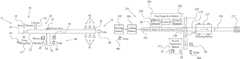
- FIG. 1is a schematic representation of an example embodiment of a core wheel processing system according to several features of the present general inventive concept
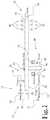
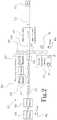
- FIG. 2is a schematic representation of another example embodiment of a core wheel processing system according to several features of the present general inventive concept
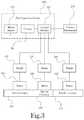
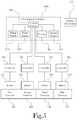
- FIG. 3is a diagram illustrating one example embodiment of the first inspection station showing the control module in operative communication with the wheel sensor and in operative control of the camera, the diverter mechanism, the switch of the first conveyor motor, the switch of the second conveyor motor, and the switch of the fourth conveyor motor in the example embodiment of the core wheel processing system illustrated in FIG. 2 ;
- FIG. 4is a schematic representation of another example embodiment of a core wheel processing system according to several features of the present general inventive concept
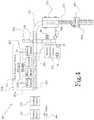
- FIG. 5is a diagram illustrating one example embodiment of the first inspection station showing the control module in operative communication with two wheel sensors and an infrared sensor and in operative control of the camera, the diverter mechanism, the controller of the first conveyor motor, the controller of the second conveyor motor, the controller of the fourth conveyor motor, and the controller of the fifth conveyor motor in the example embodiment of the core wheel processing system illustrated in FIG. 7 ;
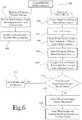
- FIG. 6is a diagram illustrating one example embodiment of the steps the control module and its computer perform in loading the wheel feature database with images of known wheels and the steps the control module and its computer perform in matching unknown wheel images to known wheel images stored in the wheel feature database;
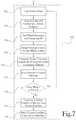
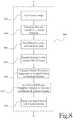
- FIG. 7is a flow diagram illustrating one example embodiment of the steps the computer software of the computer integrated into or in communication with the control module performs in loading the wheel feature database with images of known wheels;
- FIG. 8is a flow diagram illustrating one example embodiment of the steps the computer software of the computer integrated into or in communication with the control module performs in matching images of unknown wheels to images of known wheels stored in the wheel feature database;
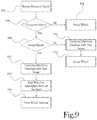
- FIG. 9is a flow diagram illustrating one example embodiment of the steps performed by the second inspection station in confirming matches of unknown wheels to known wheels and taking follow-up actions;
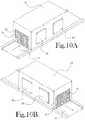
- FIGS. 10A and 10Bare perspective views, respectively, of a camera compartment for controlling the lighting of the camera system in order to improve picture quality;
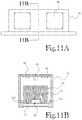
- FIGS. 11A and 11Bare elevation and cross-sectional views, respectively, of the camera compartment illustrated in FIGS. 10A and 10B ;
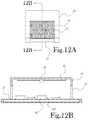
- FIGS. 12A and 12Bare elevation and cross-sectional views, respectively, of the camera compartment illustrated in FIGS. 10A and 10B .
- FIG. 1illustrates a schematic representation of an example embodiment of a core wheel processing system and method according to several features of the present general inventive concept.
- the core wheel processing system and method, or systemis identified as 10 herein and in the accompanying figures.
- a supply of wheelssuch as for example used or scrap wheels, is delivered 14 to a wheel bin 12 .
- an initial sorting operation 16is performed.
- the initial sorting operation 16is configured to separate at least a first portion of the wheel supply, conforming to a first set of criteria for acceptable or unacceptable wheels, from at least a second portion of the wheel supply which fails the first set of criteria.
- the first set of criteriamay be the unacceptability of chrome-plated wheels and/or wheels used for semi-trailer trucks.
- the initial sorting operation 16includes separation of chrome-plated wheels and wheels used for semi-trailer trucks 18 from a remainder of the supply of wheels.
- the separated chrome-plated wheels and wheels used for semi-trailer trucks 18may, in certain embodiments be discarded following the initial sorting operation 16 .
- the chrome-plated wheels and wheels used for semi-trailer trucks 18may, following the initial sorting operation 16 , be directed for further processing, such as for example for processing in a recycling or other reclamation process.
- the initial sorting operation 16may be performed by a first operator 20 by visually inspecting and manually separating the first portion of the wheel supply from a remainder of the wheel supply.
- those skilled in the artwill recognize other suitable devices and operations by which the initial sorting operation 16 may be performed, and such other devices and operations may be used without departing from the spirit and scope of the present general inventive concept.
- the remainder of the supply of wheels which were not separated into the first portion during the initial sorting operation 16may be placed onto a first conveyor 22 .
- the first conveyor 22is configured to transport the wheels to a second sorting operation 26 , whereby at least a portion of the wheels, which conform to a second set of criteria for acceptable or unacceptable wheels, are separated from the remainder of the wheels which fail the second set of criteria.
- a second set of criteriais established wherein wheels which are not too badly worn or damaged and which are capable of being used with particular makes and/or models of automobiles are deemed acceptable.
- the second sorting operation 26includes a high-speed comparison of an image of each wheel to images of wheels from a database.
- wheels conforming to one or more image of an acceptable wheel from the databasemay be separated from the remainder of the wheels.
- the database and/or the second set of criteria for acceptable wheelsis updatable.
- the second sorting operation 26includes transportation of the wheels via the first conveyor 22 to a first inspection station 204 for inspection.
- the first inspection station 204comprises a camera 24 which is directed toward a carrying surface of the first conveyor 22 , such that the camera 24 may capture images of the wheels as they pass by the camera 24 on the first conveyor 22 .
- an image of the wheelis examined to determine whether the wheel conforms to, or fails, the second set of criteria.
- each image of the wheelis subjected to a high-speed comparison to a database of wheel images using image processing techniques to determine whether the wheel captured by the camera 24 conforms to the characteristics of a known wheel type in the database.
- the camera 24is in communication with a microprocessor such that the microprocessor may receive captured images from the camera 24 .
- the microprocessoris, in turn, in communication with a data storage device.
- a database of images of wheelsis stored on the data storage device, with each stored wheel image having one or more feature vectors associated therewith.
- the feature vectors associated with the stored wheel imagescorrelate to features of the wheel shown in the stored wheel image.
- the microprocessormay extract and/or compute one or more feature vectors from the captured image which correlate to features of the wheel shown in the captured image.
- the microprocessormay then compare the feature vectors from the captured image with feature vectors of the stored wheel images in the database, such that the microprocessor may identify one or more relevant stored wheel images from the database showing wheels with features similar to features of the wheel in the captured image.
- each wheel image stored in the databasefurther includes data corresponding to an identification of the type of wheel shown in the stored image, such as for example the year, make, model and/or type of wheel, or a part number or reference number corresponding to the particular wheel.
- Each wheel image stored in the databasemay further include data indicating whether the particular type of wheel shown in the stored image conforms to the second set of criteria used for the second sorting operation 26 .
- the microprocessormay determine whether the wheel shown in the captured images conforms to, or fails, the second set of criteria.
- the data indicating whether the particular type of wheel shown in the stored image conforms to the second set of criteriais updatable.
- the data storage deviceincludes an input for receiving updated data as to which types of wheels and/or which of the stored images conforms to the second set of criteria. In certain more discreet embodiments, such updated data is provided on a set schedule, such as for example weekly.
- system 10may be used, for example, to identify wheels conforming to a list of wheel types needed to fill a particular order.
- the data storage devicemay be used without departing from the spirit and scope of the present general inventive concept.
- the microprocessoris configured to perform a comparison of the features of the captured image versus the features of the stored images to determine whether the wheel in the captured image is identical, or substantially identical, to any of the wheels shown in the stored images.
- the microprocessoris configured to determine whether the wheel in the captured image is sufficiently similar to any of the wheels shown in the stored images to warrant further examination.
- the microprocessoris configured to compare only features of the outer portions of the wheel, and to disregard portions of the wheel near the central axis of the wheel.
- the system 10is configured such that the second sorting operation 26 may take into account the possibility that the wheel may or may not include a center cap, hub cap, or the like, and does not perform a determination of conformity to the second set of criteria based on a visual inspection of the central portions of the wheel.
- the microprocessoris configured to determine whether the wheel shown in the image captured by the camera 24 conforms to any of the stored wheel images in the database based on similarities in only a portion of the corresponding feature vectors of the captured image and the stored wheel images.
- the system 10is configured such that wheels containing minor defects and/or imperfections may still be identified as conforming to the second set of criteria.
- inspection of each captured imageis performed manually by a second operator 28 .
- the camera 24is provided in communication with a monitor 30 , such that images captured by the camera 24 are displayed on the monitor 30 for viewing by the second operator 28 .
- the second operator 28is able to view the images of the wheels displayed on the monitor 30 and determine whether each of the wheels depicted in the images conforms to, or fails, the second set of criteria.
- the second sorting operation 26may be performed, and such other means may be used without departing from the spirit and scope of the present general inventive concept.
- the system 10includes suitable apparatus positioned downstream of the first inspection station 204 such that, once a determination is made as to whether each of the wheels conforms to, or fails, the second set of criteria, those wheels which conform to the second set of criteria may be separated from those wheels which fail the second set of criteria.
- a sensor arm 32is provided along the first conveyor 22 and is capable of directing selected wheels from the first conveyor 22 to a second conveyor 34 .
- the sensor arm 32is selectively movable between a first position and a second position. In the first position, the sensor arm 32 permits wheels on the first conveyor 22 to continue travelling along the first conveyor 22 beyond the sensor arm 32 .
- the sensor arm 32diverts wheels from the first conveyor 22 and directs the diverted wheels onto the second conveyor 34 .
- the sensor arm 32is in operative communication with a suitable control mechanism, such as for example a switch, lever, or other suitable device, in communication with the microprocessor, which allows the sensor arm 32 to be moved between the first and second position in response to determinations of conformity to the second set of criteria by the microprocessor.
- a suitable control mechanismsuch as for example a switch, lever, or other suitable device
- the sensor arm 32may be moved between the first and second position to direct each wheel to one of the first and second conveyors 22 , 34 based on such determination.
- the camera 24is provided in operative communication with a computer (not shown) having appropriate image recognition software, of the type known to one of skill in the art, such that the computer is able to analyze an image provided by the camera 24 and determine whether a wheel depicted in the image conforms to, or fails, the second set of criteria. Upon a determination that the wheel depicted in the image conforms to the second criteria, a signal is generated.
- the sensor arm 32is configured to be responsive to the signal such that, upon receipt of the signal, the sensor arm 32 is moved between the first and second position.
- the camera 24 , computer, and sensor arm 32cooperate to automatically direct each wheel to one of the first and second conveyors 22 , 34 based on the determination of the computer.
- the second criteriais established such that wheels which are not too badly worn or damaged and which sufficiently conform to particular makes and/or types of wheels as determined by the database comparison are deemed acceptable.
- operation of the sensor arm 32is performed such that acceptable wheels, according to the second criteria, are directed onto the second conveyor 34 , while unacceptable wheels, according to the second criteria, are allowed to continue on the first conveyor 22 .
- the first conveyor 22carries the unacceptable wheels to a discharge end 36 of the first conveyor 22 , whereupon the unacceptable wheels may be loaded onto one or more weigh scales 40 , or other suitable holding apparatus, for further processing, such as for example for processing in a recycling or other reclamation process.
- the unacceptable wheelsare removed from the discharge end 36 of the first conveyor 22 and loaded onto the weigh scale 40 manually by a plurality of third operators 42 .
- additional sorting of the unacceptable wheels based on additional criteria for recyclabilitymay occur.
- the discharge end 36 of the first conveyor 22empties into the weigh scale 40 , such that no additional individual handling of the unacceptable wheels is necessary.
- the second conveyor 34transports the acceptable wheels to a final inspection and loading station 44 , whereupon the acceptable wheels may be subjected to a final inspection and loaded onto one of a plurality of suitable holding devices for transportation to a secondary location for refurbishment, as needed, before being directed toward reuse.
- the final inspection operationincludes placing the wheel on a suitable apparatus whereby a visual inspection of the wheel may be made.
- the final inspection operationincludes placing the wheel on a rotatable mount and rotating the wheel.
- the wheelAs the wheel is rotated on the rotatable mount, the wheel may be visually inspected by the second operator 28 to confirm that the wheel is acceptable for refurbishment and/or reuse. Upon passing the final inspection, the wheel may be loaded onto at least one core skid 46 for transportation to the secondary location. If the wheel fails to pass the final inspection, it may be placed in a scrap container 48 and discarded.
- the system 10is configured such that the final inspection and loading station 44 is operated by the second operator 28 .
- those of skill in the artwill recognize other configurations suitable for operation of the final inspection and loading station 44 , and such other configurations may be used without departing from the spirit and scope of the present general inventive concept.
- the system 10is configured to allow additional sorting of wheels which pass the final inspection, for example, into groups of wheels the sum of which meet an additional criteria, such as to fill a particular order or request for a particular number and/or type of wheels.
- a plurality of core skids 46are provided, with each core skid 46 corresponding to an order for a complete set of usable and/or refurbishable wheels for a particular automobile.
- the second set of criteriamay be established wherein acceptable wheels are those wheels which are capable of being reused or refurbished and which also correspond to one of the desired types of wheels needed to complete at least one of the orders corresponding to the core skids 46 .
- the completed core skid 46may be transported to a secondary location, such as for example to a location where refurbishing of the wheels may occur or directly to a customer.
- FIG. 2is a schematic illustration of another embodiment of a system 201 constructed in accordance with several features of the present general inventive concept.
- the system 201includes a sorting station 202 which is configured to allow initial sorting of a source of wheels according to a first set of criteria, with wheels not matching the first set of criteria being placed in a first scrap receptacle 48 a .
- a loading station 206is provided, which is configured to allow placement of each wheel matching the first set of criteria onto a first conveyor 203 .
- the first conveyor 203is configured to receive incoming wheels, to convey the incoming wheels to a location for examination of the wheels for sorting according to a second set of criteria, and to discharge the wheels evenly spaced onto a second conveyor 208 .
- the first conveyor 203defines a plurality of regions, or “zones,” along the length thereof for positioning and accumulation of incoming wheels for sorting according to the second set of criteria.
- a first inspection station 204is disposed along the first conveyor 203 proximate two of the plurality of zones, identified as “zone 1 ” and “zone 2 ” in FIG. 2 .
- the first inspection station 204is equipped with a wheel sensor 205 disposed along the first conveyor 203 to detect a wheel moving from the loading station 206 into zone 2 of the first conveyor 203 .
- the first inspection station 204is further equipped with a camera 24 in operative communication with the wheel sensor 205 and configured to view objects positioned at zone 1 on the first conveyor 203 .
- the wheel sensor 205upon detection of a wheel at a location along the first conveyor 203 proximate zone 2 , the wheel sensor 205 is configured to signal a control module 207 , whereupon the control module 207 is configured to stop the first conveyor 203 with the wheel in zone 2 .
- the control module 207may then signal the first conveyor 203 to move the incoming wheel into zone 1 of the first conveyor 203 .
- the camera 24 disposed above zone 1 of the first conveyor 203may then be signaled to capture an image of the wheel and to communicate the image to the control module 207 .
- the control module 207may then signal the first conveyor 203 to start and move the wheel to the discharge end of the first conveyor 203 .
- the camera 24is in communication with a computer processing device which is configured to identify the wheel imaged by the camera 24 and to compare the identified wheel to a second set of criteria to determine if the wheel is to be kept.
- a second conveyor 208is provided which is configured to receive a plurality of evenly spaced wheels discharged by the first conveyor 203 .
- the second conveyor 208is configured to direct the received wheels to a diverter mechanism 209 , whereupon the diverter mechanism 209 may divert wheels conforming to the second set of criteria from the second conveyor 208 onto the third conveyor 213 .
- the diverter mechanism 209comprises a piston, lever arm, or other such device.
- the second conveyor 208maintains the spacing of the received wheels along a length of the second conveyor 208 in order to assist in timing of the diverter mechanism 209 .
- the third conveyor 213is configured to receive the diverted wheels and to direct the diverted wheels to a second inspection station 211 .
- the second inspection station 211is disposed along the third conveyor 213 and is configured to allow examination of the diverted wheels by an operator 28 .
- the operator 28may confirm whether each wheel conforms to the second set of criteria. Wheels conforming to the second set of criteria may be placed onto a core skid 46 , and wheels not conforming to the second set of criteria may be placed in a second scrap receptacle 48 b and discarded.
- a fourth conveyor 214is provided to receive the wheels from the discharge end of the second conveyor 208 and to direct the received wheels through a cleaning station 215 and on to the discharge end of the fourth conveyor 214 .
- the cleaning station 215is configured to manipulate and clean the wheels prior to the wheels being discharged onto a fifth conveyor 216 .
- a fifth conveyor 216is configured to receive the clean wheels discharged from the fourth conveyor 214 and to direct them into a bin area 217 .
- the first conveyor 203 , second conveyor 208 , and fourth conveyor 214are each electronically controlled by the control module 207 , which is also in operative communication with the wheel sensor 205 .
- the control module 207may signal each conveyor to advance as needed to maintain sufficient pace and spacing of wheels along the first, second, and fourth conveyors 203 , 208 , 214 .
- the fifth conveyor 216is configured to run continuously, while the third conveyor 213 is a gravity-driven conveyor, such as for example a ramp or other suitable device.
- the third conveyor 213may be powered by automated means known to those of skill in the art.
- the control module 207is in communication with a computer (not shown), with said computer having appropriate image recognition software, of the type known to one skilled in the art, such that the computer is able to analyze an image provided by the camera 24 , identify the closest matches to the imaged wheel from a wheel feature database stored in the computer, and determine whether the wheel depicted in the image conforms to, or fails, the second set of criteria.
- a signalis generated by the control module 207 and communicated to the diverter mechanism 209 in cooperation with the movement of the wheel along the second conveyor 208 and the arrival of the wheel in front of the diverter mechanism 209 .
- the diverter mechanism 209is configured to be responsive to the signal such that, upon receipt of the signal, the diverter mechanism 209 is activated to push the wheel from the second conveyor 208 onto the third conveyor 213 .
- the camera 24 , the computer in the control module 207 , the second conveyor 208 , and the diverter mechanism 209work in cooperation with one another to automatically direct each wheel either to the third conveyor 213 for confirmation by the operator 28 or to the discharge end of the second conveyor 208 based on the determination of the computer integrated into or otherwise in communication with the control module 207 .
- the first inspection station 204is automated to control the movement of the first conveyor 203 , the second conveyor 208 , and the fourth conveyor 214 , so that the wheels are evenly spaced as they pass in front of the diverter mechanism 209 .
- the wheel sensor 205initiates a signal to the control module 207 when a wheel is approaching the camera 24 , and in response to the signal, the control module 207 stops the first conveyor 203 with the wheel in zone 2 of the first conveyor 203 .
- the control module 207After the control module 207 determines that the diverter mechanism 209 is no longer in a push cycle, the control module 207 signals a switch 301 to start a motor 302 to propel the first conveyor 203 to a point where the wheel is position in zone 1 of the first conveyor 203 under the camera 24 , signals the camera 24 to capture the image of the wheel, and then signals the switch 301 to start the motor 302 to advance the first conveyor 203 to run until the next incoming wheel is detected by the wheel sensor 205 . When the first conveyor 203 has moved the distance required to discharge the wheel onto the second conveyor 208 , the control module 207 signals a switch 305 to start a motor 306 and advance the second conveyor 208 a set distance.
- the control module 207also signals a switch 309 to start a motor 310 and advance the third conveyor 214 the same set distance.
- the second conveyor 208 and the fourth conveyor 214are each advanced a selected distance, thirty-four (34) inches in an exemplary embodiment, each time they are advanced so that the wheels remain evenly spaced on the second conveyor 208 as they move in front of the diverter mechanism 209 and remain evenly spaced on the fourth conveyor 214 as they move into the cleaning station 215 .
- This equal spacing of the wheelsallows the control module 207 to track the location of each wheel and signal the diverter mechanism 209 to push each wheel matching the set of criteria from the second conveyor 208 onto the third conveyor 213 as the matching wheel moves in front of the diverter mechanism 209 .
- This equal spacing of the wheelsalso places the wheels on the fourth conveyor 214 in the proper position for pickup and manipulation as each wheel enters the cleaning station 215 .
- a wheel sensormay be disposed at the receiving end of the fourth conveyor 214 to detect whether a wheel is present and to notify the control module not to advance the fourth conveyor 214 the set distance if no wheel is present, thus permitting the fourth conveyor 214 to maintain even spacing of wheels with no gaps where wheels have been diverted onto the third conveyor 213 .
- FIG. 4is a schematic illustration of another embodiment of a system 401 constructed in accordance with several features of the present general inventive concept.
- the system 401includes a sorting station 202 , a loading station 206 , a first conveyor 203 , a second conveyor 405 , a third conveyor 208 , a diverter mechanism 209 , a fourth conveyor 213 , a fifth conveyor 214 , a cleaning station 215 , a sixth conveyor 216 , a wrapper station 407 with a seventh conveyor deck, an eighth conveyor, an inspection station 204 a , which further includes a control module 207 , a wheel sensor 205 a , a wheel sensor 205 b , a camera 24 and an infrared sensor 403 , and a second inspection station 211 , which further includes a monitor 30 .
- the system 401includes a sorting station 202 which is configured to allow initial sorting of a source of wheels according to a first set of criteria, with wheels not matching the first set of criteria being placed in a first scrap receptacle 48 a .
- a loading station 206is provided, which is configured to allow placement of each wheel matching the first set of criteria onto a first conveyor 203 .
- the loading station 206may include a hopper above a vibrating chute, with the hopper configured for fork lift dumping of wheels into the hopper, and with the vibrating chute configured to position the wheels for loading onto the first conveyor 203 .
- the first conveyor 203may be a powered accumulation roller conveyor defining a plurality of regions, or “zones,” along the length thereof, identified as “zone 4 ”, “zone 3 ”, “zone 2 ” and “zone 1 ” for positioning and accumulation of incoming wheels.
- the first conveyor 203may be configured to receive incoming wheels and to accumulate the incoming wheels, with the first wheel stopping automatically in zone 1 awaiting a signal from the control module to advance the wheel onto the second conveyor 405 , with other incoming wheels accumulating behind the wheel in zone 1 back in zones 2 through 4 .
- the control moduleadvances the first conveyor 203 to move the wheel from zone 1 of the first conveyor 203 onto the second conveyor 405
- each of the other wheels on the first conveyor 203also advances to the next zone.
- the second conveyor 405may be a powered belt conveyor controlled by the control module and configured to position each incoming wheel under the camera 24 and to discharge the wheels evenly spaced onto the third conveyor 208 .
- the camera 24may be disposed above the second conveyor 405 and configured to capture the image of the wheel once it is stopped on the second conveyor 405 .
- the infrared sensor 403may be disposed proximate to the second conveyor 405 and configured to measure the height and width of the wheel once it is stopped on the second conveyor 405 .
- a first inspection station 204 amay be disposed along the first conveyor 203 and the second conveyor 405 .
- the control module of the first inspection station 204 amay be in operative communication with the wheel sensor 205 a and the wheel sensor 205 b
- the control module 207may be in operative control of the first conveyor 203 , the second conveyor 405 , the camera 24 , the infrared sensor 403 , the third conveyor 208 , the diverter mechanism 209 , and the fifth conveyor 214 .
- the first wheel sensor 205 amay be disposed along the first conveyor 203 and configured to detect a wheel moving into zone 1 of the first conveyor 203 and to signal the control module 207 to stop the first conveyor 203 with the wheel in zone 1 .
- the control module 207may signal the first conveyor 203 to move the wheel from zone 1 of the first conveyor 203 onto the second conveyor 405 .
- the second wheel sensor 205 bmay be disposed along the second conveyor 405 and configured to detect a wheel positioned on the second conveyor 405 and to signal the control module 207 that a wheel is in position on the second conveyor 405 .
- the control module 207may then signal the camera 24 to capture and communicate to the control module 207 an image of the wheel located on the second conveyor 405 and may signal the infrared sensor 403 to take and communicate to the control module 207 measurements of the height and width of the wheel located on the second conveyor 405 .
- control module 207may signal the second conveyor 405 to advance the wheel onto the third conveyor 208 .
- a computer(not shown) may be integrated into or otherwise in communication with the control module 207 and may include computer software which may be configured to identify the wheel imaged by the camera 24 and to compare the identified wheel to a second set of criteria to determine if the wheel is to be kept.
- a third conveyor 208may be a powered roller conveyor controlled by the control module 207 and configured to receive a plurality of evenly spaced wheels discharged by the second conveyor 405 .
- the third conveyor 405may be configured to direct the received wheels to a diverter mechanism 209 , whereupon the diverter mechanism 209 may divert wheels conforming to the second set of criteria from the third conveyor 208 onto the fourth conveyor 213 .
- the diverter mechanism 209comprises a piston, lever arm, or other such device.
- the third conveyor 208maintains the spacing of the received wheels along a length of the third conveyor 208 in order to assist in timing of the diverter mechanism 209 .
- the fourth conveyor 213may be a gravity powered wheel conveyor configured to receive the diverted wheels and to direct the diverted wheels to a second inspection station 211 .
- the second inspection station 211may be disposed along the fourth conveyor 213 and configured to allow examination of the diverted wheels by an operator 28 .
- the operator 28may confirm whether each wheel conforms to the second set of criteria. Wheels conforming to the second set of criteria may be placed onto a core skid 46 , and wheels not conforming to the second set of criteria may be placed in a second scrap receptacle 48 b and discarded.
- a fifth conveyor 214may be a powered roller conveyor controlled by the control module 207 and configured to receive the wheels from the discharge end of the third conveyor 208 and to direct the received wheels through a cleaning station 215 and on to the discharge end of the fifth conveyor 214 .
- the cleaning station 215may be configured to manipulate and clean the wheels prior to the wheels being discharged onto a sixth conveyor 216 .
- a sixth conveyor 216may be a powered accumulation roller conveyor defining a plurality of regions, or “zones,” along the length thereof, identified as “zone 5 ”, “zone 4 ”, “zone 3 ”, “zone 2 ” and “zone 1 ” for positioning and accumulation of wheels.
- the sixth conveyor 216may be configured to receive the clean wheels discharged from the fifth conveyor 214 , to accumulate the clean wheels, and to direct them to the wrapper station 407 , with the first wheel stopping automatically in zone 1 of the sixth conveyor 216 , and with other incoming clean wheels accumulating behind the wheel in zone 1 , back in zones 2 through 5 of the sixth conveyor 216 .
- each of the other wheels on the sixth conveyor 216automatically advances to the next zone.
- the wrapper station 407may include a gravity powered seventh conveyor deck attached to a hydraulic scissor lift and configured to hold a pallet while wheels are loaded onto a pallet and wrapped for shipping by a rotating boom style wrapper disposed above and around a pallet positioned on the seventh conveyor deck of the wrapper station 407 .
- the scissor lift of the wrapper station 407may be configured to lower the seventh conveyor deck of the wrapper station 407 to position the pallet for loading of each layer of wheels and then to raise the seventh conveyor deck of the wrapper station 407 to the level of the eighth conveyor 409 once it is fully loaded with wheels.
- the rotating boom style wrappermay be moved around the pallet to wrap the pallet and multiple layers of the wheels on the pallet with overlapping wraps to secure the wheels to the pallet for shipping. Once the pallet is fully loaded and wrapped, the loaded and wrapped pallet may be pushed from the seventh conveyor deck of the wrapper station 407 onto the eighth conveyor 409 .
- the eighth conveyor 409may be a powered accumulation roller conveyor defining a plurality of regions, or “zones,” along the length thereof, identified as “zone 3 ”, “zone 2 ” and “zone 1 ” for positioning and accumulation of loaded and wrapped pallets.
- the eighth conveyor 409may be configured to receive wrapped pallets of wheels from the seventh conveyor deck of the wrapper station 407 and to accumulate the pallets awaiting removal by a fork lift, with the first loaded and wrapped pallet stopping automatically in zone 1 of the eighth conveyor 409 , and with subsequent loaded and wrapped pallets accumulating behind the pallet in zone 1 , back in zones 2 and 3 of the eighth conveyor 409 .
- each of the other pallets on the eighth conveyor 409automatically advances to the next zone.
- the first conveyor 203 , second conveyor 405 , the third conveyor 208 , and the fifth conveyor 214are each electronically controlled by the control module 207 , which is also in operative communication with the first wheel sensors 205 a and the second wheel sensor 205 b .
- the control module 207may signal each conveyor to advance as needed to maintain sufficient pace and spacing of wheels along the second, third and fifth conveyors 405 , 208 , 214 .
- the fourth conveyor 213is a gravity-driven conveyor, such as for example a ramp or other suitable device, and the first conveyor 203 , the sixth conveyor 216 and the eighth conveyor 409 are powered accumulation conveyors with defined zones configured for accumulation and automatic advancement of wheels or pallets from zone to zone.
- the various conveyors 203 , 405 , 208 , 213 , 214which may be used without departing from the spirit and scope of the present general inventive concept.
- the third conveyor 213 and the conveyor deck of the wrapper station 407may be powered by automated means known to those of skill in the art.
- control module 207includes a computer (not shown), integrated into or otherwise in communication with the control module 207 , with said computer having appropriate image recognition software, of the type known to one skilled in the art, such that the computer is able to analyze an image provided by the camera 24 , identify the closest matches to the imaged wheel from a wheel feature database stored in the computer, and determine whether each potential match for the wheel depicted in the image conforms to, or fails, the second set of criteria.
- a signalis generated by the control module 207 and communicated to the diverter mechanism 209 in cooperation with the movement of the wheel along the third conveyor 208 and the arrival of the wheel in front of the diverter mechanism 209 .
- the diverter mechanism 209is configured to be responsive to the signal such that, upon receipt of the signal, the diverter mechanism 209 is activated to push the wheel from the third conveyor 208 onto the fourth conveyor 213 .
- the camera 24 , the computer in the control module 207 , the third conveyor 208 , and the diverter mechanism 209work in cooperation with one another to automatically direct each wheel either to the fourth conveyor 213 for confirmation by the operator 28 or to the discharge end of the third conveyor 208 based on the determination of the computer integrated into or otherwise in communication with the control module 207 .
- the first inspection station 204 ais automated to control the movement of the first conveyor 203 , the second conveyor 405 , the third conveyor 208 , and the fifth conveyor 214 , so that the wheels are evenly spaced as they pass in front of the diverter mechanism 209 .
- the wheel sensor 205 ainitiates a signal to the control module 207 when a wheel is approaching the camera 24 , and in response to the signal, the control module 207 stops the first conveyor 203 with the wheel in zone 1 of the first conveyor 203 .
- the control module 207After the control module 207 determines that the diverter mechanism 209 is no longer in a push cycle, the control module 207 signals a controller 301 to start a motor 302 and propel the first conveyor 203 to move the wheel onto the second conveyor 405 to a point where the wheel is position on the second conveyor 405 under the camera 24 , receives a signal from the second wheel sensor 205 b that the wheel is in the proper position, signals the camera 24 to capture the image of the wheel, signals the infrared sensor 403 to take measurements of the height and width of the wheel, and then signals the controller 501 to start the motor 502 and advance the second conveyor 405 to move the wheel onto the third conveyor 208 .
- the control module 207When the second conveyor 405 has moved the distance required to discharge the wheel onto the third conveyor 208 , the control module 207 signals a controller 305 to start a motor 306 and advance the third conveyor 208 a set distance. If the third conveyor 208 discharged a wheel onto the fifth conveyor 214 , the control module 207 also signals a controller 309 to start a motor 310 and advance the fifth conveyor 214 the same set distance.
- the third conveyor 208 and the fifth conveyor 214are each advanced a selected distance, thirty-four (34) inches in an exemplary embodiment, each time they are advanced so that the wheels remain evenly spaced on the third conveyor 208 as they move in front of the diverter mechanism 209 and remain evenly spaced on the fifth conveyor 214 as they move into the cleaning station 215 .
- This equal spacing of the wheelsallows the control module 207 to track the location of each wheel and signal the diverter mechanism 209 to push each wheel matching the set of criteria from the third conveyor 208 onto the fourth conveyor 213 as the matching wheel moves in front of the diverter mechanism 209 .
- This equal spacing of the wheelsalso places the wheels on the fifth conveyor 214 in the proper position for pickup and manipulation as each wheel enters the cleaning station 215 .
- a wheel sensormay be disposed at the receiving end of the fifth conveyor 214 to detect whether a wheel is present and to notify the control module not to advance the fifth conveyor 214 the set distance if no wheel is present, thus permitting the fifth conveyor 214 to maintain even spacing of wheels with no gaps where wheels have been diverted onto the fourth conveyor 213 .
- control module 207is configured with a computer (not shown) integrated into or otherwise in communication with the control module 207 which is capable of performing the various desired processing and control operations of the control module 207 , with one such operation being a routine to populate a wheel feature database for known wheels based on digital images of known wheels.
- the computer routine to populate a wheel feature database for known wheelsincludes receiving images of a known wheel 650 in the form of digital images received from third parties or from images taken by the camera 24 , together with wheel data entered by an operator using a computer terminal, which data may include a unique identifying number, wheel dimensions, makes and models of automobiles using the wheel, and similar information.
- a loading routine to populate the wheel feature databaseis initiated 652 .
- the computerfollows the steps set forth in the block diagram in FIG. 7 .
- the subroutineloads the wheel image for the known wheel 702 .
- the subroutinenormalizes and converts the wheel image to uniform grayscale 704 , and finds the wheel boundary and the center of the wheel 706 .
- the subroutinesamples a plurality of points on multiple circles around the wheel center 708 , and computes the Fourier transform magnitudes of sampled points on multiple circles of the wheel image to generate features of the wheel 710 .
- the subroutinestores the features of the wheel in the wheel feature database 712 , and determines whether there are more wheels to process 714 .
- the subroutinedetermines that there are more wheels to process, the subroutine begins the process for the next known wheel by loading the wheel image for the next wheel 702 . Once the subroutine determines there are no more wheels to process, the subroutine computes the K-nearest neighbor classifier using the features of all known wheels in the wheel feature database 716 , and the subroutine saves the K-nearest neighbor classifier 718 for subsequent matching.
- the subroutine 710 of FIG. 7 that computes Fourier transform magnitudes of sampled points on multiple circles of the wheel image to generate features of the known wheelcomprises building a matrix which stores the calculated Fourier transform magnitude for each sampled point, with the X-axis of the matrix representing the sampled circles and the Y-axis of the matrix representing the sampled points on each circle.
- the subroutine 716 of FIG. 7computes a K-nearest neighbor classifier using the wheel feature database.
- control module 207 and its computerintegrated into or otherwise in communication with the control module 207 , are capable of performing the various desired processing, matching and control operations of the control module 207 , with one such operation being a wheel matching routine comprising a system and method of controlling various components of the wheel sorting system 201 , 401 as unknown wheels move through the system, for the purpose of matching images of the unknown wheels with images of known wheels, identifying the closest matches to the unknown wheel, and determining which potential matches for the wheels match a second set of criteria.
- a wheel matching routinecomprising a system and method of controlling various components of the wheel sorting system 201 , 401 as unknown wheels move through the system, for the purpose of matching images of the unknown wheels with images of known wheels, identifying the closest matches to the unknown wheel, and determining which potential matches for the wheels match a second set of criteria.
- the wheel matching routineis initiated by the control module 207 after it receives a signal from a wheel sensor 205 , 205 a that a wheel is approaching the camera 24 .
- the control module 207immediately stops conveyor 203 before the unknown wheel moves under the camera 24 .
- the control module 207then starts conveyor 203 to direct the wheel toward the camera 24 .
- the control module 207signals the camera 24 to capture the image of the wheel and signals the infrared sensor 403 to take the wheel measurements, and advances the wheel onto the next conveyor 208 .
- the control module 207then starts and advances conveyor 208 and conveyor 214 the same set distance, so that the wheels are evenly spaced on conveyors 208 , 214 , with each wheel arriving directly in front of the diverter mechanism for transfer to conveyor 213 if the wheel is selected as matching the second set of criteria.
- the control module 207receives the image from the camera 24 and initiates the wheel matching routine illustrated in FIG. 9 and described in more detail below.
- the known wheels that potentially match the unknown wheelare compared to a second set of criteria, including a buy list and other business criteria previously entered into the computer, to determine if the incoming wheel is to be selected.
- the computer of the control module 207determines whether each potential wheel match satisfies the second set of criteria. As shown at 674 , if a potential wheel match satisfies the second set of criteria, the control module 207 triggers the diverter mechanism to push the wheel off conveyor 208 and onto conveyor 213 when the selected wheel is directly in front of the diverter mechanism 209 . As shown at 676 , the wheel image and potential wheel match information are sent to an operator queue for display on the monitor 30 next to the operator in the second inspection station 211 .
- the matching results for that wheelare stored in the computer for later display on a monitor if requested by an operator, the routine ends, and the diverter mechanism is not activated for that wheel, thus allowing it to continue to the end of conveyor 208 and onto conveyor 214 for cleaning in the cleaning station 215 and onto accumulation conveyor 216 .
- the computerfollows the steps set forth in the block diagram in FIG. 8 .
- the subroutineloads the wheel image for the unknown wheel 802 .
- the subroutinenormalizes and converts the wheel image to uniform grayscale 804 , and finds the wheel boundary and the center of the wheel 806 .
- the subroutinesamples a plurality of points on multiple circles around the wheel center 808 , and computes the Fourier transform magnitudes of sampled points on multiple circles of the wheel image to generate features of the wheel 810 .
- the subroutineapplies the stored K-nearest neighbor classifier to features of the unknown wheel and returns the K closest matches to the unknown wheel 812 , and the subroutine assigns and reports scores to K closest matches for the wheel for later display on a monitor.
- the wheel matching routineends for that wheel and control is returned to the main program.
- the computer software routine that applies the K-nearest neighbor classifier to return the K closest matches for an unknown wheelis configured to limit the number of known wheels to be compared with the unknown wheels by selecting only known wheels which have the same height and width as the height and width of the unknown wheel.
- the subroutine 810 of FIG. 8 that computes Fourier transform magnitudes of sampled points on multiple circles of the wheel image to generate features of the unknown wheelcomprises building a matrix which stores the calculated Fourier transform magnitude for each sampled point, with the X-axis of the matrix representing the sampled circles and the Y-axis of the matrix representing the sampled points on each circle.
- the subroutine 812 of FIG. 8 that applies stored K-nearest neighbor classifier to features of the unknown wheelcomprises comparing the features of an unknown wheel with the features of known wheels using the K-nearest neighbor classifier to determine the nearest potential matches of the unknown wheel with known wheels in the wheel feature database.
- the subroutine at 814compares the level of each potential match and reports the score level of each potential match for subsequent display on the monitor 30 in front of the operator.
- the subroutine that reports the score level of each potential matchincludes a subroutine that computes the closeness of the features of the unknown wheel to the features of the wheel that potentially matches the unknown wheel and compares the resulting distance of the match to predetermined parameters in the form of a range of acceptable distances the unknown wheel may be from the known wheel that has been identified as a potential match to the unknown wheel.
- an operator at the second inspection stationperforms the steps set forth in the block diagram in FIG. 9 .
- the operatorreviews the potential match information for the wheel shown on the monitor 30 and compares the potential match information to the operator's visual inspection of the wheel.
- the operatorconfirms that an acceptable potential match is shown on the monitor. If an acceptable potential match is not shown on the monitor 904 , the wheel is scrapped 906 . If an acceptable potential match is shown on the monitor 904 , the operator confirms, by visual inspection and by reviewing the data on the monitor 30 , whether the wheel satisfies the second set of criteria 908 .
- the wheel feature databaseis updated with the new image of the wheel 910 , and the wheel is scrapped 912 . If the operator confirms 908 that the wheel satisfies the second set of criteria, the wheel feature database is updated with the new image of the wheel 914 , the wheel is added to the appropriate buy list as a purchase 916 , and a barcode is printed for attachment to the wheel 918 . After the barcode is attached to the selected wheel, the wheel will be placed on a core skid 46 awaiting transfer to the appropriate area for further processing and handling.
- a computer software routineis included that allows the system to learn over time and to become more accurate over time, with the computer software routine configured to receive notification by the operator whether a potential match was an actual match and configured to replace a poor image of a known wheel previously stored in the wheel feature database with a better image taken by the camera 24 after the operator confirms that a potential match of an unknown wheel is a definite match to a known wheel.
- the camera systems described hereinboth in terms of the systems described herein and the methods described herein, include auxiliary lighting for enhancing the quality of the images captured by camera 24 .
- auxiliary lightingfor enhancing the quality of the images captured by camera 24 .
- Thiscan be the result of poor lighting in the surrounding area that results in underexposed images and/or undesired and inconsistent shadows in the images.
- Itcan also, in warehouse settings that may have large doors, be the result of inconsistent outdoor sunlight, combined with intermittent cloud cover, infiltrating into the environment of the camera 24 .
- auxiliary lights 60are positioned proximate camera 24 to shine light down on the wheels 50 .
- Auxiliary lights 60provide consistent lighting on the wheels 50 so as to increase the quality of the images captured by the camera 24 .
- the camera 24 and its associated auxiliary lights 60can be placed within a light hood defined by compartment 65 .
- Compartment 65covers a portion of first conveyor 22 and is provided with openings 70 at each end through which wheels 50 can pass.
- the openings 70can be provided with a screen 75 which is adapted to further block ambient light and allows wheels 50 to pass through unencumbered.
- the wheel sensors 205can be placed within the compartment 65 .
- Compartment 65can include covered access ports 80 to allow access to the interior of the compartment 65 from the sides.
- compartment 65is constructed of a substantially opaque material in order to block ambient light from entering compartment 65 .
- the auxiliary lights 60especially when used in conjunction with a light hood defined by compartment 65 , serve to control the amount of light on the wheels 50 such that the quality of the images captured by the camera is enhanced.
Landscapes
- Engineering & Computer Science (AREA)
- Theoretical Computer Science (AREA)
- Physics & Mathematics (AREA)
- General Physics & Mathematics (AREA)
- General Engineering & Computer Science (AREA)
- Databases & Information Systems (AREA)
- Data Mining & Analysis (AREA)
- Multimedia (AREA)
- Library & Information Science (AREA)
- Software Systems (AREA)
- Quality & Reliability (AREA)
- Computer Vision & Pattern Recognition (AREA)
- Sorting Of Articles (AREA)
- Investigating Materials By The Use Of Optical Means Adapted For Particular Applications (AREA)
Abstract
Description
This application claims the benefit of U.S. Non-Provisional patent application Ser. No. 15/272,594, filed on Sep. 22, 2016, which claimed the benefit of U.S. Non-Provisional patent application Ser. No. 14/919,259, filed on Oct. 21, 2015, which in turn claimed the benefit of U.S. Non-Provisional patent application Ser. No. 14/298,212 filed on Jun. 6, 2014, which in turn claimed the benefit of U.S. Provisional Patent Application Ser. No. 61/831,824, filed on Jun. 6, 2013, each of which is incorporated herein in its entirety by reference.
Not Applicable
The invention relates to reclamation of wheels. More specifically, this invention relates to a system and method for identifying wheel types and models of usable wheels.
Used automobile wheels are often salvageable either for recycling of their constituent components or for additional use as a wheel. For example, if a used automobile wheel is not too badly worn or damaged, it may be repaired or refurbished as necessary and reused as an automobile wheel. Alternatively, a used automobile wheel may be broken down into its constituent components, whereupon the constituent components may be melted and recycled or otherwise routed for subsequent use.
Aluminum automobile wheels are often made primarily of high purity aluminum alloy. However, certain designs of aluminum automobile wheels may also comprise paint, clearcoat, chrome plating, lead weights, brass, rubber, stainless steel, iron, or other materials. If a high purity aluminum alloy wheel is melted while contaminated with too much of these other materials, the composition of the resultant melt will be a less pure aluminum alloy having a decreased value as compared to a more pure aluminum alloy. Therefore, prior to reclaiming and/or recycling of automobile wheels, it is often desirable to separate those automobile wheels which comprise high purity aluminum alloy and which do not include high levels of additional contaminants from those automobile wheels which either a.) are not fabricated primarily from high purity aluminum alloy; or b.) further comprise an unacceptably high amount of additional contaminants. In several reclaiming and/or recycling applications, it is desirable to sort automobile wheels by model and type, such that multiple wheels of the same model and type are grouped together, for example to form a complete set of wheels for a given type of automobile.
In light of the above, a system and method for recovering high purity aluminum alloy wheels from the remainder of a supply of used automobile wheels, and for further identifying wheel types and models of reusable wheels from the recovered high purity aluminum alloy wheels, is desired.
The present general inventive concept provides a system for processing core wheels comprising a sorting station to allow sorting of a source of wheels according to a first set of criteria, a conveyor to receive wheels conforming to the first set of criteria and to direct the received wheels toward the discharge end of the conveyor, a first inspection station along the conveyor to allow examination of the wheels to determine whether the wheels conform to a second set of criteria, a diverter mechanism along the conveyor to divert wheels conforming to the second set of criteria from the first conveyor onto a second conveyor; and a second conveyor to receive the diverted wheels and direct the diverted wheels to a second inspection station for inspection to confirm that the diverted wheels conform to the second set of criteria.
The first inspection station of the system may include a camera to capture images of wheels carried along the conveyor.
The first inspection station of the system may include a light hood for controlling the amount of light on the wheels and thereby enhancing the quality of the images captured by the camera.
The first inspection station of the system may include a monitor in communication with the camera to display images captured by the camera.
The first inspection station of the system may include a control mechanism in operational communication with the diverter mechanism allowing a user to divert wheels conforming to the set of criteria from the first conveyor to the second conveyor in response to images displayed by the monitor.
The first inspection station of the system may include a control module in operational communication with the camera and the diverter mechanism, with said control module having a computer, integrated into or otherwise in communication with the control module, and computer software capable of processing the image of the wheel received from the camera, finding potential matches of said image with images of known wheels stored in a wheel feature database, comparing the potential wheel matches to a buy list and other business criteria, making a decision whether or not to keep the wheel, and triggering the diverter mechanism for wheels selected to be kept.
The first inspection station of the system may include a wheel sensor in operational communication with the control module to notify the control module that a wheel is approaching the camera, with the control module also in operational control of the camera, the diverter mechanism and the motors of the conveyors, thus automating the operation of the first inspection station and the operation of the diverter mechanism by transporting the wheels at equal intervals on the conveyors and signaling the diverter mechanism to activate when a selected wheel moves in front of the diverter mechanism.
The system may include additional conveyors with, for example, a first conveyor controlled by the control module and configured to receive incoming wheels, a second conveyor controlled by the control module and configured to receive equally spaced wheels from the first conveyor, a gravity powered third conveyor configured to receive wheels pushed off the second conveyor by the diverter mechanism, a fourth conveyor controlled by the control module and configured to receive wheels not diverted by the diverter mechanism, and a continuously running fifth conveyor configured to receive wheels from the discharge end of the fourth conveyor.
The control module of the system may include a computer and computer software designed to receive, process and store wheel images and features of known wheels with unique identifying numbers to populate a wheel feature database for known wheels. The computer software may also be designed to build and store a K-nearest neighbor classifier for subsequent matching.
The computer integrated into or in communication with the control module of the system may also include computer software designed to receive and process unknown wheel images received from the camera and to compare the images and features of the unknown wheel to images and features of the known wheels stored in the wheel feature database and to generate potential known wheel matches for the unknown wheel.
The computer integrated into or in communication with the control module of the system may also include computer software designed to compare the potential matches for an incoming wheel to a buy list and other business criteria and make a decision whether or not to keep the incoming wheel.
The image processing portion of the computer software for the computer integrated into or in communication with the control module may also include subroutines designed to analyze the image of a wheel, to determine the wheel boundary and the center of the wheel, to compute Fourier transform magnitudes of sampled points on multiple circles around the center of said wheel, and to generate features of said wheel from the image of said wheel. The computer software may also compare the features of an unknown wheel with the features of known wheels by applying the K-nearest neighbor classifier to the features of the unknown wheel to determine the nearest potential matches of the unknown wheel with known wheels in the wheel feature database. The computer software may also determine the relative closeness of each match potential match by calculating the distance of the features of the wheel that is a potential match from the features of the unknown wheel.
The system may include a first storage container positioned proximate the second inspection station to receive wheels conforming to both the first and second sets of criteria.
The system may include a second storage container positioned proximate the discharge end of the first conveyor to receive wheels conforming to the first set of criteria but failing the second set of criteria.
The system may include additional conveyors and components with, for example, a zoned accumulation first conveyor controlled by the control module and configured to receive incoming wheels, a second conveyor controlled by the control module and configured to receive a wheel from the first conveyor and transport the wheel under the camera, a third conveyor controlled by the control module and configured to receive the wheel from the second conveyor, a gravity powered fourth conveyor configured to receive wheels pushed off the third conveyor by the diverter mechanism, a fifth conveyor controlled by the control module and configured to receive equally spaced wheels not diverted by the diverter mechanism and transport them through a cleaning station, a zoned accumulation sixth conveyor configured to receive wheels from the fifth conveyor and accumulate wheels while they are loaded onto pallets, a gravity powered seventh conveyor deck attached to a hydraulic scissor lift and configured to hold a pallet while wheels are loaded onto a pallet and wrapped for shipping, and a zoned accumulating eighth conveyor configured to receive wrapped pallets of wheels from the seventh conveyor deck and accumulate pallets awaiting removal by a fork lift.
The system may include an infrared sensor configured to measure the height and width of a wheel and to communicate the measurements to the control module for storage in the wheel feature database.
The present general inventive concept provides a method for processing core wheels comprising providing a supply of wheels to a first location, sorting the wheels to separate at least a first portion of the wheels conforming to a first set of criteria from the supply of wheels, transporting the first portion of the wheel supply to a second location, separating a second portion of the wheels conforming to a second set of criteria from the first portion of the wheels, transporting the second portion of the wheels to a third location, verifying conformity of the second portion of the wheels to the second set of criteria, and transporting the remainder of the first portion of the wheels to a fourth location.
The method may include first criteria that selects only wheels that are not chrome plated and not used for semi-trailer trucks.
The method may include first criteria that selects only wheels that are fabricated from aluminum alloy.
The method may include second criteria that selects only wheels that are not too badly worn or damaged and that are capable of being used with specific makes and/or models of automobiles.
The method may include the operation of separating a second portion of the wheels conforming to a second set of criteria and performing a visual inspection of the first portion of the wheels during transportation to the second location.
The method may include the visual inspection being performed using a camera to capture images of the first portion of the wheels during the transportation operation.
The method may further include controlling ambient light and enhancing the light on the wheels in order to enhance the quality of the images captured by the camera.
The method may include the operation of separating a second portion of the wheels conforming to a second set of criteria further by, for example, actuating a sensor arm to divert wheels conforming to the second set of criteria for transportation to the third location.
The method may include the operation of receiving images of known wheels having unique identifying numbers from third parties, processing the images of the wheels to determine the features of the wheels, and storing the features of the wheels in a wheel feature database together with the unique identifying numbers. The method may include the operation of analyzing the digital image of an unknown wheel, determining the wheel boundary and the center of the wheel, sampling sampled points on multiple circles around the center of the wheel, and computing Fourier transform magnitudes of sampled points on multiple circles to generate features of the wheel. The method may also include the operation of building and storing a K-nearest neighbor classifier for subsequent matching.
The method may include the operation of comparing the features of an unknown wheel to features of known wheels stored in the wheel feature database. The method may include the operation of analyzing the digital image of the unknown wheel, determining the wheel boundary and the center of the wheel, sampling sampled points on multiple circles around the center of the wheel, and computing Fourier transform magnitudes of sampled points on multiple circles to generate features of the wheel. The method may also include the operation of applying the K-nearest neighbor classifier to the features of the unknown wheel to determine the nearest matches of the unknown wheel with known wheels in the wheel feature database. The method may also include the operation of determining the relative closeness of each match potential match by calculating the distance of the features of the wheel that is a potential match from the features of the unknown wheel.
The method may include the operation of comparing wheels that potentially match known wheels with wheels on a buy list and other desirable wheels based on other business criteria.
The method may include the operation of cleaning the wheels that do not meet all of the matching criteria.
The method may include the automation of the operation of the first inspection station and the operation of the diverter mechanism comprising a control module in operational control of the wheel sensor, the camera, the diverter mechanism and the motors of the conveyors to transport the wheels at equal intervals on the conveyor to the diverter mechanism and activating the diverter mechanism when a selected wheel moves in front of the diverter mechanism.
The method may include the operation of positioning a source of wheels meeting the first set of criteria for loading onto the receiving end of the first conveyor.
The method may include the operation of taking measurements of the wheel and storing the measurements of the wheel in the wheel feature database to limit the number of known wheels to be compared to an unknown wheel in the wheel matching process.
The method may include the operation of raising a pallet to the level of the conveyor for the incoming wheels, sequentially lowering the pallet to the level of the incoming conveyor as the loading of each layer of wheels is completed, and raising the level of the pallet to the level of the outgoing conveyor once the pallet is fully loaded.
The method may include the operation of securing layers of wheels to a pallet by wrapping multiple layers of wheels in overlapping wrapping material as the wheels are loaded onto the pallet.
The above-mentioned features of the invention will become more clearly understood from the following detailed description of the invention read together with the drawings in which:
With initial reference toFIG. 1 , in one embodiment of asystem 10 according to several features of the present general inventive concept, a supply of wheels, such as for example used or scrap wheels, is delivered14 to awheel bin 12. Thereafter, aninitial sorting operation 16 is performed. In several embodiments, theinitial sorting operation 16 is configured to separate at least a first portion of the wheel supply, conforming to a first set of criteria for acceptable or unacceptable wheels, from at least a second portion of the wheel supply which fails the first set of criteria. For example, in the illustrated embodiment, the first set of criteria may be the unacceptability of chrome-plated wheels and/or wheels used for semi-trailer trucks. In this embodiment, theinitial sorting operation 16 includes separation of chrome-plated wheels and wheels used forsemi-trailer trucks 18 from a remainder of the supply of wheels. The separated chrome-plated wheels and wheels used forsemi-trailer trucks 18 may, in certain embodiments be discarded following theinitial sorting operation 16. In other embodiments, the chrome-plated wheels and wheels used forsemi-trailer trucks 18 may, following theinitial sorting operation 16, be directed for further processing, such as for example for processing in a recycling or other reclamation process. In some embodiments, theinitial sorting operation 16 may be performed by afirst operator 20 by visually inspecting and manually separating the first portion of the wheel supply from a remainder of the wheel supply. However, those skilled in the art will recognize other suitable devices and operations by which theinitial sorting operation 16 may be performed, and such other devices and operations may be used without departing from the spirit and scope of the present general inventive concept.
Following theinitial sorting operation 16, the remainder of the supply of wheels which were not separated into the first portion during the initial sorting operation16 (hereinafter, the “wheels”) may be placed onto afirst conveyor 22. Thefirst conveyor 22 is configured to transport the wheels to asecond sorting operation 26, whereby at least a portion of the wheels, which conform to a second set of criteria for acceptable or unacceptable wheels, are separated from the remainder of the wheels which fail the second set of criteria. For example, in several embodiments, a second set of criteria is established wherein wheels which are not too badly worn or damaged and which are capable of being used with particular makes and/or models of automobiles are deemed acceptable. It will be understood that the specific terms of the second set of criteria, such as for example the particular makes and/or models of automobiles matching the second set of criteria or the degree to which a wheel may be damaged and/or worn without failing the second set of criteria, may depend upon the specific needs and/or capabilities of the users of thesystem 10, and as such may vary without departing from the spirit and scope of the present general inventive concept. For example, as will be discussed in further detail below, in several embodiments, thesecond sorting operation 26 includes a high-speed comparison of an image of each wheel to images of wheels from a database. In certain of these embodiments, wheels conforming to one or more image of an acceptable wheel from the database may be separated from the remainder of the wheels. In certain embodiments, the database and/or the second set of criteria for acceptable wheels is updatable.
In the illustrated embodiment, thesecond sorting operation 26 includes transportation of the wheels via thefirst conveyor 22 to afirst inspection station 204 for inspection. In the illustrated embodiment, thefirst inspection station 204 comprises acamera 24 which is directed toward a carrying surface of thefirst conveyor 22, such that thecamera 24 may capture images of the wheels as they pass by thecamera 24 on thefirst conveyor 22. For each wheel for which an image is captured by thecamera 24, an image of the wheel is examined to determine whether the wheel conforms to, or fails, the second set of criteria. For example, in several embodiments, each image of the wheel is subjected to a high-speed comparison to a database of wheel images using image processing techniques to determine whether the wheel captured by thecamera 24 conforms to the characteristics of a known wheel type in the database. In one such embodiment, thecamera 24 is in communication with a microprocessor such that the microprocessor may receive captured images from thecamera 24. The microprocessor is, in turn, in communication with a data storage device. A database of images of wheels is stored on the data storage device, with each stored wheel image having one or more feature vectors associated therewith. The feature vectors associated with the stored wheel images correlate to features of the wheel shown in the stored wheel image. Upon capturing an image of a wheel passing by thecamera 24, the captured image may be received by the microprocessor from thecamera 24. Thereafter, the microprocessor may extract and/or compute one or more feature vectors from the captured image which correlate to features of the wheel shown in the captured image. The microprocessor may then compare the feature vectors from the captured image with feature vectors of the stored wheel images in the database, such that the microprocessor may identify one or more relevant stored wheel images from the database showing wheels with features similar to features of the wheel in the captured image.
In several embodiments, each wheel image stored in the database further includes data corresponding to an identification of the type of wheel shown in the stored image, such as for example the year, make, model and/or type of wheel, or a part number or reference number corresponding to the particular wheel. Each wheel image stored in the database may further include data indicating whether the particular type of wheel shown in the stored image conforms to the second set of criteria used for thesecond sorting operation 26. Thus, by determining whether the wheel shown in the image captured by thecamera 24 conforms to the features of any of the stored wheel images in the database, and by determining for each stored wheel image conforming to the captured image whether the stored wheel image conforms to the second set of criteria, the microprocessor may determine whether the wheel shown in the captured images conforms to, or fails, the second set of criteria. In several embodiments, the data indicating whether the particular type of wheel shown in the stored image conforms to the second set of criteria is updatable. For example, in some embodiments, the data storage device includes an input for receiving updated data as to which types of wheels and/or which of the stored images conforms to the second set of criteria. In certain more discreet embodiments, such updated data is provided on a set schedule, such as for example weekly. Thus, thesystem 10 may be used, for example, to identify wheels conforming to a list of wheel types needed to fill a particular order. However, those of skill in the art will recognize other configurations for the data storage device which may be used without departing from the spirit and scope of the present general inventive concept.
In some embodiments, the microprocessor is configured to perform a comparison of the features of the captured image versus the features of the stored images to determine whether the wheel in the captured image is identical, or substantially identical, to any of the wheels shown in the stored images. However, in other embodiments, the microprocessor is configured to determine whether the wheel in the captured image is sufficiently similar to any of the wheels shown in the stored images to warrant further examination. For example, in one embodiment, the microprocessor is configured to compare only features of the outer portions of the wheel, and to disregard portions of the wheel near the central axis of the wheel. Thus, in this embodiment, thesystem 10 is configured such that thesecond sorting operation 26 may take into account the possibility that the wheel may or may not include a center cap, hub cap, or the like, and does not perform a determination of conformity to the second set of criteria based on a visual inspection of the central portions of the wheel. In another embodiment, the microprocessor is configured to determine whether the wheel shown in the image captured by thecamera 24 conforms to any of the stored wheel images in the database based on similarities in only a portion of the corresponding feature vectors of the captured image and the stored wheel images. Thus, in this embodiment, thesystem 10 is configured such that wheels containing minor defects and/or imperfections may still be identified as conforming to the second set of criteria.
In another embodiment, inspection of each captured image is performed manually by asecond operator 28. More specifically, in some embodiments, thecamera 24 is provided in communication with amonitor 30, such that images captured by thecamera 24 are displayed on themonitor 30 for viewing by thesecond operator 28. Thus, thesecond operator 28 is able to view the images of the wheels displayed on themonitor 30 and determine whether each of the wheels depicted in the images conforms to, or fails, the second set of criteria. Those of skill in the art will recognize other means by which thesecond sorting operation 26 may be performed, and such other means may be used without departing from the spirit and scope of the present general inventive concept.
In several embodiments, thesystem 10 includes suitable apparatus positioned downstream of thefirst inspection station 204 such that, once a determination is made as to whether each of the wheels conforms to, or fails, the second set of criteria, those wheels which conform to the second set of criteria may be separated from those wheels which fail the second set of criteria. For example, in the illustrated embodiment, asensor arm 32 is provided along thefirst conveyor 22 and is capable of directing selected wheels from thefirst conveyor 22 to asecond conveyor 34. In several embodiments, thesensor arm 32 is selectively movable between a first position and a second position. In the first position, thesensor arm 32 permits wheels on thefirst conveyor 22 to continue travelling along thefirst conveyor 22 beyond thesensor arm 32. In the second position, thesensor arm 32 diverts wheels from thefirst conveyor 22 and directs the diverted wheels onto thesecond conveyor 34. In the illustrated embodiment, thesensor arm 32 is in operative communication with a suitable control mechanism, such as for example a switch, lever, or other suitable device, in communication with the microprocessor, which allows thesensor arm 32 to be moved between the first and second position in response to determinations of conformity to the second set of criteria by the microprocessor. Thus, upon determining whether each wheel passing the camera conforms to or fails the second criteria, thesensor arm 32 may be moved between the first and second position to direct each wheel to one of the first andsecond conveyors
In other embodiments, thecamera 24 is provided in operative communication with a computer (not shown) having appropriate image recognition software, of the type known to one of skill in the art, such that the computer is able to analyze an image provided by thecamera 24 and determine whether a wheel depicted in the image conforms to, or fails, the second set of criteria. Upon a determination that the wheel depicted in the image conforms to the second criteria, a signal is generated. In certain embodiments, thesensor arm 32 is configured to be responsive to the signal such that, upon receipt of the signal, thesensor arm 32 is moved between the first and second position. Thus, in these embodiments, thecamera 24, computer, andsensor arm 32 cooperate to automatically direct each wheel to one of the first andsecond conveyors
As discussed above, in several embodiments, the second criteria is established such that wheels which are not too badly worn or damaged and which sufficiently conform to particular makes and/or types of wheels as determined by the database comparison are deemed acceptable. In certain of these embodiments, operation of thesensor arm 32 is performed such that acceptable wheels, according to the second criteria, are directed onto thesecond conveyor 34, while unacceptable wheels, according to the second criteria, are allowed to continue on thefirst conveyor 22. Thefirst conveyor 22 carries the unacceptable wheels to adischarge end 36 of thefirst conveyor 22, whereupon the unacceptable wheels may be loaded onto one or more weigh scales40, or other suitable holding apparatus, for further processing, such as for example for processing in a recycling or other reclamation process. In the illustrated embodiment, the unacceptable wheels are removed from the discharge end36 of thefirst conveyor 22 and loaded onto theweigh scale 40 manually by a plurality ofthird operators 42. In certain embodiments, additional sorting of the unacceptable wheels based on additional criteria for recyclability may occur. In another embodiment, the discharge end36 of thefirst conveyor 22 empties into theweigh scale 40, such that no additional individual handling of the unacceptable wheels is necessary.
As discussed above, operation of thesensor arm 32 is performed such that acceptable wheels, which in the present embodiment are wheels which sufficiently conform to particular makes and/or types of wheels as determined by the database comparison, are directed onto thesecond conveyor 34. Thesecond conveyor 34 transports the acceptable wheels to a final inspection andloading station 44, whereupon the acceptable wheels may be subjected to a final inspection and loaded onto one of a plurality of suitable holding devices for transportation to a secondary location for refurbishment, as needed, before being directed toward reuse. In one embodiment, the final inspection operation includes placing the wheel on a suitable apparatus whereby a visual inspection of the wheel may be made. For example, in one embodiment, the final inspection operation includes placing the wheel on a rotatable mount and rotating the wheel. As the wheel is rotated on the rotatable mount, the wheel may be visually inspected by thesecond operator 28 to confirm that the wheel is acceptable for refurbishment and/or reuse. Upon passing the final inspection, the wheel may be loaded onto at least onecore skid 46 for transportation to the secondary location. If the wheel fails to pass the final inspection, it may be placed in ascrap container 48 and discarded. In the illustrated embodiment, thesystem 10 is configured such that the final inspection andloading station 44 is operated by thesecond operator 28. However, those of skill in the art will recognize other configurations suitable for operation of the final inspection andloading station 44, and such other configurations may be used without departing from the spirit and scope of the present general inventive concept.
In several embodiments, thesystem 10 is configured to allow additional sorting of wheels which pass the final inspection, for example, into groups of wheels the sum of which meet an additional criteria, such as to fill a particular order or request for a particular number and/or type of wheels. For example, in one embodiment, a plurality of core skids46 are provided, with eachcore skid 46 corresponding to an order for a complete set of usable and/or refurbishable wheels for a particular automobile. In this embodiment, the second set of criteria may be established wherein acceptable wheels are those wheels which are capable of being reused or refurbished and which also correspond to one of the desired types of wheels needed to complete at least one of the orders corresponding to the core skids46. Upon completion of an order via loading the acceptable number and type of wheels onto theappropriate core skid 46, the completedcore skid 46 may be transported to a secondary location, such as for example to a location where refurbishing of the wheels may occur or directly to a customer.
Referring to the example embodiment illustrated inFIG. 2 , thefirst conveyor 203 defines a plurality of regions, or “zones,” along the length thereof for positioning and accumulation of incoming wheels for sorting according to the second set of criteria. In one embodiment, afirst inspection station 204 is disposed along thefirst conveyor 203 proximate two of the plurality of zones, identified as “zone 1” and “zone 2” inFIG. 2 . Thefirst inspection station 204 is equipped with awheel sensor 205 disposed along thefirst conveyor 203 to detect a wheel moving from theloading station 206 intozone 2 of thefirst conveyor 203. Thefirst inspection station 204 is further equipped with acamera 24 in operative communication with thewheel sensor 205 and configured to view objects positioned atzone 1 on thefirst conveyor 203.
In the example embodiment illustrated inFIG. 2 , upon detection of a wheel at a location along thefirst conveyor 203proximate zone 2, thewheel sensor 205 is configured to signal acontrol module 207, whereupon thecontrol module 207 is configured to stop thefirst conveyor 203 with the wheel inzone 2. Thecontrol module 207 may then signal thefirst conveyor 203 to move the incoming wheel intozone 1 of thefirst conveyor 203. Thecamera 24 disposed abovezone 1 of thefirst conveyor 203 may then be signaled to capture an image of the wheel and to communicate the image to thecontrol module 207. Thecontrol module 207 may then signal thefirst conveyor 203 to start and move the wheel to the discharge end of thefirst conveyor 203. As will be further discussed herein below, thecamera 24 is in communication with a computer processing device which is configured to identify the wheel imaged by thecamera 24 and to compare the identified wheel to a second set of criteria to determine if the wheel is to be kept.
Asecond conveyor 208 is provided which is configured to receive a plurality of evenly spaced wheels discharged by thefirst conveyor 203. Thesecond conveyor 208 is configured to direct the received wheels to adiverter mechanism 209, whereupon thediverter mechanism 209 may divert wheels conforming to the second set of criteria from thesecond conveyor 208 onto thethird conveyor 213. In several embodiments, thediverter mechanism 209 comprises a piston, lever arm, or other such device. However, those of skill in the art will recognize other suitable devices which may be used to accomplish the operation performed by thediverter mechanism 209 without departing from the spirit and scope of the present general inventive concept. In several embodiments, thesecond conveyor 208 maintains the spacing of the received wheels along a length of thesecond conveyor 208 in order to assist in timing of thediverter mechanism 209.
In the example embodiment illustrated inFIG. 2 , thethird conveyor 213 is configured to receive the diverted wheels and to direct the diverted wheels to asecond inspection station 211. Thesecond inspection station 211 is disposed along thethird conveyor 213 and is configured to allow examination of the diverted wheels by anoperator 28. At thesecond inspection station 211, theoperator 28 may confirm whether each wheel conforms to the second set of criteria. Wheels conforming to the second set of criteria may be placed onto acore skid 46, and wheels not conforming to the second set of criteria may be placed in asecond scrap receptacle 48band discarded.
Those wheels not diverted by thediverter mechanism 209 are carried by thesecond conveyor 208 to a discharge end of thesecond conveyor 208. Afourth conveyor 214 is provided to receive the wheels from the discharge end of thesecond conveyor 208 and to direct the received wheels through a cleaningstation 215 and on to the discharge end of thefourth conveyor 214. The cleaningstation 215 is configured to manipulate and clean the wheels prior to the wheels being discharged onto afifth conveyor 216. Afifth conveyor 216 is configured to receive the clean wheels discharged from thefourth conveyor 214 and to direct them into abin area 217.
In the example embodiment illustrated inFIG. 2 , thefirst conveyor 203,second conveyor 208, andfourth conveyor 214 are each electronically controlled by thecontrol module 207, which is also in operative communication with thewheel sensor 205. Thus, thecontrol module 207 may signal each conveyor to advance as needed to maintain sufficient pace and spacing of wheels along the first, second, andfourth conveyors fifth conveyor 216 is configured to run continuously, while thethird conveyor 213 is a gravity-driven conveyor, such as for example a ramp or other suitable device. However, those of skill in the art will recognize other means for controlling thevarious conveyors third conveyor 213 may be powered by automated means known to those of skill in the art.
In the example embodiment illustrated inFIG. 2 , thecontrol module 207 is in communication with a computer (not shown), with said computer having appropriate image recognition software, of the type known to one skilled in the art, such that the computer is able to analyze an image provided by thecamera 24, identify the closest matches to the imaged wheel from a wheel feature database stored in the computer, and determine whether the wheel depicted in the image conforms to, or fails, the second set of criteria. Upon a determination that the wheel depicted in the image conforms to the second set of criteria, a signal is generated by thecontrol module 207 and communicated to thediverter mechanism 209 in cooperation with the movement of the wheel along thesecond conveyor 208 and the arrival of the wheel in front of thediverter mechanism 209. In the embodiments illustrated inFIG. 2 , thediverter mechanism 209 is configured to be responsive to the signal such that, upon receipt of the signal, thediverter mechanism 209 is activated to push the wheel from thesecond conveyor 208 onto thethird conveyor 213. Thus, in this embodiment, thecamera 24, the computer in thecontrol module 207, thesecond conveyor 208, and thediverter mechanism 209 work in cooperation with one another to automatically direct each wheel either to thethird conveyor 213 for confirmation by theoperator 28 or to the discharge end of thesecond conveyor 208 based on the determination of the computer integrated into or otherwise in communication with thecontrol module 207.
In some embodiments, thefirst inspection station 204 is automated to control the movement of thefirst conveyor 203, thesecond conveyor 208, and thefourth conveyor 214, so that the wheels are evenly spaced as they pass in front of thediverter mechanism 209. Referring now toFIG. 2 andFIG. 3 , thewheel sensor 205 initiates a signal to thecontrol module 207 when a wheel is approaching thecamera 24, and in response to the signal, thecontrol module 207 stops thefirst conveyor 203 with the wheel inzone 2 of thefirst conveyor 203. After thecontrol module 207 determines that thediverter mechanism 209 is no longer in a push cycle, thecontrol module 207 signals aswitch 301 to start amotor 302 to propel thefirst conveyor 203 to a point where the wheel is position inzone 1 of thefirst conveyor 203 under thecamera 24, signals thecamera 24 to capture the image of the wheel, and then signals theswitch 301 to start themotor 302 to advance thefirst conveyor 203 to run until the next incoming wheel is detected by thewheel sensor 205. When thefirst conveyor 203 has moved the distance required to discharge the wheel onto thesecond conveyor 208, thecontrol module 207 signals aswitch 305 to start amotor 306 and advance the second conveyor208 a set distance. If thesecond conveyor 208 discharged a wheel onto thefourth conveyor 214, thecontrol module 207 also signals aswitch 309 to start amotor 310 and advance thethird conveyor 214 the same set distance. In some embodiments, thesecond conveyor 208 and thefourth conveyor 214 are each advanced a selected distance, thirty-four (34) inches in an exemplary embodiment, each time they are advanced so that the wheels remain evenly spaced on thesecond conveyor 208 as they move in front of thediverter mechanism 209 and remain evenly spaced on thefourth conveyor 214 as they move into the cleaningstation 215. This equal spacing of the wheels allows thecontrol module 207 to track the location of each wheel and signal thediverter mechanism 209 to push each wheel matching the set of criteria from thesecond conveyor 208 onto thethird conveyor 213 as the matching wheel moves in front of thediverter mechanism 209. This equal spacing of the wheels also places the wheels on thefourth conveyor 214 in the proper position for pickup and manipulation as each wheel enters the cleaningstation 215. In other embodiments, a wheel sensor may be disposed at the receiving end of thefourth conveyor 214 to detect whether a wheel is present and to notify the control module not to advance thefourth conveyor 214 the set distance if no wheel is present, thus permitting thefourth conveyor 214 to maintain even spacing of wheels with no gaps where wheels have been diverted onto thethird conveyor 213. One of skill in the art will understand that the above-mentioned example dimensions are not meant to be limiting, and that other values may be substituted for the set distance of thirty-four inches for advancement of the respective conveyors without departing from the scope or spirit of the present general inventive concept. Further, one of skill in the art will understand that suitable controllers may be substituted for the above-mentionedswitches
In the example embodiment illustrated inFIG. 4 , thesystem 401 includes a sortingstation 202 which is configured to allow initial sorting of a source of wheels according to a first set of criteria, with wheels not matching the first set of criteria being placed in afirst scrap receptacle 48a. Aloading station 206 is provided, which is configured to allow placement of each wheel matching the first set of criteria onto afirst conveyor 203. In some embodiments, theloading station 206 may include a hopper above a vibrating chute, with the hopper configured for fork lift dumping of wheels into the hopper, and with the vibrating chute configured to position the wheels for loading onto thefirst conveyor 203.
In the example embodiment illustrated inFIG. 4 , thefirst conveyor 203 may be a powered accumulation roller conveyor defining a plurality of regions, or “zones,” along the length thereof, identified as “zone 4”, “zone 3”, “zone 2” and “zone 1” for positioning and accumulation of incoming wheels. Thefirst conveyor 203 may be configured to receive incoming wheels and to accumulate the incoming wheels, with the first wheel stopping automatically inzone 1 awaiting a signal from the control module to advance the wheel onto thesecond conveyor 405, with other incoming wheels accumulating behind the wheel inzone 1 back inzones 2 through4. When the control module advances thefirst conveyor 203 to move the wheel fromzone 1 of thefirst conveyor 203 onto thesecond conveyor 405, each of the other wheels on thefirst conveyor 203 also advances to the next zone.
In the example embodiment illustrated inFIG. 4 , thesecond conveyor 405 may be a powered belt conveyor controlled by the control module and configured to position each incoming wheel under thecamera 24 and to discharge the wheels evenly spaced onto thethird conveyor 208. Thecamera 24 may be disposed above thesecond conveyor 405 and configured to capture the image of the wheel once it is stopped on thesecond conveyor 405. Theinfrared sensor 403 may be disposed proximate to thesecond conveyor 405 and configured to measure the height and width of the wheel once it is stopped on thesecond conveyor 405.
In one embodiment, afirst inspection station 204amay be disposed along thefirst conveyor 203 and thesecond conveyor 405. The control module of thefirst inspection station 204amay be in operative communication with thewheel sensor 205aand thewheel sensor 205b, and thecontrol module 207 may be in operative control of thefirst conveyor 203, thesecond conveyor 405, thecamera 24, theinfrared sensor 403, thethird conveyor 208, thediverter mechanism 209, and thefifth conveyor 214. Thefirst wheel sensor 205amay be disposed along thefirst conveyor 203 and configured to detect a wheel moving intozone 1 of thefirst conveyor 203 and to signal thecontrol module 207 to stop thefirst conveyor 203 with the wheel inzone 1. If no wheel is present on thesecond conveyor 405, thecontrol module 207 may signal thefirst conveyor 203 to move the wheel fromzone 1 of thefirst conveyor 203 onto thesecond conveyor 405. Thesecond wheel sensor 205bmay be disposed along thesecond conveyor 405 and configured to detect a wheel positioned on thesecond conveyor 405 and to signal thecontrol module 207 that a wheel is in position on thesecond conveyor 405. Thecontrol module 207 may then signal thecamera 24 to capture and communicate to thecontrol module 207 an image of the wheel located on thesecond conveyor 405 and may signal theinfrared sensor 403 to take and communicate to thecontrol module 207 measurements of the height and width of the wheel located on thesecond conveyor 405. Once thecontrol module 207 has received the image and measurements for the wheel, thecontrol module 207 may signal thesecond conveyor 405 to advance the wheel onto thethird conveyor 208. As will be further discussed herein below, a computer (not shown) may be integrated into or otherwise in communication with thecontrol module 207 and may include computer software which may be configured to identify the wheel imaged by thecamera 24 and to compare the identified wheel to a second set of criteria to determine if the wheel is to be kept.
In the example embodiment illustrated inFIG. 4 , athird conveyor 208 may be a powered roller conveyor controlled by thecontrol module 207 and configured to receive a plurality of evenly spaced wheels discharged by thesecond conveyor 405. Thethird conveyor 405 may be configured to direct the received wheels to adiverter mechanism 209, whereupon thediverter mechanism 209 may divert wheels conforming to the second set of criteria from thethird conveyor 208 onto thefourth conveyor 213. In several embodiments, thediverter mechanism 209 comprises a piston, lever arm, or other such device. However, those of skill in the art will recognize other suitable devices which may be used to accomplish the operation performed by thediverter mechanism 209 without departing from the spirit and scope of the present general inventive concept. In several embodiments, thethird conveyor 208 maintains the spacing of the received wheels along a length of thethird conveyor 208 in order to assist in timing of thediverter mechanism 209.
In the example embodiment illustrated inFIG. 4 , thefourth conveyor 213 may be a gravity powered wheel conveyor configured to receive the diverted wheels and to direct the diverted wheels to asecond inspection station 211. Thesecond inspection station 211 may be disposed along thefourth conveyor 213 and configured to allow examination of the diverted wheels by anoperator 28. At thesecond inspection station 211, theoperator 28 may confirm whether each wheel conforms to the second set of criteria. Wheels conforming to the second set of criteria may be placed onto acore skid 46, and wheels not conforming to the second set of criteria may be placed in asecond scrap receptacle 48band discarded.
Those wheels not diverted by thediverter mechanism 209 may be carried by thethird conveyor 208 to a discharge end of thethird conveyor 208. In the example embodiment illustrated inFIG. 4 , afifth conveyor 214 may be a powered roller conveyor controlled by thecontrol module 207 and configured to receive the wheels from the discharge end of thethird conveyor 208 and to direct the received wheels through a cleaningstation 215 and on to the discharge end of thefifth conveyor 214. The cleaningstation 215 may be configured to manipulate and clean the wheels prior to the wheels being discharged onto asixth conveyor 216.
In the example embodiment illustrated inFIG. 4 , asixth conveyor 216 may be a powered accumulation roller conveyor defining a plurality of regions, or “zones,” along the length thereof, identified as “zone5”, “zone 4”, “zone 3”, “zone 2” and “zone 1” for positioning and accumulation of wheels. Thesixth conveyor 216 may be configured to receive the clean wheels discharged from thefifth conveyor 214, to accumulate the clean wheels, and to direct them to thewrapper station 407, with the first wheel stopping automatically inzone 1 of thesixth conveyor 216, and with other incoming clean wheels accumulating behind the wheel inzone 1, back inzones 2 through5 of thesixth conveyor 216. When a wheel is removed fromzone 1 of thesixth conveyor 216 to be loaded on a pallet, each of the other wheels on thesixth conveyor 216 automatically advances to the next zone.
In the example embodiment illustrated inFIG. 4 , thewrapper station 407 may include a gravity powered seventh conveyor deck attached to a hydraulic scissor lift and configured to hold a pallet while wheels are loaded onto a pallet and wrapped for shipping by a rotating boom style wrapper disposed above and around a pallet positioned on the seventh conveyor deck of thewrapper station 407. As wheels are removed fromzone 1 of thesixth conveyor 216 and loaded in layers on the pallet positioned on the seventh conveyor deck of thewrapper station 407, the scissor lift of thewrapper station 407 may be configured to lower the seventh conveyor deck of thewrapper station 407 to position the pallet for loading of each layer of wheels and then to raise the seventh conveyor deck of thewrapper station 407 to the level of theeighth conveyor 409 once it is fully loaded with wheels. As the pallet is loaded in layers, the rotating boom style wrapper may be moved around the pallet to wrap the pallet and multiple layers of the wheels on the pallet with overlapping wraps to secure the wheels to the pallet for shipping. Once the pallet is fully loaded and wrapped, the loaded and wrapped pallet may be pushed from the seventh conveyor deck of thewrapper station 407 onto theeighth conveyor 409.
In the example embodiment illustrated inFIG. 4 , theeighth conveyor 409 may be a powered accumulation roller conveyor defining a plurality of regions, or “zones,” along the length thereof, identified as “zone 3”, “zone 2” and “zone 1” for positioning and accumulation of loaded and wrapped pallets. Theeighth conveyor 409 may be configured to receive wrapped pallets of wheels from the seventh conveyor deck of thewrapper station 407 and to accumulate the pallets awaiting removal by a fork lift, with the first loaded and wrapped pallet stopping automatically inzone 1 of theeighth conveyor 409, and with subsequent loaded and wrapped pallets accumulating behind the pallet inzone 1, back inzones eighth conveyor 409. When a loaded and wrapped pallet is removed fromzone 1 of theeighth conveyor 409, each of the other pallets on theeighth conveyor 409 automatically advances to the next zone.
In the example embodiment illustrated inFIG. 4 , thefirst conveyor 203,second conveyor 405, thethird conveyor 208, and thefifth conveyor 214 are each electronically controlled by thecontrol module 207, which is also in operative communication with thefirst wheel sensors 205aand thesecond wheel sensor 205b. Thus, thecontrol module 207 may signal each conveyor to advance as needed to maintain sufficient pace and spacing of wheels along the second, third andfifth conveyors fourth conveyor 213 is a gravity-driven conveyor, such as for example a ramp or other suitable device, and thefirst conveyor 203, thesixth conveyor 216 and theeighth conveyor 409 are powered accumulation conveyors with defined zones configured for accumulation and automatic advancement of wheels or pallets from zone to zone. However, those of skill in the art will recognize other means for controlling thevarious conveyors third conveyor 213 and the conveyor deck of thewrapper station 407 may be powered by automated means known to those of skill in the art.
In the embodiment illustrated inFIG. 4 , thecontrol module 207 includes a computer (not shown), integrated into or otherwise in communication with thecontrol module 207, with said computer having appropriate image recognition software, of the type known to one skilled in the art, such that the computer is able to analyze an image provided by thecamera 24, identify the closest matches to the imaged wheel from a wheel feature database stored in the computer, and determine whether each potential match for the wheel depicted in the image conforms to, or fails, the second set of criteria. Upon a determination that the wheel depicted in the image conforms to the second set of criteria, a signal is generated by thecontrol module 207 and communicated to thediverter mechanism 209 in cooperation with the movement of the wheel along thethird conveyor 208 and the arrival of the wheel in front of thediverter mechanism 209. In the embodiment illustrated inFIG. 4 , thediverter mechanism 209 is configured to be responsive to the signal such that, upon receipt of the signal, thediverter mechanism 209 is activated to push the wheel from thethird conveyor 208 onto thefourth conveyor 213. Thus, in this embodiment, thecamera 24, the computer in thecontrol module 207, thethird conveyor 208, and thediverter mechanism 209 work in cooperation with one another to automatically direct each wheel either to thefourth conveyor 213 for confirmation by theoperator 28 or to the discharge end of thethird conveyor 208 based on the determination of the computer integrated into or otherwise in communication with thecontrol module 207.
In some embodiments, thefirst inspection station 204ais automated to control the movement of thefirst conveyor 203, thesecond conveyor 405, thethird conveyor 208, and thefifth conveyor 214, so that the wheels are evenly spaced as they pass in front of thediverter mechanism 209. Referring now toFIG. 4 andFIG. 5 , thewheel sensor 205ainitiates a signal to thecontrol module 207 when a wheel is approaching thecamera 24, and in response to the signal, thecontrol module 207 stops thefirst conveyor 203 with the wheel inzone 1 of thefirst conveyor 203. After thecontrol module 207 determines that thediverter mechanism 209 is no longer in a push cycle, thecontrol module 207 signals acontroller 301 to start amotor 302 and propel thefirst conveyor 203 to move the wheel onto thesecond conveyor 405 to a point where the wheel is position on thesecond conveyor 405 under thecamera 24, receives a signal from thesecond wheel sensor 205bthat the wheel is in the proper position, signals thecamera 24 to capture the image of the wheel, signals theinfrared sensor 403 to take measurements of the height and width of the wheel, and then signals thecontroller 501 to start themotor 502 and advance thesecond conveyor 405 to move the wheel onto thethird conveyor 208. When thesecond conveyor 405 has moved the distance required to discharge the wheel onto thethird conveyor 208, thecontrol module 207 signals acontroller 305 to start amotor 306 and advance the third conveyor208 a set distance. If thethird conveyor 208 discharged a wheel onto thefifth conveyor 214, thecontrol module 207 also signals acontroller 309 to start amotor 310 and advance thefifth conveyor 214 the same set distance. In some embodiments, thethird conveyor 208 and thefifth conveyor 214 are each advanced a selected distance, thirty-four (34) inches in an exemplary embodiment, each time they are advanced so that the wheels remain evenly spaced on thethird conveyor 208 as they move in front of thediverter mechanism 209 and remain evenly spaced on thefifth conveyor 214 as they move into the cleaningstation 215. This equal spacing of the wheels allows thecontrol module 207 to track the location of each wheel and signal thediverter mechanism 209 to push each wheel matching the set of criteria from thethird conveyor 208 onto thefourth conveyor 213 as the matching wheel moves in front of thediverter mechanism 209. This equal spacing of the wheels also places the wheels on thefifth conveyor 214 in the proper position for pickup and manipulation as each wheel enters the cleaningstation 215. In other embodiments, a wheel sensor may be disposed at the receiving end of thefifth conveyor 214 to detect whether a wheel is present and to notify the control module not to advance thefifth conveyor 214 the set distance if no wheel is present, thus permitting thefifth conveyor 214 to maintain even spacing of wheels with no gaps where wheels have been diverted onto thefourth conveyor 213. One of skill in the art will understand that the above-mentioned example dimensions are not meant to be limiting, and that other values may be substituted for the set distance of thirty-four inches for advancement of the respective conveyors without departing from the scope or spirit of the present general inventive concept.
Referring now toFIG. 6 , in some embodiments, thecontrol module 207 is configured with a computer (not shown) integrated into or otherwise in communication with thecontrol module 207 which is capable of performing the various desired processing and control operations of thecontrol module 207, with one such operation being a routine to populate a wheel feature database for known wheels based on digital images of known wheels.
In the embodiments illustrated inFIG. 6 , the computer routine to populate a wheel feature database for known wheels includes receiving images of a knownwheel 650 in the form of digital images received from third parties or from images taken by thecamera 24, together with wheel data entered by an operator using a computer terminal, which data may include a unique identifying number, wheel dimensions, makes and models of automobiles using the wheel, and similar information. Once the known wheel information and image has been received by the computer, a loading routine to populate the wheel feature database is initiated652.
Once the routine to populate the wheel feature database is initiated652, the computer follows the steps set forth in the block diagram inFIG. 7 . Referring now toFIG. 7 , the subroutine loads the wheel image for the knownwheel 702. The subroutine normalizes and converts the wheel image touniform grayscale 704, and finds the wheel boundary and the center of thewheel 706. The subroutine samples a plurality of points on multiple circles around thewheel center 708, and computes the Fourier transform magnitudes of sampled points on multiple circles of the wheel image to generate features of thewheel 710. The subroutine stores the features of the wheel in thewheel feature database 712, and determines whether there are more wheels to process714. If the subroutine determines that there are more wheels to process, the subroutine begins the process for the next known wheel by loading the wheel image for thenext wheel 702. Once the subroutine determines there are no more wheels to process, the subroutine computes the K-nearest neighbor classifier using the features of all known wheels in thewheel feature database 716, and the subroutine saves the K-nearest neighbor classifier 718 for subsequent matching.
In some embodiments of the present inventive concept, thesubroutine 710 ofFIG. 7 that computes Fourier transform magnitudes of sampled points on multiple circles of the wheel image to generate features of the known wheel comprises building a matrix which stores the calculated Fourier transform magnitude for each sampled point, with the X-axis of the matrix representing the sampled circles and the Y-axis of the matrix representing the sampled points on each circle. In some embodiments of the present inventive concept, thesubroutine 716 ofFIG. 7 computes a K-nearest neighbor classifier using the wheel feature database.
Referring again toFIG. 6 , in some embodiments, thecontrol module 207 and its computer, integrated into or otherwise in communication with thecontrol module 207, are capable of performing the various desired processing, matching and control operations of thecontrol module 207, with one such operation being a wheel matching routine comprising a system and method of controlling various components of thewheel sorting system
Referring now toFIG. 6 , as shown at660, the wheel matching routine is initiated by thecontrol module 207 after it receives a signal from awheel sensor camera 24. As shown at662, thecontrol module 207 immediately stopsconveyor 203 before the unknown wheel moves under thecamera 24. As shown at664, thecontrol module 207 then startsconveyor 203 to direct the wheel toward thecamera 24. When the wheel is under thecamera 24, thecontrol module 207 signals thecamera 24 to capture the image of the wheel and signals theinfrared sensor 403 to take the wheel measurements, and advances the wheel onto thenext conveyor 208. Thecontrol module 207 then starts and advancesconveyor 208 andconveyor 214 the same set distance, so that the wheels are evenly spaced onconveyors conveyor 213 if the wheel is selected as matching the second set of criteria. As shown at666, thecontrol module 207 receives the image from thecamera 24 and initiates the wheel matching routine illustrated inFIG. 9 and described in more detail below. As shown at668, the known wheels that potentially match the unknown wheel are compared to a second set of criteria, including a buy list and other business criteria previously entered into the computer, to determine if the incoming wheel is to be selected. As shown at670, the computer of thecontrol module 207 then determines whether each potential wheel match satisfies the second set of criteria. As shown at674, if a potential wheel match satisfies the second set of criteria, thecontrol module 207 triggers the diverter mechanism to push the wheel offconveyor 208 and ontoconveyor 213 when the selected wheel is directly in front of thediverter mechanism 209. As shown at676, the wheel image and potential wheel match information are sent to an operator queue for display on themonitor 30 next to the operator in thesecond inspection station 211. As shown at672, if a potential wheel match does not satisfy the second set of criteria, the matching results for that wheel are stored in the computer for later display on a monitor if requested by an operator, the routine ends, and the diverter mechanism is not activated for that wheel, thus allowing it to continue to the end ofconveyor 208 and ontoconveyor 214 for cleaning in the cleaningstation 215 and ontoaccumulation conveyor 216.
Once the wheel matching routine is initiated666, the computer follows the steps set forth in the block diagram inFIG. 8 . Referring now toFIG. 8 , the subroutine loads the wheel image for theunknown wheel 802. The subroutine normalizes and converts the wheel image touniform grayscale 804, and finds the wheel boundary and the center of thewheel 806. The subroutine samples a plurality of points on multiple circles around thewheel center 808, and computes the Fourier transform magnitudes of sampled points on multiple circles of the wheel image to generate features of thewheel 810. The subroutine applies the stored K-nearest neighbor classifier to features of the unknown wheel and returns the K closest matches to theunknown wheel 812, and the subroutine assigns and reports scores to K closest matches for the wheel for later display on a monitor. The wheel matching routine ends for that wheel and control is returned to the main program. In some embodiments of the present general inventive concept, the computer software routine that applies the K-nearest neighbor classifier to return the K closest matches for an unknown wheel is configured to limit the number of known wheels to be compared with the unknown wheels by selecting only known wheels which have the same height and width as the height and width of the unknown wheel.
In some embodiments of the present inventive concept, thesubroutine 810 ofFIG. 8 that computes Fourier transform magnitudes of sampled points on multiple circles of the wheel image to generate features of the unknown wheel comprises building a matrix which stores the calculated Fourier transform magnitude for each sampled point, with the X-axis of the matrix representing the sampled circles and the Y-axis of the matrix representing the sampled points on each circle. In some embodiments of the present inventive concept, thesubroutine 812 ofFIG. 8 that applies stored K-nearest neighbor classifier to features of the unknown wheel comprises comparing the features of an unknown wheel with the features of known wheels using the K-nearest neighbor classifier to determine the nearest potential matches of the unknown wheel with known wheels in the wheel feature database. Then, the subroutine at814 compares the level of each potential match and reports the score level of each potential match for subsequent display on themonitor 30 in front of the operator. In some embodiments of the present inventive concept, the subroutine that reports the score level of each potential match includes a subroutine that computes the closeness of the features of the unknown wheel to the features of the wheel that potentially matches the unknown wheel and compares the resulting distance of the match to predetermined parameters in the form of a range of acceptable distances the unknown wheel may be from the known wheel that has been identified as a potential match to the unknown wheel.
In some embodiments of the present inventive concept, an operator at the second inspection station performs the steps set forth in the block diagram inFIG. 9 . Referring toFIG. 9 , at902, the operator reviews the potential match information for the wheel shown on themonitor 30 and compares the potential match information to the operator's visual inspection of the wheel. At904, the operator confirms that an acceptable potential match is shown on the monitor. If an acceptable potential match is not shown on themonitor 904, the wheel is scrapped906. If an acceptable potential match is shown on themonitor 904, the operator confirms, by visual inspection and by reviewing the data on themonitor 30, whether the wheel satisfies the second set ofcriteria 908. If the operator determines908 that the wheel does not match the second set of criteria, the wheel feature database is updated with the new image of thewheel 910, and the wheel is scrapped912. If the operator confirms908 that the wheel satisfies the second set of criteria, the wheel feature database is updated with the new image of thewheel 914, the wheel is added to the appropriate buy list as apurchase 916, and a barcode is printed for attachment to thewheel 918. After the barcode is attached to the selected wheel, the wheel will be placed on acore skid 46 awaiting transfer to the appropriate area for further processing and handling. In some embodiments of the present inventive concept, a computer software routine is included that allows the system to learn over time and to become more accurate over time, with the computer software routine configured to receive notification by the operator whether a potential match was an actual match and configured to replace a poor image of a known wheel previously stored in the wheel feature database with a better image taken by thecamera 24 after the operator confirms that a potential match of an unknown wheel is a definite match to a known wheel.
Referring toFIGS. 10A-12B , in a further exemplary embodiment, the camera systems described herein, both in terms of the systems described herein and the methods described herein, include auxiliary lighting for enhancing the quality of the images captured bycamera 24. In this regard, it has been discovered that merely relying upon ambient lighting in order to capture images of thewheels 50 often results in poor image quality. This can be the result of poor lighting in the surrounding area that results in underexposed images and/or undesired and inconsistent shadows in the images. It can also, in warehouse settings that may have large doors, be the result of inconsistent outdoor sunlight, combined with intermittent cloud cover, infiltrating into the environment of thecamera 24. It has been discovered since the filing of the commonly owned parent application Ser. No. 14/298,212 filed on Jun. 6, 2014, that providing auxiliary lighting, and, if desired, additionally protecting the imaging area ofcamera 24 from ambient light, results in higher quality images captured bycamera 24.
In this regard, in an exemplary embodiment, at least a pair ofauxiliary lights 60 are positionedproximate camera 24 to shine light down on thewheels 50.Auxiliary lights 60 provide consistent lighting on thewheels 50 so as to increase the quality of the images captured by thecamera 24. In an exemplary embodiment, and to further isolate thecamera 24 from inconsistent ambient lighting, thecamera 24 and its associatedauxiliary lights 60 can be placed within a light hood defined bycompartment 65.Compartment 65 covers a portion offirst conveyor 22 and is provided withopenings 70 at each end through whichwheels 50 can pass. In an exemplary embodiment, theopenings 70 can be provided with ascreen 75 which is adapted to further block ambient light and allowswheels 50 to pass through unencumbered. Further, in an exemplary embodiment, thewheel sensors 205 can be placed within thecompartment 65.Compartment 65 can include coveredaccess ports 80 to allow access to the interior of thecompartment 65 from the sides. In an exemplary embodiment,compartment 65 is constructed of a substantially opaque material in order to block ambient light from enteringcompartment 65. Theauxiliary lights 60, especially when used in conjunction with a light hood defined bycompartment 65, serve to control the amount of light on thewheels 50 such that the quality of the images captured by the camera is enhanced.
While the present invention has been illustrated by description of several embodiments and while the illustrative embodiments have been described in detail, it is not the intention of the applicant to restrict or in any way limit the scope of the appended claims to such detail. Additional modifications will readily appear to those skilled in the art. Some of the embodiments described above have included a control module with a computer integrated into or in communication with the control module. However, those skilled in the art will recognize that one or more computers, switches, controllers, communications interfaces and other components may either be integrated into the control module or distributed in various locations outside of the control module, but in operational communication with the control module, without departing from the spirit and scope of the present general inventive concept. Those skilled in the art will understand that additional conveyors and devices may be added to the wheel processing system without departing from the spirit or scope of applicant's general inventive concept. The invention in its broader aspects is therefore not limited to the specific details, representative apparatus and methods, and illustrative examples shown and described. Accordingly, departures may be made from such details without departing from the spirit or scope of applicants general inventive concept.
Claims (20)
1. A method for processing core wheels comprising:
receiving digital images of known wheels having unique identifying numbers and other wheel information received from third party providers;
processing the digital images of the known wheels to determine features of said known wheels;
storing the digital images and the determined features, along with the identifying numbers for the known wheels in a wheel feature database;
providing a supply of unknown used wheels to a first location;
capturing and processing digital images of the unknown used wheels to determine features of the unknown wheels;
comparing the images and features of the unknown used wheels to the images and the features of the known wheels stored in the wheel feature database and determining any matches between the known wheels and the unknown used wheels;
sorting the unknown wheels to separate at least a first portion of the unknown used wheels conforming to a first set of criteria from the supply of the unknown wheels; and
transporting the first portion of the unknown used wheels to a second location.
2. The method for processing core wheels ofclaim 1 further comprising processing images of the first portion of the unknown used wheel supply and spacing the unknown used wheels in the first portion of the wheel supply at selected intervals.
3. The method for processing core wheels ofclaim 2 wherein said selected intervals are equal intervals.
4. The method for processing core wheels ofclaim 2 further comprising:
separating a second portion of the unknown used wheels conforming to a second set of criteria from the first portion of the unknown used wheels;
transporting the second portion of the unknown used wheels to a third location;
verifying conformity of the second portion of the unknown used wheels to the second set of criteria; and
transporting the remainder of the first portion of the unknown used wheels not conforming to the second set of criteria to a fourth location.
5. The method for processing core wheels ofclaim 4 , further comprising taking measurements of the first portion of the unknown used wheels and storing said measurements.
6. The method for processing core wheels ofclaim 5 wherein the step of processing images of known wheels to determine the features of said wheels further comprises loading wheel images and other information received from third party providers, determining the features of the known wheel; and wherein the step of storing the features of said wheels for future reference further comprises loading the features of the known wheels into the wheel feature database stored in a computer, and computing and saving a K-nearest neighbor classifier for subsequent matching to images of unknown used wheels.
7. The method for processing core wheels ofclaim 6 wherein the step of processing images of the first portion of the unknown used wheel supply further comprises loading the image of an unknown wheel taken by the camera, determining the features of said unknown wheel, applying K-nearest neighbor classifier to features of said unknown wheel to find the closest potential matches of said unknown wheel with known wheels stored in the wheel feature database, and determining whether said potential matches are within predetermined parameters.
8. The method for processing core wheels ofclaim 7 wherein the step of applying the K-nearest neighbor classifier to find the closest potential matches for an unknown wheel further comprises comparing the features of said unknown wheel with the features of known wheels stored in a K-nearest neighbor classifier and returning the nearest potential matches for said unknown wheel.
9. The method for processing core wheels ofclaim 8 wherein the step of applying the K-nearest neighbor classifier for the unknown wheel further comprises limiting the number of known wheels to be compared to the unknown wheel by selecting only known wheels which have a same height and width as a height and width of the unknown wheel.
10. The method for processing core wheels ofclaim 9 wherein the step of processing images includes controlling an amount of light on said unknown used wheels whereby quality of the processed images is enhanced.
11. A method for processing core wheels comprising:
receiving digital images of known wheels having unique identifying numbers and other wheel information received from third party providers;
processing the digital images of the known wheels to determine the features of said known wheels;
storing the digital images and the determined features, along with the identifying numbers for the known wheels in a wheel feature database;
providing a supply of unknown used wheels to a first location;
storing the images, features and other wheel information for the known wheels in a wheel feature database for future reference;
capturing and processing digital images of the unknown used wheels to determine features of the unknown used wheels;
comparing the images and features of the unknown used wheels to the images and the features of the known wheels stored in the wheel feature database and determining any matches between the known wheels and the unknown used wheels;
sorting the unknown used wheels to separate at least a first portion of the unknown used wheels conforming to a first set of criteria from the supply of wheels; and
transporting the first portion of the unknown used wheels to a second location for refurbishment whereby said first portion of the unknown used wheels can be refurbished and further directed for reuse.
12. The method for processing core wheels ofclaim 11 further comprising processing images of the first portion of the unknown wheel supply and spacing the wheels in the first portion of the unknown wheel supply at selected intervals.
13. The method for processing core wheels ofclaim 12 wherein said selected intervals are equal intervals.
14. The method for processing core wheels ofclaim 12 further comprising:
separating a second portion of the unknown used wheels conforming to a second set of criteria from the first portion of the unknown used wheels;
transporting the second portion of the unknown used wheels to a third location;
verifying conformity of the second portion of the wheels to the second set of criteria; and
transporting the remainder of the first portion of the unknown used wheels not conforming to the second set of criteria to a fourth location.
15. The method for processing core wheels ofclaim 14 , further comprising taking measurements of the first portion of the unknown used wheels and storing said measurements.
16. The method for processing core wheels ofclaim 15 wherein the step of processing images of known wheels to determine the features of said wheels further comprises loading wheel images and other information received from third party providers, determining the features of the known wheel; and wherein the step of storing the features of said wheels for future reference further comprises loading the features of the known wheels into the wheel feature database stored in a computer, and computing and saving a K-nearest neighbor classifier for subsequent matching to images of unknown used wheels.
17. The method for processing core wheels ofclaim 16 wherein the step of processing images of the first portion of the unknown wheel supply further comprises loading the image of an unknown wheel taken by the camera, determining the features of said unknown wheel, applying K-nearest neighbor classifier to features of said unknown wheel to find the closest potential matches of said unknown wheel with known wheels stored in the wheel feature database, and determining whether said potential matches are within predetermined parameters.
18. The method for processing core wheels ofclaim 17 wherein the step of applying the K-nearest neighbor classifier to find the closest potential matches for an unknown wheel further comprises comparing the features of said unknown wheel with the features of known wheels stored in a K-nearest neighbor classifier and returning the nearest potential matches for said unknown wheel.
19. The method for processing core wheels ofclaim 18 wherein the step of applying the K-nearest neighbor classifier for the unknown wheel further comprises limiting the number of known wheels to be compared to the unknown wheel by selecting only known wheels which have a same height and width as a height and width of the unknown wheel.
20. The method for processing core wheels ofclaim 19 wherein the step of processing images includes controlling an amount of light on said unknown used wheels whereby quality of the processed images is enhanced.
Priority Applications (1)
| Application Number | Priority Date | Filing Date | Title |
|---|---|---|---|
| US16/131,179US10625306B1 (en) | 2013-06-06 | 2018-09-14 | Core wheel processing system and method |
Applications Claiming Priority (5)
| Application Number | Priority Date | Filing Date | Title |
|---|---|---|---|
| US201361831824P | 2013-06-06 | 2013-06-06 | |
| US14/298,212US9475652B2 (en) | 2013-06-06 | 2014-06-06 | Core wheel processing system and method |
| US14/919,259US9475096B2 (en) | 2013-06-06 | 2015-10-21 | Core wheel processing system and method |
| US15/272,594US10099257B2 (en) | 2013-06-06 | 2016-09-22 | Core wheel processing system and method |
| US16/131,179US10625306B1 (en) | 2013-06-06 | 2018-09-14 | Core wheel processing system and method |
Related Parent Applications (1)
| Application Number | Title | Priority Date | Filing Date |
|---|---|---|---|
| US15/272,594ContinuationUS10099257B2 (en) | 2013-06-06 | 2016-09-22 | Core wheel processing system and method |
Publications (1)
| Publication Number | Publication Date |
|---|---|
| US10625306B1true US10625306B1 (en) | 2020-04-21 |
Family
ID=55266708
Family Applications (3)
| Application Number | Title | Priority Date | Filing Date |
|---|---|---|---|
| US14/919,259ActiveUS9475096B2 (en) | 2013-06-06 | 2015-10-21 | Core wheel processing system and method |
| US15/272,594Active2034-09-04US10099257B2 (en) | 2013-06-06 | 2016-09-22 | Core wheel processing system and method |
| US16/131,179ActiveUS10625306B1 (en) | 2013-06-06 | 2018-09-14 | Core wheel processing system and method |
Family Applications Before (2)
| Application Number | Title | Priority Date | Filing Date |
|---|---|---|---|
| US14/919,259ActiveUS9475096B2 (en) | 2013-06-06 | 2015-10-21 | Core wheel processing system and method |
| US15/272,594Active2034-09-04US10099257B2 (en) | 2013-06-06 | 2016-09-22 | Core wheel processing system and method |
Country Status (1)
| Country | Link |
|---|---|
| US (3) | US9475096B2 (en) |
Cited By (1)
| Publication number | Priority date | Publication date | Assignee | Title |
|---|---|---|---|---|
| US20220118485A1 (en)* | 2020-10-19 | 2022-04-21 | Premier Tech Technologies Ltée | Sorting system and corresponding method |
Families Citing this family (4)
| Publication number | Priority date | Publication date | Assignee | Title |
|---|---|---|---|---|
| US10357066B2 (en)* | 2017-08-07 | 2019-07-23 | Under Armour, Inc. | System and method for apparel identification |
| CN112141593A (en)* | 2019-06-28 | 2020-12-29 | 深圳精匠云创科技有限公司 | Article storage device |
| CN110280492A (en)* | 2019-07-15 | 2019-09-27 | 长沙戴湘汽配科技有限公司 | A kind of wheel hub sorting statistical system and method based on image recognition |
| CN113102269B (en)* | 2021-04-07 | 2022-08-19 | 沈阳建筑大学 | Prefabricated part finished product quality detection system based on three-dimensional stereoscopic vision and application thereof |
Citations (31)
| Publication number | Priority date | Publication date | Assignee | Title |
|---|---|---|---|---|
| US3895716A (en)* | 1971-12-27 | 1975-07-22 | Uniroyal Inc | Tire sorting apparatus |
| US4249661A (en) | 1978-06-09 | 1981-02-10 | Lem Hans J | Conveyor sortation system |
| US4778060A (en) | 1985-09-30 | 1988-10-18 | The Uniroyal Goodrich Tire Company | Tire processing system |
| US4792049A (en) | 1986-12-22 | 1988-12-20 | Carrier Vibrating Equipment, Inc. | System and process for sorting and conveying articles |
| US4829749A (en) | 1985-12-28 | 1989-05-16 | Sumitomo Heavy Industries, Ltd. | Tire handling system |
| US5638657A (en) | 1994-05-09 | 1997-06-17 | Merck & Co., Inc. | System and method for automatically feeding, inspecting and diverting tablets for continuous filling of tablet containers |
| US5667079A (en) | 1995-07-24 | 1997-09-16 | Jongebloed; Kenneth W. | Automated multi-grade wastepaper recycle center sorting system |
| US5916458A (en) | 1995-08-31 | 1999-06-29 | Fujitsu Limited | Production of optical module assembly |
| US5998753A (en) | 1995-06-29 | 1999-12-07 | La Poste, Exploitant Public | Machine for sorting objects such as postal envelopes |
| US6052884A (en) | 1997-06-30 | 2000-04-25 | National Railroad Passenger Corporation | Conveyorized system for rebuilding tread and disc brake actuator units for use in railway cars |
| US6137577A (en) | 1995-07-26 | 2000-10-24 | Psc, Inc. | Method and apparatus for measuring dimensions of objects on a conveyor |
| US6362443B1 (en) | 1999-06-07 | 2002-03-26 | Bridgestone Corporation | Method of storing products and storage system |
| US6464065B2 (en) | 2000-08-31 | 2002-10-15 | Cybernetix | Method and apparatus for putting articles into a queue |
| WO2003085416A2 (en) | 2002-04-04 | 2003-10-16 | Ashley Stone | Machinery for automatic x-ray inspection of wheels |
| US20060088405A1 (en) | 2004-08-11 | 2006-04-27 | American Express Marketing & Development Corporation | Tire rack, loading and unloading systems and methods |
| US20060136249A1 (en) | 2004-12-17 | 2006-06-22 | Kagan Lloyd D | Method for recycling used items |
| US7086618B2 (en) | 2003-09-09 | 2006-08-08 | Bitton Daniel R | Method for recycling aluminum alloy wheels |
| US20060206236A1 (en) | 2003-07-18 | 2006-09-14 | Smyth Larry C | System and method for electronically identifying vehicle wheels on-the-fly during manufacture |
| US7178574B2 (en) | 2001-06-19 | 2007-02-20 | Ag-Tronic Control Systems Inc. | Labelling apparatus and method |
| WO2008094535A1 (en) | 2007-01-31 | 2008-08-07 | Nd Industries, Inc. | Apparatus and method for coating and inspecting objects |
| US20080302633A1 (en) | 2007-06-05 | 2008-12-11 | Snow Gerald F | Apparatus and method for coating and inspecting objects |
| US20080304053A1 (en) | 2007-06-05 | 2008-12-11 | Snow Gerald F | Apparatus and method for coating and inspecting objects |
| US20100272547A1 (en)* | 2007-06-12 | 2010-10-28 | Norbert Cottone | Method And System For Depalletizing Tires Using a Robot |
| US20110153459A1 (en)* | 2010-11-15 | 2011-06-23 | Kirian Nathan J | System and Method for Managing a Plurality of Tires |
| US20120207340A1 (en)* | 2011-02-14 | 2012-08-16 | Xerox Corporation | Method for automated tire detection and recognition |
| US20120211471A1 (en) | 2010-03-12 | 2012-08-23 | Craig Mercier | Method and system for retreading track wheel |
| US8322639B2 (en) | 2010-11-24 | 2012-12-04 | Organic Energy Corporation | Mechanized separation of mixed solid waste and recovery of recyclable products |
| US8398006B2 (en) | 2010-11-24 | 2013-03-19 | Organic Energy Corporation | Mechanized separation of mixed solid waste and recovery of recyclable products |
| US20140161680A1 (en)* | 2011-06-01 | 2014-06-12 | Steven L. Kantor | Apparatus and process for the controlled reduction of organic material via microwave radiation |
| US20140197012A1 (en)* | 2013-01-11 | 2014-07-17 | Multilift, Inc. | Method and system for conveying tires and an apparatus for doing the same |
| US20160092474A1 (en)* | 2014-09-26 | 2016-03-31 | Oracle International Corporation | Declarative language and visualization system for recommended data transformations and repairs |
- 2015
- 2015-10-21USUS14/919,259patent/US9475096B2/enactiveActive
- 2016
- 2016-09-22USUS15/272,594patent/US10099257B2/enactiveActive
- 2018
- 2018-09-14USUS16/131,179patent/US10625306B1/enactiveActive
Patent Citations (31)
| Publication number | Priority date | Publication date | Assignee | Title |
|---|---|---|---|---|
| US3895716A (en)* | 1971-12-27 | 1975-07-22 | Uniroyal Inc | Tire sorting apparatus |
| US4249661A (en) | 1978-06-09 | 1981-02-10 | Lem Hans J | Conveyor sortation system |
| US4778060A (en) | 1985-09-30 | 1988-10-18 | The Uniroyal Goodrich Tire Company | Tire processing system |
| US4829749A (en) | 1985-12-28 | 1989-05-16 | Sumitomo Heavy Industries, Ltd. | Tire handling system |
| US4792049A (en) | 1986-12-22 | 1988-12-20 | Carrier Vibrating Equipment, Inc. | System and process for sorting and conveying articles |
| US5638657A (en) | 1994-05-09 | 1997-06-17 | Merck & Co., Inc. | System and method for automatically feeding, inspecting and diverting tablets for continuous filling of tablet containers |
| US5998753A (en) | 1995-06-29 | 1999-12-07 | La Poste, Exploitant Public | Machine for sorting objects such as postal envelopes |
| US5667079A (en) | 1995-07-24 | 1997-09-16 | Jongebloed; Kenneth W. | Automated multi-grade wastepaper recycle center sorting system |
| US6137577A (en) | 1995-07-26 | 2000-10-24 | Psc, Inc. | Method and apparatus for measuring dimensions of objects on a conveyor |
| US5916458A (en) | 1995-08-31 | 1999-06-29 | Fujitsu Limited | Production of optical module assembly |
| US6052884A (en) | 1997-06-30 | 2000-04-25 | National Railroad Passenger Corporation | Conveyorized system for rebuilding tread and disc brake actuator units for use in railway cars |
| US6362443B1 (en) | 1999-06-07 | 2002-03-26 | Bridgestone Corporation | Method of storing products and storage system |
| US6464065B2 (en) | 2000-08-31 | 2002-10-15 | Cybernetix | Method and apparatus for putting articles into a queue |
| US7178574B2 (en) | 2001-06-19 | 2007-02-20 | Ag-Tronic Control Systems Inc. | Labelling apparatus and method |
| WO2003085416A2 (en) | 2002-04-04 | 2003-10-16 | Ashley Stone | Machinery for automatic x-ray inspection of wheels |
| US20060206236A1 (en) | 2003-07-18 | 2006-09-14 | Smyth Larry C | System and method for electronically identifying vehicle wheels on-the-fly during manufacture |
| US7086618B2 (en) | 2003-09-09 | 2006-08-08 | Bitton Daniel R | Method for recycling aluminum alloy wheels |
| US20060088405A1 (en) | 2004-08-11 | 2006-04-27 | American Express Marketing & Development Corporation | Tire rack, loading and unloading systems and methods |
| US20060136249A1 (en) | 2004-12-17 | 2006-06-22 | Kagan Lloyd D | Method for recycling used items |
| WO2008094535A1 (en) | 2007-01-31 | 2008-08-07 | Nd Industries, Inc. | Apparatus and method for coating and inspecting objects |
| US20080302633A1 (en) | 2007-06-05 | 2008-12-11 | Snow Gerald F | Apparatus and method for coating and inspecting objects |
| US20080304053A1 (en) | 2007-06-05 | 2008-12-11 | Snow Gerald F | Apparatus and method for coating and inspecting objects |
| US20100272547A1 (en)* | 2007-06-12 | 2010-10-28 | Norbert Cottone | Method And System For Depalletizing Tires Using a Robot |
| US20120211471A1 (en) | 2010-03-12 | 2012-08-23 | Craig Mercier | Method and system for retreading track wheel |
| US20110153459A1 (en)* | 2010-11-15 | 2011-06-23 | Kirian Nathan J | System and Method for Managing a Plurality of Tires |
| US8398006B2 (en) | 2010-11-24 | 2013-03-19 | Organic Energy Corporation | Mechanized separation of mixed solid waste and recovery of recyclable products |
| US8322639B2 (en) | 2010-11-24 | 2012-12-04 | Organic Energy Corporation | Mechanized separation of mixed solid waste and recovery of recyclable products |
| US20120207340A1 (en)* | 2011-02-14 | 2012-08-16 | Xerox Corporation | Method for automated tire detection and recognition |
| US20140161680A1 (en)* | 2011-06-01 | 2014-06-12 | Steven L. Kantor | Apparatus and process for the controlled reduction of organic material via microwave radiation |
| US20140197012A1 (en)* | 2013-01-11 | 2014-07-17 | Multilift, Inc. | Method and system for conveying tires and an apparatus for doing the same |
| US20160092474A1 (en)* | 2014-09-26 | 2016-03-31 | Oracle International Corporation | Declarative language and visualization system for recommended data transformations and repairs |
Cited By (2)
| Publication number | Priority date | Publication date | Assignee | Title |
|---|---|---|---|---|
| US20220118485A1 (en)* | 2020-10-19 | 2022-04-21 | Premier Tech Technologies Ltée | Sorting system and corresponding method |
| US11845110B2 (en)* | 2020-10-19 | 2023-12-19 | Premier Tech Technologies Ltée | Sorting system and corresponding method |
Also Published As
| Publication number | Publication date |
|---|---|
| US9475096B2 (en) | 2016-10-25 |
| US10099257B2 (en) | 2018-10-16 |
| US20160038980A1 (en) | 2016-02-11 |
| US20170008037A1 (en) | 2017-01-12 |
Similar Documents
| Publication | Publication Date | Title |
|---|---|---|
| US9475652B2 (en) | Core wheel processing system and method | |
| US10625306B1 (en) | Core wheel processing system and method | |
| EP3261929B1 (en) | Method and system for automated luggage security inspection | |
| EP3866988B1 (en) | System for the sorting of materials from collected waste | |
| CA2704106C (en) | Method and apparatus for gripping and transferring pieces of luggage | |
| KR101612328B1 (en) | Return logistics and returns processing system recognizes the device using the same | |
| EP3484635B1 (en) | Separation of machinable parcels from non-machinable parcel stream | |
| US11175238B2 (en) | Method and apparatus for analyzing inhomogeneous bulk cargo | |
| CN112881412A (en) | Method for detecting non-metal foreign bodies in scrap steel products | |
| CN113414136B (en) | Storage medium destroying method, device and system and storage medium | |
| EP3728084B1 (en) | Method for palletising heterogeneous objects | |
| KR101983512B1 (en) | Method of recycling disused car | |
| JP2016090309A (en) | Coating surface inspection device | |
| CN111527498A (en) | Automated system and method for screening returnable hangers | |
| EP3913526A1 (en) | Platform detection | |
| CN111142168A (en) | Intelligent cargo security inspection method and device | |
| CN219560526U (en) | Intelligent sorting equipment for turbine blades | |
| KR102726859B1 (en) | AI-based automation system for identifying and classifying defective products | |
| JP2021022116A (en) | Work amount calculation system | |
| CN112742725A (en) | Sorting control method, device, platform and system and unmanned sorting equipment | |
| CN212862731U (en) | Goods identification device | |
| CN117415031A (en) | Comprehensive logistics sorting system | |
| CN120380432A (en) | Video inspection system for fabric cutting operations | |
| CN117923093A (en) | Method, apparatus, computer device and storage medium for recovering preloaded transfer vehicle | |
| JPH11292270A (en) | Transfer facility |
Legal Events
| Date | Code | Title | Description |
|---|---|---|---|
| FEPP | Fee payment procedure | Free format text:ENTITY STATUS SET TO UNDISCOUNTED (ORIGINAL EVENT CODE: BIG.); ENTITY STATUS OF PATENT OWNER: SMALL ENTITY | |
| FEPP | Fee payment procedure | Free format text:ENTITY STATUS SET TO SMALL (ORIGINAL EVENT CODE: SMAL); ENTITY STATUS OF PATENT OWNER: SMALL ENTITY | |
| STCF | Information on status: patent grant | Free format text:PATENTED CASE | |
| MAFP | Maintenance fee payment | Free format text:PAYMENT OF MAINTENANCE FEE, 4TH YR, SMALL ENTITY (ORIGINAL EVENT CODE: M2551); ENTITY STATUS OF PATENT OWNER: SMALL ENTITY Year of fee payment:4 |