US10558879B2 - Digital signature authentication - Google Patents
Digital signature authenticationDownload PDFInfo
- Publication number
- US10558879B2 US10558879B2US15/522,107US201415522107AUS10558879B2US 10558879 B2US10558879 B2US 10558879B2US 201415522107 AUS201415522107 AUS 201415522107AUS 10558879 B2US10558879 B2US 10558879B2
- Authority
- US
- United States
- Prior art keywords
- signature
- authentication
- signatures
- extracted
- image
- Prior art date
- Legal status (The legal status is an assumption and is not a legal conclusion. Google has not performed a legal analysis and makes no representation as to the accuracy of the status listed.)
- Expired - Fee Related, expires
Links
Images


Classifications
- G—PHYSICS
- G06—COMPUTING OR CALCULATING; COUNTING
- G06F—ELECTRIC DIGITAL DATA PROCESSING
- G06F21/00—Security arrangements for protecting computers, components thereof, programs or data against unauthorised activity
- G06F21/30—Authentication, i.e. establishing the identity or authorisation of security principals
- G06F21/31—User authentication
- G06F21/36—User authentication by graphic or iconic representation
- G06K9/18—
- G—PHYSICS
- G06—COMPUTING OR CALCULATING; COUNTING
- G06F—ELECTRIC DIGITAL DATA PROCESSING
- G06F21/00—Security arrangements for protecting computers, components thereof, programs or data against unauthorised activity
- G06F21/30—Authentication, i.e. establishing the identity or authorisation of security principals
- G06F21/31—User authentication
- G06F21/32—User authentication using biometric data, e.g. fingerprints, iris scans or voiceprints
- G—PHYSICS
- G06—COMPUTING OR CALCULATING; COUNTING
- G06K—GRAPHICAL DATA READING; PRESENTATION OF DATA; RECORD CARRIERS; HANDLING RECORD CARRIERS
- G06K19/00—Record carriers for use with machines and with at least a part designed to carry digital markings
- G06K19/06—Record carriers for use with machines and with at least a part designed to carry digital markings characterised by the kind of the digital marking, e.g. shape, nature, code
- G06K9/20—
- G06K9/46—
- G—PHYSICS
- G06—COMPUTING OR CALCULATING; COUNTING
- G06V—IMAGE OR VIDEO RECOGNITION OR UNDERSTANDING
- G06V30/00—Character recognition; Recognising digital ink; Document-oriented image-based pattern recognition
- G06V30/10—Character recognition
- G06V30/22—Character recognition characterised by the type of writing
- G06V30/224—Character recognition characterised by the type of writing of printed characters having additional code marks or containing code marks
- H—ELECTRICITY
- H04—ELECTRIC COMMUNICATION TECHNIQUE
- H04N—PICTORIAL COMMUNICATION, e.g. TELEVISION
- H04N1/00—Scanning, transmission or reproduction of documents or the like, e.g. facsimile transmission; Details thereof
- H04N1/32—Circuits or arrangements for control or supervision between transmitter and receiver or between image input and image output device, e.g. between a still-image camera and its memory or between a still-image camera and a printer device
- H04N1/32101—Display, printing, storage or transmission of additional information, e.g. ID code, date and time or title
- H04N1/32144—Display, printing, storage or transmission of additional information, e.g. ID code, date and time or title embedded in the image data, i.e. enclosed or integrated in the image, e.g. watermark, super-imposed logo or stamp
- H04N1/32149—Methods relating to embedding, encoding, decoding, detection or retrieval operations
- H04N1/32203—Spatial or amplitude domain methods
- H04N1/32256—Spatial or amplitude domain methods in halftone data
- H—ELECTRICITY
- H04—ELECTRIC COMMUNICATION TECHNIQUE
- H04N—PICTORIAL COMMUNICATION, e.g. TELEVISION
- H04N1/00—Scanning, transmission or reproduction of documents or the like, e.g. facsimile transmission; Details thereof
- H04N1/32—Circuits or arrangements for control or supervision between transmitter and receiver or between image input and image output device, e.g. between a still-image camera and its memory or between a still-image camera and a printer device
- H04N1/32101—Display, printing, storage or transmission of additional information, e.g. ID code, date and time or title
- H04N1/32144—Display, printing, storage or transmission of additional information, e.g. ID code, date and time or title embedded in the image data, i.e. enclosed or integrated in the image, e.g. watermark, super-imposed logo or stamp
- H04N1/32149—Methods relating to embedding, encoding, decoding, detection or retrieval operations
- H04N1/3232—Robust embedding or watermarking
- H04N1/32325—Robust embedding or watermarking the embedded data being visible
- G—PHYSICS
- G06—COMPUTING OR CALCULATING; COUNTING
- G06F—ELECTRIC DIGITAL DATA PROCESSING
- G06F16/00—Information retrieval; Database structures therefor; File system structures therefor
- H—ELECTRICITY
- H04—ELECTRIC COMMUNICATION TECHNIQUE
- H04N—PICTORIAL COMMUNICATION, e.g. TELEVISION
- H04N2201/00—Indexing scheme relating to scanning, transmission or reproduction of documents or the like, and to details thereof
- H04N2201/32—Circuits or arrangements for control or supervision between transmitter and receiver or between image input and image output device, e.g. between a still-image camera and its memory or between a still-image camera and a printer device
- H04N2201/3201—Display, printing, storage or transmission of additional information, e.g. ID code, date and time or title
- H04N2201/3225—Display, printing, storage or transmission of additional information, e.g. ID code, date and time or title of data relating to an image, a page or a document
- H04N2201/3233—Display, printing, storage or transmission of additional information, e.g. ID code, date and time or title of data relating to an image, a page or a document of authentication information, e.g. digital signature, watermark
- H04N2201/3235—Checking or certification of the authentication information, e.g. by comparison with data stored independently
- H—ELECTRICITY
- H04—ELECTRIC COMMUNICATION TECHNIQUE
- H04N—PICTORIAL COMMUNICATION, e.g. TELEVISION
- H04N2201/00—Indexing scheme relating to scanning, transmission or reproduction of documents or the like, and to details thereof
- H04N2201/32—Circuits or arrangements for control or supervision between transmitter and receiver or between image input and image output device, e.g. between a still-image camera and its memory or between a still-image camera and a printer device
- H04N2201/3201—Display, printing, storage or transmission of additional information, e.g. ID code, date and time or title
- H04N2201/3269—Display, printing, storage or transmission of additional information, e.g. ID code, date and time or title of machine readable codes or marks, e.g. bar codes or glyphs
- H—ELECTRICITY
- H04—ELECTRIC COMMUNICATION TECHNIQUE
- H04N—PICTORIAL COMMUNICATION, e.g. TELEVISION
- H04N2201/00—Indexing scheme relating to scanning, transmission or reproduction of documents or the like, and to details thereof
- H04N2201/32—Circuits or arrangements for control or supervision between transmitter and receiver or between image input and image output device, e.g. between a still-image camera and its memory or between a still-image camera and a printer device
- H04N2201/3201—Display, printing, storage or transmission of additional information, e.g. ID code, date and time or title
- H04N2201/3271—Printing or stamping
Definitions
- Optical codessuch as the barcode
- Optical codesare machine-readable codes which can be tied to a database to associate just about any type of information with an item (or person) associated with the optical code.
- optical codeswere originally linear representations (i.e., the traditional barcode), with the evolution of reading devices (e.g., the proliferation of cell phones and other mobile devices capable of reading optical codes), modern optical codes have evolved to include a variety of different types of images.
- a barcodeis affixed to a product, and the product is scanned at checkout.
- the barcodeis associated with product information (e.g., item description and price) maintained in a database. Hence, when the barcode is scanned and a match is found product information can be displayed for the clerk.
- optical codesare used in a wide variety of applications. For example, optical codes are used to track inventory (e.g., amount and location of products), track luggage in airports, and tracking rentals (e.g., ski rentals, car rentals). Optical codes can also be used for identification (e.g., airline ticketing and even patient identification at health care facilities). Optical codes may also be used for quality control, and are continuing to find use in new applications. For example, a user may scan an optical code (e.g., a OR code) using their mobile phone while standing in a museum to receive instant information about a display the user is looking at.
- an optical codee.g., a OR code
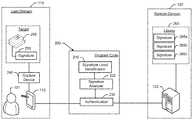
- FIG. 1is a high-level illustration of an example computing system which may be implemented for digital signature authentication.
- FIG. 2shows an example architecture of machine readable instructions, which may be executed for digital signature authentication.
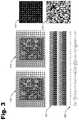
- FIG. 3illustrates an example of image processing which may be implemented for digital signature authentication.
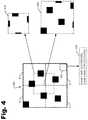
- FIG. 4is an illustration of an example of digital signature authentication.
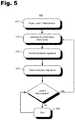
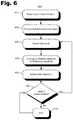
- FIGS. 5-6are flowcharts illustrating example operations which may implement digital signature authentication.
- Digital signature authenticationis disclosed, wherein a signature may be extracted from a target image (e.g., a high resolution image extracted with a low-cost microscope) and authenticated against a reference signature.
- the authenticated signaturecan be implemented to provide information and/or access to information in any of a wide variety of applications.
- the target imagemay be of an engineered printed mark (i.e., specifically developed for the purpose of extracting a signature for use with digital signature authentication).
- the signatureis based on innate stochastic properties of the print and its interaction with the substrate.
- the signaturemay be extracted from any printed item (e.g., character, glyph, barcode).
- the signaturecan be extracted from a linear outline, a 2D area, a halftone (or stegatone) image, or a 3D image. It is noted that most printed images can be considered “halftones.”
- the term “stegatone”refers to a special type of halftone, where the individual dots of the halftone are intentionally perturbed to embed additional information.
- the extracted signaturemay be compared to a reference signature (previously stored), e.g., to prove authenticity of the item (or label for the item) associated with the high resolution image.
- digital signature authenticationincludes a recruitment stage. During the recruitment stage, signatures are added to a database for future reference. Digital signature authentication may also include an authentication stage. During the authentication stage, signatures are extracted from a target image, and compared with the previously stored signatures. Digital signature authentication may operate according to any of a variety of protocols.
- digital signature authenticationincludes extracting and comparing a hierarchy of signatures.
- a first order (or “level”) signature in the hierarchymay be used to authenticate the item, if the first order signature does not provide sufficient confidence in the authenticity, then a second order signature is compared, and so forth.
- the first order signaturewill be more readily extracted/compared (e.g., using less processing power) than a higher order signature, thereby enabling faster authentication when possible, and more confidence in the authentication when needed.
- different signaturesmay be captured with different image capture settings, such as differences in illumination (e.g., direction, wavelength, etc.), resolution, focal distance, and/or image capture techniques (e.g., using strobing).
- the imagemay include multiple signatures and the authentication process determines which one of these to use. For example, if a first signature is unreadable (e.g., has worn off), then another area may be analyzed to obtain the second signature, and so forth, until a readable signature, is found that can be authenticated.
- These signaturesmay be discrete areas of the image, or may include portions of multiple areas. For example, an image having areas A, B, C, and D (each covering a quarter of the area) may include signatures A, B, C, and D. But additional signatures may be E incorporating aspects of signature A, along with aspects of signature B, and so forth. Also multiple signatures can be extracted from the same physical area, using separate signature extraction techniques.
- the signaturesevolve over time.
- “revisable signatures”it is meant that over time a better signature may be discovered (or identified), and from that time on, the new signature protocol is used.
- the signature to useis determined according to the prevailing wisdom at the time when the signature was recruited.
- the signaturesmay “evolve” over time, and thus the authentication needs to know which signature to use. This technique may also be used to expire signatures over time for security purposes—as flaw in their design or robustness comes to light.
- informationis provided to correctly identify the corresponding signature being used (e.g., as registered in the database) so that the correct comparison can be made.
- the image capture deviceselects which signature to use based on information stored in the image or elsewhere (e.g., a barcode or stegatone in the image and/or information stored in a database).
- one of the multiple signaturessurvives damage or aging better than another signature.
- a signaturemay degrade faster than another, or a signature may survive longer with slighter environmental/physical damage. This can also be dictated by the capabilities of the imaging device. Accordingly, the signature may “evolve” over time to where it is really considered different signatures.
- digital signature authenticationmay use different signatures to authenticate different users (e.g., a doctor versus a nurse) and provide access based on the authenticated signature.
- Agentsmay also be a physical device and is not limited to “users,” In an example, these signatures are considered to provide differential access rights for various users.
- digital signature authenticationmay do a low-level authentication of signatures locally (e.g., on a mobile device), but may also be considered a less secure authentication and for certain operations (when more security is required) may further be required to contact a remote server (e.g., a database or “library”) for a higher-level authentication.
- a remote servere.g., a database or “library”.
- the terms “includes” and “including”mean, but are not limited to, “includes” or “including” and “includes at least” or “including at least.”
- the term “based on”means “based on” and “based at least in part on.”
- FIG. 1is a high-level block diagram of an example computing system which may be implemented for digital signature authentication.
- system 100is shown as it may be implemented by a user 101 in a networked environment, it is noted that system 100 may also be implemented in a stand-alone environment or a hybrid thereof (e.g., standalone when a network connection is not available or needed, and network environment when desired), as will become apparent from the following discussion.
- System 100may be implemented with any of a wide variety of computing devices, such as, but not limited to, stand-alone scanning appliances, mobile device (e.g., phones, tablets, or other handheld device) computers, servers, and other electronic devices, to name only a few examples.
- Each of the computing devicesmay include memory, storage, and a degree of data processing capability at least sufficient to manage a communications connection either directly with one another or indirectly (e.g., via a network).
- At least one of the computing devicesis also configured with sufficient processing capability to execute the program code described herein.
- the system 100may include a user domain 110 with a user device 112 (e.g., a mobile handheld device), and, a remote domain 120 hosting an authentication server 122 .
- Authentication server 122may be accessed by the user domain 110 (e.g., via the user device 112 ) to facilitate digital signature authentication. It is noted that although the server 122 is referred to herein as an “authentication server,” a single server or separate servers may be implemented to perform both the recruitment stage and the authentication stage.
- the user device 112may be provided on a network 130 via a communication connection, such as via an Internet service provider (ISP).
- ISPInternet service provider
- the user device 112is able to access the remote domain 120 directly via the network 130 , or via an agent, such as another network.
- Communication network 130may be any suitable communications channel, such as but not limited to a local area network (LAN) and/or wide area network (WAN).
- LANlocal area network
- WANwide area network
- the network 130includes the Internet or other mobile communications network (e.g., a 3G or 4G mobile device network).
- Network 130may provide greater accessibility to the remote domain, for use in distributed environments, for example, in a cloud computing environment.
- the operations described hereinmay be executed by program code 140 residing on the user device 112 , in some instances executing the program code 140 (or at least a portion thereof) may be performed on a separate computer system having more processing capability.
- the authentication server 122may provide remote processing, such as but not limited to, executing the program code 140 to process and/or store reference signatures and processing an extracted signature for authentication (at least in part, as processing may also occur at the user device 112 ).
- Other processing provided by the authentication server 122may include, but is not limited to data handling, such as providing information or access to information or other services corresponding to an authenticated signature.
- the authentication server 122is not limited in function, and may also provide general purpose computing services.
- At least one of the computing devices in the user domain 110includes a capture device such as an electronic imaging device (e.g., a camera or low-cost microscope) capable of electronically receiving data for (or “capturing”) an image.
- Image processing program code 140may also be provided in conjunction with the imaging device to process the captured image data.
- the program code 140may be executed by any suitable computing device, and may include interfaces to application programming interfaces (APIs) and related support infrastructure to execute the operations described herein. It is noted that the program code 140 may serve more than one client.
- APIsapplication programming interfaces
- the imaging deviceis configured to extract a signature from the image.
- a processoris provided (locally and/or remote from the imaging device) to execute the program code 140 which compares the extracted signature to a reference signature and authenticates the extracted signature against the reference signature.
- the program codemay operate according to any of a plurality of different authentication protocols.
- Example protocolsinclude at least a hierarchical signatures protocol, a revisable selection of signatures protocol, a multiple agents protocol, and a multiple modalities protocol, each of which are described in more detail below.
- the system 100may also include at least one source of content or information.
- the sourcemay include but is not limited to databases for providing information, applications for providing application data, and/or storage resources for providing online storage facilities.
- the sourcemay be physically distributed in the network and operatively associated with the user domain 110 and/or remote domain 120 .
- the sourcemay be provided at least in part locally to the user device 112 and/or authentication server 122 .
- the sourcemay include any type and amount of information.
- informationmay include data corresponding to a reference signature, wherein the data is available upon authenticating a captured image against the reference signature.
- Informationmay also include permissions (e.g., a pass code) that is available to access additional information and/or services (e.g., an application or other aspects of the program code) upon authentication of the captured signature.
- permissionse.g., a pass code
- additional information and/or servicese.g., an application or other aspects of the program code
- program code 140may perform recruitment of reference signatures and/or authentication of captured signatures, and is not limited to performing both aspects, or individual aspects thereof.
- Program code used to implement features of the systemcan be better understood with reference to FIG. 2 and the following discussion of various example functions. However, the operations described herein are not limited to any specific implementation with any particular type of program code.
- FIG. 2shows an example architecture of machine readable instructions 200 , which may be executed for digital signature authentication.
- the program code 140 discussed above with reference to FIG. 1may be implemented in machine-readable instructions 200 (such as but not limited to, software or firmware).
- the machine-readable instructions 200may be stored on a non-transient computer readable medium and are executable by one or more processor to perform the operations described herein. It is noted, however, that the components shown in FIG. 2 are provided only for purposes of illustration of an example operating environment, and are not intended to limit implementation to any particular system.
- the program code 140executes the function of the machine readable instructions 200 as self-contained modules. These modules can be integrated within a self-standing tool, or may be implemented as agents that run on top of an existing application.
- the architecture of machine readable instructions 200may include a signature retrieval module 210 , a signature analyzer module 220 , and an authentication module 230 .
- the signature retrieval module 210is operatively associated with an imaging device 240 for the user device 112 .
- Imaging device 240may capture a target or a part of the target (e.g., the printed mark 255 of a target 250 ). It is noted that the imaging device 240 may be used to capture one or both of a reference image and an image for signature authentication.
- the signature retrieval module 210may be implemented to import one or both of a reference signature and a signature for signature authentication; or a separate program code module may be provided to handle the different signature types.
- the reference signatures(s) 265 a - cmay be stored in a library 260 in the user domain 110 (e.g., on user device 112 ), in the remote domain 120 , in another domain (e.g., a third party domain, not shown), and/or a combination thereof (e.g., partly on the user device 112 , and partly elsewhere).
- the signature analyzer module 220may be executed to analyze the signature (e.g., during a recruitment stage, an authentication stage, or both).
- the authentication module 230may be executed to authenticate the signature, e.g., by comparing the captured signature with a reference signature (e.g., one of the reference signatures 265 a - c stored in library 265 ).
- the authentication module 230may apply an applicable algorithm to determine whether there is a match (e.g., identical or at least within a predetermined statistical confidence). Examples of analyzing and authenticating an image are discussed below with reference to FIGS. 3 and 4 .
- FIG. 3illustrates an example of image processing which may be implemented for digital signature authentication. It is possible to recover multiple forensic signatures from the same printed item.
- a printed 4 nm ⁇ 4 mm Data Matrix (DM) 300may be captured by a high-resolution, low-cost contact microscope developed, for forensic imaging such as the Dyson Relay Contact Imaging Device (DrCID).
- DrCIDDyson Relay Contact Imaging Device
- a signaturecan be extracted from the DM 300 by accurately locating the position of the DM in the image using instructions (or a model 310 of the image).
- the model 310includes a grid overlaid on a reference image indicating where in the image the signature resides.
- Forensic print signatures 320may be extracted from the DM 300 .
- the print signatures 320were extracted from the left and bottom sides of the outline of the DM 300 using a border/outline technique.
- a pair of long (e.g., 2000 samples) floating signaturese.g., one for the left edge and one for the bottom edge of the DM, illustrated by signals 330 , can be reduced to a total of about 200 bits e.g., using variance coding or random projection.
- an area code signaturecan be recovered from the central region of the same DM 300 using phase coding.
- the dewarped imagemay be filtered with quadrature pairs of Gabor filters (90 degrees out of phase) to recover real and imaginary components of the local frequency content; the corresponding amplitude image which recombined both parts is shown in 340 .
- the resulting phase code 350is a coarse sampling (e.g., 32 ⁇ 32) of the quantized phase (2 bits per sample) of the Gabor filtered image.
- Outline signaturestend to be easier to process (needing less processing power), and are generally shorter in length (taking less storage space), relative to area-codes.
- area-codestend to be more robust to damage and may also offer a greater level of security relative to outline signatures.
- both of these techniquesmay be applied to extract different signatures from the same image 300 .
- Authenticationis the same according to either technique. That is, the image is scanned close to the printing of the forensic mark (e.g., the DM 300 ) and a signature extracted. The signature can be stored during a recruitment stage, and then used as a reference signature at some point later in time during an authentication stage to prove authenticity of the printed image (or item or person associated with that image).
- any of a plurality of protocolsmay be implemented for digital signature authentication, as explained in more detail below with reference to the illustration in FIG. 4 .
- FIG. 4is an illustration of an example of digital signature authentication.
- the captured or “target” image 400is an engineered printed mark (i.e., specifically developed for the purpose of extracting a signature for use with digital signature authentication).
- the signature(s)may be extracted from within the target image 400 in any suitable manner (e.g., associated with a character, glyph, barcode, etc).
- the signature(s)can be extracted from a linear outline, a 2D area, a halftone (or stegatone) image, or a 3D image or combination thereof.
- the extracted signaturemay be compared to a reference signature (previously stored), e.g., to prove authenticity of the item (or label for the item) associated with the high resolution image.
- Example protocolsinclude at least a hierarchical signatures protocol, a revisable selection of signatures protocol, a multiple agents protocol, and a multiple modalities protocol. It is noted, however, that other protocols will also be readily apparent to those having ordinary skill in the art after becoming familiar with the teachings herein.
- each of the protocols belowoperate on the premise of an image 400 having multiple signatures 410 , 420 (more than two may be specified).
- instructionshave to be provided. Instructions may be coordinates for each level of authentication (e.g., as shown in box 435 in FIG. 4 ). Alternatively they may refer to different signature extraction techniques applied to the same image region as shown in FIG. 3 . However, other instructions may also be implemented.
- instructions 435may be included as part 430 of the forensic mark itself. Using a DM makes this an easy task, as part of the payload of the DM can be used to directly specify which type signature was to be extracted from it.
- instructionsare not limited to being encoded in a DM.
- the contents of the DMcan be used to specify an index into the database the type of signature to be used can be stored indirectly in the database.
- a unique 96 bit SGTINmay be encoded in a 2D barcode (DM) and read to index a database (either on the user device, or remote server).
- part of the SGTINmay be used to directly indicate the type of signature to extract. Still other examples of providing instructions 435 will be readily understood by those having ordinary skill in the art after becoming familiar with the teachings herein.
- digital signature authenticationincludes extracting and comparing a hierarchy of signatures. For example, a first order signature 410 in the hierarchy may be used for authentication. If the first order signature does not provide sufficient confidence in the authenticity, then a second order signature 420 is compared, and so forth. Any number of signatures may be provided according to the hierarchy.
- lower order signaturesare more readily extracted/compared (e.g., using less processing power) than higher order signatures, thereby enabling faster authentication when possible.
- higher order signaturesmay provide more confidence in the authentication, and may be used when needed, either in addition to authenticating a lower order signature or instead of authenticating a lower order signature.
- the signaturesare evaluated in strict order (e.g., using the least processing power first, and working up to increasingly more “expensive” and robust signatures.
- the area signatureis only computed and communicated to a database on a server when the outline signature fails to provide sufficient degree of statistical confidence of authentication.
- the outline signaturefails to provide sufficient degree of statistical confidence of authentication.
- an item (or person)cannot be authenticated (typically only a small fraction of the time)
- a more computationally intensive authenticationthat is more robust to potential damage or fraud can be used.
- the imagemay include multiple signatures and the authentication process determines which one of these to use. For example, if a first signature is unreadable (if an area of the image containing all or part of the signature has worn off, become damaged, or otherwise unreadable), then another area may be analyzed to obtain the second signature, and so forth, until a readable signature is found that can be authenticated.
- signaturesmay be discrete areas of the image, or may include portions of multiple areas. For example, an image having areas A, B, C, and (each covering a quarter of the area) may include signatures A, B, C, and D. But additional signatures may be E incorporating aspects of signature A, along with aspects of signature B, and so forth.
- the revisable selection of signatures protocolprovides a heterogeneous system, with the possibility of multiple signature types that have the potential to evolve over time. This technique may also be used to expire signatures over time for security purposes. For example, signature A may be valid to a date, and then signature B may become valid to another date, and so forth.
- new signaturescan be introduced with updates to the program code 140 .
- the type of signature previously recruitedneeds to be identified in order to be authenticated properly. That is, an older printed mark associated with an expired signature in the reference database is still authenticated, and then the new signatures can be authenticated. It is noted that the signature can be updated if authentication is successful by replacing the expired signature with current one.
- digital signature authenticationmay use different signatures to authenticate different users (e.g., a doctor versus a nurse) and provide access based on the authenticated signature.
- Agentsmay also be a physical device and is not limited to “users.”
- usersdo not need to have lower/higher authority, but can simply be agents with different purposes.
- the multiplicity of signature typesmay be used by different agents in the lifecycle or “workflow” of an item to which the signatures are attached,
- low-security agentsmay use one of the signatures (e.g., signature 410 ), but are not allowed to validate the other signature(s) (e.g., signature 420 ). This prevents low security or other “low trust” agents to check one or more of the signatures.
- digital signature authenticationmay handle authentication via different processing paradigms.
- a local processing paradigme.g., all on the users device
- low-level authenticationmay be used for low-level authentication of signature 410 .
- Thisis useful for quick authentication as the user device uses less processing power and does not need to be connected to a computer network. While appropriate in some cases, this low-level authentication may also be considered a less secure authentication as the reference signatures must be made available to the user's device.
- Some operationse.g., when more security is required
- the higher-level signature 420may be more complex (thus requiring the additional processing power of a server computer).
- the higher-level reference signaturemay simply not be provided on the local device.
- the signature typeis used on-device (e.g., no image or extraction signature is transmitted to a backend server).
- another signature typecan only be authenticated when the signature is sent to the backend service.
- the latter motifmeans that the image and/or extraction signature is sent to the backend service, but the actual reference signature is never shared with the user's device (e.g., only a binary pass/fail is provided).
- on-device authenticationmay be performed by caching active signatures on the device itself.
- the signaturemay be encoded an the image itself.
- the signaturemay be provided via another document, or a separate electronic medium (e.g., an RFID tag, associated with the item).
- one set of signatures(e.g., same “type” amongst two or more signatures across many objects) is stored in one database, and the other set of signatures is stored in an independent database.
- the systemcan then apply completely different rules to these two databases. For example, one signature can be generally accessible and is used to find the closest sequence to the signature that is recovered, which can then be used as a lookup (entry field) to the second database if/when access rights are granted.
- the first databasecan also be associated with a visible printed mark (e.g., the first signature is read during printing/packaging and the signature added as a final printed, value/representation) and the second is not visible (e.g., only accessed through an online connection, secure connection, on-location connection, etc.).
- a visible printed marke.g., the first signature is read during printing/packaging and the signature added as a final printed, value/representation
- the secondis not visible (e.g., only accessed through an online connection, secure connection, on-location connection, etc.).
- off-linee.g., one database stored on the reading device
- on-line connectione.g., remote, more secure database
- FIGS. 5-6are flowcharts illustrating example operations which may implement digital signature authentication. Operations may be embodied as logic instructions on one or more computer-readable medium. When executed on a processor, the logic instructions cause a general purpose computing device to be programmed as a special-purpose machine that implements the described operations. In an example, the components and connections depicted in the figures may be used.
- FIG. 5illustrates digital signature authentication operations 500 which may be implemented in a recruitment stage. During the recruitment stage, signatures are added to a database for future reference.
- Operation 510includes beginning Level 1 recruitment. It is noted that Level 1 and Level 2 refer to distinct signatures, and that other levels may also be used. In a hierarchical signatures protocol example, Level 1 may be a hierarchically different signature relative to Level 2. In a revisable selection of signatures protocol example, Level 1 may be an initial signature relative to a revised or “Level 2” signature. In a multiple agents protocol example, Level 1 may be a signature for a different agent than Level 2. In a multiple modalities protocol example, Level 1 may be a lower security signature than Level 2.
- recruitmentmay proceed for any of a plurality of different protocols.
- Example protocolsinclude but are not limited to a hierarchical signatures protocol, a revisable selection of signatures protocol, a multiple agents protocol, a multiple modalities protocol, and/or variations thereof.
- Operation 520includes generating authentication or recruitment instructions. These instructions may be coordinates or other information for identifying a location of a signature within an image. In an example, the authentication instructions may be embedded in the image.
- Operation 530includes choosing regions of an image that form a signature. In addition, operation 530 includes choosing the type of signature to extract from each region.
- Operation 540includes storing a reference signature.
- the reference signaturemay be stored in a remote database (e.g., stored separate from the device generating and/or reading the signature.
- the reference signaturemay be stored locally (or transmitted to a mobile device for use on the mobile device without having to contact a remote database). It is noted that typically less secure signatures and/or signatures needing less processing power to authenticate may be stored on the device itself, and more secure signatures and/or signatures needing more processing power to authenticate may be stored in a remote database (e.g., handled by a server with more security and/or computing power).
- Operation 550includes determining whether to enter Level 2 Recruitment. If another level signature is to be recruited, then operations may return to operation 520 . Otherwise, if recruitment is complete, then operations may end at 560 .
- Level 1 and Level 2 recruitmentmay be implemented by following similar operations. That is, recruitment is not limited to Level 1 and Level 2, and may include any number of signature levels.
- the recruitment phasemay be re-entered at any time. For example, new signature levels may be recruited in the revisable selection of signatures protocol which are removed in time from the initial recruitment (e.g., a better—more robust—type of signature is discovered for use from this point in time; and the old signature will no longer be used).
- FIG. 6illustrates digital signature authentication operations 600 which may be implemented in an authentication stage.
- signaturesare extracted from a target image, and compared with the previously stored signatures (e.g., those stored during the recruitment stage), Digital signature authentication may operate according to any of a variety of protocols.
- Operation 610includes beginning Level 1 authentication. Authentication starts by some way of selecting which signature the system is authentication against e.g., hierarchical, revisable, agent or modality based selection. As during the recruitment stage, it is noted that Level 1 and Level 2 refer to distinct signatures, and that other levels may also be used. In an example, authentication may proceed according to any of a plurality of different protocols. Example protocols include but are not limited to a hierarchical signatures protocol, a revisable selection of signatures protocol, a multiple agents protocol, a multiple modalities protocol, and/or variations thereof.
- Operation 620includes receiving authentication instructions.
- Authentication instructionsmay be coordinates or other information for identifying a location of a signature within an image.
- the authentication instructionsmay be embedded in the image and are retrieved or extracted from the image, e.g., using an image processor. That is, the instructions may referenced by a code within the image, and upon looking up the reference for the code, information in the form of coordinates or other information are provided (e.g., from a local and/or remote database) for identifying a location of a signature within the image.
- Other techniquesmay also be deployed for providing instructions.
- the instructionsdo not need to be provided in the image. For example, instructions may be provided based on a GPS coordinate of the mobile device.
- Operation 630includes extracting a signature from the image.
- the signatureis extracted from the image based on the instructions received in operation 620 .
- the signaturemay be extracted using an image processing device (e.g., a microscope or other optical device and associated interpretative program code).
- Operation 640includes comparing the extracted signature (e.g., from operation 630 ) to a reference signature (e.g., the reference signature stored in the recruitment stage of FIG. 5 ).
- the reference signaturemay be stored and/or retrieved from a remote database (e.g., stored separate from the device generating and/or reading the signature).
- the reference signaturemay be retrieved locally.
- less secure signatures and/or signatures needing less processing power to authenticatemay be stored on the device itself, and more secure signatures and/or signatures needing more processing power to authenticate may be stored, in a remote database (e.g., handled by a server with more security and/or computing power).
- Operation 650includes authenticating the signature. Authentication may be based on any number of considerations, including but not limited to an exact match or a match satisfying at least some level of statistical confidence.
- Operation 660includes determining whether to enter Level 2 authentication. If another level signature is to be authenticated, then operations may return to operation 520 . If authentication is complete at operation 660 , then operations may end at 670 .
- operationsmay repeat according to the hierarchical signatures protocol.
- a first ordere.g., Level 1
- a higher ordere.g., Level 2
- the first order (e.g., Level 1) signaturemay provide faster authentication than the higher order (e.g., Level 2) signature.
- the first order signaturemay be authenticated on the mobile device. But when greater confidence is needed in authenticating the signature, the higher order signature is authenticated remotely because it provides greater confidence in authentication than the first order signature.
- operationsmay repeat according to a revisable selection of signatures protocol, wherein the signatures evolve over time.
- the first (e.g., Level 1) signaturemay be used for authentication until such time that a second (e.g., Level 2) signature is used for authentication.
- the imagemay give rise to a plurality of signatures and the extracted signature may be selected from the plurality of signatures, as described above with reference to FIG. 3 .
- signaturesmay be expired over time and new signatures created.
- operationsmay repeat according to multiple agents protocol, wherein different signatures authenticate different agents.
- a hospital administratormay need an administrative (e.g., Level 1) signature authentication
- a doctormay need a medical (e.g., Level 2) signature authentication, thereby providing the respective users with the appropriate level of information about a patient.
- operationsmay repeat according to the multiple modalities authentication protocol.
- a low-level (e.g., Level 1) authentication of signaturesmay be performed locally (e.g., on a mobile device), which uses less processing power (e.g., authentication at a binary or pass/fail granularity).
- the Level 1 authenticationmay also be considered a less secure authentication.
- a higher-level (e.g., Level 2) authenticationmay be provided by a remote server (e.g., a database or “library”).
- Still further operationsmay include for example, but are not limited to determining which one of the plurality of protocols and/or signatures to use during authenticating.
- the operationsmay be implemented at least in part using an end-user interface (e.g., web-based interface).
- the end-useris able to make predetermined selections, and the operations described above are implemented on a back-end device to present results to a user. The user can then make further selections.
- various of the operations described hereinmay be automated or partially automated.
Landscapes
- Engineering & Computer Science (AREA)
- Theoretical Computer Science (AREA)
- Computer Security & Cryptography (AREA)
- Physics & Mathematics (AREA)
- General Physics & Mathematics (AREA)
- Multimedia (AREA)
- Signal Processing (AREA)
- Software Systems (AREA)
- Computer Hardware Design (AREA)
- General Engineering & Computer Science (AREA)
- Computer Vision & Pattern Recognition (AREA)
- Editing Of Facsimile Originals (AREA)
- Collating Specific Patterns (AREA)
- Management, Administration, Business Operations System, And Electronic Commerce (AREA)
Abstract
Description
Claims (20)
Applications Claiming Priority (1)
| Application Number | Priority Date | Filing Date | Title |
|---|---|---|---|
| PCT/US2014/063115WO2016068933A1 (en) | 2014-10-30 | 2014-10-30 | Digital signature authentication |
Publications (2)
| Publication Number | Publication Date |
|---|---|
| US20170330046A1 US20170330046A1 (en) | 2017-11-16 |
| US10558879B2true US10558879B2 (en) | 2020-02-11 |
Family
ID=55858038
Family Applications (1)
| Application Number | Title | Priority Date | Filing Date |
|---|---|---|---|
| US15/522,107Expired - Fee RelatedUS10558879B2 (en) | 2014-10-30 | 2014-10-30 | Digital signature authentication |
Country Status (4)
| Country | Link |
|---|---|
| US (1) | US10558879B2 (en) |
| EP (1) | EP3213258A4 (en) |
| CN (1) | CN107077622B (en) |
| WO (1) | WO2016068933A1 (en) |
Cited By (2)
| Publication number | Priority date | Publication date | Assignee | Title |
|---|---|---|---|---|
| US11134176B2 (en)* | 2017-09-25 | 2021-09-28 | Hewlett-Packard Development Company, L.P. | Lookup table smoothing |
| US12418416B2 (en)* | 2023-11-10 | 2025-09-16 | Capital One Services, Llc | Facilitating authentication using stochastic-model-derived images |
Families Citing this family (3)
| Publication number | Priority date | Publication date | Assignee | Title |
|---|---|---|---|---|
| WO2020068198A2 (en)* | 2018-06-19 | 2020-04-02 | University Of Notre Dame Du Lac | Security for wireless communications |
| US20230065765A1 (en)* | 2021-08-24 | 2023-03-02 | Cyral Inc. | Dynamic identity attribution |
| CN120378108A (en)* | 2024-01-24 | 2025-07-25 | 华为技术有限公司 | Signature method, authentication method and device |
Citations (18)
| Publication number | Priority date | Publication date | Assignee | Title |
|---|---|---|---|---|
| EP0581317A2 (en) | 1992-07-31 | 1994-02-02 | Corbis Corporation | Method and system for digital image signatures |
| US5892824A (en)* | 1996-01-12 | 1999-04-06 | International Verifact Inc. | Signature capture/verification systems and methods |
| US20050029354A1 (en) | 2003-08-05 | 2005-02-10 | Didier Frantz | System associating sets of data into one barcode |
| CN1682478A (en) | 2002-10-16 | 2005-10-12 | 微软公司 | Password-secured personal identification |
| US20050257064A1 (en) | 2004-05-11 | 2005-11-17 | Yann Boutant | Method for recognition and tracking of fibrous media and applications of such a method, particularly in the computer field |
| US20070033168A1 (en)* | 2005-08-08 | 2007-02-08 | David Minogue | Agent rank |
| US7207481B2 (en) | 2003-09-23 | 2007-04-24 | Secure Symbology, Inc. | Method for improving security and enhancing information storage capability, the system and apparatus for producing the method, and products produced by the system and apparatus using the method |
| US7543748B2 (en) | 2005-02-16 | 2009-06-09 | Pisafe, Inc. | Method and system for creating and using redundant and high capacity barcodes |
| US7783885B2 (en) | 2002-10-09 | 2010-08-24 | Sap Aktiengesellschaft | Hybrid digital signature workflow |
| CN101860824A (en) | 2010-05-06 | 2010-10-13 | 上海海基业高科技有限公司 | Digital signature authentication system based on short message and digital signature method |
| US7904725B2 (en)* | 2006-03-02 | 2011-03-08 | Microsoft Corporation | Verification of electronic signatures |
| US7930546B2 (en)* | 1996-05-16 | 2011-04-19 | Digimarc Corporation | Methods, systems, and sub-combinations useful in media identification |
| US8122252B2 (en) | 2006-02-28 | 2012-02-21 | Kryptiq Corporation | Cascaded digital signatures |
| WO2013119235A1 (en)* | 2012-02-09 | 2013-08-15 | Hewlett-Packard Development Company, L.P. | Forensic verification from halftone images |
| US20130275763A1 (en) | 2012-04-13 | 2013-10-17 | Samsung Electronics Co., Ltd. | Apparatus and method for digital signature authentication |
| US20140169617A1 (en)* | 2011-08-24 | 2014-06-19 | Stephen Pollard | Forensic Authentication System and Method |
| US8793499B2 (en) | 2012-01-20 | 2014-07-29 | Lockheed Martin Corporation | Nested digital signatures with constant file size |
| US20150098629A1 (en)* | 2013-10-08 | 2015-04-09 | Sri International | Iris biometric recognition module and access control assembly |
Family Cites Families (1)
| Publication number | Priority date | Publication date | Assignee | Title |
|---|---|---|---|---|
| US7574734B2 (en)* | 2002-08-15 | 2009-08-11 | Dominique Louis Joseph Fedronic | System and method for sequentially processing a biometric sample |
- 2014
- 2014-10-30WOPCT/US2014/063115patent/WO2016068933A1/enactiveApplication Filing
- 2014-10-30CNCN201480082721.XApatent/CN107077622B/ennot_activeExpired - Fee Related
- 2014-10-30USUS15/522,107patent/US10558879B2/ennot_activeExpired - Fee Related
- 2014-10-30EPEP14905086.6Apatent/EP3213258A4/ennot_activeWithdrawn
Patent Citations (20)
| Publication number | Priority date | Publication date | Assignee | Title |
|---|---|---|---|---|
| EP0581317A2 (en) | 1992-07-31 | 1994-02-02 | Corbis Corporation | Method and system for digital image signatures |
| US5892824A (en)* | 1996-01-12 | 1999-04-06 | International Verifact Inc. | Signature capture/verification systems and methods |
| US7930546B2 (en)* | 1996-05-16 | 2011-04-19 | Digimarc Corporation | Methods, systems, and sub-combinations useful in media identification |
| US7783885B2 (en) | 2002-10-09 | 2010-08-24 | Sap Aktiengesellschaft | Hybrid digital signature workflow |
| CN1682478A (en) | 2002-10-16 | 2005-10-12 | 微软公司 | Password-secured personal identification |
| US20050029354A1 (en) | 2003-08-05 | 2005-02-10 | Didier Frantz | System associating sets of data into one barcode |
| US7207481B2 (en) | 2003-09-23 | 2007-04-24 | Secure Symbology, Inc. | Method for improving security and enhancing information storage capability, the system and apparatus for producing the method, and products produced by the system and apparatus using the method |
| US20050257064A1 (en) | 2004-05-11 | 2005-11-17 | Yann Boutant | Method for recognition and tracking of fibrous media and applications of such a method, particularly in the computer field |
| US7543748B2 (en) | 2005-02-16 | 2009-06-09 | Pisafe, Inc. | Method and system for creating and using redundant and high capacity barcodes |
| US20070033168A1 (en)* | 2005-08-08 | 2007-02-08 | David Minogue | Agent rank |
| CN101283354A (en) | 2005-08-08 | 2008-10-08 | 谷歌公司 | Agent ranking |
| US8122252B2 (en) | 2006-02-28 | 2012-02-21 | Kryptiq Corporation | Cascaded digital signatures |
| US7904725B2 (en)* | 2006-03-02 | 2011-03-08 | Microsoft Corporation | Verification of electronic signatures |
| CN101860824A (en) | 2010-05-06 | 2010-10-13 | 上海海基业高科技有限公司 | Digital signature authentication system based on short message and digital signature method |
| US20140169617A1 (en)* | 2011-08-24 | 2014-06-19 | Stephen Pollard | Forensic Authentication System and Method |
| US8793499B2 (en) | 2012-01-20 | 2014-07-29 | Lockheed Martin Corporation | Nested digital signatures with constant file size |
| WO2013119235A1 (en)* | 2012-02-09 | 2013-08-15 | Hewlett-Packard Development Company, L.P. | Forensic verification from halftone images |
| CN104094286A (en) | 2012-02-09 | 2014-10-08 | 惠普发展公司,有限责任合伙企业 | Forensic verification from halftone images |
| US20130275763A1 (en) | 2012-04-13 | 2013-10-17 | Samsung Electronics Co., Ltd. | Apparatus and method for digital signature authentication |
| US20150098629A1 (en)* | 2013-10-08 | 2015-04-09 | Sri International | Iris biometric recognition module and access control assembly |
Non-Patent Citations (2)
| Title |
|---|
| "The Hybrid Signature: Signing Digital Documents and Printing Authentiated Documents". |
| Abdourhamane Idrissa, Secure Protocols for Serverless Remote Product Authentication, Oct. 24, 2010, 7 pages. (Year: 2010).* |
Cited By (2)
| Publication number | Priority date | Publication date | Assignee | Title |
|---|---|---|---|---|
| US11134176B2 (en)* | 2017-09-25 | 2021-09-28 | Hewlett-Packard Development Company, L.P. | Lookup table smoothing |
| US12418416B2 (en)* | 2023-11-10 | 2025-09-16 | Capital One Services, Llc | Facilitating authentication using stochastic-model-derived images |
Also Published As
| Publication number | Publication date |
|---|---|
| WO2016068933A1 (en) | 2016-05-06 |
| CN107077622B (en) | 2020-04-14 |
| US20170330046A1 (en) | 2017-11-16 |
| CN107077622A (en) | 2017-08-18 |
| EP3213258A4 (en) | 2018-10-03 |
| EP3213258A1 (en) | 2017-09-06 |
Similar Documents
| Publication | Publication Date | Title |
|---|---|---|
| US9946865B2 (en) | Document authentication based on expected wear | |
| US10972281B2 (en) | System and method for document information authenticity verification | |
| US10558879B2 (en) | Digital signature authentication | |
| US9311531B2 (en) | Systems and methods for classifying objects in digital images captured using mobile devices | |
| US10102439B2 (en) | Document verification method and system | |
| CN110084013A (en) | Biometric Template Security and Key Generation | |
| US10476887B2 (en) | Consumer and business anti-counterfeiting services using identification tags | |
| Song et al. | My smartphone recognizes genuine QR codes! practical unclonable qr code via 3D printing | |
| US10929625B2 (en) | Authentication method for product packaging | |
| CN105404841A (en) | Mobile equipment data calculation method based on internet of things | |
| JP2017083915A (en) | Two-dimensional code, two-dimensional code system, two-dimensional code imaging terminal and information processing method using two-dimensional code | |
| CN102105857B (en) | Security printing analysis system and method for enhancing security printing | |
| EP3594839B1 (en) | Encrypted gallery management system and implementation method thereof | |
| US11688153B2 (en) | Object ID-centered workflow | |
| JP2014186659A (en) | Image collation device, image collation method, and image collation program | |
| CA3043447C (en) | A data extraction system and method | |
| Erlangga et al. | Increasing Secret Data Hiding Capacity in QR Code Using Subcells | |
| US12039385B2 (en) | Dynamic machine readable code | |
| US20240428027A1 (en) | Authentication Systems and Methods | |
| US11816756B1 (en) | Anti-leak digital document marking system and method using distributed ledger | |
| Spagnolo et al. | Painting authentication by means of a biometric-like approach | |
| Ieswaria et al. | Study on Generation of Picture Barcodes based on Encoding and Decoding Techniques | |
| Xie et al. | An Anti-Counterfeiting Architecture for Traceability System Based on Modified Two-Level Quick Response Codes. Electronics 2021, 10, 320 | |
| Poharkar et al. | Carrion Android application using NFC device | |
| CN116232567A (en) | Data encryption method, device and system and electronic equipment |
Legal Events
| Date | Code | Title | Description |
|---|---|---|---|
| AS | Assignment | Owner name:HEWLETT-PACKARD DEVELOPMENT COMPANY, L.P., TEXAS Free format text:ASSIGNMENT OF ASSIGNORS INTEREST;ASSIGNORS:POLLARD, STEPHEN;SIMSKE, STEVEN J;ADAMS, GUY;SIGNING DATES FROM 20141024 TO 20141027;REEL/FRAME:046095/0343 | |
| STPP | Information on status: patent application and granting procedure in general | Free format text:RESPONSE TO NON-FINAL OFFICE ACTION ENTERED AND FORWARDED TO EXAMINER | |
| STPP | Information on status: patent application and granting procedure in general | Free format text:FINAL REJECTION MAILED | |
| STPP | Information on status: patent application and granting procedure in general | Free format text:DOCKETED NEW CASE - READY FOR EXAMINATION | |
| STPP | Information on status: patent application and granting procedure in general | Free format text:NON FINAL ACTION MAILED | |
| STPP | Information on status: patent application and granting procedure in general | Free format text:RESPONSE TO NON-FINAL OFFICE ACTION ENTERED AND FORWARDED TO EXAMINER | |
| STPP | Information on status: patent application and granting procedure in general | Free format text:NOTICE OF ALLOWANCE MAILED -- APPLICATION RECEIVED IN OFFICE OF PUBLICATIONS | |
| STPP | Information on status: patent application and granting procedure in general | Free format text:PUBLICATIONS -- ISSUE FEE PAYMENT VERIFIED | |
| STCF | Information on status: patent grant | Free format text:PATENTED CASE | |
| FEPP | Fee payment procedure | Free format text:MAINTENANCE FEE REMINDER MAILED (ORIGINAL EVENT CODE: REM.); ENTITY STATUS OF PATENT OWNER: LARGE ENTITY | |
| LAPS | Lapse for failure to pay maintenance fees | Free format text:PATENT EXPIRED FOR FAILURE TO PAY MAINTENANCE FEES (ORIGINAL EVENT CODE: EXP.); ENTITY STATUS OF PATENT OWNER: LARGE ENTITY | |
| STCH | Information on status: patent discontinuation | Free format text:PATENT EXPIRED DUE TO NONPAYMENT OF MAINTENANCE FEES UNDER 37 CFR 1.362 | |
| FP | Lapsed due to failure to pay maintenance fee | Effective date:20240211 |