US10528945B1 - Open ticket payment handling with incremental authorization - Google Patents
Open ticket payment handling with incremental authorizationDownload PDFInfo
- Publication number
- US10528945B1 US10528945B1US14/675,555US201514675555AUS10528945B1US 10528945 B1US10528945 B1US 10528945B1US 201514675555 AUS201514675555 AUS 201514675555AUS 10528945 B1US10528945 B1US 10528945B1
- Authority
- US
- United States
- Prior art keywords
- merchant
- payment
- cost
- authorization
- transaction
- Prior art date
- Legal status (The legal status is an assumption and is not a legal conclusion. Google has not performed a legal analysis and makes no representation as to the accuracy of the status listed.)
- Active
Links
Images
Classifications
- G—PHYSICS
- G06—COMPUTING OR CALCULATING; COUNTING
- G06Q—INFORMATION AND COMMUNICATION TECHNOLOGY [ICT] SPECIALLY ADAPTED FOR ADMINISTRATIVE, COMMERCIAL, FINANCIAL, MANAGERIAL OR SUPERVISORY PURPOSES; SYSTEMS OR METHODS SPECIALLY ADAPTED FOR ADMINISTRATIVE, COMMERCIAL, FINANCIAL, MANAGERIAL OR SUPERVISORY PURPOSES, NOT OTHERWISE PROVIDED FOR
- G06Q20/00—Payment architectures, schemes or protocols
- G06Q20/38—Payment protocols; Details thereof
- G06Q20/40—Authorisation, e.g. identification of payer or payee, verification of customer or shop credentials; Review and approval of payers, e.g. check credit lines or negative lists
- G—PHYSICS
- G06—COMPUTING OR CALCULATING; COUNTING
- G06Q—INFORMATION AND COMMUNICATION TECHNOLOGY [ICT] SPECIALLY ADAPTED FOR ADMINISTRATIVE, COMMERCIAL, FINANCIAL, MANAGERIAL OR SUPERVISORY PURPOSES; SYSTEMS OR METHODS SPECIALLY ADAPTED FOR ADMINISTRATIVE, COMMERCIAL, FINANCIAL, MANAGERIAL OR SUPERVISORY PURPOSES, NOT OTHERWISE PROVIDED FOR
- G06Q20/00—Payment architectures, schemes or protocols
- G06Q20/08—Payment architectures
- G06Q20/20—Point-of-sale [POS] network systems
- G06Q20/204—Point-of-sale [POS] network systems comprising interface for record bearing medium or carrier for electronic funds transfer or payment credit
- G—PHYSICS
- G06—COMPUTING OR CALCULATING; COUNTING
- G06Q—INFORMATION AND COMMUNICATION TECHNOLOGY [ICT] SPECIALLY ADAPTED FOR ADMINISTRATIVE, COMMERCIAL, FINANCIAL, MANAGERIAL OR SUPERVISORY PURPOSES; SYSTEMS OR METHODS SPECIALLY ADAPTED FOR ADMINISTRATIVE, COMMERCIAL, FINANCIAL, MANAGERIAL OR SUPERVISORY PURPOSES, NOT OTHERWISE PROVIDED FOR
- G06Q20/00—Payment architectures, schemes or protocols
- G06Q20/08—Payment architectures
- G06Q20/10—Payment architectures specially adapted for electronic funds transfer [EFT] systems; specially adapted for home banking systems
- G06Q20/102—Bill distribution or payments
- G—PHYSICS
- G06—COMPUTING OR CALCULATING; COUNTING
- G06Q—INFORMATION AND COMMUNICATION TECHNOLOGY [ICT] SPECIALLY ADAPTED FOR ADMINISTRATIVE, COMMERCIAL, FINANCIAL, MANAGERIAL OR SUPERVISORY PURPOSES; SYSTEMS OR METHODS SPECIALLY ADAPTED FOR ADMINISTRATIVE, COMMERCIAL, FINANCIAL, MANAGERIAL OR SUPERVISORY PURPOSES, NOT OTHERWISE PROVIDED FOR
- G06Q20/00—Payment architectures, schemes or protocols
- G06Q20/08—Payment architectures
- G06Q20/14—Payment architectures specially adapted for billing systems
- G—PHYSICS
- G06—COMPUTING OR CALCULATING; COUNTING
- G06Q—INFORMATION AND COMMUNICATION TECHNOLOGY [ICT] SPECIALLY ADAPTED FOR ADMINISTRATIVE, COMMERCIAL, FINANCIAL, MANAGERIAL OR SUPERVISORY PURPOSES; SYSTEMS OR METHODS SPECIALLY ADAPTED FOR ADMINISTRATIVE, COMMERCIAL, FINANCIAL, MANAGERIAL OR SUPERVISORY PURPOSES, NOT OTHERWISE PROVIDED FOR
- G06Q20/00—Payment architectures, schemes or protocols
- G06Q20/30—Payment architectures, schemes or protocols characterised by the use of specific devices or networks
- G06Q20/32—Payment architectures, schemes or protocols characterised by the use of specific devices or networks using wireless devices
- G06Q20/322—Aspects of commerce using mobile devices [M-devices]
- G—PHYSICS
- G06—COMPUTING OR CALCULATING; COUNTING
- G06Q—INFORMATION AND COMMUNICATION TECHNOLOGY [ICT] SPECIALLY ADAPTED FOR ADMINISTRATIVE, COMMERCIAL, FINANCIAL, MANAGERIAL OR SUPERVISORY PURPOSES; SYSTEMS OR METHODS SPECIALLY ADAPTED FOR ADMINISTRATIVE, COMMERCIAL, FINANCIAL, MANAGERIAL OR SUPERVISORY PURPOSES, NOT OTHERWISE PROVIDED FOR
- G06Q20/00—Payment architectures, schemes or protocols
- G06Q20/38—Payment protocols; Details thereof
- G06Q20/40—Authorisation, e.g. identification of payer or payee, verification of customer or shop credentials; Review and approval of payers, e.g. check credit lines or negative lists
- G06Q20/403—Solvency checks
- G06Q20/4033—Local solvency checks
- G—PHYSICS
- G06—COMPUTING OR CALCULATING; COUNTING
- G06Q—INFORMATION AND COMMUNICATION TECHNOLOGY [ICT] SPECIALLY ADAPTED FOR ADMINISTRATIVE, COMMERCIAL, FINANCIAL, MANAGERIAL OR SUPERVISORY PURPOSES; SYSTEMS OR METHODS SPECIALLY ADAPTED FOR ADMINISTRATIVE, COMMERCIAL, FINANCIAL, MANAGERIAL OR SUPERVISORY PURPOSES, NOT OTHERWISE PROVIDED FOR
- G06Q20/00—Payment architectures, schemes or protocols
- G06Q20/02—Payment architectures, schemes or protocols involving a neutral party, e.g. certification authority, notary or trusted third party [TTP]
- G06Q20/027—Payment architectures, schemes or protocols involving a neutral party, e.g. certification authority, notary or trusted third party [TTP] involving a payment switch or gateway
Definitions
- POSpoint-of-sale
- mobile POS devicesmay use these mobile POS devices to engage in transactions with customers at different locations. For instance, a waiter of a restaurant may use a mobile POS device to take and process customers' orders for food and drinks. In another example, a bartender may use a mobile POS device to charge a customer for items purchased over the course of a visit by the customer.
- the customersmay wish to pay for items together and/or pay for items purchased over the course of a visit without paying multiple times. For example, multiple customers may wish to divide the check for a tab at a bar. In such instances, the merchant may have to perform multiple transactions and manually split the total in various ways. Further, as customers request additional items, the merchant's exposure to loss caused by non-payment on the open tab increases. On the other hand, constantly authorizing payment instruments of the customers as the tab grows may result in the merchant paying additional transaction fees, thereby reducing profits. These issues may cause errors, delay, inconvenience and loss of revenue.
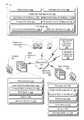
- FIG. 1illustrates an example system for handling payments among customers and merchants.
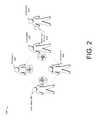
- FIG. 2is an example illustration of a scenario that provides context for FIGS. 3A-4D .
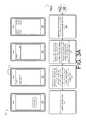
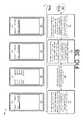
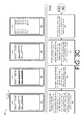
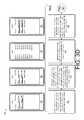
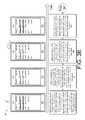
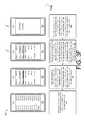
- FIGS. 3A-3Fare sequence diagrams illustrating the operations of bill splitting in a particular transaction executed by the system shown in FIG. 1 .
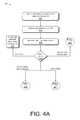
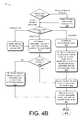
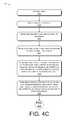
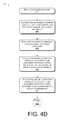
- FIGS. 4A-4Dare flow diagrams illustrating an example process for handling open ticket transactions including incremental authorization operations and bill splitting operations in the system shown in FIG. 1 and as discuss with regard to FIGS. 2-3B .
- the systemmay provide for handling incremental authorizations in open ticket transactions.
- the techniques hereinmay, when presented with a payment instrument, determine an authorization value at which to perform an authorization of the payment instrument. The determination of the authorization value may be based on a variety of factors, examples of which are discussed below.
- the systemmay provide bill splitting operations for open ticket transactions.
- the techniques hereinmay provide for handling the splitting of the cost of an open ticket transaction among one or more payment instruments.
- Some implementations of the systems and processes described hereinmay eliminate or reduce computation and/or complexities associated with bill splitting for merchants.
- the merchantmay input a request to the merchant device to create an open ticket.
- the merchant devicemay create the open ticket or, if the open ticket is maintained by a payment service, request that the payment service create the open ticket.
- the merchantmay input information regarding one or more payment instruments of the customer.
- the merchant device or payment servicemay determine authorization values for the one or more payment instruments. For example, an authorization value may be determined based on information known by the payment service about the customer, the type of the payment instrument, location information, and so on. Additional factors are discussed in more detail below.
- the authorization valueis a value at which the merchant device or payment service requests authorization of a payment of the amount allocated to the payment instrument. However, the authorization does not complete the transaction. For example, in some instances, the authorization causes the indicated amount to be reserved to pay the cost of the transaction but does not cause the financial transaction to occur. Subsequent to an authorization, the financial transaction may be completed in a settlement step.
- authorizationstypically incur a cost or fee to the merchant or payment service.
- the merchant device and/or payment servicemay perform authorizations on a payment instrument associated with the open tickets when the amount of the cost of the open ticket allocated to the payment instrument reaches an authorization value determined for the payment instrument.
- the merchant device and payment servicedo not perform authorization for the credit card unless the open ticket is to be closed.
- the merchant device or payment servicemay connect to a card payment network to attempt to authorize the credit card for the amount allocated to the card. If the authorization is successful, the merchant device or payment service may then determine an updated or incremental authorization value at which the credit card may be reauthorized. In this manner, the amount of fees or costs associated with performing authorizations may be reduced without exposing the merchant to levels of risk traditionally caused by not authorizing a payment instrument for the cost of an open tab until the end of the interaction with the customer.
- the payment servicemay provide a guarantee to the merchant that the payment service will cover any losses caused due to a payment instrument ultimately being declined for an amount less than an authorization value determined by the payment service for the payment instrument.
- the merchantmay input payment instruments to a merchant device of the merchant (e.g. swipe one or more credit cards) and the bill splitting operations described herein may automatically split a current cost of the open ticket transaction between the payment instruments without the merchant having to specifically allocate amounts to the instruments.
- the merchantmay make adjustments to the bill splitting arrangement (e.g. in response to a customer asking for a payment instrument to be charged twenty dollars instead of an equal share of the bill).
- FIG. 1illustrates an example system 100 for handling open ticket transactions and for processing payments among customers and merchants. More particularly, FIG. 1 provides a framework for payments from customers to merchants in which incremental authorization and/or bill splitting operations may occur in open ticket transactions. Additional details of incremental authorization and/or bill splitting operations are provided with respect to FIGS. 3A-4D .
- the system 100may include one or more user(s) 102 (e.g. customers), one or more user device(s) 104 associated with the user(s) 102 , one or more merchants 106 , one or more merchant devices 108 associated with the one or more merchants 106 , one or more network(s) 110 , and one or more computing device(s) 112 .
- the user(s) 102may operate the user device(s) 104 , which may include one or more processor(s) 114 , computer-readable media 116 , a display 118 and a network interface 120 .
- the computer-readable media 116may store a payment service interface 122 and a POS module 124 .
- the merchant(s) 106may operate the merchant device(s) 108 , which may include one or more processor(s) 126 , computer-readable media 128 , a card reader 130 , a display 132 and a network interface 134 .
- the computer-readable media 126may store a payment service interface 136 and a POS module 138 .
- the computing device(s) 112may also include one or more processor(s) 140 , computer-readable media 142 and a network interface 144 .
- the computer readable media 142may store a user interaction module 146 , a merchant interaction module 148 , a payment module 150 , an authorization value module and a database 154 .
- one of the users 102may operate a user device 104 to perform various functions associated with the user device 104 .
- a user of the user(s) 102may utilize the user device 104 , and particularly the payment service interface 122 thereof, to interact with the computing devices 112 via the network interface 120 to establish a user account with the payment service of the computing devices 112 .
- a user of the user(s) 102may utilize POS module 124 of the user device 104 to interface with the POS module 138 of the merchant device(s) 108 , e.g. as part of a transaction using the payment service of the computing devices 112 .
- the user device 104may communicate via the network interface 120 with the merchant device(s) 108 and the network interface 134 .
- the POS module 138 of the merchant device 108may communicate with the POS module 124 of the user device 104 to obtain information for processing a payment from the user 102 to the merchant 106 using the payment service of the computing devices 112 .
- the user device 104may be any type of device that is capable of interacting with the merchant device(s) 108 and/or the computing device(s) 112 .
- the user device 104may include a personal computer, a laptop computer, a cellular telephone, a PDA, a tablet device, or any other device.
- the user device 104 shown in FIG. 1is only one example of a user device 104 and is not intended to suggest any limitation as to the scope of use or functionality of any user device 104 utilized to perform the processes and/or procedures described herein.
- the user device 104may include various other applications or modules, such as a module for a user dashboard to enable the user to control information in a user's profile, set user preferences, and so forth.
- the processor(s) 114 of the user device 104may execute one or more modules and/or processes to cause the user device 104 to perform a variety of functions, as set forth above and explained in further detail in the following disclosure.
- the processor(s) 114may include a central processing unit (CPU), a graphics processing unit (GPU), both CPU and GPU, or other processing units or components known in the art. Additionally, each of the processor(s) 114 may possess its own local memory, which also may store program modules, program data, and/or one or more operating systems.
- the computer-readable media 116may include volatile memory (such as RAM), non-volatile memory (such as ROM, flash memory, miniature hard drive, memory card, or the like), or some combination thereof.
- volatile memorysuch as RAM
- non-volatile memorysuch as ROM, flash memory, miniature hard drive, memory card, or the like
- the user device 104may also have input device(s) such as a keyboard, a mouse, a pen, a voice input device, a touch input device, etc.
- the user device 104may also include the display 118 and other output device(s), such as speakers, a printer, etc.
- the user 102may utilize the foregoing features to interact with the user device 104 , merchant device(s) 108 or the computing device(s) 112 via the network(s) 110 .
- the display 118 of the user device 104may include any type of display 118 known in the art that is configured to present (e.g., display) information to the users 102 .
- the one or more merchants 106may be any individual, entity, or machine that offers products, services or the like according to the examples herein. Moreover, each of the merchants 106 may be associated with one or more merchant devices 108 , which may be the same as, similar to, or different from the user devices 104 .
- the merchant devices 108may include any number of components such as the one or more processor(s) 126 , the computer-readable media 128 , the card reader 130 , the display 132 and/or network interface 134 .
- the merchants 106may utilize the merchant devices 108 to interact with the user device(s) 104 and/or computing device(s) 112 in any manner.
- the merchant devices 108may be used to access an interface associated with the computing device(s) 112 (e.g. the payment service interface 136 ).
- a merchant device 108may utilize information obtained from interacting with the POS module 124 of the user device 104 to execute the payment from the user 102 to the merchant 106 through the payment service of the computing devices 112 .
- the POS module 138may control the operation of the card reader 130 to read payment information from credit cards, debit cards, gift cards and the like. The POS module 138 may then utilize the information in operations for allocating portions of a transaction cost between a plurality of payment instruments.
- the POS module 138may operate to interact with the card payment network computing devices(s) 160 and/or bank(s) computing device(s) 162 to execute payments from the user 102 to the merchant 106 .
- the user devices 104 and merchant devices 108are shown as including different modules, this is merely for ease of illustration and not intended as limiting. In various implementations, the user devices 104 and merchant devices 108 may be identical, similar or distinct. Moreover, the modules shown and described for the user devices 104 and merchant devices 108 may be implemented as more modules or as fewer modules and functions described for the modules may be redistributed depending on the details of the implementation. Further, in some implementations, the user devices 104 and/or merchant devices 108 may vary from device to device. In general, the user devices 104 and the merchant devices 108 can each be any appropriate device operable to send and receive requests, messages, or other types of information over the one or more networks 110 or directly to each other. Additionally, in some implementation, there may be thousands, hundreds of thousands, or more, of the user devices 104 and the merchant devices 108 .
- the network(s) 110may be any type of network known in the art, such as a local area network or a wide area network, such as the Internet, and may include a wireless network, such as a cellular network, a local wireless network, such as Wi-Fi and/or close-range wireless communications, such as Bluetooth® and Bluetooth® low energy, near field communications (NFC), a wired network, or any other such network, or any combination thereof.
- the one or more networks 110may include both wired and/or wireless communication technologies, including Bluetooth®, Bluetooth® low energy, Wi-Fi and cellular communication technologies, as well as wired or fiber optic technologies. Components used for such communications can depend at least in part upon the type of network, the environment selected, or both.
- the user devices 104 , the merchant devices 108 , and the computing device(s) 112may communicatively couple to the network(s) 110 in any manner, such as by a wired or wireless connection.
- the network(s) 110may also facilitate communication between the user devices 104 , the merchant devices 108 , and the computing device(s) 112 .
- the network interfaces 120 , 134 and 144 of the user devices 104 , the merchant devices 108 , and the computing device(s) 112may be any network interface hardware components that may allow user devices 104 , the merchant devices 108 , and the computing device(s) 112 to communicate over the network(s) 110 .
- the network interfaces 120 and 134 of the user devices 104 and merchant devices 108may include near field communication capabilities for performing the communications there between involved in POS operations.
- the computing device(s) 112may include the one or more processor(s) 140 , the computer-readable media 142 and network interface 144 .
- the computing device(s) 112may also include additional components not listed above that may perform any function associated with the computing device(s) 112 .
- the computing device(s) 112may be any type of computing device, such as a network-accessible server, and may be one of multiple servers included in a server cluster or server farm.
- the processor(s) 140 and the computer-readable media 142 of the computing device(s) 112may be the same as, similar to, or different from the processor(s) 114 and the computer-readable media 116 , respectively, of the user device(s) 104 .
- the computer-readable media 142may store the user interaction module 146 , the merchant interaction module 148 , the payment module 150 , the authorization value module 152 and the database 154 .
- the database 154may store various information including user account information 156 and merchant information 158 .
- the user interaction module 146 and merchant interaction module 148operate to interface with the user devices 104 and merchant devices 108 , respectively.
- the modules 146 and 148may operate in accordance with instructions from the payment module 150 to request or provide information on behalf of the payment module 150 .
- the payment module 150may handle the processing of payments.
- the payment module 150may utilize the user interaction module 146 and the merchant interaction module 148 to handle communication with the user 102 and merchant 106 , respectively.
- the payment module 150may utilize information from the database 154 , such as the user account information 156 and merchant information 158 to provide handling of payments between merchants and users.
- user account information 156may include information regarding electronic payment accounts of the customers (e.g. users 102 ).
- the payment module 150may handle payments between merchants and users.
- a user 102can provide the amount of payment that is due to a merchant 106 using cash, check, a payment card, NFC, or by electronic payment through a payment service of the computing devices 112 .
- the merchant 106can interact with the merchant device 108 to process the transaction.
- the service of the computing devise 112may handle some payments while other payments may at least at times be handled by point of sale (POS) transactions.
- POSpoint of sale
- the point of salemay be the place where the user 102 with user device 104 interacts with the merchant 106 with merchant device 108 and executes a transaction (e.g. purchases items from a street vendor merchant or a restaurant merchant).
- POSpoint-of-sale
- the merchant device 108can determine and send data describing the transactions, including, for example, services provided, item(s) being purchased, the amount of the services or item(s), buyer information, and so forth.
- the payment serviceenables card-less payments, i.e., electronic payments, for transactions between the users 102 and the merchants 106 based on interaction of the user 102 with the user device 104 and interaction of the merchant 106 with the merchant device 108 .
- a card-less payment transactionmay include a transaction conducted between a user 102 and a merchant 106 at a POS location during which an electronic payment account of the user 102 is charged without the user 102 having to physically present a payment card to the merchant 106 at the POS location. Consequently, the merchant 106 need not receive any details about the financial account of the user 102 for the transaction to be processed.
- the electronic paymentmay be charged to a credit card issuer or credit card number that the user 102 provided when signing up with the service of the computing devices 112 for an electronic payment account.
- the user 102may have a quantity of money pre-paid in an account maintained for use in making the electronic payments.
- Other variationswill also be apparent to those of skill in the art having the benefit of the disclosure herein.
- the user 102Before conducting an electronic payment transaction, the user 102 typically creates a user account with the service of the computing devices 112 .
- the user 102can create the user account, for example, by interacting with an application of the user device 104 that is configured to perform electronic payment transactions and that may execute on the user device 104 (e.g. the payment service interface 122 ).
- the user 102may provide an image including the face of the user, data describing a financial account of the user 102 (e.g., a credit card number, expiration date), and a billing address.
- This user informationcan be securely stored by the computing devices 112 , for example, in the user account information 156 in the database 154 .
- the user account information 156may be created for each user 102 , which may include information about the user and transactions conducted by the user.
- the merchant 106may create a merchant account with the service of the computing devices 112 by providing information describing the merchant including, for example, a merchant name, contact information, e.g., telephone numbers, the merchant's geographic location address, and one or more financial accounts to which funds collected from users will be deposited.
- This merchant information 158can be securely stored by the service, for example, in the database 154 along with the user account information 156 .
- a merchant profilemay be created for each merchant, which may include information about the merchant and transactions conducted by the merchant.
- the service of the computing devices 112may be configured to enable electronic payments for transactions.
- the computing devices 112can include one or more servers that are configured to perform secure electronic financial transactions, e.g., electronic payments for transactions between a user and a merchant, for example, through data communicated between the user device 104 and the merchant device 108 .
- secure electronic financial transactionse.g., electronic payments for transactions between a user and a merchant, for example, through data communicated between the user device 104 and the merchant device 108 .
- the transactionis processed by electronically transferring funds from a financial account associated with the user account to a financial account associated with the merchant account.
- the usermay have a balance of funds maintained by the payment service as part of the user account which may be used in transactions.
- the payment module 150may be configured to send and receive data to and from the user device 104 and the merchant device 108 .
- the payment module 150can be configured to send information describing merchants to an application on the user device 104 using, for example, the information stored in the database 154 .
- the payment module 150can communicate data describing merchants 106 that are within a threshold geographic distance from a geographic location of the user device 104 .
- the data describing the merchants 106can include, for example, a merchant name, geographic location, contact information, and an electronic catalogue, e.g., a menu that describes items that are available from the merchant.
- the payment module 150is configured to determine whether a geographic location of the user device 104 is within a threshold geographic distance from a geographic location of the merchant device 108 .
- the payment module 150can determine a geographic location of the user device 104 using, for example, geolocation data provided by the user device 104 .
- the payment module 150can determine a geographic location of the merchant device 108 using, for example, geolocation data provided by the merchant device 108 or using a geographic address, e.g., street address, provided by the merchant.
- the threshold geographic distancecan be specified by the payment module 150 , by the user, or by the merchant.
- Determining whether the user device 104 is within a threshold geographic distance of the merchant device 108can be accomplished in different ways including, for example, determining whether the user device 104 is within a threshold geographic radius of the merchant device 108 , determining whether the user device 104 is within a particular geofence, or determining whether the user device 104 can communicate with the merchant device 108 using a specified wireless technology, e.g., Bluetooth® or Bluetooth® low energy (BLE).
- the payment module 150restricts electronic payment transactions between the user 102 and the merchant 106 to situations where the geographic location of the user device 104 is within a threshold geographic distance from a geographic location of the merchant device 108 .
- the computing devices 112can also be configured to communicate with one or more computing devices 160 of a card payment network (e.g., MasterCard®, VISA®) over the one or more networks 110 to conduct financial transactions electronically.
- the computing devices 112can also communicate with one or more bank computing devices 162 of one or more banks over the one or more networks 110 .
- the computing devices 112may communicate with an acquiring bank, and/or an issuing bank, and/or a bank maintaining user accounts for electronic payments.
- An acquiring bankmay be a registered member of a card association (e.g., Visa®, MasterCard®), and may be part of a card payment network.
- An issuing bankmay issue payment cards to users, and may pay acquiring banks for purchases made by cardholders to which the issuing bank has issued a payment card.
- the computing device(s) of an acquiring bankmay be included in the card payment network and may communicate with the computing devices of a card-issuing bank to obtain payment.
- the usermay use a debit card or gift card instead of a credit card, in which case, the bank computing device(s) of a bank or other institution corresponding to the debit card or gift card may receive communications regarding a transaction in which the user is participating.
- the merchant device(s) 108may perform interactions similar to those described above with regard to the computing devices 160 of a card payment network and the bank computing devices 162 when processing transactions for payment instruments that do not involve the payment service of the computing devices 112 .
- the user 102 operating the user device 104 that is within a threshold geographic distance of the merchant device 108can interact with an application executed on the user device 104 to conduct an electronic payment transaction with the merchant 106 . While interacting with the application, the user 102 can select the merchant 106 , from a listing of merchants 106 , with whom the user wants to enter into an electronic payment transaction. The user 102 can select the merchant 106 , for example, by selecting a “check in” option associated with the merchant 106 . The user device 104 can communicate data to the computing devices 112 indicating that the user 102 has checked in with the merchant 106 . In response, the computing devices 112 can communicate data to notify the merchant device 106 that the user has checked in. An application executing on the merchant device 108 can notify the merchant 106 that the user has electronically checked in with the merchant 106 through a display of the merchant device 108 .
- the user 102can receive, obtain or request items, services or appointments that are available to be acquired from the merchant 106 .
- the user 102can, for example, approach a point of sale for the merchant 106 and identify him or herself.
- the user 102can verbally notify the merchant 106 that the user 102 wants to enter into a card-less payment transaction and can provide the merchant 106 with the user's name.
- the merchant 106can then interact with the application executing on the merchant's device to select the user 102 , from a listing of users that have checked in with the merchant 106 , to initiate an electronic payment transaction for the item(s) being acquired by the user 102 .
- the merchant 106can determine a total amount to charge the user for the item(s) being acquired.
- the usercan verbally approve the total amount to be paid and, in response, the merchant 106 can submit a request for an electronic payment transaction for the total amount of the transaction to the computing devices 112 .
- the computing devices 112can obtain, for example, from the user account information 156 , data describing a financial account associated with the electronic purchase account of the user 102 to which the total amount will be charged.
- the computing devices 112can then communicate with the computing device 160 of a card payment network to complete an electronic payment transaction for the total amount to be charged to user's electronic payment account. Once the electronic payment transaction is complete, the computing devices 112 can communicate data describing the electronic payment for the transaction to the user device 104 , e.g., as an electronic receipt, which can, for example, notify the user 102 of the total amount charged to the user for the electronic payment for the transaction with the particular merchant. Further, while a mobile user device 104 is described in this example for purposes of explanation, additional or alternative types of devices may be used in other examples.
- the authorization value module 152may operate to determine initial and incremental authorization values for open ticket transactions in the manner alluded to above. As mentioned above, in open ticket transactions, both waiting to perform authorizations till the close of the transaction and performing authorizations at each increase in the cost of the transaction have drawbacks.
- the authorization value module 152determines authorization values at which to authorize payment instruments for the cost of the open ticket transaction. For example, when an open ticket is created and a payment instrument is provided to the merchant, the authorization value module may utilize information known about the payment instrument presented, a customer associated with the payment instrument, the merchant, and various other data to determine the authorization value.
- a bar merchantmay create an open ticket for a user visiting the bar. The user may present the merchant with a payment instrument, for example, a credit card.
- the merchantmay swipe the credit card through the merchant's device and information for the payment instrument may be provided to the payment service of computing devices 112 .
- the payment module 150may request that the authorization value module 152 determine an initial authorization value for the credit card.
- the authorization value module 152may develop the logic for uses in deriving authorization values using machine learning. For example, the machine learning algorithm may develop the program logic for determining authorization values for open ticket transactions by using the aforementioned information from previous transactions and whether the payment instrument was ultimately authorized or declined as training data.
- the authorization value module 152may employ a machine learning algorithm to train the logic for determining authorization values for open ticket transactions.
- machine learning algorithmsinclude artificial neural networks, support vector machines, Bayesian networks, and so on.
- the authorization value module 152may operate to implement adaptations determined by human evaluators reviewing the outcomes of open ticket transactions including incremental authorization functionality. For example, a human evaluator may receive feedback indicating that one or more payment instruments were ultimately declined after the authorization value module 152 determined an incremental authorization value in excess of the amount for which the payment instrument was declined. The human evaluator may also be presented with various other factors, including those mentioned above.
- the human evaluatormay adjust the weighting and/or treatment given to the factors to reduce the incremental authorization values determined for similar scenarios.
- This modificationmay be universal or limited in scope, (e.g., only affecting customers, payment instruments, and or merchants similar to those for which the issues occurred).
- the payment service associated with the computing devices 112may collect information about transactions and aggregate information for the various payment instruments of customers in the database 154 . Other information may be determined from public sources or from the user account information 156 stored in the database 154 .
- the authorization value module 152may consider information regarding the customer's transaction history with merchants. Such information may be utilized generally or may be filtered for information relating to interactions with the current merchant or with merchants similar to the current merchant.
- General information about the customer's past transactionsmay include information about different transaction values for which transactions of the customer were declined or successful. For example, if a customer transaction history indicates that authorizations performed for the customer at or less than $200 have not failed or have rarely failed in the past but that authorizations performed for the customer above $200 have been declined in ten percent of such transactions, the range between the incremental authorization values determined for transactions below $200 may be greater than the range between incremental authorization values determined for transactions above $200. In some implementations, as the amount allocated to the payment instrument increases and/or as other factors indicate that the payment instrument is likely to be declined, the range between authorization values may narrow until authorizations are performed at every increase in the amount allocated to the payment instrument.
- Two example factors that may be considered which may be filter or tailored for the current merchantare how often the customer visits or interacts with the current merchant and/or similar merchants and how much the customer typically spends during those interactions. For example, if a customer never or rarely interacts or visits merchants similar to the current merchant, the authorization value module 152 may set a lower initial authorization value than for a merchant with which the user regularly interacts. Such treatment may be based on the assumption that the abnormal behavior of the customer by interacting with the current merchant which is of a type the customer does not normally interact with may indicate fraud. Also, authorization failures and non-payments are less common with merchants that customers interact with regularly.
- Another customer related factor that may be considered when determining authorization valuesis the distance of the merchant from the customer's home or normal area.
- a large distancemay indicate that the customer is traveling or that the use of the payment instrument is fraudulent, particularly if the payment instrument is a credit card and the payment instrument information was entered manually.
- the authorization value module 152may set a lower initial authorization value with the goal of determining if the payment instrument is lost, stolen or being used fraudulently.
- the range between subsequent authorization valuesmay be greater as customers tend to spend larger amounts while traveling.
- Other informationmay be used to determine if the customer is traveling. For example, the payment service may determine that the user purchased air travel tickets and booked a hotel for the city in which the transaction for which the authorization value be being determined is occurring. Based on such data, the payment service may or may not set the lower initial authorization value.
- Another customer related factor that may be consideredis the customer's stated intent. For example, when the customer begins the open ticket transaction with the merchant, the customer may indicate that the merchant should alert the customer when the cost of the transaction reaches a particular amount. More particularly, a customer may tell a bartender to inform the customer when the total of the open ticket transaction reaches $100. The determination of the authorization values may take this statement into account such that the range between authorization values below $100 is greater than where the user does not provide such a statement. This may be based on the assumption that the customer is likely aware of whether or not the payment instrument can cover the amount stated.
- Still another customer related factor that may be consideredrelates to the time and date.
- Some customer related times and dates that may be known to the payment service and considered when deriving authorization valuesinclude the customer's time of day transaction habits, an estimated or known pay date of the customer and information about recurring payment dates of the customer. For example, if a customer rarely participates in transactions at restaurants or bars later than 10 PM, the authorization value module 152 may set a lower initial authorization value with the goal of determining if the payment instrument is lost, stolen or being used fraudulently. On the other hand, if the current date is shortly before the customer's estimated or known pay date, there is a higher risk that the customer will have insufficient funds to cover the cost the open ticket transaction.
- the range between authorization valuesmay be less than on a date that is shortly after the estimated or known pay date. Similar treatment may be given on a date after a large recurring payment of the customer. For example, for transaction occurring on the days after the customer is known to have a large recurring payment and before the customer's next pay date, the range between authorization values may be reduced.
- Another category of factors that may be considered when determining the authorization valuesis the type of the payment instrument.
- Some example information about the type of the payment instrumentrelate to whether the payment instrument is a type that indicates the customer associated with the payment instrument has good credit or that the payment instrument is less likely to be declined. For example, if the payment instrument is a VIP or exclusive type of credit card, the authorization values may be higher than if the payment instrument is a free or typical credit card.
- probable credit limitsmay be estimated from the type of credit card presented. Authorization values set for credit cards that are likely to have high credit limits may be greater than for credit cards that are likely to have low credit limits.
- Another category of factors that may be considered when determining authorization valuesrelate to information about or provided by the merchant.
- One example type of merchant related factoris based on the typical costs associated transactions of the merchant. For example, if the merchant is a restaurant whose cheapest beverage is $10 or more, setting authorization values at ranges which are less than $20 defeats the purpose of the incremental authorization value functionality (excluding exceptional circumstances). In other words, setting authorization values at such a range would cause an authorization to be performed every time an item is added to the open ticket. Other the other hand, if the merchant is a restaurant in which the most expensive beverage is $3, setting authorization values at ranges of $20 or less may be reasonable.
- a similar factor related to the merchantmay be derived from the merchant's location.
- the authorization valuesmay be higher than for other restaurants. Another factor may be based on information provided by the merchant. For example, the merchant may be provided with the option to enter the merchant's impression of the customer. More particularly, in some examples, the merchant may be able to enter an indication that the customer appears more trustworthy than the average customer. Based on such an indication, the authorization value module 152 may set higher authorization values.
- the above discussed factors for determining authorization values by the authorization value module 152are merely examples and implementations are not so limited. Many other factors would be apparent to one of ordinary skill in the art in view of this disclosure.
- modules 122 - 124 , 136 - 138 and 146 - 152may vary depending on functionality provided by the particular implementation. As such, the implementations are not limited to the example provided above. Additional details and example functionalities of the user device(s) 104 , merchant device(s) 108 and the computing devices 112 as a whole are discussed below with regard to FIGS. 2-4 .
- FIG. 2is an example illustration that provides context for the discussion of various scenarios with respect to FIGS. 3A-4D .
- FIG. 2is an illustration of a scenario occurring at a restaurant 200 in which open ticket transactions including incremental authorization and bill splitting operations may be performed.
- the scenariois as follows.
- a merchant 210(e.g. a member of the service personnel of the restaurant) is serving the customers 202 - 208 at the restaurant 200 .
- the merchant 210creates an open ticket for items requested by the customers 202 - 208 using a merchant device 212 .
- the merchant 210receives one or more of payment instruments from the customers 202 - 208 which may include various combinations of payment cards, cash, electronic payment information for use with the payment service of the computing device(s) 112 , and so on.
- the merchant device 212is provided with these payment instruments, for example, by the merchant 210 swiping the payment cards, inputting the information regarding cash payments, communication with one or more user device(s) 104 of the customers 202 - 208 (e.g. via NFC) and so on. Also, after creating the ticket, the merchant 210 may takes customer orders and input the items into the merchant device (e.g. before, at the same time, or after inputting one or more payment instruments to the merchant device). Open ticket transactions including incremental authorization and bill splitting operations are performed by the payment service and/or merchant device 212 between the various payment instruments in the manner described below with regard to FIGS. 3A-4D .
- the merchant 210may provide adjustment information to the merchant device 212 to change the bill splitting between the payment instruments. Additional items, payment instruments or adjustments may be received from the merchant throughout the life of the open ticket. As items are added, payment instruments are received, and/or adjustments are input, the amount allocated to the one or more payments instruments may change. As the amounts allocated change, the payment service and/or merchant device 212 may determine incremental authorization values at which to perform authorizations on one or more of the payment instruments. At the end of the open transaction, the merchant may indicate to the merchant device 212 that the open ticket is to be closed and the merchant device 212 may then execute the transactions for the payment instruments based on the bill splitting arrangement.
- each process described in this disclosureis illustrated as a logical flow graph, each operation of which represents a sequence of operations that can be implemented in hardware, software, or a combination thereof.
- the operationsrepresent computer-executable instructions stored on one or more computer-readable media or embodied as one or more computer transmission media that, when executed by one or more processors, perform the recited operations.
- computer-executable instructionsinclude routines, programs, objects, components, data structures, and the like that perform particular functions or implement particular abstract data types.
- the computer-readable mediamay include non-transitory computer-readable storage media, which may include hard drives, floppy diskettes, optical disks, CD-ROMs, DVDs, read-only memories (ROMs), random access memories (RAMs), EPROMs, EEPROMs, flash memory, magnetic or optical cards, solid-state memory devices, or other types of storage media suitable for storing electronic instructions.
- the computer transmission mediamay include a transitory computer-readable signal (in compressed or uncompressed form). Examples of computer-readable signals, whether modulated using a carrier or not, include, but are not limited to, signals that a computer system hosting or running a computer program can be configured to access, including signals downloaded through the Internet or other networks.
- FIGS. 3A-3Fcollectively illustrate a sequence diagram 300 illustrating an example open ticket transaction including incremental authorization and bill splitting operations executed by a payment service and a merchant device in a point-of-sale (POS) context.
- POSpoint-of-sale
- the merchantinputs a request to create an open ticket for the customers. For example, the merchant may tap the “open ticket” button displayed by the UI to instruct the merchant device and the payment service to create an open ticket. Subsequent to receiving the instruction, the payment module of the computing devices may create a data record (e.g. stored in the database) to maintain information regarding the open ticket.
- a data recorde.g. stored in the database
- the POS module of the merchant devicepresents a UI requesting the merchant enter a payment instrument for the open ticket.
- the merchantswipes the first payment instrument, a first credit card, to provide payment instrument information for the first credit card.
- payment informationis requested by the payment module via the POS module prior to the merchant entering items requested by the customers.
- the merchantmay enter items requested by the customers and request payment information from the customers at the merchant's discretion or in some other point in the transaction.
- the payment modulemay determine an initial authorization value for the first credit card.
- the initial authorization value for the first credit cardis determined to be $200.
- the determination of the authorization valuemay be based on one or more factors such as prior interactions with the customer, information about the payment instrument, and so on. Additional details regarding the determination of the authorization value and example factors upon which it may be based were provided above with respect to FIG. 1 .
- the POS moduledisplays a payment division user interface (UI).
- the payment division UIincludes a listing of payment instruments. Depending on the type of payment instrument, different information may be conveyed.
- the payment division UIdisplays the amount allocated to the instrument, the current authorization value and a bar chart visually relating, as a portion of the current authorization value, the amount allocated and/or the amount authorized for the payment instrument.
- a bar chartvisually relating, as a portion of the current authorization value, the amount allocated and/or the amount authorized for the payment instrument.
- the merchantinputs one or more first item(s) requested by the customers from the merchant into the POS device.
- the POS moduledetermines the cost of the first items to determine a total value.
- the merchantinputs two items, item 1 with the cost of $35 and item 2 with the cost of $60, for a total of $95.
- the total duemay be considered as a non-specific remainder of the total due.
- the non-specific remainderis reduced and, in some implementations, is the difference of the total due and the amount specifically allocated by the payment module to various “specific allocation” instruments.
- the non-specific remainderis divided equally between the non-specific payment instruments (e.g., payment instruments for which a specific allocation of the cost has not been specified by the payment module or the merchant).
- FIG. 3BThe process then continues to FIG. 3B .
- the payment moduleallocates the total value (i.e. the non-specific remainder) to the first credit card and determines that the amount allocated to the first credit card is less than the initial authorization value for the first credit card (i.e. $95 is less than $200). As such, the payment module does not perform an authorization for the first credit card at this point in the process.
- the POS modulethen update the payment division UI based on the allocation by the payment module.
- the payment division UIis updated to show that $95 allocated to the first credit card and the bar chart visualization is modified to include an indicator showing that 47.5% of the initial authorization value determined for the first credit card has been allocated to the first credit card, none of which is covered by a prior authorization (visualized by filling of 47.5% of the bar chart visualization with black).
- the merchantinputs one or more second items to the POS device and the POS module determines an updated total value.
- the merchantinputs two additional items, item 3 with the cost of $50 and item 4 with the cost of $65, for an updated total value of $210.
- the updated total valueis also the non-specific remainder because no specific allocations have yet been made.
- the payment moduleallocates the updated total value to the first credit card and determines that the amount allocated to the first credit card is now greater than or equal to the initial authorization value for the first credit card (i.e. $210 is greater than $200).
- the POS moduleupdates the payment division UI based on the allocation by the payment module.
- the payment division UIis updated to show that $210 allocated to the first credit card and the bar chart visualization is modified to include an indicator showing that 100% of the initial authorization value determined for the first credit card has been allocated to the first credit card, none of which is covered by a prior authorization (visualized by filling of 100% of the bar chart visualization with black). While the bar chart visualization of the illustrated example does not show the authorization value of the payment instrument has been exceeded, implementations are not so limited and some implementations may include such a visual indication.
- the payment moduleattempts an authorization for the first credit card.
- the payment moduleattempts to authorize the first credit card for the amount allocated (i.e. $210).
- the payment moduledetermines an updated incremental authorization value for the first credit card. The determination of the updated incremental authorization value may be based on the same and/or different factors as the initial authorization value. In the illustrated example the updated incremental authorization value for the first credit card is $300.
- the POS moduleupdates the payment division UI.
- the authorization value shown for the first credit cardis updated to $300 and the bar chart visualization is updated to show that 70% of the current authorization value has been authorized and allocated to the first credit card (visualized by filling of 70% of the bar chart visualization with diagonal hatching).
- the processthen continues to FIG. 3C .
- the merchant 210swipes a second payment instrument, a second credit card.
- the payment moduledetermines an initial authorization value for the second credit card.
- the initial authorization value for the second credit cardis $100.
- the payment modulethen reallocates the non-specific remainder (i.e. $210.00) between the first credit card and the second credit card equally.
- the POS moduleupdates payment division UI.
- the amount shown as allocated to the first credit cardis updated to $105 and the bar chart visualization for the first credit card is updated to show that 35% of the current authorization value has been allocated to the first credit card and 70% of the current authorization value has been authorized (visualized by filling of the first 35% of the bar chart visualization with black and the remaining 35% of the bar chart visualization with diagonal hatching).
- the payment division UIis updated to show that $105 is allocated to the second credit card and a bar chart visualization is added for the second credit card that indicates that 100% of the initial authorization value determined for the second credit card has been allocated to the second credit card, none of which is covered by a prior authorization.
- the payment moduledetermines the amount allocated second credit card is greater or equal to the initial authorization value for the second credit card (i.e. $105 is greater than $100).
- the payment moduleattempts an authorization for the second credit card. In particular, the payment module attempts to authorize the second credit card for the amount allocated (i.e. $105).
- the payment moduledetermines an updated incremental authorization value for the second credit card. In the illustrated example the updated incremental authorization value for the second credit card is $200. Once the updated incremental authorization value for the second credit card is determined, the POS module updates the payment division UI.
- the authorization value shown for the second credit cardis updated to $200 and the bar chart visualization is updated to show that 52.5% of the current authorization value has been authorized and allocated to the second credit card (visualized by filling of 52.5% of the bar chart visualization with diagonal hatching).
- the merchantinputs one or more third items to the POS device and the POS module determines an updated total value.
- the merchantinputs two additional items, item 5 with the cost of $50 and item 6 with the cost of $40, for an updated total value of $300. The process then continues to FIG. 3D .
- the payment modulereallocates the updated total value between the first credit card and the second credit card (i.e. $150 to each) and determines that the amount allocated to the first credit card and second credit care are less than the current authorization values for the payment instruments.
- the POS moduleupdates the payment division UI based on the allocations by the payment module. In particular, the amount shown as allocated to the first credit card and the amount shown as allocated to the second credit card are updated to $150.
- the bar chart visualization for the first credit cardis updated to show that 50% of the current authorization value has been allocated to the first credit card and 70% of the current authorization value has been authorized (visualized by filling of the first 50% of the bar chart visualization with black and the remaining 35% of the bar chart visualization with diagonal hatching).
- the bar chart visualization for the second credit cardis updated to show that 75% of the current authorization value has been allocated to the first credit card and 52.5% of the current authorization value has been authorized (visualized by filling of the first 52.5% of the bar chart visualization with diagonal hatching and the remaining 22.5% of the bar chart visualization with black).
- the merchant 210enters a third payment instrument, two hundred dollars cash.
- the merchantenters the two hundred dollars cash as a non-specific allocation payment item.
- cash payment instrumentshave a cap on the amount the instruments can cover (i.e. the face value of the cash)
- no authorization amountis determined for the cash payment instrument.
- no bar chart visualizationis included for cash payment instruments and similar payment instruments.
- implementationsare not so limited and some implementations may include bar chart visualizations for more or fewer types of payment instruments.
- the payment modulethen reallocates the non-specific remainder (i.e. $300.00) between the first credit card, the second credit card and the cash equally. Once the non-specific remainder has been reallocated, the POS module updates payment division UI.
- the amounts shown as allocated to the first credit card, the second credit card and the cashis updated to $100.
- the bar chart visualizations for the first credit card and the second credit cardare updated in a similar manner to that described above to visualize the current state of those payment instruments.
- the merchantinputs one or more fourth items to the POS device and the POS module determines an updated total value.
- the merchantinputs two additional items, item 7 with the cost of $65 and item 8 with the cost of $55, for an updated total value of $420.
- the payment modulereallocates the updated total value between the first credit card, the second credit card, and the cash (i.e. $140 to each) and determines that the amount allocated to the first credit card and second credit care are less than the current authorization values for the payment instruments and that the amount allocated to the cash has not exceeded the cap of $200.
- the POS moduleupdates the payment division UI based on the allocations by the payment module. In particular, the amounts shown as allocated to the first credit card, the second credit card and the cash are updated to $140.
- the bar chart visualizations for the first credit card and the second credit cardare updated in a similar manner to that described above to visualize the current state of those payment instruments. The process then continues to FIG. 3E .
- a fourth payment instrumentan electronic payment account (EPA)
- the merchantmay enter the information for the EPA or the merchant device may receive the information for the EPA from a customer device.
- the payment modulemay determine a type of payment source associated with the EPA in order to determine the treatment of the EPA.
- the payment source of the EPAmay be a credit card account previously provided by the customer to the payment service for which the payment service does not know a spending limit and for which the payment service is charged transaction fees for authorizations.
- the payment modulemay treat the EPA in a similar manner to the first and second credit cards, for example, by performing incremental authorization operations with regard to the EPA.
- the EPAmay be associated with a payment source that is either cash or which has a spending limit known and/or determined by the payment service (e.g. a credit account of the customer with the payment service).
- the payment modulemay treat the EPA a similar manner to cash tendered and similar visual information may be provided in the payment division UI by the POS module.
- the payment servicemay not provide the spending limit information for the EPA to the merchant device (e.g. for privacy reasons). Further, because the payment service may not pay transaction fees for authorizations on such electronic payment accounts, the payment module may perform authorizations for the EPA each time the value allocated to the EPA increases, may perform no authorizations, or may perform authorizations based on another pattern.
- the EPAis associated with a payment source with a spending limit that is known to the payment service.
- the payment sourcemay perform another authorization. Further, because no authorization value is determined for the EPA, no bar chart visualization is displayed in the payment division UI.
- the payment moduleAfter receiving the fourth payment instrument information, the payment module reallocates the non-specific remainder (i.e. $420.00) between the first credit card, the second credit card, the EPA and the cash equally. As discussed above, the payment module queries the payment service to authorize the amount allocated to the EPA. Once the non-specific remainder has been reallocated and the authorization of the EPA has been performed, the POS module updates the payment division UI. In particular, the amounts shown as allocated to the first credit card, the second credit card, the EPA and the cash is updated to $105. In addition, the bar chart visualizations for the first credit card and the second credit card are updated visualization in a similar manner to that described above to visualize the current state of those payment instruments.
- the non-specific remainderi.e. $420.00
- the merchantenters an adjustment to the amount to be applied to the EPA (i.e. a manual specific allocation).
- the merchantenters that the EPA is to be allocated $60 of the cost of the open ticket transaction.
- the payment modulelabels, marks or otherwise categorizes the EPA is a manual specific allocation instrument and allocates $60 to the EPA as a specific allocation. This decreases the non-specific remainder to $360.
- the payment modulereallocates the non-specific remainder (i.e. $360.00) between the first credit card, the second credit card, and the cash equally. Once the non-specific remainder has been reallocated, the POS module updates the payment division UI.
- the amounts shown as allocated to the first credit card, the second credit card and the cashis updated to $120 and the amount allocated to the EPA is $60.
- the bar chart visualizations for the first credit card and the second credit cardare updated in a similar manner to that described above to visualize the current state of those payment instruments.
- the merchantswipes a fifth payment instrument, a thirty dollar gift card.
- the payment modulequeries a gift card service associated with the gift card for the balance of the gift card. For example, the payment module may query the card payment network computing device(s) 160 to obtain the balance of the gift card.
- the payment moduledetermines the amount to allocate to the gift card as the lesser of the gift card balance (i.e. an automated specific allocation) and an equal share of the non-specific remainder (i.e. a non-specific allocation).
- the gift cardhas a balance of thirty dollars and an equal one-fourth share of the non-specific remainder of $360 is $90. As such, the balance of the gift card is determined to be the lesser amount.
- the payment moduleallocates the gift card balance to the gift card as an automated specific allocation and reallocates the non-specific remainder (i.e. $330.00) between the first credit card, the second credit card and the cash tendered.
- the POS moduleupdates the payment division UI.
- the amounts shown as allocated to the first credit card, the second credit card and the cashis updated to $110 and the amount allocated to the gift card is shown as $30.
- the bar chart visualizations for the first credit card and the second credit cardare updated in a similar manner to that described above to visualize the current state of those payment instruments. The process then continues to FIG. 3F .
- the merchantinputs one or more fifth items to the POS device and the POS module determines an updated total value.
- the merchantinputs three additional items, item 9 with the cost of $105, item 10 with a cost of $80 and item 11 with the cost of $75, for an updated total value of $680.
- the payment modulereallocates the non-specific remainder (i.e. $590) between the first credit card, the second credit card and the cash and the payment division UI is updated accordingly in the manner discussed above (not shown).
- the merchantenters an adjustment to the amount to be applied to the cash (i.e. a manual specific allocation).
- the merchantenters that the cash is to be allocated $90 of the cost of the open ticket transaction.
- the payment modulelabels, marks or otherwise categorizes the cash is a specific allocation instrument and allocates $90 to the cash as a manual specific allocation. This decreases the non-specific remainder to $500.
- the payment moduledetermines that, if the open ticket transaction were executed as currently allocated, $110 in change should be returned to the customers.
- the payment modulereallocates the non-specific remainder (i.e. $500.00) between the remaining non-specific payment instruments equally (i.e. the first credit card and the second credit card).
- the POS moduleupdates the payment division UI.
- the amounts shown as allocated to the first credit card and the second credit cardis updated to $250 and the amount allocated to the cash is updated to $90 of the $200 tendered.
- the payment division UIis further updated to include the indication that $110 change is to be returned if the open ticket transaction were executed as currently allocated.
- the bar chart visualizations for the first credit card and the second credit cardare updated in a similar manner to that described above to visualize the current state of those payment instruments.
- the payment moduledetermines the amount allocated second credit card is greater or equal to the updated incremental authorization value for the second credit card (i.e. $250 is greater than $200). Because the payment module determined that the amount allocated to the second credit card is now greater than or equal to the current authorization value for the second credit card, the payment module attempts an authorization for the second credit card. In particular, the payment module attempts to authorize the second credit card for the amount allocated (i.e. $250). After authorizing the second credit card for the amount allocated, the payment module determines an updated incremental authorization value for the second credit card. In the illustrated example the updated incremental authorization value for the second credit card is $300. Once the updated incremental authorization value for the second credit card is determined, the POS module updates the payment division UI. In particular, the authorization value shown for the second credit card is updated to $300 and the bar chart visualization for the second credit card is updated accordingly.
- the merchantindicates the bill splitting arrangement has been finalized with the customers and the payment module conducts the transaction with the card payment network and the POS module outputs a completion message to the display of the merchant device.
- the sequence of operations described aboveis only an example provided for discussion purposes.
- the implementation discussed abovedivided payment instruments into capped and non-capped instruments.
- instruments classified as uncappede.g. credit cards
- instruments classified as cappedwere assumed to have no cap on the amount that can be charged thereto while instruments classified as capped were assumed to have a cap on the amount that can be charged thereto.
- the capis determined for capped instruments to determine the amount to be allocated thereto.
- different classification schemes or classifications for different types of instrumentsmay be made or all payment instruments may be treated as capped or uncapped instruments.
- the authorization valuesare treated individually and the bill splitting is performed without reference to the authorization values, for example, in the splitting of the non-specific remainder of $500 and subsequent authorization of the second credit card at 344 - 346 ).
- the authorization valuesmay be pooled.
- the payment modulemay abstain from performing an authorization and determination of new authorization values until the non-specific remainder reaches $501.
- the authorization valuesmay be pooled with other payment instruments presented, such as the $200 cash such that new authorization values are not determined until the non-specific remainder reaches $700.
- the bill splitting operationsmay follow the pooling of the authorization values or may be independent except when a payment instrument is declined or another issue arises.
- FIG. 4is a flow diagram illustrating an example process 400 for handling open ticket transactions including incremental authorization and bill splitting operations as disclosed herein.
- the following actions described with respect to FIG. 4A-4Dmay be performed by the merchant device(s) 108 and/or computing devices 112 as shown in FIG. 1 and may be used in the context of FIGS. 2-3F .
- the payment modulereceives a request to create an open ticket for the customers and processes the request to create the open ticket. For example, the payment module may create a data record for the open ticket transaction in the database.
- the payment moduleprovides the POS module of the merchant device with the current state of the open ticket and the POS module updates the UI of the merchant device.
- the user interfacemay vary from implementation to implementation and may be similar to that shown in FIGS. 3A-3F .
- the POS modulemay update the UI to display a payment division UI similar to that shown in FIGS. 3A-3F .
- the payment modulereceives an input from the merchant to perform a change to the open ticket transaction.
- the type of inputis determined. In the example process 400 , the payment module determines if the input is the addition of a payment instrument, an addition of one or more items to the open ticket, an allocation adjustment of any bill splitting arrangement or an indication that the open ticket transaction is complete and should be executed. If the input is the addition of a payment instrument, the process proceeds to 410 on FIG. 4B . If the input is the addition of one or more items to the open ticket, the process proceeds to 412 on FIG. 4C . If the input is an allocation adjustment of any bill splitting arrangement, the process proceeds to 414 on FIG. 4D . If the input is an indication that the open ticket transaction is complete, the process proceeds to 416 .
- the payment moduledetermines if the payment instrument is a direct payment instrument (e.g., cash, payment card, check, etc.) or an electronic payment account through a payment service. If the payment instrument is a direct payment instrument, the process proceeds to 418 . If the payment instrument is an electronic payment account through a payment service, the process proceeds to 420 .
- a direct payment instrumente.g., cash, payment card, check, etc.
- the payable type of the payment instrumentis determined.
- the payment moduledetermines if the payment instrument is classified as a capped instrument with an cap that is not known to the payment module (e.g. a gift card), a capped instrument with a known cap (e.g. the face value of cash tendered) or an uncapped instrument (e.g. a credit card). If the payment instrument is classified as a unknown capped payable type of instrument, the process proceeds to 422 . If the payment instrument is classified as a known capped payable type of instrument, the process proceeds to 424 . If the payment instrument is classified as an uncapped payable type of instrument, the process proceeds to 426 .
- the payment modulequeries a service for the instrument balance of the payment instrument to be added.
- a gift card servicemay be queried for the balance of the gift card.
- the instrument balancemay be the maximum amount that can be charged to the payment instrument.
- the appropriate servicemay be queried for account balance of the account associated with the debit card. The process may then continue to 424 .
- the payment modulemay determine if the instrument balance is less than an equal share of the unallocated non-cash total. At 428 , the payment module determines how to treat the payment instrument based on the determination at 424 . If the instrument balance is less than an equal share of the non-specific remainder (i.e. the amount to be split among non-specific payment instruments), the process continues to 430 . Otherwise, the process continues to 432 .
- the payment instrumentis set as an automated specific allocation instrument and allocated its instrument balance as a specific allocation.
- the non-specific remainderis reduced by the instrument balance.
- the payment instrumentis set as a non-specific allocation instrument. Following either 430 or 432 , the process continues to 434 .
- the payment modulereallocates the non-specific remainder among the non-specific payment instruments. Subsequent to 434 , the process returns to 404 of FIG. 4A .
- the payment modulemay determine an authorization value for the uncapped payment instrument. The determination of the authorization value may be performed based on various factors in the manner discussed above with regard to FIG. 1 . The process then continues to 436 .
- the payment modulemay attempt an authorization for the payment instrument. Subsequent to performing a successful authorization of the payment instrument, the payment module may determine an updated authorization value for the payment instrument. If the authorization is unsuccessful, the payment module may flag the open transaction and prompt the merchant for manual intervention. The process then continues to 432 and proceeds as discussed above.
- the determinations of the equal share of the remainder in 424 and 428may determine if other capped payment instruments previously set as automated specific allocation instruments (e.g. because the instrument balance was less than an equal share at the previous time) may be set as non-specific allocation instruments due the reduction in the amount of an equal share resulting from the addition of another payment instrument. For example, in a scenario in which two credit cards and a $40 gift card are presented to pay a bill for $140, the gift card cannot cover an even share (one third of $140). Instead, the bill splitting operations allocate $40 to the gift card and the two credit cards would split be remaining $100. If another credit card is swiped, the gift card should be set as a non-specific allocation instrument because one-fourth of $140 is less than $40.
- Automated specific allocation payment instruments determined to be movablemay be set as non-specific allocation instruments and the remainder may be adjusted accordingly. Similar operations may be performed following other operations (e.g. following the addition of a non-specific payment instrument or an adjustment that decreases the amount of an equal share of the remainder).
- the payment modulemay query another portion of the payment service for the payable type associated with the electronic payment account (e.g. whether the electronic payment account should be treated as capped or uncapped). Alternatively, the payment module may make the determination by referring to the user account information 156 in the database 154 . For example, if the electronic payment is made from a user account with the payment service that has a prepaid balance, the electronic payment may be determined to be of the capped type with a subsequently determined instrument balance equal to the remainder of the prepaid value.
- the electronic payment accountmay be determined to be of the uncapped type.
- the payment modulereceives the input of the one or more items requested by the customers from the merchant. The process then continues to 438 .
- the payment moduleadds the one or more received items to the open ticket.
- the payment moduledetermines an updated total. Using the updated total and the specific allocations, the payment module determines the non-specific remainder of the total to be split between the non-specific allocation instruments.
- the payment modulereallocates the non-specific remainder among the non-specific payment instruments.
- the payment moduledetermines any non-specific payment instruments that are, as a result of the increase in the total, allocated more than the current authorization value or instrument balance of the instrument.
- the payment modulemay reprocess capped instruments determined to have an instrument balance less than an equal share of the updated remainder as automated specific allocation instruments in a similar manner to that discussed above with regard to block 430 .
- the payment modulemay attempt authorizations on the uncapped instruments allocated more than the instruments' current authorization values.
- the payment modulemay determine updated authorization value(s) for the non-specific payment instruments for which the authorization(s) were successful. If any authorization was unsuccessful, the payment module may flag the open ticket transaction for manual intervention and notify the merchant of the instruments for which the attempted authorization failed. Subsequent to 446 , the process returns to 404 of FIG. 4A .
- the payment modulereceives an indication of the instrument to receive the allocation adjustment. The process then continues to 448 .
- the identified instrumentmay be set as a manual specific allocation payment instrument.
- the payment modulethen allocates the amount indicated by the allocation adjustment input by the merchant to the identified payment instrument. If the amount allocated to the identified instrument is greater than previously allocated, the payment module may determine if the amount allocated is more than the current authorization value or instrument balance of the identified instrument, depending on the instrument type. If the identified instrument is an uncapped instrument and the amount allocated is greater than the current authorization value, the payment module may attempt an authorization on the identified instruments. If the authorization was successful, the payment module may determine an updated authorization value for the identified instruments. If the authorization is unsuccessful, the payment module may flag the open ticket transaction for manual intervention and notify the merchant of the authorization failure. Similarly, if the identified instrument is a capped instrument and the amount allocated is greater instrument balance, the payment module may flag the open ticket transaction for manual intervention and notify the merchant of the insufficiency of the instrument balance.
- the payment modulereallocates the non-specific remainder among the non-specific payment instruments. If the non-specific remainder has increased due to the allocation adjustment, authorizations may be attempted and updated authorization values may be determined for any payment instrument for which an equal share of the remainder is greater than or equal to the instrument's current authorization value. Such operations may be performed in a similar manner to those discussed above.
- the payment modulemay reprocess any capped instruments that are set as automated specific allocation payment instruments. Specifically, because the remainder has decreased, an equal share allocated to such capped instruments may now be less than the instrument balances thereof.
- the payment modulemay reprocess any capped payment instruments that are non-specific allocation payment instruments. Specifically, because the remainder has increased, the equal share allocated to such capped instruments may exceed the instruments balances thereof.
- the payment modulemay determine if the equal share of the remainder exceeds the instrument balance of any capped payment instrument that is a non-specific allocation payment instrument, and, if necessary, set such capped payment instruments as automated specific allocation instruments and allocate to the instruments the respective instrument balances thereof. Should the amount of the remainder change at either 452 or 454 , the process may return to 450 (not shown). Otherwise, the process returns to 404 of FIG. 4A .
- the payment serviceattempts to execute the transaction.
- the payment servicemay interact with the card payment network(s), bank computing device(s), payment service(s), and so on associated with the payment instruments to execute the transaction.
- some implementationsmay allow the merchant to obtain a signature from the customers associated with the payment instruments to be processed, perform any additional authorization operations needed with the card payment network for the final allocated amounts, and print receipt(s) for the customers.
- the signature/authorization/receipt processmay be performed serially (e.g. obtain one signature, authorize the associated payment instrument and print receipt and repeat for each additional instrument) or in parallel (e.g. obtain a plurality of signatures, authorize the associated payment instrument(s) for the final allocated amounts and print receipts).
- the process 400 described aboveis only an example provided for discussion purposes.
- the determinations at 408 , 410 and 418are merely examples and other or additional determinations or options may be included in other implementations.
- additional types of payment instrumentsmay be added to the determination at 410 and similar handling may be provided for the additional types of payment instruments.
- some implementationsmay provide for the option to exit from the bill splitting operation temporarily to execute the payment transaction for one or more of the payment instruments before returning to the bill splitting operation for the remaining payment instruments.
- some implementationsmay allow the merchant to obtain a signature from the customer associated with the payment instrument to be processed, perform an authorization operation with the card payment network, and print a receipt for the customer before returning to the bill splitting operation for the remaining payment instruments.
- authorizationis attempted for any non-specific allocation payment instrument when the authorization value of an individual payment instrument is exceeded by an equal share of the remainder.
- the payment modulemay allocate the remainder equally until a authorization value is reached, allocate the authorization value to that instrument, and continue to allocate a greater than equal share to those payment instruments whose authorization value has not been reached. In such implementations, authorizations are not performed until all of the non-specific allocation payment instruments are reached. Once the remainder has exceeded the total of the authorization values of the non-specific allocation payment instruments, the manner the process continues may vary from implementation to implementation. For example, in some implementations, authorizations may be attempted for all of the non-specific allocation payment instruments and new authorization values may be determined.
- authorizationsmay be attempted for one or more non-specific allocation payment instruments which may be selected based on various selection schemes.
- the selection schemesinclude a rotation based scheme in which the non-specific allocation payment instruments are selected in turn and a scheme which attempts to avoid substantial imbalance in amounts allocated to the payment instruments.
- the payment modulemay allocate the remainder in the manner described with regard to FIG. 3A-4D but perform authorizations based on the total authorization value as discussed here.
- the payment modulemay include a multiple payment instrument entry option in which payment reallocation is not performed between, for example, swiping of the payment cards. Rather, until the merchant indicates that all payment instruments currently provided by the customers have been added to the open ticket, the payment division operations are postponed. In some implementations, this may avoid the need for a large authorization to be performed for the first instrument input due to the first instrument being allocated the entirety of the cost of the open ticket transaction until the second payment instrument is input. For example, if the cost of the open ticket transaction is $150 before a payment instrument is provided (e.g.
- the first instrument inputis allocated the entire amount and may be declined if the payment instrument is, for example, a credit card with only $100 remaining on the card's credit limit.
- the equal share of the remainder initially queried for the first instrumentmay be reduced from $150 to $50.
- the POS module or the merchant devicein general may operate to perform more or all of the operations discussed in FIGS. 3A-4D .
- the POS modulemay perform the open ticket operations including maintaining the item total, performing bill splitting operations, and performing authorizations.
- the POS modulemay request the authorization values from the authorization value module 152 of the payment service.
- theseare merely examples and many other divisions of work between the merchant device and payment service may be envisioned in view of this disclosure.
- some implementationsmay provide for various methods of weighting the division of the remainder.
- payment instrumentsmay be input multiple times (e.g. a payment card may be swiped multiple times) and the bill splitting may be weighted based on the number of times the various payment methods are input. Numerous other variations are possible.
Landscapes
- Business, Economics & Management (AREA)
- Accounting & Taxation (AREA)
- Engineering & Computer Science (AREA)
- Finance (AREA)
- Physics & Mathematics (AREA)
- Strategic Management (AREA)
- General Business, Economics & Management (AREA)
- General Physics & Mathematics (AREA)
- Theoretical Computer Science (AREA)
- Economics (AREA)
- Development Economics (AREA)
- Computer Security & Cryptography (AREA)
- Computer Networks & Wireless Communication (AREA)
- Cash Registers Or Receiving Machines (AREA)
Abstract
Description
In today's commerce, merchants often utilize an array of different point-of-sale (POS) devices, including mobile POS devices. Merchants may use these mobile POS devices to engage in transactions with customers at different locations. For instance, a waiter of a restaurant may use a mobile POS device to take and process customers' orders for food and drinks. In another example, a bartender may use a mobile POS device to charge a customer for items purchased over the course of a visit by the customer.
In some instances, the customers may wish to pay for items together and/or pay for items purchased over the course of a visit without paying multiple times. For example, multiple customers may wish to divide the check for a tab at a bar. In such instances, the merchant may have to perform multiple transactions and manually split the total in various ways. Further, as customers request additional items, the merchant's exposure to loss caused by non-payment on the open tab increases. On the other hand, constantly authorizing payment instruments of the customers as the tab grows may result in the merchant paying additional transaction fees, thereby reducing profits. These issues may cause errors, delay, inconvenience and loss of revenue.
The detailed description is set forth with reference to the accompanying figures, in which the left-most digit of a reference number identifies the figure in which the reference number first appears. The use of the same reference numbers in the same or different figures indicates similar or identical items or features.
This disclosure describes systems and processes for handling payments for open tickets among customers and merchants. In some examples herein, the system may provide for handling incremental authorizations in open ticket transactions. For instance, the techniques herein may, when presented with a payment instrument, determine an authorization value at which to perform an authorization of the payment instrument. The determination of the authorization value may be based on a variety of factors, examples of which are discussed below.
In some examples herein, the system may provide bill splitting operations for open ticket transactions. For instance, the techniques herein may provide for handling the splitting of the cost of an open ticket transaction among one or more payment instruments. Some implementations of the systems and processes described herein may eliminate or reduce computation and/or complexities associated with bill splitting for merchants.
In some implementations, the merchant may input a request to the merchant device to create an open ticket. The merchant device may create the open ticket or, if the open ticket is maintained by a payment service, request that the payment service create the open ticket. After the ticket is created, the merchant may input information regarding one or more payment instruments of the customer. Based on various factors, the merchant device or payment service may determine authorization values for the one or more payment instruments. For example, an authorization value may be determined based on information known by the payment service about the customer, the type of the payment instrument, location information, and so on. Additional factors are discussed in more detail below. The authorization value is a value at which the merchant device or payment service requests authorization of a payment of the amount allocated to the payment instrument. However, the authorization does not complete the transaction. For example, in some instances, the authorization causes the indicated amount to be reserved to pay the cost of the transaction but does not cause the financial transaction to occur. Subsequent to an authorization, the financial transaction may be completed in a settlement step.
As indicated above, authorizations typically incur a cost or fee to the merchant or payment service. At the same time, if the merchant does not perform authorizations, the merchant has increased exposure to loss due to non-payment as each additional item is added to the open ticket. In some implementations according to this disclosure, the merchant device and/or payment service may perform authorizations on a payment instrument associated with the open tickets when the amount of the cost of the open ticket allocated to the payment instrument reaches an authorization value determined for the payment instrument.
For example, in a scenario in which a credit card has been assigned a fifty dollar authorization value, while the amount allocated to the credit card is less than fifty dollars, the merchant device and payment service do not perform authorization for the credit card unless the open ticket is to be closed. Once the amount allocated to the credit card reaches fifty dollars, the merchant device or payment service may connect to a card payment network to attempt to authorize the credit card for the amount allocated to the card. If the authorization is successful, the merchant device or payment service may then determine an updated or incremental authorization value at which the credit card may be reauthorized. In this manner, the amount of fees or costs associated with performing authorizations may be reduced without exposing the merchant to levels of risk traditionally caused by not authorizing a payment instrument for the cost of an open tab until the end of the interaction with the customer. Moreover, in some implementations, the payment service may provide a guarantee to the merchant that the payment service will cover any losses caused due to a payment instrument ultimately being declined for an amount less than an authorization value determined by the payment service for the payment instrument.
In some implementations, throughout the interaction with the customers associated with the open ticket, the merchant may input payment instruments to a merchant device of the merchant (e.g. swipe one or more credit cards) and the bill splitting operations described herein may automatically split a current cost of the open ticket transaction between the payment instruments without the merchant having to specifically allocate amounts to the instruments. On the other hand, the merchant may make adjustments to the bill splitting arrangement (e.g. in response to a customer asking for a payment instrument to be charged twenty dollars instead of an equal share of the bill).
Additional details and scenarios are described below. This brief introduction is provided for the reader's convenience and is not intended to limit the scope of the claims. Furthermore, the techniques described above and below may be implemented in a number of ways and in a number of contexts. Several example implementations and contexts are provided with reference to the following figures, as described below in more detail. However, the following implementations and contexts are but a few of many. For example, though discussed herein in the context of a payment handling system, implementations are not so limited.
As shown inFIG. 1 , thesystem 100 may include one or more user(s)102 (e.g. customers), one or more user device(s)104 associated with the user(s)102, one ormore merchants 106, one ormore merchant devices 108 associated with the one ormore merchants 106, one or more network(s)110, and one or more computing device(s)112. In various implementations, the user(s)102 may operate the user device(s)104, which may include one or more processor(s)114, computer-readable media 116, adisplay 118 and anetwork interface 120. The computer-readable media 116 may store apayment service interface 122 and aPOS module 124. Similarly, the merchant(s)106 may operate the merchant device(s)108, which may include one or more processor(s)126, computer-readable media 128, acard reader 130, adisplay 132 and anetwork interface 134. The computer-readable media 126 may store apayment service interface 136 and aPOS module 138. The computing device(s)112 may also include one or more processor(s)140, computer-readable media 142 and anetwork interface 144. The computerreadable media 142 may store a user interaction module146, amerchant interaction module 148, apayment module 150, an authorization value module and adatabase 154.
In some implementations, one of the users102 may operate a user device104 to perform various functions associated with the user device104. For example, a user of the user(s)102 may utilize the user device104, and particularly thepayment service interface 122 thereof, to interact with thecomputing devices 112 via thenetwork interface 120 to establish a user account with the payment service of thecomputing devices 112. In addition, a user of the user(s)102 may utilizePOS module 124 of the user device104 to interface with thePOS module 138 of the merchant device(s)108, e.g. as part of a transaction using the payment service of thecomputing devices 112. For example, the user device104 may communicate via thenetwork interface 120 with the merchant device(s)108 and thenetwork interface 134. As an example of such a payment operation, thePOS module 138 of themerchant device 108 may communicate with thePOS module 124 of the user device104 to obtain information for processing a payment from the user102 to themerchant 106 using the payment service of thecomputing devices 112.
In some implementations, the user device104 may be any type of device that is capable of interacting with the merchant device(s)108 and/or the computing device(s)112. For instance, the user device104 may include a personal computer, a laptop computer, a cellular telephone, a PDA, a tablet device, or any other device. The user device104 shown inFIG. 1 is only one example of a user device104 and is not intended to suggest any limitation as to the scope of use or functionality of any user device104 utilized to perform the processes and/or procedures described herein. For example, the user device104 may include various other applications or modules, such as a module for a user dashboard to enable the user to control information in a user's profile, set user preferences, and so forth.
The processor(s)114 of the user device104 may execute one or more modules and/or processes to cause the user device104 to perform a variety of functions, as set forth above and explained in further detail in the following disclosure. In some implementations, the processor(s)114 may include a central processing unit (CPU), a graphics processing unit (GPU), both CPU and GPU, or other processing units or components known in the art. Additionally, each of the processor(s)114 may possess its own local memory, which also may store program modules, program data, and/or one or more operating systems.
Depending on the exact configuration and type of the user device104, the computer-readable media 116 may include volatile memory (such as RAM), non-volatile memory (such as ROM, flash memory, miniature hard drive, memory card, or the like), or some combination thereof.
In various implementations, the user device104 may also have input device(s) such as a keyboard, a mouse, a pen, a voice input device, a touch input device, etc. The user device104 may also include thedisplay 118 and other output device(s), such as speakers, a printer, etc. The user102 may utilize the foregoing features to interact with the user device104, merchant device(s)108 or the computing device(s)112 via the network(s)110. More particularly, thedisplay 118 of the user device104 may include any type ofdisplay 118 known in the art that is configured to present (e.g., display) information to the users102.
In various implementations, the one ormore merchants 106 may be any individual, entity, or machine that offers products, services or the like according to the examples herein. Moreover, each of themerchants 106 may be associated with one ormore merchant devices 108, which may be the same as, similar to, or different from the user devices104. Themerchant devices 108 may include any number of components such as the one or more processor(s)126, the computer-readable media 128, thecard reader 130, thedisplay 132 and/ornetwork interface 134. Themerchants 106 may utilize themerchant devices 108 to interact with the user device(s)104 and/or computing device(s)112 in any manner. For instance, themerchant devices 108 may be used to access an interface associated with the computing device(s)112 (e.g. the payment service interface136). Continuing the above example, amerchant device 108 may utilize information obtained from interacting with thePOS module 124 of the user device104 to execute the payment from the user102 to themerchant 106 through the payment service of thecomputing devices 112. Further, thePOS module 138 may control the operation of thecard reader 130 to read payment information from credit cards, debit cards, gift cards and the like. ThePOS module 138 may then utilize the information in operations for allocating portions of a transaction cost between a plurality of payment instruments. Moreover, thePOS module 138 may operate to interact with the card payment network computing devices(s)160 and/or bank(s) computing device(s)162 to execute payments from the user102 to themerchant 106.
While the user devices104 andmerchant devices 108 are shown as including different modules, this is merely for ease of illustration and not intended as limiting. In various implementations, the user devices104 andmerchant devices 108 may be identical, similar or distinct. Moreover, the modules shown and described for the user devices104 andmerchant devices 108 may be implemented as more modules or as fewer modules and functions described for the modules may be redistributed depending on the details of the implementation. Further, in some implementations, the user devices104 and/ormerchant devices 108 may vary from device to device. In general, the user devices104 and themerchant devices 108 can each be any appropriate device operable to send and receive requests, messages, or other types of information over the one ormore networks 110 or directly to each other. Additionally, in some implementation, there may be thousands, hundreds of thousands, or more, of the user devices104 and themerchant devices 108.
In some implementations, the network(s)110 may be any type of network known in the art, such as a local area network or a wide area network, such as the Internet, and may include a wireless network, such as a cellular network, a local wireless network, such as Wi-Fi and/or close-range wireless communications, such as Bluetooth® and Bluetooth® low energy, near field communications (NFC), a wired network, or any other such network, or any combination thereof. Accordingly, the one ormore networks 110 may include both wired and/or wireless communication technologies, including Bluetooth®, Bluetooth® low energy, Wi-Fi and cellular communication technologies, as well as wired or fiber optic technologies. Components used for such communications can depend at least in part upon the type of network, the environment selected, or both. Protocols for communicating over such networks are well known and will not be discussed herein in detail. Consequently, the user devices104, themerchant devices 108, and the computing device(s)112 may communicatively couple to the network(s)110 in any manner, such as by a wired or wireless connection. The network(s)110 may also facilitate communication between the user devices104, themerchant devices 108, and the computing device(s)112. In turn, the network interfaces120,134 and144 of the user devices104, themerchant devices 108, and the computing device(s)112 may be any network interface hardware components that may allow user devices104, themerchant devices 108, and the computing device(s)112 to communicate over the network(s)110. For example, in a particular implementation, the network interfaces120 and134 of the user devices104 andmerchant devices 108 may include near field communication capabilities for performing the communications there between involved in POS operations.
In addition, and as mentioned previously, the computing device(s)112 may include the one or more processor(s)140, the computer-readable media 142 andnetwork interface 144. The computing device(s)112 may also include additional components not listed above that may perform any function associated with the computing device(s)112. In various implementations, the computing device(s)112 may be any type of computing device, such as a network-accessible server, and may be one of multiple servers included in a server cluster or server farm. In other implementations, the processor(s)140 and the computer-readable media 142 of the computing device(s)112 may be the same as, similar to, or different from the processor(s)114 and the computer-readable media 116, respectively, of the user device(s)104. As discussed above, the computer-readable media 142 may store the user interaction module146, themerchant interaction module 148, thepayment module 150, theauthorization value module 152 and thedatabase 154. Thedatabase 154 may store various information including user account information156 andmerchant information 158.
The user interaction module146 andmerchant interaction module 148 operate to interface with the user devices104 andmerchant devices 108, respectively. For example, themodules 146 and148 may operate in accordance with instructions from thepayment module 150 to request or provide information on behalf of thepayment module 150. Thepayment module 150 may handle the processing of payments. For example, thepayment module 150 may utilize the user interaction module146 and themerchant interaction module 148 to handle communication with the user102 andmerchant 106, respectively. In addition, thepayment module 150 may utilize information from thedatabase 154, such as the user account information156 andmerchant information 158 to provide handling of payments between merchants and users. In some implementations, user account information156 may include information regarding electronic payment accounts of the customers (e.g. users102).
As mentioned above, thepayment module 150 may handle payments between merchants and users. When paying for a transaction, a user102 can provide the amount of payment that is due to amerchant 106 using cash, check, a payment card, NFC, or by electronic payment through a payment service of thecomputing devices 112. Themerchant 106 can interact with themerchant device 108 to process the transaction. In some examples, the service of the computing devise112 may handle some payments while other payments may at least at times be handled by point of sale (POS) transactions. In such cases, the point of sale may be the place where the user102 with user device104 interacts with themerchant 106 withmerchant device 108 and executes a transaction (e.g. purchases items from a street vendor merchant or a restaurant merchant). During point-of-sale (POS) transactions, themerchant device 108 can determine and send data describing the transactions, including, for example, services provided, item(s) being purchased, the amount of the services or item(s), buyer information, and so forth.
In some implementations, the payment service enables card-less payments, i.e., electronic payments, for transactions between the users102 and themerchants 106 based on interaction of the user102 with the user device104 and interaction of themerchant 106 with themerchant device 108. Accordingly, in some examples, a card-less payment transaction may include a transaction conducted between a user102 and amerchant 106 at a POS location during which an electronic payment account of the user102 is charged without the user102 having to physically present a payment card to themerchant 106 at the POS location. Consequently, themerchant 106 need not receive any details about the financial account of the user102 for the transaction to be processed. As one example, the electronic payment may be charged to a credit card issuer or credit card number that the user102 provided when signing up with the service of thecomputing devices 112 for an electronic payment account. As another example, the user102 may have a quantity of money pre-paid in an account maintained for use in making the electronic payments. Other variations will also be apparent to those of skill in the art having the benefit of the disclosure herein.
Before conducting an electronic payment transaction, the user102 typically creates a user account with the service of thecomputing devices 112. The user102 can create the user account, for example, by interacting with an application of the user device104 that is configured to perform electronic payment transactions and that may execute on the user device104 (e.g. the payment service interface122). When creating an electronic payment account with the service of thecomputing devices 112, the user102 may provide an image including the face of the user, data describing a financial account of the user102 (e.g., a credit card number, expiration date), and a billing address. This user information can be securely stored by thecomputing devices 112, for example, in the user account information156 in thedatabase 154. Further, the user account information156 may be created for each user102, which may include information about the user and transactions conducted by the user.
To accept electronic payments for POS transactions, themerchant 106 may create a merchant account with the service of thecomputing devices 112 by providing information describing the merchant including, for example, a merchant name, contact information, e.g., telephone numbers, the merchant's geographic location address, and one or more financial accounts to which funds collected from users will be deposited. Thismerchant information 158 can be securely stored by the service, for example, in thedatabase 154 along with the user account information156. Further, a merchant profile may be created for each merchant, which may include information about the merchant and transactions conducted by the merchant.
The service of thecomputing devices 112 may be configured to enable electronic payments for transactions. Thecomputing devices 112 can include one or more servers that are configured to perform secure electronic financial transactions, e.g., electronic payments for transactions between a user and a merchant, for example, through data communicated between the user device104 and themerchant device 108. Generally, when a user and a merchant enter into an electronic payment transaction, the transaction is processed by electronically transferring funds from a financial account associated with the user account to a financial account associated with the merchant account. Alternatively, the user may have a balance of funds maintained by the payment service as part of the user account which may be used in transactions.
Thepayment module 150 may be configured to send and receive data to and from the user device104 and themerchant device 108. For example, thepayment module 150 can be configured to send information describing merchants to an application on the user device104 using, for example, the information stored in thedatabase 154. For example, thepayment module 150 can communicatedata describing merchants 106 that are within a threshold geographic distance from a geographic location of the user device104. The data describing themerchants 106 can include, for example, a merchant name, geographic location, contact information, and an electronic catalogue, e.g., a menu that describes items that are available from the merchant.
In some embodiments, thepayment module 150 is configured to determine whether a geographic location of the user device104 is within a threshold geographic distance from a geographic location of themerchant device 108. Thepayment module 150 can determine a geographic location of the user device104 using, for example, geolocation data provided by the user device104. Similarly, thepayment module 150 can determine a geographic location of themerchant device 108 using, for example, geolocation data provided by themerchant device 108 or using a geographic address, e.g., street address, provided by the merchant. Depending on the implementation, the threshold geographic distance can be specified by thepayment module 150, by the user, or by the merchant.
Determining whether the user device104 is within a threshold geographic distance of themerchant device 108 can be accomplished in different ways including, for example, determining whether the user device104 is within a threshold geographic radius of themerchant device 108, determining whether the user device104 is within a particular geofence, or determining whether the user device104 can communicate with themerchant device 108 using a specified wireless technology, e.g., Bluetooth® or Bluetooth® low energy (BLE). In some embodiments, thepayment module 150 restricts electronic payment transactions between the user102 and themerchant 106 to situations where the geographic location of the user device104 is within a threshold geographic distance from a geographic location of themerchant device 108.
Thecomputing devices 112 can also be configured to communicate with one or more computing devices160 of a card payment network (e.g., MasterCard®, VISA®) over the one ormore networks 110 to conduct financial transactions electronically. Thecomputing devices 112 can also communicate with one or morebank computing devices 162 of one or more banks over the one ormore networks 110. For example, thecomputing devices 112 may communicate with an acquiring bank, and/or an issuing bank, and/or a bank maintaining user accounts for electronic payments.
An acquiring bank may be a registered member of a card association (e.g., Visa®, MasterCard®), and may be part of a card payment network. An issuing bank may issue payment cards to users, and may pay acquiring banks for purchases made by cardholders to which the issuing bank has issued a payment card. Accordingly, in some examples, the computing device(s) of an acquiring bank may be included in the card payment network and may communicate with the computing devices of a card-issuing bank to obtain payment. Further, in some examples, the user may use a debit card or gift card instead of a credit card, in which case, the bank computing device(s) of a bank or other institution corresponding to the debit card or gift card may receive communications regarding a transaction in which the user is participating. Additionally, there may be computing devices of other financial institutions involved in some types of transactions or in alternative system architectures, and thus, the foregoing are merely several examples for discussion purposes. In addition, the merchant device(s)108 may perform interactions similar to those described above with regard to the computing devices160 of a card payment network and thebank computing devices 162 when processing transactions for payment instruments that do not involve the payment service of thecomputing devices 112.
The user102 operating the user device104 that is within a threshold geographic distance of themerchant device 108 can interact with an application executed on the user device104 to conduct an electronic payment transaction with themerchant 106. While interacting with the application, the user102 can select themerchant 106, from a listing ofmerchants 106, with whom the user wants to enter into an electronic payment transaction. The user102 can select themerchant 106, for example, by selecting a “check in” option associated with themerchant 106. The user device104 can communicate data to thecomputing devices 112 indicating that the user102 has checked in with themerchant 106. In response, thecomputing devices 112 can communicate data to notify themerchant device 106 that the user has checked in. An application executing on themerchant device 108 can notify themerchant 106 that the user has electronically checked in with themerchant 106 through a display of themerchant device 108.
Once checked in, the user102 can receive, obtain or request items, services or appointments that are available to be acquired from themerchant 106. When the user102 is ready to enter into the card-less payment transaction, the user102 can, for example, approach a point of sale for themerchant 106 and identify him or herself. For example, the user102 can verbally notify themerchant 106 that the user102 wants to enter into a card-less payment transaction and can provide themerchant 106 with the user's name. Themerchant 106 can then interact with the application executing on the merchant's device to select the user102, from a listing of users that have checked in with themerchant 106, to initiate an electronic payment transaction for the item(s) being acquired by the user102. For example, themerchant 106 can determine a total amount to charge the user for the item(s) being acquired. The user can verbally approve the total amount to be paid and, in response, themerchant 106 can submit a request for an electronic payment transaction for the total amount of the transaction to thecomputing devices 112. In response, thecomputing devices 112 can obtain, for example, from the user account information156, data describing a financial account associated with the electronic purchase account of the user102 to which the total amount will be charged.
Thecomputing devices 112 can then communicate with the computing device160 of a card payment network to complete an electronic payment transaction for the total amount to be charged to user's electronic payment account. Once the electronic payment transaction is complete, thecomputing devices 112 can communicate data describing the electronic payment for the transaction to the user device104, e.g., as an electronic receipt, which can, for example, notify the user102 of the total amount charged to the user for the electronic payment for the transaction with the particular merchant. Further, while a mobile user device104 is described in this example for purposes of explanation, additional or alternative types of devices may be used in other examples.
Theauthorization value module 152 may operate to determine initial and incremental authorization values for open ticket transactions in the manner alluded to above. As mentioned above, in open ticket transactions, both waiting to perform authorizations till the close of the transaction and performing authorizations at each increase in the cost of the transaction have drawbacks. Theauthorization value module 152 determines authorization values at which to authorize payment instruments for the cost of the open ticket transaction. For example, when an open ticket is created and a payment instrument is provided to the merchant, the authorization value module may utilize information known about the payment instrument presented, a customer associated with the payment instrument, the merchant, and various other data to determine the authorization value. In a particular example, a bar merchant may create an open ticket for a user visiting the bar. The user may present the merchant with a payment instrument, for example, a credit card. The merchant may swipe the credit card through the merchant's device and information for the payment instrument may be provided to the payment service ofcomputing devices 112. Thepayment module 150 may request that theauthorization value module 152 determine an initial authorization value for the credit card. Theauthorization value module 152 may develop the logic for uses in deriving authorization values using machine learning. For example, the machine learning algorithm may develop the program logic for determining authorization values for open ticket transactions by using the aforementioned information from previous transactions and whether the payment instrument was ultimately authorized or declined as training data.
As mentioned above, in some implementations according to the disclosed techniques, theauthorization value module 152 may employ a machine learning algorithm to train the logic for determining authorization values for open ticket transactions. Non-limiting examples of machine learning algorithms include artificial neural networks, support vector machines, Bayesian networks, and so on. In other implementations, theauthorization value module 152 may operate to implement adaptations determined by human evaluators reviewing the outcomes of open ticket transactions including incremental authorization functionality. For example, a human evaluator may receive feedback indicating that one or more payment instruments were ultimately declined after theauthorization value module 152 determined an incremental authorization value in excess of the amount for which the payment instrument was declined. The human evaluator may also be presented with various other factors, including those mentioned above. Based on the feedback, the human evaluator may adjust the weighting and/or treatment given to the factors to reduce the incremental authorization values determined for similar scenarios. This modification may be universal or limited in scope, (e.g., only affecting customers, payment instruments, and or merchants similar to those for which the issues occurred).
As mentioned above, various factors may be used to determine the authorization values. Examples of these factors and how they impact the authorization value determination are provided below.
A first broad category of factors that may be considered when determining the authorization values are related to the customer. The payment service associated with thecomputing devices 112 may collect information about transactions and aggregate information for the various payment instruments of customers in thedatabase 154. Other information may be determined from public sources or from the user account information156 stored in thedatabase 154.
Some examples of this category relate to the interactions between the customer and merchants in the past. For example, theauthorization value module 152 may consider information regarding the customer's transaction history with merchants. Such information may be utilized generally or may be filtered for information relating to interactions with the current merchant or with merchants similar to the current merchant.
General information about the customer's past transactions may include information about different transaction values for which transactions of the customer were declined or successful. For example, if a customer transaction history indicates that authorizations performed for the customer at or less than $200 have not failed or have rarely failed in the past but that authorizations performed for the customer above $200 have been declined in ten percent of such transactions, the range between the incremental authorization values determined for transactions below $200 may be greater than the range between incremental authorization values determined for transactions above $200. In some implementations, as the amount allocated to the payment instrument increases and/or as other factors indicate that the payment instrument is likely to be declined, the range between authorization values may narrow until authorizations are performed at every increase in the amount allocated to the payment instrument.
Two example factors that may be considered which may be filter or tailored for the current merchant are how often the customer visits or interacts with the current merchant and/or similar merchants and how much the customer typically spends during those interactions. For example, if a customer never or rarely interacts or visits merchants similar to the current merchant, theauthorization value module 152 may set a lower initial authorization value than for a merchant with which the user regularly interacts. Such treatment may be based on the assumption that the abnormal behavior of the customer by interacting with the current merchant which is of a type the customer does not normally interact with may indicate fraud. Also, authorization failures and non-payments are less common with merchants that customers interact with regularly.
Another customer related factor that may be considered when determining authorization values is the distance of the merchant from the customer's home or normal area. In particular, a large distance may indicate that the customer is traveling or that the use of the payment instrument is fraudulent, particularly if the payment instrument is a credit card and the payment instrument information was entered manually. As such, theauthorization value module 152 may set a lower initial authorization value with the goal of determining if the payment instrument is lost, stolen or being used fraudulently. However, as the customer is traveling, the range between subsequent authorization values may be greater as customers tend to spend larger amounts while traveling. Other information may be used to determine if the customer is traveling. For example, the payment service may determine that the user purchased air travel tickets and booked a hotel for the city in which the transaction for which the authorization value be being determined is occurring. Based on such data, the payment service may or may not set the lower initial authorization value.
Another customer related factor that may be considered is the customer's stated intent. For example, when the customer begins the open ticket transaction with the merchant, the customer may indicate that the merchant should alert the customer when the cost of the transaction reaches a particular amount. More particularly, a customer may tell a bartender to inform the customer when the total of the open ticket transaction reaches $100. The determination of the authorization values may take this statement into account such that the range between authorization values below $100 is greater than where the user does not provide such a statement. This may be based on the assumption that the customer is likely aware of whether or not the payment instrument can cover the amount stated.
Still another customer related factor that may be considered relates to the time and date. Some customer related times and dates that may be known to the payment service and considered when deriving authorization values include the customer's time of day transaction habits, an estimated or known pay date of the customer and information about recurring payment dates of the customer. For example, if a customer rarely participates in transactions at restaurants or bars later than 10 PM, theauthorization value module 152 may set a lower initial authorization value with the goal of determining if the payment instrument is lost, stolen or being used fraudulently. On the other hand, if the current date is shortly before the customer's estimated or known pay date, there is a higher risk that the customer will have insufficient funds to cover the cost the open ticket transaction. As such, the range between authorization values may be less than on a date that is shortly after the estimated or known pay date. Similar treatment may be given on a date after a large recurring payment of the customer. For example, for transaction occurring on the days after the customer is known to have a large recurring payment and before the customer's next pay date, the range between authorization values may be reduced.
Another category of factors that may be considered when determining the authorization values is the type of the payment instrument. Some example information about the type of the payment instrument relate to whether the payment instrument is a type that indicates the customer associated with the payment instrument has good credit or that the payment instrument is less likely to be declined. For example, if the payment instrument is a VIP or exclusive type of credit card, the authorization values may be higher than if the payment instrument is a free or typical credit card. In addition, probable credit limits may be estimated from the type of credit card presented. Authorization values set for credit cards that are likely to have high credit limits may be greater than for credit cards that are likely to have low credit limits.
Another category of factors that may be considered when determining authorization values relate to information about or provided by the merchant. One example type of merchant related factor is based on the typical costs associated transactions of the merchant. For example, if the merchant is a restaurant whose cheapest beverage is $10 or more, setting authorization values at ranges which are less than $20 defeats the purpose of the incremental authorization value functionality (excluding exceptional circumstances). In other words, setting authorization values at such a range would cause an authorization to be performed every time an item is added to the open ticket. Other the other hand, if the merchant is a restaurant in which the most expensive beverage is $3, setting authorization values at ranges of $20 or less may be reasonable. A similar factor related to the merchant may be derived from the merchant's location. For example, if the merchant is located in an affluent area, the authorization values may be higher than for other restaurants. Another factor may be based on information provided by the merchant. For example, the merchant may be provided with the option to enter the merchant's impression of the customer. More particularly, in some examples, the merchant may be able to enter an indication that the customer appears more trustworthy than the average customer. Based on such an indication, theauthorization value module 152 may set higher authorization values.
As would be understood by one of ordinary skill in the art, the above discussed factors for determining authorization values by theauthorization value module 152 are merely examples and implementations are not so limited. Many other factors would be apparent to one of ordinary skill in the art in view of this disclosure.
As mentioned above, the operations of modules122-124,136-138 and146-152 may vary depending on functionality provided by the particular implementation. As such, the implementations are not limited to the example provided above. Additional details and example functionalities of the user device(s)104, merchant device(s)108 and thecomputing devices 112 as a whole are discussed below with regard toFIGS. 2-4 .
Customers202-208 are at therestaurant 200. A merchant210 (e.g. a member of the service personnel of the restaurant) is serving the customers202-208 at therestaurant 200. Themerchant 210 creates an open ticket for items requested by the customers202-208 using amerchant device 212. Subsequent to creating the open ticket, themerchant 210 receives one or more of payment instruments from the customers202-208 which may include various combinations of payment cards, cash, electronic payment information for use with the payment service of the computing device(s)112, and so on. Themerchant device 212 is provided with these payment instruments, for example, by themerchant 210 swiping the payment cards, inputting the information regarding cash payments, communication with one or more user device(s)104 of the customers202-208 (e.g. via NFC) and so on. Also, after creating the ticket, themerchant 210 may takes customer orders and input the items into the merchant device (e.g. before, at the same time, or after inputting one or more payment instruments to the merchant device). Open ticket transactions including incremental authorization and bill splitting operations are performed by the payment service and/ormerchant device 212 between the various payment instruments in the manner described below with regard toFIGS. 3A-4D . While or after providing the payment instruments and/or items to themerchant device 212, themerchant 210 may provide adjustment information to themerchant device 212 to change the bill splitting between the payment instruments. Additional items, payment instruments or adjustments may be received from the merchant throughout the life of the open ticket. As items are added, payment instruments are received, and/or adjustments are input, the amount allocated to the one or more payments instruments may change. As the amounts allocated change, the payment service and/ormerchant device 212 may determine incremental authorization values at which to perform authorizations on one or more of the payment instruments. At the end of the open transaction, the merchant may indicate to themerchant device 212 that the open ticket is to be closed and themerchant device 212 may then execute the transactions for the payment instruments based on the bill splitting arrangement.
In view of this general description of the scenario illustrated inFIG. 2 , various techniques for performing the associated tasks for bill splitting will be discussed with regard toFIGS. 3A-4D .
The example processes are described in the context of the environment ofFIG. 1 but are not limited to those environments. Each process described in this disclosure is illustrated as a logical flow graph, each operation of which represents a sequence of operations that can be implemented in hardware, software, or a combination thereof. In the context of software, the operations represent computer-executable instructions stored on one or more computer-readable media or embodied as one or more computer transmission media that, when executed by one or more processors, perform the recited operations. Generally, computer-executable instructions include routines, programs, objects, components, data structures, and the like that perform particular functions or implement particular abstract data types.
The computer-readable media may include non-transitory computer-readable storage media, which may include hard drives, floppy diskettes, optical disks, CD-ROMs, DVDs, read-only memories (ROMs), random access memories (RAMs), EPROMs, EEPROMs, flash memory, magnetic or optical cards, solid-state memory devices, or other types of storage media suitable for storing electronic instructions. In some implementations, the computer transmission media may include a transitory computer-readable signal (in compressed or uncompressed form). Examples of computer-readable signals, whether modulated using a carrier or not, include, but are not limited to, signals that a computer system hosting or running a computer program can be configured to access, including signals downloaded through the Internet or other networks. Finally, the order in which the operations are described is not intended to be construed as a limitation, and any number of the described operations can be combined in any order and/or in parallel to implement the process.
At302, the merchant inputs a request to create an open ticket for the customers. For example, the merchant may tap the “open ticket” button displayed by the UI to instruct the merchant device and the payment service to create an open ticket. Subsequent to receiving the instruction, the payment module of the computing devices may create a data record (e.g. stored in the database) to maintain information regarding the open ticket.
At304, the POS module of the merchant device presents a UI requesting the merchant enter a payment instrument for the open ticket. The merchant swipes the first payment instrument, a first credit card, to provide payment instrument information for the first credit card. In the illustrated example, upon creating the open ticket, payment information is requested by the payment module via the POS module prior to the merchant entering items requested by the customers. However, implementations are not so limited. In some implementations, the merchant may enter items requested by the customers and request payment information from the customers at the merchant's discretion or in some other point in the transaction.
At306, after the payment instrument information for the first credit card is received, the payment module may determine an initial authorization value for the first credit card. In the illustrated example, the initial authorization value for the first credit card is determined to be $200. The determination of the authorization value may be based on one or more factors such as prior interactions with the customer, information about the payment instrument, and so on. Additional details regarding the determination of the authorization value and example factors upon which it may be based were provided above with respect toFIG. 1 . Once the authorization value is determined, the POS module displays a payment division user interface (UI). In the illustrated example ofFIGS. 3A-3F , the payment division UI includes a listing of payment instruments. Depending on the type of payment instrument, different information may be conveyed. As the first credit card (CC1) has not been given a specific allocation and is not of a capped instrument type (e.g. an instrument with a known maximum value such as a gift card or an amount of cash), the payment division UI displays the amount allocated to the instrument, the current authorization value and a bar chart visually relating, as a portion of the current authorization value, the amount allocated and/or the amount authorized for the payment instrument. However, as no items have yet been input to the POS device, no amount is yet allocated to the first credit card. Additional details of the bar chart visualization and the payment division UI will be provided below.
At308, the merchant inputs one or more first item(s) requested by the customers from the merchant into the POS device. The POS module determines the cost of the first items to determine a total value. In the illustrated example, the merchant inputs two items,item 1 with the cost of $35 anditem 2 with the cost of $60, for a total of $95. At this point in the process, no specific allocation of the total due has been made so the total due may be considered as a non-specific remainder of the total due. As specific allocations of the cost of the transaction are allocated to particular payment instruments, the non-specific remainder is reduced and, in some implementations, is the difference of the total due and the amount specifically allocated by the payment module to various “specific allocation” instruments. In the illustrated example, the non-specific remainder is divided equally between the non-specific payment instruments (e.g., payment instruments for which a specific allocation of the cost has not been specified by the payment module or the merchant). The process then continues toFIG. 3B .
At310, the payment module allocates the total value (i.e. the non-specific remainder) to the first credit card and determines that the amount allocated to the first credit card is less than the initial authorization value for the first credit card (i.e. $95 is less than $200). As such, the payment module does not perform an authorization for the first credit card at this point in the process. The POS module then update the payment division UI based on the allocation by the payment module. In particular, the payment division UI is updated to show that $95 allocated to the first credit card and the bar chart visualization is modified to include an indicator showing that 47.5% of the initial authorization value determined for the first credit card has been allocated to the first credit card, none of which is covered by a prior authorization (visualized by filling of 47.5% of the bar chart visualization with black).
At312, the merchant inputs one or more second items to the POS device and the POS module determines an updated total value. In the illustrated example, the merchant inputs two additional items,item 3 with the cost of $50 anditem 4 with the cost of $65, for an updated total value of $210. At this point the process, the updated total value is also the non-specific remainder because no specific allocations have yet been made.
At314, the payment module allocates the updated total value to the first credit card and determines that the amount allocated to the first credit card is now greater than or equal to the initial authorization value for the first credit card (i.e. $210 is greater than $200). The POS module updates the payment division UI based on the allocation by the payment module. In particular, the payment division UI is updated to show that $210 allocated to the first credit card and the bar chart visualization is modified to include an indicator showing that 100% of the initial authorization value determined for the first credit card has been allocated to the first credit card, none of which is covered by a prior authorization (visualized by filling of 100% of the bar chart visualization with black). While the bar chart visualization of the illustrated example does not show the authorization value of the payment instrument has been exceeded, implementations are not so limited and some implementations may include such a visual indication.
At316, because the payment module determined that the amount allocated to the first credit card is now greater than or equal to the initial authorization value for the first credit card, the payment module attempts an authorization for the first credit card. In particular, the payment module attempts to authorize the first credit card for the amount allocated (i.e. $210). After authorizing the first credit card for the amount allocated, the payment module determines an updated incremental authorization value for the first credit card. The determination of the updated incremental authorization value may be based on the same and/or different factors as the initial authorization value. In the illustrated example the updated incremental authorization value for the first credit card is $300. Once the updated incremental authorization value for the first credit card is determined, the POS module updates the payment division UI. In particular, the authorization value shown for the first credit card is updated to $300 and the bar chart visualization is updated to show that 70% of the current authorization value has been authorized and allocated to the first credit card (visualized by filling of 70% of the bar chart visualization with diagonal hatching). The process then continues toFIG. 3C .
At318, themerchant 210 swipes a second payment instrument, a second credit card. The payment module determines an initial authorization value for the second credit card. In the illustrated example, the initial authorization value for the second credit card is $100. The payment module then reallocates the non-specific remainder (i.e. $210.00) between the first credit card and the second credit card equally. Once the updated incremental authorization value for the second credit card is determined and the non-specific remainder has been reallocated, the POS module updates payment division UI. In particular, the amount shown as allocated to the first credit card is updated to $105 and the bar chart visualization for the first credit card is updated to show that 35% of the current authorization value has been allocated to the first credit card and 70% of the current authorization value has been authorized (visualized by filling of the first 35% of the bar chart visualization with black and the remaining 35% of the bar chart visualization with diagonal hatching). In addition, the payment division UI is updated to show that $105 is allocated to the second credit card and a bar chart visualization is added for the second credit card that indicates that 100% of the initial authorization value determined for the second credit card has been allocated to the second credit card, none of which is covered by a prior authorization.
At320, the payment module determines the amount allocated second credit card is greater or equal to the initial authorization value for the second credit card (i.e. $105 is greater than $100). At322, because the payment module determined that the amount allocated to the second credit card is now greater than or equal to the initial authorization value for the second credit card, the payment module attempts an authorization for the second credit card. In particular, the payment module attempts to authorize the second credit card for the amount allocated (i.e. $105). After authorizing the second credit card for the amount allocated, the payment module determines an updated incremental authorization value for the second credit card. In the illustrated example the updated incremental authorization value for the second credit card is $200. Once the updated incremental authorization value for the second credit card is determined, the POS module updates the payment division UI. In particular, the authorization value shown for the second credit card is updated to $200 and the bar chart visualization is updated to show that 52.5% of the current authorization value has been authorized and allocated to the second credit card (visualized by filling of 52.5% of the bar chart visualization with diagonal hatching).
At324, the merchant inputs one or more third items to the POS device and the POS module determines an updated total value. In the illustrated example, the merchant inputs two additional items,item 5 with the cost of $50 anditem 6 with the cost of $40, for an updated total value of $300. The process then continues toFIG. 3D .
At326, the payment module reallocates the updated total value between the first credit card and the second credit card (i.e. $150 to each) and determines that the amount allocated to the first credit card and second credit care are less than the current authorization values for the payment instruments. The POS module updates the payment division UI based on the allocations by the payment module. In particular, the amount shown as allocated to the first credit card and the amount shown as allocated to the second credit card are updated to $150. The bar chart visualization for the first credit card is updated to show that 50% of the current authorization value has been allocated to the first credit card and 70% of the current authorization value has been authorized (visualized by filling of the first 50% of the bar chart visualization with black and the remaining 35% of the bar chart visualization with diagonal hatching). The bar chart visualization for the second credit card is updated to show that 75% of the current authorization value has been allocated to the first credit card and 52.5% of the current authorization value has been authorized (visualized by filling of the first 52.5% of the bar chart visualization with diagonal hatching and the remaining 22.5% of the bar chart visualization with black).
At328, themerchant 210 enters a third payment instrument, two hundred dollars cash. In particular, the merchant enters the two hundred dollars cash as a non-specific allocation payment item. As cash payment instruments have a cap on the amount the instruments can cover (i.e. the face value of the cash), no authorization amount is determined for the cash payment instrument. In addition, in the illustrated example, no bar chart visualization is included for cash payment instruments and similar payment instruments. However, implementations are not so limited and some implementations may include bar chart visualizations for more or fewer types of payment instruments. The payment module then reallocates the non-specific remainder (i.e. $300.00) between the first credit card, the second credit card and the cash equally. Once the non-specific remainder has been reallocated, the POS module updates payment division UI. In particular, the amounts shown as allocated to the first credit card, the second credit card and the cash is updated to $100. In addition, the bar chart visualizations for the first credit card and the second credit card are updated in a similar manner to that described above to visualize the current state of those payment instruments.
At330, the merchant inputs one or more fourth items to the POS device and the POS module determines an updated total value. In the illustrated example, the merchant inputs two additional items,item 7 with the cost of $65 anditem 8 with the cost of $55, for an updated total value of $420.
At332, the payment module reallocates the updated total value between the first credit card, the second credit card, and the cash (i.e. $140 to each) and determines that the amount allocated to the first credit card and second credit care are less than the current authorization values for the payment instruments and that the amount allocated to the cash has not exceeded the cap of $200. The POS module updates the payment division UI based on the allocations by the payment module. In particular, the amounts shown as allocated to the first credit card, the second credit card and the cash are updated to $140. In addition, the bar chart visualizations for the first credit card and the second credit card are updated in a similar manner to that described above to visualize the current state of those payment instruments. The process then continues toFIG. 3E .
At334, a fourth payment instrument, an electronic payment account (EPA), is input to the merchant device. For example, the merchant may enter the information for the EPA or the merchant device may receive the information for the EPA from a customer device. The payment module may determine a type of payment source associated with the EPA in order to determine the treatment of the EPA. For example, in some scenarios, the payment source of the EPA may be a credit card account previously provided by the customer to the payment service for which the payment service does not know a spending limit and for which the payment service is charged transaction fees for authorizations. In such scenarios, the payment module may treat the EPA in a similar manner to the first and second credit cards, for example, by performing incremental authorization operations with regard to the EPA. In other scenarios, the EPA may be associated with a payment source that is either cash or which has a spending limit known and/or determined by the payment service (e.g. a credit account of the customer with the payment service). In such scenarios, the payment module may treat the EPA a similar manner to cash tendered and similar visual information may be provided in the payment division UI by the POS module. In some implementations, the payment service may not provide the spending limit information for the EPA to the merchant device (e.g. for privacy reasons). Further, because the payment service may not pay transaction fees for authorizations on such electronic payment accounts, the payment module may perform authorizations for the EPA each time the value allocated to the EPA increases, may perform no authorizations, or may perform authorizations based on another pattern. In the illustrated example, the EPA is associated with a payment source with a spending limit that is known to the payment service. As such, throughout the remainder of the process ofFIGS. 3A-3F , each time the amount allocated to the EPA exceeds the previously authorized amount, the payment source may perform another authorization. Further, because no authorization value is determined for the EPA, no bar chart visualization is displayed in the payment division UI.
After receiving the fourth payment instrument information, the payment module reallocates the non-specific remainder (i.e. $420.00) between the first credit card, the second credit card, the EPA and the cash equally. As discussed above, the payment module queries the payment service to authorize the amount allocated to the EPA. Once the non-specific remainder has been reallocated and the authorization of the EPA has been performed, the POS module updates the payment division UI. In particular, the amounts shown as allocated to the first credit card, the second credit card, the EPA and the cash is updated to $105. In addition, the bar chart visualizations for the first credit card and the second credit card are updated visualization in a similar manner to that described above to visualize the current state of those payment instruments.
At336, the merchant enters an adjustment to the amount to be applied to the EPA (i.e. a manual specific allocation). In particular, the merchant enters that the EPA is to be allocated $60 of the cost of the open ticket transaction. As such, the payment module labels, marks or otherwise categorizes the EPA is a manual specific allocation instrument and allocates $60 to the EPA as a specific allocation. This decreases the non-specific remainder to $360. The payment module reallocates the non-specific remainder (i.e. $360.00) between the first credit card, the second credit card, and the cash equally. Once the non-specific remainder has been reallocated, the POS module updates the payment division UI. In particular, the amounts shown as allocated to the first credit card, the second credit card and the cash is updated to $120 and the amount allocated to the EPA is $60. In addition, the bar chart visualizations for the first credit card and the second credit card are updated in a similar manner to that described above to visualize the current state of those payment instruments.
At338, the merchant swipes a fifth payment instrument, a thirty dollar gift card. Because, in the implementation illustrated, gift cards are considered capped payment instruments, the payment module queries a gift card service associated with the gift card for the balance of the gift card. For example, the payment module may query the card payment network computing device(s)160 to obtain the balance of the gift card. Once the payment module receives the gift card balance from the gift card service associated with the gift card, the payment module determines the amount to allocate to the gift card as the lesser of the gift card balance (i.e. an automated specific allocation) and an equal share of the non-specific remainder (i.e. a non-specific allocation). As mentioned above, in the illustrated example, the gift card has a balance of thirty dollars and an equal one-fourth share of the non-specific remainder of $360 is $90. As such, the balance of the gift card is determined to be the lesser amount.
At340, the payment module allocates the gift card balance to the gift card as an automated specific allocation and reallocates the non-specific remainder (i.e. $330.00) between the first credit card, the second credit card and the cash tendered. Once the non-specific remainder has been reallocated, the POS module updates the payment division UI. In particular, the amounts shown as allocated to the first credit card, the second credit card and the cash is updated to $110 and the amount allocated to the gift card is shown as $30. In addition, the bar chart visualizations for the first credit card and the second credit card are updated in a similar manner to that described above to visualize the current state of those payment instruments. The process then continues toFIG. 3F .
At342, the merchant inputs one or more fifth items to the POS device and the POS module determines an updated total value. In the illustrated example, the merchant inputs three additional items,item 9 with the cost of $105,item 10 with a cost of $80 anditem 11 with the cost of $75, for an updated total value of $680. Subsequently, the payment module reallocates the non-specific remainder (i.e. $590) between the first credit card, the second credit card and the cash and the payment division UI is updated accordingly in the manner discussed above (not shown).
At344, the merchant enters an adjustment to the amount to be applied to the cash (i.e. a manual specific allocation). In particular, the merchant enters that the cash is to be allocated $90 of the cost of the open ticket transaction. As such, the payment module labels, marks or otherwise categorizes the cash is a specific allocation instrument and allocates $90 to the cash as a manual specific allocation. This decreases the non-specific remainder to $500. In addition, the payment module determines that, if the open ticket transaction were executed as currently allocated, $110 in change should be returned to the customers. The payment module reallocates the non-specific remainder (i.e. $500.00) between the remaining non-specific payment instruments equally (i.e. the first credit card and the second credit card). Once the non-specific remainder has been reallocated, the POS module updates the payment division UI. In particular, the amounts shown as allocated to the first credit card and the second credit card is updated to $250 and the amount allocated to the cash is updated to $90 of the $200 tendered. The payment division UI is further updated to include the indication that $110 change is to be returned if the open ticket transaction were executed as currently allocated. In addition, the bar chart visualizations for the first credit card and the second credit card are updated in a similar manner to that described above to visualize the current state of those payment instruments.
At346, the payment module determines the amount allocated second credit card is greater or equal to the updated incremental authorization value for the second credit card (i.e. $250 is greater than $200). Because the payment module determined that the amount allocated to the second credit card is now greater than or equal to the current authorization value for the second credit card, the payment module attempts an authorization for the second credit card. In particular, the payment module attempts to authorize the second credit card for the amount allocated (i.e. $250). After authorizing the second credit card for the amount allocated, the payment module determines an updated incremental authorization value for the second credit card. In the illustrated example the updated incremental authorization value for the second credit card is $300. Once the updated incremental authorization value for the second credit card is determined, the POS module updates the payment division UI. In particular, the authorization value shown for the second credit card is updated to $300 and the bar chart visualization for the second credit card is updated accordingly.
At348, the merchant indicates the bill splitting arrangement has been finalized with the customers and the payment module conducts the transaction with the card payment network and the POS module outputs a completion message to the display of the merchant device.
The sequence of operations described above is only an example provided for discussion purposes. For example, the implementation discussed above divided payment instruments into capped and non-capped instruments. In particular, instruments classified as uncapped (e.g. credit cards) were assumed to have no cap on the amount that can be charged thereto while instruments classified as capped were assumed to have a cap on the amount that can be charged thereto. As such, the cap is determined for capped instruments to determine the amount to be allocated thereto. In other implementations, different classification schemes or classifications for different types of instruments may be made or all payment instruments may be treated as capped or uncapped instruments.
Further, in the implementation discussed above, the authorization values are treated individually and the bill splitting is performed without reference to the authorization values, for example, in the splitting of the non-specific remainder of $500 and subsequent authorization of the second credit card at344-346). In other implementations, the authorization values may be pooled. Returning to the example of344-346, if the sum of the authorization values for the first credit card and second credit card were $501, the payment module may abstain from performing an authorization and determination of new authorization values until the non-specific remainder reaches $501. In another variation, the authorization values may be pooled with other payment instruments presented, such as the $200 cash such that new authorization values are not determined until the non-specific remainder reaches $700. Other variations on such a pooling of the authorization values would be apparent to one of ordinary skill in the art in view of this disclosure. In addition, the bill splitting operations may follow the pooling of the authorization values or may be independent except when a payment instrument is declined or another issue arises.
Numerous other variations are possible. Additional example variations are provided below following the discussion ofFIGS. 4A-4D .
At402, the payment module receives a request to create an open ticket for the customers and processes the request to create the open ticket. For example, the payment module may create a data record for the open ticket transaction in the database.
At404, the payment module provides the POS module of the merchant device with the current state of the open ticket and the POS module updates the UI of the merchant device. The user interface may vary from implementation to implementation and may be similar to that shown inFIGS. 3A-3F . For example, once a payment instrument and/or items have been added to the open ticket transaction, the POS module may update the UI to display a payment division UI similar to that shown inFIGS. 3A-3F .
At406, the payment module receives an input from the merchant to perform a change to the open ticket transaction. At408, the type of input is determined. In theexample process 400, the payment module determines if the input is the addition of a payment instrument, an addition of one or more items to the open ticket, an allocation adjustment of any bill splitting arrangement or an indication that the open ticket transaction is complete and should be executed. If the input is the addition of a payment instrument, the process proceeds to410 onFIG. 4B . If the input is the addition of one or more items to the open ticket, the process proceeds to412 onFIG. 4C . If the input is an allocation adjustment of any bill splitting arrangement, the process proceeds to414 onFIG. 4D . If the input is an indication that the open ticket transaction is complete, the process proceeds to416.
Turning toFIG. 4B , at410, a determination is made of the general type of the payment instrument to be added. In theexample process 400, the payment module determines if the payment instrument is a direct payment instrument (e.g., cash, payment card, check, etc.) or an electronic payment account through a payment service. If the payment instrument is a direct payment instrument, the process proceeds to418. If the payment instrument is an electronic payment account through a payment service, the process proceeds to420.
At418, the payable type of the payment instrument is determined. In the illustratedexample process 400, the payment module determines if the payment instrument is classified as a capped instrument with an cap that is not known to the payment module (e.g. a gift card), a capped instrument with a known cap (e.g. the face value of cash tendered) or an uncapped instrument (e.g. a credit card). If the payment instrument is classified as a unknown capped payable type of instrument, the process proceeds to422. If the payment instrument is classified as a known capped payable type of instrument, the process proceeds to424. If the payment instrument is classified as an uncapped payable type of instrument, the process proceeds to426.
At422, the payment module queries a service for the instrument balance of the payment instrument to be added. For example, for a gift card, a gift card service may be queried for the balance of the gift card. In the example illustrated inFIG. 4A-4D , the instrument balance may be the maximum amount that can be charged to the payment instrument. For example, in implementations in which other instruments, such as debit cards, are treated as capped instruments, the appropriate service may be queried for account balance of the account associated with the debit card. The process may then continue to424.
At424, the payment module may determine if the instrument balance is less than an equal share of the unallocated non-cash total. At428, the payment module determines how to treat the payment instrument based on the determination at424. If the instrument balance is less than an equal share of the non-specific remainder (i.e. the amount to be split among non-specific payment instruments), the process continues to430. Otherwise, the process continues to432.
At430, the payment instrument is set as an automated specific allocation instrument and allocated its instrument balance as a specific allocation. In turn, the non-specific remainder is reduced by the instrument balance. Returning to432 (which may be reached when the instrument balance is greater or equal to an equal share of the non-specific remainder), the payment instrument is set as a non-specific allocation instrument. Following either430 or432, the process continues to434.
At434, the payment module reallocates the non-specific remainder among the non-specific payment instruments. Subsequent to434, the process returns to404 ofFIG. 4A .
Returning to426 (which may be reached when the instrument type is determined to be an uncapped payment instrument), the payment module may determine an authorization value for the uncapped payment instrument. The determination of the authorization value may be performed based on various factors in the manner discussed above with regard toFIG. 1 . The process then continues to436.
At436, if the authorization value determined at426 is less than or equal to an equal share of the remainder, the payment module may attempt an authorization for the payment instrument. Subsequent to performing a successful authorization of the payment instrument, the payment module may determine an updated authorization value for the payment instrument. If the authorization is unsuccessful, the payment module may flag the open transaction and prompt the merchant for manual intervention. The process then continues to432 and proceeds as discussed above.
In some implementations, the determinations of the equal share of the remainder in424 and428 may determine if other capped payment instruments previously set as automated specific allocation instruments (e.g. because the instrument balance was less than an equal share at the previous time) may be set as non-specific allocation instruments due the reduction in the amount of an equal share resulting from the addition of another payment instrument. For example, in a scenario in which two credit cards and a $40 gift card are presented to pay a bill for $140, the gift card cannot cover an even share (one third of $140). Instead, the bill splitting operations allocate $40 to the gift card and the two credit cards would split be remaining $100. If another credit card is swiped, the gift card should be set as a non-specific allocation instrument because one-fourth of $140 is less than $40. Automated specific allocation payment instruments determined to be movable (i.e. able to be allocated an equal share) may be set as non-specific allocation instruments and the remainder may be adjusted accordingly. Similar operations may be performed following other operations (e.g. following the addition of a non-specific payment instrument or an adjustment that decreases the amount of an equal share of the remainder).
Returning to420 (which may be reached when the instrument type is determined to be an electronic payment account using the payment service of the computing devices112), the payment module may query another portion of the payment service for the payable type associated with the electronic payment account (e.g. whether the electronic payment account should be treated as capped or uncapped). Alternatively, the payment module may make the determination by referring to the user account information156 in thedatabase 154. For example, if the electronic payment is made from a user account with the payment service that has a prepaid balance, the electronic payment may be determined to be of the capped type with a subsequently determined instrument balance equal to the remainder of the prepaid value. On the other hand, if the electronic payment is made from a user account with the payment service using a credit card associated with the electronic payment account, the electronic payment account may be determined to be of the uncapped type. Once the handling of the electronic payment account is determined, the process continues to418 and continues as described above.
Returning to412 (which may be reached when the input type is determined to be the addition of one or more items to the open ticket transaction), the payment module receives the input of the one or more items requested by the customers from the merchant. The process then continues to438.
At438, the payment module adds the one or more received items to the open ticket. At440, the payment module determines an updated total. Using the updated total and the specific allocations, the payment module determines the non-specific remainder of the total to be split between the non-specific allocation instruments.
At442, the payment module reallocates the non-specific remainder among the non-specific payment instruments. At444, the payment module determines any non-specific payment instruments that are, as a result of the increase in the total, allocated more than the current authorization value or instrument balance of the instrument. The payment module may reprocess capped instruments determined to have an instrument balance less than an equal share of the updated remainder as automated specific allocation instruments in a similar manner to that discussed above with regard to block430. Once the capped instruments are processed, the payment module may attempt authorizations on the uncapped instruments allocated more than the instruments' current authorization values. At446, the payment module may determine updated authorization value(s) for the non-specific payment instruments for which the authorization(s) were successful. If any authorization was unsuccessful, the payment module may flag the open ticket transaction for manual intervention and notify the merchant of the instruments for which the attempted authorization failed. Subsequent to446, the process returns to404 ofFIG. 4A .
Returning to414 (which may be reached when the input type is determined to be an allocation adjustment input), the payment module receives an indication of the instrument to receive the allocation adjustment. The process then continues to448.
At448, if the identified instrument is currently set as a non-specific allocation payment instrument, the identified instrument may be set as a manual specific allocation payment instrument. The payment module then allocates the amount indicated by the allocation adjustment input by the merchant to the identified payment instrument. If the amount allocated to the identified instrument is greater than previously allocated, the payment module may determine if the amount allocated is more than the current authorization value or instrument balance of the identified instrument, depending on the instrument type. If the identified instrument is an uncapped instrument and the amount allocated is greater than the current authorization value, the payment module may attempt an authorization on the identified instruments. If the authorization was successful, the payment module may determine an updated authorization value for the identified instruments. If the authorization is unsuccessful, the payment module may flag the open ticket transaction for manual intervention and notify the merchant of the authorization failure. Similarly, if the identified instrument is a capped instrument and the amount allocated is greater instrument balance, the payment module may flag the open ticket transaction for manual intervention and notify the merchant of the insufficiency of the instrument balance.
At450, the payment module reallocates the non-specific remainder among the non-specific payment instruments. If the non-specific remainder has increased due to the allocation adjustment, authorizations may be attempted and updated authorization values may be determined for any payment instrument for which an equal share of the remainder is greater than or equal to the instrument's current authorization value. Such operations may be performed in a similar manner to those discussed above.
At452, if the amount to be allocated to the identified payment instrument is more than previously allocated to the identified instrument, the payment module may reprocess any capped instruments that are set as automated specific allocation payment instruments. Specifically, because the remainder has decreased, an equal share allocated to such capped instruments may now be less than the instrument balances thereof. At454, if the amount to be allocated to the identified payment instrument is less than previously allocated to the identified instrument, the payment module may reprocess any capped payment instruments that are non-specific allocation payment instruments. Specifically, because the remainder has increased, the equal share allocated to such capped instruments may exceed the instruments balances thereof. As such, the payment module may determine if the equal share of the remainder exceeds the instrument balance of any capped payment instrument that is a non-specific allocation payment instrument, and, if necessary, set such capped payment instruments as automated specific allocation instruments and allocate to the instruments the respective instrument balances thereof. Should the amount of the remainder change at either452 or454, the process may return to450 (not shown). Otherwise, the process returns to404 ofFIG. 4A .
Returning to416 (which may be reached when the merchant indicates the open ticket transaction is complete), the payment service attempts to execute the transaction. For example, the payment service may interact with the card payment network(s), bank computing device(s), payment service(s), and so on associated with the payment instruments to execute the transaction. More particularly, some implementations may allow the merchant to obtain a signature from the customers associated with the payment instruments to be processed, perform any additional authorization operations needed with the card payment network for the final allocated amounts, and print receipt(s) for the customers. The signature/authorization/receipt process may be performed serially (e.g. obtain one signature, authorize the associated payment instrument and print receipt and repeat for each additional instrument) or in parallel (e.g. obtain a plurality of signatures, authorize the associated payment instrument(s) for the final allocated amounts and print receipts).
Theprocess 400 described above is only an example provided for discussion purposes. For example, the determinations at408,410 and418 are merely examples and other or additional determinations or options may be included in other implementations. In a particular example variation, additional types of payment instruments may be added to the determination at410 and similar handling may be provided for the additional types of payment instruments.
In another example variation, some implementations may provide for the option to exit from the bill splitting operation temporarily to execute the payment transaction for one or more of the payment instruments before returning to the bill splitting operation for the remaining payment instruments. For example, some implementations may allow the merchant to obtain a signature from the customer associated with the payment instrument to be processed, perform an authorization operation with the card payment network, and print a receipt for the customer before returning to the bill splitting operation for the remaining payment instruments.
In the example illustrated inFIGS. 3A-4D , authorization is attempted for any non-specific allocation payment instrument when the authorization value of an individual payment instrument is exceeded by an equal share of the remainder. In other implementations, rather than allocating the remainder equally, the payment module may allocate the remainder equally until a authorization value is reached, allocate the authorization value to that instrument, and continue to allocate a greater than equal share to those payment instruments whose authorization value has not been reached. In such implementations, authorizations are not performed until all of the non-specific allocation payment instruments are reached. Once the remainder has exceeded the total of the authorization values of the non-specific allocation payment instruments, the manner the process continues may vary from implementation to implementation. For example, in some implementations, authorizations may be attempted for all of the non-specific allocation payment instruments and new authorization values may be determined. In other implementations, authorizations may be attempted for one or more non-specific allocation payment instruments which may be selected based on various selection schemes. Some examples of the selection schemes include a rotation based scheme in which the non-specific allocation payment instruments are selected in turn and a scheme which attempts to avoid substantial imbalance in amounts allocated to the payment instruments. In another variation, the payment module may allocate the remainder in the manner described with regard toFIG. 3A-4D but perform authorizations based on the total authorization value as discussed here.
In another variation, the payment module may include a multiple payment instrument entry option in which payment reallocation is not performed between, for example, swiping of the payment cards. Rather, until the merchant indicates that all payment instruments currently provided by the customers have been added to the open ticket, the payment division operations are postponed. In some implementations, this may avoid the need for a large authorization to be performed for the first instrument input due to the first instrument being allocated the entirety of the cost of the open ticket transaction until the second payment instrument is input. For example, if the cost of the open ticket transaction is $150 before a payment instrument is provided (e.g. due to the merchant's knowledge of the three customers), the first instrument input is allocated the entire amount and may be declined if the payment instrument is, for example, a credit card with only $100 remaining on the card's credit limit. In the aforementioned variation, by postponing bill splitting and authorization operations until all three payment instruments are input, the equal share of the remainder initially queried for the first instrument may be reduced from $150 to $50.
In still another variation, the POS module or the merchant device in general may operate to perform more or all of the operations discussed inFIGS. 3A-4D . For example, the POS module may perform the open ticket operations including maintaining the item total, performing bill splitting operations, and performing authorizations. In some such implementations, the POS module may request the authorization values from theauthorization value module 152 of the payment service. Of course, these are merely examples and many other divisions of work between the merchant device and payment service may be envisioned in view of this disclosure.
In addition, some implementations may provide for various methods of weighting the division of the remainder. For example, in some such implementations, payment instruments may be input multiple times (e.g. a payment card may be swiped multiple times) and the bill splitting may be weighted based on the number of times the various payment methods are input. Numerous other variations are possible.
As previously stated, each of the above discussed scenarios is merely an example and many variations are possible. Moreover, many variations of the techniques discussed above are possible as well without departing from the scope of this disclosure.
Although the subject matter has been described in language specific to structural features and/or methodological acts, it is to be understood that the subject matter defined in the appended claims is not necessarily limited to the specific features or acts described. Rather, the specific features and acts are disclosed as illustrative forms of implementing the claims.
Claims (20)
1. A system for mitigating consumer fraud and reducing authorization requests, the system comprising:
a merchant application installed on a merchant device of a merchant, the merchant application configuring the merchant device as a point-of-sale terminal to communicate information over a network to one or more servers associated with a payment service; and
the one or more servers, comprising:
one or more processors;
one or more non-transitory computer-readable media storing instructions executable by the one or more processors, wherein the instructions program the one or more processors to perform acts comprising:
receiving, from additional merchant applications installed on additional merchant devices, customer transaction data associated with previous transactions between a customer and additional merchants;
storing the customer transaction data in association with a customer profile;
receiving, at least partly via a user interface presented on a display of the merchant device and from the merchant application, a first input requesting that an open ticket for a transaction be opened, the transaction between the merchant and the customer;
opening the open ticket for the transaction;
receiving, from the merchant application, first information associated with a first payment instrument received at a reader of the merchant device, the first payment instrument to satisfy at least part of a total cost of the transaction;
accessing, in near real-time, merchant data associated with the merchant, the merchant data including merchant transaction data representative of previous transactions conducted between the merchant and a plurality of customers;
accessing, in near real-time and based on receiving the first information, customer data associated with the first payment instrument, wherein the first payment instrument is tendered by the customer involved in the transaction or on behalf of the customer involved in the transaction, and the customer data includes the customer transaction data;
determining, in near real-time and at least partly in response to receiving the first information, and based at least in part on the merchant data and the customer data and utilizing a machine trained model, a first authorization value at which to later perform an authorization of the first payment instrument for a current cost of the transaction when the current cost of the transaction reaches the first authorization value, wherein the first authorization value is personal to the customer and wherein the authorization of the first payment instrument places a first hold on the first payment instrument for a first amount equal to a first authorized amount;
receiving, at least partly via the user interface presented on the display of the merchant device and from the merchant application, a second input specifying one or more first items to add to the open ticket;
determining a first cost of the one or more first items;
determining the first cost is less than the first authorization value;
in response to determining that the first cost is less than the first authorization value, abstaining from attempting to authorize the first payment instrument until:
additional items are added to the open ticket that cause the current cost of the open ticket to reach the first authorization value; or
a first instruction to close the open ticket and execute the transaction is received;
receiving, at least partly via the user interface presented on the display of the merchant device and from the merchant application, a third input specifying one or more second items to add to the open ticket;
determining a second cost of the one or more first items and the one or more second items;
determining that the second cost is greater than or equal to the first authorization value;
attempting to authorize the first payment instrument for the second cost; and
determining a second authorization value at which to later perform a second authorization of the first payment instrument when the current cost of the transaction reaches the second authorization value.
2. The system as recited inclaim 1 , wherein the instructions program the one or more processors to further perform acts comprising:
receiving, at least partly via the user interface presented on the display of the merchant device and from the merchant application, a fourth input specifying one or more third items to add to the open ticket;
determining a third cost of the one or more first items, the one or more second items, and the one or more third items;
determining that the third cost is less than the second authorization value;
receiving a request to close the open ticket; and
attempting to authorize the first payment instrument for the third cost.
3. The system as recited inclaim 1 , wherein the instructions program the one or more processors to perform acts comprising:
receiving, from the merchant application, second information associated with a second payment instrument received at the reader of the merchant device, the second payment instrument to satisfy at least part of the total cost of the transaction;
determining at least partly in response to receiving the second information, a third authorization value, wherein authorization of the second payment instrument places a second hold on the second payment instrument for a second amount equal to a second authorized amount;
receiving, at least partly via the user interface presented on the display of the merchant device and from the merchant application, a fourth input specifying one or more third items to add to the open ticket;
determining a third cost of the one or more first items, the one or more second items, and the one or more third items;
determining that the third cost is less than a first sum of the second authorization value and the third authorization value;
in response to determining that the third cost is less than the first sum of the second authorization value and the third authorization value, abstaining from attempting to authorize the first payment instrument and the second payment instrument until additional items are added to the open ticket or a second instruction to close the open ticket and execute the transaction is received;
receiving, at least partly via the user interface presented on the display of the merchant device and from the merchant application, a fifth input specifying one or more fourth items to add to the open ticket;
determining a fourth cost of the one or more first items, the one or more second items, the one or more third items, and the one or more fourth items;
determining that the fourth cost is greater than the first sum of the second authorization value and the third authorization value;
determining a first portion of the fourth cost of the transaction and a second portion of the fourth cost of the transaction such that a second sum of the first portion and the second portion is equal to the fourth cost;
attempting to authorize the second payment instrument for the second portion of the fourth cost of the transaction; and
determining at least partly in response to attempting to authorize the second payment instrument for the second portion of the fourth cost of the transaction, a fourth authorization value at which to later perform an authorization of the second payment instrument when the second portion of the current cost reaches or exceeds the fourth authorization value.
4. The system as recited inclaim 1 , wherein the instructions program the one or more processors to further perform acts comprising:
receiving, from the merchant application, second information associated with a second payment instrument received at the reader of the merchant device, the second payment instrument to satisfy at least part of the total cost of the transaction;
determining at least partly in response to receiving the second information, a third authorization value, wherein authorization of the second payment instrument places a second hold on the second payment instrument for a second amount equal to a second authorized amount;
determining a first portion of the second cost of the transaction and a second portion of the second cost of the transaction such that a second sum of the first portion and second portion is equal to the second cost;
determining that the second portion of the second cost of the transaction is greater than the third authorization value;
attempting to authorize the second payment instrument for the second portion of the second cost of the transaction; and
determining at least partly in response to attempting to authorize the second payment instrument for the second portion of the second cost of the transaction, a fourth authorization value at which to later perform an authorization of the second payment instrument when the second portion of the current cost of the transaction reaches or exceed the fourth authorization value.
5. The system as recited inclaim 1 , wherein the instructions program the one or more processors to further perform acts comprising:
receiving, from the merchant application, second information associated with a second payment instrument received at the reader of the merchant device, the second payment instrument to satisfy at least part of the total cost of the transaction;
determining at least partly in response to receiving the second information, a third authorization value, wherein authorization of the second payment instrument places a second hold on the second payment instrument for a second amount equal to a second authorized amount;
determining a first portion of the second cost of the transaction and a second portion of the second cost of the transaction such that a first sum of the first portion and the second portion is equal to the second cost;
determining that the second portion of the second cost of the transaction is less than the third authorization value;
receiving, at least partly via the user interface presented on the display of the merchant device and from the merchant application, a fourth input specifying one or more third items to add to the open ticket;
determining a third cost of the one or more first items, the one or more second items, and the one or more third items;
determining an updated first portion and an updated second portion that a second sum of the updated first portion and the updated second portion is equal to the third cost;
determining that the updated second portion is greater than or equal to the third authorization value; and
attempting to authorize the second payment instrument for the updated second portion.
6. At least one non-transitory computer-readable medium storing instructions executable by one or more processors, wherein the instructions program the one or more processors to implement a service to perform acts for mitigating consumer fraud and minimizing authorization requests, the acts comprising:
receiving, from two or more instances of a merchant application installed on two or more merchant devices of two or more merchants, customer transaction data associated with previous transactions between a customer and the two or more merchants, an instance of the merchant application configuring a merchant device of the two or more merchant devices as a point-of-sale terminal to communicate information over a network to one or more servers associated with a payment service;
receiving first information associated with a first payment instrument and a first indication to generate an open ticket associated with a transaction between the customer and a merchant associated with the merchant device, the transaction being for one or more first items;
accessing, based on receiving the first information, customer data associated with the first payment instrument, wherein the customer data includes the customer transaction data;
accessing merchant data associated with the merchant;
determining, at least partly in response to receiving the first information and based at least in part on the customer data and the merchant data, a first authorization value at which to attempt to perform a first authorization of the first payment instrument for a current cost of the transaction, wherein authorization of the first payment instrument places a hold on the first payment instrument for an amount equal to an authorized amount;
determining that a first cost of the one or more first items is less than the first authorization value;
determining to refrain from sending a first authorization request based at least in part on the first cost being less than the first authorization value;
receiving a second indication to add a second item to the open ticket;
determining a second cost of the one or more first items and the second item;
determining that the second cost is greater than or equal to the first authorization value; and
in response to determining that the second cost is greater than or equal to the first authorization value, sending a second authorization request to authorize the first payment instrument for more than the first cost.
7. The at least one non-transitory computer-readable medium as recited inclaim 6 , wherein the instructions program the one or more processors to further implement the service to perform acts comprising:
receiving a response indicating that the first payment instrument is authorized for more than the first cost; and
based at least in part on receiving the response, determining a second authorization value at which to perform a subsequent authorization of the first payment instrument for a new cost of the transaction.
8. The at least one non-transitory computer-readable medium as recited inclaim 7 , wherein the instructions program the one or more processors to further implement the service to perform acts comprising:
receiving a third indication to add a third item to the open ticket;
determining a third cost of the one or more first items, the second item, and the third item;
determining that the third cost is less than the second authorization value; and
based at least in part on determining that the third cost is less than the second authorization value, abstaining from attempting to authorize the first payment instrument until additional items are added to the open ticket or a request to close and execute the transaction is received.
9. The at least one non-transitory computer-readable medium as recited inclaim 7 , wherein the instructions program the one or more processors to further implement the service to perform acts comprising:
receiving a third indication to add a third item to the open ticket;
determining a third cost of the one or more first items, the second item, and the third item;
determining that the third cost is greater than or equal to the second authorization value; and
based at least in part on determining that the third cost is greater than or equal to the second authorization value, attempting to authorize the first payment instrument for more than the second cost.
10. The at least one non-transitory computer-readable medium as recited inclaim 7 , wherein the first authorization value and the second authorization value are determined such that a first range between zero and the first authorization value is less than a second range between the first authorization value and the second authorization value.
11. A method associated with mitigating consumer fraud and minimizing authorization requests, the method comprising:
receiving, by one or more servers associated with a payment service and from at least a first merchant device, information associated with one or more transactions between at least a first merchant and at least one customer, the first merchant device executing a first instance of a merchant application installed for configuring the first merchant device as a first point-of-sale (POS) terminal, the first instance of the merchant application configuring the first POS terminal to communicate the information over a network to the one or more servers associated with the payment service;
storing, by the one or more servers, the information in a database, the information representing historical data;
receiving, by the one or more servers and from a second merchant device, additional information associated with a payment instrument to be used to satisfy at least part of a transaction between a second merchant and the at least one customer, the second merchant device executing a second instance of the merchant application installed for configuring the second merchant device as a second POS terminal, the second instance of the merchant application configuring the second POS terminal to communicate the additional information over the network to the one or more servers associated with the payment service;
accessing, by the one or more servers and based at least in part on receiving the additional information, merchant data associated with the second merchant;
accessing, by the one or more servers and based at least in part on receiving the additional information, customer data associated with the payment instrument, wherein the customer data includes the historical data;
determining, by the one or more servers and based at least in part on analyzing the additional information, the merchant data, and the customer data, a first authorization value at which to later perform an authorization of the payment instrument for a current cost of the transaction when the current cost of the transaction reaches the first authorization value, wherein the authorization of the payment instrument places a hold on the payment instrument for an amount equal to an authorized amount;
determining that a first cost of one or more items included in an open ticket of the transaction is greater than or equal to the first authorization value; and
based at least in part on determining that the first cost of one or more items included in the open ticket is greater than or equal to the first authorization value, attempting, by the one or more servers, to authorize the payment instrument for at least the first cost of the one or more items.
12. The method as recited inclaim 11 , wherein:
the customer data further includes information about a period of time that has lapsed since a most recent pay date of the customer; and
the method further comprises determining the first authorization value based at least in part on the period of time that has lapsed.
13. The method as recited inclaim 11 , wherein:
the customer data further includes information relating to a home region of the customer; and
the method further comprises determining the first authorization value based at least in part on whether the customer is located in the home region.
14. The method as recited inclaim 11 , wherein determining the first authorization value is further based at least in part on:
assigning weights to at least one of a first factor related to the information to generate a first weighted factor, a second factor related to the customer data to generate a second weighted factor, or a third factor related to the merchant data to generate a third weighted factor; and
determining the first authorization value based on at least one of the first weighted factor, the second weighted factor, or the third weighted factor.
15. The method as recited inclaim 11 , wherein:
the merchant data includes information associated with costs of transactions of the second merchant; and
the method further comprises determining the first authorization value based at least in part on the costs of transactions of the second merchant.
16. The method as recited inclaim 11 , wherein:
the merchant data includes information about a location of the second merchant; and
the method further comprises determining the first authorization value based at least in part on the location of the second merchant.
17. The method as recited inclaim 11 , wherein:
the customer data includes information about a frequency of interaction between the customer and the second merchant; and
the method further comprises determining the first authorization value based at least in part on the frequency of interaction.
18. The at least one non-transitory computer-readable medium as recited inclaim 6 , wherein the merchant data includes historical data representative of previous transactions conducted between the merchant and a plurality of customers.
19. The method as recited inclaim 11 , wherein:
the customer data includes information about timing associated with the one or more transactions; and
the method further comprises determining the first authorization value based at least in part on the timing.
20. The system as recited inclaim 1 , wherein the previous transactions are associated with at least one other payment instrument of the customer.
Priority Applications (1)
| Application Number | Priority Date | Filing Date | Title |
|---|---|---|---|
| US14/675,555US10528945B1 (en) | 2015-03-31 | 2015-03-31 | Open ticket payment handling with incremental authorization |
Applications Claiming Priority (1)
| Application Number | Priority Date | Filing Date | Title |
|---|---|---|---|
| US14/675,555US10528945B1 (en) | 2015-03-31 | 2015-03-31 | Open ticket payment handling with incremental authorization |
Publications (1)
| Publication Number | Publication Date |
|---|---|
| US10528945B1true US10528945B1 (en) | 2020-01-07 |
Family
ID=69058669
Family Applications (1)
| Application Number | Title | Priority Date | Filing Date |
|---|---|---|---|
| US14/675,555ActiveUS10528945B1 (en) | 2015-03-31 | 2015-03-31 | Open ticket payment handling with incremental authorization |
Country Status (1)
| Country | Link |
|---|---|
| US (1) | US10528945B1 (en) |
Cited By (16)
| Publication number | Priority date | Publication date | Assignee | Title |
|---|---|---|---|---|
| US20190385166A1 (en)* | 2018-06-18 | 2019-12-19 | Mastercard International Incorporated | Spend limit alert systems and methods |
| US10915905B1 (en) | 2018-12-13 | 2021-02-09 | Square, Inc. | Batch-processing transactions in response to an event |
| US10943311B1 (en)* | 2017-09-29 | 2021-03-09 | Square, Inc. | Order fulfillment and tracking systems and methods |
| US11080666B2 (en) | 2015-03-31 | 2021-08-03 | Square, Inc. | Open ticket payment handling with bill splitting |
| US11138680B1 (en) | 2018-11-21 | 2021-10-05 | Square, Inc. | Updating menus based on predicted efficiencies |
| US11151535B1 (en)* | 2016-06-13 | 2021-10-19 | Square, Inc. | Utilizing APIs to facilitate open ticket synchronization |
| US11182762B1 (en)* | 2016-06-17 | 2021-11-23 | Square, Inc. | Synchronizing open ticket functionality with kitchen display systems |
| US11295371B2 (en) | 2016-06-28 | 2022-04-05 | Block, Inc. | Integrating predefined templates with open ticket functionality |
| US11783310B1 (en)* | 2020-06-16 | 2023-10-10 | Block, Inc. | Point-of-sale authorization |
| US11790470B1 (en) | 2018-03-16 | 2023-10-17 | Block, Inc. | Storage service for sensitive customer data |
| US11803829B2 (en) | 2020-09-30 | 2023-10-31 | Block, Inc. | Device-aware communication requests |
| US11823154B2 (en) | 2020-09-30 | 2023-11-21 | Block, Inc. | Context-based communication requests |
| US20240037513A1 (en)* | 2018-05-31 | 2024-02-01 | Stripe, Inc. | Payment processing method and apparatus using an intermediary platform |
| USD1021943S1 (en) | 2021-12-15 | 2024-04-09 | Block, Inc. | Display screen or portion thereof with a graphical user interface |
| US12008665B2 (en) | 2020-09-30 | 2024-06-11 | Block, Inc. | Methods and system for sensor-based layout generation |
| US12131316B2 (en) | 2022-11-14 | 2024-10-29 | Mastercard International Incorporated | Systems and methods for reducing authentication network messaging with updated authorization requests |
Citations (139)
| Publication number | Priority date | Publication date | Assignee | Title |
|---|---|---|---|---|
| US4485300A (en)* | 1982-03-18 | 1984-11-27 | Visa U.S.A., Inc. | Loss control system |
| US5980089A (en) | 1997-03-27 | 1999-11-09 | Showbiz Pizza Time, Inc. | Automatic token dispensing apparatus and method |
| US6373950B1 (en) | 1996-06-17 | 2002-04-16 | Hewlett-Packard Company | System, method and article of manufacture for transmitting messages within messages utilizing an extensible, flexible architecture |
| US6473740B2 (en) | 1998-11-29 | 2002-10-29 | Qpass, Inc. | Electronic commerce using a transaction network |
| US20030174823A1 (en) | 2000-01-07 | 2003-09-18 | Justice Scott C. | Fraud prevention system and method |
| US6727925B1 (en) | 1999-12-20 | 2004-04-27 | Michelle Lyn Bourdelais | Browser-based room designer |
| US6732934B2 (en) | 2001-01-12 | 2004-05-11 | Symbol Technologies, Inc. | Escorted shopper system |
| US20040243468A1 (en) | 2001-03-29 | 2004-12-02 | American Express Travel Related Services Company, Inc. | Geographic loyalty system and method |
| US6920431B2 (en) | 1999-04-27 | 2005-07-19 | I3E Holdings, Llc | Remote ordering system and method |
| US20060143087A1 (en) | 2004-12-28 | 2006-06-29 | Tripp Travis S | Restaurant management using network with customer-operated computing devices |
| US7071842B1 (en) | 2002-06-27 | 2006-07-04 | Earthcomber, Llc | System and method for locating and notifying a user of a person, place or thing having attributes matching the user's stated preferences |
| US20060178986A1 (en) | 2000-02-17 | 2006-08-10 | Giordano Joseph A | System and method for processing financial transactions using multi-payment preferences |
| US20080015987A1 (en) | 2006-06-30 | 2008-01-17 | Bharathi Ramavarjula | Managing transaction accounts |
| US20080313047A1 (en) | 2007-06-18 | 2008-12-18 | Bling Nation, Ltd. | Payment clearing network for electronic financial transactions and related personal financial transaction device |
| US20080319914A1 (en) | 2000-12-01 | 2008-12-25 | Carrott Richard F | Transactional security over a network |
| US20090063312A1 (en) | 2007-08-28 | 2009-03-05 | Hurst Douglas J | Method and System for Processing Secure Wireless Payment Transactions and for Providing a Virtual Terminal for Merchant Processing of Such Transactions |
| US20090065572A1 (en) | 2007-09-12 | 2009-03-12 | Devicefidelity, Inc. | Wirelessly executing transactions with different enterprises |
| US20090083069A1 (en)* | 2007-09-21 | 2009-03-26 | Mpay Gateway. Inc. | Medical payment system with delayed settlement |
| US20090090783A1 (en) | 2007-10-03 | 2009-04-09 | Patrick Killian | Dual use payment device |
| US7536307B2 (en) | 1999-07-01 | 2009-05-19 | American Express Travel Related Services Company, Inc. | Ticket tracking and redeeming system and method |
| US20090157518A1 (en)* | 1999-11-05 | 2009-06-18 | American Express Travel Related Services Company, Inc. | Systems and Methods for Allocating a Payment Authorization Request to a Payment Processor |
| US20090192913A1 (en) | 2008-01-29 | 2009-07-30 | International Business Machines Corporation | Electronic payment system |
| US7571468B1 (en) | 2004-04-06 | 2009-08-04 | Sun Microsystems, Inc. | Personal authorisation device |
| US20090228336A1 (en) | 1999-02-19 | 2009-09-10 | Giordano Joseph A | System and method for processing financial transactions |
| US20090240624A1 (en) | 2008-03-20 | 2009-09-24 | Modasolutions Corporation | Risk detection and assessment of cash payment for electronic purchase transactions |
| US20100010906A1 (en) | 2007-01-23 | 2010-01-14 | William Grecia | Point of sale payment method for multiple recipients using a digital payment service |
| US7685052B2 (en) | 2000-06-01 | 2010-03-23 | Pipeline Financial Group, Inc. | Confidential block trading system and method |
| US20100088207A1 (en)* | 2008-09-25 | 2010-04-08 | Mastercard International Incorporated | Method and System for Linkage of Generally Available Healthcare Accounts to Credit Card |
| US7748621B2 (en) | 2005-06-06 | 2010-07-06 | International Business Machines Corporation | Method and system for dissemination of paperless transaction receipts in non-networked environments |
| US20100174620A1 (en) | 2009-01-08 | 2010-07-08 | Visa Europe Limited | Payment system |
| US7756745B2 (en) | 2006-04-18 | 2010-07-13 | Qsr Automations, Inc. | Method for accurately quoting wait time for a restaurant table |
| US20100217674A1 (en) | 2009-02-20 | 2010-08-26 | First Data Corporation | Systems, methods and apparatus for selecting a payment account for a payment transaction |
| US7797204B2 (en) | 2001-12-08 | 2010-09-14 | Balent Bruce F | Distributed personal automation and shopping method, apparatus, and process |
| US7805382B2 (en) | 2005-04-11 | 2010-09-28 | Mkt10, Inc. | Match-based employment system and method |
| US20110022472A1 (en) | 2009-02-25 | 2011-01-27 | Zon Ludwik F | Payment system and method |
| US20110087592A1 (en) | 2009-10-13 | 2011-04-14 | Van Der Veen Larry | Systems and methods for facilitating transactions |
| US7958029B1 (en)* | 2003-10-20 | 2011-06-07 | Thomas Bobich | Method for minimizing financial risk for wireless services |
| US20110238510A1 (en)* | 2004-06-14 | 2011-09-29 | 20/20 Ventures, LLC | Reduction of transaction fraud through the use of automatic centralized signature/sign verification combined with credit and fraud scoring during real-time payment card authorization processes |
| US20110251892A1 (en) | 2010-04-09 | 2011-10-13 | Kevin Laracey | Mobile Phone Payment Processing Methods and Systems |
| US20110251909A1 (en)* | 2010-04-09 | 2011-10-13 | Clark Clark S | Credit card payment system for handling numerous payors |
| US20110288967A1 (en) | 2010-05-20 | 2011-11-24 | Bank Of America Corporation | Card-Based Banking |
| US8069085B2 (en) | 2007-12-21 | 2011-11-29 | Metabank | System, program product, and associated methods to autodraw for micro-credit attached to a prepaid card |
| US20110320345A1 (en) | 2010-06-29 | 2011-12-29 | Ebay, Inc. | Smart wallet |
| US8123370B2 (en) | 2007-03-05 | 2012-02-28 | National Institute Of Information And Communications Technology | Multiple-viewing-point floating image display device |
| US20120130787A1 (en) | 2010-11-24 | 2012-05-24 | Grodo, Inc. | Multi-Purse Prepaid Consumer Discount Card Systems and Methods |
| US20120130899A1 (en)* | 2010-11-18 | 2012-05-24 | Mcmonagle Patrick Shawn | Check21 processing of non-dda transactions |
| US8190483B2 (en) | 2006-05-02 | 2012-05-29 | Nextep Systems, Inc. | Computer-based ordering system |
| US20120209749A1 (en) | 2011-02-16 | 2012-08-16 | Ayman Hammad | Snap mobile payment apparatuses, methods and systems |
| US20120330837A1 (en)* | 2011-06-01 | 2012-12-27 | Persaud Omesh A | Account linking system and method |
| US8370207B2 (en) | 2006-12-30 | 2013-02-05 | Red Dot Square Solutions Limited | Virtual reality system including smart objects |
| US20130226805A1 (en)* | 2010-04-01 | 2013-08-29 | Bank Of America Corporation | Protection for exceeding a credit threshold |
| US20130238455A1 (en)* | 2010-04-09 | 2013-09-12 | Kevin Laracey | Methods and systems for selecting accounts and offers in payment transactions |
| US8671002B2 (en) | 2010-10-14 | 2014-03-11 | Palo Alto Research Center Incorporated | Computer-implemented system and method for offering merchant and shopper-friendly parking reservations |
| US8676708B1 (en)* | 2010-10-29 | 2014-03-18 | Aton Behavioral Finance, LLC | Methods and apparatus for facilitating a financial transaction |
| US8694456B2 (en) | 2011-08-19 | 2014-04-08 | Bank Of America Corporation | Predicting future travel based on a user's historical financial institution transaction data and providing offers based on the predicted future travel |
| US8700659B2 (en) | 2012-06-13 | 2014-04-15 | Opus Deli, Inc. | Venue-related multi-media management, streaming, and electronic commerce techniques implemented via computer networks and mobile devices |
| US8732193B2 (en) | 2011-06-13 | 2014-05-20 | Opus Deli, Inc. | Multi-media management and streaming techniques implemented over a computer network |
| US8762207B2 (en) | 2010-03-15 | 2014-06-24 | Ncr Corporation | Apparatus, system and method for controlling the flow of customers |
| US8799111B2 (en) | 2012-05-04 | 2014-08-05 | Nintendo Of America Inc. | Systems and/or methods for selling non-inventory items at point-of-sale (POS) locations |
| US20140244409A1 (en)* | 2012-03-04 | 2014-08-28 | Tal Zvi NATHANEL | System, device, and method of electronic payment |
| US8831677B2 (en) | 2010-11-17 | 2014-09-09 | Antony-Euclid C. Villa-Real | Customer-controlled instant-response anti-fraud/anti-identity theft devices (with true-personal identity verification), method and systems for secured global applications in personal/business e-banking, e-commerce, e-medical/health insurance checker, e-education/research/invention, e-disaster advisor, e-immigration, e-airport/aircraft security, e-military/e-law enforcement, with or without NFC component and system, with cellular/satellite phone/internet/multi-media functions |
| US20140258011A1 (en) | 2000-02-10 | 2014-09-11 | Jon Shore | Apparatus, systems and methods for wirelessly transacting financial transfers, electronically recordable authorization transfers, and other information transfers |
| US20140263622A1 (en) | 2013-03-14 | 2014-09-18 | Blitzpay, Inc. | Methods and systems for authenticating a transaction with the use of a portable electronic device |
| US20140279534A1 (en)* | 2013-03-13 | 2014-09-18 | Capital One Financial Corporation | System and method for providing an account holder a notification |
| US8856170B2 (en) | 2012-06-13 | 2014-10-07 | Opus Deli, Inc. | Bandscanner, multi-media management, streaming, and electronic commerce techniques implemented over a computer network |
| US8862504B2 (en) | 2011-02-25 | 2014-10-14 | Store Financial Services, Llc | Method and system for activation and funding of prepaid card accounts within a restricted authorization network |
| US20140351130A1 (en)* | 2013-05-22 | 2014-11-27 | Tab Solutions, Llc | Multi-User Funding Sources |
| US20140372300A1 (en) | 2013-06-14 | 2014-12-18 | Simon Blythe | Smart card electronic wallet system |
| US20150032567A1 (en) | 2011-12-29 | 2015-01-29 | Shashank Bhatia | Collaborative, improved system and method for processing commercial transactions |
| US20150033286A1 (en)* | 2013-07-28 | 2015-01-29 | Acceptto Corporation | Authentication policy orchestration for a user device |
| US20150095225A1 (en)* | 2013-10-02 | 2015-04-02 | Mastercard International Incorporated | Enabling synchronization between disparate payment account systems |
| US9002584B2 (en) | 2013-03-19 | 2015-04-07 | Ford Global Technologies, Llc | Rain onset detection glazing auto-close |
| US20150120345A1 (en) | 2013-10-28 | 2015-04-30 | Square, Inc. | Apportioning shared financial expenses |
| US9037491B1 (en) | 2013-11-26 | 2015-05-19 | Square, Inc. | Card reader emulation for cardless transactions |
| US9064359B2 (en) | 2005-12-02 | 2015-06-23 | Modiv Media, Inc. | System for queue and service management |
| US20150213565A1 (en) | 2014-01-24 | 2015-07-30 | Tillster, Inc. | System and method for a wireless mobile device interface integrated with a restaurant point of sale system and with a cloud-accessible data center for querying a database of customer information |
| US20150242854A1 (en)* | 2014-02-25 | 2015-08-27 | The Toronto-Dominion Bank | Remote synchronization of pin-pad records with a central transaction database |
| US20150278789A1 (en) | 2010-03-02 | 2015-10-01 | Shopkeep.Com, Inc. | System and method for remote management of sale transaction data |
| US20150287006A1 (en)* | 2014-04-08 | 2015-10-08 | Clipp Pty Ltd | Tab Management Method And Apparatus |
| US9195982B2 (en) | 2010-02-04 | 2015-11-24 | Rick N. Orr | System and method for interfacing a client device with a point of sale system |
| US9218413B2 (en) | 2011-06-13 | 2015-12-22 | Opus Deli, Inc. | Venue-related multi-media management, streaming, online ticketing, and electronic commerce techniques implemented via computer networks and mobile devices |
| US9349108B2 (en) | 2011-06-13 | 2016-05-24 | Opus Deli, Inc. | Automated, conditional event ticketing and reservation techniques implemented over a computer network |
| US9355470B2 (en) | 2011-11-30 | 2016-05-31 | The Board Of Trustees Of The Leland Stanford Junior University | Method and system for interactive layout |
| US9390424B2 (en) | 2007-04-27 | 2016-07-12 | Bradley Marshall Hendrickson | System and method for improving customer wait time, customer service, and marketing efficiency in the restaurant, retail, hospitality, travel, and entertainment industries |
| US9409978B2 (en) | 2011-09-09 | 2016-08-09 | University Of Massachusetts | Modulation of midbody derivatives |
| US20160247113A1 (en) | 2015-02-23 | 2016-08-25 | Flybuy Technologies, Inc. | Systems and methods for servicing curb-side deliveries |
| US9430784B1 (en) | 2012-03-30 | 2016-08-30 | David Frederick | System for E-commerce accessibility |
| US9444932B2 (en) | 2008-07-21 | 2016-09-13 | Tillster, Inc. | System and method of providing digital media management in a quick service restaurant environment |
| US20160307176A1 (en) | 2015-04-14 | 2016-10-20 | Square, Inc. | Open ticket payment handling with offline mode |
| US20160353235A1 (en) | 2015-06-01 | 2016-12-01 | Accenture Global Services Limited | Location-based order recommendations |
| US9515999B2 (en) | 2011-12-21 | 2016-12-06 | Ssh Communications Security Oyj | Automated access, key, certificate, and credential management |
| US9536243B2 (en) | 2010-06-28 | 2017-01-03 | Mastercard International Incorporated | Methods, systems, and computer readable media for facilitating in-store or near-store ordering and payment of goods and services through a single-tap of a near field communication (NFC) device |
| US20170004475A1 (en) | 2015-06-30 | 2017-01-05 | Square, Inc. | Pairing A Payment Object Reader With A Point-Of-Sale Terminal |
| US9569757B1 (en) | 2015-09-30 | 2017-02-14 | Square, Inc. | Anticipatory creation of point-of-sale data structures |
| US9576289B2 (en) | 2011-11-22 | 2017-02-21 | Square, Inc. | Authorization of cardless payment transactions |
| US9576285B2 (en) | 2002-10-01 | 2017-02-21 | Dylan T X Zhou | One gesture, one blink, and one-touch payment and buying using haptic control via messaging and calling multimedia system on mobile and wearable device, currency token interface, point of sale device, and electronic payment card |
| US9582797B1 (en) | 2014-08-15 | 2017-02-28 | Square, Inc. | Dynamic adjustment of item fulfillment times |
| US20170083901A1 (en) | 2004-10-22 | 2017-03-23 | Smart Cellco, Inc. | Rfid/nfc functionality for portable electronic devices |
| US9633344B2 (en) | 2012-03-04 | 2017-04-25 | Quick Check Ltd. | Device, system, and method of electronic payment |
| US20170124671A1 (en) | 2015-11-03 | 2017-05-04 | Transportation Technology Partners L.L.C. | Systems and methods for transit-related transactions |
| US9666023B2 (en) | 2014-07-18 | 2017-05-30 | Scientific Games International, Inc. | Logistics methods for processing lottery and contest tickets with generic hardware |
| US20170161851A1 (en) | 2015-12-08 | 2017-06-08 | Toast, Inc. | Restaurant Notification System |
| US9734463B2 (en) | 2015-12-21 | 2017-08-15 | Opus Deli, Inc. | Automated, conditional event ticketing, reservation, and promotion techniques implemented over computer networks |
| US9785930B1 (en) | 2016-06-29 | 2017-10-10 | Square, Inc. | Expedited processing of electronic payment transactions |
| US9799380B2 (en) | 2013-11-05 | 2017-10-24 | Google Inc. | Managing open tabs of an application |
| US9799028B2 (en) | 2007-11-30 | 2017-10-24 | U.S. Bank National Association | Seller routing arrangements and methods for disparate network systems |
| US9817646B1 (en) | 2014-03-17 | 2017-11-14 | Google Llc | Multiplatform and multichannel distribution of web applications across devices |
| US9824233B2 (en) | 2015-11-17 | 2017-11-21 | International Business Machines Corporation | Posixly secure open and access files by inode number |
| US9824408B2 (en) | 2014-03-31 | 2017-11-21 | Monticello Enterprises LLC | Browser payment request API |
| US20180039965A1 (en) | 2015-12-28 | 2018-02-08 | Square, Inc. | Point of sale system having a customer terminal and a merchant terminal |
| US9922324B2 (en) | 2014-05-21 | 2018-03-20 | Square, Inc. | Verified purchasing by email |
| US9934784B2 (en) | 2016-06-30 | 2018-04-03 | Paypal, Inc. | Voice data processor for distinguishing multiple voice inputs |
| US9940374B2 (en) | 2004-04-26 | 2018-04-10 | Right90, Inc. | Providing feedback in a operating plan data aggregation system |
| US9959529B1 (en) | 2014-05-11 | 2018-05-01 | Square, Inc. | Open tab transactions |
| US9965755B2 (en) | 2011-02-28 | 2018-05-08 | Shopkeep.Com, Inc. | System and method for remote management of sale transaction data |
| US9972003B2 (en) | 2012-06-06 | 2018-05-15 | II Melvin B. Mooring | Pregame electronic commerce integrator |
| US10007953B1 (en) | 2014-07-17 | 2018-06-26 | Square, Inc. | Fund withholding for payroll payments |
| US10019149B2 (en) | 2014-01-07 | 2018-07-10 | Toshiba Global Commerce Solutions Holdings Corporation | Systems and methods for implementing retail processes based on machine-readable images and user gestures |
| US10019011B1 (en) | 2017-10-09 | 2018-07-10 | Uber Technologies, Inc. | Autonomous vehicles featuring machine-learned yield model |
| US10019698B1 (en) | 2015-02-13 | 2018-07-10 | Square, Inc. | Merchant cash advance payment deferrals |
| US10026062B1 (en) | 2015-06-04 | 2018-07-17 | Square, Inc. | Apparatuses, methods, and systems for generating interactive digital receipts |
| US10032171B2 (en) | 2011-08-30 | 2018-07-24 | Simplytapp, Inc. | Systems and methods for secure application-based participation in an interrogation by mobile device |
| US10031420B2 (en) | 2015-06-15 | 2018-07-24 | Rohm And Haas Electronic Materials Llc | Wet-strippable silicon-containing antireflectant |
| US10043162B1 (en) | 2015-03-31 | 2018-08-07 | Square, Inc. | Open ticket payment handling with bill splitting |
| US10043209B2 (en) | 2010-11-19 | 2018-08-07 | Mastercard International Incorporated | Method and system for consumer transactions using voice or human based gesture actions |
| US10055722B1 (en) | 2014-05-21 | 2018-08-21 | Square, Inc. | Transitioning point-of-sale devices between modes |
| US10068272B1 (en) | 2013-10-28 | 2018-09-04 | Square, Inc. | Pickup order |
| US10068225B2 (en) | 2007-08-18 | 2018-09-04 | Espensify, Inc. | System and method for utilizing a universal prepaid card |
| US10074148B2 (en) | 2011-03-31 | 2018-09-11 | Rite Aid Hdqtrs. Corp. | Medical kiosk and method of use |
| US10078820B2 (en) | 2015-12-31 | 2018-09-18 | Square, Inc. | Split ticket handling |
| US10091617B2 (en) | 2014-12-26 | 2018-10-02 | Groupon, Inc. | Location based discovery of real-time merchant device activity |
| US20180330346A1 (en) | 2015-09-29 | 2018-11-15 | Square, Inc. | Processing electronic payment transactions in offline-mode |
| US10210569B1 (en) | 2015-06-23 | 2019-02-19 | Square, Inc. | Encouraging spending goals and discouraging impulse purchases |
| US10289992B1 (en) | 2016-06-17 | 2019-05-14 | Square, Inc. | Kitchen display interfaces with in flight capabilities |
| US10289991B1 (en) | 2016-06-13 | 2019-05-14 | Square, Inc. | Utilizing APIs to facilitate open ticket synchronization |
| US10311420B1 (en) | 2016-06-17 | 2019-06-04 | Square, Inc. | Synchronizing open ticket functionality with kitchen display systems |
| US10313383B2 (en) | 2016-06-01 | 2019-06-04 | Mastercard International Incorporated | Systems and methods for use in evaluating vulnerability risks associated with payment applications |
| US10319042B2 (en) | 2015-10-20 | 2019-06-11 | Mastercard International Incorporated | Computerized-methods and systems for identifying duplicate entries in a database of merchant data |
| US10360648B1 (en) | 2016-06-22 | 2019-07-23 | Square, Inc. | Synchronizing KDS functionality with POS waitlist generation |
- 2015
- 2015-03-31USUS14/675,555patent/US10528945B1/enactiveActive
Patent Citations (145)
| Publication number | Priority date | Publication date | Assignee | Title |
|---|---|---|---|---|
| US4485300A (en)* | 1982-03-18 | 1984-11-27 | Visa U.S.A., Inc. | Loss control system |
| US6373950B1 (en) | 1996-06-17 | 2002-04-16 | Hewlett-Packard Company | System, method and article of manufacture for transmitting messages within messages utilizing an extensible, flexible architecture |
| US5980089A (en) | 1997-03-27 | 1999-11-09 | Showbiz Pizza Time, Inc. | Automatic token dispensing apparatus and method |
| US6473740B2 (en) | 1998-11-29 | 2002-10-29 | Qpass, Inc. | Electronic commerce using a transaction network |
| US20090228336A1 (en) | 1999-02-19 | 2009-09-10 | Giordano Joseph A | System and method for processing financial transactions |
| US6920431B2 (en) | 1999-04-27 | 2005-07-19 | I3E Holdings, Llc | Remote ordering system and method |
| US7536307B2 (en) | 1999-07-01 | 2009-05-19 | American Express Travel Related Services Company, Inc. | Ticket tracking and redeeming system and method |
| US20090157518A1 (en)* | 1999-11-05 | 2009-06-18 | American Express Travel Related Services Company, Inc. | Systems and Methods for Allocating a Payment Authorization Request to a Payment Processor |
| US6727925B1 (en) | 1999-12-20 | 2004-04-27 | Michelle Lyn Bourdelais | Browser-based room designer |
| US20030174823A1 (en) | 2000-01-07 | 2003-09-18 | Justice Scott C. | Fraud prevention system and method |
| US20140258011A1 (en) | 2000-02-10 | 2014-09-11 | Jon Shore | Apparatus, systems and methods for wirelessly transacting financial transfers, electronically recordable authorization transfers, and other information transfers |
| US20060178986A1 (en) | 2000-02-17 | 2006-08-10 | Giordano Joseph A | System and method for processing financial transactions using multi-payment preferences |
| US7685052B2 (en) | 2000-06-01 | 2010-03-23 | Pipeline Financial Group, Inc. | Confidential block trading system and method |
| US20080319914A1 (en) | 2000-12-01 | 2008-12-25 | Carrott Richard F | Transactional security over a network |
| US6732934B2 (en) | 2001-01-12 | 2004-05-11 | Symbol Technologies, Inc. | Escorted shopper system |
| US20040243468A1 (en) | 2001-03-29 | 2004-12-02 | American Express Travel Related Services Company, Inc. | Geographic loyalty system and method |
| US7797204B2 (en) | 2001-12-08 | 2010-09-14 | Balent Bruce F | Distributed personal automation and shopping method, apparatus, and process |
| US7071842B1 (en) | 2002-06-27 | 2006-07-04 | Earthcomber, Llc | System and method for locating and notifying a user of a person, place or thing having attributes matching the user's stated preferences |
| US9576285B2 (en) | 2002-10-01 | 2017-02-21 | Dylan T X Zhou | One gesture, one blink, and one-touch payment and buying using haptic control via messaging and calling multimedia system on mobile and wearable device, currency token interface, point of sale device, and electronic payment card |
| US7958029B1 (en)* | 2003-10-20 | 2011-06-07 | Thomas Bobich | Method for minimizing financial risk for wireless services |
| US7571468B1 (en) | 2004-04-06 | 2009-08-04 | Sun Microsystems, Inc. | Personal authorisation device |
| US9940374B2 (en) | 2004-04-26 | 2018-04-10 | Right90, Inc. | Providing feedback in a operating plan data aggregation system |
| US20110238510A1 (en)* | 2004-06-14 | 2011-09-29 | 20/20 Ventures, LLC | Reduction of transaction fraud through the use of automatic centralized signature/sign verification combined with credit and fraud scoring during real-time payment card authorization processes |
| US20170083901A1 (en) | 2004-10-22 | 2017-03-23 | Smart Cellco, Inc. | Rfid/nfc functionality for portable electronic devices |
| US20060143087A1 (en) | 2004-12-28 | 2006-06-29 | Tripp Travis S | Restaurant management using network with customer-operated computing devices |
| US7805382B2 (en) | 2005-04-11 | 2010-09-28 | Mkt10, Inc. | Match-based employment system and method |
| US7748621B2 (en) | 2005-06-06 | 2010-07-06 | International Business Machines Corporation | Method and system for dissemination of paperless transaction receipts in non-networked environments |
| US9064359B2 (en) | 2005-12-02 | 2015-06-23 | Modiv Media, Inc. | System for queue and service management |
| US7756745B2 (en) | 2006-04-18 | 2010-07-13 | Qsr Automations, Inc. | Method for accurately quoting wait time for a restaurant table |
| USRE46731E1 (en) | 2006-05-02 | 2018-02-27 | Nextep Systems, Inc. | Computer-based ordering system |
| US8190483B2 (en) | 2006-05-02 | 2012-05-29 | Nextep Systems, Inc. | Computer-based ordering system |
| US20080015987A1 (en) | 2006-06-30 | 2008-01-17 | Bharathi Ramavarjula | Managing transaction accounts |
| US8370207B2 (en) | 2006-12-30 | 2013-02-05 | Red Dot Square Solutions Limited | Virtual reality system including smart objects |
| US20100010906A1 (en) | 2007-01-23 | 2010-01-14 | William Grecia | Point of sale payment method for multiple recipients using a digital payment service |
| US8123370B2 (en) | 2007-03-05 | 2012-02-28 | National Institute Of Information And Communications Technology | Multiple-viewing-point floating image display device |
| US9390424B2 (en) | 2007-04-27 | 2016-07-12 | Bradley Marshall Hendrickson | System and method for improving customer wait time, customer service, and marketing efficiency in the restaurant, retail, hospitality, travel, and entertainment industries |
| US20080313047A1 (en) | 2007-06-18 | 2008-12-18 | Bling Nation, Ltd. | Payment clearing network for electronic financial transactions and related personal financial transaction device |
| US10068225B2 (en) | 2007-08-18 | 2018-09-04 | Espensify, Inc. | System and method for utilizing a universal prepaid card |
| US20090063312A1 (en) | 2007-08-28 | 2009-03-05 | Hurst Douglas J | Method and System for Processing Secure Wireless Payment Transactions and for Providing a Virtual Terminal for Merchant Processing of Such Transactions |
| US20110215159A1 (en) | 2007-09-12 | 2011-09-08 | Devicefidelity, Inc. | Executing transactions secured user credentials |
| US20090065572A1 (en) | 2007-09-12 | 2009-03-12 | Devicefidelity, Inc. | Wirelessly executing transactions with different enterprises |
| US20090083069A1 (en)* | 2007-09-21 | 2009-03-26 | Mpay Gateway. Inc. | Medical payment system with delayed settlement |
| US20090090783A1 (en) | 2007-10-03 | 2009-04-09 | Patrick Killian | Dual use payment device |
| US9799028B2 (en) | 2007-11-30 | 2017-10-24 | U.S. Bank National Association | Seller routing arrangements and methods for disparate network systems |
| US8069085B2 (en) | 2007-12-21 | 2011-11-29 | Metabank | System, program product, and associated methods to autodraw for micro-credit attached to a prepaid card |
| US20090192913A1 (en) | 2008-01-29 | 2009-07-30 | International Business Machines Corporation | Electronic payment system |
| US20090240624A1 (en) | 2008-03-20 | 2009-09-24 | Modasolutions Corporation | Risk detection and assessment of cash payment for electronic purchase transactions |
| US8738451B2 (en) | 2008-04-04 | 2014-05-27 | Metabank | System, program product, and method for debit card and checking account autodraw |
| US9444932B2 (en) | 2008-07-21 | 2016-09-13 | Tillster, Inc. | System and method of providing digital media management in a quick service restaurant environment |
| US20100088207A1 (en)* | 2008-09-25 | 2010-04-08 | Mastercard International Incorporated | Method and System for Linkage of Generally Available Healthcare Accounts to Credit Card |
| US20100174620A1 (en) | 2009-01-08 | 2010-07-08 | Visa Europe Limited | Payment system |
| US20100217674A1 (en) | 2009-02-20 | 2010-08-26 | First Data Corporation | Systems, methods and apparatus for selecting a payment account for a payment transaction |
| US20110022472A1 (en) | 2009-02-25 | 2011-01-27 | Zon Ludwik F | Payment system and method |
| US20110087592A1 (en) | 2009-10-13 | 2011-04-14 | Van Der Veen Larry | Systems and methods for facilitating transactions |
| US9195982B2 (en) | 2010-02-04 | 2015-11-24 | Rick N. Orr | System and method for interfacing a client device with a point of sale system |
| US20150278789A1 (en) | 2010-03-02 | 2015-10-01 | Shopkeep.Com, Inc. | System and method for remote management of sale transaction data |
| US8762207B2 (en) | 2010-03-15 | 2014-06-24 | Ncr Corporation | Apparatus, system and method for controlling the flow of customers |
| US20130226805A1 (en)* | 2010-04-01 | 2013-08-29 | Bank Of America Corporation | Protection for exceeding a credit threshold |
| US20110251909A1 (en)* | 2010-04-09 | 2011-10-13 | Clark Clark S | Credit card payment system for handling numerous payors |
| US20160335613A1 (en)* | 2010-04-09 | 2016-11-17 | Paypal, Inc. | Methods and systems for selecting accounts and offers in payment transactions |
| US20130238455A1 (en)* | 2010-04-09 | 2013-09-12 | Kevin Laracey | Methods and systems for selecting accounts and offers in payment transactions |
| US20110251892A1 (en) | 2010-04-09 | 2011-10-13 | Kevin Laracey | Mobile Phone Payment Processing Methods and Systems |
| US20110288967A1 (en) | 2010-05-20 | 2011-11-24 | Bank Of America Corporation | Card-Based Banking |
| US9536243B2 (en) | 2010-06-28 | 2017-01-03 | Mastercard International Incorporated | Methods, systems, and computer readable media for facilitating in-store or near-store ordering and payment of goods and services through a single-tap of a near field communication (NFC) device |
| US20110320345A1 (en) | 2010-06-29 | 2011-12-29 | Ebay, Inc. | Smart wallet |
| US8671002B2 (en) | 2010-10-14 | 2014-03-11 | Palo Alto Research Center Incorporated | Computer-implemented system and method for offering merchant and shopper-friendly parking reservations |
| US8676708B1 (en)* | 2010-10-29 | 2014-03-18 | Aton Behavioral Finance, LLC | Methods and apparatus for facilitating a financial transaction |
| US8831677B2 (en) | 2010-11-17 | 2014-09-09 | Antony-Euclid C. Villa-Real | Customer-controlled instant-response anti-fraud/anti-identity theft devices (with true-personal identity verification), method and systems for secured global applications in personal/business e-banking, e-commerce, e-medical/health insurance checker, e-education/research/invention, e-disaster advisor, e-immigration, e-airport/aircraft security, e-military/e-law enforcement, with or without NFC component and system, with cellular/satellite phone/internet/multi-media functions |
| US20120130899A1 (en)* | 2010-11-18 | 2012-05-24 | Mcmonagle Patrick Shawn | Check21 processing of non-dda transactions |
| US10043209B2 (en) | 2010-11-19 | 2018-08-07 | Mastercard International Incorporated | Method and system for consumer transactions using voice or human based gesture actions |
| US20120130787A1 (en) | 2010-11-24 | 2012-05-24 | Grodo, Inc. | Multi-Purse Prepaid Consumer Discount Card Systems and Methods |
| US20120209749A1 (en) | 2011-02-16 | 2012-08-16 | Ayman Hammad | Snap mobile payment apparatuses, methods and systems |
| US8862504B2 (en) | 2011-02-25 | 2014-10-14 | Store Financial Services, Llc | Method and system for activation and funding of prepaid card accounts within a restricted authorization network |
| US9965755B2 (en) | 2011-02-28 | 2018-05-08 | Shopkeep.Com, Inc. | System and method for remote management of sale transaction data |
| US10074148B2 (en) | 2011-03-31 | 2018-09-11 | Rite Aid Hdqtrs. Corp. | Medical kiosk and method of use |
| US20120330837A1 (en)* | 2011-06-01 | 2012-12-27 | Persaud Omesh A | Account linking system and method |
| US9349108B2 (en) | 2011-06-13 | 2016-05-24 | Opus Deli, Inc. | Automated, conditional event ticketing and reservation techniques implemented over a computer network |
| US8732193B2 (en) | 2011-06-13 | 2014-05-20 | Opus Deli, Inc. | Multi-media management and streaming techniques implemented over a computer network |
| US9218413B2 (en) | 2011-06-13 | 2015-12-22 | Opus Deli, Inc. | Venue-related multi-media management, streaming, online ticketing, and electronic commerce techniques implemented via computer networks and mobile devices |
| US8694456B2 (en) | 2011-08-19 | 2014-04-08 | Bank Of America Corporation | Predicting future travel based on a user's historical financial institution transaction data and providing offers based on the predicted future travel |
| US10032171B2 (en) | 2011-08-30 | 2018-07-24 | Simplytapp, Inc. | Systems and methods for secure application-based participation in an interrogation by mobile device |
| US9409978B2 (en) | 2011-09-09 | 2016-08-09 | University Of Massachusetts | Modulation of midbody derivatives |
| US9576289B2 (en) | 2011-11-22 | 2017-02-21 | Square, Inc. | Authorization of cardless payment transactions |
| US9355470B2 (en) | 2011-11-30 | 2016-05-31 | The Board Of Trustees Of The Leland Stanford Junior University | Method and system for interactive layout |
| US9515999B2 (en) | 2011-12-21 | 2016-12-06 | Ssh Communications Security Oyj | Automated access, key, certificate, and credential management |
| US20150032567A1 (en) | 2011-12-29 | 2015-01-29 | Shashank Bhatia | Collaborative, improved system and method for processing commercial transactions |
| US20140244409A1 (en)* | 2012-03-04 | 2014-08-28 | Tal Zvi NATHANEL | System, device, and method of electronic payment |
| US9633344B2 (en) | 2012-03-04 | 2017-04-25 | Quick Check Ltd. | Device, system, and method of electronic payment |
| US9430784B1 (en) | 2012-03-30 | 2016-08-30 | David Frederick | System for E-commerce accessibility |
| US8799111B2 (en) | 2012-05-04 | 2014-08-05 | Nintendo Of America Inc. | Systems and/or methods for selling non-inventory items at point-of-sale (POS) locations |
| US9972003B2 (en) | 2012-06-06 | 2018-05-15 | II Melvin B. Mooring | Pregame electronic commerce integrator |
| US8700659B2 (en) | 2012-06-13 | 2014-04-15 | Opus Deli, Inc. | Venue-related multi-media management, streaming, and electronic commerce techniques implemented via computer networks and mobile devices |
| US8856170B2 (en) | 2012-06-13 | 2014-10-07 | Opus Deli, Inc. | Bandscanner, multi-media management, streaming, and electronic commerce techniques implemented over a computer network |
| US20140279534A1 (en)* | 2013-03-13 | 2014-09-18 | Capital One Financial Corporation | System and method for providing an account holder a notification |
| US20140263622A1 (en) | 2013-03-14 | 2014-09-18 | Blitzpay, Inc. | Methods and systems for authenticating a transaction with the use of a portable electronic device |
| US9002584B2 (en) | 2013-03-19 | 2015-04-07 | Ford Global Technologies, Llc | Rain onset detection glazing auto-close |
| US20140351130A1 (en)* | 2013-05-22 | 2014-11-27 | Tab Solutions, Llc | Multi-User Funding Sources |
| US20140372300A1 (en) | 2013-06-14 | 2014-12-18 | Simon Blythe | Smart card electronic wallet system |
| US20150033286A1 (en)* | 2013-07-28 | 2015-01-29 | Acceptto Corporation | Authentication policy orchestration for a user device |
| US20150095225A1 (en)* | 2013-10-02 | 2015-04-02 | Mastercard International Incorporated | Enabling synchronization between disparate payment account systems |
| US20150120345A1 (en) | 2013-10-28 | 2015-04-30 | Square, Inc. | Apportioning shared financial expenses |
| US10068272B1 (en) | 2013-10-28 | 2018-09-04 | Square, Inc. | Pickup order |
| US9799380B2 (en) | 2013-11-05 | 2017-10-24 | Google Inc. | Managing open tabs of an application |
| US9037491B1 (en) | 2013-11-26 | 2015-05-19 | Square, Inc. | Card reader emulation for cardless transactions |
| US10019149B2 (en) | 2014-01-07 | 2018-07-10 | Toshiba Global Commerce Solutions Holdings Corporation | Systems and methods for implementing retail processes based on machine-readable images and user gestures |
| US20150213565A1 (en) | 2014-01-24 | 2015-07-30 | Tillster, Inc. | System and method for a wireless mobile device interface integrated with a restaurant point of sale system and with a cloud-accessible data center for querying a database of customer information |
| US20150242854A1 (en)* | 2014-02-25 | 2015-08-27 | The Toronto-Dominion Bank | Remote synchronization of pin-pad records with a central transaction database |
| US9817646B1 (en) | 2014-03-17 | 2017-11-14 | Google Llc | Multiplatform and multichannel distribution of web applications across devices |
| US9824408B2 (en) | 2014-03-31 | 2017-11-21 | Monticello Enterprises LLC | Browser payment request API |
| US20150287006A1 (en)* | 2014-04-08 | 2015-10-08 | Clipp Pty Ltd | Tab Management Method And Apparatus |
| US9959529B1 (en) | 2014-05-11 | 2018-05-01 | Square, Inc. | Open tab transactions |
| US10055722B1 (en) | 2014-05-21 | 2018-08-21 | Square, Inc. | Transitioning point-of-sale devices between modes |
| US9922324B2 (en) | 2014-05-21 | 2018-03-20 | Square, Inc. | Verified purchasing by email |
| US10007953B1 (en) | 2014-07-17 | 2018-06-26 | Square, Inc. | Fund withholding for payroll payments |
| US9666023B2 (en) | 2014-07-18 | 2017-05-30 | Scientific Games International, Inc. | Logistics methods for processing lottery and contest tickets with generic hardware |
| US9582797B1 (en) | 2014-08-15 | 2017-02-28 | Square, Inc. | Dynamic adjustment of item fulfillment times |
| US10091617B2 (en) | 2014-12-26 | 2018-10-02 | Groupon, Inc. | Location based discovery of real-time merchant device activity |
| US10019698B1 (en) | 2015-02-13 | 2018-07-10 | Square, Inc. | Merchant cash advance payment deferrals |
| US20160247113A1 (en) | 2015-02-23 | 2016-08-25 | Flybuy Technologies, Inc. | Systems and methods for servicing curb-side deliveries |
| US10043162B1 (en) | 2015-03-31 | 2018-08-07 | Square, Inc. | Open ticket payment handling with bill splitting |
| US20180341933A1 (en) | 2015-03-31 | 2018-11-29 | Square, Inc. | Open ticket payment handling with bill splitting |
| US20160307176A1 (en) | 2015-04-14 | 2016-10-20 | Square, Inc. | Open ticket payment handling with offline mode |
| US20160353235A1 (en) | 2015-06-01 | 2016-12-01 | Accenture Global Services Limited | Location-based order recommendations |
| US10026062B1 (en) | 2015-06-04 | 2018-07-17 | Square, Inc. | Apparatuses, methods, and systems for generating interactive digital receipts |
| US10031420B2 (en) | 2015-06-15 | 2018-07-24 | Rohm And Haas Electronic Materials Llc | Wet-strippable silicon-containing antireflectant |
| US10210569B1 (en) | 2015-06-23 | 2019-02-19 | Square, Inc. | Encouraging spending goals and discouraging impulse purchases |
| US20170004475A1 (en) | 2015-06-30 | 2017-01-05 | Square, Inc. | Pairing A Payment Object Reader With A Point-Of-Sale Terminal |
| US20180330346A1 (en) | 2015-09-29 | 2018-11-15 | Square, Inc. | Processing electronic payment transactions in offline-mode |
| US20180181937A1 (en) | 2015-09-30 | 2018-06-28 | Square, Inc. | Anticipatory creation of point-of-sale data structures |
| US9569757B1 (en) | 2015-09-30 | 2017-02-14 | Square, Inc. | Anticipatory creation of point-of-sale data structures |
| US10319042B2 (en) | 2015-10-20 | 2019-06-11 | Mastercard International Incorporated | Computerized-methods and systems for identifying duplicate entries in a database of merchant data |
| US20170124671A1 (en) | 2015-11-03 | 2017-05-04 | Transportation Technology Partners L.L.C. | Systems and methods for transit-related transactions |
| US9824233B2 (en) | 2015-11-17 | 2017-11-21 | International Business Machines Corporation | Posixly secure open and access files by inode number |
| US20170161851A1 (en) | 2015-12-08 | 2017-06-08 | Toast, Inc. | Restaurant Notification System |
| US9734463B2 (en) | 2015-12-21 | 2017-08-15 | Opus Deli, Inc. | Automated, conditional event ticketing, reservation, and promotion techniques implemented over computer networks |
| US20180039965A1 (en) | 2015-12-28 | 2018-02-08 | Square, Inc. | Point of sale system having a customer terminal and a merchant terminal |
| US10078820B2 (en) | 2015-12-31 | 2018-09-18 | Square, Inc. | Split ticket handling |
| US10313383B2 (en) | 2016-06-01 | 2019-06-04 | Mastercard International Incorporated | Systems and methods for use in evaluating vulnerability risks associated with payment applications |
| US10289991B1 (en) | 2016-06-13 | 2019-05-14 | Square, Inc. | Utilizing APIs to facilitate open ticket synchronization |
| US10311420B1 (en) | 2016-06-17 | 2019-06-04 | Square, Inc. | Synchronizing open ticket functionality with kitchen display systems |
| US10289992B1 (en) | 2016-06-17 | 2019-05-14 | Square, Inc. | Kitchen display interfaces with in flight capabilities |
| US10360648B1 (en) | 2016-06-22 | 2019-07-23 | Square, Inc. | Synchronizing KDS functionality with POS waitlist generation |
| US9785930B1 (en) | 2016-06-29 | 2017-10-10 | Square, Inc. | Expedited processing of electronic payment transactions |
| US9934784B2 (en) | 2016-06-30 | 2018-04-03 | Paypal, Inc. | Voice data processor for distinguishing multiple voice inputs |
| US10019011B1 (en) | 2017-10-09 | 2018-07-10 | Uber Technologies, Inc. | Autonomous vehicles featuring machine-learned yield model |
Non-Patent Citations (18)
| Title |
|---|
| Advisory Action dated May 29, 2019, for U.S. Appl. No. 15/195,557, of Abrons, A., et al., filed Jun. 28, 2016. |
| Final Office Action dated Dec. 14, 2017, for U.S. Appl. No. 14/675,565, of Renke, C.P., et al., filed Mar. 31, 2015. |
| Final Office Action dated Mar. 28, 2019, for U.S. Appl. No. 15/195,557, of Abrons, A., et al., filed Jun. 28, 2016. |
| Mercury, "Bar Tabs and Credit Cards: The Mixology for POS Developers", May 29, 2014.* |
| Non Final Office Action dated Aug. 14, 2018, for U.S. Appl. No. 15/185,354, of Bell, B., et al., filed Jun. 17, 2016. |
| Non Final Office Action dated Aug. 15, 2018, for U.S. Appl. No. 15/185,383, of Bell, B., et al., filed Jun. 17, 2016. |
| Non Final Office Action dated Jan. 18, 2017, for U.S. Appl. No. 14/675,565, of Renke, C.P., et al., filed Mar. 31, 2015. |
| Non Final Office Action dated Jun. 19, 2018, for U.S. Appl. No. 15/905,643, of Wilson, M., et al., filed Feb. 26, 2018. |
| Non Final Office Action dated Jun. 28, 2019, for U.S. Appl. No. 15/195,557, of Abrons, A., et al., filed Jun. 28, 2016. |
| Non Final Office Action dated Oct. 10, 2018, for U.S. Appl. No. 15/189,131, of Rocklin, W., et al., filed Jun. 22, 2016. |
| Non Final Office Action dated Oct. 2, 2018, for U.S. Appl. No. 15/195,557, of Abrons, A., et al., filed Jun. 28, 2016. |
| Notice of Allowance dated Dec. 11, 2018, for U.S. Appl. No. 15/905,643, of Wilson, M., et al., filed Feb. 26, 2018. |
| Notice of Allowance dated Dec. 28, 2018, for U.S. Appl. No. 15/185,383, of Bell, B., et al., filed Jun. 17, 2016. |
| Notice of Allowance dated Jan. 15, 2019, for U.S. Appl. No. 15/185,354, of Bell, B., et al., filed Jun. 17, 2016. |
| Notice of Allowance dated Jun. 24, 2019, for U.S. Appl. No. 15/721,522, of Svenson, T., et al., filed Sep. 29, 2017. |
| Notice of Allowance dated Mar. 29, 2018, for U.S. Appl. No. 14/675,565, of Renke, C.R, et al., filed Mar. 31, 2015. |
| Notice of Allowance dated Mar. 6, 2019, for U.S. Appl. No. 15/189,131, of Rocklin, W., et al., filed Jun. 22, 2016. |
| U.S. Appl. No. 14/675,565, of Renke, C. P., et al., filed Mar. 31, 2015. |
Cited By (19)
| Publication number | Priority date | Publication date | Assignee | Title |
|---|---|---|---|---|
| US11080666B2 (en) | 2015-03-31 | 2021-08-03 | Square, Inc. | Open ticket payment handling with bill splitting |
| US11151535B1 (en)* | 2016-06-13 | 2021-10-19 | Square, Inc. | Utilizing APIs to facilitate open ticket synchronization |
| US11182762B1 (en)* | 2016-06-17 | 2021-11-23 | Square, Inc. | Synchronizing open ticket functionality with kitchen display systems |
| US11295371B2 (en) | 2016-06-28 | 2022-04-05 | Block, Inc. | Integrating predefined templates with open ticket functionality |
| US10943311B1 (en)* | 2017-09-29 | 2021-03-09 | Square, Inc. | Order fulfillment and tracking systems and methods |
| US11790470B1 (en) | 2018-03-16 | 2023-10-17 | Block, Inc. | Storage service for sensitive customer data |
| US20240037513A1 (en)* | 2018-05-31 | 2024-02-01 | Stripe, Inc. | Payment processing method and apparatus using an intermediary platform |
| US20190385166A1 (en)* | 2018-06-18 | 2019-12-19 | Mastercard International Incorporated | Spend limit alert systems and methods |
| US12175547B2 (en) | 2018-11-21 | 2024-12-24 | Block, Inc. | Updating menus based on predicted efficiencies |
| US11138680B1 (en) | 2018-11-21 | 2021-10-05 | Square, Inc. | Updating menus based on predicted efficiencies |
| US11847657B2 (en) | 2018-12-13 | 2023-12-19 | Block, Inc. | Batch-processing transactions in response to an event |
| US10915905B1 (en) | 2018-12-13 | 2021-02-09 | Square, Inc. | Batch-processing transactions in response to an event |
| US11783310B1 (en)* | 2020-06-16 | 2023-10-10 | Block, Inc. | Point-of-sale authorization |
| US12443937B1 (en)* | 2020-06-16 | 2025-10-14 | Block, Inc. | Application state transition based on instrument type |
| US11823154B2 (en) | 2020-09-30 | 2023-11-21 | Block, Inc. | Context-based communication requests |
| US11803829B2 (en) | 2020-09-30 | 2023-10-31 | Block, Inc. | Device-aware communication requests |
| US12008665B2 (en) | 2020-09-30 | 2024-06-11 | Block, Inc. | Methods and system for sensor-based layout generation |
| USD1021943S1 (en) | 2021-12-15 | 2024-04-09 | Block, Inc. | Display screen or portion thereof with a graphical user interface |
| US12131316B2 (en) | 2022-11-14 | 2024-10-29 | Mastercard International Incorporated | Systems and methods for reducing authentication network messaging with updated authorization requests |
Similar Documents
| Publication | Publication Date | Title |
|---|---|---|
| US11080666B2 (en) | Open ticket payment handling with bill splitting | |
| US10528945B1 (en) | Open ticket payment handling with incremental authorization | |
| US11914154B2 (en) | Intelligent application of reserves to transactions | |
| US20230063206A1 (en) | Intelligently determining terms of a conditional finance offer | |
| US9355394B2 (en) | Systems and methods of aggregating split payments using a settlement ecosystem | |
| US9836732B1 (en) | Payment handling | |
| US9773242B1 (en) | Mobile point-of-sale crowdfunding | |
| US20150100442A1 (en) | Systems and Methods for Providing Enhanced Point-Of-Sale Services | |
| US20150100443A1 (en) | Systems and Methods for Providing Enhanced Point-Of-Sale Services Involving Multiple Financial Entities | |
| US20140136309A1 (en) | System and method for optimizing card usage in a payment transaction | |
| US20140279524A1 (en) | Interchange Rate Based Convenience Fee, Service Fee, and Surcharge System Patent | |
| US20090099947A1 (en) | System and method for electronic funds payment | |
| US20200234268A1 (en) | Systems and methods for recommending financial instruments | |
| US11023873B1 (en) | Resources for peer-to-peer messaging | |
| US20120066127A1 (en) | Overage service subject to condition | |
| US20180268487A1 (en) | Payment management system | |
| US20200357052A1 (en) | Payment instrument for use in multiple events of a finance offer | |
| US11875399B2 (en) | Systems and methods for providing a separate interest rate for an individual transaction | |
| US20250029136A1 (en) | Systems and methods for rewards redemption atm banners | |
| US20170004481A1 (en) | Systems and methods for retrieving electronically stored information in real-time for electronic transactions | |
| US20130297485A1 (en) | Crowd-Sourced Credit Rating and Debt Tracking System to Facilitate Small Purchases on Trust Based Credit | |
| US20170278183A1 (en) | Systems and Methods for Use in Depositing Funds to Deposit Accounts | |
| WO2019035821A1 (en) | System, method, and apparatus for providing a closed end credit account associated with a debit account | |
| US11430070B1 (en) | Intelligent application of reserves to transactions | |
| US10748142B2 (en) | Multi-currency transaction routing platform for payment processing system |
Legal Events
| Date | Code | Title | Description |
|---|---|---|---|
| STCF | Information on status: patent grant | Free format text:PATENTED CASE | |
| MAFP | Maintenance fee payment | Free format text:PAYMENT OF MAINTENANCE FEE, 4TH YEAR, LARGE ENTITY (ORIGINAL EVENT CODE: M1551); ENTITY STATUS OF PATENT OWNER: LARGE ENTITY Year of fee payment:4 |