CLAIM OF PRIORITYThis application claims the benefit of U.S. Provisional Patent Application Ser. No. 62/056,306, filed on Sep. 26, 2014, the benefit of priority of which is claimed hereby, and which is incorporated by reference herein in its entirety.
TECHNICAL FIELDThis document pertains generally to implant analogs used in the production of custom-made prosthetic structures on dental implants, and more particularly, to implant analogs having a transverse component.
BACKGROUNDIn the field of dental implantology, before surgical placement of implants in a patient's mouth, an assembly of a prosthetic device and implants is custom fit to the patient's mouth. Custom fitting involves taking an impression of the patient's mouth in a known fashion and reproducing a facsimile of the patient's mandible and/or maxilla in the form of a model. Models may be comprised of gypsum or other materials. The models are mounted on a base. The custom fitting of the prosthetic device proceeds with the use of an implant analog that is placed in the model in a position analogous to the desired ultimate position into which the implant itself will be surgically implanted in the patient's mandible or maxilla. The prosthetic device can be a crown, bridge or a more complete set of prosthetic teeth.
The custom fitting procedure must be able to accommodate the great variability of the shape of the mandible or maxilla from patient to patient. Some fittings may require the implant analogs to be placed in the model. In some cases, the implant analogs may be disposed at an angle that is not vertical to the base. Where multiple implants will be used to support a prosthetic device, the angles at which each implant is placed in the model can vary. During the fitting procedure it is possible for one implant analog to properly engage the prosthetic device while a separate implant analog fails to engage properly or may even break. In the event adjustments are needed, delay, inaccuracy and other problems may arise where the prosthetic device and implant analogs must be removed from the top of the model, that is, from the side of the model engaging the prosthetic device. If only a single implant analog needs to be adjusted, it is problematic to remove the entire bridge and other implants. Where the angle of implant analogs vary, it is also problematic to remove them. If an individual analog is damaged it may be difficult to remove it without the time and consequent expense of removing the entire assembly.
Implant analogs represent the implant present in the mouth of the patient. If abutments are already mounted on the implant, the implant analogs can also represent the abutments. Likewise, implant analogs can also represent parts of the abutment and of the implant in some implant systems.
Implant analogs used to make master casts for subsequent production of custom-made prosthodontic superstructure in exact agreement with the implants in the jawbones are themselves known. The implant analog is included in the master cast, with the future prosthodontic superstructure being attached to the head of the implant analog and, after the implant superstructure has been produced, transferred to the implant inserted in the mouth of the patient.
SUMMARYTo better illustrate the implant analogs, models and related methods disclosed herein, a non-limiting list of examples is provided here:
Implant analogs can be difficult to position, affix, and adjust within the model. The present inventor has recognized that the process of positioning, affixing, an/or adjusting the implant analog within the model can be improved by providing an implant analog with a transverse component such as a pin. The main body of the implant analog can be provided with a bore that allows for passage of the transverse component therethrough. The model can also be provided with a transverse passage that receives the transverse component. The transverse component can be inserted into the transverse passage of the model can through the bore to affix the implant analog within the model. Additionally, as the transverse passages within the model has a fixed relationship relative to the implant analogs and other portions of the model, the arrangement allows for alignment of the implant analog in a desired position in addition to affixation. In some instances, various tools can be used from implantation and/or removal of the implant analog including the main body and/or the transverse component. In some cases the transverse passage may allow for ease of removal or adjustment of the transverse component, allowing the main body of the implant analog to be removed from the model and/or adjusted as necessary. In some instances, the model can be formed by additive or subtractive methods. Additionally, the implant analogs and model can be utilized in conjunction with one or more bases as disclosed herein.
Various implant analogs, model, and base designs are disclosed herein. In one example, an implant analog can include a main body and a second component. The main body can have an axis of symmetry and a passage therein. The second component can be received in the passage so as to extend substantially transverse to the axis of symmetry.
In another example, a system for simulating a mouth of a patient, can include at least one implant analog and a model. The implant analog can have a main body and a component extending substantially transverse to the main body. The model can have at least one primary passage and at least one passage extending substantially transverse to the primary passage, wherein the model is configured for the primary passage to receive the main body and the transverse passage to receive the component.
In yet another example, a method for affixing an implant analog to a model, can include, providing implant analog having a main body with a receptacle therein, passing the main body through a first passage in the model, and passing a component through a second passage in the model and into the receptacle in the main body, the second passage intersecting and substantially transverse to the first passage.
This Summary is intended to provide non-limiting examples of the present subject matter—it is not intended to provide an exclusive or exhaustive explanation. The Detailed Description below is included to provide further information about the present prosthetic match holder, reference member, and methods.
BRIEF DESCRIPTION OF THE DRAWINGSIn the drawings, which are not necessarily drawn to scale, like numerals can be used to describe similar elements throughout the several views. The drawings illustrate generally, by way of example, but not by way of limitation, various embodiments discussed in the present document.
FIG. 1A is a perspective view of an implant analog having a main body and a transverse component, in accordance with an example of the present disclosure;
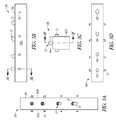
FIG. 1B is a top view of the implant analogy, in accordance with an example of the present disclosure;
FIG. 1C is a plan view of a first side of the implant analogy, in accordance with an example of the present disclosure;
FIG. 1D is a plan view of a second side of the implant analogy, in accordance with an example of the present disclosure;
FIG. 1E is a cross-sectional view of the implant analog taken along line1E-1E ofFIG. 1C;
FIG. 1F is a second cross-sectional view of the implant analog taken along line1F-1F ofFIG. 1D;
FIG. 2 is a perspective view of a model and various implant analogs, in accordance with an example of the present disclosure;
FIG. 3A is a top view of a model and a plurality of implant analogs, in accordance with an example of the present disclosure;
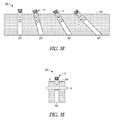
FIG. 3B is a first side view of the model and the plurality of implant analogs, in accordance with an example of the present disclosure;
FIG. 3C is second end view of the model and the plurality of implant analogs, in accordance with an example of the present disclosure;
FIG. 3D is a bottom view of the model and the plurality of implant analogs, in accordance with an example of the present disclosure;
FIG. 3E is a cross-sectional view of the model taken through one of the implant analogs, the cross-section taken alongline3E-3E ofFIG. 3B;
FIG. 3F is a second cross-sectional view of the model taken through one of the implant analogs, the cross-section taken alongline3F-3F ofFIG. 3C;
FIG. 4A is a top view of a model and a plurality of implant analogs, in accordance with another example of the present disclosure;
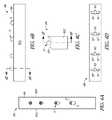
FIG. 4B is a first side view of the model and the plurality of implant analogs, in accordance with an example of the present disclosure;
FIG. 4C is second end view of the model and the plurality of implant analogs, in accordance with an example of the present disclosure;
FIG. 4D is a bottom view of the model and the plurality of implant analogs, in accordance with an example of the present disclosure;
FIG. 4E is a cross-sectional view of the model taken through one of the implant analogs, the cross-section taken alongline4E-4E ofFIG. 4B;
FIG. 4F is a second cross-sectional view of the model taken through one of the implant analogs, the cross-section taken alongline4F-4F ofFIG. 4C;
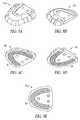
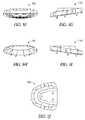
FIGS. 5A-5J are various views of a base in accordance with an example of the present disclosure;
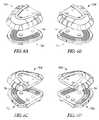
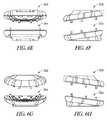
FIGS. 6A-6H are various views of the base ofFIGS. 5A-5J in conjunction with a second base and various positioning elements; and
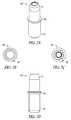
FIGS. 7A-7D are various views of positioning element, in accordance with an example of the present disclosure.
DETAILED DESCRIPTIONThe present disclosure describes a various embodiments of implant analogs as well as models adapted to receive the implant analogs therein. As discussed, the implant analogs can include a transverse component that extends through a main body of the implant analog. The transverse component can be used to aid in positioning, affixing, adjusting, and removing the implant analog within the model. Various examples of models are disclosed that can adapted to receive the implant analog including the transverse component. Each of the models can be configured to allow for positioning, affixing, adjusting, and removing the implant analog within the model. In further examples, a base and pins are disclosed that can be utilized with the model(s) and implant analogs.
FIG. 1A is a perspective view of animplant analog10.FIGS. 1B, 1C, and 1D provide plan views of theimplant analog10 from the top, a first side, and a second side, respectively.FIGS. 1E and 1F are cross-sections of the implant analog taken along lines indicated inFIGS. 1C and 1D. Theimplant analog10 can include amain body12 and atransverse component14. Themain body12 can include atransverse bore16 and acoronal end18. Thecoronal end18 can have anattachment feature20.
It should be noted that the implant analogs described in the following are equally suitable for single-tooth implants and for bridge implants, as well as for telescope crown and bridge work or zirconia-based restorations in the dental laboratory. With the appropriate working surface, they can be used for any implant system.
As illustrated inFIGS. 1A-1F, thetransverse component14 can comprise a pin that passes through themain body12.Main body12 can have a substantially cylindrical pin-like shape as illustrated inFIGS. 1A-1F. In other examples, not specifically illustrated, themain body12 andtransverse component14 can have other non-cylindrical shapes.
In particular, themain body12 is adapted with thetransverse bore16 extending therethrough (FIGS. 1A, 1D, and 1F). The transverse bore16 is adapted to receive thetransverse component14 therein. As illustrated inFIGS. 1D and 1F, the transverse bore16 can include a tapered outer portion to ease reception of thetransverse component14 therein.
Thecoronal end18 of themain body12 can be spaced from thetransverse bore16 andtransverse component14. Thecoronal end18 can be adapted with theattachment feature20. In the embodiment ofFIGS. 1A-1F, theattachment feature20 can comprise a counter bore having an attachment pattern (e.g., a hexagonal attachment pattern). It should be recognized that a plurality of different types of attachment features are anticipated including male type attachments (e.g., ball). It is also should be recognized that in some instances the main body can include a head that simulates an abutment or similar dental attachment feature. The head can be integral with (i.e. part of) the main body or can be a separate component.
FIG. 2 illustrates a portion of amodel100 and various examples ofimplant analogs10,110,210,310, and410. Themodel100, sometimes referred to as a cast or model, can be used to simulate the anatomy of the patient. In particular, a negative impression of the patent's jaw can be produced with an impression tray filled with impression compound, using system-specific impression posts as carriers. It is removed from the jaw and filled with a casting material that, after hardening, represents an accurate model of the patient's jaw. In place of implants, etc., the implant analog(s) are inserted into the model. The implant analogs are placed in the model with its working surface oriented and positioned by exact analogy with the implant in the patient's jaw.
Themodel100 can be formed with or disposed on abase102. Themodel100 can be configured to receive theimplant analogs10 therein. As illustrated inFIG. 2, twoimplant analogs10 are inserted in the model and have coronal ends exposed to a working surface104 of themodel100. The working surface104 is adapted to receive components that simulate abutments or other dental implant components. To accommodate theimplant analogs10, themodel100 can be provided with one or more primary bores (illustrated as receiving implant analogs10) and one or more transverse bores106. In the example illustrated inFIG. 2, eachtransverse bore106 is open to at least one side of themodel100 and communicates with a respective primary bore (or the implant analog filling the primary bore). In other examples, thetransverse bore106 may not open to a side surface of themodel100.
FIG. 2 illustrates additional embodiments of theimplant analogs110,210,310, and410. These examples are illustrated having varying sizes and varying attachment features (e.g., lobed female, male, etc.). The appropriate implant analog will be selected based upon various factors including the size, shape, abutment type desired, dentist preference, etc. For simplicity, the transverse components have been removed from theimplant analogs110,210,310, and410. However,transverse bores116,216,316, and416 are illustrated as extending through each of theimplant analogs110,210,310, and410, respectively.
FIGS. 3A-3F illustrate a highly schematic example of amodel500. Although described in reference to a model, in some instances, a bridge or separate component that can be removed from inserted in a model can also be used in a manner similar to as described as follows.FIGS. 3A, 3B, 3C, and 3D provide plan views of themodel500 from various sides including the top, first side, second side, and bottom.FIGS. 3E and 3F are cross-sections of the implant analog taken along lines indicated inFIGS. 3B and 3C. As illustrated inFIGS. 3D-3F, themodel500 can include a plurality ofprimary bores505 therein. Themodel500 can additionally include a plurality of transverse bores (each illustrated receiving the transverse component14).
As illustrated inFIGS. 3A-3F themodel500 can receive one ormore implant analogs10 therein. As shown inFIG. 3A, themain body12 of eachimplant analog10 can extend from the primary bore to be positioned at least partially outside a workingsurface504 of themodel500. This arrangement can allow thecoronal portion20 to receive a component that simulates an abutment or other type of dental implant feature. Similarly, thetransverse component14 can extend from transverse bore to be positioned at least partially outsideside surfaces503A and503B.
FIGS. 3B and 3C illustrate themodel500 fromsides503B and503C, respectively.FIG. 3D illustrates the bottom base interfacing portion of themodel500. Attachment features that would allow themodel500 to mount to a base (not shown) are not illustrated in the highly schematic depiction ofFIG. 3D.FIG. 3D andFIG. 3F illustrate that theprimary bores505 can be angled relative to the working surface504 (FIGS. 3A, 3B, 3C, 3E, and 3F) to varying degrees, and need not be substantially transverse thereto. Thus, the primary bores505 may be angled relative to one another in some instances. The nature of the angle can be determined based upon various factors including size constraints of the component installed along the working surface of the model.
As discussed, themodel500 can be configured to receive theimplant analogs10 therein. Themain body12 of eachimplant analog10 is affixed to themodel500 by thetransverse component14. The configuration of themodel500 and theimplant analogs10 can allow the process of positioning, affixing, and/or adjusting theimplant analogs10 within themodel500 to be simplified. In particular, thetransverse component14 can simply be grasped, pushed, and/or pulled with or without tools to remove thetransverse component14 from themodel500. This then allows themain body12 to be adjusted or removed from themodel500 as necessary. Additionally, as each of the transverse passages within themodel500 has a fixed relationship relative to the implant analogs and other portions of the model500 (e.g., working surface504), the arrangement allows for alignment of the implant analog in a desired position in addition to affixation.
FIGS. 4A-4F illustrate a highly schematic example of amodel600, according to another disclosed example. Although described in reference to a model, in some instances, a bridge or separate component that can be removed from inserted in a model can also be used in a manner similar to as described as follows.FIGS. 4A, 4B, 4C, and 4D provide plan views of themodel600 from various sides including the top, first side, second side, and bottom.FIGS. 4E and 4F are cross-sections of the implant analog taken along lines indicated inFIGS. 4B and 4C. As illustrated inFIGS. 4D-4F, themodel600 can include a plurality ofprimary bores605 therein. Themodel600 can additionally include a plurality of transverse bores607 (FIG. 4D).
As illustrated inFIGS. 4A-4F themodel600 can receive one ormore implant analogs10 therein. As shown inFIG. 4A, themain body12 of eachimplant analog10 can extend from the primary bore to be positioned at least partially outside a workingsurface604 of themodel600. This arrangement can allow thecoronal portion20 to receive (or potentially receive) a component that simulates an abutment or other type of dental implant feature. However, as illustrated inFIG. 4E, themodel600 can be configured such that eachtransverse component14 is received in the correspondingtransverse bore607. As will be understood, in some instances eachtransverse bore607 can include features such as tapered walls, detents, tabs, etc. that allow for affixation and retention of the correspondingtransverse component14, and thus, theimplant analog10 within themodel600. In other cases the addition of a component or head to theimplant analog10 can be used to affix theimplant analog10 by contacting workingsurface604 and forcing thetransverse component14 into contact with a top wall of thetransverse bore607.
FIGS. 4B and 4C illustrate themodel600 fromsides603B and603C, respectively.FIG. 4D illustrates the bottom base interfacing portion of themodel600. Attachment features that would allow themodel600 to mount to a base (not shown) are not illustrated in the highly schematic depiction ofFIG. 4D.FIG. 4D andFIG. 4F illustrate that theprimary bores605 andtransverse bores607 can be angled relative to the working surface604 (FIGS. 4A, 4B, 4C, 4E, and 4F). Thus, the primary bores605 andsecondary bore607 may be angled relative to one another in some instances. The nature of the angle can be determined based upon various factors including size constraints of the component installed along the working surface of the model.
As discussed, themodel600 can be configured to receive theimplant analogs10 therein. Themain body12 of eachimplant analog10 is affixed to themodel600 by thetransverse component14. The configuration of themodel600 and theimplant analogs10 can allow the process of positioning, affixing, and/or adjusting theimplant analogs10 within themodel600 to be simplified. In particular, thetransverse component14 can simply be grasped and/or pulled with or without tools to remove thetransverse component14 from themodel600. In other instances, themain body12 may simply be pushed to back the main body out along primary bore605 (and backtransverse component14 along transverse bore607). This then allows themain body12 to be adjusted or removed from themodel600 as necessary. Additionally, as each of the transverse passages within themodel600 has a fixed relationship relative to the implant analogs and other portions of the model600 (e.g., working surface604), the arrangement allows for alignment of the implant analog in a desired position in addition to affixation.
It should be noted that the base, models, implant analogs, and position defining elements described and subsequently described herein can comprise part of a digital model system. As previously discussed, the implant analogs can be configured with the transverse components to allow for precise positioning within the model and system. Additionally, the base can serve as the basis for accommodating various models. In some instances, the models and/or base can be produced by additive or subtractive manufacturing processes.
FIGS. 5A-5J andFIGS. 6A-6H provide views of abase702A (andbase702B inFIGS. 6A-6H) from various perspectives according to an example of the disclosure. As illustrated inFIGS. 5C-5E and 6A-6D, the base702 can have a plurality ofholes704 therein. Theholes704 are adapted to receive positioning elements (FIGS. 6A-6H andFIGS. 7A-7D) therein. Theholes704 are variously placed in thebase702A (and702B) such that different models can be accommodated. In particular, secure placement of the model can be achieved with positioning elements. The various holes allow the placement of the positioning elements to be adjusted such that positioning elements that would interfere with implant analogs can be moved or removed. Additionally, the desired stability of the model can be adjusted by introducing or removing positioning elements. In some instances, the base, implant analogs, and/or positioning elements can be saved in a digital form (or example in CAD based design software) such that the model can be created virtually before physical production. In some instances, the base can be installed (e.g., cast) without the use of assistive devices with suitable adapters in various articulators.
FIGS. 7A-7D illustrate one example of apositioning element800. The positioning element can have acoronal portion802, anapical portion804, and ashoulder806 therebetween. Theapical portion804 is adapted to be received in holes (e.g., holes704 in base702) in a base. Theshoulder806 is adapted to seat against a surface of the base to allow the positioning element to have a desired depth.Coronal portion802 can be adapted to be received in a model or an intermediary component has desired. Both thecoronal portion802 and theapical portion804 can be provided with attachment features to allow for ease of installation or removal or for other purposes.
The above Detailed Description includes references to the accompanying drawings, which form a part of the Detailed Description. The drawings show, by way of illustration, specific examples in which the invention can be practiced. These examples are also referred to herein as “examples.” Such examples can include elements in addition to those shown or described. However, the present inventor also contemplates examples in which only those elements shown or described are provided. Moreover, the present inventor also contemplates examples using any combination or permutation of those elements shown or described (or one or more aspects thereof), either with respect to a particular example (or one or more aspects thereof), or with respect to other examples (or one or more aspects thereof) shown or described herein.
In the event of inconsistent usages between this document and any documents so incorporated by reference, the usage in this document controls.
In this document, the terms “a” or “an” are used, as is common in patent documents, to include one or more than one, independent of any other instances or usages of “at least one” or “one or more.” In this document, the term “or” is used to refer to a nonexclusive or, such that “A or B” includes “A but not B,” “B but not A,” and “A and B,” unless otherwise indicated. In this document, the terms “including” and “in which” are used as the plain-English equivalents of the respective terms “comprising” and “wherein.” Also, in the following claims, the terms “including” and “comprising” are open-ended, that is, a system, device, article, composition, formulation, or process that includes elements in addition to those listed after such a term in a claim are still deemed to fall within the scope of that claim. Moreover, in the following claims, the terms “first,” “second,” and “third,” etc. are used merely as labels, and are not intended to impose numerical requirements on their objects.
The above Detailed Description is intended to be illustrative, and not restrictive. For example, the above-described examples (or one or more aspects thereof) may be used in combination with each other. Other examples can be used, such as by one of ordinary skill in the art upon reviewing the above Detailed Description. Also, in the above Detailed Description, various features may be grouped together to streamline the disclosure. This should not be interpreted as intending that an unclaimed disclosed feature is essential to any claim. Rather, inventive subject matter may lie in less than all features of a particular disclosed example. Thus, the following claims are hereby incorporated into the Detailed Description as examples or examples, with each claim standing on its own as a separate example, and it is contemplated that such examples can be combined with each other in various combinations or permutations. The scope of the invention should be determined with reference to the appended claims, along with the full scope of equivalents to which such claims are entitled.
The Abstract is provided to comply with 37 C.F.R. § 1.72(b), to allow the reader to quickly ascertain the nature of the technical disclosure. It is submitted with the understanding that it will not be used to interpret or limit the scope or meaning of the claims.