US10374920B2 - Communication media and methods for providing indication of signal power to a network entity - Google Patents
Communication media and methods for providing indication of signal power to a network entityDownload PDFInfo
- Publication number
- US10374920B2 US10374920B2US15/277,721US201615277721AUS10374920B2US 10374920 B2US10374920 B2US 10374920B2US 201615277721 AUS201615277721 AUS 201615277721AUS 10374920 B2US10374920 B2US 10374920B2
- Authority
- US
- United States
- Prior art keywords
- signal
- connector
- network entity
- plm
- information
- Prior art date
- Legal status (The legal status is an assumption and is not a legal conclusion. Google has not performed a legal analysis and makes no representation as to the accuracy of the status listed.)
- Active, expires
Links
Images


Classifications
- H—ELECTRICITY
- H04—ELECTRIC COMMUNICATION TECHNIQUE
- H04L—TRANSMISSION OF DIGITAL INFORMATION, e.g. TELEGRAPHIC COMMUNICATION
- H04L43/00—Arrangements for monitoring or testing data switching networks
- H04L43/08—Monitoring or testing based on specific metrics, e.g. QoS, energy consumption or environmental parameters
- H04L43/0805—Monitoring or testing based on specific metrics, e.g. QoS, energy consumption or environmental parameters by checking availability
- H04L43/0811—Monitoring or testing based on specific metrics, e.g. QoS, energy consumption or environmental parameters by checking availability by checking connectivity
- H—ELECTRICITY
- H04—ELECTRIC COMMUNICATION TECHNIQUE
- H04B—TRANSMISSION
- H04B10/00—Transmission systems employing electromagnetic waves other than radio-waves, e.g. infrared, visible or ultraviolet light, or employing corpuscular radiation, e.g. quantum communication
- H04B10/07—Arrangements for monitoring or testing transmission systems; Arrangements for fault measurement of transmission systems
- H04B10/075—Arrangements for monitoring or testing transmission systems; Arrangements for fault measurement of transmission systems using an in-service signal
- H04B10/079—Arrangements for monitoring or testing transmission systems; Arrangements for fault measurement of transmission systems using an in-service signal using measurements of the data signal
- H04B10/0795—Performance monitoring; Measurement of transmission parameters
- H04B10/07955—Monitoring or measuring power
- H—ELECTRICITY
- H04—ELECTRIC COMMUNICATION TECHNIQUE
- H04B—TRANSMISSION
- H04B17/00—Monitoring; Testing
- H04B17/30—Monitoring; Testing of propagation channels
- H04B17/309—Measuring or estimating channel quality parameters
- H04B17/318—Received signal strength
- H—ELECTRICITY
- H04—ELECTRIC COMMUNICATION TECHNIQUE
- H04L—TRANSMISSION OF DIGITAL INFORMATION, e.g. TELEGRAPHIC COMMUNICATION
- H04L41/00—Arrangements for maintenance, administration or management of data switching networks, e.g. of packet switching networks
- H04L41/06—Management of faults, events, alarms or notifications
- H04L41/0677—Localisation of faults
- H—ELECTRICITY
- H04—ELECTRIC COMMUNICATION TECHNIQUE
- H04L—TRANSMISSION OF DIGITAL INFORMATION, e.g. TELEGRAPHIC COMMUNICATION
- H04L43/00—Arrangements for monitoring or testing data switching networks
- H04L43/16—Threshold monitoring
Definitions
- Physical communication mediainclude a cable having one or more connectors for connecting the communication media to one or more network entities.
- a network entityincludes one or more mating connectors (e.g., jacks) for receiving a connector of the communication media.
- PLM systemsare systems designed to track connections between such communication media and a network entity, to provide network wide visibility to the physical layer connections of a managed network.
- Conventional PLM systemsdo not have visibility to the signals propagating through the physical communication media.
- a damaged (e.g., broken or cut) or otherwise defective communication mediamay prevent signals from propagating properly from one end of the communication media to the other. If both ends of such a defective communication media are connected to respective ports of respective network entities, the conventional PLM system may assume that the communication link is operating properly even though signals are not being sent properly between the respective ports.
- Some existing optical communication mediainclude a sensor within a connector of the communication media which can sense optical signals propagating through the connector of the communication media. Some such communication media also includes one or more LEDs on the connector which can be illuminated based on signals from the sensor to provide a visual indication to a technician within sight of the connector as to whether signals are propagating through the communication media. Such a visual indication provides an individual cable-by-cable indication of signals propagating through a communication media. These visual indications, however, do not provide a good network wide visibility to the signals propagating through the communication media.
- a communication mediacomprises one or more communication paths extending from a first end to a second end; and a first connector assembly terminating the first end of the one or more communication paths, the first connector assembly including a first physical layer management (PLM) interface that is isolated from signals on the one or more communication paths.
- PLMphysical layer management
- the first connector assemblyincludes a first signal sensor configured to sense signal power propagating through the first connector assembly to/from the one or more communication paths; a first programmable processor coupled to the first signal sensor and to the first PLM interface; and one or more first data storage devices, the one or more first data storage devices including first instructions which, when executed by the first programmable processor, cause the first programmable processor to receive a first signal from the first signal sensor corresponding to the signal power detected by the first signal sensor, and to send a first indication of the first signal power propagating through the first connector assembly, the first programmable processor configured to send the first indication over the first PLM interface to a first network entity.
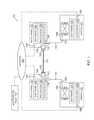
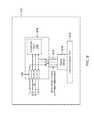
- FIG. 1is a block diagram of a system including physical communication media to provide an indication of a signal power propagating there through to a network entity according to at least one embodiment described herein.
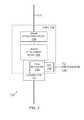
- FIG. 2is a block diagram of one high-level embodiment of a port having a connector of a communication media attached thereto.
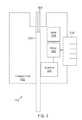
- FIG. 3is a diagram illustrating an example of one end of a communication media according to embodiments described herein.
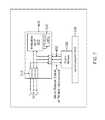
- FIG. 4is a block diagram of an example processor and signal sensor configuration for a connector according to embodiments described herein.
- FIG. 5is a block diagram of an example processor and signal sensor configuration for a connector according to additional embodiments described herein.
- FIG. 6is a block diagram of an example processor and signal sensor configuration for a connector according to further embodiments described herein.
- FIG. 7is a block diagram of an exemplary configuration for a connector according to embodiments described herein.
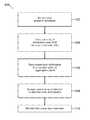
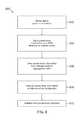
- FIG. 8is a flow diagram of an example method for monitoring signal power propagating through a communication medium according to embodiments described herein.
- FIG. 1is a block diagram of an example of a system 100 including physical communication media 110 configured to provide an indication of a signal power propagating there through to a network entity.
- the system 100comprises a plurality of network entities 101 , where each network entity 101 comprises one or more ports 104 .
- Physical communication media 110are used to communicatively couple the network entities 101 to one another.
- the indications of signal power provided by the communication media 110 to the network entity 101can be used to provide network wide visibility to the signals propagating through the communication media 110 in the network.
- Each segment of physical communication media 110 in the networkis attached to a respective port 104 .
- Each port 104is used to connect a segment of physical communication media 110 to the network entity 101 of which the port 104 is a part.
- network entities 101include, for example, rack-mounted connector assemblies (such as patch panels, distribution units, and media converters for fiber and copper physical communication media), wall-mounted connector assemblies (such as boxes, jacks, outlets, and media converters for fiber and copper physical communication media), and inter-networking devices (such as a switch, router, hub, gateway, access point, server computer, end-user computer, appliance computer (such as network-attached storage (NAS) device), and nodes of a storage area network (SAN) or other types of devices).
- rack-mounted connector assembliessuch as patch panels, distribution units, and media converters for fiber and copper physical communication media
- wall-mounted connector assembliessuch as boxes, jacks, outlets, and media converters for fiber and copper physical communication media
- inter-networking devicessuch as a switch, router, hub,
- Signals coupled by communication media 110 to a port 104can be received and processed by the network entity 101 (e.g., in an inter-networking device) or can be coupled to another port 104 and/or communication media 110 (e.g., in a rack-mounted connector assembly or wall-mounted connector assembly).
- Each physical communication media 110is a cable comprising one or more communication paths.
- the one or more communication pathscan be formed by one or more fiber optics or one or more copper wires.
- the physical communication media 110can be implemented using a simplex cable, a hybrid cable, a multi-channel cable, etc.
- Each physical communication media 110includes a first connector 102 terminating a first end of the one or more communication paths and a second connector 102 terminating a second (opposite) end of the one or more communication paths.
- the connectors 102can be a corresponding passive optical connector or an active optical module for converting between optical signals and electrical signals.
- connectors 102can be a corresponding electrical connector.
- each physical communication media 110is a connectorized media segment.
- a “connectorized” media segmentis a segment of physical communication media that includes a connector 102 at at least one end of the segment. The connectors 102 are used to facilitate the easy and repeated attachment and unattachment of the media segment 110 to a port 104 .
- Examples of connectorized media segmentsinclude CAT-5, 6, and 7 twisted-pair cables having modular connectors or plugs attached to both ends or optical cables having SC, LC, FC, LX.5, MTP, or MPO connectors.
- the techniques described herecan be used with other types of connectors including, for example, BNC connectors, F connectors, DSX jacks and plugs, bantam jacks and plugs, and MPO and MTP multi-fiber connectors and adapters.
- Example physical communication media 110include duplex fiber optic cable including one or more optical fibers.
- the one or more optical fiberscan include single-mode or multi-mode fibers.
- the fiber optic cablecan include a simplex cable, duplex cable, 12-fiber cable, 24-fiber cable and other fiber optic cables (such as hybrid fiber/copper cables).
- Other example physical communication media 110include coaxial cable.
- Still other examplesinclude multiple-fiber cable including a multi-fiber connector (for example, a suitable MPO or MTP connector) at each end of such cable.
- At least some of the network entities 101are designed for use with segments of physical communication media 110 that have identifier and attribute information (also referred to herein as “PLM information”) stored in or on them.
- the identifier and attribute informationis stored in or on the segment of physical communication media 110 in a manner that enables the stored information, while the segment is attached to a port 104 , to be read by a programmable processor 106 associated with the network entity 101 .
- Examples of PLM information that can be stored in or on a segment of physical communication media 110include, without limitation, an identifier that uniquely identifies that particular segment of physical communication media 110 (similar to an ETHERNET Media Access Control (MAC) address but associated with the physical communication media 110 and/or connector 102 attached to the physical communication media 110 ), a sub-identifier to identify the media end, or connector, a part number, a plug or other connector type, a cable or fiber type and length, a serial number, a cable polarity, a date of manufacture, a manufacturing lot number, information about one or more visual attributes of physical communication media 110 or a connector 102 attached to the physical communication media 110 (such as information about the color or shape of the physical communication media 110 or connector 102 or an image of the physical communication media 110 or connector 102 ), and other information used by an Enterprise Resource Planning (ERP) system or inventory control system.
- PLM informationcan also include testing or media quality or performance information which, for example, can be the results of testing that is performed when a particular segment of media
- the PLM information stored in or on the segment of physical communication media 110can be updated.
- the PLM information stored in or on the segment of physical communication media 110can be updated to include the results of testing that is performed when a segment of physical media 110 is installed or otherwise checked.
- such testing informationis supplied to an aggregation point 152 and stored in a data store maintained by the aggregation point 152 .
- the PLM information stored in or on the segment of physical communication media 110includes a count of the number of times that a connector 102 attached to a segment of physical communication media 110 has been inserted into port 104 .
- the count stored in or on the segment of physical communication media 110is updated each time the connector 102 is inserted into port 104 .
- This insertion count valuecan be used, for example, for warranty purposes (for example, to determine if the connector 102 has been inserted more than the number of times specified in the warranty) or for security purposes (for example, to detect unauthorized insertions of the physical communication media 110 ).
- each of the ports 104 of the network entities 101comprises a respective PLM interface via which the respective programmable processor 106 is able to determine if a physical communication media segment 110 is attached to that port 104 and, if one is, to read the identifier and attribute information (PLM information) stored in or on the attached segment (if such information is stored therein or thereon).
- PLM informationidentifier and attribute information
- the programmable processor 106 associated with each network entity 101is communicatively coupled to each of the PLM interfaces using a suitable bus or other interconnect.
- Each programmable processor 106is configured to execute software or firmware 140 that causes the programmable processor 106 to carry out various functions described below.
- Each programmable processor 106also includes suitable memory that is coupled to the programmable processor 106 for storing program instructions and data.
- the programmable processor 106determines if a physical communication media segment 110 is attached to a port 104 with which that processor 106 is associated and, if one is, to read the identifier and attribute information (PLM information) stored in or on the attached physical communication media segment 110 (if the segment 110 includes such information stored therein or thereon) using the associated PLM interface.
- PLM informationidentifier and attribute information
- Each programmable processor 106is also configured to communicate physical layer information to devices that are coupled to the IP network 156 .
- a PLM systemcan utilize PLM information obtained from communication media 110 as well as other information. This other information along with the PLM information is encompassed herein by the term “physical layer information” (PLI).
- Physical layer informationincludes information about the network entities 101 associated with that programmable processor 106 (also referred to here as “device information”) that is provided to a PLM system to manage the physical layer of the system.
- PLIalso includes information about any segments of physical media 110 attached to the ports 104 of those network entities 101 (“PLM information”). Thus, device information and PLM information are subsets of the physical layer information (PLI).
- the device informationincludes, for example, an identifier for each network entity 101 , a type identifier that identifies the network entity's type, and port priority information that associates a priority level with each port.
- the PLM informationincludes identity and attribute information that the programmable processor 106 has read from attached physical media segments 110 that have identifier and attribute information stored in or on it.
- the PLImay also include information about physical communication media 110 that does not have identifier or attribute information stored in or on it. This latter type of PLI can be manually input at the time the associated physical media segments 110 are attached to the network entity 101 (for example, using a management application executing on the programmable processor 106 that enables a user to configure and monitor the network entity 101 ).
- the system 100includes functionality that enables the physical layer information that the network entities 101 capture to be used by application-layer functionality outside of traditional physical-layer management application domain. That is, the physical layer information is not retained in a PLM “island” used only for PLM purposes but is instead made available to other applications.
- the system 100includes an aggregation point 152 that is communicatively coupled to the network entities 101 via the IP network 156 .
- the aggregation point 152includes functionality that obtains physical layer information from the network entities 101 (and other devices) and stores the physical layer information in a data store.
- the aggregation point 152can be used to receive physical layer information from various types of network entities 101 that have functionality for automatically reading information stored in or on the segment of physical communication media 110 . Examples of such network entities 101 are noted above. Also, the aggregation point 152 and aggregation functionality can also be used to receive physical layer information from other types of devices that have functionality for automatically reading information stored in or on the segment of physical communication media 110 . Examples of such devices include end-user devices—such as computers, peripherals (such as printers, copiers, storage devices, and scanners), and IP telephones—that include functionality for automatically reading information stored in or on the segment of physical communication media.
- end-user devicessuch as computers, peripherals (such as printers, copiers, storage devices, and scanners), and IP telephones—that include functionality for automatically reading information stored in or on the segment of physical communication media.
- the aggregation point 152can also be used to obtain other types of physical layer information.
- the aggregation point 152also obtains information about physical communication media segments 110 that is not otherwise automatically communicated to an aggregation point 152 .
- Such informationis information about physical communication media segments that are connected to devices that are not able to read media information that is stored in or on the media segments that are attached to their ports and/or that are not able to communicate such information to the aggregation point 152 (for example, because such devices do not include such functionality, because such devices are used with media segments that do not have media information stored in or on them, and/or because bandwidth is not available for communicating such information to the aggregation point 152 ).
- the informationcan include, for example, information about the devices themselves (such as the devices' MAC addresses and IP addresses if assigned to such devices), information indicating which ports of the devices are connected to which ports of other devices in the network (for example, other network entities), and information about the physical media attached to the ports of the devices.
- This informationcan be provided to the aggregation point 152 , for example, by manually entering such information into a file (such as a spreadsheet) and then uploading the file to the aggregation point 152 (for example, using a web browser) in connection with the initial installation of each of the various items.
- Such informationcan also, for example, be directly entered using a user interface provided by the aggregation point 152 (for example, using a web browser).
- the aggregation point 152can also obtain information about the layout of the building or buildings in which the network is deployed, as well as information indicating where each network entity 101 and physical media segment 110 is located within the building. This information can be, for example, manually entered and verified (for example, using a web browser) in connection with the initial installation of each of the various items.
- location informationincludes an X, Y, and Z location for each port or other termination point for each physical communication media segment (for example, X, Y, and Z location information of the type specified in the ANSI/TIA/EIA 606 -A Standard (Administration Standard For The Commercial Telecommunications Infrastructure)).
- the aggregation point 152can obtain and maintain testing, media quality, or performance information relating to the various segments of physical communication media that exist in the network.
- the testing, media quality, or performance informationcan be results of testing that is performed when a particular segment of media is manufactured and/or when testing is performed when a particular segment of media is installed or otherwise checked.
- the aggregation point 152can include the functionality for managing the PLM network itself, or can be a local agent for a remotely located management system.
- the aggregation point 152also includes functionality that provides an interface for external devices or entities to access the physical layer information maintained by the aggregation point 152 . This access can include retrieving information from the aggregation point 152 as well as supplying information to the aggregation point 152 .
- the aggregation point 152is implemented as “middleware” that is able to provide such external devices and entities with transparent and convenient access to the PLI.
- the aggregation point 152aggregates PLI from the relevant devices on the IP network 156 and provides external devices and entities with access to such PLI, the external devices and entities do not need to individually interact with all of the devices in the IP network 156 that provide PLI, nor do such devices need to have the capacity to respond to requests from such external devices and entities.
- the aggregation point 152in the embodiment shown in FIG. 1 , implements an application programming interface (API) by which application-layer functionality can gain access to the physical layer information maintained by the aggregation point 152 using a software development kit (SDK) that describes and documents the API.
- APIapplication programming interface
- SDKsoftware development kit
- the IP network 156is typically implemented using one or more inter-networking devices.
- an inter-networking deviceis a type of network entity 101 and can be configured to read PLM information that is stored in or on the segments of physical media 110 that are attached to its ports and to communicate the PLM information it reads from the attached segments of media 110 (as well as information about the inter-networking device itself) to the aggregation point 152 like any other network entity 101 described here.
- the aggregation point 152can be implemented on a standalone network node (for example, a standalone computer running appropriate software) or can be integrated along with other network functionality (for example, integrated with an element management system or network management system or other network server or network element). Moreover, the functionality of the aggregation point 152 can be distribute across many nodes and devices in the network and/or implemented, for example, in a hierarchical manner (for example, with many levels of aggregation points).
- the aggregation point 152 and the network entities 101are configured so that the aggregation point 152 can automatically discover and connect with the network entities 101 that provide PLI to an aggregation point 152 that are on the network 156 .
- an aggregation point 152is able to automatically discover the network entities 101 and start aggregating physical layer information for that network entity 101 without requiring the person installing the network entity 101 to have knowledge of the aggregation points 152 that are on the IP network 156 .
- the aggregation point 152when an aggregation point 152 is coupled to the IP network 156 , the aggregation point 152 is able to automatically discover and interact with devices that are capable of providing PLI to an aggregation point without requiring the person installing the aggregation point 152 to have knowledge of the devices that are on the IP network 156 .
- the physical-layer information resources described herecan be easily integrated into the IP network 156 .
- the programmable processors 106 in the network entities 101are communicatively coupled to the network 156 by including a respective “management” or “non-service” port 158 that is separate from the “service” ports 104 .
- one or more of the programmable processors 106 in the network entities 101can be communicatively coupled to the network 156 using one or more of the “service” ports 104 .
- the switchescan communicate with the aggregation point 152 using a suitable communication protocol (such as the Simple Network Management Protocol (SNMP)).
- SNMPSimple Network Management Protocol
- the aggregation point 152can aggregate the PLI from the network entities 101 and physical communication media to associate ports of network entities 101 (e.g., patch panels) with physical communication media.
- the PLIcan be used to associate a given port of a network entity with a given physical communication media and/or a particular connector of the physical communication media. Aggregating the PLI can include aggregating multiple such associations to determine physical layer connections between devices.
- the IP network 156can include one or more local area networks and/or wide area networks (including, for example, the Internet). As a result, the aggregation point 152 need not be located at the same site as the network entities 101 .
- IP networking techniquescan be used in deploying the system 100 of FIG. 1 .
- conventional security protocolscan be used to secure communications if they are communicated over a public or otherwise unsecure communication channel (such as the Internet or over a wireless communication link).
- each network entity 101 , each port 104 of each network entity 101 , and each media segment 110is individually addressable.
- IP addressesare used to individually address each network entity 101
- a virtual private network (VPN) dedicated for use with the various network entities 101can be used to segregate the IP addresses used for the network entities 101 from the main IP address space that is used in the IP network 156 .
- VPNvirtual private network
- the system 100also supports conventional physical layer management (PLM) operations such as the tracking of moves, adds, and changes of the segments of physical media that are attached to the ports 104 of the network entities 101 and providing assistance with carrying out moves, adds, and changes.
- PLMphysical layer management
- PLI provided by the aggregation point 152can be used to improve upon conventional “guided MAC” processes. For example, information about the location of the port 104 and the visual appearance (for example, the color or shape) of the relevant physical media segment 110 (or connector 102 attached thereto) can be communicated to a technician to assist the technician in carrying out a move, add, or change. This information can be communicated to a computer or smartphone used by the technician.
- the PLI functionality that resides in the system 100can also be used to verify that a particular MAC was properly carried out by checking that the expected physical media segment is located in the expected port 104 . If that is not the case, an alert can be sent to the technician so that the technician can correct the issue.
- the PLM functionality included in the system 100can also support conventional techniques for guiding the technician in carrying out a MAC (for example, by illuminating one or more light emitting diodes (LEDs) to direct a technician to a particular network entity 101 and/or to a particular port 104 or by displaying messages on a liquid crystal display (LCD) included on or near the network entity 101 .
- a MACfor example, by illuminating one or more light emitting diodes (LEDs) to direct a technician to a particular network entity 101 and/or to a particular port 104 or by displaying messages on a liquid crystal display (LCD) included on or near the network entity 101 .
- Other PLM functionsinclude keeping historical logs about the media 110 connected to the network entity 101 .
- the techniques described here for reading PLM information stored in or on a segment of physical communication media 110can be used in one or more end nodes of the network.
- computerssuch as, laptops, servers, desktop computers, or special-purpose computing devices such as IP telephones, IP multi-media appliances, and storage devices
- computerscan be configured to read PLM information that is stored in or on the segments of physical communication media 110 that are attached to their ports and to communicate the media information read from the attached segments of media 110 (as well as information about the devices themselves) to an aggregation point 152 as described here.
- FIG. 2is a block diagram of one high-level embodiment of a port 104 having a connector 102 of a communication media 110 attached thereto.
- Each port 104comprises a first attachment point 206 and a second attachment point 208 .
- the first attachment point 206is used to attach one or more communication paths 210 to the port 104
- the second attachment point 208is used to attach a segment of physical communication media 110 to the port 104 .
- the one or more communication paths 210can be part of a network entity 101 and connected to appropriate components within the network entity 101 .
- the first attachment point 206is located near the rear of the port 104 .
- the first attachment point 206is also referred to here as the “rear attachment point” 206 .
- the rear attachment point 206is configured to attach the one or more communication paths 210 to the port 104 in a semi-permanent manner.
- a semi-permanent attachmentis one that is designed to be changed relatively infrequently, if ever. This is also referred to sometimes as a “one-time” connection.
- suitable rear connectors 206include punch-down blocks (in the case of copper physical media) and fiber adapters, fiber splice points, and fiber termination points (in the case of optical physical media).
- the second attachment point 208is located near the front of the port 104 .
- the second attachment point 208is also referred to here as the “front attachment point” 208 .
- the front attachment point 208 for each port 104is designed for use with “connectorized” media segments 110 that have identifier and attribute information stored in or on them.
- the front attachment point 208is implemented using a suitable connector or adapter that mates with the corresponding connector 102 on the end of the media segment 110 .
- the connector 102is used to facilitate the easy and repeated attachment and unattachment of the media segment 110 to the port 104 .
- Examples of connectorized media segmentsinclude CAT-5, 6, and 7 twisted-pair cables having modular connectors or plugs attached to both ends (in which case, the front attachment point 208 is implemented using compatible modular jacks) or optical cables having SC, LC, FC, LX.5, MTP, or MPO connectors (in which case, the front attachment point 208 is implemented using compatible SC, LC, FC, LX.5, MTP, or MPO connectors or adapters).
- the techniques described herecan be used with other types of connectors including, for example, BNC connectors, F connectors, DSX jacks and plugs, bantam jacks and plugs, and MPO and MTP multi-fiber connectors and adapters.
- Each port 104communicatively couples the respective rear attachment point 206 to the respective front attachment point 208 .
- one or more communication paths 210 attached to the respective rear attachment point 206are communicatively coupled to any media segment 110 attached to the respective front attachment point 208 .
- each port 104is designed for use with one or more communication paths 110 and a media segment 110 that comprise the same type of communication path(s), in which case each port 104 communicatively couples the one or more communication paths 210 attached to the respective rear attachment point 206 to any media segment 110 attached to the respective front attachment point 208 at the physical layer level without any media conversion.
- each port 104communicatively couples the one or more communication paths 210 attached to the respective rear attachment point 206 to any media segment 110 attached to the respective front attachment point 208 in other ways (for example, using a media converter if the rear one or more communication paths 210 and the media segment 110 comprise different types of communication paths).
- the port 104is configured for use with media segments 110 that include a PLM interface 216 that, while the corresponding connector 214 is inserted into (or otherwise attached to) a front attachment point 208 of the port 104 , communicatively couples a storage device or other component(s) associated with the media 110 to a corresponding PLM interface 108 of the network entity 101 of which the port 104 is a part.
- the PLM interface 108 of the network entity 101is also referred to herein as a “media reading interface” 108 .
- a programmable processor 106 associated with the network entity 101can then obtain PLM information from the storage device or other component(s) associated with the media 110 .
- FIG. 1In one implementation of the embodiment shown in FIG.
- each connector 102itself houses the storage device or other component(s) and the PLM interface 216 can be implemented by incorporating appropriate electrical contacts in the connector 102 .
- the media reading interface 108can be implemented using appropriate mating electrical contacts in the port 104 .
- the storage device and other component(s)are housed within a housing that is separate from the connector 102 .
- the housingis configured so that it can be snapped onto the media segment 110 or the connector 102 , with the PLM interface 216 positioned relative to the connector 102 so that the PLM interface 216 will properly mate with the media reading interface 108 when the connector 102 is inserted into (or otherwise attached to) the front attachment point 208 .
- a four-line PLM interfaceis used, where the interface includes a single data line for reading and writing data, a power line for providing power to the storage device, a ground line for providing a ground level, and an extra line reserved for future use.
- a storage device that supports the UNI/O bus protocolis used, where the UNI/O bus protocol is used for communicating over the single data lead.
- QUAREOTM family of physical layer management productsthat are commercially available from TE Connectivity.
- the PLM interface and media reading interfacecan be implemented wirelessly.
- An implementation of such an exampleis a type of PLM technology that makes use of radio frequency identification (RFID) technology.
- RFIDradio frequency identification
- An RFID tagis attached to or integrated with a connector on a cable, fiber, or other segment of communication media. That is, with this type of PLM technology, the PLM interface and media reading interface are implemented over a wireless link using the RFID tag and a corresponding RFID reader on the network entity.
- the RFID tagis used to store information about the connector or segment of communication media along with other information.
- the RFID tagcan be read after the associated connector is inserted into a corresponding jack or other port of a network entity.
- other wireless linkscan be used. In this way, information about wired communication media, devices, systems, and/or networks can be transferred wirelessly between the communication media and the network entity.
- FIG. 3is a diagram illustrating an example of one end of a communication media 110 that is suitable for use in the system 100 of FIG. 1 .
- the connector 102is for optical communication media, which includes one or more fibers 308 .
- the connector 102includes a ferrule 388 that is aligned with a fiber 308 for coupling light into and out of the fiber 308 , and for mating with an alignment sleeve of a port 104 .
- the connector 102also comprises (or is attached to) a programmable processor 302 that is coupled to a storage device 304 .
- the programmable processor 302can include any suitable programmable processor, such as a microprocessor.
- the storage device 304can include, for example, an Electrically Erasable Programmable Read-Only Memory (EEPROM) or other non-volatile memory device.
- EEPROMElectrically Erasable Programmable Read-Only Memory
- the programmable processor 302 and the storage device 304can be on a single die, separate dies, or can be incorporated into a chip scale package.
- the PLM information described above for the communication media 110is stored in the storage device 304 .
- the storage device 304includes sufficient storage capacity to store such information.
- the programmable processor 302can be configured to communicate with a network entity 101 over the PLM interface 216 .
- the PLM interface 216while the corresponding connector 102 is inserted into a front connector of a port 104 , communicatively couples the programmable processor 302 to the corresponding media reading interface 108 so that the programmable processor 106 in the corresponding network entity 101 can communicate with the programmable processor 302 .
- the programmable processor 302can be secured to restrict unauthorized access to the PLM information on the storage device 304 . This can include restrictions on reading from the storage device 304 , as well as restrictions on storing data to the storage device 304 .
- access to the storage device 304 and/or firmware of the programmable processor 302 by an outside entity such as the programmable processor 106can be subject to providing a security code.
- the firmware of the programmable processor 302can be configured to implement an encryption algorithm to encrypt information sent over the PLM interface 216 .
- the programmable processor 106 on a corresponding network entity 101can be configured to provide such a security code and to perform encrypted communications with the programmable processor 302 in order to support such secure operation.
- Some information on the storage device 216can be non-secure and can be provided by the programmable processor 302 without a security code in an unencrypted form.
- the programmable processor 302is configured to communicate with external entities, such as programmable processor 106 using a bidirectional serial communication link using Manchester coding. In other examples, other communication schemes can be used.
- the connector 102also includes a signal sensor 306 configured to sense signal power propagating through a communication path of the media 110 of which the connector 102 is a part.
- the signal sensor 306can be configured to sense signal power propagating along the communication paths through the connector 102 .
- the processor 302 , storage device 304 , signal sensor 306 , and PLM interface 216are all embedded within the connector 102 .
- a respective processor 302 , storage device 304 , signal sensor 306 , and PLM interface 216can be included in one or more (e.g., all) connectors of a communication media 110 .
- a first processor 302 , first storage device 304 , first signal sensor 306 , and first PLM interface 216can be included a first connector 102 at a first end of a communication media 110 and a second processor 302 , second storage device 304 , second signal sensor 306 , and second PLM interface 216 can be included in a second connector 102 at a second end of the communication media 110 .
- the signal sensor 306is an optoelectronic sensor configured to sense light energy propagating along the communication paths of the media 110 and output an electrical signal indicative of the light energy.
- the signal sensor 306is configured to sense light energy propagating through a fiber 308 of the media 110 .
- multiple sensors 306can be included, one sensor 306 for each fiber 308 of the media 110 .
- the example connector 102 for optical communication media 110 shown in FIG. 3is a passive connector, active connectors which convert between and optical signal and an electrical signal can also be used. In examples in which light energy is sensed from multiple fibers 308 in a communication media 110 , multiple signal sensors 306 can be used (e.g., one signal sensor 306 per fiber 308 being sensed).
- media 110can be a wired media including one or more wires configured to propagate radio frequency (RF) electromagnetic signals.
- RFradio frequency
- Such wirescan be composed of, for example, copper.
- the signal sensoris an electromagnetic sensor configured to sense the RF electromagnetic energy propagating along the communication paths of the media 110 . That is, the signal sensor is configured to sense the RF electromagnetic energy propagating through one or more of the wires of the communication media 110 .
- multiple signal sensorscan be used (e.g., one signal sensor per wire being sensed).
- FIG. 4is a block diagram of an example processor 302 and signal sensor 306 configuration for a connector 102 .
- the PLM interface 216 of the connector 102includes four contacts.
- the four-contact PLM interfaceincludes a single data line for reading and writing data, a power line for providing power, a ground line for providing a ground level, and an extra line reserved for future use.
- Each of the four contacts of the PLM interface 216contacts a corresponding contact on a media reading interface 108 (e.g., a four-contact media reading interface).
- the UNI/O bus protocolis used for communicating over the single data lead.
- One example of such a four-contact PLM interfaceare the interfaces used in the QUAREOTM family of physical layer management products that are commercially available from TE Connectivity.
- the signal sensor 306 in the connector 102can be disposed in proximity to the fiber 308 or wire in which signal power is being sensed.
- the signal sensor 306is disposed such that the communication signals (optical or RF) can be sensed by the signal sensor 306 .
- the fiber 308 and signal sensor 306can be configured as described in International Patent Application Publication No. WO 2015/013264, filed on Jul. 22, 2014, titled “FIBER OPTIC CABLE AND CONNECTOR ASSEMBLY INCLUDING INTEGRATED ENHANCED FUNCTIONALITY”; and U.S. Patent Application Ser. No. 16/075,259, having a priority date of Feb. 4, 2016 and published as U.S. Patent Publication No.
- the signal sensor 306can be communicatively coupled to an input/output line of the processor 302 via signal lines 402 for communication of data from the sensor 306 to the processor 302 corresponding to signals sensed by the sensor 306 .
- the signal lines 402can also be used to communicate commands from the processor 302 to the sensor 306 to control operation of the sensor 306 .
- the communications between the processor 302 and the sensor 306can be either analog or digital depending on the type of signals supported by the sensor 306 .
- the signal sensor 306can also be coupled to the power (Vdd) and ground (Vss) contacts of the PLM interface 216 in order to receive operating power therefrom.
- the processor 302can be coupled to the power (Vdd) and ground (Vss) contacts of the PLM interface 216 to receive operating power therefrom. Additionally, the processor 302 can be coupled to a data contact of the PLM interface 216 to communicate data to/from a network entity 101 over the PLM interface 216 .
- the processor 302can be configured to implement the UNI/O communication protocol over the data contact of the PLM interface 216 .
- the processor 302is a microcontroller having the storage device 304 integrated therein.
- Such a microcontrollercan be an off-the-shelf microcontroller or a proprietary application specific microcontroller.
- the processor 302emulates a storage device in communications over the PLM interface 216 , such that a network entity 101 that is configured to read/write to a storage device through that entity's 101 media reading interface 108 can interact with the processor 302 as though the network entity 101 were interacting with a storage device.
- the processor 302can emulate the addressable space, read-write/read-only partitions, and Key, Length, Value (KLV) data structures that the network entity 101 is configured to access over its media reading interface 108 . Examples of such storage device emulation are described in United States Patent Application Publication No.
- the processor 302 and PLM interface 216can be mounted on a substrate 404 (e.g., circuit board), and the signal sensor 306 can be mounted separately from the substrate 404 .
- the signal lines 402 , power, ground lines for the signal sensor 306can be included within an appropriate physical communication medium such as a micro ribbon cable or printed interconnect that connects to appropriate contacts 406 on the substrate 404 .
- the contacts 406 on the substrate 404are connected to respective interconnects that are routed through the substrate 404 to couple to the appropriate item.
- the signal sensor 306can comprise a PIN-TIA optoelectronic sensor.
- FIG. 5is a block diagram of another example processor 302 and signal sensor 306 configuration for a connector 102 .
- the PLM interface 216 of the connector 102includes three contacts.
- the three-contact PLM interfaceincludes a single data line for reading and writing data, a power line for providing power, a ground line for providing a ground level.
- the components in this three-contact configurationcan be connected and can operate similar to the four-contact configuration described with respect to FIG. 4 .
- FIG. 6is a block diagram of yet another example processor 302 and signal sensor 306 configuration for a connector 102 .
- the PLM interface 216 of the connector 102includes four contacts, however, two contacts are used for data communication instead of a single contact as described with respect to FIG. 4 .
- the four-contact PLM interfaceincludes a bi-directional data line (SDA) for reading and writing data along with a uni-directional data line, a power line for providing power, and a ground line for providing a ground level.
- the processor 302is configured to communicate using the I-squared-C (I2C) communication protocol over the bi-directional data line.
- I2CI-squared-C
- FIG. 7is a block diagram of yet another example configuration for a connector 102 .
- the connectorincludes one or more LEDs 702 for providing visual indications to an operator in view of the connector 102 .
- the one or more LEDs 702can be embedded in the connector 102 in manner such that the one or more LEDs 702 are visible to a technician when the connector 102 is mated with a port 104 .
- the one or more LEDs 702include a tri-color LED.
- the one or more LEDs 702are coupled to the processor 302 , and the processor 302 is configured to provide signals to the one or more LEDs 702 to control the operation thereof.
- the processor 302can control the operation of the one or more LEDs to provide visual indications to an operator in view of the connector 102 as to the signals propagating through the connector 102 .
- the processor 302can use fuzzy logic control to indicate high power detected on the communication path (e.g., fiber 308 ) with a first color (e.g., green), indicate nominal power on the communication path with a second color (e.g., yellow), and indicate low power or simply any power detected by a third color (e.g., red). Any appropriate visual indication scheme including different colors and/or on/off pattern can be used.
- the one or more LEDs 702can also be used as indicators to technicians to prevent them from removing a communication medium 110 that may be in service.
- the one or more LEDs 702can be used to indicate to a technician which cable is to be removed by showing a color and/or on/off pattern on the one or more LEDs 702 of the cable, wherein the color and/or on/off pattern is not used to indicate normal signal flow on the communication medium 110 .
- the other components shown in FIG. 7can be connected and operate similarly to the components discussed with respect to FIG. 5 .
- one or more LEDs 702are included in the configurations shown in FIGS. 4 and 7 and are connected and operate similarly to that described above.
- the one or more LEDscan be controlled as described in U.S. Patent Application Ser. No. 16/075,259, having a priority date of Feb. 4, 2016 and published as U.S. Patent Publication No. US 2019/0052357A1, titled “APPARATUS FOR MONITORING FIBER SIGNAL TRAFFIC AT A FIBER CONNECTOR”, which is hereby incorporated herein by reference.
- FIG. 8is a flow diagram of an example method 800 of monitoring signal power propagating through a communication medium using any of the above configurations of a processor 302 and signal sensor 306 in a connector 102 .
- the signal sensor 306is configured sense signal power (e.g., optical power or RF power) present in the communication path (e.g., fiber 308 ) of a communication medium 110 (e.g., via a connector 102 ) (block 802 ).
- signal powere.g., optical power or RF power
- the signal sensor 306is configured to sense whether or not signal power is present in the communication path at a level above a threshold.
- the signal sensor 306can send a signal to the processor 302 indicative of whether the signal power present in the communication path at that time is above the threshold or not.
- the thresholdcan be at a level such that the signal sensor 306 indicates generally whether or not a communication signal is present in the communication path.
- the signal sensor 306is configured to sense multiple power-present power levels.
- a power-present power levelis a power level that indicates that at least some power is present in the communication path.
- the signal sensor 306senses signal power in the communication path and provides either an indication that the power level of the signal is below a minimum threshold (no power is present) or an indication of which of the multiple power-present power levels the signal power in the communication path corresponds to.
- the multiple power-present power levelscan be indicated in any appropriate manner such as by digital number 01 , 02 , 03 , etc. or by an analog signal.
- the processor 302can be configured to receive the signal from the signal sensor 304 indicating a power level of a signal propagating in the communication medium 110 . In response to the signal, the processor 302 can store information indicative of the power level at that time (e.g., with an indication of a time to which the sensed power corresponds) in the associated memory 304 . Instead of, or in addition to storing information, the processor 302 can send a signal over the PLM interface 216 to a network entity 101 (block 804 ). The signal can include an indication of the power level sensed by the signal sensor 306 . The signal from the processor 302 to the network entity 101 can be sent immediately upon receiving a signal at the processor 302 from the signal sensor 306 , or can be sent at a later time. The signal can be initiated by the processor 302 , or can be in response to a signal from the network entity 101 .
- An example communication meansincludes sending read and write requests over the PLM interface 108 / 216 from the network entity 101 to the processor 302 to obtain information from and provide information to the processor 302 .
- the processor 302can emulate a storage device and can provide information to the network entity 101 in response to a read request and can store information in its associate storage device 304 in response to a write request.
- Another example communication meansincludes using the I2C communication protocol. Examples of such communication means between a network entity 101 and a processor 302 are provided in the other patent applications identified and incorporated by reference herein.
- the processor 302can provide information indicative of the power level sensed by the signal sensor 306 to the network entity 101 .
- the network entity 101can use the power-level information locally and/or can send the power-level information to another device over the network 156 (block 806 ).
- the network entity 101can send the power-level information to the aggregation point 152 .
- Other informationcan also be included with the power-level information such as the time to which the power-level information corresponds, identification information for the communication media 110 from which the power-level information was obtained, identification of the network entity 101 and/or port thereof to which the communication media 110 is connected, and/or other information.
- the power-level informationcan be used to determine whether communication signals are properly propagating through the corresponding communication medium 110 (block 808 ).
- the network entity 101 and/or aggregation point 152can analyze the information to determine whether signals are properly propagating through the corresponding communication medium 110 .
- the determination as to whether signals are properly propagating through the communication medium 110can be made in any appropriate manner.
- the power-level informationcan be compared with an expected power level. If the power-level information is lower than a lowest expected power level, a determination can be reached that signals are not properly propagating through the communication medium 110 .
- the expected power levelcan be obtained from a priori information indicating the proper power level of signals in the communication medium 110 and/or can incorporate information such as whether signals were being sent over the communication medium 110 at that time.
- the determination as to whether signals are properly propagating through the communication medium 110can be made based on a single power-level reading, or can be made based on multiple power-level readings over time.
- the network entity 101 and/or aggregation point 152can take appropriate action based on the determination (block 810 ). Such action can include generating an alert to a technician, increased or maintained monitoring of the communication medium 110 , routing of communication signals to avoid the communication medium 110 , and/or other actions.
- the determination as to whether signals are properly propagatingcan be made based on power-level readings from both ends of a communication medium 110 .
- a first signal sensor 306 in a first connector 102 on a first end of the communication medium 110can obtain a first one or more power-level readings and provide information based thereon to a first processor 302 in the first connector 102 .
- the first processor 302can send first power-level information on the first one or more power-level readings to a first network entity 101 to which the first connector 102 is connected.
- a second signal sensor 306 in a second connector 102 on a second end of the communication medium 110can obtain second one or more power-level readings to provide information based thereon to a second processor 302 in the second connector 102 .
- the second processor 302can send second power-level information on the second one or more power-level readings to a second network entity 101 to which the second connector 102 is connected.
- the first power-level information and the second power-level informationcan be aggregated to determine whether signals are properly propagating through the communication medium 110 .
- the first-power level information and second power-level informationcan be aggregated in the first network entity 101 , the second network entity 101 , another network entity, and/or the aggregation point 152 .
- PLM informationcan be used to determine that the first power-level information and the second power-level information were obtained from different ends of a common communication medium 110 .
- PLM informationcan be used to associate a first port 104 to which the first connector 102 is connected with a second port 104 to which the second connector 102 is connected.
- the first and second power-level informationcan also be associated with the respective ports 104 .
- the first and second power-level informationcan be associated directly with an identifier and/or sub-identifiers for the communication medium 110 . Other manners of using PLM information are also possible.
- the first and second power-level informationcan be used to distinguish a direction of a signal through the communication medium 110 .
- two power-level readings obtained at times corresponding to the length of time of propagation of the signal from one end to the other end of the communication medium 110e.g., it may be assumed that the time in which the signal is at both ends is the same
- the power-level reading of the two having the higher powercan be determined to be the end in which the signal was transmitted into.
- the direction of travel of the signalcan be used in any appropriate manner, such as using the direction of the signal to determine the lowest expected power level in the determination as to whether the power level is below the lowest expected power level.
- the lowest expected power level for a signal at the transmitting end of the communication medium 110 for that signalcan be higher than the lowest expected power level for a signal at the receiving end of the communication medium 110 .
- one or more of the signal sensors 306themselves can distinguish a direction in which a signal is propagating through a corresponding communication medium 110 .
- a signal sensor 306could distinguish between signals propagating in different directions by, for example, being angled within the communication medium 110 with respect to the path of the signals (e.g., toward one direction and away from the other), or by using the refractive index and total internal reflection properties of the communication medium 110 (in a fiber optic cable example) such that the signal sensor 306 senses light in only one of the directions or significantly reduces the light sensed from the other direction such that light coming from the other direction can be identified based on the low power level.
- Other examples of such a signal sensor 306are also possible. If the direction in which the signal sensor 306 senses light is known a priori, this direction can be taken into account by the processor 302 and/or aggregation point 152 to utilize the direction information for a power-level reading.
- the existing PLM interface, and the existing mechanism of obtaining and aggregating information from a connector 102 of a communication medium 110can be utilized in the manners described herein to provide visibility to the power-level of signals propagating through one or more communication mediums 110 .
- network entities 101 and aggregating point 152do not need additional hardware, and may not need additional software to obtain the power-level information.
- switching one or more existing communication mediums 110 in a PLM equipped system 100 with communication mediums 110 equipped with the functionality described hereinmay enable visibility to the power-level of the signals propagating through those communication mediums 110 as described herein. This can be especially advantages for connections of communication mediums 110 to a patch panel. Using the processes described herein at a PLM equipped patch panel can provide visibility to the power of signals propagating in communication mediums 110 attached to a patch panel.
- the aggregation point 152can be configured to aggregated the power-level information from various network entities 101 and maintain a link power-level database of the system 100 .
- the link power-level databasecan provide a centralized location in which a network entity, the aggregation point 152 , another entity, and/or a system manager can obtain information regarding the managed links in the system 100 .
- the aggregation point 152can repeatedly (e.g., periodically) poll each of the managed network entities 101 in the system 100 to obtain updated power-level information (possibly along with other PLM information) regarding the connectors 102 /communication mediums 110 connected thereto.
- Communication between the aggregation point 152 and network entities 101can occur through any appropriate means including through a layer 2 SNMP request (e.g., a request for a MIB). Examples of communication means between an aggregation point 152 and network entity 101 are provided in the other patent applications identified and incorporated by reference herein.
- a centralized management center(e.g., the same management center used for other PLM information) can be used to provide alerts to a system manager regarding a change in state (expected and/or unexpected) of a power-level of a link in the system 100 .
- the centralized management centercan indicate that a link power is below or has dropped below a threshold, is above or has risen above a threshold, has changed to a functioning (i.e., signals are properly propagating), partially functioning (i.e., signals are degraded), or non-functioning (i.e., signals are not properly propagating) state, and/or that a change in power-level for a link has occurred unexpectedly.
- An unexpected changecan include a change in a link that is not scheduled for maintenance.
- a network entity 101can request power-level information (possibly in addition to other PLM information) from one or more connectors 102 connected to respective ports 104 thereof in response to a request from another entity (e.g., the aggregation point 152 ) or can request the power-level information for other reasons. These other reasons can include maintaining a local power-level database (e.g., for providing to the aggregation point 152 ).
- the processor 302 in a connector 102can be configured to provide power-level information to the network entity 101 or cause the network entity 101 to request power-level information from the connector 102 without having received a corresponding request signal from the network entity 101 . That is, the processor 302 can push the power-level information to the network entity 101 .
- the processor 302can push the power-level information on a periodic basis to keep the network entity 101 informed of the current power-level.
- the processor 302can provide reduced or no pushes of power-level information if the power-level of the signals are within an expected range (e.g., above a threshold), and can provide increased pushes of power-level information if the power-level of the signals is outside of the expected range.
- the fourth previously unused contact of the four-contact PLM interface 216 described with respect to FIG. 4can be used as an interrupt line for the processor 302 to interrupt the network entity 101 to push power-level (and possibly other information) thereto.
- the network entity 101can operate similarly to any of the above manners to push information to the aggregation point 152 regardless of how or whether the processor 302 is pushing information to the network entity 101 .
- the network entity 101 or another entitycan use the power-level information to analyze a transmitter/receiver (e.g., an optical transceiver) to determine whether the transmitter/receiver is operating properly.
- a transmitter/receivere.g., an optical transceiver
- the network entity 101can use the power-level information to analyze launch and receive power of an optical transmitter/receiver.
- the processor 302can be configured to send commands or data to the associated signal sensor 306 to adjust a parameter of operation of the signal sensor 306 .
- the processor 302could send calibration values to adjust operation of the sensor 306 .
- Such a commandcan be initiated by the processor 302 or can be in response to a command from a network entity 101 .
- the aggregation point 152can communicate through the network entity 101 to the processor 302 to cause the processor 302 to control the one or more LEDs 702 , if present, to indicate a change request (e.g., move/replace) for the connector 102 .
- a change requeste.g., move/replace
- Example 1includes a communication media comprising: one or more communication paths extending from a first end to a second end; a first connector assembly terminating the first end of the one or more communication paths, the first connector assembly including a first physical layer management (PLM) interface that is isolated from signals on the one or more communication paths, the first connector assembly including: a first signal sensor configured to sense signal power propagating through the first connector assembly to/from the one or more communication paths; a first programmable processor coupled to the first signal sensor and to the first PLM interface; and one or more first data storage devices, the one or more first data storage devices including first instructions which, when executed by the first programmable processor, cause the first programmable processor to receive a first signal from the first signal sensor corresponding to the signal power detected by the first signal sensor, and to send a first indication of the first signal power propagating through the first connector assembly, the first programmable processor configured to send the first indication over the first PLM interface to a first network entity.
- PLMphysical layer management
- Example 2includes the communication media of Example 1, wherein the first instructions cause the first programmable processor to include in the first indication whether or not the signal sensor detected signal power in the first connector assembly at a first time.
- Example 3includes the communication media of any of Examples 1-2, wherein the first instructions cause the first programmable processor to include in the first indication a power level of the signal power detected in the first connector assembly, wherein the power level is one of multiple power-present power levels.
- Example 4includes the communication media of any of Examples 1-3, whereby one of the first network entity, another network entity, or an aggregation point can determine whether signals are propagating from the second end to the first end of the communication media based on the first indication.
- Example 5includes the communication media of any of Examples 1-4, wherein the first instructions cause the first programmable processor to: receive a command over the first PLM interface instructing the first programmable processor to adjust a parameter of the first signal sensor; and send a signal to the first signal sensor to adjust the parameter in response to the command.
- Example 6includes the communication media of any of Examples 1-5, wherein the first network entity includes one of an active optical module, a patch panel, a switch, a router, or other network entity.
- Example 7includes the communication media of any of Examples 1-6, wherein the first signal sensor is an optical sensor configured to sense light energy propagating through the first connector assembly to/from the one or more communication paths.
- the first signal sensoris an optical sensor configured to sense light energy propagating through the first connector assembly to/from the one or more communication paths.
- Example 8includes the communication media of any of Examples 1-6, wherein the first signal sensor is an electromagnetic sensor configured to sense electromagnetic energy propagating through the first connector assembly to/from the one or more communication paths.
- the first signal sensoris an electromagnetic sensor configured to sense electromagnetic energy propagating through the first connector assembly to/from the one or more communication paths.
- Example 9includes the communication media of any of Examples 1-8, wherein the first instructions cause the first programmable processor to monitor the power level of the signals in the first connector assembly and to send an alert to the first network entity in response to the power level dropping below a threshold.
- Example 10includes the communication media of any of Examples 1-9, wherein the first instructions cause the first programmable processor to provide PLM information to the first network entity, whereby an aggregation point can associate a first port on the first network entity to which the first connector assembly is inserted with the first connector assembly or the communication media using the PLM information.
- Example 11includes the communication media of any of Examples 1-10, comprising: a second connector assembly terminating the second end of the one or more communication paths, the second connector assembly including a second physical layer management (PLM) interface that is isolated from signals on the one or more communication paths, the second connector assembly including: a second signal sensor configured to sense signal power propagating through the second connector assembly to/from the one or more communication paths; a second programmable processor coupled to the second signal sensor and to the second PLM interface; and one or more second data storage devices, the one or more second data storage devices including second instructions which, when executed by the second programmable processor, cause the second programmable processor to receive a second signal from the second signal sensor corresponding to the signal power detected by the second signal sensor, and to send a second indication of the second signal power propagating through the second connector assembly, the second programmable processor configured to send the second indication over the second PLM interface to a second network entity, whereby an aggregation point can determine whether signals are propagating over the one or more communication paths between the first end and the second
- Example 12includes the communication media of any of Examples 9-11, wherein the first instructions cause the first programmable processor to provide PLM information to the first network entity, wherein the second instructions cause the second programmable processor to provide PLM information to the second network entity, whereby an aggregation point can associate a first port on the first network entity to which the first connector assembly is inserted with a second port to which the second connector assembly is inserted based on the PLM information provided by the first and second programmable processors.
- Example 13includes the communication media of any of Examples 1-12, wherein the first signal sensor and the first programmable processor obtain operating power over the PLM interface.
- Example 14includes a system comprising: a first network entity having a first port; an aggregation point in communication with the first network entity over a network; a cable assembly including: one or more communication paths extending from a first end to a second end; a first connector terminating the first end of the one or more communication paths, the first connector connected to the first port, wherein the first connector includes a first physical layer management (PLM) interface that is isolated from signals on the one or more communication paths, the first connector including: a first signal sensor configured to sense power of a communication signal propagating through the first connector; a first programmable processor coupled to the first signal sensor and to the first PLM interface; and one or more first data storage devices, the one or more first data storage devices including first instructions which, when executed by the first programmable processor, cause the first programmable processor to receive a first signal from the first signal sensor corresponding to the signal power detected by the first signal sensor, and to send a first indication of the first signal power propagating through the first connector over the first PLM interface to the
- Example 15includes the system of Example 14, comprising: a second network entity having a second port, wherein the aggregation point is in communication with the second network entity over the network; wherein the cable assembly includes: a second connector terminating the second end of the one or more communication paths, the second connector connected to the second port, wherein the second connector includes a second physical layer management (PLM) interface that is isolated from signals on the one or more communication paths, the second connector including: a second signal sensor configured to sense power of a communication signal propagating through the second connector; a second programmable processor coupled to the second signal sensor and to the second PLM interface; and one or more second data storage devices, the one or more second data storage devices including second instructions which, when executed by the second programmable processor, cause the second programmable processor to receive a second signal from the second signal sensor corresponding to the signal power detected by the second signal sensor, and to send a second indication of the second signal power propagating through the second connector over the second PLM interface to the second network entity; wherein the second network entity is configured to
- Example 16includes the system of Example 15, wherein the first instructions cause the first programmable processor to provide first PLM information identifying one of the first connector or the cable assembly to the first network entity, wherein the first network entity provides third information based on the first PLM information to the aggregation point, wherein the first network entity provides fourth information identifying the first port to the aggregation point, and indicating that the third information corresponds to a cable assembly connected to the first port, wherein the second instructions cause the second programmable processor to provide second PLM information identifying one of the second connector or the cable assembly to the second network entity, wherein the second network entity provides fifth information based on the second PLM information to the aggregation point, wherein the second network entity provides sixth information identifying the second port to the aggregation point, and indicating that the fifth information corresponds to a cable assembly connected to the second port, wherein the aggregation point can associate the first port with the second port based on the third, fourth, fifth, and sixth information.
- Example 17includes the system of any of Examples 14-16, wherein the aggregation point is configured to receive multiple items of information, each indicating a signal power propagating through a respective connector of a cable assembly, and to maintain a link database indicating whether or not a plurality of communication links are functioning based on the items of information.
- Example 18includes the system of Example 17, wherein the aggregation point is configured to generate an alert in response to any of the communication links switching to a non-functioning state unexpectedly.
- Example 19includes the system of any of Examples 17-18, wherein the aggregation point is configured to repeatedly poll a plurality of network entities to monitor the signal power propagating through respective connectors coupled to the network entities in order to maintain the link database.
- Example 20includes the system of Example 19, wherein in response to receiving a poll from the aggregation point, each of the plurality of network entities is configured to request updated signal power information from a programmable processor in each PLM managed connector connected to a PLM managed port of the respective network entity.
- Example 21includes a method of monitoring a signal power propagating through a cable assembly, the method comprising: sensing from within the cable assembly a first power of a first signal propagating through a first connector of the cable assembly, the first signal propagating to/from one or more communication paths of the cable assembly; and sending a first signal indicative of the first power from the cable assembly to a first network entity.
- Example 22includes the method of Example 21, wherein sending a first signal includes sending the first signal over a first PLM interface of the cable assembly to the first network entity.
- Example 23includes the method of any of Examples 21-22, wherein sensing includes sensing whether or not signal power is present in the first connector assembly at a first time, wherein sending the first signal includes sending a first signal indicating whether or not signal power is present at the first time.
- Example 25includes the method of any of Examples 21-23, comprising: determining at one of the first network entity, another network entity, or an aggregation point, whether signals are propagating from a second end of the cable assembly to a first end of the cable assembly based on the signal from the cable assembly, wherein the first connector is at the first end of the cable assembly.
- Example 25includes the method of any of Examples 21-25, comprising: distinguishing between a signal propagating in a first direction through the cable assembly and a signal propagating in a second direction through the cable assembly.
- Example 26includes the method of any of Examples 21-25, wherein sensing includes sensing light energy propagating through the first connector.
- Example 27includes the method of any of Examples 21-25, wherein sensing includes sensing electromagnetic energy propagating through the first connector.
- Example 28includes the method of any of Examples 21-27, comprising: monitoring from within the cable assembly the power level of signals in the first connector assembly; and sending an alert from the cable assembly to the first network entity in response to the power level dropping below a threshold.
- Example 29includes the method of any of Examples 21-28, comprising: sensing from within the cable assembly a second power of a second signal propagating through a second connector of the cable assembly, the second signal propagating to/from the one or more communication paths of the cable assembly; sending a second signal indicative of the second power from the cable assembly to a second network entity; and determining whether signals are propagating in both directions over the cable assembly based on the first signal and the second signal.
- Example 30includes the method of Example 29, comprising: sending first PLM information from the first connector to the first network entity; sending second PLM information from the second connector to the second network entity; sending the first PLM information from the first network entity to an aggregation point; sending the second PLM information from the second network entity to the aggregation point; and associating a first port on the first network entity to which the first connector is inserted with a second port on the second network entity to which the second connector is inserted based on the first and second PLM information.
- Example 31includes the method of any of Examples 21-30, comprising: receiving a command at the cable assembly from the first network entity to adjust a parameter for sensing signals propagating through the first connector; and adjusting the parameter in response to the command.
- Example 32includes the method of any of Examples 21-31, comprising: monitoring a plurality of communication links based on signals from a respective sensor included within a respective cable assembly corresponding to each of the plurality communication links; and generating an alert in response to any of the plurality of communication links switching to a non-functioning state unexpectedly.
- Example 33includes the method of any of Examples 21-32, comprising: repeatedly polling the cable assembly to monitor signal power propagating through the first connector over time.
Landscapes
- Engineering & Computer Science (AREA)
- Computer Networks & Wireless Communication (AREA)
- Signal Processing (AREA)
- Physics & Mathematics (AREA)
- Electromagnetism (AREA)
- Environmental & Geological Engineering (AREA)
- Quality & Reliability (AREA)
- Small-Scale Networks (AREA)
Abstract
Description
Claims (33)
Priority Applications (1)
| Application Number | Priority Date | Filing Date | Title |
|---|---|---|---|
| US15/277,721US10374920B2 (en) | 2015-10-08 | 2016-09-27 | Communication media and methods for providing indication of signal power to a network entity |
Applications Claiming Priority (2)
| Application Number | Priority Date | Filing Date | Title |
|---|---|---|---|
| US201562238762P | 2015-10-08 | 2015-10-08 | |
| US15/277,721US10374920B2 (en) | 2015-10-08 | 2016-09-27 | Communication media and methods for providing indication of signal power to a network entity |
Publications (2)
| Publication Number | Publication Date |
|---|---|
| US20170104649A1 US20170104649A1 (en) | 2017-04-13 |
| US10374920B2true US10374920B2 (en) | 2019-08-06 |
Family
ID=58488365
Family Applications (1)
| Application Number | Title | Priority Date | Filing Date |
|---|---|---|---|
| US15/277,721Active2037-06-20US10374920B2 (en) | 2015-10-08 | 2016-09-27 | Communication media and methods for providing indication of signal power to a network entity |
Country Status (3)
| Country | Link |
|---|---|
| US (1) | US10374920B2 (en) |
| EP (1) | EP3360290B1 (en) |
| WO (1) | WO2017062231A1 (en) |
Families Citing this family (2)
| Publication number | Priority date | Publication date | Assignee | Title |
|---|---|---|---|---|
| WO2017062231A1 (en) | 2015-10-08 | 2017-04-13 | Commscope Technologies Llc | Communication media and methods for providing indication of signal power to a network entity |
| CN115694643B (en)* | 2022-10-27 | 2024-05-03 | 中国联合网络通信集团有限公司 | Signal transmission method, device, equipment and storage medium |
Citations (25)
| Publication number | Priority date | Publication date | Assignee | Title |
|---|---|---|---|---|
| US20100211664A1 (en)* | 2009-02-13 | 2010-08-19 | Adc Telecommunications, Inc. | Aggregation of physical layer information related to a network |
| US20110116748A1 (en) | 2009-10-16 | 2011-05-19 | Adc Telecommunications, Inc. | Managed connectivity in fiber optic systems and methods thereof |
| US20110262077A1 (en) | 2010-02-12 | 2011-10-27 | John Anderson | Managed fiber connectivity systems |
| US20110267794A1 (en) | 2010-02-12 | 2011-11-03 | Chad Anderson | Communications bladed panel systems |
| US20120133510A1 (en) | 2010-11-30 | 2012-05-31 | Panduit Corp. | Physical infrastructure management system having an integrated cabinet |
| US20120246347A1 (en) | 2011-03-25 | 2012-09-27 | Adc Telecommunications, Inc. | Systems and methods for utilizing variable length data field storage schemes on physical communication media segments |
| US20130205579A1 (en) | 2012-02-14 | 2013-08-15 | Tyco Electronics Raychem Bvba | Physical layer management (plm) system for use with an optical distribution frame having trays with selectable patch side |
| US20130343764A1 (en) | 2012-06-25 | 2013-12-26 | Adc Telecommunications, Inc. | Physical layer management for an active optical module |
| US20140019662A1 (en) | 2012-07-11 | 2014-01-16 | Adc Telecommunications, Inc. | Secure physical layer management |
| US20140016930A1 (en) | 2012-07-11 | 2014-01-16 | Adc Telecommunications, Inc. | Monitoring optical decay in fiber connectivity systems |
| US8665107B2 (en) | 2009-10-26 | 2014-03-04 | Panduit Corp. | Physical layer management using RFID and near-field coupling techniques |
| US8842445B2 (en) | 2010-11-15 | 2014-09-23 | Adc Telecommunications, Inc. | Cable management in rack systems |
| WO2015013264A1 (en) | 2013-07-22 | 2015-01-29 | Adc Telecommunications, Inc. | Fiber optic cable and connector assembly including integrated enhanced functionality |
| US20150086211A1 (en) | 2013-09-24 | 2015-03-26 | Adc Telecommunications, Inc. | Pluggable active optical module with managed connectivity support and simulated memory table |
| US8992260B2 (en) | 2009-10-16 | 2015-03-31 | Adc Telecommunications, Inc. | Managed connectivity in electrical systems and methods thereof |
| US20150103714A1 (en)* | 2013-10-14 | 2015-04-16 | Electronics And Telecommunications Research Institute | Physical layer low power communication method and apparatus |
| US9054440B2 (en) | 2009-10-19 | 2015-06-09 | Adc Telecommunications, Inc. | Managed electrical connectivity systems |
| US9065658B2 (en) | 2009-06-26 | 2015-06-23 | Panduit Corp. | Physical layer management system |
| US9081537B2 (en) | 2011-03-25 | 2015-07-14 | Adc Telecommunications, Inc. | Identifier encoding scheme for use with multi-path connectors |
| US20160097801A1 (en) | 2014-10-02 | 2016-04-07 | Adc Telecommunications, Inc. | Systems and methods for connectors with insertion counters |
| US20160283434A1 (en)* | 2015-03-25 | 2016-09-29 | Sridharan Ranganathan | Apparatus, system and method for sharing physical layer logic across multiple protocols |
| US9497098B2 (en) | 2011-03-25 | 2016-11-15 | Commscope Technologies Llc | Event-monitoring in a system for automatically obtaining and managing physical layer information using a reliable packet-based communication protocol |
| WO2017062231A1 (en) | 2015-10-08 | 2017-04-13 | Commscope Technologies Llc | Communication media and methods for providing indication of signal power to a network entity |
| US9742496B2 (en) | 2015-05-28 | 2017-08-22 | Commscope Technologies Llc | Physical layer management configured active optical module with native and non-native network element support |
| US20170308155A1 (en)* | 2014-10-17 | 2017-10-26 | Sanechips Technology Co., Ltd. | Power consumption management method and device and computer storage medium |
- 2016
- 2016-09-27WOPCT/US2016/053989patent/WO2017062231A1/ennot_activeCeased
- 2016-09-27USUS15/277,721patent/US10374920B2/enactiveActive
- 2016-09-27EPEP16854097.9Apatent/EP3360290B1/enactiveActive
Patent Citations (46)
| Publication number | Priority date | Publication date | Assignee | Title |
|---|---|---|---|---|
| US20100211664A1 (en)* | 2009-02-13 | 2010-08-19 | Adc Telecommunications, Inc. | Aggregation of physical layer information related to a network |
| US20100211697A1 (en) | 2009-02-13 | 2010-08-19 | Adc Telecommunications, Inc. | Managed connectivity devices, systems, and methods |
| US9674115B2 (en) | 2009-02-13 | 2017-06-06 | Commscope Technologies Llc | Aggregation of physical layer information related to a network |
| US9491119B2 (en) | 2009-02-13 | 2016-11-08 | Commscope Technologies Llc | Network management systems for use with physical layer information |
| US8982715B2 (en) | 2009-02-13 | 2015-03-17 | Adc Telecommunications, Inc. | Inter-networking devices for use with physical layer information |
| US9065658B2 (en) | 2009-06-26 | 2015-06-23 | Panduit Corp. | Physical layer management system |
| US20110116748A1 (en) | 2009-10-16 | 2011-05-19 | Adc Telecommunications, Inc. | Managed connectivity in fiber optic systems and methods thereof |
| US9401552B2 (en) | 2009-10-16 | 2016-07-26 | Commscope Technologies Llc | Managed connectivity in electrical systems and methods thereof |
| US8596882B2 (en) | 2009-10-16 | 2013-12-03 | Adc Telecommunications, Inc. | Managed connectivity in fiber optic systems and methods thereof |
| US8992260B2 (en) | 2009-10-16 | 2015-03-31 | Adc Telecommunications, Inc. | Managed connectivity in electrical systems and methods thereof |
| US9595797B2 (en) | 2009-10-19 | 2017-03-14 | Commscope Technologies Llc | Managed electrical connectivity systems |
| US9054440B2 (en) | 2009-10-19 | 2015-06-09 | Adc Telecommunications, Inc. | Managed electrical connectivity systems |
| US8665107B2 (en) | 2009-10-26 | 2014-03-04 | Panduit Corp. | Physical layer management using RFID and near-field coupling techniques |
| US9417399B2 (en) | 2010-02-12 | 2016-08-16 | Commscope Technologies Llc | Managed fiber connectivity systems |
| US8690593B2 (en) | 2010-02-12 | 2014-04-08 | Adc Telecommunications, Inc. | Managed fiber connectivity systems |
| US9140859B2 (en) | 2010-02-12 | 2015-09-22 | Tyco Electronics Services Gmbh | Managed fiber connectivity systems |
| US8923013B2 (en) | 2010-02-12 | 2014-12-30 | Adc Telecommunications, Inc. | Communications bladed panel systems |
| US8934252B2 (en) | 2010-02-12 | 2015-01-13 | Adc Telecommunications, Inc. | Communications bladed panel systems |
| US9804337B2 (en) | 2010-02-12 | 2017-10-31 | Commscope Technologies Llc | Managed fiber connectivity systems |
| US9684134B2 (en) | 2010-02-12 | 2017-06-20 | Commscope Technologies Llc | Managed fiber connectivity systems |
| US9198320B2 (en) | 2010-02-12 | 2015-11-24 | Tyco Electronics Services Gmbh | Communications bladed panel systems |
| US20110262077A1 (en) | 2010-02-12 | 2011-10-27 | John Anderson | Managed fiber connectivity systems |
| US20110267794A1 (en) | 2010-02-12 | 2011-11-03 | Chad Anderson | Communications bladed panel systems |
| US9549484B2 (en) | 2010-02-12 | 2017-01-17 | Commscope Technologies Llc | Communications bladed panel systems |
| US9020319B2 (en) | 2010-02-12 | 2015-04-28 | Adc Telecommunications, Inc. | Communications bladed panel systems |
| US9106064B2 (en) | 2010-11-15 | 2015-08-11 | Adc Telecommunications, Inc. | Cable management in rack systems |
| US8842445B2 (en) | 2010-11-15 | 2014-09-23 | Adc Telecommunications, Inc. | Cable management in rack systems |
| US20120133510A1 (en) | 2010-11-30 | 2012-05-31 | Panduit Corp. | Physical infrastructure management system having an integrated cabinet |
| US20170063664A1 (en) | 2011-03-25 | 2017-03-02 | Commscope Technologies Llc | Event-monitoring in a system for automatically obtaining and managing physical layer information using a reliable packet-based communication protocol |
| US20120246347A1 (en) | 2011-03-25 | 2012-09-27 | Adc Telecommunications, Inc. | Systems and methods for utilizing variable length data field storage schemes on physical communication media segments |
| US8949496B2 (en) | 2011-03-25 | 2015-02-03 | Adc Telecommunications, Inc. | Double-buffer insertion count stored in a device attached to a physical layer medium |
| US9497098B2 (en) | 2011-03-25 | 2016-11-15 | Commscope Technologies Llc | Event-monitoring in a system for automatically obtaining and managing physical layer information using a reliable packet-based communication protocol |
| US9081537B2 (en) | 2011-03-25 | 2015-07-14 | Adc Telecommunications, Inc. | Identifier encoding scheme for use with multi-path connectors |
| US8832503B2 (en) | 2011-03-25 | 2014-09-09 | Adc Telecommunications, Inc. | Dynamically detecting a defective connector at a port |
| US20130205579A1 (en) | 2012-02-14 | 2013-08-15 | Tyco Electronics Raychem Bvba | Physical layer management (plm) system for use with an optical distribution frame having trays with selectable patch side |
| US20130343764A1 (en) | 2012-06-25 | 2013-12-26 | Adc Telecommunications, Inc. | Physical layer management for an active optical module |
| US20140016930A1 (en) | 2012-07-11 | 2014-01-16 | Adc Telecommunications, Inc. | Monitoring optical decay in fiber connectivity systems |
| US20140019662A1 (en) | 2012-07-11 | 2014-01-16 | Adc Telecommunications, Inc. | Secure physical layer management |
| WO2015013264A1 (en) | 2013-07-22 | 2015-01-29 | Adc Telecommunications, Inc. | Fiber optic cable and connector assembly including integrated enhanced functionality |
| US20150086211A1 (en) | 2013-09-24 | 2015-03-26 | Adc Telecommunications, Inc. | Pluggable active optical module with managed connectivity support and simulated memory table |
| US20150103714A1 (en)* | 2013-10-14 | 2015-04-16 | Electronics And Telecommunications Research Institute | Physical layer low power communication method and apparatus |
| US20160097801A1 (en) | 2014-10-02 | 2016-04-07 | Adc Telecommunications, Inc. | Systems and methods for connectors with insertion counters |
| US20170308155A1 (en)* | 2014-10-17 | 2017-10-26 | Sanechips Technology Co., Ltd. | Power consumption management method and device and computer storage medium |
| US20160283434A1 (en)* | 2015-03-25 | 2016-09-29 | Sridharan Ranganathan | Apparatus, system and method for sharing physical layer logic across multiple protocols |
| US9742496B2 (en) | 2015-05-28 | 2017-08-22 | Commscope Technologies Llc | Physical layer management configured active optical module with native and non-native network element support |
| WO2017062231A1 (en) | 2015-10-08 | 2017-04-13 | Commscope Technologies Llc | Communication media and methods for providing indication of signal power to a network entity |
Non-Patent Citations (2)
| Title |
|---|
| European Patent Office, "Extended European Search Report from EP Application No. 16854097.9 dated Mar. 19, 2019", from Foreign Counterpart to U.S. Appl. No. 15/277,721, pp. 1-8, Published: EP. |
| International Search Authority, "International Search Report for PCT/US2016/053989", "from U.S. Appl. No. 15/277,721", dated Jan. 5, 2017, pp. 1-12, Published in: WO. |
Also Published As
| Publication number | Publication date |
|---|---|
| EP3360290A4 (en) | 2019-04-17 |
| EP3360290A1 (en) | 2018-08-15 |
| US20170104649A1 (en) | 2017-04-13 |
| WO2017062231A1 (en) | 2017-04-13 |
| EP3360290B1 (en) | 2022-11-02 |
Similar Documents
| Publication | Publication Date | Title |
|---|---|---|
| US9742704B2 (en) | Physical layer management at a wall plate device | |
| US10700778B2 (en) | Pluggable active optical module with managed connectivity support and simulated memory table | |
| US9380874B2 (en) | Cable including a secure physical layer management (PLM) whereby an aggregation point can be associated with a plurality of inputs | |
| US9602897B2 (en) | Physical layer management for an active optical module | |
| USRE47365E1 (en) | Systems and methods for using active optical cable segments | |
| US10075244B2 (en) | Physical layer management configured active optical module with native and non-native network element support | |
| CN103563324B (en) | Identifier encoding scheme for multi-way connectors | |
| US10374920B2 (en) | Communication media and methods for providing indication of signal power to a network entity | |
| US9709757B2 (en) | Systems and methods for port mapping |
Legal Events
| Date | Code | Title | Description |
|---|---|---|---|
| AS | Assignment | Owner name:ADC TELECOMMUNICATIONS, INC., MINNESOTA Free format text:ASSIGNMENT OF ASSIGNORS INTEREST;ASSIGNOR:COFFEY, JOSEPH C.;REEL/FRAME:039870/0395 Effective date:20160922 | |
| STPP | Information on status: patent application and granting procedure in general | Free format text:NOTICE OF ALLOWANCE MAILED -- APPLICATION RECEIVED IN OFFICE OF PUBLICATIONS | |
| STPP | Information on status: patent application and granting procedure in general | Free format text:AWAITING TC RESP., ISSUE FEE NOT PAID | |
| STPP | Information on status: patent application and granting procedure in general | Free format text:PUBLICATIONS -- ISSUE FEE PAYMENT VERIFIED | |
| AS | Assignment | Owner name:JPMORGAN CHASE BANK, N.A., NEW YORK Free format text:ABL SECURITY AGREEMENT;ASSIGNORS:COMMSCOPE, INC. OF NORTH CAROLINA;COMMSCOPE TECHNOLOGIES LLC;ARRIS ENTERPRISES LLC;AND OTHERS;REEL/FRAME:049892/0396 Effective date:20190404 Owner name:WILMINGTON TRUST, NATIONAL ASSOCIATION, AS COLLATE Free format text:PATENT SECURITY AGREEMENT;ASSIGNOR:COMMSCOPE TECHNOLOGIES LLC;REEL/FRAME:049892/0051 Effective date:20190404 Owner name:JPMORGAN CHASE BANK, N.A., NEW YORK Free format text:TERM LOAN SECURITY AGREEMENT;ASSIGNORS:COMMSCOPE, INC. OF NORTH CAROLINA;COMMSCOPE TECHNOLOGIES LLC;ARRIS ENTERPRISES LLC;AND OTHERS;REEL/FRAME:049905/0504 Effective date:20190404 Owner name:WILMINGTON TRUST, NATIONAL ASSOCIATION, AS COLLATERAL AGENT, CONNECTICUT Free format text:PATENT SECURITY AGREEMENT;ASSIGNOR:COMMSCOPE TECHNOLOGIES LLC;REEL/FRAME:049892/0051 Effective date:20190404 | |
| STCF | Information on status: patent grant | Free format text:PATENTED CASE | |
| AS | Assignment | Owner name:WILMINGTON TRUST, DELAWARE Free format text:SECURITY INTEREST;ASSIGNORS:ARRIS SOLUTIONS, INC.;ARRIS ENTERPRISES LLC;COMMSCOPE TECHNOLOGIES LLC;AND OTHERS;REEL/FRAME:060752/0001 Effective date:20211115 | |
| MAFP | Maintenance fee payment | Free format text:PAYMENT OF MAINTENANCE FEE, 4TH YEAR, LARGE ENTITY (ORIGINAL EVENT CODE: M1551); ENTITY STATUS OF PATENT OWNER: LARGE ENTITY Year of fee payment:4 | |
| AS | Assignment | Owner name:APOLLO ADMINISTRATIVE AGENCY LLC, NEW YORK Free format text:SECURITY INTEREST;ASSIGNORS:ARRIS ENTERPRISES LLC;COMMSCOPE TECHNOLOGIES LLC;COMMSCOPE INC., OF NORTH CAROLINA;AND OTHERS;REEL/FRAME:069889/0114 Effective date:20241217 | |
| AS | Assignment | Owner name:RUCKUS WIRELESS, LLC (F/K/A RUCKUS WIRELESS, INC.), NORTH CAROLINA Free format text:RELEASE OF SECURITY INTEREST AT REEL/FRAME 049905/0504;ASSIGNOR:JPMORGAN CHASE BANK, N.A., AS COLLATERAL AGENT;REEL/FRAME:071477/0255 Effective date:20241217 Owner name:COMMSCOPE TECHNOLOGIES LLC, NORTH CAROLINA Free format text:RELEASE OF SECURITY INTEREST AT REEL/FRAME 049905/0504;ASSIGNOR:JPMORGAN CHASE BANK, N.A., AS COLLATERAL AGENT;REEL/FRAME:071477/0255 Effective date:20241217 Owner name:COMMSCOPE, INC. OF NORTH CAROLINA, NORTH CAROLINA Free format text:RELEASE OF SECURITY INTEREST AT REEL/FRAME 049905/0504;ASSIGNOR:JPMORGAN CHASE BANK, N.A., AS COLLATERAL AGENT;REEL/FRAME:071477/0255 Effective date:20241217 Owner name:ARRIS SOLUTIONS, INC., NORTH CAROLINA Free format text:RELEASE OF SECURITY INTEREST AT REEL/FRAME 049905/0504;ASSIGNOR:JPMORGAN CHASE BANK, N.A., AS COLLATERAL AGENT;REEL/FRAME:071477/0255 Effective date:20241217 Owner name:ARRIS TECHNOLOGY, INC., NORTH CAROLINA Free format text:RELEASE OF SECURITY INTEREST AT REEL/FRAME 049905/0504;ASSIGNOR:JPMORGAN CHASE BANK, N.A., AS COLLATERAL AGENT;REEL/FRAME:071477/0255 Effective date:20241217 Owner name:ARRIS ENTERPRISES LLC (F/K/A ARRIS ENTERPRISES, INC.), NORTH CAROLINA Free format text:RELEASE OF SECURITY INTEREST AT REEL/FRAME 049905/0504;ASSIGNOR:JPMORGAN CHASE BANK, N.A., AS COLLATERAL AGENT;REEL/FRAME:071477/0255 Effective date:20241217 |