US10341688B2 - Use of frame caching to improve packet loss recovery - Google Patents
Use of frame caching to improve packet loss recoveryDownload PDFInfo
- Publication number
- US10341688B2 US10341688B2US15/096,076US201615096076AUS10341688B2US 10341688 B2US10341688 B2US 10341688B2US 201615096076 AUS201615096076 AUS 201615096076AUS 10341688 B2US10341688 B2US 10341688B2
- Authority
- US
- United States
- Prior art keywords
- frame
- frames
- decoder
- cached
- encoder
- Prior art date
- Legal status (The legal status is an assumption and is not a legal conclusion. Google has not performed a legal analysis and makes no representation as to the accuracy of the status listed.)
- Expired - Lifetime, expires
Links
- 238000011084recoveryMethods0.000titleabstractdescription10
- 238000000034methodMethods0.000claimsabstractdescription69
- 238000001514detection methodMethods0.000claimsdescription11
- 230000000717retained effectEffects0.000claims3
- 230000004044responseEffects0.000claims2
- 230000001360synchronised effectEffects0.000abstract1
- 230000006835compressionEffects0.000description19
- 238000007906compressionMethods0.000description19
- 239000000872bufferSubstances0.000description16
- 238000010586diagramMethods0.000description12
- 238000013139quantizationMethods0.000description11
- 230000005540biological transmissionEffects0.000description8
- 238000004891communicationMethods0.000description8
- 230000001419dependent effectEffects0.000description8
- 230000008569processEffects0.000description8
- 238000012545processingMethods0.000description8
- 230000003044adaptive effectEffects0.000description5
- 230000003595spectral effectEffects0.000description5
- 239000013598vectorSubstances0.000description4
- 230000007423decreaseEffects0.000description3
- 230000003111delayed effectEffects0.000description3
- 230000002123temporal effectEffects0.000description3
- 230000008901benefitEffects0.000description2
- 238000012937correctionMethods0.000description2
- 239000000463materialSubstances0.000description2
- 230000007246mechanismEffects0.000description2
- 230000011664signalingEffects0.000description2
- 230000009466transformationEffects0.000description2
- 238000000844transformationMethods0.000description2
- 239000006245Carbon black Super-PSubstances0.000description1
- 241000023320Luma <angiosperm>Species0.000description1
- 230000003190augmentative effectEffects0.000description1
- 238000013475authorizationMethods0.000description1
- 230000015556catabolic processEffects0.000description1
- 230000006837decompressionEffects0.000description1
- 238000006731degradation reactionMethods0.000description1
- 238000013461designMethods0.000description1
- 230000000694effectsEffects0.000description1
- 238000001914filtrationMethods0.000description1
- 230000006870functionEffects0.000description1
- OSWPMRLSEDHDFF-UHFFFAOYSA-Nmethyl salicylateChemical compoundCOC(=O)C1=CC=CC=C1OOSWPMRLSEDHDFF-UHFFFAOYSA-N0.000description1
- 230000003287optical effectEffects0.000description1
- 230000000750progressive effectEffects0.000description1
Images


Classifications
- H—ELECTRICITY
- H04—ELECTRIC COMMUNICATION TECHNIQUE
- H04N—PICTORIAL COMMUNICATION, e.g. TELEVISION
- H04N19/00—Methods or arrangements for coding, decoding, compressing or decompressing digital video signals
- H04N19/85—Methods or arrangements for coding, decoding, compressing or decompressing digital video signals using pre-processing or post-processing specially adapted for video compression
- H04N19/89—Methods or arrangements for coding, decoding, compressing or decompressing digital video signals using pre-processing or post-processing specially adapted for video compression involving methods or arrangements for detection of transmission errors at the decoder
- H—ELECTRICITY
- H04—ELECTRIC COMMUNICATION TECHNIQUE
- H04N—PICTORIAL COMMUNICATION, e.g. TELEVISION
- H04N19/00—Methods or arrangements for coding, decoding, compressing or decompressing digital video signals
- H04N19/10—Methods or arrangements for coding, decoding, compressing or decompressing digital video signals using adaptive coding
- H04N19/102—Methods or arrangements for coding, decoding, compressing or decompressing digital video signals using adaptive coding characterised by the element, parameter or selection affected or controlled by the adaptive coding
- H04N19/103—Selection of coding mode or of prediction mode
- H—ELECTRICITY
- H04—ELECTRIC COMMUNICATION TECHNIQUE
- H04N—PICTORIAL COMMUNICATION, e.g. TELEVISION
- H04N19/00—Methods or arrangements for coding, decoding, compressing or decompressing digital video signals
- H04N19/10—Methods or arrangements for coding, decoding, compressing or decompressing digital video signals using adaptive coding
- H04N19/102—Methods or arrangements for coding, decoding, compressing or decompressing digital video signals using adaptive coding characterised by the element, parameter or selection affected or controlled by the adaptive coding
- H04N19/124—Quantisation
- H—ELECTRICITY
- H04—ELECTRIC COMMUNICATION TECHNIQUE
- H04N—PICTORIAL COMMUNICATION, e.g. TELEVISION
- H04N19/00—Methods or arrangements for coding, decoding, compressing or decompressing digital video signals
- H04N19/10—Methods or arrangements for coding, decoding, compressing or decompressing digital video signals using adaptive coding
- H04N19/134—Methods or arrangements for coding, decoding, compressing or decompressing digital video signals using adaptive coding characterised by the element, parameter or criterion affecting or controlling the adaptive coding
- H04N19/164—Feedback from the receiver or from the transmission channel
- H04N19/166—Feedback from the receiver or from the transmission channel concerning the amount of transmission errors, e.g. bit error rate [BER]
- H—ELECTRICITY
- H04—ELECTRIC COMMUNICATION TECHNIQUE
- H04N—PICTORIAL COMMUNICATION, e.g. TELEVISION
- H04N19/00—Methods or arrangements for coding, decoding, compressing or decompressing digital video signals
- H04N19/10—Methods or arrangements for coding, decoding, compressing or decompressing digital video signals using adaptive coding
- H04N19/169—Methods or arrangements for coding, decoding, compressing or decompressing digital video signals using adaptive coding characterised by the coding unit, i.e. the structural portion or semantic portion of the video signal being the object or the subject of the adaptive coding
- H04N19/17—Methods or arrangements for coding, decoding, compressing or decompressing digital video signals using adaptive coding characterised by the coding unit, i.e. the structural portion or semantic portion of the video signal being the object or the subject of the adaptive coding the unit being an image region, e.g. an object
- H04N19/172—Methods or arrangements for coding, decoding, compressing or decompressing digital video signals using adaptive coding characterised by the coding unit, i.e. the structural portion or semantic portion of the video signal being the object or the subject of the adaptive coding the unit being an image region, e.g. an object the region being a picture, frame or field
- H—ELECTRICITY
- H04—ELECTRIC COMMUNICATION TECHNIQUE
- H04N—PICTORIAL COMMUNICATION, e.g. TELEVISION
- H04N19/00—Methods or arrangements for coding, decoding, compressing or decompressing digital video signals
- H04N19/10—Methods or arrangements for coding, decoding, compressing or decompressing digital video signals using adaptive coding
- H04N19/169—Methods or arrangements for coding, decoding, compressing or decompressing digital video signals using adaptive coding characterised by the coding unit, i.e. the structural portion or semantic portion of the video signal being the object or the subject of the adaptive coding
- H04N19/188—Methods or arrangements for coding, decoding, compressing or decompressing digital video signals using adaptive coding characterised by the coding unit, i.e. the structural portion or semantic portion of the video signal being the object or the subject of the adaptive coding the unit being a video data packet, e.g. a network abstraction layer [NAL] unit
- H—ELECTRICITY
- H04—ELECTRIC COMMUNICATION TECHNIQUE
- H04N—PICTORIAL COMMUNICATION, e.g. TELEVISION
- H04N19/00—Methods or arrangements for coding, decoding, compressing or decompressing digital video signals
- H04N19/46—Embedding additional information in the video signal during the compression process
- H—ELECTRICITY
- H04—ELECTRIC COMMUNICATION TECHNIQUE
- H04N—PICTORIAL COMMUNICATION, e.g. TELEVISION
- H04N19/00—Methods or arrangements for coding, decoding, compressing or decompressing digital video signals
- H04N19/50—Methods or arrangements for coding, decoding, compressing or decompressing digital video signals using predictive coding
- H04N19/503—Methods or arrangements for coding, decoding, compressing or decompressing digital video signals using predictive coding involving temporal prediction
- H04N19/51—Motion estimation or motion compensation
- H04N19/573—Motion compensation with multiple frame prediction using two or more reference frames in a given prediction direction
- H—ELECTRICITY
- H04—ELECTRIC COMMUNICATION TECHNIQUE
- H04N—PICTORIAL COMMUNICATION, e.g. TELEVISION
- H04N19/00—Methods or arrangements for coding, decoding, compressing or decompressing digital video signals
- H04N19/60—Methods or arrangements for coding, decoding, compressing or decompressing digital video signals using transform coding
- H04N19/61—Methods or arrangements for coding, decoding, compressing or decompressing digital video signals using transform coding in combination with predictive coding
- H—ELECTRICITY
- H04—ELECTRIC COMMUNICATION TECHNIQUE
- H04N—PICTORIAL COMMUNICATION, e.g. TELEVISION
- H04N19/00—Methods or arrangements for coding, decoding, compressing or decompressing digital video signals
- H04N19/90—Methods or arrangements for coding, decoding, compressing or decompressing digital video signals using coding techniques not provided for in groups H04N19/10-H04N19/85, e.g. fractals
- H04N19/91—Entropy coding, e.g. variable length coding [VLC] or arithmetic coding
- H—ELECTRICITY
- H04—ELECTRIC COMMUNICATION TECHNIQUE
- H04L—TRANSMISSION OF DIGITAL INFORMATION, e.g. TELEGRAPHIC COMMUNICATION
- H04L12/00—Data switching networks
- H04L12/54—Store-and-forward switching systems
- H04L12/56—Packet switching systems
- H04L12/5601—Transfer mode dependent, e.g. ATM
- H04L2012/5603—Access techniques
Definitions
- the present inventionrelates generally to techniques for digitally encoding, decoding and processing video, images and other digital media content.
- the present inventionrelates particularly to improving packet loss recovery by frame caching.
- a typical raw digital video sequenceincludes 15 or 30 frames per second. Each frame can include tens or hundreds of thousands of pixels (also called pels). Each pixel represents a tiny element of the picture.
- a computercommonly represents a pixel as a set of three samples totaling 24 bits.
- a pixelmay comprise an 8-bit luminance sample (also called a luma sample) that defines the grayscale component of the pixel and two 8-bit chrominance sample values (also called chroma samples) that define the color component of the pixel.
- the number of bits per second, or bitrate, of a typical raw digital video sequencemay be five million bits per second or more.
- compressionalso called coding or encoding
- Compressiondecreases the cost of storing and transmitting video by converting the video into a lower bitrate form.
- Decompressionalso called decoding
- a “codec”is an encoder/decoder system. Compression can be lossless, in which the quality of the video does not suffer, but decreases in the bitrate are limited by the inherent amount of variability (sometimes called entropy) of the video data. Or, compression can be lossy, in which quality of the video suffers, but achievable decreases in the bitrate are more dramatic. Lossy compression is often used in conjunction with lossless compression—in a system design in which the lossy compression establishes an approximation of information and lossless compression techniques are applied to represent the approximation.
- video compression techniquesinclude “intrapicture” compression and “interpicture” compression, where a picture is, for example, a progressively scanned video frame, an interlaced video frame (having alternating lines for video fields), or an interlaced video field.
- video sequencescontain a significant amount of redundancy within a given frame, and between sequential frames.
- the human eyegenerally does not notice slight differences in otherwise similar backgrounds in successive video frames. Compression exploits these redundancies by removing a certain portion of the redundant material within the bitstream being sent, and then adding them back in at the receiving end when the picture is uncompressed.
- Two common redundancies that are subtracted out of video framesare spatial and temporal. Spatial redundancies occur between neighboring pixels within a single frame.
- I-framesFrames that are compressed using spatial redundancies, known as intraframes, or I-frames, contain all of the information needed to reconstitute the image within the frame itself—they are self-contained. Frames that use temporal redundancies, such as P-frames and B-frames, require information from other frames to be decoded.
- P-framespredictively encoded frames
- B-framesbi-directionally predictively-encoded frames
- Motion estimationremoves temporal redundancy in successive video frames (interframes) by encoding the unique matter along with a motion-predicted image created from a previously-encoded image known as a reference frame. If a reference frame is lost, then its succeeding predictive frames cannot be deciphered—the transmission errors propagate to successive frames.
- intrapicture compression techniquescompress individual frames (typically called I-frames or key frames)
- interpicture compression techniquescompress frames (typically called predicted frames, P-frames, or B-frames) with reference to preceding and/or following frames (typically called reference or anchor frames).
- I-frames (self-contained) and P-frames (which generally refer to preceding frames)can themselves be reference frames
- B-frameswhich refer to both preceding and following frames, are typically never used as references themselves.
- a decoderWhen the data is decompressed prior to the resulting video being displayed, a decoder typically performs the inverse of the compression operations. For example, a decoder may perform entropy decoding, inverse quantization, and an inverse transform while decompressing the data. When motion compensation is used, the decoder (and encoder) reconstruct a frame from one or more previously reconstructed frames (which are now used as reference frames), and the newly reconstructed frame may then be used as a reference frame for motion compensation for later frames.
- Packets sent through networksare subject to loss—packets are dropped. This loss occurs randomly and unpredictably.
- video compression stream datais highly sensitive to delay; as the packets need to be reassembled in the same order that they were sent; too many delayed packets give rise to a jumpy, interrupted signal. Transmission delay problems can also occur in resending a new I-frame; the new frame is susceptible to all of the same problems that corrupted the lost reference frame.
- the compressionis designed to meet a target bitrate for storage and transmission. High compression is achieved by lowering the quality of the reconstituted image. Therefore, any extra loss caused by dropped or delayed packets may degrade the image below an acceptable rate.
- FIG. 1illustrates traditional packet loss recovery by requesting a new I-frame.
- an I-frame 104is received at the decoder 102 . It is then used to interpret/reconstruct subsequent dependent P-frame 106 .
- the next dependent frame, P-frame 108is corrupted, as sufficient packets are received out of order or lost.
- the subsequent P-frame 110 and any following framescan no longer be reconstructed.
- an I-frame requestis generated and sent to the source node (here represented by encoder 114 ). Each subsequent P-frame or B-frame cannot be reconstructed until a new I-frame is received.
- the source node 114Once the source node 114 receives the request, it assembles a new I-frame 112 and sends it to the destination node 102 using the communications channel. After receiving the new I-frame 112 the destination channel can successfully decode the subsequent P-frames. However, this results in a delay 116 equivalent to the time needed to send the initial request, plus the time to encode the I-frame, plus the time to send the I-frame to the destination node 102 . Moreover, a sender and a receiver may be separated by a large amount of physical distance, with the long trip creating a noticeable lag-time with a corresponding degradation in the quality of the video.
- I-frames 104 , 112are sent at regular intervals.
- the decoderwaits until the next I-frame is received, incorrectly decoding the subsequent P-frames 110 , 108 , 106 .
- a video codec described hereinincludes a frame cache at the encoder and a corresponding frame cache at the decoder, each of which can work in synchronization.
- a frame in the decoder cacheis used to help interpret a frame at the decoder.
- the frame to be interpretedmay have been generated using a copy of the same frame stored in the encoder cache.
- a system implementationcomprises an encoder, which encodes data packets into frames, and an encoder cache, which can store a frame or a portion of a frame. It further comprises a decoder, with a decoder cache, which can also store a frame or a portion of one.
- the decoderis operable to detect packet loss. When such a loss is detected, in some embodiments, the encoder encodes a frame using the frame stored at the encoder cache, which is then decoded at the decoder using the frame stored in the decoder cache.
- This caching mechanismprovides the following key features:
- FIG. 1is a prior art diagram of frame level packet loss recovery.
- FIG. 2is a block diagram of a video utilizing the frame caching described herein.
- FIG. 3is a block diagram of a video decoder utilizing the frame caching described herein.
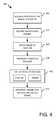
- FIG. 4is a flowchart of an exemplary method for recovering from packet loss utilizing frame caching.
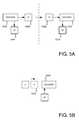
- FIG. 5Ais a frame-level diagram of an encoder caching a frame and a decoder caching the same frame.
- FIG. 5Bis a frame-level diagram of a corrupted P-frame arriving at a decoder.
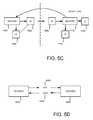
- FIG. 5Cis a frame-level diagram depicting the decoder using a cached frame to interpret a P-frame.
- FIG. 5Dis a block diagram of reporting packet loss through a feedback channel.
- FIG. 6is a flowchart of a suitable method for implementing video encoder/decoder caching.
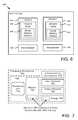
- FIG. 7is a block diagram of a suitable computing environment for the video encoder/decoder of FIGS. 2 and 3 .
- the following descriptionis directed to implementations of a frame cache in both a video encoder and a video decoder, which is designed to provide an effective combination of graceful packet loss recovery and efficient bandwidth utilization.
- An exemplary application of the frame cacheis in an image or video encoder and decoder. Accordingly, the frame cache is described in the context of a generalized image or video encoder and decoder, but alternatively, can be incorporated in the encoder and decoder of various other image and video codecs that may vary in details from this exemplary apparatus described below.
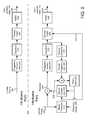
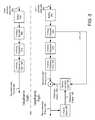
- FIG. 2is a block diagram of a generalized video encoder 200 and FIG. 3 is a block diagram of a generalized video decoder 300 , in which the frame caches can be incorporated
- FIGS. 2 and 3usually do not show side information indicating the encoder settings, modes, tables, etc. used for a video sequence, frame, macroblock, block, etc.
- Such side informationis sent in the output bitstream, typically after entropy encoding of the side information.
- the format of the output bitstreamcan be a Windows Media Video format or another format.
- modules of the encoder 200 or decoder 300can be added, omitted, split into multiple modules, combined with other modules, and/or replaced with like modules.
- encoder or decoders with different modules and/or other configurations of modulesperform one or more of the described techniques.
- FIG. 2is a block diagram of a general video encoder system 200 .
- the encoder system 200receives a sequence of video frames, including a current frame 205 , and produces compressed video information 295 as output.
- Particular embodiments of video encoderstypically use a variation or supplemented version of the generalized encoder 200 .
- the encoder system 200compresses predicted frames and key frames.
- FIG. 2shows a path for key frames through the encoder system 200 and a path for forward-predicted frames.
- Many of the components of the encoder system 200are used for compressing both key frames and predicted frames. The exact operations performed by those components can vary depending on the type of information being compressed.
- a predicted frame(which might be a P-frame, a B-frame (bi-directional prediction), or an inter-coded frame] is represented in terms of prediction (or difference) from one or more other frames.
- a prediction residualis the difference between what was predicted and the original frame.
- a key framealso called an I-frame, or an intra-coded frame
- a motion estimator 210estimates motion of macroblocks or other sets of pixels of the current frame 205 with respect to a reference frame 225 , which is the reconstructed previous frame buffered in the frame store 220 .
- the reference framecan be a later frame or the current frame can be bi-directionally predicted.
- the motion estimator 210outputs as side information motion information 215 , such as motion vectors.
- a motion compensator 230applies the motion information 215 to the reconstructed previous frame 225 to form a motion-compensated current frame 235 .
- the predictionis rarely perfect, however, and the difference between the motion-compensated current frame 235 and the original current frame 205 is the prediction residual 245 .
- a motion estimator 210 and motion compensator 230apply another type of motion estimation/compensation.
- a frequency transformer 260converts the spatial domain video information into frequency domain (i.e., spectral) data.
- the frequency transformer 260applies a transform described in the following sections that has properties similar to the discrete cosine transform [“DCT”].
- the frequency transformer 260applies a frequency transform to blocks of spatial prediction residuals for key frames.
- the frequency transformer 260can apply an 8 ⁇ 8, 8 ⁇ 4, 4 ⁇ 8, or other size frequency transforms.
- a quantizer 270then quantizes the blocks of spectral data coefficients.
- the quantizer 270applies uniform, scalar quantization to the spectral data with a step-size that varies on a frame-by-frame basis or other basis.
- the quantizer 270applies another type of quantization to the spectral data coefficients, for example, a non-uniform, vector, or non-adaptive quantization, or directly quantizes spatial domain data in an encoder system that does not use frequency transformations.
- the encoder 200can use frame dropping, adaptive filtering, or other techniques for rate control.
- an inverse quantizer 276When a reconstructed current frame is needed for subsequent motion estimation/compensation, an inverse quantizer 276 performs inverse quantization on the quantized spectral data coefficients. An inverse frequency transformer 266 then performs the inverse of the operations of the frequency transformer 260 , producing a reconstructed prediction residual (for a predicted frame) or a reconstructed key frame. If the current frame 205 was a key frame, the reconstructed key frame is taken as the reconstructed current frame (not shown). If the current frame 205 was a predicted frame, the reconstructed prediction residual is added to the motion-compensated current frame 235 to form the reconstructed current frame. The frame store 220 buffers the reconstructed current frame for use in predicting the next frame. In some embodiments, the encoder 200 applies a deblocking filter to the reconstructed frame to adaptively smooth discontinuities in the blocks of the frame.
- the entropy coder 280compresses the output of the quantizer 270 , as well as certain side information (e.g., motion information 215 , quantization step size).
- Typical entropy coding techniquesinclude arithmetic coding, differential coding, Huffman coding, run length coding, LZ coding, dictionary coding, and combinations of the above.
- the entropy coder 280typically uses different coding techniques for different kinds of information (e.g., DC coefficients, AC coefficients, etc.), and can choose from among multiple code tables within a particular coding technique.
- the entropy coder 280puts compressed video information 295 in the buffer 290 .
- a buffer level indicatoris fed back to bitrate adaptive modules.
- the compressed video information 295is depleted from the buffer 290 at a constant or relatively constant bitrate and stored for subsequent streaming at that bitrate.
- the encoder system 200streams compressed video information 295 immediately following compression.
- the compressed video information 295can be channel-coded for transmission over the network.
- the channel codingcan apply error detection and correction data to the compressed video information 295 .
- FIG. 3is a block diagram of a general video decoder system 300 .
- the decoder system 300receives information 395 for a compressed sequence of video frames and produces output, including a reconstructed frame 305 .
- Particular embodiments of video decoderstypically use a variation or supplemented version of the generalized decoder 300 .
- the decoder system 300decompresses predicted frames and key frames.
- FIG. 3shows a path for key frames through the decoder system 300 and a path for forward-predicted frames.
- Many of the components of the decoder system 300are used for compressing both key frames and predicted frames. The exact operations performed by those components can vary depending on the type of information being compressed.
- a buffer 390receives the information 395 for the compressed video sequence and makes the received information available to the entropy decoder 380 .
- the buffer 390typically receives the information at a rate that is fairly constant over time, and includes a jitter buffer to smooth short-term variations in bandwidth or transmission.
- the buffer 390can include a playback buffer and other buffers, as well. Alternatively, the buffer 390 receives information at a varying rate.
- the compressed video information 395can be decoded and processed for error detection and correction either before it reaches the buffer 390 , after it leaves the buffer 390 , or both.
- the entropy decoder 380entropy decodes entropy-coded quantized data, as well as entropy-coded side information (e.g., motion information, quantization step size), typically applying the inverse of the entropy encoding performed in the encoder 200 .
- Entropy decoding techniquesinclude arithmetic decoding, differential decoding, Huffman decoding, run length decoding, LZ decoding, dictionary decoding, and combinations of the above.
- the entropy decoder 380frequently uses different decoding techniques for different kinds of information (e.g., DC coefficients, AC coefficients, different kinds of side information), and can choose from among multiple code tables within a particular decoding technique.
- a motion compensator 330applies motion information 315 to a reference frame 325 to form a prediction 335 of the frame 305 being reconstructed.
- the motion compensator 330uses a macroblock motion vector to find a macroblock in the reference frame 325 .
- a frame buffer 320stores previous reconstructed frames for use as reference frames.
- a motion compensatorapplies another type of motion compensation.
- the prediction by the motion compensator 330is rarely perfect, so the decoder 300 also reconstructs prediction residuals 345 .
- the frame store 320buffers the reconstructed frame 305 for use in predicting the next frame.
- the encoder 200applies a deblocking filter to the reconstructed frame 305 to adaptively smooth discontinuities in the blocks of the frame.
- An inverse quantizer 370inverse quantizes entropy-decoded data.
- the inverse quantizer 370applies uniform, scalar inverse quantization to the entropy-decoded data with a step-size that varies on a frame-by-frame basis or other basis.
- the inverse quantizer 370applies another type of inverse quantization to the data, for example, a non-uniform, vector, or non-adaptive quantization, or directly inverse quantizes spatial domain data in a decoder system that does not use inverse frequency transformations.
- An inverse frequency transformer 360converts the quantized, frequency domain data into spatial domain video information. For block-based video frames, the inverse frequency transformer 360 applies an inverse transform described in the following sections. In some embodiments, the inverse frequency transformer 360 applies an inverse frequency transform to blocks of spatial prediction residuals for key frames. The inverse frequency transformer 360 can apply an 8 ⁇ 8, 8 ⁇ 4, 4 ⁇ 8, or other size inverse frequency transforms.
- reference framesare cached preferably at both the encoder and decoder in sequence. When a reference frame is lost, the subsequent dependent frames can be decoded using the appropriate reference frame cached at the decoder. This produces the following benefits:
- A) More efficient bandwidth utilizationPrior art methods call for an I-frame to be generated and sent to the encoder. This method allows for a special type of frame, an SP-frame, to be sent to the decoder, and then cached until needed. SP-frames can generally be coded with fewer bits than I-frames of the same quality, and therefore, use less bandwidth than using an equivalent I-frame.
- Described embodimentsinclude techniques and tools for caching frames at a decoder, and then using the cached frames to reconstruct P-frames and B-frames that depend on reference frames that have been corrupted or lost.
- the cachecan be incorporated as part of the video decoder 300 ( FIG. 3 ), as part of the video encoder 200 ( FIG. 2 ), or, preferably, both.
- packet lossis detected by the decoder, it sends a message to the encoder 300 , which then generates a new reference frame based on one of the shared cached frames.
- the generated reference frameis then sent to the decoder.
- the cached frameis used at the decoder to decode the generated frame and subsequent dependent frames until another reference frame arrives at the decoder.
- the flowchart elements described hereinare only examples; other flowchart elements can be used in accordance with the described techniques. Furthermore, the flowchart elements can occur in different orders, or specific process blocks can be skipped in accordance with the described techniques and tools.
- the described techniques and toolscan be used in combination with one another or with other techniques and tools, or can be used independently.
- flowchart 400shows a brief overview of the methods disclosed herein.
- a portion of a video signal that is to be transmitted over a networkis assigned to packets.
- an encoderencodes at least a portion of the packets into frames. These frames may consist of reference frames 325 , such as I-frames and P-frames, and may also consist of B-frames, which are not used as references for any other frame types. Alternate types of frames, such as skip frames, may also be encoded into frames.
- a framegenerally a reference frame, may be cached at the encoder.
- CFched-Frame
- the cached framemay be used to decompress a following dependent frame, as shown at process block 412 .
- the flowchart 400shows only one exemplary embodiment and should not be construed as limiting in any way.
- the cache associated with the encoder at decision block 406is optional.
- the method 400may be implemented in a video codec as is shown in FIGS. 2 and 3 , which may be implemented in software, hardware, or a combination of both.
- FIGS. 5A through 5Dshow an exemplary method of caching frames to enable optimum performance of video codecs in noisy networks.
- framesare transmitted from an encoder 502 D to a decoder 506 D through a main channel, such as RTP (real time transport protocol) 508 D.
- RTPreal time transport protocol
- the internetoften loses packets, or delivers packets out of order. Packets may also be delayed by some random amount of time, which may also make them unusable.
- a packet loss eventis detected by the decoder 506 D and signaled through a feedback channel from the decoder to the encoder 502 D.
- the RTP 508 D headercontains information and a sequence number that both allows the receiver to reorder packets correctly and to determine the number of packets that are being lost.
- the RTP 508 Dis augmented by its control protocol (RTPC) 504 D, used to provide a feedback channel that can be used to monitor data delivery.
- RTPCcontrol protocol
- Each data packethas a sequence number, typically incremented by one for each subsequent data packet.
- the packet lossis detected by the decoder 506 D when a sequence number is not received. Once the decoder 506 D has discovered a lost packet, it sends a message through the feedback channel 504 D informing the encoder 502 D which packet (or packets) have been lost.
- only information about the initial packet lostis provided.
- additional informationsuch as the number of dropped packets, or a list of the specific packets lost, is also provided.
- the location of the packet lossis preferably transmitted using the timestamp of the earliest packet loss in the reporting window. This information enables the encoder 502 D to determine which cached reference to use.
- the encoder 502 Aperiodically caches frames in a frame cache 504 A. Which frames to cache, how often caching should occur, and the number of frames that should be able to be cached at a single time is highly implementation-dependent.
- the frames cachedare reference frames, that is, P-frames and I-frames. Other frame types can also be cached.
- the frame that was cached 506 A (or a copy thereof)is also sent to the decoder 512 A.
- Such a frame, which is also stored in the encoder cache 504 Ais defined in its header as of frame type CF (cached frame).
- this headerallows synchronization of the encoder 502 A and decoder 512 A by letting the decoder 512 A know that this specific frame should be cached in the decoder cache 510 A for later use.
- each frame of type CF 508 AWhen the frame of type CF 508 A reaches the decoder 512 A, it is stored in the decoder frame cache 510 A. Storing each frame of type CF at the decoder 512 A is one method of synchronizing the encoder and decoder frame caches 504 A and 510 A. However, other methods of synchronizing these frame caches are also envisioned.
- packet loss 502 BWhen packet loss 502 B is detected at the decoder 504 B, it is reported back to the encoder 502 A using the feedback channel 504 D.
- This reportpreferably, contains timestamp information which allows the encoder 502 A to choose the correct cached frame 504 A to reference. In other embodiments, the latest cached frame is used.
- a cached frameOnce a cached frame has been chosen 504 C, it is used by the encoder 502 C to encode the next frame 506 C, preferably a P-frame, but I-frames and other frame types can also be encoded.
- This frame encoded using the cached frame 506 Cis known as a “Super-P” frame (SP-frame) and is signaled as such in its header.
- An exemplary frame type code word for the SP-frameis shown in Table 1, above.
- the decoder 512 CWhen the decoder 512 C receives the SP-frame 508 C, it decodes it into an uncompressed frame (U-frame) 514 C using the frame cached locally 510 C. Using this method, the recovery time at the decoder 512 C is the interval between the packet loss event and the arrival of the SP-frame. If this generated SP-frame 508 C is lost during transmission, the decoder 512 C will continue sending packet loss reports until the arrival of a new reference frame (generally of type P, SP, or I). The actual recovery time from packet loss is a function, primarily, of the packet loss reporting interval.
- the encoder 502 Acaches a frame 504 A and sends a copy of the cached frame 506 A to the decoder periodically.
- the length of time between cached frames being sentis highly implementation-dependent. Some implementations may cache the frames at equal intervals. Other implementations may cache the frames at intervals which are themselves dependent upon system variables such as the speed of the network or the amount of loss the network is experiencing.
- FIG. 6illustrates another exemplary embodiment of a video system 600 that can be used to implement decoder- and encoder-based frame caching.
- the video system 600is not intended to suggest any limitation as to scope of use or functionality of the invention, as the present invention may be implemented in diverse general- or special-purpose video systems.
- the video systemcontains at least one encoder 602 .
- This encoderfurther comprises an encoder cache 604 .
- the cacheresides within the encoder 602 , but in other implementations may reside elsewhere within the video system.
- the encoder cache 604is enabled to store one or more sections of video frames 606 . By way of suggestion and not limitation, these sections of frames may consist of a number of blocks, macroblocks, a number of slices, entire frames, groups of frames, or any other division of frames that can be envisioned by one of skill in the art.
- the encoder cache 604may cache only one frame portion, may cache two portions, or any number of portions that might be desirable for a given implementation.
- the video system 600also comprises a decoder 608 .
- the decoder 608contains a decoder cache 610 , which is used to store one or more portions of video frames 612 .
- These video frame portionsmay comprise of one or more blocks, macroblocks, slices, or may comprise entire frames, groups of frames, or other division of frame that can be envisioned by one of skill in the art.
- the decoder cache 610may be set up to store one frame portion, two frame portions, or any other number of frame portions.
- the video system 600also comprises a synchronizer 614 , which is used to ensure that the encoder cache 604 and the decoder cache 610 contain substantially similar information.
- the synchronizermay comprise a unique frame header attached to certain frames or portions of frames, applied by the encoder 602 , that inform the decoder 608 that a specific frame or portion of a frame is to be cached.
- a framemay be stored at the encoder cache 604 and also sent to the decoder 608 . That frame may have a distinctive CF (Cached Frame) header to indicate that there is a copy of it stored in the encoder cache 604 .
- the subsequent frame encoded by the encoder 602 from the frame stored in the encoder cache 604may be marked to indicate that this frame can be decoded from a frame at the decoder cache 610 .
- Some implementationsmay have multiple frames stored at the decoder cache 610 ; in such a case, the header may also optionally contain sufficient other information to determine which cached frame should be used. Other methods of synchronization are also envisioned.
- a transmitter 616transmits the frames from the encoder 602 to the decoder 608 .
- image and video signal processingcan be performed on any of a variety of devices in which image and video signal processing is performed, including among other examples, computers, image and video recording, transmission and receiving equipment, portable video players video conferencing, web video streaming applications, etc.
- the image and video coding techniquescan be implemented in hardware circuitry (e.g., in circuitry of an ASIC, FPGA, etc.), as well as in image and video processing software executing within a computer or other computing environment (whether executed on the central processing unit (CPU), or dedicated graphics processor, video card or like), such as shown in FIG. 7 .
- FIG. 7illustrates a generalized example of a suitable computing environment 700 in which the described frame caching may be implemented.
- the computing environment 700is not intended to suggest any limitation as to scope of use or functionality of the invention, as the present invention may be implemented in diverse general- or special-purpose computing environments.
- the computing environment 700includes at least one processing unit 710 and memory 720 .
- This most basic configuration 730is included within a dashed line.
- the processing unit 710executes computer-executable instructions and may be a real or virtual processor. In a multi-processing system, multiple processing units execute computer-executable instructions to increase processing power.
- the memory 720may be volatile memory (e.g., registers, cache, RAM, etc.), non-volatile memory (e.g., ROM, EEPROM, flash memory, etc.), or some combination of the two.
- the memory 720stores software 780 implementing the described encoder/decoder caching.
- a computing environmentmay have additional features.
- the computing environment 700includes storage 740 , one or more input devices 750 , one or more output devices 760 , and one or more communication connections 770 .
- An interconnection mechanismsuch as a bus, controller, or network interconnects the components of the computing environment 700 .
- operating system softwareprovides an operating environment for other software executing in the computing environment 700 , and coordinates activities of the components of the computing environment 700 .
- the storage 740may be removable or non-removable, and includes magnetic disks, magnetic tapes or cassettes, CD-ROMs, CD-RWs, DVDs, or any other medium that can be used to store information and can be accessed within the computing environment 700 .
- the storage 740stores instructions for the software 780 implementing the encoder/decoder caching scheme.
- the input device(s) 750may be a touch input device such as a keyboard, mouse, pen, or trackball, a voice input device, a scanning device, or another device that provides input to the computing environment 700 .
- the input device(s) 750may be a sound card or similar device that accepts audio input in analog or digital form, or a CD-ROM reader that provides audio samples to the computing environment 700 .
- the output device(s) 760may be a display, printer, speaker, CD-writer, or another device that provides output from the computing environment 700 .
- the communication connection(s) 770enable communication over a communication medium to another computing entity.
- the communication mediumconveys information, such as computer-executable instructions, compressed audio or video information, or other data in a modulated data signal.
- a modulated data signalis a signal that has one or more of its characteristics set or changed in such a manner as to encode information in the signal.
- communication mediainclude wired or wireless techniques implemented with an electrical, optical, RF, infrared, acoustic, or other carrier.
- Computer-readable mediaare any available media that can be accessed within a computing environment 700 .
- Computer-readable mediainclude memory 720 , storage 740 , communication media, and combinations of any of the above.
- the encoder/decoder frame caching hereincan be described in the general context of computer-executable instructions, such as those included in program modules, being executed in a computing environment on a target real or virtual processor.
- program modulesinclude routines, programs, libraries, objects, classes, components, data structures, etc. that perform particular tasks or implement particular abstract data types.
- the functionality of the program modulesmay be combined or split between program modules as desired in various embodiments.
- Computer-executable instructions for program modulesmay be executed within a local or distributed computing environment.
Landscapes
- Engineering & Computer Science (AREA)
- Multimedia (AREA)
- Signal Processing (AREA)
- Compression Or Coding Systems Of Tv Signals (AREA)
- Data Exchanges In Wide-Area Networks (AREA)
- Two-Way Televisions, Distribution Of Moving Picture Or The Like (AREA)
- Radar Systems Or Details Thereof (AREA)
Abstract
Description
This application is a continuation of U.S. application Ser. No. 13/614,453, filed Sep. 13, 2012 (now U.S. Pat. No. 9,313,501), which is a continuation of U.S. application Ser. No. 11/027,294, filed Dec. 30, 2004 (now U.S. Pat. No. 8,634,413), which applications are incorporated herein by reference in their entirety.
A portion of the disclosure of this patent document contains material which is subject to copyright protection. The copyright owner has no objection to the facsimile reproduction by any one of the patent disclosure, as it appears in the Patent and Trademark Office patent files or records, but otherwise reserves all copyright rights whatsoever.
The present invention relates generally to techniques for digitally encoding, decoding and processing video, images and other digital media content. The present invention relates particularly to improving packet loss recovery by frame caching.
Digital video consumes large amounts of storage and transmission capacity. A typical raw digital video sequence includes 15 or 30 frames per second. Each frame can include tens or hundreds of thousands of pixels (also called pels). Each pixel represents a tiny element of the picture. In raw form, a computer commonly represents a pixel as a set of three samples totaling 24 bits. For instance, a pixel may comprise an 8-bit luminance sample (also called a luma sample) that defines the grayscale component of the pixel and two 8-bit chrominance sample values (also called chroma samples) that define the color component of the pixel. Thus, the number of bits per second, or bitrate, of a typical raw digital video sequence may be five million bits per second or more.
Many computers and computer networks lack the resources to process raw digital video. For this reason, engineers use compression (also called coding or encoding) to reduce the bitrate of digital video. Compression decreases the cost of storing and transmitting video by converting the video into a lower bitrate form. Decompression (also called decoding) reconstructs a version of the original video from the compressed form. A “codec” is an encoder/decoder system. Compression can be lossless, in which the quality of the video does not suffer, but decreases in the bitrate are limited by the inherent amount of variability (sometimes called entropy) of the video data. Or, compression can be lossy, in which quality of the video suffers, but achievable decreases in the bitrate are more dramatic. Lossy compression is often used in conjunction with lossless compression—in a system design in which the lossy compression establishes an approximation of information and lossless compression techniques are applied to represent the approximation.
In general, video compression techniques include “intrapicture” compression and “interpicture” compression, where a picture is, for example, a progressively scanned video frame, an interlaced video frame (having alternating lines for video fields), or an interlaced video field. Generally speaking, video sequences contain a significant amount of redundancy within a given frame, and between sequential frames. For example, the human eye generally does not notice slight differences in otherwise similar backgrounds in successive video frames. Compression exploits these redundancies by removing a certain portion of the redundant material within the bitstream being sent, and then adding them back in at the receiving end when the picture is uncompressed. Two common redundancies that are subtracted out of video frames are spatial and temporal. Spatial redundancies occur between neighboring pixels within a single frame. Frames that are compressed using spatial redundancies, known as intraframes, or I-frames, contain all of the information needed to reconstitute the image within the frame itself—they are self-contained. Frames that use temporal redundancies, such as P-frames and B-frames, require information from other frames to be decoded. P-frames (predictively encoded frames) are encoded, and must be decoded, using information from previous I- and/or P-frames. B-frames (bi-directionally predictively-encoded frames) are encoded using information from both previous and subsequent I- and P-frames. Motion estimation removes temporal redundancy in successive video frames (interframes) by encoding the unique matter along with a motion-predicted image created from a previously-encoded image known as a reference frame. If a reference frame is lost, then its succeeding predictive frames cannot be deciphered—the transmission errors propagate to successive frames.
For progressive frames, intrapicture compression techniques compress individual frames (typically called I-frames or key frames), and interpicture compression techniques compress frames (typically called predicted frames, P-frames, or B-frames) with reference to preceding and/or following frames (typically called reference or anchor frames). I-frames (self-contained) and P-frames (which generally refer to preceding frames) can themselves be reference frames, while B-frames, which refer to both preceding and following frames, are typically never used as references themselves.
When the data is decompressed prior to the resulting video being displayed, a decoder typically performs the inverse of the compression operations. For example, a decoder may perform entropy decoding, inverse quantization, and an inverse transform while decompressing the data. When motion compensation is used, the decoder (and encoder) reconstruct a frame from one or more previously reconstructed frames (which are now used as reference frames), and the newly reconstructed frame may then be used as a reference frame for motion compensation for later frames.
Packets sent through networks are subject to loss—packets are dropped. This loss occurs randomly and unpredictably. Furthermore, video compression stream data is highly sensitive to delay; as the packets need to be reassembled in the same order that they were sent; too many delayed packets give rise to a jumpy, interrupted signal. Transmission delay problems can also occur in resending a new I-frame; the new frame is susceptible to all of the same problems that corrupted the lost reference frame. Furthermore, in lossy coding schemes, the compression is designed to meet a target bitrate for storage and transmission. High compression is achieved by lowering the quality of the reconstituted image. Therefore, any extra loss caused by dropped or delayed packets may degrade the image below an acceptable rate.
The capacity to handle packet loss is crucial for real-time video codec (RTC) to perform well in noisy networks—those susceptible to loss. Most of the existing video codecs cope with packet loss by requesting a new I-frame when a reference frame is lost. Others use slice-based coding, which adds to the signaling overhead.FIG. 1 illustrates traditional packet loss recovery by requesting a new I-frame.
In this prior art method, an I-frame 104 is received at thedecoder 102. It is then used to interpret/reconstruct subsequent dependent P-frame 106. The next dependent frame, P-frame 108 is corrupted, as sufficient packets are received out of order or lost. The subsequent P-frame 110 and any following frames can no longer be reconstructed. At the destination node (here represented by decoder102) an I-frame request is generated and sent to the source node (here represented by encoder114). Each subsequent P-frame or B-frame cannot be reconstructed until a new I-frame is received. Once thesource node 114 receives the request, it assembles a new I-frame 112 and sends it to thedestination node 102 using the communications channel. After receiving the new I-frame 112 the destination channel can successfully decode the subsequent P-frames. However, this results in adelay 116 equivalent to the time needed to send the initial request, plus the time to encode the I-frame, plus the time to send the I-frame to thedestination node 102. Moreover, a sender and a receiver may be separated by a large amount of physical distance, with the long trip creating a noticeable lag-time with a corresponding degradation in the quality of the video.
In another prior art method, I-frames frame 112 is lost due to corruption or delay, the decoder waits until the next I-frame is received, incorrectly decoding the subsequent P-frames
Therefore, there exists a need for improved methods and systems for transmitting compressed video over a lossy packet based network.
A video codec described herein includes a frame cache at the encoder and a corresponding frame cache at the decoder, each of which can work in synchronization. A frame in the decoder cache is used to help interpret a frame at the decoder. The frame to be interpreted may have been generated using a copy of the same frame stored in the encoder cache.
A system implementation is also provided. It comprises an encoder, which encodes data packets into frames, and an encoder cache, which can store a frame or a portion of a frame. It further comprises a decoder, with a decoder cache, which can also store a frame or a portion of one. The decoder is operable to detect packet loss. When such a loss is detected, in some embodiments, the encoder encodes a frame using the frame stored at the encoder cache, which is then decoded at the decoder using the frame stored in the decoder cache.
This caching mechanism provides the following key features:
a) more efficient bandwidth utilization during packet loss recovery, and
b) eliminating signaling overhead associated with slice-based coding.
Additional features and advantages of the invention will be made apparent from the following detailed description of embodiments that proceeds with reference to the accompanying drawings.
The following description is directed to implementations of a frame cache in both a video encoder and a video decoder, which is designed to provide an effective combination of graceful packet loss recovery and efficient bandwidth utilization. An exemplary application of the frame cache is in an image or video encoder and decoder. Accordingly, the frame cache is described in the context of a generalized image or video encoder and decoder, but alternatively, can be incorporated in the encoder and decoder of various other image and video codecs that may vary in details from this exemplary apparatus described below.
1. Generalized Video Encoder and Decoder
The relationships shown between modules within the encoder and decoder indicate the main flow of information in the encoder and decoder; other relationships are not shown for the sake of simplicity. In particular,FIGS. 2 and 3 usually do not show side information indicating the encoder settings, modes, tables, etc. used for a video sequence, frame, macroblock, block, etc. Such side information is sent in the output bitstream, typically after entropy encoding of the side information. The format of the output bitstream can be a Windows Media Video format or another format.
Depending on implementation and the type of compression desired, modules of theencoder 200 ordecoder 300 can be added, omitted, split into multiple modules, combined with other modules, and/or replaced with like modules. In alternative embodiments, encoder or decoders with different modules and/or other configurations of modules perform one or more of the described techniques.
A. Video Encoder
Theencoder system 200 compresses predicted frames and key frames. For the sake of presentation,FIG. 2 shows a path for key frames through theencoder system 200 and a path for forward-predicted frames. Many of the components of theencoder system 200 are used for compressing both key frames and predicted frames. The exact operations performed by those components can vary depending on the type of information being compressed.
A predicted frame [which might be a P-frame, a B-frame (bi-directional prediction), or an inter-coded frame] is represented in terms of prediction (or difference) from one or more other frames. A prediction residual is the difference between what was predicted and the original frame. In contrast, a key frame [also called an I-frame, or an intra-coded frame] is compressed without reference to other frames.
If thecurrent frame 205 is a forward-predicted frame, amotion estimator 210 estimates motion of macroblocks or other sets of pixels of thecurrent frame 205 with respect to areference frame 225, which is the reconstructed previous frame buffered in theframe store 220. In alternative embodiments, the reference frame can be a later frame or the current frame can be bi-directionally predicted. Themotion estimator 210 outputs as sideinformation motion information 215, such as motion vectors. Amotion compensator 230 applies themotion information 215 to the reconstructedprevious frame 225 to form a motion-compensatedcurrent frame 235. The prediction is rarely perfect, however, and the difference between the motion-compensatedcurrent frame 235 and the originalcurrent frame 205 is the prediction residual245. Alternatively, amotion estimator 210 andmotion compensator 230 apply another type of motion estimation/compensation.
Afrequency transformer 260 converts the spatial domain video information into frequency domain (i.e., spectral) data. For block-based video frames, thefrequency transformer 260 applies a transform described in the following sections that has properties similar to the discrete cosine transform [“DCT”]. In some embodiments, thefrequency transformer 260 applies a frequency transform to blocks of spatial prediction residuals for key frames. Thefrequency transformer 260 can apply an 8×8, 8×4, 4×8, or other size frequency transforms.
Aquantizer 270 then quantizes the blocks of spectral data coefficients. Thequantizer 270 applies uniform, scalar quantization to the spectral data with a step-size that varies on a frame-by-frame basis or other basis. Alternatively, thequantizer 270 applies another type of quantization to the spectral data coefficients, for example, a non-uniform, vector, or non-adaptive quantization, or directly quantizes spatial domain data in an encoder system that does not use frequency transformations. In addition to adaptive quantization, theencoder 200 can use frame dropping, adaptive filtering, or other techniques for rate control.
When a reconstructed current frame is needed for subsequent motion estimation/compensation, aninverse quantizer 276 performs inverse quantization on the quantized spectral data coefficients. Aninverse frequency transformer 266 then performs the inverse of the operations of thefrequency transformer 260, producing a reconstructed prediction residual (for a predicted frame) or a reconstructed key frame. If thecurrent frame 205 was a key frame, the reconstructed key frame is taken as the reconstructed current frame (not shown). If thecurrent frame 205 was a predicted frame, the reconstructed prediction residual is added to the motion-compensatedcurrent frame 235 to form the reconstructed current frame. Theframe store 220 buffers the reconstructed current frame for use in predicting the next frame. In some embodiments, theencoder 200 applies a deblocking filter to the reconstructed frame to adaptively smooth discontinuities in the blocks of the frame.
Theentropy coder 280 compresses the output of thequantizer 270, as well as certain side information (e.g.,motion information 215, quantization step size). Typical entropy coding techniques include arithmetic coding, differential coding, Huffman coding, run length coding, LZ coding, dictionary coding, and combinations of the above. Theentropy coder 280 typically uses different coding techniques for different kinds of information (e.g., DC coefficients, AC coefficients, etc.), and can choose from among multiple code tables within a particular coding technique.
Theentropy coder 280 puts compressedvideo information 295 in thebuffer 290. A buffer level indicator is fed back to bitrate adaptive modules. Thecompressed video information 295 is depleted from thebuffer 290 at a constant or relatively constant bitrate and stored for subsequent streaming at that bitrate. Alternatively, theencoder system 200 streams compressedvideo information 295 immediately following compression.
Before or after thebuffer 290, thecompressed video information 295 can be channel-coded for transmission over the network. The channel coding can apply error detection and correction data to thecompressed video information 295.
B. Video Decoder
Thedecoder system 300 decompresses predicted frames and key frames. For the sake of presentation,FIG. 3 shows a path for key frames through thedecoder system 300 and a path for forward-predicted frames. Many of the components of thedecoder system 300 are used for compressing both key frames and predicted frames. The exact operations performed by those components can vary depending on the type of information being compressed.
Abuffer 390 receives theinformation 395 for the compressed video sequence and makes the received information available to theentropy decoder 380. Thebuffer 390 typically receives the information at a rate that is fairly constant over time, and includes a jitter buffer to smooth short-term variations in bandwidth or transmission. Thebuffer 390 can include a playback buffer and other buffers, as well. Alternatively, thebuffer 390 receives information at a varying rate. Thecompressed video information 395 can be decoded and processed for error detection and correction either before it reaches thebuffer 390, after it leaves thebuffer 390, or both.
Theentropy decoder 380 entropy decodes entropy-coded quantized data, as well as entropy-coded side information (e.g., motion information, quantization step size), typically applying the inverse of the entropy encoding performed in theencoder 200. Entropy decoding techniques include arithmetic decoding, differential decoding, Huffman decoding, run length decoding, LZ decoding, dictionary decoding, and combinations of the above. Theentropy decoder 380 frequently uses different decoding techniques for different kinds of information (e.g., DC coefficients, AC coefficients, different kinds of side information), and can choose from among multiple code tables within a particular decoding technique.
If theframe 305 to be reconstructed is a forward-predicted frame, amotion compensator 330 appliesmotion information 315 to areference frame 325 to form aprediction 335 of theframe 305 being reconstructed. For example, themotion compensator 330 uses a macroblock motion vector to find a macroblock in thereference frame 325. Aframe buffer 320 stores previous reconstructed frames for use as reference frames. Alternatively, a motion compensator applies another type of motion compensation. The prediction by themotion compensator 330 is rarely perfect, so thedecoder 300 also reconstructsprediction residuals 345.
When thedecoder 300 needs a reconstructed frame for subsequent motion compensation, theframe store 320 buffers the reconstructedframe 305 for use in predicting the next frame. In some embodiments, theencoder 200 applies a deblocking filter to the reconstructedframe 305 to adaptively smooth discontinuities in the blocks of the frame.
Aninverse quantizer 370 inverse quantizes entropy-decoded data. In general, theinverse quantizer 370 applies uniform, scalar inverse quantization to the entropy-decoded data with a step-size that varies on a frame-by-frame basis or other basis. Alternatively, theinverse quantizer 370 applies another type of inverse quantization to the data, for example, a non-uniform, vector, or non-adaptive quantization, or directly inverse quantizes spatial domain data in a decoder system that does not use inverse frequency transformations.
Aninverse frequency transformer 360 converts the quantized, frequency domain data into spatial domain video information. For block-based video frames, theinverse frequency transformer 360 applies an inverse transform described in the following sections. In some embodiments, theinverse frequency transformer 360 applies an inverse frequency transform to blocks of spatial prediction residuals for key frames. Theinverse frequency transformer 360 can apply an 8×8, 8×4, 4×8, or other size inverse frequency transforms.
C. Frame Caching
In implementations which use frame caching within a video codec architecture described herein, reference frames are cached preferably at both the encoder and decoder in sequence. When a reference frame is lost, the subsequent dependent frames can be decoded using the appropriate reference frame cached at the decoder. This produces the following benefits:
A) More efficient bandwidth utilization: Prior art methods call for an I-frame to be generated and sent to the encoder. This method allows for a special type of frame, an SP-frame, to be sent to the decoder, and then cached until needed. SP-frames can generally be coded with fewer bits than I-frames of the same quality, and therefore, use less bandwidth than using an equivalent I-frame.
B) Faster error recovery: Preferably an SP-frame is already cached at the decoder when packet loss occurs; this allows the next P-frame in the stream to be interpreted with little lag time.
2. Overview of Exemplary Methods
Described embodiments include techniques and tools for caching frames at a decoder, and then using the cached frames to reconstruct P-frames and B-frames that depend on reference frames that have been corrupted or lost. The cache can be incorporated as part of the video decoder300 (FIG. 3 ), as part of the video encoder200 (FIG. 2 ), or, preferably, both. When packet loss is detected by the decoder, it sends a message to theencoder 300, which then generates a new reference frame based on one of the shared cached frames. The generated reference frame is then sent to the decoder. The cached frame is used at the decoder to decode the generated frame and subsequent dependent frames until another reference frame arrives at the decoder. The flowchart elements described herein are only examples; other flowchart elements can be used in accordance with the described techniques. Furthermore, the flowchart elements can occur in different orders, or specific process blocks can be skipped in accordance with the described techniques and tools.
The described techniques and tools can be used in combination with one another or with other techniques and tools, or can be used independently.
Referring toFIG. 4 ,flowchart 400 shows a brief overview of the methods disclosed herein. Atprocess block 402, a portion of a video signal that is to be transmitted over a network is assigned to packets. Atprocess block 404, an encoder encodes at least a portion of the packets into frames. These frames may consist ofreference frames 325, such as I-frames and P-frames, and may also consist of B-frames, which are not used as references for any other frame types. Alternate types of frames, such as skip frames, may also be encoded into frames. Atoptional process block 406, a frame, generally a reference frame, may be cached at the encoder. If the frame is cached, it is assigned the type “Cached-Frame” (CF) in its frame header. The frame that was cached, with other frames, is then transmitted to the decoder atprocess block 408. Once the frame is at the decoder, it is cached in a decoder cache atprocess block 410. Typical cached frame types are P-frames and I-frames.
If a subsequent reference frame is lost, then the cached frame may be used to decompress a following dependent frame, as shown atprocess block 412. Theflowchart 400 shows only one exemplary embodiment and should not be construed as limiting in any way. For example, the cache associated with the encoder atdecision block 406 is optional. Themethod 400 may be implemented in a video codec as is shown inFIGS. 2 and 3 , which may be implemented in software, hardware, or a combination of both.
3. Exemplary Method for Caching Frames
With reference toFIG. 5A , theencoder 502A periodically caches frames in aframe cache 504A. Which frames to cache, how often caching should occur, and the number of frames that should be able to be cached at a single time is highly implementation-dependent. The frames cached, in some embodiments, are reference frames, that is, P-frames and I-frames. Other frame types can also be cached. The frame that was cached506A (or a copy thereof) is also sent to thedecoder 512A. Such a frame, which is also stored in theencoder cache 504A, is defined in its header as of frame type CF (cached frame). In some embodiments, this header allows synchronization of theencoder 502A anddecoder 512A by letting thedecoder 512A know that this specific frame should be cached in thedecoder cache 510A for later use. Table 1, below, shows an exemplary embodiment of frame type codes, including the cached frame (CF) type.
| TABLE 1 |
| Frame Type Codes |
| Frame Type | Code Word (Binary) | ||
| I | 110 | ||
| P | 0 | ||
| B | 10 | ||
| BI | 1110 | ||
| SKIP | 11111 | ||
| SP | 111100 | ||
| CF | 111101 | ||
When the frame oftype CF 508A reaches thedecoder 512A, it is stored in thedecoder frame cache 510A. Storing each frame of type CF at thedecoder 512A is one method of synchronizing the encoder anddecoder frame caches
Whenpacket loss 502B is detected at thedecoder 504B, it is reported back to theencoder 502A using thefeedback channel 504D. This report, preferably, contains timestamp information which allows theencoder 502A to choose the correct cachedframe 504A to reference. In other embodiments, the latest cached frame is used. Once a cached frame has been chosen504C, it is used by theencoder 502C to encode thenext frame 506C, preferably a P-frame, but I-frames and other frame types can also be encoded. This frame encoded using the cachedframe 506C is known as a “Super-P” frame (SP-frame) and is signaled as such in its header. An exemplary frame type code word for the SP-frame is shown in Table 1, above.
When thedecoder 512C receives the SP-frame 508C, it decodes it into an uncompressed frame (U-frame)514C using the frame cached locally510C. Using this method, the recovery time at thedecoder 512C is the interval between the packet loss event and the arrival of the SP-frame. If this generated SP-frame 508C is lost during transmission, thedecoder 512C will continue sending packet loss reports until the arrival of a new reference frame (generally of type P, SP, or I). The actual recovery time from packet loss is a function, primarily, of the packet loss reporting interval.
In some implementations, theencoder 502A caches aframe 504A and sends a copy of the cachedframe 506A to the decoder periodically. The length of time between cached frames being sent is highly implementation-dependent. Some implementations may cache the frames at equal intervals. Other implementations may cache the frames at intervals which are themselves dependent upon system variables such as the speed of the network or the amount of loss the network is experiencing.
4. Exemplary System Embodiment
The video system contains at least oneencoder 602. This encoder further comprises anencoder cache 604. In the illustrated embodiment, the cache resides within theencoder 602, but in other implementations may reside elsewhere within the video system. Theencoder cache 604 is enabled to store one or more sections of video frames606. By way of suggestion and not limitation, these sections of frames may consist of a number of blocks, macroblocks, a number of slices, entire frames, groups of frames, or any other division of frames that can be envisioned by one of skill in the art. Theencoder cache 604 may cache only one frame portion, may cache two portions, or any number of portions that might be desirable for a given implementation. Thevideo system 600 also comprises adecoder 608. Similar to theencoder 602, thedecoder 608 contains adecoder cache 610, which is used to store one or more portions of video frames612. These video frame portions may comprise of one or more blocks, macroblocks, slices, or may comprise entire frames, groups of frames, or other division of frame that can be envisioned by one of skill in the art. Thedecoder cache 610 may be set up to store one frame portion, two frame portions, or any other number of frame portions.
Thevideo system 600 also comprises asynchronizer 614, which is used to ensure that theencoder cache 604 and thedecoder cache 610 contain substantially similar information. As discussed previously, the synchronizer may comprise a unique frame header attached to certain frames or portions of frames, applied by theencoder 602, that inform thedecoder 608 that a specific frame or portion of a frame is to be cached. For example, a frame may be stored at theencoder cache 604 and also sent to thedecoder 608. That frame may have a distinctive CF (Cached Frame) header to indicate that there is a copy of it stored in theencoder cache 604. When thedecoder 608 detects packet loss or other corruption that makes decoding a frame difficult or impossible, the subsequent frame encoded by theencoder 602 from the frame stored in theencoder cache 604 may be marked to indicate that this frame can be decoded from a frame at thedecoder cache 610. Some implementations may have multiple frames stored at thedecoder cache 610; in such a case, the header may also optionally contain sufficient other information to determine which cached frame should be used. Other methods of synchronization are also envisioned. Atransmitter 616 transmits the frames from theencoder 602 to thedecoder 608.
5. Computing Environment
The above described implementations of frame caching can be performed on any of a variety of devices in which image and video signal processing is performed, including among other examples, computers, image and video recording, transmission and receiving equipment, portable video players video conferencing, web video streaming applications, etc. The image and video coding techniques can be implemented in hardware circuitry (e.g., in circuitry of an ASIC, FPGA, etc.), as well as in image and video processing software executing within a computer or other computing environment (whether executed on the central processing unit (CPU), or dedicated graphics processor, video card or like), such as shown inFIG. 7 .
Thecomputing environment 700 includes at least oneprocessing unit 710 andmemory 720. This mostbasic configuration 730 is included within a dashed line. Theprocessing unit 710 executes computer-executable instructions and may be a real or virtual processor. In a multi-processing system, multiple processing units execute computer-executable instructions to increase processing power. Thememory 720 may be volatile memory (e.g., registers, cache, RAM, etc.), non-volatile memory (e.g., ROM, EEPROM, flash memory, etc.), or some combination of the two. Thememory 720stores software 780 implementing the described encoder/decoder caching.
A computing environment may have additional features. For example, thecomputing environment 700 includesstorage 740, one ormore input devices 750, one ormore output devices 760, and one or more communication connections770. An interconnection mechanism (not shown) such as a bus, controller, or network interconnects the components of thecomputing environment 700. Typically, operating system software (not shown) provides an operating environment for other software executing in thecomputing environment 700, and coordinates activities of the components of thecomputing environment 700.
Thestorage 740 may be removable or non-removable, and includes magnetic disks, magnetic tapes or cassettes, CD-ROMs, CD-RWs, DVDs, or any other medium that can be used to store information and can be accessed within thecomputing environment 700. Thestorage 740 stores instructions for thesoftware 780 implementing the encoder/decoder caching scheme.
The input device(s)750 may be a touch input device such as a keyboard, mouse, pen, or trackball, a voice input device, a scanning device, or another device that provides input to thecomputing environment 700. For audio, the input device(s)750 may be a sound card or similar device that accepts audio input in analog or digital form, or a CD-ROM reader that provides audio samples to thecomputing environment 700. The output device(s)760 may be a display, printer, speaker, CD-writer, or another device that provides output from thecomputing environment 700.
The communication connection(s)770 enable communication over a communication medium to another computing entity. The communication medium conveys information, such as computer-executable instructions, compressed audio or video information, or other data in a modulated data signal. A modulated data signal is a signal that has one or more of its characteristics set or changed in such a manner as to encode information in the signal. By way of example, and not limitation, communication media include wired or wireless techniques implemented with an electrical, optical, RF, infrared, acoustic, or other carrier.
The encoder/decoder frame caching techniques herein can be described in the general context of computer-readable media. Computer-readable media are any available media that can be accessed within acomputing environment 700. By way of example, and not limitation, with thecomputing environment 700, computer-readable media includememory 720,storage 740, communication media, and combinations of any of the above.
The encoder/decoder frame caching herein can be described in the general context of computer-executable instructions, such as those included in program modules, being executed in a computing environment on a target real or virtual processor. Generally, program modules include routines, programs, libraries, objects, classes, components, data structures, etc. that perform particular tasks or implement particular abstract data types. The functionality of the program modules may be combined or split between program modules as desired in various embodiments. Computer-executable instructions for program modules may be executed within a local or distributed computing environment.
For the sake of presentation, the detailed description uses terms like “determine”, “transmit”, “encode”, “decode”, and “apply” to describe computer operations in a computing environment. These terms are high-level abstractions for operations performed by a computer, and should not be confused with acts performed by a human being. The actual computer operations corresponding to these terms vary depending on implementation.
In view of the many possible embodiments to which the principles of our invention may be applied, it should be recognized that the detailed embodiments are illustrative only and should not be taken as limiting the scope of our invention. Rather, we claim as our invention all such embodiments as may come within the scope and spirit of the following claims and equivalents thereto.
Claims (25)
1. A method performed with a video decoder, the method comprising:
receiving a sequence of frames comprising intra-coded key frames and predicted frames, the predicted frames being encoded with reference to a respective reference frame, at least one of the frames being marked as a cached frame;
retaining the cached frame in a frame cache at the decoder;
sending a signal indicating the cached frame;
detecting loss for a frame sent to the decoder, the lost frame being encoded with reference to a first reference frame different than the cached frame;
responsive to the detecting loss, receiving a new frame, the new frame being encoded with reference to the cached frame;
decoding the new frame with reference to the cached frame; and
producing a reconstructed frame sequence based on the decoded new frame.
2. The method ofclaim 1 , wherein the new frame is a replacement frame encoded for the lost frame.
3. The method ofclaim 1 , further comprising retaining the first reference frame in a first portion of the frame cache, and wherein the second reference frame is concurrently retained in a different, second portion of the frame cache.
4. The method ofclaim 1 , further comprising, responsive to the detecting loss, sending a packet loss detection signal to an encoder indicating that packet loss has been detected.
5. The method ofclaim 4 , wherein the packet loss detection signal is not sent if a frame is not correctly decoded.
6. The method ofclaim 4 , wherein the packet loss detection signal indicates a sequence number of the lost frame.
7. The method ofclaim 4 , wherein the packet loss detection signal contains information and a sequence number that allows the encoder to determine a number of packets that are being lost.
8. The method ofclaim 4 , wherein the packet loss detection signal comprises a timestamp.
9. The method ofclaim 1 , further comprising:
caching the cached frame at the decoder periodically.
10. The method ofclaim 1 , wherein at least one subsequent frame is generated at the decoder using at least in part the cached frame.
11. The method ofclaim 1 , wherein:
copies of the same frame are cached at the decoder and at an encoder that generates the new frame; and
the method further comprises caching the frame at the encoder in synchronization with caching the frame at the decoder.
12. The method ofclaim 1 , further comprising receiving the sequence of frames via a network, wherein cached frames are retained at intervals based on speed of the network an amount of loss in the network.
13. The method ofclaim 1 , wherein at least one frame retained in the frame cache is a reference frame.
14. A computer-readable storage device or memory storing computer-readable instructions that when executed by a computer, cause the computer to perform the method ofclaim 1 .
15. A computer system comprising a processor and memory that implements a video decoder, the video decoder comprising:
a decoder configured to produce decompressed video information for a sequence of frames received via a network;
a decoder-side frame cache comprising:
a first portion configured to store a first reference frame, the first portion corresponding to a first portion of an encoder-side frame cache at a video encoder, wherein the first reference frame includes a frame header that indicates that the first reference frame is to be cached in the first portion of the frame cache after being decoded, and
a second portion configured to store a second reference frame, the second portion corresponding to a second portion of the encoder-side frame cache at the video encoder; and
wherein the decoder is configured to, responsive to detecting loss of a frame in the sequence of frames, the lost frame being encoded with reference to the first reference frame:
generate a loss detection signal indicating the second reference frame, in response to the detecting loss of the frame, and
decode a new frame received via the network, the new frame being encoded with reference to the second reference frame.
16. The system ofclaim 15 , wherein the second reference frame includes a frame header that indicates that the second reference frame is to be cached in the second portion of the frame cache after being decoded.
17. The system ofclaim 15 , wherein the new frame is a replacement framed encoded for the lost frame.
18. The system ofclaim 15 , wherein the loss detection signal indicates the first reference frame, the second reference frame, or a sequence number of the lost frame.
19. The system ofclaim 15 , wherein the decoder is further configured to store the first reference frame and the second reference frame in their respective portions of the decoder-side frame cache periodically.
20. The system ofclaim 15 , wherein the decoder is further configured to store the first reference frame in synchronization with a copy of the first reference frame stored at the video encoder.
21. A method performed with a video encoder, the method comprising:
encoding a video signal into a sequence of frames, one or more of the frames being marked to indicate that the marked frames are cached frames;
storing the cached frames at the encoder in an encoder-side frame cache;
producing a signal to transmit the frames;
detecting loss of encoded data for at least one of the frames transmitted by the video encoder, the lost frame having been encoded with reference to a first one of the cached frames;
receiving a loss detection signal sent in response to the detecting loss of encoded data, the loss detection signal indicating one of the first cached frame or the second cached frame; and
responsive to the detecting loss, encoding a new frame with reference to a second one of the cached frames, the new frame being decodable by a video decoder using encoded data for the new frame and a copy of the second cached frame stored in a decoder-side frame cache.
22. The method ofclaim 21 , wherein the new frame is a replacement frame encoded for the lost frame.
23. The method ofclaim 21 , wherein the encoder-side frame cache comprises a first portion storing the first cached frame and a second portion concurrently storing the second cached frame.
24. The method ofclaim 21 , wherein the detecting loss is based on not receiving a signal from a decoder indicating receipt of one or more of the sequence of frames.
25. The method ofclaim 21 , wherein at least one frame subsequent to the new frame is generated at the encoder with reference to the second cached frame.
Priority Applications (1)
| Application Number | Priority Date | Filing Date | Title |
|---|---|---|---|
| US15/096,076US10341688B2 (en) | 2004-12-30 | 2016-04-11 | Use of frame caching to improve packet loss recovery |
Applications Claiming Priority (3)
| Application Number | Priority Date | Filing Date | Title |
|---|---|---|---|
| US11/027,294US8634413B2 (en) | 2004-12-30 | 2004-12-30 | Use of frame caching to improve packet loss recovery |
| US13/614,453US9313501B2 (en) | 2004-12-30 | 2012-09-13 | Use of frame caching to improve packet loss recovery |
| US15/096,076US10341688B2 (en) | 2004-12-30 | 2016-04-11 | Use of frame caching to improve packet loss recovery |
Related Parent Applications (1)
| Application Number | Title | Priority Date | Filing Date |
|---|---|---|---|
| US13/614,453ContinuationUS9313501B2 (en) | 2004-12-30 | 2012-09-13 | Use of frame caching to improve packet loss recovery |
Publications (2)
| Publication Number | Publication Date |
|---|---|
| US20160366445A1 US20160366445A1 (en) | 2016-12-15 |
| US10341688B2true US10341688B2 (en) | 2019-07-02 |
Family
ID=35789232
Family Applications (4)
| Application Number | Title | Priority Date | Filing Date |
|---|---|---|---|
| US11/027,294Active2027-03-22US8634413B2 (en) | 2004-12-30 | 2004-12-30 | Use of frame caching to improve packet loss recovery |
| US13/614,453Expired - Fee RelatedUS9313501B2 (en) | 2004-12-30 | 2012-09-13 | Use of frame caching to improve packet loss recovery |
| US14/158,720Expired - LifetimeUS9866871B2 (en) | 2004-12-30 | 2014-01-17 | Use of frame caching to improve packet loss recovery |
| US15/096,076Expired - LifetimeUS10341688B2 (en) | 2004-12-30 | 2016-04-11 | Use of frame caching to improve packet loss recovery |
Family Applications Before (3)
| Application Number | Title | Priority Date | Filing Date |
|---|---|---|---|
| US11/027,294Active2027-03-22US8634413B2 (en) | 2004-12-30 | 2004-12-30 | Use of frame caching to improve packet loss recovery |
| US13/614,453Expired - Fee RelatedUS9313501B2 (en) | 2004-12-30 | 2012-09-13 | Use of frame caching to improve packet loss recovery |
| US14/158,720Expired - LifetimeUS9866871B2 (en) | 2004-12-30 | 2014-01-17 | Use of frame caching to improve packet loss recovery |
Country Status (8)
| Country | Link |
|---|---|
| US (4) | US8634413B2 (en) |
| EP (2) | EP1677547B1 (en) |
| JP (3) | JP5047497B2 (en) |
| KR (3) | KR101114129B1 (en) |
| CN (2) | CN1816150B (en) |
| AT (1) | ATE473599T1 (en) |
| DE (1) | DE602005022158D1 (en) |
| ES (1) | ES2348730T3 (en) |
Cited By (1)
| Publication number | Priority date | Publication date | Assignee | Title |
|---|---|---|---|---|
| US10516891B2 (en)* | 2015-11-20 | 2019-12-24 | Intel Corporation | Method and system of reference frame caching for video coding |
Families Citing this family (70)
| Publication number | Priority date | Publication date | Assignee | Title |
|---|---|---|---|---|
| US6499060B1 (en) | 1999-03-12 | 2002-12-24 | Microsoft Corporation | Media coding for loss recovery with remotely predicted data units |
| US9446305B2 (en) | 2002-12-10 | 2016-09-20 | Sony Interactive Entertainment America Llc | System and method for improving the graphics performance of hosted applications |
| US9077991B2 (en) | 2002-12-10 | 2015-07-07 | Sony Computer Entertainment America Llc | System and method for utilizing forward error correction with video compression |
| US9227139B2 (en) | 2002-12-10 | 2016-01-05 | Sony Computer Entertainment America Llc | Virtualization system and method for hosting applications |
| US8526490B2 (en)* | 2002-12-10 | 2013-09-03 | Ol2, Inc. | System and method for video compression using feedback including data related to the successful receipt of video content |
| US20100166056A1 (en)* | 2002-12-10 | 2010-07-01 | Steve Perlman | System and method for encoding video using a selected tile and tile rotation pattern |
| US9192859B2 (en) | 2002-12-10 | 2015-11-24 | Sony Computer Entertainment America Llc | System and method for compressing video based on latency measurements and other feedback |
| US8964830B2 (en)* | 2002-12-10 | 2015-02-24 | Ol2, Inc. | System and method for multi-stream video compression using multiple encoding formats |
| US9314691B2 (en)* | 2002-12-10 | 2016-04-19 | Sony Computer Entertainment America Llc | System and method for compressing video frames or portions thereof based on feedback information from a client device |
| US8979655B2 (en) | 2002-12-10 | 2015-03-17 | Ol2, Inc. | System and method for securely hosting applications |
| US8549574B2 (en)* | 2002-12-10 | 2013-10-01 | Ol2, Inc. | Method of combining linear content and interactive content compressed together as streaming interactive video |
| US20090118019A1 (en) | 2002-12-10 | 2009-05-07 | Onlive, Inc. | System for streaming databases serving real-time applications used through streaming interactive video |
| US8711923B2 (en) | 2002-12-10 | 2014-04-29 | Ol2, Inc. | System and method for selecting a video encoding format based on feedback data |
| US9138644B2 (en)* | 2002-12-10 | 2015-09-22 | Sony Computer Entertainment America Llc | System and method for accelerated machine switching |
| US9061207B2 (en)* | 2002-12-10 | 2015-06-23 | Sony Computer Entertainment America Llc | Temporary decoder apparatus and method |
| US10201760B2 (en) | 2002-12-10 | 2019-02-12 | Sony Interactive Entertainment America Llc | System and method for compressing video based on detected intraframe motion |
| US8366552B2 (en) | 2002-12-10 | 2013-02-05 | Ol2, Inc. | System and method for multi-stream video compression |
| US9108107B2 (en) | 2002-12-10 | 2015-08-18 | Sony Computer Entertainment America Llc | Hosting and broadcasting virtual events using streaming interactive video |
| US8634413B2 (en) | 2004-12-30 | 2014-01-21 | Microsoft Corporation | Use of frame caching to improve packet loss recovery |
| CN100459717C (en)* | 2005-04-20 | 2009-02-04 | 华为技术有限公司 | Error elimination of compressed video transmission based on H.264 |
| JP2009512265A (en)* | 2005-10-06 | 2009-03-19 | イージーシー アンド シー カンパニー リミテッド | Video data transmission control system and method on network |
| US20070107011A1 (en)* | 2005-11-10 | 2007-05-10 | Zhi Li | System and method for differentiated service levels in an internet protocol television network |
| US7716551B2 (en) | 2005-12-07 | 2010-05-11 | Microsoft Corporation | Feedback and frame synchronization between media encoders and decoders |
| CN101087438A (en)* | 2006-06-06 | 2007-12-12 | 安捷伦科技有限公司 | System and method for computing packet loss measurement of video quality evaluation without reference |
| EP2052549A4 (en)* | 2006-08-17 | 2011-12-07 | Ericsson Telefon Ab L M | Error recovery for rich media |
| EP2477414A3 (en)* | 2006-09-29 | 2014-03-05 | Avinity Systems B.V. | Method for assembling a video stream, system and computer software |
| US7957307B2 (en)* | 2007-03-14 | 2011-06-07 | Microsoft Corporation | Reducing effects of packet loss in video transmissions |
| KR101487771B1 (en)* | 2007-08-10 | 2015-01-30 | 삼성전자주식회사 | Method and apparatus for recovering image information in a mobile communication system |
| US9168457B2 (en) | 2010-09-14 | 2015-10-27 | Sony Computer Entertainment America Llc | System and method for retaining system state |
| US8406296B2 (en)* | 2008-04-07 | 2013-03-26 | Qualcomm Incorporated | Video refresh adaptation algorithms responsive to error feedback |
| US8385404B2 (en)* | 2008-09-11 | 2013-02-26 | Google Inc. | System and method for video encoding using constructed reference frame |
| JP5574346B2 (en)* | 2009-05-22 | 2014-08-20 | パナソニック インテレクチュアル プロパティ コーポレーション オブ アメリカ | Encoding device, decoding device, and methods thereof |
| US20110249729A1 (en)* | 2010-04-07 | 2011-10-13 | Apple Inc. | Error resilient hierarchical long term reference frames |
| US8731152B2 (en)* | 2010-06-18 | 2014-05-20 | Microsoft Corporation | Reducing use of periodic key frames in video conferencing |
| CN102223539A (en)* | 2011-06-24 | 2011-10-19 | 武汉长江通信产业集团股份有限公司 | Processing method for splash screen caused by picture coding frame loss |
| GB2495468B (en) | 2011-09-02 | 2017-12-13 | Skype | Video coding |
| GB2495467B (en)* | 2011-09-02 | 2017-12-13 | Skype | Video coding |
| GB2495469B (en) | 2011-09-02 | 2017-12-13 | Skype | Video coding |
| US9203755B1 (en)* | 2011-09-27 | 2015-12-01 | Cisco Technology, Inc. | Error message monitoring in a network environment |
| US9160687B2 (en)* | 2012-02-15 | 2015-10-13 | Massachusetts Institute Of Technology | Method and apparatus for performing finite memory network coding in an arbitrary network |
| US20130223524A1 (en)* | 2012-02-29 | 2013-08-29 | Microsoft Corporation | Dynamic insertion of synchronization predicted video frames |
| CN102611894B (en)* | 2012-03-02 | 2015-01-07 | 华为技术有限公司 | Method, device and system for detecting video transmission packet loss |
| KR101358886B1 (en)* | 2012-04-12 | 2014-02-06 | 고려대학교 산학협력단 | Transmission device and reception device, conrol method of transmission device |
| CN103389879B (en)* | 2012-05-10 | 2016-08-17 | 慧荣科技股份有限公司 | Electronic device and method for transmitting data from electronic device to display device |
| CN104813589B (en)* | 2012-12-14 | 2019-07-02 | 英特尔公司 | For protecting method, equipment and device from packet loss during video information transmission |
| CN103051434A (en)* | 2012-12-20 | 2013-04-17 | 中兴通讯股份有限公司 | Data decompression and decompression processing methods and devices |
| US9407923B2 (en) | 2013-05-20 | 2016-08-02 | Gamefly Israel Ltd. | Overconing lost IP packets in streaming video in IP networks |
| FR3024582A1 (en) | 2014-07-29 | 2016-02-05 | Orange | MANAGING FRAME LOSS IN A FD / LPD TRANSITION CONTEXT |
| US10462477B2 (en) | 2015-02-25 | 2019-10-29 | Cinova Media | Partial evaluator system and method |
| US10313685B2 (en) | 2015-09-08 | 2019-06-04 | Microsoft Technology Licensing, Llc | Video coding |
| US10595025B2 (en) | 2015-09-08 | 2020-03-17 | Microsoft Technology Licensing, Llc | Video coding |
| US10460700B1 (en) | 2015-10-12 | 2019-10-29 | Cinova Media | Method and apparatus for improving quality of experience and bandwidth in virtual reality streaming systems |
| WO2017066346A1 (en)* | 2015-10-12 | 2017-04-20 | Cinova Media | Method and apparatus for optimizing video streaming for virtual reality |
| US10841621B2 (en)* | 2017-03-01 | 2020-11-17 | Wyse Technology L.L.C. | Fault recovery of video bitstream in remote sessions |
| WO2018200993A1 (en)* | 2017-04-28 | 2018-11-01 | Zermatt Technologies Llc | Video pipeline |
| US12212751B1 (en) | 2017-05-09 | 2025-01-28 | Cinova Media | Video quality improvements system and method for virtual reality |
| US10944971B1 (en) | 2017-05-22 | 2021-03-09 | Cinova Media | Method and apparatus for frame accurate field of view switching for virtual reality |
| US10291936B2 (en) | 2017-08-15 | 2019-05-14 | Electronic Arts Inc. | Overcoming lost or corrupted slices in video streaming |
| KR102392888B1 (en)* | 2017-10-26 | 2022-04-29 | 에스케이텔레콤 주식회사 | Method and Apparatus for Improving Packet Loss Recovery |
| US10567781B2 (en)* | 2018-05-01 | 2020-02-18 | Agora Lab, Inc. | Progressive I-slice reference for packet loss resilient video coding |
| EP3824606A1 (en)* | 2018-07-20 | 2021-05-26 | Nokia Technologies Oy | Learning in communication systems by updating of parameters in a receiving algorithm |
| CN109714558A (en)* | 2018-11-28 | 2019-05-03 | 视联动力信息技术股份有限公司 | A kind of communication connection detection method and system based on view networking |
| CN109862400B (en)* | 2019-02-18 | 2021-08-31 | 苏州长风航空电子有限公司 | Streaming media transmission method, device and system |
| CN110602507A (en)* | 2019-08-19 | 2019-12-20 | 西安万像电子科技有限公司 | Frame loss processing method, device and system |
| CN110636333A (en)* | 2019-08-19 | 2019-12-31 | 西安万像电子科技有限公司 | Frame loss processing method and device |
| CN113132807B (en)* | 2019-12-30 | 2023-04-07 | 成都鼎桥通信技术有限公司 | Video-based key frame request method, device, equipment and storage medium |
| WO2023140954A1 (en)* | 2022-01-21 | 2023-07-27 | Qualcomm Incorporated | Reference signal security |
| US12101458B2 (en)* | 2022-02-17 | 2024-09-24 | Agora Lab, Inc. | System and method for determining video codec performance in real-time communication over internet |
| US20250106448A1 (en)* | 2023-09-25 | 2025-03-27 | Netflix, Inc. | Dynamically encoding reference frames while livestreaming digital content |
| CN117295207B (en)* | 2023-11-24 | 2024-03-01 | 深圳市千岩科技有限公司 | Ambient lighting equipment and its instruction transmission, application methods and corresponding devices and media |
Citations (188)
| Publication number | Priority date | Publication date | Assignee | Title |
|---|---|---|---|---|
| JPS5130595A (en) | 1974-09-10 | 1976-03-15 | Mitsubishi Heavy Ind Ltd | OZONHATSUSE ISOCHI |
| JPS6030394A (en) | 1983-07-28 | 1985-02-15 | Mitsubishi Chem Ind Ltd | Thiadiazole coloring matter for thermal transfer recording |
| JPS6078298A (en) | 1983-10-02 | 1985-05-02 | 小山 金一 | Feather working automatic device for feather of arrow |
| US4989087A (en) | 1987-12-16 | 1991-01-29 | Telediffusion De France | Multi-predictive method to estimate the motion of the points of an electronic picture |
| WO1991011782A1 (en) | 1990-01-23 | 1991-08-08 | David Sarnoff Research Center, Inc. | Three-frame technique for analyzing two motions in successive image frames dynamically |
| US5049991A (en) | 1989-02-20 | 1991-09-17 | Victor Company Of Japan, Ltd. | Movement compensation predictive coding/decoding method |
| US5093720A (en) | 1990-08-20 | 1992-03-03 | General Instrument Corporation | Motion compensation for interlaced digital television signals |
| US5150209A (en) | 1990-05-11 | 1992-09-22 | Picturetel Corporation | Hierarchical entropy coded lattice threshold quantization encoding method and apparatus for image and video compression |
| US5175618A (en) | 1990-10-31 | 1992-12-29 | Victor Company Of Japan, Ltd. | Compression method for interlace moving image signals |
| US5214504A (en) | 1990-01-31 | 1993-05-25 | Fujitsu Limited | Moving video image estimation system |
| US5227878A (en) | 1991-11-15 | 1993-07-13 | At&T Bell Laboratories | Adaptive coding and decoding of frames and fields of video |
| US5255090A (en) | 1991-11-19 | 1993-10-19 | Scientific-Atlanta, Inc. | Progressive transmission of vector quantized data |
| US5267334A (en) | 1991-05-24 | 1993-11-30 | Apple Computer, Inc. | Encoding/decoding moving images with forward and backward keyframes for forward and reverse display |
| EP0579319A2 (en) | 1992-07-16 | 1994-01-19 | Philips Electronics Uk Limited | Tracking moving objects |
| US5317397A (en) | 1991-05-31 | 1994-05-31 | Kabushiki Kaisha Toshiba | Predictive coding using spatial-temporal filtering and plural motion vectors |
| EP0612156A2 (en) | 1989-04-17 | 1994-08-24 | Fraunhofer-Gesellschaft Zur Förderung Der Angewandten Forschung E.V. | Digital coding method |
| EP0614318A2 (en) | 1993-03-04 | 1994-09-07 | Kabushiki Kaisha Toshiba | Video encoder, video decoder, and video motion estimation apparatus |
| EP0625853A2 (en) | 1993-05-21 | 1994-11-23 | Nippon Telegraph And Telephone Corporation | Moving image encoder and decoder |
| US5376968A (en) | 1993-03-11 | 1994-12-27 | General Instrument Corporation | Adaptive compression of digital video data using different modes such as PCM and DPCM |
| US5412430A (en) | 1991-07-31 | 1995-05-02 | Matsushita Electric Industrial Co. Ltd. | Image coding method and image coding apparatus |
| US5412435A (en) | 1992-07-03 | 1995-05-02 | Kokusai Denshin Denwa Kabushiki Kaisha | Interlaced video signal motion compensation prediction system |
| US5467136A (en) | 1991-05-31 | 1995-11-14 | Kabushiki Kaisha Toshiba | Video decoder for determining a motion vector from a scaled vector and a difference vector |
| USRE35093E (en) | 1990-12-03 | 1995-11-21 | The Trustees Of Columbia University In The City Of New York | Systems and methods for coding even fields of interlaced video sequences |
| US5469226A (en) | 1992-03-31 | 1995-11-21 | Sony United Kingdom Limited | Video signal processing to derive motion vectors representing motion between successive fields or frames |
| US5477272A (en) | 1993-07-22 | 1995-12-19 | Gte Laboratories Incorporated | Variable-block size multi-resolution motion estimation scheme for pyramid coding |
| US5481310A (en) | 1991-08-29 | 1996-01-02 | Sharp Kabushiki Kaisha | Image encoding apparatus |
| US5493513A (en) | 1993-11-24 | 1996-02-20 | Intel Corporation | Process, apparatus and system for encoding video signals using motion estimation |
| EP0707425A2 (en) | 1994-10-13 | 1996-04-17 | Oki Electric Industry Co., Ltd. | Methods of coding and decoding moving-picture signals, using self-resynchronizing variable-length codes |
| US5539663A (en) | 1993-11-24 | 1996-07-23 | Intel Corporation | Process, apparatus and system for encoding and decoding video signals using temporal filtering |
| US5541594A (en) | 1994-03-28 | 1996-07-30 | Utah State University Foundation | Fixed quality source coder with fixed threshold |
| US5543847A (en) | 1992-12-14 | 1996-08-06 | Sony Corporation | Picture coding and decoding method for random accessing |
| US5546129A (en) | 1995-04-29 | 1996-08-13 | Daewoo Electronics Co., Ltd. | Method for encoding a video signal using feature point based motion estimation |
| US5557684A (en) | 1993-03-15 | 1996-09-17 | Massachusetts Institute Of Technology | System for encoding image data into multiple layers representing regions of coherent motion and associated motion parameters |
| US5592226A (en) | 1994-01-26 | 1997-01-07 | Btg Usa Inc. | Method and apparatus for video data compression using temporally adaptive motion interpolation |
| US5594504A (en) | 1994-07-06 | 1997-01-14 | Lucent Technologies Inc. | Predictive video coding using a motion vector updating routine |
| US5598216A (en) | 1995-03-20 | 1997-01-28 | Daewoo Electronics Co., Ltd | Method and apparatus for encoding/decoding a video signal |
| WO1997005746A2 (en) | 1995-08-02 | 1997-02-13 | Philips Electronics N.V. | Method and system for coding an image sequence, corresponding coded signal and storage medium, and method and system for decoding such a coded signal |
| US5612744A (en) | 1993-12-29 | 1997-03-18 | Electronics And Telecommunications Research Institute | Image signal transmitting system using image frames differences |
| US5612743A (en) | 1995-04-29 | 1997-03-18 | Daewoo Electronics Co. Ltd. | Method for encoding a video signal using feature point based motion estimation |
| US5617144A (en) | 1995-03-20 | 1997-04-01 | Daewoo Electronics Co., Ltd. | Image processing system using pixel-by-pixel motion estimation and frame decimation |
| US5617145A (en) | 1993-12-28 | 1997-04-01 | Matsushita Electric Industrial Co., Ltd. | Adaptive bit allocation for video and audio coding |
| US5619281A (en) | 1994-12-30 | 1997-04-08 | Daewoo Electronics Co., Ltd | Method and apparatus for detecting motion vectors in a frame decimating video encoder |
| US5621660A (en) | 1995-04-18 | 1997-04-15 | Sun Microsystems, Inc. | Software-based encoder for a software-implemented end-to-end scalable video delivery system |
| US5627591A (en) | 1995-08-08 | 1997-05-06 | Daewoo Electronics Co. Ltd. | Image processing system using a pixel-by-pixel motion estimation based on feature points |
| JPH09149421A (en) | 1995-09-18 | 1997-06-06 | Oki Electric Ind Co Ltd | Picture encoder, picture decoder and picture transmission system |
| US5642166A (en) | 1994-08-30 | 1997-06-24 | Samsung Electronics Co., Ltd. | Bi-directional motion estimation method and apparatus thereof |
| US5668608A (en) | 1995-07-26 | 1997-09-16 | Daewoo Electronics Co., Ltd. | Motion vector estimation method and apparatus for use in an image signal encoding system |
| US5673339A (en) | 1995-03-20 | 1997-09-30 | Daewoo Electronics Co., Ltd. | Method for encoding a video signal using feature point based motion estimation |
| US5692063A (en) | 1996-01-19 | 1997-11-25 | Microsoft Corporation | Method and system for unrestricted motion estimation for video |
| US5694171A (en) | 1994-08-22 | 1997-12-02 | Nec Corporation | Moving image encoding apparatus |
| US5699476A (en) | 1990-02-22 | 1997-12-16 | U.S. Philips Corporation | Method and apparatus for transmitting and/or storing a series of hierarchically encoded digital image data blocks |
| US5701164A (en) | 1993-03-24 | 1997-12-23 | Sony Corporation | Macroblock coding including difference between motion vectors |
| US5714952A (en) | 1995-01-25 | 1998-02-03 | Sony Corporation | Digital signal decoding apparatus |
| US5731850A (en) | 1995-06-07 | 1998-03-24 | Maturi; Gregory V. | Hybrid hierarchial/full-search MPEG encoder motion estimation |
| JPH1079949A (en) | 1996-09-04 | 1998-03-24 | Oki Electric Ind Co Ltd | Image encoder, image decoder and image transmission system |
| US5737022A (en) | 1993-02-26 | 1998-04-07 | Kabushiki Kaisha Toshiba | Motion picture error concealment using simplified motion compensation |
| US5740310A (en) | 1990-06-05 | 1998-04-14 | U.S. Philips Corporation | Method of maintaining display continuity from a CD with slow-motion or freeze capability |
| US5748121A (en) | 1995-12-06 | 1998-05-05 | Intel Corporation | Generation of huffman tables for signal encoding |
| US5751360A (en) | 1995-07-18 | 1998-05-12 | Nec Corporation | Code amount controlling method for coded pictures |
| US5754233A (en) | 1995-09-04 | 1998-05-19 | Sony Corporation | Compression encoding apparatus and recording apparatus for compressionencoded data |
| JPH10164600A (en) | 1998-01-12 | 1998-06-19 | Matsushita Electric Ind Co Ltd | Motion compensation prediction method |
| US5784107A (en) | 1991-06-17 | 1998-07-21 | Matsushita Electric Industrial Co., Ltd. | Method and apparatus for picture coding and method and apparatus for picture decoding |
| US5784528A (en) | 1995-09-29 | 1998-07-21 | Matsushita Electric Industrial Co. Ltd. | Method and an apparatus for interleaving bitstream to record thereof on a recording medium, and reproducing the interleaved bitstream therefrom |
| US5784175A (en) | 1995-10-05 | 1998-07-21 | Microsoft Corporation | Pixel block correlation process |
| US5798794A (en) | 1994-12-28 | 1998-08-25 | Pioneer Electronic Corporation | Wavelet transform subband coding with frequency-dependent quantization step size |
| US5818531A (en) | 1995-10-27 | 1998-10-06 | Kabushiki Kaisha Toshiba | Video encoding and decoding apparatus |
| US5822541A (en) | 1995-10-09 | 1998-10-13 | Hitachi, Ltd. | Compressed video data amount reducing device, compressed video data amount reducing system and compressed video data amount reducing method |
| US5825421A (en) | 1995-12-27 | 1998-10-20 | Matsushita Electronic Industrial Co., Ltd. | Video coding method and decoding method and devices thereof |
| US5835149A (en) | 1995-06-06 | 1998-11-10 | Intel Corporation | Bit allocation in a coded video sequence |
| US5852664A (en) | 1995-07-10 | 1998-12-22 | Intel Corporation | Decode access control for encoded multimedia signals |
| USRE36015E (en) | 1992-03-27 | 1998-12-29 | Matsushita Electric Corporation Of America | Apparatus and method for processing groups of fields in a video data compression system |
| US5861919A (en) | 1995-12-18 | 1999-01-19 | Divicom | Dynamic rate optimization for an ensemble of video encoders |
| JPH1127645A (en) | 1997-06-30 | 1999-01-29 | Nec Corp | Video telephone set |
| US5867230A (en) | 1996-09-06 | 1999-02-02 | Motorola Inc. | System, device, and method for streaming a multimedia file encoded at a variable bitrate |
| US5870148A (en) | 1997-06-17 | 1999-02-09 | Intel Corporation | Method and apparatus for adaptively enabling and disabling PB frames in an H.263 video coder |
| US5880784A (en) | 1997-06-17 | 1999-03-09 | Intel Corporation | Method and apparatus for adaptively switching on and off advanced prediction mode in an H.263 video coder |
| US5903313A (en) | 1995-04-18 | 1999-05-11 | Advanced Micro Devices, Inc. | Method and apparatus for adaptively performing motion compensation in a video processing apparatus |
| US5905542A (en) | 1996-12-04 | 1999-05-18 | C-Cube Microsystems, Inc. | Simplified dual prime video motion estimation |
| JPH11150731A (en) | 1998-09-03 | 1999-06-02 | Hitachi Ltd | Moving picture coding method and moving picture coding apparatus |
| US5933195A (en) | 1997-09-26 | 1999-08-03 | Sarnoff Corporation | Method and apparatus memory requirements for storing reference frames in a video decoder |
| US5946043A (en) | 1997-12-31 | 1999-08-31 | Microsoft Corporation | Video coding using adaptive coding of block parameters for coded/uncoded blocks |
| US5949489A (en) | 1991-10-22 | 1999-09-07 | Mitsubishi Denki Kabushiki Kaisha | Image signal coding system |
| US5982438A (en) | 1996-03-22 | 1999-11-09 | Microsoft Corporation | Overlapped motion compensation for object coding |
| JPH11317946A (en) | 1998-03-02 | 1999-11-16 | Nippon Telegr & Teleph Corp <Ntt> | Image communication method, image communication system, and recording medium storing image communication program |
| US5986713A (en) | 1991-05-31 | 1999-11-16 | Kabushiki Kaisha Toshiba | Video coding apparatus using inter-field prediction |
| US5991447A (en) | 1997-03-07 | 1999-11-23 | General Instrument Corporation | Prediction and coding of bi-directionally predicted video object planes for interlaced digital video |
| US5991464A (en) | 1998-04-03 | 1999-11-23 | Odyssey Technologies | Method and system for adaptive video image resolution enhancement |
| US6002440A (en) | 1996-12-10 | 1999-12-14 | British Telcommunications Public Limited Company | Video coding |
| US6011596A (en) | 1991-05-24 | 2000-01-04 | British Broadcasting | Video image motion compensation using an algorithm involving at least two fields |
| US6026195A (en) | 1997-03-07 | 2000-02-15 | General Instrument Corporation | Motion estimation and compensation of video object planes for interlaced digital video |
| US6029126A (en) | 1998-06-30 | 2000-02-22 | Microsoft Corporation | Scalable audio coder and decoder |
| US6052417A (en) | 1997-04-25 | 2000-04-18 | Sharp Kabushiki Kaisha | Motion image coding apparatus adaptively controlling reference frame interval |
| US6052150A (en) | 1995-03-10 | 2000-04-18 | Kabushiki Kaisha Toshiba | Video data signal including a code string having a plurality of components which are arranged in a descending order of importance |
| US6057884A (en) | 1997-06-05 | 2000-05-02 | General Instrument Corporation | Temporal and spatial scaleable coding for video object planes |
| US6057832A (en) | 1997-12-02 | 2000-05-02 | V Soft Ltd. | Method and apparatus for video-on-demand with fast play capability |
| JP2000152247A (en) | 1990-10-01 | 2000-05-30 | Hitachi Ltd | Moving picture decoding method and moving picture decoding apparatus |
| US6097842A (en) | 1996-09-09 | 2000-08-01 | Sony Corporation | Picture encoding and/or decoding apparatus and method for providing scalability of a video object whose position changes with time and a recording medium having the same recorded thereon |
| US6104757A (en) | 1998-05-15 | 2000-08-15 | North Carolina State University | System and method of error control for interactive low-bit rate video transmission |
| US6104754A (en) | 1995-03-15 | 2000-08-15 | Kabushiki Kaisha Toshiba | Moving picture coding and/or decoding systems, and variable-length coding and/or decoding system |
| US6122321A (en) | 1998-05-12 | 2000-09-19 | Hitachi America, Ltd. | Methods and apparatus for reducing the complexity of inverse quantization operations |
| US6212236B1 (en) | 1997-03-26 | 2001-04-03 | Matsushita Electric Industrial Co., Ltd. | Image decoding apparatus |
| US6226327B1 (en) | 1992-06-29 | 2001-05-01 | Sony Corporation | Video coding method and apparatus which select between frame-based and field-based predictive modes |
| WO2001035650A1 (en) | 1999-11-10 | 2001-05-17 | Thomson Licensing S.A. | Improvements to dvd navigation information for improved trick modes |
| JP2001148853A (en) | 1999-03-12 | 2001-05-29 | Toshiba Corp | Video encoding device and decoding device |
| US6243497B1 (en) | 1997-02-12 | 2001-06-05 | Sarnoff Corporation | Apparatus and method for optimizing the rate control in a coding system |
| US6249318B1 (en) | 1997-09-12 | 2001-06-19 | 8×8, Inc. | Video coding/decoding arrangement and method therefor |
| US6282240B1 (en) | 1997-09-03 | 2001-08-28 | Oki Electric Industry Co., Ltd. | Picture coder, picture decoder, and transmission system |
| US6289054B1 (en)* | 1998-05-15 | 2001-09-11 | North Carolina University | Method and systems for dynamic hybrid packet loss recovery for video transmission over lossy packet-based network |
| US20010026677A1 (en)* | 1998-11-20 | 2001-10-04 | General Instrument Corporation | Methods and apparatus for transcoding progressive I-slice refreshed MPEG data streams to enable trick play mode features on a television appliance |
| US6333948B1 (en) | 1998-02-09 | 2001-12-25 | Matsushita Electric Industrial Co., Ltd. | Video coding apparatus, video coding method and storage medium containing video coding program |
| JP2002010265A (en) | 2000-06-20 | 2002-01-11 | Sony Corp | Transmitting device and its method and receiving device and it method |
| US6359929B1 (en) | 1997-07-04 | 2002-03-19 | Matsushita Electric Industrial Co., Ltd. | Image predictive decoding method, image predictive decoding apparatus, image predictive coding apparatus, and data storage medium |
| US20020034256A1 (en) | 1997-03-18 | 2002-03-21 | Talluri Rajendra K. | Error resilient video coding using reversible variable length codes (RVLCs) |
| US6370276B2 (en) | 1997-04-09 | 2002-04-09 | Matsushita Electric Industrial Co., Ltd. | Image predictive decoding method, image predictive decoding apparatus, image predictive coding method, image predictive coding apparatus, and data storage media |
| US6373895B2 (en) | 1995-10-30 | 2002-04-16 | Sony Corporation | Video data compression with trial encoder |
| US6400990B1 (en) | 2000-02-18 | 2002-06-04 | Pacesetter, Inc. | Patient activated telemetry control unit using bidirectional asymmetric dual-mode telemetry link to communicate with an implanted device |
| US6404813B1 (en) | 1997-03-27 | 2002-06-11 | At&T Corp. | Bidirectionally predicted pictures or video object planes for efficient and flexible video coding |
| US6408029B1 (en) | 1998-04-02 | 2002-06-18 | Intel Corporation | Method and apparatus for simplifying real-time data encoding |
| JP2002185958A (en) | 2000-12-12 | 2002-06-28 | Toshiba Corp | Image decoding apparatus and image decoding method |
| US6415055B1 (en) | 1994-12-12 | 2002-07-02 | Sony Corporation | Moving image encoding method and apparatus, and moving image decoding method and apparatus |
| US6415326B1 (en) | 1998-09-15 | 2002-07-02 | Microsoft Corporation | Timeline correlation between multiple timeline-altered media streams |
| US6418166B1 (en) | 1998-11-30 | 2002-07-09 | Microsoft Corporation | Motion estimation and block matching pattern |
| US6421387B1 (en) | 1998-05-15 | 2002-07-16 | North Carolina State University | Methods and systems for forward error correction based loss recovery for interactive video transmission |
| US20020097800A1 (en) | 2000-11-23 | 2002-07-25 | Ramanzin Yves R. | Video coding method and corresponding encoder |
| US20020105909A1 (en) | 2001-02-07 | 2002-08-08 | Mark Flanagan | Quality-of-service monitor |
| US20020114391A1 (en) | 1997-04-01 | 2002-08-22 | Sony Corporation | Image encoder, image encoding method, image decoder, image decoding method, and distribution media |
| US20020114392A1 (en) | 1997-02-13 | 2002-08-22 | Shunichi Sekiguchi | Moving image estimating system |
| US20020113898A1 (en) | 1997-04-14 | 2002-08-22 | Satoshi Mitsuhashi | Picture processing apparatus and method, and recording medium |
| US6441754B1 (en) | 1999-08-17 | 2002-08-27 | General Instrument Corporation | Apparatus and methods for transcoder-based adaptive quantization |
| US20020126754A1 (en) | 2001-03-06 | 2002-09-12 | Wei-Le Shen | MPEG video editing-cut and paste |
| US6499060B1 (en) | 1999-03-12 | 2002-12-24 | Microsoft Corporation | Media coding for loss recovery with remotely predicted data units |
| JP2003032689A (en) | 2001-07-18 | 2003-01-31 | Sharp Corp | Image encoding device, image decoding device, and moving image transmission system |
| US20030035440A1 (en) | 2001-08-16 | 2003-02-20 | Lorenzo Casaccia | Method and apparatus for message segmentation in a wireless communication system |
| US20030043847A1 (en) | 2001-08-31 | 2003-03-06 | Haddad Semir S. | Apparatus and method for indexing MPEG video data to perform special mode playback in a digital video recorder and indexed signal associated therewith |
| US6535558B1 (en) | 1997-01-24 | 2003-03-18 | Sony Corporation | Picture signal encoding method and apparatus, picture signal decoding method and apparatus and recording medium |
| US6563953B2 (en) | 1998-11-30 | 2003-05-13 | Microsoft Corporation | Predictive image compression using a single variable length code for both the luminance and chrominance blocks for each macroblock |
| JP2003152544A (en) | 2001-11-12 | 2003-05-23 | Sony Corp | Data communication system, data transmitter, data receiver, data-receiving method and computer program |
| US20030099292A1 (en) | 2001-11-27 | 2003-05-29 | Limin Wang | Macroblock level adaptive frame/field coding for digital video content |
| US20030120802A1 (en)* | 2001-12-04 | 2003-06-26 | Michinari Kohno | Data communication system, data transmission apparatus, data reception apparatus, data communication method, and computer program |
| US20030138150A1 (en) | 2001-12-17 | 2003-07-24 | Microsoft Corporation | Spatial extrapolation of pixel values in intraframe video coding and decoding |
| JP2003264837A (en) | 2002-03-07 | 2003-09-19 | Sony Corp | Decoder and decoding method, learning apparatus and learning method, program, and recording medium |
| US6625215B1 (en) | 1999-06-07 | 2003-09-23 | Lucent Technologies Inc. | Methods and apparatus for context-based inter/intra coding mode selection |
| US20030179745A1 (en) | 2002-03-22 | 2003-09-25 | Nec Infrontia Corporation | Voice transmitting and receiving system |
| US6629318B1 (en) | 1998-11-18 | 2003-09-30 | Koninklijke Philips Electronics N.V. | Decoder buffer for streaming video receiver and method of operation |
| JP2003284078A (en) | 2002-01-18 | 2003-10-03 | Toshiba Corp | Image encoding method and apparatus, image decoding method and apparatus |
| US6640145B2 (en) | 1999-02-01 | 2003-10-28 | Steven Hoffberg | Media recording device with packet data interface |
| US20030202586A1 (en) | 2002-04-09 | 2003-10-30 | Lg Electronics Inc. | Block prediction method using improved direct mode |
| US20040013308A1 (en) | 2002-07-18 | 2004-01-22 | Lg Electronics Inc. | Calculation method for prediction motion vector |
| US20040066848A1 (en) | 2002-10-04 | 2004-04-08 | Lg Electronics Inc. | Direct mode motion vector calculation method for B picture |
| US20040110499A1 (en) | 2002-03-21 | 2004-06-10 | Chul-Hee Kang | Flow control apparatus and method for wireless communication system |
| US20040131267A1 (en) | 1996-06-21 | 2004-07-08 | Adiletta Matthew James | Method and apparatus for performing quality video compression and motion estimation |
| US6765963B2 (en) | 2001-01-03 | 2004-07-20 | Nokia Corporation | Video decoder architecture and method for using same |
| JP2004215201A (en) | 2003-01-09 | 2004-07-29 | Sony Corp | Information processing apparatus and information processing method, data communication system, recording medium, and program |
| US6785331B1 (en) | 1997-02-14 | 2004-08-31 | Nippon Telegraph And Telephone Corporation | Predictive encoding and decoding methods of video data |
| JP2004254195A (en) | 2003-02-21 | 2004-09-09 | Matsushita Electric Ind Co Ltd | Moving image encoding apparatus, moving image encoding method, moving image transmission system, and moving image encoding program |
| US6807231B1 (en) | 1997-09-12 | 2004-10-19 | 8×8, Inc. | Multi-hypothesis motion-compensated video image predictor |
| US20040233992A1 (en) | 2001-09-14 | 2004-11-25 | Gero Base | Method for producing video coding and programme-product |
| WO2004102946A2 (en) | 2003-05-12 | 2004-11-25 | On2 Technologies | Video compression method |
| US20050123274A1 (en) | 2003-09-07 | 2005-06-09 | Microsoft Corporation | Signaling coding and display options in entry point headers |
| US6907460B2 (en) | 2001-01-18 | 2005-06-14 | Koninklijke Philips Electronics N.V. | Method for efficient retransmission timeout estimation in NACK-based protocols |
| US20050135484A1 (en) | 2003-12-18 | 2005-06-23 | Daeyang Foundation (Sejong University) | Method of encoding mode determination, method of motion estimation and encoding apparatus |
| US20050147167A1 (en) | 2003-12-24 | 2005-07-07 | Adriana Dumitras | Method and system for video encoding using a variable number of B frames |
| US20050193311A1 (en) | 1996-10-25 | 2005-09-01 | Arnab Das | Content-based video compression |
| US20050286542A1 (en) | 2003-12-18 | 2005-12-29 | Shores William N | Interface call signaling protocol |
| US6996838B2 (en) | 2001-06-12 | 2006-02-07 | Scientific Atlanta, Inc. | System and method for media processing with adaptive resource access priority assignment |
| US7006881B1 (en) | 1991-12-23 | 2006-02-28 | Steven Hoffberg | Media recording device with remote graphic user interface |
| US7012893B2 (en) | 2001-06-12 | 2006-03-14 | Smartpackets, Inc. | Adaptive control of data packet size in networks |
| US20060120464A1 (en) | 2002-01-23 | 2006-06-08 | Nokia Corporation | Grouping of image frames in video coding |
| US20060140281A1 (en) | 1999-03-05 | 2006-06-29 | Takeshi Nagai | Video coding apparatus and video decoding apparatus |
| US20060146830A1 (en) | 2004-12-30 | 2006-07-06 | Microsoft Corporation | Use of frame caching to improve packet loss recovery |
| US20060210181A1 (en) | 1996-07-03 | 2006-09-21 | Hsi-Jung Wu | Digital image coding system having self-adjusting selection criteria for selecting a transform function |
| US7124333B2 (en) | 1998-11-30 | 2006-10-17 | Matsushita Electric Industrial Co., Ltd. | Retransmission packet structure having multiple sequence numbers |
| US20070009044A1 (en) | 2004-08-24 | 2007-01-11 | Alexandros Tourapis | Method and apparatus for decoding hybrid intra-inter coded blocks |
| US7203184B2 (en) | 2000-07-07 | 2007-04-10 | Matsushita Electric Industrial Co., Ltd. | Data transmitter, data receiver, and data transmitting/receiving method |
| US7242716B2 (en) | 2002-04-10 | 2007-07-10 | Kabushiki Kaisha Toshiba | Video encoding method and apparatus and video decoding method and apparatus |
| US7320099B2 (en) | 2004-08-25 | 2008-01-15 | Fujitsu Limited | Method and apparatus for generating error correction data, and a computer-readable recording medium recording an error correction data generating program thereon |
| US20080063359A1 (en) | 2004-11-12 | 2008-03-13 | Grigorian Samuel N | Apparatus and method of storing video data |
| US7376151B2 (en) | 1994-04-08 | 2008-05-20 | Koninklijke Philips Electronics N.V. | Recording and producing an MPEG information signal on/from a record carrier |
| US20080151881A1 (en) | 2004-01-22 | 2008-06-26 | Hain-Ching Liu | Method and system for transporting data over network |
| US7512698B1 (en) | 1995-07-14 | 2009-03-31 | Broadband Royalty Corporation | Dynamic quality adjustment based on changing streaming constraints |
| US7577198B2 (en) | 2003-09-07 | 2009-08-18 | Microsoft Corporation | Number of reference fields for an interlaced forward-predicted field |
| US7609895B2 (en) | 2004-11-16 | 2009-10-27 | Pegasus Imaging Corporation | Methods and apparatus for performing MQ-decoding operations |
| US20100226430A1 (en) | 2004-03-26 | 2010-09-09 | Apple Inc. | Robust Single-Pass Variable Bit Rate Encoding |
| US7827458B1 (en) | 2003-03-03 | 2010-11-02 | Apple Inc. | Packet loss error recovery |
| US20120329779A1 (en) | 2003-08-25 | 2012-12-27 | James Douglas Griffin | Method of Treating Mixed Lineage Leukemia Gene-Rearranged Acute Lymphoblastic Leukemias |
| JP5130595B2 (en) | 2006-12-01 | 2013-01-30 | ライオン株式会社 | Liquid detergent composition for kitchen |
| JP6030394B2 (en) | 2012-09-26 | 2016-11-24 | 住友電工プリントサーキット株式会社 | Printed wiring board |
| JP6078298B2 (en) | 2012-11-01 | 2017-02-08 | 武蔵エンジニアリング株式会社 | Work device having position correction function and work method |
Family Cites Families (6)
| Publication number | Priority date | Publication date | Assignee | Title |
|---|---|---|---|---|
| US4838685A (en)* | 1987-04-03 | 1989-06-13 | Massachusetts Institute Of Technology | Methods and apparatus for motion estimation in motion picture processing |
| US5428693A (en) | 1991-04-12 | 1995-06-27 | Mitsubishi Denki Kabushiki Kaisha | Motion compensation predicting coding method and apparatus |
| JP2899478B2 (en) | 1992-06-25 | 1999-06-02 | 松下電器産業株式会社 | Image encoding method and image encoding device |
| JP3201079B2 (en) | 1992-07-03 | 2001-08-20 | ケイディーディーアイ株式会社 | Motion compensated prediction method, coding method and apparatus for interlaced video signal |
| US5910827A (en)* | 1997-02-26 | 1999-06-08 | Kwan; Katherine W. | Video signal decoding arrangement and method for improved error concealment |
| US6920175B2 (en)* | 2001-01-03 | 2005-07-19 | Nokia Corporation | Video coding architecture and methods for using same |
- 2004
- 2004-12-30USUS11/027,294patent/US8634413B2/enactiveActive
- 2005
- 2005-11-24KRKR1020050112878Apatent/KR101114129B1/enactiveActive
- 2005-11-30CNCN2005101287508Apatent/CN1816150B/enactiveActive
- 2005-11-30ESES05026119Tpatent/ES2348730T3/enactiveActive
- 2005-11-30CNCN2011101203762Apatent/CN102158713B/enactiveActive
- 2005-11-30ATAT05026119Tpatent/ATE473599T1/ennot_activeIP Right Cessation
- 2005-11-30EPEP05026119Apatent/EP1677547B1/enactiveActive
- 2005-11-30DEDE602005022158Tpatent/DE602005022158D1/enactiveActive
- 2005-11-30EPEP10168516Apatent/EP2247111A1/ennot_activeCeased
- 2005-12-27JPJP2005375508Apatent/JP5047497B2/enactiveActive
- 2011
- 2011-05-18KRKR1020110047061Apatent/KR101213906B1/enactiveActive
- 2011-12-27JPJP2011285905Apatent/JP5687183B2/enactiveActive
- 2012
- 2012-07-19KRKR1020120078971Apatent/KR101344207B1/enactiveActive
- 2012-09-13USUS13/614,453patent/US9313501B2/ennot_activeExpired - Fee Related
- 2012-09-26JPJP2012212607Apatent/JP5620448B2/enactiveActive
- 2014
- 2014-01-17USUS14/158,720patent/US9866871B2/ennot_activeExpired - Lifetime
- 2016
- 2016-04-11USUS15/096,076patent/US10341688B2/ennot_activeExpired - Lifetime
Patent Citations (225)
| Publication number | Priority date | Publication date | Assignee | Title |
|---|---|---|---|---|
| JPS5130595A (en) | 1974-09-10 | 1976-03-15 | Mitsubishi Heavy Ind Ltd | OZONHATSUSE ISOCHI |
| JPS6030394A (en) | 1983-07-28 | 1985-02-15 | Mitsubishi Chem Ind Ltd | Thiadiazole coloring matter for thermal transfer recording |
| JPS6078298A (en) | 1983-10-02 | 1985-05-02 | 小山 金一 | Feather working automatic device for feather of arrow |
| US4989087A (en) | 1987-12-16 | 1991-01-29 | Telediffusion De France | Multi-predictive method to estimate the motion of the points of an electronic picture |
| US5049991A (en) | 1989-02-20 | 1991-09-17 | Victor Company Of Japan, Ltd. | Movement compensation predictive coding/decoding method |
| EP0612156A2 (en) | 1989-04-17 | 1994-08-24 | Fraunhofer-Gesellschaft Zur Förderung Der Angewandten Forschung E.V. | Digital coding method |
| US5579430A (en) | 1989-04-17 | 1996-11-26 | Fraunhofer Gesellschaft Zur Foerderung Der Angewandten Forschung E.V. | Digital encoding process |
| WO1991011782A1 (en) | 1990-01-23 | 1991-08-08 | David Sarnoff Research Center, Inc. | Three-frame technique for analyzing two motions in successive image frames dynamically |
| US5214504A (en) | 1990-01-31 | 1993-05-25 | Fujitsu Limited | Moving video image estimation system |
| US5699476A (en) | 1990-02-22 | 1997-12-16 | U.S. Philips Corporation | Method and apparatus for transmitting and/or storing a series of hierarchically encoded digital image data blocks |
| US5150209A (en) | 1990-05-11 | 1992-09-22 | Picturetel Corporation | Hierarchical entropy coded lattice threshold quantization encoding method and apparatus for image and video compression |
| US5740310A (en) | 1990-06-05 | 1998-04-14 | U.S. Philips Corporation | Method of maintaining display continuity from a CD with slow-motion or freeze capability |
| US5093720A (en) | 1990-08-20 | 1992-03-03 | General Instrument Corporation | Motion compensation for interlaced digital television signals |
| JP2000152247A (en) | 1990-10-01 | 2000-05-30 | Hitachi Ltd | Moving picture decoding method and moving picture decoding apparatus |
| US5175618A (en) | 1990-10-31 | 1992-12-29 | Victor Company Of Japan, Ltd. | Compression method for interlace moving image signals |
| USRE35093E (en) | 1990-12-03 | 1995-11-21 | The Trustees Of Columbia University In The City Of New York | Systems and methods for coding even fields of interlaced video sequences |
| US5267334A (en) | 1991-05-24 | 1993-11-30 | Apple Computer, Inc. | Encoding/decoding moving images with forward and backward keyframes for forward and reverse display |
| US6011596A (en) | 1991-05-24 | 2000-01-04 | British Broadcasting | Video image motion compensation using an algorithm involving at least two fields |
| US5742344A (en) | 1991-05-31 | 1998-04-21 | Kabushiki Kaisha Toshiba | Motion compensated video decoding method and system for decoding a coded video signal using spatial and temporal filtering |
| US5317397A (en) | 1991-05-31 | 1994-05-31 | Kabushiki Kaisha Toshiba | Predictive coding using spatial-temporal filtering and plural motion vectors |
| US5424779A (en) | 1991-05-31 | 1995-06-13 | Kabushiki Kaisha Toshiba | Video coding apparatus |
| US5467136A (en) | 1991-05-31 | 1995-11-14 | Kabushiki Kaisha Toshiba | Video decoder for determining a motion vector from a scaled vector and a difference vector |
| US5986713A (en) | 1991-05-31 | 1999-11-16 | Kabushiki Kaisha Toshiba | Video coding apparatus using inter-field prediction |
| US5784107A (en) | 1991-06-17 | 1998-07-21 | Matsushita Electric Industrial Co., Ltd. | Method and apparatus for picture coding and method and apparatus for picture decoding |
| US5412430A (en) | 1991-07-31 | 1995-05-02 | Matsushita Electric Industrial Co. Ltd. | Image coding method and image coding apparatus |
| US5481310A (en) | 1991-08-29 | 1996-01-02 | Sharp Kabushiki Kaisha | Image encoding apparatus |
| US6307973B2 (en) | 1991-10-22 | 2001-10-23 | Mitsubishi Denki Kabushiki Kaisha | Image signal coding system |
| US5949489A (en) | 1991-10-22 | 1999-09-07 | Mitsubishi Denki Kabushiki Kaisha | Image signal coding system |
| US6097759A (en) | 1991-10-22 | 2000-08-01 | Mitsubishi Denki Kabushiki Kaisha | Image signal coding system |
| US5970175A (en) | 1991-10-22 | 1999-10-19 | Mitsubishi Denki Kabushiki Kaisha | Image signal coding system |
| US6188794B1 (en) | 1991-10-22 | 2001-02-13 | Mitsubishi Denki Kabushiki Kaisha | Image signal coding system |
| US6002439A (en) | 1991-10-22 | 1999-12-14 | Mitsubishi Denki Kabushiki Kaisha | Image signal coding system |
| US5963258A (en) | 1991-10-22 | 1999-10-05 | Mitsubishi Denki Kabushiki Kaisha | Image signal coding system |
| US5990960A (en) | 1991-10-22 | 1999-11-23 | Mitsubishi Denki Kabushiki Kaisha | Image signal coding system |
| US5227878A (en) | 1991-11-15 | 1993-07-13 | At&T Bell Laboratories | Adaptive coding and decoding of frames and fields of video |
| US5255090A (en) | 1991-11-19 | 1993-10-19 | Scientific-Atlanta, Inc. | Progressive transmission of vector quantized data |
| US7006881B1 (en) | 1991-12-23 | 2006-02-28 | Steven Hoffberg | Media recording device with remote graphic user interface |
| USRE36015E (en) | 1992-03-27 | 1998-12-29 | Matsushita Electric Corporation Of America | Apparatus and method for processing groups of fields in a video data compression system |
| USRE36507E (en) | 1992-03-27 | 2000-01-18 | Matsushita Electric Corporation Of America | Apparatus and method for processing groups of fields in a video data compression system to encode a single frame as an I-field and a P-field |
| US5469226A (en) | 1992-03-31 | 1995-11-21 | Sony United Kingdom Limited | Video signal processing to derive motion vectors representing motion between successive fields or frames |
| US6324216B1 (en) | 1992-06-29 | 2001-11-27 | Sony Corporation | Video coding selectable between intra-frame prediction/field-based orthogonal transformation and inter-frame prediction/frame-based orthogonal transformation |
| US6226327B1 (en) | 1992-06-29 | 2001-05-01 | Sony Corporation | Video coding method and apparatus which select between frame-based and field-based predictive modes |
| US5412435A (en) | 1992-07-03 | 1995-05-02 | Kokusai Denshin Denwa Kabushiki Kaisha | Interlaced video signal motion compensation prediction system |
| EP0579319A2 (en) | 1992-07-16 | 1994-01-19 | Philips Electronics Uk Limited | Tracking moving objects |
| US5543847A (en) | 1992-12-14 | 1996-08-06 | Sony Corporation | Picture coding and decoding method for random accessing |
| US5737022A (en) | 1993-02-26 | 1998-04-07 | Kabushiki Kaisha Toshiba | Motion picture error concealment using simplified motion compensation |
| EP0614318A2 (en) | 1993-03-04 | 1994-09-07 | Kabushiki Kaisha Toshiba | Video encoder, video decoder, and video motion estimation apparatus |
| US5376968A (en) | 1993-03-11 | 1994-12-27 | General Instrument Corporation | Adaptive compression of digital video data using different modes such as PCM and DPCM |
| US5557684A (en) | 1993-03-15 | 1996-09-17 | Massachusetts Institute Of Technology | System for encoding image data into multiple layers representing regions of coherent motion and associated motion parameters |
| US5701164A (en) | 1993-03-24 | 1997-12-23 | Sony Corporation | Macroblock coding including difference between motion vectors |
| US5598215A (en) | 1993-05-21 | 1997-01-28 | Nippon Telegraph And Telephone Corporation | Moving image encoder and decoder using contour extraction |
| EP0625853A2 (en) | 1993-05-21 | 1994-11-23 | Nippon Telegraph And Telephone Corporation | Moving image encoder and decoder |
| US5477272A (en) | 1993-07-22 | 1995-12-19 | Gte Laboratories Incorporated | Variable-block size multi-resolution motion estimation scheme for pyramid coding |
| US5493513A (en) | 1993-11-24 | 1996-02-20 | Intel Corporation | Process, apparatus and system for encoding video signals using motion estimation |
| US5539663A (en) | 1993-11-24 | 1996-07-23 | Intel Corporation | Process, apparatus and system for encoding and decoding video signals using temporal filtering |
| US5617145A (en) | 1993-12-28 | 1997-04-01 | Matsushita Electric Industrial Co., Ltd. | Adaptive bit allocation for video and audio coding |
| US5612744A (en) | 1993-12-29 | 1997-03-18 | Electronics And Telecommunications Research Institute | Image signal transmitting system using image frames differences |
| US5592226A (en) | 1994-01-26 | 1997-01-07 | Btg Usa Inc. | Method and apparatus for video data compression using temporally adaptive motion interpolation |
| US5541594A (en) | 1994-03-28 | 1996-07-30 | Utah State University Foundation | Fixed quality source coder with fixed threshold |
| US7376151B2 (en) | 1994-04-08 | 2008-05-20 | Koninklijke Philips Electronics N.V. | Recording and producing an MPEG information signal on/from a record carrier |
| US5594504A (en) | 1994-07-06 | 1997-01-14 | Lucent Technologies Inc. | Predictive video coding using a motion vector updating routine |
| US5694171A (en) | 1994-08-22 | 1997-12-02 | Nec Corporation | Moving image encoding apparatus |
| US5642166A (en) | 1994-08-30 | 1997-06-24 | Samsung Electronics Co., Ltd. | Bi-directional motion estimation method and apparatus thereof |
| US5835144A (en) | 1994-10-13 | 1998-11-10 | Oki Electric Industry Co., Ltd. | Methods of coding and decoding moving-picture signals, using self-resynchronizing variable-length codes |
| EP0707425A2 (en) | 1994-10-13 | 1996-04-17 | Oki Electric Industry Co., Ltd. | Methods of coding and decoding moving-picture signals, using self-resynchronizing variable-length codes |
| US6415055B1 (en) | 1994-12-12 | 2002-07-02 | Sony Corporation | Moving image encoding method and apparatus, and moving image decoding method and apparatus |
| US5798794A (en) | 1994-12-28 | 1998-08-25 | Pioneer Electronic Corporation | Wavelet transform subband coding with frequency-dependent quantization step size |
| US5619281A (en) | 1994-12-30 | 1997-04-08 | Daewoo Electronics Co., Ltd | Method and apparatus for detecting motion vectors in a frame decimating video encoder |
| US5714952A (en) | 1995-01-25 | 1998-02-03 | Sony Corporation | Digital signal decoding apparatus |
| US6052150A (en) | 1995-03-10 | 2000-04-18 | Kabushiki Kaisha Toshiba | Video data signal including a code string having a plurality of components which are arranged in a descending order of importance |
| US20070205928A1 (en) | 1995-03-15 | 2007-09-06 | Kabushiki Kaisha Toshiba | Moving picture coding and/or decoding systems, and variable-length coding and/or decoding system |
| US6104754A (en) | 1995-03-15 | 2000-08-15 | Kabushiki Kaisha Toshiba | Moving picture coding and/or decoding systems, and variable-length coding and/or decoding system |
| US5598216A (en) | 1995-03-20 | 1997-01-28 | Daewoo Electronics Co., Ltd | Method and apparatus for encoding/decoding a video signal |
| US5673339A (en) | 1995-03-20 | 1997-09-30 | Daewoo Electronics Co., Ltd. | Method for encoding a video signal using feature point based motion estimation |
| US5617144A (en) | 1995-03-20 | 1997-04-01 | Daewoo Electronics Co., Ltd. | Image processing system using pixel-by-pixel motion estimation and frame decimation |
| US5903313A (en) | 1995-04-18 | 1999-05-11 | Advanced Micro Devices, Inc. | Method and apparatus for adaptively performing motion compensation in a video processing apparatus |
| US5621660A (en) | 1995-04-18 | 1997-04-15 | Sun Microsystems, Inc. | Software-based encoder for a software-implemented end-to-end scalable video delivery system |
| US5546129A (en) | 1995-04-29 | 1996-08-13 | Daewoo Electronics Co., Ltd. | Method for encoding a video signal using feature point based motion estimation |
| US5612743A (en) | 1995-04-29 | 1997-03-18 | Daewoo Electronics Co. Ltd. | Method for encoding a video signal using feature point based motion estimation |
| US5835149A (en) | 1995-06-06 | 1998-11-10 | Intel Corporation | Bit allocation in a coded video sequence |
| US5731850A (en) | 1995-06-07 | 1998-03-24 | Maturi; Gregory V. | Hybrid hierarchial/full-search MPEG encoder motion estimation |
| US5852664A (en) | 1995-07-10 | 1998-12-22 | Intel Corporation | Decode access control for encoded multimedia signals |
| US7512698B1 (en) | 1995-07-14 | 2009-03-31 | Broadband Royalty Corporation | Dynamic quality adjustment based on changing streaming constraints |
| US5751360A (en) | 1995-07-18 | 1998-05-12 | Nec Corporation | Code amount controlling method for coded pictures |
| US5668608A (en) | 1995-07-26 | 1997-09-16 | Daewoo Electronics Co., Ltd. | Motion vector estimation method and apparatus for use in an image signal encoding system |
| WO1997005746A2 (en) | 1995-08-02 | 1997-02-13 | Philips Electronics N.V. | Method and system for coding an image sequence, corresponding coded signal and storage medium, and method and system for decoding such a coded signal |
| US5627591A (en) | 1995-08-08 | 1997-05-06 | Daewoo Electronics Co. Ltd. | Image processing system using a pixel-by-pixel motion estimation based on feature points |
| US5754233A (en) | 1995-09-04 | 1998-05-19 | Sony Corporation | Compression encoding apparatus and recording apparatus for compressionencoded data |
| US6169821B1 (en) | 1995-09-18 | 2001-01-02 | Oki Electric Industry Co., Ltd. | Picture coder, picture decoder, and picture transmission system |
| JPH09149421A (en) | 1995-09-18 | 1997-06-06 | Oki Electric Ind Co Ltd | Picture encoder, picture decoder and picture transmission system |
| US5784528A (en) | 1995-09-29 | 1998-07-21 | Matsushita Electric Industrial Co. Ltd. | Method and an apparatus for interleaving bitstream to record thereof on a recording medium, and reproducing the interleaved bitstream therefrom |
| US5784175A (en) | 1995-10-05 | 1998-07-21 | Microsoft Corporation | Pixel block correlation process |
| US5970173A (en) | 1995-10-05 | 1999-10-19 | Microsoft Corporation | Image compression and affine transformation for image motion compensation |
| US5822541A (en) | 1995-10-09 | 1998-10-13 | Hitachi, Ltd. | Compressed video data amount reducing device, compressed video data amount reducing system and compressed video data amount reducing method |
| US5818531A (en) | 1995-10-27 | 1998-10-06 | Kabushiki Kaisha Toshiba | Video encoding and decoding apparatus |
| US6373895B2 (en) | 1995-10-30 | 2002-04-16 | Sony Corporation | Video data compression with trial encoder |
| US5748121A (en) | 1995-12-06 | 1998-05-05 | Intel Corporation | Generation of huffman tables for signal encoding |
| US5861919A (en) | 1995-12-18 | 1999-01-19 | Divicom | Dynamic rate optimization for an ensemble of video encoders |
| US5825421A (en) | 1995-12-27 | 1998-10-20 | Matsushita Electronic Industrial Co., Ltd. | Video coding method and decoding method and devices thereof |
| US5692063A (en) | 1996-01-19 | 1997-11-25 | Microsoft Corporation | Method and system for unrestricted motion estimation for video |
| US5982438A (en) | 1996-03-22 | 1999-11-09 | Microsoft Corporation | Overlapped motion compensation for object coding |
| US20040131267A1 (en) | 1996-06-21 | 2004-07-08 | Adiletta Matthew James | Method and apparatus for performing quality video compression and motion estimation |
| US20060210181A1 (en) | 1996-07-03 | 2006-09-21 | Hsi-Jung Wu | Digital image coding system having self-adjusting selection criteria for selecting a transform function |
| JPH1079949A (en) | 1996-09-04 | 1998-03-24 | Oki Electric Ind Co Ltd | Image encoder, image decoder and image transmission system |
| US5867230A (en) | 1996-09-06 | 1999-02-02 | Motorola Inc. | System, device, and method for streaming a multimedia file encoded at a variable bitrate |
| US6097842A (en) | 1996-09-09 | 2000-08-01 | Sony Corporation | Picture encoding and/or decoding apparatus and method for providing scalability of a video object whose position changes with time and a recording medium having the same recorded thereon |
| US20050193311A1 (en) | 1996-10-25 | 2005-09-01 | Arnab Das | Content-based video compression |
| US5905542A (en) | 1996-12-04 | 1999-05-18 | C-Cube Microsystems, Inc. | Simplified dual prime video motion estimation |
| US6002440A (en) | 1996-12-10 | 1999-12-14 | British Telcommunications Public Limited Company | Video coding |
| US6535558B1 (en) | 1997-01-24 | 2003-03-18 | Sony Corporation | Picture signal encoding method and apparatus, picture signal decoding method and apparatus and recording medium |
| US6243497B1 (en) | 1997-02-12 | 2001-06-05 | Sarnoff Corporation | Apparatus and method for optimizing the rate control in a coding system |
| US20020114392A1 (en) | 1997-02-13 | 2002-08-22 | Shunichi Sekiguchi | Moving image estimating system |
| US6785331B1 (en) | 1997-02-14 | 2004-08-31 | Nippon Telegraph And Telephone Corporation | Predictive encoding and decoding methods of video data |
| US5991447A (en) | 1997-03-07 | 1999-11-23 | General Instrument Corporation | Prediction and coding of bi-directionally predicted video object planes for interlaced digital video |
| US6026195A (en) | 1997-03-07 | 2000-02-15 | General Instrument Corporation | Motion estimation and compensation of video object planes for interlaced digital video |
| US20020034256A1 (en) | 1997-03-18 | 2002-03-21 | Talluri Rajendra K. | Error resilient video coding using reversible variable length codes (RVLCs) |
| US6212236B1 (en) | 1997-03-26 | 2001-04-03 | Matsushita Electric Industrial Co., Ltd. | Image decoding apparatus |
| US6404813B1 (en) | 1997-03-27 | 2002-06-11 | At&T Corp. | Bidirectionally predicted pictures or video object planes for efficient and flexible video coding |
| US6704360B2 (en) | 1997-03-27 | 2004-03-09 | At&T Corp. | Bidirectionally predicted pictures or video object planes for efficient and flexible video coding |
| US7545863B1 (en) | 1997-03-27 | 2009-06-09 | At&T Intellectual Property Ii, L.P. | Bidirectionally predicted pictures or video object planes for efficient and flexible video coding |
| US20020114391A1 (en) | 1997-04-01 | 2002-08-22 | Sony Corporation | Image encoder, image encoding method, image decoder, image decoding method, and distribution media |
| US6370276B2 (en) | 1997-04-09 | 2002-04-09 | Matsushita Electric Industrial Co., Ltd. | Image predictive decoding method, image predictive decoding apparatus, image predictive coding method, image predictive coding apparatus, and data storage media |
| US20020113898A1 (en) | 1997-04-14 | 2002-08-22 | Satoshi Mitsuhashi | Picture processing apparatus and method, and recording medium |
| US6052417A (en) | 1997-04-25 | 2000-04-18 | Sharp Kabushiki Kaisha | Motion image coding apparatus adaptively controlling reference frame interval |
| US6057884A (en) | 1997-06-05 | 2000-05-02 | General Instrument Corporation | Temporal and spatial scaleable coding for video object planes |
| US5880784A (en) | 1997-06-17 | 1999-03-09 | Intel Corporation | Method and apparatus for adaptively switching on and off advanced prediction mode in an H.263 video coder |
| US5870148A (en) | 1997-06-17 | 1999-02-09 | Intel Corporation | Method and apparatus for adaptively enabling and disabling PB frames in an H.263 video coder |
| JPH1127645A (en) | 1997-06-30 | 1999-01-29 | Nec Corp | Video telephone set |
| US6359929B1 (en) | 1997-07-04 | 2002-03-19 | Matsushita Electric Industrial Co., Ltd. | Image predictive decoding method, image predictive decoding apparatus, image predictive coding apparatus, and data storage medium |
| US6282240B1 (en) | 1997-09-03 | 2001-08-28 | Oki Electric Industry Co., Ltd. | Picture coder, picture decoder, and transmission system |
| US6560284B1 (en) | 1997-09-12 | 2003-05-06 | Netergy Microelectronics, Inc. | Video coder/decoder |
| US6807231B1 (en) | 1997-09-12 | 2004-10-19 | 8×8, Inc. | Multi-hypothesis motion-compensated video image predictor |
| US6249318B1 (en) | 1997-09-12 | 2001-06-19 | 8×8, Inc. | Video coding/decoding arrangement and method therefor |
| KR20010030721A (en) | 1997-09-26 | 2001-04-16 | 윌리암 제이. 버크 | Method and apparatus for reducing memory requirements for storing reference frames in a video decoder |
| US5933195A (en) | 1997-09-26 | 1999-08-03 | Sarnoff Corporation | Method and apparatus memory requirements for storing reference frames in a video decoder |
| US6057832A (en) | 1997-12-02 | 2000-05-02 | V Soft Ltd. | Method and apparatus for video-on-demand with fast play capability |
| US5946043A (en) | 1997-12-31 | 1999-08-31 | Microsoft Corporation | Video coding using adaptive coding of block parameters for coded/uncoded blocks |
| JPH10164600A (en) | 1998-01-12 | 1998-06-19 | Matsushita Electric Ind Co Ltd | Motion compensation prediction method |
| US6333948B1 (en) | 1998-02-09 | 2001-12-25 | Matsushita Electric Industrial Co., Ltd. | Video coding apparatus, video coding method and storage medium containing video coding program |
| JPH11317946A (en) | 1998-03-02 | 1999-11-16 | Nippon Telegr & Teleph Corp <Ntt> | Image communication method, image communication system, and recording medium storing image communication program |
| US6408029B1 (en) | 1998-04-02 | 2002-06-18 | Intel Corporation | Method and apparatus for simplifying real-time data encoding |
| US5991464A (en) | 1998-04-03 | 1999-11-23 | Odyssey Technologies | Method and system for adaptive video image resolution enhancement |
| US6122321A (en) | 1998-05-12 | 2000-09-19 | Hitachi America, Ltd. | Methods and apparatus for reducing the complexity of inverse quantization operations |
| US6421387B1 (en) | 1998-05-15 | 2002-07-16 | North Carolina State University | Methods and systems for forward error correction based loss recovery for interactive video transmission |
| US6289054B1 (en)* | 1998-05-15 | 2001-09-11 | North Carolina University | Method and systems for dynamic hybrid packet loss recovery for video transmission over lossy packet-based network |
| US6104757A (en) | 1998-05-15 | 2000-08-15 | North Carolina State University | System and method of error control for interactive low-bit rate video transmission |
| US6029126A (en) | 1998-06-30 | 2000-02-22 | Microsoft Corporation | Scalable audio coder and decoder |
| JPH11150731A (en) | 1998-09-03 | 1999-06-02 | Hitachi Ltd | Moving picture coding method and moving picture coding apparatus |
| US6415326B1 (en) | 1998-09-15 | 2002-07-02 | Microsoft Corporation | Timeline correlation between multiple timeline-altered media streams |
| US6629318B1 (en) | 1998-11-18 | 2003-09-30 | Koninklijke Philips Electronics N.V. | Decoder buffer for streaming video receiver and method of operation |
| US20010026677A1 (en)* | 1998-11-20 | 2001-10-04 | General Instrument Corporation | Methods and apparatus for transcoding progressive I-slice refreshed MPEG data streams to enable trick play mode features on a television appliance |
| US6418166B1 (en) | 1998-11-30 | 2002-07-09 | Microsoft Corporation | Motion estimation and block matching pattern |
| US7124333B2 (en) | 1998-11-30 | 2006-10-17 | Matsushita Electric Industrial Co., Ltd. | Retransmission packet structure having multiple sequence numbers |
| US6735345B2 (en) | 1998-11-30 | 2004-05-11 | Microsoft Corporation | Efficient macroblock header coding for video compression |
| US6563953B2 (en) | 1998-11-30 | 2003-05-13 | Microsoft Corporation | Predictive image compression using a single variable length code for both the luminance and chrominance blocks for each macroblock |
| US6640145B2 (en) | 1999-02-01 | 2003-10-28 | Steven Hoffberg | Media recording device with packet data interface |
| US20060140281A1 (en) | 1999-03-05 | 2006-06-29 | Takeshi Nagai | Video coding apparatus and video decoding apparatus |
| US7734821B2 (en) | 1999-03-12 | 2010-06-08 | Microsoft Corporation | Media coding for loss recovery with remotely predicted data units |
| US9232219B2 (en) | 1999-03-12 | 2016-01-05 | Microsoft Technology Licensing, Llc | Media coding for loss recovery with remotely predicted data units |
| US20160249048A1 (en) | 1999-03-12 | 2016-08-25 | Microsoft Technology Licensing, Llc | Media coding for loss recovery with remotely predicted data units |
| US8548051B2 (en) | 1999-03-12 | 2013-10-01 | Microsoft Corporation | Media coding for loss recovery with remotely predicted data units |
| JP2001148853A (en) | 1999-03-12 | 2001-05-29 | Toshiba Corp | Video encoding device and decoding device |
| US6499060B1 (en) | 1999-03-12 | 2002-12-24 | Microsoft Corporation | Media coding for loss recovery with remotely predicted data units |
| US6912584B2 (en) | 1999-03-12 | 2005-06-28 | Microsoft Corporation | Media coding for loss recovery with remotely predicted data units |
| US7685305B2 (en) | 1999-03-12 | 2010-03-23 | Microsoft Corporation | Media coding for loss recovery with remotely predicted data units |
| US6625215B1 (en) | 1999-06-07 | 2003-09-23 | Lucent Technologies Inc. | Methods and apparatus for context-based inter/intra coding mode selection |
| US6441754B1 (en) | 1999-08-17 | 2002-08-27 | General Instrument Corporation | Apparatus and methods for transcoder-based adaptive quantization |
| WO2001035650A1 (en) | 1999-11-10 | 2001-05-17 | Thomson Licensing S.A. | Improvements to dvd navigation information for improved trick modes |
| US6400990B1 (en) | 2000-02-18 | 2002-06-04 | Pacesetter, Inc. | Patient activated telemetry control unit using bidirectional asymmetric dual-mode telemetry link to communicate with an implanted device |
| KR20020033089A (en) | 2000-04-27 | 2002-05-04 | 추후제출 | Methods and systems for dynamic hybrid packet loss recovery for video transmission over lossy packet-based network |
| WO2001084732A1 (en) | 2000-04-27 | 2001-11-08 | North Carolina State University | Methods and systems for dynamic hybrid packet loss recovery for video transmission over lossy packet-based network |
| KR20030011211A (en) | 2000-04-27 | 2003-02-07 | 노쓰 캐롤라이나 스테이트 유니버시티 | Methods and systems for forward error correction based loss recovery for interactive video transmission |
| JP2002010265A (en) | 2000-06-20 | 2002-01-11 | Sony Corp | Transmitting device and its method and receiving device and it method |
| US7203184B2 (en) | 2000-07-07 | 2007-04-10 | Matsushita Electric Industrial Co., Ltd. | Data transmitter, data receiver, and data transmitting/receiving method |
| US20020097800A1 (en) | 2000-11-23 | 2002-07-25 | Ramanzin Yves R. | Video coding method and corresponding encoder |
| JP2002185958A (en) | 2000-12-12 | 2002-06-28 | Toshiba Corp | Image decoding apparatus and image decoding method |
| US6765963B2 (en) | 2001-01-03 | 2004-07-20 | Nokia Corporation | Video decoder architecture and method for using same |
| US6907460B2 (en) | 2001-01-18 | 2005-06-14 | Koninklijke Philips Electronics N.V. | Method for efficient retransmission timeout estimation in NACK-based protocols |
| US20020105909A1 (en) | 2001-02-07 | 2002-08-08 | Mark Flanagan | Quality-of-service monitor |
| US20020126754A1 (en) | 2001-03-06 | 2002-09-12 | Wei-Le Shen | MPEG video editing-cut and paste |
| US7012893B2 (en) | 2001-06-12 | 2006-03-14 | Smartpackets, Inc. | Adaptive control of data packet size in networks |
| US6996838B2 (en) | 2001-06-12 | 2006-02-07 | Scientific Atlanta, Inc. | System and method for media processing with adaptive resource access priority assignment |
| JP2003032689A (en) | 2001-07-18 | 2003-01-31 | Sharp Corp | Image encoding device, image decoding device, and moving image transmission system |
| US20030035440A1 (en) | 2001-08-16 | 2003-02-20 | Lorenzo Casaccia | Method and apparatus for message segmentation in a wireless communication system |
| US20030043847A1 (en) | 2001-08-31 | 2003-03-06 | Haddad Semir S. | Apparatus and method for indexing MPEG video data to perform special mode playback in a digital video recorder and indexed signal associated therewith |
| US20040233992A1 (en) | 2001-09-14 | 2004-11-25 | Gero Base | Method for producing video coding and programme-product |
| JP2003152544A (en) | 2001-11-12 | 2003-05-23 | Sony Corp | Data communication system, data transmitter, data receiver, data-receiving method and computer program |
| US7385921B2 (en) | 2001-11-12 | 2008-06-10 | Sony Corporation | Data communication system, data transmission and encoding apparatus, data receiving apparatus, data communication method, data transmission method, received-data processing method, and computer program using priority information |
| US20030099292A1 (en) | 2001-11-27 | 2003-05-29 | Limin Wang | Macroblock level adaptive frame/field coding for digital video content |
| US20030120802A1 (en)* | 2001-12-04 | 2003-06-26 | Michinari Kohno | Data communication system, data transmission apparatus, data reception apparatus, data communication method, and computer program |
| US20030138150A1 (en) | 2001-12-17 | 2003-07-24 | Microsoft Corporation | Spatial extrapolation of pixel values in intraframe video coding and decoding |
| US20030156648A1 (en) | 2001-12-17 | 2003-08-21 | Microsoft Corporation | Sub-block transform coding of prediction residuals |
| JP2003284078A (en) | 2002-01-18 | 2003-10-03 | Toshiba Corp | Image encoding method and apparatus, image decoding method and apparatus |
| US20060120464A1 (en) | 2002-01-23 | 2006-06-08 | Nokia Corporation | Grouping of image frames in video coding |
| JP2003264837A (en) | 2002-03-07 | 2003-09-19 | Sony Corp | Decoder and decoding method, learning apparatus and learning method, program, and recording medium |
| US20040110499A1 (en) | 2002-03-21 | 2004-06-10 | Chul-Hee Kang | Flow control apparatus and method for wireless communication system |
| US20030179745A1 (en) | 2002-03-22 | 2003-09-25 | Nec Infrontia Corporation | Voice transmitting and receiving system |
| US20030202586A1 (en) | 2002-04-09 | 2003-10-30 | Lg Electronics Inc. | Block prediction method using improved direct mode |
| US7242716B2 (en) | 2002-04-10 | 2007-07-10 | Kabushiki Kaisha Toshiba | Video encoding method and apparatus and video decoding method and apparatus |
| US20040013308A1 (en) | 2002-07-18 | 2004-01-22 | Lg Electronics Inc. | Calculation method for prediction motion vector |
| US20040066848A1 (en) | 2002-10-04 | 2004-04-08 | Lg Electronics Inc. | Direct mode motion vector calculation method for B picture |
| JP2004215201A (en) | 2003-01-09 | 2004-07-29 | Sony Corp | Information processing apparatus and information processing method, data communication system, recording medium, and program |
| JP2004254195A (en) | 2003-02-21 | 2004-09-09 | Matsushita Electric Ind Co Ltd | Moving image encoding apparatus, moving image encoding method, moving image transmission system, and moving image encoding program |
| US7827458B1 (en) | 2003-03-03 | 2010-11-02 | Apple Inc. | Packet loss error recovery |
| WO2004102946A2 (en) | 2003-05-12 | 2004-11-25 | On2 Technologies | Video compression method |
| US20120329779A1 (en) | 2003-08-25 | 2012-12-27 | James Douglas Griffin | Method of Treating Mixed Lineage Leukemia Gene-Rearranged Acute Lymphoblastic Leukemias |
| US7577198B2 (en) | 2003-09-07 | 2009-08-18 | Microsoft Corporation | Number of reference fields for an interlaced forward-predicted field |
| US20050123274A1 (en) | 2003-09-07 | 2005-06-09 | Microsoft Corporation | Signaling coding and display options in entry point headers |
| US20050286542A1 (en) | 2003-12-18 | 2005-12-29 | Shores William N | Interface call signaling protocol |
| US20050135484A1 (en) | 2003-12-18 | 2005-06-23 | Daeyang Foundation (Sejong University) | Method of encoding mode determination, method of motion estimation and encoding apparatus |
| US20050147167A1 (en) | 2003-12-24 | 2005-07-07 | Adriana Dumitras | Method and system for video encoding using a variable number of B frames |
| US20080151881A1 (en) | 2004-01-22 | 2008-06-26 | Hain-Ching Liu | Method and system for transporting data over network |
| US20100226430A1 (en) | 2004-03-26 | 2010-09-09 | Apple Inc. | Robust Single-Pass Variable Bit Rate Encoding |
| US20070009044A1 (en) | 2004-08-24 | 2007-01-11 | Alexandros Tourapis | Method and apparatus for decoding hybrid intra-inter coded blocks |
| US7320099B2 (en) | 2004-08-25 | 2008-01-15 | Fujitsu Limited | Method and apparatus for generating error correction data, and a computer-readable recording medium recording an error correction data generating program thereon |
| US20080063359A1 (en) | 2004-11-12 | 2008-03-13 | Grigorian Samuel N | Apparatus and method of storing video data |
| US7609895B2 (en) | 2004-11-16 | 2009-10-27 | Pegasus Imaging Corporation | Methods and apparatus for performing MQ-decoding operations |
| US20130010861A1 (en) | 2004-12-30 | 2013-01-10 | Microsoft Corporation | Use of frame caching to improve packet loss recovery |
| US8634413B2 (en) | 2004-12-30 | 2014-01-21 | Microsoft Corporation | Use of frame caching to improve packet loss recovery |
| US20140133583A1 (en) | 2004-12-30 | 2014-05-15 | Microsoft Corporation | Use of frame caching to improve packet loss recovery |
| US9313501B2 (en) | 2004-12-30 | 2016-04-12 | Microsoft Technology Licensing, Llc | Use of frame caching to improve packet loss recovery |
| US20060146830A1 (en) | 2004-12-30 | 2006-07-06 | Microsoft Corporation | Use of frame caching to improve packet loss recovery |
| JP5130595B2 (en) | 2006-12-01 | 2013-01-30 | ライオン株式会社 | Liquid detergent composition for kitchen |
| JP6030394B2 (en) | 2012-09-26 | 2016-11-24 | 住友電工プリントサーキット株式会社 | Printed wiring board |
| JP6078298B2 (en) | 2012-11-01 | 2017-02-08 | 武蔵エンジニアリング株式会社 | Work device having position correction function and work method |
Non-Patent Citations (103)
| Title |
|---|
| "DivX Multi Standard Video Encoder," 2 pp. (Downloaded from the World Wide Web on Jan. 24, 2006). |
| Borgwardt, "Core Experiment on Interlaced Video Coding," ITU Study Group 16 Question 16, VCEG-N85, 10 pp. (Oct. 2001). |
| Chang et al., "Next Generation Content Representation, Creation, and Searching for New-Media Applications in Education," Proc. IEEE, vol. 86, No. 5, pp. 884-904 (1998). |
| Cote et al., "Effects of Standard-compliant Macroblock Intra Refresh on Rate-distortion Performance," ITU-T, Study Group 16, Question 15, 2 pp. (Jul. 1998). |
| Curcio et al., "Application Rate Adaptation for Mobile Streaming," Sixth IEEE International Symposium, 2005, 6 pages. |
| European Search Report for EP 05026119.7, dated Mar. 17, 2006, 10 pages. |
| European Search Report for EP 10168516.2, dated Oct. 1, 2010, 8 pages. |
| Farber et al., "Robust H.263 Compatible Video Transmission for Mobile Access to Video Servers," Proc. Int. Conf. Image Processing, 4 pp. (1997). |
| Final Office Action Received for U.S. Appl. No. 11/027,294, dated Apr. 10, 2012, 23 pages. |
| Final Office Action Received for U.S. Appl. No. 13/614,453, dated Mar. 6, 2015, 30 pages. |
| Gibson et al., Digital Compression of Multimedia, Chapter 10, "Multimedia Conferencing Standards," pp. 309-362 (1998). |
| Gibson et al., Digital Compression of Multimedia, Chapter 11, "MPEG Compression," pp. 363-418 (1998). |
| Golomb, "Run-Length Encodings," 12 IEEETrans. On Info. Theory, pp. 399-401, Jul. 1966. |
| Hotter, "Optimization and Efficiency of an Object-Oriented Analysis-Synthesis Coder," IEEE Transactions on Circuits and Systems for Video Technology, vol. 2, pp. 181-194 (Apr. 1994). |
| Hotter, "Optimization and Efficiency of an Object-Oriented Analysis—Synthesis Coder," IEEE Transactions on Circuits and Systems for Video Technology, vol. 2, pp. 181-194 (Apr. 1994). |
| Hsu et al., "Software Optimization of Video Codecs on Pentium Processor With Mmx Technology," Revised May 3, 2001, 10 pages. |
| IBM Technical Disclosure Bulletin, "Method to Deliver Scalable Video Across a Distributed Computer Systems," vol. 37, No. 5, pp. 251-256 (1997). |
| International Search Report, Application No. PCT/US04/29034, 4 pages, dated Oct. 21, 2008. |
| Irani et al., "Video Indexing Based on Mosaic Representations," Proc. IEEE, vol. 86, No. 5, pp. 905-921 (May 1998). |
| ISO, ISO/IEC JTC1/SC29/WG11 MPEG 97/N1642, "MPEG-4 Video Verification Model Version 7.0 3. Encoder Definition," pp. 1, 17-122, Bristol (Apr. 1997). |
| ISO/IEC JTC1/SC29/WG11, "Information Technology-Coding of Audio Visual Objects: Visual, ISO/IEC 14496-2," pp. vii-xiii, 14-23, 30-37, and 192-225 (Mar. 1998). |
| ISO/IEC JTC1/SC29/WG11, "Information Technology—Coding of Audio Visual Objects: Visual, ISO/IEC 14496-2," pp. vii-xiii, 14-23, 30-37, and 192-225 (Mar. 1998). |
| ISO/IEC JTC1/SC29/WG11, N2459, "Overview of the MPEG-4 Standard," (Oct. 1998). |
| ISO/IEC, "JTC1/SC29/WG11 N2202, Information Technology-Coding of Audio-Visual Objects: Visual, ISO/IEC 14496-2," 329 pp. (Mar. 1998). |
| ISO/IEC, "JTC1/SC29/WG11 N2202, Information Technology—Coding of Audio-Visual Objects: Visual, ISO/IEC 14496-2," 329 pp. (Mar. 1998). |
| ISO/IEC, 11172-2, "Information Technology-Coding of Moving Pictures and Associated Audio for Digital Storage Media at up to about 1.5 Mbit/s-Part 2: Video," pp. i-ix and 1-113 (Aug. 1993). |
| ISO/IEC, 11172-2, "Information Technology—Coding of Moving Pictures and Associated Audio for Digital Storage Media at up to about 1.5 Mbit/s—Part 2: Video," pp. i-ix and 1-113 (Aug. 1993). |
| ITU-T, "ITU-T Recommendation H.261, video Codec for Audiovisual Sesrvices at p x 64 kbits," 25 pp. (Mar. 1993). |
| ITU-T, "ITU-T Recommendation H.262, Information Technology-Generic Coding of Moving Pictures and Associated Audio Information: Video," 205 pp. (Jul. 1995). |
| ITU-T, "ITU-T Recommendation H.263 Video Coding for Low Bit Rate Communication," 162 pp. (Feb. 1998). |
| ITU-T, "ITU-T Recommendation H.262, Information Technology—Generic Coding of Moving Pictures and Associated Audio Information: Video," 205 pp. (Jul. 1995). |
| ITU-T, Draft Recommendation H.263, "Video Coding for Low Bitrate Communication," 51 pp. (Dec. 1995). |
| Japanese Patent Office action dated Feb. 18, 2014 for Japanese Patent Application No. 2012-212607 and English translation (5 pages). |
| Japanese Patent Office action dated Mar. 10, 2014 for Japanese Patent Application No. 2011-285905 and English translation (9 pages). |
| Japanese Patent Office action dated Oct. 23, 2013 for Japanese Patent Application No. 2012-212607 and English translation (9 pages). |
| Japanese Patent Office action dated Sep. 12, 2014 for Japanese Patent Application No. 2011-285905 and English translation (4 pages). |
| Joint Video Team (JVT) of ISO/IEC MPEG & ITU-T VCEG, "Joint Final Committee Draft (JFCD) of Joint Video Specification," JVT-D157, 207 pp. (Aug. 2002). |
| Joint Video Team (JVT) of ISO/IEC MPEG and ITU-T VCEG, "Joint Committee Draft (CD)," JVT-C167, 3rd Meeting: Fairfax, Virginia, USA, 142 pp. (May 2002). [Note: Some Apps Cited This as "Committee Draft of Joint Video Specification (ITU-T Recommendation H.264, ISO/IEC 14496-10 AVC)," 142 pp. (Aug. 2002)]. |
| Karczewicz et al., "A Proposal for SP-frames," VCEG-L27, 9 pp. (Jan. 2001). |
| Karczewicz et al., "The SP- and SI-Frames Design for H.264/AVC," IEEE Trans. On Circuits and Systems for Video Technology, vol. 13, No. 7, pp. 637-644 (2003). |
| Kim et al., "Low-Complexity Macroblock Mode Selection for H.264/AVC Encoders," IEEE Int. Conf. on Image Processing, 4 pp. (Oct. 2004). |
| Kim et al., "Network Adaptive Packet Scheduling for Streaming Video over Error-prone Networks," IEEE 2004, pp. 241-246. |
| Kim et al., "TCP-Friendly Internet Video Streaming Employing Variable Frame-Rate Encoding and Interpolation," IEEE Transactions on Circuits and Systems for Video Technology, vol. 10, No. 7, Oct. 2000, pp. 1164-1177. |
| Kurceren et al., "SP-frame demonstrations," VCEG-N42, 4 pp. (Sep. 2001). |
| Kurçeren et al., "Synchronization-Predictive Coding for Video Compression: The SP Frames Design for JVT/H.26L," Proc. of the Int'l Conf. on Trans Image Processing, pp. 497-500 (2002). |
| Le Gall, "MPEG: A Video Compression Standard for Multimedia Applications," Communications of the ACM, vol. 34, No. 4, pp. 47-58 (Apr. 1991). |
| Lee et al., "A Layered Video Object Coding System Using Sprite and Affine Motion Model," IEEE Transactions on Circuits and Systems for Video Technology, vol. 7, No. 1, pp. 130-145 (Feb. 1997). |
| Melanson, "VP3 Bitstream Format and Decoding Process," v0.5, 21 pp. (document marked Dec. 8, 2004). |
| Microsoft Corporation and RealNetworks, Inc., "Advanced Streaming Format (ASF) Specification," pp. 1-56 (Feb. 26, 1998). |
| Microsoft Corporation, "Microsoft Debuts New Windows Media Player 9 Series, Redefining Digital Media on the PC," 4 pp. (Sep. 4, 2002) [Downloaded from the World Wide Web on May 14, 2004]. |
| Microsoft Corporation, "Windows Media Technologies: Overview-Technical White Paper," pp. 1-16 (Month unknown, 1998). |
| Microsoft Corporation, "Windows Media Technologies: Overview—Technical White Paper," pp. 1-16 (Month unknown, 1998). |
| Mook, "Next-Gen Windows Media Player Leaks to the Web," BetaNews, 17 pp. (Jul. 2002) [Downloaded from the World Wide Web on Aug. 8, 2003]. |
| Non Final Office Action Received for U.S. Appl. No. 11/027,294, dated Sep. 8, 2011, 23 pages. |
| Non-Final Office Action Received for U.S. Appl. No. 13/614,453, dated Jun. 19, 2014, 26 pages. |
| Non-Final Office Action Received for U.S. Appl. No. 14/158,720, dated Oct. 7, 2015, 44 pages. |
| Notice of Allowance (English Translation) for Japanese Application No. 2005-375508, dated Jul. 10, 2012, 6 pages. |
| Notice of Allowance dated Dec. 3, 2015, for U.S. Appl. No. 13/614,453 (8 pages). |
| Notice of Allowance dated Nov. 20, 2013, for Korea Patent Application No. 10-2012-0078971 (2 pages). |
| Notice of Final Rejection (English Translation) for Japanese Application No. 2005-375508, dated Jan. 27, 2012, 3 pages. |
| Notice of First Office Action for China Application No. 200510128750.8, dated Feb. 27, 2009, 10 pages. |
| Notice of First Office Action for China Application No. 201110120376.2, dated Dec. 23, 2011, 6 pages. |
| Notice of Preliminary Rejection for Korea Application No. 10-2011-47061, dated Jan. 25, 2012, 4 pages. |
| Notice of Rejection (English Translation) for Japanese Application No. 2005-375508, dated Jun. 28, 2011, 3 pages. |
| Notice of Rejection for Japan Patent Application No. 2011-285905, dated Jul. 9, 2013, 3 pages. |
| Notice of Second Office Action for China Application No. 200510128750.8, dated Aug. 28, 2009, 15 pages. |
| Notice of Third Office Action for China Application No. 200510128750.8, dated Oct. 8, 2010, 9 pages. |
| Office Action Issued in European Patent Application No. 10168516.2, dated Jun. 10, 2015, 7 pages. |
| Office Action Issued in Indian Patent Application No. 3210/DEL/2005, dated Jan. 22, 2015, 2 pages. |
| On2 Technologies Inc., "On2 Introduces TrueMotion VP3.2," 1 pp., press release dated Aug. 16, 2000 (downloaded from the World Wide Web on Dec. 6, 2012). |
| Pennebaker et al., "JPEG Image Data Compression Standard," Chapter 20, pp. 325-329 (1993). |
| Regunathan et al., "Multimode Video Coding for Noisy Channels," Proceedings of the 1997 International Conference on Image Processing, ICIP '97, 4 pages. |
| Regunathan et al., "Scalable video coding with robust mode selection," Signal Processing: Image Communication, vol. 16, No. 8, pp. 725-732 (May 2001). |
| Rhee et al., "Error Recovery using FEC and Retransmission for Interactive Video Transmission," Technical Report, 23 pp. (Jul. 1998). |
| Rhee et al., "FEC-based Loss Recovery for Interactive Transmission-Experimental Study," 23 pp. (Nov. 1998). |
| Rhee et al., "FEC-based Loss Recovery for Interactive Transmission—Experimental Study," 23 pp. (Nov. 1998). |
| Robin et al., Digital Television Fundamentals, pp. 393-394 (Jun. 2000). |
| Rose et al., "Towards Optimal Scalability in Predictive Video Coding", IEEE, 1998, 5 pages. |
| Rui et al., "Digital Image/Video Library and MPEG-7: Standardization and Research Issues," ICASSP (1998). |
| Sullivan et al., "Meeting Report of the Twelfth Meeting of the ITU-T Video Coding Experts Group," VCEG-L46, 43 pp. (Jan. 2001). |
| Sullivan et al., "The H.264/AVC Advanced Video Coding Standard: Overview and Introduction to the Fidelity Range Extensions," 21 pp. (Aug. 2004). |
| Sullivan, "Draft for 'H.263++' Annexes U, V, and W to Recommendation H.263," ITU-T, Study Group 16, Question 15, 46 pp. (Nov. 2000). |
| Sullivan, "Draft for ‘H.263++’ Annexes U, V, and W to Recommendation H.263," ITU-T, Study Group 16, Question 15, 46 pp. (Nov. 2000). |
| Tourapis et al., "Timestamp Independent Motion Vector Prediction for P and B frames with Division Elimination," Joint Video Team (JVT) of ISO/IEC MPEG & ITU-T VCEG, JVT-D040, 4th Meeting, Klagenfurt, Austria, 18 pages, Jul. 22-26, 2002. |
| Wang et al., "Error Control and Concealment for Video Communication: A Review," Proc. IEEE, vol. 86, No. 5, pp. 974-997 (May 1998). |
| Wang et al., "Error Resilient Video Coding Techniques," IEEE Signal Processing Magazine, pp. 61-82 (Jul. 2000). |
| Wenger et al., "Intra-macroblock Refresh in Packet (Picture) Lossy Scenarios," ITU-T, Study Group 16, Question 15, 3 pp. (Jul. 1998). |
| Wenger et al., "Simulation Results for H.263+ Error Resilience Modes K, R, N on the Internet," ITU-T, Study Group 16, Question 15, 22 pp. (Apr. 1998). |
| Wiegand et al., "Block-Based Hybrid Coding Using Motion Compensated Long-Term Memory Prediction," Picture Coding Symposium, No. 143, pp. 153-158 (Sep. 1997). |
| Wiegand et al., "Fast Search for Long-Term Memory Motion-Compensated Prediction," Proc. ICIP, vol. 3, pp. 619-622 (Oct. 1998). |
| Wiegand et al., "Motion-Compensating Long-Term Memory Prediction," Proc. ICIP, vol. 2, pp. 53-56 (Oct. 1997). |
| Wiegand, "H.26L Test Model Long-Term No. 9 (TML-9) draft 0," ITU-Telecommunications Standardization Sector, Study Group 16, VCEG-N83, 74 pp. (Dec. 2001). |
| Wiegand, "Multi-frame Motion-Compensated Prediction for Video Transmissions," Shaker Verlag, 141 pp. (Sep. 2001). |
| Wien, "Variable Block-Size Transforms for Hybrid Video Coding," Dissertation, 182 pp. (Feb. 2004). |
| Wikipedia, "Theora," 10 pp. (downloaded from the World Wide Web on Dec. 6, 2012). |
| Wikipedia, "VP3," 4 pp. (downloaded from the World Wide Web on Dec. 6, 2012). |
| Written Opinion, Application No. PCT/US04/29034, 7 pages, dated Oct. 21, 2008. |
| Wu et al., "On End-to-End Architecture for Transporting MPEG-4 Video Over the Internet," IEEE Transactions on Circuits and Systems for Video Technology, vol. 10, No. 6, Sep. 2000, pp. 923-941. |
| Xiph.org Foundation, "Theora I Specification," 206 pp. (Sep. 17, 2004). |
| Xiph.org Foundation, "Theora Specification," 206 pp. (Aug. 5, 2009). |
| Yu et al., "Two-Dimensional Motion Vector Coding for Low Bitrate Videophone Applications," Proc. Int'l Conf. on Image Processing, pp. 414-417 (1995). |
| Zhang et al., "Optimal Estimation for Error Concealment in Scalable Video Coding," IEEE Conf. on Signals, Systems and Computers, vol. 2, pp. 1374-1378 (Oct. 2000). |
| Zhang et al., "Robust Video Coding for Packet Networks with Feedback," Proceedings of the Conference on Data Compression 2000, Mar. 28-30, 2000, 10 pages. |
Cited By (1)
| Publication number | Priority date | Publication date | Assignee | Title |
|---|---|---|---|---|
| US10516891B2 (en)* | 2015-11-20 | 2019-12-24 | Intel Corporation | Method and system of reference frame caching for video coding |
Also Published As
| Publication number | Publication date |
|---|---|
| JP5047497B2 (en) | 2012-10-10 |
| KR101344207B1 (en) | 2013-12-20 |
| US20160366445A1 (en) | 2016-12-15 |
| JP5687183B2 (en) | 2015-03-18 |
| DE602005022158D1 (en) | 2010-08-19 |
| US9866871B2 (en) | 2018-01-09 |
| JP2012253831A (en) | 2012-12-20 |
| JP5620448B2 (en) | 2014-11-05 |
| KR20060079085A (en) | 2006-07-05 |
| HK1159386A1 (en) | 2012-07-27 |
| US9313501B2 (en) | 2016-04-12 |
| KR20110079579A (en) | 2011-07-07 |
| CN102158713B (en) | 2013-09-04 |
| EP1677547A1 (en) | 2006-07-05 |
| EP1677547B1 (en) | 2010-07-07 |
| KR20120100851A (en) | 2012-09-12 |
| US8634413B2 (en) | 2014-01-21 |
| US20140133583A1 (en) | 2014-05-15 |
| EP2247111A1 (en) | 2010-11-03 |
| US20060146830A1 (en) | 2006-07-06 |
| ATE473599T1 (en) | 2010-07-15 |
| CN1816150A (en) | 2006-08-09 |
| US20130010861A1 (en) | 2013-01-10 |
| JP2012090329A (en) | 2012-05-10 |
| CN102158713A (en) | 2011-08-17 |
| ES2348730T3 (en) | 2010-12-13 |
| CN1816150B (en) | 2011-07-06 |
| KR101213906B1 (en) | 2012-12-18 |
| KR101114129B1 (en) | 2012-02-20 |
| JP2006191599A (en) | 2006-07-20 |
Similar Documents
| Publication | Publication Date | Title |
|---|---|---|
| US10341688B2 (en) | Use of frame caching to improve packet loss recovery | |
| JP4362259B2 (en) | Video encoding method | |
| US7116714B2 (en) | Video coding | |
| JP5007012B2 (en) | Video encoding method | |
| CA2377865C (en) | Video coding using repeated header data | |
| US20060188025A1 (en) | Error concealment | |
| HK1159386B (en) | Method and system of transmitting a signal over a network | |
| KR100669621B1 (en) | Control Method of Changing Reference Image of Video Decoder |
Legal Events
| Date | Code | Title | Description |
|---|---|---|---|
| AS | Assignment | Owner name:MICROSOFT CORPORATION, WASHINGTON Free format text:ASSIGNMENT OF ASSIGNORS INTEREST;ASSIGNORS:LIN, CHIH-LUNG;XIA, MINGHUI;HSU, POHSIANG;AND OTHERS;REEL/FRAME:039569/0293 Effective date:20050202 Owner name:MICROSOFT TECHNOLOGY LICENSING, LLC, WASHINGTON Free format text:ASSIGNMENT OF ASSIGNORS INTEREST;ASSIGNOR:MICROSOFT CORPORATION;REEL/FRAME:039569/0306 Effective date:20141014 | |
| STPP | Information on status: patent application and granting procedure in general | Free format text:NOTICE OF ALLOWANCE MAILED -- APPLICATION RECEIVED IN OFFICE OF PUBLICATIONS | |
| STPP | Information on status: patent application and granting procedure in general | Free format text:PUBLICATIONS -- ISSUE FEE PAYMENT VERIFIED | |
| STCF | Information on status: patent grant | Free format text:PATENTED CASE | |
| MAFP | Maintenance fee payment | Free format text:PAYMENT OF MAINTENANCE FEE, 4TH YEAR, LARGE ENTITY (ORIGINAL EVENT CODE: M1551); ENTITY STATUS OF PATENT OWNER: LARGE ENTITY Year of fee payment:4 |