US10338032B2 - Automated quality determination of joints - Google Patents
Automated quality determination of jointsDownload PDFInfo
- Publication number
- US10338032B2 US10338032B2US15/358,301US201615358301AUS10338032B2US 10338032 B2US10338032 B2US 10338032B2US 201615358301 AUS201615358301 AUS 201615358301AUS 10338032 B2US10338032 B2US 10338032B2
- Authority
- US
- United States
- Prior art keywords
- joint
- pixels
- area
- controller
- sensor
- Prior art date
- Legal status (The legal status is an assumption and is not a legal conclusion. Google has not performed a legal analysis and makes no representation as to the accuracy of the status listed.)
- Active, expires
Links
Images

Classifications
- G—PHYSICS
- G06—COMPUTING OR CALCULATING; COUNTING
- G06T—IMAGE DATA PROCESSING OR GENERATION, IN GENERAL
- G06T7/00—Image analysis
- G06T7/0002—Inspection of images, e.g. flaw detection
- G06T7/0004—Industrial image inspection
- G06T7/0006—Industrial image inspection using a design-rule based approach
- G—PHYSICS
- G01—MEASURING; TESTING
- G01N—INVESTIGATING OR ANALYSING MATERIALS BY DETERMINING THEIR CHEMICAL OR PHYSICAL PROPERTIES
- G01N29/00—Investigating or analysing materials by the use of ultrasonic, sonic or infrasonic waves; Visualisation of the interior of objects by transmitting ultrasonic or sonic waves through the object
- G01N29/04—Analysing solids
- G01N29/06—Visualisation of the interior, e.g. acoustic microscopy
- G01N29/0654—Imaging
- G01N29/069—Defect imaging, localisation and sizing using, e.g. time of flight diffraction [TOFD], synthetic aperture focusing technique [SAFT], Amplituden-Laufzeit-Ortskurven [ALOK] technique
- G—PHYSICS
- G01—MEASURING; TESTING
- G01B—MEASURING LENGTH, THICKNESS OR SIMILAR LINEAR DIMENSIONS; MEASURING ANGLES; MEASURING AREAS; MEASURING IRREGULARITIES OF SURFACES OR CONTOURS
- G01B11/00—Measuring arrangements characterised by the use of optical techniques
- G01B11/28—Measuring arrangements characterised by the use of optical techniques for measuring areas
- G—PHYSICS
- G01—MEASURING; TESTING
- G01N—INVESTIGATING OR ANALYSING MATERIALS BY DETERMINING THEIR CHEMICAL OR PHYSICAL PROPERTIES
- G01N15/00—Investigating characteristics of particles; Investigating permeability, pore-volume or surface-area of porous materials
- G01N15/08—Investigating permeability, pore-volume, or surface area of porous materials
- G01N15/088—Investigating volume, surface area, size or distribution of pores; Porosimetry
- G—PHYSICS
- G01—MEASURING; TESTING
- G01N—INVESTIGATING OR ANALYSING MATERIALS BY DETERMINING THEIR CHEMICAL OR PHYSICAL PROPERTIES
- G01N29/00—Investigating or analysing materials by the use of ultrasonic, sonic or infrasonic waves; Visualisation of the interior of objects by transmitting ultrasonic or sonic waves through the object
- G01N29/44—Processing the detected response signal, e.g. electronic circuits specially adapted therefor
- G01N29/4481—Neural networks
- G—PHYSICS
- G06—COMPUTING OR CALCULATING; COUNTING
- G06T—IMAGE DATA PROCESSING OR GENERATION, IN GENERAL
- G06T7/00—Image analysis
- G06T7/60—Analysis of geometric attributes
- G06T7/62—Analysis of geometric attributes of area, perimeter, diameter or volume
- G—PHYSICS
- G01—MEASURING; TESTING
- G01N—INVESTIGATING OR ANALYSING MATERIALS BY DETERMINING THEIR CHEMICAL OR PHYSICAL PROPERTIES
- G01N2291/00—Indexing codes associated with group G01N29/00
- G01N2291/02—Indexing codes associated with the analysed material
- G01N2291/028—Material parameters
- G01N2291/0289—Internal structure, e.g. defects, grain size, texture
- G—PHYSICS
- G01—MEASURING; TESTING
- G01N—INVESTIGATING OR ANALYSING MATERIALS BY DETERMINING THEIR CHEMICAL OR PHYSICAL PROPERTIES
- G01N2291/00—Indexing codes associated with group G01N29/00
- G01N2291/26—Scanned objects
- G01N2291/267—Welds
- G—PHYSICS
- G06—COMPUTING OR CALCULATING; COUNTING
- G06T—IMAGE DATA PROCESSING OR GENERATION, IN GENERAL
- G06T2207/00—Indexing scheme for image analysis or image enhancement
- G06T2207/10—Image acquisition modality
- G06T2207/10132—Ultrasound image
- G—PHYSICS
- G06—COMPUTING OR CALCULATING; COUNTING
- G06T—IMAGE DATA PROCESSING OR GENERATION, IN GENERAL
- G06T2207/00—Indexing scheme for image analysis or image enhancement
- G06T2207/30—Subject of image; Context of image processing
- G06T2207/30108—Industrial image inspection
- G06T2207/30164—Workpiece; Machine component
Definitions
- the present disclosurerelates generally to automated quality determination of joints.
- the quality of a jointmay be assessed based on many different factors.
- the quality assessment of jointsis generally done through manual testing of joints. However, this is dependent on operator skills and may be time-consuming. Additionally, some joints may be difficult to assess through visual inspection, such as for example, joints obtained from ultrasonically welding or adhesively bonding substrates such as polymers, metals, composites and other materials.
- An assemblyincludes a sensor configured to obtain a data scan of a joint.
- a controlleris operatively connected to the sensor.
- the controllerincludes a processor and tangible, non-transitory memory on which is recorded instructions for executing a method for automated quality assessment of the joint.
- the methodallows for an automated determination of joint quality, with greater accuracy and speed. It is applicable to multiple joint types and materials. The method enables the development, testing and implementation of new materials and associated joining techniques.
- Execution of the instructions by the processorcauses the controller to: obtain the data scan of the joint (via the sensor) and generate a first image based at least partially on the data scan.
- the first imageis divided into a plurality of pixels having respective numeric values.
- the controlleris programmed to identify a region of interest as the plurality of pixels with the respective numeric value greater than a threshold intensity (I 0 ).
- the sensormay include a transmitter configured to transmit ultrasonic waves into the joint and a receiver configured to receive the ultrasonic waves reflected through the joint.
- the controllermay be programmed to determine if one or more entry conditions are satisfied. If each of the one or more entry conditions are satisfied, the controller is programmed to select one of a predefined set of joint categories.
- the predefined set of joint categorieseach defines a respective minimum joint area (A min ).
- the sensorincludes a probe exerting a pressure on a surface overlying the joint.
- the controllermay be programmed to determine if a position of the probe relative to the surface is within a predefined position range, and if the pressure applied by the probe is within a predefined pressure range.
- the probemay be positioned at an angle relative to the surface overlying the joint.
- the controllermay be programmed to determine whether the angle may be within a predefined angle (tolerance) range, prior to obtaining the data scan.
- the sensorincludes a transmitter configured to transmit multiple signals into the joint and a receiver configured to receive the multiple signals reflected through the joint.
- a recorderis configured to record a respective travel time for the multiple signals to arrive at the plurality of pixels.
- the controlleris programmed to obtain the respective travel time for each of the plurality of pixels in the region of interest, via the recorder.
- a first area (A)is obtained as a total area of the plurality of pixels in the region of interest having the respective travel time within a predefined time range.
- the controlleris programmed to determine if the first area (A) is at or above the respective minimum joint area (A min ). If the first area (A) is at or above the respective minimum joint area (A min ), an exterior boundary is generated.
- the generation of the exterior boundarymay include: identifying one or more edge pixels from the plurality of pixels and connecting each of the one or more edge pixels to generate one or more borders. Each of the edge pixels are directly adjacent to eight respective neighboring pixels.
- the edge pixelsmay be defined such that at least one of the eight respective neighboring pixels has a respective numeric value greater than the intensity threshold (I 0 ) (or travel time within the predefined time range or both) and at least another of the eight respective neighboring pixels N 1 , to N 8 , has a respective numeric value less than the intensity threshold (I 0 ) (or travel time outside the predefined time range or both).
- a largest of the one or more bordersis selected as the exterior boundary.
- the controlleris programmed to obtain a second area (B) as a total area of the plurality of pixels inside the exterior boundary.
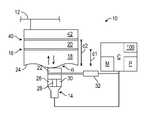
- FIG. 1is a schematic illustration of an assembly for automated quality determination of a joint, the assembly having a sensor and a controller;
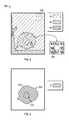
- FIG. 2is a schematic illustration of a first image obtained by the sensor of FIG. 1 ;
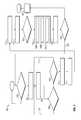
- FIG. 3is a schematic flow diagram for a method executable by the controller of FIG. 1 ;
- FIG. 4is a schematic illustration of a second image obtained from the first image, after partial execution of the method of FIG. 3 ;
- FIG. 5is a schematic illustration of an exterior boundary obtained from the second image of FIG. 4 .
- FIG. 1schematically illustrates an assembly 10 , which may be part of a device 12 .
- the device 12may be a mobile platform, such as, but not limited to, a standard passenger car, sport utility vehicle, light truck, heavy duty vehicle, ATV, minivan, bus, transit vehicle, bicycle, robot, farm implement, sports-related equipment, boat, plane, train.
- the device 12may be a non-mobile platform, such as, but not limited to, construction equipment, consumer goods and toys.
- the device 12may take many different forms and include multiple and/or alternate components and facilities.
- the assembly 10includes a sensor 14 configured to obtain a data scan of a joint 16 formed between a first member 18 and a second member 20 .
- the joint 16may be formed, for example, by ultrasonically welding the first member 18 and the second member 20 .
- the joint 16may formed by bonding the first member 18 and the second member 20 with an adhesive.
- the joint 16may be formed by fusing or attaching the first member 18 to the second member 20 via methods employed by those skilled in the art. Depending on the type of substrate employed and the end applications, the methods include infra-red heating, hot plate, joule heating, spot welding, etc.
- the first member 18 and second member 20may be composed of various materials employed by those skilled in the art, including but not limited to, amorphous materials, semi-crystalline materials, metals, polymers and (polymer) composites.
- the first member 18 and second member 20may be composed of steel, aluminum, magnesium, thermosets or thermoplastics polymers based on acrylate, Acrylonitrile Butadiene Styrene (ABS), Acrylonitrile Styrene Acrylate (ASA), Polycarbonate (PC) or Polypropylene (PP) chemistries or others that will be evident to those skilled in the art.
- Thesemay be further reinforced with various materials such as glass fibers, carbon fibers and clays or contain additives suitable for the end up application and/or manufacturing process, such as UV stabilizers, temperature stabilizers, dyes or pigments, internal mold release agents, and the like, or a combination thereof.
- additives suitable for the end up application and/or manufacturing processsuch as UV stabilizers, temperature stabilizers, dyes or pigments, internal mold release agents, and the like, or a combination thereof.
- the sensor 14includes a probe 22 that is placed over a surface 24 overlying the joint 16 .
- the sensor 14includes a transmitter 26 configured to emit a plurality of identical signals into the joint 16 at the surface 24 in order to cover a desired geometrical area that can be a discrete point, a line, square or a round-shaped area.
- the signalis a phased-array ultrasonic wave.
- the ultrasonic waveis reflected by voids in the joint 16 and conducted or propagated by areas that are welded, bonded or otherwise fused.
- the reflected wavesarise from an air/material interface or an interface between the first member 18 and second member 20 .
- the reflected wavesarise from any interface with a significant change in intrinsic sound attenuation properties, such as air/material interface or an interface between a material A and a material B (where the first member 18 and second member 20 are composed of materials A, B, respectively) provided that material A and material B possess different sound attenuation properties.
- a receiver 28is configured to receive the signals reflected back after travelling through the joint 16 .
- a recorder 30is configured to record the time taken for the signal to return after being transmitted.
- a controller Cis operatively connected to the sensor 14 .
- the controller Cis programmed to generate a first image of the joint 16 , based at least partially on the data scan obtained via the sensor 14 .
- An example of a first image 200 of the joint 16is shown in FIG. 2 .
- the probe 22may be configured to slide or otherwise translate in an X-Y plane along the surface 24 and obtain multiple images that are combined to form the first image 200 .
- the controller Cincludes at least one processor P and at least one memory M (or non-transitory, tangible computer readable storage medium) on which are recorded instructions for executing method 100 for automated quality assessment of the joint, described in detail in FIG. 3 .
- the memory Mcan store controller-executable instruction sets, and the processor P can execute the controller-executable instruction sets stored in the memory M.
- FIG. 3a flowchart of the method 100 stored on and executable by the controller C of FIG. 1 is shown.
- Method 100need not be applied in the specific order recited herein. Furthermore, it is to be understood that some blocks may be eliminated.
- the controller C of FIG. 1is specifically programmed to execute the blocks of the method 100 .
- the start and end of the method 100are shown by “S” and “E,” respectively.
- the method 100may begin with block 102 , where the controller C is programmed or configured to determine if one or more entry conditions are satisfied.
- the entry conditionsinclude placing the sensor 14 on a test or “check” joint having measured or identified properties.
- the imageis collected on the check joint.
- the imageis then compared to a look-up table having respective threshold values. If the instrument parameters are within respective threshold values, the instruments (i.e., controller C, processor P, sensor 14 , etc.) are deemed to be functioning properly and the method 100 proceeds to block 104 .
- the controller Cis programmed to select one of a predefined set of joint categories, based in part on the properties of the joint 16 .
- the predefined parametersmay depend on the type of joint, the material that the first and second members 18 , 20 are made of, the size and thickness of the joint 16 , and the number of layers in the joint 16 .
- the predefined parametersmay be stored in a look-up table or data repository. Sets of joint properties may be obtained from a series of laboratory measurements using selected material types, number of layers, dimensions, joining techniques, stack-up depth, strength values, etc. These relate to input parameters for a selected joint type to be analyzed, such as for example, sound attenuation, inspection tool frequency, inspection tool pulse rate, etc.
- Each of the predefined set of joint categoriesdefines a respective minimum joint area (A min ).
- the predefined set of joint categoriesmay define a respective minimum joint diameter (D min ).
- the controller Cis programmed to place the sensor 14 on the surface 24 overlying the joint 16 (see FIG. 1 ).
- the probe 22(of the sensor 14 ) may be positioned via a robotic arm 32 controllable by the controller C.
- the controller Cmay direct a user to manually position the probe 22 via a message displayed on a user interface.
- the method 100proceeds to block 108 , where the controller C is programmed to determine if the position of the sensor 14 (e.g., distance from the joint 16 ) is within a predefined position range and determine if the pressure applied by the probe 22 is within a predefined pressure range. If the position and pressure are within the respective predefined ranges, the method 100 proceeds to block 110 . If not, the method 100 proceeds to block 106 (as indicated by line 109 ) for a re-alignment of the probe 22 relative to the joint 16 .
- the controller Cis programmed to determine if the position of the sensor 14 (e.g., distance from the joint 16 ) is within a predefined position range and determine if the pressure applied by the probe 22 is within a predefined pressure range. If the position and pressure are within the respective predefined ranges, the method 100 proceeds to block 110 . If not, the method 100 proceeds to block 106 (as indicated by line 109 ) for a re-alignment of the probe 22 relative to the joint 16
- the controller Cis programmed to determine if the angle ⁇ of the probe 22 relative to the surface 24 is within a predefined angle range (tolerance). If it is, the method 100 proceeds to block 112 . If not, the method 100 proceeds to block 106 (as indicated by line 111 ) for a re-alignment of the probe 22 relative to the joint 16 .
- the predefined position, pressure and angle rangesmay be obtained in a series of laboratory measurements.
- the controller Cis programmed to obtain the data scan of the joint 16 (via the sensor 14 ) and generate a first image 200 (see example shown in FIG. 2 ) based at least partially on the data scan.
- the first image 200is divided into a plurality of pixels 202 , each having respective numeric values reflecting the amplitude of the signal received by the sensor 14 .
- the first image 200is divided into first, second and third regions R 1 , R 2 and R 3 , respectively.
- the first region R 1represents pixels 202 with respective numeric values that are above a threshold value (I 0 ), e.g. 10,000 units for example.
- the second region R 2represents pixels 202 with respective numeric values that are at or below the threshold value (I 0 ).
- the third region R 3represents pixels 202 with respective numeric values that are zero or almost zero. In one example, the third region R 3 represents pixels that are less than 0.1% of the threshold value (I 0 ).
- the controller Cis programmed to identify a region of interest as the plurality of pixels 202 with the respective numeric value lower than a threshold intensity (I 0 ).
- the region of interesthere is the combination of the second and third regions (R 2 +R 3 ).
- the method 100proceeds to block 116 , where the controller C is programmed to obtain a respective travel time for the respective signal received at each pixel 202 , from the time each signal was initially emitted by the probe 22 , in the second and third regions R 2 and R 3 of FIG. 2 .
- the controller Cis programmed to identify pixels 202 with a respective travel time outside a predefined time range, i.e., (t 0 -t 1 ).
- the travel timeincorporates the time taken for the signal to reach a certain depth (depth d 1 for the joint 16 and depth d 2 for the secondary joint 40 ) and travel back. Other methods to measure the time that it takes for the signal to arrive from the joint 16 may be employed.
- a second image 300is shown, based in part on the first image 200 .
- the region of interestis divided into a fourth region R 4 and a fifth region R 5 .
- the fourth region R 4includes pixels 302 with a respective travel time within a predefined time range, i.e., (t 0 -t 1 ).
- the fourth region R 4includes pixels 302 with a respective travel time outside the predefined time range.
- the method 100proceeds to block 118 , where the controller C is programmed to obtain a first area A, as a total area of the pixels 302 in the fifth region R 5 .
- the method 100proceeds to block 120 , where the controller C is programmed to determine if the first area A is at or above the minimum joint area (A min ) obtained in block 104 . If the first area A is below the minimum joint area (A min ), the method 100 proceeds to block 122 . In block 122 , the controller C is programmed to flag the joint 16 to an operator for further evaluation, for example, by displaying a message on a user interface. The further evaluation may include repairs to the joint 16 or disqualification. If the first area A is at or above the respective minimum joint area (A min ), the method 100 proceeds to block 124 . Additionally, in block 120 , the controller C may be programmed to determine a first diameter D (shown in FIG.
- the method 100proceeds to block 122 , where the joint 16 is flagged for further evaluation.
- Block 124the controller C is programmed to generate an exterior boundary 304 for the pixels 302 in the region of interest having the respective travel time within the predefined time range, i.e., the pixels 302 in the fifth region R 5 .
- FIG. 5is a schematic illustration of the exterior boundary 304 obtained from the second image 200 of FIG. 4 .
- Block 124includes the sub-blocks 124 A, 124 B and 124 C.
- each edge pixel 306is directly adjacent to eight respective neighboring pixels, N 1 to N 8 .
- an edge pixel 306may be defined such that at least one of the eight respective neighboring pixels, N 1 to N 8 , has a respective numeric value greater than the intensity threshold (I 0 ) (or travel time within the predefined time range or both) and at least another of the eight respective neighboring pixels N 1 , to N 8 , has a respective numeric value less than the intensity threshold (I 0 ) (or travel time outside the predefined time range or both).
- the edge pixels 306may be defined such at least two of the eight respective neighboring pixels, N 1 to N 8 , have a respective numeric value greater than the intensity threshold (I 0 ) and at least another two of the eight respective neighboring pixels N 1 , to N 8 , have a respective numeric value less than the intensity threshold (I 0 ).
- the controller Cis programmed to connect the centers (or corners) of the neighboring edge pixels 306 to create one or more borders, such as first border 308 and second border 310 of FIG. 5 . Only the edge pixels 306 that are neighboring or adjacent are connected, in order to avoid inadvertently connecting the first border 308 to the second border 310 .
- sub-block 124 Cthe controller C is programmed to select the exterior boundary 304 as the largest (in perimeter) one of the one or more borders.
- the first border 308is larger than the second border 310 .
- the method 100proceeds to block 126 from block 124 .
- the controller Cis programmed to obtain a second area B as a total area of pixels 302 inside the exterior boundary 304 .
- the second area Bis shown in the legend of FIG. 5 .
- the first and second areas A and Bmay be determined in terms of the number of pixels or in physical dimensions such as, for example, millimeter squared (mm 2 ).
- the controller C of FIG. 1may be an integral portion of, or a separate module operatively connected to, other controllers of the device 12 .
- the controller Cincludes a computer-readable medium (also referred to as a processor-readable medium), including a non-transitory (e.g., tangible) medium that participates in providing data (e.g., instructions) that may be read by a computer (e.g., by a processor of a computer).
- Non-volatile mediamay include, for example, optical or magnetic disks and other persistent memory.
- Volatile mediamay include, for example, dynamic random access memory (DRAM), which may constitute a main memory.
- DRAMdynamic random access memory
- Such instructionsmay be transmitted by one or more transmission media, including coaxial cables, copper wire and fiber optics, including the wires that comprise a system bus coupled to a processor of a computer.
- Some forms of computer-readable mediainclude, for example, a floppy disk, a flexible disk, hard disk, magnetic tape, other magnetic medium, a CD-ROM, DVD, other optical medium, punch cards, paper tape, other physical medium with patterns of holes, a RAM, a PROM, an EPROM, a FLASH-EEPROM, other memory chip or cartridge, or other medium from which a computer can read.
- Look-up tables, databases, data repositories or other data stores described hereinmay include various kinds of mechanisms for storing, accessing, and retrieving various kinds of data, including a hierarchical database, a set of files in a file system, an application database in a proprietary format, a relational database management system (RDBMS), etc.
- Each such data storemay be included within a computing device employing a computer operating system such as one of those mentioned above, and may be accessed via a network in one or more of a variety of manners.
- a file systemmay be accessible from a computer operating system, and may include files stored in various formats.
- An RDBMSmay employ the Structured Query Language (SQL) in addition to a language for creating, storing, editing, and executing stored procedures, such as the PL/SQL language mentioned above.
- SQLStructured Query Language
Landscapes
- Physics & Mathematics (AREA)
- Engineering & Computer Science (AREA)
- General Physics & Mathematics (AREA)
- Chemical & Material Sciences (AREA)
- Health & Medical Sciences (AREA)
- Life Sciences & Earth Sciences (AREA)
- Analytical Chemistry (AREA)
- Biochemistry (AREA)
- General Health & Medical Sciences (AREA)
- Immunology (AREA)
- Pathology (AREA)
- Signal Processing (AREA)
- Acoustics & Sound (AREA)
- Artificial Intelligence (AREA)
- Evolutionary Computation (AREA)
- Theoretical Computer Science (AREA)
- Computer Vision & Pattern Recognition (AREA)
- Geometry (AREA)
- Dispersion Chemistry (AREA)
- Quality & Reliability (AREA)
- Image Processing (AREA)
- Investigating Or Analyzing Materials By The Use Of Ultrasonic Waves (AREA)
Abstract
Description
The present disclosure relates generally to automated quality determination of joints. The quality of a joint may be assessed based on many different factors. The quality assessment of joints is generally done through manual testing of joints. However, this is dependent on operator skills and may be time-consuming. Additionally, some joints may be difficult to assess through visual inspection, such as for example, joints obtained from ultrasonically welding or adhesively bonding substrates such as polymers, metals, composites and other materials.
An assembly includes a sensor configured to obtain a data scan of a joint. A controller is operatively connected to the sensor. The controller includes a processor and tangible, non-transitory memory on which is recorded instructions for executing a method for automated quality assessment of the joint. The method allows for an automated determination of joint quality, with greater accuracy and speed. It is applicable to multiple joint types and materials. The method enables the development, testing and implementation of new materials and associated joining techniques.
Execution of the instructions by the processor causes the controller to: obtain the data scan of the joint (via the sensor) and generate a first image based at least partially on the data scan. The first image is divided into a plurality of pixels having respective numeric values. The controller is programmed to identify a region of interest as the plurality of pixels with the respective numeric value greater than a threshold intensity (I0). The sensor may include a transmitter configured to transmit ultrasonic waves into the joint and a receiver configured to receive the ultrasonic waves reflected through the joint.
Prior to obtaining the data scan, the controller may be programmed to determine if one or more entry conditions are satisfied. If each of the one or more entry conditions are satisfied, the controller is programmed to select one of a predefined set of joint categories. The predefined set of joint categories each defines a respective minimum joint area (Amin). The sensor includes a probe exerting a pressure on a surface overlying the joint. Prior to obtaining the data scan, the controller may be programmed to determine if a position of the probe relative to the surface is within a predefined position range, and if the pressure applied by the probe is within a predefined pressure range. The probe may be positioned at an angle relative to the surface overlying the joint. The controller may be programmed to determine whether the angle may be within a predefined angle (tolerance) range, prior to obtaining the data scan.
The sensor includes a transmitter configured to transmit multiple signals into the joint and a receiver configured to receive the multiple signals reflected through the joint. A recorder is configured to record a respective travel time for the multiple signals to arrive at the plurality of pixels. The controller is programmed to obtain the respective travel time for each of the plurality of pixels in the region of interest, via the recorder. A first area (A) is obtained as a total area of the plurality of pixels in the region of interest having the respective travel time within a predefined time range.
The controller is programmed to determine if the first area (A) is at or above the respective minimum joint area (Amin). If the first area (A) is at or above the respective minimum joint area (Amin), an exterior boundary is generated. The generation of the exterior boundary may include: identifying one or more edge pixels from the plurality of pixels and connecting each of the one or more edge pixels to generate one or more borders. Each of the edge pixels are directly adjacent to eight respective neighboring pixels. The edge pixels may be defined such that at least one of the eight respective neighboring pixels has a respective numeric value greater than the intensity threshold (I0) (or travel time within the predefined time range or both) and at least another of the eight respective neighboring pixels N1, to N8, has a respective numeric value less than the intensity threshold (I0) (or travel time outside the predefined time range or both). A largest of the one or more borders is selected as the exterior boundary.
The controller is programmed to obtain a second area (B) as a total area of the plurality of pixels inside the exterior boundary. A porosity factor (PF) is determined based in part on the first area (A) and the second area (B) such that PF=[1−(A/B)]. If the porosity factor (PF) is at or below a threshold porosity factor (PF0), the joint is categorized as acceptable. If the porosity factor (PF) is above the threshold porosity factor (PF0), the joint is flagged for further evaluation, which may include repairs or disqualification.
The above features and advantages and other features and advantages of the present disclosure are readily apparent from the following detailed description of the best modes for carrying out the disclosure when taken in connection with the accompanying drawings.
Referring to the drawings, wherein like reference numbers refer to like components,FIG. 1 schematically illustrates anassembly 10, which may be part of adevice 12. Thedevice 12 may be a mobile platform, such as, but not limited to, a standard passenger car, sport utility vehicle, light truck, heavy duty vehicle, ATV, minivan, bus, transit vehicle, bicycle, robot, farm implement, sports-related equipment, boat, plane, train. Thedevice 12 may be a non-mobile platform, such as, but not limited to, construction equipment, consumer goods and toys. Thedevice 12 may take many different forms and include multiple and/or alternate components and facilities.
Referring toFIG. 1 , theassembly 10 includes asensor 14 configured to obtain a data scan of ajoint 16 formed between afirst member 18 and asecond member 20. Thejoint 16 may be formed, for example, by ultrasonically welding thefirst member 18 and thesecond member 20. The joint16 may formed by bonding thefirst member 18 and thesecond member 20 with an adhesive. Thejoint 16 may be formed by fusing or attaching thefirst member 18 to thesecond member 20 via methods employed by those skilled in the art. Depending on the type of substrate employed and the end applications, the methods include infra-red heating, hot plate, joule heating, spot welding, etc. Thefirst member 18 andsecond member 20 may be composed of various materials employed by those skilled in the art, including but not limited to, amorphous materials, semi-crystalline materials, metals, polymers and (polymer) composites. Thefirst member 18 andsecond member 20 may be composed of steel, aluminum, magnesium, thermosets or thermoplastics polymers based on acrylate, Acrylonitrile Butadiene Styrene (ABS), Acrylonitrile Styrene Acrylate (ASA), Polycarbonate (PC) or Polypropylene (PP) chemistries or others that will be evident to those skilled in the art. These may be further reinforced with various materials such as glass fibers, carbon fibers and clays or contain additives suitable for the end up application and/or manufacturing process, such as UV stabilizers, temperature stabilizers, dyes or pigments, internal mold release agents, and the like, or a combination thereof.
Referring toFIG. 1 , thesensor 14 includes aprobe 22 that is placed over asurface 24 overlying thejoint 16. Thesensor 14 includes atransmitter 26 configured to emit a plurality of identical signals into thejoint 16 at thesurface 24 in order to cover a desired geometrical area that can be a discrete point, a line, square or a round-shaped area. In one example, the signal is a phased-array ultrasonic wave. The ultrasonic wave is reflected by voids in thejoint 16 and conducted or propagated by areas that are welded, bonded or otherwise fused. The reflected waves arise from an air/material interface or an interface between thefirst member 18 andsecond member 20. The reflected waves arise from any interface with a significant change in intrinsic sound attenuation properties, such as air/material interface or an interface between a material A and a material B (where thefirst member 18 andsecond member 20 are composed of materials A, B, respectively) provided that material A and material B possess different sound attenuation properties. Areceiver 28 is configured to receive the signals reflected back after travelling through thejoint 16. Arecorder 30 is configured to record the time taken for the signal to return after being transmitted.
Referring toFIG. 1 , a controller C is operatively connected to thesensor 14. The controller C is programmed to generate a first image of the joint16, based at least partially on the data scan obtained via thesensor 14. An example of afirst image 200 of the joint16 is shown inFIG. 2 . Theprobe 22 may be configured to slide or otherwise translate in an X-Y plane along thesurface 24 and obtain multiple images that are combined to form thefirst image 200. The controller C includes at least one processor P and at least one memory M (or non-transitory, tangible computer readable storage medium) on which are recorded instructions for executingmethod 100 for automated quality assessment of the joint, described in detail inFIG. 3 . The memory M can store controller-executable instruction sets, and the processor P can execute the controller-executable instruction sets stored in the memory M.
Referring now toFIG. 3 , a flowchart of themethod 100 stored on and executable by the controller C ofFIG. 1 is shown.Method 100 need not be applied in the specific order recited herein. Furthermore, it is to be understood that some blocks may be eliminated. The controller C ofFIG. 1 is specifically programmed to execute the blocks of themethod 100. The start and end of themethod 100 are shown by “S” and “E,” respectively.
Referring toFIG. 3 , themethod 100 may begin withblock 102, where the controller C is programmed or configured to determine if one or more entry conditions are satisfied. The entry conditions include placing thesensor 14 on a test or “check” joint having measured or identified properties. The image is collected on the check joint. The image is then compared to a look-up table having respective threshold values. If the instrument parameters are within respective threshold values, the instruments (i.e., controller C, processor P,sensor 14, etc.) are deemed to be functioning properly and themethod 100 proceeds to block104.
Inblock 104, the controller C is programmed to select one of a predefined set of joint categories, based in part on the properties of the joint16. The predefined parameters may depend on the type of joint, the material that the first andsecond members
Inblock 106, the controller C is programmed to place thesensor 14 on thesurface 24 overlying the joint16 (seeFIG. 1 ). The probe22 (of the sensor14) may be positioned via arobotic arm 32 controllable by the controller C. Alternatively, the controller C may direct a user to manually position theprobe 22 via a message displayed on a user interface.
Themethod 100 proceeds to block108, where the controller C is programmed to determine if the position of the sensor14 (e.g., distance from the joint16) is within a predefined position range and determine if the pressure applied by theprobe 22 is within a predefined pressure range. If the position and pressure are within the respective predefined ranges, themethod 100 proceeds to block110. If not, themethod 100 proceeds to block106 (as indicated by line109) for a re-alignment of theprobe 22 relative to the joint16.
Inblock 110, the controller C is programmed to determine if the angle θ of theprobe 22 relative to thesurface 24 is within a predefined angle range (tolerance). If it is, themethod 100 proceeds to block112. If not, themethod 100 proceeds to block106 (as indicated by line111) for a re-alignment of theprobe 22 relative to the joint16. The predefined position, pressure and angle ranges may be obtained in a series of laboratory measurements.
Inblock 112, the controller C is programmed to obtain the data scan of the joint16 (via the sensor14) and generate a first image200 (see example shown inFIG. 2 ) based at least partially on the data scan. Thefirst image 200 is divided into a plurality ofpixels 202, each having respective numeric values reflecting the amplitude of the signal received by thesensor 14.
Referring to the legend inFIG. 2 , thefirst image 200 is divided into first, second and third regions R1, R2 and R3, respectively. The first region R1 representspixels 202 with respective numeric values that are above a threshold value (I0), e.g. 10,000 units for example. The second region R2 representspixels 202 with respective numeric values that are at or below the threshold value (I0). The third region R3 representspixels 202 with respective numeric values that are zero or almost zero. In one example, the third region R3 represents pixels that are less than 0.1% of the threshold value (I0).
Inblock 114, the controller C is programmed to identify a region of interest as the plurality ofpixels 202 with the respective numeric value lower than a threshold intensity (I0). Referring toFIG. 2 , the region of interest here is the combination of the second and third regions (R2+R3). Themethod 100 proceeds to block116, where the controller C is programmed to obtain a respective travel time for the respective signal received at eachpixel 202, from the time each signal was initially emitted by theprobe 22, in the second and third regions R2 and R3 ofFIG. 2 . The controller C is programmed to identifypixels 202 with a respective travel time outside a predefined time range, i.e., (t0-t1). This enables the elimination of data from other joints (such as secondary joint40 formed between thesecond member 20 and athird member 42, seeFIG. 1 ), material defects such as gaseous or fluid voids, end of parts or other material discontinuities, and other artifacts, and therefore, isolation of data emanating from the joint of interest (the joint16 in this case). The travel time incorporates the time taken for the signal to reach a certain depth (depth d1 for the joint16 and depth d2 for the secondary joint40) and travel back. Other methods to measure the time that it takes for the signal to arrive from the joint16 may be employed.
Referring toFIG. 4 , asecond image 300 is shown, based in part on thefirst image 200. Referring toFIG. 4 , the region of interest is divided into a fourth region R4 and a fifth region R5. The fourth region R4 includespixels 302 with a respective travel time within a predefined time range, i.e., (t0-t1). The fourth region R4 includespixels 302 with a respective travel time outside the predefined time range. Themethod 100 proceeds to block118, where the controller C is programmed to obtain a first area A, as a total area of thepixels 302 in the fifth region R5.
Themethod 100 proceeds to block120, where the controller C is programmed to determine if the first area A is at or above the minimum joint area (Amin) obtained inblock 104. If the first area A is below the minimum joint area (Amin), themethod 100 proceeds to block122. Inblock 122, the controller C is programmed to flag the joint16 to an operator for further evaluation, for example, by displaying a message on a user interface. The further evaluation may include repairs to the joint16 or disqualification. If the first area A is at or above the respective minimum joint area (Amin), themethod 100 proceeds to block124. Additionally, inblock 120, the controller C may be programmed to determine a first diameter D (shown inFIG. 4 ) of thepixels 302 in the fifth region R5, and determine if the first diameter D is at or above a minimum joint diameter (Dmin) (obtained in block104). If the first diameter D is below the minimum joint diameter (Dmin), themethod 100 proceeds to block122, where the joint16 is flagged for further evaluation.
Inblock 124, the controller C is programmed to generate anexterior boundary 304 for thepixels 302 in the region of interest having the respective travel time within the predefined time range, i.e., thepixels 302 in the fifth region R5.FIG. 5 is a schematic illustration of theexterior boundary 304 obtained from thesecond image 200 ofFIG. 4 .Block 124 includes the sub-blocks124A,124B and124C.
Insub-block 124A, the controller C is programmed to identify one ormore edge pixels 306 from thepixels 302 in the fifth region R5. Referring toFIG. 4 , eachedge pixel 306 is directly adjacent to eight respective neighboring pixels, N1 to N8. In one example, anedge pixel 306 may be defined such that at least one of the eight respective neighboring pixels, N1 to N8, has a respective numeric value greater than the intensity threshold (I0) (or travel time within the predefined time range or both) and at least another of the eight respective neighboring pixels N1, to N8, has a respective numeric value less than the intensity threshold (I0) (or travel time outside the predefined time range or both). In another example, theedge pixels 306 may be defined such at least two of the eight respective neighboring pixels, N1 to N8, have a respective numeric value greater than the intensity threshold (I0) and at least another two of the eight respective neighboring pixels N1, to N8, have a respective numeric value less than the intensity threshold (I0).
Insub-block 124B, the controller C is programmed to connect the centers (or corners) of the neighboringedge pixels 306 to create one or more borders, such asfirst border 308 andsecond border 310 ofFIG. 5 . Only theedge pixels 306 that are neighboring or adjacent are connected, in order to avoid inadvertently connecting thefirst border 308 to thesecond border 310.
Insub-block 124C, the controller C is programmed to select theexterior boundary 304 as the largest (in perimeter) one of the one or more borders. Here, as thefirst border 308 is larger than thesecond border 310. Themethod 100 proceeds to block126 fromblock 124.
Inblock 126, the controller C is programmed to obtain a second area B as a total area ofpixels 302 inside theexterior boundary 304. The second area B is shown in the legend ofFIG. 5 . The first and second areas A and B may be determined in terms of the number of pixels or in physical dimensions such as, for example, millimeter squared (mm2).
Inblock 128, the controller C is programmed to determine a porosity factor (PF) based in part on the first area A and the second area B such that:
PF=[1−(A/B)].
If the porosity factor (PF) is above a threshold porosity (PF0), themethod 100 proceeds to block122. Inblock 122, the controller C is programmed to flag the joint16 for further evaluation (and possible repair) or disqualification. In one example, the threshold porosity (PF0) is 0.2. If the porosity factor (PF) is at or below the threshold porosity (PF0), the joint quality is deemed as acceptable and themethod 100 loops back to block102, as indicated byline 129, to assess the quality of the next joint (if applicable). The controller C ofFIG. 1 may be an integral portion of, or a separate module operatively connected to, other controllers of thedevice 12. The controller C includes a computer-readable medium (also referred to as a processor-readable medium), including a non-transitory (e.g., tangible) medium that participates in providing data (e.g., instructions) that may be read by a computer (e.g., by a processor of a computer). Such a medium may take many forms, including, but not limited to, non-volatile media and volatile media. Non-volatile media may include, for example, optical or magnetic disks and other persistent memory. Volatile media may include, for example, dynamic random access memory (DRAM), which may constitute a main memory. Such instructions may be transmitted by one or more transmission media, including coaxial cables, copper wire and fiber optics, including the wires that comprise a system bus coupled to a processor of a computer. Some forms of computer-readable media include, for example, a floppy disk, a flexible disk, hard disk, magnetic tape, other magnetic medium, a CD-ROM, DVD, other optical medium, punch cards, paper tape, other physical medium with patterns of holes, a RAM, a PROM, an EPROM, a FLASH-EEPROM, other memory chip or cartridge, or other medium from which a computer can read.
PF=[1−(A/B)].
If the porosity factor (PF) is above a threshold porosity (PF0), the
Look-up tables, databases, data repositories or other data stores described herein may include various kinds of mechanisms for storing, accessing, and retrieving various kinds of data, including a hierarchical database, a set of files in a file system, an application database in a proprietary format, a relational database management system (RDBMS), etc. Each such data store may be included within a computing device employing a computer operating system such as one of those mentioned above, and may be accessed via a network in one or more of a variety of manners. A file system may be accessible from a computer operating system, and may include files stored in various formats. An RDBMS may employ the Structured Query Language (SQL) in addition to a language for creating, storing, editing, and executing stored procedures, such as the PL/SQL language mentioned above.
The detailed description and the drawings or figures are supportive and descriptive of the disclosure, but the scope of the disclosure is defined solely by the claims. While some of the best modes and other embodiments for carrying out the claimed disclosure have been described in detail, various alternative designs and embodiments exist for practicing the disclosure defined in the appended claims. Furthermore, the embodiments shown in the drawings or the characteristics of various embodiments mentioned in the present description are not necessarily to be understood as embodiments independent of each other. Rather, it is possible that each of the characteristics described in one of the examples of an embodiment can be combined with one or a plurality of other desired characteristics from other embodiments, resulting in other embodiments not described in words or by reference to the drawings. Accordingly, such other embodiments fall within the framework of the scope of the appended claims.
Claims (20)
1. An assembly comprising:
a sensor configured to obtain a data scan of a joint, the sensor including a probe exerting a pressure on a surface overlying the joint;
a controller operatively connected to the sensor, the controller including a processor and tangible, non-transitory memory on which is recorded instructions for executing a method for automated quality assessment of the joint;
wherein execution of the instructions by the processor causes the controller to:
obtain the data scan of the joint, via the sensor;
generate a first image based at least partially on the data scan, the first image being divided into a plurality of pixels having respective numeric values; and
identify a region of interest as the plurality of pixels with the respective numeric value greater than a threshold intensity (I0); and
wherein the controller is programmed to, prior to obtaining the data scan:
determine if one or more entry conditions are satisfied;
if each of the one or more entry conditions are satisfied, select one of a predefined set of joint categories, the predefined set of joint categories each defining a respective minimum joint area (Amin);
determine if a position of the probe relative to the surface is within a predefined position range; and
determine if the pressure applied by the probe is within a predefined pressure range.
2. The assembly ofclaim 1 , wherein:
the sensor includes a transmitter configured to transmit ultrasonic waves into the joint; and
the sensor includes a receiver configured to receive the ultrasonic waves reflected through the joint.
3. The assembly ofclaim 1 , wherein:
the sensor includes a probe positioned at an angle relative to a surface overlying the joint;
wherein the controller is programmed to determine whether the angle is within a predefined angle range, prior to obtaining the data scan.
4. The assembly ofclaim 1 , wherein:
the sensor includes a transmitter configured to transmit multiple signals into the joint;
the sensor includes a receiver configured to receive the multiple signals reflected through the joint; and
the sensor includes a recorder configured to record a respective travel time for the multiple signals to arrive at the plurality of pixels; and
the controller is programmed to:
obtain the respective travel time for each of the plurality of pixels in the region of interest, via the recorder; and
obtain a first area (A) as a total area of the plurality of pixels in the region of interest having the respective travel time within a predefined time range.
5. The assembly ofclaim 4 , wherein the controller is programmed to:
determine if the first area (A) is at or above the respective minimum joint area (Amin);
if the first area (A) is at or above the respective minimum joint area (Amin), generate an exterior boundary of the plurality of pixels in the region of interest having the respective travel time within the predefined time range.
6. The assembly ofclaim 5 , wherein the generation of the exterior boundary includes:
identifying one or more edge pixels from the plurality of pixels;
connecting each of the one or more edge pixels to generate one or more borders; and
selecting a largest one of the one or more borders as the exterior boundary.
7. The assembly ofclaim 6 , wherein:
each of the one or more edge pixels are directly adjacent to eight respective neighboring pixels; and
wherein the one or more edge pixels are defined such that at least one of the eight respective neighboring pixels has a respective numeric value greater than the intensity threshold (I0) and at least another of the eight respective neighboring pixels N1, to N8, has a respective numeric value less than the intensity threshold (I0).
8. The assembly ofclaim 6 , wherein the controller is programmed to:
obtain a second area (B) as a total area of the plurality of pixels inside the exterior boundary;
determine a porosity factor (PF) based in part on the first area (A) and the second area (B) such that PF=[1−(A/B)];
if the porosity factor (PF) is at or below a threshold porosity factor (PF0), categorize the joint as acceptable; and
if the porosity factor (PF) is above the threshold porosity factor (PF0), flag the joint for further evaluation.
9. A method for automated quality assessment of a joint in an assembly having a sensor and a controller, the method comprising:
obtaining a data scan of the joint, via the sensor;
generating a first image based at least partially on the data scan, via the controller, the first image being divided into a plurality of pixels having respective numeric values;
identifying a region of interest as the plurality of pixels with the respective numeric value greater than a threshold intensity (I0);
transmitting multiple signals into the joint, via a transmitter in the sensor;
receiving the multiple signals reflected through the joint, via a receiver in the sensor;
recording a respective travel time for the multiple signals to arrive at each of the plurality of pixels in the region of interest, via a recorder in the sensor; and
obtaining a first area (A) as a total area of the plurality of pixels in the region of interest having the respective travel time within a predefined time range.
10. The method ofclaim 9 , further comprising:
prior to obtaining the data scan, determining if one or more entry conditions are satisfied;
if each of the one or more entry conditions are satisfied, selecting one of a predefined set of joint categories; and
wherein the predefined set of joint categories each define a respective minimum joint area (Amin).
11. The method ofclaim 10 , further comprising:
determining if the first area (A) is at or above the respective minimum joint area (Amin);
if the first area (A) is at or above the respective minimum joint area (Amin), generating an exterior boundary of the plurality of pixels in the region of interest having the respective travel time within the predefined time range;
obtaining a second area (B) as a total area of the plurality of pixels inside the exterior boundary;
determining a porosity factor (PF) based in part on the first area (A) and the second area (B) such that PF=[1−(A/B)];
if the porosity factor (PF) is at or below a threshold porosity factor (PF0), categorizing the joint as acceptable;
if the porosity factor (PF) is above the threshold porosity factor (PF0), flag the joint for further evaluation.
12. The method ofclaim 11 , wherein the generation of the exterior boundary includes:
identifying one or more edge pixels from the plurality of pixels;
connecting each of the one or more edge pixels to generate one or more borders; and
selecting a largest one of the one or more borders as the exterior boundary.
13. The method ofclaim 12 , wherein:
each of the one or more edge pixels are directly adjacent to eight respective neighboring pixels; and
wherein the one or more edge pixels are defined such that at least one of the eight respective neighboring pixels has a respective numeric value greater than the intensity threshold (I0) and at least another of the eight respective neighboring pixels N1, to N8, has a respective numeric value less than the intensity threshold (I0).
14. The method ofclaim 9 , wherein the sensor includes a probe exerting a pressure on a surface overlying the joint, further comprising:
prior to obtaining the data scan, determining if a position of the probe relative to the surface is within a predefined position range; and
determining if the pressure applied by the probe is within a predefined pressure range.
15. The method ofclaim 9 , wherein:
the sensor includes a probe positioned at an angle relative to a surface overlying the joint;
wherein the controller is programmed to determine whether the angle is within a predefined angle range, prior to obtaining the data scan.
16. An assembly comprising:
a sensor configured to obtain a data scan of a joint;
a controller operatively connected to the sensor, the controller including a processor and tangible, non-transitory memory on which is recorded instructions for executing a method for automated quality assessment of the joint;
wherein the sensor includes a transmitter configured to transmit multiple signals into the joint and a receiver configured to receive the multiple signals reflected through the joint;
wherein execution of the instructions by the processor causes the controller to:
obtain the data scan of the joint, via the sensor;
generate a first image based at least partially on the data scan, the first image being divided into a plurality of pixels having respective numeric values;
identify a region of interest as the plurality of pixels with the respective numeric value greater than a threshold intensity (I0); and
wherein the sensor includes a recorder configured to record a respective travel time for the multiple signals to arrive at the plurality of pixels, the controller being further programmed to:
obtain the respective travel time for each of the plurality of pixels in the region of interest, via the recorder; and
obtain a first area (A) as a total area of the plurality of pixels in the region of interest having the respective travel time within a predefined time range.
17. The assembly ofclaim 16 , wherein the controller is programmed to, prior to obtaining the data scan:
determine if one or more entry conditions are satisfied;
if each of the one or more entry conditions are satisfied, select one of a predefined set of joint categories, the predefined set of joint categories each defining a respective minimum joint area (Amin).
18. The assembly ofclaim 17 , wherein the controller is programmed to:
determine if the first area (A) is at or above the respective minimum joint area (Amin);
if the first area (A) is at or above the respective minimum joint area (Amin), generate an exterior boundary of the plurality of pixels in the region of interest having the respective travel time within the predefined time range;
obtain a second area (B) as a total area of the plurality of pixels inside the exterior boundary;
determine a porosity factor (PF) based in part on the first area (A) and the second area (B) such that PF=[1−(A/B)];
if the porosity factor (PF) is at or below a threshold porosity factor (PF0), categorize the joint as acceptable; and
if the porosity factor (PF) is above the threshold porosity factor (PF0), flag the joint for further evaluation.
19. The assembly ofclaim 17 , wherein the generation of the exterior boundary includes:
identifying one or more edge pixels from the plurality of pixels;
connecting each of the one or more edge pixels to generate one or more borders; and
selecting a largest one of the one or more borders as the exterior boundary.
20. The assembly ofclaim 19 , wherein:
each of the one or more edge pixels are directly adjacent to eight respective neighboring pixels; and
wherein the one or more edge pixels are defined such that at least one of the eight respective neighboring pixels has a respective numeric value greater than the intensity threshold (I0) and at least another of the eight respective neighboring pixels N1, to N8, has a respective numeric value less than the intensity threshold (I0).
Priority Applications (3)
| Application Number | Priority Date | Filing Date | Title |
|---|---|---|---|
| US15/358,301US10338032B2 (en) | 2016-11-22 | 2016-11-22 | Automated quality determination of joints |
| CN201711141742.6ACN108090892B (en) | 2016-11-22 | 2017-11-16 | Method and assembly for automatically assessing the quality of a joint |
| DE102017127462.6ADE102017127462A1 (en) | 2016-11-22 | 2017-11-21 | AUTOMATED QUALITY ASSIGNMENT OF COMPOUNDS |
Applications Claiming Priority (1)
| Application Number | Priority Date | Filing Date | Title |
|---|---|---|---|
| US15/358,301US10338032B2 (en) | 2016-11-22 | 2016-11-22 | Automated quality determination of joints |
Publications (2)
| Publication Number | Publication Date |
|---|---|
| US20180143164A1 US20180143164A1 (en) | 2018-05-24 |
| US10338032B2true US10338032B2 (en) | 2019-07-02 |
Family
ID=62069039
Family Applications (1)
| Application Number | Title | Priority Date | Filing Date |
|---|---|---|---|
| US15/358,301Active2037-12-09US10338032B2 (en) | 2016-11-22 | 2016-11-22 | Automated quality determination of joints |
Country Status (3)
| Country | Link |
|---|---|
| US (1) | US10338032B2 (en) |
| CN (1) | CN108090892B (en) |
| DE (1) | DE102017127462A1 (en) |
Families Citing this family (4)
| Publication number | Priority date | Publication date | Assignee | Title |
|---|---|---|---|---|
| US10557832B2 (en)* | 2017-04-28 | 2020-02-11 | GM Global Technology Operations LLC | Portable acoustic apparatus for in-situ monitoring of a weld in a workpiece |
| US11561204B2 (en)* | 2019-08-28 | 2023-01-24 | Kabushiki Kaisha Toshiba | Display control system, inspection control system, display control method, and storage medium |
| FR3121223A1 (en)* | 2021-03-26 | 2022-09-30 | Airbus Operations | Method and device for analyzing the conformity of an interposition sealant integrated into a structure, in particular of an aircraft. |
| CN114184132B (en)* | 2021-12-09 | 2024-01-16 | 安徽华烨特种材料有限公司 | Method for identifying joint of impregnated reinforced material |
Citations (10)
| Publication number | Priority date | Publication date | Assignee | Title |
|---|---|---|---|---|
| USRE35423E (en) | 1986-02-20 | 1997-01-14 | Thermospectra Corporation | Method and apparatus for performing automated circuit board solder quality inspections |
| US20020040922A1 (en) | 2000-06-22 | 2002-04-11 | Shigeki Kobayashi | Multi-modal soldering inspection system |
| US6404206B1 (en) | 1997-05-05 | 2002-06-11 | Macrotron Process Technologies Gmbh | Process and circuit for testing a solder joint for faults |
| US20050005700A1 (en) | 2003-07-11 | 2005-01-13 | Siemens Westinghouse Power Corporation | Automated tool for ultrasonic inspection of brazed joints |
| WO2006057836A2 (en) | 2004-11-23 | 2006-06-01 | U.I.T., L.L.C. | Welded joints with new properties and provision of such properties by ultrasonic impact treatment |
| US20090034828A1 (en)* | 2007-08-01 | 2009-02-05 | Andrew Frank Ferro | Method and apparatus for inspecting components |
| US20110162184A1 (en) | 2003-02-14 | 2011-07-07 | Newfrey Llc | Automated monitoring for clinching joints |
| US20140216158A1 (en)* | 2011-08-17 | 2014-08-07 | Sergio José Sanabria Martin | Air coupled ultrasonic contactless method for non-destructive determination of defects in laminated structures |
| US20150253288A1 (en) | 2011-05-10 | 2015-09-10 | Ewi, Inc. | Automated weld inspection system |
| WO2016038395A1 (en) | 2014-09-12 | 2016-03-17 | Controlpoint Llp | Completion assembly quality control |
Family Cites Families (7)
| Publication number | Priority date | Publication date | Assignee | Title |
|---|---|---|---|---|
| CN1261760C (en)* | 2003-11-07 | 2006-06-28 | 西安交通大学 | Ultrasonic imaging non-destructive detection method and detection system for appliance switch contact bonding quality |
| CN101629812B (en)* | 2009-04-17 | 2010-12-01 | 华中科技大学 | A Measuring Method for Forming Structure Characteristics of Welded Joint |
| CN102646278B (en)* | 2012-03-16 | 2014-07-16 | 华南理工大学 | Component package bubble detection method based on X-ray image |
| US9135691B2 (en)* | 2012-06-19 | 2015-09-15 | GM Global Technology Operations LLC | Metallographic method for accurate measurement of pore sizes and distributions in metal castings |
| KR101501914B1 (en)* | 2012-11-12 | 2015-03-12 | 주식회사 고영테크놀러지 | Inspection method for solder joint |
| US10204406B2 (en)* | 2014-11-05 | 2019-02-12 | Illinois Tool Works Inc. | System and method of controlling welding system camera exposure and marker illumination |
| US10402959B2 (en)* | 2014-11-05 | 2019-09-03 | Illinois Tool Works Inc. | System and method of active torch marker control |
- 2016
- 2016-11-22USUS15/358,301patent/US10338032B2/enactiveActive
- 2017
- 2017-11-16CNCN201711141742.6Apatent/CN108090892B/enactiveActive
- 2017-11-21DEDE102017127462.6Apatent/DE102017127462A1/enactivePending
Patent Citations (10)
| Publication number | Priority date | Publication date | Assignee | Title |
|---|---|---|---|---|
| USRE35423E (en) | 1986-02-20 | 1997-01-14 | Thermospectra Corporation | Method and apparatus for performing automated circuit board solder quality inspections |
| US6404206B1 (en) | 1997-05-05 | 2002-06-11 | Macrotron Process Technologies Gmbh | Process and circuit for testing a solder joint for faults |
| US20020040922A1 (en) | 2000-06-22 | 2002-04-11 | Shigeki Kobayashi | Multi-modal soldering inspection system |
| US20110162184A1 (en) | 2003-02-14 | 2011-07-07 | Newfrey Llc | Automated monitoring for clinching joints |
| US20050005700A1 (en) | 2003-07-11 | 2005-01-13 | Siemens Westinghouse Power Corporation | Automated tool for ultrasonic inspection of brazed joints |
| WO2006057836A2 (en) | 2004-11-23 | 2006-06-01 | U.I.T., L.L.C. | Welded joints with new properties and provision of such properties by ultrasonic impact treatment |
| US20090034828A1 (en)* | 2007-08-01 | 2009-02-05 | Andrew Frank Ferro | Method and apparatus for inspecting components |
| US20150253288A1 (en) | 2011-05-10 | 2015-09-10 | Ewi, Inc. | Automated weld inspection system |
| US20140216158A1 (en)* | 2011-08-17 | 2014-08-07 | Sergio José Sanabria Martin | Air coupled ultrasonic contactless method for non-destructive determination of defects in laminated structures |
| WO2016038395A1 (en) | 2014-09-12 | 2016-03-17 | Controlpoint Llp | Completion assembly quality control |
Non-Patent Citations (1)
| Title |
|---|
| Yang Ou and Li Yueping; "Quality Evaluation and Automatic Classification in Resistance Spot Welding by Analyzing the Weld Image on Metal Bands by Computer Vision"; International Journal of Signal Processing, Image Jrocessing and Pattern Recognition, vol. 8, No. 5 (2015), pp. 301-314. |
Also Published As
| Publication number | Publication date |
|---|---|
| DE102017127462A1 (en) | 2018-05-24 |
| CN108090892B (en) | 2022-02-15 |
| US20180143164A1 (en) | 2018-05-24 |
| CN108090892A (en) | 2018-05-29 |
Similar Documents
| Publication | Publication Date | Title |
|---|---|---|
| US10338032B2 (en) | Automated quality determination of joints | |
| US11255821B2 (en) | Method for the graphical representation and data presentation of weld inspection results | |
| US10648951B2 (en) | Classification of ultrasonic indications using pattern recognition | |
| US20220317095A1 (en) | Method, device and system for non-destructive evaluation of polyethylene pipe joints using ultrasound and machine learning | |
| CN1761871A (en) | Method and apparatus for scanning corrosion and surface defects | |
| CN102639996A (en) | 3D Ultrasonic Inspection Equipment | |
| Spytek et al. | Evaluation of disbonds in adhesively bonded multilayer plates through local wavenumber estimation | |
| CN104297342A (en) | Ultrasonic testing method of engine air conduit electron beam welding line | |
| CN102109496A (en) | Multi-frequency bond testing | |
| Scalerandi et al. | Nonlinear acoustic time reversal imaging using the scaling subtraction method | |
| JPS6291856A (en) | Method of sorting defect | |
| JP2015125008A (en) | Ultrasonic flaw detection system, and control method of ultrasonic flaw detection system | |
| CN116380890A (en) | Vehicle body welding spot detection method based on vision and ultrasonic detection | |
| CN102575929B (en) | Method and device for quality inspection of thermoplastically formed fiber-reinforced plastic components | |
| Görick et al. | New input factors for machine learning approaches to predict the weld quality of ultrasonically welded thermoplastic composite materials | |
| Schmid et al. | Spatial and temporal deep learning in air-coupled ultrasonic testing for enabling NDE 4.0 | |
| CN118192477A (en) | Intelligent equipment control system and method for plastic welding integrated machine | |
| EP4194848B1 (en) | Analytical digital twin for nondestructive inspection of a vehicle | |
| EP4109088B1 (en) | Automated scan data quality assessment in ultrasonic testing | |
| Dong et al. | Ultrasonic C-scan detection research for effective connection area of arc-stud-weld joints | |
| KR101712857B1 (en) | Apparatus for non-destructive testing based on parallel processing and Method thereof | |
| CN117129475A (en) | Terahertz nondestructive testing method for defects of non-metal pipeline hot-melt joint | |
| CN210803363U (en) | Device for detecting adhesive layer of automobile tail door | |
| Gang et al. | Study on prediction of tensile-shear strength of weld spot based on an improved neural network algorithm | |
| JPH1082766A (en) | Ultrasonic flaw detector and unit for assisting discrimination of defect |
Legal Events
| Date | Code | Title | Description |
|---|---|---|---|
| AS | Assignment | Owner name:GM GLOBAL TECHNOLOGY OPERATIONS LLC, MICHIGAN Free format text:ASSIGNMENT OF ASSIGNORS INTEREST;ASSIGNORS:ROUSSEAU, INGRID A.;ZHAO, SELINA X.;KIA, HAMID G.;SIGNING DATES FROM 20161004 TO 20161005;REEL/FRAME:040401/0600 | |
| STPP | Information on status: patent application and granting procedure in general | Free format text:NOTICE OF ALLOWANCE MAILED -- APPLICATION RECEIVED IN OFFICE OF PUBLICATIONS | |
| STPP | Information on status: patent application and granting procedure in general | Free format text:PUBLICATIONS -- ISSUE FEE PAYMENT VERIFIED | |
| STCF | Information on status: patent grant | Free format text:PATENTED CASE | |
| MAFP | Maintenance fee payment | Free format text:PAYMENT OF MAINTENANCE FEE, 4TH YEAR, LARGE ENTITY (ORIGINAL EVENT CODE: M1551); ENTITY STATUS OF PATENT OWNER: LARGE ENTITY Year of fee payment:4 |