US10318389B2 - Joint de-duplication-erasure coded distributed storage - Google Patents
Joint de-duplication-erasure coded distributed storageDownload PDFInfo
- Publication number
- US10318389B2 US10318389B2US15/211,208US201615211208AUS10318389B2US 10318389 B2US10318389 B2US 10318389B2US 201615211208 AUS201615211208 AUS 201615211208AUS 10318389 B2US10318389 B2US 10318389B2
- Authority
- US
- United States
- Prior art keywords
- data
- chunk
- symbols
- unique
- erasure
- Prior art date
- Legal status (The legal status is an assumption and is not a legal conclusion. Google has not performed a legal analysis and makes no representation as to the accuracy of the status listed.)
- Expired - Fee Related, expires
Links
Images
Classifications
- G—PHYSICS
- G06—COMPUTING OR CALCULATING; COUNTING
- G06F—ELECTRIC DIGITAL DATA PROCESSING
- G06F11/00—Error detection; Error correction; Monitoring
- G06F11/07—Responding to the occurrence of a fault, e.g. fault tolerance
- G06F11/14—Error detection or correction of the data by redundancy in operation
- G06F11/1402—Saving, restoring, recovering or retrying
- G06F11/1446—Point-in-time backing up or restoration of persistent data
- G06F11/1448—Management of the data involved in backup or backup restore
- G06F11/1453—Management of the data involved in backup or backup restore using de-duplication of the data
- H—ELECTRICITY
- H03—ELECTRONIC CIRCUITRY
- H03M—CODING; DECODING; CODE CONVERSION IN GENERAL
- H03M13/00—Coding, decoding or code conversion, for error detection or error correction; Coding theory basic assumptions; Coding bounds; Error probability evaluation methods; Channel models; Simulation or testing of codes
- H03M13/03—Error detection or forward error correction by redundancy in data representation, i.e. code words containing more digits than the source words
- H03M13/033—Theoretical methods to calculate these checking codes
- H—ELECTRICITY
- H03—ELECTRONIC CIRCUITRY
- H03M—CODING; DECODING; CODE CONVERSION IN GENERAL
- H03M13/00—Coding, decoding or code conversion, for error detection or error correction; Coding theory basic assumptions; Coding bounds; Error probability evaluation methods; Channel models; Simulation or testing of codes
- H03M13/03—Error detection or forward error correction by redundancy in data representation, i.e. code words containing more digits than the source words
- H03M13/05—Error detection or forward error correction by redundancy in data representation, i.e. code words containing more digits than the source words using block codes, i.e. a predetermined number of check bits joined to a predetermined number of information bits
- H03M13/11—Error detection or forward error correction by redundancy in data representation, i.e. code words containing more digits than the source words using block codes, i.e. a predetermined number of check bits joined to a predetermined number of information bits using multiple parity bits
- H03M13/1102—Codes on graphs and decoding on graphs, e.g. low-density parity check [LDPC] codes
- H—ELECTRICITY
- H03—ELECTRONIC CIRCUITRY
- H03M—CODING; DECODING; CODE CONVERSION IN GENERAL
- H03M13/00—Coding, decoding or code conversion, for error detection or error correction; Coding theory basic assumptions; Coding bounds; Error probability evaluation methods; Channel models; Simulation or testing of codes
- H03M13/03—Error detection or forward error correction by redundancy in data representation, i.e. code words containing more digits than the source words
- H03M13/05—Error detection or forward error correction by redundancy in data representation, i.e. code words containing more digits than the source words using block codes, i.e. a predetermined number of check bits joined to a predetermined number of information bits
- H03M13/11—Error detection or forward error correction by redundancy in data representation, i.e. code words containing more digits than the source words using block codes, i.e. a predetermined number of check bits joined to a predetermined number of information bits using multiple parity bits
- H03M13/1102—Codes on graphs and decoding on graphs, e.g. low-density parity check [LDPC] codes
- H03M13/1148—Structural properties of the code parity-check or generator matrix
- H03M13/1177—Regular LDPC codes with parity-check matrices wherein all rows and columns have the same row weight and column weight, respectively
- H—ELECTRICITY
- H03—ELECTRONIC CIRCUITRY
- H03M—CODING; DECODING; CODE CONVERSION IN GENERAL
- H03M13/00—Coding, decoding or code conversion, for error detection or error correction; Coding theory basic assumptions; Coding bounds; Error probability evaluation methods; Channel models; Simulation or testing of codes
- H03M13/35—Unequal or adaptive error protection, e.g. by providing a different level of protection according to significance of source information or by adapting the coding according to the change of transmission channel characteristics
- H03M13/356—Unequal error protection [UEP]
- H—ELECTRICITY
- H03—ELECTRONIC CIRCUITRY
- H03M—CODING; DECODING; CODE CONVERSION IN GENERAL
- H03M13/00—Coding, decoding or code conversion, for error detection or error correction; Coding theory basic assumptions; Coding bounds; Error probability evaluation methods; Channel models; Simulation or testing of codes
- H03M13/37—Decoding methods or techniques, not specific to the particular type of coding provided for in groups H03M13/03 - H03M13/35
- H03M13/3761—Decoding methods or techniques, not specific to the particular type of coding provided for in groups H03M13/03 - H03M13/35 using code combining, i.e. using combining of codeword portions which may have been transmitted separately, e.g. Digital Fountain codes, Raptor codes or Luby Transform [LT] codes
- G—PHYSICS
- G06—COMPUTING OR CALCULATING; COUNTING
- G06F—ELECTRIC DIGITAL DATA PROCESSING
- G06F2201/00—Indexing scheme relating to error detection, to error correction, and to monitoring
- G06F2201/84—Using snapshots, i.e. a logical point-in-time copy of the data
Definitions
- Data deduplicationseeks to remove redundancy within a data set by representing an original set of symbols in a smaller set of code symbols. By representing data with a reduced number of code symbols, data storage space and communication capacity usage are improved, which may in turn reduce cost.
- the lack of redundancy in deduplicated datacauses some unique data identified during deduplication to be less protected than other unique data with respect to storage media failures, errors, erasures, or other loss. Over time, some unique data may become more or less valuable than other unique data. For example, one piece of unique data may be used to recreate hundreds of documents while another piece of unique data may only be used to recreate a single document.
- Data de-duplicationreduces the storage space requirements and improves the performance of data storage operations by eliminating duplicate copies of repeating data.
- De-duplicationmay involve dividing a larger piece of data into smaller pieces of data. Larger pieces of data may be referred to as “blocks” while the smaller pieces of data may be referred to as “sub-blocks” or “chunks”. Dividing blocks into sub-blocks or chunks may be referred to as “chunking”. De-duplication may be referred to as “dedupe”.
- Inline chunk-based de-duplicationmay de-duplicate data based on variable sized chunks before the de-duplicated data is written to a storage device. For a backup application, no knowledge of the backed-up data format is needed when using inline chunk-based de-duplication.
- One of the challenges of chunk-based de-duplicationis the identification of repeating patterns. Once a sub-block has been created, there are different approaches for determining whether the sub-block is a duplicate sub-block, whether the sub-block can be represented using a delta representation, whether the sub-block is a unique sub-block, and so on.
- One approach for determining whether a sub-block is uniqueinvolves hashing the sub-block and comparing the hash to hashes associated with previously encountered and/or stored sub-blocks.
- Different hash functionsmay yield more or less unique determinations due, for example, to a collision rate associated with the hash function. Since different hashing schemes may yield more or less unique determinations, the different hashing approaches may also have different performance levels and may yield different amounts of data reduction.
- Conventional approaches to de-duplicationhave typically preferred strong hash functions amenable to simple implementation in order to minimize collisions.
- chunksare tagged with specific indexes or IDs based on a relatively stronger class of hash functions.
- a strong hash functionis hash function that for a given pair of keys, has a low probability of hashing to the same index.
- a weak hash functionis a hash function that for a given pair of keys, has a higher probability of hashing to the same index.
- hash-based IDsare typically stored in a hash table or a chunk index (ID) table.
- the hash table or chunk ID tablestores reference counts and pointers to where unique chunks are stored on disk or other storage medium. Since IDs are compared to identify identical chunks to be stored or not stored, hash collisions may compromise data integrity.
- hash tables or chunk index filesare typically stored in a medium that has faster access than the medium in which the de-duplicated data will be stored.
- the hash tablemay be stored in a Random Access Memory (RAM) while the de-duplicated data may be stored on disk or tape.
- RAMRandom Access Memory
- the hash table or chunk ID table containing the chunk IDsmay increase in size and eventually overflow the amount of RAM available. When this happens, the remaining chunk ID table data is paged to disk or other storage media that has a slower access time than RAM. Paging the remaining index data to disk may cause delays and reduces de-duplication throughput, and is known as the chunk look-up disk bottleneck problem.
- Erasure codingcreates additional redundant data to produce code symbols that protect against ‘erasures’ where data portions that are lost can be reconstructed from the surviving data. Adding redundancy introduces overhead that consumes more storage capacity or transmission bandwidth, which in turn adds cost. The overhead added by erasure code (EC) processing tends to increase as the protection level provided increases.
- ECerasure code
- An erasure codeis a forward error correction (FEC) code for the binary erasure channel.
- FECforward error correction
- An FECfacilitates transforming a message of k symbols into a longer message with n symbols such that the original message can be recovered from a subset of the n symbols, k and n being integers.
- the original messagemay be, for example, a file.
- the fraction k′/k, where k′ denotes the number of symbols required for recoveryis called the reception efficiency.
- Optimal erasure codeshave the property that any k out of the n code word symbols suffice to recover the original message with a reception efficiency of unity.
- Optimal codesmay require extensive memory usage, CPU time, or other resources when n is large and the code rate is low.
- Erasure codesare described in coding theory. Coding theory is the study of the properties of codes and their fitness for a certain purpose (e.g., backing up files). Codes may be used for applications including, for example, data compression, cryptography, error-correction, and network coding. Coding theory involves data compression, which may also be referred to as source coding, and error correction, which may also be referred to as channel coding. Fountain codes are one type of channel erasure code.
- Some storage systemsmay employ rateless erasure code technology (e.g., fountain codes) to provide a flexible level of data redundancy.
- rateless erasure code technologye.g., fountain codes
- the appropriate or even optimal level of data redundancy produced using a rateless erasure code systemmay depend, for example, on the number and type of devices available to the storage system.
- the actual level of redundancy achieved using a rateless erasure code systemmay depend, for example, on the difference between the number of readable redundancy blocks (e.g., erasure code symbols) written by the system and the number of redundancy blocks needed to reconstruct the original data.
- the original datamay be reconstructed even if nine of the redundancy blocks are damaged or otherwise unavailable.
- Fountain codeshave the property that a potentially limitless sequence of code symbols may be generated from a given set of source symbols in a manner that supports ideally recovering the original source symbols from any subset of the code symbols having a size equal to or larger than the number of source symbols.
- a fountain codemay be optimal if the original k source symbols can be recovered from any k encoding symbols, k being an integer.
- Fountain codesmay have efficient encoding and decoding algorithms that support recovering the original k source symbols from any k′ of the encoding symbols with high probability, where k′ is just slightly larger than k (e.g., an overhead or reception efficiency close to unity).
- a rateless erasure codeis distinguished from an erasure code that exhibits a fixed code rate.
- An EC systemmay be described using an A/B notation, where B describes the total number of encoded symbols that can be produced for an input message and A describes the minimum number of the B encoded symbols that are required to recreate the message for which the encoded symbols were produced.
- Bdescribes the total number of encoded symbols that can be produced for an input message
- Adescribes the minimum number of the B encoded symbols that are required to recreate the message for which the encoded symbols were produced.
- sixteen encoded symbolscould be produced.
- the 16 encoded symbolscould be spread across a number of drives, nodes, or geographic locations.
- the 16 encoded symbolscould even be spread across 16 different locations.
- the original messagecould be reconstructed from 10 verified encoded symbols.
- CAPConsistency-Availability-Partition Tolerance
- CAPConsistency-Availability-Partition Tolerance
- Many storage systemstrade off Availability against Consistency or vice versa, but not against Partition Tolerance.
- reliability and efficiencyare often conflicting goals. Greater reliability may be achieved at the cost of reduced efficiency. Higher efficiency may be attained at the cost of reduced reliability.
- De-duplicationis typically used to reduce unwanted redundancy, while erasure coding inserts a controlled redundancy in a data storage system to meet a durability constraint on the data storage system's operation.
- Some approaches to using deduplication and erasure coding togetherinclude the erasure coding of deduplicated data.
- resources devoted to erasure codingmay go unused while waiting for the chunk look-up disk bottleneck to resolve, deduplication throughput may be reduced, and time may be wasted.
- some approaches to using deduplication and erasure coding togetheroffer sub-optimal performance and use of resources.
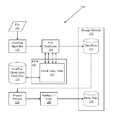
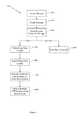
- FIG. 1illustrates a workflow diagram of an approach to data de-duplication and erasure coding.
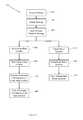
- FIG. 2illustrates an example workflow diagram of one embodiment of joint de-duplication and erasure coded distributed storage.
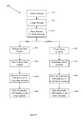
- FIG. 3illustrates an example workflow diagram one embodiment of joint de-duplication and erasure coded distributed storage.
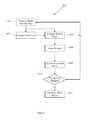
- FIG. 4illustrates an example method for jointly de-duplicating and erasure coding a message in a distributed storage system.
- FIG. 5illustrates an example method for jointly de-duplicating and erasure coding in a distributed storage system.
- FIG. 6illustrates an example method for jointly de-duplicating and erasure coding in a distributed storage system.
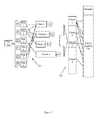
- FIG. 7illustrates an example of de-duplicated chunks concatenated and encoded by a base encoder.
- FIG. 8illustrates an example method for selectively adaptively updating a low density parity check (LDPC) matrix.
- LDPClow density parity check
- FIG. 9illustrates an example apparatus for joint de-duplication and erasure coded distributed storage.
- FIG. 10illustrates an example method for storing data in a cloud storage system.
- FIG. 11illustrates an example workflow diagram one embodiment of joint de-duplication and erasure coded distributed storage.
- Example methods and apparatusimprove on conventional data storage approaches by employing de-duplication in conjunction with unequal error protection (UEP) erasure coding to provide space and time efficient operation of a distributed data storage system.
- Example methods and apparatusmerge data stream compression with channel codes or erasure correction coding to facilitate flexible and reliable data storage.
- Example methods and apparatusemploy inline chunk-based de-duplication interleaved with multiple precoding stages, along with basic fountain codes to improve on conventional approaches by providing a more efficient failure tolerance, by reducing the frequency and impact of hash collisions, and by providing an improved solution to the chunk-lookup disk bottleneck problem.
- FIG. 1is a workflow diagram of a data storage approach 100 that adds redundancy using de-duplication combined with systematic fountain codes.
- a file 110is chunked by the variable length chunking algorithm 120 .
- a strong hashis then generated for a chunk in order to identify the chunk.
- Data storage approach 100finds duplicate chunks stored in a data storage network 150 by comparing the hash of the chunk to a chunk index table 145 stored in RAM 140 .
- the chunk index table 145stores hashes of chunks that have been stored in the storage network 150 .
- Data storage approach 100then stores the de-duplicated chunks in a plurality of data disks 153 or other storage media present in the storage network 150 .
- the de-duplicated chunksare then processed using an erasure precode 170 .
- the erasure precoded de-duplicated chunksare then input to a rateless Luby Transform (LT) code 180 to generate an encoded message.
- the encoded messageis then stored in parity disks 156 .
- LTLuby Transform
- conventional approachesstore the chunk index table 145 in RAM 140 .
- Conventional approachestypically use strong hash functions to generate the chunk index or chunk ID used to identify the chunked data because stronger hash functions typically provide a lower probability that different chunks will hash to the same index. Since hash collisions may compromise data integrity, or even result in a complete loss of data, conventional approaches try to avoid hash collisions. However, stronger hashes require more resources to compute, more bandwidth to transmit, and more storage space to store. Furthermore, as the number of chunks increases, or the size of the stronger hashes increases, more RAM is consumed by the chunk ID table. The chunk ID table may eventually overflow, at which point the remaining index data is paged to a different storage device, typically a disk, which has slower access time than RAM. This paging reduces the deduplication throughput.
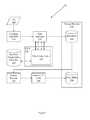
- FIG. 2illustrates an example workflow diagram of an example data storage approach 200 using joint de-duplication and erasure coded distributed storage methods and apparatus as described herein.
- a file 210is chunked by a first chunking approach (CA 1 ) 220 .
- the chunked fileis input to a systematic erasure outer precode 230 , which generates a set of outer precoded data chunks, and a set of parities.
- the systematic erasure outer precode 230may use a selectively adaptable low density parity check (LDPC) matrix.
- the set of paritiesis stored in a parity disk 286 that is part of a distributed data storage system 280 .
- LDPClow density parity check
- Data storage approach 200deduplicates the set of outer precoded data chunks using a weak hash to generate a set of unique data chunks.
- the deduplication process or apparatus 250finds duplicate chunks stored in the distributed data storage system 280 by comparing the hash of the chunk to hashes stored in a chunk index table 265 stored in RAM 260 .
- the chunk index table 265stores hashes of chunks that have been stored in the distributed data storage system 280 .
- the chunk index tablemay be implemented as a key-value store.
- the deduplication apparatus or process 250uses a weak hash, in contrast to conventional approaches that use a strong hash to prevent collisions.
- example methods and apparatusreduce the memory required to store chunk IDs in the chunk ID table 265 , reduce the bandwidth needed to access the chunk ID table 265 , and reduce the processing resources required to generate and compare hashes.
- a weaker hashmay facilitate a simpler search, in which a hash comparison may be implemented as an efficient search on logarithmic time balanced binary trees.
- a weak hashis w bits long
- a strong hashis s bits long
- using weak hashing instead of strong hashingmay result in an s/w increase in search speed.
- other types of efficient searchmay be used.
- Data storage approach 200then stores the de-duplicated chunks in a plurality of data disks 283 or other storage media present in the distributed storage system 280 .
- the de-duplicated chunksare then processed using systematic erasure inner precode 270 .
- the inner precoded de-duplicated chunksare then input to a systematic unequal error protection (UEP) rateless Luby Transform (LT) code 275 to generate an encoded message.
- the encoded messageis then stored in parity disks 286 .
- the rate of the LT codecan be adjusted on the fly.
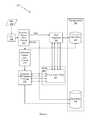
- FIG. 3illustrates an example workflow diagram of one example data storage approach 300 using joint de-duplication and erasure coded distributed storage methods and apparatus as described herein.
- the data storage approach 300is similar to data storage approach 200 , but has additional elements and further reduces the data storage requirements of distributed storage system 280 .
- Data storage approach 300chunks the set of parities at 340 using a second chunking approach to generate a set of chunked parities.
- the set of chunked paritiesmay be deduplicated at 390 to generate a set of unique parities.
- the deduplication approach taken at 390may employ different parameters than the deduplication approach used at 250 .
- the chunk size for parity blocksmay be adjusted based on a deduplication ratio, or other parameter.
- the set of unique paritiesmay be stored in parity disks 286 , or may be further processed. For example, the set of unique parities may be input to the systematic erasure inner precode 270 to generate a set of inner precoded unique parities. The set of inner precoded unique parities may be erasure encoded at 275 by the systematic UEP rateless LT code to generate a set of erasure coded parities. The set of erasure coded parities may be stored in the parity disks 286 .
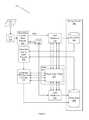
- FIG. 11illustrates an example workflow diagram of one example data storage approach 1100 using joint de-duplication and erasure coded distributed storage methods and apparatus as described herein.
- the data storage approach 1100is similar to data storage approaches 200 and 300 , but has additional elements and further increases the performance of example methods and apparatus.
- Data storage approach 1100includes storing unique data chunks in a unique data buffer 1184 .
- Unique data buffer 1184may be a RAM buffer. By storing unique data chunks in the unique data buffer 1184 , data storage approach 1100 avoids having to access the data disks 283 when conducting erasure precoding. Data stored in the unique data buffer 1184 may be written to the data disks 283 .
- Data storage approach 1100also includes a parity buffer 1187 .
- Parity buffer 1187may be a RAM buffer.
- Data storage approach 1100stores the set of unique parities, the set of erasure coded parities, or the encoded message, in the parity buffer 1187 .
- Data stored in the parity buffer 1187may be written to the parity disks 286 .
- data storage approach 1100reduces the number of I/O requests to the parity disks 286 .
- parity buffer 1187 or unique data buffer 1184may be adjusted based on a set of operating parameters associated with the data storage system 280 , a property of the systematic erasure outer precode 230 , or a property of the systematic erasure inner precode 270 , or a property of the systematic UEP rateless LT code.
- Example methods and apparatusimprove on conventional approaches in at least the following measurable ways.
- Example methods and apparatusreduce the memory footprint of conventional approaches by using weaker hashing.
- example methods and apparatusaccess a set of chunked data and apply systematic erasure precoding to the set of chunked data before de-duplicating the set of chunked data.
- example methods and apparatusfacilitate the use of weaker, shorter length hashes for identifying chunks of data.
- example methods and apparatusreduce the memory requirements of the chunk ID table, reduce the complexity of searching the chunk ID table, and reduce the bandwidth needed to access the chunk ID table, and thereby facilitate a more optimal management of the chunk look-up disk bottleneck problem.
- erasure coding and data deduplicationmay combine in different ways.
- Systematic erasure codesdo not incur a decode penalty when reading back data that has not encountered any erasures (e.g., no data has been corrupted or lost) since some of the encoded symbols are actually just the plaintext symbols from the original message. When no data has been lost, decoding can be avoided, which helps throughput.
- Rateless erasure codeshandle large data objects well, are flexible for adapting to different levels of protection, and are reliable against random, distributed errors.
- example apparatus and methodsmay employ systematic erasure codes, rateless erasure codes, or even systematic rateless erasure codes. Other forms of erasure codes may also be employed.
- Variable-length, block-level data deduplicationexhibits superior performance in some deduplication applications. For example, variable-length, block-level data deduplication quickly adapts to a data stream and synchronizes to data segments that have occurred elsewhere regardless of whether data has been inserted or removed. Variable-length, block-level data deduplication can be performed ‘in-line’ where all data does not need to be seen first or may be performed in post-processing. While variable-length, in-line, block-level deduplication is described, other types of deduplication may be combined with various forms of erasure coding.
- Example methods and apparatusalso facilitate providing unequal error protection (UEP) to stored data.
- Example methods and apparatusmay adjust encoding parameters to provide different levels of error protection to different unique blocks of data or groups of blocks. Adjustable parameters may include the size of a file block to be encoded, a number of data segments to be encoded, a number of parity segments to generate, a storage strip size used by the data storage system, a packet size used by the data storage system, an internal buffer size of a data storage device, or a memory subsystem in the data storage system.
- the parameters of the RS codecan be adjusted so as to meet a data durability goal.
- Fountain code parametersmay also be adjusted.
- Some parameters that may be automatically dynamically adjustedinclude message size, block length, coding overhead, interleaving overhead, a buffer size, or a packet size used by the data storage system. For example, uniformly random segment losses due to network or hardware failures may be compensated for by introducing more redundancy into the system. However, adding more redundancy can lead to space-inefficient operation. The latter is referred to as the interleaving overhead of the system.
- Some embodiments of example methods and apparatususe probabilistic erasure codes for encoding and decoding data.
- Fountain codesare an example of a probabilistic erasure code.
- Example methods and apparatusmay adaptively employ online coding.
- Online codingis a type of Fountain coding.
- Conventional data storage approachesmay employ Fountain codes for multimedia streaming and large scale data storage.
- the performance of Fountain codesis measured using averaging arguments.
- Fountain code performancemay also be described by an ensemble average due to the probabilistic nature of Fountain codes.
- Fountain code performancehinges on the degree and edge selection distributions induced on their graphical representations.
- Linear Fountain codes described hereinuse an LT base encoding stage code with fixed-rate, multiple erasure coding stages on top (e.g. precoding).
- precodingmultiple erasure coding stages on top
- Example methods and apparatusemploy an outer precoding stage and an inner precoding stage, followed by the LT coding stage. In some embodiment, more than two precoding stages may be used.
- example methods and apparatusBy performing an outer precoding stage before deduplication, example methods and apparatus reduce the impact of hash collisions on the deduplication process, reduce the computational complexity of internal algorithms such as binary searching, and reduce the amount of RAM needed by the chunk ID table, by facilitating the use of weaker hash functions that require less RAM than strong hash functions. By allowing controlled collisions, example methods and apparatus improve data deduplication performance and facilitate more efficient use of storage space.
- deduplication before erasure codingonly unique data is encoded, which reduces the time required to perform erasure coding.
- By performing erasure coding after deduplicationunique chunks are protected by some redundancy, which facilitates mitigating the risk of removing redundant data. Protecting unique chunks using erasure coding may have the technical effect of allowing the use of less expensive (e.g., RAID-5, near line storage) storage systems instead of more expensive (e.g., RAID-6, enterprise storage) storage systems.
- Example methods and apparatusprovide unequal error protection (UEP) to stored data.
- using a rateless erasure code approachfacilitates selectively and adaptively varying the level of data protection (e.g., erasure code approach) for different pieces of unique data.
- the value of the unique datamay be measured by the number of references to the unique data, or the size of the unique data. For example, a segment of shared data that is present in several files may have more references to it and thus may be treated as being more valuable than a segment of shared data that is used in fewer files and thus has fewer references. While reference counts are described, other value measures may be employed (e.g., the number of bytes in the original file or unique data).
- the number of erasure code symbols that are produced, the characteristics (e.g., size, composition) of the erasure code symbols that are produced, the distribution of the erasure code symbols that are produced, the type of erasure encoding (e.g., rateless, systematic), or other erasure code attributesmay be manipulated based on an attribute (e.g., importance, size, number) of the unique chunks. Since the attribute (e.g., importance, size, age) of the unique chunks may vary over time, in one embodiment, the number of erasure code symbols used to protect a unique chunk may be updated upon determining that the attribute has changed. For example, as reference counts to a chunk increase, the number of erasure code symbols used to protect the chunk may be increased.
- example apparatus and methodsmay also be employed with a communication system.
- metadata that tracks unique segmentsmay be maintained at both a sender and a receiver.
- the metadatamay be maintained for different periods of time to accommodate different history durations.
- Unique segments and the metadata (e.g., recipes) associated with recreating larger data objects (e.g., files) from the unique segmentsmay be encoded by a transmitter and provided to a receiver.
- the recipesmay be encoded and provided, which prompts a receiver to identify segments that are desired, which in turn prompts encoding and providing the erasure code symbols for the desired segments.
- Example methodsmay be better appreciated with reference to flow diagrams. While for purposes of simplicity of explanation, the illustrated methodologies are shown and described as a series of blocks, it is to be appreciated that the methodologies are not limited by the order of the blocks, as some blocks can occur in different orders and/or concurrently with other blocks from that shown and described. Moreover, less than all the illustrated blocks may be required to implement an example methodology. Blocks may be combined or separated into multiple components. Furthermore, additional and/or alternative methodologies can employ additional, not illustrated blocks.
- FIG. 4illustrates a computerized method 400 for deduplicating and erasure coding a message.
- Method 400includes, at 410 , accessing a message.
- the messagehas a message size.
- the messagemay be a file, a chunk of data, a block of data, an object, or other data structure. Accessing the message may include accessing the message directly from a data storage apparatus, or indirectly via an electronic database, a memory, a network, or other electronic communication channel.
- Method 400also includes, at 420 , generating a set of message chunks by chunking the message using a first chunking approach.
- the first chunking approachis a sliding window technique.
- the first chunking approachmay use weak hashing to identify chunk boundaries.
- the weak hashingmay include Rabin fingerprinting with random polynomials. In other embodiments, other types of hashing may be used to generate the set of message chunks.
- Method 400also includes, at 430 , generating a set of outer-precoded parity symbols and a set of outer-precoded data symbols from the set of message chunks using an outer precode.
- the set of outer-precoded parity symbolsincludes a subset of outer-precoded parity symbols that is distinct from the set of outer-precoded data symbols.
- the outer precodeis a low density parity check (LDPC) precode.
- the LDPC precodemay be a regular LDPC precode.
- the LDPC precodeis characterized by an LDPC parity check matrix.
- a regular LDPC parity check matrixis characterized by a column weight w c and a row weight w r .
- the column weight w cis three, and the row weight w r is forty-seven.
- the column weight and the row weightare fixed. In another embodiment, the column weight and the row weight are not fixed.
- Asymptotic erasure correction performance of the LDPC codeis characterized by a decoding threshold ⁇ 0 *.
- the decoding threshold ⁇ 0 *is a term that represents an erasure symbol probability below which the decoding is guaranteed to succeed.
- the decoding threshold of a regular LDPC codecan be expressed in a closed form as
- ⁇ 0 *inf ⁇ ⁇ x ( 1 - ( 1 - x ) w r - 1 ) w c - 1 , ⁇ x , x ⁇ ( 0 , 1 ) ⁇ .
- the column weight w cis three
- the row weight w ris forty-seven, which results in a block length of 11086.
- example methods and apparatusfacilitate achieving a symbol failure probability of approximately 0.021, which results in a decoding threshold ⁇ 0 * of approximately 0.05265, which is greater than the failure probability of 0.021.
- the margin between the symbol failure probability of approximately 0.021 and the decoding threshold ⁇ 0 * of approximately 0.05265facilitates the use of efficient decoding algorithms for LDPC codes by example methods and apparatus.
- One suitable efficient decoding algorithmis described in G.
- Method 400also includes, at 440 , storing the set of outer-precoded parity symbols in a data storage system.
- the data storage systemmay include one or more data storage devices.
- the one or more data storage devicesmay include a tape drive, a hard disk drive (HDD), a solid state drive (SSD), a hybrid solid state drive (HSSD), or a shingled magnetic recording (SMR) device.
- HDDhard disk drive
- SSDsolid state drive
- HSSDhybrid solid state drive
- SMRshingled magnetic recording
- other types or configurations of data storage devicesmay be employed.
- the data storage systemmay be a distributed data storage system, including a cloud storage system.
- Method 400also includes, at 450 , generating a set of unique data symbols by deduplicating the set of outer-precoded data symbols based, at least in part, on a chunk identification (ID) table.
- the chunk ID tablestores a unique chunk ID associated with a unique data symbol stored in the data storage system, a chunk size associated with the unique data symbol, or a chunk reference count associated with the unique chunk ID.
- the chunk ID tablemay be stored in RAM.
- the unique chunk IDis generated using a weak hash function.
- An ideal hash functiondistributes all possible sets of IDs with uniform randomness over all unique chunks.
- p col⁇ 10 ⁇ 36 ⁇
- Example methods and apparatusimprove on conventional approaches by using a weak hash function for both chunking and hashing.
- a hash collision probability of 10 ⁇ 6 for indexing unique chunk IDsexample methods and apparatus facilitate using approximately 60 bits for a hash ID, and result in at least a 60% RAM space saving in the chunk ID table compared to conventional approaches.
- example methods and apparatuscan achieve a reliability equivalent to or better than that achieved by a 10 ⁇ 36 collision probability of the SHA-1 based approach, but with reduced RAM usage. Example methods and apparatus thus improve the performance and function of a data storage system in a tangible, measurable way.
- Method 400also includes, at 460 , storing a copy of the set of unique data symbols in the data storage system.
- Method 400may also store metadata associated with the unique data symbols in the data storage system.
- metadata associated with the unique data symbolsincludes a chunk size associated with a unique data symbol, a reference count associated with the unique data symbol, or other information associated with the unique data symbol.
- Metadata associated with the unique data symbols or other data stored in the data storage systemmay also include a creation time, a modification time, an ownership indicator, a data format type indicator, or other metadata. Metadata associated with the unique data symbols may also be stored in the chunk ID table.
- other metadatamay be stored in the data storage system, as extended attributes, or inside the chunk ID table.
- Metadatamay be stored in different locations as a function of a file system in which example methods and apparatus operate.
- storing a copy of the set of unique data symbols in the data storage systemincludes storing the set of unique data symbols in a buffer.
- the set of unique data symbolsmay be stored in a RAM buffer before they are stored to disk or other, slower data storage devices.
- Method 400also includes, at 470 , generating a set of inner-precoded data symbols from the set of unique data symbols using an inner-precode.
- the inner precodegenerates a set of inner-precoded data symbols comprising k′ intermediate symbols from the set of unique data symbols, where the set of unique data symbols comprises k unique data symbols, where k and k′ are integers, k′ being greater than k.
- the inner precodeis a systematic high rate RS code, or a systematic high rate LDPC code configured for sporadic errors. Sporadic errors are associated with sporadic channels.
- Sporadic channelsare one type of channel that includes a mixture of binary error and erasure channels with an error probability that is significantly smaller than the erasure probability. In some instances, the error probability is at least an order of magnitude smaller than the erasure probability.
- a systematic high rate LDPC code configured for sporadic errorsis described in G. Liva et al., “A decoding algorithm for LDPC codes over erasure channels with sporadic errors,” in Proc. 48 th Allerton Conf. Commun., Control, and Computing, Monticello, Ill., USA, September 2010, pp. 458-465.
- the inner precodemay be another type of systematic code.
- method 400concatenates a subset of the inner-precoded data symbols to generate a concatenated subset of inner-precoded data symbols.
- the size of the subset of inner-precoded data symbolsmay be based, at least in part, on a data protection policy.
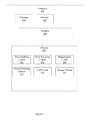
- FIG. 7illustrates a subset of inner-precoded data symbols concatenated to form a concatenated subset of inner-precoded symbols 730 .
- Method 400also includes, at 470 , generating a first set of erasure codes from the set of inner-precoded data symbols or the concatenated subset of inner-precoded data symbols using an unequal error protection (UEP) rateless LT code.
- Method 400generates the first set of erasure codes based, at least in part, on the chunk ID table.
- FIG. 7illustrates one approach to UEP coding suitable for use by example methods and apparatus.
- FIG. 7illustrates a message 710 that has been chunked into segments seg. 1 . . . seg. 6 .
- Message 710may be, for instance, a file.
- the segments seg. 1 . . . seg. 6are provided to a deduplication apparatus or method that produces four unique chunks, chunk 1 . . . chunk 4 . There may be different numbers of reference counts to the different unique chunks.
- the chunksmay have different chunk-level access probabilities ⁇ p 1 , p 2 . . . p 4 ⁇ .
- the segmentsmay have the same or different user-defined attributes (e.g., value metrics, size).
- FIG. 7further illustrates that the segments seg. 1 . . . seg. 6 may be inaccessible or failed with probabilities ⁇ P 1 , P 2 . . . P 6 ⁇ .
- a reconstruction quality profile for a segmentmay be changed based, for example, on reference counts or other metadata.
- the reference countsare illustrated using a bipartite graph in which the graph connections 720 establish which segment contains which chunk in a storage pool of chunks.
- the set of probabilities ⁇ P 1 , P 2 . . . P 6 ⁇may induce different chunk-level access probabilities ⁇ p 1 , P 2 . . . p 4 ⁇ .
- chunk level recoverycan be guaranteed by calculating the appropriate set ⁇ p 1 , p 2 . . . p 4 ⁇ .
- An erasure coding mechanismcan be manipulated by changing or adjusting parameters of the erasure coding approach to protect these chunks at a level appropriate to the chunk-level probability requirements. Different erasure coding approaches can be applied to different chunks having different chunk-level probability requirements. For example, chunk 1 has more connections (e.g., 4) than any other chunk in the pool.
- more paritymay be allocated for chunk 1 in the erasure coding phase.
- the amount of parity allocated for chunk 1may be larger than the amount of parity allocated for chunk 2 , the amount of parity allocated for chunk 3 , or the amount of parity allocated for chunk 4 .
- the most important chunkmay be protected by making all of the parities protect it using, for example, 60% of their protection capability.
- the amount of parity allocated for a chunkmay be proportional to an attribute (e.g., number of connections, size) of the chunk. More generally, variable size chunks having varying sensitivity to loss may be protected using different numbers of parity symbols in a systematic erasure code approach.
- chunks having different attributesmay be protected differently by controlling attributes of an erasure coding approach.
- the attributes of an erasure coding approache.g., number of parity symbols employed
- example methods and apparatusprovide adaptive unequal error protection (UEP) to stored data.
- UEPadaptive unequal error protection
- FIG. 7further illustrates the segments seg. 1 . . . seg. 6 and the unique chunks chunk 1 . . . chunk 4 .
- example apparatus and methodsmay keep the rateless codeword length above a certain threshold by grouping the unique chunks before erasure coding. Recall that rateless codes incur less overhead penalty with larger block lengths and only have linear time complexity operation.
- deduplicated chunks chunk 1 . . . chunk 4may be grouped together (e.g., concatenated) to produce a single data item (e.g. concatenated subset of inner-precoded symbols 730 ) to be erasure encoded.
- example methods and apparatusmay use a rateless erasure code process.
- example apparatus and methodsmay use code words that are larger than a threshold size to facilitate accounting for random failures and thus improve performance of the storage system.
- Example methods and apparatusencode the grouped or concatenated chunks to generate a desired number of EC symbols.
- Example methods and apparatusbuild the concatenated subset of inner-precoded symbols 730 from the group as processed in light of a generator matrix.
- desired protection guaranteese.g., probabilities ⁇ p 1 , p 2 . . . p 4 ⁇
- a rateless encoder algorithm applied by example methods and apparatusmay be controlled.
- a graph defining the properties of the rateless codewould make more connections with the higher valued content in the concatenation to increase recoverability of that higher valued content.
- node/edge probability distributions realized as non-zero entries in the generator matrix representation of an encoding graphmay be manipulated to allow error probabilities less than or equal to ⁇ p 1 , p 2 . . . p 4 ⁇ .
- attributes of erasure codes produced by example methods and apparatusmay be controlled by manipulating the generator matrix employed by the example methods and apparatus.
- the composition of an erasure codee.g., number of connections between a portion of the message and an erasure codeword
- attributese.g., desired probabilities p 1 . . . p 4
- Method 400also includes, at 480 , storing the first set of erasure codes in the data storage system.
- Method 400may also include an additional step of decoding the first set of erasure codes.
- Decoding the first set of erasure codesmay include controlling an RS code decoder, a Fountain code decoder, or a hybrid decoder, to decode the first set of erasure codes.
- storing the first set of erasure codes in the data storage systemincludes storing the first set of erasure codes in a buffer.
- FIG. 5illustrates an example method 500 for deduplicating and erasure coding a message.
- Method 500is similar to method 400 but includes additional actions.
- method 500includes, at 541 , generating a set of chunked outer-precoded parity symbols by chunking the set of outer-precoded parity symbols using a second chunking approach.
- the second chunking approachmay be the same chunking approach as the first chunking approach, or it may be a different chunking approach, or it may be the first chunking approach with different parameters.
- the second chunking approachmay use a weak hash function or smaller average chunk size.
- Method 500also includes, at 542 , generating a set of unique parity symbols by deduplicating the set of chunked outer-precoded parity symbols.
- the set of unique parity symbolsis stored in a different data storage device or database than the set of unique data symbols. Storing the set of unique parity symbols and unique data symbols in different data storage devices facilitates increasing I/O and throughput performance compared to conventional approaches.
- Method 500deduplicates the set of chunked outer-precoded parity symbols based, at least in part, on the chunk ID table. Method 500 may deduplicate the set of chunked outer-precoded parity symbols using a weak hash.
- Method 500further includes, at 543 , storing the set of unique parity symbols in the data storage system.
- Method 500may, at 543 , store the set of unique parity symbols in a data storage device dedicated to storing parity symbols.
- storing the set of unique parity symbols in the data storage systemincludes storing the set of unique parity symbols in a buffer. The set of unique parity symbols may be stored in a RAM buffer before they are stored to disk or other, slower data storage devices.
- FIG. 6illustrates an example method 600 for deduplicating and erasure coding a message.
- Method 600is similar to method 400 and method 500 , but includes additional actions.
- method 600instead of or in addition to storing the set of unique parity symbols in the data storage system, method 600 includes, at 644 , generating a second set of erasure codes from the set of unique parity symbols.
- method 600generates the second set of erasure codes using the UEP LT code based, at least in part, on the chunk ID table.
- Method 600further includes, at 646 , storing the second set of erasure codes in the data storage system.
- method 600stores, at 646 , the second set of erasure codes in a data storage device dedicated to storing parity symbols or erasure codes.
- storing the second set of erasure codes in the data storage systemincludes storing the second set of erasure codes in a RAM buffer. The second set of erasure codes may be stored in a RAM buffer before they are stored to disk or other, slower data storage devices.
- example methods and apparatusBy storing the set of unique data symbols, the first set of erasure codes, the set of unique parity symbols, or the second set of erasure codes in a buffer, example methods and apparatus facilitate reducing the amount of read/write requests to data storage disks or parity disks, while increasing the speed with which erasure precoding may be conducted. Example methods and apparatus thus avoid having to access the data storage disks or parity disks when first storing data, and then again when precoding the data.
- FIG. 4 , FIG. 5 , and FIG. 6illustrate various actions occurring in serial, it is to be appreciated that various actions illustrated in FIG. 4 , FIG. 5 , and FIG. 6 could occur substantially in parallel.
- a first processcould access a message
- a second processcould deduplicate the set of outer-precoded data symbols
- a third processcould generate an encoded message. While three processes are described, it is to be appreciated that a greater or lesser number of processes could be employed and that lightweight processes, regular processes, threads, and other approaches could be employed.
- a first process, a second process, and a third processmay be implemented in a pipeline structure without stalls, except for during a situation in which an accessed message, at 410 exhibits a dependency.
- deduplication, rateless coding, and input/output (I/O)may be handled by different physical or virtual processing unites.
- method 400 , method 500 , or method 600may include selectively adapting the LDPC parity check matrix.
- Selectively adapting the LDPC parity check matrixfacilitates ensuring that the erasure correction capability of the outer precode or the inner precode is powerful enough to recover errors that remain after decoding the base LT code used to generate the encoded message.
- Example methods and apparatusquantify the rate of errors or erasures to facilitate choosing a protection policy based, at least in part, on coding parameters, including a coding rate.
- a hash collisionhappens when two different chunks share the same ID.
- a data chunkmay have a size or a volume, where the size or volume includes the number of bytes a chunk contains.
- the size or volumemay be stored as part of metadata or computed from stored content.
- computing the size or volume from stored contentincludes computing a threshold number of bytes such that when the contents and the computed threshold number of bytes are hashed, the size of the file is returned.
- symbol errorThe outcome of a true collision may be referred to as a symbol error.
- symbol erasurean ID-only collision that causes a symbol loss with a known location.
- the definition of a symbol error or a symbol erasuremay be modified based on a feature set of the chunks used to identify the symbol error or symbol erasure. An estimate of error rates or erasure rates can be computed by averaging the number of collided chunks, divided by the total number of chunks in the system.
- a chunking approachmay produce n unique chunks of integer size [T min , T max ], where C is defined as a random variable that characterizes the size of produced chunks.
- the probabilities P iare a function of the data being chunked, the chunking approach, and the parameters of the chunking approach.
- a chunk IDmay be represented with a number of bits l, where the ith ID value is assigned to a particular chunk with a probability H i .
- Example methods and apparatusmay employ a tag assignment process for assigning an ID to a chunk.
- the tag assignment processmay assign the ith ID value to a chunk.
- a tag setmay consist of the elements ⁇ 1, 2, . . . , D ⁇ where a chunk is assigned the tag with a probability p i .
- a random variable Ais defined to represent the number of distinct tags in the assignment process.
- tagse.g. a pair of features
- Zthe number of collided chunks
- H i2 ⁇ l
- (2 l , H i )characterizes the sum of errors and erasures, since there may be chunks whose IDs are the same and yet may or may not contain the same volume of data (e.g. have different sizes).
- (( ⁇ T +1)2 i , P i H i )which is approximated by equation 3, characterizes only the errors, because in this case for a collision to happen the chunks must both have the same size and IDs.
- Example methods and apparatusadjust UEP parameters and LDPC matrix construction based on the number of erred and erased symbols, and not just chunks, caused by the weak hash function.
- Example methods and apparatuscompute a worst case (WC) symbol error/erasure probability by determining the largest number of erred or erased symbols in a case of a chunk ID collision.
- ⁇ c ⁇ T minis used as a constant symbol size.
- the worst case (WC) number of symbol failuresmay be represented by WC fail symbols, where a WC fail symbol has a range.
- Worst case symbol failure characterizations for k>rmay be characterized explicitly as indicated in table 1:
- the WC average number of failed coding symbolsmay be computed as [Z]I [W], where the computation of [Z] [W] is based on an analysis of the sum of a random number of random variables.
- example methods and apparatusmay approximate the distribution of W to be uniform.
- P jwill be approximately equal to
- example methods and apparatusmay compute the WC average number of symbol erasures in a closed form as:
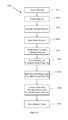
- FIG. 8illustrates a method 800 for selectively adapting the LDPC parity check matrix for the outer precode that is suitable for use by embodiments of methods and apparatus described herein.
- Method 800includes, at 810 , computing a set of chunk statistics associated with the first set of erasure codes.
- the set of chunk statisticsmay include a chunk reference count, a frequency of chunk accesses, a frequency of file accesses, a chunk boundary distribution, whether a chunk boundary coincides with a symbol boundary, or a chunk size distribution.
- the set of chunk statisticsmay also include an estimation of the random variables introduced by the WC computation.
- the set of chunk statisticsmay include the amount of different chunks produced as a function of a change below a threshold level occurs in a file, where the amount of different chunks produced is based, at least in part, on a property of the file and the chunking approach used to chunk the file.
- Method 800also includes, at 820 , generating a worst-case (WC) symbol characterization for a member of the first set of erasure codes.
- the WC symbol characterizationrepresents the average WC symbol error or erasure probability.
- Method 800also includes, at 830 , computing an average number of symbol errors or symbol erasures for the first set of erasure codes. The average number of symbol errors or symbol erasures is based, at least in part, on a set of deduplication parameters, the set of chunk statistics, or the WC symbol characterization.
- Method 800also includes, at 840 , choosing a column weight or a row weight for a regular LDPC matrix.
- Method 800chooses the column weight w c or the row weight w r such that the probability of decoding failure P f is less than a decoding threshold.
- the probability P frepresents the probability of hitting a stopping set while running a belief propagation algorithm on a decoding circuit, in which case the decoding circuit flags the entire codeword as undecoded, even through some of the symbols may have already been decoded correctly.
- the probability P fmay refer to the non-inevitability of the generator matrix, so that decoding failure occurs.
- the decoding thresholdmay be expressed as ⁇ 0 *, where ⁇ 0 * represents an erasure symbol probability below which the decoding is guaranteed to succeed.
- Method 800also includes, at 850 , generating a regular LDPC parity check matrix.
- the LDPC parity check matrixis generated as a function of the column weight or the row weight.
- an irregular LDPC codemay be employed.
- example methods and apparatusmay select row weight and column weight distribution parameters at 850 .
- the LDPC parity check matrixmay be generated as a function of the row weight and column weight distribution parameters.
- Method 800also includes, at 860 , determining if there has been a change in the chunk pool.
- the chunk poolincludes the data storage system, the set of unique data symbols stored in the data storage system, or the set of parity symbols stored in the data storage system.
- a change in the chunk poolmay include a deletion of a threshold number of unique data symbols, an addition of a threshold number of unique data symbols, a change in an operating parameter of the data storage system, a change in a performance metric of the data storage system of a threshold, a change in the target application of the data storage system, or other change.
- method 800determines if there has been a change in the chunk pool on a daily basis.
- method 800determines if there has been a change in the chunk pool on an hourly basis, or on another, different basis.
- the frequency with which method 800 determines if there has been a change in the chunk poolmay be user controllable.
- the frequency with which method 800 determines if there has been a change in the chunk poolmay also be based on a frequency of detected changes in the chunk pool. For example, after a threshold period of time in which the frequency of detected changes has increased beyond a threshold, example methods and apparatus may increase the frequency with which method 800 determines if there has been a change in the chunk pool.
- method 800Upon determining that there has been a change in the chunk pool, method 800 returns to step 810 and restarts.
- an implementation of a data storage systemmay be operating using an existing LDPC parity check matrix.
- the implementationmay return to step 810 and generate a new LDPC matrix based upon the detected changes.
- method 800may proceed to provide the LDPC parity check matrix for use by example methods and apparatus.
- the sparse nature of the LDPC parity check matrixfacilitates its storing in a read only memory (ROM), an erasable-programmable ROM (EPROM), an electrically erasable ROM (EEPROM), or RAM, based, at least in part, on how frequently the LDPC parity check matrix changes.
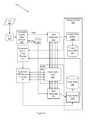
- FIG. 9illustrates an example apparatus 900 for deduplicating and erasure coding a message.
- the messagehas a message size.
- the messagemay be a file, a chunk of data, a block of data, an object, or other data structure.
- Apparatus 900includes a processor 910 , a memory 920 , a set of circuits 950 , and an interface 940 that connects the processor 910 , the memory 920 , and the set of circuits 950 .
- the set of circuits 950includes a first chunking circuit 951 , an outer precoding circuit 952 , a deduplication circuit 953 , a second chunking circuit 955 , an UEP circuit 956 , and a storage circuit 957 .
- the functionality associated with the set of circuits 950may be performed, at least in part, by hardware circuit components or hardware logic components.
- the hardware circuit components or hardware logic componentsmay include, but are not limited to, field-programmable gate arrays (FPGAs), application specific integrated circuits (ASICs), application specific standard products (ASSPs), system on a chip systems (SOCs), graphic processing units (GPUs), or complex programmable logic devices (CPLDs).
- FPGAsfield-programmable gate arrays
- ASICsapplication specific integrated circuits
- ASSPsapplication specific standard products
- SOCssystem on a chip systems
- GPUsgraphic processing units
- CPLDscomplex programmable logic devices
- individual members of the set of circuits 950are implemented as ASICs or SOCs.
- Apparatus 900may be operably connected to a set of data storage devices.
- the set of storage devicesmay include a tape drive, a hard disk drive (HDD), a solid state drive (SSD), a hybrid solid state drive (HSSD), or a shingled magnetic recording (SMR) device.
- HDDhard disk drive
- SSDsolid state drive
- HSSDhybrid solid state drive
- SMRshingled magnetic recording
- other types or configurations of data storage devicesmay be employed.
- the data storage systemmay be a distributed data storage system, including a cloud storage service.
- Memory 920stores a chunk identification (ID) table.
- the chunk ID tablestores unique identifiers (e.g. chunk IDs) associated with unique data chunks stored in the data storage system.
- the chunk ID tablemay also store metadata associated with a unique data chunk.
- the metadataincludes a reference count, a coding flag, a seed, a data ID, processing information, or a cyclic redundancy check (CRC).
- the metadatamay include other, different information.
- first chunking circuit 951 , outer precoding circuit 952 , deduplication circuit 953 , second chunking circuit 955 , UEP circuit 956 , and storage circuit 957are FPGAs, ASICs, ASSPs, SOCs, or CPLDs.
- first chunking circuit 951 , outer precoding circuit 952 , deduplication circuit 953 , second chunking circuit 955 , UEP circuit 956 , and storage circuit 957may be other types of systems or circuits.
- First chunking circuit 951generates a set of data chunks from the message.
- first chunking circuit 951uses a variable length chunking approach to generate the set of data chunks.
- first chunking circuit 951uses a weak hash based variable length chunking approach or a two-thresholds two-divisors chunking approach to generate the set of data chunks. Two-thresholds two-devisors chunking is described in K. Eshghi et al., “A Framework for Analyzing and Improving Content-Based Chunking Algorithms,” HP Labs Technical Report HPL -2005-30 R 1, http://www.hpl.hp.com/techreports/2005/HPL-2005-30R1.html.
- Outer precoding circuit 952generates a set of precoded data chunks and a set of parity symbols from the set of data chunks.
- outer precoding circuit 952may use a LDPC code or a cyclic redundancy check (CRC) to generate the set of precoded data chunks and the set of parity symbols.
- the CRCmay be a 16 bit CRC.
- outer precoding circuit 952selectively adapts the LDPC parity check matrix.
- Outer precoding circuit 952selectively adapts the LDPC parity check matrix as a function of a change in the set of deduplicated data chunks, a change in the set of parity symbols, or a change in the set of erasure codes stored in the data storage system.
- the LDPC parity check matrixmay also be adapted based on changes in chunking parameters, changes in a chunking approach, a hash size, or chunk statistics.
- outer precoding circuit 952selectively adapts the LDPC parity check matrix as a function of a worst case average number of failed coding symbols.
- the worst case average number of failed coding symbolsis based, at least in part, on a worst case average number of symbol erasures, or a worst case average number of symbol errors.
- Deduplication circuit 953generates a set of deduplicated data chunks by deduplicating the set of precoded chunks or the set of chunked parity symbols. Deduplication circuit 953 deduplicates the set of data chunks based, at least in part, on the chunk ID table. In one embodiment, deduplication circuit 953 may use a weak hash deduplication approach. In another embodiment, deduplication circuit 953 may use another, different deduplication approach. For example, deduplication circuit 953 may use a CRC polynomial approach, a 128 bit MD5 approach, or a 160 bit SHA-1 approach.
- UEP circuit 956generates an encoded message from the set of deduplicated data chunks.
- UEP circuit 956generates the encoded message using an inner precode and a Luby transform (LT) base code.
- LTLuby transform
- a level of erasure protection provided by the UEP circuit 956is based on a chunk size or a chunk reference count stored in the chunk ID table.
- UEP circuit 956UEP circuit automatically and dynamically adapts the encoding strategy by adjusting the inner precode or the LT base code, a number of deduplicated data chunks to be encoded, a number of coded units generated from the number of deduplicated data chunks, a number of parity units generated from the number of deduplicated data chunks, a word size associated with the encoding technique, a packet size associated with the encoding technique, a symbol size associated with the encoding technique, a buffer size of a member of the set of data storage devices, a decoder failure probability, a coding parameter for an online coding technique, a coding overhead for a Fountain coding technique, a degree distribution for a Fountain coding technique, a precode rate for a Fountain coding technique, a level of hardware acceleration used by the UEP circuit 956 , or a level of hardware parallelism used by the UEP circuit 956 .
- the level of erasure protection provided by UEP circuit 956is based on a set of operating parameters.
- the set of operating parametersincludes data storage device failure statistics associated with members of the set of data storage devices, data storage device wear periods associated with members of the set of data storage devices, data storage space constraints associated with members of the set of data storage devices, hardware capabilities available for members of the set of data storage devices, overhead constraints associated with members of the set of data storage devices, data storage device life spans associated with members of the set of data storage devices, a data protection policy, bandwidth constraints, or a property of the message.
- the set of operating propertiesmay be user adjustable, or may be dynamically adapted by UEP circuit 956 .
- UEP circuit 956generates the encoded message by encoding the message using an encoding strategy.
- UEP circuit 956generates an encoded message by encoding the message using an encoding strategy and by associating metadata with the encoded message.
- the metadataincludes a reference count, a coding flag, a seed, a data ID, processing information, or a CRC.
- the metadatamay include other, different information.
- storage circuit 957stores the set of deduplicated data chunks and the encoded message in a distributed storage system.
- the distributed storage systemmay include one or more storage devices.
- the one or more data storage devicesinclude a tape drive, a hard disk drive (HDD), a solid state device, (SSD), a hybrid solid state device (HSSD), or a shingled magnetic recording device (SMR).
- Storage circuit 957may distribute the encoded message evenly across storage devices in the distributed storage system, or may distribute the encoded message unevenly.
- Storage circuitmay also store metadata associated with the set of deduplicated data or the encoded message, including a reference count, a coding flag, a seed, a data identifier, processing information, or a cyclic redundancy check (CRC) in the distributed storage system.
- the set of deduplicated data chunksmay be stored in a data storage device dedicated to storing deduplicated data.
- the encoded messagemay be stored in a data storage device dedicated to storing erasure codes or parity symbols.
- apparatus 900may also include a second chunking circuit that generates a set of chunked parity symbols from the set of parity symbols using the variable length chunking approach.
- the second chunking circuituses a weak hash based variable length chunking approach or a two-thresholds two divisors chunking approach. Chunking and deduplicating the set of parity symbols further reduces the storage requirements of apparatus 900 compared to conventional approaches, by reducing the storage space needed to store the parity symbols.
- storage circuit 957further stores the set of deduplicated data chunks in first buffer.
- Storage circuit 957may also further store the set of parity symbols or the encoded message in a second, different buffer.
- the first buffer or the second buffermay be a RAM buffer.
- apparatus 900may also include a display circuit that displays the current status of the data storage system.
- the display circuitmay control a graphical user interface (GUI) to display the current status of the data storage system.
- GUIgraphical user interface
- the current statusmay include the available storage space as a function of the encoding strategy, or the set of operating parameters.
- apparatus 900may also include a decoding circuit that reconstructs the message based on the set of deduplicated data chunks, the set of parity symbols, or the encoded message.
- the decoding circuitmay include an RS code decoding circuit, a Fountain code decoding circuit, or a hybrid decoding circuit.
- FIG. 9illustrates an example apparatus 900 that include various components connected in various ways, it is to be appreciated that other apparatus may include other components connected in other ways.
- FIG. 10illustrates an example method 1000 for storing electronic data in a cloud-based data storage system.
- Method 1000includes, at 1010 accessing a data set.
- the data sethas a size.
- the data setmay be a file, a chunk of data, a block of data, an object, or other data structure.
- Method 1000also includes, at 1020 generating a chunked data set by chunking the data set.
- method 1000uses a sliding window technique to chunk the data set.
- Method 1000may generate the chunked data set using weak hashing to identify chunk boundaries.
- the weak hashingmay include Rabin fingerprinting with random polynomials. In other embodiments, other types of hashing may be used to generate the chunked data set.
- Method 1000also includes, at 1030 , generating an outer precoded chunked data set and a set of parity symbols by precoding the chunked data set.
- precoding the chunked data setincludes using LDPC precode.
- the LDPC precodemay be a regular LDPC precode.
- the LDPC precodemay use a corresponding LDPC parity check matrix.
- the LDPC parity check matrixmay be selectively adapted.
- Method 1000also includes, at 1040 , storing the set of parity symbols in a cloud-based data storage system.
- the cloud-based data storage systemmay include a plurality of data storage devices.
- the plurality of data storage devicesmay include a tape drive, a hard disk drive (HDD), a solid state drive (SSD), a hybrid solid state drive (HSSD), or a shingled magnetic recording (SMR) device.
- HDDhard disk drive
- SSDsolid state drive
- HSSDhybrid solid state drive
- SMRshingled magnetic recording
- other types or configurations of data storage devicesmay be employed.
- the set of parity symbolsmay be stored in a data storage device or devices dedicated to storing parity symbols.
- Method 1000also includes, at 1050 , generating a set of unique data chunks by deduplicating the outer precoded chunked data set.
- Method 1000deduplicates the outer precoded chunked data set using a weak hash based deduplication approach.
- Method 1000also includes, at 1060 , storing the set of unique data chunks in the cloud-based data storage system.
- the set of unique data chunksmay be stored evenly across the cloud-based data storage system, or unevenly across the cloud-based data storage system.
- the set of unique data chunksmay be stored in a data storage device dedicated to storing unique data chunks.
- Method 1000may also store metadata associated with the set of unique data chunks in the cloud-based data storage system.
- metadata associated with the set of unique data chunksincludes a chunk size associated with a unique data chunk, a reference count associated with the unique data chunk, or other information associated with the unique data chunk.
- Method 1000also includes, at 1070 , generating an inner precoded unique data set by precoding the set of unique data chunks with an inner precode.
- the inner precodegenerates an inner precoded unique data set comprising k′ intermediate symbols from the set of unique data chunks, where the set of unique data chunks comprises k unique data symbols, where k and k′ are integers, k′ being greater than k.
- Method 1000also includes, at 1080 generating an erasure coded unique data set by erasure coding the inner precoded unique data set. Method 1000 generates the erasure encoded unique data set from the inner precoded unique data set using an UEP erasure coding approach.
- Method 1000further includes, at 1090 , distributing the erasure coded unique data set across the cloud-based data storage system.
- the erasure coded unique data setmay be distributed evenly across the cloud-based data storage system, or may be distributed unevenly according to a data protection policy.
- the erasure coded unique data setmay be stored in a data storage device dedicated to storing erasure codes.
- references to “one embodiment”, “an embodiment”, “one example”, and “an example”indicate that the embodiment(s) or example(s) so described may include a particular feature, structure, characteristic, property, element, or limitation, but that not every embodiment or example necessarily includes that particular feature, structure, characteristic, property, element or limitation. Furthermore, repeated use of the phrase “in one embodiment” does not necessarily refer to the same embodiment, though it may.
- Computer-readable storage devicerefers to a non-transitory device that stores instructions or data. “Computer-readable storage device” does not refer to propagated signals.
- a computer-readable storage devicemay take forms, including, but not limited to, non-volatile media, and volatile media. Non-volatile media may include, for example, optical disks, magnetic disks, tapes, and other media. Volatile media may include, for example, semiconductor memories, dynamic memory, and other media.
- a computer-readable storage devicemay include, but are not limited to, a floppy disk, a flexible disk, a hard disk, a magnetic tape, other magnetic medium, an application specific integrated circuit (ASIC), a compact disk (CD), other optical medium, a RAM, a ROM, a memory chip or card, a memory stick, and other media from which a computer, a processor or other electronic device can read.
- ASICapplication specific integrated circuit
- CDcompact disk
- RAMrandom access memory
- ROMread only memory
- memory chip or carda memory chip or card
- memory stickand other media from which a computer, a processor or other electronic device can read.
- Circuitincludes but is not limited to hardware, firmware, software in execution on a machine, or combinations of each to perform a function(s) or an action(s), or to cause a function or action from another circuit, method, or system.
- a circuitmay include a software controlled microprocessor, a discrete circuit (e.g., ASIC), an analog circuit, a digital circuit, a programmed logic device, a memory device containing instructions, and other physical devices.
- a circuitmay include one or more gates, combinations of gates, or other circuit components. Where multiple circuits are described, it may be possible to incorporate the multiple circuits into one circuit. Similarly, where a single circuit is described, it may be possible to distribute that single circuit between multiple physical circuits.
Landscapes
- Engineering & Computer Science (AREA)
- Physics & Mathematics (AREA)
- Theoretical Computer Science (AREA)
- Probability & Statistics with Applications (AREA)
- Mathematical Physics (AREA)
- Quality & Reliability (AREA)
- General Engineering & Computer Science (AREA)
- General Physics & Mathematics (AREA)
- Information Retrieval, Db Structures And Fs Structures Therefor (AREA)
Abstract
Description
In one embodiment, the column weight wcis three, and the row weight wris forty-seven, which results in a block length of 11086. In one embodiment using a 16-bit CRC where the CRC length l=16 and n≈3000, where n represents the number of unique chunks to be encoded, example methods and apparatus facilitate achieving a symbol failure probability of approximately 0.021, which results in a decoding threshold ε0* of approximately 0.05265, which is greater than the failure probability of 0.021. In a situation in which symbol anomalies are a mixture of errors and erasures, and where the error rate is lower than the erasure rate, the margin between the symbol failure probability of approximately 0.021 and the decoding threshold ε0* of approximately 0.05265 facilitates the use of efficient decoding algorithms for LDPC codes by example methods and apparatus. One suitable efficient decoding algorithm is described in G. Liva et al., “A decoding algorithm for LDPC codes over erasure channels with sporadic errors,” inProc.48thAllerton Conf. Commun., Control, and Computing,Monticello, Ill., USA, September 2010, pp. 458-465. Other efficient decoding algorithms may be employed.
1−(1−p1)(1−p3)<=P1
1−(1−p1)(1−p2)(1−p3)<=P2
. . .

where piequals Hiif IDs constitute the tag set with D=2l, and
where
Thus,


| TABLE 1 | |||
| WC fail | |||
| symbols | Range | ||
| r | viε [Tmin, Tmin+ τ] | ||
| r+1 | viε [Tmin+ τ + 1, Tmin+ τ + μc] | ||
| . . . | . . . | ||
| k | viε [Tmin+ τ + (k − r − 1)μc+ 1, Tmin+ τ + (k − r)μc] | ||
| . . . | . . . | ||
| m | viε [Tmin+ τ + (m − r − 1)μc+ 1, Tmax] | ||
where τ is the smallest positive integer such that (T_min+τ) mod μc=1. The scenario represented in table 1 considers the situation where failed chunks are isolated from other failed chunks. If failed chunks are adjacent to other failed chunks, the total number of failed symbols may be less than indicated in table 1.
since the probabilities must add up to unity, and
The WC average number of symbol errors may be expressed similarly.
Claims (15)
Priority Applications (2)
| Application Number | Priority Date | Filing Date | Title |
|---|---|---|---|
| US15/211,208US10318389B2 (en) | 2016-07-15 | 2016-07-15 | Joint de-duplication-erasure coded distributed storage |
| US16/285,320US10853187B2 (en) | 2016-07-15 | 2019-02-26 | Joint de-duplication-erasure coded distributed storage |
Applications Claiming Priority (1)
| Application Number | Priority Date | Filing Date | Title |
|---|---|---|---|
| US15/211,208US10318389B2 (en) | 2016-07-15 | 2016-07-15 | Joint de-duplication-erasure coded distributed storage |
Related Child Applications (1)
| Application Number | Title | Priority Date | Filing Date |
|---|---|---|---|
| US16/285,320ContinuationUS10853187B2 (en) | 2016-07-15 | 2019-02-26 | Joint de-duplication-erasure coded distributed storage |
Publications (2)
| Publication Number | Publication Date |
|---|---|
| US20180018235A1 US20180018235A1 (en) | 2018-01-18 |
| US10318389B2true US10318389B2 (en) | 2019-06-11 |
Family
ID=60941044
Family Applications (2)
| Application Number | Title | Priority Date | Filing Date |
|---|---|---|---|
| US15/211,208Expired - Fee RelatedUS10318389B2 (en) | 2016-07-15 | 2016-07-15 | Joint de-duplication-erasure coded distributed storage |
| US16/285,320ActiveUS10853187B2 (en) | 2016-07-15 | 2019-02-26 | Joint de-duplication-erasure coded distributed storage |
Family Applications After (1)
| Application Number | Title | Priority Date | Filing Date |
|---|---|---|---|
| US16/285,320ActiveUS10853187B2 (en) | 2016-07-15 | 2019-02-26 | Joint de-duplication-erasure coded distributed storage |
Country Status (1)
| Country | Link |
|---|---|
| US (2) | US10318389B2 (en) |
Cited By (2)
| Publication number | Priority date | Publication date | Assignee | Title |
|---|---|---|---|---|
| US12074962B2 (en) | 2021-08-10 | 2024-08-27 | Samsung Electronics Co., Ltd. | Systems, methods, and apparatus for dividing and encrypting data |
| US12413243B2 (en) | 2021-08-10 | 2025-09-09 | Samsung Electronics Co., Ltd. | Systems, methods, and apparatus for dividing and compressing data |
Families Citing this family (50)
| Publication number | Priority date | Publication date | Assignee | Title |
|---|---|---|---|---|
| US10678654B2 (en)* | 2016-10-26 | 2020-06-09 | Acronis International Gmbh | Systems and methods for data backup using data binning and deduplication |
| US11301144B2 (en)* | 2016-12-28 | 2022-04-12 | Amazon Technologies, Inc. | Data storage system |
| US10514847B2 (en) | 2016-12-28 | 2019-12-24 | Amazon Technologies, Inc. | Data storage system with multiple durability levels |
| US10484015B2 (en) | 2016-12-28 | 2019-11-19 | Amazon Technologies, Inc. | Data storage system with enforced fencing |
| US10771550B2 (en) | 2016-12-28 | 2020-09-08 | Amazon Technologies, Inc. | Data storage system with redundant internal networks |
| US11609880B1 (en) | 2016-12-30 | 2023-03-21 | Groupon, Inc. | Server for ingesting and rendering data objects |
| US11010064B2 (en) | 2017-02-15 | 2021-05-18 | Amazon Technologies, Inc. | Data system with flush views |
| KR20190030923A (en)* | 2017-09-15 | 2019-03-25 | 에스케이하이닉스 주식회사 | Error correction circuit, operating method thereof and data storage device incuding the same |
| CN111247509B (en)* | 2017-11-08 | 2023-10-24 | 麻省理工学院 | System and related techniques for deduplication of network encoded distributed storage |
| WO2019118356A1 (en)* | 2017-12-11 | 2019-06-20 | Fungible, Inc. | Durable block storage in data center access nodes with inline erasure coding |
| US10719399B2 (en)* | 2018-01-08 | 2020-07-21 | International Business Machines Corporation | System combining efficient reliable storage and deduplication |
| CA3036163A1 (en)* | 2018-03-13 | 2019-09-13 | Queen's Unviversity At Kingston | Fault-tolerant distributed digital storage |
| CN108540138B (en)* | 2018-04-16 | 2022-05-17 | 中国科学院微电子研究所 | CSRAA coding circuit and encoder |
| CN110389715B (en)* | 2018-04-23 | 2021-07-09 | 杭州海康威视系统技术有限公司 | Data storage method, storage server and cloud storage system |
| US11308038B2 (en)* | 2018-06-22 | 2022-04-19 | Red Hat, Inc. | Copying container images |
| US10761931B2 (en) | 2018-10-24 | 2020-09-01 | Fungible, Inc. | Inline reliability coding for storage on a network |
| US10990478B2 (en) | 2019-02-01 | 2021-04-27 | Fungible, Inc. | Flexible reliability coding for storage on a network |
| CN111106840A (en)* | 2018-10-25 | 2020-05-05 | 贵州白山云科技股份有限公司 | Method, system, medium and computer device for accelerating erasure code decoding |
| US10764135B2 (en) | 2019-01-29 | 2020-09-01 | Dell Products L.P. | Method and system for solution integration labeling |
| US11442642B2 (en)* | 2019-01-29 | 2022-09-13 | Dell Products L.P. | Method and system for inline deduplication using erasure coding to minimize read and write operations |
| US10911307B2 (en) | 2019-01-29 | 2021-02-02 | Dell Products L.P. | System and method for out of the box solution-level configuration and diagnostic logging and reporting |
| US10740023B1 (en) | 2019-01-29 | 2020-08-11 | Dell Products L.P. | System and method for dynamic application access-based mapping |
| US10972343B2 (en) | 2019-01-29 | 2021-04-06 | Dell Products L.P. | System and method for device configuration update |
| US20200241781A1 (en)* | 2019-01-29 | 2020-07-30 | Dell Products L.P. | Method and system for inline deduplication using erasure coding |
| US10979312B2 (en) | 2019-01-29 | 2021-04-13 | Dell Products L.P. | System and method to assign, monitor, and validate solution infrastructure deployment prerequisites in a customer data center |
| US10901641B2 (en) | 2019-01-29 | 2021-01-26 | Dell Products L.P. | Method and system for inline deduplication |
| US11169723B2 (en) | 2019-06-28 | 2021-11-09 | Amazon Technologies, Inc. | Data storage system with metadata check-pointing |
| US10963345B2 (en) | 2019-07-31 | 2021-03-30 | Dell Products L.P. | Method and system for a proactive health check and reconstruction of data |
| US11328071B2 (en) | 2019-07-31 | 2022-05-10 | Dell Products L.P. | Method and system for identifying actor of a fraudulent action during legal hold and litigation |
| US11372730B2 (en) | 2019-07-31 | 2022-06-28 | Dell Products L.P. | Method and system for offloading a continuous health-check and reconstruction of data in a non-accelerator pool |
| US11609820B2 (en) | 2019-07-31 | 2023-03-21 | Dell Products L.P. | Method and system for redundant distribution and reconstruction of storage metadata |
| US11775193B2 (en) | 2019-08-01 | 2023-10-03 | Dell Products L.P. | System and method for indirect data classification in a storage system operations |
| US11403182B2 (en)* | 2019-08-28 | 2022-08-02 | Dell Products L.P. | Method and system for any-point in time recovery within traditional storage system via a continuous data protection interceptor |
| US11005598B1 (en)* | 2019-09-16 | 2021-05-11 | Xilinx, Inc. | System and method for a forward error correction decoder with error reporting |
| CN111399762B (en)* | 2019-11-27 | 2021-06-18 | 杭州海康威视系统技术有限公司 | Data storage method, device and storage system |
| US11281535B2 (en) | 2020-03-06 | 2022-03-22 | Dell Products L.P. | Method and system for performing a checkpoint zone operation for a spare persistent storage |
| US11301327B2 (en) | 2020-03-06 | 2022-04-12 | Dell Products L.P. | Method and system for managing a spare persistent storage device and a spare node in a multi-node data cluster |
| US11416357B2 (en) | 2020-03-06 | 2022-08-16 | Dell Products L.P. | Method and system for managing a spare fault domain in a multi-fault domain data cluster |
| US11175842B2 (en) | 2020-03-06 | 2021-11-16 | Dell Products L.P. | Method and system for performing data deduplication in a data pipeline |
| US11119858B1 (en) | 2020-03-06 | 2021-09-14 | Dell Products L.P. | Method and system for performing a proactive copy operation for a spare persistent storage |
| US11630729B2 (en) | 2020-04-27 | 2023-04-18 | Fungible, Inc. | Reliability coding with reduced network traffic |
| US11418326B2 (en) | 2020-05-21 | 2022-08-16 | Dell Products L.P. | Method and system for performing secure data transactions in a data cluster |
| US11449278B2 (en)* | 2020-09-04 | 2022-09-20 | Netapp, Inc. | Methods for accelerating storage operations using computational network and storage components and devices thereof |
| US12182276B1 (en)* | 2021-01-14 | 2024-12-31 | Stealthbits Technologies Llc | Systems and methods for securely identifying content |
| CN113709510A (en)* | 2021-08-06 | 2021-11-26 | 联想(北京)有限公司 | High-speed data real-time transmission method and device, equipment and storage medium |
| US11977445B2 (en) | 2022-02-01 | 2024-05-07 | Seagate Technology Llc | Host-level outer codes |
| US11960767B2 (en) | 2022-03-08 | 2024-04-16 | Seagate Technology Llc | Outer codes for data storage devices |
| US12299278B2 (en)* | 2022-11-22 | 2025-05-13 | Dell Products L.P. | Variable sized data chunks with striped erasure coding |
| CN115993939B (en)* | 2023-03-22 | 2023-06-09 | 陕西中安数联信息技术有限公司 | Method and device for deleting repeated data of storage system |
| CN117193649B (en)* | 2023-09-14 | 2025-01-28 | 百代(上海)数据技术有限公司 | Method for implementing deduplication and corresponding storage device |
Citations (23)
| Publication number | Priority date | Publication date | Assignee | Title |
|---|---|---|---|---|
| US20040010742A1 (en)* | 2002-04-05 | 2004-01-15 | Seagate Technology Llc, | Method and apparatus for error detection |
| US20060085726A1 (en)* | 2004-10-01 | 2006-04-20 | Samsung Electronics Co., Ltd. | Apparatus and method for decoding Reed-Solomon code |
| US20060212782A1 (en) | 2005-03-15 | 2006-09-21 | Microsoft Corporation | Efficient implementation of reed-solomon erasure resilient codes in high-rate applications |
| US7161506B2 (en) | 1998-12-11 | 2007-01-09 | Realtime Data Llc | Systems and methods for data compression such as content dependent data compression |
| US20070180295A1 (en)* | 2005-10-07 | 2007-08-02 | Byrne Richard J | Virtual profiles for storage-device array encoding/decoding |
| US20080155191A1 (en) | 2006-12-21 | 2008-06-26 | Anderson Robert J | Systems and methods for providing heterogeneous storage systems |
| US20080151724A1 (en) | 2006-12-21 | 2008-06-26 | Anderson Robert J | Systems and methods for managing unavailable storage devices |
| US7415530B2 (en) | 1999-03-11 | 2008-08-19 | Realtime Data Llc | System and methods for accelerated data storage and retrieval |
| US20090132619A1 (en)* | 2007-11-20 | 2009-05-21 | Hitachi, Ltd. | Methods and apparatus for deduplication in storage system |
| US20100153181A1 (en)* | 2008-12-11 | 2010-06-17 | Georgia Tech Research Corporation | Systems and methods for providing information services |
| US20110066628A1 (en)* | 2009-09-11 | 2011-03-17 | Ocarina Networks, Inc. | Dictionary for data deduplication |
| US20130036278A1 (en) | 2010-08-31 | 2013-02-07 | Nec Corporation | Storage system |
| US20140101512A1 (en)* | 2012-10-09 | 2014-04-10 | Nec Laboratories America, Inc. | Adaptive ldpc-coded multidimensional spatial-mimo multiband generalized ofdm |
| US20140157079A1 (en)* | 2012-06-01 | 2014-06-05 | Electronics And Telecommunications Research Institute | Low density parity check code for terrestrial cloud broadcast |
| US20140228077A1 (en)* | 2013-02-08 | 2014-08-14 | Nvidia Corporation | Mobile computing device with expanded display size |
| US20140372585A1 (en) | 2013-06-18 | 2014-12-18 | Cisco Technology, Inc. | Reliable bulk data dissemination using rateless codes |
| US20150058582A1 (en) | 2013-08-23 | 2015-02-26 | International Business Machines Corporation | System and method for controlling a redundancy parity encoding amount based on deduplication indications of activity |
| US20150236716A1 (en)* | 2014-02-20 | 2015-08-20 | Kabushiki Kaisha Toshiba | Memory system and method of controlling memory system |
| US9116833B1 (en) | 2014-12-18 | 2015-08-25 | Igneous Systems, Inc. | Efficiency for erasure encoding |
| US20150378820A1 (en) | 2014-06-25 | 2015-12-31 | Quantum Corporation | High Reliability Erasure Code Distribution |
| US20160013815A1 (en) | 2014-07-09 | 2016-01-14 | Quantum Corporation | Data Deduplication With Adaptive Erasure Code Redundancy |
| US9292384B2 (en) | 2013-08-05 | 2016-03-22 | Intel Corporation | Storage systems with adaptive erasure code generation |
| US20170102993A1 (en)* | 2015-10-08 | 2017-04-13 | Sandisk Technologies Inc. | Data encoding techniques for a device |
Family Cites Families (10)
| Publication number | Priority date | Publication date | Assignee | Title |
|---|---|---|---|---|
| US6895547B2 (en)* | 2001-07-11 | 2005-05-17 | International Business Machines Corporation | Method and apparatus for low density parity check encoding of data |
| US7058873B2 (en)* | 2002-11-07 | 2006-06-06 | Carnegie Mellon University | Encoding method using a low density parity check code with a column weight of two |
| KR20050118056A (en)* | 2004-05-12 | 2005-12-15 | 삼성전자주식회사 | Method and apparatus for channel encoding and decoding in mobile communication systems using multi-rate block ldpc codes |
| US7996746B2 (en)* | 2004-10-12 | 2011-08-09 | Nortel Networks Limited | Structured low-density parity-check (LDPC) code |
| CN100550655C (en)* | 2004-11-04 | 2009-10-14 | 中兴通讯股份有限公司 | A kind of encoder/decoder of low density parity check code and generation method thereof |
| CN101233693B (en)* | 2005-05-13 | 2012-11-14 | 日本电气株式会社 | Encoder and decoder utilizing LDPC encoding |
| KR20060135451A (en)* | 2005-06-25 | 2006-12-29 | 삼성전자주식회사 | Low Density Parity Check Matrix Coding Method and Apparatus |
| KR100941680B1 (en)* | 2005-07-01 | 2010-02-12 | 삼성전자주식회사 | Method and apparatus for generating quasi-cyclic low density parity check code |
| US8161348B2 (en)* | 2008-02-05 | 2012-04-17 | Agere Systems Inc. | Systems and methods for low cost LDPC decoding |
| JP5091996B2 (en)* | 2010-09-09 | 2012-12-05 | 株式会社東芝 | Error correction decoder, memory controller and receiver |
- 2016
- 2016-07-15USUS15/211,208patent/US10318389B2/ennot_activeExpired - Fee Related
- 2019
- 2019-02-26USUS16/285,320patent/US10853187B2/enactiveActive
Patent Citations (27)
| Publication number | Priority date | Publication date | Assignee | Title |
|---|---|---|---|---|
| US7161506B2 (en) | 1998-12-11 | 2007-01-09 | Realtime Data Llc | Systems and methods for data compression such as content dependent data compression |
| US7378992B2 (en) | 1998-12-11 | 2008-05-27 | Realtime Data Llc | Content independent data compression method and system |
| US9054728B2 (en) | 1998-12-11 | 2015-06-09 | Realtime Data, Llc | Data compression systems and methods |
| US8643513B2 (en) | 1998-12-11 | 2014-02-04 | Realtime Data Llc | Data compression systems and methods |
| US9116908B2 (en) | 1999-03-11 | 2015-08-25 | Realtime Data Llc | System and methods for accelerated data storage and retrieval |
| US7415530B2 (en) | 1999-03-11 | 2008-08-19 | Realtime Data Llc | System and methods for accelerated data storage and retrieval |
| US20040010742A1 (en)* | 2002-04-05 | 2004-01-15 | Seagate Technology Llc, | Method and apparatus for error detection |
| US20060085726A1 (en)* | 2004-10-01 | 2006-04-20 | Samsung Electronics Co., Ltd. | Apparatus and method for decoding Reed-Solomon code |
| US20060212782A1 (en) | 2005-03-15 | 2006-09-21 | Microsoft Corporation | Efficient implementation of reed-solomon erasure resilient codes in high-rate applications |
| US20070180295A1 (en)* | 2005-10-07 | 2007-08-02 | Byrne Richard J | Virtual profiles for storage-device array encoding/decoding |
| US20080155191A1 (en) | 2006-12-21 | 2008-06-26 | Anderson Robert J | Systems and methods for providing heterogeneous storage systems |
| US20080151724A1 (en) | 2006-12-21 | 2008-06-26 | Anderson Robert J | Systems and methods for managing unavailable storage devices |
| US20090132619A1 (en)* | 2007-11-20 | 2009-05-21 | Hitachi, Ltd. | Methods and apparatus for deduplication in storage system |
| US20100153181A1 (en)* | 2008-12-11 | 2010-06-17 | Georgia Tech Research Corporation | Systems and methods for providing information services |
| US20110066628A1 (en)* | 2009-09-11 | 2011-03-17 | Ocarina Networks, Inc. | Dictionary for data deduplication |
| US20130036278A1 (en) | 2010-08-31 | 2013-02-07 | Nec Corporation | Storage system |
| US20140157079A1 (en)* | 2012-06-01 | 2014-06-05 | Electronics And Telecommunications Research Institute | Low density parity check code for terrestrial cloud broadcast |
| US20140101512A1 (en)* | 2012-10-09 | 2014-04-10 | Nec Laboratories America, Inc. | Adaptive ldpc-coded multidimensional spatial-mimo multiband generalized ofdm |
| US20140228077A1 (en)* | 2013-02-08 | 2014-08-14 | Nvidia Corporation | Mobile computing device with expanded display size |
| US20140372585A1 (en) | 2013-06-18 | 2014-12-18 | Cisco Technology, Inc. | Reliable bulk data dissemination using rateless codes |
| US9292384B2 (en) | 2013-08-05 | 2016-03-22 | Intel Corporation | Storage systems with adaptive erasure code generation |
| US20150058582A1 (en) | 2013-08-23 | 2015-02-26 | International Business Machines Corporation | System and method for controlling a redundancy parity encoding amount based on deduplication indications of activity |
| US20150236716A1 (en)* | 2014-02-20 | 2015-08-20 | Kabushiki Kaisha Toshiba | Memory system and method of controlling memory system |
| US20150378820A1 (en) | 2014-06-25 | 2015-12-31 | Quantum Corporation | High Reliability Erasure Code Distribution |
| US20160013815A1 (en) | 2014-07-09 | 2016-01-14 | Quantum Corporation | Data Deduplication With Adaptive Erasure Code Redundancy |
| US9116833B1 (en) | 2014-12-18 | 2015-08-25 | Igneous Systems, Inc. | Efficiency for erasure encoding |
| US20170102993A1 (en)* | 2015-10-08 | 2017-04-13 | Sandisk Technologies Inc. | Data encoding techniques for a device |
Non-Patent Citations (6)
| Title |
|---|
| IEEE 100, The Authoritative Dictionary of IEEE Standards Terms, 2000, Seventh Edition, IEEE Standards Information Network, IEEE Press, Pertinent pp. 1, 2, 124, 155, 168, 207, 273, 323, 574, 684.* |
| Non Final Office Action dated Oct. 5, 2016 U.S. Appl. No. 15/227,285. |
| Non-Final Office Action dated May 31, 2016 for U.S. Appl. No. 14/326,774. |
| Notice of Allowance dated Feb. 27, 2017 for U.S. Appl. No. 15/227,285. |
| Notice of Allowance dated Jul. 27, 2016 U.S. Appl. No. 14/326,774. |
| Xiao et al., CodePlugin: Plugging Deduplication into Erasure Coding for Cloud Storage, Jul. 2015, HotCloud'15, 7th USENIX Workshop in Hot Topics in Cloud Computing, Pertinent pp. 1-6.* |
Cited By (2)
| Publication number | Priority date | Publication date | Assignee | Title |
|---|---|---|---|---|
| US12074962B2 (en) | 2021-08-10 | 2024-08-27 | Samsung Electronics Co., Ltd. | Systems, methods, and apparatus for dividing and encrypting data |
| US12413243B2 (en) | 2021-08-10 | 2025-09-09 | Samsung Electronics Co., Ltd. | Systems, methods, and apparatus for dividing and compressing data |
Also Published As
| Publication number | Publication date |
|---|---|
| US20180018235A1 (en) | 2018-01-18 |
| US10853187B2 (en) | 2020-12-01 |
| US20190188087A1 (en) | 2019-06-20 |
Similar Documents
| Publication | Publication Date | Title |
|---|---|---|
| US10853187B2 (en) | Joint de-duplication-erasure coded distributed storage | |
| US10484016B2 (en) | Data deduplication with adaptive erasure code redundancy | |
| US10044374B2 (en) | Adaptive erasure codes | |
| US9465692B2 (en) | High reliability erasure code distribution | |
| US9846613B2 (en) | Efficient high/low energy zone solid state device data storage | |
| US10089176B1 (en) | Incremental updates of grid encoded data storage systems | |
| US20200091940A1 (en) | Cloud-based solid state device (ssd) with dynamically variable error correcting code (ecc) system | |
| CN112749039B (en) | Method, apparatus and program product for data writing and data recovery | |
| CN112486725B (en) | Method and device for carrying out error correction coding on compressed data | |
| US10552062B2 (en) | System and method for storing very large key value objects | |
| US10361712B2 (en) | Non-binary context mixing compressor/decompressor | |
| US11626890B2 (en) | Dynamically variable error correcting code (ECC) system with hybrid rateless reed-solomon ECCs | |
| US11169873B2 (en) | Method and system for extending lifespan and enhancing throughput in a high-density solid state drive | |
| US11868616B2 (en) | System and method for low-distortion compaction of floating-point numbers | |
| US9501353B2 (en) | Erasure code prioritization | |
| CN104268031A (en) | Erasure code configuration method for solid state disk in disk array storage system | |
| JP6491482B2 (en) | Method and / or apparatus for interleaving code words across multiple flash surfaces | |
| US10671305B1 (en) | Offset segmentation for improved inline data deduplication | |
| Arslan et al. | A joint dedupe-fountain coded archival storage | |
| US10797723B2 (en) | Building a context model ensemble in a context mixing compressor | |
| Yongmei et al. | Large LDPC codes for big data storage | |
| CN110058806B (en) | System and method for hybrid data reliability for object storage devices | |
| US8225040B1 (en) | Systems and methods for redundant data storage | |
| Kaneko | Failure recovery cost reduction of disk arrays using adaptive erasure correction coding and data compression | |
| CN105938728A (en) | Encoder and decoder design for near-balanced codes |
Legal Events
| Date | Code | Title | Description |
|---|---|---|---|
| AS | Assignment | Owner name:QUANTUM CORPORATION, CALIFORNIA Free format text:ASSIGNMENT OF ASSIGNORS INTEREST;ASSIGNORS:ARSLAN, SUAYB S.;GOKER, TURGUY;WIDEMAN, RODERICK B.;SIGNING DATES FROM 20160710 TO 20160711;REEL/FRAME:039394/0867 | |
| AS | Assignment | Owner name:TCW ASSET MANAGEMENT COMPANY LLC, AS AGENT, MASSACHUSETTS Free format text:SECURITY INTEREST;ASSIGNOR:QUANTUM CORPORATION;REEL/FRAME:040451/0183 Effective date:20161021 Owner name:TCW ASSET MANAGEMENT COMPANY LLC, AS AGENT, MASSAC Free format text:SECURITY INTEREST;ASSIGNOR:QUANTUM CORPORATION;REEL/FRAME:040451/0183 Effective date:20161021 | |
| AS | Assignment | Owner name:PNC BANK, NATIONAL ASSOCIATION, PENNSYLVANIA Free format text:SECURITY INTEREST;ASSIGNOR:QUANTUM CORPORATION;REEL/FRAME:040473/0378 Effective date:20161021 | |
| AS | Assignment | Owner name:U.S. BANK NATIONAL ASSOCIATION, AS AGENT, OHIO Free format text:SECURITY INTEREST;ASSIGNORS:QUANTUM CORPORATION, AS GRANTOR;QUANTUM LTO HOLDINGS, LLC, AS GRANTOR;REEL/FRAME:049153/0518 Effective date:20181227 Owner name:QUANTUM CORPORATION, CALIFORNIA Free format text:RELEASE BY SECURED PARTY;ASSIGNOR:TCW ASSET MANAGEMENT COMPANY LLC, AS AGENT;REEL/FRAME:047988/0642 Effective date:20181227 | |
| AS | Assignment | Owner name:PNC BANK, NATIONAL ASSOCIATION, PENNSYLVANIA Free format text:SECURITY INTEREST;ASSIGNOR:QUANTUM CORPORATION;REEL/FRAME:048029/0525 Effective date:20181227 | |
| STPP | Information on status: patent application and granting procedure in general | Free format text:NOTICE OF ALLOWANCE MAILED -- APPLICATION RECEIVED IN OFFICE OF PUBLICATIONS | |
| STPP | Information on status: patent application and granting procedure in general | Free format text:PUBLICATIONS -- ISSUE FEE PAYMENT VERIFIED | |
| STCF | Information on status: patent grant | Free format text:PATENTED CASE | |
| AS | Assignment | Owner name:QUANTUM CORPORATION, CALIFORNIA Free format text:RELEASE BY SECURED PARTY;ASSIGNOR:U.S. BANK NATIONAL ASSOCIATION;REEL/FRAME:057142/0252 Effective date:20210805 Owner name:QUANTUM LTO HOLDINGS, LLC, CALIFORNIA Free format text:RELEASE BY SECURED PARTY;ASSIGNOR:U.S. BANK NATIONAL ASSOCIATION;REEL/FRAME:057142/0252 Effective date:20210805 | |
| FEPP | Fee payment procedure | Free format text:MAINTENANCE FEE REMINDER MAILED (ORIGINAL EVENT CODE: REM.); ENTITY STATUS OF PATENT OWNER: LARGE ENTITY | |
| AS | Assignment | Owner name:BLUE TORCH FINANCE, LLC, NEW YORK Free format text:SUPPLEMENT TO INTELLECTUAL PROPERTY SECURITY AGREEMENT;ASSIGNORS:QUANTUM CORPORATION;QUANTUM LTO HOLDINGS, LLC;REEL/FRAME:064069/0563 Effective date:20230622 | |
| LAPS | Lapse for failure to pay maintenance fees | Free format text:PATENT EXPIRED FOR FAILURE TO PAY MAINTENANCE FEES (ORIGINAL EVENT CODE: EXP.); ENTITY STATUS OF PATENT OWNER: LARGE ENTITY | |
| STCH | Information on status: patent discontinuation | Free format text:PATENT EXPIRED DUE TO NONPAYMENT OF MAINTENANCE FEES UNDER 37 CFR 1.362 | |
| FP | Lapsed due to failure to pay maintenance fee | Effective date:20230611 | |
| AS | Assignment | Owner name:ALTER DOMUS (US) LLC, AS AGENT FOR THE SECURED PARTIES, ILLINOIS Free format text:ASSIGNMENT OF ASSIGNORS INTEREST;ASSIGNOR:BLUE TORCH FINANCE LLC, AS AGENT FOR THE SECURED PARTIES;REEL/FRAME:071019/0850 Effective date:20250421 |