US10263472B2 - Contactless power transfer system and power transmission device - Google Patents
Contactless power transfer system and power transmission deviceDownload PDFInfo
- Publication number
- US10263472B2 US10263472B2US15/239,610US201615239610AUS10263472B2US 10263472 B2US10263472 B2US 10263472B2US 201615239610 AUS201615239610 AUS 201615239610AUS 10263472 B2US10263472 B2US 10263472B2
- Authority
- US
- United States
- Prior art keywords
- power
- power transmission
- threshold value
- power reception
- unit
- Prior art date
- Legal status (The legal status is an assumption and is not a legal conclusion. Google has not performed a legal analysis and makes no representation as to the accuracy of the status listed.)
- Active, expires
Links
Images



Classifications
- H02J7/025—
- H—ELECTRICITY
- H02—GENERATION; CONVERSION OR DISTRIBUTION OF ELECTRIC POWER
- H02J—CIRCUIT ARRANGEMENTS OR SYSTEMS FOR SUPPLYING OR DISTRIBUTING ELECTRIC POWER; SYSTEMS FOR STORING ELECTRIC ENERGY
- H02J50/00—Circuit arrangements or systems for wireless supply or distribution of electric power
- H02J50/10—Circuit arrangements or systems for wireless supply or distribution of electric power using inductive coupling
- H02J50/12—Circuit arrangements or systems for wireless supply or distribution of electric power using inductive coupling of the resonant type
- B60L11/182—
- B—PERFORMING OPERATIONS; TRANSPORTING
- B60—VEHICLES IN GENERAL
- B60L—PROPULSION OF ELECTRICALLY-PROPELLED VEHICLES; SUPPLYING ELECTRIC POWER FOR AUXILIARY EQUIPMENT OF ELECTRICALLY-PROPELLED VEHICLES; ELECTRODYNAMIC BRAKE SYSTEMS FOR VEHICLES IN GENERAL; MAGNETIC SUSPENSION OR LEVITATION FOR VEHICLES; MONITORING OPERATING VARIABLES OF ELECTRICALLY-PROPELLED VEHICLES; ELECTRIC SAFETY DEVICES FOR ELECTRICALLY-PROPELLED VEHICLES
- B60L53/00—Methods of charging batteries, specially adapted for electric vehicles; Charging stations or on-board charging equipment therefor; Exchange of energy storage elements in electric vehicles
- B60L53/10—Methods of charging batteries, specially adapted for electric vehicles; Charging stations or on-board charging equipment therefor; Exchange of energy storage elements in electric vehicles characterised by the energy transfer between the charging station and the vehicle
- B60L53/12—Inductive energy transfer
- B60L53/122—Circuits or methods for driving the primary coil, e.g. supplying electric power to the coil
- H—ELECTRICITY
- H02—GENERATION; CONVERSION OR DISTRIBUTION OF ELECTRIC POWER
- H02H—EMERGENCY PROTECTIVE CIRCUIT ARRANGEMENTS
- H02H3/00—Emergency protective circuit arrangements for automatic disconnection directly responsive to an undesired change from normal electric working condition with or without subsequent reconnection ; integrated protection
- H02H3/02—Details
- H02H3/021—Details concerning the disconnection itself, e.g. at a particular instant, particularly at zero value of current, disconnection in a predetermined order
- H02H3/023—Details concerning the disconnection itself, e.g. at a particular instant, particularly at zero value of current, disconnection in a predetermined order by short-circuiting
- H—ELECTRICITY
- H02—GENERATION; CONVERSION OR DISTRIBUTION OF ELECTRIC POWER
- H02H—EMERGENCY PROTECTIVE CIRCUIT ARRANGEMENTS
- H02H3/00—Emergency protective circuit arrangements for automatic disconnection directly responsive to an undesired change from normal electric working condition with or without subsequent reconnection ; integrated protection
- H02H3/20—Emergency protective circuit arrangements for automatic disconnection directly responsive to an undesired change from normal electric working condition with or without subsequent reconnection ; integrated protection responsive to excess voltage
- H—ELECTRICITY
- H02—GENERATION; CONVERSION OR DISTRIBUTION OF ELECTRIC POWER
- H02J—CIRCUIT ARRANGEMENTS OR SYSTEMS FOR SUPPLYING OR DISTRIBUTING ELECTRIC POWER; SYSTEMS FOR STORING ELECTRIC ENERGY
- H02J50/00—Circuit arrangements or systems for wireless supply or distribution of electric power
- H02J50/80—Circuit arrangements or systems for wireless supply or distribution of electric power involving the exchange of data, concerning supply or distribution of electric power, between transmitting devices and receiving devices
- H—ELECTRICITY
- H02—GENERATION; CONVERSION OR DISTRIBUTION OF ELECTRIC POWER
- H02J—CIRCUIT ARRANGEMENTS OR SYSTEMS FOR SUPPLYING OR DISTRIBUTING ELECTRIC POWER; SYSTEMS FOR STORING ELECTRIC ENERGY
- H02J7/00—Circuit arrangements for charging or depolarising batteries or for supplying loads from batteries
- H02J7/00032—Circuit arrangements for charging or depolarising batteries or for supplying loads from batteries characterised by data exchange
- H02J7/00034—Charger exchanging data with an electronic device, i.e. telephone, whose internal battery is under charge
- Y—GENERAL TAGGING OF NEW TECHNOLOGICAL DEVELOPMENTS; GENERAL TAGGING OF CROSS-SECTIONAL TECHNOLOGIES SPANNING OVER SEVERAL SECTIONS OF THE IPC; TECHNICAL SUBJECTS COVERED BY FORMER USPC CROSS-REFERENCE ART COLLECTIONS [XRACs] AND DIGESTS
- Y02—TECHNOLOGIES OR APPLICATIONS FOR MITIGATION OR ADAPTATION AGAINST CLIMATE CHANGE
- Y02T—CLIMATE CHANGE MITIGATION TECHNOLOGIES RELATED TO TRANSPORTATION
- Y02T10/00—Road transport of goods or passengers
- Y02T10/60—Other road transportation technologies with climate change mitigation effect
- Y02T10/70—Energy storage systems for electromobility, e.g. batteries
- Y—GENERAL TAGGING OF NEW TECHNOLOGICAL DEVELOPMENTS; GENERAL TAGGING OF CROSS-SECTIONAL TECHNOLOGIES SPANNING OVER SEVERAL SECTIONS OF THE IPC; TECHNICAL SUBJECTS COVERED BY FORMER USPC CROSS-REFERENCE ART COLLECTIONS [XRACs] AND DIGESTS
- Y02—TECHNOLOGIES OR APPLICATIONS FOR MITIGATION OR ADAPTATION AGAINST CLIMATE CHANGE
- Y02T—CLIMATE CHANGE MITIGATION TECHNOLOGIES RELATED TO TRANSPORTATION
- Y02T10/00—Road transport of goods or passengers
- Y02T10/60—Other road transportation technologies with climate change mitigation effect
- Y02T10/7072—Electromobility specific charging systems or methods for batteries, ultracapacitors, supercapacitors or double-layer capacitors
- Y—GENERAL TAGGING OF NEW TECHNOLOGICAL DEVELOPMENTS; GENERAL TAGGING OF CROSS-SECTIONAL TECHNOLOGIES SPANNING OVER SEVERAL SECTIONS OF THE IPC; TECHNICAL SUBJECTS COVERED BY FORMER USPC CROSS-REFERENCE ART COLLECTIONS [XRACs] AND DIGESTS
- Y02—TECHNOLOGIES OR APPLICATIONS FOR MITIGATION OR ADAPTATION AGAINST CLIMATE CHANGE
- Y02T—CLIMATE CHANGE MITIGATION TECHNOLOGIES RELATED TO TRANSPORTATION
- Y02T90/00—Enabling technologies or technologies with a potential or indirect contribution to GHG emissions mitigation
- Y02T90/10—Technologies relating to charging of electric vehicles
- Y02T90/14—Plug-in electric vehicles
Definitions
- the present inventionrelates to a contactless power transfer system and a power transmission device, and particularly to a technique for protecting, when an abnormality occurs, a contactless power transfer system that transfers electric power in a contactless manner between a power transmission device and a power reception device.
- the power transmission deviceincludes a power transmission coil
- the power reception deviceincludes a power reception coil
- a contactless power feeding deviceincludes a resonant circuit unit, a power reception unit, and an output voltage restriction unit.
- the resonant circuit unitreceives electric power in a contactless manner from an AC power supply.
- the power reception unitoutputs electric power supplied from the resonant circuit unit to a motor.
- the output voltage restriction unitcauses electric power from the resonant circuit unit to be supplied to a shunt rather than a main path along which electric power is supplied from the resonant circuit unit to the power reception unit.
- An exemplary abnormality originating from power transferis an overvoltage generated in a power reception device.
- the power reception devicecan be configured to short-circuit the power reception coil when an overvoltage occurs.
- the impedance on the power reception device side as seen from the power transmission coil sidedecreases by short-circuiting the power reception coil when an overvoltage occurs in the power reception device, with the result that a current generated in the power transmission device increases.
- the current generated in the power transmission device when the power reception coil is short-circuitedmay vary in magnitude depending on the coupling state between the power transmission coil and the power reception coil. Therefore, even if the current generated in the power transmission device becomes more than or equal to a certain threshold value, an overvoltage has not necessarily occurred in the power reception device depending on the magnitude of a coupling coefficient. Thus, a case may occur in which power transfer cannot be stopped in an appropriate situation with the method of comparing the current generated in the power transmission device with a certain threshold value.
- Such a problem and a solution thereforare not particularly discussed in Japanese Patent Laying-Open Nos. 2013-154815, 2013-146154, 2013-146148, 2013-110822, 2013-126327, and 2003-209903 mentioned above.
- the present inventionwas made to solve such a problem, and has an object to provide a contactless power transfer system that can stop power transfer immediately to protect devices when an abnormality originating from power transfer occurs during contactless power transfer.
- a contactless power transfer systemis a contactless power transfer system for transferring electric power in a contactless manner between a power transmission device and a power reception device.
- the contactless power transfer systemincludes a power transmission unit, a power reception unit, a protection circuit, and a control unit.
- the power transmission unitincludes a power transmission coil and transmits electric power in a contactless manner.
- the power reception unitincludes a power reception coil and receives electric power from the power transmission unit in a contactless manner.
- the protection circuitshort-circuits the power reception coil when an overvoltage occurs in the power reception device originating from power reception by the power reception unit.
- the control unitis configured to control the power transmission unit to stop power transmission when a current generated in the power transmission unit exceeds a predetermined threshold value due to short-circuiting of the power reception coil.
- the control unitis configured to estimate a coupling state between the power transmission coil and the power reception coil, and change the predetermined threshold value in accordance with the estimated coupling state.
- a power transmission deviceis a power transmission device for transmitting electric power to a power reception device in a contactless manner.
- the power reception deviceincludes a power reception unit and a protection circuit.
- the power reception unitincludes a power reception coil and receives electric power in a contactless manner.
- the protection circuitshort-circuits the power reception coil when an overvoltage occurs in the power reception device originating from power reception by the power reception unit.
- the power transmission deviceincludes a power transmission unit and a control unit.
- the power transmission unitincludes a power transmission coil and transmits electric power to the power reception unit in a contactless manner.
- the control unitis configured to control the power transmission unit to stop power transmission when a current generated in the power transmission unit exceeds a predetermined threshold value due to short-circuiting of the power reception coil.
- the control unitis configured to estimate a coupling state between the power transmission coil and the power reception coil, and change the predetermined threshold value in accordance with the estimated coupling state.
- the threshold value to be compared with the current generated in the power transmission unit for determining whether to stop power transmissionis changed in accordance with the coupling state between the power transmission coil and the power reception coil. Therefore, according to this contactless power transfer system, an increase in current in the power transmission unit following short-circuiting of the power reception coil can be detected appropriately even if the coupling state between the power transmission coil and the power reception coil varies. Accordingly, when an abnormality such as an overvoltage occurs, power transmission can be stopped in an appropriate situation to protect the devices.
- the contactless power transfer systemfurther includes filters connected to the power transmission unit and the power reception unit, respectively.
- the predetermined threshold valueis set previously in accordance with properties of the filters.
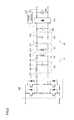
- FIG. 1shows an overall configuration of a power transfer system according to a first embodiment.
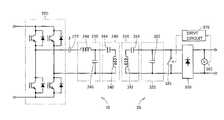
- FIG. 2shows the details of a configuration relevant to power transmission and reception.
- FIG. 3shows differences in detection value of a current sensor in accordance with the magnitude of a coupling coefficient between a power transmission coil and a power reception coil.
- FIG. 8shows differences in detection value of a current sensor in accordance with the magnitude of a coupling coefficient between a power transmission coil and a power reception coil.
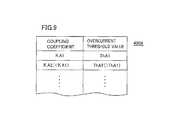
- FIG. 9shows an example of a threshold value management table which manages an overcurrent threshold value for each coupling coefficient.
- Power transmission device 10includes a power factor correction (PFC) circuit 210 , an inverter 220 , a filter circuit 230 , and a power transmission unit 240 .
- Power transmission device 10further includes a power supply ECU (Electronic Control Unit) 250 , a communication unit 260 , a voltage sensor 270 , and a current sensor 272 .
- PFCpower factor correction
- ECUElectronic Control Unit
- PFC circuit 210can rectify and boost AC power received from an AC power supply 100 (e.g., system power supply) for supply to inverter 220 and can bring an input current close to a sine wave, thereby correcting the power factor.
- AC power supply 100e.g., system power supply
- Any of publicly known various PFC circuitscan be adopted as this PFC circuit 210 .
- PFC circuit 210a rectifier without the power factor correcting function may be adopted.
- Inverter 220converts DC power received from PFC circuit 210 into transmission power (AC) having a predetermined transmission frequency.
- the transmission power produced by inverter 220is supplied to power transmission unit 240 through filter circuit 230 .
- Inverter 220is implemented by a single-phase full bridge circuit, for example.
- Filter circuit 230is provided between inverter 220 and power transmission unit 240 , and suppresses a harmonic noise caused by inverter 220 .
- Filter circuit 230is implemented by an LC filter including one each of an inductor and a capacitor.
- filter circuit 230is not necessarily limited to such a configuration.
- Filter circuit 230may be implemented by an LC filter including a plurality of inductors and a plurality of capacitors, or may be implemented by either an inductor or a capacitor.
- Power transmission unit 240receives AC power (transmission power) having a transmission frequency from inverter 220 through filter circuit 230 , and transmits the electric power in a contactless manner to a power reception unit 310 of power reception device 20 through an electromagnetic field produced around power transmission unit 240 .
- Power transmission unit 240includes a resonant circuit for transmitting electric power to power reception unit 310 in a contactless manner.
- the resonant circuitis configured to include a coil and a capacitor. However, the resonant circuit is not necessarily limited to such a configuration. The capacitor may be omitted when a desired resonant state is achieved only with the capacitive component of the coil.
- Voltage sensor 270detects an output voltage of inverter 220 , and outputs a detected value to power supply ECU 250 .
- Current sensor 272detects an output current of inverter 220 , and outputs a detected value to power supply ECU 250 .
- the detection value of current sensor 272can be regarded as an input current value of power transmission unit 240 . Based on the detected values of voltage sensor 270 and current sensor 272 , transmission power supplied from inverter 220 to power transmission unit 240 may be detected.
- Power supply ECU 250including a CPU (Central Processing Unit), a memory device, an input/output buffer, and the like (neither shown), receives signals from various sensors and devices, and controls various devices in power transmission device 10 .
- power supply ECU 250exerts switching control of inverter 220 such that inverter 220 produces transmission power (AC) when power transmission from power transmission device 10 to power reception device 20 is executed.
- ACtransmission power
- Various types of controlsare not limited to processing by software, but may be processed by dedicated hardware (an electronic circuit).
- power supply ECU 250determines whether or not the detection value of current sensor 272 exceeds an overcurrent threshold value.
- the overcurrent threshold valueis a threshold value for determining whether or not an overcurrent has occurred in power transmission device 10 .
- power supply ECU 250controls inverter 220 to stop power transmission from power transmission unit 240 .
- power supply ECU 250estimates a coupling coefficient between power transmission coil 242 ( FIG. 2 ) included in power transmission unit 240 and power reception coil 312 ( FIG. 2 ) included in power reception unit 310 .
- Power supply ECU 250then changes the overcurrent threshold value in accordance with the estimated coupling coefficient. A specific method of estimating the coupling coefficient and the significance of changing the overcurrent threshold value in accordance with the coupling coefficient will be described later in detail.
- Communication unit 260is configured to make wireless communications with a communication unit 370 of power reception device 20 .
- communication unit 260receives, from communication unit 370 , information (a voltage of power received by power reception device 20 , etc.) necessary for estimating the coupling coefficient between power transmission coil 242 ( FIG. 2 ) and power reception coil 312 ( FIG. 2 ).
- power reception device 20includes power reception unit 310 , a filter circuit 320 , a rectification unit 330 , a relay circuit 340 , and a power storage device 350 .
- Power reception device 20further includes a charging ECU 360 , communication unit 370 , a voltage sensor 380 , and a current sensor 382 .
- Power reception unit 310receives in a contactless manner electric power (AC) output from power transmission unit 240 of power transmission device 10 .
- Power reception unit 310includes a resonant circuit for receiving electric power from power transmission unit 240 in a contactless manner, for example.
- the resonant circuitis composed of a coil and a capacitor.
- the resonant circuitis not necessarily limited to such a configuration.
- the capacitormay be omitted when a desired resonant state is achieved only with the capacitive component of the coil, for example.
- Power reception unit 310outputs received power to rectification unit 330 through filter circuit 320 .
- Filter circuit 320is provided between power reception unit 310 and rectification unit 330 , and suppresses a harmonic noise produced at the time of power reception.
- Filter circuit 320is implemented by a C filter including a capacitor.
- Filter circuit 320is not necessarily limited to such a configuration.
- Filter circuit 320may be implemented by an LC filter including an inductor and a capacitor, for example.
- Rectification unit 330rectifies AC power received by power reception unit 310 for output to power storage device 350 . The details of power reception unit 310 and filter circuit 320 will be described later.
- Power storage device 350is a rechargeable DC power supply, and is implemented by a secondary battery, such as a lithium-ion battery or a nickel-metal hydride battery, for example. Power storage device 350 stores electric power output from rectification unit 330 . Power storage device 350 then supplies the stored electric power to a load driving device or the like not shown.
- a secondary batterysuch as a lithium-ion battery or a nickel-metal hydride battery, for example.
- Power storage device 350stores electric power output from rectification unit 330 .
- Power storage device 350then supplies the stored electric power to a load driving device or the like not shown.
- Relay circuit 340is provided between rectification unit 330 and power storage device 350 , and is closed when power storage device 350 is charged by power transmission device 10 .
- a DC/DC converter that adjusts an output voltage of rectification unit 330may be provided between rectification unit 330 and power storage device 350 (e.g., between rectification unit 330 and relay circuit 340 ).
- Voltage sensor 380detects an output voltage (a voltage of received power) of rectification unit 330 , and outputs the detected value to charging ECU 360 .
- Current sensor 382detects an output current (a current of received power) from rectification unit 330 , and outputs the detected value to charging ECU 360 . Based on the detected values of voltage sensor 380 and current sensor 382 , electric power received by power reception unit 310 (i.e., charging power for power storage device 350 ) can be detected.
- a crowbar circuit 325is provided between filter circuit 320 and rectification unit 330 . Crowbar circuit 325 is controlled by a signal from drive circuit 375 to switch the electric connection state of a connection node PP 1 and a connection node PP 2 .
- connection nodes PP 1 and PP 2are short-circuited, so that power reception coil 312 ( FIG. 2 ) is short-circuited.
- Crowbar circuit 325is implemented by a relay, for example.
- Drive circuit 375switches the state of crowbar circuit 325 between the conductive state and the interrupted state.
- Drive circuit 375monitors the detection value of voltage sensor 380 , and when the detection value of voltage sensor 380 exceeds a predetermined voltage, brings crowbar circuit 325 into the conductive state. Accordingly, power reception coil 312 is short-circuited ( FIG. 2 ).
- Drive circuit 375is implemented by a comparator, for example.
- Charging ECU 360including a CPU, a memory device, an input/output buffer, and the like (neither shown), receives signals from various sensors and devices, and controls various devices in power reception device 20 .
- Various types of controlsare not limited to processing by software, but may be processed by dedicated hardware (an electronic circuit).
- Communication unit 370is configured to make wireless communications with communication unit 260 of power transmission device 10 .
- communication unit 370transmits, to communication unit 260 , information (a voltage of power received by power reception device 20 , etc.) necessary for estimating the coupling coefficient between power transmission coil 242 ( FIG. 2 ) and power reception coil 312 ( FIG. 2 ).
- transmission poweris supplied from inverter 220 to power transmission unit 240 through filter circuit 230 .
- Power transmission unit 240 and power reception unit 310each include a coil and a capacitor, and are designed to resonate at a transmission frequency.
- the Q factor indicating the resonance strength of power transmission unit 240 and power reception unit 310is preferably more than or equal to 100.
- power transmission device 10when transmission power is supplied from inverter 220 to power transmission unit 240 , energy (electric power) is transferred from power transmission unit 240 to power reception unit 310 through an electromagnetic field formed between power transmission coil 242 ( FIG. 2 ) of power transmission unit 240 and power reception coil 312 ( FIG. 2 ) of power reception unit 310 .
- the energy (electric power) transferred to power reception unit 310is supplied to power storage device 350 through filter circuit 320 and rectification unit 330 .
- FIG. 2shows the details of a configuration relevant to power transmission and reception according to the present embodiment.
- inverter 220includes a plurality of circuits each including a switching element implemented by an IGBT (Insulated Gate Bipolar Transistor) element, for example, and a diode connected in antiparallel to the IGBT element.
- Filter circuit 230includes a capacitor 246 and a coil 248 .
- Filter circuit 230is a secondary LC filter.
- Power transmission unit 240includes power transmission coil 242 and a capacitor 244 . Capacitor 244 is provided to compensate for the power factor of transmission power, and is connected in series with power transmission coil 242 .
- Power reception unit 310includes a power reception coil 312 and a capacitor 314 .
- Capacitor 314is provided to compensate for the power factor of received power, and is connected in series with power reception coil 312 .
- Filter circuit 320includes a capacitor 322 .
- Filter circuit 320is a primary C filter.
- a circuit configuration composed of power transmission unit 240 and power reception unit 310is also called an SS (primary series-secondary series) arrangement.
- the circuit configuration composed of power transmission unit 240 and power reception unit 310is not necessarily limited to such a configuration.
- an SP (primary series-secondary parallel) arrangement with which capacitor 314 is connected in parallel with power reception coil 312 in power reception unit 310may be adopted, or a PP (primary parallel-secondary parallel) arrangement with which capacitor 244 is further connected in parallel with power transmission coil 242 in power transmission unit 240 may be adopted.
- An exemplary abnormality originating from power transferis an overvoltage generated in power reception device 20 .
- drive circuit 375when the detection value of voltage sensor 380 exceeds a predetermined voltage during power transfer, drive circuit 375 causes crowbar circuit 325 to electrically conduct, thereby short-circuiting power reception coil 312 .
- the impedance on the power reception device 20 side as seen from the power transmission coil 242 sidedecreases.
- the current generated in power transmission device 10increases.
- power supply ECU 250can detect indirectly that an overvoltage has occurred in power reception device 20 .
- the current generated in power transmission device 10 when power reception coil 312 is short-circuitedmay vary in magnitude depending on the coupling coefficient between power transmission coil 242 and power reception coil 312 .
- the current value at the occurrence of an overcurrentis larger than when the coupling coefficient is K 2 .
- Th 1a threshold value provided as the overcurrent threshold value
- the occurrence of an overcurrentis detected when the coupling coefficient is K 1 , but is not detected when the coupling coefficient is K 2 .
- the configuration for estimating the coupling coefficient between power transmission coil 242 and power reception coil 312 , and changing the overcurrent threshold value in accordance with the estimated coupling coefficientis adopted.
- the threshold valueis set by using a threshold value management table as shown in FIG. 4 , for example, which manages the overcurrent threshold value for each coupling coefficient in the example shown in FIG. 3 .
- the left columnindicates the coupling coefficient
- the right columnindicates the overcurrent threshold value.
- threshold value Th 1is associated with coupling coefficient K 1 as the overcurrent threshold value
- a threshold value Th 2is associated with coupling coefficient K 2 as the overcurrent threshold value.
- Threshold value management table 400is stored in an internal memory not shown of power supply ECU 250 .
- Power supply ECU 250estimates the coupling coefficient, and then determines the overcurrent threshold value with reference to the threshold value management table. When the detection value of current sensor 272 exceeds the overcurrent threshold value, power supply ECU 250 controls inverter 220 to stop power transmission from power transmission unit 240 .
- FIG. 5is a flowchart showing an operation executed by drive circuit 375 when an overvoltage occurs.
- drive circuit 375detects the occurrence of an overvoltage in power reception device 20 during power transfer (step S 100 ). Specifically, drive circuit 375 monitors the detection value of voltage sensor 380 , and when the detection value exceeds a predetermined voltage, detects an overvoltage. Since it is necessary to execute processing for system protection when an overvoltage occurs, the occurrence of an overvoltage is detected in power reception device 20 .
- step S 100When the occurrence of an overvoltage is not detected in power reception device 20 (NO in step S 100 ), the process proceeds to step S 120 .
- drive circuit 375causes crowbar circuit 325 to electrically conduct, thereby short-circuiting power reception coil 312 (step S 110 ). Accordingly, electric power supply from rectification unit 330 to power storage device 350 is interrupted.
- FIG. 6is a flowchart showing an operation of power transmission device 10 originating from the occurrence of an overvoltage in power reception device 20 .
- power supply ECU 250determines whether or not a power transmission stop instruction has been issued during power transfer (step S 200 ). When power storage device 350 is fully charged, or when a power transmission stop operation is performed by a driver, for example, the power transmission stop instruction is issued. If it is determined that the power transmission stop instruction has been issued (YES in step S 200 ), the process proceeds to step S 250 .
- power supply ECU 250estimates the coupling coefficient between power transmission coil 242 and power reception coil 312 (step S 210 ).
- the coupling coefficientcan be estimated from the current flowing in power transmission unit 240 and the voltage of received power in power reception device 20 , for example. That is, it is known that coupling coefficient ⁇ between power transmission coil 242 and power reception coil 312 is proportional to the ratio between a received power voltage V 2 and a current I 1 in power transmission unit 240 .
- ⁇indicates the transmission angular frequency
- L 1 and L 2indicate the inductances of power transmission coil 242 and power reception coil 312 , respectively.
- Received power voltage V 2can be detected by voltage sensor 380
- current I 1 in power transmission unit 240can be detected by current sensor 272 .
- information on inductance L 2 of power reception coil 312 and received power voltage V 2is transmitted from charging ECU 360 to power supply ECU 250 through communication units 370 , 260 .
- power supply ECU 250determines the overcurrent threshold value from the estimated coupling coefficient and threshold value management table 400 ( FIG. 4 ) (step S 220 ). Specifically, power supply ECU 250 determines the threshold value associated with the estimated coupling coefficient in threshold value management table 400 as the overcurrent threshold value.
- step S 230power supply ECU 250 determines whether or not the detection value of current sensor 272 has exceeded the overcurrent threshold value. Such a determination is made because it can be indirectly detected that an overvoltage has occurred in power reception device 20 by detecting that an overcurrent has occurred in power transmission device 10 .
- the processproceeds to step S 200 .
- step S 230when it is determined that the detection value of current sensor 272 has exceeded the overcurrent threshold value (YES in step S 230 ), power supply ECU 250 controls inverter 220 to stop power transmission from power transmission unit 240 (step S 240 ). When power transmission is stopped, the process proceeds to step S 250 .
- contactless power transfer system 1in contactless power transfer system 1 according to this embodiment, the coupling coefficient between power transmission coil 242 and power reception coil 312 is estimated, and the overcurrent threshold value is changed in accordance with the estimated coupling coefficient. Therefore, according to this contactless power transfer system 1 , an increase in current in power transmission unit 240 following the short-circuiting of power reception coil 312 can be detected appropriately even if the coupling coefficient between power transmission coil 242 and power reception coil 312 varies, and power transmission can be stopped in an appropriate situation.
- a second embodimentdiffers from the above-described first embodiment in specific configurations of filter circuit 230 of power transmission device 10 and filter circuit 320 of power reception device 20 .
- the secondary LC filteris used in power transmission device 10
- the primary C filteris used in power reception device 20
- a quaternary LC filteris used in power transmission device 10
- a quaternary LC filteris also used in power reception device 20 . Since the specific configuration of each filter circuit in this second embodiment differs from that of the first embodiment, the details of threshold value management table 400 are different from those of the first embodiment. Hereinafter, a difference from the first embodiment will be described in detail.
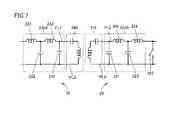
- FIG. 7shows the details of a difference from the first embodiment in the configuration relevant to power transmission and reception in this second embodiment.
- power transmission device 10includes a filter circuit 230 A and power transmission unit 240 .
- Power reception device 20includes power reception unit 310 and a filter circuit 320 A.
- Filter circuit 230 Ais a quaternary LC filter including two coils and two capacitors. Specifically, filter circuit 230 A includes coils 231 , 233 provided on a positive electrode line PL 1 as well as capacitors 232 , 234 connected between positive electrode line PL 1 and a negative electrode line PL 2 .
- Filter circuit 320 Ais a quaternary LC filter including two coils and two capacitors, similarly to filter circuit 230 A. Specifically, filter circuit 320 A includes coils 326 , 324 provided on a positive electrode line PL 3 as well as capacitors 321 , 323 connected between positive electrode line PL 3 and a negative electrode line PL 4 .
- each filter circuitdiffers in this way from that of the first embodiment, the relation between the coupling coefficient between power transmission coil 242 and power reception coil 312 and the magnitude of the current generated in power transmission device 10 when power reception coil 312 is short-circuited also differs from that of the first embodiment.
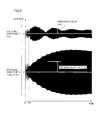
- FIG. 8shows differences in detection value of current sensor 272 in accordance with the magnitude of the coupling coefficient between power transmission coil 242 and power reception coil 312 in this second embodiment.
- the upper graphindicates transition of the detection value of current sensor 272 in the case where the coupling coefficient is KA 1
- the lower graphindicates transition of the detection value of current sensor 272 in the case where the coupling coefficient is KA 2 ( ⁇ KA 1 ).
- power reception coil 312is short-circuited at time tB 0 .
- Power reception coil 312is short-circuited at time tB 0 , and the subsequent detection value of current sensor 272 is larger when the coupling coefficient is KA 2 ( ⁇ KA 1 ) than when the coupling coefficient is KA 1 . Therefore, a larger threshold value needs to be set as the overcurrent threshold value when the coupling coefficient is KA 2 than when the coupling coefficient is KA 1 .
- a threshold value management table 400 A as shown in FIG. 9is used for determining the overcurrent threshold value.
- FIG. 9shows an example of a threshold value management table in the example shown in FIG. 8 which manages the overcurrent threshold value for each coupling coefficient.
- the left columnindicates the coupling coefficient
- the right columnindicates the overcurrent threshold value.
- a threshold value ThA 1is associated with coupling coefficient KA 1 as the overcurrent threshold value
- a threshold value ThA 2 (>ThA 1 )is associated with coupling coefficient KA 2 ( ⁇ KA 1 ) as the overcurrent threshold value. That is, in this second embodiment, a larger threshold value is set as the overcurrent threshold value when the coupling coefficient is small than when the coupling coefficient is large.
- an increase in current in power transmission unit 240 following the short-circuiting of power reception coil 312can be detected appropriately even if the coupling coefficient between power transmission coil 242 and power reception coil 312 varies, and power transmission can be stopped in an appropriate situation.
- the relation between the coupling coefficient between power transmission coil 242 and power reception coil 312 and the magnitude of the current generated in power transmission device 10 when power reception coil 312 is short-circuiteddiffers among properties of filter circuits. Therefore, in the first and second embodiments, the overcurrent threshold value associated with each coupling coefficient is set previously in accordance with the property of each filter circuit. Therefore, according to this contactless power transfer system 1 , an increase in current in power transmission unit 240 following the short-circuiting of power reception coil 312 can be detected appropriately in accordance with the properties of the filter circuits connected to power transmission unit 240 and power reception unit 310 , and power transmission can be stopped in an appropriate situation.
- power transmission device 10has a plurality of threshold value management tables associated with combination patterns of configurations of filter circuits 230 , 320 . Moreover, power transmission device 10 receives information on the configuration of filter circuit 320 of power reception device 20 . Power supply ECU 250 selects any threshold value management table from among the plurality of threshold value management tables based on the received information on the configuration of filter circuit 320 and information on the configuration of filter circuit 230 . Power supply ECU 250 determines the overcurrent threshold value using the selected threshold value management table.
- differences from the first and second embodimentswill be described in detail.
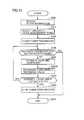
- FIG. 10is a flowchart showing an operation of power transmission device 10 originating from the occurrence of an overvoltage in power reception device 20 according to this third embodiment.
- steps S 200 to S 210 and S 230 to S 250are identical to those shown in FIG. 6 , and will not be described here.
- power supply ECU 250receives information on the configuration of filter circuit 320 from charging ECU 360 through communication units 260 , 370 (step S 300 ). For example, power supply ECU 250 receives information indicating that filter circuit 320 is a C filter (corresponding to the first embodiment) or information indicating that filter circuit 320 is a quaternary LC filter (corresponding to the second embodiment).
- power supply ECU 250Upon receipt of the information on the configuration of filter circuit 320 , power supply ECU 250 selects a threshold value management table from among the plurality of threshold value management tables in accordance with the combination of filter configurations of power transmission device 10 and power reception device 20 (step S 310 ). For example, power supply ECU 250 has stored in an internal memory not shown a plurality of threshold value management tables including threshold value management table 400 (first embodiment) and threshold value management table 400 A (second embodiment). When the information that filter circuit 320 is a C filter is received in step S 310 , power supply ECU 250 selects threshold value management table 400 as the threshold value management table. On the other hand, when the information that filter circuit 320 is a quaternary LC filter is received in step S 310 , power supply ECU 250 selects threshold value management table 400 A as the threshold value management table.
- step S 320When the threshold value management table is selected, preparation necessary for starting power transmission is conducted, and power transmission from power transmission unit 240 is started (step S 320 ).
- step S 210When the coupling coefficient is estimated in step S 210 , power supply ECU 250 determines the overcurrent threshold value using the threshold value management table selected in step S 310 and the estimated coupling coefficient (step S 220 A).
- the information on the configuration of filter circuit 320is transmitted from power reception device 20 to power transmission device 10 , and a threshold value management table suited to the configurations of filter circuits 230 , 320 is selected in power transmission device 10 . Therefore, according to this third embodiment, even if the configuration of filter circuit 320 in the power reception device differs among power reception devices, a threshold value management table suited to that filter circuit can be selected. Thus, in power transmission device 10 , an increase in current in power transmission unit 240 following the short-circuiting of power reception coil 312 can be detected appropriately, and power transmission can be stopped in an appropriate situation.
- the overcurrent threshold valueshall be determined based on the coupling coefficient.
- the method of determining the overcurrent threshold valueis not necessarily limited as such.
- the overcurrent threshold valuemay be determined by estimating the coupling state between power transmission coil 242 and power reception coil 312 in step S 210 only from the ratio between received power voltage V 2 in power reception device 20 and current I 1 in power transmission unit 240 , rather than calculating coupling coefficient ⁇ .
- the coupling stateis stronger as the magnitude of received power voltage V 2 is larger relative to current I 1 , a large threshold value is set as the overcurrent threshold value.
- a smaller threshold valueis set as the overcurrent threshold value as the magnitude of received power voltage V 2 is larger relative to current H.
- the coupling coefficientdoes not necessarily need to be estimated for determining the overcurrent threshold value, but the coupling state between power transmission coil 242 and power reception coil 312 should just be estimated.
- the overcurrent threshold valueis determined by detecting the magnitude of reflected power during power transmission.
- a large threshold valueis set as the overcurrent threshold value.
- a smaller threshold valueis set as the magnitude of reflected power is larger.
- the overcurrent threshold valueis determined by detecting a transmission efficiency during power transmission.
- a large threshold valueis set as the overcurrent threshold value.
- a smaller threshold valueis set as the transmission efficiency is higher.
- the coupling coefficientshall be estimated in step S 210 in each cycle.
- the timing for estimating the coupling coefficientis not necessarily limited as such.
- the coupling coefficientmay be estimated only in an initial cycle, or may be estimated once in several cycles.
- power transmission device 10corresponds to one embodiment of a “power transmission device” according to the present invention
- power reception device 20corresponds to one embodiment of a “power reception device” according to the present invention
- the configuration composed of inverter 220 and power transmission unit 240corresponds to one embodiment of a “power transmission unit” according to the present invention.
- Power reception unit 310corresponds to one embodiment of a “power reception unit” according to the present invention.
- Power supply ECU 250corresponds to one embodiment of a “control unit” according to the present invention.
- the configuration composed of crowbar circuit 325 and drive circuit 375corresponds to one embodiment of a “protection circuit” according to the present invention.
- Filter circuits 230 , 320correspond to one embodiment of “filters” according to the present invention.
Landscapes
- Engineering & Computer Science (AREA)
- Power Engineering (AREA)
- Computer Networks & Wireless Communication (AREA)
- Transportation (AREA)
- Mechanical Engineering (AREA)
- Charge And Discharge Circuits For Batteries Or The Like (AREA)
- Electric Propulsion And Braking For Vehicles (AREA)
- Current-Collector Devices For Electrically Propelled Vehicles (AREA)
Abstract
Description
This nonprovisional application is based on Japanese Patent Application No. 2015-168901 filed on Aug. 28, 2015, with the Japan Patent Office, the entire contents of which are hereby incorporated by reference.
Field of the Invention
The present invention relates to a contactless power transfer system and a power transmission device, and particularly to a technique for protecting, when an abnormality occurs, a contactless power transfer system that transfers electric power in a contactless manner between a power transmission device and a power reception device.
Description of the Background Art
Conventionally, contactless power transfer systems transmitting electric power from a power transmission device to a power reception device in a contactless manner are known (see Japanese Patent Laying-Open Nos. 2013-154815, 2013-146154, 2013-146148, 2013-110822, 2013-126327, and 2003-209903). The power transmission device includes a power transmission coil, and the power reception device includes a power reception coil.
For example, in a contactless power feeding system disclosed in Japanese Patent Laying-Open No. 2003-209903, a contactless power feeding device (power reception device) includes a resonant circuit unit, a power reception unit, and an output voltage restriction unit. The resonant circuit unit receives electric power in a contactless manner from an AC power supply. The power reception unit outputs electric power supplied from the resonant circuit unit to a motor. When an output voltage of the power reception unit becomes more than or equal to a reference voltage, the output voltage restriction unit causes electric power from the resonant circuit unit to be supplied to a shunt rather than a main path along which electric power is supplied from the resonant circuit unit to the power reception unit. Accordingly, electric power supply from the resonant circuit unit to the power reception unit is interrupted, and the output voltage of the power reception unit decreases. As a result, with this technique, an excess of the output voltage of the power reception unit can be avoided, and damage to devices can be prevented.
When an abnormality originating from power transfer occurs during power transfer in a contactless power transfer system that performs power transfer in a contactless manner between a power transmission device and a power reception device, it is desirable that power transfer be stopped immediately from a viewpoint of system protection. An exemplary abnormality originating from power transfer is an overvoltage generated in a power reception device.
For preventing an overvoltage, the power reception device can be configured to short-circuit the power reception coil when an overvoltage occurs. In such a case, the impedance on the power reception device side as seen from the power transmission coil side decreases by short-circuiting the power reception coil when an overvoltage occurs in the power reception device, with the result that a current generated in the power transmission device increases. By detecting that the current generated in the power transmission device has increased beyond a predetermined value, it can be detected indirectly that an overvoltage has occurred in the power reception device, and by taking appropriate protection measures accordingly, the devices can be protected.
In the contactless power transfer system, however, the current generated in the power transmission device when the power reception coil is short-circuited may vary in magnitude depending on the coupling state between the power transmission coil and the power reception coil. Therefore, even if the current generated in the power transmission device becomes more than or equal to a certain threshold value, an overvoltage has not necessarily occurred in the power reception device depending on the magnitude of a coupling coefficient. Thus, a case may occur in which power transfer cannot be stopped in an appropriate situation with the method of comparing the current generated in the power transmission device with a certain threshold value. Such a problem and a solution therefor are not particularly discussed in Japanese Patent Laying-Open Nos. 2013-154815, 2013-146154, 2013-146148, 2013-110822, 2013-126327, and 2003-209903 mentioned above.
The present invention was made to solve such a problem, and has an object to provide a contactless power transfer system that can stop power transfer immediately to protect devices when an abnormality originating from power transfer occurs during contactless power transfer.
A contactless power transfer system according to an aspect of the present invention is a contactless power transfer system for transferring electric power in a contactless manner between a power transmission device and a power reception device. The contactless power transfer system includes a power transmission unit, a power reception unit, a protection circuit, and a control unit. The power transmission unit includes a power transmission coil and transmits electric power in a contactless manner. The power reception unit includes a power reception coil and receives electric power from the power transmission unit in a contactless manner. The protection circuit short-circuits the power reception coil when an overvoltage occurs in the power reception device originating from power reception by the power reception unit. The control unit is configured to control the power transmission unit to stop power transmission when a current generated in the power transmission unit exceeds a predetermined threshold value due to short-circuiting of the power reception coil. The control unit is configured to estimate a coupling state between the power transmission coil and the power reception coil, and change the predetermined threshold value in accordance with the estimated coupling state.
A power transmission device according to another aspect of the present invention is a power transmission device for transmitting electric power to a power reception device in a contactless manner. The power reception device includes a power reception unit and a protection circuit. The power reception unit includes a power reception coil and receives electric power in a contactless manner. The protection circuit short-circuits the power reception coil when an overvoltage occurs in the power reception device originating from power reception by the power reception unit. The power transmission device includes a power transmission unit and a control unit. The power transmission unit includes a power transmission coil and transmits electric power to the power reception unit in a contactless manner. The control unit is configured to control the power transmission unit to stop power transmission when a current generated in the power transmission unit exceeds a predetermined threshold value due to short-circuiting of the power reception coil. The control unit is configured to estimate a coupling state between the power transmission coil and the power reception coil, and change the predetermined threshold value in accordance with the estimated coupling state.
In these contactless power transfer system and power transmission device, the threshold value to be compared with the current generated in the power transmission unit for determining whether to stop power transmission is changed in accordance with the coupling state between the power transmission coil and the power reception coil. Therefore, according to this contactless power transfer system, an increase in current in the power transmission unit following short-circuiting of the power reception coil can be detected appropriately even if the coupling state between the power transmission coil and the power reception coil varies. Accordingly, when an abnormality such as an overvoltage occurs, power transmission can be stopped in an appropriate situation to protect the devices.
Preferably, the contactless power transfer system further includes filters connected to the power transmission unit and the power reception unit, respectively. The predetermined threshold value is set previously in accordance with properties of the filters.
The relation between the strength of the coupling state between the power transmission coil and the power reception coil and the magnitude of the current in the power transmission unit following short-circuiting of the power reception coil varies with properties of the filters connected to the power transmission unit and the power reception unit, respectively. In this contactless power transfer system, the threshold value for the current value is set in accordance with the properties of the filters. Therefore, according to this contactless power transfer system, even if the filters connected to the power transmission unit and the power reception unit are of different types, power transmission can be stopped in an appropriate situation when an abnormality such as an overvoltage occurs, thereby protecting the devices.
The foregoing and other objects, features, aspects and advantages of the present invention will become more apparent from the following detailed description of the present invention when taken in conjunction with the accompanying drawings.
Hereinafter, embodiments of the present invention will be described in detail with reference to the drawings. A plurality of embodiments will be shown below. It is intended as of filing to combine features described in the respective embodiments as appropriate. In the drawings, the same or corresponding portions have the same reference characters allotted, and description thereof will not be repeated.
(First Embodiment)
<Configuration of Contactless Power Transfer System>
For example,power supply ECU 250 determines whether or not the detection value ofcurrent sensor 272 exceeds an overcurrent threshold value. Here, the overcurrent threshold value is a threshold value for determining whether or not an overcurrent has occurred inpower transmission device 10. When it is determined that the detection value ofcurrent sensor 272 exceeds the overcurrent threshold value,power supply ECU 250 controls inverter220 to stop power transmission frompower transmission unit 240. Moreover,power supply ECU 250 estimates a coupling coefficient between power transmission coil242 (FIG. 2 ) included inpower transmission unit 240 and power reception coil312 (FIG. 2 ) included inpower reception unit 310.Power supply ECU 250 then changes the overcurrent threshold value in accordance with the estimated coupling coefficient. A specific method of estimating the coupling coefficient and the significance of changing the overcurrent threshold value in accordance with the coupling coefficient will be described later in detail.
On the other hand,power reception device 20 includespower reception unit 310, afilter circuit 320, arectification unit 330, arelay circuit 340, and apower storage device 350.Power reception device 20 further includes a chargingECU 360,communication unit 370, avoltage sensor 380, and acurrent sensor 382.
ChargingECU 360, including a CPU, a memory device, an input/output buffer, and the like (neither shown), receives signals from various sensors and devices, and controls various devices inpower reception device 20. Various types of controls are not limited to processing by software, but may be processed by dedicated hardware (an electronic circuit).
In this contactlesspower transfer system 1, transmission power (AC) is supplied frominverter 220 topower transmission unit 240 throughfilter circuit 230.Power transmission unit 240 andpower reception unit 310 each include a coil and a capacitor, and are designed to resonate at a transmission frequency. The Q factor indicating the resonance strength ofpower transmission unit 240 andpower reception unit 310 is preferably more than or equal to 100.
Inpower transmission device 10, when transmission power is supplied frominverter 220 topower transmission unit 240, energy (electric power) is transferred frompower transmission unit 240 topower reception unit 310 through an electromagnetic field formed between power transmission coil242 (FIG. 2 ) ofpower transmission unit 240 and power reception coil312 (FIG. 2 ) ofpower reception unit 310. The energy (electric power) transferred topower reception unit 310 is supplied topower storage device 350 throughfilter circuit 320 andrectification unit 330. Next, the details of a configuration (power transmission unit 240,power reception unit 310,filter circuits power transfer system 1 will be described.
<Details of Configuration Relevant to Power Transmission and Reception>
A circuit configuration composed ofpower transmission unit 240 andpower reception unit 310 is also called an SS (primary series-secondary series) arrangement. However, the circuit configuration composed ofpower transmission unit 240 andpower reception unit 310 is not necessarily limited to such a configuration. For example, an SP (primary series-secondary parallel) arrangement with whichcapacitor 314 is connected in parallel withpower reception coil 312 inpower reception unit 310 may be adopted, or a PP (primary parallel-secondary parallel) arrangement with whichcapacitor 244 is further connected in parallel withpower transmission coil 242 inpower transmission unit 240 may be adopted.
When an abnormality originating from power transfer occurs during power transfer in such contactlesspower transfer system 1 that performs power transfer in a contactless manner betweenpower transmission device 10 andpower reception device 20, it is desirable that power transfer be stopped immediately from a viewpoint of system protection. An exemplary abnormality originating from power transfer is an overvoltage generated inpower reception device 20.
In this embodiment, when the detection value ofvoltage sensor 380 exceeds a predetermined voltage during power transfer,drive circuit 375 causes crowbarcircuit 325 to electrically conduct, thereby short-circuitingpower reception coil 312. By short-circuitingpower reception coil 312, the impedance on thepower reception device 20 side as seen from thepower transmission coil 242 side decreases. As a result, the current generated inpower transmission device 10 increases. By detecting that the current generated inpower transmission device 10 has increased beyond a predetermined value,power supply ECU 250 can detect indirectly that an overvoltage has occurred inpower reception device 20.
In contactlesspower transfer system 1 that performs such contactless power transfer, however, the current generated inpower transmission device 10 whenpower reception coil 312 is short-circuited may vary in magnitude depending on the coupling coefficient betweenpower transmission coil 242 andpower reception coil 312.
For example,FIG. 3 shows differences in detection value ofcurrent sensor 272 in accordance with the magnitude of the coupling coefficient betweenpower transmission coil 242 andpower reception coil 312. Referring toFIG. 3 , the horizontal axis indicates the time, and the vertical axis indicates the detection value ofcurrent sensor 272, The upper graph shows transition of the detection value ofcurrent sensor 272 in the case where the coupling coefficient is K1, and the lower graph shows transition of the detection value ofcurrent sensor 272 in the case where the coupling coefficient is K2 (<K1).
Betweentime 0 to time tA0, power transfer is performed appropriately. Betweentime 0 to time tA0, the detection value ofcurrent sensor 272 is stable. When an overvoltage occurs at time tA0 andpower reception coil 312 is short-circuited bycrowbar circuit 325, the detection value ofcurrent sensor 272 rises.
In this example, when the coupling coefficient betweenpower transmission coil 242 andpower reception coil 312 is K1, the current value at the occurrence of an overcurrent is larger than when the coupling coefficient is K2. For example, suppose that only a threshold value Th1 is provided as the overcurrent threshold value, the occurrence of an overcurrent is detected when the coupling coefficient is K1, but is not detected when the coupling coefficient is K2.
Therefore, in contactlesspower transfer system 1 according to this embodiment, the configuration for estimating the coupling coefficient betweenpower transmission coil 242 andpower reception coil 312, and changing the overcurrent threshold value in accordance with the estimated coupling coefficient is adopted.
The threshold value is set by using a threshold value management table as shown inFIG. 4 , for example, which manages the overcurrent threshold value for each coupling coefficient in the example shown inFIG. 3 . Referring toFIG. 4 , the left column indicates the coupling coefficient, and the right column indicates the overcurrent threshold value. In this example, threshold value Th1 is associated with coupling coefficient K1 as the overcurrent threshold value, and a threshold value Th2 is associated with coupling coefficient K2 as the overcurrent threshold value. Threshold value management table400 is stored in an internal memory not shown ofpower supply ECU 250.
Therefore, according to this contactlesspower transfer system 1, an increase in current inpower transmission unit 240 following the short-circuiting ofpower reception coil 312 can be detected appropriately even if the coupling coefficient betweenpower transmission coil 242 andpower reception coil 312 varies, and power transmission can be stopped in an appropriate situation. As a result, this contactlesspower transfer system 1 is protected appropriately when an overvoltage occurs. Next, a system protecting operation when an overvoltage occurs in this contactlesspower transfer system 1 will be described in detail.
<System Protecting Operation when Overvoltage Occurs>
When the occurrence of an overvoltage is not detected in power reception device20 (NO in step S100), the process proceeds to step S120. On the other hand, when the occurrence of an overvoltage is detected in power reception device20 (YES in step S100),drive circuit 375 causes crowbarcircuit 325 to electrically conduct, thereby short-circuiting power reception coil312 (step S110). Accordingly, electric power supply fromrectification unit 330 topower storage device 350 is interrupted.
On the other hand, if it is determined that the power transmission stop instruction has not been issued (NO in step S200),power supply ECU 250 estimates the coupling coefficient betweenpower transmission coil 242 and power reception coil312 (step S210). The coupling coefficient can be estimated from the current flowing inpower transmission unit 240 and the voltage of received power inpower reception device 20, for example. That is, it is known that coupling coefficient κ betweenpower transmission coil 242 andpower reception coil 312 is proportional to the ratio between a received power voltage V2 and a current I1 inpower transmission unit 240. Coupling coefficient κ can be estimated by the following expression (1) when the load resistance ofpower reception device 20 is sufficiently large, for example.
κ={1/(ω·√(L1·L2))}·|V2|/|I1| (1)
κ={1/(ω·√(L1·L2))}·|V2|/|I1| (1)
Here, ω indicates the transmission angular frequency, and L1 and L2 indicate the inductances ofpower transmission coil 242 andpower reception coil 312, respectively. Received power voltage V2 can be detected byvoltage sensor 380, and current I1 inpower transmission unit 240 can be detected bycurrent sensor 272. For example, information on inductance L2 ofpower reception coil 312 and received power voltage V2 is transmitted from chargingECU 360 topower supply ECU 250 throughcommunication units
When the coupling coefficient is estimated,power supply ECU 250 determines the overcurrent threshold value from the estimated coupling coefficient and threshold value management table400 (FIG. 4 ) (step S220). Specifically,power supply ECU 250 determines the threshold value associated with the estimated coupling coefficient in threshold value management table400 as the overcurrent threshold value.
When the overcurrent threshold value is determined,power supply ECU 250 determines whether or not the detection value ofcurrent sensor 272 has exceeded the overcurrent threshold value (step S230). Such a determination is made because it can be indirectly detected that an overvoltage has occurred inpower reception device 20 by detecting that an overcurrent has occurred inpower transmission device 10. When it is determined that the detection value ofcurrent sensor 272 has not exceeded the overcurrent threshold value (NO in step S230), the process proceeds to step S200.
On the other hand, when it is determined that the detection value ofcurrent sensor 272 has exceeded the overcurrent threshold value (YES in step S230),power supply ECU 250 controls inverter220 to stop power transmission from power transmission unit240 (step S240). When power transmission is stopped, the process proceeds to step S250.
In this way, in contactlesspower transfer system 1 according to this embodiment, the coupling coefficient betweenpower transmission coil 242 andpower reception coil 312 is estimated, and the overcurrent threshold value is changed in accordance with the estimated coupling coefficient. Therefore, according to this contactlesspower transfer system 1, an increase in current inpower transmission unit 240 following the short-circuiting ofpower reception coil 312 can be detected appropriately even if the coupling coefficient betweenpower transmission coil 242 andpower reception coil 312 varies, and power transmission can be stopped in an appropriate situation.
(Second Embodiment)
A second embodiment differs from the above-described first embodiment in specific configurations offilter circuit 230 ofpower transmission device 10 andfilter circuit 320 ofpower reception device 20. Specifically, in the first embodiment, the secondary LC filter is used inpower transmission device 10, and the primary C filter is used inpower reception device 20. In this second embodiment, a quaternary LC filter is used inpower transmission device 10, and a quaternary LC filter is also used inpower reception device 20. Since the specific configuration of each filter circuit in this second embodiment differs from that of the first embodiment, the details of threshold value management table400 are different from those of the first embodiment. Hereinafter, a difference from the first embodiment will be described in detail.
<Details of Configuration Relevant to Power Transmission and Reception>
Since the specific configuration of each filter circuit differs in this way from that of the first embodiment, the relation between the coupling coefficient betweenpower transmission coil 242 andpower reception coil 312 and the magnitude of the current generated inpower transmission device 10 whenpower reception coil 312 is short-circuited also differs from that of the first embodiment.
Such a relation in which, the larger the coupling coefficient, a smaller threshold value needs to be set as the overcurrent threshold value is contrary to the first embodiment (in which the larger the coupling coefficient, a larger threshold value is set as the overcurrent threshold value).
Therefore, in this second embodiment, a threshold value management table400A as shown inFIG. 9 , for example, is used for determining the overcurrent threshold value.FIG. 9 shows an example of a threshold value management table in the example shown inFIG. 8 which manages the overcurrent threshold value for each coupling coefficient. Referring toFIG. 9 , the left column indicates the coupling coefficient, and the right column indicates the overcurrent threshold value. In this example, a threshold value ThA1 is associated with coupling coefficient KA1 as the overcurrent threshold value, and a threshold value ThA2 (>ThA1) is associated with coupling coefficient KA2 (<KA1) as the overcurrent threshold value. That is, in this second embodiment, a larger threshold value is set as the overcurrent threshold value when the coupling coefficient is small than when the coupling coefficient is large.
By determining the overcurrent threshold value using this threshold value management table400A in this second embodiment, an increase in current inpower transmission unit 240 following the short-circuiting ofpower reception coil 312 can be detected appropriately even if the coupling coefficient betweenpower transmission coil 242 andpower reception coil 312 varies, and power transmission can be stopped in an appropriate situation.
As understood from the first and second embodiments, the relation between the coupling coefficient betweenpower transmission coil 242 andpower reception coil 312 and the magnitude of the current generated inpower transmission device 10 whenpower reception coil 312 is short-circuited differs among properties of filter circuits. Therefore, in the first and second embodiments, the overcurrent threshold value associated with each coupling coefficient is set previously in accordance with the property of each filter circuit. Therefore, according to this contactlesspower transfer system 1, an increase in current inpower transmission unit 240 following the short-circuiting ofpower reception coil 312 can be detected appropriately in accordance with the properties of the filter circuits connected topower transmission unit 240 andpower reception unit 310, and power transmission can be stopped in an appropriate situation.
(Third Embodiment)
In the first and second embodiments, examples in which the filter property of each filter circuit is fixed are described. In a contactless power transfer system, however, a power reception device to be charged may vary in filter property. In this third embodiment, a configuration that can be applied even when the power reception device varies in filter property will be described.
In this third embodiment,power transmission device 10 has a plurality of threshold value management tables associated with combination patterns of configurations offilter circuits power transmission device 10 receives information on the configuration offilter circuit 320 ofpower reception device 20.Power supply ECU 250 selects any threshold value management table from among the plurality of threshold value management tables based on the received information on the configuration offilter circuit 320 and information on the configuration offilter circuit 230.Power supply ECU 250 determines the overcurrent threshold value using the selected threshold value management table. Hereinafter, differences from the first and second embodiments will be described in detail.
<System Protecting Operation when Overvoltage Occurs>
Before the start of power transmission frompower transmission unit 240,power supply ECU 250 receives information on the configuration offilter circuit 320 from chargingECU 360 throughcommunication units 260,370 (step S300). For example,power supply ECU 250 receives information indicating thatfilter circuit 320 is a C filter (corresponding to the first embodiment) or information indicating thatfilter circuit 320 is a quaternary LC filter (corresponding to the second embodiment).
Upon receipt of the information on the configuration offilter circuit 320,power supply ECU 250 selects a threshold value management table from among the plurality of threshold value management tables in accordance with the combination of filter configurations ofpower transmission device 10 and power reception device20 (step S310). For example,power supply ECU 250 has stored in an internal memory not shown a plurality of threshold value management tables including threshold value management table400 (first embodiment) and threshold value management table400A (second embodiment). When the information thatfilter circuit 320 is a C filter is received in step S310,power supply ECU 250 selects threshold value management table400 as the threshold value management table. On the other hand, when the information thatfilter circuit 320 is a quaternary LC filter is received in step S310,power supply ECU 250 selects threshold value management table400A as the threshold value management table.
When the threshold value management table is selected, preparation necessary for starting power transmission is conducted, and power transmission frompower transmission unit 240 is started (step S320). When the coupling coefficient is estimated in step S210,power supply ECU 250 determines the overcurrent threshold value using the threshold value management table selected in step S310 and the estimated coupling coefficient (step S220A).
In this way, in this third embodiment, the information on the configuration offilter circuit 320 is transmitted frompower reception device 20 topower transmission device 10, and a threshold value management table suited to the configurations offilter circuits power transmission device 10. Therefore, according to this third embodiment, even if the configuration offilter circuit 320 in the power reception device differs among power reception devices, a threshold value management table suited to that filter circuit can be selected. Thus, inpower transmission device 10, an increase in current inpower transmission unit 240 following the short-circuiting ofpower reception coil 312 can be detected appropriately, and power transmission can be stopped in an appropriate situation.
(Other Embodiments)
The first to third embodiments are described above as embodiments of the present invention. However, the present invention is not necessarily limited to these embodiments. Examples of other embodiments will be described now.
In the first to third embodiments, the overcurrent threshold value shall be determined based on the coupling coefficient. However, the method of determining the overcurrent threshold value is not necessarily limited as such. For example, the overcurrent threshold value may be determined by estimating the coupling state betweenpower transmission coil 242 andpower reception coil 312 in step S210 only from the ratio between received power voltage V2 inpower reception device 20 and current I1 inpower transmission unit 240, rather than calculating coupling coefficient κ. In this case, in the configuration of the first embodiment, since the coupling state is stronger as the magnitude of received power voltage V2 is larger relative to current I1, a large threshold value is set as the overcurrent threshold value. In the configuration of the second embodiment, a smaller threshold value is set as the overcurrent threshold value as the magnitude of received power voltage V2 is larger relative to current H. In short, the coupling coefficient does not necessarily need to be estimated for determining the overcurrent threshold value, but the coupling state betweenpower transmission coil 242 andpower reception coil 312 should just be estimated.
Another configuration may be adopted in which the overcurrent threshold value is determined by detecting the magnitude of reflected power during power transmission. In this case, in the configuration of the first embodiment, since the coupling state is stronger as the magnitude of reflected power is smaller, a large threshold value is set as the overcurrent threshold value. In the configuration of the second embodiment, a smaller threshold value is set as the magnitude of reflected power is larger.
Another configuration may be adopted in which the overcurrent threshold value is determined by detecting a transmission efficiency during power transmission. In this case, in the configuration of the first embodiment, since the coupling state is stronger as the transmission efficiency is higher, a large threshold value is set as the overcurrent threshold value. In the configuration of the second embodiment, a smaller threshold value is set as the transmission efficiency is higher.
In the first to third embodiments, each time when it is determined in step S230 ofFIG. 6 that current I1 has not exceeded the overcurrent threshold value, the coupling coefficient shall be estimated in step S210 in each cycle. However, the timing for estimating the coupling coefficient is not necessarily limited as such. For example, the coupling coefficient may be estimated only in an initial cycle, or may be estimated once in several cycles.
In the above description,power transmission device 10 corresponds to one embodiment of a “power transmission device” according to the present invention, andpower reception device 20 corresponds to one embodiment of a “power reception device” according to the present invention. The configuration composed ofinverter 220 andpower transmission unit 240 corresponds to one embodiment of a “power transmission unit” according to the present invention.Power reception unit 310 corresponds to one embodiment of a “power reception unit” according to the present invention.Power supply ECU 250 corresponds to one embodiment of a “control unit” according to the present invention. The configuration composed ofcrowbar circuit 325 and drivecircuit 375 corresponds to one embodiment of a “protection circuit” according to the present invention.Filter circuits
Although the present invention has been described and illustrated in detail, it is clearly understood that the same is by way of illustration and example only and is not to be taken by way of limitation, the scope of the present invention being interpreted by the terms of the appended claims.
Claims (5)
1. A contactless power transfer system for transferring electric power in a contactless manner between a power transmission device and a power reception device, the contactless power transfer system comprising:
a power transmission unit including a power transmission coil and configured to transmit electric power in a contactless manner;
a power reception unit including a power reception coil and configured to receive electric power from the power transmission unit in a contactless manner;
a protection circuit configured to short-circuit the power reception coil when an overvoltage occurs in the power reception device originating from power reception by the power reception unit, the power transmission unit being configured to generate a current in the power transmission unit when the power reception coil is short-circuited by the protection circuit; and
a control unit configured to control the power transmission unit to stop power transmission when the current generated in the power transmission unit exceeds a predetermined threshold value due to short-circuiting of the power reception coil,
the control unit being configured to estimate a coupling state between the power transmission coil and the power reception coil, and change the predetermined threshold value in accordance with the estimated coupling state.
2. The contactless power transfer system according toclaim 1 , further comprising first and second filters connected to the power transmission unit and the power reception unit, respectively, wherein
the predetermined threshold value is set previously in accordance with properties of the first and second filters.
3. A power transmission device for transmitting electric power to a power reception device in a contactless manner,
the power reception device including:
a power reception unit including a power reception coil and configured to receive electric power in a contactless manner; and
a protection circuit configured to short-circuit the power reception coil when an overvoltage occurs in the power reception device originating from power reception by the power reception unit,
the power transmission device including:
a power transmission unit including a power transmission coil and configured to transmit electric power to the power reception unit in a contactless manner; and
a control unit,
the power transmission unit being configured to generate a current in the power transmission unit when the power reception coil is short-circuited by the protection circuit,
the control unit being configured to control the power transmission unit to stop power transmission when the current generated in the power transmission unit exceeds a predetermined threshold value due to short-circuiting of the power reception coil,
the control unit being configured to estimate a coupling state between the power transmission coil and the power reception coil, and change the predetermined threshold value in accordance with the estimated coupling state.
4. The contactless power transfer system according toclaim 1 , further comprising first and second filters connected to the power transmission unit and the power reception unit, respectively, wherein
the control unit includes a memory storing a plurality of threshold value management tables associated with combination patterns of configurations of the first and second filters, and
the control unit is configured to select any one threshold value management table from among the plurality of threshold value management tables in accordance with a combination of configurations of the first and second filters to determine the predetermined threshold value using the selected threshold value management table and the estimated coupling state.
5. The power transmission device according toclaim 3 , wherein
the power transmission device includes a first filter connected to the power transmission unit,
the power reception device includes a second filter connected to the power reception unit,
the control unit includes a memory storing a plurality of threshold value management tables associated with combination patterns of configurations of the first and second filters, and
the control unit is configured to select any one threshold value management table from among the plurality of threshold value management tables in accordance with a combination of configurations of the first and second filters to determine the predetermined threshold value using the selected threshold value management table and the estimated coupling state.
Applications Claiming Priority (2)
| Application Number | Priority Date | Filing Date | Title |
|---|---|---|---|
| JP2015-168901 | 2015-08-28 | ||
| JP2015168901AJP6278012B2 (en) | 2015-08-28 | 2015-08-28 | Non-contact power transmission system and power transmission device |
Publications (2)
| Publication Number | Publication Date |
|---|---|
| US20170063161A1 US20170063161A1 (en) | 2017-03-02 |
| US10263472B2true US10263472B2 (en) | 2019-04-16 |
Family
ID=56693946
Family Applications (1)
| Application Number | Title | Priority Date | Filing Date |
|---|---|---|---|
| US15/239,610Active2037-05-03US10263472B2 (en) | 2015-08-28 | 2016-08-17 | Contactless power transfer system and power transmission device |
Country Status (4)
| Country | Link |
|---|---|
| US (1) | US10263472B2 (en) |
| EP (1) | EP3139467B1 (en) |
| JP (1) | JP6278012B2 (en) |
| CN (1) | CN106487078B (en) |
Cited By (5)
| Publication number | Priority date | Publication date | Assignee | Title |
|---|---|---|---|---|
| US20170222479A1 (en)* | 2016-02-03 | 2017-08-03 | General Electric Company | System and method for protecting a wireless power transfer system |
| US10673275B2 (en) | 2016-02-03 | 2020-06-02 | General Electric Company | Method and system for protecting a wireless power transfer system |
| US11394250B2 (en) | 2017-04-07 | 2022-07-19 | Guangdong Oppo Mobile Telecommunications Corp., Ltd. | Wireless charging device, wireless charging method and device to be charged |
| US11437865B2 (en)* | 2017-04-07 | 2022-09-06 | Guangdong Oppo Mobile Telecommunications Corp., Ltd. | Wireless charging system, wireless charging method, and device to-be-charged |
| US12149065B2 (en) | 2016-09-30 | 2024-11-19 | General Intellectual Property Licensing, LLC | Over voltage protection for a wireless power transfer system |
Families Citing this family (13)
| Publication number | Priority date | Publication date | Assignee | Title |
|---|---|---|---|---|
| JP6070650B2 (en)* | 2014-07-22 | 2017-02-01 | トヨタ自動車株式会社 | Power transmission device, power reception device, and vehicle equipped with the same |
| KR102268987B1 (en) | 2017-04-07 | 2021-06-24 | 광동 오포 모바일 텔레커뮤니케이션즈 코포레이션 리미티드 | Wireless charging device, wireless charging method and charging standby equipment |
| WO2018190593A1 (en)* | 2017-04-12 | 2018-10-18 | Samsung Electronics Co., Ltd. | Electronic device for wirelessly receiving power and operation method thereof |
| WO2018190581A1 (en) | 2017-04-12 | 2018-10-18 | Samsung Electronics Co., Ltd. | Wireless power transmitter, wireless power receiving electronic device, and method for operating the same |
| CN114784923A (en) | 2017-04-13 | 2022-07-22 | Oppo广东移动通信有限公司 | Equipment to be charged and charging method |
| DE102017211101A1 (en)* | 2017-06-29 | 2019-01-03 | Audi Ag | Method for controlling a contactless energy transmission process, motor vehicle and charging station |
| JP6809420B2 (en) | 2017-09-13 | 2021-01-06 | トヨタ自動車株式会社 | Transmission device, power receiving device and non-contact power transmission system |
| JP6965793B2 (en)* | 2018-03-05 | 2021-11-10 | オムロン株式会社 | Non-contact power supply device |
| JP7205169B2 (en)* | 2018-11-01 | 2023-01-17 | オムロン株式会社 | Contactless power supply |
| KR102273382B1 (en)* | 2019-04-23 | 2021-07-06 | 삼성전자주식회사 | Electornic device wirelessly receiving power and method for operating tehreof |
| EP4295465A1 (en)* | 2021-02-19 | 2023-12-27 | General Electric Company | Power transfer disablement switch in a wireless power reception apparatus |
| US12132342B2 (en)* | 2021-05-04 | 2024-10-29 | Tectus Corporation | Contact lens charging circuit |
| EP4399781A1 (en)* | 2021-09-09 | 2024-07-17 | General Electric Company | Power transmitter protection for receiver fault in a wireless power system |
Citations (24)
| Publication number | Priority date | Publication date | Assignee | Title |
|---|---|---|---|---|
| JP2003209903A (en) | 2001-11-07 | 2003-07-25 | Tsubakimoto Chain Co | Non-contact power feeder and non-contact power feeding system |
| CA2615123A1 (en) | 2005-07-12 | 2007-01-18 | Massachusetts Institute Of Technology | Wireless non-radiative energy transfer |
| US20070207747A1 (en)* | 2006-03-06 | 2007-09-06 | Paul Johnson | Single frequency duplex radio link |
| CA2682284A1 (en) | 2007-03-27 | 2008-10-02 | Massachusetts Institute Of Technology | Wireless energy transfer |
| US20080278264A1 (en) | 2005-07-12 | 2008-11-13 | Aristeidis Karalis | Wireless energy transfer |
| US20120007437A1 (en)* | 2007-08-28 | 2012-01-12 | Access Business Group International Llc | Inductive power supply |
| US20130127409A1 (en) | 2011-11-18 | 2013-05-23 | Shinji Ichikawa | Power transmission system, vehicle and power supply facility |
| JP2013126327A (en) | 2011-12-15 | 2013-06-24 | Toyota Motor Corp | Power receiving device, vehicle including the same, power transmitting device, and power transmission system |
| JP2013146154A (en) | 2012-01-16 | 2013-07-25 | Toyota Motor Corp | Power receiving device, power transmitting device, and power transmission system |
| JP2013146148A (en) | 2012-01-16 | 2013-07-25 | Toyota Motor Corp | vehicle |
| US20130193749A1 (en) | 2012-01-31 | 2013-08-01 | Toru Nakamura | Vehicle and power transfer system |
| JP2013223258A (en) | 2012-04-12 | 2013-10-28 | Denso Corp | Non-contact power supply device |
| US20130293189A1 (en)* | 2012-05-07 | 2013-11-07 | Qualcomm Incorporated | Push-pull driver for generating a signal for wireless power transfer |
| US20130293028A1 (en)* | 2012-05-02 | 2013-11-07 | Samsung Electronics Co., Ltd. | Power transmitter and method for detecting non-intended object of power reception |
| US20130342161A1 (en)* | 2012-06-20 | 2013-12-26 | Samsung Electronics Co., Ltd. | Method and power transmitter for controlling power transmission against overvoltage at power receiver |
| FR2996372A1 (en) | 2012-10-01 | 2014-04-04 | Renault Sa | NON-CONTACT CHARGING SYSTEM OF A MOTOR VEHICLE BATTERY |
| US20140375257A1 (en)* | 2013-06-21 | 2014-12-25 | Renesas Electronics Corporation | Non-contact charging system and non-contact charging method |
| US20150180286A1 (en)* | 2013-12-19 | 2015-06-25 | Panasonic Intellectual Property Management Co., Ltd. | Power transmission apparatus and power reception apparatus for wireless power transfer and wireless power transfer system |
| US20150236537A1 (en)* | 2012-03-31 | 2015-08-20 | Zte Corporation | Charging protection circuit |
| US20150326028A1 (en)* | 2011-09-21 | 2015-11-12 | Pioneer Corporation | Wireless power transmitting apparatus, wireless power receiving apparatus, and wireless power feeding system |
| US20160025821A1 (en)* | 2014-07-25 | 2016-01-28 | Qualcomm Incorporated | Guidance and alignment system and methods for electric vehicle wireless charging systems |
| JP2016111819A (en) | 2014-12-05 | 2016-06-20 | トヨタ自動車株式会社 | Protection circuit for power reception device |
| US20170179772A1 (en)* | 2014-02-28 | 2017-06-22 | Panasonic Intellectual Property Management Co. Ltd. | Foreign object detector, power transmitting device and power receiving device for wireless power transmission, and wireless power transmission system |
| US9866073B2 (en)* | 2014-06-19 | 2018-01-09 | Koninklijke Philips N.V. | Wireless inductive power transfer |
Family Cites Families (2)
| Publication number | Priority date | Publication date | Assignee | Title |
|---|---|---|---|---|
| JPH1127870A (en)* | 1997-07-03 | 1999-01-29 | Toyota Autom Loom Works Ltd | Charge method, charging equipment, charger, and vehicle |
| FR2962263B1 (en)* | 2010-07-01 | 2013-06-28 | Renault Sa | NON-CONTACT CHARGE OF A MOTOR VEHICLE BATTERY |
- 2015
- 2015-08-28JPJP2015168901Apatent/JP6278012B2/enactiveActive
- 2016
- 2016-07-18EPEP16179878.0Apatent/EP3139467B1/enactiveActive
- 2016-08-17USUS15/239,610patent/US10263472B2/enactiveActive
- 2016-08-25CNCN201610726701.2Apatent/CN106487078B/enactiveActive
Patent Citations (78)
| Publication number | Priority date | Publication date | Assignee | Title |
|---|---|---|---|---|
| JP2003209903A (en) | 2001-11-07 | 2003-07-25 | Tsubakimoto Chain Co | Non-contact power feeder and non-contact power feeding system |
| US20100237706A1 (en) | 2005-07-12 | 2010-09-23 | Aristeidis Karalis | Wireless power system and proximity effects |
| AU2006269374B2 (en) | 2005-07-12 | 2009-10-08 | Massachusetts Institute Of Technology | Wireless non-radiative energy transfer |
| US20100225175A1 (en) | 2005-07-12 | 2010-09-09 | Aristeidis Karalis | Wireless power bridge |
| US20070222542A1 (en) | 2005-07-12 | 2007-09-27 | Joannopoulos John D | Wireless non-radiative energy transfer |
| EP1902505A2 (en) | 2005-07-12 | 2008-03-26 | Massachusetts Institute of Technology (MIT) | Wireless non-radiative energy transfer |
| KR20080031398A (en) | 2005-07-12 | 2008-04-08 | 메사추세츠 인스티튜트 오브 테크놀로지 | Wireless non-radiative energy transfer |
| CN101258658A (en) | 2005-07-12 | 2008-09-03 | 麻省理工学院 | wireless non-radiative energy transfer |
| US20100264745A1 (en) | 2005-07-12 | 2010-10-21 | Aristeidis Karalis | Resonators for wireless power applications |
| CN101860089A (en) | 2005-07-12 | 2010-10-13 | 麻省理工学院 | wireless non-radiative energy transfer |
| US20100253152A1 (en) | 2005-07-12 | 2010-10-07 | Aristeidis Karalis | Long range low frequency resonator |
| US20080278264A1 (en) | 2005-07-12 | 2008-11-13 | Aristeidis Karalis | Wireless energy transfer |
| JP2009501510A (en) | 2005-07-12 | 2009-01-15 | マサチューセッツ インスティテュート オブ テクノロジー | Wireless non-radiative energy transfer |
| US20090195332A1 (en) | 2005-07-12 | 2009-08-06 | John D Joannopoulos | Wireless non-radiative energy transfer |
| US20100102639A1 (en) | 2005-07-12 | 2010-04-29 | Joannopoulos John D | Wireless non-radiative energy transfer |
| US20090224856A1 (en) | 2005-07-12 | 2009-09-10 | Aristeidis Karalis | Wireless energy transfer |
| US20100096934A1 (en) | 2005-07-12 | 2010-04-22 | Joannopoulos John D | Wireless energy transfer with high-q similar resonant frequency resonators |
| US20090267710A1 (en) | 2005-07-12 | 2009-10-29 | Joannopoulos John D | Wireless non-radiative energy transfer |
| US20090267709A1 (en) | 2005-07-12 | 2009-10-29 | Joannopoulos John D | Wireless non-radiative energy transfer |
| CA2615123A1 (en) | 2005-07-12 | 2007-01-18 | Massachusetts Institute Of Technology | Wireless non-radiative energy transfer |
| US20100237708A1 (en) | 2005-07-12 | 2010-09-23 | Aristeidis Karalis | Transmitters and receivers for wireless energy transfer |
| AU2010200044A1 (en) | 2005-07-12 | 2010-01-28 | Massachusetts Institute Of Technology | Wireless non-radiative energy transfer |
| US20100231053A1 (en) | 2005-07-12 | 2010-09-16 | Aristeidis Karalis | Wireless power range increase using parasitic resonators |
| WO2007008646A2 (en) | 2005-07-12 | 2007-01-18 | Massachusetts Institute Of Technology | Wireless non-radiative energy transfer |
| US20100237707A1 (en) | 2005-07-12 | 2010-09-23 | Aristeidis Karalis | Increasing the q factor of a resonator |
| US20090195333A1 (en) | 2005-07-12 | 2009-08-06 | John D Joannopoulos | Wireless non-radiative energy transfer |
| US20100102641A1 (en) | 2005-07-12 | 2010-04-29 | Joannopoulos John D | Wireless energy transfer across variable distances |
| US20100102640A1 (en) | 2005-07-12 | 2010-04-29 | Joannopoulos John D | Wireless energy transfer to a moving device between high-q resonators |
| US20100117456A1 (en) | 2005-07-12 | 2010-05-13 | Aristeidis Karalis | Applications of wireless energy transfer using coupled antennas |
| US20100117455A1 (en) | 2005-07-12 | 2010-05-13 | Joannopoulos John D | Wireless energy transfer using coupled resonators |
| US20100123354A1 (en) | 2005-07-12 | 2010-05-20 | Joannopoulos John D | Wireless energy transfer with high-q devices at variable distances |
| US20100123353A1 (en) | 2005-07-12 | 2010-05-20 | Joannopoulos John D | Wireless energy transfer with high-q from more than one source |
| US20100123355A1 (en) | 2005-07-12 | 2010-05-20 | Joannopoulos John D | Wireless energy transfer with high-q sub-wavelength resonators |
| US20100127574A1 (en) | 2005-07-12 | 2010-05-27 | Joannopoulos John D | Wireless energy transfer with high-q at high efficiency |
| US20100127575A1 (en) | 2005-07-12 | 2010-05-27 | Joannopoulos John D | Wireless energy transfer with high-q to more than one device |
| US20100127573A1 (en) | 2005-07-12 | 2010-05-27 | Joannopoulos John D | Wireless energy transfer over a distance at high efficiency |
| US20100133920A1 (en) | 2005-07-12 | 2010-06-03 | Joannopoulos John D | Wireless energy transfer across a distance to a moving device |
| US20100133918A1 (en) | 2005-07-12 | 2010-06-03 | Joannopoulos John D | Wireless energy transfer over variable distances between resonators of substantially similar resonant frequencies |
| US20100133919A1 (en) | 2005-07-12 | 2010-06-03 | Joannopoulos John D | Wireless energy transfer across variable distances with high-q capacitively-loaded conducting-wire loops |
| US7741734B2 (en) | 2005-07-12 | 2010-06-22 | Massachusetts Institute Of Technology | Wireless non-radiative energy transfer |
| US20100171370A1 (en) | 2005-07-12 | 2010-07-08 | Aristeidis Karalis | Maximizing power yield from wireless power magnetic resonators |
| US20100181844A1 (en) | 2005-07-12 | 2010-07-22 | Aristeidis Karalis | High efficiency and power transfer in wireless power magnetic resonators |
| US20100187911A1 (en) | 2005-07-12 | 2010-07-29 | Joannopoulos John D | Wireless energy transfer over distances to a moving device |
| US20100201205A1 (en) | 2005-07-12 | 2010-08-12 | Aristeidis Karalis | Biological effects of magnetic power transfer |
| US20100207458A1 (en) | 2005-07-12 | 2010-08-19 | Joannopoulos John D | Wireless energy transfer over a distance with devices at variable distances |
| US20070207747A1 (en)* | 2006-03-06 | 2007-09-06 | Paul Johnson | Single frequency duplex radio link |
| EP2130287A1 (en) | 2007-03-27 | 2009-12-09 | Massachusetts Institute of Technology | Wireless energy transfer |
| CN101682216A (en) | 2007-03-27 | 2010-03-24 | 麻省理工学院 | Wireless energy transmission |
| KR20100015954A (en) | 2007-03-27 | 2010-02-12 | 메사추세츠 인스티튜트 오브 테크놀로지 | Wireless energy transfer |
| AU2007349874A2 (en) | 2007-03-27 | 2010-01-21 | Massachusetts Institute Of Technology | Wireless energy transfer |
| AU2007349874A1 (en) | 2007-03-27 | 2008-10-02 | Massachusetts Institute Of Technology | Wireless energy transfer |
| WO2008118178A1 (en) | 2007-03-27 | 2008-10-02 | Massachusetts Institute Of Technology | Wireless energy transfer |
| CA2682284A1 (en) | 2007-03-27 | 2008-10-02 | Massachusetts Institute Of Technology | Wireless energy transfer |
| US20120007437A1 (en)* | 2007-08-28 | 2012-01-12 | Access Business Group International Llc | Inductive power supply |
| US20150326028A1 (en)* | 2011-09-21 | 2015-11-12 | Pioneer Corporation | Wireless power transmitting apparatus, wireless power receiving apparatus, and wireless power feeding system |
| US20130127409A1 (en) | 2011-11-18 | 2013-05-23 | Shinji Ichikawa | Power transmission system, vehicle and power supply facility |
| JP2013110822A (en) | 2011-11-18 | 2013-06-06 | Toyota Motor Corp | Power transmission system, vehicle, and power supply facility |
| JP2013126327A (en) | 2011-12-15 | 2013-06-24 | Toyota Motor Corp | Power receiving device, vehicle including the same, power transmitting device, and power transmission system |
| US20150008877A1 (en) | 2012-01-16 | 2015-01-08 | Toyota Jidosha Kabushiki Kaisha | Vehicle |
| JP2013146148A (en) | 2012-01-16 | 2013-07-25 | Toyota Motor Corp | vehicle |
| JP2013146154A (en) | 2012-01-16 | 2013-07-25 | Toyota Motor Corp | Power receiving device, power transmitting device, and power transmission system |
| JP2013154815A (en) | 2012-01-31 | 2013-08-15 | Toyota Motor Corp | Vehicle and power transmission system |
| US20130193749A1 (en) | 2012-01-31 | 2013-08-01 | Toru Nakamura | Vehicle and power transfer system |
| US20150236537A1 (en)* | 2012-03-31 | 2015-08-20 | Zte Corporation | Charging protection circuit |
| JP2013223258A (en) | 2012-04-12 | 2013-10-28 | Denso Corp | Non-contact power supply device |
| US20130293028A1 (en)* | 2012-05-02 | 2013-11-07 | Samsung Electronics Co., Ltd. | Power transmitter and method for detecting non-intended object of power reception |
| US20130293189A1 (en)* | 2012-05-07 | 2013-11-07 | Qualcomm Incorporated | Push-pull driver for generating a signal for wireless power transfer |
| US20130342161A1 (en)* | 2012-06-20 | 2013-12-26 | Samsung Electronics Co., Ltd. | Method and power transmitter for controlling power transmission against overvoltage at power receiver |
| WO2014053742A1 (en) | 2012-10-01 | 2014-04-10 | Renault S.A.S. | Contactless charging system for charging a motor vehicle battery |
| FR2996372A1 (en) | 2012-10-01 | 2014-04-04 | Renault Sa | NON-CONTACT CHARGING SYSTEM OF A MOTOR VEHICLE BATTERY |
| CN104661851A (en) | 2012-10-01 | 2015-05-27 | 雷诺股份公司 | Contactless charging system for charging a motor vehicle battery |
| US20150274023A1 (en) | 2012-10-01 | 2015-10-01 | Renault S.A.S | Contactless charging system for charging a motor vehicle battery |
| US20140375257A1 (en)* | 2013-06-21 | 2014-12-25 | Renesas Electronics Corporation | Non-contact charging system and non-contact charging method |
| US20150180286A1 (en)* | 2013-12-19 | 2015-06-25 | Panasonic Intellectual Property Management Co., Ltd. | Power transmission apparatus and power reception apparatus for wireless power transfer and wireless power transfer system |
| US20170179772A1 (en)* | 2014-02-28 | 2017-06-22 | Panasonic Intellectual Property Management Co. Ltd. | Foreign object detector, power transmitting device and power receiving device for wireless power transmission, and wireless power transmission system |
| US9866073B2 (en)* | 2014-06-19 | 2018-01-09 | Koninklijke Philips N.V. | Wireless inductive power transfer |
| US20160025821A1 (en)* | 2014-07-25 | 2016-01-28 | Qualcomm Incorporated | Guidance and alignment system and methods for electric vehicle wireless charging systems |
| JP2016111819A (en) | 2014-12-05 | 2016-06-20 | トヨタ自動車株式会社 | Protection circuit for power reception device |
Cited By (9)
| Publication number | Priority date | Publication date | Assignee | Title |
|---|---|---|---|---|
| US20170222479A1 (en)* | 2016-02-03 | 2017-08-03 | General Electric Company | System and method for protecting a wireless power transfer system |
| US10673275B2 (en) | 2016-02-03 | 2020-06-02 | General Electric Company | Method and system for protecting a wireless power transfer system |
| US10700550B2 (en)* | 2016-02-03 | 2020-06-30 | General Electric Company | System and method for protecting a wireless power transfer system |
| US11394239B2 (en) | 2016-02-03 | 2022-07-19 | General Electric Company | Method and system for protecting a wireless power transfer system |
| US11949240B2 (en) | 2016-02-03 | 2024-04-02 | General Electric Company | Method and system for protecting a wireless power transfer system |
| US11955805B2 (en) | 2016-02-03 | 2024-04-09 | General Electric Company | System and method for protecting a wireless power transfer system |
| US12149065B2 (en) | 2016-09-30 | 2024-11-19 | General Intellectual Property Licensing, LLC | Over voltage protection for a wireless power transfer system |
| US11394250B2 (en) | 2017-04-07 | 2022-07-19 | Guangdong Oppo Mobile Telecommunications Corp., Ltd. | Wireless charging device, wireless charging method and device to be charged |
| US11437865B2 (en)* | 2017-04-07 | 2022-09-06 | Guangdong Oppo Mobile Telecommunications Corp., Ltd. | Wireless charging system, wireless charging method, and device to-be-charged |
Also Published As
| Publication number | Publication date |
|---|---|
| EP3139467B1 (en) | 2019-06-26 |
| US20170063161A1 (en) | 2017-03-02 |
| JP2017046521A (en) | 2017-03-02 |
| EP3139467A1 (en) | 2017-03-08 |
| CN106487078B (en) | 2020-03-06 |
| JP6278012B2 (en) | 2018-02-14 |
| CN106487078A (en) | 2017-03-08 |
Similar Documents
| Publication | Publication Date | Title |
|---|---|---|
| US10263472B2 (en) | Contactless power transfer system and power transmission device | |
| US20250183724A1 (en) | Passive Safety Circuits for Wireless Power Transfer | |
| US10505362B2 (en) | Wireless power receiving device | |
| CN105071551B (en) | A kind of wireless energy transform device | |
| US10897157B2 (en) | Power transmission device, power reception device and wireless power transfer system | |
| CN112219333A (en) | Wireless charging transmitting device, transmitting method and wireless charging system | |
| CN110816321A (en) | Wireless charging transmitting device, transmitting method and wireless charging system | |
| US10141786B2 (en) | Power receiving device | |
| JP2019115148A (en) | Non-contact power reception device | |
| JP7173698B2 (en) | Contactless power receiving system for vehicles | |
| JP2019080477A (en) | Charging system | |
| JP6911594B2 (en) | Contactless power transfer system | |
| JP2016197931A (en) | Wireless power transmission device, power reception device and power transmission device of wireless power transmission device | |
| Ren et al. | Analysis and Design of Over-Current Protection for WPT Systems with Class-D Inverter | |
| JP2017093089A (en) | Power transmission device, power reception device and power transmission system | |
| JP2014135879A (en) | Current detection circuit | |
| JP6256050B2 (en) | Charger | |
| JP2017041985A (en) | Non-contact power transmission device |
Legal Events
| Date | Code | Title | Description |
|---|---|---|---|
| AS | Assignment | Owner name:TOYOTA JIDOSHA KABUSHIKI KAISHA, JAPAN Free format text:ASSIGNMENT OF ASSIGNORS INTEREST;ASSIGNORS:SUGIYAMA, YOSHINOBU;MINAMII, TOSHIHIKO;REEL/FRAME:039471/0090 Effective date:20160628 | |
| STCF | Information on status: patent grant | Free format text:PATENTED CASE | |
| MAFP | Maintenance fee payment | Free format text:PAYMENT OF MAINTENANCE FEE, 4TH YEAR, LARGE ENTITY (ORIGINAL EVENT CODE: M1551); ENTITY STATUS OF PATENT OWNER: LARGE ENTITY Year of fee payment:4 |