US10256974B1 - Cryptographic ASIC for key hierarchy enforcement - Google Patents
Cryptographic ASIC for key hierarchy enforcementDownload PDFInfo
- Publication number
- US10256974B1 US10256974B1US15/975,615US201815975615AUS10256974B1US 10256974 B1US10256974 B1US 10256974B1US 201815975615 AUS201815975615 AUS 201815975615AUS 10256974 B1US10256974 B1US 10256974B1
- Authority
- US
- United States
- Prior art keywords
- transform
- cryptographic
- integrated circuit
- transform key
- information stream
- Prior art date
- Legal status (The legal status is an assumption and is not a legal conclusion. Google has not performed a legal analysis and makes no representation as to the accuracy of the status listed.)
- Active
Links
Images




Classifications
- G—PHYSICS
- G06—COMPUTING OR CALCULATING; COUNTING
- G06F—ELECTRIC DIGITAL DATA PROCESSING
- G06F21/00—Security arrangements for protecting computers, components thereof, programs or data against unauthorised activity
- G06F21/70—Protecting specific internal or peripheral components, in which the protection of a component leads to protection of the entire computer
- G06F21/71—Protecting specific internal or peripheral components, in which the protection of a component leads to protection of the entire computer to assure secure computing or processing of information
- G06F21/72—Protecting specific internal or peripheral components, in which the protection of a component leads to protection of the entire computer to assure secure computing or processing of information in cryptographic circuits
- G—PHYSICS
- G06—COMPUTING OR CALCULATING; COUNTING
- G06F—ELECTRIC DIGITAL DATA PROCESSING
- G06F12/00—Accessing, addressing or allocating within memory systems or architectures
- G06F12/14—Protection against unauthorised use of memory or access to memory
- G06F12/1408—Protection against unauthorised use of memory or access to memory by using cryptography
- G—PHYSICS
- G06—COMPUTING OR CALCULATING; COUNTING
- G06F—ELECTRIC DIGITAL DATA PROCESSING
- G06F21/00—Security arrangements for protecting computers, components thereof, programs or data against unauthorised activity
- G06F21/70—Protecting specific internal or peripheral components, in which the protection of a component leads to protection of the entire computer
- G06F21/71—Protecting specific internal or peripheral components, in which the protection of a component leads to protection of the entire computer to assure secure computing or processing of information
- G06F21/73—Protecting specific internal or peripheral components, in which the protection of a component leads to protection of the entire computer to assure secure computing or processing of information by creating or determining hardware identification, e.g. serial numbers
- G—PHYSICS
- G06—COMPUTING OR CALCULATING; COUNTING
- G06F—ELECTRIC DIGITAL DATA PROCESSING
- G06F21/00—Security arrangements for protecting computers, components thereof, programs or data against unauthorised activity
- G06F21/70—Protecting specific internal or peripheral components, in which the protection of a component leads to protection of the entire computer
- G06F21/71—Protecting specific internal or peripheral components, in which the protection of a component leads to protection of the entire computer to assure secure computing or processing of information
- G06F21/76—Protecting specific internal or peripheral components, in which the protection of a component leads to protection of the entire computer to assure secure computing or processing of information in application-specific integrated circuits [ASIC] or field-programmable devices, e.g. field-programmable gate arrays [FPGA] or programmable logic devices [PLD]
- G—PHYSICS
- G06—COMPUTING OR CALCULATING; COUNTING
- G06F—ELECTRIC DIGITAL DATA PROCESSING
- G06F21/00—Security arrangements for protecting computers, components thereof, programs or data against unauthorised activity
- G06F21/70—Protecting specific internal or peripheral components, in which the protection of a component leads to protection of the entire computer
- G06F21/78—Protecting specific internal or peripheral components, in which the protection of a component leads to protection of the entire computer to assure secure storage of data
- G—PHYSICS
- G06—COMPUTING OR CALCULATING; COUNTING
- G06F—ELECTRIC DIGITAL DATA PROCESSING
- G06F3/00—Input arrangements for transferring data to be processed into a form capable of being handled by the computer; Output arrangements for transferring data from processing unit to output unit, e.g. interface arrangements
- G06F3/06—Digital input from, or digital output to, record carriers, e.g. RAID, emulated record carriers or networked record carriers
- G06F3/0601—Interfaces specially adapted for storage systems
- G06F3/0602—Interfaces specially adapted for storage systems specifically adapted to achieve a particular effect
- G06F3/062—Securing storage systems
- G06F3/0622—Securing storage systems in relation to access
- G—PHYSICS
- G06—COMPUTING OR CALCULATING; COUNTING
- G06F—ELECTRIC DIGITAL DATA PROCESSING
- G06F7/00—Methods or arrangements for processing data by operating upon the order or content of the data handled
- G06F7/58—Random or pseudo-random number generators
- G06F7/588—Random number generators, i.e. based on natural stochastic processes
- H—ELECTRICITY
- H04—ELECTRIC COMMUNICATION TECHNIQUE
- H04L—TRANSMISSION OF DIGITAL INFORMATION, e.g. TELEGRAPHIC COMMUNICATION
- H04L63/00—Network architectures or network communication protocols for network security
- H04L63/10—Network architectures or network communication protocols for network security for controlling access to devices or network resources
- H—ELECTRICITY
- H04—ELECTRIC COMMUNICATION TECHNIQUE
- H04L—TRANSMISSION OF DIGITAL INFORMATION, e.g. TELEGRAPHIC COMMUNICATION
- H04L9/00—Cryptographic mechanisms or cryptographic arrangements for secret or secure communications; Network security protocols
- H04L9/06—Cryptographic mechanisms or cryptographic arrangements for secret or secure communications; Network security protocols the encryption apparatus using shift registers or memories for block-wise or stream coding, e.g. DES systems or RC4; Hash functions; Pseudorandom sequence generators
- H04L9/0618—Block ciphers, i.e. encrypting groups of characters of a plain text message using fixed encryption transformation
- H04L9/0637—Modes of operation, e.g. cipher block chaining [CBC], electronic codebook [ECB] or Galois/counter mode [GCM]
- H—ELECTRICITY
- H04—ELECTRIC COMMUNICATION TECHNIQUE
- H04L—TRANSMISSION OF DIGITAL INFORMATION, e.g. TELEGRAPHIC COMMUNICATION
- H04L9/00—Cryptographic mechanisms or cryptographic arrangements for secret or secure communications; Network security protocols
- H04L9/06—Cryptographic mechanisms or cryptographic arrangements for secret or secure communications; Network security protocols the encryption apparatus using shift registers or memories for block-wise or stream coding, e.g. DES systems or RC4; Hash functions; Pseudorandom sequence generators
- H04L9/0643—Hash functions, e.g. MD5, SHA, HMAC or f9 MAC
- H—ELECTRICITY
- H04—ELECTRIC COMMUNICATION TECHNIQUE
- H04L—TRANSMISSION OF DIGITAL INFORMATION, e.g. TELEGRAPHIC COMMUNICATION
- H04L9/00—Cryptographic mechanisms or cryptographic arrangements for secret or secure communications; Network security protocols
- H04L9/08—Key distribution or management, e.g. generation, sharing or updating, of cryptographic keys or passwords
- H04L9/0816—Key establishment, i.e. cryptographic processes or cryptographic protocols whereby a shared secret becomes available to two or more parties, for subsequent use
- H04L9/0819—Key transport or distribution, i.e. key establishment techniques where one party creates or otherwise obtains a secret value, and securely transfers it to the other(s)
- H04L9/083—Key transport or distribution, i.e. key establishment techniques where one party creates or otherwise obtains a secret value, and securely transfers it to the other(s) involving central third party, e.g. key distribution center [KDC] or trusted third party [TTP]
- H04L9/0833—Key transport or distribution, i.e. key establishment techniques where one party creates or otherwise obtains a secret value, and securely transfers it to the other(s) involving central third party, e.g. key distribution center [KDC] or trusted third party [TTP] involving conference or group key
- H04L9/0836—Key transport or distribution, i.e. key establishment techniques where one party creates or otherwise obtains a secret value, and securely transfers it to the other(s) involving central third party, e.g. key distribution center [KDC] or trusted third party [TTP] involving conference or group key using tree structure or hierarchical structure
- H—ELECTRICITY
- H04—ELECTRIC COMMUNICATION TECHNIQUE
- H04L—TRANSMISSION OF DIGITAL INFORMATION, e.g. TELEGRAPHIC COMMUNICATION
- H04L9/00—Cryptographic mechanisms or cryptographic arrangements for secret or secure communications; Network security protocols
- H04L9/08—Key distribution or management, e.g. generation, sharing or updating, of cryptographic keys or passwords
- H04L9/0861—Generation of secret information including derivation or calculation of cryptographic keys or passwords
- H04L9/0863—Generation of secret information including derivation or calculation of cryptographic keys or passwords involving passwords or one-time passwords
- H—ELECTRICITY
- H04—ELECTRIC COMMUNICATION TECHNIQUE
- H04L—TRANSMISSION OF DIGITAL INFORMATION, e.g. TELEGRAPHIC COMMUNICATION
- H04L9/00—Cryptographic mechanisms or cryptographic arrangements for secret or secure communications; Network security protocols
- H04L9/08—Key distribution or management, e.g. generation, sharing or updating, of cryptographic keys or passwords
- H04L9/0861—Generation of secret information including derivation or calculation of cryptographic keys or passwords
- H04L9/0877—Generation of secret information including derivation or calculation of cryptographic keys or passwords using additional device, e.g. trusted platform module [TPM], smartcard, USB or hardware security module [HSM]
- H—ELECTRICITY
- H04—ELECTRIC COMMUNICATION TECHNIQUE
- H04L—TRANSMISSION OF DIGITAL INFORMATION, e.g. TELEGRAPHIC COMMUNICATION
- H04L9/00—Cryptographic mechanisms or cryptographic arrangements for secret or secure communications; Network security protocols
- H04L9/08—Key distribution or management, e.g. generation, sharing or updating, of cryptographic keys or passwords
- H04L9/088—Usage controlling of secret information, e.g. techniques for restricting cryptographic keys to pre-authorized uses, different access levels, validity of crypto-period, different key- or password length, or different strong and weak cryptographic algorithms
- H—ELECTRICITY
- H04—ELECTRIC COMMUNICATION TECHNIQUE
- H04L—TRANSMISSION OF DIGITAL INFORMATION, e.g. TELEGRAPHIC COMMUNICATION
- H04L9/00—Cryptographic mechanisms or cryptographic arrangements for secret or secure communications; Network security protocols
- H04L9/08—Key distribution or management, e.g. generation, sharing or updating, of cryptographic keys or passwords
- H04L9/0894—Escrow, recovery or storing of secret information, e.g. secret key escrow or cryptographic key storage
- H—ELECTRICITY
- H04—ELECTRIC COMMUNICATION TECHNIQUE
- H04L—TRANSMISSION OF DIGITAL INFORMATION, e.g. TELEGRAPHIC COMMUNICATION
- H04L9/00—Cryptographic mechanisms or cryptographic arrangements for secret or secure communications; Network security protocols
- H04L9/32—Cryptographic mechanisms or cryptographic arrangements for secret or secure communications; Network security protocols including means for verifying the identity or authority of a user of the system or for message authentication, e.g. authorization, entity authentication, data integrity or data verification, non-repudiation, key authentication or verification of credentials
- H04L9/3226—Cryptographic mechanisms or cryptographic arrangements for secret or secure communications; Network security protocols including means for verifying the identity or authority of a user of the system or for message authentication, e.g. authorization, entity authentication, data integrity or data verification, non-repudiation, key authentication or verification of credentials using a predetermined code, e.g. password, passphrase or PIN
- H—ELECTRICITY
- H04—ELECTRIC COMMUNICATION TECHNIQUE
- H04L—TRANSMISSION OF DIGITAL INFORMATION, e.g. TELEGRAPHIC COMMUNICATION
- H04L9/00—Cryptographic mechanisms or cryptographic arrangements for secret or secure communications; Network security protocols
- H04L9/32—Cryptographic mechanisms or cryptographic arrangements for secret or secure communications; Network security protocols including means for verifying the identity or authority of a user of the system or for message authentication, e.g. authorization, entity authentication, data integrity or data verification, non-repudiation, key authentication or verification of credentials
- H04L9/3236—Cryptographic mechanisms or cryptographic arrangements for secret or secure communications; Network security protocols including means for verifying the identity or authority of a user of the system or for message authentication, e.g. authorization, entity authentication, data integrity or data verification, non-repudiation, key authentication or verification of credentials using cryptographic hash functions
- H04L9/3239—Cryptographic mechanisms or cryptographic arrangements for secret or secure communications; Network security protocols including means for verifying the identity or authority of a user of the system or for message authentication, e.g. authorization, entity authentication, data integrity or data verification, non-repudiation, key authentication or verification of credentials using cryptographic hash functions involving non-keyed hash functions, e.g. modification detection codes [MDCs], MD5, SHA or RIPEMD
- H—ELECTRICITY
- H04—ELECTRIC COMMUNICATION TECHNIQUE
- H04L—TRANSMISSION OF DIGITAL INFORMATION, e.g. TELEGRAPHIC COMMUNICATION
- H04L9/00—Cryptographic mechanisms or cryptographic arrangements for secret or secure communications; Network security protocols
- H04L9/50—Cryptographic mechanisms or cryptographic arrangements for secret or secure communications; Network security protocols using hash chains, e.g. blockchains or hash trees
- H—ELECTRICITY
- H04—ELECTRIC COMMUNICATION TECHNIQUE
- H04L—TRANSMISSION OF DIGITAL INFORMATION, e.g. TELEGRAPHIC COMMUNICATION
- H04L2209/00—Additional information or applications relating to cryptographic mechanisms or cryptographic arrangements for secret or secure communication H04L9/00
- H04L2209/12—Details relating to cryptographic hardware or logic circuitry
Definitions
- the disclosed technologyrelates generally to the design of integrated electronic circuits, and more particularly, some embodiments relate to the design of cryptographic integrated circuits.
- ASICsApplication-specific integrated circuits
- FPGAsfield programmable gate arrays
- ASICsare integrated circuits designed and built to serve a particular purpose or application.
- ASICsprovide fast computational speed compared with slower, more generalized solutions, such as software solutions running on general-purpose processors or field programmable gate arrays (FPGAs).
- FPGAsfield programmable gate arrays
- ASICsare generally designed to perform only one specific application, resulting in a trade-off between flexibility and computational speed.
- ASICsare increasing in importance in cryptography-related fields, such as proof-of-work systems, digital rights management systems, and other applications generally having stringent speed and efficiency requirements.
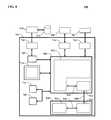
- FIG. 1shows a block diagram of a transform-enabled cryptographic circuit containing a transform enabled hashing core, implemented as a stand-alone integrated circuit, according to an embodiment.
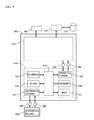
- FIG. 2shows a block diagram of the transform-enabled hashing core, according to an embodiment.
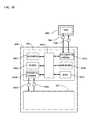
- FIG. 3shows a block diagram of an information hierarchy, according to an embodiment.
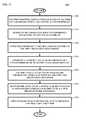
- FIG. 4shows a flowchart of the management methodology of the information hierarchy, according to an embodiment.
- FIG. 5shows a functional diagram of an internally-programming integrated circuit, according to an embodiment.
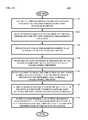
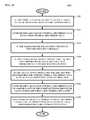
- FIG. 6shows a flowchart of a customized equipment programming process for information stream management, according to an embodiment.
- FIG. 7shows a conventional autonomous product with little or no internal communications security.
- FIG. 8shows an autonomous product with secure inter-chip communications, according to an embodiment.
- FIG. 9shows the autonomous product processor in further detail, according to an embodiment.
- FIG. 10shows an integrated circuit with secure inter-chip communications and non-volatile memory, according to an embodiment.
- FIG. 11shows a flowchart of a secure inter-chip communications methodology, according to an embodiment.
- FIG. 12shows a flowchart of a methodology for calculating a cryptographically secure and verifiable unique processor identifier, according to an embodiment.
- FIG. 13shows a flowchart of a methodology for verifying the transform integrity of a cryptographic integrated circuit, according to an embodiment.
- FIG. 14shows a computing component that may carry out the functionality described herein, according to an embodiment.
- Embodiments of the technology disclosed hereinare directed toward the design, fabrication, programming, and utilization of application specific integrated circuits for cryptography-related applications. More particularly, various embodiments of the technology disclosed herein relate to ASICs having one or several programmable transformation functions embodied as circuitry incorporated into the integrated circuit's high speed datapath. By encoding transformation function as datapath circuitry, embodiments of the technology disclosed herein enable ASICs to implement any one of a very broad range of proof-of-work calculations, as selected by the user.
- the proof-of-work based cryptographic verification processesmay include but are not limited to the cryptographic network transaction verification systems often used in the emerging field of blockchain technology.
- a cryptographic integrated circuit for managing operations on an information streammay include a first one-way function (OWF) circuit block that generates a hash of an input message, a programmable transformation function circuit block that is customized by a transform key and transforms the hash into a transformed hash, and a second OWF circuit block that generates a second hash of the transformed hash as an output result.
- the cryptographic integrated circuitmay control an information stream knowledge hierarchy by performing operations enabling a user to identify the information stream, process an input message from the information stream, or create the information stream.
- a cryptographic method for managing operations on an information streammay include processing an input message from the information stream by hashing the input message, performing a customized transforming of the hash, and hashing the transformed hash into an output result, with the transforming customized based on a transform key, and enabling creating the information stream based on a user passphrase from which the transform key is derived.
- a non-transitory computer-readable storage mediummay contain instructions which, when executed by a processor, cause a computer to execute cryptographic operations for managing operations on an information stream.
- the operationsmay include processing an input message from the information stream by hashing the input message, performing a customized transforming of the hash, and hashing the transformed hash into an output result, with the transforming customized based on a transform key, and enabling creating the information stream based on a user passphrase from which the transform key is derived.
- a cryptographic integrated circuit for managing operations on an information streammay include a transform key generator that derives a transform key from a temporary copy of a user passphrase, and a one-time programmable (OTP) memory that stores the transform key in isolation using programming pulses from external circuitry.
- the circuitmay further include a first one-way function (OWF) circuit block that generates a hash of an input message, a programmable transformation function circuit block that is customized by a transform key and transforms the hash into a transformed hash, and a second OWF circuit block that generates a second hash of the transformed hash as an output result, wherein the operations include identifying the information stream, processing an input message from the information stream into the output result, and/or creating the information stream.
- OTPone-time programmable
- a cryptographic method for managing operations on an information streammay include deriving a transform key from a temporary copy of a user passphrase, and storing the transform key in a one-time programmable memory in isolation using programming pulses from external circuitry.
- the methodmay further include processing an input message from the information stream by hashing the input message, performing a customized transforming of the hash, and hashing the transformed hash into an output result, with the transforming customized based on a transform key, and enabling creating the information stream based on a user passphrase from which the transform key is derived.
- a system for managing operations on an information streammay include means for deriving a transform key from a temporary copy of a user passphrase, and means for storing the transform key in a one-time programmable memory in isolation using programming pulses from external circuitry.
- the systemmay further include means for processing an input message from the information stream by hashing the input message, performing a customized transforming of the hash, and hashing the transformed hash into an output result, with the transforming customized based on a transform key, and means for enabling creating the information stream based on a user passphrase from which the transform key is derived.
- a cryptographic integrated circuit for managing operations on an information streammay include a transform key generator that derives a transform key from a temporary copy of a user passphrase, and a one-time programmable memory that stores the transform key in isolation using programming pulses from internal circuitry.
- the circuitmay further include a first one-way function (OWF) circuit block that generates a hash of an input message, a programmable transformation function circuit block that is customized by a transform key and transforms the hash into a transformed hash, and a second OWF circuit block that generates a second hash of the transformed hash as an output result, wherein the operations include identifying the information stream, processing an input message from the information stream into the output result, and/or creating the information stream.
- OPFone-way function
- a cryptographic method for managing operations on an information streammay include deriving a transform key from a temporary copy of a user passphrase, and storing the transform key in a one-time programmable memory in isolation using programming pulses from internal circuitry.
- the methodmay further include processing an input message from the information stream by hashing the input message, performing a customized transforming of the hash, and hashing the transformed hash into an output result, with the transforming customized based on a transform key, and enabling creating the information stream based on a user passphrase from which the transform key is derived.
- a system for managing operations on an information streammay include means for deriving a transform key from a temporary copy of a user passphrase, and means for storing the transform key in a one-time programmable memory in isolation using programming pulses from internal circuitry.
- the systemmay further include means for processing an input message from the information stream by hashing the input message, performing a customized transforming of the hash, and hashing the transformed hash into an output result, with the transforming customized based on a transform key, and means for enabling creating the information stream based on a user passphrase from which the transform key is derived.
- an integrated circuit for autonomously storing context datamay include a one-time programmable memory circuit block programmed by internal programming circuitry to store the context data in isolation, and a secure communications circuit block to control retrieval of the context data.
- a cryptographic method for autonomously storing context data in an integrated circuitmay include storing the context data in isolation in a one-time programmable memory circuit block programmed by internal programming circuitry, and controlling retrieval of the context data with a secure communications circuit block.
- a system for autonomously storing context datamay include means for storing the context data in isolation in a one-time programmable memory circuit block programmed by internal programming circuitry, and means for controlling retrieval of the context data with a secure communications circuit block.
- a cryptographic integrated circuit for managing operations on an information streammay include a one-time programmable memory configured to store in isolation a unique configuration key defined by a foundry for each instance of the integrated circuit, and a transformed hash generator configured to derive a unique circuit identifier for each instance of the integrated circuit from an interrogation message using the configuration key.
- a cryptographic method for managing operations on an information streammay include storing in isolation in a one-time programmable memory in an integrated circuit a unique configuration key defined by a foundry for each instance of the integrated circuit, and deriving a unique circuit identifier for each instance of the integrated circuit from an interrogation message using the configuration key.
- a system for managing operations on an information streammay include means for storing in isolation in a one-time programmable memory circuit block a unique configuration key defined by a foundry for each instance of an integrated circuit, and means for deriving a unique circuit identifier for each instance of the integrated circuit from an interrogation message using the configuration key.
- a cryptographic integrated circuit for verifying circuit validity for managing operations on an information streammay include a one-time programmable memory configured to store in isolation a unique internal identifier value defined by one of a foundry and a user, for each instance of the integrated circuit, a transformed hash generator configured to calculate the internal identifier value for each instance of the integrated circuit from a predetermined input message, and a comparator that determines circuit validity by matching the stored internal identifier value with the calculated internal identifier value.
- a cryptographic method for verifying circuit validity for managing operations on an information streammay include storing in isolation in a one-time programmable memory in an integrated circuit a unique internal identifier value defined by one of a foundry and a user, for each instance of an integrated circuit, calculating the internal identifier value for each for each instance of the integrated circuit from a predetermined input message, and determining circuit validity by matching the stored internal identifier value with the calculated internal identifier value.
- a system for verifying circuit validity for managing operations on an information streammay include means for storing in isolation in a one-time programmable memory in an integrated circuit a unique internal identifier value defined by one of a foundry and a user, for each instance of an integrated circuit, means for calculating the internal identifier value for each for each instance of the integrated circuit from a predetermined input message, and means for determining circuit validity by matching the stored internal identifier value with the calculated internal identifier value.
- FIG. 1shows a block diagram of a transform-enabled cryptographic circuit 100 containing a transform enabled hashing core, implemented as a stand-alone integrated circuit, according to an embodiment. This circuit and variations are described in more detail in the patent application incorporated by reference above, but a summary description is provided here.
- the transform-enabled cryptographic circuit 100includes an integrated circuit 102 containing a programming and configuration interface 104 , a transform-enabled hashing core 106 , and a configuration key 108 .
- Configuration key 108may be composed of a string of binary digits, and may also be referred to as a transform key or transformation key.
- a transform keymay be derived from the configuration key 108 .
- Two exemplary users 110 and 112may access the integrated circuit 102 , with a first user 110 accessing the programming and configuration interface 104 , and a second user 112 accessing the transform-enabled hashing core 106 .
- the second user 112may use a hashing core user interface (not shown).
- some or all of the functions of the configuration and programming interface 104 and the hashing core user interfacemay be combined into a single configuration, programming, and hashing core user interface, while in other embodiments such functions may be divided among more than two interfaces.
- the general mode of operationis that the first user 110 may use the programming and configuration interface 104 to both configure various parameters of the operation of the integrated circuit 102 and to program one or more configuration keys 108 into the programmable transformation function or functions in the transform-enabled hashing core 106 , where they may be implemented as datapath circuitry.
- configuration keys 108are not conventional cryptographic keys in the strictest sense, but instead are customized descriptions of how a selected transformation function is to be activated, such as to transform original input data into transformed input data.
- the second user 112may simply enter an input value or transaction or message that is directly communicated to the transform-enabled hashing core 106 that will calculate and output the corresponding hash value.
- any user of an instance of transform-enabled cryptographic circuit 100should be able to calculate the same corresponding hash value.
- the input messagemay comprise a transaction block header from a blockchain for example, which may be subjected to further operations. Note that processing the input message to produce a corresponding hash value may be carried out by the second user without requiring knowledge of the configuration key or keys programmed into the programmable transform-enabled hashing core 106 .
- the combined effectis to produce a systemic transformation of the bits contained in the final value calculated by the circuit.
- the transformationis not easily deciphered, not easily distinguishable from noise, and not easily replicable by a party lacking full prior knowledge of the key or keys programmed into the transformation function.
- the transformationis fully consistent and easily replicable, and thus verifiable, by a party with prior knowledge of the keys or access to the means to utilize them in calculation even while lacking knowledge of them (for example, a party in possession of a previously-programmed ASIC that embodies said keys within its datapath circuitry).
- each usermay be a person, while in other embodiments each user may be an automated process such as wallet software, mining software or other kinds of automated processes.
- the second user 112may also have access to the configuration of the various operating aspects of the integrated circuit 102 as described above. In certain embodiments there may be a single interface for the configuration of the various operating aspects of the integrated circuit 102 as a whole, with the programming of keys and the obtaining of final transform-enabled hash values calculated on the basis of data supplied by a user. In other embodiments some or all of those functions may be separate.
- the integrated circuit 102may be part of a larger computing system, such as a mining system, a hardware wallet, a secure token or dongle, or others. In some embodiments, various implementations of the integrated circuit 102 may be part of a system incorporating one or more of such integrated circuits containing other implementations of the technology described herein.
- various implementations of the integrated circuit 102may be physically integrated into the same semiconductor material, such as silicon, as other embodiments of the technology described herein.
- the integrated circuit 102may additionally be further connected to other embodiments of the technology described herein.
- the integrated circuit 102may have a shared access to programmable transformation function or functions in the transform-enabled hashing core 106 as other circuits within the same integrated circuit 102 .
- the transform-enabled cryptographic circuit 100may be physically integrated into the same semiconductor material as another integrated circuit carrying out a different task, such as a microprocessor, a network processor, a system-on-a-chip, and others.
- FIG. 2shows a block diagram of the transform-enabled hashing core 106 , according to an embodiment. This diagram depicts the operations performed for the second user 112 in the obtaining of final transform-enabled hash values.
- An input message 202 or transactionmay be provided to the transform-enabled hashing core 106 and passed through a first one-way function (OWF) implementation or hashing block 204 .
- the input message 202may for example be a candidate transaction block header, such as from a blockchain.
- a hashing blockmay be configured as a set of circuitry that executes the mathematical operations defined by the applicable hashing algorithm.
- One widely used hashing algorithmis the Secure Hashing Algorithm (SHA), the second version of which is now used as a standard hashing algorithm, often for input messages of 256 bits in length (referred to herein as SHA-256).
- SHASecure Hashing Algorithm
- this disclosureis not limited in that regard, as any OWF may be used.
- the output of the first hashing block 204is a hash 206 of the input message 202 .
- a hashsometimes known as a message digest, may be used as a type of cryptographic description of original message content. Hashes are convenient for various cryptographic purposes as they may be easily computed from an input message, but are computationally difficult to invert for determination of the original input message. Hashing algorithms are sometimes referred to as trapdoor functions for this reason.
- the hash 206may then be processed by an adjustable or customizably programmable transformation function 208 , which may also be implemented in circuitry as a transform block.
- an adjustable or customizably programmable transformation function 208may also be implemented in circuitry as a transform block.
- the circuitry within the transform blockmay effect a specific programmatic transformation upon the data provided to it, reflecting the configuration key 108 provided to it.
- the transformation the circuitry applieswill directly and consistently affect the final value calculated by circuitry further along the datapath.
- the programmable transformation function 208may generate a transformed hash 210 of the input message 202 .
- the transformation functionmay be very simple, such as a inversion of bits in one embodiment, or the transposition or swapping of bits in another embodiment, or combinations thereof.
- the programming of a transformation functiontherefore may customize the treatment to which data fed into the transformation function is subjected.
- the configuration key 108may control the specific programming of the programmable transformation function 208 .
- the configuration key 108may simply be a string of binary digits denoting which corresponding bits of input data are to be inverted, transposed, or both, by the programmable transformation function 208 , according to various embodiments. That is, in one embodiment each particular bit of the configuration key 108 may determine whether each corresponding particular bit of input data is passed through directly without transformation, or is transformed.
- the transformed hash 210 of the original input message 202may then be processed by a second OWF implementation or hashing block 212 .
- the second hashing block 212may implement the same cryptographic operation as the first hashing block 204 . In other embodiments, the second hashing block 212 may implement a different cryptographic operation than the first hashing block 204 .
- Each OWF implementationprotects the data provided to it, through its non-invertible nature.
- the input data submitted to an OWFis kept within a cryptographic “shadow” that prevents its discovery from the results of the hashing, through computational infeasibility.
- a partymay thus look “downstream” and see the results of a hash operation that is applied to an input, but cannot feasibly look “upstream” and see the original input provided to the hash operation.
- the output 214 of the transform-enabled hashing core 106is thus a hash of a transformed hash of the original input message 202 .
- Knowledge of the user passphrase 302 and of the calculation process whereby the transform key 306 is calculated based on the user passphrase 302enables the easy calculation of the transform key 306 .
- knowledge of the transform key 306 and of the process by which it is calculated on the basis of the user passphrase 302does not enable easy calculation of the user passphrase 302 .
- knowledge of the user passphrase 302implies knowledge of the transform key 306 , but knowledge of the transform key 306 does not imply knowledge of the user passphrase 302 .
- Knowledge of the user passphrase 302is required to configure the transformation function 208 and thus the integrated circuit 102 to perform in the specific manner that is described by user passphrase 302 .
- a novel information hierarchymay be defined and cryptographically secured via a transform-enabled cryptographic circuit 100 that stores configuration data without providing external visibility or accessibility to that data.
- the information hierarchymay enable a cryptographic management methodology that enables the creation of, provides for useful processing of, and allows the simple identification of an information stream to be processed.
- the information streammay comprise a blockchain, for example.
- Certain embodiments of the technology disclosed hereinallow a user to enable third parties to easily verify the proofs-of-work produced by transform-enabled integrated circuits by providing the third parties with knowledge of the transform key and thus enabling them to verify such proofs of work by means of (for example and without limitation) software running on general-purpose microprocessors, FPGAs programmed for this purpose, or other means.
- knowledge of the transform keydoes not enable the third parties to program additional copies of the integrated circuit to calculate transform-modified proofs-of-work in the same manner as they are calculated by instances of the integrated circuit that have been programmed using the user passphrase.
- the circuit describedhas been designed to perform such validations while not revealing information about the precise mathematical operations involved in the production of the transformed hash values verified.
- system describedis also applicable to fields other than the field of blockchain technology.
- systemmay be used for the creation of other secure hardware-based products.
- the user passphrase 302may comprise a string of binary numbers, or a string of text that may be more easily remembered by a human user but still readily converted into a string of binary numbers.
- the secrecy of the user passphrase 302may prevent any other parties from enabling the creation of the information stream being managed.
- the user passphrase 302may also enable control of all other operations performed in the information hierarchy 300 , e.g., processing of the information stream, and identification of the information stream.
- the transform-enabled cryptographic circuit 100may receive the user passphrase 302 and perform on-chip transform key generation processing 304 to produce a transform key 306 .
- the transform key 306is the same as configuration key 108 , although embodiments in which the transform key 306 is derived from the configuration key 108 are also encompassed by this disclosure.
- the on-chip transform key generation 304 processingmay enhance security, as will be described.
- the transform key generation 304 processingmay comprise at least one application of an OWF to the user passphrase 302 .
- the transform key generation 304 processingcomprises two sequential applications of a one way function to the user passphrase 302 .
- the transform key generation 304 processingmay for example comprise two sequential applications of SHA-256 to the user passphrase 302 , although this disclosure is not limited in that regard.
- FIG. 3thus denotes the transform key 306 as proceeding only downward through a trapdoor function via a dashed line.
- the transform key 306may enable customized processing of the information stream via the transform-enabled hash operation 308 , described previously in FIG. 2 , and which may be carried out by the transform-enabled hashing core 106 of FIG. 1 .
- other userssuch as the second user 112 , may process input messages into transformed hashes as previously described if they know the transform key 306 or have an instance of the transform-enabled cryptographic circuit 100 that internally stores the transform key 306 without providing external access or visibility.
- knowledge of the transform key 306alone does not enable the ownership, e.g., creation or replication, of an information stream, as that requires the user passphrase 302 .
- FIG. 3thus denotes the output value 214 as proceeding only downward through a trapdoor function via a dashed line.
- the user passphrase 302enables creation of a blockchain, while the transform key 306 enables others who do not know the user passphrase 302 to nevertheless process and verify input messages 202 such as blockchain headers. Further, knowledge of the transform key 306 enables the creation of any number of transform-enabled cryptographic circuits 100 for processing input messages 202 , if the formulation of the programmable transformation function 208 is known.
- the formulation of the programmable transformation function 208may be published in many cases, or it may be kept obscured.
- the cryptographic strength of the embodimentsdoes not rely on the secrecy of the programmable transformation function 208 .
- the transform key 306 that controls the customization of the programmable transformation function 208may also either be kept secret or made public. However this choice depends on whether the second users 112 are intended to be able to process the information stream with only original programmed circuitry, or also with replicated or “cloned” circuitry. For example, in some cases only members of a given group, such as a government or corporation or other set of the second users 112 , are intended to have the capability to process a private information stream, so the transform key 306 may be a secret shared only with such intended parties. In other cases, the intent may be for anyone to be able to process a public information stream without the requirement for a shared secret, so the transform key 306 may be made public.
- the transform-enabled cryptographic circuit 100may determine a specific predetermined output value 214 by processing a specific predetermined test input message 202 .
- the specific predetermined test input message 202may for example be a widely known or standardized string of given length.
- the specific predetermined input messagemay be all zeroes, or all ones, or a particular string of text that is easily remembered by a human user and readily converted to a string of binary numbers for example.
- the specific predetermined output value 214may be a unique identifier of a given information stream from which input messages 202 originate.
- a second user 112 who possesses neither knowledge of the user passphrase 302 nor of the transform key 306may therefore nonetheless identify a given information stream using an instance of the programmed transform-enabled cryptographic circuit 100 .
- Such a second user 112may process messages, but cannot make copies of the transform-enabled cryptographic circuit 100 that has been programmed to inaccessibly and invisibly contain the transform key 306 .
- This ability to identify an information stream with no direct knowledge of the user passphrase 302 nor of the transform key 306may be particularly advantageous in certain use scenarios.
- FIG. 4shows a flowchart of the management methodology 400 of the information hierarchy, according to an embodiment.
- the methodology 400is shown arranged from the most restrictive to the least restrictive controlled operations described above.
- the methodology 400may proceed to 406 .
- the methodologymay determine if the user knows the transform key 306 . If so, the user may, at 408 , be granted the further privilege of programming additional instances or copies of transform-enabled cryptographic circuits 100 . The programming may occur during a manufacturing process or thereafter.
- the methodology 400may proceed to 410 .
- the methodology 400may determine if the user at least has a programmed transform-enabled cryptographic circuit 100 to process an information stream that has been created in view of the technology described in this disclosure. If so, then at 412 , the methodology 400 may process a predetermined test input message 202 to produce a predetermined output value 214 that serves as a ChainID.
- the ChainIDmay indicate a particular information stream, such as a blockchain, from which input messages originate. This operation is optional.
- particular circuitrymay advantageously secure the programming of the transform-enabled cryptographic circuit 100 .
- Such particular circuitrymay enable the first user 110 to provide to the transform-enabled cryptographic circuit 100 with a copy of the user passphrase 302 which is used to generate the unique configuration key 108 for the cryptographic circuit 100 .
- the circuitrymay enable the derivation of the transform key 306 from the configuration key 108 in those cases where the transform key 306 is not the same as the configuration key 108 .
- storage of the transform key 306 in the circuitry in isolationserves to enable enforcement of part of the information hierarchy 300 previously described. That is, if the first user 110 has knowledge of the transform key 306 during or after its generation, that user may replicate circuitry (or executable instructions) that implements the particular customized transform-enabled hashing used to process input messages 202 . In contrast, if the second user 112 does not have knowledge of the transform key 306 but simply has access to circuitry that invisibly stores the transform key 306 in isolation, such second user 112 may process input messages but may not replicate the circuitry.
- the processing of input messages 202may include identifying a given information stream and verifying messages from the information stream for example, as previously described, whether by circuitry or executable instructions.
- Hardware based enforcement of the management of the information hierarchy 300may not only enable different users to be granted different levels of control of the information hierarchy 300 , it may also limit the availability of the transform key 306 . For example, if the first user 110 who has the user passphrase 302 wants to generate a transform key 306 , that does not necessarily mean that the first user 110 wants to have actual knowledge of the transform key 306 , or even knowledge of how the transform key 306 is derived from the user passphrase 302 . The first user 110 may not want to be capable of determining the transform key 306 at all.
- particular circuitrymay better protect the user passphrase 302 that enables complete control of the entire information hierarchy 300 . That is, the first user 110 may provide the user passphrase 302 to the transform-enabled cryptographic circuit 100 , but that circuit 100 may delete the user passphrase 302 as soon as derivation of the configuration key 108 and/or transform key 306 has been completed and the key value or values are indelibly and inaccessibly stored within the circuit 100 .
- Hardware implementationsmay therefore offer better enforcement of the restricted creation of information streams, such as blockchains, based on the secrecy of the user passphrase 302 .
- Hardware implementationsmay also offer better enforcement of the restricted ability to replicate transform-customized hashing circuitry, based on the availability of the transform key 306 .
- This disclosuretherefore provides a novel self-contained internally-programming circuit approach to hardware-based enforcement of the information hierarchy 300 .
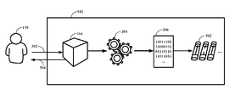
- FIG. 5shows a functional diagram of an internally-programming integrated circuit 102 , according to an embodiment.
- the integrated circuit 102acts as a conceptual “shopkeeper” that receives instructions from a customer (e.g., the first user 110 ) at the front counter of a shop, and then performs various tasks the customer requires, but does so “behind the scenes” or out of view of the customer, in isolation.
- a customere.g., the first user 110
- the integrated circuit 102may receive a copy of the user passphrase 302 from the first user 110 via the programming and configuration interface 104 previously described.
- the programming and configuration interface 104may act as a “black box” that accepts certain inputs, but only outputs acknowledgements and does not echo the inputs provided. That is, the programming and configuration interface 104 does not allow access to or visibility of the isolated internal operations of the integrated circuit 102 .
- the integrated circuit 102may then generate the transform key 306 according to a transform key generation 304 methodology embedded in its circuitry.
- the first user 110may be aware of the transform key generation 304 methodology in some embodiments, or the first user 110 may not be aware of the transform key generation 304 methodology in other embodiments.
- transform key 306may be the same as the configuration key 108 or may be derived from the configuration key 108 as previously described.
- the integrated circuit 102may then store the generated transform key 306 in an indelible and hidden manner, and delete its copy of the user passphrase 302 .
- the transform key 306is stored in a one-time programmable memory 502 , which may comprise an array of micro-fuses or anti-fuses or various types of non-volatile memory.
- Micro-fusesare generally short circuits until they are effectively “blown” open (e.g., rendered non-conductive), typically by application of a voltage pulse of particular magnitude and duration.
- Anti-fusesin contrast are generally open circuits until they are effectively “burned” closed (e.g., rendered conductive), typically again by application of a voltage pulse of particular magnitude and duration. These state changes may not result in physical changes that are readily visible.
- the integrated circuit 102may provide an acknowledgement 504 to the first user 110 to for example denote at least one of the receipt of the user passphrase 302 , the deletion of the user passphrase 302 , and the successful completion of the storage of the transform key 306 into memory 502 .
- the conceptual shopkeepereffectively provides the internally-programmed integrated circuit 102 to the customer (e.g., the first user 110 ) after having customized it in isolation, e.g., without any customer access or visibility into the programming process.
- the approach providedoffers the first user 110 the advantage of trusting the hardware implementation with the user passphrase 302 for only a limited time, because the hardware implementation will not store the user passphrase 302 once the transform key 306 has been generated and stored internally. Further, the first user 110 knows that the hardware implementation is relatively secure from attack. That is, a hacker may be able to dismantle the integrated circuit 120 to attempt to determine the transform key generation methodology and the programmable transformation function, but the security of the system does not depend on knowledge of either.
- Recovery of the actual transform key 306(which was generated from the now-deleted user passphrase 302 and stored in the one-time programmable memory 502 ), which is required for cloning of the integrated circuit 102 , is generally infeasible via physical examination. Further, a hacker may have to destroy a new copy of the programmed integrated circuit 102 with every hacking attempt, which would rapidly become expensive.
- micro-fuses or anti-fusestherefore may be advantageous, as they do not suffer from this process limitation. Both micro-fuses and anti-fuses may be placed in the datapath circuitry within the integrated circuit in such a manner as to result in a very limited performance overhead, thus retaining the advantages ASICs have over other types of solutions in terms of speed and efficiency.
- the programming of the one-time programmable memory 502may be performed during the manufacture of the integrated circuit 102 , or may be performed subsequently, according to various embodiments. This feature enables the manufacture of “blank” or uncustomized integrated circuits 102 that may programmed by the first user 110 without requiring any trust of the manufacturer.
- External circuitry(which is not integrated with the integrated circuit 102 ) may be designed to generate and apply a programming voltage pulse of predetermined magnitude and duration to store data into an element of memory 502 . In some cases such programming voltages are higher than logic power supply voltages, so in some embodiments external circuitry may generate such voltages, and apply them when triggered to do so by the integrated circuit 102 .
- the integrated circuit 102may for example step through an indexed array of elements in the memory 502 to be programmed.
- the integrated circuit 102may signal the external circuitry when a targeted memory element has been electrically connected to an external pin that receives programming voltage pulses from outside the integrated circuit 102 .
- the transfer key 306is not externally visible; only a set of internally-triggered externally-generated programming pulses may be observed in such embodiments. Further, the timing of such trigger signals may be varied to obscure such observations. Similarly, voltage pulses that do not actually program any memory elements may be triggered to further obscure the programming process.
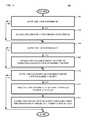
- FIG. 6shows a flowchart of a customized equipment programming process 600 for information stream management, according to an embodiment.
- the processmay begin when a programming user (e.g., the first user 110 ) provides a copy of the user passphrase 302 to the programming and configuration interface 104 .
- the programming and configuration interface 104may provide an acknowledgement that it has received the user passphrase 302 , but does not echo back a copy of it.
- the processmay acknowledge receipt of the user passphrase.
- the processmay transfer the copy of the user passphrase 302 to the transform key generator 304 .
- the processmay generate the transform key 306 with the transform key generator 304 .
- the transform key generator 304generates the transform key 306 by applying a number of hashing operations (e.g., two applications of the SHA-256 hashing function) sequentially to the user passphrase 302 , but this disclosure is not limited in that regard.
- the configuration key 108is derived from the user passphrase 302
- the transform key 306is derived from the configuration key 108 , but this disclosure is again not limited in that regard.
- the processmay delete the copy of the user passphrase 302 . This ensures that the user passphrase 302 cannot be recovered by a hacker who may dismantle equipment that enforces the information stream management constraints. The deletion may be acknowledged by the programming and configuration interface 104 .
- the processmay store the transform key 306 indelibly and inaccessibly into one-time programmable memory 502 . Maintenance of the secrecy of the transform key 306 may prevent replication of the equipment that enforces the information stream management constraints.
- the programming and configuration interface 104may provide an acknowledgement to the programming user 110 that the customized programming process has been successfully completed.
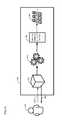
- an ASICmay instead handle all of the memory 502 programming tasks by itself. That is, all of the permanent on-chip storage tasks related to keeping the transform key 306 hidden in the memory 502 may be performed by the same integrated circuit 102 that performs the various cryptographic functions previously described.
- an autonomous self-programming integrated circuit 102may have its own internal circuitry for permanently recording states into permanent on-chip storage.
- internal voltage-boosting charge pump circuitrymay be integrated together with the logic circuitry on the same semiconductor chip to generate the voltages required to change memory 502 element states.
- Internal timer circuitrymay also be integrated on the same semiconductor chip, to apply the boosted voltages to selected memory 502 elements for a predetermined specified time. Applicable voltage-boosting and timer circuitry is familiar to one of ordinary skill in the art.
- Such an integrated circuit 102alone may fully implement the conceptual “shopkeeper” previously described, who accepts only a user passphrase from a programming user (e.g., the first user 110 ).
- This embodimentprovides several advantages over the embodiments previously described.
- the details of the programming voltage pulse magnitude and durationneed not be made public with this embodiment. Such details may allow a hacker to infer what type of one-time programmable memory 502 elements are used in the integrated circuit 102 if publicized. That information could be useful in aiding a hacking attempt. Therefore, the autonomous self-programming integrated circuit 102 described herein may be more secure than other programmable integrated circuits.
- circuit failures that may actually be due to the usermay instead be blamed on the manufacturer or vendor.
- the usermay return the integrated circuit 102 for a refund, falsely asserting that it was defective on arrival.
- the processing of such product returnsmay constitute a significant expense and may unnecessarily put the reputation of a manufacturer or vendor at risk.
- the use of autonomous self-programmingmay bypass this issue entirely.
- an autonomous self-programming integrated circuit 102may permanently record into the one-time programmable memory 502 a variety of data regarding its history after manufacture.
- the integrated circuit 102may record instances in which excessive voltages were applied to one or more of its pins.
- the integrated circuit 102may also record other data to memory 502 that is relevant to reliability, including but not limited to maximum sensed operating temperatures, and detected indications of damage that might be related to hacking attempts. Such events may occur regardless of whether the integrated circuit is programmed by external circuitry, but the probability of such events may be greater when external circuitry is involved.
- the integrated circuit 102may therefore use internal circuitry to store indicia of such events, even if the integrated circuit 102 is designed to have its transform key 306 programmed using internal circuitry.
- the stored data regarding its history after manufacturemay be retrieved from the one-time programmable memory 502 .
- That datamay support a decision to provide a refund or replacement if for example it shows no unusual events or reliability-related conditions occurred after manufacture. Conversely, that data may indicate that unusual and probably-damaging events or conditions did occur after manufacture. If these events or conditions were likely due to a user's actions, as may be determined for example by the number and/or pattern of events or conditions, then a refund or replacement request may be denied.
- the number of one-time programmable memory 502 elementsmay be limited, so the data may simply indicate a count of events meeting some predetermined threshold qualifications, in one embodiment.
- a “reset replay” attackmay involve repeatedly resetting the power supply of a system and resuming a previous attack that might otherwise be ended when the attacked system has counted the attack attempts and taken countermeasures against further attacks.
- Such countermeasuresmay comprise deleting data stored in non-volatile memory, ignoring all future access attempts for a span of time, or even activation of internal self-destruct mechanisms to render itself entirely inoperable, for example.
- An attacked system that does not “remember” being previously attackedis less secure than one that does, and can respond accordingly.
- a productcomprising a number of integrated circuits that communicate with each other may use integrated circuits 102 that are capable of managing their own chip-to-chip communications security.
- an integrated circuit 102may store context information into its one-time programmable memory 502 when it is first activated (e.g., at the foundry where it is fabricated), and may subsequently store various context information into its one-time programmable memory 502 thereafter so that it will remember its history even when powered off and restarted.
- the context informationmay go beyond indicia of events or conditions likely to cause damage, to for example include cryptographic data related to communications security.
- no context informationmay be stored at the first activation of the integrated circuit 102 at all.
- a true noise-based random number generator onboard the integrated circuit 102may generate a number of cryptographic keys that are subsequently used to secure inter-chip communications.
- inter-chip communications between integrated circuits 102 within a given productmay be managed just as communications between unknown parties over an untrusted network are managed.
- FIG. 7shows a conventional autonomous product 700 with little or no internal communications security.
- the product 700may comprise a tablet, mobile phone, laptop computer, or any other type of device that is based around a system-on-a-chip (SOC) or processor 702 .
- the processor 702may be mounted on a printed circuit board 704 along with other components, and may interact with external users and processes, such as local user 706 , locally connected process 708 , and remotely connected process 710 which may connect to a remote database 712 .
- SOCsystem-on-a-chip
- Various interfacesmay handle communications between the processor 702 and other parties, such as local user interface 714 , locally connected process interface 716 , and remotely connected process interface 718 .
- a remote communications chip 720may handle data transfer between the remotely connected process interface 718 and the processor 702 .
- Various processes 722may be executed by the processor 702 .
- a bulk non-voltage storage device 724such as a flash storage integrated circuit for example, may also reside on the printed circuit board 704 and exchange data with the processor 702 .
- Other integrated circuits 726 and 728may also be mounted on the printed circuit board 704 and exchange data with the processor 702 .
- flash storagein this description may refer to any reprogrammable non-volatile memory technology, and is not necessarily limited to flash memory per se.
- a local low-volume flash storage device 730 for sensitive datamay also reside on the printed circuit board 704 .
- Communications link 732may transfer data between the low-volume non-volatile storage device 730 and the processor 702 .
- Non-volatile storage device 730may comprise a flash memory, as noted.
- some form of relatively lightweight cryptographymay be employed on either side of the communications link 732 to sensitive data flash storage device 730 .
- only certain portions of the processor 702(sometimes referred to as a “secure zone” or security “sandbox”) may have access to the flash storage device 730 for sensitive data.
- This approach to communications securityis fundamentally flawed, and vulnerable to the “reset replay” attack previously described.
- An improved approachis provided that uses the transform-enabled cryptographic circuit and one-time programmable memory previously described.
- FIG. 8shows an autonomous product 800 with secure inter-chip communications, according to an embodiment.
- the processor 802may include a first secure communications circuit block 824 that may mediate all on-chip communications 826 with processes 822 and all off-chip communications 828 with a separate integrated circuit 830 for secure non-volatile storage of sensitive data.
- the first secure communications circuit block 824may have exclusive read/write access to its own one-time programmable memory, and may include internal circuitry for its programming.
- integrated circuit 830may include not only a non-volatile storage block 832 but also a second secure communications circuit block 834 , on the same semiconductor chip.
- the second secure communications circuit block 834may mediate all on-chip communications with the non-volatile storage block 832 and all off-chip communications 828 with the first secure communications circuit block 824 .
- the second secure communications circuit block 834may have exclusive read/write access to its own one-time programmable memory, and may include internal circuitry for its programming.
- FIG. 9shows the autonomous product processor 802 in further detail, according to an embodiment.
- On-chip communications 826may comprise messages 902 from the on-chip processes 822 to the first secure communications circuit block 824 , and messages 904 to the on-chip processes 822 from the first secure communications circuit block 824 .
- An incoming communications circuit block 910 in the first secure communications circuit block 824may handle on-chip communications 826 .
- Off-chip communications 828may comprise messages 906 from the first secure communications circuit block 824 to the second secure communications circuit block 834 inside integrated circuit 830 , and messages 908 from the second secure communications circuit block 834 to the first secure communications circuit block 824 .
- An outgoing communications circuit block 912 in the first secure communications circuit block 824may handle off-chip communications 828 .
- Control unit 914may comprise circuitry that coordinates the operations of the first secure communications block 824 .
- Hashing block 916may calculate the results of a one-way function applied to an input.
- Fuse block 918may store data into a one-time programmable memory, which may include micro-fuses, anti-fuses, or other non-volatile memory elements. Fuse block 918 may use internal circuitry to generate programming pulses, as previously described.
- Memory block 920may store data used for managing communications security.
- Random number generator (RNG) 922may generate random numbers, as opposed to pseudorandom numbers, as will be described.
- FIG. 10shows the integrated circuit 830 in further detail, according to an embodiment.
- Communications 836 between the second secure communications circuit block 834 and the non-volatile storage block 832may comprise messages 1024 from the second secure communications circuit block 834 to the non-volatile storage block 832 , and messages 1026 to the second secure communications circuit block 834 from the non-volatile storage block 832 .
- An incoming communications circuit block 1010 in the second secure communications circuit block 834may handle on-chip communications 836 .
- An outgoing communications circuit block 1012 in the second secure communications circuit block 834may handle off-chip communications 828 .
- communications between the processor 802 and the external storage 832are cryptographically protected based on cryptographic keys stored in the one-time programmable memories of the secure communications blocks 824 and 834 .
- Other security-related information useful for preventing a reset replay attackmay also be stored in the one-time programmable memories, and so would not be cleared during a power reset.
- the datamay be stored in the one-time programmable memories using internal circuitry, so there is no chance that the one-time programmable memory elements may be hacked by external means.
- the data stored in the one-time programmable memories and used in the one-way functionsencode and validate messages going between the processor and the external non-volatile storage. Unlike the product 700 of FIG. 7 , therefore, communications between the processor and the external non-volatile storage cannot be simply monitored or replaced with falsified messages.
- micro-fuses and anti-fusesmay be integrated onto a flash memory chip.
- the secure communications circuit blocksare therefore able to include both logic circuitry below 28 nm in size and one-time programmable memory elements comprising micro-fuses and/or anti-fuses.
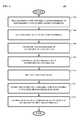
- FIG. 11shows a flowchart of a secure inter-chip communications methodology 1100 , according to an embodiment.
- This methodologymay be implemented by the circuitry described in FIGS. 8-10 . Although described here with respect to different integrated circuits assembled into a single product on a single printed circuit board, the methodology is not limited in this respect, and may be applied to integrated circuits in entirely different products that interact over a network.
- the RNGmay collect this stream of bits into a register of predetermined size to produce a random string of binary numbers.
- the registermay reside in the memory block 920 for example.
- the RNGmay further put this random string of binary numbers through a one-way function or hashing algorithm as previously described, to further jumble the random string of binary numbers into an output random number that is in binary form and of a given length.
- the one-way functionmay be implemented in the hashing block 916 for example. This hashing may be advantageous if for some reason the RNG outputs a string of binary numbers that are all zeroes or all ones, which may prove cryptographically weak in some circumstances.
- the output random numbers generated by the RNGmay serve a variety of cryptographic purposes.
- the output random numbermay comprise a user passphrase for controlling an information stream, as previously described.
- the output random numbermay also comprise a nonce, or arbitrary single-time use number for creating secure communications sessions between communicating parties by excluding the possibility of replay attacks.
- the output random numbermay also be used as a cryptographic key.
- the output random numbermay also be used as a salt that is concatenated onto other output random numbers used for various purposes.
- the methodologymay store the output random numbers generated by the RNG into the one-time programmable memory of the secure communications circuit block, such as fuse block 918 for example.
- the output random numbersmay be programmed into the one-time programmable memory elements using internal circuitry that generates the programming pulses.
- the stored random numbersmay thus not be externally visible or accessible, but may be useable only by the corresponding secure communications circuit block, such as the first secure communications block 824 for example.
- the methodologymay transmit at least one of the output random numbers another secure communications circuit block, such as the second secure communications block 834 for example. More generally, the output random numbers may be transmitted to any number of other secure communications circuit blocks, which may include those in other products for example.
- the methodologymay store the transmitted random numbers into corresponding one-time programmable memories of the other secure communications circuit blocks.
- a first integrated circuitsuch as the first secure communications circuit block 824 may generate two random sets of public-private key pairs.
- the first integrated circuitmay then program one of the private keys and both of the public keys into its one-time programmable memory using its internal programming circuitry.
- the first integrated circuitmay then transmit the other private key and both of the public keys to a second integrated circuit, such as the second secure communications circuit block 834 .
- the second integrated circuitmay then program the private key it has received, and both of the public keys it has received, into its one-time programmable memory using its internal programming circuitry.
- All subsequent communications between the first integrated circuit and the second integrated circuit, after trust has been established between them,may utilize the public-private key functionality for secure communications.
- the initial storage and exchange of the context information(e.g., the cryptographic keys) may occur at the factory where a particular product 800 is manufactured. For example, when a printed circuit board is first populated with its various integrated circuits, the processor may trigger the methodology and secure non-volatile storage integrated circuits may respond. The initial storage and exchange of the context information may occur later however, such as when a new user first uses the product.
- the methodologymay use symmetric keys in place of the public-private key pairs previously described.
- the methodologymay use the private-public key pairs to exchange a randomly-generated short-term symmetric key, as is currently done in the HTTPS protocol to create a secure channel over an insecure network. This approach is therefore a combination of the operations 1110 and 1112 .
- a first integrated circuitsuch as the first secure communications circuit block 824 may transmit an authorization request to a second integrated circuit, such as the second secure communications circuit block 834 , along with a random number as an initial challenge.
- the second integrated circuitmay respond with the initial challenge, a transform-modified hash of the initial challenge, and a new random number as a second challenge.
- the first integrated circuitmay respond with all the data it received from the second integrated circuit, plus a transform-modified hash of the second challenge.
- the initial challengeis sent as cleartext in this example, but that does not matter because it is the transform-modified hash of that number that is used as a block cipher by both sides.
- This secure communications initialization processmay occur when the printed circuit board is first populated with the various integrated circuits, as previously described. In one example, the initial establishment of secure communications may occur via direct wiring, while subsequent communications may be via wireless means (including optical). The initialization may also occur thereafter.
- the methodologymay build a secure network of any number of integrated circuits.
- the methodologymay treat one integrated circuit as a master that always initiates the secure communications methodology, and may treat the other integrated circuits as slaves that respond to the initiation request but do not initiate such requests, but the disclosure is not limited in this regard.
- the methodologymay build a secure network of products in a network as well, with each product potentially having previously secured its own internal network, for example.
- the secure communications methodology describedmay enable the processing of an information stream, which may comprise a blockchain.
- the transformed hash calculatormay create a unique cryptographically defined and verifiable processor identifier or “CpuID” for each ASIC instance.
- the CpuIDenables a particular hardware originator of an information stream or message to be reliably determined. This contrasts with the exemplary use of a ChainID to reliably denote a particular information stream or network destination, as previously described.
- FIG. 12shows a flowchart of a methodology 1200 for calculating a cryptographically secure and verifiable unique processor identifier, according to an embodiment.
- the ASICmay process a predetermined input message 202 of 256 bits to produce a hash 206 , and then process the hash 206 by an adjustable or customizably programmable transformation function 208 which uses a configuration key 108 to generate a transformed hash 210 , as previously described.
- the ASICmay process transformed hash 210 through a second hashing block 212 to produce a hash of the transformed hash of the input message 214 , which may serve as the CpuID.
- the configuration key 108may be based on for example a manufacture date, a wafer lot number, a wafer number, x and y (row/column) coordinates or indices for each die on a wafer, or on other data provided by the foundry in a user passphrase.
- the ASICmay generate a transform key with a transform key generator and delete the user passphrase as previously described.
- the configuration key 108 for each ASIC, or a transform key derived therefrommay be stored into a one-time programmable memory in the ASIC in isolation by a foundry that manufactures the ASIC.
- Each ASIC instancemay therefore generate the unique CpuID whenever needed, at 1208 , merely by processing the predetermined input message 202 .
- the CpuIDallows a given ASIC instance to be securely and remotely identified across an untrusted network.
- the predetermined input message 202may be a commonly known and widely used or even standardized “identify yourself” interrogation command string, or a customized challenge message.
- the ASIC describedmay be used to process an information stream at high speed, a simplified and thus inexpensive version may suffice when its primary function of interest is to administer secure data. That is, the CpuID calculating hardware may be a stripped-down relatively slow version of the more general transform-modified OWF hardware previously described. It may not need to be implemented in the main datapath for high-speed calculations to serve as essentially a very cryptographically secure internal dongle. That is, the ASIC may compute the CpuID to process an incoming message, such as an interrogation to prove that it has a valid transform block, or it may use the CpuID in an outgoing message, at 1210 , to identify which ASIC instance originated the outgoing message.
- the CpuID calculating hardwaremay be a stripped-down relatively slow version of the more general transform-modified OWF hardware previously described. It may not need to be implemented in the main datapath for high-speed calculations to serve as essentially a very cryptographically secure internal dongle. That is, the ASIC may compute the CpuID to process
- the particular ASIC that establishes a new information streamsuch as a blockchain, may be considered an “author” of the information stream.
- a particular ASIC that creates a new messagesuch as a blockchain entry may be identified as the “author” of the entry.
- An ASIC used to process blockchainsfor example may be directly identified as the processor that performed the work that is the basis of a proof-of-work system. This is distinct from the present bitcoin-related practice of identifying a person who claims to have done the work.
- this featureenables monitoring of which ASICs have been mining a given blockchain, to for example pay contracted miners who have been issued processors by a contractor to perform prescribed work for that contractor.
- intrusion detectionis possible via the CpuID feature. Since no user passphrase is passed around, there is no chance that a bogus clone copy of the blockchain could be created, unless the one-way function is defeated. That possibility is very unlikely, since the one-way function always throws away some information and leaves only a noisy-appearing but verifiable residue behind.
- the CpuID calculatormay be useful in consumer electronics items.
- an ASICcould for example be used in a phone so that the manufacturer or reseller could burn a transform block into each such device for tracking purposes.
- Such devicescould be linked to other devices or accounts in a network; for example, the phone could be securely and verifiably linked to a license in a music distribution system (which itself may be identified by a specific ChainID).
- This hardware-level internal securitycould enable many different uses, essentially providing system administrator type access privilege control (e.g., read/write/copy/delete) to files on a memory card or at a network location, at 1214 .
- This featurecould be useful for securely managing licensed software updates by software makers/vendors, such as those providing operating systems or anti-virus programs for example.
- the transformed hash calculatormay be used to verify that a given instance of a cryptographic ASIC is still valid, and can process input messages properly. That is, the transform integrity of the ASIC may be verified using a few simple calculations and comparisons.
- This disclosurethus provides a cryptographic ASIC and method for autonomously storing a unique internal identifier into a one-time programmable memory in the ASIC in isolation, by a foundry or a user, for this purpose.
- the unique internal identifiermay comprise the CpuID previously described, or a user passphrase, transform key, or configuration key, or various combinations of these values that are necessary to correctly process input messages.
- FIG. 13shows a flowchart of a methodology 1300 for verifying the transform integrity of a cryptographic integrated circuit, according to an embodiment.
- the ASICcalculates the value of the unique internal identifier from a predetermined input and compares, at 1304 , the calculated identifier value to the stored internal identifier value. A match between the calculated internal identifier value and the stored internal identifier value indicates the stored internal identifier value is valid, as calculating a correct value by chance is cryptographically infeasible.
- the ASIC transform integrityis verified and normal operation may proceed.
- a mismatchhowever indicates the stored internal identifier value is invalid or has not yet been stored because the ASIC has not been programmed.
- the ASICmay issue an error message indicating that it needs to be programmed, and normal operations are halted to allow for such programming.
- a mismatchmay also occur, at 1310 , because one-time programmable memory components undergo natural aging, or because the stored internal identifier value has been altered, perhaps by damage from static electricity discharge or by unauthorized access attempts by hackers. In either case, a mismatch indicates the ASIC will not process input messages properly, and available corrective steps are required.
- the ASICmay instead compare the calculated internal identifier value to another copy or copies of the stored internal identifier value, and disregard unreliable copies of the stored internal identifier.
- the ASICmay also compare multiple copies of the stored identifier in a voting scheme to determine their validity. For example, if two out of three stored identifier values match each other and a calculated identifier value, that is a reasonable indication that the third stored identifier value that does not match the calculated identifier value is invalid and should be disregarded.
- This featuremay help assure a purchaser that the ASIC will be useful as along as a confirmed good copy of the stored internal identifier value is available in its one-time programmable storage.
- the confirmed valid lifetime of the ASICthus may be extended far beyond the useful lifetime of a single copy of the stored internal identifier.
- the ASICmay return an error value at bootup, indicating the ASIC is hopelessly damaged, stopping the bootup process.
- the term setmay refer to any collection of elements, whether finite or infinite.
- the term subsetmay refer to any collection of elements, wherein the elements are taken from a parent set; a subset may be the entire parent set.
- the term proper subsetrefers to a subset containing fewer elements than the parent set.
- sequencemay refer to an ordered set or subset. The terms less than, less than or equal to, greater than, and greater than or equal to, may be used herein to describe the relations between various objects or members of ordered sets or sequences; these terms will be understood to refer to any appropriate ordering relation applicable to the objects being ordered.
- toolcan be used to refer to any apparatus configured to perform a recited function.
- toolscan include a collection of one or more components and can also be comprised of hardware, software or a combination thereof.
- a toolcan be a collection of one or more software components, hardware components, software/hardware components or any combination or permutation thereof.
- a toolcan be a computing device or other appliance on which software runs or in which hardware is implemented.
- a componentmight describe a given unit of functionality that can be performed in accordance with one or more embodiments of the technology disclosed herein.
- a componentmight be implemented utilizing any form of hardware, software, or a combination thereof.
- processors, controllers, ASICs, programmable logic arrays (PLAs), programmable array logics (PALs), complex programmable logic devices (CPLDs), FPGAs, logical components, software routines or other mechanismsmight be implemented to make up a component.
- Hardware logicincluding programmable logic for use with a programmable logic device (PLD) implementing all or part of the functionality previously described herein, may be designed using traditional manual methods or may be designed, captured, simulated, or documented electronically using various tools, such as Computer Aided Design (CAD) programs, a hardware description language (e.g., VHDL or AHDL), or a PLD programming language. Hardware logic may also be generated by a non-transitory computer readable medium storing instructions that, when executed by a processor, manage parameters of a semiconductor component, a cell, a library of components, or a library of cells in electronic design automation (EDA) software to generate a manufacturable design for an integrated circuit.
- CADComputer Aided Design
- EDAelectronic design automation
- the various components described hereinmight be implemented as discrete components or the functions and features described can be shared in part or in total among one or more components.
- the various features and functionality described hereinmay be implemented in any given application and can be implemented in one or more separate or shared components in various combinations and permutations. Even though various features or elements of functionality may be individually described or claimed as separate components, one of ordinary skill in the art will understand that these features and functionality can be shared among one or more common software and hardware elements, and such description shall not require or imply that separate hardware or software components are used to implement such features or functionality.
- FIG. 14shows a computing component that may carry out the functionality described herein, according to an embodiment.
- Computing component 1400may represent, for example, computing or processing capabilities found within desktop, laptop and notebook computers, hand-held computing devices (personal digital assistants (PDAs), smart phones, cell phones, palmtops, etc.), mainframes, supercomputers, workstations or servers, or any other type of special-purpose computing devices as may be desirable or appropriate for a given application or environment.
- PDAspersonal digital assistants
- mainframesmainframes
- supercomputersworkstations or servers, or any other type of special-purpose computing devices as may be desirable or appropriate for a given application or environment.
- Computing component 1400might also represent computing capabilities embedded within or otherwise available to a given device.
- a computing componentmight be found in other electronic devices such as, for example, digital cameras, navigation systems, cellular telephones, portable computing devices, modems, routers, wireless application protocols (WAPs), terminals and other electronic devices that might include some form of processing capability.
- WAPswireless application protocols
- Computing component 1400might include, for example, one or more processors, controllers, control components, or other processing devices, such as a processor 1404 .
- Processor 1404might be implemented using a special-purpose processing engine such as, for example, a microprocessor, controller, or other control logic.
- processor 1404is connected to a bus 1402 , although any communication medium can be used to facilitate interaction with other components of computing component 1400 or to communicate externally.
- Computing component 1400might also include one or more memory components, simply referred to herein as main memory 1408 .
- main memory 1408might be used for storing information and instructions to be executed by processor 1404 .
- Main memory 1408might also be used for storing temporary variables or other intermediate information during execution of instructions to be executed by processor 1404 .
- Computing component 1400might likewise include a read only memory (ROM) or other static storage device coupled to bus 1402 for storing static information and instructions for processor 1404 .
- ROMread only memory
- the computing component 1400might also include one or more various forms of information storage mechanism 1410 , which might include, for example, a media drive 1412 and a storage unit interface 1420 .
- the media drive 1412might include a drive or other mechanism to support fixed or removable storage media 1414 .
- a hard disk drive, a floppy disk drive, a magnetic tape drive, an optical disk drive, a compact disc (CD) or digital versatile disc (DVD) drive (read-only or read/write), or other removable or fixed media drivemight be provided.
- storage media 1414might include, for example, a hard disk, a floppy disk, magnetic tape, cartridge, optical disk, a CD or DVD, or other fixed or removable medium that is read by, written to or accessed by media drive 1412 .
- the storage media 1414can include a computer usable storage medium having stored therein computer software or data.
- information storage mechanism 1410might include other similar instrumentalities for allowing computer programs or other instructions or data to be loaded into computing component 1400 .
- Such instrumentalitiesmight include, for example, a fixed or removable storage unit 1422 and an interface 1420 .
- Examples of such storage units 1422 and interfaces 1420can include a program cartridge and cartridge interface, a removable memory (for example, a flash memory or other removable memory component) and memory slot, a personal computer memory card international association (PCMCIA) slot and card, and other fixed or removable storage units 1422 and interfaces 1420 that allow software and data to be transferred from the storage unit 1422 to computing component 1400 .
- PCMCIApersonal computer memory card international association
- Computing component 1400might also include a communications interface 1424 .
- Communications interface 1424might be used to allow software and data to be transferred between computing component 1400 and external devices.
- Examples of communications interface 1424might include a modem or softmodem, a network interface (such as an Ethernet, network interface card, WiMedia, IEEE 802.XX or other interface), a communications port (such as for example, a USB port, IR port, RS232 port Bluetooth® interface, or other port), or other communications interface.
- Software and data transferred via communications interface 1424might typically be carried on signals, which can be electronic, electromagnetic (which includes optical) or other signals capable of being exchanged by a given communications interface 1424 . These signals might be provided to communications interface 1424 via a channel 1428 .
- This channel 1428might carry signals and might be implemented using a wired or wireless communication medium.
- Some examples of a channelmight include a phone line, a cellular link, an RF link, an optical link, a network interface, a local or wide area network, and other wired or wireless communications channels.
- computer program mediumand “computer usable medium” are used to generally refer to media such as, for example, memory 1408 , storage unit 1420 , media 1414 , and channel 1428 .
- These and other various forms of computer program media or computer usable mediamay be involved in carrying one or more sequences of one or more instructions to a processing device for execution.
- Such instructions embodied on the mediumare generally referred to as “computer program code” or a “computer program product” (which may be grouped in the form of computer programs or other groupings). When executed, such instructions might enable the computing component 1400 to perform features or functions of the disclosed technology as discussed herein.
Landscapes
- Engineering & Computer Science (AREA)
- Computer Security & Cryptography (AREA)
- Computer Networks & Wireless Communication (AREA)
- Signal Processing (AREA)
- Theoretical Computer Science (AREA)
- Physics & Mathematics (AREA)
- Computer Hardware Design (AREA)
- General Engineering & Computer Science (AREA)
- General Physics & Mathematics (AREA)
- Software Systems (AREA)
- Mathematical Physics (AREA)
- Power Engineering (AREA)
- Computing Systems (AREA)
- Computational Mathematics (AREA)
- Mathematical Analysis (AREA)
- Mathematical Optimization (AREA)
- Pure & Applied Mathematics (AREA)
- Human Computer Interaction (AREA)
- Microelectronics & Electronic Packaging (AREA)
- Storage Device Security (AREA)
- Lock And Its Accessories (AREA)
Abstract
Description
This application claims the priority benefit of commonly-assigned provisional application U.S. Ser. No. 62/662,544, filed on Apr. 25, 2018, and entitled “Cryptographic ASIC For Derivative Key Hierarchy”, which is hereby incorporated by reference in its entirety. This application is also related by subject matter to commonly-assigned U.S. Ser. No. 14/997,113, filed on Jan. 15, 2016, published on Jul. 20, 2017 as U.S. Patent Application Publication 2017/0206382A1, and entitled “Cryptographic ASIC Including Circuitry-Encoded Transformation Function”, which is hereby incorporated by reference in its entirety.
The disclosed technology relates generally to the design of integrated electronic circuits, and more particularly, some embodiments relate to the design of cryptographic integrated circuits.
Application-specific integrated circuits (ASICs) are integrated circuits designed and built to serve a particular purpose or application. ASICs provide fast computational speed compared with slower, more generalized solutions, such as software solutions running on general-purpose processors or field programmable gate arrays (FPGAs). As the name implies, ASICs are generally designed to perform only one specific application, resulting in a trade-off between flexibility and computational speed. ASICs are increasing in importance in cryptography-related fields, such as proof-of-work systems, digital rights management systems, and other applications generally having stringent speed and efficiency requirements.
In the drawings, which are not necessarily drawn to scale, like numerals may describe similar components in different views. Like numerals having different letter suffixes may represent different instances of similar components. The drawings illustrate generally, by way of example, but not by way of limitation, various embodiments discussed in the present document.
Embodiments of the technology disclosed herein are directed toward the design, fabrication, programming, and utilization of application specific integrated circuits for cryptography-related applications. More particularly, various embodiments of the technology disclosed herein relate to ASICs having one or several programmable transformation functions embodied as circuitry incorporated into the integrated circuit's high speed datapath. By encoding transformation function as datapath circuitry, embodiments of the technology disclosed herein enable ASICs to implement any one of a very broad range of proof-of-work calculations, as selected by the user. The proof-of-work based cryptographic verification processes may include but are not limited to the cryptographic network transaction verification systems often used in the emerging field of blockchain technology.
In an example, a cryptographic integrated circuit for managing operations on an information stream may include a first one-way function (OWF) circuit block that generates a hash of an input message, a programmable transformation function circuit block that is customized by a transform key and transforms the hash into a transformed hash, and a second OWF circuit block that generates a second hash of the transformed hash as an output result. The cryptographic integrated circuit may control an information stream knowledge hierarchy by performing operations enabling a user to identify the information stream, process an input message from the information stream, or create the information stream.
In another example, a cryptographic method for managing operations on an information stream may include processing an input message from the information stream by hashing the input message, performing a customized transforming of the hash, and hashing the transformed hash into an output result, with the transforming customized based on a transform key, and enabling creating the information stream based on a user passphrase from which the transform key is derived.
In another example, a non-transitory computer-readable storage medium may contain instructions which, when executed by a processor, cause a computer to execute cryptographic operations for managing operations on an information stream. The operations may include processing an input message from the information stream by hashing the input message, performing a customized transforming of the hash, and hashing the transformed hash into an output result, with the transforming customized based on a transform key, and enabling creating the information stream based on a user passphrase from which the transform key is derived.
In an example, a cryptographic integrated circuit for managing operations on an information stream may include a transform key generator that derives a transform key from a temporary copy of a user passphrase, and a one-time programmable (OTP) memory that stores the transform key in isolation using programming pulses from external circuitry. The circuit may further include a first one-way function (OWF) circuit block that generates a hash of an input message, a programmable transformation function circuit block that is customized by a transform key and transforms the hash into a transformed hash, and a second OWF circuit block that generates a second hash of the transformed hash as an output result, wherein the operations include identifying the information stream, processing an input message from the information stream into the output result, and/or creating the information stream.
In another example, a cryptographic method for managing operations on an information stream may include deriving a transform key from a temporary copy of a user passphrase, and storing the transform key in a one-time programmable memory in isolation using programming pulses from external circuitry. The method may further include processing an input message from the information stream by hashing the input message, performing a customized transforming of the hash, and hashing the transformed hash into an output result, with the transforming customized based on a transform key, and enabling creating the information stream based on a user passphrase from which the transform key is derived.
In another example, a system for managing operations on an information stream may include means for deriving a transform key from a temporary copy of a user passphrase, and means for storing the transform key in a one-time programmable memory in isolation using programming pulses from external circuitry. The system may further include means for processing an input message from the information stream by hashing the input message, performing a customized transforming of the hash, and hashing the transformed hash into an output result, with the transforming customized based on a transform key, and means for enabling creating the information stream based on a user passphrase from which the transform key is derived.
In an example, a cryptographic integrated circuit for managing operations on an information stream may include a transform key generator that derives a transform key from a temporary copy of a user passphrase, and a one-time programmable memory that stores the transform key in isolation using programming pulses from internal circuitry. The circuit may further include a first one-way function (OWF) circuit block that generates a hash of an input message, a programmable transformation function circuit block that is customized by a transform key and transforms the hash into a transformed hash, and a second OWF circuit block that generates a second hash of the transformed hash as an output result, wherein the operations include identifying the information stream, processing an input message from the information stream into the output result, and/or creating the information stream.
In another example, a cryptographic method for managing operations on an information stream may include deriving a transform key from a temporary copy of a user passphrase, and storing the transform key in a one-time programmable memory in isolation using programming pulses from internal circuitry. The method may further include processing an input message from the information stream by hashing the input message, performing a customized transforming of the hash, and hashing the transformed hash into an output result, with the transforming customized based on a transform key, and enabling creating the information stream based on a user passphrase from which the transform key is derived.
In another example, a system for managing operations on an information stream may include means for deriving a transform key from a temporary copy of a user passphrase, and means for storing the transform key in a one-time programmable memory in isolation using programming pulses from internal circuitry. The system may further include means for processing an input message from the information stream by hashing the input message, performing a customized transforming of the hash, and hashing the transformed hash into an output result, with the transforming customized based on a transform key, and means for enabling creating the information stream based on a user passphrase from which the transform key is derived.
In an example, an integrated circuit for autonomously storing context data may include a one-time programmable memory circuit block programmed by internal programming circuitry to store the context data in isolation, and a secure communications circuit block to control retrieval of the context data.
In another example, a cryptographic method for autonomously storing context data in an integrated circuit may include storing the context data in isolation in a one-time programmable memory circuit block programmed by internal programming circuitry, and controlling retrieval of the context data with a secure communications circuit block.
In another example, a system for autonomously storing context data may include means for storing the context data in isolation in a one-time programmable memory circuit block programmed by internal programming circuitry, and means for controlling retrieval of the context data with a secure communications circuit block.
In an example, a cryptographic integrated circuit for managing operations on an information stream may include a one-time programmable memory configured to store in isolation a unique configuration key defined by a foundry for each instance of the integrated circuit, and a transformed hash generator configured to derive a unique circuit identifier for each instance of the integrated circuit from an interrogation message using the configuration key.
In another example, a cryptographic method for managing operations on an information stream may include storing in isolation in a one-time programmable memory in an integrated circuit a unique configuration key defined by a foundry for each instance of the integrated circuit, and deriving a unique circuit identifier for each instance of the integrated circuit from an interrogation message using the configuration key.
In another example, a system for managing operations on an information stream may include means for storing in isolation in a one-time programmable memory circuit block a unique configuration key defined by a foundry for each instance of an integrated circuit, and means for deriving a unique circuit identifier for each instance of the integrated circuit from an interrogation message using the configuration key.
In an example, a cryptographic integrated circuit for verifying circuit validity for managing operations on an information stream may include a one-time programmable memory configured to store in isolation a unique internal identifier value defined by one of a foundry and a user, for each instance of the integrated circuit, a transformed hash generator configured to calculate the internal identifier value for each instance of the integrated circuit from a predetermined input message, and a comparator that determines circuit validity by matching the stored internal identifier value with the calculated internal identifier value.
In another example, a cryptographic method for verifying circuit validity for managing operations on an information stream may include storing in isolation in a one-time programmable memory in an integrated circuit a unique internal identifier value defined by one of a foundry and a user, for each instance of an integrated circuit, calculating the internal identifier value for each for each instance of the integrated circuit from a predetermined input message, and determining circuit validity by matching the stored internal identifier value with the calculated internal identifier value.
In another example, a system for verifying circuit validity for managing operations on an information stream may include means for storing in isolation in a one-time programmable memory in an integrated circuit a unique internal identifier value defined by one of a foundry and a user, for each instance of an integrated circuit, means for calculating the internal identifier value for each for each instance of the integrated circuit from a predetermined input message, and means for determining circuit validity by matching the stored internal identifier value with the calculated internal identifier value.
1FIG. 1 shows a block diagram of a transform-enabledcryptographic circuit 100 containing a transform enabled hashing core, implemented as a stand-alone integrated circuit, according to an embodiment. This circuit and variations are described in more detail in the patent application incorporated by reference above, but a summary description is provided here.
The transform-enabledcryptographic circuit 100 includes anintegrated circuit 102 containing a programming andconfiguration interface 104, a transform-enabledhashing core 106, and aconfiguration key 108.Configuration key 108 may be composed of a string of binary digits, and may also be referred to as a transform key or transformation key. In some embodiments, a transform key may be derived from theconfiguration key 108.
Twoexemplary users integrated circuit 102, with afirst user 110 accessing the programming andconfiguration interface 104, and asecond user 112 accessing the transform-enabledhashing core 106. Thesecond user 112 may use a hashing core user interface (not shown). In various embodiments, some or all of the functions of the configuration andprogramming interface 104 and the hashing core user interface may be combined into a single configuration, programming, and hashing core user interface, while in other embodiments such functions may be divided among more than two interfaces.
The general mode of operation is that thefirst user 110 may use the programming andconfiguration interface 104 to both configure various parameters of the operation of theintegrated circuit 102 and to program one ormore configuration keys 108 into the programmable transformation function or functions in the transform-enabledhashing core 106, where they may be implemented as datapath circuitry. Note thatconfiguration keys 108 are not conventional cryptographic keys in the strictest sense, but instead are customized descriptions of how a selected transformation function is to be activated, such as to transform original input data into transformed input data.
Thesecond user 112 may simply enter an input value or transaction or message that is directly communicated to the transform-enabledhashing core 106 that will calculate and output the corresponding hash value. For a given input message andconfiguration key 104, any user of an instance of transform-enabledcryptographic circuit 100 should be able to calculate the same corresponding hash value. The input message may comprise a transaction block header from a blockchain for example, which may be subjected to further operations. Note that processing the input message to produce a corresponding hash value may be carried out by the second user without requiring knowledge of the configuration key or keys programmed into the programmable transform-enabledhashing core 106.
Due to the interaction thus established between the programmatic transformation and certain mathematical properties of the cryptographic algorithms involved (particularly, as noted earlier, their nature as OWFs that are easy to perform but hard to revert), the combined effect is to produce a systemic transformation of the bits contained in the final value calculated by the circuit. The transformation is not easily deciphered, not easily distinguishable from noise, and not easily replicable by a party lacking full prior knowledge of the key or keys programmed into the transformation function. Yet the transformation is fully consistent and easily replicable, and thus verifiable, by a party with prior knowledge of the keys or access to the means to utilize them in calculation even while lacking knowledge of them (for example, a party in possession of a previously-programmed ASIC that embodies said keys within its datapath circuitry).
In some embodiments, each user may be a person, while in other embodiments each user may be an automated process such as wallet software, mining software or other kinds of automated processes. In certain embodiments thesecond user 112 may also have access to the configuration of the various operating aspects of theintegrated circuit 102 as described above. In certain embodiments there may be a single interface for the configuration of the various operating aspects of theintegrated circuit 102 as a whole, with the programming of keys and the obtaining of final transform-enabled hash values calculated on the basis of data supplied by a user. In other embodiments some or all of those functions may be separate. In certain embodiments, theintegrated circuit 102 may be part of a larger computing system, such as a mining system, a hardware wallet, a secure token or dongle, or others. In some embodiments, various implementations of theintegrated circuit 102 may be part of a system incorporating one or more of such integrated circuits containing other implementations of the technology described herein.
In some embodiments, various implementations of theintegrated circuit 102 may be physically integrated into the same semiconductor material, such as silicon, as other embodiments of the technology described herein. In some such embodiments, theintegrated circuit 102 may additionally be further connected to other embodiments of the technology described herein. For example, in various cases theintegrated circuit 102 may have a shared access to programmable transformation function or functions in the transform-enabledhashing core 106 as other circuits within the sameintegrated circuit 102. In various other embodiments, the transform-enabledcryptographic circuit 100 may be physically integrated into the same semiconductor material as another integrated circuit carrying out a different task, such as a microprocessor, a network processor, a system-on-a-chip, and others. In certain embodiments, the transform-enabledhashing core 106 may be embody theconfiguration key 108 as circuitry by means of one-time programmable circuit elements such as micro-fuses, while in certain embodiments re-writeable circuit elements, such as non-volatile random access memory (RAM) may be used, and in other embodiments other methods may be used.
In general, a hashing block may be configured as a set of circuitry that executes the mathematical operations defined by the applicable hashing algorithm. One widely used hashing algorithm is the Secure Hashing Algorithm (SHA), the second version of which is now used as a standard hashing algorithm, often for input messages of 256 bits in length (referred to herein as SHA-256). However, this disclosure is not limited in that regard, as any OWF may be used.
The output of thefirst hashing block 204 is ahash 206 of theinput message 202. A hash, sometimes known as a message digest, may be used as a type of cryptographic description of original message content. Hashes are convenient for various cryptographic purposes as they may be easily computed from an input message, but are computationally difficult to invert for determination of the original input message. Hashing algorithms are sometimes referred to as trapdoor functions for this reason.
Thehash 206 may then be processed by an adjustable or customizablyprogrammable transformation function 208, which may also be implemented in circuitry as a transform block. Once programmed, the circuitry within the transform block may effect a specific programmatic transformation upon the data provided to it, reflecting theconfiguration key 108 provided to it. Thus, and regardless of the content of the data received by the transform block, the transformation the circuitry applies will directly and consistently affect the final value calculated by circuitry further along the datapath.
Theprogrammable transformation function 208 may generate a transformedhash 210 of theinput message 202. The transformation function may be very simple, such as a inversion of bits in one embodiment, or the transposition or swapping of bits in another embodiment, or combinations thereof. The programming of a transformation function therefore may customize the treatment to which data fed into the transformation function is subjected. Theconfiguration key 108 may control the specific programming of theprogrammable transformation function 208. For example, theconfiguration key 108 may simply be a string of binary digits denoting which corresponding bits of input data are to be inverted, transposed, or both, by theprogrammable transformation function 208, according to various embodiments. That is, in one embodiment each particular bit of theconfiguration key 108 may determine whether each corresponding particular bit of input data is passed through directly without transformation, or is transformed.
The transformedhash 210 of theoriginal input message 202 may then be processed by a second OWF implementation or hashingblock 212. In some embodiments, thesecond hashing block 212 may implement the same cryptographic operation as thefirst hashing block 204. In other embodiments, thesecond hashing block 212 may implement a different cryptographic operation than thefirst hashing block 204.
Each OWF implementation protects the data provided to it, through its non-invertible nature. Conceptually, the input data submitted to an OWF is kept within a cryptographic “shadow” that prevents its discovery from the results of the hashing, through computational infeasibility. A party may thus look “downstream” and see the results of a hash operation that is applied to an input, but cannot feasibly look “upstream” and see the original input provided to the hash operation. Theoutput 214 of the transform-enabledhashing core 106 is thus a hash of a transformed hash of theoriginal input message 202.
Knowledge of the user passphrase302 and of the calculation process whereby thetransform key 306 is calculated based on theuser passphrase 302 enables the easy calculation of thetransform key 306. However, knowledge of thetransform key 306 and of the process by which it is calculated on the basis of theuser passphrase 302 does not enable easy calculation of theuser passphrase 302. Thus, in such embodiments, knowledge of theuser passphrase 302 implies knowledge of thetransform key 306, but knowledge of thetransform key 306 does not imply knowledge of theuser passphrase 302. Knowledge of theuser passphrase 302 is required to configure thetransformation function 208 and thus theintegrated circuit 102 to perform in the specific manner that is described byuser passphrase 302.
To summarize, theoriginal input message 202 or transaction may be protected by thefirst OWF 204, transformed by the custom-programmedtransformation function 208 per theconfiguration key 108, and the hashed transformedoriginal input message 210 and the customization of thetransform function 208 may be effectively protected again by thesecond OWF 212.
The present inventor has realized, among other things, that secure programming of the transform-enabledcryptographic circuit 100 enables a variety of advantages. For example, a novel information hierarchy may be defined and cryptographically secured via a transform-enabledcryptographic circuit 100 that stores configuration data without providing external visibility or accessibility to that data. The information hierarchy may enable a cryptographic management methodology that enables the creation of, provides for useful processing of, and allows the simple identification of an information stream to be processed. The information stream may comprise a blockchain, for example.
Certain embodiments of the technology disclosed herein allow a user to enable third parties to easily verify the proofs-of-work produced by transform-enabled integrated circuits by providing the third parties with knowledge of the transform key and thus enabling them to verify such proofs of work by means of (for example and without limitation) software running on general-purpose microprocessors, FPGAs programmed for this purpose, or other means. But knowledge of the transform key does not enable the third parties to program additional copies of the integrated circuit to calculate transform-modified proofs-of-work in the same manner as they are calculated by instances of the integrated circuit that have been programmed using the user passphrase. The circuit described has been designed to perform such validations while not revealing information about the precise mathematical operations involved in the production of the transformed hash values verified.
Further, the system described is also applicable to fields other than the field of blockchain technology. In such other fields, the system may be used for the creation of other secure hardware-based products.
The user passphrase302 may comprise a string of binary numbers, or a string of text that may be more easily remembered by a human user but still readily converted into a string of binary numbers. The secrecy of theuser passphrase 302 may prevent any other parties from enabling the creation of the information stream being managed. The user passphrase302 may also enable control of all other operations performed in theinformation hierarchy 300, e.g., processing of the information stream, and identification of the information stream.
The transform-enabledcryptographic circuit 100 may receive the user passphrase302 and perform on-chip transformkey generation processing 304 to produce atransform key 306. In one embodiment, thetransform key 306 is the same asconfiguration key 108, although embodiments in which thetransform key 306 is derived from theconfiguration key 108 are also encompassed by this disclosure. The on-chip transformkey generation 304 processing, rather than a separate off-chip implementation, may enhance security, as will be described.
The transformkey generation 304 processing may comprise at least one application of an OWF to theuser passphrase 302. In one embodiment, the transformkey generation 304 processing comprises two sequential applications of a one way function to theuser passphrase 302. The transformkey generation 304 processing may for example comprise two sequential applications of SHA-256 to theuser passphrase 302, although this disclosure is not limited in that regard.
Use of an OWF may render derivation of the user passphrase302 from thetransform key 306 computationally infeasible. That is, theuser passphrase 302 is upstream of the OWF and is therefore cryptographically secure.FIG. 3 thus denotes thetransform key 306 as proceeding only downward through a trapdoor function via a dashed line.
Thetransform key 306 may enable customized processing of the information stream via the transform-enabledhash operation 308, described previously inFIG. 2 , and which may be carried out by the transform-enabledhashing core 106 ofFIG. 1 . Thus, other users, such as thesecond user 112, may process input messages into transformed hashes as previously described if they know thetransform key 306 or have an instance of the transform-enabledcryptographic circuit 100 that internally stores thetransform key 306 without providing external access or visibility. However, knowledge of thetransform key 306 alone does not enable the ownership, e.g., creation or replication, of an information stream, as that requires theuser passphrase 302.FIG. 3 thus denotes theoutput value 214 as proceeding only downward through a trapdoor function via a dashed line.
In one embodiment therefore, theuser passphrase 302 enables creation of a blockchain, while thetransform key 306 enables others who do not know the user passphrase302 to nevertheless process and verifyinput messages 202 such as blockchain headers. Further, knowledge of thetransform key 306 enables the creation of any number of transform-enabledcryptographic circuits 100 for processinginput messages 202, if the formulation of theprogrammable transformation function 208 is known.
The formulation of theprogrammable transformation function 208 may be published in many cases, or it may be kept obscured. The cryptographic strength of the embodiments does not rely on the secrecy of theprogrammable transformation function 208. Thetransform key 306 that controls the customization of theprogrammable transformation function 208 may also either be kept secret or made public. However this choice depends on whether thesecond users 112 are intended to be able to process the information stream with only original programmed circuitry, or also with replicated or “cloned” circuitry. For example, in some cases only members of a given group, such as a government or corporation or other set of thesecond users 112, are intended to have the capability to process a private information stream, so thetransform key 306 may be a secret shared only with such intended parties. In other cases, the intent may be for anyone to be able to process a public information stream without the requirement for a shared secret, so thetransform key 306 may be made public.
The transform-enabledcryptographic circuit 100 that has been programmed to contain thetransform key 306 may determine a specificpredetermined output value 214 by processing a specific predeterminedtest input message 202. The specific predeterminedtest input message 202 may for example be a widely known or standardized string of given length. In various embodiments, the specific predetermined input message may be all zeroes, or all ones, or a particular string of text that is easily remembered by a human user and readily converted to a string of binary numbers for example.
The specificpredetermined output value 214 may be a unique identifier of a given information stream from whichinput messages 202 originate. Asecond user 112 who possesses neither knowledge of the user passphrase302 nor of thetransform key 306 may therefore nonetheless identify a given information stream using an instance of the programmed transform-enabledcryptographic circuit 100. Such asecond user 112 may process messages, but cannot make copies of the transform-enabledcryptographic circuit 100 that has been programmed to inaccessibly and invisibly contain thetransform key 306. This ability to identify an information stream with no direct knowledge of the user passphrase302 nor of thetransform key 306 may be particularly advantageous in certain use scenarios.
For example, in one embodiment the information stream is a blockchain, and thepredetermined output value 214 is a ChainID that uniquely identifies the blockchain. In the future, there may be a large number of different blockchains, so through a ChainID anysecond user 112 with a programmed transform-enabledcryptographic circuit 100 may distinguish the blockchain from whichinput messages 202 originate from all others.
The ChainID is thus the lowest derivation level of theinformation hierarchy 300. The ChainID does not enable the creation of a blockchain (that requires knowledge of the user passphrase302), and does not by itself enable the ability to replicate the programmed transform-enabled cryptographic circuit100 (that requires knowledge of thetransform key 306 by thesecond user 112 which may not be accessible or visible from the programmed transform-enabled cryptographic circuit100). The ChainID functionality does however enable the easy identification of the blockchain.
Thus, theinformation hierarchy 300 can separate out the ability to create a blockchain, interact with it, and identify it. Someone who knows only thetransform key 306 but not the user passphrase302 cannot create a blockchain for example, but can identify and verify it. Such verification may be the basis of a proof-of-work system, e.g. bitcoin mining, although this disclosure is not limited in that regard.
At402, themethodology 400 may initially determine if a user knows theuser passphrase 302. If so, at404 the user may be granted full control over theinformation hierarchy 300, and is thus equivalent to thefirst user 110 as previously described. Such a user may be provided with the ability to create a new unique information stream, such as a blockchain for example. The user may proceed to create an information stream by customizing the programming of a transformation function and using the transform-enabledcryptographic circuit 100 to create blockchain block headers for example. The headers may include a field indicating the particular validation method to be used for corresponding message content.
If the user does not know theuser passphrase 302, themethodology 400 may proceed to406. At406, the methodology may determine if the user knows thetransform key 306. If so, the user may, at408, be granted the further privilege of programming additional instances or copies of transform-enabledcryptographic circuits 100. The programming may occur during a manufacturing process or thereafter.
If the user does not know thetransform key 306, themethodology 400 may proceed to410. At410, themethodology 400 may determine if the user at least has a programmed transform-enabledcryptographic circuit 100 to process an information stream that has been created in view of the technology described in this disclosure. If so, then at412, themethodology 400 may process a predeterminedtest input message 202 to produce apredetermined output value 214 that serves as a ChainID. The ChainID may indicate a particular information stream, such as a blockchain, from which input messages originate. This operation is optional.
At414, themethodology 400 may enable the processing of other input messages from the information stream. In one embodiment, the information stream is a blockchain, and the processing comprises verification of the blockchain through computation of transform-customized hashes for subsequent comparison. If the user does not have a programmed transform-enabledcryptographic circuit 100, then an information stream that has been created in view of the technology described in this disclosure cannot be processed nor identified by the user.
The present inventor has realized, among other things, that particular circuitry may advantageously secure the programming of the transform-enabledcryptographic circuit 100. Such particular circuitry may enable thefirst user 110 to provide to the transform-enabledcryptographic circuit 100 with a copy of the user passphrase302 which is used to generate theunique configuration key 108 for thecryptographic circuit 100. Similarly, the circuitry may enable the derivation of thetransform key 306 from theconfiguration key 108 in those cases where thetransform key 306 is not the same as theconfiguration key 108.
In either case, storage of thetransform key 306 in the circuitry in isolation, e.g., in a manner that is neither accessible nor visible externally, serves to enable enforcement of part of theinformation hierarchy 300 previously described. That is, if thefirst user 110 has knowledge of thetransform key 306 during or after its generation, that user may replicate circuitry (or executable instructions) that implements the particular customized transform-enabled hashing used to processinput messages 202. In contrast, if thesecond user 112 does not have knowledge of thetransform key 306 but simply has access to circuitry that invisibly stores thetransform key 306 in isolation, suchsecond user 112 may process input messages but may not replicate the circuitry. That is, the invisible, inaccessible, and indelible isolated storage of thetransform key 306 prevents the circuitry from being “cloned”. The processing ofinput messages 202 may include identifying a given information stream and verifying messages from the information stream for example, as previously described, whether by circuitry or executable instructions.
Hardware based enforcement of the management of theinformation hierarchy 300 may not only enable different users to be granted different levels of control of theinformation hierarchy 300, it may also limit the availability of thetransform key 306. For example, if thefirst user 110 who has the user passphrase302 wants to generate atransform key 306, that does not necessarily mean that thefirst user 110 wants to have actual knowledge of thetransform key 306, or even knowledge of how thetransform key 306 is derived from theuser passphrase 302. Thefirst user 110 may not want to be capable of determining thetransform key 306 at all.
Instead, thefirst user 110 may simply wish to create hardware that only generates and securely stores thetransform key 306 internally, that is, in isolation, to enable input message processing and information stream identification by for examplesecond users 112. The particular methodology for generating thetransform key 306 from the user passphrase302 thus may not need to be known even to thefirst user 110 who has control of theentire information hierarchy 300.
Similarly, particular circuitry may better protect the user passphrase302 that enables complete control of theentire information hierarchy 300. That is, thefirst user 110 may provide the user passphrase302 to the transform-enabledcryptographic circuit 100, but thatcircuit 100 may delete the user passphrase302 as soon as derivation of theconfiguration key 108 and/or transform key306 has been completed and the key value or values are indelibly and inaccessibly stored within thecircuit 100.
The patent application previously incorporated by reference provides further detail on the various one-time programmable memory technologies that may store information in circuitry. These technologies may include but are not limited to for example micro-fuses, anti-fuses, non-volatile random access memories including but not limited to flash memory or other types of non-volatile memory. In general, determination of the state of each element of such memories via external physical examination is intentionally very difficult or infeasible.
Software based implementations of the transform-customized message hashing process previously described are also within the scope of this disclosure. However, hardware based implementations may be more immune to monitoring during operation. The undesirable consequences of such monitoring could include for example the eventual discovery of theuser passphrase 302, thetransform key 306, as well as the transformkey generation 304 methodology.
Hardware implementations may therefore offer better enforcement of the restricted creation of information streams, such as blockchains, based on the secrecy of theuser passphrase 302. Hardware implementations may also offer better enforcement of the restricted ability to replicate transform-customized hashing circuitry, based on the availability of thetransform key 306. This disclosure therefore provides a novel self-contained internally-programming circuit approach to hardware-based enforcement of theinformation hierarchy 300.
In this case, theintegrated circuit 102 may receive a copy of the user passphrase302 from thefirst user 110 via the programming andconfiguration interface 104 previously described. The programming andconfiguration interface 104 may act as a “black box” that accepts certain inputs, but only outputs acknowledgements and does not echo the inputs provided. That is, the programming andconfiguration interface 104 does not allow access to or visibility of the isolated internal operations of theintegrated circuit 102.
Theintegrated circuit 102 may then generate thetransform key 306 according to a transformkey generation 304 methodology embedded in its circuitry. Thefirst user 110 may be aware of the transformkey generation 304 methodology in some embodiments, or thefirst user 110 may not be aware of the transformkey generation 304 methodology in other embodiments. Note that transform key306 may be the same as theconfiguration key 108 or may be derived from theconfiguration key 108 as previously described.
Theintegrated circuit 102 may then store the generatedtransform key 306 in an indelible and hidden manner, and delete its copy of theuser passphrase 302. In one embodiment, thetransform key 306 is stored in a one-timeprogrammable memory 502, which may comprise an array of micro-fuses or anti-fuses or various types of non-volatile memory. Micro-fuses are generally short circuits until they are effectively “blown” open (e.g., rendered non-conductive), typically by application of a voltage pulse of particular magnitude and duration. Anti-fuses in contrast are generally open circuits until they are effectively “burned” closed (e.g., rendered conductive), typically again by application of a voltage pulse of particular magnitude and duration. These state changes may not result in physical changes that are readily visible.
Theintegrated circuit 102 may provide anacknowledgement 504 to thefirst user 110 to for example denote at least one of the receipt of theuser passphrase 302, the deletion of theuser passphrase 302, and the successful completion of the storage of thetransform key 306 intomemory 502. Thus, the conceptual shopkeeper effectively provides the internally-programmedintegrated circuit 102 to the customer (e.g., the first user110) after having customized it in isolation, e.g., without any customer access or visibility into the programming process.
The approach provided offers thefirst user 110 the advantage of trusting the hardware implementation with the user passphrase302 for only a limited time, because the hardware implementation will not store theuser passphrase 302 once thetransform key 306 has been generated and stored internally. Further, thefirst user 110 knows that the hardware implementation is relatively secure from attack. That is, a hacker may be able to dismantle the integrated circuit120 to attempt to determine the transform key generation methodology and the programmable transformation function, but the security of the system does not depend on knowledge of either.
Recovery of the actual transform key306 (which was generated from the now-deleted user passphrase302 and stored in the one-time programmable memory502), which is required for cloning of theintegrated circuit 102, is generally infeasible via physical examination. Further, a hacker may have to destroy a new copy of the programmedintegrated circuit 102 with every hacking attempt, which would rapidly become expensive.
With current semiconductor fabrication processes, the incorporation of flash memory onto the same integrated circuit as logic circuitry is not presently available for processes that produce logic devices of less than 28 nm feature size. Use of micro-fuses or anti-fuses therefore may be advantageous, as they do not suffer from this process limitation. Both micro-fuses and anti-fuses may be placed in the datapath circuitry within the integrated circuit in such a manner as to result in a very limited performance overhead, thus retaining the advantages ASICs have over other types of solutions in terms of speed and efficiency.
The programming of the one-timeprogrammable memory 502 may be performed during the manufacture of theintegrated circuit 102, or may be performed subsequently, according to various embodiments. This feature enables the manufacture of “blank” or uncustomizedintegrated circuits 102 that may programmed by thefirst user 110 without requiring any trust of the manufacturer. External circuitry (which is not integrated with the integrated circuit102) may be designed to generate and apply a programming voltage pulse of predetermined magnitude and duration to store data into an element ofmemory 502. In some cases such programming voltages are higher than logic power supply voltages, so in some embodiments external circuitry may generate such voltages, and apply them when triggered to do so by theintegrated circuit 102.
Theintegrated circuit 102 may for example step through an indexed array of elements in thememory 502 to be programmed. Theintegrated circuit 102 may signal the external circuitry when a targeted memory element has been electrically connected to an external pin that receives programming voltage pulses from outside theintegrated circuit 102. Thus, even during programming, thetransfer key 306 is not externally visible; only a set of internally-triggered externally-generated programming pulses may be observed in such embodiments. Further, the timing of such trigger signals may be varied to obscure such observations. Similarly, voltage pulses that do not actually program any memory elements may be triggered to further obscure the programming process.
At604, the process may acknowledge receipt of the user passphrase. At606, the process may transfer the copy of the user passphrase302 to the transformkey generator 304. At608, the process may generate thetransform key 306 with the transformkey generator 304. In some embodiments, the transformkey generator 304 generates thetransform key 306 by applying a number of hashing operations (e.g., two applications of the SHA-256 hashing function) sequentially to theuser passphrase 302, but this disclosure is not limited in that regard. In some embodiments, theconfiguration key 108 is derived from theuser passphrase 302, and thetransform key 306 is derived from theconfiguration key 108, but this disclosure is again not limited in that regard.
At610, the process may delete the copy of theuser passphrase 302. This ensures that the user passphrase302 cannot be recovered by a hacker who may dismantle equipment that enforces the information stream management constraints. The deletion may be acknowledged by the programming andconfiguration interface 104.
At612, the process may store thetransform key 306 indelibly and inaccessibly into one-timeprogrammable memory 502. Maintenance of the secrecy of thetransform key 306 may prevent replication of the equipment that enforces the information stream management constraints. At614, the programming andconfiguration interface 104 may provide an acknowledgement to theprogramming user 110 that the customized programming process has been successfully completed.
The present inventor has realized, among other things, that the particular circuitry that may advantageously secure the transform programming of the transform-enabledcryptographic circuit 100 in isolation may be improved. Rather than requiring external circuitry to provide programming pulses for changing states in elements of the one-timeprogrammable memory 502, in some embodiments an ASIC may instead handle all of thememory 502 programming tasks by itself. That is, all of the permanent on-chip storage tasks related to keeping thetransform key 306 hidden in thememory 502 may be performed by the sameintegrated circuit 102 that performs the various cryptographic functions previously described.
In an embodiment, an autonomous self-programmingintegrated circuit 102 may have its own internal circuitry for permanently recording states into permanent on-chip storage. For example, internal voltage-boosting charge pump circuitry may be integrated together with the logic circuitry on the same semiconductor chip to generate the voltages required to changememory 502 element states. Internal timer circuitry may also be integrated on the same semiconductor chip, to apply the boosted voltages to selectedmemory 502 elements for a predetermined specified time. Applicable voltage-boosting and timer circuitry is familiar to one of ordinary skill in the art.
Such anintegrated circuit 102 alone may fully implement the conceptual “shopkeeper” previously described, who accepts only a user passphrase from a programming user (e.g., the first user110). This embodiment provides several advantages over the embodiments previously described.
First, there would be no need to coordinate operations between the self-programmingintegrated circuit 102 and any external (not commonly-integrated) circuitry used for memory management. Specifically, there would be no need to provide an external pin that would receive the programming voltage pulses from any external circuitry outside theintegrated circuit 102, nor an external pin to provide trigger signals to any external circuitry. Pin count for theintegrated circuit 102 may therefore be reduced, reducing circuit cost and complexity.
Second, the details of the programming voltage pulse magnitude and duration need not be made public with this embodiment. Such details may allow a hacker to infer what type of one-timeprogrammable memory 502 elements are used in theintegrated circuit 102 if publicized. That information could be useful in aiding a hacking attempt. Therefore, the autonomous self-programmingintegrated circuit 102 described herein may be more secure than other programmable integrated circuits.
Finally, since no external circuitry is required for memory programming in this embodiment, overall system reliability may be increased as there is less possibility that theintegrated circuit 102 could be damaged during its programming. This aspect may be particularly advantageous for embodiments in which theintegrated circuit 102 is not programmed during manufacture but is instead programmed later, perhaps in a less well controlled environment.
In cases where a user, versus a manufacturer or vendor, performs the programming of one-timeprogrammable memory 502 elements, circuit failures that may actually be due to the user may instead be blamed on the manufacturer or vendor. In such cases the user may return theintegrated circuit 102 for a refund, falsely asserting that it was defective on arrival. The processing of such product returns may constitute a significant expense and may unnecessarily put the reputation of a manufacturer or vendor at risk. The use of autonomous self-programming may bypass this issue entirely.
The present inventor has realized, among other things, that the particular circuitry that may autonomously secure the transform programming of the transform-enabledcryptographic circuit 100 in isolation may prove advantageous in a variety of different use scenarios. For example, in one embodiment, an autonomous self-programmingintegrated circuit 102 may permanently record into the one-time programmable memory502 a variety of data regarding its history after manufacture. Theintegrated circuit 102 may record instances in which excessive voltages were applied to one or more of its pins.
Theintegrated circuit 102 may also record other data tomemory 502 that is relevant to reliability, including but not limited to maximum sensed operating temperatures, and detected indications of damage that might be related to hacking attempts. Such events may occur regardless of whether the integrated circuit is programmed by external circuitry, but the probability of such events may be greater when external circuitry is involved. Theintegrated circuit 102 may therefore use internal circuitry to store indicia of such events, even if theintegrated circuit 102 is designed to have itstransform key 306 programmed using internal circuitry.
If anintegrated circuit 102 is returned, e.g., to a vendor or manufacturer, for a refund, the stored data regarding its history after manufacture may be retrieved from the one-timeprogrammable memory 502. That data may support a decision to provide a refund or replacement if for example it shows no unusual events or reliability-related conditions occurred after manufacture. Conversely, that data may indicate that unusual and probably-damaging events or conditions did occur after manufacture. If these events or conditions were likely due to a user's actions, as may be determined for example by the number and/or pattern of events or conditions, then a refund or replacement request may be denied. The number of one-timeprogrammable memory 502 elements may be limited, so the data may simply indicate a count of events meeting some predetermined threshold qualifications, in one embodiment.
In general, the features of autonomous internal programming and isolated storage of cryptographic transform keys into one-time programmable memory, combined with the storage of historical circuit context information, may advantageously resolve many communications security problems. For example, a “reset replay” attack may involve repeatedly resetting the power supply of a system and resuming a previous attack that might otherwise be ended when the attacked system has counted the attack attempts and taken countermeasures against further attacks. Such countermeasures may comprise deleting data stored in non-volatile memory, ignoring all future access attempts for a span of time, or even activation of internal self-destruct mechanisms to render itself entirely inoperable, for example. An attacked system that does not “remember” being previously attacked is less secure than one that does, and can respond accordingly.
Therefore, in one embodiment, a product comprising a number of integrated circuits that communicate with each other may useintegrated circuits 102 that are capable of managing their own chip-to-chip communications security. For example, anintegrated circuit 102 may store context information into its one-timeprogrammable memory 502 when it is first activated (e.g., at the foundry where it is fabricated), and may subsequently store various context information into its one-timeprogrammable memory 502 thereafter so that it will remember its history even when powered off and restarted. The context information may go beyond indicia of events or conditions likely to cause damage, to for example include cryptographic data related to communications security.
In another embodiment, no context information may be stored at the first activation of theintegrated circuit 102 at all. Instead, a true noise-based random number generator onboard theintegrated circuit 102 may generate a number of cryptographic keys that are subsequently used to secure inter-chip communications. Thus, inter-chip communications betweenintegrated circuits 102 within a given product may be managed just as communications between unknown parties over an untrusted network are managed.
Various interfaces may handle communications between theprocessor 702 and other parties, such aslocal user interface 714, locally connectedprocess interface 716, and remotely connectedprocess interface 718. Aremote communications chip 720 may handle data transfer between the remotely connectedprocess interface 718 and theprocessor 702.Various processes 722 may be executed by theprocessor 702.
A bulknon-voltage storage device 724, such as a flash storage integrated circuit for example, may also reside on the printedcircuit board 704 and exchange data with theprocessor 702. Otherintegrated circuits circuit board 704 and exchange data with theprocessor 702. For simplicity, the term “flash storage” in this description may refer to any reprogrammable non-volatile memory technology, and is not necessarily limited to flash memory per se.
A local low-volumeflash storage device 730 for sensitive data may also reside on the printedcircuit board 704. Communications link732 may transfer data between the low-volumenon-volatile storage device 730 and theprocessor 702.Non-volatile storage device 730 may comprise a flash memory, as noted.
In some conventional instances, some form of relatively lightweight cryptography may be employed on either side of the communications link732 to sensitive dataflash storage device 730. In some instances, only certain portions of the processor702 (sometimes referred to as a “secure zone” or security “sandbox”) may have access to theflash storage device 730 for sensitive data. This approach to communications security is fundamentally flawed, and vulnerable to the “reset replay” attack previously described. An improved approach is provided that uses the transform-enabled cryptographic circuit and one-time programmable memory previously described.
Unlike the local low-volumeflash storage device 730, integratedcircuit 830 may include not only anon-volatile storage block 832 but also a second securecommunications circuit block 834, on the same semiconductor chip. The second securecommunications circuit block 834 may mediate all on-chip communications with thenon-volatile storage block 832 and all off-chip communications 828 with the first securecommunications circuit block 824. The second securecommunications circuit block 834 may have exclusive read/write access to its own one-time programmable memory, and may include internal circuitry for its programming.
Off-chip communications 828 may comprisemessages 906 from the first securecommunications circuit block 824 to the second securecommunications circuit block 834 insideintegrated circuit 830, andmessages 908 from the second securecommunications circuit block 834 to the first securecommunications circuit block 824. An outgoingcommunications circuit block 912 in the first securecommunications circuit block 824 may handle off-chip communications 828.
An incomingcommunications circuit block 1010 in the second securecommunications circuit block 834 may handle on-chip communications 836. An outgoingcommunications circuit block 1012 in the second securecommunications circuit block 834 may handle off-chip communications 828.
In the embodiment ofFIGS. 8-10 , communications between theprocessor 802 and theexternal storage 832 are cryptographically protected based on cryptographic keys stored in the one-time programmable memories of thesecure communications blocks product 700 ofFIG. 7 , therefore, communications between the processor and the external non-volatile storage cannot be simply monitored or replaced with falsified messages.
Although logic circuitry and flash memory cannot presently be integrated on the same semiconductor chip if the logic devices are under 28 nm in size, micro-fuses and anti-fuses may be integrated onto a flash memory chip. The secure communications circuit blocks are therefore able to include both logic circuitry below 28 nm in size and one-time programmable memory elements comprising micro-fuses and/or anti-fuses.
At1102, the methodology may begin with a random number generator in a secure communications circuit block, such as theRNG 922 in the first securecommunications circuit block 824 for example. Unlike a pseudorandom number generator, which produces numbers that appear to be random but are actually reproducibly predetermined by a particular algorithm, the exemplary RNG may generate numbers that are indeed as random as possible for the methodology. In one embodiment, the RNG may amplify noise from an electronic device, such as a reverse-biased diode, and feed such amplified noise into a logic circuit to produce a substantially random stream of bits.
The RNG may collect this stream of bits into a register of predetermined size to produce a random string of binary numbers. The register may reside in thememory block 920 for example. The RNG may further put this random string of binary numbers through a one-way function or hashing algorithm as previously described, to further jumble the random string of binary numbers into an output random number that is in binary form and of a given length. The one-way function may be implemented in thehashing block 916 for example. This hashing may be advantageous if for some reason the RNG outputs a string of binary numbers that are all zeroes or all ones, which may prove cryptographically weak in some circumstances.
The output random numbers generated by the RNG may serve a variety of cryptographic purposes. The output random number may comprise a user passphrase for controlling an information stream, as previously described. The output random number may also comprise a nonce, or arbitrary single-time use number for creating secure communications sessions between communicating parties by excluding the possibility of replay attacks. The output random number may also be used as a cryptographic key. The output random number may also be used as a salt that is concatenated onto other output random numbers used for various purposes.
At1104, the methodology may store the output random numbers generated by the RNG into the one-time programmable memory of the secure communications circuit block, such asfuse block 918 for example. The output random numbers may be programmed into the one-time programmable memory elements using internal circuitry that generates the programming pulses. The stored random numbers may thus not be externally visible or accessible, but may be useable only by the corresponding secure communications circuit block, such as the first secure communications block824 for example.
At1106, the methodology may transmit at least one of the output random numbers another secure communications circuit block, such as the second secure communications block834 for example. More generally, the output random numbers may be transmitted to any number of other secure communications circuit blocks, which may include those in other products for example. At1108, the methodology may store the transmitted random numbers into corresponding one-time programmable memories of the other secure communications circuit blocks.
At1110, in one embodiment, a first integrated circuit, such as the first securecommunications circuit block 824, may generate two random sets of public-private key pairs. The first integrated circuit may then program one of the private keys and both of the public keys into its one-time programmable memory using its internal programming circuitry. The first integrated circuit may then transmit the other private key and both of the public keys to a second integrated circuit, such as the second securecommunications circuit block 834. The second integrated circuit may then program the private key it has received, and both of the public keys it has received, into its one-time programmable memory using its internal programming circuitry.
All subsequent communications between the first integrated circuit and the second integrated circuit, after trust has been established between them, may utilize the public-private key functionality for secure communications. The initial storage and exchange of the context information (e.g., the cryptographic keys) may occur at the factory where aparticular product 800 is manufactured. For example, when a printed circuit board is first populated with its various integrated circuits, the processor may trigger the methodology and secure non-volatile storage integrated circuits may respond. The initial storage and exchange of the context information may occur later however, such as when a new user first uses the product.
At1112, in another embodiment, the methodology may use symmetric keys in place of the public-private key pairs previously described. In a further embodiment, the methodology may use the private-public key pairs to exchange a randomly-generated short-term symmetric key, as is currently done in the HTTPS protocol to create a secure channel over an insecure network. This approach is therefore a combination of theoperations
At1114, in another embodiment, a first integrated circuit, such as the first securecommunications circuit block 824, may transmit an authorization request to a second integrated circuit, such as the second securecommunications circuit block 834, along with a random number as an initial challenge. The second integrated circuit may respond with the initial challenge, a transform-modified hash of the initial challenge, and a new random number as a second challenge. The first integrated circuit may respond with all the data it received from the second integrated circuit, plus a transform-modified hash of the second challenge.
The initial challenge is sent as cleartext in this example, but that does not matter because it is the transform-modified hash of that number that is used as a block cipher by both sides. This secure communications initialization process may occur when the printed circuit board is first populated with the various integrated circuits, as previously described. In one example, the initial establishment of secure communications may occur via direct wiring, while subsequent communications may be via wireless means (including optical). The initialization may also occur thereafter.
Although described in terms of only two secure communications circuit blocks, the methodology is not so limited. The methodology may build a secure network of any number of integrated circuits. In one example, the methodology may treat one integrated circuit as a master that always initiates the secure communications methodology, and may treat the other integrated circuits as slaves that respond to the initiation request but do not initiate such requests, but the disclosure is not limited in this regard. Further, the methodology may build a secure network of products in a network as well, with each product potentially having previously secured its own internal network, for example.
The secure communications methodology described may enable the processing of an information stream, which may comprise a blockchain.
The present inventor has realized, among other things, that the transformed hash calculator may create a unique cryptographically defined and verifiable processor identifier or “CpuID” for each ASIC instance. The CpuID enables a particular hardware originator of an information stream or message to be reliably determined. This contrasts with the exemplary use of a ChainID to reliably denote a particular information stream or network destination, as previously described.
The distinction in this embodiment, at1202, is that theconfiguration key 108 may be based on for example a manufacture date, a wafer lot number, a wafer number, x and y (row/column) coordinates or indices for each die on a wafer, or on other data provided by the foundry in a user passphrase. At1204, the ASIC may generate a transform key with a transform key generator and delete the user passphrase as previously described. At1206, theconfiguration key 108 for each ASIC, or a transform key derived therefrom, may be stored into a one-time programmable memory in the ASIC in isolation by a foundry that manufactures the ASIC.
Each ASIC instance may therefore generate the unique CpuID whenever needed, at1208, merely by processing thepredetermined input message 202. The CpuID allows a given ASIC instance to be securely and remotely identified across an untrusted network. Thepredetermined input message 202 may be a commonly known and widely used or even standardized “identify yourself” interrogation command string, or a customized challenge message.
Although the ASIC described may be used to process an information stream at high speed, a simplified and thus inexpensive version may suffice when its primary function of interest is to administer secure data. That is, the CpuID calculating hardware may be a stripped-down relatively slow version of the more general transform-modified OWF hardware previously described. It may not need to be implemented in the main datapath for high-speed calculations to serve as essentially a very cryptographically secure internal dongle. That is, the ASIC may compute the CpuID to process an incoming message, such as an interrogation to prove that it has a valid transform block, or it may use the CpuID in an outgoing message, at1210, to identify which ASIC instance originated the outgoing message.
The particular ASIC that establishes a new information stream, such as a blockchain, may be considered an “author” of the information stream. Similarly a particular ASIC that creates a new message such as a blockchain entry may be identified as the “author” of the entry. An ASIC used to process blockchains for example may be directly identified as the processor that performed the work that is the basis of a proof-of-work system. This is distinct from the present bitcoin-related practice of identifying a person who claims to have done the work.
As a result, at1212, this feature enables monitoring of which ASICs have been mining a given blockchain, to for example pay contracted miners who have been issued processors by a contractor to perform prescribed work for that contractor. Similarly, if an unknown person is mining a blockchain with unauthorized ASICs, intrusion detection is possible via the CpuID feature. Since no user passphrase is passed around, there is no chance that a bogus clone copy of the blockchain could be created, unless the one-way function is defeated. That possibility is very unlikely, since the one-way function always throws away some information and leaves only a noisy-appearing but verifiable residue behind.
The CpuID calculator may be useful in consumer electronics items. For example, an ASIC could for example be used in a phone so that the manufacturer or reseller could burn a transform block into each such device for tracking purposes. Such devices could be linked to other devices or accounts in a network; for example, the phone could be securely and verifiably linked to a license in a music distribution system (which itself may be identified by a specific ChainID). This hardware-level internal security could enable many different uses, essentially providing system administrator type access privilege control (e.g., read/write/copy/delete) to files on a memory card or at a network location, at1214. This feature could be useful for securely managing licensed software updates by software makers/vendors, such as those providing operating systems or anti-virus programs for example.
The present inventor has realized, among other things, that the transformed hash calculator may be used to verify that a given instance of a cryptographic ASIC is still valid, and can process input messages properly. That is, the transform integrity of the ASIC may be verified using a few simple calculations and comparisons. This disclosure thus provides a cryptographic ASIC and method for autonomously storing a unique internal identifier into a one-time programmable memory in the ASIC in isolation, by a foundry or a user, for this purpose. The unique internal identifier may comprise the CpuID previously described, or a user passphrase, transform key, or configuration key, or various combinations of these values that are necessary to correctly process input messages.
A mismatch however indicates the stored internal identifier value is invalid or has not yet been stored because the ASIC has not been programmed. In the latter case, at1308, the ASIC may issue an error message indicating that it needs to be programmed, and normal operations are halted to allow for such programming. However, a mismatch may also occur, at1310, because one-time programmable memory components undergo natural aging, or because the stored internal identifier value has been altered, perhaps by damage from static electricity discharge or by unauthorized access attempts by hackers. In either case, a mismatch indicates the ASIC will not process input messages properly, and available corrective steps are required.
Normally, a programmed ASIC that is proven incapable of properly calculating a given transform value should be disabled so it cannot initialize, nor process messages erroneously, and an error message should be provided. However, the present inventor has recognized that the failure of a single copy of a stored internal identifier value to match a calculated internal identifier value need not doom the ASIC to this fate. In one embodiment, at1312, the ASIC may instead compare the calculated internal identifier value to another copy or copies of the stored internal identifier value, and disregard unreliable copies of the stored internal identifier.
The ASIC, at1314, may also compare multiple copies of the stored identifier in a voting scheme to determine their validity. For example, if two out of three stored identifier values match each other and a calculated identifier value, that is a reasonable indication that the third stored identifier value that does not match the calculated identifier value is invalid and should be disregarded. This feature may help assure a purchaser that the ASIC will be useful as along as a confirmed good copy of the stored internal identifier value is available in its one-time programmable storage. The confirmed valid lifetime of the ASIC thus may be extended far beyond the useful lifetime of a single copy of the stored internal identifier. When the last confirmed good copy of the stored internal identifier is gone, the ASIC may return an error value at bootup, indicating the ASIC is hopelessly damaged, stopping the bootup process.
As used herein, the term set may refer to any collection of elements, whether finite or infinite. The term subset may refer to any collection of elements, wherein the elements are taken from a parent set; a subset may be the entire parent set. The term proper subset refers to a subset containing fewer elements than the parent set. The term sequence may refer to an ordered set or subset. The terms less than, less than or equal to, greater than, and greater than or equal to, may be used herein to describe the relations between various objects or members of ordered sets or sequences; these terms will be understood to refer to any appropriate ordering relation applicable to the objects being ordered.
The term tool can be used to refer to any apparatus configured to perform a recited function. For example, tools can include a collection of one or more components and can also be comprised of hardware, software or a combination thereof. Thus, for example, a tool can be a collection of one or more software components, hardware components, software/hardware components or any combination or permutation thereof. As another example, a tool can be a computing device or other appliance on which software runs or in which hardware is implemented.
As used herein, the term component might describe a given unit of functionality that can be performed in accordance with one or more embodiments of the technology disclosed herein. As used herein, a component might be implemented utilizing any form of hardware, software, or a combination thereof. For example, one or more processors, controllers, ASICs, programmable logic arrays (PLAs), programmable array logics (PALs), complex programmable logic devices (CPLDs), FPGAs, logical components, software routines or other mechanisms might be implemented to make up a component. Hardware logic, including programmable logic for use with a programmable logic device (PLD) implementing all or part of the functionality previously described herein, may be designed using traditional manual methods or may be designed, captured, simulated, or documented electronically using various tools, such as Computer Aided Design (CAD) programs, a hardware description language (e.g., VHDL or AHDL), or a PLD programming language. Hardware logic may also be generated by a non-transitory computer readable medium storing instructions that, when executed by a processor, manage parameters of a semiconductor component, a cell, a library of components, or a library of cells in electronic design automation (EDA) software to generate a manufacturable design for an integrated circuit. In implementation, the various components described herein might be implemented as discrete components or the functions and features described can be shared in part or in total among one or more components. In other words, as would be apparent to one of ordinary skill in the art after reading this description, the various features and functionality described herein may be implemented in any given application and can be implemented in one or more separate or shared components in various combinations and permutations. Even though various features or elements of functionality may be individually described or claimed as separate components, one of ordinary skill in the art will understand that these features and functionality can be shared among one or more common software and hardware elements, and such description shall not require or imply that separate hardware or software components are used to implement such features or functionality.
Where components or components of the technology are implemented in whole or in part using software, in one embodiment, these software elements can be implemented to operate with a computing or processing component capable of carrying out the functionality described with respect thereto. One such example computing component is shown inFIG. 14 . Various embodiments are described in terms of this example-computing component 1400. After reading this description, it will become apparent to a person skilled in the relevant art how to implement the technology using other computing components or architectures.
Thecomputing component 1400 might also include one or more various forms ofinformation storage mechanism 1410, which might include, for example, amedia drive 1412 and astorage unit interface 1420. The media drive1412 might include a drive or other mechanism to support fixed orremovable storage media 1414. For example, a hard disk drive, a floppy disk drive, a magnetic tape drive, an optical disk drive, a compact disc (CD) or digital versatile disc (DVD) drive (read-only or read/write), or other removable or fixed media drive might be provided. Accordingly,storage media 1414 might include, for example, a hard disk, a floppy disk, magnetic tape, cartridge, optical disk, a CD or DVD, or other fixed or removable medium that is read by, written to or accessed bymedia drive 1412. As these examples illustrate, thestorage media 1414 can include a computer usable storage medium having stored therein computer software or data.
In alternative embodiments,information storage mechanism 1410 might include other similar instrumentalities for allowing computer programs or other instructions or data to be loaded intocomputing component 1400. Such instrumentalities might include, for example, a fixed orremovable storage unit 1422 and aninterface 1420. Examples ofsuch storage units 1422 andinterfaces 1420 can include a program cartridge and cartridge interface, a removable memory (for example, a flash memory or other removable memory component) and memory slot, a personal computer memory card international association (PCMCIA) slot and card, and other fixed orremovable storage units 1422 andinterfaces 1420 that allow software and data to be transferred from thestorage unit 1422 tocomputing component 1400.
In this document, the terms “computer program medium” and “computer usable medium” are used to generally refer to media such as, for example,memory 1408,storage unit 1420,media 1414, andchannel 1428. These and other various forms of computer program media or computer usable media may be involved in carrying one or more sequences of one or more instructions to a processing device for execution. Such instructions embodied on the medium, are generally referred to as “computer program code” or a “computer program product” (which may be grouped in the form of computer programs or other groupings). When executed, such instructions might enable thecomputing component 1400 to perform features or functions of the disclosed technology as discussed herein.
While various embodiments of the disclosed technology have been described above, it should be understood that they have been presented by way of example only, and not of limitation. Likewise, the various diagrams may depict an example architectural or other configuration for the disclosed technology, which is done to aid in understanding the features and functionality that can be included in the disclosed technology. The disclosed technology is not restricted to the illustrated example architectures or configurations, but the desired features can be implemented using a variety of alternative architectures and configurations. Indeed, it will be apparent to one of skill in the art how alternative functional, logical or physical partitioning and configurations can be implemented to implement the desired features of the technology disclosed herein. Also, a multitude of different constituent component names other than those depicted herein can be applied to the various partitions. Additionally, with regard to flow diagrams, operational descriptions and method claims, the order in which the steps are presented herein shall not mandate that various embodiments be implemented to perform the recited functionality in the same order unless the context dictates otherwise.
Although the disclosed technology is described above in terms of various exemplary embodiments and implementations, it should be understood that the various features, aspects and functionality described in one or more of the individual embodiments are not limited in their applicability to the particular embodiment with which they are described, but instead can be applied, alone or in various combinations, to one or more of the other embodiments of the disclosed technology, whether or not such embodiments are described and whether or not such features are presented as being a part of a described embodiment. Thus, the breadth and scope of the technology disclosed herein should not be limited by any of the above-described exemplary embodiments.
Terms and phrases used in this document, and variations thereof, unless otherwise expressly stated, should be construed as open ended as opposed to limiting. As examples of the foregoing: the term “including” should be read as meaning “including, without limitation” or the like; the term “example” is used to provide exemplary instances of the item in discussion, not an exhaustive or limiting list thereof; the terms “a” or “an” should be read as meaning “at least one,” “one or more” or the like; and adjectives such as “conventional,” “traditional,” “normal,” “standard,” “known” and terms of similar meaning should not be construed as limiting the item described to a given time period or to an item available as of a given time, but instead should be read to encompass conventional, traditional, normal, or standard technologies that may be available or known now or at any time in the future. Likewise, where this document refers to technologies that would be apparent or known to one of ordinary skill in the art, such technologies encompass those apparent or known to the skilled artisan now or at any time in the future.
The presence of broadening words and phrases such as “one or more,” “at least,” “but not limited to,” or other like phrases in some instances shall not be read to mean that the narrower case is intended or required in instances where such broadening phrases may be absent. The use of the term “component” does not imply that the components or functionality described or claimed as part of the component are all configured in a common package. Indeed, any or all of the various components of a component, whether control logic or other components, can be combined in a single package or separately maintained and can further be distributed in multiple groupings or packages or across multiple locations.
Additionally, the various embodiments set forth herein are described in terms of exemplary block diagrams, flow charts and other illustrations. As will become apparent to one of ordinary skill in the art after reading this document, the illustrated embodiments and their various alternatives can be implemented without confinement to the illustrated examples. For example, block diagrams and their accompanying description should not be construed as mandating a particular architecture or configuration.
The Abstract of the Disclosure is provided to comply with 37 C.F.R. § 1.72(b), requiring an abstract that will allow the reader to quickly ascertain the nature of the technical disclosure. It is submitted with the understanding that it will not be used to interpret or limit the scope or meaning of the claims. In addition, in the foregoing Detailed Description, it can be seen that various features are grouped together in a single embodiment for the purpose of streamlining the disclosure. This method of disclosure is not to be interpreted as reflecting an intention that the claimed embodiments require more features than are expressly recited in each claim. Rather, as the following claims reflect, inventive subject matter lies in less than all features of a single disclosed embodiment. Thus the following claims are hereby incorporated into the Detailed Description, with each claim standing on its own as a separate embodiment.
Claims (16)
1. A cryptographic integrated circuit for managing operations on an information stream, comprising:
a transform key generator configured to derive a transform key from a temporary copy of a user passphrase;
a one-time programmable memory configured to store the transform key using programming pulses from external circuitry, with the transform key inaccessible from outside the cryptographic integrated circuit after being stored;
a first one-way function (OWF) circuit block configured to generate a hash of an input message;
a programmable transformation function circuit block configured to be customized by the transform key and to perform a customized transformation function comprising at least one of bit inversion and bit transposition, to transform the hash of the input message into a transformed hash; and
a second OWF circuit block configured to generate a second hash of the transformed hash as an output result, wherein the information stream is a blockchain.
2. The cryptographic integrated circuit ofclaim 1 , wherein the transform key enables at least one of identifying the information stream and processing an input message from the information stream into the output result.
3. The cryptographic integrated circuit ofclaim 2 , wherein the identifying comprises generating an identifier by processing a predetermined input message.
4. The cryptographic integrated circuit ofclaim 1 , wherein the transform key is derived by processing the user passphrase through at least one OWF circuit block.
5. The cryptographic integrated circuit ofclaim 1 , wherein knowledge of the transform key enables replication of the cryptographic integrated circuit.
6. The cryptographic integrated circuit ofclaim 1 , wherein the user passphrase enables creation of the information stream.
7. The cryptographic integrated circuit ofclaim 1 , wherein the transform key is derived and stored during manufacture of the cryptographic integrated circuit.
8. The cryptographic integrated circuit ofclaim 1 , wherein the transform key is derived and stored after manufacture of the circuit.
9. A cryptographic method for managing operations on an information stream, the method comprising:
deriving a transform key from a temporary copy of a user passphrase;
storing the transform key in a one-time programmable memory using programming pulses from external circuitry, with the transform key inaccessible from outside the cryptographic integrated circuit after being stored;
processing an input message from the information stream by:
hashing the input message;
performing a customized transforming of the hash of the input message, with the transforming customized based on the transform key and comprising at least one of bit inversion and bit transposition, to obtain a transformed hash; and
hashing the transformed hash into an output result; and
creating the information stream based on the output result, wherein the information stream is a blockchain.
10. The cryptographic method ofclaim 9 , wherein the transform key is derived by processing the user passphrase through at least one one-way function (OWF).
11. The cryptographic method ofclaim 10 , wherein the transform key is derived from the user passphrase by a sequential application of at least two OWFs to the user passphrase.
12. The cryptographic method ofclaim 9 , further comprising identifying the information stream using an identifier generated by processing a predetermined input message.
13. The cryptographic method ofclaim 9 , wherein knowledge of the transform key enables replication of the cryptographic method.
14. The cryptographic method ofclaim 9 , wherein the transform key is derived and stored during manufacture of a cryptographic integrated circuit that executes the cryptographic method.
15. The cryptographic method ofclaim 9 , wherein the transform key is derived and stored after manufacture of a cryptographic integrated circuit that executes the cryptographic method.
16. A cryptographic system for managing operations on an information stream, the system comprising:
means for deriving a transform key from a temporary copy of a user passphrase;
means for storing the transform key in a one-time programmable memory in using programming pulses from external circuitry, with the transform key inaccessible from outside the cryptographic integrated circuit after being stored;
means for processing an input message from the information stream by hashing the input message, performing a customized transforming of the hash of the input message, with the transforming customized based on the transform key and comprising at least one of bit inversion and bit transposition, and hashing the transformed hash into an output result; and
means for creating the information stream based on the output result, wherein the information stream is a blockchain.
Priority Applications (5)
| Application Number | Priority Date | Filing Date | Title |
|---|---|---|---|
| US15/975,615US10256974B1 (en) | 2018-04-25 | 2018-05-09 | Cryptographic ASIC for key hierarchy enforcement |
| US16/292,142US10607032B2 (en) | 2018-04-25 | 2019-03-04 | Cryptographic ASIC for key hierarchy enforcement |
| EP19793243.7AEP3785394B1 (en) | 2018-04-25 | 2019-03-29 | Cryptographic asic for key hierarchy enforcement |
| KR1020207033970AKR102594031B1 (en) | 2018-04-25 | 2019-03-29 | Cryptographic ASIC for enforcing key hierarchy |
| PCT/US2019/024993WO2019209464A1 (en) | 2018-04-25 | 2019-03-29 | Cryptographic asic for key hierarchy enforcement |
Applications Claiming Priority (2)
| Application Number | Priority Date | Filing Date | Title |
|---|---|---|---|
| US201862662544P | 2018-04-25 | 2018-04-25 | |
| US15/975,615US10256974B1 (en) | 2018-04-25 | 2018-05-09 | Cryptographic ASIC for key hierarchy enforcement |
Related Child Applications (1)
| Application Number | Title | Priority Date | Filing Date |
|---|---|---|---|
| US16/292,142ContinuationUS10607032B2 (en) | 2018-04-25 | 2019-03-04 | Cryptographic ASIC for key hierarchy enforcement |
Publications (1)
| Publication Number | Publication Date |
|---|---|
| US10256974B1true US10256974B1 (en) | 2019-04-09 |
Family
ID=65200131
Family Applications (12)
| Application Number | Title | Priority Date | Filing Date |
|---|---|---|---|
| US15/975,615ActiveUS10256974B1 (en) | 2018-04-25 | 2018-05-09 | Cryptographic ASIC for key hierarchy enforcement |
| US15/975,539ActiveUS10404454B1 (en) | 2018-04-25 | 2018-05-09 | Cryptographic ASIC for derivative key hierarchy |
| US15/979,072ActiveUS10200196B1 (en) | 2018-04-25 | 2018-05-14 | Cryptographic ASIC with autonomous onboard permanent storage |
| US15/980,179ActiveUS10607030B2 (en) | 2018-04-25 | 2018-05-15 | Cryptographic ASIC with onboard permanent context storage and exchange |
| US15/994,938ActiveUS10404463B1 (en) | 2018-04-25 | 2018-05-31 | Cryptographic ASIC with self-verifying unique internal identifier |
| US15/994,877ActiveUS10262163B1 (en) | 2018-04-25 | 2018-05-31 | Cryptographic ASIC with unique internal identifier |
| US16/190,073ActiveUS10607031B2 (en) | 2018-04-25 | 2018-11-13 | Cryptographic ASIC with autonomous onboard permanent storage |
| US16/292,142ActiveUS10607032B2 (en) | 2018-04-25 | 2019-03-04 | Cryptographic ASIC for key hierarchy enforcement |
| US16/292,162Active2038-11-14US11042669B2 (en) | 2018-04-25 | 2019-03-04 | Cryptographic ASIC with unique internal identifier |
| US16/512,838ActiveUS10796024B2 (en) | 2018-04-25 | 2019-07-16 | Cryptographic ASIC for derivative key hierarchy |
| US16/512,901Active2038-06-08US11093654B2 (en) | 2018-04-25 | 2019-07-16 | Cryptographic ASIC with self-verifying unique internal identifier |
| US16/793,022ActiveUS11093655B2 (en) | 2018-04-25 | 2020-02-18 | Cryptographic ASIC with onboard permanent context storage and exchange |
Family Applications After (11)
| Application Number | Title | Priority Date | Filing Date |
|---|---|---|---|
| US15/975,539ActiveUS10404454B1 (en) | 2018-04-25 | 2018-05-09 | Cryptographic ASIC for derivative key hierarchy |
| US15/979,072ActiveUS10200196B1 (en) | 2018-04-25 | 2018-05-14 | Cryptographic ASIC with autonomous onboard permanent storage |
| US15/980,179ActiveUS10607030B2 (en) | 2018-04-25 | 2018-05-15 | Cryptographic ASIC with onboard permanent context storage and exchange |
| US15/994,938ActiveUS10404463B1 (en) | 2018-04-25 | 2018-05-31 | Cryptographic ASIC with self-verifying unique internal identifier |
| US15/994,877ActiveUS10262163B1 (en) | 2018-04-25 | 2018-05-31 | Cryptographic ASIC with unique internal identifier |
| US16/190,073ActiveUS10607031B2 (en) | 2018-04-25 | 2018-11-13 | Cryptographic ASIC with autonomous onboard permanent storage |
| US16/292,142ActiveUS10607032B2 (en) | 2018-04-25 | 2019-03-04 | Cryptographic ASIC for key hierarchy enforcement |
| US16/292,162Active2038-11-14US11042669B2 (en) | 2018-04-25 | 2019-03-04 | Cryptographic ASIC with unique internal identifier |
| US16/512,838ActiveUS10796024B2 (en) | 2018-04-25 | 2019-07-16 | Cryptographic ASIC for derivative key hierarchy |
| US16/512,901Active2038-06-08US11093654B2 (en) | 2018-04-25 | 2019-07-16 | Cryptographic ASIC with self-verifying unique internal identifier |
| US16/793,022ActiveUS11093655B2 (en) | 2018-04-25 | 2020-02-18 | Cryptographic ASIC with onboard permanent context storage and exchange |
Country Status (5)
| Country | Link |
|---|---|
| US (12) | US10256974B1 (en) |
| EP (6) | EP3785162B1 (en) |
| KR (6) | KR102447353B1 (en) |
| CN (1) | CN112654992A (en) |
| WO (6) | WO2019209457A1 (en) |
Cited By (6)
| Publication number | Priority date | Publication date | Assignee | Title |
|---|---|---|---|---|
| US10404454B1 (en) | 2018-04-25 | 2019-09-03 | Blockchain Asics Llc | Cryptographic ASIC for derivative key hierarchy |
| US10885228B2 (en) | 2018-03-20 | 2021-01-05 | Blockchain ASICs Inc. | Cryptographic ASIC with combined transformation and one-way functions |
| US10936758B2 (en) | 2016-01-15 | 2021-03-02 | Blockchain ASICs Inc. | Cryptographic ASIC including circuitry-encoded transformation function |
| US20210294920A1 (en)* | 2018-07-10 | 2021-09-23 | Netmaster Solutions Ltd | A method and system for managing digital evidence using a blockchain |
| US11275556B2 (en)* | 2018-02-27 | 2022-03-15 | Zetane Systems Inc. | Method, computer-readable medium, and processing unit for programming using transforms on heterogeneous data |
| US12099997B1 (en) | 2020-01-31 | 2024-09-24 | Steven Mark Hoffberg | Tokenized fungible liabilities |
Families Citing this family (28)
| Publication number | Priority date | Publication date | Assignee | Title |
|---|---|---|---|---|
| CA3090944A1 (en)* | 2017-02-08 | 2018-08-16 | Upstream Data Inc. | Blockchain mine at oil or gas facility |
| US10831911B2 (en)* | 2017-12-19 | 2020-11-10 | Industrial Technology Research Institute | Method, computer program product and processing system for generating secure alternative representation |
| US11138315B2 (en) | 2018-01-17 | 2021-10-05 | Hewlett Packard Enterprise Development Lp | Data structure measurement comparison |
| US11729186B2 (en)* | 2018-10-04 | 2023-08-15 | Research Foundation Of The City University Of New York | Blockchain architecture for computer security applications |
| US10909261B2 (en) | 2018-12-12 | 2021-02-02 | Industrial Technology Research Institute | Method and computer program product for generating secure alternative representation for numerical datum |
| WO2019072312A2 (en) | 2018-12-29 | 2019-04-18 | Alibaba Group Holding Limited | System and method for detecting replay attack |
| US10735464B2 (en)* | 2018-12-29 | 2020-08-04 | Alibaba Group Holding Limited | System and method for detecting replay attack |
| EP3545665B1 (en) | 2018-12-29 | 2023-05-03 | Advanced New Technologies Co., Ltd. | System and method for detecting replay attack |
| EP3726231B1 (en)* | 2019-04-17 | 2024-09-04 | Volkswagen Aktiengesellschaft | Electronic component and system with integrated self-test functionality |
| US11271722B2 (en)* | 2019-05-07 | 2022-03-08 | Nxp B.V. | Apparatuses and methods involving authentication of radar-based digital data stream using cryptographic hashing |
| IT201900009165A1 (en)* | 2019-06-17 | 2020-12-17 | St Microelectronics Srl | ELECTRONIC DEVICE AND CORRESPONDING OPERATION PROCEDURE |
| GB2585010B (en)* | 2019-06-24 | 2022-07-13 | Blockstar Developments Ltd | Cryptocurrency key management |
| US11436305B2 (en) | 2019-10-10 | 2022-09-06 | Baidu Usa Llc | Method and system for signing an artificial intelligence watermark using implicit data |
| US11637697B2 (en)* | 2019-10-10 | 2023-04-25 | Baidu Usa Llc | Method and system for signing output using a kernel |
| US11775692B2 (en) | 2019-10-10 | 2023-10-03 | Baidu Usa Llc | Method and system for encrypting data using a kernel |
| US11537689B2 (en) | 2019-10-10 | 2022-12-27 | Baidu Usa Llc | Method and system for signing an artificial intelligence watermark using a kernel |
| US11704390B2 (en) | 2019-10-10 | 2023-07-18 | Baidu Usa Llc | Method and system for signing an artificial intelligence watermark using a query |
| US11457002B2 (en) | 2019-10-10 | 2022-09-27 | Baidu Usa Llc | Method and system for encrypting data using a command |
| DE102019216203A1 (en)* | 2019-10-21 | 2021-04-22 | Infineon Technologies Ag | Proof-of-work based on block encryption |
| CN110855688B (en)* | 2019-11-18 | 2021-06-25 | 腾讯科技(深圳)有限公司 | Block chain information processing method and related equipment |
| US12132832B2 (en) | 2019-12-30 | 2024-10-29 | Micron Technology, Inc. | Secure key update for replay protected memory blocks |
| US11666100B2 (en)* | 2020-01-13 | 2023-06-06 | Altria Client Services Llc | Nicotine electronic vaping device |
| CN111414630B (en)* | 2020-03-05 | 2020-11-20 | 北京远盟普惠健康科技有限公司 | Data security processing method and processing system for accurate physical examination |
| CN112131316B (en)* | 2020-11-20 | 2021-02-12 | 腾讯科技(深圳)有限公司 | Data processing method and device applied to block chain system |
| US12355771B2 (en) | 2021-07-29 | 2025-07-08 | Raytheon Company | Auditable and tamper-resistant remote zero trust access |
| CN114254508A (en)* | 2021-12-21 | 2022-03-29 | 福建师范大学 | A Fully Associated Voting Method Based on Blockchain Equity Authorization Proof Consensus Mechanism |
| CN115134137B (en)* | 2022-06-23 | 2024-02-09 | 蚂蚁区块链科技(上海)有限公司 | Data transmission method, device, computer readable storage medium and equipment |
| WO2025056986A1 (en) | 2023-09-12 | 2025-03-20 | Wgc (Uk) Limited | Method and system to digitize the value of a commodity |
Citations (135)
| Publication number | Priority date | Publication date | Assignee | Title |
|---|---|---|---|---|
| US5442705A (en) | 1993-03-11 | 1995-08-15 | Nec Corporation | Hardware arrangement for enciphering bit blocks while renewing a key at each iteration |
| US5774552A (en) | 1995-12-13 | 1998-06-30 | Ncr Corporation | Method and apparatus for retrieving X.509 certificates from an X.500 directory |
| US20010021927A1 (en) | 2000-03-07 | 2001-09-13 | Christophe Laurent | Electronic wallet system |
| US20010044897A1 (en) | 1997-04-23 | 2001-11-22 | Ryuji Ishiguro | Information processing apparatus, information processing method, information processing system and recording medium |
| US20020080958A1 (en) | 1997-09-16 | 2002-06-27 | Safenet, Inc. | Cryptographic key management scheme |
| US20020085710A1 (en) | 2000-05-23 | 2002-07-04 | Viswanath Ananth | Hybrid stream cipher |
| US20020147918A1 (en) | 2001-04-05 | 2002-10-10 | Osthoff Harro R. | System and method for securing information in memory |
| US20020184512A1 (en) | 2001-05-31 | 2002-12-05 | Cardoso Augusto C. | Method and apparatus for supporting remote configuration to facilitate subscriber management |
| US20020199110A1 (en) | 2001-06-13 | 2002-12-26 | Algotronix Ltd. | Method of protecting intellectual property cores on field programmable gate array |
| US20030056139A1 (en) | 2001-09-20 | 2003-03-20 | Bill Murray | Systems and methods for data backup over a network |
| US6581162B1 (en) | 1996-12-31 | 2003-06-17 | Compaq Information Technologies Group, L.P. | Method for securely creating, storing and using encryption keys in a computer system |
| US20040005051A1 (en) | 2000-08-04 | 2004-01-08 | Wheeler Lynn Henry | Entity authentication in eletronic communications by providing verification status of device |
| US20040019789A1 (en) | 2002-07-29 | 2004-01-29 | Buer Mark L. | System and method for cryptographic control of system configurations |
| US20040088552A1 (en) | 2002-11-05 | 2004-05-06 | Candelore Brant L. | Multi-process descrambler |
| US6763465B1 (en) | 1999-11-23 | 2004-07-13 | International Business Machines Corporation | Method of ensuring that the PC is not used to make unauthorized and surreptitious telephone calls |
| US20050132184A1 (en) | 2003-12-12 | 2005-06-16 | International Business Machines Corporation | Apparatus, methods and computer programs for controlling performance of operations within a data processing system or network |
| US20060041510A1 (en) | 2004-08-19 | 2006-02-23 | Securemedia International | Method for a secure system of content distribution for DVD applications |
| US20060059368A1 (en) | 2004-09-10 | 2006-03-16 | International Business Machines Corporation | System and method for processing by distinct entities securely configurable circuit chips |
| US20060072748A1 (en) | 2004-10-01 | 2006-04-06 | Mark Buer | CMOS-based stateless hardware security module |
| US20060184799A1 (en) | 2005-02-11 | 2006-08-17 | Samsung Electronics Co., Ltd. | Security circuit and method to secure information in a device |
| US20060248346A1 (en) | 2005-03-18 | 2006-11-02 | Kentaro Shiomi | Method for generating device unique key, secret information LSI with secret information processing function using the method, host device mounted with the LSI, recording medium with authentication function used in the host device, and portable terminal with the recording medium having authentication function |
| US20060291650A1 (en) | 2001-05-22 | 2006-12-28 | Viswanath Ananth | State-varying hybrid stream cipher |
| US20070024316A1 (en) | 2005-07-29 | 2007-02-01 | Stmicroelectronics Limited | Circuit personalization |
| US7177421B2 (en) | 2000-04-13 | 2007-02-13 | Broadcom Corporation | Authentication engine architecture and method |
| US7191341B2 (en) | 2002-12-18 | 2007-03-13 | Broadcom Corporation | Methods and apparatus for ordering data in a cryptography accelerator |
| US20070090920A1 (en) | 2005-10-22 | 2007-04-26 | Canter James M | Apparatus and Method for Controlling Access to Remotely Located Equipment |
| US7234021B1 (en) | 2001-10-05 | 2007-06-19 | Emc Corporation | Methods and apparatus for accessing data elements using improved hashing techniques |
| US20070208918A1 (en) | 2006-03-01 | 2007-09-06 | Kenneth Harbin | Method and apparatus for providing virtual machine backup |
| US20070230693A1 (en) | 2006-03-31 | 2007-10-04 | Maik Mueller | System and method for generating pseudo-random numbers |
| US20070245159A1 (en) | 2006-04-18 | 2007-10-18 | Oracle International Corporation | Hash function strengthening |
| US20070294497A1 (en) | 2006-06-19 | 2007-12-20 | Iue-Shuenn Chen | Method and System for Accessing Protected Memory |
| US20080148001A1 (en) | 2006-12-14 | 2008-06-19 | Telefonaktiebolaget L M Ericsson (Publ) | Virtual Secure On-Chip One Time Programming |
| US20080170694A1 (en) | 2006-03-06 | 2008-07-17 | Stmicroelectronics (Research & Development) Limited | Circuit security |
| US20080235772A1 (en) | 2007-03-23 | 2008-09-25 | Sap Ag. | Iterated password hash systems and methods for preserving password entropy |
| US7472369B1 (en) | 2004-06-03 | 2008-12-30 | Altera Corporation | Embedding identification information on programmable devices |
| US20090024784A1 (en) | 2007-07-20 | 2009-01-22 | Wang Liang-Yun | Method for writing data into storage on chip and system thereof |
| US7483945B2 (en) | 2002-04-19 | 2009-01-27 | Akamai Technologies, Inc. | Method of, and system for, webcasting with just-in-time resource provisioning, automated telephone signal acquisition and streaming, and fully-automated event archival |
| US20090067686A1 (en) | 2007-09-07 | 2009-03-12 | Authentec, Inc. | Finger sensing apparatus using hybrid matching and associated methods |
| US20090169019A1 (en) | 2006-03-31 | 2009-07-02 | Frederic Bauchot | Method and systems using identifier tags and authenticity certificates for detecting counterfeited or stolen brand objects |
| US20090238362A1 (en) | 2005-03-15 | 2009-09-24 | Sony Corporation | Disc manufacturing method, data recording apparatus, information recording medium, information processing apparatus and method, and computer program |
| US20090257595A1 (en) | 2008-04-15 | 2009-10-15 | De Cesare Joshua | Single Security Model In Booting A Computing Device |
| US20090259855A1 (en) | 2008-04-15 | 2009-10-15 | Apple Inc. | Code Image Personalization For A Computing Device |
| US7606362B1 (en) | 2005-01-25 | 2009-10-20 | Altera Corporation | FPGA configuration bitstream encryption using modified key |
| US20090320127A1 (en) | 2008-06-24 | 2009-12-24 | Ricoh Company, Ltd. | Approach for Printing Locked Print Data Using User and Print Data Authentication |
| US7644278B2 (en) | 2003-12-31 | 2010-01-05 | International Business Machines Corporation | Method for securely creating an endorsement certificate in an insecure environment |
| US7675313B1 (en) | 2006-08-03 | 2010-03-09 | Lattice Semiconductor Corporation | Methods and systems for storing a security key using programmable fuses |
| US7681103B2 (en) | 2002-04-16 | 2010-03-16 | Massachusetts Institute Of Technology | Reliable generation of a device-specific value |
| US20100088752A1 (en) | 2008-10-03 | 2010-04-08 | Vikram Nagulakonda | Identifier Binding for Automated Web Processing |
| US20100095357A1 (en) | 2006-12-01 | 2010-04-15 | Willis John A | Identity theft protection and notification system |
| US7725738B1 (en) | 2005-01-25 | 2010-05-25 | Altera Corporation | FPGA configuration bitstream protection using multiple keys |
| US20100220853A1 (en) | 2009-02-27 | 2010-09-02 | Red Hat, Inc. | Method and Apparatus for Compound Hashing Via Iteration |
| US7818584B1 (en) | 2005-01-25 | 2010-10-19 | Altera Corporation | One-time programmable memories for key storage |
| US7890917B1 (en) | 2008-01-14 | 2011-02-15 | Xilinx, Inc. | Method and apparatus for providing secure intellectual property cores for a programmable logic device |
| US7892917B2 (en) | 2002-08-06 | 2011-02-22 | Samsung Electronics Co., Ltd. | Method for forming bismuth titanium silicon oxide thin film |
| US20110066835A1 (en) | 2009-09-14 | 2011-03-17 | Love Kothari | Method and system for securely protecting a semiconductor chip without compromising test and debug capabilities |
| US20110119293A1 (en) | 2009-10-21 | 2011-05-19 | Randy Gilbert Taylor | Method And System For Reverse Pattern Recognition Matching |
| US7971017B1 (en) | 2006-08-21 | 2011-06-28 | Rockwell Automation Technologies, Inc. | Memory card with embedded identifier |
| US20110179289A1 (en) | 2008-09-30 | 2011-07-21 | Stepover Gmbh | Method and device for electronically capturing a handwritten signature using embedding technique |
| US20110225128A1 (en) | 2010-03-11 | 2011-09-15 | Microsoft Corporation | Clean store for operating system and software recovery |
| US20110268269A1 (en) | 2009-12-18 | 2011-11-03 | CompuGroup Medical AG | Computer implemented method for generating a pseudonym, computer readable storage medium and computer system |
| US20110311051A1 (en) | 2010-06-22 | 2011-12-22 | Cleversafe, Inc. | Utilizing a deterministic all or nothing transformation in a dispersed storage network |
| US8132005B2 (en) | 2005-07-07 | 2012-03-06 | Nokia Corporation | Establishment of a trusted relationship between unknown communication parties |
| US20120060039A1 (en) | 2010-03-05 | 2012-03-08 | Maxlinear, Inc. | Code Download and Firewall for Embedded Secure Application |
| US20120066504A1 (en)* | 2010-09-13 | 2012-03-15 | Computer Associates Think, Inc. | Methods, apparatus and systems for securing user-associated passwords used for identity authentication |
| US20120069995A1 (en) | 2010-09-22 | 2012-03-22 | Seagate Technology Llc | Controller chip with zeroizable root key |
| US20120079287A1 (en) | 2010-03-26 | 2012-03-29 | Maxlinear, Inc. | Firmware Authentication and Deciphering for Secure TV Receiver |
| US20120151223A1 (en) | 2010-09-20 | 2012-06-14 | Conde Marques Ricardo Nuno De Pinho Coelho | Method for securing a computing device with a trusted platform module-tpm |
| US20120309348A1 (en) | 2011-06-05 | 2012-12-06 | Apple Inc | Activation solution |
| US8332931B1 (en) | 2008-09-04 | 2012-12-11 | Marvell International Ltd. | Processing commands according to authorization |
| US8347096B2 (en) | 2009-07-10 | 2013-01-01 | Vasco Data Security, Inc. | Authentication token with incremental key establishment capacity |
| US20130065669A1 (en) | 2011-09-13 | 2013-03-14 | Igt | Gaming system, gaming device and method for utilizing bitcoins |
| US8402241B2 (en) | 2007-10-02 | 2013-03-19 | Advanced Micro Devices, Inc. | Method and apparatus to control access to device enable features |
| US20130230166A1 (en) | 2006-03-31 | 2013-09-05 | International Business Machines Corporation | Using identifier tags and authenticity certificates for detecting counterfeited or stolen brand objects |
| US20140016776A1 (en) | 2011-03-30 | 2014-01-16 | Arnoud Evert Van Foreest | Establishing unique key during chip manufacturing |
| US8683210B2 (en) | 2008-11-21 | 2014-03-25 | Verayo, Inc. | Non-networked RFID-PUF authentication |
| US20140156531A1 (en) | 2010-12-14 | 2014-06-05 | Salt Technology Inc. | System and Method for Authenticating Transactions Through a Mobile Device |
| US8751855B2 (en) | 2009-08-17 | 2014-06-10 | Sandisk Il Ltd. | Method and memory device for generating a time estimate |
| US8751786B1 (en) | 2006-12-18 | 2014-06-10 | Marvell International Ltd. | Method and integrated circuit for loading and executing firmware based on programing of one-time programmable memory |
| US20140164779A1 (en) | 2012-08-31 | 2014-06-12 | Freescale Semiconductor, Inc. | Secure provisioning in an untrusted environment |
| US8782396B2 (en) | 2007-09-19 | 2014-07-15 | Verayo, Inc. | Authentication with physical unclonable functions |
| US20140205092A1 (en) | 2012-08-31 | 2014-07-24 | Freescale Semiconductor, Inc. | Secure provisioning in an untrusted environment |
| US20140258188A1 (en) | 2013-03-11 | 2014-09-11 | International Business Machines Corporation | Predicting user activity in social media applications |
| US20140359303A1 (en) | 2013-05-30 | 2014-12-04 | Dell Products L.P. | Secure Original Equipment Manufacturer (OEM) Identifier for OEM Devices |
| US20140359268A1 (en) | 2013-06-03 | 2014-12-04 | Broadcom Corporation | Methods of Securely Changing the Root Key of a Chip, and Related Electronic Devices and Chips |
| US20150003607A1 (en)* | 2013-06-26 | 2015-01-01 | Samsung Electronics Co., Ltd. | Secure connection method and apparatus of electronic device |
| US20150052351A1 (en) | 2013-08-19 | 2015-02-19 | Smartguard, Llc | Secure installation of encryption enabling software onto electronic devices |
| US20150086016A1 (en) | 2013-09-24 | 2015-03-26 | Renesas Electronics Corporation | Encryption Key Providing Method, Semiconductor Integrated Circuit, and Encryption Key Management Device |
| US20150113278A1 (en) | 2012-03-02 | 2015-04-23 | Syphermedia International, Inc. | Blackbox security provider programming system permitting multiple customer use and in field conditional access switching |
| US20150134555A1 (en) | 2013-11-08 | 2015-05-14 | Tracker Corp | Document error resolution |
| US20150163211A1 (en) | 2013-12-11 | 2015-06-11 | International Business Machines Corporation | Unclonable id based chip-to-chip communication |
| US20150255052A1 (en) | 2012-10-30 | 2015-09-10 | Jukedeck Ltd. | Generative scheduling method |
| US20150294308A1 (en) | 2014-04-14 | 2015-10-15 | 21, Inc. | Digital currency mining circuitry |
| US20150302409A1 (en) | 2012-11-15 | 2015-10-22 | Behzad Malek | System and method for location-based financial transaction authentication |
| US20150317644A1 (en) | 2012-12-17 | 2015-11-05 | Philip Morris Products S.A. | Method and apparatus for marking manufactured items using physical characteristic |
| US20150332283A1 (en) | 2014-05-13 | 2015-11-19 | Nant Holdings Ip, Llc | Healthcare transaction validation via blockchain proof-of-work, systems and methods |
| US20160092687A1 (en) | 2014-09-30 | 2016-03-31 | International Business Machines Corporation | Hardware security module access management in a cloud computing environment |
| US20160099922A1 (en) | 2014-10-06 | 2016-04-07 | Micron Technology, Inc. | Secure shared key sharing systems and methods |
| US20160180343A1 (en) | 2010-12-14 | 2016-06-23 | Salt Technology Inc. | System and method for secured communications between a mobile device and a server |
| US20160283920A1 (en) | 2015-03-28 | 2016-09-29 | Justin Fisher | Authentication and verification of digital data utilizing blockchain technology |
| US20160285636A1 (en) | 2015-03-27 | 2016-09-29 | Comcast Cable Communications, Llc | Methods And Systems For Key Generation |
| US20160294783A1 (en) | 2015-04-06 | 2016-10-06 | At&T Intellectual Property I, L.P. | Decentralized and distributed secure home subscriber server device |
| US9479328B1 (en) | 2013-06-11 | 2016-10-25 | Amazon Technologies, Inc. | Secure key provisioning |
| US20160330034A1 (en) | 2015-05-07 | 2016-11-10 | Blockstream Corporation | Transferring ledger assets between blockchains via pegged sidechains |
| US9495668B1 (en) | 2013-05-10 | 2016-11-15 | EMC IP Holding Company LLC | Computing solutions to a problem involving inversion of a one-way function |
| US20160358184A1 (en) | 2015-06-04 | 2016-12-08 | Chronicled, Inc. | Open registry for identity of things including tamperproof tags |
| US20170017957A1 (en) | 2015-07-17 | 2017-01-19 | Mastercard International Incorporated | Authentication system and method for server-based payments |
| US20170046517A1 (en) | 2013-11-13 | 2017-02-16 | Via Technologies, Inc. | Fuse-enabled secure bios mechanism with override feature |
| US20170046516A1 (en) | 2013-11-13 | 2017-02-16 | Via Technologies, Inc. | Fuse-enabled secure bios mechanism in a trusted computing system |
| US20170109676A1 (en) | 2011-05-08 | 2017-04-20 | Panaya Ltd. | Generation of Candidate Sequences Using Links Between Nonconsecutively Performed Steps of a Business Process |
| US20170109668A1 (en) | 2011-05-08 | 2017-04-20 | Panaya Ltd. | Model for Linking Between Nonconsecutively Performed Steps in a Business Process |
| US20170126414A1 (en) | 2015-10-28 | 2017-05-04 | Texas Instruments Incorporated | Database-less authentication with physically unclonable functions |
| US9672385B2 (en) | 2013-10-07 | 2017-06-06 | Microsemi SoC Corporation | Method of improving FPGA security using authorization codes |
| US20170163760A1 (en) | 2015-12-02 | 2017-06-08 | Palo Alto Research Center Incorporated | Explicit content deletion commands in a content centric network |
| WO2017123902A1 (en) | 2016-01-15 | 2017-07-20 | Blockchain Asics Llc | Cryptographic asic including circuitry-encoded transformation function |
| US20170221055A1 (en) | 2016-02-01 | 2017-08-03 | Apple Inc. | Validating online access to secure device functionality |
| US20170228731A1 (en) | 2016-02-09 | 2017-08-10 | Fmr Llc | Computationally Efficient Transfer Processing and Auditing Apparatuses, Methods and Systems |
| US20170236121A1 (en) | 2016-02-11 | 2017-08-17 | Mastercard International Incorporated | Method and system for offline blockchain exchanges |
| US20170310653A1 (en) | 2016-04-22 | 2017-10-26 | Sony Corporation | Client, server, method and identity verification system |
| US20170331624A1 (en)* | 2016-05-13 | 2017-11-16 | Gideon Samid | Cyber Passport |
| US20170345019A1 (en) | 2016-05-27 | 2017-11-30 | Chronicled, Inc. | Open registry for internet of things |
| US20180006826A1 (en) | 2016-07-01 | 2018-01-04 | Intel Corporation | Public key infrastructure using blockchains |
| US9866370B2 (en) | 2007-12-05 | 2018-01-09 | Itt Manufacturing Enterprises, Llc | Configurable ASIC-embedded cryptographic processing engine |
| US20180012311A1 (en) | 2016-05-20 | 2018-01-11 | George L. Small | Secure and traceable manufactured parts |
| US9893885B1 (en) | 2015-03-13 | 2018-02-13 | Amazon Technologies, Inc. | Updating cryptographic key pair |
| US20180046956A1 (en) | 2016-08-11 | 2018-02-15 | Panaya Ltd. | Warning About Steps That Lead to an Unsuccessful Execution of a Business Process |
| US20180048462A1 (en) | 2015-02-18 | 2018-02-15 | Telefonaktiebolaget Lm Ericsson (Publ) | Establishing and managing identities for constrained devices |
| US20180054491A1 (en) | 2016-08-19 | 2018-02-22 | Ca, Inc. | Maintaining distributed state among stateless service clients |
| US20180089685A1 (en) | 2016-09-23 | 2018-03-29 | Raise Marketplace Inc. | Replacing a fraudulently obtained exchange item |
| US20180108024A1 (en) | 2016-06-03 | 2018-04-19 | Chronicled, Inc | Open registry for provenance and tracking of goods in the supply chain |
| US20180131519A1 (en) | 2016-11-04 | 2018-05-10 | Thomson Licensing | Devices and methods for client device authentication |
| US20180136633A1 (en) | 2016-05-20 | 2018-05-17 | Moog Inc. | Outer space digital logistics system |
| US20180137512A1 (en) | 2016-01-19 | 2018-05-17 | Priv8Pay, Inc. | Network node authentication |
| US20180152297A1 (en) | 2016-11-01 | 2018-05-31 | Netcomm Inc. | System and Method For Digitally Signing Documents Using Biometric Data in a Blockchain or PKI |
| US20180184290A1 (en) | 2016-12-22 | 2018-06-28 | Cypress Semiconductor Corporation | Embedded Certificate Method for Strong Authentication and Ease of Use for Wireless IoT Systems |
| US20180227275A1 (en) | 2017-02-07 | 2018-08-09 | Microsoft Technology Licensing, Llc | Establishment of consortium blockchain network |
Family Cites Families (127)
| Publication number | Priority date | Publication date | Assignee | Title |
|---|---|---|---|---|
| US7743262B2 (en)* | 1997-07-15 | 2010-06-22 | Silverbrook Research Pty Ltd | Integrated circuit incorporating protection from power supply attacks |
| US6704871B1 (en) | 1997-09-16 | 2004-03-09 | Safenet, Inc. | Cryptographic co-processor |
| US6708273B1 (en)* | 1997-09-16 | 2004-03-16 | Safenet, Inc. | Apparatus and method for implementing IPSEC transforms within an integrated circuit |
| US6061449A (en)* | 1997-10-10 | 2000-05-09 | General Instrument Corporation | Secure processor with external memory using block chaining and block re-ordering |
| US6141241A (en)* | 1998-06-23 | 2000-10-31 | Energy Conversion Devices, Inc. | Universal memory element with systems employing same and apparatus and method for reading, writing and programming same |
| US6816968B1 (en)* | 1998-07-10 | 2004-11-09 | Silverbrook Research Pty Ltd | Consumable authentication protocol and system |
| US7373517B1 (en) | 1999-08-19 | 2008-05-13 | Visto Corporation | System and method for encrypting and decrypting files |
| SE522531C2 (en) | 1999-11-24 | 2004-02-17 | Micronic Laser Systems Ab | Method and apparatus for labeling semiconductors |
| CA2418050C (en) | 2000-08-04 | 2014-05-20 | First Data Corporation | Linking public key of device to information during manufacture |
| US6895504B1 (en)* | 2000-09-29 | 2005-05-17 | Intel Corporation | Enabling secure communications with a client |
| US7310644B2 (en)* | 2001-06-06 | 2007-12-18 | Microsoft Corporation | Locating potentially identical objects across multiple computers |
| TWI222609B (en)* | 2001-07-25 | 2004-10-21 | Matsushita Electric Industrial Co Ltd | A method of producing a decrypting apparatus having a cryptographic device and cryptographic information, a system for providing such device and information, and the decrypting apparatus produced by the production method |
| US20030061488A1 (en) | 2001-09-25 | 2003-03-27 | Michael Huebler | Cloning protection for electronic equipment |
| JP4326189B2 (en) | 2002-06-10 | 2009-09-02 | 健 坂村 | Autonomous IC card and communication system |
| SG105005A1 (en) | 2002-06-12 | 2004-07-30 | Contraves Ag | Device for firearms and firearm |
| AU2003244310A1 (en)* | 2002-06-19 | 2004-03-11 | Advanced Computer Systems, Inc. | Inter-authentication method and device |
| US6912435B2 (en) | 2002-08-28 | 2005-06-28 | Inficon Lt Inc. | Methods and systems for controlling reticle-induced errors |
| US20090319802A1 (en)* | 2002-12-02 | 2009-12-24 | Silverbrook Research Pty Ltd | Key Genaration In An Integrated Circuit |
| AU2004237046B2 (en) | 2003-05-02 | 2008-02-28 | Giritech A/S | Pervasive, user-centric network security enabled by dynamic datagram switch and an on-demand authentication and encryption scheme through mobile intelligent data carriers |
| US20050283662A1 (en)* | 2004-06-21 | 2005-12-22 | Li Yi Q | Secure data backup and recovery |
| US8667580B2 (en) | 2004-11-15 | 2014-03-04 | Intel Corporation | Secure boot scheme from external memory using internal memory |
| US20060182283A1 (en) | 2005-02-14 | 2006-08-17 | Tricipher, Inc. | Architecture for asymmetric crypto-key storage |
| US7739513B2 (en)* | 2005-02-22 | 2010-06-15 | Sony Corporation | Secure device authentication |
| US9171187B2 (en) | 2005-05-13 | 2015-10-27 | Nokia Technologies Oy | Implementation of an integrity-protected secure storage |
| US7533905B2 (en) | 2005-06-02 | 2009-05-19 | Hewlett-Packard Development Company, L.P. | Anti-counterfeiting system and method |
| US20070005963A1 (en) | 2005-06-29 | 2007-01-04 | Intel Corporation | Secured one time access code |
| CN1815948B (en) | 2005-06-30 | 2010-04-28 | 西南交通大学 | Chaotic Hash Construction Method Based on Composite Nonlinear Digital Filter |
| US20070101156A1 (en) | 2005-10-31 | 2007-05-03 | Manuel Novoa | Methods and systems for associating an embedded security chip with a computer |
| US7389426B2 (en) | 2005-11-29 | 2008-06-17 | Research In Motion Limited | Mobile software terminal identifier |
| US20070255966A1 (en) | 2006-05-01 | 2007-11-01 | Vincenzo Condorelli | Cryptographic circuit with voltage-based tamper detection and response circuitry |
| US8863230B1 (en) | 2006-06-09 | 2014-10-14 | Xilinx, Inc. | Methods of authenticating a programmable integrated circuit in combination with a non-volatile memory device |
| JP5001123B2 (en) | 2006-12-07 | 2012-08-15 | パナソニック株式会社 | Recording device, integrated circuit, access control method, program recording medium |
| JP5073312B2 (en) | 2007-02-16 | 2012-11-14 | 株式会社日立製作所 | IC tag system |
| US8065515B2 (en) | 2007-04-23 | 2011-11-22 | Cisco Technology, Inc. | Autoconfigured prefix delegation based on distributed hash |
| US8752209B2 (en) | 2007-10-30 | 2014-06-10 | Kyocera Corporation | Information processing apparatus |
| US9582686B1 (en) | 2007-11-13 | 2017-02-28 | Altera Corporation | Unique secure serial ID |
| US20090202068A1 (en) | 2008-02-07 | 2009-08-13 | Amjad Qureshi | Media security through hardware-resident proprietary key generation |
| CN101925942B (en)* | 2008-02-20 | 2013-11-27 | 三菱电机株式会社 | verification device |
| US8874920B2 (en)* | 2008-02-26 | 2014-10-28 | Texas Instruments Incorporated | Verifying cryptographic signature from stored primitives of previously received signature |
| US8850568B2 (en) | 2008-03-07 | 2014-09-30 | Qualcomm Incorporated | Method and apparatus for detecting unauthorized access to a computing device and securely communicating information about such unauthorized access |
| US8726364B2 (en) | 2008-06-30 | 2014-05-13 | Intel Corporation | Authentication and access protection of computer boot modules in run-time environments |
| US7715247B2 (en) | 2008-09-06 | 2010-05-11 | Juhan Kim | One-time programmable read-only memory with a time-domain sensing scheme |
| JP2010252305A (en) | 2009-03-25 | 2010-11-04 | Renesas Electronics Corp | Semiconductor integrated circuit and control method thereof |
| US8184812B2 (en)* | 2009-06-03 | 2012-05-22 | Freescale Semiconductor, Inc. | Secure computing device with monotonic counter and method therefor |
| US9047450B2 (en) | 2009-06-19 | 2015-06-02 | Deviceauthority, Inc. | Identification of embedded system devices |
| KR101714108B1 (en)* | 2009-12-04 | 2017-03-08 | 크라이프토그라피 리서치, 인코포레이티드 | Verifiable, leak-resistant encryption and decryption |
| FR2960328B1 (en)* | 2010-05-20 | 2013-12-20 | Oberthur Technologies | METHOD FOR MANAGING INTEGRATED CIRCUITS WITH INTERNAL GENERATION OF A PERSONAL AUTHENTICATION KEY |
| US8627424B1 (en) | 2010-06-30 | 2014-01-07 | Emc Corporation | Device bound OTP generation |
| US8745695B2 (en)* | 2011-03-14 | 2014-06-03 | Qualcomm Incorporated | Hybrid networking master passphrase |
| US9246882B2 (en) | 2011-08-30 | 2016-01-26 | Nokia Technologies Oy | Method and apparatus for providing a structured and partially regenerable identifier |
| US8661527B2 (en) | 2011-08-31 | 2014-02-25 | Kabushiki Kaisha Toshiba | Authenticator, authenticatee and authentication method |
| US9054874B2 (en) | 2011-12-01 | 2015-06-09 | Htc Corporation | System and method for data authentication among processors |
| US8601597B2 (en)* | 2011-12-29 | 2013-12-03 | Elwha Llc | System and method for protecting data stored on a removable data storage device |
| US9299451B2 (en) | 2012-01-20 | 2016-03-29 | International Business Machines Corporation | Tamper resistant electronic system utilizing acceptable tamper threshold count |
| US8739308B1 (en)* | 2012-03-27 | 2014-05-27 | Amazon Technologies, Inc. | Source identification for unauthorized copies of content |
| KR20130140948A (en) | 2012-05-17 | 2013-12-26 | 삼성전자주식회사 | Apparatus and method for contents encryption and decryption based on storage device id |
| US10778659B2 (en) | 2012-05-24 | 2020-09-15 | Smart Security Systems Llc | System and method for protecting communications |
| US20140047567A1 (en)* | 2012-08-13 | 2014-02-13 | Nxp B.V. | Method and system for secure configuration of an electronic device via an rfid ic |
| WO2014028194A1 (en)* | 2012-08-13 | 2014-02-20 | Siemens Corporation | Securely generating and storing passwords in a computer system |
| US9129536B2 (en)* | 2012-08-31 | 2015-09-08 | Freescale Semiconductor, Inc. | Circuit for secure provisioning in an untrusted environment |
| US9094205B2 (en)* | 2012-08-31 | 2015-07-28 | Freescale Semiconductor, Inc. | Secure provisioning in an untrusted environment |
| US9202040B2 (en)* | 2012-10-10 | 2015-12-01 | Globalfoundries Inc. | Chip authentication using multi-domain intrinsic identifiers |
| US8938792B2 (en)* | 2012-12-28 | 2015-01-20 | Intel Corporation | Device authentication using a physically unclonable functions based key generation system |
| US9015500B2 (en) | 2013-01-16 | 2015-04-21 | Qualcomm Incorporated | Method and apparatus for using dynamic voltage and frequency scaling with circuit-delay based integrated circuit identification |
| KR20140099757A (en) | 2013-02-04 | 2014-08-13 | 삼성전자주식회사 | Electronic device and method for upgrading firmware |
| US10181124B2 (en) | 2013-05-30 | 2019-01-15 | Dell Products, L.P. | Verifying OEM components within an information handling system using original equipment manufacturer (OEM) identifier |
| US20160085955A1 (en)* | 2013-06-10 | 2016-03-24 | Doosra, Inc. | Secure Storing and Offline Transferring of Digitally Transferable Assets |
| KR20150008546A (en) | 2013-07-15 | 2015-01-23 | 삼성전자주식회사 | Method and apparatus for executing secure download and function |
| RU2552135C2 (en) | 2013-09-09 | 2015-06-10 | Общество с ограниченной ответственностью "СмартТелеМакс" | Device for network systems protection against attacks |
| US9390246B2 (en) | 2013-09-25 | 2016-07-12 | Intel Corporation | Creating secure original equipment manufacturer (OEM) identification |
| ES2836139T3 (en) | 2013-11-19 | 2021-06-24 | Circle Line International Ltd | Block mining procedures and apparatus |
| JP6030050B2 (en)* | 2013-12-27 | 2016-11-24 | 株式会社東芝 | ID generating apparatus, ID generating method, and ID generating system |
| US20150213253A1 (en) | 2014-01-28 | 2015-07-30 | Qualcomm Incorporated | Authorizing an application for use by a computing device |
| US9912690B2 (en)* | 2014-04-08 | 2018-03-06 | Capital One Financial Corporation | System and method for malware detection using hashing techniques |
| US9582262B2 (en) | 2014-06-16 | 2017-02-28 | Wipro Limited | Systems and methods for installing upgraded software on electronic devices |
| US11055707B2 (en) | 2014-06-24 | 2021-07-06 | Visa International Service Association | Cryptocurrency infrastructure system |
| US20160148232A1 (en) | 2014-11-21 | 2016-05-26 | The Nielsen Company (Us), Llc | Using hashed media identifiers to determine audience measurement data including demographic data from third party providers |
| US9870487B2 (en) | 2014-12-30 | 2018-01-16 | Data I/O Corporation | Automated manufacturing system with adapter security mechanism and method of manufacture thereof |
| US11627639B2 (en)* | 2015-01-26 | 2023-04-11 | Ievgen Verzun | Methods and apparatus for HyperSecure last mile communication |
| WO2016120826A2 (en) | 2015-01-30 | 2016-08-04 | Enrico Maim | Systems and methods for managing networked commitments of secure entities |
| US9374373B1 (en) | 2015-02-03 | 2016-06-21 | Hong Kong Applied Science And Technology Research Institute Co., Ltd. | Encryption techniques for improved sharing and distribution of encrypted content |
| US11023968B2 (en) | 2015-03-05 | 2021-06-01 | Goldman Sachs & Co. LLC | Systems and methods for updating a distributed ledger based on partial validations of transactions |
| US9813392B2 (en) | 2015-03-06 | 2017-11-07 | Qualcomm Incorporated | Apparatus and method for providing a public key for authenticating an integrated circuit |
| HK1249791A1 (en)* | 2015-03-31 | 2018-11-09 | Nasdaq, Inc. | Systems and methods of blockchain transaction recordation |
| US20160351508A1 (en)* | 2015-05-27 | 2016-12-01 | Texas Instruments Incorporated | Creating Unique Device Identification For Semiconductor Devices |
| US10114860B1 (en)* | 2015-09-29 | 2018-10-30 | EMC IP Holding Company LLC | Computerized case management system with auto-generated memorable case identifiers |
| US10521618B1 (en)* | 2015-10-20 | 2019-12-31 | Marvell International Ltd. | Methods and apparatus for secure root key provisioning |
| US20180331832A1 (en)* | 2015-11-05 | 2018-11-15 | Allen Pulsifer | Cryptographic Transactions System |
| US10678958B2 (en) | 2015-12-28 | 2020-06-09 | Intelligent Technologies International, Inc. | Intrusion-protected memory component |
| US20170185805A1 (en) | 2015-12-28 | 2017-06-29 | Intelligent Technologies International, Inc. | Intrusion-protected memory component |
| US20170250796A1 (en) | 2016-02-18 | 2017-08-31 | Gideon Samid | Trans Vernam Cryptography: Round One |
| US10333705B2 (en)* | 2016-04-30 | 2019-06-25 | Civic Technologies, Inc. | Methods and apparatus for providing attestation of information using a centralized or distributed ledger |
| US9967088B2 (en) | 2016-05-23 | 2018-05-08 | Accenture Global Solutions Limited | Rewritable blockchain |
| JP7076819B2 (en)* | 2016-09-15 | 2022-05-30 | ナッツ・ホールディングス、エルエルシー | Move and store encrypted user data |
| US10116633B2 (en)* | 2016-09-16 | 2018-10-30 | Bank Of America Corporation | Systems and devices for hardened remote storage of private cryptography keys used for authentication |
| US10749684B2 (en) | 2016-09-30 | 2020-08-18 | Entrust, Inc. | Methods and apparatus for providing blockchain participant identity binding |
| US10419475B2 (en) | 2016-10-03 | 2019-09-17 | Telepathy Labs, Inc. | System and method for social engineering identification and alerting |
| US10157295B2 (en)* | 2016-10-07 | 2018-12-18 | Acronis International Gmbh | System and method for file authenticity certification using blockchain network |
| US10291627B2 (en)* | 2016-10-17 | 2019-05-14 | Arm Ltd. | Blockchain mining using trusted nodes |
| ES2764128T3 (en) | 2016-12-21 | 2020-06-02 | Merck Patent Gmbh | Reading device to read a composite mark that includes a non-clonal physical function to fight counterfeiting |
| US10382485B2 (en) | 2016-12-23 | 2019-08-13 | Vmware, Inc. | Blockchain-assisted public key infrastructure for internet of things applications |
| JP2018133744A (en) | 2017-02-16 | 2018-08-23 | パナソニックIpマネジメント株式会社 | Communication system, vehicle, and monitoring method |
| GB201703864D0 (en)* | 2017-03-10 | 2017-04-26 | Irdeto Bv | Secured system operation |
| KR102414732B1 (en) | 2017-04-05 | 2022-06-28 | 삼성에스디에스 주식회사 | Method for managing Digital Identity based on Blockchain |
| US20190102558A1 (en) | 2017-06-02 | 2019-04-04 | Apple Inc. | Method and Apparatus for Secure System Boot |
| US11263326B2 (en) | 2017-06-02 | 2022-03-01 | Apple Inc. | Method and apparatus for secure system boot |
| US10397230B2 (en) | 2017-06-15 | 2019-08-27 | International Business Machines Corporation | Service processor and system with secure booting and monitoring of service processor integrity |
| US10528740B2 (en) | 2017-06-15 | 2020-01-07 | International Business Machines Corporation | Securely booting a service processor and monitoring service processor integrity |
| JP6882678B2 (en) | 2017-06-30 | 2021-06-02 | 富士通株式会社 | Collision detection system and collision detection method |
| KR20170089795A (en)* | 2017-07-17 | 2017-08-04 | 강정헌 | Using centrally managed block chain authentication autonomous cluster communication security system and method |
| CN111201752A (en)* | 2017-08-11 | 2020-05-26 | 塞库尔开放系统公司 | Data verification system based on Hash |
| US20190080093A1 (en) | 2017-09-12 | 2019-03-14 | Qualcomm Incorporated | Secure selective load of dynamic paged segments in memory constrained systems |
| US10985922B2 (en) | 2017-09-29 | 2021-04-20 | Taiwan Semiconductor Manufacturing Co., Ltd. | Device with self-authentication |
| US10824367B2 (en)* | 2017-10-19 | 2020-11-03 | Seagate Technology Llc | Adaptive intrusion detection based on monitored data transfer commands |
| US10977384B2 (en)* | 2017-11-16 | 2021-04-13 | Microsoft Technoogy Licensing, LLC | Hardware protection for differential privacy |
| US10739997B2 (en)* | 2017-11-20 | 2020-08-11 | International Business Machines Corporation | Deletion of blocks in a blockchain |
| KR102434444B1 (en) | 2017-11-29 | 2022-08-19 | 한국전자통신연구원 | Method and Apparatus for Device Security Verification Utilizing a Virtual Trusted Computing Base |
| US10915635B2 (en) | 2017-12-22 | 2021-02-09 | The Boeing Company | Countermeasures to frequency alteration attacks on ring oscillator based physical unclonable functions |
| US10756902B2 (en)* | 2017-12-28 | 2020-08-25 | Dish Network L.L.C. | System and method using distributed blockchain database |
| KR101937188B1 (en) | 2018-02-06 | 2019-04-09 | 주식회사 코인플러그 | Method for managing information using merkle tree based on blockchain, server and terminal using the same |
| US10121025B1 (en)* | 2018-02-22 | 2018-11-06 | Capital One Services, Llc | Content validation using blockchain |
| US10693662B2 (en) | 2018-02-22 | 2020-06-23 | Idlogiq Inc. | Methods for secure serialization of supply chain product units |
| US20190258991A1 (en) | 2018-02-22 | 2019-08-22 | Idlogiq Inc. | System and methods for querying the distribution path of product units within a supply chain |
| US11038669B2 (en)* | 2018-02-27 | 2021-06-15 | Mydream Interactive, Inc. | Systems and methods for blockchains with serial proof of work |
| US10372943B1 (en) | 2018-03-20 | 2019-08-06 | Blockchain Asics Llc | Cryptographic ASIC with combined transformation and one-way functions |
| US10256974B1 (en) | 2018-04-25 | 2019-04-09 | Blockchain Asics Llc | Cryptographic ASIC for key hierarchy enforcement |
| DE102019001438A1 (en) | 2019-02-28 | 2020-09-03 | Tilmann Krüger | Measuring system for determining the concentration of a component of a fluid |
- 2018
- 2018-05-09USUS15/975,615patent/US10256974B1/enactiveActive
- 2018-05-09USUS15/975,539patent/US10404454B1/enactiveActive
- 2018-05-14USUS15/979,072patent/US10200196B1/enactiveActive
- 2018-05-15USUS15/980,179patent/US10607030B2/enactiveActive
- 2018-05-31USUS15/994,938patent/US10404463B1/enactiveActive
- 2018-05-31USUS15/994,877patent/US10262163B1/enactiveActive
- 2018-11-13USUS16/190,073patent/US10607031B2/enactiveActive
- 2019
- 2019-03-04USUS16/292,142patent/US10607032B2/enactiveActive
- 2019-03-04USUS16/292,162patent/US11042669B2/enactiveActive
- 2019-03-28KRKR1020207033960Apatent/KR102447353B1/enactiveActive
- 2019-03-28CNCN201980043296.6Apatent/CN112654992A/enactivePending
- 2019-03-28EPEP19792422.8Apatent/EP3785162B1/enactiveActive
- 2019-03-28WOPCT/US2019/024579patent/WO2019209457A1/ennot_activeCeased
- 2019-03-29EPEP19792562.1Apatent/EP3785397B1/enactiveActive
- 2019-03-29WOPCT/US2019/024993patent/WO2019209464A1/ennot_activeCeased
- 2019-03-29WOPCT/US2019/025006patent/WO2019209465A1/ennot_activeCeased
- 2019-03-29EPEP19793243.7Apatent/EP3785394B1/enactiveActive
- 2019-03-29KRKR1020207033969Apatent/KR102683686B1/enactiveActive
- 2019-03-29KRKR1020207033970Apatent/KR102594031B1/enactiveActive
- 2019-04-02EPEP19791446.8Apatent/EP3785114A4/enactivePending
- 2019-04-02WOPCT/US2019/025439patent/WO2019209475A1/ennot_activeCeased
- 2019-04-02KRKR1020207033961Apatent/KR102454781B1/enactiveActive
- 2019-04-15EPEP19792992.0Apatent/EP3785147A4/enactivePending
- 2019-04-15KRKR1020207033959Apatent/KR102469232B1/enactiveActive
- 2019-04-15WOPCT/US2019/027440patent/WO2019209561A1/ennot_activeCeased
- 2019-04-15EPEP19791448.4Apatent/EP3785161A4/enactivePending
- 2019-04-15KRKR1020207033963Apatent/KR102345379B1/enactiveActive
- 2019-04-15WOPCT/US2019/027432patent/WO2019209560A1/ennot_activeCeased
- 2019-07-16USUS16/512,838patent/US10796024B2/enactiveActive
- 2019-07-16USUS16/512,901patent/US11093654B2/enactiveActive
- 2020
- 2020-02-18USUS16/793,022patent/US11093655B2/enactiveActive
Patent Citations (137)
| Publication number | Priority date | Publication date | Assignee | Title |
|---|---|---|---|---|
| US5442705A (en) | 1993-03-11 | 1995-08-15 | Nec Corporation | Hardware arrangement for enciphering bit blocks while renewing a key at each iteration |
| US5774552A (en) | 1995-12-13 | 1998-06-30 | Ncr Corporation | Method and apparatus for retrieving X.509 certificates from an X.500 directory |
| US6581162B1 (en) | 1996-12-31 | 2003-06-17 | Compaq Information Technologies Group, L.P. | Method for securely creating, storing and using encryption keys in a computer system |
| US20010044897A1 (en) | 1997-04-23 | 2001-11-22 | Ryuji Ishiguro | Information processing apparatus, information processing method, information processing system and recording medium |
| US20020080958A1 (en) | 1997-09-16 | 2002-06-27 | Safenet, Inc. | Cryptographic key management scheme |
| US6763465B1 (en) | 1999-11-23 | 2004-07-13 | International Business Machines Corporation | Method of ensuring that the PC is not used to make unauthorized and surreptitious telephone calls |
| US20010021927A1 (en) | 2000-03-07 | 2001-09-13 | Christophe Laurent | Electronic wallet system |
| US7177421B2 (en) | 2000-04-13 | 2007-02-13 | Broadcom Corporation | Authentication engine architecture and method |
| US20020085710A1 (en) | 2000-05-23 | 2002-07-04 | Viswanath Ananth | Hybrid stream cipher |
| US20040005051A1 (en) | 2000-08-04 | 2004-01-08 | Wheeler Lynn Henry | Entity authentication in eletronic communications by providing verification status of device |
| US20020147918A1 (en) | 2001-04-05 | 2002-10-10 | Osthoff Harro R. | System and method for securing information in memory |
| US20060291650A1 (en) | 2001-05-22 | 2006-12-28 | Viswanath Ananth | State-varying hybrid stream cipher |
| US20020184512A1 (en) | 2001-05-31 | 2002-12-05 | Cardoso Augusto C. | Method and apparatus for supporting remote configuration to facilitate subscriber management |
| US20020199110A1 (en) | 2001-06-13 | 2002-12-26 | Algotronix Ltd. | Method of protecting intellectual property cores on field programmable gate array |
| US20030056139A1 (en) | 2001-09-20 | 2003-03-20 | Bill Murray | Systems and methods for data backup over a network |
| US7234021B1 (en) | 2001-10-05 | 2007-06-19 | Emc Corporation | Methods and apparatus for accessing data elements using improved hashing techniques |
| US7681103B2 (en) | 2002-04-16 | 2010-03-16 | Massachusetts Institute Of Technology | Reliable generation of a device-specific value |
| US7483945B2 (en) | 2002-04-19 | 2009-01-27 | Akamai Technologies, Inc. | Method of, and system for, webcasting with just-in-time resource provisioning, automated telephone signal acquisition and streaming, and fully-automated event archival |
| US20040019789A1 (en) | 2002-07-29 | 2004-01-29 | Buer Mark L. | System and method for cryptographic control of system configurations |
| US7892917B2 (en) | 2002-08-06 | 2011-02-22 | Samsung Electronics Co., Ltd. | Method for forming bismuth titanium silicon oxide thin film |
| US20040088552A1 (en) | 2002-11-05 | 2004-05-06 | Candelore Brant L. | Multi-process descrambler |
| US7191341B2 (en) | 2002-12-18 | 2007-03-13 | Broadcom Corporation | Methods and apparatus for ordering data in a cryptography accelerator |
| US20050132184A1 (en) | 2003-12-12 | 2005-06-16 | International Business Machines Corporation | Apparatus, methods and computer programs for controlling performance of operations within a data processing system or network |
| US7644278B2 (en) | 2003-12-31 | 2010-01-05 | International Business Machines Corporation | Method for securely creating an endorsement certificate in an insecure environment |
| US7472369B1 (en) | 2004-06-03 | 2008-12-30 | Altera Corporation | Embedding identification information on programmable devices |
| US20060041510A1 (en) | 2004-08-19 | 2006-02-23 | Securemedia International | Method for a secure system of content distribution for DVD applications |
| US20060059368A1 (en) | 2004-09-10 | 2006-03-16 | International Business Machines Corporation | System and method for processing by distinct entities securely configurable circuit chips |
| US20060072748A1 (en) | 2004-10-01 | 2006-04-06 | Mark Buer | CMOS-based stateless hardware security module |
| US7725738B1 (en) | 2005-01-25 | 2010-05-25 | Altera Corporation | FPGA configuration bitstream protection using multiple keys |
| US7606362B1 (en) | 2005-01-25 | 2009-10-20 | Altera Corporation | FPGA configuration bitstream encryption using modified key |
| US7818584B1 (en) | 2005-01-25 | 2010-10-19 | Altera Corporation | One-time programmable memories for key storage |
| US20060184799A1 (en) | 2005-02-11 | 2006-08-17 | Samsung Electronics Co., Ltd. | Security circuit and method to secure information in a device |
| US20090238362A1 (en) | 2005-03-15 | 2009-09-24 | Sony Corporation | Disc manufacturing method, data recording apparatus, information recording medium, information processing apparatus and method, and computer program |
| US20060248346A1 (en) | 2005-03-18 | 2006-11-02 | Kentaro Shiomi | Method for generating device unique key, secret information LSI with secret information processing function using the method, host device mounted with the LSI, recording medium with authentication function used in the host device, and portable terminal with the recording medium having authentication function |
| US8132005B2 (en) | 2005-07-07 | 2012-03-06 | Nokia Corporation | Establishment of a trusted relationship between unknown communication parties |
| US20070024316A1 (en) | 2005-07-29 | 2007-02-01 | Stmicroelectronics Limited | Circuit personalization |
| US20070090920A1 (en) | 2005-10-22 | 2007-04-26 | Canter James M | Apparatus and Method for Controlling Access to Remotely Located Equipment |
| US20070208918A1 (en) | 2006-03-01 | 2007-09-06 | Kenneth Harbin | Method and apparatus for providing virtual machine backup |
| US20080170694A1 (en) | 2006-03-06 | 2008-07-17 | Stmicroelectronics (Research & Development) Limited | Circuit security |
| US20130230166A1 (en) | 2006-03-31 | 2013-09-05 | International Business Machines Corporation | Using identifier tags and authenticity certificates for detecting counterfeited or stolen brand objects |
| US20090169019A1 (en) | 2006-03-31 | 2009-07-02 | Frederic Bauchot | Method and systems using identifier tags and authenticity certificates for detecting counterfeited or stolen brand objects |
| US20070230693A1 (en) | 2006-03-31 | 2007-10-04 | Maik Mueller | System and method for generating pseudo-random numbers |
| US20070245159A1 (en) | 2006-04-18 | 2007-10-18 | Oracle International Corporation | Hash function strengthening |
| US20070294497A1 (en) | 2006-06-19 | 2007-12-20 | Iue-Shuenn Chen | Method and System for Accessing Protected Memory |
| US7675313B1 (en) | 2006-08-03 | 2010-03-09 | Lattice Semiconductor Corporation | Methods and systems for storing a security key using programmable fuses |
| US7971017B1 (en) | 2006-08-21 | 2011-06-28 | Rockwell Automation Technologies, Inc. | Memory card with embedded identifier |
| US20100095357A1 (en) | 2006-12-01 | 2010-04-15 | Willis John A | Identity theft protection and notification system |
| US20080148001A1 (en) | 2006-12-14 | 2008-06-19 | Telefonaktiebolaget L M Ericsson (Publ) | Virtual Secure On-Chip One Time Programming |
| US8751786B1 (en) | 2006-12-18 | 2014-06-10 | Marvell International Ltd. | Method and integrated circuit for loading and executing firmware based on programing of one-time programmable memory |
| US20080235772A1 (en) | 2007-03-23 | 2008-09-25 | Sap Ag. | Iterated password hash systems and methods for preserving password entropy |
| US20090024784A1 (en) | 2007-07-20 | 2009-01-22 | Wang Liang-Yun | Method for writing data into storage on chip and system thereof |
| US20090067686A1 (en) | 2007-09-07 | 2009-03-12 | Authentec, Inc. | Finger sensing apparatus using hybrid matching and associated methods |
| US8782396B2 (en) | 2007-09-19 | 2014-07-15 | Verayo, Inc. | Authentication with physical unclonable functions |
| US8402241B2 (en) | 2007-10-02 | 2013-03-19 | Advanced Micro Devices, Inc. | Method and apparatus to control access to device enable features |
| US9866370B2 (en) | 2007-12-05 | 2018-01-09 | Itt Manufacturing Enterprises, Llc | Configurable ASIC-embedded cryptographic processing engine |
| US7890917B1 (en) | 2008-01-14 | 2011-02-15 | Xilinx, Inc. | Method and apparatus for providing secure intellectual property cores for a programmable logic device |
| US20090259855A1 (en) | 2008-04-15 | 2009-10-15 | Apple Inc. | Code Image Personalization For A Computing Device |
| US20090257595A1 (en) | 2008-04-15 | 2009-10-15 | De Cesare Joshua | Single Security Model In Booting A Computing Device |
| US20090320127A1 (en) | 2008-06-24 | 2009-12-24 | Ricoh Company, Ltd. | Approach for Printing Locked Print Data Using User and Print Data Authentication |
| US8332931B1 (en) | 2008-09-04 | 2012-12-11 | Marvell International Ltd. | Processing commands according to authorization |
| US20110179289A1 (en) | 2008-09-30 | 2011-07-21 | Stepover Gmbh | Method and device for electronically capturing a handwritten signature using embedding technique |
| US20100088752A1 (en) | 2008-10-03 | 2010-04-08 | Vikram Nagulakonda | Identifier Binding for Automated Web Processing |
| US8683210B2 (en) | 2008-11-21 | 2014-03-25 | Verayo, Inc. | Non-networked RFID-PUF authentication |
| US20100220853A1 (en) | 2009-02-27 | 2010-09-02 | Red Hat, Inc. | Method and Apparatus for Compound Hashing Via Iteration |
| US8347096B2 (en) | 2009-07-10 | 2013-01-01 | Vasco Data Security, Inc. | Authentication token with incremental key establishment capacity |
| US8751855B2 (en) | 2009-08-17 | 2014-06-10 | Sandisk Il Ltd. | Method and memory device for generating a time estimate |
| US20110066835A1 (en) | 2009-09-14 | 2011-03-17 | Love Kothari | Method and system for securely protecting a semiconductor chip without compromising test and debug capabilities |
| US20110119293A1 (en) | 2009-10-21 | 2011-05-19 | Randy Gilbert Taylor | Method And System For Reverse Pattern Recognition Matching |
| US20110268269A1 (en) | 2009-12-18 | 2011-11-03 | CompuGroup Medical AG | Computer implemented method for generating a pseudonym, computer readable storage medium and computer system |
| US20120060039A1 (en) | 2010-03-05 | 2012-03-08 | Maxlinear, Inc. | Code Download and Firewall for Embedded Secure Application |
| US20110225128A1 (en) | 2010-03-11 | 2011-09-15 | Microsoft Corporation | Clean store for operating system and software recovery |
| US20120079287A1 (en) | 2010-03-26 | 2012-03-29 | Maxlinear, Inc. | Firmware Authentication and Deciphering for Secure TV Receiver |
| US20110311051A1 (en) | 2010-06-22 | 2011-12-22 | Cleversafe, Inc. | Utilizing a deterministic all or nothing transformation in a dispersed storage network |
| US20120066504A1 (en)* | 2010-09-13 | 2012-03-15 | Computer Associates Think, Inc. | Methods, apparatus and systems for securing user-associated passwords used for identity authentication |
| US20120151223A1 (en) | 2010-09-20 | 2012-06-14 | Conde Marques Ricardo Nuno De Pinho Coelho | Method for securing a computing device with a trusted platform module-tpm |
| US20120069995A1 (en) | 2010-09-22 | 2012-03-22 | Seagate Technology Llc | Controller chip with zeroizable root key |
| US20140156531A1 (en) | 2010-12-14 | 2014-06-05 | Salt Technology Inc. | System and Method for Authenticating Transactions Through a Mobile Device |
| US20160180343A1 (en) | 2010-12-14 | 2016-06-23 | Salt Technology Inc. | System and method for secured communications between a mobile device and a server |
| US20140016776A1 (en) | 2011-03-30 | 2014-01-16 | Arnoud Evert Van Foreest | Establishing unique key during chip manufacturing |
| US20170109668A1 (en) | 2011-05-08 | 2017-04-20 | Panaya Ltd. | Model for Linking Between Nonconsecutively Performed Steps in a Business Process |
| US20170109676A1 (en) | 2011-05-08 | 2017-04-20 | Panaya Ltd. | Generation of Candidate Sequences Using Links Between Nonconsecutively Performed Steps of a Business Process |
| US20120309348A1 (en) | 2011-06-05 | 2012-12-06 | Apple Inc | Activation solution |
| US20130065669A1 (en) | 2011-09-13 | 2013-03-14 | Igt | Gaming system, gaming device and method for utilizing bitcoins |
| US20150113278A1 (en) | 2012-03-02 | 2015-04-23 | Syphermedia International, Inc. | Blackbox security provider programming system permitting multiple customer use and in field conditional access switching |
| US20140205092A1 (en) | 2012-08-31 | 2014-07-24 | Freescale Semiconductor, Inc. | Secure provisioning in an untrusted environment |
| US20140164779A1 (en) | 2012-08-31 | 2014-06-12 | Freescale Semiconductor, Inc. | Secure provisioning in an untrusted environment |
| US20150255052A1 (en) | 2012-10-30 | 2015-09-10 | Jukedeck Ltd. | Generative scheduling method |
| US20150302409A1 (en) | 2012-11-15 | 2015-10-22 | Behzad Malek | System and method for location-based financial transaction authentication |
| US20150317644A1 (en) | 2012-12-17 | 2015-11-05 | Philip Morris Products S.A. | Method and apparatus for marking manufactured items using physical characteristic |
| US20140258188A1 (en) | 2013-03-11 | 2014-09-11 | International Business Machines Corporation | Predicting user activity in social media applications |
| US9495668B1 (en) | 2013-05-10 | 2016-11-15 | EMC IP Holding Company LLC | Computing solutions to a problem involving inversion of a one-way function |
| US20140359303A1 (en) | 2013-05-30 | 2014-12-04 | Dell Products L.P. | Secure Original Equipment Manufacturer (OEM) Identifier for OEM Devices |
| US20140359268A1 (en) | 2013-06-03 | 2014-12-04 | Broadcom Corporation | Methods of Securely Changing the Root Key of a Chip, and Related Electronic Devices and Chips |
| US9479328B1 (en) | 2013-06-11 | 2016-10-25 | Amazon Technologies, Inc. | Secure key provisioning |
| US20150003607A1 (en)* | 2013-06-26 | 2015-01-01 | Samsung Electronics Co., Ltd. | Secure connection method and apparatus of electronic device |
| US20150052351A1 (en) | 2013-08-19 | 2015-02-19 | Smartguard, Llc | Secure installation of encryption enabling software onto electronic devices |
| US20150086016A1 (en) | 2013-09-24 | 2015-03-26 | Renesas Electronics Corporation | Encryption Key Providing Method, Semiconductor Integrated Circuit, and Encryption Key Management Device |
| US9672385B2 (en) | 2013-10-07 | 2017-06-06 | Microsemi SoC Corporation | Method of improving FPGA security using authorization codes |
| US20150134555A1 (en) | 2013-11-08 | 2015-05-14 | Tracker Corp | Document error resolution |
| US20170046516A1 (en) | 2013-11-13 | 2017-02-16 | Via Technologies, Inc. | Fuse-enabled secure bios mechanism in a trusted computing system |
| US20170046517A1 (en) | 2013-11-13 | 2017-02-16 | Via Technologies, Inc. | Fuse-enabled secure bios mechanism with override feature |
| US20150163211A1 (en) | 2013-12-11 | 2015-06-11 | International Business Machines Corporation | Unclonable id based chip-to-chip communication |
| US20150294308A1 (en) | 2014-04-14 | 2015-10-15 | 21, Inc. | Digital currency mining circuitry |
| US20150332283A1 (en) | 2014-05-13 | 2015-11-19 | Nant Holdings Ip, Llc | Healthcare transaction validation via blockchain proof-of-work, systems and methods |
| US20160092687A1 (en) | 2014-09-30 | 2016-03-31 | International Business Machines Corporation | Hardware security module access management in a cloud computing environment |
| US20160099922A1 (en) | 2014-10-06 | 2016-04-07 | Micron Technology, Inc. | Secure shared key sharing systems and methods |
| US20180048462A1 (en) | 2015-02-18 | 2018-02-15 | Telefonaktiebolaget Lm Ericsson (Publ) | Establishing and managing identities for constrained devices |
| US9893885B1 (en) | 2015-03-13 | 2018-02-13 | Amazon Technologies, Inc. | Updating cryptographic key pair |
| US20160285636A1 (en) | 2015-03-27 | 2016-09-29 | Comcast Cable Communications, Llc | Methods And Systems For Key Generation |
| US20160283920A1 (en) | 2015-03-28 | 2016-09-29 | Justin Fisher | Authentication and verification of digital data utilizing blockchain technology |
| US20160294783A1 (en) | 2015-04-06 | 2016-10-06 | At&T Intellectual Property I, L.P. | Decentralized and distributed secure home subscriber server device |
| US20160330034A1 (en) | 2015-05-07 | 2016-11-10 | Blockstream Corporation | Transferring ledger assets between blockchains via pegged sidechains |
| US20160358184A1 (en) | 2015-06-04 | 2016-12-08 | Chronicled, Inc. | Open registry for identity of things including tamperproof tags |
| US20170017957A1 (en) | 2015-07-17 | 2017-01-19 | Mastercard International Incorporated | Authentication system and method for server-based payments |
| US20170126414A1 (en) | 2015-10-28 | 2017-05-04 | Texas Instruments Incorporated | Database-less authentication with physically unclonable functions |
| US20170163760A1 (en) | 2015-12-02 | 2017-06-08 | Palo Alto Research Center Incorporated | Explicit content deletion commands in a content centric network |
| DE112017000394T5 (en) | 2016-01-15 | 2018-10-25 | Blockchain Asics Llc | CRYPTOGRAPHIC ASIC CONTAINS A CIRCUIT-CODED TRANSFORMATION FUNCTION |
| US20170206382A1 (en) | 2016-01-15 | 2017-07-20 | Blockchain Asics Llc | Cryptographic asic including circuitry-encoded transformation function |
| WO2017123902A1 (en) | 2016-01-15 | 2017-07-20 | Blockchain Asics Llc | Cryptographic asic including circuitry-encoded transformation function |
| US20180137512A1 (en) | 2016-01-19 | 2018-05-17 | Priv8Pay, Inc. | Network node authentication |
| US20170221055A1 (en) | 2016-02-01 | 2017-08-03 | Apple Inc. | Validating online access to secure device functionality |
| US20170228731A1 (en) | 2016-02-09 | 2017-08-10 | Fmr Llc | Computationally Efficient Transfer Processing and Auditing Apparatuses, Methods and Systems |
| US20170236121A1 (en) | 2016-02-11 | 2017-08-17 | Mastercard International Incorporated | Method and system for offline blockchain exchanges |
| US20170310653A1 (en) | 2016-04-22 | 2017-10-26 | Sony Corporation | Client, server, method and identity verification system |
| US20170331624A1 (en)* | 2016-05-13 | 2017-11-16 | Gideon Samid | Cyber Passport |
| US20180012311A1 (en) | 2016-05-20 | 2018-01-11 | George L. Small | Secure and traceable manufactured parts |
| US20180136633A1 (en) | 2016-05-20 | 2018-05-17 | Moog Inc. | Outer space digital logistics system |
| US20170345019A1 (en) | 2016-05-27 | 2017-11-30 | Chronicled, Inc. | Open registry for internet of things |
| US20180108024A1 (en) | 2016-06-03 | 2018-04-19 | Chronicled, Inc | Open registry for provenance and tracking of goods in the supply chain |
| US20180006826A1 (en) | 2016-07-01 | 2018-01-04 | Intel Corporation | Public key infrastructure using blockchains |
| US20180046956A1 (en) | 2016-08-11 | 2018-02-15 | Panaya Ltd. | Warning About Steps That Lead to an Unsuccessful Execution of a Business Process |
| US20180054491A1 (en) | 2016-08-19 | 2018-02-22 | Ca, Inc. | Maintaining distributed state among stateless service clients |
| US20180089685A1 (en) | 2016-09-23 | 2018-03-29 | Raise Marketplace Inc. | Replacing a fraudulently obtained exchange item |
| US20180152297A1 (en) | 2016-11-01 | 2018-05-31 | Netcomm Inc. | System and Method For Digitally Signing Documents Using Biometric Data in a Blockchain or PKI |
| US20180131519A1 (en) | 2016-11-04 | 2018-05-10 | Thomson Licensing | Devices and methods for client device authentication |
| US20180184290A1 (en) | 2016-12-22 | 2018-06-28 | Cypress Semiconductor Corporation | Embedded Certificate Method for Strong Authentication and Ease of Use for Wireless IoT Systems |
| US20180227275A1 (en) | 2017-02-07 | 2018-08-09 | Microsoft Technology Licensing, Llc | Establishment of consortium blockchain network |
Non-Patent Citations (41)
Cited By (15)
| Publication number | Priority date | Publication date | Assignee | Title |
|---|---|---|---|---|
| US10936758B2 (en) | 2016-01-15 | 2021-03-02 | Blockchain ASICs Inc. | Cryptographic ASIC including circuitry-encoded transformation function |
| US11275556B2 (en)* | 2018-02-27 | 2022-03-15 | Zetane Systems Inc. | Method, computer-readable medium, and processing unit for programming using transforms on heterogeneous data |
| US10885228B2 (en) | 2018-03-20 | 2021-01-05 | Blockchain ASICs Inc. | Cryptographic ASIC with combined transformation and one-way functions |
| US10607032B2 (en) | 2018-04-25 | 2020-03-31 | Blockchain Asics Llc | Cryptographic ASIC for key hierarchy enforcement |
| US10607031B2 (en)* | 2018-04-25 | 2020-03-31 | Blockchain Asics Llc | Cryptographic ASIC with autonomous onboard permanent storage |
| US10796024B2 (en) | 2018-04-25 | 2020-10-06 | Blockchain ASICs Inc. | Cryptographic ASIC for derivative key hierarchy |
| US10404454B1 (en) | 2018-04-25 | 2019-09-03 | Blockchain Asics Llc | Cryptographic ASIC for derivative key hierarchy |
| US10607030B2 (en) | 2018-04-25 | 2020-03-31 | Blockchain Asics Llc | Cryptographic ASIC with onboard permanent context storage and exchange |
| US11042669B2 (en) | 2018-04-25 | 2021-06-22 | Blockchain ASICs Inc. | Cryptographic ASIC with unique internal identifier |
| US11093654B2 (en) | 2018-04-25 | 2021-08-17 | Blockchain ASICs Inc. | Cryptographic ASIC with self-verifying unique internal identifier |
| US11093655B2 (en) | 2018-04-25 | 2021-08-17 | Blockchain ASICs Inc. | Cryptographic ASIC with onboard permanent context storage and exchange |
| US10404463B1 (en) | 2018-04-25 | 2019-09-03 | Blockchain Asics Llc | Cryptographic ASIC with self-verifying unique internal identifier |
| US20210294920A1 (en)* | 2018-07-10 | 2021-09-23 | Netmaster Solutions Ltd | A method and system for managing digital evidence using a blockchain |
| US12153717B2 (en)* | 2018-07-10 | 2024-11-26 | Thomson Reuters Enterprise Centre Gmb | Method and system for managing digital evidence using a blockchain |
| US12099997B1 (en) | 2020-01-31 | 2024-09-24 | Steven Mark Hoffberg | Tokenized fungible liabilities |
Also Published As
Similar Documents
| Publication | Publication Date | Title |
|---|---|---|
| US10796024B2 (en) | Cryptographic ASIC for derivative key hierarchy | |
| HK40048925B (en) | Cryptographic asic for key hierarchy enforcement | |
| HK40048925A (en) | Cryptographic asic for key hierarchy enforcement | |
| HK40048926B (en) | Cryptographic asic with autonomous onboard permanent storage | |
| HK40048926A (en) | Cryptographic asic with autonomous onboard permanent storage |
Legal Events
| Date | Code | Title | Description |
|---|---|---|---|
| FEPP | Fee payment procedure | Free format text:ENTITY STATUS SET TO UNDISCOUNTED (ORIGINAL EVENT CODE: BIG.); ENTITY STATUS OF PATENT OWNER: SMALL ENTITY | |
| FEPP | Fee payment procedure | Free format text:ENTITY STATUS SET TO SMALL (ORIGINAL EVENT CODE: SMAL); ENTITY STATUS OF PATENT OWNER: SMALL ENTITY | |
| STCF | Information on status: patent grant | Free format text:PATENTED CASE | |
| MAFP | Maintenance fee payment | Free format text:PAYMENT OF MAINTENANCE FEE, 4TH YR, SMALL ENTITY (ORIGINAL EVENT CODE: M2551); ENTITY STATUS OF PATENT OWNER: SMALL ENTITY Year of fee payment:4 |