US10187218B2 - Systems and methods for processing packets in a computer network - Google Patents
Systems and methods for processing packets in a computer networkDownload PDFInfo
- Publication number
- US10187218B2 US10187218B2US14/854,939US201514854939AUS10187218B2US 10187218 B2US10187218 B2US 10187218B2US 201514854939 AUS201514854939 AUS 201514854939AUS 10187218 B2US10187218 B2US 10187218B2
- Authority
- US
- United States
- Prior art keywords
- packet
- forwarding device
- port
- packet forwarding
- mac address
- Prior art date
- Legal status (The legal status is an assumption and is not a legal conclusion. Google has not performed a legal analysis and makes no representation as to the accuracy of the status listed.)
- Active, expires
Links
- 238000000034methodMethods0.000titleclaimsabstractdescription64
- 238000012545processingMethods0.000titleclaimsabstractdescription12
- 230000004044responseEffects0.000claimsdescription5
- 230000008859changeEffects0.000claimsdescription3
- 230000008569processEffects0.000description31
- 238000011144upstream manufacturingMethods0.000description21
- 230000004048modificationEffects0.000description8
- 238000012986modificationMethods0.000description8
- 238000004590computer programMethods0.000description7
- 238000010586diagramMethods0.000description6
- 230000009471actionEffects0.000description4
- 238000004891communicationMethods0.000description2
- 230000006855networkingEffects0.000description2
- 238000013515scriptMethods0.000description2
- 238000000926separation methodMethods0.000description2
- 230000002776aggregationEffects0.000description1
- 238000004220aggregationMethods0.000description1
- 238000013500data storageMethods0.000description1
- 239000004744fabricSubstances0.000description1
- 238000005242forgingMethods0.000description1
- 230000000977initiatory effectEffects0.000description1
- 238000007689inspectionMethods0.000description1
- 238000002372labellingMethods0.000description1
- 230000001902propagating effectEffects0.000description1
- 230000008439repair processEffects0.000description1
- 239000000758substrateSubstances0.000description1
- 238000012546transferMethods0.000description1
- 230000009385viral infectionEffects0.000description1
Images


Classifications
- H—ELECTRICITY
- H04—ELECTRIC COMMUNICATION TECHNIQUE
- H04L—TRANSMISSION OF DIGITAL INFORMATION, e.g. TELEGRAPHIC COMMUNICATION
- H04L12/00—Data switching networks
- H04L12/02—Details
- H04L12/16—Arrangements for providing special services to substations
- H04L12/18—Arrangements for providing special services to substations for broadcast or conference, e.g. multicast
- H—ELECTRICITY
- H04—ELECTRIC COMMUNICATION TECHNIQUE
- H04L—TRANSMISSION OF DIGITAL INFORMATION, e.g. TELEGRAPHIC COMMUNICATION
- H04L45/00—Routing or path finding of packets in data switching networks
- H04L45/66—Layer 2 routing, e.g. in Ethernet based MAN's
- H04L61/2007—
- H—ELECTRICITY
- H04—ELECTRIC COMMUNICATION TECHNIQUE
- H04L—TRANSMISSION OF DIGITAL INFORMATION, e.g. TELEGRAPHIC COMMUNICATION
- H04L61/00—Network arrangements, protocols or services for addressing or naming
- H04L61/50—Address allocation
- H04L61/5007—Internet protocol [IP] addresses
- H04L61/6022—
- H—ELECTRICITY
- H04—ELECTRIC COMMUNICATION TECHNIQUE
- H04L—TRANSMISSION OF DIGITAL INFORMATION, e.g. TELEGRAPHIC COMMUNICATION
- H04L69/00—Network arrangements, protocols or services independent of the application payload and not provided for in the other groups of this subclass
- H04L69/22—Parsing or analysis of headers
- H—ELECTRICITY
- H04—ELECTRIC COMMUNICATION TECHNIQUE
- H04L—TRANSMISSION OF DIGITAL INFORMATION, e.g. TELEGRAPHIC COMMUNICATION
- H04L2101/00—Indexing scheme associated with group H04L61/00
- H04L2101/60—Types of network addresses
- H04L2101/618—Details of network addresses
- H04L2101/622—Layer-2 addresses, e.g. medium access control [MAC] addresses
- H—ELECTRICITY
- H04—ELECTRIC COMMUNICATION TECHNIQUE
- H04L—TRANSMISSION OF DIGITAL INFORMATION, e.g. TELEGRAPHIC COMMUNICATION
- H04L49/00—Packet switching elements
- H04L49/25—Routing or path finding in a switch fabric
- H—ELECTRICITY
- H04—ELECTRIC COMMUNICATION TECHNIQUE
- H04L—TRANSMISSION OF DIGITAL INFORMATION, e.g. TELEGRAPHIC COMMUNICATION
- H04L49/00—Packet switching elements
- H04L49/30—Peripheral units, e.g. input or output ports
Definitions
- Informationis transmitted over computer networks.
- the informationis represented as bits divided into packets.
- the packetsare passed from between network devices, such as switches and routers, propagating the information through the computer networks.
- Each packetis transmitted from its source towards a destination specified by header information in the respective packet.
- the source and destination of a packetmay respectively be in different portions of the network. There may be multiple possible routes between the source and destination.
- the disclosurerelates to a system.
- the systemcan include a first computing device, a second computing device, and a first packet forwarding device.
- Each of the first computing device and the second computing devicecan be communicatively coupled to a respective port of the first packet forwarding device.
- the first packet forwarding devicecan be configured to determine that a destination MAC address of the first packet is associated with the port on which the first packet was received.
- the first packet forwarding devicealso can be configured to forward the first packet to the second computing device, responsive to the determination that the destination MAC address of the first packet is associated with the port on which the first packet was received.
- the first packet forwarding devicecan be configured to forward the second packet via the port associated with a source MAC address of the second packet.
- the first packet forwarding deviceis further configured to drop the second packet, responsive to determining that the source MAC address of the second packet is not associated with any port of the first packet forwarding device.
- the first packet forwarding devicefor a third packet received from the first computing device, is configured to determine that the third packet is one of a broadcast packet and a multicast packet, change a destination MAC address of the third packet to a MAC address assigned to the port on which the third packet was received, and forward the third packet to the second computing device.
- a MAC address assigned to at least one port of the first packet forwarding deviceis based on an IP address of the first packet forwarding device and a number uniquely identifying the at least one port. In some implementations, a MAC address assigned to at least one port of the first packet forwarding device includes the IP address of the first packet forwarding device and the number uniquely identifying the at least one port.
- the first packet forwarding deviceis further configured to determine that a destination MAC address of a fourth packet received from the first computing device is not associated with the port on which the fourth packet was received and that the destination MAC address of the fourth packet is neither a broadcast MAC address nor a multicast MAC address, and drop the fourth packet, responsive to the determination that the destination MAC address of the fourth packet is not associated with the port on which the fourth packet was received and that the destination MAC address of the fourth packet is neither a broadcast MAC address nor a multicast MAC address.
- the systemcan include a third computing device including a plurality of ports.
- the third computing devicecan be communicatively coupled to a respective port of the first packet forwarding device.
- the first packet forwarding devicecan be further configured to determine that a destination MAC address of a fifth packet received from the third computing device is associated with a device ID of the third computing device.
- the first packet forwarding devicealso can be further configured to forward the fifth packet to the second computing device, responsive to determining that the destination MAC address of a fifth packet is associated with the device ID of the third computing device.
- the third computing deviceis configured to determine that a source MAC address of a sixth packet received from the first packet forwarding device is associated with the port of the first packet forwarding device to which the third computing device is communicatively coupled and forward the sixth packet via the port of the third computing device that is associated with the source MAC address of the sixth packet.
- the first computing deviceis further configured to ensure that each packet destined for the second computing device has a destination MAC address that is associated with the port of the first packet forwarding device to which the first computing device is communicatively coupled.
- the second computing deviceis further configured to ensure that each packet destined for the first computing device has a source MAC address that is associated with the port of the first packet forwarding device to which the first computing device is communicatively coupled.
- the disclosurerelates to a method of processing packets.
- the methodcan include receiving, by a first packet forwarding device, a first packet from a first computing device.
- the methodcan include determining, by the first packet forwarding device, that a destination MAC address of the first packet is associated with the port on which the first packet was received.
- the methodcan include forwarding, by the first packet forwarding device, the first packet to a second computing device, responsive to the determination that the destination MAC address of the first packet is associated with the port on which the first packet was received.
- the methodcan include transmitting, by the second computing device, a second packet to the first packet forwarding device.
- the methodcan include forwarding, by the first packet forwarding device, the second packet via the port associated with a source MAC address of the second packet.
- the methodcan include determining, by the first packet forwarding device, that a source MAC address of the second packet is not associated with any port of the first packet forwarding device and dropping, by the first packet forwarding device, the second packet, responsive to the determination that the source MAC address of the second packet is not associated with any port of the first packet forwarding device.
- the methodcan include receiving, by the first packet forwarding device, a third packet to from the first computing device.
- the methodcan include determining, by the first packet forwarding device, that the third packet is one of a broadcast packet and a multicast packet.
- the methodcan include changing, by the first packet forwarding device, a destination MAC address of the third packet to a MAC address assigned to the port on which the third packet was received.
- the methodcan include forwarding, by the first packet forwarding device, the third packet to the second computing device.
- a MAC address assigned to at least one port of the first packet forwarding deviceis based on an IP address of the first packet forwarding device and a number uniquely identifying the at least one port. In some implementations, a MAC address assigned to at least one port of the first packet forwarding device includes the IP address of the first packet forwarding device and the number uniquely identifying the at least one port.
- the methodcan include receiving, by the first packet forwarding device, a fourth packet from the first computing device.
- the methodcan include determining, by the first packet forwarding device, that a destination MAC address of the fourth packet is not associated with the port on which the fourth packet was received and that the destination MAC address of the fourth packet is neither a broadcast MAC address nor a multicast MAC address.
- the methodcan include dropping, by the first packet forwarding device, the fourth packet, responsive to the determination that the destination MAC address of the fourth packet is not associated with the port on which the fourth packet was received and that the destination MAC address of the fourth packet is neither a broadcast MAC address nor a multicast MAC address.
- the methodcan include receiving, by the first packet forwarding device, a fifth packet from a third computing device.
- the third computing devicecan include a plurality of ports.
- the methodcan include determining, by the first packet forwarding device, that a destination MAC address of the fifth packet received from the third computing device is associated with a device ID of the third computing device.
- the methodcan include forwarding, by the first packet forwarding device, the fifth packet to the second computing device, responsive to determining that the destination MAC address of a fifth packet is associated with the device ID of the third computing device.
- the methodcan include transmitting, by the first packet forwarding device, a sixth packet to the third computing device.
- the methodcan include determining, by the third computing device, that a source MAC address of a sixth packet received from the first packet forwarding device is associated with the port of the first packet forwarding device to which the third computing device is communicatively coupled.
- the methodcan include forwarding, by the third computing device, the packet via the port of the third computing device that is associated with the source MAC address of the sixth packet.
- the methodcan include ensuring, by the first computing device, that each packet destined for the second computing device has a destination MAC address that is associated with the port of the first packet forwarding device to which the first computing device is communicatively coupled. In some implementations, the method can include ensuring, by the second computing device, that each packet destined for the first computing device has a source MAC address that is associated with the port of the first packet forwarding device to which the first computing device is communicatively coupled.
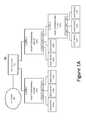
- FIG. 1Ais a block diagram of an example system for forwarding packets
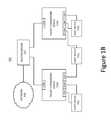
- FIG. 1Bis a block diagram of another example system for forwarding packets
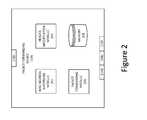
- FIG. 2is block diagram of an example packet forwarding device shown in FIG. 1A ;
- FIG. 3is a flowchart illustrating an example process for forwarding packets
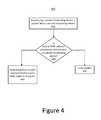
- FIG. 4is a flowchart illustrating another example process for forwarding packets
- the systems and methods of the disclosurerelate to packet processing.
- the disclosuredescribes a type of packet forwarding device that can improve network security by providing port-level control of packets sent between host devices and routing devices.
- the packet forwarding devicecan include a number of downward ports and a single upward port, and can forward all packets between the downward ports and the upward port in a manner that allows the upstream device to be certain of the provenance of each packet it receives from the host devices.
- provenance of a packetcan refer to the origin of the packet and the set of downward ports of packet forwarding devices through which the packet traveled on its way to the upstream device.
- the upstream device and the packet forwarding devicesalso can be configured to allow the upstream device to select the set of ports of packet forwarding devices through which a packet transmitted by the upstream device will egress.
- FIG. 1Ais a block diagram of an example system 100 for forwarding packets.
- the system 100includes a plurality of host devices 102 a - 102 h (generally referred to as host devices 102 ), three packet forwarding devices 110 a - 110 c (generally referred to as packet forwarding devices 110 ), and a routing device 122 .
- the system 100also includes a network 124 connected to the routing device 122 .
- the network 124can be a large external computer network, such as the Internet.
- the routing device 122can be a gateway device of an enterprise network that provides Internet access to the host devices 102 .
- the network 124can be a different computer network.
- the packet forwarding device 110 aincludes three downward ports 114 a - 114 c and one upward port 118 a .
- the packet forwarding device 110 bincludes three downward ports 114 d - 114 f and one upward port 118 b
- the packet forwarding device 110 cincludes three downward ports 114 g - 114 i and one upward port 118 c .
- the downward ports 114 a - 114 iare generally referred to as downward ports 114
- the upward ports 118 a - 118 care generally referred to as upward ports 118 .
- the labeling of a port as either an “upward” port or a “downward” portdoes not refer to the direction in which packets may be traveling through the ports. Instead, it refers to the relative position of the ports with respect to the overall hierarchy of the system 100 .
- upward ports 118are positioned closer to the routing device 122
- downward ports 114are positioned closer to the host devices 102 .
- the packet forwarding devices 110 a and 110 bare directly connected to the routing device 122 via their respective upward ports 118 a and 118 b .
- the upward port 118 c of the packet forwarding device 110 cis connected to the downward port 114 f of the packet forwarding device 110 b .
- the packet forwarding device 110 b and the packet forwarding device 110 care therefore connected in a “cascaded” arrangement. As a result, packets traveling between the routing device 122 and the packet forwarding device 110 c must also pass through the packet forwarding device 110 b .
- the downward port 114 f of the packet forwarding device 110 bcan be referred to as a cascade port, because it is connected to the cascaded packet forwarding device 110 c rather than a host device 102 .
- the cascaded arrangement of the packet forwarding devices 110 b and 110 ccan allow more host devices 102 to be connected to the routing device 122 than would be possible with only the packet forwarding device 110 b , because the packet forwarding device 110 c provides additional downstream ports 114 that can each be connected to an additional host device 102 .
- the system 100can include more than two levels of cascaded packet forwarding devices 110 .
- the system 100can include three, four, five, or more levels of cascaded packet forwarding devices 110 .
- the downward port 114 fcan be a dedicated cascade port (i.e., a port that should only be connected to a cascaded packet forwarding device 110 such as the packet forwarding device 110 c , and should not be connected directly to a host device 102 ).
- any of the downward ports 114 of the packet forwarding device 110 bcan be configured as a cascade port, and the selection of the downward port 114 f to serve as a cascade port can be arbitrary.
- the packet forwarding device 110 bcan maintain a table indicating which of its downward ports 114 is a cascade port.
- the tablecan be updated to indicate that the downward port 114 to which the cascaded packet forwarding device 110 is connected is a cascade port. Maintaining information corresponding to the downward port 114 that serves as a cascade port can assist with the processing of packets received from the routing device 122 , as described further below.
- Each host device 102is connected to a respective downward port 114 of one of the packet forwarding devices 110 . While, each packet forwarding device 110 is shown as including three downward ports 114 , it should be understood that this configuration is illustrative only. In other implementations, each packet forwarding device 110 may include a larger number of downward ports 114 . For example, in some implementations, each packet forwarding device 110 can include 16, 32, 64, or 128 downward ports 114 . In some implementations, each packet forwarding device 110 can include up to 255 downward ports 114 .
- the packet forwarding devices 110can be configured to provide port-level control of network traffic between the routing device 122 and the host devices 102 , such that the routing device 122 can be certain of which downward port 114 an incoming packet arrived from. This can allow the routing device 122 to trace the source of a packet, which can provide improved security in the system 100 . For example, if the routing device 122 receives a packet containing a malicious payload, the host device 102 from which the malicious packet was sent can be identified. Identifying the host device 102 can allow corrective action to be taken, such as removing that host device 102 from the system 100 or repairing the host device 102 .
- the packet forwarding devices 110also can be configured to allow the routing device 122 to select which downward port 114 an outgoing packet will egress. In some implementations, this can allow the routing device 122 to implement load balancing within the system 100 .
- each downward port 114 of the packet forwarding devices 110can be associated with one or more MAC addresses.
- each downward port 114 that is directly connected to a host device 102can be associated with a unique MAC address assigned to that downward port 114 .
- the MAC address assigned to a downward port 114can be unique not only with respect to the MAC addresses of the other downward ports 114 on the same packet forwarding device 110 , but also with respect to the downward ports 114 of the other packet forwarding devices 110 .
- Each host device 102can be configured to address packets directed towards a packet forwarding device 110 with a destination MAC address that matches the respective downward ports 114 to which the host devices 102 are connected.
- a typical network nodesuch as a switch, generally has a single MAC address, and host devices address packets directed to the node with the same destination MAC address regardless of which ports the host devices are connected to.
- each host device 102 in the system 100is connected to a respective downward port 114 and each downward port 114 directly connected to a host device 102 is assigned a unique MAC address, a packet arriving at the routing device 122 via the packet forwarding devices 110 can be determined to have originated from a particular host device 102 , based on the destination information contained in the header of the packet.
- the MAC address assigned to a downward port 114 of a packet forwarding device 110can be based on information uniquely identifying the packet forwarding device 110 from the other packet forwarding devices 110 , and information uniquely identifying the downward port 114 from the other downward ports 114 on that packet forwarding device 110 .
- the information uniquely identifying each packet forwarding device 110(sometimes referred to as a device ID) can be an IPv4 address associated with the packet forwarding device 110 .
- other identifying informationcan be used to distinguish the each packet forwarding device 110 .
- the packet forwarding devices 110can be distinguished from one another by values such as serial numbers, or by another hardware address such as a MAC address associated with each packet forwarding device 100 .
- the information uniquely identifying the downward ports 114 on each packet forwarding device 110can be an arbitrary number that is unique to each downward port 114 on a given packet forwarding device 110 , but may not be unique from the number assigned to a downward port 114 of a different packet forwarding device 110 .
- a downward port 114can be uniquely identified by an integer between one and the number of ports on the packet forwarding device 100 .
- each portmay be assigned an integer between 1 and 255.
- the set of information uniquely identifying a downward port 114 from every other downward port 114 in the system 100can take the form of a MAC address assigned to each downward port 114 that is directly connected to a host device 102 . Because this set of information is unique to each downward port 114 in the system 100 , such MAC addresses also can be unique within the system 100 .
- the MAC address assigned to a downward port 114can be based on the IP address assigned to the packet forwarding device 110 on which the downward port 114 is located, and a number uniquely identifying the downward port 114 from among the other downward ports on that packet forwarding device 110 .
- the MAC address assigned to a downward port 114can include the IP address assigned to the packet forwarding device 110 on which the downward port 114 is located and the number uniquely identifying the downward port 114 from among the other downward ports 114 on that packet forwarding device 110 .
- a MAC addressis a 48-bit number that can be expressed as a string of 12 hexadecimal digits.
- the first two hexadecimal digits of a MAC addressmay be limited to certain values.
- the MAC address assigned to a downward port 114can include any valid values for the first two hexadecimal digits.
- valid values for the first two hexadecimal digits of the MAC address assigned to a downward port 114may include 02 or 0E.
- the next eight hexadecimal digits of the MAC address assigned to a downward port 114can correspond to the IPv4 address of the packet forwarding device 110 on which the downward port 114 is located, and the last two hexadecimal digits can be a number between one and the number of downward ports 114 supported by the packet forwarding device 110 .
- the first ten hexadecimal digits of the MAC addresses assigned to the downward ports 114 of a particular packet forwarding device 110will be identical, and can serve as a common prefix for all of the downward ports 114 of a that packet forwarding device 110 .
- the last two hexadecimal digitswill be different on each downward port 114 of that packet forwarding device 110 .
- downward ports 114 that are connected to other packet forwarding devices 110 in a cascaded fashion rather than directly connected to host devices 102may not be assigned a respective MAC address. Instead, such downward ports 114 can be associated with the MAC addresses of the downward ports 114 of the cascaded packet forwarding device 110 to which they are connected. For example, the downward port 114 f may not be assigned its own MAC address, but may be associated with the MAC addresses of the downward ports 114 g - 114 i of the cascaded packet forwarding device 110 c .
- a downward port 114may be associated with the MAC addresses of all of the downward ports 114 in a multilevel cascade of packet forwarding devices 110 .
- a given downward port 114can be associated with one or more MAC addresses which may include a unique MAC address assigned to that downward port 114 as well as the MAC addresses of downward ports 114 on cascaded packet forwarding devices 110 that are connected to that downward port 114 .
- the packet forwarding devices 110can process packets according to a set of rules selected to allow an upstream device, such as the routing device 122 , to determine the provenance of each packet transmitted from the host devices 102 to the upstream device. These rules, which can be based in part on the MAC addresses associated with the downward ports 114 through which packets are transmitted, are discussed further below.
- the packet forwarding devices 110can be configured to allow the routing device 122 to select the downward port 114 that a packet transmitted from the routing device 122 will egress.
- the routing device 122can be configured to generate packets destined for the host device 102 a such that a source MAC address of the generated packets matches the MAC address assigned to the downward port to which the host device 102 a is connected (i.e., the downward port 114 a ).
- the packet forwarding device 110 acan be configured to determine that the source MAC address of the packet received from the routing device 122 is associated with (e.g., matches) the MAC address assigned to the downward port 114 a , and can forward the packet via the downward port 114 a , responsive to that determination. If the packet forwarding device 110 a determines that the source MAC address of the packet received from the routing device 122 is not associated with any of the downward ports 114 a - 114 c , the packet forwarding device 110 a can be configured to drop the packet.
- the packet forwarding device 110 aforwards a packet based on the source MAC address of the packet, and drops packets whose source MAC address is not associated with any of its downward ports 114 a - 114 c .
- Thiscan help to prevent attacks by a device that creates a packet with a source MAC address that is forged to match the address of the routing device 122 and a destination MAC address of one of the host devices 102 .
- Such a packetwill be dropped, as the source MAC address will not be a MAC address associated with any of the downward ports 114 of the packet forwarding device 110 .
- FIG. 1Bis a block diagram of another example system 101 for forwarding packets.
- the system 101includes the routing device 122 , which is connected to the network 124 .
- the system 101also includes three host devices 102 i - 102 k (generally referred to as host devices 102 ) and two packet forwarding devices 110 d and 110 e (generally referred to as packet forwarding devices 110 ).
- the packet forwarding devices 110 d and 110 eare similar to the packet forwarding devices 110 a - 110 c shown in FIG. 1
- the host devices 102 i - 102 kare similar to the host devices 102 shown in FIG. 1 .
- the packet forwarding device 110 dincludes three downward ports 114 j - 114 l and one upward port 118 d
- the packet forwarding device 110 eincludes three downward ports 114 m - 114 o and one upward port 118 e
- the downward ports 114 j - 1140are generally referred to as downward ports 114
- the upward ports 118 d and 118 eare generally referred to as upward ports 118 .
- the packet forwarding devices 110 d and 110 eare directly connected to the routing device 122 via their respective upward ports 118 d and 118 e .
- the system 101differs from the system 100 shown in FIG. 1 in that there are multiple paths in the system 101 between each host device 102 and the routing device 122 .
- the host device 102 ican be reached via the downward port 114 j or the downward port 114 k
- the host device 102 jcan be reached via the downward port 114 l or the downward port 114 m
- the host device 102 kcan be reached via the downward port 114 n or the downward port 114 o .
- each downward port 114 that is directly connected to a host device 102assigned a unique MAC address.
- the unique MAC addresses assigned to the downward ports 114can allow the routing device 122 to select a particular path to each host device 102 .
- the routing device 122can be configured to generate a packet whose source MAC address matches the MAC address of the downward port 114 through which the packet should egress. Therefore, the routing device 122 can select a particular route for a packet by setting the source MAC address of the packet to the MAC address of the downward port 114 that lies along the desired route.
- the routing device 122can select a route based on a load balancing scheme. For example, the routing device 122 can selectively route a packet or a flow of packets to the host device 102 i via the packet forwarding device 110 d through either the downward port 114 j or the downward port 114 k by specifying the desired port's identifier in the corresponding packet's source MAC address field. Doing so can help prevent either of the downward ports 114 j and 114 k from becoming congested.
- the above functionalitycan be particularly valuable in hierarchical networks having more complex switch fabrics (e.g., datacenter networks) that provide multiple routes between aggregation nodes and various server racks.
- the system 101can include additional packet forwarding devices 110 , some of which can be arranged in a cascaded fashion.
- Each host device 102also may be connected to more than two downward ports 114 , or only a single downward port 114 .
- Each packet forwarding device 110 in the system 100 shown in FIG. 1A and the system 101 shown in FIG. 1Bcan generally include any type of device capable of communicating with other devices (e.g., other packet forwarding devices 110 ).
- each packet forwarding device 110may be a computer, a router, a switch, a server, or any combination of these elements.
- the host devices 102 and the routing device 122also can be a computer, a router, a switch, a server, or any combination of these elements.
- the packet forwarding devices 110 , the host devices 102 , and the routing device 122can each include at least one processor, a memory, and a network interface card.
- the network 124can be the Internet, and the system 100 can represent a datacenter connected to the Internet.
- the host devices 102can be configured to store data hosted by the datacenter and to receive and respond to requests for data via the packet forwarding devices 110 and the routing device 122 .
- datacentersmay support a wide range of computer network traffic, including traffic associated with real-time content delivery, cloud computing services accessed by users of personal or mobile computers, data storage, data indexing, data backup, bulk data transfer, and data access.
- the system 100can represent an enterprise network connected to the internet or another external network.
- FIG. 2is block diagram of the example packet forwarding device 110 b shown in FIG. 1A .
- the packet forwarding device 110 bincludes downward ports 114 d - 114 f (generally referred to as downward ports 114 ) and an upward port 118 b .
- the packet forwarding device 110 balso includes a MAC address advertising module 201 , a header modification module 204 , a packet forwarding module 206 , and a memory 208 .
- the MAC address advertising module 201can be configured to send to each device connected to a downward port 114 information indicating the unique MAC address of the downward ports 114 that are directly connected to host devices. For example, the MAC address advertising module 201 can send the MAC addresses associated with the downward ports 114 d and 114 e to the devices connected to those ports, respectively.
- the MAC address advertising module 201can be configured to send the appropriate MAC addresses to the respective downward ports 114 in response to receiving a request from the devices connected to the downward ports 114 .
- the MAC address advertising module 201can be configured to respond to address resolution protocol (ARP) requests received from connected host devices.
- ARPaddress resolution protocol
- a device connected to a downward port 114 dcan send an ARP request to the packet forwarding device 110 b .
- the MAC address advertising module 201can respond to the ARP request by transmitting information corresponding to the MAC address of the downward port 114 d to the device that is connected to the downward port 114 d .
- ARP requestscan be received and processed from the devices connected to the downward port 114 e .
- the MAC address advertising module 201can further be configured to advertise the MAC addresses of its downward ports 114 via its upstream port 118 b .
- the downstream port 114 fwhich is connected to another packet forwarding device 110 c rather than to a host device 102 as shown in FIG.
- the MAC address advertising modulemay therefore also be configured to advertise the MAC addresses of these ports via its upstream port 118 b.
- the packet forwarding module 206can be configured to forward packets based on a set of rules discussed below in connection with FIGS. 3 and 4 . For example, for a packet received directly from a host device via a downward port 114 , the packet forwarding module 206 can be configured to determine whether the destination MAC address of a received is associated with the downward port 114 on which the packet was received. In some implementations, the MAC addresses associated with each downward port 114 can be stored in the memory 208 . The packet forwarding module 206 can retrieve that information from the memory 208 , and can compare the destination MAC address of a packet received via a downward port 114 to that information to determine whether to forward the packet via the upward port 118 .
- the header modification module 204can be configured to modify information contained within the header of a packet received by the packet forwarding device 110 b .
- a host devicecan transmit a packet having a destination MAC address that identifies the packet as a broadcast or multicast packet. However, if that packet is received by the routing device unchanged after passing through the packet forwarding device 110 b , the routing device will have no way of determining the downward port 114 through which the packet traveled.
- the header modification module 204can be configured to determine whether a packet received from one of the downward ports 114 is a broadcast or multicast packet, and if so, to modify the header of the packet.
- the header of the packetcan be modified to include a destination MAC address matching the destination MAC address assigned to the downward port 114 on which the packet was received, so that the routing device can determine the provenance of the packet by examining the destination MAC address field of the packet.
- the packet forwarding module 206can be configured to determine the destination MAC address of the received packet, and to compare the destination MAC address to a list of destination MAC addresses associated with broadcast and multicast packets. For example, such a list can be maintained in the memory 208 . If a received packet is a broadcast or multicast packet, the packet forwarding module 206 can send the packet to the header modification module 204 , which can be configured to change the destination field contained within the header of the packet to match the MAC address assigned to the downward port 114 on which the packet was received. The packet forwarding module 206 can send the modified packet to the routing device. When the modified packet is received by the routing device, the routing device can determine the downward port 114 through which the packet traveled by examining the destination field of the received packet.
- the packet forwarding module 206can determine whether to forward a packet received via a cascaded downward port 114 .
- the packet forwarding device 110 bcan store a list of MAC addresses associated with the downward ports 114 of all of the cascaded packet forwarding devices 110 that are positioned between the downward ports 114 d - 114 f of the packet forwarding device 110 b and one or more host devices 102 .
- Such a listcan be stored, for example, in the memory 208 .
- the packet forwarding module 206can be configured to compare the destination MAC address of a packet received via a downward port 114 to the MAC addresses stored in the list.
- the packet forwarding module 206can forward the packet via the upstream port 118 b . If a match is not determined, the packet can be dropped.
- the packet forwarding device 110 bcan store a list of the common prefixes of MAC addresses associated with the downward ports 114 of all of the cascaded packet forwarding devices 110 that are positioned between the downward ports 114 d - 114 f of the packet forwarding device 110 b and one or more host devices 102 .
- a common prefixcan be a portion of the MAC addresses (i.e., the first ten hexadecimal digits) that is identical across all of the downward ports 114 of a packet forwarding device 110 .
- the packet forwarding module 206can determine whether to forward a packet received via a cascaded downward port 114 more efficiently by determining a match between the prefix of the destination MAC address of a received packet and the common prefix of a cascaded packet forwarding device 110 , rather than by determining a match between the entire destination MAC address of the received packet and the unique MAC address associated with a downward port 114 on any of the cascaded packet forwarding devices 110 .
- the packet forwarding module 206can be configured to forward a packet received directly from an upstream device, such as the routing device 122 shown in FIG. 1A or another packet forwarding device 110 , via a downward port 114 .
- the packet forwarding module 206can be configured to determine whether the source MAC address of the received packet is associated with any downward port 114 .
- the MAC addresses associated with each downward port 114can be stored in the memory 208 . The packet forwarding module 206 can retrieve that information from the memory 208 , and can compare the source MAC address of a packet received via the upward port 118 to that information.
- the packet forwarding module 206can be configured to forward the received packet via the downward port 114 associated with the source MAC address of the received packet. For example, an association may be determined if a MAC address of a downstream port 114 matches the source MAC address of the received packet, or if the downstream port 114 is connected to another packet forwarding device 110 having a downward port whose MAC address matches the source MAC address of the received packet. Therefore, for a packet received from an upstream device, the packet forwarding module 206 can forward the packet via the appropriate downward port 114 responsive to determining match between the source address of the received packet and a MAC address associated with the cascaded downward port 114 .
- the downward port 114can be a cascaded downward port 114 that is connected to another packet forwarding device 100 having a downward port whose MAC address matches the source MAC address of the received packet. If no match is determined, the packet forwarding module 206 can be configured to drop the packet.
- the packet forwarding module 206can forward a packet to a cascaded packet forwarding device 110 , responsive to determining that the source MAC address of the packet does not match the MAC address assigned to any of the downward ports 114 that are directly connected to host devices, without determining that the source MAC address of the packet matches the source MAC addresses associated with the downward ports 114 of all of the cascaded packet forwarding devices that are positioned between the downward ports 114 d - 114 f of the packet forwarding device 110 b and one or more host devices 102 .
- That packet forwarding devicecan determine whether to drop the packet or forward the packet, based on its own examination of the source MAC address of the packet.
- the MAC address advertising module 201 , the header modification module 204 , and the packet forwarding module 206each can be implemented as special purpose logic circuitry, such as a field programmable gate array (FPGA) or an application-specific integrated circuit (ASIC).
- the MAC address advertising module 201 , the header modification module 204 , and the packet forwarding module 206may be implemented as one or more software modules stored on a computer readable medium and which are executed on one or more general purpose processors.
- the functionality of some or all of the MAC address advertising module 201 , the header modification module 204 , and the packet forwarding module 206may be combined into a single module or be further subdivided into smaller modules.
- the packet forwarding device 110 bcan also include other communication hardware not illustrated in FIG. 2 , such as a network interface card, additional memory modules, and input/output devices.
- any of the packet forwarding devices 110 included in the system 100 shown in FIGS. 1A and 1Bcan include modules similar to those described above in connection with the packet forwarding device 110 b .
- the packet forwarding device 110 a and the packet forwarding device 110 deach can include a respective MAC address advertising module 201 , a respective header modification module 204 , a respective packet forwarding module 206 , and a respective memory 208 .
- the modules included in other packet forwarding devices 110can operate in a manner similar to that discussed above in connection with the modules of the packet forwarding device 110 b.
- FIG. 3is a flowchart illustrating an example process 300 for forwarding packets.
- the process 300can be used for processing packets received by a packet forwarding device, such as the packet forwarding devices 110 shown in FIG. 1A and FIG. 1B , from a computing device such as any of the host devices 102 shown in FIG. 1A and FIG. 1B .
- the process 300includes receiving, by a packet forwarding device, a packet from a first computing device (stage 302 ).
- the process 300includes determining whether the received packet is one of a broadcast packet and a multicast packet (stage 304 ).
- the process 300includes changing a destination MAC address of the packet to the MAC address of the port on which the packet was received (stage 306 ), and forwarding the modified packet to a second computing device (stage 308 ). If the packet is neither a broadcast packet nor a multicast packet, the process 300 includes determining whether a destination MAC address of the packet is associated with the port on which the packet was received (stage 310 ). If the destination MAC address of the packet is associated with the port on which the packet was received, the process 300 includes forwarding the packet to the second computing device (stage 312 ). If the destination MAC address of the packet is not associated with the port on which the packet was received, the process 300 includes dropping the packet (stage 314 ).
- the process 300includes receiving, by a packet forwarding device, a packet from a first computing device (stage 302 ).
- the first computing devicecan be a host device, such as any of the host devices 102 shown in FIG. 1A and FIG. 1B , and can be connected to the packet forwarding device via a downward port of the packet forwarding device.
- the first computing devicecan be another packet forwarding device that is positioned between the first packet forwarding device and a host device.
- the first computing devicecan be a computing device that may be attempting to impersonate one of the host devices, for example by forging (or spoofing) the source MAC address of the packet to match the source MAC address of one of the host devices.
- the process 300can be used to drop packets that are not properly directed at an upstream routing device, such as the routing device 122 shown in FIG. 1A and FIG. 1B , and to enable the routing device to determine the provenance of packets that are forwarded by the packet forwarding device.
- the process 300includes determining whether the received packet is one of a broadcast packet and a multicast packet (stage 304 ).
- certain destination MAC addressesmay be reserved for broadcast or multicast packets which can be used, for example, without limitation, in security negotiations between networking devices, ARP requests, router discovery, or routing protocol advertisements.
- the process 300includes changing a destination MAC address of the packet to the MAC address of the port on which the packet was received (stage 306 ). If a broadcast packet or a multicast packet were to be forwarded unchanged to the routing device, the routing device may not be able to determine the specific host device from which the packet originated or the downward port of the packet forwarding device through which the packet was received.
- the packet forwarding devicecan modify the destination field of the packet to contain the MAC address of the downward port on which the packet arrived.
- the contents of the packetcan still indicate that the packet is a multicast or broadcast packet, even though the destination MAC address has been modified by the packet forwarding device.
- the process 300includes forwarding the modified packet to a second computing device (stage 308 ).
- the second computing devicecan be the routing device 122 shown in FIG. 1A and FIG. 1B .
- each downward port of the packet forwarding device coupled directly to a hostcan have a unique MAC address.
- the second computing devicecan determine the downward port through which the packet traveled by examining the modified destination MAC address of the received packet.
- the process 300includes determining whether the destination MAC address of the packet is associated with the port on which the packet was received (stage 310 ). The determination can be made, for example, by comparing the destination MAC address of the received packet with the MAC addresses associated with the port on which the packet was received. If the destination MAC address of the packet is associated with the port on which the packet was received, the process 300 includes forwarding the packet to the second computing device (stage 312 ).
- packets received via a cascaded downward portare forwarded via the upstream port without inspection, as the packet would have been appropriately processed by the cascaded packet forwarding device before the cascaded packet forward device had forwarded the packet.
- forwarding the packet on the basis of determining that the destination MAC address of the packet is associated with the downward port on which the packet was receivedcan help to prevent attacks by devices that may be attempting to impersonate a host device.
- the host devicesare configured to generate packets destined for the second computing device such that a destination MAC address of the packets matches the MAC address of the downward port of a packet forwarding device to which the host devices are respectively connected.
- the packet forwarding devicecan determine that the packet did not originate from a corresponding host device, and can drop the packet (stage 314 ).
- a packet whose source MAC address is forged to match the address of a host devicewill not be forwarded unless the packet also includes the correct destination MAC address (i.e., a MAC address associated with the downward port on which the packet is received by the packet forwarding device).
- the packet received on a downward port having a source MAC address that is forged to match the address of an upstream devicealso will not be forwarded, unless the packet also includes the correct destination MAC address (i.e., a MAC address associated with the downward port on which the packet is received by the packet forwarding device).
- the likelihood of a packet with a forged source MAC address reaching the second computing deviceis therefore reduced.
- forwarding the packet on the basis of determining that the destination MAC address of the packet is associated with the downward port on which the packet was receivedcan allow an upstream device, such as the routing device 122 shown in FIG. 1A a, to identify the source of a malicious packet. For example, if the upstream device receives a packet containing a malicious payload (e.g., generated as a result of a virus infection), the host device from which the malicious packet was sent can be identified based on the destination MAC address of the packet, and a corrective action can be performed to remove or repair the host device.
- a malicious payloade.g., generated as a result of a virus infection
- FIG. 4is a flowchart illustrating another example process 400 for forwarding packets.
- the process 400can be used for processing packets received by a packet forwarding device, such as the packet forwarding devices 110 shown in FIG. 1A and FIG. 1B , from a computing device such as the routing device 122 shown in FIG. 1A and FIG. 1B .
- the process 400includes receiving, by a packet forwarding device, a packet from a second computing device (stage 402 ).
- the process 400includes determining whether a source MAC address of the packet is associated with any downward port of the packet forwarding device (stage 404 ).
- the process 400includes forwarding the packet via the downward port whose MAC address matches the source MAC address of the packet (stage 406 ). If the source MAC address of the packet is not associated with a downstream port of the packet forwarding device, the process 400 includes dropping the packet (stage 408 ).
- the process 400includes receiving, by a packet forwarding device, a packet from a second computing device (stage 402 ).
- the second computing devicecan be a routing device upstream from the packet forwarding device, such as the routing device 122 shown in FIG. 1A and FIG. 1B , and can be connected to the packet forwarding device via an upward port of the packet forwarding device.
- the second computing devicecan be a cascaded packet forwarding device. The process 400 can be used to enable the upstream routing device to select a port of the packet forwarding device through which the packet will egress.
- the process 400includes determining whether a source MAC address of the packet is associated with any downward port of the packet forwarding device (stage 404 ). The determination can be made, for example, by comparing the source MAC address of the received packet with the MAC addresses associated with each downward port of the packet forwarding device. As discussed above, a downward port may be associated with a MAC address assigned to that downward port, as well as the MAC addresses of downward ports of cascaded packet forwarding devices that are connected to that downward port. If the source MAC address of the packet is associated with a downward port of the packet forwarding device, the process 400 includes forwarding the packet via the downward port that is associated with the source MAC address of the packet (stage 406 ).
- Forwarding the packet on the basis of determining an association between the source MAC address of the packet and one of the downward ports of the packet forwarding devicecan help to prevent attacks by host devices that may be attempting to impersonate another host device.
- the selection of a downward port through which a packet will egressis made by the upstream routing device, rather than by the packet forwarding device.
- the packet forwarding devicewill forward each packet received from the routing device via the downward port whose MAC address is associated with the source MAC address of the packet, regardless of the destination MAC address of the packet.
- the routing devicecan select a target host device to receive a packet by setting the source MAC address of the packet to the MAC address associated with the downward port to which the target host device is selected.
- Implementations of the subject matter and the operations described in this specificationcan be implemented in digital electronic circuitry, or in computer software embodied on a tangible medium, firmware, or hardware, including the structures disclosed in this specification and their structural equivalents, or in combinations of one or more of them. Implementations of the subject matter described in this specification can be implemented as one or more computer programs embodied on a tangible medium, i.e., one or more modules of computer program instructions, encoded on one or more computer storage media for execution by, or to control the operation of, a data processing apparatus.
- a computer storage mediumcan be, or be included in, a computer-readable storage device, a computer-readable storage substrate, a random or serial access memory array or device, or a combination of one or more of them.
- the computer storage mediumcan also be, or be included in, one or more separate components or media (e.g., multiple CDs, disks, or other storage devices).
- the computer storage mediummay be tangible and non-transitory.
- a computer program(also known as a program, software, software application, script, or code) can be written in any form of programming language, including compiled languages, interpreted languages, declarative languages, and procedural languages, and the computer program can be deployed in any form, including as a stand-alone program or as a module, component, subroutine, object, or other unit suitable for use in a computing environment.
- a computer programmay, but need not, correspond to a file in a file system.
- a programcan be stored in a portion of a file that holds other programs or data (e.g., one or more scripts stored in a markup language document), in a single file dedicated to the program in question, or in multiple coordinated files (e.g., files that store one or more modules, libraries, sub programs, or portions of code).
- a computer programcan be deployed to be executed on one computer or on multiple computers that are located at one site or distributed across multiple sites and interconnected by a communication network.
- the processes and logic flows described in this specificationcan be performed by one or more programmable processors executing one or more computer programs to perform actions by operating on input data and generating output.
- the processes and logic flowscan also be performed by, and apparatus can also be implemented as, special purpose logic circuitry, e.g., a field programmable gate array (“FPGA”) or an application specific integrated circuit (“ASIC”).
- FPGAfield programmable gate array
- ASICapplication specific integrated circuit
- Such a special purpose circuitmay be referred to as a computer processor even if it is not a general-purpose processor.
- references to “or”may be construed as inclusive so that any terms described using “or” may indicate any of a single, more than one, and all of the described terms.
- the labels “first,” “second,” “third,” an so forthare not necessarily meant to indicate an ordering and are generally used merely to distinguish between like or similar items or elements.
Landscapes
- Engineering & Computer Science (AREA)
- Computer Networks & Wireless Communication (AREA)
- Signal Processing (AREA)
- Computer Security & Cryptography (AREA)
- Data Exchanges In Wide-Area Networks (AREA)
- Small-Scale Networks (AREA)
Abstract
Description
Information is transmitted over computer networks. The information is represented as bits divided into packets. The packets are passed from between network devices, such as switches and routers, propagating the information through the computer networks. Each packet is transmitted from its source towards a destination specified by header information in the respective packet. The source and destination of a packet may respectively be in different portions of the network. There may be multiple possible routes between the source and destination.
In some aspects, the disclosure relates to a system. The system can include a first computing device, a second computing device, and a first packet forwarding device. Each of the first computing device and the second computing device can be communicatively coupled to a respective port of the first packet forwarding device. For a first packet received from the first computing device, the first packet forwarding device can be configured to determine that a destination MAC address of the first packet is associated with the port on which the first packet was received. The first packet forwarding device also can be configured to forward the first packet to the second computing device, responsive to the determination that the destination MAC address of the first packet is associated with the port on which the first packet was received. For a second packet received from the second computing device, the first packet forwarding device can be configured to forward the second packet via the port associated with a source MAC address of the second packet.
In some implementations, the first packet forwarding device is further configured to drop the second packet, responsive to determining that the source MAC address of the second packet is not associated with any port of the first packet forwarding device. In some implementations, for a third packet received from the first computing device, the first packet forwarding device is configured to determine that the third packet is one of a broadcast packet and a multicast packet, change a destination MAC address of the third packet to a MAC address assigned to the port on which the third packet was received, and forward the third packet to the second computing device.
In some implementations, a MAC address assigned to at least one port of the first packet forwarding device is based on an IP address of the first packet forwarding device and a number uniquely identifying the at least one port. In some implementations, a MAC address assigned to at least one port of the first packet forwarding device includes the IP address of the first packet forwarding device and the number uniquely identifying the at least one port.
In some implementations, the first packet forwarding device is further configured to determine that a destination MAC address of a fourth packet received from the first computing device is not associated with the port on which the fourth packet was received and that the destination MAC address of the fourth packet is neither a broadcast MAC address nor a multicast MAC address, and drop the fourth packet, responsive to the determination that the destination MAC address of the fourth packet is not associated with the port on which the fourth packet was received and that the destination MAC address of the fourth packet is neither a broadcast MAC address nor a multicast MAC address.
In some implementations, the system can include a third computing device including a plurality of ports. The third computing device can be communicatively coupled to a respective port of the first packet forwarding device. The first packet forwarding device can be further configured to determine that a destination MAC address of a fifth packet received from the third computing device is associated with a device ID of the third computing device. The first packet forwarding device also can be further configured to forward the fifth packet to the second computing device, responsive to determining that the destination MAC address of a fifth packet is associated with the device ID of the third computing device.
In some implementations, the third computing device is configured to determine that a source MAC address of a sixth packet received from the first packet forwarding device is associated with the port of the first packet forwarding device to which the third computing device is communicatively coupled and forward the sixth packet via the port of the third computing device that is associated with the source MAC address of the sixth packet. In some implementations, the first computing device is further configured to ensure that each packet destined for the second computing device has a destination MAC address that is associated with the port of the first packet forwarding device to which the first computing device is communicatively coupled. In some implementations, the second computing device is further configured to ensure that each packet destined for the first computing device has a source MAC address that is associated with the port of the first packet forwarding device to which the first computing device is communicatively coupled.
In some aspects, the disclosure relates to a method of processing packets. The method can include receiving, by a first packet forwarding device, a first packet from a first computing device. The method can include determining, by the first packet forwarding device, that a destination MAC address of the first packet is associated with the port on which the first packet was received. The method can include forwarding, by the first packet forwarding device, the first packet to a second computing device, responsive to the determination that the destination MAC address of the first packet is associated with the port on which the first packet was received. The method can include transmitting, by the second computing device, a second packet to the first packet forwarding device. The method can include forwarding, by the first packet forwarding device, the second packet via the port associated with a source MAC address of the second packet.
In some implementations, the method can include determining, by the first packet forwarding device, that a source MAC address of the second packet is not associated with any port of the first packet forwarding device and dropping, by the first packet forwarding device, the second packet, responsive to the determination that the source MAC address of the second packet is not associated with any port of the first packet forwarding device.
In some implementations, the method can include receiving, by the first packet forwarding device, a third packet to from the first computing device. The method can include determining, by the first packet forwarding device, that the third packet is one of a broadcast packet and a multicast packet. The method can include changing, by the first packet forwarding device, a destination MAC address of the third packet to a MAC address assigned to the port on which the third packet was received. The method can include forwarding, by the first packet forwarding device, the third packet to the second computing device.
In some implementations, a MAC address assigned to at least one port of the first packet forwarding device is based on an IP address of the first packet forwarding device and a number uniquely identifying the at least one port. In some implementations, a MAC address assigned to at least one port of the first packet forwarding device includes the IP address of the first packet forwarding device and the number uniquely identifying the at least one port.
In some implementations, the method can include receiving, by the first packet forwarding device, a fourth packet from the first computing device. The method can include determining, by the first packet forwarding device, that a destination MAC address of the fourth packet is not associated with the port on which the fourth packet was received and that the destination MAC address of the fourth packet is neither a broadcast MAC address nor a multicast MAC address. The method can include dropping, by the first packet forwarding device, the fourth packet, responsive to the determination that the destination MAC address of the fourth packet is not associated with the port on which the fourth packet was received and that the destination MAC address of the fourth packet is neither a broadcast MAC address nor a multicast MAC address.
In some implementations, the method can include receiving, by the first packet forwarding device, a fifth packet from a third computing device. The third computing device can include a plurality of ports. The method can include determining, by the first packet forwarding device, that a destination MAC address of the fifth packet received from the third computing device is associated with a device ID of the third computing device. The method can include forwarding, by the first packet forwarding device, the fifth packet to the second computing device, responsive to determining that the destination MAC address of a fifth packet is associated with the device ID of the third computing device.
In some implementations, the method can include transmitting, by the first packet forwarding device, a sixth packet to the third computing device. The method can include determining, by the third computing device, that a source MAC address of a sixth packet received from the first packet forwarding device is associated with the port of the first packet forwarding device to which the third computing device is communicatively coupled. The method can include forwarding, by the third computing device, the packet via the port of the third computing device that is associated with the source MAC address of the sixth packet.
In some implementations, the method can include ensuring, by the first computing device, that each packet destined for the second computing device has a destination MAC address that is associated with the port of the first packet forwarding device to which the first computing device is communicatively coupled. In some implementations, the method can include ensuring, by the second computing device, that each packet destined for the first computing device has a source MAC address that is associated with the port of the first packet forwarding device to which the first computing device is communicatively coupled.
The above and related objects, features, and advantages of the present disclosure will be more fully understood by reference to the following detailed description, when taken in conjunction with the accompanying figures, wherein:
For purposes of clarity, not every component may be labeled in every figure. The drawings are not intended to be drawn to scale. Like reference numbers and designations in the various figures indicate like elements.
The systems and methods of the disclosure relate to packet processing. Particularly, the disclosure describes a type of packet forwarding device that can improve network security by providing port-level control of packets sent between host devices and routing devices. The packet forwarding device can include a number of downward ports and a single upward port, and can forward all packets between the downward ports and the upward port in a manner that allows the upstream device to be certain of the provenance of each packet it receives from the host devices. In general, provenance of a packet can refer to the origin of the packet and the set of downward ports of packet forwarding devices through which the packet traveled on its way to the upstream device. The upstream device and the packet forwarding devices also can be configured to allow the upstream device to select the set of ports of packet forwarding devices through which a packet transmitted by the upstream device will egress.
Thepacket forwarding device 110aincludes three downward ports114a-114cand oneupward port 118a. Similarly, the packet forwarding device110bincludes threedownward ports 114d-114fand oneupward port 118b, and the packet forwarding device110cincludes three downward ports114g-114iand oneupward port 118c. The downward ports114a-114iare generally referred to as downward ports114, while the upward ports118a-118care generally referred to as upward ports118. The labeling of a port as either an “upward” port or a “downward” port does not refer to the direction in which packets may be traveling through the ports. Instead, it refers to the relative position of the ports with respect to the overall hierarchy of thesystem 100. Thus, upward ports118 are positioned closer to therouting device 122, while downward ports114 are positioned closer to the host devices102.
Thepacket forwarding devices 110aand110bare directly connected to therouting device 122 via their respectiveupward ports upward port 118cof the packet forwarding device110cis connected to thedownward port 114fof the packet forwarding device110b. The packet forwarding device110band the packet forwarding device110care therefore connected in a “cascaded” arrangement. As a result, packets traveling between therouting device 122 and the packet forwarding device110cmust also pass through the packet forwarding device110b. Thedownward port 114fof the packet forwarding device110bcan be referred to as a cascade port, because it is connected to the cascaded packet forwarding device110crather than a host device102. The cascaded arrangement of the packet forwarding devices110band110ccan allow more host devices102 to be connected to therouting device 122 than would be possible with only the packet forwarding device110b, because the packet forwarding device110cprovides additional downstream ports114 that can each be connected to an additional host device102. In some implementations, thesystem 100 can include more than two levels of cascaded packet forwarding devices110. For example, thesystem 100 can include three, four, five, or more levels of cascaded packet forwarding devices110.
In some implementations, thedownward port 114fcan be a dedicated cascade port (i.e., a port that should only be connected to a cascaded packet forwarding device110 such as the packet forwarding device110c, and should not be connected directly to a host device102). In some other implementations, any of the downward ports114 of the packet forwarding device110bcan be configured as a cascade port, and the selection of thedownward port 114fto serve as a cascade port can be arbitrary. For example, the packet forwarding device110bcan maintain a table indicating which of its downward ports114 is a cascade port. When a packet forwarding device110 is coupled to a downstream port114, the table can be updated to indicate that the downward port114 to which the cascaded packet forwarding device110 is connected is a cascade port. Maintaining information corresponding to the downward port114 that serves as a cascade port can assist with the processing of packets received from therouting device 122, as described further below.
Each host device102 is connected to a respective downward port114 of one of the packet forwarding devices110. While, each packet forwarding device110 is shown as including three downward ports114, it should be understood that this configuration is illustrative only. In other implementations, each packet forwarding device110 may include a larger number of downward ports114. For example, in some implementations, each packet forwarding device110 can include 16, 32, 64, or 128 downward ports114. In some implementations, each packet forwarding device110 can include up to 255 downward ports114.
The packet forwarding devices110 can be configured to provide port-level control of network traffic between therouting device 122 and the host devices102, such that therouting device 122 can be certain of which downward port114 an incoming packet arrived from. This can allow therouting device 122 to trace the source of a packet, which can provide improved security in thesystem 100. For example, if therouting device 122 receives a packet containing a malicious payload, the host device102 from which the malicious packet was sent can be identified. Identifying the host device102 can allow corrective action to be taken, such as removing that host device102 from thesystem 100 or repairing the host device102. The packet forwarding devices110 also can be configured to allow therouting device 122 to select which downward port114 an outgoing packet will egress. In some implementations, this can allow therouting device 122 to implement load balancing within thesystem 100.
To allow therouting device 122 to ascertain the provenance of incoming packets and to select the downward port114 that each outgoing packet will egress, each downward port114 of the packet forwarding devices110 can be associated with one or more MAC addresses. For example, each downward port114 that is directly connected to a host device102 can be associated with a unique MAC address assigned to that downward port114. The MAC address assigned to a downward port114 can be unique not only with respect to the MAC addresses of the other downward ports114 on the same packet forwarding device110, but also with respect to the downward ports114 of the other packet forwarding devices110. Each host device102 can be configured to address packets directed towards a packet forwarding device110 with a destination MAC address that matches the respective downward ports114 to which the host devices102 are connected. In contrast to thepacket forwarding devices 110a, a typical network node, such as a switch, generally has a single MAC address, and host devices address packets directed to the node with the same destination MAC address regardless of which ports the host devices are connected to. Because each host device102 in thesystem 100 is connected to a respective downward port114 and each downward port114 directly connected to a host device102 is assigned a unique MAC address, a packet arriving at therouting device 122 via the packet forwarding devices110 can be determined to have originated from a particular host device102, based on the destination information contained in the header of the packet.
In some implementations, the MAC address assigned to a downward port114 of a packet forwarding device110 can be based on information uniquely identifying the packet forwarding device110 from the other packet forwarding devices110, and information uniquely identifying the downward port114 from the other downward ports114 on that packet forwarding device110. For example, in some implementations, the information uniquely identifying each packet forwarding device110 (sometimes referred to as a device ID) can be an IPv4 address associated with the packet forwarding device110. In some other implementations, other identifying information can be used to distinguish the each packet forwarding device110. For example, the packet forwarding devices110 can be distinguished from one another by values such as serial numbers, or by another hardware address such as a MAC address associated with eachpacket forwarding device 100. In some implementations, the information uniquely identifying the downward ports114 on each packet forwarding device110 can be an arbitrary number that is unique to each downward port114 on a given packet forwarding device110, but may not be unique from the number assigned to a downward port114 of a different packet forwarding device110. For example, a downward port114 can be uniquely identified by an integer between one and the number of ports on thepacket forwarding device 100. In some implementations, each port may be assigned an integer between 1 and 255.
In some implementations, the set of information uniquely identifying a downward port114 from every other downward port114 in the system100 (i.e., the information uniquely identifying the packet forwarding device110 from the other packet forwarding devices110 plus the information uniquely identifying the downward port114 from the other downward ports114 on that packet forwarding device110) can take the form of a MAC address assigned to each downward port114 that is directly connected to a host device102. Because this set of information is unique to each downward port114 in thesystem 100, such MAC addresses also can be unique within thesystem 100. For example, in some implementations, the MAC address assigned to a downward port114 can be based on the IP address assigned to the packet forwarding device110 on which the downward port114 is located, and a number uniquely identifying the downward port114 from among the other downward ports on that packet forwarding device110.
In some implementations, the MAC address assigned to a downward port114 can include the IP address assigned to the packet forwarding device110 on which the downward port114 is located and the number uniquely identifying the downward port114 from among the other downward ports114 on that packet forwarding device110. Typically, a MAC address is a 48-bit number that can be expressed as a string of 12 hexadecimal digits. In some implementations, the first two hexadecimal digits of a MAC address may be limited to certain values. The MAC address assigned to a downward port114 can include any valid values for the first two hexadecimal digits. For example, valid values for the first two hexadecimal digits of the MAC address assigned to a downward port114 may include 02 or 0E. The next eight hexadecimal digits of the MAC address assigned to a downward port114 can correspond to the IPv4 address of the packet forwarding device110 on which the downward port114 is located, and the last two hexadecimal digits can be a number between one and the number of downward ports114 supported by the packet forwarding device110. In this example, the first ten hexadecimal digits of the MAC addresses assigned to the downward ports114 of a particular packet forwarding device110 will be identical, and can serve as a common prefix for all of the downward ports114 of a that packet forwarding device110. The last two hexadecimal digits will be different on each downward port114 of that packet forwarding device110.
In some implementations, downward ports114 that are connected to other packet forwarding devices110 in a cascaded fashion rather than directly connected to host devices102 (such as thedownward port 114fwhich is connected to the packet forwarding device110c) may not be assigned a respective MAC address. Instead, such downward ports114 can be associated with the MAC addresses of the downward ports114 of the cascaded packet forwarding device110 to which they are connected. For example, thedownward port 114fmay not be assigned its own MAC address, but may be associated with the MAC addresses of the downward ports114g-114iof the cascaded packet forwarding device110c. In some implementations, a downward port114 may be associated with the MAC addresses of all of the downward ports114 in a multilevel cascade of packet forwarding devices110. Thus, in general, a given downward port114 can be associated with one or more MAC addresses which may include a unique MAC address assigned to that downward port114 as well as the MAC addresses of downward ports114 on cascaded packet forwarding devices110 that are connected to that downward port114.
In some implementations, the packet forwarding devices110 can process packets according to a set of rules selected to allow an upstream device, such as therouting device 122, to determine the provenance of each packet transmitted from the host devices102 to the upstream device. These rules, which can be based in part on the MAC addresses associated with the downward ports114 through which packets are transmitted, are discussed further below.
In some implementations, the packet forwarding devices110 can be configured to allow therouting device 122 to select the downward port114 that a packet transmitted from therouting device 122 will egress. For example, therouting device 122 can be configured to generate packets destined for thehost device 102asuch that a source MAC address of the generated packets matches the MAC address assigned to the downward port to which thehost device 102ais connected (i.e., the downward port114a). Thepacket forwarding device 110acan be configured to determine that the source MAC address of the packet received from therouting device 122 is associated with (e.g., matches) the MAC address assigned to the downward port114a, and can forward the packet via the downward port114a, responsive to that determination. If thepacket forwarding device 110adetermines that the source MAC address of the packet received from therouting device 122 is not associated with any of the downward ports114a-114c, thepacket forwarding device 110acan be configured to drop the packet. Thus, in this example, thepacket forwarding device 110aforwards a packet based on the source MAC address of the packet, and drops packets whose source MAC address is not associated with any of its downward ports114a-114c. This can help to prevent attacks by a device that creates a packet with a source MAC address that is forged to match the address of therouting device 122 and a destination MAC address of one of the host devices102. Such a packet will be dropped, as the source MAC address will not be a MAC address associated with any of the downward ports114 of the packet forwarding device110.
Thepacket forwarding devices 110dand110eare directly connected to therouting device 122 via their respectiveupward ports system 101 differs from thesystem 100 shown inFIG. 1 in that there are multiple paths in thesystem 101 between each host device102 and therouting device 122. For example, thehost device 102ican be reached via the downward port114jor the downward port114k, thehost device 102jcan be reached via the downward port114lor thedownward port 114m, and thehost device 102kcan be reached via thedownward port 114nor the downward port114o. As discussed above in connection withFIG. 1A , each downward port114 that is directly connected to a host device102 assigned a unique MAC address.
The unique MAC addresses assigned to the downward ports114 can allow therouting device 122 to select a particular path to each host device102. For example, as discussed above, therouting device 122 can be configured to generate a packet whose source MAC address matches the MAC address of the downward port114 through which the packet should egress. Therefore, therouting device 122 can select a particular route for a packet by setting the source MAC address of the packet to the MAC address of the downward port114 that lies along the desired route.
In some implementations, therouting device 122 can select a route based on a load balancing scheme. For example, therouting device 122 can selectively route a packet or a flow of packets to thehost device 102ivia thepacket forwarding device 110dthrough either the downward port114jor the downward port114kby specifying the desired port's identifier in the corresponding packet's source MAC address field. Doing so can help prevent either of the downward ports114jand114kfrom becoming congested. The above functionality can be particularly valuable in hierarchical networks having more complex switch fabrics (e.g., datacenter networks) that provide multiple routes between aggregation nodes and various server racks.
It should be understood that the topology of thesystem 101 is illustrative only. For example, in some implementations, thesystem 101 can include additional packet forwarding devices110, some of which can be arranged in a cascaded fashion. Each host device102 also may be connected to more than two downward ports114, or only a single downward port114.
Each packet forwarding device110 in thesystem 100 shown inFIG. 1A and thesystem 101 shown inFIG. 1B can generally include any type of device capable of communicating with other devices (e.g., other packet forwarding devices110). For example, each packet forwarding device110 may be a computer, a router, a switch, a server, or any combination of these elements. Similarly, the host devices102 and therouting device 122 also can be a computer, a router, a switch, a server, or any combination of these elements. The packet forwarding devices110, the host devices102, and therouting device 122 can each include at least one processor, a memory, and a network interface card. In some implementations, thenetwork 124 can be the Internet, and thesystem 100 can represent a datacenter connected to the Internet. For example, the host devices102 can be configured to store data hosted by the datacenter and to receive and respond to requests for data via the packet forwarding devices110 and therouting device 122. In general, datacenters may support a wide range of computer network traffic, including traffic associated with real-time content delivery, cloud computing services accessed by users of personal or mobile computers, data storage, data indexing, data backup, bulk data transfer, and data access. In some other implementations, thesystem 100 can represent an enterprise network connected to the internet or another external network.
In some implementations, the MACaddress advertising module 201 can be configured to send to each device connected to a downward port114 information indicating the unique MAC address of the downward ports114 that are directly connected to host devices. For example, the MACaddress advertising module 201 can send the MAC addresses associated with thedownward ports
In some implementations, the MACaddress advertising module 201 can be configured to send the appropriate MAC addresses to the respective downward ports114 in response to receiving a request from the devices connected to the downward ports114. For example, the MACaddress advertising module 201 can be configured to respond to address resolution protocol (ARP) requests received from connected host devices. For example, a device connected to adownward port 114dcan send an ARP request to the packet forwarding device110b. The MACaddress advertising module 201 can respond to the ARP request by transmitting information corresponding to the MAC address of thedownward port 114dto the device that is connected to thedownward port 114d. ARP requests can be received and processed from the devices connected to thedownward port 114e. Therefore, devices connected to different downward ports114 of the packet forwarding device110bcan receive different responses to ARP requests. In contrast, typical network devices are configured to respond to ARP requests with a single address, regardless of the port to which the device initiating the ARP request is connected. The MACaddress advertising module 201 can further be configured to advertise the MAC addresses of its downward ports114 via itsupstream port 118b. As discussed above, thedownstream port 114f, which is connected to another packet forwarding device110crather than to a host device102 as shown inFIG. 1A , may not be assigned a MAC address, but may be associated with the MAC addresses of the downward ports114 of other packet forwarding devices coupled to the packet forwarding device110bin a cascaded fashion, such as the downward ports114 of the packet forwarding device110cshown inFIG. 1A . The MAC address advertising module may therefore also be configured to advertise the MAC addresses of these ports via itsupstream port 118b.
Thepacket forwarding module 206 can be configured to forward packets based on a set of rules discussed below in connection withFIGS. 3 and 4 . For example, for a packet received directly from a host device via a downward port114, thepacket forwarding module 206 can be configured to determine whether the destination MAC address of a received is associated with the downward port114 on which the packet was received. In some implementations, the MAC addresses associated with each downward port114 can be stored in thememory 208. Thepacket forwarding module 206 can retrieve that information from thememory 208, and can compare the destination MAC address of a packet received via a downward port114 to that information to determine whether to forward the packet via the upward port118.
Theheader modification module 204 can be configured to modify information contained within the header of a packet received by the packet forwarding device110b. In some implementations, it may be necessary to modify packet header information in order to allow an upstream device, such asrouting device 122 shown inFIG. 1A , to determine the provenance of a packet arriving from downstream (e.g., the set of downward ports114 of packet forwarding devices110 that the packet passed through). For example, in some implementations, a host device can transmit a packet having a destination MAC address that identifies the packet as a broadcast or multicast packet. However, if that packet is received by the routing device unchanged after passing through the packet forwarding device110b, the routing device will have no way of determining the downward port114 through which the packet traveled. To address this issue, theheader modification module 204 can be configured to determine whether a packet received from one of the downward ports114 is a broadcast or multicast packet, and if so, to modify the header of the packet. The header of the packet can be modified to include a destination MAC address matching the destination MAC address assigned to the downward port114 on which the packet was received, so that the routing device can determine the provenance of the packet by examining the destination MAC address field of the packet.
In some implementations, thepacket forwarding module 206 can be configured to determine the destination MAC address of the received packet, and to compare the destination MAC address to a list of destination MAC addresses associated with broadcast and multicast packets. For example, such a list can be maintained in thememory 208. If a received packet is a broadcast or multicast packet, thepacket forwarding module 206 can send the packet to theheader modification module 204, which can be configured to change the destination field contained within the header of the packet to match the MAC address assigned to the downward port114 on which the packet was received. Thepacket forwarding module 206 can send the modified packet to the routing device. When the modified packet is received by the routing device, the routing device can determine the downward port114 through which the packet traveled by examining the destination field of the received packet.
In some implementations, thepacket forwarding module 206 can determine whether to forward a packet received via a cascaded downward port114. For example, the packet forwarding device110bcan store a list of MAC addresses associated with the downward ports114 of all of the cascaded packet forwarding devices110 that are positioned between thedownward ports 114d-114fof the packet forwarding device110band one or more host devices102. Such a list can be stored, for example, in thememory 208. Thepacket forwarding module 206 can be configured to compare the destination MAC address of a packet received via a downward port114 to the MAC addresses stored in the list. If a match is determined, thepacket forwarding module 206 can forward the packet via theupstream port 118b. If a match is not determined, the packet can be dropped. In some other implementations, the packet forwarding device110bcan store a list of the common prefixes of MAC addresses associated with the downward ports114 of all of the cascaded packet forwarding devices110 that are positioned between thedownward ports 114d-114fof the packet forwarding device110band one or more host devices102. As discussed above, a common prefix can be a portion of the MAC addresses (i.e., the first ten hexadecimal digits) that is identical across all of the downward ports114 of a packet forwarding device110. Thus, thepacket forwarding module 206 can determine whether to forward a packet received via a cascaded downward port114 more efficiently by determining a match between the prefix of the destination MAC address of a received packet and the common prefix of a cascaded packet forwarding device110, rather than by determining a match between the entire destination MAC address of the received packet and the unique MAC address associated with a downward port114 on any of the cascaded packet forwarding devices110.
In some implementations, thepacket forwarding module 206 can be configured to forward a packet received directly from an upstream device, such as therouting device 122 shown inFIG. 1A or another packet forwarding device110, via a downward port114. For example, thepacket forwarding module 206 can be configured to determine whether the source MAC address of the received packet is associated with any downward port114. In some implementations, the MAC addresses associated with each downward port114 can be stored in thememory 208. Thepacket forwarding module 206 can retrieve that information from thememory 208, and can compare the source MAC address of a packet received via the upward port118 to that information. If a match is determined, thepacket forwarding module 206 can be configured to forward the received packet via the downward port114 associated with the source MAC address of the received packet. For example, an association may be determined if a MAC address of a downstream port114 matches the source MAC address of the received packet, or if the downstream port114 is connected to another packet forwarding device110 having a downward port whose MAC address matches the source MAC address of the received packet. Therefore, for a packet received from an upstream device, thepacket forwarding module 206 can forward the packet via the appropriate downward port114 responsive to determining match between the source address of the received packet and a MAC address associated with the cascaded downward port114. In some implementations, the downward port114 can be a cascaded downward port114 that is connected to anotherpacket forwarding device 100 having a downward port whose MAC address matches the source MAC address of the received packet. If no match is determined, thepacket forwarding module 206 can be configured to drop the packet.
In some other implementations, thepacket forwarding module 206 can forward a packet to a cascaded packet forwarding device110, responsive to determining that the source MAC address of the packet does not match the MAC address assigned to any of the downward ports114 that are directly connected to host devices, without determining that the source MAC address of the packet matches the source MAC addresses associated with the downward ports114 of all of the cascaded packet forwarding devices that are positioned between thedownward ports 114d-114fof the packet forwarding device110band one or more host devices102. When the packet reaches the last packet forwarding device110 in the cascade, that packet forwarding device can determine whether to drop the packet or forward the packet, based on its own examination of the source MAC address of the packet.
In some implementations, the MACaddress advertising module 201, theheader modification module 204, and thepacket forwarding module 206 each can be implemented as special purpose logic circuitry, such as a field programmable gate array (FPGA) or an application-specific integrated circuit (ASIC). In other implementations, the MACaddress advertising module 201, theheader modification module 204, and thepacket forwarding module 206 may be implemented as one or more software modules stored on a computer readable medium and which are executed on one or more general purpose processors. In some implementations, the functionality of some or all of the MACaddress advertising module 201, theheader modification module 204, and thepacket forwarding module 206 may be combined into a single module or be further subdivided into smaller modules. The packet forwarding device110bcan also include other communication hardware not illustrated inFIG. 2 , such as a network interface card, additional memory modules, and input/output devices.
It should be understood that any of the packet forwarding devices110 included in thesystem 100 shown inFIGS. 1A and 1B can include modules similar to those described above in connection with the packet forwarding device110b. For example, thepacket forwarding device 110aand thepacket forwarding device 110deach can include a respective MACaddress advertising module 201, a respectiveheader modification module 204, a respectivepacket forwarding module 206, and arespective memory 208. The modules included in other packet forwarding devices110 can operate in a manner similar to that discussed above in connection with the modules of the packet forwarding device110b.
Referring again toFIG. 3 , theprocess 300 includes receiving, by a packet forwarding device, a packet from a first computing device (stage302). In some implementations, the first computing device can be a host device, such as any of the host devices102 shown inFIG. 1A andFIG. 1B , and can be connected to the packet forwarding device via a downward port of the packet forwarding device. In some other implementations, the first computing device can be another packet forwarding device that is positioned between the first packet forwarding device and a host device. In still other implementations, the first computing device can be a computing device that may be attempting to impersonate one of the host devices, for example by forging (or spoofing) the source MAC address of the packet to match the source MAC address of one of the host devices. Theprocess 300 can be used to drop packets that are not properly directed at an upstream routing device, such as therouting device 122 shown inFIG. 1A andFIG. 1B , and to enable the routing device to determine the provenance of packets that are forwarded by the packet forwarding device.
Theprocess 300 includes determining whether the received packet is one of a broadcast packet and a multicast packet (stage304). In some implementations, certain destination MAC addresses may be reserved for broadcast or multicast packets which can be used, for example, without limitation, in security negotiations between networking devices, ARP requests, router discovery, or routing protocol advertisements. If the packet is determined to be a broadcast packet or a multicast packet, theprocess 300 includes changing a destination MAC address of the packet to the MAC address of the port on which the packet was received (stage306). If a broadcast packet or a multicast packet were to be forwarded unchanged to the routing device, the routing device may not be able to determine the specific host device from which the packet originated or the downward port of the packet forwarding device through which the packet was received. For example, another host device could have spoofed the source IP and source MAC addresses used in the packet. To address this issue, the packet forwarding device can modify the destination field of the packet to contain the MAC address of the downward port on which the packet arrived. In some implementations, the contents of the packet can still indicate that the packet is a multicast or broadcast packet, even though the destination MAC address has been modified by the packet forwarding device.
Theprocess 300 includes forwarding the modified packet to a second computing device (stage308). In some implementations, the second computing device can be therouting device 122 shown inFIG. 1A andFIG. 1B . As discussed above, each downward port of the packet forwarding device coupled directly to a host can have a unique MAC address. Thus, when the second computing device receives the modified packet, the second computing device can determine the downward port through which the packet traveled by examining the modified destination MAC address of the received packet.
If the packet is neither a broadcast packet nor a multicast packet, theprocess 300 includes determining whether the destination MAC address of the packet is associated with the port on which the packet was received (stage310). The determination can be made, for example, by comparing the destination MAC address of the received packet with the MAC addresses associated with the port on which the packet was received. If the destination MAC address of the packet is associated with the port on which the packet was received, theprocess 300 includes forwarding the packet to the second computing device (stage312). In some implementations, packets received via a cascaded downward port (i.e., a downward port that is connected to another packet forwarding device) are forwarded via the upstream port without inspection, as the packet would have been appropriately processed by the cascaded packet forwarding device before the cascaded packet forward device had forwarded the packet.
In some implementations, forwarding the packet on the basis of determining that the destination MAC address of the packet is associated with the downward port on which the packet was received can help to prevent attacks by devices that may be attempting to impersonate a host device. For example, in some implementations the host devices are configured to generate packets destined for the second computing device such that a destination MAC address of the packets matches the MAC address of the downward port of a packet forwarding device to which the host devices are respectively connected. Thus, if the destination MAC address of the packet is not associated with the port on which the packet was received, the packet forwarding device can determine that the packet did not originate from a corresponding host device, and can drop the packet (stage314). As such, a packet whose source MAC address is forged to match the address of a host device will not be forwarded unless the packet also includes the correct destination MAC address (i.e., a MAC address associated with the downward port on which the packet is received by the packet forwarding device). Similarly, a packet received on a downward port having a source MAC address that is forged to match the address of an upstream device also will not be forwarded, unless the packet also includes the correct destination MAC address (i.e., a MAC address associated with the downward port on which the packet is received by the packet forwarding device). The likelihood of a packet with a forged source MAC address reaching the second computing device is therefore reduced.
In some implementations, forwarding the packet on the basis of determining that the destination MAC address of the packet is associated with the downward port on which the packet was received can allow an upstream device, such as therouting device 122 shown inFIG. 1A a, to identify the source of a malicious packet. For example, if the upstream device receives a packet containing a malicious payload (e.g., generated as a result of a virus infection), the host device from which the malicious packet was sent can be identified based on the destination MAC address of the packet, and a corrective action can be performed to remove or repair the host device.
Referring again toFIG. 4 , theprocess 400 includes receiving, by a packet forwarding device, a packet from a second computing device (stage402). In some implementations, the second computing device can be a routing device upstream from the packet forwarding device, such as therouting device 122 shown inFIG. 1A andFIG. 1B , and can be connected to the packet forwarding device via an upward port of the packet forwarding device. In some other implementations, the second computing device can be a cascaded packet forwarding device. Theprocess 400 can be used to enable the upstream routing device to select a port of the packet forwarding device through which the packet will egress.
Theprocess 400 includes determining whether a source MAC address of the packet is associated with any downward port of the packet forwarding device (stage404). The determination can be made, for example, by comparing the source MAC address of the received packet with the MAC addresses associated with each downward port of the packet forwarding device. As discussed above, a downward port may be associated with a MAC address assigned to that downward port, as well as the MAC addresses of downward ports of cascaded packet forwarding devices that are connected to that downward port. If the source MAC address of the packet is associated with a downward port of the packet forwarding device, theprocess 400 includes forwarding the packet via the downward port that is associated with the source MAC address of the packet (stage406). Forwarding the packet on the basis of determining an association between the source MAC address of the packet and one of the downward ports of the packet forwarding device can help to prevent attacks by host devices that may be attempting to impersonate another host device. The selection of a downward port through which a packet will egress is made by the upstream routing device, rather than by the packet forwarding device. The packet forwarding device will forward each packet received from the routing device via the downward port whose MAC address is associated with the source MAC address of the packet, regardless of the destination MAC address of the packet. The routing device can select a target host device to receive a packet by setting the source MAC address of the packet to the MAC address associated with the downward port to which the target host device is selected. As a result, another host device that attempts to receive packets destined for the target host device, for example by advertising a MAC address matching the MAC address of the target host device, will be prevented from receiving such packets. In contrast, most networking devices forward packets based on the destination MAC address of the packet, rather than the source MAC address, and are therefore more likely to forward packets to host devices that maliciously impersonate a target host device.
Implementations of the subject matter and the operations described in this specification can be implemented in digital electronic circuitry, or in computer software embodied on a tangible medium, firmware, or hardware, including the structures disclosed in this specification and their structural equivalents, or in combinations of one or more of them. Implementations of the subject matter described in this specification can be implemented as one or more computer programs embodied on a tangible medium, i.e., one or more modules of computer program instructions, encoded on one or more computer storage media for execution by, or to control the operation of, a data processing apparatus. A computer storage medium can be, or be included in, a computer-readable storage device, a computer-readable storage substrate, a random or serial access memory array or device, or a combination of one or more of them. The computer storage medium can also be, or be included in, one or more separate components or media (e.g., multiple CDs, disks, or other storage devices). The computer storage medium may be tangible and non-transitory.
A computer program (also known as a program, software, software application, script, or code) can be written in any form of programming language, including compiled languages, interpreted languages, declarative languages, and procedural languages, and the computer program can be deployed in any form, including as a stand-alone program or as a module, component, subroutine, object, or other unit suitable for use in a computing environment. A computer program may, but need not, correspond to a file in a file system. A program can be stored in a portion of a file that holds other programs or data (e.g., one or more scripts stored in a markup language document), in a single file dedicated to the program in question, or in multiple coordinated files (e.g., files that store one or more modules, libraries, sub programs, or portions of code). A computer program can be deployed to be executed on one computer or on multiple computers that are located at one site or distributed across multiple sites and interconnected by a communication network.
The processes and logic flows described in this specification can be performed by one or more programmable processors executing one or more computer programs to perform actions by operating on input data and generating output. The processes and logic flows can also be performed by, and apparatus can also be implemented as, special purpose logic circuitry, e.g., a field programmable gate array (“FPGA”) or an application specific integrated circuit (“ASIC”). Such a special purpose circuit may be referred to as a computer processor even if it is not a general-purpose processor.
While this specification contains many specific implementation details, these should not be construed as limitations on the scope of any inventions or of what may be claimed, but rather as descriptions of features specific to particular implementations of particular inventions. Certain features that are described in this specification in the context of separate implementations can also be implemented in combination in a single implementation. Conversely, various features that are described in the context of a single implementation can also be implemented in multiple implementations separately or in any suitable sub-combination. Moreover, although features may be described above as acting in certain combinations and even initially claimed as such, one or more features from a claimed combination can in some cases be excised from the combination, and the claimed combination may be directed to a sub-combination or variation of a sub-combination.
Similarly, while operations are depicted in the drawings in a particular order, this should not be understood as requiring that such operations be performed in the particular order shown or in sequential order, or that all illustrated operations be performed, to achieve desirable results. In certain circumstances, multitasking and parallel processing may be advantageous. Moreover, the separation of various system components in the implementations described above should not be understood as requiring such separation in all implementations, and it should be understood that the described program components and systems can generally be integrated together in a single software product or packaged into multiple software products.
References to “or” may be construed as inclusive so that any terms described using “or” may indicate any of a single, more than one, and all of the described terms. The labels “first,” “second,” “third,” an so forth are not necessarily meant to indicate an ordering and are generally used merely to distinguish between like or similar items or elements.
Thus, particular implementations of the subject matter have been described. Other implementations are within the scope of the following claims. In some cases, the actions recited in the claims can be performed in a different order and still achieve desirable results. In addition, the processes depicted in the accompanying figures do not necessarily require the particular order shown, or sequential order, to achieve desirable results. In certain implementations, multitasking or parallel processing may be used.
Claims (16)
1. A system comprising:
a plurality of host devices, including a first computing device;
a second device; and
a first packet forwarding device having a first set of ports, wherein:
each port in the first set of ports is connected to one of the plurality of host devices and is assigned a unique identifier,
a first port of the first set of ports is communicatively coupled to the first computing device,
a second port of the first packet forward device, not included in the first set of ports, is communicatively coupled to the second device, and
for a first unicast packet received from the first computing device, the first packet forwarding device is configured to:
determine whether a destination MAC address included in the first unicast packet matches the unique identifier assigned to a port of the first set of ports of the first packet forwarding device on which the first unicast packet was first received by the first packet forwarding device;
in response to the destination MAC address in the first unicast packet matching the unique identifier assigned to the port of the packet forwarding device on which the first unicast packet was first received, forward the first unicast packet to the second device via the second port,
for a second unicast packet received from the second device, the first packet forwarding device is configured to forward the second unicast packet via a port of the first set of ports of the first packet forwarding device having a unique identifier assigned to it that matches a source MAC address included in the second unicast packet, and
for a third unicast packet received at the first port of the first set of ports of the first packet forwarding device, the first packet forwarding device is configured to:
determine that a destination MAC address included in the third unicast packet does not match the unique identifier assigned to the first port of the first set of ports on which the third unicast packet was received by the first packet forwarding device and that the destination MAC address included in the third packet is neither a broadcast MAC address nor a multicast MAC address; and
in response to the determination that the destination MAC address included in the third unicast packet does not match the unique identifier assigned to the first port of the first set of ports on which the third unicast packet was received by the first packet forwarding device and that the destination MAC address included in the third unicast packet is neither a broadcast MAC address nor a multicast MAC address, drop the third unicast packet.
2. The system ofclaim 1 , wherein the first packet forwarding device is further configured to drop the second unicast packet, responsive to determining that the source MAC address included in the second unicast packet does not match a unique identifier assigned to any port of the first packet forwarding device.
3. The system ofclaim 1 , wherein for a fourth packet received from the first computing device, the first packet forwarding device is configured to:
determine that the fourth packet is one of a broadcast packet and a multicast packet;
change a destination MAC address included in the fourth packet to the unique identifier assigned to the first port of the first set of ports on which the fourth packet was received; and
forward the fourth packet to the second device.
4. The system ofclaim 1 , wherein the unique identifier assigned to at least one port of the first set of ports of the first packet forwarding device includes an IP address of the first packet forwarding device and a number uniquely identifying the at least one port.
5. The system ofclaim 1 further comprising:
a second packet forwarding device including a plurality of ports, wherein a first port of the second packet forwarding device is communicatively coupled to the second port of the first packet forwarding device and the second packet forwarding device stores in memory in association with the first port of the second packet forwarding device the unique identifiers or information about the unique identifiers assigned to respective ports of the first set of ports of the first packet forwarding device, wherein the second packet forwarding device is further configured to:
determine that a source MAC address included in a fifth unicast packet received at a second port of the second packet forwarding device from the second computing device matches one of the unique identifiers or conforms to information about the unique identifiers stored in memory in association with the first port of second packet forwarding device; and
forward, via the first port of the second packet forwarding device, the fifth unicast packet to the first packet forwarding device responsive to determining that the source MAC address included in the fifth unicast packet matches one of the unique identifiers or conforms to information about the unique identifier stored in memory in association with the first port of the second packet forwarding device.
6. The system ofclaim 1 , wherein the second device is further configured to ensure that each unicast packet destined for the first computing device has a source MAC address that matches the unique identifier assigned to the port of the first set of ports of the first packet forwarding device to which the first computing device is communicatively coupled.
7. A system comprising:
a plurality of host devices, including a first computing device;
a second device;
a first packet forwarding device having a first set of ports, wherein:
each port in the first set of ports is connected to one of the plurality of host devices and is assigned a unique identifier,
a first port of the first set of ports is communicatively coupled to the first computing device,
a second port of the first packet forward device, not included in the first set of ports, is communicatively coupled to the second device, and
for a first unicast packet received from the first computing device, the first packet forwarding device is configured to:
determine whether a destination MAC address included in the first unicast packet matches the unique identifier assigned to a port of the first set of ports of the first packet forwarding device on which the first unicast packet was first received by the first packet forwarding device;
in response to the destination MAC address in the first unicast packet matching the unique identifier assigned to the port of the packet forwarding device on which the first unicast packet was first received, forward the first unicast packet to the second device via the second port,
for a second unicast packet received from the second device, the first packet forwarding device is configured to forward the second unicast packet via a port of the first set of ports of the first packet forwarding device having a unique identifier assigned to it that matches a source MAC address included in the second unicast packet;
a second packet forwarding device including a plurality of ports, wherein a first port of the second packet forwarding device is communicatively coupled to the second port of the first packet forwarding device and the second packet forwarding device stores in memory in association with the first port of the second packet forwarding device the unique identifiers or information about the unique identifiers assigned to respective ports of the first set of ports of the first packet forwarding device, wherein the second packet forwarding device is further configured to:
determine that a destination MAC address included in a third unicast packet received at the first port of the second packet forwarding device from the first packet forwarding device matches one of the unique identifiers or conforms to information about the unique identifiers stored in memory in association with the first port of the second packet forwarding device; and
forward the third unicast packet to the second device, responsive to determining that the destination MAC address included in the third unicast packet matches one of the unique identifiers or conforms to information about the unique identifiers stored in memory in association with the first port of the second packet forwarding device.
8. The system ofclaim 7 , wherein the information about the unique identifiers assigned to the respective ports of the first set of ports of the first packet forwarding device includes a prefix that is identical between each of the respective ports of the first packet forwarding device.
9. A method of processing packets comprising:
receiving, by a first packet forwarding device having a first set of ports, a first unicast packet from a first computing device, wherein each port in the first set of ports is connected to one of a plurality of host devices and is assigned a unique identifier, and further wherein a first port of the first set of ports is communicatively coupled to a first computing device included in the plurality of host devices and a second port, not included in the first set of ports, is communicatively coupled to a second device included in the plurality of host devices;
determining, by the first packet forwarding device, that a destination MAC address included in the first unicast packet matches a unique identifier assigned to a port of the first set of ports of the first packet forwarding device on which the first unicast packet was first received by the first packet forwarding device;
forwarding, by the first packet forwarding device, the first unicast packet to a second device via the second port, responsive to the determination that the destination MAC address included in the first unicast packet matches the unique identifier assigned to the port on which the first unicast packet was first received by the first packet forwarding device;
transmitting, by the second device, a second unicast packet to the first packet forwarding device;
forwarding, by the first packet forwarding device, the second unicast packet via the port of the first set of ports of the packet forwarding device having a unique identifier assigned to it that matches a source MAC address included in the second unicast packet,
receiving, by the first packet forwarding device, a third unicast packet at the first port of the first set of ports;
determining, by the first packet forwarding device, that a destination MAC address included in the third unicast packet does not match the unique identifier assigned to the first port of the first set of ports on which the third unicast packet was received and that the destination MAC address included in the third unicast packet is neither a broadcast MAC address nor a multicast MAC address;
dropping, by the first packet forwarding device, the third unicast packet, responsive to the determination that the destination MAC address included in the third packet does not match the unique identifier assigned to the first port of the first set of ports on which the third unicast packet was received and that the destination MAC address included in the third unicast packet is neither a broadcast MAC address nor a multicast MAC address.
10. The method ofclaim 9 , further comprising:
determining, by the first packet forwarding device, that a source MAC address included in the second packet does not match a unique identifier assigned to any port of the first packet forwarding device; and
dropping, by the first packet forwarding device, the second unicast packet, responsive to the determination that the source MAC address included in the second unicast packet does not match a unique identifier assigned to any port of the first packet forwarding device.
11. The method ofclaim 9 , further comprising:
receiving, by the first packet forwarding device, a fourth packet from the first computing device;
determining, by the first packet forwarding device, that the fourth packet is one of a broadcast packet and a multicast packet;
changing, by the first packet forwarding device, a destination MAC address included in the fourth packet to a MAC address matching the unique identifier assigned to the first port of the first set of ports of the first packet forwarding device on which the fourth packet was received; and
forwarding, by the first packet forwarding device, the fourth packet to the second device.
12. The method ofclaim 9 , wherein the unique identifier assigned to at least one port of the first set of ports of the first packet forwarding device includes an IP address of the first packet forwarding device and a number uniquely identifying the at least one port.
13. The method ofclaim 9 , further comprising:
transmitting, by the first packet forwarding device, a fifth unicast packet to a second packet forwarding device, the second packet forwarding device including a plurality of ports, wherein a first port of the second packet forwarding device is communicatively coupled to the second port of the first packet forwarding device and the second packet forwarding device stores in memory in association with the first port of the second packet forwarding device the unique identifiers or information about the unique identifiers assigned to the respective ports of the first set of ports of the first packet forwarding device;
determining, by the second packet forwarding device, that a source MAC address included in the fifth unicast packet received at a second port of the second packet forwarding device from the second computing device matches one of the unique identifiers or conforms to information about the unique identifiers stored in memory in association with the first port of the second packet forwarding device; and
forwarding, via the first port of the second packet forwarding device, the fifth unicast packet to the first packet forwarding device based on determining that the source MAC address included in the fifth unicast packet matches one of the unique identifiers or conforms to information about the unique identifier stored in memory in association with the first port of the second packet forwarding device.
14. The method ofclaim 9 , further comprising ensuring, by the second device, that each unicast packet destined for the first computing device has a source MAC address that matches the unique identifier assigned to the port of the first set of ports of the first packet forwarding device to which the first computing device is communicatively coupled.
15. A method of processing packets comprising:
receiving, by a first packet forwarding device having a first set of ports, a first unicast packet from a first computing device, wherein each port in the first set of ports is connected to one of a plurality of host devices and is assigned a unique identifier, and further wherein a first port of the first set of ports is communicatively coupled to a first computing device included in the plurality of host devices and a second port, not included in the first set of ports, is communicatively coupled to a second device included in the plurality of host devices;
determining, by the first packet forwarding device, that a destination MAC address included in the first unicast packet matches a unique identifier assigned to a port of the first set of ports of the first packet forwarding device on which the first unicast packet was first received by the first packet forwarding device;
forwarding, by the first packet forwarding device, the first unicast packet to a second device via the second port, responsive to the determination that the destination MAC address included in the first unicast packet matches the unique identifier assigned to the port on which the first unicast packet was first received by the first packet forwarding device;
transmitting, by the second device, a second unicast packet to the first packet forwarding device;
forwarding, by the first packet forwarding device, the second unicast packet via the port of the first set of ports of the packet forwarding device having a unique identifier assigned to it that matches a source MAC address included in the second unicast packet,
receiving, by a second packet forwarding device, a third unicast packet from the first packet forwarding device, wherein the second packet forwarding device includes a plurality of ports, wherein a first port of the second packet forwarding device is communicatively coupled to a second port of the first packet forwarding device and the second packet forwarding device stores in memory in association with the first port of the second packet forwarding device the unique identifiers or information about the unique identifiers assigned to respective ports of the first set of ports of the first packet forwarding device;
determining, by the second packet forwarding device, that a destination MAC address included in the third unicast packet received at the first port of the second packet forwarding device from the first packet forwarding device matches one of the unique identifiers or conforms to information about the unique identifiers stored in memory in association with the first port of the second packet forwarding device; and
forwarding, by the second packet forwarding device, the third unicast packet to the second device, responsive to determining that the destination MAC address included in the third unicast packet matches one of the unique identifiers or conforms to information about the unique identifiers stored in memory in association with the first port of the second packet forwarding device.
16. The method ofclaim 15 , wherein the information about the unique identifiers assigned to the respective ports of the first set of ports of the first packet forwarding device includes a prefix that is identical between each of the respective ports of the first packet forwarding device.
Priority Applications (16)
| Application Number | Priority Date | Filing Date | Title |
|---|---|---|---|
| US14/854,939US10187218B2 (en) | 2015-09-15 | 2015-09-15 | Systems and methods for processing packets in a computer network |
| TW111109765ATWI805279B (en) | 2015-09-15 | 2016-09-14 | Systems and methods for processing packets in a computer network |
| DE112016002952.7TDE112016002952T5 (en) | 2015-09-15 | 2016-09-14 | Systems and methods for processing packets in a computer network |
| DK16770861.9TDK3300546T3 (en) | 2015-09-15 | 2016-09-14 | SYSTEMS AND PROCEDURES FOR PROCESSING PACKAGES IN A COMPUTER NETWORK |
| JP2017566100AJP6700318B2 (en) | 2015-09-15 | 2016-09-14 | System and method for processing packets in a computer network |
| DE202016107382.0UDE202016107382U1 (en) | 2015-09-15 | 2016-09-14 | Systems for processing packets in a computer network |
| KR1020207000164AKR102367307B1 (en) | 2015-09-15 | 2016-09-14 | Systems and methods for processing packets in a computer network |
| TW105129998ATWI761312B (en) | 2015-09-15 | 2016-09-14 | Systems and methods for processing packets in a computer network |
| EP16770861.9AEP3300546B1 (en) | 2015-09-15 | 2016-09-14 | Systems and methods for processing packets in a computer network |
| GB1720965.1AGB2555339B (en) | 2015-09-15 | 2016-09-14 | Systems and methods for processing packets in a computer network |
| CN201680038670.XACN107710700B (en) | 2015-09-15 | 2016-09-14 | System and method for processing packets in a computer network |
| HK18103790.6AHK1244370B (en) | 2015-09-15 | 2016-09-14 | Systems and methods for processing packets in a computer network |
| KR1020187001190AKR102064919B1 (en) | 2015-09-15 | 2016-09-14 | Systems and Methods for Processing Packets in a Computer Network |
| PCT/US2016/051734WO2017048841A1 (en) | 2015-09-15 | 2016-09-14 | Systems and methods for processing packets in a computer network |
| US16/244,889US10855480B2 (en) | 2015-09-15 | 2019-01-10 | Systems and methods for processing packets in a computer network |
| JP2020008505AJP6872647B2 (en) | 2015-09-15 | 2020-01-22 | Systems and methods for processing packets in computer networks |
Applications Claiming Priority (1)
| Application Number | Priority Date | Filing Date | Title |
|---|---|---|---|
| US14/854,939US10187218B2 (en) | 2015-09-15 | 2015-09-15 | Systems and methods for processing packets in a computer network |
Related Child Applications (1)
| Application Number | Title | Priority Date | Filing Date |
|---|---|---|---|
| US16/244,889ContinuationUS10855480B2 (en) | 2015-09-15 | 2019-01-10 | Systems and methods for processing packets in a computer network |
Publications (2)
| Publication Number | Publication Date |
|---|---|
| US20180198634A1 US20180198634A1 (en) | 2018-07-12 |
| US10187218B2true US10187218B2 (en) | 2019-01-22 |
Family
ID=56997577
Family Applications (2)
| Application Number | Title | Priority Date | Filing Date |
|---|---|---|---|
| US14/854,939Active2036-01-05US10187218B2 (en) | 2015-09-15 | 2015-09-15 | Systems and methods for processing packets in a computer network |
| US16/244,889ActiveUS10855480B2 (en) | 2015-09-15 | 2019-01-10 | Systems and methods for processing packets in a computer network |
Family Applications After (1)
| Application Number | Title | Priority Date | Filing Date |
|---|---|---|---|
| US16/244,889ActiveUS10855480B2 (en) | 2015-09-15 | 2019-01-10 | Systems and methods for processing packets in a computer network |
Country Status (10)
| Country | Link |
|---|---|
| US (2) | US10187218B2 (en) |
| EP (1) | EP3300546B1 (en) |
| JP (2) | JP6700318B2 (en) |
| KR (2) | KR102064919B1 (en) |
| CN (1) | CN107710700B (en) |
| DE (2) | DE202016107382U1 (en) |
| DK (1) | DK3300546T3 (en) |
| GB (1) | GB2555339B (en) |
| TW (2) | TWI761312B (en) |
| WO (1) | WO2017048841A1 (en) |
Cited By (1)
| Publication number | Priority date | Publication date | Assignee | Title |
|---|---|---|---|---|
| US11190580B2 (en)* | 2017-07-03 | 2021-11-30 | Pure Storage, Inc. | Stateful connection resets |
Families Citing this family (9)
| Publication number | Priority date | Publication date | Assignee | Title |
|---|---|---|---|---|
| US10567379B2 (en)* | 2017-06-26 | 2020-02-18 | Bank Of America Corporation | Network switch port access control and information security |
| US11038887B2 (en)* | 2017-09-29 | 2021-06-15 | Fisher-Rosemount Systems, Inc. | Enhanced smart process control switch port lockdown |
| CN110233799B (en) | 2018-03-05 | 2021-10-26 | 华为技术有限公司 | Port configuration method and communication equipment |
| US10911296B2 (en)* | 2018-03-23 | 2021-02-02 | Juniper Networks, Inc. | Targeted selection of cascade ports |
| CN111147372B (en)* | 2018-11-05 | 2021-05-18 | 华为技术有限公司 | Downlink message sending and forwarding method and device |
| US11296783B2 (en)* | 2019-03-27 | 2022-04-05 | Juniper Networks, Inc. | Managing satellite devices within a branch network |
| CN115567441A (en)* | 2019-11-05 | 2023-01-03 | 华为技术有限公司 | Method, device and system for generating forwarding information |
| KR102309116B1 (en)* | 2021-09-07 | 2021-10-08 | 프라이빗테크놀로지 주식회사 | System and method for controlling network access of data flow based application |
| CN114945201B (en)* | 2022-06-30 | 2025-09-23 | 展讯半导体(成都)有限公司 | Routing port allocation method and data flow identification method |
Citations (38)
| Publication number | Priority date | Publication date | Assignee | Title |
|---|---|---|---|---|
| US20040160904A1 (en)* | 2003-02-19 | 2004-08-19 | Nec Corporation | Network system, spanning tree configuration method and configuration program, and spanning tree configuration node |
| US20040218596A1 (en) | 2003-05-02 | 2004-11-04 | Tagore-Brage Jens P. | Packet forwarding method and system |
| US20050195816A1 (en)* | 2004-03-03 | 2005-09-08 | Hitachi, Ltd. | Multicast delivery control apparatus and method |
| US20060165108A1 (en)* | 2005-01-21 | 2006-07-27 | Mr. Sezen Uysal | Method and system for unidirectional packet processing at data link layer |
| US7089293B2 (en)* | 2000-11-02 | 2006-08-08 | Sun Microsystems, Inc. | Switching system method for discovering and accessing SCSI devices in response to query |
| US7089326B2 (en)* | 1997-10-14 | 2006-08-08 | Alacritech, Inc. | Fast-path processing for receiving data on TCP connection offload devices |
| US20070086361A1 (en)* | 2005-10-05 | 2007-04-19 | Nortel Networks Limited | Provider link state bridging |
| US7283525B2 (en) | 2000-01-25 | 2007-10-16 | 3Com Corporation | Multi-port network communication device with selective MAC address filtering |
| US20080008182A1 (en)* | 2006-07-04 | 2008-01-10 | Huawei Technologies Co., Ltd. | Method for Ethernet Data Frame Learning and Forwarding, Ethernet Network and Bridge |
| US7463639B1 (en)* | 2001-09-26 | 2008-12-09 | Junpier Networks, Inc. | Edge devices for providing a transparent LAN segment service and configuring such edge devices |
| US20100192218A1 (en)* | 2009-01-28 | 2010-07-29 | Broadcom Corporation | Method and system for packet filtering for local host-management controller pass-through communication via network controller |
| US20100246583A1 (en)* | 2009-03-30 | 2010-09-30 | Fujitsu Limited | Relay device, state informing method, and computer program |
| US20100246402A1 (en)* | 2009-03-24 | 2010-09-30 | Junichi Komagata | Network communication apparatus |
| US20110007744A1 (en) | 2007-02-14 | 2011-01-13 | Melman David | Packet forwarding apparatus and method |
| US20110066756A1 (en)* | 2008-05-16 | 2011-03-17 | Takahiro Kakumaru | Communication device, communication method and communication control program |
| US7957332B1 (en)* | 2006-11-15 | 2011-06-07 | Marvell International Ltd. | Memory efficient filtering |
| US20120044837A1 (en) | 2009-02-24 | 2012-02-23 | Universidad Carlos Iii De Madrid | Data frame routing method and network bridge |
| US8175107B1 (en)* | 2009-08-18 | 2012-05-08 | Hewlett-Packard Development Company, L.P. | Network routing based on MAC address subnetting |
| US20120257507A1 (en)* | 2009-02-26 | 2012-10-11 | International Business Machines Corporation | Ethernet link aggregation |
| US20130064246A1 (en)* | 2011-09-12 | 2013-03-14 | Cisco Technology, Inc. | Packet Forwarding Using an Approximate Ingress Table and an Exact Egress Table |
| US20130243005A1 (en)* | 2012-03-16 | 2013-09-19 | Fujitsu Limited | Apparatus and method for relaying a packet transmitted from and to an information processor |
| US8605727B1 (en)* | 2003-03-24 | 2013-12-10 | Marvell International Ltd. | Efficient IP multicast bridging in ethernet switches |
| US20140044130A1 (en)* | 2012-08-09 | 2014-02-13 | International Business Machines Corporation | Avoiding unknown unicast floods resulting from mac address table overflows |
| US20140241353A1 (en)* | 2013-02-28 | 2014-08-28 | Hangzhou H3C Technologies Co., Ltd. | Switch controller |
| US20140269380A1 (en)* | 2013-03-13 | 2014-09-18 | Arista Networks, Inc. | Method and system for active fabric management using unicast reachability monitoring |
| US20140301403A1 (en)* | 2011-10-28 | 2014-10-09 | Nec Corporation | Node device and method for path switching control in a ring network |
| US20150172190A1 (en)* | 2012-08-31 | 2015-06-18 | Hangzhou H3C Technologies Co., Ltd. | Packet forwarding |
| US20150172222A1 (en)* | 2013-12-16 | 2015-06-18 | James Liao | Data center ethernet switch fabric |
| WO2015095996A1 (en) | 2013-12-23 | 2015-07-02 | Telefonaktiebolaget L M Ericsson(Publ) | Technique for network service availability |
| US20150222533A1 (en) | 2014-02-05 | 2015-08-06 | Intel Corporation | Transport of ethernet packet data with wire-speed and packet data rate match |
| US20150271303A1 (en)* | 2014-03-21 | 2015-09-24 | Nicira, Inc. | Multiple levels of logical routers |
| US9167031B2 (en)* | 2009-03-17 | 2015-10-20 | Nec Corporation | Distributed processing system and distributed processing method |
| US9172641B2 (en)* | 2012-03-02 | 2015-10-27 | Nec (China) Co., Ltd. | Server interconnection system, server, and data forwarding method |
| US9294396B2 (en)* | 2013-03-12 | 2016-03-22 | Dell Products L.P. | Port extender |
| US20160087893A1 (en)* | 2014-09-24 | 2016-03-24 | Cisco Technology, Inc. | Local Packet Switching at a Satellite Device |
| US20160204959A1 (en)* | 2013-07-09 | 2016-07-14 | Hangzhou H3C Technologies Co., Ltd. | Member device of stacked switches system |
| US20160285820A1 (en)* | 2013-12-13 | 2016-09-29 | Huawei Technologies Co., Ltd. | Method for processing address resolution protocol message, switch, and controller |
| US20180097746A1 (en)* | 2015-05-04 | 2018-04-05 | New H3C Technologies Co., Ltd. | Packet forwarding |
Family Cites Families (20)
| Publication number | Priority date | Publication date | Assignee | Title |
|---|---|---|---|---|
| US7430164B2 (en)* | 1998-05-04 | 2008-09-30 | Hewlett-Packard Development Company, L.P. | Path recovery on failure in load balancing switch protocols |
| GB2362289B (en)* | 2000-05-10 | 2002-04-03 | 3Com Corp | Distributed multicast routing in packet-based communication network devices |
| US7801125B2 (en)* | 2004-10-22 | 2010-09-21 | Cisco Technology, Inc. | Forwarding table reduction and multipath network forwarding |
| US8116310B2 (en)* | 2007-11-24 | 2012-02-14 | Cisco Technology, Inc. | Reducing packet flooding by a packet switch |
| US8134922B2 (en)* | 2008-09-12 | 2012-03-13 | Cisco Technology, Inc. | Reducing flooding in a bridged network |
| CN101409685B (en)* | 2008-12-01 | 2010-10-27 | 杭州华三通信技术有限公司 | Forwarding method and access device based on virtual local area network mapping |
| JP2012034353A (en)* | 2010-06-28 | 2012-02-16 | Panasonic Corp | Network communication apparatus, communication method, and integrated circuit |
| US9608939B2 (en)* | 2010-12-22 | 2017-03-28 | Juniper Networks, Inc. | Methods and apparatus to reduce forwarding state on an FCoE-to-FC gateway using port-specific MAC addresses |
| JP5648737B2 (en)* | 2011-03-11 | 2015-01-07 | 富士通株式会社 | Communication apparatus and communication method |
| CN103477593B (en)* | 2011-04-04 | 2017-03-29 | 日本电气株式会社 | Network system, switch and connection endpoint detection methods |
| US8537810B2 (en)* | 2011-06-29 | 2013-09-17 | Telefonaktiebolaget L M Ericsson (Publ) | E-tree using two pseudowires between edge routers with enhanced learning methods and systems |
| US9729431B1 (en)* | 2011-08-16 | 2017-08-08 | Marvell International Ltd. | Using standard fields to carry meta-information |
| WO2013057960A1 (en) | 2011-10-21 | 2013-04-25 | Nec Corporation | Control apparatus for forwarding apparatus, control method for forwarding apparatus, communication system, and program |
| JP5466723B2 (en)* | 2012-03-07 | 2014-04-09 | 株式会社Nttドコモ | Host providing system and communication control method |
| JP5928197B2 (en)* | 2012-06-29 | 2016-06-01 | 富士通株式会社 | Storage system management program and storage system management apparatus |
| US8875256B2 (en)* | 2012-11-13 | 2014-10-28 | Advanced Micro Devices, Inc. | Data flow processing in a network environment |
| CN103873368B (en)* | 2012-12-11 | 2017-09-15 | 新华三技术有限公司 | Ethernet message forwarding method and access device |
| CN105099960B (en)* | 2014-04-30 | 2018-03-16 | 国际商业机器公司 | Method and apparatus for realizing service chaining |
| CN105099847B (en)* | 2014-05-05 | 2019-01-08 | 新华三技术有限公司 | A kind of mostly ownership cut-in method and device |
| US9942144B1 (en)* | 2014-09-30 | 2018-04-10 | Juniper Networks, Inc. | Fibre channel over ethernet (FCoE) link aggregation group (LAG) support in data center networks |
- 2015
- 2015-09-15USUS14/854,939patent/US10187218B2/enactiveActive
- 2016
- 2016-09-14JPJP2017566100Apatent/JP6700318B2/enactiveActive
- 2016-09-14DEDE202016107382.0Upatent/DE202016107382U1/enactiveActive
- 2016-09-14TWTW105129998Apatent/TWI761312B/enactive
- 2016-09-14WOPCT/US2016/051734patent/WO2017048841A1/ennot_activeCeased
- 2016-09-14DKDK16770861.9Tpatent/DK3300546T3/enactive
- 2016-09-14TWTW111109765Apatent/TWI805279B/enactive
- 2016-09-14DEDE112016002952.7Tpatent/DE112016002952T5/ennot_activeWithdrawn
- 2016-09-14EPEP16770861.9Apatent/EP3300546B1/enactiveActive
- 2016-09-14KRKR1020187001190Apatent/KR102064919B1/enactiveActive
- 2016-09-14GBGB1720965.1Apatent/GB2555339B/enactiveActive
- 2016-09-14CNCN201680038670.XApatent/CN107710700B/enactiveActive
- 2016-09-14KRKR1020207000164Apatent/KR102367307B1/enactiveActive
- 2019
- 2019-01-10USUS16/244,889patent/US10855480B2/enactiveActive
- 2020
- 2020-01-22JPJP2020008505Apatent/JP6872647B2/enactiveActive
Patent Citations (40)
| Publication number | Priority date | Publication date | Assignee | Title |
|---|---|---|---|---|
| US7089326B2 (en)* | 1997-10-14 | 2006-08-08 | Alacritech, Inc. | Fast-path processing for receiving data on TCP connection offload devices |
| US7283525B2 (en) | 2000-01-25 | 2007-10-16 | 3Com Corporation | Multi-port network communication device with selective MAC address filtering |
| US7089293B2 (en)* | 2000-11-02 | 2006-08-08 | Sun Microsystems, Inc. | Switching system method for discovering and accessing SCSI devices in response to query |
| US7463639B1 (en)* | 2001-09-26 | 2008-12-09 | Junpier Networks, Inc. | Edge devices for providing a transparent LAN segment service and configuring such edge devices |
| US20040160904A1 (en)* | 2003-02-19 | 2004-08-19 | Nec Corporation | Network system, spanning tree configuration method and configuration program, and spanning tree configuration node |
| US8605727B1 (en)* | 2003-03-24 | 2013-12-10 | Marvell International Ltd. | Efficient IP multicast bridging in ethernet switches |
| US9065662B1 (en)* | 2003-03-24 | 2015-06-23 | Marvell International Ltd. | Method and apparatus for using a bridge table as a routing table to route an ethernet packet received from a network |
| US20040218596A1 (en) | 2003-05-02 | 2004-11-04 | Tagore-Brage Jens P. | Packet forwarding method and system |
| US20050195816A1 (en)* | 2004-03-03 | 2005-09-08 | Hitachi, Ltd. | Multicast delivery control apparatus and method |
| US20060165108A1 (en)* | 2005-01-21 | 2006-07-27 | Mr. Sezen Uysal | Method and system for unidirectional packet processing at data link layer |
| US20070086361A1 (en)* | 2005-10-05 | 2007-04-19 | Nortel Networks Limited | Provider link state bridging |
| US20080008182A1 (en)* | 2006-07-04 | 2008-01-10 | Huawei Technologies Co., Ltd. | Method for Ethernet Data Frame Learning and Forwarding, Ethernet Network and Bridge |
| US7957332B1 (en)* | 2006-11-15 | 2011-06-07 | Marvell International Ltd. | Memory efficient filtering |
| US20110007744A1 (en) | 2007-02-14 | 2011-01-13 | Melman David | Packet forwarding apparatus and method |
| US20110066756A1 (en)* | 2008-05-16 | 2011-03-17 | Takahiro Kakumaru | Communication device, communication method and communication control program |
| US20100192218A1 (en)* | 2009-01-28 | 2010-07-29 | Broadcom Corporation | Method and system for packet filtering for local host-management controller pass-through communication via network controller |
| US20120044837A1 (en) | 2009-02-24 | 2012-02-23 | Universidad Carlos Iii De Madrid | Data frame routing method and network bridge |
| US20120257507A1 (en)* | 2009-02-26 | 2012-10-11 | International Business Machines Corporation | Ethernet link aggregation |
| US9167031B2 (en)* | 2009-03-17 | 2015-10-20 | Nec Corporation | Distributed processing system and distributed processing method |
| US20100246402A1 (en)* | 2009-03-24 | 2010-09-30 | Junichi Komagata | Network communication apparatus |
| US20100246583A1 (en)* | 2009-03-30 | 2010-09-30 | Fujitsu Limited | Relay device, state informing method, and computer program |
| US8175107B1 (en)* | 2009-08-18 | 2012-05-08 | Hewlett-Packard Development Company, L.P. | Network routing based on MAC address subnetting |
| US20130064246A1 (en)* | 2011-09-12 | 2013-03-14 | Cisco Technology, Inc. | Packet Forwarding Using an Approximate Ingress Table and an Exact Egress Table |
| US20140301403A1 (en)* | 2011-10-28 | 2014-10-09 | Nec Corporation | Node device and method for path switching control in a ring network |
| US9172641B2 (en)* | 2012-03-02 | 2015-10-27 | Nec (China) Co., Ltd. | Server interconnection system, server, and data forwarding method |
| US20130243005A1 (en)* | 2012-03-16 | 2013-09-19 | Fujitsu Limited | Apparatus and method for relaying a packet transmitted from and to an information processor |
| US20140044130A1 (en)* | 2012-08-09 | 2014-02-13 | International Business Machines Corporation | Avoiding unknown unicast floods resulting from mac address table overflows |
| US20150172190A1 (en)* | 2012-08-31 | 2015-06-18 | Hangzhou H3C Technologies Co., Ltd. | Packet forwarding |
| US20140241353A1 (en)* | 2013-02-28 | 2014-08-28 | Hangzhou H3C Technologies Co., Ltd. | Switch controller |
| US9294396B2 (en)* | 2013-03-12 | 2016-03-22 | Dell Products L.P. | Port extender |
| US20140269380A1 (en)* | 2013-03-13 | 2014-09-18 | Arista Networks, Inc. | Method and system for active fabric management using unicast reachability monitoring |
| US20160204959A1 (en)* | 2013-07-09 | 2016-07-14 | Hangzhou H3C Technologies Co., Ltd. | Member device of stacked switches system |
| US20160285820A1 (en)* | 2013-12-13 | 2016-09-29 | Huawei Technologies Co., Ltd. | Method for processing address resolution protocol message, switch, and controller |
| US20150172222A1 (en)* | 2013-12-16 | 2015-06-18 | James Liao | Data center ethernet switch fabric |
| WO2015095996A1 (en) | 2013-12-23 | 2015-07-02 | Telefonaktiebolaget L M Ericsson(Publ) | Technique for network service availability |
| US20170005921A1 (en)* | 2013-12-23 | 2017-01-05 | Telefonaktiebolaget Lm Ericsson (Publ) | Technique for network service availability |
| US20150222533A1 (en) | 2014-02-05 | 2015-08-06 | Intel Corporation | Transport of ethernet packet data with wire-speed and packet data rate match |
| US20150271303A1 (en)* | 2014-03-21 | 2015-09-24 | Nicira, Inc. | Multiple levels of logical routers |
| US20160087893A1 (en)* | 2014-09-24 | 2016-03-24 | Cisco Technology, Inc. | Local Packet Switching at a Satellite Device |
| US20180097746A1 (en)* | 2015-05-04 | 2018-04-05 | New H3C Technologies Co., Ltd. | Packet forwarding |
Non-Patent Citations (2)
| Title |
|---|
| International Preliminary Report on Patentability (Chapter II) dated Sep. 8, 2017 in PCT Application No. PCT/US2016/051734. |
| International Search Report and Written Opinion dated Nov. 18, 2016 in PCT Application No. PCT/US2016/051734. |
Cited By (1)
| Publication number | Priority date | Publication date | Assignee | Title |
|---|---|---|---|---|
| US11190580B2 (en)* | 2017-07-03 | 2021-11-30 | Pure Storage, Inc. | Stateful connection resets |
Also Published As
| Publication number | Publication date |
|---|---|
| TWI805279B (en) | 2023-06-11 |
| US10855480B2 (en) | 2020-12-01 |
| JP6872647B2 (en) | 2021-05-19 |
| TW202226791A (en) | 2022-07-01 |
| TW201720108A (en) | 2017-06-01 |
| GB201720965D0 (en) | 2018-01-31 |
| JP6700318B2 (en) | 2020-05-27 |
| KR20180017172A (en) | 2018-02-20 |
| US20190149345A1 (en) | 2019-05-16 |
| CN107710700B (en) | 2020-10-27 |
| KR102367307B1 (en) | 2022-02-23 |
| DE202016107382U1 (en) | 2017-02-22 |
| DK3300546T3 (en) | 2020-03-02 |
| US20180198634A1 (en) | 2018-07-12 |
| JP2020099058A (en) | 2020-06-25 |
| KR102064919B1 (en) | 2020-01-10 |
| JP2018527776A (en) | 2018-09-20 |
| HK1244370A1 (en) | 2018-08-03 |
| CN107710700A (en) | 2018-02-16 |
| KR20200003948A (en) | 2020-01-10 |
| TWI761312B (en) | 2022-04-21 |
| EP3300546B1 (en) | 2019-11-27 |
| GB2555339B (en) | 2021-05-05 |
| WO2017048841A1 (en) | 2017-03-23 |
| EP3300546A1 (en) | 2018-04-04 |
| GB2555339A (en) | 2018-04-25 |
| DE112016002952T5 (en) | 2018-03-15 |
Similar Documents
| Publication | Publication Date | Title |
|---|---|---|
| US10855480B2 (en) | Systems and methods for processing packets in a computer network | |
| US11444868B2 (en) | Systems and methods for software defined networking service function chaining | |
| US10122629B2 (en) | Systems and methods for externalizing network functions via packet trunking | |
| WO2016055027A1 (en) | Table entry in software defined network | |
| US10187290B2 (en) | Method, system, and apparatus for preventing tromboning in inter-subnet traffic within data center architectures | |
| US20140258485A1 (en) | Efficient handling of multi-destination traffic in an internet protocol fabric data center | |
| US20190020584A1 (en) | Packet Processing Method and System, and Device | |
| US11621853B1 (en) | Protocol-independent multi-table packet routing using shared memory resource | |
| US10554547B2 (en) | Scalable network address translation at high speed in a network environment | |
| US10177935B2 (en) | Data transfer system, data transfer server, data transfer method, and program recording medium | |
| KR102286466B1 (en) | Method and system for providing function-based routing | |
| CN109714259B (en) | Traffic processing method and device | |
| HK1244370B (en) | Systems and methods for processing packets in a computer network |
Legal Events
| Date | Code | Title | Description |
|---|---|---|---|
| AS | Assignment | Owner name:GOOGLE INC., CALIFORNIA Free format text:ASSIGNMENT OF ASSIGNORS INTEREST;ASSIGNORS:LENTCZNER, MARK;CEN, ZHIWEI;BENNETT, JAMES MICHAEL;REEL/FRAME:037489/0059 Effective date:20160113 | |
| AS | Assignment | Owner name:GOOGLE LLC, CALIFORNIA Free format text:CHANGE OF NAME;ASSIGNOR:GOOGLE INC.;REEL/FRAME:044567/0001 Effective date:20170929 | |
| FEPP | Fee payment procedure | Free format text:PETITION RELATED TO MAINTENANCE FEES GRANTED (ORIGINAL EVENT CODE: PTGR); ENTITY STATUS OF PATENT OWNER: LARGE ENTITY | |
| STCF | Information on status: patent grant | Free format text:PATENTED CASE | |
| MAFP | Maintenance fee payment | Free format text:PAYMENT OF MAINTENANCE FEE, 4TH YEAR, LARGE ENTITY (ORIGINAL EVENT CODE: M1551); ENTITY STATUS OF PATENT OWNER: LARGE ENTITY Year of fee payment:4 |