US10097699B2 - Advertiser supported bandwidth platform - Google Patents
Advertiser supported bandwidth platformDownload PDFInfo
- Publication number
- US10097699B2 US10097699B2US13/893,870US201313893870AUS10097699B2US 10097699 B2US10097699 B2US 10097699B2US 201313893870 AUS201313893870 AUS 201313893870AUS 10097699 B2US10097699 B2US 10097699B2
- Authority
- US
- United States
- Prior art keywords
- data
- user
- wireless network
- mobile
- mobile app
- Prior art date
- Legal status (The legal status is an assumption and is not a legal conclusion. Google has not performed a legal analysis and makes no representation as to the accuracy of the status listed.)
- Active
Links
Images


Classifications
- G—PHYSICS
- G06—COMPUTING OR CALCULATING; COUNTING
- G06Q—INFORMATION AND COMMUNICATION TECHNOLOGY [ICT] SPECIALLY ADAPTED FOR ADMINISTRATIVE, COMMERCIAL, FINANCIAL, MANAGERIAL OR SUPERVISORY PURPOSES; SYSTEMS OR METHODS SPECIALLY ADAPTED FOR ADMINISTRATIVE, COMMERCIAL, FINANCIAL, MANAGERIAL OR SUPERVISORY PURPOSES, NOT OTHERWISE PROVIDED FOR
- G06Q30/00—Commerce
- G06Q30/02—Marketing; Price estimation or determination; Fundraising
- G—PHYSICS
- G06—COMPUTING OR CALCULATING; COUNTING
- G06Q—INFORMATION AND COMMUNICATION TECHNOLOGY [ICT] SPECIALLY ADAPTED FOR ADMINISTRATIVE, COMMERCIAL, FINANCIAL, MANAGERIAL OR SUPERVISORY PURPOSES; SYSTEMS OR METHODS SPECIALLY ADAPTED FOR ADMINISTRATIVE, COMMERCIAL, FINANCIAL, MANAGERIAL OR SUPERVISORY PURPOSES, NOT OTHERWISE PROVIDED FOR
- G06Q30/00—Commerce
- G06Q30/02—Marketing; Price estimation or determination; Fundraising
- G06Q30/0241—Advertisements
- G06Q30/0251—Targeted advertisements
- G06Q30/0267—Wireless devices
- H—ELECTRICITY
- H04—ELECTRIC COMMUNICATION TECHNIQUE
- H04L—TRANSMISSION OF DIGITAL INFORMATION, e.g. TELEGRAPHIC COMMUNICATION
- H04L12/00—Data switching networks
- H04L12/02—Details
- H04L12/14—Charging, metering or billing arrangements for data wireline or wireless communications
- H04L12/1453—Methods or systems for payment or settlement of the charges for data transmission involving significant interaction with the data transmission network
- H04L12/1467—Methods or systems for payment or settlement of the charges for data transmission involving significant interaction with the data transmission network involving prepayment
- H—ELECTRICITY
- H04—ELECTRIC COMMUNICATION TECHNIQUE
- H04L—TRANSMISSION OF DIGITAL INFORMATION, e.g. TELEGRAPHIC COMMUNICATION
- H04L12/00—Data switching networks
- H04L12/02—Details
- H04L12/14—Charging, metering or billing arrangements for data wireline or wireless communications
- H04L12/1453—Methods or systems for payment or settlement of the charges for data transmission involving significant interaction with the data transmission network
- H04L12/1471—Methods or systems for payment or settlement of the charges for data transmission involving significant interaction with the data transmission network splitting of costs
- H04L12/1475—Methods or systems for payment or settlement of the charges for data transmission involving significant interaction with the data transmission network splitting of costs the splitting involving a third party
- H—ELECTRICITY
- H04—ELECTRIC COMMUNICATION TECHNIQUE
- H04M—TELEPHONIC COMMUNICATION
- H04M15/00—Arrangements for metering, time-control or time indication ; Metering, charging or billing arrangements for voice wireline or wireless communications, e.g. VoIP
- H—ELECTRICITY
- H04—ELECTRIC COMMUNICATION TECHNIQUE
- H04M—TELEPHONIC COMMUNICATION
- H04M15/00—Arrangements for metering, time-control or time indication ; Metering, charging or billing arrangements for voice wireline or wireless communications, e.g. VoIP
- H04M15/09—Third party charged communications
- H—ELECTRICITY
- H04—ELECTRIC COMMUNICATION TECHNIQUE
- H04M—TELEPHONIC COMMUNICATION
- H04M15/00—Arrangements for metering, time-control or time indication ; Metering, charging or billing arrangements for voice wireline or wireless communications, e.g. VoIP
- H04M15/80—Rating or billing plans; Tariff determination aspects
- H04M15/8083—Rating or billing plans; Tariff determination aspects involving reduced rates or discounts, e.g. time-of-day reductions or volume discounts
- H—ELECTRICITY
- H04—ELECTRIC COMMUNICATION TECHNIQUE
- H04W—WIRELESS COMMUNICATION NETWORKS
- H04W4/00—Services specially adapted for wireless communication networks; Facilities therefor
- H04W4/24—Accounting or billing
- H—ELECTRICITY
- H04—ELECTRIC COMMUNICATION TECHNIQUE
- H04M—TELEPHONIC COMMUNICATION
- H04M2215/00—Metering arrangements; Time controlling arrangements; Time indicating arrangements
- H04M2215/01—Details of billing arrangements
- H04M2215/0192—Sponsored, subsidised calls via advertising, e.g. calling cards with ads or connecting to special ads, free calling time by purchasing goods
Definitions
- wireless network capacityis limited by the capacity of the shared wireless medium in a region.
- wireless network capacityis an acutely limited resource as a direct result of a finite set of available frequencies and the laws of physics that limit the number of bits than can be carried by each hertz. The combination of both observations creates a situation where demand for wireless network capacity will quickly exceed the supply.
- tier pricingis not a satisfying and cost-effective solution as it restricts mobile, on-the-go consumption and often, results in overage when subscribers inevitably hit their data limits, i.e., consume more than their data allotment.
- streaming a 2-hour movie in HD on a mobile tablet over fourth-generation cellular technologieswill result in a data usage greater than most of the highest tiers offered by mobile operators for a month worth.
- Subscriberswant more mobile broadband at no additional cost while mobile operators need incremental revenues to account for the added load on their networks and continue investing in their infrastructure.
- a content itemis received that is associated with an offer for wireless network credit.
- the wireless network creditis redeemable for free or discounted data usage of one or more metered wireless networks.
- the content itemis presented to a user.
- Datais transmitted reflecting the presentation of the content item to a remote server to cause the remote server to add the mobile broadband credit to an account.
- Implementationsmay include one or more of the following features.
- the datais transmitted to a remote server to cause the redemption of wireless network credit in the account by a wireless network operator server.
- the wireless network creditis redeemed as a discount on a fee for an existing wireless network data plan.
- the wireless network creditis redeemed to access pay-per-view or subscription content.
- the wireless network creditis redeemed to upgrade a wireless network data plan.
- the wireless network creditis redeemed in at least two wireless network data plans associated with the user.
- Datais transmitted to a remote server to cause the transfer of wireless network credit from the account to a second account associated with a different user.
- the transfer of wireless network creditis facilitated by a social network.
- the content itemincludes a registration form and the wireless mobile credit offer is contingent on completion of a registration transaction.
- the content itemincludes a review or comment form and the wireless mobile credit offer is contingent on submission of a comment or review.
- Usage of a wireless network data planis monitored. Upon detecting that the usage of the wireless network data plan has exceeded a threshold, data is automatically transmitted to a remote server to cause the redemption of wireless network credit in the account by a wireless network operator server. Upon detecting that the usage of the wireless network data plan has exceeded a threshold, an alert message is presented that suggests the redemption of wireless network credit in the wireless network data plan.
- the content itemis received over a metered wireless network and the data usage required to receive the content item is free.
- the content itemis presented in a user interface provided by a mobile application.
- datais received specifying several content items from one or more remote servers.
- Each content itemis associated with an offer for wireless network credit and the wireless network credit is redeemable for free or discounted data usage of one or more metered wireless networks.
- One or more of the offersis selected for presentation to a user.
- Datais transmitted reflecting the one or more selected offers to a first user device.
- Implementationsmay include one or more of the following features.
- a conversion rateis determined for converting a bid associated with one of the several content items to an offer for wireless network credit.
- Datais received reflecting the presentation of a content item from the first user device.
- the mobile broadband credit of the offer associated with the content itemis added to an account.
- Datais received reflecting the presentation of a second content item from a second user device.
- the mobile broadband credit of an offer associated with the second content itemis added to the account.
- Datais transmitted to a wireless network operator server to cause the redemption of wireless network credit from an account for the user in a wireless network data plan for the user.
- the wireless network creditis redeemed as a discount on the fee for an existing wireless network data plan.
- the wireless network creditis redeemed to access pay-per-view or subscription content.
- the wireless network creditis redeemed to upgrade the wireless network data plan.
- Datais transmitted to at least two wireless network operator servers to cause the redemption of wireless network credit from an account for the user in at least two wireless network data plans for the user.
- Wireless network creditis transferred between an account for the user and a second account for a different user.
- Contextual datais received about the user from a wireless network provider that provides the user with a wireless network data plan.
- the selection of offers for presentation to the useris based on the contextual data about the user.
- the one or more of the offersare selected based in part on campaign parameters received from one of the remote servers. Parameters are received defining a redemption policy for a mobile network operator, including a limitation on the amount of credit that can be redeemed in a mobile data plan provided by the mobile network operator.
- the first user deviceis verified as eligible to redeem wireless network credit.
- offersare presented to a user on a wireless device for the user to engage in defined activities in exchange for corresponding value that can be redeemed for wireless data communication service.
- the useris enabled to engage in one of the defined activities, and based on the user engaging in the defined activity, information is generated useful in crediting the user with the corresponding value.
- Implementationsmay include one or more of the following features.
- the activitiesinclude an achievement with respect to an application running on the wireless device.
- the activitiesinclude observing or interacting with a presentation of content.
- the contentincludes an advertisement.
- Presenting the offers to a userincludes specifying an activity, a corresponding amount of the value that will be credited, and an identity of a sponsor of each of the offers.
- the offersare aggregated from two or more different sponsors.
- the sponsorsinclude advertisers.
- the offersare aggregated from two or more advertising networks.
- the offersare selected based on information collected or learned about the user.
- the offersare presented to the user in an application running on the wireless device.
- the applicationis dedicated to the presentation and implementation of the offers.
- the applicationpresents the offers as an add-on to other existing features.
- the applicationincludes a website or an add-on to a website or an application hosted by a party.
- the partyincludes a content provider.
- the partyincludes a publisher.
- the application or add-onincludes loyalty program features.
- the generated informationis communicated to a server to enable crediting the user with the corresponding value.
- Informationis presented to the user about amounts of value that have been credited to the user.
- the usercan redeem credited value for wireless data communication service.
- the wireless data communication servicemay be redeemed from two or more different wireless data plans.
- the usercan pre-authenticate or pre-authorize one or more wireless data plans for redemption of the value.
- the valuecan be redeemed in no more than a single step.
- a usercan connect to a social network to share information about the user's activities.
- the defined activities that a user can engage in in exchange for valueinclude activities related to a social network in which the user participates.
- the usercan transfer part or all of the value to another party.
- Informationis monitored that is associated with a data plan of the user.
- the informationincludes at least one of a balance, a billing cycle, or usage information.
- the monitored informationis analyzed. Depletion of a data plan is predicted based on the monitored information.
- the useris advised to take an action based on the monitored information.
- At least some of the valueis automatically applied to a data plan based on the analyzing.
- a usercan specify preferences that govern the applying of the value to the data plan.
- the valueis credited to an account of the user.
- the account of the userspans activities of the user with respect to two or more independent parties.
- the account of the useris confined to activities of the user with respect to a single party.
- an add-on facilityfor use with an existing application, applet, webpage, browser, or other executable program that provides a user interface.
- the add-on facilityincludes presentation layers implemented as modules that enable collection, redemption, and exchange of mobile data broadband credits.
- Implementationsmay include one or more of the following features.
- the modulesthrough the user interface of the executable program, present at least one of banners, callouts, and separate panes.
- the modulesare usable by advertisers on a third-party application to cause their advertisements to be eligible for users who view or interact with them to earn mobile data credits.
- informationis received representing offers by the sources to users of wireless devices to give the users value that can be redeemed for wireless data communication service in exchange for the users engaging in defined activities on the wireless devices.
- Implementationsmay include one or more of the following features.
- a selectionis made among the offers and the selected offers are aggregated for delivery to the wireless devices for presentation to the users.
- the sourcesinclude advertisers.
- the defined activitiesinclude having advertisements presented to the users.
- the offersare selected and aggregated based on information about the users.
- the informationincludes information provided by wireless operators. Conversions are managed between worth that is attributed to the offers by the sources and the worth that is attributed to the wireless data communication service for which the value will be exchanged.
- a serveron a server accounts are maintained for users of wireless devices. Information is received about credits or debits of value that can be redeemed for wireless data communication service that are attributable to activities of the users of the wireless devices. Transactions are entered in the accounts based on the received information.
- a serverthere is interaction over a communication network with two or more independent wireless network operators with respect to data plans of subscribers of the operators. From the server, information is sent to the wireless network operators that identifies value that (a) has been accumulated by the users based on predefined activities of the users of wireless devices served by the operators and (b) will be redeemed by the wireless network operators in exchange for wireless communication services under the data plans.
- Implementationsmay include one or more of the following features.
- the interacting with respect to the data plansincludes authentication or verification of the users by the operators.
- the interacting with respect to the data plansincludes verification of the edibility of users for the redemptions.
- the redemptions by the operatorsoccur in real time.
- the interacting with respect to the data plansincludes retrieving information from the operators about the data plans including balance or usage information.
- the interacting with respect to the data plansincludes retrieving contextual attributes of the users.
- the interacting with respect to data plansincludes acquiring bulk wireless data bandwidth.
- informationis received from wireless operators, advertisers, and content providers about conditions for exchange of value (a) that is to be acquired by users of wireless devices served by the operators by engaging in predefined activities with respect to advertising or content on the wireless devices, and (b) that is to be redeemable on behalf of the users for wireless communication services of the operators, and enabling the information to be used in connection with the acquisition and redemption of the value.
- the informationincludes specification by the operators of conditions for users or wireless devices to be eligible to redeem the value.
- the informationincludes specification of policies of the operators for redemption of value by eligible users.
- the informationincludes specification by advertisers or content providers of conditions of sponsorship campaigns.
- the informationis enabled to be used for monitoring of performance and analytics.
- a user of a mobile devicecan earn mobile data broadband credits for engaging with advertising offers or watching advertisements on the mobile device.
- a user of two or more devices including at least one mobile devicecan earn mobile data broadband credits by engaging in predefined activities on at least two of the devices, the credits being accounted for in a unified credit account.
- a user of two or more wireless devices that are associated with data plans of possibly two different wireless communication operatorscan redeem mobile data broadband credits held in a unified credit account from any of the data plans.
- a usercan redeem mobile data broadband credits against an existing mobile data plan that is associated with a mobile device of the user, the credits having been acquired by the user engaging with advertising offers or watching advertisements on the mobile device.
- a usercan redeem mobile data broadband credits in the form of cash back against an existing mobile data plan that is associated with a mobile device of the user, the credits having been acquired by the user engaging with advertising offers or watching advertisements on the mobile device.
- a usercan redeem mobile data broadband credits for pay-per-view content or a mobile content subscription, the credits having been acquired by the user engaging with advertising offers or watching advertisements on the mobile device.
- a usercan transfer mobile data broadband credits to another party, the credits having been acquired by the user engaging with advertising offers or watching advertisements on the mobile device, the other party then being able to redeem the credits for value.
- a sourcecan transfer to an account maintained for a user of a wireless device credits that can be exchanged for mobile data services.
- the creditscan be transferred to the account in response to the user becoming a subscriber of the services, or recommending the services to another party, or agreeing to continue use of the services.
- datais received from two or more independent mobile operators data that represents contextual information about subscribers of mobile services offered by the operators and usage by the subscribers of the services.
- offersare identified to be made by advertisers to users of wireless devices.
- the presentation of the offersis caused to be made to the users.
- the terms and status of a mobile data plan and usage of mobile data services under the planare monitored based on information received from a mobile operator that provides the services and offers the plan, and automatically redeeming credits belonging to a user of a mobile device in exchange for services under the plan, based on information about available credits and on the results of the monitoring.
- the terms and status of a mobile data plan and usage of mobile data services under the planare monitored based on information received from a mobile operator that provides the services and offers the plan.
- the mobile operatorcan use the results of the monitoring to promote upgrading of the plan or generation of leads for promotional activity.
- the mobile services required for the predefined activitiesare provided at no charge.
- a client-side interfaceis exposed to a user so that the user can (a) identify offers in which credits for mobile services can be acquired in exchange for the user engaging in predefined activities, (b) acquire the credits by engaging in the activities, (c) redeem the credits for mobile services, and (d) manage an account at a server that holds the user's credits.
- the exposing of the client-side interface to the clientis done through at least one of a native mobile application, a website presented through a browser on a desktop device, a website presented through a browser on a mobile device, or an add-on service library or an SDK for an application or website.
- a systemin an aspect, includes a data processing apparatus and a memory coupled to the data processing apparatus having instructions stored thereon which, when executed by the data processing apparatus cause the data processing apparatus to perform operations.
- a content item associated with an offer for wireless network creditis received, where the wireless network credit is redeemable for free or discounted data usage of one or more metered wireless networks.
- the content itemis presented to a user.
- Data reflecting the presentation of the content itemis transmitted to a remote server to cause to the remote server to add the mobile broadband credit to an account.
- Implementationsmay include one or more of the following features.
- the operationsinclude transmitting data to a remote server to cause the redemption of wireless network credit in the account by a wireless network operator server.
- the wireless network creditis redeemed as a discount on the fee for an existing wireless network data plan.
- the wireless network creditis redeemed to access pay-per-view or subscription content.
- the wireless network creditis redeemed to upgrade a wireless network data plan.
- the wireless network creditis redeemed in at least two wireless network data plans associated with the user.
- the operationsinclude transmitting data to a remote server to cause the transfer of wireless network credit from the account to a second account associated with a different user.
- the transfer of wireless network creditis facilitated by a social network.
- the content itemincludes a registration form and the wireless mobile credit offer is contingent on completion of a registration transaction.
- the content itemincludes a review or comment form and the wireless mobile credit offer is contingent on submission of a comment or review.
- the operationsinclude monitoring usage of a wireless network data plan.
- the operationsinclude upon detecting that the usage of the wireless network data plan has exceeded a threshold, automatically transmitting data to a remote server to cause the redemption of wireless network credit in the account by a wireless network operator server.
- the operationsinclude upon detecting that the usage of the wireless network data plan has exceeded a threshold, presenting an alert message that suggests the redemption of wireless network credit in the wireless network data plan.
- the content itemis received over a metered wireless network and the data usage required to receive the content item is free.
- the content itemis presented in a user interface provided by a mobile application.
- the content itemis presented in a user interface provided by website accessed using a web browser.
- Presenting the content itemincludes displaying the content item on a display.
- Presenting the content itemincludes transmitting data specifying the content item over a network to a remote device running a browser that will display the content item remote device.
- a systemin general, in an aspect, includes a network interface configured to receive a content item associated with an offer for wireless network credit.
- the wireless network creditis redeemable for free or discounted data usage of one or more metered wireless networks.
- a displayis configured to, in response to a selection input, present the content item to a user.
- a network interfaceis configured to transmit data reflecting the presentation of the content item to a remote server to cause to the remote server to add the mobile broadband credit to an account.
- Implementationsmay include one or more of the following features.
- a network interfaceis included to transmit data to a remote server to cause the redemption of wireless network credit in the account by a wireless network operator server.
- the wireless network creditis redeemed as a discount on the fee for an existing wireless network data plan.
- the wireless network creditis redeemed to access pay-per-view or subscription content.
- the wireless network creditis redeemed to upgrade a wireless network data plan.
- the wireless network creditis redeemed in at least two wireless network data plans associated with the user.
- a network interfaceis included to transmit data to a remote server to cause the transfer of wireless network credit from the account to a second account associated with a different user.
- the transfer of wireless network creditis facilitated by a social network.
- the content itemincludes a registration form and the wireless mobile credit offer is contingent on completion of a registration transaction.
- the content itemincludes a review or comment form and the wireless mobile credit offer is contingent on submission of a comment or review.
- a modulemonitors usage of a wireless network data plan.
- the moduleincludes means for, upon detecting that the usage of the wireless network data plan has exceeded a threshold, automatically transmitting data to a remote server to cause the redemption of wireless network credit in the account by a wireless network operator server.
- the moduleincludes means for, upon detecting that the usage of the wireless network data plan has exceeded a threshold, presenting an alert message that suggests the redemption of wireless network credit in the wireless network data plan.
- the content itemis received over a metered wireless network and the data usage required to receive the content item is free.
- the content itemis presented in a user interface provided by a mobile application.
- the content itemis presented in a user interface provided by website accessed using a web browser.
- a non-transient computer readable mediumstores software including instructions executable by a processing device that upon such execution cause the processing device to perform operations including receiving a content item associated with an offer for wireless network credit.
- the wireless network creditis redeemable for free or discounted data usage of one or more metered wireless networks.
- the content itemis presented to a user.
- Data reflecting the presentation of the content itemis transmitted to a remote server to cause to the remote server to add the mobile broadband credit to an account.
- Implementationsmay include one or more of the following features.
- the operationsinclude transmitting data to a remote server to cause the redemption of wireless network credit in the account by a wireless network operator server.
- the wireless network creditis redeemed as a discount on the fee for an existing wireless network data plan.
- the wireless network creditis redeemed to access pay-per-view or subscription content.
- the wireless network creditis redeemed to upgrade a wireless network data plan.
- the wireless network creditis redeemed in at least two wireless network data plans associated with the user.
- the operationsinclude transmitting data to a remote server to cause the transfer of wireless network credit from the account to a second account associated with a different user.
- the transfer of wireless network creditis facilitated by a social network.
- the content itemincludes a registration form and the wireless mobile credit offer is contingent on completion of a registration transaction.
- the content itemincludes a review or comment form and the wireless mobile credit offer is contingent on submission of a comment or review.
- the operationsinclude monitoring usage of a wireless network data plan.
- the operationsinclude upon detecting that the usage of the wireless network data plan has exceeded a threshold, automatically transmitting data to a remote server to cause the redemption of wireless network credit in the account by a wireless network operator server.
- the operationsinclude upon detecting that the usage of the wireless network data plan has exceeded a threshold, presenting an alert message that suggests the redemption of wireless network credit in the wireless network data plan.
- the content itemis received over a metered wireless network and the data usage required to receive the content item is free.
- the content itemis presented in a user interface provided by a mobile application.
- the content itemis presented in a user interface provided by website accessed using a web browser.
- Presenting the content itemincludes displaying the content item on a display.
- Presenting the content itemincludes transmitting data specifying the content item over a network to a remote device running a browser that will display the content item remote device.
- a systemin an aspect, includes a data processing apparatus and a memory coupled to the data processing apparatus having instructions stored thereon which, when executed by the data processing apparatus cause the data processing apparatus to perform operations including receiving data specifying several content items from one or more remote servers.
- Each content itemis associated with an offer for wireless network credit and the wireless network credit is redeemable for free or discounted data usage of one or more metered wireless networks.
- One or more of the offersare selected for presentation to a user. Data reflecting the one or more selected offers is transmitted to a first user device.
- Implementationsmay include one or more of the following features.
- the operationsinclude determining a conversion rate for converting a bid associated with one of the several content items to an offer for wireless network credit.
- the operationsinclude receiving data reflecting the presentation of a content item from the first user device; and adding the mobile broadband credit of the offer associated with the content item to an account.
- the operationsinclude receiving data reflecting the presentation of a second content item from a second user device; and adding the mobile broadband credit of an offer associated with the second content item to the account.
- the operationsinclude transmitting data to a wireless network operator server to cause the redemption of wireless network credit from an account for the user in a wireless network data plan for the user.
- the wireless network creditis redeemed as a discount on the fee for an existing wireless network data plan.
- the wireless network creditis redeemed to access pay-per-view or subscription content.
- the wireless network creditis redeemed to upgrade the wireless network data plan.
- the operationsinclude transmitting data to at least two wireless network operator servers to cause the redemption of wireless network credit from an account for the user in at least two wireless network data plans for the user.
- Wireless network creditis transferred between an account for the user and a second account for a different user.
- the operationsinclude receiving contextual data about the user from a wireless network provider that provides the user with a wireless network data plan.
- the selection of offers for presentation to the useris based on the contextual data about the user.
- the one or more of the offersare selected based in part on campaign parameters received from one of the remote servers.
- the operationsinclude receiving parameters defining a redemption policy for a mobile network operator, including a limitation on the amount of credit that can be redeemed in a mobile data plan provided by the mobile network operator.
- the operationsinclude verifying that the first user device is eligible to redeem wireless network credit.
- a systemincluding a network interface configured to receive data specifying several content items from one or more remote servers, where each content item is associated with an offer for wireless network credit and where the wireless network credit is redeemable for free or discounted data usage of one or more metered wireless networks; a means for selecting one or more of the offers for presentation to a user; and a network interface configured to transmit data reflecting the one or more selected offers to a first user device.
- a moduleis included to determine a conversion rate for converting a bid associated with one of the several content items to an offer for wireless network credit.
- a network interfaceis included to receive data reflecting the presentation of a content item from the first user device; and a module configured to add the mobile broadband credit of the offer associated with the content item to an account.
- a network interfaceis included to receive data reflecting the presentation of a second content item from a second user device; and adding the mobile broadband credit of an offer associated with the second content item to the account.
- a network interfaceis included to transmit data to a wireless network operator server to cause the redemption of wireless network credit from an account for the user in a wireless network data plan for the user. The wireless network credit is redeemed as a discount on the fee for an existing wireless network data plan.
- the wireless network creditis redeemed to access pay-per-view or subscription content.
- the wireless network creditis redeemed to upgrade the wireless network data plan.
- a network interfaceis included to transmit data to at least two wireless network operator servers to cause the redemption of wireless network credit from an account for the user in at least two wireless network data plans for the user.
- Wireless network creditis transferred between an account for the user and a second account for a different user.
- a network interfaceis included to receive contextual data about the user from a wireless network provider that provides the user with a wireless network data plan.
- the selection of offers for presentation to the useris based on the contextual data about the user.
- the one or more of the offersare selected based in part on campaign parameters received from one of the remote servers.
- a network interfaceis included to receive parameters defining a redemption policy for a mobile network operator, including a limitation on the amount of credit that can be redeemed in a mobile data plan provided by the mobile network operator.
- Meansare included for verifying that the first user device is eligible to redeem wireless network credit.
- a non-transient computer readable mediumstores software including instructions executable by a processing device that upon such execution cause the processing device to perform operations including receiving data specifying several content items from one or more remote servers. Each content item is associated with an offer for wireless network credit. The wireless network credit is redeemable for free or discounted data usage of one or more metered wireless networks. One or more of the offers are selected for presentation to a user. Data reflecting the one or more selected offers are transmitted to a first user device.
- Implementationsmay include one or more of the following features.
- the operationsinclude determining a conversion rate for converting a bid associated with one of the several content items to an offer for wireless network credit.
- the operationsinclude receiving data reflecting the presentation of a content item from the first user device; and adding the mobile broadband credit of the offer associated with the content item to an account.
- the operationsinclude receiving data reflecting the presentation of a second content item from a second user device; and adding the mobile broadband credit of an offer associated with the second content item to the account.
- the operationsinclude transmitting data to a wireless network operator server to cause the redemption of wireless network credit from an account for the user in a wireless network data plan for the user.
- the wireless network creditis redeemed as a discount on the fee for an existing wireless network data plan.
- the wireless network creditis redeemed to access pay-per-view or subscription content.
- the wireless network creditis redeemed to upgrade the wireless network data plan.
- the operationsinclude transmitting data to at least two wireless network operator servers to cause the redemption of wireless network credit from an account for the user in at least two wireless network data plans for the user.
- Wireless network creditis transferred between an account for the user and a second account for a different user.
- the operationsinclude receiving contextual data about the user from a wireless network provider that provides the user with a wireless network data plan.
- the selection of offers for presentation to the useris based on the contextual data about the user.
- the one or more of the offersare selected based in part on campaign parameters received from one of the remote servers.
- the operationsinclude receiving parameters defining a redemption policy for a mobile network operator, including a limitation on the amount of credit that can be redeemed in a mobile data plan provided by the mobile network operator.
- the operationsinclude verifying that the first user device is eligible to redeem wireless network credit.
- Usersmay be enabled to earn mobile data broadband credits for engaging with advertising offers or watching advertisements. Users may be enabled to earn mobile data broadband credits on different devices and contribute credits towards a single piggybank account. Users may be enabled to link multiple devices and data plans (even with multiple network operators) and redeem mobile data broadband credits from the piggybank on any of those mobile data plans. Mobile data broadband credits may be redeemed towards an existing mobile data plan. Mobile data broadband credits may be redeemed as dollar credit towards an existing data plan (e.g., cash back). Mobile data broadband credits may be redeemed for pay-per-view content or mobile content subscription in lieu of mobile data broadband credits. Users may be enabled to gift, via a social network, mobile data broadband credits between wireless subscribers.
- Advertising offersmay be mediated and targeted based on contextual data about subscriber extracted from mobile network operators' networks.
- a smart data plan and usage monitoring and auto redemption policiesmay be provided. Data plan and usage monitoring may lead to plan upgrade or lead generation for a mobile network operator. Wireless network carriage associated with the completion of an offer may be zero-rated (i.e., no “burn to earn”).
- the client interfacecan be instantiated as a native mobile application, a website for desktop or mobile browsers, or can be packaged as an add-on service library or SDK for a third-party application or website.
- Some implementationsmay facilitate monitoring of mobile data usage on personal mobile devices provide wireless network subscriber friendly buffer to reduce the chances of costly mobile data plan overages. Some implementations may facilitate personalization of a user's collection of mobile data plans and cost control by applying credits as needed to each plan from a common pool of credit. Some implementations may allow users to consume more mobile content without spending more money. Some implementations may increase subscriber loyalty to operators of wireless networks to which they subscribe and reduce subscriber churn. Some implementations may expand and protect market share for mobile operators offering mobile data plans. Some implementations may increase mobile operator revenue by allowing advertisers to subsidize consumer's mobile data consumption. Some implementations may provide a data rich environment that enhances targeting of advertisements. Some implementations may enhance user engagement with content items. Some implementations may increase advertising conversion rates.
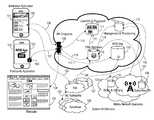
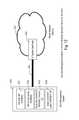
- FIG. 1Ais a conceptual representation of an example wireless network credit exchange system.
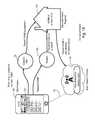
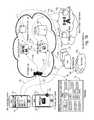
- FIG. 1Bis a system architecture diagram of an example wireless network credit exchange system.
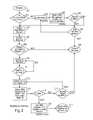
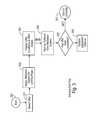
- FIG. 2is a call flow of an example process for wireless network credit redemption.
- FIG. 3is a call flow of an example process for earning wireless network credit.
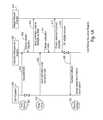
- FIG. 4Ais a sequence diagram describing signaling for an example session to link a device to a client system for redemption.
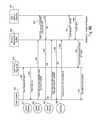
- FIG. 4Bis a sequence diagram describing signaling for an example session to redeem a wireless network credit.
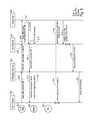
- FIG. 5is a sequence diagram describing signaling for an example session to earn a wireless network credit by completing an offer on a client system.
- FIG. 6is a flow chart describing of an example process for generating a dynamic offer wall, which may be generation performed by an offer mediation system.
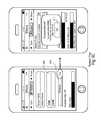
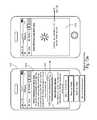
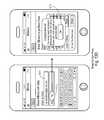
- FIG. 7A-Bare a sequence of screenshots describing an example client user interface for a user earning wireless network credits on a client system.
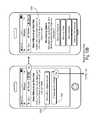
- FIG. 8A-Care a sequence of screenshots describing an example client UX for a user redeeming wireless network credits onto a mobile data plan for a client device.
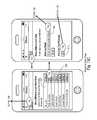
- FIG. 9A-Dare a sequence of screenshots describing an example client UX for a user linking a device to client system for redemption.
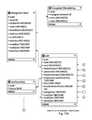
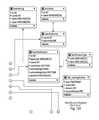
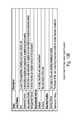
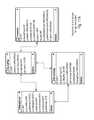
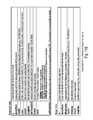
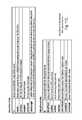
- FIG. 10A-Eare an example data model used by a dedicated client system.
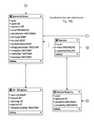
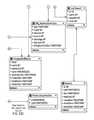
- FIG. 11A-Cis an example data model used by the operator management system.
- FIG. 12is a functional diagram describing an example interface between an operator management system and a mobile network operator.
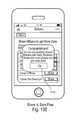
- FIG. 13A-Eis a sequence of screenshots describing an example client UX for a user earning wireless network credits for sharing and interacting with social networks.
- FIG. 14shows an example of a computer device and a mobile computer device that can be used to implement the techniques described here.
- a new value-based pricing model for the wireless industryis needed; a new model where packaging mobile broadband as a reward for engagement can create value for stakeholders that are willing to subsidize its cost as a result.
- This specificationdiscloses a value exchange platform allowing users to earn wireless network credits and redeem those credits on a mobile data plan. Earning wireless network credits is enabled through completing engagement offers, achieving in-application milestones or watching and/or engaging with advertisements.
- a useris presented with a wall of offers in a dedicated application and each of the offers lists a sponsor, a reward expressed in terms of a quantity of wireless network credit and one or more actions that upon completion will unlock the reward.
- the wall of offersmay be dynamically assembled through a mediation system sourcing offers from multiple participating advertising networks and sponsors and targeting the user of the wall of offers based on information collected and/or learned about the user.
- an add-on component in a third-party applicationallows a user of that application to earn wireless network credit by accomplishing specific engagement offers within the application.
- an advertiser of that third-party applicationcan sponsor wireless network credit for the user of the application in exchange for increased advertising exposure in the third-party application.
- a wireless network credit redemption capabilityis leveraged to convert and redeem real or virtual currency into mobile broadband, i.e., access to data through a wireless network.
- Earned wireless network creditmay be maintained in a virtual piggybank. Credits can be redeemed towards new or existing mobile data plans using an operator management system that integrates with the billing and charging systems of the mobile network operators that accept the credits.
- FIG. 1Ais a conceptual representation of an example wireless network credit exchange system.
- a user device 150 running a client system 151allows a user to earn wireless network credits by completing an advertising offer 154 .
- An example of an offercould be “Watch a video to completion and earn 100 MB”.
- wireless network creditis deposited into a credit piggybank 159 , acting as an escrow account keeping track of all the wireless credit earned using the wireless network credit exchange system. For example, the total wireless credit balance could show 600 MB of earned credits.
- the usermay decide to redeem some of it and apply a portion of the credit to mobile devices linked to the client system, which can include the user device the client system is running on as well as other mobile devices.
- the usercan decide to redeem 300 MB 158 to a mobile device linked to the account, out of a balance of 600 MB, which decrements the earned balance by 300 MB in the piggybank 159 .
- the wireless network credit exchange systemis connected to a mobile network operator 160 that runs a wireless network that the mobile device is provisioned on 161 .
- a wireless network credit of 300 MBis credited to the wireless network data plan or allotment associated with the mobile device.
- the wireless network credit exchange systemmay follow a typical client/server paradigm.
- the systems and processes described beloware illustratively applied to offers associated with content items that are advertisements, but the systems and processes are also applicable to other content items provided over a network.
- FIG. 1Bis a general system architecture diagram of an example wireless network credit exchange system.
- Client systemsinstantiated as a dedicated application 101 running on a mobile device 100 , a third-party application 102 running on a mobile device 103 and including an add-on component 104 packaging the functionalities of the client system, and a website 105 , connect and can correspond with the value exchange platform 113 through Application Programming Interfaces (API) endpoints 109 by way of client calls 106 , 107 , 108 .
- API endpointsallow the subsystems of the value exchange platform to be exposed as standard web services, abstracting their functionalities and providing security as all calls and callbacks between a client system and the value exchange platform are authenticated and encrypted.
- the value exchange platform 113is composed of multiple subsystems accessible by the client systems 100 , 103 , 105 . These subsystems may include a user info and piggybank system 111 , a management and provisioning system 112 , an offer mediation system 118 and an operator management system 119 .
- the user info and piggybank system 111may be accessible through the API endpoints 109 via a private interface 110 , i.e., an interface that is not exposed to systems external to the value exchange platform.
- That interfacecan be used to retrieve user account information and interact with the piggybank balance.
- An internal interface 115 to the offer mediation system 118is available to allow retrieval of user account information and engagement and conversion statistics from the user info and piggybank system 111 .
- the offer mediation system 118may be accessible via the API endpoints through an internal interface 116 for the purpose of retrieving an offer wall when requested by the client systems.
- the offer mediation system 118may source advertisement offers from multiple ad networks 127 through a dedicated interface 126 , i.e., an interface that is not used by any other systems other the mediation system of value exchange platform.
- Content itemse.g., advertisements or other media files
- associated with offersmay be communicated to the ad networks via interface 128 and communicated to the client system via interface 125 .
- the offer mediation system 118interacts with the management and provisioning system 112 through an internal interface 114 that may be used to retrieve the parameters of a value exchange campaign and the redemption policies provisioned by the mobile network operators 123 through interface 123 . Additionally the offer mediation system 118 retrieves subscriber information stored in the subscriber data base (DB) 124 of a mobile network operator 123 via a private interface 121 .
- the operator management system 119may be reachable from the API endpoints 109 via a private interface 117 for the purpose of verifying eligibility and applying redemption onto the subscriber's balance.
- the operator management system 119may interact with the billing and charging system 120 of the mobile network operator network 123 through a private interface 122 .
- the client interfacepresents wireless network credit earning opportunities to users.
- the client interfacekeeps track of earned credits in a locally cached piggybank, that is, a synchronized copy of the credit balance for the user account that is maintained server side.
- a usercan link one or more personal mobile data plans.
- the one or more mobile data plansmay be registered to one or more mobile devices.
- a linked mobile data planis authenticated and authorized as one of the valid plans to redeem earned credits.
- a series of security mechanismscan be used to verify the device belongs to the user linking it in the client system. For example, the software routine can check that the phone number (also known as MSISDN, short for Mobile Station Integrated Services Digital Network in the telecom industry) matches the number reported by the operating system running on the device.
- the software routinecan trigger a check from the server-side platform.
- the checkcan include sending a Short Message Service (SMS) message to the device with a numeric short code which the user needs to enter to finalize linking the device and the associated mobile data plan to the client system.
- SMSShort Message Service
- the client interfacemay also be used to initiate the redemption of credits from the piggybank (an account storing a balance of earned wireless network credit) to the mobile data plans linked to the user account.
- piggybankan account storing a balance of earned wireless network credit
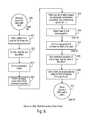
- FIG. 2presents a call flow for an example redemption process.
- the client systemverifies 201 that at least one device is linked to the account to redeem wireless network credits on. If no device is linked, the client system asks the user to add a device 202 , which may include requesting the MSISDN of the device. The MNO management system is queried to verify that the device associate with that MSISDN is eligible for the service 203 . If the device is not eligible, the client system proceeds to ask the user to enter another device 205 . If the user chooses not to add another device, a “cannot redeem” message is presented to the user 206 .
- the client systemqueries the piggybank system 207 and updates the local available wireless network credits balance 208 . If a balance is not available 209 (e.g. no wireless network credits), a “cannot redeem” message may be presented to the user 206 . If a balance is available 209 , the client system asks the user to enter the amount to redeem 210 . If the balance is less than the amount 211 , the user may be asked to reenter a different amount. If the balance is more than the amount 211 , the user is asked to select the device it wishes to redeem for 212 , out of a list of devices linked to the account.
- a balanceis not available 209 (e.g. no wireless network credits)
- a “cannot redeem” messagemay be presented to the user 206 .
- the client systemasks the user to enter the amount to redeem 210 . If the balance is less than the amount 211 , the user may be asked to reenter a different amount. If the balance is more than the amount 211 ,
- the MNO management systemmay be queried to verify that the device associated with that MSISDN is eligible for redemption of wireless network credit 213 . If it is not eligible 214 , the users may be asked to select a different device 215 . If no other device is available or the user chooses not to proceed, a “cannot redeem” message may be presented to the user 206 . If the selected device is eligible 214 , a call is made into the MNO management system 216 to instruct it to credit the amount towards the data plan of the selected system, on the wireless network provider's network that the device is provisioned on. A successful redemption message may be displayed to the user 217 .
- FIG. 4Ais a sequence diagram describing signaling for an example session to link a device to a piggybank account to allow for redemption.
- the client system 400communicates with the operator management system (OMS) 408 , which communicates with a mobile network operator 414 .
- OMSoperator management system
- a query 404 including the MSISDN identifier of the device being linkedis made to the OMS 408 .
- OMS 408may perform an internal operator eligibility procedure 409 to determine if the device is eligible (for instance, a mobile network provider may decide that only a subset of the devices available on their network are eligible for the wireless network credit redemption service); and proceeds with sending a random verification code in a message 410 that passes through the mobile network operator's (MNO) 414 wireless network (e.g., via SMS (Short Messaging System), by leveraging commercial SMS gateways) to the device identified by the MSISDN.
- MNOmobile network operator's
- SMSShort Messaging System
- the OMS 408initiates an internal verification procedure 411 to match the code sent in 405 of the verification code generated and cached locally. Upon a match, the OMS 408 may initiate a subscriber's data plan eligibility check (for instance, a mobile network operator would want to ensure that the subscriber's data plan is active and in good standing) 412 with the MNO 414 . Upon receiving a validation message 413 verifying the eligibility, the OMS 408 may issue a success callback 406 to the client system 400 and the logical step 403 of linking the device to the client system 400 is achieved.
- a subscriber's data plan eligibility checkfor instance, a mobile network operator would want to ensure that the subscriber's data plan is active and in good standing
- the OMS 408may issue a success callback 406 to the client system 400 and the logical step 403 of linking the device to the client system 400 is achieved.
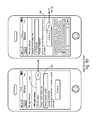
- FIG. 9A-Dare a sequence of screenshots describing an example client UX for a user linking a device to client system for redemption.
- a client system instantiated as a dedicated mobile application 901 running on a mobile device 900presents a settings pane 902 where user can manage the devices linked to an account 903 .
- a userinitiates the process of linking a device by invoking a “add device” 905 button that presents a secondary pane looking for additional input about the device, e.g., a device name 906 and device phone number 907 (also known as MSISDN).
- Upon validation 908the device is added to the list of linked device but needs to be verified 909 .
- the MNO management systemupon verifying eligibility will send a verification code to the mobile device 900 .
- the usermay input it in a 910 field and validate the operation 913 .
- the verification code 912is transmitted to the MNO management system.
- a success message 914may be displayed to the user.
- FIG. 4Bis a sequence diagram describing signaling for an example session to redeem wireless network credit onto a mobile data plan of a device linked to a client system.
- the client system 450communicates with a user info and piggybank system (UIPS) 455 and operator management system (OMS) 456 that communicates with a mobile network operator (MNO) 457 .
- UIPSuser info and piggybank system
- OMSoperator management system
- MNOmobile network operator
- a check balance call 458 passing a userIDmay be made to the UIPS 455 and a balance amount may be returned in step 459 to the client system 450 .
- the usermay select a device to redeem on.
- the client system 450makes a call 460 to the OMS 456 to check that the data plan is valid and eligible for redemption, passing a userID and MSISDN.
- the OMS 456may issue a call 461 to the relevant MNO 457 to check the data plan and eligibility status for the MSISDN. Although the device is already linked, that step may be useful to ensure that the data plan is still eligible (for instance, the data plan may have been in good standing at the time of the original linking and fallen out of status, therefore not eligible anymore).
- the OMS 456Upon receiving a validation answer 462 from the MNO 457 , the OMS 456 issues a proceed call 463 to the client system 450 .
- the next logical stepis for the user to select an amount to redeem 453 , which may trigger a validation call to the OMS 456 to check whether the amount entered is within the min/max redemption limits for that MSISDN.
- a proceed call 465 in response from the OMS 456clears the path for the redeem logical step 454 .
- a redeem call 466passing the userID and MSISDN is issued to the OMS 456 , which proceeds with a credit call 467 containing the credit amount and the MSISDN to the MNO 457 .
- the OMS 456Upon receiving a confirmation call 468 from the MNO 457 to the OMS 456 , the OMS 456 informs the UIPS 455 with a decrement amount call 469 containing the userID. Once the balance is decremented the UIPS 455 may return the updated balance to the client system 450 with a success and update balance call 470 .
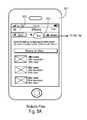
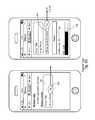
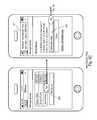
- FIG. 8A-Care a sequence of screenshots describing an example client UX for a user redeeming wireless network credit onto a mobile data plan for a client device.
- a client system instantiated as a dedicated mobile application 803 running on a mobile device 801presents an earning pane displaying offers.
- the redeem option 802the user is presented with a redeem pane, showing a list of devices 804 linked to the user account that can be used to redeem earned wireless network credits.
- the usermay be presented additional information, including an input mechanism to select an amount to redeem 806 , an information panel indicating of the balance available in the piggybank 807 and a usage panel indicating the data usage level for the data plan the selected device is on.
- an amount to redeem 809the user confirms the transaction by hitting a redeem button 810 .
- a successful transaction message 811may be displayed to the user.
- the client interfacemay include a social framework allowing users to connect the application to the social networks they participate in.
- social servicesinclude Facebook and Twitter for instance. These services publish Application Programming Interface (API) capabilities for third-party services and applications to authenticate, retrieve social graph information, and generally interact with the functionalities offered by these services (e.g., post a message on a user's Facebook wall, send a tweet to Twitter on behalf of a user).
- APIApplication Programming Interface
- the social frameworkmay abstract the interaction with the various social networks and normalize the differences between their respective data models. For example, the social framework could retrieve the social graph for the same user on both Facebook and Twitter as well as the local address book on the user device and consolidate it into a single graph, pruning duplicates and normalizing the data models used.
- the social frameworkallows users to share their achievements on social networks and earn additional wireless network credit for sharing, engaging and recommending the system to their social connections.
- the social framealso enables the gifting of mobile data broadband earned and stored in a virtual piggybank between a user and their social connections.
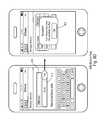
- FIG. 13A-Eare a sequence of screenshots describing an example client UX for a user earning wireless network credit for sharing and interacting with social networks.
- a client system instantiated as a dedicated mobile application 1314 running on a mobile device 1300presents a sharing panel 1302 offering various options for a user to earn additional wireless network credits for sharing the application to other subscribers. Sharing can include recommending the system client to contacts and inviting them to sign up for the service. Multiple sharing options are presented, including sharing to address book entries, sharing to various social networks, sharing via email or sharing via text message. An interesting example of sharing to address book entries can be initiated by selecting the option 1301 .
- the client system 1314looks up the address book stored on the device 1300 and presents the user with the options of sharing with all eligible contacts 1304 and sharing to specific contacts 1305 .
- Contactsmay be eligible a phone number (MSISDN) included in the contact information is eligible for the service provided by the value exchange platform.
- MSISDNphone number
- a devicemay be eligible for service if the wireless network on which the mobile device is provisioned can be integrated with the MNO management system.
- the client system 1314may automatically send an email to all eligible contacts and the user may be notified of the action 1306 .
- the userdecides to choose specific contacts, the user may be presented with a list of all eligible contacts 1307 .
- Sharing with one of those contacts 1309may present the user with the options of sharing by email 1308 and of sharing by text message 1310 to the eligible phone number in the contact information for the selected contact.
- the usermay be notified with a success message 1313 . If the user decides to share via email 1308 , the user may be prompted to enter or select an email address 1311 and proceed with the sharing 1312 .
- the usermay be notified with a success message 1315 .
- the client interfacecan optionally include the monitoring of balances, billing cycles and usage information for the mobile data plans linked to it.
- the client interfacecan monitor the data usage and runs statistical analysis and heuristics on it in order to forecast when a mobile plan will be depleted and make recommendations to the users on much and when to use available credits in the piggybank based on the available balance, to avoid overage charges and wasting credits.
- a statistical analysismay include compiling usage patterns for a collection of subscriber data plans with similar subscriber demographics and using similar devices and using historical data to determine the likelihood that the current subscriber's data plan will be depleted before the end of the billing cycle.
- a heuristicmay include collecting usage pattern data on the current subscriber and determining that over time, weekend days are 50% more intensive than week days and analyzing the type of days before the end of the billing cycle against the data usage left in the data allotment.
- redeemed credits that are unused at the end of the billing cyclecan be flushed by the mobile operator.
- userscan define triggers and threshold preferences for each of their mobile data plans or put the client system in full autopilot mode, i.e., letting the client system determine the best strategy to replenish linked mobile data plans with credits available in the piggybank.
- FIG. 10A-Dis an example data model used by a dedicated client system.
- the client system data modelmay be used by the client system to efficiently store and access data used to implement the techniques described in this specification.
- the client systemcan be instantiated in different ways depending on the use case.
- the client interfaceincludes a dedicated mobile application.
- the mobile applicationallows mobile users to view their current mobile data plan information and get a usage summary of their mobile consumption in real-time.
- the mobile applicationmay also permit earning wireless network credit in exchange for completing engagement offers, achieving in-app milestones or watching advertisements.
- the mobile applicationallows users to manage and monitor the virtual piggybank and configure policies and preferences for the redemption of earned credits across any of the mobile data plans linked to the piggybank account.
- the client system as a dedicated mobile application 101may be implemented as software, hardware or a combination of software and hardware that is executed on a processing apparatus, such as the mobile computing device 1450 illustrated in FIG. 14 .
- FIG. 3is a call flow of an example process for earning wireless network credit.
- the userselects an offer 301 out of all the offers presented by the client system.
- the mediation systemis queried to retrieve the content item (e.g., an advertisement, web form, a video, a landing page, etc.) associated with the offer 302 .
- the content itemis displayed and may describe the conditions and parameters of the offer 303 and include the assets related to the offer if any (e.g., if the offer is a video offer for which upon a completed watch, the user is rewarded wireless network credits, the video would be displayed in 303 ).
- the client systemmay wait for a callback confirmation from the mediation system 304 , indicating whether the offer was not successfully completed or not 305 . If the offer was completed, the piggybank balance may be immediately credited with the wireless network credit corresponding to the offer 306 . If the offer has not been completed 305 , a “did not complete offer” message may be displayed 307 and the user may be redirected to the display of the content item for the offer 303 .
- FIG. 5is a sequence diagram describing signaling for an example session to earn wireless network credit by completing an offer on a client system.
- the client system 500communicates with a mediation system 504 that communicates with an ad network 505 , which communicates with an advertiser 506 .
- a query offer page call 507 passing the offerIDis made to the mediation system 504 .
- the offer pagecontains the details of the offer (including information for the bandwidth reward to be earned) and what action the user needs to perform to complete the offer.
- the mediation systemmay query the ad network 505 with a call 508 for the offer page details, which is relayed to the advertiser 506 with a call 509 to query offer assets (e.g., an advertisement) for the content item that will be displayed to the user.
- the content itemis the secondary layer of an offer. For instance, if an offer is to fill out a survey, the content item will be the survey questions with the proper branding and a means to submit the answers.
- the ad network 505may build the content item.
- the ad network 505may assemble the conditions of the offer, including the assets required for completion into a format that can be read by the client system 500 (e.g., an HTML page can be used).
- the content itemmay contain one or more trackers, e.g., a callback software code that triggers an action (such as calling a tracker portal) when the action related to the offer is performed. For example, if the offer is related to watching a video to completion, once the video player ends, the tracker may call the tracker portal.
- the content itemmay be sent by the ad network 505 to the mediation system 504 via a call 516 , which relays it to the client system via a call 517 .
- the logical step of displaying the content item 502may be performed by the client system 500 .
- the advertiser 506may notify 513 the ad network 505 with a notification of offer completion for offerID, at which point the ad network 505 triggers a success callback 512 for offer ID to the mediation system 504 which notifies 511 the client system 500 that the offer has been successfully completed and the reward should be earned.
- the rewardmay subsequently be added to an account in the piggybank system by the offer mediation system syncing rewards by transaction ID for MSISDN.
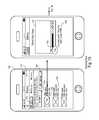
- FIG. 7A-Bare a sequence of screenshots describing an example client UX for a user earning wireless network credits on a client system.
- a client system instantiated as a dedicated mobile application 701 running on a mobile device 700presents an earning pane (e.g. “the offer wall”) 702 , showing a list of offers 706 and options to restrict offers only to the highest earners 704 or switch back to showing all the offers available 703 .
- the useris switched a view presenting the offer assets (for instance a video 707 in the representation) and the conditions of the offer 709 . In this example, starting the video player 708 will start the offer completion process.
- a close button 710is available should the user decides to not go forward with the offer.
- the useris returned to the offer wall view 702 , showing an updated list of offers and showing an incremented balance 712 of wireless network credits in the piggybank.
- the carriage (bandwidth) related to the user usage of the applicationis zero-rated, that is, the user is not being charged for the usage and/or it does not count towards the data allotment.
- Zero-rating trafficcan be effectively achieved in multiple ways, via the operator management system described hereinafter.
- Real-time creditingIn some implementations, the client system keeps counters on the usage consumed for interacting, engaging, completing and redeeming an offer. Upon redemption, the total usage counter for that activity is passed to the operator management system residing server. In a subsequent step, the platform uses interfaces exposed by the mobile operator to credit back the usage to the subscriber's mobile data plan.
- Dedicated APNSome mobile operators may define and configure a dedicated APN (Access Point Name), separate from the ones used for charging the usage of mobile content to the mobile subscriber, for the purpose of defining a different billing account. Under this scenario, the interface routes the application traffic through that special APN. The traffic is charged to the provider and not counted towards the subscriber's allotment, effectively zero-rating it.
- APNAccess Point Name
- DPI-based accountingSome mobile operators may operate DPI (Deep Packet Inspection) in their network, that is hardware and software that inspects traffic from and to mobile devices for a number of purposes; one such purpose is assigning a charging rule to traffic matching specific pattern signatures.
- the service providermay define and provision a service signature ahead of time with the mobile operator so that all the client application traffic would effectively be recognized as to being charged to the service provider, effectively zero-rating it for the subscriber.
- the client interfacecan be a website for mobile or desktop browsers and/or included as a web widget in a third-party web application or built on top of a third-party web portal (e.g., a social network web portal).
- the client system website 105may be implemented as software, hardware or a combination of software and hardware that is executed on a processing apparatus, such as one or more computing devices (e.g., a computer system as illustrated in FIG. 14 ).
- the client interfacecan be implemented as an add-on library or Software Development Kit (SDK) that may be integrated by third party developers and service providers.
- SDKSoftware Development Kit
- the add-on componentallows third-party content and service providers to personalize the engagement definition and completion policies (e.g., achieving in-app milestones, performing specific tasks, etc.).
- the add-on componentallows for wireless network credit to be earned and stored in the global piggybank or in a dedicated piggybank that is specific to the application. Dedicated, application-specific piggybanks are operated by the same server-side infrastructure maintaining the global piggybank.
- the add-on componentprovides multiple User Interface (UI) presentation layers, e.g., rich-media graphical widgets offering different options for third-party content providers to present and interact with the capabilities of the value exchange platform.
- UI presentation layersare built as separate modules for the collection, redemption and exchange of wireless network credit. These modules can include banners, stamps, callouts, and/or separate panes, among other things.
- the add-on componentmay provide a pre-packaged way for the advertisers of the third-party application to make their ads eligible to earn wireless network credit upon seeing or interacting with them. For example, a mobile application publisher could configure the add-on component so that the engagement definition includes clicking on their advertisers' advertisement.
- the click though and conversion rate for an advertising campaignmay be improved and the mobile application publisher may command a higher price for the advertising campaign from their advertisers.
- the attributes of the campaign in the management portale.g., which advertisements are eligible for the rewards, how much the rewards should be, how the users should be alerted of the reward, where is the landing page upon completion, etc.
- the advertisementscan be automatically updated to be “bandwidth-earning capable.”
- the client system as add-on or SDK 104may be implemented as software, hardware or a combination of software and hardware that is executed on a processing apparatus, such as the mobile computing device 1450 illustrated in FIG. 14 .
- the server side portion of the value exchange platformmay be a cloud-based service composed of multiple components that are exposed to the client systems via a set of network APIs.
- the offer mediation systeminterfaces to both the client system and or more advertising networks.
- the mediation systemcollects and manages a pipeline of offers for the users of the system. Data reflecting offers from the pipeline may be transmitted, via a network interface of the mediation system, to a client system to facilitate presentation of the offers as a consistent “offer wall” within the client system.
- the mediation systemmay receive content items (e.g., advertisements and media) from multiple advertising networks to maintain a steady pipeline for the users.
- the mediation layermay be implemented as software that is executed on a server and the content items may be received via a network interface of the mediation system.
- the mediation systemmay also receive contextual information known about the users.
- Contextual informationcould include age, gender, location, preferred web destinations, app categories installed on their smartphones, typical usage pattern, etc. . . . .
- Contextual information about a usermay be passed on anonymously by mobile operators for targeting enrichment or as primary data collected first-hand at signup (user opt-in).
- Contextual informationmay be received via a network interface of the mediation system.
- the mediation systemorganizes and prioritizes offers in the pipeline based on deterministic information about the users.
- the organization and prioritization of offers in the pipelineis also based on historical data, such as past completion and engagement rates for similar offers or statistical analysis such as offer acceptance among a population or subset of users.
- the offer mediation system 118may be implemented as software, hardware or a combination of software and hardware that is executed on a processing apparatus, such as one or more computing devices (e.g., a computer system as illustrated in FIG. 14 ).
- a processing apparatussuch as one or more computing devices (e.g., a computer system as illustrated in FIG. 14 ).
- FIG. 6is a flow chart describing an example process for generating a dynamic offer wall, which may be performed by the offer mediation system 118 .
- the processstarts upon receiving a request 600 made by a client system for a specific user ID.
- the offersmay be fetched from the partner ad networks and aggregated in a single list.
- the listmay be curated and offers are classified 602 into broad categories (e.g., videos, signups, surveys, etc.) and tagged. Redundant offers may be pruned 603 from the aggregated list.
- the offer mediation layerfetches 604 the campaign parameters (such as country and age restrictions, offer types, OS restrictions, etc. . . . ) from the management and provisioning portal 112 .
- the campaign parametersmay be used to filter out 605 undesired offers from the aggregated list.
- the campaign parameterscould include a policy that the offers be rated PG13; all offers not matching that criteria would be filtered out
- the mediation system 118may query 606 the user information and piggybank system 111 for list of information and demographics attributes, if available.
- the mediation system 118may also query 607 the user information and piggybank system 111 for historical engagement and conversion metrics, if available.
- a statistical analysismay be run of conversion rates for each of the offers in the aggregated list of offers and theses offers may be ranked 609 the result by decreasing order of PEV (Potential Earning Value).
- the resultmay be a weighted list of the highest reward potential offers likely to be of interest to the user.
- the weighted listmay be used to construct the dynamic offer wall. For example, offers with high PEV may be placed in prominent positions (e.g., top-center, top-left, or center-center) within the offer wall while offers with lower PEV may be placed in less prominent positions within the offer wall.
- the generated offer wallmay be sent 610 to the client system.
- the mediation systemdetermines a currency conversion between the monetary value (e.g., dollar equivalent) of the offer in the advertising economy and the marginal cost of cellular bandwidth so that offers may be presented to the user as a simple “ads for bandwidth” exchange (e.g., Complete this offer and earn 100 MB of bandwidth) instead of creating an intermediary conversion step between the advertising economy and the cellular economy.
- a signup offer for a servicecan have a monetary value based on the average lifetime value of a user of that service.
- An improved click through rate for a display advertisementcan have a monetary value equivalent in CPM (Cost Per Mille) an advertiser is willing to pay for the uplift.
- CPMCost Per Mille
- An offer to download a new applicationcan have a monetary value equivalent to the marketing spend the publisher is willing to pay to acquire a new user.
- the marginal cost of cellular bandwidthdepends on a number of factors, including type of cellular networks, time and location and the bandwidth wholesale agreement between the service provider and the mobile operator.
- the wholesale price agreed upon between the service provider and the mobile operatoris stored in the management and provisioning system and accessed by the mediation system to convert the monetary value of an advertisement offer into an equivalent wireless network credit amount.
- the virtual piggybankis a central repository for all the credits earned by users or gifted by third-party entities to users. It is a virtual account that resides server side. Client side representations of that piggybank may be updated via explicitly polling the system or a system of software callbacks when the balance has been updated server side and the client system needs to be updated. Other user information may also be stored in this system. For example, the user information and piggybank system 111 may store registration data about a user, including a list of linked user mobile devices, and contextual data for the user.
- the user information and piggybank system 111may be implemented as software, hardware or a combination of software and hardware that is executed on a processing apparatus, such as one or more computing devices (e.g., a computer system as illustrated in FIG. 14 ).
- user information and piggybank system 111includes software executed on the same computing device as software implementing the offer mediation system 118 .
- user information and piggybank system 111 and the offer mediation systemrun on separate computing devices that communicate over a network with each other.
- MNOMobile Network Operator
- the operator management systemis set of network interfaces to mobile operators' networks to support the following activities:
- the MNO management systemprovides an interface used for authenticating a user of the system and verifying the mobile data plan and/or device is eligible for the redemption of wireless network credit. For example, processes for linking a device and verifying that it is eligible for redemption of wireless network credit are described in relation to FIG. 4A and FIG. 9A-D .
- the MNO management systemprovides an interface used for redemption of wireless network credit from a piggybank to an active mobile data plan.
- the wireless network creditmay be applied towards the mobile data allotment in real-time. For example, processes for redemption of wireless network credit are described in relation to FIG. 2 , FIG. 4B , and FIG. 8A-C .
- the MNO management systemprovides an interface used to retrieve and change the details and conditions of a mobile data plan. It may also be used to retrieve real-time balance and usage information for the mobile data plan.
- the MNO management systemprovides an interface used to query certain attributes regarding a wireless subscriber to enrich the targeting of advertising offers.
- Mobile operatorshave long had a direct relationship with their customers, yielding access to data that includes personal profiles, location, spending power, and content preferences and consumption. They are sitting on a cache of contextual data about their subscribers—preferences, devices, location, subscription and billing information, and interests.
- This contextual datamay be used to enhance the offer selection process, as described above in relation to the offer mediation system. This information may be provided anonymously via the mobile operator or the mobile operator may offer the user a way to opt in or opt out of the data sharing.
- the MNO management systemprovides an interface used to manage the acquisition of bulk mobile data bandwidth for use as incentives (signup bonuses, referrals, continued engagement), that is wireless network credits distributed as bonus rewards to incentivize users of the system to perform certain operations.
- incentivesfor use as incentives (signup bonuses, referrals, continued engagement), that is wireless network credits distributed as bonus rewards to incentivize users of the system to perform certain operations.
- the service providerwould need interface management interfaces into the MNO to acquire and distribute those wireless network credits outside of those earned through advertising offer redemption.
- the MNO management systemfacilitates wireless network usage crediting and zero-rating, that is credit back to the subscriber the equivalent amount of bandwidth used to interact and complete bandwidth offers (for instance, if the offer is to watch a video through completion, the usage associated with streaming the video and associated media assets would be credited back to the subscriber's data plan). Should the zero-rating be performed using a DPI-based system as described earlier, the MNO management system would collect the traffic signatures required to provision the DPI system deployed by the MNO for the marking of traffic streams.
- the MNO management system 119may be implemented as software, hardware or a combination of software and hardware that is executed on a processing apparatus, such as one or more computing devices (e.g., a computer system as illustrated in FIG. 14 ).
- the MNO management system 119includes software executed on the same computing device as software implementing the offer mediation system 118 .
- MNO management system 119 and the offer mediation system 118run on separate computing devices that communicate over a network with each other.
- FIG. 11A-Cis an example of a data model used by the MNO management system.
- the MNO management system data modelmay be used by the MNO management system to efficiently store and access data used to implement the techniques described in this specification.
- FIG. 12is a functional diagram describing an example interface between the MNO management system and a mobile network operator.
- the interaction between the MNO management system 1200 and the mobile network 1207 subsystems, for instance billing, charging, subscriber information databasescan be abstracted via a set of special-purposed interfaces 1206 exposed by the MNO's IT system.
- Connectivity between the MNO management system 1200 and the MNO's network 1207may be a secure, dedicated network connection 1205 , such as a Virtual Private Network (VPN).
- VPNVirtual Private Network
- the IT system interfaces 1206provides programming interfaces for the tasks performed by the MNO management system, such as getting data plan information associated with a MSISDN 1201 , retrieving current usage information for a MSISDN 1202 , applying a data promotion on the data plan associated with a MSISDN 1203 (passing an amount expressed as a number of wireless credits to credit), and querying the status of a promotion for a MSISDN by transaction ID 1204 .
- the management & provisioning system 112may be used by mobile operators, advertisers and content partners to provision and configure the conditions of the value exchange. Mobile operators may use it to specify eligible customers and devices (e.g., by defining eligibility conditions). Mobile operators may also use the management & provisioning system 112 to define redemption policies (e.g., setting a maximum of xxx megabytes that can be redeemed per billing cycle, allowing the redemption of data credits as cash credits on the user's wireless bill). In some implementations, the management & provisioning system 112 may be used by mobile operators to facilitate customer care operations and billing. In some implementations, advertisers and content partners may use the management & provisioning system 112 to define the conditions of the sponsorship campaigns, the targeted demographics, and monitor key performance and analytics 130 .
- the management & provisioning system 112may be implemented as software, hardware or a combination of software and hardware that is executed on a processing apparatus, such as one or more computing devices (e.g., a computer system as illustrated in FIG. 14 ).
- the management & provisioning system 112includes software executed on the same computing device as software implementing the offer mediation system 118 .
- management & provisioning system 112 and the offer mediation system 118run on separate computing devices that communicate over a network with each other.
- FIG. 14shows an example of a generic computer device 1400 and a generic mobile computing device 1450 , which may be used with the techniques described here.
- Computing device 1400is intended to represent various forms of digital computers, such as laptops, desktops, workstations, personal digital assistants, servers, blade servers, mainframes, and other appropriate computers.
- Computing device 1450is intended to represent various forms of mobile devices, such as personal digital assistants, cellular telephones, smartphones, and other similar computing devices.
- the components shown here, their connections and relationships, and their functions,are meant to be exemplary only, and are not meant to limit implementations of the inventions described and/or claimed in this document.
- Computing device 1400includes a processor 1402 , memory 1404 , a storage device 1406 , a high-speed interface 1408 connecting to memory 1404 and high-speed expansion ports 1410 , and a low speed interface 1412 connecting to low speed bus 1414 and storage device 1406 .
- Each of the components 1402 , 1404 , 1406 , 1408 , 1410 , and 1412are interconnected using various busses, and may be mounted on a common motherboard or in other manners as appropriate.
- the processor 1402can process instructions for execution within the computing device 1400 , including instructions stored in the memory 1404 or on the storage device 1406 to display graphical information for a GUI on an external input/output device, such as display 1416 coupled to high speed interface 1408 .
- multiple processors and/or multiple busesmay be used, as appropriate, along with multiple memories and types of memory.
- multiple computing devices 1400may be connected, with each device providing portions of the necessary operations (e.g., as a server bank, a group of blade servers, or a multi-processor system).
- the memory 1404stores information within the computing device 1400 .
- the memory 1404is a volatile memory unit or units.
- the memory 1404is a non-volatile memory unit or units.
- the memory 1404may also be another form of computer-readable medium, such as a magnetic or optical disk.
- the storage device 1406is capable of providing mass storage for the computing device 1400 .
- the storage device 1406may be or contain a computer-readable medium, such as a floppy disk device, a hard disk device, an optical disk device, or a tape device, a flash memory or other similar solid state memory device, or an array of devices, including devices in a storage area network or other configurations.
- a computer program productcan be tangibly embodied in an information carrier.
- the computer program productmay also contain instructions that, when executed, perform one or more methods, such as those described above.
- the information carrieris a computer- or machine-readable medium, such as the memory 1404 , the storage device 1406 , memory on processor 1402 , or a propagated signal.
- the high speed controller 1408manages bandwidth-intensive operations for the computing device 1400 , while the low speed controller 1412 manages lower bandwidth-intensive operations. Such allocation of functions is exemplary only.
- the high-speed controller 1408is coupled to memory 1404 , display 1416 (e.g., through a graphics processor or accelerator), and to high-speed expansion ports 1410 , which may accept various expansion cards (not shown).
- low-speed controller 1412is coupled to storage device 1406 and low-speed expansion port 1414 .
- the low-speed expansion portwhich may include various communication ports (e.g., USB, Bluetooth, Ethernet, wireless Ethernet) may be coupled to one or more input/output devices, such as a keyboard, a pointing device, a scanner, or a networking device such as a switch or router, e.g., through a network adapter.
- input/output devicessuch as a keyboard, a pointing device, a scanner, or a networking device such as a switch or router, e.g., through a network adapter.
- the computing device 1400may be implemented in a number of different forms, as shown in the figure. For example, it may be implemented as a standard server 1420 , or multiple times in a group of such servers. It may also be implemented as part of a rack server system 1424 . In addition, it may be implemented in a personal computer such as a laptop computer 1422 . Alternatively, components from computing device 1400 may be combined with other components in a mobile device (not shown), such as device 1450 . Each of such devices may contain one or more of computing device 1400 , 1450 , and an entire system may be made up of multiple computing devices 1400 , 1450 communicating with each other.
- Computing device 1450includes a processor 1452 , memory 1464 , an input/output device such as a display 1454 , a communication interface 1466 , and a transceiver 1468 , among other components.
- the device 1450may also be provided with a storage device, such as a microdrive or other device, to provide additional storage.
- a storage devicesuch as a microdrive or other device, to provide additional storage.
- Each of the components 1450 , 1452 , 1464 , 1454 , 1466 , and 1468are interconnected using various buses, and several of the components may be mounted on a common motherboard or in other manners as appropriate.
- the processor 1452can execute instructions within the computing device 1450 , including instructions stored in the memory 1464 .
- the processormay be implemented as a chipset of chips that include separate and multiple analog and digital processors.
- the processormay provide, for example, for coordination of the other components of the device 1450 , such as control of user interfaces, applications run by device 1450 , and wireless communication by device 1450 .
- Processor 1452may communicate with a user through control interface 1458 and display interface 1456 coupled to a display 1454 .
- the display 1454may be, for example, a TFT LCD (Thin-Film-Transistor Liquid Crystal Display) or an OLED (Organic Light Emitting Diode) display, or other appropriate display technology.
- the display interface 1456may comprise appropriate circuitry for driving the display 1454 to present graphical and other information to a user.
- the control interface 1458may receive commands from a user and convert them for submission to the processor 1452 .
- an external interface 1462may be provided in communication with processor 1452 , so as to enable near area communication of device 1450 with other devices. External interface 1462 may provide, for example, for wired communication in some implementations, or for wireless communication in other implementations, and multiple interfaces may also be used.
- the memory 1464stores information within the computing device 1450 .
- the memory 1464can be implemented as one or more of a computer-readable medium or media, a volatile memory unit or units, or a non-volatile memory unit or units.
- Expansion memory 1474may also be provided and connected to device 1450 through expansion interface 1472 , which may include, for example, a SIMM (Single In Line Memory Module) card interface.
- SIMMSingle In Line Memory Module
- expansion memory 1474may provide extra storage space for device 1450 , or may also store applications or other information for device 1450 .
- expansion memory 1474may include instructions to carry out or supplement the processes described above, and may include secure information also.
- expansion memory 1474may be provided as a security module for device 1450 , and may be programmed with instructions that permit secure use of device 1450 .
- secure applicationsmay be provided via the SIMM cards, along with additional information, such as placing identifying information on the SIMM card in a non-hackable manner.
- the memorymay include, for example, flash memory and/or NVRAM memory, as discussed below.
- a computer program productis tangibly embodied in an information carrier.
- the computer program productcontains instructions that, when executed, perform one or more methods, such as those described above.
- the information carrieris a computer- or machine-readable medium, such as the memory 1464 , expansion memory 1474 , memory on processor 1452 , or a propagated signal that may be received, for example, over transceiver 1468 or external interface 1462 .
- Device 1450may communicate wirelessly through communication interface 1466 , which may include digital signal processing circuitry where necessary. Communication interface 1466 may provide for communications under various modes or protocols, such as GSM voice calls, SMS, EMS, or MMS messaging, CDMA, TDMA, PDC, WCDMA, CDMA2000, or GPRS, among others. Such communication may occur, for example, through radio-frequency transceiver 1468 . In addition, short-range communication may occur, such as using a Bluetooth, WiFi, or other such transceiver (not shown). In addition, GPS (Global Positioning System) receiver module 1470 may provide additional navigation- and location-related wireless data to device 1450 , which may be used as appropriate by applications running on device 1450 .
- GPSGlobal Positioning System
- Device 1450may also communicate audibly using audio codec 1460 , which may receive spoken information from a user and convert it to usable digital information. Audio codec 1460 may likewise generate audible sound for a user, such as through a speaker, e.g., in a handset of device 1450 . Such sound may include sound from voice telephone calls, may include recorded sound (e.g., voice messages, music files, etc.) and may also include sound generated by applications operating on device 1450 .
- Audio codec 1460may receive spoken information from a user and convert it to usable digital information. Audio codec 1460 may likewise generate audible sound for a user, such as through a speaker, e.g., in a handset of device 1450 . Such sound may include sound from voice telephone calls, may include recorded sound (e.g., voice messages, music files, etc.) and may also include sound generated by applications operating on device 1450 .
- the computing device 1450may be implemented in a number of different forms, as shown in the figure. For example, it may be implemented as a cellular telephone 1480 . It may also be implemented as part of a smartphone 1482 , personal digital assistant, or other similar mobile device.
- Wireless networksAny voice or data communication network that includes a wireless portion through which a user device communicates, such as a cellular network, the Internet, LANs, WANs, VPNs, WiFi, and Bluetooth to name a few.
- WirelessAny parties that own, control, or operate facilities of any kind that provide wireless communication services to customers, such as cellular communication operators and short-range wireless network operators.
- WirelessAny kind of facility, service, equipment, or communication capability that enables or delivers or provides services or mobile wireless communication by a mobile device, such as communication communication of voice or data or content, services including mobile and other broadband services.
- Broadband servicesWireless or mobile or other communication services that provide a large enough throughput or bandwidth to permit images, videos, and audio to be presented, for example, in real-time.
- Loyalty programA program designed to encourage customers of a product or service to continue or enhance their relationship to the product or service or to the entity that supplies it or to promote the initiation of such a relationship by new or previous customers. Offers Proposals by offering parties to provide value of one kind to other parties in exchange for conduct of defined kinds by the other parties.
- Content item A content itemis any data that can be provided over a communications network. Examples of content items include: an advertisement possibly including a link to a landing page, a video file, an audio file, streaming video, streaming audio, a web form to be filled in by a user, a game, and a mobile app, among others.
- implementations of the systems and techniques described herecan be realized in digital electronic circuitry, integrated circuitry, specially designed ASICs (application specific integrated circuits), computer hardware, firmware, software, and/or combinations thereof.
- ASICsapplication specific integrated circuits
- These various implementationscan include implementation in one or more computer programs that are executable and/or interpretable on a programmable system including at least one programmable processor, which may be special or general purpose, coupled to receive data and instructions from, and to transmit data and instructions to, a storage system, at least one input device, and at least one output device.
- the systems and techniques described herecan be implemented on a computer having a display device (e.g., a CRT (cathode ray tube) or LCD (liquid crystal display) monitor) for displaying information to the user and a keyboard and a pointing device (e.g., a mouse or a trackball) by which the user can provide input to the computer.
- a display devicee.g., a CRT (cathode ray tube) or LCD (liquid crystal display) monitor
- a keyboard and a pointing devicee.g., a mouse or a trackball
- Other kinds of devicescan be used to provide for interaction with a user as well; for example, feedback provided to the user can be any form of sensory feedback (e.g., visual feedback, auditory feedback, or tactile feedback); and input from the user can be received in any form, including acoustic, speech, or tactile input.
- the systems and techniques described herecan be implemented in a computing system that includes a back end component (e.g., as a data server), or that includes a middleware component (e.g., an application server), or that includes a front end component (e.g., a client computer having a graphical user interface or a Web browser through which a user can interact with an implementation of the systems and techniques described here), or any combination of such back end, middleware, or front end components.
- the components of the systemcan be interconnected by any form or medium of digital data communication (e.g., a communication network). Examples of communication networks include a local area network (“LAN”), a wide area network (“WAN”), and the Internet.
- LANlocal area network
- WANwide area network
- the Internetthe global information network
- the computing systemcan include clients and servers.
- a client and serverare generally remote from each other and typically interact through a communication network.
- the relationship of client and serverarises by virtue of computer programs running on the respective computers and having a client-server relationship to each other.
Landscapes
- Engineering & Computer Science (AREA)
- Business, Economics & Management (AREA)
- Computer Networks & Wireless Communication (AREA)
- Accounting & Taxation (AREA)
- Development Economics (AREA)
- Strategic Management (AREA)
- Finance (AREA)
- Signal Processing (AREA)
- Game Theory and Decision Science (AREA)
- Entrepreneurship & Innovation (AREA)
- Economics (AREA)
- Marketing (AREA)
- Physics & Mathematics (AREA)
- General Business, Economics & Management (AREA)
- General Physics & Mathematics (AREA)
- Theoretical Computer Science (AREA)
- Management, Administration, Business Operations System, And Electronic Commerce (AREA)
Abstract
Description
| We have used | |
| the term below | . . . to include, for example, any of what we refer |
| broadly . . . | to below, among other things. |
| Mobile device or | Any electronic device that can be carried around by |
| wireless device | a user and can communicate wirelessly, for |
| example, telephones, computers, electronic pads and | |
| tablets, laptops, notebooks, and other devices that | |
| operate on cellular or other wireless telephone | |
| networks or on wireless networks such as WiFi, | |
| Bluetooth, and others. | |
| Wireless networks | Any voice or data communication network that |
| includes a wireless portion through which a user | |
| device communicates, such as a cellular network, | |
| the Internet, LANs, WANs, VPNs, WiFi, and | |
| Bluetooth to name a few. | |
| Mobile operators | Any parties that own, control, or operate facilities of |
| any kind that provide wireless communication | |
| services to customers, such as cellular | |
| communication operators and short-range wireless | |
| network operators. | |
| Wireless | Any kind of facility, service, equipment, or |
| communication | capability that enables or delivers or provides |
| services or mobile | wireless communication by a mobile device, such as |
| communication | communication of voice or data or content, |
| services | including mobile and other broadband services. |
| Broadband services | Wireless or mobile or other communication services |
| that provide a large enough throughput or bandwidth | |
| to permit images, videos, and audio to be presented, | |
| for example, in real-time. | |
| Credits | Any sort of representation of value between a party |
| who owns the credit and a party for whom it | |
| represents a liability, such as, for example, a | |
| voucher, a chit, an entry on an account, an IOU, a | |
| reward, points in a loyalty program, can be used to, | |
| Advertising | Any kind of presentation intended, for example, to |
| inform or influence then thinking or behavior of | |
| others with respect to a product, a service, or an | |
| entity, including, communications, notices, postings, | |
| banners, content, and any other kinds of material or | |
| indicia or packaging or display. | |
| Data plan | Any kind of program that defines an ongoing |
| arrangement for supplying data communication | |
| services such as wireless or mobile communication | |
| services, or broadband services to devices such as | |
| mobile devices. | |
| Loyalty program | A program designed to encourage customers of a |
| product or service to continue or enhance their | |
| relationship to the product or service or to the entity | |
| that supplies it or to promote the initiation of such a | |
| relationship by new or previous customers. | |
| Offers | Proposals by offering parties to provide value of one |
| kind to other parties in exchange for conduct of | |
| defined kinds by the other parties. | |
| Content item | A content item is any data that can be provided over |
| a communications network. Examples of content | |
| items include: an advertisement possibly including | |
| a link to a landing page, a video file, an audio file, | |
| streaming video, streaming audio, a web form to be | |
| filled in by a user, a game, and a mobile app, among | |
| others. | |
Claims (17)
Priority Applications (2)
| Application Number | Priority Date | Filing Date | Title |
|---|---|---|---|
| US13/893,870US10097699B2 (en) | 2012-05-18 | 2013-05-14 | Advertiser supported bandwidth platform |
| US14/325,588US20150019307A1 (en) | 2013-05-14 | 2014-07-08 | Mobile advertising |
Applications Claiming Priority (3)
| Application Number | Priority Date | Filing Date | Title |
|---|---|---|---|
| US201261648802P | 2012-05-18 | 2012-05-18 | |
| US201261708862P | 2012-10-02 | 2012-10-02 | |
| US13/893,870US10097699B2 (en) | 2012-05-18 | 2013-05-14 | Advertiser supported bandwidth platform |
Publications (2)
| Publication Number | Publication Date |
|---|---|
| US20140220927A1 US20140220927A1 (en) | 2014-08-07 |
| US10097699B2true US10097699B2 (en) | 2018-10-09 |
Family
ID=49584203
Family Applications (1)
| Application Number | Title | Priority Date | Filing Date |
|---|---|---|---|
| US13/893,870ActiveUS10097699B2 (en) | 2012-05-18 | 2013-05-14 | Advertiser supported bandwidth platform |
Country Status (9)
| Country | Link |
|---|---|
| US (1) | US10097699B2 (en) |
| EP (1) | EP2850582A4 (en) |
| JP (1) | JP2015520454A (en) |
| KR (1) | KR20150023416A (en) |
| CN (1) | CN104520888A (en) |
| AU (1) | AU2013262973B2 (en) |
| BR (1) | BR112014028578A2 (en) |
| CA (1) | CA2873908A1 (en) |
| WO (1) | WO2013173308A1 (en) |
Cited By (1)
| Publication number | Priority date | Publication date | Assignee | Title |
|---|---|---|---|---|
| US11910236B2 (en) | 2021-10-13 | 2024-02-20 | T-Mobile Usa, Inc. | Adaptive payload sizes for streaming data delivery based on usage patterns |
Families Citing this family (28)
| Publication number | Priority date | Publication date | Assignee | Title |
|---|---|---|---|---|
| US8978149B2 (en)* | 2011-05-17 | 2015-03-10 | Next Issue Media | Media content device, system and method |
| BR112014028578A2 (en) | 2012-05-18 | 2017-06-27 | Aquto Corp | advertiser-supported bandwidth platform |
| US9173072B2 (en)* | 2012-08-28 | 2015-10-27 | Facebook, Inc. | Methods and systems for verification in account registration |
| US10565623B2 (en)* | 2014-01-28 | 2020-02-18 | Oath Inc. | Systems and methods for ad-supported mobile data plans or in-app purchases |
| US20150382244A1 (en)* | 2014-06-27 | 2015-12-31 | T-Mobile Usa, Inc. | Upsell Framework for Network Services |
| US10091131B2 (en) | 2014-07-10 | 2018-10-02 | International Business Machines Corporation | Increased network resources in exchange for sharing of device resources |
| US10146669B2 (en) | 2014-07-25 | 2018-12-04 | International Business Machines Corporation | Indicating a readiness of a change for implementation into a computer program |
| CN105657684B (en)* | 2014-11-12 | 2019-05-14 | 阿里巴巴集团控股有限公司 | The processing method and its device of communication traffic account |
| US10111062B2 (en)* | 2015-02-13 | 2018-10-23 | At&T Mobility Ii Llc | Communication service usage transfer |
| WO2016141355A1 (en) | 2015-03-04 | 2016-09-09 | ShareG, Inc. | System and method for distributing mobile data |
| US10361936B2 (en)* | 2015-08-19 | 2019-07-23 | Google Llc | Filtering content based on user mobile network and data-plan |
| KR102382302B1 (en)* | 2015-11-11 | 2022-04-01 | 주식회사 엘지유플러스 | Method and system for providing data |
| US20170149613A1 (en)* | 2015-11-25 | 2017-05-25 | Aquto Corporation | Distributing bandwidth capacity of a mobile communication network |
| CN108702299B (en) | 2016-02-22 | 2021-07-09 | 索尼移动通讯有限公司 | Method and system for transmitting and receiving data between seller device and buyer device |
| US10957077B2 (en) | 2016-09-01 | 2021-03-23 | Warple Inc. | Systems and methods for obtaining opinion data from individuals via a web widget and displaying a graphic visualization of aggregated opinion data with waveforms that may be embedded into the web widget |
| CA2951685A1 (en)* | 2016-12-15 | 2018-06-15 | 101294542 Saskatchewan Ltd. | Advertising method with user data account incentives |
| WO2018143720A1 (en)* | 2017-02-03 | 2018-08-09 | 주식회사 수산아이앤티 | Method and apparatus for charging data according to exposure to advertisement |
| US20180249017A1 (en)* | 2017-02-27 | 2018-08-30 | Microsoft Technology Licensing, Llc | Data Usage Based Data Transfer Determination |
| CN106992870A (en)* | 2017-03-31 | 2017-07-28 | 苏州乐麟无线信息科技有限公司 | Compatible charging method based on json |
| CN107800573B (en)* | 2017-10-31 | 2018-09-28 | 清华大学 | A kind of broadband promotion method and system based on network reachability calculating |
| WO2019178690A1 (en)* | 2018-03-20 | 2019-09-26 | Airo.Life Inc. | Advertising-subsidized smartphones and advertising, smartphone, and mobile communications systems and methods |
| US11397935B2 (en)* | 2018-04-02 | 2022-07-26 | Hover Developer Services, Inc. | System and method for wireless transactions |
| US10841538B2 (en) | 2018-08-03 | 2020-11-17 | At&T Intellectual Property I, L.P. | Method and apparatus for managing data subsidies in a communication system |
| US11703998B2 (en)* | 2018-08-10 | 2023-07-18 | Eric Gavara | Systems and methods for interfacing with ad networks |
| US10832273B1 (en)* | 2019-04-18 | 2020-11-10 | Capital One Services, Llc | Systems and methods for incentivizing behavior |
| US11182819B2 (en)* | 2019-06-25 | 2021-11-23 | Alef Edge, Inc. | System and method for a digital coin exchange |
| US11425174B2 (en)* | 2019-07-03 | 2022-08-23 | Buckeye Cablevision, Inc. | System for content triggered high-speed data service delivery independent of media delivery mechanisms |
| US11741502B2 (en) | 2021-02-03 | 2023-08-29 | Ohana Corp | System and methods for symbiotic display of ads on mobile devices |
Citations (49)
| Publication number | Priority date | Publication date | Assignee | Title |
|---|---|---|---|---|
| US20020007313A1 (en)* | 2000-07-12 | 2002-01-17 | Khanh Mai | Credit system |
| JP2004110193A (en) | 2002-09-13 | 2004-04-08 | Matsushita Electric Ind Co Ltd | Handling electronic value information |
| US20050234915A1 (en)* | 2002-12-20 | 2005-10-20 | Livio Ricciulli | Hardware support for wire-speed, stateful matching and filtration of network traffic |
| JP2006079203A (en) | 2004-09-07 | 2006-03-23 | Nec Mobiling Ltd | Advertisement distribution system, mobile communication terminal, advertisement display method and advertisement information display control program |
| CN1808793A (en) | 2005-01-19 | 2006-07-26 | Smk株式会社 | Linker plug seat of electric component |
| JP2007013396A (en) | 2005-06-29 | 2007-01-18 | Advanced Media Inc | Advertising content provisioning method in cellular phone system |
| US20070072584A1 (en) | 2005-09-29 | 2007-03-29 | Nikhil Jain | Cellular telephone credit management |
| US7206754B1 (en)* | 2000-06-07 | 2007-04-17 | Donald Spector | System for issuing short life coupons or other promotional devices |
| US7249059B2 (en) | 2000-01-10 | 2007-07-24 | Dean Michael A | Internet advertising system and method |
| US20070189514A1 (en) | 2002-02-26 | 2007-08-16 | 4Th Pass, Inc. | Method and System for Transmission-Based Billing Applications |
| US7263076B1 (en) | 2004-10-09 | 2007-08-28 | Radiuz Networks Llc | System and method for managing a wireless network community |
| US7308426B1 (en) | 1999-08-11 | 2007-12-11 | C-Sam, Inc. | System and methods for servicing electronic transactions |
| US20080167965A1 (en) | 2007-01-09 | 2008-07-10 | Von Nothaus Bernard | Apparatus, system, and method for extracting real world value from a virtual account |
| US20080244666A1 (en) | 2007-03-30 | 2008-10-02 | Verizon Laboratories Inc. | Systems and methods for using incentives to increase advertising effectiveness |
| US20080318559A1 (en) | 2007-06-22 | 2008-12-25 | Porco Gino M | System and method of mobile device advertising |
| US20090005001A1 (en) | 2007-06-28 | 2009-01-01 | Embarq Holdings Company, Llc | System and method for a wireless handset upgrade credit |
| US20090089165A1 (en)* | 2007-09-28 | 2009-04-02 | Embarq Holdings Company, Llc | System and method for a telephony upgrade credit |
| US20100023395A1 (en) | 2008-07-23 | 2010-01-28 | Michael Bugenhagen | System and method for sharing revenue between a content provider and communications service provider for the content provider's use of a content storefront provided by the communications service provider |
| US20100075630A1 (en)* | 2008-09-23 | 2010-03-25 | Russell Tillitt | Method and system for managing credit for subscribers of mobile communications services |
| WO2010037995A1 (en)* | 2008-10-03 | 2010-04-08 | Sony Computer Entertainment Europe Limited | Entertainment system and method |
| US20100169175A1 (en) | 2006-10-30 | 2010-07-01 | Koran Joshua M | Optimization of Targeted Advertisements Based on User Profile Information |
| US20100188994A1 (en)* | 2009-01-28 | 2010-07-29 | Gregory G. Raleigh | Verifiable service billing for intermediate networking devices |
| US7773971B1 (en) | 2006-12-20 | 2010-08-10 | Sprint Spectrum L.P. | Wireless service incentive system for promoting physical health |
| US20100223136A1 (en) | 2009-02-27 | 2010-09-02 | Research In Motion Limited | Communications system for sending advertisement messages to a mobile wireless communications device and associated methods |
| US20100262970A1 (en) | 2009-04-10 | 2010-10-14 | Open Invention Network Llc | System and Method for Application Isolation |
| US7826834B2 (en) | 1999-04-27 | 2010-11-02 | Roke Manor Research Limited | Method for downloading software |
| US20100287282A1 (en) | 2009-05-08 | 2010-11-11 | Maclaughlin Edwin John | System and method for providing a referral network in a social networking environment |
| US7848960B2 (en) | 2006-07-28 | 2010-12-07 | Trialpay, Inc. | Methods for an alternative payment platform |
| US20110066444A1 (en)* | 2008-07-18 | 2011-03-17 | Aaron Fish | Digital marketing and revenue generation method and system |
| US20110082756A1 (en) | 2009-10-06 | 2011-04-07 | Sapient, Inc. | Advertising product, and a system and method for implementing the advertising product |
| US20110087526A1 (en) | 2009-04-02 | 2011-04-14 | Jared Morgenstern | Social Network Economy Using Gift Credits |
| US20110124390A1 (en) | 2009-05-12 | 2011-05-26 | Richard Wilen | Commercial Game System and Method |
| GB2475733A (en) | 2009-11-27 | 2011-06-01 | Samsung Electronics Co Ltd | Location monitoring over a period of time |
| US20110154383A1 (en) | 2009-12-23 | 2011-06-23 | Verizon Patent And Licensing Inc. | Method and system for facilitating network connectivity and consumption of broadband services |
| US8103546B1 (en) | 2004-08-16 | 2012-01-24 | Lightningcast Llc | Advertising content delivery |
| US20120036051A1 (en) | 2010-08-09 | 2012-02-09 | Thomas Irving Sachson | Application activity system |
| US8117128B2 (en) | 2000-03-14 | 2012-02-14 | Sony Corporation | Content usage management system method, and program providing medium therefor |
| US20120101952A1 (en) | 2009-01-28 | 2012-04-26 | Raleigh Gregory G | System and Method for Providing User Notifications |
| US20120150746A1 (en) | 2010-12-08 | 2012-06-14 | Ebay Inc. | Methods and systems for digital coupon redemption |
| US20120209720A1 (en) | 2011-02-16 | 2012-08-16 | Plut William J | Methods for electronic interpersonal advertising |
| US20120265604A1 (en)* | 2011-04-14 | 2012-10-18 | Fiksu, Inc. | Rewarding a user for downloading a free app with the right to use another free app |
| WO2012170589A1 (en) | 2011-06-06 | 2012-12-13 | Nfluence Media, Inc. | Consumer driven advertising system |
| US20130030889A1 (en) | 2011-07-26 | 2013-01-31 | PayPerks, Inc. | Methods and Systems for Providing a Rewards Program |
| US8401941B1 (en) | 2009-04-10 | 2013-03-19 | Open Invention Network Llc | System and method for usage billing of hosted applications |
| US20130085869A1 (en)* | 2011-09-29 | 2013-04-04 | Visa International Service Association | Systems and Methods to Provide a User Interface to Control an Offer Campaign |
| WO2013053049A1 (en) | 2011-10-14 | 2013-04-18 | Hana Abaza | Systems and methods for coordinating distributed progress to a common goal |
| WO2013173270A2 (en) | 2012-05-18 | 2013-11-21 | Aquto Corporation | Charging and billing for content, services, and access |
| WO2013173308A1 (en) | 2012-05-18 | 2013-11-21 | Aquto Corporation | Advertiser supported bandwidth platform |
| WO2015006323A2 (en) | 2013-07-12 | 2015-01-15 | Aquto Corporation | Mobile advertising |
Family Cites Families (5)
| Publication number | Priority date | Publication date | Assignee | Title |
|---|---|---|---|---|
| KR100294360B1 (en)* | 1999-09-17 | 2001-07-12 | 허경진 최병무 | Method for Internet Free Handphone Service and Apparatus thereof |
| JP4057394B2 (en)* | 2002-10-31 | 2008-03-05 | 日本電信電話株式会社 | Advertisement distribution method during communication, advertisement distribution system during communication, service providing server device, advertisement distribution program, and computer-readable recording medium |
| JP2005303352A (en)* | 2004-04-06 | 2005-10-27 | Casio Comput Co Ltd | Mobile terminal and advertisement distribution system |
| JP4328822B1 (en)* | 2008-03-28 | 2009-09-09 | 中川産業株式会社 | Manufacturing method of thermally expandable base material for vehicle interior and manufacturing method of base material for vehicle interior using the same |
| JP5449723B2 (en)* | 2008-09-09 | 2014-03-19 | 敏成 趙 | Card management system and card management method |
- 2013
- 2013-05-14BRBR112014028578Apatent/BR112014028578A2/ennot_activeApplication Discontinuation
- 2013-05-14JPJP2015512747Apatent/JP2015520454A/enactivePending
- 2013-05-14AUAU2013262973Apatent/AU2013262973B2/enactiveActive
- 2013-05-14KRKR20147035682Apatent/KR20150023416A/ennot_activeWithdrawn
- 2013-05-14EPEP13791381.0Apatent/EP2850582A4/ennot_activeWithdrawn
- 2013-05-14CNCN201380038165.1Apatent/CN104520888A/enactivePending
- 2013-05-14USUS13/893,870patent/US10097699B2/enactiveActive
- 2013-05-14WOPCT/US2013/040911patent/WO2013173308A1/enactiveApplication Filing
- 2013-05-14CACA2873908Apatent/CA2873908A1/ennot_activeAbandoned
Patent Citations (50)
| Publication number | Priority date | Publication date | Assignee | Title |
|---|---|---|---|---|
| US7826834B2 (en) | 1999-04-27 | 2010-11-02 | Roke Manor Research Limited | Method for downloading software |
| US7308426B1 (en) | 1999-08-11 | 2007-12-11 | C-Sam, Inc. | System and methods for servicing electronic transactions |
| US7249059B2 (en) | 2000-01-10 | 2007-07-24 | Dean Michael A | Internet advertising system and method |
| US8117128B2 (en) | 2000-03-14 | 2012-02-14 | Sony Corporation | Content usage management system method, and program providing medium therefor |
| US7206754B1 (en)* | 2000-06-07 | 2007-04-17 | Donald Spector | System for issuing short life coupons or other promotional devices |
| US20020007313A1 (en)* | 2000-07-12 | 2002-01-17 | Khanh Mai | Credit system |
| US20070189514A1 (en) | 2002-02-26 | 2007-08-16 | 4Th Pass, Inc. | Method and System for Transmission-Based Billing Applications |
| JP2004110193A (en) | 2002-09-13 | 2004-04-08 | Matsushita Electric Ind Co Ltd | Handling electronic value information |
| US20050234915A1 (en)* | 2002-12-20 | 2005-10-20 | Livio Ricciulli | Hardware support for wire-speed, stateful matching and filtration of network traffic |
| US8103546B1 (en) | 2004-08-16 | 2012-01-24 | Lightningcast Llc | Advertising content delivery |
| JP2006079203A (en) | 2004-09-07 | 2006-03-23 | Nec Mobiling Ltd | Advertisement distribution system, mobile communication terminal, advertisement display method and advertisement information display control program |
| US7263076B1 (en) | 2004-10-09 | 2007-08-28 | Radiuz Networks Llc | System and method for managing a wireless network community |
| CN1808793A (en) | 2005-01-19 | 2006-07-26 | Smk株式会社 | Linker plug seat of electric component |
| JP2007013396A (en) | 2005-06-29 | 2007-01-18 | Advanced Media Inc | Advertising content provisioning method in cellular phone system |
| US20070072584A1 (en) | 2005-09-29 | 2007-03-29 | Nikhil Jain | Cellular telephone credit management |
| US7848960B2 (en) | 2006-07-28 | 2010-12-07 | Trialpay, Inc. | Methods for an alternative payment platform |
| US20100169175A1 (en) | 2006-10-30 | 2010-07-01 | Koran Joshua M | Optimization of Targeted Advertisements Based on User Profile Information |
| US8060520B2 (en) | 2006-10-30 | 2011-11-15 | Yahoo! Inc. | Optimization of targeted advertisements based on user profile information |
| US7773971B1 (en) | 2006-12-20 | 2010-08-10 | Sprint Spectrum L.P. | Wireless service incentive system for promoting physical health |
| US20080167965A1 (en) | 2007-01-09 | 2008-07-10 | Von Nothaus Bernard | Apparatus, system, and method for extracting real world value from a virtual account |
| US20080244666A1 (en) | 2007-03-30 | 2008-10-02 | Verizon Laboratories Inc. | Systems and methods for using incentives to increase advertising effectiveness |
| US20080318559A1 (en) | 2007-06-22 | 2008-12-25 | Porco Gino M | System and method of mobile device advertising |
| US20090005001A1 (en) | 2007-06-28 | 2009-01-01 | Embarq Holdings Company, Llc | System and method for a wireless handset upgrade credit |
| US20090089165A1 (en)* | 2007-09-28 | 2009-04-02 | Embarq Holdings Company, Llc | System and method for a telephony upgrade credit |
| US20110066444A1 (en)* | 2008-07-18 | 2011-03-17 | Aaron Fish | Digital marketing and revenue generation method and system |
| US20100023395A1 (en) | 2008-07-23 | 2010-01-28 | Michael Bugenhagen | System and method for sharing revenue between a content provider and communications service provider for the content provider's use of a content storefront provided by the communications service provider |
| US20100075630A1 (en)* | 2008-09-23 | 2010-03-25 | Russell Tillitt | Method and system for managing credit for subscribers of mobile communications services |
| WO2010037995A1 (en)* | 2008-10-03 | 2010-04-08 | Sony Computer Entertainment Europe Limited | Entertainment system and method |
| US20120101952A1 (en) | 2009-01-28 | 2012-04-26 | Raleigh Gregory G | System and Method for Providing User Notifications |
| US20100188994A1 (en)* | 2009-01-28 | 2010-07-29 | Gregory G. Raleigh | Verifiable service billing for intermediate networking devices |
| US20100223136A1 (en) | 2009-02-27 | 2010-09-02 | Research In Motion Limited | Communications system for sending advertisement messages to a mobile wireless communications device and associated methods |
| US20110087526A1 (en) | 2009-04-02 | 2011-04-14 | Jared Morgenstern | Social Network Economy Using Gift Credits |
| US8401941B1 (en) | 2009-04-10 | 2013-03-19 | Open Invention Network Llc | System and method for usage billing of hosted applications |
| US20100262970A1 (en) | 2009-04-10 | 2010-10-14 | Open Invention Network Llc | System and Method for Application Isolation |
| US20100287282A1 (en) | 2009-05-08 | 2010-11-11 | Maclaughlin Edwin John | System and method for providing a referral network in a social networking environment |
| US20110124390A1 (en) | 2009-05-12 | 2011-05-26 | Richard Wilen | Commercial Game System and Method |
| US20110082756A1 (en) | 2009-10-06 | 2011-04-07 | Sapient, Inc. | Advertising product, and a system and method for implementing the advertising product |
| GB2475733A (en) | 2009-11-27 | 2011-06-01 | Samsung Electronics Co Ltd | Location monitoring over a period of time |
| US20110154383A1 (en) | 2009-12-23 | 2011-06-23 | Verizon Patent And Licensing Inc. | Method and system for facilitating network connectivity and consumption of broadband services |
| US20120036051A1 (en) | 2010-08-09 | 2012-02-09 | Thomas Irving Sachson | Application activity system |
| US20120150746A1 (en) | 2010-12-08 | 2012-06-14 | Ebay Inc. | Methods and systems for digital coupon redemption |
| US20120209720A1 (en) | 2011-02-16 | 2012-08-16 | Plut William J | Methods for electronic interpersonal advertising |
| US20120265604A1 (en)* | 2011-04-14 | 2012-10-18 | Fiksu, Inc. | Rewarding a user for downloading a free app with the right to use another free app |
| WO2012170589A1 (en) | 2011-06-06 | 2012-12-13 | Nfluence Media, Inc. | Consumer driven advertising system |
| US20130030889A1 (en) | 2011-07-26 | 2013-01-31 | PayPerks, Inc. | Methods and Systems for Providing a Rewards Program |
| US20130085869A1 (en)* | 2011-09-29 | 2013-04-04 | Visa International Service Association | Systems and Methods to Provide a User Interface to Control an Offer Campaign |
| WO2013053049A1 (en) | 2011-10-14 | 2013-04-18 | Hana Abaza | Systems and methods for coordinating distributed progress to a common goal |
| WO2013173270A2 (en) | 2012-05-18 | 2013-11-21 | Aquto Corporation | Charging and billing for content, services, and access |
| WO2013173308A1 (en) | 2012-05-18 | 2013-11-21 | Aquto Corporation | Advertiser supported bandwidth platform |
| WO2015006323A2 (en) | 2013-07-12 | 2015-01-15 | Aquto Corporation | Mobile advertising |
Non-Patent Citations (21)
| Title |
|---|
| Application as filed for U.S. Appl. No. 14/962,144, filed Dec. 8, 2015. |
| Application as filed for U.S. Appl. No. 14/962,169, filed Dec. 8, 2015. |
| Application as filed for U.S. Appl. No. 14/962,207, filed Dec. 8, 2015. |
| Application as filed for U.S. Appl. No. 14/962,226, filed Dec. 8, 2015. |
| Application History for U.S. Appl. No. 13/893,744, filed May 14, 2013. |
| Application History for U.S. Appl. No. 14/325,588, filed Jul. 8, 2014. |
| Australian office action from Australian patent application No. 2013263030 dated Apr. 13, 2016 (3 pages). |
| Australian office action from Australian patent application No. 2013263030 dated Mar. 21, 2017 (7 pages). |
| Chinese Office Action for the corresponding Chinese application No. 201380038165.1, dated Jan. 19, 2018, 21 pages. |
| Chinese office action with English translation issued in Chinese application No. 201380038165.1 dated Dec. 23, 2016 (34 pages). |
| International Preliminary Report on Patentability for App. Ser. No. PCT/US13/40911, dated Oct. 13, 2015. |
| International Preliminary Report on Patentability for App. Ser. No. PCT/US14/45746, dated Jan. 12, 2016. |
| International Preliminary Report on Patentability for App. Ser. No. PCT/US2013/040855, dated Nov. 18, 2014. |
| International Search Report and Written Opinion for App. Ser. No. PCT/US14/45746, dated Jan. 22, 2015. |
| International Search Report for App. Ser. No. PCT/US13/40855, dated Jan. 3, 2014. |
| International Search Report for App. Ser. No. PCT/US13/40911, dated Sep. 17, 2013. |
| Japanese Office Action for the corresponding Japanese application No. 2015-512747, dated Jun. 27, 2018, 6 pages. |
| Supplementary European Search Report for App. Ser. No. EP 13 79 0906, dated Nov. 5, 2015. |
| Supplementary European Search Report for App. Ser. No. EP 13 79 1381, dated Nov. 5, 2015. |
| U.S. Appl. No. 13/893,744, filed May 14, 2013. |
| U.S. Appl. No. 14/325,588, filed Jul. 8, 2014. |
Cited By (1)
| Publication number | Priority date | Publication date | Assignee | Title |
|---|---|---|---|---|
| US11910236B2 (en) | 2021-10-13 | 2024-02-20 | T-Mobile Usa, Inc. | Adaptive payload sizes for streaming data delivery based on usage patterns |
Also Published As
| Publication number | Publication date |
|---|---|
| CN104520888A (en) | 2015-04-15 |
| EP2850582A4 (en) | 2015-12-16 |
| BR112014028578A2 (en) | 2017-06-27 |
| KR20150023416A (en) | 2015-03-05 |
| WO2013173308A1 (en) | 2013-11-21 |
| AU2013262973B2 (en) | 2017-12-07 |
| CA2873908A1 (en) | 2013-11-21 |
| EP2850582A1 (en) | 2015-03-25 |
| JP2015520454A (en) | 2015-07-16 |
| US20140220927A1 (en) | 2014-08-07 |
| AU2013262973A1 (en) | 2014-11-20 |
Similar Documents
| Publication | Publication Date | Title |
|---|---|---|
| US10097699B2 (en) | Advertiser supported bandwidth platform | |
| US11727430B2 (en) | Tracking transactions across multiple payment processing networks | |
| US11941661B2 (en) | Method, apparatus, and computer program product for predicting web browsing behaviors of consumers | |
| US10733576B2 (en) | Optimized online marketing and scheduling systems and methods that are based on driving demand for services | |
| US12299064B2 (en) | Systems and methods for managing an online user experience | |
| US20150019307A1 (en) | Mobile advertising | |
| US10133450B2 (en) | System and method for task specific, metered bandwidth control within shared client environment on mobile communications platforms | |
| US20200051117A1 (en) | Systems and Methods to Enable Offer and Rewards Marketing, and Customer Relationship Management (CRM) Network Platform | |
| US20180034713A1 (en) | Routing Service Call Messages | |
| US20110035287A1 (en) | Apparatus and method for providing media commerce platform | |
| US20150379579A1 (en) | Sponsored data system and method | |
| WO2011139643A1 (en) | Management of promotions propagated through social and mobile networks | |
| KR20130029768A (en) | Method for managing the provisioning of an interactive application, a related system and related server | |
| KR20140134771A (en) | compensation system for processing remuneration by using contents and the method thereof | |
| US20230066424A1 (en) | Demand-Side Platform Supporting Digital Asset Provisioning |
Legal Events
| Date | Code | Title | Description |
|---|---|---|---|
| AS | Assignment | Owner name:AQUTO CORPORATION, MASSACHUSETTS Free format text:ASSIGNMENT OF ASSIGNORS INTEREST;ASSIGNORS:GIRARD, NICOLAS;RILEY, YUSUN KIM;REEL/FRAME:030424/0044 Effective date:20130507 | |
| AS | Assignment | Owner name:GOLDMAN SACHS LENDING PARTNERS LLC, AS COLLATERAL Free format text:GRANT OF SECURITY INTEREST IN PATENTS;ASSIGNOR:AQUTO CORPORATION;REEL/FRAME:046139/0267 Effective date:20180508 | |
| STCF | Information on status: patent grant | Free format text:PATENTED CASE | |
| AS | Assignment | Owner name:JPMORGAN CHASE BANK, N.A., NEW YORK Free format text:SECURITY AGREEMENT;ASSIGNOR:AQUTO CORPORATION;REEL/FRAME:057221/0838 Effective date:20210818 Owner name:AQUTO CORPORATION, TEXAS Free format text:TERMINATION AND RELEASE OF SECURITY INTEREST IN PATENT COLLATERAL - RELEASE OF 046139.0267;ASSIGNOR:GOLDMAN SACHS LENDING PARTNERS LLC, AS COLLATERAL AGENT;REEL/FRAME:057222/0425 Effective date:20210818 | |
| MAFP | Maintenance fee payment | Free format text:PAYMENT OF MAINTENANCE FEE, 4TH YEAR, LARGE ENTITY (ORIGINAL EVENT CODE: M1551); ENTITY STATUS OF PATENT OWNER: LARGE ENTITY Year of fee payment:4 | |
| AS | Assignment | Owner name:JPMORGAN CHASE BANK, N.A., NEW YORK Free format text:SECURITY AGREEMENT;ASSIGNOR:AQUTO CORPORATION;REEL/FRAME:060639/0954 Effective date:20220712 | |
| AS | Assignment | Owner name:WILMINGTON SAVINGS FUND SOCIETY, FSB, DELAWARE Free format text:SECURITY INTEREST;ASSIGNOR:AQUTO CORPORATION;REEL/FRAME:067554/0486 Effective date:20240529 | |
| AS | Assignment | Owner name:GLAS USA LLC, NEW JERSEY Free format text:INTELLECTUAL PROPERTY SECURITY AGREEMENT;ASSIGNOR:AQUTO CORPORATION;REEL/FRAME:069119/0119 Effective date:20241002 Owner name:AQUTO CORPORATION, MASSACHUSETTS Free format text:RELEASE OF SECURITY INTEREST RECORDED AT R/F 068453/0411;ASSIGNOR:WILMINGTON SAVINGS FUND SOCIETY, FSB;REEL/FRAME:069115/0782 Effective date:20241002 | |
| AS | Assignment | Owner name:BLUE TORCH FINANCE LLC, NEW YORK Free format text:SECURITY INTEREST;ASSIGNORS:MAVENIR NETWORKS, INC.;MAVENIR SYSTEMS, INC.;ARGYLE DATA, INC.;AND OTHERS;REEL/FRAME:072268/0439 Effective date:20250728 | |
| AS | Assignment | Owner name:GLAS USA LLC, NEW JERSEY Free format text:GRANT OF SECURITY INTEREST - PATENTS;ASSIGNORS:MAVENIR NETWORKS, INC.;MAVENIR SYSTEMS, INC.;ARGYLE DATA, INC.;AND OTHERS;REEL/FRAME:072245/0764 Effective date:20250728 Owner name:AQUTO CORPORATION, TEXAS Free format text:RELEASE (REEL 060639 / FRAME 0954);ASSIGNOR:JPMORGAN CHASE BANK, N.A.;REEL/FRAME:072262/0191 Effective date:20250728 Owner name:AQUTO CORPORATION, TEXAS Free format text:RELEASE (REEL 057221 / FRAME 00838);ASSIGNOR:JPMORGAN CHASE BANK, N.A.;REEL/FRAME:072262/0289 Effective date:20250728 Owner name:AQUTO CORPORATION, TEXAS Free format text:RELEASE OF SECURITY INTEREST IN COLLATERAL RECORDED AT REEL 067554 AND FRAME 0486;ASSIGNOR:WILMINGTON SAVINGS FUND SOCIETY, FSB;REEL/FRAME:072262/0394 Effective date:20250728 | |
| AS | Assignment | Owner name:AQUTO CORPORATION, TEXAS Free format text:RELEASE OF SECURITY INTEREST IN ADDITIONAL COLLATERAL RECORDED AT REEL 069119 AND FRAME 0119;ASSIGNOR:GLAS USA LLC;REEL/FRAME:072306/0528 Effective date:20250728 |