The present invention relates to a burner with a plurality of coaxial burner channels. The invention also relates to a gasification reactor and a process for the production of synthesis gas by partial combustion of a hydrocarbon feed using such a burner.
Synthesis gas is a gas comprising carbon monoxide and hydrogen gas and is typically used as a fuel gas or as a feedstock for the synthesis of methanol, ammonia, various other chemicals, or gaseous or liquid hydrocarbons.
WO 2008/006869 discloses a process for the manufacture of syngas using a multi-outlet burner with separate passages for a hydrocarbon fuel and for an oxidizer gas separated by a passage for a moderator gas, typically steam. At the burner front the steam flow lifts the flames and reduces the risk of damage by thermal stresses. To minimize use of moderator gas the moderator passage should be kept very narrow. This causes large temperature gradients resulting in very high thermal stresses in the separating passage walls. Moreover, after a shutdown of one of the channels, the remaining flows may cause a backflow into the shut passage.
It is an object of the invention to reduce thermal stresses in the burner. It is a further object of the invention to reduce the risk of backflow after a shutdown of one of the flows.
The object of the invention is achieved with a burner for the gasification of a hydrocarbon fuel comprising coaxial channels for the separate supply of an oxidizer gas, a hydrocarbon fuel and a moderator gas, wherein a coaxial channel with the smallest width is bordered by a separating wall with at least one gas exchange passage.
The channel with the smallest width is typically used for the supply of the moderator gas, while the channel at the other side of the separating wall with the at least one gas exchange passage is typically used for supplying the oxidizer gas. The burner may comprise a retracted end of the separating wall. It has been found that this effectively reduces thermal stresses while the flame lifting potential of the moderator gas flow is unaffected. The retraction can for example be between 1 to 6 times the width of the narrower channel adjacent the retracted wall end, for instance between 2 to 4 times this width.
The gas exchange passage is formed by at least one opening in the separating wall. If the flow in one of the channels stops, the pressure in that channel drops and part of the flow in the other channel enters the channel via the gas exchange opening. This way, a positive flow in the direction of the burner front is maintained. A backflow of hot gas from the gasification zone into the shutdown channel can effectively be prevented. The total area of the one or more openings in the separating wall can for example be between 0.3 and 3 times the outlet area of the narrowest channel, e.g., between 0.6 and 1.5 times this area.
Optionally, one or more of the channels is defined by channel walls with end sections converging towards the burner front. This creates backpressure in the respective channels in case of forward flow. In such a configuration, the one or more gas exchange passages may include openings positioned upstream of the converging section. Alternatively or additionally, backpressure can be created by one or more restrictions in the channel, positioned downstream of the one or more gas exchange passages.
During operation there is little gas exchange via the gas exchange openings, because the back pressure of the oxidizer supply is close to the backpressure of the moderator gas flow. However, after a shut-down of the oxidizer supply, the backpressure of the oxidizer content drops, and moderator gas will flow into the oxidizer channel. This prevents a back flow in the oxidizer channel and maintains a positive flow towards the burner front in the respective channels under all operating conditions.
In operation the coaxial channels of the burner are connected to inlet passages for the separate supply of one or more hydrocarbon fuels, an oxidizer gas and a moderator gas. One or more channels connected to an inlet for a moderator gas can be arranged adjacent to a channel connected to an inlet for an oxidizer gas, the wall separating these channels being provided with the gas exchange passage(s).The burner can for example have at least 3 coaxial channels, e.g., 3-7 coaxial channels, or more than 7 coaxial channels, if so desired.
The width of the outlet of the moderator channel(s) is relatively small compared to the width of the oxidizer gas channel(s) and the fuel channel(s). For instance, at the burner front the outlet area of the moderator gas outlet can be about 0.1-0.3 times the outlet area of the oxidizer outlet.
According to an embodiment the channel with the smallest width is connected to an inlet passage for the supply of moderator gas. The channel at the other side of the separating wall with the at least one gas exchange passage is connected to an inlet passage for the supply of oxidizer gas.
The inlet passage for the supply of moderator gas is connected to a source of a moderator gas. The inlet passage for the supply of oxygen gas is connected to a source of an oxidizer gas.
The burners may for instance comprise hollow wall members with internal cooling fluid (e.g. water) passages.
Optionally, the burner may be provided with a suitable ceramic or refractory lining applied onto or suspended closely to the outer surface of the burner for resisting the heat load during operation or during heat-up or shut down of the reactor.
Oxidiser gas is a gas comprising oxygen, such as air or concentrated oxygen, such as pure oxygen having a purity of between 95 and 100 vol. %. The oxidiser gas can also comprise a mixture of oxygen and moderator gas, e.g., with a moderator gas content between 5 and 30 wt % by weight of the total mixture. The presence of some moderator gas in the oxidizer allows a process operator to control the flow velocity of the moderator gas in the moderator gas channel and the total flow of the moderator gas, so as to obtain an optimum amount of moderator gas for the process.
The moderator gas can for example be or comprise steam and/or or carbon dioxide.
The hydrocarbon feed can for example be a gas or a liquid, such as an emulsion or a slurry, which is pumpable at gasifier feed pressure and temperature and comprises a carbonaceous component, such as slurries of solid carbonaceous fuels dispersed in liquid hydrocarbons. The carbonaceous component may for example comprise butanes, pentanes, hexanes, natural gasolines, kerosenes, gas oils, naphthas, diesel fuels, crude oils, residual (whether atmospheric or vacuum), pitch, biomass, as well as hydrocarbons which may contain other atoms such as oxygen, e.g., in such proportions as not to interfere with self-sustaining combustion.
Suitable hydrocarbon feeds include for example heavy crude oil residues, e.g., having a kinematic viscosity between 1 and 3000 cSt, preferably between 1 and 1000 cSt as measured at the temperature of the hydrocarbon feed as it is supplied to the burner.
Alternatively, or additionally, the hydrocarbon feed may comprise a dense phase of finely divided particles of solid carbonaceous fuel, such as pulverized coal, e.g., in a suspension gas comprising nitrogen, carbon dioxide and/or a gaseous fuel.
The exit flow velocity of the hydrocarbon feed at the outlet at the burner front can for example be between 2 and 20 m/s, e.g., between 2 and 20 m/s for a liquid hydrocarbon. For a gaseous hydrocarbon feed the flow velocity can for example be between 5 and 100 m/s, e.g., between 15 and 40 m/s.
The exit flow velocity of the moderator gas can for example be at least 5 times the exit flow velocity of the liquid hydrocarbon feed if the moderator gas channel is adjacent to the liquid feed channel, for instance between 40 and 200 m/s, e.g., between 40 and 150 m/s, e.g., between 60 and 120 m/s. In this way the moderator gas aids in the atomisation of the liquid. If the moderator gas channel is not adjacent to a liquid feed channel its exit flow velocity can for example be between 10 and 60 m/s., e.g., between 20 and 40 m/s.
The exit flow velocity of the oxidiser gas can for example be between 30 and 150 m/s, e.g., between 60 and 120 m/s, e.g., between 70 and 100 m/s.
Optionally, one or more of the channels may comprise a swirl velocity component. This will improve mixing of the reactants. The angle between the flow direction and the azimuthal direction may for example be between 0 and 60 degrees, e.g., between 30 and 45 degrees.
The process can be performed in a reactor provided with at least one burner as disclosed above. The burner can for example be arranged at the top end of such a reactor. The reactor may for instance comprise a vertically oriented cylindrical vessel having an outlet for the mixture of carbon monoxide and hydrogen, e.g., at its lower end. Such gasification reactors are for example described in Chapter 5.4 of Gasification, by Chris Higman and Maarten van der Burgt, Elsevier Science (USA), 2003 pages 128-147.
The process is typically performed at a temperature of between 1000 and 1800° C. measured at the syngas outlet of the reactor. The pressure of the produced syngas is, e.g., between 0.3 and 12 MPa, e.g., between 3 and 8 MPa. The process can for example be performed near or at a crude oil refinery because the produced synthesis gas can directly be applied as a feedstock for the production of hydrogen or as a fuel gas, for example, for heating the furnaces of the refinery or more efficiently for the firing of gas turbines to produce electricity and heat. Hydrogen as prepared by the above process may be advantageously used in a hydroprocessing process, such as hydrogenation, hydrocracking, isomerisation-dewaxing or catalytic dewaxing type processes.
The mixture of carbon monoxide and hydrogen as prepared, sometimes also referred to as synthesis gas, may also be advantageously used as a feedstock for the synthesis of methanol, ammonia or hydrocarbons via the Fischer-Tropsch process, which latter synthesis yields gaseous hydrocarbons and liquid hydrocarbons such as gasoline, middle distillates, lube oils and waxes.
The invention will be further explained by reference to the accompanying drawings.
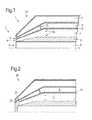
FIG. 1: shows schematically in cross section a first exemplary embodiment of a burner;
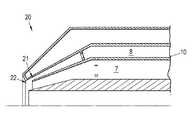
FIG. 2: shows schematically in cross section a second exemplary embodiment of a burner;
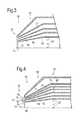
FIG. 3: shows schematically in cross section a third exemplary embodiment of a burner;
FIG. 4: shows schematically in cross section a fourth exemplary embodiment of a burner;
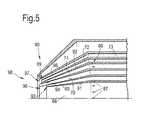
FIG. 5: shows schematically in cross section a fifth exemplary embodiment of a burner.
FIG. 1 shows aburner1 in a cross section along its longitudinal axis X. Only the upper half is shown, the lower half being a mirror image of the upper half. Theburner1 has aburner front2 with threeconcentric outlets3,4,5 and threecoaxial channels6,7,8 leading to therespective outlets3,4,5 at the burner front2: a centralfirst channel6 surrounded by a annularsecond channel7, which is in turn surrounded by an annularouter channel8. Thecentral channel6 is bordered by a cylindricalfirst separating wall9. The annularsecond channel7 is bordered by thefirst separating wall9 and a secondcylindrical separating wall10 around thefirst wall9. The annularouter channel8 is bordered by thesecond separating wall10 and a cooled thirdcylindrical wall11 around thesecond wall10. The third wall comprises a hollow barrel with channels for a cooling fluid (not shown). Theburner1 comprises a convergingsection14, where the first, second andthird walls9,10,11 are configured to converge the annular second andthird channels7,8 towards theburner front2. The cylindricalfirst channel6 does not have a converging section. To equalize flow distribution in theouter channel8, the converging section of the outer channel is provided with one ormore restrictions15. Upstream of the convergingsection14, the separatingwall10 between the second andthird channel7,8 is provided withgas exchange openings16.
Thecentral channel6 is connected to a source of a hydrocarbon fuel, e.g., a dense phase mixture of finely divided coal particles and nitrogen gas. The annularsecond channel7 is connected to a source of an oxidizer gas. The outer annularthird channel8 is connected to a source of a moderator gas, such as steam. The flow velocity of the hydrocarbon feed in thecentral channel6 is, e.g., between 2 and 20 m/s. The flow velocity of the moderator gas in theouter channel8 is for example between 10 and 30 m/s. In the annularsecond channel7 the flow velocity of the oxidiser gas is, e.g., between 40 and 100 m/s. The reactants enter a gasification zone in front of theburner front2. In the gasification zone the hydrocarbon fuel is partially combusted by the oxidizer. The moderator gas lifts the flame from theburner front2 to reduce damage of theburner front2 by thermal stress.
In case of a shutdown of the supply of oxidizer gas, the oxidizer gas flow in thesecond channel7 would stop and the pressure in thesecond channel7 would drop. Moderator gas would flow from theouter channel8 into the annularsecond channel7 via thegas exchange openings16 to maintain a positive flow of moderator gas in thesecond channel7 and to prevent a back flow of hot gases in thesecond channel7.
FIG. 2 shows an exemplary embodiment of aburner20 similar to the burner ofFIG. 1, with the difference that thesecond separating wall10 is provided with a retractedend21 defining anothergas exchange passage22 between theoxidizer flow channel7 and the moderatorgas flow channel8. This way the thermal load by heat radiation from the hot reactor to the retractedtip21 of the separatingwall10 is substantially reduced, resulting a reduced risk of deformation of the tip. If the pressure in one of the adjacent channels drops, the corresponding outlet will be filled with the other gas flow.
A third embodiment of aburner30 is shown inFIG. 3. Thisburner30 has a central oxidizergas flow channel31 connected to a source of an oxidizer gas. Thecentral channel31 is bordered by a firstcylindrical separating wall32. At a convergingsection33 of theburner30, thefirst separating wall32 converges to narrow down the central channel towards theburner front34. Coaxial second, third andfourth channels35,36,37 converge to the same extent. The annular second and fourth35,37 channels supply a moderator gas to the respective outlets. Thechannel36 between themoderator gas channels35,37 supplies a hydrocarbon fuel, such as a heavy crude oil residue.
A series ofgas exchange openings52 is provided in the separatingwall53 connecting the centraloxidizer gas channel31 and the innermoderator gas channel35. Thegas exchange openings52 are positioned upstream of the convergingsection33 of theburner30. If the supply of oxidizer gas to thechannel31 is stopped thegas exchange openings52 will assure that a purge is maintained in the outlet of thechannel31.
A fourth exemplary embodiment of aburner60 is shown inFIG. 4. Thisburner60 comprises six coaxial channels68-73 with respective outlets74-79 at the burner front80: a centralfirst channel68, annular second, third, fourth andfifth channels69,70,71,72 and an outer annularsixth channel73.
The centraldownstream channel68 and the annularfifth channel72 are connected to a supply of oxidiser gas. The annularthird channel70 is connected to a supply of hydrocarbon fuel. The annular second, fourth andsixth channels69,71,73 are connected to a supply of moderator gas.
Theburner60 comprises a convergingsection86 wherein particularly themoderator gas channels69,71 narrow down towards theburner front80. Upstream of the convergingsection86gas exchange openings87 connect thefirst channel68 with the oxidizer flow to thesecond channel69 with the moderator gas flow. Similarly,gas exchange openings88 connect thefifth channel72 with the oxidizer flow to thefourth channel71 with the moderator gas flow.
A further embodiment of aburner90 is shown inFIG. 5. This embodiment is similar to theburner60 ofFIG. 4, with the difference that the separatingwalls91,92 with thegas exchange openings87,88 have retracted ends93,94. Also the separatingwall95 between the fifth and thesixth channels72,73 has a retractedend99, but less retracted than the other two retracted ends93,94. The retracted ends93,94 and99 definegas exchange openings96,97 at the burner front between theoxidizer flow channels68,72 and respective moderatorgas flow channels69,71,73.