KR20120014191A - Capacitor, how to form a capacitor - Google Patents
Capacitor, how to form a capacitorDownload PDFInfo
- Publication number
- KR20120014191A KR20120014191AKR1020117028812AKR20117028812AKR20120014191AKR 20120014191 AKR20120014191 AKR 20120014191AKR 1020117028812 AKR1020117028812 AKR 1020117028812AKR 20117028812 AKR20117028812 AKR 20117028812AKR 20120014191 AKR20120014191 AKR 20120014191A
- Authority
- KR
- South Korea
- Prior art keywords
- capacitor
- oxide
- component
- dielectric material
- electrode
- Prior art date
- Legal status (The legal status is an assumption and is not a legal conclusion. Google has not performed a legal analysis and makes no representation as to the accuracy of the status listed.)
- Granted
Links
- 239000003990capacitorSubstances0.000titleclaimsabstractdescription164
- 239000000203mixtureSubstances0.000claimsabstractdescription103
- 229910044991metal oxideInorganic materials0.000claimsabstractdescription59
- 150000004706metal oxidesChemical class0.000claimsabstractdescription59
- 238000000034methodMethods0.000claimsabstractdescription24
- IATRAKWUXMZMIY-UHFFFAOYSA-Nstrontium oxideChemical compound[O-2].[Sr+2]IATRAKWUXMZMIY-UHFFFAOYSA-N0.000claimsabstractdescription23
- RVTZCBVAJQQJTK-UHFFFAOYSA-Noxygen(2-);zirconium(4+)Chemical compound[O-2].[O-2].[Zr+4]RVTZCBVAJQQJTK-UHFFFAOYSA-N0.000claimsabstractdescription18
- 229910001928zirconium oxideInorganic materials0.000claimsabstractdescription18
- 229910000449hafnium oxideInorganic materials0.000claimsabstractdescription17
- WIHZLLGSGQNAGK-UHFFFAOYSA-Nhafnium(4+);oxygen(2-)Chemical compound[O-2].[O-2].[Hf+4]WIHZLLGSGQNAGK-UHFFFAOYSA-N0.000claimsabstractdescription17
- 229910000484niobium oxideInorganic materials0.000claimsabstractdescription16
- URLJKFSTXLNXLG-UHFFFAOYSA-Nniobium(5+);oxygen(2-)Chemical compound[O-2].[O-2].[O-2].[O-2].[O-2].[Nb+5].[Nb+5]URLJKFSTXLNXLG-UHFFFAOYSA-N0.000claimsabstractdescription16
- OGIDPMRJRNCKJF-UHFFFAOYSA-Ntitanium oxideInorganic materials[Ti]=OOGIDPMRJRNCKJF-UHFFFAOYSA-N0.000claimsabstractdescription12
- GWEVSGVZZGPLCZ-UHFFFAOYSA-NTitan oxideChemical compoundO=[Ti]=OGWEVSGVZZGPLCZ-UHFFFAOYSA-N0.000claimsabstractdescription11
- 230000003247decreasing effectEffects0.000claimsabstract2
- 239000003989dielectric materialSubstances0.000claimsdescription43
- 238000000231atomic layer depositionMethods0.000claimsdescription21
- 238000003860storageMethods0.000claimsdescription18
- TWNQGVIAIRXVLR-UHFFFAOYSA-Noxo(oxoalumanyloxy)alumaneChemical compoundO=[Al]O[Al]=OTWNQGVIAIRXVLR-UHFFFAOYSA-N0.000claimsdescription15
- 238000005229chemical vapour depositionMethods0.000claimsdescription14
- QVGXLLKOCUKJST-UHFFFAOYSA-Natomic oxygenChemical compound[O]QVGXLLKOCUKJST-UHFFFAOYSA-N0.000claimsdescription7
- 229910052760oxygenInorganic materials0.000claimsdescription7
- 239000001301oxygenSubstances0.000claimsdescription7
- 230000007423decreaseEffects0.000claimsdescription5
- 229910052782aluminiumInorganic materials0.000claimsdescription4
- XAGFODPZIPBFFR-UHFFFAOYSA-NaluminiumChemical compound[Al]XAGFODPZIPBFFR-UHFFFAOYSA-N0.000claimsdescription4
- 229910052735hafniumInorganic materials0.000claimsdescription3
- VBJZVLUMGGDVMO-UHFFFAOYSA-Nhafnium atomChemical compound[Hf]VBJZVLUMGGDVMO-UHFFFAOYSA-N0.000claimsdescription3
- QCWXUUIWCKQGHC-UHFFFAOYSA-NZirconiumChemical compound[Zr]QCWXUUIWCKQGHC-UHFFFAOYSA-N0.000claimsdescription2
- 229910052726zirconiumInorganic materials0.000claimsdescription2
- 239000000463materialSubstances0.000description133
- 239000002243precursorSubstances0.000description14
- 229910052751metalInorganic materials0.000description12
- 239000002184metalSubstances0.000description12
- 239000004065semiconductorSubstances0.000description12
- 239000000758substrateSubstances0.000description10
- VYPSYNLAJGMNEJ-UHFFFAOYSA-NSilicium dioxideChemical compoundO=[Si]=OVYPSYNLAJGMNEJ-UHFFFAOYSA-N0.000description6
- 238000005240physical vapour depositionMethods0.000description6
- 150000002739metalsChemical class0.000description5
- 230000015572biosynthetic processEffects0.000description4
- 150000001875compoundsChemical class0.000description4
- 229910003455mixed metal oxideInorganic materials0.000description4
- NJPPVKZQTLUDBO-UHFFFAOYSA-NnovaluronChemical compoundC1=C(Cl)C(OC(F)(F)C(OC(F)(F)F)F)=CC=C1NC(=O)NC(=O)C1=C(F)C=CC=C1FNJPPVKZQTLUDBO-UHFFFAOYSA-N0.000description4
- 238000000137annealingMethods0.000description3
- 235000012239silicon dioxideNutrition0.000description3
- 239000000377silicon dioxideSubstances0.000description3
- 229910052581Si3N4Inorganic materials0.000description2
- XUIMIQQOPSSXEZ-UHFFFAOYSA-NSiliconChemical compound[Si]XUIMIQQOPSSXEZ-UHFFFAOYSA-N0.000description2
- NRTOMJZYCJJWKI-UHFFFAOYSA-NTitanium nitrideChemical compound[Ti]#NNRTOMJZYCJJWKI-UHFFFAOYSA-N0.000description2
- 239000004020conductorSubstances0.000description2
- 238000009792diffusion processMethods0.000description2
- 238000009826distributionMethods0.000description2
- 229910052710siliconInorganic materials0.000description2
- 239000010703siliconSubstances0.000description2
- HQVNEWCFYHHQES-UHFFFAOYSA-Nsilicon nitrideChemical compoundN12[Si]34N5[Si]62N3[Si]51N64HQVNEWCFYHHQES-UHFFFAOYSA-N0.000description2
- 125000006850spacer groupChemical group0.000description2
- RTAQQCXQSZGOHL-UHFFFAOYSA-NTitaniumChemical compound[Ti]RTAQQCXQSZGOHL-UHFFFAOYSA-N0.000description1
- 238000000429assemblyMethods0.000description1
- 230000000712assemblyEffects0.000description1
- 230000004888barrier functionEffects0.000description1
- 238000000151depositionMethods0.000description1
- 230000008021depositionEffects0.000description1
- 239000002019doping agentSubstances0.000description1
- 239000012777electrically insulating materialSubstances0.000description1
- 239000011810insulating materialSubstances0.000description1
- 238000004519manufacturing processMethods0.000description1
- 230000004048modificationEffects0.000description1
- 238000012986modificationMethods0.000description1
- 229910021421monocrystalline siliconInorganic materials0.000description1
- 229910052758niobiumInorganic materials0.000description1
- 239000010955niobiumSubstances0.000description1
- GUCVJGMIXFAOAE-UHFFFAOYSA-Nniobium atomChemical compound[Nb]GUCVJGMIXFAOAE-UHFFFAOYSA-N0.000description1
- 229910052712strontiumInorganic materials0.000description1
- CIOAGBVUUVVLOB-UHFFFAOYSA-Nstrontium atomChemical compound[Sr]CIOAGBVUUVVLOB-UHFFFAOYSA-N0.000description1
- 229910052719titaniumInorganic materials0.000description1
- 239000010936titaniumSubstances0.000description1
- 235000012431wafersNutrition0.000description1
Images


Classifications
- H—ELECTRICITY
- H01—ELECTRIC ELEMENTS
- H01G—CAPACITORS; CAPACITORS, RECTIFIERS, DETECTORS, SWITCHING DEVICES, LIGHT-SENSITIVE OR TEMPERATURE-SENSITIVE DEVICES OF THE ELECTROLYTIC TYPE
- H01G4/00—Fixed capacitors; Processes of their manufacture
- H01G4/002—Details
- H01G4/018—Dielectrics
- H01G4/06—Solid dielectrics
- H01G4/08—Inorganic dielectrics
- H01G4/12—Ceramic dielectrics
- H01G4/1272—Semiconductive ceramic capacitors
- H—ELECTRICITY
- H01—ELECTRIC ELEMENTS
- H01G—CAPACITORS; CAPACITORS, RECTIFIERS, DETECTORS, SWITCHING DEVICES, LIGHT-SENSITIVE OR TEMPERATURE-SENSITIVE DEVICES OF THE ELECTROLYTIC TYPE
- H01G4/00—Fixed capacitors; Processes of their manufacture
- H01G4/002—Details
- H01G4/005—Electrodes
- H01G4/008—Selection of materials
- H—ELECTRICITY
- H01—ELECTRIC ELEMENTS
- H01G—CAPACITORS; CAPACITORS, RECTIFIERS, DETECTORS, SWITCHING DEVICES, LIGHT-SENSITIVE OR TEMPERATURE-SENSITIVE DEVICES OF THE ELECTROLYTIC TYPE
- H01G4/00—Fixed capacitors; Processes of their manufacture
- H01G4/002—Details
- H01G4/018—Dielectrics
- H01G4/06—Solid dielectrics
- H01G4/08—Inorganic dielectrics
- H01G4/10—Metal-oxide dielectrics
- H—ELECTRICITY
- H01—ELECTRIC ELEMENTS
- H01G—CAPACITORS; CAPACITORS, RECTIFIERS, DETECTORS, SWITCHING DEVICES, LIGHT-SENSITIVE OR TEMPERATURE-SENSITIVE DEVICES OF THE ELECTROLYTIC TYPE
- H01G4/00—Fixed capacitors; Processes of their manufacture
- H01G4/002—Details
- H01G4/018—Dielectrics
- H01G4/06—Solid dielectrics
- H01G4/08—Inorganic dielectrics
- H01G4/12—Ceramic dielectrics
- H01G4/1209—Ceramic dielectrics characterised by the ceramic dielectric material
- H—ELECTRICITY
- H01—ELECTRIC ELEMENTS
- H01G—CAPACITORS; CAPACITORS, RECTIFIERS, DETECTORS, SWITCHING DEVICES, LIGHT-SENSITIVE OR TEMPERATURE-SENSITIVE DEVICES OF THE ELECTROLYTIC TYPE
- H01G4/00—Fixed capacitors; Processes of their manufacture
- H01G4/33—Thin- or thick-film capacitors (thin- or thick-film circuits; capacitors without a potential-jump or surface barrier specially adapted for integrated circuits, details thereof, multistep manufacturing processes therefor)
- H—ELECTRICITY
- H01—ELECTRIC ELEMENTS
- H01G—CAPACITORS; CAPACITORS, RECTIFIERS, DETECTORS, SWITCHING DEVICES, LIGHT-SENSITIVE OR TEMPERATURE-SENSITIVE DEVICES OF THE ELECTROLYTIC TYPE
- H01G4/00—Fixed capacitors; Processes of their manufacture
- H01G4/002—Details
- H01G4/018—Dielectrics
- H01G4/06—Solid dielectrics
- H01G4/08—Inorganic dielectrics
- H01G4/12—Ceramic dielectrics
- H01G4/1209—Ceramic dielectrics characterised by the ceramic dielectric material
- H01G4/1218—Ceramic dielectrics characterised by the ceramic dielectric material based on titanium oxides or titanates
- H—ELECTRICITY
- H01—ELECTRIC ELEMENTS
- H01G—CAPACITORS; CAPACITORS, RECTIFIERS, DETECTORS, SWITCHING DEVICES, LIGHT-SENSITIVE OR TEMPERATURE-SENSITIVE DEVICES OF THE ELECTROLYTIC TYPE
- H01G4/00—Fixed capacitors; Processes of their manufacture
- H01G4/002—Details
- H01G4/018—Dielectrics
- H01G4/06—Solid dielectrics
- H01G4/08—Inorganic dielectrics
- H01G4/12—Ceramic dielectrics
- H01G4/1209—Ceramic dielectrics characterised by the ceramic dielectric material
- H01G4/1218—Ceramic dielectrics characterised by the ceramic dielectric material based on titanium oxides or titanates
- H01G4/1227—Ceramic dielectrics characterised by the ceramic dielectric material based on titanium oxides or titanates based on alkaline earth titanates
- H—ELECTRICITY
- H01—ELECTRIC ELEMENTS
- H01G—CAPACITORS; CAPACITORS, RECTIFIERS, DETECTORS, SWITCHING DEVICES, LIGHT-SENSITIVE OR TEMPERATURE-SENSITIVE DEVICES OF THE ELECTROLYTIC TYPE
- H01G4/00—Fixed capacitors; Processes of their manufacture
- H01G4/002—Details
- H01G4/018—Dielectrics
- H01G4/06—Solid dielectrics
- H01G4/08—Inorganic dielectrics
- H01G4/12—Ceramic dielectrics
- H01G4/1209—Ceramic dielectrics characterised by the ceramic dielectric material
- H01G4/1236—Ceramic dielectrics characterised by the ceramic dielectric material based on zirconium oxides or zirconates
- H01G4/1245—Ceramic dielectrics characterised by the ceramic dielectric material based on zirconium oxides or zirconates containing also titanates
- H—ELECTRICITY
- H01—ELECTRIC ELEMENTS
- H01G—CAPACITORS; CAPACITORS, RECTIFIERS, DETECTORS, SWITCHING DEVICES, LIGHT-SENSITIVE OR TEMPERATURE-SENSITIVE DEVICES OF THE ELECTROLYTIC TYPE
- H01G4/00—Fixed capacitors; Processes of their manufacture
- H01G4/002—Details
- H01G4/018—Dielectrics
- H01G4/06—Solid dielectrics
- H01G4/08—Inorganic dielectrics
- H01G4/12—Ceramic dielectrics
- H01G4/1209—Ceramic dielectrics characterised by the ceramic dielectric material
- H01G4/1254—Ceramic dielectrics characterised by the ceramic dielectric material based on niobium or tungsteen, tantalum oxides or niobates, tantalates
- Y—GENERAL TAGGING OF NEW TECHNOLOGICAL DEVELOPMENTS; GENERAL TAGGING OF CROSS-SECTIONAL TECHNOLOGIES SPANNING OVER SEVERAL SECTIONS OF THE IPC; TECHNICAL SUBJECTS COVERED BY FORMER USPC CROSS-REFERENCE ART COLLECTIONS [XRACs] AND DIGESTS
- Y10—TECHNICAL SUBJECTS COVERED BY FORMER USPC
- Y10T—TECHNICAL SUBJECTS COVERED BY FORMER US CLASSIFICATION
- Y10T29/00—Metal working
- Y10T29/43—Electric condenser making
- Y—GENERAL TAGGING OF NEW TECHNOLOGICAL DEVELOPMENTS; GENERAL TAGGING OF CROSS-SECTIONAL TECHNOLOGIES SPANNING OVER SEVERAL SECTIONS OF THE IPC; TECHNICAL SUBJECTS COVERED BY FORMER USPC CROSS-REFERENCE ART COLLECTIONS [XRACs] AND DIGESTS
- Y10—TECHNICAL SUBJECTS COVERED BY FORMER USPC
- Y10T—TECHNICAL SUBJECTS COVERED BY FORMER US CLASSIFICATION
- Y10T29/00—Metal working
- Y10T29/43—Electric condenser making
- Y10T29/435—Solid dielectric type
Landscapes
- Engineering & Computer Science (AREA)
- Power Engineering (AREA)
- Microelectronics & Electronic Packaging (AREA)
- Chemical & Material Sciences (AREA)
- Ceramic Engineering (AREA)
- Manufacturing & Machinery (AREA)
- Inorganic Chemistry (AREA)
- Materials Engineering (AREA)
- Semiconductor Memories (AREA)
- Semiconductor Integrated Circuits (AREA)
- Formation Of Insulating Films (AREA)
- Inorganic Compounds Of Heavy Metals (AREA)
- Ceramic Capacitors (AREA)
Abstract
Translated fromKoreanDescription
Translated fromKorean커패시터들, 및 커패시터들을 형성하는 방법들.
Capacitors, and methods of forming capacitors.
커패시터들은 집적회로에서 많이 응용되고 있다. 예를 들면, 동적 랜덤 액세스 메모리(DRAM) 유닛 셀들은 트랜지스터와 결합한 커패시터를 포함할 수 있다. DRAM 유닛 셀들의 커패시터들 상에 저장된 전하는 메모리 비트들에 대응할 수 있다.Capacitors are widely used in integrated circuits. For example, dynamic random access memory (DRAM) unit cells may include a capacitor coupled to a transistor. The charge stored on the capacitors of the DRAM unit cells may correspond to the memory bits.
집적회로 제조의 계속되는 목적은 개개의 회로 성분들에 의해 소비되는 면적을 감소시키고, 그럼으로써 단일 칩 상에 제공될 수 있는 성분들의 밀도를 증가시키는 것이다(즉, 집적규모를 증가시키는 것이다). 따라서, 집적회로에서 이용되는 각종 성분들을 초소화하는 지속적인 목적이 있다.A continuing goal of integrated circuit fabrication is to reduce the area consumed by the individual circuit components, thereby increasing the density of components that can be provided on a single chip (ie, increasing the integrated scale). Thus, there is a continuing goal of minimizing the various components used in integrated circuits.
커패시터들의 초소화 동안 발생할 수 있는 문제는 커패시터들이 작아질수록 대응하여 큰 커패시터들보다 정전용량이 작아진다는 것이다. 개개의 커패시터들 상에 저장될 수 있는 전하량은 정전용량에 비례할 수 있고, 신뢰성있는 메모리 동작을 위해 요구되는 셀당 최소 정전용량이 있을 수 있다. 따라서, 집적회로의 차세대들에 적합한 커패시터들을 달성하기 위해 현존 커패시터들의 크기를 단순히 축소시키는 것은 흔히 실제적이지 않다. 오히려, 최소화된 커패시터들은 초소화된 커패시터들 내에 정전용량을 개선하는 새로운 물질들이 개발되지 않는 한 요망되는 성능 파라미터들을 충족시키지 못할 것이다.A problem that may arise during the miniaturization of capacitors is that the smaller the capacitors, the smaller the corresponding capacitance than the larger capacitors. The amount of charge that can be stored on the individual capacitors can be proportional to the capacitance, and there can be a minimum capacitance per cell required for reliable memory operation. Thus, it is often not practical to simply reduce the size of existing capacitors to achieve capacitors suitable for the next generation of integrated circuits. Rather, minimized capacitors will not meet the desired performance parameters unless new materials are developed that improve capacitance in miniaturized capacitors.
정전용량을 증가시키는 한 방법은 커패시터들에서 이용되는 유전체들의 두께를 감소시키는 것이다. 그러나, 유전체 두께를 감소시킴에 따라 전류 누설이 문제가 된다.
One way to increase capacitance is to reduce the thickness of the dielectrics used in the capacitors. However, current leakage becomes a problem as the dielectric thickness is reduced.
문제가 되는 누설이 없으며 요망되는 정전용량을 갖는 개선된 집적회로 커패시터들을 개발하는 것이 바람직할 것이다.
It would be desirable to develop improved integrated circuit capacitors that have no leaking problems and that have the desired capacitance.
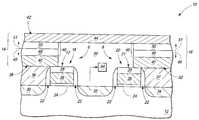
도 1은 한쌍의 DRAM 유닛 셀들을 나타낸 반도체 구조의 측단면도이다.
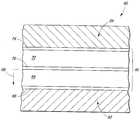
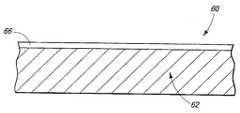
도 2는 커패시터의 실시예의 측단면도이다.
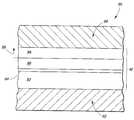
도 3은 커패시터의 또 다른 실시예의 측단면도이다.
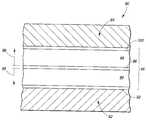
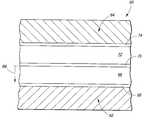
도 4는 커패시터의 또 다른 실시예의 측단면도이다.
도 5 내지 도 7은 커패시터를 형성하는 방법의 실시예의 여러 가공 단계들에서 나타낸 구조의 측단면도들이다.
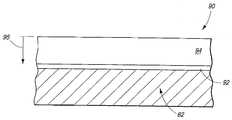
도 8 및 도 9는 커패시터를 형성하는 방법의 또 다른 실시예의 여러 가공 단계들에서 나타낸 구조의 측단면도들이다.1 is a side cross-sectional view of a semiconductor structure showing a pair of DRAM unit cells.
2 is a side cross-sectional view of an embodiment of a capacitor.
3 is a side cross-sectional view of another embodiment of a capacitor.
4 is a side cross-sectional view of another embodiment of a capacitor.
5-7 are side cross-sectional views of a structure shown in various processing steps of an embodiment of a method of forming a capacitor.
8 and 9 are side cross-sectional views of the structure shown in various processing steps of yet another embodiment of a method of forming a capacitor.
도 1은 반도체 기판(12)에 의해 지지되는 한쌍의 DRAM 유닛 셀들(6, 8)을 포함하는 구조(10)의 일부를 도시한 것이다.1 illustrates a portion of a
기판(12)은 예를 들면 배경 p형 도펀트가 저농도로 도핑된 단결정 실리콘을 포함하거나, 필수로 구성되거나, 구성될 수 있다. "반도체 기판" 또는 "반도전성 기판"이라는 용어는 반도전성 웨이퍼(단독 또는 그 위에 다른 물질들을 포함하는 조립체들 내)와 같은 벌크 반도전성 물질들, 및 반도전성 물질층들(단독 또는 다른 물질들을 포함하는 조립체들 내)을 포함하는 -그러나 이들로 제한되는 것은 아니다- 반도전성 물질을 포함하는 임의의 구조를 의미할 수 있다. "기판"이라는 용어는 위에서 기술된 반도전성 기판들을 포함하는 -그러나 이들로 제한되는 것은 아니다- 임의의 지지구조를 의미한다.
DRAM 유닛 셀들은 트랜지스터들과 결합하는 커패시터들을 포함한다. 구체적으로, 유닛 셀(6)은 트랜지스터(16)와 결합하는 커패시터(14)를 포함하며, 유닛 셀(8)은 트랜지스터(20)와 결합하는 커패시터(18)를 포함한다.DRAM unit cells include capacitors that couple with transistors. Specifically, the
트랜지스터들(16, 20)은 각각 게이트들(17, 21)을 포함한다. 게이트들은 게이트 유전체 물질(24), 전기적 도전성 물질(26), 및 전기적 절연성 캡(capping) 물질(28)을 포함하는 적층들을 포함한다. 물질들(24, 26, 28)은 통상의 물질들을 포함할 수도 있다. 예를 들면, 게이트 유전체 물질(24)은 이산화실리콘, 도전성 물질(26)은 다양한 금속들, 금속-함유 화합물들 중 하나 이상, 및 도전성으로 도핑된 반도체 물질들을 포함할 수 있고, 캡 물질(28)은 이산화실리콘, 질화실리콘 및 실리콘 옥시나이트라이드 중 하나 이상을 포함할 수 있다. 일부 실시예들에서, 게이트들은 도 1의 단면도에 관하여 도면용지 안밖으로 확장하는 워드라인들의 부분들일 수 있다.
측벽 스페이서들(22)은 게이트들(17, 21)의 측벽들을 따라 있다. 측벽 스페이서들은 통상의 물질들을 포함할 수 있는데, 예를 들면, 이산화실리콘, 질화실리콘 및 실리콘 옥시나이트라이드 중 하나 이상을 포함할 수 있다.The
트랜지스터(16)는 게이트(17)의 서로 대향한 양측 상에 한 쌍의 소스/드레인 영역들(30, 32)을 포함하며, 유사하게 트랜지스터(20)는 게이트(21)의 서로 대향한 양측 상에 소스/드레인 영역들(32, 34)을 포함한다. 예시된 실시예에서, 소스/드레인 영역(32)은 인접한 트랜지스터들(16, 20)에 의해 공유된다. 소스/드레인 영역들은 기판(12)의 반도체 물질 내로 확장하는 도전성으로 도핑된 확산 영역들에 대응할 수 있다.
예시된 실시예에서, 전기적 도전성 페데스탈(pedestal)(36)은 소스/드레인 영역(30) 상에 그리고 소스/드레인 영역(30)과 전기적으로 연결되어 제공되며, 유사하게, 전기적 도전성 페데스탈(37)은 소스/드레인 영역(34) 상에 그리고 소스/드레인 영역(34)에 전기적으로 연결되어 제공된다. 페데스탈들(36, 37)은 임의의 적합한 전기적 도전성 조성물들 또는 전기적 도전성 조성물들의 조합들을 포함할 수 있다. 예를 들면, 페데스탈들(36, 37)은 여러 금속들, 금속-함유 화합물들, 및 도전성으로 도핑된 반도체 물질들 중 하나 이상을 포함할 수 있다.In the illustrated embodiment, an electrically
커패시터(14)는 페데스탈(36)에 전기적으로 연결된 저장 노드 전극(38)을 포함한다. 저장 노드 전극은 동질의 단일 물질(40)을 포함하는 것으로 보여졌다. 다른 실시예들에서(도시되지 않음), 저장 노드 전극은 복수의 서로 다른 물질들을 포함할 수 있다. 예시된 물질(40)은 임의의 적합한 전기적 도전성 조성물 또는 조성물들의 조합을 포함할 수 있고, 예를 들면, 여러 금속들, 금속-함유 화합물들, 및/또는 도전성으로 도핑된 반도체 물질들 중 하나 이상을 포함할 수 있다. 일부 실시예들에서, 물질(40)은 질화티타늄을 포함하거나, 필수로 구성되거나, 구성될 수 있다.
또한, 커패시터(14)는 플레이트 전극(42)을 포함한다. 플레이트 전극은 동질의 단일 물질(44)을 포함하는 것으로 예시되었다. 다른 실시예들에서(도시되지 않음), 플레이트 전극은 복수의 서로 다른 물질들을 포함할 수 있다. 예시된 물질(44)은 임의의 적합한 전기적 도전성 조성물 또는 조성물들의 조합을 포함할 수 있는데, 예를 들면, 여러 금속들, 금속-함유 화합물들, 및/또는 도전성으로 도핑된 반도체 물질들 중 하나 이상을 포함할 수 있다. 일부 실시예들에서, 물질(44)은 질화티타늄을 포함하거나, 필수로 구성되거나, 구성될 수 있다.The
저장 노드 전극(38) 및 플레이트 전극(42)를 일반적으로 커패시터 전극들이라 칭할 수 있다.
커패시터(14)는 커패시터 전극(38)과 커패시터 전극(42) 사이에 커패시터 유전체(46)를 포함한다. 커패시터 유전체(46)는 2개의 서로 다른 물질들(48, 50)을 포함하는 것으로 도시되었다. 다른 실시예들에서, 커패시터 유전체는 단일의 물질만을 포함할 수도 있고, 또는 2 이상의 물질들을 포함할 수도 있다.
일부 실시예들에서, 커패시터 유전체는 다른 성분에 관하여 한 성분의 연속 농도 기울기를 갖는 금속 산화물 혼합물을 포함할 것이다. 구체적으로, 고 유전상수를 갖는 유전체 조성물(예를 들면, 산화니오븀, 산화티타늄, 산화스트론튬 및 이들의 혼합물들로 구성된 그룹에서 선택된 유전체 조성물)는 저 유전상수 조성물에 관하여 고 유전상수 조성물의 연속 농도 기울기를 형성하기 위해, 더 낮은 유전상수를 갖는 유전체 조성물(예를 들면, 산화지르코늄, 산화하프늄 및 이들의 혼합물들로 구성된 그룹에서 선택된 유전체 조성물)과 혼합된다.In some embodiments, the capacitor dielectric will include a metal oxide mixture having a continuous concentration gradient of one component with respect to the other component. Specifically, a dielectric composition having a high dielectric constant (eg, a dielectric composition selected from the group consisting of niobium oxide, titanium oxide, strontium oxide, and mixtures thereof) has a continuous concentration of high dielectric constant composition with respect to the low dielectric constant composition. To form the slope, it is mixed with a dielectric composition having a lower dielectric constant (eg, a dielectric composition selected from the group consisting of zirconium oxide, hafnium oxide, and mixtures thereof).
고 유전상수 조성물은 요망되는 고 유전상수를 가질 것이지만, 요망되지 않은 좁은 밴드갭들 및 대응하는 고 누설 특징들을 갖는 경향도 있게 될 것이다. 반대로, 저 유전상수 조성물은 요망되는 넓은 밴드갭들 및 대응하는 저 누설 특징들을 갖는 경향이 있을 것지만, 요망되지 않은 저 유전상수를 갖는 경향도 있게 될 것이다. 금속 산화물 혼합물 내에 고 유전상수 조성물과 저 유전상수 조성물을 겸비함으로써 각각의 요망되는 특성들이 한 두께의 금속 산화물 혼합물에 걸쳐 얻어질 수 있다.The high dielectric constant composition will have the desired high dielectric constant, but will also tend to have narrow bandgaps and corresponding high leakage characteristics that are not desired. In contrast, low dielectric constant compositions will tend to have the desired wide bandgaps and corresponding low leakage characteristics, but will also tend to have undesired low dielectric constants. By combining a high dielectric constant composition and a low dielectric constant composition in the metal oxide mixture, each of the desired properties can be obtained over a metal oxide mixture of one thickness.
고 유전상수 조성물의 가장 높은 농도를 커패시터 전극 근처에 있게 하고 이어서 커패시터 전극으로부터 거리가 늘어남에 따라 고 유전상수 조성물의 농도가 감소되게 하는 것이 이점이 있을 수 있다. 커패시터 유전체(46)가 2 이상의 서로 다른 물질들을 포함하는 실시예들에서, 금속 산화물 혼합물은 커패시터 유전체의 물질들 중 하나로서, 또는 커패시터 유전체의 복수의 물질들로서 이용될 수 있다. 예를 들면, 커패시터 유전체(46)의 유전체 물질들(48, 50) 중 하나 또는 둘 다는 금속 산화물 혼합물일 수 있다.It may be advantageous to have the highest concentration of the high dielectric constant composition near the capacitor electrode and then to reduce the concentration of the high dielectric constant composition as the distance from the capacitor electrode increases. In embodiments where the
예시된 실시예에서, 유전체 물질(48)은 저장 노드 전극(38)에 인접하여 있다. 물질(48)이 고 유전상수 조성물 및 저 유전상수 조성물의 혼합물이라면, 고 유전상수 조성물의 농도는 물질(48) 옆에 도시한 화살표(49)로 나타낸 바와 같이, 물질(48)의 상측 표면에서 물질(48)의 하측 표면으로 확장하는 연속 농도 기울기를 따라 증가할 수 있다. 유사하게, 유전체 물질(50)이 고 유전상수 조성물 및 저 유전상수 조성물의 혼합물이라면, 고 유전상수 조성물의 농도는 물질(50) 옆에 도시한 점선 화살표(51)로 나타낸 바와 같이, 물질(50)의 하측 표면에서 물질(50)의 상측 표면으로 확장하는 연속 농도 기울기를 따라 증가할 수 있다.In the illustrated embodiment,
커패시터(18)는 위에서 논한 커패시터(14)와 유사하며, 페데스탈(37)과 전기적으로 연결되는 저장 노드 전극(52)을 포함한다. 저장 노드 전극(52)은 저장 노드 전극(38)에 관하여 위에 논의된 물질들 중 어느 것을 포함할 수 있고, 동질의 단일 물질(40)을 포함하는 것으로 도시되었다.
커패시터(18)는 위에 논의된 플레이트 전극(42)을 포함하며, 또한, 위에서 논의된 커패시터 유전체(46)를 포함한다.
도 1은 커패시터 플레이트 전극(구체적으로, 도 1의 전극(42))이 많은 커패시터들에 걸쳐 공유되고 반면 저장 노드 전극들(구체적으로, 도 1의 전극들(38, 52))이 개개의 커패시터들에 고유한 점에서 커패시터 플레이트 전극이 DRAM의 저장 노드 전극들과는 구별될 수 있음을 보이고 있다.1 shows that the capacitor plate electrode (specifically,
커패시터들 각각은 트랜지스터의 소스/드레인 영역들 중 하나에 전기적으로 연결된다(예를 들면, 예시된 실시예에서, 각각 트랜지스터들(16, 20)의 소스/드레인 영역들(30, 34)은 각각 커패시터들(14, 18)에 전기적으로 연결된다). 트랜지스터의 나머지 소스/드레인 영역은 비트라인에 전기적으로 연결된다. 도 1에서, 트랜지스터들(16, 20)의 공유된 소스/드레인 영역(32)은 비트라인(54)에 전기적으로 연결된 것으로서 도시적으로 예시되었다. 동작에서, 비트라인들 및 워드라인들은 메모리 어레이의 행들 및 열들에 대응할 수 있고, 개개의 커패시터들은 행들 및 열들의 교차점들에서 고유하게 어드레스될 수 있다.Each of the capacitors is electrically connected to one of the source / drain regions of the transistor (eg, in the illustrated embodiment, the source /
도 1의 구조(10)는 DRAM 어레이의 한 부분의 일반적인 것을 나타낸 것으로, 이러한 구조의 여러 특징들은 구체적 실시예들(도시되지 않음)에서 다를 수도 있다. 예시된 실시예에서, 커패시터들의 저장 노드 전극들을 서로 간에 전기적으로 격리시키기 위해서 커패시터들(18, 14) 사이에 한 블록의 전기적 절연성 물질(56)이 제공된다. 적층된 플레이트들의 단순 기하학적 구성을 갖는 커패시터들이 도시되었으며, 인접한 한 블록의 단순 기하학적 구성을 갖는 개재된 절연성 물질(56)이 도시되었다. 다른 실시예들에서, 커패시터들은 더 복잡한 구성들(예를 들면, 커패시터들은 콘테이너-형 커패시터들 또는 페데스탈-형 커패시터들일 수 있다)을 가질 수 있으며, 마찬가지로 물질(56)은 더 복잡한 기하학적 구성으로 형성될 수 있다. 또한, 페데스탈들(36, 37)은 일부 실시예들에서 생략될 수도 있으며, 따라서, 저장 노드들(38, 52)은 소스/드레인 영역들(30, 34)과 직접 물리적으로 접촉하여 형성된다.The
도 1의 구조(10)에 관하여 행해질 수 있는 추가의 수정은 커패시터 유전체(46)가 특정 실시예들에 맞게 재단될 수 있다는 것이다. 도 2 내지 도 9는 예로서 커패시터들을 형성하는 커패시터들 및 방법들에 관하여 커패시터 유전체(46)의 특정 구성들을 도시한 것이다.A further modification that can be made with respect to the
도 2를 참조하면, 커패시터(60)은 한쌍의 커패시터 전극들(62, 64), 및 커패시터 전극들 사이에 유전체 물질(46)을 포함하는 것으로 도시되었다. 커패시터 전극들(62, 64) 중 하나는 도 1의 전극(38)과 유사한 저장 노드 전극에 대응할 수 있고, 전극들(62, 64) 중 다른 하나는 도 1의 전극(42)과 유사한 커패시터 플레이트 전극에 대응할 수 있다. 전극들(62, 64) 중 어느 하나는 저장 노드 전극일 수 있으며, 따라서, 전극들(62, 64) 중 어느 하나는 커패시터 플레이트 전극일 수 있다. 전극들(62, 64)을 각각 제 1 커패시터 전극 및 제 2 커패시터 전극이라 칭할 수 있다.Referring to FIG. 2,
커패시터(60)의 유전체 물질(46)은 물질들(66, 68, 70, 72, 74)을 포함한다. 물질들(66, 70, 74)은 얇은 층들인 것으로 예시되고, 물질들(68, 72)은 더 두꺼운 층들이다. 유전체 물질(46)은 임의의 적합한 전체 두께를 가질 수 있고, 일부 실시예들에서는 약 80Å 내지 약 150Å의 두께를 가질 수 있다.
물질(68)은 다른 성분에 관하여 한 성분의 연속 농도 기울기를 포함하는 금속 산화물 혼합물 일 수 있다. 일부 실시예들에서, 물질(68)은 물질(68) 옆에 도시한 화살표(69)로 나타낸 바와 같이, 물질(68)의 상측 표면에서 물질(68)의 하측 표면으로 확장하는 연속 농도 기울기를 따라 고 유전상수 금속 산화물의 농도가 증가하는, 저 유전상수를 갖는 금속 산화물과 고 유전상수를 갖는 금속 산화물의 혼합물일 수 있다. 고 유전상수를 가진 금속 산화물은 산화니오븀(즉, NbOa, "a"는 제로보다 크다), 산화티타늄(즉, TiOb, "b"는 제로보다 크다), 산화스트론튬(즉, SrOc, "c"는 제로보다 크다) 및 이들의 혼합물들로 구성된 그룹에서 선택될 수 있다. 저 유전상수를 가진 금속 산화물은 산화지르코늄(즉, ZrOd, "d"는 제로보다 크다), 산화하프늄(즉, HfOe, "e"는 제로보다 크다) 및 이들의 혼합물들으로 구성된 그룹에서 선택될 수 있다. 따라서, 일부 실시예들에서, 물질(68)은 산화지르코늄, 산화하프늄 및 이들의 혼합물들로 구성된 그룹에서 선택된 제 1 성분과, 산화니오븀, 산화티타늄, 산화스트론튬 및 이들의 혼합물들로 구성된 그룹에서 선택된 제 2 성분과의 혼합물을 포함하거나, 필수로 구성되거나, 구성될 수 있다.
물질(68) 내에 연속 농도 기울기는 다음과 같이 기술될 수 있다. 물질(68)의 상측 표면은 고 유전상수 금속 산화물(일부 실시예들에서 0 원자 퍼센트일 수 있고, 다른 실시예들에서 0 원자 퍼센트보다 클 수 있다)의 제 1 원자 퍼센티지를 포함하는 것으로 간주될 수 있다. 물질(68)의 하측 표면은 고 유전상수 금속 산화물의 제 2 원자 퍼센티지를 포함하는 것으로 간주될 수 있다. 제 2 원자 퍼센티지는 제 1 원자 퍼센티지보다 크며, 고 유전상수 금속 산화물의 원자 퍼센티지는 한 두께의 물질(68) 전체에 걸쳐 연속적으로 증가한다.The continuous concentration gradient in
일부 실시예들에서, 고 유전상수 금속 산화물은 산화니오븀으로 구성되고, 저 유전상수 금속 산화물은 산화지르코늄 및 산화하프늄 중 하나 또는 이들 둘 다로 구성된다. 이러한 실시예들에서, 산화니오븀의 제 1 원자 퍼센티지는 50 퍼센트 이하일 수 있고, 산화니오븀의 제 2 원자 퍼센티지는 100 퍼센트 이하일 수 있다. 예시된 실시예에서, 물질(68)(화살표(69)로 도시된) 내에 산화니오븀의 연속 농도 기울기는 커패시터 전극(62)의 거리가 감소함에 따라 산화니오븀의 농도가 증가하게 된다.In some embodiments, the high dielectric constant metal oxide is comprised of niobium oxide and the low dielectric constant metal oxide is comprised of one or both of zirconium oxide and hafnium oxide. In such embodiments, the first atomic percentage of niobium oxide may be 50 percent or less and the second atomic percentage of niobium oxide may be 100 percent or less. In the illustrated embodiment, the continuous concentration gradient of niobium oxide in the material 68 (shown by arrow 69) causes the concentration of niobium oxide to increase as the distance of the
물질(68) 내에 고 유전상수 금속 산화물의 연속 농도 기울기의 이용은 더 많은 고 유전상수 금속 산화물이 비-연속 농도 기울기(이를테면 계단 기울기)를 이용하여 달성될 수도 있을 수 있는 것보다 물질(68) 내 효과적으로 포함될 수 있게 할 수 있다.The use of a continuous concentration gradient of the high dielectric constant metal oxide in the
물질(68)은 임의의 적합한 두께로 형성될 수 있다. 일부 실시예들에서, 물질(68)은 약 1OÅ 내지 약 7OÅ의 두께를 가질 수 있고, 일부 실시예들에서는 약 30Å의 두께를 가질 수 있다.
물질(72)은 물질(46)의 특정한 요망되는 파라미터들을 달성하기 위해 물질(46)의 유전체 특성들을 재단하기 위해서 물질(68) 외에 제공되는 유전체 물질을 포함할 수 있다. 일부 실시예들에서, 물질(72)은 산화하프늄 및 산화지르코늄 중 하나 또는 둘 다를 포함하거나, 필수로 구성되거나, 구성될 수 있다. 일부 실시예들에서, 물질들(68, 72)을 각각 제 1 및 제 2 유전체 물질들이라 칭할 수 있다.
일부 실시예들에서, 물질들(66, 70, 74)은 산화알루미늄을 포함하거나, 필수로 구성되거나, 구성될 수 있고, 물질(68)로부터 니오븀, 티타늄 및/또는 스트론튬의 이동을 저지하는 장벽들로서 이용될 수도 있다. 이러한 실시예들에서, 물질들(66, 70, 74)은 1OÅ 두께 미만, 5Å 두께 미만, 심지어 4Å 두께 미만으로 형성될 수도 있다. 물질들(66, 70, 74) 중 하나 이상은 일부 실시예들에서 생략될 수도 있다.In some embodiments, the
도 3을 참조하면, 도 2에 관련하여 위에서 논한 한쌍의 커패시터 전극들(62, 64)을 포함하고, 커패시터 전극들 사이에 유전체 물질(46)을 포함하는 커패시터(80)가 도시되었다. 커패시터(80)의 커패시터 유전체(46)는 물질들(82, 84, 86, 88)을 포함한다. 커패시터(80)의 물질(46)의 전체 두께는 약 80Å 내지 약 150Å일 수 있다.Referring to FIG. 3, a
물질(82)은 하프늄 및 지르코늄 중 하나 또는 둘 다와 더불어 알루미늄과 산소의 혼합물을 포함하거나, 필수로 구성되거나, 구성될 수 있고, 구체적으로 산화알루미늄과 산화하프늄 및 산화지르코늄 중 하나 또는 둘 다와의 혼합물을 포함하거나, 필수로 구성되거나, 구성될 수 있다. 물질(82)은 결정질이기보다는 비정질일 수도 있다. 물질(82)이 하부 전극(62)에 바로 대향한 것으로 도시되었을지라도, 다른 실시예들에서 물질(82) 및 하부 전극 사이에 제공된 개재된 얇은 산화알루미늄층이 있을 수 있다.
물질(84)은 산화알루미늄을 포함하거나, 필수로 구성되거나, 구성될 수 있고, 일부 실시예들에서, 1OÅ 미만, 5Å 미만, 또는 4Å 이하의 두께를 가질 수 있다. 물질(84)은 일부 실시예들에서 생략될 수도 있다.
물질(86)은 산화지르코늄 및 산화하프늄 중 하나 또는 둘 다를 포함하거나, 필수로 구성되거나, 구성될 수 있고, 결정질일 수 있다.
물질(88)은 다른 성분에 관하여 한 성분의 연속 농도 기울기를 포함하는 금속 산화물 혼합물일 수 있고, 도 2에 관련하여 위에서 논한 물질(68)과 동일할 수 있다. 화살표(89)는 물질(88) 내에 고 유전상수 성분의 농도 기울기를 예시하기 위해 물질(88) 옆에 도시되었다. 물질(88)은 결정질, 비정질, 또는 결정질 및 비정질의 조합일 수 있다.
커패시터 전극들(62, 64) 중 어느 하나가 커패시터의 저장 노드 전극일 수 있을지라도, 일부 실시예들에서, 도 3에 도시된 구성에서 전극(62)이 저장 노드 전극인 것이 이점이 있을 수 있다.Although either one of the
도 2 및 도 3의 커패시터들은 커패시터 전극들 사이에 커패시터 유전체의 분포에 관하여 비대칭이다. 도 4는 커패시터 전극들(62, 64) 사이에 커패시터 유전체의 대칭 분포를 갖는 대안적 커패시터(90)를 예시한다.2 and 3 are asymmetric with respect to the distribution of the capacitor dielectric between the capacitor electrodes. 4 illustrates an
커패시터(90)의 커패시터 유전체(46)는 물질들(92, 94, 96, 98, 100)을 함유한다.
물질들(94, 98)은 다른 성분에 관하여 한 성분의 연속 농도 기울기를 포함하는 금속 산화물 혼합물일 수 있고, 도 2에 관련하여 위에 논한 물질(68)과 동일할 수 있다. 일부 실시예들에서, 물질들(94, 98)은 서로 조성이 동일할 수 있고, 서로의 미러 이미지들일 수 있다. 물질(94) 내에 고 유전상수 성분의 농도 기울기를 예시하기 위해 물질(94) 옆에 화살표(95)가 도시되었고, 물질(98) 내에 고 유전상수 성분의 농도 기울기를 예시하기 위해 물질(98) 옆에 화살표(99)가 도시되었다. 화살표(95)은 예시된 하부 전극(62)을 향한 방향으로 증가하는 물질(94) 내에 고 유전상수 성분의 농도를 나타낸다. 반대로, 화살표(99)는 예시된 상부 전극(64)을 향한 방향으로 증가하는 물질(98) 내에 고 유전상수 성분의 농도를 나타낸다.The
일부 실시예들에서, 물질(94)의 혼합된 금속 산화물의 성분들은 제 1 성분 및 제 2 성분이라 칭하고, 제 1 성분은 하나 이상의 저 유전상수 조성물들(이를테면 산화하프늄 및 산화지르코늄 중 하나 또는 둘 다)이며, 제 2 성분은 하나 이상의 고 유전상수 조성물들(이를테면 산화니오븀, 산화티타늄 및 산화스트론튬 중 하나 이상)이다. 이러한 실시예들에서, 혼합된 금속 산화물의 물질(98)의 성분들은 제 3 성분 및 제 4 성분이라 칭하고, 제 3 성분은 하나 이상의 저 유전상수 조성물들이며, 제 4 성분은 하나 이상의 고 유전상수 조성물들이다. 제 1 및 제 3 성분들은 일부 실시예들에서 서로 동일할 수 있거나, 다른 실시예들에서 서로 간에 다를 수 있다. 유사하게, 제 2 및 제 4 성분들은 일부 실시예들에서 서로 동일할 수 있거나, 다른 실시예들에서는 서로 다를 수 있다.In some embodiments, the components of the mixed metal oxide of
물질들(92, 96, 100)은 산화알루미늄을 포함하거나, 필수로 구성되거나, 구성될 수 있고, 일부 실시예들에서 1OÅ 미만이거나, 5Å 미만이거나, 4Å 이하의 두께를 가질 수 있다. 물질들(92, 96, 100) 중 하나 이상은 일부 실시예들에서 생략될 수도 있다.The
도 1 내지 도 4의 커패시터들은 임의의 적합한 방법으로 형성될 수 있다. 도 2의 커패시터(60)를 형성하는 방법의 예를 도 5 내지 도 7을 참조하여 기술한다.The capacitors of FIGS. 1-4 can be formed in any suitable manner. An example of a method of forming the
도 5를 참조하면, 예시된 하부 전극(62)에 걸쳐 물질(66)이 형성된 후에 가공 단계에서 구조(60)가 도시되었다. 하부 전극은 물리기상증착(PVD), 원자층 증착(ALD) 및 화학기상증착(CVD) 중 하나 이상을 이용하는 지지 기판(도시되지 않음) 상에 형성될 수 있다.Referring to FIG. 5,
물질(66)은 ALD 및 CVD 중 하나 또는 둘 다를 이용하여 전극(62) 상에 증착될 수 있다. 예를 들면, 물질(66)이 산화알루미늄으로 구성된다면, 이러한 것은 알루미늄-함유 프리커서 및 산소-함유 프리커서의 순차적 펄스들을 이용하여 ALD에 의해 형성될 수 있다. 예시된 실시예에서, 물질(66)은 전극(62)에 바로 대향하여(즉, 접촉하여) 있다.
도 6을 참조하면, 물질(68)의 금속 산화물 혼합물은 물질(66) 상에 형성된다. 예시된 실시예에서, 물질(68)은 물질(66)에 바로 대향하여 있다.Referring to FIG. 6, a metal oxide mixture of
물질(68)의 금속 산화물 혼합물은 도 2를 참조하여 위에서 논한 바와 같이, 2개의 성분들을 갖는다. 성분들 중 하나는 제 1 성분이라 하고, 산화지르코늄 및 산화하프늄 중 하나 또는 둘 다를 포함할 수 있으며, 성분들 중 다른 하나는 제 2 성분이라 하고, 산화니오븀, 산화티타늄 및 산화스트론튬 중 하나 이상을 포함할 수 있다. 제 2 성분의 농도는 물질(68) 옆에 도시한 화살표(69)로 나타낸 바와 같이, 물질(68)의 상측 표면에서 물질의 하측 표면으로 나아감에 따라 연속적으로 증가한다.The metal oxide mixture of
물질(68)의 금속 산화물 혼합물은 ALD 및 CVD 중 하나 또는 둘 다를 이용하여 형성될 수 있다. 예를 들면, CVD가 이용된다면, 프리커서들의 혼합물이 반응 챔버 내에 제공될수 있다. 프리커서들 중 하나는 물질(68)의 금속 산화물 혼합물의 제 1 성분의 형성으로 이어지고, 프리커서들 중 두 번째는 물질(68)의 금속 산화물 혼합물의 제 2 성분의 형성으로 이어질 수 있다. 금속 산화물 혼합물의 제 1 성분에 대한 금속 산화물 혼합물의 제 2 성분의 상대적 량은 증착 챔버 내에 제 2 프리커서 대 제 1 프리커서의 비를 연속적으로 변경함으로써 연속적으로 변화될 수 있다.The metal oxide mixture of
물질(68)을 형성하기 위해 ALD가 이용된다면, 물질은 복수의 개별적 층들로서 형성될 것이며 이어서 후속된 어닐링에 의해 서로에 확산된다. 따라서, 물질(68)은 초기에는 ALD로 증착된 박층들의 적층으로서 형성될 수 있다. 일부 층들은 금속 산화물 혼합물 물질(68)의 제 1 성분을 포함할 수 있고, 이외 다른 층들은 이러한 금속 산화물 혼합물의 제 2 성분을 포함한다. 제 1 성분에 대한 제 2 성분의 상대적 량은 제 2 성분에 대응하는 층들의 수에 대하여 제 1 성분에 대응하는 층들의 수를 변경함으로써 적층 내에서 가변될 수 있다. 증착된 층들의 어닐링에 앞서, 물질(68)의 하부는 물질(68)의 상부보다는 금속 산화물 혼합물의 제 2 성분을 내포하는 층들의 퍼센티지가 더 많아질 것이며, 금속 산화물 혼합물의 제 2 성분을 내포하는 층들의 퍼센티지는 적층 전체에 걸쳐 다를 것이다. 적층의 어닐링 및 이에 동반하여 서로 간에 층들의 확산에 이어, 물질(68)은 금속 산화물 혼합물의 제 1 성분에 관하여 금속 산화물 혼합물의 제 2 성분의 농도에 대응하여 연속적으로 가변하는 기울기를 가질 것이다.If ALD is used to form the
일부 실시예들에서, ALD는 금속 산화물 층들의 적층을 형성하기 위해 금속-함유 프리커서 및 산소-함유 프리커서의 순차적 펄스들을 포함할 수 있다. 다른 실시예들에서, ALD는 산소와 결합하여 2 이상의 금속들을 포함하게 적층 내에 층들의 적어도 일부를 형성하기 위해서 제 1 금속-함유 프리커서, 제 2 금속-함유 프리커서, 및 산소-함유 프리커서(소위 "MMO" 펄스)의 순차적 펄스들을 이용할 수도 있다. ALD가 MMO 펄스들을 이용한다면, ALD에 의해 형성되는 개개의 층들은 금속 산화물 혼합물의 제 2 성분 및 금속 산화물 혼합물의 제 1 성분 둘 다를 포함할 수 있다. 이러한 실시예들에서, 금속 산화물 혼합물의 제 2 성분의 농도는 개개의 층들 내에 금속 산화물 혼합물의 제 1 성분에 대한 금속 산화물 혼합물의 제 2 성분의 상대적 량을 변경함으로써 가변될 수 있다.In some embodiments, the ALD may include sequential pulses of a metal-containing precursor and an oxygen-containing precursor to form a stack of metal oxide layers. In other embodiments, the ALD may combine with oxygen to form at least some of the layers in the stack to include at least two metals, the first metal-containing precursor, the second metal-containing precursor, and the oxygen-containing precursor. Sequential pulses (so-called "MMO" pulses) may be used. If the ALD uses MMO pulses, the individual layers formed by the ALD may include both the second component of the metal oxide mixture and the first component of the metal oxide mixture. In such embodiments, the concentration of the second component of the metal oxide mixture can be varied by changing the relative amount of the second component of the metal oxide mixture relative to the first component of the metal oxide mixture in the individual layers.
도 7을 참조하면, 물질들(70, 72, 74)은 물질(68) 상에 형성되고, 상부 전극(64)은 물질(74) 상에 형성된다. 여러 물질들(70, 72, 74)은 예를 들면 ALD 및 CVD 중 하나 또는 둘 다를 포함한 임의의 적합한 가공을 이용하여 형성될 수 있고, 상부 전극(64)은 ALD, CVD 및 PVD 중 하나 이상을 이용하여 형성될 수 있다.Referring to FIG. 7,
도 4의 커패시터(90)를 형성하는 방법의 예를 도 8 및 도 9를 참조하여 기술한다.An example of a method of forming the
도 8을 참조하면, 물질(92)이 예시된 하부 전극(62)에 걸쳐 형성되고, 물질(94)이 물질(92) 상에 형성된 후에 가공 단계에서 구조(90)가 도시되었다.Referring to FIG. 8,
하부 전극(62)은 물리기상증착(PVD), 원자층 증착(ALD) 및 화학기상증착(CVD) 중 하나 이상을 이용하여 지지 기판(도시되지 않음) 상에 형성될 수 있다.The
물질(92)은 ALD 및 CVD 중 하나 또는 둘 다를 이용하여 전극(62) 상에 증착될 수 있다. 예를 들면, 물질(92)이 산화알루미늄으로 구성된다면, 이러한 것은 알루미늄-함유 프리커서 및 산소-함유 프리커서의 순차적 펄스들을 이용하여 ALD에 의해 형성될 수 있다.
물질(94)의 금속 산화물 혼합물은 물질(68)의 형성에 대해 도 6을 참조하여 위에서 논한 것과 유사한 가공을 이용하여 형성될 수 있다.The metal oxide mixture of
도 9를 참조하면, 물질들(96, 98, 100)은 물질(94) 상에 형성되고, 전극(64)은 물질(100) 상에 형성된다. 물질(98)은 물질(68)의 형성에 대해 도 6을 참조하여 위에서 논한 바와 유사한 가공을 이용하여 형성될 수 있다. 물질들(96, 100)은 예를 들면, ALD 및 CVD 중 하나 또는 둘 다를 포함한, 임의의 적합한 가공을 이용하여 형성될 수 있고, 상부 전극(64)은 ALD, CVD 및 PVD 중 하나 이상을 이용하여 형성될 수 있다.Referring to FIG. 9,
도 5 내지 도 9의 가공은 도 2를 참조하여 기술된 커패시터(60), 및 도 4를 참조하여 기술된 커패시터(90)를 형성한다. 도 3의 커패시터(80)를 형성하기 위해 도 5 내지 도 9의 가공과 유사한 가공이 사용될 수 있다. 구체적으로, 도 3의 물질들(82, 84, 86)은 예를 들면, ALD 및 CVD 중 하나 또는 둘 다와 같은 임의의 적합한 가공으로 형성될 수 있고, 도 3의 물질(88)은 물질(68)의 형성에 대해 도 6을 참조하여 위에서 논한 것과 유사한 가공으로 형성될 수 있다.5-9 form the
Claims (17)
Translated fromKorean제 1 커패시터 전극 상에 금속 산화물 혼합물을 형성하는 단계로서, 상기 금속 산화물 혼합물은 제 1 성분에 대한 제 2 성분의 연속 농도 기울기를 포함하며, 상기 연속 농도 기울기는 상기 제 1 커패시터 전극으로부터 거리가 증가함에 따라 상기 제 2 성분의 감소하는 농도를 포함하며, 상기 제 1 성분은 산화지르코늄, 산화하프늄 및 이들의 혼합물들로 구성된 그룹에서 선택되며, 상기 제 2 성분은 산화니오븀, 산화티타늄, 산화스트론튬 및 이들의 혼합물들로 구성된 그룹에서 선택되는 것인, 단계; 및
상기 제 1 커패시터 전극 상에 제 2 커패시터 전극을 형성하는 단계를 포함하는, 방법.
In the capacitor forming method,
Forming a metal oxide mixture on a first capacitor electrode, the metal oxide mixture comprising a continuous concentration gradient of a second component relative to a first component, wherein the continuous concentration gradient is increased in distance from the first capacitor electrode And a decreasing concentration of the second component, wherein the first component is selected from the group consisting of zirconium oxide, hafnium oxide, and mixtures thereof, the second component being niobium oxide, titanium oxide, strontium oxide and Selected from the group consisting of mixtures thereof; And
Forming a second capacitor electrode on the first capacitor electrode.
상기 금속 산화물 혼합물을 형성하는 단계는 원자층 증착을 이용하는 것인, 방법.
The method according to claim 1,
And forming the metal oxide mixture uses atomic layer deposition.
상기 금속 산화물 혼합물을 형성하는 단계는 화학기상증착을 이용하는 것인, 방법.
The method according to claim 1,
Forming the metal oxide mixture is by using chemical vapor deposition.
상기 제 1 커패시터 전극은 저장 노드 전극이며, 상기 제 2 커패시터 전극은 플레이트 전극인, 방법.
The method according to claim 1,
And the first capacitor electrode is a storage node electrode and the second capacitor electrode is a plate electrode.
상기 제 1 커패시터 전극은 플레이트 전극이며, 상기 제 2 커패시터 전극은 저장 노드 전극인, 방법.
The method according to claim 1,
Wherein the first capacitor electrode is a plate electrode and the second capacitor electrode is a storage node electrode.
상기 제 1 커패시터 전극 상에 그리고 이에 바로 대향한 산화알루미늄으로 구성된 층을 형성하는 단계; 및
산화알루미늄 상에 그리고 이에 바로 대향한 상기 금속 산화물 혼합물을 형성하는 단계를 더 포함하는, 방법.
The method according to claim 1,
Forming a layer of aluminum oxide on and directly opposite said first capacitor electrode; And
Forming the metal oxide mixture on and directly opposite aluminum oxide.
제 1 커패시터 전극 상에 커패시터 유전체 물질을 형성하는 단계;
상기 커패시터 유전체 물질 상에 금속 산화물 혼합물을 형성하는 단계로서, 상기 금속 산화물 혼합물은 제 1 성분에 대한 제 2 성분의 연속 농도 기울기를 포함하며, 상기 제 1 성분은 산화지르코늄, 산화하프늄 및 이들의 혼합물들로 구성된 그룹에서 선택되며, 상기 제 2 성분은 산화니오븀, 산화티타늄, 산화스트론튬 및 이들의 혼합물들로 구성된 그룹에서 선택되는 것인, 단계; 및
상기 금속 산화물 혼합물 상에 제 2 커패시터 전극을 형성하는 단계로서, 상기 연속 농도 기울기는 상기 제 2 커패시터 전극으로부터 거리가 감소함에 따라 상기 제 2 성분의 증가하는 농도를 포함하는 것인 단계를 포함하는, 방법.
In the capacitor forming method,
Forming a capacitor dielectric material on the first capacitor electrode;
Forming a metal oxide mixture on said capacitor dielectric material, said metal oxide mixture comprising a continuous concentration gradient of a second component relative to a first component, said first component being zirconium oxide, hafnium oxide, and mixtures thereof Wherein the second component is selected from the group consisting of niobium oxide, titanium oxide, strontium oxide and mixtures thereof; And
Forming a second capacitor electrode on the metal oxide mixture, wherein the continuous concentration gradient comprises increasing concentration of the second component as the distance from the second capacitor electrode decreases Way.
상기 커패시터 유전체 물질은 제 1 커패시터 유전체 물질이며, 알루미늄, 산소, 그리고 지르코늄 및 하프늄 중 하나 또는 둘 다와의 혼합물을 포함하며,
산화하프늄 및 산화지르코늄 중 하나 또는 둘 다로 구성된 제 2 커패시터 유전체 물질을 상기 제 1 커패시터 유전체 물질 상에 형성하는 단계; 및
상기 제 2 커패시터 유전체 물질 상에 그리고 이에 바로 대향하여 상기 금속 산화물 혼합물을 형성하는 단계를 더 포함하는, 방법.
The method according to claim 7,
The capacitor dielectric material is a first capacitor dielectric material and comprises aluminum, oxygen, and a mixture with one or both of zirconium and hafnium,
Forming a second capacitor dielectric material composed of one or both of hafnium oxide and zirconium oxide on the first capacitor dielectric material; And
Forming the metal oxide mixture on and directly opposite the second capacitor dielectric material.
상기 제 1 커패시터 유전체 물질 상에 그리고 이에 바로 대향하여 산화알루미늄으로 구성된 층을 형성하는 단계; 및
산화알루미늄으로 구성된 상기 층 상에 그리고 이에 바로 대향하여 상기 제 2 커패시터 유전체 물질을 형성하는 단계를 더 포함하는, 방법.
The method according to claim 8,
Forming a layer of aluminum oxide on and directly opposite said first capacitor dielectric material; And
Forming the second capacitor dielectric material on and directly opposite the layer of aluminum oxide.
제 1 커패시터 전극;
제 2 커패시터 전극;
상기 제 1 커패시터 전극과 제 2 커패시터 전극들 사이에 커패시터 유전체 물질을 포함하며; 상기 커패시터 유전체 물질은 금속 산화물 혼합물을 포함하고, 상기 금속 산화물 혼합물은 제 1 성분에 대한 제 2 성분의 연속 농도 기울기를 포함하며, 상기 제 1 성분은 산화지르코늄, 산화하프늄 및 이들의 혼합물들로 구성된 그룹에서 선택되며, 상기 제 2 성분은 산화니오븀, 산화티타늄, 산화스트론튬 및 이들의 혼합물들로 구성된 그룹에서 선택되며,
상기 연속 농도 기울기는 상기 커패시터 전극들 중 한 전극으로부터 거리가 감소함에 따라 상기 제 2 성분의 증가하는 농도를 포함하는, 커패시터.
In the capacitor,
A first capacitor electrode;
A second capacitor electrode;
A capacitor dielectric material between the first capacitor electrode and the second capacitor electrodes; The capacitor dielectric material comprises a metal oxide mixture, the metal oxide mixture comprising a continuous concentration gradient of the second component relative to the first component, the first component consisting of zirconium oxide, hafnium oxide, and mixtures thereof Is selected from the group consisting of niobium oxide, titanium oxide, strontium oxide and mixtures thereof,
The continuous concentration slope comprises an increasing concentration of the second component as the distance from one of the capacitor electrodes decreases.
상기 제 1 커패시터 유전체 물질과 상기 제 1 커패시터 전극 사이에 산화알루미늄으로 구성된 층을 더 포함하는, 커패시터.
The method according to claim 10,
And a layer of aluminum oxide between the first capacitor dielectric material and the first capacitor electrode.
상기 커패시터 유전체 물질은 제 1 커패시터 유전체 물질이며, 상기 커패시터 전극들 중 상기 전극은 상기 제 1 커패시터 전극이고,
상기 제 1 커패시터 유전체 물질과 상기 제 2 커패시터 전극 사이에 산화하프늄 및 산화지르코늄 중 하나 또는 둘 다로 구성된 제 2 커패시터 유전체 물질을 더 포함하는, 커패시터.
The method according to claim 10,
The capacitor dielectric material is a first capacitor dielectric material, wherein one of the capacitor electrodes is the first capacitor electrode,
And a second capacitor dielectric material comprised of one or both of hafnium oxide and zirconium oxide between the first capacitor dielectric material and the second capacitor electrode.
상기 제 2 커패시터 유전체 물질과 상기 제 2 커패시터 전극 사이에 제 3 커패시터 유전체 물질을 더 포함하며, 상기 제 3 유전체 물질은 산화하프늄 및 산화지르코늄 중 하나 또는 둘 다와 결합한 산화알루미늄으로 구성된, 커패시터.
The method of claim 12,
And a third capacitor dielectric material between the second capacitor dielectric material and the second capacitor electrode, the third dielectric material being comprised of aluminum oxide in combination with one or both of hafnium oxide and zirconium oxide.
상기 제 2 커패시터 유전체 물질과 상기 제 3 커패시터 유전체 물질 사이에 산화알루미늄으로 구성된 층을 더 포함하는, 커패시터.
The method according to claim 13,
And a layer comprised of aluminum oxide between said second capacitor dielectric material and said third capacitor dielectric material.
제 1 커패시터 전극;
제 2 커패시터 전극;
상기 제 1 및 제 2 커패시터 전극들 사이에 한쌍의 커패시터 유전체 물질들을 포함하며,
상기 커패시터 유전체 물질들 중 하나는 상기 제 1 커패시터 전극에 인접하고 제 1 커패시터 유전체 물질이며, 상기 커패시터 유전체 물질들 중 다른 하나는 상기 제 2 커패시터 전극에 인접하고 제 2 커패시터 유전체 물질이며,
상기 제 1 커패시터 유전체 물질은 제 1 금속 산화물 혼합물을 포함하며, 상기 커패시터 유전체 물질은 제 1 금속 산화물 혼합물을 포함하고, 상기 제 1 금속 산화물 혼합물은 제 1 성분에 대한 제 2 성분의 제 1 연속 농도 기울기를 포함하며, 상기 제 1 성분은 산화지르코늄, 산화하프늄 및 이들의 혼합물들로 구성된 그룹에서 선택되며, 상기 제 2 성분은 산화니오븀, 산화티타늄, 산화스트론튬 및 이들의 혼합물들로 구성된 그룹에서 선택되며, 상기 제 1 연속 농도 기울기는 상기 제 1 커패시터 전극으로부터 거리가 감소함에 따라 상기 제 2 성분의 증가하는 농도를 포함하고,
상기 제 2 커패시터 유전체 물질은 제 2 금속 산화물 혼합물을 포함하며, 상기 제 2 금속 산화물 혼합물은 제 3 성분에 대한 제 4 성분의 제 2 연속 농도 기울기를 포함하며, 상기 제 3 성분은 산화지르코늄, 산화하프늄 및 이들의 혼합물들로 구성된 그룹에서 선택되며, 상기 제 4 성분은 산화니오븀, 산화티타늄, 산화스트론튬 및 이들의 혼합물들로 구성된 그룹에서 선택되며, 상기 제 2 연속 농도 기울기는 상기 제 2 커패시터 전극으로부터 거리가 감소함에 따라 상기 제 4 성분의 증가하는 농도를 포함하는, 커패시터.
In the capacitor,
A first capacitor electrode;
A second capacitor electrode;
A pair of capacitor dielectric materials between the first and second capacitor electrodes,
One of the capacitor dielectric materials is adjacent to the first capacitor electrode and is a first capacitor dielectric material, the other of the capacitor dielectric materials is adjacent to the second capacitor electrode and is a second capacitor dielectric material,
The first capacitor dielectric material comprises a first metal oxide mixture, the capacitor dielectric material comprises a first metal oxide mixture, the first metal oxide mixture comprising a first continuous concentration of a second component relative to the first component Comprising a slope, wherein the first component is selected from the group consisting of zirconium oxide, hafnium oxide, and mixtures thereof, and the second component is selected from the group consisting of niobium oxide, titanium oxide, strontium oxide, and mixtures thereof Wherein the first continuous concentration slope comprises an increasing concentration of the second component as the distance from the first capacitor electrode decreases,
The second capacitor dielectric material comprises a second metal oxide mixture, the second metal oxide mixture comprising a second continuous concentration gradient of the fourth component relative to the third component, wherein the third component is zirconium oxide, oxide Hafnium and mixtures thereof, and the fourth component is selected from the group consisting of niobium oxide, titanium oxide, strontium oxide, and mixtures thereof, and the second continuous concentration gradient is selected from the second capacitor electrode. And increasing concentration of the fourth component as the distance from the capacitor decreases.
상기 제 3 성분은 상기 제 1 성분과 조성이 동일하며, 상기 제 4 성분은 조성이 상기 제 2 성분과 동일한, 커패시터.
The method according to claim 15,
And the third component has the same composition as the first component and the fourth component has the same composition as the second component.
상기 제 1 커패시터 유전체 물질과 상기 제 2 커패시터 유전체 물질 사이에 산화알루미늄으로 구성된 층을 더 포함하는, 커패시터.The method according to claim 15,
And a layer comprised of aluminum oxide between said first capacitor dielectric material and said second capacitor dielectric material.
Applications Claiming Priority (3)
| Application Number | Priority Date | Filing Date | Title |
|---|---|---|---|
| US12/476,948 | 2009-06-02 | ||
| US12/476,948US8107218B2 (en) | 2009-06-02 | 2009-06-02 | Capacitors |
| PCT/US2010/033782WO2010141178A2 (en) | 2009-06-02 | 2010-05-05 | Capacitors, and methods of forming capacitors |
Publications (2)
| Publication Number | Publication Date |
|---|---|
| KR20120014191Atrue KR20120014191A (en) | 2012-02-16 |
| KR101242863B1 KR101242863B1 (en) | 2013-03-12 |
Family
ID=43219956
Family Applications (1)
| Application Number | Title | Priority Date | Filing Date |
|---|---|---|---|
| KR1020117028812AActiveKR101242863B1 (en) | 2009-06-02 | 2010-05-05 | Capacitors, and methods of forming capacitors |
Country Status (6)
| Country | Link |
|---|---|
| US (2) | US8107218B2 (en) |
| JP (1) | JP5418951B2 (en) |
| KR (1) | KR101242863B1 (en) |
| CN (1) | CN102449712B (en) |
| TW (1) | TWI426532B (en) |
| WO (1) | WO2010141178A2 (en) |
Cited By (2)
| Publication number | Priority date | Publication date | Assignee | Title |
|---|---|---|---|---|
| KR20200143109A (en)* | 2019-06-14 | 2020-12-23 | 삼성전자주식회사 | Semiconductor memory device and method of fabricating the same |
| US12082395B2 (en) | 2019-06-14 | 2024-09-03 | Samsung Electronics Co., Ltd. | Semiconductor memory devices and methods of fabricating the same |
Families Citing this family (13)
| Publication number | Priority date | Publication date | Assignee | Title |
|---|---|---|---|---|
| FI121722B (en)* | 2006-09-18 | 2011-03-15 | Valtion Teknillinen | Disc capacitor or disc resonator arrangement |
| US8107218B2 (en) | 2009-06-02 | 2012-01-31 | Micron Technology, Inc. | Capacitors |
| US20120057270A1 (en)* | 2010-09-06 | 2012-03-08 | Juergen Foerster | Capacitor and method for making same |
| US8772123B2 (en)* | 2010-11-09 | 2014-07-08 | Intermolecular, Inc. | Band gap improvement in DRAM capacitors |
| US8853049B2 (en)* | 2011-09-21 | 2014-10-07 | Intermolecular, Inc. | Single-sided non-noble metal electrode hybrid MIM stack for DRAM devices |
| US8558209B1 (en)* | 2012-05-04 | 2013-10-15 | Micron Technology, Inc. | Memory cells having-multi-portion data storage region |
| US9171960B2 (en)* | 2013-01-25 | 2015-10-27 | Qualcomm Mems Technologies, Inc. | Metal oxide layer composition control by atomic layer deposition for thin film transistor |
| US9425394B2 (en)* | 2013-09-03 | 2016-08-23 | Intermolecular, Inc. | Doped oxide dielectrics for resistive random access memory cells |
| JP7003661B2 (en)* | 2015-08-19 | 2022-01-20 | ソニーグループ株式会社 | Insulation material, electronic device and image pickup device, manufacturing method of electronic device and film formation method of insulating material |
| CN108962725B (en)* | 2018-07-30 | 2022-10-18 | 美国麦可松科技有限公司 | Dielectric film with high dielectric constant and structural property and preparation method thereof |
| US11349008B2 (en)* | 2018-09-27 | 2022-05-31 | Taiwan Semiconductor Manufacturing Co., Ltd. | Negative capacitance transistor having a multilayer ferroelectric structure or a ferroelectric layer with a gradient doping profile |
| CN114203787A (en)* | 2021-12-10 | 2022-03-18 | 深圳市华星光电半导体显示技术有限公司 | Display panel and preparation method thereof |
| EP4203038A1 (en) | 2021-12-21 | 2023-06-28 | IMEC vzw | Ferroelectric device |
Family Cites Families (23)
| Publication number | Priority date | Publication date | Assignee | Title |
|---|---|---|---|---|
| US5005102A (en)* | 1989-06-20 | 1991-04-02 | Ramtron Corporation | Multilayer electrodes for integrated circuit capacitors |
| US6075691A (en)* | 1997-03-06 | 2000-06-13 | Lucent Technologies Inc. | Thin film capacitors and process for making them |
| US5923970A (en)* | 1997-11-20 | 1999-07-13 | Advanced Technology Materials, Inc. | Method of fabricating a ferrolelectric capacitor with a graded barrier layer structure |
| CN1201349C (en)* | 1998-12-15 | 2005-05-11 | 昭和电工株式会社 | Niobium capacitor and method of manufacture thereof |
| JP3374831B2 (en)* | 2000-03-10 | 2003-02-10 | 日本電気株式会社 | Semiconductor device and manufacturing method thereof |
| WO2002045106A2 (en)* | 2000-11-30 | 2002-06-06 | Showa Denko K.K. | Powder for capacitor, sintered body thereof and capacitor using the sintered body |
| JP4683512B2 (en) | 2000-11-30 | 2011-05-18 | 昭和電工株式会社 | Capacitor powder, sintered body using the same, and capacitor using the same |
| KR100621542B1 (en) | 2004-09-13 | 2006-09-19 | 삼성전자주식회사 | Multilayer dielectric film of microelectronic device and manufacturing method thereof |
| JP2003008004A (en)* | 2001-06-22 | 2003-01-10 | Fujitsu Ltd | Semiconductor device and manufacturing method thereof |
| US7167355B2 (en)* | 2002-01-16 | 2007-01-23 | T.B. Kim Technologies, Inc. | Thin-coat metal oxide electrode for an electrochemical capacitor |
| US20030179521A1 (en)* | 2002-03-20 | 2003-09-25 | Lionel Girardie | Electronic microcomponent incorporating a capacitive structure and fabrication process |
| US20040087081A1 (en)* | 2002-11-01 | 2004-05-06 | Aitchison Bradley J. | Capacitor fabrication methods and capacitor structures including niobium oxide |
| KR100607178B1 (en)* | 2004-01-14 | 2006-08-01 | 삼성전자주식회사 | Capacitor including dielectric film having non-uniformly distributed crystal region and method for manufacturing same |
| JP2006005006A (en)* | 2004-06-15 | 2006-01-05 | Toshiba Corp | Nonvolatile semiconductor memory device |
| KR20060072338A (en)* | 2004-12-23 | 2006-06-28 | 주식회사 하이닉스반도체 | Dielectric film formation method and capacitor formation method of semiconductor device using same |
| US7316962B2 (en)* | 2005-01-07 | 2008-01-08 | Infineon Technologies Ag | High dielectric constant materials |
| KR100722989B1 (en)* | 2005-11-10 | 2007-05-30 | 주식회사 하이닉스반도체 | Capacitor and manufacturing method thereof |
| US7294543B2 (en)* | 2006-03-22 | 2007-11-13 | International Business Machines Corporation | DRAM (Dynamic Random Access Memory) cells |
| JP4879048B2 (en)* | 2006-05-31 | 2012-02-15 | 三洋電機株式会社 | Manufacturing method of solid electrolytic capacitor |
| US7666752B2 (en)* | 2007-01-19 | 2010-02-23 | Qimonda Ag | Deposition method for a transition-metal-containing dielectric |
| JP2009059889A (en)* | 2007-08-31 | 2009-03-19 | Elpida Memory Inc | Capacitor and manufacturing method thereof |
| US8107218B2 (en) | 2009-06-02 | 2012-01-31 | Micron Technology, Inc. | Capacitors |
| US8310807B2 (en)* | 2009-06-12 | 2012-11-13 | Micron Technology, Inc. | Capacitors having dielectric regions that include multiple metal oxide-comprising materials |
- 2009
- 2009-06-02USUS12/476,948patent/US8107218B2/enactiveActive
- 2010
- 2010-05-05JPJP2012513954Apatent/JP5418951B2/enactiveActive
- 2010-05-05KRKR1020117028812Apatent/KR101242863B1/enactiveActive
- 2010-05-05CNCN201080024328.7Apatent/CN102449712B/enactiveActive
- 2010-05-05WOPCT/US2010/033782patent/WO2010141178A2/enactiveApplication Filing
- 2010-05-26TWTW099116863Apatent/TWI426532B/enactive
- 2011
- 2011-12-29USUS13/339,692patent/US8528175B2/enactiveActive
Cited By (2)
| Publication number | Priority date | Publication date | Assignee | Title |
|---|---|---|---|---|
| KR20200143109A (en)* | 2019-06-14 | 2020-12-23 | 삼성전자주식회사 | Semiconductor memory device and method of fabricating the same |
| US12082395B2 (en) | 2019-06-14 | 2024-09-03 | Samsung Electronics Co., Ltd. | Semiconductor memory devices and methods of fabricating the same |
Also Published As
| Publication number | Publication date |
|---|---|
| US20100302705A1 (en) | 2010-12-02 |
| JP5418951B2 (en) | 2014-02-19 |
| US20120100283A1 (en) | 2012-04-26 |
| TW201108271A (en) | 2011-03-01 |
| JP2012529175A (en) | 2012-11-15 |
| CN102449712A (en) | 2012-05-09 |
| KR101242863B1 (en) | 2013-03-12 |
| CN102449712B (en) | 2014-07-16 |
| WO2010141178A2 (en) | 2010-12-09 |
| US8107218B2 (en) | 2012-01-31 |
| WO2010141178A3 (en) | 2011-02-24 |
| TWI426532B (en) | 2014-02-11 |
| US8528175B2 (en) | 2013-09-10 |
Similar Documents
| Publication | Publication Date | Title |
|---|---|---|
| KR101242863B1 (en) | Capacitors, and methods of forming capacitors | |
| US8603877B2 (en) | Methods of forming dielectric material-containing structures | |
| US9178006B2 (en) | Methods to improve electrical performance of ZrO2 based high-K dielectric materials for DRAM applications | |
| KR20080061250A (en) | Semiconductor integrated circuit device | |
| US7679124B2 (en) | Analog capacitor and method of manufacturing the same | |
| US7847328B2 (en) | Capacitor electrode, method for manufacturing the same, and semiconductor device | |
| US7439564B2 (en) | Methods of forming capacitor constructions | |
| JPWO2009057589A1 (en) | Capacitor, semiconductor device having the same, and method of manufacturing capacitor | |
| KR20110099797A (en) | Capacitors and methods of manufacturing capacitors | |
| JP2007329286A (en) | Semiconductor device and manufacturing method thereof | |
| US12016174B2 (en) | Semiconductor device and method for forming the same | |
| US12219751B2 (en) | Semiconductor memory device and method for forming the same | |
| US20230223428A1 (en) | Semiconductor structure and manufacturing method thereof | |
| KR20060037894A (en) | Capacitor Formation Method of Semiconductor Device | |
| KR100376987B1 (en) | Fabricating method for capacitor of semiconductor device | |
| Saino | Progress and issues in dielectric materials for sub-100nm DRAM technology | |
| KR20060098643A (en) | Formation method of MM capacitor | |
| KR20040059978A (en) | Method for fabricating capacitor in semiconductor device | |
| KR20050067571A (en) | Fabricating method for capacitor in semiconductor device |
Legal Events
| Date | Code | Title | Description |
|---|---|---|---|
| A201 | Request for examination | ||
| PA0105 | International application | Patent event date:20111201 Patent event code:PA01051R01D Comment text:International Patent Application | |
| PA0201 | Request for examination | Patent event code:PA02012R01D Patent event date:20111201 Comment text:Request for Examination of Application | |
| PG1501 | Laying open of application | ||
| E902 | Notification of reason for refusal | ||
| PE0902 | Notice of grounds for rejection | Comment text:Notification of reason for refusal Patent event date:20121112 Patent event code:PE09021S01D | |
| E701 | Decision to grant or registration of patent right | ||
| PE0701 | Decision of registration | Patent event code:PE07011S01D Comment text:Decision to Grant Registration Patent event date:20130221 | |
| GRNT | Written decision to grant | ||
| PR0701 | Registration of establishment | Comment text:Registration of Establishment Patent event date:20130306 Patent event code:PR07011E01D | |
| PR1002 | Payment of registration fee | Payment date:20130306 End annual number:3 Start annual number:1 | |
| PG1601 | Publication of registration | ||
| FPAY | Annual fee payment | Payment date:20160127 Year of fee payment:4 | |
| PR1001 | Payment of annual fee | Payment date:20160127 Start annual number:4 End annual number:4 | |
| FPAY | Annual fee payment | Payment date:20170202 Year of fee payment:5 | |
| PR1001 | Payment of annual fee | Payment date:20170202 Start annual number:5 End annual number:5 | |
| FPAY | Annual fee payment | Payment date:20180219 Year of fee payment:6 | |
| PR1001 | Payment of annual fee | Payment date:20180219 Start annual number:6 End annual number:6 | |
| FPAY | Annual fee payment | Payment date:20190218 Year of fee payment:7 | |
| PR1001 | Payment of annual fee | Payment date:20190218 Start annual number:7 End annual number:7 | |
| FPAY | Annual fee payment | Payment date:20200226 Year of fee payment:8 | |
| PR1001 | Payment of annual fee | Payment date:20200226 Start annual number:8 End annual number:8 | |
| PR1001 | Payment of annual fee | Payment date:20210223 Start annual number:9 End annual number:9 | |
| PR1001 | Payment of annual fee | Payment date:20220223 Start annual number:10 End annual number:10 |