KR20110040912A - Tool to form cavity in bone - Google Patents
Tool to form cavity in boneDownload PDFInfo
- Publication number
- KR20110040912A KR20110040912AKR1020117003237AKR20117003237AKR20110040912AKR 20110040912 AKR20110040912 AKR 20110040912AKR 1020117003237 AKR1020117003237 AKR 1020117003237AKR 20117003237 AKR20117003237 AKR 20117003237AKR 20110040912 AKR20110040912 AKR 20110040912A
- Authority
- KR
- South Korea
- Prior art keywords
- shaft
- blade
- tool
- bone
- cavity
- Prior art date
- Legal status (The legal status is an assumption and is not a legal conclusion. Google has not performed a legal analysis and makes no representation as to the accuracy of the status listed.)
- Ceased
Links
- 210000000988bone and boneAnatomy0.000titleclaimsabstractdescription161
- 238000000034methodMethods0.000claimsabstractdescription13
- 238000005520cutting processMethods0.000claimsdescription203
- 230000008878couplingEffects0.000claimsdescription6
- 238000010168coupling processMethods0.000claimsdescription6
- 238000005859coupling reactionMethods0.000claimsdescription6
- 238000003780insertionMethods0.000claimsdescription6
- 230000037431insertionEffects0.000claimsdescription6
- 230000006835compressionEffects0.000claimsdescription4
- 238000007906compressionMethods0.000claimsdescription4
- 206010031264OsteonecrosisDiseases0.000description14
- 210000000689upper legAnatomy0.000description11
- 208000030016Avascular necrosisDiseases0.000description10
- 238000013459approachMethods0.000description5
- 230000015572biosynthetic processEffects0.000description4
- 238000013461designMethods0.000description4
- 210000002436femur neckAnatomy0.000description4
- 210000002414legAnatomy0.000description4
- 230000001338necrotic effectEffects0.000description4
- 230000017531blood circulationEffects0.000description3
- 230000007246mechanismEffects0.000description3
- 230000009471actionEffects0.000description2
- 230000008901benefitEffects0.000description2
- 239000002639bone cementSubstances0.000description2
- 230000037182bone densityEffects0.000description2
- 230000008859changeEffects0.000description2
- 238000004140cleaningMethods0.000description2
- 230000007547defectEffects0.000description2
- 238000011161developmentMethods0.000description2
- 210000002391femur headAnatomy0.000description2
- 239000000463materialSubstances0.000description2
- -1polyethylenePolymers0.000description2
- 230000009467reductionEffects0.000description2
- 210000004872soft tissueAnatomy0.000description2
- LFQSCWFLJHTTHZ-UHFFFAOYSA-NEthanolChemical compoundCCOLFQSCWFLJHTTHZ-UHFFFAOYSA-N0.000description1
- 208000015872Gaucher diseaseDiseases0.000description1
- 201000005569GoutDiseases0.000description1
- 206010020100Hip fractureDiseases0.000description1
- 206010028851NecrosisDiseases0.000description1
- 206010033645PancreatitisDiseases0.000description1
- 239000004952PolyamideSubstances0.000description1
- 239000004698PolyethyleneSubstances0.000description1
- 239000004743PolypropyleneSubstances0.000description1
- BQCADISMDOOEFD-UHFFFAOYSA-NSilverChemical compound[Ag]BQCADISMDOOEFD-UHFFFAOYSA-N0.000description1
- 206010058990Venous occlusionDiseases0.000description1
- 230000003466anti-cipated effectEffects0.000description1
- 238000002512chemotherapyMethods0.000description1
- 230000006837decompressionEffects0.000description1
- 230000002950deficientEffects0.000description1
- 206010012601diabetes mellitusDiseases0.000description1
- 238000010586diagramMethods0.000description1
- 230000009189divingEffects0.000description1
- 208000020089femoral neck fractureDiseases0.000description1
- 208000014674injuryDiseases0.000description1
- 230000000302ischemic effectEffects0.000description1
- 238000004519manufacturing processMethods0.000description1
- 239000002184metalSubstances0.000description1
- 229910052751metalInorganic materials0.000description1
- 239000007769metal materialSubstances0.000description1
- 230000017074necrotic cell deathEffects0.000description1
- 230000007935neutral effectEffects0.000description1
- 230000002093peripheral effectEffects0.000description1
- 229920002647polyamidePolymers0.000description1
- 229920000515polycarbonatePolymers0.000description1
- 239000004417polycarbonateSubstances0.000description1
- 229920000728polyesterPolymers0.000description1
- 229920000573polyethylenePolymers0.000description1
- 229920000642polymerPolymers0.000description1
- 229920000098polyolefinPolymers0.000description1
- 229920001155polypropylenePolymers0.000description1
- 238000002360preparation methodMethods0.000description1
- 230000000750progressive effectEffects0.000description1
- 230000002035prolonged effectEffects0.000description1
- 238000001959radiotherapyMethods0.000description1
- 230000002784sclerotic effectEffects0.000description1
- 229910052709silverInorganic materials0.000description1
- 239000004332silverSubstances0.000description1
- 229910001220stainless steelInorganic materials0.000description1
- 150000003431steroidsChemical class0.000description1
- 210000005065subchondral bone plateAnatomy0.000description1
- 230000007704transitionEffects0.000description1
- 230000008733traumaEffects0.000description1
Images








Classifications
- A—HUMAN NECESSITIES
- A61—MEDICAL OR VETERINARY SCIENCE; HYGIENE
- A61B—DIAGNOSIS; SURGERY; IDENTIFICATION
- A61B17/00—Surgical instruments, devices or methods
- A61B17/16—Instruments for performing osteoclasis; Drills or chisels for bones; Trepans
- A61B17/1613—Component parts
- A61B17/1615—Drill bits, i.e. rotating tools extending from a handpiece to contact the worked material
- A61B17/1617—Drill bits, i.e. rotating tools extending from a handpiece to contact the worked material with mobile or detachable parts
- A—HUMAN NECESSITIES
- A61—MEDICAL OR VETERINARY SCIENCE; HYGIENE
- A61B—DIAGNOSIS; SURGERY; IDENTIFICATION
- A61B17/00—Surgical instruments, devices or methods
- A61B17/16—Instruments for performing osteoclasis; Drills or chisels for bones; Trepans
- A61B17/1613—Component parts
- A61B17/1622—Drill handpieces
- A61B17/1624—Drive mechanisms therefor
- A—HUMAN NECESSITIES
- A61—MEDICAL OR VETERINARY SCIENCE; HYGIENE
- A61B—DIAGNOSIS; SURGERY; IDENTIFICATION
- A61B17/00—Surgical instruments, devices or methods
- A61B17/16—Instruments for performing osteoclasis; Drills or chisels for bones; Trepans
- A61B17/1662—Instruments for performing osteoclasis; Drills or chisels for bones; Trepans for particular parts of the body
- A61B17/1664—Instruments for performing osteoclasis; Drills or chisels for bones; Trepans for particular parts of the body for the hip
- A61B17/1668—Instruments for performing osteoclasis; Drills or chisels for bones; Trepans for particular parts of the body for the hip for the upper femur
Landscapes
- Health & Medical Sciences (AREA)
- Surgery (AREA)
- Life Sciences & Earth Sciences (AREA)
- Biomedical Technology (AREA)
- Medical Informatics (AREA)
- Orthopedic Medicine & Surgery (AREA)
- Oral & Maxillofacial Surgery (AREA)
- Engineering & Computer Science (AREA)
- Dentistry (AREA)
- Heart & Thoracic Surgery (AREA)
- Nuclear Medicine, Radiotherapy & Molecular Imaging (AREA)
- Molecular Biology (AREA)
- Animal Behavior & Ethology (AREA)
- General Health & Medical Sciences (AREA)
- Public Health (AREA)
- Veterinary Medicine (AREA)
- Surgical Instruments (AREA)
Abstract
Translated fromKoreanDescription
Translated fromKorean본 발명은 뼈 내에 캐비티를 형성하기 위한 수술 도구에 관한 것이다. 본 발명은 또한 뼈 내에 캐비티를 형성하는 방법에 관한 것이다. 특히, 상기 방법은 무혈관성괴사(avascular necrosis)를 치료하는데 적절하다.The present invention relates to a surgical tool for forming a cavity in a bone. The invention also relates to a method of forming a cavity in a bone. In particular, the method is suitable for treating avascular necrosis.
뼈 결함의 치료 동안 뼈 내에 캐비티를 형성하는 것이 필요할 수 있다. 뼈 결함은 예를 들어 골괴사증(osteonecrosis, ON), 응고골괴사(ischemic bone necrosis), 또는 무균성괴사로서 또한 공지된 무혈관성괴사(AVN)로 고통받는 환자에서 일어난다. AVN은 뼈 조직에 대한 혈액 순환의 일시적 또는 영구적인 손실로부터 초래되며, 뼈 조직의 국부화된 괴사를 일으킨다. 적절한 혈류의 손실은 외상을 초래할 수 있거나, 또는 장기간의 스테로이드 사용, 알코올 사용, 통풍성 당뇨, 췌장염, 정맥 폐색, 잠수병, 방사선 치료, 화학요법 및 가우처병(Gaucher's disease)과 같은 상태들을 위태롭게 한다.It may be necessary to form a cavity in the bone during the treatment of a bone defect. Bone defects occur, for example, in patients suffering from avascular necrosis (AVN), also known as osteonecrosis (ON), ischemic bone necrosis, or aseptic necrosis. AVN results from a temporary or permanent loss of blood circulation to bone tissue, resulting in localized necrosis of bone tissue. Proper blood flow loss can lead to trauma or endanger conditions such as prolonged steroid use, alcohol use, gout diabetes, pancreatitis, venous obstruction, diving, radiation therapy, chemotherapy and Gaucher's disease.
상기 상태는, 단기간 내에 심각한 고통과 움직임의 제한을 유발할 수 있으며, 치료받지 않고 방치되면 3년 후에 뼈와 주변 관절 표면의 70 내지 80%가 완전 붕괴되는 위험이 있다. 관절 교체는 많은 환자들을 위하여 필요할 수 있다.This condition can cause severe pain and limitation of movement in a short period of time and, if left untreated, there is a risk of complete collapse of 70 to 80% of the bone and peripheral joint surface after three years. Joint replacement may be necessary for many patients.
대퇴골의 두부(head) 또는 다른 뼈 또는 관절을 구하는데 초점을 맞춘 AVN에 대한 치료는 중심부 감압술(core decompression), 골절제술, 뼈 접목법, 및 혈관부착 비골 이식술(vascularized fibular grafting)을 포함한다.Treatment for AVN focused on obtaining the head or other bones or joints of the femur includes core decompression, osteotomy, bone graft, and vascularized fibular grafting.
US-6679890는 대퇴골 두부의 AVN을 치료하는 방법 및 디바이스를 개시한다. US-6679890에 개시된 디바이스는 뼈 시멘트로 대퇴골 두부를 증가시킨다. 개방 종료되고 체결된 튜브는 대퇴골 목부(neck) 내로 구멍을 통해 삽입되고 양생되지 않은 뼈 시멘트가 주입되어 고압력에서 양생된다. 대퇴골에 형성되어 목부를 통해 두부 내로 연장하는 캐비티는 회전 드릴 또는 리머(reamer) 또는 버르 도구(burr instrument)를 사용하여 형성되는 것과 같이 일정한 단면을 가진다.US-6679890 discloses a method and device for treating AVN of the femoral head. The device disclosed in US-6679890 augments the femur head with bone cement. The open-ended and fastened tube is inserted through the hole into the femoral neck and injected with uncured bone cement to cure at high pressure. The cavity formed in the femur and extending through the neck into the head has a constant cross section, such as formed using a rotary drill or reamer or burr instrument.
때때로, AVN에 걸린 뼈의 부분은 대퇴골 두부의 상측 앞부분에 집중된다. 병든 부분은 전후 축선을 따라서 보았을 때 대체로 평탄한 형상을 가질 수 있다. 병든 뼈 부분의 폭은 종종 뼈의 그 부분에 대한 축선을 얻는데 필요한 터널의 폭보다 클 수 있다.Occasionally, a portion of the bone caught in AVN is concentrated in the upper anterior part of the femur head. The diseased portion may have a generally flat shape when viewed along the fore and aft axis. The width of the diseased bone portion can often be greater than the width of the tunnel needed to obtain the axis for that portion of the bone.
뼈 내로 도구를 삽입하기 위한 접근 구멍보다 큰 캐비티를 형성하도록 마련되는, 캐비티를 뼈에 형성하기 위한 도구를 제공하는 것이 공지되어 있다. 예를 들어, US-2001/0034526-A1은 척추 디스크 내에 공간을 형성하기 위한 확장 가능한 리머를 개시한다. 확장 가능한 리머는, 한 쌍의 마주한 블레이드들이 샤프트 조립체의 어느 한 측부로부터 연장하는 확장 위치와, 블레이드들이 샤프트 조립체 내로 상당히 후퇴한 후퇴 위치를 가지는 한 쌍의 마주한 블레이드들을 포함한다. 블레이드들이 후퇴 상태에 있을 때, 샤프트 조립체는 뼈 내로 연장하는 보어 내로 삽입될 수 있다. 샤프트 조립체가 샤프트 조립체 또는 뼈 내로 연장하는 보어의 지름보다 큰 최대 지름을 가지는 캐비티를 형성하도록 회전되는 동안, 블레이드들은 그런 다음 확장 위치로 점진적으로 전개된다.It is known to provide a tool for forming a cavity in a bone which is arranged to form a cavity larger than an access hole for inserting the tool into the bone. For example, US-2001 / 0034526-A1 discloses an expandable reamer for forming a space in a vertebral disc. The expandable reamer includes a pair of opposing blades having an extended position in which a pair of opposite blades extend from either side of the shaft assembly and a retracted position in which the blades are significantly retracted into the shaft assembly. When the blades are in the retracted state, the shaft assembly can be inserted into the bore extending into the bone. While the shaft assembly is rotated to form a cavity having a maximum diameter greater than the diameter of the bore extending into the shaft assembly or bone, the blades are then gradually deployed to the extended position.
본 발명의 목적은 본원에서 확인되거나 또는 그 밖의 종래 기술과 관련된 하나 이상의 문제들을 제거하거나 또는 완화시키는데 있다.It is an object of the present invention to obviate or mitigate one or more problems identified herein or related to other prior art.
본 발명의 제 1 양태에 따라서, 뼈 내에 캐비티를 형성하기 위한 도구로서, 샤프트; 상기 샤프트의 제 1 단부를 향하여 상기 샤프트 상에 선회 가능하게 장착되는 블레이드; 상기 샤프트 내에서 연장하고 상기 블레이드에 결합되며, 선회축(pivot)을 중심으로 상기 블레이드를 회전시키기 위해 상기 샤프트 내에서 슬라이딩하도록 배열된 푸쉬 로드; 상기 샤프트에 결합되고, 상기 샤프트가 뼈 내로 연장하는 보어 내로 삽입될 때, 상기 보어 내로의 상기 샤프트의 움직임을 한정하기 위하여 상기 보어를 둘러싸는 뼈를 결합하도록 배열되는 깊이 스토퍼(depth stop); 및 상기 푸쉬 로드를 상기 샤프트에 결합하는 스프링을 포함하며; 상기 스프링은 상기 샤프트 내에서 상기 샤프트의 제 1 단부를 향한 상기 푸쉬 로드의 축방향 움직임에 저항하도록 배열되고, 상기 도구는 상기 깊이 스토퍼가 상기 보어를 둘러싸는 뼈를 결합할 때, 상기 푸쉬 로드에 인가되는 스프링 저항을 초과하는 축방향 힘에 의해 상기 샤프트 내에서 상기 푸쉬 로드가 슬라이딩하도록 마련되는, 뼈 내에 캐비티를 형성하기 위한 도구가 제공된다.According to a first aspect of the invention, a tool for forming a cavity in a bone, comprising: a shaft; A blade rotatably mounted on the shaft towards the first end of the shaft; A push rod extending in the shaft and coupled to the blade and arranged to slide within the shaft to rotate the blade about a pivot; A depth stopper coupled to the shaft and arranged to engage a bone surrounding the bore to define movement of the shaft into the bore when the shaft is inserted into a bore extending into the bone; And a spring coupling the push rod to the shaft; The spring is arranged to resist axial movement of the push rod towards the first end of the shaft within the shaft, and the tool engages the push rod when the depth stopper engages a bone surrounding the bore. A tool is provided for forming a cavity in a bone which is provided to slide the push rod in the shaft by an axial force exceeding the applied spring resistance.
본 발명의 제 1 양태의 이점은 깊이 스토퍼가 뼈의 표면으로부터 보어를 따르는 캐비티의 거리를 결정하는 것이다. 결과적으로, 의사는 도구를 회전시키도록 회전 구동부에 푸쉬 로드를 결합하여, 회전 구동부를 통해 푸쉬 로드에 축방향 힘을 인가할 수 있다. 블레이드는, 깊이 스토퍼가 뼈를 결합하여 보어 내로의 샤프트의 추가 삽입을 방지하고 인가된 축방향 힘이 스프링의 저항을 초과할 때까지 후퇴되어 있다. 축방향 힘의 해제시에, 스프링은 푸쉬 로드를 샤프트로부터 후퇴시켜, 블레이드를 후퇴시킨다.An advantage of the first aspect of the invention is that the depth stopper determines the distance of the cavity along the bore from the surface of the bone. As a result, the surgeon can engage the push rod in the rotational drive to rotate the tool and apply an axial force to the push rod through the rotational drive. The blade is retracted until the depth stopper engages the bone to prevent further insertion of the shaft into the bore and the applied axial force exceeds the resistance of the spring. Upon release of the axial force, the spring retracts the push rod from the shaft, thereby retracting the blade.
깊이 스토퍼는 샤프트 주위로 연장하여 샤프트에 결합되는 가이드 슬리브를 포함할 수 있다. 도구는 샤프트 주위에 배치되어 샤프트 위에서 슬라이딩하는 핸들을 추가로 포함할 수 있으며, 가이드 슬리브는 샤프트가 핸들 및 가이드 슬리브 내에서 회전할 수 있도록 핸들로부터 샤프트 위에서 연장한다. 가이드 슬리브가 핸들에 결합되어서, 핸들로부터 연장하는 커팅 가이드 슬리브의 길이는 보어 내로의 샤프트의 삽입 한계점을 조정하도록 조정 가능하다.The depth stopper may include a guide sleeve extending around the shaft and coupled to the shaft. The tool may further comprise a handle disposed about the shaft and sliding over the shaft, the guide sleeve extending from the handle over the shaft such that the shaft can rotate within the handle and the guide sleeve. The guide sleeve is coupled to the handle so that the length of the cutting guide sleeve extending from the handle is adjustable to adjust the insertion threshold of the shaft into the bore.
샤프트는 샤프트의 제 2 단부를 향하여 배치된 단부 스토퍼(end stop)를 포함할 수 있으며, 단부 스토퍼는 가이드 슬리브가 샤프트의 제 2 단부 위를 통과하는 것을 방지하도록 배열된다. 푸쉬 로드는 단부 스토퍼 너머로 연장하여, 푸쉬 로드, 샤프트 및 블레이드를 회전시키기 위한 회전 구동부에 도구를 연결하도록 배열된 커플러에서 종료할 수 있다. 스프링은 커플러와 단부 스토퍼 사이에서 연장할 수 있으며, 스프링은, 푸쉬 로드에 인가되는 임의의 축방향 힘의 부재시에, 블레이드가 대체로 샤프트의 세로축과 정렬되도록 푸쉬 로드에 인가되는 축방향 힘에 저항하도록 배열된다.The shaft may comprise an end stopper disposed towards the second end of the shaft, the end stopper being arranged to prevent the guide sleeve from passing over the second end of the shaft. The push rod may extend beyond the end stopper and terminate in a coupler arranged to connect the tool to a rotary drive for rotating the push rod, shaft and blade. The spring may extend between the coupler and the end stopper, so that in the absence of any axial force applied to the push rod, the spring resists the axial force applied to the push rod such that the blade is generally aligned with the longitudinal axis of the shaft. Are arranged.
도구는 샤프트로부터 연장하는 푸쉬 로드의 부분에 결합되는 플랜지를 추가로 포함할 수 있으며, 스프링은 플랜지와 단부 스토퍼 사이에 결합되고, 스프링은, 플랜지가 단부 스토퍼로부터 이격되는 정상적으로 편향된 신장 구성과 압축 구성을 가지며, 샤프트 내에서의 푸쉬 로드의 슬라이딩은 신장 구성과 압축 구성 사이의 스프링의 길이에서의 차이에 의해 제한된다.The tool may further comprise a flange coupled to the portion of the push rod extending from the shaft, the spring coupled between the flange and the end stopper, the spring having a normally biased extension configuration and compression configuration in which the flange is spaced apart from the end stopper. The sliding of the push rod in the shaft is limited by the difference in the length of the spring between the stretch configuration and the compression configuration.
블레이드는 선회축의 양측부 상에 배열되는 2개의 커팅 부분들을 가질 수 있다.The blade may have two cutting portions arranged on both sides of the pivot.
블레이드가 중심으로 회전하는 선회축의 축선은 샤프트의 세로축에 대해 직각일 수 있으며, 블레이드는, 커팅 부분들이 샤프트의 측벽들 너머로 횡으로 연장하지 않는 제 1 위치와, 제 1 및 제 2 커팅 부분들이 샤프트의 세로축에 대해 횡으로 샤프트로부터 연장하는 제 2 위치 사이에서 샤프트 상에서 선회축을 중심으로 회전하도록 배열된다.The axis of the pivot axis around which the blade rotates may be perpendicular to the longitudinal axis of the shaft, the blade having a first position where the cutting portions do not extend transversely beyond the sidewalls of the shaft, and the first and second cutting portions of the shaft And rotate about a pivot axis on the shaft between second positions extending laterally about the longitudinal axis of the shaft.
제 1 커팅 부분의 커팅 에지는 제 1 및 제 2 위치들 사이에서 블레이드의 회전 방향으로 제 2 커팅 부분의 커팅 에지를 직경방향으로 마주하는 위치로부터 샤프트 상에서 블레이드의 선회축을 중심으로 회전적으로 편심될(rotationally offset) 수 있다.The cutting edge of the first cutting portion is to be rotated eccentrically about the pivot axis of the blade on the shaft from a position radially facing the cutting edge of the second cutting portion in the direction of rotation of the blade between the first and second positions ( rotationally offset).
본 발명의 제 2 양태에 따라서, 뼈에 캐비티를 형성하는 방법으로서, 뼈에서 필요한 캐비티 위치를 확인하는 단계; 필요한 캐비티 위치로 연장하는 보어를 뼈에 형성하는 단계; 샤프트, 상기 샤프트의 한쪽 단부를 향하여 상기 샤프트에 회전 가능하게 장착되는 블레이드, 상기 샤프트 내에서 연장하고 상기 블레이드에 결합되며, 선회축을 중심으로 상기 블레이드를 회전시키기 위해 상기 샤프트 내에서 슬라이딩하도록 배열된 푸쉬 로드, 상기 푸쉬 로드를 결합하고, 상기 샤프트 내에서 상기 샤프트의 제 1 단부를 향한 상기 푸쉬 로드의 축방향 움직임에 저항하도록 배열되는 스프링, 및 상기 샤프트에 결합되는 깊이 스토퍼를 포함하는 도구를 제공하는 단계; 상기 깊이 스토퍼가 상기 보어를 둘러싸는 뼈를 결합하여 상기 보어 내로 상기 샤프트의 추가의 움직임을 제한할 때까지 상기 보어 내로 상기 도구를 삽입하는 단계; 상기 푸쉬 로드를 회전 구동부에 결합하는 단계; 상기 샤프트의 세로축을 중심으로 상기 샤프트, 푸쉬 로드, 및 블레이드를 회전시키도록 상기 푸쉬 로드에 회전력을 인가하는 단계; 및 상기 블레이드가 선회축을 중심으로 상기 샤프트에 대해 점진적으로 회전되도록 스프링 저항을 초과하는 축방향 힘을 상기 푸쉬 로드에 인가하는 단계를 포함하는, 뼈 내에 캐비티를 형성하는 방법이 제공된다.According to a second aspect of the present invention, there is provided a method of forming a cavity in a bone, the method comprising: identifying a required cavity position in the bone; Forming a bore in the bone that extends to the required cavity position; A shaft, a blade rotatably mounted to the shaft toward one end of the shaft, a push extending within the shaft and coupled to the blade, the push arranged to slide within the shaft to rotate the blade about an pivot axis A rod coupled to the push rod, a spring arranged to resist axial movement of the push rod toward the first end of the shaft within the shaft, and a depth stopper coupled to the shaft. step; Inserting the tool into the bore until the depth stopper engages a bone surrounding the bore to limit further movement of the shaft into the bore; Coupling the push rod to a rotation drive; Applying rotational force to the push rod to rotate the shaft, push rod, and blade about a longitudinal axis of the shaft; And applying an axial force exceeding a spring resistance to the push rod such that the blade is gradually rotated about the shaft about the pivot axis.
뼈의 절단 속도는 적어도 부분적으로 절단 매체(즉, 뼈)에 좌우된다. 블레이드가 전개되는 속도는 회전 구동부(즉, 드릴)에 의해 푸쉬 로드에 인가되는 각각의 축방향 힘과 뼈의 경도에 의해 결정된다. 결과적으로, 의사는 블레이드를 완전히 전개하는데 필요한 축방향 힘을 판단하는 것에 의해 절단 정도에 대한 느낌을 얻을 수 있다.The speed of bone cutting depends at least in part on the cutting medium (ie bone). The speed at which the blade is deployed is determined by the hardness of the bone and the respective axial force applied to the push rod by the rotary drive (ie drill). As a result, the surgeon can get a feel for the degree of cutting by judging the axial force required to fully deploy the blade.
상기 방법은, 공통의 깊이 스토퍼를 공유하고, 블레이드들이 상기 샤프트 상의 블레이드의 선회축으로부터 제 1 커팅 부분의 단부까지 측정되는 상이한 길이를 가지는 2개 이상의 도구들을 제공하는 단계; 상기 핸들과 상기 가이드 슬리브를 통해 가장 짧은 블레이드 길이를 가지는 도구의 샤프트를 삽입하는 단계; 상기 도구가 상기 보어 내로 삽입될 때, 상기 커팅 가이드 슬리브의 단부가 상기 보어를 둘러싸는 외피 뼈를 접촉하고 상기 블레이드들이 상기 보어의 단부를 접촉하도록 상기 핸들로부터 연장하는 상기 커팅 가이드 슬리브의 길이를 조정하는 단계; 뼈에 캐비티를 형성하는 단계; 및 뼈에서 보다 큰 캐비티를 형성하도록 상기 도구를 보다 긴 블레이드 길이를 가지는 도구로 교체하는 단계를 추가로 포함하며; 상기 깊이 스토퍼는 상기 샤프트 주위에 배치되도록 배열되고 상기 샤프트를 따라서 슬라이딩하도록 배열된 핸들, 및 상기 핸들로부터 상기 샤프트 위에서 연장하도록 배열된 커팅 가이드 슬리브를 포함하고, 상기 핸들 및 상기 커팅 가이드 슬리브는 상기 샤프트가 상기 핸들 및 상기 커팅 가이드 슬리브 내에서 회전할 수 있도록 배열되고, 상기 커팅 가이드 슬리브는 상기 핸들로부터 연장하는 상기 커팅 가이드 슬리브의 길이가 조정 가능하도록 핸들에 결합된다.The method includes providing two or more tools that share a common depth stopper, the blades having different lengths measured from the pivot of the blade on the shaft to the end of the first cutting portion; Inserting a shaft of the tool having the shortest blade length through the handle and the guide sleeve; When the tool is inserted into the bore, the end of the cutting guide sleeve adjusts the length of the cutting guide sleeve extending from the handle so that the blades contact the sheath bone surrounding the bore and the blades contact the end of the bore. Making; Forming a cavity in the bone; And replacing the tool with a tool with a longer blade length to form a larger cavity in the bone; The depth stopper comprises a handle arranged to be disposed about the shaft and arranged to slide along the shaft, and a cutting guide sleeve arranged to extend above the shaft from the handle, the handle and the cutting guide sleeve being the shaft Is arranged to rotate within the handle and the cutting guide sleeve, the cutting guide sleeve coupled to the handle such that the length of the cutting guide sleeve extending from the handle is adjustable.
유익하게, 캐비티는 점진적으로 보다 긴 블레이드들을 구비한 도구들을 사용하는 것에 의해 상당히 확장될 수 있다. 그러나, 전형적으로, 각각의 후속 절단 캐비티는 선행하는 캐비티에 접할 수 있다. 즉, 제 1 구형 캐비티(spherical cavity)가 형성된 후에, 각 후속의 보다 큰 캐비티는, 보어를 따라서 가장 먼 위치가 선행하는 캐비티의 측부와 정렬되도록 위치될 수 있다. 이러한 것은 각각의 도구에 대하여, 블레이드의 길이에 관계없이 완전히 연장된 블레이드에 더해진 상기 샤프트의 길이가 동일한 것을 보장하는 것에 의해 달성된다(즉, 깊이 스토퍼로부터 블레이드 선회축까지의 샤프트의 길이는 블레이드의 증가된 길이에 비례하여 감소한다).Advantageously, the cavity can be significantly expanded by using tools with progressively longer blades. Typically, however, each subsequent cutting cavity may abut the preceding cavity. That is, after the first spherical cavity is formed, each subsequent larger cavity may be positioned such that the furthest position along the bore is aligned with the side of the preceding cavity. This is achieved for each tool by ensuring that the length of the shaft plus the fully extended blade is the same regardless of the length of the blade (ie the length of the shaft from the depth stopper to the blade pivot is Decrease in proportion to the increased length).
본 발명의 제 3 양태에 따라서, 뼈 내에 캐비티를 형성하기 위한 도구로서, 샤프트; 2개의 커팅 부분들을 가지며, 상기 2개의 커팅 부분들이 선회축의 양측부에 배열되도록 상기 샤프트의 한쪽 단부를 향하여 상기 샤프트 상에 선회 가능하게 장착되는 블레이드; 및 상기 샤프트 내에서 연장하고 상기 블레이드에 결합되며, 선회축을 중심으로 상기 블레이드를 회전시키도록 상기 샤프트 내에서 슬라이딩하도록 배열되는 푸쉬 로드를 포함하는, 뼈 내에 캐비티를 형성하기 위한 도구가 제공된다.According to a third aspect of the invention there is provided a tool for forming a cavity in a bone, comprising: a shaft; A blade having two cutting portions, pivotally mounted on the shaft toward one end of the shaft such that the two cutting portions are arranged on both sides of the pivot axis; And a push rod extending in the shaft and coupled to the blade, the push rod being arranged to slide in the shaft to rotate the blade about a pivot axis.
본 발명의 제 3 양태의 이점은 2개의 커팅 부분들을 가지는 블레이드가 상기 샤프트의 단부에서 시작 위치와 최종 위치 사이에서 움직일 수 있다는 것이다. 따라서, 도구는 필요한 위치에서 캐비티를 형성하도록 그 위치에서 전개되기 전에 작은 지름의 터널을 통하여 블레이드의 위치 선정을 허용한다. 결과적인 캐비티는 병든 뼈 조직에 대한 접근을 획득하게 하는 터널보다 넓을 수 있다.An advantage of the third aspect of the invention is that a blade with two cutting parts can move between the starting position and the final position at the end of the shaft. Thus, the tool allows positioning of the blades through a small diameter tunnel before being deployed in that position to form a cavity in the required position. The resulting cavity may be wider than the tunnel allowing access to diseased bone tissue.
선회 지점의 양측부들에 배치된 2개의 커팅 부분들을 가지는 블레이드를 전개하는 것에 의해, 전개 메커니즘은 2개의 블레이드들이 양방향으로 회전할 수 있도록 샤프트 상에 독립적으로 장착되는 특정의 공지된 도구들과 대비하여 단지 단일 회전 운동만이 요구됨으로써 비교적 간단하게 될 수 있다.By deploying a blade with two cutting parts disposed on both sides of the pivot point, the deployment mechanism is in contrast to certain known tools mounted independently on the shaft such that the two blades can rotate in both directions. Only a single rotational motion may be required, which may be relatively simple.
뼈에서의 캐비티의 형성 동안, 블레이드의 각각의 커팅 부분은 개별적으로 뼈를 결합한다. 뼈에 대한 각각의 커팅 부분의 작용은 샤프트의 축선을 따라서 도구에 적용되는 힘을 초래하고, 이러한 것은 뼈에 있는 보어의 외측으로 도구를 밀어내거나 또는 뼈 내로 도구를 더욱 당기도록 작용한다. 커팅 부분들이 선회 지점의 양측부들 상에 배열됨에 따라서, 이러한 힘들은 예를 들어 보어의 단부에 대해 확실하게 위치된 도구를 유지하도록 결과적인 중립 축방향 힘, 또는 사전 결정된 축방향 힘을 제공하기 위하여 평형화될 수 있다.During the formation of the cavity in the bone, each cutting portion of the blade individually joins the bone. The action of each cutting portion on the bone results in a force applied to the tool along the axis of the shaft, which acts to push the tool out of the bore in the bone or to pull the tool further into the bone. As the cutting portions are arranged on both sides of the pivot point, this force is for example to provide the resulting neutral axial force, or predetermined axial force, to maintain the tool securely positioned relative to the end of the bore. Can be equilibrated.
2개의 커팅 부분들을 구비한 단일 블레이드를 가지면, 단일 커팅 부분을 구비한 단일 블레이드 또는 2개의 별개로 전개 가능한 블레이드들을 가지는 유사한 도구들과 비교하여 도구 샤프트의 지름을 유익하게 감소시킨다. 이러한 것은 블레이드가 뼈에서 구형 캐비티를 형성하기 위하여 회전하여야만 하는 범위가 감소되기 때문이다. 구형 캐비티는 샤프트 상의 블레이드들 선회축으로부터 커팅 부분의 팁까지의 각각의 커팅 부분의 길이가 동일한 것을 보장하는 것에 의해 달성된다.Having a single blade with two cutting parts advantageously reduces the diameter of the tool shaft compared to similar tools having a single blade with a single cutting part or two separately deployable blades. This is because the extent to which the blade must rotate to form a spherical cavity in the bone is reduced. The spherical cavity is achieved by ensuring that the length of each cutting portion from the blade pivot axis on the shaft to the tip of the cutting portion is the same.
도구는 뼈에서 캐비티를 형성하도록 사용될 수 있으며, 캐비티는 뼈 내로 도구를 삽입시키는 터널의 축선을 중심으로 회전 대칭이다. 캐비티의 크기는 도구에 있는 블레이드의 커팅 부분들의 길이에 좌우된다. 캐비티의 형상은, 커팅 부분들이 블레이드 선회 지점을 중심으로 회전함으로써 커팅 부분들의 팁들이 따르는 경로에 의해 결정된다. 대체로 둥근 캐비티는 블레이드 선회 지점을 중심으로 하는 2개의 커팅 부분들의 회전에 의해 및 동시에 그 세로축을 중심으로 샤프트를 회전시키는 것에 의해 만들어진다.The tool can be used to form a cavity in the bone, which is rotationally symmetric about the axis of the tunnel that inserts the tool into the bone. The size of the cavity depends on the length of the cutting portions of the blade in the tool. The shape of the cavity is determined by the path the tips of the cutting portions follow as the cutting portions rotate about the blade pivot point. A generally round cavity is created by the rotation of two cutting parts about the blade pivot point and simultaneously by rotating the shaft about its longitudinal axis.
절단 작업 동안, 도구는 샤프트에 의해 한정되는 축선을 중심으로 회전된다. 이러한 회전 동안, 블레이드는 샤프트의 축선을 중심으로 하는 도구의 회전 속도에 좌우되는 속도로 점진적으로 전개될 수 있다. 블레이드가 2개의 커팅 부분들을 가진다는 사실 때문에, 대략 90°의 각도를 통하여 블레이드를 선회시키는 한편 뼈에 대한 움직임에 대해 샤프트를 고정하는 것에 의하여, 캐비티는 구형에 가까운 형상으로 뼈에서 형성될 수 있다. 보다 작은 각도를 통해 블레이드를 선회시키는 것에 의하여, 캐비티들이 뼈에 형성될 수 있으며, 그 형상은 접근 터널의 축선을 수용하는 평면에 대해 직각인 측부로부터 캐비티를 보았을 때 구형의 세그먼트들(segments of a sphere)에 가깝다.During the cutting operation, the tool is rotated about an axis defined by the shaft. During this rotation, the blade can be deployed progressively at a speed that depends on the speed of rotation of the tool about the axis of the shaft. Due to the fact that the blade has two cutting parts, by turning the blade through an angle of approximately 90 ° while holding the shaft against movement with respect to the bone, the cavity can be formed in the bone in a shape that is close to a spherical shape. . By pivoting the blade through a smaller angle, cavities can be formed in the bone, the shape of which is defined as spherical segments of the cavity when viewed from the side perpendicular to the plane receiving the axis of the access tunnel. sphere).
블레이드는 후퇴되었을 때 샤프트의 어느 한 측부로부터 받아들일 수 없게 돌출하지 않도록 형상화될 수 있다. 이러한 것은 블레이드의 폭을 효과적으로 제한할 수 있다. 각각의 커팅 부분의 단부에 있는 블레이드의 커팅 에지들은 블레이드가 중첩하여 사용할 때 블레이드의 연속적인 스윕(successive sweep)들이 뼈 조직을 가로지를 만큼 충분히 넓어야 한다. 각각의 커팅 부분들의 선단 에지는 또한 커팅 에지를 포함할 수 있다. 블레이드의 단부면(end face)들, 또는 적어도 하나의 단부면은 블레이드를 일측에서 보았을 때 약간 둥글게 될 수 있다.The blade may be shaped so that it does not protrude unacceptably from either side of the shaft when retracted. This can effectively limit the width of the blade. The cutting edges of the blade at the end of each cutting portion should be wide enough so that successive sweeps of the blade cross the bone tissue when the blades overlap. The leading edge of each cutting portions can also include a cutting edge. The end faces, or at least one end face, of the blade may be slightly rounded when the blade is viewed from one side.
푸쉬 로드는 샤프트 상의 블레이드의 선회축과 편심인 블레이드 상의 한 지점에서 블레이드에 선회 가능하게 결합될 수 있다.The push rod may be pivotally coupled to the blade at a point on the blade that is eccentric with the pivot axis of the blade on the shaft.
이를 중심으로 블레이드가 회전하는 선회축의 축선은 샤프트의 세로축에 대해 직각일 수 있다.The axis of the pivot axis around which the blade rotates may be perpendicular to the longitudinal axis of the shaft.
푸쉬 로드는 각각의 단부들이 블레이드와 푸쉬 로드에 선회 가능하게 결합되는 링크를 통해 블레이드에 결합될 수 있다.The push rod may be coupled to the blade via a link where respective ends are pivotally coupled to the blade and the push rod.
블레이드는, 제 1 커팅 부분이 샤프트의 단부에 형성된 블레이드 슬롯 내로 후퇴되고 제 2 커팅 부분이 샤프트의 상기 단부로부터 연장하는 제 1 위치와, 제 1 및 제 2 커팅 부분들이 샤프트의 세로축에 대해 횡으로 샤프트로부터 연장하는 제 2 위치 사이에서 샤프트 상의 선회축을 중심으로 회전하도록 배열될 수 있다. 블레이드는 제 1 위치와 제 2 위치 사이에서 단지 90°에 걸쳐 회전할 수 있다.The blade has a first position where the first cutting portion is retracted into a blade slot formed at the end of the shaft and the second cutting portion extends from the end of the shaft, and the first and second cutting portions are transverse to the longitudinal axis of the shaft. It may be arranged to rotate about a pivot axis on the shaft between second positions extending from the shaft. The blade can rotate over only 90 ° between the first position and the second position.
제 1 및 제 2 커팅 부분들의 선단 에지들은 제 1 위치로부터 제 2 위치로 블레이드가 회전함으로써 커팅 에지들을 포함할 수 있다. 제 1 커팅 부분의 커팅 에지는 제 1 및 제 2 위치 사이에서 블레이드의 회전 방향으로 제 2 커팅 부분의 커팅 에지와 정반대로 마주하는 위치로부터 샤프트 상의 블레이드의 선회축 주위에서 회전적으로 편심일 수 있다.The leading edges of the first and second cutting portions can include the cutting edges by rotating the blade from the first position to the second position. The cutting edge of the first cutting portion may be rotationally eccentric about the pivot axis of the blade on the shaft from a position opposite the cutting edge of the second cutting portion in the direction of rotation of the blade between the first and second positions.
블레이드는, 블레이드가 제 2 위치를 향하여 회전함으로써, 블레이드의 제 2 위치를 지나는 추가의 회전을 방지하도록, 푸쉬 로드 또는 링크 로드를 접촉하도록 배열된 어깨부(shoulder portion)를 추가로 포함할 수 있다.The blade may further comprise a shoulder portion arranged to contact the push rod or the link rod such that the blade rotates toward the second position, thereby preventing further rotation past the second position of the blade. .
샤프트 상의 블레이드의 선회축으로부터 멀리 있는 제 2 커팅 부분의 단부는 만곡될 수 있다.The end of the second cutting portion remote from the pivot of the blade on the shaft may be curved.
샤프트 상의 블레이드의 선회축으로부터 커팅 부분의 팁까지의 각각의 커팅 부분의 길이는 동일할 수 있다.The length of each cutting portion from the pivot of the blade on the shaft to the tip of the cutting portion can be the same.
본 발명의 제 4 양태에 따라서, 상기된 바와 같은 2개의 도구들; 상기 도구들 중 하나의 샤프트 주위에 배치되도록 배열되고 상기 샤프트를 따라서 슬라이딩하도록 배열되는 핸들; 및 상기 핸들로부터 상기 샤프트 위에서 연장하도록 배열된 커팅 가이드 슬리브를 포함하며; 상기 샤프트는 상기 핸들 및 상기 커팅 가이드 슬리브 내에서 회전할 수 있으며, 상기 커팅 가이드 슬리브는 상기 핸들로부터 연장하는 상기 커팅 가이드 슬리브의 길이가 조정 가능하도록 상기 핸들에 결합되는, 도구 세트가 제공된다.According to a fourth aspect of the invention, two tools as described above; A handle arranged to be disposed about a shaft of one of the tools and arranged to slide along the shaft; And a cutting guide sleeve arranged to extend over the shaft from the handle; The shaft is rotatable within the handle and the cutting guide sleeve, wherein the cutting guide sleeve is coupled to the handle such that the length of the cutting guide sleeve extending from the handle is adjustable.
2개 이상의 도구들의 블레이드들은 상기 샤프트 상의 블레이드의 선회축으로부터 상기 제 1 또는 제 2 커팅 부분의 단부까지 측정되는 상이한 길이를 가질 수 있다.The blades of two or more tools may have different lengths measured from the pivot of the blade on the shaft to the end of the first or second cutting portion.
각각의 도구에 대하여, 샤프트 상의 블레이드의 선회축과 블레이드로부터 먼 샤프트의 단부 사이에서 측정된 샤프트의 길이와 제 1 또는 제 2 커팅 부분의 길이의 합은 동일할 수 있다.For each tool, the sum of the length of the shaft and the length of the first or second cutting portion measured between the pivot of the blade on the shaft and the end of the shaft away from the blade may be the same.
본 발명의 제 5 양태에 따라서, 뼈에 캐비티를 형성하는 방법으로서, 뼈에서 필요한 캐비티 위치를 확인하는 단계; 상기 필요한 캐비티 위치로 연장하는 보어를 뼈에서 형성하는 단계; 샤프트, 2개의 커팅 부분들을 가지며, 상기 2개의 커팅 부분들이 선회축의 양측부들 상에서 배열되도록 상기 샤프트의 한쪽 단부를 향하여 상기 샤프트 상에 선회 가능하게 장착되는 블레이드, 및 상기 샤프트 내에서 연장하고 상기 블레이드에 결합되며, 상기 선회축을 중심으로 상기 블레이드를 회전시키도록 상기 샤프트 내에서 슬라이딩하도록 배열되는 푸쉬 로드를 포함하는 도구를 상기 보어 내로 삽입하는 단계; 및 상기 샤프트의 세로축을 중심으로 상기 샤프트, 푸쉬 로드 및 블레이드를 회전시키면서, 괴사한 뼈 조직에 캐비티를 형성하도록 상기 샤프트 내에서 상기 푸쉬 로드를 슬라이딩시키는 것에 의해 상기 선회축을 중심으로 상기 샤프트에 대해 상기 블레이드를 점진적으로 회전시키는 단계를 포함하는, 뼈에 캐비티를 형성하는 방법이 제공된다.According to a fifth aspect of the present invention, there is provided a method of forming a cavity in a bone, the method comprising: identifying a required cavity position in the bone; Forming a bore in the bone that extends to the required cavity position; A shaft having two cutting parts, the blade being pivotally mounted on the shaft toward one end of the shaft such that the two cutting parts are arranged on both sides of the pivot axis, and extending within the shaft and on the blade; Inserting a tool into the bore, the tool being coupled and including a push rod arranged to slide within the shaft to rotate the blade about the pivot axis; And rotating the shaft, push rod, and blade about the longitudinal axis of the shaft with respect to the shaft about the pivot axis by sliding the push rod within the shaft to form a cavity in the necrotic bone tissue. A method of forming a cavity in a bone is provided, comprising progressively rotating a blade.
상기 방법은, 2개 이상의 도구들을 제공하는 단계로서, 상기 2개 이상의 도구들의 블레이드들이 상기 샤프트 상의 블레이드의 선회축으로부터 커팅 부분의 단부까지의 측정되는 상이한 길이를 가지는 단계; 각각의 도구의 샤프트를 따라서 슬라이딩하도록 배열된 핸들과, 상기 핸들로부터 상기 샤프트 위에서 연장하도록 배열된 커팅 가이드 슬리브를 제공하는 단계로서, 상기 핸들과 상기 커팅 가이드 슬리브는 상기 샤프트가 상기 핸들 및 상기 커팅 가이드 슬리브 내에서 회전할 수 있도록 배열되고, 상기 핸들로부터 연장하는 상기 커팅 가이드 슬리브의 길이가 조정 가능하도록 상기 커팅 가이드 슬리브가 상기 핸들에 결합되는 단계; 가장 짧은 블레이드 길이를 가지는 도구의 샤프트를 상기 핸들과 가이드 슬리브를 통하여 삽입하는 단계; 상기 도구가 상기 보어 내로 삽입될 때, 상기 커팅 가이드 슬리브의 단부가 상기 보어를 둘러싸는 외피 뼈를 접촉하고 상기 블레이드가 보어의 단부를 접촉하도록 상기 핸들로부터 연장하는 상기 커팅 가이드 슬리브의 길이를 조정하는 단계; 괴사중인 뼈에 캐비티를 형성하는 단계; 및 상기 도구를 뼈 조직에 보다 큰 캐비티를 형성하도록 보다 긴 블레이드 길이를 가지는 도구로 교체하는 단계를 추가로 포함할 수 있다.The method includes providing two or more tools, wherein the blades of the two or more tools have different lengths measured from the pivot of the blade on the shaft to the end of the cutting portion; Providing a handle arranged to slide along a shaft of each tool and a cutting guide sleeve arranged to extend above the shaft from the handle, wherein the handle and the cutting guide sleeve are configured such that the shaft includes the handle and the cutting guide. Engaging the cutting guide sleeve with the handle so that the length of the cutting guide sleeve extending from the handle is rotatably arranged within the sleeve; Inserting a shaft of the tool having the shortest blade length through the handle and the guide sleeve; When the tool is inserted into the bore, the end of the cutting guide sleeve adjusts the length of the cutting guide sleeve extending from the handle such that the end of the cutting guide sleeve contacts the sheath bone surrounding the bore and the blade contacts the end of the bore. step; Forming a cavity in the necrotic bone; And replacing the tool with a tool having a longer blade length to form a larger cavity in the bone tissue.
뼈에서 필요한 캐비티 위치를 확인하는 단계는 상기 방법이 무혈관성괴사를 치료하기 위한 준비로 괴사중인 뼈 조직을 위치시키는 단계를 포함할 수 있다.Identifying the required cavity location in the bone may include positioning the necrotic bone tissue in preparation for treating avascular necrosis.
본 발명의 실시예들에 따른 도구들은 수술 도구의 제조시에 통상 사용되는 재료들로 만들어질 수 있다. 이러한 재료들의 예들은 특정의 스테인리스강들, 및 폴리올레핀(특히 폴리에틸렌 및 폴리프로필렌), 폴리아미드, 폴리에스테르 및 폴리카보네이트와 같은 폴리머들을 포함한다. 대체로, 샤프트, 로드 및 블레이드들이 적어도 금속 물질들로 형성되는 것이 바람직하다.Tools in accordance with embodiments of the present invention may be made of materials commonly used in the manufacture of surgical instruments. Examples of such materials include certain stainless steels and polymers such as polyolefins (particularly polyethylene and polypropylene), polyamides, polyesters and polycarbonates. In general, it is preferred that the shaft, rod and blades be formed of at least metallic materials.
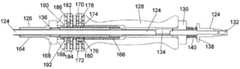
본 발명의 예들은 첨부된 도면을 참조하여 예의 방식으로 기술된다.Examples of the invention are described by way of example with reference to the accompanying drawings.
도 1은 커팅 블레이드의 전개가 도구의 회전 속도에 관계되는, 뼈 내에서 캐비티를 형성하기 위한 수동 조작 도구의 사시도.
도 2는 도 1의 도구의 부분을 형성하는 블레이드의 전개를 개략적으로 도시한 도면.
도 3은 본 발명의 실시예에 따라서 뼈 내에 캐비티를 형성하기 위한 도구의 블레이드 형성 부분의 전개를 개략적으로 도시한 도면.
도 4는 본 발명의 실시예에 따라서 뼈 내에 캐비티를 형성하기 위한 도구의 사시도.
도 5는 도 4의 도구의 부분을 형성하는 샤프트와, 샤프트를 통하여 연장하는 로드의 측면도.
도 6은 90°회전된 샤프트와 로드의 측면도.
도 7은 도 5의 샤프트와 로드의 제 1 단부의 사시도.
도 8은 화살표의 방향으로 선 8-8을 따라서 취한 도 5의 샤프트와 로드의 부분의 단면도.
도 9는 도 5의 샤프트와 로드의 제 2 단부의 사시도.
도 10은 도 6에 도시된 배향(orientation)에서 블레이드 전개 메커니즘을 도시하는 샤프트와 로드의 제 2 단부의 부분 단면도.
도 11은 대체로 블레이드가 전개된 도 10의 배향에서 도 5의 샤프트와 로드의 제 2 단부의 사시도.
도 12는 도 4의 도구의 부분을 형성하는 핸들의 단면도.
도 13은 도 12의 핸들의 분해 사시도.
[실시예]
도면들을 참조하여, 도 1은 뼈 내로 연장하는 터널 내로 삽입되는데 적합한 커팅 도구(2)를 도시한다. 예를 들어, 터널은 측면 피질(lateral cortex)로부터 대퇴골의 두부 내로 대퇴골의 목부를 통하여 인체 안으로(medially) 연장할 수 있다. 터널은 드릴 또는 리머와 같은 회전 커팅 도구를 이용하거나 또는 커팅 도구들의 조합을 이용하여 형성된다. 터널은, 예를 들어 환자가 무혈관성괴사로 고통받을 때와 같이 뼈 조직에 대한 혈액 순환의 손실의 결과로서 뼈 조직에 결함이 있는 두부의 영역에 도구의 단부가 위치되도록 충분히 두부 내로 연장할 수 있다.
도구는 블레이드 단부(6)와 핸들 단부(8)를 가지는 중공 샤프트(4)를 포함한다. 샤프트는 블레이드 단부(6)에 있는 측벽에 형성되는 블레이드 슬롯(10)을 가진다. 로드(12)는 샤프트(4)를 통하여 연장한다. 블레이드(14)는 중앙의 선회핀(16) 상에 블레이드 슬롯(10) 내에서 선회하도록 장착된다. 블레이드는 커팅 부분(18)과 몸통 부분(20)을 가진다. 중앙 핀(16)은 몸통 부분(20)에 있는 구멍을 관통한다. 샤프트(4)에 있는 블레이드 슬롯(10)의 길이는 중앙 핀(16)으로부터 블레이드(14)의 단부까지 측정된 블레이드(14)의 길이보다 약간 길고, 중앙 핀(16)은 샤프트(4)의 블레이드 단부(6)에 근접한 지점에서 슬롯(10)에 위치된다.
로드(12)의 한쪽 단부는 커팅 부분(18)과 동일한 선회 핀(16)의 측부 상에 있는 블레이드 몸통 부분(20) 상의 한 지점에서 핀(도 1에는 도시되지 않았지만 도 2와 관련하여 더욱 상세히 기술되는)의 수단에 의해 블레이드(14)에 연결된다. 로드(12)를 블레이드(14)에 연결하는 상기 핀은 블레이드(14)가 로드(12, 및 샤프트(4))에 대해 중앙 핀(16)을 중심으로 회전하는 것을 허용한다. 블레이드(14)는 샤프트(4) 내에서 축방향으로 로드(12)를 움직이는 것에 의해 중앙 핀(16)을 중심으로 선회하도록 만들어질 수 있다. 블레이드(14)는, 샤프트(4)의 블레이드 단부(6)로부터 말단으로(distally) 연장하는 시작 위치로부터 대략 160°의 원호를 통해 최종 위치에서 블레이드 슬롯(10) 내로 후퇴될 때까지 회전될 수 있다. 뼈에서 캐비티의 형성시에, 도구(2)는 시작 위치에서 블레이드(14)와 함께 뼈 내로 연장하는 보어 내로 삽입된다. 도구는 그런 다음 샤프트(4)의 축선을 중심으로 회전되는 한편, 블레이드(14)가 최종 위치에 있을 때가지 블레이드(14)를 점진적으로 회전시키고, 최종 위치에서, 도구(2)는 보어로부터 후퇴될 수 있다.
샤프트(4)는 핸들 단부(8)에 형성된 핸들(22)를 가진다. 핸들(22)은 샤프트(4)보다 넓다. 핸들(22)은 사용자가 임의의 위치에서 핸들을 안락하게 파지할 수 있도록 샤프트(4)를 중심으로 회전한다. 로드(12)는 핸들(22)의 단부 너머로 연장한다. 레버 지지 아암(24)은 핸들(22)로부터 연장한다. 레버 지지 아암(24)은 핸들(22)과 일체로 형성된다.
도구는 컨트롤 아암(26)을 포함한다. 컨트롤 아암(26)은 컨트롤 아암을 통해 연장하는 개구(28)를 가지며, 로드(12)가 개구에 수용되어 체결구에 의해 유지된다. 컨트롤 아암(26)은 한쪽 단부에서 선회 핀(30)에 의해 레버 지지 아암(24)에 선회 가능하게 연결된다. 레버 지지 아암(24)에 대한 컨트롤 아암(26)의 선회 운동은 핸들(22)과 샤프트(4)에 대해 로드(12)를 축방향으로 움직이도록 한다.
컨트롤 아암(26)은 그 자유 단부에 노브(32)를 가지며, 노브는 컨트롤 아암(26)에 대해 자유롭게 회전한다. 노브(32)는 컨트롤 아암(26)에 있는 간극(aperture)을 통해 연장하는 체결구에 의해 컨트롤 아암(26) 상에 장착된다.
도구(2)의 작업은 샤프트(4)의 축선을 중심으로 하는 도구(2)의 회전을 수반한다. 이러한 회전 운동은 샤프트(4)를 중심으로 회전하는 핸들(22)을 사용하여 도구(2)를 파지하는 것에 의해 이루어진다. 그런 다음, 핸들(22)에 대한 노브(32)에 비틀림력을 인가하는 것에 의해, 샤프트(4)의 축선으로부터 이격된 노브(32)를 사용하여 샤프트(4)의 축선을 중심으로 하는 도구의 회전 운동이 부여된다. 핸들(22)과 노브(32)는 노브(32)는 샤프트(4)를 중심으로 원호로 회전되는 것으로 작업자의 손에서 정지되어 있다. 블레이드(14)의 커팅 에지(34)는 도구(2)가 회전될 때 블레이드(14)에 의해 접촉된 뼈 조직을 깎는다.
블레이드(14)는 샤프트(4) 내에서 로드(12)를 움직이는 것에 의해 시작 및 최종 위치 사이에서 샤프트(4)에 대하여 선회 가능하게 움직일 수 있다. 이러한 것은 레버 지지 아암(24)에 연결된 선회축(30)을 중심으로 컨트롤 아암(26)을 움직이는 것에 의해 달성될 수 있다.
샤프트(4)와 로드(12)가 회전될 때, 증분 구동(incremental drive)은 샤프트(4)를 따라서 로드(12)를 병진시킨다(translate). 증분 구동은 컨트롤 아암(26)에 선회 가능하게 연결된 레버 지지 아암(24)의 부분에 반대인 방향으로, 샤프트(4)로부터 또한 연장하는 레버 지지 아암(24)에 의해 제공된다. 구동 로드(36)는 레버 지지 아암(24)에 선회 가능하게 연결된다. 구동 로드(36)는 그 외부면에 형성된 나사부를 가진다. 노브(32)는 나사공이 형성되어서, 나사공은 나사부가 형성된 구동 로드(36)의 단부를 수용할 수 있다. 따라서, 노브(32)가 구동 로드(36) 및 컨트롤 아암(26)에 대해 회전됨에 따라서, 노브는 구동 로드(36)를 따라서 전진한다. 구동 로드(36)를 따른 노브(32)의 전진은 선회축(30)을 중심으로 구동 로드(36)를 회전시킨다. 상기된 바와 같이, 로드(12)는 체결구(28)에 의해 컨트롤 아암(26)에 연결된다. 그러므로, 컨트롤 아암(26)의 선회는 샤프트(4) 내에서 로드(12)를 슬라이딩시킨다.
도 1은 블레이드(14)가 시작 및 최종 위치 사이의 도중에 있을 때의 도구(2)를 도시한다. 시작 위치로부터 최종 위치로의 블레이드(14)의 회전은 샤프트(4)의 핸들 단부(8)를 향하여 슬라이딩하는 로드(12)에 의해 달성된다. 노브(32)는 구동 로드(36)를 따라서 어느 정도까지 전진하도록 회전되었다. 결과적으로, 로드(12)는 샤프트(4)의 핸들 단부(8)를 향하여 샤프트(4)를 통해 후퇴되어서, 블레이드(14)를 전개시킨다.
도 1에 도시된 도구(2)는 뼈 내에 구형 캐비티를 형성하도록 의도되었으며, 특히 인체 안쪽 보어(medial bore)를 통하여 접근된 대퇴골의 두부 내에 구형 캐비티를 형성하는데 적합하다. 캐비티를 형성하도록 뼈 내로 절단하는 블레이드(14)의 전개는 크랭크 핸들(노브(32), 컨트롤 아암(26), 및 샤프트(4)의 세로축에 대해 횡으로 핸들(22)로부터 연장하는 레버 지지 아암(24)으로 형성되는)에 직접 링크된다. 블레이드(14)는 시작 위치로부터 선회 핀(16)을 중심으로 회전하는 단일 커팅 부분(18)을 가지며, 커팅 부분은 샤프트(4)의 블레이드 단부(8)로부터 샤프트(4)의 세로축을 따라서 도 1에 도시된 전개 위치를 통해 블레이드 슬롯(10) 내에 수용된 최종 위치로 연장한다. 대안적으로, 절단 작업 동안, 블레이드는 반대 방향으로 선회 핀(16)을 중심으로 회전할 수 있다.
그러나, 도 1에 도시된 도구(2)는 그 디자인에서 고유한 다수의 제한들로부터 고통을 받는다. 먼저, 뼈를 절단하도록 커팅 부분(18)에 대해 충분한 토크를 발생시키기 위하여, 크랭크 핸들은 샤프트(4)에 대해 충분한 반경 방향 스윕(sweep)을 가져야만 한다. 특히, 접근 터널이 대퇴골 목부를 통하여 인체 안쪽으로 연장하는 대퇴골의 두부에 캐비티를 형성하기 위하여, 도구는 대퇴골의 긴 축선에 대해 대략 45°의 각도로 대퇴골에 들어가야만 한다. 그러므로, 크랭크의 회전 동안 크랭크 핸들이 환자 다리의 연질 조직에 부딪히는 것을 방지하기 위하여, 샤프트(4)는 핸들(22)에 결합되기 전에 환자로부터 상당한 거리를 연장하여야만 한다.
두 번째 제한은 뼈를 절단하기 위하여, 의사가 크랭크 핸들에 큰 접선력(tangential force)을 인가하여야만 한다. 이러한 것은 도구의 샤프트를 원뿔 형태(conical fashion)로 움직일 수 있다. 원뿔 움직임은 환자의 다리를 움직일 수 있으며, 뼈에 대한 오정렬 또는 손상에 대한 잠재성을 증가시킨다. 크랭크 핸들의 큰 반경 방향 스윕과 환자 다리로부터 연장하는 샤프트의 결과적인 길이는 원뿔 움직임의 잠재성을 격화시킨다.
추가의 제한은, 도구의 회전과 블레이드의 전개가 링크됨으로써, 의사가 블레이드의 점진적인 전개를 용이하게 조정할 수 없다는 것이다. 그 선회 지점을 중심으로 하는 블레이드의 진행이 뼈 내에서 도구의 회전에 관계없다는 것을 보장하는 것이 가능하지만, 이러한 것을 달성하기 위하여, 컨트롤 아암(26)이 샤프트(4)를 중심으로 회전됨으로써 컨트롤 아암(26)에 대한 노브(32)의 회전 속도는 변경되어야만 한다. 이러한 것은 사실상 달성하기 어려울 수 있다. 블레이드의 전개 속도가 예를 들어 공막뼈(sclerotic bone)로 인하여 뼈 밀도에서의 변화를 고려하여 변경되는 것이 필요할 수 있다. 의사가 치밀한 뼈 덩어리를 만났을 때, 즉 큰 토크가 샤프트에 적용되어야만 하는 시점에 블레이드의 전개 속도를 감소시킬 수 있는 것이 필요할 수 있다.
추가의 제한은 하나의 커팅 에지가 뼈를 결합함으로써, 캐비티의 절단 동안 도구를 변위시키려는 불평형화된 축선 부하가 생성되는 것이다. 축선 부하는 뼈로부터 도구를 밀어내도록(force) 작용할 수 있다. 결과적으로, 의사는 이러한 축선 부하에 대항하여야만 하는 동시에, 크랭크 핸들을 회전시켜, 다시 뼈에 대한 오정렬 및 손상에 대한 잠재성을 증가시킨다. 뼈 내에서 도구의 깊이를 정확하게 컨트롤하는 것이 어려울 수 있으며, 뼈 내의 적절한 위치에서 캐비티를 형성하는데 어려움이 따른다.
블레이드(14)는 샤프트(4)의 세로축을 포함하는 평면에서 중앙 선회 핀(16)을 중심으로 회전한다. 지금 도 2를 참조하여, 이 도면은 커팅 부분(18)이 전개됨으로써 중앙 핀(16)을 중심으로 블레이드(14)의 회전 위치에서의 변화를 개략적으로 도시한다. 블레이드(14)의 각각의 별개의 도면(A-D)은 선회 핀(16)의 축선(블레이드(14)의 회전 평면에 대해 직각인)을 따라서 본것이다. 블레이드(14)의 각각의 도면에 대하여, 샤프트(4)의 블레이드 단부(6)는 우측에 대한 것이다. 수평선들은 샤프트(4)의 외경을 나타낸다. 즉, 커팅 부분(18)이 수평선들 사이에 완전히 수용되었을 때, 블레이드(14)는 블레이드 슬롯(10) 내로 완전히 후퇴되거나(도면 C 및 D), 또는 샤프트(4)의 블레이드 단부(6) 너머로 연장한다(도면 A 및 B).
상기된 바와 같이, 블레이드(14)는 도 2에서 도면 부호 38로서 도시된 제 2 구동 선회 핀에 의해 푸쉬 로드(12)에 결합된다(로드(12)는 도 2에 도시되지 않았지만, 도면의 좌측을 향하여 구동 핀(38)으로부터 연장하는 것이 예상될 것이다). 샤프트(4) 내에서 로드(12)의 축선 정렬을 변경하는 블레이드(14)의 움직임을 방지하기 위하여 구동 핀(38)과 로드(12) 사이에 링크 로드가 있을 수 있다.
도면 B는 샤프트(4)의 블레이드 단부(6)의 말단으로 연장하는 커팅 부분(18) 내에서 그 시작 위치에 있는 블레이드(14)를 도시한다. 도면 C는 블레이드 슬롯(10) 내에 수용된 최종 위치에 있는 블레이드(14)를 도시한다. 단지 블레이드의 하나의 커팅 부분이 제공됨으로써, 샤프트의 블레이드의 단부를 둘러싸는 뼈에서 완전한 구형 캐비티를 절단하기 위하여 대략 160°에 걸쳐서 회전하여야만 하는 것을 예측할 것이다. 필요한 회전은 블레이드(14)가 선단 커팅 에지(34)와 후미 에지 사이의 커팅 부분(18)에서 일정한 폭을 가지기 때문에 180°미만이다. 커팅 부분(18)에서의 블레이드(14)의 단부는 시작 위치에서 뼈의 단부를 접촉하고, 이러한 것은 커팅 에지(34)가 완전한 구형을 절단하도록 원호의 이러한 부분을 통하여 회전될 필요가 없다는 것을 의미한다. 절단은 블레이드가 샤프트의 세로축 주위에서 회전되는 블레이드에 의해 시작 위치로부터 부분적으로 또는 완전히 전개될 때 달성된다(즉, 블레이드(14)의 커팅 회전 평면은 도 2에 도시된 평면에 대해 직각이다). 구형 캐비티를 절단하도록 선회 핀(16)을 중심으로 하는 블레이드의 회전 범위는 도면(B 및 C)들 사이의 구동 핀(38)의 상대 운동에 의해 도 2에서 알 수 있다.
샤프트(4)의 크랭크 구동 때문에, 중앙 핀(16)과 구동 핀(38) 사이의 반경 방향 편심(40)은 구동 핀이 중심 위를 지나가지 않는 것을(즉, 도 2에 도시된 바와 같이, 구동 핀(38)이 그 이동 한계점에서 중앙 핀(16) 위로 상승하지 못하는 것을) 보장하도록 비교적 커야만 한다. 중심 위를 지나가는 구동 핀(38)은 각각 블레이드(14)의 회전의 시작 및 최종 위치에서 도면(A 및 D)들에서 도시되어 있다. 이러한 것은 일정 속도의 크랭크 핸들의 회전이 샤프트(4)를 통해 로드(12)를 일정 속도로 진행시키기 때문이다. 그러나, 구동 핀(38)이 사점(dead centre)에 접근할 때, 일정 속도로 샤프트(4)를 따라서 연장하는 로드(12)는 블레이드(14)를 더욱 빠르게 회전시켜, 중심 위를 통과할 위험성을 증가시킨다. 반경 방향 편심(40)이 증가되면, 블레이드(14)의 회전 속도는 동일한 속도의 로드(12)의 축선 운동이 주어지면 감소된다. 구동 핀(38)이 중심 위를 통과하면, 도구는 개방 또는 폐쇄 위치에서 록킹될 수 있다. 구동 핀이 사점에 접근함으로써, 푸쉬 로드의 축방향 움직임은 0이기 쉬우며(구동 로드(36)의 이동 한계점에 도달되는 것으로 인하여), 예를 들어, 도구의 원뿔 움직임에 의해 섭동을 일으키게 되면(perturbed), 핀이 사점 위를 통과하는 것을 방지하도록 구동 핀(38)에 인가되는 힘은 없다.
중앙 핀(16)은 블레이드(14)를 통하여 블레이드의 어느 한 측부 상에서 샤프트(4) 내로 연장한다. 중앙 핀(16)을 중심으로 하는 구동 핀(38)의 큰 범위의 회전은 푸쉬 로드(12)와 중앙 핀(16) 사이에, 푸쉬 로드(12)가 구동 핀(38)에 결합되는 충분한 여유(clearance, 또는 중앙 핀(16)과 링크 로드 사이에서 구동 핀(38)을 푸쉬 로드(12)에 결합하는 충분한 여유)를 제공하기 위하여 왜 반경 방향 편심(40)이 커야만 되는 다른 이유를 제공한다.
도면 B 및 C에 도시된 블레이드(14)의 시작 및 최종 회전 위치들에서, 중앙 핀(16)과 구동 핀(38) 사이에서 연장하는 선과 로드(12)의 세로축 사이에서 마주보는 각도는 작다. 이러한 것은 구동 핀이 중심 위를 통과함이 없이 블레이드가 대략 160°에 걸쳐 회전하는 요건에 기인한다. 그러므로, 블레이드가 그 시작 및 최종 위치들에 접근할 때 블레이드를 회전시키도록 작용하는, 푸쉬 로드에 의해 구동 핀에 인가되는 축방향 힘의 성분(2개의 핀들을 연결하는 선에 대해 직각인 구동 핀을 통해 작용하는 축방향 힘의 성분)은 작다. 의사가 크랭크 핸들에 과잉의 힘을 적용할 것을 요구함이 없이, 뼈 저항이 극복되도록 중앙 핀을 중심으로 블레이드를 회전시키기 위해 충분한 힘이 블레이드에 인가되는 것을 보장하기 위하여, 다시 반경 방향 편심은 비교적 커야만 한다.
필요한 큰 반경 방향 편심(40)은 샤프트(4)의 지름이 수평선(42, 44)들에 의해 지시된 샤프트(4)의 지름 내에서 중앙 핀(16)을 중심으로 하는 구동 핀(38)의 스윕을 수용하도록 유사하게 커야만 하는 것을 의미한다. 이러한 것은 결과적으로 구형 캐비티가 뚫리기 전에 도구를 수용하기 위하여 뼈 내로 연장하는 큰 접근 터널을 요구한다. 뼈 내로의 보다 큰 터널들은 뼈에 대한 손상의 위험성을 증가시는 것으로 알려졌다. 대퇴골의 두부 내로 연장하는 접근 터널의 경우에, 이러한 것은 대퇴골 목부 또는 돌기하 골절(subtrochanteric fracture)에 대한 손상의 위험성을 증가시킨다.
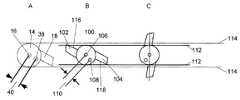
본 발명의 실시예들에 따라서, 2개의 커팅 부분들을 구비한 블레이드를 가지는, 뼈에 캐비티를 형성하기 위한 도구가 제공되고, 이러한 것은 도 1 및 도 2와 관련하여 상기된 도구의 특정 제한들을 극복한다. 도 3을 참조하여, 이러한 것은 도면 B 및 C에서 본 발명의 실시예에 따라서 제 1 및 제 2 커팅 부분(102, 104)들을 가지는 블레이드(100)를 개략적으로 도시한다. 비교를 위해, 시작 위치에서의 도 2의 블레이드(14)는 다시 도면 A에 도시된다. 뼈에서 캐비티를 형성하기 위한 도구의 나머지에 대한 블레이드(14, 100)의 배향은 도 2와 동일하다. 특히, 블레이드(14, 100)들은 각각 중앙 핀(16, 106)을 중심으로 회전하도록 배열된다. 블레이드(14, 100)들의 회전은 구동 핀(38, 108)들에 결합된 푸쉬 로드(도시되지 않음)에 의해 제공되는 축방향 힘에 의해 구동된다.
동일한 구형 캐비티를 형성하기 위하여, 블레이드(14)는 도 2와 관련하여 기술된 바와 같이 대략 160°에 걸쳐서 회전하여야만 한다. 그러나, 블레이드(100)는 90°미만, 예를 들어 대략 80°에 걸쳐 회전하는 것만을 필요로 한다. 도면 B는 그 시작 위치에서의 블레이드(100)를 도시하고, 도면 C는 그 최종 위치에서의 블레이드(100)를 도시한다. 블레이드(100)가 회전하여야만 하는 각도에서의 감소로 인하여, 그 시작 및 최종 위치에서의 구동 핀(108)의 위치는 움직일 수 있다. 도면 A와 B(각각 그 시작 위치에 있는 블레이드(14 및 100)들을 도시하는)의 비교에 의해, 구동 핀(108)은 중앙 핀(106)과 구동 핀(108) 사이에서 연장하는 선과 푸쉬 로드의 세로축(도 3의 좌측으로 수평 연장하는) 사이에서 마주하는 각도는 도면 A에서 블레이드(14)에 대한 동등한 각도와 비교하여 크다. 결과적으로, 블레이드가 블레이드(14)에 대한 것과 동일한 뼈 저항을 극복할 수 있도록 블레이드(100)에 동일한 토크를 제공하기 위하여, 핀(106, 108)들 사이의 반경 방향 편심(110)은 블레이드(14)에 대한 반경 방향 편심(40)에 관하여 감소될 수 있다.
반경 방향 편심(110)이 보다 작음으로써, 푸쉬 로드가 통과하는 샤프트의 지름은 또한 블레이드(14)에 대한 점선(114)에 의해 지시된 대응하는 샤프트 지름에 대하여 실선(112)들 사이의 틈새에 의해 지시된 바와 같이 작을 수 있다. 이러한 것을 결과적으로 구형 캐비티가 뚫려지기 전에 도구를 수용하기 위하여 뼈 내로 연장하는 보다 작은 접근 터널을 요구하며, 이러한 것은 뼈에 대한 손상의 위험성을 감소시킨다.
또한, 중앙 핀(106)과 구동 핀(108) 사이에서 연장하는 선과 푸쉬 로드의 세로축 사이에서 마주하는 각도가 시작 및 최종 위치(도면 B 및 C) 모두에서 블레이드(100)에 대해 비교적 큼에 따라서, 구동 핀(108)이 중심 위를 통과할 가능성이 제거된다.
뼈에 캐비티를 절단하는 동안 도구의 표류하는(drift) 경향은 2개의 커팅 부분들을 가지는 블레이드(100)를 포함하는 도구에 대해 감소된다. 이러한 것은 뼈 상에 도달한 블레이드에 의해 발생되는, 블레이드에 결합된 푸쉬 로드의 세로축을 따라서 작용하는 힘들이 대칭으로 만들어질 수 있기 때문이다. 블레이드(100)는 제 1 및 제 2 커팅 부분(102, 104)들을 포함한다. 블레이드(100)가 그 시작 위치로부터 시계 방향으로 회점함으로써(도 3의 도시에서), 커팅 에지(116, 118)들은 각각 뼈를 결합한다. 커팅 에지(116, 118)들은 도 3에 도시된 바와 같이 중앙 핀(106)으로부터 반대 방향으로 연장하도록 배열된다. 커팅 에지(116)는, 커팅 로드 세로축과 정렬되어 캐비티 외부로 도구를 밀어내도록 작용하는 힘 성분을 발생시킨다. 커팅 에지(118)는 커팅 로드 세로축과 정렬되어 캐비티 내로 도구를 흡인하도록 작용하는 힘 성분을 발생시킨다. 이러한 힘 성분들은 서로 상쇄된다. 각각의 커팅 블레이드가 동일한 방식으로 반경 방향 라인에 대해 배열되는 한, 커팅 에지(116, 118)들이 중앙 핀(106)으로부터 연장하는 반경 방향 라인과 정확하게 정렬되는 것이 필요하지 않다는 것을 유념하여야 한다.
대안적으로, 작은 축방향 힘, 예를 들어 캐비티 내로 도구를 당기도록 작용하는 작은 축방향 힘을 발생시키기 위하여 커팅 에지(116, 118)들 중 하나를 회전적으로 편심시키는 것이 필요할 수 있으며, 당기는 힘은 도 4를 참조하여 다음에 기술되는 바와 같이 보어를 둘러싸는 외피 뼈에 접촉하는 도구의 일부분에 의해 저항을 받는다. 당기는 힘은 캐비티 절단 동안 도구의 표류하는 경향을 더욱 감소시킨다. 외피 뼈에 접촉하는 도구의 부분은 샤프트가 절단 동안 동일한 축선 위치에 있는 것을 보장한다. 샤프트의 축선을 따라서 도구에 작용하는 순수 힘은 최소로 감소된다. 당기는 힘은 반시계 방향(도 3에 도시된 평면에서)으로의 작은 각도량에 의해 제 2 커팅 에지(118)에 대하여 제 1 커팅 에지(116)의 반경 방향 위치를 변위시키는 것에 의해 달성될 수 있다.
지금 도 4를 참조하여, 이 도면은 본 발명의 실시예에 따라서 뼈 내에 캐비티를 형성하기 위한 도구(120)를 도시한다. 도구(120)는 도 3에 개략적으로 도시된 형태의 2개의 커팅 부분(102, 104)들을 가지는 블레이드(100)를 통합한다. 본 발명의 실제 실시예를 위한 블레이드(100)의 형상은 도 3에 도시된 것과 다를 수 있다. 특히, 블레이드의 한 실시예는 다음에 기술되는 도 10에서 보다 상세하게 도시되어 있다. 도 4에 도시된 도구는 도 1에 도시된 도구에 의해 형성된 것과 유사한 구형 캐비티를 형성하는데 적절하지만, 캐비티는 대체로 도 3에 도시된 형태로 하는 블레이드를 가지는 것으로 인하여 보다 작은 보어를 통하여 접근하는 뼈의 일부분 내에 형성될 수 있다.
도구(120)는 관형 샤프트(122)와 푸쉬 로드(124)를 추가로 포함하며, 푸쉬 로드는 샤프트(122)의 세로축에 평행하게 슬라이딩할 수 있도록 샤프트(122) 내에 장착된다. 로드(124)는 로드(124)의 축선 움직임이 블레이드(100)를 회전시키도록 블레이드(100)에 결합된다(도 10과 관련하여 다음에 더욱 상세하게 기술되는 바와 같이).
도구(120)는 커팅 가이드 슬리브(126)와, 커팅 가이드 슬리브(126)에 결합된 핸들(128)을 추가로 포함한다. 커팅 가이드 슬리브(126)와 핸들(128)은 블레이드로부터 샤프트(122) 위를 통과하는 것에 의하여 샤프트(122) 위를 슬라이딩하도록 배열된다. 핸들(128)은 단부 스토퍼(130)에 의해 블레이드(100)로부터 먼 샤프트(122)의 단부 위를 슬라이딩하는 것이 방지된다. 커팅 가이드 슬리브(126)는 샤프트(122) 위를 통과하는 커팅 가이드 슬리브(126)의 길이가 조정 가능하도록 핸들(128)에 결합된다. 이러한 것은 보어를 둘러싸는 외피 뼈를 접촉하는 것에 의해 뼈 내로 연장하는 상기 보어 내로 도구(120)의 삽입을 핸들(128)로부터 먼 커팅 가이드 슬리브(126)의 단부가 제한하는 것을 허용한다(보어는 샤프트(122)가 들어가는 것만을 허용하고 커팅 가이드 슬리브(126)가 들어가는 것을 허용하지 않는 크기이다). 대안적으로, 가이드 슬리브의 부분은 보어, 도구 샤프트 및 가이드 슬리브의 상대 크기에 따라서 보어 내로 삽입될 수 있다. 예를 들어, 가이드 슬리브(126)는 어깨부 또는 플랜지에서 종료하는 감소된 두께 부분을 가질 수 있어서, 감소된 두께 부분은 어깨부 또는 플랜지가 외피 뼈에 접촉할 때까지 뼈 내로 삽입될 수 있다. 핸들(128)과 결합하여 커팅 가이드 슬리브(126)는, 도구가 뼈 내로 연장하는 보어 내로 삽입됨으로써, 뚫려지는 보어의 위치가 샤프트(122)에 대해 슬리브(126)의 위치에 따라서 정확하게 결정되도록 깊이 스토퍼로서 작용한다. 깊이 스토퍼는 핸들(128)로부터 연장하는 슬리브(126)의 길이를 조정하는 것에 의해 조정 가능한 길이이다. 단부 스토퍼(130)는 샤프트(122)에 결합되고, 깊이 스토퍼가 보어의 가장자리 또는 주위의 뼈를 접촉할 때 핸들(128)을 통해 도구에 인가되는 축방향 압력이 샤프트(122)를 슬라이딩시키는 것을 방지한다.
도 5 및 도 6은 샤프트(122)와 로드(124)의 정렬을 보다 상세하게 도시하기 위하여 도구(120, 즉, 커팅 가이드 슬리브(126)와 핸들(128)이 제거된 도구)의 캐비티 커터 부분를 2개의 평면들에서 도시한다. 도 6은 샤프트(122)의 세로축 주위에서 90°만큼 회전된 후에 도구(120)의 캐비티 커터 부분을 도시한다. 샤프트(122)는 관형 영역을 가지며, 로드(124)를 도 5에 도시된 바와 같이 보이게 하도록 절단된 개구들을 가진다.
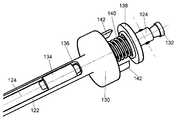
도 7은 도 5 및 도 6에 도시된 도구(120)의 캐비티 커터 부분의 제 1 단부의 사시도를 도시한다. 도 7에 도시된 도구의 단부는 블레이드(100)로부터 먼 단부이다. 로드(124)는 샤프트(122)의 단부로부터 단부 스토퍼(130)를 통해 돌출하고, 표준 허드슨 커플러(132, standard Hudson coupler)에서 종료한다. 임의의 대안적인 공지 형태의 커플링이 사용될 수 있는 것을 예측하여야 한다. 허드슨 커플러(132)는 그 세로축을 중심으로 로드(124)를 회전시키기 위하여 동력 공구(power tool)에 도구(120)가 결합되는 것을 허용한다. 커플러(132)는 동력 공구와의 확실한 결합을 제공하도록 대체로 쐐기 형상이다. 그러나, 대안적인 실시예들에서, 커플러(132)는 동력 공구 상에서 당겨지는 것에 의해 샤프트가 보어로부터 후퇴되는 것을 방지하기 위해 푸쉬 로드가 동력 공구로부터 분리되는 것을 허용하도록 제거될 수 있다. 이러한 것은 도구를 후퇴시키는 한편 샤프트를 계속 회전시키는 것에 의해 타원 형상의 캐비티가 형성되는 것을 방지한다.
상기된 바와 같이, 로드(124)는 샤프트(122) 내에서 슬라이딩할 수 있다. 로드(124)는 로드(124)의 축방향 움직임이 중앙 선회축(106) 주위에서 블레이드(100)를 회전시키도록 블레이드(100)에 결합된다(다음에 보다 상세하게 기술되는 바와 같이). 블레이드(100)는 블레이드(100)와 샤프트(122)의 양측부들을 통과하는 중앙 선회 핀(106)에 의해 순차적으로 샤프트(122)에 결합된다. 로드(124)의 측부들은 샤프트(122)의 내부 측벽들 내에서 대응하는 평탄부들을 결합하도록 배열된 평탄부들을 포함한다. 결과적으로, 허드슨 커플러(132)를 통해 동력 공구에 의해 구동되는 로드(124)의 회전은 또한 샤프트(122)를 회전시킨다. 커팅 가이드 슬리브(126)와 핸들(128)은 샤프트(122)가 회전하는 동안 핸들이 의사에 의해 확실히 파지될 수 있도록 샤프트(122) 상에 장착되도록 배열된다. 로드(124)는 도 5, 도 6 및 도 7과 도 8에서 단면도로 도시된 토크 키(134)에 또한 결합된다. 단면도에서, 토크 키(134)는 로드(124)에 있는 슬롯 내로 삽입되는 T-형상의 쐐기를 포함한다. 쐐기의 십자 부분(cross piece)은 샤프트(122) 내로 절단된 윈도우(136) 내로 끼워 맞추어진다. 상기 배열은 로드(124)가 샤프트(122) 내에서 축방향으로 슬라이딩하는 한편 여전히 동력 공구로부터 샤프트(122)에 토크를 전달함으로써 샤프트(122)의 세로축에 평행하게 윈도우(136) 내에서 토크 키(134)를 슬라이딩시킨다. 그러므로, 로드(124)는 샤프트(122)의 양쪽 단부들에 인접한 위치들에서 샤프트에 결합된다.
플랜지(128)는 허드슨 커플러(132)에 인접한 로드(124)에 결합된다. 스프링(140)은 플랜지(138)와 샤프트(122)의 단부 스토퍼(130) 사이로 연장한다. 스프링(138)은 단부 스토퍼(130)와 플랜지(138)를 이격시키도록 통상 편향된다. 아암(144)들은 단부 스토퍼(130)로부터 플랜지(138)를 향하여 어느 정도 연장한다. 허드슨 커플러(132)에 축방향 힘을 인가하는 한편 적소에서 샤프트(122)를 유지하는 것에 의하여(특히, 핸들(128)을 견고하게 유지하는 것에 의할 뿐만 아니라, 뼈 내로 보어 주위에서 외피 뼈를 접촉하는 커팅 가이드 슬리브(126)의 단부에 의해), 스프링(140)은 압축될 수 있다. 이러한 것은 도 10과 관련하여 보다 다음에 보다 상세하게 기술되는 바와 같이 블레이드(100)를 전개하도도록 샤프트(122) 내에서 로드(124)가 슬라이딩하는 것을 허용한다. 특히, 커플러(132)에 인가되는 축방향 힘은 뼈 내로 연장하는 보어 내로 도구를 삽입시킨다. 스프링(138)은 깊이 스토퍼(즉, 커팅 가이드 슬리브(126) 또는 슬리브로부터 연장하는 확장 부분 또는 플랜지의 단부)가 뼈에 부딪힐 때까지 블레이드(100)가 전개되는 것을 방지한다. 단부 스토퍼(130)는 핸들(128)의 단부에 접촉하고, 핸들은 순차적으로 가이드 슬리브(126)에 축방향 힘을 전달하며, 가이드 슬리브는 순차적으로 보어를 둘러싸는 뼈에 부딪힌다. 또한, 축방향 힘은 스프링(138)의 저항을 극복하여, 블레이드(100)를 전개하도록 샤프트(122) 내에서 푸쉬 로드(124)를 축방향으로 슬라이딩시킨다.
스프링(140)과 다리(142, leg)들의 배열은 샤프트(122) 내에서의 로드(124)의 축방향 움직임이 제한되도록 한다. 스프링(140)의 저항을 극복하도록 축방향 힘이 인가되지 않을 때, 블레이드(100)는 도 3의 도면 B에 개략적으로 도시된 바와 같은 시작 위치에 있다. 로드(124)가 샤프트(122) 내에서 슬라이딩하도록 스프링(140)이 압축될 때, 블레이드는 도 3의 도면 C에 개략적으로 도시된 바와 같은 최종 위치로 움직인다. 뼈 내로 연장하는 보어로부터 도구(120)가 후퇴되는 것을 허용하기 위하여, 축방향 힘이 허드슨 커플러(132)로부터 제거되면, 스프링(138)은 도 7에 도시된 통상 편향된 연장 위치로 복귀하여서, 커팅 부분(102, 104)들이 샤프트(122)의 세로축에 실질적으로 평행하게 선회 핀(106)으로부터 연장하는 그 시작 위치로 블레이드(100)를 복귀시킨다.
커팅 가이드 슬리브(126)는, 도구(120)가 뼈 내로 연장하는 보어 내로 완전히 삽입되고 캐비티의 절단을 시작하도록 준비할 때, 핸들(128)로부터 멀리 있는 커팅 가이드 슬리브(126)의 단부가 보어 주위의 외피 뼈에 접촉하도록 배열된다. 결과적으로, 축방향 힘이 허드슨 커팅 부분(102, 104)에 인가될 때, 커팅 가이드 슬리브(126)는 축방향 힘에 저항하여, 샤프트(122)가 축방향 힘의 방향으로 움직이는 것을 방지한다. 이러한 것은 먼저 도구(120)가 보어 내로 더욱 밀리지 않는 것을 보장하고, 두 번째로, 축방향 힘이 스프링(140)을 압축하여, 로드(124)를 샤프트(122) 내에서 슬라이딩시켜서 블레이드(100)를 전개시킨다.
도 1에 도시된 도구(2)와 달리, 로드(124)의 회전이 크랭크 핸들이 아니라 동력 공구에 의해 구동되면, 도구(120)에 접선력이 인가되지 않는다. 도구(120)에 인가되는 힘들은 오직 축방향 힘과 샤프트(122)의 세로축을 중심으로 하는 토크이다. 결과적으로, 이러한 접선력의 결핍은 도구(2)에 의해 보여진 원뿔 움직임에 대한 경향을 감소시킨다. 또한, 크랭크 핸들이 없음에 따라서, 환자 인체로부터 연장하는 도구(120)의 전체적인 범위는 보다 짧게 만들어질 수 있으며(샤프트(122)와 로드(124)의 길이를 감소시키는 것에 의해), 그러므로, 환자 인체의 연질 조직에 부딪히는 위험성이 없다. 도구(120)가 도구(2)보다 짧기 때문에, 도구(120)는 더욱 컨트롤 가능하게 될 수 있다.
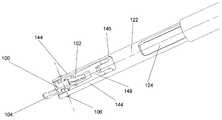
지금 도 9를 참조하여, 도면은 샤프트(122)의 블레이드 단부를 도시하는 도구(120)의 부분의 사시도이다. 도시된 블레이드(100)는 샤프트(122)의 측부 연장부들을 포함하는 아암(144)들 사이에서 연장하는 중앙 선회 핀(106) 상에 선회 가능하게 장착된다. 아암(144)들은 블레이드 슬롯(146)의 측부들을 한정한다. 도시된 로드(124)는 샤프트(122) 내에 장착되고, 샤프트(122) 내에서 슬라이딩할 수 있다. 로드(124)는 링크 로드(148)를 통해 블레이드(100)에 결합된다. 링크 로드(148)는 각각의 단부에서 블레이드(100)와 로드(124)에 각각 선회 가능하게 장착된다(링크 로드(148)의 선회 결합은 도 9에 도시되지 않았다). 도 9는, 제 2 커팅 부분(104)이 대체로 샤프트(122)의 세로축을 따라서 샤프트(122)로부터 연장하고 제 1 커팅 부분(106)이 블레이드 슬롯(146) 내에 수용되는 그 시작 위치에 있는 블레이드(100)를 도시한다. 블레이드(100)는 샤프트(122)의 블레이드 단부를 향해 슬라이딩하는 로드(124)에 의해 최종 위치로 회전하도록 전개될 수 있다. 로드(124)의 슬라이딩 운동은 링크 로드(148)에 의한 블레이드(100)의 회전 운동에 병진된다.
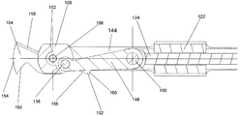
도 10을 참조하여, 도면은 도구(120)의 블레이드 단부의 부분 측단면도를 도시한다. 가장 가까이 있는 아암(144)은 블레이드(100)를 위한 전개 메커니즘을 도시하기 위해 제거되었다. 블레이드(100)는 그 시작 위치에서 도시된다. 링크 로드(148)는 각각 구동 핀(138)과 선회 핀(150)에 의해 블레이드(100)와 로드(124)에 결합된다. 로드(124)가 허드슨 커플러(132)에 인가되는 축방향 힘으로 인하여 도구(120)의 블레이드 단부를 향하여(도 10에서 좌측으로) 슬라이딩함으로써, 링크 로드(148) 또한 블레이드 단부를 향해 움직이는 것을 알 수 있다. 중앙 선회 핀(106)은 샤프트(122)의 세로축과 푸쉬 로드(124)의 세로축과 일직선임에 반하여, 구동 핀(138)은 세로축(도 10의 바닥을 향하여)과는 편심이다. 그러므로, 블레이드 단부를 향한 링크 로드(148)의 움직임은 도 10에 도시된 도면에서 블레이드(100)를 반시계 방향으로 회전시킨다.
상기된 바와 같이, 로드(124)의 움직임은 스프링(140), 플랜지(138) 및 아암(142)들에 의해 제한된다. 도 10에서, 로드(124)는 블레이드 단부로부터 멀리 있는 그 이동 한계점에 있다(로드(124)에 인가되는 임의의 외부 축방향 부하의 부재시에 정상적으로 편향되어 연장된 구성으로 있는 스프링(140)의 작용 하에서). 또한, 반시계 방향으로의 블레이드(100)의 회전은 도구의 블레이드 단부로부터 멀리 있는 로드(124)의 이동 연장부에 의해 방지된다. 반시계 방향으로의 블레이드(100)의 회전은, 로드(124)가 블레이드 단부를 향하여 움직일 수 있는 범위에 의해 제한되고, 로드의 움직임은 순차적으로 아암(144)들을 접촉하는 플랜지(138)에 의해 제한된다.
블레이드(100)는 어깨부(152, shoulder portion)를 추가로 포함한다. 도 9에서 사시도로 도시된 바와 같이, 블레이드(100)는 중앙 핀(106)이 통과하는 중앙의 두꺼운 부분과, 얇은 커팅 부분(102, 104)들을 포함한다. 어깨부(152)는 블레이드(100)의 중앙 부분과 제 1 커팅 부분(102) 사이에 천이부(transition)를 포함한다. 어깨부(152)의 가장자리까지의 제 1 커팅 부분(102)에서의 블레이드(100)의 감소된 두께는 블레이드가 회전함에 따라서 블레이드가 링크 로드의 운동에 충돌하지 않는 것을 보장한다. 블레이드(100)의 추가의 시계 방향 회전은 도 7과 관련하여 상기된 바와 같이 아암(142)들을 접촉하는 플랜지(138)에 의해 제한된다.
뼈에 캐비티를 생성하기 위하여, 도구(120)는 보어 내로 삽입되고, 보어는 뼈 내로 천공되어 캐비티가 필요한 영역을 관통한다. 제 2 커팅 부분(104)은 보어 내로 도구의 삽입을 제한하는 보어의 단부를 접촉하도록 배열된 곡선 단부(154)를 가진다. 제 2 커팅 부분의 곡선 단부의 곡률 반경은 샤프트 상의 블레이드의 선회축으로부터 제 2 커팅 부분의 단부까지의 거리와 실질적으로 동일할 수 있다. 전형적으로, 이러한 것은 가장 작은 캐비티 커터에 대한 경우일 수 있다. 그러나, 보다 큰 캐비터 커터로 캐비티를 확장하기 위하여, 제 2 커팅 부분의 곡선 단부의 곡률 반경은 샤프트 상의 블레이드의 선회축으로부터 제 2 커팅 부분의 단부까지의 거리보다 적게 된다. 곡률에서의 이러한 감소는 블레이드가 보어의 단부 내로의 절단 보다는 보어의 단부에 부딪히는 것을 보장하도록 배열된다.
핸들(128)로부터 샤프트(122)를 따라서 연장하는 커팅 가이드 슬리브(126)의 길이는 그런 다음 보어 주위의 외피 뼈를 접촉하도록 조정될 수 있다. 이러한 것은 허드슨 커플러(132)에 축방향 힘을 인가하는 것이 도구(120)를 보어 내로 더욱 밀지 않도록 하는 기준을 제공한다. 커팅 가이드 슬리브(126)의 조정은 도 12를 참조하여 다음에 더욱 상세하게 기술된다.
허드슨 커플러(132)에 토크를 인가하면, 핸들(128, 그러므로, 또한 커팅 가이드 슬리브(126))이 의사에 의해 확실하게 유지되는 동안, 로드(124), 샤프트(122), 링크 로드(148) 및 블레이드(100)는 샤프트(122)의 세로축을 중심으로 회전하고, 이러한 것은 임의의 불규칙성이 보어의 단부에 존재하면, 보어의 단부에서 매끈한 곡선을 형성하도록 작용한다. 추가적으로, 곡선 단부(154)는 의사가 연골하골(subchondral bone)을 손상시키지 않고 보어의 단부에 도구(120)의 단부를 위치시키는 것을 허용한다. 캐비티 커터가 뼈 내로 삽입될 때, 곡선 단부(154)는 샤프트(122)가 완전히 삽입되었다는 것을 결정하기 위한 비절단 데이터를 제공한다. 커팅 가이드 슬리브(126)의 길이는 이것이 외피 뼈에 접촉하고 단부 스토퍼(130)가 핸들(128)에 접촉할 때까지 정확한 깊이에서 단 한번 조정된다. 결과적으로, 도구의 축선을 따라서 더욱 밀면, 팁(154)을 뼈 내로 추가로 밀어내지 않는다.
동력 공구로 로드(124)의 회전을 구동하는 동안, 의사는 동력 공구로 축방향 힘을 인가하고, 동력 공구는 순차적으로 로드(124)에 축방향 힘을 전달하여 도구의 블레이드 단부를 향해 로드를 움직인다. 상기된 바와 같이, 이러한 로드(124)의 축방향 움직임은 도 10에 도시된 도면에서 중앙 핀(106) 주위에서 시계 방향으로 블레이드(100)를 회전시킨다. 결과적으로, 제 1 및 제 2 커팅 부분(102, 104)들의 커팅 에지들(156,158)은 뼈와 접촉하여 각각 보어의 측부들을 형성한다. 이러한 것은 캐비티를 형성하도록 뼈를 절단하기 시작한다. 블레이드(100)가 계속 회전함으로써, 제 1 커팅 부분(102)의 단부(160)는 또한 절단된 캐비티의 측부들과 접촉하게 된다. 제 2 커팅 부분(104)은 훅 형상의 후미 에지(162)를 가지며, 이것은 감소되는 캐비티에서의 금속의 체적으로 인하여 마모된 뼈를 제거하는 것을 돕는다. 여유가 절단된 뼈 부스러기들을 모으도록 블레이드 뒤에 제공된다.
중앙 핀(106)을 중심으로 하는 블레이드(100)의 회전 속도는 샤프트(122)의 세로축을 중심으로 하는 블레이드(100)의 회전 속도와는 관계가 없으며, 동력 공구를 사용하여 로드(124)에 인가되는 축방향 부하의 정도에 의해 컨트롤된다. 이러한 것은, 드릴이 일정한 속도로 회전하는 동안 드릴에 인가되는 축방향 힘을 컨트롤하는 것에 의해 종래의 드릴의 절단 속도가 컨트롤될 수 있는 방식으로 뼈의 밀도에 따라서 의사가 절단 속도를 컨트롤하는 것을 허용한다. 추가적으로, 의사는 이러한 것이 요구되면 샤프트(122)의 회전 속도 또는 방향을 조정함이 없이 블레이드(도 10의 도면에서 반시계 방향으로 움직이는)를 후퇴시킬(back off) 수 있다.
본 발명의 특정 실시예들에 따라서, 단일 핸들(128)과 커팅 가이드 슬리브(126)를 구비한 다수의 캐비티 커터들이 있을 수 있다. 캐비티를 형성하도록 사용된 각각의 캐비티 커터의 블레이드(100)는 점진적으로 더욱 커질 수 있어서, 가장 작은 커터로 시작하여 필요한 크기의 캐비티가 달성될 때까지 계속하는 증분 단계들로 구형 캐비티가 절단되는 것을 허용한다. 커팅 블레이드의 길이는 가장 작은 캐비티 커터에 결합될 때만 단지 한번 조정되는 것을 필요로하고, 동일한 길이의 커팅 블레이드는 캐비티가 정확한 위치에서 형성되는 것을 보장하도록 다음의 각 캐비티 커터와 함께 사용된다. 각각의 후속 캐비티 커터는 새로운 캐비티 커터가 삽입될 때 뼈를 손상시키는 것을 피하도록 블레이드(100)의 제 2 커팅 부분(106)의 단부와 유사한 곡선 단부(154)를 가진다.
상기 세트의 캐비티 커터들에서의 각각의 캐비티 커터에 대하여, 단부 스토퍼(130)로부터 블레이드의 곡선 팁(154)까지 측정된 캐비티 커터의 길이는 동일하다. 즉, 보다 큰 캐비티 커터가 보어 내로 삽입될 때, 팁(154)은 가이드 슬리브(126)가 외피 뼈를 접촉할 때 선행하는 캐비티 커터에 대하여 동일한 지점에서 보어의 단부를 접촉하게 되지만, 중앙 선회축(106)은 보어의 더욱 외부에 위치된다. 각각의 캐비터 커터는 선행하는 캐비티 커터에 의해 절단된 것보다 큰 구형 캐비티를 형성하도록 배열된다. 각각의 구형 캐비티는 동일한 중앙 지점 주위에 정렬되기 보다는 보어의 단부와 접선으로 정렬된다.
지금 도 11을 참조하여, 이 도면은 블레이드(100)가 전개되고 그 최종 위치에 거의 도달되었을 때 도구의 블레이드 단부를 사시도로 도시한다. 제 1 및 제 2 커팅 부분(102, 104)들이 샤프트의 양측부로부터 샤프트의 세로축에 대해 횡으로 연장하는 것을 알 수 있다. 제 1 캐비티 커터가 구형 캐비티를 형성하도록 사용될 때, 블레이드(100)가 그 중앙 핀(106)을 중심으로 회전함으로써, 별개의 캐비티들이 각각의 커팅 부분(102, 104)들에 의해 절단되고, 각각의 캐비티는 구형의 세그먼트를 형성한다. 블레이드가 그 최종 위치에 접근 또는 도달할 때, 커팅 에지(156, 158)들은 각각의 캐비티 사이의 뼈의 마지막 부분을 제거한다. 이러한 것은 샤프트(122)의 축선을 중심으로 하는 도구의 회전에 대한 뼈 저항에서의 급격한 감소로서 의사에게 분명하게 된다. 중앙 핀(106)을 중심으로 하는 블레이드(100)의 추가의 회전은 상기된 바와 같이 방지된다. 사용된 각각의 더욱 큰 캐비티 커터에 대하여, 2개의 커팅 부분들은 블레이드가 그 최종 위치에 접근 또는 도달하여 구형 확장 부분들을 만날 때까지 점진적으로 및 별개로 구형 캐비티를 확장한다.
지금 도 12를 참조하여, 이 도면은 캐비티 커터 주위에 위치된 핸들(128)과 커팅 가이드 슬리브(126)를 단면도로 도시한다. 핸들(128)과 커팅 가이드 슬리브(126)는 샤프트(136) 주위에 배치되어 샤프트를 따라서 슬라이딩하도록 배열된다. 핸들(128)은 핸들(128)로부터 연장하는 커팅 가이드 슬리브(126)의 길이를 조정하기 위한 거친 조정 수단과, 또한 미세 조정 수단을 제공한다.
커팅 가이드 슬리브(126)는 플랜지(168)에 의해 서로 결합되는 제 1 부분(164)과 제 2 부분(166)을 포함한다. 제 1 부분(164)은 핸들(128)로부터 도구의 블레이드 단부를 향하여 연장한다. 제 1 부분(164)은 뼈 내로 보어를 끼워 맞추도록 배열된 협폭 슬리브(narrow sleeve)를 포함한다. 핸들(128)로부터 돌출하는 커팅 가이드 슬리브(126)의 길이는, 플랜지(168)가 보어를 둘러싸는 외피 뼈를 접촉하고 핸들이 샤프트(136)의 부분을 형성하는 단부 스토퍼(130)로 연장하도록, 블레이드(100)가 보어 내로 완전히 삽입되고 곡선 단부(154)가 보어의 단부와 접촉하면 조정될 수 있다. 대안적인 실시예들에서, 커팅 카이드 슬리브의 제 1 부분(164)은 보어 내로 삽입되도록 배열되지 않을 수 있으며, 오히려, 이는 보어를 둘러싸는 외피 뼈를 접촉하는 슬리브의 단부이고 보어 내로의 샤프트의 추가 움직임을 방지할 수 있다는 것을 예측할 것이다.
커팅 가이드 슬리브의 제 2 부분(166)은 핸들(128) 내에 수용되도록 배열된다. 제 2 부분(166)은 그 외부면에 형성된 스크루 나사부를 가진다. 거친 조정 수단은 핸들(128)의 어느 한 측부 상에 있는 한 쌍의 버튼(170, 172)들을 포함한다. 버튼(170, 172)들은 커팅 가이드 슬리브(126)의 제 2 부분(166) 주위에서 연장하는 링 부분에 각각 결합한다. 각각의 버튼(170, 172)으로부터 멀리 있는 각각의 링의 한쪽 측부에는 커팅 가이드 슬리브(126) 상의 스크루 나사와 결합하도록 배열된 스크루 나사부(174, 176)의 일부분이 있다. 각각의 버튼(170, 172)은 통상 편향된 위치에서 스크루 나사부(174, 176)들이 커팅 가이드 슬리브(126) 상의 스크루 나사부를 결합하도록 스프링(178, 180)들에 의해 외측으로 편향된다. 이러한 것은 커팅 가이드 슬리브(126)가 핸들(128) 내에서 자유롭게 슬라이딩하는 것을 방지한다. 그러나, 핸들(128)에 대한 가이드 슬리브(126)의 축방향 위치는 핸들(128)에 대해 가이드 슬리브(126)를 회전시키는 것에 의해 조정될 수 있다. 두 버튼(170, 172)에 내향 압력을 인가하면, 나사부(174, 176)들이 가이드 슬리브(126)의 스크루 나사부와의 각각의 결합으로부터 해제되어서, 가이드 슬리브(126)는 제 1 커팅 부분이 보어 내로 삽입될 때 가이드 슬리브의 길이를 신속하게 조정하도록 핸들(128)을 통해 자유롭게 슬라이딩할 수 있다.
상기된 바와 같이, 스크루 나사부(174, 176)들이 커팅 가이드 슬리브(126)의 제 2 부분(166) 상의 나사부를 결합할 때, 커팅 가이드 슬리브는 핸들 내에서 회전할 수 있다. 이러한 것은 스크루 나사부(174, 176)가 커팅 가이드 슬리브 상에 형성된 보다 긴 스크루 나사부를 따라서 진행함으로써 커팅 가이드 슬리브 위치의 미세 조정을 허용한다. 이러한 미세 조정은 한 쌍의 유사한 버튼(182, 184)들에 의해 컨트롤된다. 버튼(182, 184)들은 커팅 가이드 슬리브(126) 주위를 지나는 한 쌍의 링들에 결합되고, 다시 스프링(186, 188)들에 의해 바깥 쪽으로 편향된다. 각각의 버튼(172, 174)들로부터 멀리 있는 각각의 링의 측부 상에는 돌기(190, 192, lug)들이 있으며, 돌기들은 커팅 가이드 슬리브(126)를 향하고, 커팅 가이드 슬리브(126)의 제 2 부분(166)의 표면을 따라서 축방향으로 연장하는 대응하는 그루브(194, 도 12에 도시되지 않음)에 배열된다. 그루브(194)들은 커팅 가이드 슬리브(126)의 양측부 상에서 쌍으로 배열된다. 예를 들어, 커팅 가이드 슬리브(126)의 원주 주위에서 이격된 4개의 이러한 그루브들이 있을 수 있다. 두 버튼(182, 184)들에 내향 압력을 인가하면, 돌기(190, 192)들은 그루브(194)들과의 각각의 결합으로부터 해제되어서, 가이드 슬리브(126)는 핸들(128)로부터 연장하는 가이드 슬리브(126)의 길이를 미세하게 조정하도록 핸들(128) 내에서 자유롭게 회전할 수 있다.
상기된 바와 같이, 핸들(128)로부터 연장하는 가이드 슬리브(126)의 길이 조정은 먼저 캐비티 커터를 보어 내로 삽입할 것을 필요로 한다. 증분적으로 커지는 캐비티 커터들이 사용됨에 따라서, 커팅 가이드 슬리브(126)와 핸들(128)은 추가의 조정을 요구하지 않는다. 버튼(170, 172, 182, 184)들이 외향하여 편향됨에 따라서, 스크루 나사부(174, 176)와 돌기(190, 192)들은 각각의 스크루 나사부와 그루브들에 결합되어 있다. 결과적으로, 커팅 가이드 슬리브(126)는 핸들(128) 내에서 슬라이딩 또는 회전할 수 없어서, 핸들로부터 연장하는 커팅 가이드 슬리브의 길이에서의 부주의한 변화를 방지한다.
도 13을 참조하여, 이 도면은 거친 및 미세 조정 수단들의 형태를 명확히 하도록 분해도로 커팅 가이드 슬리브(126)와 핸들(128)을 도시한다. 스프링에 대한 대안으로서, 버튼들에 대해 필요한 외향 편향을 제공하도록 탄성 밴드들이 제공될 수 있다는 것을 예측할 것이며, 각각의 탄성 밴드는 한 쌍의 버튼들을 위한 두 링들 주위로 연장하여서, 버튼들 상의 내향 압력은 링들을 따로따로 슬라이딩시켜 탄성 밴드들을 늘린다.
핸들과 커팅 가이드 슬리브의 디자인이 변하고, 특히 조정 수단이 변할 수 있다는 것은 본 발명의 기술분야에서 통상의 지식을 가진 자에게는 자명한 것이다. 단지 필요한 것은 핸들로부터 가이드 슬리브를 연장시키는 일부 수단에 대한 것이다. 바람직하게, 록킹 수단이 핸들로부터 연장하는 커팅 가이드 슬리브의 길이에서의 부주의한 변화의 위험성을 감소시키도록 제공된다.
비록, 상기에서 상세히 기술된 본 발명의 특정 실시예들이 대퇴골의 두부에서 캐비티를 형성하는 것에 관련할지라도, 본 발명이 임의의 뼈에서 캐비티들을 형성하도록 적용될 수 있다는 것은 본 발명의 교시로부터 자명하다. 또한, 도구의 특정 양태들이 캐비티가 형성될 뼈에 따라서 변경될 수 있다는 것은 자명하다. 예를 들어, 대퇴골보다 작은 뼈들에서 캐비티들을 형성하도록 사용될 때, 보다 작은 블레이드가 필요할 수 있다. 전형적으로, 본 발명의 실시예들에 따른 도구들은 지름에 있어서 30㎜까지의 캐비티들을 형성하도록 사용될 수 있다.
블레이드 디자인은 또한 세척 동안 선회 지점들 및 모든 절단 표면들에 대한 접근을 허용하는 것에 의하여 세척의 용이성을 조정하도록 변경될 수 있다. 예를 들어, 샤프트에 대한 블레이드의 커플링은 부분적으로 또는 전체적으로 해체되도록 디자인될 수 있다. 추가적으로, 보다 단단한 뼈를 절단하기 위하여, 노치들이 커팅 에지(156, 158)들 내로 통합되어, 보다 단단한 뼈의 칩들을 분리하는 것을 돕는 톱니 모양 에지를 형성할 수 있다.
상기된 본 발명의 실시예들은 주로 무혈관성괴사의 치료를 위하여 괴사중인 뼈 조직을 제거하기 위해 뼈, 특히 대퇴골의 두부에 캐비티를 형성하는 것에 관한 것이다. 그러나, 본 발명은 대체로 임의의 형태의 뼈 조직을 제거하기 위하여 임의의 뼈에 캐비티들을 형성하는 것에 적용될 수 있다. 다른 형태의 뼈 조직을 제거하기 위하여, 특히, 뼈 조직의 밀도에 따라서, 블레이드 디자인이 변할 수 있다는 것을 예측할 것이다. 또한, 도구의 치수들은 캐비티가 형성되는 뼈의 크기에 따라서 변할 수 있다.
본 발명에 대한 다른 변형 및 적용들은 첨부된 특허청구범위로부터 벗어남이 없이 본 발명의 교시로부터 본 발명의 기술분야에서 통상의 지식을 가진 자에게는 자명한 것이다.1 is a perspective view of a manual manipulation tool for forming a cavity in a bone, in which the deployment of the cutting blades relates to the speed of rotation of the tool;
2 schematically illustrates the development of a blade forming part of the tool of FIG. 1;
3 schematically illustrates the development of a blade forming portion of a tool for forming a cavity in a bone in accordance with an embodiment of the present invention.
4 is a perspective view of a tool for forming a cavity in a bone in accordance with an embodiment of the present invention.
5 is a side view of a shaft forming part of the tool of FIG. 4 and a rod extending through the shaft;
6 is a side view of the shaft and rod rotated 90 °.
FIG. 7 is a perspective view of the first end of the shaft and rod of FIG. 5; FIG.
8 is a cross-sectional view of the portion of the shaft and rod of FIG. 5 taken along line 8-8 in the direction of the arrow.
9 is a perspective view of a second end of the shaft and rod of FIG.
FIG. 10 is a partial cross-sectional view of the second end of the shaft and rod showing the blade deployment mechanism in the orientation shown in FIG. 6; FIG.
FIG. 11 is a perspective view of the second end of the shaft and rod of FIG. 5 in the orientation of FIG. 10 with the blade generally deployed; FIG.
12 is a cross sectional view of the handle forming part of the tool of FIG. 4;
13 is an exploded perspective view of the handle of FIG. 12.
EXAMPLE
Referring to the drawings, FIG. 1 shows a
The tool comprises a hollow shaft 4 having a blade end 6 and a
One end of the
The shaft 4 has a
The tool includes a
The
Work of the
The
When the shaft 4 and the
1 shows the
The
However, the
The second limitation is that in order to cut the bone, the surgeon must apply a large tangential force to the crank handle. This can move the shaft of the tool in a conical fashion. Conical movement can move a patient's leg and increase the potential for misalignment or damage to the bone. The large radial sweep of the crank handle and the resulting length of the shaft extending from the patient leg exacerbate the potential for cone motion.
A further limitation is that the rotation of the tool and the deployment of the blade are linked so that the surgeon cannot easily adjust the progressive deployment of the blade. It is possible to ensure that the progress of the blade about its pivot point is independent of the rotation of the tool in the bone, but to achieve this, the
A further limitation is that one cutting edge joins the bone, resulting in an unbalanced axial load trying to displace the tool during cutting of the cavity. The axial load can act to force the tool out of the bone. As a result, the surgeon must counter this axial load, while at the same time rotating the crank handle, again increasing the potential for misalignment and damage to the bone. It can be difficult to precisely control the depth of the tool within the bone, and it is difficult to form a cavity at the proper location within the bone.
The
As noted above, the
FIG. B shows the
Because of the crank drive of the shaft 4, the radial eccentric 40 between the
The
In the starting and final rotational positions of the
The large radial eccentric 40 required is of the
According to embodiments of the present invention, there is provided a tool for forming a cavity in a bone having a blade with two cutting parts, which overcomes certain limitations of the tool described above with respect to FIGS. 1 and 2. do. With reference to FIG. 3, this schematically shows a
In order to form the same spherical cavity, the
As the
Also, as the angle facing between the line extending between the
The tendency of the tool to drift during cutting the cavity to the bone is reduced for a tool that includes a
Alternatively, it may be necessary to rotationally eccentric one of the cutting edges 116, 118 in order to generate a small axial force, for example a small axial force that acts to pull the tool into the cavity. Is resisted by a portion of the tool that contacts the outer bone surrounding the bore, as described next with reference to FIG. 4. The pulling force further reduces the tendency of the tool to drift during cavity cutting. The part of the tool that contacts the outer bone ensures that the shaft is in the same axial position during cutting. The net force acting on the tool along the axis of the shaft is reduced to a minimum. The pulling force can be achieved by displacing the radial position of the
Referring now to FIG. 4, this figure shows a
The
5 and 6 show the cavity cutter portion of the tool 120 (ie, the tool with the cutting
FIG. 7 shows a perspective view of a first end of the cavity cutter portion of the
As noted above, the
The arrangement of the
The cutting
Unlike the
Referring now to FIG. 9, the figure is a perspective view of a portion of the
With reference to FIG. 10, the figure shows a partial side cross-sectional view of the blade end of the
As noted above, the movement of the
The
To create a cavity in the bone, the
The length of the cutting
When torque is applied to the
While driving the rotation of the
The rotational speed of the
According to certain embodiments of the present invention, there may be multiple cavity cutters with a
For each cavity cutter in the set of cavity cutters, the length of the cavity cutter measured from the
Referring now to FIG. 11, this figure shows, in perspective, the blade end of the tool when the
Referring now to FIG. 12, this figure shows in cross section a
The cutting
The
As noted above, when the
As noted above, adjusting the length of the
With reference to FIG. 13, this figure shows the cutting
It will be apparent to one of ordinary skill in the art that the design of the handle and cutting guide sleeve may vary, and in particular the means of adjustment may vary. All that is needed is for some means to extend the guide sleeve from the handle. Preferably, locking means are provided to reduce the risk of inadvertent change in the length of the cutting guide sleeve extending from the handle.
Although certain embodiments of the invention described in detail above relate to forming cavities in the head of the femur, it is apparent from the teachings of the present invention that the present invention can be applied to form cavities in any bone. It is also evident that certain aspects of the tool may vary depending on the bone on which the cavity is to be formed. For example, when used to form cavities in bones smaller than the femur, smaller blades may be needed. Typically, tools in accordance with embodiments of the present invention can be used to form cavities up to 30 mm in diameter.
The blade design can also be modified to adjust the ease of cleaning by allowing access to pivot points and all cutting surfaces during cleaning. For example, the coupling of the blade to the shaft can be designed to be partially or wholly dismantled. Additionally, to cut harder bones, notches can be integrated into the cutting
Embodiments of the invention described above relate primarily to the formation of cavities in the bone, particularly the head of the femur, to remove necrotic bone tissue for the treatment of avascular necrosis. However, the present invention is generally applicable to the formation of cavities in any bone to remove any type of bone tissue. It will be appreciated that the blade design may vary to remove other types of bone tissue, especially depending on the density of the bone tissue. In addition, the dimensions of the tool may vary depending on the size of the bone from which the cavity is formed.
Other variations and applications of the present invention will be apparent to those of ordinary skill in the art from the teachings of the present invention without departing from the appended claims.
Claims (13)
Translated fromKorean샤프트;
상기 샤프트의 제 1 단부를 향하여 상기 샤프트 상에 선회 가능하게 장착되는 블레이드;
상기 샤프트 내에서 연장하고 상기 블레이드에 결합되며, 선회축을 중심으로 상기 블레이드를 회전시키기 위해 상기 샤프트 내에서 슬라이딩하도록 배열된 푸쉬 로드;
상기 샤프트에 결합되고, 상기 샤프트가 뼈 내로 연장하는 보어 내로 삽입될 때, 상기 보어 내로의 상기 샤프트의 움직임을 제한하기 위하여 상기 보어를 둘러싸는 뼈를 결합하도록 배열되는 깊이 스토퍼; 및
상기 푸쉬 로드를 상기 샤프트에 결합하는 스프링을 포함하며;
상기 스프링은 상기 샤프트 내에서 상기 샤프트의 제 1 단부를 향한 상기 푸쉬 로드의 축방향 움직임에 저항하도록 배열되고, 상기 도구는 상기 깊이 스토퍼가 상기 보어를 둘러싸는 뼈를 결합할 때, 상기 푸쉬 로드에 인가되는 스프링 저항을 초과하는 축방향 힘에 의해 상기 샤프트 내에서 상기 푸쉬 로드가 슬라이딩하도록 배열되는, 뼈 내에 캐비티를 형성하기 위한 도구.As a tool for forming a cavity in a bone,
shaft;
A blade rotatably mounted on the shaft towards the first end of the shaft;
A push rod extending in the shaft and coupled to the blade and arranged to slide within the shaft to rotate the blade about a pivot axis;
A depth stopper coupled to the shaft and arranged to engage a bone surrounding the bore to limit movement of the shaft into the bore when the shaft is inserted into a bore extending into the bone; And
A spring coupling the push rod to the shaft;
The spring is arranged to resist axial movement of the push rod towards the first end of the shaft within the shaft, and the tool engages the push rod when the depth stopper engages a bone surrounding the bore. A tool for forming a cavity in a bone, wherein the push rod is arranged to slide in the shaft by an axial force exceeding an applied spring resistance.
뼈에서 필요한 캐비티 위치를 확인하는 단계;
상기 필요한 캐비티 위치로 연장하는 보어를 뼈에 형성하는 단계;
샤프트, 상기 샤프트의 한쪽 단부를 향하여 상기 샤프트에 회전 가능하게 장착되는 블레이드, 상기 샤프트 내에서 연장하고 상기 블레이드에 결합되며, 선회축을 중심으로 상기 블레이드를 회전시키기 위해 상기 샤프트 내에서 슬라이딩하도록 배열된 푸쉬 로드, 상기 푸쉬 로드를 결합하고, 상기 샤프트 내에서 상기 샤프트의 제 1 단부를 향한 상기 푸쉬 로드의 축방향 움직임에 저항하도록 배열되는 스프링, 및 상기 샤프트에 결합되는 깊이 스토퍼를 포함하는 도구를 제공하는 단계;
상기 깊이 스토퍼가 상기 보어를 둘러싸는 뼈를 결합하여 상기 보어 내로 상기 샤프트의 추가의 움직임을 제한할 때까지 상기 보어 내로 상기 도구를 삽입하는 단계;
상기 푸쉬 로드를 회전 구동부에 결합하는 단계;
상기 샤프트의 세로축을 중심으로 상기 샤프트, 상기 푸쉬 로드, 및 상기 블레이드를 회전시키도록 상기 푸쉬 로드에 회전력을 인가하는 단계; 및
상기 블레이드가 선회축을 중심으로 상기 샤프트에 대해 점진적으로 회전되도록 스프링 저항을 초과하는 축방향 힘을 상기 푸쉬 로드에 인가하는 단계를 포함하는, 뼈 내에 캐비티를 형성하는 방법.As a method of forming a cavity in the bone,
Identifying the required cavity position in the bone;
Forming a bore in the bone that extends to the required cavity position;
A shaft, a blade rotatably mounted to the shaft toward one end of the shaft, a push extending within the shaft and coupled to the blade, the push arranged to slide within the shaft to rotate the blade about an pivot axis A rod coupled to the push rod, a spring arranged to resist axial movement of the push rod toward the first end of the shaft within the shaft, and a depth stopper coupled to the shaft. step;
Inserting the tool into the bore until the depth stopper engages a bone surrounding the bore to limit further movement of the shaft into the bore;
Coupling the push rod to a rotation drive;
Applying rotational force to the push rod to rotate the shaft, the push rod, and the blade about a longitudinal axis of the shaft; And
Applying an axial force exceeding a spring resistance to the push rod such that the blade is gradually rotated about the shaft about a pivot axis.
상기 핸들과 상기 가이드 슬리브를 통해 가장 짧은 블레이드 길이를 가지는 상기 도구의 샤프트를 삽입하는 단계;
상기 도구가 상기 보어 내로 삽입될 때, 상기 커팅 가이드 슬리브의 단부가 상기 보어를 둘러싸는 외피 뼈를 접촉하고 상기 블레이드가 상기 보어의 단부를 접촉하도록 상기 핸들로부터 연장하는 상기 커팅 가이드 슬리브의 길이를 조정하는 단계;
뼈에 캐비티를 형성하는 단계; 및
뼈에서 보다 큰 캐비티를 형성하도록 상기 도구를 보다 긴 블레이드 길이를 가지는 도구로 교체하는 단계를 추가로 포함하며;
상기 깊이 스토퍼는 상기 샤프트 주위에 배치되도록 배열된 핸들, 및 상기 핸들로부터 상기 샤프트 위에서 연장하도록 배열된 커팅 가이드 슬리브를 포함하고, 상기 핸들 및 상기 커팅 가이드 슬리브는 상기 샤프트가 상기 핸들 및 상기 커팅 가이드 슬리브 내에서 회전할 수 있도록 배열되고, 상기 커팅 가이드 슬리브는 상기 핸들로부터 연장하는 상기 커팅 가이드 슬리브의 길이가 조정 가능하도록 상기 핸들에 결합되는, 뼈 내에 캐비티를 형성하는 방법.13. The method of claim 12, further comprising: providing two or more tools sharing a common depth stopper, the blades having different lengths measured from the pivot of the blade on the shaft to the end of the first cutting portion;
Inserting a shaft of the tool having the shortest blade length through the handle and the guide sleeve;
When the tool is inserted into the bore, the length of the cutting guide sleeve extending from the handle is adjusted so that the end of the cutting guide sleeve contacts the outer shell surrounding the bore and the blade contacts the end of the bore. Doing;
Forming a cavity in the bone; And
Further replacing the tool with a tool having a longer blade length to form a larger cavity in the bone;
The depth stopper includes a handle arranged to be disposed around the shaft, and a cutting guide sleeve arranged to extend above the shaft from the handle, wherein the handle and the cutting guide sleeve have the shaft in the handle and the cutting guide sleeve. And a cutting guide sleeve coupled to the handle such that the length of the cutting guide sleeve extending from the handle is adjustable, wherein the cutting guide sleeve is rotatable therein.
Applications Claiming Priority (2)
| Application Number | Priority Date | Filing Date | Title |
|---|---|---|---|
| GB0813818.2 | 2008-07-29 | ||
| GBGB0813818.2AGB0813818D0 (en) | 2008-07-29 | 2008-07-29 | An instrument for forming a cavity within a bone |
Publications (1)
| Publication Number | Publication Date |
|---|---|
| KR20110040912Atrue KR20110040912A (en) | 2011-04-20 |
Family
ID=39747087
Family Applications (1)
| Application Number | Title | Priority Date | Filing Date |
|---|---|---|---|
| KR1020117003237ACeasedKR20110040912A (en) | 2008-07-29 | 2009-07-16 | Tool to form cavity in bone |
Country Status (7)
| Country | Link |
|---|---|
| US (1) | US20110130760A1 (en) |
| EP (1) | EP2303147B1 (en) |
| JP (1) | JP5497032B2 (en) |
| KR (1) | KR20110040912A (en) |
| CN (1) | CN102112066B (en) |
| GB (1) | GB0813818D0 (en) |
| WO (1) | WO2010013027A1 (en) |
Families Citing this family (29)
| Publication number | Priority date | Publication date | Assignee | Title |
|---|---|---|---|---|
| US9308080B2 (en) | 2010-03-10 | 2016-04-12 | Smith & Nephew Inc. | Composite interference screws and drivers |
| US9775702B2 (en) | 2010-03-10 | 2017-10-03 | Smith & Nephew, Inc. | Composite interference screws and drivers |
| CN103764047B (en)* | 2011-03-11 | 2016-10-19 | 史密夫和内修有限公司 | Cutting apparatus |
| MX344606B (en) | 2011-03-11 | 2016-12-20 | Smith & Nephew Inc | Trephine. |
| US20150127104A1 (en)* | 2012-05-03 | 2015-05-07 | ULTIMATE JOINT LTD. a corporation | In-situ formation of a joint replacement prosthesis |
| GB201209812D0 (en)* | 2012-06-01 | 2012-07-18 | Depuy Ireland Ltd | Surgical instruments |
| US10499932B2 (en) | 2013-03-08 | 2019-12-10 | Arthrex, Inc. | Expandable reamer |
| US9155531B2 (en) | 2013-03-15 | 2015-10-13 | Smith & Nephew, Inc. | Miniaturized dual drive open architecture suture anchor |
| US9526488B2 (en) | 2013-03-15 | 2016-12-27 | Smith & Nephew, Inc. | Fenestrated locking suture anchor assembly |
| WO2014169058A1 (en) | 2013-04-09 | 2014-10-16 | Smith & Nephew, Inc | Open-architecture interference screw |
| CN103315797B (en)* | 2013-06-14 | 2015-04-08 | 上海市第六人民医院 | Reamer for preventing looseness of bone cement artificial joint prosthesis stem |
| US9517076B2 (en) | 2014-03-11 | 2016-12-13 | Lenkbar, Llc | Reaming instrument with adjustable profile |
| US9603607B2 (en) | 2014-03-11 | 2017-03-28 | Lenkbar, Llc | Reaming instrument with adjustable profile |
| US10070873B2 (en) | 2014-06-30 | 2018-09-11 | Tornier, Inc. | Device for maintaining alignment of a cannulated shaft over a guide pin |
| BR112017008135B1 (en) | 2014-10-19 | 2022-11-16 | T.A.G. Medical Devices - Agriculture Cooperative Ltd | SET INCLUDING A GUIDANCE SYSTEM AND BONE MATERIAL REMOVAL DEVICE AND METHOD FOR DRILLING A BONE TUNNEL INTO A BONE |
| JP7007190B2 (en) | 2015-04-09 | 2022-01-24 | ティー.エー.ジー. メディカル デヴァイシス-アグリカルチャー コーポラティヴ リミテッド | Bone material remover and how to use it |
| FR3036029B1 (en)* | 2015-05-12 | 2020-05-22 | L.A.R.S. - Laboratoire D'application Et De Recherche Scientifique | MILLING MILL |
| CA3003306C (en) | 2015-11-17 | 2019-04-16 | Lenkbar, Llc | Surgical tunneling instrument with expandable section |
| US10492800B2 (en)* | 2015-11-25 | 2019-12-03 | Lenkbar, Llc | Bone cutting instrument with expandable section |
| KR20230104750A (en)* | 2015-12-16 | 2023-07-10 | 콘메드 코포레이션 | Knotless suture anchor and deployment device |
| EP3799806A1 (en) | 2016-02-11 | 2021-04-07 | T.A.G. Medical Devices - Agriculture Cooperative Ltd. | Bone material removal device |
| EP3448274B1 (en) | 2016-04-24 | 2024-05-15 | T.A.G. Medical Products Corporation Ltd. | Guiding device |
| CN106618653A (en)* | 2017-01-22 | 2017-05-10 | 宁波华科润生物科技有限公司 | Cavity opening instrument |
| KR20220051410A (en)* | 2017-06-12 | 2022-04-26 | 콘메드 코포레이션 | Orthopedic drill bit with swiveling head |
| CN107260295B (en)* | 2017-08-14 | 2024-09-13 | 湖南匡楚科技有限公司 | Bone cement injector |
| IL280574B2 (en) | 2018-08-01 | 2025-08-01 | Tag Medical Devices Agriculture Coop Ltd | Adjustable drilling device and method for using the same |
| CN110292413A (en)* | 2019-06-27 | 2019-10-01 | 河北科技大学 | Revolution cavity is begun to speak device in a kind of |
| CN113456284B (en)* | 2021-08-13 | 2023-02-28 | 中南大学湘雅二医院 | Rat craniocerebral model preparation device |
| TWI811131B (en)* | 2022-10-11 | 2023-08-01 | 財團法人金屬工業研究發展中心 | Surgical instrument |
Family Cites Families (19)
| Publication number | Priority date | Publication date | Assignee | Title |
|---|---|---|---|---|
| DE931024C (en)* | 1944-01-23 | 1955-07-28 | Messerschmitt Boelkow Blohm | Tool for making grooves in bores |
| US3008360A (en)* | 1958-03-03 | 1961-11-14 | Cogsdill Tool Prod | Cutting tool |
| DE7820164U1 (en)* | 1978-07-05 | 1978-10-12 | Boehm, Edgar, 2800 Bremen | DRILLING TOOL FOR PRODUCING A TAPERED UNDERBORE |
| US4307636A (en)* | 1980-03-31 | 1981-12-29 | Drillco Devices Limited | Undercutting tool |
| US4475852A (en)* | 1981-12-24 | 1984-10-09 | Santrade Ltd. | Retractable rotary cutting tool |
| US4714478A (en)* | 1986-01-17 | 1987-12-22 | Fischer William B | Prosthesis, method, and tool for installing same |
| DE3839617A1 (en)* | 1988-11-24 | 1990-05-31 | Fischer Artur Werke Gmbh | DEVICE FOR PRODUCING AN UNDERCUT IN A DRILL HOLE |
| US5242461A (en)* | 1991-07-22 | 1993-09-07 | Dow Corning Wright | Variable diameter rotating recanalization catheter and surgical method |
| US6440138B1 (en)* | 1998-04-06 | 2002-08-27 | Kyphon Inc. | Structures and methods for creating cavities in interior body regions |
| US6102934A (en)* | 1998-06-02 | 2000-08-15 | Li; Lehmann K. | Anchor tool and method and apparatus for emplacing anchor in a borehole |
| US6383188B2 (en) | 2000-02-15 | 2002-05-07 | The Spineology Group Llc | Expandable reamer |
| US6740090B1 (en)* | 2000-02-16 | 2004-05-25 | Trans1 Inc. | Methods and apparatus for forming shaped axial bores through spinal vertebrae |
| US6358251B1 (en) | 2000-03-21 | 2002-03-19 | University Of Washington | Method and apparatus for forming a cavity in soft tissue or bone |
| US7114501B2 (en)* | 2000-08-14 | 2006-10-03 | Spine Wave, Inc. | Transverse cavity device and method |
| US6679890B2 (en)* | 2001-08-28 | 2004-01-20 | Joseph Y. Margulies | Method and apparatus for augmentation of the femoral neck |
| US20030176868A1 (en)* | 2002-02-22 | 2003-09-18 | Pepper John R. | Long bone reaming apparatus and method |
| US6923813B2 (en) | 2003-09-03 | 2005-08-02 | Kyphon Inc. | Devices for creating voids in interior body regions and related methods |
| US7766920B2 (en)* | 2003-11-26 | 2010-08-03 | Synthes Usa, Llc | Cannulated fastener system |
| GB0702948D0 (en)* | 2007-02-15 | 2007-03-28 | Depuy Int Ltd | A tool for forming a cavity within a bone |
- 2008
- 2008-07-29GBGBGB0813818.2Apatent/GB0813818D0/ennot_activeCeased
- 2009
- 2009-07-16WOPCT/GB2009/050866patent/WO2010013027A1/enactiveApplication Filing
- 2009-07-16USUS13/056,340patent/US20110130760A1/ennot_activeAbandoned
- 2009-07-16JPJP2011520590Apatent/JP5497032B2/ennot_activeExpired - Fee Related
- 2009-07-16CNCN200980129772.2Apatent/CN102112066B/ennot_activeExpired - Fee Related
- 2009-07-16KRKR1020117003237Apatent/KR20110040912A/ennot_activeCeased
- 2009-07-16EPEP09785342.8Apatent/EP2303147B1/ennot_activeNot-in-force
Also Published As
| Publication number | Publication date |
|---|---|
| JP2011529365A (en) | 2011-12-08 |
| CN102112066B (en) | 2014-01-01 |
| JP5497032B2 (en) | 2014-05-21 |
| US20110130760A1 (en) | 2011-06-02 |
| WO2010013027A1 (en) | 2010-02-04 |
| EP2303147B1 (en) | 2014-08-27 |
| EP2303147A1 (en) | 2011-04-06 |
| CN102112066A (en) | 2011-06-29 |
| GB0813818D0 (en) | 2008-09-03 |
Similar Documents
| Publication | Publication Date | Title |
|---|---|---|
| KR20110040912A (en) | Tool to form cavity in bone | |
| US10758252B2 (en) | Retro guidewire reamer | |
| US20250248717A1 (en) | Expandable reamer | |
| JP7434510B2 (en) | Adjustable drilling equipment and how to use it | |
| EP2098177B1 (en) | Combined flip cutter and drill | |
| CA2403972C (en) | Method and apparatus for forming a cavity in soft tissue or bone | |
| EP2665432B1 (en) | Trochanteric femoral nail augmentable | |
| US8343158B2 (en) | Tool for forming a cavity within a bone | |
| CA2909946A1 (en) | Biceps tenodesis implants and delivery tools | |
| US10492800B2 (en) | Bone cutting instrument with expandable section | |
| CA2910091A1 (en) | Biceps tenodesis implants and delivery tools | |
| JP7210688B2 (en) | surgical rotary cutting tool | |
| WO2019024742A1 (en) | Blade structure, hip screw, and femoral fracture treatment apparatus | |
| JP2025513389A (en) | RETROGRADE FEMORAL INTRAMEDULLARY NAIL AND ASSOCIATED SYSTEMS AND METHODS | |
| WO2013179002A1 (en) | A trial instrument for use in orthopaedic surgery | |
| CA2882772A1 (en) | Bone fixation device |
Legal Events
| Date | Code | Title | Description |
|---|---|---|---|
| PA0105 | International application | Patent event date:20110211 Patent event code:PA01051R01D Comment text:International Patent Application | |
| PG1501 | Laying open of application | ||
| A201 | Request for examination | ||
| PA0201 | Request for examination | Patent event code:PA02012R01D Patent event date:20140620 Comment text:Request for Examination of Application | |
| E902 | Notification of reason for refusal | ||
| PE0902 | Notice of grounds for rejection | Comment text:Notification of reason for refusal Patent event date:20150825 Patent event code:PE09021S01D | |
| E601 | Decision to refuse application | ||
| PE0601 | Decision on rejection of patent | Patent event date:20160104 Comment text:Decision to Refuse Application Patent event code:PE06012S01D Patent event date:20150825 Comment text:Notification of reason for refusal Patent event code:PE06011S01I |