KR20100129892A - Mobile terminal and information display method of mobile terminal - Google Patents
Mobile terminal and information display method of mobile terminalDownload PDFInfo
- Publication number
- KR20100129892A KR20100129892AKR1020090048474AKR20090048474AKR20100129892AKR 20100129892 AKR20100129892 AKR 20100129892AKR 1020090048474 AKR1020090048474 AKR 1020090048474AKR 20090048474 AKR20090048474 AKR 20090048474AKR 20100129892 AKR20100129892 AKR 20100129892A
- Authority
- KR
- South Korea
- Prior art keywords
- information
- mobile terminal
- touch screen
- area
- information area
- Prior art date
- Legal status (The legal status is an assumption and is not a legal conclusion. Google has not performed a legal analysis and makes no representation as to the accuracy of the status listed.)
- Granted
Links
Images



Classifications
- G—PHYSICS
- G06—COMPUTING OR CALCULATING; COUNTING
- G06F—ELECTRIC DIGITAL DATA PROCESSING
- G06F3/00—Input arrangements for transferring data to be processed into a form capable of being handled by the computer; Output arrangements for transferring data from processing unit to output unit, e.g. interface arrangements
- G06F3/01—Input arrangements or combined input and output arrangements for interaction between user and computer
- G06F3/048—Interaction techniques based on graphical user interfaces [GUI]
- G06F3/0487—Interaction techniques based on graphical user interfaces [GUI] using specific features provided by the input device, e.g. functions controlled by the rotation of a mouse with dual sensing arrangements, or of the nature of the input device, e.g. tap gestures based on pressure sensed by a digitiser
- G06F3/0488—Interaction techniques based on graphical user interfaces [GUI] using specific features provided by the input device, e.g. functions controlled by the rotation of a mouse with dual sensing arrangements, or of the nature of the input device, e.g. tap gestures based on pressure sensed by a digitiser using a touch-screen or digitiser, e.g. input of commands through traced gestures
- G—PHYSICS
- G06—COMPUTING OR CALCULATING; COUNTING
- G06F—ELECTRIC DIGITAL DATA PROCESSING
- G06F1/00—Details not covered by groups G06F3/00 - G06F13/00 and G06F21/00
- G06F1/16—Constructional details or arrangements
- G06F1/1613—Constructional details or arrangements for portable computers
- G06F1/1626—Constructional details or arrangements for portable computers with a single-body enclosure integrating a flat display, e.g. Personal Digital Assistants [PDAs]
- G—PHYSICS
- G06—COMPUTING OR CALCULATING; COUNTING
- G06F—ELECTRIC DIGITAL DATA PROCESSING
- G06F1/00—Details not covered by groups G06F3/00 - G06F13/00 and G06F21/00
- G06F1/16—Constructional details or arrangements
- G06F1/1613—Constructional details or arrangements for portable computers
- G06F1/1633—Constructional details or arrangements of portable computers not specific to the type of enclosures covered by groups G06F1/1615 - G06F1/1626
- G06F1/1637—Details related to the display arrangement, including those related to the mounting of the display in the housing
- G06F1/1641—Details related to the display arrangement, including those related to the mounting of the display in the housing the display being formed by a plurality of foldable display components
- G—PHYSICS
- G06—COMPUTING OR CALCULATING; COUNTING
- G06F—ELECTRIC DIGITAL DATA PROCESSING
- G06F1/00—Details not covered by groups G06F3/00 - G06F13/00 and G06F21/00
- G06F1/16—Constructional details or arrangements
- G06F1/1613—Constructional details or arrangements for portable computers
- G06F1/1633—Constructional details or arrangements of portable computers not specific to the type of enclosures covered by groups G06F1/1615 - G06F1/1626
- G06F1/1637—Details related to the display arrangement, including those related to the mounting of the display in the housing
- G06F1/1643—Details related to the display arrangement, including those related to the mounting of the display in the housing the display being associated to a digitizer, e.g. laptops that can be used as penpads
- G—PHYSICS
- G06—COMPUTING OR CALCULATING; COUNTING
- G06F—ELECTRIC DIGITAL DATA PROCESSING
- G06F3/00—Input arrangements for transferring data to be processed into a form capable of being handled by the computer; Output arrangements for transferring data from processing unit to output unit, e.g. interface arrangements
- G06F3/01—Input arrangements or combined input and output arrangements for interaction between user and computer
- G06F3/03—Arrangements for converting the position or the displacement of a member into a coded form
- G06F3/041—Digitisers, e.g. for touch screens or touch pads, characterised by the transducing means
- G—PHYSICS
- G06—COMPUTING OR CALCULATING; COUNTING
- G06F—ELECTRIC DIGITAL DATA PROCESSING
- G06F3/00—Input arrangements for transferring data to be processed into a form capable of being handled by the computer; Output arrangements for transferring data from processing unit to output unit, e.g. interface arrangements
- G06F3/01—Input arrangements or combined input and output arrangements for interaction between user and computer
- G06F3/048—Interaction techniques based on graphical user interfaces [GUI]
- G06F3/0481—Interaction techniques based on graphical user interfaces [GUI] based on specific properties of the displayed interaction object or a metaphor-based environment, e.g. interaction with desktop elements like windows or icons, or assisted by a cursor's changing behaviour or appearance
- G06F3/0482—Interaction with lists of selectable items, e.g. menus
- H—ELECTRICITY
- H04—ELECTRIC COMMUNICATION TECHNIQUE
- H04M—TELEPHONIC COMMUNICATION
- H04M1/00—Substation equipment, e.g. for use by subscribers
- H04M1/72—Mobile telephones; Cordless telephones, i.e. devices for establishing wireless links to base stations without route selection
- H04M1/724—User interfaces specially adapted for cordless or mobile telephones
- H04M1/72403—User interfaces specially adapted for cordless or mobile telephones with means for local support of applications that increase the functionality
Landscapes
- Engineering & Computer Science (AREA)
- Theoretical Computer Science (AREA)
- General Engineering & Computer Science (AREA)
- Human Computer Interaction (AREA)
- Computer Hardware Design (AREA)
- Physics & Mathematics (AREA)
- General Physics & Mathematics (AREA)
- Computer Networks & Wireless Communication (AREA)
- Signal Processing (AREA)
- User Interface Of Digital Computer (AREA)
- Telephone Function (AREA)
- Position Input By Displaying (AREA)
- Input From Keyboards Or The Like (AREA)
Abstract
Translated fromKoreanDescription
Translated fromKorean본 발명은 이동 단말기에 관한 것으로서, 디스플레이부에 제공되는 정보 영역의 뷰잉 퍼스펙티브와, 상기 정보 영역에 표시되는 정보 아이템들의 종류 및/또는 개수를 제어할 수 있는 이동 단말기 및 이동 단말기의 정보 표시 방법에 관한 것이다.BACKGROUND OF THE
최근에 출시되는 이동 단말기는, 텍스트, 정지영상, 동영상 및 방송 등 다양한 멀티미디어 콘텐츠를 재생할 수 있는 기능을 제공하고 있다. 그러나 종래의 이동 단말기는, 이와 같이 다양한 멀티미디어 콘텐츠에 관한 사용자인터페이스(또는 그래픽사용자인터페이스)를 제공함에 있어서, 단순한 썸네일 방식 또는 단순한 리스트 방식으로만 멀티미디어 콘텐츠를 제공하고 있다.Recently released mobile terminals provide a function of playing various multimedia contents such as text, still image, video, and broadcasting. However, in the conventional mobile terminal, in providing a user interface (or a graphic user interface) related to various multimedia contents, the mobile terminal provides the multimedia contents only by a simple thumbnail method or a simple list method.
따라서, 종래의 이동 단말기에 의하면, 다양한 멀티미디어 콘텐츠들을 관리하거나 사용자에 의해 특정 멀티미디어 콘텐츠를 탐색 또는 선택함에 있어서, 비효율적인 실정이다.Therefore, according to the conventional mobile terminal, it is inefficient in managing various multimedia contents or searching or selecting specific multimedia contents by a user.
본 발명의 과제는, 디스플레이부에 제공되는 정보 영역의 뷰잉 퍼스펙티브를 제어할 수 있는 이동 단말기 및 이동 단말기의 정보 표시 방법을 제공하는 것이다.An object of the present invention is to provide a mobile terminal and an information display method of the mobile terminal capable of controlling the viewing perspective of the information area provided in the display unit.
본 발명의 다른 과제는, 상기 정보 영역의 뷰잉 퍼스펙티브와 함께 상기 정보 영역에 표시되는 정보 아이템들의 종류 및/또는 개수를 제어할 수 있는 이동 단말기 및 이동 단말기의 정보 표시 방법을 제공하는 것이다.Another object of the present invention is to provide a mobile terminal and an information display method of a mobile terminal capable of controlling the type and / or number of information items displayed in the information area together with the viewing perspective of the information area.
본 발명의 또다른 과제는 상기 정보 영역의 뷰잉 퍼스펙티브를 제어하기 위한 제1 제어 영역과, 상기 정보 아이템들의 종류 및/또는 개수를 제어하기 위한 제2 제어 영역을 터치 스크린에 제공할 수 있는 이동 단말기 및 이동 단말기의 정보 표시 방법을 제공하는 것이다.Another object of the present invention is a mobile terminal capable of providing a touch screen with a first control area for controlling the viewing perspective of the information area and a second control area for controlling the type and / or number of the information items. And an information display method of the mobile terminal.
본 발명의 일 양상에 따른 이동 단말기는, 제1 터치 스크린; 및 적어도 하나의 정보 아이템을 포함하는 정보 영역과, 상기 정보 영역의 표시를 제어하기 위한 제1 및 제2 제어 영역을 상기 제1 터치 스크린에 제공하고, 상기 제1 제어 영역에 대한 제1 터치 입력에 대응하여 상기 정보 영역의 뷰잉 퍼스펙티브(viewing perspective)를 제어하고, 상기 제2 제어 영역에 대한 제2 터치 입력에 대응하여 상기 적어도 하나의 정보 아이템의 개수 및 종류 중 적어도 하나를 제어하는 제어부를 포함하고, 상기 제어부는, 상기 제1 터치 입력에 대응하여, 상기 정보 영역이 2차원 뷰잉 퍼스펙티브 및 3차원 뷰잉 퍼스펙티브 중 어느 하나를 갖도록 제어하는 것을 특징으로 하여 이루어진다.A mobile terminal according to an aspect of the present invention, the first touch screen; And an information area including at least one information item and first and second control areas for controlling the display of the information area on the first touch screen, and a first touch input to the first control area. A control unit configured to control a viewing perspective of the information area corresponding to the control unit and to control at least one of the number and types of the at least one information item in response to a second touch input to the second control area. The controller may be configured to control the information area to have one of a two-dimensional viewing perspective and a three-dimensional viewing perspective in response to the first touch input.
본 발명의 다른 양상에 따른 이동 단말기의 정보 표시 방법은, 적어도 하나의 정보 아이템을 포함하는 정보 영역과, 상기 정보 영역의 표시를 제어하기 위한 제1 및 제2 제어 영역을 이동 단말기에 구비된 제1 터치 스크린에 제공하는 단계; 상기 제1 제어 영역에 대한 제1 터치 입력에 대응하여, 상기 정보 영역의 뷰잉 퍼스펙티브(viewing perspective)를 제어하는 단계; 및 상기 제2 제어 영역에 대한 제2 터치 입력에 대응하여, 상기 적어도 하나의 정보 아이템의 개수 및 종류 중 적어도 하나를 제어하는 단계를 포함하고, 상기 정보 영역의 뷰잉 퍼스펙티브를 제어하는 단계는, 상기 제1 터치 입력에 대응하여, 상기 정보 영역이 2차원 및 3차원 중 어느 하나의 뷰잉 퍼스펙티브를 갖도록 제어하는 것을 특징으로 하여 이루어진다.According to another aspect of the present invention, an information display method of a mobile terminal includes an information area including at least one information item, and a first and second control areas for controlling the display of the information area. 1 providing to the touch screen; Controlling a viewing perspective of the information area in response to a first touch input to the first control area; And controlling at least one of the number and types of the at least one information item in response to a second touch input to the second control area, and controlling the viewing perspective of the information area comprises: In response to the first touch input, the information area is controlled to have a viewing perspective of any one of two and three dimensions.
본 발명에 따른 이동 단말기 및 이동 단말기의 정보 표시 방법에 의하면 다음과 같은 효과가 있다.According to the mobile terminal and the information display method of the mobile terminal according to the present invention, the following effects are obtained.
본 발명에 의하면, 디스플레이부에 제공되는 정보 영역의 뷰잉 퍼스펙티브가 제어될 수 있는 효과가 있다. 사용자는 상기 정보 영역의 뷰잉 퍼스펙티브를 자유롭게 제어함으로써 자신의 기호에 맞는 뷰잉 퍼스펙티브를 선택할 수 있다.According to the present invention, there is an effect that the viewing perspective of the information area provided in the display unit can be controlled. The user can freely control the viewing perspective of the information area to select the viewing perspective according to his or her taste.
또한 본 발명에 의하면, 상기 정보 영역의 뷰잉 퍼스펙티브와 함께 상기 정보 영역에 표시되는 정보 아이템들의 종류 및/또는 개수가 제어될 수 있는 효과가 있다. 사용자는, 상기 정보 영역의 뷰잉 퍼스펙티브를, 상기 정보 아이템들의 종류 및/또는 개수를 개별적으로 또는 함께 제어할 수 있다.According to the present invention, the type and / or number of information items displayed in the information area together with the viewing perspective of the information area can be controlled. The user may control the viewing perspective of the information area individually or together with the type and / or number of the information items.
또한 본 발명에 의하면, 이동 단말기에 구비된 터치 스크린을 통해, 상기 정보 영역의 뷰잉 퍼스펙티브와, 상기 정보 아이템들의 종류 및/또는 개수가 제어될 수 있는 효과가 있다. 따라서 본 발명에 의하면, 터치 스크린의 장치적 특성을 이용하여, 별도의 메뉴 진입 없이도 상기 정보 영역의 뷰잉 퍼스펙티브와 상기 정보 아이템들의 종류 및/또는 개수가 개별적으로 또는 함께 제어될 수 있다.According to the present invention, the viewing perspective of the information area and the type and / or number of the information items can be controlled through the touch screen provided in the mobile terminal. Therefore, according to the present invention, by using the device characteristics of the touch screen, the viewing perspective of the information area and the type and / or number of the information items can be controlled individually or together without a separate menu entry.
본 발명의 상술한 목적, 특징들 및 장점은 첨부된 도면과 관련된 다음의 상세한 설명을 통하여 보다 분명해질 것이다. 이하 첨부된 도면을 참조하여 본 발명에 따른 바람직한 실시예들을 상세히 설명한다. 명세서 전체에 걸쳐서 동일한 참조번호들은 동일한 구성요소들을 나타낸다. 또한, 본 발명과 관련된 공지 기능 혹은 구성에 대한 구체적인 설명이 본 발명의 요지를 불필요하게 흐릴 수 있다고 판단되는 경우, 그 상세한 설명을 생략한다.The above objects, features and advantages of the present invention will become more apparent from the following detailed description taken in conjunction with the accompanying drawings. Hereinafter, exemplary embodiments of the present invention will be described in detail with reference to the accompanying drawings. Like numbers refer to like elements throughout. In addition, when it is determined that the detailed description of the known function or configuration related to the present invention may unnecessarily obscure the subject matter of the present invention, the detailed description thereof will be omitted.
이하, 본 발명과 관련된 이동 단말기에 대하여 도면을 참조하여 보다 상세하게 설명한다. 이하의 설명에서 사용되는 구성요소에 대한 접미사 "모듈" 및 "부"는 명세서 작성의 용이함만이 고려되어 부여되거나 혼용되는 것으로서, 그 자체로 서로 구별되는 의미 또는 역할을 갖는 것은 아니다.Hereinafter, a mobile terminal according to the present invention will be described in more detail with reference to the accompanying drawings. The suffixes "module" and "unit" for components used in the following description are given or used in consideration of ease of specification, and do not have distinct meanings or roles from each other.
본 명세서에서 설명되는 이동 단말기에는 휴대폰, 스마트 폰(smart phone), 노트북 컴퓨터(laptop computer), 디지털방송용 단말기, PDA(Personal Digital Assistants), PMP(Portable Multimedia Player), 네비게이션 등이 포함될 수 있다.The mobile terminal described herein may include a mobile phone, a smart phone, a laptop computer, a digital broadcasting terminal, a personal digital assistant (PDA), a portable multimedia player (PMP), navigation, and the like.
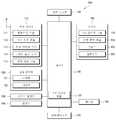
도 1은 본 발명의 일 실시예와 관련된 이동 단말기의 블록 구성도(block diagram)이다.1 is a block diagram of a mobile terminal according to an embodiment of the present invention.
상기 이동 단말기(100)는 무선 통신부(110), A/V(Audio/Video) 입력부(120), 사용자 입력부(130), 센싱부(140), 출력부(150), 메모리부(160), 인터페이스부(170), 제어부(180) 및 전원 공급부(190) 등을 포함할 수 있다. 도 1에 도시된 구성요소들이 필수적인 것은 아니어서, 그보다 많은 구성요소들을 갖거나 그보다 적은 구성요소들을 갖는 이동 단말기가 구현될 수도 있다.The
이하, 상기 구성요소들에 대해 차례로 살펴본다.Hereinafter, the components will be described in order.
무선 통신부(110)는 이동 단말기(100)와 무선 통신 시스템 사이 또는 이동 단말기(100)와 이동 단말기(100)가 위치한 네트워크 사이의 무선 통신을 가능하게 하는 하나 이상의 모듈을 포함할 수 있다. 예를 들어, 무선 통신부(110)는 방송 수신 모듈(111), 이동통신 모듈(112), 무선 인터넷 모듈(113), 근거리 통신 모듈(114) 및 위치정보 모듈(115) 등을 포함할 수 있다.The
방송 수신 모듈(111)은 방송 채널을 통하여 외부의 방송 관리 서버로부터 방송 신호 및/또는 방송 관련된 정보를 수신한다.The
상기 방송 채널은 위성 채널, 지상파 채널을 포함할 수 있다. 상기 방송 관리 서버는, 방송 신호 및/또는 방송 관련 정보를 생성하여 송신하는 서버 또는 기 생성된 방송 신호 및/또는 방송 관련 정보를 제공받아 단말기에 송신하는 서버를 의미할 수 있다. 상기 방송 신호는, TV 방송 신호, 라디오 방송 신호, 데이터 방송 신호를 포함할 뿐만 아니라, TV 방송 신호 또는 라디오 방송 신호에 데이터 방송 신호가 결합한 형태의 방송 신호도 포함할 수 있다.The broadcast channel may include a satellite channel and a terrestrial channel. The broadcast management server may mean a server that generates and transmits a broadcast signal and / or broadcast related information or a server that receives a previously generated broadcast signal and / or broadcast related information and transmits the same to a terminal. The broadcast signal may include not only a TV broadcast signal, a radio broadcast signal, and a data broadcast signal, but also a broadcast signal having a data broadcast signal combined with a TV broadcast signal or a radio broadcast signal.
상기 방송 관련 정보는, 방송 채널, 방송 프로그램 또는 방송 서비스 제공자에 관련한 정보를 의미할 수 있다. 상기 방송 관련 정보는, 이동통신망을 통하여도 제공될 수 있다. 이러한 경우에는 상기 이동통신 모듈(112)에 의해 수신될 수 있다.The broadcast related information may mean information related to a broadcast channel, a broadcast program, or a broadcast service provider. The broadcast related information may also be provided through a mobile communication network. In this case, it may be received by the
상기 방송 관련 정보는 다양한 형태로 존재할 수 있다. 예를 들어, DMB(Digital Multimedia Broadcasting)의 EPG(Electronic Program Guide) 또는 DVB-H(Digital Video Broadcast-Handheld)의 ESG(Electronic Service Guide) 등의 형태로 존재할 수 있다.The broadcast related information may exist in various forms. For example, it may exist in the form of Electronic Program Guide (EPG) of Digital Multimedia Broadcasting (DMB) or Electronic Service Guide (ESG) of Digital Video Broadcast-Handheld (DVB-H).
상기 방송 수신 모듈(111)은, 각종 방송 시스템을 이용하여 방송 신호를 수신하는데, 특히, DMB-T(Digital Multimedia Broadcasting-Terrestrial), DMB-S(Digital Multimedia Broadcasting-Satellite), MediaFLO(Media Forward Link Only), DVB-H(Digital Video Broadcast-Handheld), ISDB-T(Integrated Services Digital Broadcast-Terrestrial) 등의 디지털 방송 시스템을 이용하여 디지털 방송 신호를 수신할 수 있다. 물론, 상기 방송 수신 모듈(111)은, 상술한 디지털 방송 시스템뿐만 아니라 방송 신호를 제공하는 다른 방송 시스템에 적합하도록 구성될 수도 있다.The
방송 수신 모듈(111)을 통해 수신된 방송 신호 및/또는 방송 관련 정보는 메모리부(160)에 저장될 수 있다.The broadcast signal and / or broadcast related information received through the
이동통신 모듈(112)은, 이동 통신망 상에서 기지국, 외부의 단말, 서버 중 적어도 하나와 무선 신호를 송수신한다. 상기 무선 신호는, 음성 호 신호, 화상 통화 호 신호 또는 문자/멀티미디어 메시지 송수신에 따른 다양한 형태의 데이터를 포함할 수 있다.The
무선 인터넷 모듈(113)은 무선 인터넷 접속을 위한 모듈을 말하는 것으로, 무선 인터넷 모듈(113)은 이동 단말기(100)에 내장되거나 외장될 수 있다. 무선 인터넷 기술로는 WLAN(Wireless LAN)(Wi-Fi), Wibro(Wireless broadband), Wimax(World Interoperability for Microwave Access), HSDPA(High Speed Downlink Packet Access) 등이 이용될 수 있다.The
근거리 통신 모듈(114)은 근거리 통신을 위한 모듈을 말한다. 근거리 통신 기술로 블루투스(Bluetooth), RFID(Radio Frequency Identification), 적외선 통신(IrDA, infrared Data Association), UWB(Ultra Wideband), ZigBee 등이 이용될 수 있다.The short
위치정보 모듈(115)은 이동 단말기의 위치를 확인하거나 얻기 위한 모듈이다. 상기 위치정보 모듈(115)은 범지구적 위성항법시스템(Global Navigation Satellite System, GNSS)를 이용하여 위치정보를 획득할 수 있다. 여기서, 범지구적 위성 항법 시스템(GNSS)은 지구를 공전하여 무선 항법 수신기들의 소정의 타입들이 지표면 또는 지표면 근처의 그들의 위치를 결정할 수 있는 기준 신호들을 보내는 무선 항법위성 시스템들을 설명하기 위해 이용되는 용어이다. 상기 범지구적 위성 항법 시스템(GNSS)에는 미국에서 운영하는 GPS(Global Position System), 유 럽에서 운영하는 갈릴레오(Galileo), 러시아에서 운영하는 GLONASS(Global Orbiting Navigational Satelite System), 중국에서 운영하는 COMPASS 및 일본에서 운영하는 QZSS(Quasi-Zenith Satellite System)등이 있다.The
GNSS의 대표적인 예를 들면, 상기 위치정보 모듈(115)은 GPS(Global Position System) 모듈일 수 있다. 상기 GPS 모듈은, 일 지점(개체)이 3개 이상의 위성으로부터 떨어진 거리에 관한 정보와, 상기 거리 정보가 측정된 시간에 관한 정보를 산출한 다음 상기 산출된 거리 정보에 삼각법을 적용함으로써, 일 시간에 일 지점(개체)에 대한 위도, 경도, 및 고도에 따른 3차원의 위치 정보를 산출할 수 있다. 나아가, 3개의 위성을 이용하여 위치 및 시간 정보를 산출하고, 또 다른 1개의 위성을 이용하여 상기 산출된 위치 및 시간 정보의 오차를 수정하는 방법 또한 사용되고 있다. 상기 GPS 모듈은 현 위치를 실시간으로 계속 산출하고 그를 이용하여 속도 정보를 산출하기도 한다.As a representative example of the GNSS, the
도 1을 참조하면, A/V(Audio/Video) 입력부(120)는 오디오 신호 또는 비디오 신호 입력을 위한 것으로, 이에는 카메라(121)와 마이크(122) 등이 포함될 수 있다. 카메라(121)는 화상 통화모드 또는 촬영 모드에서 이미지 센서에 의해 얻어지는 정지영상 또는 동영상 등의 화상 프레임을 처리한다. 처리된 화상 프레임은 디스플레이부(151)에 표시될 수 있다.Referring to FIG. 1, the A /
카메라(121)에서 처리된 화상 프레임은 메모리부(160)에 저장되거나 무선 통신부(110)를 통하여 외부로 전송될 수 있다. 카메라(121)는 단말기의 구성 태양에 따라 2개 이상이 구비될 수도 있다.The image frame processed by the
마이크(122)는 통화모드 또는 녹음모드, 음성인식 모드 등에서 마이크로폰(Microphone)에 의해 외부의 음향 신호를 입력받아 전기적인 음성 데이터로 처리한다. 처리된 음성 데이터는 통화 모드인 경우 이동통신 모듈(112)을 통하여 이동통신 기지국으로 송신 가능한 형태로 변환되어 출력될 수 있다. 마이크(122)에는 외부의 음향 신호를 입력받는 과정에서 발생되는 잡음(noise)을 제거하기 위한 다양한 잡음 제거 알고리즘이 구현될 수 있다.The
사용자 입력부(130)는 사용자가 단말기의 동작 제어를 위한 입력 데이터를 발생시킨다. 사용자 입력부(130)는 키 패드(key pad) 돔 스위치 (dome switch), 터치 패드(정압/정전), 조그 휠, 조그 스위치 등으로 구성될 수 있다.The
센싱부(140)는 이동 단말기(100)의 개폐 상태, 이동 단말기(100)의 위치, 사용자 접촉 유무, 이동 단말기의 방위, 이동 단말기의 가속/감속 등과 같이 이동 단말기(100)의 현 상태를 감지하여 이동 단말기(100)의 동작을 제어하기 위한 센싱 신호를 발생시킨다. 예를 들어 이동 단말기(100)가 슬라이드 폰 형태인 경우 슬라이드 폰의 개폐 여부를 센싱할 수 있다. 또한, 전원 공급부(190)의 전원 공급 여부, 인터페이스부(170)의 외부 기기 결합 여부 등과 관련된 센싱 기능을 담당할 수도 있다. 한편, 상기 센싱부(140)는 근접 센서(141)를 포함할 수 있다.The
출력부(150)는 시각, 청각 또는 촉각 등과 관련된 출력을 발생시키기 위한 것으로, 이에는 디스플레이부(151), 음향 출력 모듈(152), 알람부(153) 및 햅틱 모듈(154) 등이 포함될 수 있다.The
디스플레이부(151)는 이동 단말기(100)에서 처리되는 정보를 표시 출력한다. 예를 들어, 이동 단말기가 통화 모드인 경우 통화와 관련된 UI(User Interface) 또는 GUI(Graphic User Interface)를 표시한다. 이동 단말기(100)가 화상 통화 모드 또는 촬영 모드인 경우에는 촬영 또는/및 수신된 영상 또는 UI, GUI를 표시한다.The
디스플레이부(151)는 액정 디스플레이(liquid crystal display), 박막 트랜지스터 액정 디스플레이(thin film transistor-liquid crystal display), 유기 발광 다이오드(organic light-emitting diode), 플렉시블 디스플레이(flexible display), 3차원 디스플레이(3D display) 중에서 적어도 하나를 포함할 수 있다.The
이들 중 일부 디스플레이는 그를 통해 외부를 볼 수 있도록 투명형 또는 광투과형으로 구성될 수 있다. 이는 투명 디스플레이라 호칭될 수 있는데, 상기 투명 디스플레이의 대표적인 예로는 투명 LCD 등이 있다. 디스플레이부(151)의 후방 구조 또한 광 투과형 구조로 구성될 수 있다. 이러한 구조에 의하여, 사용자는 단말기 바디의 디스플레이부(151)가 차지하는 영역을 통해 단말기 바디의 후방에 위치한 사물을 볼 수 있다.Some of these displays can be configured to be transparent or light transmissive so that they can be seen from the outside. This may be referred to as a transparent display. A representative example of the transparent display is a transparent LCD. The rear structure of the
이동 단말기(100)의 구현 형태에 따라 디스플레이부(151)이 2개 이상 존재할 수 있다. 예를 들어, 이동 단말기(100)에는 복수의 디스플레이부들이 하나의 면에 이격되거나 일체로 배치될 수 있고, 또한 서로 다른 면에 각각 배치될 수도 있다.There may be two or
디스플레이부(151)와 터치 동작을 감지하는 센서(이하, '터치 센서'라 함)가 상호 레이어 구조를 이루는 경우(이하, '터치 스크린'이라 약칭함)에, 디스플레이부(151)는 출력 장치 이외에 입력 장치로도 사용될 수 있다. 터치 센서는, 예를 들어, 터치 필름, 터치 시트, 터치 패드 등의 형태를 가질 수 있다.When the
터치 센서는 디스플레이부(151)의 특정 부위에 가해진 압력 또는 디스플레이부(151)의 특정 부위에 발생하는 정전 용량 등의 변화를 전기적인 입력신호로 변환하도록 구성될 수 있다. 터치 센서는 터치 되는 위치 및 면적뿐만 아니라, 터치 시의 압력까지도 검출할 수 있도록 구성될 수 있다.The touch sensor may be configured to convert a change in pressure applied to a specific portion of the
터치 센서에 대한 터치 입력이 있는 경우, 그에 대응하는 신호(들)는 터치 제어기로 보내진다. 터치 제어기는 그 신호(들)를 처리한 다음 대응하는 데이터를 제어부(180)로 전송한다. 이로써, 제어부(180)는 디스플레이부(151)의 어느 영역이 터치 되었는지 여부 등을 알 수 있게 된다.If there is a touch input to the touch sensor, the corresponding signal (s) is sent to the touch controller. The touch controller processes the signal (s) and then transmits the corresponding data to the
도 1을 참조하면, 상기 터치스크린에 의해 감싸지는 이동 단말기의 내부 영역 또는 상기 터치 스크린의 근처에 근접 센서(141)가 배치될 수 있다. 상기 근접 센서는 소정의 검출면에 접근하는 물체, 혹은 근방에 존재하는 물체의 유무를 전자계의 힘 또는 적외선을 이용하여 기계적 접촉이 없이 검출하는 센서를 말한다. 근접 센서는 접촉식 센서보다는 그 수명이 길며 그 활용도 또한 높다.Referring to FIG. 1, a proximity sensor 141 may be disposed in an inner region of the mobile terminal or in the vicinity of the touch screen, which is surrounded by the touch screen. The proximity sensor refers to a sensor that detects the presence or absence of an object approaching a predetermined detection surface or an object present in the vicinity without using a mechanical contact by using an electromagnetic force or infrared rays. Proximity sensors have a longer life and higher utilization than touch sensors.
상기 근접 센서의 예로는 투과형 광전 센서, 직접 반사형 광전 센서, 미러 반사형 광전 센서, 고주파 발진형 근접 센서, 정전용량형 근접 센서, 자기형 근접 센서, 적외선 근접 센서 등이 있다.Examples of the proximity sensor include a transmission photoelectric sensor, a direct reflection photoelectric sensor, a mirror reflection photoelectric sensor, a high frequency oscillation proximity sensor, a capacitive proximity sensor, a magnetic proximity sensor, and an infrared proximity sensor.
상기 터치스크린이 정전식인 경우에는 상기 포인터의 근접에 따른 전계의 변화로 상기 포인터의 근접을 검출하도록 구성된다. 이 경우 상기 터치 스크린(터치 센서)은 근접 센서로 분류될 수도 있다.When the touch screen is capacitive, the touch screen is configured to detect the proximity of the pointer by the change of the electric field according to the proximity of the pointer. In this case, the touch screen (touch sensor) may be classified as a proximity sensor.
이하에서는 설명의 편의를 위해, 상기 터치스크린 상에 포인터가 접촉되지 않으면서 근접되어 상기 포인터가 상기 터치스크린 상에 위치함이 인식되도록 하는 행위를 "근접 터치(proximity touch)"라고 칭하고, 상기 터치스크린 상에 포인터가 실제로 접촉되는 행위를 "접촉 터치(contact touch)"라고 칭한다. 상기 터치스크린 상에서 포인터로 근접 터치가 되는 위치라 함은, 상기 포인터가 근접 터치될 때 상기 포인터가 상기 터치스크린에 대해 수직으로 대응되는 위치를 의미한다.Hereinafter, for convenience of explanation, the act of allowing the pointer to be recognized without being in contact with the touch screen so that the pointer is located on the touch screen is referred to as a "proximity touch", and the touch The act of actually touching the pointer on the screen is called "contact touch." The position where the proximity touch is performed by the pointer on the touch screen refers to a position where the pointer is perpendicular to the touch screen when the pointer is in proximity proximity.
상기 근접센서는, 근접 터치 및 근접 터치 패턴(예를 들어, 근접 터치 거리, 근접 터치 방향, 근접 터치 속도, 근접 터치 시간, 근접 터치 위치, 근접 터치 이동 상태 등)을 감지한다. 상기 감지된 근접 터치 동작 및 근접 터치 패턴에 상응하는 정보는 터치 스크린상에 출력될 수 있다.The proximity sensor detects a proximity touch and a proximity touch pattern (e.g., a proximity touch distance, a proximity touch direction, a proximity touch speed, a proximity touch time, a proximity touch position, a proximity touch movement state, and the like). Information corresponding to the sensed proximity touch operation and proximity touch pattern may be output on the touch screen.
음향 출력 모듈(152)은 호신호 수신, 통화모드 또는 녹음 모드, 음성인식 모드, 방송수신 모드 등에서 무선 통신부(110)로부터 수신되거나 메모리부(160)에 저장된 오디오 데이터를 출력할 수도 있다. 음향 출력 모듈(152)은 이동 단말기(100)에서 수행되는 기능(예를 들어, 호신호 수신음, 메시지 수신음 등)과 관련된 음향 신호를 출력한다. 이러한 음향 출력 모듈(152)에는 리시버(Receiver), 스피커(speaker), 버저(Buzzer) 등이 포함될 수 있다. 또한 상기 음향 출력 모듈(152)은, 이어폰잭(116)을 통해 음향을 출력할 수 있다. 사용자는 상기 이어폰잭(116)에 이어폰을 연결하여 출력되는 음향을 들을 수 있다.The
알람부(153)는 이동 단말기(100)의 이벤트 발생을 알리기 위한 신호를 출력한다. 이동 단말기에서 발생 되는 이벤트의 예로는 호 신호 수신, 메시지 수신, 키 신호 입력, 터치 입력 등이 있다. 알람부(153)는 비디오 신호나 오디오 신호 이외 에 다른 형태, 예를 들어 진동으로 이벤트 발생을 알리기 위한 신호를 출력할 수도 있다. 비디오 신호나 오디오 신호는 디스플레이부(151)이나 음향 출력 모듈(152)을 통해서도 출력될 수 있다.The
햅틱 모듈(haptic module)(154)은 사용자가 느낄 수 있는 다양한 촉각 효과를 발생시킨다. 햅틱 모듈(154)이 발생시키는 촉각 효과의 대표적인 예로는 진동이 있다. 햅택 모듈(154)이 발생하는 진동의 세기와 패턴 등은 제어가능하다. 예를 들어, 서로 다른 진동을 합성하여 출력하거나 순차적으로 출력할 수도 있다.The
햅틱 모듈(154)은, 진동 외에도, 접촉 피부면에 대해 수직 운동하는 핀 배열에 의한 자극에 의한 효과, 분사구나 흡입구를 통한 공기의 분사력이나 흡입력을 통한 자극에 의한 효과, 피부 표면을 스치는 자극에 의한 효과, 전극(eletrode)의 접촉을 통한 자극에 의한 효과, 정전기력을 이용한 자극에 의한 효과, 흡열이나 발열 가능한 소자를 이용한 냉온감 재현에 의한 효과 등 다양한 촉각 효과를 발생시킬 수 있다.In addition to the vibration, the
햅틱 모듈(154)은 직접적인 접촉을 통해 촉각 효과의 전달할 수 있을 뿐만 아니라, 사용자의 손가락이나 팔 등의 근 감각을 통해 촉각 효과를 느낄 수 있도록 구현할 수도 있다. 햅틱 모듈(154)은 휴대 단말기(100)의 구성 태양에 따라 2개 이상이 구비될 수 있다.The
메모리부(160)는 제어부(180)의 동작을 위한 프로그램을 저장할 수 있고, 입/출력되는 데이터들(예를 들어, 폰북, 메시지, 정지영상, 동영상 등)을 임시 저장할 수도 있다. 상기 메모리부(160)는 상기 터치스크린 상의 터치 입력시 출력되는 다양한 패턴의 진동 및 음향에 관한 데이터를 저장할 수 있다.The
메모리부(160)는 플래시 메모리 타입(flash memory type), 하드디스크 타입(hard disk type), 멀티미디어 카드 마이크로 타입(multimedia card micro type), 카드 타입의 메모리(예를 들어 SD 또는 XD 메모리 등), 램(Random Access Memory, RAM), SRAM(Static Random Access Memory), 롬(Read-Only Memory, ROM), EEPROM(Electrically Erasable Programmable Read-Only Memory), PROM(Programmable Read-Only Memory) 자기 메모리, 자기 디스크, 광디스크 중 적어도 하나의 타입의 저장매체를 포함할 수 있다. 이동 단말기(100)는 인터넷(internet)상에서 상기 메모리부(160)의 저장 기능을 수행하는 웹 스토리지(web storage)와 관련되어 동작할 수도 있다.The
인터페이스부(170)는 이동 단말기(100)에 연결되는 모든 외부기기와의 통로 역할을 한다. 인터페이스부(170)는 외부 기기로부터 데이터를 전송받거나 전원을 공급받아 이동 단말기(100) 내부의 각 구성 요소에 전달하거나 이동 단말기(100) 내부의 데이터가 외부 기기로 전송되도록 한다. 예를 들어, 유/무선 헤드셋 포트, 외부 충전기 포트, 유/무선 데이터 포트, 메모리 카드(memory card) 포트, 식별 모듈이 구비된 장치를 연결하는 포트, 오디오 I/O(Input/Output) 포트, 비디오 I/O(Input/Output) 포트, 이어폰 포트 등이 인터페이스부(170)에 포함될 수 있다.The
식별 모듈은 이동 단말기(100)의 사용 권한을 인증하기 위한 각종 정보를 저장한 칩으로서, 사용자 인증 모듈(User Identify Module, UIM), 가입자 인증 모듈(Subscriber Identify Module, SIM), 범용 사용자 인증 모듈(Universal Subscriber Identity Module, USIM) 등을 포함할 수 있다. 식별 모듈이 구비된 장치(이하 '식별 장치')는, 스마트 카드(smart card) 형식으로 제작될 수 있다. 따라서 식별 장치는 포트를 통하여 단말기(100)와 연결될 수 있다.The identification module is a chip that stores various types of information for authenticating the usage rights of the
상기 인터페이스부는 이동단말기(100)가 외부 크래들(cradle)과 연결될 때 상기 크래들로부터의 전원이 상기 이동단말기(100)에 공급되는 통로가 되거나, 사용자에 의해 상기 크래들에서 입력되는 각종 명령 신호가 상기 이동단말기로 전달되는 통로가 될 수 있다. 상기 크래들로부터 입력되는 각종 명령 신호 또는 상기 전원은 상기 이동단말기가 상기 크래들에 정확히 장착되었음을 인지하기 위한 신호로 동작될 수도 있다.The interface unit may be a passage through which power from the cradle is supplied to the
제어부(180)는 통상적으로 이동 단말기의 전반적인 동작을 제어한다. 예를 들어 음성 통화, 데이터 통신, 화상 통화 등을 위한 관련된 제어 및 처리를 수행한다. 제어부(180)는 멀티 미디어 재생을 위한 멀티미디어 모듈(181)을 구비할 수도 있다. 멀티미디어 모듈(181)은 제어부(180) 내에 구현될 수도 있고, 제어부(180)와 별도로 구현될 수도 있다.The
상기 제어부(180)는 상기 터치스크린 상에서 행해지는 필기 입력 또는 그림 그리기 입력을 각각 문자 및 이미지로 인식할 수 있는 패턴 인식 처리를 행할 수 있다.The
전원 공급부(190)는 제어부(180)의 제어에 의해 외부의 전원, 내부의 전원을 인가받아 각 구성요소들의 동작에 필요한 전원을 공급한다.The
여기에 설명되는 다양한 실시예는 예를 들어, 소프트웨어, 하드웨어 또는 이 들의 조합된 것을 이용하여 컴퓨터 또는 이와 유사한 장치로 읽을 수 있는 기록매체 내에서 구현될 수 있다.Various embodiments described herein may be implemented in a recording medium readable by a computer or similar device using, for example, software, hardware or a combination thereof.
하드웨어적인 구현에 의하면, 여기에 설명되는 실시예는 ASICs (application specific integrated circuits), DSPs (digital signal processors), DSPDs (digital signal processing devices), PLDs (programmable logic devices), FPGAs (field programmable gate arrays, 프로세서(processors), 제어기(controllers), 마이크로 컨트롤러(micro-controllers), 마이크로 프로세서(microprocessors), 기능 수행을 위한 전기적인 유닛 중 적어도 하나를 이용하여 구현될 수 있다. 일부의 경우에 그러한 실시예들이 제어부(180)에 의해 구현될 수 있다.According to a hardware implementation, embodiments described herein include application specific integrated circuits (ASICs), digital signal processors (DSPs), digital signal processing devices (DSPDs), programmable logic devices (PLDs), field programmable gate arrays (FPGAs), and the like. It may be implemented using at least one of processors, controllers, micro-controllers, microprocessors, and electrical units for performing the functions. It may be implemented by the
소프트웨어적인 구현에 의하면, 절차나 기능과 같은 실시예들은 적어도 하나의 기능 또는 작동을 수행하게 하는 별개의 소프트웨어 모듈과 함께 구현될 수 있다. 소프트웨어 코드는 적절한 프로그램 언어로 쓰여진 소프트웨어 어플리케이션에 의해 구현될 수 있다. 또한, 소프트웨어 코드는 메모리부(160)에 저장되고, 제어부(180)에 의해 실행될 수 있다.In a software implementation, embodiments such as procedures or functions may be implemented with separate software modules that allow at least one function or operation to be performed. The software code may be implemented by a software application written in a suitable programming language. Also, the software codes may be stored in the
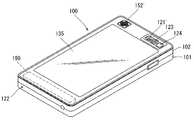
도 2a는 본 발명과 관련된 이동 단말기 또는 휴대 단말기의 일 예를 전면에서 바라본 사시도이다.2A is a front perspective view of an example of a mobile terminal or a portable terminal according to the present invention.
개시된 휴대 단말기(100)는 바 형태의 단말기 바디를 구비하고 있다. 다만, 본 발명은 여기에 한정되지 않고, 2 이상의 바디들이 상대 이동 가능하게 결합되는 슬라이드 타입, 폴더 타입, 스윙 타입, 스위블 타입 등 다양한 구조에 적용이 가능 하다.The disclosed
바디는 외관을 이루는 케이스(케이싱, 하우징, 커버 등)를 포함한다. 본 실시예에서, 케이스는 프론트 케이스(101)와 리어 케이스(102)로 구분될 수 있다. 프론트 케이스(101)와 리어 케이스(102)의 사이에 형성된 공간에는 각종 전자부품들이 내장된다. 프론트 케이스(101)와 리어 케이스(102) 사이에는 적어도 하나의 중간 케이스들이 추가로 배치될 수도 있다.The body includes a casing (casing, housing, cover, etc.) that forms an exterior. In this embodiment, the case may be divided into a
케이스들은 합성수지를 사출하여 형성되거나 금속 재질, 예를 들어 스테인레스 스틸(STS) 또는 티타늄(Ti) 등과 같은 금속 재질을 갖도록 형성될 수도 있다.The cases may be formed by injecting synthetic resin or may be formed of a metal material, for example, a metal material such as stainless steel (STS) or titanium (Ti).
단말기 바디, 주로 프론트 케이스(101)에는 디스플레이부(151), 음향출력부(152), 카메라(121), 사용자 입력부(130/131,132), 마이크(122), 인터페이스(170) 등이 배치될 수 있다.The
디스플레이부(151)는 프론트 케이스(101)의 주면의 대부분을 차지한다. 디스플레이부(151)의 양단부 중 일 단부에 인접한 영역에는 음향출력부(151)와 카메라(121)가 배치되고, 다른 단부에 인접한 영역에는 사용자 입력부(131)와 마이크(122)가 배치된다. 사용자 입력부(132)와 인터페이스(170) 등은 프론트 케이스(101) 및 리어 케이스(102)의 측면들에 배치된다.The
사용자 입력부(130)는 휴대 단말기(100)의 동작을 제어하기 위한 명령을 입력받기 위해 조작되는 것으로서, 복수의 조작 유닛들(131,132)을 포함할 수 있다. 조작 유닛들(131,132)은 조작부(manipulating portion)로도 통칭 될 수 있으며, 사용자가 촉각 적인 느낌을 가면서 조작하게 되는 방식(tactile manner)이라면 어떤 방식이든 채용될 수 있다.The
제1 또는 제2조작 유닛들(131 및 132)에 의하여 입력되는 내용은 다양하게 설정될 수 있다. 예를 들어, 제1 조작 유닛(131)은 시작, 종료, 스크롤 등과 같은 명령을 입력받고, 제2 조작 유닛(132)은 음향출력부(152)에서 출력되는 음향의 크기 조절 또는 디스플레이부(151)의 터치 인식 모드로의 전환 등과 같은 명령을 입력받을 수 있다.The content input by the first or
도 2b는 도 2a에 도시된 휴대 단말기의 후면 사시도이다.FIG. 2B is a rear perspective view of the portable terminal shown in FIG. 2A.
도 2b를 참조하면, 단말기 바디의 후면, 다시 말해서 리어 케이스(102)에는 카메라(121')가 추가로 장착될 수 있다. 카메라(121')는 카메라(121, 도 2a 참조)와 실질적으로 반대되는 촬영 방향을 가지며, 카메라(121)와 서로 다른 화소를 가지는 카메라일 수 있다.Referring to FIG. 2B, a
예를 들어, 카메라(121)는 화상 통화 등의 경우에 사용자의 얼굴을 촬영하여 상대방에 전송함에 무리가 없도록 저 화소를 가지며, 카메라(121')는 일반적인 피사체를 촬영하고 바로 전송하지는 않는 경우가 많기에 고 화소를 가지는 것이 바람직하다. 카메라(121,121')는 회전 또는 팝업(pop-up) 가능하게 단말기 바디에 설치될 수도 있다.For example, the
카메라(121')에 인접하게는 플래쉬(123)와 거울(124)이 추가로 배치된다. 플래쉬(123)는 카메라(121')로 피사체를 촬영하는 경우에 피사체를 향해 빛을 비추게 된다. 거울(124)은 사용자가 카메라(121')를 이용하여 자신을 촬영(셀프 촬영)하고자 하는 경우에, 사용자 자신의 얼굴 등을 비춰볼 수 있게 한다.A
단말기 바디의 후면에는 음향 출력부(152')가 추가로 배치될 수도 있다. 음향 출력부(152')는 음향 출력부(152, 도 2a 참조)와 함께 스테레오 기능을 구현할 수 있으며, 통화시 스피커폰 모드의 구현을 위하여 사용될 수도 있다.The sound output unit 152 'may be further disposed on the rear surface of the terminal body. The
단말기 바디의 측면에는 통화 등을 위한 안테나 외에 방송신호 수신용 안테나(124)가 추가적으로 배치될 수 있다. 방송수신모듈(111, 도 1 참조)의 일부를 이루는 안테나(124)는 단말기 바디에서 인출 가능하게 설치될 수 있다.In addition to the antenna for a call or the like, a broadcast
단말기 바디에는 휴대 단말기(100)에 전원을 공급하기 위한 전원공급부(190)가 장착된다. 전원공급부(190)는 단말기 바디에 내장되거나, 단말기 바디의 외부에서 직접 탈착될 수 있게 구성될 수 있다.A
리어 케이스(102)에는 터치를 감지하기 위한 터치 패드(135)가 추가로 장착될 수 있다. 터치 패드(135) 또한 디스플레이부(151)와 마찬가지로 광 투과형으로 구성될 수 있다. 이 경우에, 디스플레이부(151)가 양면에서 시각 정보를 출력하도록 구성된다면, 터치 패드(135)를 통해서도 상기 시각 정보를 인지할 수 있게 된다. 상기 양면에 출력되는 정보는 상기 터치 패드(135)에 의해 모두 제어될 수도 있다. 이와는 달리, 터치 패드(135)에는 디스플레이가 추가로 장착되어, 리어 케이스(102)에도 터치 스크린이 배치될 수도 있다.The
터치 패드(135)는 프론트 케이스(101)의 디스플레이부(151)와 상호 관련되어 작동한다. 터치 패드(135)는 디스플레이부(151)의 후방에 평행하게 배치될 수 있다. 이러한 터치 패드(135)는 디스플레이부(151)와 동일하거나 작은 크기를 가질 수 있다.The
이하, 도 3a 및 3b를 참조하여 디스플레이부(151)와 터치 패드(135)의 서로 연관된 작동 방식에 대하여 살펴본다.Hereinafter, the operation of the
도 3a 및 3b는 본 발명과 관련된 휴대 단말기의 일 작동 상태를 설명하기 위한 휴대 단말기의 정면도들이다.3A and 3B are front views of a portable terminal for explaining an operation state of the portable terminal according to the present invention.
디스플레이부(151)에는 다양한 종류의 시각 정보들이 표시될 수 있다. 이들 정보들은 문자, 숫자, 기호, 그래픽, 또는 아이콘 등의 형태로 표시될 수 있다.Various types of time information can be displayed on the
이러한 정보의 입력을 위하여 상기 문자, 숫자, 기호, 그래픽 또는 아이콘 들 중 적어도 하나는 일정한 배열을 이루어 표시됨으로써 키패드의 형태로 구현될 수 있다. 이러한 키패드는 소위 '소프트키'라 불릴 수 있다.In order to input such information, at least one of the letters, numbers, symbols, graphics, or icons may be displayed in a predetermined arrangement so as to be implemented in the form of a keypad. Such a keypad may be called a so-called " soft key ".
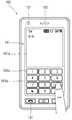
도 3a는 단말기 바디의 전면을 통해 소프트키에 가해진 터치를 입력받는 것을 나타내고 있다.3A illustrates receiving a touch applied to a softkey through the front of the terminal body.
디스플레이부(151)는 전체 영역으로 작동되거나, 복수의 영역들로 나뉘어져 작동될 수 있다. 후자의 경우, 상기 복수의 영역들은 서로 연관되게 작동되도록 구성될 수 있다.The
예를 들어, 디스플레이부(151)의 상부와 하부에는 출력창(151a)과 입력창(151b)이 각각 표시된다. 입력창(151b)에는 전화 번호 등의 입력을 위한 숫자가 표시된 소프트키(151c)가 출력된다. 소프트키(151c)가 터치되면, 터치된 소프트키에 대응되는 숫자 등이 출력창(151a)에 표시된다. 제1 조작부(131)가 조작되면 출력창(151a)에 표시된 전화번호에 대한 호 연결이 시도된다.For example, an
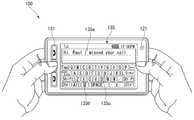
도 3b는 단말기 바디의 후면을 통하여 소프트키에 가해진 터치를 입력받는 것을 나타낸다. 도 3a가 단말기 바디을 세로로 배치시킨 경우(portrait)라면, 도 3b는 단말기 바디을 가로로 배치시킨 경우(landscape)를 나타낸다. 디스플레이부(151)는 단말기 바디의 배치 방향에 따라 출력 화면이 변환되도록 구성될 수 있다.3B illustrates receiving a touch applied to a softkey through the rear of the terminal body. If FIG. 3A is a portrait in which the terminal body is arranged vertically, FIG. 3B illustrates a landscape in which the terminal body is arranged horizontally. The
도 3b는 휴대 단말기에서 텍스트 입력 모드가 작동되는 것을 나타낸다. 디스플레이부(151)에는 출력창(135a)과 입력창(135b)이 표시된다. 입력창(135b)에는 문자, 기호, 숫자들 중 적어도 하나가 표시된 소프트키(135c)들이 복수로 배열될 수 있다. 소프트키(135c)들은 쿼티(QWERTY)키의 형태로 배열될 수 있다.3B shows that the text input mode is activated in the mobile terminal. The
터치 패드(135)를 통하여 소프트키(135c)들이 터치 되면, 터치된 소프트키에 대응되는 문자, 숫자, 기호 등이 출력창(135a)에 표시되게 된다. 이와 같이, 터치 패드(135)를 통한 터치 입력은 디스플레이부(151)을 통한 터치 입력에 비하여 터치시 소프트키(135c)가 손가락에 의해 가려지는 것을 방지할 수 있는 이점이 있다. 디스플레이부(151)와 터치 패드(135)가 투명하게 형성되는 경우에는, 단말기 바디의 후면에 위치한 손가락들을 육안으로 확인할 수 있으므로, 보다 정확한 터치 입력이 가능하다.When the
이상의 실시예들에 개시된 입력 방식뿐만 아니라, 디스플레이부(151) 또는 터치 패드(135)는 스크롤(scroll)에 의해 터치 입력받도록 구성될 수 있다. 사용자는 디스플레이부(151) 또는 터치 패드(135)를 스크롤함으로써 디스플레이부(151)에 표시된 개체, 예를 들어 아이콘 등에 위치한 커서 또는 포인터를 이동시킬 수 있 다. 나아가, 손가락을 디스플레이부(151) 또는 터치 패드(135) 상에서 이동시키는 경우, 손가락이 움직이는 경로가 디스플레이부(151)에 시각적으로 표시될 수도 있다. 이는 디스플레이부(151)에 표시되는 이미지를 편집함에 유용할 것이다.In addition to the input methods disclosed in the above embodiments, the
디스플레이부(151)(터치 스크린) 및 터치 패드(135)가 일정 시간 범위 내에서 함께 터치되는 경우에 대응하여, 단말기의 일 기능이 실행될 수도 있다. 함께 터치되는 경우로는, 사용자가 엄지 및 검지를 이용하여 단말기 바디를 집는(clamping) 경우가 있을 수 있다. 상기 일 기능은, 예를 들어, 디스플레부(151) 또는 터치 패드(135)에 대한 활성화 또는 비활성화 등이 있을 수 있다.One function of the terminal may be executed in response to a case where the display unit 151 (touch screen) and the
이하 본 발명의 실시예들을 설명하기로 한다. 본 발명에서는 설명의 편의를 위해 상기 디스플레이부(151)를 터치스크린(151)으로 가정한다. 전술한 바와 같이, 상기 터치스크린(151)은, 정보 표시 기능과 정보 입력 기능을 모두 수행할 수 있다. 그러나, 본 발명이 이에 한정되는 것은 아님을 분명히 밝혀둔다. 또한 이하에서 설명되는 터치는, 접촉 터치와 근접 터치를 모두 포함할 수 있다. 상기 근접 터치에 관하여는, 도 21을 참조하여 상세하게 후술하기로 한다.Hereinafter, embodiments of the present invention will be described. In the present invention, for convenience of description, it is assumed that the
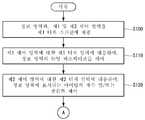
도 4는 본 발명의 제1 실시예에 따른 이동 단말기의 정보 표시 방법의 흐름도이다. 도 5a 내지 도 11c는, 본 발명의 제1 실시예에 따른 이동 단말기의 정보 표시 방법이 구현되는 화면의 예들을 도시한 도면들이다.4 is a flowchart of an information display method of a mobile terminal according to a first embodiment of the present invention. 5A to 11C are diagrams illustrating examples of a screen on which an information display method of a mobile terminal according to a first embodiment of the present invention is implemented.
본 발명의 제1 실시예에 따른 이동 단말기의 정보 표시 방법은, 도 1 내지 도 3을 참조하여 설명한 상기 이동 단말기(100)에서 구현될 수 있다. 이하 필요한 도면들을 참조하여, 본 발명의 제1 실시예에 따른 이동 단말기의 정보 표시 방법과, 이를 구현하기 위한 상기 이동 단말기(100)의 동작을 상세히 설명하기로 한다.The information display method of the mobile terminal according to the first embodiment of the present invention may be implemented in the
상기 제어부(180)는, 적어도 하나의 정보 아이템을 포함하는 정보 영역과, 상기 정보 영역의 표시를 제어하기 위한 제1 제어 영역 및 제2 제어 영역을 상기 터치 스크린(151)에 제공한다[S100].The
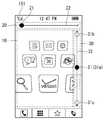
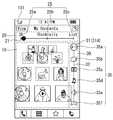
도 5a는 상기 S100 단계가 수행되는 화면의 예를 도시한다. 도 5a를 참조하여 상기 S100 단계가 수행되는 구체적인 예를 상세히 설명하기로 한다.5A illustrates an example of a screen on which step S100 is performed. A detailed example of performing the S100 step will be described in detail with reference to FIG. 5A.
도 5a를 참조하면, 상기 제어부(180)는, 상기 정보 영역(10), 상기 제1 제어 영역(20) 및 상기 제2 제어 영역(30)을 상기 터치 스크린(151)에 제공할 수 있다.Referring to FIG. 5A, the
상기 정보 영역(10)은, 정보 아이템을 표시하기 위한 영역이다. 상기 정보 아이템은, 매우 다양할 수 있다. 예를 들어 상기 정보 아이템은, 텍스트, 정지영상 및 동영상 중 적어도 하나를 포함하는 콘텐츠일 수 있다. 또한 예를 들어 상기 정보 아이템은, 아이콘 및 메뉴 중 적어도 하나를 포함할 수 있다.The
또한 상기 제어부(180)는, 상기 적어도 하나의 정보 아이템을 상기 정보 영역(10)에 표시함에 있어서, 상기 적어도 하나의 정보 아이템의 표시 형식을 다양하게 제어할 수 있다. 예를 들어, 동일한 콘텐츠가, 아이콘 형식으로 표시되거나, 텍스트 또는 이미지 형식으로 표시될 수 있다.In addition, the
상기 제1 제어 영역(20)은, 상기 정보 영역(10)의 뷰잉 퍼스펙티브(viewing perspective)-또는 상기 정보 영역(10)에 표시된 적어도 하나의 정보 아이템의 뷰 잉 퍼스펙티브-를 제어하기 위한 영역이다.The
상기 제2 제어 영역(30)은, 상기 정보 영역(10)에 제공되는 정보 아이템의 종류 및 개수 중 적어도 하나를 제어하기 위한 영역이다.The
상기 정보 영역(10)은, 상기 제1 제어 영역(20) 및/또는 상기 제2 제어 영역(30)과 일부 중첩될 수 있다. 도 5a 내지 도 7은, 상기 정보 영역(10)이 상기 제2 제어 영역(30)과 일부 중첩되는 예이다.The
상기 제1 및 제2 제어 영역(20, 30)은 각각, 전술한 제어 기능들을 수행하기 위한 사용자 인터페이스(user interface; UI)로서, 다양한 형태의 사용자 인터페이스를 제공할 수 있다.The first and
예를 들어 도 5a에 도시된 바와 같이, 상기 제1 제어 영역(20)은, 터치 입력에 의해 이동 가능한 제1 슬라이더(slider, 21)와, 상기 제1 슬라이더(21)의 이동 경로인 제1 바(bar, 22)를 포함할 수 있다. 또한 예를 들어 도 5a에 도시된 바와 같이, 상기 제2 제어 영역(30)은, 터치 입력에 의해 이동 가능한 제2 슬라이더(31)와, 상기 제2 슬라이더(31)의 이동 경로인 제2 바(32)를 포함할 수 있다.For example, as illustrated in FIG. 5A, the
사용자는 상기 제1 슬라이더(21) 및 상기 제2 슬라이더(31)를 드래그할 수 있다. 또한 사용자가 상기 제1 바(22) 상의 임의의 지점을 터치하면, 상기 제1 슬라이더(21)는 상기 제1 바(22) 상에서 상기 터치된 임의의 지점으로 이동될 수 있다. 또한 사용자가 상기 제2 바(32) 상의 임의의 지점을 터치하면, 상기 제2 슬라이더(31)는 상기 제2 바(32) 상에서 상기 터치된 임의의 지점으로 이동될 수 있다.The user may drag the
또한 예를 들어, 상기 제1 및 제2 제어 영역(30) 중 적어도 하나는, 전술한 사용자 인터페이스로서 터치 입력을 수신하기 위한 아이콘을 포함할 수 있다.Also, for example, at least one of the first and
상기 제어부(180)는, 상기 제1 제어 영역(20)에 대한 제1 터치 입력에 대응하여 상기 정보 영역(10)의 뷰잉 퍼스펙티브(viewing perspective)를 제어한다[S110].The
본 발명의 제1 실시예에 따르면, 상기 제어부(180)는, 상기 정보 영역(10)이 2차원 뷰잉 퍼스펙티브 및 3차원 뷰잉 퍼스펙티브 중 어느 하나를 갖도록 제어할 수 있다.According to the first embodiment of the present invention, the
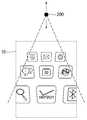
도 5b는, 상기 정보 영역(10)의 3차원 뷰잉 퍼스펙티브를 설명하기 위한 개념도이다. 도 6 및 도 7은, 본 발명의 제1 실시예에 따라, 상기 정보 영역(10)의 뷰잉 퍼스펙티브가 제어되는 일 예를 도시한다.5B is a conceptual diagram for explaining a three-dimensional viewing perspective of the
도 6을 참조하면, 상기 제어부(180)는, 상기 제1 슬라이더(21)의 상기 제1 바(22) 상에서의 위치가 이동됨에 따라, 상기 정보 영역(10)의 뷰잉 퍼스펙티브를 변화시킨다.Referring to FIG. 6, the
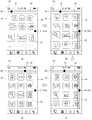
도 6(a) 내지 도 6(d)의 과정은, 상기 정보 영역(10)의 뷰잉 퍼스펙티브가 3차원에서 2차원으로 점차 변하는 모습을 나타낸다.6 (a) to 6 (d) show the viewing perspective of the
상기 3차원 뷰잉 퍼스펙티브는, 상기 정보 영역(10)의 제1 측면과 상기 제1 측면에 반대되는 제2 측면에 서로 다른 깊이(depth)를 부여함으로써(예를 들어, 도 5a 및 도 6(a)를 참조), 상기 정보 영역(10)에 공간감이 부여된 모습을 의미한다.The three-dimensional viewing perspective provides a different depth to the first side of the
상기 3차원 뷰잉 퍼스펙티브는, 가상의 초점을 가질 수 있다. 도 5b를 참조하면, 복수의 아이템들을 포함하는 상기 정보 영역(10)의 3차원 뷰잉 퍼스펙티브가 가상의 초점(200)을 갖는다.The three-dimensional viewing perspective may have a virtual focus. Referring to FIG. 5B, the three-dimensional viewing perspective of the
상기 제어부(180)는, 상기 정보 영역(10)이 상기 3차원 뷰잉 퍼스펙티브를 갖도록 제어함으로써, 사용자로 하여금 상기 정보 영역(10)이 마치 3차원 공간인 것처럼 느끼게 한다.The
상기 2차원 뷰잉 퍼스펙티브는, 상기 정보 영역(10)의 전체가 동일한 깊이가 부여됨으로써, 상기 정보 영역(10)에 공간감이 부여되지 않은 모습을 의미한다.The two-dimensional viewing perspective means that the entire depth of the
이와 같이, 상기 제어부(180)는 상기 정보 영역(10)의 뷰잉 퍼스펙티브를 제어할 수 있다.As such, the
여기서 상기 제어부(180)는, 상기 제1 제어 영역(20)을 통한 제어에 따라, 상기 정보 영역(10)이 서로 다른 3차원 뷰잉 퍼스펙티브를 갖도록 제어할 수 있다. 예를 들어, 상기 제어부(180)는, 상기 제1 측면의 깊이는 고정시키고, 상기 제2 측면의 깊이를 변화시킴으로써, 상기 3차원 뷰잉 퍼스펙티브를 제어할 수 있다.In this case, the
서로 다른 3차원 뷰잉 퍼스펙티브는, 서로 다른 가상 초점을 가질 수 있다. 예를 들어, 도 5b를 참조하면, 상기 가상 초점(200)이 상하로 이동되면, 상기 정보 영역(10)의 3차원 뷰잉 퍼스펙티브는 달라진다. 한편 도 5b에 도시된 상기 가상 초점(200)이 위쪽 방향으로 무한대로 이동하면, 상기 정보 영역(10)의 뷰잉 퍼스펙티브는 2차원이 된다.Different three-dimensional viewing perspectives may have different virtual focuses. For example, referring to FIG. 5B, when the
예를 들어, 도 6(a)와 도 6(b)는 모두 상기 정보 영역(10)이 3차원 뷰잉 퍼스펙티브를 갖는 경우이다. 그러나 도 6(a)와 도 6(b)의 3차원 뷰잉 퍼스펙티브가 서로 다름을 알 수 있다.For example, FIG. 6 (a) and FIG. 6 (b) are both cases where the
상기 제어부(180)가 상기 제2 측면의 깊이를 상기 제1 측면의 깊이에 근접시킬수록, 상기 정보 영역(10)의 뷰잉 퍼스펙티브는, 2차원 뷰잉 퍼스펙티브에 가까워지게 된다.As the
또한 상기 제어부(180)는, 상기 제1 제어 영역(20)을 통한 제어에 따라, 상기 정보 영역(10)이 서로 다른 2차원 뷰잉 퍼스펙티브를 갖도록 제어할 수 있다.In addition, the
예를 들어, 상기 제어부(180)는, 상기 정보 영역(10) 전체에 걸쳐 일정한 깊이를 변화시킴으로써, 상기 2차원 뷰잉 퍼스펙티브를 제어할 수 있다.For example, the
상기 정보 영역(10) 전체의 깊이가 변화되면, 사용자는 상기 정보 영역(10)이 자신에게서 멀어지거나 가까워지는 느낌을 받게 된다. 상기 정보 영역(10)이 사용자로부터 멀어지는 효과가 발생되면, 상기 정보 영역(10)에 표시되는 각 아이템의 크기가 감소함으로써 상기 정보 영역(10)에 표시될 수 있는 아이템들의 개수가 증가하게 된다.When the depth of the
예를 들어 상기 정보 영역(10)이 상기 2차원 뷰잉 퍼스펙티브를 갖는 경우, 상기 제어부(180)는, 상기 제1 제어 영역(20)을 통한 제어에 따라, 상기 정보 영역(10)에 표시되는 정보 아이템들의 개수를 제어할 수 있다.For example, when the
도 7을 참조하면, 상기 제어부(180)는, 상기 제1 슬라이더(21)의 상기 제1 바(22) 상에서의 위치가 이동됨에 따라, 상기 정보 영역(10)에 표시되는 정보 아이템들의 개수를 제어한다.Referring to FIG. 7, the
한편, 상기 제어부(180)는, 상기 2차원 뷰잉 퍼스펙티브의 제어 구간으로써, 상기 정보 영역(10)의 표시 방식을 제어하는 구간을 상기 제1 제어 영역(20)에 제 공할 수 있다. 예를 들어, 상기 제어부(180)는, 상기 정보 영역(10)이 상기 2차원 뷰잉 퍼스펙티브를 갖도록 제어하는 경우, 상기 제1 제어 영역(20)을 통한 제어에 따라 상기 적어도 하나의 정보 아이템을 썸네일(thumbnail) 방식 및 리스트(list) 방식 중 어느 하나로 표시할 수 있다. 이에 관해서는, 도 8 내지 도 10을 참조하여 후술하기로 한다.The
한편 본 발명의 실시예에 따르면, 상기 제어부(180)는, 상기 정보 영역(10)의 뷰잉 퍼스펙티브를 연속적으로 제어할 수도 있고 불연속적으로 제어할 수도 있다.Meanwhile, according to an exemplary embodiment of the present invention, the
예를 들어, 상기 정보 영역(10)의 3차원 뷰잉 퍼스펙티브가 연속적으로 제어되는 경우, 상기 가상 초점(200)이 연속적으로 변화될 수 있다. 이때 상기 제1 슬라이더(21)의 상기 제1 바(22) 상에서의 위치는 연속적으로 이동될 수 있다.For example, when the three-dimensional viewing perspective of the
또한 예를 들어 상기 정보 영역(10)의 3차원 뷰잉 퍼스펙티브가 불연속적으로 제어되는 경우, 상기 가상 초점(200)이 불연속적으로 변화될 수 있다. 이때 상기 제1 슬라이더(21)의 상기 제1 바(22) 상에서의 위치는 불연속적으로 이동될 수 있다. 즉 상기 제1 슬라이더(21)가 이동될 수 있는 복수의 위치들은, 상기 제1 바(22) 상에서 미리 정해져 있을 수 있다.Also, for example, when the three-dimensional viewing perspective of the
상기 제1 제어 영역(20)을 통한 연속적 또는 불연속적 제어는, 상기 제2 제어 영역(30)에도 동일하게 적용될 수 있다.Continuous or discontinuous control through the
도 8 내지 도 11c는, 본 발명의 제1 실시예에 따라, 상기 정보 영역(10)이 제어되는 다른 예를 도시한다.8 to 11C show another example in which the
도 8은 상기 S100 단계가 수행되는 화면의 다른 예를 도시한다. 도 8을 참조하면, 도 5a의 경우와 마찬가지로, 상기 제어부(180)는, 상기 정보 영역(10), 상기 제1 제어 영역(20) 및 상기 제2 제어 영역(30)을 상기 터치 스크린(151)에 제공할 수 있다.8 illustrates another example of a screen on which step S100 is performed. Referring to FIG. 8, similar to the case of FIG. 5A, the
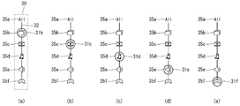
도 8의 경우, 상기 제어부(180)는, 상기 제1 제어 영역(20)에 제1 식별자 그룹(25)을 제공하고, 상기 제2 제어 영역(30)에 제2 식별자 그룹(35)을 제공한다.In FIG. 8, the
예를 들어, 상기 제1 식별자 그룹(25)은, 제1-1 식별자(25a), 제1-2 식별자(25b) 및 제1-3 식별자(25c)를 포함할 수 있다. 또한 예를 들어, 상기 제2 식별자 그룹(35)은, 제2-1 식별자(35a), 제2-2 식별자(35b), 제2-3 식별자(35c), 제2-4 식별자(35d), 제2-5 식별자(35e) 및 제2-6 식별자(36c)를 포함할 수 있다.For example, the
상기 제1 식별자 그룹(25) 및 상기 제2 식별자 그룹(35)은 각각, 상기 제1 제어 영역(20) 및 상기 제2 제어 영역(30)을 통한 제어를 위한 사용자의 직관성을 향상시킨다.The
상기 제1 슬라이더(21)가 상기 제1-1 식별자(25a)에 위치하면, 상기 정보 영역(10)의 뷰잉 퍼스펙티브는, 3차원(3D) 뷰잉 퍼스펙티브를 갖게 된다. 또한 상기 제1 슬라이더(21)가 상기 제1-2 식별자(25b)에 위치하면, 상기 정보 영역(10)의 뷰잉 퍼스펙티브는, 썸네일 표시 방식을 갖는 2차원(2D) 뷰잉 퍼스펙티브를 갖게 된다. 또한 상기 제1 슬라이더(21)가 상기 제1-3 식별자(25c)에 위치하면, 상기 정보 영역(10)의 뷰잉 퍼스펙티브는, 리스트 표시 방식을 갖는 2차원 뷰잉 퍼스펙티브를 갖게 된다.When the
이와 같이, 사용자는 상기 제1 식별자 그룹(25)을 보고, 상기 제1 슬라이더(21)의 위치에 대응되는 상기 정보 영역(10)의 표시를 예상할 수 있다.As such, the user may view the
도 9를 참조하면, 상기 제어부(180)는, 상기 제1 슬라이더(21)의 상기 제1 바(22) 상에서의 위치가 이동됨에 따라, 상기 정보 영역(10)의 뷰잉 퍼스펙티브를 변화시킨다.Referring to FIG. 9, the
예를 들어, 도 9(a)에 도시된 상기 정보 영역(10)은, 제1 가상 초점을 갖는 3차원 뷰잉 퍼스펙티브를 갖는다. 그리고 도 9(b)에 도시된 상기 정보 영역(10)은, 제2 가상 초점을 갖는 3차원 뷰잉 퍼스펙티브를 갖는다. 상기 제1 가상 초점과 상기 제2 가성 초점은 서로 다르다.For example, the
또한 예를 들어, 도 9(c)에서 상기 제1 슬라이더(21)는 상기 제1 바(22) 상에서 상기 제1-2 식별자(25b)에 대응되는 지점에 위치한다. 따라서 도 9(c)에 도시된 상기 정보 영역(10)은, 썸네일 표시 방식을 갖는 2차원(2D) 뷰잉 퍼스펙티브를 갖게 된다.Also, for example, in FIG. 9C, the
사용자는, 제1 식별자 그룹(25)에 의해, 상기 제1 슬라이더(21)가 상기 제1-2 식별자(25b)에 대응되는 지점에 위치하게 되면, 상기 정보 영역(10)의 뷰잉 퍼스펙티브가 2차원이 되고, 상기 정보 영역(10)에 포함된 정보 아이템들이 썸네일 방식으로 표시될 것이라는 것을 예상할 수 있다.When the
도 10은 상기 정보 영역(10)에 포함된 정보 아이템들이 리스트 방식으로 표시되는 예를 설명하기 위한 도면이다.FIG. 10 is a diagram for explaining an example in which information items included in the
도 10(a) 내지 도 10(d)에 도시된 바와 같이, 상기 제1 슬라이더(21)의 위치가 상기 제1-2 식별자(25b)에서 상기 제1-3 식별자(25c)로 이동함에 따라, 상기 정보 영역(10)에 포함된 정보 아이템들이 이동하면서 도 10(d)에 도시된 바와 같이 리스트 방식으로 표시될 수 있다.As shown in FIGS. 10A to 10D, the position of the
상기 리스트 방식은, 도 10(d)에 도시된 바와 같이, 상기 정보 영역(10)에 포함된 정보 아이템들의 대표 이미지와 간략 정보를 함께 표시할 수 있다. 또한 상기 리스트 방식은 상기 정보 아이템들의 간략 정보만을 표시할 수도 있다(도면 미도시).In the list method, as shown in FIG. 10 (d), the representative image of the information items included in the
상기 간략 정보의 예를 들면, 상기 정보 아이템들의 제목, 생성되거나 수신된 시점, 기타 부가 정보 등이 있다.Examples of the short information include titles of the information items, time points of creation or reception, and other additional information.
상기 제어부(180)는, 상기 제2 제어 영역(30)에 대한 제2 터치 입력에 대응하여 상기 정보 영역(10)에 표시되는 상기 적어도 하나의 정보 아이템의 개수 및 종류 중 적어도 하나를 제어한다[S120].The
도 11a은 상기 정보 아이템의 종류를 제어하기 위한 상기 제2 제어 영역(30)의 예를 도시한다. 도 11b는 상기 정보 아이템의 개수를 제어하기 위한 상기 제2 제어 영역(30)의 예를 도시한다. 도 11c는 상기 정보 아이템의 종류 및 개수를 제어하기 위한 상기 제2 제어 영역(30)의 예를 도시한다.11A shows an example of the
상기 제어부(180)는, 상기 제2 제어 영역(30)에 대한 제2 터치 입력에 대응하여 상기 정보 영역(10)에 표시되는 상기 적어도 하나의 정보 아이템의 종류를 제어할 수 있다.The
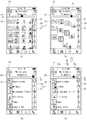
도 11a를 참조하면, 상기 제2-1 식별자(35a)는, 상기 메모리(160) 또는 특정 폴더(예를 들어, "My Contents" 폴더)에 저장된 모든 콘텐츠들을 나타낼 수 있다. 상기 제2-2 식별자(35b)는, 상기 메모리(160) 또는 상기 특정 폴더에 저장된 텍스트들을 나타낼 수 있다. 상기 제2-3 식별자(35c)는, 상기 메모리(160) 또는 상기 특정 폴더에 저장된 동영상 콘텐츠를 나타낼 수 있다. 상기 제2-4 식별자(35d)는, 상기 메모리(160) 또는 상기 특정 폴더에 저장된 음악 콘텐츠를 나타낼 수 있다. 상기 제2-5 식별자(35e)는, 상기 메모리(160) 또는 상기 특정 폴더에 저장된 음성 콘텐츠를 나타낼 수 있다. 상기 제2-6 식별자(36c)는, 상기 메모리(160) 또는 상기 특정 폴더에 저장된 게임 콘텐츠를 나타낼 수 있다.Referring to FIG. 11A, the 2-1
상기 제2 슬라이더(31)가 상기 식별자 그룹(35)에 포함되는 복수의 식별자들(35a, 35b, 35c, 35d, 35e, 35f) 중 특정 식별자에 위치하면, 상기 제어부(180)는 상기 제2 슬라이더(31)가 위치한 상기 특정 식별자에 대응되는 데이터를 상기 정보 영역(10)에 표시할 수 있다.When the
예를 들어 도 11a(b)에 도시된 바와 같이, 상기 제2 슬라이더(31)가 상기 제2-3 식별자(35c)에 위치하면, 상기 제어부(180)는 상기 메모리(160) 또는 상기 특정 폴더에 저장된 동영상 콘텐츠를 상기 정보 영역(10)에 표시한다.For example, as shown in FIG. 11A (b), when the
또한 예를 들어 도 11a(e)에 도시된 바와 같이, 상기 제2 슬라이더(31)가 상기 제2-6 식별자(36c)에 위치하면, 상기 제어부(180)는 상기 메모리(160) 또는 상기 특정 폴더에 저장된 게임 콘텐츠를 상기 정보 영역(10)에 표시한다.Also, for example, as shown in FIG. 11A (e), when the
도 11a에서는, 상기 제2 슬라이더(31)의 위치는 불연속적으로 변화할 수 있 다. 예를 들어, 상기 제2 슬라이더(31)의 위치는, 상기 복수의 식별자들(35a, 35b, 35c, 35d, 35e, 35f) 중 어느 하나에 위치할 수 있다.In FIG. 11A, the position of the
상기 제어부(180)는, 상기 제2 제어 영역(30)에 대한 제2 터치 입력에 대응하여 상기 정보 영역(10)에 표시되는 상기 적어도 하나의 정보 아이템의 개수를 제어할 수 있다.The
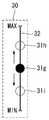
예를 들어, 상기 제어부(180)는, 도 11b에 도시된 제2 제어 영역(30)을 상기 터치 스크린(151)에 제공할 수 있다. 도 11b를 참조하면, 상기 제어부(180)는 상기 제2 슬라이더(31g)가 상기 제2 바(32) 상에서 이동함에 따라, 상기 정보 영역(10)에 표시되는 정보 아이템들의 개수를 변화시킬 수 있다.For example, the
예를 들어, 상기 제2 슬라이더(31g)가 참조번호 31h의 위치로 이동하면, 상기 제어부(180)는 상기 정보 영역(10)에 표시되는 정보 아이템들의 개수를 증가시킨다. 또한 예를 들어, 상기 제2 슬라이더(31g)가 참조번호 31i의 위치로 이동하면, 상기 제어부(180)는 상기 정보 영역(10)에 표시되는 정보 아이템들의 개수를 감소시킨다.For example, when the
상기 제어부(180)는, 상기 제2 제어 영역(30)에 대한 제2 터치 입력에 대응하여 상기 정보 영역(10)에 표시되는 상기 적어도 하나의 정보 아이템의 종류 및 개수를 제어할 수 있다.The
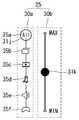
도 11c를 참조하면, 상기 제2 제어 영역(30)은, 제2-1 제어 영역(30a)와 제2-2 제어 영역(30b)를 포함할 수 있다. 상기 제2-1 제어 영역(30a)은, 도 11a를 참조하여 전술한 바와 같이, 상기 정보 영역(10)에 표시되는 정보 아이템들의 종류를 제어하기 위한 제어 영역이다. 상기 제2-2 제어 영역(30b)은, 도 11b를 참조하여 전술한 바와 같이, 상기 정보 영역(10)에 표시되는 정보 아이템들의 개수를 제어하기 위한 제어 영역이다.Referring to FIG. 11C, the
이와 같이, 상기 제어부(180)는, 상기 정보 영역(10)에 표시되는 정보 아이템들의 종류와 개수를 모두 제어할 수 있는 제2 제어 영역(30)을 상기 터치 스크린(151)에 제공할 수 있다.As such, the
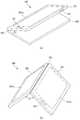
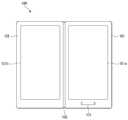
도 12 내지 도 14b는, 후술하는 본 발명의 실시예들을 구현하기 위한 이동 단말기(100) 외관의 구체적인 예들을 도시한 도면들이다. 후술하는 본 발명의 실시예들은, 제1 바디(101)와 제2 바디(102)를 포함하는 이동 단말기(100)에서 구현될 수 있다. 상기 제1 바디(101)와 상기 제2 바디(102)는, 체결부(195)에 의해 상호 폴딩 가능하도록 체결된다.12 to 14B are diagrams illustrating specific examples of an appearance of a
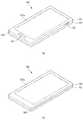
도 12는 상기 제1 바디(101)와 상기 제2 바디(102)가 닫힌 상태(closed status)에 해당하는 경우의 사시도이고, 도 13은 상기 제1 바디(101)와 상기 제2 바디(102)가 열린 상태(half open status)에 해당하는 경우의 사시도이고, 도 14a 및 도 14b는 상기 제1 바디(101)와 상기 제2 바디(102)가 완전히 열린 상태(fully open status)에 해당하는 경우의 사시도와 측면도이다. 사용자는, 도 12 내지 도 14b에 도시된 바와 같이, 상기 제1 바디(101)와 상기 제2 바디(102)를 열고 닫을 수 있다.12 is a perspective view when the
상기 제1 바디(101)는 제1 터치 스크린(151a)을 구비하고, 상기 제2 바 디(102)는 제2 터치 스크린(151b)를 구비한다. 상기 제1 및 제2 터치 스크린(151a, 151b)는, 전술한 바와 같이, 정보 입력 기능과 정보 표시 기능을 모두 수행할 수 있는 장치이다. 상기 정보 입력 기능은, 터치 방식으로 이루어질 수 있다.The
한편, 상기 제1 터치 스크린(151a)이 구비된 상기 제1 바디(101)의 일 면과, 상기 제2 터치 스크린(151b)이 구비된 상기 제2 바디(102)의 일 면은, 상기 제1 바디(101)와 상기 제2 바디(102)가 닫힌 상태에 해당하는 경우에는 내접하지 않는다. 도 12를 참조하면, 상기 제1 바디(101)와 상기 제2 바디(102)가 닫힌 상태에서, 상기 제1 터치 스크린(151a)와 상기 제2 터치 스크린(151b)는 서로 내접하지 않는다.Meanwhile, one surface of the
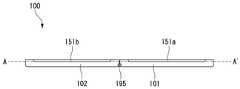
또한 상기 제1 터치 스크린(151a)이 구비된 상기 제1 바디(101)의 일 면과, 상기 제2 터치 스크린(151b)이 구비된 상기 제2 바디(102)의 일 면은, 상기 제1 바디(101)와 상기 제2 바디(102)가 완전히 열린 상태에 해당하는 경우에는 실질적으로 동일한 면에 포함될 수 있다. 도 14b를 참조하면, 상기 제1 바디(101)와 상기 제2 바디(102)가 완전히 열린 상태에 해당하는 경우, 상기 제1 터치 스크린(151a)과 상기 제2 터치 스크린(151b)은 실질적으로 동일한 면(A-A')에 포함될 수 있다.In addition, one surface of the
상기 제1 바디(101)와 상기 제2 바디(102)의 폴딩 동작이, 도 14a 및 도 14b에 도시된 모습에 한정되도록 제한되는 것은 아니다. 예를 들어, 상기 제1 바디(101)와 상기 제2 바디(102)가 이루는 각도(α)는, 도 12 내지 도 14b에 도시된 바와 같이, 0도에서 180도까지일 수 있다. 또한 예를 들어, 상기 제1 바디(101)와 상기 제2 바디(102)는, 상기 제1 바디(101)와 상기 제2 바디(102)가 이루는 각도(α)가 180도 이상을 형성하도록, 상기 체결부(195)에 의해 체결될 수 있다.The folding operation of the
상기 제어부(180)는, 전술한 상기 센싱부(140)를 이용하여 상기 제1 바디(101)와 상기 제2 바디(102)의 개폐 상태와, 상기 제1 바디(101)와 상기 제2 바디(102)가 이루는 각도를 감지할 수 있다.The
또한 상기 제어부(180)는, 상기 센싱부(140)를 이용하여 상기 제1 터치 스크린(151a) 및/또는 상기 제2 터치 스크린(151b)이 지향하는 방향을 감지할 수 있다. 예를 들어 도 14a를 참조하면, 상기 이동 단말기(100)는, 상기 제1 바디(101)와 상기 제2 바디(102)가 이루는 각도가 180도인 상태에서, 상기 제1 및 제2 터치 스크린(151a, 151b)이 지표면을 향하거나 그 반대 방향을 향하도록 책상 위에 놓여질 수 있다. 상기 제어부(180)는, 이와 같은 상기 이동 단말기(100)의 자세 또는 지향 방향을 감지할 수 있다.In addition, the
상기 센싱부(140)는, 전술한 상기 이동 단말기(100)의 자세 또는 지향 방향을 감지하기 위해, 홀 센서(hall sensor), 3축 또는 6축 모션 센서(3-axis or 6-axis motion sensor), 지자기 센서 및 가속도 센서 중 적어도 하나를 포함할 수 있다.The
후술하는 실시예들에서는, 도 12 내지 도 14b를 참조하여 전술한 바와 같이, 상기 이동 단말기(100)가 제1 터치 스크린(151a) 및 제2 터치 스크린(151b)를 구비하는 것으로 가정한다.In the following embodiments, it is assumed that the
도 15는 본 발명의 제2 실시예에 따른 이동 단말기의 정보 표시 방법의 흐름 도이다. 도 16 및 도 17은 본 발명의 제2 실시예가 구현되는 예들을 도시한 도면들이다.15 is a flowchart illustrating an information display method of a mobile terminal according to a second embodiment of the present invention. 16 and 17 illustrate examples in which a second embodiment of the present invention is implemented.
본 발명의 제2 실시예에 따른 이동 단말기의 정보 표시 방법은, 도 1 내지 도 3과, 도 12 내지 도 14b를 참조하여 설명한 상기 이동 단말기(100)에서 구현될 수 있다. 이하 필요한 도면들을 참조하여, 본 발명의 제2 실시예에 따른 이동 단말기의 정보 표시 방법과, 이를 구현하기 위한 상기 이동 단말기(100)의 동작을 상세히 설명하기로 한다.The information display method of the mobile terminal according to the second embodiment of the present invention may be implemented in the
본 발명의 제2 실시예에 따른 이동 단말기의 정보 표시 방법은, 전술한 본 발명의 제1 실시예에 따른 이동 단말기의 정보 표시 방법을 전제로 하거나 함께 구현될 수 있다. 전술한 본 발명의 제1 실시예에서 언급된 상기 터치 스크린(151)은 후술하는 본 발명의 제2 실시예에서는 제1 터치 스크린(151a)으로 가정한다.The information display method of the mobile terminal according to the second embodiment of the present invention may be implemented on the premise or together with the information display method of the mobile terminal according to the first embodiment of the present invention described above. The
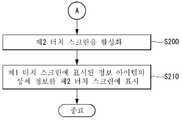
상기 제어부(180)는, 상기 제2 터치 스크린(151b)을 활성화한다[S200]. 그리고 상기 제어부(180)는, 상기 제2 터치 스크린(151b)이 활성화함에 따라, 상기 제1 터치 스크린(151a)에 표시된 상기 적어도 하나의 정보 아이템의 상세 정보를 상기 제2 터치 스크린(151b)에 표시한다[S210].The
우선 상기 제2 터치 스크린(151b)를 상정하여 터치 스크린의 활성화 또는 비활성화의 의미를 설명한다. 상기 제2 터치 스크린(151b)이 비활성화되면, 상기 제어부(180)는 상기 제2 터치 스크린(151b)을 통해 터치 신호를 수신하지 못하거나, 상기 터치 신호를 수신하더라도 아무런 동작을 수행하지 않는다. 즉 상기 제2 터치 스크린(151b)이 비활성화된 상태에서, 사용자가 상기 제2 터치 스크린(151b)을 터 치하여도 상기 이동 단말기(100)에는 아무런 변화가 일어나지 않는다.First, the meaning of activation or deactivation of the touch screen will be described by assuming the
상기 제2 터치 스크린(151b)이 비활성화된 상태는, 크게 두 가지 모드를 포함할 수 있다. 첫째, 상기 제어부(180)가 상기 제2 터치 스크린(151b)를 통해 정보를 표시하고(예를 들어, LCD는 온(on) 상태, 상기 제2 터치 스크린(151b)를 통해 터치 신호를 수신하지 못하는 모드이다. 둘째, 상기 제2 터치 스크린(151b)를 완전히 오프되는 모드이다. 상기 제2 터치 스크린(151b)가 완전히 오프되면, 상기 제어부(180)는, 상기 제2 터치 스크린(151b)을 통해 터치 신호를 수신하지 못할 뿐만 아니라 상기 제2 터치 스크린(151b)에는 아무런 정보를 표시하지 않는다.The state in which the
상기 제2 터치 스크린(151b)가 활성화되는 예는 매우 다양할 수 있다. 예를 들어, 상기 이동 단말기(100)가 도 12에 도시된 상태에서 도 14a 및 도 14b에 도시된 상태로 되는 경우이다. 즉 상기 제1 바디(101)와 상기 제2 바디(102)가 닫힌 상태(도 12를 참조)에서 완전히 열린 상태(도 14a 및 도 14b를 참조)로 되는 경우이다.Examples of activating the
또한 예를 들어, 상기 사용자 입력부(130)에 포함된 키패드에 포함된 특정 키를 통해 키 신호를 수신함에 따라, 상기 제2 터치 스크린(151b)이 비활성화 상태에서 활성화 상태로 변경될 수 있다.Also, for example, as the key signal is received through a specific key included in the keypad included in the
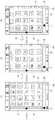
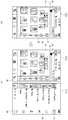
도 16은, 상기 정보 영역(10)의 뷰잉 퍼스펙티브가 3차원인 경우, 상기 S200 단계 및 상기 S210 단계가 수행되는 예를 도시한다. 또한 도 16(a)는 상기 이동 단말기(100)가 도 12에 도시된 바와 같이 닫힌 상태를 나타내고, 도 16(b)는 상기 이동 단말기(100)가 도 14a 및 도 14b에 도시된 바와 같이 완전히 열린 상태를 나타 낸다.FIG. 16 illustrates an example in which steps S200 and S210 are performed when the viewing perspective of the
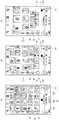
도 17은, 상기 정보 영역(10)의 뷰잉 퍼스펙티브가 2차원인 경우, 상기 S200 단계 및 상기 S210 단계가 수행되는 예를 도시한다. 또한 도 17(a)는 상기 이동 단말기(100)가 도 12에 도시된 바와 같이 닫힌 상태를 나타내고, 도 17(b)는 상기 이동 단말기(100)가 도 14a 및 도 14b에 도시된 바와 같이 완전히 열린 상태를 나타낸다.17 illustrates an example in which steps S200 and S210 are performed when the viewing perspective of the
도 16 및 도 17을 참조하면, 상기 이동 단말기(100)가 닫힌 상태에서 완전히 열린 상태로 됨에 따라, 상기 제어부(180)는, 상기 제2 터치 스크린(151b)을 비활성화 상태에서 활성화 상태로 변경하고, 상기 정보 영역(10)에 표시된 정보 아이템들의 상세 정보를 상기 제2 터치 스크린(151b)에 표시한다.16 and 17, as the
상기 정보 아이템들의 상세 정보는 상대적인 개념이다. 상기 제2 터치 스크린(151b)에 표시되는 상기 정보 아이템들의 상세 정보는, 상기 제1 터치 스크린(151a)에 표시되는 상기 정보 아이템들의 정보에 비교해서 상세하다는 의미이다.The detailed information of the information items is a relative concept. The detailed information of the information items displayed on the
예를 들어, 상기 제1 터치 스크린(151a)에는 특정 정보 아이템에 대해 이미지만 표시되고, 상기 제2 터치 스크린(151b)에는 이미지와 텍스트를 함께 표시할 수 있다. 또한 예를 들어, 상기 제1 터치 스크린(151a)에는 특정 정보 아이템에 대해 이미지와 간단한 텍스트가 함께 표시되고, 상기 제2 터치 스크린(151b)에는 이미지와 상세한 텍스트가 함께 표시될 수 있다. 또한 예를 들어, 상기 제1 터치 스크린(151a)에는 특정 정보 아이템에 대해 이미지와 간단한 텍스트가 함께 표시되고, 상기 제2 터치 스크린(151b)에는 상세한 텍스트가 표시될 수 있다.For example, only an image of a specific information item may be displayed on the
도 16 및 도 17의 경우, 상기 제어부(180)는 상기 제2 터치 스크린(151b)이 활성화 됨에 따라, 상기 제1 터치 스크린(151a)의 상기 정보 영역(10)에 표시된 정보 아이템들의 이미지와 제목을 상기 제2 터치 스크린(151b)에 표시한다.16 and 17, as the
도 18은 본 발명의 제3 실시예에 따른 이동 단말기의 정보 표시 방법의 흐름도이다. 도 19 및 도 20은 본 발명의 제3 실시예가 구현되는 예들을 도시한 도면들이다.18 is a flowchart of an information display method of a mobile terminal according to a third embodiment of the present invention. 19 and 20 are diagrams showing examples in which a third embodiment of the present invention is implemented.
본 발명의 제3 실시예에 따른 이동 단말기의 정보 표시 방법은, 도 1 내지 도 3과, 도 12 내지 도 14b를 참조하여 설명한 상기 이동 단말기(100)에서 구현될 수 있다. 이하 필요한 도면들을 참조하여, 본 발명의 제3 실시예에 따른 이동 단말기의 정보 표시 방법과, 이를 구현하기 위한 상기 이동 단말기(100)의 동작을 상세히 설명하기로 한다.The information display method of the mobile terminal according to the third embodiment of the present invention may be implemented in the
본 발명의 제3 실시예에 따른 이동 단말기의 정보 표시 방법은, 전술한 본 발명의 제1 실시예 및/또는 본 발명의 제2 실시예에 따른 이동 단말기의 정보 표시 방법을 전제로 하거나 함께 구현될 수 있다. 전술한 본 발명의 제1 실시예에서 언급된 상기 터치 스크린(151)은 후술하는 본 발명의 제3 실시예에서는 제1 터치 스크린(151a)으로 가정한다.The information display method of the mobile terminal according to the third embodiment of the present invention is based on or implemented with the information display method of the mobile terminal according to the first embodiment of the present invention and / or the second embodiment of the present invention. Can be. The
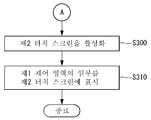
상기 제어부(180)는, 상기 제2 터치 스크린(151b)을 활성화한다[S300]. 그리고 상기 제어부(180)는, 상기 제2 터치 스크린(151b)이 활성화함에 따라, 상기 제1 터치 스크린(151a)에 표시된 상기 제1 제어 영역(20)의 일부를 상기 제2 터치 스크 린(151b)에 제공한다[S310].The
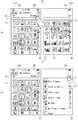
도 19(a)를 참조하면, 상기 제1 터치 스크린(151a)에 표시된 상기 제1 제어 영역(20)은, 상기 제1-1 식별자(25a) 및 상기 제1-2 식별자(25b)를 포함한다. 그리고 상기 제2 터치 스크린(151b)이 활성화되면, 도 19(b)에 도시된 바와 같이, 상기 제어부(180)는 상기 제2 터치 스크린(151b)에 상기 제1 제어 영역(20)의 일부로서 상기 제1-3 식별자(25c)를 제공한다.Referring to FIG. 19A, the
도 19는 상기 제2 터치 스크린(151b)이 활성화됨에 따라, 상기 제1 터치 스크린(151a)에 제공되지 않았던 상기 제1 제어 영역(20)의 일부가 상기 제2 터치 스크린(151b)에 제공되는 예를 나타낸다.19 illustrates that as the
그러나 본 발명의 제3 실시예가 이에 한정되는 것은 아니다. 예를 들어, 상기 제1 터치 스크린(151a)에 상기 제1-1 식별자(25a), 상기 제1-2 식별자(25b) 및 상기 제1-3 식별자(25c)가 표시된 상태에서, 상기 제2 터치 스크린(151b)가 활성화되면, 상기 제1-3 식별자(25c)가 상기 제2 터치 스크린(151b)에 표시될 수 있다.However, the third embodiment of the present invention is not limited thereto. For example, in the state where the first-
상기 제2 터치 스크린(151b)에 상기 제1 식별자 그룹(25)의 일부가 표시되는 경우, 상기 제1 바(22) 역시 상기 제2 터치 스크린(151b)로 확장되어 표시될 수 있다.When a part of the
도 20은 상기 제1 제어 영역(20)의 일부가 상기 제2 터치 스크린(151b)로 확장된 경우, 상기 확장된 제1 제어 영역(30)을 통해 상기 이동 단말기(100)가 제어되는 예를 도시한다.20 illustrates an example in which the
도 20을 참조하면, 사용자가 상기 제1 슬라이더(21)를 상기 제2 터치 스크 린(151b)에 표시된 상기 제1 바(22) 상에서 상기 제1-3 식별자(25c)까지 터치앤드래그(touch and drag) 동작으로 이동시키면, 상기 제어부(180)는 상기 제1 터치 스크린(151a)의 상기 정보 영역(10)에 표시된 정보 아이템들의 상세 정보를 상기 제2 터치 스크린(151b)에 표시할 수 있다.Referring to FIG. 20, a user touches and drags the
도 20은 상기 제1 터치 스크린(151a)에 표시된 정보 아이템들의 표시 형식은 변화하지 않는 경우를 도시한다. 그러나 본 발명의 제3 실시예가 이에 한정되는 것은 아니다. 예를 들어, 도 20(b)에서, 상기 제어부(180)는, 상기 정보 영역(10)에 표시된 정보 아이템들의 상세 정보를 상기 제1 터치 스크린(151a)과 상기 제2 터치 스크린(151b) 모두에 표시할 수 있다.20 illustrates a case in which a display format of information items displayed on the
한편 상기 제어부(180)는, 상기 제2 터치 스크린(151b)이 활성화함에 따라, 도 19에 도시된 바와 같이, 상기 제1 터치 스크린(151a)에 표시된 상기 제1 제어 영역(20)의 일부와 상기 제2 제어 영역(30)을 상기 제2 터치 스크린(151b)에 표시할 수 있다.Meanwhile, as the
여기서 상기 제어부(180)는, 상기 제2 제어 영역(30)를 통한 제어 명령을 상기 제1 터치 스크린(151a)와 상기 제2 터치 스크린(151b)를 통해 각각 개별적으로 수신할 수 있다.Herein, the
한편 상기 제어부(180)는, 상기 제2 터치 스크린(151b)이 활성화함에 따라, 상기 제1 제어 영역(20)의 이동 또는 확장 없이, 상기 제2 제어 영역(30)만을 상기 제2 터치 스크린(151b)로 복사하거나 이동시켜 표시할 수 있다.Meanwhile, as the
도 1을 참조하여 설명한 근접 센서(141)에 대하여, 도 21을 참조하면서 보다 구체적으로 살펴본다.The proximity sensor 141 described with reference to FIG. 1 will be described in more detail with reference to FIG. 21.
도 21은 근접 센서의 근접 깊이를 설명하기 위한 개념도이다.21 is a conceptual diagram illustrating a proximity depth of a proximity sensor.
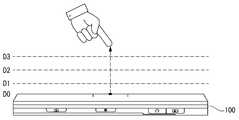
도 21에 도시한 바와 같이 사용자의 손가락 등과 같은 포인터가 상기 터치스크린에 근접하는 경우, 상기 터치스크린 내부 또는 근방에 배치된 상기 근접센서(141)가 이를 감지하여 근접신호를 출력한다.As illustrated in FIG. 21, when a pointer such as a user's finger is close to the touch screen, the proximity sensor 141 disposed inside or near the touch screen detects this and outputs a proximity signal.
상기 근접 센서(141)는 상기 근접 터치되는 포인터와 상기 터치스크린 간의 거리(이하 "근접 깊이"라고 함)에 따라 서로 다른 근접 신호를 출력하도록 구성될 수 있다.The proximity sensor 141 may be configured to output different proximity signals according to a distance between the proximity touched pointer and the touch screen (hereinafter, referred to as “proximity depth”).
상기 터치스크린에 포인터가 접근할 때 근접신호가 출력되는 거리를 검출거리라고 하는데, 간단하게는 상기 검출거리가 서로 다른 근접센서를 복수로 사용함으로써 각 근접센서에서 출력되는 근접신호를 비교하면 상기 근접 깊이를 알 수 있다.The distance at which the proximity signal is output when the pointer approaches the touch screen is called a detection distance. The proximity signal output from each proximity sensor is compared by using a plurality of proximity sensors having different detection distances. I can know the depth.
도 21에서는 예컨대 3개의 근접 깊이를 감지할 수 있는 근접 센서가 배치된 터치스크린의 단면이 예시되고 있다. 3개 미만 또는 4개 이상의 근접 깊이를 감지하는 근접 센서도 가능함은 물론이다.In FIG. 21, for example, a cross section of a touch screen on which three proximity sensors capable of sensing three proximity depths is disposed is illustrated. Of course, proximity sensors that detect less than three or more than four proximity depths are also possible.
구체적으로 살펴보면, 상기 포인터가 상기 터치스크린 상에 완전히 접촉되는 경우(d0)에는 접촉 터치로 인식된다. 상기 포인터가 상기 터치스크린 상에서 d1 거리 미만으로 이격되어 위치하는 경우에는 제 1 근접 깊이의 근접 터치로 인식된다. 상기 포인터가 상기 터치스크린 상에서 d1 거리 이상 d2 거리 미만으로 이격되어 위치하는 경우에는 제 2 근접 깊이의 근접 터치로 인식된다. 상기 포인터가 상기 터치스크린 상에서 d2 거리 이상 d3 거리 미만으로 이격되어 위치하는 경우에는 제 3 근접 깊이의 근접 터치로 인식된다. 그리고, 상기 포인터가 상기 터치스크린 상에서 d3 거리 이상으로 이격되어 위치하는 경우에는 근접 터치가 해제된 것으로 인식된다.Specifically, when the pointer is completely in contact with the touch screen (d0 ), it is recognized as a touch touch. When the pointer is positioned below the distance d1 on the touch screen, the pointer is recognized as a proximity touch of a first proximity depth. When the pointer is spaced apart from the distance d1 or more and less than d2 on the touch screen, the pointer is recognized as a proximity touch of a second proximity depth. When the pointer is spaced apart from the distance d2 or more and less than d3 on the touch screen, the pointer is recognized as a proximity touch of a third proximity depth. In addition, when the pointer is spaced apart from the distance d3 or more on the touch screen, it is recognized that the proximity touch is released.
따라서, 상기 제어부(180)는 상기 포인터의 터치스크린에 대한 근접거리 및 근접 위치 등에 따라 상기 근접 터치를 다양한 입력 신호로 인식할 수 있고, 상기 다양한 입력 신호에 따른 다양한 동작 제어를 수행할 수 있다.Accordingly, the
상기에서 설명한 본 발명에 의한 이동 단말기의 정보 표시 방법은, 컴퓨터에서 실행시키기 위한 프로그램으로 컴퓨터로 읽을 수 있는 기록매체에 기록하여 제공될 수 있다.The information display method of the mobile terminal according to the present invention described above may be provided by recording on a computer-readable recording medium as a program for executing in a computer.
본 발명에 의한 이동 단말기의 정보 표시 방법은 소프트웨어를 통해 실행될 수 있다. 소프트웨어로 실행될 때, 본 발명의 구성 수단들은 필요한 작업을 실행하는 코드 세그먼트들이다. 프로그램 또는 코드 세그먼트들은 프로세서 판독 가능 매체에 저장되거나 전송 매체 또는 통신망에서 반송파와 결합된 컴퓨터 데이터 신호에 의하여 전송될 수 있다.The information display method of the mobile terminal according to the present invention can be executed through software. When implemented in software, the constituent means of the present invention are code segments that perform the necessary work. The program or code segments may be stored on a processor readable medium or transmitted by a computer data signal coupled with a carrier on a transmission medium or network.
컴퓨터가 읽을 수 있는 기록매체는 컴퓨터 시스템에 의하여 읽혀질 수 있는 데이터가 저장되는 모든 종류의 기록 장치를 포함한다. 컴퓨터가 읽을 수 있는 기록 장치의 예로는, ROM, RAM, CD-ROM, DVD±ROM, DVD-RAM, 자기 테이프, 플로피 디스크, 하드 디스크(hard disk), 광데이터 저장장치 등이 있다. 또한 컴퓨터가 읽을 수 있는 기록매체는 네트워크로 연결된 컴퓨터 장치에 분산되어 분산방식으로 컴퓨터가 읽을 수 있는 코드가 저장되고 실행될 수 있다.Computer-readable recording media include all kinds of recording devices that store data that can be read by a computer system. Examples of the computer-readable recording device include ROM, RAM, CD-ROM, DVD ± ROM, DVD-RAM, magnetic tape, floppy disk, hard disk, optical data storage device, and the like. The computer-readable recording medium may also be distributed to networked computer devices so that computer readable code can be stored and executed in a distributed manner.
이상에서 설명한 본 발명은, 본 발명이 속하는 기술분야에서 통상의 지식을 가진 자에 있어 본 발명의 기술적 사상을 벗어나지 않는 범위 내에서 여러 가지 치환, 변형 및 변경이 가능하므로 전술한 실시예 및 첨부된 도면에 의해 한정되는 것이 아니다. 또한 본 문서에서 설명된 실시예들은 한정되게 적용될 수 있는 것이 아니라, 다양한 변형이 이루어질 수 있도록 각 실시예들의 전부 또는 일부가 선택적으로 조합되어 구성될 수도 있다.The present invention described above is capable of various substitutions, modifications, and changes without departing from the spirit of the present invention for those skilled in the art to which the present invention pertains. It is not limited by the drawings. In addition, the embodiments described in this document may not be limitedly applied, but may be configured by selectively combining all or part of the embodiments so that various modifications may be made.
도 1은 본 발명의 일 실시예와 관련된 이동 단말기의 블록 구성도(block diagram)이다.1 is a block diagram of a mobile terminal according to an embodiment of the present invention.
도 2a은 본 발명의 일 실시예에 관련된 이동 단말기의 전면 사시도이다.2A is a front perspective view of a mobile terminal according to an embodiment of the present invention.
도 2b는 본 발명의 일 실시예에 관련된 이동 단말기의 후면 사시도이다.2B is a rear perspective view of a mobile terminal according to an embodiment of the present invention.
도 3a 및 3b는 본 발명과 관련된 이동 단말기의 일 작동 상태를 설명하기 위한 이동 단말기의 정면도들이다.3A and 3B are front views of a mobile terminal for explaining an operation state of the mobile terminal according to the present invention.
도 4는 본 발명의 제1 실시예에 따른 이동 단말기의 정보 표시 방법의 흐름도이다.4 is a flowchart of an information display method of a mobile terminal according to a first embodiment of the present invention.
도 5a 내지 도 11c는, 본 발명의 제1 실시예에 따른 이동 단말기의 정보 표시 방법이 구현되는 화면의 예들을 도시한 도면들이다.5A to 11C are diagrams illustrating examples of a screen on which an information display method of a mobile terminal according to a first embodiment of the present invention is implemented.
도 12 내지 도 14b는, 후술하는 본 발명의 실시예들을 구현하기 위한 이동 단말기(100) 외관의 구체적인 예들을 도시한 도면들이다.12 to 14B are diagrams illustrating specific examples of an appearance of a
도 15는 본 발명의 제2 실시예에 따른 이동 단말기의 정보 표시 방법의 흐름도이다.15 is a flowchart of an information display method of a mobile terminal according to a second embodiment of the present invention.
도 16 및 도 17은 본 발명의 제2 실시예가 구현되는 예들을 도시한 도면들이다.16 and 17 illustrate examples in which a second embodiment of the present invention is implemented.
도 18은 본 발명의 제3 실시예에 따른 이동 단말기의 정보 표시 방법의 흐름도이다.18 is a flowchart of an information display method of a mobile terminal according to a third embodiment of the present invention.
도 19 및 도 20은 본 발명의 제3 실시예가 구현되는 예들을 도시한 도면들이 다.19 and 20 show examples in which a third embodiment of the present invention is implemented.
도 21은 근접 센서의 근접 깊이를 설명하기 위한 개념도이다.21 is a conceptual diagram illustrating a proximity depth of a proximity sensor.
<도면의 주요 부분에 대한 부호의 설명><Explanation of symbols for the main parts of the drawings>
100: 이동 단말기130: 사용자 입력부100: mobile terminal 130: user input unit
151: 디스플레이부(터치스크린)151a: 제1 터치 스크린151: display unit (touch screen) 151a: first touch screen
151b: 제2 터치 스크린160: 메모리151b: second touch screen 160: memory
180: 제어부180: control unit
Claims (20)
Translated fromKoreanPriority Applications (3)
| Application Number | Priority Date | Filing Date | Title |
|---|---|---|---|
| KR1020090048474AKR101566353B1 (en) | 2009-06-02 | 2009-06-02 | Information display method of mobile terminal and mobile terminal |
| EP09010056.1AEP2259175A3 (en) | 2009-06-02 | 2009-08-04 | Mobile terminal and method of displaying information in mobile terminal |
| US12/540,958US8762896B2 (en) | 2009-06-02 | 2009-08-13 | Mobile terminal and method of displaying information in mobile terminal |
Applications Claiming Priority (1)
| Application Number | Priority Date | Filing Date | Title |
|---|---|---|---|
| KR1020090048474AKR101566353B1 (en) | 2009-06-02 | 2009-06-02 | Information display method of mobile terminal and mobile terminal |
Publications (2)
| Publication Number | Publication Date |
|---|---|
| KR20100129892Atrue KR20100129892A (en) | 2010-12-10 |
| KR101566353B1 KR101566353B1 (en) | 2015-11-05 |
Family
ID=41339159
Family Applications (1)
| Application Number | Title | Priority Date | Filing Date |
|---|---|---|---|
| KR1020090048474AExpired - Fee RelatedKR101566353B1 (en) | 2009-06-02 | 2009-06-02 | Information display method of mobile terminal and mobile terminal |
Country Status (3)
| Country | Link |
|---|---|
| US (1) | US8762896B2 (en) |
| EP (1) | EP2259175A3 (en) |
| KR (1) | KR101566353B1 (en) |
Cited By (1)
| Publication number | Priority date | Publication date | Assignee | Title |
|---|---|---|---|---|
| US9841886B2 (en) | 2013-08-08 | 2017-12-12 | Canon Kabushiki Kaisha | Display control apparatus and control method thereof |
Families Citing this family (26)
| Publication number | Priority date | Publication date | Assignee | Title |
|---|---|---|---|---|
| US20120081315A1 (en) | 2010-10-01 | 2012-04-05 | Imerj LLC | Keyboard spanning multiple screens |
| US9213365B2 (en) | 2010-10-01 | 2015-12-15 | Z124 | Method and system for viewing stacked screen displays using gestures |
| US9207717B2 (en) | 2010-10-01 | 2015-12-08 | Z124 | Dragging an application to a screen using the application manager |
| JP4671368B1 (en)* | 2009-09-30 | 2011-04-13 | 株式会社ユビキタスエンターテインメント | Information processing program, information processing apparatus, and information processing method |
| JP5295940B2 (en)* | 2009-12-11 | 2013-09-18 | 京セラ株式会社 | Mobile phone |
| CN102754057A (en)* | 2009-12-23 | 2012-10-24 | 诺基亚公司 | Method and apparatus for display device |
| US20120218202A1 (en) | 2010-10-01 | 2012-08-30 | Sanjiv Sirpal | Windows position control for phone applications |
| US9046992B2 (en) | 2010-10-01 | 2015-06-02 | Z124 | Gesture controls for multi-screen user interface |
| KR20120064756A (en)* | 2010-12-10 | 2012-06-20 | 삼성전자주식회사 | Method and apparatus for displaying screen of mobile terminal comprising touch screen |
| US9383959B2 (en)* | 2011-05-27 | 2016-07-05 | Kyocera Corporation | Rotatable mobile electronic device and soft key input method |
| JP5950693B2 (en) | 2011-05-27 | 2016-07-13 | 京セラ株式会社 | Portable electronic device and character input method |
| US9182935B2 (en) | 2011-09-27 | 2015-11-10 | Z124 | Secondary single screen mode activation through menu option |
| JP2013140460A (en)* | 2011-12-29 | 2013-07-18 | Sony Corp | Display device, display method, and program |
| KR20130097533A (en)* | 2012-02-24 | 2013-09-03 | 삼성전자주식회사 | Method for changing screen in touch screen terminal and apparatus thereof |
| CN103488373A (en)* | 2012-06-12 | 2014-01-01 | 腾讯科技(深圳)有限公司 | Picture showing method and device and mobile terminal |
| CN104412216A (en)* | 2012-06-27 | 2015-03-11 | Nec卡西欧移动通信株式会社 | Portable terminal device, operation method and program of portable terminal device |
| JP6084021B2 (en)* | 2012-12-04 | 2017-02-22 | 富士通テン株式会社 | Display system, display device, display method, and program |
| KR102133410B1 (en)* | 2013-01-31 | 2020-07-14 | 삼성전자 주식회사 | Operating Method of Multi-Tasking and Electronic Device supporting the same |
| KR102087005B1 (en)* | 2013-01-31 | 2020-03-11 | 삼성전자 주식회사 | Page Searching Method and Electronic Device supporting the same |
| WO2014157357A1 (en)* | 2013-03-27 | 2014-10-02 | Necカシオモバイルコミュニケーションズ株式会社 | Information terminal, display control method, and program therefor |
| CN104035774A (en)* | 2014-06-11 | 2014-09-10 | 广州市久邦数码科技有限公司 | Stereoscopic desktop element distribution system and method |
| US10635296B2 (en) | 2014-09-24 | 2020-04-28 | Microsoft Technology Licensing, Llc | Partitioned application presentation across devices |
| US10448111B2 (en) | 2014-09-24 | 2019-10-15 | Microsoft Technology Licensing, Llc | Content projection |
| US9678640B2 (en)* | 2014-09-24 | 2017-06-13 | Microsoft Technology Licensing, Llc | View management architecture |
| US9769227B2 (en) | 2014-09-24 | 2017-09-19 | Microsoft Technology Licensing, Llc | Presentation of computing environment on multiple devices |
| US10025684B2 (en) | 2014-09-24 | 2018-07-17 | Microsoft Technology Licensing, Llc | Lending target device resources to host device computing environment |
Family Cites Families (28)
| Publication number | Priority date | Publication date | Assignee | Title |
|---|---|---|---|---|
| US6331840B1 (en)* | 1998-03-27 | 2001-12-18 | Kevin W. Nielson | Object-drag continuity between discontinuous touch screens of a single virtual desktop |
| JP2003529161A (en)* | 2000-03-31 | 2003-09-30 | ボルグワード、グレン ロールス | Universal digital mobile device |
| US6983424B1 (en)* | 2000-06-23 | 2006-01-03 | International Business Machines Corporation | Automatically scaling icons to fit a display area within a data processing system |
| US7142195B2 (en)* | 2001-06-04 | 2006-11-28 | Palm, Inc. | Interface for interaction with display visible from both sides |
| US6910191B2 (en)* | 2001-11-02 | 2005-06-21 | Nokia Corporation | Program guide data selection device |
| TWI238348B (en)* | 2002-05-13 | 2005-08-21 | Kyocera Corp | Portable information terminal, display control device, display control method, and recording media |
| WO2005041589A1 (en)* | 2003-10-22 | 2005-05-06 | X3D Technologies Gmbh | Arrays for three-dimensionally perceptible and/or two-dimensional representation of images |
| US7328411B2 (en)* | 2004-03-19 | 2008-02-05 | Lexmark International, Inc. | Scrollbar enhancement for browsing data |
| US7865301B2 (en)* | 2004-03-23 | 2011-01-04 | Google Inc. | Secondary map in digital mapping system |
| WO2005104039A2 (en)* | 2004-03-23 | 2005-11-03 | Google, Inc. | A digital mapping system |
| US7992103B2 (en)* | 2004-04-26 | 2011-08-02 | Microsoft Corporation | Scaling icons for representing files |
| JP4457051B2 (en)* | 2005-07-19 | 2010-04-28 | 任天堂株式会社 | Object movement control program and information processing apparatus |
| US9081470B2 (en)* | 2005-09-08 | 2015-07-14 | Microsoft Technology Licensing, Llc | Single action selection of data elements |
| US20070143705A1 (en)* | 2005-12-16 | 2007-06-21 | Sap Ag | Indexed scrollbar |
| US7707516B2 (en)* | 2006-05-26 | 2010-04-27 | Google Inc. | Embedded navigation interface |
| US8515207B2 (en)* | 2007-05-25 | 2013-08-20 | Google Inc. | Annotations in panoramic images, and applications thereof |
| US9037599B1 (en)* | 2007-05-29 | 2015-05-19 | Google Inc. | Registering photos in a geographic information system, and applications thereof |
| US20110047459A1 (en)* | 2007-10-08 | 2011-02-24 | Willem Morkel Van Der Westhuizen | User interface |
| US8510268B1 (en)* | 2007-11-13 | 2013-08-13 | Google Inc. | Editable geographic data for maps, and applications thereof |
| CA2705099A1 (en)* | 2007-12-04 | 2009-06-11 | Ge Healthcare Limited | Image analysis |
| WO2009137121A1 (en)* | 2008-05-09 | 2009-11-12 | Medtronic, Inc. | Programming techniques for peripheral nerve field stimulation |
| US10031549B2 (en)* | 2008-07-10 | 2018-07-24 | Apple Inc. | Transitioning between modes of input |
| JPWO2010038296A1 (en)* | 2008-10-01 | 2012-02-23 | 任天堂株式会社 | Information processing apparatus, information processing system, start program, and storage medium storing the same |
| KR101560718B1 (en)* | 2009-05-29 | 2015-10-15 | 엘지전자 주식회사 | Mobile terminal and method for displaying information thereof |
| US8832574B2 (en)* | 2009-06-30 | 2014-09-09 | Nokia Corporation | Apparatus and associated methods |
| US8605006B2 (en)* | 2009-12-23 | 2013-12-10 | Nokia Corporation | Method and apparatus for determining information for display |
| DE202011110735U1 (en)* | 2010-04-06 | 2015-12-10 | Lg Electronics Inc. | Mobile terminal |
| KR101711047B1 (en)* | 2010-10-07 | 2017-02-28 | 엘지전자 주식회사 | Electronic device and control method for electronic device |
- 2009
- 2009-06-02KRKR1020090048474Apatent/KR101566353B1/ennot_activeExpired - Fee Related
- 2009-08-04EPEP09010056.1Apatent/EP2259175A3/ennot_activeWithdrawn
- 2009-08-13USUS12/540,958patent/US8762896B2/ennot_activeExpired - Fee Related
Cited By (1)
| Publication number | Priority date | Publication date | Assignee | Title |
|---|---|---|---|---|
| US9841886B2 (en) | 2013-08-08 | 2017-12-12 | Canon Kabushiki Kaisha | Display control apparatus and control method thereof |
Also Published As
| Publication number | Publication date |
|---|---|
| US20100304791A1 (en) | 2010-12-02 |
| EP2259175A2 (en) | 2010-12-08 |
| KR101566353B1 (en) | 2015-11-05 |
| US8762896B2 (en) | 2014-06-24 |
| EP2259175A3 (en) | 2014-01-22 |
Similar Documents
| Publication | Publication Date | Title |
|---|---|---|
| KR101566353B1 (en) | Information display method of mobile terminal and mobile terminal | |
| KR101726790B1 (en) | Mobile terminal and control method for mobile terminal | |
| EP2397936B1 (en) | Mobile terminal and method of controlling the same | |
| EP2261784B1 (en) | Mobile terminal and method of displaying information in mobile terminal | |
| US9594476B2 (en) | Electronic device comprising a touch-screen display and a rear input unit, and method of controlling the same | |
| KR101685145B1 (en) | Mobile terminal and control method thereof | |
| KR101558207B1 (en) | Item setting method of mobile terminal and mobile terminal | |
| KR20100016842A (en) | Mobile terminal with touch screen and method of processing message using same | |
| KR20110049492A (en) | Mobile terminal and information providing method using same | |
| KR20110050965A (en) | Mobile terminal and displaying method thereof | |
| US20100060595A1 (en) | Mobile terminal and method of switching identity module therein | |
| US20130290866A1 (en) | Mobile terminal and control method thereof | |
| US20100231558A1 (en) | Mobile terminal and input method of mobile terminal | |
| KR20100054233A (en) | Mobile terminal and method of displaying map using same | |
| KR20100055716A (en) | Method for controlling map and mobile terminal using the same | |
| KR20100109274A (en) | Mobile terminal and method of controlling mobile terminal | |
| KR20100019024A (en) | Mobile terminal with touch screen and method of processing data using same | |
| KR20110023962A (en) | Mobile terminal and message creation method | |
| KR20120003537A (en) | Mobile terminal and its control method | |
| KR20110055058A (en) | Mobile terminal and its control method | |
| KR20100125938A (en) | Mobile terminal and graphic user interface provision method using same | |
| KR20100062252A (en) | Mobile terminal and user interface of mobile terminal | |
| KR20110122004A (en) | Electronic device and its control method | |
| KR20100099447A (en) | Mobile termianl and information processing method thereof | |
| KR20100124977A (en) | Method of providing user interface and mobile terminal thereof |
Legal Events
| Date | Code | Title | Description |
|---|---|---|---|
| PA0109 | Patent application | St.27 status event code:A-0-1-A10-A12-nap-PA0109 | |
| R18-X000 | Changes to party contact information recorded | St.27 status event code:A-3-3-R10-R18-oth-X000 | |
| PG1501 | Laying open of application | St.27 status event code:A-1-1-Q10-Q12-nap-PG1501 | |
| A201 | Request for examination | ||
| E13-X000 | Pre-grant limitation requested | St.27 status event code:A-2-3-E10-E13-lim-X000 | |
| P11-X000 | Amendment of application requested | St.27 status event code:A-2-2-P10-P11-nap-X000 | |
| P13-X000 | Application amended | St.27 status event code:A-2-2-P10-P13-nap-X000 | |
| PA0201 | Request for examination | St.27 status event code:A-1-2-D10-D11-exm-PA0201 | |
| D13-X000 | Search requested | St.27 status event code:A-1-2-D10-D13-srh-X000 | |
| D14-X000 | Search report completed | St.27 status event code:A-1-2-D10-D14-srh-X000 | |
| PE0902 | Notice of grounds for rejection | St.27 status event code:A-1-2-D10-D21-exm-PE0902 | |
| PN2301 | Change of applicant | St.27 status event code:A-3-3-R10-R13-asn-PN2301 St.27 status event code:A-3-3-R10-R11-asn-PN2301 | |
| E13-X000 | Pre-grant limitation requested | St.27 status event code:A-2-3-E10-E13-lim-X000 | |
| P11-X000 | Amendment of application requested | St.27 status event code:A-2-2-P10-P11-nap-X000 | |
| P13-X000 | Application amended | St.27 status event code:A-2-2-P10-P13-nap-X000 | |
| E701 | Decision to grant or registration of patent right | ||
| PE0701 | Decision of registration | St.27 status event code:A-1-2-D10-D22-exm-PE0701 | |
| PR0701 | Registration of establishment | St.27 status event code:A-2-4-F10-F11-exm-PR0701 | |
| PR1002 | Payment of registration fee | St.27 status event code:A-2-2-U10-U11-oth-PR1002 Fee payment year number:1 | |
| PG1601 | Publication of registration | St.27 status event code:A-4-4-Q10-Q13-nap-PG1601 | |
| LAPS | Lapse due to unpaid annual fee | ||
| PC1903 | Unpaid annual fee | St.27 status event code:A-4-4-U10-U13-oth-PC1903 Not in force date:20181031 Payment event data comment text:Termination Category : DEFAULT_OF_REGISTRATION_FEE | |
| PC1903 | Unpaid annual fee | St.27 status event code:N-4-6-H10-H13-oth-PC1903 Ip right cessation event data comment text:Termination Category : DEFAULT_OF_REGISTRATION_FEE Not in force date:20181031 | |
| PN2301 | Change of applicant | St.27 status event code:A-5-5-R10-R13-asn-PN2301 St.27 status event code:A-5-5-R10-R11-asn-PN2301 | |
| P22-X000 | Classification modified | St.27 status event code:A-4-4-P10-P22-nap-X000 |