KR20070024569A - Architecture for Privacy Protection of Biometric Templates - Google Patents
Architecture for Privacy Protection of Biometric TemplatesDownload PDFInfo
- Publication number
- KR20070024569A KR20070024569AKR1020067025805AKR20067025805AKR20070024569AKR 20070024569 AKR20070024569 AKR 20070024569AKR 1020067025805 AKR1020067025805 AKR 1020067025805AKR 20067025805 AKR20067025805 AKR 20067025805AKR 20070024569 AKR20070024569 AKR 20070024569A
- Authority
- KR
- South Korea
- Prior art keywords
- data
- individual
- biometric
- registration
- helper
- Prior art date
- Legal status (The legal status is an assumption and is not a legal conclusion. Google has not performed a legal analysis and makes no representation as to the accuracy of the status listed.)
- Withdrawn
Links
Images



Classifications
- H—ELECTRICITY
- H04—ELECTRIC COMMUNICATION TECHNIQUE
- H04L—TRANSMISSION OF DIGITAL INFORMATION, e.g. TELEGRAPHIC COMMUNICATION
- H04L9/00—Cryptographic mechanisms or cryptographic arrangements for secret or secure communications; Network security protocols
- H04L9/32—Cryptographic mechanisms or cryptographic arrangements for secret or secure communications; Network security protocols including means for verifying the identity or authority of a user of the system or for message authentication, e.g. authorization, entity authentication, data integrity or data verification, non-repudiation, key authentication or verification of credentials
- G—PHYSICS
- G06—COMPUTING OR CALCULATING; COUNTING
- G06F—ELECTRIC DIGITAL DATA PROCESSING
- G06F21/00—Security arrangements for protecting computers, components thereof, programs or data against unauthorised activity
- G06F21/30—Authentication, i.e. establishing the identity or authorisation of security principals
- G06F21/31—User authentication
- G06F21/32—User authentication using biometric data, e.g. fingerprints, iris scans or voiceprints
- G—PHYSICS
- G06—COMPUTING OR CALCULATING; COUNTING
- G06F—ELECTRIC DIGITAL DATA PROCESSING
- G06F15/00—Digital computers in general; Data processing equipment in general
- G06F15/16—Combinations of two or more digital computers each having at least an arithmetic unit, a program unit and a register, e.g. for a simultaneous processing of several programs
- G—PHYSICS
- G06—COMPUTING OR CALCULATING; COUNTING
- G06F—ELECTRIC DIGITAL DATA PROCESSING
- G06F21/00—Security arrangements for protecting computers, components thereof, programs or data against unauthorised activity
- G06F21/60—Protecting data
- G06F21/62—Protecting access to data via a platform, e.g. using keys or access control rules
- G06F21/6218—Protecting access to data via a platform, e.g. using keys or access control rules to a system of files or objects, e.g. local or distributed file system or database
- G06F21/6245—Protecting personal data, e.g. for financial or medical purposes
- G—PHYSICS
- G07—CHECKING-DEVICES
- G07C—TIME OR ATTENDANCE REGISTERS; REGISTERING OR INDICATING THE WORKING OF MACHINES; GENERATING RANDOM NUMBERS; VOTING OR LOTTERY APPARATUS; ARRANGEMENTS, SYSTEMS OR APPARATUS FOR CHECKING NOT PROVIDED FOR ELSEWHERE
- G07C9/00—Individual registration on entry or exit
- G07C9/20—Individual registration on entry or exit involving the use of a pass
- G07C9/22—Individual registration on entry or exit involving the use of a pass in combination with an identity check of the pass holder
- G07C9/25—Individual registration on entry or exit involving the use of a pass in combination with an identity check of the pass holder using biometric data, e.g. fingerprints, iris scans or voice recognition
- G07C9/257—Individual registration on entry or exit involving the use of a pass in combination with an identity check of the pass holder using biometric data, e.g. fingerprints, iris scans or voice recognition electronically
- H—ELECTRICITY
- H04—ELECTRIC COMMUNICATION TECHNIQUE
- H04L—TRANSMISSION OF DIGITAL INFORMATION, e.g. TELEGRAPHIC COMMUNICATION
- H04L12/00—Data switching networks
- H04L12/02—Details
- H04L12/22—Arrangements for preventing the taking of data from a data transmission channel without authorisation
- H—ELECTRICITY
- H04—ELECTRIC COMMUNICATION TECHNIQUE
- H04L—TRANSMISSION OF DIGITAL INFORMATION, e.g. TELEGRAPHIC COMMUNICATION
- H04L9/00—Cryptographic mechanisms or cryptographic arrangements for secret or secure communications; Network security protocols
- H04L9/32—Cryptographic mechanisms or cryptographic arrangements for secret or secure communications; Network security protocols including means for verifying the identity or authority of a user of the system or for message authentication, e.g. authorization, entity authentication, data integrity or data verification, non-repudiation, key authentication or verification of credentials
- H04L9/3271—Cryptographic mechanisms or cryptographic arrangements for secret or secure communications; Network security protocols including means for verifying the identity or authority of a user of the system or for message authentication, e.g. authorization, entity authentication, data integrity or data verification, non-repudiation, key authentication or verification of credentials using challenge-response
- H04L9/3278—Cryptographic mechanisms or cryptographic arrangements for secret or secure communications; Network security protocols including means for verifying the identity or authority of a user of the system or for message authentication, e.g. authorization, entity authentication, data integrity or data verification, non-repudiation, key authentication or verification of credentials using challenge-response using physically unclonable functions [PUF]
- G—PHYSICS
- G06—COMPUTING OR CALCULATING; COUNTING
- G06F—ELECTRIC DIGITAL DATA PROCESSING
- G06F2221/00—Indexing scheme relating to security arrangements for protecting computers, components thereof, programs or data against unauthorised activity
- G06F2221/21—Indexing scheme relating to G06F21/00 and subgroups addressing additional information or applications relating to security arrangements for protecting computers, components thereof, programs or data against unauthorised activity
- G06F2221/2117—User registration
- G—PHYSICS
- G06—COMPUTING OR CALCULATING; COUNTING
- G06F—ELECTRIC DIGITAL DATA PROCESSING
- G06F2221/00—Indexing scheme relating to security arrangements for protecting computers, components thereof, programs or data against unauthorised activity
- G06F2221/21—Indexing scheme relating to G06F21/00 and subgroups addressing additional information or applications relating to security arrangements for protecting computers, components thereof, programs or data against unauthorised activity
- G06F2221/2143—Clearing memory, e.g. to prevent the data from being stolen
- H—ELECTRICITY
- H04—ELECTRIC COMMUNICATION TECHNIQUE
- H04L—TRANSMISSION OF DIGITAL INFORMATION, e.g. TELEGRAPHIC COMMUNICATION
- H04L2209/00—Additional information or applications relating to cryptographic mechanisms or cryptographic arrangements for secret or secure communication H04L9/00
- H04L2209/80—Wireless
- H04L2209/805—Lightweight hardware, e.g. radio-frequency identification [RFID] or sensor
Landscapes
- Engineering & Computer Science (AREA)
- Computer Security & Cryptography (AREA)
- Theoretical Computer Science (AREA)
- General Physics & Mathematics (AREA)
- Physics & Mathematics (AREA)
- Computer Hardware Design (AREA)
- Software Systems (AREA)
- General Engineering & Computer Science (AREA)
- Bioethics (AREA)
- Health & Medical Sciences (AREA)
- General Health & Medical Sciences (AREA)
- Computer Networks & Wireless Communication (AREA)
- Signal Processing (AREA)
- Medical Informatics (AREA)
- Databases & Information Systems (AREA)
- Human Computer Interaction (AREA)
- Collating Specific Patterns (AREA)
- Storage Device Security (AREA)
Abstract
Translated fromKoreanDescription
Translated fromKorean본 발명은, 생체 측정 데이터의 프라이버시가 제공된, 개인과 연관된 생체 측정 데이터를 채용함으로서 개인의 신원을 확인하는 시스템 및 방법에 관한 것이다.The present invention is directed to a system and method for identifying an individual's identity by employing biometric data associated with the individual, provided the privacy of the biometric data.
물리적 객체의 인증은 건물 보안을 위한 조건부 액세스 또는 디지털 데이터에 조건부 액세스(예, 컴퓨터 또는 삭제 가능한 저장 매체에 저장됨)와 같은, 많은 애플리케이션에 또는 식별 목적으로(예, 특정 활동을 위해 식별된 개인에게 요금 부과) 사용될 수 있다.Authentication of a physical object may be performed by many applications or for identification purposes (e.g., individuals identified for specific activities), such as conditional access for building security or conditional access to digital data (e.g., stored on a computer or removable storage medium) To be used).
식별 및/또는 인증을 위한 생체 측정의 사용은 지속적인 증가 추세로 암호와 핀-코드(pin-codes)와 같은 전통적 식별 수단에 대한 더 나은 대안으로 고려된다. 암호/핀-코드의 형태로 신원확인을 필요로 하는 시스템의 수는 꾸준히 증가하고 있으며, 따라서, 시스템의 사용자가 외어야 하는, 암호/핀-코드의 수도 증가하고 있다. 이에 따라, 암호/핀-코드의 암기의 어려움으로 인해, 사용자는 이를 기록하며, 이로써 도난의 우려가 발생하게 된다. 종래 기술에서, 이러한 문제에 대한 해결책이 제안되어 왔으며, 이 해결책은 토큰(token)의 사용을 수반한다. 그러나, 토큰은 또한 손실되고/되거나 도난될 수 있다. 이 문제에 대한 보다 바람직한 해결책은 생체 측정 식별을 사용하는 것이며, 지문, 홍채, 귀, 얼굴 등과 같이 사용자의 고유한 특성은 사용자의 식별을 제공하는데 사용된다. 명백히, 사용자는 그의 생체 측정 특성이 손실하거나 잊지 않으며, 이들을 기록하거나 암기할 필요성이 없다.The use of biometrics for identification and / or authentication is a growing trend and is considered a better alternative to traditional means of identification, such as cryptography and pin-codes. The number of systems requiring identification in the form of ciphers / pin-codes is steadily increasing, and thus the number of ciphers / pin-codes that users of the systems must remember. Accordingly, due to the difficulty of memorizing the encryption / pin-code, the user records it, thereby raising the risk of theft. In the prior art, a solution to this problem has been proposed, which involves the use of tokens. However, tokens can also be lost and / or stolen. A more preferred solution to this problem is to use biometric identification, where a user's unique characteristics such as fingerprint, iris, ear, face, etc. are used to provide the user's identification. Obviously, the user does not lose or forget his biometric properties, and there is no need to record or memorize them.
생체 측정 특성은 기준 데이터와 비교된다. 매칭이 발생하는 경우, 사용자는 식별되고 액세스가 허가될 수 있다. 사용자에 대한 기준 데이터는 그 이전에 획득되었으며, 예컨대, 보안 데이터베이스 또는 스마트 카드에서와 같이 보안적으로 저장된다. 인증에서, 사용자는 특정 신원을 갖기 위한 청구를 하고, 제공된 생체 측정 템플릿은 제공되고 저장된 템플릿 사이의 대응성을 확인하기 위해, 청구된 신원과 링크된 저장된 생체 측정 데이터와 비교된다. 식별에서, 제공된 생체 측정 템플릿은, 제공되고 저장된 템플릿 사이의 대응성을 확인하기 위해, 모든 저장된 이용가능한 템플릿과 비교된다. 임의의 경우, 제공된 템플릿은 하나 이상의 저장된 템플릿과 비교된다.Biometric characteristics are compared with reference data. If a match occurs, the user can be identified and granted access. Reference data for the user was previously obtained and stored securely, such as in a security database or smart card. In authentication, a user makes a claim to have a particular identity, and the provided biometric template is compared with the stored biometric data linked to the claimed identity to verify the correspondence between the provided and stored templates. In identification, the provided biometric template is compared with all stored available templates to ascertain correspondence between the provided and stored templates. In any case, provided templates are compared to one or more stored templates.
시스템 내에서 기밀 엄수가 위반될 때마다, 예컨대 해커가 보안 시스템 내의 비밀의 지식을 획득할 때, (비의도적으로) 누설된 기밀을 교체할 필요성이 존재한다. 일반적으로, 종래의 암호화 시스템에서, 이것은 누설된 비빌 암호화 키를 철회함으로써 그리고 새로운 키를 관련 사용자에게 배포함으로써 행해진다. 암호 또는 핀-코드가 누설된 경우, 이것은 새 것으로 교체된다. 생체 측정 시스템에서, 이 상황은 더욱 복잡한데, 그 이유는 대응 생체 부분이 명백하게 교체될 수 없기 때문이다. 이러한 점에서, 대부분의 생체 측정은 정적(static)이다. 따라서, 필요한 경 우, 유도된 비밀을 갱신하는 가능성과 함께, (일반적으로 잡음이 있는) 생체 측정치로부터 비밀을 유도하기 위한 방법을 개발하는 것은 중요하다. 생체 측정 데이터는 개인의 신원의 양호한 표현이며, 개인과 연관된 생체 측정 데이터의 비인증된 획득은 개인의 신원의 도난에 대한 전자적 등가물로 간주될 수 있다는 점이 주목되어야 한다. 개인을 식별하는 적절한 생체 측정 데이터를 획득한 후, 해커가 획득한 신원을 가진 개인처럼 가장할 수 있다. 게다가, 생체 측정 데이터는 건강 상태에 관한 민감하고 사적인 정보를 포함할 수 있다. 따라서, 생체 측정 인증/식별 시스템을 채용하는 개인의 무결성(integrity)은 보호되어야 한다.Whenever confidentiality is breached in a system, such as when a hacker gains knowledge of a secret in a security system, there is a need to replace the leaked (unintentionally). In general, in a conventional encryption system, this is done by retracting the leaked secret encryption key and distributing the new key to the relevant user. If a password or pin-code is leaked, it is replaced with a new one. In biometric systems, this situation is more complicated because the corresponding biometric part cannot be explicitly replaced. In this regard, most biometrics are static. Therefore, it is important to develop a method for deriving secrets from (usually noisy) biometrics, with the possibility of updating derived secrets as needed. It should be noted that biometric data is a good representation of an individual's identity, and that an unauthorized acquisition of biometric data associated with an individual can be considered an electronic equivalent to the theft of the individual's identity. After acquiring the appropriate biometric data identifying the individual, the hacker may impersonate the individual with the identity obtained. In addition, the biometric data can include sensitive and private information about the state of health. Thus, the integrity of individuals employing biometric authentication / identification systems must be protected.
생체 측정이 개인에 관한 민감한 정보를 제공하므로, 생체 측정 데이터의 관리 및 사용에 관한 프라이버시 문제가 존재한다. 예컨대, 종래 기술의 생체 측정 시스템에서, 사용자는 생체 측정 템플릿의 무결성에 관한 생체 측정 시스템을 완전히 불가피하게 신뢰해야 한다. 등록동안(즉, 등록 인증이 사용자의 생체 측정 템플릿을 획득하는 초기 프로세스) 사용자는 템플릿을 시스템에, 가능하면 암호화하여, 저장하는 등록 당국의 등록 디바이스에 그녀의 템플릿을 제공한다. 확인동안, 사용자는 다시 템플릿을 시스템에 제공하며, 저장된 템플릿은 검색되고(필요한 경우 암호 해독되며) 저장되고 제공된 템플릿의 매칭이 수행된다. 사용자는 그녀의 템플릿에 무슨 일이 발생하는지 제어할 수 없으며 그녀의 템플릿이 주의를 기울여 처리되며 시스템에서 누출되지 않았는지를 확인할 방법이 없다는 점이 명백하다. 따라서, 그녀는 그녀의 템플릿의 프라이버시를 가진 모든 등록 인증과 모든 검증기를 신뢰해야 한다. 이들 유형의 시스템이 예컨대, 일부 공항에서, 이미 사용 중에 있다고 해도, 사용자에 의한 시스템 내의 요구되는 신뢰 레벨은 이러한 시스템의 광범위한 사용의 가능성을 희박하게 한다.Because biometrics provide sensitive information about an individual, privacy concerns exist regarding the management and use of biometric data. For example, in the prior art biometric systems, the user must inevitably trust the biometric system regarding the integrity of the biometric template. During registration (ie, the initial process by which registration authentication obtains a user's biometric template), the user provides her template to the registration device of the registration authority that stores the template in the system, possibly encrypted and stored. During verification, the user again presents the template to the system, the stored template is retrieved (decrypted if necessary) and stored and matching of the provided template is performed. It is clear that the user cannot control what happens to her template, and there is no way to ensure that her template is handled with care and not leaked from the system. Therefore, she must trust all registered certificates and all verifiers with the privacy of her template. Although these types of systems are already in use, for example at some airports, the required level of trust in the system by the user makes the possibility of widespread use of such systems slim.
실제 템플릿이 노력이 없이는 결코 이용가능하지 않도록 하기 위해 생체 측정 템플릿을 암호화하거나 해싱(hash)하며 상기 암호화된 데이터에 관한 확인(또는 매칭)을 수행하기 위한 암호화 기술이 생각될 수 있다. 그러나 암호화 기능은 입력에서의 작은 변화가 출력에서의 큰 변화를 초래하도록 의도적으로 설계된다. 잡음-오염으로 인해 저장된 템플릿뿐만 아니라 제공된 템플릿을 획득하는데 수반되는 측정 오류와 생체 측정 속성으로 인해, 제공된 템플릿은 저장된 템플릿과 정확히 같지 않을 것이며, 그러므로 매칭 알고리즘은 두 개의 템플릿 사이의 작은 차이를 허용해야 한다. 이것은 암호화된 템플릿 문제에 기초한 확인이 문제가 되게 한다.Encryption techniques can be envisioned to encrypt or hash the biometric template and to perform verification (or matching) on the encrypted data so that the actual template is never available without effort. However, the encryption function is intentionally designed so that small changes in the input result in large changes in the output. Due to noise-pollution, due to measurement errors and biometric properties involved in acquiring the provided template as well as the stored template, the provided template will not be exactly the same as the stored template, so the matching algorithm must allow for a small difference between the two templates. do. This makes verification based on encrypted template problems a problem.
예컨대, 2001년 8월 22일자 화이트 페이퍼(White paper)에 게재된, Magnus Pettersson의 "매치 온 카드 기술"에 기술된 것과 같은 매치 온 카드(MoC; Match On Card) 시스템에서, 생체 측정 템플릿은 지문 센서도 갖춘 스마트 카드에 저장된다. 확인동안, 사용자는 생체 측정 템플릿(예, 지문)을 센서에 제공하며 카드는 저장된 템플릿과 제공된 템플릿 간의 매칭의 여부를 결정한다. 비교 결과는 검증기로 전송된다. 이러한 접근 방식의 한 가지 장점은 어떠한 템플릿도 중앙에 저장되지 않는다는 것이다. 그러나, 생체 측정 템플릿은 여전히 시스템에 영구적으로 저장되며 스마트 카드가 분실된 경우, 공격자(attacker)는 스마트 카드를 조작함으로써 템플릿을 획득할 수 있다. 템플릿이 암호화된 형태로 저장되고 카드 내에서 템플릿 매칭을 수행하기 전에 암호 해독한다고 해도, 암호 해독 키의 적절한 관리는 새로 운 프라이버시 문제를 제시한다. 더욱이, 검증기는 템플릿 매칭이 카드에서 완전히 수행된다는 면에서 카드를 완전히 신뢰해야 하며 검증기에는 매칭 확인이 제공된다. 이는 검증기가 시스템을 수락할 가능성을 상당히 감소시킬 수 있다.For example, in a Match On Card (MoC) system such as that described in Magnus Pettersson's "Match on Card Technology", published on August 22, 2001, the biometric template may be a fingerprint. It is also stored on smart cards with sensors. During verification, the user provides a biometric template (eg, fingerprint) to the sensor and the card determines whether there is a match between the stored template and the provided template. The comparison result is sent to the verifier. One advantage of this approach is that no template is stored centrally. However, the biometric template is still stored permanently in the system and if the smart card is lost, the attacker can obtain the template by manipulating the smart card. Even if the template is stored in encrypted form and decrypted before performing template matching in the card, proper management of the decryption key presents a new privacy issue. Moreover, the verifier must fully trust the card in that template matching is fully performed on the card and the verifier is provided with matching confirmation. This can significantly reduce the likelihood that the verifier will accept the system.
본 발명의 목적은 사용자가 시스템이 사용자의 생체 측정 템플릿을 저장하지 않는다는 것을 신뢰할 수 있는 인증 및/또는 식별을 위한 생체 측정 시스템을 제공하는 것이다. 따라서, 생체 측정 템플릿의 프라이버시는 제공된다.It is an object of the present invention to provide a biometric system for authentication and / or identification in which the user can trust that the system does not store the biometric template of the user. Thus, privacy of the biometric template is provided.
이것은 개인과 연관된 생체 측정 데이터를 채용함으로써 개인의 신원을 확인하기 위한 시스템으로서, 청구항 제 1항에 따른 상기 생체 측정 데이터의 프라이버시를 제공하는 시스템 및 개인과 연관된 생체 측정 데이터를 채용함으로써 개인의 신원을 확인하는 방법으로서, 청구항 제 13항에 따른 상기 생체 측정 데이터의 프라이버시를 제공하는 방법에 의해 달성된다.It is a system for identifying an individual's identity by employing biometric data associated with the individual, the system providing privacy of the biometric data according to claim 1 and identifying the individual's identity by employing biometric data associated with the individual. A method of verifying is achieved by a method of providing privacy of said biometric data according to claim 13.
본 발명의 제 1 양상에 따라, 검증기를 포함하는 시스템, 개인이 신뢰하는 보안적, 탬퍼링-방지 사용자 디바이스, 등록 당국 및 중앙 저장부가 제공되며, 상기 등록 당국은 상기 중앙 저장부에서 등록 데이터를 저장하기 위해 배열되며, 상기 등록 데이터는 기밀이며 개인의 생체 측정 데이터의 제 1 집합에 기초한다. 사용자 디바이스는 개인의 생체 측정 데이터의 제 2 집합을 수신하고, 생체 측정 데이터 및 헬퍼 데이터의 상기 제 2 집합에 기초하여 기밀 확인을 생성하기 위해 배열되며, 상기 헬퍼 데이터는 생체 측정 데이터의 제 1 집합에 기초하며 등록 데이터와 관련되며, 상기 검증기는 중앙 저장부로부터 등록 데이터를 획득하고, 사용자 디바이스로부터 확인 데이터를 획득하며 대응성을 점검하기 위해 등록 데이터와 확인 데이터를 비교하기 위해 배열되며, 개인의 신원은 대응성이 존재하는 경우 확인된다.According to a first aspect of the invention, there is provided a system comprising a verifier, an individual trusted secure, tamper-resistant user device, a registration authority and a central repository, which register registration data in the central repository. Arranged for storage, the registration data is confidential and based on a first set of personal biometric data. The user device is arranged to receive a second set of personal biometric data and to generate a confidentiality confirmation based on the second set of biometric data and helper data, wherein the helper data is a first set of biometric data. Based on and associated with registration data, the verifier is arranged to obtain registration data from a central storage, obtain confirmation data from a user device, and compare registration data and confirmation data to check responsiveness, Identity is verified if a correspondence exists.
본 발명의 제 2 양상에 따라서, 기밀이며, 개인의 생체 측정 데이터의 제 1 집합에 기초한 등록 데이터를 획득하는 단계, 기밀이며 개인 및 헬퍼 데이터의 생체 측정 데이터의 제 2 집합에 기초한 확인 데이터를 획득하는 단계로서, 상기 헬퍼 데이터는 개인의 생체 측정 데이터의 제 1 집합에 기초하며 등록 데이터와 관련된, 확인 데이터 획득 단계 및 대응성을 점검하기 위해 확인 데이터와 등록 데이터를 비교하는 단계를 포함하는 방법이 제공되며, 상기 개인의 신원은 대응성이 존재하는 경우 확인된다. 더욱이, 개인의 생체 측정 데이터, 등록 데이터 및 확인 데이터의 처리는 개인이 신뢰하는 보안적, 탬퍼링-방지 환경에서 수행된다.According to a second aspect of the invention, obtaining registration data based on a first set of confidential, personal biometric data, obtaining identification data based on a second set of biometric data on a confidential and personal and helper data Wherein the helper data is based on a first set of biometric data of the individual and includes a step of acquiring confirmation data and comparing registration data with the registration data to check correspondence. The identity of the individual is provided and if a correspondence is present. Moreover, the processing of the individual's biometric data, registration data and validation data is performed in a secure, tamper-resistant environment that the individual trusts.
본 발명의 기본 생각은 개인의 생체 측정 데이터가, 프라이버시를 제공하기 위해 그리고 생체 측정 시스템 상의 신원-누설 공격을 방지하기 위해, 생체 측정 시스템에 저장되어야 하지 않다는 것이다. 생체 측정과 관련된 보안-관련 문제를 해결함으로써 생체 측정 신원에 대한 수용 레벨은 증가할 것이다. 생체 측정 시스템에서, 개인의 신원은 특정 생체 측정 시스템의 실제 목적에 따라서 확인되어야 한다. 다른 생체 측정 시스템은 일반적으로 개인의 신원의 확인을 위한 다른 목적을 가진다. 예컨대, 한 시스템은 건물 보안을 위한 조건부 액세스 또는 디지털 데이터로의 조건부 액세스(예, 컴퓨터 또는 삭제 가능한 저장 매체에 저장됨)를 제공할 수 있는 반면, 다른 시스템은 식별 목적으로 채용된다(예, 특정 활동을 위해 식별된 개인에게 요금 부과를 위해 사용됨). 개인의 신원의 확인이 본 발명에서 수행될 때, 이러한 확인은 개인의 인증이 수행되었거나 개인의 식별이 수행되었음을 의미할 수 있다. 인증에서, 개인은 특정 신원을 가질 것을 주장하며 생체 측정 템플릿을 기초하여 제공된 데이터는, 제공된 데이터와 저장된 데이터 간의 대응성을 확인하기 위해, 생체 측정 템플릿에 기초하여 저장된 데이터(주장된 신원에 링크됨)와 비교된다. 식별에서, 제공된 데이터는, 제공된 데이터와 저장된 데이터 간의 대응성을 확인하기 위해, 복수의 저장된 이용가능한 데이터 집합과 비교된다. 임의의 경우, 제공된 데이터는 하나 이상의 저장된 데이터 집합과 비교된다. "확인"이라는 용어는 용어가 사용된 문맥에 따라서, 출원서 전체에서 "인증" 또는 "식별"을 나타낼 수 있음이 분명하다.The basic idea of the present invention is that an individual's biometric data should not be stored in a biometric system to provide privacy and to prevent identity-leakage attacks on the biometric system. By addressing security-related problems associated with biometrics, the level of acceptance for biometric identity will increase. In a biometric system, the identity of the individual must be identified according to the actual purpose of the particular biometric system. Other biometric systems generally have a different purpose for the identification of an individual. For example, one system may provide conditional access for building security or conditional access to digital data (e.g., stored in a computer or removable storage medium), while another system is employed for identification purposes (e.g., Used to charge individuals identified for the activity). When identification of an individual is performed in the present invention, such confirmation may mean that the authentication of the individual has been performed or that the identification of the individual has been performed. In authentication, an individual claims to have a specific identity and data provided based on the biometric template is stored based on the biometric template (linked to the claimed identity) to confirm the correspondence between the provided data and the stored data. ). In identification, the provided data is compared with a plurality of stored available data sets to ascertain the correspondence between the provided data and the stored data. In any case, provided data is compared to one or more stored data sets. It is clear that the term "verification" may refer to "certification" or "identification" throughout the application, depending on the context in which the term is used.
확인이 수행되어야 할 때, 검증기는 일부 방법으로 검증기가 개인을 식별하거나 인증하도록 하는 데이터를 획득해야 한다. 예를 들어, 검증기는 중앙 저장부로부터 확인 데이터를 능동적으로 가져올 수 있거나, 저장부로부터 확인 데이터를 수동적으로 수신할 수 있다. 어느 경우라도, 검증기는 중앙 저장부로부터 등록 데이터를 획득한다. 등록 데이터는 (위장 공격(impersonation attacks)을 방해하기 위해) 기밀이며 개인의 생체 측정 데이터의 제 1 집합에 기초한다. 이 등록 데이터는 개인이 신뢰하는 보안적, 탬퍼링-방지 환경에서 수행되어야 하는 등록 단계동안 생체 측정 데이터의 제 1 집합으로부터 추출되어서, 개인의 등록 데이터 또는 생체 측정 데이터는 누설되지 않는다. 보안적 환경에서, 등록 데이터의 다른 집합이 생체 측정 데이터 중 한 집합에서 추출되는 것이 가능하다.When verification is to be performed, the verifier must obtain data that allows the verifier to identify or authenticate the individual in some way. For example, the verifier can actively retrieve confirmation data from the central storage, or can passively receive confirmation data from the storage. In either case, the verifier obtains registration data from the central storage. Registration data is confidential (to counteract impersonation attacks) and is based on a first set of personal biometric data. This registration data is extracted from the first set of biometric data during the registration phase, which must be performed in a secure, tamper-resistant environment that the individual trusts so that the individual's registration data or biometric data is not leaked. In a secure environment, it is possible for another set of registration data to be extracted from one set of biometric data.
더욱이, 검증기는 확인 데이터를 획득하며, 이 확인 데이터도 역시 기밀이며 개인의 생체 측정 데이터 및 헬퍼 데이터의 제 2 집합에 기초한다. 생체 측정 데이터의 이러한 제 2 집합은 확인 단계에서 개인에 의해 제공되며, 예를 들어 개인의 홍채와 같은 동일한 물리적 속성이 채용되었다고 해도, 일반적으로 등록 단계동안 개인으로부터 획득된 생체 측정 데이터의 제 1 집합과 동일하지 않을 것이다. 이것은 예컨대, 물리적 속성이 측정되었을 때 측정에 존재하는 무작위의 잡음이 항상 존재한다는 사실로 인해, 아날로그 속성을 디지털 데이터로 변환하기 위한 양자화 프로세스의 결과는 동일한 물리적 속성의 다른 측정에 대해 다를 것이다. 이는 또한 측정된 물리적 속성의 정렬 오류 또는 탄성 왜곡으로 인한 것일 수 있다. 잡음에 대한 강력성을 제공하기 위해, 보안적 환경은 잡음 강력성을 달성하기 위해 확인동안 사용될 헬퍼 데이터를 유도한다. 헬퍼 데이터가 중앙 저장되므로, 공적 데이터로 생각된다. 위장을 방지하기 위해, 생체 측정 데이터로부터 유도된 등록 데이터는 헬퍼 데이터와 통계적으로 무관하다. 헬퍼 데이터는 고유한 데이터가 등록동안 뿐만 아니라 확인동안 개인의 생체 측정 데이터로부터 유도될 수 있도록 배열된다.Moreover, the verifier obtains verification data, which is also confidential and based on a second set of personal biometric data and helper data. This second set of biometric data is provided by the individual in the validation phase, and although the same physical attributes, such as the individual's iris, for example, have been employed, generally with the first set of biometric data obtained from the individual during the registration phase. Will not be the same. This is due, for example, to the fact that there is always a random noise present in the measurement when the physical property is measured, so that the result of the quantization process for converting the analog property into digital data will be different for other measurements of the same physical property. This may also be due to misalignment or elastic distortion of the measured physical properties. To provide robustness against noise, the secure environment derives helper data to be used during verification to achieve noise robustness. Since helper data is stored centrally, it is considered public data. To prevent gastrointestinality, registration data derived from biometric data is statistically independent of helper data. Helper data is arranged such that unique data can be derived from an individual's biometric data during validation as well as during registration.
헬퍼 데이터(W)와 등록 데이터(S)는 일부 적절한 함수 또는 알고리즘(FG)을 통해 개인의 생체 측정 데이터(X)의 제 1 집합에 기초하며 따라서 (W,S)=FG(X)를 가진다. 함수(FG)는 단일 생체 측정 템플릿(X)에 대한 많은 쌍(W,S)의 헬퍼 데이터(W)와 등록 데이터(S)의 생성을 가능케 하는 무작위화된 함수일 수 있다. 이는 등록 데이터(S)(따라서 또한 헬퍼 데이터(W))가 다른 등록 당국에 대해 달라지는 것을 허용한다.The helper data (W) and registration data (S) are based on the first set of personal biometric data (X) through some suitable function or algorithm (FG ) and thus (W, S) = FG (X) Has The function FG may be a randomized function that enables the generation of many pairs (W, S) of helper data (W) and registration data (S) for a single biometric template (X). This allows registration data S (and therefore helper data W) to be different for different registration authorities.
헬퍼 데이터는 등록 데이터에 기초하며 이 헬퍼 데이터 내의 개인 생체 측정 데이터의 제 1 집합은, 델타-수축 함수가 생체 측정 데이터와 헬퍼 데이터의 제 1 집합에 적용될 때, 결과가 등록 데이터와 같도록 선택된다. 델타-수축 함수는 생체 측정 데이터의 제 1 집합과 충분히 유사한 생체 측정 데이터의 임의의 값이 동일한 출력 값, 즉, 등록 데이터와 동일한 데이터를 초래하도록 헬퍼 데이터의 적절한 값의 선택을 허용하는 특성을 지닌다. 따라서, Y가 충분한 정도로 X와 유사한 경우, G(X,W)=G(Y,W)=S이다. 따라서, 생체 측정 데이터의 제 2 집합은, 헬퍼 데이터와 함께, 등록 데이터와 동일한 출력을 초래할 것이다. 역으로, 델타-수축 함수에 대한 실질적으로 다른 생체 측정 데이터의 입력은 다른 출력을 초래할 것이다. 따라서, 헬퍼 데이터는, 델타-수축 함수를 헬퍼 데이터에 적용함으로써, 확인 데이터가 매우 높은 확률로 등록 데이터와 같도록, 배열된다. 게다가, 헬퍼 데이터는 등록 데이터에 대한 어떠한 정보도 헬퍼 데이터를 알게 되어 누설되지 않도록 배열된다. 확인동안 확인 데이터의 생성이 개인이 신뢰하는 보안적, 탬퍼링-방지 환경에서 수행되어야 하며, 따라서 개인의 확인 데이터 또는 생체 측정 데이터(즉 생체 측정 데이트의 제 2 집합)가 누설되지 않음에 주목한다.The helper data is based on registration data and the first set of personal biometric data in the helper data is selected such that when the delta-shrink function is applied to the biometric data and the first set of helper data, the result is equal to the registration data. . The delta-shrink function has a property that allows selection of appropriate values of helper data such that any value of biometric data sufficiently similar to the first set of biometric data results in the same output value, ie, the same data as the registration data. Thus, if Y is similar to X to a sufficient degree, then G (X, W) = G (Y, W) = S. Thus, the second set of biometric data, along with the helper data, will result in the same output as the registration data. Conversely, input of substantially different biometric data to the delta-contraction function will result in different output. Thus, the helper data is arranged such that the confirmation data is equal to the registration data with a very high probability by applying the delta-contraction function to the helper data. In addition, the helper data is arranged such that no information about the registration data is known and leaked by the helper data. Note that the generation of verification data during verification must be performed in a secure, tamper-resistant environment trusted by the individual, so that no personal identification data or biometric data (ie, a second set of biometric data) is leaked. .
마지막으로, 등록 데이터는 대응성을 점검하기 위해 검증기에서 확인 데이터와 비교된다. 등록 데이터가 확인 데이터와 동일한 경우, 개인의 신원의 확인은 성공적이며 생체 측정 시스템은, 이에 따라서, 예컨대 보안 건물에 대한 개인 액세스를 제공함으로써 작동할 수 있다.Finally, the registration data is compared with the verification data at the verifier to check the correspondence. If the registration data is the same as the verification data, the identification of the individual's identity is successful and the biometric system can thus operate by, for example, providing personal access to the secured building.
본 발명은 많은 이유로 인해 유리하다. 우선, 보안에 민감한 정보의 처리는 개인이 신뢰하는 보안적, 탬퍼링-방지 환경에서 수행된다. 헬퍼 데이터 구조의 이용과 결합된, 이러한 처리는 생체 측정 시스템의 셋업을 가능케 하며, 이 시스템에서 생체 측정 템플릿은 오직 보안적 환경에서 전자적 형태로 이용가능하며, 전자적 형태는 일반적으로 예컨대, 센서-장착 스마트 카드와 같은, 생체 측정 센서를 채용한 탬퍼링-방지 사용자 디바이스의 형태로 나타난다. 게다가, 생체 측정 템플릿의 전자 사본은 보안적 환경에서 영구히 이용가능하지 않고, 오직 개인이 템플릿을 센서에 제공할 때만 이용가능하다. 등록 데이터와 헬퍼 데이터를 유도한 후, 생체 측정 데이터는 폐기된다. 이것은 또한 확인 단계에서 획득된 생체 측정 데이터에 대해서도 그러하며; 생체 측정 데이터의 제 2 집합을 채용함으로써 확인 데이터를 유도한 후, 제 2 집합은 폐기된다. 이렇게 하여 전통적인 MoC 시스템과 대조적으로, 생체 측정 템플릿의 프라이버시는 보안적 환경이 타협된다고 해도 유지된다.The present invention is advantageous for many reasons. First, the processing of security sensitive information is performed in a secure, tamper-resistant environment that is trusted by individuals. This process, coupled with the use of a helper data structure, allows for the setup of a biometric system in which the biometric template is only available in electronic form in a secure environment, the electronic form generally being eg sensor-mounted. It appears in the form of a tamper-resistant user device employing a biometric sensor, such as a smart card. In addition, the electronic copy of the biometric template is not permanently available in a secure environment, but only when an individual provides the template to the sensor. After deriving the registration data and the helper data, the biometric data is discarded. This also applies to biometric data obtained in the validation step; After deriving the confirmation data by employing a second set of biometric data, the second set is discarded. In this way, in contrast to traditional MoC systems, the privacy of biometric templates is maintained even if the secure environment is compromised.
본 발명의 일 실시예에 따라 중앙 저장부는 헬퍼 데이터를 저장하기 위해 배열되며 검증기는 중앙 저장부로부터 헬퍼 데이터를 획득하기 위해 배열되며 이를 사용자 디바이스로 전송한다. 헬퍼 데이터가 중앙에 저장된 경우, 데이터는 사용자 디바이스에서 또는 등록 당국에서 생성될 수 있다. 중앙 저장된 헬퍼 데이터를 구비하는 다른 이점은 모든 검증기가 단일한 저장부에서 확인 데이터로의 액세스가 주어질 수 있다는 것이다. 헬퍼 데이터가 사용자 디바이스에서 생성되는 경우, 헬퍼 데이터는 바람직하게 등록 당국을 통과하는 중앙 저장부에서 저장되어야 한다.According to one embodiment of the invention the central storage is arranged to store helper data and the verifier is arranged to obtain helper data from the central storage and transmits it to the user device. If helper data is stored centrally, the data may be generated at the user device or at the registration authority. Another advantage of having centrally stored helper data is that all verifiers can be given access to verification data in a single store. If helper data is generated at the user device, the helper data should preferably be stored in a central storage passing through the registration authority.
본 발명의 다른 실시예에 따라, 사용자 디바이스는, 개인의 생체 측정 데이터의 제 1 집합을 유도하기 위해, 등록 데이터를 생성하기 위해 등록 데이터를 등록 당국에 전송하기 위해 배열된다. 따라서, 개인은 템플릿을 등록 당국에 제공할 필요는 없다. 이것은, 등록 당국이 반드시 신뢰가능한 것은 아니므로 유리하다. 개인은 은행이 등록 이후에 템플릿의 전자 사본을 파괴할 것을 신뢰할 수 있다고 해도, 나이트 클럽이나 인터넷 도박 사이트에게 이를 맡기지는 않을 것이다. 반면, 본 발명의 다른 실시예에 따라, 등록 당국은 개인의 생체 측정 데이터의 제 1 집합을 유도하기 위해 그리고 등록 데이터를 생성하기 위해 배열된다. 이것은, 개인 등록의 인증이 사용자 디바이스 사이에 배포되지 않지만, 시스템의 관리를 단순화할 수 있는, 등록 당국에서 유지되므로, 유리하다.According to another embodiment of the present invention, the user device is arranged for transmitting registration data to a registration authority for generating registration data for deriving a first set of biometric data of an individual. Thus, the individual need not provide the template to the registration authority. This is advantageous because the registration authority is not necessarily reliable. An individual will not leave it to a nightclub or Internet gambling site, even if the bank can trust that the electronic copy of the template will be destroyed after registration. In contrast, according to another embodiment of the present invention, the registration authority is arranged to derive a first set of biometric data of the individual and to generate registration data. This is advantageous because the certificate of personal registration is not distributed between user devices, but is maintained at the registration authority, which can simplify the management of the system.
본 발명의 추가적 특성과 이점은 첨부된 청구항과 다음 설명을 보면 명백해 질 것이다. 당업자는 본 발명의 다른 특성들은 다음에서 기술된 것 이외의 실시예들을 생성하기 위해 결합될 수 있음을 알게 된다. 더욱이, 당업자는 전술한 구조 이외의 헬퍼 데이터 구조가 채용될 수 있음을 알게될 것이다.Additional features and advantages of the invention will be apparent from the appended claims and the following description. Those skilled in the art will appreciate that other features of the present invention may be combined to create embodiments other than those described below. Moreover, those skilled in the art will appreciate that helper data structures other than those described above may be employed.
본 발명의 바람직한 실시예의 자세한 설명은 첨부 도면을 참조로 하여 다음에서 주어질 것이다.DETAILED DESCRIPTION A detailed description of preferred embodiments of the present invention will be given below with reference to the accompanying drawings.
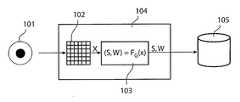
도 1은 주요한 종래 기술의 생체 측정 시스템의 등록 경로를 도시한 도면.1 shows a registration route of a major prior art biometric system.
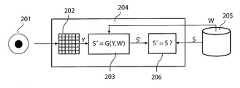
도 2는 주요한 종래 기술의 생체 측정 시스템의 확인 경로를 도시한 도면.FIG. 2 shows a confirmation path of a major prior art biometric system. FIG.
도 3은 본 발명의 실시예에 따른 개인과 연관된 생체 측정 데이터를 사용한 개인의 신원의 확인을 위한 시스템을 도시한 도면.3 illustrates a system for identification of an individual using biometric data associated with the individual in accordance with an embodiment of the present invention.
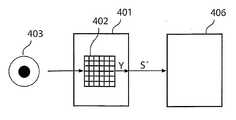
도 4는 본 발명의 일 실시예에 따른 개인과 연관된 생체 측정 데이터를 사용한 개인의 신원의 확인을 위한 시스템의 확인 경로를 도시한 도면.4 illustrates a verification path of a system for identification of an individual using biometric data associated with the individual in accordance with an embodiment of the present invention.
도 5는 본 발명의 다른 실시예에 따른 개인과 연관된 생체 측정 데이터를 사용한 개인의 신원의 확인을 위한 시스템의 확인 경로를 도시한 도면;FIG. 5 illustrates an identification path of a system for identification of an individual using biometric data associated with the individual in accordance with another embodiment of the present invention. FIG.
도 6은 본 발명의 또 다른 실시예에 따른 개인과 연관된 생체 측정 데이터를 사용한 개인의 신원의 확인을 위한 시스템을 도시한 도면.6 illustrates a system for identification of an individual using biometric data associated with the individual according to another embodiment of the present invention.
도 1은 이하 설명될 주요한 종래의 생체 측정 시스템의 등록 경로를 도시한다. 이 예에서, 개인이 액세스 제어를 위해 생체 측정 식별(예컨대 개인의 홍채(101)를 사용)을 사용하는 카지노 체인점의 회원으로 등록하고자 한다고 가정한다. 채용된 생체 측정 시스템은 이전에 설명된 것과 같은 헬퍼 데이터 구조(HDS)에 기초한다. 회원이 되기 위해, 개인은 카지노가 소유한 등록 디바이스(104)에 배열된 센서(102)에 홍채를 제시함으로서 등록 절차를 행해야 한다. 시스템이 등록 처리 유닛(103)에서 등록 데이터(S)와 헬퍼 데이터(W)를 유도하고 데이터를 중앙 저장 유닛(105)에 저장함으로써 HDS를 사용하며 상기 시스템은 개인의 생체 측정 템플릿을 더 저장하지 않는다고 해도, 등록 디바이스는 생체 측정 템플릿(X)이 도청될 수 있도록 탬퍼링되었을 수 있다. 개인은 디바이스(104)가 탬퍼링되었는지 여부를 확인할 방법이 없으며 HDS가 사용되었다고 해도, 조작으로 인해 생체 측정 템플릿이 시스템에서 누설되었을 수 있다.Figure 1 shows the registration path of the main conventional biometric system described below. In this example, assume that an individual wishes to register as a member of a casino chain store that uses biometric identification (eg, using the individual's iris 101) for access control. The biometric system employed is based on the helper data structure (HDS) as previously described. In order to become a member, an individual must perform the registration procedure by presenting the iris to the
등록 절차가, 많은 실제 애플리케이션에서, 개인이 신뢰하는 제어된 환경에서 수행된다고 해도, 이것은 확인 절차에 대해서 반드시 그런 것은 아니다. 도 2로 가서, 등록이 완료된 후 카지노 체인점에 포함된 카지노로의 액세스를 얻기 위해, 개인은 확인 디바이스(204)에 배열된 센서(202)를 통해 홍채(201)로부터 유도된 생체 측정 템플릿(Y)을 제시해야 한다. 확인 처리 유닛(203)은 중앙 저장부(205)에 저장된 헬퍼 데이터(W)를 가져오며 델타-수축 함수를 채용함으로써 확인 데이터(S')를 계산한다. 매칭 유닛(206)은 S와 S'를 비교하며, 매칭이 있는 경우, 개인의 신원은 확인되었으며, 개인은 카지노에 대한 액세스를 제공받는다. 매칭이 있는 경우, 개인은 카지노에 대한 액세스를 제공받지 않는다. 도 1에서와 같이, 시스템은 조작되었을 수 있다. 확인 디바이스(204)는 생체 측정 템플릿(Y)이 도청되도록 탬퍼링되었을 수도 있으며, 다시 사용자는 확인 절차를 제어할 방법이 없다.Although the registration procedure, in many practical applications, is performed in a controlled environment trusted by the individual, this is not necessarily the case for the verification procedure. 2, in order to gain access to the casinos included in the casino chain after registration is complete, the individual may obtain a biometric template Y derived from the
도 3은 본 발명의 일 실시예에 따른, 개인과 연관된 생체 측정 데이터를 사용한 개인의 신원의 확인을 위한 시스템을 도시한다. 시스템은 개인의 특정 물리적 특성(303)의 구성으로부터(예, 지문, 홍채, 귀, 얼굴 등), 또는 심지어 물리적 특성의 조합으로부터 제 1 생체 특성 템플릿(X)을 유도하기 위한 센서(302)로 배열된 사용자 디바이스(301)를 포함한다. 사용자 디바이스는, 보안적으로 탬퍼링이 방지되며 따라서 개인이 이를 신뢰해야 한다. 등록 당국(304)은 초기에 중앙 저장 유닛(305)에서 등록 데이터(S)를 저장함으로써 시스템 내에 개인을 등록하며, 상기 등록 데이터는 이후 검증기(306)에 의해 사용된다. 등록 데이터(S)는 기밀이며(S의 분석에 의한 신원-누설 공격을 방지하기 위해), 도 3의 실시예에서, 제 1 생체 측 정 템플릿(X)으로부터 사용자 디바이스(301)에서 유도된다. 확인시, 일반적으로 제 1 생체 측정 템플릿(X)의 잡음-오염된 사본인, 제 2 생체 측정 템플릿(Y)은 센서(402)를 통해 사용자 디바이스(401)로 개인(403)에 의해 제공되며, 이는 도 4를 참조한다. 사용자 디바이스(401)는 생체 측정 데이터의 제 2 집합(Y)에 기초한 기밀 확인 데이터(S') 및 헬퍼 데이터(W)를 생성한다. 헬퍼 데이터(W)는 생체 측정 데이터의 제 1 집합(X)에 기초하며 등록 데이터(S)에 관한 것이다. 헬퍼 데이터(W)는 일반적으로 S=G(X,W)가 되도록 계산되며, G는 델타-수축 함수이다. 따라서, W와 S가 함수 또는 알고리즘(FG)을 사용하여 템플릿(X)으로부터 계산되므로 (W,S)=FG(X)이다.3 illustrates a system for identification of an individual using biometric data associated with the individual, in accordance with an embodiment of the present invention. The system is directed to a
검증기(406)는 사용자 디바이스(401)로부터 수신된 등록 데이터(S)와 확인 데이터(S')에 의해 개인을 인증하거나 식별한다. 잡음-강도는 사용자 디바이스(401)에서 S'=G(Y,W)로서 확인 데이터(S')를 계산함으로써 제공된다. 델타-수축 함수는, 생체 측정 데이터의 제 2 집합(Y)이 생체 측정 데이터의 제 1 집합(X)과 충분히 유사한 경우 S'=S가 되도록 헬퍼 데이터(W)의 적절한 값의 선택을 허용하는 특성을 지닌다. 따라서, S'=S인 경우, 확인은 성공적이다.The
실제 상황에서, 등록 당국은 검증기와 일치할 수 있지만, 이들은 또한 분산될 수 있다. 일례로서, 생체 측정 시스템이 은행 애플리케이션에 사용된 경우, 은행의 모든 더 큰 사무소들은 새로운 개인들을 시스템에 등록하도록 허용될 것이며, 따라서 배포된 등록 당국이 생성된다. 등록 이후, 개인이 생체 측정 데이터를 인증 으로서 사용하는 동안, 이러한 사무소로부터 돈을 인출하고자 하는 경우, 이 사무소는 검증기의 역할을 가정할 것이다. 반면, 사용자가 인증으로서 생체 측정 데이터를 사용하여 편의점에서 지급하는 경우, 편의점은 검증기의 역할을 가정하지만, 편의점이 등록 당국의 역할을 할 가능성은 매우 낮다. 이러한 면에서, 등록 당국과 검증기를 비-제한적 추상적 역할로서 이용할 것이다.In practice, registrars may be consistent with verifiers, but they may also be distributed. As an example, if a biometric system was used for the banking application, all larger offices in the bank would be allowed to register new individuals with the system, thus creating a distributed registration authority. After registration, if an individual wishes to withdraw money from such an office while using the biometric data as authentication, the office will assume the role of the verifier. On the other hand, if the user pays at the convenience store using biometric data as authentication, the convenience store assumes the role of the verifier, but the convenience store is very unlikely to act as the registration authority. In this respect, registrars and verifiers will be used as non-limiting abstract roles.
전술한 내용에서 알 수 있는 것처럼, 개인은 생체 측정 센서를 포함하고 S'=G(Y,W)를 계산할 수 있는 디바이스에 대한 액세스를 가진다. 실제로, 디바이스는 스마트 카드에 집적된 지문 센서 또는 휴대폰 또는 PDA에서 홍채 또는 얼굴 인식을 위한 카메라를 포함할 수 있다. 개인이 사용자 디바이스를 소유할 수 있다는 사실은 디바이스가 탬퍼링되어야 하고 개인이 신뢰하기 더 용이하다는 사실의 가능성을 더 낮게 한다. 개인이 신뢰된 당국(예, 은행, 국가 당국, 정부)으로부터 디바이스를 획득하였고 그러므로 이 디바이스를 신뢰한다고 가정된다.As can be seen from the foregoing, the individual has access to a device that includes a biometric sensor and can calculate S '= G (Y, W). Indeed, the device may include a fingerprint sensor integrated into a smart card or a camera for iris or face recognition in a mobile phone or PDA. The fact that an individual can own a user device lowers the possibility of the fact that the device must be tampered with and that the individual is easier to trust. It is assumed that an individual has obtained a device from a trusted authority (eg, bank, national authority, government) and therefore trusts the device.
도 5에 도시된, 본 발명의 일 실시예에서, 헬퍼 데이터(W)는 등록 당국(미도시)에 의해 중앙 저장부(505)에 저장되며, 검증기(506)에 의해 가져와 지며, 확인이 수행되어야 할 때 사용자 디바이스(501)로 전송된다. 사용자 디바이스(501)는 이후 검증기(506)로부터 수신된 헬퍼 데이터(W)와 확인 데이터(S')를 계산하기 위해 제 2 템플릿(Y)(센서(502)를 통해 개인(503)으로부터 수신됨)을 사용한다. 이후, S'는 매칭을 점검하기 위해 검증기(506)에서 S와 비교된다. 대안적인 실시예에서, 헬퍼 데이터는 중앙 저장부에 저장되지 않고, 사용자 디바이스에 저장된다. 이러한 경우, 검증기가 헬퍼 데이터를 가져오고 이를 사용자 디바이스로 전송하는 것 이 불필요한데, 이는 사용자 디바이스는 이미 이를 소유하기 때문이다.In one embodiment of the present invention, shown in FIG. 5, helper data W is stored in
도 6은 등록 당국(604)이 개인의 특정 물리적 특성(603)의 구성으로부터 제 1 생체 측정 템플릿(X)을 유도하기 위해 센서(602)를 가지고 배열된, 본 발명의 다른 실시예를 도시한다. 등록 당국(604)은 중앙 저장 유닛(605)에 등록 데이터(S)를 저장하며, 상기 등록 데이터는 이후 검증기에 의해 사용된다. 헬퍼 데이터(W)는, 중앙 저장부(605) 또는 대안적으로, 도 6에 도시된 것처럼, 사용자 디바이스(601)에 저장될 수 있다. 확인은 전술한 방법으로 수행되며; 검증기(606)는 중앙 저장부(605)에 저장된 등록 데이터(S); 및 사용자 디바이스(601)로부터 수신된 확인 데이터(S')에 의해 개인을 인증하거나 식별한다. S'=S인 경우, 확인은 성공적이다. 기밀 등록 데이터(S)와 헬퍼 데이터(W)가 등록이 수행된 디바이스에서 유도됨이 주목되어야 한다. 등록이 도 3에 도시된 것처럼 사용된 디바이스에서 수행되는 경우, 기밀 등록 데이터(S)와 헬퍼 데이터(W)는 사용자 디바이스에서 생성된다. 반면에, 등록이 도 6에 도시된 것처럼 등록 당국에서 수행된 경우, 기밀 등록 데이터(S)와 헬퍼 데이터(W)는 등록 당국에서 생성된다. 등록 당국이 S와 W를 생성하는 경우, 개인은 템플릿을 등록 당국에 제시해야 할 것이며, 이는 반드시 신뢰할만한 것은 아니다. 개인이 등록 이후에 템플릿의 전자 사본을 은행이 파괴하도록 맡길 수 있다고 해도, 나이트 클럽이나 인터넷 도박 사이트에 이를 맡기지 않을 것이다.FIG. 6 shows another embodiment of the present invention, in which the
디바이스 간의 통신은 예컨대, RF 또는 IR 전송을 채용하는 무선 채널과 같은 임의의 알려진 적절한 통신 채널 또는, 예컨대 공공 스위칭된 전화 네트워크(PSTN; Public Switched Telephone Network)를 채용하는 케이블을 사용하여 수립 될 수 있다.Communication between devices may be established using any known suitable communication channel, such as a wireless channel employing RF or IR transmission, or a cable employing, for example, a Public Switched Telephone Network (PSTN). .
헬퍼 데이터(W)와 등록 데이터(S)가 사용자 디바이스 또는 등록 당국에서 생성되고, 사용자 디바이스 또는 전술한 시스템 내의 검증기에 저장된다고 해도, 이것은 반드시 그런 것은 아니다. 당업자가 본 발명에 따른 시스템을 변경하는 것은 간단하고 명백하며, 따라서 헬퍼 데이터(W)와 등록 데이터(S)는 부분적으로는 사용자 디바이스에서 부분적으로는 등록 당국에서 생성되며 또한 부분적으로는 사용자 디바이스에 그리고 부분적으로는 검증기에 저장될 수 있다. 이러한 변형에 도달하기 위해 본 발명의 전술한 실시예의 일부 또는 전부를 결합하는 것은 평범한 일이다. 게다가, 전술한 아키텍처 내의 데이터 및 통신은 SHA-1, MD5, AES, DES 또는 RSA와 같은 표준 암호 기술을 사용하여 더 보호될 수 있음이 당업자에게는 명백하다. 임의의 데이터가 시스템에 포함된 디바이스 간에(확인동안 뿐만 아니라 등록동안) 교환되기 전에, 디바이스는 통신이 확립된 다른 디바이스의 진정성에 대한 일부 증명을 원할 수 있다. 도 3과 연관하여 설명된 실시예 동안에, 등록 당국이 신뢰된 디바이스가 수신된 등록 데이터를 생성했다는 것을 보장받아야 하는 것이 가능할 수 있다. 이는, 공중 키 확인서를 사용함으로써 또는 실제 설정, 대칭 키 기술에 따라서 달성될 수 있다. 게다가, 도 3의 실시예에서, 사용자 디바이스가 신뢰될 수 있고 이것이 탬퍼링되지 않았다는 것을 보장받아야 하는 것이 가능하다. 그러므로, 많은 경우에, 사용자 디바이스는 등록 당국이 탬퍼링을 검출할 것을 허용하는 메커니즘을 포함할 것이다. 예컨대, 물리적으로 복제불가능한 기능(PUF)이 시스템에 구현될 수 있다. PUF는 물리적 시스템에 의해 실현된 기능이며, 따라서, 이 기능은 평가는 용이하지만 물리적 시스템이 특성화(characterize)하기는 어렵다. 실제 설정에 따라서, 디바이스 간의 통신은 기밀이어야 하며 진정(authentic)해야 할 수 있다. 사용될 수 있는 표준 암호화 기술은 공중 키 기술 또는 유사한 대칭 기술에 기초한 보안 인증 채널(SAC; Secure Authenticated Channels)이다.Even if the helper data W and the registration data S are generated at the user device or registration authority and stored in the user device or the verifier in the system described above, this is not necessarily the case. It is simple and obvious for a person skilled in the art to modify the system according to the invention, so that the helper data W and registration data S are generated in part at the user device, in part at the registration authority and partly at the user device. And partly stored in the verifier. It is commonplace to combine some or all of the above-described embodiments of the present invention to arrive at these variations. In addition, it will be apparent to those skilled in the art that data and communications within the aforementioned architectures may be further protected using standard cryptographic techniques such as SHA-1, MD5, AES, DES or RSA. Before any data is exchanged between devices included in the system (as well as during registration), the device may want some proof of the authenticity of another device with which communication has been established. During the embodiment described in connection with FIG. 3, it may be possible for a registration authority to be assured that a trusted device has generated received registration data. This can be accomplished by using a public key certificate or in accordance with the actual setup, symmetric key technique. In addition, in the embodiment of FIG. 3, it is possible to ensure that the user device can be trusted and that it is not tampered with. Therefore, in many cases, the user device will include a mechanism that allows the registrar to detect tampering. For example, a physically non-replicable function (PUF) can be implemented in the system. PUF is a function realized by a physical system, and thus this function is easy to evaluate but difficult for the physical system to characterize. Depending on the actual configuration, the communication between the devices must be confidential and may need to be authentic. Standard encryption techniques that can be used are Secure Authenticated Channels (SAC) based on public key techniques or similar symmetric techniques.
등록 데이터와 확인 데이터는 일방 해시 함수, 또는 등록/확인 데이터의 암호화되어 숨겨진 사본으로부터 등록/확인 데이터의 평문 사본을 생성하는 것이 계산적으로 불가능한 방법으로 등록 데이터 및 확인을 숨기는 임의의 다른 적절한 암호화 함수를 채용함으로써 암호화되어 숨겨질 수 있음을 또한 주목한다. 예를 들어, 키 입력된(keyed) 일방 해시 함수, 트랩도어(trapdoor) 해시 함수, 비대칭 암호화 함수 또는 심지어 대칭 암호화 함수를 사용할 수 있다.The registration data and the verification data are either one-way hash functions or any other suitable encryption function that hides the registration data and confirmation in a way that is computationally impossible to produce a plain text copy of the registration / verification data from an encrypted hidden copy of the registration / verification data. It is also noted that by employing it can be encrypted and hidden. For example, a keyed one-way hash function, a trapdoor hash function, an asymmetric encryption function, or even a symmetric encryption function can be used.
본 발명의 시스템 내에 포함된 디바이스, 즉, 사용자 디바이스, 등록 당국, 검증기 및 가능하게는 또한 중앙 저장부는, ASICs, FPGAs, CPLDs 등과 같은 프로그래밍가능한 로직 디바이스와 같은 계산 기능을 지닌 마이크로프로세서 또는 기타 유사한 전자 장치가 배열됨이 명백하다. 게다가, 마이크로프로세서들은 메모리, 디스크 또는 본 발명의 작업을 수행하기 위한 다른 적절한 매체 상에 저장된 적절한 소프트웨어를 실행한다.Devices included in the system of the present invention, i.e., user devices, registrars, verifiers and possibly also central storage, are microprocessors or other similar electronics with computational functions such as programmable logic devices such as ASICs, FPGAs, CPLDs, etc. It is clear that the device is arranged. In addition, the microprocessors execute the appropriate software stored on a memory, disk or other suitable medium for carrying out the work of the present invention.
본 발명이 특정 예시적인 실시예를 참조로 설명되었다고 해도, 많은 다른 변형예, 변경예 등은 당업자에게 명백할 것이다. 그러므로, 전술한 실시예들은, 첨부된 청구항에 의해 한정된 것처럼, 본 발명의 범위를 제한하는 것으로 의도되지 않는다.Although the present invention has been described with reference to specific exemplary embodiments, many other variations, modifications, and the like will be apparent to those skilled in the art. Therefore, the foregoing embodiments are not intended to limit the scope of the invention, as defined by the appended claims.
본 발명은, 생체 측정 데이터의 프라이버시가 제공된, 개인과 연관된 생체 측정 데이터를 채용함으로서 개인의 신원을 확인하는 시스템 및 방법에 관한 것으로서, 구성 요소가 계산 기능을 가진 상기 디바이스에서 실행될 때 계산 기능을 가진 디바이스가 신원 확인에 필요한 단계를 수행하도록 하는 실행가능한 구성 요소를 포함하는 컴퓨터 프로그램 제품 등에 이용가능하다.The present invention relates to a system and method for verifying an identity of an individual by employing biometric data associated with the individual, provided the privacy of the biometric data, wherein the component has a computational function when executed on the device with the computational function. Computer program products and the like that include executable components that allow the device to perform the steps necessary for identification.
Claims (20)
Translated fromKoreanApplications Claiming Priority (4)
| Application Number | Priority Date | Filing Date | Title |
|---|---|---|---|
| EP04102609 | 2004-06-09 | ||
| EP04102609.7 | 2004-06-09 | ||
| EP04104380.3 | 2004-09-10 | ||
| EP04104380 | 2004-09-10 |
Publications (1)
| Publication Number | Publication Date |
|---|---|
| KR20070024569Atrue KR20070024569A (en) | 2007-03-02 |
Family
ID=34979021
Family Applications (1)
| Application Number | Title | Priority Date | Filing Date |
|---|---|---|---|
| KR1020067025805AWithdrawnKR20070024569A (en) | 2004-06-09 | 2005-06-01 | Architecture for Privacy Protection of Biometric Templates |
Country Status (5)
| Country | Link |
|---|---|
| US (1) | US9384338B2 (en) |
| EP (1) | EP1759259A2 (en) |
| JP (1) | JP2008538146A (en) |
| KR (1) | KR20070024569A (en) |
| WO (1) | WO2005121924A2 (en) |
Cited By (1)
| Publication number | Priority date | Publication date | Assignee | Title |
|---|---|---|---|---|
| US11983965B2 (en) | 2020-11-05 | 2024-05-14 | Samsung Electronics Co., Ltd. | Electronic device for biometric authentication and method for operating the same |
Families Citing this family (25)
| Publication number | Priority date | Publication date | Assignee | Title |
|---|---|---|---|---|
| US9384338B2 (en)* | 2004-06-09 | 2016-07-05 | Genkey Netherlands B.V. | Architectures for privacy protection of biometric templates |
| WO2007023420A1 (en) | 2005-08-23 | 2007-03-01 | Koninklijke Philips Electronics N.V. | Information carrier authentication with a physical one-way function |
| JP4961214B2 (en)* | 2006-03-29 | 2012-06-27 | 株式会社日立情報制御ソリューションズ | Biometric authentication method and system |
| JP2008097438A (en)* | 2006-10-13 | 2008-04-24 | Hitachi Ltd | User authentication system, authentication server, terminal, and tamper resistant device |
| FR2930830A1 (en)* | 2008-04-30 | 2009-11-06 | Thales Sa | CONFIDENCE RESOURCE INTEGRATED WITH A BIOMETRIC DATA MONITORING DEVICE PROVIDING SECURITY OF CONTROL AND THAT OF DATA |
| US9633261B2 (en)* | 2008-08-22 | 2017-04-25 | International Business Machines Corporation | Salting system and method for cancelable iris biometric |
| US20100161488A1 (en)* | 2008-12-22 | 2010-06-24 | Paul Michael Evans | Methods and systems for biometric verification |
| US8301902B2 (en)* | 2009-02-12 | 2012-10-30 | International Business Machines Corporation | System, method and program product for communicating a privacy policy associated with a biometric reference template |
| US8242892B2 (en)* | 2009-02-12 | 2012-08-14 | International Business Machines Corporation | System, method and program product for communicating a privacy policy associated with a radio frequency identification tag and associated object |
| US8359475B2 (en)* | 2009-02-12 | 2013-01-22 | International Business Machines Corporation | System, method and program product for generating a cancelable biometric reference template on demand |
| US9298902B2 (en)* | 2009-02-12 | 2016-03-29 | International Business Machines Corporation | System, method and program product for recording creation of a cancelable biometric reference template in a biometric event journal record |
| US8289135B2 (en) | 2009-02-12 | 2012-10-16 | International Business Machines Corporation | System, method and program product for associating a biometric reference template with a radio frequency identification tag |
| US8327134B2 (en) | 2009-02-12 | 2012-12-04 | International Business Machines Corporation | System, method and program product for checking revocation status of a biometric reference template |
| FR2953615B1 (en)* | 2009-12-04 | 2014-11-21 | Thales Sa | SECURE DISTRIBUTED STORAGE SYSTEMS OF PERSONAL DATA, ESPECIALLY BIOMETRIC FINGERPRINTS, AND SYSTEM, DEVICE AND METHOD FOR IDENTITY CONTROL |
| US8745405B2 (en)* | 2010-02-17 | 2014-06-03 | Ceelox Patents, LLC | Dynamic seed and key generation from biometric indicia |
| FR2962569B1 (en)* | 2010-07-12 | 2012-08-17 | Morpho | METHODS, SYSTEMS, AND DEVICES FOR BIOMETRIC VERIFICATION |
| US9600443B2 (en) | 2012-01-30 | 2017-03-21 | International Business Machines Corporation | Tracking entities by means of hash values |
| US9165130B2 (en) | 2012-11-21 | 2015-10-20 | Ca, Inc. | Mapping biometrics to a unique key |
| CN106201352B (en)* | 2016-07-07 | 2019-11-29 | 广东高云半导体科技股份有限公司 | The secrecy system and decryption method of non-volatile FPGA on piece data streaming file |
| FR3073644B1 (en)* | 2017-11-14 | 2021-01-01 | Idemia Identity & Security France | IMAGE PROCESSING PROCESS IMPLEMENTED BY A TERMINAL FORMING A "WHITE BOX" ENVIRONMENT |
| US11405386B2 (en) | 2018-05-31 | 2022-08-02 | Samsung Electronics Co., Ltd. | Electronic device for authenticating user and operating method thereof |
| US11244316B2 (en) | 2018-06-07 | 2022-02-08 | International Business Machines Corporation | Biometric token for blockchain |
| US11368308B2 (en)* | 2019-01-11 | 2022-06-21 | Visa International Service Association | Privacy preserving biometric authentication |
| KR102837711B1 (en) | 2020-06-09 | 2025-07-22 | 삼성전자주식회사 | Method and apparatus for performing authentication and recording medium thereof |
| FR3128299B1 (en)* | 2021-10-19 | 2024-05-10 | Idemia Identity & Security France | Identity verification method using user terminals |
Family Cites Families (31)
| Publication number | Priority date | Publication date | Assignee | Title |
|---|---|---|---|---|
| US6111977A (en)* | 1997-04-17 | 2000-08-29 | Cross Match Technologies, Inc. | Hand-held fingerprint recognition and transmission device |
| US6202151B1 (en)* | 1997-05-09 | 2001-03-13 | Gte Service Corporation | System and method for authenticating electronic transactions using biometric certificates |
| US6925182B1 (en) | 1997-12-19 | 2005-08-02 | Koninklijke Philips Electronics N.V. | Administration and utilization of private keys in a networked environment |
| AU4557199A (en) | 1998-06-10 | 1999-12-30 | Sandia Corporation | Method for generating, storing, and verifying a binding between an authorized user and a token |
| US6363485B1 (en)* | 1998-09-09 | 2002-03-26 | Entrust Technologies Limited | Multi-factor biometric authenticating device and method |
| WO2000055800A1 (en) | 1999-03-18 | 2000-09-21 | Unnikrishnan, K. P. | Point of sale (pos) terminals with biometric verification |
| EP1175749B1 (en) | 1999-04-22 | 2005-07-06 | Veridicom, Inc. | High security biometric authentication using a public key/private key encryption pairs |
| GB9923802D0 (en) | 1999-10-08 | 1999-12-08 | Hewlett Packard Co | User authentication |
| WO2002073877A2 (en)* | 2001-03-09 | 2002-09-19 | Pascal Brandys | System and method of user and data verification |
| WO2003003169A2 (en) | 2001-06-28 | 2003-01-09 | Cloakware Corporation | Secure method and system for biometric verification |
| US7079007B2 (en)* | 2002-04-19 | 2006-07-18 | Cross Match Technologies, Inc. | Systems and methods utilizing biometric data |
| EP1385118B1 (en)* | 2002-05-30 | 2009-10-07 | Activcard Ireland Limited | Method and apparatus for supporting a biometric registration performed on a card |
| EP1520369B1 (en)* | 2002-05-31 | 2006-10-18 | Scientific Generics Limited | Biometric authentication system |
| US20070220272A1 (en)* | 2002-06-25 | 2007-09-20 | Campisi Steven E | Transaction authentication card |
| US7543156B2 (en)* | 2002-06-25 | 2009-06-02 | Resilent, Llc | Transaction authentication card |
| SE522615C2 (en)* | 2002-07-09 | 2004-02-24 | Martin Tiberg Med Tiberg Techn | A method and system for biometric identification or verification. |
| US6820059B2 (en)* | 2003-04-08 | 2004-11-16 | Richard Glee Wood | Method for reducing fraud in government benefit programs using a smart card |
| JP2004178141A (en)* | 2002-11-26 | 2004-06-24 | Hitachi Ltd | IC card with unauthorized use prevention function |
| WO2004066296A1 (en)* | 2003-01-24 | 2004-08-05 | Koninklijke Philips Electronics N.V. | Reliable storage medium access control method and device |
| US8185747B2 (en)* | 2003-05-22 | 2012-05-22 | Access Security Protection, Llc | Methods of registration for programs using verification processes with biometrics for fraud management and enhanced security protection |
| US7472275B2 (en)* | 2003-06-13 | 2008-12-30 | Michael Arnouse | System and method of electronic signature verification |
| BRPI0411615A (en)* | 2003-06-17 | 2006-08-08 | United Security Appl Id Inc | electronic security system for monitoring and recording activities and data related to people |
| US9384338B2 (en)* | 2004-06-09 | 2016-07-05 | Genkey Netherlands B.V. | Architectures for privacy protection of biometric templates |
| US20070180261A1 (en)* | 2004-06-09 | 2007-08-02 | Koninklijke Philips Electronics, N.V. | Biometric template protection and feature handling |
| US20060123239A1 (en)* | 2004-12-07 | 2006-06-08 | Emin Martinian | Biometric based user authentication with syndrome codes |
| US7620818B2 (en)* | 2004-12-07 | 2009-11-17 | Mitsubishi Electric Research Laboratories, Inc. | Biometric based user authentication and data encryption |
| EP1834441A1 (en)* | 2004-12-28 | 2007-09-19 | Koninklijke Philips Electronics N.V. | Key generation using biometric data and secret extraction codes |
| RU2007144715A (en)* | 2005-06-01 | 2009-06-10 | Конинклейке Филипс Электроникс Н.В. (Nl) | UPDATE TEMPLATE IN ASSISTANT DATA SYSTEMS |
| EP2016736A1 (en)* | 2006-04-11 | 2009-01-21 | Koninklijke Philips Electronics N.V. | Noisy low-power puf authentication without database |
| US8312291B2 (en)* | 2006-12-28 | 2012-11-13 | Telecom Italia S.P.A. | Method and system for biometric authentication and encryption |
| US8410902B2 (en)* | 2007-05-14 | 2013-04-02 | Priv Id B.V. | Apparatuses, system and method for authentication |
- 2005
- 2005-06-01USUS11/570,046patent/US9384338B2/ennot_activeExpired - Fee Related
- 2005-06-01KRKR1020067025805Apatent/KR20070024569A/ennot_activeWithdrawn
- 2005-06-01WOPCT/IB2005/051785patent/WO2005121924A2/ennot_activeApplication Discontinuation
- 2005-06-01JPJP2007526633Apatent/JP2008538146A/enactivePending
- 2005-06-01EPEP05748332Apatent/EP1759259A2/ennot_activeCeased
Cited By (1)
| Publication number | Priority date | Publication date | Assignee | Title |
|---|---|---|---|---|
| US11983965B2 (en) | 2020-11-05 | 2024-05-14 | Samsung Electronics Co., Ltd. | Electronic device for biometric authentication and method for operating the same |
Also Published As
| Publication number | Publication date |
|---|---|
| US20070226512A1 (en) | 2007-09-27 |
| EP1759259A2 (en) | 2007-03-07 |
| WO2005121924A3 (en) | 2006-05-18 |
| WO2005121924A2 (en) | 2005-12-22 |
| JP2008538146A (en) | 2008-10-09 |
| US9384338B2 (en) | 2016-07-05 |
Similar Documents
| Publication | Publication Date | Title |
|---|---|---|
| US9384338B2 (en) | Architectures for privacy protection of biometric templates | |
| US11824991B2 (en) | Securing transactions with a blockchain network | |
| US9940453B2 (en) | Method and system for securing user access, data at rest and sensitive transactions using biometrics for mobile devices with protected, local templates | |
| US9716698B2 (en) | Methods for secure enrollment and backup of personal identity credentials into electronic devices | |
| EP1815637B1 (en) | Securely computing a similarity measure | |
| US8842887B2 (en) | Method and system for combining a PIN and a biometric sample to provide template encryption and a trusted stand-alone computing device | |
| US9654468B2 (en) | System and method for secure remote biometric authentication | |
| KR100876003B1 (en) | User Authentication Method Using Biological Information | |
| KR101226651B1 (en) | User authentication method based on the utilization of biometric identification techniques and related architecture | |
| US6185316B1 (en) | Self-authentication apparatus and method | |
| US20030101348A1 (en) | Method and system for determining confidence in a digital transaction | |
| JPWO2007094165A1 (en) | Identification system and program, and identification method | |
| TWM623435U (en) | System for verifying client identity and transaction services using multiple security levels | |
| JP2009533742A (en) | Noisy low power PUF certification without database | |
| JP2008097438A (en) | User authentication system, authentication server, terminal, and tamper resistant device | |
| CN1973306A (en) | Renewable and private biometrics | |
| JP2010510744A (en) | Biometric fuzzy signature | |
| JP7391843B2 (en) | Two-step intensive fingerprint matching | |
| JP2008526078A (en) | Method and apparatus for key generation and authentication approval | |
| US20240169350A1 (en) | Securing transactions with a blockchain network | |
| JP2007258789A (en) | Agent authentication system, agent authentication method, and agent authentication program | |
| JP2004272551A (en) | Authentication certificate and terminal device | |
| JP2006293473A (en) | Authentication system and authentication method, terminal device, and authentication device | |
| HK40013809A (en) | A novel financial services certification system and method |
Legal Events
| Date | Code | Title | Description |
|---|---|---|---|
| PA0105 | International application | Patent event date:20061207 Patent event code:PA01051R01D Comment text:International Patent Application | |
| PG1501 | Laying open of application | ||
| PC1203 | Withdrawal of no request for examination | ||
| WITN | Application deemed withdrawn, e.g. because no request for examination was filed or no examination fee was paid |