KR20060021721A - Korean Representation of Foreign Language Words and the Dictionary Search Method - Google Patents
Korean Representation of Foreign Language Words and the Dictionary Search MethodDownload PDFInfo
- Publication number
- KR20060021721A KR20060021721AKR1020040070583AKR20040070583AKR20060021721AKR 20060021721 AKR20060021721 AKR 20060021721AKR 1020040070583 AKR1020040070583 AKR 1020040070583AKR 20040070583 AKR20040070583 AKR 20040070583AKR 20060021721 AKR20060021721 AKR 20060021721A
- Authority
- KR
- South Korea
- Prior art keywords
- english
- hangul
- korean
- pronunciation
- dictionary
- Prior art date
- Legal status (The legal status is an assumption and is not a legal conclusion. Google has not performed a legal analysis and makes no representation as to the accuracy of the status listed.)
- Withdrawn
Links
Images

Classifications
- G—PHYSICS
- G06—COMPUTING OR CALCULATING; COUNTING
- G06F—ELECTRIC DIGITAL DATA PROCESSING
- G06F40/00—Handling natural language data
- G06F40/20—Natural language analysis
- G06F40/237—Lexical tools
- G06F40/242—Dictionaries
- G—PHYSICS
- G06—COMPUTING OR CALCULATING; COUNTING
- G06F—ELECTRIC DIGITAL DATA PROCESSING
- G06F40/00—Handling natural language data
- G06F40/40—Processing or translation of natural language
- G06F40/55—Rule-based translation
Landscapes
- Engineering & Computer Science (AREA)
- Theoretical Computer Science (AREA)
- Audiology, Speech & Language Pathology (AREA)
- Health & Medical Sciences (AREA)
- Computational Linguistics (AREA)
- General Health & Medical Sciences (AREA)
- Physics & Mathematics (AREA)
- General Engineering & Computer Science (AREA)
- General Physics & Mathematics (AREA)
- Artificial Intelligence (AREA)
- Document Processing Apparatus (AREA)
- Machine Translation (AREA)
- Electrically Operated Instructional Devices (AREA)
Abstract
Translated fromKorean

Description
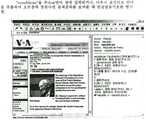
Translated fromKorean도1은 영한사전 검색결과의 영어단어, 영어발음, 한글발음을 보여줌.Figure 1 shows the English word, English pronunciation, Korean pronunciation of the English-Korean dictionary.
도2는 프로그램의 주소 단어 검색창에 "리퍼블리컨"을 입력한 모습.2 is a view of entering the "republisher" in the address word search box of the program.
본 발명은 외국어 예를 들면, 영어의 발음기호를 모두 한글자모로 바꾸고 이를 영어 발음규칙과 한글의 자모조합규칙을 이용하여 한글로 만들어 영영사전이나 영한사전의 검색결과를 영어발음 옆에 한글발음도 표시하는 방법으로써. 실시간으로 이러는 대신 미리 영어 발음기호를 한글자모로 바꾸어 사전데이터베이스 한글자모 열에 넣어두었다가 검색결과를 보여줄 때 한글로 만들어 영어 발음기호 옆에 함께 써줄 수도 있으며, 영어 단어 발음을 한글로 입력하면 한글을 자모로 분리하여 미리 마련한 한글자모 열을 검색하여 원래 영어 단어를 찾아 영어단어의 사전 정의와 함께 표시할 수 있음. 이런 방식은 영어뿐 아니라 다른 외국어에도 적용할 수 있으며,In the present invention, for example, the English phonetic symbols are changed to Korean alphabets, and the Korean phonetic dictionary or English-Korean dictionary is made by using English pronunciation rules and Korean alphabet combination rules. As a way to indicate. Instead of doing this in real time, you can change the English phonetic symbols to Hangul alphabet in advance and put them in the dictionary database Hangul Jamo column. When you show the search results, you can make them in Korean and write them next to English phonetic symbols. You can search the original Hangul Jamo column to find the original English word and display it with the dictionary definition of English word. This can be applied to other foreign languages as well as English.
이 외에 영어 문장의 영어 단어들에 한글자모들을 1:1 대응시키면서 연음 규 칙에 따라 자모를 조합하여 한글을 표시하면 초보자용 영어사전이나 영어회화 서적을 만들 때 영어 단어 발음이나 문장을 한글로 표기하는 것을 자동화 할 수도 있음.In addition, if you display Hangul by combining alphabets according to the Yeon-myeon rules while matching Hangul alphabets to English words in English sentences, English word pronunciation or sentences are written in Korean when you make an English dictionary or English conversation book for beginners. You can even automate that.
문자는 특별한 형태의 그림으로써 사람의 음성이든 자연계의 소리든 유사한 소리와 대응시킨 기호체계로써 외국어의 발음을 한글화하는 것은 한계가 있지만 영어 단어 발음의 발음규칙과 한글 자모의 조합규칙을 반영하여 최대한 유사한 발음으로 한글화하고 이를 통해 한글발음으로 외국어 사전을 검색할 수 있음.Letters are a special type of picture. It is a system of symbols that correspond to similar sounds, whether human voice or natural sound, but it is limited to localize the pronunciation of foreign languages. It is possible to search Korean dictionaries with Korean pronunciation through pronunciation.
다른 외국어도 마찬가지겠지만 영어는 발음기호를 단순히 한글자모로 바꿔 읽어서는 그들이 실제로 발음하는 식으로 발음할 수 없으므로 강세와 연음규칙에 따라 달라지는 발음을 그런 규칙을 일관되게 적용하여 한글로 만들어 줌. 사람이 보고 듣는 것은 그저 보이고 들리는 대로가 아니라 우리의 의식이 지배하는 대로이므로, 상대는 분명 "컴퓨더"나 "컴퓨러"라고 발음해도 우린 얼핏 컴퓨터로 알아듣고 "컴퓨터"로 발음하기 쉬움. 글씨를 읽을 때도 "버스"라 쓰고 "뻐쓰"로 읽는 일도 흔하지만, 한글로 쓴 발음을 보여줌으로써 의식의 간섭을 줄일 수 있음.As with other foreign languages, English simply reads phonetic symbols by changing them into Korean alphabets, so they can't be pronounced in the way they are actually pronounced. People see and hear, not just what they see and hear, but as our consciousness dominates, so even if they are pronounced "computer" or "computer", it's easy to hear them at first glance and pronounce them as "computers." It is also common to read "Bus" and "Kussut" when reading texts, but it is possible to reduce the interference of consciousness by showing the pronunciation written in Korean.
본 발명은 영어 단어의 발음기호를 한글로 바꾸어 보여주는 방법과 영어 단어의 발음을 한글자모로 데이터베이스에 넣어두었다가 영어발음을 한글로 입력하면 한글을 자모로 분리하여 데이터베이스를 검색하여 영어단어를 찾아주는 방법임.The present invention shows a method of changing the phonetic symbols of the English words to Hangul and putting the pronunciation of the English words in the database with Korean alphabet letters and typing the English pronunciation in Korean alphabetically separating the Hangul by the alphabet to search the database to find English words being.
영어 단어발음 옆에 한글발음을 보여주면,If you show Korean pronunciation next to English word pronunciation,
"AIDS [

한글로 바꾸기 전의 한글자모를 데이터베이스화하여 한글로 영어발음을 입력하면 한글을 한글자모로 분리한 후 사전데이터베이스의 한글자모열을 검색하여 그 발음에 해당하는 영어단어를 찾아줌. 예를 들어 사용자가 [도1]처럼 "리퍼블리컨"을 입력하고 "`"를 입력하면 프로그램이 "`"를 한영사전을 찾지 않고 영한사전을 찾으며 "`"를 입력하는 순간 엔터를 치지 않아도 사전 검색 단계로 넘어가서 입력한 한글 단어에 해당하는 영어단어 "republican"을 찾아 결과를 보여줌.If you input the English pronunciation in Korean by converting the Hangul alphabet before converting it to Hangul, you can separate the Hangul alphabet into Hangul alphabet and search the Hangul string in the dictionary database to find the English word corresponding to the pronunciation. For example, if the user enters "Republisher" as shown in [Figure 1] and enters "` ", the program searches for the English-Korean dictionary without" `" and does not hit enter the moment it enters "` ". Goes to the dictionary search step and finds the English word "republican" that corresponds to the Korean word entered and shows the result.
러시아어의 경우는 발음기호가 따로 없어도 단어의 철자와 강세와 발음변화를 반영하여 한글화 할 수 있고, 중국어는 각 한자의 한어병음과 연결하거나 중한사전 데이터베이스의 병음 칼럼과 연결하여 단어별 한어병음을 한글화 할 수 있고, 일어의 경우 히라가나 가다가나는 직접, 한자는 일한사전 데이터베이스를 이용해 히라가나 칼럼과 연결해 발음을 가져온 후, 일본어의 장음 발음규칙, 탁음 등을 고려해 한글화 할 수 있다. 이들 외국어 외 다른 외국어도 한글자모로 바꾸어 데이터베이스화하여 한글로 외국어 발음을 입력하여 사전을 검색하는 것도 본 발명의 범위에 포함됨.In the case of Russian, it is possible to localize Korean words by reflecting the spelling, stress, and pronunciation change of words even without the phonetic symbols.In Chinese, the Chinese words are translated into Korean and Pinyin columns of the Chinese-Korean dictionary database. In the case of Japanese, the hiragana and katana can be directly and the kanji can be connected to the hiragana column using a Japanese-Korean dictionary database to bring the pronunciation, and then can be translated into Korean by considering the pronunciation of Japanese long sound and the sound of the sound. It is also included in the scope of the present invention to search a dictionary by inputting a foreign language pronunciation in Korean by converting the foreign language into a Korean alphabet by converting it into a Korean alphabet.
[ 영어발음기호를 한글로 바꿔서 표시해주는 방법][How to display English phonetic symbols by changing them to Korean]
단계1) 영영사전이나 영한사전데이터베이스의 발음기호 칼럼에서 발음기호를 가져온다(select pronunciation from english where entry = 'republican'). 발음 기호가 "[]"로 묶여 있으면 "["를 찾고 "]"를 찾아 알파벳이나 발음기호를 찾음(일부기호는 í처럼 html문서용 유니코드로 되어 있을 수 있음).Step 1) The phonetic symbols are taken from the phonetic symbols column of the English-English Dictionary or the English-Korean Dictionary database (select pronunciation from english where entry = 'republican'). If phonetic symbols are enclosed in "[]", look for "[", find "]" to find alphabets or phonetic symbols (some symbols may be in Unicode for html documents, such as &# 237).
단계2)각 알파벳과 기호를 한글 자모로 바꿈. 바꾸기 전에 두개, 세 개의 알파벳이나 기호 조합을 미리 따로 처리하여야 함Step 2) Convert each alphabet and symbol to Korean alphabet. Two, three alphabetic or symbol combinations must be handled separately before changing
단계3) 영어 발음의 자음과 모음을 한글의 자음과 모음으로 바꾸고 한글의 자음과 모음을 조합해서 한글이 되도록 발음기호를 적절히 묶고 v필요한 초성을 삽입하고 순서에 유의해서 한글이 형성될 수 있게 처리함.Step 3) Change the consonants and vowels of the English pronunciation to the consonants and vowels of the Hangeul, combine the consonants and vowels of the Hangeul, properly tie up the phonetic symbols so that they become Hangeul, insert the necessary initials, and process the Hangul in consideration of the order. box.
단계4) 번데기 발음기호(thwart의 첫 기호)를 ?로 바꿈Step 4) Replace the chrysalis (first sign of thwart) with?
단계5) "r"은 한글의 종성이 되지 않으므로 발음기호 "r + 다른 자음"은 뒤에 오는 모음과 어울려 초성이 될 다른 자음만 남기고 r을 제거함.Step 5) Since "r" is not a finality of Hangul, the phonetic symbol "r + other consonants" matches r with the following vowels and removes r, leaving only the other consonants to be consonant.
단계6) "g"뒤에 오는 m이나 n이 오면 g를 "ㄱㅡ"로 바꿈Step 6) Replace g with "ㄱ ㅡ" when m or n comes after "g."
단계7) 이탤릭 p를 삭제함.Step 7) Delete the italic p.
단계8) 다음은 "t"가 "ㄸ" 발음으로 나는 경우로 아래처럼 바꿈.Step 8) Next, change as below when "t" is pronounced as "ㄸ".
"s?r"->"ㅅㅡ-`ㄸㅡ`r""s? r"-> "ㅅ ㅡ -` ㄸ ㅡ` r "
단계9) s 뒤에 w이 와도 s뒤에 모음이 오지 않으므로 모음과 합쳐 초성이 될 수 없으므로 아래처럼 바꿈Step 9) Since vo is not followed by s, the vowel does not come after s.
"sw"->"`ㅅㅡ`워""sw"-> "` ㅅ ㅡ `Wo"
단계10) t가 번데기 발음처럼 "ㄸ"발음으로 되는 다음과 같은 경우에 "t"를 "?"로 바꿈.Step 10) Replace "t" with "?" In the following cases where t is pronounced "ㄸ" as pupa pronunciation.
"ktli"->"k?li", "kti"->"k?i", "pti"->"p?i""ktli"-> "k? li", "kti"-> "k? i", "pti"-> "p? i"
단계 11) "mp?i"->"m?i"Step 11) "mp? I"-> "m? I"
단계12) 이탤릭체로 된 발음기호는 발음 안함. 이탤릭 d, h, j, k, 1, p, r, W 지움.Step 12) Do not pronounce phonetic symbols in italics. Italic d, h, j, k, 1, p, r, W cleared.
단계13) ktl, ntl중 t앞에 오는 모음에 강세가 있을 때는 t를 t로, 없을 때는 t를 d로 바꿈.Step 13) Change t to t if the vowel preceding t of ktl and ntl is stressed, and t if no.
단계14) 모음 사이에 t가 있으며 t뒤에 있는 모음에 강세가 없을 때 t를 d로 바꿈.Step 14) Replace t with d when there is t between the vowels and there is no stress on the vowel behind t.
단계15) "ndzi"->"nzi"Step 15) "ndzi"-> "nzi"
단계16) b+자음은 "b"를 "ㅂㅡ"로 바꿈Step 16) b + consonants change "b" to "ㅂ ㅡ"
단계17) fish할 때 쉬발음기호는 쉬로, hw은 휘, v는 뷔, v는 ㅂ, 1은 ㄹㄹ, r을 뤼, f는 퓌, g는 ㄱ, kw은 퀴, k는 ㅋ으로 바꾸는 등 자음과 모음을 한글 자모로 바꿀 때 형태를 달리해줌.Step 17) When you fish, the phonetic symbol is Shi, hw is whee, v is v, v is ㅂ, 1 is r, r is r, f is puy, g is a, kw is qui, k is ㅋ, etc. When the consonants and vowels are changed to Hangul Jamo, they are changed.
단계18) 다음과 같이 바꿈.Step 18) Change as follows.
"?s"->"!ㅆ", "sk"->"`ㅅㅡ`ㅋ", "sp"->"`ㅅㅡ`ㅍ""? s"-> "! ㅆ", "sk"-> "` ㅅ ㅡ `ㅋ", "sp"-> "` ㅅ ㅡ `ㄷ"
단계19) 묵음이 되는 것도 삭제함.Step 19) Delete the silence.
단계20) "?"이 맨 앞에 모음 없을 때, "l"앞에 있을 때 "ㄸㅡ"로 바꿈.Step 20) When "?" Is not the first vowel, changes to "ㄸ ㅡ" when it is before "l".
단계21) "?"뒤에 자음이 오면 "ㅆㅡ"로 바꿈Step 21) Change to "ㅆ ㅡ" if a consonant follows "?"
단계22) "lm"이면 "m으로 바꿈.Step 22) If "lm", change to "m."
단계23) 한글 자모가 초성 + 중성은 한 단위가 될 것이므로 자모를 묶을 단위표시 기호인 를 앞에 삽입해서 "`초성+중성"을 만듦.Step 23) Since the Hangul Jamo is the first + Neutral will be a unit, insert "in front of the unit symbol to bind the Jamo" to create "` First + Neutral ".
단계24) 이 단계까지 왔을 때 모음 "l"앞에 모음이 있다면 "l"->"이"로 바꿈 어나 그밖에 모음도 이렇게 해 줌.Step 24) At this stage, if there is a vowel before the vowel "l", change it to "l"-> ".
단계25) 영어 자음은 한글 자음으로 영어 모음은 한글 모음으로 바꿈.Step 25) The English consonants are replaced with Korean consonants and the English vowels are replaced with Korean vowels.
단계26) "초성 + ㄴ"이면 "ㄴ"이 종성이 됨. "초성 +ㅡ+ㄴ"으로 바꿈 "ㄹ"의 경우도 마찬가지로 바꿈.Step 26) "B" becomes final if "First + B". Replace with "initial + ㅡ + ㄴ" The same applies for "ㄹ".
단계27) "중성+초성+중성"이면 중성과 초성사이에 `를 넣음. 이 때 중성 찾고 그 뒤 초성 찾고 그 뒤 중성이 있으면 초성 앞에 `를 찍음.Step 27) If "Neutral + First + Neutral", put `between Neutral and First. At this time, looking for neutral, then looking for a leading star, if there is a trailing star, put `in front of the leading star.
단계28) "초성+중성"이 아니라 "중성+중성" 있는 경우 사이에 "ㅇ"을 삽입함.Step 28) Insert "o" between "neutral + neutral" and not "neutral + neutral".
단계29) 중성 앞에 초성이 있으면 서로 쌍이니까"`"을 초성 앞에 넣음.Step 29) If there is a consonant in front of the neutral, it is a pair, so put "` "in front of the consonant.
단계30) "종성 자음", "초성자음", 또는 "ㅇ"끼리 맞닿은 경우 사이에 "`"를 넣음.Step 30) Inserting "` "between" consonant consonants "," superconsonants ", or" o "cases.
단계31) "l"발음의 경우 "ㄹㄹ"로 바꾼 것을 초성 중성 종성의 자모 조합규칙대로 묶고 남은 것, 받침이 될 수 없는 것 등을 없앰.Step 31) In the case of the "l" pronunciation, grouping the change into "ㄹㄹ" according to the Jamo combination rule of the primary neutral species eliminates the remaining, unsupportable, etc.
단계32) s발음의 경우는 맨 앞에 다른 모음이 뒤에 오지 않을 때 'ㅅㅡ'로 바꾸고, 뒤에 모음이 오면 "ㅆ+모음"으로 바꾸는 등 어떤 영어 발음기호가 맨 앞에 오느냐 맨 나중에 오느냐, 모음과 함께 있느냐 홀로 있느냐에 따라 달리 바꿔줌.Step 32) In the case of s pronunciation, change it to 'ㅅ ㅡ' when another vowel is not at the beginning, and change it to "ㅆ + vowel" when the vowel follows. It depends on whether you are together or alone.
단계33) 위와 같은 단계를 거쳐 초성 중성 종성이 모여 하나의 한글이 되거나 장음 기호와 함께 받침으로 들어가는 모양을 만들 수 있게 된 문자열을 조합해서 한글로 만듦. 예) "`ㅇㅔ`ㅇㅣ`ㅈㅡ`" ->에이즈Step 33) Through the above steps, the initial neutral species are gathered together to form a Hangul or a combination of strings that can make a shape that goes into the base with a long sign. Ex) "` ㅇ ㅔ `ㅇ ㅣ` ㅈ ㅡ `"-> AIDS
단계34) 대략 위와 같이 특정 발음기호가 여러 다른 발음기호에서 차지하는 위치, 모음과 어울림, 영어발음을 한글로 바꿀 때 종성이 될 수 있는 것(t, k, p등)과 될 수 없는 것(W, z, 번데기 발음 등) 등 다양한 요인을 고려해 한글자모로 바꾼 문자열을 "□"속에 넣어서 html소스코드에서 영어 발음 옆에 써준 후 웹문서 표시창에 보내어 결과를 보여줌.Step 34) As described above, a certain phonetic symbol occupies a number of different phonetic symbols, matches with a vowel, and becomes a finality when changing an English phonetic to Korean (t, k, p, etc.) and not (W Considering various factors, such as, z, chrysali pronunciation, etc., put the string converted into Korean alphabet into "□", write it next to English pronunciation in html source code, and send it to the web document display window.
단계35) 실시간으로 하지 않고 한글자모 열을 미리 만들어 주고자 한다면, 사전데이터베이스의 영어 발음기호 칼럼에 있는 발음기호를 데이터베이스의 행 id를 1씩 증가시키면서 차례로 불러서(select) 한글자모로 바꾸고 미리 만들어 둔 한글자모 칼럼에 넣음(insert).Step 35) If you want to create a Hangul Jamo column in advance without real-time, change the phonetic symbols in the English phonetic symbols column of the dictionary database one by one by increasing the row id of the database by 1 (select), and make them in advance. Insert into Hangul column.
단계36)이렇게 미리 마련해 둔 한글자모 열을 이용하면 영어발음을 한글로 변환하는 과정 중에 한글자모로 바꾸는 과정은 생략하고 한글자모를 한글로 바꾸는 과정을 수행하여 보여 줌.Step 36) By using the prepared Hangul Jamo string, the process of converting the Hangul Jamo to Hangul is shown by omitting the process of converting the Hangul Jamo to Hangul during the process of converting the English pronunciation into Hangul.
[한글발음으로 영영사전이나 영한사전을 검색하여 영어 단어를 찾는 방법][How to find English words by searching English-English or English-Korean dictionary with Korean pronunciation]
단계1) 영어발음기호를 한글로 바꿔서 표시해주는 과정 중 영어발음을 한글자모로 바꾸는 과정을 이용하여 영영사전이나 영한사전 데이터베이스의 행 id를 1씩 증가시키면서 차례로 불러서(select) 한글자모로 바꾸고 미리 만들어 둔 한글자모 칼럼에 넣음(insert).Step 1) Using the process of changing the English pronunciation to the Hangul alphabet among the process of converting the English phonetic symbol to Korean, the row id of the English-English dictionary or the English-Korean dictionary database is increased by 1 (select) to change to the Hangul alphabet and made in advance. Inserted into a Hangul Jamo column.
단계2)이렇게 미리 마련해 둔 한글자모 열에 있는 한글발음("리퍼블리컨")을 "`ㄹㅣ`ㅍㅓ`ㅂㅡㄹ`ㄹㅣ`ㅋㅓㄴ`"으로 바꿔 한글발음 칼럼2에 넣음(insert). 검색창에 "리퍼블리컨`"을 입력하면 "`"을 입력하는 순간 "`"를 한영사전 검색이 아니 라 영한사전 검색을 원하는 표식으로 인식하며 또한 "`"를 엔터를 친 것으로 인식하여 영한사전 검색에 들어감. 먼저 "`ㄹㅣ`ㅍㅓ`ㅂㅡㄹ`ㄹㅣ`ㅋㅓㄴ`"으로 바꾸고 종성이 "ㅋ"이면 "ㄱ"으로 바꾸는 등 일부 수렴 절차를 수행한 후 한글자모 열을 검색하여 같은 행에 있는 영어 단어의 사전데이터베이스 내용을 오른창에 표시함. 이 때 영어단어, 영어단어발음, 한글발음, 단어 설명을 표시함.Step 2) Replace the Hangul phoneme ("Republisher") in the Hangul Jamo column with "` ㄹ ㅣ `ㄷㅓ` ㅂ ㅡ ㄹ `ㄹ ㅣ` ㅋ ㅓㄴ `" in the Hangul Pronunciation column 2 (insert) . If you type "republisher`" into the search box, the moment you type "` ", it will recognize" `" as a mark that you want to search English-Korean dictionary, not Korean-Korean dictionary search, and also recognize "` "as hitting enter. Enter the dictionary search. First, perform some convergence procedures, such as "` ㄹ ㅣ `ㄷㅓ` ㅂ ㅡ ㄹ `ㄹ ㅣ` ㅋ ㅓㄴ `", and if the finality is "ㅋ", change it to "ㄱ". Display the dictionary database contents of English words in the right window. At this time, English words, English words pronunciation, Hangul pronunciation, word description is displayed.
중간 처리 과정에서는 한글자모로 분리하는 과정을 거치되 데이터베이스에는 한글자모가 아닌 한글로 된 한글발음 자료를 넣어둘 수 있음.In the middle of the process, the Korean alphabet is separated into Korean alphabets, but the database can contain Korean phonetic data instead of Korean alphabet.
[한글발음으로 중한,독한,불한,서한 등 외국어 한글 사전을 검색하여 외국어 단어를 찾는 방법][How to find foreign language words by searching foreign language Hangul dictionary such as Chinese, German, Korean, Korean, etc.]
영어발음기호를 한글로 바꿔서 표시해주는 과정과 한글발음으로 영영사전이나 영한사전을 검색하여 영어 단어를 찾는 방법을 이용해서 영어뿐 아니라 러시아어, 중국어, 일본어 등 외국어에도 이와 같은 방법을 사용하게 확장할 수 있음.This method can be extended not only to English but also to foreign languages such as Russian, Chinese, and Japanese by using the process of changing the English phonetic symbol to Korean and displaying the English words by searching the English-English dictionary or the English-Korean dictionary. has exist.
외국어 단어의 발음을 한글화하여 외국어 학습에 도움을 줌.Helps foreign language learning by localizing the pronunciation of foreign language words.
Claims (4)
Translated fromKoreanPriority Applications (1)
| Application Number | Priority Date | Filing Date | Title |
|---|---|---|---|
| KR1020040070583AKR20060021721A (en) | 2004-09-03 | 2004-09-03 | Korean Representation of Foreign Language Words and the Dictionary Search Method |
Applications Claiming Priority (1)
| Application Number | Priority Date | Filing Date | Title |
|---|---|---|---|
| KR1020040070583AKR20060021721A (en) | 2004-09-03 | 2004-09-03 | Korean Representation of Foreign Language Words and the Dictionary Search Method |
Publications (1)
| Publication Number | Publication Date |
|---|---|
| KR20060021721Atrue KR20060021721A (en) | 2006-03-08 |
Family
ID=37128502
Family Applications (1)
| Application Number | Title | Priority Date | Filing Date |
|---|---|---|---|
| KR1020040070583AWithdrawnKR20060021721A (en) | 2004-09-03 | 2004-09-03 | Korean Representation of Foreign Language Words and the Dictionary Search Method |
Country Status (1)
| Country | Link |
|---|---|
| KR (1) | KR20060021721A (en) |
Cited By (3)
| Publication number | Priority date | Publication date | Assignee | Title |
|---|---|---|---|---|
| KR100784287B1 (en)* | 2006-04-21 | 2007-12-12 | 엔에이치엔(주) | How to search Japanese dictionary using Korean kanji and its system |
| CN104239579A (en)* | 2014-10-11 | 2014-12-24 | 北京千钰千寻科技有限公司 | Method for constructing multi-language phonetic symbol database, multi-language phonetic notation method and device |
| KR101634597B1 (en)* | 2016-01-14 | 2016-06-29 | 서경대학교 산학협력단 | Hangul input automata to limit the combination range in conjunction with the foreign character input |
- 2004
- 2004-09-03KRKR1020040070583Apatent/KR20060021721A/ennot_activeWithdrawn
Cited By (4)
| Publication number | Priority date | Publication date | Assignee | Title |
|---|---|---|---|---|
| KR100784287B1 (en)* | 2006-04-21 | 2007-12-12 | 엔에이치엔(주) | How to search Japanese dictionary using Korean kanji and its system |
| CN104239579A (en)* | 2014-10-11 | 2014-12-24 | 北京千钰千寻科技有限公司 | Method for constructing multi-language phonetic symbol database, multi-language phonetic notation method and device |
| CN104239579B (en)* | 2014-10-11 | 2017-05-31 | 北京千钰千寻科技有限公司 | Build method, the method and device of multilingual phonetic notation in multilingual phonetic symbol data storehouse |
| KR101634597B1 (en)* | 2016-01-14 | 2016-06-29 | 서경대학교 산학협력단 | Hangul input automata to limit the combination range in conjunction with the foreign character input |
Similar Documents
| Publication | Publication Date | Title |
|---|---|---|
| Habash | Introduction to Arabic natural language processing | |
| Cook | The English writing system | |
| US5903861A (en) | Method for specifically converting non-phonetic characters representing vocabulary in languages into surrogate words for inputting into a computer | |
| US8977535B2 (en) | Transliterating methods between character-based and phonetic symbol-based writing systems | |
| Ishtiaq et al. | English to Urdu transliteration as a major cause of pronunciation error in L1 & L2 Urdu speakers of English: A pedagogical perspective | |
| CN110442839A (en) | English text combines mask method into syllables, combines method, storage medium and electronic equipment into syllables | |
| Hadamitzky et al. | Japanese Kanji & Kana:(JLPT All Levels) A Complete Guide to the Japanese Writing System (2,136 Kanji and 92 Kana) | |
| KR100509917B1 (en) | Apparatus and method for checking word by using word n-gram model | |
| Ferlus | What were the four divisions of Middle Chinese? | |
| WO2000060560A1 (en) | Text processing and display methods and systems | |
| Teshome et al. | Phoneme-based English-Amharic statistical machine translation | |
| RU2470354C2 (en) | Method of studying system of writing chinese characters and based on chinese characters writing systems of other languages | |
| Janbaz et al. | An introduction to latin-script uyghur | |
| Messick | Notes on transliteration | |
| KR20060021721A (en) | Korean Representation of Foreign Language Words and the Dictionary Search Method | |
| Miller | Juba Arabic as a written language | |
| KR101831717B1 (en) | Learning method of Chinese and medium holding the same | |
| US20070061143A1 (en) | Method for collating words based on the words' syllables, and phonetic symbols | |
| KR20160088041A (en) | English studying materials | |
| Habash | Introduction to Arabic natural language processing | |
| Dash | Multifunctionality of a hyphen in Bengali text corpus: Problems and challenges in text normalization and POS tagging | |
| JP4232957B2 (en) | English and other languages bilingual dictionary of phoneme index multi-element matrix structure | |
| Odinye | Mandarin Chinese Pinyin: Pronunciation, Orthography and Tone | |
| Nikitin et al. | Tone prediction and orthographic conversion for basaa | |
| Garabík et al. | A cross linguistic database of children's printed words in three Slavic languages |
Legal Events
| Date | Code | Title | Description |
|---|---|---|---|
| PA0109 | Patent application | Patent event code:PA01091R01D Comment text:Patent Application Patent event date:20040903 | |
| PG1501 | Laying open of application | ||
| PC1203 | Withdrawal of no request for examination | ||
| WITN | Application deemed withdrawn, e.g. because no request for examination was filed or no examination fee was paid |