KR101099881B1 - Method and device for antenna selection in orthogonal spatial multiplexing system - Google Patents
Method and device for antenna selection in orthogonal spatial multiplexing systemDownload PDFInfo
- Publication number
- KR101099881B1 KR101099881B1KR1020060085714AKR20060085714AKR101099881B1KR 101099881 B1KR101099881 B1KR 101099881B1KR 1020060085714 AKR1020060085714 AKR 1020060085714AKR 20060085714 AKR20060085714 AKR 20060085714AKR 101099881 B1KR101099881 B1KR 101099881B1
- Authority
- KR
- South Korea
- Prior art keywords
- transmitter
- symbols
- transmit antennas
- determined
- received
- Prior art date
- Legal status (The legal status is an assumption and is not a legal conclusion. Google has not performed a legal analysis and makes no representation as to the accuracy of the status listed.)
- Active
Links
Images





Classifications
- H—ELECTRICITY
- H04—ELECTRIC COMMUNICATION TECHNIQUE
- H04B—TRANSMISSION
- H04B7/00—Radio transmission systems, i.e. using radiation field
- H04B7/02—Diversity systems; Multi-antenna system, i.e. transmission or reception using multiple antennas
- H04B7/04—Diversity systems; Multi-antenna system, i.e. transmission or reception using multiple antennas using two or more spaced independent antennas
- H04B7/0413—MIMO systems
- H04B7/0417—Feedback systems
- H—ELECTRICITY
- H04—ELECTRIC COMMUNICATION TECHNIQUE
- H04B—TRANSMISSION
- H04B7/00—Radio transmission systems, i.e. using radiation field
- H04B7/02—Diversity systems; Multi-antenna system, i.e. transmission or reception using multiple antennas
- H04B7/04—Diversity systems; Multi-antenna system, i.e. transmission or reception using multiple antennas using two or more spaced independent antennas
- H04B7/06—Diversity systems; Multi-antenna system, i.e. transmission or reception using multiple antennas using two or more spaced independent antennas at the transmitting station
- H04B7/0686—Hybrid systems, i.e. switching and simultaneous transmission
- H04B7/0691—Hybrid systems, i.e. switching and simultaneous transmission using subgroups of transmit antennas
- H—ELECTRICITY
- H04—ELECTRIC COMMUNICATION TECHNIQUE
- H04B—TRANSMISSION
- H04B7/00—Radio transmission systems, i.e. using radiation field
- H04B7/02—Diversity systems; Multi-antenna system, i.e. transmission or reception using multiple antennas
- H04B7/04—Diversity systems; Multi-antenna system, i.e. transmission or reception using multiple antennas using two or more spaced independent antennas
- H04B7/06—Diversity systems; Multi-antenna system, i.e. transmission or reception using multiple antennas using two or more spaced independent antennas at the transmitting station
- H04B7/0602—Diversity systems; Multi-antenna system, i.e. transmission or reception using multiple antennas using two or more spaced independent antennas at the transmitting station using antenna switching
- H04B7/0608—Antenna selection according to transmission parameters
- H04B7/061—Antenna selection according to transmission parameters using feedback from receiving side
- H—ELECTRICITY
- H04—ELECTRIC COMMUNICATION TECHNIQUE
- H04B—TRANSMISSION
- H04B7/00—Radio transmission systems, i.e. using radiation field
- H04B7/02—Diversity systems; Multi-antenna system, i.e. transmission or reception using multiple antennas
- H04B7/04—Diversity systems; Multi-antenna system, i.e. transmission or reception using multiple antennas using two or more spaced independent antennas
- H04B7/06—Diversity systems; Multi-antenna system, i.e. transmission or reception using multiple antennas using two or more spaced independent antennas at the transmitting station
- H04B7/0697—Diversity systems; Multi-antenna system, i.e. transmission or reception using multiple antennas using two or more spaced independent antennas at the transmitting station using spatial multiplexing
- H—ELECTRICITY
- H04—ELECTRIC COMMUNICATION TECHNIQUE
- H04L—TRANSMISSION OF DIGITAL INFORMATION, e.g. TELEGRAPHIC COMMUNICATION
- H04L1/00—Arrangements for detecting or preventing errors in the information received
- H04L1/004—Arrangements for detecting or preventing errors in the information received by using forward error control
- H04L1/0045—Arrangements at the receiver end
- H04L1/0054—Maximum-likelihood or sequential decoding, e.g. Viterbi, Fano, ZJ algorithms
Landscapes
- Engineering & Computer Science (AREA)
- Computer Networks & Wireless Communication (AREA)
- Signal Processing (AREA)
- Artificial Intelligence (AREA)
- Radio Transmission System (AREA)
Abstract
Translated fromKorean
Description
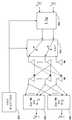
Translated fromKorean도 1은 본 발명의 실시예에 따른 제한적인 피드백 MIMO 시스템의 블록 다이어그램1 is a block diagram of a limited feedback MIMO system in accordance with an embodiment of the invention.
도 2는 본 발명의 실시예에 따라 검색을 위한 차 벡터들의 집합을 현저히 감소 가능함을 나타낸 16QAM 성상도2 is a 16QAM constellation showing that the set of difference vectors for retrieval can be significantly reduced according to an embodiment of the present invention.
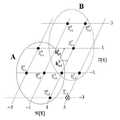
도 3a 및 도 3b는 본 발명의 실시예에 따라
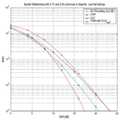
도 4는 본 발명의 실시예에 따른 서로 다른 안테나 선택 기준의 비트오류율(BER) 성능 비교를 나타낸 그래프4 is a graph illustrating a comparison of bit error rate (BER) performance of different antenna selection criteria according to an embodiment of the present invention.
도 5는 본 발명의 실시예에 따라

도 6은 본 발명의 실시예에 따라

도 7은 본 발명의 실시예에 따라

본 발명은 다중입출력(Multi-Input Multi-Output: MIMO) 시스템에서의 안테나 선택 방법에 관한 것으로, 특히 직교 공간 다중화 시스템에서의 안테나 선택 방법에 관한 것이다.The present invention relates to an antenna selection method in a multi-input multi-output (MIMO) system, and more particularly, to an antenna selection method in an orthogonal spatial multiplexing system.
일반적으로 MIMO 시스템은 무선 시스템의 스펙트럼 효율을 증가시키는 매우 중요한 수단을 제공한다. 특히, 공간 다중화 방식(spatial multiplexing schemes)은 다중 전송 안테나를 통해 데이터 스트림을 독립적으로 연속 전송함으로써 매우 높은 스펙트럼 효율을 올릴 수 있다. 다중 안테나의 성능을 최대한 발휘하기 위해서 현재 채널 상태에 따라 전송 방식을 최적화하도록 수신측은 송신측으로 완전한 채널 상태 정보(Channel State Information: CSI)를 제공할 수 있다.In general, MIMO systems provide a very important means of increasing the spectral efficiency of a wireless system. In particular, spatial multiplexing schemes can achieve very high spectral efficiency by continuously and continuously transmitting data streams through multiple transmit antennas. The receiver may provide complete channel state information (CSI) to the transmitter to optimize the transmission scheme according to the current channel state in order to maximize the performance of the multiple antennas.
송신기에서 완전한 CSI 지식에 기초하여, 프리코딩에 대한 기본적인 아이디어가 제안되어 오고 있다. 폐-루프 MIMO 시스템에서의 대부분 동작은 채널 전달 행렬의 특이값 분해(Singular Value Decomposition: SVD)을 획득함으로써 수행된다.Based on the complete CSI knowledge at the transmitter, basic ideas for precoding have been proposed. Most operations in closed-loop MIMO systems are performed by obtaining Singular Value Decomposition (SVD) of the channel transfer matrix.
MIMO 채널을 몇몇 독립적인 고유 부채널로 분해하고 이들 부채널 상의 전력 및 비트들(bits)과 같이 자원을 할당하는 최적의 선형 프리코더 및 복호기가 알려져 있다.Optimal linear precoders and decoders are known that decompose MIMO channels into several independent unique subchannels and allocate resources such as power and bits on these subchannels.
송신기 및 수신기에서 CSI에 관한 더 많은 실제적인 가정들은 MIMO 시스템의 잠재적인 채널 이득에 강한 영향을 준다. 시분할 다중 시스템에서 CSI는 상향링크와 하향링크 전송 사이의 채널 상호작용을 가정함으로써 송신기에서 획득될 수 있으나, 수신기에서 더 자주 획득하여 신뢰되는 피드백 채널상을 통해 전송기로 되돌릴 필요가 있다.More practical assumptions about CSI at the transmitter and receiver have a strong impact on the potential channel gain of the MIMO system. In a time division multiplexing system, CSI can be obtained at the transmitter by assuming channel interaction between uplink and downlink transmission, but needs to be acquired at the receiver more often and returned to the transmitter on a trusted feedback channel.
그러나, 실제에서는 수신기에서 송신기로 송신되는 피드백의 양은 오버헤드를 최소화할 수 있는 정도로 적게 유지해야 한다. 이상과 같이, 송신기에서 완전한 채널 지식에 대한 가정은 평탄-페이딩 MIMO 채널 하에서는 실제적이지 못하며, 피드백 요구사항은 일반적으로 송신 안테나, 수신 안테나 및 사용자의 수에 따라 늘어난다. 프리코딩 시스템의 다른 단점은 SVD 연산이 높은 연산 복잡도를 요구하며 수치적으로 민감하다는 것이다.In practice, however, the amount of feedback transmitted from the receiver to the transmitter should be kept as low as possible to minimize overhead. As mentioned above, the assumption of full channel knowledge at the transmitter is not practical under the flat-fading MIMO channel, and feedback requirements generally increase with the number of transmit antennas, receive antennas and users. Another disadvantage of precoding systems is that SVD operations require high computational complexity and are numerically sensitive.
이러한 이슈를 해결하기 위해서 통신 시스템에서 제한된 피드백 정보를 가진 송신기는 시스템 자원을 더 효율적으로 활용하는 것을 시도한다. 송신기 프리코더는 수신기와 송신기 모두에 알려진 프리코딩 행렬(이하 "코드북"이라 한다)의 유한 집합으로부터 선택된다. 수신기는 현재의 CSI에 기초한 선택 기준으로 코드북으로부터 최적의 프리코더를 선택하며, 제한적인 피드백 채널을 통해 송신기로 행렬의 색인을 보고한다.To solve this issue, transmitters with limited feedback information in communication systems attempt to utilize system resources more efficiently. The transmitter precoder is selected from a finite set of precoding matrices (hereinafter referred to as "codebooks") known to both the receiver and the transmitter. The receiver selects the optimal precoder from the codebook as the selection criteria based on the current CSI and reports the index of the matrix to the transmitter over a limited feedback channel.
최근 간단한 최대우도(Maximum Likelihood: ML) 수신기를 허용하는 폐루프 MIMO 시스템에 대하여 직교 공간 다중화(Orthogonalized spatial multiplexing: OSM)라는 새로운 공간 다중화 방법이 제안되었다. 관심의 대상은 실제 무선 시스템 설계에 중요한 2개의 독립 데이터 스트림을 전송하는 공간 다중화 시스템에 한정된다. ML 복호(Maximum Likelihood Decoding: MLD)는 MIMO 공간 다중화 시스템에서 심볼을 검출하는데 최적이다. 그러나 이것의 계산 복잡도는 송신 안테나의 수와 성상도의 크기에 대해서 기하급수적으로 높아지는 문제점이 있다.Recently, a new spatial multiplexing method called orthogonalized spatial multiplexing (OSM) has been proposed for closed-loop MIMO systems that allow simple Maximum Likelihood (ML) receivers. Of interest are limited to spatial multiplexing systems that transmit two independent data streams that are important to the actual wireless system design. Maximum Likelihood Decoding (MLD) is optimal for detecting symbols in MIMO spatial multiplexing systems. However, there is a problem that the computational complexity thereof increases exponentially with respect to the number of transmit antennas and the size of constellations.
따라서 본 발명의 목적은 ML 수신기의 복잡도 처리를 줄이기 위해서 수신기로부터 단일 위상 값만을 요구하는 공간 다중화 시스템에서의 안테나 선택 방법을 제공하는 것이다.It is therefore an object of the present invention to provide an antenna selection method in a spatial multiplexing system that requires only a single phase value from the receiver to reduce the complexity processing of the ML receiver.
또한 본 발명의 다른 목적은 MLD를 간단히 하기 위해 복소수 MIMO 시스템에 대한 실수 표현을 소개함으로써 위상 피드백에 기초한 단일-심볼 복호 공간 다중화 방법을 제공하는 것이다.It is another object of the present invention to provide a single-symbol decoded spatial multiplexing method based on phase feedback by introducing a real representation for a complex MIMO system to simplify MLD.
본 발명에서 제시하는 방법은; 직교 공간 다중화 시스템에서 수신기가 송신기의 송신 안테나를 선택하는 방법에 있어서, 다수의 송신 안테나들을 포함하는 송신기로부터 심볼들을 수신하면, 상기 수신된 심볼들을 각각 복호화하는 과정과; 상기 복호화된 심볼들을 이용하여 상기 복호화된 심볼들 간의 회전각을 결정하고, 상기 결정된 회전각과 상기 복호화된 심볼들 간의 유클리드 거리를 이용하여 상기 다수의 송신 안테나들에 대한 최적 서브셋을 결정하는 과정과; 상기 결정된 회전각 및 상기 결정된 최적 서브셋을 포함하는 피드백 정보를 생성하여 상기 송신기로 송신하는 과정을 포함한다.
또한, 본 발명에서 제시하는 방법은; 직교 공간 다중화 시스템에서 안테나 선택 방법에 있어서, 송신기로부터 다수의 수신 안테나들을 통해 심볼들이 수신되면, 상기 수신기가 상기 수신된 심볼들을 각각 복호화하는 과정과; 상기 수신기가 상기 복호화된 심볼들을 이용하여 상기 복호화된 심볼들 간의 회전각을 결정하고, 상기 결정된 회전각과 상기 복호화된 심볼들 간의 유클리드 거리를 이용하여 상기 다수의 송신 안테나들에 대한 최적 서브셋을 결정하는 과정과; 상기 수신기가 상기 결정된 회전각 및 상기 결정된 최적 서브셋을 포함하는 피드백 정보를 생성하여 상기 송신기로 송신하는 과정과; 상기 송신기가 상기 피드백 정보가 수신되면, 상기 수신된 피드백 정보를 이용하여 상기 최적 서브셋에 대응하는 안테나를 빔포밍하고, 상기 수신기로 데이터 심볼을 전송하는 과정과; 상기 수신기는 상기 송신기로부터 상기 데이터 심볼을 수신하여 검출하는 과정을 포함한다.
그리고, 본 발명에서 제시하는 장치는; 직교 공간 다중화 시스템에서 수신기의 송신기 송신 안테나 선택 장치에 있어서, 다수의 송신 안테나들을 포함하는 송신기로부터 심볼들을 수신하면, 상기 수신된 심볼들을 복호화하는 하나 이상의 복호기와; 상기 복호화된 심볼들을 이용하여 상기 복호화된 심볼들 간의 회전각을 결정하고, 상기 결정된 회전각과 상기 복호화된 심볼들 간의 유클리드 거리를 이용하여 상기 다수의 송신 안테나들에 대한 최적 서브셋을 결정하고, 상기 결정된 회전각 및 상기 결정된 최적 서브셋을 포함하는 피드백 정보를 생성하여 상기 송신기로 송신하는 안테나 선택부를 포함한다.The method provided by the present invention; A method for selecting a transmit antenna of a transmitter by a receiver in an orthogonal spatial multiplexing system, the method comprising: decoding symbols received when receiving symbols from a transmitter including a plurality of transmit antennas; Determining rotation angles between the decoded symbols using the decoded symbols and determining an optimal subset for the plurality of transmit antennas using the determined rotation angle and Euclidean distance between the decoded symbols; And generating feedback information including the determined rotation angle and the determined optimal subset and transmitting the same to the transmitter.
In addition, the method proposed in the present invention; An antenna selection method in an orthogonal spatial multiplexing system, comprising: when a symbol is received from a transmitter through a plurality of receiving antennas, the receiver decodes each of the received symbols; The receiver determines the rotation angle between the decoded symbols using the decoded symbols and determines an optimal subset for the plurality of transmit antennas using the determined rotation angle and Euclidean distance between the decoded symbols. Process; Generating, by the receiver, feedback information including the determined rotation angle and the determined optimal subset and transmitting the feedback information to the transmitter; When the transmitter receives the feedback information, beamforming an antenna corresponding to the optimal subset using the received feedback information, and transmitting a data symbol to the receiver; The receiver includes receiving and detecting the data symbol from the transmitter.
And, the device proposed in the present invention; 11. An apparatus for selecting a transmitter transmit antenna of a receiver in an orthogonal spatial multiplexing system, comprising: at least one decoder that decodes the received symbols when receiving symbols from a transmitter including a plurality of transmit antennas; Determine a rotation angle between the decoded symbols using the decoded symbols, determine an optimal subset for the plurality of transmit antennas using the determined rotation angle and Euclidean distance between the decoded symbols, and determine the determined And an antenna selector configured to generate and transmit feedback information including the rotation angle and the determined optimal subset to the transmitter.
이하 첨부된 도면을 참조하여 본 발명의 바람직한 실시예에 대한 동작원리를 상세히 설명한다. 도면상에 표시된 동일한 구성요소들에 대해서는 비록 다른 도면상에 표시되더라도 가능한 한 동일한 참조부호로 나타내었으며, 다음에서는 본 발명을 설명함에 있어 관련된 공지 기능 또는 구성에 대한 구체적인 설명이 본 발명의 요지를 불필요하게 흐릴 수 있다고 판단되는 경우에는 그 상세한 설명을 생략할 것이다. 그리고 후술되는 용어들은 본 발명에서의 기능을 고려하여 정의된 용어들로서 이는 사용자, 운용자의 의도 또는 관례 등에 따라 달라질 수 있다. 그러므로 그 정의는 본 명세서 전반에 걸친 내용을 토대로 내려져야 할 것이다.Hereinafter, the operation principle of the preferred embodiment of the present invention will be described in detail with reference to the accompanying drawings. Like reference numerals refer to the same elements as shown in the drawings, even though they may be shown on different drawings, and in the following description, detailed descriptions of related well-known functions or configurations are not required in the following description. If it is determined that it can be blurred, the detailed description thereof will be omitted. The following terms are defined in consideration of the functions of the present invention, and may be changed according to the intentions or customs of the user, the operator, and the like. Therefore, the definition should be based on the contents throughout this specification.
우선적으로 본 발명에 대한 전체적인 개요를 설명하면 다음과 같다. 본 발명에서는 제안하는 공간 다중화 방법을 다수의 송신 안테나를 가진 시스템으로 확대한다. 송신 안테나의 수가 2개 이상일 때, 본 발명에 따른 방법은 성능을 최대화하기 위해 최선의 안테나 2개를 선택할 필요가 있다. 송신 안테나의 서브셋 선택은 제한적인 피드백 프리코딩의 다른 예로서 보여질 수 있으며, 이때 송신 안테나의 최적 서브셋이 결정되어 송신기로 전달된다. 모든 가용 송신 안테나의 연속적인 전송은 무선 주파수 체인의 증가 수에 의해 기인한 시스템 복잡도 상에 너무 큰 부담을 야기할 수 있다. 비용 절감을 위하여 출력 신호대잡음비(SNR)에 기초한 선택 기준은 선형 수신기를 가진 공간 다중화 시스템에 대하여 다양하게 제안되었다.First, the overall outline of the present invention will be described. In the present invention, the proposed spatial multiplexing method is extended to a system having a plurality of transmit antennas. When the number of transmit antennas is two or more, the method according to the present invention needs to select the best two antennas in order to maximize performance. Subset selection of the transmit antenna can be seen as another example of limited feedback precoding, where an optimal subset of the transmit antenna is determined and delivered to the transmitter. Continuous transmission of all available transmit antennas can cause too much burden on system complexity due to the increasing number of radio frequency chains. For cost reduction, various selection criteria based on output signal-to-noise ratio (SNR) have been proposed for spatial multiplexing systems with linear receivers.
심볼 오류 확률은 수신벡터들 사이의 유클리드 거리에 의존하기 때문에 본 발명에 따른 공간 다중화 방법에서 다중 송신 안테나의 최적 서브셋을 선택하는 최소 유클리드 거리에 기초한 기준이 고려되어야 한다.Since the symbol error probability depends on the Euclidean distance between the received vectors, in the spatial multiplexing method according to the present invention, a criterion based on the minimum Euclidean distance for selecting an optimal subset of multiple transmit antennas should be considered.
그리고, 최소 유클리드 거리의 계산은 종래 공간 다중화 시스템에서의 다차원 성상도에 대해 완전한 검색을 요구함에도 불구하고, 본 발명에 따른 공간 다중화 방법은 소수의 성상도 쌍들을 간단히 검색하는 것을 허용한다.
또한, 본 발명의 명세서 전반에 걸쳐서 일반 글꼴은 스칼라 양을 나타내고, 볼드 글꼴은 벡터를 나타내며, 볼드 글꼴 대문자는 행렬을 나타낸다. 그리고, 복소 변수에 대해서는 바(bar)를 사용하여 표시한다. 예컨대 복소수


In addition, throughout the specification of the present invention, a general font represents a scalar amount, a bold font represents a vector, and a bold font upper case represents a matrix. And a complex variable is represented using a bar. Complex numbers
또한, 본 발명에 따른 시뮬레이션 결과는 본 발명에 따른 방법의 성능과 비트 오류율(BER)에 대하여 평탄 페이딩 준정적 채널 상의 최적 유니터리 프리코딩 및 최적 선형 프리코딩과 같은 폐-루프 시스템의 성능을 비교한다.
이하, 도면을 참조하여 본 발명의 실시예에 따른 직교 공간 다중화 시스템에서의 안테나 선택 장치 및 방법을 설명하면 다음과 같다.
도 1은 본 발명의 실시예에 따른 제한적인 피드백 MIMO 시스템의 블록 다이어그램이다.
도 1에 도시된 바와 같이, 본 발명은


또한, 유클리드 거리는 높은 신호대잡음비(SNR)에서 ML 수신기의 성능에 의존하기 때문에, 2개의 송신 안테나의 최적 선택은 최소 유클리드 거리에 기초하여 이루어진다. 즉, 수신기(200)에 구비된 안테나 선택부(230)는

상술한 바와 같이, 상기 피드백 정보가 송신기로 피드백 된 후, 송신기로부터 데이터 심볼이 수신되면, 수신기의 각 복호기는 수신된 데이터 심볼을 각각 검출한다.In addition, simulation results according to the present invention compare the performance of the method according to the present invention and the performance of closed-loop systems such as optimal unity precoding and optimal linear precoding on flat fading quasi-static channels with respect to bit error rate (BER). do.
Hereinafter, an antenna selection apparatus and method in an orthogonal spatial multiplexing system according to an embodiment of the present invention will be described with reference to the accompanying drawings.
1 is a block diagram of a limited feedback MIMO system in accordance with an embodiment of the present invention.
As shown in Figure 1, the present invention
Also, since the Euclidean distance depends on the performance of the ML receiver at high signal-to-noise ratio (SNR), optimal selection of the two transmit antennas is made based on the minimum Euclidean distance. That is, the antenna selector 230 provided in the receiver 200
As described above, after the feedback information is fed back to the transmitter, when a data symbol is received from the transmitter, each decoder of the receiver detects each of the received data symbols.
A. 직교 공간 다중화 방법A. Orthogonal Space Multiplexing Method
먼저, 2개의 송신 안테나와
일반적으로 복소 수신 신호는 다음 <수학식 1>과 같이 주어진다.In general, the complex received signal is given by

여기서,


여기서
Q를 크기


여기서,

동일하게, <수학식 1>의 실수 표현은 다음 <수학식 3>와 같이 표현할 수 있다.Similarly, the real expression of

여기서,


여기서, n은 공분산 행렬
<수학식 3>의 실수 표현에 기초하여, <수학식 2>에 대한 ML 해

<수학식 2> 및 <수학식 5>와 같은 ML 추정 메트릭(metric)은 동일한 계산량을 요구한다.ML estimation metrics such as
다음에서는 ML 복호를 간단히 하기 위해서 OSM를 나타내었으며, 이를 위해 다음 <수학식 6>과 같은 2개의 송신된 심볼을 부호화해야 한다.In the following, OSM is shown to simplify ML decoding, and for this purpose, two transmitted symbols shown in Equation 6 should be encoded.

여기서, 회전각


또한,


상기한 바와 같은 프리코딩으로 <수학식 1>의 OSM은 다음 <수학식 8>과 같이 변환된다.With the precoding as described above, the OSM of

여기서,


이때, <수학식 8>에 대응하는 실수 시스템 모델은 다음 <수학식 9>와 같이 쓸 수 있다.In this case, the real system model corresponding to

여기서, 길이


<수학식 10> 및 <수학식 11>에서


B. 안테나 선택 방법B. How to choose an antenna
상술한 과정은 2개의 송신 안테나를 가진 OSM 방법에 대하여 기술하였다. 하기에서는 2개 이상의 송신 안테나를 가진 시스템의 경우를 기술한다. 그리고, 수신 벡터들 간의 최소 유클리드 거리에 기초한 기준을 우선 기술하고, 채널의 기하학적인 특성에 의하여 차 벡터들(difference vectors)을 검색하기 위해 서브셋의 크기를 실질적으로 줄일 수 있는 본 발명에 따른 공간 다중화 방법을 살펴본다.The above process has been described with respect to the OSM method with two transmit antennas. The following describes the case of a system having two or more transmit antennas. Then, the criterion based on the minimum Euclidean distance between the received vectors is first described, and the spatial multiplexing according to the present invention can substantially reduce the size of the subset to retrieve the difference vectors by the geometrical characteristics of the channel. See how.
삭제delete
삭제delete
삭제delete
상술한 바와 같이, 도 1에는 송신기가 2개 이상의 송신 안테나를 가진 시스템을 나타낸 것으로서,


여기서,


다음으로, 본 발명에 따른 공간 다중화 방법은 좀 더 간단한 형태로 최소 거리 획득을 허용한다.


게다가,


<수학식 14>에서

도 2는 본 발명의 실시예에 따라 검색을 위한 차 벡터들의 집합을 현저히 감소 가능함을 나타낸 16QAM 성상도이다.FIG. 2 is a 16QAM constellation diagram showing that the set of difference vectors for retrieval can be significantly reduced according to an embodiment of the present invention.
도 2를 참조하면, 상술한 계산의 복잡도를 더 줄일 수 있음을 알 수 있다. 단일 QAM 성상도에서의 대칭을 고려하면, <수학식 14>에서 검색을 위한 차 벡터들의 집합을 상당히 줄일 수 있다. 도 2에서는 16QAM을 예로 든다. 모든 가능한


대응하는 쌍들은 도 3에서


도 3a 및 도 3b는 본 발명의 실시예에 따라
도 3a 및 도 3b를 참조하면, 복소수 심볼


상기 <수학식 15>는 최적 안테나 서브셋
결과적으로 전체 집합


즉, 최적 안테나의 서브셋
That is, a subset of the best antenna
따라서, 상술한 바와 같이, 수신기는 회전각


도 5는 본 발명의 실시예에 따른 안테나 선택과 결합된 OSM의 성능을 나타낸 시뮬레이션 결과이다.5 is a simulation result showing the performance of the OSM combined with antenna selection according to an embodiment of the present invention.
먼저 송신된 데이터 스트림의 수는 모든 시뮬레이션에서 2개로 고정되며, 최적 안테나 서브셋은 앞서 살펴본 바와 같이 OSM 시스템에서 최소 유클리드 거리에 기초하여 선택된다. 공정한 비교를 위해서 모든 시스템에 대한 ML 수신기가 가정된다.The number of first transmitted data streams is fixed at two in all simulations, and the optimal antenna subset is selected based on the minimum Euclidean distance in the OSM system as discussed above. For a fair comparison, ML receivers for all systems are assumed.
도 4는 본 발명의 실시예에 따른 서로 다른 안테나 선택 기준의 비트오류율(BER) 성능 비교를 나타낸 그래프이다.4 is a graph illustrating a comparison of bit error rate (BER) performance of different antenna selection criteria according to an embodiment of the present invention.
도 4를 참조하면, 최소 유클리드 거리에 기초한 기준(이하 "


도 5 및 6은 본 발명의 실시예에 따라 OSM 및 2개의 최적의 프리코딩을 나타낸 그래프로서, 도 5는


도 5 및 6을 참조하면, 상기 2개의 최적의 프리코딩은


송신 안테나 수 증가의 이득은 이러한 프리코딩들이 단순 공간 다중화 보다 더욱 가용 MIMO 공간 다이버시티 이득을 활용하기 때문에 OUP 및 OLP에 대해 보다 현저하다. 그럼에도 불구하고, OSM은 OLP의 1dB 이내에서 수행하며, 여전히 1 dB 만큼 OUP를 능가한다.The gain of increasing the number of transmit antennas is more pronounced for OUP and OLP because these precodings utilize more available MIMO spatial diversity gains than simple spatial multiplexing. Nevertheless, the OSM performs within 1 dB of the OLP and still surpasses the OUP by 1 dB.
종래의 프리코딩 시스템에서 SVD 동작을 수행함으로써 프리코딩 행렬을 계산할 필요가 있으며, 전력 할당 행렬은 공간 모드들 사이의 전력 분배를 결정하는 점은 주목할 만하다. 게다가, 이러한 프리코딩은 송신기에서 복소수 행렬 및/또는 행렬 벡터 곱셈을 포함한다. 따라서, OLP 및 OUP의 계산의 복잡도는 실질적으로 본 발명에 따른 안테나 선택 방법의 OSM 보다 높다.It is noteworthy that it is necessary to calculate the precoding matrix by performing SVD operations in conventional precoding systems, and the power allocation matrix determines the power distribution between spatial modes. In addition, such precoding includes complex matrix and / or matrix vector multiplication at the transmitter. Therefore, the complexity of the calculation of the OLP and OUP is substantially higher than the OSM of the antenna selection method according to the present invention.
종래의 프리코딩 방법이 완전한 채널 또는 프리코딩 행렬을 반송할 때 더 큰 피드백 정보가 요구되는데 비하여, 피드백 오버헤드에 따라서 본 발명에 따른 방법은 단지 단일 위상 값 피드백이 필요하다.Whereas conventional precoding methods require greater feedback information when carrying a complete channel or precoding matrix, depending on the feedback overhead, the method according to the present invention only requires single phase value feedback.
도 7은 본 발명의 실시예에 따라

도 7을 참조하면, 본 발명 따른 안테나 선택 방법을 채용한 OSM은 복잡도와 오버헤드가 매우 감소된 높은 신호대잡음비(SNR) 영역에서 약 2 dB 만큼 OLP를 능가한다.Referring to FIG. 7, the OSM employing the antenna selection method according to the present invention outperforms the OLP by about 2 dB in a high signal-to-noise ratio (SNR) region in which complexity and overhead are greatly reduced.
이상과 같이 총 복잡도를 최소화하는 MIMO 시스템에 대한 직교 공간 다중화 방법이 설명되었으며, 직교 공간 다중화 시스템에서 수신 성상도의 최소 유클리드 거리를 최대화하는 송신 안테나의 서브셋을 선택하는 기준이 기술되었다. 최소 유클리드 거리의 계산은 다차원 성상도 상의 검색을 요구한다는 사실에 기인하여 실질적으로 직교 공간 다중화 시스템에서 차 벡터들의 후보 검색 크기를 줄이며, 각 성상도에 대한 차 벡터들의 감소된 집합이 제시되었다. 상기한 바와 같은 시뮬레이션 결과는 본 발명에 따른 안테나 선택 방법과 결합된 직교 공간 다중화 방법이 현저하게 감소된 복잡도 및 피드백 양에 따른 최적 선형 프리코딩의 성능에 접근하는데 매우 효과적이다.As described above, an orthogonal spatial multiplexing method for a MIMO system that minimizes total complexity has been described, and a criterion for selecting a subset of transmit antennas for maximizing a minimum Euclidean distance of a received constellation in an orthogonal spatial multiplexing system has been described. Due to the fact that the calculation of the minimum Euclidean distance requires a search on multidimensional constellations, the candidate search size of the difference vectors is substantially reduced in an orthogonal spatial multiplexing system, and a reduced set of difference vectors for each constellation is presented. The simulation results as described above are very effective for the orthogonal spatial multiplexing method combined with the antenna selection method according to the present invention to approach the performance of optimal linear precoding according to the significantly reduced complexity and feedback amount.
지금까지 본 발명에 대해서 상세히 설명하였으나, 그 과정에서 언급한 실시예는 예시적인 것일 뿐, 한정적인 것은 아님을 분명히 하며, 본 발명은 이하의 특허청구범위에 의해 제공되는 본 발명의 기술적 사상이나 분야를 벗어나지 않는 범위 내에서, 본 발명으로부터 균등하게 대체될 수 있는 정도의 구성요소 변경은 본 발명의 범위에 속한다 할 것이다.The present invention has been described in detail so far, but the embodiments mentioned in the process are only illustrative, and are not intended to be limiting, and the present invention is provided by the following claims. Within the scope not departing from the scope of the present invention, component changes to the extent that they can be equivalently substituted from the present invention will fall within the scope of the present invention.
이상에서 상세히 설명한 바와 같이 동작하는 본 발명에 있어서, 개시되는 발명 중 대표적인 것에 의해 얻어지는 효과를 간단히 설명하면 다음과 같다.In the present invention operating as described in detail above, the effects obtained by the representative ones of the disclosed inventions will be briefly described as follows.
본 발명은 ML 수신기의 복잡도 처리를 줄이기 위해서 수신기로부터 단일 위상 값만을 요구하는 공간 다중화 시스템에서의 안테나 선택 방법을 제공하는 효과가 있다.The present invention has the effect of providing an antenna selection method in a spatial multiplexing system requiring only a single phase value from the receiver to reduce the complexity of the ML receiver.
또한 본 발명은 수신기가 송신기의 최적 안테나 서브셋을 송신기로 전송하기 때문에, 피드백 정보의 오버헤드를 줄일 수 있으며, 수신기가 송신기가 전송한 데이터 심볼을 검출하는 복잡도를 줄이는 효과가 있다.In addition, the present invention can reduce the overhead of feedback information because the receiver transmits the optimal antenna subset of the transmitter to the transmitter, the effect of reducing the complexity of the receiver detects the data symbols transmitted by the transmitter.
Claims (20)
Translated fromKoreanPriority Applications (2)
| Application Number | Priority Date | Filing Date | Title |
|---|---|---|---|
| KR1020060085714AKR101099881B1 (en) | 2006-09-06 | 2006-09-06 | Method and device for antenna selection in orthogonal spatial multiplexing system |
| US11/850,301US8155231B2 (en) | 2006-09-06 | 2007-09-05 | Apparatus and method for selecting antenna in an orthogonalized spatial multiplexing system |
Applications Claiming Priority (1)
| Application Number | Priority Date | Filing Date | Title |
|---|---|---|---|
| KR1020060085714AKR101099881B1 (en) | 2006-09-06 | 2006-09-06 | Method and device for antenna selection in orthogonal spatial multiplexing system |
Publications (2)
| Publication Number | Publication Date |
|---|---|
| KR20080022362A KR20080022362A (en) | 2008-03-11 |
| KR101099881B1true KR101099881B1 (en) | 2011-12-28 |
Family
ID=39151506
Family Applications (1)
| Application Number | Title | Priority Date | Filing Date |
|---|---|---|---|
| KR1020060085714AActiveKR101099881B1 (en) | 2006-09-06 | 2006-09-06 | Method and device for antenna selection in orthogonal spatial multiplexing system |
Country Status (2)
| Country | Link |
|---|---|
| US (1) | US8155231B2 (en) |
| KR (1) | KR101099881B1 (en) |
Families Citing this family (13)
| Publication number | Priority date | Publication date | Assignee | Title |
|---|---|---|---|---|
| US8483200B2 (en)* | 2005-04-07 | 2013-07-09 | Interdigital Technology Corporation | Method and apparatus for antenna mapping selection in MIMO-OFDM wireless networks |
| US8233557B2 (en)* | 2008-01-25 | 2012-07-31 | Broadcom Corporation | Method and system for subspace beamforming for near capacity multiple input multiple output (MIMO) performance |
| MY153494A (en)* | 2008-11-02 | 2015-02-13 | Lg Electronics Inc | Pre-coding method for spatial multiplexing in multiple input and output system |
| KR100967517B1 (en)* | 2008-11-19 | 2010-07-07 | 고려대학교 산학협력단 | Preprocessing System and Method for Orthogonal Space Multiplexing System |
| KR101800294B1 (en)* | 2009-04-02 | 2017-12-20 | 삼성전자주식회사 | Apparatus and method for error minimization of cell boundary users in multi-call communication system |
| CN102148538B (en) | 2010-02-05 | 2015-07-08 | 株式会社半导体能源研究所 | Mobile body, wireless power supply system, and wireless power supply method |
| JP2011188733A (en)* | 2010-02-12 | 2011-09-22 | Semiconductor Energy Lab Co Ltd | Moving object, and system and method for wireless power feeding |
| KR101754100B1 (en)* | 2010-10-05 | 2017-07-06 | 한국전자통신연구원 | Method of multiple input multiple output transmission in digital video broadcasting system and apparatus for the same |
| CN102608609B (en)* | 2011-12-19 | 2014-01-08 | 浙江大学 | A High Resolution Underwater Target Detection Method Based on MIMO |
| CN104380613B (en) | 2012-05-31 | 2016-01-13 | 英派尔科技开发有限公司 | For equipment and the method for processing signals in a wireless communication system |
| CN106685495A (en)* | 2015-11-05 | 2017-05-17 | 索尼公司 | Wireless communication method and wireless communication device |
| US9847802B1 (en)* | 2016-08-16 | 2017-12-19 | Xilinx, Inc. | Reconfiguration of single-band transmit and receive paths to multi-band transmit and receive paths in an integrated circuit |
| CN108199756B (en)* | 2017-12-29 | 2020-12-04 | 清华大学 | Selection Method of Active Antenna Group at Transmitter in Generalized Spatial Modulation Communication System |
Family Cites Families (25)
| Publication number | Priority date | Publication date | Assignee | Title |
|---|---|---|---|---|
| US6317466B1 (en) | 1998-04-15 | 2001-11-13 | Lucent Technologies Inc. | Wireless communications system having a space-time architecture employing multi-element antennas at both the transmitter and receiver |
| US6298092B1 (en)* | 1999-12-15 | 2001-10-02 | Iospan Wireless, Inc. | Methods of controlling communication parameters of wireless systems |
| US6922445B1 (en)* | 1999-12-15 | 2005-07-26 | Intel Corporation | Method and system for mode adaptation in wireless communication |
| US6804312B1 (en)* | 2000-01-11 | 2004-10-12 | At&T Corp. | Methods and systems for spatial processing |
| FI20000176A0 (en)* | 2000-01-28 | 2000-01-28 | Nokia Networks Oy | Diversiteettilähetys |
| ATE332580T1 (en)* | 2001-11-09 | 2006-07-15 | Ems Technologies Inc | BEAM SHAPER FOR MULTI-BEAM BROADCAST ANTENNA |
| US8208364B2 (en) | 2002-10-25 | 2012-06-26 | Qualcomm Incorporated | MIMO system with multiple spatial multiplexing modes |
| US7515939B2 (en)* | 2003-10-01 | 2009-04-07 | Broadcom Corporation | System and method for channel-adaptive antenna selection |
| EP1623512A1 (en)* | 2003-05-15 | 2006-02-08 | Lg Electronics Inc. | Method and apparatus for allocating channelization codes for wireless communications |
| US7773694B2 (en)* | 2003-07-02 | 2010-08-10 | Panasonic Corporation | Communication apparatus and communication method |
| US7356089B2 (en) | 2003-09-05 | 2008-04-08 | Nortel Networks Limited | Phase offset spatial multiplexing |
| KR100757963B1 (en) | 2003-12-24 | 2007-09-11 | 삼성전자주식회사 | Encoding method and apparatus in communication system |
| US7564915B2 (en) | 2004-06-16 | 2009-07-21 | Samsung Electronics Co., Ltd. | Apparatus and method for coding/decoding pseudo orthogonal space-time block code in a mobile communication system using multiple input multiple output scheme |
| KR100938052B1 (en) | 2004-06-16 | 2010-01-21 | 삼성전자주식회사 | Pseudo-orthogonal space-time block code encoding / decoding apparatus and method in mobile communication system using multiple input multiple output scheme |
| EP1766806B1 (en)* | 2004-06-22 | 2017-11-01 | Apple Inc. | Closed loop mimo systems and methods |
| US7583982B2 (en)* | 2004-08-06 | 2009-09-01 | Interdigital Technology Corporation | Method and apparatus to improve channel quality for use in wireless communications systems with multiple-input multiple-output (MIMO) antennas |
| US7492829B2 (en)* | 2004-09-10 | 2009-02-17 | Intel Corporation | Closed loop feedback in MIMO systems |
| KR100809551B1 (en)* | 2005-03-08 | 2008-03-04 | 재단법인서울대학교산학협력재단 | Apparatus and method for transmitting a space-time turbo encoding message using feedback bits in mobile communication system |
| US8416862B2 (en)* | 2005-04-21 | 2013-04-09 | Broadcom Corporation | Efficient feedback of channel information in a closed loop beamforming wireless communication system |
| US7738583B2 (en)* | 2005-04-21 | 2010-06-15 | Broadcom Corporation | Reduced feedback for beamforming in a wireless communication |
| US8345732B2 (en)* | 2005-06-28 | 2013-01-01 | Broadcom Corporation | Feedback of channel information in a closed loop beamforming wireless communication system |
| US7643578B2 (en)* | 2005-07-20 | 2010-01-05 | Broadcom Corporation | Angle estimation for modulated signal |
| US7558330B2 (en)* | 2005-12-07 | 2009-07-07 | Telefonaktiebolaget L M Ericsson (Publ) | Multiple stream co-phasing for multiple-input-multiple-output (MIMO) systems |
| US7685219B2 (en)* | 2006-03-31 | 2010-03-23 | Intel Corporation | Parallel systolic CORDIC algorithm with reduced latency for unitary transform of complex matrices and application to MIMO detection |
| TWI343200B (en)* | 2006-05-26 | 2011-06-01 | Lg Electronics Inc | Method and apparatus for signal generation using phase-shift based pre-coding |
- 2006
- 2006-09-06KRKR1020060085714Apatent/KR101099881B1/enactiveActive
- 2007
- 2007-09-05USUS11/850,301patent/US8155231B2/enactiveActive
Also Published As
| Publication number | Publication date |
|---|---|
| KR20080022362A (en) | 2008-03-11 |
| US20080056402A1 (en) | 2008-03-06 |
| US8155231B2 (en) | 2012-04-10 |
Similar Documents
| Publication | Publication Date | Title |
|---|---|---|
| KR101099881B1 (en) | Method and device for antenna selection in orthogonal spatial multiplexing system | |
| CN107104713B (en) | Method for precoding using block diagonal matrix | |
| Gore et al. | MIMO antenna subset selection with space-time coding | |
| JP5127394B2 (en) | MIMO system precoding method and apparatus using the method | |
| JP4173137B2 (en) | MIMO signal processing method with rank adaptive adaptation of data transmission rate | |
| CN1937456B (en) | Method and system for processing signal in communication system | |
| EP2260583A1 (en) | Method for transmitting signals for reducing feedback overhead and method for transmitting feedback information for the same | |
| KR20120079926A (en) | Generation method of hybrid codebook and hybrid mu-mimo system | |
| Maleki et al. | Receive spatial modulation in correlated massive MIMO with partial CSI | |
| KR20080095732A (en) | Codebook construction method and signal transmission method in multiple input / output antenna system | |
| KR101100116B1 (en) | An apparatus and method for transmitting in an open loop communication system performing precoding using the number of transmitting antennas | |
| KR101327486B1 (en) | Apparatus and method for seleting codebook for maximum likelihood detecting in multiple input multiple output wireless communication system | |
| Su et al. | Hierarchical codebook design for massive MIMO | |
| Huang et al. | Precoder design for space-time coded MIMO systems with imperfect channel state information | |
| KR20090119633A (en) | Apparatus and Method for Spatial Multiplexing in Multiple Input Multiple Output Systems | |
| Kim et al. | Antenna grouping techniques for MIMO beamforming systems | |
| Ran et al. | Multimode precoder design for STBC with limited feedback in MIMO based wireless communication system | |
| Moon et al. | A new efficient group-wise spatial multiplexing design for closed-loop MIMO systems | |
| Ahn et al. | Asymptotic performance and exact symbol error probability analysis of orthogonal STBC in spatially correlated Rayleigh MIMO channel | |
| Achoura et al. | Impact of Limited Feedback on MIMO-OFDM Systems using Joint Beamforming | |
| KR101043808B1 (en) | Beamforming apparatus and method in multiple input / output systems | |
| KUANG et al. | Power control for space-time block coded MIMO system with beamforming and imperfect channel state information | |
| KR20080023329A (en) | Signal Transmission Control Method Applied to Multiple Input Multiple Output System | |
| Benmimoune et al. | Multi-user MIMO precoding with Kerdock codebook | |
| Bouallegue | Impact of Limited Feedback on MIMO-OFDM Systems using Joint Beamforming |
Legal Events
| Date | Code | Title | Description |
|---|---|---|---|
| PA0109 | Patent application | Patent event code:PA01091R01D Comment text:Patent Application Patent event date:20060906 | |
| PG1501 | Laying open of application | ||
| A201 | Request for examination | ||
| PA0201 | Request for examination | Patent event code:PA02012R01D Patent event date:20081121 Comment text:Request for Examination of Application Patent event code:PA02011R01I Patent event date:20060906 Comment text:Patent Application | |
| E902 | Notification of reason for refusal | ||
| PE0902 | Notice of grounds for rejection | Comment text:Notification of reason for refusal Patent event date:20100929 Patent event code:PE09021S01D | |
| E902 | Notification of reason for refusal | ||
| PE0902 | Notice of grounds for rejection | Comment text:Notification of reason for refusal Patent event date:20110512 Patent event code:PE09021S01D | |
| E701 | Decision to grant or registration of patent right | ||
| PE0701 | Decision of registration | Patent event code:PE07011S01D Comment text:Decision to Grant Registration Patent event date:20111130 | |
| GRNT | Written decision to grant | ||
| PR0701 | Registration of establishment | Comment text:Registration of Establishment Patent event date:20111221 Patent event code:PR07011E01D | |
| PR1002 | Payment of registration fee | Payment date:20111221 End annual number:3 Start annual number:1 | |
| PG1601 | Publication of registration | ||
| FPAY | Annual fee payment | Payment date:20141119 Year of fee payment:4 | |
| PR1001 | Payment of annual fee | Payment date:20141119 Start annual number:4 End annual number:4 | |
| FPAY | Annual fee payment | Payment date:20151118 Year of fee payment:5 | |
| PR1001 | Payment of annual fee | Payment date:20151118 Start annual number:5 End annual number:5 | |
| FPAY | Annual fee payment | Payment date:20161121 Year of fee payment:6 | |
| PR1001 | Payment of annual fee | Payment date:20161121 Start annual number:6 End annual number:6 | |
| FPAY | Annual fee payment | Payment date:20171121 Year of fee payment:7 | |
| PR1001 | Payment of annual fee | Payment date:20171121 Start annual number:7 End annual number:7 | |
| FPAY | Annual fee payment | Payment date:20181119 Year of fee payment:8 | |
| PR1001 | Payment of annual fee | Payment date:20181119 Start annual number:8 End annual number:8 | |
| PR1001 | Payment of annual fee | Payment date:20211115 Start annual number:11 End annual number:11 | |
| PR1001 | Payment of annual fee | Payment date:20221115 Start annual number:12 End annual number:12 | |
| PR1001 | Payment of annual fee | Payment date:20241118 Start annual number:14 End annual number:14 |