JP2023010327A - robot vision system - Google Patents
robot vision systemDownload PDFInfo
- Publication number
- JP2023010327A JP2023010327AJP2021114391AJP2021114391AJP2023010327AJP 2023010327 AJP2023010327 AJP 2023010327AJP 2021114391 AJP2021114391 AJP 2021114391AJP 2021114391 AJP2021114391 AJP 2021114391AJP 2023010327 AJP2023010327 AJP 2023010327A
- Authority
- JP
- Japan
- Prior art keywords
- robot
- work
- vision system
- end effector
- motion
- Prior art date
- Legal status (The legal status is an assumption and is not a legal conclusion. Google has not performed a legal analysis and makes no representation as to the accuracy of the status listed.)
- Granted
Links
- 239000012636effectorSubstances0.000claimsabstractdescription26
- 230000000007visual effectEffects0.000claimsabstractdescription13
- 238000013459approachMethods0.000description9
- 238000010586diagramMethods0.000description4
- 238000000034methodMethods0.000description4
- 238000003384imaging methodMethods0.000description3
- 230000006872improvementEffects0.000description2
- 238000012986modificationMethods0.000description2
- 230000004048modificationEffects0.000description2
- 230000008569processEffects0.000description2
- 230000008901benefitEffects0.000description1
- 239000000463materialSubstances0.000description1
Images
Classifications
- B—PERFORMING OPERATIONS; TRANSPORTING
- B25—HAND TOOLS; PORTABLE POWER-DRIVEN TOOLS; MANIPULATORS
- B25J—MANIPULATORS; CHAMBERS PROVIDED WITH MANIPULATION DEVICES
- B25J9/00—Programme-controlled manipulators
- B25J9/16—Programme controls
- B25J9/1694—Programme controls characterised by use of sensors other than normal servo-feedback from position, speed or acceleration sensors, perception control, multi-sensor controlled systems, sensor fusion
- B25J9/1697—Vision controlled systems
- B—PERFORMING OPERATIONS; TRANSPORTING
- B25—HAND TOOLS; PORTABLE POWER-DRIVEN TOOLS; MANIPULATORS
- B25J—MANIPULATORS; CHAMBERS PROVIDED WITH MANIPULATION DEVICES
- B25J19/00—Accessories fitted to manipulators, e.g. for monitoring, for viewing; Safety devices combined with or specially adapted for use in connection with manipulators
- B25J19/02—Sensing devices
- B25J19/021—Optical sensing devices
- B25J19/023—Optical sensing devices including video camera means
Landscapes
- Engineering & Computer Science (AREA)
- Robotics (AREA)
- Mechanical Engineering (AREA)
- Multimedia (AREA)
- Manipulator (AREA)
Abstract
Description
Translated fromJapanese本発明は、カメラを有するロボットを含むロボットビジョンシステムに関する。 The present invention relates to robot vision systems including robots with cameras.
近年、工場等の生産現場において、ロボットアームやマニピュレータ等の産業用機械が用いられている。例えば特許文献1には、ロボットの移動制御方法が開示されている。特許文献1では、ロボット10のアーム11の先端にはツール12(エンドエフェクタ)が取り付けられている。 In recent years, industrial machines such as robot arms and manipulators have been used in production sites such as factories. For example,
特に特許文献1では、ツール12がワーク14に接近してカメラ13の視野にワーク14が入ると、画像処理装置20がそれを感知し、ロボット制御装置30は通常モードから自律アプローチモードに切り換わり、自律アプローチ動作が開始される。ここで、通常モードでは、従来のジョグ操作によってロボットを移動させている。一方、自律アプローチモードでは、対象物に対するアプローチ完了状態を表現するアプローチ完了状態表現データに基づいて、ロボットが自律的にアプローチ動作の最終的な移動目標位置まで移動する。 Especially in
特許文献1によれば、目標位置への自律的なアプローチが可能となることで、作業効率を向上させることのできるとしている。しかしながら、仮にワークがツールから離れていた状態でカメラ13の視野にワークが映り込んでしまうと、その時点からロボットは自律アプローチモードで動作することになる。すると、ロボットがワークへ到達する位置、すなわち最終移動目標位置まで到達するまでに時間を要することとなり、作業時間を大幅に短縮することは難しいと考えられる。このため、特許文献1の技術には更なる改善の余地がある。 According to
本発明は、このような課題に鑑み、ワークを確実且つ迅速に保持することができ、作業効率の更なる向上を図ることが可能なロボットビジョンシステムを提供することを目的としている。 SUMMARY OF THE INVENTION An object of the present invention is to provide a robot vision system capable of securely and quickly holding a workpiece and further improving work efficiency.
上記課題を解決するために、本発明にかかるロボットビジョンシステムの代表的な構成は、カメラを有するロボットを含むロボットビジョンシステムにおいて、ワークの存在しうる範囲であるワーク空間を算出するワーク空間算出部と、ロボットの動作をティーチング動作またはビジュアルフィードバック動作に切り替える動作切替部とを備え、動作切替部は、ロボットのエンドエフェクタがワーク空間外に移動した場合にはティーチング動作に切り替え、エンドエフェクタがワーク空間内に移動した場合にはビジュアルフィードバック動作に切り替えることを特徴とする。 In order to solve the above problems, a representative configuration of the robot vision system according to the present invention is a work space calculation unit that calculates a work space, which is a range in which a work can exist, in a robot vision system including a robot having a camera. and a motion switching unit for switching the motion of the robot to the teaching motion or the visual feedback motion, the motion switching unit switching to the teaching motion when the end effector of the robot moves out of the work space, and the end effector is in the work space. It is characterized by switching to a visual feedback operation when moving inside.
本発明によれば、ワークを確実且つ迅速に保持することができ、作業効率の更なる向上を図ることが可能なロボットビジョンシステムを提供することができる。 ADVANTAGE OF THE INVENTION According to this invention, the robot vision system which can hold|maintain a workpiece|work reliably and rapidly, and can aim at the further improvement of working efficiency can be provided.
以下に添付図面を参照しながら、本発明の好適な実施形態について詳細に説明する。かかる実施形態に示す寸法、材料、その他具体的な数値などは、発明の理解を容易とするための例示に過ぎず、特に断る場合を除き、本発明を限定するものではない。なお、本明細書及び図面において、実質的に同一の機能、構成を有する要素については、同一の符号を付することにより重複説明を省略し、また本発明に直接関係のない要素は図示を省略する。 Preferred embodiments of the present invention will be described in detail below with reference to the accompanying drawings. The dimensions, materials, and other specific numerical values shown in these embodiments are merely examples for facilitating understanding of the invention, and do not limit the invention unless otherwise specified. In the present specification and drawings, elements having substantially the same functions and configurations are denoted by the same reference numerals to omit redundant description, and elements that are not directly related to the present invention are omitted from the drawings. do.
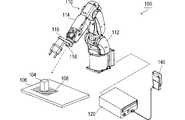
図1は、本実施形態にかかるロボットビジョンシステム100を説明する概略図である。図1に示すように、本実施形態のロボットビジョンシステム100は、ロボット110および制御部120を含んで構成される。また制御部120には、ティーチングペンダント140が接続されている。ティーチングペンダント140は、ユーザがロボットアーム114に動作をティーチングしたり、手動操作したりするための装置である。 FIG. 1 is a schematic diagram illustrating a
ロボット110はアーム114を支持する本体部112を有し、アーム114の先端にはエンドエフェクタ116が取り付けられている。またエンドエフェクタ116にはカメラ118が取り付けられている。ロボット110は、ワーク104をエンドエフェクタ116によって保持し、かかるワーク104を所定の位置まで移動する。 The
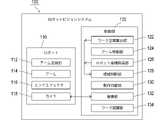
図2は、本実施形態のロボットビジョンシステム100の機能構成を説明する機能ブロック図である。図2に示すように、本実施形態のロボットビジョンシステム100は、ロボット110および制御部120を含んで構成される。制御部120は、ワーク空間算出部122、アーム移動部124、ロボット座標取得部126、領域判断部128、動作切替部130、撮像部132およびワーク認識部134を有する。 FIG. 2 is a functional block diagram illustrating the functional configuration of the
ワーク空間算出部122は、事前の処理として、ワークテーブル106においてワーク104の存在しうる範囲であるワーク空間108を算出する。詳細には、ワークテーブル106にワーク104を載置する場所を様々に変えて複数回撮像したり、ワークテーブル106に複数のワーク104を載置して撮像したりすることで、その撮像データからワーク空間108を設定することができる。 As a preliminary process, the
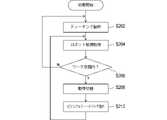
図3は、本実施形態のロボットビジョンシステム100の動作を説明するフローチャートである。なお、本実施形態では、ロボット110のエンドエフェクタ116がワーク空間108外からワーク空間108内に移動することを前提として説明する。 FIG. 3 is a flowchart for explaining the operation of the
処理開始時にロボット110のエンドエフェクタ116がワーク空間外に位置する場合、制御部120のアーム移動部124は、ロボット110のアーム114およびエンドエフェクタ116をティーチング動作によって所定のプログラムに沿って動作させる(S202)。 When the
次に、ロボット座標取得部126はエンドエフェクタ116のロボット座標を取得する(S204)。領域判断部128は、ワーク空間算出部122におけるワーク空間108およびロボット座標取得部126が取得したロボット座標を参照し、ロボット110のエンドエフェクタ116がワーク空間108内に位置するかを判断する(S206)。エンドエフェクタ116がワーク空間108外に位置した場合(S206のNO)、制御部120は、S202-S206の処理を繰り返す。 Next, the robot
ロボット110のエンドエフェクタ116がワーク空間108内に位置した場合(S206のYES)、動作切替部130は、ロボット110の動作をティーチング動作からビジュアルフィードバック動作に切り替える(S208)。そして、制御部120のアーム移動部124は、ロボット110のアーム114およびエンドエフェクタ116をビジュアルフィードバック動作で動作させる(S212)。 When the
ビジュアルフィードバック動作時には、制御部120の撮像部132はカメラ110を用いて画像を撮像する。そして、ワーク認識部134が画像内においてワーク104を認識したら(物体認識)、アーム移動部124はロボット110のエンドエフェクタ116をワーク104まで移動させ、エンドエフェクタ116によってワーク104を保持する。 During the visual feedback operation, the
ビジュアルフィードバック動作に切り替えた後(S206~S212)は、ロボット座標取得(S204)に戻る。そして、ロボット110のエンドエフェクタ116の現在位置がワーク空間108内にあるか否か(S206)を継続的に監視・判断する。これにより、ロボット110のエンドエフェクタ116がワーク空間108内からワーク空間108外に移動する場合には、動作切替部130は、ロボット110の動作をビジュアルフィードバック動作からティーチング動作に切り替えることができる。 After switching to the visual feedback operation (S206 to S212), the process returns to robot coordinate acquisition (S204). Then, it continuously monitors and judges whether or not the current position of the
上記説明したように本実施形態のロボットビジョンシステム100では、ワーク104の存在しうる範囲であるワーク空間108が予め設定されている。そして、ロボットの116がワーク空間108内に移動すると、ロボット110の動作がティーチング動作からビジュアルフィードバック動作に切り替えられる。これにより、ワーク空間108まではティーチング動作によってエンドエフェクタ116を効率的に移動させ、エンドエフェクタ116がワーク空間108に移動すると精密にエンドエフェクタ116を制御するビジュアルフィードバック動作となる。したがって、ワーク104を確実且つ迅速に保持することができ、作業効率の更なる向上を図ることが可能となる。 As described above, in the
以上、添付図面を参照しながら本発明の好適な実施形態について説明したが、本発明は係る例に限定されないことは言うまでもない。当業者であれば、特許請求の範囲に記載された範疇内において、各種の変更例または修正例に想到し得ることは明らかであり、それらについても当然に本発明の技術的範囲に属するものと了解される。 Although the preferred embodiments of the present invention have been described above with reference to the accompanying drawings, it goes without saying that the present invention is not limited to such examples. It is obvious that a person skilled in the art can conceive of various modifications or modifications within the scope described in the claims, and these also belong to the technical scope of the present invention. Understood.
本発明は、カメラを有するロボットを含むロボットビジョンシステムとして利用することができる。 INDUSTRIAL APPLICABILITY The present invention can be used as a robot vision system including a robot having a camera.
100…ロボットビジョンシステム、104…ワーク、106…ワークテーブル、108…ワーク空間、110…ロボット、112…本体部、114…アーム、116…エンドエフェクタ、118…カメラ、120…制御部、122…ワーク空間算出部、124…アーム移動部、126…ロボット座標取得部、128…領域判断部、130…動作切替部、132…撮像部、134…ワーク認識部、140…ティーチングペンダントDESCRIPTION OF
Claims (1)
Translated fromJapaneseワークの存在しうる範囲であるワーク空間を算出するワーク空間算出部と、
前記ロボットの動作をティーチング動作またはビジュアルフィードバック動作に切り替える動作切替部とを備え、
前記動作切替部は、前記ロボットのエンドエフェクタが前記ワーク空間外に移動した場合にはティーチング動作に切り替え、該エンドエフェクタが該ワーク空間内に移動した場合にはビジュアルフィードバック動作に切り替えることを特徴とするロボットビジョンシステム。In a robot vision system including a robot with a camera,
a work space calculation unit that calculates a work space in which a work can exist;
a motion switching unit for switching the motion of the robot to a teaching motion or a visual feedback motion;
The motion switching unit switches to a teaching motion when the end effector of the robot moves out of the work space, and switches to a visual feedback motion when the end effector moves into the work space. robot vision system.
Priority Applications (4)
| Application Number | Priority Date | Filing Date | Title |
|---|---|---|---|
| JP2021114391AJP7054036B1 (en) | 2021-07-09 | 2021-07-09 | Robot vision system |
| CN202210393661.XACN114589699A (en) | 2021-07-09 | 2022-04-14 | Robot vision system |
| TW111120596ATWI798099B (en) | 2021-07-09 | 2022-06-02 | Robot Vision System |
| PCT/JP2022/024366WO2023282032A1 (en) | 2021-07-09 | 2022-06-17 | Robot vision system |
Applications Claiming Priority (1)
| Application Number | Priority Date | Filing Date | Title |
|---|---|---|---|
| JP2021114391AJP7054036B1 (en) | 2021-07-09 | 2021-07-09 | Robot vision system |
Publications (2)
| Publication Number | Publication Date |
|---|---|
| JP7054036B1 JP7054036B1 (en) | 2022-04-13 |
| JP2023010327Atrue JP2023010327A (en) | 2023-01-20 |
Family
ID=81260117
Family Applications (1)
| Application Number | Title | Priority Date | Filing Date |
|---|---|---|---|
| JP2021114391AActiveJP7054036B1 (en) | 2021-07-09 | 2021-07-09 | Robot vision system |
Country Status (4)
| Country | Link |
|---|---|
| JP (1) | JP7054036B1 (en) |
| CN (1) | CN114589699A (en) |
| TW (1) | TWI798099B (en) |
| WO (1) | WO2023282032A1 (en) |
Cited By (1)
| Publication number | Priority date | Publication date | Assignee | Title |
|---|---|---|---|---|
| WO2024228231A1 (en)* | 2023-05-01 | 2024-11-07 | 株式会社ニコン | Control system, robot system, control method, and computer program |
Citations (8)
| Publication number | Priority date | Publication date | Assignee | Title |
|---|---|---|---|---|
| JPH09311712A (en)* | 1996-05-21 | 1997-12-02 | Nippon Telegr & Teleph Corp <Ntt> | Robot control method and device |
| JP2009110190A (en)* | 2007-10-29 | 2009-05-21 | Fanuc Ltd | Control device of robot for workpiece conveyance |
| JP2010152664A (en)* | 2008-12-25 | 2010-07-08 | Nissei Corp | Sensorless motor-driven robot using image |
| JP2012111010A (en)* | 2010-11-26 | 2012-06-14 | Daihen Corp | Robot controlling apparatus |
| JP2012254518A (en)* | 2011-05-16 | 2012-12-27 | Seiko Epson Corp | Robot control system, robot system and program |
| JP2015085458A (en)* | 2013-10-31 | 2015-05-07 | セイコーエプソン株式会社 | Robot control device, robot system, and robot |
| JP2015136763A (en)* | 2014-01-23 | 2015-07-30 | セイコーエプソン株式会社 | Control device, robot system, robot, and robot control method |
| JP2015174206A (en)* | 2014-03-18 | 2015-10-05 | セイコーエプソン株式会社 | Robot control device, robot system, robot, robot control method and robot control program |
Family Cites Families (4)
| Publication number | Priority date | Publication date | Assignee | Title |
|---|---|---|---|---|
| JP2010131711A (en)* | 2008-12-05 | 2010-06-17 | Honda Motor Co Ltd | Method of controlling robot arm |
| US8600552B2 (en)* | 2009-10-30 | 2013-12-03 | Honda Motor Co., Ltd. | Information processing method, apparatus, and computer readable medium |
| JP6777670B2 (en)* | 2018-03-27 | 2020-10-28 | ファナック株式会社 | A robot system that uses image processing to correct robot teaching |
| CN110842928B (en)* | 2019-12-04 | 2022-02-22 | 中科新松有限公司 | Visual guiding and positioning method for compound robot |
- 2021
- 2021-07-09JPJP2021114391Apatent/JP7054036B1/enactiveActive
- 2022
- 2022-04-14CNCN202210393661.XApatent/CN114589699A/enactivePending
- 2022-06-02TWTW111120596Apatent/TWI798099B/enactive
- 2022-06-17WOPCT/JP2022/024366patent/WO2023282032A1/ennot_activeCeased
Patent Citations (8)
| Publication number | Priority date | Publication date | Assignee | Title |
|---|---|---|---|---|
| JPH09311712A (en)* | 1996-05-21 | 1997-12-02 | Nippon Telegr & Teleph Corp <Ntt> | Robot control method and device |
| JP2009110190A (en)* | 2007-10-29 | 2009-05-21 | Fanuc Ltd | Control device of robot for workpiece conveyance |
| JP2010152664A (en)* | 2008-12-25 | 2010-07-08 | Nissei Corp | Sensorless motor-driven robot using image |
| JP2012111010A (en)* | 2010-11-26 | 2012-06-14 | Daihen Corp | Robot controlling apparatus |
| JP2012254518A (en)* | 2011-05-16 | 2012-12-27 | Seiko Epson Corp | Robot control system, robot system and program |
| JP2015085458A (en)* | 2013-10-31 | 2015-05-07 | セイコーエプソン株式会社 | Robot control device, robot system, and robot |
| JP2015136763A (en)* | 2014-01-23 | 2015-07-30 | セイコーエプソン株式会社 | Control device, robot system, robot, and robot control method |
| JP2015174206A (en)* | 2014-03-18 | 2015-10-05 | セイコーエプソン株式会社 | Robot control device, robot system, robot, robot control method and robot control program |
Cited By (1)
| Publication number | Priority date | Publication date | Assignee | Title |
|---|---|---|---|---|
| WO2024228231A1 (en)* | 2023-05-01 | 2024-11-07 | 株式会社ニコン | Control system, robot system, control method, and computer program |
Also Published As
| Publication number | Publication date |
|---|---|
| WO2023282032A1 (en) | 2023-01-12 |
| CN114589699A (en) | 2022-06-07 |
| JP7054036B1 (en) | 2022-04-13 |
| TWI798099B (en) | 2023-04-01 |
| TW202302304A (en) | 2023-01-16 |
Similar Documents
| Publication | Publication Date | Title |
|---|---|---|
| CN108942880B (en) | Robot system | |
| JP6788593B2 (en) | Manipulator system | |
| JP4249794B1 (en) | Control device for robot for workpiece transfer | |
| US11466974B2 (en) | Image capturing apparatus and machine tool | |
| US6597971B2 (en) | Device for avoiding interference | |
| US10293499B2 (en) | Movable robot | |
| EP3238883A1 (en) | Robot | |
| US11345036B2 (en) | Robot control device, robot control system, and robot control method | |
| US11833687B2 (en) | Robot apparatus, control method for the robot apparatus, assembly method using the robot apparatus, and recording medium | |
| JP2023069253A (en) | Robot teaching system | |
| JP2017124470A (en) | Robot and robot system | |
| JP2020066080A (en) | Robot system for collaborative work with human and robot control method | |
| JP2014217901A (en) | Robot system | |
| WO2023282032A1 (en) | Robot vision system | |
| JP5011507B2 (en) | Robot teaching system and robot teaching method | |
| WO2014123054A1 (en) | Robot control device and robot control method | |
| JP2017080873A (en) | Robot arm with image capturing function | |
| JP7594643B2 (en) | Robot System | |
| JP2022086463A (en) | Robot control device | |
| CN205393807U (en) | Transparent material laser machine tool unloading system on hand | |
| JP2020199610A (en) | Manual operation of robot arm | |
| Cao et al. | Human-Robot Complementary Collaboration for Flexible and Precision Assembly | |
| JP2022161144A (en) | robot system | |
| Sugandi et al. | Hand tracking-based motion control for robot arm using stereo camera | |
| JP2019042902A (en) | Imaging method and robot system |
Legal Events
| Date | Code | Title | Description |
|---|---|---|---|
| A621 | Written request for application examination | Free format text:JAPANESE INTERMEDIATE CODE: A621 Effective date:20210720 | |
| A871 | Explanation of circumstances concerning accelerated examination | Free format text:JAPANESE INTERMEDIATE CODE: A871 Effective date:20210721 | |
| A131 | Notification of reasons for refusal | Free format text:JAPANESE INTERMEDIATE CODE: A131 Effective date:20211102 | |
| TRDD | Decision of grant or rejection written | ||
| A01 | Written decision to grant a patent or to grant a registration (utility model) | Free format text:JAPANESE INTERMEDIATE CODE: A01 Effective date:20220301 | |
| A61 | First payment of annual fees (during grant procedure) | Free format text:JAPANESE INTERMEDIATE CODE: A61 Effective date:20220314 | |
| R150 | Certificate of patent or registration of utility model | Ref document number:7054036 Country of ref document:JP Free format text:JAPANESE INTERMEDIATE CODE: R150 |