JP2021505871A - Devices and methods for analyzing substances - Google Patents
Devices and methods for analyzing substancesDownload PDFInfo
- Publication number
- JP2021505871A JP2021505871AJP2020530510AJP2020530510AJP2021505871AJP 2021505871 AJP2021505871 AJP 2021505871AJP 2020530510 AJP2020530510 AJP 2020530510AJP 2020530510 AJP2020530510 AJP 2020530510AJP 2021505871 AJP2021505871 AJP 2021505871A
- Authority
- JP
- Japan
- Prior art keywords
- measurement
- specifically
- excitation
- detection
- electrodes
- Prior art date
- Legal status (The legal status is an assumption and is not a legal conclusion. Google has not performed a legal analysis and makes no representation as to the accuracy of the status listed.)
- Granted
Links
Images







Classifications
- A—HUMAN NECESSITIES
- A61—MEDICAL OR VETERINARY SCIENCE; HYGIENE
- A61B—DIAGNOSIS; SURGERY; IDENTIFICATION
- A61B5/00—Measuring for diagnostic purposes; Identification of persons
- A61B5/0093—Detecting, measuring or recording by applying one single type of energy and measuring its conversion into another type of energy
- A61B5/0095—Detecting, measuring or recording by applying one single type of energy and measuring its conversion into another type of energy by applying light and detecting acoustic waves, i.e. photoacoustic measurements
- A—HUMAN NECESSITIES
- A61—MEDICAL OR VETERINARY SCIENCE; HYGIENE
- A61B—DIAGNOSIS; SURGERY; IDENTIFICATION
- A61B5/00—Measuring for diagnostic purposes; Identification of persons
- A61B5/145—Measuring characteristics of blood in vivo, e.g. gas concentration or pH-value ; Measuring characteristics of body fluids or tissues, e.g. interstitial fluid or cerebral tissue
- A61B5/14532—Measuring characteristics of blood in vivo, e.g. gas concentration or pH-value ; Measuring characteristics of body fluids or tissues, e.g. interstitial fluid or cerebral tissue for measuring glucose, e.g. by tissue impedance measurement
- G—PHYSICS
- G01—MEASURING; TESTING
- G01N—INVESTIGATING OR ANALYSING MATERIALS BY DETERMINING THEIR CHEMICAL OR PHYSICAL PROPERTIES
- G01N25/00—Investigating or analyzing materials by the use of thermal means
- G01N25/18—Investigating or analyzing materials by the use of thermal means by investigating thermal conductivity
- A—HUMAN NECESSITIES
- A61—MEDICAL OR VETERINARY SCIENCE; HYGIENE
- A61B—DIAGNOSIS; SURGERY; IDENTIFICATION
- A61B5/00—Measuring for diagnostic purposes; Identification of persons
- A61B5/0059—Measuring for diagnostic purposes; Identification of persons using light, e.g. diagnosis by transillumination, diascopy, fluorescence
- A—HUMAN NECESSITIES
- A61—MEDICAL OR VETERINARY SCIENCE; HYGIENE
- A61B—DIAGNOSIS; SURGERY; IDENTIFICATION
- A61B5/00—Measuring for diagnostic purposes; Identification of persons
- A61B5/68—Arrangements of detecting, measuring or recording means, e.g. sensors, in relation to patient
- A61B5/6801—Arrangements of detecting, measuring or recording means, e.g. sensors, in relation to patient specially adapted to be attached to or worn on the body surface
- A61B5/6813—Specially adapted to be attached to a specific body part
- A61B5/6825—Hand
- A61B5/6826—Finger
- A—HUMAN NECESSITIES
- A61—MEDICAL OR VETERINARY SCIENCE; HYGIENE
- A61B—DIAGNOSIS; SURGERY; IDENTIFICATION
- A61B5/00—Measuring for diagnostic purposes; Identification of persons
- A61B5/68—Arrangements of detecting, measuring or recording means, e.g. sensors, in relation to patient
- A61B5/6801—Arrangements of detecting, measuring or recording means, e.g. sensors, in relation to patient specially adapted to be attached to or worn on the body surface
- A61B5/6844—Monitoring or controlling distance between sensor and tissue
- G—PHYSICS
- G01—MEASURING; TESTING
- G01N—INVESTIGATING OR ANALYSING MATERIALS BY DETERMINING THEIR CHEMICAL OR PHYSICAL PROPERTIES
- G01N21/00—Investigating or analysing materials by the use of optical means, i.e. using sub-millimetre waves, infrared, visible or ultraviolet light
- G01N21/17—Systems in which incident light is modified in accordance with the properties of the material investigated
- G01N21/171—Systems in which incident light is modified in accordance with the properties of the material investigated with calorimetric detection, e.g. with thermal lens detection
- G—PHYSICS
- G01—MEASURING; TESTING
- G01N—INVESTIGATING OR ANALYSING MATERIALS BY DETERMINING THEIR CHEMICAL OR PHYSICAL PROPERTIES
- G01N29/00—Investigating or analysing materials by the use of ultrasonic, sonic or infrasonic waves; Visualisation of the interior of objects by transmitting ultrasonic or sonic waves through the object
- G01N29/22—Details, e.g. general constructional or apparatus details
- G01N29/24—Probes
- G01N29/2418—Probes using optoacoustic interaction with the material, e.g. laser radiation, photoacoustics
- G—PHYSICS
- G01—MEASURING; TESTING
- G01N—INVESTIGATING OR ANALYSING MATERIALS BY DETERMINING THEIR CHEMICAL OR PHYSICAL PROPERTIES
- G01N33/00—Investigating or analysing materials by specific methods not covered by groups G01N1/00 - G01N31/00
- G01N33/48—Biological material, e.g. blood, urine; Haemocytometers
- G01N33/483—Physical analysis of biological material
- G01N33/487—Physical analysis of biological material of liquid biological material
- G01N33/49—Blood
- G—PHYSICS
- G01—MEASURING; TESTING
- G01N—INVESTIGATING OR ANALYSING MATERIALS BY DETERMINING THEIR CHEMICAL OR PHYSICAL PROPERTIES
- G01N21/00—Investigating or analysing materials by the use of optical means, i.e. using sub-millimetre waves, infrared, visible or ultraviolet light
- G01N21/17—Systems in which incident light is modified in accordance with the properties of the material investigated
- G01N21/25—Colour; Spectral properties, i.e. comparison of effect of material on the light at two or more different wavelengths or wavelength bands
- G01N21/31—Investigating relative effect of material at wavelengths characteristic of specific elements or molecules, e.g. atomic absorption spectrometry
- G01N21/39—Investigating relative effect of material at wavelengths characteristic of specific elements or molecules, e.g. atomic absorption spectrometry using tunable lasers
- G01N2021/396—Type of laser source
- G01N2021/399—Diode laser
- G—PHYSICS
- G01—MEASURING; TESTING
- G01N—INVESTIGATING OR ANALYSING MATERIALS BY DETERMINING THEIR CHEMICAL OR PHYSICAL PROPERTIES
- G01N2201/00—Features of devices classified in G01N21/00
- G01N2201/02—Mechanical
- G01N2201/023—Controlling conditions in casing
- G01N2201/0231—Thermostating
- G—PHYSICS
- G01—MEASURING; TESTING
- G01N—INVESTIGATING OR ANALYSING MATERIALS BY DETERMINING THEIR CHEMICAL OR PHYSICAL PROPERTIES
- G01N2201/00—Features of devices classified in G01N21/00
- G01N2201/06—Illumination; Optics
- G01N2201/069—Supply of sources
- G01N2201/0691—Modulated (not pulsed supply)
Landscapes
- Health & Medical Sciences (AREA)
- Life Sciences & Earth Sciences (AREA)
- Physics & Mathematics (AREA)
- General Health & Medical Sciences (AREA)
- Pathology (AREA)
- Engineering & Computer Science (AREA)
- Biomedical Technology (AREA)
- Biophysics (AREA)
- Molecular Biology (AREA)
- Animal Behavior & Ethology (AREA)
- Veterinary Medicine (AREA)
- Public Health (AREA)
- Surgery (AREA)
- Medical Informatics (AREA)
- Heart & Thoracic Surgery (AREA)
- Chemical & Material Sciences (AREA)
- Analytical Chemistry (AREA)
- Biochemistry (AREA)
- General Physics & Mathematics (AREA)
- Immunology (AREA)
- Optics & Photonics (AREA)
- Hematology (AREA)
- Emergency Medicine (AREA)
- Acoustics & Sound (AREA)
- Urology & Nephrology (AREA)
- Ecology (AREA)
- Medicinal Chemistry (AREA)
- Food Science & Technology (AREA)
- Investigating Or Analysing Materials By Optical Means (AREA)
- Investigating, Analyzing Materials By Fluorescence Or Luminescence (AREA)
- Investigating Or Analyzing Materials By The Use Of Ultrasonic Waves (AREA)
- Measuring Fluid Pressure (AREA)
- Measuring Temperature Or Quantity Of Heat (AREA)
Abstract
Translated fromJapaneseDescription
Translated fromJapanese本特許出願は、排他的ではないにしても、ピエゾ効果を利用した検出方法を特に考慮した、物質を分析するためのデバイスおよび方法に関する。ここで説明されるデバイスおよびここで説明される方法は、例えば、動物または人間の組織、体液の分析のため、ならびに一実施形態では、ブドウ糖または血糖を測定するために用いられ得る。 This patent application relates to devices and methods for analyzing substances, with particular consideration of detection methods utilizing the piezo effect, if not exclusive. The devices described herein and the methods described herein can be used, for example, for the analysis of animal or human tissues, body fluids, and, in one embodiment, for measuring glucose or blood glucose.
物質を分析するため、具体的には、血糖を測定するための周知の方法が、例えば、以下の文献に記載されている。 Well-known methods for analyzing substances, specifically for measuring blood glucose, are described, for example, in the following literature.
− Guoら:「Noninvasive glucose detection in human skin using wavelength modulated differential laser photothermal radiometry」, Biomedical Optics Express,Vol.3,2012,No.11、
− Uemuraら:「Non−invasive blood glucose measurement by Fourier transform infrared spectroscopic analysis through the mucous membrane of the lip: application of a chalcogenide optical fiber System」, Front Med Biol Eng.1999;9(2):137−153、
− Farahiら:「Pump probe photothermal spectroscopy using quantum cascade lasers」, J.Phys.D.Appl.Phys.45(2012)、および
− M.Fujinamiら:「Highly sensitive detection of molecules at the liquid/liquid interface using total internal reflection−optical beam deflection based on photothermal spectroscopy」, Rev.Sci.Instrum.,Vol.74、Number 1(2003)。
− (1)von Lilienfeld−Toal,H.Weidenmuller,M.Xhelaj,A.Mantele,W. A Novel Approach to Non−Invasive Glucose Measurement by Mid−Infrared Spectroscopy:The Combination of Quantum Cascade Lasers (QCL) and Photoacoustic Detection、 Vibrational Spectroscopy,38:209−215,2005。
− (2)Pleitez,M.von Lilienfeld−Toal,H.Mantele W. Infrared spectroscopic analysis of human interstitial fluid in vitro and in vivo using FT−IR spectroscopy and pulsed quantum Cascade lasers (QCL):Establishing a new approach to non−invasive glucose measurement、 Spectrochimica Acta.Part A, Molecular and Biomolecular spectroscopy,85:61−65,2012。
− (3)Pleitez,M.ら In Vivo noninvasive Monitoring of glucose concentration in Human Epidermis by Mid−Infrared Pulsed PhotoacousticSpectroscopy、Analytical Chemistry,85:1013−1020,2013。
− (4)Pleitez,M.Lieblein,T.Bauer,A.Hertzberg,O.of Lilienfeld−Toal,H.Mantele, W.Windowless ultrasound photocoutic cell for in vivo mid−IR spectroscopy of human epidermis:Low interference by changes of air pressure, temperature, and humidity caused by skin contact opens the possibility for non−invasive monitoring of glucose in the interstitial fluid、Review of Scientific instruments 84,2013。
− (5)M.A.Pleitez Rafael,O.Hertzberg,A.Bauer,M.Seeger、T.. Lieblein、H.von Lilienfeld−Toal,and W.Mantele. Photothermal deflectometry enhanced by total internal reflection enables non−invasive glucose monitoring in human epidermis. The Analyst,2014年11月。-Guo et al .: "Noninvasive glucose detection in human skin sensing wavelength modified differential laser photothermal radiometry", Biomedical Op. 3,2012, No. 11,
- Uemura et al .: "Non-invasive blood glucose measurement by Fourier transform infrared spectroscopic analysis through the mucous membrane of the lip: application of a chalcogenide optical fiber System", Front Med Biol Eng. 1999; 9 (2): 137-153,
-Farahi et al .: "Pump probe photothermal spectral lasers", J. et al., "Pump probe photothermal spectrum sensing quantum cascade lasers", J. Mol. Phys. D. Apple. Phys. 45 (2012), and −M. Fujinami et al .: "Highly sensitive detection of molecules at the liquid / liquid interface using total internal reflection, optical reflection, reflection. Sci. Instrum. , Vol. 74, Number 1 (2003).
− (1) von Lilianfeld-Toal, H. et al. Weidenmuller, M. et al. Xhelaj, A.M. Mantel, W.M. A Novel Aproach to Non-Infrared Glucose Measurement by Mid-Infrared Spectroscopy: The Communication of Quantum Cascade Lasers (QCL)
-(2) Pleits, M. et al. von Lilianfeld-Toal, H. et al. Mantele W. Infrared spectroscopic analysis of human interstitial fluid in vitro and in vivo using FT-IR spectroscopy and pulsed quantum Cascade lasers (QCL): Establishing a new approach to non-invasive glucose measurement, Spectrochimica Acta. Part A, Molecular and Biomolecular spectroscopy, 85: 61-65, 2012.
− (3) Pleitez, M. et al. In vivo noninvasive Concentration of glucose concentration in Human Epidermis by Mid-Infrared Pulsed Epidermis, Pharmaceutical,
-(4) Pleitez, M. et al. Leeblein, T.M. Bauer, A. Hertzberg, O.D. of Lilienfeld-Toal, H. et al. Mantel, W. Windowless ultrasound photocoutic cell for in vivo mid-IR spectroscopy of human epidermis: Low interference by changes of air pressure, temperature, and humidity caused by skin contact opens the possibility for non-invasive monitoring of glucose in the interstitial fluid, Review of Scientific instruments 84, 2013.
-(5) M. A. Pleits Rafael, O.D. Hertzberg, A. et al. Bauer, M.M. Seeger, T.M. .. Leeblein, H. et al. von Lillienfeld-Toal, and W. Mantel. Photothermal glucose remote enhanced by total internal reflection enables non-invasive glucose monitoring in human epidermis. The Analyst, November 2014.
本発明の目的は、物質、特に、動物もしくは人間の組織、または組織の構成要素もしくは成分を極めて単純且つ費用効果の高い仕方で分析するために用いられ得るデバイスおよび方法を明確に記述することである。本発明の一態様はまた、デバイスの小型サイズの達成を含む。 An object of the present invention is to articulate a device and method that can be used to analyze a substance, in particular an animal or human tissue, or a component or component of a tissue in a very simple and cost-effective manner. is there. One aspect of the invention also includes achieving a small size of the device.
この目的は、とりわけ、請求項1に係る特徴を有するデバイスによって達成される。デバイスの諸実施形態は下位クレームにおいて特定される。加えて、本発明は、従属する下位クレーム(単数または複数)に係る対応する諸実施形態とともに、独立の方法クレームに係る方法に関する。 This object is achieved, among other things, by a device having the characteristics according to
独国特許明細書、独国特許第102014108424(B3)号が参照され、同特許の内容はここで明確に参照され、本出願の内容は同特許の内容に基づき、したがって、独国特許明細書、独国特許第102014108424(B3)号の全内容は、この明示的な参照を通じて、本出願の開示内容の一部を同様になすと見なされるべきである(その開示の全ての詳細についての「参照による組み込み」)。具体的には、本参照は、付与された特許クレームにおいて述べられた特徴の全てに関する。加えて、本参照はまた、具体的には、そこで述べられている励起光ビームの詳細に関し、例えば、そこで述べられているパルス周波数および波長(波長範囲)の数値に関し、また、間質液中のブドウ糖含有量の測定の詳細に関する。 German Patent Specification, German Patent No. 102014108424 (B3), the content of the patent is explicitly referenced herein, the content of this application is based on the content of the patent and therefore the German patent specification. , The entire content of German Patent No. 102014108424 (B3) should be considered, through this explicit reference, to make some of the disclosures of this application as well (for all the details of that disclosure, " Incorporation by reference "). Specifically, this reference relates to all of the features mentioned in the granted patent claims. In addition, this reference also specifically relates to the details of the excitation light beam described therein, eg, the numerical values of the pulse frequency and wavelength (wavelength range) described therein, and in interstitial fluid. Regarding the details of measuring the glucose content of.
出願時に明示的に述べられたクレームおよび例示的な実施形態の主題に加えて、本特許出願はまた、本明細書の最後に列挙された他の諸態様を参照する。これらの態様は、個々に、またはグループで組み合わせられ得、いずれの場合にも、出願時に列挙されたクレームの特徴を有する。これらの態様はまた、単独で捉えられるのか、それとも互いに、または本出願のクレームされている主題と組み合わせられるのかにかかわらず、独立発明を構成する。出願人は、これらの発明を後日クレームの主題とする権利を留保する。これは、本出願の部分として、あるいは本出願の優先権を主張する、後続のサブ出願(sub−application)、継続出願(米国)、一部継続出願(米国)、またはフォローアップ出願(follow−up application)の文脈内で起こり得る。 In addition to the claims expressly stated at the time of filing and the subject matter of exemplary embodiments, the patent application also refers to other aspects listed at the end of the specification. These aspects can be combined individually or in groups, and in each case have the characteristics of the claims listed at the time of filing. These aspects also constitute an independent invention, whether taken alone, with each other, or in combination with the claimed subject matter of the present application. The applicant reserves the right to make these inventions the subject of claims at a later date. This may be a sub-application, a continuation application (US), a partial continuation application (US), or a follow-up application (follow-) as part of this application or claiming priority in this application. It can happen within the context of (up application).
以下の陳述に関して、用語「光」または「レーザ光」は、可視範囲、近、中、および遠赤外範囲内、ならびにUV範囲内の電磁波または電磁放射線を意味する。 With respect to the statements below, the term "light" or "laser light" means electromagnetic waves or electromagnetic radiation in the visible, near, medium, and far infrared ranges, and in the UV range.
ここで提示される方法の1つの可能な態様は、材料表面(の離間間隔)の下方における選択された深さ範囲への応答信号の測定の集中である。パラメータdが、本方法を用いて測定される深さ範囲に最も大きな影響を及ぼす。それは、d=√(D/(π*f))と定義され、ここで、Dはサンプル(例えば、ここでは、皮膚)の熱拡散率であり、fは励起ビームの変調周波数である。皮膚の熱拡散率に関する文献:
− U.Werner,K.Giese,B.Sennheiser,K.Plamann,and K.Kolmel,「Measurement of the thermal diffusivity of human epidermis by studying thermal wave propagation」, Phys.Med.Biol.37(1),21−35(1992)。
− A.M.Stoll,heat Transfer in Biotechnology,Vol 4 of advances in heat Transfer,J.P.Hartnett and T.Irvin,eds.(New York,Academic,1967),p117。One possible aspect of the method presented here is the concentration of measurement of the response signal to a selected depth range below the material surface (separation interval). The parameter d has the greatest effect on the depth range measured using this method. It is defined as d = √ (D / (π * f)), where D is the thermal diffusivity of the sample (eg, skin here) and f is the modulation frequency of the excitation beam. Literature on the thermal diffusivity of the skin:
− U. Werner, K.K. Giese, B.I. Sennheiser, K. et al. Pramann, and K. Kolmel, "Measurement of the thermal diffusivity of human epidermis by studying thermal wave propagation", Phys. Med. Biol. 37 (1), 21-35 (1992).
− A. M. Stol, heat Transfer in Biotechnology, Vol. 4 of advance in heat Transfer, J. Mol. P. Hartnet and T.M. Irvin, eds. (New York, Academic, 1967), p117.
測定の質を改善することを目的として物質の最上層からの応答信号を除去するために、一実施形態では、最上層における測定が、他のより深い層と比べて、より少ない程度で、またはよりゆっくりと変化する場合には、以前の測定と比較した測定値の変化が用いられ得る。これは、一実施形態では、皮膚の最上層が実際には下層との交換を受けず、したがって、生理的パラメータがあまり変化しない、人間の皮膚上の測定における場合であり得る。また、測定値の時間微分が、最上皮膚層からの信号を除外するべく応答信号のために用いられてもよい。このように、測定または少なくとも評価が皮膚中の間質液に限定されるか、または集中させられ得る。 In order to eliminate the response signal from the top layer of material for the purpose of improving the quality of the measurement, in one embodiment, the measurement in the top layer is to a lesser extent or compared to the other deeper layers. For slower changes, changes in measurements compared to previous measurements may be used. This may be the case in human skin measurements where, in one embodiment, the uppermost layer of skin does not actually undergo replacement with the lower layer and therefore the physiological parameters do not change much. Also, the time derivative of the measured value may be used for the response signal to exclude the signal from the uppermost skin layer. Thus, measurements or at least evaluations can be limited to or concentrated on interstitial fluid in the skin.
この目的のために、測定は、励起光源の異なる変調周波数を用いて複数回取得されるスペクトルのための応答信号の取得を含むことができ、例えば、同じ波長および異なる変調シーケンスのための応答信号の測定値を差分するか、またはそれらの商を形成することによって、異なる変調周波数のための結果を組み合わせる。このような測定を遂行するために、また、励起ビームのための適切な制御デバイスと、応答信号のスペクトルのための評価デバイスとを有するデバイスが提供されるべきである。 For this purpose, measurements can include the acquisition of response signals for spectra acquired multiple times using different modulation frequencies of the excitation source, eg, response signals for the same wavelength and different modulation sequences. Combine the results for different modulation frequencies by differentiating the measurements of or forming their quotient. To carry out such measurements, and a device having a suitable control device for the excitation beam and an evaluation device for the spectrum of the response signal should be provided.
以下の本文は、まず、出願時に列挙されたクレームの主題を扱う。 The text below first deals with the subject matter of the claims listed at the time of filing.
目的は、物質を分析するためのデバイスであって、
− 測定のために物質と少なくとも部分的に接触させられることになる測定面を有する測定本体と、
− 測定面を通過することによって物質に向けられる、好ましくは、赤外スペクトル範囲内の、異なる波長の1つまたは複数の励起ビームを発生するための、励起ビーム源、具体的には、レーザデバイス、より具体的には、量子カスケードレーザ(quantum cascade laser、QCL)、波長可変QCL、および/またはレーザアレイ、好ましくは、QCLのアレイを有するレーザデバイスと、
− 検出デバイスであって、以下の、
・ 測定本体の部分であり、具体的には、測定面に隣接して、または直接隣接して配置されている検出領域であって、検出領域の材料が、圧力または温度の変化に応じて変化する電気特性を有する、検出領域、ならびに
・ 指定された電気特性を表す電気信号を検出するために用いられ得る電極、
を含む検出デバイスと、
を有する、物質を分析するためのデバイスによる、特許請求項1に係る本発明の特徴を用いて達成される。The purpose is a device for analyzing substances,
-A measuring body having a measuring surface that will be in contact with the substance at least partially for measurement.
-Excitation beam source, specifically a laser device, for generating one or more excitation beams of different wavelengths, preferably within the infrared spectral range, directed at the material by passing through the measurement surface. , More specifically, a quantum cascade laser (QCL), a variable wavelength QCL, and / or a laser array, preferably a laser device having an array of QCLs.
− Detection device, which is as follows
-A part of the measurement body, specifically, a detection region arranged adjacent to or directly adjacent to the measurement surface, and the material of the detection region changes in response to a change in pressure or temperature. Detection regions that have electrical characteristics, as well as electrodes that can be used to detect electrical signals that represent the specified electrical characteristics.
With detection devices including
It is achieved by using the feature of the present invention according to
この場合には、領域の指定された特性は、具体的には、領域の材料の特性であることができる。 In this case, the specified property of the region can be, specifically, the property of the material of the region.
好ましいアプローチは、物質を分析するためのこのようなデバイスであって、圧力または温度に依存して変化する電気特性が、
・ 圧力変化および/または温度変化に応じた圧電信号を電極上に生じさせるか、あるいは
・ 温度に従って変化する電気比抵抗によって形成され、
デバイスがまた、電気抵抗および/または圧電信号を検出するために測定本体の検出領域に導電接続された、前記電極を含む電気接触デバイスを備える、デバイスを用いることである。A preferred approach is such a device for analyzing substances, where the electrical properties change depending on pressure or temperature.
-A piezoelectric signal is generated on the electrodes in response to pressure changes and / or temperature changes, or-Formed by an electrical resistivity that changes with temperature.
The device is also to use a device comprising an electrical contact device comprising said electrodes, conductively connected to the detection area of the measurement body to detect electrical resistance and / or piezoelectric signals.
圧電信号の検出の場合には、圧力または温度に応じて変化する電気特性は「分極」と称され得る。誘電率などの、圧力および/または温度に応じて変化し、本発明の目的のために活用され得る他の電気特性も同等に可能である。 In the case of the detection of piezoelectric signals, the electrical properties that change with pressure or temperature can be referred to as "polarization". Other electrical properties that vary with pressure and / or temperature, such as permittivity, and can be utilized for the purposes of the present invention are equally possible.
この文脈において、励起ビームは、光ビームレーザ・ビーム、あるいはさらに、励起ビーム源、具体的には、レーザデバイス、または励起ビーム源、具体的には、レーザデバイスの個々のレーザ要素によって、分析される物質へ順次もしくは同時に放射される多数の実質的に平行なレーザ・ビームを意味すると理解されるものとする。励起ビームのコヒーレンスは必要とされず、これにより、コヒーレントでない、または部分的にのみコヒーレントな放射さえも用いられ得る。この点において、レーザデバイスに加えて、波長または波長範囲の選択を可能にする、LED/半導体ダイオードまたは他のものなどの、他の光源もビーム源として用いられ得る。励起ビームのためにより広帯域の光源を用いるときには、また、波長可変フィルタなどの波長フィルタが、異なる波長または波長範囲のための励起ビームを選択的に発生するために用いられ得る。 In this context, the excitation beam is analyzed by a light beam laser beam, or even by an excitation beam source, specifically a laser device, or an excitation beam source, specifically an individual laser element of the laser device. It shall be understood to mean a large number of substantially parallel laser beams emitted sequentially or simultaneously to the material. No coherence of the excitation beam is required, which allows non-coherent or even partially coherent radiation to be used. In this regard, in addition to laser devices, other light sources, such as LEDs / semiconductor diodes or others, that allow selection of wavelength or wavelength range can also be used as beam sources. When a wider band light source is used for the excitation beam, wavelength filters such as tunable filters can also be used to selectively generate excitation beams for different wavelengths or wavelength ranges.
異なる適用のためには、中赤外範囲内の励起ビームを選択することが有用になり得る。例えば、OPA(optical parametric amplification(光パラメトリック増幅))、またはNOPA(non−collinear optical parametric amplification(非共直線光パラメトリック増幅))、またはOPG(optical parametric generation(光パラメトリック発生))方法を用いて動作し、このような方法を用いて異なる波長の発生を可能にするレーザを光源として選択することも可能である。 For different applications, it may be useful to select an excitation beam in the mid-infrared range. For example, OPA (optical parametric amplification), or NOPA (non-colliner optical parametric amplification), or OPG (optical parametric amplification), or OPG (optical parametric amplification), or OPG (optical parametric amplification). However, it is also possible to select a laser as a light source that enables generation of different wavelengths by using such a method.
光学的に非線形の結晶、例えば、ベータホウ酸バリウムを有する光共振器における、いわゆる光パラメトリック発振器(optical parametric oscillator、OPO)を用いることも可能である。非線形の3波相互作用のゆえに、結晶は、とりわけ、注入されたポンプ波から変換された波長の放射線を発生する。このように、上述のOPA/NOPA方法または機構と同様に、例えば、近赤外波長範囲内の放射線から、本出願において説明される分光手順のために用いられ得る中赤外範囲内の放射線が得られ得る。 It is also possible to use a so-called optical parametric oscillator (OPO) in an optical resonator having an optically non-linear crystal, for example barium betaborate. Due to the non-linear three-wave interaction, the crystal produces, among other things, radiation of the wavelength converted from the injected pump wave. Thus, similar to the OPA / NOPA method or mechanism described above, for example, from radiation in the near-infrared wavelength range, radiation in the mid-infrared range that can be used for the spectroscopic procedures described in this application. Can be obtained.
測定本体の検出領域は、温度もしくは圧力に依存した電気比抵抗を有することによって、および/または圧力もしくは温度変化の適用下で電気信号、具体的には、圧電性電圧信号を発生することによって、上述の特性を呈する測定本体の空間領域または区分を指す。これは、材料選択によって、および任意選択的に、また、検出領域が成る材料のさらなる構成、例えば、処理によって達成される。 The detection area of the measurement body is by having a temperature or pressure dependent electrical resistance and / or by generating an electrical signal, specifically a piezoelectric voltage signal, under the application of pressure or temperature change. Refers to the spatial area or division of the measurement body that exhibits the above characteristics. This is achieved by material selection, optionally, and by further composition of the material consisting of the detection region, eg, processing.
検出領域に隣接した測定本体の領域が、この点において、具体的には、それらが成る材料に関して、検出領域の材料とは異なるという場合があり得る。しかし、また、検出領域に隣接した測定本体の領域、および検出領域自体が温度もしくは圧力依存性電気比抵抗を有し、および/または圧力もしくは温度変化が生じた場合に、電気的、具体的には、圧電性の、電圧信号を発生することも提供され得る。検出領域は電極および/または分離領域によって測定本体の他の領域から分離されていてもよく、分離領域は検出領域の材料よりも著しく柔らかい、弾性を有する、または可撓性を有する材料で作製されていてもよく、これにより、分離領域の材料は、検出領域の材料ほど圧力または温度上昇を伝導しない。 It is possible that the region of the measurement body adjacent to the detection region may differ in this respect from the material of the detection region, specifically with respect to the material they consist of. However, also when the region of the measurement body adjacent to the detection region, and the detection region itself has a temperature or pressure-dependent piezoelectric resistivity, and / or a pressure or temperature change occurs, electrically and specifically. Can also be provided to generate a piezoelectric, voltage signal. The detection region may be separated from other regions of the measurement body by electrodes and / or separation regions, and the separation region is made of a material that is significantly softer, more elastic, or more flexible than the material of the detection region. This may allow the material in the separation region to conduct less pressure or temperature rise than the material in the detection region.
具体的には、測定本体はまた、第1の部分、およびセンサ層として実装された測定本体の第2の部分によって形成されていてもよく、センサ層は、測定本体の第1の部分とは異なる組成を有してもよく、具体的には、圧電材料で少なくとも部分的に構成され得る。センサ層は、測定面の領域内の測定本体の第1の部分に適用され得、具体的には、接着接合され得る。センサ層はまた、測定本体の第1の部分よりも大きい、圧力または温度に対する屈折率の依存性を有する材料で作製され得る。測定本体の第1の部分は励起ビーム/励起ビームに対して透明であることができ、例えば、シリコンから成り得る。励起ビーム(単数または複数)のためのセンサ層が透明でないか、または測定本体の第1の部分ほど透明でない場合には、このとき、センサ層は、励起ビーム(単数または複数)の通過を可能にするためのスロットを有することができる。スロット内において、例えば、励起ビーム(単数または複数)を、分析される物質内の点に集束させるためのレンズが設けられていてもよい。 Specifically, the measurement body may also be formed by a first portion and a second portion of the measurement body mounted as a sensor layer, the sensor layer being the first part of the measurement body. They may have different compositions and, specifically, may be at least partially composed of a piezoelectric material. The sensor layer can be applied to the first portion of the measurement body within the region of the measurement surface, and specifically can be adhesively bonded. The sensor layer can also be made of a material that has a refractive index dependence on pressure or temperature that is larger than the first portion of the measurement body. The first portion of the measurement body can be transparent to the excitation beam / excitation beam and may consist of, for example, silicon. If the sensor layer for the excitation beam (s) is not transparent or as transparent as the first part of the measurement body, then the sensor layer allows the excitation beam (s) to pass through. Can have a slot for Within the slot, for example, a lens may be provided to focus the excitation beam (s) to a point in the material being analyzed.
また、測定面内、上、またはその前方で終了する光導波路が、励起ビーム(単数または複数)を案内するために測定本体の内部に設けられていてもよい。光導波路は測定本体の基板内に一体化され、SOI技術において製造され得る。光導波路は検出領域を貫通することができるか、またはそのそばを過ぎるよう案内されてもよい。光導波路は、励起ビームに対する圧電性圧力の発生の影響を最小限に抑えるために、機械的圧力に対する屈折率の依存性を有しないか、または最小限に有するのみである材料で構成され得る。光導波路材料はまた、検出領域内に設けられた圧電材料から機械的に離間されているか、または可撓性の、具体的には、弾性材料層または気体層によってそれから機械的に切り離されていてもよい。 In addition, an optical waveguide ending in, above, or in front of the measurement plane may be provided inside the measurement body to guide the excitation beam (s). The optical waveguide is integrated within the substrate of the measurement body and can be manufactured in SOI technology. The optical waveguide may be able to penetrate the detection area or be guided past it. The optical waveguide may be composed of a material that has no or only minimal dependence of the index of refraction on mechanical pressure in order to minimize the effect of the generation of piezoelectric pressure on the excitation beam. The optical waveguide material is also mechanically separated from the piezoelectric material provided within the detection area or mechanically separated from it by a flexible, specifically elastic or gas layer. May be good.
目的は、代替的に、物質を分析するためのデバイスであって、
− 測定のために物質と少なくとも部分的に接触させられることになる測定面を有する測定本体と、
− 測定面を通過する際に材料に向けられる、異なる選択可能な波長の励起ビームを発生するための、好ましくは、赤外スペクトル範囲内の、励起ビーム源、具体的には、レーザデバイス、より具体的には、量子カスケードレーザ(QCL)、波長可変QCL、および/またはレーザアレイ、好ましくは、QCLのアレイを有するレーザデバイスと、を有し、
− 測定面に隣接して配置され、および/またはそれに直接隣り合う少なくとも1つの検出デバイスであって、検出デバイスが、圧電信号を検出するためのくとも2つの電極を有する接触デバイスを有し、前記電極が、検出領域の異なる側において互いに反対に配置されている、検出デバイスを有する、物質を分析するためのデバイスによる特許請求項2に係る本発明の特徴によって達成される。検出領域内において、具体的には圧電効果のゆえに、温度および/または圧力変化に応じて材料の電気抵抗を変化させるか、または電気信号を発生する材料が配置される。The purpose is, as an alternative, a device for analyzing substances,
-A measuring body having a measuring surface that will be in contact with the substance at least partially for measurement.
− An excitation beam source, specifically a laser device, more preferably within the infrared spectral range, for generating excitation beams of different selectable wavelengths directed at the material as it passes through the measurement surface. Specifically, it comprises a quantum cascade laser (QCL), a variable wavelength QCL, and / or a laser array, preferably a laser device having an array of QCLs.
-At least one detection device located adjacent to and / or directly adjacent to the measurement surface, wherein the detection device has a contact device having at least two electrodes for detecting a piezoelectric signal. It is achieved by the feature of the present invention according to
クレーム1の主題の場合、およびクレーム2の主題の場合のどちらにおいても、励起源、具体的には、レーザデバイスは、例えば、特定の波数/波長を掃引する励起ビームを、分析される物質内へ送り込むか、または特定の固定された波数を有する多数の励起ビームを順次もしくは同時に放射する。この場合には、波長選択はまた、励起ビーム源の背後の光路内のフィルタを用いて後で実施されてもよい。 In both the subject matter of
アレイを用いるときには、レーザアレイは単純な固定波長レーザを有し得る。特定の波長において、ビームは、分析される物質の材料に依存して吸収され、これにより、エネルギーが放出され、エネルギーは、少なくとも部分的に熱波動の形態で材料の表面へ、次に、測定本体内へ、およびそこでさらに検出領域へ輸送される。励起ビームは、有利に、強度変調され、異なる、さらには複数の、変調シーケンスの利用が可能である。また、フーリエ変換領域における多数の変調周波数を包含するレーザ・パルスを形成することも可能である。検出領域内における材料のパルス状加熱は、抵抗および/または電圧信号の変化、ならびに/あるいは屈折率の変化などの他のパラメータ変化を発生させる。接触デバイスの電極およびそれらの給電ケーブルを用いて、述べられた最初の2つの電気現象が、電圧および/または電気抵抗を測定し、これらの変化を評価し、それらを物質中の温度上昇および/または励起ビームの吸収強度に対応付ける測定デバイスに接続され得る。それゆえ、吸収強度は、横断される励起ビームの波数/周波数に応じた吸収スペクトルとして測定され得る。 When using an array, the laser array may have a simple fixed wavelength laser. At a particular wavelength, the beam is absorbed depending on the material of the material being analyzed, thereby releasing energy, which is at least partially measured on the surface of the material in the form of thermal waves. It is transported into the body and there further to the detection area. The excitation beam is advantageously intensity-modulated, allowing the use of different or even multiple modulation sequences. It is also possible to form a laser pulse that includes a large number of modulation frequencies in the Fourier transform region. Pulsed heating of the material within the detection region causes changes in resistance and / or voltage signals, and / or other parameter changes such as changes in index of refraction. Using the electrodes of the contact device and their feeding cables, the first two electrical phenomena described measure voltage and / or electrical resistance, assess these changes, and make them temperature rise and / or in material. Alternatively, it can be connected to a measuring device that corresponds to the absorption intensity of the excitation beam. Therefore, the absorption intensity can be measured as an absorption spectrum depending on the wave number / frequency of the excited beam being traversed.
検出領域は、有利に、測定面に隣接して配置されており、すなわち、検出領域は、測定面に直接隣接して、または測定面から距離を置いて配置されており、この距離は小さくなければならない(例えば、いずれの場合も検出領域と測定面との間の最小距離で測定され、10ミクロン未満または100ミクロン未満)。例えば、検出デバイスはまた、測定本体の部分として測定本体の別の部分と一体に接合されたプレートもしくは本体、またはさもなければ、測定面の領域内における測定本体の部分のコーティングを含み得る。 The detection area is advantageously located adjacent to the measurement surface, i.e., the detection area is located directly adjacent to the measurement surface or at a distance from the measurement surface, and this distance must be small. Must be (eg, measured at the minimum distance between the detection area and the measurement surface in each case, less than 10 microns or less than 100 microns). For example, the detection device may also include a plate or body that is integrally joined to another part of the measurement body as part of the measurement body, or otherwise coating a portion of the measurement body within the region of the measurement surface.
具体的には、圧力変化が検出される場合には、例えば、ピエゾ感受性材料/ピエゾ・センサを用いるときには、検出デバイスは、また、分析される物質中における励起ビームの吸収によって発生され、既知の速度(人間の組織内において、およそ1500m/s)で測定面および検出領域へ伝わる、音波の形態の応答信号を検出するために用いられ得る。励起ビームのための変調デバイスに接続された評価デバイスを用いることで、応答信号の測定の良好な時間分解能のゆえに、励起ビームの変調と応答信号との間の位相ずれが測定され、これにより、吸収が生じた組織内の深さを決定することができる。信号は、多くの場合、異なる組織層からの異なる応答信号の重畳であるため、異なる測定が異なる変調周波数で実施されてもよく、異なる変調周波数における応答信号の相関が取られ、具体的には、上部組織層からの信号を相殺し、除去することができ、その理由は、これらは、汚れた、および死んだ皮膚細胞による汚染に起因する誤差を特に被りやすいためである。 Specifically, when pressure changes are detected, for example when using a piezo sensitive material / piezo sensor, the detection device is also known to be generated by the absorption of an excitation beam in the material being analyzed. It can be used to detect response signals in the form of sound waves transmitted to the measurement surface and detection area at a speed (approximately 1500 m / s in human tissue). By using an evaluation device connected to a modulation device for the excitation beam, the phase shift between the modulation of the excitation beam and the response signal is measured due to the good time resolution of the measurement of the response signal, thereby. The depth within the tissue where absorption occurred can be determined. Since the signal is often a superposition of different response signals from different tissue layers, different measurements may be performed at different modulation frequencies and the response signals at different modulation frequencies are correlated, specifically. Signals from the upper panniculus can be offset and eliminated because they are particularly susceptible to errors due to contamination by dirty and dead skin cells.
本開示では、同じ用語「応答信号」がいくつかの方法で用いられることに留意されたい。一方では、それは、励起ビームによる励起に対する物理的応答、すなわち、音波、温度上昇または同様のものなどを記述することができる。他方では、それはまた、この物理的応答を表す(通例、電気的)信号、すなわち、電極によって測定された電圧または電流などを指すこともできる。本提示の簡潔性および一貫性のために、同じ用語「応答信号」が全体を通じて用いられており、それが物理的応答(例えば、圧力波)を指すのか、その物理的応答の物理的結果(例えば、圧電材料の圧縮)を指すのか、それとも関連測定信号(例えば、圧電材料によって発生された電圧)を指すのかは、さらなる説明がなくとも、文脈から明らかである。 It should be noted that the same term "response signal" is used in several ways in this disclosure. On the one hand, it can describe the physical response to excitation by the excitation beam, i.e. sound waves, temperature rise or the like. On the other hand, it can also refer to a (usually electrical) signal that represents this physical response, such as the voltage or current measured by the electrodes. For the sake of brevity and consistency of the presentation, the same term "response signal" is used throughout, whether it refers to a physical response (eg, a pressure wave) or the physical result of that physical response (eg, pressure wave). For example, it is clear from the context whether it refers to the compression of the piezoelectric material or the associated measurement signal (eg, the voltage generated by the piezoelectric material), without further explanation.
異なる変調周波数の代わりに、また、多くの変調周波数の混合を表し、フーリエ解析を用いた異なる変調周波数の分析を可能にする、急勾配の上昇を有する信号(理想的には、いわゆるディラック・パルス)が形成されてもよい。 A signal with a steep rise (ideally a so-called Dirac pulse) that represents a mixture of many modulation frequencies instead of different modulation frequencies and allows analysis of different modulation frequencies using Fourier analysis. ) May be formed.
デバイスの一実装形態は、具体的には、測定面の面法線に沿った、少なくとも2つの電極が、測定面から異なる距離に前後に配置されているか、または面法線と垂直な方向の検出領域の異なる側において互いに離間配置されていることを提供し得る。 One implementation of the device is specifically that at least two electrodes along the surface normal of the measurement surface are placed back and forth at different distances from the measurement surface or in a direction perpendicular to the surface normal. It may provide that they are spaced apart from each other on different sides of the detection area.
測定面は平坦であるか、または湾曲していてもよい。湾曲している場合には、面法線は、点における、具体的には、励起ビームが測定面を通過する場所における、測定面に対する法線を意味すると理解される。 The measurement surface may be flat or curved. When curved, the surface normal is understood to mean the normal to the measurement surface at a point, specifically where the excitation beam passes through the measurement surface.
少なくとも2つの電極が、それらが検出領域を完全に、もしくは部分的に包囲するよう、または検出領域が2つの電極の間に完全に、もしくは部分的に配置されるよう、配置されなければならない。電極は、検出領域の異なる側の異なる幾何学的場所に分布させられ、具体的には、検出領域を取り巻いて分布させられてもよい。 At least two electrodes must be arranged so that they completely or partially surround the detection area, or that the detection area is completely or partially located between the two electrodes. The electrodes may be distributed in different geometric locations on different sides of the detection area, and specifically, may be distributed around the detection area.
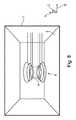
デバイスのさらなる実装形態は、励起ビームが測定本体、具体的には、検出領域を通過し、光導波路が、具体的には、励起ビームを案内するために、測定本体内または上に配置されており、また、具体的には、光導波路が測定本体内に一体化されていることを提供することができる。 A further embodiment of the device is that the excitation beam passes through the measurement body, specifically the detection region, and an optical waveguide is specifically located in or on the measurement body to guide the excitation beam. Further, specifically, it can be provided that the optical waveguide is integrated in the measurement body.
それゆえ、励起ビームは、測定本体を通り、例えば、測定本体の材料を直接通り、またはその内部に配置された光導波路を通り、検出領域を通り、または検出領域のそばを過ぎ、分析される物質の点まで伝わり、物質は励起放射線を吸収し、熱放射線を放射する。 Therefore, the excitation beam is analyzed through the measurement body, for example, directly through the material of the measurement body, or through an optical waveguide located within it, through the detection region, or by the detection region. It travels to the point of matter, which absorbs excitation radiation and emits thermal radiation.
測定本体の材料内および/または検出領域の材料内に一体化された光導波路が、励起ビームを案内するための光導波路として用いられ得る。このような光導波路は、例えば、エピタキシャル法によって、またはウェハ内もしくは上へのウェハ材料の選択的ドーピングによって適用され得る。しかし、光ファイバケーブルが測定本体内に挿入されるか、またはさもなければ、これに外側で少なくとも部分的に適用されてもよい。 An optical waveguide integrated within the material of the measurement body and / or the material of the detection region can be used as an optical waveguide for guiding the excitation beam. Such optical waveguides can be applied, for example, by the epitaxial method or by selective doping of the wafer material into or on the wafer. However, the fiber optic cable may be inserted into the measurement body or otherwise applied to it at least partially on the outside.
また、励起ビームが、検出領域に直接隣接し、および/またはこれに隣り合う領域内で測定面を通過することも提供され得る。 It may also be provided that the excitation beam passes through the measurement surface in a region directly adjacent to and / or adjacent to the detection region.
デバイスのさらなる実装形態は、励起ビームの強度を変調するための変調デバイスを提供し得る。この場合には、機械的チョッパを用いて、ならびに制御可能なシャッターもしくは偏向ミラーデバイス、または透過が制御可能である本体/層を用いて、異なる種類の変調が可能である。加えて、変調はまた、励起光源/レーザ光源の活性化によって直接達成され得る。このとき、測定は1つまたは複数の変調周波数におけるスペクトルの取得を含み得、異なる変調周波数における測定は、深さ情報を得、および/または分析されるサンプル/物質の特定の深さ範囲からの測定データを除去するために、互いに相関を取られ得る。具体的には、したがって、物質の表面から発出した測定データが除去され得る。これらは、物質の表面における励起光ビームの吸収に由来する、ならびに分析される物質の表面上の不純物または異常によって生じ得る測定データおよび熱波動である。患者の皮膚の分析におけるこの一例は、情報価値のない組成を有し、および/または誤った情報を提供する、死んだ細胞から部分的に成る最上層である。これは、生物活性物質、活性代謝または代謝産物あるいは同様のものが皮膚中で検出されるべきである場合に、特に当てはまる。 Further implementations of the device may provide a modulation device for modulating the intensity of the excitation beam. In this case, different types of modulation are possible with mechanical choppers and with controllable shutter or deflection mirror devices, or bodies / layers with controllable transmission. In addition, modulation can also be achieved directly by activation of the excitation / laser source. In this case, the measurement may include the acquisition of spectra at one or more modulation frequencies, and the measurements at different modulation frequencies may obtain depth information and / or from a specific depth range of the sample / material being analyzed. They can be correlated with each other to remove the measured data. Specifically, therefore, measurement data emanating from the surface of the substance can be removed. These are the measured data and thermal waves that result from the absorption of the excitation light beam on the surface of the material and can be caused by impurities or anomalies on the surface of the material being analyzed. This example in the analysis of a patient's skin is a top layer consisting partially of dead cells that has an informative composition and / or provides false information. This is especially true when bioactive substances, active metabolites or metabolites or the like should be detected in the skin.
以下において、様々な幾何学的電極構成が提示され、それらの利点が説明される。 In the following, various geometric electrode configurations are presented and their advantages are explained.
この目的を達成するために、例えば、少なくとも2つ、具体的には、少なくとも3つまたは4つ、より具体的には、少なくとも6つ、より具体的には、少なくとも8つの電極が、測定面から異なる距離に前後に配置されているか、または測定面の面法線と垂直な方向に互いに離間配置されていることも提供され得る。 To achieve this goal, for example, at least two, specifically at least three or four, more specifically at least six, more specifically at least eight electrodes, are on the measurement surface. It may also be provided that they are placed back and forth at different distances from each other or that they are spaced apart from each other in a direction perpendicular to the surface normal of the measurement surface.
電極のうちの少なくとも1つまたは複数は検出領域の各々の側に配置されている。これは、電気抵抗または電圧を測定するために用いられ得る電極の異なる対が利用可能であることを意味する。 At least one or more of the electrodes are located on each side of the detection area. This means that different pairs of electrodes that can be used to measure electrical resistance or voltage are available.
給電ケーブルを介して複数または全ての電極に接続された電子デバイスがこの目的のために設けられている。電子デバイスは、異なる選択可能な電極の間の電気抵抗または電圧の取得および評価を順次または同時に生じさせる、制御デバイス、および、具体的には、評価デバイスを有する。 Electronic devices connected to a plurality or all electrodes via a power cable are provided for this purpose. Electronic devices include control devices, and specifically evaluation devices, that sequentially or simultaneously generate the acquisition and evaluation of electrical resistance or voltage between different selectable electrodes.
この目的を達成するために、電極の異なる対または全ての対が試験的に選択されてもよい。試験的測定のために選択された、電極の対の電極は、それらの間に検出領域の少なくとも一部を各々有しなければならない。個々の電極対からの測定が互いに比較され、評価され得る。評価パラメータは、例えば、信号強度、または信号の変化の大きさ、または信号対雑音比、あるいは他のパラメータであることができる。測定本体内への電極の一体化に加えて、同様に含まれるべきである別の例は、複数の電極が接着によって測定本体/測定面の表面上に、ずらされたパターンで適用されるか、またはその上に組み込まれているか、もしくは蒸着されている例である。 To achieve this goal, different pairs of electrodes or all pairs may be experimentally selected. The pair of electrodes selected for the test measurement must each have at least a portion of the detection area between them. Measurements from individual electrode pairs can be compared and evaluated against each other. The evaluation parameters can be, for example, signal strength, or magnitude of signal change, or signal-to-noise ratio, or other parameters. In addition to the integration of the electrodes into the measurement body, another example that should be included as well is whether multiple electrodes are applied in a staggered pattern on the surface of the measurement body / measurement surface by adhesion. , Or an example of being incorporated or vapor-deposited on it.
また、少なくとも2つ、具体的には、少なくとも3つまたは4つ、具体的には、少なくとも6つ、具体的には、少なくとも8つの電極が、測定面の面法線の方向に、もしくは面法線と垂直に、または面法線に対して0〜90度の方向に、検出領域から異なる距離に、具体的には、検出領域の中心から異なる距離に前後に配置されていることも提供され得る。この場合の検出領域は、例えば、特定の材料から成る測定本体の空間領域によって規定され得る。検出領域はまた、全体的な機構によって、分析される材料内への励起ビームの進入点の上方に位置する測定本体の領域として規定され得る。 Also, at least two, specifically at least three or four, specifically at least six, specifically at least eight electrodes are located in the direction of the surface normal of the measurement surface or on the surface. It is also provided that they are placed back and forth at different distances from the detection area, specifically at different distances from the center of the detection area, perpendicular to the normal or in the direction 0-90 degrees to the surface normal. Can be done. The detection region in this case can be defined, for example, by the spatial region of the measurement body made of a particular material. The detection region can also be defined by the overall mechanism as the region of the measurement body located above the point of entry of the excitation beam into the material being analyzed.
加えて、検出領域はまた、利用可能な電極によって電気信号が潜在的に検出可能である空間点の合計によって規定され得る。 In addition, the detection area can also be defined by the sum of the spatial points at which the electrical signal is potentially detectable by the available electrodes.
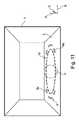
さらなる実装形態は、少なくとも2つ、具体的には、少なくとも3つまたは4つ、より具体的には、少なくとも6つ、より具体的には、少なくとも8つの電極が、検出領域の周りの環状または球殻状領域内に、および少なくとも部分的に、検出領域の異なる側において互いに反対側に配置されており、異なる電極が、検出領域の中心から本質的に同じ距離、または検出領域の中心から異なる距離を有することを提供することができる。これは、測定本体の表面上方に分布した電極の場合も含むことを意図されている。 Further embodiments include at least two, specifically at least three or four, more specifically at least six, and more specifically at least eight electrodes, which are annular or around the detection region. Located within the spherical shell region, and at least in part, on different sides of the detection region, opposite to each other, with different electrodes at essentially the same distance from the center of the detection region, or different from the center of the detection region. It can be provided to have a distance. This is intended to include the case of electrodes distributed above the surface of the measurement body.
上述の電極分布を用いて、例えば、電極の複数の対において測定することで、測定のために最も適した電極対(単数または複数)が選択され、用いられ得る。 Using the electrode distribution described above, for example, by measuring in a plurality of pairs of electrodes, the most suitable electrode pair (s) can be selected and used for the measurement.
電極対を選択する際の測定品質の好適な尺度として、例えば、信号強度、または信号ダイナミックレンジ、または雑音レベル、または信号/雑音比のいずれかが用いられ得る。 As a suitable measure of measurement quality when selecting an electrode pair, for example, either signal strength or signal dynamic range, or noise level, or signal / noise ratio can be used.
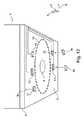
また、接触デバイスの電極のうちの1つまたは複数または全てが、円盤状もしくは板状、環状、環状円盤状、開口部を有する矩形もしくは多角形フレームの形態、キャップ状、または棒状であるように設計されていることも提供され得る。 Also, one or more or all of the electrodes of the contact device may be disc-shaped or plate-shaped, annular, annular disc-shaped, rectangular or polygonal frame with openings, cap-shaped, or rod-shaped. It can also be provided that it is designed.
デバイスの一実装形態は、接触デバイスの電極のうちの1つまたは複数または全てが測定本体または検出器デバイスの1つの表面上に配置されており、具体的には、接合方法を用いて、具体的には、接着接合または溶接によって取り付けられていることを提供することができる。それらはまた、蒸着またはコーティングによって適用されてもよい。測定本体は単一の均質な材料で作製され得るか、または検出領域内においては、それは、測定本体の他の領域の材料とは異なる特別な材料から成ってもよい。 In one implementation of the device, one or more or all of the electrodes of the contact device are located on one surface of the measuring body or detector device, specifically using a joining method. It can be provided that it is attached by adhesive bonding or welding. They may also be applied by vapor deposition or coating. The measuring body can be made of a single homogeneous material, or within the detection region it may consist of a special material that is different from the material of the other regions of the measuring body.
電極は、通常、全ての実施形態のために金属で、いずれにせよ、良好な導電率を有する材料から作製されている。それらはまた、導電性プラスチックまたは導電的に充填された材料で作製されていてもよい。 The electrodes are usually made of metal for all embodiments and in any case from a material having good conductivity. They may also be made of conductive plastic or conductively filled material.
デバイスのさらなる実装形態は、接触デバイスの電極のうちの1つまたは複数または全てが測定本体の内側または外側において、測定本体の穿孔、凹部、もしくは溝などの、1つまたは複数のスロット内に配置されている、具体的には、挿入されている、鋳造されている、射出成形によって、または付加製造方法(3D印刷)によって組み込まれていることを提供することができる。これらの変形例は、技術的に単純な仕方による測定本体内への電極の挿入を可能にする。 A further embodiment of the device is that one or more or all of the electrodes of the contact device are placed inside or outside the measurement body in one or more slots, such as perforations, recesses, or grooves in the measurement body. It can be provided that it is inserted, specifically cast, by injection molding, or incorporated by an additive manufacturing method (3D printing). These variants allow the insertion of electrodes into the measuring body in a technically simple manner.
電極はまた、測定本体の材料の領域を、照射によって、または粒子による衝撃によって導電性にすることによって、測定本体内に作成され得る。これは、例えば、高エネルギー放射線が炭素分子を部分的に破壊し、導電性である炭素蓄積を形成するプラスチックにおいて可能である。 Electrodes can also be created within the measurement body by making the area of material of the measurement body conductive by irradiation or by impact by particles. This is possible, for example, in plastics where high energy radiation partially destroys carbon molecules to form conductive carbon deposits.
加えて、測定本体が平坦本体として、具体的には、プレートの形態の平面平行本体として形成されており、具体的には、測定面と垂直な厚さが、測定面内で延びる方向における測定本体の最小延長の50%未満、具体的には、25%未満、より具体的には、10%未満であることが提供され得る。 In addition, the measurement body is formed as a flat body, specifically, as a plane parallel body in the form of a plate, and specifically, measurement in a direction in which the thickness perpendicular to the measurement surface extends in the measurement surface. It can be provided that it is less than 50% of the minimum extension of the body, specifically less than 25%, more specifically less than 10%.
測定本体のこの設計変形例は、熱応答信号の異なる検出方法のために用いられ得、ピエゾ効果に基づく検出方法に原則的に限定されない。それはまた、測定面において反射された測定ビーム、およびその偏向を検出するための検出器を用いた測定方法においても用いられ得、測定面と垂直な方向における測定本体の寸法の大幅な低減を可能にする。例えば、ピエゾ効果を用いることによるものであれ、または反射されたビームの偏向を測定することによるものであれ、測定方法にかかわりなく、平坦本体として形成された測定本体は測定面の領域内の層を有することができ、この層は、ピエゾ式測定方法の場合には、圧電材料から成り、反射された測定ビームの偏向を測定することによる検出の場合には、屈折率が測定本体の他の領域の材料内よりも温度に応じて強く変化する材料で成ることができる。 This design variant of the measurement body can be used for different detection methods of thermal response signals and is not limited in principle to detection methods based on the piezo effect. It can also be used in measurement methods using a detector to detect the reflected measurement beam on the measurement surface and its deflection, allowing for a significant reduction in the dimensions of the measurement body in the direction perpendicular to the measurement surface. To. Regardless of the measurement method, for example, by using the piezo effect or by measuring the deflection of the reflected beam, the measurement body formed as a flat body is a layer within the region of the measurement surface. This layer consists of a piezoelectric material in the case of the piezo measurement method, and in the case of detection by measuring the deflection of the reflected measurement beam, the refractive index is the other of the measurement body. It can consist of a material that changes more strongly with temperature than within the material of the region.
デバイスのさらなる実装形態は、測定本体が、励起ビーム源、具体的には、レーザデバイスによって照射された励起ビームを反射するためのミラーデバイスを有するか、またはこのようなミラーデバイスを担持することを提供し得る。 A further embodiment of the device is that the measurement body has a mirror device for reflecting an excitation beam source, specifically an excitation beam emitted by a laser device, or carries such a mirror device. Can be provided.
非常に平坦な測定本体の場合には、励起ビームは測定本体の平坦な側部から照射され得る。このとき、励起ビームは励起ビーム源から、最初は、測定本体内において測定面と本質的に平行に、または測定本体の境界面と平行に伝搬し、次に、測定面に向けて偏向される。 In the case of a very flat measuring body, the excitation beam can be emitted from the flat side of the measuring body. At this time, the excitation beam propagates from the excitation beam source, first essentially parallel to the measurement surface in the measurement body or parallel to the boundary surface of the measurement body, and then deflected toward the measurement surface. ..
励起ビームを反射する代わりに、それはまた、測定本体の好適な材料設計を用いて測定面に向けて回折されてもよい。平坦本体はまた、励起ビームのための光集束要素を有するか、またはこのような要素、例えば、1つまたは複数のレンズに接続されていてもよい。
また、励起ビームが、測定面と平行に、または測定面に対して30度未満、具体的には、20度未満、より具体的には、10度未満もしくは5度未満の角度で測定本体内へ照射され、励起ビームが測定面に向けてそらされるか、または偏向され、それを通過することも提供され得る。Instead of reflecting the excitation beam, it may also be diffracted towards the measurement surface using the suitable material design of the measurement body. The flat body may also have a light focusing element for the excitation beam, or may be connected to such an element, eg, one or more lenses.
In addition, the excitation beam is parallel to the measurement surface, or at an angle of less than 30 degrees, specifically less than 20 degrees, more specifically, less than 10 degrees or less than 5 degrees with respect to the measurement surface. It may also be provided that the excitation beam is directed towards the measurement surface or deflected and passed through it.
特に、平坦本体が用いられるときには、測定本体内に一体化されるか、またはそれに直接接続されて、励起ビームを、測定面、および分析される物質の物質表面に集束させる、例えば、回折要素/レンズの形態の、集束デバイスが設けられ得る。 In particular, when a flat body is used, it is integrated within or directly connected to the measurement body to focus the excitation beam on the measurement surface and on the material surface of the material being analyzed, eg, diffraction element / Focusing devices in the form of lenses can be provided.
また、励起ビームが測定本体の材料を通過することも提供され得る。 It may also be provided that the excitation beam passes through the material of the measurement body.
また、測定本体が、励起ビームによって貫かれる少なくとも1つのスロット、具体的には、穿孔を有し、スロットおよび/または穿孔が、具体的には、測定面から測定本体内へ延びるか、あるいは凹部もしくはスロットおよび/または穿孔が測定本体の測定面の反対側の境界面から測定本体全体を貫通し、測定面に達することも提供される。凹部は、チャネルまたは穿孔であって、その長手方向軸もまた、少なくとも部分的に、測定面と平行な励起ビームの方向のものである、チャネルまたは穿孔として延びることができる。センサ層が設けられている場合には、スロット、凹部、および/または穿孔は測定面と反対側のセンサ層の境界面から測定本体内へ延びることができ、これにより、センサ層自体はスロットによって貫かれない。 Also, the measurement body has at least one slot, specifically a perforation, pierced by the excitation beam, the slot and / or perforation specifically extending from the measurement surface into the measurement body or recessed. Alternatively, slots and / or perforations are also provided to penetrate the entire measurement body from the interface opposite the measurement surface of the measurement body and reach the measurement surface. The recess can extend as a channel or perforation, the longitudinal axis thereof, at least in part, in the direction of the excitation beam parallel to the measurement plane. If a sensor layer is provided, slots, recesses, and / or perforations can extend into the measurement body from the interface of the sensor layer opposite the measurement surface into the measurement body, which allows the sensor layer itself to be slotted. I can't penetrate.
この場合には、測定本体は励起ビームのための中空のチャネル/穿孔/凹部を有することができ、これにより、たとえ、励起ビームが測定本体および測定面を通過し、分析される物質に至っても、励起ビームは測定本体の材料に侵入しない。 In this case, the measurement body can have hollow channels / perforations / recesses for the excitation beam, even if the excitation beam passes through the measurement body and the measurement surface to reach the material to be analyzed. , The excitation beam does not penetrate the material of the measurement body.
また、測定本体が、励起ビームのための連続チャネルを有する第1の部分を有し、測定本体がその下側において第1の部分上に、凹部を有しないか、または第1の部分の凹部の続きを有して連続しているセンサ層を有することも提供され得る。センサ層が200ミクロンよりも薄い、具体的には、100ミクロンよりも薄い場合には、励起ビームは − たとえ、それが赤外ビームである場合でも − あまり吸収を伴わずにセンサ層を通過することができ、センサ層内の凹部、穿孔、またはチャネルは必要ない。測定本体のセンサ層は、圧電性特性を有し、本発明に係る検出領域を形成する材料から成ることができる。センサ層はまた、温度および/または圧力の変化が屈折率の変化を生じさせる材料から成ることもでき、これにより、この変化もまた、例えば、センサ層内で反射された検出ビームの反射の角度を検出することによって応答信号として検出され得る。例えば、このとき、測定本体の第1の部分は、可視範囲内では、検出ビームのために透過性であるが、赤外スペクトル範囲内では透過性がより低い、または不透明である、石英もしくはサファイアなどの材料から成ることができる。 Also, the measurement body has a first portion having a continuous channel for the excitation beam, and the measurement body has no recess on the first portion below it, or a recess in the first portion. It may also be provided to have a continuous sensor layer with a continuation of. If the sensor layer is thinner than 200 microns, specifically less than 100 microns, the excitation beam-even if it is an infrared beam-passes through the sensor layer with less absorption. Can be, no recesses, perforations, or channels in the sensor layer are required. The sensor layer of the measurement body has piezoelectric characteristics and can be made of a material that forms a detection region according to the present invention. The sensor layer can also be made of a material whose temperature and / or pressure changes cause a change in the index of refraction, which also causes, for example, the angle of reflection of the detection beam reflected within the sensor layer. Can be detected as a response signal by detecting. For example, at this time, the first part of the measurement body is transparent for the detection beam in the visible range, but less transparent or opaque in the infrared spectral range, quartz or sapphire. Can consist of materials such as.
デバイスのさらなる実装形態は、測定本体内もしくは上において、具体的には、検出デバイス内において、またはそれに直接隣接し、それと熱接触して、比熱容量および/または比熱伝導率が、測定本体が構成される材料の比熱容量および/または比熱伝導率よりも大きいか、あるいはペルチェ要素として設計された、本体の形態の少なくとも1つのヒートシンクが配置されていることを提供することができる。 Further implementations of the device include the specific heat capacity and / or specific heat conductivity configured by the measurement body in or on the measurement body, specifically in or directly adjacent to the detection device and in thermal contact with it. It can be provided that at least one heat sink in the form of a body that is greater than the specific heat capacity and / or specific heat conductivity of the material to be made or designed as a Perche element is located.
比熱容量および/または熱伝導率が、測定本体が作製される材料の比熱容量および/または比熱伝導率よりも大きい、本体の形態のヒートシンクの代わりに、また、温度勾配を調整するための能動的または受動的冷却要素、具体的には、ペルチェ冷却要素が設けられていてもよい。温度勾配または絶対温度はまた、閉ループ制御デバイスを用いてペルチェ要素によって制御されてもよい。 Instead of a heat sink in the form of a body, where the specific heat capacity and / or thermal conductivity is greater than the specific heat capacity and / or thermal conductivity of the material from which the measurement body is made, and also for adjusting the temperature gradient. Alternatively, a passive cooling element, specifically a Pelche cooling element, may be provided. The temperature gradient or absolute temperature may also be controlled by the Peltier element using a closed loop control device.
例えば、金属もしくは水晶本体、または能動的に動作させられるペルチェ要素の形態の、この種のヒートシンクを用いると、温度変化が検出領域内で変調周波数とともに十分に高まること、および熱が十分迅速に遠くに輸送されることを確実にするために必要となる、熱拡散率に関する測定本体の適切な熱的特性が達成され得る。無論、これは、主として、測定本体/検出デバイスの材料に依存するが、それは1つまたは複数のヒートシンクの適切な追加によって影響を受け得る。例えば、これらは、少なくとも部分的に検出領域の周りに配置されるか、またはさもなければ、検出領域の1つの側に設けられ得る。 With this type of heat sink, for example in the form of a metal or crystal body, or an actively actuated Peltier element, the temperature change increases sufficiently with the modulation frequency within the detection region, and the heat is quickly and far away. Appropriate thermal properties of the measurement body with respect to thermal diffusivity, which are required to ensure that they are transported to, can be achieved. Of course, this depends primarily on the material of the measuring body / detection device, but it can be affected by the appropriate addition of one or more heat sinks. For example, they may be located, at least in part, around the detection area, or otherwise on one side of the detection area.
デバイスのさらなる実装形態は、測定本体内もしくは上において、具体的には、検出デバイス内において、またはそれに直接隣接し、それと熱接触して、比熱容量および/または比熱伝導率が、測定本体が作製される材料の比熱容量および/または比熱伝導率よりも小さい、本体の形態の少なくとも1つの熱バリアが配置されていることを提供することができる。 Further implementations of the device include the specific heat capacity and / or specific heat conductivity created by the measurement body in or on the measurement body, specifically in or directly adjacent to the detection device and in thermal contact with it. It can be provided that at least one thermal barrier in the form of a body is arranged that is less than the specific heat capacity and / or specific thermal conductivity of the material to be made.
この種の熱バリアを、単独で、または同様にヒートシンクと組み合わせて用いると、温度変化が変調周波数とともに検出領域内で十分に高められること、およびまた、熱が変調周波数に対応して十分迅速に遠くに輸送されることを確実にするために必要となる、熱拡散率に関する測定本体の適切な熱的特性が達成され得る。これは、1つまたは複数の熱バリアの好適な追加によって影響を受け得る。例えば、これらは、少なくとも部分的に検出領域の周りに配置されるか、またはさもなければ、検出領域の1つの側に設けられ得る。熱バリアは、例えば、熱絶縁性プラスチック要素によって実装され得る。例えば、温度勾配を発生し、熱輸送の方向を制御するために、1つまたは複数のヒートシンクが検出領域の第1の側に設けられ、1つまたは複数の熱バリアが第1のものと反対側の検出領域の第2の側に設けられ得る。 When this type of thermal barrier is used alone or in combination with a heat sink as well, the temperature change is sufficiently enhanced within the detection region with the modulation frequency, and also the heat is rapidly sufficiently corresponding to the modulation frequency. Appropriate thermal properties of the measurement body with respect to thermal diffusivity, which are required to ensure long-distance transport, can be achieved. This can be affected by the suitable addition of one or more thermal barriers. For example, they may be located, at least in part, around the detection area, or otherwise on one side of the detection area. The thermal barrier can be implemented, for example, by a thermally insulating plastic element. For example, one or more heat sinks are provided on the first side of the detection area to generate a temperature gradient and control the direction of heat transfer, and one or more heat barriers are opposite to the first. It may be provided on the second side of the detection area on the side.
検出デバイスおよび/または測定本体が、圧電材料、具体的には、圧電セラミック、具体的には、PZTセラミック、より具体的には、焼結セラミック、あるいは単結晶圧電材料、具体的には、石英、電気石、ニオブ酸リチウム、オルトリン酸ガリウム、ベルリナイト、セニエット塩、チタン酸バリウム(BTO)もしくはジルコン酸チタン酸鉛、リン酸ガリウムもしくはニオブ酸鉛マグネシウム、または薄層堆積としての酸化亜鉛(ZnO)もしくは窒化アルミニウム、または分極ポリフッ化ビニルなどの強誘電体から少なくとも部分的に成ることが提供され得る。 The detection device and / or the measurement body is a piezoelectric material, specifically a piezoelectric ceramic, specifically, a PZT ceramic, more specifically, a sintered ceramic, or a single crystal piezoelectric material, specifically, quartz. , Electrostone, lithium niobate, gallium ortriate, berlinite, seniet salt, barium titanate (BTO) or lead zirconate titanate, gallium phosphate or lead magnesium niobate, or zinc oxide (ZnO) as thin layer deposit Alternatively, it may be provided that it is at least partially composed of a ferroelectric material such as aluminum nitride, or polarized polyvinyl fluoride.
それぞれの材料は、赤外周波数範囲内、有利には、中赤外周波数範囲内においてできるだけ透明でなければならない。 Each material should be as transparent as possible within the infrared frequency range, preferably within the mid-infrared frequency range.
上述の圧電材料は測定本体上の薄い層として設けられ、測定面を形成することができる。このとき、層厚さは0.5mm未満、具体的には、300ミクロン未満であり、および/または励起ビームのための穿孔もしくはチャネルなどの、凹部もしくはスロットを有しなければならい。このとき、測定本体の残りの部分は、圧電性でなくても、励起ビームに対して透明でなくても、および/または励起ビームのための凹部を有しなくてもよい。測定本体のこの残りの部分は、圧電材料を用いたコーティングのためのヒートシンクの役割を果たすことができ、これは、それが圧電層よりも大きい比熱容量および/または熱伝導率を有することができることを意味する。 The above-mentioned piezoelectric material is provided as a thin layer on the measurement body and can form a measurement surface. At this time, the layer thickness must be less than 0.5 mm, specifically less than 300 microns, and / or have recesses or slots such as perforations or channels for the excitation beam. At this time, the remaining portion of the measurement body may not be piezoelectric, transparent to the excitation beam, and / or may not have a recess for the excitation beam. This remaining part of the measuring body can act as a heat sink for coating with piezoelectric material, which allows it to have a higher specific heat capacity and / or thermal conductivity than the piezoelectric layer. Means.
デバイスのさらなる実装形態は、測定本体の圧電要素または圧電領域がアクチュエータとして電圧源に接続されることができ、制御可能な入力電圧に依存して、励起ビームのための妨害物を形成することを提供することができる。 A further implementation of the device is that the piezoelectric element or piezoelectric region of the measurement body can be connected to the voltage source as an actuator and, depending on the controllable input voltage, form an obstruction for the excitation beam. Can be provided.
このように、測定本体の材料は、誘電率を変更することによって励起ビームのための光学チョッパとしても用いられ得る。 As described above, the material of the measurement body can also be used as an optical chopper for the excitation beam by changing the dielectric constant.
本発明に係るデバイスを動作させるための方法は、変調された励起ビームが、具体的には、測定本体を通して、分析される物質上へ誘導され、接触デバイスの異なる電極対からの信号が同時または順次に取得され、評価され、まず、基準に基づいて、電極の対のうちのいずれの1つまたは複数が、さらなる処理のために適した信号を出力するのかが決定され、次に、1つまたは複数の選択された電極対からの信号が測定のために用いられ、評価され、具体的には、選択された電極対または対群の信号が取得され、評価される、後続の測定が遂行されることを提供することができる。 In a method for operating the device according to the present invention, a modulated excitation beam is specifically guided through the measurement body onto the material to be analyzed, and signals from different electrode pairs of the contact device are simultaneously or Acquired and evaluated sequentially, first, based on the criteria, one or more of the pairs of electrodes is determined to output a suitable signal for further processing, then one. Alternatively, signals from a plurality of selected electrode pairs are used and evaluated for the measurement, specifically, signals from the selected electrode pair or pair group are acquired and evaluated, and subsequent measurements are performed. Can be provided to be done.
好適な信号は、例えば、信号の強度、信号/雑音比、または信号が励起ビームの変調に追随する急峻さに基づいて選択され得る。好適な電極の選択により、適用可能な場合には、例えば、熱波動が測定領域の中心に達しない場合には、測定デバイスに対する分析される物質の任意の不整列を検出し、修正することが可能である。この場合には、異なって分布した電極が電流測定のために選択される。 Suitable signals can be selected, for example, based on signal strength, signal-to-noise ratio, or steepness at which the signal follows the modulation of the excitation beam. With the selection of suitable electrodes, where applicable, for example, if the thermal wave does not reach the center of the measurement area, any misalignment of the material being analyzed with respect to the measurement device can be detected and corrected. It is possible. In this case, differently distributed electrodes are selected for current measurement.
測定の間に、励起ビームが波数/波長/周波数に関して連続的もしくは段階的に変更されるか、または固有波長範囲が走査される。アレイを用いるときには、励起ビームはまた、アレイの異なる要素を通じて、異なる波長で、または異なる波長範囲内で同時または順次に放射され得る。 During the measurement, the excitation beam is changed continuously or stepwise with respect to wavenumber / wavelength / frequency, or the natural wavelength range is scanned. When using an array, the excitation beam can also be emitted simultaneously or sequentially through different elements of the array at different wavelengths or within different wavelength ranges.
本方法の一実装形態では、また、初期試験測定の後に、検出された信号に依存して、分析される物質に対するデバイスの不整列が決定され、指示され、具体的には、ユーザが、再整列を遂行するよう要求されることも提供され得る。 In one implementation of the method, also after the initial test measurement, the misalignment of the device with respect to the substance to be analyzed is determined and directed, specifically, the user re-arranges, depending on the detected signal. It may also be provided that the alignment is required to be performed.
本方法は、測定が遂行されることになる指の不整列のみを検出し、合図するための別の検出方法、例えば、反射検出ビームと並行して用いられさえし得る。 The method may even be used in parallel with another detection method for detecting and signaling only finger misalignment for which the measurement will be performed, eg, a reflection detection beam.
不整列は、例えば、プロファイル/ベクトルの形態の初期測定における電極の異なる対の信号強度を決定し、このプロファイル/ベクトルを、以前の測定または指定された参照値からの対応する値と比較することによって検出され得る。特定のプロファイルはまた、信号強度に正規化され得る。参照プロファイルに対する差が、プロファイルの特定の要素のための、または非対称性に関する特定の閾値を超える場合には、このとき、不整列が推測され得る。 Misalignment, for example, determines the signal strength of different pairs of electrodes in the initial measurement of profile / vector morphology and compares this profile / vector with the corresponding value from a previous measurement or specified reference value. Can be detected by. Certain profiles can also be normalized to signal strength. Misalignment can then be inferred if the difference to the reference profile exceeds a particular threshold for a particular element of the profile or for asymmetry.
方法のさらなる実装形態では、また、
− 励起送出デバイスを用いて、少なくとも1つの励起波長を有する少なくとも1つの強度変調された電磁励起ビームが発生され、励起送出デバイスが、少なくとも1つの電磁励起ビームを、物質の表面の下方に配置された物質の体積内へ照射し、
− 応答信号が検出デバイスを用いて検出され、
− 物質が、検出された応答信号に基づいて分析され、
− 励起送出デバイスの異なる変調周波数を用いて、応答信号、具体的には、励起ビームの異なる波長のための時間応答信号波形が順次決定され、
− 異なる変調周波数における複数の応答信号波形が互いに相関を取られ、
− 物質の表面の下の深さ範囲に固有の情報がこれらから得られることも提供され得る。In a further implementation of the method, also
− The excitation sending device is used to generate at least one intensity-modulated electromagnetic excitation beam having at least one excitation wavelength, and the excitation sending device places at least one electromagnetic excitation beam below the surface of the material. Irradiate into the volume of the substance
− The response signal is detected using the detection device
-The substance is analyzed based on the detected response signal,
− Using the different modulation frequencies of the excitation sending device, the response signal, specifically the time response signal waveform for different wavelengths of the excitation beam, is sequentially determined.
− Multiple response signal waveforms at different modulation frequencies are correlated with each other
− It may also be provided that information specific to the depth range below the surface of the material can be obtained from these.
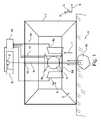
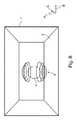
図1は、物質を分析するためのデバイスの例示的な実施形態を示す。物質5が、好ましくは、測定本体1上に直接配置されているか、またはその逆もあり、どちらの場合においても、物質と、本開示において「光学媒体」とも称される、測定本体1の測定面2とは、測定動作のために直接物理接触をしている。測定本体1は、光に対して透明な、または少なくとも赤外範囲内で透明な固体本体、具体的には、例えば、デバイスが、一実施形態では、例えば、血液などの、液体中のブドウ糖または血糖含有量を測定するように設計されているときには、具体的には、赤外範囲内において透明である、水晶もしくはガラス本体またはプラスチック本体、具体的には、ポリマー本体として実装され得る。このとき、デバイスは、ブドウ糖または血糖レベルの指示を生成するために用いられ得る。 FIG. 1 shows an exemplary embodiment of a device for analyzing a substance. The substance 5 is preferably placed directly on the
デバイスは、好ましくは、1つまたは複数の励起波長を有する励起光ビームの形態の、1つまたは複数の電磁励起ビームを、物質の表面の第1の領域の下の物質5内に位置する体積5a内へ放射するための、励起ビーム源の形態の励起送出デバイス3、具体的には、レーザデバイスを備える。励起送出デバイス3はまた、以下において、簡潔に、レーザデバイスとも称される。レーザデバイスは、波長に関して可変であるレーザ、具体的には、波長可変量子カスケードレーザであることができ、以下においてさらに説明されるように、レーザ、具体的には、固定波長を有する半導体レーザ、または規定された狭い波長範囲内の指定された個々の波長もしくは光を各々放射する、発光半導体ダイオードの形態の、少なくとも2つの単一のエミッタを有する光源ストリップまたは光源アレイを用いることが好ましく、組み合わせられた光源を、特定の波長または波長範囲を分離するために直列に接続された好適なフィルタととともに、同時または順次に用いる可能性を含む。複数の個々のエミッタが組み合わせられる場合には、個々の励起光ビームは、マルチプレクサを用いて光路内に、例えば、光ファイバケーブル、または分離されたチャネル、または光学媒体内の他の光路内に一緒に注入され得る。また、複数の光のビームが同時に放射される場合、および複数の光のビームが順次に放射される場合の両方において、異なるエミッタによって放射された光ビームをできるだけ厳密に互いに平行に整列させ、それらをできるだけ単一のビームに結合するためのコリメータが提供されてもよい。 The device preferably places one or more electromagnetically excited beams in the form of an excitation light beam with one or more excitation wavelengths within material 5 below a first region of the surface of the material. It includes an
また、励起光の経路上において、励起光を集束させるための光学要素が設けられてもよい。これは、例えば、レーザデバイスと測定本体との間に、または励起ビームが測定本体に入る場所で測定本体自体の上に、または同様に、測定本体上の励起ビームが測定本体を出る領域内、例えば、測定面の領域内で、測定本体上に、測定面上に、測定面と同一平面で、または測定面と検出デバイスとの間に設けられ得る。 Further, an optical element for focusing the excitation light may be provided on the path of the excitation light. This can be, for example, between the laser device and the measurement body, or on the measurement body itself where the excitation beam enters the measurement body, or similarly, within the region where the excitation beam on the measurement body exits the measurement body. For example, it may be provided within the region of the measurement surface, on the measurement body, on the measurement surface, in the same plane as the measurement surface, or between the measurement surface and the detection device.
例えば、光学要素は測定本体の材料から凸レンズとして機械加工され得るか、またはそれはまた、測定本体の材料とは異なる材料から成ることができる。 For example, the optical element can be machined from the material of the measuring body as a convex lens, or it can also be made of a material different from the material of the measuring body.
加えて、励起ビーム(単数または複数)/励起光ビーム(単数または複数)の強度変調のためのデバイス9が設けられており、デバイス9は、好ましくは、具体的には、その活性化のための、励起ビーム源、具体的には、レーザデバイスのための変調デバイス、ならびに/あるいはビーム経路内に配置された少なくとも1つの制御されたミラー、および/または層の透明度に関して制御可能であり、ビーム経路内に配置された層によって形成されている。 In addition, a
物質の領域5a内で励起ビームの吸収後に放射された熱波動は測定本体に入り、そこで、熱波動は検出領域4内で検出デバイスによって検出され得る。これは、吸収に時間的に極めて高速に追随する局所的な温度上昇または温度変化を検出することによって実施される。また、(励起ビームの強度が励起ビームの変調の一部として減少する際の)吸収段階の終了後における温度変化の逆転(温度の低下)も、励起ビームが物質中に吸収される深さに依存するいくらかの位相オフセットを伴って、吸収強度の強度曲線に極めて迅速に追随する。 The heat wave emitted after the absorption of the excitation beam in the
本明細書において、応答信号の振幅は、励起ビームの波長、サンプルの吸収特性、ならびにサンプルおよび測定本体/光学媒体1の熱的特性、具体的には、熱拡散率および熱伝導率に依存する。加えて、サンプルから測定本体内への熱信号の結合も役割を果たす。 In the present specification, the amplitude of the response signal depends on the wavelength of the excitation beam, the absorption characteristics of the sample, and the thermal characteristics of the sample and the measurement body /
図示の例示的な実施形態では、検出デバイス4、6は、少なくとも部分的に、またはいくつかの区分において、圧電材料から成る、測定本体1の領域4として形成されており、検出デバイス4、6はまた、それぞれ検出領域4の反対側に配置された、電極6a、6b、6cおよび6dを有する。電極6a〜6dは検出領域4の材料と電気接触しており、以下において共同で「接触デバイス」6と称される。このように、温度または温度変化が、圧電材料の材料選択に依存して、電極の間に発生されたピエゾ電圧によって、または電気抵抗、もしくは抵抗の変化によって検出され得る。 In the illustrated exemplary embodiments, the
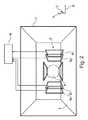
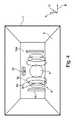
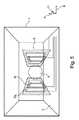
図1の例では、2つの矩形状、薄板状、または板状の、平面電極6cおよび6dは、測定面2から異なる距離に測定面2の面法線7に沿って互いに平行に配置されている。同様に平面状で板状である2つの電極6aおよび6bは、面法線7の方向と垂直かつ測定面2と平行な矢印Bの方向に離間され、互いに平行に配置されている。矢印Aが測定面2の面法線7と平行であり、矢印BおよびCが面法線と垂直に配向されている、矢印A、BおよびCによって形成された座標系は、図2〜図15にも、図1に示されるように、配向の目的のために描かれている。 In the example of FIG. 1, two rectangular, thin plate, or plate-shaped
電子デバイス、具体的には、デジタル処理デバイスとして、例えば、マイクロコントローラもしくはプロセッサとして、またはコンピュータとして設計された、物質を分析するための評価デバイス16が、電気ケーブル17、18を介して接触デバイス6の電極6a、6b、6cおよび6dと電気接触しており、検出された応答信号を評価し、一実施形態では、ブドウ糖または血糖レベル指示(BSI)を生成する。 An
評価デバイス16はまた、変調デバイス9に電気接続されており、これにより、励起ビームの周波数/波長、および具体的には、変調の周波数および/または位相に関する情報が評価ユニット16において利用可能であり、評価において考慮され得る。このように、例えば、励起ビームの変調関数に対する応答信号の位相ずれが評価され、応答信号が発生された物質中の深さ、すなわち、同様に、測定面2または検出領域4からの距離に関する情報を得ることができる。これは、物質5中における、ブドウ糖などの、検出された物質の分布のデプス・プロファイリングに関する情報が得られることを可能にする。 The
励起ビームの変調に関する情報は変調デバイス9から評価デバイス16へ送信され得るが、また、制御デバイス16が変調を直接制御することも提供され得る。評価デバイス16はまた、特に変調周波数における信号を評価する、評価のためのロック・イン増幅器を有することができる。 Information about the modulation of the excitation beam can be transmitted from the
図示の電極対6a/6b、6c/6dの配置は一例にすぎない。電極の単一の対でも十分であり得るが、検出領域4の少なくとも一部分は2つの電極の間に位置していなければならないことが重要である。加えて、最適な機能のために、被験者の指などの、分析される物質は、測定面2上の指定された点に配置されなければならない。指/物質のいかなる横方向の変位も、熱パルスがその効果を電極の間で正確に及ぼさず、測定読み値が最適以下または不正確になる原因となり得る。 The arrangement of the illustrated electrode pairs 6a / 6b and 6c / 6d is only an example. A single pair of electrodes may be sufficient, but it is important that at least a portion of the
電極6a、6b、6c、6dは、付加法(3D印刷)によって、成形、蒸着、ドーピング、測定本体の原材料の標的化された変性(例えば、粒子放射またはガンマ放射またはレーザ放射を用いた炭化水素から導電性炭素への変換)、接着、あるいは以前に導入された凹部またはスロット内への挿入によって、測定本体1内に挿入されるか、またはそれに取り付けられ得る。
図1に係るデバイスの動作、および、この文脈においては、物質5を分析するための方法が、分析される物質5が人間または動物の組織であり、ブドウ糖または血糖レベル指示が物質の分析の一部として決定されることになる場合について、例によってより詳細に説明される。 The operation of the device according to FIG. 1, and in this context, the method for analyzing substance 5 is that the substance 5 being analyzed is a human or animal tissue and the glucose or blood glucose level indication is one of the analysis of the substance. The case where it will be determined as a part will be described in more detail by way of example.
1つまたは複数の励起ビーム8、好ましくは、赤外ビームが、レーザ光源3を用いて順次または同時に発生される。赤外ビームまたはビーム群の波長は、好ましくは、3μm〜20μmの範囲内、特に好ましくは、8μm〜11μmの範囲内である。 One or more excitation beams 8, preferably infrared beams, are generated sequentially or simultaneously with the
励起ビーム8は強度変調デバイス9によって強度または振幅変調される。一実施形態では、強度変調デバイス9は、好ましくは、1kHz〜1MHzのパルス周波数を有する、短い光パルス、または好ましくは、1kHz〜10kHzのエンベロープ周波数を有する、パルス・パケット(2段または多段変調)を発生する。 The excitation beam 8 is intensity or amplitude modulated by the
変調された励起ビーム8は光学媒体/測定本体1内に、具体的には、測定本体の材料内に直接結合され、測定面2を通過した後に、それらは組織5内の体積5aに入る。 The modulated excitation beams 8 are directly coupled into the optical medium /
本発明の機能のためには、必須というわけではないが、励起ビーム8が測定面2の下側の分析される物質5に入ることが確実にされることを前提とすると、励起ビームが測定本体1を通過するか、または測定本体が作製される材料に入ることが可能である。これは、凹部/スロット13が、図1において、測定本体1の下側の測定面2内に併合する狭いチャネルであって、それを通って励起ビーム8が測定面2の下側に達し、物質5に入ることができる、狭いチャネル、例えば、穿孔を形成する、潜在的な凹部として表されているという事実によって示されている。最初のビームが「測定面2を通過する」という上述の特徴が理解されるのは、この広い意味においてのことである。通常は、励起ビーム8が測定本体1の材料を容易に通過することができることを前提とすると、このような凹部13を有しない構造が設けられ得る。このような凹部13はまた、測定本体を部分的に貫通するのみであることもできる。凹部13の代わりに、励起ビームが注入され得る、一体化された光導波路が同じ領域内に設けられてもよい。これは、測定面またはセンサ層内または上で終了することができる。光導波路は、標準的な製造方法を用いて測定本体の基板内に一体化され得る。例えば、測定本体が全体的または部分的にシリコンから成る場合には、光導波路ケーブルがシリコン・オン・インシュレータ(silicon on insulator、SOI)光導波路として一体化され得る。このような光導波路は、まっすぐな、または湾曲した外形を有することができる。これは、励起ビームを発生する励起ビーム源、具体的には、レーザデバイスの位置が測定本体に対して自由に位置付けられることを可能にする。 Although not essential for the function of the present invention, the excitation beam is measured, provided that the excitation beam 8 is ensured to enter the substance 5 to be analyzed below the
励起ビーム8の波長は − ここで説明される血糖測定の例に鑑みて − 好ましくは、励起ビーム8がブドウ糖または血糖によって大幅に吸収されるような仕方で選定される。以下のブドウ糖関連の赤外波長(真空波長)が、ブドウ糖または血糖を測定するために特に適しており8.1μm、8.3μm、8.5μm、8.8μm、9.2μm、9.4μmおよび9.7μmの応答信号を測定するための固定波長として個々に、またはグループで、同時に、または連続して設定され得る。加えて、ブドウ糖によって吸収されないブドウ糖耐性波長が、存在する他の物質を識別し、測定へのそれらの影響を除外するために用いられ得る。 The wavelength of the excitation beam 8-in view of the example of blood glucose measurement described herein-is preferably selected in such a way that the excitation beam 8 is significantly absorbed by glucose or blood glucose. The following glucose-related infrared wavelengths (vacuum wavelengths) are particularly suitable for measuring glucose or blood glucose: 8.1 μm, 8.3 μm, 8.5 μm, 8.8 μm, 9.2 μm, 9.4 μm and It can be set individually or in groups as a fixed wavelength for measuring a 9.7 μm response signal, simultaneously or continuously. In addition, glucose-tolerant wavelengths that are not absorbed by glucose can be used to identify other substances present and rule out their effect on measurements.
測定のために、スペクトル領域が、励起源、具体的には、レーザデバイス3を走査することによって連続的に走査され得るか、またはスペクトルは、好適な特定の固定波長によってサポート点において非連続的に網羅され得る。 For measurement, the spectral region can be continuously scanned by scanning the excitation source, specifically the
ブドウ糖以外の物質が検出されることになる場合には、これらの物質のための吸収波長の特徴である、対応する波長が励起ビームのために選択されることになる。 If substances other than glucose are to be detected, the corresponding wavelengths, which are characteristic of absorption wavelengths for these substances, will be selected for the excitation beam.
組織5中の励起ビーム8の吸収は体積5aの領域内における局所的温度上昇を生じさせ、これは、組織5の表面およびそれと接触した測定面2に向かう熱伝達、ひいては、関連する圧力波および熱パルスを誘発する。測定本体1内の測定面2において、およびこれに隣接して生じる温度および圧力変動のゆえに、測定面2の付近の検出領域4内における密度、屈折率もしくは変形、微細構造、および反射挙動が変調され、その結果、ピエゾ材料の場合には、電気抵抗が影響を受けるか、またはピエゾ電圧が応答信号として発生されるか、もしくは変更/変調される。 Absorption of the excitation beam 8 in the tissue 5 causes a local temperature rise within the region of
測定された値/応答信号の強度変調の大きさ/振幅は、(組織中の必然的な吸収のゆえに)励起ビームの波長、ならびに(組織の内部から測定面2へ向かう熱伝達および圧力波のゆえに)励起ビームのパルス周波数/変調周波数、ならびにサンプルおよび測定本体1の熱的特性に依存する。 The magnitude / amplitude of the intensity modulation of the measured value / response signal is the wavelength of the excitation beam (due to the inevitable absorption in the tissue) and the heat transfer and pressure waves from inside the tissue to the
測定は複数の異なる変調周波数について遂行されてもよく、例えば、スペクトルの形態の、測定結果が互いに相関を取られ得る。個々のスペクトルは、励起ビームの波長に応じた応答信号、例えば、ピエゾ電圧、または可変ピエゾ電圧の振幅を表す。異なるスペクトルは、サンプルの(物質5の)表面からの測定値が相殺/除去され得るか、または特定の情報が特定の深さ範囲から取得され得るような仕方で、相関を取られ得る。 Measurements may be performed for a plurality of different modulation frequencies, for example, the measurement results in the form of a spectrum may be correlated with each other. The individual spectra represent the amplitude of a response signal, eg, a piezo voltage, or variable piezo voltage, depending on the wavelength of the excitation beam. The different spectra can be correlated in such a way that measurements from the surface (of substance 5) of the sample can be offset / removed or specific information can be obtained from a specific depth range.
励起ビーム8は、それがサンプル内に入っていくにつれて、異なる深さの層内で部分的に吸収されるため、所与の変調周波数におけるスペクトルの各々は、異なる深さからの、分析される物質5からの応答信号の重畳から生じる。 Each of the spectra at a given modulation frequency is analyzed from different depths, as the excitation beam 8 is partially absorbed within layers of different depths as it enters the sample. It arises from the superposition of response signals from substance 5.
それゆえ、応答信号は異なる深さからの信号の混合を表す。 Therefore, the response signal represents a mixture of signals from different depths.
異なる深さからの信号の混合比は励起ビーム8の変調の周波数に依存する。 The mixing ratio of signals from different depths depends on the modulation frequency of the excitation beam 8.
異なる変調周波数における異なるスペクトルの相関を取ること、例えば、いずれの場合にも個々のスペクトルの異なる重み付けを用いて、より高い変調周波数におけるスペクトルとより低い変調周波数におけるスペクトルとの差を算出すること、またはより高い変調周波数におけるスペクトルをより低い変調周波数におけるスペクトルで除算することによって、物質の上部層の影響が除去されるか、または少なくとも低減され得る。 Correlating different spectra at different modulation frequencies, eg, using different weighting of individual spectra in each case, to calculate the difference between the spectrum at higher modulation frequencies and the spectrum at lower modulation frequencies. Alternatively, by dividing the spectrum at the higher modulation frequency by the spectrum at the lower modulation frequency, the effect of the upper layer of material can be eliminated or at least reduced.
以前に実施された校正または比較測定との、あるいは一実施形態では、比較表または比較曲線の形態で評価デバイス16のメモリ内に記憶された、参照データセットとの比較に基づいて、デバイスは、組織内または体積5a内のブドウ糖または血糖の現在の濃度に関する情報を提供し、対応するブドウ糖または血糖レベル指示を生成することができる。例えば、比較表または比較曲線は、患者の身体の外部で分析された血液サンプルから得られたブドウ糖または血糖値に基づいて作成されていてもよい。 The device is based on a comparison with a reference dataset stored in the memory of the
図示の例示的な実施形態では、励起光ビームまたはビーム群8を発光するためのレーザデバイス3によって形成されている、励起ビーム源は、アレイとして実装されてもよい。アレイは、分析される物質の吸収スペクトル内における異なる固定波長の単色光のための、少なくとも5個、有利には、少なくとも10個、より有利には、少なくとも15個または少なくとも50個または100個の個々に制御可能なエミッタ100aを有する。個々のエミッタはレーザ・エミッタであることができるが、それらはまた、特定の波長範囲内の放射線を選択的に放射する、好適な発光ダイオードまたは他の半導体構成要素などの、他の種類のエミッタであることもできる。 In the illustrated exemplary embodiment, the excitation beam source formed by the excitation light beam or the
アレイは、好ましくは、以下の8.1μm、8.3μm、8.5μm、8.8μm、9.2μm、9.4μmおよび9.7μmの波長(真空波長)のうちの1つまたは複数、特に好ましくは、全てにおける単色光のビームを生成する、ならびに、所望の場合には、追加的に、ブドウ糖耐性波長である。 The array is preferably one or more of the following 8.1 μm, 8.3 μm, 8.5 μm, 8.8 μm, 9.2 μm, 9.4 μm and 9.7 μm wavelengths (vacuum wavelengths), in particular. Preferably, it produces a beam of monochromatic light in all, and if desired, additionally a glucose resistant wavelength.
励起送出デバイス/励起光源3が、直接、または調整デバイスを用いて、光学媒体/測定本体1に永久的に機械的に接続されていることが提供され得る。調整デバイスは、好ましくは、測定本体1からの励起光源3の距離の調整、またはビームの長手方向における調整、および/またはビームの長手方向と垂直な平面内の調整を可能にする。 It may be provided that the excitation sending device /
また、励起送出デバイス3、および検出デバイス4、6を有する測定本体1が互いに直接、または共通の担体(図示されていない)に取り付けられていることが提供され得る。担体は、ハウジング内に設置されたプラスチック部分、プリント回路板、または金属シートによって形成され得る。 It may also be provided that the
担体はまた、ハウジング自体、またはハウジングの一部によって形成され得る。 The carrier can also be formed by the housing itself or a portion of the housing.
また、デバイスが配置されたハウジング(図示されていない)を有する、物質を分析するためのデバイスが、身体、例えば、人の胴に取り付けられてもよく、1つまたは複数の励起光ビーム8を放射するための励起送出デバイス3、および時間依存性応答信号を検出するための検出デバイス4、6が、測定のために適した側、およびデバイスの測定面2が、デバイスの、身体/胴とは反対の側に位置するように配置され、構成されており、これにより、例えば、患者が測定面2上に指を配置することによって、分析される物質が、ハウジングの、身体/胴から見て外方に向いた側で測定され得ることも提供され得る。この目的のために、例えば、ハウジングは人の身体に、身体の部分を形成するストラップを用いて取り付けられ、一実施形態では、リストバンドの形態で手首に取り付けられる。手首の反対側において、このとき、ハウジングは、励起光ビーム8に対して透過性である窓を有するか、または測定本体1の外方に向いた測定面2を有する測定本体1が、ハウジングの、本体から外側に向いた側へ直接収まり、例えば、測定面2と共に、ハウジング自体の表面のいくらかの区分を形成する。 Also, a device for analyzing a substance, which has a housing (not shown) in which the device is placed, may be attached to the body, eg, the body of a person, with one or more excitation light beams 8. The
この設計では、このときには、指パッドが測定本体1上に配置され、監視され得る。 In this design, the finger pad can then be placed on the measuring
測定本体1は、担体と同じ様態で、ハウジングの内部に、または直接ハウジング上に設置され得る。測定本体1はまた、担体に直接接続されてもよく、この場合には、光学媒体/測定本体1に対する担体の位置付けのための調整デバイスが設けられなければならない。 The measuring
また、励起光源3を測定本体上に直接設置することも可能である。 It is also possible to install the
ハウジング内の光学窓を通して、および/または測定本体1を通して、一実施形態では指紋などの、物質表面または適用された指パッドの他のパラメータも監視され得る。この目的のために、また、例えば、測定本体を通して、またはそのそばを過ぎて測定本体の隣で物質5の表面の画像をデジタル的に取得する、カメラの形態の光学検出器が担体に取り付けられてもよい。この画像、および検出デバイス4、6からの測定情報は処理デバイス内で処理され、処理デバイスは、検出デバイス4、6に直接、およびまた、励起送出デバイス3に接続され得る。処理デバイスはまた、測定のための制御タスクを遂行することもできる。それはまた、デバイスの他の部分から少なくとも部分的に分離され、遠隔にあり、無線リンクを介してそれらと通信することもできる。 Other parameters of the material surface or applied finger pad, such as fingerprints in one embodiment, may also be monitored through an optical window within the housing and / or through the measuring
それゆえ、カメラからの画像データは、ハウジングの内部で、または同様に、無線接続を介してハウジングの外部でさらに処理され、識別された人の校正データを検索し、このデータを測定の基準として用いるために個人識別データベースと比較され得る。 Therefore, the image data from the camera is further processed inside the housing, or similarly outside the housing via a wireless connection, to retrieve the calibrated data of the identified person and use this data as the basis for measurement. Can be compared to a personal identification database for use.
このような校正データはまた、検索のために、データベース内、一実施形態では、クラウド内に遠隔的に記憶されてもよい。検出デバイスの測定データもまた、ハウジングの内部および外部の両方でさらに処理され得る。 Such calibration data may also be stored remotely in a database, in one embodiment, in the cloud for retrieval. The measurement data of the detection device can also be further processed both inside and outside the housing.
データがハウジングの外部で処理される場合には、結果データは、好ましくは、無線によってハウジングの内部のデバイスへ、そこで表示されるために伝送されて戻されなければならない。 If the data is processed outside the housing, the resulting data must preferably be transmitted and returned wirelessly to a device inside the housing for display there.
いずれにせよ、有利に、光学窓を通して、一実施形態ではまた、部分的に測定本体を通して、または測定本体1上で読み取られ得る、ディスプレイ(図示されていない)がハウジング上に設けられ得る。ディスプレイはまた、光学窓を通してインジケータ光を表示面上に投影し、この目的のために、投影デバイスを備えることもできる。一実施形態では、ディスプレイは、測定または分析結果、具体的には、ブドウ糖濃度が表示されることを可能にする。出力は、一実施形態では、文字または色コードを用いて実施され得る。一実施形態では、他の患者パラメータ(例えばインスリン補正指数)に依存するインスリン投与量のための提言、またはインスリン・ポンプの形態の投与デバイスへの自動信号伝送が、ディスプレイ、またはこれと並列にある信号デバイスを介して出力され得る。 In any case, advantageously, a display (not shown) may be provided on the housing that can be read through the optical window, in one embodiment, also partially through the measuring body, or on the measuring
代替的に、特定の量での特定の食物の消費のための勧告が行われ得る。これは、例えば、データベースから取り込まれ、具体的には、電子的形態で伝送され得る、調製の提案にリンクされ得る。この調製命令はまた、自動食物調製デバイスへ送信され得る。 Alternatively, recommendations can be made for the consumption of certain foods in certain amounts. This can be linked to, for example, a proposal for preparation that can be taken from a database and specifically transmitted in electronic form. This preparation command can also be sent to an automated food preparation device.
外部データ処理デバイスへの、およびそこからのデバイスの接続は、光ファイバケーブル、無線(例えば、Bluetooth(登録商標)、WiFi)、あるいはさらに超音波または赤外信号などの、全ての共通規格を用いて実装され得る。 Connection of devices to and from external data processing devices uses all common standards such as fiber optic cables, wireless (eg Bluetooth®, WiFi), or even ultrasonic or infrared signals. Can be implemented.
図2〜図16は、とりわけ、種々の仕方で分布させられた電極を有する接触デバイス6の特定の設計を示す。 2 to 16 show, among other things, the particular design of the
図17は、測定光ビームの反射を検出する検出デバイスを有する本発明の設計を示す。 FIG. 17 shows the design of the present invention with a detection device that detects the reflection of the measurement light beam.
図2は、測定面2と、検出領域4と、接触デバイス6とを有する測定本体1を再び概略的に示す。図2はまた、接触デバイス6が検出領域4の各々の側に複数の電極を有することもできることを示す。図示の例では、電極6e、6fが検出領域4の第1の側に示されており、電極6g、6hが検出領域4の反対の側に示されている。図示の例では、個々の電極は矩形プレート状の様態で設計されている。測定のために、デバイス16は、2つの電極6e、6f、6g、6hの間の(圧電電圧または変更された抵抗の形態の)ピエゾ信号を評価することができ、結果が比較され得る。次に、測定のさらなる評価のため、または後続の測定のための電極の対が選択され得る。選択は、電極のどの対が、最も大きな信号、または干渉を最も受けにくい信号をもたらすのかを考慮することができる。好ましくは、隣接した電極の対、例えば、電極6fおよび6g、あるいはさもなければ、電極6eおよび6fあるいは6gおよび6hが測定のために選択され得る。しかし、電極対6e、6hを測定のために用い、これらの電極の間に存在する信号を評価することも可能である。その際に、測定のために現在用いられていない電極は他の電極に対する誘電遮蔽をもたらすことができることに留意されたい。例えば、使用されない電極は、浮遊電位のままにしておかれるか、または特定の場合には、接地電位に接続されてもよい。 FIG. 2 schematically shows the
図3は、検出領域4の各々の側に3つの環状電極6i、6j、6kを有する、接触デバイス6の機構を示す。これらの電極もまた、測定のために対で用いられ得る。図示の場合には、環状電極の直径は検出領域4から外方へ増大し、これにより、電極6iは電極6jよりも大きい直径を有し、これは電極6kよりも大きい直径を有する。 FIG. 3 shows the mechanism of the
加えて、例えば、平坦な板状電極6l、6mの対が電極6i、6j、6kの背後の外側に設けられ得る。 In addition, for example, a pair of
電極の環状設計は、外方へ増大するサイズと相まって、外側の電極が内部電極によってあまり遮蔽されず、異なる電極対が互いに独立して用いられ得るという結果をもたらすことができる。 The annular design of the electrodes, coupled with the outwardly increasing size, can result in the outer electrodes being less shielded by the inner electrodes and different electrode pairs being used independently of each other.
図4は、測定面2と平行な水平方向 − すなわち方向B − における検出領域の各々の側において互いの背後に3つの環状電極6n、6o、6pを有する接触デバイス6を有し、検出領域4からの距離の増大とともに環状電極の直径が減少する機構を示す。 FIG. 4 has a
検出領域の各々の側において、電極の外側横方向に、測定本体内に組み込まれるか、またはその外側に取り付けられ得る、ヒートシンク14、14aが示されている。例えば、これらのヒートシンクは、熱容量および/または熱伝導率が、測定本体1を構成する材料(単数または複数)のものよりも大きい金属または別の材料から成り得る。 On each side of the detection region, heat sinks 14, 14a are shown laterally lateral to the electrodes, which may be incorporated into or mounted outside the measurement body. For example, these heat sinks may consist of a metal or another material whose heat capacity and / or thermal conductivity is greater than that of the material (s) that make up the
また、検出領域4、または測定本体1全体を包囲する、環状本体などの、単一の本体がヒートシンクとして設けられていてもよい。ヒートシンクはまた、ペルチェ要素によっても実装され得る。ヒートシンクは、検出領域内における熱波動/熱パルスの到来によって生じる温度上昇が冷却によってできるだけ迅速に相殺され得、これにより、検出領域4内の測定本体1の材料が後続の熱パルスにできるだけ迅速に反応することができることを確実にする。 Further, a single body such as an annular body that surrounds the
熱パルスは励起ビームの変調周波数をもって互いの後を追う。検出領域の上方に、励起ビーム8の通過のための開口部を有する、板状の熱バリア15が設けられている。これは、測定本体1の材料の熱伝導率が過度に高い場合に、熱パルスが、それが検出領域内に到来した時に、過度に迅速に放散されず、これにより、熱が、例えば、ヒートシンクを介して、放散される前に、温度上昇が検出領域4内に短期間蓄積することができることを確実にする。 The thermal pulses follow each other with the modulation frequency of the excitation beam. Above the detection region, a plate-shaped
1つまたは複数のヒートシンクおよび/または1つまたは複数の熱バリアが、熱伝達を適切に誘導するために、測定本体内に一体化されているか、またはその外側に設置されていてもよい。これは、平坦な測定本体のため、またはピエゾ材料の薄いコーティングを有し、さもなければ、ピエゾ効果を有しない材料で構成されている測定本体のために特に実用的であり得る。 One or more heat sinks and / or one or more heat barriers may be integrated within or outside the measurement body to properly guide heat transfer. This can be particularly practical for a flat measuring body, or for a measuring body that has a thin coating of piezo material and is otherwise composed of a material that does not have a piezo effect.
図5は、検出領域4の各々の側に2つのフレーム形電極6q、6rを有する接触デバイス6であって、フレーム形電極が矩形フレームとして実装されており、検出領域4から同じ距離に、または検出領域4から異なる距離に配置され得る、接触デバイス6を示す。それゆえ、電極6q、6rは、例えば、検出領域4の各々の側において互いに同一平面上かつ同軸に配置されているか、または検出領域4からの距離に関しては、ずれていてもよい。 FIG. 5 is a
図6は、検出領域4の上方および下方の両方に3つの環状電極を有する接触デバイス6を示し、すなわち、電極は、検出領域4の両側において、方向Aにおける面法線に関して測定面2から異なる距離に前後に配置されている。 FIG. 6 shows a
図7は接触デバイス6の電極の使用の一例を示す。検出領域4の各々の側において、2つのフレーム形電極6q、6rが検出領域4から異なる距離に設けられている。通常、分析される物質が測定面2の下の中心に配置されている場合には、図7において物質の領域5によって指示されるように、検出領域4の両側の2つの電極の選択が測定のために最適となることができる。しかし、例えば、被験者の指が最適な位置に対して横方向に動かされることによって、サンプルが誤った場所で測定面2上に配置された場合には、分析される材料は図示の位置5’の方向に動くことになり、最適な検出領域は、4’として指定された、測定本体1の領域内にあることになる。この場合には、2つの他の電極、図示の場合には、電極6q、6rを測定のために選択し、それらの間で発生された電気信号を評価することが実用的になり得る。この場合には、電極の異なる対も試験として用いられてよく、対応する信号が評価され、分析される物質5が測定面2上に配置される正確な点、およびどの電極対が最良の結果をもたらすのかを決定するために互いに比較され得る。 FIG. 7 shows an example of using the electrodes of the
図8は、検出領域4の両側において面法線Aの方向に前後に配置された6つの環状電極を示す。検出領域の各々の側は、互いに同軸上に配置され、各電極の直径が検出領域4からの距離の増大とともに増大する、3つの環状電極を有する。ここでも先と同様に、検出領域4に対して対称的または非対称的に互いに反対側に位置付けられた異なる電極対が測定のために選択され得る。この例示では、他の図のうちのいくつかの場合と同様に、評価ユニットは、励起ビームおよびレーザデバイスの例示であるため、理解しやすいように省略されている。 FIG. 8 shows six annular electrodes arranged back and forth in the direction of the surface normal A on both sides of the
図9は、接触デバイス6が、検出領域4の周りの環状領域10内に分布した複数の電極6s、6t、6uを有する、検出領域4を有する測定本体1を示す。電極6s、6t、6uのこの分布においては、2つの直径方向に対向した電極6s、6uの間の信号を測定のために選択することが意味をなし、異なる電極対が選択のために試験的に動作させられ得る。 FIG. 9 shows a
この文脈において、検出領域4は、図において、必要とされる材料の選択に対応する測定本体の領域として識別され、これにより、それはピエゾ効果を呈し、同時に、分析される物質5からの応答信号が熱パルスの形態で到来する測定本体1の領域内に位置することに留意されたい。可能な検出領域4はまた、測定のために選択された電極6に依存し、この領域4内の測定本体1が、必要とされる材料から成るか、またはピエゾ効果を呈するときには、通常、測定のために選択された電極6の間に位置する。したがって、検出領域4は必ずしも測定本体内で指定されるわけではなく、実際には、分析される物質からの応答信号が、選択された接触電極6によって、物質5が測定面2の下に適切に位置付けられたときに利用される物理的効果を用いて検出され得る領域として得られる。 In this context, the
図9に示される電極6s、6t、6uは、矩形、または、円形、または楕円形であり、形状が平坦または部分的円筒形である、すなわち、1つの軸において湾曲していてもよい。 The electrodes 6s, 6t, 6u shown in FIG. 9 are rectangular, circular, or elliptical, and may be flat or partially cylindrical in shape, i.e., curved in one axis.
図10は、一例において、電極が検出領域の周りに配置された環状領域10は、測定面と平行な円環の形態で配置される必要がなく、異なる角度位置における測定本体1の空間内の円環として設けられ得ることを示す。 In FIG. 10, in one example, the
図11は、接触デバイス6が測定本体1内または測定本体1上の測定面2の領域内に直接設けられている機構を示す。個々の電極6v、6wが、環状領域10内の検出領域4の周りに分布した測定面2上に直接配置されている。 FIG. 11 shows a mechanism in which the
図12は、図11において指示される構造の特定の実施形態を示す。図12では、測定本体1は下側から、すなわち、外側から測定面2を見て示されており、電極を受容するための凹部が測定本体1の下部層1’内の環状領域10の周りに設けられている。凹部は17、18、19、20、21によって指定されている。電極本体6x、6yが凹部内に配置され得、押し込み嵌合または材料的に接着された仕方でそこに保持され得る。例えば、電極6x、6yは凹部21、20内に掛け留めされ得る。凹部17、18、19、20、21は、例えば、測定面2上の導体トラック32に接続されたコンタクトを有する。導体トラック32は、図示されていない評価デバイスに電気接続されている。電極6x、6yを凹部内に挿入すると、それらは導体トラック32に、およびそれゆえ、評価デバイスに電気接続される。 FIG. 12 shows a particular embodiment of the structure indicated in FIG. In FIG. 12, the
電極は、以上においてすでに説明されたように、測定のために選択され得る。 Electrodes can be selected for measurement as already described above.
例えば、測定本体1の層1’が圧電材料から成り、その一方で、測定本体1の残りの部分が、同じく圧電的に感受性を有するか、または非圧電性である、異なる材料から成ることが提供され得る。 For example, layer 1'of the measuring
図13は、測定本体1の層1’が、例えば、接着接合または蒸着によって、外部から層1’(センサ層)に適用された、電極22、23を担持する、設計の変形例を示す。圧電材料で作製されたセンサ層1’の層厚さは、0〜1mm、具体的には、0〜500ミクロン、具体的には、100ミクロン未満であることができる。層は測定本体1の第1の部分/残りの区分に接着接合されてもよく、または異なる接合技法によってそれに接合されてもよい。励起ビームはこの層1’を通過することができる。励起ビームのためのチャネル状凹部が測定本体1の残りの区分内に(測定本体1のいわゆる第1の部分内に)設けられ得る。このとき、測定本体1のこの残りの区分の材料は、石英またはサファイアなどの、赤外放射線に対して不透過性の材料から成ることができる。これらの電極は層1’内の検出領域4内における圧電効果の測定を可能にする。同じ種類の他の電極が、検出領域4の周りの環状領域10内において、測定面2の下、または測定面2内の凹部内に設けられていてもよい。 FIG. 13 shows a modified example of the design in which the layer 1'of the
図14は、2つの電極24、25が層1’の側に取り付けられている、測定本体1の圧電層1’を有する一実施形態を示す。これらの電極24、25はまた、層1’の表面に、例えば、接着接合もしくは蒸着されるか、または別の仕方で適用され得るか、あるいはそれらは層1内の凹部内に導入され得る。層1’の残りの側面も電極26、27を有することができ、全ての電極は光ケーブルまたは導体トラックを介して評価デバイスに接続されている。 FIG. 14 shows an embodiment having a piezoelectric layer 1'of the
図15は、測定本体の圧電層の下側において、すなわち、測定面2上において、検出領域4の周りの環状領域10内に配置された複数の電極28、29を示す。ここでも先と同様に、電極の異なる対が測定のために代替的に用いられてもよく、対の2つの電極は、検出領域4の異なる側で互いに対向して位置付けられるように設計されている。これらの電極はまた、層1’の表面に、例えば、接着接合もしくは蒸着されるか、または別の仕方で適用され得るか、あるいは層内の凹部内に導入され得る。実験によって、電極の異なる対が、測定面2の下における物質5の位置付けに依存した、すなわち、最適な検出領域4の位置に依存した最適な電極対を選択するべく測定のために組み合わせられ、動作させられ得る。 FIG. 15 shows a plurality of
図16は、平坦本体として設計されており、例えば、図14、15に示される測定本体1の層1’と同様に設計され、電極を備えることができる、測定本体11を示す。しかし、この場合には、測定本体1全体が平坦本体11によって形成され得る。平坦本体11の下側において、測定面2が設けられており、測定面2の面法線7の方向における平坦本体11の延長は、測定面2と平行な方向の延長と比べて小さい。デバイスの組み付けのために面法線7に沿ってとる空間を最小限に抑えるために、レーザデバイス3を、平坦本体の平坦面のうちの1つにおける測定面の仮想延長上において平坦本体の側に配置し、励起ビーム8を測定本体/平坦本体11内に測定面2と平行にまたは実質的に平行に照射することが提供され得る。励起ビーム8のために、次に、図1において参照符号13の下で示されているものと同様のチャネル状凹部が平坦本体内に設けられ得る。例えば、次に、測定ビーム8を、測定面2に向けて反射し、その後、測定面2を通過して物質5内へ至らせる、ミラーデバイス12が平坦本体の内部に設けられている。 FIG. 16 shows a
平坦本体はまた、全体が圧電材料から成るか、または圧電層を測定面の領域内に有することができる。 The flat body can also be entirely made of piezoelectric material or have a piezoelectric layer within the region of the measurement surface.
代替的に、また、レーザデバイス3が平坦本体11の若干上方に位置付けられており、これにより、励起ビーム8が平坦本体11の上に配置されたミラーデバイス12へ平坦本体と平行に放射され、そこで平坦本体11内へ測定面2と垂直に反射されることも提供され得る。どちらの場合にも、面法線7の方向におけるデバイスの延長は、図1に示される実施形態と比べて大幅に低減される。それゆえ、測定本体11およびレーザデバイス3は、平坦なハウジング内に一緒に、場合によっては、評価デバイス16と一緒に収容され得る。 Alternatively, the
検出領域4上の測定のために用いられる電極22、23が平坦本体11の内部、下方、またはその側に設けられ得る。この設計では、また、上述された2つ以上の電極の機構のうちの任意のものが用いられ得る。
また、平坦本体11として形成されたこのような測定本体は、第1の部分、およびこれらの部分に接合/接着されたセンサ層、例えば、圧電層から形成され得、このとき、圧電層が測定面を形成し、電極を備える。この場合にも、凹部が励起ビームのために測定本体11の第1の部分内に設けられ得、このとき、測定本体11は、任意選択的に、石英またはサファイアなどの、赤外放射線に対して不透過性であるであるか、またはあまり透過性を有しない材料から成ることができる。 Further, such a measurement body formed as the
図16の下部において、励起ビーム8の反射経路を明瞭にするために、上で斜視図で示された機構が側面図で示されている。 In the lower part of FIG. 16, the mechanism shown in the perspective view above is shown in the side view in order to clarify the reflection path of the excitation beam 8.
上述された平坦本体が、その側に位置付けられたレーザデバイスであって、波長が変化する強度変調励起ビームを平坦本体内またはその上方で測定面と実質的に平行に放射するように整列させられた、レーザデバイスとともに用いられ、励起ビームが測定面へそらされる場合には、測定本体内に注入され、測定面の領域内で反射される、ビーム源によって別個に生成された測定ビームが検出のために用いられてもよく、測定面の領域内における測定本体内における測定ビームの偏向(偏向角)は、分析される物質からの応答信号によって影響を受ける。偏向角が測定され、物質5中における励起ビームの吸収強度、および吸収物質/その物質中の検出されるべき物質の密度/濃度に対応する、応答信号の強度を決定するために用いられ得る。 The above-mentioned flat body is a laser device positioned on its side and is aligned so that a wavelength-changing intensity-modulated excitation beam is radiated substantially parallel to the measurement surface in or above the flat body. Also, when used with a laser device, when the excitation beam is deflected to the measurement surface, the measurement beam separately generated by the beam source, which is injected into the measurement body and reflected within the area of the measurement surface, is detected. The deflection (deflection angle) of the measurement beam within the measurement body within the region of the measurement surface is affected by the response signal from the material being analyzed. The deflection angle is measured and can be used to determine the absorption intensity of the excitation beam in material 5 and the intensity of the response signal corresponding to the absorption material / the density / concentration of the substance to be detected in that material.
このような適用物のためにさえも、平坦本体は、屈折率が温度に依存する材料から均質的に構築され得るか、またはそれは、屈折率が温度に依存する材料で作製された測定面の領域内の層を有し得る。 Even for such applications, the flat body can be constructed homogeneously from a material whose index of refraction depends on temperature, or it is a measurement surface made of a material whose index of refraction depends on temperature. It may have layers within the region.
図18は、図19〜図23と同様に、2つの概略的に描かれた平行プレート電極123および124を有する第1の電極機構119が圧電検出デバイスの一部として埋め込まれた、基板120の断面図を示す。理解しやすいように、切断部分におけるハッチングは省略されている。測定面118は、各図において、シリコンから全体的または部分的に成ることができる、基板120の上部部分内に配置されている。例示として、図18および図20では、人間の指117が、物質が分析されることになる例示的な測定対象として示されている。指は分析のために測定面118上に配置されている。 FIG. 18 shows the
図18〜図23では、基板120は、材料が、赤外範囲内、中赤外範囲内、または一般的に励起ビーム121の波長範囲内の励起ビーム121に対して透過性である、測定本体の領域内においてそれぞれ示されている。例えば、これは中赤外範囲のためのシリコン基板120に当てはまる。基板120に加えて、測定本体は、図18〜図23において測定面118に隣り合って概略的に示されている、圧電領域/検出領域、ならびに測定面118の機械的保護のため、および/またはインピーダンス整合のための1つまたは複数の被覆層などの、他の本体および層を含むことができる。励起ビーム121は、基板120がその波長範囲に対して透明であるという条件で、基板材料を通して測定面118上へ、およびそれを通して、測定される物質(例えば、指117)内へ誘導され得る。このような場合には、励起ビーム121のための開口部を基板120内に設ける必要はない。励起ビーム121は、電極デバイス119のそばを過ぎるように、またはそれを貫通するように操向され得る。 In FIGS. 18-23, the
測定本体または基板120の、測定面118とは反対の側において、レンズ116、116’、116’’が基板120内に一体化されており、具体的には、基板120の材料によって形成されており、例えば、研磨方法を用いて、具体的には、エッチングまたはスパッタリングによって、基板の材料から引き出される。
可能なレンズ形状の3つの例が図18〜図23に示されており、第1のレンズが図18および図21に、第2のレンズが図19および図22に、ならびに第3のレンズが図20および図23に示されている。 Three examples of possible lens shapes are shown in FIGS. 18-23, with the first lens in FIGS. 18 and 21, the second lens in FIGS. 19 and 22, and the third lens. It is shown in FIGS. 20 and 23.
第1のレンズ116は、通常屈折性の、屈折凸面収束レンズに対応し、第2のレンズ116’は、フレネル形態に研磨された(屈折)収束レンズ(キノフォーム・レンズ)に対応し、第3のレンズ116’’は、励起ビーム10を回折によって同心格子構造に集束させる回折レンズに対応する。レンズ116〜116’’の光軸は測定面118上に鉛直に各々位置付けられ得、これにより、励起光源は基板120を直接まっすぐ通過することができる。しかし、光軸はまた、基板に対してある角度をなす励起光源の潜在的に省スペースの位置付けを可能にするために、測定面118に対する垂線に対して傾斜していることもできる。 The
図21、図22および図23は各々、基板120上のレンズ形状116、116’、116’’を、励起ビーム121、および分析される物質上に集束させられた集束ビーム122とともに示す。 21, 22 and 23 show the lens shapes 116, 116 ′, 116 ″ on the
図24は、励起ビーム8が、レーザ機構3から、測定本体1を層1’へ貫通する光導波路126内へ誘導される、センサ層1’を有する測定本体1を断面図で示す。光導波路126はまた、層1’を通って測定面2まで延びることもできるが、層1’が励起ビーム8のためのスロットを有するか、または励起ビーム8が層の材料を通して放射することも提供され得る。測定面2の領域内において、例えば、測定面2に直接隣り合って、および/または層1’内において、励起ビーム8を、調査される物質内の点に集束させるためのレンズ140が設けられ得る。光導波路126はレーザデバイス3から測定面2へまっすぐに延び、検出デバイス、および/または電極123、124の間の領域を通過する。圧電効果と、その結果生じた、光導波路に対する検出領域の材料の力の作用との間の干渉を回避するために、後者は、外力または圧力に対する屈折率の依存性を全くまたはほとんど有しない材料から成り得る。例えば、レーザデバイスが測定本体の側に位置付けられている場合には(図26参照)、光導波路はまた、部分的または完全に測定本体の表面に沿って延びることができる。図24では、光導波路127は、まず、その全長の第1の部分において、測定本体の表面において、またはその上で、レーザデバイス3’から延び、その後、引き続き、その全長の第2の部分にわたって、光導波路126として測定本体を貫通する。励起ビーム8は、光導波路の方向変更の領域内で、例えば、ミラーにおいて、反射され得るか、または光導波路がそこで曲げられ得る。このような光導波路126、127は製造技法によって(例えば、SOI − シリコン・オン・インシュレータ技術によって)測定本体の材料内に一体化されるか、または例えば、接着接合によって光ファイバ導波路としてそれに接続され得るか、あるいは光導波路はその全長の一部にわたって一体化され、その全長の異なる部分にわたって光ファイバケーブルとして実装され得る。 FIG. 24 shows a cross-sectional view of the
図24はまた、電極123、124が、通常、測定本体内の凹部またはスロット内に設けられていることも示す。この場合には、鋳造によってポリマーで封止された、これらの凹部または溝128、129が、検出領域、ならびにそれゆえ、熱波動および/または圧力波の結果として膨張および収縮することができ、これにより、圧電性の測定可能な効果を示す、検出領域を規定する圧電性本体を分離するために用いられる。このとき、これらは電極によって検出され得る。 FIG. 24 also shows that the
対応する凹部または溝128、129が、本文書において様々な測定本体内で示される全ての電極上に設けられてもよく、ポリマーなどの非圧電材料を用いて鋳造され得る。 Corresponding recesses or
材料凹部128、129は、例えば、測定本体1の製作の間に設けられるか、あるいはエッチングもしくはスパッタリングによって、または鋸引きもしくはレーザ切断によって後に導入され得る。 The material recesses 128 and 129 can be provided, for example, during the fabrication of the measuring
しかし、光導波路設計の2つの異なる変形例における図25から分かるように、また、励起ビームを、レーザデバイス3’が設けられた、測定本体1上の位置から測定面2へ案内する、湾曲した光導波路133、134も設けられ得る。光導波路133、134の順路が比較的自由に形状設定され得るという事実は、励起ビーム8によって侵入される領域と検出領域との間の最小距離が維持されることを可能にする。励起ビーム8はまた、測定面2の面法線に対して0度〜60度の間、具体的には、0〜45度の間の角度で測定面2に衝突し、それを通過することもできる。 However, as can be seen from FIG. 25 in two different variants of the optical waveguide design, the excitation beam is curved, guiding it from a position on the
分析される物質内への低い侵入深さのゆえに、励起ビーム8がそれと相互作用する物質の領域は、斜めの照射方向にもかかわらず、検出デバイスおよび電極123、124の直下にある。例えば、湾曲した光導波路133、134は、少なくとも区分において、測定本体1の穿孔または同様の凹部内の光ファイバケーブルとして設けられ得、それらは所定位置に接着または鋳造される。 Due to the low penetration depth into the material being analyzed, the region of the material with which the excitation beam 8 interacts is directly below the detection device and
図26から分かるように、また、例えば、測定本体1の、1つもしくは2つもしくは3つの異なる相互に隣接した表面上で、複数の方向に、および/または2つもしくは3つの相互に垂直な方向に案内される、励起ビーム8を案内するための光導波路135、136、137、138も設けられ得る。例えば、このような光導波路135、136、137、138は、図24および図25に示される光導波路が可能であるのと同様に、それぞれの測定本体1内に一体化され得る。測定本体の表面上において、これは、SOI技術において、または、測定本体の材料によっては、関連固体製造技術において実装するために特に簡素である。シリコン基板内では、酸化ケイ素層または他の層によって被覆され、基板から分離された光導波路がこの目的のために組み込まれ得る。この目的を達成するために、まず、被覆および光導波路の材料をその後、適切に堆積させるために、好適な凹部が基板内にエッチングまたはスパッタリングされ得る。この場合には、例えば、光導波路の被覆は、光導波路135、136、137、138が測定本体1を越えて突出しないよう、測定本体の表面と同一平面で終端することができる。測定本体1の表面に沿った光導波路135、136、137、138の進路は、励起ビーム8と検出デバイスとの任意の相互作用、および圧電材料の影響を防止する。最後の光導波路138は、その後、励起ビーム8が、分析される物質に入らなければならない領域内で終了する。光導波路138の最後において、励起ビーム8を物質内へ誘導する要素、例えば、ミラーが設けられ得る。 As can be seen from FIG. 26 and, for example, on one or two or three different interconnected surfaces of the measuring
図26において図の右下隅における円142内に示される細部は、光導波路138がまた、測定面2へ斜めにつながる測定本体1の凹部または溝(点線で示される)内に配置されてもよく、これにより、光導波路の長手方向軸は溝の底部141と平行に、測定面2を貫いて、分析される物質へ誘導されることを示す。 The details shown in the
本特許出願は、(最初にすでに述べられたように)クレームおよび上述された例示的な諸実施形態の主題に加えて、以下の諸態様に関する。これらの態様、またはそれらの個々の特徴は、クレームの特徴と、個々に、またはグループで組み合わせられ得る。諸態様はまた、単独で捉えられるのか、それとも互いに、またはクレームの主題と組み合わせられるのかにかかわらず、独立発明を構成する。出願人は、これらの発明を後日クレームの主題とする権利を留保する。これは、本出願の範囲内、または本出願の優先権を主張する、後続の部分出願もしくは後続出願の文脈において行われ得る。 In addition to the subject matter of the claims and the exemplary embodiments described above (as previously mentioned at the beginning), the patent application relates to the following aspects: These aspects, or their individual features, may be combined with the claims features individually or in groups. The embodiments also constitute an independent invention, whether taken alone, with each other, or in combination with the subject matter of the claim. The applicant reserves the right to make these inventions the subject of claims at a later date. This may be done within the scope of this application or in the context of a subsequent partial or subsequent application claiming priority in this application.
諸態様:
1) 身体内の物質を分析するための方法であって、
− 1つまたは複数の特定の励起波長を有する励起光ビーム(励起ビーム)を、身体の表面の第1の領域を通して放射することと、
− 具体的には、順次に、機械的、電気的、または光学的チョッパを用いた、具体的には、励起光源の電子的活性化、励起光源の役割を果たす励起レーザの共振器、または可動ミラーデバイスのための調整デバイス、制御可能な回折デバイス、ステッパ・モータなどのモータに、またはMEMSに結合されたシャッターまたはミラーデバイス、あるいは透過または反射に関して制御され得るビーム経路内の層による、1つまたは複数の周波数を有する励起光ビームの強度変調と、
− 身体の外部に配置された検出器を用いた身体内における励起光ビームの波長依存吸収の影響に起因する応答信号の時間分解検出と、
を含む方法。Aspects:
1) A method for analyzing substances in the body
-Emitting an excitation light beam (excitation beam) with one or more specific excitation wavelengths through a first region of the surface of the body,
-Specifically, sequentially using a mechanical, electrical, or optical chopper, specifically, electronic activation of an excitation light source, an excitation laser resonator acting as an excitation light source, or movable. One by a tuning device for a mirror device, a controllable diffraction device, a motor such as a stepper motor, or a shutter or mirror device coupled to the MEMS, or a layer in the beam path that can be controlled with respect to transmission or reflection. Or with intensity modulation of an excitation light beam with multiple frequencies,
− Time-resolved detection of the response signal due to the influence of wavelength-dependent absorption of the excitation light beam inside the body using a detector placed outside the body,
How to include.
検出器は、例えば、具体的には、測定面(=分析される物質と接触した測定本体の境界面)と隣接もしくは直接隣接しており、圧力もしくは温度依存性電気比抵抗を有し、および/または圧力もしくは温度変化が生じた場合には、電気的、具体的には、圧電性の、電圧信号を発生する検出領域、ならびに電気抵抗および/または電気信号を検出するための光学媒体/測定本体の検出領域に導電接続された電極を有する電気接触デバイスを有する光学媒体/測定本体であって、検出デバイスが接触デバイスおよび検出領域によって形成されている、光学媒体/測定本体によって形成され得る。 The detector, for example, is specifically adjacent or directly adjacent to the measurement surface (= the interface of the measurement body in contact with the substance to be analyzed), has a pressure or temperature-dependent electrical specific resistance, and / Or when a pressure or temperature change occurs, an electrical, specifically piezoelectric, voltage signal generation detection region, and an optical medium / measurement for detecting electrical resistance and / or electrical signals. An optical medium / measurement body having an electrical contact device having an electrode conductively connected to the detection area of the body, the detection device may be formed by an optical medium / measurement body formed by the contact device and the detection area.
例えば、検出器/検出デバイスは、圧電材料、または正もしくは負の温度係数を有する温度依存抵抗(サーミスタ)、または熱電対を含むことができる。 For example, the detector / detection device can include a piezoelectric material, or a temperature dependent resistor (thermistor) with a positive or negative temperature coefficient, or a thermocouple.
変調は、一実施形態では、干渉によって、または具体的には、励起送出デバイスがレーザ光デバイスを含む場合には、励起送出デバイスの放射の位相もしくは分極を操作することによって、実施され得る。変調はまた、測定本体の部分/要素であり、透過または反射特性/反射率がピエゾ要素上の電圧コントローラによって制御され得る、能動的に動作させられるピエゾ要素を制御することによって遂行され得る。応答信号は、例えば、反射された測定ビームの強度または偏向角、あるいは圧電効果を用いて動作する検出器の電圧信号であることができる。 Modulation can be performed in one embodiment by interference, or specifically by manipulating the phase or polarization of the radiation of the excitation-transmitting device, if the excitation-delivery device includes a laser light device. Modulation is also a part / element of the measurement body and can be accomplished by controlling an actively actuated piezo element whose transmission or reflection characteristics / reflectance can be controlled by a voltage controller on the piezo element. The response signal can be, for example, the intensity or deflection angle of the reflected measurement beam, or the voltage signal of the detector operating using the piezoelectric effect.
2) 励起光ビーム/励起ビームが、光を異なる波長で、同時もしくは順次に、またはパルス・パターンで、または、同様に交互に放射する、具体的には、レーザアレイの形態の、複数のエミッタまたはマルチ・エミッタによって発生されることを特徴とする、態様1に記載の方法。 2) Multiple emitters, specifically in the form of a laser array, where the excitation light beam / excitation beam emits light at different wavelengths simultaneously or sequentially, in a pulse pattern, or similarly alternately. Or the method according to
3) 音響応答信号が身体の表面の第1の領域において音響センサによって検出されることを特徴とする、態様1または2に記載の方法。 3) The method of
4) 身体の表面の第1の領域において、応答信号が、赤外放射線センサ、具体的には、熱電対、ボロメータ、または量子カスケード検出器などの半導体検出器、またはピエゾ検出器によって検出されることを特徴とする、態様1〜3のいずれか1つに記載の方法。ピエゾ検出器は、例えば、測定本体/光学媒体内または上に形成され得る。 4) In the first region of the surface of the body, the response signal is detected by an infrared radiation sensor, specifically a semiconductor detector such as a thermocouple, bolometer, or quantum cascade detector, or a piezo detector. The method according to any one of
5)
− 光学媒体/測定本体と身体の物質表面との接触を確立し、これにより、光学媒体/測定本体の表面(例えば、測定面)の少なくとも1つの領域が身体の表面の第1の領域と接触しているようにするステップと、
− 励起波長を有する励起光ビームを、具体的には、物質表面の第1の領域と接触した光学媒体の表面の領域を通して、表面の第1の領域の下方の物質内に位置する体積内に放射するステップと、
− 光高温測定または光熱的方法によって光学媒体表面の第1の領域内における温度もしくは温度変化および/または圧力変化を測定するステップと、
− 励起光ビームの波長に応じた、検出された温度上昇に基づいて物質を分析するステップと、
を含む、態様1〜4のいずれか1つに記載の方法。このプロセスは1回の測定の間に異なる変調周波数について遂行され得、異なる変調周波数についての結果が組み合わせられ得る。5)
− Establish contact between the optical medium / measurement body and the material surface of the body, whereby at least one region of the surface of the optical medium / measurement body (eg, the measurement surface) is in contact with the first region of the body surface. Steps to make sure
− An excitation light beam having an excitation wavelength, specifically, through a region of the surface of the optical medium in contact with the first region of the material surface, into a volume located within the material below the first region of the surface. Steps to radiate and
-A step of measuring temperature or temperature change and / or pressure change in the first region of the optical medium surface by photothermal measurement or photothermal method.
− Steps to analyze the material based on the detected temperature rise, depending on the wavelength of the excitation light beam,
The method according to any one of
6) 測定光ビームおよび励起光ビームが互いに直接隣接しているか、または光学媒体/測定本体と、測定光ビームが反射される物質表面との接触面において重なり合う仕方による、光学媒体/測定本体を通した、物質表面と直接接触した光学媒体の表面の領域上への測定光ビームの放射と、
励起光ビームの波長に応じた、反射された測定光ビームの偏向の直接もしくは間接的検出と、
励起光ビームの波長に応じた、測定光ビームの検出された偏向に基づいて物質を分析することと、
によって特徴付けられる、態様5に記載の方法。このプロセスは1回の測定の間に異なる変調周波数について遂行され得、異なる変調周波数についての結果が組み合わせられ得る。6) Through the optical medium / measurement body in such a way that the measurement light beam and the excitation light beam are directly adjacent to each other or overlap at the contact surface between the optical medium / measurement body and the surface of the substance to which the measurement light beam is reflected. The emission of the measurement light beam onto the area of the surface of the optical medium in direct contact with the surface of the material.
Direct or indirect detection of the deflection of the reflected measurement light beam according to the wavelength of the excitation light beam,
Analyzing the material based on the detected deflection of the measurement light beam according to the wavelength of the excitation light beam,
5. The method of aspect 5, characterized by. This process can be performed for different modulation frequencies during a single measurement and the results for different modulation frequencies can be combined.
この方法はまた、例えば、平坦な測定本体、および(測定面と実質的に平行な)励起ビームの横方向照射に、ならびに測定面へ、および分析される物質へ反射される励起ビームに用いられ得る。 This method is also used, for example, for a flat measurement body and lateral irradiation of an excitation beam (substantially parallel to the measurement surface), and for an excitation beam reflected to the measurement surface and to the material being analyzed. obtain.
7) 測定光ビームが、励起光ビームを発生する同じ光源によって発生されることを特徴とする、態様5または6に記載の方法。 7) The method according to
8) 測定ビームが、偏向後および検出前に、光学媒体内、光学媒体の外部、あるいは光学媒体の部分的に内部および部分的に外部で1回または複数回反射されることを特徴とする、態様5、6または7のいずれか1つに記載の方法。 8) The measurement beam is reflected once or multiple times in the optical medium, outside the optical medium, or partially inside and partially outside the optical medium after deflection and before detection. The method according to any one of
9) 励起光ビームが、具体的には、赤外スペクトル範囲内の、強度変調された、具体的には、パルス状の、励起光ビームであり、変調速度が、具体的には、1Hz〜10kHz、好ましくは、10Hz〜3000Hzであることを特徴とする、態様1または以前もしくは以後の他のもののいずれか1つに記載の方法。 9) The excitation light beam is specifically an intensity-modulated, specifically pulsed, excitation light beam within the infrared spectral range, with a modulation rate of specifically from 1 Hz to. The method according to any one of
10) 励起光ビーム(単数または複数)の光が、複数の個々のレーザを有する一体化された機構、具体的には、レーザアレイを用いて、同時に、あるいは順次に、あるいは部分的に同時に、および部分的に順次に発生されることを特徴とする、態様1または以前または以後の他のもののいずれか1つに記載の方法。 10) The light of the excitation light beam (s) can be simultaneously, sequentially, or partially simultaneously using an integrated mechanism with multiple individual lasers, specifically a laser array. And the method according to any one of
11) 応答信号の強度分布が、応答信号が発生された表面の下方の深さに応じた、励起光ビームの異なる変調周波数において得られた応答信号から決定されることを特徴とする、態様1または以前もしくは以後の他のもののいずれか1つに記載の方法。 11)
12) 応答信号の強度分布が、応答信号が生成された表面の下方の深さに応じた、励起光ビームの1つまたは異なる変調周波数における変調された励起光ビームに対する応答信号の位相オフセットから決定されることを特徴とする、態様1または以前もしくは以後の他のもののいずれか1つに記載の方法。 12) The intensity distribution of the response signal is determined from the phase offset of the response signal to the modulated excitation light beam at one or a different modulation frequency of the excitation light beam, depending on the depth below the surface on which the response signal was generated. The method according to any one of
13) 表面の下方の深さに応じた応答信号の強度分布を決定するために、異なる変調周波数における測定結果が重み付けされ、互いに相関を取られることを特徴とする、態様11または12に記載の方法。 13) The
14) 特定の深さにおける、または深さ範囲内における、特定の波長範囲内の励起光ビームを吸収する物質の材料密度が、本体の表面の下方の深さの上方の強度分布から決定されることを特徴とする、態様11、12または13に記載の方法。 14) The material density of a substance that absorbs an excitation light beam within a specific wavelength range at a specific depth or within a depth range is determined from the intensity distribution above the depth below the surface of the body. The method according to
15) 応答信号/信号群の検出の直前または直後または最中に、少なくとも1つの生体測定、具体的には、指紋の測定が、物質分析が遂行される表面の第1の領域内の身体上で、またはそれに直接隣接して実施され、身体、具体的には、人が識別され、具体的には、関連参照値(校正値)が人の識別によって応答信号の検出に対応付けられることを特徴とする、態様1または以前もしくは以後の他のもののいずれか1つに記載の方法。 15) Immediately before, immediately after, or during the detection of the response signal / signal group, at least one biometric, specifically, fingerprint measurement, is performed on the body within the first region of the surface on which the material analysis is performed. In, or directly adjacent to it, the body, specifically the person, is identified, specifically, the relevant reference value (calibration value) is associated with the detection of the response signal by the identification of the person. The method according to any one of
生体測定はまた、励起光ビームのスペクトルにわたって走査したときの応答信号のスペクトルの測定を含むことができる。スペクトルの評価によって、人の識別を可能にすることができる、身体内に存在する物質のプロファイルならびにそれらの量または密度比が決定され得る。 Biometrics can also include measuring the spectrum of the response signal when scanned over the spectrum of the excitation light beam. Evaluation of the spectrum can determine the profiles of substances present in the body and their amounts or density ratios that can allow identification of a person.
16) 物質を分析するためのデバイスであって、
励起波長を各々有する1つまたは複数の励起光ビームを、物質内においてその表面の第1の領域の下方に位置する体積内へ送出するためのデバイスを、放射線源の変調デバイス、具体的には、その制御、干渉デバイス、位相もしくは偏光変調デバイス、および/またはビーム経路内に配置された少なくとも1つの制御されたミラー、および/または層の透明度に関して制御され、ビーム経路内に配置され得る層によって形成された、励起光ビームを変調するためのデバイスとともに有し、励起光の波長および励起光の強度変調に応じた時間依存性応答信号を検出するための検出デバイスを有し、検出された応答信号を用いて物質を分析するためのデバイスを有する、デバイス。16) A device for analyzing substances
A device for delivering one or more excitation light beams, each with an excitation wavelength, into a volume located below the first region of its surface in the material, a modulation device for the radiation source, specifically. , Its control, interfering devices, phase or polarization modulation devices, and / or at least one controlled mirror placed in the beam path, and / or by layers that are controlled with respect to the transparency of the layer and can be placed in the beam path. It has a device for modulating the excitation light beam, and has a detection device for detecting a time-dependent response signal according to the wavelength of the excitation light and the intensity modulation of the excitation light, and the detected response. A device having a device for analyzing a substance using a signal.
17) 異なる強度変調周波数に従って応答信号を別個に決定するためのデバイスを有し、および/または励起光ビームの変調の位相に対するそれぞれの応答信号の位相オフセットに応じた、具体的には、励起光ビームの変調周波数に応じた応答信号を決定するためのデバイスを有する、態様16に記載のデバイス。 17) Having a device for separately determining the response signal according to different intensity modulation frequencies and / or depending on the phase offset of each response signal with respect to the modulation phase of the excitation light beam, specifically the excitation light. 16. The device of
18) 光学媒体の表面(例えば、いわゆる測定面)と物質表面の第1の領域との間で接触するための光学媒体/測定本体を有し、
1つまたは複数の励起波長を有する励起光ビームを、具体的には、物質の表面と接触した光学媒体の表面(測定面)の領域を通して、表面の第1の領域の下方の物質内に位置する体積内へ放射するためのデバイスを有し、
測定光ビームを利用する光学手順を用いて、またはピエゾ効果を用いる上述された方法を用いて、材料表面の第1の領域と接触した、測定面のすぐ近傍の測定本体内の領域(いわゆる検出領域)内における温度および/または圧力変化の形態の応答信号を測定するためのデバイスを有し、励起光ビームの波長および励起光ビームの強度変調、具体的には、励起光ビームの変調周波数に応じた、温度変化/圧力変化の形態の検出された応答信号を用いて物質を分析するためのデバイスを有する、16または17に記載の物質を分析するためのデバイス。18) It has an optical medium / measurement body for contact between the surface of the optical medium (eg, the so-called measurement surface) and the first region of the material surface.
An excitation light beam having one or more excitation wavelengths is specifically located within the material below the first region of the surface through the region of the surface (measurement surface) of the optical medium in contact with the surface of the material. Have a device to radiate into the volume to
A region within the measurement body in the immediate vicinity of the measurement surface (so-called detection) in contact with the first region of the material surface, using an optical procedure utilizing the measurement light beam or using the method described above using the piezo effect. It has a device for measuring the response signal in the form of temperature and / or pressure changes within the region) to the wavelength of the excitation light beam and the intensity modulation of the excitation light beam, specifically the modulation frequency of the excitation light beam. 16 or 17, a device for analyzing a substance, comprising a device for analyzing the substance using a detected response signal in the form of a temperature change / pressure change, depending on the situation.
この態様およびそれに関連する以下の諸態様では、また、測定本体が、励起ビームのための連続チャネルの形態の凹部/スロットを有する第1の部分を有すること、ならびに測定本体がその下側において、励起ビームのための凹部/スロットを有せず連続しているか、または第1の部分の凹部の続きを設けられている、第1の部分上のセンサ層を有することも提供され得る。センサ層が十分に薄い、例えば、200ミクロンよりも薄い、具体的には、100ミクロンよりも薄い場合には、このとき、層の選択された材料に依存して、励起ビームは、たとえそれが赤外ビームであっても、同様に、吸収をあまり伴うことなく通過することができ、センサ層内の凹部/スロットは必要でない。測定本体のセンサ層は測定本体の第1の部分/残りの部分に接着接合されるか、または別の接合技法によってそれに接合され得、圧電性の特性を有し、本発明に係る検出領域を形成する材料から成ることができる。センサ層はまた、温度および/または圧力の変化が屈折率の変化を生じさせる材料から成ることもでき、これにより、この変化もまた、例えば、センサ層内または上で反射された検出ビームの反射角度を検出することによって応答信号として検出され得る。例えば、このとき、測定本体の第1の部分/残りの部分は、石英もしくはサファイア、またはプラスチック、例えば、ポリマーなどの、可視範囲内では、検出ビームのために透過性であるが、赤外スペクトル範囲内では透過性がより低い、または不透過性である材料から成ることができる。 In this aspect and the following aspects related thereto, the measurement body also has a first portion having a recess / slot in the form of a continuous channel for the excitation beam, and the measurement body is below it. It may also be provided to have a sensor layer on the first portion that is continuous without recesses / slots for the excitation beam or is provided with a continuation of the recesses of the first portion. If the sensor layer is thin enough, for example thinner than 200 microns, specifically less than 100 microns, then depending on the selected material of the layer, the excitation beam will be even if it is. Similarly, infrared beams can pass through with little absorption and do not require recesses / slots in the sensor layer. The sensor layer of the measurement body can be adhesively bonded to the first / remaining part of the measurement body, or it can be bonded to it by another bonding technique, which has piezoelectric properties and provides a detection region according to the present invention. It can consist of the material to be formed. The sensor layer can also be made of a material whose temperature and / or pressure changes cause a change in the index of refraction, which also causes, for example, the reflection of the detection beam reflected in or over the sensor layer. It can be detected as a response signal by detecting the angle. For example, at this time, the first / remaining part of the measurement body is transparent for the detection beam in the visible range, such as quartz or sapphire, or plastic, eg polymer, but infrared spectrum. Within the range, it can consist of materials that are less permeable or opaque.
19) 励起光源が光学媒体/測定本体に直接永久的に機械的に接続されていることを特徴とする、態様18に記載のデバイス。 19) The device of
20) 測定光ビームを、物質の表面の第1の領域と接触した光学媒体/測定本体の領域内へ送出するためのデバイスが設けられており、このデバイス/または測定光ビームを検出するための検出デバイスが光学媒体/測定本体に永久的に直接機械的に接続されているか、その内部に一体化されているか、または光導波路を用いてそれに結合されていることを特徴とする、態様18に記載のデバイス。 20) A device for sending the measurement light beam into the region of the optical medium / measurement body in contact with the first region of the surface of the substance is provided, and this device / or the device for detecting the measurement light beam is provided. Eighteenth embodiment, wherein the detection device is permanently mechanically connected directly to the optical medium / measurement body, integrated within it, or coupled to it using an optical waveguide. Described device.
21) 光学媒体/測定本体が結像光学系を直接担持していること、および/または結像光学系が光学媒体/測定本体内に一体化されていることを特徴とする、態様18、19または20に記載のデバイス。 21)
22) 光学媒体/測定本体の表面が、測定光ビームが複数回反射される、互いに向かって傾斜した複数の部分面を有することを特徴とする、態様18または以前もしくは以後の他のもののいずれか1つに記載のデバイス。 22) Either
23) 光学媒体/測定本体内または上において、測定光ビームの反射のための1つまたは複数のミラー面が設けられていることを特徴とする、態様18または以前もしくは以後の他のもののいずれか1つに記載のデバイス。 23) Either of
24) 測定ビームの複数の反射のゆえに、ビームの経路が延ばされ、これにより、角度ずれがより良好に検出され得る(図17も参照)。 24) Due to the multiple reflections of the measurement beam, the path of the beam is extended, which allows better detection of angular deviations (see also FIG. 17).
25) 時間依存性応答信号を検出するための検出デバイスが、具体的には、共振器を用いて、より具体的には、ヘルムホルツ共振器を用いて、材料の表面上の音波を検出するための音響検出器を有することを特徴とする、態様16または17に記載のデバイス。 25) For the detection device for detecting the time-dependent response signal, specifically, using a resonator, more specifically, using a Helmholtz resonator, to detect sound waves on the surface of the material. The device according to
これとは関わりなく、好ましくは、指定された共振器と同じ共振周波数を有する、水晶音叉が検出器として用いられてもよい。共振器は開放型または閉鎖型であることができる。水晶音叉は、好ましくは、共振器の頸部内もしくは上(オフ・ビーム)、または共振器の内側/外側に(イン・ビーム)配置されている。 Regardless of this, preferably a quartz tuning fork having the same resonant frequency as the designated resonator may be used as the detector. The resonator can be open or closed. The crystal tuning fork is preferably located in or above the neck of the resonator (off-beam), or inside / outside the resonator (in-beam).
26) 時間依存性応答信号を検出するための検出デバイスが、物質の表面上の熱放射を検出するための熱放射検出器、具体的には、赤外検出器、より具体的には、熱電対、ボロメータ、または半導体検出器、あるいはピエゾ要素を有することを特徴とする、態様16、17または18に記載のデバイス。 26) The detection device for detecting the time-dependent response signal is a thermal radiation detector for detecting thermal radiation on the surface of a substance, specifically an infrared detector, more specifically, a thermoelectric sensor. The device according to
27) 励起光源および検出デバイスが、互いに直接、または具体的には、デバイスのハウジングもしくはハウジング部分によって形成された、共通担体に取り付けられていることを特徴とする、態様16〜25のいずれか1つに記載のデバイス。 27) Any one of aspects 16-25, characterized in that the excitation light source and the detection device are attached directly to each other, or specifically, to a common carrier formed by the housing or housing portion of the device. One of the listed devices.
28) デバイスが、人の身体に取り付けられ得る携帯型ハウジングを有し、1つまたは複数の励起光ビームを放射するためのデバイスおよび時間依存性応答信号を検出するための検出デバイスが、動作時において、デバイスが身体上に着用されている場合には、分析される物質が、ハウジングの、身体から見て外方に向いた側で測定されるような仕方、具体的には、測定本体の測定面が、身体から見て外方に向いた側に配置されるような仕方で配置され、構成されていることを特徴とする、態様16〜26のいずれか1つに記載のデバイス。 28) The device has a portable housing that can be attached to the human body, and the device for emitting one or more excitation light beams and the detection device for detecting the time-dependent response signal are in operation. In a manner such that when the device is worn on the body, the substance to be analyzed is measured on the outward facing side of the housing, specifically the measuring body. The device according to any one of
29) デバイスが、人の身体に取り付けられ得る携帯型ハウジングを有し、デバイスのハウジングが、意図された着用位置において、ハウジングの、身体から見て外方に向いた側において、励起ビームに対して透過性である窓を有することを特徴とする、態様16〜26のいずれか1つに記載のデバイス。 29) The device has a portable housing that can be attached to the human body, and the housing of the device is in the intended wearing position, on the outward side of the housing when viewed from the body, with respect to the excitation beam. The device according to any one of aspects 16-26, characterized in that it has a transparent window.
窓は測定本体の直接前方に配置されるか、または測定本体の測定面によって形成され得る。 The window can be placed directly in front of the measuring body or formed by the measuring surface of the measuring body.
29a) 少なくとも1つの励起波長を有する少なくとも1つの電磁励起ビーム、具体的には、励起光ビームを発生するための励起発光デバイスと、応答信号を検出するための検出デバイスと、検出された応答信号を用いて物質を分析するためのデバイスと、を有する物質を分析するためのデバイス。 29a) At least one electromagnetic excitation beam having at least one excitation wavelength, specifically, an excitation light emitting device for generating an excitation light beam, a detection device for detecting a response signal, and a detected response signal. A device for analyzing substances using, and a device for analyzing substances having.
30) 検出デバイスが、水晶、またはスペクトルの可視領域内で透明な他の材料の変形を測定するように構成されていることを特徴とする、先行する態様16〜29aのいずれか1つに記載のデバイス。 30) Described in any one of the preceding embodiments 16-29a, wherein the detection device is configured to measure the deformation of the crystal, or other material that is transparent within the visible region of the spectrum. Device.
変形は、光熱的「跳ね返り法(bouncing method)」と類似的に、サンプル表面への測定ビームのより急な(より大きな)入射角度を選択することによって、より効果的に測定され得、蜃気楼効果によって生じる測定ビームの偏向が最小限に抑えられ得る。 Deformation can be measured more effectively by selecting a steeper (larger) angle of incidence of the measurement beam onto the sample surface, similar to the photothermal "bouncing method", and the mirage effect. The deflection of the measurement beam caused by this can be minimized.
文献:
M.Bertolotti, G.L.Liakhou, R.Li Voti, S.Paolino, and C.Sibilia. Analysis of the photothermal deflection technique in the surface refection theme: Theory and Experiment. Journal of Applied Physics 83,966(1998)。Literature:
M. Bertolotti, G.M. L. Liakhou, R.M. Li Voti, S.A. Paolino, and C.I. Sibilia. Analysis of the photothermal deflection technique technology in the surface reflection theme: Theory and Experiment. Journal of Applied Physics 83,966 (1998).
カンチレバーがサンプル上に直接配置されるか、またはサンプルが一方の側に配置され、カンチレバーが反対側に配置される十分に薄い光学媒体上に配置され得る。サンプルまたは光学要素の熱膨張は、変調されたポンプ・ビーム/励起ビームの吸収によって生じた熱膨張の結果としてカンチレバーを振動させる。測定ビームはカンチレバーの測定面において反射され、照射された波長、およびサンプルの熱的特性、ならびに変調周波数に応じた振動によって偏向される。この偏向が検出される。 The cantilever can be placed directly on the sample, or the sample can be placed on one side and on a sufficiently thin optical medium with the cantilever on the other side. The thermal expansion of the sample or optic causes the cantilever to vibrate as a result of the thermal expansion caused by the absorption of the modulated pump beam / excitation beam. The measurement beam is reflected on the measurement surface of the cantilever and deflected by the wavelength of irradiation, the thermal characteristics of the sample, and the vibration according to the modulation frequency. This deflection is detected.
31) 励起送出デバイスが、プローブレーザ、またはNIR(near−infrared(近赤外))LEDなどのLEDを包含することを特徴とする、先行する態様16〜30のいずれか1つに記載のデバイス。 31) The device according to any one of the preceding embodiments 16-30, wherein the excitation delivery device comprises an LED such as a probe laser or a NIR (near-infrared) LED. ..
32) 励起送出デバイスが、追加のポンプ・レーザ(=励起ビームを発生するためのレーザ)よりも小さい直径を有するプローブレーザを有することを特徴とする、先行する態様16〜31のいずれか1つに記載のデバイス。 32) Any one of the preceding embodiments 16-31, wherein the excitation delivery device has a probe laser having a diameter smaller than that of an additional pump laser (= laser for generating an excitation beam). The device described in.
33) より有利な信号対雑音比を達成するために、熱がより良好に放散されるよう、特殊コーティングが、具体的には、エミッタ、例えば、IRE上に、設けられていること(例えば「熱伝導ペースト」)を特徴とする、先行する態様16〜32のいずれか1つに記載のデバイス。 33) A special coating is specifically provided on the emitter, eg, the IRE, so that heat is dissipated better in order to achieve a more favorable signal-to-noise ratio (eg, "." The device according to any one of the preceding
光学要素は、光学媒体内への熱信号の改善された伝導が行われ得るような仕方で接触面上にコーティングされ得る。加えて、コーティングはまた、引っかき保護として用いられることも可能であり、巧みな材料選択によって、測定ビームのための反射面をもたらすこともできる。この場合には、励起光のための透明度を保持することが必須である。 The optical element can be coated on the contact surface in such a way that improved conduction of the thermal signal into the optical medium can occur. In addition, the coating can also be used as a scratch protection, and clever material selection can also provide a reflective surface for the measurement beam. In this case, it is essential to maintain transparency for the excitation light.
34) デバイスが、
i. パルス列/2段変調
ii. 振動鏡
iii. MEMS干渉計
のためのシステムを有することを特徴とする、先行する態様16〜33のいずれか1つに記載のデバイス。34) The device is
i. Pulse train / two-stage modulation ii. Vibrating mirror iii. The device according to any one of the preceding aspects 16-33, comprising having a system for a MEMS interferometer.
35) デバイスが、一実施形態では、ベルト、ストラップまたは鎖または留め金などの、ハウジングに接続された保持デバイスを用いて、人のために身体上に永久的に着用可能であるように設計されており、ならびに/あるいは検出デバイスが、測定、時刻および/または文字情報などの情報のための表示面の役割も果たす検出面を有することを特徴とする、先行する態様16〜34のいずれか1つに記載のデバイス。 35) The device is designed, in one embodiment, to be permanently wearable on the body for a person using a holding device connected to the housing, such as a belt, strap or chain or clasp. And / or any one of the preceding embodiments 16-34, wherein the detection device also has a detection surface that also serves as a display surface for information such as measurement, time and / or textual information. One of the listed devices.
検出面は測定面と同一であるか、またはその延長/続きを形成することができる。 The detection surface can be identical to the measurement surface or form an extension / continuation thereof.
36) デバイスが、検出面/測定面の領域内に、好ましくは、検出面/測定面の隣に、物質の表面の前処理、および清潔な表面を確実にすること、ならびに/あるいは一実施形態では、ブドウ糖測定の場合には、特に、皮膚の洗浄のための、剥離フィルムを有することを特徴とする、以前の態様35に記載のデバイス。 36) The device ensures a surface pretreatment of the material and a clean surface within the area of the detection / measurement surface, preferably next to the detection / measurement surface, and / or one embodiment. In the case of glucose measurement, the device of the previous aspect 35, characterized in that it has a release film, especially for cleaning the skin.
37) 検出デバイスが、指紋を読み取って認識し、人の特定の値/校正を取り込むように構成されており、および/またはそれが、指の位置を検出するための、好ましくは、測定の最中における望ましくない動きを検出し、決定するためのデバイスを有することを特徴とする、先行する態様16〜36のいずれか1つに記載のデバイス。 37) The detection device is configured to read and recognize the fingerprint and capture a person's specific value / calibration, and / or it is the most preferably of the measurement for detecting the position of the finger. The device according to any one of the preceding embodiments 16-36, characterized in that it comprises a device for detecting and determining undesired movement within.
38) 検出デバイスが、好ましくは、一実施形態では、色コーディングを用いて、誤差指示(例えば:「100mg/dlプラス/マイナス5mg/dl」)を含む、アナログ表示として、音響的に、および/またはデバイスの測定精度が可能にするよりも大きな刻みによる測定値の結果表示を用いて(例えば、多色交通信号灯表示を用いて)実施された、結果表示を有することを特徴とする、先行する態様16〜37のいずれか1つに記載のデバイス。これは、ユーザが小さな変動を知らされないことを意味し、これは、それらに対する不確かさを生じさせ得るであろう。 38) The detection device, preferably in one embodiment, acoustically and / as an analog display, including error indication (eg: "100 mg / dl plus / minus 5 mg / dl") using color coding. Or preceded, characterized by having a result display performed with a result display of the measured value in greater increments than the measurement accuracy of the device allows (eg, using a multicolor traffic signal light display). The device according to any one of
39) デバイスが、
測定されたデータを交換し、校正もしくは識別データまたは他のデータを他のデバイスまたはクラウド・システムから取り込むためのデータ・インターフェース、例えば、有線または無線インターフェース(赤外、光もしくは無線インターフェース)を有し、
デバイスが、好ましくは、データ伝送が暗号化され得る、具体的には、操作者の指紋または他の生体データによって暗号化され得ることを確実にするように構成されていることを特徴とする、先行する態様16〜38のいずれか1つに記載のデバイス。39) The device is
Have a data interface for exchanging measured data and capturing calibration or identification data or other data from other devices or cloud systems, such as a wired or wireless interface (infrared, optical or wireless interface). ,
The device is preferably configured to ensure that the data transmission can be encrypted, specifically by the operator's fingerprint or other biometric data. The device according to any one of the preceding aspects 16-38.
40) デバイスが、人に与えられるべきインスリン投与量もしくは物質/食品および消費されるべき量のための提案がデバイスによって決定され得(例えば、インスリン補正指数)、ならびに/あるいは体重、体脂肪が測定され、および/または手動で入力されるか、あるいは他のデバイスからデバイスに同時に転送され得るように構成されていることを特徴とする、先行する態様16〜39のいずれか1つに記載のデバイス。 40) The device may determine suggestions for the amount of insulin dose or substance / food to be given and the amount to be consumed by the device (eg, insulin correction index), and / or measure body weight, body fat. And / or the device according to any one of the preceding embodiments 16-39, characterized in that it is manually input or configured to be simultaneously transferred from another device to the device. ..
41) 測定精度を増大させるために、デバイスが、光の偏光を測定する(指の表面上の水/汗を除外する)ために、一実施形態では、皮膚温度、皮膚の拡散率/伝導率/水分レベルを決定するためのセンサを用いて、さらなるパラメータを決定するように構成されていることを特徴とする、先行する態様16〜40のいずれか1つに記載のデバイス。 41) In order to increase the measurement accuracy, the device measures the polarization of light (excluding water / sweat on the surface of the finger), in one embodiment, skin temperature, skin diffusivity / conductivity. / The device according to any one of the preceding embodiments 16-40, characterized in that it is configured to determine additional parameters using a sensor for determining the moisture level.
ブドウ糖の測定に影響を及ぼし得る、人の皮膚の表面上の水および汗は、1640cm−1(6.1μm)および690cm−1(15μm)における水固有の帯域を有する励起送出デバイスを用いた励起放射線による試験励起によって検出され得る。吸収が特定の値を超える場合には、測定部位/物質表面/皮膚表面は、信頼できる測定のために湿りすぎている。代替的に、水分レベルを決定するために、物質の伝導率が測定部位の付近で、またはそこで直接測定されてもよい。次に、エラーメッセージおよび乾燥命令が発行されてもよい。Water and sweat on the surface of human skin, which can affect the measurement of glucose, are excited using an excitation sending device with a water-specific band at 1640 cm-1 (6.1 μm) and 690 cm-1 (15 μm). It can be detected by test excitation with radiation. If the absorption exceeds a certain value, the measurement site / substance surface / skin surface is too moist for reliable measurement. Alternatively, the conductivity of the material may be measured near or directly at the measurement site to determine the moisture level. An error message and a dry instruction may then be issued.
42) デバイスが、ポンプおよび/または測定ビームレーザのビーム経路内にカバーを設けられていることを特徴とする、先行する態様16〜41のいずれか1つに記載のデバイス。これは、義務づけられた人間の眼の安全性を確実にすることができる。 42) The device according to any one of the preceding embodiments 16-41, wherein the device is provided with a cover in the beam path of the pump and / or measurement beam laser. This can ensure the mandatory human eye safety.
43) デバイスが交換可能な検出面/測定面を有することを特徴とする、先行する態様16〜42のいずれか1つに記載のデバイス。 43) The device according to any one of the preceding embodiments 16-42, wherein the device has a replaceable detection / measurement surface.
44) 光学媒体/測定本体としてのデバイスが、サンプル(例えば、指)がより良好に校正されることを可能にする、部分的に溝を付けられた、または粗面化された水晶を測定本体として有することを特徴とする、先行する態様16〜43のいずれか1つに記載のデバイス。分析される物質の表面が配置される測定点は、好ましくは、溝を有せず、滑らかに設計される。 44) The device as an optical medium / measuring body measures a partially grooved or roughened crystal that allows the sample (eg, finger) to be better calibrated. The device according to any one of the preceding
45) 円筒形のTEMpl TEM00モードが測定ビームのために用いられるか、あるいは他のモードTEM01(ドーナツ)、TEM02またはTEM03が円筒形のTEMpl TEM00モードの代わりに用いられることを特徴とする、先行する態様16〜44のいずれか1つに記載のデバイス。後者は、具体的には、それらの強度が、偏向された測定ビームのための検出器を形成する、象限ダイオードの感度プロファイルに一致させられ得るという利点を有する。加えて、TEM30もしくはTEM03またはより高いものなどの、矩形のTEMmnモードが用いられ得る。これは、水平または鉛直方向における干渉に対する感受性がより低い走査/測定ビームの使用を可能にする。 45) Preceding, characterized in that a cylindrical TEMpl TEM00 mode is used for the measurement beam, or another mode TEM01 (doughnut), TEM02 or TEM03 is used in place of the cylindrical TEMpl TEM00 mode. The device according to any one of
46) デバイスが1つの点においてのみでなく、グリッド内で測定することを特徴とする、先行する態様16〜45のいずれか1つに記載のデバイス。これは、ポンプもしくはプローブレーザまたは検出ユニットのいずれかを被験者の皮膚表面に対して変位させることによって実施され得る。変位の代わりに、アレイにわたって空間的に分布した、ポンプまたはプローブレーザの1つまたは複数のアレイを用いることも考えられる。 46) The device according to any one of the preceding embodiments 16-45, wherein the device measures not only at one point but also within the grid. This can be accomplished by displacing either the pump or probe laser or the detection unit with respect to the subject's skin surface. Instead of displacement, it is possible to use one or more arrays of pump or probe lasers that are spatially distributed across the arrays.
加えて、本発明の以下の諸態様にも言及されなければならない。 In addition, the following aspects of the invention must also be mentioned.
47) 少なくとも1つの励起波長を有する、少なくとも1つの電磁励起ビーム、具体的には、励起光ビームを発生するための励起送出デバイス/レーザデバイスと、
応答信号を検出するための検出デバイスと、
検出された応答信号を用いて物質を分析するためのデバイスと、
を有する、具体的には、同じく請求項16〜46のいずれか1つに記載の、物質を分析するためのデバイス(10)。47) An excitation sending device / laser device for generating at least one electromagnetic excitation beam, specifically an excitation light beam, having at least one excitation wavelength.
A detection device for detecting the response signal and
A device for analyzing substances using the detected response signal,
The device (10) for analyzing a substance, specifically according to any one of
時間依存性応答信号は、測定本体内の温度もしくは圧力上昇、および、例えば測定ビームの偏向、または測定本体内もしくは上に配置されたピエゾ要素の電気信号における、同じものを検出する任意の測定変量の形態をとることができる。 The time-dependent response signal is any measurement variable that detects the same thing in the temperature or pressure rise in the measurement body and, for example, the deflection of the measurement beam, or the electrical signal of the piezo element located in or on the measurement body. Can take the form of.
48) 励起送出デバイスが、放射線源3、一実施形態では、単色性の、具体的には、偏光放射線源、より具体的には、レーザ光源であり、
デバイスが、物質5、具体的には、物質の表面の第1の領域5aと直接接触している、光学媒体/測定本体1、1’を有し(測定本体は全体的に均質であり、屈折率が温度とともに変化する材料で構成され得るか、あるいは少なくとも、測定面の領域内では、それは、このような材料の層1’、または屈折率が測定本体の他の領域よりも温度に応じて強く変化する層を有することができ)、
励起送出デバイスが、好ましくは、放射された励起ビーム8が光学媒体/測定本体1、1’(必ずしも測定本体の材料でない)を通過し、光学媒体/測定面の表面において測定本体の境界から再び出るように配置されており、
デバイスが、放射された測定ビームが光学媒体に侵入するような仕方で配置された、測定ビーム、具体的には、測定光ビーム112を放射するためのデバイス105を備え、動作時において、測定ビームおよび励起ビームが、好ましくは、光学媒体の接触面/測定面2、および測定ビーム(112)が反射される物質の表面(この領域は測定面と同一もしくは部分的に同一であることができる)において重なり合い、
検出デバイスが、応答信号を形成する反射された測定ビーム112を受け、および/または反射された測定ビームの偏向を直接もしくは間接的に検出するためのデバイス106であることを特徴とする、態様47に記載のデバイス、(参照符号は図17を参照する)。48) The excitation sending device is a
The device has an optical medium /
The excitation sending device preferably allows the emitted excitation beam 8 to pass through the optical medium /
The device comprises a measurement beam, specifically a
Aspect 47, wherein the detection device is a
− また、励起送出デバイス3が、レーザの形態の、具体的には、1、2もしくは多次元送出要素アレイの形態の2つを超える送出要素を備え、2つ以上の送出要素の電磁励起ビームの固定波長が異なり、
− 励起ビームの強度変調のための変調デバイスが設けられており、
− 応答信号を検出するための検出デバイスが設けられており、
− 検出された応答信号に基づいて物質を分析するためのデバイス107、109であって、
− 測定本体が、測定ビームに対して透明な材料、具体的には、ガラス、水晶、または透明プラスチックから成り、検出デバイスが、測定本体内で(図17によれば、層1’内以外に、ビーム経路を延ばすための2つの他の反射要素114、115においても)1回または複数回反射された、応答信号を形成する測定ビームを受け、および/または反射された測定ビームの偏向を直接もしくは間接的に検出するためのデバイス106であり、測定ビームを放射するためのデバイスおよび検出デバイスが、検出デバイスが測定ビームを、前記ビームが光学媒体/測定本体の測定面の領域内で少なくとも1回反射された後に、時間依存性応答信号として検出するような仕方で、互いに対して位置決めされていることも提供され得る。検出デバイス106は、測定面上に位置する反射点の背後の測定光ビームのビーム経路内に配置されており、測定ビームの位置を検出する、位置感知光電検出要素、例えば、象限ダイオードを有することができる。-Also, the
− A modulation device is provided for intensity modulation of the excitation beam.
− A detection device is provided to detect the response signal.
-
-The measurement body is made of a material that is transparent to the measurement beam, specifically glass, crystal, or clear plastic, and the detection device is inside the measurement body (not in layer 1'according to FIG. 17). (Also in two other
したがって、検出デバイスは、励起光の波長および/または励起光の強度変調に応じた時間依存性応答信号を検出するために適している。この目的のために、評価ユニット109はまた、励起ビームのための変調デバイス9に接続されている。さらに、デバイスは、検出された応答信号に基づいて物質を分析するために適しており、励起送出デバイスの異なる変調周波数を用いて、応答信号、具体的には、励起ビームの異なる波長のための時間応答信号波形が順次決定され、異なる変調周波数における複数の応答信号波形が評価デバイス109によって相関を取られ、これから、物質表面の下方の深さ範囲に固有の情報が得られる。 Therefore, the detection device is suitable for detecting a time-dependent response signal depending on the wavelength of the excitation light and / or the intensity modulation of the excitation light. For this purpose, the
態様47または48に係る実施形態についても、測定本体を、測定面と平行な測定本体の最小寸法の50%未満、具体的には、20%未満、より具体的には、10%未満であることができる測定面と垂直な厚さ/寸法を有する、平坦本体として設計することが考えられる。このとき、励起ビームを発生するための励起送出デバイス/レーザデバイスは、それが励起ビームを測定本体内へ測定面と実質的に平行に(またはこの方向から20度未満の角度ずれをもって)放射するような仕方で、測定本体の側に位置付けられ、整列させられ得る。(これは、励起ビームが励起送出デバイスから光導波路内に、およびそこから測定本体内に結合されることを必要とし得る。しかし、また、ミラーデバイスが励起送出デバイス/レーザデバイスと測定本体との間に設けられていてもよく、これにより、励起送出デバイスから発出した励起ビームは最初に第1のミラーによって測定面の横方向の仮想延長の方向に反射され、その後、測定面と平行な方向にそらされる)。その後、励起ビームは測定面へ向け直され、そこから、分析される物質に入ることができる。 Also in the embodiment according to the aspect 47 or 48, the measurement body is set to less than 50%, specifically less than 20%, more specifically less than 10% of the minimum dimension of the measurement body parallel to the measurement surface. It is conceivable to design as a flat body having a thickness / dimension perpendicular to the measurement surface that can be measured. At this time, the excitation sending device / laser device for generating the excitation beam radiates the excitation beam into the measurement body substantially parallel to the measurement surface (or with an angle deviation of less than 20 degrees from this direction). In this way, it can be positioned and aligned on the side of the measuring body. (This may require the excitation beam to be coupled from the excitation delivery device into the optical waveguide and from there into the measurement body, but also the mirror device with the excitation delivery device / laser device and the measurement body. It may be provided between them so that the excitation beam emitted from the excitation sending device is first reflected by the first mirror in the direction of the lateral virtual extension of the measurement surface and then in the direction parallel to the measurement surface. Distracted). The excitation beam is then directed back to the measurement surface, from which it can enter the material being analyzed.
49) デバイスが、物質、具体的には、物質の表面の第1の領域と直接接触した光学媒体/測定本体を有し、応答信号を検出するために、検出デバイスが、応答信号の結果として、具体的には、第1の領域に隣接した領域内における、光学媒体/測定本体のパラメータの変化、具体的には、光学媒体の変形および/または密度変化あるいは屈折率の変化を検出することを特徴とする、態様47または48のいずれかに記載のデバイス。 49) In order for the device to have an optical medium / measurement body in direct contact with the substance, specifically the first region of the surface of the substance, and the detection device to detect the response signal, the detection device as a result of the response signal. , Specifically, to detect a change in the parameters of the optical medium / measurement body, specifically, a deformation and / or a change in density or a change in the refractive index of the optical medium in a region adjacent to the first region. 47. The device according to any of aspects 47 or 48.
上述の種類のデバイスでは、具体的には、態様47、48または49に記載のデバイスでは、測定本体が測定面の領域内において、温度もしくは圧力に応じて材料の屈折率を測定本体の残りの部分よりも強く変化させる材料でコーティングされ、コーティングが、有利には、1mmよりも薄い、より有利には、0.5mmよりも薄い、具体的には、0.2mmよりも薄い、または0.1mmよりも薄いことも提供され得る。コーティングはまた、接着接合されたセンサ層、または測定本体の残り/第1の部分に付着させられたものとして形成され得る。 In the devices of the above types, specifically in the device of aspects 47, 48 or 49, the measuring body measures the refractive index of the material in response to temperature or pressure within the region of the measuring surface of the rest of the body. Coated with a material that changes more strongly than the portion, the coating is advantageously thinner than 1 mm, more preferably thinner than 0.5 mm, specifically thinner than 0.2 mm, or 0. It may also be provided that it is thinner than 1 mm. The coating can also be formed as adhered to the adhesively bonded sensor layer, or the rest / first portion of the measurement body.
コーティングまたはセンサ層に接続された、測定本体の残りの部分内において、凹部13(図17参照)が、測定本体のこの領域内の励起ビームが測定本体の少なくとも第1の部分の材料に触れない、またはそれを通過しないような仕方で導入され得る。測定本体の残りの領域は、測定ビームに対して透過性、すなわち、スペクトルの可視範囲内で透過性でなければならず、これにより、この測定ビームはコーティング/センサ層に達し、その上、またはその内部で反射され得る。 Within the rest of the measurement body, connected to the coating or sensor layer, the recess 13 (see FIG. 17) prevents the excitation beam in this region of the measurement body from touching the material of at least the first part of the measurement body. , Or can be introduced in a way that does not pass through it. The remaining region of the measurement body must be transparent to the measurement beam, i.e., transparent within the visible range of the spectrum, which allows the measurement beam to reach the coating / sensor layer and above or on it. It can be reflected inside it.
コーティング/センサ層1’(同様に図17を参照)に接続された、測定本体の材料は、コーティング1’の材料のものよりも大きい比熱容量または熱伝導率を有することができ、これにより、コーティングに接続する測定本体の残りの部分はコーティングのためのヒートシンクの役割を果たすことができる。代替的に、または追加的に、また、追加のヒートシンクまたはペルチェ要素110が測定本体上に設けられていてもよく、これによって、測定本体の温度が制御デバイスを用いて制御され得る。 The material of the measuring body, connected to the coating / sensor layer 1'(see also FIG. 17), can have a higher specific heat capacity or thermal conductivity than that of the material of coating 1'. The rest of the measurement body connected to the coating can act as a heat sink for the coating. Alternatively or additionally, an additional heat sink or
この場合には、測定ビームの反射角度が、検出されるべき応答信号を表す。 In this case, the reflection angle of the measurement beam represents the response signal to be detected.
50) 検出デバイスが、変形および/または温度もしくは密度変化を検出するための検出器として光学媒体に接続されているか、またはそれに一体化されたピエゾ要素を有することを特徴とする、態様47、48または49のいずれか1つに記載のデバイス。 50) Aspects 47, 48, wherein the detection device has a piezo element connected to or integrated with an optical medium as a detector for detecting deformation and / or temperature or density changes. Or the device according to any one of 49.
51) 検出デバイスが、応答信号を検出するための検出器として温度センサを有することを特徴とする、態様47または以後のもののいずれか1つに記載のデバイス。 51) The device according to any one of aspects 47 or later, wherein the detection device has a temperature sensor as a detector for detecting a response signal.
52) デバイスが励起光ビームの強度変調のためのデバイスを有し、
検出デバイスが、励起光の波長および/または励起光の強度変調に応じた時間依存性応答信号を検出するために適していることを特徴とする、態様47または以後のもののいずれか1つに記載のデバイス。52) The device has a device for intensity modulation of the excitation light beam.
The invention described in any one of aspects 47 or later, wherein the detection device is suitable for detecting a time-dependent response signal depending on the wavelength of the excitation light and / or the intensity modulation of the excitation light. Device.
53) 励起ビームを発生するために、励起送出デバイス/レーザ光源が、少なくとも1つの電磁励起ビームを、物質の表面の第1の領域の下にある物質の体積内へ放射することを特徴とする、態様47または以後のもののいずれか1つに記載のデバイス。 53) In order to generate an excitation beam, the excitation sending device / laser light source radiates at least one electromagnetic excitation beam into the volume of the material beneath the first region of the surface of the material. , Aspect 47 or any one of the following.
54) 励起ビームを発生するための励起送出デバイス/レーザ光源が、具体的には、1、2または多次元送出要素アレイの形態の、2つ以上の送出要素を含むことを特徴とする、態様47または以後のもののいずれか1つに記載のデバイス。 54) An embodiment in which the excitation sending device / laser light source for generating an excitation beam comprises two or more sending elements, specifically in the form of one, two or multidimensional sending element arrays. 47 or any one of the following devices.
個々の送出要素は、例えば、固定波長を有するQCレーザまたは固体レーザであることができる。 The individual sending elements can be, for example, a QC laser or a solid-state laser with a fixed wavelength.
55) 2つ以上の送出要素が別個の電磁励起ビームを各々発生し、それを第1の領域の下方の体積内へ放射することを特徴とする、態様47または以後のもののいずれか1つに記載のデバイス。 55) In any one of aspects 47 or later, characterized in that two or more sending elements each generate a separate electromagnetically excited beam and radiate it into the volume below the first region. Described device.
56) 2つ以上の送出要素の電磁励起ビームの波長が異なることを特徴とする、態様47または以後のもののいずれか1つに記載のデバイス。 56) The device according to any one of aspects 47 or later, characterized in that the wavelengths of the electromagnetically excited beams of the two or more sending elements are different.
57) 励起ビームを発生するための励起送出デバイス/レーザ光源が、具体的には、1もしくは2次元レーザアレイの形態の、2つ以上のレーザ、および/または具体的には、1、2または多次元ダイオード・アレイの形態の、2つ以上のLEDを含むことを特徴とする、態様47または以後のもののいずれか1つに記載のデバイス。 57) The excitation sending device / laser light source for generating the excitation beam is specifically two or more lasers in the form of a one or two-dimensional laser array, and / or specifically one, two or more. The device according to any one of aspects 47 or later, comprising two or more LEDs in the form of a multidimensional diode array.
58) 励起送出デバイスが、物質、具体的には、物質を分析するために測定が遂行される物質の表面の第1の領域に永久的に機械的に接続された、光学媒体/測定本体に直接 − または校正デバイスを用いて間接的に − 接続されていることを特徴とする、態様47または以後のもののいずれか1つに記載のデバイス。 58) An excitation delivery device is attached to an optical medium / measurement body that is permanently mechanically connected to a material, specifically, a first region of the surface of the material on which measurements are performed to analyze the material. The device according to any one of aspects 47 or subsequent, characterized in that it is connected directly-or indirectly-using a calibration device.
59) 強度変調デバイスが、励起送出デバイス/レーザ光源に電気接続されており、これを、励起ビームを発生するために電気的に制御する電気変調デバイスを含むか、またはこの電気変調デバイスによって形成されていることを特徴とする、態様47または以後のもののいずれか1つに記載のデバイス。 59) The intensity modulation device is electrically connected to an excitation sending device / laser light source, which includes or is formed by an electrical modulation device that electrically controls to generate an excitation beam. The device according to any one of aspects 47 or later, wherein the device is characterized by the above.
60) 強度変調デバイスが、ビーム経路内に配置された少なくとも1つの制御されたミラーを含むことを特徴とする、態様47または以後のもののいずれか1つに記載のデバイス。 60) The device according to any one of aspects 47 or subsequent, wherein the intensity modulation device comprises at least one controlled mirror placed in the beam path.
61) 強度変調デバイスが、ビーム経路内に配置された、層の透明度に関して制御可能な、少なくとも1つの層を含むか、またはこの層によって形成されていることを特徴とする、態様47または以後のもののいずれか1つに記載のデバイス。 61) Aspects 47 or later, wherein the intensity modulation device comprises or is formed by at least one layer arranged in the beam path that is controllable with respect to the transparency of the layer. The device described in any one of the ones.
62) 測定ビーム、具体的には、測定光ビームを、材料分析が遂行される物質の表面と接触した光学媒体/測定本体の領域内へ放射するためのデバイス(105)が設けられていることを特徴とする、態様47または以後のもののいずれか1つに記載のデバイス。測定本体の対応する表面は測定面とも称される。 62) A device (105) is provided to radiate the measurement beam, specifically, the measurement light beam, into the area of the optical medium / measurement body in contact with the surface of the substance on which the material analysis is performed. 47, or any one of the following, wherein the device comprises. The corresponding surface of the measuring body is also referred to as the measuring surface.
63) 測定ビームを放射するためのデバイス、および検出デバイスが、測定ビームが、物質、具体的には、物質の表面の第1の領域と接触した光学媒体の接触面(=測定面)において少なくとも1回反射された後に、検出デバイスが測定ビームを時間依存性応答信号として検出するような仕方で、互いに対して位置決めされていることを特徴とする、態様47または以後のもののいずれか1つに記載のデバイス。 63) The device for emitting the measurement beam and the detection device are at least on the contact surface (= measurement surface) of the optical medium in which the measurement beam is in contact with the substance, specifically, the first region of the surface of the substance. In any one of aspects 47 or later, characterized in that the detection device is positioned relative to each other in such a way that it detects the measurement beam as a time-dependent response signal after being reflected once. Described device.
測定面は、測定本体の部分を形成し、具体的には、接着接合によって、測定本体の残りの部分に接続された、センサ層の外面であることができる。 The measurement surface can be the outer surface of the sensor layer that forms a portion of the measurement body and is specifically connected to the rest of the measurement body by adhesive bonding.
64) 測定ビームを放射するためのデバイス、および/または検出デバイス、および/または励起送出デバイスが光学媒体/測定本体に機械的に永久的に接続されており、および/または光導波路を用いてそれに結合されていることを特徴とする、態様47または以後のもののいずれか1つに記載のデバイス。 64) A device for radiating the measurement beam and / or a detection device and / or an excitation delivery device is mechanically permanently connected to the optical medium / measurement body and / or using an optical waveguide to it. The device according to any one of aspects 47 or later, characterized in that they are coupled.
65) 光学媒体/測定本体が結像光学系を直接担持していること、および/または結像光学系が光学媒体内に一体化されていることを特徴とする、態様47または以後のもののいずれか1つに記載のデバイス。例えば、結像光学系は、測定本体内に成形された1つまたは複数のレンズまたは反射面を包含することができる。例えば、測定本体の表面はこの目的のためにレンズとして形状設定され得る。 65) Either of aspects 47 or later, characterized in that the optical medium / measurement body directly supports the imaging optical system and / or the imaging optical system is integrated within the optical medium. The device described in one. For example, the imaging optics can include one or more lenses or reflective surfaces molded within the measurement body. For example, the surface of the measuring body can be shaped as a lens for this purpose.
66) 光学媒体の表面が、測定ビーム、具体的には、測定光ビームが複数回反射される、互いに向かって傾斜した複数の部分面を有することを特徴とする、態様47または以後のもののいずれか1つに記載のデバイス。 66) Either of aspects 47 or later, wherein the surface of the optical medium has a plurality of partial surfaces inclined towards each other, the measurement beam, specifically, the measurement light beam being reflected multiple times. The device described in one.
67) 光学媒体/測定本体内または上において、励起ビームまたは測定ビーム、具体的には、測定光ビームの反射のための1つまたは複数のミラー面が設けられていることを特徴とする、態様47または以後のもののいずれか1つに記載のデバイス。 67) An embodiment characterized in that an excitation beam or a measurement beam, specifically one or more mirror surfaces for reflection of the measurement light beam, is provided in or on the optical medium / measurement body. 47 or any one of the following devices.
68) 励起送出デバイス(および/または測定ビームを放射するためのデバイス、および/または検出デバイス)が互いに直接、または共通担体に取り付けられていることを特徴とする、態様47または以後のもののいずれか1つに記載のデバイス。この担体は、測定本体に対して、ユニットとして、制御された仕方で移動可能であることができ、校正デバイスを用いて測定本体に対して調整され得る。 68) Either of aspects 47 or later, characterized in that the excitation delivery devices (and / or devices for emitting the measurement beam, and / or detection devices) are attached directly to each other or on a common carrier. The device described in one. The carrier can be moved as a unit with respect to the measurement body in a controlled manner and can be adjusted to the measurement body using a calibration device.
69) 担体が、プリント回路板、金属プレートもしくはプラスチック・プレート、またはデバイスのハウジングもしくはハウジング部分によって形成されていることを特徴とする、態様47または以後のもののいずれか1つに記載のデバイス。 69) The device according to any one of aspects 47 or later, wherein the carrier is formed by a printed circuit board, a metal plate or a plastic plate, or a housing or housing portion of the device.
70) 励起送出デバイスが、1つまたは複数のレーザ要素、ならびに少なくとも1つの微小光学構成要素、および好ましくは、追加の変調要素を有する、一体化された半導体デバイスを含むことを特徴とする、態様47または以後のもののいずれか1つに記載のデバイス。 70) An embodiment characterized in that the excitation delivery device comprises one or more laser elements, as well as at least one micro-optical component, and preferably an integrated semiconductor device with additional modulation elements. 47 or any one of the following devices.
71) 変調要素が、半導体構成要素の残りの部分に対して移動可能であり、その位置に関して制御可能である、少なくとも1つの要素、具体的には、ミラーを有することを特徴とする、態様47または以後のもののいずれか1つに記載のデバイス。 71) Aspect 47, wherein the modulation element has at least one element, specifically a mirror, that is movable with respect to the rest of the semiconductor component and is controllable with respect to its position. Or the device according to any one of the following.
72) 変調要素が、層の放射線透過率に関して制御され得る層を有することを特徴とする、態様47または以後のもののいずれか1つに記載のデバイス。 72) The device according to any one of aspects 47 or later, wherein the modulation element has a layer that can be controlled with respect to the radiation transmittance of the layer.
73) 変調要素が、1つまたは複数のレーザ要素を変調するための電子制御回路を有することを特徴とする、態様47または以後のもののいずれか1つに記載のデバイス。 73) The device according to any one of aspects 47 or subsequent, wherein the modulation element comprises an electronic control circuit for modulating one or more laser elements.
74) 測定本体または光学媒体が、平坦本体として、具体的には、プレートの形態の平面平行本体として形成されており、具体的には、測定面(換言すれば、分析される物質が配置される光学媒体の境界面)と垂直な厚さが、測定面と平行な方向における測定本体の最小広がりの50%未満、具体的には、25%未満、より具体的には、10%未満、または5%未満、または1%未満であることを特徴とする、以前の態様のいずれか1つに記載のデバイス。 74) The measurement body or optical medium is formed as a flat body, specifically as a plane parallel body in the form of a plate, specifically, a measurement surface (in other words, a substance to be analyzed is arranged). The thickness perpendicular to the interface of the optical medium) is less than 50%, specifically less than 25%, more specifically less than 10%, of the minimum spread of the measurement body in the direction parallel to the measurement surface. Or the device according to any one of the previous embodiments, characterized in that it is less than 5%, or less than 1%.
結像光学系が、測定面に隣接した、もしくはその反対側の表面上、または測定面自体の上に設置されていてもよく、あるいは結像光学系がこの表面内に一体化されていてもよい。結像光学系は少なくとも1つのレンズを包含することができる。 The imaging optics may be installed on a surface adjacent to or opposite the measurement surface, or on the measurement surface itself, or the imaging optics may be integrated within this surface. Good. The imaging optics can include at least one lens.
75) 測定本体/光学媒体が、レーザデバイスによって測定面(または分析される物質が配置される光学媒体の接触面)へ放射された励起ビームを反射するためのミラーデバイスを有するか、または担持することを特徴とする、以前の態様のいずれか1つに記載のデバイス。 75) The measurement body / optical medium has or carries a mirror device for reflecting the excitation beam emitted by the laser device to the measurement surface (or the contact surface of the optical medium on which the substance to be analyzed is placed). The device according to any one of the previous embodiments, characterized in that.
76) 励起ビームが、測定面(または分析される物質が配置される光学媒体の境界面)と平行に、あるいは測定面(または分析される物質が配置される光学媒体の境界面)に対して30度未満、具体的には、20度未満、より具体的には、10度未満、または5度未満の角度で測定本体内に照射され、励起ビームが測定面(または分析される物質が配置される光学媒体の接触面)の方へそらされ、または偏向され、それを通過することを特徴とする、請求項1または以後のもののいずれか1つに記載の物質を分析するためのデバイス。 76) The excitation beam is parallel to the measurement surface (or the interface of the optical medium on which the substance to be analyzed is placed) or relative to the measurement surface (or the interface of the optical medium on which the substance to be analyzed is placed). The measurement body is irradiated with an angle of less than 30 degrees, specifically less than 20 degrees, more specifically less than 10 degrees, or less than 5 degrees, and the excitation beam is placed on the measurement surface (or the substance to be analyzed). A device for analyzing a substance according to any one of
測定本体は、長手方向が測定面と平行に延びる、励起ビームのためのチャネル状凹部を有することができ、これにより、励起ビームが、それが測定面を通って出るまで測定本体の材料中を伝わる距離が低減され、具体的には、0に低減される。センサ層が測定本体内に一体化されている場合には、測定本体内の凹部/スロットはここまで達することができる。 The measuring body can have a channel recess for the excitation beam that extends longitudinally parallel to the measuring surface, thereby allowing the excitation beam to exit through the material of the measuring body until it exits the measuring surface. The distance traveled is reduced, specifically to zero. If the sensor layer is integrated within the measurement body, the recesses / slots in the measurement body can reach this point.
77) 物質を分析するための方法であって、本方法において、
励起送出デバイスを用いて、レーザ光源の複数のレーザ・エミッタの少なくとも部分的に同時的または逐次的な動作によって、1つまたは複数の励起波長を有する少なくとも1つの電磁励起ビームが発生され、物質内へ送出され、
応答信号が検出デバイスを用いて検出され、
物質が、検出された応答信号に基づいて分析される、方法。77) A method for analyzing a substance, in the present method.
Using an excitation sending device, at least partially simultaneous or sequential operation of multiple laser emitters of a laser source produces at least one electromagnetic excitation beam with one or more excitation wavelengths within the material. Sent to
The response signal is detected using the detection device
A method in which a substance is analyzed based on the detected response signal.
78) 励起送出デバイスの異なる変調周波数を用いて、応答信号、具体的には、時間応答信号波形が順次決定され、異なる変調周波数における複数の応答信号波形が互いに相関を取られ、これから、物質の表面の下方の深さ範囲に固有の情報が得られることを特徴とする、態様77に記載の方法。 78) Response signals, specifically time response signal waveforms, are sequentially determined using different modulation frequencies of the excitation delivery device, and multiple response signal waveforms at different modulation frequencies are correlated with each other, from which material The method of aspect 77, wherein information specific to a depth range below the surface is obtained.
79) 異なる変調周波数における応答信号波形が励起ビームの異なる波長のために決定され、具体的には、これから、物質の表面の下方の深さ範囲に固有の情報が得られることを特徴とする、態様78に記載の方法。 79) Response signal waveforms at different modulation frequencies are determined for the different wavelengths of the excitation beam, specifically from which information specific to the depth range below the surface of the material is obtained. The method according to aspect 78.
80) 励起ビームの複数の変調周波数を同時に用いるときに、検出された応答信号が、分析方法、好ましくは、フーリエ変換を用いて、その周波数に従って分離され、
処理されるべき周波数に対応する1つの部分信号のみが1度にフィルタリングされ、測定され、分析されることを特徴とする、態様79に記載の方法。80) When multiple modulation frequencies of the excitation beam are used simultaneously, the detected response signal is separated according to that frequency using an analytical method, preferably a Fourier transform.
7. The method of aspect 79, wherein only one partial signal corresponding to the frequency to be processed is filtered, measured and analyzed at one time.
このように、異なる変調周波数における複数の信号が順次分析され得、異なる変調周波数の結果が、信号についての深さ情報を得るため、または物質の表面から到来する信号を除去するために、互いに相関を取られ得る。 In this way, multiple signals at different modulation frequencies can be analyzed sequentially and the results at different modulation frequencies correlate with each other to obtain depth information about the signal or to remove signals coming from the surface of the material. Can be taken.
81) 光学媒体/測定本体が、物質、具体的には、物質の表面の第1の領域と直接接触させられ、
励起送出デバイスを用いて、放射励起ビームが発生され、具体的には、それが光学媒体に侵入し、光学媒体の表面上の所定の点において、特に、測定面において、再びそれから出るような仕方で放射され、
測定ビーム、具体的には、測定光ビームが、測定ビームを放射するためのデバイスを用いて、前記ビームが光学媒体/測定本体内に侵入し、具体的には、動作中に、測定ビームおよび励起ビームが、光学媒体、および測定ビームが反射される材料の表面の接触面において、具体的には、測定面において重なり合うような仕方で発生され、
応答信号を形成する反射された測定ビームが検出デバイスを用いて測定され、
ならびに/あるいは反射されたビームの偏向が直接または間接的に検出されることを特徴とする、先行する態様77〜80のいずれか1つに記載の方法。81) The optical medium / measurement body is brought into direct contact with the material, specifically the first region of the surface of the material.
A method in which a radiating excitation beam is generated using an excitation sending device, specifically, it penetrates the optical medium and exits it again at a predetermined point on the surface of the optical medium, especially on the measurement surface. Radiated in
The measurement beam, specifically the measurement light beam, uses a device for radiating the measurement beam, and the beam penetrates into the optical medium / measurement body, specifically during operation, the measurement beam and The excitation beam is generated on the contact surfaces of the optical medium and the surface of the material on which the measurement beam is reflected, specifically in such a way that they overlap on the measurement surface.
The reflected measurement beam forming the response signal is measured using a detection device and
The method according to any one of the preceding embodiments 77-80, characterized in that the deflection of the reflected beam is detected directly or indirectly.
反射された測定ビームは、例えば、空間分解光感応性半導体デバイス、具体的には、象限ダイオードを用いてその強度を検出することによって測定され得る。 The reflected measurement beam can be measured, for example, by detecting its intensity using a spatially resolved photosensitive semiconductor device, specifically a quadrant diode.
82) 物質内において決定された物質の濃度に応じて、投与デバイスが、別の物質を物質内、具体的には、患者の身体内へ放出するよう作動させられ、および/または音響および/または光信号が放射され、および/または信号が無線リンクを介して処理デバイスへ発行され、ならびに/あるいは1つまたは複数の食品または食品の組み合わせが、データベースを用いて、測定された物質濃度に対応付けられ、栄養情報として、具体的には、栄養勧告として出力されることを特徴とする、先行する態様77〜81のいずれか1つに記載の方法。 82) Depending on the concentration of the substance determined within the substance, the dosing device is actuated to release another substance into the substance, specifically into the patient's body, and / or acoustically and / or An optical signal is emitted and / or a signal is issued to the processing device via a wireless link, and / or one or more foods or food combinations are associated with the measured substance concentration using a database. The method according to any one of the preceding embodiments 77 to 81, characterized in that it is output as nutritional information, specifically as a nutritional recommendation.
このような勧告に加えて、またはこれと組み合わせて、また、食品または食品の組み合わせのための量の指示が与えられてもよい。食品の組み合わせはまた、調理食品の部分を意味することも意図される。 In addition to or in combination with such recommendations, food or quantity instructions for food combinations may also be given. The combination of foods is also intended to mean a portion of cooked food.
任意の所与の測定方法に関連した、具体的には、測定光ビームおよびその偏向の検出に関連した諸態様において述べられた、励起ビーム、その光学案内および変調の全ての特徴および方策、ならびに機械的構造および調整性の特徴、ハウジング、および外部デバイス、データベース、および接続されたデバイスとの通信の特徴はまた、本出願の特許請求の範囲においてクレームされているとおりの検出方法、すなわち、圧電効果を用いて、物質から測定本体内へ放射された熱波動を応答信号として検出する検出方法にも適用され得る。 All the features and strategies of the excitation beam, its optical guidance and modulation, as described in the aspects related to the detection of the measurement light beam and its deflections, in particular, related to any given measurement method. The mechanical structure and adjustable features, housing, and features of communication with external devices, databases, and connected devices are also detection methods as claimed in the claims of the present application, namely piezoelectric. It can also be applied to a detection method in which a heat wave radiated from a substance into a measurement body is detected as a response signal by using the effect.
励起ビームの放射後に応答信号を検出するための他の検出方法は、
− 光音響検出 − 音叉もしくは他の振動要素を用いた光音響検出、あるいは、オープンQePASセル(open QePAS cell)(水晶増強光音響分光(Quartz−enhanced PhotoAcoustic Spectroscopy))を有する若干変更された形態の光音響を含むことができる。これらの方法は、物質の表面上の圧力変動/振動を検出し、それらを、測定されたビーム偏向のために上述されたとおりに評価するために用いられ得る。Another detection method for detecting the response signal after the emission of the excitation beam is
-Photoacoustic detection-Photoacoustic detection using a sound fork or other vibrating element, or a slightly modified form with an open QePAS cell (Quartz-enhanced PhotoAcoustic Spectroscopic). It can include photoacoustic. These methods can be used to detect pressure fluctuations / vibrations on the surface of the material and evaluate them as described above for the measured beam deflection.
原理上、励起ビームの周期変調に応答したデプス・プロファイリングのために決定された応答信号の位相ずれの値が用いられ得る。(物質表面の加熱/冷却段階はそれらの特性に関してより精密に評価されなければならない)。 In principle, the phase shift value of the response signal determined for depth profiling in response to the periodic modulation of the excitation beam can be used. (The heating / cooling steps of the material surface must be evaluated more precisely with respect to their properties).
説明されるデバイスは、人間の身体に対する考えられる最良の無干渉測定を可能にするための、死んだ皮膚層の除去のための接着ストリップ、および光学媒体に定期的に適用され得、熱伝導ペーストを有するパッチの供給を含み得る。光学媒体は、残りの部分の適切な設置および校正を所与として、交換可能であり得る。 The device described can be applied regularly to adhesive strips for the removal of dead skin layers, and optical media to enable the best possible non-interference measurements on the human body, heat conductive pastes. May include the supply of patches with. The optical medium may be interchangeable given the proper installation and calibration of the rest.
デバイスは、人の指だけでなく、口唇または耳垂に対する測定のためにも設計および構成され得る。 The device can be designed and configured for measurements on the human finger as well as the lips or earlobe.
測定は、精度および信頼性に関する誤差に対する同様の感受性を有する、記載および説明された測定システムの多くを組み合わせることによって改善され得る。 Measurements can be improved by combining many of the described and described measurement systems that have similar susceptibility to errors in accuracy and reliability.
評価におけるDAQおよびロック・イン増幅器が1つのデバイス内で組み合わせられてもよく、全体的な評価プロセスがデジタル化され得る。 The DAQ and lock-in amplifier in the evaluation may be combined within one device and the overall evaluation process can be digitized.
測定はまた、デバイスを、デバイスに対して移動している物質表面上に載せて実施されてもよく、これにより、グリッド測定の過程において、励起光源および/または測定光源は皮膚をグリッド・パターンで横切って移動し、皮膚の凸凹が補償または平均化されることを可能にする。 The measurement may also be performed by placing the device on the surface of a substance moving relative to the device, whereby in the process of grid measurement, the excitation and / or measurement light sources will grid the skin in a grid pattern. It moves across and allows the unevenness of the skin to be compensated or averaged.
検出デバイス/偏向ユニットの感度は、サンプル・ビーム/測定光源の波長を調整/変更することによって最適化され得る。この目的のために、測定光源は波長に関して可変であるか、または異なる波長の複数のレーザ光源を選択もしくは組み合わせのために包含することができる。 The sensitivity of the detection device / deflection unit can be optimized by adjusting / changing the wavelength of the sample beam / measurement source. For this purpose, the measurement light sources are variable with respect to wavelength or can include multiple laser light sources of different wavelengths for selection or combination.
最適な横モード(TEM)がポンプ/プローブレーザの偏向のために選択され得る。 The optimum transverse mode (TEM) can be selected for pump / probe laser deflection.
励起送出デバイス、測定光源、および検出器は共通アレイとして組み立てられてもよく、ビームは、全てのビームの送出および受光を1か所へ集束させるために適した仕方で、光学媒体内で偏向され得る。 The excitation sending device, the measuring source, and the detector may be assembled as a common array, and the beam is deflected in the optical medium in a manner suitable for focusing the sending and receiving of all beams in one place. obtain.
光学媒体の水晶上または内のレンズが、測定光ビームを応答信号に依存してより強く偏向させるために用いられてもよい。 A lens on or inside the crystal of the optical medium may be used to deflect the measurement light beam more strongly depending on the response signal.
加えて、隙間がないフォトダイオードの使用が検出のために考えられ、この場合には、レンズが測定光ビームをその放射後に集束させ、それゆえ、より正確な測定を可能にすることができるであろう。 In addition, the use of gapless photodiodes can be considered for detection, in which case the lens can focus the measurement light beam after its emission, thus allowing for more accurate measurements. There will be.
特許請求の範囲に係る本発明の追加の構成が以下のコンセプトにおいて提示される。加えて、このコンセプトは、単独で捉えられるのか、それとも上述の諸態様、またはクレームの主題と組み合わせられるのかにかかわらず、それ自体で少なくとも1つの発明を構成する。出願人は、本発明または発明群を後日クレームの主題とする権利を留保する。これは、本出願の範囲内、または本出願の優先権を主張する、後続の部分出願もしくは後続出願の文脈において行われ得る。 An additional configuration of the invention relating to the claims is presented in the following concept. In addition, the concept itself constitutes at least one invention, whether taken alone or in combination with the aspects described above, or the subject matter of the claims. The applicant reserves the right to make the invention or group of inventions the subject of a claim at a later date. This may be done within the scope of this application or in the context of a subsequent partial or subsequent application claiming priority in this application.
量子カスケードレーザによる刺激、および放射熱に起因する熱波動を測定することによって皮膚中のブドウ糖を決定することによる非侵襲的血糖測定のための以下のコンセプトもまた、本発明に含まれるものとし、クレームの趣旨と組み合わせられるか、または分割出願において独立して追求され得る。 The following concepts for non-invasive blood glucose measurement by determining glucose in the skin by stimulating with a quantum cascade laser and measuring heat waves due to radiant heat shall also be included in the invention. It can be combined with the intent of the claim or pursued independently in a divisional application.
皮膚中の間質液(interstitial fluid、ISF)中のブドウ糖または任意の他の物質の濃度が決定されることを可能にする方法が説明される。ISF中のブドウ糖は血糖を表し、変化が起きるとそれに急速に追随する。本方法は、以下のステップのうちの少なくとも個々のステップまたはグループあるいは全シーケンスからから成る。 Methods are described that allow the concentration of glucose or any other substance in the interstitial fluid (ISF) in the skin to be determined. Glucose in the ISF represents blood glucose and rapidly follows changes as they occur. The method comprises at least individual steps or groups or whole sequences of the following steps:
1. 皮膚上の点(この場合には、物質の表面の第1の領域)が量子カスケードレーザの集束ビームを照射され、集束ビームはまた、ミラーまたは凹面鏡において反射されてもよく、放射線がブドウ糖特異的に吸収される特定の赤外範囲にわたって漸増的または連続的に同調される。量子カスケードレーザの代わりに、また、単一の波長をもって放射する複数のレーザを有するレーザアレイが用いられてもよい。スペクトル範囲(または個々の波長、通例、5つ以上の波長)は、ブドウ糖が吸収フィンガープリント、すなわち、典型的および代表的な吸収線を有する、およそ900〜およそ1300cm−1の間に位置し得る。1. 1. A point on the skin (in this case, the first region of the surface of the material) is irradiated with a focused beam of a quantum cascade laser, which may also be reflected by a mirror or concave mirror, and the radiation is glucose-specific. It is tuned incrementally or continuously over a specific infrared range absorbed by the laser. Instead of a quantum cascade laser, a laser array having multiple lasers radiating with a single wavelength may also be used. The spectral range (or individual wavelengths, typically five or more wavelengths) can be located between approximately 900 and approximately 1300 cm-1 where glucose has an absorption fingerprint, i.e. typical and typical absorption lines. ..
2. 励起ビームは連続モード(CWレーザ)で用いられるか、または高いパルス繰り返し数をもってパルス化もしくは変調される。加えて、励起ビームは低周波数で、具体的には、10〜1000Hzの周波数範囲内で変調される。低周波数変調は、異なる周期関数を用いて、異なる実施形態では、シヌソイド、方形波、またはのこぎり波を用いて遂行され得る。 2. 2. The excitation beam is used in continuous mode (CW laser) or is pulsed or modulated with a high number of pulse repetitions. In addition, the excitation beam is modulated at low frequencies, specifically within the frequency range of 10 to 1000 Hz. Low frequency modulation can be performed using different periodic functions and, in different embodiments, using sine waves, square waves, or sawtooth waves.
3. 皮膚の照射によって、IR放射線は皮膚内に約50〜100μmの深さまで侵入し、 − 波長に依存して − 特定の振動をブドウ糖分子中に励起する。振動レベルv0からv1へのこれらの励起はごく短時間内に基底状態へ戻り、このステップの間に熱が放出される。 3. 3. By skin irradiation, IR radiation penetrates into the skin to a depth of about 50-100 μm, -depending on the wavelength-exciting certain vibrations into the glucose molecule. These excitations from vibration level v0 to v1 return to the ground state within a very short time, and heat is released during this step.
4. (3)に係る熱の発生の結果、吸収の部位から等方的に伝搬する熱波動が発生する。(2)において説明された低周波数変調によって決定された、熱拡散距離に依存して、熱波動は変調周波数で周期的に皮膚の表面に達する。 4. As a result of the generation of heat according to (3), heat waves propagating isotropically from the absorption site are generated. Depending on the heat diffusion distance determined by the low frequency modulation described in (2), the heat wave periodically reaches the skin surface at the modulation frequency.
5. 表面上における熱波動の周期的出現は皮膚(サンプル物質の表面)の熱放射特性の周期変調に対応する。皮膚は、ここでは、ほぼ黒体放射体として記述されてもよく、ステファン・ボルツマンの法則による総放射は表面温度の4乗に比例する。 5. The periodic appearance of heat waves on the surface corresponds to the periodic modulation of the thermal radiation properties of the skin (the surface of the sample material). The skin may be described here as a nearly blackbody radiator, and the total radiation according to Stefan-Boltzmann's law is proportional to the fourth power of the surface temperature.
6. 皮膚上の照射点に向けられた、熱放射検出器、すなわち、赤外検出器、すなわち、熱電対、ボロメータ、半導体検出器、ピエゾ検出器、または同様のものが、(5)において説明された周期的温度上昇を記録する。それは、(1)および(2)において説明されたとおりの赤外光の照射、ならびに(3)において説明された吸収に依存し、したがって、ブドウ糖の濃度に依存する。 6. A thermal radiation detector, i.e. an infrared detector, i.e. a thermocouple, a bolometer, a semiconductor detector, a piezo detector, or the like, directed at an irradiation point on the skin has been described in (5). Record the periodic temperature rise. It depends on the irradiation of infrared light as described in (1) and (2), and the absorption described in (3), and therefore on the concentration of glucose.
熱放射(この場合には、応答信号)は、例えば、光学要素、一実施形態では、赤外レンズまたはミラー、具体的には、凹面放物面鏡を用いて収集され、一実施形態では、凸面鏡を介して検出器上に誘導される。この目的のために、一実施形態で用いられる収集ミラーは、収集されたビームが誘導される開口部を有することができる。加えて、特定の波長範囲の赤外放射線のみを透過するフィルタがビーム経路内に設けられていてもよい。 Thermal radiation (in this case, the response signal) is collected using, for example, an optical element, in one embodiment an infrared lens or mirror, specifically a concave parabolic mirror, in one embodiment. It is guided onto the detector via a convex mirror. For this purpose, the collection mirror used in one embodiment can have an opening through which the collected beam is guided. In addition, a filter that transmits only infrared radiation in a specific wavelength range may be provided in the beam path.
別の例示的な実施形態では、熱放射は、測定本体を用いて、特許請求の範囲においてクレームされているように、圧電効果を用いて検出される。 In another exemplary embodiment, the thermal radiation is detected using the measurement body and with the piezoelectric effect, as claimed in the claims.
7. 応答信号の処理においては、変調周波数が特に考慮され得、この目的のために、応答信号がロック・イン増幅器において処理され得る。制御および処理デバイスを用いて励起信号と熱放射信号(応答信号)との間の位相オフセットを分析することによって、応答信号の大部分が受信される物質の表面の下方の深さを介して、深さ情報が得られ得る。 7. Modulation frequencies can be specifically considered in the processing of the response signal, and for this purpose the response signal can be processed in a lock-in amplifier. By analyzing the phase offset between the excitation signal and the thermal radiation signal (response signal) using a control and processing device, most of the response signal is received through the depth below the surface of the material being received. Depth information can be obtained.
8. 深さ情報はまた、(2)において説明されたように励起ビームのための異なる低周波変調周波数を選択して分析し、異なる変調周波数のための結果の相関を取ることによっても得られ得る(異なる変調周波数のための結果はまた、異なって重み付けされ得る)。差分方法、(例えば、単一の波長について、およびその後、測定されたスペクトルにわたる波長を通過する)各場合における少なくとも2つの応答信号からの商形成、または他の決定方法が、上部皮膚層の吸収を相殺するために用いられ得る。 8. Depth information can also be obtained by selecting and analyzing different low frequency modulation frequencies for the excitation beam as described in (2) and correlating the results for different modulation frequencies ( Results for different modulation frequencies can also be weighted differently). Difference methods, such as quotient formation from at least two response signals in each case (eg, for a single wavelength and then passing wavelengths across the measured spectrum), or other determination methods, are the absorption of the upper skin layer. Can be used to offset.
9. (6)に係る熱放射の検出の感受性をできるだけ高くするために、それは、問題の全赤外範囲のための広帯域スペクトルとして用いられる。プランク放射曲線のできるだけ多くの領域が用いられるべきである。検出を強度の励起放射線に対して無反応にするために、熱放射の検出は、これらの励起波長のための阻止フィルタ(ノッチ・フィルタ)を設けられる。 9. In order to make the detection of thermal radiation according to (6) as sensitive as possible, it is used as a broadband spectrum for the entire infrared range in question. As many regions of the plank radiation curve as possible should be used. In order to make the detection unresponsive to intense excitation radiation, the detection of thermal radiation is provided with a blocking filter (notch filter) for these excitation wavelengths.
10. 励起波長に依存する、(6〜9)に従って測定された熱信号から、一実施形態では、ブドウ糖が検出されることになる場合には、最初に、励起ビームの非ブドウ糖関連(またはブドウ糖関連を除外した)波長において背景が決定され、次に、ブドウ糖関連波長において(またはこれらを含み)、背景信号に対する差が決定される。これは、(7)に係る選択された位相オフセット、または(8)に係る異なる変調周波数、またはそれらの相関によって決定される、皮膚層または皮膚層群中のブドウ糖濃度をもたらす。 10. From the thermal signal measured according to (6-9), which depends on the excitation wavelength, in one embodiment, if glucose is to be detected, first the non-glucose-related (or glucose-related) of the excitation beam. The background is determined at the (excluded) wavelengths, and then the difference to the background signal is determined at (or includes) the glucose-related wavelengths. This results in the glucose concentration in the skin layer or group of skin layers, as determined by the selected phase offset according to (7), or the different modulation frequencies according to (8), or their correlation.
本発明は好ましい例示的な実施形態を用いてより詳細に例示され、説明されたが、本発明は、開示された例によって限定されず、それから当業者によって本発明の保護の範囲から逸脱することなく他の変形例が導かれ得る。 Although the invention has been exemplified and described in more detail using preferred exemplary embodiments, the invention is not limited by the disclosed examples and then deviates from the scope of protection of the invention by those skilled in the art. Other variants can be derived.
1 測定本体
1’ 層
2 測定面
3 レーザデバイス
4 検出領域
4’ 検出領域
5 領域、物質
5’ 位置
6 接触デバイス
6e〜6y 電極
7 面法線
8 励起ビーム
9 変調デバイス
10 領域
11 平坦本体
12 ミラーデバイス
13 凹部
14、14a ヒートシンク
15 熱バリア
16 評価デバイス
17〜21 凹部
22〜29 電極
32 導体トラック
A 方向、面法線
B 方向1
Claims (25)
Translated fromJapanese− 測定のために前記物質(5)と少なくとも部分的に接触させられることになる測定面(2)を有する測定本体(1、1’、11)と、
− 前記測定面を通過する際に前記物質に向けられる、好ましくは、赤外スペクトル範囲内の、異なる波長を有する1つまたは複数の励起ビーム(8)を発生するための、励起ビーム源、特に、レーザデバイス(3)、より具体的には、量子カスケードレーザ(QCL)、波長可変QCLを有し、および/またはレーザアレイ、好ましくは、QCLのアレイを有するレーザデバイス(3)と、
− 検出デバイス(4、6)であって、以下の、
・ 前記測定本体(1、1’、11)の部分であり、具体的には、前記測定面(2)に隣接して、または直接隣接して配置されており、圧力または温度の変化に応じて変化する電気特性を有する検出領域(4、4’)、ならびに
・ 上述の電気特性を表す電気信号を検出するために用いられ得る電極(6a〜6y、22、23、24、25、26、27、28、29、123、124、130、131)、
を備える検出デバイス(4、6)と、
を有する、デバイス。A device for analyzing substance (5)
-With a measuring body (1, 1', 11) having a measuring surface (2) that will be at least partially in contact with the substance (5) for measurement.
-Excitation beam sources, particularly for generating one or more excitation beams (8) with different wavelengths, preferably within the infrared spectral range, directed at the material as it passes through the measurement surface. , A laser device (3), more specifically a quantum cascade laser (QCL), a laser device (3) having a variable wavelength QCL and / or a laser array, preferably an array of QCLs.
-Detection devices (4, 6), which are as follows:
-It is a part of the measurement body (1, 1', 11), and specifically, is arranged adjacent to or directly adjacent to the measurement surface (2), and responds to a change in pressure or temperature. Detection regions (4, 4') having varying electrical characteristics, as well as electrodes (6a-6y, 22, 23, 24, 25, 26, which can be used to detect electrical signals representing the electrical characteristics described above. 27, 28, 29, 123, 124, 130, 131),
Detection devices (4, 6) and
Has a device.
・ 前記圧力変化および/または温度変化に応じた圧電信号を前記電極(6a〜6y、22、23、24、25、26、27、28、29、123、124、130、131)上に生じさせるか、あるいは
・ 前記温度に従って変化する電気比抵抗によって形成され、
前記デバイスが、前記電気抵抗および/または圧電信号を検出するために前記測定本体の前記検出領域に導電接続された、前記電極(6a〜6y、22、23、24、25、26、27、28、29、123、124、130、131)を含む電気接触デバイス(6)も備える、請求項1に記載の物質を分析するためのデバイス。The electrical properties that change with pressure or temperature
-A piezoelectric signal corresponding to the pressure change and / or the temperature change is generated on the electrodes (6a to 6y, 22, 23, 24, 25, 26, 27, 28, 29, 123, 124, 130, 131). Or-formed by the piezoelectric resistance that changes according to the temperature.
The electrodes (6a-6y, 22, 23, 24, 25, 26, 27, 28, where the device is conductively connected to the detection region of the measurement body to detect the electrical resistance and / or piezoelectric signal. , 29, 123, 124, 130, 131), the device for analyzing the substance according to claim 1, also comprising an electrical contact device (6).
− 測定のために前記物質(5)と少なくとも部分的に接触させられることになる測定面(2)を有する測定本体(1、1’、11)と、
− 前記測定面(2)を通過する際に前記物質に向けられる、異なる選択可能な波長を有する励起ビーム(8)を発生するための、励起ビーム源、具体的には、レーザデバイス(3)、より具体的には、QCLを有し、および/またはレーザアレイを有するレーザデバイス(3)と、を有し、
− 前記測定面に隣接して配置され、および/またはそれに直接隣り合う少なくとも1つの検出デバイス(4、4’、6)であって、前記検出デバイス(4、4’、6)が、圧電信号を検出するための少なくとも2つの電極(6a〜6y、22、23、24、25、26、27、28、29、123、124、130、131)を有する接触デバイス(6)を有し、前記電極が、検出領域(4、4’)の異なる側において互いに反対に配置されている、検出デバイス(4、4’、6)を有する、
物質を分析するためのデバイス。A device for analyzing substances
-With a measuring body (1, 1', 11) having a measuring surface (2) that will be at least partially in contact with the substance (5) for measurement.
− An excitation beam source, specifically a laser device (3), for generating an excitation beam (8) with different selectable wavelengths directed at the material as it passes through the measurement surface (2). , More specifically, with a laser device (3) having a QCL and / or having a laser array.
-At least one detection device (4, 4', 6) arranged adjacent to and / or directly adjacent to the measurement surface, wherein the detection device (4, 4', 6) is a piezoelectric signal. The contact device (6) having at least two electrodes (6a-6y, 22, 23, 24, 25, 26, 27, 28, 29, 123, 124, 130, 131) for detecting the above. The electrodes have detection devices (4, 4', 6) that are located opposite each other on different sides of the detection region (4, 4').
A device for analyzing substances.
− 励起送出デバイス(3)を用いて、少なくとも1つの励起波長を有する少なくとも1つの強度変調された電磁励起ビーム(8)が発生され、前記励起送出デバイス(3)が、前記少なくとも1つの電磁励起ビーム(8)を、前記物質(5)の前記表面の下方に配置された物質(5)の体積内へ照射し、
− 応答信号が検出デバイス(16、106、107、109)を用いて検出され、
− 前記物質が、前記検出された応答信号に基づいて分析され、具体的には、
− 前記励起送出デバイスの異なる変調周波数を用いて、応答信号、具体的には、前記励起ビームの異なる波長のための時間応答信号波形が順次決定され、
− 異なる変調周波数における複数の応答信号波形が互いに相関を取られ、
− 前記物質の前記表面の下の深さ範囲に固有の情報がこれらから得られる、
方法。Specifically, it is a method for analyzing a substance (5) using the device according to any one of claims 1 to 22, and in the above method,
− The excitation sending device (3) is used to generate at least one intensity-modulated electromagnetic excitation beam (8) having at least one excitation wavelength, and the excitation sending device (3) causes the at least one electromagnetic excitation. The beam (8) is irradiated into the volume of the substance (5) arranged below the surface of the substance (5).
-The response signal is detected using the detection device (16, 106, 107, 109) and
-The substance is analyzed based on the detected response signal, specifically
− Using the different modulation frequencies of the excitation sending device, the response signal, specifically the time response signal waveform for the different wavelengths of the excitation beam, is sequentially determined.
− Multiple response signal waveforms at different modulation frequencies are correlated with each other
− These provide information specific to the depth range below the surface of the substance.
Method.
Applications Claiming Priority (3)
| Application Number | Priority Date | Filing Date | Title |
|---|---|---|---|
| PCT/EP2017/081398WO2019110084A1 (en) | 2017-12-04 | 2017-12-04 | Device and method for analysing a substance |
| EPPCT/EP2017/081398 | 2017-12-04 | ||
| PCT/EP2018/083509WO2019110597A2 (en) | 2017-12-04 | 2018-12-04 | Device and method for analyzing a substance |
Publications (2)
| Publication Number | Publication Date |
|---|---|
| JP2021505871Atrue JP2021505871A (en) | 2021-02-18 |
| JP7254080B2 JP7254080B2 (en) | 2023-04-07 |
Family
ID=60765610
Family Applications (1)
| Application Number | Title | Priority Date | Filing Date |
|---|---|---|---|
| JP2020530510AActiveJP7254080B2 (en) | 2017-12-04 | 2018-12-04 | Device and method for analyzing substances |
Country Status (6)
| Country | Link |
|---|---|
| US (1) | US11946887B2 (en) |
| EP (1) | EP3721225B1 (en) |
| JP (1) | JP7254080B2 (en) |
| KR (1) | KR102715544B1 (en) |
| CN (1) | CN111788482B (en) |
| WO (2) | WO2019110084A1 (en) |
Families Citing this family (16)
| Publication number | Priority date | Publication date | Assignee | Title |
|---|---|---|---|---|
| WO2014152048A2 (en)* | 2013-03-14 | 2014-09-25 | Cytonome/St, Llc | Assemblies and methods for reducing optical crosstalk in particle processing systems |
| US12298264B2 (en)* | 2019-09-30 | 2025-05-13 | United States Of America As Represented By The Secretary Of The Army | Measuring deflection to determine a characteristic of a layered-material strip |
| CA3159183A1 (en)* | 2019-11-22 | 2021-05-27 | Tailor Dilip | Fiber optics sensor for hydrocarbon and chemical detection |
| KR20210075648A (en)* | 2019-12-13 | 2021-06-23 | 삼성전자주식회사 | Compact raman sensor, and apparatus for estimating bio-component using the same |
| DE112020006830T5 (en)* | 2020-03-04 | 2022-12-15 | Mitsubishi Electric Corporation | MEASURING DEVICE FOR BIOLOGICAL COMPONENTS |
| CN111220649A (en)* | 2020-03-10 | 2020-06-02 | 大连理工大学 | A test device for measuring thermal insulation properties |
| FR3108725B1 (en) | 2020-03-24 | 2022-03-25 | Commissariat Energie Atomique | Device for detecting an analyte by photoacoustic detection |
| KR20230002696A (en)* | 2020-04-13 | 2023-01-05 | 온투 이노베이션 아이엔씨. | Characterization of Patterned Structures Using Acoustic Metrology |
| WO2021233560A1 (en) | 2020-05-20 | 2021-11-25 | Diamontech Ag | Method and apparatus for analyte measurement including real-time quality assessment and improvement |
| WO2021233559A1 (en) | 2020-05-20 | 2021-11-25 | Diamontech Ag | Method and apparatus for analyte measurement including material status analysis |
| WO2021239263A1 (en) | 2020-05-27 | 2021-12-02 | Diamontech Ag | Apparatus and method for analyte measurement with improved detection of the deflection of a detection light beam |
| WO2021239262A1 (en) | 2020-05-27 | 2021-12-02 | Diamontech Ag | Apparatus and method for analyte measurement with improved coupling of excitation radiation into material including said analyte |
| US12044615B2 (en)* | 2021-03-23 | 2024-07-23 | Mitsubishi Electric Corporation | Biological component measurement device and biological component measurement method |
| US12292400B2 (en)* | 2022-02-17 | 2025-05-06 | Mitsubishi Electric Corporation | Non-invasive substance analysis apparatus |
| EP4230131A1 (en) | 2022-02-22 | 2023-08-23 | DiaMonTech AG | Wearable device and method for detecting an analyte in tissue of a human or animal subject |
| EP4505940A1 (en) | 2023-08-10 | 2025-02-12 | DiaMonTech AG | Device and method for detecting an analyte in tissue using an adjustable irradiation position |
Citations (5)
| Publication number | Priority date | Publication date | Assignee | Title |
|---|---|---|---|---|
| US5348002A (en)* | 1992-04-23 | 1994-09-20 | Sirraya, Inc. | Method and apparatus for material analysis |
| JP2001025465A (en)* | 1999-04-30 | 2001-01-30 | Lilienfeld-Toal Hermann V | Apparatus and method for detecting substances |
| JP2007536053A (en)* | 2004-05-06 | 2007-12-13 | コーニンクレッカ フィリップス エレクトロニクス エヌ ヴィ | Protection mechanism for spectroscopic analysis of biological tissue |
| JP2011143259A (en)* | 2011-02-28 | 2011-07-28 | Toshiba Corp | Biological information measuring device |
| WO2016117520A1 (en)* | 2015-01-21 | 2016-07-28 | 国立研究開発法人日本原子力研究開発機構 | Device for measuring concentration of substance in blood, and method for measuring concentration of substance in blood |
Family Cites Families (6)
| Publication number | Priority date | Publication date | Assignee | Title |
|---|---|---|---|---|
| DE69531994T2 (en)* | 1994-09-15 | 2004-07-22 | OEC Medical Systems, Inc., Boston | SYSTEM FOR POSITION DETECTION BY MEANS OF A REFERENCE UNIT ATTACHED TO A PATIENT'S HEAD FOR USE IN THE MEDICAL AREA |
| JPH09133655A (en)* | 1995-11-10 | 1997-05-20 | Hitachi Ltd | Photoacoustic spectrum analyzer and photoacoustic spectrum analysis method |
| US8326388B2 (en)* | 2002-10-31 | 2012-12-04 | Toshiba Medical Systems Corporation | Method and apparatus for non-invasive measurement of living body characteristics by photoacoustics |
| US8843186B2 (en)* | 2012-11-21 | 2014-09-23 | Folim G. Halaka | Non-invasive reagentless glucose determination |
| DE102014108424B3 (en)* | 2014-06-16 | 2015-06-11 | Johann Wolfgang Goethe-Universität | Non-invasive substance analysis |
| WO2017097824A1 (en)* | 2015-12-09 | 2017-06-15 | Diamontech Gmbh | Device and method for analysing a material |
- 2017
- 2017-12-04WOPCT/EP2017/081398patent/WO2019110084A1/ennot_activeCeased
- 2018
- 2018-12-04CNCN201880078241.4Apatent/CN111788482B/enactiveActive
- 2018-12-04JPJP2020530510Apatent/JP7254080B2/enactiveActive
- 2018-12-04WOPCT/EP2018/083509patent/WO2019110597A2/ennot_activeCeased
- 2018-12-04KRKR1020207019041Apatent/KR102715544B1/enactiveActive
- 2018-12-04USUS16/769,530patent/US11946887B2/enactiveActive
- 2018-12-04EPEP18815162.5Apatent/EP3721225B1/enactiveActive
Patent Citations (5)
| Publication number | Priority date | Publication date | Assignee | Title |
|---|---|---|---|---|
| US5348002A (en)* | 1992-04-23 | 1994-09-20 | Sirraya, Inc. | Method and apparatus for material analysis |
| JP2001025465A (en)* | 1999-04-30 | 2001-01-30 | Lilienfeld-Toal Hermann V | Apparatus and method for detecting substances |
| JP2007536053A (en)* | 2004-05-06 | 2007-12-13 | コーニンクレッカ フィリップス エレクトロニクス エヌ ヴィ | Protection mechanism for spectroscopic analysis of biological tissue |
| JP2011143259A (en)* | 2011-02-28 | 2011-07-28 | Toshiba Corp | Biological information measuring device |
| WO2016117520A1 (en)* | 2015-01-21 | 2016-07-28 | 国立研究開発法人日本原子力研究開発機構 | Device for measuring concentration of substance in blood, and method for measuring concentration of substance in blood |
Also Published As
| Publication number | Publication date |
|---|---|
| US20210164928A1 (en) | 2021-06-03 |
| US11946887B2 (en) | 2024-04-02 |
| WO2019110597A3 (en) | 2019-10-10 |
| CN111788482B (en) | 2024-04-26 |
| EP3721225B1 (en) | 2025-10-01 |
| WO2019110597A2 (en) | 2019-06-13 |
| CN111788482A (en) | 2020-10-16 |
| KR102715544B1 (en) | 2024-10-08 |
| WO2019110084A1 (en) | 2019-06-13 |
| KR20200096572A (en) | 2020-08-12 |
| EP3721225A2 (en) | 2020-10-14 |
| JP7254080B2 (en) | 2023-04-07 |
Similar Documents
| Publication | Publication Date | Title |
|---|---|---|
| JP7254080B2 (en) | Device and method for analyzing substances | |
| CN112955075B (en) | Device and method for analyzing a substance | |
| JP7450677B2 (en) | Apparatus and method for analyzing substances | |
| CN108369182B (en) | Device and method for analyzing materials | |
| JP2021051078A (en) | Device and method for analyzing substance | |
| JP6570716B2 (en) | Biological substance measuring device | |
| RU2813964C2 (en) | Device and method of analyzing substance | |
| HK1253844B (en) | Device and method for analysing a material | |
| HK40008568A (en) | Apparatus and method for analyzing a material | |
| HK1253846A1 (en) | Apparatus and method for analyzing a material | |
| HK40008568B (en) | Apparatus and method for analyzing a material | |
| HK1253844A1 (en) | Device and method for analysing a material | |
| HK1253846B (en) | Apparatus and method for analyzing a material |
Legal Events
| Date | Code | Title | Description |
|---|---|---|---|
| A621 | Written request for application examination | Free format text:JAPANESE INTERMEDIATE CODE: A621 Effective date:20210927 | |
| A131 | Notification of reasons for refusal | Free format text:JAPANESE INTERMEDIATE CODE: A131 Effective date:20220531 | |
| A977 | Report on retrieval | Free format text:JAPANESE INTERMEDIATE CODE: A971007 Effective date:20220531 | |
| A601 | Written request for extension of time | Free format text:JAPANESE INTERMEDIATE CODE: A601 Effective date:20220826 | |
| A601 | Written request for extension of time | Free format text:JAPANESE INTERMEDIATE CODE: A601 Effective date:20221027 | |
| A521 | Request for written amendment filed | Free format text:JAPANESE INTERMEDIATE CODE: A523 Effective date:20221130 | |
| TRDD | Decision of grant or rejection written | ||
| A01 | Written decision to grant a patent or to grant a registration (utility model) | Free format text:JAPANESE INTERMEDIATE CODE: A01 Effective date:20230303 | |
| A61 | First payment of annual fees (during grant procedure) | Free format text:JAPANESE INTERMEDIATE CODE: A61 Effective date:20230328 | |
| R150 | Certificate of patent or registration of utility model | Ref document number:7254080 Country of ref document:JP Free format text:JAPANESE INTERMEDIATE CODE: R150 |