JP2017115587A - Control device of internal combustion engine - Google Patents
Control device of internal combustion engineDownload PDFInfo
- Publication number
- JP2017115587A JP2017115587AJP2015248479AJP2015248479AJP2017115587AJP 2017115587 AJP2017115587 AJP 2017115587AJP 2015248479 AJP2015248479 AJP 2015248479AJP 2015248479 AJP2015248479 AJP 2015248479AJP 2017115587 AJP2017115587 AJP 2017115587A
- Authority
- JP
- Japan
- Prior art keywords
- cylinder
- fuel
- return
- ignition
- idle
- Prior art date
- Legal status (The legal status is an assumption and is not a legal conclusion. Google has not performed a legal analysis and makes no representation as to the accuracy of the status listed.)
- Pending
Links
Images









Classifications
- Y—GENERAL TAGGING OF NEW TECHNOLOGICAL DEVELOPMENTS; GENERAL TAGGING OF CROSS-SECTIONAL TECHNOLOGIES SPANNING OVER SEVERAL SECTIONS OF THE IPC; TECHNICAL SUBJECTS COVERED BY FORMER USPC CROSS-REFERENCE ART COLLECTIONS [XRACs] AND DIGESTS
- Y02—TECHNOLOGIES OR APPLICATIONS FOR MITIGATION OR ADAPTATION AGAINST CLIMATE CHANGE
- Y02T—CLIMATE CHANGE MITIGATION TECHNOLOGIES RELATED TO TRANSPORTATION
- Y02T10/00—Road transport of goods or passengers
- Y02T10/10—Internal combustion engine [ICE] based vehicles
- Y02T10/40—Engine management systems
Landscapes
- Combustion Methods Of Internal-Combustion Engines (AREA)
- Output Control And Ontrol Of Special Type Engine (AREA)
- Electrical Control Of Air Or Fuel Supplied To Internal-Combustion Engine (AREA)
Abstract
Translated fromJapaneseDescription
Translated fromJapanese本発明は内燃機関の制御装置に関する。 The present invention relates to a control device for an internal combustion engine.
特許文献1に記載の従来の内燃機関の制御装置は、燃料カット運転中にスロットル弁を全閉にし、かつ、燃料カット運転中の各サイクルで排気弁が排気行程と吸気行程で開弁するように排気動弁装置を制御している。そして、燃料カット運転からの復帰条件が成立した後の復帰サイクルで、スロットル弁を開くと共に燃料噴射を開始して、気筒内の予混合気を自着火燃焼させている。 The conventional control device for an internal combustion engine described in
この従来の内燃機関の制御装置によれば、燃料カット運転中において、燃料供給が停止された休止気筒の排気弁を吸気行程で開弁することで、休止気筒に排気を吸い戻して燃料供給を停止する前に気筒内に存在していた高温の燃焼ガスを気筒内に留め、燃料カット運転中に筒内温度が低下するのを抑制できるとされている。そのため、燃料カット運転からの復帰条件が成立した後の復帰サイクルで、予混合気を安定的に自着火燃焼させることができるとされている。 According to this conventional control device for an internal combustion engine, during the fuel cut operation, the exhaust valve of the deactivated cylinder in which the fuel supply is stopped is opened in the intake stroke, whereby the exhaust gas is sucked back into the deactivated cylinder and the fuel supply is performed. It is said that the high-temperature combustion gas existing in the cylinder before stopping can be retained in the cylinder to prevent the in-cylinder temperature from being lowered during the fuel cut operation. Therefore, it is said that the premixed gas can be stably self-ignited and combusted in the return cycle after the return condition from the fuel cut operation is established.
しかしながら、前述した従来の内燃機関の制御装置では、燃料カット運転や減筒運転などの少なくとも一部の気筒を休止気筒として当該休止気筒への燃料供給を停止する休止運転中において、休止気筒の筒内温度低下を抑制するには休止気筒に排気を吸い戻す必要があり、その際にポンプ損失が生じるため燃費が悪化する。したがって前述した従来の内燃機関の制御装置では、燃料供給が停止された休止気筒で予混合気の圧縮自着火燃焼を再開させるにあたって、休止運転中に休止気筒の排気弁を開弁して燃費の悪化を許容しなければ、休止気筒の筒内温度の低下を抑制できず、休止気筒の筒内環境を圧縮自着火燃焼可能な筒内環境に整えることができないという問題点がある。 However, in the above-described conventional control device for an internal combustion engine, the cylinder of the deactivated cylinder is in a deactivated operation in which at least a part of the cylinders such as the fuel cut operation and the reduced cylinder operation are deactivated and the fuel supply to the deactivated cylinder is stopped. In order to suppress the lowering of the internal temperature, it is necessary to suck the exhaust gas back into the idle cylinder. At that time, a pump loss occurs, resulting in a deterioration in fuel consumption. Therefore, in the above-described conventional control device for an internal combustion engine, when resuming the compression auto-ignition combustion of the premixed gas in the idle cylinder where the fuel supply is stopped, the exhaust valve of the idle cylinder is opened during the idle operation to improve the fuel efficiency. Unless the deterioration is allowed, there is a problem that the in-cylinder temperature of the deactivated cylinder cannot be suppressed and the in-cylinder environment of the deactivated cylinder cannot be adjusted to an in-cylinder environment capable of compression auto-ignition combustion.
本発明はこのような問題点に着目してなされたものであり、休止運転中における休止気筒の排気弁の開閉動作によらず、休止気筒の筒内環境を圧縮自着火燃焼可能な筒内環境に整えることができる内燃機関の制御装置を提供することを目的とする。 The present invention has been made paying attention to such problems, and the in-cylinder environment in which the in-cylinder environment of the inactive cylinder can be subjected to compression auto-ignition combustion regardless of the opening / closing operation of the exhaust valve of the inactive cylinder during the inactive operation. It is an object of the present invention to provide a control device for an internal combustion engine that can be adjusted to the above.
上記課題を解決するために、本発明のある態様によれば、複数の気筒を備える機関本体と、気筒に設けられた吸気弁及び排気弁と、気筒の吸気弁を任意の時期に開閉可能に構成された吸気動弁装置と、気筒の排気弁を任意の時期に開閉可能に構成された排気動弁装置と、気筒内に燃料を噴射するための燃料噴射弁と、を備える内燃機関を制御する内燃機関の制御装置が、気筒内で予混合気を圧縮自着火燃焼させる自着火運転領域内において、機関運転状態に応じて少なくとも一部の気筒を休止気筒として当該休止気筒への燃料供給を停止する休止運転を実施し、休止気筒で予混合気の圧縮自着火燃焼を再開させる際の復帰サイクルにおいて、当該休止気筒の吸気弁が全行程で閉弁したままとなるように吸気動弁装置を制御すると共に、当該休止気筒の排気弁が少なくとも吸気行程で開弁し、直後の圧縮行程で閉弁するように排気動弁装置を制御し、復帰サイクルの次サイクルにおいて、休止気筒の吸気弁が少なくとも吸気行程で開弁するように吸気動弁装置を制御すると共に、当該休止気筒の排気弁が少なくとも排気行程で開弁するように排気動弁装置を制御して、当該休止気筒で予混合気の圧縮自着火燃焼を再開させるように構成されている。 In order to solve the above problems, according to an aspect of the present invention, an engine body having a plurality of cylinders, an intake valve and an exhaust valve provided in the cylinder, and an intake valve of the cylinder can be opened and closed at an arbitrary time. Controlling an internal combustion engine comprising an intake valve device configured, an exhaust valve device configured to open and close an exhaust valve of a cylinder at an arbitrary time, and a fuel injection valve for injecting fuel into the cylinder In the self-ignition operation region in which the control device for the internal combustion engine performs compression self-ignition combustion of the premixed gas in the cylinder, at least some of the cylinders are deactivated according to the engine operation state, and fuel is supplied to the deactivated cylinder. Intake valve operating apparatus is implemented so that the intake valve of the deactivated cylinder remains closed in the entire stroke in the return cycle when the deactivated operation is stopped and the compression auto-ignition combustion of the premixed gas is resumed in the deactivated cylinder. Control the The exhaust valve is controlled so that the exhaust valve of the cylinder opens at least in the intake stroke and closes in the immediately following compression stroke. In the next cycle of the return cycle, the intake valve of the idle cylinder opens at least in the intake stroke In addition to controlling the intake valve device, the exhaust valve device is controlled so that the exhaust valve of the deactivated cylinder is opened at least in the exhaust stroke, so that the compression mixture of the premixed gas is burned in the deactivated cylinder. Configured to resume.
本発明のこの態様によれば、休止気筒で予混合気の圧縮自着火燃焼を再開させる際の復帰サイクルの吸気行程中に、吸気と比較して高温の排気のみを休止気筒に吸い戻し、直後の圧縮行程でこの吸い戻した排気を圧縮して筒内温度を上昇させることができる。そのため、休止運転中における休止気筒の排気弁の開閉動作によらず、休止運転中に低下した休止気筒の筒内温度を復帰サイクルで上昇させて、休止気筒の筒内環境を次サイクルから圧縮自着火燃焼可能な環境に整えることができる。 According to this aspect of the present invention, during the intake stroke of the return cycle when resuming the compression auto-ignition combustion of the premixed gas in the idle cylinder, only the exhaust gas having a temperature higher than that of the intake air is sucked back into the idle cylinder. The in-cylinder temperature can be increased by compressing the sucked exhaust gas in the compression stroke. Therefore, regardless of the opening / closing operation of the exhaust valve of the idle cylinder during the idle operation, the in-cylinder temperature of the idle cylinder that has decreased during the idle operation is raised in the return cycle, and the cylinder environment of the idle cylinder is compressed from the next cycle. It is possible to prepare an environment where ignition and combustion are possible.
以下、図面を参照して本発明の実施形態について詳細に説明する。なお、以下の説明では、同様な構成要素には同一の参照番号を付す。 Hereinafter, embodiments of the present invention will be described in detail with reference to the drawings. In the following description, the same reference numerals are assigned to similar components.
(第1実施形態)
図1は、本発明の第1実施形態による内燃機関100及び内燃機関100を制御する電子制御ユニット200の概略構成図である。(First embodiment)
FIG. 1 is a schematic configuration diagram of an
内燃機関100は、複数の気筒10を備える機関本体1と、燃料供給装置2と、吸気装置3と、排気装置4と、吸気動弁装置5と、排気動弁装置6と、を備える。 The
本実施形態による内燃機関100は、気筒10内で予混合気を火炎伝播燃焼させて機関本体1を運転させる火花点火運転と、圧縮自着火燃焼させて機関本体1を運転させる圧縮自着火運転と、を選択的に実施できるように構成される。また、圧縮自着火運転中に、少なくとも一部の気筒10を休止気筒として、当該休止気筒への燃料供給を停止する休止運転を実施することができるように構成される。なお本実施形態では、休止運転として、一部の気筒10を休止気筒とし、残りの気筒10を稼働気筒として当該稼働気筒で予混合気を圧縮自着火燃焼させる減筒運転を想定しているが、減筒運転以外にも、例えば全ての気筒10を休止気筒とする燃料カット運転を休止運転に含むようにしても良い。以下、内燃機関100の各構成部品の詳細について説明する。 The
機関本体1は、各気筒10に形成される燃焼室内で燃料を燃焼させて、例えば車両などを駆動するための動力を発生させる。機関本体1には、気筒毎に1つの点火プラグ11が、各気筒10の燃焼室に臨むように設けられる。また機関本体1には、気筒毎に一対の吸気弁50と一対の排気弁60とが設けられる。 The
なお図1に示すように、本実施形態による機関本体1は4つの気筒10を備えており、各気筒10を左から順に第1気筒、第2気筒、第3気筒、第4気筒と称すると、本実施形態では、全筒運転時には第1気筒、第3気筒、第4気筒、第2気筒の順で、各気筒10内で予混合気を火炎伝播燃焼又は圧縮自着火燃焼させて機関本体1を運転させている。一方で減筒運転時には、第2気筒及び第3気筒を休止気筒とし、第1気筒及び第4気筒を稼働気筒とし、第1気筒、第4気筒の順で、各稼働気筒内で予混合気を圧縮自着火燃焼させて機関本体1を運転させている。なお、第2気筒及び第3気筒を稼働気筒とし、第1気筒及び第4気筒を休止気筒としても良い。 As shown in FIG. 1, the
燃料供給装置2は、電子制御式の燃料噴射弁20と、デリバリパイプ21と、サプライポンプ22と、燃料タンク23と、を備える。 The
燃料噴射弁20は、各気筒10の燃焼室に臨むように各気筒10に1つ設けられる。燃料噴射弁20の開弁時間(噴射量)及び開弁時期(噴射時期)は電子制御ユニット200からの制御信号によって変更され、燃料噴射弁20が開弁されると燃料噴射弁20から気筒10内に直接燃料が噴射される。 One
デリバリパイプ21は、圧送パイプ24を介して燃料タンク23に接続される。圧送パイプ24の途中には、燃料タンク23に貯蔵された燃料を加圧してデリバリパイプ21に供給するためのサプライポンプ22が設けられる。デリバリパイプ21は、サプライポンプ22から圧送されてきた高圧燃料を一時的に貯蔵する。燃料噴射弁20が開弁されると、デリバリパイプ21に貯蔵された高圧燃料が燃料噴射弁20から気筒内に直接噴射される。デリバリパイプ21には、デリバリパイプ21内の燃料圧力、すなわち燃料噴射弁20から気筒内に噴射される燃料の圧力(噴射圧)を検出するための燃圧センサ211が設けられる。 The
サプライポンプ22は、吐出量を変更することができるように構成されており、サプライポンプ22の吐出量は、電子制御ユニット200からの制御信号によって変更される。サプライポンプ22の吐出量を制御することで、デリバリパイプ21内の燃料圧力、すなわち燃料噴射弁20の噴射圧が制御される。 The
吸気装置3は、筒内に吸気を導くための装置であって、筒内に吸入される吸気の状態(吸気圧、吸気温、EGR(Exhaust Gas Recirculation)ガス量)を変更することができるように構成されている。吸気装置3は、吸気通路30と、吸気マニホールド31と、EGR通路32と、を備える。 The
吸気通路30は、一端がエアクリーナ34に接続され、他端が吸気マニホールド31の吸気コレクタ31aに接続される。吸気通路30には、上流から順にエアフローメータ212、排気ターボチャージャ7のコンプレッサ71、インタークーラ35及びスロットル弁36が設けられる。 One end of the
エアフローメータ212は、エアクリーナ34を介して吸気通路30に吸入された吸気の流量(以下「吸気量」という。)を検出する。 The
コンプレッサ71は、コンプレッサハウジング71aと、コンプレッサハウジング71a内に配置されたコンプレッサホイール71bと、を備える。コンプレッサホイール71bは、同軸上に取り付けられた排気ターボチャージャ7のタービンホイール72bによって回転駆動され、コンプレッサハウジング71a内に流入してきた吸気を圧縮して吐出する。排気ターボチャージャ7のタービン72には、タービンホイール72bの回転速度を制御するための可変ノズル72cが設けられており、可変ノズル72cによってタービンホイール72bの回転速度が制御されることで、コンプレッサハウジング71a内から吐出される吸気の圧力(過給圧)が制御される。 The
インタークーラ35は、コンプレッサ71によって圧縮されて高温になった吸気を、例えば走行風や冷却水などによって冷却するための熱交換器である。 The
スロットル弁36は、吸気通路30の通路断面積を変化させることで、吸気マニホールド31に導入する吸気量を調整する。スロットル弁36は、スロットルアクチュエータ36aによって開閉駆動され、スロットルセンサ213によってその開度(スロットル開度)が検出される。 The
吸気マニホールド31は、機関本体1に接続されており、吸気通路30から流入してきた吸気を機関本体1に形成された吸気ポートを介して各気筒10に均等に分配する。吸気マニホールド31の吸気コレクタ31aには、筒内に吸入される吸気の圧力(吸気圧)を検出するための吸気圧センサ214と、筒内に吸入される吸気の温度(吸気温)を検出するための吸気温センサ215と、が設けられる。 The
EGR通路32は、排気マニホールド41と吸気マニホールド31の吸気コレクタ31aを連通し、各気筒10から排出された排気の一部を圧力差によって吸気コレクタ31aに戻すための通路である。以下、EGR通路32に流入した排気のことを「EGRガス」という。EGRガスを吸気コレクタ31a、ひいては各気筒10に還流させることで、燃焼温度を低減させて窒素酸化物(NOx)の排出を抑えることができる。EGR通路32には、上流から順にEGRクーラ37と、EGR弁38と、が設けられる。 The
EGRクーラ37は、EGRガスを、例えば走行風や冷却水などによって冷却するための熱交換器である。 The
EGR弁38は、連続的又は段階的に開度を調整することができる電磁弁であり、その開度は電子制御ユニット200によって制御される。EGR弁38の開度を制御することで、吸気コレクタ31aに還流させるEGRガスの流量が調節される。 The
排気装置4は、筒内から排気を排出するための装置であって、排気マニホールド41と、排気通路42と、を備える。 The
排気マニホールド41は、機関本体1に接続されており、各気筒10から排出された排気を纏めて排気通路42に導入する。 The
排気通路42には、上流から順に排気ターボチャージャ7のタービン72と、排気後処理装置43と、が設けられる。 The
タービン72は、タービンハウジング72aと、タービンハウジング72a内に配置されたタービンホイール72bと、を備える。タービンホイール72bは、タービンハウジング72a内に流入してきた排気のエネルギによって回転駆動され、同軸上に取り付けられたコンプレッサホイール71bを駆動する。 The
タービンホイール72bの外側には、前述した可変ノズル72cが設けられている。可変ノズル72cは絞り弁として機能し、可変ノズル72cのノズル開度(弁開度)は電子制御ユニット200によって制御される。可変ノズル72cのノズル開度を変化させることでタービンホイール72bを駆動する排気の流速をタービンハウジング72a内で変化させることができる。すなわち、可変ノズル72cのノズル開度を変化させることで、タービンホイール72bの回転速度を変化させて過給圧を変化させることができる。具体的には、可変ノズル72cのノズル開度を小さくする(可変ノズル72cを絞る)と、排気の流速が上がってタービンホイール72bの回転速度が増大し、過給圧が増大する。 The
排気後処理装置43は、排気を浄化した上で外気に排出するための装置であって、有害物質を浄化する各種の排気浄化触媒や有害物質を捕集するフィルタなどを備える。 The
吸気動弁装置5は、各気筒10の吸気弁50を開閉駆動するための装置であって、機関本体1に設けられる。本実施形態による吸気動弁装置5は、各気筒10の吸気弁50を吸気行程中に開弁させることができるように構成される。また、休止気筒の吸気弁50については、閉弁させたままの状態にすることができるように構成される。本実施形態ではこのような吸気動弁装置5として、電子制御ユニット200によって制御される電磁アクチュエータを採用し、各気筒10の吸気弁50を電磁アクチュエータによって開閉駆動することで、吸気弁50の開閉時期やリフト量を任意の時期及びリフト量に制御している。 The intake
排気動弁装置6は、各気筒10の排気弁60を開閉駆動するための装置であって、機関本体1に設けられる。本実施形態による排気動弁装置6は、各気筒10の排気弁60を排気行程中に開弁させると共に、必要に応じて吸気行程中にも開弁させることができるように構成される。また、休止気筒の排気弁60については、閉弁させたままの状態にすることができるように構成される。本実施形態ではこのような排気動弁装置6として、電子制御ユニット200によって制御される電磁アクチュエータを採用し、各気筒10の排気弁60を電磁アクチュエータによって開閉駆動することで、排気弁60の開閉時期やリフト量を任意の時期及びリフト量に制御している。 The
なお、吸気動弁装置5及び排気動弁装置6としては、電磁アクチュエータに限らず、例えば油圧等によってカムプロフィールを変更することで吸気弁50及び排気弁60の開閉時期やリフト量を変更する動弁装置を採用することもできる。 The
電子制御ユニット200は、デジタルコンピュータから構成され、双方性バス201によって互いに接続されたROM(リードオンリメモリ)202、RAM(ランダムアクセスメモリ)203、CPU(マイクロプロセッサ)204、入力ポート205及び出力ポート206を備える。 The
入力ポート205には、前述した燃圧センサ211、エアフローメータ212、スロットルセンサ213、吸気圧センサ214、吸気温センサ215などの出力信号が、対応する各AD変換器207を介して入力される。また、入力ポート205には、アクセルペダル221の踏み込み量(以下「アクセル踏込量」という。)に比例した出力電圧を発生する負荷センサ217の出力電圧が、対応するAD変換器207を介して入力される。さらに入力ポート205には、機関回転速度を算出するための信号として、機関本体1のクランクシャフトが例えば15°回転する毎に出力パルスを発生するクランク角センサ218の出力信号が入力される。このように入力ポート205には、内燃機関100を制御するために必要な各種センサの出力信号が入力される。 Output signals from the above-described
出力ポート206は、対応する駆動回路208を介して、吸気動弁装置5の各電磁アクチュエータ、排気動弁装置6の各電磁アクチュエータ、点火プラグ11、燃料噴射弁20、サプライポンプ22、スロットルアクチュエータ36a、EGR弁38及び可変ノズル72cなどに接続される。 The
電子制御ユニット200は、入力ポート205に入力された各種センサの出力信号に基づいて、各制御部品を制御するための制御信号を出力ポート206から出力して内燃機関100を制御する。以下、図2から図7を参照して、電子制御ユニット200が実施する内燃機関100の制御について説明する。 The
<電子制御ユニットによる内燃機関の制御概要>
電子制御ユニット200は、機関運転状態に基づいて、機関本体1の運転モードを火花点火運転モード(以下「SI運転モード」という。)、圧縮自着火全筒運転モード(以下「CI全筒運転モード」という。)又は圧縮自着火減筒運転モード(以下「CI減筒運転モード」という。)のいずれかに切り替える。<Outline of control of internal combustion engine by electronic control unit>
The
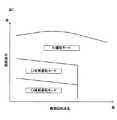
具体的には電子制御ユニット200は、図2に示すように、機関回転速度と機関負荷(アクセル踏込量)と基づいて定まる機関運転点(機関運転状態)が、低中回転かつ低負荷領域にあれば運転モードをCI減筒運転モードに切り替え、低中回転かつ中負荷領域にあれば運転モードをCI全筒運転モードに切り替え、これら以外の領域であれば運転モードをSI運転モードに切り替える。そして電子制御ユニット200は、各運転モードに応じた吸気動弁装置5、排気動弁装置6、燃料噴射弁20及び点火プラグ11の制御を実施する。 Specifically, as shown in FIG. 2, the
SI運転モードとは、全ての気筒10の燃焼室内に、理論空燃比又は理論空燃比近傍の均質予混合気を形成して点火プラグ11による点火を行い、その均質予混合気を火炎伝播燃焼させて機関本体1の運転を行うモードのことをいう。 In the SI operation mode, a homogeneous premixed gas in the vicinity of the stoichiometric air-fuel ratio or near the stoichiometric air-fuel ratio is formed in the combustion chambers of all the cylinders 10 and ignited by the
CI全筒運転モードとは、全ての気筒10の燃焼室内に、理論空燃比よりもリーンな空燃比(例えば30〜40程度)の予混合気を形成し、その予混合気を圧縮自着火燃焼させて機関本体1の運転を行うモードのことをいう。本実施形態では、予混合気として燃焼室内の中央部に可燃層を有し、気筒内壁面の周りに空気層を有する成層予混合気を形成しているが、予混合気として均質混合気を形成しても良い。 In the CI all-cylinder operation mode, a premixed gas having an air-fuel ratio leaner than the stoichiometric air-fuel ratio (for example, about 30 to 40) is formed in the combustion chambers of all the cylinders 10, and the premixed gas is compressed by self-ignition combustion. This is a mode in which the
CI減筒運転モードとは、休止気筒では燃焼を実施せずに、稼働気筒の燃焼室内にのみ理論空燃比よりもリーンな空燃比(例えば30〜40程度)の予混合気を形成し、その予混合気を圧縮自着火燃焼させて機関本体1の運転を行うモードのことをいう。本実施形態では、このCI減筒運転モード中もCI全筒運転モード中と同様に、予混合気として成層予混合気を形成しているが、予混合気として均質混合気を形成しても良い。 The CI reduced-cylinder operation mode does not perform combustion in the idle cylinder, but forms a premixed gas with an air-fuel ratio leaner than the stoichiometric air-fuel ratio (for example, about 30 to 40) only in the combustion chamber of the operating cylinder. This is a mode in which the
なお、予混合気を燃焼室内で圧縮自着火燃焼させるには、予混合気を自着火させることが可能な温度まで筒内温度を上昇させる必要があり、SI運転モード中のように予混合気を燃焼室内で全て火炎伝播燃焼させるときよりも筒内温度を高温にする必要がある。そのため本実施形態では、CI全筒運転モード中は全ての気筒10の排気弁60が、またCI全筒減筒モード中は稼働気筒の排気弁60が、排気行程の他に吸気行程でも開弁するように排気動弁装置6を制御している。このように、排気弁60を吸気行程中に再度開弁する排気弁2度開き動作を実施することで、排気行程中に自気筒から排出された高温の排気を直後の吸気行程中に自気筒に吸い戻すことができる。これにより筒内温度を上昇させて、各気筒10の筒内温度を圧縮自着火燃焼可能な温度に維持している。 In addition, in order to cause the premixed gas to be subjected to compression self-ignition combustion in the combustion chamber, it is necessary to increase the in-cylinder temperature to a temperature at which the premixed gas can be self-ignited, and the premixed gas is in the SI operation mode. It is necessary to raise the in-cylinder temperature to a higher temperature than when all the flame is propagated in the combustion chamber. Therefore, in this embodiment, the
また、予混合気を燃焼室内で圧縮自着火燃焼させるにあたって、必要に応じて点火プラグ11による予混合気の着火アシストを行って予混合気の一部を火炎伝播燃焼させ、そのときに生じる熱を用いて筒内温度を強制的に上昇させることで、残りの予混合気を圧縮自着火燃焼させることもできる。このような着火アシストを実施して予混合気を圧縮自着火燃焼させることで、筒内温度が比較的低い状態であっても予混合気を圧縮自着火燃焼させることが可能になると共に、予混合気の着火時期を任意の時期に制御することが容易となる。 Further, when the premixed gas is compressed and ignited and combusted in the combustion chamber, the premixed gas is ignited by the
<SI運転モード中の基本的な制御>
以下ではまず、図3を参照してSI運転モード中における吸気動弁装置5、排気動弁装置6、燃料噴射弁20及び点火プラグ11の基本的な制御について説明する。図3は、SI運転モード中における各気筒10の吸気弁開閉時期、排気弁開閉時期、燃料噴射時期及び点火時期の一例を示したタイムチャートである。<Basic control during SI operation mode>
Hereinafter, first, basic control of the
電子制御ユニット200は、運転モードがSI運転モードに設定されているときは、全ての気筒10の吸気弁50が吸気行程中に開弁するように吸気動弁装置5を制御する。また電子制御ユニット200は、全ての気筒10の排気弁60が排気行程中に開弁するように排気動弁装置6を制御する。 When the operation mode is set to the SI operation mode, the
そして電子制御ユニット200は、予めROM202に記憶されたマップ等を参照し、機関運転状態に基づいて、気筒毎に要求トルクに応じた目標噴射量、目標噴射時期及び目標点火時期を設定する。そして電子制御ユニット200は、燃料噴射量が目標噴射量となるように、また燃料噴射時期が目標噴射時期となるように各気筒10の燃料噴射弁20を制御する。また電子制御ユニット200は、点火時期が目標点火時期となるように各気筒10の点火プラグ11を制御する。 The
この結果、図3に示すように、基本的にSI運転モード中は、全ての気筒10の吸気弁50が吸気行程中に開弁されて、吸気行程中に各気筒内に空気が導入されると共に、吸気行程の前半に各気筒10の燃料噴射弁20から燃料が噴射される。これにより、各気筒10の燃焼室内に理論空燃比又は理論空燃比近傍の均質混合気が形成される。そして、燃焼室内に形成した均質混合気を圧縮上死点付近で点火プラグ11によって点火することで火炎伝播燃焼させる。その後、全ての気筒10の排気弁60が排気行程中に開弁されて、各気筒内の排気(燃焼ガス)が排気ポートへと排出される。 As a result, as shown in FIG. 3, basically, during the SI operation mode, the
<CI全筒運転モード中における基本的な制御>
次に、図4A及び図4Bを参照してCI全筒運転モード中における吸気動弁装置5、排気動弁装置6及び燃料噴射弁20の基本的な制御について説明する。図4Aは、着火アシストを実施しない場合のCI全筒運転モード中における各気筒10の吸気弁開閉時期、排気弁開閉時期及び燃料噴射時期の一例を示したタイムチャートである。<Basic control during CI all-cylinder operation mode>
Next, basic control of the
電子制御ユニット200は、運転モードがCI全筒運転モードに設定されているときは、全ての気筒10の吸気弁50が吸気行程中に開弁するように吸気動弁装置5を制御する。また電子制御ユニット200は、全ての気筒10の排気弁60が排気行程と吸気行程で開弁するように排気動弁装置6を制御する。 When the operation mode is set to the CI all-cylinder operation mode, the
そして電子制御ユニット200は、予めROM202に記憶されたマップ等を参照し、機関運転状態に基づいて、気筒毎に要求トルクに応じた目標噴射量及び目標噴射時期を設定する。そして電子制御ユニット200は、燃料噴射量が目標噴射量となるように、また燃料噴射時期が目標噴射時期となるように燃料噴射弁20を制御する。 Then, the
この結果、図4Aに示すように、基本的にCI全筒運転モード中は、全ての気筒10の吸気弁50及び排気弁60が吸気行程中に開弁される。これにより、吸気行程中に各気筒内に空気が導入されると共に、直前の排気行程中に自気筒から排出された高温の排気が、吸気行程中に自気筒に吸い戻される。このようにCI全筒運転モード中は、吸気行程中に空気と高温の排気とを各気筒内に導入することで、各気筒10の筒内温度が自着火運転可能な温度に維持される。そして、圧縮行程後半に各気筒10の燃料噴射弁20から燃料を噴射して各気筒10の燃焼室内にリーン空燃比の成層予混合気を形成し、圧縮上死点近傍で当該成層予混合気を圧縮自着火燃焼させる。その後、全ての気筒10の排気弁60が排気行程中に開弁されて、各気筒内の排気が排気ポートへと排出される。 As a result, as shown in FIG. 4A, basically, during the CI all-cylinder operation mode, the
なお前述したように、このCI全筒運転モード中において、着火アシストを実施して予混合気を圧縮自着火燃焼させることも可能である。以下、図4Bを参照して、着火アシストを実施する場合のCI全筒運転モード中における吸気動弁装置5、排気動弁装置6、燃料噴射弁20及び点火プラグ11の基本的な制御について説明する。 As described above, during the CI all-cylinder operation mode, it is also possible to execute the ignition assist and cause the premixed gas to be subjected to compression self-ignition combustion. Hereinafter, with reference to FIG. 4B, basic control of the
図4Bは、着火アシストを実施する場合のCI全筒運転モード中における各気筒10の吸気弁開閉時期、排気弁開閉時期、燃料噴射時期及び着火アシスト時期の一例を示したタイムチャートである。 FIG. 4B is a time chart showing an example of the intake valve opening / closing timing, the exhaust valve opening / closing timing, the fuel injection timing, and the ignition assist timing of each cylinder 10 in the CI all-cylinder operation mode when performing the ignition assist.
電子制御ユニット200は、CI全筒運転モード中に着火アシストを実施して成層予混合気を圧縮自着火燃焼させる場合も、着火アシストを実施しないときと同様に、全ての気筒10の吸気弁50が吸気行程中に開弁するように吸気動弁装置5を制御し、全ての気筒10の排気弁60が排気行程と吸気行程で開弁するように排気動弁装置6を制御する。 In the case where the
また電子制御ユニット200は、CI全筒運転モード中に着火アシストを実施して成層予混合気を圧縮自着火燃焼させる場合は、予めROM202に記憶されたマップ等を参照し、機関運転状態に基づいて、気筒毎に要求トルクに応じたメイン燃料の目標噴射量及び目標噴射時期を設定する。 Further, when the
そして電子制御ユニット200は、CI全筒運転モード中に着火アシストを実施して成層予混合気を圧縮自着火燃焼させる場合は、気筒毎に着火アシスト用燃料の目標噴射量及び目標噴射時期を設定する。着火アシスト用燃料の目標噴射量及び目標噴射時期はそれぞれ予め設定した一定値としても良いし、機関運転状態に基づいて、マップ等を参照して気筒毎に要求筒内温度に応じた目標噴射量及び目標噴射時期を設定しても良い。なおメイン燃料の目標噴射量は、CI全筒運転モード中に着火アシストを実施する場合の要求トルクに応じた目標噴射量よりも、着火アシスト用燃料の目標噴射量分だけ減量されている。 The
この結果、図4Bに示すように、着火アシストを実施する場合は、圧縮行程後半で少なくとも2回燃料が噴射され、1回目の燃料噴射(メイン燃料の噴射)で燃焼室内に成層予混合気を形成し、2回目の燃料噴射(着火アシスト用燃料の噴射)で点火プラグ11周りにこの成層予混合気よりもリッチな空燃比のリッチ混合気を形成する。そして、2回目の燃料噴射よりも後の圧縮行程後半にこのリッチ混合気に対して点火プラグ11による点火(着火アシスト)を行って火炎伝播燃焼させ、そのときに生じる熱を用いて筒内温度を強制的に上昇させることで、1回目の燃料噴射で形成した成層予混合気を圧縮自着火燃焼させる。 As a result, as shown in FIG. 4B, when performing the ignition assist, the fuel is injected at least twice in the latter half of the compression stroke, and the stratified premixed gas is injected into the combustion chamber by the first fuel injection (main fuel injection). In the second fuel injection (ignition assist fuel injection), a rich air-fuel mixture richer than the stratified pre-air mixture is formed around the
<CI減筒運転モード中における基本的な制御>
最後に、図5A及び図5Bを参照してCI減筒運転モード中における制御について説明する。図5Aは、着火アシストを実施しない場合のCI減筒運転モード中における稼働気筒(本実施形態では第1気筒と第4気筒)と休止気筒(本実施形態では第2気筒と第3気筒)の吸気弁開閉時期、排気弁開閉時期及び燃料噴射時期の一例を示したタイムチャートである。<Basic control during CI reduced cylinder operation mode>
Finally, the control during the CI reduced cylinder operation mode will be described with reference to FIGS. 5A and 5B. FIG. 5A shows the operating cylinders (first cylinder and fourth cylinder in this embodiment) and idle cylinders (second cylinder and third cylinder in this embodiment) during the CI reduced cylinder operation mode when ignition assist is not performed. 4 is a time chart showing an example of intake valve opening / closing timing, exhaust valve opening / closing timing, and fuel injection timing.
電子制御ユニット200は、運転モードがCI減筒運転モードに設定されているときは、稼働気筒の吸気弁50については吸気行程中に開弁するように吸気動弁装置5を制御する。一方で休止気筒の吸気弁50については閉弁したままの状態となるように吸気動弁装置5を制御する。また電子制御ユニット200は、稼働気筒の排気弁60については排気行程と吸気行程で開弁するように排気動弁装置6を制御する。一方で休止気筒の排気弁60については閉弁したままの状態となるように排気動弁装置6を制御する。 When the operation mode is set to the CI reduced cylinder operation mode, the
このように、CI減筒運転モード中は、休止気筒の吸気弁50及び排気弁60を全行程で閉弁したままの状態としている。これにより、休止気筒でポンプ損失が生じるのを抑制できるので、休止気筒で通常通り吸気弁50及び排気弁60を開弁させる場合と比べて燃費を向上させることができる。 As described above, during the CI reduced-cylinder operation mode, the
また電子制御ユニット200は、休止気筒については燃料噴射を停止する。一方で稼働気筒については、予めROM202に記憶されたマップ等を参照し、機関運転状態に基づいて、稼働気筒毎に要求トルクに応じた目標噴射量及び目標噴射時期を設定する。そして電子制御ユニット200は、燃料噴射量が目標噴射量となるように、また燃料噴射時期が目標噴射時期となるように各稼働気筒の燃料噴射弁20を制御する。 Further, the
この結果、図5Aに示すようにCI減筒運転モード中は、稼働気筒についてはCI全筒運転モード時と同様に吸気動弁装置5、排気動弁装置6及び燃料噴射弁20が制御される。一方で休止気筒については、燃料噴射が停止されると共に、吸気弁50及び排気弁60が閉弁したままの状態とされる。 As a result, as shown in FIG. 5A, during the CI reduced cylinder operation mode, the
なお前述したように、このCI減筒運転モード中においても、着火アシストを実施して予混合気を圧縮自着火燃焼させることも可能である。図5Bは、着火アシストを実施する場合のCI減筒運転モード中における稼働気筒と休止気筒の吸気弁開閉時期、排気弁開閉時期、燃料噴射時期及び着火アシスト時期の一例を示したタイムチャートである。 As described above, even during the CI reduced-cylinder operation mode, it is possible to perform the ignition assist and cause the premixed gas to be subjected to the compression self-ignition combustion. FIG. 5B is a time chart showing an example of the intake valve opening / closing timing, the exhaust valve opening / closing timing, the fuel injection timing, and the ignition assist timing of the operating cylinder and the non-operating cylinder in the CI reduced cylinder operation mode when performing the ignition assist. .
図5Bに示すように、CI減筒運転モード中に着火アシストする場合は、稼働気筒についてはCI全筒運転モード時と同様に吸気動弁装置5、排気動弁装置6、燃料噴射弁20及び点火プラグ11が制御される。一方で休止気筒については、燃料噴射が停止されると共に、吸気弁50及び排気弁60が閉弁したままの状態とされる。 As shown in FIG. 5B, when the ignition assist is performed during the CI reduced cylinder operation mode, the
<CI減筒運転モードからCI全筒運転モードへの運転モード切替時の問題点>
ここで、運転モードをCI減筒運転モードからCI全筒運転モードに切り替える要求(以下「全筒復帰要求」という。)が出た後、休止気筒の復帰1サイクル目から成層予混合気を圧縮自着火燃焼させようとすると、以下のような問題が生じる。<Problem when switching operation mode from CI reduced cylinder operation mode to CI all cylinder operation mode>
Here, after a request to switch the operation mode from the CI reduced cylinder operation mode to the CI all cylinder operation mode (hereinafter referred to as “all cylinder return request”) is issued, the stratified premixed gas is compressed from the first cycle of return of the idle cylinder. The following problems occur when trying to perform self-ignition combustion.
前述したように予混合気を燃焼室内で圧縮自着火燃焼させるには、筒内温度を高温にする必要がある。そのため本実施形態では、CI減筒運転モード中は稼働気筒の排気弁60を吸気行程中に再度開弁する排気弁2度開き動作を実施することで、排気行程中に自気筒から排出された高温の排気を、直後の吸気行程中に自気筒に吸い戻して、稼働気筒の筒内温度を高温に維持している。 As described above, in order to cause the premixed gas to undergo compression self-ignition combustion in the combustion chamber, it is necessary to increase the in-cylinder temperature. Therefore, in the present embodiment, during the CI reduction cylinder operation mode, the
しかしながら、CI減筒運転モード中は休止気筒では燃焼が行われていないため、稼働気筒と比較して休止気筒の筒内温度が徐々に低下していく。また、全筒復帰要求が出た後、休止気筒の復帰1サイクル目の排気行程中に休止気筒から排出される排気は燃焼ガスではないため、直後の吸気行程中に自気筒に吸い戻したとしても筒内温度の上昇幅は小さい。 However, since the combustion is not performed in the idle cylinder during the CI reduced cylinder operation mode, the in-cylinder temperature of the idle cylinder gradually decreases compared to the active cylinder. In addition, after the exhaust request for all cylinders is issued, the exhaust exhausted from the idle cylinder during the exhaust stroke of the idle cycle of the idle cylinder return is not combustion gas. However, the increase in the in-cylinder temperature is small.
そのため、休止気筒の復帰1サイクル目から予混合気を圧縮自着火燃焼させようとすると、休止気筒の筒内温度は稼働気筒の筒内温度と比較して低いので、着火時期の遅延や失火を招くおそれがある。 Therefore, if the premixed gas is to be subjected to compression self-ignition combustion from the first cycle of the return of the idle cylinder, the cylinder temperature of the idle cylinder is lower than the cylinder temperature of the active cylinder, so that the ignition timing is delayed or misfired. There is a risk of inviting.
このような問題の解決方法としては、例えば、全筒復帰要求が出た後の休止気筒の復帰1サイクル目では、休止気筒内に理論空燃比の均質予混合気を形成して点火プラグ11による点火を行い、その均質予混合気を火炎伝播燃焼させることが考えられる。しかしながら、このような方法を取ると、予混合気を圧縮自着火燃焼させる場合と比較して、熱効率が低下すると共に火炎温度自体は高くなるため、燃費が悪化すると共にNOxの排出量が増加して排気エミッションが悪化するおそれがある。 As a solution for such a problem, for example, in the first cycle of return of the idle cylinder after the all cylinder return request is issued, a homogeneous premixed gas having a stoichiometric air-fuel ratio is formed in the idle cylinder and the
そこで本実施形態では、全筒復帰要求が出た後の休止気筒の復帰1サイクル目では、休止気筒の吸気弁50については、CI減筒運転モード中と同様に全行程で閉弁したままの状態となるように吸気動弁装置5を制御する。そして、休止気筒の排気弁60については、排気行程及び吸気行程で開弁するように排気動弁装置6を制御して、全筒復帰要求が出た後の休止気筒の復帰1サイクル目では、休止気筒の排気弁60を少なくとも吸気行程で開弁させ、直後の圧縮行程で閉弁させる。 Therefore, in the present embodiment, in the first cycle of return of the deactivated cylinder after the all cylinder return request is issued, the
これにより、全筒復帰要求が出た後の休止気筒の復帰1サイクル目において、排気マニホールド41内に存在する稼働気筒から排出された高温の排気のみを吸気行程中に休止気筒に吸い戻し、直後の圧縮行程でこの吸い戻した排気を圧縮して筒内温度を上昇させることができる。そのため、全筒復帰要求が出た後の休止気筒の復帰1サイクル目において、休止気筒の吸気弁50と排気弁60とをそれぞれ吸気行程に開弁した場合と比較して筒内温度を高くすることができる。これにより、CI減筒運転モード中に低下した休止気筒の筒内温度を、休止気筒の復帰1サイクル目で上昇させて、休止気筒の筒内環境を復帰2サイクル目から自着火運転可能な環境に整えることができる。 As a result, in the first cycle of return of the idle cylinder after the all cylinder return request is issued, only the high temperature exhaust exhausted from the operating cylinder existing in the
以下、この本実施形態によるCI減筒運転モードからCI全筒運転モードに運転モードを切り替えるときの運転モード切替制御(以下「全筒復帰制御」という。)について説明する。 Hereinafter, operation mode switching control (hereinafter referred to as “all cylinder return control”) when switching the operation mode from the CI reduced cylinder operation mode to the CI all cylinder operation mode according to this embodiment will be described.
<第1実施形態による全筒復帰制御の動作>
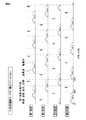
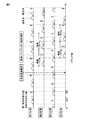
図6は、本実施形態による全筒復帰制御の動作について説明するタイムチャートであり、CI減筒運転モードからCI全筒運転モードに切り替えるときの各気筒10の吸気弁開閉時期、排気弁開閉時期及び燃料噴射時期の一例をそれぞれ示したタイムチャートである。<Operation of All-Cylinder Return Control According to First Embodiment>
FIG. 6 is a time chart for explaining the operation of the all cylinder return control according to the present embodiment, and the intake valve opening / closing timing and exhaust valve opening / closing timing of each cylinder 10 when switching from the CI reduced cylinder operation mode to the CI all cylinder operation mode. 4 is a time chart showing an example of fuel injection timing.
図6に示すように、全筒復帰要求が出た後の休止気筒の復帰1サイクル目では、休止気筒の吸気弁50については、CI減筒運転モード中と同様に、全行程で閉弁したままの状態となるように吸気動弁装置5を制御する。一方で休止気筒の排気弁60については、排気行程と吸気行程で開弁するように排気動弁装置6を制御する。 As shown in FIG. 6, in the first cycle of return of the idle cylinder after the all cylinder return request is issued, the
これにより、排気マニホールド41内に存在する稼働気筒から排出された高温の排気のみを復帰1サイクル目の吸気行程中に休止気筒に吸い戻し、直後の圧縮行程でこの吸い戻した排気を圧縮して筒内温度を上昇させることができる。そのため、CI減筒運転モード中に低下した休止気筒の筒内温度を、休止気筒の復帰1サイクル目で上昇させて、休止気筒の筒内環境を自着火運転可能な環境に整えることができる。 As a result, only the high-temperature exhaust discharged from the working cylinders existing in the
その結果、復帰2サイクル目から休止気筒の吸気弁50を吸気行程中に開弁するように吸気動弁装置5を制御すると共に、直後の圧縮行程で燃料噴射を実施して休止気筒内に成層予混合気を形成することで、着火時期の遅延や失火の発生を抑制しつつ、圧縮上死点近傍で当該成層予混合気を圧縮自着火燃焼させることができる。すなわち、休止気筒の復帰2サイクル目から、休止気筒に対する制御を前述したCI全筒運転モード中における制御に切り替えることができる。 As a result, the
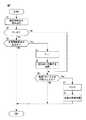
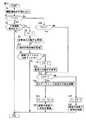
<第1実施形態による全筒復帰制御のフローチャート>
図7は、各休止気筒に対して実施される本実施形態による全筒復帰制御について説明するフローチャートである。電子制御ユニット200は、本ルーチンを機関運転中に所定の演算周期(例えば10[ms])ごとに繰り返し実行する。<Flowchart of all-cylinder return control according to the first embodiment>
FIG. 7 is a flowchart illustrating the all-cylinder return control according to the present embodiment that is performed for each idle cylinder. The
ステップS1において、電子制御ユニット200は、機関運転点(機関回転速度及び機関負荷)を読み込む。 In step S1, the
ステップS2において、電子制御ユニット200は、CI減筒運転モードからCI全筒運転モードへの切替処理実施フラグF1が0に設定されているか否かを判定する。切替処理実施フラグF1は、初期値が0に設定されているフラグであって、後述するステップS3で全筒復帰要求があると判定されたときに1に設定される。 In step S2, the
ステップS3において、電子制御ユニット200は、全筒復帰要求があるか否かを判定する。具体的には電子制御ユニット200は、ステップS1で読み込んだ今回の機関運転点がCI全筒運転領域にあり、本ルーチンの前回実施時においてステップS1で読み込んだ機関運転点がCI減筒運転領域にあったときに、全筒復帰要求があると判定する。電子制御ユニット200は、全筒復帰要求がなければ今回の処理を終了し、全筒復帰要求があればステップS4の処理に進む。 In step S3, the
ステップS4において、電子制御ユニット200は、切替処理実施フラグF1を1に設定する。 In step S4, the
ステップS5において、電子制御ユニット200は、休止気筒の吸気弁50については全行程で閉弁したままの状態とし、休止気筒の排気弁60の動作を先行して再開させる。具体的には、休止気筒の排気弁60が排気行程と吸気行程で開弁するように排気動弁装置6を制御する。 In step S5, the
ステップS6において、電子制御ユニット200は、全筒復帰要求が出た後の休止気筒の復帰1サイクル目(排気行程が最初の行程)が終了したか否かを判定する。このような判定は、例えばクランク角等に基づいて実施することができる。電子制御ユニット200は、全筒復帰要求が出た後の休止気筒の復帰1サイクル目が終了していればステップS7の処理に進み、終了前であれば今回の処理を終了する。 In step S6, the
ステップS7において、電子制御ユニット200は、切替処理実施フラグF1を0に戻す。 In step S7, the
ステップS8において、電子制御ユニット200は、休止気筒の吸気弁50が吸気行程で開弁するように排気動弁装置6を制御して休止気筒の吸気弁50の動作を再開すると共に、休止気筒の燃料噴射弁20からの燃料噴射を再開して、休止気筒での圧縮自着火燃焼を再開させる。 In step S8, the
なお、これまでに説明してきた本実施形態による全筒復帰制御は、CI全筒運転モード中に燃料カット運転を実施した場合に、燃料カット運転から復帰する復帰要求が出た後の各気筒10の復帰1サイクル目に適用しても良い。またCI減筒運転モード中に燃料カット運転を実施した場合に、燃料カット運転から復帰する復帰要求が出た後の各稼働気筒の復帰1サイクル目に適用しても良い。燃料カット運転はCI減筒運転と比較して実施期間が短い場合が多く、このようにすることで、吸気と比較して高温の排気のみを各気筒や各稼働気筒に吸い戻し、直後の圧縮行程でこの吸い戻した排気を圧縮して筒内温度を上昇させることができる。 Note that the all-cylinder return control according to the present embodiment that has been described so far is performed when each cylinder 10 after a return request for returning from the fuel cut operation is issued when the fuel cut operation is performed during the CI all-cylinder operation mode. It may be applied to the first cycle of return. Further, when the fuel cut operation is performed during the CI reduced cylinder operation mode, the present invention may be applied to the first return cycle of each operating cylinder after a return request for returning from the fuel cut operation is issued. The fuel cut operation often has a shorter implementation period compared to the CI reduced cylinder operation, and in this way, only the high-temperature exhaust gas is sucked back into each cylinder or each operating cylinder compared to the intake air, and the compression immediately after The exhaust gas sucked back in the stroke can be compressed to increase the in-cylinder temperature.
以上説明した本実施形態による内燃機関100は、複数の気筒10を備える機関本体1と、気筒10に設けられた吸気弁50及び排気弁60と、気筒10の吸気弁50を任意の時期に開閉可能に構成された吸気動弁装置5と、各気筒の排気弁60を任意の時期に開閉可能に構成された排気動弁装置6と、気筒10内に燃料を噴射するための燃料噴射弁20と、を備える。 The
そして、この内燃機関100を制御する電子制御ユニット200(制御装置)が、気筒10内で予混合気を圧縮自着火燃焼させる自着火運転領域内において、機関運転状態に応じて少なくとも一部の気筒10を休止気筒として当該休止気筒への燃料供給を停止する休止運転を実施し、休止気筒で予混合気の圧縮自着火燃焼を再開させる際の復帰サイクル(復帰1サイクル目)において、休止気筒の吸気弁50が全行程で閉弁したままとなるように吸気動弁装置5を制御すると共に、休止気筒の排気弁60が少なくとも吸気行程で開弁し、直後の圧縮行程で閉弁するように排気動弁装置6を制御し、復帰サイクルの次サイクル(復帰2サイクル目)において、休止気筒の吸気弁50が少なくとも吸気行程で開弁するように吸気動弁装置5を制御すると共に、休止気筒の排気弁60が少なくとも排気行程で開弁するように排気動弁装置6を制御して、休止気筒で予混合気の圧縮自着火燃焼を再開させるように構成されている。 In the self-ignition operation region in which the electronic control unit 200 (control device) for controlling the
これにより、休止気筒で予混合気の圧縮自着火燃焼を再開させる復帰要求が出た後の復帰1サイクル目の吸気行程中に、吸気と比較して高温の排気のみを休止気筒に吸い戻し、直後の圧縮行程でこの吸い戻した排気を圧縮して筒内温度を上昇させることができる。そのため、休止運転中に低下した休止気筒の筒内温度を復帰1サイクル目で上昇させて休止気筒の筒内環境を復帰2サイクル目から圧縮自着火燃焼可能な環境に整えることができる。また休止気筒の筒内環境を復帰1サイクル目で自着火運転可能な環境に整えた後の復帰2サイクル目から休止気筒で予混合気の圧縮自着火燃焼を再開するので、着火時期の遅延や失火の発生を抑制することができる。さらに、休止気筒で予混合気の圧縮自着火燃焼を再開させる際に、休止気筒で火花点火運転を実施しないので、燃費及び排気エミッションの悪化を抑制することができる。 Thereby, during the intake stroke of the return first cycle after the return request for restarting the compression auto-ignition combustion of the premixed gas in the idle cylinder, only the exhaust gas having a temperature higher than that of the intake air is sucked back into the idle cylinder. The exhausted air that has been sucked back can be compressed in the subsequent compression stroke to increase the in-cylinder temperature. Therefore, the in-cylinder temperature of the deactivated cylinder, which has decreased during the deactivated operation, is increased in the first return cycle, and the in-cylinder environment of the deactivated cylinder can be adjusted to an environment capable of compression auto-ignition combustion from the second return cycle. In addition, the compressed self-ignition combustion of the premixed gas is resumed in the idle cylinder from the second return cycle after the in-cylinder environment of the idle cylinder is adjusted to an environment in which the self-ignition operation can be performed in the first return cycle. The occurrence of misfire can be suppressed. Furthermore, since the spark ignition operation is not performed in the idle cylinder when restarting the compression auto-ignition combustion of the premixed gas in the idle cylinder, deterioration of fuel consumption and exhaust emission can be suppressed.
特に休止運転が減筒運転であった場合は、排気マニホールド41内に存在する稼働気筒から排出された高温の排気のみを復帰1サイクル目の吸気行程中に休止気筒に吸い戻し、直後の圧縮行程でこの吸い戻した排気を圧縮することができるので、効果的に筒内温度を上昇させることができる。そのため、CI減筒運転モード中に低下した休止気筒の筒内温度を、休止気筒の復帰1サイクル目で上昇させて、休止気筒の筒内環境を復帰2サイクル目から圧縮自着火燃焼可能な環境に整えることができる。 In particular, when the pause operation is a reduced-cylinder operation, only the high-temperature exhaust exhausted from the operating cylinders present in the
また本実施形態による電子制御ユニット200は、休止運転中において、休止気筒の吸気弁50及び排気弁60が全行程で閉弁したままとなるように吸気動弁装置5及び排気動弁装置6をそれぞれ制御するように構成されている。 In addition, the
これにより、休止運転中に休止気筒でポンプ損失が生じるのを抑制できる。休止運転中に休止気筒の排気弁で排気弁2度開き動作を実施する場合と比べて燃費を向上させることができる。 Thereby, it is possible to suppress the occurrence of pump loss in the idle cylinder during the idle operation. Fuel consumption can be improved compared to the case where the exhaust valve is opened twice with the exhaust valve of the idle cylinder during the idle operation.
(第2実施形態)
次に、本発明の第2実施形態による全筒復帰制御について説明する。本実施形態による全筒復帰制御は、休止気筒の復帰1サイクル目の圧縮行程中に、当該休止気筒の噴射弁から予め設定された所定量の復帰用燃料を噴射する点で、第1実施形態と相違する。以下、この相違点を中心に説明する。(Second Embodiment)
Next, the all cylinder return control according to the second embodiment of the present invention will be described. The all-cylinder return control according to the present embodiment is the point that the predetermined amount of return fuel is preset from the injection valve of the idle cylinder during the compression stroke of the idle cycle of the idle cylinder. Is different. Hereinafter, this difference will be mainly described.
<第2実施形態による全筒復帰制御の動作>
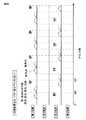
図8は、本実施形態による運転モード切替制御の動作について説明するタイムチャートであり、CI減筒運転モードからCI全筒運転モードに切り替えるときの各気筒10の吸気弁開閉時期、排気弁開閉時期及び燃料噴射時期一例をそれぞれ示した図である。<Operation of All-Cylinder Return Control According to Second Embodiment>
FIG. 8 is a time chart for explaining the operation of the operation mode switching control according to the present embodiment. The intake valve opening / closing timing and the exhaust valve opening / closing timing of each cylinder 10 when switching from the CI reduced-cylinder operation mode to the CI all-cylinder operation mode. It is the figure which each showed an example of fuel injection timing.
前述した第1実施形態では、全筒復帰要求が出た後の休止気筒の復帰1サイクル目において、排気マニホールド41内に存在する稼働気筒から排出された高温の排気のみを復帰1サイクル目の吸気行程中に休止気筒に吸い戻し、直後の圧縮行程でこの吸い戻した排気を圧縮することで筒内温度を上昇させていた。 In the first embodiment described above, only the high-temperature exhaust exhausted from the operating cylinder existing in the
ここでCI減筒運転モード中は、稼働気筒においてリーン空燃比の成層予混合気を圧縮自着火燃焼させている。そのため、排気マニホールド41内に存在する稼働気筒から排出された排気には酸素が含まれている。したがって、図8に示すように、全筒復帰要求が出た後の休止気筒の復帰1サイクル目の圧縮行程後半に燃料を噴射すれば、休止気筒内で噴射燃料を圧縮自着火燃焼させることができ、筒内温度をさらに上昇させることができる。これにより、復帰2サイクル目から休止気筒で予混合気の圧縮自着火燃焼を再開させるにあたって、休止気筒の筒内環境を自着火燃焼可能な環境に容易に整えることができる。 Here, during the CI reduced-cylinder operation mode, the lean air-fuel ratio stratified premixed gas is subjected to compression self-ignition combustion in the operating cylinder. Therefore, oxygen is contained in the exhaust discharged from the working cylinder existing in the
<第2実施形態による全筒復帰制御のフローチャート>
図9は、各休止気筒に対して実施される本実施形態による全筒復帰制御について説明するフローチャートである。電子制御ユニット200は、本ルーチンを機関運転中に所定の演算周期(例えば10[ms])ごとに繰り返し実行する。<Flowchart of All-Cylinder Return Control According to Second Embodiment>
FIG. 9 is a flowchart for explaining the all-cylinder return control according to the present embodiment that is performed for each idle cylinder. The
ステップS1からステップS8までの処理は、図7を参照して説明した処理と同様の処理が実施されるので、ここで説明を省略する。 Since the processing from step S1 to step S8 is the same as the processing described with reference to FIG. 7, the description thereof is omitted here.
ステップS20において、電子制御ユニット200は、休止気筒の復帰1サイクル目の圧縮行程後半で燃料を噴射するための復帰用燃料噴射処理を実施する。復帰用燃料噴射処理の詳細については図10を参照して説明する。 In step S20, the
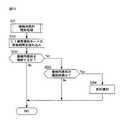
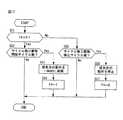
図10は、本実施形態による復帰用燃料噴射処理について説明するフローチャートである。 FIG. 10 is a flowchart illustrating the return fuel injection process according to the present embodiment.
ステップS201において、電子制御ユニット200は、本フローチャートとは別途に算出しているCI減筒運転モードの実施期間を読み込む。 In step S201, the
ステップS202において、電子制御ユニット200は、CI減筒運転モードの実施期間に基づいて、復帰1サイクル目で復帰用燃料を噴射するか否かを判定する。これは、CI減筒運転モードの実施期間が所定期間未満であれば、復帰1サイクル目で復帰用燃料を噴射しなくても、復帰2サイクル目から休止気筒で十分に圧縮自着火燃焼を実施できるためである。ここで本実施形態では、CI減筒運転モードの実施期間が所定期間以上のときに、復帰1サイクル目で復帰用燃料を噴射する必要があると判定している。なお、このような方法以外にも、CI減筒運転モードの実施期間に加えて機関回転速度や機関負荷などの機関運転状態を考慮して復帰1サイクル目で復帰用燃料を噴射するか否かを判定しても良い。例えばCI減筒運転モードの実施期間に加えて機関運転状態を考慮して筒内温度を推定し、この推定した筒内温度が所定値以下のときに、復帰1サイクル目で復帰用燃料を噴射する必要があると判定しても良い。いずれにしてもCI減筒運転モードの実施期間に基づいて、復帰1サイクル目で復帰用燃料を噴射するか否かが判定されることになる。 In step S202, the
電子制御ユニット200は、復帰1サイクル目で復帰用燃料を噴射すると判定したときはステップS203の処理に進む。一方で電子制御ユニット200は、復帰1サイクル目で復帰用燃料を噴射しないと判定したときは今回の処理を終了する。 When the
ステップS203において、電子制御ユニット200は、復帰1サイクル目で噴射する復帰用燃料の噴射時期か否かを判定する。本実施形態では、復帰用燃料の噴射時期を、復帰1サイクル目の圧縮行程後半の任意の時期に固定しているが、機関運転状態に応じて可変制御するようにしても良い。電子制御ユニット200は、復帰用燃料の噴射時期であればステップS204の処理に進む。一方で電子制御ユニット200は、復帰用燃料の噴射時期でなければ今回の処理を終了する。 In step S203, the
ステップS204において、電子制御ユニット200は、休止気筒の燃料噴射弁20から噴射される復帰用燃料の噴射量が、予め設定された所定噴射量となるように、休止気筒の燃料噴射弁20を制御する。 In step S204, the
以上説明した本実施形態による電子御ユニット200は、CI減筒運転モード中に稼働気筒内で理論空燃比よりもリーンなリーン空燃比の予混合気を圧縮自着火燃焼させ、復帰サイクル(復帰1サイクル目)の圧縮行程後半で、休止気筒の燃料噴射弁20から復帰用燃料を噴射するようにさらに構成されている。 The
これにより、休止気筒の復帰1サイクル目の吸気行程中に当該休止気筒に吸い戻された、排気マニホールド41内に存在する稼働気筒から排出された高温の排気には酸素が含まれているので、休止気筒の復帰1サイクル目の圧縮行程後半に復帰用燃料を供給することで、休止気筒内で圧縮自着火燃焼を生じさせることができる。そのため、休止気筒の復帰1サイクル目で筒内温度をさらに上昇させることができる、休止気筒の筒内環境を復帰2サイクル目から圧縮自着火燃焼可能な環境に整えることが容易となる。 Thereby, oxygen is contained in the high-temperature exhaust gas exhausted from the working cylinder existing in the
また本実施形態による電子制御ユニット200は、CI減筒運転モード(減筒運転)の実施期間に基づいて、復帰用燃料を噴射するか否かを判定するように構成されている。 Further, the
これにより、休止気筒の筒内環境が、復帰1サイクル目で復帰用燃料を噴射しなくても復帰2サイクル目から休止気筒で十分に圧縮自着火燃焼を実施できる環境のときに、無駄に燃料を噴射して燃費が悪化するのを抑制できる。 As a result, fuel is wasted when the in-cylinder environment of the idle cylinder is an environment where sufficient compression auto-ignition combustion can be performed in the idle cylinder from the 2nd return cycle without injecting return fuel in the 1st return cycle. It is possible to suppress deterioration of fuel consumption by injecting fuel.
(第3実施形態)
次に、本発明の第3実施形態による全筒復帰制御について説明する。本実施形態による全筒復帰制御は、休止気筒の復帰1サイクル目の圧縮行程後半に噴射する復帰用燃料の噴射量を、CI減筒運転モードの実施期間に基づいて制御する点で、第2実施形態と相違する。以下、この相違点を中心に説明する。(Third embodiment)
Next, the all-cylinder return control according to the third embodiment of the present invention will be described. The all-cylinder return control according to this embodiment is the second point in that the amount of return fuel injected in the second half of the compression stroke of the first return cycle of the deactivated cylinder is controlled based on the execution period of the CI reduced cylinder operation mode. It is different from the embodiment. Hereinafter, this difference will be mainly described.
前述した第2実施形態による全筒復帰制御では、全筒復帰要求が出た後の休止気筒の復帰1サイクル目の圧縮行程後半に噴射する復帰用燃料の噴射量を一定としていた。しかしながら、CI減筒運転モードの実施期間が長くなるほど、休止気筒の筒内温度は低下する。そのため、復帰用燃料の噴射量を一定とすると、CI減筒運転モードの実施期間が長くなった場合、復帰2サイクル目で圧縮自着火燃焼を再開させたときに着火時期の遅延や失火を招くおそれがある。 In the all-cylinder return control according to the second embodiment described above, the injection amount of the return fuel injected in the latter half of the compression stroke of the first return cycle of the deactivated cylinder after the all-cylinder return request is made constant. However, the longer the execution period of the CI reduced cylinder operation mode, the lower the in-cylinder temperature of the idle cylinder. For this reason, assuming that the injection amount of the return fuel is constant, when the execution period of the CI reduced cylinder operation mode becomes longer, when the compression self-ignition combustion is restarted in the second return cycle, the ignition timing is delayed or misfire occurs. There is a fear.
そこで本実施形態では、CI減筒運転モードの実施期間が長くなるほど休止気筒の復帰1サイクル目の圧縮行程後半に噴射する復帰用燃料の噴射量を増大させ、復帰用燃料を燃焼させたときに得られる熱量を増大させる。 Therefore, in the present embodiment, as the execution period of the CI reduced cylinder operation mode becomes longer, the injection amount of the return fuel injected in the second half of the compression stroke of the first return cycle of the idle cylinder is increased, and the return fuel is burned. Increase the amount of heat obtained.
<第3実施形態による全筒復帰制御のフローチャート>
図11は、本実施形態による復帰用燃料噴射処理について説明するフローチャートである。なお本実施形態による全筒復帰制御のメインルーチンは図9と同様なので、ここでは処理内容が異なる復帰用燃料噴射処理の内容について説明する。<Flowchart of all-cylinder return control according to the third embodiment>
FIG. 11 is a flowchart illustrating the return fuel injection process according to the present embodiment. The main routine of the all-cylinder return control according to the present embodiment is the same as that shown in FIG. 9, and therefore the contents of the return fuel injection process with different process contents will be described here.
ステップS211において、電子制御ユニット200は、本フローチャートとは別途に算出しているCI減筒運転モードの実施期間を読み込む。 In step S211, the
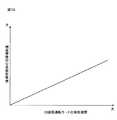
ステップS212において、電子制御ユニット200は、休止気筒の復帰1サイクル目の圧縮行程後半に噴射する復帰用燃料の目標噴射量を設定する。具体的には電子制御ユニット200は、例えば図12Aや図12Bのテーブルを参照し、CI減筒運転モードの実施期間に基づいて、復帰用燃料の目標噴射量を算出する。図12Aや図12Bの各テーブルは、CI減筒運転モードの実施期間が短い場合と比べて長いときほど、復帰用燃料の目標噴射量が多くなるように設定されている。これにより、CI減筒運転モードの実施期間が短い場合と比べて長いときほど、休止気筒の復帰1サイクル目の圧縮行程後半に噴射される復帰用燃料の噴射量が多くなる。本実施形態では、この復帰用燃料の目標噴射量が、休止気筒の筒内温度を、当該休止気筒において復帰2サイクル目から成層予混合気を圧縮自着火燃焼させることが可能な温度(要求筒内温度)まで上昇させるために、復帰1サイクル目に噴射する必要のある燃料噴射量に相当する。 In step S212, the
ステップS213において、電子制御ユニット200は、復帰1サイクル目で噴射する復帰用燃料の噴射時期か否かを判定する。本実施形態では、復帰用燃料の噴射時期を、復帰1サイクル目の圧縮行程後半の任意の時期に固定しているが、機関運転状態に応じて可変制御するようにしても良い。電子制御ユニット200は、復帰用燃料の噴射時期であればステップS214の処理に進む。一方で電子制御ユニット200は、復帰用燃料の噴射時期でなければ今回の処理を終了する。 In step S213, the
ステップS214において、電子制御ユニット200は、休止気筒の燃料噴射弁20から噴射される復帰用燃料の噴射量が、ステップS212で設定した復帰用燃料の目標噴射量となるように、休止気筒の燃料噴射弁20を制御する。 In step S214, the
以上説明した本実施形態による電子制御ユニット200は、CI減筒運転モード(減筒運転)の実施期間が短い場合と比べて長いときほど、復帰用燃料の噴射量を多くするようにさらに構成されている。これにより、CI減筒運転モードの実施期間の長さにかかわらず、休止気筒の筒内環境を復帰2サイクル目から圧縮自着火燃焼可能な環境に整えることができる。 The
(第4実施形態)
次に、本発明の第4実施形態による全筒復帰制御について説明する。本実施形態による全筒復帰制御は、休止気筒の復帰1サイクル目の圧縮行程後半に噴射する復帰用燃料の噴射量に上限値を設ける点で、第3実施形態と相違する。以下、この相違点を中心に説明する。(Fourth embodiment)
Next, the all-cylinder return control according to the fourth embodiment of the present invention will be described. The all-cylinder return control according to this embodiment is different from the third embodiment in that an upper limit value is provided for the injection amount of the return fuel injected in the latter half of the compression stroke of the first return cycle of the deactivated cylinder. Hereinafter, this difference will be mainly described.
前述した第3実施形態のように、CI減筒運転モードの実施期間が長くなるにしたがって復帰用燃料の目標噴射量を比例的に増大させてしまうと、CI減筒運転モードの実施期間が長くなったときに、休止気筒の復帰1サイクル目で過濃混合気を燃焼させることになる。そのため、CI減筒運転モードの実施期間が長くなると、休止気筒から排出される排気中の有害成分(NOxやスモークなど)が増加して排気エミッションが悪化するおそれがある。 As in the third embodiment described above, if the target injection amount of the return fuel is proportionally increased as the execution period of the CI reduced cylinder operation mode becomes longer, the execution period of the CI reduced cylinder operation mode becomes longer. When this happens, the rich mixture is burned in the first cycle of return of the deactivated cylinder. For this reason, when the execution period of the CI reduced-cylinder operation mode becomes longer, harmful components (NOx, smoke, etc.) in the exhaust discharged from the idle cylinder may increase and exhaust emission may deteriorate.
そこで本実施形態では、復帰用燃料の噴射量に上限値を設けることとした。これにより、休止気筒から排出される排気中の有害成分の増加を抑制して排気エミッションが悪化を抑制することができる。 Therefore, in this embodiment, an upper limit value is set for the injection amount of the return fuel. As a result, an increase in harmful components in the exhaust exhausted from the idle cylinder can be suppressed, and deterioration of exhaust emissions can be suppressed.
しかしながら、復帰用燃料の噴射量に上限値を設けると、復帰1サイクル目における復帰用燃料の燃焼によって得られる熱量が制限されることになる。そのため、休止気筒の筒内温度を、復帰2サイクル目から予混合気を圧縮自着火燃焼させることが可能な温度まで上昇させることができないおそれがある。 However, if an upper limit value is set for the injection amount of the return fuel, the amount of heat obtained by the combustion of the return fuel in the first return cycle is limited. Therefore, there is a possibility that the in-cylinder temperature of the idle cylinder cannot be raised to a temperature at which the premixed gas can be subjected to compression self-ignition combustion from the second return cycle.
そこで本実施形態では、復帰用燃料の噴射量が上限値となった場合は、復帰2サイクル目において、点火プラグ11による着火アシストを実施して予混合気を圧縮自着火燃焼させることとした。 Therefore, in the present embodiment, when the injection amount of the return fuel reaches the upper limit value, the ignition assist is performed by the
<第4実施形態による全筒復帰制御の動作>
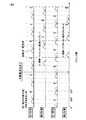
図13は、復帰用燃料の噴射量が上限値となった場合の本実施形態による全筒復帰制御の動作について説明するタイムチャートである。図13には、各気筒10の吸気弁開閉時期、排気弁開閉時期、燃料噴射時期及び着火アシスト時期の一例を示した。<Operation of All-Cylinder Return Control According to Fourth Embodiment>
FIG. 13 is a time chart for explaining the operation of the all-cylinder return control according to the present embodiment when the injection amount of the return fuel reaches the upper limit value. FIG. 13 shows an example of intake valve opening / closing timing, exhaust valve opening / closing timing, fuel injection timing, and ignition assist timing for each cylinder 10.
図13に示すように、休止気筒の復帰1サイクル目で復帰用燃料の噴射量が上限値になったときは、復帰2サイクル目の圧縮行程後半で少なくとも2回燃料を噴射する。これにより、1回目の燃料噴射で燃焼室内に成層予混合気を形成し、2回目の燃料噴射で復帰1サイクル目に噴射できなかった不足分の燃料を噴射して点火プラグ11周りにこの成層混合気よりもリッチな空燃比のリッチ混合気を形成する。そして、燃料噴射後の圧縮行程後半でこのリッチ混合気に対して点火プラグ11による点火を行ってリッチ混合気を火炎伝播燃焼させ、そのときに生じる熱を用いて筒内温度を上昇させることで成層予混合気の着火アシストを実施して、1回目の燃料噴射で形成した成層予混合気を圧縮自着火燃焼させる。 As shown in FIG. 13, when the return fuel injection amount reaches the upper limit in the return cycle of the idle cylinder, the fuel is injected at least twice in the latter half of the compression stroke of the
このように、復帰用燃料の噴射量が上限値になったときは、復帰1サイクル目に噴射できなかった不足分の燃料を着火アシスト用の燃料として噴射して火炎伝播燃焼さることで、復帰1サイクル目で筒内温度を上昇させるために不足した熱量を、復帰2サイクル目で補うことができる。したがって、復帰用燃料の噴射量が上限値に制限されて、休止気筒の復帰1サイクル目で筒内温度を十分に上昇させることができなかった場合でも、着火アシストを実施することで、着火時期の遅延や失火の発生を抑制しつつ、復帰2サイクル目から休止気筒で圧縮自着火燃焼を再開させることができる。 As described above, when the return fuel injection amount reaches the upper limit, the fuel that has not been injected in the first return cycle is injected as ignition assist fuel and flame propagation combustion is performed. The amount of heat that is insufficient to raise the in-cylinder temperature in the first cycle can be compensated for in the second cycle of return. Therefore, even when the injection amount of the return fuel is limited to the upper limit value and the in-cylinder temperature cannot be sufficiently increased in the first return cycle of the deactivated cylinder, the ignition timing is obtained by performing the ignition assist. Thus, the compression self-ignition combustion can be restarted in the idle cylinder from the second return cycle while suppressing the occurrence of the delay and the misfire.
<第4実施形態による全筒復帰制御のフローチャート>
図14は、各休止気筒に対して実施される本実施形態による全筒復帰制御について説明するフローチャートである。電子制御ユニット200は、本ルーチンを機関運転中に所定の演算周期(例えば10[ms])ごとに繰り返し実行する。<Flowchart of All-Cylinder Return Control According to Fourth Embodiment>
FIG. 14 is a flowchart illustrating the all-cylinder return control according to the present embodiment, which is performed for each idle cylinder. The
ステップS1からステップS6までの処理は、図7を参照して説明した処理と同様の処理が実施されるので、ここで説明を省略する。 Since the processing from step S1 to step S6 is the same as the processing described with reference to FIG. 7, the description thereof is omitted here.
ステップS20において、電子制御ユニット200は、休止気筒の復帰1サイクル目の圧縮行程後半で復帰用燃料を噴射するための本実施形態による復帰用燃料噴射処理を実施する。図15は、この本実施形態による復帰用燃料噴射処理について説明するフローチャートである。 In step S20, the
ステップS221において、電子制御ユニット200は、本フローチャートとは別途に算出しているCI減筒運転モードの実施期間を読み込む。 In step S221, the
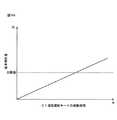
ステップS222において、電子制御ユニット200は、休止気筒の復帰1サイクル目の圧縮行程後半に噴射する復帰用燃料の目標噴射量を設定する。具体的には電子制御ユニット200は、まず図16Aのテーブルを参照し、CI減筒運転モードの実施期間に基づいて、復帰用燃料の基本噴射量を算出する。本実施形態では、この基本噴射量が、休止気筒の筒内温度を、当該休止気筒において復帰2サイクル目から成層予混合気を圧縮自着火燃焼させることが可能な温度まで上昇させるために、復帰1サイクル目に噴射する必要のある燃料噴射量に相当する。そして電子制御ユニット200は、基本噴射量が、図16Aのテーブルに示す上限値未満のときは、基本噴射量を復帰用燃料の目標噴射量として設定する。一方で電子制御ユニット200は、基本噴射量が上限値以上のときは、上限値を復帰用燃料の目標噴射量として設定する。なお、これ以外にも、例えば図16Bに示すような予め上限値を設けたテーブルを参照し、CI減筒運転モードの実施期間に基づいて、復帰用燃料の目標噴射量を直接算出しても良い。 In step S222, the
ステップS223において、電子制御ユニット200は、復帰用燃料の目標噴射量が上限値に制限されているか否かを判定する。換言すれば、復帰用燃料の目標噴射量が上限値か否かを判定する。電子制御ユニット200は、復帰用燃料の目標噴射量が上限値に制限されていればステップS224の処理に進む。一方で電子制御ユニット200は、復帰用燃料の目標噴射量が上限値に設定されていなければステップS226の処理に進む。 In step S223, the
ステップS224において、電子制御ユニット200は、復帰2サイクル目に点火プラグ11周りにリッチ混合気を形成するために噴射する燃料噴射量の目標値、すなわち着火アシスト用燃料の目標噴射量を設定する。具体的には電子制御ユニット200は、基本噴射量から上限値を引いたものを着火アシスト用燃料の目標噴射量として設定する。 In step S224, the
ステップS225において、電子制御ユニット200は、着火アシスト要求フラグF2を1に設定する。着火アシスト要求フラグF2は、初期値が0に設定されているフラグである。 In step S225, the
ステップS226において、電子制御ユニット200は、復帰用燃料の噴射時期か否かを判定する。本実施形態でも、復帰用燃料の噴射時期は圧縮行程後半の任意の時期に固定しているが、機関運転状態に応じて可変制御するようにしても良い。電子制御ユニット200は、復帰用燃料の噴射時期であればステップS227の処理に進む。一方で電子制御ユニット200は、復帰用燃料の噴射時期の噴射時期でなければ今回の処理を終了する。 In step S226, the
ステップS227において、電子制御ユニット200は、休止気筒の燃料噴射弁20から噴射される燃料噴射量が、ステップS222で設定した復帰用燃料の目標噴射量となるように、休止気筒の燃料噴射弁20を制御する。 In step S227, the
図14に戻り、ステップS41において、電子制御ユニット200は、復帰1サイクル目が終了したか否かを判定するための判定フラグF3を1に設定する。判定フラグF3は、初期値が0に設定されているフラグである。 Returning to FIG. 14, in step S <b> 41, the
ステップS42において、電子制御ユニット200は、休止気筒の吸気弁50の動作を再開して休止気筒の吸気弁50が吸気行程で開弁するように排気動弁装置6を制御する。 In step S42, the
ステップS43において、電子制御ユニット200は、着火アシスト要求フラグF2が1に設定されているか否かを判定する。電子制御ユニット200は、着火アシスト要求フラグF2が1に設定されていれば、復帰2サイクル目に着火アシストを実施する必要があると判定してステップS44の処理に進む。一方で電子制御ユニット200は、着火アシスト要求フラグF2が1に設定されていれば、復帰2サイクル目に着火アシストを実施する必要がないと判定してステップS48の処理に進む。 In step S43, the
ステップ44において、電子制御ユニット200は、復帰2サイクル目で着火アシストを実施して休止気筒での成層予混合気の圧縮自着火燃焼を再開させる。 In step 44, the
ステップS45において、電子制御ユニット200は、切替処理実施フラグF1、着火アシスト要求フラグF2及び判定フラグF3を、それぞれ0に戻す。 In step S45, the
ステップS46において、電子制御ユニット200は、復帰3サイクル目からは着火アシストを実施せずに休止気筒で成層予混合気を圧縮自着火燃焼させる。 In step S46, the
ステップS47において、電子制御ユニット200は、切替処理実施フラグF1及び判定フラグF3を、それぞれ0に戻す。 In step S47, the
ステップS48において、電子制御ユニット200は、着火アシストを実施せずに、復帰2サイクル目から休止気筒で成層予混合気の圧縮自着火燃焼を再開させる。 In step S48, the
ステップS49において、電子制御ユニット200は、判定フラグF3が1に設定されているか否かを判定する。電子制御ユニット200は、判定フラグF3が0に設定されていればステップS20の処理に進む。一方で電子制御ユニット200は、判定フラグF3が1に設定されていればステップS43の処理に進む。 In step S49, the
以上説明した本実施形態による電子制御ユニット200は、復帰用燃料の噴射量に上限値を設定し、復帰用燃料の噴射量が上限値のときは、復帰2サイクル目において、予混合気の一部を気筒10毎に設けられた点火プラグ11によって火炎伝播燃焼させ、そのときに生じる熱を用いて残りの予混合気を圧縮自着火燃焼させる着火アシスト圧縮自着火燃焼を、休止気筒で実施するようにさらに構成されている。 The
これにより、復帰用燃料の噴射量が上限値になったときは、復帰1サイクル目に噴射できなかった不足分の燃料の少なくとも一部が復帰2サイクル目で着火アシスト用の燃料として噴射されて部分的に火炎伝播燃焼が行われる。これにより、復帰1サイクル目で不足した熱量を、復帰2サイクル目の着火アシストによって生じる熱量によって補うことができる。したがって、復帰用燃料の噴射量が上限値に制限されて、休止気筒の復帰1サイクル目で筒内温度を十分に上昇させることができなかった場合でも、着火アシストを実施することで、着火時期の遅延や失火の発生を抑制しつつ、復帰2サイクル目から休止気筒で圧縮自着火燃焼を再開させることができる。 As a result, when the return fuel injection amount reaches the upper limit, at least a part of the shortage of fuel that could not be injected in the first return cycle is injected as ignition assist fuel in the second return cycle. Partial flame propagation combustion takes place. Thereby, the heat quantity deficient in the first return cycle can be compensated by the heat generated by the ignition assist in the second return cycle. Therefore, even when the injection amount of the return fuel is limited to the upper limit value and the in-cylinder temperature cannot be sufficiently increased in the first return cycle of the deactivated cylinder, the ignition timing is obtained by performing the ignition assist. Thus, the compression self-ignition combustion can be restarted in the idle cylinder from the second return cycle while suppressing the occurrence of the delay and the misfire.
また本実施形態による電子制御ユニット200は、着火アシスト圧縮自着火燃焼を実施するときは、機関本体1の要求トルクに応じたメイン燃料を圧縮行程後半で噴射して気筒10内に成層予混合気(第1予混合気)を形成し、メイン燃料を噴射した後の同一サイクルの圧縮行程後半で、着火アシスト用燃料を噴射して気筒10内の点火プラグ11周りにリッチ予混合気(第2予混合気)を形成し、着火アシスト用燃料を噴射した後の同一サイクルの圧縮行程後半で、点火プラグ11によってリッチ予混合気に点火して当該リッチ予混合気を火炎伝播燃焼させ、そのときに生じる熱を用いて成層予混合気を圧縮自着火燃焼させるように構成されている。 Further, the
さらに電子制御ユニット200は、復帰2サイクル目において休止気筒で着火アシスト圧縮自着火燃焼を実施するときは、復帰用燃料の噴射量が上限値に制限されることで復帰1サイクル目に噴射できなかった不足分の燃料を、着火アシスト用燃料の噴射量として設定するように構成されている。ここで図16Aのテーブルに示すように、復帰1サイクル目に噴射できなかった不足分の燃料(基本噴射量−上限値)は、CI減筒運転モードの実施期間が短い場合と比べて長いときほど多くなる。したがって換言すれば、電子制御ユニット200は、復帰2サイクル目において休止気筒で着火アシスト圧縮自着火燃焼を実施するときは、CI減筒運転モード(減筒運転)の実施期間が短い場合と比べて長いときほど、着火アシスト用燃料の噴射量を多くするように構成されているということもできる。 Further, when the ignition control compression self-ignition combustion is performed in the idle cylinder in the second return cycle, the
電子制御ユニット200をこのように構成することで、復帰1サイクル目に不足した熱量を、復帰2サイクル目の着火アシストで確実に補うことができる。よって、復帰2サイクル目から休止気筒で圧縮自着火燃焼を再開させたときに、着火時期の遅延や失火の発生するのを抑制できる。また、着火アシスト用燃料の噴射量を必要最小限に抑えることができるので、燃費の悪化を抑制することができる。 By configuring the
<第4実施形態の変形例>
なお本実施形態では、CI全筒運転モード中において、基本的に着火アシストを実施せずに予混合気を圧縮自着火燃焼させる場合の制御について説明している。この場合は、CI全筒運転モード中に各気筒で予混合気を圧縮自着火燃焼させるために必要な筒内温度を、着火アシストを実施しなくても、排気弁2度開き動作などを実施することにより確保できることを前提としている。したがってこの場合は、図13に示すように、復帰1サイクル目に復帰用燃料の噴射量が上限値になったときは、復帰2サイクル目に着火アシストを実施して休止気筒で圧縮自着火燃焼を再開させるが、復帰3サイクル目以降は着火アシストを実施する必要がなく、復帰3サイクル目以降は着火アシストを実施せずに休止気筒で予混合気を圧縮自着火燃焼させることになる。<Modification of Fourth Embodiment>
In the present embodiment, the control when the premixed gas is subjected to compression self-ignition combustion without performing the ignition assist basically in the CI all-cylinder operation mode is described. In this case, during the CI all-cylinder operation mode, the in-cylinder temperature necessary for compression auto-ignition combustion in each cylinder is performed, and the exhaust valve is opened twice without performing the ignition assist. It is assumed that it can be secured by doing. Therefore, in this case, as shown in FIG. 13, when the return fuel injection amount reaches the upper limit in the first return cycle, the ignition assist is performed in the second return cycle, and the compression self-ignition combustion is performed in the idle cylinder. However, it is not necessary to perform the ignition assist after the third return cycle, and the premixed gas is compressed and self-ignited and combusted in the idle cylinder without performing the ignition assist after the third return cycle.
これに対し、CI全筒運転モード中において、基本的に着火アシストを実施して予混合気を圧縮自着火燃焼させる場合は、CI全筒運転モード中に各気筒で予混合気を圧縮自着火燃焼させるために必要な筒内温度を、着火アシストによって確保することを前提としている。したがってこの場合は、各気筒で予混合気を圧縮自着火燃焼させるためには着火アシストによって熱量を発生させて筒内温度を上昇させる必要があり、復帰3サイクル目以降も着火アシストを実施して休止気筒で予混合気を圧縮自着火燃焼させることになる。 In contrast, during the CI all-cylinder operation mode, in the case where the ignition assist is basically performed and the premixed gas is subjected to compression autoignition combustion, the premixed gas is compressed and ignited in each cylinder during the CI all cylinder operation mode. It is assumed that the in-cylinder temperature necessary for combustion is secured by ignition assist. Therefore, in this case, in order to cause the premixed gas to be subjected to compression ignition combustion in each cylinder, it is necessary to increase the in-cylinder temperature by generating heat with the ignition assist, and the ignition assist is performed after the third return cycle as well. The premixed gas is compressed and self-ignited and combusted in the idle cylinder.
ここで、着火アシスト用燃料の目標噴射量は、着火アシストによって発生させる必要のある熱量によって決まるものであり、CI減筒運転モード中の基本的な制御の欄で前述したように、予め設定した一定値にしたり、機関運転状態に基づいて設定したりすることが可能である。しかしながら、CI減筒運転モード中に着火アシストをする場合に、このようにして設定される通常の着火アシスト用燃料の目標噴射量は、直前のサイクルで圧縮自着火燃焼が実施されていたことを前提して設定されるものである。 Here, the target injection amount of the ignition assist fuel is determined by the amount of heat that needs to be generated by the ignition assist, and is set in advance as described above in the basic control column during the CI reduced cylinder operation mode. It can be set to a constant value or set based on the engine operating state. However, when the ignition assist is performed during the CI reduced-cylinder operation mode, the target injection amount of the normal ignition assist fuel set in this way is that the compression auto-ignition combustion was performed in the immediately preceding cycle. It is set on the assumption.
そのため、復帰1サイクル目に復帰用燃料の噴射量が上限値に制限されて、復帰2サイクル目に着火アシストを実施して休止気筒で圧縮自着火燃焼を再開する場合に、復帰2サイクル目の着火アシスト用燃料の目標噴射量を、このような通常の着火アシスト用燃料の目標噴射量に設定してしまうと、復帰2サイクル目で着火アシストしたときの熱量が不足するおそれがある。 Therefore, when the injection amount of the return fuel is limited to the upper limit in the first return cycle, and the ignition assist is performed in the second return cycle to restart the compression self-ignition combustion in the idle cylinder, the second return cycle If the target injection amount of the ignition assist fuel is set to such a target injection amount of the normal ignition assist fuel, the amount of heat when the ignition assist is performed in the second return cycle may be insufficient.
すなわち、復帰1サイクル目に復帰用燃料の目標噴射量が上限値に制限されたときは、復帰2サイクル目に休止気筒で圧縮自着火燃焼を実施するために必要な熱量が、復帰1サイクル目に噴射できなかった燃料の熱量分だけ通常よりも大きくなる。そのため、復帰2サイクル目の着火アシスト用燃料の目標噴射量を、通常の着火アシスト用燃料の目標噴射量に設定してしまうと、復帰2サイクル目で着火アシストしたときの熱量が不足するのである。 That is, when the target fuel injection amount of the return fuel is limited to the upper limit in the first return cycle, the amount of heat necessary for performing the compression auto-ignition combustion in the idle cylinder in the second return cycle is the first return cycle. It becomes larger than usual by the amount of heat of the fuel that could not be injected. For this reason, if the target injection amount of the ignition assist fuel in the second return cycle is set to the target injection amount of the normal ignition assist fuel, the amount of heat when the ignition assist is performed in the second return cycle is insufficient. .
そこで、CI全筒運転モード中において基本的に着火アシストを実施して予混合気を圧縮自着火燃焼させる場合は、復帰2サイクル目の着火アシスト用燃料の目標噴射量を、通常の着火アシスト用燃料の目標噴射量よりも増量する。具体的には、復帰2サイクル目の着火アシスト用燃料の目標噴射量を、復帰用燃料の目標噴射量が上限値に制限されることで復帰1サイクル目に噴射できなかった不足分の燃料だけ通常の着火アシスト用燃料の目標噴射量よりも増量する。 Therefore, when the ignition assist is basically performed during the CI all-cylinder operation mode and the premixed mixture is subjected to the compression self-ignition combustion, the target injection amount of the ignition assist fuel in the second return cycle is set to the normal ignition assist. Increase the target fuel injection amount. Specifically, the target injection amount of the ignition assist fuel in the second return cycle is limited to the shortage of fuel that could not be injected in the first return cycle by limiting the target injection amount of the return fuel to the upper limit value. Increase the target injection amount of the normal ignition assist fuel.
これにより、CI全筒運転モード中において基本的に着火アシストを実施して予混合気を圧縮自着火燃焼させる場合も、着火時期の遅延や失火の発生を抑制しつつ、復帰2サイクル目から休止気筒で着火アシストを実施した圧縮自着火燃焼を再開させることができる。 As a result, even when the ignition assist is basically performed during the CI all-cylinder operation mode and the premixed gas is subjected to compression self-ignition combustion, it is suspended from the second return cycle while suppressing the ignition timing delay and the occurrence of misfire. The compression self-ignition combustion with the ignition assist performed in the cylinder can be resumed.
以上説明した本実施形態の変形例による電子制御ユニット200は、自着火運転領域内では気筒10で着火アシスト自着火燃焼を実施し、復帰2サイクル目に休止気筒で着火アシスト圧縮自着火燃焼を行うときの着火アシスト用燃料の噴射量を、復帰用燃料の噴射量が上限値に制限されることで復帰1サイクル目に噴射できなかった不足分の燃料だけ増量するように構成されている。 The
これにより、CI全筒運転モード中において基本的に着火アシストを実施して予混合気を圧縮自着火燃焼させている場合でも、着火時期の遅延や失火の発生を抑制しつつ、復帰2サイクル目から休止気筒で着火アシストを実施した圧縮自着火燃焼を再開させることができる。 Thus, even in the case where the ignition assist is basically performed in the CI all-cylinder operation mode and the premixed gas is subjected to compression self-ignition combustion, the delay of the ignition timing and the occurrence of misfire are suppressed, and the second cycle of return Thus, it is possible to restart the compression self-ignition combustion in which the ignition assist is performed in the idle cylinder.
(第5実施形態)
次に、本発明の第5実施形態について説明する。本発明の第5実施形態は、CI減筒運転モード中に、所定サイクル毎に休止気筒の排気弁60が少なくとも吸気行程で開弁し、直後の圧縮行程で閉弁するよう排気動弁装置6を制御する点で、上記の各実施形態と相違する。以下、この相違点を中心に説明する。(Fifth embodiment)
Next, a fifth embodiment of the present invention will be described. According to the fifth embodiment of the present invention, during the CI reduced cylinder operation mode, the
上記の各実施形態では、運転モードがCI減筒運転モードに設定されているときは、休止気筒の吸気弁50及び排気弁60については、それぞれ閉弁したままの状態となるように吸気動弁装置5及び排気動弁装置6を制御していた。 In each of the above embodiments, when the operation mode is set to the CI reduced cylinder operation mode, the
しかしながら、CI減筒運転モードの実施期間が長期に亘ると、休止気筒の筒内温度が過度に低下するおそれがある。そうすると、復帰1サイクル目の圧縮行程後半で復帰用燃料を噴射しても、休止気筒の筒内環境を復帰2サイクル目から自着火運転可能な環境に整えることができないおそれがある。また、必要な復帰用燃料量も増加するので、燃費や排気エミッションが悪化するおそれがある。 However, if the implementation period of the CI reduced cylinder operation mode is long, the in-cylinder temperature of the idle cylinder may be excessively lowered. Then, even if the return fuel is injected in the latter half of the compression stroke of the first return cycle, there is a possibility that the in-cylinder environment of the idle cylinder cannot be adjusted to an environment where self-ignition operation can be performed from the second return cycle. Further, since the required amount of return fuel increases, fuel consumption and exhaust emission may be deteriorated.
そこで本実施形態では、CI減筒運転モード中に、所定サイクル毎に休止気筒の排気弁60が排気行程及び吸気行程で開弁するように排気動弁装置6を制御する。これにより、CI減筒運転モード中に、所定サイクル毎に休止気筒の排気弁60が少なくとも吸気行程で開弁し、直後の圧縮行程で閉弁するようにする。この結果、CI減筒運転モード中に、所定サイクル毎に排気マニホールド41内に存在する稼働気筒から排出された高温の排気のみを吸気行程中に休止気筒に吸い戻し、直後の圧縮行程でこの吸い戻した排気を圧縮して筒内温度を定期的に上昇させることができる。 Therefore, in the present embodiment, the exhaust
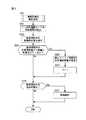
以下、図17のフローチャートを参照して、このCI減筒運転モード中に各休止気筒に対して実施される排気動弁制御について説明する。電子制御ユニット200は、本ルーチンを機関運転中に所定の演算周期(例えば10[ms])ごとに繰り返し実行する。 Hereinafter, with reference to the flowchart of FIG. 17, the exhaust valve control performed for each idle cylinder during the CI reduced cylinder operation mode will be described. The
ステップS51において、電子制御ユニット200は、排気弁駆動フラグF4が0に設定されているか否かを判定する。排気弁駆動フラグF4は、CI減筒運転モード中に休止気筒の排気弁60が排気行程及び吸気行程で開弁するように排気動弁装置6を制御しているときに1に設定されるフラグであり、初期値は0に設定される。電子制御ユニット200は、排気弁駆動フラグF4が0に設定されていればステップS52の処理に進む。一方で電子制御ユニット200は、排気弁駆動フラグF4が1に設定されていればステップS55の処理に進む。 In step S51, the
ステップS52において、電子制御ユニット200は、休止気筒のサイクル数が所定の駆動開始サイクル数以上となったか否かを判定する。駆動開始サイクル数は、CI減筒運転モード中における休止気筒の筒内温度の低下傾向などを考慮して、少なくとも1回以上の任意のサイクル数に設定すれば良い。電子制御ユニット200は、休止気筒のサイクル数が駆動開始サイクル数以上であればステップS53の処理に進む。一方で電子制御ユニット200は、休止気筒のサイクル数が駆動開始サイクル数未満であれば今回の処理を終了する。 In step S52, the
ステップS53において、電子制御ユニット200は、休止気筒の排気弁60が排気行程及び吸気行程で開弁するように排気動弁装置6を制御して、排気弁60の動作を一時的に再開させる。 In step S53, the
ステップS54において、電子制御ユニット200は、排気弁駆動フラグF4を1に設定する。 In step S54, the
ステップS55において、電子制御ユニット200は、休止気筒の排気弁60が排気行程及び吸気行程で開弁するように排気動弁装置6の制御してからのサイクル数が所定の駆動停止サイクル数以上になったか否かを判定する。駆動停止サイクル数は、休止気筒の筒内温度をどの程度上昇させたいかなどを考慮して、少なくとも1回以上の任意のサイクル数に設定すれば良い。電子制御ユニット200は、休止気筒のサイクル数が駆動停止サイクル数以上であればステップS56の処理に進む。一方で電子制御ユニット200は、休止気筒のサイクル数が駆動停止サイクル数未満であれば今回の処理を終了する。 In step S55, the
ステップS56において、電子制御ユニット200は、休止気筒の排気弁60が全行程で閉弁するように排気動弁装置6を制御して、排気弁60の動作を停止させる。 In step S56, the
ステップS57において、電子制御ユニット200は、排気弁駆動フラグF4を0に戻す。 In step S57, the
なお、これまでに説明してきた本実施形態によるCI減筒運転モード中の休止気筒に対する制御は、CI全筒運転モード及びCI減筒運転モード中に燃料カット運転しているときに、その燃料カット運転中の各気筒に対して実施しても良い。 Note that the control for the idle cylinder in the CI reduced cylinder operation mode according to the present embodiment described so far is performed when the fuel cut operation is performed during the CI all cylinder operation mode and the CI reduced cylinder operation mode. You may implement with respect to each cylinder in driving | operation.
以上説明した本実施形態による電子制御ユニット200は、休止運転中に、所定サイクル毎に休止気筒の排気弁60が少なくとも吸気行程で開弁し、直後の圧縮行程で閉弁するように前記排気動弁装置6を制御するように構成されている。これにより、休止運転中に、休止気筒の筒内温度が過度に低下するのを抑制できる。 In the
以上、本発明の実施形態について説明したが、上記実施形態は本発明の適用例の一部を示したに過ぎず、本発明の技術的範囲を上記実施形態の具体的構成に限定する趣旨ではない。 The embodiment of the present invention has been described above. However, the above embodiment only shows a part of application examples of the present invention, and the technical scope of the present invention is limited to the specific configuration of the above embodiment. Absent.
例えば、上記の各実施形態では4つの気筒を備える機関本体1を例に説明したが、気筒数は特に限られるものではなく、少なくとも2つ以上あればよい。また吸気弁50及び排気弁60の数も特に限られるものではなく、少なくとも1つ以上あればよい。 For example, in each of the above-described embodiments, the engine
1 機関本体
5 吸気動弁装置
6 排気動弁装置
10 気筒
11 点火プラグ
20 燃料噴射弁
50 吸気弁
60 排気弁
100 内燃機関
200 電子制御ユニット(制御装置)DESCRIPTION OF
Claims (11)
Translated fromJapanese前記気筒に設けられた吸気弁及び排気弁と、
前記気筒の吸気弁を任意の時期に開閉可能に構成された吸気動弁装置と、
前記気筒の排気弁を任意の時期に開閉可能に構成された排気動弁装置と、
前記気筒内に燃料を噴射するための燃料噴射弁と、
を備える内燃機関を制御する内燃機関の制御装置であって、
前記気筒内で予混合気を圧縮自着火燃焼させる自着火運転領域内において、機関運転状態に応じて少なくとも一部の前記気筒を休止気筒として当該休止気筒への燃料供給を停止する休止運転を実施し、
前記休止気筒で予混合気の圧縮自着火燃焼を再開させる際の復帰サイクルにおいて、当該休止気筒の吸気弁が全行程で閉弁したままとなるように前記吸気動弁装置を制御すると共に、当該休止気筒の排気弁が少なくとも吸気行程で開弁し、直後の圧縮行程で閉弁するように前記排気動弁装置を制御し、
前記復帰サイクルの次サイクルにおいて、前記休止気筒の吸気弁が少なくとも吸気行程で開弁するように前記吸気動弁装置を制御すると共に、当該休止気筒の排気弁が少なくとも排気行程で開弁するように前記排気動弁装置を制御して、当該休止気筒で予混合気の圧縮自着火燃焼を再開させるように構成された、
内燃機関の制御装置。An engine body having a plurality of cylinders;
An intake valve and an exhaust valve provided in the cylinder;
An intake valve device configured to be able to open and close the intake valve of the cylinder at an arbitrary time;
An exhaust valve device configured to be able to open and close the exhaust valve of the cylinder at an arbitrary time;
A fuel injection valve for injecting fuel into the cylinder;
An internal combustion engine control device for controlling an internal combustion engine comprising:
In the self-ignition operation region in which the premixed gas is compressed and self-ignited and combusted in the cylinder, a pause operation is performed in which at least a part of the cylinders are set as idle cylinders and fuel supply to the idle cylinders is stopped according to the engine operation state. And
In the return cycle when resuming compression auto-ignition combustion of premixed air in the idle cylinder, the intake valve device is controlled so that the intake valve of the idle cylinder remains closed in the entire stroke, Controlling the exhaust valve operating device so that the exhaust valve of the idle cylinder opens at least in the intake stroke, and closes in the immediately subsequent compression stroke;
In the next cycle of the return cycle, the intake valve device is controlled so that the intake valve of the deactivated cylinder is opened at least in the intake stroke, and the exhaust valve of the deactivated cylinder is opened at least in the exhaust stroke. The exhaust valve device is controlled to be configured to resume the compression auto-ignition combustion of the premixed air in the idle cylinder.
Control device for internal combustion engine.
前記復帰サイクルの前記圧縮行程後半で、前記休止気筒の前記燃料噴射弁から復帰用燃料を噴射するようにさらに構成された、
請求項1に記載の内燃機関の制御装置。The idle operation is a reduced-cylinder operation in which a part of the cylinders are idle cylinders and the remaining cylinders are active cylinders, and a lean air-fuel ratio leaner than the stoichiometric air-fuel ratio is compressed and self-ignited in the active cylinders. And
Further configured to inject return fuel from the fuel injection valve of the idle cylinder in the latter half of the compression stroke of the return cycle.
The control apparatus for an internal combustion engine according to claim 1.
請求項2に記載の内燃機関の制御装置。Further configured to determine whether or not to inject the return fuel based on an implementation period of the reduced-cylinder operation;
The control apparatus for an internal combustion engine according to claim 2.
請求項2に記載の内燃機関の制御装置。It is further configured to increase the amount of injection of the return fuel as it is longer as compared with the case where the reduced-cylinder operation period is shorter.
The control apparatus for an internal combustion engine according to claim 2.
請求項4に記載の内燃機関の制御装置。When an upper limit value is set for the injection amount of the return fuel, and when the injection amount of the return fuel is the upper limit value, a part of the premixed gas is provided in the cylinder in the next cycle of the return cycle. It is further configured to perform ignition-assisted self-ignition combustion in the idle cylinder in which flame propagation combustion is performed by an ignition plug, and the remaining premixed gas is self-ignited and combusted using heat generated at that time.
The control device for an internal combustion engine according to claim 4.
前記機関本体の要求トルクに応じたメイン燃料を圧縮行程後半で噴射して前記休止気筒内に第1予混合気を形成し、
メイン燃料を噴射した後の同一サイクルの圧縮行程後半で、着火アシスト用燃料を噴射して前記休止気筒内の前記点火プラグ周りに第2予混合気を形成し、
着火アシスト用燃料を噴射した後の同一サイクルの圧縮行程後半で、前記点火プラグによって前記第2予混合気に点火して当該第2予混合気を火炎伝播燃焼させ、そのときに生じる熱を用いて前記第1予混合気を圧縮自着火燃焼させるようにさらに構成された
請求項5に記載の内燃機関の制御装置。When performing the ignition assist self-ignition combustion,
Main fuel corresponding to the required torque of the engine body is injected in the latter half of the compression stroke to form a first premixed gas in the idle cylinder,
In the latter half of the compression stroke of the same cycle after injecting the main fuel, ignition assist fuel is injected to form a second premixed gas around the spark plug in the idle cylinder,
In the latter half of the compression stroke of the same cycle after the injection of the fuel for assisting ignition, the second premixed gas is ignited by the ignition plug to cause the second premixed gas to burn and burn, and the heat generated at that time is used. The control apparatus for an internal combustion engine according to claim 5, further configured to cause the first premixed gas to undergo compression self-ignition combustion.
請求項6に記載の内燃機関の制御装置。In the next cycle of the return cycle, when the ignition assist self-ignition combustion is performed in the idle cylinder, the injection amount of the ignition assist fuel is set to be longer as the execution period of the reduced cylinder operation is shorter than in the case where the execution period of the reduced cylinder operation is shorter. Further configured to do more,
The control apparatus for an internal combustion engine according to claim 6.
請求項6又は請求項7に記載の内燃機関の制御装置。In the next cycle of the return cycle, when the ignition assist self-ignition combustion is performed in the idle cylinder, the injection amount of the return fuel is limited to the upper limit value, and the shortage that could not be injected into the return cycle The fuel for a minute is further configured to set as an injection amount of the ignition assist fuel,
The control apparatus for an internal combustion engine according to claim 6 or 7.
前記復帰サイクルの次サイクルに前記休止気筒で前記着火アシスト自着火燃焼を行うときの前記着火アシスト用燃料の噴射量を、前記復帰用燃料の噴射量が前記上限値に制限されることで前記復帰サイクルに噴射できなかった不足分の燃料だけ増量するようにさらに構成された、
請求項6又は請求項7に記載の内燃機関の制御装置。In the self-ignition operation region, the ignition assist self-ignition combustion is performed in the cylinder,
When the ignition assist self-ignition combustion is performed in the idle cylinder in the next cycle of the return cycle, the return amount of the return assist fuel is limited to the upper limit value. Further configured to increase only the shortage of fuel that could not be injected into the cycle,
The control apparatus for an internal combustion engine according to claim 6 or 7.
請求項1から請求項9までのいずれか1つに記載の内燃機関の制御装置。During the pause operation, the intake valve device and the exhaust valve device are respectively controlled so that the intake valve and the exhaust valve of the idle cylinder remain closed in the entire stroke.
The control device for an internal combustion engine according to any one of claims 1 to 9.
請求項10に記載の内燃機関の制御装置。During the pause operation, the exhaust valve device is configured to control the exhaust valve so that the exhaust valve of the pause cylinder is opened at least in the intake stroke and closed in the compression stroke immediately after the predetermined cycle.
The control device for an internal combustion engine according to claim 10.
Priority Applications (1)
| Application Number | Priority Date | Filing Date | Title |
|---|---|---|---|
| JP2015248479AJP2017115587A (en) | 2015-12-21 | 2015-12-21 | Control device of internal combustion engine |
Applications Claiming Priority (1)
| Application Number | Priority Date | Filing Date | Title |
|---|---|---|---|
| JP2015248479AJP2017115587A (en) | 2015-12-21 | 2015-12-21 | Control device of internal combustion engine |
Publications (1)
| Publication Number | Publication Date |
|---|---|
| JP2017115587Atrue JP2017115587A (en) | 2017-06-29 |
Family
ID=59233622
Family Applications (1)
| Application Number | Title | Priority Date | Filing Date |
|---|---|---|---|
| JP2015248479APendingJP2017115587A (en) | 2015-12-21 | 2015-12-21 | Control device of internal combustion engine |
Country Status (1)
| Country | Link |
|---|---|
| JP (1) | JP2017115587A (en) |
Cited By (3)
| Publication number | Priority date | Publication date | Assignee | Title |
|---|---|---|---|---|
| CN109424419A (en)* | 2017-08-24 | 2019-03-05 | 马自达汽车株式会社 | The control device of compression ignition formula engine |
| WO2019146592A1 (en)* | 2018-01-23 | 2019-08-01 | マツダ株式会社 | Engine control method and engine system |
| JP2019127867A (en)* | 2018-01-23 | 2019-08-01 | マツダ株式会社 | Control method for engine, and engine system |
Citations (5)
| Publication number | Priority date | Publication date | Assignee | Title |
|---|---|---|---|---|
| JP2005098291A (en)* | 2003-08-26 | 2005-04-14 | Denso Corp | Control apparatus for internal combustion engine |
| JP2006214285A (en)* | 2005-02-01 | 2006-08-17 | Toyota Motor Corp | Fuel injection control device |
| JP2006283601A (en)* | 2005-03-31 | 2006-10-19 | Mazda Motor Corp | Control device for spark ignition engine |
| JP2010031756A (en)* | 2008-07-29 | 2010-02-12 | Toyota Motor Corp | Variable cylinder controller of internal-combustion engine |
| JP2015063940A (en)* | 2013-09-25 | 2015-04-09 | マツダ株式会社 | Control device for compression ignition type engine |
- 2015
- 2015-12-21JPJP2015248479Apatent/JP2017115587A/enactivePending
Patent Citations (5)
| Publication number | Priority date | Publication date | Assignee | Title |
|---|---|---|---|---|
| JP2005098291A (en)* | 2003-08-26 | 2005-04-14 | Denso Corp | Control apparatus for internal combustion engine |
| JP2006214285A (en)* | 2005-02-01 | 2006-08-17 | Toyota Motor Corp | Fuel injection control device |
| JP2006283601A (en)* | 2005-03-31 | 2006-10-19 | Mazda Motor Corp | Control device for spark ignition engine |
| JP2010031756A (en)* | 2008-07-29 | 2010-02-12 | Toyota Motor Corp | Variable cylinder controller of internal-combustion engine |
| JP2015063940A (en)* | 2013-09-25 | 2015-04-09 | マツダ株式会社 | Control device for compression ignition type engine |
Cited By (12)
| Publication number | Priority date | Publication date | Assignee | Title |
|---|---|---|---|---|
| CN109424419A (en)* | 2017-08-24 | 2019-03-05 | 马自达汽车株式会社 | The control device of compression ignition formula engine |
| JP2019039357A (en)* | 2017-08-24 | 2019-03-14 | マツダ株式会社 | Control device for compression ignition engine |
| US10801420B2 (en) | 2017-08-24 | 2020-10-13 | Mazda Motor Corporation | Control system for compression-ignition engine |
| CN109424419B (en)* | 2017-08-24 | 2021-04-27 | 马自达汽车株式会社 | Control device for compression ignition engine |
| WO2019146592A1 (en)* | 2018-01-23 | 2019-08-01 | マツダ株式会社 | Engine control method and engine system |
| JP2019127867A (en)* | 2018-01-23 | 2019-08-01 | マツダ株式会社 | Control method for engine, and engine system |
| JP2019127866A (en)* | 2018-01-23 | 2019-08-01 | マツダ株式会社 | Control method for engine, and engine system |
| WO2019146593A1 (en)* | 2018-01-23 | 2019-08-01 | マツダ株式会社 | Engine control method and engine system |
| US10968856B2 (en) | 2018-01-23 | 2021-04-06 | Mazda Motor Corporation | Engine control method and engine system |
| US11008930B2 (en) | 2018-01-23 | 2021-05-18 | Mazda Motor Corporation | Engine control method and engine system |
| JP7006303B2 (en) | 2018-01-23 | 2022-01-24 | マツダ株式会社 | Engine control method and engine system |
| JP7035557B2 (en) | 2018-01-23 | 2022-03-15 | マツダ株式会社 | Engine control method and engine system |
Similar Documents
| Publication | Publication Date | Title |
|---|---|---|
| KR101704064B1 (en) | Variable ignition type engine for complex combustion using diesel and gasoline, method for controlling of the same and complex combustion system using diesel and gasoline | |
| JP6315005B2 (en) | Control device for internal combustion engine | |
| US9376980B2 (en) | Fuel injection device | |
| JP2017186984A (en) | Control device of internal combustion engine | |
| JP2009275654A (en) | Fuel injection control device of internal combustion engine | |
| JP2010236496A (en) | Method and device for controlling internal combustion engine | |
| JP6414152B2 (en) | Control device for internal combustion engine | |
| JP6414143B2 (en) | Control device for internal combustion engine | |
| JP5120506B2 (en) | Combustion control device for internal combustion engine | |
| JP4873098B2 (en) | Control device for internal combustion engine | |
| JP6252647B1 (en) | Control device for premixed compression ignition engine | |
| US10400690B2 (en) | Control device for internal combustion engine | |
| JP2004324577A (en) | Fuel injection control device | |
| JP6508186B2 (en) | Control device for internal combustion engine | |
| JP2018040264A (en) | Control device for internal combustion engine | |
| JP2018040263A (en) | Control device for internal combustion engine | |
| WO2009090941A1 (en) | Device for controlling internal combustion engine fuel injection | |
| JP2017115587A (en) | Control device of internal combustion engine | |
| JP2002188468A (en) | Combustion control device for diesel engine | |
| JP2005233107A (en) | Fuel injection control device for compression ignition internal combustion engine | |
| JP5093407B2 (en) | Combustion control device for internal combustion engine | |
| JP2009074382A (en) | Exhaust gas recirculation controller for diesel engine | |
| JP2013124636A (en) | Diesel engine | |
| JP2018188998A (en) | Internal combustion engine | |
| JP2012041892A (en) | Diesel engine |
Legal Events
| Date | Code | Title | Description |
|---|---|---|---|
| A621 | Written request for application examination | Free format text:JAPANESE INTERMEDIATE CODE: A621 Effective date:20180221 | |
| A977 | Report on retrieval | Free format text:JAPANESE INTERMEDIATE CODE: A971007 Effective date:20181107 | |
| A131 | Notification of reasons for refusal | Free format text:JAPANESE INTERMEDIATE CODE: A131 Effective date:20181211 | |
| A02 | Decision of refusal | Free format text:JAPANESE INTERMEDIATE CODE: A02 Effective date:20190611 |