JP2005122359A - Content processor - Google Patents
Content processorDownload PDFInfo
- Publication number
- JP2005122359A JP2005122359AJP2003354879AJP2003354879AJP2005122359AJP 2005122359 AJP2005122359 AJP 2005122359AJP 2003354879 AJP2003354879 AJP 2003354879AJP 2003354879 AJP2003354879 AJP 2003354879AJP 2005122359 AJP2005122359 AJP 2005122359A
- Authority
- JP
- Japan
- Prior art keywords
- time
- content
- period
- processing apparatus
- clock
- Prior art date
- Legal status (The legal status is an assumption and is not a legal conclusion. Google has not performed a legal analysis and makes no representation as to the accuracy of the status listed.)
- Pending
Links
- 238000012545processingMethods0.000claimsdescription40
- 238000000034methodMethods0.000abstractdescription69
- 230000008569processEffects0.000abstractdescription61
- 230000014759maintenance of locationEffects0.000description12
- 238000012217deletionMethods0.000description5
- 230000037430deletionEffects0.000description5
- 238000012544monitoring processMethods0.000description5
- 230000004913activationEffects0.000description3
- 230000008859changeEffects0.000description3
- 230000004044responseEffects0.000description3
- 238000007796conventional methodMethods0.000description2
- 230000033228biological regulationEffects0.000description1
- 238000006243chemical reactionMethods0.000description1
- 230000006835compressionEffects0.000description1
- 238000007906compressionMethods0.000description1
- 238000012937correctionMethods0.000description1
- 238000010586diagramMethods0.000description1
- 239000000284extractSubstances0.000description1
- 230000000737periodic effectEffects0.000description1
- 238000001454recorded imageMethods0.000description1
- 230000008929regenerationEffects0.000description1
- 238000011069regeneration methodMethods0.000description1
Images




Classifications
- H—ELECTRICITY
- H04—ELECTRIC COMMUNICATION TECHNIQUE
- H04N—PICTORIAL COMMUNICATION, e.g. TELEVISION
- H04N5/00—Details of television systems
- H04N5/76—Television signal recording
- H—ELECTRICITY
- H04—ELECTRIC COMMUNICATION TECHNIQUE
- H04N—PICTORIAL COMMUNICATION, e.g. TELEVISION
- H04N21/00—Selective content distribution, e.g. interactive television or video on demand [VOD]
- H04N21/40—Client devices specifically adapted for the reception of or interaction with content, e.g. set-top-box [STB]; Operations thereof
- H04N21/43—Processing of content or additional data, e.g. demultiplexing additional data from a digital video stream; Elementary client operations, e.g. monitoring of home network or synchronising decoder's clock; Client middleware
- H04N21/432—Content retrieval operation from a local storage medium, e.g. hard-disk
- H04N21/4325—Content retrieval operation from a local storage medium, e.g. hard-disk by playing back content from the storage medium
- H—ELECTRICITY
- H04—ELECTRIC COMMUNICATION TECHNIQUE
- H04N—PICTORIAL COMMUNICATION, e.g. TELEVISION
- H04N21/00—Selective content distribution, e.g. interactive television or video on demand [VOD]
- H04N21/40—Client devices specifically adapted for the reception of or interaction with content, e.g. set-top-box [STB]; Operations thereof
- H04N21/43—Processing of content or additional data, e.g. demultiplexing additional data from a digital video stream; Elementary client operations, e.g. monitoring of home network or synchronising decoder's clock; Client middleware
- H04N21/433—Content storage operation, e.g. storage operation in response to a pause request, caching operations
- H04N21/4335—Housekeeping operations, e.g. prioritizing content for deletion because of storage space restrictions
- H—ELECTRICITY
- H04—ELECTRIC COMMUNICATION TECHNIQUE
- H04N—PICTORIAL COMMUNICATION, e.g. TELEVISION
- H04N21/00—Selective content distribution, e.g. interactive television or video on demand [VOD]
- H04N21/40—Client devices specifically adapted for the reception of or interaction with content, e.g. set-top-box [STB]; Operations thereof
- H04N21/43—Processing of content or additional data, e.g. demultiplexing additional data from a digital video stream; Elementary client operations, e.g. monitoring of home network or synchronising decoder's clock; Client middleware
- H04N21/44—Processing of video elementary streams, e.g. splicing a video clip retrieved from local storage with an incoming video stream or rendering scenes according to encoded video stream scene graphs
- H04N21/4402—Processing of video elementary streams, e.g. splicing a video clip retrieved from local storage with an incoming video stream or rendering scenes according to encoded video stream scene graphs involving reformatting operations of video signals for household redistribution, storage or real-time display
- H04N21/440281—Processing of video elementary streams, e.g. splicing a video clip retrieved from local storage with an incoming video stream or rendering scenes according to encoded video stream scene graphs involving reformatting operations of video signals for household redistribution, storage or real-time display by altering the temporal resolution, e.g. by frame skipping
- H—ELECTRICITY
- H04—ELECTRIC COMMUNICATION TECHNIQUE
- H04N—PICTORIAL COMMUNICATION, e.g. TELEVISION
- H04N21/00—Selective content distribution, e.g. interactive television or video on demand [VOD]
- H04N21/40—Client devices specifically adapted for the reception of or interaction with content, e.g. set-top-box [STB]; Operations thereof
- H04N21/45—Management operations performed by the client for facilitating the reception of or the interaction with the content or administrating data related to the end-user or to the client device itself, e.g. learning user preferences for recommending movies, resolving scheduling conflicts
- H04N21/462—Content or additional data management, e.g. creating a master electronic program guide from data received from the Internet and a Head-end, controlling the complexity of a video stream by scaling the resolution or bit-rate based on the client capabilities
- H04N21/4627—Rights management associated to the content
- H—ELECTRICITY
- H04—ELECTRIC COMMUNICATION TECHNIQUE
- H04N—PICTORIAL COMMUNICATION, e.g. TELEVISION
- H04N21/00—Selective content distribution, e.g. interactive television or video on demand [VOD]
- H04N21/80—Generation or processing of content or additional data by content creator independently of the distribution process; Content per se
- H04N21/81—Monomedia components thereof
- H04N21/8146—Monomedia components thereof involving graphical data, e.g. 3D object, 2D graphics
- H04N21/8153—Monomedia components thereof involving graphical data, e.g. 3D object, 2D graphics comprising still images, e.g. texture, background image
- H—ELECTRICITY
- H04—ELECTRIC COMMUNICATION TECHNIQUE
- H04N—PICTORIAL COMMUNICATION, e.g. TELEVISION
- H04N21/00—Selective content distribution, e.g. interactive television or video on demand [VOD]
- H04N21/80—Generation or processing of content or additional data by content creator independently of the distribution process; Content per se
- H04N21/83—Generation or processing of protective or descriptive data associated with content; Content structuring
- H04N21/835—Generation of protective data, e.g. certificates
- H04N21/8355—Generation of protective data, e.g. certificates involving usage data, e.g. number of copies or viewings allowed
- H—ELECTRICITY
- H04—ELECTRIC COMMUNICATION TECHNIQUE
- H04N—PICTORIAL COMMUNICATION, e.g. TELEVISION
- H04N7/00—Television systems
- H04N7/18—Closed-circuit television [CCTV] systems, i.e. systems in which the video signal is not broadcast
- H—ELECTRICITY
- H04—ELECTRIC COMMUNICATION TECHNIQUE
- H04N—PICTORIAL COMMUNICATION, e.g. TELEVISION
- H04N5/00—Details of television systems
- H04N5/76—Television signal recording
- H04N5/765—Interface circuits between an apparatus for recording and another apparatus
- H04N5/77—Interface circuits between an apparatus for recording and another apparatus between a recording apparatus and a television camera
- H—ELECTRICITY
- H04—ELECTRIC COMMUNICATION TECHNIQUE
- H04N—PICTORIAL COMMUNICATION, e.g. TELEVISION
- H04N5/00—Details of television systems
- H04N5/76—Television signal recording
- H04N5/765—Interface circuits between an apparatus for recording and another apparatus
- H04N5/775—Interface circuits between an apparatus for recording and another apparatus between a recording apparatus and a television receiver
- H—ELECTRICITY
- H04—ELECTRIC COMMUNICATION TECHNIQUE
- H04N—PICTORIAL COMMUNICATION, e.g. TELEVISION
- H04N5/00—Details of television systems
- H04N5/76—Television signal recording
- H04N5/78—Television signal recording using magnetic recording
- H04N5/781—Television signal recording using magnetic recording on disks or drums
- H—ELECTRICITY
- H04—ELECTRIC COMMUNICATION TECHNIQUE
- H04N—PICTORIAL COMMUNICATION, e.g. TELEVISION
- H04N5/00—Details of television systems
- H04N5/76—Television signal recording
- H04N5/78—Television signal recording using magnetic recording
- H04N5/782—Television signal recording using magnetic recording on tape
- H04N5/783—Adaptations for reproducing at a rate different from the recording rate
- H—ELECTRICITY
- H04—ELECTRIC COMMUNICATION TECHNIQUE
- H04N—PICTORIAL COMMUNICATION, e.g. TELEVISION
- H04N9/00—Details of colour television systems
- H04N9/79—Processing of colour television signals in connection with recording
- H04N9/80—Transformation of the television signal for recording, e.g. modulation, frequency changing; Inverse transformation for playback
- H04N9/804—Transformation of the television signal for recording, e.g. modulation, frequency changing; Inverse transformation for playback involving pulse code modulation of the colour picture signal components
- H04N9/8042—Transformation of the television signal for recording, e.g. modulation, frequency changing; Inverse transformation for playback involving pulse code modulation of the colour picture signal components involving data reduction
- H04N9/8047—Transformation of the television signal for recording, e.g. modulation, frequency changing; Inverse transformation for playback involving pulse code modulation of the colour picture signal components involving data reduction using transform coding
Landscapes
- Engineering & Computer Science (AREA)
- Multimedia (AREA)
- Signal Processing (AREA)
- Databases & Information Systems (AREA)
- Computer Security & Cryptography (AREA)
- Computer Graphics (AREA)
- Television Signal Processing For Recording (AREA)
- Storage Device Security (AREA)
- Signal Processing For Digital Recording And Reproducing (AREA)
Abstract
Description
Translated fromJapaneseこの発明は、コンテンツ処理装置に関し、特にたとえば、コンテンツを記録して再生する、コンテンツ処理装置に関する。 The present invention relates to a content processing apparatus, and more particularly to a content processing apparatus that records and reproduces content, for example.
最近、画像データや音声データ、コンピュータソフトなどのコンテンツに7日間や30日間といった期間を設定し、最初の利用時点からこの期間が経過すると、以降そのコンテンツを利用できないようにする利用期間制限を行う必要性が高まっている。利用期間制限が求められる状況としては、例えば、コンテンツを提供する際に利用期間に応じた課金を行う場合や、監視カメラの画像を記録する際に人権保護等の観点から記録画像の保存期間を制限する場合などが挙げられる。 Recently, a period such as 7 days or 30 days has been set for contents such as image data, audio data, and computer software, and when this period elapses from the first use point, the use period is restricted so that the contents cannot be used thereafter. There is a growing need. Examples of situations where usage period restrictions are required include the storage period of recorded images from the viewpoint of human rights protection, etc., when charging according to the usage period when providing content, or when recording images from surveillance cameras. The case where it restrict | limits is mentioned.
上記のような利用期間制限を行うには、例えば特許文献1のような従来技術を用いればよい。この従来技術は、画像ファイルをハードディスク(HD)に保存する。画像ファイルの各々には保存期間が設定され、保存期間を過ぎた画像ファイルは、HDから削除されるか、あるいは一旦HDから読み出されて圧縮処理および低画質化処理を施された後、再びHDに保存される。これにより、保存期間を過ぎた画像ファイルは全く再生できなくなるか、再生できても低画質画像しか閲覧できなくなる。
しかし、上記の従来技術では、保存期間を過ぎた画像ファイルが現れるたびに、該当する画像ファイルを削除したり圧縮したりといった重たい処理を行うことになるので、多数の画像ファイルを取り扱う場合、特に大きな負荷がかかる。 However, in the above-described prior art, every time an image file whose storage period has passed is displayed, heavy processing such as deleting or compressing the corresponding image file is performed. A heavy load is applied.
それゆえに、この発明の主たる目的は、簡単な処理によってコンテンツの利用期間を制限することができる、コンテンツ処理装置を提供することである。 Therefore, a main object of the present invention is to provide a content processing apparatus capable of limiting the content use period by simple processing.
請求項1の発明は、コンテンツを再生する再生手段、任意の時刻を基準として時間をカウントする時計手段、任意の期間を示す期間情報を保持する第1メモリ手段、および時計手段によって示される時刻と第1メモリ手段によって保持された期間情報が示す期間とに基づいて再生手段による再生処理に制限をかける制限手段を備える、コンテンツ処理装置である。 According to the first aspect of the present invention, there is provided reproducing means for reproducing content, clock means for counting time with reference to an arbitrary time, first memory means for holding period information indicating an arbitrary period, and time indicated by the clock means. The content processing apparatus includes a limiting unit that limits the playback process by the playback unit based on the period indicated by the period information held by the first memory unit.
請求項1の発明では、再生手段がコンテンツを再生する際、時計手段は、任意の時刻を基準として時間をカウントする。第1メモリ手段には任意の期間を示す期間情報が保持され、制限手段は、時計手段によって示される時刻と第1メモリ手段によって保持された期間情報が示す期間とに基づいて、再生手段による再生処理に制限をかける。 According to the first aspect of the present invention, when the reproducing means reproduces the content, the clock means counts time with reference to an arbitrary time. Period information indicating an arbitrary period is held in the first memory means, and the restricting means reproduces by the reproducing means based on the time indicated by the clock means and the period indicated by the period information held by the first memory means. Limit processing.
請求項2の発明は、請求項1のコンテンツ処理装置において、入力されたコンテンツを記録媒体に記録する記録手段をさらに備え、制限手段は時刻から期間に渡って先行する特定時期よりも前に記録媒体に記録されたコンテンツの再生を禁止する。 According to a second aspect of the present invention, in the content processing apparatus of the first aspect, the recording apparatus further includes a recording unit that records the input content on a recording medium, and the limiting unit records the time before the specific time preceding the period. The reproduction of the content recorded on the medium is prohibited.
請求項2の発明では、入力されるコンテンツは記録媒体に記録され、記録されたコンテンツが再生手段によって再生される。その際、特定時期よりも前に記録されたコンテンツの再生は禁止される。 According to the second aspect of the present invention, the input content is recorded on the recording medium, and the recorded content is reproduced by the reproducing means. At that time, the reproduction of the content recorded before the specific time is prohibited.
請求項3の発明は、請求項2のコンテンツ処理装置において、制限手段は、特定時期を保持する第2保持手段、時計手段によって示される時刻から第1メモリ手段によって保持された期間を減ずる演算を周期的に実行する演算手段、演算手段の演算結果が第2保持手段の保持内容より大きいか否かを判定する判定手段、および判定手段の判定結果が肯定的であるとき第2保持手段の保持内容を演算手段の演算結果に更新する更新手段を含む。 According to a third aspect of the present invention, in the content processing apparatus of the second aspect, the limiting means performs a calculation for subtracting the period held by the first memory means from the time indicated by the second holding means for holding the specific time and the clock means. Periodic calculation means, determination means for determining whether the calculation result of the calculation means is greater than the content held by the second holding means, and holding of the second holding means when the determination result of the determination means is affirmative Update means for updating the contents to the calculation result of the calculation means is included.
請求項3の発明では、第2保持手段に特定期間が保持される一方、時刻から期間を減ずる演算が周期的に実行され、演算結果が第2保持手段の保持内容より大きいか否かが判定される。そして、判定結果が肯定的であるとき第2保持手段の保持内容が演算手段の演算結果に更新される。これにより、たとえ第1保持手段に保持されている期間がどのように変更されても、第2保持手段に保持されている特定時期が前より小さな値に変更されることがなくなるので、一度再生禁止となったコンテンツが再生可能になることを防ぐことができる。 In the invention of
請求項4の発明は、請求項3のコンテンツ処理装置において、第1メモリ手段によって保持された期間情報を変更する変更手段をさらに備える。 According to a fourth aspect of the invention, there is provided the content processing apparatus according to the third aspect, further comprising changing means for changing the period information held by the first memory means.
請求項4の発明では、第1メモリ手段の期間情報が変更手段によって変更される。 In the invention of
請求項5の発明は、請求項3または4のコンテンツ処理装置において、第1メモリ手段によって保持された期間情報を無効化する無効化手段をさらに備え、制限手段は無効化が行われたとき更新手段を停止させる。 According to a fifth aspect of the present invention, the content processing apparatus according to the third or fourth aspect further comprises invalidating means for invalidating the period information held by the first memory means, and the limiting means is updated when invalidation is performed. Stop the means.
請求項5の発明では、第1メモリ手段の期間情報が無効化されると更新手段が停止される。その結果、第2メモリ手段の内容が更新されることはなくなるので、特定時期は無効化が行われる直前の値のまま維持される。従って、無効化が行われると、直前の特定時期以後に記録されたコンテンツは無制限に再生可能となる一方、直前の特定時期よりも前に記録されたコンテンツは再生可能となることがない。 In the invention of
請求項6の発明は、請求項2ないし5のいずれかのコンテンツ処理装置において、記録手段は、記録媒体に記録されるコンテンツに時計手段によって示される時刻を周期的に割り当てる割り当て手段を含む。 According to a sixth aspect of the present invention, in the content processing apparatus according to any one of the second to fifth aspects, the recording means includes an assigning means that periodically assigns the time indicated by the clock means to the content recorded on the recording medium.
請求項6の発明では、記録媒体に記録されるコンテンツには、時計手段によって示される時刻が周期的に割り当てられる。 In the invention of
請求項7の発明は、請求項2ないし6のいずれかに記載のコンテンツ処理装置において、時計手段はいったん時間をカウントし始めると以降外部からの時刻変更が禁止される。 According to a seventh aspect of the present invention, in the content processing apparatus according to any one of the second to sixth aspects, once the clock means starts counting time, the time change from the outside is prohibited thereafter.
請求項8の発明は、請求項7記載のコンテンツ処理装置において、少なくとも再生手段に与えられる時刻情報を出力する時刻出力手段をさらに備え、時計手段は時刻出力手段とは無関係に時間をカウントする。 The invention according to
請求項7および8の発明では、時刻出力手段から時刻情報、典型的には標準時刻に基づく時刻情報が出力される。この時刻情報は、人の認識し得る日時・時刻(カレンダー的時刻)であり、タイマー予約記録などに使用される。 According to the seventh and eighth aspects of the present invention, time information, typically time information based on the standard time, is output from the time output means. This time information is a date and time (calendar time) that can be recognized by a person, and is used for timer reservation recording and the like.
時刻出力手段の時刻は、一般に変更可能であり、例えば標準時刻との間に生じる誤差を修正する等の目的で随時変更される必要がある。しかし、時計手段の時刻は、いったん時間をカウントし始めると以降外部からの時刻変更が禁止され、また、時刻出力手段の時刻が変更されても何ら影響を受けることがない。制限手段に与えられる時計手段の時刻がもし変更されれば、一度再生禁止となったコンテンツが復活する恐れがあるが、請求項7および8の発明によれば、これを防ぐことができる。 In general, the time of the time output means can be changed, and needs to be changed at any time for the purpose of, for example, correcting an error occurring with the standard time. However, once the time of the clock means starts to be counted, the time change from the outside is prohibited thereafter, and even if the time of the time output means is changed, it is not affected at all. If the time of the clock means given to the restricting means is changed, there is a risk that the content that has been prohibited from being played back may be restored. However, according to the inventions of
請求項9の発明は、請求項2のないし8のいずれかに記載のコンテンツ処理装置において、商用電源に基づく駆動電源を少なくとも時計手段に供給する第1供給手段、および商用電源の供給が中断されたときバックアップ電源を時計手段に供給する第2供給手段をさらに備える。 According to a ninth aspect of the present invention, in the content processing apparatus according to any one of the second to eighth aspects, the first supply unit that supplies at least the clock power to the driving power source based on the commercial power source and the supply of the commercial power source are interrupted. And second supply means for supplying backup power to the timepiece means.
請求項9の発明では、第1供給手段によって商用電源に基づく駆動電源が少なくとも時計手段に供給され、さらに、商用電源の供給が中断されたとき第2供給手段によってバックアップ電源が時計手段に供給される。万一時計手段が停止すると、定められた期間を過ぎたコンテンツが再生される可能性がある。請求項7の発明によれば、そのような可能性を低減することができる。 According to the ninth aspect of the present invention, at least driving power based on commercial power is supplied to the timepiece means by the first supply means, and backup power is supplied to the timepiece means by the second supply means when supply of commercial power is interrupted. The If the clock means stops, content that has passed a predetermined period may be played. According to the invention of
この発明によれば、時計手段による時刻と期間情報の示す期間とに基づいてコンテンツの再生に制限をかけるので、簡単な処理によってコンテンツの利用期間を制限することができる。 According to the present invention, the content reproduction is limited based on the time by the clock means and the period indicated by the period information, so that the content use period can be limited by a simple process.
この発明の上述の目的,その他の目的,特徴および利点は、図面を参照して行う以下の実施例の詳細な説明から一層明らかとなろう。 The above object, other objects, features and advantages of the present invention will become more apparent from the following detailed description of embodiments with reference to the drawings.
図1を参照して、この実施例の監視カメラシステム10は、カメラ12と、モニタ14と、サーバ16とで構成される。カメラ12は、被写界を撮影し、サーバ16に画像信号を出力する。モニタ14は、サーバ16から画像信号を入力し、カメラ12で撮影された被写界を画面に表示する。 With reference to FIG. 1, the
サーバ16は、2本のデータバス50および52を含む。データバス50にはJPEGコーデック18が接続され、データバス52にはCPU42およびフラッシュメモリ32が接続される。
データバス50にはさらに、IDE−I/F24を介してHDD26が、D1−I/F(IN)20を介してカメラ12が、D1−I/F(OUT)22を介してモニタ14が、SDRAMコントローラ28を介してSDRAM30が、それぞれ接続される。 The
データバス52にはさらに、SDRAMコントローラ28を介してSDRAM30が接続される。また、データバス52には、時計回路40および操作パネル48が接続される。 The
なお、サーバ16では、CPU42が接続されているデータバス52とは別のデータバス50にJPEGコーデック18を接続することにより、画像処理速度の向上を図っている。データバス50側のハードウエアとデータバス52側のハードウエアとは、SDRAMコントローラ28を通じて互いにデータのやり取りをすることができる。 In the
上記したサーバ16の構成要素の各々へは、商用電源54に接続された電源回路46から電力が供給されている。また、電源回路46からの電力供給が途絶えると、バックアップ電池44から時計回路40に電力が供給される。バックアップ電池44は、電源回路46からの電力により常時充電されており、電源回路46の停止から30日間程度、時計回路40を動作させ続けることができる。 Power is supplied to each of the components of the
以下、サーバ16を構成する1つ1つの要素について説明する。 Hereinafter, each element constituting the
D1−I/F(IN)20は、カメラ12からの画像信号をデータバス50に適合する信号に変換する。D1−I/F(OUT)22は、データバス50からの画像信号をモニタ14に適合する信号に変換する。 The D1-I / F (IN) 20 converts the image signal from the
IDE−I/F24は、CPU42の指示を受け、HDD26を制御する。HDD26は、IDE−I/F24の制御に応じてデータバス50からのデータストリーム(JPEGファイル)をHD26aに記録し、かつHD26aからデータストリームを読み出してデータバス50に出力する。 The IDE-I /
SDRAM30は、複数の記憶領域(バンク)を含んでおり、これら複数の記憶領域に符号化される前の画像信号,および符号化して得られたデータストリーム等がそれぞれ記憶される。 The
SDRAMコントローラ28は、CPU42の指示を受けて、データバス50からの画像信号やデータストリームをSDRAM30に書き込み、かつSDRAM30から画像信号やデータストリームを読み出してデータバス50またはデータバス52に出力する。 Upon receiving an instruction from the
JPEGコーデック18は、データバス50から入力される画像信号をJPEG方式に従って符号化し、符号化して得られたデータストリームをデータバス50に出力する。また、データバス50から入力されるデータストリームをJPEG方式に従って復号化し、復号化して得られた画像信号をデータバス50に出力する。 The
次に、JPEGコーデック18は、符号化により得られたデータブロックを所定の順序に並べ、さらにヘッダ等の付加情報を添付することによってデータストリーム(JPEGファイル)を形成する。付加情報は、データストリームが格納されているブロックとは別のブロックに格納される。なお、付加情報とデータストリームとを同じブロックに格納させることもできる。 Next, the
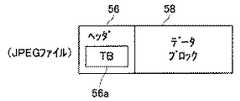
JPEGコーデック18によって形成されるJPEGファイルの構造を図3に示す。図3を参照して、JPEGファイルは、ヘッダ56と、複数のデータブロック58,58,…とを含む。ヘッダ56には、記録時刻(TB)56aが埋め込まれる。1つのJPEGファイルは、1枚の画像フレームと対応する。 The structure of the JPEG file formed by the
ここで記録時刻56aは、時計回路40に基づく時刻である。時計回路40は一般に、CPU42の内部時計とは異なる時刻を示す。すなわち、CPU42の内部時計は、サーバ16の所在地の標準時刻と一致する値に初期設定され、その後も誤差修正などの目的で適宜再設定される。これに対し、時計回路40は、サーバ16の初回起動時“0”に初期設定され、以降再設定を行うこともユーザが時刻を変更することもできない。時計回路40は、初期設定後、任意時刻を基準として所定単位で時間をカウントする。 Here, the
なお、上記の所定単位は1秒でも1分でも1時間でも1日でもよいが、値が大きいほど誤差が大きくなる。この実施例では、時刻0を基準として1分単位で時間をカウントすることとする。 The predetermined unit may be 1 second, 1 minute, 1 hour, or 1 day, but the larger the value, the greater the error. In this embodiment, the time is counted in units of one minute with
データストリームを復号化する際には、JPEGコーデック18は、上記の符号化とは逆の処理を行う。 When decoding the data stream, the
なお、この実施例ではJPEG方式を採用しているが、JPEG2000方式やその他の符号化方式を用いても構わない。いずれの場合も、符号化データストリームのヘッダもしくは付加情報領域に記録時刻56aが埋め込まれる。 In this embodiment, the JPEG method is adopted, but the JPEG 2000 method or other encoding methods may be used. In either case, the
再びサーバ16の構成要素の説明に戻る。フラッシュメモリ32には、保存期間(TC)34aと、境界時刻(TE)34bと、無効フラグ(F)36と、テーブル38とが格納される。なお、保存期間34a,境界時刻34bおよび無効フラグ36については後述する。フラッシュメモリ32にはさらに、CPU42の処理手順を記述したプログラム(後述)も格納されている。 Returning to the description of the components of the
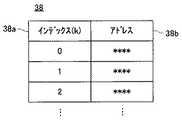
テーブル38の一例が図2に示されている。図2を参照して、テーブル38には、SDRAM30もしくはHD26aに記憶されている複数のJPEGファイルの各々について、ファイルを識別するインデックス38aと、ファイルの所在地を示すアドレス38bが記載されている。インデックス38aとしては、例えば、記録時にJPEGファイルにそれぞれ割り当てられる番号(k)が用いられる。 An example of the table 38 is shown in FIG. Referring to FIG. 2, in table 38, for each of a plurality of JPEG files stored in
操作パネル48は、Recキー48aと、Playキー48bと、Stopキー48cと、期間設定キー48dと、無効キー48eと、テンキー48fとを備えている。Stopキー48cは、録画STOPキーおよび再生STOPキー(いずれも図示せず)を含む。テンキー48fは、10個の数字キーといくつかの記号キーとを含む。 The
操作パネル48上のいずれかのキーが押されると、押されたキーに対応する信号が操作パネルからCPU42に送信される。 When any key on the
CPU42は、操作パネル48からの信号に応じ、かつフラッシュメモリ32内のプログラムに従い、上記の各構成要素を制御する。これにより、サーバ16において、画像記録や画像再生、保存期間を過ぎた画像の削除といった様々な画像処理が実現される。 The
以下、本発明の画像削除処理について、図4および図5を用いて説明する。 Hereinafter, the image deletion processing of the present invention will be described with reference to FIGS.
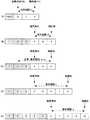
図4(A)を参照して、現時刻(TA)が“4”のとき、SDRAM30ないしはHD26aには4つのJPEGファイル(記録時刻(TB)=1〜4)が記憶されている。ここで現時刻および記録時刻は、いずれも時計回路40の時刻に基づく。予め設定されている保存期間は“3”であり、保存期間を過ぎたJPEGファイル“1”が削除状態にある。ここでいう「削除」は、SDRAM30やHD26a内のJPEGファイルを物理的に消去することではなく、例えば再生ソフトウエアからJPEGファイル内の符号化データを復号化・再生することができない状態にすることをいう。 Referring to FIG. 4A, when the current time (TA) is “4”, four JPEG files (recording time (TB) = 1 to 4) are stored in the
具体的には、再生ソフトウエアは、あるJPEGファイルを再生するよう指示されると、このJPEGファイル内の付加情報領域から記録時刻56aを読み出す。そして、読み出された記録時刻56aが保存期間外すなわち再生制限期間内にあれば、このJPEGファイル内の符号化データの復号化・再生処理をキャンセルする。 Specifically, when the reproduction software is instructed to reproduce a certain JPEG file, the reproduction software reads the
削除するか否かの判定は、境界時刻(TE)に基づいて行われる。境界時刻は、現時刻から保存期間(TC)を減算することにより求まる。 The determination of whether or not to delete is performed based on the boundary time (TE). The boundary time is obtained by subtracting the storage period (TC) from the current time.
図4(B)を参照して、現時刻が“6”のとき、SDRAM30ないしはHD26aには6つのJPEGファイル(TB=1〜6)が記憶されている。このとき保存期間が“3”なので、境界時刻は“4”であり、この時刻よりも過去に記録された3つのファイル(TB=1〜3)が削除状態にある。 Referring to FIG. 4B, when the current time is “6”, six JPEG files (TB = 1 to 6) are stored in
図4(A)および(B)からわかるように、境界時刻は、現時刻よりも保存期間に等しい時間だけ過去の位置にあり、現時刻の進行につれ、この間隔(=TC)を保ったままファイル列上を未来側へ移動する。こうして境界時刻が移動するのに伴い、境界時刻に追い越されたファイル、つまりTB<TEとなったファイルが削除されていく。 As can be seen from FIGS. 4A and 4B, the boundary time is in the past position by the time equal to the storage period from the current time, and this interval (= TC) is maintained as the current time progresses. Move to the future on the file line. As the boundary time moves in this way, files overtaken at the boundary time, that is, files with TB <TE are deleted.
ところで、予め設定された保存期間は、必要に応じて無効化される。図4(C)を参照して、現時刻が“6”のとき保存期間“3”が無効化されたとする。このとき境界時刻は“4”の位置にあり、TB=1〜3の3つのファイルが削除状態にある。 By the way, the preset retention period is invalidated as necessary. Referring to FIG. 4C, it is assumed that the retention period “3” is invalidated when the current time is “6”. At this time, the boundary time is at the position “4”, and three files with TB = 1 to 3 are in the deleted state.
図4(D)および(E)を参照して、無効化が行われると、以降、保存期間が無制限となる。一方、境界時刻は、消滅するのではなく、無効化が行われた時点の位置“4”に固定される。従って、TB=1〜3の3ファイルは、無効化後も削除状態のまま維持され、記録時刻が“4”以降のファイルは、保存期間が再設定されない限り、無期限的に保存されることとなる。 If invalidation is performed with reference to FIGS. 4D and 4E, the storage period is unlimited thereafter. On the other hand, the boundary time does not disappear, but is fixed at the position “4” at the time of invalidation. Therefore, the three files with TB = 1 to 3 are maintained in the deleted state even after invalidation, and the files whose recording time is “4” or later are stored indefinitely unless the retention period is reset. It becomes.
次に、保存期間の再設定が行われた場合の処理を説明する。この場合に重要なのは、境界時刻は、現在の位置から過去に遡る向きには決して移動しない、という点である。 Next, processing when the storage period is reset will be described. What is important in this case is that the boundary time never moves backward from the current position to the past.
図5(A)を参照して、現時刻が“4”のとき、SDRAM30ないしはHD26aには4つのJPEGファイル(TB=1〜4)が記憶されている。予め設定されている保存期間は“3”であり、このとき境界時刻は“2”となる。この時刻よりも過去に記録された1つのファイル(TB=1)が削除状態にある。 Referring to FIG. 5A, when the current time is “4”, four JPEG files (TB = 1 to 4) are stored in
図5(B)を参照して、現時刻が“6”のとき、SDRAM30ないしはHD26aには6つのJPEGファイル(TB=1〜6)が記憶されている。保存期間は“3”のままであり、このとき境界時刻は“4”となる。この時刻よりも過去に記録された3つのファイル(TB=1〜3)が削除状態にある。 Referring to FIG. 5B, when the current time is “6”, six JPEG files (TB = 1 to 6) are stored in
図5(C)を参照して、現時刻が“6”のとき保存期間“3”が“5”に再設定されたとする。本来であれば、保存期間が“5”に変更されると、境界時刻は“2”へと移動し、その結果、TB=1のファイルが削除解除されるはずである。しかし、境界時刻は、現在の位置から過去に遡る向きに移動しないので、再設定を行う直前の位置“4”に止まる。従って、保存期間変更後も、TB=1〜3の3つのファイルが削除状態にある。 Referring to FIG. 5C, it is assumed that the retention period “3” is reset to “5” when the current time is “6”. Originally, when the retention period is changed to “5”, the boundary time moves to “2”, and as a result, the file with TB = 1 should be deleted. However, since the boundary time does not move backward from the current position in the past, the boundary time stops at the position “4” immediately before resetting. Therefore, even after the retention period is changed, the three files with TB = 1 to 3 are in the deleted state.
なお、境界時刻は、現在の位置から未来側への移動は可能なので、例えば現時刻が“6”のとき保存期間“3”が“2”に変更されたとすると、境界時刻は“4”から“5”へと移動し、その結果、TB=1〜3の3つのファイルに加えTB=4のファイルも削除状態となる(図示せず)。 The boundary time can be moved from the current position to the future side. For example, when the current time is “6” and the storage period “3” is changed to “2”, the boundary time is changed from “4”. As a result, the file moves to “5”, and as a result, the file with TB = 4 in addition to the three files with TB = 1 to 3 is also deleted (not shown).
図5(D)を参照して、現時刻が“8”のとき、SDRAM30ないしはHD26aには8つのJPEGファイル(TB=1〜8)が記憶されている。このとき保存期間は“5”であり、境界時刻は“4”のままである。この時刻よりも過去に記録された3つのファイル(TB=1〜3)が削除状態にある。 Referring to FIG. 5D, when the current time is “8”, eight JPEG files (TB = 1 to 8) are stored in
図5(E)を参照して、現時刻が“10”のとき、SDRAM30ないしはHD26aには10個のJPEGファイル(TB=1〜10)が記憶されている。このとき保存期間は“5”であり、境界時刻は“6”まで移動している。従って、この時刻よりも過去に記録された5つのファイル(TB=1〜5)が削除状態にある。 Referring to FIG. 5E, when the current time is “10”, ten JPEG files (TB = 1 to 10) are stored in
上記の説明から明らかなように、この実施例のサーバ16では、保存期間を過ぎていったん削除されたファイルは、後に保存期間が無効化されたり変更されたりしても、二度と再生可能になることはない。 As is apparent from the above description, in the
以上のように構成された監視カメラシステム10の全体動作を、図6〜図11に示されたCPU42の処理フローに基づき以下に説明する。 The overall operation of the
この監視カメラシステム10は、例えばオフィスビルや集合住宅などで用いられる。カメラ12は、例えば玄関や通路に設置され、サーバ16およびモニタ14は、例えば管理室に設けられる。なお、カメラ12は1台とは限らない。複数のカメラ12を設置する場合、各カメラ12,12,…は、図示しないマルチプレクサを介してD1−I/F(IN)20に接続される。 This
なお、サーバ16は、必要に応じ、イントラネットやインターネットを介してビルの内外にある端末T1,T2,…(図示せず)とも接続される。従って、ユーザは、管理室内のモニタ16だけでなく、外部の端末T1,T2,…からも監視画像を閲覧することができる。 The
カメラ12によって撮影された監視画像は、モニタや端末T1,T2,…の画面を通じてリアルタイム的に表示されると同時に、HD26aに記録される。HD26aに記録された監視画像は、所定期間保存され、その後HD26aから削除される。監視画像を保存する期間は、ユーザが任意に設定することができる。なお、国や地域によっては、プライバシー尊重や人権保護の観点から、例えば7日以内や30日間以内といった法的な規制が設けられている場合もある。 The monitoring image photographed by the
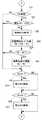
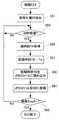
CPU42は、具体的には、フラッシュメモリ32のプログラムに従い、図6〜図11のフロー図を処理する。図6を参照して、サーバ16が起動されると、ステップS1でCPU42は、初期処理を行う。初期処理には、例えばSDRAMコントローラ28にSDRAM30の初期化を指示したり、JPEGコーデック18に初期パラメータを設定したりする処理などが含まれる。 Specifically, the
ステップS3でCPU42は、今回の起動が初めての起動であるか否かを判定する。判定結果が肯定的であればステップS5に、否定的であればステップS11に進む。なお、ステップS3の判定は、例えばHD26aの記録状況を調べることにより行われる。 In step S3, the
ステップS5でCPU42は、時計回路40の現時刻を“0”に初期設定する。ステップS7では、時計回路40をスタートさせる。ステップS9では、フラッシュメモリ32内の境界時刻に初期値として“0”をセットする。その後、ステップ11に進む。 In step S5, the
ステップS11でCPU42は、期間設定キー48dが押されたか否かを判定する。判定結果が肯定的であればステップS13に、否定的であればS15に進む。ステップS13では、保存期間を受け付け、その後ステップS15に進む。より具体的には、ユーザは、期間設定を行いたい場合、まず期間設定キー48dを押し、続いてテンキー48fから所望の保存期間を指定する。CPU42は、期間設定キー48dの押下を確認すると、その後テンキー48fを通じて入力される数値を保存期間として受け付ける。 In step S11, the
なお、入力値の単位が時計回路40のカウント単位と異なる場合、この入力値は、所定の換算式に従って時計回路40のカウント単位に基づく値へと換算される。例えば“3日”が入力されたとすると、この実施例では時計回路40のカウント単位が1分なので、“4320分”(=3×60×24)に換算される。 When the unit of the input value is different from the count unit of the
ステップS15でCPU42は、無効キー48eが押されたか否かを判定する。判定結果が肯定的であればステップS17に、否定的であればステップS19に進む。ステップS17では、フラッシュメモリ32の無効フラグ36を反転させる。その後、ステップS19に進む。 In step S15, the
図7を参照して、ステップS19でCPU42は、1分経過したか否かを判定する。ここで“1分”は、時計回路40の単位時間である。ステップS19の判定結果が肯定的であればステップS21に、否定的であればステップS31に進む。ステップS21では、無効フラグ36がセットされているか否かを判定する。判定結果が肯定的であればステップS23に、否定的であればステップS31に進む。 Referring to FIG. 7, in step S19,
ステップS23でCPU42は、時計回路40から現時刻を取得する。ステップS25では、ステップS13で受け付けた保存期間と、ステップS23で読み取った現時刻とに基づいて仮境界時刻(TE’)を計算する。仮境界時刻は、現時刻から保存期間を減算することにより求められる。 In step S <b> 23, the
ステップS27でCPU42は、ステップS25で計算された仮境界時刻がフラッシュメモリ32の境界時刻よりも大きいか否かを判定する。判定結果が肯定的であればステップS29に進み、否定的であればステップS31に進む。 In step S27, the
ステップS29でCPU42は、フラッシュメモリ32の境界時刻を、ステップS25で計算された仮境界時刻に更新する。その後、ステップS31に進む。 In step S29, the
ステップS31でCPU42は、Recキー48aが押されたか否かを判定する。判定結果が肯定的であればステップS33に、否定的であればステップS35に進む。 In step S31, the
ステップS33でCPU42は、録画タスク(後述)を起動する。その後、ステップS35に進む。 In step S33, the
ステップ35でCPU42は、Playキー48bが押されたか否かを判定する。判定結果が肯定的であればステップS37に進み、否定的であればステップS11に戻る。 In
ステップS37でCPU42は、再生タスク(後述)を起動する。その後、ステップS11に戻る。 In step S37, the
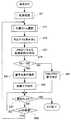
次に、上記ステップS33で起動される録画タスクについて説明する。なお、この実施例では、説明を簡単にするために、画像の記録レートを30秒毎に1フレームとする。 Next, the recording task activated in step S33 will be described. In this embodiment, to simplify the description, the image recording rate is set to one frame every 30 seconds.
図1を参照して、カメラ12から出力された画像信号は、D1−I/F(IN)20を通じてサーバ16内に取り込まれ、その後SDRAMコントローラ28によって一旦SDRAM30に書き込まれる。 Referring to FIG. 1, an image signal output from
図8を参照して、ステップS51でCPU42は、JPEGコーデック18に対し符号化の実行を指示する。応じてJPEGコーデック18は、SDRAMコントローラ28を通じてSDRAM30から1フレームの画像信号を読み出し、読み出された画像信号をJPEG方式に従って符号化する。次いで、符号化して得られたビットストリームにヘッダを添付することによりJPEGファイルを形成する。こうして形成されたJPEGファイルは、SDRAMコントローラ28によって再びSDRAM30に書き込まれる。 Referring to FIG. 8, in step S51,
ステップS53でCPU42は、前回の画像記録から30秒すなわち記録周期と等しい時間だけ経過したか否かを判定する。判定結果が肯定的であればステップS55に進み、否定的であれば待機する。 In step S53, the
ステップS55でCPU42は、時計回路40から現時刻を取得する。ステップS57では、記録時刻にステップS55で取得された現時刻をセットする。ステップS59では、現時刻がセットされた記録時刻を、SDRAM30に格納されているJPEGファイルのヘッダ部分に埋め込む。こうして得られたJPEGファイルが図3に示されている。 In step S <b> 55, the
ステップS61でCPU42は、IDE−I/F24を介し、記録時刻が埋め込まれたJPEGファイルをHD26aに記録する。その後、ステップS63に進む。 In step S61, the
ステップS63でCPUは、録画ストップキー48cが押されたか否かを判定する。判定結果が肯定的であれば本タスクを終了し、否定的であればステップS53に戻って上記と同様の処理を繰り返す。 In step S63, the CPU determines whether the recording stop key 48c has been pressed. If the determination result is affirmative, the present task is terminated. If the determination result is negative, the process returns to step S53 to repeat the same processing as described above.
次に、上記ステップS37で起動される再生タスクについて説明する。図9を参照して、ステップS71でCPU42は、初期処理を実行する。初期処理については後述する。 Next, the reproduction task activated in step S37 will be described. Referring to FIG. 9, in step S71,
ステップS73でCPU42は、これから実行する再生処理の対象となる1枚のフレームを選択する。フレーム選択処理については後述する。 In step S <b> 73, the
ステップS75でCPU42は、フラッシュメモリ32のテーブル38(図2参照)に基づいて、ステップS73で選択されたフレーム(k)と対応するJPEGファイルをSDRAM30もしくはHD26aから読み出す。 In step S75, the
ステップS77でCPU42は、ステップS75で読み出されたJPEGファイルから記録時刻を抽出する。ステップS79では、抽出された記録時刻がフラッシュメモリ32内の境界時刻よりも大きいか否かを判定する。判定結果が肯定的であればステップS81に進み、否定的であればステップS85に進む。 In step S77, the
ステップS81でCPU42は、JPEGコーデック18に対し、復号化の実行を指示する。応じてJPEGコーデック18は、SDRAMコントローラ28を通じてSDRAM30から該当JPEGファイルを読み出し、読み出されたJPEGファイルからヘッダを除去する。次いで、ヘッダを除去して得られたビットストリームをJPEG方式に従って復号化する。復号化して得られた画像信号は、SDRAMコントローラ28によって再びSDRAM30に書き込まれる。 In step S81, the
ステップS83でCPU42は、D1−I/F(OUT)22に対し、画像信号の出力を指示する。応じてD1−I/F(OUT)22は、SDRAMコントローラ28を介してSDRAM30から画像信号を読み出し、モニタ14に出力する。こうしてモニタ14には、カメラ12による監視画像が表示される。指示後、CPU42はステップS87を実行する。 In step S83, the
ステップS85でCPUは、D1−I/F(OUT)22に対し、“DELETED”を表示するように指示する。“DELETED”に対応する画像データは、例えばフラッシュメモリ32に記憶されており(図示せず)、D1−I/F(OUT)22は、この画像データをモニタに出力する。こうして、モニタ14に“DELETED”が表示される。指示後、CPU42はステップS87を実行する。 In step S85, the CPU instructs the D1-I / F (OUT) 22 to display “DELETED”. Image data corresponding to “DELETED” is stored in, for example, the flash memory 32 (not shown), and the D1-I / F (OUT) 22 outputs this image data to the monitor. In this way, “DELETED” is displayed on the
ステップS87でCPU42は、再生Stopキー48cが押されたか否かを判定する。判定結果が肯定的であれば本タスクを終了し、否定的であればステップS89に進む。 In step S87, the
ステップS89でCPU42は、ステップS81の指示からΔt秒経過したか否かを判定する。ここでΔtはフレーム周期であり、再生モードによって異なる値をとる(後述)。ステップS89の判定結果が肯定的であればステップS73に、否定的であればステップ87に戻る。 In step S89, the
次に、上記ステップS71の初期処理について説明する。図10を参照して、ステップS101でCPU42は、変数kおよび変数Δkの各々に0を、変数Δtには30をセットする。ここで変数kは、再生対象フレームのインデックス(図9のステップS73を参照)を意味する。変数Δkは、現再生対象フレームのインデックスと、次再生対象フレームのインデックスとの差分である。変数Δtについては、記録レートが30秒毎に1枚(図8のステップ53を参照)なので、ノーマル再生時のフレーム周期30秒が初期値となる。 Next, the initial process in step S71 will be described. Referring to FIG. 10, in step S101,
ステップS103でCPU42は、先頭フレームの指定を受け付ける。指定は、例えばユーザがテンキー48からインデックスすなわち記録時刻を入力することにより行われる。ここでは、先頭フレームのインデックスを“k0”とする。CPU42は、変数kにk0をセットする。 In step S103, the
ステップS105でCPU42は、再生モードの指定を受け付ける。この実施例では、再生モードとしてノーマル再生,高速再生および逆高速再生の3つのモードが準備されている。ノーマル再生では、動画像を構成するフレームを1枚1枚、順方向に再生していく。高速再生では、5枚に1枚の割合で順方向に再生していく。逆高速再生では、3枚に1枚の割合で逆方向に再生していく。 In step S105, the
ユーザは、テンキー48fを操作して、これら3モードのいずれか1つを指定する。再生モードの指定を受け付けた後、CPU42は、上位層のルーチンに復帰する。 The user operates one of the ten keys 48f to designate one of these three modes. After receiving the designation of the playback mode, the
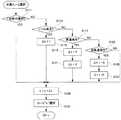
次に、上記ステップS73のフレーム選択処理について説明する。図11を参照して、ステップS111でCPU42は、本タスクが起動されて1回目の選択か否かを判定する。判定結果が肯定的であればステップS129に、否定的であればステップS113に進む。 Next, the frame selection process in step S73 will be described. Referring to FIG. 11, in step S <b> 111, the
ステップS113では、現在の再生モードすなわちステップS105で受け付けたモードがノーマル再生か否かを判定する。判定結果が肯定的であればステップS115に、否定的であればステップS117に進む。ステップS115では、変数Δkに1をセットする。その後、ステップS129に進む。 In step S113, it is determined whether or not the current playback mode, that is, the mode accepted in step S105 is normal playback. If the determination result is affirmative, the process proceeds to step S115, and if negative, the process proceeds to step S117. In step S115, 1 is set to the variable Δk. Thereafter, the process proceeds to step S129.
ステップS117でCPU42は、現在の再生モードが高速再生か否かを判定する。判定結果が肯定的であればステップS119に、否定的であればステップS123に進む。ステップS119では、変数Δkに5をセットする。ステップS121では、変数Δtに6{=|30/5|}をセットする。その後、ステップS129に進む。 In step S117, the
ステップS123でCPU42は、現在の再生モードが逆高速再生か否かを判定する。判定結果が肯定的であればステップS125に、否定的であればステップS129に進む。ステップS125では、変数Δkに−3をセットする。ステップS127では、変数Δtに10{=|30/(−3)|}をセットする。その後、ステップS129に進む。 In step S123, the
ステップS129でCPU42は、変数kに{k+Δk}をセットする。ステップS131では、フレーム“k”すなわち変数kにセットされた値と一致するインデックスを持つフレームを対象フレームとして選択する。 In step S129, the
以上のように、この実施例では、時計回路40は、サーバ16の初回起動時刻を基準として時間をカウントし、フラッシュメモリ32には保存期間が保持される。HD26aに記録されるJPEGファイルには、時計回路40の時刻に基づく記録時刻が埋め込まれる。再生時、CPU42は、時計回路40の時刻と保存期間とに基づいて境界時刻を計算する。そして、JPEGファイルの記録時刻が境界時刻よりも過去であれば、JPEGコーデック18およびSDRAMコントローラ28によるJPEGファイルの再生処理を禁止する。このように、簡単な処理によってJPEGファイルの利用期間を制限することができる。 As described above, in this embodiment, the
なお、この実施例では、記録レートは1フレーム/30秒に固定されているが、代わりに複数の記録レート、例えば60フレーム/1秒,30フレーム/1秒,…,1フレーム/15秒および1フレーム/30秒などのレートを準備しておき、録画時にいずれか1つを選択するようにしてもよい。この場合、録画タスク(図8参照)のステップS53では、選択された記録レートの逆数すなわち記録周期(ΔTと表記する)に等しい時間だけ経過したか否かが判断される。 In this embodiment, the recording rate is fixed to 1 frame / 30 seconds. Instead, a plurality of recording rates, for example, 60 frames / 1 second, 30 frames / 1 second,..., 1 frame / 15 seconds and A rate such as 1 frame / 30 seconds may be prepared, and one of them may be selected during recording. In this case, in step S53 of the recording task (see FIG. 8), it is determined whether or not a time equal to the reciprocal of the selected recording rate, that is, the recording period (denoted as ΔT) has elapsed.
一方、再生タスクでは、ステップS131の直後に、選択されたフレームの記録周期ΔTを検出するステップが追加される。また、ステップS121では、変数Δkに{|ΔT/Δk|}がセットされる。ステップS127の同様である。 On the other hand, in the reproduction task, a step of detecting the recording period ΔT of the selected frame is added immediately after step S131. In step S121, {| ΔT / Δk |} is set to the variable Δk. This is the same as step S127.
10…監視カメラシステム
12…カメラ
14…モニタ
16…サーバ
18…JPEGコーデック
26a…HD(ハードディスク)
30…SDRAM
32…フラッシュメモリ
40…時計回路
42…CPU
44…バックアップ電池
46…電源回路DESCRIPTION OF
30 ... SDRAM
32 ...
44 ...
Claims (9)
Translated fromJapanese任意の時刻を基準として時間をカウントする時計手段、
任意の期間を示す期間情報を保持する第1メモリ手段、および
前記時計手段によって示される時刻と前記第1メモリ手段によって保持された期間情報が示す期間とに基づいて前記再生手段による再生処理に制限をかける制限手段を備える、コンテンツ処理装置。Playback means for playing back content,
A clock means for counting time based on an arbitrary time,
First memory means for holding period information indicating an arbitrary period, and limited to the reproduction processing by the reproduction means based on the time indicated by the clock means and the period indicated by the period information held by the first memory means A content processing apparatus comprising a limiting means for applying
前記制限手段は前記時刻から前記期間に渡って先行する特定時期よりも前に前記記録媒体に記録されたコンテンツの再生を禁止する、請求項1記載のコンテンツ処理装置。A recording unit for recording the input content on a recording medium;
The content processing apparatus according to claim 1, wherein the restricting unit prohibits reproduction of content recorded on the recording medium before a specific time preceding the time from the time.
前記制限手段は前記無効化が行われたとき前記更新手段を停止させる、請求項3または4記載のコンテンツ処理装置。Invalidating means for invalidating the period information held by the first memory means;
The content processing apparatus according to claim 3, wherein the restriction unit stops the update unit when the invalidation is performed.
前記時計手段は前記時刻出力手段とは無関係に時間をカウントする、請求項7記載のコンテンツ処理装置。It further comprises time output means for outputting time information given to at least the reproduction means,
8. The content processing apparatus according to claim 7, wherein the clock means counts time regardless of the time output means.
前記商用電源の供給が中断されたときバックアップ電源を前記時計手段に供給する第2供給手段をさらに備える、請求項2ないし8のいずれかに記載のコンテンツ処理装置。The apparatus further comprises: a first supply unit that supplies at least a driving power source based on a commercial power source to the clock unit; and a second supply unit that supplies a backup power source to the clock unit when the supply of the commercial power source is interrupted. Or the content processing apparatus according to any one of 8 to 8.
Priority Applications (3)
| Application Number | Priority Date | Filing Date | Title |
|---|---|---|---|
| JP2003354879AJP2005122359A (en) | 2003-10-15 | 2003-10-15 | Content processor |
| EP04023340AEP1524853A3 (en) | 2003-10-15 | 2004-09-30 | Content processing apparatus |
| US10/957,732US7409072B2 (en) | 2003-10-15 | 2004-10-05 | Content processing apparatus |
Applications Claiming Priority (1)
| Application Number | Priority Date | Filing Date | Title |
|---|---|---|---|
| JP2003354879AJP2005122359A (en) | 2003-10-15 | 2003-10-15 | Content processor |
Publications (1)
| Publication Number | Publication Date |
|---|---|
| JP2005122359Atrue JP2005122359A (en) | 2005-05-12 |
Family
ID=34373569
Family Applications (1)
| Application Number | Title | Priority Date | Filing Date |
|---|---|---|---|
| JP2003354879APendingJP2005122359A (en) | 2003-10-15 | 2003-10-15 | Content processor |
Country Status (3)
| Country | Link |
|---|---|
| US (1) | US7409072B2 (en) |
| EP (1) | EP1524853A3 (en) |
| JP (1) | JP2005122359A (en) |
Cited By (2)
| Publication number | Priority date | Publication date | Assignee | Title |
|---|---|---|---|---|
| JP2008287435A (en)* | 2007-05-16 | 2008-11-27 | Toshiba Corp | Security level monitoring and evaluation apparatus and security level monitoring and evaluation program |
| WO2015008623A1 (en)* | 2013-07-18 | 2015-01-22 | 日本電信電話株式会社 | Key storage device, key storage method, and program therefor |
Families Citing this family (2)
| Publication number | Priority date | Publication date | Assignee | Title |
|---|---|---|---|---|
| US8296583B2 (en)* | 2006-02-24 | 2012-10-23 | Drakez Tokaj Rt. L.L.C. | Physical digital media delivery |
| JP2010002189A (en)* | 2008-06-18 | 2010-01-07 | Sanyo Electric Co Ltd | Electronic device |
Citations (4)
| Publication number | Priority date | Publication date | Assignee | Title |
|---|---|---|---|---|
| JPH11289513A (en)* | 1998-04-02 | 1999-10-19 | Nippon Columbia Co Ltd | Video recording and reproducing device |
| JP2002342139A (en)* | 2001-05-18 | 2002-11-29 | Sanyo Electric Co Ltd | Image signal processor |
| JP2003085321A (en)* | 2001-09-11 | 2003-03-20 | Sony Corp | System and method for contents use authority control, information processing device, and computer program |
| JP2003186755A (en)* | 2001-12-19 | 2003-07-04 | Columbia Music Entertainment Inc | Digital contents distribution system, digital contents recording device and digital contents reproducing device |
Family Cites Families (13)
| Publication number | Priority date | Publication date | Assignee | Title |
|---|---|---|---|---|
| US5161233A (en)* | 1988-05-17 | 1992-11-03 | Dai Nippon Printing Co., Ltd. | Method for recording and reproducing information, apparatus therefor and recording medium |
| JPH08212115A (en)* | 1995-01-31 | 1996-08-20 | Sapiensu:Kk | Method and device for managing file for image filing system |
| JPH103745A (en)* | 1996-06-12 | 1998-01-06 | Sony Corp | Recording medium, digital copy management method, reproducing device and recording device |
| EP1650757A1 (en)* | 1997-05-13 | 2006-04-26 | Kabushiki Kaisha Toshiba | Information ciphering method and apparatus, information reproducing method and apparatus |
| JP2000215649A (en)* | 1999-01-27 | 2000-08-04 | Nippon Columbia Co Ltd | Recorder/reproducer and recording medium |
| SE522856C2 (en)* | 1999-01-29 | 2004-03-09 | Axis Ab | A data storage and reduction method for digital images, as well as a monitoring system using said method |
| JP2002073973A (en)* | 2000-09-01 | 2002-03-12 | Sony Corp | Information processing device and method, system for providing digital cash service and storage medium |
| US6684217B1 (en) | 2000-11-21 | 2004-01-27 | Hewlett-Packard Development Company, L.P. | System and method for generating a profile from which a publication may be created |
| US7389526B1 (en)* | 2001-11-02 | 2008-06-17 | At&T Delaware Intellectual Property, Inc. | System and method for recording a digital video image |
| JP2005534205A (en)* | 2001-11-21 | 2005-11-10 | イー・トレピッド・テクノロジーズ・エルエルシー | Method and apparatus for storing digital video content provided from multiple cameras |
| JP2003228284A (en)* | 2002-01-31 | 2003-08-15 | Fujitsu Ltd | Data storage device, data storage method, data verification device, data access permission device, program, recording medium |
| JP2003248628A (en)* | 2002-02-25 | 2003-09-05 | Hitachi Ltd | Storage device and system |
| CN1659653A (en)* | 2002-04-11 | 2005-08-24 | 松下电器产业株式会社 | Information recording medium, recording device, reproducing device, and recording and reproducing device |
- 2003
- 2003-10-15JPJP2003354879Apatent/JP2005122359A/enactivePending
- 2004
- 2004-09-30EPEP04023340Apatent/EP1524853A3/ennot_activeWithdrawn
- 2004-10-05USUS10/957,732patent/US7409072B2/ennot_activeExpired - Fee Related
Patent Citations (4)
| Publication number | Priority date | Publication date | Assignee | Title |
|---|---|---|---|---|
| JPH11289513A (en)* | 1998-04-02 | 1999-10-19 | Nippon Columbia Co Ltd | Video recording and reproducing device |
| JP2002342139A (en)* | 2001-05-18 | 2002-11-29 | Sanyo Electric Co Ltd | Image signal processor |
| JP2003085321A (en)* | 2001-09-11 | 2003-03-20 | Sony Corp | System and method for contents use authority control, information processing device, and computer program |
| JP2003186755A (en)* | 2001-12-19 | 2003-07-04 | Columbia Music Entertainment Inc | Digital contents distribution system, digital contents recording device and digital contents reproducing device |
Cited By (2)
| Publication number | Priority date | Publication date | Assignee | Title |
|---|---|---|---|---|
| JP2008287435A (en)* | 2007-05-16 | 2008-11-27 | Toshiba Corp | Security level monitoring and evaluation apparatus and security level monitoring and evaluation program |
| WO2015008623A1 (en)* | 2013-07-18 | 2015-01-22 | 日本電信電話株式会社 | Key storage device, key storage method, and program therefor |
Also Published As
| Publication number | Publication date |
|---|---|
| EP1524853A2 (en) | 2005-04-20 |
| EP1524853A3 (en) | 2005-04-27 |
| US20050084242A1 (en) | 2005-04-21 |
| US7409072B2 (en) | 2008-08-05 |
Similar Documents
| Publication | Publication Date | Title |
|---|---|---|
| TWI246676B (en) | Recording apparatus, recording program, and recording method | |
| WO2004003723A1 (en) | Information processing device, information processing method, and information processing program | |
| JP2012161048A (en) | Imaging apparatus | |
| CN103475837B (en) | Record reproducing device and method | |
| JP6137980B2 (en) | Recording apparatus and control method thereof | |
| JP2015029231A (en) | Recording apparatus and control method thereof | |
| JPH11215458A (en) | Image recorder and its method, image reproducing device and its method, image recording and reproducing device and its method, and recording medium for these | |
| JP2012161012A (en) | Moving picture recorder | |
| JP2005122359A (en) | Content processor | |
| JP2012178814A (en) | Moving image recording apparatus | |
| JP2007148884A (en) | Portable content data reproducing apparatus and restriction release method thereof | |
| CN104469238B (en) | Motion image data recording equipment and its control method | |
| JP2005312006A (en) | Video image recording/reproducing apparatus and method | |
| US9124859B2 (en) | Image processing apparatus and image processing method | |
| JP2012161047A (en) | Image recorder | |
| US9025931B2 (en) | Recording apparatus, recording method, and program | |
| US8761573B2 (en) | Recording device, imaging and recording device, recording method, and program | |
| JP4348683B2 (en) | Image data recording method and recording / reproducing apparatus | |
| JP2001167565A (en) | Digital recorder-reproducer using random accessible recording medium and recording-reproducing method of digital data | |
| JP2012165050A (en) | Video recording device and information processing device | |
| JP2005038516A (en) | Media data recording method, media data recording apparatus, computer program, and computer-readable recording medium | |
| WO2000025312A1 (en) | Information recording method and system, image compression/decompression system, system control method, and monitoring system including part or all of them | |
| JP2015099995A (en) | Recording device and recording device control method | |
| JP2005328154A (en) | Recording apparatus, file dividing method, and program | |
| JP2005244267A (en) | Digital data recording and reproducing system |
Legal Events
| Date | Code | Title | Description |
|---|---|---|---|
| A621 | Written request for application examination | Free format text:JAPANESE INTERMEDIATE CODE: A621 Effective date:20061010 | |
| A977 | Report on retrieval | Free format text:JAPANESE INTERMEDIATE CODE: A971007 Effective date:20100122 | |
| A131 | Notification of reasons for refusal | Free format text:JAPANESE INTERMEDIATE CODE: A131 Effective date:20100202 | |
| A521 | Written amendment | Free format text:JAPANESE INTERMEDIATE CODE: A523 Effective date:20100405 | |
| A02 | Decision of refusal | Free format text:JAPANESE INTERMEDIATE CODE: A02 Effective date:20101109 |