JP2004254786A - Scanning confocal probe - Google Patents
Scanning confocal probeDownload PDFInfo
- Publication number
- JP2004254786A JP2004254786AJP2003046625AJP2003046625AJP2004254786AJP 2004254786 AJP2004254786 AJP 2004254786AJP 2003046625 AJP2003046625 AJP 2003046625AJP 2003046625 AJP2003046625 AJP 2003046625AJP 2004254786 AJP2004254786 AJP 2004254786A
- Authority
- JP
- Japan
- Prior art keywords
- scanning
- confocal probe
- scanning confocal
- light
- light beam
- Prior art date
- Legal status (The legal status is an assumption and is not a legal conclusion. Google has not performed a legal analysis and makes no representation as to the accuracy of the status listed.)
- Granted
Links
Images

Landscapes
- Instruments For Viewing The Inside Of Hollow Bodies (AREA)
- Endoscopes (AREA)
Abstract
Description
Translated fromJapanese【0001】
【発明の属する技術分野】
この発明は、体腔内の生体組織の断層像を高倍率で観察することができる走査型共焦点プローブであって、特にプローブ側面から生体組織を観察する側視タイプの走査型共焦点プローブに関する。
【0002】
【従来の技術】
従来、精密診断検査で生体組織の検査を行う際には、切断用の鉗子などの処置具を用いて検査対象となる生体組織の一部を採取した後、体外において検査を行っていた。そのため、診断時間が長くなり、被検者に対して迅速に治療を行うことができなかった。
【0003】
近年、生体組織の断層像を観察することができる共焦点プローブ装置が広く普及している。共焦点プローブ装置は、共焦点顕微鏡で利用されているマイクロ機械加工された小型の共焦点用のプローブを先端に備える。該共焦点プローブ装置はプローブ内部に設けられた走査ミラーによってレーザ光を観察対象で走査させることにより、2次元または3次元の観察画像を得る。このような装置としては、例えば、下記の特許文献1または特許文献2に開示される。
【0004】
【特許文献1】
特許第3032720号公報(第3〜5項、第1〜5図)
【特許文献2】
特許第3052150号公報(第3、4項、第1図)
【0005】
上記従来の共焦点プローブ装置は、プローブを有する。該プローブの内部は、所定形状に切り出すことにより形成される空洞部を有する。該空洞部には、シリコン基板などの半導体材料や走査ミラーなどが取り付けられる。詳しくは、該走査ミラーは、シリコン基板に実装される。そして該基板は、基板取り付け部などによってプローブ内壁に取り付けられている。従って、プローブの組立作業における工程数が増加し、かつ各工程も複雑化してしまう。特に、走査ミラーは、他のプローブ内の光学系との関係上、高精度な位置決めが要求されるが、空洞部に高精度で位置決めしつつ実装する工程は極めて困難である。さらに上記基板取り付け部は、構造上、光軸に対して走査ミラーより外側(プローブ内壁側)に設けられる。そのため、プローブ全体が大型化したり、径が太くなったりするという欠点も有している。
【0006】
【発明が解決しようとする課題】
そこで、本発明は上記の事情に鑑み、走査ミラーの位置決め作業を含めた組立工程が簡略化することができ、かつ小型化、細径化された側視タイプの走査型共焦点プローブを提供することを目的とする。
【0007】
【課題を解決するための手段】
上記の課題を解決するため、本発明に係る走査型共焦点プローブは、体腔内への挿入方向と略直交する方向に光源からの光束を照射する側視タイプの走査型共焦点プローブに関し、光束の光路上に配設され、該光路を第一面と第二面によって二回折り曲げるペンタプリズムと、ペンタプリズム上に取り付けられ、光束を体腔内の生体組織上で走査する走査手段と、を有することを特徴とする。
【0008】
光源からの光束の光路中に側視用に該光束を導光するペンタプリズムを配設することにより、光路として使用するスペースと走査手段を配設するスペースとを兼用できる。そのため、プローブの外形状である筐体を小さくすることができ、プローブの小型化、細径化を実現することができる。
【0009】
また、上記走査型共焦点プローブは、ペンタプリズムから射出された前記光束を前記体腔内の生体組織に集光させる集光手段をさらに有する(請求項2)。該集光手段としては、対物レンズを設ける以外にも、上記ペンタプリズムにおける光束射出端面に回折面を設けることもできる(請求項3)。
【0010】
請求項4に記載の走査型共焦点プローブによれば、走査手段は、光束を第一の方向および該第一の方向と直交する第二の方向に走査する2軸走査ミラーを有することが望ましい。そして、該2軸走査ミラーは、ペンタプリズムの第一面または第二面のいずれか一方に実装される(請求項5)。走査手段としての2軸走査ミラーをペンタプリズムのいずれかの面に実装することにより、2軸走査ミラーとペンタプリズム間の相対的な位置決めが容易にかつ高い精度をもって実行される。これにより、製造および組立工程の簡略化を図ることができる。
【0011】
なお、ペンタプリズムにおいて、上記2軸走査ミラーを実装していない面には、金属単層膜等を施してミラー面としておけば、光量損失を抑えることができる(請求項6)。また、2軸走査ミラーといった走査手段は、上記集光手段に生体組織側から平行光束を入射させたときに焦点を結ぶ位置に配設されることが望ましい(請求項7)。これにより、走査手段と集光手段がテレセントリックな関係になり、光束が被観察部位である生体組織に直角に入射する。従って、光量損失を抑えてより明るく精細な画像を観察することができる。
【0012】
請求項8に記載の発明によれば、走査手段は、光束を第一の方向に走査する第一の走査ミラーと、第一の方向と直交する第二の方向に光束を走査する第二の走査ミラーとを有する構成にすることもできる。この場合、第一の走査ミラーと第二の走査ミラーは、それぞれペンタプリズムにおける第一面および第二面に実装すればよい。
【0013】
請求項9に記載の発明によれば、集光手段とペンタプリズムは、同一の材料から構成されることが望ましい。これにより、プローブ内に配設された各光学素子の膨張率の差が減少する。その結果、プローブが受ける温度変化が大きい場合でも、膨張率の差による各光学素子間の位置関係のズレ量を抑えることが可能となり、温度特性が向上する。
【0014】
また、請求項10に記載の上記走査型共焦点プローブは、生体組織で反射した反射光のうち、集光手段の物体側焦点面からの反射光以外の反射光を除去するよう配設されたピンホールを有する。そしてこのピンホールは、集光手段の物体側焦点位置からの光束が入射するシングルモード光ファイバの端面であることを特徴とする。すなわち、コア径の小さいシングルモード光ファイバの端面を集光手段の物体側焦点位置と共役の位置に配設することによって、該光ファイバは、共焦点光学系に用いられるピンホールの機能と、共焦点光学系によって得られた観察像をプロセッサなどの外部装置に伝送する機能とを兼ね備えることが可能となる。
【0015】
また、上記いずれかに記載の走査型共焦点プローブを備えた共焦点内視鏡装置は、生体組織を照射する光源と、走査型共焦点プローブから伝送される該生体組織の反射光に基づいて画像信号を生成する画像信号生成部とから構成することができる(請求項11)。
【0016】
【発明の実施の形態】
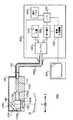
図1は、本発明の実施形態の走査型共焦点プローブ装置500の概略構成を示す図である。走査型共焦点プローブ装置500は、走査型共焦点プローブ100と、プロセッサ300と、モニタ400から構成される。
【0017】
術者は、走査型共焦点プローブ100を図示しない内視鏡の鉗子チャンネルなどに挿通し、このプローブを介して体腔内の観察像を得ることができる。プローブによって得られた観察像は、プロセッサ300によって画像処理が施され、モニタ400に表示される。
【0018】
プロセッサ300は、レーザ光源310と、カップラ320と、受光素子330と、CPU340と、画像処理回路350と、操作パネル360と、から構成される。
【0019】
レーザ光源310は、発振波長632nmのHe−Neレーザを発振する。なお、共焦点光学系に使用するレーザ光源は波長が短いほど高い分解能を得ることができる。すなわちレーザ光源310は、He−Neレーザに限定されることなく、例えば短波長のAr+レーザでもよい。
【0020】
レーザ光源310より発振した光束は、光分岐器であるカップラ320を介して、走査型共焦点プローブ100に導光される。
【0021】
プローブ100は、光ファイバ110と、GRINレンズ(またはコリメータレンズ)120と、ペンタプリズム130と、マイクロミラー140と、対物レンズ150と、ケーブル160と、を備える。光ファイバ110、GRINレンズ120、ペンタプリズム130、対物レンズ150は、予め所定形状に成型されたプローブ100の内壁に沿って設置、固定されている。従って、極めて容易に、かつ高い精度を持って各部材間の相対的な位置決めが行われる。なおプローブ100は、光源310からの光束を体腔内への挿入方向と略直交する方向に照射する、すなわちプローブ側面から被観察部位を観察する側視タイプである。
【0022】
プローブ100は、ケーブル160によってプロセッサ300に電気的かつ光学的に接続される。光ファイバ110は、単一のモードを伝送するシングルモードファイバである。光ファイバ110は、ケーブル160のプロセッサ300側端部からケーブル160内を通ってプローブ100内部に進入するように配設されている。つまり光ファイバ110は、プロセッサ300から出力された光束をGRINレンズ120に向けて伝送する。なお、ケーブル160内において、光ファイバ110は、ジャケット160aに被覆されている。
【0023】
GRINレンズ120は、屈折率がその媒体の内部で勾配を有する光学材料から成形されたレンズで、コリメータレンズとして機能する。すなわち、光ファイバ110から射出された光束は、GRINレンズ120に入射し、平行光束となって、ペンタプリズム130に向けて射出される。
【0024】
ペンタプリズム130は、BK7や合成石英などの硝材によって成形されている。ペンタプリズム130は、入射光束の光路を交角が45°に設定された第一面130bと第二面130cによって直角に折り曲げる。
【0025】
GRINレンズ120から射出された平行光束は、面130aを介してペンタプリズム130に入射する。なお、本明細書では、ペンタプリズム130の面のうち、光源310からの光束が入射する面130aを、便宜上、光束入射端面という。第一面130bは、金属膜や誘電体多層膜等の高反射膜が施され、ミラー面となっている。従って、ペンタプリズム130に入射した光束は、第一面130bで反射した後、第二面130cに実装されたマイクロミラー140に入射する。
【0026】
マイクロミラー140は、ミラー部(不図示)とミラー部を回動自在に支持する支持基台(不図示)とを有する。マイクロミラー140は、該支持基台を第二面130cに接合することにより、ペンタプリズム130に実装される。マイクロミラー140は、CPU340の制御のもと、ミラー部が回動することにより、入射光束をX方向およびX方向と直交するY方向に対して同時に走査する。つまり、本実施形態で使用するマイクロミラー140は、2軸走査型である。なお、X方向、Y方向とは、後述する対物レンズ150の光軸と直交する方向である。X方向とY方向によって規定される面は、被観察部位10の表面と略一致する。
【0027】
マイクロミラー140によって偏向された平行光束は、第二面130cを介して再びペンタプリズム130に入射する。ペンタプリズム130に入射した平行光束は、面130dから射出されて対物レンズ150に導かれる。なお、本明細書では、ペンタプリズム130の面のうち、マイクロミラー140を介した平行光束が射出される面130dを、便宜上、光束射出端面という。
【0028】
ここで、プローブ100を、それぞれ異なる材料を用いて成形された光学部材によって構成すると、温度変化によって各部材の膨張率に差が発生してしまう。このように温度特性が悪いと、各光学部材間の位置関係にズレが発生し、観察対象を走査するレーザ光の光路を予期しない方向にずれてしまう。よって、必要とする観察画像の取得が難しくなる。
【0029】
そこで、本実施形態では、ペンタプリズム130と同一の光学材料を用いて成形されたレンズを対物レンズ150として使用する。このように、プローブ100内に配設される各光学部材を同一の光学材料製のもので統一することにより、上述したプローブ100周囲の温度変化による悪影響を受けることがなくなる。ペンタプリズム130の光束射出端面130dから射出された平行光束は、対物レンズ150を介して被観察部位10の表面部または断層部において焦点を結ぶ。
【0030】
本実施形態では、焦点面である被観察部位10に対して略直角に光が入射するように、マイクロミラー140と対物レンズ150は、テレセントリックな関係になる位置に配設される。具体的には、対物レンズ150に被観察部位10側から平行光束を入射させたときの焦点位置にマイクロミラー140を配設する。これにより、被観察部位10に光束が斜入射することがなくなり、光量損失が低減される。
【0031】
被観察部位10において集光した光束は、被観察部位10において反射し、対物レンズ150に入射する。そして対物レンズ150によって平行光束となり、上述と同様の光路を経て、GRINレンズ120に入射する。
【0032】
光ファイバ110は上述したようにシングルモードファイバである。そのため、使用波長によって異なるもののコア径は約3〜9μm程度と非常に小さい。また、光ファイバ110の端面110aは、対物レンズ150の物体側焦点位置と共役の位置に配設されている。すなわちGRINレンズ120に入射した光束のうち、被観察部位10において焦点を結んだ光束の反射光のみが、端面110aにおいて焦点を結ぶ。端面110aにおいて焦点を結んだ光束は、光ファイバ110に入射し、カップラ320を介して受光素子330に受光される。
【0033】
なお、対物レンズ150における物体側焦点面からの反射光以外の被観察部位10の反射光は、端面110aにおいて焦点を結ばず、光ファイバ110に入射しないため、プロセッサ300に伝送されない。すなわち、本実施形態において光ファイバ110の端面110aは、対物レンズ150の物体側焦点面からの反射光以外の光を遮断するピンホールの機能と走査型共焦点プローブ100が有する光学系によって得られた観察像をプロセッサ300に伝送する機能とを兼ね備えている。
【0034】
受光素子330によって受光された光束は、光電変換されて画像信号となり、画像処理回路350に出力される。画像処理回路350は、この画像信号に所定の画像処理を行い、コンポジットビデオ信号や、RGB信号、Sビデオ信号など、種々のビデオ信号に変換する。そして、これらのビデオ信号がモニタ400に出力されると、モニタ上に、走査型共焦点プローブ100によって生成された対物レンズ150の焦点面における被観察部位10の観察画像が表示される。
【0035】
術者は、プロセッサ300が備える操作パネル360を操作することにより、マイクロミラー140の走査方向や走査角度等の画像に関する設定を行う。例えば、マイクロミラー140の走査角度(すなわち、被観察部位10において走査されるレーザ光の範囲)を変えることによって、容易にその観察画像の視野を変えることができる。走査角度が小さい場合は小さい領域の観察画像となり、走査角度が大きい場合は大きな領域の観察画像となる。
【0036】
術者によって操作パネル360に入力された情報は、CPU350に送信される。CPU350は、送信された情報に基づき、マイクロミラー140を駆動制御する。マイクロミラー140が駆動すると、上述したようにレーザ光は、被観察部位10に対してX方向またはY方向に走査する。そして走査された部位の反射光が観察像としてプロセッサ300に送信される。これにより、術者は、走査型共焦点プローブ100によって得られる画像を選択的に観察することができる。
【0037】
以上が本発明の実施形態である。本発明はこれらの実施形態に限定されるものではなく様々な範囲で変形が可能である。
【0038】
図2は、プローブ100の変形例を示す図である。図2に示すプローブ100は、ペンタプリズム130における光束射出端面130cに回折面Dを設けることにより、対物レンズ150を省略している。なお、透過性ある平行平面板170は、光束射出端面130cおよび該端面130cに設けた回折面Dを保護するために設けられている。図2に示す変形例によれば、X方向とY方向双方に直交する方向、つまり被観察部位10に光束が入射する方向におけるプローブ100の寸法をより小型化することができる。
【0039】
また、上記実施形態では、マイクロミラー140は、ペンタプリズム130の第二面130cに実装すると説明したが、第一面130bに実装することも可能である。さらに上記実施形態では、マイクロミラー140は、2軸走査型を使用しているが、X方向に走査可能なマイクロミラーおよびY方向に走査可能なマイクロミラーの二つの1軸走査型マイクロミラーを使用しても、上記構成と同様の効果を得ることができる。この場合、第一面130bと第二面130cのそれぞれに上記1軸走査型マイクロミラーを一つずつ実装すればよい。1軸走査型のマイクロミラーは、上記2軸走査型に比べ駆動スペースが小さくてすむ。そのため、1軸走査型のマイクロミラーを二つ使用する構成は、上記実施形態の構成に比べ、構成部材の点数は増えてしまうがプローブ100全体をより小型化できる利点がある。
【0040】
また、本実施形態において被観察部位10を照射する光源にはHe−Neレーザを使用しているが、近紫外線を含む短波長の光を照射する超高圧水銀ランプを光源に使用してもよい。この場合、被観察部位10より発せられる蛍光を観察することが可能となる。
【0041】
【発明の効果】
以上のように本発明の走査型共焦点プローブおよび走査型共焦点プローブ装置は、光路として使用するスペースに、導光手段であって、かつ走査手段が実装されるペンタプリズムを配設する。従って、光路として使用するスペースと走査手段の実装スペースとを兼用することが可能となり、省スペース化を図ることができる。これにより、プローブの外形状である筐体を小さくすることができ、プローブの細径化を容易に行うことが可能となる。
【0042】
また、上記ペンタプリズムの面に走査手段を実装することにより、各光学部材間の位置決めが容易かつ高い精度をもって実行される。従って、プローブの組立工程数の減少や組立時間の短縮などを図ることが可能となり、コスト削減に繋がる。
【0043】
さらに、本発明に係るプローブを構成する各光学部材は同一の材料によって作られたものを使用している。これにより、各光学素子の膨張率の差が減少する。その結果、プローブが受ける温度変化が大きい場合でも、膨張率の差による各光学素子間の位置関係のズレ量を抑えることができ、温度特性が向上する。
【図面の簡単な説明】
【図1】本発明の実施形態の走査型共焦点プローブ装置の構成を示す図である。
【図2】本発明の実施形態の走査型共焦点プローブの変形例を表す図である。
【符号の説明】
100 走査型共焦点プローブ
130 ペンタプリズム
300 プロセッサ
500 走査型共焦点プローブ装置[0001]
TECHNICAL FIELD OF THE INVENTION
The present invention relates to a scanning confocal probe capable of observing a tomographic image of a living tissue in a body cavity at a high magnification, and more particularly to a side-view scanning confocal probe for observing a living tissue from a side surface of the probe.
[0002]
[Prior art]
2. Description of the Related Art Conventionally, when a living tissue is inspected by a precision diagnostic test, a part of the living tissue to be inspected is collected using a treatment tool such as a cutting forceps, and then the inspection is performed outside the body. Therefore, the diagnosis time is lengthened, and the treatment cannot be quickly performed on the subject.
[0003]
2. Description of the Related Art In recent years, confocal probe devices that can observe a tomographic image of a living tissue have been widely used. The confocal probe device has a micro-machined miniature confocal probe used at the confocal microscope at the tip. The confocal probe device obtains a two-dimensional or three-dimensional observation image by causing a scanning mirror provided inside the probe to scan the observation target with laser light. Such an apparatus is disclosed, for example, in Patent Document 1 or Patent Document 2 below.
[0004]
[Patent Document 1]
Japanese Patent No. 3032720 (Items 3 to 5, FIGS. 1 to 5)
[Patent Document 2]
Japanese Patent No. 3052150 (Items 3, 4 and 1)
[0005]
The conventional confocal probe device has a probe. The inside of the probe has a cavity formed by cutting into a predetermined shape. A semiconductor material such as a silicon substrate or a scanning mirror is attached to the cavity. Specifically, the scanning mirror is mounted on a silicon substrate. The substrate is attached to the inner wall of the probe by a substrate attaching portion or the like. Therefore, the number of steps in the probe assembling operation increases, and each step becomes complicated. In particular, the scanning mirror is required to be positioned with high precision in relation to the optical system in another probe, but it is extremely difficult to mount the scanning mirror while positioning it with high precision in the cavity. Further, the substrate mounting portion is provided outside the scanning mirror with respect to the optical axis (on the inner wall side of the probe) with respect to the optical axis. For this reason, there is a disadvantage that the whole probe becomes large or the diameter becomes large.
[0006]
[Problems to be solved by the invention]
In view of the above circumstances, the present invention provides a side-view type scanning confocal probe that can simplify the assembly process including the positioning operation of the scanning mirror, and is reduced in size and diameter. The purpose is to:
[0007]
[Means for Solving the Problems]
In order to solve the above-described problems, a scanning confocal probe according to the present invention relates to a side-view scanning confocal probe that irradiates a light beam from a light source in a direction substantially perpendicular to a direction of insertion into a body cavity. A pentaprism that is disposed on the optical path and bends the optical path twice by the first surface and the second surface, and a scanning unit that is mounted on the pentaprism and scans the light beam on the living tissue in the body cavity. It is characterized by the following.
[0008]
By disposing a pentaprism that guides the light beam for the side view in the light path of the light beam from the light source, the space used as the light path and the space where the scanning unit is provided can be shared. Therefore, the size of the outer casing of the probe can be reduced, and the probe can be reduced in size and diameter.
[0009]
The scanning confocal probe further includes a light condensing means for condensing the light flux emitted from the pentaprism on a living tissue in the body cavity. In addition to providing the objective lens, the light-collecting means may be provided with a diffractive surface on the light-emitting end face of the pentaprism.
[0010]
According to the scanning confocal probe of the fourth aspect, it is desirable that the scanning means has a two-axis scanning mirror that scans the light beam in the first direction and the second direction orthogonal to the first direction. . The biaxial scanning mirror is mounted on one of the first surface and the second surface of the pentaprism (claim 5). By mounting a biaxial scanning mirror as a scanning unit on any surface of the pentaprism, relative positioning between the biaxial scanning mirror and the pentaprism can be easily and accurately performed. As a result, the manufacturing and assembling steps can be simplified.
[0011]
In the pentaprism, the surface on which the biaxial scanning mirror is not mounted is provided with a metal single-layer film or the like to form a mirror surface, whereby loss of light quantity can be suppressed (claim 6). Further, it is desirable that the scanning means such as a biaxial scanning mirror be disposed at a position where the light is focused when a parallel light beam is incident on the light collecting means from the living tissue side. As a result, the scanning unit and the condensing unit have a telecentric relationship, and the light beam enters the living tissue, which is the observation site, at right angles. Therefore, a brighter and more detailed image can be observed while suppressing the light amount loss.
[0012]
According to the invention described in claim 8, the scanning means scans the light beam in the first direction and the second scanning mirror scans the light beam in the second direction orthogonal to the first direction. A configuration having a scanning mirror may be employed. In this case, the first scanning mirror and the second scanning mirror may be mounted on the first surface and the second surface of the pentaprism, respectively.
[0013]
According to the ninth aspect of the present invention, it is desirable that the light collecting means and the pentaprism are made of the same material. As a result, the difference between the expansion coefficients of the optical elements provided in the probe is reduced. As a result, even when the temperature change received by the probe is large, it is possible to suppress the amount of deviation in the positional relationship between the optical elements due to the difference in expansion coefficient, and the temperature characteristics are improved.
[0014]
The scanning confocal probe according to
[0015]
Further, a confocal endoscope apparatus including the scanning confocal probe according to any one of the above, based on a light source for irradiating the living tissue, and reflected light of the living tissue transmitted from the scanning confocal probe And an image signal generation unit that generates an image signal.
[0016]
BEST MODE FOR CARRYING OUT THE INVENTION
FIG. 1 is a diagram showing a schematic configuration of a scanning
[0017]
The operator can insert the scanning
[0018]
The
[0019]
The
[0020]
The light beam oscillated from the
[0021]
The
[0022]
[0023]
The
[0024]
The
[0025]
The parallel light beam emitted from the
[0026]
The
[0027]
The parallel light beam deflected by the
[0028]
Here, if the
[0029]
Thus, in the present embodiment, a lens molded using the same optical material as the
[0030]
In the present embodiment, the
[0031]
The light beam condensed at the
[0032]
The
[0033]
It should be noted that the reflected light of the
[0034]
The light beam received by the
[0035]
The surgeon operates the
[0036]
Information input to the
[0037]
The above is the embodiment of the present invention. The present invention is not limited to these embodiments, and can be modified in various ranges.
[0038]
FIG. 2 is a diagram illustrating a modified example of the
[0039]
In the above embodiment, the
[0040]
Further, in this embodiment, a He-Ne laser is used as a light source for irradiating the
[0041]
【The invention's effect】
As described above, in the scanning confocal probe and the scanning confocal probe device of the present invention, the pentaprism which is the light guiding means and on which the scanning means is mounted is arranged in the space used as the optical path. Therefore, the space used as the optical path and the mounting space for the scanning means can be shared, and the space can be saved. Thus, the outer shape of the housing of the probe can be reduced, and the diameter of the probe can be easily reduced.
[0042]
In addition, by mounting the scanning means on the surface of the pentaprism, positioning between the optical members can be performed easily and with high accuracy. Accordingly, it is possible to reduce the number of probe assembling steps and the assembling time, which leads to cost reduction.
[0043]
Further, the optical members constituting the probe according to the present invention are made of the same material. Thereby, the difference between the expansion coefficients of the optical elements is reduced. As a result, even when the temperature change applied to the probe is large, the amount of deviation in the positional relationship between the optical elements due to the difference in expansion coefficient can be suppressed, and the temperature characteristics are improved.
[Brief description of the drawings]
FIG. 1 is a diagram showing a configuration of a scanning confocal probe device according to an embodiment of the present invention.
FIG. 2 is a diagram illustrating a modified example of the scanning confocal probe according to the embodiment of the present invention.
[Explanation of symbols]
Claims (11)
Translated fromJapanese前記光束の光路中に配設され、該光路を第一面と第二面によって入射する方向と略直交する方向に折り曲げるペンタプリズムと、
前記第一面と前記第二面の少なくとも一方の面に取り付けられ、前記光束を前記体腔内の生体組織上で走査する走査手段と、を有することを特徴とする走査型共焦点プローブ。A side-view type scanning confocal probe for observing a living tissue in the body cavity by irradiating a light beam from a light source in a direction substantially perpendicular to an insertion direction into the body cavity,
A pentaprism disposed in the optical path of the light beam, and bending the optical path in a direction substantially orthogonal to the direction of incidence by the first surface and the second surface;
A scanning confocal probe, comprising: a scanning unit attached to at least one of the first surface and the second surface, for scanning the light beam on a living tissue in the body cavity.
前記ペンタプリズムから射出された前記光束を前記体腔内の生体組織に集光させる集光手段をさらに有することを特徴とする走査型共焦点プローブ。The scanning confocal probe according to claim 1,
A scanning confocal probe, further comprising a light condensing means for condensing the light beam emitted from the pentaprism on a living tissue in the body cavity.
前記集光手段は、前記ペンタプリズムにおける光束射出端面に設けられた回折面であることを特徴とする走査型共焦点プローブ。The scanning confocal probe according to claim 2,
A scanning confocal probe according to claim 1, wherein said condensing means is a diffractive surface provided on a light emitting end face of said pentaprism.
前記走査手段は、前記光束を第一の方向および該第一の方向と直交する第二の方向に走査する2軸走査ミラーを有することを特徴とする走査型共焦点プローブ。The scanning confocal probe according to any one of claims 1 to 3,
A scanning confocal probe, characterized in that the scanning means has a biaxial scanning mirror for scanning the light beam in a first direction and a second direction orthogonal to the first direction.
前記第一面と前記第二面のうち、前記2軸走査ミラーが取り付けられていない面は、反射膜が施されていることを特徴とする走査型共焦点プローブ。The scanning confocal probe according to claim 5,
A scanning confocal probe, wherein a surface of the first surface and the second surface on which the biaxial scanning mirror is not attached is provided with a reflective film.
前記走査手段は、前記集光手段に前記生体組織側から平行光束を入射させたときに焦点を結ぶ位置に配設されることを特徴とする走査型共焦点プローブ。The scanning confocal probe according to any one of claims 4 to 6,
The scanning confocal probe, wherein the scanning means is disposed at a position where the light is focused when a parallel light beam is incident on the light-collecting means from the living tissue side.
前記走査手段は、前記光束を第一の方向に走査する第一の走査ミラーと、前記第一の方向と直交する第二の方向に前記光束を走査する第二の走査ミラーと、が含まれ、
前記第一の走査ミラーと前記第二の走査ミラーは、それぞれ前記第一面および前記第二面に実装されること、を特徴とする走査型共焦点プローブ。The scanning confocal probe according to any one of claims 1 to 3,
The scanning unit includes a first scanning mirror that scans the light beam in a first direction, and a second scanning mirror that scans the light beam in a second direction orthogonal to the first direction. ,
A scanning confocal probe, wherein the first scanning mirror and the second scanning mirror are mounted on the first surface and the second surface, respectively.
前記集光手段と前記ペンタプリズムは、同一の材料から構成されることを特徴とする走査型共焦点プローブ。The scanning confocal probe according to any one of claims 2 to 8,
A scanning confocal probe, wherein the condensing means and the pentaprism are made of the same material.
前記生体組織で反射した反射光のうち、前記集光手段の物体側焦点面からの反射光以外の反射光を除去するよう配設されたピンホールを有し、
前記ピンホールは、前記集光手段の物体側焦点位置からの光束が入射するシングルモード光ファイバの端面であること、を特徴とする走査型共焦点プローブ。The scanning confocal probe according to any one of claims 1 to 9,
Among the reflected light reflected by the living tissue, a pinhole arranged to remove reflected light other than reflected light from the object-side focal plane of the light-collecting means,
A scanning confocal probe, wherein the pinhole is an end face of a single mode optical fiber on which a light beam from an object-side focal position of the condensing means is incident.
生体組織を照明する光束を照射する光源と、
前記走査型共焦点プローブによって伝送される前記生体組織の反射光に基づいて画像信号を生成する画像信号生成部と、を有することを特徴とする走査型共焦点プローブ装置。A scanning confocal probe according to any one of claims 1 to 10,
A light source for irradiating a light beam for illuminating living tissue;
A scanning confocal probe device, comprising: an image signal generating unit that generates an image signal based on reflected light of the living tissue transmitted by the scanning confocal probe.
Priority Applications (2)
| Application Number | Priority Date | Filing Date | Title |
|---|---|---|---|
| JP2003046625AJP4278086B2 (en) | 2003-02-24 | 2003-02-24 | Scanning confocal probe |
| US10/784,308US7154083B2 (en) | 2003-02-24 | 2004-02-24 | Confocal probe |
Applications Claiming Priority (1)
| Application Number | Priority Date | Filing Date | Title |
|---|---|---|---|
| JP2003046625AJP4278086B2 (en) | 2003-02-24 | 2003-02-24 | Scanning confocal probe |
Publications (2)
| Publication Number | Publication Date |
|---|---|
| JP2004254786Atrue JP2004254786A (en) | 2004-09-16 |
| JP4278086B2 JP4278086B2 (en) | 2009-06-10 |
Family
ID=33113079
Family Applications (1)
| Application Number | Title | Priority Date | Filing Date |
|---|---|---|---|
| JP2003046625AExpired - Fee RelatedJP4278086B2 (en) | 2003-02-24 | 2003-02-24 | Scanning confocal probe |
Country Status (1)
| Country | Link |
|---|---|
| JP (1) | JP4278086B2 (en) |
Cited By (4)
| Publication number | Priority date | Publication date | Assignee | Title |
|---|---|---|---|---|
| EP1586889A2 (en) | 2004-04-16 | 2005-10-19 | Denso Corporation | Gas concentration measuring apparatus designed to compensate for output error |
| JP2007183380A (en)* | 2006-01-06 | 2007-07-19 | Lasertec Corp | Microscope and observation method |
| JP2013220254A (en)* | 2012-04-18 | 2013-10-28 | Sony Corp | Image processing apparatus and image processing method |
| JP2017119146A (en)* | 2017-02-07 | 2017-07-06 | ソニー株式会社 | Image processing device, operation method of image processing device, and imaging device |
Citations (9)
| Publication number | Priority date | Publication date | Assignee | Title |
|---|---|---|---|---|
| JPS5255428A (en)* | 1975-10-31 | 1977-05-06 | Olympus Optical Co Ltd | Color picture displaying endoscope unit |
| US4074306A (en)* | 1975-07-28 | 1978-02-14 | Olympus Optical Co., Ltd. | Endoscope utilizing color television and fiber optics techniques |
| JPS6138921A (en)* | 1985-04-30 | 1986-02-25 | Olympus Optical Co Ltd | Endoscope device using solid state image pickup device |
| US5771067A (en)* | 1992-09-11 | 1998-06-23 | Williams; Ronald R. | Dental video camera with an electrically adjustable iris |
| JPH11221192A (en)* | 1998-02-10 | 1999-08-17 | Olympus Optical Co Ltd | Photo-scan type probe |
| JPH11337477A (en)* | 1998-05-28 | 1999-12-10 | Olympus Optical Co Ltd | Optical scanning device |
| JP2001174744A (en)* | 1999-10-06 | 2001-06-29 | Olympus Optical Co Ltd | Optical scanning probe device |
| JP2001311880A (en)* | 2000-04-28 | 2001-11-09 | Olympus Optical Co Ltd | Compact confocal optical system |
| JP2003290133A (en)* | 2002-04-05 | 2003-10-14 | Olympus Optical Co Ltd | Optical imaging device |
- 2003
- 2003-02-24JPJP2003046625Apatent/JP4278086B2/ennot_activeExpired - Fee Related
Patent Citations (9)
| Publication number | Priority date | Publication date | Assignee | Title |
|---|---|---|---|---|
| US4074306A (en)* | 1975-07-28 | 1978-02-14 | Olympus Optical Co., Ltd. | Endoscope utilizing color television and fiber optics techniques |
| JPS5255428A (en)* | 1975-10-31 | 1977-05-06 | Olympus Optical Co Ltd | Color picture displaying endoscope unit |
| JPS6138921A (en)* | 1985-04-30 | 1986-02-25 | Olympus Optical Co Ltd | Endoscope device using solid state image pickup device |
| US5771067A (en)* | 1992-09-11 | 1998-06-23 | Williams; Ronald R. | Dental video camera with an electrically adjustable iris |
| JPH11221192A (en)* | 1998-02-10 | 1999-08-17 | Olympus Optical Co Ltd | Photo-scan type probe |
| JPH11337477A (en)* | 1998-05-28 | 1999-12-10 | Olympus Optical Co Ltd | Optical scanning device |
| JP2001174744A (en)* | 1999-10-06 | 2001-06-29 | Olympus Optical Co Ltd | Optical scanning probe device |
| JP2001311880A (en)* | 2000-04-28 | 2001-11-09 | Olympus Optical Co Ltd | Compact confocal optical system |
| JP2003290133A (en)* | 2002-04-05 | 2003-10-14 | Olympus Optical Co Ltd | Optical imaging device |
Cited By (4)
| Publication number | Priority date | Publication date | Assignee | Title |
|---|---|---|---|---|
| EP1586889A2 (en) | 2004-04-16 | 2005-10-19 | Denso Corporation | Gas concentration measuring apparatus designed to compensate for output error |
| JP2007183380A (en)* | 2006-01-06 | 2007-07-19 | Lasertec Corp | Microscope and observation method |
| JP2013220254A (en)* | 2012-04-18 | 2013-10-28 | Sony Corp | Image processing apparatus and image processing method |
| JP2017119146A (en)* | 2017-02-07 | 2017-07-06 | ソニー株式会社 | Image processing device, operation method of image processing device, and imaging device |
Also Published As
| Publication number | Publication date |
|---|---|
| JP4278086B2 (en) | 2009-06-10 |
Similar Documents
| Publication | Publication Date | Title |
|---|---|---|
| JP4338412B2 (en) | Confocal probe and confocal microscope | |
| JP4455059B2 (en) | Confocal imaging device especially for endoscope | |
| US6643071B2 (en) | Graded-index lens microscopes | |
| US20060167344A1 (en) | Confocal probe and endoscope device | |
| US20120140302A1 (en) | Mems-based optical image scanning apparatus, methods, and systems | |
| US7154083B2 (en) | Confocal probe | |
| JP2011090248A (en) | Microscope connection unit and microscope system | |
| JP5658730B2 (en) | Surgical microscope with OCT system | |
| JP2011118264A (en) | Microscope device | |
| KR20120072757A (en) | Endoscopic spectral domain optical coherence tomography system based on optical coherent fiber bundle | |
| JP3861357B2 (en) | Microscope revolver and microscope integrated with optical device | |
| JP2010266580A (en) | Confocal optical system | |
| JP2006079000A (en) | Optical scanning observation device | |
| JP4278086B2 (en) | Scanning confocal probe | |
| JP4261216B2 (en) | Scanning confocal probe | |
| CN113631981B (en) | Scanning microscope unit | |
| JP2006030296A (en) | Optical scanning microscope device | |
| JP5214216B2 (en) | Surgical microscope with OCT system and surgical microscope illumination module with OCT system | |
| CN113670854B (en) | Differential interference contrast microscopic endoscopic imaging system and endoscopic imaging method | |
| JP2004258143A (en) | Scanning confocal probe | |
| JP5248903B2 (en) | Line illumination device, line illumination method, optical inspection device, and optical processing device | |
| JP2016202613A (en) | Biologically mounted compact microscope and endoscope | |
| KR102191673B1 (en) | Endomicroscopic having ultra compact lensed fiber probe | |
| CN110623635A (en) | Three-dimensional line scanning miniature optical probe | |
| JP2006510932A (en) | Coherence microscope |
Legal Events
| Date | Code | Title | Description |
|---|---|---|---|
| A621 | Written request for application examination | Free format text:JAPANESE INTERMEDIATE CODE: A621 Effective date:20060124 | |
| A711 | Notification of change in applicant | Free format text:JAPANESE INTERMEDIATE CODE: A712 Effective date:20080501 | |
| A977 | Report on retrieval | Free format text:JAPANESE INTERMEDIATE CODE: A971007 Effective date:20090202 | |
| TRDD | Decision of grant or rejection written | ||
| A01 | Written decision to grant a patent or to grant a registration (utility model) | Free format text:JAPANESE INTERMEDIATE CODE: A01 Effective date:20090305 | |
| A01 | Written decision to grant a patent or to grant a registration (utility model) | Free format text:JAPANESE INTERMEDIATE CODE: A01 | |
| A61 | First payment of annual fees (during grant procedure) | Free format text:JAPANESE INTERMEDIATE CODE: A61 Effective date:20090306 | |
| FPAY | Renewal fee payment (event date is renewal date of database) | Free format text:PAYMENT UNTIL: 20120319 Year of fee payment:3 | |
| R150 | Certificate of patent or registration of utility model | Free format text:JAPANESE INTERMEDIATE CODE: R150 | |
| FPAY | Renewal fee payment (event date is renewal date of database) | Free format text:PAYMENT UNTIL: 20130319 Year of fee payment:4 | |
| FPAY | Renewal fee payment (event date is renewal date of database) | Free format text:PAYMENT UNTIL: 20140319 Year of fee payment:5 | |
| LAPS | Cancellation because of no payment of annual fees |