EP3819858A1 - Track and locate system - Google Patents
Track and locate systemDownload PDFInfo
- Publication number
- EP3819858A1 EP3819858A1EP20205861.6AEP20205861AEP3819858A1EP 3819858 A1EP3819858 A1EP 3819858A1EP 20205861 AEP20205861 AEP 20205861AEP 3819858 A1EP3819858 A1EP 3819858A1
- Authority
- EP
- European Patent Office
- Prior art keywords
- tracking device
- signal
- communication interface
- control system
- wireless communication
- Prior art date
- Legal status (The legal status is an assumption and is not a legal conclusion. Google has not performed a legal analysis and makes no representation as to the accuracy of the status listed.)
- Withdrawn
Links
Images







Classifications
- H—ELECTRICITY
- H04—ELECTRIC COMMUNICATION TECHNIQUE
- H04W—WIRELESS COMMUNICATION NETWORKS
- H04W4/00—Services specially adapted for wireless communication networks; Facilities therefor
- H04W4/90—Services for handling of emergency or hazardous situations, e.g. earthquake and tsunami warning systems [ETWS]
- G—PHYSICS
- G01—MEASURING; TESTING
- G01S—RADIO DIRECTION-FINDING; RADIO NAVIGATION; DETERMINING DISTANCE OR VELOCITY BY USE OF RADIO WAVES; LOCATING OR PRESENCE-DETECTING BY USE OF THE REFLECTION OR RERADIATION OF RADIO WAVES; ANALOGOUS ARRANGEMENTS USING OTHER WAVES
- G01S1/00—Beacons or beacon systems transmitting signals having a characteristic or characteristics capable of being detected by non-directional receivers and defining directions, positions, or position lines fixed relatively to the beacon transmitters; Receivers co-operating therewith
- G01S1/02—Beacons or beacon systems transmitting signals having a characteristic or characteristics capable of being detected by non-directional receivers and defining directions, positions, or position lines fixed relatively to the beacon transmitters; Receivers co-operating therewith using radio waves
- G01S1/04—Details
- G01S1/042—Transmitters
- G—PHYSICS
- G01—MEASURING; TESTING
- G01S—RADIO DIRECTION-FINDING; RADIO NAVIGATION; DETERMINING DISTANCE OR VELOCITY BY USE OF RADIO WAVES; LOCATING OR PRESENCE-DETECTING BY USE OF THE REFLECTION OR RERADIATION OF RADIO WAVES; ANALOGOUS ARRANGEMENTS USING OTHER WAVES
- G01S5/00—Position-fixing by co-ordinating two or more direction or position line determinations; Position-fixing by co-ordinating two or more distance determinations
- G01S5/02—Position-fixing by co-ordinating two or more direction or position line determinations; Position-fixing by co-ordinating two or more distance determinations using radio waves
- G01S5/0205—Details
- G01S5/0226—Transmitters
- G01S5/0231—Emergency, distress or locator beacons
- G—PHYSICS
- G01—MEASURING; TESTING
- G01S—RADIO DIRECTION-FINDING; RADIO NAVIGATION; DETERMINING DISTANCE OR VELOCITY BY USE OF RADIO WAVES; LOCATING OR PRESENCE-DETECTING BY USE OF THE REFLECTION OR RERADIATION OF RADIO WAVES; ANALOGOUS ARRANGEMENTS USING OTHER WAVES
- G01S5/00—Position-fixing by co-ordinating two or more direction or position line determinations; Position-fixing by co-ordinating two or more distance determinations
- G01S5/02—Position-fixing by co-ordinating two or more direction or position line determinations; Position-fixing by co-ordinating two or more distance determinations using radio waves
- G01S5/04—Position of source determined by a plurality of spaced direction-finders
- H—ELECTRICITY
- H04—ELECTRIC COMMUNICATION TECHNIQUE
- H04W—WIRELESS COMMUNICATION NETWORKS
- H04W4/00—Services specially adapted for wireless communication networks; Facilities therefor
- H04W4/02—Services making use of location information
- H04W4/029—Location-based management or tracking services
- B—PERFORMING OPERATIONS; TRANSPORTING
- B63—SHIPS OR OTHER WATERBORNE VESSELS; RELATED EQUIPMENT
- B63C—LAUNCHING, HAULING-OUT, OR DRY-DOCKING OF VESSELS; LIFE-SAVING IN WATER; EQUIPMENT FOR DWELLING OR WORKING UNDER WATER; MEANS FOR SALVAGING OR SEARCHING FOR UNDERWATER OBJECTS
- B63C9/00—Life-saving in water
- B63C2009/0017—Life-saving in water characterised by making use of satellite radio beacon positioning systems, e.g. the Global Positioning System [GPS]
- G—PHYSICS
- G01—MEASURING; TESTING
- G01S—RADIO DIRECTION-FINDING; RADIO NAVIGATION; DETERMINING DISTANCE OR VELOCITY BY USE OF RADIO WAVES; LOCATING OR PRESENCE-DETECTING BY USE OF THE REFLECTION OR RERADIATION OF RADIO WAVES; ANALOGOUS ARRANGEMENTS USING OTHER WAVES
- G01S3/00—Direction-finders for determining the direction from which infrasonic, sonic, ultrasonic, or electromagnetic waves, or particle emission, not having a directional significance, are being received
- G01S3/02—Direction-finders for determining the direction from which infrasonic, sonic, ultrasonic, or electromagnetic waves, or particle emission, not having a directional significance, are being received using radio waves
- G01S3/14—Systems for determining direction or deviation from predetermined direction
- G—PHYSICS
- G08—SIGNALLING
- G08B—SIGNALLING OR CALLING SYSTEMS; ORDER TELEGRAPHS; ALARM SYSTEMS
- G08B21/00—Alarms responsive to a single specified undesired or abnormal condition and not otherwise provided for
- G08B21/02—Alarms for ensuring the safety of persons
- G08B21/04—Alarms for ensuring the safety of persons responsive to non-activity, e.g. of elderly persons
- G08B21/0438—Sensor means for detecting
- G08B21/0446—Sensor means for detecting worn on the body to detect changes of posture, e.g. a fall, inclination, acceleration, gait
- G—PHYSICS
- G08—SIGNALLING
- G08B—SIGNALLING OR CALLING SYSTEMS; ORDER TELEGRAPHS; ALARM SYSTEMS
- G08B21/00—Alarms responsive to a single specified undesired or abnormal condition and not otherwise provided for
- G08B21/02—Alarms for ensuring the safety of persons
- G08B21/04—Alarms for ensuring the safety of persons responsive to non-activity, e.g. of elderly persons
- G08B21/0438—Sensor means for detecting
- G08B21/0453—Sensor means for detecting worn on the body to detect health condition by physiological monitoring, e.g. electrocardiogram, temperature, breathing
- G—PHYSICS
- G08—SIGNALLING
- G08B—SIGNALLING OR CALLING SYSTEMS; ORDER TELEGRAPHS; ALARM SYSTEMS
- G08B25/00—Alarm systems in which the location of the alarm condition is signalled to a central station, e.g. fire or police telegraphic systems
- G08B25/01—Alarm systems in which the location of the alarm condition is signalled to a central station, e.g. fire or police telegraphic systems characterised by the transmission medium
- G08B25/016—Personal emergency signalling and security systems
- Y—GENERAL TAGGING OF NEW TECHNOLOGICAL DEVELOPMENTS; GENERAL TAGGING OF CROSS-SECTIONAL TECHNOLOGIES SPANNING OVER SEVERAL SECTIONS OF THE IPC; TECHNICAL SUBJECTS COVERED BY FORMER USPC CROSS-REFERENCE ART COLLECTIONS [XRACs] AND DIGESTS
- Y02—TECHNOLOGIES OR APPLICATIONS FOR MITIGATION OR ADAPTATION AGAINST CLIMATE CHANGE
- Y02D—CLIMATE CHANGE MITIGATION TECHNOLOGIES IN INFORMATION AND COMMUNICATION TECHNOLOGIES [ICT], I.E. INFORMATION AND COMMUNICATION TECHNOLOGIES AIMING AT THE REDUCTION OF THEIR OWN ENERGY USE
- Y02D30/00—Reducing energy consumption in communication networks
- Y02D30/70—Reducing energy consumption in communication networks in wireless communication networks
Definitions
- This disclosurerelates generally to a track and locate system and, more particularly, to locating a tracking device that is out of a communication range with a control system provided in a track and locate system.
- Tracking of people, objects, and animalsis useful in many scenarios. For example, animals may be tracked to determine migratory patterns, determine location of domestic animals such as pets and livestock, and/or other uses. In other examples, fleets of vehicles and containers may be tracked to verify location, determine whether any unscrupulous activity has occurred, and the like. Also, people may be tracked to determine shopping habits, to record and report suspicious activity, ensuring a house arrest sentence is maintained, and the like. Tracking may be performed by a variety of technologies such as using video vision of a scene, attaching a tracking device that provides a detectable radio frequency to a collar, and embedding the tracking device on or within an object or biological entity, among other tracking technologies.
- a control system for a track and rescue systemincludes: a communication system that includes a control system first type wireless communication interface; a processing system that is coupled to the communication system; and a memory system that is coupled to the processing system and that includes instructions that, when executed by the processing system, cause the processing system to provide a track and rescue engine that is configured to: wirelessly couple to a tracking device via a first link established between a tracking device first type wireless communication interface included on the tracking device and the control system first type wireless communication interface when the tracking device first type wireless communication interface is within range of the control system first type wireless communication interface; receive a first signal from the tracking device; determine whether the first signal from the tracking device indicates a rescue event; and process, in response to determining that the first signal from the tracking device indicates a rescue event, instructions associated with the rescue event.
- a tracking device for the track and rescue systemincludes: a communication subsystem that includes a tracking device first type wireless communication interface; a positioning system; a processing system that is coupled to the communication system and the positioning system; and a memory system that is coupled to the processing system and that includes instructions that, when executed by the processing system, cause the processing system to provide a tracking engine that is configured to: wirelessly couple to a control system via a first link established between a control system first type wireless communication interface coupled to the control system and the tracking device first type wireless communication interface when the tracking device first type wireless communication interface is within range of the control system first type wireless communication interface; determine that a first predetermine time period has been satisfied, and in response, determine location information for the tracking device using the positioning system; and send, in response to the first predetermined time period being satisfied, an alive signal to the control system via the first link, wherein the alive signal includes the location information.
- a receiver device for the track and rescue systemincludes: a communication subsystem that includes a receiver device first type wireless communication interface; a processing system that is coupled to the communication system; and a memory system that is coupled to the processing system and that includes instructions that, when executed by the processing system, cause the processing system to provide a receiver engine that is configured to: monitor, via the receiver device first type wireless communication interface, for beacon signals provided by a tracking device first type wireless communication interface provided on a tracking device; detect, via the receiver device first type wireless communication interface, a beacon signal; determine a first direction from which the beacon signal is being transmitted; and perform a first action based on the first direction from which the beacon signal is being transmitted.
- a method of track and locateincludes:
- a method of track and locateincludes:
- a method of track and locatecomprising:
- a non-transitory computer-readable medium having stored thereon machine-readable instructions that, when executed by a machine, cause the machine to perform operationsincludes:
- a non-transitory computer-readable medium having stored thereon machine-readable instructions that, when executed by a machine, cause the machine to perform operationsincludes:
- the systems and methods of the present disclosureprovide for a track and locate system
- a tracking deviceis associated with a subject (e.g., a person, an animal, an object, etc.)
- the tracking deviceis wirelessly linked to a control system that defines a plurality of zones in a physical environment.
- the tracking deviceprovides location information via the wireless link to the control system as the subject moves in the physical environment.
- the control systemprovides tracking device instructions to the tracking device and performs other instructions based on which zone the tracking device is located.
- the tracking devicemay also provide emergency signals to the control system via the wireless link when the tracking device detects an emergency condition via user inputs or sensors provided on the tracking device.
- the control systemmay perform instructions and provide tracking device instructions to the tracking device based on the emergency signal.
- the control systemwill transmit a notification to a receiver device that the tracking device is lost.
- the notificationmay include the last known location and any prior locations of the tracking device.
- a rescuer or a vehicularmay move the receiver device to the last known location to determine whether the receiver device can detect and locate the tracking device.
- the tracking deviceWhen the tracking device detects that the wireless link is lost, the tracking device enters a lost mode.
- the tracking devicemay begin transmitting a beacon signal that provides a relatively higher allowable transmit power, a relatively longer transmit duration and/or an ability to stay on a fixed frequency for a longer duration when compared to the wireless signals used over the wireless link between the control system and the tracking device.
- the tracking devicemay continue to periodically transmit the alive signal that may include location information gathered by the tracking device.
- the tracking devicemay disable emergency sensors and other non-essential components included on the tracking device to conserver power. Lost mode may also activate a backup power supply that is only used in lost mode to extend the maximum possible operating time of the tracking device during lost mode.
- the receiver device that is dispatched with the rescuermay include a directional antenna that is configured to detect the beacon signal provided by the tracking device while the tracking device is in lost mode.
- the receiver devicemay collaborate with other receiver devices that are dispatched to search for the tracking device.
- the rescuer or vehicular device associated with the receiver devicemay begin searching for the tracking device at the last known location of the tracking device.
- the rescuermay begin moving about the environment trying to detect the beacon signal or the alive signal being transmitted by the tracking device.
- the receiver devicemay determine a direction from which the beacon signal originated. The direction may be determined by the signal strength of the beacon signal and/or location information (e.g., GPS information) provided in the beacon signal.
- the receiver devicemay transmit the location of the receiver device and the direction of the beacon signal to other receiver devices coordinating with the receiver device.
- the receiver devicemay receive locations of the other receiver devices and directional information about the beacons signals that those receiver devices detected.
- the receiver devicemay determine an approximate location of the tracking device using this information.
- the rescuermay move the receiver device toward the identified location of the tracking device.
- the receiver devicemay receive an alive signal from the tracking device, which may include location information of the tracking device obtained by the tracking device.
- the receiver devicemay send an acknowledgement to the tracking device and establish a wireless link.
- the receiver devicemay provide tracking device instructions to the tracking device and/or the tracking device may include instructions that causes the tracking device to operate in a receiver mode when a wireless link with a receiver device is formed. For example, the tracking device may turn off the beacon signal.
- the tracking devicemay continue to transmit the beacon signal.
- the rescuer, using the rescue devicemay continue to proceed toward the tracking device until the subject and the tracking device is found.
- the track and locate system of the present disclosureprovides benefits of conserving battery power of a tracking device while providing a method of quickly locating the tracking device within a physical environment when the subject associated with the tracking device is lost.
- the systems and methods of the present disclosureextend the range of the tracking device while the tracking device and a control system is able to exchange information and instructions.
- the track and locate system 100includes a tracking device 102 provided in a physical environment 104.
- the tracking device 102may be any mobile device, wearable device, implantable device, and/or any other device that can be tracked, as discussed in more detail below.
- the physical environment 104may be any indoor and/or outside space that may be contiguous or non-contiguous.
- the physical environment 104may be defined by geofencing techniques that may include specific geographic coordinates such as latitude, longitude, and/or altitude, and/or operate within a range defined by a wireless communication signal.
- the physical environment 104may include one or more zones.
- the physical environment 104may include a zone 104a, a zone 104b, a zone 104c, and/or a zone 104d.
- Each zone 104a-104dmay be any indoor and/or outdoor space that may be contiguous or non-contiguous in the physical environment 104.
- Each zone 104a-104dmay be defined by geofencing techniques that may include specific geographic coordinates such as latitude, longitude, and/or altitude, and/or operate within a range defined by a wireless communication signal. Also, while each zone 104a-104d is illustrated as an area, each zone 104a-104d may include a volume. Furthermore, each zone may be dynamic such that each zone remains coordinated with the physical environment 104 as the physical environment changes. For example, a ship may be the physical environment 104, which changes in geographic coordinates as it traverses a body of water.
- Each zone 104a-104dmay remain constant in relation to the ship, which results in the geographic coordinates of each zone 104a-104d changing in coordination with the geographic coordinates of the physical environment 104 as the geographic coordinates of the physical environment 104 changes.
- each zone 104a-104dmay be dynamic such that one or more of each zone 104a-104d changes as a function of time (e.g., the geographic coordinates of the zone 104a may change based on time, exists only at certain time periods, and/or other conditions).
- each zone 104a-104dmay be associated with a classification such as a safety zone, an authorized zone, an expected zone where the tracking device 102 is supposed to be located, a warning zone, a danger zone, an unauthorized zone, a lost zone, and/or any other classification that would be apparent to one of skill in the art in possession of the present disclosure.
- Each classification and/or zone 104a-104dmay be associated with one or more conditions and instructions for the track and locate system 100 when those conditions are met.
- the physical environment 104may include a nursing home facility 106 and the area within a coverage area 106a around the nursing home facility 106.
- the coverage area 106a around the nursing home facility 106may be defined by physical geographical coordinates or a wireless communication signal range of a wireless communication signal 108a provided by an antenna 108 and one or more repeaters 110a and 110b (e.g., gateways) of the wireless communication signal 108a.
- the physical environment 104may include an area that is outside of the coverage area 106a as well.
- Each zone 104a-104d, as illustrated,may be defined as a concentric circle radiating from a central location.
- the zones 104a-104dmay be any defined area/volume within the physical environment 104. While a nursing home facility 106 and the area/volume within the coverage area 106a are described as the physical environment 104, one of skill in the art in possession of the present disclosure will recognize that other indoor and/or outdoor spaces may benefit from the teachings of the present disclosure.
- the physical environmentmay include a domicile and all or a portion of property around that domicile, a zoo including outbuildings, a prison, a school ground, a farm, a shipping yard, a ship or other vehicle, a ski resort, and/or any other physical environment that would be apparent to one of skill in the art in possession of the present disclosure.
- the track and locate system 100includes the tracking device 102.
- the tracking device 102may be associated with a subject 112.
- the subject 112may be a person (an elderly person, a person with a mental disability, a child, an employee, a prisoner, a person lacking agency, and/or other person that would be apparent to one of skill in the art in possession of the present disclosure), an animal (e.g., a cow, a horse, a bird, a rhino, a dog, and/or any other animal that would be apparent to one of skill in the art in possession of the present disclosure), an object (e.g., a container, an autonomous vehicle, a non-autonomous vehicle, equipment, furniture, and/or any other object that would be apparent to one of skill in the art in possession of the present disclosure), and/or any other subject that would be apparent to one of skill in the art in possession of the present disclosure.
- the tracking device 102may be in communication, directly or indirectly with a gateway 114.
- the phrases "in communication,” “communicatively connected,” and variances thereof,encompass direct communication and/or indirect communication through one or more intermediary components and does not require direct physical (e.g., wired and/or wireless) communication and/or constant communication, but rather additionally includes selective communication at periodic or aperiodic intervals, as well as one-time events.
- the gateway 114may include a first communication interface that communicates with the tracking device 102 while within the coverage area 106a.
- the first communication interfacemay include one or more radio transceivers (e.g., that include the antenna 108) along with associated logic, circuitry, interfaces, memory, and/or code that enable communications, (e.g. with the tracking device 102, via wireless interfaces and using the radio transceivers).
- the antenna 108may be contained within a housing of the gateway 114 (e.g., included within the housing and/or circuitry of a gateway), or disposed (e.g., mounted) inside or outside a housing of the nursing home facility 106.
- the antenna 108may be coupled to a gateway 114 that is configured to communicate, via the antenna 108.
- the antenna 108may be configured with a communication signal that includes a communication protocol that preferably provides a non-licensed frequency band to allow a hassle free deployment by general public, that provides minimal number of equipment required to service a relatively wide area (e.g., in terms of miles), that consumes low power when transmission is not taking place, and/or a low system cost for a high quantity of tracking devices.
- the antenna 108may preferably correspond to a spread spectrum communication standard such as, for example, Long Range (LoRa) modulation.
- wireless standardssuch as the Institute of Electrical and Electronics Engineers (IEEE) 802.11 standard, a Bluetooth® standard, a ZigBee® standard, a Z-Wave® standard, and/or other wireless standards
- cellular standardssuch as 3G, 4G, 4G LTE, 5G, and/or other cellular standards, infrared-based communication, optical-based communications, and/or other appropriate communication standards and/or protocols that create the coverage area 106a.
- the tracking device 102may be in communication with the gateway 114 via repeaters 110a and/or 110b that may extend the range of the antenna 108 and assist in providing the coverage area 106a if the communication standard selected and antenna capabilities are not suitable by themselves to provide the desired coverage area 106a.
- the repeaters 110a and 110bmay be gateways in addition to a gateway 114, discussed below. Since there may be overlapping areas served by multiple gateways and hence the alive signal of the tracking device 102 may be picked up by more than gateway and passed to a control system 116. The control system 116 will choose which gateway to listen to and discard any redundant information
- the gateway 114may be configured to communicate with a local control system 116a, a remote control system 116b, a user device 124, a receiver device 126a, and a receiver device 126b.
- the local control system 116a and the remote control system 116bmay be referred to as control system 116 and the functionality of the control system 116 may be performed solely by the local control system 116a, solely by the remote control system 116b or distributed between the local control system 116a and the remote control system 116b.
- the gateway 114may include a converter controller or other associated logic, circuitry, interfaces, memory, and/or code that is configured to convert communications received by the first communication interface that includes the antenna 108 that communicates with the tracking device 102 to another communication standard such that those communications that can be provided to the control system 116 via a second communication interface.
- the converter controllermay convert communications received at the second communication interface from the control system 116, the user device 124, the receiver device 126a, the receiver device 126b, and/or any other device in the track and locate system 100 to the communication standard used by the first communication interface that includes the antenna 108.
- the second communication interfacemay include one or more radio transceivers (e.g., that include antennas) along with associated logic, circuitry, interfaces, memory, and/or code that enable communications, e.g. with a base station 120, via wireless interfaces and using the radio transceivers.
- the gateway 114is in communication with the control system 116 via a cellular connection 118 of a network 122 (e.g., a radio access network (RAN) (e.g., 3G, 4G, 5G, and/or other 3GPP-based RAN)) serviced by the base station 120).
- RANradio access network
- the radio transceivers of the gateway 114may include an antenna other than the antenna 108, which may be utilized to radiate and/or receive power to communicate on the network 122.
- the other antennamay be contained within a housing of the gateway 114 (e.g., included within the housing and/or circuitry of the gateway 114), or disposed (e.g., mounted) inside or outside a housing of the gateway 114 and/or the nursing home facility 106.
- the other antennamay correspond to a cellular technology (e.g., using LTE or other cellular technology communication signal), which uses a coverage area of the RAN.
- the second communication interface and/or an additional communication interfacemay be included on the gateway 114 to wirelessly communicate with the user device 124, the receiver device 126a, the receiver device 126b, the control system 116 and/or any other device in the track and locate system 100 using wireless standards, such as the Institute of Electrical and Electronics Engineers (IEEE) 802.11 standard, Bluetooth® standard, ZigBee® standard, Z-Wave® standard, and/or other wireless standards, infrared-based communication, optical-based communications, and/or other appropriate communication standards and/or protocols that create a local wireless network.
- IEEEInstitute of Electrical and Electronics Engineers
- the gateway 114may be configured to communicate with another device using a proprietary wireless communication protocol and interface.
- the gateway 114may be configured to interface with a wired network, such as via an Ethernet interface, power-line modem, DSL modem, PSTN modem, cable modem, and/or other appropriate components for wired communication to the local control system 116a and/or the network 122.
- the gateway 114may support proprietary wired communication protocols and interfaces.
- gateway 114may be configured to communicate over a wired link 132 (e.g., through a network router, switch, hub, or other network device) for purposes of wired communication.
- other devices in the track and locate system 100may directly or indirectly communicate with each other.
- the user device 124may communicate directly or indirectly with the receiver device 126b, the receiver device 126a via a wireless link 134, the control system 116 via a local area network and/or via a wide area network provided by the network 122.
- the user device 124may utilize one or more of the communication standards and communication interfaces discussed above with respect to the gateway 114 to provide these communications.
- the control system 116may communicate directly or indirectly with the receiver device 126a and the receiver device 126b via a local area network and/or via a wide area network provided by the network 122.
- the receiver devices 126a and 126bmay communicate directly or indirectly with each other via the local area network and/or via the wide area network provided by the network 122.
- control system 116is located in the physical environment 104 at the nursing home facility 106 and is coupled to the gateway 114 via a WiFi connection and/or an Ethernet connection.
- the control system 116may be monitored by an operator 140.
- the control system 116may be provided, in part, in addition to or in whole, remotely via the network 122.
- the control system 116may include one or more server devices, storage systems, cloud computing systems, and/or other computing devices (e.g., desktop computing device(s), laptop/notebook computing device(s), tablet computing device(s), mobile phone(s), etc.).
- the gateway 114may communicate with the control system 116 that is remote to the nursing home facility via a wired connection or a combination of wireless and wired connections as well. In yet other embodiments, the gateway 114 may be provided in the control system 116.
- the receiver device 126amay be incorporated into a vehicular device 136 such as an unmanned aerial vehicle (UAV), an airplane, a car, a truck, a bus, a train, a submersible, a boat, a tractor, a personal transportation device, a construction vehicles, a snowmobile, and/or any unmanned or manned vehicular device that would be apparent to one of skill in the art in possession of the present disclosure.
- the receiver device 126amay be built into the vehicular device 136 and receive power from the vehicular device.
- the receiver device 126amay be swappable such that it may be removed from the vehicular device 136 and installed into another vehicular device or used as a handheld device by a rescuer 138.
- the receiver device 126amay not be built into or provided in the vehicular device 136 at all and may be a standalone device that includes its own power supply such as the receiver device 126b and manually moved by the rescuer 138.
- the receiver devices 126a and 126bmay be configured to create a localized coverage area within the track and locate system 100 to detect one or more communication transmission standards provided by the tracking device 102 and communicate between each other, other receiver devices, the user device 124, and/or the control system 116.
- the user device 124may be, and/or may include, a mobile phone, a personal digital assistant (PDA), a tablet device, a computer, or generally any device that is operable to communicate wirelessly (e.g., via wireless standards using antennas) with the control system 116, the receiver device 126a, the receiver device 126b, in some instances the tracking device 102, and/or any other device in the track and locate system 100.
- PDApersonal digital assistant
- the user device 124may be, and/or may include, a mobile phone, a personal digital assistant (PDA), a tablet device, a computer, or generally any device that is operable to communicate wirelessly (e.g., via wireless standards using antennas) with the control system 116, the receiver device 126a, the receiver device 126b, in some instances the tracking device 102, and/or any other device in the track and locate system 100.
- PDApersonal digital assistant
- the base station 120may include, may be a component of, and/or may be referred to as, a cell, a base node, a Node B (NB), an eNode B (eNB), gNodeB (gNB), or a Home eNB (HeNB).
- the base station 120includes suitable logic, circuitry, interfaces, memory, and/or code that enable communications, e.g. with the gateway 114, the control system 116, the user device 124, the receiver devices 126a-126b, another base station, and/or the network 122, via wireless interfaces utilizing one or more radio transceivers (e.g., that include antennas).
- the base station 120may be mobile (e.g., mobile base stations at ground level, mobile base stations at flight altitudes, mobile naval-based base stations, etc.), in which case its position information is dynamic.
- the base station 120may be macrocell base stations, microcell base stations, picocell base stations, femtocell base stations, and/or other cell sizes.
- the macrocell base stationmay provide a coverage area over a radial range up to the tens or hundreds of kilometers
- the picocell base stationmay provide coverage over a radial range in the hundreds of meters
- the femtocell base stationmay provide coverage over a radial range in the tens of meters.
- the coverage area of a base stationmay be different in different environments, at different altitudes, and at different frequency bands. When altitudes are taken into consideration, the coverage area provided by the base station 120 may more appropriately be referred to as a coverage volume, with different coverage areas at different altitudes. As used herein, the coverage area and coverage volume may be referred to more generally as a coverage region, where the region may be two-dimensional (e.g., coverage area) or three-dimensional (e.g., coverage volume).
- the network 122may facilitate communications between devices within the track and locate system 100 and include a local area network, an ad hoc network, and/or a wide area network such as the Internet, and or other networks that would be apparent to one of skill in the art in possession of the present disclosure. While a track and locate system 100 has been illustrated and described, one of skill in the art in possession of the present disclosure will recognize that the teachings of the present disclosure will be beneficial for a variety of track and locate systems and, as such, a wide variety of modifications to the number, types, and orientation of devices in the track and locate system 100 will fall within the scope of the present disclosure as well.
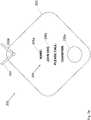
- a tracking device 200may be the tracking device 102 discussed above with reference to Fig. 1 .
- the tracking device 200includes a chassis 202 and is a pendant that may be worn by the subject 112.
- the tracking device 200may be any wearable device, an implantable device, and/or a mobile device that would be apparent to one of skill in the art in possession of the present disclosure.
- the chassis 202may define an aperture 202a through which a wearable coupling feature 204 such as, for example, a necklace, a ribbon, a string, a chain, and/or other wearable coupling feature for attaching the tracking device 200 to the subject 112 that would be apparent to one of skill in the art in possession of the present disclosure.
- the chassis 202may include information 206 such as identification information 206a and contact information 206b that is defined by the chassis 202 and/or coupled to the chassis 202.
- an identifier of the subject 112is provided in the identification information 206a and an emergency number to contact is provided in the contact information 206b. While specific information is illustrated, one of skill in the art in possession of the present disclosure will recognize that other information (e.g., Serial Number of the tracking device 200, medical information, etc.) may be provided in the information 206, without departing from the scope of the present disclosure.
- the chassis 202houses the components of the tracking device 200. Several of these components are illustrated in Fig. 2B .
- the chassis 202may house a processing system (not illustrated) and a non-transitory memory system (not illustrated) that includes instructions that, when executed by the processing system, cause the processing system to provide a tracking engine 208 that is configured to perform the functions of the tracking engines and/or the tracking devices discussed below.
- the chassis 202may further house a communication subsystem 210 that is coupled to the tracking engine 208 (e.g., via a communication coupling 212 (e.g., a communication bus, trace, etc.) between the communication subsystem 210 and the processing system).
- the communication subsystem 210may include software or instructions that are stored on a computer-readable medium and that allow the tracking device 200 to send and receive information through the communication networks described herein.
- the communication subsystem 210may include a communication interface 214 (e.g., primary transceiver(s)) to provide for communications through the communication network provided by the antenna 108 (e.g., a LoRa network), as detailed above.
- the communication interface 214may include a wireless antenna that is configured to provide LoRa modulations or other wireless communications described above.
- the communication subsystem 210may also include a communication interface 216 (e.g., a backup transceiver(s)) that is configured to transmit a signal (e.g., a beacon signal) that may provide a relatively longer range than that of the signal provided by the communication interface 214.
- the signal provided by the communication interface 216may be selected to use relatively less power than the communication interface 214 when transmitted more frequently than the signal provided by the communication interface 214. However, with reduced power for increased range and more frequent transmissions, less information may be available in the signal provided by the communication interface 216 relative to the communication interface 214.
- the communication interface 216may transmit a beacon signal at a high allowable transmit power relative to the communication interface 214, transmit a beacon signal for a long duration with relative to the communication interface 214, and/or stay on a fixed frequency for a long duration relative to the communication interface 214.
- the communication interface 216may be configured to operate according to wireless protocols such as, for example, wide band Frequency Shift Keying (FSK) signaling, narrow band FSK signaling, or other wireless protocols that may be apparent to one of skill in the art.
- the tracking device 202may be configured to be plug and play upon purchase and so licensed frequency bands may be avoided in the communication interfaces 214 and 216.
- telecom governing authoritiese.g. FCC in US
- FCCFederal Communications Commission
- the beacon signal provided by the communication interface 216does not necessarily provide longer range or higher energy efficiency than a signal provided by the communication interface 214 (e.g., an alive signal provided by LoRa modulation) under the constraints stated above, but in some instance may provide a longer range or higher energy efficiency.
- General preferred requirements of the communication protocol that provides the beacon signal provided by the communication interface 216may include: a high allowable transmit power, a transmit duration as long as possible, and/or the ability to stay on a fixed frequency as long as possible.
- the alive signal provided by the communication interface 214may operate in the unlicensed band too and follows the regulations of the governing authorities.
- the communication interface 214may avoid prolonged transmission at the same channel by frequency hopping techniques (e.g. LoRa). Due to the inherent characteristics of LoRa signal, it has a better range than other common radio protocols for the unlicensed bands. LoRa is generally not good for radio direction finding due to its inherent frequency hopping nature. Thus, when location information is absent from LoRa, the LoRa signal is virtually useless. Through the combination of alive signal and beacon signal regardless of the presence of GPS information during lost mode, the chance of finding the lost subject 112 is increased.
- frequency hopping techniquese.g. LoRa
- the chassis 202also houses a power supply system 218 that may include and/or be configured to couple to a primary power supply 218a and, in some embodiments, a backup power supply 218b.
- the primary power supply 218a and/or the backup power supply 218bmay include an integrated rechargeable battery that may be recharged in the chassis 202 using methods known in the art, and/or may include other power sources that would be apparent to one of skill in the art in possession of the present disclosure.
- the user device 124 discussed above with reference to Fig. 1may be configured to couple to the chassis 202 (e.g., via a port system that includes a power port) that may provide for the recharging of a rechargeable battery included in the power supply system 218.
- the power portmay be coupled to any other external power supply such as a wall outlet, a charging device that is coupled to a wall outlet, provide an induction device that wirelessly receives power from another induction device, or any other power supply that would be apparent to one of skill in the art in possession of the present disclosure.
- port systemsmay include a data port configured to communicate data between the tracking device 200 and the user device 124 (e.g., via a cable or other connector).
- the primary power supply 218a and/or the backup power supply 218bmay be configured to accept a replaceable, non-rechargeable battery while remaining within the scope of the present disclosure as well.
- the power supply system 218may be coupled to a power bus 220 that is coupled to the processing system, the memory system, the communication subsystem 210, a storage system 226, a sensor system 224, a positioning system 222, a user input/output (I/O) system 228, and/or other components included in the chassis 202.
- a power bus 220that is coupled to the processing system, the memory system, the communication subsystem 210, a storage system 226, a sensor system 224, a positioning system 222, a user input/output (I/O) system 228, and/or other components included in the chassis 202.
- the primary power supply 218amay include a rechargeable battery which can be recharged on periodic basis. The voltage and the number of charging cycles may be monitored to assess the remaining usable life span.
- the backup power supply 218bmay include a high shelf life non-rechargeable battery. The backup power supply may be the last resort if the rechargeable battery is approaching depletion.
- the advantage of using non-chargeable battery as backupmay include minimal self-discharge and hence no deterioration of capacity under prolonged idle state and life span of rechargeable battery is reduced upon every charge and discharge cycle or under prolonged idle state.
- the chassis 202may also include the positioning system 222 that is coupled to the tracking engine 208 (e.g., via the coupling 212 between the processing system and the positioning system 222).
- the positioning system 222may include sensors that are configured to determine their current location and position.
- the positioning system 222may include a global positioning system (GPS) receiver, a real-time kinematic (RTK) GPS receiver, a differential GPS receiver, a Wi-Fi based positioning system (WPS) receiver, and/or a variety of other positioning systems and components that would be apparent to one of skill in the art in possession of the present disclosure.
- GPSglobal positioning system
- RTKreal-time kinematic
- WPSWi-Fi based positioning system
- the chassis 202may include a sensor system 224 that is coupled to the tracking engine 208 (e.g., via the coupling 212 between the processing system and the sensor system 224), and configured to provide for the monitoring of conditions of the subject 112, the tracking device 102, and/or conditions of the physical environment 104 around the subject 112/tracking device 102 such as, for example, biometric sensors (e.g., a heart rate monitor, a blood pressure sensor, a pH sensor, a temperature sensor) and/or any other biometric sensor that would be apparent to one of skill in the art in possession of the present disclosure when the subject 112 is an animal or human, a motion sensor such as, for example, an orientation sensor (e.g., a gyroscope), an accelerometer, and other motion sensors that would be apparent to one of skill in the art in possession of the present disclosure, environmental sensors such as, for example, temperature sensors, humidity sensors, pressure sensors, tracking device sensors such as component temperature sensors, power sensors, and/or any other tracking device sensor for monitoring
- the chassis 202may also house a storage system 226 that is coupled to the tracking engine 208 (e.g., via the coupling 212 between the processing system and the storage system 226).
- the storage system 226may store sensor information, tracking device instructions for the tracking engine 208, subject information associated with the subject 112, and/or other information and instructions that would be apparent to one of skill in the art in possession of the present disclosure.
- the chassis 202may also house the user I/O system 228 that is coupled to the tracking engine 208 (e.g., via the coupling 212 between the processing system and the user I/O system 228).
- the user I/O system 228may include a user input subsystem that may be provided by a keyboard input subsystem, a mouse input subsystem, a track pad input subsystem, a touch input display subsystem, a microphone, and/or any other user input system that would be apparent to one of skill in the art in possession of the present disclosure.
- an emergency button 228ais included in the user I/O system 228 that triggers an emergency mode when activated by the subject 112.
- the user I/O system 228may optionally include an output subsystem such as, for example, a haptic feedback device, a speaker, a display subsystem, a light (e.g., a light emitting diode (LED)), and/or any other user output subsystem that would be apparent to one of skill in the art in possession of the present disclosure.
- an output subsystemsuch as, for example, a haptic feedback device, a speaker, a display subsystem, a light (e.g., a light emitting diode (LED)), and/or any other user output subsystem that would be apparent to one of skill in the art in possession of the present disclosure.
- a tracking device 200has been illustrated and described, one of skill in the art in possession of the present disclosure will recognize that the teachings of the present disclosure will be beneficial for a variety of tracking devices and, as such, a wide variety of modifications to the number, types, and orientation of devices and components in the tracking device 200 will fall within the scope of the present disclosure as well.
- the receiver device 300includes a chassis 302 that houses the components of the receiver device 300. Several of these components are illustrated in Fig. 3 .
- the chassis 302may house a processing system (not illustrated) and a non-transitory memory system (not illustrated) that includes instructions that, when executed by the processing system, cause the processing system to provide a receiver engine 304 that is configured to perform the functions of the receiver engines and/or the receiver devices discussed below.
- the chassis 302may further house a communication subsystem 306 that is coupled to the receiver engine 304 (e.g., via a communication coupling 308 (e.g., a communication bus, trace, etc.) between the communication subsystem 306 and the processing system).
- the communication subsystem 306may include software or instructions that are stored on a computer-readable medium and that allow the receiver device 300 to send and receive information through the communication networks described herein.
- the communication subsystem 306may include a communication interface 310 that corresponds with the communication interface 214 of the tracking device 102 to provide the functionality of the antenna 108 remotely (e.g., the LoRa network), as detailed above.
- the communication interface 310may include a wireless antenna that is configured to provide LoRa modulations or other wireless communications described above.
- the communication subsystem 306may also include a communication interface 312 that corresponds with the communication interface 216 of the tracking device 102 to receive signals generated by the communication interface 216 (e.g., a beacon signal).
- the communication interface 312may include a directional antenna (e.g., Yagi antenna) that is configured to indicate direction of received signals at the communication interface 312.
- the communication subsystem 306may also include a communication interface 314.
- the communication interface 314may be configured to operate to communicate with the network 122.
- the communication interface 314may be a wireless antenna that is configured to provide communications with IEEE 802.11 protocols (Wi-Fi), cellular communications (e.g., 3G, 4G, 4G LTE, 5G), satellite communications, and/or other microwave radio communications.
- Wi-FiIEEE 802.11 protocols
- cellular communicationse.g., 3G, 4G, 4G LTE, 5G
- satellite communicationse.g., 3G, 4G, 4G LTE, 5G
- the communication subsystem 306may also include a communication interface 316 that is configured to provide direct communication with user devices, receiver devices, sensors, storage devices, and other devices within the physical environment 104 discussed above with respect to Fig. 1 .
- the communication interface 316may include a relatively short-range transceiver when compared to the transceiver included in the communication interface 314.
- the communication interface 316may be configured to operate according to wireless protocols such as Bluetooth®, Bluetooth® Low Energy (BLE), near field communication (NFC), infrared data association (IrDA), ANT®, Zigbee®, Z-Wave® IEEE 802.11 protocols (Wi-Fi), and other wireless communication protocols that allow for direct communication between devices other than the communication protocols used for the communication interfaces 310 and 312.
- wireless protocolssuch as Bluetooth®, Bluetooth® Low Energy (BLE), near field communication (NFC), infrared data association (IrDA), ANT®, Zigbee®, Z-Wave® IEEE 802.11 protocols (Wi-Fi), and other wireless communication protocols that allow for direct communication between devices other than the communication protocols used for the communication interfaces 310 and 312.
- the chassis 302may also house a storage system 318 that is coupled to the receiver engine 304 (e.g., via the coupling 308 between the processing system and the storage system 318).
- the storage system 318may store geographic coordinates of the last known location of the tracking device 102, tracking device information (e.g., a tracking device identifier, tracking device capabilities, etc.), subject information about the subject 112 that is associated with the tracking device 102, receiver instructions, and/or other instructions and information that would be apparent to one of skill in the art in possession of the present disclosure.
- the chassis 302may also include a positioning system 320 that is coupled to the receiver engine 304 (e.g., via the coupling 308 between the processing system and the positioning system 320).
- the positioning system 320may include sensors that are configured to determine their current location and position.
- the positioning system 320may include a global positioning system (GPS) receiver, a real-time kinematic (RTK) GPS receiver, a differential GPS receiver, a Wi-Fi based positioning system (WPS) receiver, and/or a variety of other positioning systems and components that would be apparent to one of skill in the art in possession of the present disclosure.
- GPSglobal positioning system
- RTKreal-time kinematic
- WPSWi-Fi based positioning system
- the chassis 302may include a sensor system 322 that is coupled to the receiver engine 304 (e.g., via the coupling 308 between the processing system and the sensor system 322), and configured to provide for the monitoring of conditions of the receiver device 300 and/or conditions of the physical environment 104 around the receiver device 300 such as, for example, a motion sensor such as, for example, an orientation sensor (e.g., a gyroscope), an accelerometer, a magnetometer, and other motion sensors that would be apparent to one of skill in the art in possession of the present disclosure, environmental sensors such as, for example, temperature sensors, humidity sensors, pressure sensors, receiver device sensors such as, for example, component temperature sensors, power sensors, and/or any other receiver device sensor for monitoring the receiver device 300 that would be apparent to one of skill in the art, and/or any other sensor that would be apparent to one of skill in the art in possession of the present disclosure.
- a directional radio receiver for detecting radio wavesmay be provided in the sensor
- the sensor systemmay include an image capturing system (not illustrated) (e.g., via the coupling 308 between the processing system and the image capturing system).
- the image capturing systemmay include a two-dimensional image capturing camera, a three-dimensional image capturing camera, an infrared image capturing camera, a depth capturing camera, similar video recorders, and/or a variety of other image or data capturing devices that would be apparent to one of skill in the art in possession of the present disclosure.
- the image capturing systemmay be a camera and/or any other sensor device that may be used to gather visual information from the physical environment 104 surrounding the receiver device 300.
- the image capturing systemmay provide a video feed from the vehicular device 136 to a remote monitor (e.g., a user device 124) when the receiver device 126a is coupled to the vehicular device 136 such that a remote operator can view the physical environment 104 via the receiver device 300.
- a remote monitore.g., a user device 124
- the chassis 302also houses a user I/O system 324 that is coupled to the receiver engine 304 (e.g., via the coupling 308 between the processing system and the user I/O system 324).
- the user I/O system 324may include a user input subsystem be provided by a keyboard input system, a mouse input system, a track pad input system, a touch input display system, and/or any other input system.
- the user I/O system 324may include a user output subsystem such as, for example, a haptic feedback device, a speaker, a light (e.g., an LED) and/or any other user output subsystem that would be apparent to one of skill in the art in possession of the present disclosure.
- the user output subsystemmay also include a display system 326 that is coupled to the receiver engine 304 (e.g., via the coupling 308 between the processing system and the display system 326).
- the display system 326may be provided by a display device that is integrated into the receiver device 300 and that includes a display screen (e.g., a display screen on a laptop/notebook computing device, a tablet computing device, a mobile phone, or wearable device), or by a display device that is coupled directly to the receiver device 300 (e.g., a display device coupled to the receiver device 300 by a cabled or wireless connection).
- the chassis 302also houses a power supply system 328 that may include and/or be configured to couple to a battery.
- the batterymay include an integrated rechargeable battery that may be recharged in the chassis 302 using methods known in the art, and/or may include other power sources that would be apparent to one of skill in the art in possession of the present disclosure.
- the user device 124 discussed above with reference to Fig. 1may be configured to couple to the chassis 302 (e.g., via a port system that includes a power port) that may provide for the recharging of a rechargeable battery included in the power supply system 328.
- the power portmay be coupled to any other external power supply such as a wall outlet, a charging device that is coupled to a wall outlet, a docking station coupled to a solar panel, provide an induction device that wirelessly receives power from another induction device, or any other power supply that would be apparent to one of skill in the art in possession of the present disclosure
- port systemsmay include a data port configured to communicate data between the receiver device 300 and the user device 124 (e.g., via a cable or other connector).
- the power supply system 328may be configured to accept a replaceable, non-rechargeable battery while remaining within the scope of the present disclosure as well.
- the power supply system 328may be coupled to a power bus 330 that is coupled to the processing system, the memory system, the communication subsystem 306, the storage system 318, the sensor system 322, the positioning system 320, the user I/O system 324, and/or other components included in the chassis 302.
- receiver device 300While a receiver device 300 has been illustrated and described, one of skill in the art in possession of the present disclosure will recognize that the teachings of the present disclosure will be beneficial for a variety of receiver devices that would be apparent to one of skill in the art in possession of the present disclosure and, as such, a wide variety of modifications to the number, types, and orientation of devices and modules in the receiver device 300 will fall within the scope of the present disclosure as well.
- the receiver device 300is described as being the receiver devices 126a and 126b, the receiver device 300 may include may include a combination of the user device 124 and the receiver device 126b or a combination of the vehicular device 136, the receiver device 126a and optionally the user device 124 such that various components of the receiver device 300 are provided in a separate chassis.
- the receiver device 126bmay be a handheld directional radio antenna coupled wirelessly or via a wire to the user device 124 that provides the receiver engine 304, a display system 326, a portion of the receiver engine 304, and/or a portion of the communication interfaces 310-316.
- the control system 400includes a chassis 402 that houses the components of the control system 400, only some of which are illustrated in Fig. 4 .
- the chassis 402may house a processing system (not illustrated) and a non-transitory memory system (not illustrated) that includes instructions that, when executed by the processing system, cause the processing system to provide a track and locate control engine 404 that is configured to perform the functions of the track and locate control engines and/or control systems discussed below.
- the chassis 402may further house a communication system 406 that is coupled to the track and locate control engine 404 (e.g., via a coupling between the communication system 406 and the processing system) and that is configured to provide for communication through one or more networks as detailed below.
- the communication system 406may allow the control system 400 to send and receive information over the communication network 122 of Fig. 1 .
- the communication system 406may allow the control system 400 to send and receive information via the gateway 114 and the antenna 108.
- the chassis 402may also house a storage system 408 that is coupled to the track and locate control engine 404 through the processing system and that is configured to store the rules and/or other data utilized by the track and locate control engine 404 to provide the functionality discussed below.
- the storage system 408may store tracking device tables 408a in one or more repositories that include associations of subjects, tracking devices 102, tracking device status, location information of the tracking devices, tracking device sequence numbers, and/or the like.
- the storage system 408may store track and locate conditions and track and locate instructions that the track and locate control engine 404 may use to monitor the tracking device tables 408a, determine when track and locate conditions are satisfied based on the tracking device tables 408a, and provide instructions associated with those satisfied conditions.
- the storage system 408has been illustrated as housed in the chassis 402 of the control system 400, one of skill in the art will recognize that the storage system 408 may be connected to the track and locate control engine 404 through the communication network 122 via the communication system 406 without departing from the scope of the present disclosure.
- the chassis 402also houses a user I/O system 410 that is coupled to the track and locate control engine 404 (e.g., via a coupling between the processing system and the user I/O subsystem 410).
- the user I/O system 410may include a user input subsystem such as, for example, a keyboard input system, a mouse input system, a track pad input system, a touch input display system, and/or any other input system.
- the user I/O system 410may include a user output subsystem such as, for example, a haptic feedback device, a speaker, a light (e.g., an LED) and/or any other user output subsystem that would be apparent to one of skill in the art in possession of the present disclosure.
- the user output subsystemmay also include a display system 412 that is coupled to the track and locate control engine 404 (e.g., via the coupling 3between the processing system and the display system 412).
- the display system 412may be provided by a display device that is integrated into the control system 400 and that includes a display screen (e.g., a display screen on a laptop/notebook computing device, a tablet computing device, a mobile phone, or wearable device), or by a display device that is coupled directly to the control system 400 (e.g., a display device coupled to the control system 400 by a cabled or wireless connection).
- a display screene.g., a display screen on a laptop/notebook computing device, a tablet computing device, a mobile phone, or wearable device
- a display device that is coupled directly to the control system 400e.g., a display device coupled to the control system 400 by a cabled or wireless connection
- the user I/O system 410 and the display system 412may be included in a client device that is coupled to the control system 400 via the communication system 406.
- control system 400has been illustrated and described, one of skill in the art in possession of the present disclosure will recognize that the teachings of the present disclosure will be beneficial for a variety of control systems and, as such, a wide variety of modifications to the number, types, and orientation of devices and components in the control system 400 will fall within the scope of the present disclosure as well.
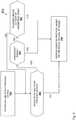
- the method 500begins at block 502 where a link is established between a control system and a tracking device.
- the control system 116may establish a link with one or more tracking devices 102.
- the track and locate control engine 404 of the control system 400may establish, via the communication system 406, the gateway 114, and the antenna 108, a wireless link with the communication interface 214 of the communication subsystem 210 included on the tracking device 102.
- the tracking device 102 and the antenna 108may perform a discovery process according to the communication protocol being used to establish the wireless link.
- the tracking device 102may be configured to broadcast a discovery signal, which establishes the wireless link.
- the discovery signalmay be a LoRa signal that establishes the wireless link with the control system 116 and may include a tracking device identifier (e.g., a serial number, and/or other tracking device identifier that would be apparent to one of skill in the art).
- the tracking device 102may awake from a sleep mode and perform the discovery process with the control system 116 to the wireless link.
- the control system 116may have previously provided instructions to the tracking device 102 to enter and exit a sleep mode when a predetermined condition(s) exists such as, for example, predetermined time(s) of day.
- control system 116may have provided, during a previous communication session with the tracking device, instructions to the tracking device 102 to enter a sleep mode during a time when the tracking devices is typically not in use (e.g., when the subject 112 is asleep, when a business is closed, etc.) and instructions to enter an awake mode when the tracking device 102 is in use (e.g., when the subject 112 is awake or allowed to roam freely, when the business is open, etc.).
- the establishment of the link between the control system 116 and the tracking device 102may be offset in relation to the establishment of a link between the control system 116 and other tracking devices that are included in the track and locate system 100.
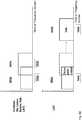
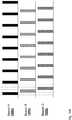
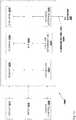
- a first tracking device 102amay send its discovery signal 802a at t0
- a second tracking device 102bmay send a discovery signal 802b subsequent to t0 at t1.
- a third tracking device 102cmay send its discover signal 802c at t2
- a fourth tracking device 102dmay send its discovery signal 802d at t3
- a fifth tracking device 102n-1may send its discovery signal 802n-1 at tn-1
- up to an nth tracking device 102nmay send its discovery signal 802n at tn.
- the tracking devices 102a-102nmay send the discovery signals 802a-802n at a predetermined time interval 804.
- the tracking devices 102a-102nmay send the discovery signals 802a-802n at predetermined time interval to avoid data collision. In the illustrated example in Fig. 8A , the predetermined time period may be 2 seconds.
- the order of the discovery signals 802a-802nmay be determined based on the tracking device identifiers for each of the tracking device 102a-102n. For example, the lowest valued tracking device identifier may perform discovery with the control system 116 first while the highest tracking device identifier may perform the discovery with the control system 116 last. However, one of skill in the art will recognize that other characteristics of the tracking devices 102a-102n may be used to determine the order of discovery with the control system 116.
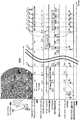
- Fig. 8Billustrates a concept of Listen Before Talk (LBT) to govern the transmission.
- LBTListen Before Talk
- the control system 116may maintain a tracking device table 900 that may include the tracking device table 408a of Fig. 4 that includes tracking device profiles for the various tracking devices 102a-102n.
- the tracking device table 900may include tracking device table entries 910a, 910b, and up to 910n.
- Tracking device table 408amay also include tracking device table columns 912a, 912b, 912c, 912d, 912e, 912f and up to 912n.
- the tracking device table column 912amay include a sequence number that defines the order at which the tracking devices provide signals to the control system 116.
- the tracking device table column 912b and other sub-columnsmay include information about the subject associated with a tracking device (e.g., name, family contact information, an identifier of the subject 112, description of the subject 112, a room number to which the subject 112 is assigned, and/or other subject information that would be apparent to one of skill in the art in possession of the present disclosure.
- the tracking device table column 912cmay include tracking device information such as a tracking device identifier (e.g., a serial number).
- the tracking device table column 912dmay include a record of when the signals are received from the tracking device that is associated with the tracking device table entry.
- the tracking device table column 912emay include a log of when a signal of the tracking device for that tracking device table entry was missed.
- the tracking device table column 912fmay include a current status of the tracking device for the tracking device table entry (e.g., a sleep mode, an awake mode, a warning mode, a critical mode, a lost mode, an event mode, an emergency mode, a receiver mode, and/or any other mode that would be apparent to one of skill in the art in possession of the present disclosure).
- the tracking device table column 912nmay include a log of location information for the tracking device associated with the tracking device table entry. The location information in the tracking device table column 912n may be associated with each signal received record in the tracking device table column 912d. While a specific tracking device table 900 is illustrated in Fig. 9 , one of skill in the art in possession of the present disclosure will recognize that other tracking profiles, profile information and format are contemplated.
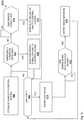
- the method 500then proceeds to decision block 504 where it is determined whether a signal is received from the tracking device within a predetermined time period.
- the control system 116may monitor the physical environment 104 for alive signals from the tracking device 102.
- the control system 116may be configured to determine whether the alive signal from the tracking device 102 is received in the predetermined time period.
- the predetermined time periodmay be determined based on the location of the tracking device 102. For example, the predetermined time period for detecting whether an alive signal for detecting whether a tracking device 102 is received that is within the zone 104a may be every 15 minutes or other time period that would be apparent to one of skill in the art in possession of the present disclosure.
- the predetermined time periodmay be 10 minutes or other predetermined time period that would be apparent to one of skill in the art in possession of the present disclosure.
- the predetermined time intervalmay be based on a time of day, a day of the week, a particular subject and/or any other predetermined time period condition that would be apparent to one of skill in the art in possession of the present disclosure.
- the method 500proceeds to decision block 506, where it is determined whether the signal received is an emergency signal.
- the tracking device 102may emit an emergency signal when the tracking device 102 is within the range of antenna 108.
- a subject 112may press the emergency button 228a on the tracking device 102 to indicate that the subject 112 is in need of assistance.
- the sensor system 224may provide sensor signals to the tracking engine 208 that satisfies an emergency condition and that may result in the tracking device 102 providing an emergency signal via the communication interface 214.
- a motion sensor included in the sensor system 224may detect a motion and generate a motion signal that is processed by the tracking engine 208.
- the tracking engine 208may determine that an emergency condition has been satisfied from the motion signal such as an indication that the subject 112 has fallen.
- the tracking engine 208causes the tracking device 102 to provide an emergency signal via the communication interface 214 that may be received by the control system 116.
- the sensor system 224may detect biometric characteristics (e.g., a heart rate, a blood pressure, and/or other biometric characteristics) and generate biometric signals that are processed by the tracking engine 208.
- the tracking engine 208may determine that an emergency condition has been satisfied based on the biometric signals and may provide an emergency signal via the communication interface 214 that may be received by the control system 116.
- an emergency signalmay be provided if the tracking engine 208 detects that the battery power has reached power has reached a predetermined threshold (e.g., low battery power) or other components within the tracking device 102 have malfunctioned or satisfied some condition.
- the method 500may proceed to decision block 508 where it is determined whether the signal indicates that the location of the tracking device is outside of a predefined zone.
- the control system 116may determine whether location information included in the alive signal received from the tracking device 102 within the predetermined time period indicates that the tracking device 102 is outside of the predefined zone that is a safety zone.
- the alive signal from the tracking device 102may include location information such as, for example, geographical coordinates within the physical environment 104.
- the tracking device 102may, at a predefined time period, use the positioning system 222 to determine a location of the tracking device 102 and provide that location information to the control system 116 in each alive signal transmitted from the tracking device 102.
- the positioning system 222may include a GPS device that determines geographical coordinates of the tracking device 102 and the tracking device 102 provides those geographical coordinates to the control system 116 in the next alive signal. While specific examples of determining a location of a tracking device 102 in the physical environment 104 are described, one of skill in the art in possession of the present disclosure will recognize that other location determining methods may be used without departing from the scope of the present disclosure.
- the control system 116may compare the location information for the tracking device 102 received to the location information that defines the predefined zone.
- zone 104amay be designated as the predefined zone that is a safety zone where no action is taken by the control system 116 when the tracking device 102 is located within the zone 104a and the tracking device 102 operates in a "normal" mode.
- the control system 116may compare the geographical coordinates of the tracking device 102 to the geographical coordinates that define the zone 104a to determine whether the geographical coordinates of the tracking device 102 are within the area/volume of the zone 104a. If the tracking device 102 is within the predefined zone, the method 500 returns to decision block 504 where the control system 116 waits for the next signal from the tracking device 102.
- Block 510may also be performed if, at decision block 506, the signal received from the tracking device is an emergency signal. Furthermore, if at decision block 504 no signal is received from the tracking device, block 510 may be performed such that a rescue protocol is performed based on the lack of signal. In an embodiment, at block 510, the track and locate control engine 404 may perform a rescue protocol based on the signal received from the tracking device 102 or the lack of signal (e.g., when an expected signal from the tracking device 102 was supposed to be received but was not received).
- the track and locate control engine 404 of the control system 116may determine which zone the tracking device 102 is within and the corresponding rescue protocol for that zone. If the track and locate control engine 404 determines that the tracking device 102 is within the zone 104b, the track and locate control engine 404 may refer to a rescue protocol associated with the zone 104b that is stored in the storage system 414.
- the rescue protocol for the zone 104bmay include providing tracking device instructions to the tracking device 102 to cause the tracking device 200 to perform one or more actions.
- the tracking device instructionsmay cause the tracking engine 208 to capture and provide positioning information to the control system 116 via the antenna 108 more frequently than the rate at which positioning information and/or alive signals are provided when the tracking device 102 is within the predefined zone (e.g., the zone 104a).
- the tracking device instructionsmay include instructions to provide an output on the user I/O system 228 to alert the subject 112 that the tracking device 102 has left the predefined zone (e.g., the zone 104a).
- the tracking engine 208may process the tracking device instructions and cause a haptic feedback device included on the user input/output system 228 to vibrate, cause a speaker system included on the user I/O system 228 to provide a warning sound, cause a display system and/or an LED included on the user I/O system 228 to provide a warning display, and/or cause other outputs on the user I/O system 228 that would be apparent to one of skill in the art in possession of the present disclosure.
- the rescue protocol for the zone 104bmay include providing control system instructions to components of the control system 116.
- the control system instructionswhen processed by the track and locate control engine 404 of the control system 116, may change characteristics of the wireless communication signal 108a (e.g.
- the gateway 114to provide a modulation signal with increased spreading factor to increase a range of the wireless communication signal (108a), cause the user I/O system 410 coupled to the control system 116 to provide an output (e.g., a loudspeaker coupled to the control system 116 that provides an alert to the subject 112 to return to the predefined zone (e.g., the zone 104a), cause the display system 412 to provide a warning display to the operator 140, cause a speaker system that provides an alarm to the operator 140, and/or other outputs via other user output devices included in the user I/O system 410 coupled to the control system 116 that would be apparent to one of skill in the art in possession of the present disclosure. While specific control system instructions are discussed, one of skill in the art in possession of the present disclosure will recognize that other control system instructions may be contemplated without departing from the scope of the present disclosure.
- the rescue protocol for the zone 104bmay include providing user device instructions to devices that are coupled to the control system 116 via the network 122.
- the control system 116may provide user device instructions to the user device 124 to alert a user (e.g., the rescuer 138, the operator 140) that the tracking device 102 is located in the zone 104b.
- the control system 116may provide vehicular device instructions to the vehicular device 136 to dispatch to the vehicular device 136 to monitor the tracking device 102. While specific user device instructions are discussed, one of skill in the art in possession of the present disclosure will recognize that other user device instructions may be contemplated without departing from the scope of the present disclosure.
- the track and locate control engine 404may refer to a rescue protocol associated with the zone 104c that is stored in the storage system 408.
- the rescue protocol for zone 104cmay include providing tracking device instructions, control system instructions, and/or user device instructions as discussed above. Because the zone 104c is further out from the central point of the nursing home facility 106, the rescue protocol may include more of the tracking device instructions, the control device instructions, and/or the user device instructions than discussed above for the zone 104b.
- the user device 124may not be alerted when the tracking device 102 is in the zone 104b but will be alerted if the tracking device 102 is in the zone 104c.
- the characteristics defined by the instructions for scenarios when the tracking device 102 is located in the zone 104cmay be of a higher degree than characteristics defined by the by the instructions provided when the tracking device 102 is located in the zone 104b.
- the control instructionsmay cause the gateway 114 to increase the SF of the wireless communication signal 108a provided by the antenna 108 from the SF of the wireless communication signal 108a provided by the antenna 108 when the tracking device 102 is in the zone 104b.
- the LoRa operationmay be managed by tracking device 102 and gateway 114 independently.
- the tracking device instructionsmay cause the speaker output on the tracking device 102 to be louder when the tracking device 102 is in the zone 104c than when the tracking device 102 is in the zone 104b.
- the rescue protocol for a given zonemay be associated with one or more tracking device instructions, one or more control device instructions, one or more user device instructions, and/or other instructions that would be apparent to one of skill in the art in possession of the present disclosure and each zone may be associated with its own unique set of instructions that may be predefined by the administrator of the track and locate system 100.
- a rescue protocolmay be performed based on the emergency signal.
- the control system 116may use the emergency signal to look up a rescue protocol in the storage system 414 that is generally related to emergency signals or related to a specific emergency signal received. For example, if the emergency signal is a result of the sensor system 224 in the tracking device 102 indicating a fall or motion event of the subject 112, then an emergency rescue protocol that includes a first set of emergency instructions may be performed by the control system 116.
- the first set of emergency instructionsmay include any of the tracking device instructions, control system instructions, and/or user device instructions discussed above.
- emergency instructionmay be contemplated such as, for example, control system instructions to provide notifications to user devices of rescuers indicating that the subject 112 associated with the tracking device 102 has possibly fallen, control system instructions to automatically send a notification to an emergency dispatch service via the network 122, which can send emergency responders (e.g., police, ambulance, etc.) to the location of the emergency signal.
- emergency responderse.g., police, ambulance, etc.
- an emergency rescue protocolthat includes a second set of emergency instructions may be performed by the control system 116.
- the second set of emergency instructionsmay include different tracking device instructions, control system instructions, and/or user device instructions than the first set of emergency instructions.
- the emergency rescue protocolmay be the same for any emergency event such that the first set of emergency instructions are the same as the second set of emergency instructions.
- the emergency rescue protocol associated with an emergency signalmay be associated with one or more tracking device instructions, one or more control system instructions, one or more user device instructions, and/or other instructions that would be apparent to one of skill in the art in possession of the present disclosure and each emergency may be associated with its own unique set of instructions that may be predefined by the administrator of the track and locate system 100.
- a rescue protocolmay be performed based on lack of signal from the tracking device.
- the control system 116may use the lack of signal to look up a rescue protocol in the storage system 414 that is associated with the lack of an alive signal transmitted from the tracking device 102.
- the rescue protocol for the lack of an alive signal from the tracking device 102may be based on the number of periods that the control system 116 has not detected the alive signal from tracking device 102.
- control system 116may alert the operator 140 of the control system 116 with a notification that the tracking device 102 is not detected via the user I/O system 410 of the control system 116. If the control system 116 cannot detect the alive signal from the tracking device 102 within two periods, then the control system 116 will trigger a notification to the receiver device 126a included on the vehicular device 136 and/or the receiver device 126b associated with the rescuer 138 to locate the tracking device 102 as the tracking device 102 is out of range of the wireless communication signal 108a.
- the rescue protocolmay include sending receiver device instructions to the receiver device 126a and/or 126b.
- the receiver device instructionsmay include instructions that cause the receiver device 126a and/or 126b to activate at least the communication interface 310 and the communication interface 312 such that the receiver device 126a and/or 126b can receive communications from communication interfaces 214 and 216, respectively, on the tracking device 102 that should be providing signals.
- the communication interface 214may be providing the alive signals that the communication interface 214 provides to the antenna 108.
- the communication interface 216may be providing beacon signals that the tracking device 102 provides when the communication interface 214 is no longer in range of the wireless communication signal 108a that is provided by the antenna 108.
- the receiver instructionsmay include activating the communication interface 314 and/or the communication interface 316 such that the receiver device 126a and/or 126b can communicate with another receiver device, the user device 124, and/or the network 122.
- the receiver device instructionmay include a last known location of the tracking device 102 such that the receiver device 126a and/or 126b may move to that location to determine whether the receiver device 126a and/or 126b can detect the tracking device 102 from that location.
- the receiver device instructionsmay include the last two known locations of the tracking device 102 such that the receiver device 126a and/or 126b can estimate a direction in which the tracking device 102 may have been moving prior to becoming undetectable by the control system 116.
- the receiver device instructionsmay include tracking device information, subject information, and/or any other information that is associated with the tracking device 102 that may help the rescuer 138 and/or the vehicular device 136 locate the tracking device 102.
- the rescue protocol for lack of signal from the tracking device 102may include control system instruction and/or user device instructions that are performed by the control system 116 and the user device 124.
- the control system 116may push notifications and tracking device information (e.g., the tracking device identifier, last GPS location, etc), subject information, and/or any other information to the user device 124 via the internet.
- the method 600begins at block 602 where a link is established between a control system and a tracking device.
- the tracking device 102may establish a link with the control system 116.
- the tracking engine 208 of the tracking device 102may establish, via the communication interface 214 of communication subsystem 210, the antenna 108, and the gateway 114, a wireless link with the communication system 406 included on the control system 116.
- the tracking device 102 and antenna 108may perform a discovery process according to the communication protocol being used to establish the wireless link.
- the tracking device 102may be configured to broadcast a discovery signal (e.g., one of the discovery signals 802a-802n, illustrate if Fig. 8 ), which establishes the wireless link with the control system 116.
- the discovery signalmay be a LoRa signal that establishes the wireless link with the control system 116 and may include a tracking device identifier (e.g., a serial number, and/or other tracking device identifier that would be apparent to one of skill in the art) and/or any other tracking device information and/or subject information that would be apparent to one of skill in the art in possession of the present disclosure.
- the tracking device 102may receive an acknowledgement in response to sending the discovery signal to the control system 116, which may establish the wireless link.
- the tracking device 102may awake from a sleep mode and perform the discovery process with the control system 116 to establish the wireless link.
- the control system 116may have previously provided instructions to the tracking device 102 to enter and exit a sleep mode when a predetermined condition(s) exists such as, for example, a predetermined time of day.
- the control system 116may have provided, during a previous communication session with the tracking device 102, instructions to the tracking device 102 to enter the sleep mode during a time when the tracking device 102 is typically not in use (e.g., when the subject 112 is asleep, when a business is closed, intervals between alive signals, etc.) and instructions to enter the awake mode when the tracking device 102 is in use (e.g., when the subject 112 is awake or allowed to roam freely, when the business is open, etc.).
- the control system 116may provide instructions for the tracking device 102 to "wake up" only when the tracking device 102 transmits an alive signal at predetermined intervals. Because a chance exists that the instructions from the control system 116 may be lost due to interference or missing the wake up period of the tracking device 102, the tracking device 102 may be configured to acquire its location to decide on the interval of the alive signal.
- the method 600may then proceed to decision block 604 where it is determined whether an emergency condition is detected.
- the tracking engine 208may monitor the tracking device 102, the subject 112, and/or the physical environment 104 for emergency conditions.
- the subject 112may press the emergency button 228a on the tracking device 102 to indicate that the subject 112 is need of assistance.
- the tracking engine 208may monitor the user I/O system 228 to determine whether the emergency button 228a has been activated by the subject 112.
- the tracking engine 208may monitor the sensor system 224 for sensor signals that satisfy an emergency condition for which the tracking engine 208 monitors.
- a motion sensor included in the sensor system 224may detect a motion and a generate motion signal that is processed by the tracking engine 208.
- the tracking engine 208may determine that an emergency condition has been satisfied base on the motion signal such as an indication that the subject 112 has fallen.
- the sensor system 224may detect biometric characteristics (e.g., a heart rate, a blood pressure, and/or other biometric characteristics) and generate biometric signals that are processed by the tracking engine 208.
- the tracking engine 208may determine that an emergency condition has been satisfied based on the biometric signals.
- biometric characteristicse.g., a heart rate, a blood pressure, and/or other biometric characteristics
- the method 600may proceed to block 606 where an emergency signal is sent via the link to the control system.
- the tracking engine 208may provide an emergency signal to the control system 116.
- the tracking engine 208may provide the emergency signal via the communication interface 214.
- the emergency signalmay include emergency information (e.g., what caused the emergency signal to be generated) as well as location information provided by the positioning system 222, tracking device information, physical environment information, subject information, and/or any other information that would be apparent to one of skill in the art in possession of the present disclosure.
- the tracking device 102may receive tracking device instructions in response to sending the emergency signal.
- the tracking device instructionsmay be processed by the tracking engine 208 and causes the tracking device 102 to perform an action according to rescue protocol that is associated with the emergency signal provided to the control system 116.
- the method 600may then proceed to block 608 where it is determined whether the link between the tracking device and control system is lost.
- the tracking engine 208may determine whether the link between the tracking device 102 and the control system 116 is lost. For example, if the tracking engine 208 does not receive an acknowledgement in response to a signal such as the emergency signal and/or an alive signal as discussed in block 612 below, the tracking engine 208 may determine that the link between the tracking device 102 and the control system 116 is lost and the method 600 may proceed to block 614, discussed below. If the tracking engine 208 does receive the acknowledgement in response to the signal sent by the tracking device 102 such as, for example, an emergency signal and/or an alive signal, then the method 600 may proceed back to decision block 604 to determine whether another emergency condition is detected.
- the method 600may proceed to block 610 where it is determined whether a time period has completed.
- the tracking engine 208may maintain a timer/clock.
- the time periodmay be 5 minutes, 10 minutes, 15 minutes, 20 minutes, and/or any other predetermined time period that would be apparent to one of skill in the art in possession of the present disclosure.
- the tracking instructionsmay include instructions to change the time period. For example, if the tracking device 102 is in the zone 104a, the time period may be 15 minutes. However, if the tracking device 102 is in zone 104b, the tracking device 102 may have received tracking device instructions and/or performed instructions that changes the time period to 10 minutes.
- the method 600proceeds to block 612, where an alive signal is provided to the control system via the wireless link.
- the tracking engine 208may generate and send via the communication interface 214 an alive signal.
- the alive signalmay include location information such as that obtained by the positioning system 222.
- the positioning system 222may obtain location information just prior to the alive signal being sent via the communication interface 214 so that if the control system 116 receives the alive signal that includes the location information, the control system 116 may have an accurate location of the tracking device 102 at the time when the tracking device 102 sent the alive signal.
- the positioning system 222may determine location information at any time during the time period between alive signals.
- the alive signalmay also include tracking device information (e.g., a tracking device identifier, sensor information, etc.), subject information, environmental information, and/or any other information that would be apparent to one of skill in the art in possession of the present disclosure.
- the tracking device 102may receive tracking device instructions and/or an acknowledgement signal in response to sending the alive signal.
- the tracking device instructionsmay be processed by the tracking engine 208 and causes the tracking device 102 to perform an action according to those tracking device instructions that are associated with a rescue protocol that is associated location information and/or other information in the alive signal that is provided to the control system 116.
- the method 600may then proceed to block 608 where it is determined whether the wireless link between the tracking device and control system is lost.
- the tracking engine 208may determine whether the wireless link between the tracking device 102 and the control system 116 is lost. For example, if the tracking engine 208 does not receive an acknowledgement in response to the alive signal, the tracking engine 208 may determine that the link between the tracking device 102 and the control system 116 is lost and the method 600 may proceed to block 614 where the tracking device enters a lost mode. In an embodiment, at block 614, the tracking engine 208 may enter the lost mode and operate the components of the tracking engine 208 according to instructions associated with the lost mode. For example, the tracking engine 208, while in the lost mode, may monitor the power supply system 218.
- the tracking engine 208may switch to the backup power supply 218b.
- the backup power supply 218bmay only be activated when the primary power supply 218a satisfies the condition and the tracking device 102 is in lost mode (e.g., being out of communication range with the control system 116).
- the tracking device 102By only activating the backup power supply 218b when the primary power supply 218a satisfies the condition and the tracking device 102 is in lost mode, the tracking device 102 includes a safeguard such that if the tracking device 102 is out of communication range with the control system 116, operation time for the tracking device 102 is extended, giving the rescuer 138 more time to locate the tracking device 102.
- the tracking engine 208may disable one or more of the sensors included in the sensor system 224 and/or disable one or more of the components of the user I/O system 228. As such, the emergency signal function may be disabled during lost mode.
- the tracking device 208may activate the communication interface 216 to provide beacon signals (e.g., analog radio signals) that may the benefits relative to the alive signals provided by the communication interface 214, as discussed above.
- beacon signalse.g., analog radio signals
- FIG. 10Aan embodiment of a beacon signal pattern 1000 is provided by the communication interface 216 is illustrated.
- a beacon signal 1002ais provided.
- the beacon signal 1002aincludes 10 cycles that are 1.1 secs long where each pulse has a pulse width of 200 msec and a transmission current of 15 mA and the different width between pulses may be 1 second.
- a beacon signal 1002bmay be provided subsequent the beacon signal 1002a. As illustrated in Fig.
- the beacons signal 1002bmay be provided 25 seconds subsequent the beacon signal 1002a.
- An idle currentmay be 2.7 mA. While a specific beacon signal pattern is illustrated in Fig. 10A , one of skill in the art will recognize that each beacon signal 1002a and/or 1002b may have more or fewer cycles that have greater or lesser amplitude, greater or lesser pulse width, greater or lesser different width and a greater or lesser interval between beacon signals and still fall under the scope of the present disclosure.
- the interval between the first beacons signal 1002a and the second beacon signal 1002bcan be varied between 1 to 25 seconds. This means there is no idle duration between the first beacons signal 1002a and the second beacon signal 1002b in the case of 1 second.
- beacon signal patterns 1000a, 1000b, and 1000care possible if each tracking device deploys a Listen Before Talk (LBT) protocol.
- LBTListen Before Talk
- Each tracking devicemay transmit beacon signal patterns at different time slots or different frequency channels.
- the frequency channelsmay be a fixed channel randomly allocated to each tracking device upon registration. If occupancy is detected on a particular channel when the tracking device wants to transmit, it will attempt again at another time slot. Multiple rescuers have the flexibility to select which tracking device to work on should multiple tracking devices be found in lost mode.
- the tracking device 208may transmit alive signals (e.g., the LoRa signals) periodically via the communication interface 214.
- the time period at which the tracking engine 208 transmits the alive signalsmay be different than when the tracking device 102 is within zones 104a, 104b, and/or 104c. However, in other embodiments the time period may be the same.
- the time period between the alive signals when the tracking device 102 is in the lost modemay be 15 minutes or any other time period that would be apparent to one of skill in the art in possession of the present disclosure.
- the alive signalmay include at least a tracking device identifier such that any receiver device (e.g., the receiver device 126a and/or 126b) will know that the receiver device located the correct tracking device when the alive signal is received.
- the alive signalsmay include a geographical coordinate obtained from the positioning system 222.
- the obtaining of the geographical coordinate via the positioning system 222may be performed just prior to the transmission of the alive signal such that an accurate geographical coordinate is provided in the alive signal.
- the obtaining of the geographical coordinate via the positioning system 222may be at a time period that is different than the time period of the transmission of the alive signals.
- the time period at which the geographical coordinate is obtained via the positioning system 222may be every 30 minutes.
- the geographical coordinatemay be provided in every other alive signal if those alive signals are sent every 15 minutes.
- the positioning system 222may be a power intensive component of the tracking device 102, and thus increasing the time period at which geographical coordinates are obtained may increase a length of time that the tracking device 102 is operational.
- the geographical coordinatesmay not be obtained during the lost mode to conserve power or may be unobtainable (e.g., due to the tracking device 102 being in a physical environment where a GPS signal cannot be obtained), and thus the alive signal may not include location information.
- the time period of acquisition of GPS coordinatesshall be equal to or more frequent than the alive signal intervals. This means the tracking device 102 will deploy a fast acquisition positioning system 222 to determine the location upon every wake up of the tracking device 102.
- the positioning system 222may take a relatively longer time (e.g. 30s) to track the satellites. Once the first acquisition is made, the positioning system 222 can make use of a preloaded almanac or ephemeris data in its memory to speed up the next acquisition during next wake up or warm start. Whilst battery capacity is still ample, the tracking device 102 in lost mode may also adjust the interval of alive signals by reviewing the travelling speed and direction of the tracking device 102. If the subject 112 that is associated with the tracking device 102 moves away at a fair speed in a certain direction, the intervals can follow predetermined values. If subject 112 moves away or changes course quickly, the intervals may be shortened to broadcast the subject's location more frequently. In yet other embodiments, the alive signal may include other tracking device information, subject information, and/or physical environment information that would be apparent to one of skill in the art in possession of the present disclosure.
- the method 600then proceeds to decision block 616 where it is determined whether a wireless link is established with a receiver device.
- the tracking engine 208may continue to provide beacon signals via the communication interface 216 and provide alive signals via the communication interface 214 according to the instructions for lost mode until a wireless link is established with a receiver device 126a and/or 126b.
- the establishment of a wireless link between the receiver device 126a and/or 126b and the tracking device 102may be when the tracking device 102 receives an acknowledgement to an alive signal.
- the method 600proceeds to block 618 where the tracking device enters a receiver mode.
- the tracking engine 208may have received an acknowledgement from the receiver device 126a and/or 126b that establishes the wireless link.
- the tracking engine 208may enter a receiver mode and operate the components of the tracking device 102 according to instructions associated with the receiver mode.
- the tracking engine 208may transmit alive signals (e.g., the LoRa signals) periodically via the communication interface 214.
- the time period at which the tracking engine 208 transmits the alive signalsmay be different than when the tracking device 102 was in the lost mode. However, in other embodiments the time period may be the same.
- the time period between the alive signals when the tracking device 102 is in the receiver modemay be 5 minutes or any other time period that would be apparent to one of skill in the art in possession of the present disclosure.
- the time period between alive signals in the receiver modemay be less so that accurate location information may be obtained by the receiver device 126a and/or 126b while the tracking device 102is in receiver mode.
- the alive signalmay include at least a tracking device identifier such that any receiver device receiving the alive signal will know that the receiver device is communicating with the same tracking device 102 when the alive signal is received.
- the receiver device 126a and/or 126bmay communicate with a plurality of tracking devices.
- the alive signalsmay include a geographical coordinate obtained from the positioning system 222.
- the obtaining of the geographical coordinatemay be performed just prior to the transmission of each alive signal such that an accurate geographical coordinate is provided in each alive signal.
- the obtaining of the geographical coordinate via the positioning system 222may be at period that is different than the period of the transmission of the alive signals.
- the geographical coordinatemay be provided in every alive signal if those alive signals are sent every 5 minutes.
- the geographical coordinatesmay not be obtained during the receiver mode because the geographical coordinates may be unobtainable (e.g., due to the tracking device 102 being in a physical environment where a GPS signal cannot be obtained) via the positioning system 222, and thus the alive signal may not include location information.
- the alive signalmay include other tracking device information, subject information, and/or physical environment information that would be apparent to one of skill in the art.
- the tracking engine 208may end the beacon signal transmissions through the communication interface 216 to conserve power.
- the beacon signalmay remain active during the receiver mode.
- the beacon signalmay remain active or may be activated by the tracking engine 208 if it is determined that the geographical coordinates cannot be obtained by the positioning system 222 during the receiver mode. For example, if the subject 112 moves under a bridge, in a cave, in a building, and/or other location where the positioning system 222 cannot communicate with global positioning system satellites, then the tracking engine 208 may turn on the beacon signal via the communication interface 216 until the geographical coordinates via the positioning system 222 are available again. As such, the tracking engine 208 may end the transmission of the beacon signal once the geographical coordinates are available via the positioning system 222.
- the tracking device 102may receive tracking device instructions from the receiver device 126a and/or 126b.
- the tracking device instructionsmay include one or more of the instructions for he receiver mode as discussed above (e.g., a time period at which the alive signal is transmitted, a time period at which the geographical coordinates are obtained, turning on and of the beacon signal, and/or other instructions discussed above and that would be apparent to one of skill in the art in possession of the present disclosure).
- the tracking device 102may remain in the receiver mode until the rescuer 138 locates the tracking device 102, until the wireless link between the tracking device 102 and the receiver device 126a and/or 126b is lost, and/or until a wireless link is established between the tracking device 102 and the control system 116.
- the method 700begins at block 702 where a lost notification is received indicating that a tracking device is lost.
- the receiver engine 304may receive via the communication interface 310, 314, and/or 316, a lost notification from the control system 116 that indicates that a link between the tracking device 102 and the control system 116 has been lost.
- control system 116will transmit the lost notification to the receiver device 126a associated with the vehicular device 136 and/or to the receiver device 126b associated with the rescuer 138 to locate the tracking device 102 as the lost notification indicates that the tracking device 102 is out of range of the wireless communication signal 108a.
- the lost notificationmay include receiver device instructions.
- the receiver device instructionsmay include instructions that cause the receiver device 126a and/or 126b to activate at least the communication interface 310 and the communication interface 312 to be able to receive communications from the tracking device 102 that should be providing alive signals that the tracking device 102 provides to the antenna 108 via the communication interface 214 and beacon signals that the tracking device 102 provides via the communication interface 216 when the communication interface 214 is no longer in range of the wireless communication signal 108a that is provided by the antenna 108.
- the receiver instructionsmay also include activating the communication interface 314 and/or the communication interface 316 such that the receiver device 126a and/or 126b can communicate with another receiver device, each other, the user device 124, and/or the network 122.
- the receiver device instructionmay include a last known location of the tracking device 102 such that the vehicular device 136 can move the receiver device 126a and/or the rescuer 138 can move the receiver device 126b to that location to determine whether the receiver device 126a and/or 126b can detect the tracking device 102 from the location the tracking device was last known to be.
- the receiver device instructionsmay include the last two known locations of the tracking device 102 such that the receiver device 126a and/or 126b can estimate a direction in which the tracking device 102 may have been moving.
- the receiver device instructionsmay include tracking device information, subject information, and/or any other information that is associated with the tracking device 102 that may help the rescuer 138 and/or the vehicular device 136 locate the tracking device 102.
- the method 700then proceeds to decision block 704, where it is determined whether any beacon signals are detected.
- the receiver engine 304may determine whether the communication interface 312 has detected any beacon signals provided by the tracking device 102.
- the rescuer 138 and/or the vehicular device 136may have relocated to the last known location of the tracking device 102 and rotated the antenna included in the communication interface 312 of the receiver device 126a and/or 126b to search for a maximum beacon signal to determine whether any beacon signals are detectable.
- the method 700may proceed to decision block 706 where it is determined whether an alive signal has been received.
- the receiver engine 304may determine whether the communication interface 310 has detected any alive signals provided by the tracking device 102. As discussed above, the alive signals may be provided by LoRa modulation. If no alive signals are detected, the vehicular device 136 may move the receiver device 126a in a direction from the last known location of the tracking device 102 to attempt to detect a beacon signal and/or an alive signal. Similarly, the rescuer 138 may move the receiver device 126b in direction from the last known location of the tracking device 102 to attempt to detect a beacon signal and/or an alive signal.
- the direction in which at least one of the receiver devices 126a and 126b may moveis a direction indicated by the last two known locations obtained by the control system 116. However, the rescuer 138 and/or vehicular device 136 may move out in various directions that are outside of the zones 104a-104c and within zone 104d.
- the method 700may loop through decision blocks 704 and 706 until at least one of the receiver devices 126a and 126b detect at least one of the beacon signal and the alive signal.
- the method 700may proceed to block 708 where an indication of a direction from which the beacon signal is originating is provided.
- the receiver engine 304may receive beacon signals via the communication interface 312. When the receiver engine 304 detects beacon signals and the receiver engine 304 is included in the receiver device 126b, the receiver engine 304 may provide, via the display system 326 and/or other user output device, an indication that a beacon signal has been received. When the receiver engine 304 detects the beacon signal and the receiver engine 304 is included in the receiver device 126a, the receiver engine 304 may provide an indication that a beacon signal has been received to the vehicular device 136.
- the rescuer 138 associated with the receiver device 126b or the vehicular device 136 associated with the receiver device 126amay rotate the antenna included in the communication interface 312 such that the receiver engine 304 can analyze the beacon signal and determine a direction from which the beacon signal originated.
- the receiver engine 304may provide, via the display system 326 and/or other user output device, to the rescuer 138 a direction in which the rescuer 138 should proceed, a signal strength (e.g., a Received Signal Strength Indicator (RSSI) value), and/or any other signal information that would be apparent to one of skill in the art in possession of the present disclosure.
- RSSIReceived Signal Strength Indicator
- the receiver engine 304may provide a direction in which the vehicular device 136 should proceed, a signal strength (e.g., the RSSI value), and/or any other signal information that would be apparent to one of skill in the art in possession of the present disclosure.
- the receiver device 126amay provide through the network 122 or through a direct communication channel with a vehicular device control unit (e.g., the user device 124 that includes a display device and that operates the vehicular device 136) the signal information associated with the beacon signal received such that an operator of the vehicular device 136 may know which direction the beacon signal is originating from in relation to the vehicular device 136.
- a vehicular device control unite.g., the user device 124 that includes a display device and that operates the vehicular device 136
- the receiver device 126a and/or 126bmay send a detection indication to the other receiver devices that are searching for tracking device 102 when the receiver device 126a and/or 126b detects a beacon signal.
- the detection indicationmay include the geographical coordinates of the receiver device that detected the beacon signal, direction the beacon signal originated from the receiver device that detected the beacon signal, and/or any other signal information associated with the beacon signal. For example, if the receiver device 126a detected a beacon signal, the receiver device 126a may transmit the detection indication to the receiver device 126b via the communication interface 314 and/or 316, the detection indication may include geographical coordinates of the receiver device 126a that were captured by the positioning system 320 of the receiver device 126a when the beacon signal was detected. The detection indication may alert the other rescuers or other vehicular devices searching for the tracking device 102 in the track and locate system 100 as to a more accurate vicinity in which the tracking device 102 may be located.
- the method 700may then proceed to decision block 710 where it is determined whether any other receiver device captured the beacon signal.
- the receiver engine 304may monitor for detection indications sent from other receiver devices in the track and locate system 100.
- the receiver device 126a that detected the beacon signalmay monitor for detection indications from the receiver device 126b or other receiver devices that are searching for the tracking device 102.
- the method 700may proceed to block 712 where a location of the tracking device is determined.
- the receiver engine 304may determine the location of the tracking device 102 using the detection indication provided by another receiver device and using the beacon signal that the receiver engine 304 detected.
- the receiver device 126amay receive a detection indication from the receiver device 126b that includes the geographical coordinates of the receiver device 126b and the directional information that indicates the direction from those geographical coordinates to the tracking device 102.
- the receiver device 126amay use the direction information and the geographical coordinates received from the receiver device 126b along with directional information and geographical coordinates that receiver device 126a calculated based on a beacon signal the receiver device 126a detected, to determine an approximate location of the tracking device 102 using the intersection of the directions determined by both the receiver devices 126a and 126b and the distance between the two receiver devices 126a and 126b determined from the geographical coordinates of the receiver device 126a and 126b.
- the detection indicationmay include timing information that includes a time at which the beacon signal was received and the receiver devices 126a and 126b may have synchronized clocks such that distances can be determined between the receiver devices 126a and/or 126b and the tracking device 102 at a given time. This information may be used to determine an approximate location of the tracking device 102 using trigonometric functions.
- trilaterationmay be used to determine the location of the tracking device 102.
- the receiver device 126a and/or 126bconverts the signal strength into distance or radius of a circle which bounds the location of the tracking device 102.
- three receiver devices at three different locationsdetect the beacon signal at the same time, three circles can be derived and the intersection of the circles positions the lost person/item.
- trilaterationrequires a reliable RSSI to Distance modelling for the conversion. Differences of environmental factors in urban or rural regions will affect the propagation of radio signals and result in very fluctuating RSSI values even though the subject 112 is not moving. Also, if there is only one rescuer available, one has to move to three physically distant locations one by one.
- triangulationmay be used to determine the location of the tracking device 102.
- Each receiver device 126a and/or 126bis equipped with a uni-directional antenna which gives the highest RSSI reading when pointed to the correct direction.
- RSSIcan be affected by environmental factors, it is better than trilateration because triangulation operates on RSSI values without the need of further conversion, which may introduce more errors, and triangulation provides better efficiency compared to trilateration if there is only one rescuer since the uni-directional antenna has higher gain and can detect the right direction more easily than trilateration.
- beacon signals from one or more receiver devicesWhile specific examples of using the received beacon signals from one or more receiver devices are described, one of skill in the art will recognize other techniques for determining location of the tracking device 102 based on a beacon signal provided by that tracking device 102 will fall under the scope of the present disclosure (e.g., other triangulation techniques).
- the receiver device 126amay provide the location information to the vehicular device 136 to cause the vehicular device 136 to navigate toward the location identified in the location information.
- the receiver device 126bmay provide an indication of the location via the display system 326 to the rescuer 138.
- the rescuer 138 and/or the vehicular device 136may move toward the location of the tracking device 102 determined from the beacon signal.
- the method 700may proceed to decision block 706 where it is determined whether an alive signal is detected.
- the receiver device 126a and/or 126bmay be moving closer to the tracking device 102 based on information gleaned from the beacon signal (e.g., direction and/or an approximate location).
- the receiver engine 304may determine whether the communication interface 312 has detected any alive signals provided by the tracking device 102 as the receiver device 126a and/or 126b are moving or stationary in the physical environment 104. If the receiver engine 304 determines that an alive signal has been detected, then the method 700 may proceed to block 714 where a link is established with the tracking device.
- the receiver engine 304may transmit an acknowledgement to the tracking device 102, which establishes the link between the tracking device 102 and the receiver engine 304.
- the receiver engine 304may provide any location information provided in the alive signal to the user I/O system 324 (e.g., the display system 326) for the rescuer 138 to view and navigate toward.
- the receiver engine 304may provide the location information provided in the alive signal to a navigation system included in the vehicular device 136 to cause the vehicular device 136 to navigate toward the location.
- the method 700may then proceed to block 716 where tracking device instructions are provided to the tracking device.
- the acknowledgement sent by the receiver engine 304may cause the tracking device 102 to enter a receiver mode.
- the acknowledgement or subsequent signal from the receiver device 126a and/or 126bmay include tracking device instructions to change parameters, settings, and/or operations.
- the tracking device instructionsmay include decreasing the time period at which the tracking device 102 provides alive signals.
- the tracking device instructionsmay include decreasing the time period at which the tracking device 102 obtains geographic coordinates via the positioning system 222 and transmits those geographic coordinates.
- the tracking device instructionsmay include instructions to stop transmitting the beacon signal.
- the tracking device instructionsmay include instructions that cause the tracking device 102 to activate the beacon signal when the alive signals are not providing geographic coordinates of the tracking device 102.
- the method 700may be repeated until the vehicular device 136 and/or the rescuer 138 locate the tracking device 102, which may include locating the subject 112 that is associated with the tracking device 102.
- the tracking device 102 and the subject 112at time A0, may be in the predefined zone (e.g., zone 104a) and the tracking device 102 may provide an initial signal (L0) to the control system 116.
- the control system 116may create a tracking device table entry 910a in the tracking device table 408a for the tracking device 102.
- the tracking device 102 and associated subject 112may move to a new location that is in zone 104b.
- the control system 116receives the alive signal L1 that may include a location (e.g., geographical coordinates "G1").
- the control system 116may issue a signal S1, which may include the instructions associated with the rescue protocol for tracking devices 102 that are within the zone 104b.
- the tracking device 102 and associated subject 112may move to a new location that is in zone 104b.
- the control system 116receives the alive signal L2 that may include a location (e.g., geographical coordinates "G2").
- the control system 116may issue a signal S2, which may include the instructions associated with the rescue protocol for tracking devices 102 that are within the zone 104b.
- the tracking device 102may move back to zone 104a.
- the control system 116may receive the alive signal L2 that may include a location is within zone 104a. Because the control system 116 detects the tracking device 102 in zone 104a, the control system 116 may provide the signal S2 that includes instructions to revert the track and locate system 100 to operate according to when the tracking device 102 is in zone 104a. However, in other embodiments, the tracking device 102 may include instructions that adjusts the interval of the alive signal on its own. In another non-illustrated example, at time A2, the tracking device 102 may send an emergency signal.
- control system 116may receive the signal alive L2 that includes the emergency signal and that may include a location of the tracking device 102 in zone 104a.
- the control system 116may provide the signal S2, which may include the instructions associated with the rescue protocol for tracking devices 102 that is associated with the emergency signal.
- the tracking device 102 and associated subject 112may move to a location that is in the zone 104c.
- the control system 116receives the alive signal L3 that may include a location (e.g., geographical coordinates "G3"). Because the control system 116 detects the tracking device 102 in zone 104c, the control system 116 may issue a signal S3, which may include the instructions associated with the rescue protocol for tracking devices 102 that are within the zone 104c.
- the tracking device 102 and associated subject 112may move to a location that is in zone 104d. As a result, the control system 116 does not receive the alive signal L4 transmitted by the tracking device 102 and the tracking device 102 does not receive an acknowledgement from the control system 116.
- the control system 116may issue a signal S4, which may include the instructions associated with the rescue protocol for tracking devices 102 that are unavailable and presumed to be in zone 104d.
- the signal S4may be provided to the receiver device 126b such that a notification is presented to the rescuer 138 and the last two known locations (e.g., G2 and G3) are provided to the receiver device 126b.
- the receiver device 126bmay activate the communication interface 310 that can receive the alive signals provided from the tracking device 102 to the control system 116 (e.g., LoRa signals) and activate the communication interface 312 that can receive beacon signals.
- the rescuer 138may move the receiver device 126b out to the last known location of the tracking device 102 (e.g., G3).
- the receiver device 126bmay determine whether any beacon signals and/or alive signals are detected from the tracking device 102.
- the tracking device 102does not detect an acknowledgement from the control system 116 and may enter a lost mode and begin transmitting beacon signals (e.g., beacon signal B1).
- the tracking device 102may transmit the beacon signals more frequently than the tracking device 102 transmits the alive signal.
- the tracking device 102may be transmitting an alive signal L4-L9 at each time period.
- the alive signals L4-L9may or may not include location information such as geographical coordinates.
- the positioning system 222 of the tracking deviceobtains the geographical coordinates for every other time period that the alive signals are being sent. For example, alive signal L7 incudes the geographic coordinates G7 and alive signal L9 includes the geographic coordinates G9 but the alive signal L8 does not include geographic coordinates or other location information.
- the receiver device 126bmay detect the beacon signal B6, determine a direction from which the beacon signal is originating, and provide that direction to the rescuer 138 via a user I/O system 324 (e.g., the display system 326). In other examples, the receiver device 126b may coordinate via the network 122 or via direct communication links with other receiver devices to determine an approximate location based on received beacon signals or share direction and location information with other receiver devices in the track and locate system 100. The rescuer 138 may move the receiver device 126b closer to the tracking device 102until the receiver device detects an alive signal at time A9. The receiver device 126b may send an acknowledgement and establish a link with the tracking device 102.
- the acknowledgementmay include tracking device instructions, or cause the tracking device 102 to execute tracking device instructions that put the tracking device 102 into a receiver mode.
- the receiver modemay cause the tracking device 102 to provide the alive signals more frequently such as illustrated for alive signals L9-L13.
- the receiver modemay cause the tracking device 102 to provide the location information more frequently such as illustrated for alive signals G8-G12.
- the tracking device 102may continue to transmit beacon signals (e.g., beacon signals B9-B12).
- the rescuer 138may catch up to the location of the tracking device 102.
- the tracking device 102may be found by the rescuer 138 using the receiver device 126b and in some embodiments, the subject 112 associated with the tracking device 102 may be found as well.
- FIG. 12an embodiment of a computer system 1200 suitable for implementing, for example, the tracking device 102 and 200, the control system 116 and 400, the gateway 114, the receiver device 126a, 126b, and 300, and the user device 124, is illustrated. It should be appreciated that other devices utilized in the track and locate system 100 discussed above may be implemented as the computer system 1200 in a manner as follows.
- computer system 1200such as a computer and/or a network server, includes a bus 1202 or other communication mechanism for communicating information, which interconnects subsystems and components, such as a processing component 1204 (e.g., processor, micro-controller, digital signal processor (DSP), etc.), a system memory component 1206 (e.g., RAM), a static storage component 1208 (e.g., ROM), a disk drive component 1210 (e.g., magnetic or optical), a network interface component 1212 (e.g., modem or Ethernet card), a display component 1214 (e.g., CRT or LCD), an input component 1218 (e.g., keyboard, keypad, or virtual keyboard), a cursor control component 1220 (e.g., mouse, pointer, or trackball), and/or a location determination component 1222 (e.g., a Global Positioning System (GPS) device as illustrated, a cell tower triangulation device, and/or
- GPSGlobal Positioning System
- the computer system 1200performs specific operations by the processing component 1204 executing one or more sequences of instructions contained in the system memory component 1206, such as described herein with respect to the tracking device(s), the user device(s), the control system(s), the receiver device(s), the vehicular device(s) and .
- Such instructionsmay be read into the system memory component 1206 from another computer-readable medium, such as the static storage component 1208 or the disk drive component 1210.
- hardwired circuitrymay be used in place of or in combination with software instructions to implement the present disclosure.
- Non-volatile mediaincludes optical or magnetic disks and flash memory, such as the disk drive component 1210
- volatile mediaincludes dynamic memory, such as the system memory component 1206, and tangible media employed incident to a transmission includes coaxial cables, copper wire, and fiber optics, including wires that comprise the bus 1202 together with buffer and driver circuits incident thereto.
- Computer-readable mediainclude, for example, floppy disk, flexible disk, hard disk, magnetic tape, any other magnetic medium, CD-ROM, DVD-ROM, any other optical medium, any other physical medium with patterns of holes, RAM, PROM, EPROM, FLASH-EPROM, any other memory chip or cartridge, cloud storage, or any other medium from which a computer is adapted to read.
- the computer-readable mediaare non-transitory.
- execution of instruction sequences to practice the present disclosuremay be performed by the computer system 1200.
- a plurality of the computer systems 1200 coupled by a communication link 1224 to the various networksmay perform instruction sequences to practice the present disclosure in coordination with one another.
- the computer system 1200may transmit and receive messages, data, information and instructions, including one or more programs (e.g., application code) through the communication link 1224 and the network interface component 1212.
- the network interface component 1212may include an antenna, either separate or integrated, to enable transmission and reception via the communication link 1224.
- Received program codemay be executed by processor 1204 as received and/or stored in disk drive component 1210 or some other non-volatile storage component for execution.
- various embodiments provided by the present disclosuremay be implemented using hardware, software, or combinations of hardware and software.
- the various hardware components and/or software components set forth hereinmay be combined into composite components comprising software, hardware, and/or both without departing from the scope of the present disclosure.
- the various hardware components and/or software components set forth hereinmay be separated into sub-components comprising software, hardware, or both without departing from the scope of the present disclosure.
- software componentsmay be implemented as hardware components, and vice versa.
- Softwarein accordance with the present disclosure, such as program code or data, may be stored on one or more computer-readable media. It is also contemplated that software identified herein may be implemented using one or more general-purpose or special-purpose computers and/or computer systems, networked and/or otherwise. Where applicable, the ordering of various steps described herein may be changed, combined into composite steps, and/or separated into sub-steps to provide features described herein.
Landscapes
- Engineering & Computer Science (AREA)
- General Physics & Mathematics (AREA)
- Radar, Positioning & Navigation (AREA)
- Remote Sensing (AREA)
- Computer Networks & Wireless Communication (AREA)
- Physics & Mathematics (AREA)
- Signal Processing (AREA)
- Business, Economics & Management (AREA)
- Emergency Management (AREA)
- Environmental & Geological Engineering (AREA)
- Public Health (AREA)
- Health & Medical Sciences (AREA)
- Alarm Systems (AREA)
Abstract
Description
- This disclosure relates generally to a track and locate system and, more particularly, to locating a tracking device that is out of a communication range with a control system provided in a track and locate system.
- Tracking of people, objects, and animals is useful in many scenarios. For example, animals may be tracked to determine migratory patterns, determine location of domestic animals such as pets and livestock, and/or other uses. In other examples, fleets of vehicles and containers may be tracked to verify location, determine whether any unscrupulous activity has occurred, and the like. Also, people may be tracked to determine shopping habits, to record and report suspicious activity, ensuring a house arrest sentence is maintained, and the like. Tracking may be performed by a variety of technologies such as using video vision of a scene, attaching a tracking device that provides a detectable radio frequency to a collar, and embedding the tracking device on or within an object or biological entity, among other tracking technologies.
- According to one embodiment, a control system for a track and rescue system, includes: a communication system that includes a control system first type wireless communication interface; a processing system that is coupled to the communication system; and a memory system that is coupled to the processing system and that includes instructions that, when executed by the processing system, cause the processing system to provide a track and rescue engine that is configured to: wirelessly couple to a tracking device via a first link established between a tracking device first type wireless communication interface included on the tracking device and the control system first type wireless communication interface when the tracking device first type wireless communication interface is within range of the control system first type wireless communication interface; receive a first signal from the tracking device; determine whether the first signal from the tracking device indicates a rescue event; and process, in response to determining that the first signal from the tracking device indicates a rescue event, instructions associated with the rescue event.
- According to one embodiment, a tracking device for the track and rescue system, includes: a communication subsystem that includes a tracking device first type wireless communication interface; a positioning system; a processing system that is coupled to the communication system and the positioning system; and a memory system that is coupled to the processing system and that includes instructions that, when executed by the processing system, cause the processing system to provide a tracking engine that is configured to: wirelessly couple to a control system via a first link established between a control system first type wireless communication interface coupled to the control system and the tracking device first type wireless communication interface when the tracking device first type wireless communication interface is within range of the control system first type wireless communication interface; determine that a first predetermine time period has been satisfied, and in response, determine location information for the tracking device using the positioning system; and send, in response to the first predetermined time period being satisfied, an alive signal to the control system via the first link, wherein the alive signal includes the location information.
- According to one embodiment, a receiver device for the track and rescue system, includes: a communication subsystem that includes a receiver device first type wireless communication interface; a processing system that is coupled to the communication system; and a memory system that is coupled to the processing system and that includes instructions that, when executed by the processing system, cause the processing system to provide a receiver engine that is configured to: monitor, via the receiver device first type wireless communication interface, for beacon signals provided by a tracking device first type wireless communication interface provided on a tracking device; detect, via the receiver device first type wireless communication interface, a beacon signal; determine a first direction from which the beacon signal is being transmitted; and perform a first action based on the first direction from which the beacon signal is being transmitted.
- According to one embodiment, a method of track and locate, includes:
- wirelessly coupling, by a control system, to a tracking device via a first link established between a tracking device first type wireless communication interface included on the tracking device and a control system first type wireless communication interface coupled to the control system when the tracking device first type wireless communication interface is within range of the control system first type wireless communication interface; receiving, by the control system, a first signal from the tracking device; determining, by the control system, whether the first signal from the tracking device indicates a rescue event; and processing, by the control system and in response to determining that the first signal from the tracking device indicates a rescue event, instructions associated with the rescue event.
- According to one embodiment, a method of track and locate, includes:
- wirelessly coupling, by a tracking device, to a control system via a first link established between a control system first type wireless communication interface coupled to the control system and a tracking device first type wireless communication interface included on the tracking device when the tracking device first type wireless communication interface is within range of the control system first type wireless communication interface; determining, by the tracking device, that a first predetermine time period has been satisfied, and in response, determining location information for the tracking device using a positioning system; and sending, by the tracking device and in response to the first predetermined time period being satisfied, an alive signal to the control system via the first link, wherein the alive signal includes the location information.
- According to one embodiment, a method of track and locate, comprising:
- monitoring, by a receiver device via a receiver device first type wireless communication interface coupled to the receiver device, for beacon signals transmitted by a tracking device first type wireless communication interface provided on a tracking device; detecting, by the receiver device via the receiver device first type wireless communication interface, a beacon signal; determining, by the receiver device, a first direction from which the beacon signal is being transmitted; and performing, by the receiver device, a first action based on the first direction from which the beacon signal is being transmitted.According to one embodiment, a non-transitory computer-readable medium having stored thereon machine-readable instructions that, when executed by a machine, cause the machine to perform operations including:
- wirelessly coupling to a tracking device via a first link established between a tracking device first type wireless communication interface included on the tracking device and a control system first type wireless communication interface when the tracking device first type wireless communication interface is within range of the control system first type wireless communication interface; receiving a first signal from the tracking device; determining whether the first signal from the tracking device indicates a rescue event; and processing, in response to determining that the first signal from the tracking device indicates a rescue event, instructions associated with the rescue event.
- According to one embodiment, A non-transitory computer-readable medium having stored thereon machine-readable instructions that, when executed by a machine, cause the machine to perform operations includes:
- wirelessly coupling to a control system via a first link established between a control system first type wireless communication interface coupled to the control system and a tracking device first type wireless communication interface included on a tracking device when the tracking device first type wireless communication interface is within range of the control system first type wireless communication interface; determining that a first predetermine time period has been satisfied, and in response, determining location information for the tracking device using a positioning system; and sending, in response to the first predetermined time period being satisfied, an alive signal to the control system via the first link, wherein the alive signal includes the location information.
- According to one embodiment, a non-transitory computer-readable medium having stored thereon machine-readable instructions that, when executed by a machine, cause the machine to perform operations includes:
- monitoring, via a receiver device first type wireless communication interface, for beacon signals transmitted by a tracking device first type wireless communication interface provided on a tracking device; detecting, via the receiver device first type wireless communication interface, a beacon signal; determining a direction from which the beacon signal is being transmitted; and performing a first action based on the direction from which the beacon signal is being transmitted.
Fig. 1 is a schematic view illustrating an embodiment of a track and locate system.Fig. 2A is a perspective view illustrating an embodiment of a tracking device that may be provided in the track and locate system ofFig. 1 .Fig. 2B is a schematic view illustrating an embodiment of the tracking device ofFig. 2A .Fig. 3 is a schematic view illustrating an embodiment of a receiver device used in the track and locate system ofFig. 1 .Fig. 4 is a schematic view illustrating an embodiment of a control system used in the track and locate system ofFig. 1 .Fig. 5 is a flow chart illustrating an embodiment of a method of track and locate performed by the control system ofFig. 4 .Fig. 6 is a flow chart illustrating an embodiment of a method of track and locate performed by the tracking device ofFigs. 2A and2B .Fig. 7 is a flow chart illustrating an embodiment of a method of track and locate performed by the receiver device ofFig. 3 .Fig. 8A is a tracking device optimization graph illustrating a timing of initial alive signals of each tracking device establishing a link with the control system used in the track and locate system ofFig. 1 .Fig. 8B is a tracking device optimization graph illustrating collision avoidance of initial alive signals of each tracking device establishing a link with the control system used in the track and locate system ofFig. 1 .Fig. 9 is a tracking device table that includes tracking device profiles stored by the control system used in the track and locate system ofFig. 1 .Fig. 10A is a beacon signal graph illustrating an embodiment of beacon signals provided by the tracking device used in the track and locate system ofFig. 1 .Fig. 10B is a beacon signal graph illustrating an embodiment of beacon signals provided by multiple tracking devices used in the track and locate system ofFig. 1 .Fig. 11 is a timing diagram illustrating embodiments of the track and locate system during the methods ofFigs. 5-7 .Fig. 12 is a schematic view illustrating an embodiment of a computer system.- Embodiments of the present disclosure and their advantages are best understood by referring to the detailed description that follows. It should be appreciated that like reference numerals are used to identify like elements illustrated in one or more of the figures, where showings therein are for purposes of illustrating embodiments of the present disclosure and not for purposes of limiting the same.
- The systems and methods of the present disclosure provide for a track and locate system where a tracking device is associated with a subject (e.g., a person, an animal, an object, etc.) The tracking device is wirelessly linked to a control system that defines a plurality of zones in a physical environment. The tracking device provides location information via the wireless link to the control system as the subject moves in the physical environment. The control system provides tracking device instructions to the tracking device and performs other instructions based on which zone the tracking device is located. The tracking device may also provide emergency signals to the control system via the wireless link when the tracking device detects an emergency condition via user inputs or sensors provided on the tracking device. The control system may perform instructions and provide tracking device instructions to the tracking device based on the emergency signal. If the control system detects that the wireless link with the tracking device is lost, the control system will transmit a notification to a receiver device that the tracking device is lost. The notification may include the last known location and any prior locations of the tracking device. A rescuer or a vehicular may move the receiver device to the last known location to determine whether the receiver device can detect and locate the tracking device.
- When the tracking device detects that the wireless link is lost, the tracking device enters a lost mode. In lost mode, the tracking device may begin transmitting a beacon signal that provides a relatively higher allowable transmit power, a relatively longer transmit duration and/or an ability to stay on a fixed frequency for a longer duration when compared to the wireless signals used over the wireless link between the control system and the tracking device. Also, in lost mode, the tracking device may continue to periodically transmit the alive signal that may include location information gathered by the tracking device. In lost mode, the tracking device may disable emergency sensors and other non-essential components included on the tracking device to conserver power. Lost mode may also activate a backup power supply that is only used in lost mode to extend the maximum possible operating time of the tracking device during lost mode.
- The receiver device that is dispatched with the rescuer may include a directional antenna that is configured to detect the beacon signal provided by the tracking device while the tracking device is in lost mode. The receiver device may collaborate with other receiver devices that are dispatched to search for the tracking device. The rescuer or vehicular device associated with the receiver device may begin searching for the tracking device at the last known location of the tracking device. The rescuer may begin moving about the environment trying to detect the beacon signal or the alive signal being transmitted by the tracking device. When the receiver device detects the beacon signal, the receiver device may determine a direction from which the beacon signal originated. The direction may be determined by the signal strength of the beacon signal and/or location information (e.g., GPS information) provided in the beacon signal. The receiver device may transmit the location of the receiver device and the direction of the beacon signal to other receiver devices coordinating with the receiver device. The receiver device may receive locations of the other receiver devices and directional information about the beacons signals that those receiver devices detected. The receiver device may determine an approximate location of the tracking device using this information. The rescuer may move the receiver device toward the identified location of the tracking device.
- When in range of the alive signal transmitted by the tracking device, the receiver device may receive an alive signal from the tracking device, which may include location information of the tracking device obtained by the tracking device. The receiver device may send an acknowledgement to the tracking device and establish a wireless link. The receiver device may provide tracking device instructions to the tracking device and/or the tracking device may include instructions that causes the tracking device to operate in a receiver mode when a wireless link with a receiver device is formed. For example, the tracking device may turn off the beacon signal. However, if the tracking device cannot determine its own location information using its positioning system, then the tracking device may continue to transmit the beacon signal. The rescuer, using the rescue device, may continue to proceed toward the tracking device until the subject and the tracking device is found. Thus, the track and locate system of the present disclosure provides benefits of conserving battery power of a tracking device while providing a method of quickly locating the tracking device within a physical environment when the subject associated with the tracking device is lost. The systems and methods of the present disclosure extend the range of the tracking device while the tracking device and a control system is able to exchange information and instructions.
- Referring now to
Fig. 1 , an embodiment of a track and locatesystem 100 is illustrated. In the illustrated embodiment, the track and locatesystem 100 includes atracking device 102 provided in aphysical environment 104. Thetracking device 102 may be any mobile device, wearable device, implantable device, and/or any other device that can be tracked, as discussed in more detail below. - The
physical environment 104 may be any indoor and/or outside space that may be contiguous or non-contiguous. Thephysical environment 104 may be defined by geofencing techniques that may include specific geographic coordinates such as latitude, longitude, and/or altitude, and/or operate within a range defined by a wireless communication signal. Thephysical environment 104 may include one or more zones. For example, in the illustrated embodiment, thephysical environment 104 may include azone 104a, azone 104b, azone 104c, and/or azone 104d. Eachzone 104a-104d may be any indoor and/or outdoor space that may be contiguous or non-contiguous in thephysical environment 104. Eachzone 104a-104d may be defined by geofencing techniques that may include specific geographic coordinates such as latitude, longitude, and/or altitude, and/or operate within a range defined by a wireless communication signal. Also, while eachzone 104a-104d is illustrated as an area, eachzone 104a-104d may include a volume. Furthermore, each zone may be dynamic such that each zone remains coordinated with thephysical environment 104 as the physical environment changes. For example, a ship may be thephysical environment 104, which changes in geographic coordinates as it traverses a body of water. Eachzone 104a-104d may remain constant in relation to the ship, which results in the geographic coordinates of eachzone 104a-104d changing in coordination with the geographic coordinates of thephysical environment 104 as the geographic coordinates of thephysical environment 104 changes. In other examples, eachzone 104a-104d may be dynamic such that one or more of eachzone 104a-104d changes as a function of time (e.g., the geographic coordinates of thezone 104a may change based on time, exists only at certain time periods, and/or other conditions). In various embodiments, eachzone 104a-104d may be associated with a classification such as a safety zone, an authorized zone, an expected zone where thetracking device 102 is supposed to be located, a warning zone, a danger zone, an unauthorized zone, a lost zone, and/or any other classification that would be apparent to one of skill in the art in possession of the present disclosure. Each classification and/orzone 104a-104d may be associated with one or more conditions and instructions for the track and locatesystem 100 when those conditions are met. - In the illustrated example and as discussed herein, the
physical environment 104 may include anursing home facility 106 and the area within acoverage area 106a around thenursing home facility 106. Thecoverage area 106a around thenursing home facility 106 may be defined by physical geographical coordinates or a wireless communication signal range of awireless communication signal 108a provided by anantenna 108 and one ormore repeaters wireless communication signal 108a. Thephysical environment 104 may include an area that is outside of thecoverage area 106a as well. Eachzone 104a-104d, as illustrated, may be defined as a concentric circle radiating from a central location. However, as discussed above, thezones 104a-104d may be any defined area/volume within thephysical environment 104. While anursing home facility 106 and the area/volume within thecoverage area 106a are described as thephysical environment 104, one of skill in the art in possession of the present disclosure will recognize that other indoor and/or outdoor spaces may benefit from the teachings of the present disclosure. For example, the physical environment may include a domicile and all or a portion of property around that domicile, a zoo including outbuildings, a prison, a school ground, a farm, a shipping yard, a ship or other vehicle, a ski resort, and/or any other physical environment that would be apparent to one of skill in the art in possession of the present disclosure. - In various embodiments, the track and locate
system 100 includes thetracking device 102. Thetracking device 102 may be associated with a subject 112. The subject 112 may be a person (an elderly person, a person with a mental disability, a child, an employee, a prisoner, a person lacking agency, and/or other person that would be apparent to one of skill in the art in possession of the present disclosure), an animal (e.g., a cow, a horse, a bird, a rhino, a dog, and/or any other animal that would be apparent to one of skill in the art in possession of the present disclosure), an object (e.g., a container, an autonomous vehicle, a non-autonomous vehicle, equipment, furniture, and/or any other object that would be apparent to one of skill in the art in possession of the present disclosure), and/or any other subject that would be apparent to one of skill in the art in possession of the present disclosure. - In various embodiments, the
tracking device 102 may be in communication, directly or indirectly with agateway 114. As used herein, the phrases "in communication," "communicatively connected," and variances thereof, encompass direct communication and/or indirect communication through one or more intermediary components and does not require direct physical (e.g., wired and/or wireless) communication and/or constant communication, but rather additionally includes selective communication at periodic or aperiodic intervals, as well as one-time events. Thegateway 114 may include a first communication interface that communicates with thetracking device 102 while within thecoverage area 106a. The first communication interface may include one or more radio transceivers (e.g., that include the antenna 108) along with associated logic, circuitry, interfaces, memory, and/or code that enable communications, (e.g. with thetracking device 102, via wireless interfaces and using the radio transceivers). Theantenna 108 may be contained within a housing of the gateway 114 (e.g., included within the housing and/or circuitry of a gateway), or disposed (e.g., mounted) inside or outside a housing of thenursing home facility 106. Theantenna 108 may be coupled to agateway 114 that is configured to communicate, via theantenna 108. Theantenna 108 may be configured with a communication signal that includes a communication protocol that preferably provides a non-licensed frequency band to allow a hassle free deployment by general public, that provides minimal number of equipment required to service a relatively wide area (e.g., in terms of miles), that consumes low power when transmission is not taking place, and/or a low system cost for a high quantity of tracking devices. For example, theantenna 108 may preferably correspond to a spread spectrum communication standard such as, for example, Long Range (LoRa) modulation. However, one of skill in the art in possession of the present disclosure will recognize that other wireless standards, such as the Institute of Electrical and Electronics Engineers (IEEE) 802.11 standard, a Bluetooth® standard, a ZigBee® standard, a Z-Wave® standard, and/or other wireless standards, cellular standards, such as 3G, 4G, 4G LTE, 5G, and/or other cellular standards, infrared-based communication, optical-based communications, and/or other appropriate communication standards and/or protocols that create thecoverage area 106a. In various embodiments, thetracking device 102 may be in communication with thegateway 114 viarepeaters 110a and/or 110b that may extend the range of theantenna 108 and assist in providing thecoverage area 106a if the communication standard selected and antenna capabilities are not suitable by themselves to provide the desiredcoverage area 106a. In some examples, therepeaters gateway 114, discussed below. Since there may be overlapping areas served by multiple gateways and hence the alive signal of thetracking device 102 may be picked up by more than gateway and passed to acontrol system 116. Thecontrol system 116 will choose which gateway to listen to and discard any redundant information - In various embodiments, the
gateway 114 may be configured to communicate with alocal control system 116a, a remote control system 116b, auser device 124, areceiver device 126a, and areceiver device 126b. As described herein, thelocal control system 116a and the remote control system 116b may be referred to ascontrol system 116 and the functionality of thecontrol system 116 may be performed solely by thelocal control system 116a, solely by the remote control system 116b or distributed between thelocal control system 116a and the remote control system 116b. Thegateway 114 may include a converter controller or other associated logic, circuitry, interfaces, memory, and/or code that is configured to convert communications received by the first communication interface that includes theantenna 108 that communicates with thetracking device 102 to another communication standard such that those communications that can be provided to thecontrol system 116 via a second communication interface. Similarly, the converter controller may convert communications received at the second communication interface from thecontrol system 116, theuser device 124, thereceiver device 126a, thereceiver device 126b, and/or any other device in the track and locatesystem 100 to the communication standard used by the first communication interface that includes theantenna 108. The second communication interface may include one or more radio transceivers (e.g., that include antennas) along with associated logic, circuitry, interfaces, memory, and/or code that enable communications, e.g. with abase station 120, via wireless interfaces and using the radio transceivers. For example, thegateway 114 is in communication with thecontrol system 116 via acellular connection 118 of a network 122 (e.g., a radio access network (RAN) (e.g., 3G, 4G, 5G, and/or other 3GPP-based RAN)) serviced by the base station 120). InFIG. 1 , the radio transceivers of thegateway 114 may include an antenna other than theantenna 108, which may be utilized to radiate and/or receive power to communicate on thenetwork 122. The other antenna may be contained within a housing of the gateway 114 (e.g., included within the housing and/or circuitry of the gateway 114), or disposed (e.g., mounted) inside or outside a housing of thegateway 114 and/or thenursing home facility 106. The other antenna may correspond to a cellular technology (e.g., using LTE or other cellular technology communication signal), which uses a coverage area of the RAN. - In other examples, the second communication interface and/or an additional communication interface may be included on the
gateway 114 to wirelessly communicate with theuser device 124, thereceiver device 126a, thereceiver device 126b, thecontrol system 116 and/or any other device in the track and locatesystem 100 using wireless standards, such as the Institute of Electrical and Electronics Engineers (IEEE) 802.11 standard, Bluetooth® standard, ZigBee® standard, Z-Wave® standard, and/or other wireless standards, infrared-based communication, optical-based communications, and/or other appropriate communication standards and/or protocols that create a local wireless network. In some cases, thegateway 114 may be configured to communicate with another device using a proprietary wireless communication protocol and interface. In some cases, thegateway 114 may be configured to interface with a wired network, such as via an Ethernet interface, power-line modem, DSL modem, PSTN modem, cable modem, and/or other appropriate components for wired communication to thelocal control system 116a and/or thenetwork 122. Alternatively or in addition, thegateway 114 may support proprietary wired communication protocols and interfaces. Assuch gateway 114 may be configured to communicate over a wired link 132 (e.g., through a network router, switch, hub, or other network device) for purposes of wired communication. - In various embodiments, other devices in the track and locate
system 100 may directly or indirectly communicate with each other. For example, theuser device 124 may communicate directly or indirectly with thereceiver device 126b, thereceiver device 126a via awireless link 134, thecontrol system 116 via a local area network and/or via a wide area network provided by thenetwork 122. Theuser device 124 may utilize one or more of the communication standards and communication interfaces discussed above with respect to thegateway 114 to provide these communications. Similarly, thecontrol system 116 may communicate directly or indirectly with thereceiver device 126a and thereceiver device 126b via a local area network and/or via a wide area network provided by thenetwork 122. Also, thereceiver devices network 122. - In the illustrated example, the
control system 116 is located in thephysical environment 104 at thenursing home facility 106 and is coupled to thegateway 114 via a WiFi connection and/or an Ethernet connection. Thecontrol system 116 may be monitored by anoperator 140. However, in other examples, thecontrol system 116 may be provided, in part, in addition to or in whole, remotely via thenetwork 122. For example, thecontrol system 116 may include one or more server devices, storage systems, cloud computing systems, and/or other computing devices (e.g., desktop computing device(s), laptop/notebook computing device(s), tablet computing device(s), mobile phone(s), etc.). One of skill in the art in possession of the present disclosure will recognize that thegateway 114 may communicate with thecontrol system 116 that is remote to the nursing home facility via a wired connection or a combination of wireless and wired connections as well. In yet other embodiments, thegateway 114 may be provided in thecontrol system 116. - In various embodiments, the
receiver device 126a may be incorporated into avehicular device 136 such as an unmanned aerial vehicle (UAV), an airplane, a car, a truck, a bus, a train, a submersible, a boat, a tractor, a personal transportation device, a construction vehicles, a snowmobile, and/or any unmanned or manned vehicular device that would be apparent to one of skill in the art in possession of the present disclosure. Thereceiver device 126a may be built into thevehicular device 136 and receive power from the vehicular device. However, in other embodiments, thereceiver device 126a may be swappable such that it may be removed from thevehicular device 136 and installed into another vehicular device or used as a handheld device by arescuer 138. In other embodiments, thereceiver device 126a may not be built into or provided in thevehicular device 136 at all and may be a standalone device that includes its own power supply such as thereceiver device 126b and manually moved by therescuer 138. Thereceiver devices system 100 to detect one or more communication transmission standards provided by thetracking device 102 and communicate between each other, other receiver devices, theuser device 124, and/or thecontrol system 116. - The
user device 124 may be, and/or may include, a mobile phone, a personal digital assistant (PDA), a tablet device, a computer, or generally any device that is operable to communicate wirelessly (e.g., via wireless standards using antennas) with thecontrol system 116, thereceiver device 126a, thereceiver device 126b, in some instances thetracking device 102, and/or any other device in the track and locatesystem 100. - The
base station 120 may include, may be a component of, and/or may be referred to as, a cell, a base node, a Node B (NB), an eNode B (eNB), gNodeB (gNB), or a Home eNB (HeNB). Thebase station 120 includes suitable logic, circuitry, interfaces, memory, and/or code that enable communications, e.g. with thegateway 114, thecontrol system 116, theuser device 124, thereceiver devices 126a-126b, another base station, and/or thenetwork 122, via wireless interfaces utilizing one or more radio transceivers (e.g., that include antennas). In some cases, thebase station 120 may be mobile (e.g., mobile base stations at ground level, mobile base stations at flight altitudes, mobile naval-based base stations, etc.), in which case its position information is dynamic. Thebase station 120 may be macrocell base stations, microcell base stations, picocell base stations, femtocell base stations, and/or other cell sizes. For example, the macrocell base station may provide a coverage area over a radial range up to the tens or hundreds of kilometers, the picocell base station may provide coverage over a radial range in the hundreds of meters, and the femtocell base station may provide coverage over a radial range in the tens of meters. The coverage area of a base station may be different in different environments, at different altitudes, and at different frequency bands. When altitudes are taken into consideration, the coverage area provided by thebase station 120 may more appropriately be referred to as a coverage volume, with different coverage areas at different altitudes. As used herein, the coverage area and coverage volume may be referred to more generally as a coverage region, where the region may be two-dimensional (e.g., coverage area) or three-dimensional (e.g., coverage volume). - The
network 122 may facilitate communications between devices within the track and locatesystem 100 and include a local area network, an ad hoc network, and/or a wide area network such as the Internet, and or other networks that would be apparent to one of skill in the art in possession of the present disclosure. While a track and locatesystem 100 has been illustrated and described, one of skill in the art in possession of the present disclosure will recognize that the teachings of the present disclosure will be beneficial for a variety of track and locate systems and, as such, a wide variety of modifications to the number, types, and orientation of devices in the track and locatesystem 100 will fall within the scope of the present disclosure as well. - Referring now to
Figs. 2A and2B , an embodiment of atracking device 200 is illustrated that may be thetracking device 102 discussed above with reference toFig. 1 . In the illustrated embodiment, thetracking device 200 includes achassis 202 and is a pendant that may be worn by the subject 112. However, as discussed above, thetracking device 200 may be any wearable device, an implantable device, and/or a mobile device that would be apparent to one of skill in the art in possession of the present disclosure. Because thetracking device 200 is a pendant, thechassis 202 may define anaperture 202a through which awearable coupling feature 204 such as, for example, a necklace, a ribbon, a string, a chain, and/or other wearable coupling feature for attaching thetracking device 200 to the subject 112 that would be apparent to one of skill in the art in possession of the present disclosure. In various embodiments, thechassis 202 may includeinformation 206 such asidentification information 206a andcontact information 206b that is defined by thechassis 202 and/or coupled to thechassis 202. In the illustrated example, an identifier of the subject 112 is provided in theidentification information 206a and an emergency number to contact is provided in thecontact information 206b. While specific information is illustrated, one of skill in the art in possession of the present disclosure will recognize that other information (e.g., Serial Number of thetracking device 200, medical information, etc.) may be provided in theinformation 206, without departing from the scope of the present disclosure. - In an embodiment, the
chassis 202 houses the components of thetracking device 200. Several of these components are illustrated inFig. 2B . For example, thechassis 202 may house a processing system (not illustrated) and a non-transitory memory system (not illustrated) that includes instructions that, when executed by the processing system, cause the processing system to provide atracking engine 208 that is configured to perform the functions of the tracking engines and/or the tracking devices discussed below. - The
chassis 202 may further house a communication subsystem 210 that is coupled to the tracking engine 208 (e.g., via a communication coupling 212 (e.g., a communication bus, trace, etc.) between the communication subsystem 210 and the processing system). The communication subsystem 210 may include software or instructions that are stored on a computer-readable medium and that allow thetracking device 200 to send and receive information through the communication networks described herein. For example, the communication subsystem 210 may include a communication interface 214 (e.g., primary transceiver(s)) to provide for communications through the communication network provided by the antenna 108 (e.g., a LoRa network), as detailed above. In an embodiment, thecommunication interface 214 may include a wireless antenna that is configured to provide LoRa modulations or other wireless communications described above. The communication subsystem 210 may also include a communication interface 216 (e.g., a backup transceiver(s)) that is configured to transmit a signal (e.g., a beacon signal) that may provide a relatively longer range than that of the signal provided by thecommunication interface 214. The signal provided by the communication interface 216 may be selected to use relatively less power than thecommunication interface 214 when transmitted more frequently than the signal provided by thecommunication interface 214. However, with reduced power for increased range and more frequent transmissions, less information may be available in the signal provided by the communication interface 216 relative to thecommunication interface 214. In other examples the communication interface 216 may transmit a beacon signal at a high allowable transmit power relative to thecommunication interface 214, transmit a beacon signal for a long duration with relative to thecommunication interface 214, and/or stay on a fixed frequency for a long duration relative to thecommunication interface 214. - The communication interface 216 may be configured to operate according to wireless protocols such as, for example, wide band Frequency Shift Keying (FSK) signaling, narrow band FSK signaling, or other wireless protocols that may be apparent to one of skill in the art. For example, the
tracking device 202 may be configured to be plug and play upon purchase and so licensed frequency bands may be avoided in the communication interfaces 214 and 216. For unlicensed frequency bands, telecom governing authorities (e.g. FCC in US) may impose restrictions on the product behavior so as to accommodate the maximum number of devices into the limited bandwidth. For example, the transmit power is limited; the number of times of transmission per time period is limited; the amount of time to transmit on a particular frequency channel is limited, etc. These restrictions are not favorable factors for a beacon signal provided by the communication interface 216. As a result the beacon signal provided by the communication interface 216 does not necessarily provide longer range or higher energy efficiency than a signal provided by the communication interface 214 (e.g., an alive signal provided by LoRa modulation) under the constraints stated above, but in some instance may provide a longer range or higher energy efficiency. General preferred requirements of the communication protocol that provides the beacon signal provided by the communication interface 216 may include: a high allowable transmit power, a transmit duration as long as possible, and/or the ability to stay on a fixed frequency as long as possible. - On the other hand, the alive signal provided by the
communication interface 214 may operate in the unlicensed band too and follows the regulations of the governing authorities. However, thecommunication interface 214 may avoid prolonged transmission at the same channel by frequency hopping techniques (e.g. LoRa). Due to the inherent characteristics of LoRa signal, it has a better range than other common radio protocols for the unlicensed bands. LoRa is generally not good for radio direction finding due to its inherent frequency hopping nature. Thus, when location information is absent from LoRa, the LoRa signal is virtually useless. Through the combination of alive signal and beacon signal regardless of the presence of GPS information during lost mode, the chance of finding the lost subject 112 is increased. - The
chassis 202 also houses apower supply system 218 that may include and/or be configured to couple to a primary power supply 218a and, in some embodiments, abackup power supply 218b. For example, the primary power supply 218a and/or thebackup power supply 218b may include an integrated rechargeable battery that may be recharged in thechassis 202 using methods known in the art, and/or may include other power sources that would be apparent to one of skill in the art in possession of the present disclosure. In some embodiments, theuser device 124 discussed above with reference toFig. 1 may be configured to couple to the chassis 202 (e.g., via a port system that includes a power port) that may provide for the recharging of a rechargeable battery included in thepower supply system 218. In other examples, the power port may be coupled to any other external power supply such as a wall outlet, a charging device that is coupled to a wall outlet, provide an induction device that wirelessly receives power from another induction device, or any other power supply that would be apparent to one of skill in the art in possession of the present disclosure. In various embodiments, port systems may include a data port configured to communicate data between thetracking device 200 and the user device 124 (e.g., via a cable or other connector). In other embodiments, the primary power supply 218a and/or thebackup power supply 218b may be configured to accept a replaceable, non-rechargeable battery while remaining within the scope of the present disclosure as well. Thepower supply system 218 may be coupled to apower bus 220 that is coupled to the processing system, the memory system, the communication subsystem 210, astorage system 226, a sensor system 224, apositioning system 222, a user input/output (I/O) system 228, and/or other components included in thechassis 202. - In a specific example, the primary power supply 218a may include a rechargeable battery which can be recharged on periodic basis. The voltage and the number of charging cycles may be monitored to assess the remaining usable life span. The
backup power supply 218b may include a high shelf life non-rechargeable battery. The backup power supply may be the last resort if the rechargeable battery is approaching depletion. The advantage of using non-chargeable battery as backup may include minimal self-discharge and hence no deterioration of capacity under prolonged idle state and life span of rechargeable battery is reduced upon every charge and discharge cycle or under prolonged idle state. - In various embodiments, the
chassis 202 may also include thepositioning system 222 that is coupled to the tracking engine 208 (e.g., via thecoupling 212 between the processing system and the positioning system 222). Thepositioning system 222 may include sensors that are configured to determine their current location and position. For example, thepositioning system 222 may include a global positioning system (GPS) receiver, a real-time kinematic (RTK) GPS receiver, a differential GPS receiver, a Wi-Fi based positioning system (WPS) receiver, and/or a variety of other positioning systems and components that would be apparent to one of skill in the art in possession of the present disclosure. In various embodiments, the chassis 202 may include a sensor system 224 that is coupled to the tracking engine 208 (e.g., via the coupling 212 between the processing system and the sensor system 224), and configured to provide for the monitoring of conditions of the subject 112, the tracking device 102, and/or conditions of the physical environment 104 around the subject 112/tracking device 102 such as, for example, biometric sensors (e.g., a heart rate monitor, a blood pressure sensor, a pH sensor, a temperature sensor) and/or any other biometric sensor that would be apparent to one of skill in the art in possession of the present disclosure when the subject 112 is an animal or human, a motion sensor such as, for example, an orientation sensor (e.g., a gyroscope), an accelerometer, and other motion sensors that would be apparent to one of skill in the art in possession of the present disclosure, environmental sensors such as, for example, temperature sensors, humidity sensors, pressure sensors, tracking device sensors such as component temperature sensors, power sensors, and/or any other tracking device sensor for monitoring the tracking device 102 that would be apparent to one of skill in the art, and/or any other sensor that would be apparent to one of skill in the art in possession of the present disclosure. - The
chassis 202 may also house astorage system 226 that is coupled to the tracking engine 208 (e.g., via thecoupling 212 between the processing system and the storage system 226). Thestorage system 226 may store sensor information, tracking device instructions for thetracking engine 208, subject information associated with the subject 112, and/or other information and instructions that would be apparent to one of skill in the art in possession of the present disclosure. Thechassis 202 may also house the user I/O system 228 that is coupled to the tracking engine 208 (e.g., via thecoupling 212 between the processing system and the user I/O system 228). In an embodiment, the user I/O system 228 may include a user input subsystem that may be provided by a keyboard input subsystem, a mouse input subsystem, a track pad input subsystem, a touch input display subsystem, a microphone, and/or any other user input system that would be apparent to one of skill in the art in possession of the present disclosure. In a specific example, anemergency button 228a is included in the user I/O system 228 that triggers an emergency mode when activated by the subject 112. In some embodiments, the user I/O system 228 may optionally include an output subsystem such as, for example, a haptic feedback device, a speaker, a display subsystem, a light (e.g., a light emitting diode (LED)), and/or any other user output subsystem that would be apparent to one of skill in the art in possession of the present disclosure. While atracking device 200 has been illustrated and described, one of skill in the art in possession of the present disclosure will recognize that the teachings of the present disclosure will be beneficial for a variety of tracking devices and, as such, a wide variety of modifications to the number, types, and orientation of devices and components in thetracking device 200 will fall within the scope of the present disclosure as well. - Referring now to
Fig. 3 , an embodiment of areceiver device 300 is illustrated that may be thereceiver device 126a and/or thereceiver device 126b discussed above with reference toFig. 1 . In the illustrated embodiment, thereceiver device 300 includes achassis 302 that houses the components of thereceiver device 300. Several of these components are illustrated inFig. 3 . For example, thechassis 302 may house a processing system (not illustrated) and a non-transitory memory system (not illustrated) that includes instructions that, when executed by the processing system, cause the processing system to provide areceiver engine 304 that is configured to perform the functions of the receiver engines and/or the receiver devices discussed below. - The
chassis 302 may further house a communication subsystem 306 that is coupled to the receiver engine 304 (e.g., via a communication coupling 308 (e.g., a communication bus, trace, etc.) between the communication subsystem 306 and the processing system). The communication subsystem 306 may include software or instructions that are stored on a computer-readable medium and that allow thereceiver device 300 to send and receive information through the communication networks described herein. For example, the communication subsystem 306 may include a communication interface 310 that corresponds with thecommunication interface 214 of thetracking device 102 to provide the functionality of theantenna 108 remotely (e.g., the LoRa network), as detailed above. In an embodiment, the communication interface 310 may include a wireless antenna that is configured to provide LoRa modulations or other wireless communications described above. The communication subsystem 306 may also include acommunication interface 312 that corresponds with the communication interface 216 of thetracking device 102 to receive signals generated by the communication interface 216 (e.g., a beacon signal). Thecommunication interface 312 may include a directional antenna (e.g., Yagi antenna) that is configured to indicate direction of received signals at thecommunication interface 312. - The communication subsystem 306 may also include a
communication interface 314. In an embodiment, thecommunication interface 314 may be configured to operate to communicate with thenetwork 122. In an embodiment, thecommunication interface 314 may be a wireless antenna that is configured to provide communications with IEEE 802.11 protocols (Wi-Fi), cellular communications (e.g., 3G, 4G, 4G LTE, 5G), satellite communications, and/or other microwave radio communications. The communication subsystem 306 may also include acommunication interface 316 that is configured to provide direct communication with user devices, receiver devices, sensors, storage devices, and other devices within thephysical environment 104 discussed above with respect toFig. 1 . For example, thecommunication interface 316 may include a relatively short-range transceiver when compared to the transceiver included in thecommunication interface 314. As such, thecommunication interface 316 may be configured to operate according to wireless protocols such as Bluetooth®, Bluetooth® Low Energy (BLE), near field communication (NFC), infrared data association (IrDA), ANT®, Zigbee®, Z-Wave® IEEE 802.11 protocols (Wi-Fi), and other wireless communication protocols that allow for direct communication between devices other than the communication protocols used for the communication interfaces 310 and 312. - The
chassis 302 may also house astorage system 318 that is coupled to the receiver engine 304 (e.g., via thecoupling 308 between the processing system and the storage system 318). Thestorage system 318 may store geographic coordinates of the last known location of thetracking device 102, tracking device information (e.g., a tracking device identifier, tracking device capabilities, etc.), subject information about the subject 112 that is associated with thetracking device 102, receiver instructions, and/or other instructions and information that would be apparent to one of skill in the art in possession of the present disclosure. - In various embodiments, the
chassis 302 may also include apositioning system 320 that is coupled to the receiver engine 304 (e.g., via thecoupling 308 between the processing system and the positioning system 320). Thepositioning system 320 may include sensors that are configured to determine their current location and position. For example, thepositioning system 320 may include a global positioning system (GPS) receiver, a real-time kinematic (RTK) GPS receiver, a differential GPS receiver, a Wi-Fi based positioning system (WPS) receiver, and/or a variety of other positioning systems and components that would be apparent to one of skill in the art in possession of the present disclosure. - In various embodiments, the
chassis 302 may include asensor system 322 that is coupled to the receiver engine 304 (e.g., via thecoupling 308 between the processing system and the sensor system 322), and configured to provide for the monitoring of conditions of thereceiver device 300 and/or conditions of thephysical environment 104 around thereceiver device 300 such as, for example, a motion sensor such as, for example, an orientation sensor (e.g., a gyroscope), an accelerometer, a magnetometer, and other motion sensors that would be apparent to one of skill in the art in possession of the present disclosure, environmental sensors such as, for example, temperature sensors, humidity sensors, pressure sensors, receiver device sensors such as, for example, component temperature sensors, power sensors, and/or any other receiver device sensor for monitoring thereceiver device 300 that would be apparent to one of skill in the art, and/or any other sensor that would be apparent to one of skill in the art in possession of the present disclosure. In an embodiment, while described as thecommunication interface 312, a directional radio receiver for detecting radio waves may be provided in thesensor system 322. - In various embodiments, the sensor system may include an image capturing system (not illustrated) (e.g., via the
coupling 308 between the processing system and the image capturing system). The image capturing system may include a two-dimensional image capturing camera, a three-dimensional image capturing camera, an infrared image capturing camera, a depth capturing camera, similar video recorders, and/or a variety of other image or data capturing devices that would be apparent to one of skill in the art in possession of the present disclosure. The image capturing system may be a camera and/or any other sensor device that may be used to gather visual information from thephysical environment 104 surrounding thereceiver device 300. For example, the image capturing system may provide a video feed from thevehicular device 136 to a remote monitor (e.g., a user device 124) when thereceiver device 126a is coupled to thevehicular device 136 such that a remote operator can view thephysical environment 104 via thereceiver device 300. - In various embodiments, the
chassis 302 also houses a user I/O system 324 that is coupled to the receiver engine 304 (e.g., via thecoupling 308 between the processing system and the user I/O system 324). In an embodiment, the user I/O system 324 may include a user input subsystem be provided by a keyboard input system, a mouse input system, a track pad input system, a touch input display system, and/or any other input system. In an embodiment, the user I/O system 324 may include a user output subsystem such as, for example, a haptic feedback device, a speaker, a light (e.g., an LED) and/or any other user output subsystem that would be apparent to one of skill in the art in possession of the present disclosure. In various embodiments, the user output subsystem may also include adisplay system 326 that is coupled to the receiver engine 304 (e.g., via thecoupling 308 between the processing system and the display system 326). In an embodiment, thedisplay system 326 may be provided by a display device that is integrated into thereceiver device 300 and that includes a display screen (e.g., a display screen on a laptop/notebook computing device, a tablet computing device, a mobile phone, or wearable device), or by a display device that is coupled directly to the receiver device 300 (e.g., a display device coupled to thereceiver device 300 by a cabled or wireless connection). - The
chassis 302 also houses apower supply system 328 that may include and/or be configured to couple to a battery. For example, the battery may include an integrated rechargeable battery that may be recharged in thechassis 302 using methods known in the art, and/or may include other power sources that would be apparent to one of skill in the art in possession of the present disclosure. In some embodiments, theuser device 124 discussed above with reference toFig. 1 may be configured to couple to the chassis 302 (e.g., via a port system that includes a power port) that may provide for the recharging of a rechargeable battery included in thepower supply system 328. In other examples, the power port may be coupled to any other external power supply such as a wall outlet, a charging device that is coupled to a wall outlet, a docking station coupled to a solar panel, provide an induction device that wirelessly receives power from another induction device, or any other power supply that would be apparent to one of skill in the art in possession of the present disclosure In various embodiments, port systems may include a data port configured to communicate data between thereceiver device 300 and the user device 124 (e.g., via a cable or other connector). In other embodiments, thepower supply system 328 may be configured to accept a replaceable, non-rechargeable battery while remaining within the scope of the present disclosure as well. Thepower supply system 328 may be coupled to apower bus 330 that is coupled to the processing system, the memory system, the communication subsystem 306, thestorage system 318, thesensor system 322, thepositioning system 320, the user I/O system 324, and/or other components included in thechassis 302. - While a
receiver device 300 has been illustrated and described, one of skill in the art in possession of the present disclosure will recognize that the teachings of the present disclosure will be beneficial for a variety of receiver devices that would be apparent to one of skill in the art in possession of the present disclosure and, as such, a wide variety of modifications to the number, types, and orientation of devices and modules in thereceiver device 300 will fall within the scope of the present disclosure as well. For example, while thereceiver device 300 is described as being thereceiver devices receiver device 300 may include may include a combination of theuser device 124 and thereceiver device 126b or a combination of thevehicular device 136, thereceiver device 126a and optionally theuser device 124 such that various components of thereceiver device 300 are provided in a separate chassis. For example, thereceiver device 126b may be a handheld directional radio antenna coupled wirelessly or via a wire to theuser device 124 that provides thereceiver engine 304, adisplay system 326, a portion of thereceiver engine 304, and/or a portion of the communication interfaces 310-316. - Referring now to
Fig. 4 , an embodiment of acontrol system 400 is illustrated that may be thecontrol system 116 discussed above with reference toFig. 1 . In the illustrated embodiment, thecontrol system 400 includes achassis 402 that houses the components of thecontrol system 400, only some of which are illustrated inFig. 4 . For example, thechassis 402 may house a processing system (not illustrated) and a non-transitory memory system (not illustrated) that includes instructions that, when executed by the processing system, cause the processing system to provide a track and locate control engine 404 that is configured to perform the functions of the track and locate control engines and/or control systems discussed below. - The
chassis 402 may further house acommunication system 406 that is coupled to the track and locate control engine 404 (e.g., via a coupling between thecommunication system 406 and the processing system) and that is configured to provide for communication through one or more networks as detailed below. Thecommunication system 406 may allow thecontrol system 400 to send and receive information over thecommunication network 122 ofFig. 1 . As discussed above, thecommunication system 406 may allow thecontrol system 400 to send and receive information via thegateway 114 and theantenna 108. Thechassis 402 may also house astorage system 408 that is coupled to the track and locate control engine 404 through the processing system and that is configured to store the rules and/or other data utilized by the track and locate control engine 404 to provide the functionality discussed below. For example, thestorage system 408 may store tracking device tables 408a in one or more repositories that include associations of subjects, trackingdevices 102, tracking device status, location information of the tracking devices, tracking device sequence numbers, and/or the like. In addition, thestorage system 408 may store track and locate conditions and track and locate instructions that the track and locate control engine 404 may use to monitor the tracking device tables 408a, determine when track and locate conditions are satisfied based on the tracking device tables 408a, and provide instructions associated with those satisfied conditions. While thestorage system 408 has been illustrated as housed in thechassis 402 of thecontrol system 400, one of skill in the art will recognize that thestorage system 408 may be connected to the track and locate control engine 404 through thecommunication network 122 via thecommunication system 406 without departing from the scope of the present disclosure. - In various embodiments, the
chassis 402 also houses a user I/O system 410 that is coupled to the track and locate control engine 404 (e.g., via a coupling between the processing system and the user I/O subsystem 410). In an embodiment, the user I/O system 410 may include a user input subsystem such as, for example, a keyboard input system, a mouse input system, a track pad input system, a touch input display system, and/or any other input system. In an embodiment, the user I/O system 410 may include a user output subsystem such as, for example, a haptic feedback device, a speaker, a light (e.g., an LED) and/or any other user output subsystem that would be apparent to one of skill in the art in possession of the present disclosure. In various embodiments, the user output subsystem may also include a display system 412 that is coupled to the track and locate control engine 404 (e.g., via the coupling 3between the processing system and the display system 412). In an embodiment, the display system 412 may be provided by a display device that is integrated into thecontrol system 400 and that includes a display screen (e.g., a display screen on a laptop/notebook computing device, a tablet computing device, a mobile phone, or wearable device), or by a display device that is coupled directly to the control system 400 (e.g., a display device coupled to thecontrol system 400 by a cabled or wireless connection). However, in other embodiments the user I/O system 410 and the display system 412 may be included in a client device that is coupled to thecontrol system 400 via thecommunication system 406. While acontrol system 400 has been illustrated and described, one of skill in the art in possession of the present disclosure will recognize that the teachings of the present disclosure will be beneficial for a variety of control systems and, as such, a wide variety of modifications to the number, types, and orientation of devices and components in thecontrol system 400 will fall within the scope of the present disclosure as well. - Referring now to
Fig. 5 , an embodiment of amethod 500 of track and locate by a control system is illustrated. Themethod 500 will be discussed in reference to theFigs. 1-4 above. Themethod 500 begins atblock 502 where a link is established between a control system and a tracking device. In an embodiment, atblock 502, thecontrol system 116 may establish a link with one ormore tracking devices 102. The track and locate control engine 404 of thecontrol system 400 may establish, via thecommunication system 406, thegateway 114, and theantenna 108, a wireless link with thecommunication interface 214 of the communication subsystem 210 included on thetracking device 102. For example, when thetracking device 102 comes in communication range of theantenna 108, thetracking device 102 and theantenna 108 may perform a discovery process according to the communication protocol being used to establish the wireless link. For example, thetracking device 102 may be configured to broadcast a discovery signal, which establishes the wireless link. The discovery signal may be a LoRa signal that establishes the wireless link with thecontrol system 116 and may include a tracking device identifier (e.g., a serial number, and/or other tracking device identifier that would be apparent to one of skill in the art). - In other embodiments, the
tracking device 102 may awake from a sleep mode and perform the discovery process with thecontrol system 116 to the wireless link. Thecontrol system 116 may have previously provided instructions to thetracking device 102 to enter and exit a sleep mode when a predetermined condition(s) exists such as, for example, predetermined time(s) of day. In a specific example, thecontrol system 116 may have provided, during a previous communication session with the tracking device, instructions to thetracking device 102 to enter a sleep mode during a time when the tracking devices is typically not in use (e.g., when the subject 112 is asleep, when a business is closed, etc.) and instructions to enter an awake mode when thetracking device 102 is in use (e.g., when the subject 112 is awake or allowed to roam freely, when the business is open, etc.). - In various embodiments, the establishment of the link between the
control system 116 and thetracking device 102 may be offset in relation to the establishment of a link between thecontrol system 116 and other tracking devices that are included in the track and locatesystem 100. For example and referring toFigs. 8A and8B that illustrates a trackingdevice optimization graph 800, afirst tracking device 102a may send itsdiscovery signal 802a at t0, while asecond tracking device 102b may send adiscovery signal 802b subsequent to t0 at t1. Subsequently, athird tracking device 102c may send its discoversignal 802c at t2, afourth tracking device 102d may send itsdiscovery signal 802d at t3, afifth tracking device 102n-1 may send itsdiscovery signal 802n-1 at tn-1, and up to annth tracking device 102n may send itsdiscovery signal 802n at tn. Thetracking devices 102a-102n may send thediscovery signals 802a-802n at apredetermined time interval 804. Thetracking devices 102a-102n may send thediscovery signals 802a-802n at predetermined time interval to avoid data collision. In the illustrated example inFig. 8A , the predetermined time period may be 2 seconds. However, other predetermined time intervals may be contemplated by one skill in the art in possession of the present disclosure (e.g., 3 seconds, 4 seconds, 10 seconds, etc.). The order of thediscovery signals 802a-802n may be determined based on the tracking device identifiers for each of thetracking device 102a-102n. For example, the lowest valued tracking device identifier may perform discovery with thecontrol system 116 first while the highest tracking device identifier may perform the discovery with thecontrol system 116 last. However, one of skill in the art will recognize that other characteristics of thetracking devices 102a-102n may be used to determine the order of discovery with thecontrol system 116. Fig. 8B illustrates a concept of Listen Before Talk (LBT) to govern the transmission. Eachtracking device 102a-102n will detect if the frequency channel is occupied by other devices before transmission. If occupancy is detected due to, for example, thesignal 802a from thetracking device 102a, thetracking device 102b will attempt transmission ofsignal 802b again at another time slot or different frequency channel.- The
control system 116, as illustrated inFig. 9 , may maintain a tracking device table 900 that may include the tracking device table 408a ofFig. 4 that includes tracking device profiles for thevarious tracking devices 102a-102n. The tracking device table 900 may include trackingdevice table entries device table columns device table column 912a may include a sequence number that defines the order at which the tracking devices provide signals to thecontrol system 116. The trackingdevice table column 912b and other sub-columns may include information about the subject associated with a tracking device (e.g., name, family contact information, an identifier of the subject 112, description of the subject 112, a room number to which the subject 112 is assigned, and/or other subject information that would be apparent to one of skill in the art in possession of the present disclosure. The trackingdevice table column 912c may include tracking device information such as a tracking device identifier (e.g., a serial number). The trackingdevice table column 912d may include a record of when the signals are received from the tracking device that is associated with the tracking device table entry. The trackingdevice table column 912e may include a log of when a signal of the tracking device for that tracking device table entry was missed. The trackingdevice table column 912f may include a current status of the tracking device for the tracking device table entry (e.g., a sleep mode, an awake mode, a warning mode, a critical mode, a lost mode, an event mode, an emergency mode, a receiver mode, and/or any other mode that would be apparent to one of skill in the art in possession of the present disclosure). The trackingdevice table column 912n may include a log of location information for the tracking device associated with the tracking device table entry. The location information in the trackingdevice table column 912n may be associated with each signal received record in the trackingdevice table column 912d. While a specific tracking device table 900 is illustrated inFig. 9 , one of skill in the art in possession of the present disclosure will recognize that other tracking profiles, profile information and format are contemplated. - The
method 500 then proceeds to decision block 504 where it is determined whether a signal is received from the tracking device within a predetermined time period. In an embodiment, atdecision block 504, thecontrol system 116 may monitor thephysical environment 104 for alive signals from thetracking device 102. Thecontrol system 116 may be configured to determine whether the alive signal from thetracking device 102 is received in the predetermined time period. The predetermined time period may be determined based on the location of thetracking device 102. For example, the predetermined time period for detecting whether an alive signal for detecting whether atracking device 102 is received that is within thezone 104a may be every 15 minutes or other time period that would be apparent to one of skill in the art in possession of the present disclosure. If thetracking device 102 is within thezone 104b, the predetermined time period may be 10 minutes or other predetermined time period that would be apparent to one of skill in the art in possession of the present disclosure. However, in other embodiments, the predetermined time interval may be based on a time of day, a day of the week, a particular subject and/or any other predetermined time period condition that would be apparent to one of skill in the art in possession of the present disclosure. - If, at
decision block 504, the signal is received from the tracking device within the predetermined time period, themethod 500 proceeds to decision block 506, where it is determined whether the signal received is an emergency signal. In an embodiment, atdecision block 506, thetracking device 102 may emit an emergency signal when thetracking device 102 is within the range ofantenna 108. For example, a subject 112 may press theemergency button 228a on thetracking device 102 to indicate that the subject 112 is in need of assistance. In other examples, the sensor system 224 may provide sensor signals to thetracking engine 208 that satisfies an emergency condition and that may result in thetracking device 102 providing an emergency signal via thecommunication interface 214. For example, a motion sensor included in the sensor system 224 may detect a motion and generate a motion signal that is processed by thetracking engine 208. Thetracking engine 208 may determine that an emergency condition has been satisfied from the motion signal such as an indication that the subject 112 has fallen. Thetracking engine 208 causes thetracking device 102 to provide an emergency signal via thecommunication interface 214 that may be received by thecontrol system 116. In other examples, the sensor system 224 may detect biometric characteristics (e.g., a heart rate, a blood pressure, and/or other biometric characteristics) and generate biometric signals that are processed by thetracking engine 208. Thetracking engine 208 may determine that an emergency condition has been satisfied based on the biometric signals and may provide an emergency signal via thecommunication interface 214 that may be received by thecontrol system 116. One of skill in the art will recognize that other sensor data/signals that satisfies an emergency condition may be contemplated by one of skill in the art in possession of the present disclosure. For example, an emergency signal may be provided if thetracking engine 208 detects that the battery power has reached power has reached a predetermined threshold (e.g., low battery power) or other components within thetracking device 102 have malfunctioned or satisfied some condition. - If, at
decision block 506, there is no emergency signal included in the signal received within the predetermined time period, then themethod 500 may proceed to decision block 508 where it is determined whether the signal indicates that the location of the tracking device is outside of a predefined zone. In an embodiment, atdecision block 508, thecontrol system 116 may determine whether location information included in the alive signal received from thetracking device 102 within the predetermined time period indicates that thetracking device 102 is outside of the predefined zone that is a safety zone. In various embodiments, the alive signal from thetracking device 102 may include location information such as, for example, geographical coordinates within thephysical environment 104. Thetracking device 102 may, at a predefined time period, use thepositioning system 222 to determine a location of thetracking device 102 and provide that location information to thecontrol system 116 in each alive signal transmitted from thetracking device 102. For example, thepositioning system 222 may include a GPS device that determines geographical coordinates of thetracking device 102 and thetracking device 102 provides those geographical coordinates to thecontrol system 116 in the next alive signal. While specific examples of determining a location of atracking device 102 in thephysical environment 104 are described, one of skill in the art in possession of the present disclosure will recognize that other location determining methods may be used without departing from the scope of the present disclosure. - The
control system 116 may compare the location information for thetracking device 102 received to the location information that defines the predefined zone. For example,zone 104a may be designated as the predefined zone that is a safety zone where no action is taken by thecontrol system 116 when thetracking device 102 is located within thezone 104a and thetracking device 102 operates in a "normal" mode. Thecontrol system 116 may compare the geographical coordinates of thetracking device 102 to the geographical coordinates that define thezone 104a to determine whether the geographical coordinates of thetracking device 102 are within the area/volume of thezone 104a. If thetracking device 102 is within the predefined zone, themethod 500 returns to decision block 504 where thecontrol system 116 waits for the next signal from thetracking device 102. - However, if at
decision block 508 the tracking device is outside of the predefined zone, then themethod 500 may proceed to block 510 where a rescue protocol is performed based on the signal.Block 510 may also be performed if, atdecision block 506, the signal received from the tracking device is an emergency signal. Furthermore, if atdecision block 504 no signal is received from the tracking device, block 510 may be performed such that a rescue protocol is performed based on the lack of signal. In an embodiment, atblock 510, the track and locate control engine 404 may perform a rescue protocol based on the signal received from thetracking device 102 or the lack of signal (e.g., when an expected signal from thetracking device 102 was supposed to be received but was not received). - For example, in response to the alive signal from tracking
device 102 indicating that thetracking device 102 is outside of the predefined zone atdecision block 508, the track and locate control engine 404 of thecontrol system 116 may determine which zone thetracking device 102 is within and the corresponding rescue protocol for that zone. If the track and locate control engine 404 determines that thetracking device 102 is within thezone 104b, the track and locate control engine 404 may refer to a rescue protocol associated with thezone 104b that is stored in the storage system 414. The rescue protocol for thezone 104b may include providing tracking device instructions to thetracking device 102 to cause thetracking device 200 to perform one or more actions. For example, the tracking device instructions may cause thetracking engine 208 to capture and provide positioning information to thecontrol system 116 via theantenna 108 more frequently than the rate at which positioning information and/or alive signals are provided when thetracking device 102 is within the predefined zone (e.g., thezone 104a). In an embodiment, the tracking device instructions may include instructions to provide an output on the user I/O system 228 to alert the subject 112 that thetracking device 102 has left the predefined zone (e.g., thezone 104a). Specifically, thetracking engine 208 may process the tracking device instructions and cause a haptic feedback device included on the user input/output system 228 to vibrate, cause a speaker system included on the user I/O system 228 to provide a warning sound, cause a display system and/or an LED included on the user I/O system 228 to provide a warning display, and/or cause other outputs on the user I/O system 228 that would be apparent to one of skill in the art in possession of the present disclosure. - In various embodiments, the rescue protocol for the
zone 104b may include providing control system instructions to components of thecontrol system 116. For example, the control system instructions, when processed by the track and locate control engine 404 of thecontrol system 116, may change characteristics of thewireless communication signal 108a (e.g. cause thegateway 114 to provide a modulation signal with increased spreading factor to increase a range of the wireless communication signal (108a), cause the user I/O system 410 coupled to thecontrol system 116 to provide an output (e.g., a loudspeaker coupled to thecontrol system 116 that provides an alert to the subject 112 to return to the predefined zone (e.g., thezone 104a), cause the display system 412 to provide a warning display to theoperator 140, cause a speaker system that provides an alarm to theoperator 140, and/or other outputs via other user output devices included in the user I/O system 410 coupled to thecontrol system 116 that would be apparent to one of skill in the art in possession of the present disclosure. While specific control system instructions are discussed, one of skill in the art in possession of the present disclosure will recognize that other control system instructions may be contemplated without departing from the scope of the present disclosure. - In various embodiments, the rescue protocol for the
zone 104b may include providing user device instructions to devices that are coupled to thecontrol system 116 via thenetwork 122. For example, thecontrol system 116 may provide user device instructions to theuser device 124 to alert a user (e.g., therescuer 138, the operator 140) that thetracking device 102 is located in thezone 104b. Similarly, thecontrol system 116 may provide vehicular device instructions to thevehicular device 136 to dispatch to thevehicular device 136 to monitor thetracking device 102. While specific user device instructions are discussed, one of skill in the art in possession of the present disclosure will recognize that other user device instructions may be contemplated without departing from the scope of the present disclosure. - If the track and locate control engine 404 determines that the
tracking device 102 is within thezone 104c, the track and locate control engine 404 may refer to a rescue protocol associated with thezone 104c that is stored in thestorage system 408. The rescue protocol forzone 104c may include providing tracking device instructions, control system instructions, and/or user device instructions as discussed above. Because thezone 104c is further out from the central point of thenursing home facility 106, the rescue protocol may include more of the tracking device instructions, the control device instructions, and/or the user device instructions than discussed above for thezone 104b. For example, theuser device 124 may not be alerted when thetracking device 102 is in thezone 104b but will be alerted if thetracking device 102 is in thezone 104c. In other examples, the characteristics defined by the instructions for scenarios when thetracking device 102 is located in thezone 104c may be of a higher degree than characteristics defined by the by the instructions provided when thetracking device 102 is located in thezone 104b. For example, when thetracking device 102 is located in thezone 104c, the control instructions may cause thegateway 114 to increase the SF of thewireless communication signal 108a provided by theantenna 108 from the SF of thewireless communication signal 108a provided by theantenna 108 when thetracking device 102 is in thezone 104b. However, in other embodiments, the LoRa operation may be managed by trackingdevice 102 andgateway 114 independently. In other examples, the tracking device instructions may cause the speaker output on thetracking device 102 to be louder when thetracking device 102 is in thezone 104c than when thetracking device 102 is in thezone 104b. Thus, one of skill in the art will recognize that the rescue protocol for a given zone may be associated with one or more tracking device instructions, one or more control device instructions, one or more user device instructions, and/or other instructions that would be apparent to one of skill in the art in possession of the present disclosure and each zone may be associated with its own unique set of instructions that may be predefined by the administrator of the track and locatesystem 100. - If at
decision block 506 the signal received from the tracking device is an emergency signal, then, atblock 510, a rescue protocol may be performed based on the emergency signal. In an embodiment, atblock 510, thecontrol system 116 may use the emergency signal to look up a rescue protocol in the storage system 414 that is generally related to emergency signals or related to a specific emergency signal received. For example, if the emergency signal is a result of the sensor system 224 in thetracking device 102 indicating a fall or motion event of the subject 112, then an emergency rescue protocol that includes a first set of emergency instructions may be performed by thecontrol system 116. The first set of emergency instructions may include any of the tracking device instructions, control system instructions, and/or user device instructions discussed above. However, other emergency instruction may be contemplated such as, for example, control system instructions to provide notifications to user devices of rescuers indicating that the subject 112 associated with thetracking device 102 has possibly fallen, control system instructions to automatically send a notification to an emergency dispatch service via thenetwork 122, which can send emergency responders (e.g., police, ambulance, etc.) to the location of the emergency signal. In another example, if the emergency signal is a result of the subject 112 providing an emergency input to the user I/O system 228 (e.g., via an emergency button), then an emergency rescue protocol that includes a second set of emergency instructions may be performed by thecontrol system 116. The second set of emergency instructions may include different tracking device instructions, control system instructions, and/or user device instructions than the first set of emergency instructions. However, in other embodiments, the emergency rescue protocol may be the same for any emergency event such that the first set of emergency instructions are the same as the second set of emergency instructions. Thus, one of skill in the art will recognize that the emergency rescue protocol associated with an emergency signal may be associated with one or more tracking device instructions, one or more control system instructions, one or more user device instructions, and/or other instructions that would be apparent to one of skill in the art in possession of the present disclosure and each emergency may be associated with its own unique set of instructions that may be predefined by the administrator of the track and locatesystem 100. - If at
decision block 504 no signal is received from the tracking device, then, atblock 510, a rescue protocol may be performed based on lack of signal from the tracking device. In an embodiment, atblock 510, thecontrol system 116 may use the lack of signal to look up a rescue protocol in the storage system 414 that is associated with the lack of an alive signal transmitted from thetracking device 102. In various embodiments, the rescue protocol for the lack of an alive signal from thetracking device 102 may be based on the number of periods that thecontrol system 116 has not detected the alive signal from trackingdevice 102. For example, if thecontrol system 116 cannot detect thetracking device 102 within one period, then thecontrol system 116 may alert theoperator 140 of thecontrol system 116 with a notification that thetracking device 102 is not detected via the user I/O system 410 of thecontrol system 116. If thecontrol system 116 cannot detect the alive signal from thetracking device 102 within two periods, then thecontrol system 116 will trigger a notification to thereceiver device 126a included on thevehicular device 136 and/or thereceiver device 126b associated with therescuer 138 to locate thetracking device 102 as thetracking device 102 is out of range of thewireless communication signal 108a. - The rescue protocol may include sending receiver device instructions to the
receiver device 126a and/or 126b. The receiver device instructions may include instructions that cause thereceiver device 126a and/or 126b to activate at least the communication interface 310 and thecommunication interface 312 such that thereceiver device 126a and/or 126b can receive communications fromcommunication interfaces 214 and 216, respectively, on thetracking device 102 that should be providing signals. For example, thecommunication interface 214 may be providing the alive signals that thecommunication interface 214 provides to theantenna 108. The communication interface 216 may be providing beacon signals that thetracking device 102 provides when thecommunication interface 214 is no longer in range of thewireless communication signal 108a that is provided by theantenna 108. The receiver instructions may include activating thecommunication interface 314 and/or thecommunication interface 316 such that thereceiver device 126a and/or 126b can communicate with another receiver device, theuser device 124, and/or thenetwork 122. The receiver device instruction may include a last known location of thetracking device 102 such that thereceiver device 126a and/or 126b may move to that location to determine whether thereceiver device 126a and/or 126b can detect thetracking device 102 from that location. In other examples, the receiver device instructions may include the last two known locations of thetracking device 102 such that thereceiver device 126a and/or 126b can estimate a direction in which thetracking device 102 may have been moving prior to becoming undetectable by thecontrol system 116. The receiver device instructions may include tracking device information, subject information, and/or any other information that is associated with thetracking device 102 that may help therescuer 138 and/or thevehicular device 136 locate thetracking device 102. In addition, the rescue protocol for lack of signal from thetracking device 102 may include control system instruction and/or user device instructions that are performed by thecontrol system 116 and theuser device 124. For example, thecontrol system 116 may push notifications and tracking device information (e.g., the tracking device identifier, last GPS location, etc), subject information, and/or any other information to theuser device 124 via the internet. - Referring now to
Fig. 6 , an embodiment of amethod 600 of track and locate by a tracking device is illustrated. Themethod 600 will be discussed in reference to theFigs. 1-4 above. Themethod 600 begins atblock 602 where a link is established between a control system and a tracking device. In an embodiment, atblock 602, thetracking device 102 may establish a link with thecontrol system 116. Thetracking engine 208 of thetracking device 102 may establish, via thecommunication interface 214 of communication subsystem 210, theantenna 108, and thegateway 114, a wireless link with thecommunication system 406 included on thecontrol system 116. For example, when thetracking device 102 is within communication range of theantenna 108, thetracking device 102 andantenna 108 may perform a discovery process according to the communication protocol being used to establish the wireless link. For example, thetracking device 102 may be configured to broadcast a discovery signal (e.g., one of thediscovery signals 802a-802n, illustrate ifFig. 8 ), which establishes the wireless link with thecontrol system 116. The discovery signal may be a LoRa signal that establishes the wireless link with thecontrol system 116 and may include a tracking device identifier (e.g., a serial number, and/or other tracking device identifier that would be apparent to one of skill in the art) and/or any other tracking device information and/or subject information that would be apparent to one of skill in the art in possession of the present disclosure. Thetracking device 102 may receive an acknowledgement in response to sending the discovery signal to thecontrol system 116, which may establish the wireless link. - In other embodiments, the
tracking device 102 may awake from a sleep mode and perform the discovery process with thecontrol system 116 to establish the wireless link. Thecontrol system 116 may have previously provided instructions to thetracking device 102 to enter and exit a sleep mode when a predetermined condition(s) exists such as, for example, a predetermined time of day. In a specific example, thecontrol system 116 may have provided, during a previous communication session with thetracking device 102, instructions to thetracking device 102 to enter the sleep mode during a time when thetracking device 102 is typically not in use (e.g., when the subject 112 is asleep, when a business is closed, intervals between alive signals, etc.) and instructions to enter the awake mode when thetracking device 102 is in use (e.g., when the subject 112 is awake or allowed to roam freely, when the business is open, etc.). In other examples, thecontrol system 116 may provide instructions for thetracking device 102 to "wake up" only when thetracking device 102 transmits an alive signal at predetermined intervals. Because a chance exists that the instructions from thecontrol system 116 may be lost due to interference or missing the wake up period of thetracking device 102, thetracking device 102 may be configured to acquire its location to decide on the interval of the alive signal. - The
method 600 may then proceed to decision block 604 where it is determined whether an emergency condition is detected. In an embodiment, atdecision block 604, thetracking engine 208 may monitor thetracking device 102, the subject 112, and/or thephysical environment 104 for emergency conditions. For example, the subject 112 may press theemergency button 228a on thetracking device 102 to indicate that the subject 112 is need of assistance. Thetracking engine 208 may monitor the user I/O system 228 to determine whether theemergency button 228a has been activated by the subject 112. In other examples, thetracking engine 208 may monitor the sensor system 224 for sensor signals that satisfy an emergency condition for which thetracking engine 208 monitors. For example, a motion sensor included in the sensor system 224 may detect a motion and a generate motion signal that is processed by thetracking engine 208. Thetracking engine 208 may determine that an emergency condition has been satisfied base on the motion signal such as an indication that the subject 112 has fallen. In other examples, the sensor system 224 may detect biometric characteristics (e.g., a heart rate, a blood pressure, and/or other biometric characteristics) and generate biometric signals that are processed by thetracking engine 208. Thetracking engine 208 may determine that an emergency condition has been satisfied based on the biometric signals. One of skill in the art will recognize that other sensor data that satisfies an emergency condition would be contemplated by one of skill in the art in possession of the present disclosure. - If, at
decision block 604, an emergency condition is detected by the tracking device, then themethod 600 may proceed to block 606 where an emergency signal is sent via the link to the control system. In an embodiment, atblock 606, thetracking engine 208 may provide an emergency signal to thecontrol system 116. Thetracking engine 208 may provide the emergency signal via thecommunication interface 214. The emergency signal may include emergency information (e.g., what caused the emergency signal to be generated) as well as location information provided by thepositioning system 222, tracking device information, physical environment information, subject information, and/or any other information that would be apparent to one of skill in the art in possession of the present disclosure. Thetracking device 102 may receive tracking device instructions in response to sending the emergency signal. The tracking device instructions may be processed by thetracking engine 208 and causes thetracking device 102 to perform an action according to rescue protocol that is associated with the emergency signal provided to thecontrol system 116. - The
method 600 may then proceed to block 608 where it is determined whether the link between the tracking device and control system is lost. In an embodiment, atblock 608, thetracking engine 208 may determine whether the link between thetracking device 102 and thecontrol system 116 is lost. For example, if thetracking engine 208 does not receive an acknowledgement in response to a signal such as the emergency signal and/or an alive signal as discussed inblock 612 below, thetracking engine 208 may determine that the link between thetracking device 102 and thecontrol system 116 is lost and themethod 600 may proceed to block 614, discussed below. If thetracking engine 208 does receive the acknowledgement in response to the signal sent by thetracking device 102 such as, for example, an emergency signal and/or an alive signal, then themethod 600 may proceed back to decision block 604 to determine whether another emergency condition is detected. - If, at
decision block 604, no emergency condition is detected, themethod 600 may proceed to block 610 where it is determined whether a time period has completed. In an embodiment, atblock 610, thetracking engine 208 may maintain a timer/clock. The time period may be 5 minutes, 10 minutes, 15 minutes, 20 minutes, and/or any other predetermined time period that would be apparent to one of skill in the art in possession of the present disclosure. In various embodiments, when thetracking device 102 receives tracking instructions from thecontrol system 116, the tracking instructions may include instructions to change the time period. For example, if thetracking device 102 is in thezone 104a, the time period may be 15 minutes. However, if thetracking device 102 is inzone 104b, thetracking device 102 may have received tracking device instructions and/or performed instructions that changes the time period to 10 minutes. - When the time period has completed, the
method 600 proceeds to block 612, where an alive signal is provided to the control system via the wireless link. In an embodiment, atblock 612, thetracking engine 208 may generate and send via thecommunication interface 214 an alive signal. The alive signal may include location information such as that obtained by thepositioning system 222. In various embodiments, thepositioning system 222 may obtain location information just prior to the alive signal being sent via thecommunication interface 214 so that if thecontrol system 116 receives the alive signal that includes the location information, thecontrol system 116 may have an accurate location of thetracking device 102 at the time when thetracking device 102 sent the alive signal. However, thepositioning system 222 may determine location information at any time during the time period between alive signals. The alive signal may also include tracking device information (e.g., a tracking device identifier, sensor information, etc.), subject information, environmental information, and/or any other information that would be apparent to one of skill in the art in possession of the present disclosure. Thetracking device 102 may receive tracking device instructions and/or an acknowledgement signal in response to sending the alive signal. The tracking device instructions may be processed by thetracking engine 208 and causes thetracking device 102 to perform an action according to those tracking device instructions that are associated with a rescue protocol that is associated location information and/or other information in the alive signal that is provided to thecontrol system 116. - The
method 600 may then proceed to block 608 where it is determined whether the wireless link between the tracking device and control system is lost. In an embodiment, atblock 608, thetracking engine 208 may determine whether the wireless link between thetracking device 102 and thecontrol system 116 is lost. For example, if thetracking engine 208 does not receive an acknowledgement in response to the alive signal, thetracking engine 208 may determine that the link between thetracking device 102 and thecontrol system 116 is lost and themethod 600 may proceed to block 614 where the tracking device enters a lost mode. In an embodiment, atblock 614, thetracking engine 208 may enter the lost mode and operate the components of thetracking engine 208 according to instructions associated with the lost mode. For example, thetracking engine 208, while in the lost mode, may monitor thepower supply system 218. If a capacity of the primary power supply 218a satisfies a condition (e.g., 10% battery capacity or lower), then thetracking engine 208 may switch to thebackup power supply 218b. In various embodiments, thebackup power supply 218b may only be activated when the primary power supply 218a satisfies the condition and thetracking device 102 is in lost mode (e.g., being out of communication range with the control system 116). By only activating thebackup power supply 218b when the primary power supply 218a satisfies the condition and thetracking device 102 is in lost mode, thetracking device 102 includes a safeguard such that if thetracking device 102 is out of communication range with thecontrol system 116, operation time for thetracking device 102 is extended, giving therescuer 138 more time to locate thetracking device 102. To save additional power while in lost mode, thetracking engine 208 may disable one or more of the sensors included in the sensor system 224 and/or disable one or more of the components of the user I/O system 228. As such, the emergency signal function may be disabled during lost mode. - In various embodiments, when the
tracking device 102 enters the lost mode, thetracking device 208 may activate the communication interface 216 to provide beacon signals (e.g., analog radio signals) that may the benefits relative to the alive signals provided by thecommunication interface 214, as discussed above. Referring toFig. 10A , an embodiment of abeacon signal pattern 1000 is provided by the communication interface 216 is illustrated. In an embodiment, abeacon signal 1002a is provided. Thebeacon signal 1002a includes 10 cycles that are 1.1 secs long where each pulse has a pulse width of 200 msec and a transmission current of 15 mA and the different width between pulses may be 1 second. Abeacon signal 1002b may be provided subsequent thebeacon signal 1002a. As illustrated inFig. 10A , thebeacons signal 1002b may be provided 25 seconds subsequent thebeacon signal 1002a. An idle current may be 2.7 mA. While a specific beacon signal pattern is illustrated inFig. 10A , one of skill in the art will recognize that eachbeacon signal 1002a and/or 1002b may have more or fewer cycles that have greater or lesser amplitude, greater or lesser pulse width, greater or lesser different width and a greater or lesser interval between beacon signals and still fall under the scope of the present disclosure. For example, the interval between the first beacons signal 1002a and thesecond beacon signal 1002b can be varied between 1 to 25 seconds. This means there is no idle duration between the first beacons signal 1002a and thesecond beacon signal 1002b in the case of 1 second. - In various embodiments as illustrated in
Fig.10B , tracking of multiple beacon signals patterns (e.g.,beacon signal patterns receiver devices 126a and/or 126b, the frequency channels may be a fixed channel randomly allocated to each tracking device upon registration. If occupancy is detected on a particular channel when the tracking device wants to transmit, it will attempt again at another time slot. Multiple rescuers have the flexibility to select which tracking device to work on should multiple tracking devices be found in lost mode. - In various embodiments, when the
tracking device 102 enters the lost mode, thetracking device 208 may transmit alive signals (e.g., the LoRa signals) periodically via thecommunication interface 214. The time period at which thetracking engine 208 transmits the alive signals may be different than when thetracking device 102 is withinzones tracking device 102 is in the lost mode may be 15 minutes or any other time period that would be apparent to one of skill in the art in possession of the present disclosure. The alive signal may include at least a tracking device identifier such that any receiver device (e.g., thereceiver device 126a and/or 126b) will know that the receiver device located the correct tracking device when the alive signal is received. - In some embodiments, the alive signals may include a geographical coordinate obtained from the
positioning system 222. The obtaining of the geographical coordinate via thepositioning system 222 may be performed just prior to the transmission of the alive signal such that an accurate geographical coordinate is provided in the alive signal. However, the obtaining of the geographical coordinate via thepositioning system 222 may be at a time period that is different than the time period of the transmission of the alive signals. For example, the time period at which the geographical coordinate is obtained via thepositioning system 222 may be every 30 minutes. Thus, the geographical coordinate may be provided in every other alive signal if those alive signals are sent every 15 minutes. Thepositioning system 222 may be a power intensive component of thetracking device 102, and thus increasing the time period at which geographical coordinates are obtained may increase a length of time that thetracking device 102 is operational. In yet other embodiments, the geographical coordinates may not be obtained during the lost mode to conserve power or may be unobtainable (e.g., due to thetracking device 102 being in a physical environment where a GPS signal cannot be obtained), and thus the alive signal may not include location information. In yet other embodiments, the time period of acquisition of GPS coordinates shall be equal to or more frequent than the alive signal intervals. This means thetracking device 102 will deploy a fastacquisition positioning system 222 to determine the location upon every wake up of thetracking device 102. Upon the first power up or cold start, thepositioning system 222 may take a relatively longer time (e.g. 30s) to track the satellites. Once the first acquisition is made, thepositioning system 222 can make use of a preloaded almanac or ephemeris data in its memory to speed up the next acquisition during next wake up or warm start. Whilst battery capacity is still ample, thetracking device 102 in lost mode may also adjust the interval of alive signals by reviewing the travelling speed and direction of thetracking device 102. If the subject 112 that is associated with thetracking device 102 moves away at a fair speed in a certain direction, the intervals can follow predetermined values. If subject 112 moves away or changes course quickly, the intervals may be shortened to broadcast the subject's location more frequently. In yet other embodiments, the alive signal may include other tracking device information, subject information, and/or physical environment information that would be apparent to one of skill in the art in possession of the present disclosure. - The
method 600 then proceeds to decision block 616 where it is determined whether a wireless link is established with a receiver device. In an embodiment, atdecision block 616, thetracking engine 208 may continue to provide beacon signals via the communication interface 216 and provide alive signals via thecommunication interface 214 according to the instructions for lost mode until a wireless link is established with areceiver device 126a and/or 126b. The establishment of a wireless link between thereceiver device 126a and/or 126b and thetracking device 102 may be when thetracking device 102 receives an acknowledgement to an alive signal. - If a link is established, the
method 600 proceeds to block 618 where the tracking device enters a receiver mode. In an embodiment, atblock 618, thetracking engine 208 may have received an acknowledgement from thereceiver device 126a and/or 126b that establishes the wireless link. Thetracking engine 208 may enter a receiver mode and operate the components of thetracking device 102 according to instructions associated with the receiver mode. - In various embodiments, when the
tracking device 102 enters the receiver mode, thetracking engine 208 may transmit alive signals (e.g., the LoRa signals) periodically via thecommunication interface 214. The time period at which thetracking engine 208 transmits the alive signals may be different than when thetracking device 102 was in the lost mode. However, in other embodiments the time period may be the same. For example, the time period between the alive signals when thetracking device 102 is in the receiver mode may be 5 minutes or any other time period that would be apparent to one of skill in the art in possession of the present disclosure. The time period between alive signals in the receiver mode may be less so that accurate location information may be obtained by thereceiver device 126a and/or 126b while the tracking device 102is in receiver mode. The alive signal may include at least a tracking device identifier such that any receiver device receiving the alive signal will know that the receiver device is communicating with thesame tracking device 102 when the alive signal is received. As such, thereceiver device 126a and/or 126b may communicate with a plurality of tracking devices. - In some embodiments, the alive signals may include a geographical coordinate obtained from the
positioning system 222. The obtaining of the geographical coordinate may be performed just prior to the transmission of each alive signal such that an accurate geographical coordinate is provided in each alive signal. However, the obtaining of the geographical coordinate via thepositioning system 222 may be at period that is different than the period of the transmission of the alive signals. Thus, the geographical coordinate may be provided in every alive signal if those alive signals are sent every 5 minutes. In yet other embodiments, the geographical coordinates may not be obtained during the receiver mode because the geographical coordinates may be unobtainable (e.g., due to thetracking device 102 being in a physical environment where a GPS signal cannot be obtained) via thepositioning system 222, and thus the alive signal may not include location information. In yet other embodiments, the alive signal may include other tracking device information, subject information, and/or physical environment information that would be apparent to one of skill in the art. - When switching from the lost mode to the receiver mode, the
tracking engine 208 may end the beacon signal transmissions through the communication interface 216 to conserve power. However, in other embodiments, the beacon signal may remain active during the receiver mode. In yet other embodiments, the beacon signal may remain active or may be activated by thetracking engine 208 if it is determined that the geographical coordinates cannot be obtained by thepositioning system 222 during the receiver mode. For example, if the subject 112 moves under a bridge, in a cave, in a building, and/or other location where thepositioning system 222 cannot communicate with global positioning system satellites, then thetracking engine 208 may turn on the beacon signal via the communication interface 216 until the geographical coordinates via thepositioning system 222 are available again. As such, thetracking engine 208 may end the transmission of the beacon signal once the geographical coordinates are available via thepositioning system 222. - In various embodiment during the receiver mode, the
tracking device 102 may receive tracking device instructions from thereceiver device 126a and/or 126b. For example, the tracking device instructions may include one or more of the instructions for he receiver mode as discussed above (e.g., a time period at which the alive signal is transmitted, a time period at which the geographical coordinates are obtained, turning on and of the beacon signal, and/or other instructions discussed above and that would be apparent to one of skill in the art in possession of the present disclosure). Thetracking device 102 may remain in the receiver mode until therescuer 138 locates thetracking device 102, until the wireless link between thetracking device 102 and thereceiver device 126a and/or 126b is lost, and/or until a wireless link is established between thetracking device 102 and thecontrol system 116. - Referring now to
Fig. 7 , an embodiment of amethod 700 of track and locate by a receiver device is illustrated. Themethod 700 will be discussed in reference to theFigs. 1-4 above. Themethod 700 begins at block 702 where a lost notification is received indicating that a tracking device is lost. In an embodiment, at block 702, thereceiver engine 304 may receive via thecommunication interface 310, 314, and/or 316, a lost notification from thecontrol system 116 that indicates that a link between thetracking device 102 and thecontrol system 116 has been lost. For example, if thecontrol system 116 cannot detect thetracking device 102 within two periods, then thecontrol system 116 will transmit the lost notification to thereceiver device 126a associated with thevehicular device 136 and/or to thereceiver device 126b associated with therescuer 138 to locate thetracking device 102 as the lost notification indicates that thetracking device 102 is out of range of thewireless communication signal 108a. - The lost notification may include receiver device instructions. The receiver device instructions may include instructions that cause the
receiver device 126a and/or 126b to activate at least the communication interface 310 and thecommunication interface 312 to be able to receive communications from thetracking device 102 that should be providing alive signals that thetracking device 102 provides to theantenna 108 via thecommunication interface 214 and beacon signals that thetracking device 102 provides via the communication interface 216 when thecommunication interface 214 is no longer in range of thewireless communication signal 108a that is provided by theantenna 108. The receiver instructions may also include activating thecommunication interface 314 and/or thecommunication interface 316 such that thereceiver device 126a and/or 126b can communicate with another receiver device, each other, theuser device 124, and/or thenetwork 122. The receiver device instruction may include a last known location of thetracking device 102 such that thevehicular device 136 can move thereceiver device 126a and/or therescuer 138 can move thereceiver device 126b to that location to determine whether thereceiver device 126a and/or 126b can detect thetracking device 102 from the location the tracking device was last known to be. In other examples, the receiver device instructions may include the last two known locations of thetracking device 102 such that thereceiver device 126a and/or 126b can estimate a direction in which thetracking device 102 may have been moving. The receiver device instructions may include tracking device information, subject information, and/or any other information that is associated with thetracking device 102 that may help therescuer 138 and/or thevehicular device 136 locate thetracking device 102. - The
method 700 then proceeds to decision block 704, where it is determined whether any beacon signals are detected. In an embodiment, at decision block 704, thereceiver engine 304 may determine whether thecommunication interface 312 has detected any beacon signals provided by thetracking device 102. In an embodiment, therescuer 138 and/or thevehicular device 136 may have relocated to the last known location of thetracking device 102 and rotated the antenna included in thecommunication interface 312 of thereceiver device 126a and/or 126b to search for a maximum beacon signal to determine whether any beacon signals are detectable. - If, at decision block 704, no beacon signal is received, the
method 700 may proceed to decision block 706 where it is determined whether an alive signal has been received. In an embodiment, atdecision block 706, thereceiver engine 304 may determine whether the communication interface 310 has detected any alive signals provided by thetracking device 102. As discussed above, the alive signals may be provided by LoRa modulation. If no alive signals are detected, thevehicular device 136 may move thereceiver device 126a in a direction from the last known location of thetracking device 102 to attempt to detect a beacon signal and/or an alive signal. Similarly, therescuer 138 may move thereceiver device 126b in direction from the last known location of thetracking device 102 to attempt to detect a beacon signal and/or an alive signal. The direction in which at least one of thereceiver devices control system 116. However, therescuer 138 and/orvehicular device 136 may move out in various directions that are outside of thezones 104a-104c and withinzone 104d. Themethod 700 may loop through decision blocks 704 and 706 until at least one of thereceiver devices - If at decision block 704 a beacon signal is received, then the
method 700 may proceed to block 708 where an indication of a direction from which the beacon signal is originating is provided. In an embodiment, at block 708, thereceiver engine 304 may receive beacon signals via thecommunication interface 312. When thereceiver engine 304 detects beacon signals and thereceiver engine 304 is included in thereceiver device 126b, thereceiver engine 304 may provide, via thedisplay system 326 and/or other user output device, an indication that a beacon signal has been received. When thereceiver engine 304 detects the beacon signal and thereceiver engine 304 is included in thereceiver device 126a, thereceiver engine 304 may provide an indication that a beacon signal has been received to thevehicular device 136. Therescuer 138 associated with thereceiver device 126b or thevehicular device 136 associated with thereceiver device 126a may rotate the antenna included in thecommunication interface 312 such that thereceiver engine 304 can analyze the beacon signal and determine a direction from which the beacon signal originated. When thereceiver engine 304 is included in thereceiver device 126b, thereceiver engine 304 may provide, via thedisplay system 326 and/or other user output device, to the rescuer 138 a direction in which therescuer 138 should proceed, a signal strength (e.g., a Received Signal Strength Indicator (RSSI) value), and/or any other signal information that would be apparent to one of skill in the art in possession of the present disclosure. When thereceiver engine 304 is included in thereceiver device 126a, thereceiver engine 304 may provide a direction in which thevehicular device 136 should proceed, a signal strength (e.g., the RSSI value), and/or any other signal information that would be apparent to one of skill in the art in possession of the present disclosure. In other embodiments when thereceiver engine 304 is included in thereceiver device 126a, thereceiver device 126a may provide through thenetwork 122 or through a direct communication channel with a vehicular device control unit (e.g., theuser device 124 that includes a display device and that operates the vehicular device 136) the signal information associated with the beacon signal received such that an operator of thevehicular device 136 may know which direction the beacon signal is originating from in relation to thevehicular device 136. - In various embodiments, the
receiver device 126a and/or 126b may send a detection indication to the other receiver devices that are searching for trackingdevice 102 when thereceiver device 126a and/or 126b detects a beacon signal. The detection indication may include the geographical coordinates of the receiver device that detected the beacon signal, direction the beacon signal originated from the receiver device that detected the beacon signal, and/or any other signal information associated with the beacon signal. For example, if thereceiver device 126a detected a beacon signal, thereceiver device 126a may transmit the detection indication to thereceiver device 126b via thecommunication interface 314 and/or 316, the detection indication may include geographical coordinates of thereceiver device 126a that were captured by thepositioning system 320 of thereceiver device 126a when the beacon signal was detected. The detection indication may alert the other rescuers or other vehicular devices searching for thetracking device 102 in the track and locatesystem 100 as to a more accurate vicinity in which thetracking device 102 may be located. - The
method 700 may then proceed to decision block 710 where it is determined whether any other receiver device captured the beacon signal. In an embodiment, atdecision block 710, thereceiver engine 304 may monitor for detection indications sent from other receiver devices in the track and locatesystem 100. Continuing with the example above, thereceiver device 126a that detected the beacon signal may monitor for detection indications from thereceiver device 126b or other receiver devices that are searching for thetracking device 102. - If a detection indication is received, the
method 700 may proceed to block 712 where a location of the tracking device is determined. In an embodiment, atblock 712, thereceiver engine 304 may determine the location of thetracking device 102 using the detection indication provided by another receiver device and using the beacon signal that thereceiver engine 304 detected. For example, thereceiver device 126a may receive a detection indication from thereceiver device 126b that includes the geographical coordinates of thereceiver device 126b and the directional information that indicates the direction from those geographical coordinates to thetracking device 102. Thereceiver device 126a may use the direction information and the geographical coordinates received from thereceiver device 126b along with directional information and geographical coordinates thatreceiver device 126a calculated based on a beacon signal thereceiver device 126a detected, to determine an approximate location of thetracking device 102 using the intersection of the directions determined by both thereceiver devices receiver devices receiver device receiver devices receiver devices 126a and/or 126b and thetracking device 102 at a given time. This information may be used to determine an approximate location of thetracking device 102 using trigonometric functions. - In other examples, trilateration may be used to determine the location of the
tracking device 102. When the beacon signal is detected, thereceiver device 126a and/or 126b converts the signal strength into distance or radius of a circle which bounds the location of thetracking device 102. When three receiver devices at three different locations detect the beacon signal at the same time, three circles can be derived and the intersection of the circles positions the lost person/item. However, trilateration requires a reliable RSSI to Distance modelling for the conversion. Differences of environmental factors in urban or rural regions will affect the propagation of radio signals and result in very fluctuating RSSI values even though the subject 112 is not moving. Also, if there is only one rescuer available, one has to move to three physically distant locations one by one. - In other examples, triangulation may be used to determine the location of the
tracking device 102. Eachreceiver device 126a and/or 126b is equipped with a uni-directional antenna which gives the highest RSSI reading when pointed to the correct direction. Although RSSI can be affected by environmental factors, it is better than trilateration because triangulation operates on RSSI values without the need of further conversion, which may introduce more errors, and triangulation provides better efficiency compared to trilateration if there is only one rescuer since the uni-directional antenna has higher gain and can detect the right direction more easily than trilateration. - While specific examples of using the received beacon signals from one or more receiver devices are described, one of skill in the art will recognize other techniques for determining location of the
tracking device 102 based on a beacon signal provided by thattracking device 102 will fall under the scope of the present disclosure (e.g., other triangulation techniques). - The
receiver device 126a may provide the location information to thevehicular device 136 to cause thevehicular device 136 to navigate toward the location identified in the location information. Similarly, thereceiver device 126b may provide an indication of the location via thedisplay system 326 to therescuer 138. Therescuer 138 and/or thevehicular device 136 may move toward the location of thetracking device 102 determined from the beacon signal. - If at
decision block 710 the beacon signal is not received by other receiver devices or followingblock 712, then themethod 700 may proceed to decision block 706 where it is determined whether an alive signal is detected. In an embodiment, atdecision block 706, thereceiver device 126a and/or 126b may be moving closer to thetracking device 102 based on information gleaned from the beacon signal (e.g., direction and/or an approximate location). Thereceiver engine 304 may determine whether thecommunication interface 312 has detected any alive signals provided by thetracking device 102 as thereceiver device 126a and/or 126b are moving or stationary in thephysical environment 104. If thereceiver engine 304 determines that an alive signal has been detected, then themethod 700 may proceed to block 714 where a link is established with the tracking device. In an embodiment, atblock 714, thereceiver engine 304 may transmit an acknowledgement to thetracking device 102, which establishes the link between thetracking device 102 and thereceiver engine 304. Thereceiver engine 304 may provide any location information provided in the alive signal to the user I/O system 324 (e.g., the display system 326) for therescuer 138 to view and navigate toward. Similarly, if thereceiver engine 304 is provided in thereceiver device 126a, thereceiver engine 304 may provide the location information provided in the alive signal to a navigation system included in thevehicular device 136 to cause thevehicular device 136 to navigate toward the location. - The
method 700 may then proceed to block 716 where tracking device instructions are provided to the tracking device. In an embodiment, atblock 716 and as discussed above, the acknowledgement sent by thereceiver engine 304 may cause thetracking device 102 to enter a receiver mode. The acknowledgement or subsequent signal from thereceiver device 126a and/or 126b may include tracking device instructions to change parameters, settings, and/or operations. For example, the tracking device instructions may include decreasing the time period at which thetracking device 102 provides alive signals. The tracking device instructions may include decreasing the time period at which thetracking device 102 obtains geographic coordinates via thepositioning system 222 and transmits those geographic coordinates. The tracking device instructions may include instructions to stop transmitting the beacon signal. However, in other examples, the tracking device instructions may include instructions that cause thetracking device 102 to activate the beacon signal when the alive signals are not providing geographic coordinates of thetracking device 102. Themethod 700 may be repeated until thevehicular device 136 and/or therescuer 138 locate thetracking device 102, which may include locating the subject 112 that is associated with thetracking device 102. - Referring to the timing diagram in
Fig. 11 , thetracking device 102 and the subject 112, at time A0, may be in the predefined zone (e.g.,zone 104a) and thetracking device 102 may provide an initial signal (L0) to thecontrol system 116. Thecontrol system 116 may create a trackingdevice table entry 910a in the tracking device table 408a for thetracking device 102. At time A1, thetracking device 102 and associated subject 112 may move to a new location that is inzone 104b. Thecontrol system 116 receives the alive signal L1 that may include a location (e.g., geographical coordinates "G1"). Because thecontrol system 116 detects thetracking device 102 inzone 104b, thecontrol system 116 may issue a signal S1, which may include the instructions associated with the rescue protocol for trackingdevices 102 that are within thezone 104b. At time A2, thetracking device 102 and associated subject 112 may move to a new location that is inzone 104b. Thecontrol system 116 receives the alive signal L2 that may include a location (e.g., geographical coordinates "G2"). Because thecontrol system 116 detects thetracking device 102 inzone 104b, thecontrol system 116 may issue a signal S2, which may include the instructions associated with the rescue protocol for trackingdevices 102 that are within thezone 104b. In a non-illustrated example, at time A2, thetracking device 102 may move back tozone 104a. As a result, thecontrol system 116 may receive the alive signal L2 that may include a location is withinzone 104a. Because thecontrol system 116 detects thetracking device 102 inzone 104a, thecontrol system 116 may provide the signal S2 that includes instructions to revert the track and locatesystem 100 to operate according to when thetracking device 102 is inzone 104a. However, in other embodiments, thetracking device 102 may include instructions that adjusts the interval of the alive signal on its own. In another non-illustrated example, at time A2, thetracking device 102 may send an emergency signal. As a result, thecontrol system 116 may receive the signal alive L2 that includes the emergency signal and that may include a location of thetracking device 102 inzone 104a. Thecontrol system 116 may provide the signal S2, which may include the instructions associated with the rescue protocol for trackingdevices 102 that is associated with the emergency signal. - At time A3, the
tracking device 102 and associated subject 112 may move to a location that is in thezone 104c. Thecontrol system 116 receives the alive signal L3 that may include a location (e.g., geographical coordinates "G3"). Because thecontrol system 116 detects thetracking device 102 inzone 104c, thecontrol system 116 may issue a signal S3, which may include the instructions associated with the rescue protocol for trackingdevices 102 that are within thezone 104c. At time A4, thetracking device 102 and associated subject 112 may move to a location that is inzone 104d. As a result, thecontrol system 116 does not receive the alive signal L4 transmitted by thetracking device 102 and thetracking device 102 does not receive an acknowledgement from thecontrol system 116. Because thecontrol system 116 does not detect thetracking device 102 within a predetermined time period, thecontrol system 116 may issue a signal S4, which may include the instructions associated with the rescue protocol for trackingdevices 102 that are unavailable and presumed to be inzone 104d. As illustrated, the signal S4 may be provided to thereceiver device 126b such that a notification is presented to therescuer 138 and the last two known locations (e.g., G2 and G3) are provided to thereceiver device 126b. Thereceiver device 126b may activate the communication interface 310 that can receive the alive signals provided from thetracking device 102 to the control system 116 (e.g., LoRa signals) and activate thecommunication interface 312 that can receive beacon signals. Therescuer 138 may move thereceiver device 126b out to the last known location of the tracking device 102 (e.g., G3). Thereceiver device 126b may determine whether any beacon signals and/or alive signals are detected from thetracking device 102. - Also, at time A4, the
tracking device 102 does not detect an acknowledgement from thecontrol system 116 and may enter a lost mode and begin transmitting beacon signals (e.g., beacon signal B1). Thetracking device 102 may transmit the beacon signals more frequently than thetracking device 102 transmits the alive signal. During times A4-A9, thetracking device 102 may be transmitting an alive signal L4-L9 at each time period. The alive signals L4-L9 may or may not include location information such as geographical coordinates. As illustrated inFig. 9 , thepositioning system 222 of the tracking device obtains the geographical coordinates for every other time period that the alive signals are being sent. For example, alive signal L7 incudes the geographic coordinates G7 and alive signal L9 includes the geographic coordinates G9 but the alive signal L8 does not include geographic coordinates or other location information. - In the illustrated example, at time A7 the
receiver device 126b may detect the beacon signal B6, determine a direction from which the beacon signal is originating, and provide that direction to therescuer 138 via a user I/O system 324 (e.g., the display system 326). In other examples, thereceiver device 126b may coordinate via thenetwork 122 or via direct communication links with other receiver devices to determine an approximate location based on received beacon signals or share direction and location information with other receiver devices in the track and locatesystem 100. Therescuer 138 may move thereceiver device 126b closer to the tracking device 102until the receiver device detects an alive signal at time A9. Thereceiver device 126b may send an acknowledgement and establish a link with thetracking device 102. The acknowledgement may include tracking device instructions, or cause thetracking device 102 to execute tracking device instructions that put thetracking device 102 into a receiver mode. The receiver mode may cause thetracking device 102 to provide the alive signals more frequently such as illustrated for alive signals L9-L13. The receiver mode may cause thetracking device 102 to provide the location information more frequently such as illustrated for alive signals G8-G12. In some embodiments, if the location information is not available, then thetracking device 102 may continue to transmit beacon signals (e.g., beacon signals B9-B12). At times A9-A12, therescuer 138 may catch up to the location of thetracking device 102. At time A13, thetracking device 102 may be found by therescuer 138 using thereceiver device 126b and in some embodiments, the subject 112 associated with thetracking device 102 may be found as well. - Referring now to
Fig. 12 , an embodiment of acomputer system 1200 suitable for implementing, for example, thetracking device control system gateway 114, thereceiver device user device 124, is illustrated. It should be appreciated that other devices utilized in the track and locatesystem 100 discussed above may be implemented as thecomputer system 1200 in a manner as follows. - In accordance with various embodiments of the present disclosure,
computer system 1200, such as a computer and/or a network server, includes a bus 1202 or other communication mechanism for communicating information, which interconnects subsystems and components, such as a processing component 1204 (e.g., processor, micro-controller, digital signal processor (DSP), etc.), a system memory component 1206 (e.g., RAM), a static storage component 1208 (e.g., ROM), a disk drive component 1210 (e.g., magnetic or optical), a network interface component 1212 (e.g., modem or Ethernet card), a display component 1214 (e.g., CRT or LCD), an input component 1218 (e.g., keyboard, keypad, or virtual keyboard), a cursor control component 1220 (e.g., mouse, pointer, or trackball), and/or a location determination component 1222 (e.g., a Global Positioning System (GPS) device as illustrated, a cell tower triangulation device, and/or a variety of other location determination devices.) In one implementation, thedisk drive component 1210 may comprise a database having one or more disk drive components. - In accordance with embodiments of the present disclosure, the
computer system 1200 performs specific operations by theprocessing component 1204 executing one or more sequences of instructions contained in thesystem memory component 1206, such as described herein with respect to the tracking device(s), the user device(s), the control system(s), the receiver device(s), the vehicular device(s) and . Such instructions may be read into thesystem memory component 1206 from another computer-readable medium, such as thestatic storage component 1208 or thedisk drive component 1210. In other embodiments, hardwired circuitry may be used in place of or in combination with software instructions to implement the present disclosure. - Logic may be encoded in a computer-readable medium, which may refer to any medium that participates in providing instructions to the
processing component 1204 for execution. Such a medium may take many forms, including but not limited to, non-volatile media, volatile media, and tangible media employed incident to a transmission. In various embodiments, the computer-readable medium is non-transitory. In various implementations, non-volatile media includes optical or magnetic disks and flash memory, such as thedisk drive component 1210, volatile media includes dynamic memory, such as thesystem memory component 1206, and tangible media employed incident to a transmission includes coaxial cables, copper wire, and fiber optics, including wires that comprise the bus 1202 together with buffer and driver circuits incident thereto. - Some common forms of computer-readable media include, for example, floppy disk, flexible disk, hard disk, magnetic tape, any other magnetic medium, CD-ROM, DVD-ROM, any other optical medium, any other physical medium with patterns of holes, RAM, PROM, EPROM, FLASH-EPROM, any other memory chip or cartridge, cloud storage, or any other medium from which a computer is adapted to read. In various embodiments, the computer-readable media are non-transitory.
- In various embodiments of the present disclosure, execution of instruction sequences to practice the present disclosure may be performed by the
computer system 1200. In various other embodiments of the present disclosure, a plurality of thecomputer systems 1200 coupled by acommunication link 1224 to the various networks (e.g., thenetwork 122,wireless communication signal 108a, and/or other LANs, WLANs, PTSNs, and/or various other wired or wireless networks, including telecommunications, mobile, and cellular phone networks) may perform instruction sequences to practice the present disclosure in coordination with one another. - The
computer system 1200 may transmit and receive messages, data, information and instructions, including one or more programs (e.g., application code) through thecommunication link 1224 and thenetwork interface component 1212. Thenetwork interface component 1212 may include an antenna, either separate or integrated, to enable transmission and reception via thecommunication link 1224. Received program code may be executed byprocessor 1204 as received and/or stored indisk drive component 1210 or some other non-volatile storage component for execution. - The disclosure is further detailed on the basis of the following embodiments which are given in an itemized manner:
Item 1. A tracking device for a track and rescue system, comprising:- a communication system that includes a tracking device first type wireless communication interface;
- a positioning system;
- a processing system that is coupled to the communication system and the positioning system; and
- a memory system that is coupled to the processing system and that includes instructions that, when executed by the processing system, cause the processing system to provide a tracking engine that is configured to:
- wirelessly couple to a control system via a first link established between a control system first type wireless communication interface coupled to the control system and the tracking device first type wireless communication interface when the tracking device first type wireless communication interface is within range of the control system first type wireless communication interface;
- determine that a first predetermine time period has been satisfied, and in response, determine location information for the tracking device using the positioning system; and
- send, in response to the first predetermined time period being satisfied, an alive signal to the control system via the first link, wherein the alive signal includes the location information.
- Item 2. The tracking device of
item 1, further comprising:
a sensor system coupled to the processing system, wherein the tracking engine is configured to:- receive sensor information from the sensor system; and
- determine that the sensor information satisfies an emergency condition, and in response, send an emergency signal via the first link to the control system.
Item 3. The tracking device ofitem 1, wherein the tracking engine is configured to:- receive tracking device instructions form the control system via the first link to operate according to a first rescue protocol; and
- operate at least one of the communication system, positioning system, the processing system, the memory system, or the tracking engine according to the first rescue protocol, wherein the tracking device instructions cause the tracking device to perform operations that are different than operations performed in a default mode that the tracking device was operating in prior to receiving the tracking device instructions.
- Item 4. The tracking device of
item 3, wherein the tracking device instructions causes the tracking engine perform at least one of changing the first predetermined time period to a second predetermined time period, increasing power provided to the communication system, or providing an output via a user input/output (I/O) system included on the tracking device. - Item 5. The tracking device of
item 1, further comprising a power supply electrically coupled to the communication system, the positioning system, the processing system, and the memory system and that includes a primary battery and backup battery, wherein the tracking engine is configured to: operate only using the primary battery when the first link is established between the control system first type wireless communication interface and the tracking device first type wireless communication interface; and
operate the backup battery when the primary battery has reach a predetermined power level and no link is established between the control system first type wireless communication interface and the tracking device first type wireless communication interface. - Item 6. The tracking device of
item 1, further comprising a tracking device second type wireless communication interface coupled to the processing system and configured to transmit beacon signals, wherein the tracking engine is configured to:
cause the tracking device second type wireless communication interface to generate beacon signals when no link is established between the control system first type wireless communication interface and the tracking device first type wireless communication interface. - Item 7. The tracking device of
item 1, where the tracking engine is configured to:- wirelessly couple to a receiver device via a second link established between the tracking device first type wireless communication interface and a receiver device first type wireless communication interface coupled to the receiver device when the tracking device first type wireless communication interface is within range of the receiver device first type wireless communication interface; and
- operate in a receiver mode.
- Item 8. The tracking device of item 7, wherein the operating in the receiver mode is in response to the second link being established between the tracking device and the receiver device.
Item 9. The tracking device of item 7, wherein the operating in the receiver mode is in response to receiving tracking device instructions from the receiver device via the second link that causes the tracking device to tracking device to enter the receiver mode.Item 10. The tracking device of item 7, wherein the tracking engine is configured to:
stop providing beacon signals when the second link is established.- Item 11. The tracking device of item 7, wherein the operating in the receiver mode causes the tracking device to perform operations that are different than operations performed in a lost mode that the tracking device was operating in prior to establishment of the second link.
- Item 12. A method of track and locate, comprising:
- wirelessly coupling, by a tracking device, to a control system via a first link established between a control system first type wireless communication interface coupled to the control system and a tracking device first type wireless communication interface included on the tracking device when the tracking device first type wireless communication interface is within range of the control system first type wireless communication interface;
- determining, by the tracking device, that a first predetermine time period has been satisfied, and in response, determining location information for the tracking device using a positioning system; and sending, by the tracking device and in response to the first predetermined time period being satisfied, an alive signal to the control system via the first link, wherein the alive signal includes the location information.
Item 13. The method of item 12, further comprising:- receiving, by the tracking device, sensor information from a sensor system; and
- determining, by the tracking device, that the sensor information satisfies an emergency condition, and
- in response, sending an emergency signal via the first link to the control system.
Item 14. The method of item 12, further comprising:- receiving, by the tracking device, tracking device instructions form the control system via the first link to operate according to a first rescue protocol; and
- operating, by the tracking device, at least one component included in the tracking device according to the first rescue protocol, wherein the tracking device instructions cause the tracking device to perform operations that are different than operations performed in a default mode that the tracking device was operating in prior to receiving the tracking device instructions.
Item 15. The method of item 12, further comprising:- performing, by the tracking device, operations only using a primary battery when the first link is established between the control system first type wireless communication interface and the tracking device first type wireless communication interface; and
- performing, by the tracking device, operations using a backup battery when the primary battery has reach a predetermined power level and no link is established between the control system first type wireless communication interface and the tracking device first type wireless communication interface.
- Item 16. The method of item 12, further comprising:
transmitting, by the tracking device and via a tracking device second type wireless communication interface, beacon signals when no link is established between the control system first type wireless communication interface and the tracking device first type wireless communication interface. - Item 17. The method of item 12, further comprising:
- wirelessly coupling, by the tracking device, to a receiver device via a second link established between the tracking device first type wireless communication interface and a receiver device first type wireless communication interface coupled to the receiver device when the tracking device first type wireless communication interface is within range of the receiver device first type wireless communication interface; and
- performing, by the tracking device, operation according to a receiver mode.
- Item 18. A non-transitory computer-readable medium having stored thereon machine-readable instructions that, when executed by a machine, cause the machine to perform operations comprising: wirelessly coupling to a control system via a first link established between a control system first type wireless communication interface coupled to the control system and a tracking device first type wireless communication interface included on a tracking device when the tracking device first type wireless communication interface is within range of the control system first type wireless communication interface;
determining that a first predetermine time period has been satisfied, and in response, determining location information for the tracking device using a positioning system; and
sending, in response to the first predetermined time period being satisfied, an alive signal to the control system via the first link, wherein the alive signal includes the location information. - Item 19. The non-transitory computer-readable medium of item 18, wherein the operations further comprise:
- wirelessly coupling to a receiver device via a second link established between the tracking device first type wireless communication interface and a receiver device first type wireless communication interface coupled to the receiver device when the tracking device first type wireless communication interface is within range of the receiver device first type wireless communication interface; and
- performing operation according to a receiver mode.
- Item 20. The non-transitory computer-readable medium of item 18, wherein the operations further comprise:
transmitting via a tracking device second type wireless communication interface, beacon signals when no link is established between the control system first type wireless communication interface and the tracking device first type wireless communication interface. - The above mentioned disclosure is detailed in yet another itemized manner:
Item 1. A receiver device for a track and rescue system, comprising:- a communication system that includes a receiver device first type wireless communication interface;
- a processing system that is coupled to the communication system; and
- a memory system that is coupled to the processing system and that includes instructions that, when executed by the processing system, cause the processing system to provide a receiver engine that is configured to:
- monitor, via the receiver device first type wireless communication interface, for beacon signals provided by a tracking device first type wireless communication interface provided on a tracking device;
- detect, via the receiver device first type wireless communication interface, a beacon signal; determine a first direction from which the beacon signal is being transmitted; and perform a first action based on the first direction from which the beacon signal is being transmitted.
- Item 2. The receiver device of
item 1, wherein the communication system includes a receiver device second type wireless communication interface that is coupled to the processing system, wherein the receiver engine is configured to:- monitor, via the receiver device second type wireless communication interface, for alive signals from a tracking device second type wireless communication interface;
- detect, via the tracking device first type wireless communication interface, a first alive signal; and perform, in response to the detecting the first alive signal from the tracking device second type wireless communication interface, a second action.
Item 3. The receiver device of item 2, wherein the second action includes establishing a link with the tracking device via the receiver device second type wireless communication interface and the tracking device second type wireless communication interface.- Item 4. The receiver device of item 2, wherein the second action includes providing tracking device instructions to the tracking device via the receiver device second type wireless communication interface to operate in a receiver mode.
- Item 5. The receiver device of item 4, wherein the tracking device instructions cause the tracking device to activate a positioning system included on the tracking device provide first location information obtained from the positioning system to the receiver device, and wherein the receiver engine is configured to receive the first location information in a second alive signal via the receiver device second type wireless communication interface.
- Item 6. The receiver device of item 4, wherein the tracking device instructions cause the tracking device to stop transmitting beacon signals via the tracking device second type wireless communication interface.
- Item 7. The receiver device of item 4, wherein the tracking device instructions cause the tracking device to transmit alive signals more frequently than prior to the tracking device being in receiver mode.
- Item 8. The receiver device of item 2, further comprising:
a user input/output (I/O) system coupled to the processing system, and wherein the performing the second action includes providing, via the user I/O system, first location information of the tracking device, wherein the first alive signal from the tracking device includes the first location information of the tracking device. Item 9. The receiver device of item 2, further comprising:
a vehicular device coupled to the processing system, wherein the performing the second action includes causing the vehicular device to move the receiver device toward a location provided in first location information, wherein the first alive signal from the tracking device includes the first location information of the tracking device.Item 10. The receiver device ofitem 1, further comprising:
a user I/O system coupled to the processing system, and wherein the communication system includes a receiver device third type wireless communication interface that is coupled to the processing system, wherein the receiver engine is configured to:- receive, via the receiver device third type wireless communication interface, receiver device instructions from a control system; and
- provide, via the user I/O system and based on the receiver device instructions, location information associated with the tracking device that was obtained by the control system before the tracking device became lost, wherein the location information includes at least the last know location of the tracking device.
- Item 11. The receiver device of
item 1, further comprising:
a positioning system coupled to the processing system, and wherein the communication system includes a receiver device third type wireless communication interface that is coupled to the processing system, wherein the receiver engine is configured to:- obtain location information from the positioning system in response to detecting the beacon signal; and
- provide, via the receiver device third type wireless communication interface, the first direction from which the beacon signal is being transmitted and the location information to at least one of a control system or a peer receiver device.
- Item 12. The receiver device of
item 1, further comprising:- a user I/O system coupled to the processing system; and
- a positioning system coupled to the processing system, and wherein the communication system includes a receiver device third type wireless communication interface that is coupled to the processing system, wherein the receiver engine is configured to:
- receive, via the receiver device third type wireless communication interface, first location information at which the beacon signal was detected and a second direction from which the beacon signal is originating from;
- obtain second location information from the positioning system in response to detecting the beacon signal;
- determining, using the first direction, the second direction, the first location information and the second location information, a tracking device location; and
- providing, via the user I/O system, the tracking device location.
Item 13. The receiver device ofitem 1, further comprising:- a vehicular device coupled to the processing system; and
- a positioning system coupled to the processing system, and wherein the communication system includes a receiver device third type wireless communication interface that is coupled to the processing system, wherein the receiver engine is configured to:
- receive, via the receiver device third type wireless communication interface, first location information at which the beacon signal was detected and a second direction from which the beacon signal is originating from;
- obtain second location information from the positioning system in response to detecting the beacon signal;
- determine, using the first direction, the second direction, the first location information and the second location information, a tracking device location; and
- provide the tracking device location to the vehicular device to cause the vehicular device to navigate toward the tracking device location.
Item 14. A method of track and locate, comprising:- monitoring, by a receiver device via a receiver device first type wireless communication interface coupled to the receiver device, for beacon signals transmitted by a tracking device first type wireless communication interface provided on a tracking device;
- detecting, by the receiver device via the receiver device first type wireless communication interface, a beacon signal;
- determining, by the receiver device, a first direction from which the beacon signal is being transmitted; and
- performing, by the receiver device, a first action based on the first direction from which the beacon signal is being transmitted.
Item 15. The method ofitem 14, further comprising:- monitoring, by the receiver device via a receiver device second type wireless communication interface coupled to the receiver device, for alive signals from a tracking device second type wireless communication interface;
- detecting, by the receiver device via the receiver device first type wireless communication interface, a first alive signal; and
- performing, by the receiver device and in response to the detecting the first alive signal from the tracking device second type wireless communication interface, a second action.
- Item 16. The method of
item 14, further comprising:- receiving, by the receiver device via a receiver device third type wireless communication interface coupled to the receiver device, receiver device instructions from a control system; and
- providing, by the receiver device via a user Input/Output (I/O) system, location information associated with the tracking device that was obtained by the control system before the tracking device became lost, wherein the location information includes at least the last know location of the tracking device.
- Item 17. The method of
item 14, further comprising:- receiving, by the receiver device via a third type wireless communication interface coupled to the receiver device, first location information at which the beacon signal was detected and a second direction from which the beacon signal is originating from;
- obtaining, by the receiver device from a positioning system included in the receiver device, second location information in response to detecting the beacon signal;
- determining, by the receiver device and based on the first direction, the second direction, the first location information and the second location information, a tracking device location; and providing the tracking device location to at least one of a vehicular device coupled to the receiver device to cause the vehicular device to move toward the tracking device location or to a user I/O system coupled to the receiver device.
- Item 18. A non-transitory computer-readable medium having stored thereon machine-readable instructions that, when executed by a machine, cause the machine to perform operations comprising: monitoring, via a receiver device first type wireless communication interface, for beacon signals transmitted by a tracking device first type wireless communication interface provided on a tracking device;
detecting, via the receiver device first type wireless communication interface, a beacon signal; determining a direction from which the beacon signal is being transmitted; and performing a first action based on the direction from which the beacon signal is being transmitted. - Item 19. The non-transitory computer-readable medium of item 18, wherein the operations further comprise:
- monitoring, via a receiver device second type wireless communication interface, for alive signals from a tracking device second type wireless communication interface;
- detecting, via the receiver device first type wireless communication interface, a first alive signal; and performing, in response to the detecting the first alive signal from the tracking device second type wireless communication interface, a second action.
- Item 20. The non-transitory computer-readable medium of item 18, wherein the operations further comprise:
- receiving, via a receiver device third type wireless communication interface, receiver device instructions from a control system; and
- providing, via a user Input/Output (I/O) system, location information associated with the tracking device that was obtained by the control system before the tracking device became lost, wherein the location information includes at least the last know location of the tracking device.
- Where applicable, various embodiments provided by the present disclosure may be implemented using hardware, software, or combinations of hardware and software. Also, where applicable, the various hardware components and/or software components set forth herein may be combined into composite components comprising software, hardware, and/or both without departing from the scope of the present disclosure. Where applicable, the various hardware components and/or software components set forth herein may be separated into sub-components comprising software, hardware, or both without departing from the scope of the present disclosure. In addition, where applicable, it is contemplated that software components may be implemented as hardware components, and vice versa.
- Software, in accordance with the present disclosure, such as program code or data, may be stored on one or more computer-readable media. It is also contemplated that software identified herein may be implemented using one or more general-purpose or special-purpose computers and/or computer systems, networked and/or otherwise. Where applicable, the ordering of various steps described herein may be changed, combined into composite steps, and/or separated into sub-steps to provide features described herein.
- The foregoing is not intended to limit the present disclosure to the precise forms or particular fields of use disclosed. As such, it is contemplated that various alternate embodiments and/or modifications to the present disclosure, whether explicitly described or implied herein, are possible. Persons of ordinary skill in the art in possession of the present disclosure will recognize that changes may be made in form and detail without departing from the scope of what is claimed.
- 100
- track and locate system
- 102, 200
- tracking device
- 104
- physical environment
- 104a-d
- zone of the physical environment
- 106
- nursing home facility
- 106a
- coverage area
- 108
- antenna
- 108a
- wireless communication signal
- 110a,b
- repeater
- 112
- subject
- 114
- gateway
- 116, 400
- control system
- 116a
- local control system
- 116b
- remote control system
- 118
- cellular connection
- 120
- base station
- 122
- network
- 124
- user device
- 126a,b, 300
- receiver device
- 128, 130
- communication connections
- 132
- wired link
- 134
- wireless link
- 136
- vehicular device
- 138
- rescuer
- 140
- operator
- 202
- chassis
- 202a
- aperture
- 204
- wearable coupling feature
- 206
- information
- 206a
- identification information
- 206b
- contact information
- 208
- tracking engine
- 210
- communication system
- 212
- communication coupling
- 214, 216
- communication interface
- 218
- power supply system
- 218a
- primary power supply
- 218b
- backup power supply
- 220
- power bus
- 222
- positioning system
- 224
- sensor system
- 226
- storage system
- 228
- user input/output (I/O) system
- 228a
- emergency button
- 302
- chassis
- 304
- receiver engine
- 306
- communication subsystem
- 308
- communication coupling
- 310-316
- communication interface
- 318
- storage system
- 320
- positioning system
- 322
- sensor system
- 324
- user I/O system
- 326
- display system
- 328
- power supply system
- 330
- power bus
- 402
- chassis
- 404
- track and locate control engine
- 406
- communication system
- 408
- storage system
- 408a, 900
- tracking device table
- 410
- user I/O system
- 412
- display system
- 500
- method of track and locate by a control system
- 600
- method of track and locate by a tracking device
- 700
- method of track and locate by a receiver device
- 800
- tracking device optimization graph
- 802a-n
- discovery signal
- 102a-n
- 1st to nth tracking device
- 910a-n
- tracking device table entry
- 912a-n
- tracking device table column
- 1000a-c
- beacon signal pattern
- 1002a,b
- beacon signal
- 1200
- computer system
- 1202
- bus
- 1204
- processing component
- 1206
- system memory component
- 1208
- static storage component
- 1210
- disk drive component
- 1212
- network interface component
- 1214
- display component
- 1218
- input component
- 1220
- cursor control component
- 1222
- location determination component
- 1224
- communication link
- A0 - A14
- (point of) time
- G1 - G12
- location (geographical coordinates)
- L0 - L13
- alive signal
- S1 - S4
- signal
Claims (15)
- A control system for a track and rescue system, comprising:a communication system that includes a control system first type wireless communication interface and includes a control system second type wireless communication interface;a processing system that is coupled to the communication system; anda memory system that is coupled to the processing system and that includes instructions that, when executed by the processing system, cause the processing system to provide a track and rescue engine that is configured to:wirelessly couple to a tracking device via a first link established between a tracking device first type wireless communication interface included on the tracking device and the control system first type wireless communication interface when the tracking device first type wireless communication interface is within range of the control system first type wireless communication interface;receive a first signal from the tracking device;determine whether the first signal from the tracking device indicates a rescue event;process, in response to determining that the first signal from the tracking device indicates a rescue event, instructions associated with the rescue event; anddetermine that the first link has been lost and, in response, provide receiver device instructions that include location information of the tracking device provided in the first signal to a receiver device via the control system second type wireless communication interface.
- The control system of claim 1, wherein the determining whether the first signal from the tracking device indicates a rescue event includes determining whether location information included in the first signal indicates that the tracking device is outside a predefined zone.
- The control system of claim 1 or claim 2, wherein the determining whether the first signal from the tracking device indicates a rescue event includes determining whether the first signal incudes an emergency signal from the tracking device,
wherein preferably the emergency signal is generated based on at least one of an emergency user input at the tracking device, motion information sensed by the tracking device that satisfies a motion condition, biometric information sensed by the tracking device that satisfies a biometric condition, or tracking device component information that satisfies a component condition. - The control system of any one of the preceding claims, wherein the track and rescue engine is configured to:receive, in response to the first signal indicating no rescue event and at a first predetermined time interval from receiving the first signal, a second signal from the tracking device; anddetermine whether the second signal from the tracking device indicates a rescue event.
- The control system of any one of the preceding claims, wherein the track and rescue engine is configured to:
send, in response to determining that the first signal from the tracking device indicates a rescue event, tracking device instructions to the tracking device to cause the tracking device to operate in an emergency mode from a default mode,
wherein the emergency mode preferably includes at least one of a reduction in a timer interval between signals sent via the first link that includes location information, boosting power allocated to the tracking device first type wireless communication interface, or providing an output via a user input/output (I/O) system included on the tracking device. - The control system of claim 5 , wherein the track and rescue engine is configured to:receive a second signal from the tracking device;determine that the second signal from the tracking device indicates no rescue event; andsend instructions to the tracking device to operate in the default mode.
- A method of track and locate, comprising:wirelessly coupling, by a control system, to a tracking device via a first link established between a tracking device first type wireless communication interface included on the tracking device and a control system first type wireless communication interface coupled to the control system when the tracking device first type wireless communication interface is within range of the control system first type wireless communication interface;receiving, by the control system, a first signal from the tracking device;determining, by the control system, whether the first signal from the tracking device indicates a rescue event, wherein the first signal includes an emergency signal that is generated based on at least one of an emergency user input at the tracking device, motion information sensed by the tracking device that satisfies a motion condition, biometric information sensed by the tracking device that satisfies a biometric condition, or tracking device component information that satisfies a component condition; andprocessing, by the control system and in response to determining that the first signal from the tracking device indicates a rescue event, instructions associated with the rescue event.
- The method of claim 7, further comprising:determining, by the control system, that the first link has been lost and, in response, process instructions associated with a lost tracking device rescue event,and/or
wherein the processing instructions associated with the lost tracking device rescue event includes:providing receiver device instructions that includes location information of the tracking device provided in the first signal to a receiver device,and/or
wherein the determining whether the first signal from the tracking device indicates a rescue event includes determining whether location information included in the first signal indicates that the tracking device is outside a predefined zone. - The method of claim 7 or 8, further comprising:
sending, by the control system and in response to determining that the first signal from the tracking device indicates a rescue event, tracking device instructions to the tracking device to cause the tracking device to operate in an emergency mode from a default mode. - A tracking device for a track and rescue system, comprising:a communication system that includes a tracking device first type wireless communication interface;a positioning system;a processing system that is coupled to the communication system and the positioning system; anda memory system that is coupled to the processing system and that includes instructions that, when executed by the processing system, cause the processing system to provide a tracking engine that is configured to:wirelessly couple to a control system via a first link established between a control system first type wireless communication interface coupled to the control system and the tracking device first type wireless communication interface when the tracking device first type wireless communication interface is within range of the control system first type wireless communication interface;determine that a first predetermine time period has been satisfied, and in response, determine location information for the tracking device using the positioning system; andsend, in response to the first predetermined time period being satisfied, an alive signal to the control system via the first link, wherein the alive signal includes the location information.
- The tracking device of claim 10, further comprising:
a sensor system coupled to the processing system, wherein the tracking engine is configured to:receive sensor information from the sensor system; anddetermine that the sensor information satisfies an emergency condition, and in response, send an emergency signal via the first link to the control system. - The tracking device of claim 10 or 11, wherein the tracking engine is configured to:receive tracking device instructions form the control system via the first link to operate according to a first rescue protocol; andoperate at least one of the communication system, positioning system, the processing system, the memory system, or the tracking engine according to the first rescue protocol, wherein the tracking device instructions cause the tracking device to perform operations that are different than operations performed in a default mode that the tracking device was operating in prior to receiving the tracking device instructions.
- A receiver device for a track and rescue system, comprising:a communication system that includes a receiver device first type wireless communication interface;a processing system that is coupled to the communication system; anda memory system that is coupled to the processing system and that includes instructions that, when executed by the processing system, cause the processing system to provide a receiver engine that is configured to:monitor, via the receiver device first type wireless communication interface, for beacon signals provided by a tracking device first type wireless communication interface provided on a tracking device;detect, via the receiver device first type wireless communication interface, a beacon signal;determine a first direction from which the beacon signal is being transmitted; andperform a first action based on the first direction from which the beacon signal is being transmitted.
- The receiver device of claim 13, wherein the communication system includes a receiver device second type wireless communication interface that is coupled to the processing system, wherein the receiver engine is configured to:monitor, via the receiver device second type wireless communication interface, for alive signals from a tracking device second type wireless communication interface;detect, via the tracking device first type wireless communication interface, a first alive signal; andperform, in response to the detecting the first alive signal from the tracking device second type wireless communication interface, a second action.
- A non-transitory computer-readable medium having stored thereon machine-readable instructions that, when executed by a machine, cause the machine to perform operations comprising:wirelessly coupling to a tracking device via a first link established between a tracking device first type wireless communication interface included on the tracking device and a control system first type wireless communication interface when the tracking device first type wireless communication interface is within range of the control system first type wireless communication interface;receiving a first signal from the tracking device;determining whether the first signal from the tracking device indicates a rescue event;processing, in response to determining that the first signal from the tracking device indicates a rescue event, instructions associated with the rescue event; andsending, in response to determining that the first signal from the tracking device indicates a rescue event, tracking device instructions to the tracking device to cause the tracking device to operate in an emergency mode from a default mode, wherein the emergency mode includes at least one of a reduction in a timer interval between signals sent via the first link that includes location information, boosting power allocated to the tracking device first type wireless communication interface, or providing an output via a user input/output (I/O) system included on the tracking device.
Applications Claiming Priority (3)
| Application Number | Priority Date | Filing Date | Title |
|---|---|---|---|
| US16/674,732US10903917B1 (en) | 2019-11-05 | 2019-11-05 | Receiver device for a track and locate system |
| US16/674,685US10939244B1 (en) | 2019-11-05 | 2019-11-05 | Track and locate system |
| US16/674,718US11190924B2 (en) | 2019-11-05 | 2019-11-05 | Tracking device for a track and locate system |
Publications (1)
| Publication Number | Publication Date |
|---|---|
| EP3819858A1true EP3819858A1 (en) | 2021-05-12 |
Family
ID=73138655
Family Applications (1)
| Application Number | Title | Priority Date | Filing Date |
|---|---|---|---|
| EP20205861.6AWithdrawnEP3819858A1 (en) | 2019-11-05 | 2020-11-05 | Track and locate system |
Country Status (1)
| Country | Link |
|---|---|
| EP (1) | EP3819858A1 (en) |
Cited By (1)
| Publication number | Priority date | Publication date | Assignee | Title |
|---|---|---|---|---|
| EP4258005A1 (en)* | 2022-04-04 | 2023-10-11 | 3M Innovative Properties Company | First responder elevation detection via drone and 3-way communication telemetry system |
Citations (3)
| Publication number | Priority date | Publication date | Assignee | Title |
|---|---|---|---|---|
| US6222484B1 (en)* | 1999-06-16 | 2001-04-24 | Ronald L. Seiple | Personal emergency location system |
| US20130099920A1 (en)* | 2011-10-24 | 2013-04-25 | Qualcomm Incorporated | Methods and devices for serving as a proxy beacon for a tracking device |
| US20180141627A1 (en)* | 2016-11-23 | 2018-05-24 | PanPan B.V. | Systems and methods for handling a man overboard situation |
- 2020
- 2020-11-05EPEP20205861.6Apatent/EP3819858A1/ennot_activeWithdrawn
Patent Citations (3)
| Publication number | Priority date | Publication date | Assignee | Title |
|---|---|---|---|---|
| US6222484B1 (en)* | 1999-06-16 | 2001-04-24 | Ronald L. Seiple | Personal emergency location system |
| US20130099920A1 (en)* | 2011-10-24 | 2013-04-25 | Qualcomm Incorporated | Methods and devices for serving as a proxy beacon for a tracking device |
| US20180141627A1 (en)* | 2016-11-23 | 2018-05-24 | PanPan B.V. | Systems and methods for handling a man overboard situation |
Non-Patent Citations (1)
| Title |
|---|
| ANONYMOUS: "Emergency position-indicating radiobeacon - Wikipedia", 23 October 2019 (2019-10-23), XP055784087, Retrieved from the Internet <URL:https://en.wikipedia.org/w/index.php?title=Emergency_position-indicating_radiobeacon&oldid=922638095> [retrieved on 20210310]* |
Cited By (1)
| Publication number | Priority date | Publication date | Assignee | Title |
|---|---|---|---|---|
| EP4258005A1 (en)* | 2022-04-04 | 2023-10-11 | 3M Innovative Properties Company | First responder elevation detection via drone and 3-way communication telemetry system |
Similar Documents
| Publication | Publication Date | Title |
|---|---|---|
| US11190924B2 (en) | Tracking device for a track and locate system | |
| US11678141B2 (en) | Hybrid cellular Bluetooth tracking devices, methods and systems | |
| US11184858B2 (en) | Bluecell devices and methods | |
| US10109174B2 (en) | Position and proximity detection systems and methods | |
| US10147295B2 (en) | Personnel tracking and monitoring system and method employing protective gear including a personnel electronic monitor device | |
| US7091852B2 (en) | Emergency response personnel automated accountability system | |
| US9002372B2 (en) | Locating system for autistic child and others | |
| EP2827168A1 (en) | Object acquiring system and acquiring method thereof | |
| JP2020520581A (en) | Sticker location determining device and related methods | |
| US20030236866A1 (en) | Self-surveying wireless network | |
| US10652821B2 (en) | Safe zone creation to reduce power consumption in an electronic digital tracking device | |
| WO2018141686A1 (en) | Method system and apparatus supporting a surveillance of positions of devices | |
| KR101919083B1 (en) | Person in distress Search Method Utilizing an Aerial Vehicle | |
| US10939244B1 (en) | Track and locate system | |
| EP3819858A1 (en) | Track and locate system | |
| US10903917B1 (en) | Receiver device for a track and locate system | |
| EP3223036A1 (en) | Search and rescue system | |
| Sébastien et al. | Using general public connected devices for disasters victims location | |
| US20100309046A1 (en) | Communications method | |
| US20210297837A1 (en) | Relief system using portable energy storage system and wireless communication | |
| CN104751613B (en) | Life detection method, terminal and system, control centre and wireless receiving and dispatching platform | |
| CN115171330B (en) | Monitoring method, monitoring system, child monitoring system and vehicle | |
| US9020526B1 (en) | Extensible tracking system | |
| WO2020034115A1 (en) | System and method for tracking objects | |
| JPH09133751A (en) | Security system |
Legal Events
| Date | Code | Title | Description |
|---|---|---|---|
| PUAI | Public reference made under article 153(3) epc to a published international application that has entered the european phase | Free format text:ORIGINAL CODE: 0009012 | |
| STAA | Information on the status of an ep patent application or granted ep patent | Free format text:STATUS: THE APPLICATION HAS BEEN PUBLISHED | |
| AK | Designated contracting states | Kind code of ref document:A1 Designated state(s):AL AT BE BG CH CY CZ DE DK EE ES FI FR GB GR HR HU IE IS IT LI LT LU LV MC MK MT NL NO PL PT RO RS SE SI SK SM TR | |
| STAA | Information on the status of an ep patent application or granted ep patent | Free format text:STATUS: REQUEST FOR EXAMINATION WAS MADE | |
| 17P | Request for examination filed | Effective date:20211110 | |
| RBV | Designated contracting states (corrected) | Designated state(s):AL AT BE BG CH CY CZ DE DK EE ES FI FR GB GR HR HU IE IS IT LI LT LU LV MC MK MT NL NO PL PT RO RS SE SI SK SM TR | |
| STAA | Information on the status of an ep patent application or granted ep patent | Free format text:STATUS: EXAMINATION IS IN PROGRESS | |
| 17Q | First examination report despatched | Effective date:20220727 | |
| STAA | Information on the status of an ep patent application or granted ep patent | Free format text:STATUS: THE APPLICATION IS DEEMED TO BE WITHDRAWN | |
| 18D | Application deemed to be withdrawn | Effective date:20230808 |