EP3540622B1 - System and method for performing biometric operations in parallel - Google Patents
System and method for performing biometric operations in parallelDownload PDFInfo
- Publication number
- EP3540622B1 EP3540622B1EP19173273.4AEP19173273AEP3540622B1EP 3540622 B1EP3540622 B1EP 3540622B1EP 19173273 AEP19173273 AEP 19173273AEP 3540622 B1EP3540622 B1EP 3540622B1
- Authority
- EP
- European Patent Office
- Prior art keywords
- biometric
- tasks
- database
- task
- plug
- Prior art date
- Legal status (The legal status is an assumption and is not a legal conclusion. Google has not performed a legal analysis and makes no representation as to the accuracy of the status listed.)
- Active
Links
Images
Classifications
- G—PHYSICS
- G06—COMPUTING OR CALCULATING; COUNTING
- G06F—ELECTRIC DIGITAL DATA PROCESSING
- G06F21/00—Security arrangements for protecting computers, components thereof, programs or data against unauthorised activity
- G06F21/70—Protecting specific internal or peripheral components, in which the protection of a component leads to protection of the entire computer
- G06F21/71—Protecting specific internal or peripheral components, in which the protection of a component leads to protection of the entire computer to assure secure computing or processing of information
- G—PHYSICS
- G06—COMPUTING OR CALCULATING; COUNTING
- G06F—ELECTRIC DIGITAL DATA PROCESSING
- G06F21/00—Security arrangements for protecting computers, components thereof, programs or data against unauthorised activity
- G06F21/30—Authentication, i.e. establishing the identity or authorisation of security principals
- G06F21/31—User authentication
- G—PHYSICS
- G06—COMPUTING OR CALCULATING; COUNTING
- G06F—ELECTRIC DIGITAL DATA PROCESSING
- G06F21/00—Security arrangements for protecting computers, components thereof, programs or data against unauthorised activity
- G06F21/30—Authentication, i.e. establishing the identity or authorisation of security principals
- G06F21/31—User authentication
- G06F21/32—User authentication using biometric data, e.g. fingerprints, iris scans or voiceprints
- G—PHYSICS
- G06—COMPUTING OR CALCULATING; COUNTING
- G06F—ELECTRIC DIGITAL DATA PROCESSING
- G06F21/00—Security arrangements for protecting computers, components thereof, programs or data against unauthorised activity
- G06F21/70—Protecting specific internal or peripheral components, in which the protection of a component leads to protection of the entire computer
- G06F21/82—Protecting input, output or interconnection devices
- G06F21/83—Protecting input, output or interconnection devices input devices, e.g. keyboards, mice or controllers thereof
- G—PHYSICS
- G06—COMPUTING OR CALCULATING; COUNTING
- G06F—ELECTRIC DIGITAL DATA PROCESSING
- G06F9/00—Arrangements for program control, e.g. control units
- G06F9/06—Arrangements for program control, e.g. control units using stored programs, i.e. using an internal store of processing equipment to receive or retain programs
- G06F9/22—Microcontrol or microprogram arrangements
- G06F9/28—Enhancement of operational speed, e.g. by using several microcontrol devices operating in parallel
- G—PHYSICS
- G06—COMPUTING OR CALCULATING; COUNTING
- G06F—ELECTRIC DIGITAL DATA PROCESSING
- G06F9/00—Arrangements for program control, e.g. control units
- G06F9/06—Arrangements for program control, e.g. control units using stored programs, i.e. using an internal store of processing equipment to receive or retain programs
- G06F9/46—Multiprogramming arrangements
- G06F9/50—Allocation of resources, e.g. of the central processing unit [CPU]
- G06F9/5005—Allocation of resources, e.g. of the central processing unit [CPU] to service a request
- G06F9/5027—Allocation of resources, e.g. of the central processing unit [CPU] to service a request the resource being a machine, e.g. CPUs, Servers, Terminals
- G—PHYSICS
- G06—COMPUTING OR CALCULATING; COUNTING
- G06F—ELECTRIC DIGITAL DATA PROCESSING
- G06F9/00—Arrangements for program control, e.g. control units
- G06F9/06—Arrangements for program control, e.g. control units using stored programs, i.e. using an internal store of processing equipment to receive or retain programs
- G06F9/46—Multiprogramming arrangements
- G06F9/50—Allocation of resources, e.g. of the central processing unit [CPU]
- G06F9/5061—Partitioning or combining of resources
- G06F9/5066—Algorithms for mapping a plurality of inter-dependent sub-tasks onto a plurality of physical CPUs
- G—PHYSICS
- G06—COMPUTING OR CALCULATING; COUNTING
- G06F—ELECTRIC DIGITAL DATA PROCESSING
- G06F2221/00—Indexing scheme relating to security arrangements for protecting computers, components thereof, programs or data against unauthorised activity
- G06F2221/03—Indexing scheme relating to G06F21/50, monitoring users, programs or devices to maintain the integrity of platforms
- G06F2221/031—Protect user input by software means
- G—PHYSICS
- G06—COMPUTING OR CALCULATING; COUNTING
- G06F—ELECTRIC DIGITAL DATA PROCESSING
- G06F2221/00—Indexing scheme relating to security arrangements for protecting computers, components thereof, programs or data against unauthorised activity
- G06F2221/21—Indexing scheme relating to G06F21/00 and subgroups addressing additional information or applications relating to security arrangements for protecting computers, components thereof, programs or data against unauthorised activity
- G06F2221/2117—User registration
- G—PHYSICS
- G06—COMPUTING OR CALCULATING; COUNTING
- G06F—ELECTRIC DIGITAL DATA PROCESSING
- G06F8/00—Arrangements for software engineering
- G06F8/30—Creation or generation of source code
- G06F8/36—Software reuse
- G—PHYSICS
- G06—COMPUTING OR CALCULATING; COUNTING
- G06F—ELECTRIC DIGITAL DATA PROCESSING
- G06F9/00—Arrangements for program control, e.g. control units
- G06F9/06—Arrangements for program control, e.g. control units using stored programs, i.e. using an internal store of processing equipment to receive or retain programs
- G06F9/44—Arrangements for executing specific programs
- G06F9/445—Program loading or initiating
- G06F9/44521—Dynamic linking or loading; Link editing at or after load time, e.g. Java class loading
- G06F9/44526—Plug-ins; Add-ons
- G—PHYSICS
- G06—COMPUTING OR CALCULATING; COUNTING
- G06Q—INFORMATION AND COMMUNICATION TECHNOLOGY [ICT] SPECIALLY ADAPTED FOR ADMINISTRATIVE, COMMERCIAL, FINANCIAL, MANAGERIAL OR SUPERVISORY PURPOSES; SYSTEMS OR METHODS SPECIALLY ADAPTED FOR ADMINISTRATIVE, COMMERCIAL, FINANCIAL, MANAGERIAL OR SUPERVISORY PURPOSES, NOT OTHERWISE PROVIDED FOR
- G06Q20/00—Payment architectures, schemes or protocols
- G06Q20/38—Payment protocols; Details thereof
- G06Q20/40—Authorisation, e.g. identification of payer or payee, verification of customer or shop credentials; Review and approval of payers, e.g. check credit lines or negative lists
- G06Q20/401—Transaction verification
- G06Q20/4014—Identity check for transactions
- G06Q20/40145—Biometric identity checks
Definitions
- the present inventionrelates generally to biometric systems.
- Biometricsbroadly defined, is the measurement and analysis of unique physical or behavioral characteristics used to distinguish one individual from another and, thus, to identify or authenticate the identity of individuals. Identification is the process of identifying or detecting the identity of an unknown individual. Authentication is the process of verifying an individual as whom he or she claims to be. Common examples of biometrics used for identification and authentication include fingerprints, irises, retinas, and facial images.
- the process of identificationtypically involves comparing a target biometric sample from an unknown individual against a large database of stored biometric information, in search of a match.
- a fingerprint databasefor example, can include thousands upon thousands of instances of fingerprint data from a variety of sources.
- computer systemscan automate the search, the matching process can run slowly because of several factors, including the sheer number of entries in the database, the nature and quality of the biometric information in the database and of the biometric sample, and the requisite degree of accuracy.
- US 2014/0108656 A1discloses systems and methods that allow a biometric authentication system to process authentication requests, such as requests to authenticate handwritten signatures, received from a plurality of client systems, each covered by a service level agreement.
- the biometric authentication systemincludes a load balancer configured to distribute authentication tasks to a plurality of worker machines.
- task distributionis performed according to an ability of each worker to process urgent tasks, to an ability of each worker to process non-urgent tasks, and further according to a relationship between a count of urgent requests and a count of non-urgent requests received by the biometric authentication system.
- US 2010/0158323 A1discloses a biometric authentication system including a plurality of information processing devices divided to a first group for performing a primary authentication based on feature quantity information unique to a biological pattern of a user associated with biological information, and specifying an identification number assigned to the user, and a second group for performing a secondary authentication on the biological information that succeeded in the primary authentication based on the identification number and registered biological information registered in advance.
- the input biological informationis transmitted to all information processing devices belonging to the first group, the biological information that succeeded in the primary authentication is added as queuing information to a queue, and each of the information processing devices belonging to the second group acquires the queuing information positioned at a head of the queue when the secondary authentication process being executed in the own device is terminated.
- a method of performing a biometric operationcomprises receiving a job request to perform a biometric operation.
- the job requestincludes input data, identifies a database to be used in the performance of the biometric operation, and specifies a function to be performed.
- the biometric operationis restructured as one or more tasks. A number of entries in the database is assigned to each of the one or more tasks.
- An independent worker processis generated for each different core of the multi-core processor. Each task of the one or more tasks is assigned to one of the worker processes. Results produced by each worker process assigned one of the one or more tasks are collected. A result of the biometric operation based on the collected results is reported.
- Embodiments of the methodmay include one of the following features, or any combination thereof.
- Each taskmay include a plug-in, the function to perform, the input data, and a list of database entries on which to perform the function.
- the one or more tasksmay be a plurality of tasks, and the method may further comprise distributing the plurality of tasks among the worker processes for processing the tasks in parallel.
- the biometric operationmay be to enroll biometric information into the database.
- the biometric operationmay be to perform an identification query based on a biometric sample provided as the input data.
- the methodmay further comprise detecting a number of the processor cores at runtime.
- An aggregate number of entries assigned to the one or more tasksmay be all entries or a subset of all entries in the database.
- the job requestmay be a map job request to apply a plug-in function across a number of entries in the database, and wherein the biometric operation may be restructured into a plurality of tasks distributed among the worker processes.
- the job requestmay be a standard job request, and wherein the biometric operation may be restructured into a single task assigned to one of the worker processes.
- Assigning each task of the one or more tasks to one of the worker processesmay comprise placing each task of the one or more tasks into a queue, removing one task of the one or more tasks from the queue in response to one of the worker processes being available to process the removed task, and assigning the one task removed from the queue to the available worker process.
- the computer readable program codecomprises computer readable program code that, if executed, receives a job request to perform a biometric operation.
- the job requestincludes input biometric data, identifies a database to be used in the performance of the biometric operation, and specifies a function to be performed.
- the computer readable program codefurther comprises computer readable program code that, if executed, restructures the biometric operation as one or more tasks, computer readable program code that, if executed, assigns a number of entries in the database to each of the one or more tasks, computer readable program code that, if executed, generates an independently executing worker process for each different core of the multi-core processor, computer readable program code that, if executed, assigns each task of the one or more tasks to one of the worker processes, computer readable program code that, if executed, collects results produced by each worker process assigned one of the one or more tasks, and computer readable program code that, if executed, reports a result of the biometric operation based on the collected results.
- Embodiments of the computer program productmay include one of the following features, or any combination thereof.
- Each taskmay include a plug-in, the function to perform, the input data, and a list of database entries on which to perform the function.
- the one or more tasksmay be a plurality of tasks, and the method may further comprise distributing the plurality of tasks among the worker processes for processing the tasks in parallel.
- the biometric operationmay be to enroll biometric information into the database.
- the biometric operationmay be to perform an identification query based on a biometric sample provided as the input data.
- the computer program productmay further comprise computer readable program code that, if executed, detects a number of the processor cores at runtime.
- An aggregate number of entries assigned to the one or more tasksmay be all entries or a subset of all entries in the database.
- the job requestmay be a map job request to apply a plug-in function across a number of entries in the database, and wherein the biometric operation may be restructured into a plurality of tasks distributed among the worker processes.
- the job requestmay be a standard job request, and wherein the biometric operation may be restructured into a single task assigned to one of the worker processes.
- the computer readable program code that, if executed, assigns a number of entries in the database to each of the one or more tasksmay comprise computer readable program code that, if executed, places each task of the one or more tasks into a queue, computer readable program code that, if executed, removes one task of the one or more tasks from the queue in response to one of the worker processes being available to process the removed task, and computer readable program code that, if executed, assigns the one task removed from the queue to the available worker process.
- a computer system for performing a biometric operationcomprises memory storing program code used to perform a biometric operation.
- the program codeincludes one or more database plugins, one or more biometric operation plugins, and program code that coordinates performance of the biometric operation.
- the computer systemfurther comprises a multi-core processor executing the program code that coordinates performance of the biometric operation to: receive a job request to perform the biometric operation.
- the job requestincludes input biometric data, identifies one of the one or more database plug-ins to be used in the performance of the biometric operation, and specifies a function to be performed.
- the multi-core processoralso executes the program code that coordinates performance of the biometric operation to: restructure the biometric operation as one or more tasks, assign a number of entries in the database to each of the one or more tasks, generate an independently executing worker process for each different core of the multi-core processor, assign each task of the one or more tasks to one of the worker processes, collect results produced by each worker process assigned one of the one or more tasks, and report a result of the biometric operation based on the collected results.
- Embodiments of the computer systemmay include one of the following features, or any combination thereof.
- Each taskmay include a plug-in, the function to perform, the input data, and a list of database entries on which to perform the function.
- the one or more tasksmay be a plurality of tasks, and the method may further comprise distributing the plurality of tasks among the worker processes for processing the tasks in parallel.
- the biometric operationmay be to enroll biometric information into the database.
- the biometric operationmay be to perform an identification query based on a biometric sample provided as the input data.
- the program codemay detect a number of cores of the multi-core processor at runtime.
- An aggregate number of entries assigned to the one or more tasksmay be all entries or a subset of all entries in the database.
- the job requestmay be a map job request to apply a plug-in function across a number of entries in the database, and wherein the biometric operation may be restructured into a plurality of tasks distributed among the worker processes.
- the job requestmay be a standard job request, and wherein the biometric operation may be restructured into a single task assigned to one of the worker processes.
- the multi-processor coremay be further programmed to, when assigning each task of the one or more tasks to one of the worker processes: place each task of the one or more tasks into a queue, remove one task of the one or more tasks from the queue in response to one of the worker processes being available to process the removed task, and assign the one task removed from the queue to the available worker process.
- a software development kitcomprises data processor program code configured to distribute, when executed, performance of a biometric operation across a plurality of cores of a multi-core processor of a computing device, and one or more plugin modules that provide functionality to perform the biometric operation.
- Embodiments of the software development kitmay include one of the following features, or any combination thereof.
- the software development kitmay further comprise one or more plugin modules that provide access to one or more databases, a reference guide providing guidance to a software developer for developing an application program based on the code library and the plug-in modules, one or more samples of application programs that implement the code library, or any combination thereof.
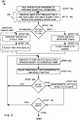
- FIG. 1shows an embodiment of a computing system 10 programmed to perform biometric operations in parallel as described herein.
- Example implementations of the computing system 10include, but are not limited to, personal computers (PC), Macintosh computers, server computers, blade servers, workstations, laptop computers, kiosks, network terminals, and hand-held devices, such as a personal digital assistant (PDA), mobile phones, smart phones, and tablets.
- the computing system 10is any type of computing machine with a multi-core processor 12.
- a multi-core processor, as used herein,is a single computing component having two or more independently operating central processing units or cores. The cores independently read and execute program instructions.
- Commercially available embodiments of multi-core processorshave dual-cores, quad cores, six cores, eight cores, ten cores or more.
- the multi-core processor 12is in communication with memory 14 and with an input/output (I/O) interface 16.
- the I/O interface 16is in communication with one or more I/O devices 18, which include, but are not limited to, a mouse, touch pad, keyboard, display screen, touch screen, a speaker, and a microphone. Although referred to generally as I/O devices, some of such devices may be an input device only (e.g., a keyboard), whereas other devices may be an output device only (e.g., a speaker).
- a usersubmits commands and receives results through an I/O device 18.
- the I/O interface 16submits the user commands from the one or more I/O devices 18 to the multi-core processor 12 and returns results to the user through the one or more I/O devices 18.
- the memory 14includes non-volatile computer storage media such as read-only memory (ROM) 20, volatile computer storage media such as random-access memory (RAM) 22, and hard-disk memory 24.
- ROMread-only memory
- RAMrandom-access memory
- BIOSbasic input/output system
- program codefor controlling the basic operations of the computing system 10, including start-up of the computing system and initialization of hardware.
- Program codeincludes, but is not limited to, a software development kit (SDK) 26 comprised of executables 28, a code library 30, one or more database plug-ins 32, and one or more biometric operation plug-ins 34.
- SDK 26can also include one or more samples of application programs 36 demonstrating example use the executables 28 and code library 30, and a reference guide (e.g., in text or portable document format) 38.
- Software developerscan use the SDK 26 to construct application programs that perform biometric operations, for example, enrolling biometric images into a database, and running biometric identification searches.
- the SDK 26Before being stored in the memory 14 of the computing system 10, the SDK 26 can be embodied in an off-the-shelf product (e.g., CD ROMs) or acquired from a server through an online download.
- the RAM 22can also store application programs 40 (e.g., browser), program modules 42 (e.g., browser plug-ins), a native API (e.g., Windows API, MacOS API) 44, and an operating system 46 (e.g., Windows 95, Windows 98, Windows NT 4.0, Windows XP, Windows 2000, Linux, Macintosh, Windows MobileTM, Mobile LinuxTM, Symbian OSTM, Palm OSTM, Mobile OSTM, and AndroidTM).
- application programs 40e.g., browser
- program modules 42e.g., browser plug-ins
- a native APIe.g., Windows API, MacOS API
- an operating system 46e.g., Windows 95, Windows 98, Windows NT 4.0, Windows XP, Windows 2000, Linux, Macintosh, Windows MobileTM, Mobile LinuxTM, Symbian OSTM, Palm OSTM, Mobile OSTM, and AndroidTM.
- the hard disk 24stores data, for example, biometric templates.
- Each biometric templaterepresents a biometric measurement of an individual enrolled by a biometric system.
- a biometric systemuses these biometric templates for comparisons against subsequently submitted biometric samples.
- Biometric samplescorrespond to a biometric characteristic of an individual as captured by a biometric system. Examples of biometric samples include, but are not limited to, images of fingerprints, irises, and faces. Techniques for converting biometric samples into biometric templates are known in the art.
- the biometric templatesmay be aggregated within a database or data store, examples of which include, MongoDB, LevelDB, and Lightning Memory-Mapped Database (LMDB).
- LMDBLightning Memory-Mapped Database
- the executables 28 of the SDK 26include a data processor utility that runs biometric identification searches and a data processor enroll utility for enrolling biometric images into a database.
- the data processor utilitiesare referred to generally as the data processor.
- the code library 30includes a shared library (.DLL or .SO) or a static library (.LIB or .a) of program code that provides the core functionality of the data processor.
- the code library 30can also include a Java Native Interface (JNI) shared library and a Java jar file that contains the code for using the data processor in JavaTM.
- the code library 30includes an executable used to launch a worker process. Worker processes independently execute biometric operations; they can execute as separate threads in a single process or as separate processes.
- the database and biometric operation plug-ins 32, 34provide the available functions that the software developer can use when developing an application program.
- the data processorintegrates with databases using the database plug-ins 32, which enable biometric operations to operate on database data in addition to input data.
- Each database plug-in 32provides read and write access to a database of a given type.
- the SDK 26includes a database plug-in for accessing the LMDB database, another database plug-in for accessing the LevelDB database, and yet another database plug-in for accessing the MongoDB database. Other embodiments of the SDK 26 can have fewer or more than these three database types. Biometric operations can be performed on input data only, a single database entry, multiple database entries, or every database entry.
- biometric operations to be usedare all to be performed on input data only, then no database or database plugins need be present.
- functionality of one or more database plug-ins 32can be involved in the completion of a single biometric operation.
- Each biometric operation plug-in 34provides biometric operation functionality. Categories of biometric operation plug-ins can include matcher plug-ins and map plug-ins. Examples of matcher plug-ins include, but are not limited to, a plug-in that provides one-to-one fingerprint comparing, a plug-in that provides one-to-one iris comparing, and a plug-in that provides one-to-one face comparing. In general, a map plug-in provides the ability to perform a function across a database, by taking matcher plug-in functions and applying them concurrently across multiple entries in the database. The functionality of one or more biometric operation plug-ins 34 can be involved in the completion of a single biometric operation. Adding new biometric operations to a biometric system, through the addition of new biometric operation plug-ins, requires no modifications to the data processor or code library 30.
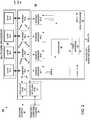
- FIG. 2shows a block diagram of an embodiment of a biometric system 50 comprising a multi-core processor 12 programmed with software 52 for performing user-requested jobs.
- a jobis a high-level biometric operation that a user wishes to perform. Examples of high-level biometric operations include, but are not limited to, enrolling biometric data into a database or performing an identify query.
- the multi-core processor 12has four cores 54-1, 54-2, 54-3, and 54-4 (generally, 54).
- the principles described hereincan extend to any type of multi-core processor having two or more cores.
- the cores 54execute code independently and concurrently to provide parallel processing in the performance of the job.
- the software 52 executed by the multi-core processor 12includes a data processor process (hereafter, data processor) 56 and worker processes 58-1, 58-2, 58-3, and 58-4 (generally, worker 58).
- the data processor 56includes a user interface 60, a dispatcher 62, a worker manager 64-1, 64-2, 64-3, 64-4 (generally, 64), a queue 66, and one or more results buffers 68.
- the software 52provides a job results buffer 68 for each job currently being performed by the multi-core processor 12; all jobs in progress concurrently share the queue 66.
- the separate boxes within the data processor 56represent a logical separation of functionality, although all functions are integrated within the data processor 56.
- the data processor 56is a library that abstracts and executes biometric operations, utilizing the dispatcher 62, worker managers 64, and queue 66 to deliver tasks to workers 58.
- a taskis a low-level biometric operation to be performed. Examples of tasks include, but are not limited to, compressing a bitmap image file (BMP) fingerprint image to a Wavelet Scalar Quantization (WSQ) fingerprint image or performing a match using a matcher plug-in with two input images.
- BMPbitmap image file
- WSQWavelet Scalar Quantization
- Each worker 58is program code that can independently execute biometric operations, continuously waiting until a task becomes available on the common queue 66, then obtaining ownership and executing that task.
- the workers 58can be part of the same process as the dispatcher 62 as threads or each worker 58 can be a separate process. Where each worker 58 resides in a separate process, each worker 58 has an associated worker manager process 64 that directly pulls a task off the queue 66 and then sends the task to the worker 58. The worker 58 receives and performs the task and then returns the results to its associated worker manager 64.
- Each worker 58is also in communication with one or more database plug-in interfaces 72 and with one or more biometric operation plug-in interfaces 70. Worker functionality is acquired from the database and biometric operation plug-ins 32, 34, respectively. Through a database plug-in interface 72, each worker 58 is able to incorporate the functionality of a given database plug-in 32. Through a biometric operation plug-in interface 70, each worker 58 is able to incorporate the functionality of a given biometric operation plug-in 34. Each database and biometric operation plug-in 32, 34, respectively, reports whether a given performed function was valid or whether any other errors were encountered.
- the number of workers 58 used by the data processor 56is configured by the software developer using the data processor 56. This number can be an explicitly declared (e.g., 2, 5, 10). Alternatively, the data processor 56 can automatically detect the number of cores 54 available at runtime using standard library functionality (e.g., C++) to determine the number of cores, and, correspondingly, the number of workers 58 to launch.
- standard library functionalitye.g., C++
- the user interface 60is in communication with the user to receive job requests and input data (e.g., a biometric sample) and to provide the results of the job to the user.
- input datae.g., a biometric sample
- a biometric readerfor example, a fingerprint reader, can supply the input data.
- the dispatcher 62is in communication with the user interface 60 to obtain the user-supplied instructions and input data.
- the dispatcher 62is in communication with the queue 66 upon which the dispatcher 62 places tasks to be performed by the workers 58.
- the dispatcher 62is in communication with the results buffer 68 of each job from which the dispatcher 62 collects the separate results produced by each of the workers 58 performing their assigned tasks and compiles the results of the job for forwarding to the user.
- Each worker manager 64is associated with one of the worker processes 58 and in communication with the queue 66 and with the results buffer 68. Each worker manager 64 removes a task from the queue 66 when its associated worker 58 is available, and passes that task to that worker 58. When that worker 58 completes the assigned task, the results return to its associated worker manager 64. The worker manager 64 then places the results of the task into the appropriate results buffer 68 (i.e., associated with the job for which the task is performed) for subsequent collection by the dispatcher 62.
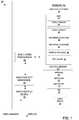
- FIG. 3shows an embodiment of a process 100 for performing a biometric operation, using the multiple cores of the multi-core processor 12 to process tasks associated with one or more jobs in parallel.
- the userruns an application program developed from the SDK 26 and configured to perform a desired biometric operation.
- the data processor 56receives (step 104) user input requesting performance of a job, the user input including a biometric sample, which may be obtained through a biometric reader, and specifying the desired biometric operation.
- a usermay request more than one job (as represented by dashed arrow 105), to be performed concurrently.
- the data processor 56can accept (step 106) two types of jobs from the user: a standard job; and a map job.
- a standard jobincludes the desired biometric operation plug-in 34 or database plug-in 32, the function to run, and the input data for the function.
- the data processor 56turns (step 108) a standard job into a single task and the dispatcher 62 places (step 110) the task into the queue 66 for a worker 58 to run. If multiple standard jobs are to run concurrently, the data processor 56 can take advantage of the parallel processing capabilities of the multi-core processor 12, distributing the multiple single standard jobs (turned into single tasks) across the workers 58.
- the usercan request a standard job to enroll a biometric sample in a MongoDB database.
- the data processor (i.e., enroll utility) 56produces a single task, specifying the enroll function, the MongoDB database plug-in 32, and providing the biometric sample to be enrolled.
- a map jobacquires its "map" name as a reference to the general programming concept map, which applies a single function to a list of items.
- a map jobspecifically refers to applying a biometric operation plug-in function across a number of database entries, which either can be the entire database or a selected subset of the database.
- the data processor 56generates (step 112) multiple tasks by splitting up the list of applicable database entries, and the dispatcher 62 places (step 114) each task into the queue 66.
- Each taskcontains a desired biometric operation plug-in 34, a function to run, input biometric data, and a database plugin with a list of database entries on which to perform the function.
- the list of database entries that accompanies each taskcan be one or more entries.
- the usercan request a map job to identify an individual associated with a biometric sample.
- the data processor 56produces a multiple tasks, specifying a matcher biometric operation plug-in 34, a matcher function, and the LevelDB database plug-in 32, providing the biometric sample to be matched and a different list of database entries with which to compare the biometric sample.
- a worker manager 64removes a task from the queue 66 and dispatches the task to its associated worker 58 ready (available) to perform a task.
- the current jobsif more than one, share queue 66.
- Each worker 58is associated with a different one of the cores 54 of the multi-core processor 12.
- the cores 54work in parallel, each executing the function associated with the task assigned to its associated worker 58 in accordance with the functionality provided by the associated database and biometric operation plug-ins 32, 34, respectively.
- the assigning of tasks to workers 58, as workers become available,can attain a substantially balanced distribution of the workload among the workers 58 and, thus, efficiently employ the cores 54 throughout the execution of each job.
- each worker manager 64places the results of the task performed by its associated worker 58 into the results buffer 68.
- Each jobhas its own associated results buffer 68; and the task results are placed in the appropriate results buffer 68.
- the dispatcher 62decides (step 120) whether to report results to the user for that particular job. The decision is affirmative if one or both of the following conditions are true: 1) all tasks associated with the job are completed, hence, the job is complete; 2) a threshold number of tasks, out of the total number of tasks for the job, have been completed. Normally, some tasks for the particular job remain to be done when the threshold is reached. This threshold number is configurable by the user. If both conditions are unsatisfied, the process 100 continues dispatching (step 116) tasks from the task queue 66.
- the dispatcher 62acquires the results (partial or full) from the results buffer 68 associated with the job and sends (step 122) those results to the user.
- the data processor 56presents the partial or full outcome of the job to the user through the user interface 60.
- the process 100continues by dispatching (step 116) one of the queued tasks to an available worker 58. For instance, in the event the dispatcher 62 reports partial results, the queue 66 still holds at least those tasks remaining for the partially completed job. In addition, the queue 66 may contain tasks associated with other jobs not yet completed. If, instead, at step 124, the queue 66 is empty, all submitted jobs are complete; the process 100 is done.
- the data processor 56can also make efficient use of the memory 14.
- certain biometric operationssuch as a biometric identification search, can occur in stages.
- a biometric identification searchan input biometric sample is compared with a database containing a large number of biometric templates.
- a first stage of the searchquickly compares the input biometric sample with all of the candidate biometric templates, sacrificing accuracy in order to reduce the large number of candidate biometric templates to a lesser number.
- a second stage and, optionally, a third stageoperate progressively slower than their previous stage, performing a progressively more time consuming and accurate comparison than their previous stage, while progressively reducing the number of candidate biometric templates that remain as possible matches to the input biometric sample.
- a final stagecan be the slowest but most accurate of all the stages, searching through the fewest candidate biometric templates in search of a match.
- the number of stages in a biometric operationis configurable, and can be determined by a particular biometric operation plug-in 34.
- a single biometric operation plug-in 34can provide the functionality of all stages, or different biometric operation plug-ins 34 can provide the functionality of a different stage or a different subset of stages.
- the stagesrun in serial; the first stage completes before the second stage can begin.
- the cores 54 of the multi-core processor 12may be working concurrently on tasks associated with different stages of the biometric operation.
- the gallery of biometric templatesresides on the hard disk 24, which has memory accesses that are considerably slower than those to RAM 22.
- a database of biometric templatesinitializes, a small number of the biometric templates can be preloaded from the hard disk 24 to the RAM 22. The remaining biometric templates can remain on the hard disk 24.
- the candidate biometric templatescan be loaded from hard disk 24 to RAM 22, in advance of being needed by a worker 58.
- the biometric templatescan remain on the hard disk 24 until a worker 58 requires the biometric template for a comparison, at which point the memory access is made to the hard disk 24.
- aspects of the present inventionmay be embodied as a system, method, and computer program product.
- aspects of the present inventionmay be embodied entirely in hardware, entirely in software (including, but not limited to, firmware, program code, resident software, microcode), or in a combination of hardware and software. All such embodiments may generally be referred to herein as a circuit, a module, or a system.
- aspects of the present inventionmay be in the form of a computer program product embodied in one or more computer readable media having computer readable program code embodied thereon.
- the computer readable mediummay be a computer readable storage medium, examples of which include, but are not limited to, an electronic, magnetic, optical, electromagnetic, infrared, or semiconductor system, apparatus, or device, or any suitable combination thereof.
- a computer readable storage mediummay be any non-transitory, tangible medium that can contain or store a program for use by or in connection with an instruction execution system, apparatus, device, computer, computing system, computer system, or any programmable machine or device that inputs, processes, and outputs instructions, commands, or data.
- a non-exhaustive list of specific examples of a computer readable storage mediuminclude an electrical connection having one or more wires, a portable computer diskette, a floppy disk, a hard disk, a random access memory (RAM), a read-only memory (ROM), a USB flash drive, an non-volatile RAM (NVRAM or NOVRAM), an erasable programmable read-only memory (EPROM or Flash memory), a flash memory card, an electrically erasable programmable read-only memory (EEPROM), an optical fiber, a portable compact disc read-only memory (CD-ROM), a DVD-ROM, an optical storage device, a magnetic storage device, or any suitable combination thereof.
- a computer readable storage mediumcan be any computer readable medium that is not a computer readable signal medium such as a propagated data signal with computer readable program code embodied therein.
- Program codemay be embodied as computer-readable instructions stored on or in a computer readable storage medium as, for example, source code, object code, interpretive code, executable code, or combinations thereof. Any standard or proprietary, programming or interpretive language can be used to produce the computer-executable instructions. Examples of such languages include C, C++, Pascal, JAVA, BASIC, Smalltalk, Visual Basic, and Visual C++.
- Transmission of program code embodied on a computer readable mediumcan occur using any appropriate medium including, but not limited to, wireless, wired, optical fiber cable, radio frequency (RF), or any suitable combination thereof.
- RFradio frequency
- the program codemay execute entirely on a user's computer, partly on the user's computer, as a stand-alone software package, partly on the user's computer and partly on a remote computer or entirely on a remote computer or server.
- Any such remote computermay be connected to the user's computer through any type of network, including a local area network (LAN) or a wide area network (WAN), or the connection may be made to an external computer (for example, through the Internet using an Internet Service Provider).
- LANlocal area network
- WANwide area network
- Internet Service Providerfor example, AT&T, MCI, Sprint, EarthLink, MSN, GTE, etc.
- the methods of this inventioncan be implemented on a special purpose computer, a programmed microprocessor or microcontroller and peripheral integrated circuit element(s), an ASIC or other integrated circuit, a digital signal processor, a hard-wired electronic or logic circuit such as discrete element circuit, a programmable logic device such as PLD, PLA, FPGA, PAL, or the like.
- the disclosed methodsmay be readily implemented in software using object or object-oriented software development environments that provide portable source code that can be used on a variety of computer or workstation platforms.
- the disclosed systemmay be implemented partially or fully in hardware using standard logic circuits or a VLSI design. Whether software or hardware is used to implement the systems in accordance with this invention is dependent on the speed and/or efficiency requirements of the system, the particular function, and the particular software or hardware systems or microprocessor or microcomputer systems being utilized.
- the methods illustrated hereincan be readily implemented in hardware and/or software using any known or later developed systems or structures, devices and/or software by those of ordinary skill in the applicable art from the functional description provided herein and with a general basic knowledge of the computer and image processing arts.
- the disclosed methodsmay be readily implemented in software executed on programmed general-purpose computer, a special purpose computer, a microprocessor, or the like.
- the systems and methods of this inventioncan be implemented as program embedded on personal computer such as JAVA® or CGI script, as a resource residing on a server or graphics workstation, as a routine embedded in a dedicated fingerprint processing system, as a plug-in, or the like.
- the systemcan also be implemented by physically incorporating the system and method into a software and/or hardware system, such as the hardware and software systems of an image processor.
Landscapes
- Engineering & Computer Science (AREA)
- Theoretical Computer Science (AREA)
- Software Systems (AREA)
- Physics & Mathematics (AREA)
- General Physics & Mathematics (AREA)
- Computer Hardware Design (AREA)
- Computer Security & Cryptography (AREA)
- General Engineering & Computer Science (AREA)
- Business, Economics & Management (AREA)
- Mathematical Physics (AREA)
- Accounting & Taxation (AREA)
- Finance (AREA)
- Strategic Management (AREA)
- General Business, Economics & Management (AREA)
- Collating Specific Patterns (AREA)
Description
- This application claims the benefit of and priority to co-pending
U.S. provisional application no. 62/009,516, filed June 9, 2014 - The present invention relates generally to biometric systems.
- Biometrics, broadly defined, is the measurement and analysis of unique physical or behavioral characteristics used to distinguish one individual from another and, thus, to identify or authenticate the identity of individuals. Identification is the process of identifying or detecting the identity of an unknown individual. Authentication is the process of verifying an individual as whom he or she claims to be. Common examples of biometrics used for identification and authentication include fingerprints, irises, retinas, and facial images.
- The process of identification typically involves comparing a target biometric sample from an unknown individual against a large database of stored biometric information, in search of a match. However, a fingerprint database, for example, can include thousands upon thousands of instances of fingerprint data from a variety of sources. Although computer systems can automate the search, the matching process can run slowly because of several factors, including the sheer number of entries in the database, the nature and quality of the biometric information in the database and of the biometric sample, and the requisite degree of accuracy.
US 2014/0108656 A1 discloses systems and methods that allow a biometric authentication system to process authentication requests, such as requests to authenticate handwritten signatures, received from a plurality of client systems, each covered by a service level agreement. The biometric authentication system includes a load balancer configured to distribute authentication tasks to a plurality of worker machines. In some embodiments, task distribution is performed according to an ability of each worker to process urgent tasks, to an ability of each worker to process non-urgent tasks, and further according to a relationship between a count of urgent requests and a count of non-urgent requests received by the biometric authentication system.US 2010/0158323 A1 discloses a biometric authentication system including a plurality of information processing devices divided to a first group for performing a primary authentication based on feature quantity information unique to a biological pattern of a user associated with biological information, and specifying an identification number assigned to the user, and a second group for performing a secondary authentication on the biological information that succeeded in the primary authentication based on the identification number and registered biological information registered in advance. The input biological information is transmitted to all information processing devices belonging to the first group, the biological information that succeeded in the primary authentication is added as queuing information to a queue, and each of the information processing devices belonging to the second group acquires the queuing information positioned at a head of the queue when the secondary authentication process being executed in the own device is terminated.- All examples and features mentioned below can be combined in any technically possible way.
- In one aspect, a method of performing a biometric operation is provided. The method comprises receiving a job request to perform a biometric operation. The job request includes input data, identifies a database to be used in the performance of the biometric operation, and specifies a function to be performed. The biometric operation is restructured as one or more tasks. A number of entries in the database is assigned to each of the one or more tasks. An independent worker process is generated for each different core of the multi-core processor. Each task of the one or more tasks is assigned to one of the worker processes. Results produced by each worker process assigned one of the one or more tasks are collected. A result of the biometric operation based on the collected results is reported.
- Embodiments of the method may include one of the following features, or any combination thereof.
- Each task may include a plug-in, the function to perform, the input data, and a list of database entries on which to perform the function. The one or more tasks may be a plurality of tasks, and the method may further comprise distributing the plurality of tasks among the worker processes for processing the tasks in parallel. The biometric operation may be to enroll biometric information into the database. The biometric operation may be to perform an identification query based on a biometric sample provided as the input data.
- The method may further comprise detecting a number of the processor cores at runtime. An aggregate number of entries assigned to the one or more tasks may be all entries or a subset of all entries in the database.
- The job request may be a map job request to apply a plug-in function across a number of entries in the database, and wherein the biometric operation may be restructured into a plurality of tasks distributed among the worker processes. The job request may be a standard job request, and wherein the biometric operation may be restructured into a single task assigned to one of the worker processes.
- Assigning each task of the one or more tasks to one of the worker processes may comprise placing each task of the one or more tasks into a queue, removing one task of the one or more tasks from the queue in response to one of the worker processes being available to process the removed task, and assigning the one task removed from the queue to the available worker process.
- In another aspect, a computer program product is provided for performing a biometric operation comprises a non-transitory computer readable storage medium having computer readable program code embodied therewith. The computer readable program code comprises computer readable program code that, if executed, receives a job request to perform a biometric operation. The job request includes input biometric data, identifies a database to be used in the performance of the biometric operation, and specifies a function to be performed. The computer readable program code further comprises computer readable program code that, if executed, restructures the biometric operation as one or more tasks, computer readable program code that, if executed, assigns a number of entries in the database to each of the one or more tasks, computer readable program code that, if executed, generates an independently executing worker process for each different core of the multi-core processor, computer readable program code that, if executed, assigns each task of the one or more tasks to one of the worker processes, computer readable program code that, if executed, collects results produced by each worker process assigned one of the one or more tasks, and computer readable program code that, if executed, reports a result of the biometric operation based on the collected results.
- Embodiments of the computer program product may include one of the following features, or any combination thereof.
- Each task may include a plug-in, the function to perform, the input data, and a list of database entries on which to perform the function. The one or more tasks may be a plurality of tasks, and the method may further comprise distributing the plurality of tasks among the worker processes for processing the tasks in parallel. The biometric operation may be to enroll biometric information into the database. The biometric operation may be to perform an identification query based on a biometric sample provided as the input data.
- The computer program product may further comprise computer readable program code that, if executed, detects a number of the processor cores at runtime.
- An aggregate number of entries assigned to the one or more tasks may be all entries or a subset of all entries in the database.
- The job request may be a map job request to apply a plug-in function across a number of entries in the database, and wherein the biometric operation may be restructured into a plurality of tasks distributed among the worker processes. The job request may be a standard job request, and wherein the biometric operation may be restructured into a single task assigned to one of the worker processes.
- The computer readable program code that, if executed, assigns a number of entries in the database to each of the one or more tasks may comprise computer readable program code that, if executed, places each task of the one or more tasks into a queue, computer readable program code that, if executed, removes one task of the one or more tasks from the queue in response to one of the worker processes being available to process the removed task, and computer readable program code that, if executed, assigns the one task removed from the queue to the available worker process.
- In another aspect, a computer system for performing a biometric operation is provided. The computer system comprises memory storing program code used to perform a biometric operation. The program code includes one or more database plugins, one or more biometric operation plugins, and program code that coordinates performance of the biometric operation. The computer system further comprises a multi-core processor executing the program code that coordinates performance of the biometric operation to: receive a job request to perform the biometric operation. The job request includes input biometric data, identifies one of the one or more database plug-ins to be used in the performance of the biometric operation, and specifies a function to be performed. The multi-core processor also executes the program code that coordinates performance of the biometric operation to: restructure the biometric operation as one or more tasks, assign a number of entries in the database to each of the one or more tasks, generate an independently executing worker process for each different core of the multi-core processor, assign each task of the one or more tasks to one of the worker processes, collect results produced by each worker process assigned one of the one or more tasks, and report a result of the biometric operation based on the collected results.
- Embodiments of the computer system may include one of the following features, or any combination thereof.
- Each task may include a plug-in, the function to perform, the input data, and a list of database entries on which to perform the function. The one or more tasks may be a plurality of tasks, and the method may further comprise distributing the plurality of tasks among the worker processes for processing the tasks in parallel. The biometric operation may be to enroll biometric information into the database. The biometric operation may be to perform an identification query based on a biometric sample provided as the input data.
- The program code may detect a number of cores of the multi-core processor at runtime. An aggregate number of entries assigned to the one or more tasks may be all entries or a subset of all entries in the database.
- The job request may be a map job request to apply a plug-in function across a number of entries in the database, and wherein the biometric operation may be restructured into a plurality of tasks distributed among the worker processes. The job request may be a standard job request, and wherein the biometric operation may be restructured into a single task assigned to one of the worker processes.
- The multi-processor core may be further programmed to, when assigning each task of the one or more tasks to one of the worker processes: place each task of the one or more tasks into a queue, remove one task of the one or more tasks from the queue in response to one of the worker processes being available to process the removed task, and assign the one task removed from the queue to the available worker process.
- In still another aspect, a software development kit is provided. The software development kit comprises data processor program code configured to distribute, when executed, performance of a biometric operation across a plurality of cores of a multi-core processor of a computing device, and one or more plugin modules that provide functionality to perform the biometric operation.
- Embodiments of the software development kit may include one of the following features, or any combination thereof. The software development kit may further comprise one or more plugin modules that provide access to one or more databases, a reference guide providing guidance to a software developer for developing an application program based on the code library and the plug-in modules, one or more samples of application programs that implement the code library, or any combination thereof.
- The invention is defined in the claims 1-15.
- The above and further advantages of this invention may be better understood by referring to the following description in conjunction with the accompanying drawings, in which like numerals indicate like structural elements and features in various figures. The drawings are not necessarily to scale, emphasis instead being placed upon illustrating the principles of the invention.
FIG. 1 is a block diagram of an embodiment of a computing system programmed to perform biometric operations in parallel.FIG. 2 is a block diagram of an embodiment of a biometric system.FIG. 3 is a flow chart of an embodiment of a process for performing a biometric operation.FIG. 1 shows an embodiment of acomputing system 10 programmed to perform biometric operations in parallel as described herein. Example implementations of thecomputing system 10 include, but are not limited to, personal computers (PC), Macintosh computers, server computers, blade servers, workstations, laptop computers, kiosks, network terminals, and hand-held devices, such as a personal digital assistant (PDA), mobile phones, smart phones, and tablets. In general, thecomputing system 10 is any type of computing machine with amulti-core processor 12. A multi-core processor, as used herein, is a single computing component having two or more independently operating central processing units or cores. The cores independently read and execute program instructions. Commercially available embodiments of multi-core processors have dual-cores, quad cores, six cores, eight cores, ten cores or more.- The
multi-core processor 12 is in communication withmemory 14 and with an input/output (I/O)interface 16. The I/O interface 16 is in communication with one or more I/O devices 18, which include, but are not limited to, a mouse, touch pad, keyboard, display screen, touch screen, a speaker, and a microphone. Although referred to generally as I/O devices, some of such devices may be an input device only (e.g., a keyboard), whereas other devices may be an output device only (e.g., a speaker). A user submits commands and receives results through an I/O device 18. The I/O interface 16 submits the user commands from the one or more I/O devices 18 to themulti-core processor 12 and returns results to the user through the one or more I/O devices 18. - The
memory 14 includes non-volatile computer storage media such as read-only memory (ROM) 20, volatile computer storage media such as random-access memory (RAM) 22, and hard-disk memory 24. Typically stored in theROM 20 is a basic input/output system (BIOS), which contains program code for controlling the basic operations of thecomputing system 10, including start-up of the computing system and initialization of hardware. - Stored within the
RAM 22 are program code and data. Program code includes, but is not limited to, a software development kit (SDK) 26 comprised ofexecutables 28, acode library 30, one or more database plug-ins 32, and one or more biometric operation plug-ins 34. Optionally, theSDK 26 can also include one or more samples ofapplication programs 36 demonstrating example use theexecutables 28 andcode library 30, and a reference guide (e.g., in text or portable document format) 38. Software developers can use theSDK 26 to construct application programs that perform biometric operations, for example, enrolling biometric images into a database, and running biometric identification searches. Before being stored in thememory 14 of thecomputing system 10, theSDK 26 can be embodied in an off-the-shelf product (e.g., CD ROMs) or acquired from a server through an online download. - The
RAM 22 can also store application programs 40 (e.g., browser), program modules 42 (e.g., browser plug-ins), a native API (e.g., Windows API, MacOS API) 44, and an operating system 46 (e.g., Windows 95, Windows 98, Windows NT 4.0, Windows XP, Windows 2000, Linux, Macintosh, Windows Mobile™, Mobile Linux™, Symbian OS™, Palm OS™, Mobile OS™, and Android™). - The
hard disk 24 stores data, for example, biometric templates. Each biometric template represents a biometric measurement of an individual enrolled by a biometric system. A biometric system uses these biometric templates for comparisons against subsequently submitted biometric samples. Biometric samples correspond to a biometric characteristic of an individual as captured by a biometric system. Examples of biometric samples include, but are not limited to, images of fingerprints, irises, and faces. Techniques for converting biometric samples into biometric templates are known in the art. The biometric templates may be aggregated within a database or data store, examples of which include, MongoDB, LevelDB, and Lightning Memory-Mapped Database (LMDB). - The
executables 28 of theSDK 26 include a data processor utility that runs biometric identification searches and a data processor enroll utility for enrolling biometric images into a database. Hereafter, the data processor utilities are referred to generally as the data processor. Thecode library 30 includes a shared library (.DLL or .SO) or a static library (.LIB or .a) of program code that provides the core functionality of the data processor. Thecode library 30 can also include a Java Native Interface (JNI) shared library and a Java jar file that contains the code for using the data processor in Java™. In addition, thecode library 30 includes an executable used to launch a worker process. Worker processes independently execute biometric operations; they can execute as separate threads in a single process or as separate processes. - The database and biometric operation plug-
ins ins 32, which enable biometric operations to operate on database data in addition to input data. Each database plug-in 32 provides read and write access to a database of a given type. In one embodiment, theSDK 26 includes a database plug-in for accessing the LMDB database, another database plug-in for accessing the LevelDB database, and yet another database plug-in for accessing the MongoDB database. Other embodiments of theSDK 26 can have fewer or more than these three database types. Biometric operations can be performed on input data only, a single database entry, multiple database entries, or every database entry. In cases where multiple database entries are used, a result is returned for every entry selected. If the biometric operations to be used are all to be performed on input data only, then no database or database plugins need be present. In addition, the functionality of one or more database plug-ins 32 can be involved in the completion of a single biometric operation. - Each biometric operation plug-in 34 provides biometric operation functionality. Categories of biometric operation plug-ins can include matcher plug-ins and map plug-ins. Examples of matcher plug-ins include, but are not limited to, a plug-in that provides one-to-one fingerprint comparing, a plug-in that provides one-to-one iris comparing, and a plug-in that provides one-to-one face comparing. In general, a map plug-in provides the ability to perform a function across a database, by taking matcher plug-in functions and applying them concurrently across multiple entries in the database. The functionality of one or more biometric operation plug-
ins 34 can be involved in the completion of a single biometric operation. Adding new biometric operations to a biometric system, through the addition of new biometric operation plug-ins, requires no modifications to the data processor orcode library 30. FIG. 2 shows a block diagram of an embodiment of abiometric system 50 comprising amulti-core processor 12 programmed withsoftware 52 for performing user-requested jobs. As used herein, a job is a high-level biometric operation that a user wishes to perform. Examples of high-level biometric operations include, but are not limited to, enrolling biometric data into a database or performing an identify query.- In this example embodiment, the
multi-core processor 12 has four cores 54-1, 54-2, 54-3, and 54-4 (generally, 54). The principles described herein can extend to any type of multi-core processor having two or more cores. The cores 54 execute code independently and concurrently to provide parallel processing in the performance of the job. - The
software 52 executed by themulti-core processor 12 includes a data processor process (hereafter, data processor) 56 and worker processes 58-1, 58-2, 58-3, and 58-4 (generally, worker 58). Thedata processor 56 includes a user interface 60, adispatcher 62, a worker manager 64-1, 64-2, 64-3, 64-4 (generally, 64), aqueue 66, and one or more results buffers 68. Thesoftware 52 provides a job results buffer 68 for each job currently being performed by themulti-core processor 12; all jobs in progress concurrently share thequeue 66. The separate boxes within thedata processor 56 represent a logical separation of functionality, although all functions are integrated within thedata processor 56. - In general, the
data processor 56 is a library that abstracts and executes biometric operations, utilizing thedispatcher 62, worker managers 64, andqueue 66 to deliver tasks toworkers 58. As used herein, a task is a low-level biometric operation to be performed. Examples of tasks include, but are not limited to, compressing a bitmap image file (BMP) fingerprint image to a Wavelet Scalar Quantization (WSQ) fingerprint image or performing a match using a matcher plug-in with two input images. Whenmultiple workers 58 execute, multiple tasks can be performed in parallel. - Each
worker 58 is program code that can independently execute biometric operations, continuously waiting until a task becomes available on thecommon queue 66, then obtaining ownership and executing that task. Theworkers 58 can be part of the same process as thedispatcher 62 as threads or eachworker 58 can be a separate process. Where eachworker 58 resides in a separate process, eachworker 58 has an associated worker manager process 64 that directly pulls a task off thequeue 66 and then sends the task to theworker 58. Theworker 58 receives and performs the task and then returns the results to its associated worker manager 64. - Each
worker 58 is also in communication with one or more database plug-ininterfaces 72 and with one or more biometric operation plug-ininterfaces 70. Worker functionality is acquired from the database and biometric operation plug-ins interface 72, eachworker 58 is able to incorporate the functionality of a given database plug-in 32. Through a biometric operation plug-ininterface 70, eachworker 58 is able to incorporate the functionality of a given biometric operation plug-in 34. Each database and biometric operation plug-in 32, 34, respectively, reports whether a given performed function was valid or whether any other errors were encountered. - The number of
workers 58 used by thedata processor 56 is configured by the software developer using thedata processor 56. This number can be an explicitly declared (e.g., 2, 5, 10). Alternatively, thedata processor 56 can automatically detect the number of cores 54 available at runtime using standard library functionality (e.g., C++) to determine the number of cores, and, correspondingly, the number ofworkers 58 to launch. - The user interface 60 is in communication with the user to receive job requests and input data (e.g., a biometric sample) and to provide the results of the job to the user. A biometric reader, for example, a fingerprint reader, can supply the input data.
- The
dispatcher 62 is in communication with the user interface 60 to obtain the user-supplied instructions and input data. In addition, thedispatcher 62 is in communication with thequeue 66 upon which thedispatcher 62 places tasks to be performed by theworkers 58. Further, thedispatcher 62 is in communication with the results buffer 68 of each job from which thedispatcher 62 collects the separate results produced by each of theworkers 58 performing their assigned tasks and compiles the results of the job for forwarding to the user. - Each worker manager 64 is associated with one of the worker processes 58 and in communication with the
queue 66 and with theresults buffer 68. Each worker manager 64 removes a task from thequeue 66 when its associatedworker 58 is available, and passes that task to thatworker 58. When thatworker 58 completes the assigned task, the results return to its associated worker manager 64. The worker manager 64 then places the results of the task into the appropriate results buffer 68 (i.e., associated with the job for which the task is performed) for subsequent collection by thedispatcher 62. FIG. 3 shows an embodiment of aprocess 100 for performing a biometric operation, using the multiple cores of themulti-core processor 12 to process tasks associated with one or more jobs in parallel. In the description of theprocess 100, reference is made to elements shown inFIG. 1 andFIG. 2 . Atstep 102, the user runs an application program developed from theSDK 26 and configured to perform a desired biometric operation. Through the user interface 60, thedata processor 56 receives (step 104) user input requesting performance of a job, the user input including a biometric sample, which may be obtained through a biometric reader, and specifying the desired biometric operation. A user may request more than one job (as represented by dashed arrow 105), to be performed concurrently.- The
data processor 56 can accept (step 106) two types of jobs from the user: a standard job; and a map job. A standard job includes the desired biometric operation plug-in 34 or database plug-in 32, the function to run, and the input data for the function. Thedata processor 56 turns (step 108) a standard job into a single task and thedispatcher 62 places (step 110) the task into thequeue 66 for aworker 58 to run. If multiple standard jobs are to run concurrently, thedata processor 56 can take advantage of the parallel processing capabilities of themulti-core processor 12, distributing the multiple single standard jobs (turned into single tasks) across theworkers 58. As an example, the user can request a standard job to enroll a biometric sample in a MongoDB database. In response, the data processor (i.e., enroll utility) 56 produces a single task, specifying the enroll function, the MongoDB database plug-in 32, and providing the biometric sample to be enrolled. - A map job acquires its "map" name as a reference to the general programming concept map, which applies a single function to a list of items. In the
biometric system 50, a map job specifically refers to applying a biometric operation plug-in function across a number of database entries, which either can be the entire database or a selected subset of the database. Thedata processor 56 generates (step 112) multiple tasks by splitting up the list of applicable database entries, and thedispatcher 62 places (step 114) each task into thequeue 66. Each task contains a desired biometric operation plug-in 34, a function to run, input biometric data, and a database plugin with a list of database entries on which to perform the function. The list of database entries that accompanies each task can be one or more entries. As an example, the user can request a map job to identify an individual associated with a biometric sample. In response, thedata processor 56 produces a multiple tasks, specifying a matcher biometric operation plug-in 34, a matcher function, and the LevelDB database plug-in 32, providing the biometric sample to be matched and a different list of database entries with which to compare the biometric sample. - At
step 116, a worker manager 64 removes a task from thequeue 66 and dispatches the task to its associatedworker 58 ready (available) to perform a task. The current jobs, if more than one,share queue 66. Eachworker 58 is associated with a different one of the cores 54 of themulti-core processor 12. The cores 54 work in parallel, each executing the function associated with the task assigned to its associatedworker 58 in accordance with the functionality provided by the associated database and biometric operation plug-ins workers 58, as workers become available, can attain a substantially balanced distribution of the workload among theworkers 58 and, thus, efficiently employ the cores 54 throughout the execution of each job. - At
step 118, each worker manager 64 places the results of the task performed by its associatedworker 58 into theresults buffer 68. Each job has its own associatedresults buffer 68; and the task results are placed in theappropriate results buffer 68. After a task result is added to ajob result buffer 68, thedispatcher 62 decides (step 120) whether to report results to the user for that particular job. The decision is affirmative if one or both of the following conditions are true: 1) all tasks associated with the job are completed, hence, the job is complete; 2) a threshold number of tasks, out of the total number of tasks for the job, have been completed. Normally, some tasks for the particular job remain to be done when the threshold is reached. This threshold number is configurable by the user. If both conditions are unsatisfied, theprocess 100 continues dispatching (step 116) tasks from thetask queue 66. - When a particular job is complete or when a threshold number of task results has been collected for the job, the
dispatcher 62 acquires the results (partial or full) from the results buffer 68 associated with the job and sends (step 122) those results to the user. Thedata processor 56 presents the partial or full outcome of the job to the user through the user interface 60. - If, at
step 124, thequeue 66 contains tasks, theprocess 100 continues by dispatching (step 116) one of the queued tasks to anavailable worker 58. For instance, in the event thedispatcher 62 reports partial results, thequeue 66 still holds at least those tasks remaining for the partially completed job. In addition, thequeue 66 may contain tasks associated with other jobs not yet completed. If, instead, atstep 124, thequeue 66 is empty, all submitted jobs are complete; theprocess 100 is done. - In addition to making efficient use of the
multi-core processor 12 during the performance of the job, thedata processor 56 can also make efficient use of thememory 14. For example, certain biometric operations, such as a biometric identification search, can occur in stages. In a biometric identification search, an input biometric sample is compared with a database containing a large number of biometric templates. A first stage of the search quickly compares the input biometric sample with all of the candidate biometric templates, sacrificing accuracy in order to reduce the large number of candidate biometric templates to a lesser number. A second stage and, optionally, a third stage operate progressively slower than their previous stage, performing a progressively more time consuming and accurate comparison than their previous stage, while progressively reducing the number of candidate biometric templates that remain as possible matches to the input biometric sample. A final stage can be the slowest but most accurate of all the stages, searching through the fewest candidate biometric templates in search of a match. - The number of stages in a biometric operation is configurable, and can be determined by a particular biometric operation plug-in 34. A single biometric operation plug-in 34 can provide the functionality of all stages, or different biometric operation plug-
ins 34 can provide the functionality of a different stage or a different subset of stages. In general, the stages run in serial; the first stage completes before the second stage can begin. Alternatively, there can be some overlap between the executions of the stages; the second stage can begin as soon as the first stage identifies a potential match and can execute its function while the first stage continues to search through the candidate biometric templates. In this instance, the cores 54 of themulti-core processor 12 may be working concurrently on tasks associated with different stages of the biometric operation. - In general, the gallery of biometric templates resides on the
hard disk 24, which has memory accesses that are considerably slower than those to RAM 22. When a database of biometric templates initializes, a small number of the biometric templates can be preloaded from thehard disk 24 to theRAM 22. The remaining biometric templates can remain on thehard disk 24. For the first stage of the biometric identification search, which processes the greatest number of biometric templates of all the stages, the candidate biometric templates can be loaded fromhard disk 24 to RAM 22, in advance of being needed by aworker 58. For each of the later stages, which work with progressively fewer candidate biometric templates than an earlier stage, the biometric templates can remain on thehard disk 24 until aworker 58 requires the biometric template for a comparison, at which point the memory access is made to thehard disk 24. - As will be appreciated by one skilled in the art, aspects of the present invention may be embodied as a system, method, and computer program product. Thus, aspects of the present invention may be embodied entirely in hardware, entirely in software (including, but not limited to, firmware, program code, resident software, microcode), or in a combination of hardware and software. All such embodiments may generally be referred to herein as a circuit, a module, or a system. In addition, aspects of the present invention may be in the form of a computer program product embodied in one or more computer readable media having computer readable program code embodied thereon.
- The computer readable medium may be a computer readable storage medium, examples of which include, but are not limited to, an electronic, magnetic, optical, electromagnetic, infrared, or semiconductor system, apparatus, or device, or any suitable combination thereof. As used herein, a computer readable storage medium may be any non-transitory, tangible medium that can contain or store a program for use by or in connection with an instruction execution system, apparatus, device, computer, computing system, computer system, or any programmable machine or device that inputs, processes, and outputs instructions, commands, or data. A non-exhaustive list of specific examples of a computer readable storage medium include an electrical connection having one or more wires, a portable computer diskette, a floppy disk, a hard disk, a random access memory (RAM), a read-only memory (ROM), a USB flash drive, an non-volatile RAM (NVRAM or NOVRAM), an erasable programmable read-only memory (EPROM or Flash memory), a flash memory card, an electrically erasable programmable read-only memory (EEPROM), an optical fiber, a portable compact disc read-only memory (CD-ROM), a DVD-ROM, an optical storage device, a magnetic storage device, or any suitable combination thereof. A computer readable storage medium can be any computer readable medium that is not a computer readable signal medium such as a propagated data signal with computer readable program code embodied therein.
- Program code may be embodied as computer-readable instructions stored on or in a computer readable storage medium as, for example, source code, object code, interpretive code, executable code, or combinations thereof. Any standard or proprietary, programming or interpretive language can be used to produce the computer-executable instructions. Examples of such languages include C, C++, Pascal, JAVA, BASIC, Smalltalk, Visual Basic, and Visual C++.
- Transmission of program code embodied on a computer readable medium can occur using any appropriate medium including, but not limited to, wireless, wired, optical fiber cable, radio frequency (RF), or any suitable combination thereof.
- The program code may execute entirely on a user's computer, partly on the user's computer, as a stand-alone software package, partly on the user's computer and partly on a remote computer or entirely on a remote computer or server. Any such remote computer may be connected to the user's computer through any type of network, including a local area network (LAN) or a wide area network (WAN), or the connection may be made to an external computer (for example, through the Internet using an Internet Service Provider).
- Additionally, the methods of this invention can be implemented on a special purpose computer, a programmed microprocessor or microcontroller and peripheral integrated circuit element(s), an ASIC or other integrated circuit, a digital signal processor, a hard-wired electronic or logic circuit such as discrete element circuit, a programmable logic device such as PLD, PLA, FPGA, PAL, or the like.
- Furthermore, the disclosed methods may be readily implemented in software using object or object-oriented software development environments that provide portable source code that can be used on a variety of computer or workstation platforms. Alternatively, the disclosed system may be implemented partially or fully in hardware using standard logic circuits or a VLSI design. Whether software or hardware is used to implement the systems in accordance with this invention is dependent on the speed and/or efficiency requirements of the system, the particular function, and the particular software or hardware systems or microprocessor or microcomputer systems being utilized. The methods illustrated herein however can be readily implemented in hardware and/or software using any known or later developed systems or structures, devices and/or software by those of ordinary skill in the applicable art from the functional description provided herein and with a general basic knowledge of the computer and image processing arts.
- Moreover, the disclosed methods may be readily implemented in software executed on programmed general-purpose computer, a special purpose computer, a microprocessor, or the like. In these instances, the systems and methods of this invention can be implemented as program embedded on personal computer such as JAVA® or CGI script, as a resource residing on a server or graphics workstation, as a routine embedded in a dedicated fingerprint processing system, as a plug-in, or the like. The system can also be implemented by physically incorporating the system and method into a software and/or hardware system, such as the hardware and software systems of an image processor.
- While this invention has been described in conjunction with a number of embodiments, it is evident that many alternatives, modifications and variations would be or are apparent to those of ordinary skill in the applicable arts. Accordingly, it is intended to embrace all such alternatives, modifications, equivalents, and variations that are within the scope of the appended claims.
Claims (15)
- A method (100) of performing a biometric operation, the method comprising:receiving a job request to perform a biometric operation, the job request including input data, identifying a database to be used in the performance of the biometric operation in association with a database plug-in (32), and specifying a function to be performed in association with a biometric operations plug-in (34);restructuring the biometric operation as a plurality of tasks, the job request further specifying a biometric operations plug-in function to be performed across a number of entries in the database, the number of entries in the database being a subset of the entries in the database;assigning the number of entries in the database to each of the plurality of tasks;generating an independent worker process (58-1; 58-2) for different cores (54-1; 54-2) of a multi-core processor (12);assigning each task of the one or more tasks to one of the worker processes;distributing the plurality of tasks among the worker processes, the worker processes acquiring their functionality from the database plug-in and biometric operations plug-ins, respectively;collecting results produced by each worker process assigned one of the plurality of tasks into a results buffer (68); anddeciding (120) whether to report results to a user for that particular job.
- The method of claim 1, wherein each task includes a plug-in, the function to perform, the input data, and a list of database entries on which to perform the function.
- The method of claim 1, wherein the one or more tasks is a plurality of tasks, and further comprising distributing the plurality of tasks among the worker processes for processing the tasks in parallel.
- The method of claim 1, wherein the biometric operation is to enroll biometric information into the database.
- The method of claim 1, wherein the biometric operation is to perform an identification query based on a biometric sample provided as the input data.
- The method of claim 1, further comprising detecting a number of the processor cores (54-1; 54-2) at runtime.
- The method of claim 1, wherein an aggregate number of entries assigned to the one or more tasks is a subset of all entries in the database.
- The method of claim 1, wherein an aggregate number of entries assigned to the one or more tasks is all entries in the database.
- The method of claim 1, wherein the job request is a map job request to apply a plug-in function across a number of entries in the database, and wherein the biometric operation is restructured into a plurality of tasks distributed among the worker processes.
- The method of claim 1, wherein the job request is a standard job request, and wherein the biometric operation is restructured into a single task assigned to one of the worker processes.
- The method of claim 1, wherein assigning each task of the one or more tasks to one of the worker processes comprises:placing each task of the one or more tasks into a queue;removing one task of the one or more tasks from the queue in response to one of the worker processes being available to process the removed task; andassigning the one task removed from the queue to the available worker process.
- Computer program product for performing a biometric operation, the computer program product comprising:
a non-transitory computer readable storage medium having computer readable program code embodied therewith, the computer readable program code comprising:
computer readable program code that, if executed, performs a method of any preceding claim. - A computer system (10) for performing a biometric operation, the computer system comprising:memory storing program code used to perform a biometric operation, the program code including one or more database plugins (32), one or more biometric operation plugins (34), and program code that coordinates performance of the biometric operation; anda multi-core processor (12) executing the program code that coordinates performance of the biometric operation method according to any of claims 1 to 11.
- A software development kit comprising:data processor program code configured to distribute, when executed, performance of a biometric operation method according to any of claims 1 to 11 across a plurality of cores (54-1; 54-2) of a multi-core processor (12) of a computing device; andone or more plugin modules (32; 34) that provide functionality to perform the biometric operation method.
- The software development kit of claim 14, further comprising at least one of
one or more plugin modules (32) that provide access to one or more databases,
a reference guide providing guidance to a software developer for developing an application program based on the code library and the plug-in modules, and
one or more samples of application programs that implement the code library.
Applications Claiming Priority (3)
| Application Number | Priority Date | Filing Date | Title |
|---|---|---|---|
| US201462009516P | 2014-06-09 | 2014-06-09 | |
| PCT/US2015/031343WO2015191246A1 (en) | 2014-06-09 | 2015-05-18 | System and method for performing biometric operations in parallel |
| EP15805884.2AEP3152696B1 (en) | 2014-06-09 | 2015-05-18 | System and method for performing biometric operations in parallel |
Related Parent Applications (2)
| Application Number | Title | Priority Date | Filing Date |
|---|---|---|---|
| EP15805884.2ADivision-IntoEP3152696B1 (en) | 2014-06-09 | 2015-05-18 | System and method for performing biometric operations in parallel |
| EP15805884.2ADivisionEP3152696B1 (en) | 2014-06-09 | 2015-05-18 | System and method for performing biometric operations in parallel |
Publications (2)
| Publication Number | Publication Date |
|---|---|
| EP3540622A1 EP3540622A1 (en) | 2019-09-18 |
| EP3540622B1true EP3540622B1 (en) | 2021-04-28 |
Family
ID=54834092
Family Applications (2)
| Application Number | Title | Priority Date | Filing Date |
|---|---|---|---|
| EP15805884.2AActiveEP3152696B1 (en) | 2014-06-09 | 2015-05-18 | System and method for performing biometric operations in parallel |
| EP19173273.4AActiveEP3540622B1 (en) | 2014-06-09 | 2015-05-18 | System and method for performing biometric operations in parallel |
Family Applications Before (1)
| Application Number | Title | Priority Date | Filing Date |
|---|---|---|---|
| EP15805884.2AActiveEP3152696B1 (en) | 2014-06-09 | 2015-05-18 | System and method for performing biometric operations in parallel |
Country Status (3)
| Country | Link |
|---|---|
| US (2) | US10331910B2 (en) |
| EP (2) | EP3152696B1 (en) |
| WO (1) | WO2015191246A1 (en) |
Families Citing this family (6)
| Publication number | Priority date | Publication date | Assignee | Title |
|---|---|---|---|---|
| WO2015191246A1 (en) | 2014-06-09 | 2015-12-17 | Aware, Inc. | System and method for performing biometric operations in parallel |
| US10990658B2 (en) | 2016-07-11 | 2021-04-27 | Samsung Electronics Co., Ltd. | Method and apparatus for verifying user using multiple biometric verifiers |
| US10785648B2 (en)* | 2017-06-01 | 2020-09-22 | Nokia Solutions And Networks Oy | User authentication in wireless access network |
| CN108874388A (en)* | 2018-06-08 | 2018-11-23 | 山东超越数控电子股份有限公司 | A set of code supports multiple mainboards to realize the encryption method of resource-sharing |
| US11232857B2 (en) | 2018-10-01 | 2022-01-25 | Brainworks Foundry, Inc. | Fully automated non-contact remote biometric and health sensing systems, architectures, and methods |
| US11556390B2 (en) | 2018-10-02 | 2023-01-17 | Brainworks Foundry, Inc. | Efficient high bandwidth shared memory architectures for parallel machine learning and AI processing of large data sets and streams |
Family Cites Families (54)
| Publication number | Priority date | Publication date | Assignee | Title |
|---|---|---|---|---|
| US7631193B1 (en)* | 1994-11-28 | 2009-12-08 | Yt Acquisition Corporation | Tokenless identification system for authorization of electronic transactions and electronic transmissions |
| US5613012A (en)* | 1994-11-28 | 1997-03-18 | Smarttouch, Llc. | Tokenless identification system for authorization of electronic transactions and electronic transmissions |
| US6325292B1 (en)* | 1997-05-06 | 2001-12-04 | Richard P. Sehr | Card system and methods utilizing collector cards |
| US7349557B2 (en)* | 1998-06-19 | 2008-03-25 | Solidus Networks, Inc. | Electronic transaction verification system |
| US6256737B1 (en)* | 1999-03-09 | 2001-07-03 | Bionetrix Systems Corporation | System, method and computer program product for allowing access to enterprise resources using biometric devices |
| US6591249B2 (en)* | 2000-03-26 | 2003-07-08 | Ron Zoka | Touch scan internet credit card verification purchase process |
| US8380630B2 (en)* | 2000-07-06 | 2013-02-19 | David Paul Felsher | Information record infrastructure, system and method |
| WO2002095554A2 (en)* | 2001-05-18 | 2002-11-28 | Imprivata Inc. | System and method for authentication using biometrics |
| JP4433472B2 (en)* | 2002-08-08 | 2010-03-17 | ナンヤン テクノロジカル ユニヴァーシティ | Distributed authentication processing |
| US7574734B2 (en)* | 2002-08-15 | 2009-08-11 | Dominique Louis Joseph Fedronic | System and method for sequentially processing a biometric sample |
| US7867083B2 (en)* | 2003-03-25 | 2011-01-11 | Igt | Methods and apparatus for limiting access to games using biometric data |
| WO2005001748A2 (en)* | 2003-06-23 | 2005-01-06 | Guri Walia | Methods and system for improved searching of biometric data |
| US7398925B2 (en)* | 2003-12-09 | 2008-07-15 | First Data Corporation | Systems and methods for assessing the risk of a financial transaction using biometric information |
| US7689005B2 (en)* | 2004-03-10 | 2010-03-30 | Yingbin Wang | Apparatus and method for biometric database management system |
| US7689659B1 (en)* | 2004-04-12 | 2010-03-30 | Openwave Systems Inc. | Method and system for detecting abusive email based on number of hops |
| US7542590B1 (en)* | 2004-05-07 | 2009-06-02 | Yt Acquisition Corporation | System and method for upgrading biometric data |
| US7616788B2 (en) | 2004-11-12 | 2009-11-10 | Cogent Systems, Inc. | System and method for fast biometric pattern matching |
| US7298873B2 (en) | 2004-11-16 | 2007-11-20 | Imageware Systems, Inc. | Multimodal biometric platform |
| US7769207B2 (en)* | 2005-04-01 | 2010-08-03 | Olivo Jr John W | System and method for collection, storage, and analysis of biometric data |
| US7446352B2 (en)* | 2006-03-09 | 2008-11-04 | Tela Innovations, Inc. | Dynamic array architecture |
| WO2007122726A1 (en)* | 2006-04-21 | 2007-11-01 | Mitsubishi Denki Kabushiki Kaisha | Authenticating server device, terminal device, authenticating system and authenticating method |
| JP4881075B2 (en)* | 2006-05-31 | 2012-02-22 | 株式会社東芝 | Authentication system, integrated device and program |
| US20080122675A1 (en)* | 2006-06-27 | 2008-05-29 | John Bilodeau | Universal remote control programming and operations platform |
| US20080052527A1 (en)* | 2006-08-28 | 2008-02-28 | National Biometric Security Project | method and system for authenticating and validating identities based on multi-modal biometric templates and special codes in a substantially anonymous process |
| JP4956096B2 (en)* | 2006-08-30 | 2012-06-20 | 株式会社東芝 | Authentication system and apparatus |
| US8218828B2 (en)* | 2006-12-29 | 2012-07-10 | Anthony S. Iasso | Systems and methods for biometric information automation |
| KR100962531B1 (en)* | 2007-12-11 | 2010-06-15 | 한국전자통신연구원 | Apparatus for performing multi-threading framework supporting dynamic load balancing and processing method using the same |
| JP5217667B2 (en)* | 2008-06-13 | 2013-06-19 | 富士通株式会社 | IDENTIFICATION INFORMATION INTEGRATED MANAGEMENT SYSTEM, IDENTIFICATION INFORMATION INTEGRATION MANAGEMENT SERVER, IDENTIFICATION INFORMATION INTEGRATION MANAGEMENT PROGRAM, AND COMPUTER-READABLE RECORDING MEDIUM CONTAINING THE PROGRAM |
| JP2010146120A (en)* | 2008-12-16 | 2010-07-01 | Sony Corp | Biometric authentication system and biometric authentication method |
| JP5491043B2 (en)* | 2009-02-25 | 2014-05-14 | 京セラ株式会社 | Data processing device with biometric authentication function |
| US8838991B2 (en)* | 2009-04-01 | 2014-09-16 | Microsoft Corporation | Secure biometric identity broker module |
| US8485442B2 (en)* | 2009-07-02 | 2013-07-16 | Biometric Payment Solutions | Electronic transaction verification system with biometric authentication |
| CA2698066A1 (en) | 2009-07-31 | 2011-01-31 | Nitobi Software Inc. | System and method for remotely compiling multi-platform native applications for mobile devices |
| MX2009009050A (en)* | 2009-08-24 | 2009-12-07 | Pedro Pablo Garcia Perez | A complemented electro-biometric signature for identification and legal interaction of individuals. |
| US20110184757A1 (en)* | 2010-01-25 | 2011-07-28 | Daniel Isaac S | Interactive medical card and method of processing medical information stored thereon |
| US20120200601A1 (en)* | 2010-02-28 | 2012-08-09 | Osterhout Group, Inc. | Ar glasses with state triggered eye control interaction with advertising facility |
| US8640115B2 (en) | 2010-04-30 | 2014-01-28 | Oracle International Corporation | Access control in modules for software development |
| KR101178552B1 (en)* | 2010-12-29 | 2012-08-30 | 주식회사 유니온커뮤니티 | Apparatus and Method for Authenticating Biometric Information |
| JP5799586B2 (en)* | 2011-05-27 | 2015-10-28 | 富士通株式会社 | Biometric authentication apparatus, biometric authentication method, and biometric authentication computer program |
| EP2579182B1 (en)* | 2011-10-03 | 2019-08-28 | Accenture Global Services Limited | Biometric matching engine |
| US9378380B1 (en)* | 2011-10-31 | 2016-06-28 | Reid Consulting Group | System and method for securely storing and sharing information |
| US8719781B2 (en)* | 2011-12-01 | 2014-05-06 | Amer Agovic | Universal and adaptive software development platform for data-driven applications |
| US9262613B1 (en)* | 2011-12-06 | 2016-02-16 | Imageware Systems, Inc. | Anonymous biometric identification |
| US8948465B2 (en) | 2012-04-09 | 2015-02-03 | Accenture Global Services Limited | Biometric matching technology |
| US9270782B2 (en)* | 2012-06-12 | 2016-02-23 | Intermec Ip Corp. | System and method for managing network communications between server plug-ins and clients |
| US9536081B2 (en)* | 2012-06-12 | 2017-01-03 | Intermec Ip Corp. | System and process for managing network communications |
| US8874754B2 (en)* | 2012-10-16 | 2014-10-28 | Softwin Srl Romania | Load balancing in handwritten signature authentication systems |
| US8572398B1 (en)* | 2013-02-13 | 2013-10-29 | Daniel Duncan | Systems and methods for identifying biometric information as trusted and authenticating persons using trusted biometric information |
| US9904579B2 (en)* | 2013-03-15 | 2018-02-27 | Advanced Elemental Technologies, Inc. | Methods and systems for purposeful computing |
| US9280715B2 (en)* | 2013-03-15 | 2016-03-08 | Cory J. Stephanson | Biometric database collaborator |
| US20140354405A1 (en)* | 2013-05-31 | 2014-12-04 | Secure Planet, Inc. | Federated Biometric Identity Verifier |
| US10255286B2 (en)* | 2013-12-18 | 2019-04-09 | Software Ag | File metadata handler for storage and parallel processing of files in a distributed file system, and associated systems and methods |
| US10140157B2 (en)* | 2014-05-29 | 2018-11-27 | Apple Inc. | Multiple process scheduling of threads using process queues |
| WO2015191246A1 (en) | 2014-06-09 | 2015-12-17 | Aware, Inc. | System and method for performing biometric operations in parallel |
- 2015
- 2015-05-18WOPCT/US2015/031343patent/WO2015191246A1/ennot_activeCeased
- 2015-05-18EPEP15805884.2Apatent/EP3152696B1/enactiveActive
- 2015-05-18EPEP19173273.4Apatent/EP3540622B1/enactiveActive
- 2015-05-18USUS15/314,423patent/US10331910B2/enactiveActive
- 2019
- 2019-06-06USUS16/433,888patent/US11036890B2/enactiveActive
Non-Patent Citations (1)
| Title |
|---|
| None* |
Also Published As
| Publication number | Publication date |
|---|---|
| US20170102970A1 (en) | 2017-04-13 |
| US10331910B2 (en) | 2019-06-25 |
| EP3152696B1 (en) | 2019-07-03 |
| US20190286487A1 (en) | 2019-09-19 |
| WO2015191246A1 (en) | 2015-12-17 |
| EP3540622A1 (en) | 2019-09-18 |
| EP3152696A1 (en) | 2017-04-12 |
| US11036890B2 (en) | 2021-06-15 |
| EP3152696A4 (en) | 2018-01-10 |
Similar Documents
| Publication | Publication Date | Title |
|---|---|---|
| US11036890B2 (en) | System and method for performing biometric operations in parallel using job requests and a plurality of tasks | |
| US11526799B2 (en) | Identification and application of hyperparameters for machine learning | |
| US10338956B2 (en) | Application profiling job management system, program, and method | |
| KR101630749B1 (en) | Datacenter resource allocation | |
| CN109886859B (en) | Data processing method, system, electronic device and computer readable storage medium | |
| US8667020B2 (en) | Placement goal-based database instance dynamic consolidation | |
| US9965329B2 (en) | Method and apparatus for workload placement on heterogeneous systems | |
| EP3857401B1 (en) | Methods for automatic selection of degrees of parallelism for efficient execution of queries in a database system | |
| US11210127B2 (en) | Method and apparatus for processing request | |
| US20200073677A1 (en) | Hybrid computing device selection analysis | |
| CN110597719A (en) | Image clustering method, device and medium for adaptation test | |
| CN108255689A (en) | A kind of Apache Spark application automation tuning methods based on historic task analysis | |
| KR20190081306A (en) | Method for allocating resource for bigdata analyzing software and apparatus for allocating virtual resource using the method | |
| Tan et al. | Hadoop framework: impact of data organization on performance | |
| US20230025441A1 (en) | Ranking tests based on code change and coverage | |
| CN112948066A (en) | Spark task scheduling method based on heterogeneous resources | |
| CN110389817B (en) | Scheduling method, device and computer readable medium of multi-cloud system | |
| CN104636250B (en) | Cloud automatic test system and method | |
| US11119879B2 (en) | Detection of resource bottlenecks in execution of workflow tasks using provenance data | |
| CN110390195B (en) | Method and system for managing and controlling program operation in virtual environment | |
| US9053048B2 (en) | System and method for extending a biometric framework | |
| CN113721978B (en) | Method and system for detecting open source component in mixed source software | |
| Marquez et al. | Performance comparison: virtual machines and containers running artificial intelligence applications | |
| CN113407331B (en) | A task processing method, device and storage medium | |
| KR101612105B1 (en) | Job management system applied job priority according to user account and method thereof |
Legal Events
| Date | Code | Title | Description |
|---|---|---|---|
| PUAI | Public reference made under article 153(3) epc to a published international application that has entered the european phase | Free format text:ORIGINAL CODE: 0009012 | |
| STAA | Information on the status of an ep patent application or granted ep patent | Free format text:STATUS: THE APPLICATION HAS BEEN PUBLISHED | |
| AC | Divisional application: reference to earlier application | Ref document number:3152696 Country of ref document:EP Kind code of ref document:P | |
| AK | Designated contracting states | Kind code of ref document:A1 Designated state(s):AL AT BE BG CH CY CZ DE DK EE ES FI FR GB GR HR HU IE IS IT LI LT LU LV MC MK MT NL NO PL PT RO RS SE SI SK SM TR | |
| RIN1 | Information on inventor provided before grant (corrected) | Inventor name:KOLK, STEVEN Inventor name:HILLS, LOUIS SCOTT | |
| STAA | Information on the status of an ep patent application or granted ep patent | Free format text:STATUS: REQUEST FOR EXAMINATION WAS MADE | |
| 17P | Request for examination filed | Effective date:20200317 | |
| RBV | Designated contracting states (corrected) | Designated state(s):AL AT BE BG CH CY CZ DE DK EE ES FI FR GB GR HR HU IE IS IT LI LT LU LV MC MK MT NL NO PL PT RO RS SE SI SK SM TR | |
| RIC1 | Information provided on ipc code assigned before grant | Ipc:G06F 21/32 20130101AFI20201030BHEP Ipc:G06F 21/83 20130101ALI20201030BHEP Ipc:G06F 21/71 20130101ALI20201030BHEP Ipc:G06F 21/31 20130101ALI20201030BHEP | |
| GRAP | Despatch of communication of intention to grant a patent | Free format text:ORIGINAL CODE: EPIDOSNIGR1 | |
| STAA | Information on the status of an ep patent application or granted ep patent | Free format text:STATUS: GRANT OF PATENT IS INTENDED | |
| INTG | Intention to grant announced | Effective date:20201215 | |
| RIN1 | Information on inventor provided before grant (corrected) | Inventor name:HILLS, LOUIS SCOTT Inventor name:KOLK, STEVEN | |
| GRAS | Grant fee paid | Free format text:ORIGINAL CODE: EPIDOSNIGR3 | |
| GRAA | (expected) grant | Free format text:ORIGINAL CODE: 0009210 | |
| STAA | Information on the status of an ep patent application or granted ep patent | Free format text:STATUS: THE PATENT HAS BEEN GRANTED | |
| AC | Divisional application: reference to earlier application | Ref document number:3152696 Country of ref document:EP Kind code of ref document:P | |
| AK | Designated contracting states | Kind code of ref document:B1 Designated state(s):AL AT BE BG CH CY CZ DE DK EE ES FI FR GB GR HR HU IE IS IT LI LT LU LV MC MK MT NL NO PL PT RO RS SE SI SK SM TR | |
| REG | Reference to a national code | Ref country code:GB Ref legal event code:FG4D | |
| REG | Reference to a national code | Ref country code:CH Ref legal event code:EP | |
| REG | Reference to a national code | Ref country code:DE Ref legal event code:R096 Ref document number:602015068850 Country of ref document:DE | |
| REG | Reference to a national code | Ref country code:AT Ref legal event code:REF Ref document number:1387888 Country of ref document:AT Kind code of ref document:T Effective date:20210515 | |
| REG | Reference to a national code | Ref country code:IE Ref legal event code:FG4D | |
| PGFP | Annual fee paid to national office [announced via postgrant information from national office to epo] | Ref country code:DE Payment date:20210624 Year of fee payment:7 | |
| REG | Reference to a national code | Ref country code:LT Ref legal event code:MG9D | |
| PGFP | Annual fee paid to national office [announced via postgrant information from national office to epo] | Ref country code:GB Payment date:20210520 Year of fee payment:7 | |
| REG | Reference to a national code | Ref country code:AT Ref legal event code:MK05 Ref document number:1387888 Country of ref document:AT Kind code of ref document:T Effective date:20210428 | |
| PG25 | Lapsed in a contracting state [announced via postgrant information from national office to epo] | Ref country code:BG Free format text:LAPSE BECAUSE OF FAILURE TO SUBMIT A TRANSLATION OF THE DESCRIPTION OR TO PAY THE FEE WITHIN THE PRESCRIBED TIME-LIMIT Effective date:20210728 Ref country code:AT Free format text:LAPSE BECAUSE OF FAILURE TO SUBMIT A TRANSLATION OF THE DESCRIPTION OR TO PAY THE FEE WITHIN THE PRESCRIBED TIME-LIMIT Effective date:20210428 Ref country code:NL Free format text:LAPSE BECAUSE OF FAILURE TO SUBMIT A TRANSLATION OF THE DESCRIPTION OR TO PAY THE FEE WITHIN THE PRESCRIBED TIME-LIMIT Effective date:20210428 Ref country code:FI Free format text:LAPSE BECAUSE OF FAILURE TO SUBMIT A TRANSLATION OF THE DESCRIPTION OR TO PAY THE FEE WITHIN THE PRESCRIBED TIME-LIMIT Effective date:20210428 Ref country code:HR Free format text:LAPSE BECAUSE OF FAILURE TO SUBMIT A TRANSLATION OF THE DESCRIPTION OR TO PAY THE FEE WITHIN THE PRESCRIBED TIME-LIMIT Effective date:20210428 Ref country code:LT Free format text:LAPSE BECAUSE OF FAILURE TO SUBMIT A TRANSLATION OF THE DESCRIPTION OR TO PAY THE FEE WITHIN THE PRESCRIBED TIME-LIMIT Effective date:20210428 | |
| PG25 | Lapsed in a contracting state [announced via postgrant information from national office to epo] | Ref country code:LV Free format text:LAPSE BECAUSE OF FAILURE TO SUBMIT A TRANSLATION OF THE DESCRIPTION OR TO PAY THE FEE WITHIN THE PRESCRIBED TIME-LIMIT Effective date:20210428 Ref country code:NO Free format text:LAPSE BECAUSE OF FAILURE TO SUBMIT A TRANSLATION OF THE DESCRIPTION OR TO PAY THE FEE WITHIN THE PRESCRIBED TIME-LIMIT Effective date:20210728 Ref country code:PL Free format text:LAPSE BECAUSE OF FAILURE TO SUBMIT A TRANSLATION OF THE DESCRIPTION OR TO PAY THE FEE WITHIN THE PRESCRIBED TIME-LIMIT Effective date:20210428 Ref country code:RS Free format text:LAPSE BECAUSE OF FAILURE TO SUBMIT A TRANSLATION OF THE DESCRIPTION OR TO PAY THE FEE WITHIN THE PRESCRIBED TIME-LIMIT Effective date:20210428 Ref country code:PT Free format text:LAPSE BECAUSE OF FAILURE TO SUBMIT A TRANSLATION OF THE DESCRIPTION OR TO PAY THE FEE WITHIN THE PRESCRIBED TIME-LIMIT Effective date:20210830 Ref country code:SE Free format text:LAPSE BECAUSE OF FAILURE TO SUBMIT A TRANSLATION OF THE DESCRIPTION OR TO PAY THE FEE WITHIN THE PRESCRIBED TIME-LIMIT Effective date:20210428 Ref country code:IS Free format text:LAPSE BECAUSE OF FAILURE TO SUBMIT A TRANSLATION OF THE DESCRIPTION OR TO PAY THE FEE WITHIN THE PRESCRIBED TIME-LIMIT Effective date:20210828 Ref country code:GR Free format text:LAPSE BECAUSE OF FAILURE TO SUBMIT A TRANSLATION OF THE DESCRIPTION OR TO PAY THE FEE WITHIN THE PRESCRIBED TIME-LIMIT Effective date:20210729 | |
| REG | Reference to a national code | Ref country code:NL Ref legal event code:MP Effective date:20210428 | |
| REG | Reference to a national code | Ref country code:CH Ref legal event code:PL | |
| PG25 | Lapsed in a contracting state [announced via postgrant information from national office to epo] | Ref country code:ES Free format text:LAPSE BECAUSE OF FAILURE TO SUBMIT A TRANSLATION OF THE DESCRIPTION OR TO PAY THE FEE WITHIN THE PRESCRIBED TIME-LIMIT Effective date:20210428 Ref country code:EE Free format text:LAPSE BECAUSE OF FAILURE TO SUBMIT A TRANSLATION OF THE DESCRIPTION OR TO PAY THE FEE WITHIN THE PRESCRIBED TIME-LIMIT Effective date:20210428 Ref country code:SK Free format text:LAPSE BECAUSE OF FAILURE TO SUBMIT A TRANSLATION OF THE DESCRIPTION OR TO PAY THE FEE WITHIN THE PRESCRIBED TIME-LIMIT Effective date:20210428 Ref country code:SM Free format text:LAPSE BECAUSE OF FAILURE TO SUBMIT A TRANSLATION OF THE DESCRIPTION OR TO PAY THE FEE WITHIN THE PRESCRIBED TIME-LIMIT Effective date:20210428 Ref country code:MC Free format text:LAPSE BECAUSE OF FAILURE TO SUBMIT A TRANSLATION OF THE DESCRIPTION OR TO PAY THE FEE WITHIN THE PRESCRIBED TIME-LIMIT Effective date:20210428 Ref country code:RO Free format text:LAPSE BECAUSE OF FAILURE TO SUBMIT A TRANSLATION OF THE DESCRIPTION OR TO PAY THE FEE WITHIN THE PRESCRIBED TIME-LIMIT Effective date:20210428 Ref country code:LI Free format text:LAPSE BECAUSE OF NON-PAYMENT OF DUE FEES Effective date:20210531 Ref country code:LU Free format text:LAPSE BECAUSE OF NON-PAYMENT OF DUE FEES Effective date:20210518 Ref country code:CH Free format text:LAPSE BECAUSE OF NON-PAYMENT OF DUE FEES Effective date:20210531 Ref country code:CZ Free format text:LAPSE BECAUSE OF FAILURE TO SUBMIT A TRANSLATION OF THE DESCRIPTION OR TO PAY THE FEE WITHIN THE PRESCRIBED TIME-LIMIT Effective date:20210428 Ref country code:DK Free format text:LAPSE BECAUSE OF FAILURE TO SUBMIT A TRANSLATION OF THE DESCRIPTION OR TO PAY THE FEE WITHIN THE PRESCRIBED TIME-LIMIT Effective date:20210428 | |
| REG | Reference to a national code | Ref country code:DE Ref legal event code:R097 Ref document number:602015068850 Country of ref document:DE | |
| REG | Reference to a national code | Ref country code:BE Ref legal event code:MM Effective date:20210531 | |
| PLBE | No opposition filed within time limit | Free format text:ORIGINAL CODE: 0009261 | |
| STAA | Information on the status of an ep patent application or granted ep patent | Free format text:STATUS: NO OPPOSITION FILED WITHIN TIME LIMIT | |
| 26N | No opposition filed | Effective date:20220131 | |
| PG25 | Lapsed in a contracting state [announced via postgrant information from national office to epo] | Ref country code:IE Free format text:LAPSE BECAUSE OF NON-PAYMENT OF DUE FEES Effective date:20210518 | |
| PG25 | Lapsed in a contracting state [announced via postgrant information from national office to epo] | Ref country code:IS Free format text:LAPSE BECAUSE OF FAILURE TO SUBMIT A TRANSLATION OF THE DESCRIPTION OR TO PAY THE FEE WITHIN THE PRESCRIBED TIME-LIMIT Effective date:20210828 Ref country code:FR Free format text:LAPSE BECAUSE OF NON-PAYMENT OF DUE FEES Effective date:20210628 Ref country code:AL Free format text:LAPSE BECAUSE OF FAILURE TO SUBMIT A TRANSLATION OF THE DESCRIPTION OR TO PAY THE FEE WITHIN THE PRESCRIBED TIME-LIMIT Effective date:20210428 | |
| PG25 | Lapsed in a contracting state [announced via postgrant information from national office to epo] | Ref country code:IT Free format text:LAPSE BECAUSE OF FAILURE TO SUBMIT A TRANSLATION OF THE DESCRIPTION OR TO PAY THE FEE WITHIN THE PRESCRIBED TIME-LIMIT Effective date:20210428 Ref country code:BE Free format text:LAPSE BECAUSE OF NON-PAYMENT OF DUE FEES Effective date:20210531 | |
| REG | Reference to a national code | Ref country code:DE Ref legal event code:R119 Ref document number:602015068850 Country of ref document:DE | |
| GBPC | Gb: european patent ceased through non-payment of renewal fee | Effective date:20220518 | |
| PG25 | Lapsed in a contracting state [announced via postgrant information from national office to epo] | Ref country code:GB Free format text:LAPSE BECAUSE OF NON-PAYMENT OF DUE FEES Effective date:20220518 Ref country code:DE Free format text:LAPSE BECAUSE OF NON-PAYMENT OF DUE FEES Effective date:20221201 | |
| PG25 | Lapsed in a contracting state [announced via postgrant information from national office to epo] | Ref country code:CY Free format text:LAPSE BECAUSE OF FAILURE TO SUBMIT A TRANSLATION OF THE DESCRIPTION OR TO PAY THE FEE WITHIN THE PRESCRIBED TIME-LIMIT Effective date:20210428 | |
| PG25 | Lapsed in a contracting state [announced via postgrant information from national office to epo] | Ref country code:HU Free format text:LAPSE BECAUSE OF FAILURE TO SUBMIT A TRANSLATION OF THE DESCRIPTION OR TO PAY THE FEE WITHIN THE PRESCRIBED TIME-LIMIT; INVALID AB INITIO Effective date:20150518 | |
| PG25 | Lapsed in a contracting state [announced via postgrant information from national office to epo] | Ref country code:MK Free format text:LAPSE BECAUSE OF FAILURE TO SUBMIT A TRANSLATION OF THE DESCRIPTION OR TO PAY THE FEE WITHIN THE PRESCRIBED TIME-LIMIT Effective date:20210428 | |
| PG25 | Lapsed in a contracting state [announced via postgrant information from national office to epo] | Ref country code:MT Free format text:LAPSE BECAUSE OF FAILURE TO SUBMIT A TRANSLATION OF THE DESCRIPTION OR TO PAY THE FEE WITHIN THE PRESCRIBED TIME-LIMIT Effective date:20210428 |