EP3329847A1 - Apparatus for regulating the concentration of glucose in the blood of a person - Google Patents
Apparatus for regulating the concentration of glucose in the blood of a personDownload PDFInfo
- Publication number
- EP3329847A1 EP3329847A1EP16201413.8AEP16201413AEP3329847A1EP 3329847 A1EP3329847 A1EP 3329847A1EP 16201413 AEP16201413 AEP 16201413AEP 3329847 A1EP3329847 A1EP 3329847A1
- Authority
- EP
- European Patent Office
- Prior art keywords
- person
- sensor
- glucose
- blood
- further sensor
- Prior art date
- Legal status (The legal status is an assumption and is not a legal conclusion. Google has not performed a legal analysis and makes no representation as to the accuracy of the status listed.)
- Withdrawn
Links
Images
Classifications
- A—HUMAN NECESSITIES
- A61—MEDICAL OR VETERINARY SCIENCE; HYGIENE
- A61B—DIAGNOSIS; SURGERY; IDENTIFICATION
- A61B5/00—Measuring for diagnostic purposes; Identification of persons
- A61B5/145—Measuring characteristics of blood in vivo, e.g. gas concentration or pH-value ; Measuring characteristics of body fluids or tissues, e.g. interstitial fluid or cerebral tissue
- A61B5/14532—Measuring characteristics of blood in vivo, e.g. gas concentration or pH-value ; Measuring characteristics of body fluids or tissues, e.g. interstitial fluid or cerebral tissue for measuring glucose, e.g. by tissue impedance measurement
- A—HUMAN NECESSITIES
- A61—MEDICAL OR VETERINARY SCIENCE; HYGIENE
- A61M—DEVICES FOR INTRODUCING MEDIA INTO, OR ONTO, THE BODY; DEVICES FOR TRANSDUCING BODY MEDIA OR FOR TAKING MEDIA FROM THE BODY; DEVICES FOR PRODUCING OR ENDING SLEEP OR STUPOR
- A61M5/00—Devices for bringing media into the body in a subcutaneous, intra-vascular or intramuscular way; Accessories therefor, e.g. filling or cleaning devices, arm-rests
- A61M5/14—Infusion devices, e.g. infusing by gravity; Blood infusion; Accessories therefor
- A61M5/168—Means for controlling media flow to the body or for metering media to the body, e.g. drip meters, counters ; Monitoring media flow to the body
- A61M5/172—Means for controlling media flow to the body or for metering media to the body, e.g. drip meters, counters ; Monitoring media flow to the body electrical or electronic
- A61M5/1723—Means for controlling media flow to the body or for metering media to the body, e.g. drip meters, counters ; Monitoring media flow to the body electrical or electronic using feedback of body parameters, e.g. blood-sugar, pressure
- A—HUMAN NECESSITIES
- A61—MEDICAL OR VETERINARY SCIENCE; HYGIENE
- A61M—DEVICES FOR INTRODUCING MEDIA INTO, OR ONTO, THE BODY; DEVICES FOR TRANSDUCING BODY MEDIA OR FOR TAKING MEDIA FROM THE BODY; DEVICES FOR PRODUCING OR ENDING SLEEP OR STUPOR
- A61M39/00—Tubes, tube connectors, tube couplings, valves, access sites or the like, specially adapted for medical use
- A61M39/02—Access sites
- A61M39/0247—Semi-permanent or permanent transcutaneous or percutaneous access sites to the inside of the body
- A—HUMAN NECESSITIES
- A61—MEDICAL OR VETERINARY SCIENCE; HYGIENE
- A61M—DEVICES FOR INTRODUCING MEDIA INTO, OR ONTO, THE BODY; DEVICES FOR TRANSDUCING BODY MEDIA OR FOR TAKING MEDIA FROM THE BODY; DEVICES FOR PRODUCING OR ENDING SLEEP OR STUPOR
- A61M5/00—Devices for bringing media into the body in a subcutaneous, intra-vascular or intramuscular way; Accessories therefor, e.g. filling or cleaning devices, arm-rests
- A61M5/14—Infusion devices, e.g. infusing by gravity; Blood infusion; Accessories therefor
- A61M5/168—Means for controlling media flow to the body or for metering media to the body, e.g. drip meters, counters ; Monitoring media flow to the body
- A61M5/16831—Monitoring, detecting, signalling or eliminating infusion flow anomalies
- A61M5/16836—Monitoring, detecting, signalling or eliminating infusion flow anomalies by sensing tissue properties at the infusion site, e.g. for detecting infiltration
- A—HUMAN NECESSITIES
- A61—MEDICAL OR VETERINARY SCIENCE; HYGIENE
- A61B—DIAGNOSIS; SURGERY; IDENTIFICATION
- A61B2562/00—Details of sensors; Constructional details of sensor housings or probes; Accessories for sensors
- A61B2562/02—Details of sensors specially adapted for in-vivo measurements
- A61B2562/0219—Inertial sensors, e.g. accelerometers, gyroscopes, tilt switches
- A—HUMAN NECESSITIES
- A61—MEDICAL OR VETERINARY SCIENCE; HYGIENE
- A61B—DIAGNOSIS; SURGERY; IDENTIFICATION
- A61B5/00—Measuring for diagnostic purposes; Identification of persons
- A61B5/01—Measuring temperature of body parts ; Diagnostic temperature sensing, e.g. for malignant or inflamed tissue
- A—HUMAN NECESSITIES
- A61—MEDICAL OR VETERINARY SCIENCE; HYGIENE
- A61B—DIAGNOSIS; SURGERY; IDENTIFICATION
- A61B5/00—Measuring for diagnostic purposes; Identification of persons
- A61B5/02—Detecting, measuring or recording for evaluating the cardiovascular system, e.g. pulse, heart rate, blood pressure or blood flow
- A—HUMAN NECESSITIES
- A61—MEDICAL OR VETERINARY SCIENCE; HYGIENE
- A61B—DIAGNOSIS; SURGERY; IDENTIFICATION
- A61B5/00—Measuring for diagnostic purposes; Identification of persons
- A61B5/103—Measuring devices for testing the shape, pattern, colour, size or movement of the body or parts thereof, for diagnostic purposes
- A61B5/11—Measuring movement of the entire body or parts thereof, e.g. head or hand tremor or mobility of a limb
- A61B5/1112—Global tracking of patients, e.g. by using GPS
- A—HUMAN NECESSITIES
- A61—MEDICAL OR VETERINARY SCIENCE; HYGIENE
- A61B—DIAGNOSIS; SURGERY; IDENTIFICATION
- A61B5/00—Measuring for diagnostic purposes; Identification of persons
- A61B5/48—Other medical applications
- A61B5/4806—Sleep evaluation
- A61B5/4809—Sleep detection, i.e. determining whether a subject is asleep or not
- A—HUMAN NECESSITIES
- A61—MEDICAL OR VETERINARY SCIENCE; HYGIENE
- A61B—DIAGNOSIS; SURGERY; IDENTIFICATION
- A61B5/00—Measuring for diagnostic purposes; Identification of persons
- A61B5/48—Other medical applications
- A61B5/486—Biofeedback
- A—HUMAN NECESSITIES
- A61—MEDICAL OR VETERINARY SCIENCE; HYGIENE
- A61M—DEVICES FOR INTRODUCING MEDIA INTO, OR ONTO, THE BODY; DEVICES FOR TRANSDUCING BODY MEDIA OR FOR TAKING MEDIA FROM THE BODY; DEVICES FOR PRODUCING OR ENDING SLEEP OR STUPOR
- A61M2205/00—General characteristics of the apparatus
- A61M2205/18—General characteristics of the apparatus with alarm
- A—HUMAN NECESSITIES
- A61—MEDICAL OR VETERINARY SCIENCE; HYGIENE
- A61M—DEVICES FOR INTRODUCING MEDIA INTO, OR ONTO, THE BODY; DEVICES FOR TRANSDUCING BODY MEDIA OR FOR TAKING MEDIA FROM THE BODY; DEVICES FOR PRODUCING OR ENDING SLEEP OR STUPOR
- A61M2205/00—General characteristics of the apparatus
- A61M2205/33—Controlling, regulating or measuring
- A61M2205/3303—Using a biosensor
- A—HUMAN NECESSITIES
- A61—MEDICAL OR VETERINARY SCIENCE; HYGIENE
- A61M—DEVICES FOR INTRODUCING MEDIA INTO, OR ONTO, THE BODY; DEVICES FOR TRANSDUCING BODY MEDIA OR FOR TAKING MEDIA FROM THE BODY; DEVICES FOR PRODUCING OR ENDING SLEEP OR STUPOR
- A61M2205/00—General characteristics of the apparatus
- A61M2205/33—Controlling, regulating or measuring
- A61M2205/3324—PH measuring means
- A—HUMAN NECESSITIES
- A61—MEDICAL OR VETERINARY SCIENCE; HYGIENE
- A61M—DEVICES FOR INTRODUCING MEDIA INTO, OR ONTO, THE BODY; DEVICES FOR TRANSDUCING BODY MEDIA OR FOR TAKING MEDIA FROM THE BODY; DEVICES FOR PRODUCING OR ENDING SLEEP OR STUPOR
- A61M2205/00—General characteristics of the apparatus
- A61M2205/33—Controlling, regulating or measuring
- A61M2205/3365—Rotational speed
- A—HUMAN NECESSITIES
- A61—MEDICAL OR VETERINARY SCIENCE; HYGIENE
- A61M—DEVICES FOR INTRODUCING MEDIA INTO, OR ONTO, THE BODY; DEVICES FOR TRANSDUCING BODY MEDIA OR FOR TAKING MEDIA FROM THE BODY; DEVICES FOR PRODUCING OR ENDING SLEEP OR STUPOR
- A61M2205/00—General characteristics of the apparatus
- A61M2205/33—Controlling, regulating or measuring
- A61M2205/3368—Temperature
- A—HUMAN NECESSITIES
- A61—MEDICAL OR VETERINARY SCIENCE; HYGIENE
- A61M—DEVICES FOR INTRODUCING MEDIA INTO, OR ONTO, THE BODY; DEVICES FOR TRANSDUCING BODY MEDIA OR FOR TAKING MEDIA FROM THE BODY; DEVICES FOR PRODUCING OR ENDING SLEEP OR STUPOR
- A61M2230/00—Measuring parameters of the user
- A61M2230/04—Heartbeat characteristics, e.g. ECG, blood pressure modulation
- A61M2230/06—Heartbeat rate only
- A—HUMAN NECESSITIES
- A61—MEDICAL OR VETERINARY SCIENCE; HYGIENE
- A61M—DEVICES FOR INTRODUCING MEDIA INTO, OR ONTO, THE BODY; DEVICES FOR TRANSDUCING BODY MEDIA OR FOR TAKING MEDIA FROM THE BODY; DEVICES FOR PRODUCING OR ENDING SLEEP OR STUPOR
- A61M2230/00—Measuring parameters of the user
- A61M2230/20—Blood composition characteristics
- A61M2230/201—Glucose concentration
- A—HUMAN NECESSITIES
- A61—MEDICAL OR VETERINARY SCIENCE; HYGIENE
- A61M—DEVICES FOR INTRODUCING MEDIA INTO, OR ONTO, THE BODY; DEVICES FOR TRANSDUCING BODY MEDIA OR FOR TAKING MEDIA FROM THE BODY; DEVICES FOR PRODUCING OR ENDING SLEEP OR STUPOR
- A61M2230/00—Measuring parameters of the user
- A61M2230/20—Blood composition characteristics
- A61M2230/208—Blood composition characteristics pH-value
- A—HUMAN NECESSITIES
- A61—MEDICAL OR VETERINARY SCIENCE; HYGIENE
- A61M—DEVICES FOR INTRODUCING MEDIA INTO, OR ONTO, THE BODY; DEVICES FOR TRANSDUCING BODY MEDIA OR FOR TAKING MEDIA FROM THE BODY; DEVICES FOR PRODUCING OR ENDING SLEEP OR STUPOR
- A61M2230/00—Measuring parameters of the user
- A61M2230/50—Temperature
- A—HUMAN NECESSITIES
- A61—MEDICAL OR VETERINARY SCIENCE; HYGIENE
- A61M—DEVICES FOR INTRODUCING MEDIA INTO, OR ONTO, THE BODY; DEVICES FOR TRANSDUCING BODY MEDIA OR FOR TAKING MEDIA FROM THE BODY; DEVICES FOR PRODUCING OR ENDING SLEEP OR STUPOR
- A61M2230/00—Measuring parameters of the user
- A61M2230/63—Motion, e.g. physical activity
Definitions
- the inventionrelates to an apparatus for regulating the concentration of glucose in the blood of a person.
- the inventionrelates to such an apparatus, comprising:
- Such an apparatusis known per se.
- such an apparatusis known from the international patent application WO2007/049961 .
- This objectis achieved by providing an apparatus of the type described in the preamble that is characterized by at least one further sensor that is arranged to monitor a further characteristic of the person.
- Monitoring said further characteristic of the personcan be used for more accurately determining a type and/or an amount of the substance that influences blood glucose levels to be provided to the person. Additionally or alternatively, the further characteristic can be used to adapt the behaviour and/or settings of the apparatus.
- Said substance that may influence the blood glucose levelmay be any suitable substance.
- Said substancemay influence the blood glucose level either directly or indirectly.
- Said substancemay for example be insulin, glucagon or another hormone, or glucose.
- Said further sensormay be any type of sensor.
- said further sensormay be any sensor providing data that is indicative for the responsiveness of the person to said at least one substance influencing the blood glucose levels and may therefore require an adaption of the amount of substance influencing blood glucose levels to be provided to that person.
- the amount of substance influencing blood glucose levels to be provided to that personmay be calculated using an algorithm taking into account both the glucose concentration of the person as measured by the glucose sensor and the data that is indicative for the responsiveness of the person to said at least one substance influencing blood glucose levels as measured by said at least one further sensor.
- the physical or mental activity of the personmay influence the responsiveness of the person to said at least one substance influencing blood glucose levels and may therefore require an adaption of the amount of this substance to be provided to that person.
- the amount of blood glucose level influencing substance to be provided to that personmay be calculated using an algorithm taking into account both the glucose concentration of the person as measured by the glucose sensor and the physical and/or mental activity as measured directly or indirectly by said further sensor.
- Said further sensormay therefore in particular be a sensor for measuring data indicative for the physical and/or mental activity of the person.
- control means for controlling said at least one substance influencing the blood glucose levels to be introduced to the personmay also be based on data received from said at least one further sensor.
- said at least one further sensoris an accelerometer.
- the accelerometermay for example provide data on the type of physical activity of the person and/or the intensity thereof and/or the position and/or orientation of the body.
- said at least one further sensoris a heart rate sensor arranged to measure the heart rate of the person.
- the heart rate of the personmay be relatively high, and vice versa.
- the heart rate of the personmay be indicative for the mental and/or physical activity of the person, such that the behaviour of the apparatus for regulating the glucose concentration in the body of a person may be adapted thereto.
- said at least one further sensoris a temperature sensor arranged to measure the body temperature of the person.
- the body temperature of the personmay decrease, or vice versa.
- the body temperaturemay be indicative for the mental and/or physical activity of the person, such that the behaviour of the apparatus for regulating the glucose concentration in the body of a person may be adapted thereto.
- the at least one further sensormay comprise a pH sensor arranged to measure the acidity of the blood of the person. A lack of insulin may lead to acidification of the body, which may be detected by measuring the pH of the blood.
- the at least one further sensormay comprises a ketone sensor which is arranged to detect ketone bodies in the body of the person.
- ketone bodiesare formed when there is a lack of insulin, so that the amount of ketone bodies may serve as an indication e.g. that the person is not responding to an insulin injection.
- the at least one further sensorcomprises a GPS receiver arranged to detect the location of the person.
- a GPS receivercan obviously not monitor any bodily characteristic, it does provide information about movement of the person. GPS data allow a determination to be made if the person is exercising, e.g. walking, running or cycling, or if the person is driving around in a car. This information may be useful e.g. in determining a dosage regimen for insulin, glucagon or glucose.
- the at least one further sensorcomprises a skin resistance sensor arranged to measure galvanic resistance of the skin of the person, an indication is provided of the amount of perspiration, since perspiration leads to a change in the galvanic resistance.
- Perspirationmay either be an indication of physical exercise, or an indication of a decrease in the blood glucose level.
- the skin resistance sensoris combined with an accelerometer or a GPS receiver, the system can distinguish between perspiration due to physical exercise, which will involve continuous movement or acceleration, and perspiration due to falling blood glucose levels, which may occur even when the person is at rest.
- the output of said at least one further sensormay be used to adapt the behaviour and/or settings of the apparatus for regulating the glucose concentration in the blood of a person. For instance, if the output of the further sensor indicates that the person is asleep, then the volume of an alarm function of the apparatus may be temporarily reduced and/or an alarm may temporarily not be provided and/or a display of the apparatus may be dimmed and/or messages of low priority may not be shown and/or said apparatus may check and if necessary adapt its settings. It is noted that said apparatus may in particular be arranged such that it does not provide the alarm or reduces the volume of the alarm function only when the situation is not critical. Said apparatus may return to its normal settings when said person wakes up.
- said accelerometermay be used to determine if said person is asleep, because the orientation of said person may be determined thereby, by means of which lying down may be distinguished from standing still.
- said apparatuscomprises a second glucose sensor that is arranged to measure the concentration of glucose in the body of the person.
- An advantage of providing two glucose sensorsis that the measurements may continue if one fails, i.e. for redundancy. Additionally or alternatively, the measurements of the two glucose sensors may be compared to verify the quality of the measurements, or they may be combined to generate an average value. In any event the second glucose sensor is important for the quality and continuity of the monitoring.
- said apparatuscomprises at least two further sensors.
- Said at least two further sensorsmay be any type of sensor, for example any type of sensor as described above and/or in the claims.
- any of said further sensorsmay be chosen from the group comprising an accelerometer, a heart rate sensor, a temperature sensor, a pH sensor, a ketone sensor, a skin resistance sensor and a GPS receiver
- Said at least two further sensorsmay be the same or different sensors.
- Said at least two further sensorsmay be provided for redundancy or for improving the quality of the measurements of the physical and/or mental activity.
- the type of physical activity performed by the personmay be more accurately determined.
- the two further sensorsmay for example be applied to different parts of the body of the person.
- cyclingis a difficult activity to distinguish from other activities.
- two accelerometerswhich measure an acceleration of the body of the person at two different positions thereof, it is possible to determine whether the person is cycling or performing another activity.
- Any of said glucose sensor(s) and/or said further sensor(s)may be arranged such that it may be attached to the body of the person.
- Such a glucose sensor and/or further sensor that is attached to the body of the personmay provide more accurate information compared to a sensor that is not attached to said person.
- any of said glucose sensor(s) and/or further sensor(s)may be attached to the skin of the person by using an adhesive such that the glucose and/or further sensor sticks to the skin of the person, for example as a plaster.
- any of said glucose sensor(s) and/or further sensor(s)may be an invasive sensor.
- glucose and/or further sensormay be in contact with the bodily fluid or the blood of a patient.
- Said measurementmay be performed either through the skin, subcutaneously, or directly in the blood of the patient.
- Said apparatusmay be any type of apparatus for regulating the concentration of glucose in the blood of a person such as, but not limited thereto, an artificial pancreas, a bionic pancreas, a closed loop glucose control system, a low glucose suspend system or a hybrid closed loop control system,
- An advantage of such apparatusesis that they may automatically calculate the required amount of blood glucose influencing substances to be injected to achieve stable blood glucose levels. These substances may be introduced in the body with or without intervention of the user.
- Such apparatusesmay make use of an algorithm which incorporates an adjustable curve corresponding to the amount of blood glucose influencing substances introduced into the body of the person and the nominal concentration of the glucose in the body of the person as a reaction thereto.
- the data provided by said (second) further sensormay be used in this algorithm or adjustable curve.
- the apparatusmay be the apparatus described WO2007/049961 which is incorporated herein in its entirety by reference.
- the pump meanscomprise two pumps, one for introducing substances to increase the blood glucose levels of the person and one for introducing substances to decrease the blood glucose levels of the person , and an individual cannula or catheter is added to each pump.
- the pump meanscomprise two pumps, one for introducing substances to increase the blood glucose levels of the person and one for introducing substances to decrease the blood glucose levels of the person, and one shared cannula or catheter with two passages is added to the two pumps, wherein one serves for transport of substances to increase the blood glucose levels of the person and one for transport of substances to decrease the blood glucose levels of the person.
- any of the (shared) cannula(s) or catheter(s)comprise(s) said glucose sensor(s) and/or said at least one further sensor(s).
- said glucose sensor(s) and/or said further sensor(s)may be carried by, or may be part of any of said (shared) cannula(s) or catheter(s).
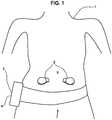
- FIG. 1schematically shows a person 1 carrying an apparatus 2 for regulating the concentration of glucose in the blood of the person.
- the apparatus 2comprises a system 9 of multiple sensor devices 3A, 3B, although the apparatus 2 could also comprise only a single sensor device 3.
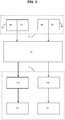
- Each sensor device 3A, 3Bis connected to a controller 10, which in turn is connected to a pump means 4, which serves to introduce substances influencing the blood glucose levels into the body of the person under control of the controller 10.
- the pump means 4includes at least one pump 11 and at least one cannula or catheter 5 connected to the pump 11.
- the apparatus 2comprises two pumps 11A, 11B, each connected to a respective cannula or catheter 5A, 5B.
- Each of said sensor devices 3comprises a glucose sensor 6 that is arranged to measure the concentration of glucose in the body of the person 1 and at least one further sensor 7 that is arranged to monitor a further characteristic of the person.
- the further characteristicmay be a bodily characteristic, for example the person's heart rate or the person's body temperature. Further bodily characteristics include the acidity of the person's blood, the presence of ketone bodies or the galvanic resistance of the person's skin. Accordingly, the further sensor 7 may be a heart rate sensor, a temperature sensor, a pH sensor, a ketone sensor or a skin resistance sensor, respectively.
- the further sensor 7may be a GPS receiver or an accelerometer, respectively.
- the acceleration that is measuredmay be the acceleration of the person 1, which may be derived from the person's speed, which in turn may be derived from the person's position.
- the accelerationmay also be an acceleration of a body part, which may be indicative of a particular type of physical activity, e.g. running or cycling. In that case typically an accelerometer is attached to the relevant body part.
- the further sensors 7A, 7Bmay be different sensors, so that a greater number of characteristics can be monitored simultaneously.
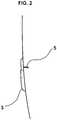
- part of the apparatus 2may be invasive and extend through the skin of the person 1.
- the invasive part of the apparatusmay be the cannula or catheter 5 which serves for introducing blood glucose influencing substances into the body of the person 1.
- the cannula or catheter 5may also serve for measuring the glucose concentration and/or for monitoring said further characteristic, if the further characteristic is a bodily characteristic.
- the two pumps 11A, 11B of the pump means 4may serve for introducing different glucose influencing substances.
- Each cannula or catheter 5may be one shared cannula or catheter with two passages, wherein both passages serve for different glucose influencing substance transport.
- the glucose sensors 6 and/or the further sensors 7may also be separate therefrom.
- the further sensor 7is arranged for monitoring a non-bodily characteristic, its location on the person's body may be spaced apart from the glucose sensor 6 and from the cannula or catheter 5.
- the glucose sensors 6 and the further sensors 7are arranged to send output signals to the controller 10 by means of connections 8. These connections 8 may be wired or wireless communications channels.
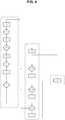
- Fig. 4One way in which the apparatus 2 may be used to regulate the blood glucose level of the person is illustrated in Fig. 4 .
- a sampleis taken from a measurement by the first glucose sensor 6A (step 100). Then a determination is made if the sample is valid (step 101). This determination involves checking the measurement for noise and plausibility. If the sample cannot be validated, then the program returns to step 100 and a new sample taken by sensor 6A is selected.
- a sampleis taken from a measurement of a second sensor (step 102).
- the sampleis a glucose measurement by the second glucose sensor 6B. Again, a determination is made whether or not the sample is valid.
- the amount of blood glucose level influencing substance to be administeredis calculated only on the basis of the measurement performed by the first glucose sensor (step 108). The calculated amount is then administered (step 115).
- a sampleis taken from a measurement by a third sensor 7A (step 104).
- the third sampleis taken from a measurement of skin resistance by means of a galvanic resistance sensor 7A.
- step 105a determination is made whether or not the third sample is valid.
- step 109the samples from the first and second sensors 6A, 6B are compared. In case the values of these samples are found to be incompatible, the program returns to step 100 and a new sample from the glucose measurement sensor 6A is taken.
- the amount of blood glucose level influencing substance to be administeredis calculated on the basis of the measurements performed by the first and second glucose sensors 6A, 6B (step 110). In this embodiment an average value of the two glucose measurements is determined. Subsequently, the calculated amount of blood glucose level influencing substance is administered (step 115).
- a sampleis taken from a measurement by a fourth sensor 7B (step 106).
- the fourth sampleis taken from an acceleration measurement by means of an accelerometer 7B.
- step 111the samples from the first, second and third sensors 6A, 6B, 7A are compared. In case the values of these samples are found to be incompatible, the program returns to step 100 and a new sample from the glucose measurement sensor 6A is taken.
- the amount of blood glucose level influencing substance to be administeredis calculated on the basis of the measurements performed by the first and second glucose sensors 6A, 6B and the skin resistance sensor 7A (step 112).
- the values of the two glucose measurementsare compared to the galvanic skin resistance. If an increased level of perspiration is measured by the skin resistance sensor 7A while the blood glucose levels measured by the first and second glucose sensors 6A, 6B are low, this may be an indication of a hypoglycemia. This may lead to a higher or lower dose of the blood glucose level influencing substance being administered than would be done at normal level levels of perspiration. Then the calculated amount of blood glucose level influencing substance is administered (step 115).
- step 113the samples from the first, second, third and fourth sensors 6A, 6B, 7A, 7B are compared. In case the values of these samples are found to be incompatible, the program returns to step 100 and a new sample from the glucose measurement sensor 6A is taken.
- the amount of blood glucose level influencing substance to be administeredis calculated on the basis of the measurements performed by the first and second glucose sensors 6A, 6B, the skin resistance sensor 7A and the accelerometer 7B (step 114).
- the values of the two glucose measurementsare compared to the galvanic skin resistance and the acceleration. If an increased level of perspiration is measured at low blood glucose levels while the person is physically active, as indicated by the accelerometer 7B, this may lead to a higher or lower dose of the blood glucose level influencing substance being administered than would be done if the person were sweating at low glucose levels and no physical activity. Then the calculated amount of blood glucose level influencing substance is administered (step 115).
Landscapes
- Health & Medical Sciences (AREA)
- Life Sciences & Earth Sciences (AREA)
- Biomedical Technology (AREA)
- Engineering & Computer Science (AREA)
- Heart & Thoracic Surgery (AREA)
- Veterinary Medicine (AREA)
- Animal Behavior & Ethology (AREA)
- General Health & Medical Sciences (AREA)
- Public Health (AREA)
- Anesthesiology (AREA)
- Hematology (AREA)
- Vascular Medicine (AREA)
- Diabetes (AREA)
- Physics & Mathematics (AREA)
- Biophysics (AREA)
- Emergency Medicine (AREA)
- Optics & Photonics (AREA)
- Pathology (AREA)
- Medical Informatics (AREA)
- Molecular Biology (AREA)
- Surgery (AREA)
- Gastroenterology & Hepatology (AREA)
- Pulmonology (AREA)
- Measurement Of The Respiration, Hearing Ability, Form, And Blood Characteristics Of Living Organisms (AREA)
Abstract
Description
- The invention relates to an apparatus for regulating the concentration of glucose in the blood of a person. In particular the invention relates to such an apparatus, comprising:
- at least one glucose sensor that is arranged to measure the glucose concentration of the person, for example in the interstitial fluid or blood;
- a pump means for selectively introducing at least one substance influencing the blood glucose levels into the body of the person, for instance by means of at least one cannula or catheter to be inserted into the body of said person, and
- a control means for controlling said at least one substance influencing the blood glucose levels to be introduced to the person based on data received from said glucose sensor.
- Such an apparatus is known per se. For example, such an apparatus is known from the international patent application
WO2007/049961 . - It is an object of the invention to improve apparatus disclosed in
WO2007/049961 . - This object is achieved by providing an apparatus of the type described in the preamble that is characterized by at least one further sensor that is arranged to monitor a further characteristic of the person.
- Monitoring said further characteristic of the person can be used for more accurately determining a type and/or an amount of the substance that influences blood glucose levels to be provided to the person. Additionally or alternatively, the further characteristic can be used to adapt the behaviour and/or settings of the apparatus.
- Said substance that may influence the blood glucose level may be any suitable substance. Said substance may influence the blood glucose level either directly or indirectly. Said substance may for example be insulin, glucagon or another hormone, or glucose.
- Said further sensor may be any type of sensor. In particular said further sensor may be any sensor providing data that is indicative for the responsiveness of the person to said at least one substance influencing the blood glucose levels and may therefore require an adaption of the amount of substance influencing blood glucose levels to be provided to that person. The amount of substance influencing blood glucose levels to be provided to that person may be calculated using an algorithm taking into account both the glucose concentration of the person as measured by the glucose sensor and the data that is indicative for the responsiveness of the person to said at least one substance influencing blood glucose levels as measured by said at least one further sensor.
- For example, the physical or mental activity of the person may influence the responsiveness of the person to said at least one substance influencing blood glucose levels and may therefore require an adaption of the amount of this substance to be provided to that person. The amount of blood glucose level influencing substance to be provided to that person may be calculated using an algorithm taking into account both the glucose concentration of the person as measured by the glucose sensor and the physical and/or mental activity as measured directly or indirectly by said further sensor.
- Said further sensor may therefore in particular be a sensor for measuring data indicative for the physical and/or mental activity of the person.
- In an embodiment of the apparatus according to the invention said control means for controlling said at least one substance influencing the blood glucose levels to be introduced to the person may also be based on data received from said at least one further sensor.
- In another embodiment of the apparatus according to the invention said at least one further sensor is an accelerometer.
- With use of such an accelerometer various data about the person may be provided. The accelerometer may for example provide data on the type of physical activity of the person and/or the intensity thereof and/or the position and/or orientation of the body.
- In another embodiment of the apparatus according to the invention said at least one further sensor is a heart rate sensor arranged to measure the heart rate of the person.
- If a person is physically or mentally active the heart rate of the person may be relatively high, and vice versa. As such, the heart rate of the person may be indicative for the mental and/or physical activity of the person, such that the behaviour of the apparatus for regulating the glucose concentration in the body of a person may be adapted thereto.
- In another embodiment of the apparatus according to the invention said at least one further sensor is a temperature sensor arranged to measure the body temperature of the person.
- If a person is physically or mentally active and starts sweating, the body temperature of the person may decrease, or vice versa. As such, the body temperature may be indicative for the mental and/or physical activity of the person, such that the behaviour of the apparatus for regulating the glucose concentration in the body of a person may be adapted thereto.
- In yet another embodiment, the at least one further sensor may comprise a pH sensor arranged to measure the acidity of the blood of the person. A lack of insulin may lead to acidification of the body, which may be detected by measuring the pH of the blood.
- In another embodiment of the apparatus the at least one further sensor may comprises a ketone sensor which is arranged to detect ketone bodies in the body of the person. Such ketone bodies are formed when there is a lack of insulin, so that the amount of ketone bodies may serve as an indication e.g. that the person is not responding to an insulin injection.
- It is also conceivable that the at least one further sensor comprises a GPS receiver arranged to detect the location of the person. Although such a GPS receiver can obviously not monitor any bodily characteristic, it does provide information about movement of the person. GPS data allow a determination to be made if the person is exercising, e.g. walking, running or cycling, or if the person is driving around in a car. This information may be useful e.g. in determining a dosage regimen for insulin, glucagon or glucose.
- If the at least one further sensor comprises a skin resistance sensor arranged to measure galvanic resistance of the skin of the person, an indication is provided of the amount of perspiration, since perspiration leads to a change in the galvanic resistance. Perspiration may either be an indication of physical exercise, or an indication of a decrease in the blood glucose level. When the skin resistance sensor is combined with an accelerometer or a GPS receiver, the system can distinguish between perspiration due to physical exercise, which will involve continuous movement or acceleration, and perspiration due to falling blood glucose levels, which may occur even when the person is at rest.
- As indicated above, the output of said at least one further sensor may be used to adapt the behaviour and/or settings of the apparatus for regulating the glucose concentration in the blood of a person. For instance, if the output of the further sensor indicates that the person is asleep, then the volume of an alarm function of the apparatus may be temporarily reduced and/or an alarm may temporarily not be provided and/or a display of the apparatus may be dimmed and/or messages of low priority may not be shown and/or said apparatus may check and if necessary adapt its settings. It is noted that said apparatus may in particular be arranged such that it does not provide the alarm or reduces the volume of the alarm function only when the situation is not critical. Said apparatus may return to its normal settings when said person wakes up.
- For example said accelerometer may be used to determine if said person is asleep, because the orientation of said person may be determined thereby, by means of which lying down may be distinguished from standing still.
- In another embodiment of the apparatus according to the invention said apparatus comprises a second glucose sensor that is arranged to measure the concentration of glucose in the body of the person.
- An advantage of providing two glucose sensors is that the measurements may continue if one fails, i.e. for redundancy. Additionally or alternatively, the measurements of the two glucose sensors may be compared to verify the quality of the measurements, or they may be combined to generate an average value. In any event the second glucose sensor is important for the quality and continuity of the monitoring.
- In another embodiment of the apparatus according to the invention said apparatus comprises at least two further sensors.
- Said at least two further sensors may be any type of sensor, for example any type of sensor as described above and/or in the claims. In particular any of said further sensors may be chosen from the group comprising an accelerometer, a heart rate sensor, a temperature sensor, a pH sensor, a ketone sensor, a skin resistance sensor and a GPS receiver
- Said at least two further sensors may be the same or different sensors.
- Said at least two further sensors may be provided for redundancy or for improving the quality of the measurements of the physical and/or mental activity.
- For example, when two accelerometers are provided, the type of physical activity performed by the person may be more accurately determined. The two further sensors may for example be applied to different parts of the body of the person.
- It is noted that for example cycling is a difficult activity to distinguish from other activities. With use of two accelerometers which measure an acceleration of the body of the person at two different positions thereof, it is possible to determine whether the person is cycling or performing another activity.
- Any of said glucose sensor(s) and/or said further sensor(s) may be arranged such that it may be attached to the body of the person.
- Such a glucose sensor and/or further sensor that is attached to the body of the person may provide more accurate information compared to a sensor that is not attached to said person.
- For example, any of said glucose sensor(s) and/or further sensor(s) may be attached to the skin of the person by using an adhesive such that the glucose and/or further sensor sticks to the skin of the person, for example as a plaster.
- Alternatively, any of said glucose sensor(s) and/or further sensor(s) may be an invasive sensor. In such an embodiment that glucose and/or further sensor may be in contact with the bodily fluid or the blood of a patient.
- Said measurement may be performed either through the skin, subcutaneously, or directly in the blood of the patient.
- Said apparatus may be any type of apparatus for regulating the concentration of glucose in the blood of a person such as, but not limited thereto, an artificial pancreas, a bionic pancreas, a closed loop glucose control system, a low glucose suspend system or a hybrid closed loop control system,
- An advantage of such apparatuses is that they may automatically calculate the required amount of blood glucose influencing substances to be injected to achieve stable blood glucose levels. These substances may be introduced in the body with or without intervention of the user.
- Such apparatuses may make use of an algorithm which incorporates an adjustable curve corresponding to the amount of blood glucose influencing substances introduced into the body of the person and the nominal concentration of the glucose in the body of the person as a reaction thereto. The data provided by said (second) further sensor may be used in this algorithm or adjustable curve.
- In particular the apparatus may be the apparatus described
WO2007/049961 which is incorporated herein in its entirety by reference. - In another embodiment of the apparatus according to the invention the pump means comprise two pumps, one for introducing substances to increase the blood glucose levels of the person and one for introducing substances to decrease the blood glucose levels of the person , and an individual cannula or catheter is added to each pump.
- In another embodiment of the apparatus according to the invention the pump means comprise two pumps, one for introducing substances to increase the blood glucose levels of the person and one for introducing substances to decrease the blood glucose levels of the person, and one shared cannula or catheter with two passages is added to the two pumps, wherein one serves for transport of substances to increase the blood glucose levels of the person and one for transport of substances to decrease the blood glucose levels of the person.
- In an embodiment of the apparatus according to the invention any of the (shared) cannula(s) or catheter(s) comprise(s) said glucose sensor(s) and/or said at least one further sensor(s). For example, said glucose sensor(s) and/or said further sensor(s) may be carried by, or may be part of any of said (shared) cannula(s) or catheter(s).
- The invention will be further elucidated with reference to a figure shown in a drawing in which:
Figure 1 schematically shows a person carrying an apparatus according to the invention;Figure 2 is a cross section through a sensor device of the system offigure 1 ;Fig. 3 is a schematic representation of the glucose concentration regulating apparatus of the invention; andFig. 4 is a flow chart showing how sensor outputs are used to control a supply of a blood glucose influencing substance to a person.Figure 1 schematically shows aperson 1 carrying anapparatus 2 for regulating the concentration of glucose in the blood of the person. In the illustrated embodiment theapparatus 2 comprises asystem 9 ofmultiple sensor devices 3A, 3B, although theapparatus 2 could also comprise only asingle sensor device 3. Eachsensor device 3A, 3B is connected to acontroller 10, which in turn is connected to a pump means 4, which serves to introduce substances influencing the blood glucose levels into the body of the person under control of thecontroller 10. The pump means 4 includes at least one pump 11 and at least one cannula orcatheter 5 connected to the pump 11. In the illustrated embodiment theapparatus 2 comprises twopumps catheter - Each of said
sensor devices 3 comprises a glucose sensor 6 that is arranged to measure the concentration of glucose in the body of theperson 1 and at least one further sensor 7 that is arranged to monitor a further characteristic of the person. - The further characteristic may be a bodily characteristic, for example the person's heart rate or the person's body temperature. Further bodily characteristics include the acidity of the person's blood, the presence of ketone bodies or the galvanic resistance of the person's skin. Accordingly, the further sensor 7 may be a heart rate sensor, a temperature sensor, a pH sensor, a ketone sensor or a skin resistance sensor, respectively.
- Other characteristics, which are not related to the person's body, include the person's position, the speed with which the person moves or the person's acceleration. For monitoring or measuring these characteristics the further sensor 7 may be a GPS receiver or an accelerometer, respectively. The acceleration that is measured may be the acceleration of the
person 1, which may be derived from the person's speed, which in turn may be derived from the person's position. However, the acceleration may also be an acceleration of a body part, which may be indicative of a particular type of physical activity, e.g. running or cycling. In that case typically an accelerometer is attached to the relevant body part. - In case of a
sensor system 9 includingmultiple sensor devices 3A, 3B, thefurther sensors - As is shown in
figure 2 , part of theapparatus 2 may be invasive and extend through the skin of theperson 1. The invasive part of the apparatus may be the cannula orcatheter 5 which serves for introducing blood glucose influencing substances into the body of theperson 1. The cannula orcatheter 5 may also serve for measuring the glucose concentration and/or for monitoring said further characteristic, if the further characteristic is a bodily characteristic. The twopumps catheter 5 may be one shared cannula or catheter with two passages, wherein both passages serve for different glucose influencing substance transport. - Instead of being integrated with the cannula or
catheter 5 for introducing blood glucose influencing substances into the body of theperson 1, the glucose sensors 6 and/or the further sensors 7 may also be separate therefrom. In particular when the further sensor 7 is arranged for monitoring a non-bodily characteristic, its location on the person's body may be spaced apart from the glucose sensor 6 and from the cannula orcatheter 5. The glucose sensors 6 and the further sensors 7 are arranged to send output signals to thecontroller 10 by means of connections 8. These connections 8 may be wired or wireless communications channels. - One way in which the
apparatus 2 may be used to regulate the blood glucose level of the person is illustrated inFig. 4 . A sample is taken from a measurement by thefirst glucose sensor 6A (step 100). Then a determination is made if the sample is valid (step 101). This determination involves checking the measurement for noise and plausibility. If the sample cannot be validated, then the program returns to step 100 and a new sample taken bysensor 6A is selected. - If the measurement is validated, then a sample is taken from a measurement of a second sensor (step 102). In this embodiment the sample is a glucose measurement by the
second glucose sensor 6B. Again, a determination is made whether or not the sample is valid. - If the sample is not validated, then the amount of blood glucose level influencing substance to be administered is calculated only on the basis of the measurement performed by the first glucose sensor (step 108). The calculated amount is then administered (step 115).
- If the sample taken from the
second glucose sensor 6B is found to be valid, then a sample is taken from a measurement by athird sensor 7A (step 104). In this embodiment the third sample is taken from a measurement of skin resistance by means of agalvanic resistance sensor 7A. - Again, a determination is made whether or not the third sample is valid (step 105).
- If the sample is found not to be valid, then the samples from the first and
second sensors glucose measurement sensor 6A is taken. - If, on the other hand, the samples are found to be compatible, then the amount of blood glucose level influencing substance to be administered is calculated on the basis of the measurements performed by the first and
second glucose sensors - If the sample taken from the
third sensor 7A is validated, then a sample is taken from a measurement by afourth sensor 7B (step 106). In this embodiment, the fourth sample is taken from an acceleration measurement by means of anaccelerometer 7B. - Once again, a determination is made whether or not the sample from the
fourth sensor 7B is valid (step 107). - If the fourth sample is found not to be valid, then the samples from the first, second and
third sensors glucose measurement sensor 6A is taken. - If the samples are found to be compatible, then the amount of blood glucose level influencing substance to be administered is calculated on the basis of the measurements performed by the first and
second glucose sensors skin resistance sensor 7A (step 112). In this embodiment the values of the two glucose measurements are compared to the galvanic skin resistance. If an increased level of perspiration is measured by theskin resistance sensor 7A while the blood glucose levels measured by the first andsecond glucose sensors - In case the fourth sample is validated, then the samples from the first, second, third and
fourth sensors glucose measurement sensor 6A is taken. - If the samples are found to be compatible, then the amount of blood glucose level influencing substance to be administered is calculated on the basis of the measurements performed by the first and
second glucose sensors skin resistance sensor 7A and theaccelerometer 7B (step 114). In this embodiment the values of the two glucose measurements are compared to the galvanic skin resistance and the acceleration. If an increased level of perspiration is measured at low blood glucose levels while the person is physically active, as indicated by theaccelerometer 7B, this may lead to a higher or lower dose of the blood glucose level influencing substance being administered than would be done if the person were sweating at low glucose levels and no physical activity. Then the calculated amount of blood glucose level influencing substance is administered (step 115). - It is noted that the invention is not limited to the shown embodiments but also extends to variants within the scope of the appended claims
Claims (12)
- Apparatus for regulating the concentration of glucose in the blood of a person, said apparatus comprising:- at least one glucose sensor that is arranged to measure the glucose concentration of the person, for example in the interstitial fluid or blood;- a pump means for selectively introducing at least one substance influencing the blood glucose levels into the body of the person, for instance by means of at least one cannula or catheter to be inserted into the body of said person, and- a control means for controlling said at least one substance influencing the blood glucose levels to be introduced to the person based on data received from said glucose sensor,characterized in that said apparatus comprises at least one further sensor that is arranged to monitor a further characteristic of the person.
- Apparatus according to claim 1, wherein said at least one further sensor comprises an accelerometer.
- Apparatus according to claim 1 or 2, wherein said at least one further sensor comprises a heart rate sensor arranged to measure the heart rate of the person.
- Apparatus according to any of the preceding claims, wherein said at least one further sensor comprises a temperature sensor arranged to measure the body temperature of the person.
- Apparatus according to any of the preceding claims, wherein said at least one further sensor comprises a pH sensor arranged to measure the acidity of the blood of the person.
- Apparatus according to any of the preceding claims, wherein said at least one further sensor comprises a ketone sensor arranged to detect ketone bodies in the body of the person.
- Apparatus according to any of the preceding claims, wherein said at least one further sensor comprises a GPS receiver arranged to detect the location of the person.
- Apparatus according to any of the preceding claims, wherein said at least one further sensor comprises a skin resistance sensor arranged to measure galvanic resistance of the skin of the person.
- Apparatus according to any of the preceding claims, wherein any of said at least one glucose sensor(s) and/or said at least one further sensor(s) is/are arranged such that it may be attached to the body of the person, for example as an invasive sensor.
- Apparatus according to claim 9, wherein the or a cannula or catheter comprises any of said at least one glucose sensor(s) and/or said at least one further sensor(s).
- Apparatus according to any of the preceding claims, wherein said apparatus is arranged to determine if said person is asleep or awake.
- Apparatus according to claim 11, wherein, if said apparatus determines that said person is asleep, said apparatus is arranged to:- temporarily reduce a volume of an alarm function of the apparatus; and/or- temporarily not provide an alarm;- temporarily dim a display of the apparatus; and/or- temporarily not show messages of low priority; and/or- check and if necessary adapts its settings.
Priority Applications (5)
| Application Number | Priority Date | Filing Date | Title |
|---|---|---|---|
| EP16201413.8AEP3329847A1 (en) | 2016-11-30 | 2016-11-30 | Apparatus for regulating the concentration of glucose in the blood of a person |
| NL2019992ANL2019992B1 (en) | 2016-11-30 | 2017-11-29 | Apparatus for regulating the concentration of glucose in the blood of a person |
| EP17808418.2AEP3547917B1 (en) | 2016-11-30 | 2017-11-29 | Apparatus for regulating the concentration of glucose in the blood of a person |
| US16/464,883US11439753B2 (en) | 2016-11-30 | 2017-11-29 | Apparatus for regulating the concentration of glucose in the blood of a person |
| PCT/EP2017/080830WO2018099976A1 (en) | 2016-11-30 | 2017-11-29 | Apparatus for regulating the concentration of glucose in the blood of a person |
Applications Claiming Priority (1)
| Application Number | Priority Date | Filing Date | Title |
|---|---|---|---|
| EP16201413.8AEP3329847A1 (en) | 2016-11-30 | 2016-11-30 | Apparatus for regulating the concentration of glucose in the blood of a person |
Publications (1)
| Publication Number | Publication Date |
|---|---|
| EP3329847A1true EP3329847A1 (en) | 2018-06-06 |
Family
ID=57460359
Family Applications (2)
| Application Number | Title | Priority Date | Filing Date |
|---|---|---|---|
| EP16201413.8AWithdrawnEP3329847A1 (en) | 2016-11-30 | 2016-11-30 | Apparatus for regulating the concentration of glucose in the blood of a person |
| EP17808418.2AActiveEP3547917B1 (en) | 2016-11-30 | 2017-11-29 | Apparatus for regulating the concentration of glucose in the blood of a person |
Family Applications After (1)
| Application Number | Title | Priority Date | Filing Date |
|---|---|---|---|
| EP17808418.2AActiveEP3547917B1 (en) | 2016-11-30 | 2017-11-29 | Apparatus for regulating the concentration of glucose in the blood of a person |
Country Status (4)
| Country | Link |
|---|---|
| US (1) | US11439753B2 (en) |
| EP (2) | EP3329847A1 (en) |
| NL (1) | NL2019992B1 (en) |
| WO (1) | WO2018099976A1 (en) |
Cited By (2)
| Publication number | Priority date | Publication date | Assignee | Title |
|---|---|---|---|---|
| NL2027927B1 (en)* | 2021-04-07 | 2022-10-19 | Inreda Diabetic B V | Infusion set, system comprising such an infusion set, and infusion set system comprising such an infusion set |
| US12128213B2 (en) | 2020-01-30 | 2024-10-29 | Willow Laboratories, Inc. | Method of operating redundant staggered disease management systems |
Citations (7)
| Publication number | Priority date | Publication date | Assignee | Title |
|---|---|---|---|---|
| US4403984A (en)* | 1979-12-28 | 1983-09-13 | Biotek, Inc. | System for demand-based adminstration of insulin |
| EP1703839A2 (en)* | 2003-12-31 | 2006-09-27 | Medtronic Minimed, Inc. | System for monitoring physiological characteristics |
| WO2007049961A2 (en) | 2005-10-26 | 2007-05-03 | Inreda Diabetic B.V. | Device for automatic regulation of the concentration of glucose in the blood of a diabetes patient |
| WO2009081262A1 (en)* | 2007-12-18 | 2009-07-02 | Insuline Medical Ltd. | Drug delivery device with sensor for closed-loop operation |
| EP2353116A2 (en)* | 2008-10-15 | 2011-08-10 | Asante Solutions, Inc. | Infusion pump system and methods |
| US20130345664A1 (en)* | 2012-06-25 | 2013-12-26 | International Business Machines Corporation | Managing blood glucose levels |
| US20150119667A1 (en)* | 2013-10-28 | 2015-04-30 | Dexcom, Inc. | Devices used in connection with continuous analyte monitoring that provide the user with one or more notifications, and related methods |
Family Cites Families (17)
| Publication number | Priority date | Publication date | Assignee | Title |
|---|---|---|---|---|
| US5474552A (en)* | 1994-06-27 | 1995-12-12 | Cb-Carmel Biotechnology Ltd. | Implantable drug delivery pump |
| GB9704737D0 (en)* | 1997-03-07 | 1997-04-23 | Optel Instr Limited | Biological measurement system |
| US20030036683A1 (en) | 2000-05-01 | 2003-02-20 | Kehr Bruce A. | Method, system and computer program product for internet-enabled, patient monitoring system |
| AU2001275290A1 (en)* | 2000-06-07 | 2001-12-17 | Healthetech, Inc. | Breath ketone analyzer |
| US6827702B2 (en)* | 2001-09-07 | 2004-12-07 | Medtronic Minimed, Inc. | Safety limits for closed-loop infusion pump control |
| US6740072B2 (en)* | 2001-09-07 | 2004-05-25 | Medtronic Minimed, Inc. | System and method for providing closed loop infusion formulation delivery |
| DE10153416A1 (en)* | 2001-10-30 | 2003-05-22 | Berufsgenossenschaftlicher Ver | Device for examining disorders of bladder function |
| US7299082B2 (en)* | 2003-10-31 | 2007-11-20 | Abbott Diabetes Care, Inc. | Method of calibrating an analyte-measurement device, and associated methods, devices and systems |
| JP2008522684A (en)* | 2004-12-08 | 2008-07-03 | ノボ・ノルデイスク・エー/エス | Apparatus and method for assisting selection of site for skin invasive treatment |
| CN101107025A (en)* | 2005-01-17 | 2008-01-16 | 诺和诺德公司 | Fluid delivery device with integrated monitoring of physiological characteristics |
| US10010669B2 (en)* | 2006-02-09 | 2018-07-03 | Deka Products Limited Partnership | Systems and methods for fluid delivery |
| US7946985B2 (en)* | 2006-12-29 | 2011-05-24 | Medtronic Minimed, Inc. | Method and system for providing sensor redundancy |
| US20100268043A1 (en) | 2007-11-07 | 2010-10-21 | Ofer Yodfat | Device and Method for Preventing Diabetic Complications |
| DE102007053752B4 (en)* | 2007-11-12 | 2019-04-04 | Fresenius Medical Care Deutschland Gmbh | A method for determining at least one index concerning the glucose metabolism of a patient and device therefor |
| US10195343B2 (en) | 2010-02-05 | 2019-02-05 | Deka Products Limited Partnership | Devices, methods and systems for wireless control of medical devices |
| US9227014B2 (en) | 2013-02-07 | 2016-01-05 | The Board Of Trustees Of The Laland Stanford Junior University | Kalman filter based on-off switch for insulin pump |
| US9603561B2 (en)* | 2013-12-16 | 2017-03-28 | Medtronic Minimed, Inc. | Methods and systems for improving the reliability of orthogonally redundant sensors |
- 2016
- 2016-11-30EPEP16201413.8Apatent/EP3329847A1/ennot_activeWithdrawn
- 2017
- 2017-11-29USUS16/464,883patent/US11439753B2/enactiveActive
- 2017-11-29NLNL2019992Apatent/NL2019992B1/enactive
- 2017-11-29WOPCT/EP2017/080830patent/WO2018099976A1/ennot_activeCeased
- 2017-11-29EPEP17808418.2Apatent/EP3547917B1/enactiveActive
Patent Citations (7)
| Publication number | Priority date | Publication date | Assignee | Title |
|---|---|---|---|---|
| US4403984A (en)* | 1979-12-28 | 1983-09-13 | Biotek, Inc. | System for demand-based adminstration of insulin |
| EP1703839A2 (en)* | 2003-12-31 | 2006-09-27 | Medtronic Minimed, Inc. | System for monitoring physiological characteristics |
| WO2007049961A2 (en) | 2005-10-26 | 2007-05-03 | Inreda Diabetic B.V. | Device for automatic regulation of the concentration of glucose in the blood of a diabetes patient |
| WO2009081262A1 (en)* | 2007-12-18 | 2009-07-02 | Insuline Medical Ltd. | Drug delivery device with sensor for closed-loop operation |
| EP2353116A2 (en)* | 2008-10-15 | 2011-08-10 | Asante Solutions, Inc. | Infusion pump system and methods |
| US20130345664A1 (en)* | 2012-06-25 | 2013-12-26 | International Business Machines Corporation | Managing blood glucose levels |
| US20150119667A1 (en)* | 2013-10-28 | 2015-04-30 | Dexcom, Inc. | Devices used in connection with continuous analyte monitoring that provide the user with one or more notifications, and related methods |
Cited By (2)
| Publication number | Priority date | Publication date | Assignee | Title |
|---|---|---|---|---|
| US12128213B2 (en) | 2020-01-30 | 2024-10-29 | Willow Laboratories, Inc. | Method of operating redundant staggered disease management systems |
| NL2027927B1 (en)* | 2021-04-07 | 2022-10-19 | Inreda Diabetic B V | Infusion set, system comprising such an infusion set, and infusion set system comprising such an infusion set |
Also Published As
| Publication number | Publication date |
|---|---|
| US20200093989A1 (en) | 2020-03-26 |
| EP3547917A1 (en) | 2019-10-09 |
| EP3547917B1 (en) | 2024-07-10 |
| EP3547917C0 (en) | 2024-07-10 |
| US11439753B2 (en) | 2022-09-13 |
| WO2018099976A1 (en) | 2018-06-07 |
| NL2019992B1 (en) | 2019-12-13 |
| NL2019992A (en) | 2018-06-08 |
Similar Documents
| Publication | Publication Date | Title |
|---|---|---|
| US11511039B2 (en) | Insulin delivery methods, systems and devices | |
| JP7171814B2 (en) | Regulation of insulin delivery | |
| US11534548B2 (en) | System and method for a closed loop control in an artificial pancreas | |
| US10406286B2 (en) | Closed loop control with reference measurement and methods thereof | |
| US11412994B2 (en) | System and method for algorithm adjustment applying motions sensor in a CGM system | |
| EP1848323B1 (en) | Bolus estimator for semi-closed loop infusion system | |
| US20170143276A1 (en) | Determination and application of glucose sensor reliability indicator and/or metric | |
| JP6178243B2 (en) | Calculating drug dose | |
| WO2018132765A1 (en) | Insulin delivery methods, systems and devices | |
| US20090209938A1 (en) | Apparatus and method for dosing drug and wireless remote control of a drug pump | |
| US20100057040A1 (en) | Robust Closed Loop Control And Methods | |
| CN108261585B (en) | System and method for closed-loop control of artificial pancreas | |
| US20090105636A1 (en) | Closed Loop Control System With Safety Parameters And Methods | |
| WO2009115948A1 (en) | A closed loop system for automatically controlling a physiological variable of a patient | |
| JP2011200457A5 (en) | ||
| US11986630B2 (en) | Dual hormone delivery system for reducing impending hypoglycemia and/or hyperglycemia risk | |
| KR102325887B1 (en) | System and Method for Blood Glucose Control | |
| US11439753B2 (en) | Apparatus for regulating the concentration of glucose in the blood of a person | |
| CN108281200A (en) | A kind of method of the adjustment algorithm in dynamic blood sugar monitoring system and the dynamic blood sugar monitoring system of application this method | |
| US20230263430A1 (en) | Closed-loop artificial pancreas insulin infusion control system | |
| JP2023526663A (en) | Insulin delivery system, method and device | |
| US20250127432A1 (en) | Glucose monitoring system | |
| JP2019519276A (en) | Sensor device for detecting at least one analyte in a body fluid of a user | |
| EP3939504A1 (en) | Device for obtaining an indicator of a microcirculatory condition |
Legal Events
| Date | Code | Title | Description |
|---|---|---|---|
| PUAI | Public reference made under article 153(3) epc to a published international application that has entered the european phase | Free format text:ORIGINAL CODE: 0009012 | |
| STAA | Information on the status of an ep patent application or granted ep patent | Free format text:STATUS: THE APPLICATION HAS BEEN PUBLISHED | |
| AK | Designated contracting states | Kind code of ref document:A1 Designated state(s):AL AT BE BG CH CY CZ DE DK EE ES FI FR GB GR HR HU IE IS IT LI LT LU LV MC MK MT NL NO PL PT RO RS SE SI SK SM TR | |
| AX | Request for extension of the european patent | Extension state:BA ME | |
| STAA | Information on the status of an ep patent application or granted ep patent | Free format text:STATUS: REQUEST FOR EXAMINATION WAS MADE | |
| 17P | Request for examination filed | Effective date:20181206 | |
| RBV | Designated contracting states (corrected) | Designated state(s):AL AT BE BG CH CY CZ DE DK EE ES FI FR GB GR HR HU IE IS IT LI LT LU LV MC MK MT NL NO PL PT RO RS SE SI SK SM TR | |
| STAA | Information on the status of an ep patent application or granted ep patent | Free format text:STATUS: EXAMINATION IS IN PROGRESS | |
| 17Q | First examination report despatched | Effective date:20201021 | |
| RAP3 | Party data changed (applicant data changed or rights of an application transferred) | Owner name:INREDA DIABETIC B.V. | |
| STAA | Information on the status of an ep patent application or granted ep patent | Free format text:STATUS: THE APPLICATION IS DEEMED TO BE WITHDRAWN | |
| 18D | Application deemed to be withdrawn | Effective date:20241029 |