EP3318807A1 - Method for detecting configuration of a ventilation system and a ventilation system - Google Patents
Method for detecting configuration of a ventilation system and a ventilation systemDownload PDFInfo
- Publication number
- EP3318807A1 EP3318807A1EP17197975.0AEP17197975AEP3318807A1EP 3318807 A1EP3318807 A1EP 3318807A1EP 17197975 AEP17197975 AEP 17197975AEP 3318807 A1EP3318807 A1EP 3318807A1
- Authority
- EP
- European Patent Office
- Prior art keywords
- exhaust air
- valves
- inlet
- exhaust
- air valves
- Prior art date
- Legal status (The legal status is an assumption and is not a legal conclusion. Google has not performed a legal analysis and makes no representation as to the accuracy of the status listed.)
- Granted
Links
- 238000009423ventilationMethods0.000titleclaimsabstractdescription138
- 238000000034methodMethods0.000titleclaimsabstractdescription51
- 238000001514detection methodMethods0.000claimsabstractdescription16
- 230000003116impacting effectEffects0.000claimsdescription9
- 230000005540biological transmissionEffects0.000claimsdescription4
- 238000005259measurementMethods0.000description6
- 238000007664blowingMethods0.000description2
- 230000001419dependent effectEffects0.000description1
- 238000005399mechanical ventilationMethods0.000description1
Images
Classifications
- F—MECHANICAL ENGINEERING; LIGHTING; HEATING; WEAPONS; BLASTING
- F24—HEATING; RANGES; VENTILATING
- F24F—AIR-CONDITIONING; AIR-HUMIDIFICATION; VENTILATION; USE OF AIR CURRENTS FOR SCREENING
- F24F11/00—Control or safety arrangements
- F24F11/30—Control or safety arrangements for purposes related to the operation of the system, e.g. for safety or monitoring
- F24F11/49—Control or safety arrangements for purposes related to the operation of the system, e.g. for safety or monitoring ensuring correct operation, e.g. by trial operation or configuration checks
- F—MECHANICAL ENGINEERING; LIGHTING; HEATING; WEAPONS; BLASTING
- F24—HEATING; RANGES; VENTILATING
- F24F—AIR-CONDITIONING; AIR-HUMIDIFICATION; VENTILATION; USE OF AIR CURRENTS FOR SCREENING
- F24F7/00—Ventilation
- F24F7/04—Ventilation with ducting systems, e.g. by double walls; with natural circulation
- F24F7/06—Ventilation with ducting systems, e.g. by double walls; with natural circulation with forced air circulation, e.g. by fan positioning of a ventilator in or against a conduit
- F24F7/08—Ventilation with ducting systems, e.g. by double walls; with natural circulation with forced air circulation, e.g. by fan positioning of a ventilator in or against a conduit with separate ducts for supplied and exhausted air with provisions for reversal of the input and output systems
- F—MECHANICAL ENGINEERING; LIGHTING; HEATING; WEAPONS; BLASTING
- F24—HEATING; RANGES; VENTILATING
- F24F—AIR-CONDITIONING; AIR-HUMIDIFICATION; VENTILATION; USE OF AIR CURRENTS FOR SCREENING
- F24F11/00—Control or safety arrangements
- F24F11/0001—Control or safety arrangements for ventilation
- F—MECHANICAL ENGINEERING; LIGHTING; HEATING; WEAPONS; BLASTING
- F24—HEATING; RANGES; VENTILATING
- F24F—AIR-CONDITIONING; AIR-HUMIDIFICATION; VENTILATION; USE OF AIR CURRENTS FOR SCREENING
- F24F11/00—Control or safety arrangements
- F24F11/30—Control or safety arrangements for purposes related to the operation of the system, e.g. for safety or monitoring
- F—MECHANICAL ENGINEERING; LIGHTING; HEATING; WEAPONS; BLASTING
- F24—HEATING; RANGES; VENTILATING
- F24F—AIR-CONDITIONING; AIR-HUMIDIFICATION; VENTILATION; USE OF AIR CURRENTS FOR SCREENING
- F24F11/00—Control or safety arrangements
- F24F11/30—Control or safety arrangements for purposes related to the operation of the system, e.g. for safety or monitoring
- F24F11/48—Control or safety arrangements for purposes related to the operation of the system, e.g. for safety or monitoring prior to normal operation, e.g. pre-heating or pre-cooling
- F—MECHANICAL ENGINEERING; LIGHTING; HEATING; WEAPONS; BLASTING
- F24—HEATING; RANGES; VENTILATING
- F24F—AIR-CONDITIONING; AIR-HUMIDIFICATION; VENTILATION; USE OF AIR CURRENTS FOR SCREENING
- F24F11/00—Control or safety arrangements
- F24F11/62—Control or safety arrangements characterised by the type of control or by internal processing, e.g. using fuzzy logic, adaptive control or estimation of values
- H—ELECTRICITY
- H04—ELECTRIC COMMUNICATION TECHNIQUE
- H04L—TRANSMISSION OF DIGITAL INFORMATION, e.g. TELEGRAPHIC COMMUNICATION
- H04L61/00—Network arrangements, protocols or services for addressing or naming
- H04L61/50—Address allocation
- F—MECHANICAL ENGINEERING; LIGHTING; HEATING; WEAPONS; BLASTING
- F24—HEATING; RANGES; VENTILATING
- F24F—AIR-CONDITIONING; AIR-HUMIDIFICATION; VENTILATION; USE OF AIR CURRENTS FOR SCREENING
- F24F13/00—Details common to, or for air-conditioning, air-humidification, ventilation or use of air currents for screening
- F24F13/08—Air-flow control members, e.g. louvres, grilles, flaps or guide plates
- F24F13/10—Air-flow control members, e.g. louvres, grilles, flaps or guide plates movable, e.g. dampers
- F24F13/14—Air-flow control members, e.g. louvres, grilles, flaps or guide plates movable, e.g. dampers built up of tilting members, e.g. louvre
- F24F13/1426—Air-flow control members, e.g. louvres, grilles, flaps or guide plates movable, e.g. dampers built up of tilting members, e.g. louvre characterised by actuating means
- F24F2013/1433—Air-flow control members, e.g. louvres, grilles, flaps or guide plates movable, e.g. dampers built up of tilting members, e.g. louvre characterised by actuating means with electric motors
Definitions
- one exhaust air valve in the first premise connected to the first exhaust air ductis adjusted to the second flow position, in which second flow position air flow through the valve is substantially bigger than in the first flow position, pressure differences are measured over the exhaust air valves in the first flow position and the measured pressure differences are compared with the reference pressure values of the said exhaust air valves.
- Adjusting one exhaust air valve to the second flow positionleads to the increase of negative pressure in this premise so that the exhaust air valve adjusted to the second flow position impacts all pressure differences in the same premise with this valve, measured over the valves in the first flow position.
- adjusting the exhaust air valves and/or inlet air valves in the ventilation system to the first flow position and the second flow position and the operation of the fans of the ventilation unitsare controlled by a control apparatus, which is part of the system.
- the measured flow velocityis compared with the reference velocity values of the exhaust air valves.
- the exhaust air valves in the first flow position, the measured flow velocity of which deviates substantially from the reference velocity valueare determined as valves being in the same premise with the exhaust air valve in the second flow position, and they are given the same premise data as the exhaust air valve in the second flow position.
- the identifiers of the exhaust air valves with the same premise dataare transmitted to the control apparatus.
- the inlet air valves in the first flow positionare determined as valves being in the same premise with the inlet air valve in the second flow position, and they are given the same premise data as the inlet air valve in the second flow position.
- the identifiers of the inlet air valves with the same premise dataare transmitted to the control apparatus. Measuring the pressure difference impacting over the valves makes it possible to close substantially entirely the air flow apertures of the exhaust air valves and/or inlet air valves in the first flow position. In this case, no air flows through the valves in the first flow position.
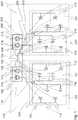
- FIG 1there is illustrated in an exemplary manner a ventilation system of the invention as a diagrammatic plan.
- the ventilation systemcomprises two subsystems, the first subsystem 100 and the second subsystem 200.
- the first subsystemincludes the first ventilation unit 102 with the exhaust fan 104 and inlet fan 106.
- the first exhaust air duct 108is connected to the exhaust fan, and the first inlet air duct 110 is connected to the inlet fan.
- the ends of the exhaust air duct and the inlet air ductare led to the first premise 120 and second premise 121.
- the first and second premise illustrated in Figure 1are individual apartments of a building, and they may comprise several rooms.
- the second subsystem 200contains the second ventilation unit 202, which has the exhaust fan 204 and inlet fan 206.
- the second exhaust air duct 208is connected to the exhaust fan and the second inlet air duct 210 is connected to the inlet fan.
- the ends of the exhaust air duct and inlet air ductare led to the first and second premise 220, 221, i.e. to apartments of a building, which may comprise several rooms.
- the inlet valve 214At the ends of the inlet valve 214 and at the ends of the exhaust air duct there is the exhaust air valve 212.
- Fresh airis led in to the ventilation unit along the inlet pipe 216 and discharged along the exhaust pipe 218.
- the control apparatus 122 belonging to the ventilation systemis used to control the operation of the inlet fans 106, 206 and exhaust fans 104, 204 of the ventilation units 102, 202 of both subsystems and the operation of the motors of the exhaust air and inlet air valves belonging to both subsystems.
- the exhaust and inlet air valvesare opened and closed by control commands supplied by the control apparatus.
- the exhaust air valves and inlet air valves as well as the exhaust fans and inlet fansare connected to the control apparatus with the wireless data transmission connection 124.
- the data transmission connectioncan be a radio network, WLAN network of a building, Bluetooth connection or Internet connection. In the latter case, the valves are provided with an IP address and connected to the Internet as a device of its own.
- the inlet air valves belonging to the subsystemsare detected in a respective manner.
- the inlet air fans 106, 206 of all ventilation units belonging to the ventilation systemare switched on, the inlet fan of the ventilation unit belonging to the first subsystem is switched off, the pressure differences of all inlet air valves 114 belonging to the ventilation system are measured and the inlet air valves, the pressure difference of which is close to zero are detected to belong to the first subsystem 100.
- the identifiers of the inlet air valves detected to belong to the first subsystemare transmitted to the control apparatus 122.
- the detectionis continued by opening one exhaust air valve 112 from the second premise 121, 221, by determining the closed exhaust air valves, the measured pressure difference of which deviates substantially from the reference value as valves in the same premise and by giving them the same premise data as the opened exhaust air valve.
- the identifiers of the exhaust air valves with the same premise dataare transmitted to the control apparatus 122.
- all exhaust air valves in the same premisecan be found out.
- the correctness of the determination madecan, nevertheless, be ensured by closing the exhaust air valve opened first and by opening a second exhaust air valve in the same premise and by determining the valves in the same premise with the said second opened exhaust air valve.
- the opening of an inlet air valve in one premiseaffects the air pressure impacting in the premise in question so that the pressure differences measured over the closed inlet air valves in the premise change.
- the closed inlet air valvesare determined as inlet air valves in the same first premise, and they are given the same premise value as the opened inlet air valve.
- the identifiers of the inlet air valves with the same premise valueare transmitted to the control apparatus. The correctness of the detection can be verified in the same way as with the exhaust air valves.
- control apparatushas the data in which premises the inlet and exhaust air valves belonging to the system are located, i.e. the configuration of the ventilation system is saved in the control apparatus.
- the configuration datacan be utilized in the balancing of the ventilation system and in the later adjusting of the ventilation system while in use.
Landscapes
- Engineering & Computer Science (AREA)
- Chemical & Material Sciences (AREA)
- Combustion & Propulsion (AREA)
- Mechanical Engineering (AREA)
- General Engineering & Computer Science (AREA)
- Signal Processing (AREA)
- Computer Networks & Wireless Communication (AREA)
- Physics & Mathematics (AREA)
- Fuzzy Systems (AREA)
- Mathematical Physics (AREA)
- Ventilation (AREA)
- Air Conditioning Control Device (AREA)
Abstract
Description
- The invention relates to a method for detecting the configuration of a ventilation system, the ventilation system comprising a control apparatus, a first subsystem, which first subsystem contains a first ventilation unit with an exhaust fan, a first exhaust air duct connected to the exhaust fan, the ends of the exhaust air duct being led to premises and the ends being provided with exhaust air valves, and in which method exhaust air valves in the premises are detected. The invention further relates to a ventilation system.
- The ventilation of buildings is most often managed by mechanical ventilation systems, with which fresh air is supplied to the interior of the building along inlet ducts and exhaust air is removed from the building along exhaust ducts. Air is made to move in the ducts by means of blowing and suction produced by the ventilation unit. At the ends of the inlet ducts there are provided adjustable inlet air valves and at the ends of the exhaust ducts there are provided adjustable exhaust air valves. By adjusting the position of the valves, the quantity of air flowing through the valve can be set to a desired level. For the moisture-technical functionality of the building it is important to carry out the ventilation so that the building stays slightly underpressurized in all situations.
- In known ventilation systems inlet and exhaust valves are manually adjustable valves, which are set to a certain position in connection with so-called balancing performed in the implementation step of the ventilation system. The inlet and exhaust valves are intended to be maintained in this position through the entire time of use of the building. If the ventilation in the building needs to be boosted or reduced, this is done by altering the blowing or suction capacity of the ventilation unit.
- Before the actual balancing, the valves belonging to the air duct of the blower in each system, i.e. the configuration of the ventilation system must be detected. Traditionally, this has been done by studying the building's ventilation systems and/or flow graphs. Especially in large buildings there may be several ventilation units with several inlet and exhaust fans. Each fan is connected to an own air duct, the ends of which are led to premises or rooms in different parts and floors of the building. In these cases, detecting the configuration of the ventilation system can be slow and laborious. If an error occurs in the detection of the configuration; for example, if a valve is interpreted to belong to an incorrect ventilation duct, this error makes the balancing to be performed at a later stage considerably more difficult.
- It is an object of the invention to introduce a method for detecting the configuration of ventilation and a ventilation system, with which problems related to the prior art can be eliminated. The objects of the invention are achieved with a detection method and ventilation system, which are characterized in what is presented in the independent patent claims. Some advantageous embodiments of the invention are presented in the dependent patent claims.
- The invention relates to a method for detecting the configuration of a ventilation system. The ventilation system comprises a control apparatus and a first subsystem, which includes a first ventilation unit with an exhaust fan. The first subsystem further includes a first exhaust air duct connected to the exhaust fan, the ends of the exhaust air duct being led to premises and provided with an exhaust air valve. In the method, the exhaust air valves in the premises are detected. In the detection, an individualizing identifier is determined for at least part of the exhaust air valves, the exhaust fan of the first ventilation unit is switched on, the exhaust air valves installed into the first exhaust air duct are adjusted to the first flow position, and reference pressure values are determined for the exhaust air valve adjusted to the first flow position by measuring the pressure differences over the said exhaust air valves. After this, one exhaust air valve in the first premise connected to the first exhaust air duct is adjusted to the second flow position, in which second flow position air flow through the valve is substantially bigger than in the first flow position, pressure differences are measured over the exhaust air valves in the first flow position and the measured pressure differences are compared with the reference pressure values of the said exhaust air valves. Adjusting one exhaust air valve to the second flow position leads to the increase of negative pressure in this premise so that the exhaust air valve adjusted to the second flow position impacts all pressure differences in the same premise with this valve, measured over the valves in the first flow position. The exhaust air valves in the first flow position, the measured pressure difference of which deviates substantially from the reference pressure values, are defined as valves in the first premise, and they are given the same premise data as the exhaust air valve in the second flow position. The identifiers of exhaust air valves that obtained the same premise data are transmitted to the control apparatus. The premise can be, for example, one apartment in a block of flats or a terraced house.
- Measuring the pressure difference over an exhaust air valve can be performed by measuring the prevailing atmospheric pressure in front of and behind the valve and by calculating the difference between these measuring results. In this case, the first measurement is carried out from room premises, the second measurement from the ventilation duct. Alternatively, the pressure difference can be measured over a movable adjusting part adjusting the size of an air flow aperture, a so-called fire damper so that the first measuring point is practically inside the exhaust valve on the side of the room space of the fire damper, and the second measuring point is on the side of the exhaust duct of the fire damper. The measurements carried out by these two different ways can render slightly different measuring results. In the method, all pressure difference measurements are made in the same way so that the measuring results are comparable with each other.
- In an advantageous embodiment of the method of the invention one exhaust air valve from each premise is in turn adjusted to the second flow position, the exhaust air valves, the pressure difference of which deviates substantially from the reference pressure value adjusted to the first flow position are determined as valves in the same premise, and they are given the same premise value as the exhaust air valves adjusted to the second flow position, and the identifiers with the same premise data are transmitted to the control apparatus. When one exhaust air valve in turn has been opened from each premise and the above-mentioned pressure difference measurements have been made, the premise data of all exhaust air valves has been transmitted to and saved in the control apparatus.
- In the method, preferably at least one second exhaust air valve from each premise is in turn adjusted to the second flow position, the exhaust air valves in the same premise with the said second exhaust air valve adjusted to the second flow position are determined and they are given the same premise data, and the identifiers of the exhaust air valves with the same premise data are transmitted to the control apparatus. In the control apparatus, the premise data of the exhaust air valve set in connection with the determining made in the first premise is compared with the premise data of the exhaust air valve set in connection with the determining of the second premise. The comparison is made to check the determinations made. The premise data of the exhaust air valves should be identical in both cases in the comparison.
- In a second advantageous embodiment of the method of the invention the said ventilation system further comprises at least one second subsystem, which includes a second ventilation unit with an exhaust fan. To the exhaust fan of the second ventilation unit there is connected a second exhaust air duct, the ends of which are led to premises and provided with an exhaust air valve. In the method, the premise data of exhaust air valves installed to the ends of the second exhaust air duct is determined in the same way as in the first subsystem.
- When the ventilation system includes more than one subsystem, i.e. more than one ventilation unit, it is appropriate to start detecting the configuration of the system by detecting the exhaust air valves belonging to each subsystem. In a third advantageous embodiment of the invention the exhaust air valves belonging to the subsystem are detected so that all exhaust fans of the ventilation units in the ventilation system are switched on, the exhaust fan of the ventilation unit belonging to one subsystem is switched off, the pressure differences over all exhaust fans in the ventilation system or the flow velocity of exhaust air flowing or having flowed through the exhaust air valves are measured. Those exhaust air valves, the pressure difference or flow velocity of exhaust air of which is close to zero, are detected to belong to said one subsystem, and the identifiers of their exhaust air valves are transmitted to the control apparatus.
- Alternatively, the detection of exhaust air valves as being part of a subsystem can be performed by first switching off the exhaust fans of all ventilation units in the ventilation system, switching on the exhaust fans of the ventilation units one at a time, measuring the pressure differences over all undetected exhaust air valves in the ventilation system or the flow velocity of exhaust air flowing or having flowed through undetected exhaust air valves. Those exhaust air valves, the pressure difference or flow velocity of exhaust air of which is clearly bigger than zero, are detected to belong to the same subsystem with the exhaust fan that was switched on last. Finally, the identifiers of the exhaust air valves detected to belong to said subsystem are transmitted to the control apparatus.
- A first ventilation unit belonging to the first subsystem can also include an inlet fan, in which case a first inlet air duct connected to the inlet fan is part of the first subsystem, the ends of the first inlet air duct of which are led to the premises and provided with an inlet air valve. In this case, an individualizing identifier is determined for at least part of the inlet valves, the inlet fan of the first ventilation unit is switched on, the inlet air valves installed into the first inlet air duct are adjusted to the first flow position, and reference pressure values are determined for the inlet air valves adjusted to the first flow position by measuring the pressure differences over said inlet air valves. After this, one inlet air valve connected to said inlet air duct in the first premise is adjusted to the second flow position, in which the air flow through the valve is substantially bigger than in the first flow position, the pressure differences are measured over the inlet air valves adjusted to the first flow position, and the measured pressure differences are compared with the reference pressure values of said inlet air valves. Those inlet air valves adjusted to the first flow position, the measured pressure difference of which deviates substantially from the reference pressure value, are determined as inlet air valves in the same first premise, and they are given the same premise data as the inlet air valve adjusted to the second flow position. The identifiers of the inlet air valves with the same premise data are transmitted to the control apparatus.
- A second ventilation unit belonging to the second subsystem can also include an inlet fan, in which case a second inlet air duct connected to the inlet fan is also part of the second subsystem, the ends of the second inlet air duct being led to the premises and provided with an inlet air valve. In the method, the premise data for inlet air valves installed into the ends of the second inlet air duct are determined in the same way as in the first subsystem.
- In a fourth advantageous embodiment of the method of the invention, the inlet air valves in a subsystem are detected by switching on all inlet fans of the ventilation units in the ventilation system, switching off the inlet fan of the ventilation unit in one subsystem, measuring the pressure differences of all undetected inlet air valves in the ventilation system or the flow velocity of exhaust air flowing or having flowed through undetected inlet air valves, detecting the inlet air valves, the pressure difference or flow velocity of inlet air of which is close to zero as being part of said one subsystem, and transferring the identifiers of the inlet air valves detected as being part of said one subsystem to the control apparatus.
- Alternatively, detecting the inlet valves as being part of a subsystem can be done by first switching off the inlet fans of all ventilation units in the ventilation system, switching on the inlet fans of the ventilation units one at a time, measuring the pressure differences over all undetected inlet air valves in the ventilation system or the flow velocity of inlet air flowing or having flowed through the undetected inlet air valves. The air inlet valves, the pressure difference or flow velocity of inlet air of which is clearly bigger than zero, are detected as being part of the same subsystem as the inlet fan switched on last. Finally, the identifiers of inlet air valves detected as part of said subsystem are transmitted to the control apparatus.
- Detecting the exhaust air valves and/or inlet air valves as part of a subsystem is preferably done before determining the premise data for the valves.
- In yet another advantageous embodiment of the method of the invention, adjusting the exhaust air valves and/or inlet air valves in the ventilation system to the first flow position and the second flow position and the operation of the fans of the ventilation units are controlled by a control apparatus, which is part of the system.
- Instead of measuring the pressure difference impacting over the exhaust air valve, the method can be implemented by measurements, in which there is measured the flow velocity of exhaust air flowing or having flowed through the exhaust air valve. In yet another advantageous embodiment of the method of the invention, instead of determining the reference pressure value there is determined the reference velocity value for the exhaust air valves adjusted to the first flow position by measuring the flow velocity of exhaust air flowing or having flowed through the valve, adjusting in turn one exhaust air valve connected to the exhaust air duct in each premise to the second flow position, in which the air flow through the valve is substantially bigger than in the first flow position, and measuring, instead of the pressure difference, the flow velocity of exhaust air flowing or having flowed through the exhaust air valve in the first flow position. The measured flow velocity is compared with the reference velocity values of the exhaust air valves. The exhaust air valves in the first flow position, the measured flow velocity of which deviates substantially from the reference velocity value are determined as valves being in the same premise with the exhaust air valve in the second flow position, and they are given the same premise data as the exhaust air valve in the second flow position. The identifiers of the exhaust air valves with the same premise data are transmitted to the control apparatus.
- In a respective way, instead of the reference pressure value, a reference velocity value can be determined for the inlet air valves adjusted to the first flow position by measuring the flow velocity of the inlet air flowing or having flowed through the valve, adjusting in turn one inlet air valve connected to the inlet air duct in each premise to the second flow position, in which the air flow through the valve in the second flow position is substantially bigger than in the first flow position, and measuring, instead of the pressure difference, the flow velocity of the inlet air flowing or having flowed through the inlet air valves in the first flow position. This measured flow velocity is compared with the reference velocity valves for the inlet air valves. The inlet air valves in the first flow position, the measured flow velocity of which deviates substantially from the reference velocity value, are determined as valves being in the same premise with the inlet air valve in the second flow position, and they are given the same premise data as the inlet air valve in the second flow position. The identifiers of the inlet air valves with the same premise data are transmitted to the control apparatus. Measuring the pressure difference impacting over the valves makes it possible to close substantially entirely the air flow apertures of the exhaust air valves and/or inlet air valves in the first flow position. In this case, no air flows through the valves in the first flow position. Measuring the flow velocity of exhaust air or inlet air flowing or having flowed through the valves again requires that air can flow through the valve also when the valve is in the first flow position. In these embodiments of the method, the flow aperture of the valve cannot be closed entirely in the first flow position.
- The ventilation system of a premise group of the invention comprises a control apparatus for controlling the operation of the system, at least one subsystem comprising a ventilation unit with an exhaust fan. The subsystem further includes an exhaust air duct connected to the exhaust fan, the ends of the exhaust air duct being led to the premises of the premise group and provided with a motorized exhaust air valve. The exhaust air valves have an identifier individualizing the valve, and the control apparatus has a memory for saving the data relating to the valves in the system. The ventilation system further comprises pressure measuring equipment for measuring the pressure difference impacting over the exhaust air valve and/or a flow indicator for measuring the flow velocity of exhaust air, and a data transmission connection for transferring control commands from the control apparatus to the valves in the system and for transferring measuring data from the valves to the control apparatus. The premise group can be, for example, a block of flats or a terraced house so that an individual premise of the premise group is one apartment of the building.
- In an advantageous embodiment of the ventilation system of the invention said ventilation unit further includes an inlet fan and an inlet air duct connected to the inlet fan, the ends of the inlet air duct being led to the premises of the premise group and provided with a motorized inlet air valve. The inlet air valves have an identifier individualizing the valve. The ventilation system further comprises pressure measuring equipment for measuring the pressure difference impacting over the inlet air valve and/or a flow indicator for measuring the flow velocity of inlet air.
- It is an advantage of the invention that it makes easier the detection of the configuration of the ventilation system especially in large objects comprising several ventilation units and several ventilation ducts independent from each other, such as blocks of flats and public buildings.
- It is further an advantage of the invention that it minimizes the risk of errors occurring in the detection of the configuration of the system.
- It is further an advantage of the invention that the configuration data obtained as the final result of the detection method makes possible the later balancing of the ventilation and the automation of the adjustment of the ventilation during its use.
- The invention is next described in detail. In the description it is referred to the drawing, in which
Figure 1 illustrates in an exemplary manner a ventilation system of the invention as a diagrammatic plan. - In
Figure 1 there is illustrated in an exemplary manner a ventilation system of the invention as a diagrammatic plan. The ventilation system comprises two subsystems, thefirst subsystem 100 and thesecond subsystem 200. The first subsystem includes thefirst ventilation unit 102 with theexhaust fan 104 andinlet fan 106. The firstexhaust air duct 108 is connected to the exhaust fan, and the firstinlet air duct 110 is connected to the inlet fan. The ends of the exhaust air duct and the inlet air duct are led to thefirst premise 120 andsecond premise 121. The first and second premise illustrated inFigure 1 are individual apartments of a building, and they may comprise several rooms. The ends of the inlet air duct led to the rooms include theinlet air valve 114, and the ends of the exhaust air duct include theexhaust air valve 112. Fresh air is led in to the ventilation unit along theinlet pipe 116 and discharged from the unit along theexhaust pipe 118. All exhaust air valves and inlet air valves are provided with an identifier individualizing the valve and separating it from the other valves. - In a respective way, the
second subsystem 200 contains thesecond ventilation unit 202, which has theexhaust fan 204 andinlet fan 206. The secondexhaust air duct 208 is connected to the exhaust fan and the secondinlet air duct 210 is connected to the inlet fan. The ends of the exhaust air duct and inlet air duct are led to the first andsecond premise inlet valve 214 and at the ends of the exhaust air duct there is theexhaust air valve 212. Fresh air is led in to the ventilation unit along theinlet pipe 216 and discharged along theexhaust pipe 218. - The
exhaust air valves inlet air valves control apparatus 122 belonging to the ventilation system is used to control the operation of theinlet fans exhaust fans ventilation units data transmission connection 124. The data transmission connection can be a radio network, WLAN network of a building, Bluetooth connection or Internet connection. In the latter case, the valves are provided with an IP address and connected to the Internet as a device of its own. - The control apparatus has a memory for saving the data, a processor, software for controlling the devices in the system, and user interfaces for entering and receiving the data. The control apparatus can be a separate computer belonging to the system, or the control apparatus can comprise software located in a so-called cloud server, which the user of the ventilation system can control by means of an application in a wireless terminal device, such as mobile phone.
- In the method for detecting the configuration of a ventilation system of the invention it is first examined to which
subsystem exhaust air valves inlet air valves premises exhaust fan 104 of thefirst ventilation unit 102 belonging to thefirst subsystem 100 is switched off. After this, the pressure differences are measured over allexhaust air valves control apparatus 122. In a respective way, the exhaust air valves belonging to each second subsystem are detected so that the exhaust fans of all ventilation units belonging to the ventilation system are switched on, and thesecond exhaust fan 204 of the ventilation unit belonging to the second subsystem is switched off, and the pressure differences are measured over all undetected exhaust air valves belonging to the ventilation system. The exhaust air valves, the pressure difference of which is close to zero, are detected to belong to the second subsystem. The identifiers of the exhaust fans detected to belong to the second subsystem are transmitted to the control apparatus. - The inlet air valves belonging to the subsystems are detected in a respective manner. In the method, the
inlet air fans inlet air valves 114 belonging to the ventilation system are measured and the inlet air valves, the pressure difference of which is close to zero are detected to belong to thefirst subsystem 100. The identifiers of the inlet air valves detected to belong to the first subsystem are transmitted to thecontrol apparatus 122. The inlet air valves belonging to the second subsystem are detected by switching off theinlet fan 206 of thesecond ventilation unit 202 belonging to the second subsystem, measuring the pressure differences of all undetected inlet air valves belonging to the ventilation system and the inlet air valves, the pressure difference of which is close to zero, are detected to belong to the second subsystem. The identifiers of the inlet air valves detected to belong to the second subsystem are transmitted to the control apparatus. - After the subsystem's detection step the
control apparatus 122 knows which exhaust and inlet air valves belong to which subsystem, i.e. whichexhaust air valves exhaust air duct 106 and which are connected to the secondexhaust air duct 208, and whichinlet air valves inlet air duct 110 and which are connected to the secondinlet air duct 210. The control system utilizes this data when later controlling the operation of the valves and fans. The ventilation system illustrated in an exemplary manner inFigure 1 has two subsystems. There can be more than two subsystems, in which case the detection of the valves belonging to each subsystem is carried out with the principle described above by switching off in turn an exhaust or inlet fan of one subsystem. There can also be only one subsystem. In this case, the method does not need the subsystem's detection step described above. - Next it is detected in the method, which exhaust air valves in each subsystem are installed into the same premise, for example one apartment of a building. In the method the
exhaust fan ventilation unit exhaust air valves exhaust air duct premise first premise control apparatus 122. - The detection is continued by opening one
exhaust air valve 112 from thesecond premise control apparatus 122. In principle, by opening one exhaust air valve and by the subsequent measuring of pressure differences, all exhaust air valves in the same premise can be found out. The correctness of the determination made can, nevertheless, be ensured by closing the exhaust air valve opened first and by opening a second exhaust air valve in the same premise and by determining the valves in the same premise with the said second opened exhaust air valve. The premise data of valves determined in connection with the first opened exhaust air valve should be uniform with the premise data of valves determined in connection with the second opened exhaust air valve in the same premise. If for some reason the premise data are different, it is advisable to measure the pressure differences again. - Next it is examined which inlet air valves are installed into the same premise in each subsystem. The detection of inlet air valves to belong to a premise is carried out with the same principle as that of the exhaust air valves, i.e. switching on the
inlet fan inlet air valves first premise - As the final result of the detection method the control apparatus has the data in which premises the inlet and exhaust air valves belonging to the system are located, i.e. the configuration of the ventilation system is saved in the control apparatus. The configuration data can be utilized in the balancing of the ventilation system and in the later adjusting of the ventilation system while in use.
- Above there have been illustrated some advantageous embodiments of the method and ventilation system of the invention. The invention is not limited to the solutions described above, but the inventional idea can be applied in different ways within the limits set by the patent claims.
Claims (17)
- Method for detecting the configuration of a ventilation system, the ventilation system comprising a control apparatus (122), a first subsystem (100), which first subsystem (100) contains a first ventilation unit (102), the ventilation unit comprising an exhaust fan (104), a first exhaust air duct (108) connected to the exhaust fan, the ends of the exhaust air duct of which are led to premises (120, 121, 220, 221) and an exhaust air valve (112, 212) has been installed into the ends, and in which method the exhaust air valves (112, 212) in the premises (120, 121, 220, 221) are detected,characterized in that in the method- an individualizing identifier is determined for at least part of the exhaust air valves (112, 212);- an exhaust fan (104) of the first ventilation unit (102) is switched on;- the exhaust air valves (112) installed into the first exhaust air duct (108) are adjusted to the first flow position;- pressure reference values are determined for the exhaust air valves (112) adjusted to the first flow position by measuring pressure differences over the said exhaust air valves (112);- one exhaust air valve (112) connected to the first exhaust air duct (108) in the first premise (120) is adjusted to the second flow position, in which air flow through the valve is substantially bigger than in the first flow position;- pressure differences are measured over the exhaust air valves (112) in the first flow position and the measured pressure differences are compared with the reference pressure values for the said exhaust air valves (112);- the exhaust air valves (112) in the first flow position, the measured pressure difference of which deviates substantially from the reference pressure value, are determined as valves in the first premise (120), and they are given the same premise data as the exhaust air valve in the second flow position; and- the identifiers of the exhaust air valves (112) with the same premise data are transmitted to the control apparatus (122).
- Method according to claim 1,characterized in that in the method- one exhaust air valve (112) from each premise (120, 121) is adjusted in turn to the second flow position;- the exhaust air valves (112) adjusted to the first flow position, the pressure difference of which deviates substantially from the reference pressure value, are determined as valves in the same premise (120, 121), and they are given the same premise data as the exhaust air valve (112) adjusted to the second flow position; and- the identifiers of the exhaust air valves (112) with the same premise data are transmitted to the control apparatus (122).
- Method according to claim 1 or 2,characterized in that in the method- at least one second exhaust air valve (112) from each premise (120, 121) is in turn adjusted to the second flow position;- the exhaust air valves (112) in the same premise (120, 121) with the second exhaust air valve (112) adjusted to the second flow position are determined and they are given the same premise data;- the identifiers of the exhaust air valves (112) with the same premise data are transmitted to the control apparatus (122), in which control apparatus (122)- the premise data of the exhaust air valve (112) set in connection with the first determination made in the premise (120, 121) is compared with the premise data of the exhaust air valve (112) set in connection with the second determination made in the premise (120, 121).
- Method according to any of the claims 1-3,characterized in that said ventilation system further comprises at least one second subsystem (200), which second subsystem contains a second ventilation unit (202), which second ventilation unit comprises an exhaust fan (204), a second exhaust air duct (210) connected to the exhaust fan (204) of the second ventilation unit (202), the ends of the second exhaust air duct (210) being led to premises (220, 221) and provided with an exhaust air valve (212); and that in the method the premise data for the exhaust air valves (212) installed into the ends of the second exhaust air duct (210) are determined in the respective way as in the first subsystem (100).
- Method according to claim 4,characterized in that in the method- exhaust air valves (112) belonging to the subsystem (100) are detected by- switching on the exhaust fans (104, 204) of all ventilation units (102, 202) belonging to the ventilation system;- switching off the exhaust fan (104) of the ventilation unit belonging to one subsystem (100);- measuring the pressure differences over all exhaust air valves (112, 212) belonging to the ventilation system or the flow velocity of exhaust air flowing or having flowed through the exhaust air valve (112, 212);- detecting the exhaust air valves (112, 212), the pressure difference or flow velocity of exhaust air of which is close to zero, as belonging to said one subsystem (100); and- transferring the identifiers of the exhaust air valves (112) detected to belong to said one subsystem (100) to the control apparatus (122).
- Method according to claim 4,characterized in that in the method- the exhaust air valves (212) belonging to the subsystem (200) are detected by- first switching off the exhaust fans (104, 204) of all ventilation units (102, 202) belonging to the ventilation system;- switching on the exhaust fans (104, 204) of the ventilation units (102, 202) one at a time;- measuring the pressure differences over all undetected exhaust air valves (112, 212) belonging to the ventilation system or the flow velocity of exhaust air flowing or having flowed through the undetected exhaust air valves (112, 212);- detecting the exhaust air valves (112, 212), the pressure difference or flow velocity of exhaust air of which is clearly bigger than zero, as belonging to the same subsystem with the exhaust fan (104, 204) switched on last;- transferring the identifiers of the exhaust air valves (212) detected to belong to said subsystem (200) to the control apparatus (122).
- Method according to any of the claims 1-6,characterized in that said first ventilation unit (102) further includes an inlet fan (106) and the first subsystem (100) further includes a first inlet air duct (110) connected to the inlet fan (116), the ends of the inlet air duct (110) having been led to premises (120, 121) and an inlet air valve (114) having been installed into the ends, and that in the method- an individualizing identifier is determined for at least part of the inlet valves (114);- the inlet fan (106) of the first ventilation unit (102) is switched on;- the inlet air valves (114) installed into the first inlet air duct (110) are adjusted to a first flow position;- reference pressure values are determined for the inlet air valves (114) adjusted to the first flow position by measuring pressure differences over the said inlet air valves (114);- one inlet air valve (114) connected to said inlet air duct (110) in the first premise (120) is adjusted to a second flow position, in which air flow through the valve is substantially bigger than in the first flow position;- pressure differences are measured over the inlet air valves (114) adjusted to the first flow position and the measured pressure differences are compared with the reference pressure values of said inlet air valves (114); and- the inlet air valves (114) adjusted to the first flow position, the measured pressure difference of which deviates substantially from the reference pressure value, are determined as inlet air valves (114) in the same first premise (120), and they are given the same premise value as the inlet air valves (114) adjusted to the second flow position; and- the identifiers of the air inlet valves (114) with the same premise data are transmitted to the control apparatus (122).
- Method according to any of the claims 4-7,characterized in that said second ventilation unit (202) further includes an inlet fan (206), and the second subsystem (200) further includes a second inlet air duct (210) connected to the inlet fan (206) of the second ventilation unit (202), the ends of the inlet air duct (210) being led to premises (220, 221), and an inlet air valve (214) being installed into the ends; and that in the method premise data for the inlet air valves (214) installed to the ends of the second inlet air duct (210) is determined in the respective way as in the first subsystem (100).
- Method according to any of the claims 4-8,characterized in that in the method- the inlet air valves belonging to the subsystem (100) are detected by- switching on all inlet fans (106, 206) of the ventilation units (102, 104) belonging to the ventilation system;- switching off the inlet fan (106) of the ventilation unit (102) belonging to one subsystem (100);- measuring the pressure differences over all undetected inlet air valves (114, 214) belonging to the ventilation system or the flow velocity of exhaust air flowing or having flowed through the undetected inlet air valves (114, 214);- detecting the inlet air valves (114, 214), the pressure difference or flow velocity of exhaust air of which is close to zero, as belonging to said one subsystem (100); and- transferring the identifiers of the inlet air valves (114) detected to belong to said one subsystem (100) to the control apparatus (122).
- Method according to any of the claims 4-8,characterized in that in the method- the inlet air valves (114, 214) belonging to the subsystem (200) are detected by- first switching off all inlet fans (106, 206) of the ventilation units (102, 202) belonging to the ventilation system;- switching on the inlet fans (106, 206) of the ventilation units (102, 202) one at a time;- measuring the pressure differences over all undetected inlet air valves (114, 214) belonging to the ventilation system or the flow velocity of inlet air flowing or having flowed through the undetected air flow valves (114, 214);- detecting the inlet air valves (114, 214), the pressure difference or flow velocity of inlet air of which is clearly bigger than zero, as belonging to the same subsystem with the inlet fan (106, 206) switched on last;- transferring the identifiers of the inlet air valve (214) detected to belong to the said subsystem (100, 200) to the control apparatus (122).
- Method according to any of the claims 5-10,characterized in that the detection of the exhaust air valves (112, 212) and/or inlet air valves (114, 214) as belonging to a subsystem (100, 200) is made before the determination of the premise data for the valves (112, 212, 114, 214).
- Method according to any of the claims 1-11,characterized in that the adjustment of the exhaust air valves (112, 212) and/or inlet air valves (114, 214) belonging to the ventilation system to the first flow position and the second flow position and the operation of the fans (104, 204, 106, 206) of the ventilation units (102, 202) are controlled by the control apparatus (122) belonging to the system.
- Method according to any of the claims 1-12,characterized in that- instead of the reference pressure value, a reference velocity value is determined for the exhaust air valves (112, 212) adjusted to the first flow position by measuring the flow velocity of exhaust air flowing or having flown through the valve;- adjusting in turn in each premise (120, 121, 220, 221) one exhaust air valve (112, 212) connected to the exhaust air duct (108, 208) to the second flow position, in which air flow through the valve is substantially bigger than in the first flow position;- instead of the reference pressure value, the flow velocity of exhaust air flowing or having flowed through the exhaust air valves (112, 212) in the first flow position is measured and the measured flow velocity is compared with the reference velocity values for the exhaust air valves (112, 212); and- the exhaust air valves (112, 212) in the first flow position, the measured flow velocity of which deviates substantially from the reference velocity value, are determined as valves in the same premise (120, 121, 220, 221) with the exhaust air valve (112, 212) in the second flow position, and they are given the same premise value as the exhaust air valve in the second flow position; and- the identifiers of the exhaust air valves (112, 212) with the same premise data are transmitted to the control apparatus (122).
- Method according to any of the claims 7-13,characterized in that- instead of the reference pressure value, a reference velocity value is determined for the inlet air valves (114, 214) adjusted to the first flow position by measuring the flow velocity of inlet air flowing or having flowed through the valves;- one inlet air valve (114, 214) connected to the inlet air duct (110, 210) is adjusted in turn in each premise (120, 121, 220, 221) to the second flow position, in which air flow through the valve is substantially bigger than in the first flow position;- instead of measuring the pressure difference, the flow velocity of exhaust air flowing or having flowed through the inlet air valves (114, 214) in the first flow position is measured and the measured flow velocity is compared with the reference velocity values for the inlet air valves (114, 214); and- the air inlet valves (114, 214) in the first flow position, the measured flow velocity of which deviates substantially from the reference velocity value, are determined as valves being in the same premise (120, 121, 220, 221) with the inlet air valve (114, 214) in the second flow position, and they are given the same premise value as the inlet air valve in the second flow position; and- the identifiers of the inlet air valves (114, 214) with the same premise data are transmitted to the control apparatus (122).
- Method according to any of the claims 1-12,characterized in that the air flow aperture is closed substantially entirely in the exhaust air valves (112, 212) and/or inlet air valves (114, 214) adjusted to the first flow position.
- Ventilation system of a group of premises, the system comprising a control apparatus (122) for controlling the operation of the system, at least one subsystem (100, 200), which subsystem (100, 200) includes a ventilation unit (102, 202) with an exhaust fan (104, 204), an exhaust air duct (108, 208) connected to the exhaust fan (104, 204), the ends of the exhaust air duct (108, 208) having been led to the premises of the premise group (120, 121, 220, 221) and a motorized exhaust air valve (112, 212) having been installed into the ends,characterized in that- the exhaust air valves (112, 212) are provided with an identifier individualizing the valve;- the control apparatus (122) has a memory for recording data relating to the valves in the system; and that- the ventilation system further includes- pressure measuring elements for measuring the pressure difference impacting over the exhaust air valve and/or a flow indicator for measuring the flow velocity of exhaust air; and- a data transmission connection (124) for transferring control commands from the control apparatus (122) to the valves and for transferring the measuring data from the valves to the control apparatus (122).
- Ventilation system according to claim 16,characterized in that- said ventilation unit (102, 202) further has an inlet fan (106, 206);- an inlet air duct (110, 210) connected to the inlet fan (106, 206), the ends of the inlet air duct (110, 210) having been led to the premises of the premise group (120, 121, 220, 221), and a motorized inlet air valve (114, 214) having been installed into the ends;- the inlet air valves (114, 214) have an identifier individualizing the valve; and- the ventilation system further includes pressure measuring elements for measuring the pressure difference impacting over the inlet air valve and/or a flow indicator for measuring the flow velocity of inlet air.
Applications Claiming Priority (1)
| Application Number | Priority Date | Filing Date | Title |
|---|---|---|---|
| FI20165836AFI128693B (en) | 2016-11-08 | 2016-11-08 | Method for the identification of the structure of a ventilation system |
Publications (2)
| Publication Number | Publication Date |
|---|---|
| EP3318807A1true EP3318807A1 (en) | 2018-05-09 |
| EP3318807B1 EP3318807B1 (en) | 2020-04-01 |
Family
ID=60627379
Family Applications (1)
| Application Number | Title | Priority Date | Filing Date |
|---|---|---|---|
| EP17197975.0AActiveEP3318807B1 (en) | 2016-11-08 | 2017-10-24 | Method for detecting configuration of a ventilation system and a ventilation system |
Country Status (2)
| Country | Link |
|---|---|
| EP (1) | EP3318807B1 (en) |
| FI (1) | FI128693B (en) |
Cited By (2)
| Publication number | Priority date | Publication date | Assignee | Title |
|---|---|---|---|---|
| CN109908714A (en)* | 2019-04-11 | 2019-06-21 | 西安热工研究院有限公司 | High-pressure dry air maintenance system and method for water vapor system of power station |
| CN113864886A (en)* | 2021-08-31 | 2021-12-31 | 奥星制药设备(石家庄)有限公司 | Biological safety type clean air conditioning system and control method |
Families Citing this family (1)
| Publication number | Priority date | Publication date | Assignee | Title |
|---|---|---|---|---|
| CN119309297B (en)* | 2024-12-13 | 2025-03-14 | 珠海格力电器股份有限公司 | Multisystem fan wiring identification method and device, air conditioner and storage medium |
Citations (4)
| Publication number | Priority date | Publication date | Assignee | Title |
|---|---|---|---|---|
| US5602758A (en)* | 1993-01-22 | 1997-02-11 | Gas Research Institute | Installation link-up procedure |
| US5853123A (en)* | 1994-10-19 | 1998-12-29 | Daikin Industries, Ltd. | Signal transmission/reception device of air conditioner |
| US20040186599A1 (en)* | 2003-03-17 | 2004-09-23 | Osman Ahmed | System and method for model-based control of a building fluid distribution system |
| US20110284091A1 (en)* | 2008-12-03 | 2011-11-24 | Oy Halton Group Ltd. | Exhaust flow control system and method |
- 2016
- 2016-11-08FIFI20165836Apatent/FI128693B/enactiveIP Right Grant
- 2017
- 2017-10-24EPEP17197975.0Apatent/EP3318807B1/enactiveActive
Patent Citations (4)
| Publication number | Priority date | Publication date | Assignee | Title |
|---|---|---|---|---|
| US5602758A (en)* | 1993-01-22 | 1997-02-11 | Gas Research Institute | Installation link-up procedure |
| US5853123A (en)* | 1994-10-19 | 1998-12-29 | Daikin Industries, Ltd. | Signal transmission/reception device of air conditioner |
| US20040186599A1 (en)* | 2003-03-17 | 2004-09-23 | Osman Ahmed | System and method for model-based control of a building fluid distribution system |
| US20110284091A1 (en)* | 2008-12-03 | 2011-11-24 | Oy Halton Group Ltd. | Exhaust flow control system and method |
Cited By (3)
| Publication number | Priority date | Publication date | Assignee | Title |
|---|---|---|---|---|
| CN109908714A (en)* | 2019-04-11 | 2019-06-21 | 西安热工研究院有限公司 | High-pressure dry air maintenance system and method for water vapor system of power station |
| CN109908714B (en)* | 2019-04-11 | 2024-01-23 | 西安热工研究院有限公司 | High-pressure dry air maintenance system and maintenance method for water vapor system of power station |
| CN113864886A (en)* | 2021-08-31 | 2021-12-31 | 奥星制药设备(石家庄)有限公司 | Biological safety type clean air conditioning system and control method |
Also Published As
| Publication number | Publication date |
|---|---|
| FI20165836A7 (en) | 2018-05-09 |
| EP3318807B1 (en) | 2020-04-01 |
| FI20165836L (en) | 2018-05-09 |
| FI128693B (en) | 2020-10-15 |
Similar Documents
| Publication | Publication Date | Title |
|---|---|---|
| EP3318807B1 (en) | Method for detecting configuration of a ventilation system and a ventilation system | |
| CN106958908B (en) | Fresh air system and air volume control method and device thereof | |
| BE1019200A5 (en) | METHOD FOR CONTROLLING A CENTRAL VENTILATION SYSTEM, BALANCING SYSTEM AND CENTRAL VENTILATION SYSTEM WITH SUCH BALANCING SYSTEM. | |
| CN111656103A (en) | Air Conditioning Control Systems and Air Conditioners | |
| JP2010139119A (en) | Air conditioning control system and air conditioning control method | |
| KR20200012175A (en) | Air conditioning system of negative pressure type special facility | |
| JP3855917B2 (en) | Air conditioner test equipment | |
| US20170176043A1 (en) | System, method, and apparatus for balancing an hvac system | |
| JP2019011884A (en) | Room Pressure Control System | |
| US9513186B2 (en) | Method for diagnosing a single-flow or dual-flow ventilation unit and associated ventilation unit | |
| CN104279717A (en) | Air conditioner and control method and device thereof | |
| CN111465906B (en) | Automatic allocation between flow control devices, sensor devices and control devices in HVAC applications | |
| KR102278858B1 (en) | Intelligent air conditioner control system and method for improving indoor air quality | |
| CN105371431B (en) | Air conditioning unit installation rationality judgment method and system and air conditioning unit | |
| CN106927012A (en) | Ship integration air quantity variable end device | |
| KR101746519B1 (en) | Virtual sensing system and method for building monitoring | |
| SE1950400A1 (en) | Method for managing data of a ventilation system | |
| CN112984705A (en) | Air volume distribution method and device and air conditioner | |
| CN119687524A (en) | Air treatment system and control method of air treatment system | |
| CN116576145B (en) | High-speed dryer automatic identification regulation and control system based on data analysis | |
| FI131012B1 (en) | Arrangement and method of balancing ventilation system | |
| JP2025079220A (en) | Airtightness test method for air-conditioning chamber | |
| WO2011009458A1 (en) | Method for determination of air flow, exhaust unit and its application | |
| CN119687521A (en) | Air treatment system and control method of air treatment system | |
| DK202200736A1 (en) | Pressure testing apparatus and method for determining the air permeability of buildings |
Legal Events
| Date | Code | Title | Description |
|---|---|---|---|
| PUAI | Public reference made under article 153(3) epc to a published international application that has entered the european phase | Free format text:ORIGINAL CODE: 0009012 | |
| STAA | Information on the status of an ep patent application or granted ep patent | Free format text:STATUS: THE APPLICATION HAS BEEN PUBLISHED | |
| AK | Designated contracting states | Kind code of ref document:A1 Designated state(s):AL AT BE BG CH CY CZ DE DK EE ES FI FR GB GR HR HU IE IS IT LI LT LU LV MC MK MT NL NO PL PT RO RS SE SI SK SM TR | |
| AX | Request for extension of the european patent | Extension state:BA ME | |
| STAA | Information on the status of an ep patent application or granted ep patent | Free format text:STATUS: REQUEST FOR EXAMINATION WAS MADE | |
| 17P | Request for examination filed | Effective date:20181012 | |
| RBV | Designated contracting states (corrected) | Designated state(s):AL AT BE BG CH CY CZ DE DK EE ES FI FR GB GR HR HU IE IS IT LI LT LU LV MC MK MT NL NO PL PT RO RS SE SI SK SM TR | |
| GRAP | Despatch of communication of intention to grant a patent | Free format text:ORIGINAL CODE: EPIDOSNIGR1 | |
| STAA | Information on the status of an ep patent application or granted ep patent | Free format text:STATUS: GRANT OF PATENT IS INTENDED | |
| INTG | Intention to grant announced | Effective date:20191209 | |
| GRAS | Grant fee paid | Free format text:ORIGINAL CODE: EPIDOSNIGR3 | |
| GRAA | (expected) grant | Free format text:ORIGINAL CODE: 0009210 | |
| STAA | Information on the status of an ep patent application or granted ep patent | Free format text:STATUS: THE PATENT HAS BEEN GRANTED | |
| AK | Designated contracting states | Kind code of ref document:B1 Designated state(s):AL AT BE BG CH CY CZ DE DK EE ES FI FR GB GR HR HU IE IS IT LI LT LU LV MC MK MT NL NO PL PT RO RS SE SI SK SM TR | |
| REG | Reference to a national code | Ref country code:GB Ref legal event code:FG4D | |
| REG | Reference to a national code | Ref country code:CH Ref legal event code:EP Ref country code:AT Ref legal event code:REF Ref document number:1251843 Country of ref document:AT Kind code of ref document:T Effective date:20200415 | |
| REG | Reference to a national code | Ref country code:DE Ref legal event code:R096 Ref document number:602017013906 Country of ref document:DE | |
| REG | Reference to a national code | Ref country code:IE Ref legal event code:FG4D | |
| REG | Reference to a national code | Ref country code:SE Ref legal event code:TRGR | |
| PG25 | Lapsed in a contracting state [announced via postgrant information from national office to epo] | Ref country code:BG Free format text:LAPSE BECAUSE OF FAILURE TO SUBMIT A TRANSLATION OF THE DESCRIPTION OR TO PAY THE FEE WITHIN THE PRESCRIBED TIME-LIMIT Effective date:20200701 | |
| REG | Reference to a national code | Ref country code:NL Ref legal event code:MP Effective date:20200401 | |
| REG | Reference to a national code | Ref country code:LT Ref legal event code:MG4D | |
| PG25 | Lapsed in a contracting state [announced via postgrant information from national office to epo] | Ref country code:NO Free format text:LAPSE BECAUSE OF FAILURE TO SUBMIT A TRANSLATION OF THE DESCRIPTION OR TO PAY THE FEE WITHIN THE PRESCRIBED TIME-LIMIT Effective date:20200701 Ref country code:FI Free format text:LAPSE BECAUSE OF FAILURE TO SUBMIT A TRANSLATION OF THE DESCRIPTION OR TO PAY THE FEE WITHIN THE PRESCRIBED TIME-LIMIT Effective date:20200401 Ref country code:GR Free format text:LAPSE BECAUSE OF FAILURE TO SUBMIT A TRANSLATION OF THE DESCRIPTION OR TO PAY THE FEE WITHIN THE PRESCRIBED TIME-LIMIT Effective date:20200702 Ref country code:PT Free format text:LAPSE BECAUSE OF FAILURE TO SUBMIT A TRANSLATION OF THE DESCRIPTION OR TO PAY THE FEE WITHIN THE PRESCRIBED TIME-LIMIT Effective date:20200817 Ref country code:IS Free format text:LAPSE BECAUSE OF FAILURE TO SUBMIT A TRANSLATION OF THE DESCRIPTION OR TO PAY THE FEE WITHIN THE PRESCRIBED TIME-LIMIT Effective date:20200801 Ref country code:CZ Free format text:LAPSE BECAUSE OF FAILURE TO SUBMIT A TRANSLATION OF THE DESCRIPTION OR TO PAY THE FEE WITHIN THE PRESCRIBED TIME-LIMIT Effective date:20200401 Ref country code:NL Free format text:LAPSE BECAUSE OF FAILURE TO SUBMIT A TRANSLATION OF THE DESCRIPTION OR TO PAY THE FEE WITHIN THE PRESCRIBED TIME-LIMIT Effective date:20200401 Ref country code:LT Free format text:LAPSE BECAUSE OF FAILURE TO SUBMIT A TRANSLATION OF THE DESCRIPTION OR TO PAY THE FEE WITHIN THE PRESCRIBED TIME-LIMIT Effective date:20200401 | |
| REG | Reference to a national code | Ref country code:AT Ref legal event code:MK05 Ref document number:1251843 Country of ref document:AT Kind code of ref document:T Effective date:20200401 | |
| PG25 | Lapsed in a contracting state [announced via postgrant information from national office to epo] | Ref country code:LV Free format text:LAPSE BECAUSE OF FAILURE TO SUBMIT A TRANSLATION OF THE DESCRIPTION OR TO PAY THE FEE WITHIN THE PRESCRIBED TIME-LIMIT Effective date:20200401 Ref country code:HR Free format text:LAPSE BECAUSE OF FAILURE TO SUBMIT A TRANSLATION OF THE DESCRIPTION OR TO PAY THE FEE WITHIN THE PRESCRIBED TIME-LIMIT Effective date:20200401 Ref country code:RS Free format text:LAPSE BECAUSE OF FAILURE TO SUBMIT A TRANSLATION OF THE DESCRIPTION OR TO PAY THE FEE WITHIN THE PRESCRIBED TIME-LIMIT Effective date:20200401 | |
| PG25 | Lapsed in a contracting state [announced via postgrant information from national office to epo] | Ref country code:AL Free format text:LAPSE BECAUSE OF FAILURE TO SUBMIT A TRANSLATION OF THE DESCRIPTION OR TO PAY THE FEE WITHIN THE PRESCRIBED TIME-LIMIT Effective date:20200401 | |
| REG | Reference to a national code | Ref country code:DE Ref legal event code:R097 Ref document number:602017013906 Country of ref document:DE | |
| PG25 | Lapsed in a contracting state [announced via postgrant information from national office to epo] | Ref country code:ES Free format text:LAPSE BECAUSE OF FAILURE TO SUBMIT A TRANSLATION OF THE DESCRIPTION OR TO PAY THE FEE WITHIN THE PRESCRIBED TIME-LIMIT Effective date:20200401 Ref country code:RO Free format text:LAPSE BECAUSE OF FAILURE TO SUBMIT A TRANSLATION OF THE DESCRIPTION OR TO PAY THE FEE WITHIN THE PRESCRIBED TIME-LIMIT Effective date:20200401 Ref country code:DK Free format text:LAPSE BECAUSE OF FAILURE TO SUBMIT A TRANSLATION OF THE DESCRIPTION OR TO PAY THE FEE WITHIN THE PRESCRIBED TIME-LIMIT Effective date:20200401 Ref country code:EE Free format text:LAPSE BECAUSE OF FAILURE TO SUBMIT A TRANSLATION OF THE DESCRIPTION OR TO PAY THE FEE WITHIN THE PRESCRIBED TIME-LIMIT Effective date:20200401 Ref country code:AT Free format text:LAPSE BECAUSE OF FAILURE TO SUBMIT A TRANSLATION OF THE DESCRIPTION OR TO PAY THE FEE WITHIN THE PRESCRIBED TIME-LIMIT Effective date:20200401 Ref country code:IT Free format text:LAPSE BECAUSE OF FAILURE TO SUBMIT A TRANSLATION OF THE DESCRIPTION OR TO PAY THE FEE WITHIN THE PRESCRIBED TIME-LIMIT Effective date:20200401 Ref country code:SM Free format text:LAPSE BECAUSE OF FAILURE TO SUBMIT A TRANSLATION OF THE DESCRIPTION OR TO PAY THE FEE WITHIN THE PRESCRIBED TIME-LIMIT Effective date:20200401 | |
| PLBE | No opposition filed within time limit | Free format text:ORIGINAL CODE: 0009261 | |
| STAA | Information on the status of an ep patent application or granted ep patent | Free format text:STATUS: NO OPPOSITION FILED WITHIN TIME LIMIT | |
| PG25 | Lapsed in a contracting state [announced via postgrant information from national office to epo] | Ref country code:PL Free format text:LAPSE BECAUSE OF FAILURE TO SUBMIT A TRANSLATION OF THE DESCRIPTION OR TO PAY THE FEE WITHIN THE PRESCRIBED TIME-LIMIT Effective date:20200401 Ref country code:SK Free format text:LAPSE BECAUSE OF FAILURE TO SUBMIT A TRANSLATION OF THE DESCRIPTION OR TO PAY THE FEE WITHIN THE PRESCRIBED TIME-LIMIT Effective date:20200401 | |
| 26N | No opposition filed | Effective date:20210112 | |
| PG25 | Lapsed in a contracting state [announced via postgrant information from national office to epo] | Ref country code:SI Free format text:LAPSE BECAUSE OF FAILURE TO SUBMIT A TRANSLATION OF THE DESCRIPTION OR TO PAY THE FEE WITHIN THE PRESCRIBED TIME-LIMIT Effective date:20200401 | |
| PG25 | Lapsed in a contracting state [announced via postgrant information from national office to epo] | Ref country code:TR Free format text:LAPSE BECAUSE OF FAILURE TO SUBMIT A TRANSLATION OF THE DESCRIPTION OR TO PAY THE FEE WITHIN THE PRESCRIBED TIME-LIMIT Effective date:20200401 Ref country code:MT Free format text:LAPSE BECAUSE OF FAILURE TO SUBMIT A TRANSLATION OF THE DESCRIPTION OR TO PAY THE FEE WITHIN THE PRESCRIBED TIME-LIMIT Effective date:20200401 Ref country code:CY Free format text:LAPSE BECAUSE OF FAILURE TO SUBMIT A TRANSLATION OF THE DESCRIPTION OR TO PAY THE FEE WITHIN THE PRESCRIBED TIME-LIMIT Effective date:20200401 | |
| PG25 | Lapsed in a contracting state [announced via postgrant information from national office to epo] | Ref country code:MK Free format text:LAPSE BECAUSE OF FAILURE TO SUBMIT A TRANSLATION OF THE DESCRIPTION OR TO PAY THE FEE WITHIN THE PRESCRIBED TIME-LIMIT Effective date:20200401 | |
| PGFP | Annual fee paid to national office [announced via postgrant information from national office to epo] | Ref country code:LU Payment date:20241016 Year of fee payment:8 | |
| PGFP | Annual fee paid to national office [announced via postgrant information from national office to epo] | Ref country code:DE Payment date:20241018 Year of fee payment:8 | |
| PGFP | Annual fee paid to national office [announced via postgrant information from national office to epo] | Ref country code:MC Payment date:20241021 Year of fee payment:8 | |
| PGFP | Annual fee paid to national office [announced via postgrant information from national office to epo] | Ref country code:BE Payment date:20241016 Year of fee payment:8 | |
| PGFP | Annual fee paid to national office [announced via postgrant information from national office to epo] | Ref country code:GB Payment date:20241017 Year of fee payment:8 | |
| PGFP | Annual fee paid to national office [announced via postgrant information from national office to epo] | Ref country code:FR Payment date:20241017 Year of fee payment:8 | |
| PGFP | Annual fee paid to national office [announced via postgrant information from national office to epo] | Ref country code:IE Payment date:20241017 Year of fee payment:8 | |
| PGFP | Annual fee paid to national office [announced via postgrant information from national office to epo] | Ref country code:SE Payment date:20241018 Year of fee payment:8 | |
| PGFP | Annual fee paid to national office [announced via postgrant information from national office to epo] | Ref country code:CH Payment date:20241101 Year of fee payment:8 |