EP3109431A1 - Coolant circuit device - Google Patents
Coolant circuit deviceDownload PDFInfo
- Publication number
- EP3109431A1 EP3109431A1EP16001363.7AEP16001363AEP3109431A1EP 3109431 A1EP3109431 A1EP 3109431A1EP 16001363 AEP16001363 AEP 16001363AEP 3109431 A1EP3109431 A1EP 3109431A1
- Authority
- EP
- European Patent Office
- Prior art keywords
- coolant
- valve
- intercooler
- bypass
- mixing ratio
- Prior art date
- Legal status (The legal status is an assumption and is not a legal conclusion. Google has not performed a legal analysis and makes no representation as to the accuracy of the status listed.)
- Granted
Links
Images
Classifications
- F—MECHANICAL ENGINEERING; LIGHTING; HEATING; WEAPONS; BLASTING
- F01—MACHINES OR ENGINES IN GENERAL; ENGINE PLANTS IN GENERAL; STEAM ENGINES
- F01P—COOLING OF MACHINES OR ENGINES IN GENERAL; COOLING OF INTERNAL-COMBUSTION ENGINES
- F01P3/00—Liquid cooling
- F01P3/20—Cooling circuits not specific to a single part of engine or machine
- F—MECHANICAL ENGINEERING; LIGHTING; HEATING; WEAPONS; BLASTING
- F02—COMBUSTION ENGINES; HOT-GAS OR COMBUSTION-PRODUCT ENGINE PLANTS
- F02B—INTERNAL-COMBUSTION PISTON ENGINES; COMBUSTION ENGINES IN GENERAL
- F02B29/00—Engines characterised by provision for charging or scavenging not provided for in groups F02B25/00, F02B27/00 or F02B33/00 - F02B39/00; Details thereof
- F02B29/04—Cooling of air intake supply
- F02B29/0406—Layout of the intake air cooling or coolant circuit
- F02B29/0437—Liquid cooled heat exchangers
- F02B29/0443—Layout of the coolant or refrigerant circuit
- F—MECHANICAL ENGINEERING; LIGHTING; HEATING; WEAPONS; BLASTING
- F02—COMBUSTION ENGINES; HOT-GAS OR COMBUSTION-PRODUCT ENGINE PLANTS
- F02B—INTERNAL-COMBUSTION PISTON ENGINES; COMBUSTION ENGINES IN GENERAL
- F02B29/00—Engines characterised by provision for charging or scavenging not provided for in groups F02B25/00, F02B27/00 or F02B33/00 - F02B39/00; Details thereof
- F02B29/04—Cooling of air intake supply
- F02B29/045—Constructional details of the heat exchangers, e.g. pipes, plates, ribs, insulation, materials, or manufacturing and assembly
- F02B29/0462—Liquid cooled heat exchangers
- F—MECHANICAL ENGINEERING; LIGHTING; HEATING; WEAPONS; BLASTING
- F02—COMBUSTION ENGINES; HOT-GAS OR COMBUSTION-PRODUCT ENGINE PLANTS
- F02B—INTERNAL-COMBUSTION PISTON ENGINES; COMBUSTION ENGINES IN GENERAL
- F02B29/00—Engines characterised by provision for charging or scavenging not provided for in groups F02B25/00, F02B27/00 or F02B33/00 - F02B39/00; Details thereof
- F02B29/04—Cooling of air intake supply
- F02B29/045—Constructional details of the heat exchangers, e.g. pipes, plates, ribs, insulation, materials, or manufacturing and assembly
- F02B29/0475—Constructional details of the heat exchangers, e.g. pipes, plates, ribs, insulation, materials, or manufacturing and assembly the intake air cooler being combined with another device, e.g. heater, valve, compressor, filter or EGR cooler, or being assembled on a special engine location
- F—MECHANICAL ENGINEERING; LIGHTING; HEATING; WEAPONS; BLASTING
- F02—COMBUSTION ENGINES; HOT-GAS OR COMBUSTION-PRODUCT ENGINE PLANTS
- F02B—INTERNAL-COMBUSTION PISTON ENGINES; COMBUSTION ENGINES IN GENERAL
- F02B29/00—Engines characterised by provision for charging or scavenging not provided for in groups F02B25/00, F02B27/00 or F02B33/00 - F02B39/00; Details thereof
- F02B29/04—Cooling of air intake supply
- F02B29/0493—Controlling the air charge temperature
- F—MECHANICAL ENGINEERING; LIGHTING; HEATING; WEAPONS; BLASTING
- F01—MACHINES OR ENGINES IN GENERAL; ENGINE PLANTS IN GENERAL; STEAM ENGINES
- F01P—COOLING OF MACHINES OR ENGINES IN GENERAL; COOLING OF INTERNAL-COMBUSTION ENGINES
- F01P3/00—Liquid cooling
- F01P3/18—Arrangements or mounting of liquid-to-air heat-exchangers
- F01P2003/187—Arrangements or mounting of liquid-to-air heat-exchangers arranged in series
- F—MECHANICAL ENGINEERING; LIGHTING; HEATING; WEAPONS; BLASTING
- F01—MACHINES OR ENGINES IN GENERAL; ENGINE PLANTS IN GENERAL; STEAM ENGINES
- F01P—COOLING OF MACHINES OR ENGINES IN GENERAL; COOLING OF INTERNAL-COMBUSTION ENGINES
- F01P2060/00—Cooling circuits using auxiliaries
- F01P2060/02—Intercooler
- Y—GENERAL TAGGING OF NEW TECHNOLOGICAL DEVELOPMENTS; GENERAL TAGGING OF CROSS-SECTIONAL TECHNOLOGIES SPANNING OVER SEVERAL SECTIONS OF THE IPC; TECHNICAL SUBJECTS COVERED BY FORMER USPC CROSS-REFERENCE ART COLLECTIONS [XRACs] AND DIGESTS
- Y02—TECHNOLOGIES OR APPLICATIONS FOR MITIGATION OR ADAPTATION AGAINST CLIMATE CHANGE
- Y02T—CLIMATE CHANGE MITIGATION TECHNOLOGIES RELATED TO TRANSPORTATION
- Y02T10/00—Road transport of goods or passengers
- Y02T10/10—Internal combustion engine [ICE] based vehicles
- Y02T10/12—Improving ICE efficiencies
Definitions
- the inventionrelates to a coolant circulation device according to the preamble of patent claim 1.
- Such a coolant circulation deviceserves to supply a charge air cooler (Abk .: LLK, English intercooler) of a supercharged internal combustion engine with a coolant.
- the intercooleris a heat exchanger which reduces the temperature of the air supplied to the engine in the intake tract of the supercharged internal combustion engine.
- the intercooleris installed in the intake manifold between a compressor (compressor wheel of a turbocharger or compressor) and an intake valve and dissipates some of the heat generated by the compression of the air in the compressor.
- a coolantsuch as cooling water
- a cooling circuitwith return lines between the charge air cooler and the vehicle-mounted radiator of a coolant circulating pump.
- a coolantsuch as cooling water
- itcan lead to the condensation of eg humidity of the intake air, moisture of an exhaust gas recirculation exhaust gas recirculation or a motor-blow-by stream and in the worst case to sooting or icing in the intercooler when at low ambient temperatures, the coolant with very low temperature in the Intercooler occurs, eg if the radiator outlet temperature is approx. 5K above the ambient temperature.
- a circuit arrangement for cooling charge airis known in which the coolant is the same depending on the temperature of the same completely through a main coolant radiator or a bypass and back to a thermostat.
- a split into partial flowscan take place through the main coolant cooler and the bypass.
- the thermostathas a minimum throughput for a pilot flow in order to guarantee that information about the temperature of the coolant quickly reaches an actuator.
- the inventionhas for its object to show a simpler way, as a condensation of humidity in the intercooler can be counteracted.
- a minimum coolant mixing ratio of substantially greater than zeroprovides.
- the coolant circulation devicecan have a much simpler construction, because it is not necessary to cover the entire range of a coolant mixing ratio of zero vol.% To 100 vol Condensation of humidity in the intercooler by raising an air temperature in the intercooler counteract.
- the ratio of a coolant volume flow, which is supplied by the radiator, to the coolant volume flow circulating between the intercooler and the radiatoris understood by the coolant mixing ratio.
- a minimum coolant mixing ratio of essentially greater than zerois understood to mean a minimum coolant mixing ratio whose value is greater than the value of manufacturing-related leakage flows. The value is thus above the value of pilot currents, such as the pilot current of the valve. Furthermore, the thermal load of the charge air cooler is reduced by the invention.
- the disadvantageis a large water temperature spread on the intercooler, as it leads to high thermal stresses. This spread is currently arising because due to the low coolant temperature at cold ambient temperatures on the one hand and low cooling demand due to small engine loads on the other hand, only a small amount of coolant pumped through the intercooler or the coolant circulation is even completely exposed to not cool the intake air too much.
- the bypassprovides a minimum coolant mixing ratio of 8% to 20%, preferably 10%, by volume. It has surprisingly been found that with such a mixing ratio, a sufficient temperature increase can be achieved to counteract a condensation of humidity in the intercooler.
- the valveis a 3/2-way valve.
- a 3/2-way valveis understood to mean a valve with three connections and two valve seats, whereby a valve seat always remains open or closed alternately. This simplifies the refrigerant cycle device again since only one valve needs to be provided to selectively direct the refrigerant through the radiator or around the radiator.
- the valveis a valve having discrete switching states.
- the valveis different from a continuous valve, e.g. a proportional valve, control valve or servo valve, wherein below a continuous valve a e.g. electrically controllable directional valve is understood that does not discretely switch (open / close), but allows a steady transition of the switching positions.
- a continuous valvee.g. a proportional valve, control valve or servo valve
- a e.g. electrically controllable directional valveis understood that does not discretely switch (open / close), but allows a steady transition of the switching positions.
- the volume flow of a coolantis infinitely adjustable in the case of a continuous valve.
- the valvesets the minimum coolant mixing ratio in a first switching state and a maximum coolant mixing ratio in a second switching state.
- the minimum refrigerant mixing ratiois e.g. 8 vol.% To 20 vol.%, Preferably 10 vol.%, While the maximum refrigerant mixing ratio is 100 vol.%.
- a valve with a particularly simple structurecan be used and it is e.g. no stock confirmation required.
- the bypassis integrated in the valve.
- the valveis formed integrally with the bypass. It is thus only one component to assemble during manufacture, a mounting of connecting lines to form the bypass is eliminated.
- the bypassis associated with the valve.
- the bypassis formed by connecting connecting lines to terminals of the valve. So standardized valves can be used.
- the valveis a solenoid valve.
- a valve with a simple structurecan be used, which is also particularly easy to control.
- the refrigerant cycle devicesimplifies again.
- the valvemay be formed as a pneumatic valve, or the valve by a thermostat or a memory spring, for example, from a shape memory alloy (memory metal), actuated.
- the inventionincludes a valve for such a coolant circulation device, in particular a valve with an integrated bypass, as well as a motor vehicle with a supercharged internal combustion engine and such a coolant circulation device.
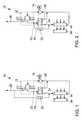
- the Figures 1 and 2show a refrigerant cycle device 10 for a charge air cooler 12 a supercharged internal combustion engine of a motor vehicle, such as a car.
- the supercharged internal combustion enginemay be a gasoline or diesel engine, which is charged by means of a compressor.
- the compressormay be part of a turbocharger, such as an exhaust gas turbocharger, or it is a compressor.
- the charge air cooler 12is a heat exchanger and serves to supply the supercharged internal combustion engine with a coolant, such as a coolant. Cooling water supply, so that the charge air cooler 12 can dissipate through the coolant, a portion of the heat that results from the compression of the air in the compressor.
- the charge air cooler 12is installed in the intake tract between the compressor (compressor wheel of a turbocharger or compressor) and an intake valve or the intake valves of the internal combustion engine.
- the coolant circulation apparatus 10further includes a radiator 14, a coolant circulating pump 16, and a valve 18.
- the radiator 14may be a vehicle radiator, which is arranged in the front end region of the motor vehicle and which is connected downstream of an engine radiator 30 in the air flow direction.
- the coolant circulation device 10is thus part of an indirect charge air cooling in which air first cools a coolant of an engine radiator 30 and then the coolant of the intercooler.
- the refrigerant cycle device 10thus has a low temperature or NT refrigerant circuit on. In contrast, with direct charge air cooling, the charge air cooling coolant is cooled directly from the ambient air.
- the valve 18is adapted to change a coolant mixing ratio for temperature adjustment to counteract at low ambient temperatures by raising an air temperature in the charge air cooler 12 from condensation of humidity.
- the valve 18is in the present embodiment, a 3/2-way valve having three terminals and two discrete switching states.
- the valve 18has an inlet connection 22, which is connected to the charge air cooler 12 via a connecting line in a coolant-carrying manner.
- the valve 18has two output ports 24, 26, of which a first output port 24 is connected to the radiator 14 coolant leading via a connecting line, the radiator 14 is connected via a further connecting line to the coolant circulating pump 16 coolant.
- the coolant circulating pump 16is connected to the charge air cooler 12 via a further connecting line in a coolant-carrying manner.
- coolant flowing through the input port 22 into the valve 18 and then out of the first output port 24may circulate from the coolant circulating pump 16 via the radiator 14 be encouraged.
- the coolant circulating pump 16may also be arranged at other locations in the coolant circuit, e.g. between the intercooler 12 and the valve 18 or between the valve 18 and the radiator 14th
- a second output port 26 of the valve 18is connected via a further connecting line with the coolant circulating pump 16 leading coolant.
- coolant flowing through the input port 22 into the valve 18 and out of the second output port 26may be circulated by the coolant circulating pump 16, but without the radiator 14 to be cooled.
- a bypass 20is provided, which is connected in parallel to the valve 18.
- the FIG. 1shows that the bypass 20 may be integrated into the valve 18, so that the valve 18 with the bypass 20 integrally forming a component is formed, or the bypass 20 is formed by a bypass line which is connected to a vent line 28 of the intercooler 12th and the first output port 24 of the valve 18 is connected and thus associated with the valve 18.
- the bypass 20represent only a direct bypass of the valve 18 and, for example, also be arranged immediately before and after the valve 18 connected to the terminals 22 and 24.
- the bypass 20provides a minimum coolant mixing ratio that is greater than zero and greater than a pilot flow of the valve 18.
- the minimum refrigerant mixing ratiomay e.g. in the range of 8 vol.% to 20 vol.%. In the present embodiment, the minimum coolant mixing ratio is 10 vol .-%.
- the minimum coolant mixing ratiois exclusively, i. to 100% by volume, passed through the cooler 14. In this case, the coolant partial flows flowing through the first output port 24 and the bypass 20 add up.
- valve 18when the valve 18 is in the first switching state, a maximum cooling effect is achieved, thereby maximally cooling air through the charge air cooler 12 so as to maximize the performance of the internal combustion engine, e.g. at high ambient temperatures, where there is no risk of condensation of humidity in the intercooler 12.
Landscapes
- Engineering & Computer Science (AREA)
- Chemical & Material Sciences (AREA)
- Combustion & Propulsion (AREA)
- Mechanical Engineering (AREA)
- General Engineering & Computer Science (AREA)
- Physics & Mathematics (AREA)
- Thermal Sciences (AREA)
- Supercharger (AREA)
- Cooling, Air Intake And Gas Exhaust, And Fuel Tank Arrangements In Propulsion Units (AREA)
Abstract
Translated fromGermanDescription
Translated fromGermanDie Erfindung betrifft eine Kühlmittelkreislaufvorrichtung gemäß dem Oberbegriff des Patentanspruchs 1.The invention relates to a coolant circulation device according to the preamble of patent claim 1.
Eine derartige Kühlmittelkreislaufvorrichtung dient dazu, einen Ladeluftkühler (Abk.: LLK, englisch intercooler) einer aufgeladenen Brennkraftmaschine mit einem Kühlmittel zu versorgen. Der Ladeluftkühler ist ein Wärmeübertrager, der im Ansaugtrakt der aufgeladenen Brennkraftmaschine die Temperatur der dem Motor zugeführten Luft verringert. Der Ladeluftkühler ist im Ansaugtrakt zwischen einem Verdichter (Verdichterrad eines Turboladers oder Kompressors) und einem Einlassventil eingebaut und führt einen Teil der Wärme ab, die durch die Verdichtung der Luft im Verdichter entsteht.Such a coolant circulation device serves to supply a charge air cooler (Abk .: LLK, English intercooler) of a supercharged internal combustion engine with a coolant. The intercooler is a heat exchanger which reduces the temperature of the air supplied to the engine in the intake tract of the supercharged internal combustion engine. The intercooler is installed in the intake manifold between a compressor (compressor wheel of a turbocharger or compressor) and an intake valve and dissipates some of the heat generated by the compression of the air in the compressor.
Im Betrieb wird von einer Kühlmittel-Umwälzpumpe ein Kühlmittel, z.B. Kühlwasser, in einem Kühlkreislauf mit Hin- und Rückführleitungen zwischen dem Ladeluftkühler und dem fahrzeugseitigen Kühler umgewälzt. Jedoch kann es zur Auskondensation von z.B. Luftfeuchtigkeit der Ansaugluft, von Feuchtigkeit eines Abgasrückführstromes einer Abgasrückführung oder eines Motor-Blow-By-Stromes und im schlimmsten Fall zu Versottungen oder Vereisungen im Ladeluftkühler kommen, wenn bei niedrigen Umgebungstemperaturen das Kühlmittel mit sehr geringer Temperatur in den Ladeluftkühler eintritt, z.B. wenn die Kühleraustrittstemperatur ca. 5K über der Umgebungstemperatur liegt.In operation, a coolant, such as cooling water, circulated in a cooling circuit with return lines between the charge air cooler and the vehicle-mounted radiator of a coolant circulating pump. However, it can lead to the condensation of eg humidity of the intake air, moisture of an exhaust gas recirculation exhaust gas recirculation or a motor-blow-by stream and in the worst case to sooting or icing in the intercooler when at low ambient temperatures, the coolant with very low temperature in the Intercooler occurs, eg if the radiator outlet temperature is approx. 5K above the ambient temperature.
Es ist bekannt, die Temperatur des Kühlmittels mit Hilfe eines stufenlos bzw. kontinuierlich regelbaren 3/2-Wegeventils zum Einstellen eines Kühlmittel-Mischverhältnisses zu regeln, um so einer Auskondensation von Luftfeuchtigkeit durch Anheben der Lufttemperatur im Ladeluftkühler entgegenzuwirken. Ferner sind bei direkten Ladeluftsystemen als alternative Maßnahmen Bypass-Schaltungen zur kompletten Umgehung des Ladeluftkühlers, Abdeckungen des Ladeluftkühlers oder interne Klappen zur Reduzierung der Größe wärmetauschender Flächen bekannt. Ein stufenlos bzw. kontinuierlich regelbares 3/2-Wegeventil stellt eine zufriedenstellende Lösung dar, allerdings bedarf ein derartiges 3/2-Wegenventil einer entsprechenden Ansteuerhardware im Motorsteuergerät. Ferner wird eine Lagerückmeldung sowie ein Kühlmittel-Temperatursensor zur Wassertemperaturregelung benötigt, um die sich deutlich ändernden Kühlmittel-Temperaturen dynamisch anpassen zu können.It is known to regulate the temperature of the coolant by means of a continuously or continuously controllable 3/2-way valve for adjusting a coolant mixing ratio, so as to counteract a condensation of humidity by raising the air temperature in the intercooler. Furthermore, in direct charge air systems as alternative measures bypass circuits for complete bypass of the intercooler, covers the intercooler or internal valves to reduce the size of heat exchanging surfaces are known. A continuously or continuously controllable 3/2-way valve is a satisfactory solution, however, requires such a 3/2-way valve a corresponding control hardware in the engine control unit. Furthermore, a bearing feedback and a coolant temperature sensor for water temperature control is needed to dynamically adapt to the significantly changing coolant temperatures.
Aus der
Der Erfindung liegt die Aufgabe zugrunde, einen einfacheren Weg aufzuzeigen, wie einer Auskondensation von Luftfeuchtigkeit im Ladeluftkühler entgegengewirkt werden kann.The invention has for its object to show a simpler way, as a condensation of humidity in the intercooler can be counteracted.
Diese Aufgabe wird erfindungsgemäß durch eine Kühlmittelkreislaufvorrichtung der o.g. Art mit den in Anspruch 1 gekennzeichneten Merkmalen gelöst. Vorteilhafte Ausgestaltungen der Erfindung sind in den weiteren Ansprüchen beschrieben.This object is achieved by a coolant circulation device of the o.g. Art solved with the features characterized in claim 1. Advantageous embodiments of the invention are described in the further claims.
Dazu ist es bei einer Kühlmittelkreislaufvorrichtung der o.g. Art erfindungsgemäß vorgesehen, dass ein Bypass, der parallel zum Ventil geschaltet ist, ein Mindest-Kühlmittel-Mischverhältnis von im Wesentlichen größer Null bereitstellt.For this it is in a coolant circulation device of the o.g. Art provided according to the invention that a bypass which is connected in parallel to the valve, a minimum coolant mixing ratio of substantially greater than zero provides.
Dies hat den Vorteil, dass die Kühlmittelkreislaufvorrichtung einen deutlich einfacheren Aufbau aufweisen kann, denn es nicht notwendig, den gesamten Bereich eines Kühlmittel-Mischverhältnisses von Null Vol.-% bis 100 Vol.-% abzudecken, um einer Auskondensation von Luftfeuchtigkeit im Ladeluftkühler durch Anheben einer Lufttemperatur im Ladeluftkühler entgegenzuwirken. Dabei wird unter dem Kühlmittel-Mischverhältnis das Verhältnis von einem Kühlmittelvolumenstrom, der von dem Kühler geliefert wird, zu dem zwischen dem Ladeluftkühler und dem Kühler zirkulierenden Kühlmittelvolumenstrom verstanden. Somit wird bei einem Kühlmittel-Mischverhältnis von 100 Vol.-% nur Kühlmittel von dem Kühler bezogen, während bei dem Mindest-Kühlmittel-Mischverhältnis lediglich das Mindestvolumen pro Zeiteinheit von dem Kühler bezogen wird. Unter einem Mindest-Kühlmittel-Mischverhältnis von im Wesentlichen größer Null wird dabei ein Mindest-Kühlmittel-Mischverhältnis verstanden, dessen Wert größer als der Wert fertigungsbedingter Leckageströme ist. Der Wert liegt somit oberhalb des Wertes von Pilotströmen, wie z.B. dem Pilotstrom des Ventils. Ferner wird durch die Erfindung die thermische Belastung des Ladeluftkühlers reduziert. Nachteilig ist eine große Wassertemperaturspreizung am Ladeluftkühler, da sie zu hohen thermischen Spannungen führt. Diese Spreizung entsteht derzeit, weil aufgrund der geringen Kühlmitteltemperatur bei kalten Umgebungstemperaturen einerseits und geringem Kühlbedarf aufgrund kleiner Motorlasten andererseits nur wenig Kühlmittel durch den Ladeluftkühler gepumpt bzw. die Kühlmittel-Zirkulation sogar ganz ausgesetzt wird, um die Ansaugluft nicht zu sehr abzukühlen. Durch die Zirkulation des Kühlmittels über einen Bypass kann auch bei geringem Kühlleistungsbedarf ein hoher Kühlmittel-Volumenstrom eingestellt werden. Dadurch sinkt die Kühlmittel-Temperaturdifferenz über den Ladeluftkühler, und die Thermospannungen werden reduziert. Trotzdem kann eine deutlich über der Umgebungstemperatur liegende Ansauglufttemperatur eingestellt werden.This has the advantage that the coolant circulation device can have a much simpler construction, because it is not necessary to cover the entire range of a coolant mixing ratio of zero vol.% To 100 vol Condensation of humidity in the intercooler by raising an air temperature in the intercooler counteract. In this case, the ratio of a coolant volume flow, which is supplied by the radiator, to the coolant volume flow circulating between the intercooler and the radiator is understood by the coolant mixing ratio. Thus, at a refrigerant mixing ratio of 100% by volume, only refrigerant is drawn from the radiator, while at the minimum refrigerant mixing ratio, only the minimum volume per unit time is obtained from the radiator. A minimum coolant mixing ratio of essentially greater than zero is understood to mean a minimum coolant mixing ratio whose value is greater than the value of manufacturing-related leakage flows. The value is thus above the value of pilot currents, such as the pilot current of the valve. Furthermore, the thermal load of the charge air cooler is reduced by the invention. The disadvantage is a large water temperature spread on the intercooler, as it leads to high thermal stresses. This spread is currently arising because due to the low coolant temperature at cold ambient temperatures on the one hand and low cooling demand due to small engine loads on the other hand, only a small amount of coolant pumped through the intercooler or the coolant circulation is even completely exposed to not cool the intake air too much. Due to the circulation of the coolant via a bypass, a high coolant volume flow can be set even with low cooling power requirement. As a result, the coolant temperature difference across the intercooler decreases, and the thermal stresses are reduced. Nevertheless, an intake air temperature that is significantly above the ambient temperature can be set.
Gemäß einer Ausführungsform stellt der Bypass ein Mindest-Kühlmittel-Mischverhältnis von 8 Vol.-% bis 20 Vol.-%, vorzugsweise von 10 Vol.-%, bereit. Es hat sich überraschenderweise herausgestellt, dass mit einem derartigen Mischverhältnis eine ausreichende Temperaturanhebung erreicht werden kann, um einer Auskondensation von Luftfeuchtigkeit im Ladeluftkühler entgegenzuwirken.In one embodiment, the bypass provides a minimum coolant mixing ratio of 8% to 20%, preferably 10%, by volume. It has surprisingly been found that with such a mixing ratio, a sufficient temperature increase can be achieved to counteract a condensation of humidity in the intercooler.
Gemäß einer weiteren Ausführungsform ist das Ventil ein 3/2-Wegeventil. Unter einem 3/2-Wegeventil wird ein Ventil mit drei Anschlüssen und zwei Ventilsitzen verstanden, wobei wechselseitig immer ein Ventilsitz geöffnet oder geschlossen bleibt. Dies vereinfacht die Kühlmittelkreislaufvorrichtung nochmals, da nur ein Ventil vorgesehen sein muss, um das Kühlmittel wahlweise durch den Kühler oder um den Kühler herum zu leiten.According to a further embodiment, the valve is a 3/2-way valve. A 3/2-way valve is understood to mean a valve with three connections and two valve seats, whereby a valve seat always remains open or closed alternately. This simplifies the refrigerant cycle device again since only one valve needs to be provided to selectively direct the refrigerant through the radiator or around the radiator.
Gemäß einer weiteren Ausführungsform ist das Ventil ein diskrete Schaltzustände aufweisendes Ventil. Damit unterscheidet sich das Ventil von einem Stetigventil, wie z.B. einem Proportionalventil, Regelventil oder Servoventil, wobei unter einem Stetigventil ein z.B. elektrisch ansteuerbares Wegeventil verstanden wird, das sich nicht diskret schalten (auf/zu) lässt, sondern einen stetigen Übergang der Schaltstellungen ermöglicht. Somit ist bei einem Stetigventil im Gegensatz zu einem Ventil mit diskreten Schaltzuständen der Volumenstrom eines Kühlmittels stufenlos einstellbar. Dies vereinfacht die Kühlmittelkreislaufvorrichtung nochmals, da keine entsprechende Ansteuerhardware im Motorsteuergerät nötig ist, sondern das Motorsteuergerät nur zwei Ausgangssignale zur Ansteuerung des Ventils bereitstellen muss, um das Ventil von der ersten Schaltstellung bzw. dem ersten Zustand in die zweite Schaltstellung bzw. den zweiten Zustand zu überführen.According to a further embodiment, the valve is a valve having discrete switching states. Thus, the valve is different from a continuous valve, e.g. a proportional valve, control valve or servo valve, wherein below a continuous valve a e.g. electrically controllable directional valve is understood that does not discretely switch (open / close), but allows a steady transition of the switching positions. Thus, in contrast to a valve with discrete switching states, the volume flow of a coolant is infinitely adjustable in the case of a continuous valve. This simplifies the coolant circulation device again, since no corresponding control hardware in the engine control unit is needed, but the engine control unit only has to provide two output signals for controlling the valve to the valve from the first switching position or the first state to the second switching position and the second state convict.
Gemäß einer weiteren Ausführungsform stellt das Ventil in einem ersten Schaltzustand das Mindest-Kühlmittel-Mischverhältnis und in einem zweiten Schaltzustand ein Maximal-Kühlmittel-Mischverhältnis ein. Das Mindest-Kühlmittel-Mischverhältnis beträgt z.B. 8 Vol.-% bis 20 Vol.-%, vorzugsweise 10 Vol.-%, während das Maximal-Kühlmittel-Mischverhältnis 100 Vol.-% beträgt. So kann ein Ventil mit einem besonders einfachen Aufbau verwendet werden, und es ist z.B. keine Lagerückmeldung erforderlich.According to a further embodiment, the valve sets the minimum coolant mixing ratio in a first switching state and a maximum coolant mixing ratio in a second switching state. The minimum refrigerant mixing ratio is e.g. 8 vol.% To 20 vol.%, Preferably 10 vol.%, While the maximum refrigerant mixing ratio is 100 vol.%. Thus, a valve with a particularly simple structure can be used and it is e.g. no stock confirmation required.
Gemäß einer weiteren Ausführungsform ist der Bypass in das Ventil integriert. Somit ist das Ventil mit dem Bypass einstückig ausgebildet. Es ist somit nur ein Bauteil während der Fertigung zu montieren, eine Montage von Verbindungsleitungen zum Bilden des Bypasses entfällt.According to a further embodiment, the bypass is integrated in the valve. Thus, the valve is formed integrally with the bypass. It is thus only one component to assemble during manufacture, a mounting of connecting lines to form the bypass is eliminated.
Gemäß einer weiteren Ausführungsform ist der Bypass dem Ventil zugeordnet. Somit ist der Bypass durch Anschluss von Verbindungsleitungen an Anschlüsse des Ventils gebildet. So können standardisierte Ventile verwendet werden.According to a further embodiment, the bypass is associated with the valve. Thus, the bypass is formed by connecting connecting lines to terminals of the valve. So standardized valves can be used.
Gemäß einer weiteren Ausführungsform ist das Ventil ein Magnetventil. So kann ein Ventil mit einem einfachen Aufbau verwendet werden, das zudem besonders einfach anzusteuern ist. Somit vereinfacht sich die Kühlmittelkreislaufvorrichtung nochmals. Alternativ kann das Ventil als Pneumatik-Ventil ausgebildet sein, oder wird das Ventil durch einen Thermostaten oder auch eine Gedächtnisfeder, z.B. aus einer Formgedächtnislegierung (Memory-Metall), betätigt.According to a further embodiment, the valve is a solenoid valve. Thus, a valve with a simple structure can be used, which is also particularly easy to control. Thus, the refrigerant cycle device simplifies again. Alternatively, the valve may be formed as a pneumatic valve, or the valve by a thermostat or a memory spring, for example, from a shape memory alloy (memory metal), actuated.
Ferner gehören zur Erfindung ein Ventil für eine derartige Kühlmittelkreislaufvorrichtung, insbesondere ein Ventil mit einem integrierten Bypass, sowie ein Kraftfahrzeug mit einer aufgeladenen Brennkraftmaschine und einer derartigen Kühlmittelkreislaufvorrichtung.Furthermore, the invention includes a valve for such a coolant circulation device, in particular a valve with an integrated bypass, as well as a motor vehicle with a supercharged internal combustion engine and such a coolant circulation device.
Die Erfindung wird im Folgenden anhand der Zeichnung näher erläutert. Diese zeigt in
- Fig. 1
- in schematischer Darstellung ein erstes Ausführungsbeispiel einer erfindungsgemäßen Kühlmittelkreislaufvorrichtung; und
- Fig. 2
- in schematischer Darstellung ein zweites Ausführungsbeispiel einer erfindungsgemäßen Kühlmittelkreislaufvorrichtung.
- Fig. 1
- a schematic representation of a first embodiment of a coolant circuit device according to the invention; and
- Fig. 2
- a schematic representation of a second embodiment of a coolant circuit device according to the invention.
Die
Der Ladeluftkühler 12 ist ein Wärmetauscher und dient dazu, die aufgeladene Brennkraftmaschine mit einem Kühlmittel, wie z.B. Kühlwasser, zu versorgen, damit der Ladeluftkühler 12 durch das Kühlmittel einen Teil der Wärme abführen kann, die durch die Verdichtung der Luft im Verdichter entsteht. Der Ladeluftkühler 12 ist im Ansaugtrakt zwischen dem Verdichter (Verdichterrad eines Turboladers oder Kompressors) und einem Einlassventil bzw. den Einlassventilen der Brennkraftmaschine eingebaut.The
Die Kühlmittelkreislaufvorrichtung 10 weist ferner einen Kühler 14, eine Kühlmittel-Umwälzpumpe 16 und ein Ventil 18 auf.The
Mit der Kühlmittel-Umwälzpumpe 16 kann ein Kühlmittel von dem Kühler 14 durch entsprechende Verbindungsleitungen zu dem Ladeluftkühler 12 und wieder zurück gefördert werden. Der Kühler 14 kann ein Fahrzeugkühler sein, der im Frontend-Bereich des Kraftfahrzeugs angeordnet und der einem Motorkühler 30 in Luftströmungsrichtung nachgeschaltet ist. Die Kühlmittelkreislaufvorrichtung 10 gemäß dem vorliegenden Ausführungsbeispiel ist somit Teil einer indirekten Ladeluftkühlung, bei der Luft zuerst ein Kühlmittel eines Motorkühlers 30 und dann das Kühlmittel der Ladeluftkühlung kühlt. Die Kühlmittelkreislaufvorrichtung 10 weist somit einen Niedertemperatur- oder NT-Kühlmittelkreislauf auf. Im Gegensatz dazu wird bei einer direkten Ladeluftkühlung das Kühlmittel der Ladeluftkühlung direkt von der Umgebungsluft gekühlt.With the
Das Ventil 18 ist dazu ausgebildet, ein Kühlmittel-Mischverhältnis zur Temperatureinstellung zu verändern, um bei niedrigen Umgebungstemperaturen durch Anheben einer Lufttemperatur im Ladeluftkühler 12 einer Auskondensation von Luftfeuchtigkeit entgegenzuwirken.The
Das Ventil 18 ist im vorliegenden Ausführungsbeispiel ein 3/2-Wegeventil, das drei Anschlüsse und zwei diskrete Schaltzustände aufweist. Das Ventil 18 weist einen Eingangsanschluss 22 auf, der kühlmittelführend über eine Verbindungsleitung mit dem Ladeluftkühler 12 verbunden ist. Ferner weist das Ventil 18 zwei Ausgangsanschlüsse 24, 26 auf, von denen ein erster Ausgangsanschluss 24 mit dem Kühler 14 kühlmittelführend über eine Verbindungsleitung verbunden ist, wobei der Kühler 14 über eine weitere Verbindungsleitung mit der Kühlmittel-Umwälzpumpe 16 kühlmittelführend verbunden ist. Die Kühlmittel-Umwälzpumpe 16 wiederum ist über eine weitere Verbindungsleitung mit dem Ladeluftkühler 12 kühlmittelführend verbunden. Somit kann, wenn sich das Ventil 18 in einem ersten Schaltzustand der beiden diskreten Schaltzustände befindet, Kühlmittel, das durch den Eingangsanschluss 22 in das Ventil 18 und dann aus dem ersten Ausgangsanschluss 24 strömt, von der Kühlmittel-Umwälzpumpe 16 im Kreis über den Kühler 14 gefördert werden. Abweichend vom vorliegenden Ausführungsbeispiel kann die Kühlmittel-Umwälzpumpe 16 auch an anderen Stellen im Kühlmittelkreislauf angeordnet sein, z.B. zwischen dem Ladeluftkühler 12 und dem Ventil 18 oder zwischen dem Ventil 18 und dem Kühler 14.The
Ein zweiter Ausgangsanschluss 26 des Ventils 18 ist über eine weitere Verbindungsleitung mit der Kühlmittel-Umwälzpumpe 16 kühlmittelführend verbunden. Somit kann, wenn sich das Ventil 18 in dem zweiten diskreten Schaltzustand befindet, Kühlmittel, das durch den Eingangsanschluss 22 in das Ventil 18 und aus dem zweiten Ausgangsanschluss 26 strömt, von der Kühlmittel-Umwälzpumpe 16 im Kreis gefördert werden, ohne allerdings von dem Kühler 14 abgekühlt zu werden.A
Des Weiteren ist ein Bypass 20 vorgesehen ist, der parallel zum Ventil 18 geschaltet ist. Die
Der Bypass 20 stellt ein Mindest-Kühlmittel-Mischverhältnis, das größer Null und größer als ein Pilotstrom des Ventils 18 ist. Das Mindest-Kühlmittel-Mischverhältnis kann z.B. im Bereich von 8 Vol.-% bis 20 Vol.-% liegen. Im vorliegenden Ausführungsbeispiel beträgt das Mindest-Kühlmittel-Mischverhältnis 10 Vol.-%. Somit wird durch das Ventil 18 im ersten Schaltzustand ein Maximal-Kühlmittel-Mischverhältnis von 100 Vol.-% und im zweiten Schaltzustand das Mindest-Kühlmittel-Mischverhältnis eingestellt, denn im ersten Schaltzustand des Ventils 18 wird das Kühlmittel ausschließlich, d.h. zu 100 Vol.-%, durch den Kühler 14 geleitet. In diesem Fall addieren sich die durch den ersten Ausgangsanschluss 24 und den Bypass 20 strömenden Kühlmittelteilströme.The
Wenn sich also das Ventil 18 im ersten Schaltzustand befindet, wird eine maximale Kühlwirkung erreicht und damit Luft durch den Ladeluftkühler 12 maximal abgekühlt, um so die Leistung der Brennkraftmaschine zu maximieren, z.B. bei hohen Umgebungstemperaturen, bei denen keine Gefahr eines Auskondensierens von Luftfeuchtigkeit im Ladeluftkühler 12 besteht.Thus, when the
Wenn sich hingegen das Ventil 18 im zweiten Schaltzustand befindet, strömt ein Kühlmittelteilstrom nur durch den Bypass 20 zu dem Kühler 14, während der andere, durch den zweiten Ausgangsanschluss 26 geleitete Kühlmittelteilstrom an dem Kühler 14 vorbei direkt zu der Kühlmittel-Umwälzpumpe 16 geleitet wird. Somit ist eine reduzierte Kühlwirkung gegeben, die eine Anhebung der Lufttemperatur im Ladeluftkühler 12 bewirkt und damit einer Auskondensation von Luftfeuchtigkeit im Ladeluftkühler 12 entgegenwirkt, z.B. bei niedrigen Umgebungstemperaturen nahe dem Gefrierpunkt, bei denen die Gefahr eines Auskondensierens von Luftfeuchtigkeit im Ladeluftkühler 12 besteht. Dies wird im Wesentlichen dadurch erreicht, dass sich durch die erfindungsgemäße Aufteilung der Volumenströme eine Mischtemperatur im Kühlmittel einstellt, die deutlich oberhalb des Gefrierpunktes und auch unterhalb des Taupunktes der Feuchte in der Ansaugluft liegt. Dadurch können an keiner Stelle des Ladeluftkühlers solche nachteiligen Effekte wie Eisbildung und/oder Kondensatbildung auftreten, und die dadurch gleichzeitig erreichte Verringerung der Kühlmittel-Temperaturspreizung am Ladeluftkühler reduziert die Thermospannungen.In contrast, when the
Somit kann auf Erfassen entsprechend kritischer Temperaturen hin mit einem derartigen, einfach anzusteuernden, diskreten 3/2-Wegeventil mit integriertem oder zugeordnetem Bypass 20 durch Wechsel von dem zweiten Schaltzustand in den ersten Schaltzustand einer Auskondensation von Luftfeuchtigkeit im Ladeluftkühler 12 wirksam entgegenwirkt werden. So können bei Schwach- oder Teillast der Brennkraftmaschine höhere Saugrohrtemperaturen erreicht werden, was den Kohlendioxidausstoß vermindert.Thus, detection of correspondingly critical temperatures can be achieved with such a simple to control, discrete 3/2-way valve with integrated or associated
- 1010
- KühlmittelkreislaufvorrichtungCoolant circuit device
- 1212
- LadeluftkühlerIntercooler
- 1414
- Kühlercooler
- 1616
- Kühlmittel-UmwälzpumpeCoolant circulation pump
- 1818
- VentilValve
- 2020
- Bypassbypass
- 2222
- Eingangsanschlussinput port
- 2424
- erster Ausgangsanschlussfirst output terminal
- 2626
- zweiter Ausgangsanschlusssecond output terminal
- 2828
- Entlüftungsleitungvent line
- 3030
- Motorkühlerradiator
Claims (10)
Translated fromGermanApplications Claiming Priority (1)
| Application Number | Priority Date | Filing Date | Title |
|---|---|---|---|
| DE102015008035.0ADE102015008035A1 (en) | 2015-06-23 | 2015-06-23 | "Coolant circuit device" |
Publications (2)
| Publication Number | Publication Date |
|---|---|
| EP3109431A1true EP3109431A1 (en) | 2016-12-28 |
| EP3109431B1 EP3109431B1 (en) | 2019-04-17 |
Family
ID=56178236
Family Applications (1)
| Application Number | Title | Priority Date | Filing Date |
|---|---|---|---|
| EP16001363.7AActiveEP3109431B1 (en) | 2015-06-23 | 2016-06-16 | Coolant circuit device |
Country Status (2)
| Country | Link |
|---|---|
| EP (1) | EP3109431B1 (en) |
| DE (1) | DE102015008035A1 (en) |
Families Citing this family (1)
| Publication number | Priority date | Publication date | Assignee | Title |
|---|---|---|---|---|
| DE102018215075A1 (en)* | 2018-09-05 | 2020-03-05 | Mahle International Gmbh | Intercooler |
Citations (4)
| Publication number | Priority date | Publication date | Assignee | Title |
|---|---|---|---|---|
| US4517929A (en)* | 1983-09-23 | 1985-05-21 | International Harvester Company | Self-adjusting cooling system for diesel engines |
| US6230668B1 (en)* | 2000-05-22 | 2001-05-15 | General Electric Company | Locomotive cooling system |
| DE102004060658A1 (en) | 2003-12-19 | 2005-08-11 | Behr Gmbh & Co. Kg | Circuit arrangement for cooling charge air in a motor vehicle comprises a temperature sensor arranged on the coolant outlet of a charge air/coolant cooler or directly after it for measuring the coolant exit temperature |
| WO2007122345A1 (en)* | 2006-04-21 | 2007-11-01 | Renault S.A.S | System and method for controlling the temperature of a supercharged engine comprising an exhaust gas recycling circuit |
Family Cites Families (4)
| Publication number | Priority date | Publication date | Assignee | Title |
|---|---|---|---|---|
| DE10215262B4 (en)* | 2002-04-06 | 2014-12-31 | Daimler Ag | Cooling system, in particular for a motor vehicle engine with indirect intercooling |
| DE102006053331A1 (en)* | 2005-11-10 | 2007-05-16 | Behr Gmbh & Co Kg | Circulation system has adjustable mixing element which can be penetrated, on inflow side, by first partial flow or second partial flow and, on outflow side, generates media flow with target temperature |
| US8430068B2 (en)* | 2007-05-31 | 2013-04-30 | James Wallace Harris | Cooling system having inlet control and outlet regulation |
| DE102013207134B4 (en)* | 2013-04-19 | 2015-04-02 | Continental Automotive Gmbh | Method for controlling the temperature of an exhaust gas recirculation cooler of an internal combustion engine arrangement and combined temperature control device for an internal combustion engine arrangement |
- 2015
- 2015-06-23DEDE102015008035.0Apatent/DE102015008035A1/ennot_activeWithdrawn
- 2016
- 2016-06-16EPEP16001363.7Apatent/EP3109431B1/enactiveActive
Patent Citations (4)
| Publication number | Priority date | Publication date | Assignee | Title |
|---|---|---|---|---|
| US4517929A (en)* | 1983-09-23 | 1985-05-21 | International Harvester Company | Self-adjusting cooling system for diesel engines |
| US6230668B1 (en)* | 2000-05-22 | 2001-05-15 | General Electric Company | Locomotive cooling system |
| DE102004060658A1 (en) | 2003-12-19 | 2005-08-11 | Behr Gmbh & Co. Kg | Circuit arrangement for cooling charge air in a motor vehicle comprises a temperature sensor arranged on the coolant outlet of a charge air/coolant cooler or directly after it for measuring the coolant exit temperature |
| WO2007122345A1 (en)* | 2006-04-21 | 2007-11-01 | Renault S.A.S | System and method for controlling the temperature of a supercharged engine comprising an exhaust gas recycling circuit |
Also Published As
| Publication number | Publication date |
|---|---|
| EP3109431B1 (en) | 2019-04-17 |
| DE102015008035A1 (en) | 2016-12-29 |
Similar Documents
| Publication | Publication Date | Title |
|---|---|---|
| DE10215262B4 (en) | Cooling system, in particular for a motor vehicle engine with indirect intercooling | |
| EP1716325B1 (en) | Arrangement for cooling exhaust gas and charge air | |
| EP1948917B1 (en) | Circulation system, mixing element | |
| DE102006044820B4 (en) | Cooling system of an internal combustion engine with charge air supply | |
| DE102009015656B4 (en) | Modular EGR system, engine system, and method for cooling an EGR gas flow | |
| DE102009054824A1 (en) | Integrated cover and exhaust gas recirculation cooler for internal combustion engine | |
| DE102013206082A1 (en) | Device and method for engine warm-up | |
| EP1623101B1 (en) | Circuit for cooling charge air, and method for operating such a circuit | |
| DE102015216420A1 (en) | Cooling arrangement for intercooling | |
| DE102013021090B4 (en) | Cooling water control | |
| DE102010001752A1 (en) | Cooling system for use in internal combustion engine of hybrid vehicle, has exhaust gas recirculation radiator connected with low temperature refrigerant circuit according to termination of warming-up phase | |
| EP2562380A2 (en) | Heat exchanger system and method for operating a heat exchanger system for a vehicle | |
| DE102008009152A1 (en) | Charge-air cooler for internal combustion engine i.e. turbocharged internal-combustion engine, of motor vehicle, has two regions forming partial-surface of heat exchanger surface, where air is supplied to regions by flow guide element | |
| EP3109431B1 (en) | Coolant circuit device | |
| EP3377740B1 (en) | Charge gas cooling circuit and method for controlling the temperature of charge gas | |
| EP2149688B1 (en) | Motor vehicle cooling assembly | |
| DE102007049770A1 (en) | Cooling arrangement for a commercial vehicle | |
| DE102015206893B4 (en) | Exhaust gas recirculation module with cooled exhaust gas recirculation valve | |
| DE102007019089A1 (en) | Exhaust gas heat exchanger, exhaust gas heat exchanger system, internal combustion engine and method for treating exhaust gases of an internal combustion engine | |
| EP2171245A1 (en) | Apparatus for cooling recirculated exhaust gas of an internal combustion engine | |
| DE102010009290B4 (en) | Coolant circuit for an internal combustion engine with exhaust gas recirculation | |
| EP1703115A1 (en) | Thermostatic valve with integrated exhaust gas recirculation valve | |
| EP2307678B1 (en) | Cooling device for a motor vehicle internal combustion engine, and method for operating the same | |
| DE3607854C2 (en) | ||
| DE102015206898A1 (en) | Exhaust gas recirculation module with controllable bypass and cylinder head with such an exhaust gas recirculation module |
Legal Events
| Date | Code | Title | Description |
|---|---|---|---|
| PUAI | Public reference made under article 153(3) epc to a published international application that has entered the european phase | Free format text:ORIGINAL CODE: 0009012 | |
| STAA | Information on the status of an ep patent application or granted ep patent | Free format text:STATUS: THE APPLICATION HAS BEEN PUBLISHED | |
| AK | Designated contracting states | Kind code of ref document:A1 Designated state(s):AL AT BE BG CH CY CZ DE DK EE ES FI FR GB GR HR HU IE IS IT LI LT LU LV MC MK MT NL NO PL PT RO RS SE SI SK SM TR | |
| AX | Request for extension of the european patent | Extension state:BA ME | |
| STAA | Information on the status of an ep patent application or granted ep patent | Free format text:STATUS: REQUEST FOR EXAMINATION WAS MADE | |
| 17P | Request for examination filed | Effective date:20170628 | |
| RBV | Designated contracting states (corrected) | Designated state(s):AL AT BE BG CH CY CZ DE DK EE ES FI FR GB GR HR HU IE IS IT LI LT LU LV MC MK MT NL NO PL PT RO RS SE SI SK SM TR | |
| STAA | Information on the status of an ep patent application or granted ep patent | Free format text:STATUS: EXAMINATION IS IN PROGRESS | |
| 17Q | First examination report despatched | Effective date:20180425 | |
| GRAP | Despatch of communication of intention to grant a patent | Free format text:ORIGINAL CODE: EPIDOSNIGR1 | |
| STAA | Information on the status of an ep patent application or granted ep patent | Free format text:STATUS: GRANT OF PATENT IS INTENDED | |
| INTG | Intention to grant announced | Effective date:20181116 | |
| GRAS | Grant fee paid | Free format text:ORIGINAL CODE: EPIDOSNIGR3 | |
| GRAA | (expected) grant | Free format text:ORIGINAL CODE: 0009210 | |
| STAA | Information on the status of an ep patent application or granted ep patent | Free format text:STATUS: THE PATENT HAS BEEN GRANTED | |
| AK | Designated contracting states | Kind code of ref document:B1 Designated state(s):AL AT BE BG CH CY CZ DE DK EE ES FI FR GB GR HR HU IE IS IT LI LT LU LV MC MK MT NL NO PL PT RO RS SE SI SK SM TR | |
| REG | Reference to a national code | Ref country code:GB Ref legal event code:FG4D Free format text:NOT ENGLISH | |
| REG | Reference to a national code | Ref country code:CH Ref legal event code:EP | |
| REG | Reference to a national code | Ref country code:DE Ref legal event code:R096 Ref document number:502016004179 Country of ref document:DE | |
| REG | Reference to a national code | Ref country code:AT Ref legal event code:REF Ref document number:1121794 Country of ref document:AT Kind code of ref document:T Effective date:20190515 Ref country code:IE Ref legal event code:FG4D Free format text:LANGUAGE OF EP DOCUMENT: GERMAN | |
| REG | Reference to a national code | Ref country code:NL Ref legal event code:MP Effective date:20190417 | |
| REG | Reference to a national code | Ref country code:LT Ref legal event code:MG4D | |
| PG25 | Lapsed in a contracting state [announced via postgrant information from national office to epo] | Ref country code:NL Free format text:LAPSE BECAUSE OF FAILURE TO SUBMIT A TRANSLATION OF THE DESCRIPTION OR TO PAY THE FEE WITHIN THE PRESCRIBED TIME-LIMIT Effective date:20190417 | |
| PG25 | Lapsed in a contracting state [announced via postgrant information from national office to epo] | Ref country code:NO Free format text:LAPSE BECAUSE OF FAILURE TO SUBMIT A TRANSLATION OF THE DESCRIPTION OR TO PAY THE FEE WITHIN THE PRESCRIBED TIME-LIMIT Effective date:20190717 Ref country code:FI Free format text:LAPSE BECAUSE OF FAILURE TO SUBMIT A TRANSLATION OF THE DESCRIPTION OR TO PAY THE FEE WITHIN THE PRESCRIBED TIME-LIMIT Effective date:20190417 Ref country code:HR Free format text:LAPSE BECAUSE OF FAILURE TO SUBMIT A TRANSLATION OF THE DESCRIPTION OR TO PAY THE FEE WITHIN THE PRESCRIBED TIME-LIMIT Effective date:20190417 Ref country code:SE Free format text:LAPSE BECAUSE OF FAILURE TO SUBMIT A TRANSLATION OF THE DESCRIPTION OR TO PAY THE FEE WITHIN THE PRESCRIBED TIME-LIMIT Effective date:20190417 Ref country code:AL Free format text:LAPSE BECAUSE OF FAILURE TO SUBMIT A TRANSLATION OF THE DESCRIPTION OR TO PAY THE FEE WITHIN THE PRESCRIBED TIME-LIMIT Effective date:20190417 Ref country code:PT Free format text:LAPSE BECAUSE OF FAILURE TO SUBMIT A TRANSLATION OF THE DESCRIPTION OR TO PAY THE FEE WITHIN THE PRESCRIBED TIME-LIMIT Effective date:20190817 Ref country code:ES Free format text:LAPSE BECAUSE OF FAILURE TO SUBMIT A TRANSLATION OF THE DESCRIPTION OR TO PAY THE FEE WITHIN THE PRESCRIBED TIME-LIMIT Effective date:20190417 Ref country code:LT Free format text:LAPSE BECAUSE OF FAILURE TO SUBMIT A TRANSLATION OF THE DESCRIPTION OR TO PAY THE FEE WITHIN THE PRESCRIBED TIME-LIMIT Effective date:20190417 | |
| PG25 | Lapsed in a contracting state [announced via postgrant information from national office to epo] | Ref country code:BG Free format text:LAPSE BECAUSE OF FAILURE TO SUBMIT A TRANSLATION OF THE DESCRIPTION OR TO PAY THE FEE WITHIN THE PRESCRIBED TIME-LIMIT Effective date:20190717 Ref country code:RS Free format text:LAPSE BECAUSE OF FAILURE TO SUBMIT A TRANSLATION OF THE DESCRIPTION OR TO PAY THE FEE WITHIN THE PRESCRIBED TIME-LIMIT Effective date:20190417 Ref country code:LV Free format text:LAPSE BECAUSE OF FAILURE TO SUBMIT A TRANSLATION OF THE DESCRIPTION OR TO PAY THE FEE WITHIN THE PRESCRIBED TIME-LIMIT Effective date:20190417 Ref country code:GR Free format text:LAPSE BECAUSE OF FAILURE TO SUBMIT A TRANSLATION OF THE DESCRIPTION OR TO PAY THE FEE WITHIN THE PRESCRIBED TIME-LIMIT Effective date:20190718 Ref country code:PL Free format text:LAPSE BECAUSE OF FAILURE TO SUBMIT A TRANSLATION OF THE DESCRIPTION OR TO PAY THE FEE WITHIN THE PRESCRIBED TIME-LIMIT Effective date:20190417 | |
| PG25 | Lapsed in a contracting state [announced via postgrant information from national office to epo] | Ref country code:IS Free format text:LAPSE BECAUSE OF FAILURE TO SUBMIT A TRANSLATION OF THE DESCRIPTION OR TO PAY THE FEE WITHIN THE PRESCRIBED TIME-LIMIT Effective date:20190817 | |
| REG | Reference to a national code | Ref country code:DE Ref legal event code:R097 Ref document number:502016004179 Country of ref document:DE | |
| PG25 | Lapsed in a contracting state [announced via postgrant information from national office to epo] | Ref country code:RO Free format text:LAPSE BECAUSE OF FAILURE TO SUBMIT A TRANSLATION OF THE DESCRIPTION OR TO PAY THE FEE WITHIN THE PRESCRIBED TIME-LIMIT Effective date:20190417 Ref country code:SK Free format text:LAPSE BECAUSE OF FAILURE TO SUBMIT A TRANSLATION OF THE DESCRIPTION OR TO PAY THE FEE WITHIN THE PRESCRIBED TIME-LIMIT Effective date:20190417 Ref country code:EE Free format text:LAPSE BECAUSE OF FAILURE TO SUBMIT A TRANSLATION OF THE DESCRIPTION OR TO PAY THE FEE WITHIN THE PRESCRIBED TIME-LIMIT Effective date:20190417 Ref country code:DK Free format text:LAPSE BECAUSE OF FAILURE TO SUBMIT A TRANSLATION OF THE DESCRIPTION OR TO PAY THE FEE WITHIN THE PRESCRIBED TIME-LIMIT Effective date:20190417 Ref country code:MC Free format text:LAPSE BECAUSE OF FAILURE TO SUBMIT A TRANSLATION OF THE DESCRIPTION OR TO PAY THE FEE WITHIN THE PRESCRIBED TIME-LIMIT Effective date:20190417 Ref country code:CZ Free format text:LAPSE BECAUSE OF FAILURE TO SUBMIT A TRANSLATION OF THE DESCRIPTION OR TO PAY THE FEE WITHIN THE PRESCRIBED TIME-LIMIT Effective date:20190417 | |
| REG | Reference to a national code | Ref country code:CH Ref legal event code:PL | |
| PLBE | No opposition filed within time limit | Free format text:ORIGINAL CODE: 0009261 | |
| STAA | Information on the status of an ep patent application or granted ep patent | Free format text:STATUS: NO OPPOSITION FILED WITHIN TIME LIMIT | |
| PG25 | Lapsed in a contracting state [announced via postgrant information from national office to epo] | Ref country code:SM Free format text:LAPSE BECAUSE OF FAILURE TO SUBMIT A TRANSLATION OF THE DESCRIPTION OR TO PAY THE FEE WITHIN THE PRESCRIBED TIME-LIMIT Effective date:20190417 Ref country code:IT Free format text:LAPSE BECAUSE OF FAILURE TO SUBMIT A TRANSLATION OF THE DESCRIPTION OR TO PAY THE FEE WITHIN THE PRESCRIBED TIME-LIMIT Effective date:20190417 | |
| 26N | No opposition filed | Effective date:20200120 | |
| REG | Reference to a national code | Ref country code:BE Ref legal event code:MM Effective date:20190630 | |
| PG25 | Lapsed in a contracting state [announced via postgrant information from national office to epo] | Ref country code:TR Free format text:LAPSE BECAUSE OF FAILURE TO SUBMIT A TRANSLATION OF THE DESCRIPTION OR TO PAY THE FEE WITHIN THE PRESCRIBED TIME-LIMIT Effective date:20190417 | |
| PG25 | Lapsed in a contracting state [announced via postgrant information from national office to epo] | Ref country code:IE Free format text:LAPSE BECAUSE OF NON-PAYMENT OF DUE FEES Effective date:20190616 | |
| PG25 | Lapsed in a contracting state [announced via postgrant information from national office to epo] | Ref country code:CH Free format text:LAPSE BECAUSE OF NON-PAYMENT OF DUE FEES Effective date:20190630 Ref country code:BE Free format text:LAPSE BECAUSE OF NON-PAYMENT OF DUE FEES Effective date:20190630 Ref country code:SI Free format text:LAPSE BECAUSE OF FAILURE TO SUBMIT A TRANSLATION OF THE DESCRIPTION OR TO PAY THE FEE WITHIN THE PRESCRIBED TIME-LIMIT Effective date:20190417 Ref country code:LI Free format text:LAPSE BECAUSE OF NON-PAYMENT OF DUE FEES Effective date:20190630 Ref country code:LU Free format text:LAPSE BECAUSE OF NON-PAYMENT OF DUE FEES Effective date:20190616 | |
| PG25 | Lapsed in a contracting state [announced via postgrant information from national office to epo] | Ref country code:CY Free format text:LAPSE BECAUSE OF FAILURE TO SUBMIT A TRANSLATION OF THE DESCRIPTION OR TO PAY THE FEE WITHIN THE PRESCRIBED TIME-LIMIT Effective date:20190417 | |
| PG25 | Lapsed in a contracting state [announced via postgrant information from national office to epo] | Ref country code:HU Free format text:LAPSE BECAUSE OF FAILURE TO SUBMIT A TRANSLATION OF THE DESCRIPTION OR TO PAY THE FEE WITHIN THE PRESCRIBED TIME-LIMIT; INVALID AB INITIO Effective date:20160616 Ref country code:MT Free format text:LAPSE BECAUSE OF FAILURE TO SUBMIT A TRANSLATION OF THE DESCRIPTION OR TO PAY THE FEE WITHIN THE PRESCRIBED TIME-LIMIT Effective date:20190417 | |
| REG | Reference to a national code | Ref country code:DE Ref legal event code:R082 Ref document number:502016004179 Country of ref document:DE | |
| PG25 | Lapsed in a contracting state [announced via postgrant information from national office to epo] | Ref country code:MK Free format text:LAPSE BECAUSE OF FAILURE TO SUBMIT A TRANSLATION OF THE DESCRIPTION OR TO PAY THE FEE WITHIN THE PRESCRIBED TIME-LIMIT Effective date:20190417 | |
| REG | Reference to a national code | Ref country code:AT Ref legal event code:MM01 Ref document number:1121794 Country of ref document:AT Kind code of ref document:T Effective date:20210616 | |
| PG25 | Lapsed in a contracting state [announced via postgrant information from national office to epo] | Ref country code:AT Free format text:LAPSE BECAUSE OF NON-PAYMENT OF DUE FEES Effective date:20210616 | |
| P01 | Opt-out of the competence of the unified patent court (upc) registered | Effective date:20230523 | |
| PGFP | Annual fee paid to national office [announced via postgrant information from national office to epo] | Ref country code:DE Payment date:20250630 Year of fee payment:10 | |
| PGFP | Annual fee paid to national office [announced via postgrant information from national office to epo] | Ref country code:GB Payment date:20250617 Year of fee payment:10 | |
| PGFP | Annual fee paid to national office [announced via postgrant information from national office to epo] | Ref country code:FR Payment date:20250624 Year of fee payment:10 |