EP2704105A1 - Guiding users in an area - Google Patents
Guiding users in an areaDownload PDFInfo
- Publication number
- EP2704105A1 EP2704105A1EP12182608.5AEP12182608AEP2704105A1EP 2704105 A1EP2704105 A1EP 2704105A1EP 12182608 AEP12182608 AEP 12182608AEP 2704105 A1EP2704105 A1EP 2704105A1
- Authority
- EP
- European Patent Office
- Prior art keywords
- tag
- user
- destination
- reader
- destination information
- Prior art date
- Legal status (The legal status is an assumption and is not a legal conclusion. Google has not performed a legal analysis and makes no representation as to the accuracy of the status listed.)
- Withdrawn
Links
- 238000000034methodMethods0.000claimsdescription51
- 230000003287optical effectEffects0.000claimsdescription13
- 238000004891communicationMethods0.000claimsdescription3
- 230000004044responseEffects0.000abstractdescription2
- 238000010586diagramMethods0.000description17
- 238000005516engineering processMethods0.000description10
- 238000009434installationMethods0.000description4
- 230000004888barrier functionEffects0.000description3
- 238000013459approachMethods0.000description2
- 101100503241Caenorhabditis elegans folt-1 geneProteins0.000description1
- 101100135890Caenorhabditis elegans pdi-6 geneProteins0.000description1
- 238000013475authorizationMethods0.000description1
- 230000001413cellular effectEffects0.000description1
- 239000003086colorantSubstances0.000description1
- 238000013500data storageMethods0.000description1
- 230000006870functionEffects0.000description1
- 238000012546transferMethods0.000description1
Images




Classifications
- G—PHYSICS
- G01—MEASURING; TESTING
- G01C—MEASURING DISTANCES, LEVELS OR BEARINGS; SURVEYING; NAVIGATION; GYROSCOPIC INSTRUMENTS; PHOTOGRAMMETRY OR VIDEOGRAMMETRY
- G01C21/00—Navigation; Navigational instruments not provided for in groups G01C1/00 - G01C19/00
- G01C21/20—Instruments for performing navigational calculations
- G01C21/206—Instruments for performing navigational calculations specially adapted for indoor navigation
- B—PERFORMING OPERATIONS; TRANSPORTING
- B66—HOISTING; LIFTING; HAULING
- B66B—ELEVATORS; ESCALATORS OR MOVING WALKWAYS
- B66B1/00—Control systems of elevators in general
- B66B1/34—Details, e.g. call counting devices, data transmission from car to control system, devices giving information to the control system
- B66B1/46—Adaptations of switches or switchgear
- B66B1/468—Call registering systems
- B—PERFORMING OPERATIONS; TRANSPORTING
- B66—HOISTING; LIFTING; HAULING
- B66B—ELEVATORS; ESCALATORS OR MOVING WALKWAYS
- B66B3/00—Applications of devices for indicating or signalling operating conditions of elevators
- B66B3/002—Indicators
- B66B3/006—Indicators for guiding passengers to their assigned elevator car
- G—PHYSICS
- G01—MEASURING; TESTING
- G01C—MEASURING DISTANCES, LEVELS OR BEARINGS; SURVEYING; NAVIGATION; GYROSCOPIC INSTRUMENTS; PHOTOGRAMMETRY OR VIDEOGRAMMETRY
- G01C21/00—Navigation; Navigational instruments not provided for in groups G01C1/00 - G01C19/00
- G01C21/26—Navigation; Navigational instruments not provided for in groups G01C1/00 - G01C19/00 specially adapted for navigation in a road network
- G01C21/34—Route searching; Route guidance
- G01C21/36—Input/output arrangements for on-board computers
- G01C21/3605—Destination input or retrieval
- G01C21/3623—Destination input or retrieval using a camera or code reader, e.g. for optical or magnetic codes
- G—PHYSICS
- G07—CHECKING-DEVICES
- G07C—TIME OR ATTENDANCE REGISTERS; REGISTERING OR INDICATING THE WORKING OF MACHINES; GENERATING RANDOM NUMBERS; VOTING OR LOTTERY APPARATUS; ARRANGEMENTS, SYSTEMS OR APPARATUS FOR CHECKING NOT PROVIDED FOR ELSEWHERE
- G07C9/00—Individual registration on entry or exit
- G07C9/20—Individual registration on entry or exit involving the use of a pass
- G07C9/28—Individual registration on entry or exit involving the use of a pass the pass enabling tracking or indicating presence
- B—PERFORMING OPERATIONS; TRANSPORTING
- B66—HOISTING; LIFTING; HAULING
- B66B—ELEVATORS; ESCALATORS OR MOVING WALKWAYS
- B66B2201/00—Aspects of control systems of elevators
- B66B2201/40—Details of the change of control mode
- B66B2201/46—Switches or switchgear
- B66B2201/4607—Call registering systems
- B66B2201/4653—Call registering systems wherein the call is registered using portable devices
Definitions
- the present disclosurerelates to guiding a user in an area, for example, in a building.
- GPSGlobal Positioning System
- US20090014516A1describes a system where a visitor is given an access card that is encoded for a specific route to a room in a building.
- the access cardallows access to doors en route to the room.
- the cardcan be read by a card reader, which can show maps and give the visitor directions.
- a usercan use a portable electronic device to read destination information at a starting location.
- the portable electronic devicecan comprise, for example, a smartphone.
- the destination informationcan be read from a tag located at the starting location.
- the usercan then present the portable electronic device to a reader, which reads the destination information from the device.
- various actionscan be performed to aid the user. For example, an elevator call can be placed, trip information can be provided to the user, a door can be unlocked, and/or another action can be performed.
- a user guidance methodcomprises reading destination information for a destination from a tag at a starting area using a portable electronic device, and then presenting the portable electronic device to a reader, the portable electronic device being configured to transmit the destination information to the reader.
- a user guidance methodcomprises: reading, from a portable electronic device and using a reader, destination information for a destination, the destination information having been read by the portable electronic device from a tag at a starting area; and determining a route for the destination from a location of the reader.
- the portable electronic devicecan comprise a near-field communication device.
- the user guidance methodcan further comprise sending a command to a guidance computer based on the route, and the method can also further comprise sending a command to an access control system based on the route.
- the user guidance methodcan also comprise sending a command to an elevator system control based on the route.
- Embodiments of a user guidance systemcan comprise a tag storing destination information for a destination, the tag being located in a starting area, and a reader configured to read the destination information from a portable electronic device.
- the user guidance systemcan further comprise an elevator control system coupled to the reader, the reader comprising a destination call terminal or a guidance computer.
- the tagis a first tag and the destination is a first destination, the system further comprising a second tag storing destination information for a second destination.
- the tagcan be fixed to a wall or other surface at the starting area.
- the tagcan comprise a radio tag or an optical code.
- the destination informationcan include a relative destination.
- At least some embodiments of the disclosed methodscan be implemented using a computer or computer-based device that performs one or more method acts, the computer or computer-based device having read instructions for performing the method acts from one or more computer-readable storage media.
- the computer-readable storage mediacan comprise, for example, one or more optical disks, volatile memory components (such as DRAM or SRAM) and/or nonvolatile memory components (such as hard drives, Flash RAM or ROM).
- volatile memory componentssuch as DRAM or SRAM
- nonvolatile memory componentssuch as hard drives, Flash RAM or ROM.
- the computer-readable storage mediado not cover pure transitory signals. The methods disclosed herein are not performed solely in the human mind.
- the reader 140can be coupled to one or more output devices, for example, a display 170 and/or a speaker 180. Such devices can allow the reader 140 to convey information to a user.
- One or more displays 170 and/or speakers 180can also be coupled to other components, such as the guidance computer 130, the elevator system 150 and the access control system 160.
- any of the reader 140, the guidance computer 130, the elevator system control 150 and the access control system 160can be computer-based. Also, any of these components can comprise a single component or multiple components acting together.
- Destination call controlallows the destination floor of a passenger to be determined before the passenger enters the elevator car.
- At least some of the disclosed embodimentscan also be used with non-destination-call-control elevator systems (e.g., systems where a user indicates a destination floor from within the elevator car).
- FIG. 2shows a block-diagram plan view of an exemplary setting for using at least some embodiments of the disclosed technologies.
- An area 202is at least partially accessible to a user 204 (including, possibly, multiple users).
- the user 204may or may not be familiar with the area 202 and its surroundings.
- the area 202can be in, at or near a building or other structure.
- the area 202can be a lobby in a building or parking garage, a subterranean area or structure, or an outdoor entrance area.
- the user 204needs authorization to enter the area 202.
- the area 202provides access to one or more elevators, escalators, staircases, hallways, storage areas and/or doors, which can allow the user 204 to reach one or more other areas.
- the area 202offers possible access to elevator A, elevator B and door A.
- an elevator installation 250comprises elevators A and B.
- the area 202comprises one or more tags 220, 222.
- the tags 220, 222can be read by a portable electronic device 210 used by the user 204.
- One or more readers 240, 242, 244can be positioned in the area 202.
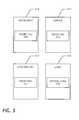
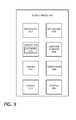
- FIG. 3shows block diagrams of exemplary embodiments of tags 320, 322, 324, 326 containing destination information for various destinations.
- "Destination information”refers to information that identifies a particular location or type of location that a user may wish to reach.
- the destination informationcan allow the user guidance system to know the desired destination.
- the tag 320for example, is labeled with the word "RESTAURANT" and comprises a radio tag 330 (e.g., an active or passive radiofrequency identification (RFID) tag) that stores the destination information for the restaurant.
- the destination informationcan comprise, for example, a number, geographic coordinates, a text string and/or another type of information that the user guidance system can associate with a particular destination.
- the tag 322comprises a radio tag 332 containing destination information for a garage, while the tag 324 comprises a radio tag 334 containing destination information for a concert hall.
- a tagstores machine-readable information using a technology other than a radio tag.
- FIG. 3shows a tag 326 labeled with the word "LOBBY" and comprising an optical code 336.
- the optical code 336can comprise, for example, a one-dimensional optical code (such as a bar code), a two-dimensional optical code (such as a QR code), and/or another machine-readable image.
- a tagcan store destination information using one or more other machine-readable technologies.
- the tags 320, 322, 324can be labeled with pictures, number, colors, icons, and/or touch-readable markings (e.g., Braille) in addition to, or instead of, word labels. In further embodiments, the tags are not labeled.
- a tag containing destination informationis attached to a fixed surface.
- the tags 220, 222are depicted in this figure as being fixed to different walls of the area 202.
- a tagcan be fixed to another surface, for example, a floor, a ceiling, a door, a sign, a signpost and/or another type of surface.
- the tagis not attached to a fixed surface, but is instead attached to a non-fixed surface, for example, a paper that is available at the area 202.
- the number of tags available in the area 202can be, for example, 1 tag, 2 tags, 3 tags, 5 tags or another number of tags. Such an arrangement can allow a user to select destination information for a number of possible destinations.
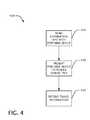
- FIG. 4shows a block diagram of an exemplary embodiment of a method 400 for user guidance.
- the method 400can be performed using embodiments of systems such as those described above in any of FIGS. 1-3 , or using another embodiment of a user guidance system.
- a tag containing destination informationis read using a portable electronic device.
- the tagis located at an area where the user starts a trip.
- the portable electronic devicereads the destination information from the tag and then configures itself to transfer the destination information to a reader.
- the portable electronic devicecan be presented to the reader while the user is going to the desired destination. For example, the user can present the portable electronic device 110, 210 to the reader 140,240,242,244.
- the method 400comprises a further method act 430, in which the user receives travel information after the portable electronic device is presented to the reader.
- the travel informationcan comprise, for example, a direction in which the user should move, an elevator assignment, a door which the user should pass through, and/or other information that guides the user to the user's destination.
- a display coupled to the readercould show the phrase, "TURN LEFT AND WALK 50 METERS.”
- the displaycould show the phrase, "PLEASE ENTER ELEVATOR B.”
- the displaycould show the phrase, "PLEASE USE DOOR NUMBER 2.”
- Travel informationcan be determined by a guidance computer or another device.
- the readercan: instruct an elevator control system to serve a destination call for the user; instruct an access system to open a door or other barrier for the user; and/or instruct a guidance computer to determine a travel route for the user.
- the userdoes not receive travel information in a method act 430. Instead, the user is allowed to pass through a door or other barrier as a result of presenting the portable device to the reader (e.g., the door is unlocked, the barrier is opened).
- a usercan present the portable electronic device to more than one reader.
- the usercould present the device to a reader at an elevator destination call terminal to receive an appropriate elevator assignment.
- the usercould also present the device to a reader at a guidance computer, which then tells the user which direction to go next.
- the usercould also present the device to a reader at a lock to be allowed to pass through a door.
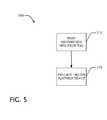
- FIG. 5shows a block diagram of an exemplary embodiment of a method 500 for operating a portable electronic device, such as the devices 110, 210.
- the devicereads destination information from a tag (e.g., such as the tags 120, 220, 222, 320, 322, 324, 326).
- a tage.g., such as the tags 120, 220, 222, 320, 322, 324, 326.
- the devicecan operate in card-reader mode to read the tag.
- the tagcomprises an optical code
- the devicereads the destination information from the tag using, for example, a camera or optical code reader.
- the deviceemulates the tag.
- the portable electronic devicetransmits at least some of the destination information to another device (e.g., a reader).
- a readere.g., a reader
- the devicecan operate in card-emulation mode.
- the tagcomprises an optical code, then the device can show a corresponding image on the device's display.
- the method 500can be performed using a software program on the portable electronic device.
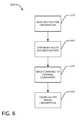
- FIG. 6shows a block diagram of an exemplary embodiment of a method 600 for operating a user guidance system.
- the method 600can be used with systems such as, for example, those described above for FIGS. 1-3 , or with other embodiments.
- a readerreads destination information from a portable electronic device.
- a routeis determined between the location of the reader and the location indicated by the destination information. The route can be determined using, for example, a software program running on a guidance computer.
- at least one commandcan be sent to at least one control component in a method act 630.
- the control componentcan be, for example, an elevator system control, a guidance computer, an access control system, a lock and/or another device.
- the systemcommunicates travel information to a user.
- only one of the method acts 630, 640is performed.
- a user guidance systemis programmed to provide travel information, place elevator calls, open doors or perform other actions only during certain time periods. For example, such actions may be performed only during business hours or during visiting hours for a building.
- time limitationscan be the same for every destination served by a system, or the limitations can vary for different destinations. For example, guidance for a restaurant may be provided only in the evenings, when the restaurant is open, while guidance for an emergency medical clinic may be provided at all times.
- different routes for a given destinationare used, based on the current time period.
- FIG. 7shows a signal diagram 700 describing an exemplary exchange of signals among components of one version of a user guidance system.
- a tagsends a signal 710 containing destination information to a portable electronic device (e.g., the portable electronic device reads the destination information from the tag). Then, the portable electronic device sends a signal 720 containing the destination information to a reader (e.g., the reader reads the destination information from the portable electronic device). Based on the received destination information, the reader sends a command 730 to an elevator system control unit, access control system and/or guidance computer (labeled a "control component" in FIG. 7 ).
- the guidance computercan return a signal 740 containing travel information for the user.
- the readercan also send a command 750 to an output device (e.g., to communicate travel information to a user).
- the destination informationis used as a reference by the reader and/or by another component.
- the readercan use the destination information to determine a relative location (e.g., a room on whatever floor the reader happens to be on).
- information for the relative locationis retrieved from another device (e.g., a local or remote server).
- FIG. 8shows a block diagram of an exemplary embodiment of a computer 800 (e.g., part of an elevator control system, part of a guidance computer, part of an access control system, part of an electronic lock, part of a reader) that can be used with one or more technologies disclosed herein.
- the computer 800comprises one or more processors 810.
- the processor 810is coupled to a memory 820, which comprises one or more computer-readable storage media storing software instructions 830. When executed by the processor 810, the software instructions 830 cause the processor 810 to perform one or more method acts disclosed herein. Further embodiments of the computer 800 can comprise one or more additional components.
- the computer 800can be connected to one or more other computers or electronic devices through an input/output component (not shown).
- the computer 800can connect to other computers or electronic devices through a network 840.
- the computer 800works with one or more other computers, which are located locally and/or remotely.
- One or more of the disclosed methodscan thus be performed using a distributed computing system.
- FIG. 9shows a block diagram of an exemplary embodiment of a mobile device 900 that can be used with one or more technologies disclosed herein.
- the mobile device 900comprises components such as a processor 910.
- the processor 910is coupled to a memory 920, which comprises one or more computer-readable storage media storing software instructions 930.
- the software instructions 930When executed by the processor 910, the software instructions 930 cause the processor 910 to perform one or more method acts disclosed herein.
- the software instructions 930can be loaded onto the mobile device 900 through a connection with another electronic device (e.g., a personal computer), through a connection to one or more computer-readable storage media (e.g., through a data storage card) and/or through a network connection (e.g., over the internet or a private network).
- another electronic devicee.g., a personal computer
- a connection to one or more computer-readable storage mediae.g., through a data storage card
- a network connectione.g.,
- the mobile device 900further comprises one or more input and/or output devices, such as a display 970 and an audio speaker 980.
- a transceiver 990allows the device 900 to send and receive information with one or more networks (e.g., wireless networks, wired networks).
- the one or more networkscan use various technologies, for example, wireless LAN, Bluetooth, UMTS, GSM, and/or others.
- the mobile device 900can also comprise a camera 940, an NFC reader 950, and/or a barcode scanner 960.
- Various embodiments of the mobile device 900can omit one or more of the components shown in FIG. 9 and/or include additional components, including one or more further instances of any of the above components.
- At least some of the disclosed embodimentscan assist a user in navigating through an unfamiliar area, such as a building.
- the portable electronic deviceis, for example, the user's cellular telephone or media player
- the userdoes not need to carry an additional item (e.g., an additional electronic device, or a card) for help in reaching a destination.
- an additional iteme.g., an additional electronic device, or a card
- the user's portable electronic devicealso does not need a radio connection to a network, GPS satellite, or other system to allow the user to receive directions. In some cases, the user can personally choose from a number of possible destinations.
- a userenters the lobby of an unfamiliar building.
- On the wallis a directory of building occupants, along with tags containing destination information for various occupants.
- the userwishes to visit a doctor's office in the building.
- the userfinds the tag for the doctor's office and reads destination information from the tag using an NFC-enabled smartphone, the smartphone functioning in reader mode.
- the userapproaches an elevator destination call terminal in the lobby and places the smartphone near a reader at the terminal.
- the smartphonefunctioning in card-emulation mode
- the readerreads the destination information from the smartphone.
- the readerpasses the destination information to an elevator control system, which determines and places an appropriate elevator destination call based on the information.
- the elevator control systemdisplays an elevator assignment to the user using a display near the destination call terminal.
- the userboards the assigned elevator and travels to the fifth floor.
- the userUpon arriving at the fifth floor, the user approaches a guidance computer in the fifth floor lobby and holds the smartphone near a reader on the computer.
- the guidance computerreads the destination information from the smartphone. Based on the destination information, the computer verbally instructs the user to proceed ten meters to the right down the hall. The user follows these instructions and arrives at the doctor's office.
- a userpasses by an advertising sign that is positioned outside of a retail store. The user sees an item in the advertisement that the user would like to purchase from the store.
- the userUsing a mobile telephone, the user reads an optical code that contains destination information for the location of the product within the store.
- a software program on the telephonecauses the telephone to display the optical code, and the user then presents the optical code to one or more readers within the store. The readers then guide the user to the product that the user wishes to purchase.
- a user in a lobbyuses a mobile telephone to read destination information from a tag labeled "RESTROOM.”
- the userthen presents the telephone to a reader, which reads the destination information from the telephone.
- the readerrecognizes that the destination information is a reference for a relative location, namely, the nearest available restroom.
- the readerdetermines that the nearest restroom is currently being cleaned or is otherwise unavailable. Accordingly, the reader instructs a guidance computer to direct the user to another restroom in the area.
- method actsare performed in an order other than as disclosed herein.
- two or more method actscan be combined into one method act and/or one method act can be divided into two or more method acts.
- a "user”can be a person, a group of persons, a machine and/or an animal.
Landscapes
- Engineering & Computer Science (AREA)
- Radar, Positioning & Navigation (AREA)
- Remote Sensing (AREA)
- Automation & Control Theory (AREA)
- Physics & Mathematics (AREA)
- General Physics & Mathematics (AREA)
- Computer Networks & Wireless Communication (AREA)
- Elevator Control (AREA)
- Navigation (AREA)
- Indicating And Signalling Devices For Elevators (AREA)
Abstract
Description
- The present disclosure relates to guiding a user in an area, for example, in a building.
- When a user visits a location (e.g., a building), directions provided by a machine can help the user reach a given destination. Navigation devices relying on satellite data (e.g., Global Positioning System (GPS) devices) are sometimes not effective in locations where an adequate satellite signal cannot be easily received, including underground locations or locations in a building.
US20090014516A1 describes a system where a visitor is given an access card that is encoded for a specific route to a room in a building. The access card allows access to doors en route to the room. The card can be read by a card reader, which can show maps and give the visitor directions.- The above issues are, in at least some cases, addressed through the technologies described in the claims.
- A user can use a portable electronic device to read destination information at a starting location. The portable electronic device can comprise, for example, a smartphone. The destination information can be read from a tag located at the starting location. The user can then present the portable electronic device to a reader, which reads the destination information from the device. In response to reading the destination information from the device, various actions can be performed to aid the user. For example, an elevator call can be placed, trip information can be provided to the user, a door can be unlocked, and/or another action can be performed.
- In some embodiments, a user guidance method comprises reading destination information for a destination from a tag at a starting area using a portable electronic device, and then presenting the portable electronic device to a reader, the portable electronic device being configured to transmit the destination information to the reader.
- In further embodiments, a user guidance method comprises: reading, from a portable electronic device and using a reader, destination information for a destination, the destination information having been read by the portable electronic device from a tag at a starting area; and determining a route for the destination from a location of the reader. The portable electronic device can comprise a near-field communication device. The user guidance method can further comprise sending a command to a guidance computer based on the route, and the method can also further comprise sending a command to an access control system based on the route. The user guidance method can also comprise sending a command to an elevator system control based on the route.
- Embodiments of a user guidance system can comprise a tag storing destination information for a destination, the tag being located in a starting area, and a reader configured to read the destination information from a portable electronic device. The user guidance system can further comprise an elevator control system coupled to the reader, the reader comprising a destination call terminal or a guidance computer. In some cases, the tag is a first tag and the destination is a first destination, the system further comprising a second tag storing destination information for a second destination. The tag can be fixed to a wall or other surface at the starting area. The tag can comprise a radio tag or an optical code. The destination information can include a relative destination.
- Further embodiments comprise a computer-based device configured to perform one or more of the disclosed methods.
- At least some embodiments of the disclosed methods can be implemented using a computer or computer-based device that performs one or more method acts, the computer or computer-based device having read instructions for performing the method acts from one or more computer-readable storage media. The computer-readable storage media can comprise, for example, one or more optical disks, volatile memory components (such as DRAM or SRAM) and/or nonvolatile memory components (such as hard drives, Flash RAM or ROM). The computer-readable storage media do not cover pure transitory signals. The methods disclosed herein are not performed solely in the human mind.
- The disclosure refers to the following figures:
FIG. 1 shows a block diagram of an exemplary embodiment of a user guidance system.FIG. 2 shows a plan view of an exemplary embodiment of a setting for a user guidance system.FIG. 3 shows a block diagram of exemplary embodiments of tags containing destination information.FIG. 4 shows a block diagram of an exemplary embodiment of a method for user guidance.FIG. 5 shows a block diagram of an exemplary embodiment of a method for operating a portable electronic device.FIG. 6 shows a block diagram of an exemplary embodiment of a method for operating a user guidance system.FIG. 7 shows a diagram describing an exemplary exchange of signals among components of a user guidance system.FIG. 8 shows a block diagram of an exemplary embodiment of a computer.FIG. 9 shows a block diagram of an exemplary embodiment of a portable electronic device.FIG. 1 shows a block diagram of an exemplary embodiment of auser guidance system 100. Thesystem 100 comprises one ormore tags 120, which store information about various locations (examples of such tags are described below in more detail). Thesystem 100 also comprises areader 140 for reading information from a portableelectronic device 110. In some embodiments, thereader 140 is coupled to anelevator system control 150 and/or to aguidance computer 130. Thereader 140 can also be coupled to anaccess control system 160. Theelevator system control 150 controls one or more functions of an elevator installation. Theguidance computer 130 can provide directions for a user and information about the user's environment. Theaccess control system 160 can, for example, lock and unlock doors or other components. The portableelectronic device 110 can comprise, for example, a handheld computer, a smartphone, a mobile telephone, a tablet computer, a laptop computer and a PDA (personal digital assistant). In some embodiments, thedevice 110 has NFC (near-field communication) capabilities.- In further embodiments, the
reader 140 can be coupled to one or more output devices, for example, adisplay 170 and/or aspeaker 180. Such devices can allow thereader 140 to convey information to a user. One ormore displays 170 and/orspeakers 180 can also be coupled to other components, such as theguidance computer 130, theelevator system 150 and theaccess control system 160. - Any of the
reader 140, theguidance computer 130, theelevator system control 150 and theaccess control system 160 can be computer-based. Also, any of these components can comprise a single component or multiple components acting together. - Some of the disclosed embodiments are described in the context of an elevator installation, often in the context of an elevator installation that uses destination call control. Destination call control allows the destination floor of a passenger to be determined before the passenger enters the elevator car. At least some of the disclosed embodiments can also be used with non-destination-call-control elevator systems (e.g., systems where a user indicates a destination floor from within the elevator car).
FIG. 2 shows a block-diagram plan view of an exemplary setting for using at least some embodiments of the disclosed technologies. Anarea 202 is at least partially accessible to a user 204 (including, possibly, multiple users). The user 204 may or may not be familiar with thearea 202 and its surroundings. Thearea 202 can be in, at or near a building or other structure. For example, in various embodiments thearea 202 can be a lobby in a building or parking garage, a subterranean area or structure, or an outdoor entrance area. In some cases, the user 204 needs authorization to enter thearea 202.- In various embodiments, the
area 202 provides access to one or more elevators, escalators, staircases, hallways, storage areas and/or doors, which can allow the user 204 to reach one or more other areas. For example, in the setting ofFIG. 2 thearea 202 offers possible access to elevator A, elevator B and door A. In this example, anelevator installation 250 comprises elevators A and B. Thearea 202 comprises one ormore tags tags electronic device 210 used by the user 204. One ormore readers area 202. FIG. 3 shows block diagrams of exemplary embodiments oftags tag 320, for example, is labeled with the word "RESTAURANT" and comprises a radio tag 330 (e.g., an active or passive radiofrequency identification (RFID) tag) that stores the destination information for the restaurant. In various embodiments, the destination information can comprise, for example, a number, geographic coordinates, a text string and/or another type of information that the user guidance system can associate with a particular destination. Thetag 322 comprises aradio tag 332 containing destination information for a garage, while thetag 324 comprises aradio tag 334 containing destination information for a concert hall.- In further embodiments, a tag stores machine-readable information using a technology other than a radio tag. For example,
FIG. 3 shows atag 326 labeled with the word "LOBBY" and comprising anoptical code 336. Theoptical code 336 can comprise, for example, a one-dimensional optical code (such as a bar code), a two-dimensional optical code (such as a QR code), and/or another machine-readable image. - In additional embodiments, a tag can store destination information using one or more other machine-readable technologies.
- In some cases, the
tags - In some embodiments, a tag containing destination information is attached to a fixed surface. Returning to
FIG. 2 , thetags area 202. In further embodiments, a tag can be fixed to another surface, for example, a floor, a ceiling, a door, a sign, a signpost and/or another type of surface. In further embodiments, the tag is not attached to a fixed surface, but is instead attached to a non-fixed surface, for example, a paper that is available at thearea 202. The number of tags available in thearea 202 can be, for example, 1 tag, 2 tags, 3 tags, 5 tags or another number of tags. Such an arrangement can allow a user to select destination information for a number of possible destinations. FIG. 4 shows a block diagram of an exemplary embodiment of amethod 400 for user guidance. Themethod 400 can be performed using embodiments of systems such as those described above in any ofFIGS. 1-3 , or using another embodiment of a user guidance system. In amethod act 410, a tag containing destination information is read using a portable electronic device. The tag is located at an area where the user starts a trip. As will be explained below in more detail below, the portable electronic device reads the destination information from the tag and then configures itself to transfer the destination information to a reader. Thus, in amethod act 420, the portable electronic device can be presented to the reader while the user is going to the desired destination. For example, the user can present the portableelectronic device - In some embodiments, the
method 400 comprises afurther method act 430, in which the user receives travel information after the portable electronic device is presented to the reader. The travel information can comprise, for example, a direction in which the user should move, an elevator assignment, a door which the user should pass through, and/or other information that guides the user to the user's destination. For example, a display coupled to the reader could show the phrase, "TURN LEFT AND WALK 50 METERS." Or, the display could show the phrase, "PLEASE ENTER ELEVATOR B." Or, the display could show the phrase, "PLEASE USE DOOR NUMBER 2." Such information can also be communicated by sound. Travel information can be determined by a guidance computer or another device. - Along with the travel information being communicated, corresponding instructions can be sent to appropriate systems. For example, in various embodiments, the reader can: instruct an elevator control system to serve a destination call for the user; instruct an access system to open a door or other barrier for the user; and/or instruct a guidance computer to determine a travel route for the user.
- In particular embodiments, the user does not receive travel information in a
method act 430. Instead, the user is allowed to pass through a door or other barrier as a result of presenting the portable device to the reader (e.g., the door is unlocked, the barrier is opened). - Depending on the user's journey and the configuration of the area through which the journey passes, a user can present the portable electronic device to more than one reader. For example, the user could present the device to a reader at an elevator destination call terminal to receive an appropriate elevator assignment. During the journey, the user could also present the device to a reader at a guidance computer, which then tells the user which direction to go next. The user could also present the device to a reader at a lock to be allowed to pass through a door.
FIG. 5 shows a block diagram of an exemplary embodiment of amethod 500 for operating a portable electronic device, such as thedevices method act 510, the device reads destination information from a tag (e.g., such as thetags method act 520, based on the read destination information, the device emulates the tag. In other words, the portable electronic device transmits at least some of the destination information to another device (e.g., a reader). For example, if the device is an NFC device, the device can operate in card-emulation mode. If the tag comprises an optical code, then the device can show a corresponding image on the device's display. Thus, a user can read destination information using the portable electronic device and then communicate the destination information to a reader during the journey. Themethod 500 can be performed using a software program on the portable electronic device.FIG. 6 shows a block diagram of an exemplary embodiment of amethod 600 for operating a user guidance system. Themethod 600 can be used with systems such as, for example, those described above forFIGS. 1-3 , or with other embodiments. In amethod act 610, a reader reads destination information from a portable electronic device. In amethod act 620, a route is determined between the location of the reader and the location indicated by the destination information. The route can be determined using, for example, a software program running on a guidance computer. According to the determined route, at least one command can be sent to at least one control component in amethod act 630. The control component can be, for example, an elevator system control, a guidance computer, an access control system, a lock and/or another device. In amethod act 640, the system communicates travel information to a user.- In further embodiments, only one of the method acts 630, 640 is performed.
- In some cases, a user guidance system is programmed to provide travel information, place elevator calls, open doors or perform other actions only during certain time periods. For example, such actions may be performed only during business hours or during visiting hours for a building. Such time limitations can be the same for every destination served by a system, or the limitations can vary for different destinations. For example, guidance for a restaurant may be provided only in the evenings, when the restaurant is open, while guidance for an emergency medical clinic may be provided at all times. In some embodiments, different routes for a given destination are used, based on the current time period.
FIG. 7 shows a signal diagram 700 describing an exemplary exchange of signals among components of one version of a user guidance system. In this example, a tag sends asignal 710 containing destination information to a portable electronic device (e.g., the portable electronic device reads the destination information from the tag). Then, the portable electronic device sends asignal 720 containing the destination information to a reader (e.g., the reader reads the destination information from the portable electronic device). Based on the received destination information, the reader sends acommand 730 to an elevator system control unit, access control system and/or guidance computer (labeled a "control component" inFIG. 7 ). In some embodiments, where thecommand 730 is sent to a guidance computer, the guidance computer can return asignal 740 containing travel information for the user. The reader can also send acommand 750 to an output device (e.g., to communicate travel information to a user).- In variations of any of the disclosed embodiments, the destination information is used as a reference by the reader and/or by another component. For example, instead of using the destination information to determine an absolute location (e.g., a particular room in a building), the reader can use the destination information to determine a relative location (e.g., a room on whatever floor the reader happens to be on). In some cases, information for the relative location is retrieved from another device (e.g., a local or remote server).
FIG. 8 shows a block diagram of an exemplary embodiment of a computer 800 (e.g., part of an elevator control system, part of a guidance computer, part of an access control system, part of an electronic lock, part of a reader) that can be used with one or more technologies disclosed herein. Thecomputer 800 comprises one ormore processors 810. Theprocessor 810 is coupled to amemory 820, which comprises one or more computer-readable storage mediastoring software instructions 830. When executed by theprocessor 810, thesoftware instructions 830 cause theprocessor 810 to perform one or more method acts disclosed herein. Further embodiments of thecomputer 800 can comprise one or more additional components. Thecomputer 800 can be connected to one or more other computers or electronic devices through an input/output component (not shown). In at least some embodiments, thecomputer 800 can connect to other computers or electronic devices through anetwork 840. In particular embodiments, thecomputer 800 works with one or more other computers, which are located locally and/or remotely. One or more of the disclosed methods can thus be performed using a distributed computing system.FIG. 9 shows a block diagram of an exemplary embodiment of amobile device 900 that can be used with one or more technologies disclosed herein. Themobile device 900 comprises components such as aprocessor 910. Theprocessor 910 is coupled to amemory 920, which comprises one or more computer-readable storage mediastoring software instructions 930. When executed by theprocessor 910, thesoftware instructions 930 cause theprocessor 910 to perform one or more method acts disclosed herein. Thesoftware instructions 930 can be loaded onto themobile device 900 through a connection with another electronic device (e.g., a personal computer), through a connection to one or more computer-readable storage media (e.g., through a data storage card) and/or through a network connection (e.g., over the internet or a private network).- The
mobile device 900 further comprises one or more input and/or output devices, such as adisplay 970 and anaudio speaker 980. Atransceiver 990 allows thedevice 900 to send and receive information with one or more networks (e.g., wireless networks, wired networks). The one or more networks can use various technologies, for example, wireless LAN, Bluetooth, UMTS, GSM, and/or others. Themobile device 900 can also comprise acamera 940, anNFC reader 950, and/or abarcode scanner 960. - Various embodiments of the
mobile device 900 can omit one or more of the components shown inFIG. 9 and/or include additional components, including one or more further instances of any of the above components. - At least some of the disclosed embodiments can assist a user in navigating through an unfamiliar area, such as a building. If the portable electronic device is, for example, the user's cellular telephone or media player, then the user does not need to carry an additional item (e.g., an additional electronic device, or a card) for help in reaching a destination. Additionally, since the user can reach the desired destination without directions from a person, it is not necessary for a receptionist or other person to prepare a map or access device for the user. The user's portable electronic device also does not need a radio connection to a network, GPS satellite, or other system to allow the user to receive directions. In some cases, the user can personally choose from a number of possible destinations.
- In one non-limiting example, a user enters the lobby of an unfamiliar building. On the wall is a directory of building occupants, along with tags containing destination information for various occupants. The user wishes to visit a doctor's office in the building. The user finds the tag for the doctor's office and reads destination information from the tag using an NFC-enabled smartphone, the smartphone functioning in reader mode. Then, the user approaches an elevator destination call terminal in the lobby and places the smartphone near a reader at the terminal. With the smartphone functioning in card-emulation mode, the reader reads the destination information from the smartphone. The reader passes the destination information to an elevator control system, which determines and places an appropriate elevator destination call based on the information. The elevator control system displays an elevator assignment to the user using a display near the destination call terminal. The user boards the assigned elevator and travels to the fifth floor. Upon arriving at the fifth floor, the user approaches a guidance computer in the fifth floor lobby and holds the smartphone near a reader on the computer. The guidance computer reads the destination information from the smartphone. Based on the destination information, the computer verbally instructs the user to proceed ten meters to the right down the hall. The user follows these instructions and arrives at the doctor's office.
- In another non-limiting example, a user passes by an advertising sign that is positioned outside of a retail store. The user sees an item in the advertisement that the user would like to purchase from the store. Using a mobile telephone, the user reads an optical code that contains destination information for the location of the product within the store. A software program on the telephone causes the telephone to display the optical code, and the user then presents the optical code to one or more readers within the store. The readers then guide the user to the product that the user wishes to purchase.
- In a further non-limiting example, a user in a lobby uses a mobile telephone to read destination information from a tag labeled "RESTROOM." The user then presents the telephone to a reader, which reads the destination information from the telephone. The reader recognizes that the destination information is a reference for a relative location, namely, the nearest available restroom. Based on information from a server in the building, the reader determines that the nearest restroom is currently being cleaned or is otherwise unavailable. Accordingly, the reader instructs a guidance computer to direct the user to another restroom in the area.
- Although some embodiments of the various methods disclosed herein are described as comprising a certain number of method acts, further embodiments of a given method can comprise more or fewer method acts than are explicitly disclosed herein. In additional embodiments, method acts are performed in an order other than as disclosed herein. In some cases, two or more method acts can be combined into one method act and/or one method act can be divided into two or more method acts.
- As used herein, a "user" can be a person, a group of persons, a machine and/or an animal.
- Having illustrated and described the principles of the disclosed technologies, it will be apparent to those skilled in the art that the disclosed embodiments can be modified in arrangement and detail without departing from such principles. In view of the many possible embodiments to which the principles of the disclosed technologies can be applied, it should be recognized that the illustrated embodiments are only examples of the technologies and should not be taken as limiting the scope of the invention. Rather, the scope of the invention is defined by the following claims and their equivalents. I therefore claim as my invention all that comes within the scope of these claims.
Claims (15)
- A user guidance method, comprising:reading, from a portable electronic device (140) and using a computer-based reader (140), destination information for a destination, the destination information having been read by the portable electronic device (140) from a tag (120) at a starting area (202); anddetermining a route for the destination from a location of the computer-based reader (140).
- The user guidance method of claim 1, the portable electronic device (140) comprising a near-field communication device.
- The user guidance method of claims 1 or 2, further comprising sending a command to a guidance computer (130) based on the route, sending a command to an access control system (160) based on the route, and/or sending a command to an elevator system control (150) based on the route.
- The user guidance method of any preceding claim, further comprising reading the destination information from the tag (120) at the starting area (202) using the portable electronic device (140).
- The user guidance method of claim 4, the tag (120) being one of a plurality of tags (120), the method further comprising selecting the tag (120) based on a desired destination for a user.
- A user guidance system (100), comprising:a tag (120) storing destination information for a destination, the tag (120) being located in a starting area (202); anda reader (140) configured to read the destination information from a portable electronic device (110).
- The user guidance system of claim 6, further comprising an elevator control system (150) coupled to the reader (140), the reader (140) comprising a destination call terminal.
- The user guidance system of claims 6, further comprising an elevator control system (150) coupled to the reader (140), the reader (140) comprising a guidance computer (130).
- The user guidance system of any of claims 6-8, the tag (120) being a first tag (120) and the destination being a first destination, the system further comprising a second tag (120) storing destination information for a second destination.
- The user guidance system of any of claims 6-9, the tag (120) being fixed to a wall at the starting area (202).
- The user guidance system of any of claims 6-9, the tag (120) being fixed to a surface at the starting area other than a wall (202).
- The user guidance system of any of claims 6-11, the tag (120) comprising a radio tag.
- The user guidance system of any of claims 6-11, the tag (120) comprising an optical code.
- The user guidance system of any of claims 6-13, the destination information indicating a relative destination.
- One or more computer-readable storage media (820) having encoded thereon instructions that, when executed by a computer (800), cause the computer (800) to perform a method, the method comprising:reading, from a portable electronic device (110) and using a reader (140), destination information for a destination, the destination information having been read by the portable electronic device (110) from a tag (120) at a starting area (202); anddetermining a route for the destination from a location of the reader (140).
Priority Applications (13)
| Application Number | Priority Date | Filing Date | Title |
|---|---|---|---|
| EP12182608.5AEP2704105A1 (en) | 2012-08-31 | 2012-08-31 | Guiding users in an area |
| MX2015002352AMX364807B (en) | 2012-08-31 | 2013-07-19 | Guiding users in an area. |
| SG11201500676SASG11201500676SA (en) | 2012-08-31 | 2013-07-19 | Guiding users in an area |
| ES13740248TES2891130T3 (en) | 2012-08-31 | 2013-07-19 | Guide users in a zone |
| US14/422,011US9945675B2 (en) | 2012-08-31 | 2013-07-19 | Guiding users in an area |
| CN201380045445.5ACN104584085B (en) | 2012-08-31 | 2013-07-19 | District's intra domain user navigation |
| BR112015003442-0ABR112015003442B1 (en) | 2012-08-31 | 2013-07-19 | USER GUIDING METHOD, USER GUIDING SYSTEM AND NON TRANSIENT COMPUTER READABLE STORAGE MEDIA |
| AU2013307612AAU2013307612B2 (en) | 2012-08-31 | 2013-07-19 | Guiding users in an area |
| CA2880624ACA2880624C (en) | 2012-08-31 | 2013-07-19 | Guiding users in an area |
| EP13740248.3AEP2891139B1 (en) | 2012-08-31 | 2013-07-19 | Guiding users in an area |
| PCT/EP2013/065305WO2014032855A1 (en) | 2012-08-31 | 2013-07-19 | Guiding users in an area |
| PL13740248TPL2891139T3 (en) | 2012-08-31 | 2013-07-19 | Guiding users in an area |
| HK15107777.7AHK1207194B (en) | 2012-08-31 | 2013-07-19 | Guiding users in an area |
Applications Claiming Priority (1)
| Application Number | Priority Date | Filing Date | Title |
|---|---|---|---|
| EP12182608.5AEP2704105A1 (en) | 2012-08-31 | 2012-08-31 | Guiding users in an area |
Publications (1)
| Publication Number | Publication Date |
|---|---|
| EP2704105A1true EP2704105A1 (en) | 2014-03-05 |
Family
ID=47137494
Family Applications (2)
| Application Number | Title | Priority Date | Filing Date |
|---|---|---|---|
| EP12182608.5AWithdrawnEP2704105A1 (en) | 2012-08-31 | 2012-08-31 | Guiding users in an area |
| EP13740248.3AActiveEP2891139B1 (en) | 2012-08-31 | 2013-07-19 | Guiding users in an area |
Family Applications After (1)
| Application Number | Title | Priority Date | Filing Date |
|---|---|---|---|
| EP13740248.3AActiveEP2891139B1 (en) | 2012-08-31 | 2013-07-19 | Guiding users in an area |
Country Status (11)
| Country | Link |
|---|---|
| US (1) | US9945675B2 (en) |
| EP (2) | EP2704105A1 (en) |
| CN (1) | CN104584085B (en) |
| AU (1) | AU2013307612B2 (en) |
| BR (1) | BR112015003442B1 (en) |
| CA (1) | CA2880624C (en) |
| ES (1) | ES2891130T3 (en) |
| MX (1) | MX364807B (en) |
| PL (1) | PL2891139T3 (en) |
| SG (1) | SG11201500676SA (en) |
| WO (1) | WO2014032855A1 (en) |
Cited By (8)
| Publication number | Priority date | Publication date | Assignee | Title |
|---|---|---|---|---|
| WO2016001477A1 (en)* | 2014-07-04 | 2016-01-07 | Kone Corporation | Allocation of facilities on a route |
| WO2016089932A1 (en)* | 2014-12-02 | 2016-06-09 | Otis Elevator Company | Method and system for indoor wayfinding based on elevator information |
| WO2016100293A1 (en)* | 2014-12-15 | 2016-06-23 | Otis Elevator Company | An intelligent building system for implementing actions based on user device detection |
| BE1023049B1 (en)* | 2015-10-23 | 2016-11-14 | Cmsg Bvba | An evacuation control system |
| WO2017186305A1 (en)* | 2016-04-29 | 2017-11-02 | Kone Corporation | Elevator entry control system and method |
| WO2020079319A1 (en)* | 2018-10-16 | 2020-04-23 | Kone Corporation | Mobile device and systems for wireless people flow management in a building |
| EP3978410A1 (en)* | 2020-10-02 | 2022-04-06 | Otis Elevator Company | System and method for making contact-free elevator requests |
| WO2023147862A1 (en)* | 2022-02-03 | 2023-08-10 | Kone Corporation | User guidance system and method for providing user guidance in a building or structure, and elevator system |
Families Citing this family (19)
| Publication number | Priority date | Publication date | Assignee | Title |
|---|---|---|---|---|
| SG193227A1 (en)* | 2011-03-29 | 2013-10-30 | Inventio Ag | User guidance with mobile electronic devices |
| EP2951114B1 (en)* | 2013-02-01 | 2017-08-23 | KONE Corporation | An apparatus and a method for elevator allocation using a magnetic field map in an elevator system |
| US9798000B2 (en)* | 2013-12-10 | 2017-10-24 | Intel Corporation | System and method for indoor geolocation and mapping |
| CN107000969A (en)* | 2014-12-02 | 2017-08-01 | 因温特奥股份公司 | Access Control System Providing Feedback to Portable Electronic Devices |
| CN107000959B (en) | 2014-12-12 | 2020-07-03 | 奥的斯电梯公司 | Elevator route selection system |
| EP3365630B1 (en)* | 2015-10-19 | 2024-01-24 | KONE Corporation | Smartwatch and elevator and guide system |
| JP6728390B2 (en) | 2016-04-06 | 2020-07-22 | オーチス エレベータ カンパニーOtis Elevator Company | Mobile visitor management |
| WO2018066052A1 (en)* | 2016-10-04 | 2018-04-12 | 三菱電機株式会社 | Autonomous moving body |
| US9998581B1 (en) | 2017-01-13 | 2018-06-12 | Otis Elevator Company | Communication system and method of communication in an elevator operating environment |
| CN106629293A (en)* | 2017-01-16 | 2017-05-10 | 深圳市维康宝技术有限公司 | Intelligent elevator system |
| US10486937B2 (en)* | 2017-03-31 | 2019-11-26 | Otis Elevator Company | User management of door and elevator access control |
| CN110869984A (en)* | 2017-07-14 | 2020-03-06 | 开利公司 | Intent-driven building occupancy path and system interaction optimization |
| US10875742B2 (en)* | 2017-11-09 | 2020-12-29 | Otis Elevator Company | Elevator service request using user device with filtered destination floor selection |
| EP3483104B1 (en)* | 2017-11-10 | 2021-09-01 | Otis Elevator Company | Systems and methods for providing information regarding elevator systems |
| CN110228733B (en) | 2018-03-06 | 2022-08-09 | 奥的斯电梯公司 | Authorization management of elevator service requests and authorization requests |
| KR102080319B1 (en)* | 2018-06-08 | 2020-04-23 | 한국교통대학교 산학협력단 | A route guiding method for indoor passenger and system for the same |
| ES3029865T3 (en)* | 2019-12-20 | 2025-06-25 | Inventio Ag | Method for transmitting personalized information to a user of a building |
| US20210339979A1 (en)* | 2020-05-04 | 2021-11-04 | Otis Elevator Company | Elevator system display that provides different information to different individuals |
| JP7641844B2 (en) | 2021-07-27 | 2025-03-07 | 三菱電機ビルソリューションズ株式会社 | Elevator call registration program and information terminal |
Citations (4)
| Publication number | Priority date | Publication date | Assignee | Title |
|---|---|---|---|---|
| US20070026802A1 (en)* | 2005-07-28 | 2007-02-01 | Inventio Ag | Method of Guiding a User in an Environment, Particularly in a Building |
| WO2007093665A1 (en)* | 2006-02-13 | 2007-08-23 | Kone Corporation | Communication system |
| US20090014516A1 (en) | 2007-07-11 | 2009-01-15 | Honeywell International, Inc. | Automatic guidance of visitor in new facility through access control system integration with lcd display |
| US20120130635A1 (en)* | 2010-11-18 | 2012-05-24 | Toshiba Tec Kabushiki Kaisha | Portable information terminal apparatus and computer program product |
Family Cites Families (6)
| Publication number | Priority date | Publication date | Assignee | Title |
|---|---|---|---|---|
| GB2422669A (en)* | 2005-01-31 | 2006-08-02 | Hewlett Packard Development Co | Article and a mobile networkable device for reading navigational data from an article |
| KR20060094176A (en) | 2005-02-23 | 2006-08-29 | 삼성전자주식회사 | Methods, systems and handheld devices that provide guide information and work information in real time |
| US8259692B2 (en)* | 2008-07-11 | 2012-09-04 | Nokia Corporation | Method providing positioning and navigation inside large buildings |
| FR2945635A1 (en)* | 2009-05-12 | 2010-11-19 | Christophe Bevilacqua | System for positioning and guiding visually impaired person in e.g. building, has calculation unit for calculating current position of portable device based on reading information of reader unit and measurements of inertial platform |
| TWI408340B (en)* | 2009-07-27 | 2013-09-11 | Htc Corp | Mehtod for displaying navigation route, navigation apparatus and computer program product |
| CN102168984A (en)* | 2010-07-07 | 2011-08-31 | 北京邮电大学 | Real-time interactive navigation system and method for set area |
- 2012
- 2012-08-31EPEP12182608.5Apatent/EP2704105A1/ennot_activeWithdrawn
- 2013
- 2013-07-19USUS14/422,011patent/US9945675B2/enactiveActive
- 2013-07-19SGSG11201500676SApatent/SG11201500676SA/enunknown
- 2013-07-19CACA2880624Apatent/CA2880624C/ennot_activeExpired - Fee Related
- 2013-07-19AUAU2013307612Apatent/AU2013307612B2/enactiveActive
- 2013-07-19WOPCT/EP2013/065305patent/WO2014032855A1/enactiveApplication Filing
- 2013-07-19ESES13740248Tpatent/ES2891130T3/enactiveActive
- 2013-07-19EPEP13740248.3Apatent/EP2891139B1/enactiveActive
- 2013-07-19PLPL13740248Tpatent/PL2891139T3/enunknown
- 2013-07-19MXMX2015002352Apatent/MX364807B/enactiveIP Right Grant
- 2013-07-19BRBR112015003442-0Apatent/BR112015003442B1/enactiveIP Right Grant
- 2013-07-19CNCN201380045445.5Apatent/CN104584085B/enactiveActive
Patent Citations (4)
| Publication number | Priority date | Publication date | Assignee | Title |
|---|---|---|---|---|
| US20070026802A1 (en)* | 2005-07-28 | 2007-02-01 | Inventio Ag | Method of Guiding a User in an Environment, Particularly in a Building |
| WO2007093665A1 (en)* | 2006-02-13 | 2007-08-23 | Kone Corporation | Communication system |
| US20090014516A1 (en) | 2007-07-11 | 2009-01-15 | Honeywell International, Inc. | Automatic guidance of visitor in new facility through access control system integration with lcd display |
| US20120130635A1 (en)* | 2010-11-18 | 2012-05-24 | Toshiba Tec Kabushiki Kaisha | Portable information terminal apparatus and computer program product |
Cited By (23)
| Publication number | Priority date | Publication date | Assignee | Title |
|---|---|---|---|---|
| WO2016001477A1 (en)* | 2014-07-04 | 2016-01-07 | Kone Corporation | Allocation of facilities on a route |
| CN106662450B (en)* | 2014-07-04 | 2022-05-13 | 通力股份公司 | On-route facility distribution |
| US10955247B2 (en) | 2014-07-04 | 2021-03-23 | Kone Corporation | Allocation of facilities on a route |
| EP3164675B1 (en) | 2014-07-04 | 2020-09-02 | KONE Corporation | Allocation of facilities on a route |
| CN106662450A (en)* | 2014-07-04 | 2017-05-10 | 通力股份公司 | Allocation of facilities on the route |
| CN107000975A (en)* | 2014-12-02 | 2017-08-01 | 奥的斯电梯公司 | Method and system for the indoor pathfinding based on elevator information |
| US10889463B2 (en) | 2014-12-02 | 2021-01-12 | Otis Elevator Company | Method and system for indoor wayfinding based on elevator information |
| WO2016089932A1 (en)* | 2014-12-02 | 2016-06-09 | Otis Elevator Company | Method and system for indoor wayfinding based on elevator information |
| CN107000975B (en)* | 2014-12-02 | 2019-10-18 | 奥的斯电梯公司 | Method and system for the indoor pathfinding based on elevator information |
| WO2016100293A1 (en)* | 2014-12-15 | 2016-06-23 | Otis Elevator Company | An intelligent building system for implementing actions based on user device detection |
| CN107000971A (en)* | 2014-12-15 | 2017-08-01 | 奥的斯电梯公司 | For being detected based on user's set and the intelligence building system of implementation action |
| US10683190B2 (en) | 2014-12-15 | 2020-06-16 | Otis Elevator Company | Intelligent building system for implementing actions based on user device detection |
| BE1023049B1 (en)* | 2015-10-23 | 2016-11-14 | Cmsg Bvba | An evacuation control system |
| CN109071155B (en)* | 2016-04-29 | 2024-08-06 | 通力股份公司 | Elevator access control system and method |
| US20190062107A1 (en)* | 2016-04-29 | 2019-02-28 | Kone Corporation | Remote call & mobile access extension for controlling an elevator or a door key |
| CN109071155A (en)* | 2016-04-29 | 2018-12-21 | 通力股份公司 | Elevator metering-in control system and method |
| WO2017186305A1 (en)* | 2016-04-29 | 2017-11-02 | Kone Corporation | Elevator entry control system and method |
| US11697572B2 (en) | 2016-04-29 | 2023-07-11 | Kone Corporation | Remote call and mobile access extension for controlling an elevator or a door key |
| WO2020079319A1 (en)* | 2018-10-16 | 2020-04-23 | Kone Corporation | Mobile device and systems for wireless people flow management in a building |
| US20210235239A1 (en)* | 2018-10-16 | 2021-07-29 | Kone Corporation | Mobile device and systems for wireless people flow management in a building |
| US12075316B2 (en)* | 2018-10-16 | 2024-08-27 | Kone Corporation | Mobile device with processor for communication with NFC reader |
| EP3978410A1 (en)* | 2020-10-02 | 2022-04-06 | Otis Elevator Company | System and method for making contact-free elevator requests |
| WO2023147862A1 (en)* | 2022-02-03 | 2023-08-10 | Kone Corporation | User guidance system and method for providing user guidance in a building or structure, and elevator system |
Also Published As
| Publication number | Publication date |
|---|---|
| AU2013307612B2 (en) | 2017-02-16 |
| EP2891139A1 (en) | 2015-07-08 |
| CN104584085B (en) | 2016-08-31 |
| BR112015003442B1 (en) | 2021-11-23 |
| PL2891139T3 (en) | 2021-12-20 |
| MX2015002352A (en) | 2015-05-12 |
| US9945675B2 (en) | 2018-04-17 |
| WO2014032855A1 (en) | 2014-03-06 |
| US20150204678A1 (en) | 2015-07-23 |
| SG11201500676SA (en) | 2015-05-28 |
| EP2891139B1 (en) | 2021-09-01 |
| HK1207194A1 (en) | 2016-01-22 |
| ES2891130T3 (en) | 2022-01-26 |
| MX364807B (en) | 2019-05-08 |
| CA2880624C (en) | 2019-08-20 |
| AU2013307612A1 (en) | 2015-03-12 |
| CA2880624A1 (en) | 2014-03-06 |
| CN104584085A (en) | 2015-04-29 |
| BR112015003442A2 (en) | 2017-07-04 |
Similar Documents
| Publication | Publication Date | Title |
|---|---|---|
| US9945675B2 (en) | Guiding users in an area | |
| US9580272B2 (en) | User guidance with mobile electronic devices | |
| ES2966858T3 (en) | Dispatch based on mobile applications | |
| KR101187316B1 (en) | Location guiding method | |
| CA2576163C (en) | Method for displaying route information | |
| JP2009232203A (en) | Position guidance system and method, mobile phone terminal, and route information delivery server | |
| JP2009092634A (en) | Guiding system and portable device in restrictive space | |
| HK1207194B (en) | Guiding users in an area | |
| JP2003228283A (en) | Guidance system | |
| HK1191921B (en) | User guidance with mobile electronic devices |
Legal Events
| Date | Code | Title | Description |
|---|---|---|---|
| AK | Designated contracting states | Kind code of ref document:A1 Designated state(s):AL AT BE BG CH CY CZ DE DK EE ES FI FR GB GR HR HU IE IS IT LI LT LU LV MC MK MT NL NO PL PT RO RS SE SI SK SM TR | |
| AX | Request for extension of the european patent | Extension state:BA ME | |
| PUAI | Public reference made under article 153(3) epc to a published international application that has entered the european phase | Free format text:ORIGINAL CODE: 0009012 | |
| STAA | Information on the status of an ep patent application or granted ep patent | Free format text:STATUS: THE APPLICATION HAS BEEN WITHDRAWN | |
| 18W | Application withdrawn | Effective date:20140527 |