EP2291784B1 - Method and a system of healthcare data handling - Google Patents
Method and a system of healthcare data handlingDownload PDFInfo
- Publication number
- EP2291784B1 EP2291784B1EP09757949.4AEP09757949AEP2291784B1EP 2291784 B1EP2291784 B1EP 2291784B1EP 09757949 AEP09757949 AEP 09757949AEP 2291784 B1EP2291784 B1EP 2291784B1
- Authority
- EP
- European Patent Office
- Prior art keywords
- healthcare data
- requestor
- data
- request
- access
- Prior art date
- Legal status (The legal status is an assumption and is not a legal conclusion. Google has not performed a legal analysis and makes no representation as to the accuracy of the status listed.)
- Active
Links
Images
Classifications
- G—PHYSICS
- G16—INFORMATION AND COMMUNICATION TECHNOLOGY [ICT] SPECIALLY ADAPTED FOR SPECIFIC APPLICATION FIELDS
- G16H—HEALTHCARE INFORMATICS, i.e. INFORMATION AND COMMUNICATION TECHNOLOGY [ICT] SPECIALLY ADAPTED FOR THE HANDLING OR PROCESSING OF MEDICAL OR HEALTHCARE DATA
- G16H10/00—ICT specially adapted for the handling or processing of patient-related medical or healthcare data
- G16H10/60—ICT specially adapted for the handling or processing of patient-related medical or healthcare data for patient-specific data, e.g. for electronic patient records
- G—PHYSICS
- G06—COMPUTING OR CALCULATING; COUNTING
- G06F—ELECTRIC DIGITAL DATA PROCESSING
- G06F21/00—Security arrangements for protecting computers, components thereof, programs or data against unauthorised activity
- G06F21/10—Protecting distributed programs or content, e.g. vending or licensing of copyrighted material ; Digital rights management [DRM]
- G06F21/107—License processing; Key processing
- G06F21/1075—Editing
- G—PHYSICS
- G06—COMPUTING OR CALCULATING; COUNTING
- G06F—ELECTRIC DIGITAL DATA PROCESSING
- G06F21/00—Security arrangements for protecting computers, components thereof, programs or data against unauthorised activity
- G06F21/60—Protecting data
- G06F21/62—Protecting access to data via a platform, e.g. using keys or access control rules
- G06F21/6209—Protecting access to data via a platform, e.g. using keys or access control rules to a single file or object, e.g. in a secure envelope, encrypted and accessed using a key, or with access control rules appended to the object itself
- G—PHYSICS
- G06—COMPUTING OR CALCULATING; COUNTING
- G06F—ELECTRIC DIGITAL DATA PROCESSING
- G06F21/00—Security arrangements for protecting computers, components thereof, programs or data against unauthorised activity
- G06F21/60—Protecting data
- G06F21/62—Protecting access to data via a platform, e.g. using keys or access control rules
- G06F21/6218—Protecting access to data via a platform, e.g. using keys or access control rules to a system of files or objects, e.g. local or distributed file system or database
- G06F21/6245—Protecting personal data, e.g. for financial or medical purposes
- G—PHYSICS
- G16—INFORMATION AND COMMUNICATION TECHNOLOGY [ICT] SPECIALLY ADAPTED FOR SPECIFIC APPLICATION FIELDS
- G16H—HEALTHCARE INFORMATICS, i.e. INFORMATION AND COMMUNICATION TECHNOLOGY [ICT] SPECIALLY ADAPTED FOR THE HANDLING OR PROCESSING OF MEDICAL OR HEALTHCARE DATA
- G16H10/00—ICT specially adapted for the handling or processing of patient-related medical or healthcare data
Definitions
- the present inventionmethod of healthcare data handling by a trusted agent possessing or having an access to decryption keys for accessing healthcare data.
- the present inventionfurther relates to a trusted agent adapted to handle healthcare data where the trusted agent possesses or has an access to decryption keys for accessing healthcare data.
- the present inventionfurther relates to a requestor comprising a request generator for generating a request for accessing healthcare data handled by said trusted agent, and to a server comprising a receiver for receiving a log from said trusted agent.
- EHRElectronic Health Record
- RPMRemote Patient Management
- Sensitive patient recordsno longer reside on mainframes physically isolated within a healthcare provider, where physical security measures can be taken to defend the data and the system.
- Patient filesare rather kept in an environment where data is outsourced to or processed on partially untrusted servers in order to allow decentralized access for family doctors, medical specialists and even non-medical care providers.
- the currently employed server-centric protection modelwhich locks the data in a database server and uses a traditional access control model to permit access to data, cannot efficiently deal with the requirements of the new healthcare infrastructures.
- end-to-end security techniquesfacilitating data-centric protection can be employed: Data is cryptographically protected and allowed to be outsourced or even freely float on the network. Rather than relying on different networks to provide confidentiality, integrity and authenticity, data is protected at the end points of the communication. This can be achieved by applying rights management technologies - digital rights management (DRM) in the domain of consumer electronics and enterprise rights management (ERM) in the business domain.
- DRMdigital rights management
- ERPenterprise rights management
- US7181017B1discloses a method representing the prior art.
- the object of the present inventionis to overcome the above mentioned drawbacks by providing a secure but at the same time a flexible way of handling healthcare data in the sense that it that it represents an exemption in the normal behavior of the system and can deal with situation where e.g. an emergency care provider such as a hospital needs an immediate access to healthcare data although there are no regular rights available that grant the care provider access to the healthcare data.
- an emergency care providersuch as a hospital needs an immediate access to healthcare data although there are no regular rights available that grant the care provider access to the healthcare data.
- the present inventionrelates to a method of healthcare data handling by a trusted agent possessing or having an access to decryption keys for accessing healthcare data, comprising:
- the medical datais encrypted and the trusted agent can decide based on requestor's identity if access (decryption) will be allowed.
- the access policycan be that medical data can only be accessed by healthcare providers.
- accessis logged, which makes the healthcare provider who accessed the data accountable for his action.
- the trusted agentmay e.g. be a physical device or a software application from a trusted vendor and may have a standard interface. This enables multiple vendors to make an implementation and also requires medical applications to implement a single interface.
- the request received from the requestorincludes requesting a decryption key for accessing the healthcare data, the step of providing the requestor with an access to the healthcare data being forwarding the requested decryption key to the requestor.
- the trusted agentdoes not need to decrypt the data of all the clients from which a request is received.
- the decryptiontakes place at the client application.
- the request received from the requestorcontains said requested healthcare data in an encrypted form, the step of providing the requestor with an access to the healthcare data being forwarding the healthcare data in a decrypted form to the requestor.
- the trusted agentto interoperate with legacy systems that do not support digital rights management and data decryption.
- the encrypted datais stored off-line at client application.
- the agentsubsequent to the received request the agent obtains the healthcare data in encrypted form from a server and decrypts the healthcare data, the step of providing the requestor with an access to the healthcare data being forwarding the decrypted healthcare data to the requestor.
- This embodimentprovides the same advantage as the previous one.
- the medical datais this embodiment is stored in a centralized database.
- the methodfurther comprises submitting the log to a server for a review.
- the trusted agentcan record all the necessary details about the request, the requestor. This may be context data such as date and time, information contained in the request such as the requested data, information regarding the requestor such as the login credentials for the medical application or device being used, information about the device such as the IP address etc.
- a licensecomprises the decryption key together with associated license rules for accessing the healthcare data
- the requestoris a Digital Right Management (DRM) client application or a Enterprise Rights Management (ERM) client application
- DRMDigital Right Management
- ERPEnterprise Rights Management
- the healthcare datais protected with a document key
- the licensecomprise the document key encrypted with an emergency K Em key to the protected healthcare data, the emergency K Em key subsequently being distributed to all trusted agents.
- the licenseis attached to the protected health data.
- the emergency license and the protected healthcare datais forwarded to the DRM or ERM, where upon emergency request, the DRM or ERM are further provided with the emergency key K Em which is adapted to decrypt the document decryption key.
- the present inventionrelates to a computer program product for instructing a processing unit to execute the above mentioned method steps when the product is run on a computer.
- the present inventionrelates to a trusted agent adapted to handle healthcare data where the trusted agent possesses or has an access to decryption keys for accessing healthcare data, comprising:
- the present inventionrelates to a requestor comprising a request generator for generating a request for accessing healthcare data handled by said trusted agent, wherein the request generator is further adapted to generate data tag signaling that the generated request is an emergency request.
- the present inventionrelates to a server comprising a receiver for receiving a log from said trusted agent and a memory for storing the received log, wherein the memory has further stored healthcare data, or decryption keys for accessing healthcare data, or a license comprising the decryption key together with associated license rules for accessing the healthcare data, or a combination thereof, wherein the trusted server is adapted to operate, provision and manage multiple of said trusted agents, the operation including, in response to receiving said log from the trusted agents, providing the trusted agents with an access to the healthcare data by providing requested decryption keys.
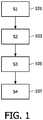
- FIG. 1shows a flowchart of a method according to the present invention of healthcare data handling by a trusted agent possessing or having an access to decryption keys for accessing healthcare data.
- the healthcare datamay be data that identify the patient and the patient's medical history.
- the trusted agentmay be a physical device or a software application from e.g. a trusted vendor. Preferably, it has a standard interface which enables multiple vendors to make an implementation and also requires medical applications to implement a single interface.
- the medical applicationcan be considered as a normal medical application or as an emergency medical application.
- a normal medical applicationmust be able to access protected health data and has a policy decision and enforcement functionality, e.g. access control engine, Digital Right Management (DRM) client etc.
- DRMDigital Right Management
- the normal medical applicationtypically have credentials, i.e. identities, decryption keys etc., that result in the policy decision and enforcement functionality to grant or not grant access to the protected data.
- credentialsi.e. identities, decryption keys etc.
- the trusted agentdoes not necessarily need to be deployed on the same device as the medical application.
- the emergency medical applicationis where an emergency or an "accelerated" access to healthcare data is needed.
- the emergency medical applicationhas typically an access to protected data, but it has no credentials that grant access. The subsequent steps deal with such cases.
- step (S1) 101a request is sent from a requestor, i.e. in this case the emergency medical application, to the trusted agent, which as mentioned above possesses or has an access to decryption keys for accessing the healthcare data.
- the received requestcontains a data tag signaling that the received request is an emergency request or a request for an "accelerated" access.
- step (S2) 103the trusted agent generates a log which contains data relating to the request or the requestor or both.
- the information contained in the logmay e.g. be context data such as date and time the request was made, information contained in the request such as the type of the requested data, information regarding the requestor, e.g. such as the login credentials for the medical application or the ID number of the requestor or the device being used, information about the device such as the IP address etc.
- the logis subsequently submitted to a server (S3) 105, e.g. a central server in a hospital, for a review.
- a servere.g. a central server in a hospital
- the requestoris provided with an access to the healthcare data (S4) 107.
- the received requestincludes requesting a decryption key for accessing the healthcare data
- the step (S4) 107 of providing the requestor with an access to the healthcare datais done by forwarding the requested decryption key to the requestor.
- the received request from the requestorcontains the healthcare data being requested in an encrypted form
- the step of providing the requestor with an access to the healthcare dataincludes forwarding the healthcare data in a decrypted form to the requestor.
- the requestoris a DRM client application or Enterprise Rights Management (ERM) client application, where a license comprises the decryption key together with associated license rules for accessing the healthcare data.
- the step of providing the DRM or ERM client application with an access to the healthcare datamay comprise forwarding the license decryption key together with associated license rules to the DRM or ERM client application. This will be discussed in more details later.
- new keysare obtained in exchange of said logs. This ensures that systems are not 'disconnected' by an adversary to obtain unlimited access and provides extra safety, because the server only distributes emergency keys to trusted agents when it receives fresh and trustworthy log information.
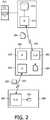
- Figure 2depicts graphically a trusted agent 200 adapted to handle healthcare data and possesses or has an access to decryption keys for accessing healthcare data, a requestor 220 and a server 210.
- the requestor 220comprises a request generator (R_G) 221 that generates a request 223 for accessing the healthcare data and which is further adapted to generate data tag 222 signaling that the generated request 223 is an emergency request.
- R_Grequest generator
- the generated request 223 and the data tag 222are then forwarded or transmitted via a communication channel 224, which may be wired or wireless, over to the trusted agent 200.
- the trusted agent 200comprises a receiver (R) 203, a log generator (L_G) 202 and a processor (P) 201.
- the receiver (R) 203is adapted to receive the request 220 from the requestor 220 requesting accessing healthcare data.
- the log generator (L_G) 202is adapted to generate a log 204, which as discussed previously in Fig. 1 , comprises data relating to the request or the requestor or both.
- the processoris adapted to process the received request 223.
- the processingincludes communicating with the server 210, i.e. communicate with the server by e.g. requesting a decryption key for accessing the healthcare data.
- the processingincludes forwarding the requested decryption key to the requestor, or forwarding the healthcare data in a decrypted form to the requestor (see discussion in Fig. 1 ).
- the server 210communicates with the trusted agent 200 via a communication channel 205, which may be a wired communication channel or wireless.
- the server 210comprises a receiver (R) 211 for receiving the log 204 from the trusted agent 200 and a memory 212 for storing the received log.
- the memory 212also has stored therein the healthcare data, or decryption keys for accessing healthcare data, or license decryption key having associated thereto license rules for accessing healthcare data, or a combination thereof.
- the serveris further adapted to operate multiple of said trusted agents, the operation including, in response to receiving said log from the trusted agents, providing the trusted agents with an access to the healthcare data by providing requested decryption keys. This will be discussed in more details later.
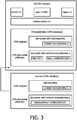
- Figure 3shows an embodiment according to the present invention, showing how the present invention may be applied to DICOM (Digital Imaging and Communications in Medicine).
- DICOMDigital Imaging and Communications in Medicine
- a DRM systemensures end-to-end confidentiality of medical information and provides the source control over the destination.
- the DRM system for DICOM files shown in Fig. 3uses the Cryptographic Message Syntax and a relaxed version of the DICOM de-identification profile as disclosed in " National Electric Manufacturers Association (NEMA), Digital Imaging and Communications in Medicine (DICOM), part 15: Security and system management profiles Annex E.1, 2007 ".
- NEMANational Electric Manufacturers Association
- DICOMDigital Imaging and Communications in Medicine
- part 15Security and system management profiles Annex E.1, 2007
- the attributes of the DICOM file that must be protectedare thus encrypted with a content-encryption key.
- the license with the required key materialis embedded. This is done in a way that the tools provided by the standard are used, hence still guaranteeing backward compatibility.
- this DRM approachis an improvement regarding control over data distribution and privacy of the different users of the medical world.
- a medical security solutionto be accepted by medical professionals, it is imperative to include an emergency access possibility.
- the solution to the emergency access control problemis to issue emergency licenses and log such events. This may be done by distributing emergency key K Em to all trusted agents 200 (see Fig. 2 ) by a License Server 210 (see Fig. 2 ).
- An emergency licenseconsisting of the encryption of the content key with K Em may be embedded with every newly protected healthcare data.
- the trusted agent 200logs the event as discussed previously and decrypts the data with K Em even if the requestor, e.g. a requesting user, did not obtain an approval from e.g. a License Server.
- a requestor 220which may be a care provider, contacts the appropriate Server 210 (e.g. a License Server 210) via a trusted agent 200 and requests for an emergency license.
- the License server 210may implement the features of the trusted agent 200, i.e. some or all the features of the trusted agent 200 may be considered as being incorporated into the License server 210, or the trusted agent 200 and the License server 210 may interact as depicted in Fig. 2 .
- the eventis logged by the License Server and a temporary license is issued.
- Fig. 2The scenario depicted in Fig. 2 where trusted agents 200 responsible for handling emergency situations to enforce data confidentiality may be deployed parallel to a DRM system.
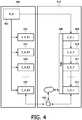
- Thisis depicted graphically in Fig. 4 showing an enhanced DRM infrastructure with support for emergency access consisting of an old DRM infrastructure 413 and a new emergency infrastructure 400.
- Fig. 4shows how DRM infrastructure with emergency access may be enhanced, it should not be considered as being limited to DICOM but also to various systems.
- the new emergency infrastructure 400comprises said server 210 from Fig. 2 , here referred to as an emergency authority (E_A) 401, and multiple of said trusted agents 200, here referred to as emergency agents (E_A_E1-n) 402-405.
- the emergency authority (E_A) 401is independent of the data creators and consumers and can be trusted. In the end it is responsible for verifying the legitimateness of emergency accesses. The authority operates some components to support this process.
- the emergency agents (E_A_E1-n) 402-405are contacted by requestor 406 when they request an emergency access.
- the emergency agents (E_A_E1-n) 402-405are responsible for giving access to emergency care providers and logging those events. They are trusted by the emergency authority (E_A) 401, e.g. through certification. For this purpose compliance of such components may be checked by the emergency authority (E_A) 401 (i.e. corresponding to said server 210) before assuming this trust.
- the emergency agents (E_A_E1-n) 402-405i.e. corresponding to said trusted agents 200) may be installed in hospitals where e.g. a DRM system 413 is deployed.
- the emergency authority (E_A) 401may be adapted to generate new emergency key pairs Kpriv Em (id) and Kpub Em (id). It transmits the private key Kpriv Em (id), preferably securely, to all its emergency agents (E_A_E1-n) 402-405. Once the emergency authority (E_A) 401 has made sure that this new private key has been successfully distributed, it sends the corresponding public key Kpub Em (id) to License Servers (L_S_1-n) 409-412, such that they can create emergency licenses for protected data.
- the generation of the keys by the emergency authority (E_A) 401can follow different policies; e.g. one key pair per hospital, on key pair per day etc.
- a common emergency keycan be used for all data at the national level.
- all those keysmust be known by every emergency agent (E_A_E1-n) 402-405 such that data availability is ensured, independently of the contacted emergency agent or of the file upon emergency access. It is important that the private keys Kpriv Em (id) stay within the trusted environment of the emergency infrastructure.
- the confidentiality of all DRM-protected data containing an emergency license based on a disclosed private keyis namely compromised.
- an emergency license LF Emis embedded in the resulting file. It is created by the License Server responsible for the DRM-protected file, using its knowledge of the emergency public keys Kpub Em (id).
- the resulting encrypted DRM containercontains the original data in encrypted form.
- E_A_E1-nthe nearest available emergency agent
- the exchange messagesare defined as a new DICOM Emergency Access Service-Object Pair (SOP) class.
- SOPDICOM Emergency Access Service-Object Pair
- DICOMdefines the set of services that can be applied to an Information Object Definition (IOD) in Service-Object Pair (SOP) classes.
- a SOP classcan be either normalized or composite, depending on whether they apply to a normalized or composite IOD.
- a Normalized IODis an Information Object Definition which generally represents a single entity in the DICOM Model of the real world.
- a Composite IODis an Information Object Definition which represents parts of several entities included in the DICOM Model of the real world.
- a SOAP classis identified by a unique identifier: the SOP Class UID. For a service within a SOP class to be described, it is first necessary to assign roles to each of the participants.
- a peercan either be a Service Class User (SCU; i.e.
- a service descriptionalso defines the commands that can be applied to the concerned IOD.
- the existing command typesinclude C-STORE, C-FIND, C-MOVE, C-GET, C-CANCEL and C-ECHO.
- a commandWhen a command is sent from one DICOM node to another, it contains a reference to the SOP class and IOD instance concerned by the command and an additional data-set can be attached (payload of the command).
- the destinationhas the possibility to answer with a command execution status (e.g. failure, success, etc.), also along with an optional attached payload.
- a command execution statuse.g. failure, success, etc.
- SOP classesservices
- the disseminated DICOM contentis not modified: the license can just be appended to the file for latter use.
- the policiesare saved within the CMS envelope as an UnprotectedAttribute. Consequently, different policies can be set for different users. This solution is also very flexible in the sense that every envelope protecting different attributes can have a different policy specification.
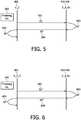
- Figure 5depicts graphically a protocol, where a requestor 406, which may be considered as a compliant client (C_C) 406, requests an access to the file F 501 by sending to the Emergency Agent (E_A_E1-n) 402-405 an emergency license (S1') 502 that is embedded in F. In DICOM, this can be implemented as an N-ACTION command containing the emergency license.
- the term Emergency Agent (E_A_E1-n) 402-405is simply an embodiment of a Trusted Agent 210 as depicted in Fig. 2 .
- the Emergency authority (E_A) 401may operate one or more multiple of emergency agents (E_A_E1-n) 402-405 which among other things perform said log operations in response to requests by requestors 406.
- a logis generated for the requestor (C_C) 406 (S2') 503.
- the Emergency Authority (E_A) 401decrypts the received emergency license using the appropriate private key. Having recovered the content-key, a new temporary license is constructed that is intended for being used only by the requestor (C_C) 406, using the requestor's public key.
- a new temporary license (S3') 504is sent to the requestor (C_C) 406.
- thismay be implemented as an N-EVENT-REPORT command containing the temporary license, which is therefore nothing but DICOM license as depicted in Fig. 3 .
- the requestor (C_C) 406is now able to view the file content F (S4') 505 by decrypting the temporary license with his private key.
- the emergency procedureshould thus preferably be adapted such that those non-compliant requestors can still access the data in emergency context without being able to alter the general security of the system.
- the proposed solutionprovides grants full access to the requested data.
- the following extensioncould be used for providing data access to non-compliant peers in normal (i.e. not necessarily emergency) operation.
- Figure 6shows the exchanges between a requestor that is non-compliant client (N_C_C) 601 accessing file F 501 in emergency context and it's nearest available Emergency Agent (E_A_E1-n) 402-405.
- the non-compliant client (N_C_C) 601sends file F along with its embedded emergency license (S1") 602 to the Emergency Agent (E_A_E1-n) 402-405.
- the Emergency Agent (E_A_En) 402-405uses its knowledge of all the private emergency keys for decrypting the emergency license (S2”) 603 and hence recovering the content-key content. Thus, it can then decrypt the file F and obtain the original file.
- the emergency accessis logged and the decrypted version of the file F is sent (S3") 604 to the non-compliant client (N_C_C) 601, which can then freely access the original file (S4") 605.
Landscapes
- Engineering & Computer Science (AREA)
- Theoretical Computer Science (AREA)
- General Health & Medical Sciences (AREA)
- Health & Medical Sciences (AREA)
- Bioethics (AREA)
- Software Systems (AREA)
- Medical Informatics (AREA)
- General Engineering & Computer Science (AREA)
- General Physics & Mathematics (AREA)
- Computer Hardware Design (AREA)
- Computer Security & Cryptography (AREA)
- Physics & Mathematics (AREA)
- Primary Health Care (AREA)
- Public Health (AREA)
- Epidemiology (AREA)
- Databases & Information Systems (AREA)
- Multimedia (AREA)
- Technology Law (AREA)
- Storage Device Security (AREA)
- Measuring And Recording Apparatus For Diagnosis (AREA)
Description
- The present invention method of healthcare data handling by a trusted agent possessing or having an access to decryption keys for accessing healthcare data. The present invention further relates to a trusted agent adapted to handle healthcare data where the trusted agent possesses or has an access to decryption keys for accessing healthcare data. The present invention further relates to a requestor comprising a request generator for generating a request for accessing healthcare data handled by said trusted agent, and to a server comprising a receiver for receiving a log from said trusted agent.
- Advances in information and communication technologies are expected to bring large benefits in the healthcare domain: the introduction of interoperable Electronic Health Record (EHR) systems can reduce the cost of the healthcare system and enhance the overall quality of treatments, whereas Remote Patient Management (RPM) services will limit the time a patient stays in hospital. Nevertheless, to date EHRs and RPMs are being used on a rather small scale. Besides problems with regard to the integration of different systems and logistic issues, concerns about information security and privacy are primary reasons for the lack of deployed systems. For example, EHR systems are facing strict security and privacy regulations (such as EU Directive 95/46 or HIPAA in the US) to which they have to comply.
- Modern healthcare communication architectures tend to be open, interconnected environments: Sensitive patient records no longer reside on mainframes physically isolated within a healthcare provider, where physical security measures can be taken to defend the data and the system. Patient files are rather kept in an environment where data is outsourced to or processed on partially untrusted servers in order to allow decentralized access for family doctors, medical specialists and even non-medical care providers. The currently employed server-centric protection model, which locks the data in a database server and uses a traditional access control model to permit access to data, cannot efficiently deal with the requirements of the new healthcare infrastructures.
- In order to allow sharing of records among different healthcare providers or with external parties, end-to-end security techniques facilitating data-centric protection can be employed: Data is cryptographically protected and allowed to be outsourced or even freely float on the network. Rather than relying on different networks to provide confidentiality, integrity and authenticity, data is protected at the end points of the communication. This can be achieved by applying rights management technologies - digital rights management (DRM) in the domain of consumer electronics and enterprise rights management (ERM) in the business domain. In such systems published DRM-protected data is encrypted and a license server only issues licenses to requesting users if they have enough rights for accessing the data. However, a particular problem that is not solved by this technology is to guarantee instantaneous access to electronic patient records in an emergency case irrespective of the employed protection model. Although such DRM /ERM systems are very reliable regarding providing only requestor fulfilling all the necessary access rights an access to healthcare data, such systems are not capable of handling emergency situations that require an exemption in the normal behavior of the systems, e.g. where a healthcare provider needs an immediate access to medical data.
US7181017B1 discloses a method representing the prior art.- The object of the present invention is to overcome the above mentioned drawbacks by providing a secure but at the same time a flexible way of handling healthcare data in the sense that it that it represents an exemption in the normal behavior of the system and can deal with situation where e.g. an emergency care provider such as a hospital needs an immediate access to healthcare data although there are no regular rights available that grant the care provider access to the healthcare data. The invention is defined by the independent claims. The dependent claims define advantageous embodiments.
- According to one aspect the present invention relates to a method of healthcare data handling by a trusted agent possessing or having an access to decryption keys for accessing healthcare data, comprising:
- receiving a request from a requestor requesting accessing healthcare data, wherein the received request comprises data tag signaling that the received request is an emergency request,
- the trusted agent generating a log comprising data relating to the request or the requestor or both, and
- providing the requestor with an access to the healthcare data via the trusted agent.
- Thus, at any time the requestor can access medical data while at the same time efficiently safeguarding the confidentiality of the healthcare data. The medical data is encrypted and the trusted agent can decide based on requestor's identity if access (decryption) will be allowed. For example, the access policy can be that medical data can only be accessed by healthcare providers. Furthermore, access is logged, which makes the healthcare provider who accessed the data accountable for his action. The trusted agent may e.g. be a physical device or a software application from a trusted vendor and may have a standard interface. This enables multiple vendors to make an implementation and also requires medical applications to implement a single interface.
- Thus, different from the prior art applications as discussed previously such as Digital Right Management (DRM) client application where license servers, compliant clients etc are used which are not capable of handling emergency requests to access healthcare data, the emergency care (e.g. a hospital) will be granted a license that will allow him to access the data he wants to access even if he has no normal right on it. Although such an emergency access might be at the cost of the security of the healthcare data, which is indeed an important feature, it is still less important than patient's safety because such an emergency access to the healthcare data might save patient's life.
- In one embodiment, the request received from the requestor includes requesting a decryption key for accessing the healthcare data, the step of providing the requestor with an access to the healthcare data being forwarding the requested decryption key to the requestor.
- Therefore, a bottleneck is avoided where the trusted agent does not need to decrypt the data of all the clients from which a request is received. The decryption takes place at the client application.
- In one embodiment, the request received from the requestor contains said requested healthcare data in an encrypted form, the step of providing the requestor with an access to the healthcare data being forwarding the healthcare data in a decrypted form to the requestor.
- This allows the trusted agent to interoperate with legacy systems that do not support digital rights management and data decryption. In this case the encrypted data is stored off-line at client application.
- In one embodiment, subsequent to the received request the agent obtains the healthcare data in encrypted form from a server and decrypts the healthcare data, the step of providing the requestor with an access to the healthcare data being forwarding the decrypted healthcare data to the requestor.
- This embodiment provides the same advantage as the previous one. However, the medical data is this embodiment is stored in a centralized database.
- In one embodiment, the method further comprises submitting the log to a server for a review.
- Thus, the trusted agent can record all the necessary details about the request, the requestor. This may be context data such as date and time, information contained in the request such as the requested data, information regarding the requestor such as the login credentials for the medical application or device being used, information about the device such as the IP address etc.
- In one embodiment, a license comprises the decryption key together with associated license rules for accessing the healthcare data, and where the requestor is a Digital Right Management (DRM) client application or a Enterprise Rights Management (ERM) client application, the step of providing the DRM or ERM client application with an access to the healthcare data being forwarding the license decryption key together with associated license rules to the DRM or ERM client application.
- In one embodiment, the healthcare data is protected with a document key, and where the license comprise the document key encrypted with an emergency KEm key to the protected healthcare data, the emergency KEm key subsequently being distributed to all trusted agents.
- In one embodiment, the license is attached to the protected health data.
- In one embodiment, the emergency license and the protected healthcare data is forwarded to the DRM or ERM, where upon emergency request, the DRM or ERM are further provided with the emergency key KEm which is adapted to decrypt the document decryption key.
- According to another aspect, the present invention relates to a computer program product for instructing a processing unit to execute the above mentioned method steps when the product is run on a computer.
- According to still another aspect, the present invention relates to a trusted agent adapted to handle healthcare data where the trusted agent possesses or has an access to decryption keys for accessing healthcare data, comprising:
- a receiver for receiving a request from a requestor requesting accessing healthcare data, wherein the received request comprises data tag signaling that the received request is an emergency request,
- a log generator for generating a log comprising data relating to the request or the requestor or both, and
- a processor for processing the received request, the processing resulting in providing the requestor with an access to the healthcare data via the trusted agent.
- According to yet another aspect, the present invention relates to a requestor comprising a request generator for generating a request for accessing healthcare data handled by said trusted agent, wherein the request generator is further adapted to generate data tag signaling that the generated request is an emergency request.
- According to yet another aspect, the present invention relates to a server comprising a receiver for receiving a log from said trusted agent and a memory for storing the received log,
wherein the memory has further stored healthcare data, or decryption keys for accessing healthcare data, or a license comprising the decryption key together with associated license rules for accessing the healthcare data, or a combination thereof,
wherein the trusted server is adapted to operate, provision and manage multiple of said trusted agents, the operation including, in response to receiving said log from the trusted agents, providing the trusted agents with an access to the healthcare data by providing requested decryption keys. - The aspects of the present invention may each be combined with any of the other aspects. These and other aspects of the invention will be apparent from and elucidated with reference to the embodiments described hereinafter.
- Embodiments of the invention will be described, by way of example only, with reference to the drawings, in which
Figure 1 shows a flowchart of a method according to the present invention,Figure 2 depicts graphically a trusted agent according to the present invention, a requestor and a server,Figure 3 shows an encrypted file and license for a DICOM (Digital Imaging and Communications in Medicine) -compliant DRM system,Figure 4 shows enhanced DRM infrastructure with support for emergency access consisting of an old DRM infrastructure and a new emergency infrastructure,Figure 5 depicts an emergency data access by a requestor that may be considered as being a compliant client, andFigure 6 depicts an emergency data access by a requestor that may be considered as being a non-compliant client.Figure 1 shows a flowchart of a method according to the present invention of healthcare data handling by a trusted agent possessing or having an access to decryption keys for accessing healthcare data. The healthcare data may be data that identify the patient and the patient's medical history. The trusted agent may be a physical device or a software application from e.g. a trusted vendor. Preferably, it has a standard interface which enables multiple vendors to make an implementation and also requires medical applications to implement a single interface. The medical application can be considered as a normal medical application or as an emergency medical application. A normal medical application must be able to access protected health data and has a policy decision and enforcement functionality, e.g. access control engine, Digital Right Management (DRM) client etc. Furthermore, typically the normal medical application have credentials, i.e. identities, decryption keys etc., that result in the policy decision and enforcement functionality to grant or not grant access to the protected data. It should be noted that the trusted agent does not necessarily need to be deployed on the same device as the medical application.- The emergency medical application is where an emergency or an "accelerated" access to healthcare data is needed. The emergency medical application has typically an access to protected data, but it has no credentials that grant access. The subsequent steps deal with such cases.
- In step (S1) 101 a request is sent from a requestor, i.e. in this case the emergency medical application, to the trusted agent, which as mentioned above possesses or has an access to decryption keys for accessing the healthcare data. The received request contains a data tag signaling that the received request is an emergency request or a request for an "accelerated" access.
- In step (S2) 103 the trusted agent generates a log which contains data relating to the request or the requestor or both. The information contained in the log may e.g. be context data such as date and time the request was made, information contained in the request such as the type of the requested data, information regarding the requestor, e.g. such as the login credentials for the medical application or the ID number of the requestor or the device being used, information about the device such as the IP address etc.
- In one embodiment, the log is subsequently submitted to a server (S3) 105, e.g. a central server in a hospital, for a review.
- Finally, the requestor is provided with an access to the healthcare data (S4) 107.
- In one embodiment, the received request includes requesting a decryption key for accessing the healthcare data, and where the step (S4) 107 of providing the requestor with an access to the healthcare data is done by forwarding the requested decryption key to the requestor. Thus, the trusted agent does not need to decrypt the data of all the clients from which a request is received because the decryption takes place at the client application and a bottleneck is avoided.
- In another embodiment, the received request from the requestor contains the healthcare data being requested in an encrypted form, and the step of providing the requestor with an access to the healthcare data includes forwarding the healthcare data in a decrypted form to the requestor. This allows the trusted agent to interoperate with legacy systems that do not support digital rights management and data decryption. In this case the encrypted data is stored off-line at client application.
- In one embodiment, the requestor is a DRM client application or Enterprise Rights Management (ERM) client application, where a license comprises the decryption key together with associated license rules for accessing the healthcare data. The step of providing the DRM or ERM client application with an access to the healthcare data may comprise forwarding the license decryption key together with associated license rules to the DRM or ERM client application. This will be discussed in more details later.
- In one embodiment, new keys are obtained in exchange of said logs. This ensures that systems are not 'disconnected' by an adversary to obtain unlimited access and provides extra safety, because the server only distributes emergency keys to trusted agents when it receives fresh and trustworthy log information.
Figure 2 depicts graphically a trustedagent 200 adapted to handle healthcare data and possesses or has an access to decryption keys for accessing healthcare data, arequestor 220 and aserver 210.- The requestor 220 comprises a request generator (R_G) 221 that generates a
request 223 for accessing the healthcare data and which is further adapted to generate data tag 222 signaling that the generatedrequest 223 is an emergency request. The generatedrequest 223 and the data tag 222 are then forwarded or transmitted via acommunication channel 224, which may be wired or wireless, over to the trustedagent 200. - The trusted
agent 200 comprises a receiver (R) 203, a log generator (L_G) 202 and a processor (P) 201. The receiver (R) 203 is adapted to receive therequest 220 from the requestor 220 requesting accessing healthcare data. The log generator (L_G) 202 is adapted to generate alog 204, which as discussed previously inFig. 1 , comprises data relating to the request or the requestor or both. The processor is adapted to process the receivedrequest 223. The processing includes communicating with theserver 210, i.e. communicate with the server by e.g. requesting a decryption key for accessing the healthcare data. The processing includes forwarding the requested decryption key to the requestor, or forwarding the healthcare data in a decrypted form to the requestor (see discussion inFig. 1 ). - The
server 210 as depicted here communicates with the trustedagent 200 via acommunication channel 205, which may be a wired communication channel or wireless. Theserver 210 comprises a receiver (R) 211 for receiving thelog 204 from the trustedagent 200 and amemory 212 for storing the received log. Thememory 212 also has stored therein the healthcare data, or decryption keys for accessing healthcare data, or license decryption key having associated thereto license rules for accessing healthcare data, or a combination thereof. The server is further adapted to operate multiple of said trusted agents, the operation including, in response to receiving said log from the trusted agents, providing the trusted agents with an access to the healthcare data by providing requested decryption keys. This will be discussed in more details later. Figure 3 shows an embodiment according to the present invention, showing how the present invention may be applied to DICOM (Digital Imaging and Communications in Medicine).- A DRM system ensures end-to-end confidentiality of medical information and provides the source control over the destination. The DRM system for DICOM files shown in
Fig. 3 uses the Cryptographic Message Syntax and a relaxed version of the DICOM de-identification profile as disclosed in"National Electric Manufacturers Association (NEMA), Digital Imaging and Communications in Medicine (DICOM), part 15: Security and system management profiles Annex E.1, 2007". The attributes of the DICOM file that must be protected are thus encrypted with a content-encryption key. Then the license with the required key material is embedded. This is done in a way that the tools provided by the standard are used, hence still guaranteeing backward compatibility. - From security point of view, this DRM approach is an improvement regarding control over data distribution and privacy of the different users of the medical world. However, for a medical security solution to be accepted by medical professionals, it is imperative to include an emergency access possibility.
- Assuming an environment with DRM protection for healthcare data (medical data), where license servers, compliant clients and the like are used. Published DRM-protected data is encrypted and a License Server issues licenses (including usage rights for the content) to requesting users if they have enough rights for accessing the data. An emergency access is therefore difficult to handle in the sense that it represents an exception in the normal behavior of the system. The emergency care provider should preferably be granted a license for decoding the data he wants to access even if he has no normal right on it. Legitimateness of such access must consequently be proved later to ensure data privacy eventually. Logging of emergency access is then required.
- As discussed previously, the solution to the emergency access control problem is to issue emergency licenses and log such events. This may be done by distributing emergency key KEm to all trusted agents 200 (see
Fig. 2 ) by a License Server 210 (seeFig. 2 ). An emergency license consisting of the encryption of the content key with KEm may be embedded with every newly protected healthcare data. Upon emergency access, the trustedagent 200 logs the event as discussed previously and decrypts the data with KEm even if the requestor, e.g. a requesting user, did not obtain an approval from e.g. a License Server. - Another solution to the emergency access control problem is to embed no license into the data at DRM encryption time. However, upon emergency access, a
requestor 220, which may be a care provider, contacts the appropriate Server 210 (e.g. a License Server 210) via atrusted agent 200 and requests for an emergency license. TheLicense server 210 may implement the features of the trustedagent 200, i.e. some or all the features of the trustedagent 200 may be considered as being incorporated into theLicense server 210, or the trustedagent 200 and theLicense server 210 may interact as depicted inFig. 2 . The event is logged by the License Server and a temporary license is issued. - The scenario depicted in
Fig. 2 where trustedagents 200 responsible for handling emergency situations to enforce data confidentiality may be deployed parallel to a DRM system. This is depicted graphically inFig. 4 showing an enhanced DRM infrastructure with support for emergency access consisting of anold DRM infrastructure 413 and anew emergency infrastructure 400. - Although
Fig. 4 shows how DRM infrastructure with emergency access may be enhanced, it should not be considered as being limited to DICOM but also to various systems. - The
new emergency infrastructure 400 comprises saidserver 210 fromFig. 2 , here referred to as an emergency authority (E_A) 401, and multiple of said trustedagents 200, here referred to as emergency agents (E_A_E1-n) 402-405. The emergency authority (E_A) 401 is independent of the data creators and consumers and can be trusted. In the end it is responsible for verifying the legitimateness of emergency accesses. The authority operates some components to support this process. - The emergency agents (E_A_E1-n) 402-405 are contacted by
requestor 406 when they request an emergency access. The emergency agents (E_A_E1-n) 402-405 are responsible for giving access to emergency care providers and logging those events. They are trusted by the emergency authority (E_A) 401, e.g. through certification. For this purpose compliance of such components may be checked by the emergency authority (E_A) 401 (i.e. corresponding to said server 210) before assuming this trust. The emergency agents (E_A_E1-n) 402-405 (i.e. corresponding to said trusted agents 200) may be installed in hospitals where e.g. aDRM system 413 is deployed. - The emergency authority (E_A) 401 may be adapted to generate new emergency key pairs KprivEm(id) and KpubEm(id). It transmits the private key KprivEm(id), preferably securely, to all its emergency agents (E_A_E1-n) 402-405. Once the emergency authority (E_A) 401 has made sure that this new private key has been successfully distributed, it sends the corresponding public key KpubEm(id) to License Servers (L_S_1-n) 409-412, such that they can create emergency licenses for protected data.
- The generation of the keys by the emergency authority (E_A) 401 can follow different policies; e.g. one key pair per hospital, on key pair per day etc. As another alternative, a common emergency key can be used for all data at the national level. However, all those keys must be known by every emergency agent (E_A_E1-n) 402-405 such that data availability is ensured, independently of the contacted emergency agent or of the file upon emergency access. It is important that the private keys KprivEm(id) stay within the trusted environment of the emergency infrastructure. The confidentiality of all DRM-protected data containing an emergency license based on a disclosed private key is namely compromised.
- Upon encryption of an original file F by a DRM publisher (Publ.) 408, an emergency license LFEm is embedded in the resulting file. It is created by the License Server responsible for the DRM-protected file, using its knowledge of the emergency public keys KpubEm(id). The resulting encrypted DRM container contains the original data in encrypted form.
- When a requestor, e.g. an emergency care provider requires an emergency access for file F that he has already downloaded, he preferably contacts the nearest available emergency agent (E_A_E1-n) 402-405.
- The embodiment shown in
Fig. 4 focuses on DICOM. Thus, the exchange messages are defined as a new DICOM Emergency Access Service-Object Pair (SOP) class. - Generally, DICOM defines the set of services that can be applied to an Information Object Definition (IOD) in Service-Object Pair (SOP) classes. A SOP class can be either normalized or composite, depending on whether they apply to a normalized or composite IOD. A Normalized IOD is an Information Object Definition which generally represents a single entity in the DICOM Model of the real world. A Composite IOD is an Information Object Definition which represents parts of several entities included in the DICOM Model of the real world. A SOAP class is identified by a unique identifier: the SOP Class UID. For a service within a SOP class to be described, it is first necessary to assign roles to each of the participants. A peer can either be a Service Class User (SCU; i.e. client) or a Service Class Provider (SCP; i.e. server), or assume both roles at the same time. A service description also defines the commands that can be applied to the concerned IOD. The existing command types include C-STORE, C-FIND, C-MOVE, C-GET, C-CANCEL and C-ECHO.
- When a command is sent from one DICOM node to another, it contains a reference to the SOP class and IOD instance concerned by the command and an additional data-set can be attached (payload of the command). The destination has the possibility to answer with a command execution status (e.g. failure, success, etc.), also along with an optional attached payload. When two applications (Application Entities) want to communicate, they have to agree on which services (SOP classes) they are going to use. Consequently, the communication establishment procedure includes a negotiation of supported SOP classes called Association Negotiation. If one of the communicating Application Entities does not support a SOP class, the concerned service cannot be used.
- To include policies in a DICOM file Encrypted Attributes Data sets (i.e. CMS envelopes) are embedded in a DICOM file. A new attribute is also introduced: the disclosureKey. It contains the symmetric key that will be used for protecting attributes. The following process occurs upon encryption:
- all the attributes that have to be protected are scrambled, including the disclosureKey key;
- a CMS envelope containing the encrypted versions of the attributes, with the exception of the disclosureKey one, is created. Its document-encryption key is encrypted using the key of the original disclosureKey attribute.
- when a user requests to access the data, the License Server generates a new CMS envelope compatible with the DICOM standard containing the original disclosureKey attribute. Its document-encryption key is encrypted using the public key of the compliant client or user.
- Upon a creation of a new license, the disseminated DICOM content is not modified: the license can just be appended to the file for latter use. The policies are saved within the CMS envelope as an UnprotectedAttribute. Consequently, different policies can be set for different users. This solution is also very flexible in the sense that every envelope protecting different attributes can have a different policy specification.
Figure 5 depicts graphically a protocol, where a requestor 406, which may be considered as a compliant client (C_C) 406, requests an access to thefile F 501 by sending to the Emergency Agent (E_A_E1-n) 402-405 an emergency license (S1') 502 that is embedded in F. In DICOM, this can be implemented as an N-ACTION command containing the emergency license. As mentioned previously, the term Emergency Agent (E_A_E1-n) 402-405 is simply an embodiment of aTrusted Agent 210 as depicted inFig. 2 . Also, as mentioned previously the Emergency authority (E_A) 401 may operate one or more multiple of emergency agents (E_A_E1-n) 402-405 which among other things perform said log operations in response to requests byrequestors 406.- Referring again to the protocol depicted in
Fig. 5 , after checking that the requestor 406 (C_C) is indeed a compliant client, a log is generated for the requestor (C_C) 406 (S2') 503. The Emergency Authority (E_A) 401 (not shown inFig. 5 ) decrypts the received emergency license using the appropriate private key. Having recovered the content-key, a new temporary license is constructed that is intended for being used only by the requestor (C_C) 406, using the requestor's public key. - Subsequently, a new temporary license (S3') 504 is sent to the requestor (C_C) 406. In DICOM, this may be implemented as an N-EVENT-REPORT command containing the temporary license, which is therefore nothing but DICOM license as depicted in
Fig. 3 . - The requestor (C_C) 406 is now able to view the file content F (S4') 505 by decrypting the temporary license with his private key.
- It is well possible that parties in the medical world will employ non-compliant requestors. The emergency procedure should thus preferably be adapted such that those non-compliant requestors can still access the data in emergency context without being able to alter the general security of the system. The proposed solution provides grants full access to the requested data.
- The logging of emergency access is then even more important, as those requestors could disclose obtained data without any constraints. For this reason, it may also be preferred to include watermark for further forensic tracking.
- The following extension could be used for providing data access to non-compliant peers in normal (i.e. not necessarily emergency) operation.
Figure 6 shows the exchanges between a requestor that is non-compliant client (N_C_C) 601 accessingfile F 501 in emergency context and it's nearest available Emergency Agent (E_A_E1-n) 402-405. The non-compliant client (N_C_C) 601 sends file F along with its embedded emergency license (S1") 602 to the Emergency Agent (E_A_E1-n) 402-405. The Emergency Agent (E_A_En) 402-405 uses its knowledge of all the private emergency keys for decrypting the emergency license (S2") 603 and hence recovering the content-key content. Thus, it can then decrypt the file F and obtain the original file. The emergency access is logged and the decrypted version of the file F is sent (S3") 604 to the non-compliant client (N_C_C) 601, which can then freely access the original file (S4") 605.- Certain specific details of the disclosed embodiment are set forth for purposes of explanation rather than limitation, so as to provide a clear and thorough understanding of the present invention. However, it should be understood by those skilled in this art, that the present invention might be practiced in other embodiments that do not conform exactly to the details set forth herein, without departing significantly from the spirit and scope of this disclosure. Further, in this context, and for the purposes of brevity and clarity, detailed descriptions of well-known apparatuses, circuits and methodologies have been omitted so as to avoid unnecessary detail and possible confusion.
- Reference signs are included in the claims, however the inclusion of the reference signs is only for clarity reasons and should not be construed as limiting the scope of the claims.
Claims (13)
- A computer-implemented method of healthcare data handling by a trusted agent possessing or having an access to decryption keys for accessing healthcare data, the method comprising:- receiving (101) a request from a requestor requesting accessing healthcare data, wherein the received request comprises data tag signaling that the received request is an emergency request,- the trusted agent generating (103) a log comprising data relating to the request or the requestor or both,- a server receiving (105) the log from said trusted agent and storing the received log in a memory of the server, wherein the memory of the server has further stored healthcare data, or decryption keys for accessing healthcare data, or a license comprising the decryption key together with associated license rules for access the healthcare data, or a combination thereof,- in response to receiving said log, the server providing the trusted agent with an access to the healthcare data by providing requested decryption keys, and- providing (107) the requestor with an access to the healthcare data via the trusted agent by forwarding the requested decryption key from the trusted agent to the requester or by forwarding the healthcare data in a decrypted form to the requester.
- A method according to claim 1, wherein the request received from the requestor includes requesting a decryption key for accessing the healthcare data, the step of providing the requestor with an access to the healthcare data being forwarding the requested decryption key to the requestor.
- A method according to claim 1, wherein the request received from the requestor contains said requested healthcare data in an encrypted form, the step of providing the requestor with an access to the healthcare data being forwarding the healthcare data in a decrypted form to the requestor.
- A method according to claim 1, wherein subsequent to the received request, the agent obtains the healthcare data in an encrypted form from a server and decrypts the healthcare data, the step of providing the requestor with an access to the healthcare data being forwarding the decrypted healthcare data to the requestor.
- A method according to claim 1, further comprising submitting (105) the log to a server for a review.
- A method according to claim 1, wherein a license comprises the decryption key together with associated license rules for accessing the healthcare data, and where the requestor is a Digital Right Management (DRM) client application or an Enterprise Rights Management (ERM) client application, the step of providing the DRM or ERM client application with an access to the healthcare data being forwarding the license decryption key together with associated license rules to the DRM or ERM client application.
- A method according to claim 6, wherein the healthcare data is protected with a document key, and where the license comprise the document key encrypted with an emergency key to the protected healthcare data, the emergency key subsequently being distributed to all trusted agents.
- A method according to claim 7, wherein the license is attached to the protected health data.
- A method according to claim 7, wherein the emergency license and the protected healthcare data is forwarded to the DRM or ERM, where upon emergency request, the DRM or ERM are further provided with the emergency key which is adapted to decrypt the document decryption key.
- A computer program product for instructing a processing unit to execute the method steps of claim 1 when the product is run on a computer.
- A trusted agent (200) being a physical device or a computer program product adapted to handle healthcare data where the trusted agent possesses or has an access to decryption keys for accessing healthcare data, the trusted agent comprising:- a receiver (203) for receiving a request from a requestor requesting accessing healthcare data, wherein the request comprises data tag (222) signaling that the request (223) is an emergency request,- a log generator (202) for generating a log comprising data relating to the request or the requestor or both, wherein the trusted agent is able to send the log to a server and the log is stored in a memory of the server, wherein the memory of the server has further stored healthcare data, or decryption keys for accessing healthcare data, or a license comprising the decryption key together with associated license rules for access the healthcare data, or a combination thereof, and in response to receiving said log the server providing the trusted agent with an access to the healthcare data by providing requested decryption keys, and- a processor (201) for processing the received request, the processing resulting in providing the requestor with an access to the healthcare data via the trusted agent by forwarding the requested decryption key from the trusted agent to the requestor or by forwarding the healthcare data in a decrypted form to the requestor.
- A requestor (220) being a physical device or a computer program product comprising a request generator (221) for generating a request (223) for accessing healthcare data handled by the trusted agent (200) as claimed in claim 11, wherein the request generator is further adapted to generate data tag (222) signaling that the generated request (223) is an emergency request.
- A server (210) comprising a receiver (211) for receiving a log (204) from the trusted agent (200) as claimed in claim 11, and a memory (212) for storing the received log, and
wherein the server (210) is adapted to operate, provision and manage multiple of said trusted agents (200), the operation including, in response to receiving said log from the trusted agents, providing the trusted agents with an access to the healthcare data by providing requested decryption keys.
Priority Applications (1)
| Application Number | Priority Date | Filing Date | Title |
|---|---|---|---|
| EP09757949.4AEP2291784B1 (en) | 2008-06-04 | 2009-05-29 | Method and a system of healthcare data handling |
Applications Claiming Priority (3)
| Application Number | Priority Date | Filing Date | Title |
|---|---|---|---|
| EP08157571 | 2008-06-04 | ||
| EP09757949.4AEP2291784B1 (en) | 2008-06-04 | 2009-05-29 | Method and a system of healthcare data handling |
| PCT/IB2009/052263WO2009147598A1 (en) | 2008-06-04 | 2009-05-29 | Method and a system of healthcare data handling |
Publications (2)
| Publication Number | Publication Date |
|---|---|
| EP2291784A1 EP2291784A1 (en) | 2011-03-09 |
| EP2291784B1true EP2291784B1 (en) | 2019-12-04 |
Family
ID=40872319
Family Applications (1)
| Application Number | Title | Priority Date | Filing Date |
|---|---|---|---|
| EP09757949.4AActiveEP2291784B1 (en) | 2008-06-04 | 2009-05-29 | Method and a system of healthcare data handling |
Country Status (9)
| Country | Link |
|---|---|
| US (1) | US9881128B2 (en) |
| EP (1) | EP2291784B1 (en) |
| JP (1) | JP5711117B2 (en) |
| KR (1) | KR101698555B1 (en) |
| CN (1) | CN102057379B (en) |
| BR (1) | BRPI0909975A2 (en) |
| MX (1) | MX2010013189A (en) |
| RU (1) | RU2530303C2 (en) |
| WO (1) | WO2009147598A1 (en) |
Families Citing this family (7)
| Publication number | Priority date | Publication date | Assignee | Title |
|---|---|---|---|---|
| KR101468379B1 (en)* | 2012-06-29 | 2014-12-02 | 인텔렉추얼디스커버리 주식회사 | Access method for decrypting encryption data |
| US20140108046A1 (en)* | 2012-10-12 | 2014-04-17 | Ruben Gerardo Echeverria Cabrera | Sharing healthcare information on private collaborative networks |
| DE102016207145A1 (en)* | 2016-04-27 | 2017-11-02 | Siemens Healthcare Gmbh | Control system for processing image data |
| WO2018003065A1 (en)* | 2016-06-30 | 2018-01-04 | オリンパス株式会社 | Medical information provision system and medical information provision method |
| WO2020163758A1 (en)* | 2019-02-08 | 2020-08-13 | Arthur Young | Systems, methods and machine readable programs for isolation of data |
| WO2020167699A1 (en)* | 2019-02-11 | 2020-08-20 | Rapidsos, Inc. | Apparatus and method for emergency response data acquisition and retrieval |
| WO2023154912A1 (en)* | 2022-02-11 | 2023-08-17 | Jigneshkumar Patel | System for tracking patient referrals |
Citations (1)
| Publication number | Priority date | Publication date | Assignee | Title |
|---|---|---|---|---|
| US7181017B1 (en)* | 2001-03-23 | 2007-02-20 | David Felsher | System and method for secure three-party communications |
Family Cites Families (24)
| Publication number | Priority date | Publication date | Assignee | Title |
|---|---|---|---|---|
| JPH09282393A (en) | 1996-04-12 | 1997-10-31 | Hitachi Ltd | How to link health care card and online database |
| US5995965A (en)* | 1996-11-18 | 1999-11-30 | Humetrix, Inc. | System and method for remotely accessing user data records |
| AU7745000A (en)* | 1999-09-30 | 2001-04-30 | United States Postal Service | Systems and methods for authenticating an electronic message |
| JP2001338058A (en)* | 2000-05-30 | 2001-12-07 | Nippon Telegr & Teleph Corp <Ntt> | Emergency medical support service center and recording medium recording emergency medical support service program |
| RU2171492C1 (en)* | 2000-06-26 | 2001-07-27 | Хазанов Михаил Евгеньевич | Method for assigning and linking connectors in setting intrasystem communications |
| WO2002005061A2 (en)* | 2000-07-06 | 2002-01-17 | David Paul Felsher | Information record infrastructure, system and method |
| JP2002041359A (en) | 2000-07-26 | 2002-02-08 | Nomura Holding Inc | Log recording device, permission data writing device, log recording method, permission data writing method, and recording medium |
| WO2002021389A1 (en)* | 2000-09-07 | 2002-03-14 | United States Postal Service | Occupational safety system and method |
| US20020120472A1 (en)* | 2000-12-22 | 2002-08-29 | Dvorak Carl D. | System and method for integration of health care records |
| US7103776B1 (en)* | 2002-01-31 | 2006-09-05 | Acuson | Emergency logon method |
| JP2004054817A (en)* | 2002-07-24 | 2004-02-19 | Mitsui Sumitomo Insurance Co Ltd | Health information management server and program |
| JP2004229128A (en) | 2003-01-24 | 2004-08-12 | Sony Corp | Encryption data distribution system, information processor and information processing method, and computer program |
| GB0309182D0 (en)* | 2003-04-23 | 2003-05-28 | Hewlett Packard Development Co | Security method and apparatus using biometric data |
| US7508941B1 (en)* | 2003-07-22 | 2009-03-24 | Cisco Technology, Inc. | Methods and apparatus for use in surveillance systems |
| US20050216314A1 (en)* | 2004-03-26 | 2005-09-29 | Andrew Secor | System supporting exchange of medical data and images between different executable applications |
| US7865735B2 (en)* | 2004-10-19 | 2011-01-04 | George Yiachos | Method and apparatus for managing personal medical information in a secure manner |
| ITTO20050076A1 (en) | 2005-02-10 | 2006-08-11 | Vitop Moulding Srl | TAP DISPENSER FOR ELASTIC CONTAINER FOR LIQUIDS AND ASEPTIC APPLICATIONS |
| US20070027715A1 (en)* | 2005-06-13 | 2007-02-01 | Medcommons, Inc. | Private health information interchange and related systems, methods, and devices |
| BRPI0617490A2 (en)* | 2005-10-18 | 2010-03-23 | Intertrust Tech Corp | Digital Rights Management Machine Systems and Methods |
| JP2007241914A (en)* | 2006-03-13 | 2007-09-20 | Nec Corp | Personal medical information reference system during emergency reception/conveyance, method, emergency reception center server and program |
| US8015032B2 (en)* | 2006-05-16 | 2011-09-06 | General Electric Company | Broadcasting medical image objects with digital rights management |
| JP5137474B2 (en) | 2006-06-23 | 2013-02-06 | 株式会社半導体エネルギー研究所 | Personal information management system and management system |
| US20100328320A1 (en) | 2006-07-13 | 2010-12-30 | Kerstna Juergen | Medical information management in a patient information hub system |
| RU65669U1 (en)* | 2007-01-09 | 2007-08-10 | Наталия Алексеевна Фурсенко | CENTRALIZED MODEL OF THE MUNICIPAL CENTER FOR AMBULANCE |
- 2009
- 2009-05-29BRBRPI0909975Apatent/BRPI0909975A2/ennot_activeIP Right Cessation
- 2009-05-29MXMX2010013189Apatent/MX2010013189A/enactiveIP Right Grant
- 2009-05-29KRKR1020117000055Apatent/KR101698555B1/enactiveActive
- 2009-05-29WOPCT/IB2009/052263patent/WO2009147598A1/enactiveApplication Filing
- 2009-05-29JPJP2011512253Apatent/JP5711117B2/enactiveActive
- 2009-05-29RURU2010154666/08Apatent/RU2530303C2/enactive
- 2009-05-29USUS12/993,870patent/US9881128B2/enactiveActive
- 2009-05-29CNCN200980120695.4Apatent/CN102057379B/enactiveActive
- 2009-05-29EPEP09757949.4Apatent/EP2291784B1/enactiveActive
Patent Citations (1)
| Publication number | Priority date | Publication date | Assignee | Title |
|---|---|---|---|---|
| US7181017B1 (en)* | 2001-03-23 | 2007-02-20 | David Felsher | System and method for secure three-party communications |
Also Published As
| Publication number | Publication date |
|---|---|
| US9881128B2 (en) | 2018-01-30 |
| US20110066846A1 (en) | 2011-03-17 |
| KR101698555B1 (en) | 2017-01-20 |
| BRPI0909975A2 (en) | 2015-10-20 |
| JP5711117B2 (en) | 2015-04-30 |
| JP2011524564A (en) | 2011-09-01 |
| CN102057379B (en) | 2015-11-25 |
| WO2009147598A1 (en) | 2009-12-10 |
| CN102057379A (en) | 2011-05-11 |
| KR20110038013A (en) | 2011-04-13 |
| EP2291784A1 (en) | 2011-03-09 |
| RU2010154666A (en) | 2012-07-20 |
| RU2530303C2 (en) | 2014-10-10 |
| MX2010013189A (en) | 2010-12-20 |
Similar Documents
| Publication | Publication Date | Title |
|---|---|---|
| US8613102B2 (en) | Method and system for providing document retention using cryptography | |
| Fabian et al. | Collaborative and secure sharing of healthcare data in multi-clouds | |
| US10275603B2 (en) | Containerless data for trustworthy computing and data services | |
| US8627103B2 (en) | Identity-based encryption of data items for secure access thereto | |
| EP2513804B1 (en) | Trustworthy extensible markup language for trustworthy computing and data services | |
| US11757639B2 (en) | Method, apparatus, and computer-readable medium for secured data transfer over a decentrlaized computer network | |
| EP2291784B1 (en) | Method and a system of healthcare data handling | |
| US11537733B2 (en) | Database access control service in networks | |
| JP2009530700A (en) | Digital rights management to get medical data from server | |
| CN114091058A (en) | Method and system for secure sharing of data between a first area and a second area | |
| Thummavet et al. | Privacy-preserving emergency access control for personal health records. | |
| KR19980050938A (en) | How to Send Encrypted Documents on the Internet | |
| US12333045B2 (en) | Distributed communication network | |
| Künzi et al. | Emergency access to protected health records | |
| Servos | A role and attribute based encryption approach to privacy and security in cloud based health services | |
| Aghili et al. | ProTego-ACC: Access control and key management for healthcare systems | |
| Hemalatha | Next-Gen Security for Health Records Through Blockchain Integration | |
| Gill et al. | SYSTEM: Secure cloud storage auditing and access control for electronic health records | |
| Cho et al. | Home Network Framework Based on OSGi Service Platform Using SSL Component Bundle |
Legal Events
| Date | Code | Title | Description |
|---|---|---|---|
| PUAI | Public reference made under article 153(3) epc to a published international application that has entered the european phase | Free format text:ORIGINAL CODE: 0009012 | |
| 17P | Request for examination filed | Effective date:20110104 | |
| AK | Designated contracting states | Kind code of ref document:A1 Designated state(s):AT BE BG CH CY CZ DE DK EE ES FI FR GB GR HR HU IE IS IT LI LT LU LV MC MK MT NL NO PL PT RO SE SI SK TR | |
| AX | Request for extension of the european patent | Extension state:AL BA RS | |
| DAX | Request for extension of the european patent (deleted) | ||
| RAP1 | Party data changed (applicant data changed or rights of an application transferred) | Owner name:KONINKLIJKE PHILIPS N.V. | |
| STAA | Information on the status of an ep patent application or granted ep patent | Free format text:STATUS: EXAMINATION IS IN PROGRESS | |
| 17Q | First examination report despatched | Effective date:20170203 | |
| REG | Reference to a national code | Ref country code:DE Ref legal event code:R079 Ref document number:602009060623 Country of ref document:DE Free format text:PREVIOUS MAIN CLASS: G06F0019000000 Ipc:G16H0010600000 | |
| RIC1 | Information provided on ipc code assigned before grant | Ipc:G16H 10/00 20180101AFI20190522BHEP | |
| GRAP | Despatch of communication of intention to grant a patent | Free format text:ORIGINAL CODE: EPIDOSNIGR1 | |
| STAA | Information on the status of an ep patent application or granted ep patent | Free format text:STATUS: GRANT OF PATENT IS INTENDED | |
| RIC1 | Information provided on ipc code assigned before grant | Ipc:G16H 10/60 20180101AFI20190603BHEP | |
| INTG | Intention to grant announced | Effective date:20190703 | |
| GRAJ | Information related to disapproval of communication of intention to grant by the applicant or resumption of examination proceedings by the epo deleted | Free format text:ORIGINAL CODE: EPIDOSDIGR1 | |
| STAA | Information on the status of an ep patent application or granted ep patent | Free format text:STATUS: EXAMINATION IS IN PROGRESS | |
| GRAP | Despatch of communication of intention to grant a patent | Free format text:ORIGINAL CODE: EPIDOSNIGR1 | |
| STAA | Information on the status of an ep patent application or granted ep patent | Free format text:STATUS: GRANT OF PATENT IS INTENDED | |
| INTC | Intention to grant announced (deleted) | ||
| INTG | Intention to grant announced | Effective date:20190918 | |
| GRAS | Grant fee paid | Free format text:ORIGINAL CODE: EPIDOSNIGR3 | |
| GRAA | (expected) grant | Free format text:ORIGINAL CODE: 0009210 | |
| STAA | Information on the status of an ep patent application or granted ep patent | Free format text:STATUS: THE PATENT HAS BEEN GRANTED | |
| AK | Designated contracting states | Kind code of ref document:B1 Designated state(s):AT BE BG CH CY CZ DE DK EE ES FI FR GB GR HR HU IE IS IT LI LT LU LV MC MK MT NL NO PL PT RO SE SI SK TR | |
| REG | Reference to a national code | Ref country code:GB Ref legal event code:FG4D | |
| REG | Reference to a national code | Ref country code:CH Ref legal event code:EP | |
| REG | Reference to a national code | Ref country code:AT Ref legal event code:REF Ref document number:1210403 Country of ref document:AT Kind code of ref document:T Effective date:20191215 | |
| REG | Reference to a national code | Ref country code:DE Ref legal event code:R096 Ref document number:602009060623 Country of ref document:DE | |
| REG | Reference to a national code | Ref country code:IE Ref legal event code:FG4D | |
| RAP2 | Party data changed (patent owner data changed or rights of a patent transferred) | Owner name:KONINKLIJKE PHILIPS N.V. | |
| REG | Reference to a national code | Ref country code:NL Ref legal event code:MP Effective date:20191204 | |
| REG | Reference to a national code | Ref country code:LT Ref legal event code:MG4D | |
| PG25 | Lapsed in a contracting state [announced via postgrant information from national office to epo] | Ref country code:ES Free format text:LAPSE BECAUSE OF FAILURE TO SUBMIT A TRANSLATION OF THE DESCRIPTION OR TO PAY THE FEE WITHIN THE PRESCRIBED TIME-LIMIT Effective date:20191204 Ref country code:FI Free format text:LAPSE BECAUSE OF FAILURE TO SUBMIT A TRANSLATION OF THE DESCRIPTION OR TO PAY THE FEE WITHIN THE PRESCRIBED TIME-LIMIT Effective date:20191204 Ref country code:BG Free format text:LAPSE BECAUSE OF FAILURE TO SUBMIT A TRANSLATION OF THE DESCRIPTION OR TO PAY THE FEE WITHIN THE PRESCRIBED TIME-LIMIT Effective date:20200304 Ref country code:GR Free format text:LAPSE BECAUSE OF FAILURE TO SUBMIT A TRANSLATION OF THE DESCRIPTION OR TO PAY THE FEE WITHIN THE PRESCRIBED TIME-LIMIT Effective date:20200305 Ref country code:LT Free format text:LAPSE BECAUSE OF FAILURE TO SUBMIT A TRANSLATION OF THE DESCRIPTION OR TO PAY THE FEE WITHIN THE PRESCRIBED TIME-LIMIT Effective date:20191204 Ref country code:LV Free format text:LAPSE BECAUSE OF FAILURE TO SUBMIT A TRANSLATION OF THE DESCRIPTION OR TO PAY THE FEE WITHIN THE PRESCRIBED TIME-LIMIT Effective date:20191204 Ref country code:SE Free format text:LAPSE BECAUSE OF FAILURE TO SUBMIT A TRANSLATION OF THE DESCRIPTION OR TO PAY THE FEE WITHIN THE PRESCRIBED TIME-LIMIT Effective date:20191204 Ref country code:NO Free format text:LAPSE BECAUSE OF FAILURE TO SUBMIT A TRANSLATION OF THE DESCRIPTION OR TO PAY THE FEE WITHIN THE PRESCRIBED TIME-LIMIT Effective date:20200304 | |
| PG25 | Lapsed in a contracting state [announced via postgrant information from national office to epo] | Ref country code:HR Free format text:LAPSE BECAUSE OF FAILURE TO SUBMIT A TRANSLATION OF THE DESCRIPTION OR TO PAY THE FEE WITHIN THE PRESCRIBED TIME-LIMIT Effective date:20191204 | |
| PG25 | Lapsed in a contracting state [announced via postgrant information from national office to epo] | Ref country code:CZ Free format text:LAPSE BECAUSE OF FAILURE TO SUBMIT A TRANSLATION OF THE DESCRIPTION OR TO PAY THE FEE WITHIN THE PRESCRIBED TIME-LIMIT Effective date:20191204 Ref country code:RO Free format text:LAPSE BECAUSE OF FAILURE TO SUBMIT A TRANSLATION OF THE DESCRIPTION OR TO PAY THE FEE WITHIN THE PRESCRIBED TIME-LIMIT Effective date:20191204 Ref country code:NL Free format text:LAPSE BECAUSE OF FAILURE TO SUBMIT A TRANSLATION OF THE DESCRIPTION OR TO PAY THE FEE WITHIN THE PRESCRIBED TIME-LIMIT Effective date:20191204 Ref country code:EE Free format text:LAPSE BECAUSE OF FAILURE TO SUBMIT A TRANSLATION OF THE DESCRIPTION OR TO PAY THE FEE WITHIN THE PRESCRIBED TIME-LIMIT Effective date:20191204 Ref country code:PT Free format text:LAPSE BECAUSE OF FAILURE TO SUBMIT A TRANSLATION OF THE DESCRIPTION OR TO PAY THE FEE WITHIN THE PRESCRIBED TIME-LIMIT Effective date:20200429 | |
| PG25 | Lapsed in a contracting state [announced via postgrant information from national office to epo] | Ref country code:SK Free format text:LAPSE BECAUSE OF FAILURE TO SUBMIT A TRANSLATION OF THE DESCRIPTION OR TO PAY THE FEE WITHIN THE PRESCRIBED TIME-LIMIT Effective date:20191204 Ref country code:IS Free format text:LAPSE BECAUSE OF FAILURE TO SUBMIT A TRANSLATION OF THE DESCRIPTION OR TO PAY THE FEE WITHIN THE PRESCRIBED TIME-LIMIT Effective date:20200404 | |
| REG | Reference to a national code | Ref country code:DE Ref legal event code:R097 Ref document number:602009060623 Country of ref document:DE | |
| REG | Reference to a national code | Ref country code:AT Ref legal event code:MK05 Ref document number:1210403 Country of ref document:AT Kind code of ref document:T Effective date:20191204 | |
| PLBE | No opposition filed within time limit | Free format text:ORIGINAL CODE: 0009261 | |
| STAA | Information on the status of an ep patent application or granted ep patent | Free format text:STATUS: NO OPPOSITION FILED WITHIN TIME LIMIT | |
| PG25 | Lapsed in a contracting state [announced via postgrant information from national office to epo] | Ref country code:DK Free format text:LAPSE BECAUSE OF FAILURE TO SUBMIT A TRANSLATION OF THE DESCRIPTION OR TO PAY THE FEE WITHIN THE PRESCRIBED TIME-LIMIT Effective date:20191204 | |
| 26N | No opposition filed | Effective date:20200907 | |
| PG25 | Lapsed in a contracting state [announced via postgrant information from national office to epo] | Ref country code:SI Free format text:LAPSE BECAUSE OF FAILURE TO SUBMIT A TRANSLATION OF THE DESCRIPTION OR TO PAY THE FEE WITHIN THE PRESCRIBED TIME-LIMIT Effective date:20191204 Ref country code:PL Free format text:LAPSE BECAUSE OF FAILURE TO SUBMIT A TRANSLATION OF THE DESCRIPTION OR TO PAY THE FEE WITHIN THE PRESCRIBED TIME-LIMIT Effective date:20191204 Ref country code:AT Free format text:LAPSE BECAUSE OF FAILURE TO SUBMIT A TRANSLATION OF THE DESCRIPTION OR TO PAY THE FEE WITHIN THE PRESCRIBED TIME-LIMIT Effective date:20191204 | |
| PG25 | Lapsed in a contracting state [announced via postgrant information from national office to epo] | Ref country code:LI Free format text:LAPSE BECAUSE OF NON-PAYMENT OF DUE FEES Effective date:20200531 Ref country code:MC Free format text:LAPSE BECAUSE OF FAILURE TO SUBMIT A TRANSLATION OF THE DESCRIPTION OR TO PAY THE FEE WITHIN THE PRESCRIBED TIME-LIMIT Effective date:20191204 Ref country code:IT Free format text:LAPSE BECAUSE OF FAILURE TO SUBMIT A TRANSLATION OF THE DESCRIPTION OR TO PAY THE FEE WITHIN THE PRESCRIBED TIME-LIMIT Effective date:20191204 Ref country code:CH Free format text:LAPSE BECAUSE OF NON-PAYMENT OF DUE FEES Effective date:20200531 | |
| REG | Reference to a national code | Ref country code:BE Ref legal event code:MM Effective date:20200531 | |
| PG25 | Lapsed in a contracting state [announced via postgrant information from national office to epo] | Ref country code:LU Free format text:LAPSE BECAUSE OF NON-PAYMENT OF DUE FEES Effective date:20200529 | |
| PG25 | Lapsed in a contracting state [announced via postgrant information from national office to epo] | Ref country code:IE Free format text:LAPSE BECAUSE OF NON-PAYMENT OF DUE FEES Effective date:20200529 | |
| PG25 | Lapsed in a contracting state [announced via postgrant information from national office to epo] | Ref country code:BE Free format text:LAPSE BECAUSE OF NON-PAYMENT OF DUE FEES Effective date:20200531 | |
| PG25 | Lapsed in a contracting state [announced via postgrant information from national office to epo] | Ref country code:MT Free format text:LAPSE BECAUSE OF FAILURE TO SUBMIT A TRANSLATION OF THE DESCRIPTION OR TO PAY THE FEE WITHIN THE PRESCRIBED TIME-LIMIT Effective date:20191204 Ref country code:CY Free format text:LAPSE BECAUSE OF FAILURE TO SUBMIT A TRANSLATION OF THE DESCRIPTION OR TO PAY THE FEE WITHIN THE PRESCRIBED TIME-LIMIT Effective date:20191204 | |
| PG25 | Lapsed in a contracting state [announced via postgrant information from national office to epo] | Ref country code:MK Free format text:LAPSE BECAUSE OF FAILURE TO SUBMIT A TRANSLATION OF THE DESCRIPTION OR TO PAY THE FEE WITHIN THE PRESCRIBED TIME-LIMIT Effective date:20191204 | |
| PGFP | Annual fee paid to national office [announced via postgrant information from national office to epo] | Ref country code:GB Payment date:20240521 Year of fee payment:16 | |
| PGFP | Annual fee paid to national office [announced via postgrant information from national office to epo] | Ref country code:DE Payment date:20240529 Year of fee payment:16 | |
| PGFP | Annual fee paid to national office [announced via postgrant information from national office to epo] | Ref country code:FR Payment date:20240527 Year of fee payment:16 | |
| PGFP | Annual fee paid to national office [announced via postgrant information from national office to epo] | Ref country code:TR Payment date:20240517 Year of fee payment:16 |