EP1374767A2 - Respiration function measuring system and its application - Google Patents
Respiration function measuring system and its applicationDownload PDFInfo
- Publication number
- EP1374767A2 EP1374767A2EP02701692AEP02701692AEP1374767A2EP 1374767 A2EP1374767 A2EP 1374767A2EP 02701692 AEP02701692 AEP 02701692AEP 02701692 AEP02701692 AEP 02701692AEP 1374767 A2EP1374767 A2EP 1374767A2
- Authority
- EP
- European Patent Office
- Prior art keywords
- unit
- respiratory
- subject
- data
- measurement
- Prior art date
- Legal status (The legal status is an assumption and is not a legal conclusion. Google has not performed a legal analysis and makes no representation as to the accuracy of the status listed.)
- Withdrawn
Links
- 230000029058respiratory gaseous exchangeEffects0.000titleclaimsabstractdescription70
- 238000005259measurementMethods0.000claimsabstractdescription368
- 230000000241respiratory effectEffects0.000claimsabstractdescription180
- 230000008859changeEffects0.000claimsabstractdescription166
- 230000004202respiratory functionEffects0.000claimsabstractdescription122
- 230000003187abdominal effectEffects0.000claimsabstractdescription24
- QTCANKDTWWSCMR-UHFFFAOYSA-Ncostic aldehydeNatural productsC1CCC(=C)C2CC(C(=C)C=O)CCC21CQTCANKDTWWSCMR-UHFFFAOYSA-N0.000claimsabstractdescription18
- ISTFUJWTQAMRGA-UHFFFAOYSA-Niso-beta-costalNatural productsC1C(C(=C)C=O)CCC2(C)CCCC(C)=C21ISTFUJWTQAMRGA-UHFFFAOYSA-N0.000claimsabstractdescription18
- 210000000038chestAnatomy0.000claimsdescription133
- 210000001015abdomenAnatomy0.000claimsdescription97
- 210000002345respiratory systemAnatomy0.000claimsdescription59
- 238000000034methodMethods0.000claimsdescription49
- 210000004072lungAnatomy0.000claimsdescription44
- 238000012546transferMethods0.000claimsdescription16
- 238000009423ventilationMethods0.000claimsdescription15
- 206010036790Productive coughDiseases0.000claimsdescription12
- 239000000284extractSubstances0.000claimsdescription7
- 230000000694effectsEffects0.000claimsdescription6
- 239000000203mixtureSubstances0.000abstractdescription11
- 238000002474experimental methodMethods0.000description51
- 230000003434inspiratory effectEffects0.000description29
- 230000006870functionEffects0.000description24
- 208000023504respiratory system diseaseDiseases0.000description23
- 230000000284resting effectEffects0.000description21
- 238000011156evaluationMethods0.000description12
- 238000004458analytical methodMethods0.000description8
- 210000003019respiratory muscleAnatomy0.000description7
- 238000005516engineering processMethods0.000description6
- 102100039111FAD-linked sulfhydryl oxidase ALRHuman genes0.000description5
- 101000959079Homo sapiens FAD-linked sulfhydryl oxidase ALRProteins0.000description5
- 210000000577adipose tissueAnatomy0.000description5
- 238000006243chemical reactionMethods0.000description5
- 238000007689inspectionMethods0.000description5
- 210000000115thoracic cavityAnatomy0.000description5
- 208000006673asthmaDiseases0.000description4
- 230000008901benefitEffects0.000description4
- 238000003745diagnosisMethods0.000description4
- 201000002859sleep apneaDiseases0.000description4
- 101150050883ERV2 geneProteins0.000description3
- 230000007423decreaseEffects0.000description3
- 238000003306harvestingMethods0.000description3
- 238000012986modificationMethods0.000description3
- 230000004048modificationEffects0.000description3
- 238000011158quantitative evaluationMethods0.000description3
- 238000012935AveragingMethods0.000description2
- 208000012661DyskinesiaDiseases0.000description2
- 230000009471actionEffects0.000description2
- 238000004891communicationMethods0.000description2
- 238000004590computer programMethods0.000description2
- 201000010099diseaseDiseases0.000description2
- 208000037265diseases, disorders, signs and symptomsDiseases0.000description2
- 239000004744fabricSubstances0.000description2
- 239000004973liquid crystal related substanceSubstances0.000description2
- 238000012544monitoring processMethods0.000description2
- 210000000056organAnatomy0.000description2
- 230000036387respiratory rateEffects0.000description2
- 230000000630rising effectEffects0.000description2
- 238000005070samplingMethods0.000description2
- 206010014561EmphysemaDiseases0.000description1
- 206010033799ParalysisDiseases0.000description1
- 206010002026amyotrophic lateral sclerosisDiseases0.000description1
- 210000000481breastAnatomy0.000description1
- 201000009267bronchiectasisDiseases0.000description1
- 238000004364calculation methodMethods0.000description1
- 230000003247decreasing effectEffects0.000description1
- 238000002405diagnostic procedureMethods0.000description1
- 230000004069differentiationEffects0.000description1
- 239000003814drugSubstances0.000description1
- 230000014509gene expressionEffects0.000description1
- 230000010354integrationEffects0.000description1
- 238000012423maintenanceMethods0.000description1
- 239000000463materialSubstances0.000description1
- 230000003387muscularEffects0.000description1
- 238000000554physical therapyMethods0.000description1
- 230000008569processEffects0.000description1
- 239000011347resinSubstances0.000description1
- 229920005989resinPolymers0.000description1
- 238000009531respiratory rate measurementMethods0.000description1
- 239000007779soft materialSubstances0.000description1
- 230000000007visual effectEffects0.000description1
- 238000005303weighingMethods0.000description1
Images















Classifications
- A—HUMAN NECESSITIES
- A61—MEDICAL OR VETERINARY SCIENCE; HYGIENE
- A61B—DIAGNOSIS; SURGERY; IDENTIFICATION
- A61B5/00—Measuring for diagnostic purposes; Identification of persons
- A61B5/103—Measuring devices for testing the shape, pattern, colour, size or movement of the body or parts thereof, for diagnostic purposes
- A61B5/11—Measuring movement of the entire body or parts thereof, e.g. head or hand tremor or mobility of a limb
- A61B5/113—Measuring movement of the entire body or parts thereof, e.g. head or hand tremor or mobility of a limb occurring during breathing
- A61B5/1135—Measuring movement of the entire body or parts thereof, e.g. head or hand tremor or mobility of a limb occurring during breathing by monitoring thoracic expansion
- A—HUMAN NECESSITIES
- A61—MEDICAL OR VETERINARY SCIENCE; HYGIENE
- A61B—DIAGNOSIS; SURGERY; IDENTIFICATION
- A61B5/00—Measuring for diagnostic purposes; Identification of persons
- A61B5/68—Arrangements of detecting, measuring or recording means, e.g. sensors, in relation to patient
- A61B5/6801—Arrangements of detecting, measuring or recording means, e.g. sensors, in relation to patient specially adapted to be attached to or worn on the body surface
- A61B5/683—Means for maintaining contact with the body
- A61B5/6831—Straps, bands or harnesses
- A—HUMAN NECESSITIES
- A61—MEDICAL OR VETERINARY SCIENCE; HYGIENE
- A61B—DIAGNOSIS; SURGERY; IDENTIFICATION
- A61B5/00—Measuring for diagnostic purposes; Identification of persons
- A61B5/72—Signal processing specially adapted for physiological signals or for diagnostic purposes
- A61B5/7235—Details of waveform analysis
- A61B5/7239—Details of waveform analysis using differentiation including higher order derivatives
Definitions
- the present inventionrelates to a technology for measuring respiratory function, and it particular relates to a measuring system, a measuring apparatus and a measuring method for measuring respiratory function of a subject, an analyzing apparatus, analyzing server, analyzing program for analyzing a measurement result, and a rehabilitation assisting apparatus and a rehabilitation assisting method which can use the measurement system.
- the measurement system of the present inventionis applicable to diagnose respiratory disorders such as SAS (sleep apnea syndrome), ALS (amyotrophic lateral selerosis), respiratory tract blockage, and/or asthma, etc.
- lung capacity fractions of a patientsuch as VC (vital capacity), ERV (expiratory reserve volume), IRV (inspiratory reserve volume), IC (inspiratory capacity), TV (tidal volume), FRC (functional residual capacity), RV (residual volume), TLC (total lung capacity), as well as forced expiration curve, FVC (forced vital capacity), FEV1.0 (forced expiratory volume), flow volume curve, and PEFR (peak expiratory flow rate) are measured and patient's respiratory functions are diagnosed.
- an objective of the present inventionis to provide a technique that enables obtaining highly reliable respiratory waveform data of multiple measurement parts of a human body.
- Another object of the present inventionis providing a technology that makes the rehabilitation of respiratory function more effective utilizing the above-mentioned measurement technology, and further object is providing a technology to analyze appropriately the data measured by above-mentioned measurement technology.
- An embodiment according to the present inventionrelates to a measuring system.
- This measuring systemis a measuring system for measuring respiratory function characterized in that it includes: a first measuring unit for detecting volume change of a first measurement part of a subject sequent to respiratory movement; a second measuring unit for detecting volume change of a second measurement part of the subject sequent to respiratory movement; a control unit which acquires an output from said first measuring unit and said second measuring unit; and an analyzing unit which analyzes the output which said control unit acquires; said first measuring unit and said second measuring unit respectively include: a sensing unit for sensing the volume change of the measurement part; and a fixing unit for arranging said sensing unit to the measurement part; wherein said fixing unit can fix said sensing unit in a manner of impressing said sensing unit on the measurement part.
- volume change of the measurement partBy measuring volume change of the measurement part, a subject's expiration volume and inhalation volume can be measured. Moreover, since the volume change at the time of breathing of the first measurement part and the second measurement part can be measured independently, the state of thoracic respiration and abdominal respiration is quantitatively acquirable, respectively, for example. Thereby, the quantitative evaluation about thoracic respiration and abdominal respiration can be attained though it used to be impossible conventionally. And the advantage of this embodiment is tremendously meaningful in the medical field since it enables not only calculating indices of the rate of abdomen contribution with sufficient accuracy, but also an important finding may be acquired, for instance, from the difference in the respiratory waveform of chest and abdomen.
- the first measurement partmay be near thorax, and said first measuring unit detects the volume change near thorax sequent to costal respiration, and the second measurement part may be near abdomen, and said second measuring unit detects the volume change near abdomen sequent to abdominal respiration.
- Said sensing unitmay sense the volume change of the measurement part from change of pressure applied by said fixing unit and the measurement part. As the sensing unit is fixed so that it may press down to the measurement part by the fixing unit, the sensing unit may be pressed by the measurement part and the fixing unit when the volume of the measurement part increases. Therefore, the volume change of the measurement part can be read by change of the pressure given to the sensing unit.
- Said sensing unitmay have a bag-like form; said fixing unit may have a belt-like form; and said sensing unit may be impressed to the measurement part in such a manner that a body of the subject is wrapped around by said fixing unit.
- a harvesting unit which harvest the sensing unitmay be comprised in the fixing unit, and the fixing unit may be wrapped with the body of the subject with the sensing unit harvested in the harvesting unit.
- Said sensing unitmay have a cavity inside; said measuring system may further include a pressure sensor for measuring air pressure in the cavity; and the volume change of the measurement part may be detected from change of the air pressure in the cavity.
- the measuring systemmay further include a pump for sending gas into the cavity.
- the measuring systemmay further include an initial pressure adjusting unit for adjusting the air pressure in the cavity to predetermined initial pressure by sending gas into the cavity before a measurement of respiratory function. In order to measure volume change of the measurement part at the respiration time correctly, it is desirable to adjust into the state where a certain amount of pressure is impressed to the sensing unit also at the time of the maximum expiration. Therefore, gas is sent inside the sensing unit before measurement of the respiratory function so that the predetermined initial pressure is set.
- Said initial pressure adjusting unitmay adjust the initial pressure within a range where a ratio of the volume change to the change of the air pressure in the cavity is substantially constant. Said initial pressure adjusting unit may adjust the initial pressure within a range where a ratio of the volume change to the change of the air pressure in the cavity shifts substantially linear. Thereby, the conversion error can be reduced when converting the amount of atmospheric pressure change into the amount of volume change.
- Said initial pressure adjusting unitmay adjust the initial pressure to be substantially constant when measuring a subject for a plurality of times.
- Said initial pressure adjusting unitmay adjust the initial pressure to be substantially constant when measuring a plurality of subjects.
- the measuring systemmay further include an indicating unit which indicates suitable respiratory movement to a subject according to the kind of data which should be measured. Timing may be planned with monitoring the subject's respiratory waveform, and directions may be taken out to the subject. Since anyone can measure the respiration function appropriately even if there is no assistance of a doctor and/or an assistant etc., a subject himself/herself can perform measurement at home, and the measurement can be performed even in a doctor-less village in an isolated island or a depopulated area, etc.
- the measuring systemmay further include a condition input unit which receives an input of information about a measurement condition.
- the measuring systemmay further include a measurement control unit which controls said initial pressure adjusting unit or said indicating unit based on the measurement condition.
- Said measurement control unitmay determine the initial pressure which said initial pressure adjusting unit adjusts based on the measurement condition. For example, initial pressure may be changed by a male or by a woman, and also initial pressure may be changed by a subject who has a respiratory disease or by a healthy person. Initial pressure may be changed according to a subject's size of the chest, waist, and/or the diverence degree, etc.; further initial pressure may be changed according to a subject's respiratory function.
- Said measurement control unitmay determine a content which said indicating unit indicates to a subject based on the measurement condition. For example, the direction content may be changed according to a subject's anamnesis.
- the measuring systemmay further include a waveform generating unit for generating respiratory waveform data which shows respiratory state of a subject from the volume change near thorax which the first measuring unit detects, and the volume change near diaphragm which the second measuring unit detects.
- Said waveform generating unitmay weight the volume change near thorax and the volume change near diaphragm with a predetermined ratio when generating the respiratory waveform data. Also the ratio with which volume change is edited may be determined according to the personal information, such as the abdomen contribution percentage, sex of the subject, and anamnesis of the subject, etc.
- the measuring systemmay further include a calculating unit for calculating at least one respiratory function barometer among a lung capacity fraction, a forced expiratory curve, a forced lung capacity, a forced expiratory volume in one second, a forced expiratory rate in one second, a maximum mid-expiratory flow, a maximum ventilation volume, a flow volume curve, a peak expiratory flow rate, and a rate of abdomen contribution based on at least one of the volume change near thorax, the volume change near diaphragm and the respiratory waveform data.
- Said calculating unitmay calculate the respiratory function barometer, converting at least one of the volume change near thorax, the volume change near diaphragm, and the respiratory waveform data into respiratory volume.
- the measuring systemmay further include a waveform characteristic extracting unit which extracts a feature of waveform from at least one of the volume change near thorax, the volume change near diaphragm, and the respiratory waveform data.
- the feature of a differential function, a secondary differential function, and/or a third differential function and the like of each waveformmay be extracted.
- the featuremay be extracted by comparing with each waveform.
- the measuring systemmay further include a respiratory tract state judging unit which judges state of constriction or blockage of a respiratory tract with reference to the respiratory waveform data, the forced expiration curve, or the flow volume curve.
- Said respiratory tract state judging unitmay judge that a respiratory tract of a subject is constricted or blocked in the case where the respiratory waveform data, the forced expiratory curve, or the flow volume curve has a waveform showing an increase of the air pressure in the cavity when the subject starts expiration.
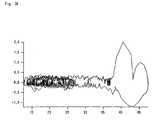
- the waveform which shows the atmospheric pressure in a cavity decreases in connection with the expirationis measured in the case of a healthy person who does not have a constriction in a respiratory tract
- the phenomenon which the atmospheric pressure, i.e., the chest data, or abdomen data tends to increase according to factors, such as restriction of the air current in the constriction portion at the time of the expiration or the abnormal movement of the respiratory muscle at the time of the expirationhas been observed by this inventor. Since such a phenomenon is characteristically seen for an asthmatic patient who has the condition of a respiratory tract constriction, the measurement result is useful to diagnose the respiratory tract constriction.
- Said respiratory tract state judging unitmay judge a degree of constriction or blockage of the respiratory tract based on an aspect of increasing of the air pressure.
- the measuring systemmay further include a database which stores a medical view correspondent with at least one of a feature of the waveform of the respiratory waveform data, a feature of the waveform of the volume change near thorax, a feature of the waveform of the volume change near diaphragm, a difference of the waveform between the volume change near thorax and the volume change near diaphragm, a respiratory function barometer, and a personal data of a subject.
- a databasewhich stores a medical view correspondent with at least one of a feature of the waveform of the respiratory waveform data, a feature of the waveform of the volume change near thorax, a feature of the waveform of the volume change near diaphragm, a difference of the waveform between the volume change near thorax and the volume change near diaphragm, a respiratory function barometer, and a personal data of a subject.
- the measuring systemmay further include a database referring unit which acquires the medical view for the subject with reference to said database.
- the measuring systemmay further include a display unit which displays the medical view.
- This measuring apparatusis a measuring apparatus for measuring respiratory function characterized in that it includes: a sensing unit for sensing volume change of a measurement part of a subject sequent to respiratory movement; and a fixing unit for arranging said sensing unit near the measurement part; wherein said fixing unit has a belt-like form and can fix said sensing unit in a manner of impressing said sensing unit on the measurement part; and said sensing unit senses the volume change of the measurement part from change of pressure applied by said fixing unit and the measurement part.
- Still another embodiment according to the present inventionalso relates to a measuring apparatus.
- This measuring apparatusis a measuring apparatus for measuring respiratory function characterized in that it includes: a first measuring unit for detecting volume change of a first measurement part of a subject sequent to respiratory movement; and a second measuring unit for detecting volume change of a second measurement part of the subject sequent to respiratory movement; said first measuring unit and said second measuring unit respectively include: a sensing unit for sensing the volume change of the measurement part; and a fixing unit for arranging said sensing unit near the measurement part; wherein said fixing unit has a belt-like form and can fix said sensing unit in a manner of impressing said sensing unit on the measurement part; and said sensing unit senses the volume change of the measurement part from change of pressure applied by said fixing unit and the measurement part.
- Said sensing unitmay have a cavity inside and includes a first connecting unit for sending gas which is in the cavity to a pressure sensor for measuring air pressure in the cavity.
- Said sensing unitmay further include a second connecting unit for connecting with a pump for sending gas into the cavity.
- the first connecting unit and the second connecting unitmay be a tube formed by a rubber, a resin, or the like.
- the measuring apparatusmay further include a control unit which includes said pressure sensor and said pump.
- Said control unitmay further include a recording unit which records the air pressure in the cavity which said pressure sensor measures.
- Said recording unitmay record the air pressure in the cavity, or data converted from the air pressure into the volume or respiratory volume in an external recording medium.
- Said control unitmay further include a transfer unit which transfers the air pressure in the cavity which said pressure sensor measures to an analyzing apparatus for analyzing respiratory function.
- the transfer unitmay transfer the data using arbitrary communicating means of a cable or a radio, such as the internet, a cellar-phone network, or infrared ray.
- the measuring apparatusmay further include an initial pressure adjusting unit for adjusting the air pressure in the cavity to predetermined initial pressure by sending gas into the cavity before a measurement of respiratory function.
- Said initial pressure adjusting unitmay adjust the initial pressure within a range where a ratio of the volume change to the change of the air pressure in the cavity is substantially constant.
- Said initial pressure adjusting unitmay adjust the initial pressure within a range where a ratio of the volume change to the change of the air pressure in the cavity shifts substantially linear.
- Said initial pressure adjusting unitmay adjust the initial pressure to be substantially constant when measuring a subject for a plurality of times.
- Said initial pressure adjusting unitmay adjust the initial pressure to be substantially constant when measuring a plurality of subjects.
- This analyzing apparatusis an analyzing apparatus for analyzing respiratory function of a subject characterized in that it includes: a measurement data acquiring unit which acquires respiratory function measurement data of the subject; and a calculating unit for calculating at least one respiratory function barometer among a lung capacity fraction, a forced expiratory curve, a forced lung capacity, a forced expiratory volume in one second, a forced expiratory rate in one second, a maximum mid-expiratory flow, a maximum ventilation volume, a flow volume curve, a peak expiratory flow rate, and a rate of abdomen contribution.
- the respiratory function measurement datamay include chest data acquired by measurement of volume change near thorax and abdomen data acquired by measurement of volume change near diaphragm; and said analyzing apparatus may further include a waveform generating unit which generates respiratory waveform data which shows respiratory state of a subject from the chest data and the abdomen data. Said waveform generating unit may weight the chest data near thorax and the abdomen data with a predetermined ratio when generating the respiratory waveform data.
- the analyzing apparatusmay further include a waveform characteristic extracting unit which extracts a feature of waveform from at least one of the volume change near thorax, the volume change near diaphragm, and the respiratory waveform data.
- the analyzing apparatusmay further include a respiratory tract state judging unit which judges state of constriction or blockage of a respiratory tract with reference to the respiratory waveform data, the forced expiration curve, or the flow volume curve. Said respiratory tract state judging unit may judge that a respiratory tract of a subject is constricted or blocked in the case where the respiratory waveform data, the forced expiratory curve, or the flow volume curve has a waveform showing an increase of the chest data or the abdomen data of the subject when the subject starts expiration.
- Said respiratory tract state judging unitmay judge a degree of constriction or blockage of the respiratory tract based on an aspect of increasing of the chest data or the abdomen data.
- the analyzing apparatusmay further include a database referring unit which acquires a medical view for a subject with reference to a database which stores the medical view correspondent with at least one of a feature of the waveform of the respiratory waveform data, a feature of the waveform of the volume change near thorax, a feature of the waveform of the volume change near diaphragm, a difference of the waveform between the volume change near thorax and the volume change near diaphragm, a respiratory function barometer, and a personal data of the subject.
- Still another embodiment according to the present inventionrelates to a computer program.
- This programmakes a computer realize: a function of acquiring respiratory function measurement data of a subject; and a function of calculating at least one respiratory function barometer among a lung capacity fraction, a forced expiratory curve, a forced lung capacity, a forced expiratory volume in one second, a forced expiratory rate in one second, a maximum mid-expiratory flow, a maximum ventilation volume, a flow volume curve, a peak expiratory flow rate, and a rate of abdomen contribution.
- the respiratory function measurement datamay include chest data acquired by measurement of volume change near thorax and abdomen data acquired by measurement of volume change near diaphragm; and the program may further make a computer realize a function of generating respiratory waveform data which shows respiratory state of a subject from the chest data and the abdomen data.
- the respiratory waveform datamay be generated by weighting the chest data near thorax and the abdomen data with a predetermined ratio.
- the programmay further make a computer realize a function of extracting a feature of waveform from at least one of the volume change near thorax, the volume change near diaphragm, and the respiratory waveform data.
- the programmay further make a computer realize a function of judging state of constriction or blockage of a respiratory tract with reference to the respiratory waveform data, the forced expiration curve, or the flow volume curve.
- the programmay judge that a respiratory tract of a subject is constricted or blocked in the case where the respiratory waveform data, the forced expiratory curve, or the flow volume curve has a waveform showing an increase of the chest data or the abdomen data of the subject when the subject starts expiration.
- the programmay judge a degree of constriction or blockage of the respiratory tract based on an aspect of increasing of the chest data or the abdomen data.
- the programmay further make a computer realize a function of acquiring a medical view for a subject with reference to a database which stores the medical view correspondent with at least one of a feature of the waveform of the respiratory waveform data, a feature of the waveform of the volume change near thorax, a feature of the waveform of the volume change near diaphragm, a difference of the waveform between the volume change near thorax and the volume change near diaphragm, a respiratory function barometer, and a personal data of the subject.
- This analyzing serveris an analyzing server for analyzing respiratory function of a subject characterized in that it comprises: a database stored respiratory function measurement data and a medical view correspondingly; a receiving unit which receives a requirement of referring said database through a network; a measurement data acquiring unit which acquires the respiratory function measurement data of the subject; a database referring unit which acquires the medical view with reference to said database based on the respiratory function measurement data; and a transmitting unit which transmits the medical view through the network.
- This analyzing serverprovides the database for leading a medical view from the data measured by above-mentioned measuring apparatus.
- the medical viewcan be acquired by accessing the analyzing server with a terminal of hospital, a clinic, and a rehabilitation facility, for example, and sending the respiratory function measurement data of the subject to the analyzing server.
- a business modelcan work out where the database is managed by the analyzing server 400 in the block without placing them at each terminal, and a user using the database is charged.
- the respiratory function measurement datamay include chest data acquired by measurement of volume change near thorax and abdomen data acquired by measurement of volume change near diaphragm.
- the respiratory function measurement datamay be respiratory waveform data generated using the chest data and the abdomen data.
- the respiratory waveform datamay be generated by weighting the chest data and the abdomen data with a predetermined ratio.
- This rehabilitation assisting apparatusis a rehabilitation assisting apparatus which assists rehabilitation of respiratory function characterized in that it comprises: a pressurizing unit which includes a pressurizing member for squeezing a body of a subject; and a fixing unit for arranging said pressurizing member to the body of the subject; wherein said fixing unit has a belt-like form and can fix said pressurizing member in a manner of impressing said pressurizing member on the body; and said pressurizing member has a bag-like form and squeezes the body with increasing volume thereof by introducing gas therein.
- Said pressurizing membermay be fixed so that said pressurizing member squeezes an expectoration part of the subject.
- Said pressurizing unitmay have a plurality of said pressurizing members; and said rehabilitation assisting apparatus may further comprise a control unit which controls volume of gas inside said pressurizing members so that said pressurizing members squeeze the expectoration part. This performs the technique generally called "squeezing.”
- arbitrary rehabilitationssuch as breathing under pressurization load, and/or a exercise such as a walk, etc., may be carried out.
- the rehabilitation assisting apparatusmay comprise a plurality of said pressurizing units; and said pressurizing units may be arranged at least near thorax and near diaphragm of the subject.
- the rehabilitation assisting apparatusmay further comprise a pressure sensor which measures air pressure inside said pressurizing member; and respiratory state of the subject may be measured by sensing the volume change near thorax or diaphragm from change of the air pressure measured by said pressure sensor.
- the state of thoracic respiration and abdominal respirationcan be independently measured like above-stated measurement equipment.
- the respiratory functioncan be continuously measured after the rehabilitation, without removing the pressurizing units.
- this rehabilitation assisting apparatushas function of both the pressurization of the expectoration part and the function of respiratory measurement at the time of rehabilitation.
- Still another embodiment according to the present inventionrelates to a measuring method.
- This methodis a method of measuring respiratory function characterized in that it includes: a step of fixing a first measuring unit which includes a first sensing unit for sensing volume change of a first measurement part of a subject sequent to respiratory movement; and a first fixing unit for arranging said first sensing unit to the first measurement part, in such a manner that said first fixing unit pinches said first sensing unit between said first fixing unit and the first measurement part; a step of fixing a second measuring unit which includes a second sensing unit for sensing volume change of a second measurement part of the subject sequent to respiratory movement; and a second fixing unit for arranging said second sensing unit to the second measurement part, in such a manner that said second fixing unit pinches said second sensing unit between said second fixing unit and the second measurement part; a step of measuring simultaneously the volume change of the first measurement part sensed by said first sensing unit and the volume change of the second measurement part sensed by said second sensing unit.
- the first measurement partmay be near thorax and the second measurement part may be near diaphragm.
- Said first fixing unit and said second fixing unitmay have belt-like forms; said first sensing unit and said second sensing unit may have bag-like forms; said step of fixing may fix said first fixing unit and said second fixing unit in such a manner that a body of the subject is wrapped around by said first fixing unit and said second fixing unit; and said step of measuring may measure the volume change by sensing air pressure inside said first sensing unit and said second sensing unit.
- the methodmay further include, between said step of fixing and said step of measuring, a step of adjusting the air pressure inside said sensing unit to predetermined initial pressure by sending gas into said sensing unit; and said step of measuring may measure maintaining an amount of gas introduced into said sensing unit in said adjusting.
- the valve etc.may be prepared in each sensing unit so that the gas sent inside of the sensing unit may not leak out to the outside. Thereby, it can prevent the condition change during the measurement.
- Still another embodiment according to the present inventionrelates to a rehabilitation assisting method.
- This methodis a method of assisting rehabilitation of respiratory function characterized in that it includes: a step of equipping a subject with a pressurizing unit which comprises a pressurizing member for squeezing a body of the subject and a fixing unit for arranging the pressurizing member to the body; a step of squeezing the body of the subject by the pressurizing member; a rehabilitation step of making the subject perform respiratory movement under squeezing; a first measurement step of measuring respiratory state of the subject by sensing pressure applied to the pressurizing member while said rehabilitation step.
- the fixing unitmay have a belt-like form; the pressurizing member may have a bag-like form; said step of equipping may fix the pressurizing member in such a manner that the pressurizing member is pinched between the fixing unit and the body of the subject; said step of squeezing may squeeze the body with increasing volume of the pressurizing member by introducing gas into the pressurizing unit.
- Said step of equippingmay equip the subject with the pressurizing member so that the pressurizing member squeezes an expectoration part of the subject; said step of squeezing may squeeze the expectoration part by adjusting air pressure inside the pressurizing member.
- the methodmay include after said rehabilitation step: a step of adjusting air pressure inside the pressurizing member to predetermined pressure; a second measurement step of measuring respiratory state of the subject after rehabilitation by sensing the air pressure inside the pressurizing member.
- the methodmay further include a step of evaluating appropriate value of pressurizing to squeeze the body in said rehabilitation step based on the respiratory state of the subject measured in said first measurement step. Thereby, during the rehabilitation, the subject's respiratory condition can be monitored, and suitable pressurization can be applied.
- the methodmay further include a step of evaluating effect of said rehabilitation step based on the respiratory state of the subject measured in said second measurement step. Since the subject's respiratory condition can be monitored immediately after starting of the rehabilitation, it is suitable for measuring the change of the respiratory state with the passage of time after the subject starts rehabilitation.
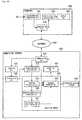
- Fig. 1is a composition figure of the measuring system 10 according to an embodiment of the present invention.
- the measuring system 10mainly includes a measuring apparatus 50 equipping with a measuring unit 100 for measuring a subject's respiratory condition and a control unit 200 which acquires an output from the measuring unit 100, and an analyzing unit 300 for analyzing the output which the control unit 200 acquires.
- a part of structure of the control unit 200 and the analyzing unit 300can be realized, in terms of hardware, by a CPU, a memory, memory-loaded programs or the like, but drawn and described here are function blocks that are realized in cooperation with those.
- these functional blockscan be realized in a variety of forms by hardware only, software only or the combination thereof.
- the measuring unit 100includes a costal respiration measuring unit 100a for measuring a volume change near thorax as an example of a first measuring unit and an abdominal respiration measuring unit 100b for measuring a volume change near the diaphragm as an example of a second measuring unit.
- the costal respiration measuring unit 100a and the abdominal respiration measuring unit 100bdetect the volume changes of the measurement parts by changes of the atmospheric pressure inside a sensing unit, respectively.
- the measuring system 10 of the present embodimentcan measure the data corresponding to the costal respiration and the data corresponding to the abdominal respiration independently. Moreover, reproducibility is good and it is a big merit that reliable data is obtained also quantitatively.
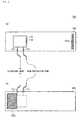
- Fig. 2(a) and 2(b)schematically show the appearance of the measuring unit 100.
- Fig. 2(a)is a figure seeing the measuring unit 100 from the side which touches a subject's body and the Fig. 2(b) is a figure seeing the measuring unit 100 from the reverse-side.
- the measuring unit 100includes the sensing unit 110 for detecting a volume change of the measurement part accompanying respiratory action of a subject, and a fixing unit 120 for arranging the sensing unit 110 near the measurement part.
- the sensing unit 110has a bag-like form with a cave inside, and detects a volume change of the measurement part with change of the atmospheric pressure inside.
- the sensing unit 110is equipped with the tube 114 for sending gas inside from the pressure pump 220 as an example of a first connection member and a tube 112 for sending gas to a pressure gauge as an example of a second connection member.
- the sensing unit 110is contained in the case 116 made in the fixing unit 120.
- the fixing unit 120has a belt-like form and is wrapped around the subject's body, arranging the sensing unit 110 to the measurement part.
- Soft Materialssuch as soft cloth, may be used for the fixing unit 120 so that it may be easily wrapped around the subject's body. Moreover, the material with little elasticity, such as canvas cloth, may be used so that it may not expand greatly by respiratory motion of a subject.
- the adhesion members 122a and 122b for attaching both ends of the fixing unit 120, when the fixing unit 120 is wrapped around the subject's body,are formed in the fixing unit 120.
- the adhesion members 122a and 122bmay be a zipper or a plane fastener, etc.
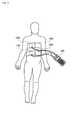
- Fig. 3shows how the subject is equipped with the costal respiration measuring unit 100a and the abdominal respiration measuring unit 100b.
- the costal respiration measuring unit 100ais equipped around the subject's chest.
- the abdominal respiration measuring unit 100bis equipped around subject's diaphragm.
- the sensing unit 110is first stuck to the measurement part, and the fixing unit is wrapped around the subject's body firmly. Since there is sometimes a right-and-left difference in muscular power of the respiratory muscles, the position of the sensing unit 110 may be determined considering the subject's dominant hand. For example, the position in which the sensing unit 110 is fixed may be unified to be the dominant hand side or the contrary side of the subject. The position in which the sensing unit 110 is fixed may be unified to be the subject's left half or right half of the body.
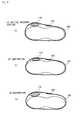
- Fig. 4(a), 4(b), and 4(c)show cross sections of a subject equipped with the measuring unit 100.
- Fig. 4(a)shows a situation when an initial pressurization is performed by sending gas inside the sensing unit 110 from the pressurization pump 220 after the subject is equipped with the measuring unit 100. The Gas is sent into the inside of the sensing unit 110, and empty space is made between the fixing unit 120 and the measurement part. Since it is necessary to change into the state where a certain amount of pressure is impressed to the sensing unit also at the time of the maximum inspiration in order to measure the volume change of the measurement part correctly at the time of inspiration, the initial pressurization is set in this way. Moreover, it is meaningful for keeping measurement conditions constant by standardizing an initial pressurization value.
- Fig. 4(a), 4(b), and 4(c)show cross sections of a subject equipped with the measuring unit 100.
- Fig. 4(a)shows a situation when an initial pressurization is performed by sending gas inside the sensing unit 110 from the press
- FIG. 4(b)shows a situation when a subject performs inspiration action.
- a subjectinhales air
- the volume near the thorax and the diaphragm of the subjectincrease, then, the sensing unit 110 is compressed between the subject's body and the fixing unit, therefore internal atmospheric pressure becomes high.
- Fig. 4(c)shows a situation when the subject performs expiration action.
- the atmospheric pressure inside the sensing unit 110becomes low because the volume near thorax and diaphragm of the subject may decrease, and empty space between the subject's body and the fixing unit spreads out.
- the volume change near thorax and diaphragmcan be detected with the change of inner pressure of the sensing unit 110.
- the sensing unit 110can function as a pressurization part. Namely, a subject's body is pressed with the predetermined load by sending gas inside of the sensing unit 110, and making the volume of the sensing unit 110 increase. A subject is able to perform rehabilitation while breathing under load. At this time, the measuring unit 100 may be equipped pressing the expectoration part of a subject by the sensing unit 110, and the rehabilitation is performed using the squeezing method.
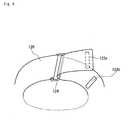
- Fig. 5shows another example of the fixing unit 120.
- a hook 124is formed at one end of the fixing unit 120, which lets another end of the fixing unit 120 pass through. At the time of wearing, another end is passed through the hook 124, and fix the adhesion member 122 after pulling the end fully to make it stick.
- the adhesion member 122may be a zipper or a plane fastener, etc. According to the measuring unit 100 shown in Fig. 5, even if it is the case when a subject itself equips with the measuring unit 100, the measuring unit 100 can be fixed appropriately and easily.
- the control unit 200includes an initial pressure adjusting unit 210, a pressurization pump 220, a pressure gauge 230, a recording unit 240, the measurement control unit 250, a indicating unit 260, a display unit 270, a transfer unit 280, and a condition input unit 290.
- the initial pressure adjusting unit 210controls the pressurization pump 220 to send gas inside of the sensing unit 110 and adjust the pressure to the predetermined initial value before measurement of the respiratory function.
- the initial pressuremay be set up within the range in which the ratio between the volume change of the measurement part and the pressure change in the sensing unit 110 are approximately same, or may be set up within the range in which the ratio between the volume change of the measurement part and the pressure change in the sensing unit 110 is linear. If the initial pressure is too large, a burden will be given to a subject and there is a possibility that a respiratory state cannot be measured correctly. If the initial pressure is too small, there is a possibility that the pressure change in the sensing unit 110 may not follow accordingly to the volume change of the measurement part. What is necessary is just to adjust the initial pressure to the range in which the pressure change in the sensing unit 110 can be converted properly to the volume change of the measurement part, or respiratory volume at the time of breathing.
- the initial pressure adjusting unit 210may adjust the initial pressure to the constant value when measuring a subject for multiple times. With this, the measurement conditions can be maintained constantly for multiple measurements of the same subject, and the measurement results can be compared with each other and examined quantitatively.
- the initial pressure adjusting unit 210may adjust the initial pressure to the constant value when measuring multiple subjects. Thereby, the measurement conditions can be kept constant and the measurement results can be compared with each other and examined quantitatively. Thus, since conditions can be unified when measuring by the initial pressure adjusting unit 210, the data obtained are with high reproducibility and reliable.
- the initial pressuremay be determined based on a subject's sex, the rate of body fat, a chest circumference, a waist, an anamnesis, a lung capacity, the size of the sensing unit 110, or the like.
- the measurementis performed maintaining the quantity of the gas inside the sensing unit 110. Thereby, the conditions can be kept constant while the measurement is performed.
- a valvemay be attached to the sensing unit 110, so that gas once sent in would not flow outside.
- the pressurization pump 220sends gas inside the sensing unit 110, so that the pressure in the sensing unit 110 may become predetermined initial pressure.
- gasis sent inside of the sensing unit 110 by the pressurization pump 220 until it becomes predetermined load pressure.
- the pressure gauge 230as an example of the pressure sensor measures the atmospheric pressure inside the sensing unit 110.
- Arbitrary known pressure gauge or pressure sensormay be used as the pressure gauge 230.
- a pressure sensor that converts the pressure into a voltage signal by PIEZO resistive elementis used.
- the recording unit 240samples the measurement data which the pressure gauge 230 measures in a predetermined sampling frequency, and records them as the respiratory waveform data.
- the recording unit 240may record the measurement data in a memory inside the control unit 200, and/or may record them in a recording media, such as a floppy disk, CD-ROM, MO, and the like. Moreover, the recording unit 240 may not be comprised, and the measurement data may be transmitted directly to the analyzing unit 300.
- the voltage signals which the pressure gauge 230 measuresare recorded in the memory inside the recording unit 240, and are transmitted to the analyzing unit 300 by the transfer unit 280.
- the voltage signalsmay be converted into a digital signal with A/D converter if necessary.
- the voltage signalsmay be converted into pressure values and recorded or otherwise may be recorded after converting them into respiratory volume or respiration rate using a predetermined conversion formula.
- the condition input unit 290receives the information concerning measurement conditions from a subject or a measurer.
- the condition input unit 290may receive information, such as the kind of data which should be measured, a subject's sex, age, height, weight, chest circumference, waist size, a rate of body fat, and private information like about anamneses, measurement day, the number of times of measurement, temperature, atmospheric pressure, and humidity, etc.
- the informationmay be recorded by recording unit 240 together with measurement data and/or may be used for control of the measurement control unit 250 or analysis of the analyzing unit 300, if necessary.
- the measurement control unit 250controls at least one of the initial pressure adjusting unit 210, the pressurization pump 220, the recording unit 240, and the indicating unit 260 to perform the measurement according to the kind of data which should be measured.
- the measurement control unit 250may have a table for determining contents, procedure , or the like of the measurement based on the conditions which the condition input unit 290 receives. For example, a subject's sex and initial pressure may be stored correspondingly in the table, or the kind of data which should be measured and the sampling frequency of the data at the time of recording may be stored correspondingly in the table. And, the measurement may be controlled referring this table.
- the measurement procedure suitable for the kind of data which should be measuredmay be indicated to a subject through the indicating unit 260.
- the contents of directionsmay be determined based on the measurement conditions which is received by the condition input unit 290.
- the indicating unit 260may indicate to a subject while monitoring the measurement values by the pressure gauge 230, to make the subject breathe in until reaching the maximum inspiration level, saying "Please continue inhaling until it becomes impossible to breathe", until the measurement value is stabilized at the constant value, and saying "Please breathe out at a one stretch", when it is judged that the measurement value is stabilized at the constant value.
- a suitable measurement procedureis given to a subject while the subject's respiratory condition is being observed.
- the respiratory waveform used as a standardmay be stored, and a timing of issuing the direction to the subject may be planned comparing the standard waveform to the subject's respiratory waveform.
- the measurement control unit 250may control a rehabilitation program.
- the rehabilitation programsmay be saved beforehand in the measurement control unit 250, and may be chosen based on the conditions received by the condition input unit 290, and/or a rehabilitation program may be inputted by the condition input unit 290.
- the procedure of the rehabilitationmay be indicated to a patient by the indicating unit 260. For example, when a patient requires the respiratory rehabilitation under pressurization, the patient receives pressure to the predetermined point with the pressurization pump 220, and performs rehabilitation of breathing for predetermined time under pressurization.
- the indicating unit 260indicates suitable respiratory operations to a subject according to the kind of data which should be measured.
- the indicating unit 260may output the directions transmitted from the measurement control unit 250 to a subject, or may judge the necessary directions. Directions may be outputted by the display unit 270 as visual information, and/or may be outputted as sound information with a speaker etc.
- the display unit 270displays information such as the measured value by the pressure gauge 230, and classification of the data at a time of measuring.
- the display unit 270may be used as an interface when receiving information from a measurer by the condition input unit 290.
- the transfer unit 280transfers the measured data to the analyzing unit 300.
- the transfer unit 280may transfer measurement data to the analyzing unit 300 through the cable which connects the control unit 200 and the analyzing unit 300, and/or may transfer it using the communication means of cables, such as the telephone network, the cellular-phone network, the Internet, infrared rays, and the radio wave, or wireless radio.
- the transfer unit 280may be not necessary since the data are sent to the analyzing unit 300 through the recording medium.
- the analyzing unit 300includes a measurement data acquiring unit 310, an analyzing member 320, a display unit 340, and a respiratory function database 350.
- the measurement data acquiring unit 310acquires the data measured by the measuring unit 100 and the control unit 200.
- the analyzing member 320includes a waveform generating unit 322, a lung volume fraction calculating unit 324, a forced expiratory curve analyzing unit 326, a flow volume curve analyzing unit 328, an abdomen contribution calculating unit 329, a waveform characteristic extracting unit 330, a respiratory tract state judging unit 331, and a database referring unit 332.
- the analyzing unit 300may function as analyzing apparatus 300 independently apart from the measuring apparatus 50.
- the analyzing unit 300 and the analyzing apparatus 300may be realized by an ordinary computer.
- the measurement data acquiring unit 310acquires measurement data from the control unit 200.
- the measurement datacontains the chest data obtained by measurement of the volume changes near thorax, and the abdomen data obtained by measurement of the volume changes near diaphragm. These data may be expressed by the atmospheric pressure of sensing unit 110 inside, and/or may be converted into the volume changes of the measurement part, or respiratory volume at the time of breathing.
- the waveform generating unit 322generates respiratory waveform data from the measurement data which the measurement data acquiring unit 310 acquires.
- the respiratory waveform datais generated from the chest data obtained by measurement of the volume changes near thorax, and the abdomen data obtained by measurement of the volume changes near diaphragm.
- the chest data and the abdomen datamay be weighted by the predetermined ratio, and the respiratory waveform data may be generated.
- the weighing ratioit may be determined according to the rate of abdomen contribution, personal information such as sex of a subject, or the anamneses of the subject, etc.
- the waveform generating unit 322may remove the data dispersed extremely, or the portion considered that the movement of the subject during measurement might affect data when the waveform generating unit 322 is generating the respiratory waveform data.
- the respiratory waveform curvemay be smoothed with a spline function, a Bezier function, etc. When a difference is recognized in the peak position of the chest data and the abdomen data, the peak position may be adjusted to generate the respiratory waveform data.
- the lung volume fraction calculating unit 324as an example of the calculating unit computes the lung volume fraction based on the respiratory waveform data generated in the waveform generating unit 322.
- the forced expiratory curve analyzing unit 326as an example of the calculating unit computes forced lung capacity, and volume of 1 second, etc. based on the respiratory waveform data shaped by the waveform generating unit 322.
- the flow volume curve analyzing unit 328as an example of the calculating unit computes the maximum rate of the expiration flow etc. based on the flow volume curve which is obtained by differentiating the forced expiratory curve.
- the abdomen contribution calculating unit 329as an example of the calculating unit computes the abdomen contribution rate from the chest data and the abdomen data. Each value may be computed from the chest data, the abdomen data, and respiratory waveform data, respectively. Each detailed calculating method is explained in the explanation of the first experiment to the fourth experiment.
- the waveform characteristic extracting unit 330extracts the characteristic features of the waveform of respiratory waveform data, chest data, and/or abdomen data. For example, such a characteristic feature that there is a gap in the peak position of the respiratory waveform of chest data and abdomen data, a feature that the peak of flow volume curve is flat, or a feature that a flat portion appears after the peak of flow volume curve, etc.
- the waveform features which the waveform extracting unit 330 should extractmay be stored beforehand, and the features of the waveform may be extracted by judging whether a subject's respiratory waveform data agree with the stored features.
- the respiratory tract state judging unit 331judges a constriction or a blockage of a respiratory tract referring to a respiratory waveform data, a forced expiratory curve, and/or a flow volume curve.
- the respiratory tract state judging unit 331may judge that the subject's respiratory tract is either constricted or blocked in the case the respiratory waveform data, the forced expiration curve, and the flow volume curve show a waveform that reveals an increase of inside pressure of the sensing unit 110 equipped near thorax or near diaphragm, when a subject starts exhaling.
- the waveform which shows the atmospheric pressure in a cavedecreases in connection with exhaling in the case of a healthy person who does not have a constriction in the respiratory tract
- the phenomenon which the atmospheric pressure in the cavei.e., the chest data, or abdomen data increases because of factors, such as restriction of the air current in the constriction portion at the time of exhaling or the abnormal movement of the respiratory muscles at the time of exhaling, has been observed by the inventors of the present invention. Since such phenomena are characteristic of the asthmatic patients who have conditions of the respiratory tract constriction, the respiratory tract state judging unit 331 may judge that the subject who shows such measurement results is doubtful of having the respiratory tract constriction.
- the respiratory tract state judging unit 331may judge the degree of constriction or blockage of a respiratory tract based on the increasing situation of the atmospheric pressure inside the sensing unit 110 at the time of exhaling. For example, when the pressure increase is steep, the amount of pressure increase is large, or time until the increased pressure returns is long, the degree of a blockage of a respiratory tract is high.
- the degree of a blockage of respiratory tractmay be judged by considering inclination of forced expiration curve, high order differentiation coefficient, an integration value, form, the height of a peak, etc. to be an index.
- the degree of constriction or a blockage of a respiratory tractmay be judged with analyzing the respiratory waveform at the time of exhaling hydrodynamically.
- the database referring unit 332acquires a medical view based on the lung volume fraction, the forced lung capacity, the forced expiratory volume one second, the peak expiratory flow rate, the respiratory waveform, the forced expiratory curve, a flow volume curve, and the rate of abdomen contribution, the feature of the respiratory waveform extracted by the waveform characteristic extracting unit 330, etc. referring to the respiratory function database 350.
- further informationsuch as the subject's sex, age, height, weight, body fat, chest circumference, waist size, and anamneses may be taken into the reference.
- the display unit 340displays information, such as the measured chest data, the abdomen data, and/or the respiratory waveform data, the computed respiratory function barometer, and the medical view acquired from the respiratory function database 350, on a display screen such as a liquid crystal display.
- the respiratory function database 350stores information, such as respiratory function barometers of the lung volume fraction, the forced lung capacity, the forced expiratory volume 1 second, the peak expiratory flow rate, the respiratory waveform, the forced expiratory curve, the flow volume curve, and the rate of abdomen contribution, and the features of the respiratory waveform, correspondent with the medical views.
- subject's sex, age, height, weight, body fat, anamneses, etc.may be taken into consideration.
- the medical view "there is a doubt of constriction in upper respiratory tract”may be saved correspondently.
- the medical viewsmay not only be the name of a respiratory disease presumed from the measurement results, but also be the conditions of respiratory organs, respiratory muscles, state of other organs, grade of the disease, as well as a proposal of suitable rehabilitation program and exercise, etc.
- each composition componentmay be comprised in other units.
- the pressurization pump 220, the pressure gauge 230, the recording unit 240, etc.may be placed in the measuring unit 100 side, as well as the condition input unit 290 and the display unit 270, etc. may be formed in the analyzing unit 300 side.
- the control unit 200 and the analyzing unit 300may be constituted in one set.
- combinations of the componentsare highly flexible, which will be understood by those skilled in the art.
- the respiratory function database 350may be installed in the external server etc., and accessed through a communication means such as a network.
- the measuring apparatus 50 and the analyzing apparatus 300may be equipped in different places.
- the data measured by the measuring apparatus 50may be provided to the analyzing apparatus 300 by an external memory media, such as a floppy disk, CD-ROM, and MO, or through a network.
- an external memory mediasuch as a floppy disk, CD-ROM, and MO
- the measurement datacan be analyzed suppose a subject lives in a doctor-less village or a depopulated area such as an isolated island and the analyzing apparatus is not available in the neighborhood.
- the measuring unit 100can be equipped comparatively easily, the subject can measure by himself/herself or with the help of a family etc.
- the subjectIf a subject owns the measuring apparatus 50 at his/her house, it also is possible for the subject to transfer the measured data to a hospital and to acquire a doctor's view. Therefore, even if the subject is difficult to go out, it is possible for the subject to receive appropriate diagnosis from a doctor.
- the grade of the blockage situation or condition of the respiratory tract of a patient of sleep apnea syndrome (SAS)can be diagnosed by is equipped with this measuring unit 100 during sleep at a house etc., and or measurement of the respiratory state at the time of sleep can be made continuously.
- SASsleep apnea syndrome
- the measuring apparatus 50 of the present embodimentWhen the measuring apparatus 50 of the present embodiment is used as the rehabilitation assisting apparatus, a value of a load given to a subject during rehabilitation can be evaluated appropriately as the respiratory state in rehabilitation can be monitored. Moreover, the respiratory function of the subject can be inspected continuously without removing the measuring unit 100 after the rehabilitation, and the effect of the rehabilitation can be appropriately evaluated. Furthermore, because a subject can operate the measuring unit 100 easily by himself/herself, he/she can perform rehabilitation even in the environment where the assistance of a doctor or a physiotherapist cannot be given. For example, a subject can perform rehabilitation at home, and receive a diagnosis from a doctor by transferring the measurement data during and after rehabilitation.
- the measuring apparatus 50 of the present embodimentcan be used not only in the medical area but also in various places.
- the measuring apparatus 50can be equipped in a sport facility, and then a user may enable it to check a respiratory state before exercise and after exercise.
- the respiratory statecan also be monitored during an aerobics performance.
- the measuring system 10 and the measuring apparatus 50 of the present embodimentare convenient to carry, and wearing and operation are also easy, as well as they may be used by various users in various places.
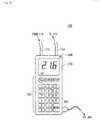
- Fig. 6schematically shows the appearance of the control unit 200.
- a speakeras an example of the indicating unit 260
- a liquid crystal display unitas an example of the display unit 270
- an input interface 292for inputting conditions into the condition input unit 290
- a cable 282for transferring the measurement data to the analyzing unit 300 by the transfer unit 280 are attached at the external surface of the control unit 200.
- a tube 114 for the pressurization pump 220 to send gas inside of the sensing unit 110 and a tube 112 for measuring the inner pressure of the sensing unit 110are connected.
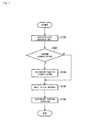
- Fig. 7shows the procedure for measuring the respiratory function using the measuring system 10 of the present embodiment.
- a subjectis equipped with the costal respiration measuring unit 100a and the abdominal respiration measuring unit 100b (S100).
- the respiratory function rehabilitationare carried out (S104), and the respiratory function inspection is followed.
- S104is skipped.
- the initial pressurizationis performed (S106) by sending gas inside of the sensing unit 110 using the pressurization pump 220.
- measurement of the respiratory functionis carried out maintaining the amount of gas inside the sensing unit 110 (S108) .
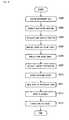
- Fig. 8shows the procedure for analyzing the respiratory function using the measuring system 10 of the present embodiment.
- the measurement data acquiring unit 310acquires measurement data (S200).
- the waveform generating unit 322generates the respiratory waveform data from the measurement data (S202).
- the lung volume fraction calculating unit 324computes the lung volume fraction (S204)
- the forced expiration curve analyzing unit 326computes the forced lung capacity and the forced expiratory volume 1 second, etc.
- the flow volume curve analyzing unit 328computes the peak expiratory flow rate etc. (S208)
- the abdomen contribution calculating unit 329computes the rate of abdomen contribution etc. (S209).
- the waveform characteristic extracting unit 330extracts the characteristic features of the respiratory waveform (S210).
- the respiratory tract state judging unit 331judges the state of constriction or blockage of the respiratory tract with reference to the respiratory waveform data, the forced expiration curve, or the flow volume curve (S211). Further the database referring unit 332 acquires a medical view for the subject referring to the respiratory function database 350 based on the data, such as the feature of the lung volume fraction, the forced lung capacity, the peak expiratory flow rate, the rate of abdomen contribution, and the respiratory waveform, (S212). Finally, the analysis result is displayed on the display unit 340 (S214).
- the first experiment to the fourth experimentis the experiments performed to healthy persons as subjects who did not have respiratory function difficulties
- the fifth experimentis the experiment performed to patients as subjects who had respiratory function difficulties.
- the first experiment to the third experimentshow that the respiratory function measuring system 10 of the present embodiment has function equivalent to that of Spirometer.
- the fourth experimentshows that the respiratory function measuring system 10 of the present embodiment has function equivalent to that of the respisomnogram.
- the fifth experimentshows the features of the respiratory waveforms of a patient who had a respiratory function difficulty, and the diagnostic method for deriving a medical view from the measurement result by this system.
- Respiratory function inspections by this systemwere conducted from July 15, 2000 to November 15, 2000 to 21 healthy persons (12 men and 9 women) who did not have respiratory function difficulties. At this time, the measurement by the Spirometer was also performed simultaneously with the measurement by this system, and both data were compared.
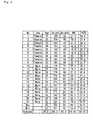
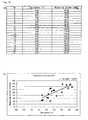
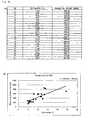
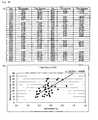
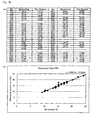
- the subject's sex, age, height, weight, BMI, and the rate of body fatare shown in Fig. 9.
- the size of the fixing unit 120was 140 mm x 1170 mm
- the sensing unit 110was 125 mm x 230 mm
- the initial pressurewas 30 mmHg for men and 20 mmHg for women.
- the measurement data when setting an initial pressurization value to 30 mmHg and the value to 20 mmHgcould be equally treated without rectifying by preliminary experiment, the data obtained from men and women were treated equally and analyzed. And, the respiratory waveform data were generated with summing the chest data and the abdomen data.
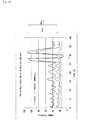
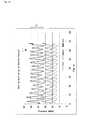
- Fig. 10shows change of inner pressure of the sensing unit 110 with passage of time when measuring the lung volume fraction of a subject.
- a solid lineshows the chest data which was measured by costal respiration measuring unit 100a
- a thin solid lineshows the abdomen data measured by abdominal respiration measuring unit 100b
- a thick solid lineshows the respiratory waveform data which is the sum of each data.
- LV1shows the maximum expiratory level of the respiratory waveform data
- LV2shows the resting expiratory level of the respiratory waveform data
- LV3shows the resting inspiratory level of the respiratory waveform data
- LV4shows the maximum inspiratory level of the respiratory waveform data.
- the vital capacity VCis given by the difference of the maximum expiratory level LV1 and the maximum inspiratory level LV4. Since inner pressure of the sensing unit 110 is not converted into the respiration volume in this experiment, the quantity computed from the measurement result shown in Fig. 10 is not the vital capacity VC itself, but it is the barometer VC1 for computing vital capacity. In the case of the subject 2, VC1 is calculated as 78.6 (mmHg) when only the chest data is used, and 12.42 (mmHg) when only the abdomen data are used, and 88.32 (mmHg) when the respiratory waveform data is used. The vital capacity VC was calculated as 2.68 (1) from a result measured simultaneously with the Spirometer.
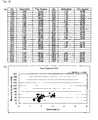
- Fig. 11 (A)shows the measurement results VC1 measured by the respiratory function measuring system 10 plotted against the measurement results VC2 measured by the Spirometer.
- the expiratory reserve volume ERVis given by the difference of the maximum expiratory level LV1 and the resting expiratory level LV2. Since inner pressure of the sensing unit 110 is not converted into the respiration volume in this experiment, the quantity computed from the measurement result shown in Fig. 10 is not the expiratory reserve volume ERV itself, but it is the barometer ERV1 for computing the expiratory reserve volume.
- ERV1is calculated as 9.6 (mmHg) when only the chest data is used, and -1.12 (mmHg) when only the abdomen data are used, and 7.46 (mmHg) when the respiratory waveform data is used.
- the expiratory reserve volume ERVwas calculated as 0.99 (1) from a result measured simultaneously with the Spirometer.
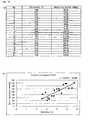
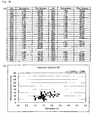
- Fig. 12(a)shows the measurement results ERV1 measured by the respiratory function measuring system 10 plotted against the measurement results ERV2 measured by the Spirometer.
- the inspiratory reserve volume IRVis given by the difference of the maximum inspiratory level LV4 and the resting inspiratory level LV3. Since inner pressure of the sensing unit 110 is not converted into the respiration volume in this experiment, the quantity computed from the measurement result shown in Fig. 10 is not the inspiratory reserve volume IRV itself, but it is the barometer IRV1 for computing the inspiratory reserve volume. In the case of the subject 2, IRV1 is calculated as 57.33 (mmHg) when only the chest data is used, and 8.63 (mmHg) when only the abdomen data are used, and 64.25 (mmHg) when the respiratory waveform data is used. The inspiratory reserve volume IRV was calculated as 1.18 (1) from a result measured simultaneously with the Spirometer.
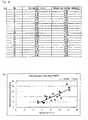
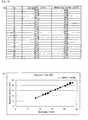
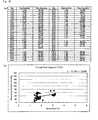
- Fig. 13 (a)The barometer of the inspiratory reserve volume IRV1 computed from each subject's respiratory waveform data is shown in Fig. 13 (a) .
- Fig. 13(b)shows the measurement results IRV1 measured by the respiratory function measuring system 10 plotted against the measurement results IRV2 measured by the Spirometer.
- the inspiratory capacity ICis given by the difference of the maximum inspiratory level LV4 and the resting expiratory level LV2. Since inner pressure of the sensing unit 110 is not converted into the respiration volume in this experiment, the quantity computed from the measurement result shown in Fig. 10 is not the inspiratory capacity IC itself, but it is the barometer IC1 for computing the inspiratory capacity. In the case of the subject 2, IC1 is calculated as 69 (mmHg) when only the chest data is used, and 13.63 (mmHg) when only the abdomen data are used, and 80.86 (mmHg) when the respiratory waveform data is used. The inspiratory capacity IC was calculated as 1.69 (1) from a result measured simultaneously with the Spirometer.
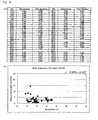
- Fig. 14(a)shows the measurement results IC1 measured by the respiratory function measuring system 10 plotted against the measurement results IC2 measured by the Spirometer.
- the tidal volume TVis given by the difference of the resting inspiratory level LV3 and the resting expiratory level LV2. Since inner pressure of the sensing unit 110 is not converted into the respiration volume in this experiment, the quantity computed from the measurement result shown in Fig. 10 is not the tidal volume TV itself, but it is the barometer TV1 for computing the tidal volume. In the case of the subject 2, TV1 is calculated as 11.67 (mmHg) when only the chest data is used, and 4.99 (mmHg) when only the abdomen data are used, and 16.61 (mmHg) when the respiratory waveform data is used. The tidal volume TV was calculated as 0.51 (1) from a result measured simultaneously with the Spirometer.
- Fig. 15(a)shows the measurement results TV1 measured by the respiratory function measuring system 10 plotted against the measurement results TV2 measured by the Spirometer.
- the lung volume fractioncan be measured by the respiratory function measuring system 10 as well as by the Spirometer. Moreover, the absolute value of the lung volume fraction can be obtained from the measurement data of this system using the formula of regression line. The conversion formula with high accuracy can be obtained by performing the same measurement to more subjects.
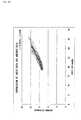
- Fig. 16shows change of inner pressure of the sensing unit 110 with time when measuring the forced expiratory curve of the subject 2.
- a solid lineshows the chest data measured by the costal respiration measuring unit 100a
- a thin solid lineshows the abdomen data measured by the abdominal respiration measuring unit 100b
- a thick lineshows the respiratory waveform data which is the sum of the each data.
- Fig. 17(a), 17(b), and 17(c)are the flow volume curves obtained by differentiating the forced expiration curve of Fig. 16.
- Fig. 17Ashows the flow volume curve obtained from the abdomen data
- Fig. 17(b)shows the flow volume curve obtained from the chest data
- Fig. 17(c)shows the flow volume curve obtained from the respiratory waveform data.
- the flow volume curve obtained by the Spirometeris represented with the respiratory volume on a horizontal axis and respiratory rate on a vertical axis, but in Fig. 17, the time on the horizontal axis. This is because the data was analyzed without converting them into the respiratory volume, but It is considered that there is no influence in calculation of the peak expiratory flow rate PEFR.
- the forced vital capacity FVCis given by a method shown in Fig. 16. Since inner pressure of the sensing unit 110 is not converted into the respiration volume in this experiment, the quantity computed from the measurement result shown in Fig. 16 is not the forced vital capacity FVC itself, but it is the barometer FVC1 for computing the forced vital capacity. In the case of the subject 2, FVC1 is calculated as 75.8 (mmHg) when only the chest data is used, and 11.62 (mmHg) when only the abdomen data are used, and 83.32 (mmHg) when the respiratory waveform data is used. The forced vital capacity FVC was calculated as 2.57 (1) from a result measured simultaneously with the Spirometer.
- Fig. 18(a)shows the measurement results FVC1 measured by the respiratory function measuring system 10 plotted against the measurement results FVC2 measured by the Spirometer.
- the forced expiratory volume in one second FEV1.0is given by a method shown in Fig. 16. Since inner pressure of the sensing unit 110 is not converted into the respiration volume in this experiment, the quantity computed from the measurement result shown in Fig. 16 is not the forced expiratory volume in one second FEV1.0 itself, but it is the barometer FEV1.01 for computing the forced expiratory volume in one second. In the case of the subject 2, FEV1.01 is calculated as 75.6 (mmHg) when only the chest data is used, and 10.16 (mmHg) when only the abdomen data are used, and 82.84 (mmHg) when the respiratory waveform data is used. The forced expiratory volume in one second FEV1.0 was calculated as 2.51 (1) from a result measured simultaneously with the Spirometer.
- the peak expiratory flow rate PEFRis given by a method shown in Fig. 17. Since inner pressure of the sensing unit 110 is not converted into the respiration volume in this experiment, the quantity computed from the measurement result shown in Fig. 16 is not the peak expiratory flow rate PEFR itself, but it is the barometer PEFR1 for computing the peak expiratory flow rate. In the case of the subject 2, PEFR1 is calculated as 8.65 (mmHg/s) when only the chest data is used, and 1.51 (mmHg/s) when only the abdomen data are used, and 9.69 (mmHg/s) when the respiratory waveform data is used. The peak expiratory flow rate PEFR was calculated as 7 (1/s) from a result measured simultaneously with the Spirometer.
- Fig. 20(a)shows the measurement results PEFR1 measured by the respiratory function measuring system 10 plotted against the measurement results PEFR2 measured by the Spirometer.
- Fig. 21shows change of inner pressure of the sensing unit 110 with time when measuring the resting ventilation volume of the subject 2.
- a solid lineshows the chest data measured by the costal respiration measuring unit 100a
- a thin solid lineshows the abdomen data measured by the abdominal respiration measuring unit 100b
- a thick lineshows the respiratory waveform data which is the sum of the each data.
- the minutes volume MVrepresents the ventilation volume of one minute, and is calculated by multiplying the one-time ventilation volume by the frequency of the respiration in one minute. Since inner pressure of the sensing unit 110 is not converted into the respiration volume in this experiment, the quantity computed from the measurement result shown in Fig. 21 is not the minutes volume MV itself, but it is the barometer MV1 for computing the minutes volume. In the case of the subject 2, MV1 is calculated as 175.34 (mmHg) when only the chest data is used, and 91.59 (mmHg) when only the abdomen data are used, and 278 (mmHg) when the respiratory waveform data is used. The minutes volume MV was calculated as 4.66 (1) from a result measured simultaneously with the Spirometer.
- Fig. 22(a)shows the measurement results MV1 measured by the respiratory function measuring system 10 plotted against the measurement results MV2 measured by the Spirometer.
- the tidal volume TVis calculated by averaging the differences between the peaks and the valleys of the respiratory waveform at resting. Since inner pressure of the sensing unit 110 is not converted into the respiration volume in this experiment, the quantity computed from the measurement result shown in Fig. 21 is not the tidal volume TV itself, but it is the barometer TV1 for computing the tidal volume. In the case of the subject 2, TV1 is calculated as 11.99 (mmHg) when only the chest data is used, and 6.25 (mmHg) when only the abdomen data are used, and 18.18 (mmHg) when the respiratory waveform data is used. The tidal volume TV was calculated as 0.33 (1) from a result measured simultaneously with the Spirometer.
- Fig. 23(a)shows the measurement results TV1 measured by the respiratory function measuring system 10 plotted against the measurement results TV2 measured by the Spirometer.
- the interval of the waveform RRis calculated by averaging the intervals between the peaks of the respiratory waveform at resting but in this experiment the reciprocal thereof is calculated as the frequency of the respiration per one minute.
- RR1is calculated as 13.97 (/min) when only the chest data is used, and 13.98 (/min) when only the abdomen data are used, and 14 (/min) when the respiratory waveform data is used.
- the interval of the waveform RRwas calculated as 14.12 (/min) from a result measured simultaneously with the Spirometer.
- Fig. 24(a)shows the measurement results RR1 measured by the respiratory function measuring system 10 plotted against the measurement results RR2 measured by the Spirometer.
- the resting ventilation minute volume, the tidal volume, and the rate of the respiratory waveform etc.can be measured by the respiratory function measuring system 10 as well as by the Spirometer.
- the absolute values of above datacan be obtained in the same way of the lung volume fraction from the measurement data of this system using the formula of the regression line.
- the conversion formula with high accuracycan be obtained by performing the same measurement to more subjects.
- Fig. 25shows the relation between the chest data and the abdomen data when the resting ventilation volume was measured in experiment 3.
- Fig. 26shows the relation of the chest data and the abdomen data when the forced expiration curve was measured in experiment 2.
- the measuring system 10 of this embodimentcan measure the chest data and the abdomen data independently, and the respiration predominancy and the rate of abdomen contribution can be evaluated as well as the respisomnogram. Furthermore, although the absolute value of the data obtained by the respisomnogram was not reliable and the quantitative discussion can not be done, in this system the reliable data can be obtained quantitatively as shown by explanation of experiments 1-3. Thereby, comparison examination can be quantitatively performed regarding multiple measurements of the same subject and multiple subjects' measurement.
- the measurement system 10 of this embodimenthas not only the functions of the both apparatus of the Spirometer and the respisomnogram, but also the measurement system 10 of this embodiment can obtain the information with one measurement which had to be conventionally acquired separately in the case of the spirometer and the respisomnogram. Moreover, this measurement system can provide a medical view by measuring the chest data and the abdomen data independently, which is not possible with the conventional the Spirometer and the respisomnogram.
- the respiratory muscles in the breasthardly contribute to breathing, and the patient almost breathes by the abdominal respiration, but the spirometer cannot acquire this view.
- the abdominal respirationis predominant by the respisomnogram, the quantitative evaluation is difficult to be made since it lacks in reproducibility.
- the measurement system 10 of this embodimentcan acquire the data of costal respiration and abdominal respiration independently with sufficient reproducibility, progresses after an operation and/or the effect of rehabilitation or medicine etc can be observed and evaluated quantitatively, which is extremely meaningful medically.
- the measurement system 10 of this embodimentcan also perform quantitative evaluation with higher reproducibility and higher reliability compared with the conventional respisomnogram.
- the respiratory function measurement by this system and the spirometerwas performed similar to experiments 1-4 with making respiratory disease patients as subjects. The measurement was performed five times for each of 10 respiratory disease patients, respectively. As for the subjects for whom the waveform of the measurement data disordered largely, the data were not used for evaluation.
- the measurement results shown in Fig. 27 to 36were analyzed like experiments 1-3 using the total value of the chest data and the abdomen data.
- the graph which describes the correlation with the spirometeris shown in the same scale with those of the experiments 1-3 for which the healthy persons were subjects.
- Fig. 27(a)shows the measurement result of the vital capacity VC
- Fig. 27(b)shows the correlation with data by spirometer
- Fig. 28(a)shows the measurement result of the expiratory reserve volume ERV
- Fig. 28(b)shows the correlation with data by spirometer
- Fig. 29(a)shows the measurement result of the inspiratory reserve volume IRV
- Fig. 29(b)shows the correlation with data by spirometer.
- Fig. 30(a)shows the measurement result the inspiratory capacity IC
- Fig. 30(b)shows the correlation with data by spirometer.
- Fig. 31(a)shows the measurement result of tidal volume TV
- Fig. 31(a)shows the measurement result of tidal volume TV
- FIG. 31(b)shows the correlation with data by spirometer.
- Fig. 32(a)shows the measurement result of the forced expiratory volume FVC
- Fig. 32(b)shows the correlation with data by spirometer.
- Fig. 33(a)shows the measurement result of the peak expiratory flow rate PEFR
- Fig. 33(b)shows the correlation with data by spirometer.
- Fig. 34(a)shows the measurement result of the resting ventilation minute volume MV
- Fig. 34(b)shows the correlation with data by spirometer.
- Fig. 35(a)shows the measurement result of tidal volume TV
- Fig. 35(b)shows the correlation with data by spirometer.
- Fig. 36(a)shows the measurement result of the respiratory rate RR
- Fig. 36(b)shows the correlation with data by spirometer.
- Fig. 37shows change of inner pressure inside the sensing unit 110 with passage of time when measuring a certain respiratory disease patient's forced expiration curve.
- the solid lineshows the chest data measured by costal respiratory measuring unit 100a
- the thin solid lineshows the abdomen data measured by abdominal respiratory measuring unit 100b
- the thick solid lineshows the respiratory waveform data which is the sum of the chest data and the abdomen data. It is shown that the inner pressure went up rapidly at the moment of the forced expiration after the subject performed a maximum inspiration.
- Fig. 38shows the flow volume curve of a certain respiratory disease patient as a subject. Unlike the flow volume curve of a healthy person shown in Fig. 17, a big peak is seen in the positive direction. This is considered to reflect the rapid rise of inner pressure at the time of forced expiration mentioned above.
- Fig. 39is a figure showing the relation between the inner pressure rising value at the time of forced expiration, and the peak expiration flow rate PEFR.
- the inner pressure rise value at the time of forced expirationwhich was observed when the forced expiration curve was measured for respiratory disease patients as subjects, shows a negative correlation, and it is indicated that the rise of pressure is reflecting the degree of constriction or blockage of a respiratory tract. From the above measurement results, it is shown that this system is effective to diagnose the state of constriction or blockage of a respiratory tract.
- Fig. 40shows a structure of an analyzing server 400 and a terminal 500 which accesses the analyzing server 400 according to this embodiment.
- the analyzing server 400receives an analysis request from the terminal 500 which is installed in the hospital for example, through the Internet 600, and refers it to the respiratory function database 350 based on the received measurement data, and then transmits the analysis result to the terminal 500.
- the Internet 600is mentioned as an example of the network in this embodiment , but it may be the networks of a cable or radio such as a cellular-phone network, a public network, etc.
- the analyzing server 400includes a communicating unit 410 for communicating with the terminal 500 through the Internet 600, a receiving unit 430 which receives the request for referring to the database through the network, an authenticating unit 440 which authenticates a user who refers to the database, the measurement data acquiring unit 310, the analyzing member 320, the respiratory function database 350, and a transmitting unit 420 for transmitting analysis results such as a medical view to the terminal 500.
- a communicating unit 410for communicating with the terminal 500 through the Internet 600
- a receiving unit 430which receives the request for referring to the database through the network
- an authenticating unit 440which authenticates a user who refers to the database
- the measurement data acquiring unit 310the analyzing member 320
- the respiratory function database 350the respiratory function database 350
- a transmitting unit 420for transmitting analysis results such as a medical view to the terminal 500.
- the same markis given to what has a function equivalent to the composition shown in Fig. 1 among the composition of the analyzing server 400
- the analyzing server 400first authenticates whether the user is a permitted user for the reference of the database by the authenticating unit 440 when a reference request of the database is received by the receiving unit 430 through the Internet 600. Then when the user is authenticated, the measurement data acquiring unit 310 receives the chest data and the abdomen data like the analyzing unit 300 shown in Fig. 1, and the respiratory waveform data is generated by the waveform generating unit 322, the waveform characteristics of the chest data, the abdomen data, and the respiratory waveform data is extracted by the extracting unit 330, and the constriction state of a respiratory tract is judged by the respiratory tract state judging part 331, and then the medical view is acquired by referring the respiratory function database 350 by the database referring unit 332. The acquired medical view is transmitted to a user through the Internet 600 from the transmitting unit 420. Further, an accounting unit may be attached to charge the user who refers to the database.
- the analyzing server 400 shown in Fig. 40provides mainly the reference service with managing the respiratory function database 350, and the composition such as the lung capacity fraction calculating unit 324 etc. is omitted, but of course the analyzing server 400 may include these compositions.
- the composition such as the lung capacity calculating unit 324may be added to the terminal 500 side.
- the measurement data acquiring unit 310may acquire the respiratory function barometers, such as the lung capacity fraction, from the terminal 500.
- the terminal 500includes a measurement data transmitting unit 520 for transmitting data which the measuring apparatus 50 measures to the analyzing server 400, a communicating unit 510 for communicating with the analyzing server 400 through the internet 600, an analysis result acquiring unit 530 for acquiring the analysis result from the analyzing server 400, and the display unit 340 which displays the analysis result at the display apparatus.
- a service for analyzing the respiratory functioncan be provided to more users by providing a function equivalent to the analyzing unit 300 in Fig. 1 as the server.
- the maintenancesuch as a renewal and/or modification of the database can be made easily by managing the respiratory function database 350 at the analyzing server 400 in the block without placing them at each terminal 500.
- Fig. 41(a), 41(b), 41(c), 41(d), and 41(e)show examples how to use a rehabilitation assisting apparatus according to the embodiment.
- the rehabilitation assisting apparatushas the same composition as the measuring apparatus 50 shown in Fig. 1, and the measuring unit 100 is used as a pressurizing unit and the sensing unit 110 is used as the pressurizing member.
- Fig. 41(a)shows how the upper leaf of the subject's lung is squeezed with the pressurizing unit 100.
- the pressurizing unit 110is fixed in the area above the 4th rib, and gas is sent inside the pressurizing unit 110 to become the predetermined pressure by the pressurizing pump, so that the expectoration part is squeezed.
- Fig. 41(b) and 41(c)show how the middle part of a subject's lung is squeezed with the pressurizing unit 100.
- the right side of the lungis squeezed in Fig. 41(b) and the right side in Fig 41(c).
- Fig. 41(d)shows how the lower leaf of a subject's lung is squeezed with the pressurizing unit 100.
- 41(e)shows how the rear bottom side of a subject's lung is squeezed with the pressurizing unit 100.
- multiple pressurizing units 100may be equipped, and/or the pressurizing unit 100 may be attached with multiple pressurizing parts 110, if needed.
- Fig. 42shows the procedure of a rehabilitation assisting method according to the embodiment.
- the subjectis equipped with the pressurizing unit 100 as shown in Fig. 41 (S300).
- gasis sent into the inside of the pressurizing unit 110, so that the expectoration part is squeezed (S302).
- the subject's respiratory stateis measured simultaneously with the change of the atmospheric pressure of the pressurizing unit 110 inside (S304). Whether the pressure of pressurizing unit 110 inside is suitable is evaluated while the subject's respiratory state is observed, and the pressurization value may be changed if required (S306).
- the procedureis continued to N of S308 until the rehabilitation is completed, and the rehabilitation step is carried out.
- the atmospheric pressure of pressurizing unit 110 insideis set at a suitable initial pressure (S310). Then, the respiratory function measurement is carried out (S312), and the effect of the rehabilitation is evaluated (S314).
- the rehabilitation assisting apparatusalso has the function as the measuring apparatus, and can measure the respiratory function during and after the rehabilitation.
- squeezing methodwas introduced as the physiotherapy, but rehabilitation and respiratory function measurement can be similarly performed when applying other method.
- the present inventioncan be utilized for a measuring system, a measuring apparatus and a measuring method for measuring respiratory function, an analyzing apparatus, analyzing server, analyzing program for analyzing the measurement result, and a rehabilitation assisting apparatus and a rehabilitation assisting method utilizing the measurement system.
Landscapes
- Health & Medical Sciences (AREA)
- Life Sciences & Earth Sciences (AREA)
- Engineering & Computer Science (AREA)
- Medical Informatics (AREA)
- Physics & Mathematics (AREA)
- Veterinary Medicine (AREA)
- Biophysics (AREA)
- Pathology (AREA)
- Public Health (AREA)
- Biomedical Technology (AREA)
- Heart & Thoracic Surgery (AREA)
- General Health & Medical Sciences (AREA)
- Molecular Biology (AREA)
- Surgery (AREA)
- Animal Behavior & Ethology (AREA)
- Oral & Maxillofacial Surgery (AREA)
- Physiology (AREA)
- Dentistry (AREA)
- Measurement Of The Respiration, Hearing Ability, Form, And Blood Characteristics Of Living Organisms (AREA)
Abstract
Description
- The present invention relates to a technology formeasuring respiratory function, and it particular relates toa measuring system, a measuring apparatus and a measuringmethod for measuring respiratory function of a subject, ananalyzing apparatus, analyzing server, analyzing program foranalyzing a measurement result, and a rehabilitationassisting apparatus and a rehabilitation assisting methodwhich can use the measurement system. The measurement systemof the present invention is applicable to diagnoserespiratory disorders such as SAS (sleep apnea syndrome), ALS(amyotrophic lateral selerosis), respiratory tract blockage,and/or asthma, etc.
- It is indispensable to recognize a patient'srespiratory function accurately to diagnose a patient whosuffers with respiratory disorders. Traditionally, theSpirometer has been widely used as the equipment to examinerespiratory functions. And with the Spirometer, lungcapacity fractions of a patient such as VC (vital capacity),ERV (expiratory reserve volume), IRV (inspiratory reserve volume), IC (inspiratory capacity), TV (tidal volume), FRC(functional residual capacity), RV (residual volume), TLC(total lung capacity), as well as forced expiration curve,FVC (forced vital capacity), FEV1.0 (forced expiratoryvolume), flow volume curve, and PEFR (peak expiratory flowrate) are measured and patient's respiratory functions arediagnosed.
- However, since the Spirometer measures volume or rateof respiration and/or inspiration, data of costal respirationand abdominal respiration cannot be measured independently.A respisomnography is sometimes used to obtain the diagnosischaracteristically for thoracic respiration and the abdominalrespiration. But, when the respisomnography is used, thedata are largely effected by the measurement conditions suchas how two measuring belts are applied, etc. and thereproducibility of the data is poor, therefore different dataare obtained every time even the same subject is measured.For that reason, though a certain diagnosis can be obtainedby the respisomnography for thoracic respiration andabdominal respiration, it has been impossible to evaluate themeasurement data quantitatively to produce useful medicalviews.
- Therefore, an objective of the present invention is toprovide a technique that enables obtaining highly reliable respiratory waveform data of multiple measurement parts of ahuman body. Another object of the present invention isproviding a technology that makes the rehabilitation ofrespiratory function more effective utilizing the above-mentionedmeasurement technology, and further object isproviding a technology to analyze appropriately the datameasured by above-mentioned measurement technology.
- An embodiment according to the present inventionrelates to a measuring system. This measuring system is ameasuring system for measuring respiratory functioncharacterized in that it includes: a first measuring unit fordetecting volume change of a first measurement part of asubject sequent to respiratory movement; a second measuringunit for detecting volume change of a second measurement partof the subject sequent to respiratory movement; a controlunit which acquires an output from said first measuring unitand said second measuring unit; and an analyzing unit whichanalyzes the output which said control unit acquires; saidfirst measuring unit and said second measuring unitrespectively include: a sensing unit for sensing the volumechange of the measurement part; and a fixing unit forarranging said sensing unit to the measurement part; whereinsaid fixing unit can fix said sensing unit in a manner ofimpressing said sensing unit on the measurement part.
- By measuring volume change of the measurement part, asubject's expiration volume and inhalation volume can be measured. Moreover, since the volume change at the time ofbreathing of the first measurement part and the secondmeasurement part can be measured independently, the state ofthoracic respiration and abdominal respiration isquantitatively acquirable, respectively, for example.Thereby, the quantitative evaluation about thoracicrespiration and abdominal respiration can be attained thoughit used to be impossible conventionally. And the advantageof this embodiment is tremendously meaningful in the medicalfield since it enables not only calculating indices of therate of abdomen contribution with sufficient accuracy, butalso an important finding may be acquired, for instance, fromthe difference in the respiratory waveform of chest andabdomen.
- The first measurement part may be near thorax, and saidfirst measuring unit detects the volume change near thoraxsequent to costal respiration, and the second measurementpart may be near abdomen, and said second measuring unitdetects the volume change near abdomen sequent to abdominalrespiration.
- Said sensing unit may sense the volume change of themeasurement part from change of pressure applied by saidfixing unit and the measurement part. As the sensing unit isfixed so that it may press down to the measurement part bythe fixing unit, the sensing unit may be pressed by themeasurement part and the fixing unit when the volume of the measurement part increases. Therefore, the volume change ofthe measurement part can be read by change of the pressuregiven to the sensing unit.
- Said sensing unit may have a bag-like form; said fixingunit may have a belt-like form; and said sensing unit may beimpressed to the measurement part in such a manner that abody of the subject is wrapped around by said fixing unit. Aharvesting unit which harvest the sensing unit may becomprised in the fixing unit, and the fixing unit may bewrapped with the body of the subject with the sensing unitharvested in the harvesting unit.
- Said sensing unit may have a cavity inside; saidmeasuring system may further include a pressure sensor formeasuring air pressure in the cavity; and the volume changeof the measurement part may be detected from change of theair pressure in the cavity. The measuring system mayfurther include a pump for sending gas into the cavity. Themeasuring system may further include an initial pressureadjusting unit for adjusting the air pressure in the cavityto predetermined initial pressure by sending gas into thecavity before a measurement of respiratory function. Inorder to measure volume change of the measurement part at therespiration time correctly, it is desirable to adjust intothe state where a certain amount of pressure is impressed tothe sensing unit also at the time of the maximum expiration.Therefore, gas is sent inside the sensing unit before measurement of the respiratory function so that thepredetermined initial pressure is set.
- Said initial pressure adjusting unit may adjust theinitial pressure within a range where a ratio of the volumechange to the change of the air pressure in the cavity issubstantially constant. Said initial pressure adjusting unitmay adjust the initial pressure within a range where a ratioof the volume change to the change of the air pressure in thecavity shifts substantially linear. Thereby, the conversionerror can be reduced when converting the amount ofatmospheric pressure change into the amount of volume change.
- Said initial pressure adjusting unit may adjust theinitial pressure to be substantially constant when measuringa subject for a plurality of times. Said initial pressureadjusting unit may adjust the initial pressure to besubstantially constant when measuring a plurality of subjects.Thereby, since the conditions at the time of measurement canbe kept constant, a measurement error can be reduced and themeasurement data of good reproducibility can be obtained.
- The measuring system may further include an indicatingunit which indicates suitable respiratory movement to asubject according to the kind of data which should bemeasured. Timing may be planned with monitoring thesubject's respiratory waveform, and directions may be takenout to the subject. Since anyone can measure the respirationfunction appropriately even if there is no assistance of a doctor and/or an assistant etc., a subject himself/herselfcan perform measurement at home, and the measurement can beperformed even in a doctor-less village in an isolated islandor a depopulated area, etc.
- The measuring system may further include a conditioninput unit which receives an input of information about ameasurement condition. The measuring system may furtherinclude a measurement control unit which controls saidinitial pressure adjusting unit or said indicating unit basedon the measurement condition.
- Said measurement control unit may determine the initialpressure which said initial pressure adjusting unit adjustsbased on the measurement condition. For example, initialpressure may be changed by a male or by a woman, and alsoinitial pressure may be changed by a subject who has arespiratory disease or by a healthy person. Initial pressuremay be changed according to a subject's size of the chest,waist, and/or the corpulence degree, etc.; further initialpressure may be changed according to a subject's respiratoryfunction.
- Said measurement control unit may determine a contentwhich said indicating unit indicates to a subject based onthe measurement condition. For example, the directioncontent may be changed according to a subject's anamnesis.
- The measuring system may further include a waveformgenerating unit for generating respiratory waveform data which shows respiratory state of a subject from the volumechange near thorax which the first measuring unit detects,and the volume change near diaphragm which the secondmeasuring unit detects. Said waveform generating unit mayweight the volume change near thorax and the volume changenear diaphragm with a predetermined ratio when generating therespiratory waveform data. Also the ratio with which volumechange is edited may be determined according to the personalinformation, such as the abdomen contribution percentage, sexof the subject, and anamnesis of the subject, etc.
- The measuring system may further include a calculatingunit for calculating at least one respiratory functionbarometer among a lung capacity fraction, a forced expiratorycurve, a forced lung capacity, a forced expiratory volume inone second, a forced expiratory rate in one second, a maximummid-expiratory flow, a maximum ventilation volume, a flowvolume curve, a peak expiratory flow rate, and a rate ofabdomen contribution based on at least one of the volumechange near thorax, the volume change near diaphragm and therespiratory waveform data. Said calculating unit maycalculate the respiratory function barometer, converting atleast one of the volume change near thorax, the volume changenear diaphragm, and the respiratory waveform data intorespiratory volume.
- The measuring system may further include a waveformcharacteristic extracting unit which extracts a feature of waveform from at least one of the volume change near thorax,the volume change near diaphragm, and the respiratorywaveform data. The feature of a differential function, asecondary differential function, and/or a third differentialfunction and the like of each waveform may be extracted. Thefeature may be extracted by comparing with each waveform.
- The measuring system may further include a respiratorytract state judging unit which judges state of constrictionor blockage of a respiratory tract with reference to therespiratory waveform data, the forced expiration curve, orthe flow volume curve. Said respiratory tract state judgingunit may judge that a respiratory tract of a subject isconstricted or blocked in the case where the respiratorywaveform data, the forced expiratory curve, or the flowvolume curve has a waveform showing an increase of the airpressure in the cavity when the subject starts expiration.
- Although the waveform which shows the atmosphericpressure in a cavity decreases in connection with theexpiration is measured in the case of a healthy person whodoes not have a constriction in a respiratory tract, thephenomenon which the atmospheric pressure, i.e., the chestdata, or abdomen data tends to increase according to factors,such as restriction of the air current in the constrictionportion at the time of the expiration or the abnormalmovement of the respiratory muscle at the time of theexpiration, has been observed by this inventor. Since such a phenomenon is characteristically seen for an asthmaticpatient who has the condition of a respiratory tractconstriction, the measurement result is useful to diagnosethe respiratory tract constriction. Said respiratory tractstate judging unit may judge a degree of constriction orblockage of the respiratory tract based on an aspect ofincreasing of the air pressure.
- The measuring system may further include a databasewhich stores a medical view correspondent with at least oneof a feature of the waveform of the respiratory waveform data,a feature of the waveform of the volume change near thorax, afeature of the waveform of the volume change near diaphragm,a difference of the waveform between the volume change nearthorax and the volume change near diaphragm, a respiratoryfunction barometer, and a personal data of a subject.
- The measuring system may further include a databasereferring unit which acquires the medical view for thesubject with reference to said database. The measuringsystem may further include a display unit which displays themedical view.
- Another embodiment according to the present inventionrelates to a measuring apparatus. This measuring apparatusis a measuring apparatus for measuring respiratory functioncharacterized in that it includes: a sensing unit for sensingvolume change of a measurement part of a subject sequent torespiratory movement; and a fixing unit for arranging said sensing unit near the measurement part; wherein said fixingunit has a belt-like form and can fix said sensing unit in amanner of impressing said sensing unit on the measurementpart; and said sensing unit senses the volume change of themeasurement part from change of pressure applied by saidfixing unit and the measurement part.
- Still another embodiment according to the presentinvention also relates to a measuring apparatus. Thismeasuring apparatus is a measuring apparatus for measuringrespiratory function characterized in that it includes: afirst measuring unit for detecting volume change of a firstmeasurement part of a subject sequent to respiratorymovement; and a second measuring unit for detecting volumechange of a second measurement part of the subject sequent torespiratory movement; said first measuring unit and saidsecond measuring unit respectively include: a sensing unitfor sensing the volume change of the measurement part; and afixing unit for arranging said sensing unit near themeasurement part; wherein said fixing unit has a belt-likeform and can fix said sensing unit in a manner of impressingsaid sensing unit on the measurement part; and said sensingunit senses the volume change of the measurement part fromchange of pressure applied by said fixing unit and themeasurement part.
- Said sensing unit may have a cavity inside and includesa first connecting unit for sending gas which is in the cavity to a pressure sensor for measuring air pressure in thecavity. Said sensing unit may further include a secondconnecting unit for connecting with a pump for sending gasinto the cavity. The first connecting unit and the secondconnecting unit may be a tube formed by a rubber, a resin, orthe like.
- The measuring apparatus may further include a controlunit which includes said pressure sensor and said pump. Saidcontrol unit may further include a recording unit whichrecords the air pressure in the cavity which said pressuresensor measures. Said recording unit may record the airpressure in the cavity, or data converted from the airpressure into the volume or respiratory volume in an externalrecording medium.
- Said control unit may further include a transfer unitwhich transfers the air pressure in the cavity which saidpressure sensor measures to an analyzing apparatus foranalyzing respiratory function. The transfer unit maytransfer the data using arbitrary communicating means of acable or a radio, such as the internet, a cellar-phonenetwork, or infrared ray.
- The measuring apparatus may further include an initialpressure adjusting unit for adjusting the air pressure in thecavity to predetermined initial pressure by sending gas intothe cavity before a measurement of respiratory function.Said initial pressure adjusting unit may adjust the initial pressure within a range where a ratio of the volume change tothe change of the air pressure in the cavity is substantiallyconstant. Said initial pressure adjusting unit may adjustthe initial pressure within a range where a ratio of thevolume change to the change of the air pressure in the cavityshifts substantially linear. Said initial pressure adjustingunit may adjust the initial pressure to be substantiallyconstant when measuring a subject for a plurality of times.Said initial pressure adjusting unit may adjust the initialpressure to be substantially constant when measuring aplurality of subjects.
- Still another embodiment according to the presentinvention relates to an analyzing apparatus. This analyzingapparatus is an analyzing apparatus for analyzing respiratoryfunction of a subject characterized in that it includes: ameasurement data acquiring unit which acquires respiratoryfunction measurement data of the subject; and a calculatingunit for calculating at least one respiratory functionbarometer among a lung capacity fraction, a forced expiratorycurve, a forced lung capacity, a forced expiratory volume inone second, a forced expiratory rate in one second, a maximummid-expiratory flow, a maximum ventilation volume, a flowvolume curve, a peak expiratory flow rate, and a rate ofabdomen contribution.
- The respiratory function measurement data may includechest data acquired by measurement of volume change near thorax and abdomen data acquired by measurement of volumechange near diaphragm; and said analyzing apparatus mayfurther include a waveform generating unit which generatesrespiratory waveform data which shows respiratory state of asubject from the chest data and the abdomen data. Saidwaveform generating unit may weight the chest data nearthorax and the abdomen data with a predetermined ratio whengenerating the respiratory waveform data.
- The analyzing apparatus may further include a waveformcharacteristic extracting unit which extracts a feature ofwaveform from at least one of the volume change near thorax,the volume change near diaphragm, and the respiratorywaveform data. The analyzing apparatus may further include arespiratory tract state judging unit which judges state ofconstriction or blockage of a respiratory tract withreference to the respiratory waveform data, the forcedexpiration curve, or the flow volume curve. Said respiratorytract state judging unit may judge that a respiratory tractof a subject is constricted or blocked in the case where therespiratory waveform data, the forced expiratory curve, orthe flow volume curve has a waveform showing an increase ofthe chest data or the abdomen data of the subject when thesubject starts expiration. Said respiratory tract statejudging unit may judge a degree of constriction or blockageof the respiratory tract based on an aspect of increasing ofthe chest data or the abdomen data. The analyzing apparatus may further include a database referring unit which acquiresa medical view for a subject with reference to a databasewhich stores the medical view correspondent with at least oneof a feature of the waveform of the respiratory waveform data,a feature of the waveform of the volume change near thorax, afeature of the waveform of the volume change near diaphragm,a difference of the waveform between the volume change nearthorax and the volume change near diaphragm, a respiratoryfunction barometer, and a personal data of the subject.
- Still another embodiment according to the presentinvention relates to a computer program. This program makesa computer realize: a function of acquiring respiratoryfunction measurement data of a subject; and a function ofcalculating at least one respiratory function barometer amonga lung capacity fraction, a forced expiratory curve, a forcedlung capacity, a forced expiratory volume in one second, aforced expiratory rate in one second, a maximum mid-expiratoryflow, a maximum ventilation volume, a flow volumecurve, a peak expiratory flow rate, and a rate of abdomencontribution.
- The respiratory function measurement data may includechest data acquired by measurement of volume change nearthorax and abdomen data acquired by measurement of volumechange near diaphragm; and the program may further make acomputer realize a function of generating respiratorywaveform data which shows respiratory state of a subject from the chest data and the abdomen data. The respiratorywaveform data may be generated by weighting the chest datanear thorax and the abdomen data with a predetermined ratio.
- The program may further make a computer realize afunction of extracting a feature of waveform from at leastone of the volume change near thorax, the volume change neardiaphragm, and the respiratory waveform data. The programmay further make a computer realize a function of judgingstate of constriction or blockage of a respiratory tract withreference to the respiratory waveform data, the forcedexpiration curve, or the flow volume curve. The program mayjudge that a respiratory tract of a subject is constricted orblocked in the case where the respiratory waveform data, theforced expiratory curve, or the flow volume curve has awaveform showing an increase of the chest data or the abdomendata of the subject when the subject starts expiration. Theprogram may judge a degree of constriction or blockage of therespiratory tract based on an aspect of increasing of thechest data or the abdomen data. The program may further makea computer realize a function of acquiring a medical view fora subject with reference to a database which stores themedical view correspondent with at least one of a feature ofthe waveform of the respiratory waveform data, a feature ofthe waveform of the volume change near thorax, a feature ofthe waveform of the volume change near diaphragm, adifference of the waveform between the volume change near thorax and the volume change near diaphragm, a respiratoryfunction barometer, and a personal data of the subject.
- Still another embodiment according to the presentinvention relates to an analyzing server. This analyzingserver is an analyzing server for analyzing respiratoryfunction of a subject characterized in that it comprises: adatabase stored respiratory function measurement data and amedical view correspondingly; a receiving unit which receivesa requirement of referring said database through a network; ameasurement data acquiring unit which acquires therespiratory function measurement data of the subject; adatabase referring unit which acquires the medical view withreference to said database based on the respiratory functionmeasurement data; and a transmitting unit which transmits themedical view through the network.
- This analyzing server provides the database for leadinga medical view from the data measured by above-mentionedmeasuring apparatus. The medical view can be acquired byaccessing the analyzing server with a terminal of hospital, aclinic, and a rehabilitation facility, for example, andsending the respiratory function measurement data of thesubject to the analyzing server. A business model can workout where the database is managed by the analyzing
server 400in the block without placing them at each terminal, and auser using the database is charged. - The respiratory function measurement data may include chest data acquired by measurement of volume change nearthorax and abdomen data acquired by measurement of volumechange near diaphragm. The respiratory function measurementdata may be respiratory waveform data generated using thechest data and the abdomen data. The respiratory waveformdata may be generated by weighting the chest data and theabdomen data with a predetermined ratio.
- Still another embodiment according to the presentinvention relates to a rehabilitation assisting apparatus.This rehabilitation assisting apparatus is a rehabilitationassisting apparatus which assists rehabilitation ofrespiratory function characterized in that it comprises: apressurizing unit which includes a pressurizing member forsqueezing a body of a subject; and a fixing unit forarranging said pressurizing member to the body of thesubject; wherein said fixing unit has a belt-like form andcan fix said pressurizing member in a manner of impressingsaid pressurizing member on the body; and said pressurizingmember has a bag-like form and squeezes the body withincreasing volume thereof by introducing gas therein.
- Said pressurizing member may be fixed so that saidpressurizing member squeezes an expectoration part of thesubject. Said pressurizing unit may have a plurality of saidpressurizing members; and said rehabilitation assistingapparatus may further comprise a control unit which controlsvolume of gas inside said pressurizing members so that said pressurizing members squeeze the expectoration part. Thisperforms the technique generally called "squeezing." As forrehabilitation, arbitrary rehabilitations such as breathingunder pressurization load, and/or a exercise such as a walk,etc., may be carried out.
- The rehabilitation assisting apparatus may comprise aplurality of said pressurizing units; and said pressurizingunits may be arranged at least near thorax and near diaphragmof the subject. The rehabilitation assisting apparatus mayfurther comprise a pressure sensor which measures airpressure inside said pressurizing member; and respiratorystate of the subject may be measured by sensing the volumechange near thorax or diaphragm from change of the airpressure measured by said pressure sensor. Thereby, thestate of thoracic respiration and abdominal respiration canbe independently measured like above-stated measurementequipment. Moreover, the respiratory function can becontinuously measured after the rehabilitation, withoutremoving the pressurizing units. Thus, this rehabilitationassisting apparatus has function of both the pressurizationof the expectoration part and the function of respiratorymeasurement at the time of rehabilitation.
- Still another embodiment according to the presentinvention relates to a measuring method. This method is amethod of measuring respiratory function characterized inthat it includes: a step of fixing a first measuring unit which includes a first sensing unit for sensing volume changeof a first measurement part of a subject sequent torespiratory movement; and a first fixing unit for arrangingsaid first sensing unit to the first measurement part, insuch a manner that said first fixing unit pinches said firstsensing unit between said first fixing unit and the firstmeasurement part; a step of fixing a second measuring unitwhich includes a second sensing unit for sensing volumechange of a second measurement part of the subject sequent torespiratory movement; and a second fixing unit for arrangingsaid second sensing unit to the second measurement part, insuch a manner that said second fixing unit pinches saidsecond sensing unit between said second fixing unit and thesecond measurement part; a step of measuring simultaneouslythe volume change of the first measurement part sensed bysaid first sensing unit and the volume change of the secondmeasurement part sensed by said second sensing unit.
- The first measurement part may be near thorax and thesecond measurement part may be near diaphragm. Said firstfixing unit and said second fixing unit may have belt-likeforms; said first sensing unit and said second sensing unitmay have bag-like forms; said step of fixing may fix saidfirst fixing unit and said second fixing unit in such amanner that a body of the subject is wrapped around by saidfirst fixing unit and said second fixing unit; and said stepof measuring may measure the volume change by sensing air pressure inside said first sensing unit and said secondsensing unit.
- The method may further include, between said step offixing and said step of measuring, a step of adjusting theair pressure inside said sensing unit to predeterminedinitial pressure by sending gas into said sensing unit; andsaid step of measuring may measure maintaining an amount ofgas introduced into said sensing unit in said adjusting. Thevalve etc. may be prepared in each sensing unit so that thegas sent inside of the sensing unit may not leak out to theoutside. Thereby, it can prevent the condition change duringthe measurement.
- Still another embodiment according to the presentinvention relates to a rehabilitation assisting method. Thismethod is a method of assisting rehabilitation of respiratoryfunction characterized in that it includes: a step ofequipping a subject with a pressurizing unit which comprisesa pressurizing member for squeezing a body of the subject anda fixing unit for arranging the pressurizing member to thebody; a step of squeezing the body of the subject by thepressurizing member; a rehabilitation step of making thesubject perform respiratory movement under squeezing; a firstmeasurement step of measuring respiratory state of thesubject by sensing pressure applied to the pressurizingmember while said rehabilitation step.
- The fixing unit may have a belt-like form; the pressurizing member may have a bag-like form; said step ofequipping may fix the pressurizing member in such a mannerthat the pressurizing member is pinched between the fixingunit and the body of the subject; said step of squeezing maysqueeze the body with increasing volume of the pressurizingmember by introducing gas into the pressurizing unit.
- Said step of equipping may equip the subject with thepressurizing member so that the pressurizing member squeezesan expectoration part of the subject; said step of squeezingmay squeeze the expectoration part by adjusting air pressureinside the pressurizing member.
- The method may include after said rehabilitation step:a step of adjusting air pressure inside the pressurizingmember to predetermined pressure; a second measurement stepof measuring respiratory state of the subject afterrehabilitation by sensing the air pressure inside thepressurizing member.
- The method may further include a step of evaluatingappropriate value of pressurizing to squeeze the body in saidrehabilitation step based on the respiratory state of thesubject measured in said first measurement step. Thereby,during the rehabilitation, the subject's respiratorycondition can be monitored, and suitable pressurization canbe applied.
- The method may further include a step of evaluatingeffect of said rehabilitation step based on the respiratory state of the subject measured in said second measurement step.Since the subject's respiratory condition can be monitoredimmediately after starting of the rehabilitation, it issuitable for measuring the change of the respiratory statewith the passage of time after the subject startsrehabilitation.
- It is to be noted that any arbitrary combination of theabove-described elements, and expressions changed between amethod, an apparatus, a system, a recording medium, acomputer program and so forth are all effective andencompassed by the present embodiments.
- The above objects and other objects, features andadvantages will be better understood when considered in viewof the following detailed description of the preferredembodiments and accompanying drawings.
- Fig. 1 is a figure showing a composition of a measuringsystem according to an embodiment.
- Fig. 2(a) and 2(b) are figures schematically showing anappearance of a measuring unit.
- Fig. 3 is a figure showing how a subject is equippedwith the measuring unit.
- Fig. 4(a), 4(b), and 4(c) are figures showing crosssections of a part equipped with the measuring unit.
- Fig. 5 is a figure showing other example of a fixing unit.
- Fig. 6 is a figure schematically showing an appearanceof a control unit.
- Fig. 7 is a flow chart which shows procedures ofmeasuring respiratory function using the measuring system ofthe embodiment.
- Fig. 8 is a flow chart which shows procedures ofanalyzing the respiratory function using the measuring systemof the embodiment.
- Fig. 9 is a figure showing personal information ofsubjects who went through a respiratory function inspectionusing the measuring system of the embodiment.
- Fig. 10 is a figure showing change of inner pressure ofa sensing unit with passage of time when measuring the lungvolume fraction of a healthy person as the subject using themeasuring system of the embodiment.
- Fig. 11(a) and 11(b) are figures showing measurementresults of the vital capacity of healthy persons as thesubject using the measuring system of the embodiment and theSpirometer.
- Fig. 12(a) and 12(b) are figures showing measurementresults of the expiratory reserve volume of healthy personsas the subject using the measuring system of the embodimentand the Spirometer.
- Fig. 13(a) and 13(b) are figures showing measurementresults of the inspiratory reserve volume of healthy persons as the subject using the measuring system of the embodimentand the Spirometer.
- Fig. 14(a) and 14(b) are figures showing measurementresults of the inspiratory capacity of healthy persons as thesubject using the measuring system of the embodiment and theSpirometer.
- Fig. 15(a) and 15(b) are figures showing measurementresults of the tidal volume of healthy persons as the subjectusing the measuring system of the embodiment and theSpirometer.
- Fig. 16 is a figure showing change of inner pressure ofa sensing unit with passage of time when measuring the forcedexpiratory curve of a healthy person as the subject using themeasuring system of the embodiment.
- Fig. 17(a), 17(b) and 17(c) are figures showing theflow volume curve of a healthy person as the subject measuredby the measuring system of the embodiment.
- Fig. 18(a) and 18(b) are figures showing measurementresults of the forced expiratory capacity of healthy personsas the subject using the measuring system of the embodimentand the Spirometer.
- Fig. 19(a) and 19(b) are figures showing measurementresults of the forced expiratory volume in one second ofhealthy persons as the subject using the measuring system ofthe embodiment and the Spirometer.
- Fig. 20(a) and 20(b) are figures showing measurement results of the peak expiratory flow rate of healthy personsas the subject using the measuring system of the embodimentand the Spirometer.
- Fig. 21 is a figure showing changes of inner pressureof a sensing unit with passage of time when measuring theventilation volume at resting of a healthy person as thesubject using the measuring system of the embodiment.
- Fig. 22(a) and 22(b) are figures showing measurementresults of the minutes volume of healthy persons as thesubject using the measuring system of the embodiment and theSpirometer.
- Fig. 23(a) and 23(b) are figures showing measurementresults of the tidal volume of healthy persons as the subjectusing the measuring system of the embodiment and theSpirometer.
- Fig. 24(a) and 24(b) are figures showing measurementresults of the peak interval of waveform of healthy personsas the subject using the measuring system of the embodimentand the Spirometer.
- Fig. 25 is a figure showing a relation between thechest data and the abdomen data when measuring theventilation volume at resting of a healthy person as thesubject using the measuring system of the embodiment.
- Fig. 26 is a figure showing a relation between thechest data and the abdomen data when measuring the forcedexpiratory curve of a healthy person as the subject using the measuring system of the embodiment.
- Fig. 27(a) and 27(b) are figures showing measurementresults of the vital capacity of patients who haverespiratory disease as the subject using the measuring systemof the embodiment and the Spirometer.
- Fig. 28(a) and 28(b) are figures showing measurementresults of the expiratory reserve volume of patients who haverespiratory disease as the subject using the measuring systemof the embodiment and the Spirometer.
- Fig. 29(a) and 29(b) are figures showing measurementresults of the inspiratory reserve volume of patients whohave respiratory disease as the subject using the measuringsystem of the embodiment and the Spirometer.
- Fig. 30(a) and 30(b) are figures showing measurementresults of the inspiratory capacity of patients who haverespiratory disease as the subject using the measuring systemof the embodiment and the Spirometer.
- Fig. 31(a) and 31(b) are figures showing measurementresults of the tidal volume of patients who have respiratorydisease as the subject using the measuring system of theembodiment and the Spirometer.
- Fig. 32(a) and 32(b) are figures showing measurementresults of the forced expiratory capacity of patients whohave respiratory disease as the subject using the measuringsystem of the embodiment and the Spirometer.
- Fig. 33(a) and 33(b) are figures showing measurement results of the peak expiratory flow rate of patients who haverespiratory disease as the subject using the measuring systemof the embodiment and the Spirometer.
- Fig. 34(a) and 34(b) are figures showing measurementresults of the minutes volume of patients who haverespiratory disease as the subject using the measuring systemof the embodiment and the Spirometer.
- Fig. 35(a) and 35(b) are figures showing measurementresults of the tidal volume of patients who have respiratorydisease as the subject using the measuring system of theembodiment and the Spirometer.
- Fig. 36(a) and 36(b) are figures showing measurementresults of the peak interval of waveform of patients who haverespiratory disease as the subject using the measuring systemof the embodiment and the Spirometer.
- Fig. 37 is a figure showing change of inner pressure ofa sensing unit with passage of time when measuring the forcedexpiratory curve of a patient who has respiratory disease asthe subject using the measuring system of the embodiment.
- Fig. 38 is a figure showing the flow volume curve of apatient who has respiratory disease as the subject measuredby the measuring system of the embodiment.
- Fig. 39 is a figure showing a relation between thevalue of rising of pressure inside the sensing unit and thepeak expiratory flow rate at forced expiration.
- Fig. 40 is a figure showing a structure of an analyzing server according to the embodiment and a terminal whichaccesses the analyzing server.
- Fig. 41(a), 41(b), 41(c), 41(d), and 41(e) are thefigures showing samples of usage of a rehabilitationassisting apparatus according to the embodiment.
- Fig. 42 is a flow chart which shows a rehabilitationassisting method according to the embodiment.
- Fig. 1 is a composition figure of the measuring
system 10 according to an embodiment of the present invention. Themeasuringsystem 10 mainly includes a measuringapparatus 50equipping with a measuringunit 100 for measuring a subject'srespiratory condition and acontrol unit 200 which acquiresan output from the measuringunit 100, and ananalyzing unit 300 for analyzing the output which thecontrol unit 200acquires. In Fig. 1, a part of structure of thecontrol unit 200 and the analyzingunit 300 can be realized, in terms ofhardware, by a CPU, a memory, memory-loaded programs or thelike, but drawn and described here are function blocks thatare realized in cooperation with those. Thus, it isunderstood by those skilled in the art that these functionalblocks can be realized in a variety of forms by hardware only,software only or the combination thereof. - The measuring
unit 100 includes a costalrespirationmeasuring unit 100a for measuring a volume change near thorax as an example of a first measuring unit and an abdominalrespiration measuring unit 100b for measuring a volume changenear the diaphragm as an example of a second measuring unit.The costalrespiration measuring unit 100a and the abdominalrespiration measuring unit 100b detect the volume changes ofthe measurement parts by changes of the atmospheric pressureinside a sensing unit, respectively. Thereby, the measuringsystem 10 of the present embodiment can measure the datacorresponding to the costal respiration and the datacorresponding to the abdominal respiration independently.Moreover, reproducibility is good and it is a big merit thatreliable data is obtained also quantitatively. - Fig. 2(a) and 2(b) schematically show the appearance ofthe measuring
unit 100. Fig. 2(a) is a figure seeing themeasuringunit 100 from the side which touches a subject'sbody and the Fig. 2(b) is a figure seeing the measuringunit 100 from the reverse-side. The measuringunit 100 includesthesensing unit 110 for detecting a volume change of themeasurement part accompanying respiratory action of a subject,and afixing unit 120 for arranging thesensing unit 110 nearthe measurement part. Thesensing unit 110 has a bag-likeform with a cave inside, and detects a volume change of themeasurement part with change of the atmospheric pressureinside. Thesensing unit 110 is equipped with thetube 114for sending gas inside from thepressure pump 220 as anexample of a first connection member and atube 112 for sending gas to a pressure gauge as an example of a secondconnection member. Thesensing unit 110 is contained in thecase 116 made in the fixingunit 120. - The fixing
unit 120 has a belt-like form and is wrappedaround the subject's body, arranging thesensing unit 110 tothe measurement part. Soft Materials, such as soft cloth,may be used for the fixingunit 120 so that it may be easilywrapped around the subject's body. Moreover, the materialwith little elasticity, such as canvas cloth, may be used sothat it may not expand greatly by respiratory motion of asubject. Theadhesion members unit 120, when the fixingunit 120 iswrapped around the subject's body, are formed in the fixingunit 120. Theadhesion members - Fig. 3 shows how the subject is equipped with thecostal
respiration measuring unit 100a and the abdominalrespiration measuring unit 100b. The costalrespirationmeasuring unit 100a is equipped around the subject's chest.The abdominalrespiration measuring unit 100b is equippedaround subject's diaphragm. When equipping a subject withthe measuringunit 100, thesensing unit 110 is first stuckto the measurement part, and the fixing unit is wrappedaround the subject's body firmly. Since there is sometimes aright-and-left difference in muscular power of therespiratory muscles, the position of thesensing unit 110 may be determined considering the subject's dominant hand. Forexample, the position in which thesensing unit 110 is fixedmay be unified to be the dominant hand side or the contraryside of the subject. The position in which thesensing unit 110 is fixed may be unified to be the subject's left half orright half of the body. - Fig. 4(a), 4(b), and 4(c) show cross sections of asubject equipped with the measuring
unit 100. Fig. 4(a)shows a situation when an initial pressurization is performedby sending gas inside thesensing unit 110 from thepressurization pump 220 after the subject is equipped withthe measuringunit 100. The Gas is sent into the inside ofthesensing unit 110, and empty space is made between thefixingunit 120 and the measurement part. Since it isnecessary to change into the state where a certain amount ofpressure is impressed to the sensing unit also at the time ofthe maximum inspiration in order to measure the volume changeof the measurement part correctly at the time of inspiration,the initial pressurization is set in this way. Moreover, itis meaningful for keeping measurement conditions constant bystandardizing an initial pressurization value. Fig. 4(b)shows a situation when a subject performs inspiration action.When a subject inhales air, the volume near the thorax andthe diaphragm of the subject increase, then, thesensing unit 110 is compressed between the subject's body and the fixingunit, therefore internal atmospheric pressure becomes high. Fig. 4(c) shows a situation when the subject performsexpiration action. When the subject exhales, the atmosphericpressure inside thesensing unit 110 becomes low because thevolume near thorax and diaphragm of the subject may decrease,and empty space between the subject's body and the fixingunit spreads out. Thus, the volume change near thorax anddiaphragm can be detected with the change of inner pressureof thesensing unit 110. - When using this measuring system as rehabilitationassisting apparatus, the
sensing unit 110 can function as apressurization part. Namely, a subject's body is pressedwith the predetermined load by sending gas inside of thesensing unit 110, and making the volume of thesensing unit 110 increase. A subject is able to perform rehabilitationwhile breathing under load. At this time, the measuringunit 100 may be equipped pressing the expectoration part of asubject by thesensing unit 110, and the rehabilitation isperformed using the squeezing method. - Fig. 5 shows another example of the fixing
unit 120.In the example of Fig. 5, ahook 124 is formed at one end ofthe fixingunit 120, which lets another end of the fixingunit 120 pass through. At the time of wearing, another endis passed through thehook 124, and fix theadhesion member 122 after pulling the end fully to make it stick. Theadhesion member 122 may be a zipper or a plane fastener, etc.According to the measuringunit 100 shown in Fig. 5, even if it is the case when a subject itself equips with themeasuringunit 100, the measuringunit 100 can be fixedappropriately and easily. - Now, going back to Fig. 1 and the explanation of the
control unit 200 and the analyzingunit 300 is continued.Thecontrol unit 200 includes an initialpressure adjustingunit 210, apressurization pump 220, apressure gauge 230, arecording unit 240, themeasurement control unit 250, aindicatingunit 260, adisplay unit 270, atransfer unit 280,and acondition input unit 290. - The initial
pressure adjusting unit 210 controls thepressurization pump 220 to send gas inside of thesensingunit 110 and adjust the pressure to the predetermined initialvalue before measurement of the respiratory function.The initial pressure may be set up within the range in whichthe ratio between the volume change of the measurement partand the pressure change in thesensing unit 110 areapproximately same, or may be set up within the range inwhich the ratio between the volume change of the measurementpart and the pressure change in thesensing unit 110 islinear. If the initial pressure is too large, a burden willbe given to a subject and there is a possibility that arespiratory state cannot be measured correctly. If theinitial pressure is too small, there is a possibility thatthe pressure change in thesensing unit 110 may not followaccordingly to the volume change of the measurement part. What is necessary is just to adjust the initial pressure tothe range in which the pressure change in thesensing unit 110 can be converted properly to the volume change of themeasurement part, or respiratory volume at the time ofbreathing. - The initial
pressure adjusting unit 210 may adjust theinitial pressure to the constant value when measuring asubject for multiple times. With this, the measurementconditions can be maintained constantly for multiplemeasurements of the same subject, and the measurement resultscan be compared with each other and examined quantitatively.The initialpressure adjusting unit 210 may adjust theinitial pressure to the constant value when measuringmultiple subjects. Thereby, the measurement conditions canbe kept constant and the measurement results can be comparedwith each other and examined quantitatively. Thus, sinceconditions can be unified when measuring by the initialpressure adjusting unit 210, the data obtained are with highreproducibility and reliable. The initial pressure may bedetermined based on a subject's sex, the rate of body fat, achest circumference, a waist, an anamnesis, a lung capacity,the size of thesensing unit 110, or the like. - After the initial
pressure adjusting unit 210 sends gasinto thesensing unit 110, the measurement is performedmaintaining the quantity of the gas inside thesensing unit 110. Thereby, the conditions can be kept constant while the measurement is performed. A valve may be attached to thesensing unit 110, so that gas once sent in would not flowoutside. - The
pressurization pump 220 sends gas inside thesensing unit 110, so that the pressure in thesensing unit 110 may become predetermined initial pressure. In the caseof using this system as rehabilitation assisting apparatus,gas is sent inside of thesensing unit 110 by thepressurization pump 220 until it becomes predetermined loadpressure. - The
pressure gauge 230 as an example of the pressuresensor measures the atmospheric pressure inside thesensingunit 110. Arbitrary known pressure gauge or pressure sensormay be used as thepressure gauge 230. In the presentembodiment, a pressure sensor that converts the pressure intoa voltage signal by PIEZO resistive element is used. - The
recording unit 240 samples the measurement datawhich thepressure gauge 230 measures in a predeterminedsampling frequency, and records them as the respiratorywaveform data. Therecording unit 240 may record themeasurement data in a memory inside thecontrol unit 200,and/or may record them in a recording media, such as a floppydisk, CD-ROM, MO, and the like. Moreover, therecording unit 240 may not be comprised, and the measurement data may betransmitted directly to the analyzingunit 300. In thepresent embodiment, the voltage signals which thepressure gauge 230 measures are recorded in the memory inside therecording unit 240, and are transmitted to the analyzingunit 300 by thetransfer unit 280. The voltage signals may beconverted into a digital signal with A/D converter ifnecessary. Moreover, the voltage signals may be convertedinto pressure values and recorded or otherwise may berecorded after converting them into respiratory volume orrespiration rate using a predetermined conversion formula. - The
condition input unit 290 receives the informationconcerning measurement conditions from a subject or ameasurer. For example, thecondition input unit 290 mayreceive information, such as the kind of data which should bemeasured, a subject's sex, age, height, weight, chestcircumference, waist size, a rate of body fat, and privateinformation like about anamneses, measurement day, the numberof times of measurement, temperature, atmospheric pressure,and humidity, etc. The information may be recorded byrecording unit 240 together with measurement data and/or maybe used for control of themeasurement control unit 250 oranalysis of the analyzingunit 300, if necessary. - The
measurement control unit 250 controls at least oneof the initialpressure adjusting unit 210, thepressurization pump 220, therecording unit 240, and theindicatingunit 260 to perform the measurement according tothe kind of data which should be measured. Themeasurementcontrol unit 250 may have a table for determining contents, procedure , or the like of the measurement based on theconditions which thecondition input unit 290 receives. Forexample, a subject's sex and initial pressure may be storedcorrespondingly in the table, or the kind of data whichshould be measured and the sampling frequency of the data atthe time of recording may be stored correspondingly in thetable. And, the measurement may be controlled referring thistable. - Moreover, the measurement procedure suitable for thekind of data which should be measured may be indicated to asubject through the indicating
unit 260. At this time, thecontents of directions may be determined based on themeasurement conditions which is received by theconditioninput unit 290. For example, when the forced vital capacityFVC is measured, the indicatingunit 260 may indicate to asubject while monitoring the measurement values by thepressure gauge 230, to make the subject breathe in untilreaching the maximum inspiration level, saying "Pleasecontinue inhaling until it becomes impossible to breathe",until the measurement value is stabilized at the constantvalue, and saying "Please breathe out at a one stretch", whenit is judged that the measurement value is stabilized at theconstant value. Thus, a suitable measurement procedure isgiven to a subject while the subject's respiratory conditionis being observed. In order a suitable measurement isperformed, the respiratory waveform used as a standard may be stored, and a timing of issuing the direction to the subjectmay be planned comparing the standard waveform to thesubject's respiratory waveform. - When using this
measuring system 10 as therehabilitation assisting apparatus, themeasurement controlunit 250 may control a rehabilitation program. Therehabilitation programs may be saved beforehand in themeasurement control unit 250, and may be chosen based on theconditions received by thecondition input unit 290, and/or arehabilitation program may be inputted by thecondition inputunit 290. At this time, the procedure of the rehabilitationmay be indicated to a patient by the indicatingunit 260.For example, when a patient requires the respiratoryrehabilitation under pressurization, the patient receivespressure to the predetermined point with thepressurizationpump 220, and performs rehabilitation of breathing forpredetermined time under pressurization. - The indicating
unit 260 indicates suitable respiratoryoperations to a subject according to the kind of data whichshould be measured. The indicatingunit 260 may output thedirections transmitted from themeasurement control unit 250to a subject, or may judge the necessary directions.Directions may be outputted by thedisplay unit 270 as visualinformation, and/or may be outputted as sound informationwith a speaker etc. - The
display unit 270 displays information such as the measured value by thepressure gauge 230, and classificationof the data at a time of measuring. Thedisplay unit 270 maybe used as an interface when receiving information from ameasurer by thecondition input unit 290. - The
transfer unit 280 transfers the measured data tothe analyzingunit 300. Thetransfer unit 280 may transfermeasurement data to the analyzingunit 300 through the cablewhich connects thecontrol unit 200 and the analyzingunit 300, and/or may transfer it using the communication means ofcables, such as the telephone network, the cellular-phonenetwork, the Internet, infrared rays, and the radio wave, orwireless radio. When therecording unit 240 records data ina recording medium, thetransfer unit 280 may be notnecessary since the data are sent to the analyzingunit 300through the recording medium. - The analyzing
unit 300 includes a measurementdataacquiring unit 310, an analyzingmember 320, adisplay unit 340, and arespiratory function database 350. Themeasurementdata acquiring unit 310 acquires the datameasured by the measuringunit 100 and thecontrol unit 200.The analyzingmember 320 includes awaveform generating unit 322, a lung volumefraction calculating unit 324, a forcedexpiratorycurve analyzing unit 326, a flow volumecurveanalyzing unit 328, an abdomencontribution calculating unit 329, a waveformcharacteristic extracting unit 330, arespiratory tractstate judging unit 331, and adatabase referring unit 332. The analyzingunit 300 may function asanalyzingapparatus 300 independently apart from themeasuringapparatus 50. The analyzingunit 300 and theanalyzingapparatus 300 may be realized by an ordinarycomputer. - The measurement
data acquiring unit 310 acquiresmeasurement data from thecontrol unit 200. The measurementdata contains the chest data obtained by measurement of thevolume changes near thorax, and the abdomen data obtained bymeasurement of the volume changes near diaphragm. These datamay be expressed by the atmospheric pressure ofsensing unit 110 inside, and/or may be converted into the volume changesof the measurement part, or respiratory volume at the time ofbreathing. - The
waveform generating unit 322 generates respiratorywaveform data from the measurement data which the measurementdata acquiring unit 310 acquires. In this system, therespiratory waveform data is generated from the chest dataobtained by measurement of the volume changes near thorax,and the abdomen data obtained by measurement of the volumechanges near diaphragm. At this time, the chest data and theabdomen data may be weighted by the predetermined ratio, andthe respiratory waveform data may be generated. As for theweighing ratio, it may be determined according to the rate ofabdomen contribution, personal information such as sex of asubject, or the anamneses of the subject, etc. Thewaveform generating unit 322 may remove the data dispersed extremely,or the portion considered that the movement of the subjectduring measurement might affect data when thewaveformgenerating unit 322 is generating the respiratory waveformdata. The respiratory waveform curve may be smoothed with aspline function, a Bezier function, etc. When a differenceis recognized in the peak position of the chest data and theabdomen data, the peak position may be adjusted to generatethe respiratory waveform data. - The lung volume
fraction calculating unit 324 as anexample of the calculating unit computes the lung volumefraction based on the respiratory waveform data generated inthewaveform generating unit 322. The forced expiratorycurve analyzing unit 326 as an example of the calculatingunit computes forced lung capacity, and volume of 1 second,etc. based on the respiratory waveform data shaped by thewaveform generating unit 322. The flow volumecurveanalyzing unit 328 as an example of the calculating unitcomputes the maximum rate of the expiration flow etc. basedon the flow volume curve which is obtained by differentiatingthe forced expiratory curve. The abdomencontributioncalculating unit 329 as an example of the calculating unitcomputes the abdomen contribution rate from the chest dataand the abdomen data. Each value may be computed from thechest data, the abdomen data, and respiratory waveform data,respectively. Each detailed calculating method is explained in the explanation of the first experiment to the fourthexperiment. - The waveform
characteristic extracting unit 330extracts the characteristic features of the waveform ofrespiratory waveform data, chest data, and/or abdomen data.For example, such a characteristic feature that there is agap in the peak position of the respiratory waveform of chestdata and abdomen data, a feature that the peak of flow volumecurve is flat, or a feature that a flat portion appears afterthe peak of flow volume curve, etc. The waveform featureswhich thewaveform extracting unit 330 should extract may bestored beforehand, and the features of the waveform may beextracted by judging whether a subject's respiratory waveformdata agree with the stored features. - The respiratory tract
state judging unit 331 judges aconstriction or a blockage of a respiratory tract referringto a respiratory waveform data, a forced expiratory curve,and/or a flow volume curve. The respiratory tractstatejudging unit 331 may judge that the subject's respiratorytract is either constricted or blocked in the case therespiratory waveform data, the forced expiration curve, andthe flow volume curve show a waveform that reveals anincrease of inside pressure of thesensing unit 110 equippednear thorax or near diaphragm, when a subject starts exhaling.Although the waveform which shows the atmospheric pressure ina cave decreases in connection with exhaling in the case of a healthy person who does not have a constriction in therespiratory tract, in the case of a patient whose respiratorytract is constricted, the phenomenon which the atmosphericpressure in the cave, i.e., the chest data, or abdomen dataincreases because of factors, such as restriction of the aircurrent in the constriction portion at the time of exhalingor the abnormal movement of the respiratory muscles at thetime of exhaling, has been observed by the inventors of thepresent invention. Since such phenomena are characteristicof the asthmatic patients who have conditions of therespiratory tract constriction, the respiratory tractstatejudging unit 331 may judge that the subject who shows suchmeasurement results is doubtful of having the respiratorytract constriction. The details of the phenomena areconsidered based on the results of the fifth experimentmentioned later. The respiratory tractstate judging unit 331 may judge the degree of constriction or blockage of arespiratory tract based on the increasing situation of theatmospheric pressure inside thesensing unit 110 at the timeof exhaling. For example, when the pressure increase issteep, the amount of pressure increase is large, or timeuntil the increased pressure returns is long, the degree of ablockage of a respiratory tract is high. The degree of ablockage of respiratory tract may be judged by consideringinclination of forced expiration curve, high orderdifferentiation coefficient, an integration value, form, the height of a peak, etc. to be an index. The degree ofconstriction or a blockage of a respiratory tract may bejudged with analyzing the respiratory waveform at the time ofexhaling hydrodynamically. - The
database referring unit 332 acquires a medical viewbased on the lung volume fraction, the forced lung capacity,the forced expiratory volume one second, the peak expiratoryflow rate, the respiratory waveform, the forced expiratorycurve, a flow volume curve, and the rate of abdomencontribution, the feature of the respiratory waveformextracted by the waveformcharacteristic extracting unit 330,etc. referring to therespiratory function database 350. Atthis time, further information, such as the subject's sex,age, height, weight, body fat, chest circumference, waistsize, and anamneses may be taken into the reference. - The
display unit 340 displays information, such as themeasured chest data, the abdomen data, and/or the respiratorywaveform data, the computed respiratory function barometer,and the medical view acquired from therespiratory functiondatabase 350, on a display screen such as a liquid crystaldisplay. - The
respiratory function database 350 storesinformation, such as respiratory function barometers of thelung volume fraction, the forced lung capacity, the forcedexpiratory volume 1 second, the peak expiratory flow rate,the respiratory waveform, the forced expiratory curve, the flow volume curve, and the rate of abdomen contribution, andthe features of the respiratory waveform, correspondent withthe medical views. At this time, subject's sex, age, height,weight, body fat, anamneses, etc. may be taken intoconsideration. For example, the feature "the peak of a flowvolume curve is flat," and the medical view "there is a doubtof constriction in upper respiratory tract" may be savedcorrespondently. The medical views may not only be the nameof a respiratory disease presumed from the measurementresults, but also be the conditions of respiratory organs,respiratory muscles, state of other organs, grade of thedisease, as well as a proposal of suitable rehabilitationprogram and exercise, etc. - In Fig. 1, although the measuring
unit 100 and thecontrol unit 200 are collectively shown as the measuringapparatus 50, they do not need to be constituted in one set.Moreover, each composition component may be comprised inother units. For example, thepressurization pump 220, thepressure gauge 230, therecording unit 240, etc. may beplaced in the measuringunit 100 side, as well as thecondition input unit 290 and thedisplay unit 270, etc. maybe formed in the analyzingunit 300 side. Thecontrol unit 200 and the analyzingunit 300 may be constituted in one set.Thus, combinations of the components are highly flexible,which will be understood by those skilled in the art. Therespiratory function database 350 may be installed in the external server etc., and accessed through a communicationmeans such as a network. - The measuring
apparatus 50 and the analyzingapparatus 300 may be equipped in different places. At this time, thedata measured by the measuringapparatus 50 may be providedto the analyzingapparatus 300 by an external memory media,such as a floppy disk, CD-ROM, and MO, or through a network.Thus the measurement data can be analyzed suppose a subjectlives in a doctor-less village or a depopulated area such asan isolated island and the analyzing apparatus is notavailable in the neighborhood. Moreover, for the measuringapparatus 50 of the present embodiment, the measuringunit 100 can be equipped comparatively easily, the subject canmeasure by himself/herself or with the help of a family etc.If a subject owns the measuringapparatus 50 at his/her house,it also is possible for the subject to transfer the measureddata to a hospital and to acquire a doctor's view. Therefore,even if the subject is difficult to go out, it is possiblefor the subject to receive appropriate diagnosis from adoctor. Moreover, for example, the grade of the blockagesituation or condition of the respiratory tract of a patientof sleep apnea syndrome (SAS) can be diagnosed byis equipped with this measuringunit 100 during sleep at ahouse etc., and or measurement of the respiratory state atthe time of sleep can be made continuously. - When the measuring
apparatus 50 of the present embodiment is used as the rehabilitation assisting apparatus,a value of a load given to a subject during rehabilitationcan be evaluated appropriately as the respiratory state inrehabilitation can be monitored. Moreover, the respiratoryfunction of the subject can be inspected continuously withoutremoving the measuringunit 100 after the rehabilitation, andthe effect of the rehabilitation can be appropriatelyevaluated. Furthermore, because a subject can operate themeasuringunit 100 easily by himself/herself, he/she canperform rehabilitation even in the environment where theassistance of a doctor or a physiotherapist cannot be given.For example, a subject can perform rehabilitation at home,and receive a diagnosis from a doctor by transferring themeasurement data during and after rehabilitation. - Furthermore, the measuring
apparatus 50 of the presentembodiment can be used not only in the medical area but alsoin various places. For instance, the measuringapparatus 50can be equipped in a sport facility, and then a user mayenable it to check a respiratory state before exercise andafter exercise. Moreover, the respiratory state can also bemonitored during an aerobics performance. Thus, themeasuringsystem 10 and the measuringapparatus 50 of thepresent embodiment are convenient to carry, and wearing andoperation are also easy, as well as they may be used byvarious users in various places. - Fig. 6 schematically shows the appearance of the
control unit 200. A speaker as an example of the indicatingunit 260, a liquid crystal display unit as an example of thedisplay unit 270, aninput interface 292 for inputtingconditions into thecondition input unit 290, and acable 282for transferring the measurement data to the analyzingunit 300 by thetransfer unit 280 are attached at the externalsurface of thecontrol unit 200. Moreover, atube 114 forthepressurization pump 220 to send gas inside of thesensingunit 110 and atube 112 for measuring the inner pressure ofthesensing unit 110 are connected. - Fig. 7 shows the procedure for measuring therespiratory function using the measuring
system 10 of thepresent embodiment. First, a subject is equipped with thecostalrespiration measuring unit 100a and the abdominalrespiration measuring unit 100b (S100). Here, in the caserehabilitation is performed (Y of S102), the respiratoryfunction rehabilitation are carried out (S104), and therespiratory function inspection is followed. In the caserehabilitation is not performed (N of S102), S104 is skipped.Prior to the respiratory function inspection, the initialpressurization is performed (S106) by sending gas inside ofthesensing unit 110 using thepressurization pump 220. Thenmeasurement of the respiratory function is carried outmaintaining the amount of gas inside the sensing unit 110(S108) . - Fig. 8 shows the procedure for analyzing the respiratory function using the measuring
system 10 of thepresent embodiment. First, the measurementdata acquiringunit 310 acquires measurement data (S200). Then, thewaveform generating unit 322 generates the respiratorywaveform data from the measurement data (S202). Then, thelung volumefraction calculating unit 324 computes the lungvolume fraction (S204), the forced expirationcurve analyzingunit 326 computes the forced lung capacity and the forcedexpiratory volume 1 second, etc. (S206), the flow volumecurve analyzing unit 328 computes the peak expiratory flowrate etc. (S208), and the abdomencontribution calculatingunit 329 computes the rate of abdomen contribution etc.(S209). Then the waveformcharacteristic extracting unit 330extracts the characteristic features of the respiratorywaveform (S210). Furthermore, the respiratory tractstatejudging unit 331 judges the state of constriction or blockageof the respiratory tract with reference to the respiratorywaveform data, the forced expiration curve, or the flowvolume curve (S211). Further thedatabase referring unit 332acquires a medical view for the subject referring to therespiratory function database 350 based on the data, such asthe feature of the lung volume fraction, the forced lungcapacity, the peak expiratory flow rate, the rate of abdomencontribution, and the respiratory waveform, (S212). Finally,the analysis result is displayed on the display unit 340(S214). - In the above, the composition and the operation of therespiratory
function measuring system 10 were explained.Then, the result is shown which was obtained from therespiratory function inspection of multiple subjects usingthe respiratoryfunction measuring system 10 of the presentembodiment. The first experiment to the fourth experiment isthe experiments performed to healthy persons as subjects whodid not have respiratory function difficulties, and the fifthexperiment is the experiment performed to patients assubjects who had respiratory function difficulties. First,the first experiment to the third experiment show that therespiratoryfunction measuring system 10 of the presentembodiment has function equivalent to that of Spirometer.Further, the fourth experiment shows that the respiratoryfunction measuring system 10 of the present embodiment hasfunction equivalent to that of the respisomnogram.Furthermore, the fifth experiment shows the features of therespiratory waveforms of a patient who had a respiratoryfunction difficulty, and the diagnostic method for deriving amedical view from the measurement result by this system. - Respiratory function inspections by this system wereconducted from July 15, 2000 to November 15, 2000 to 21healthy persons (12 men and 9 women) who did not haverespiratory function difficulties. At this time, themeasurement by the Spirometer was also performed simultaneously with the measurement by this system, and bothdata were compared. The subject's sex, age, height, weight,BMI, and the rate of body fat are shown in Fig. 9. The sizeof the fixing
unit 120 was 140 mm x 1170 mm, thesensing unit 110 was 125 mm x 230 mm, and the initial pressure was 30 mmHgfor men and 20 mmHg for women. Since it was admitted by theapplicant of the present invention that the measurement datawhen setting an initial pressurization value to 30 mmHg andthe value to 20 mmHg could be equally treated withoutrectifying by preliminary experiment, the data obtained frommen and women were treated equally and analyzed. And, therespiratory waveform data were generated with summing thechest data and the abdomen data. - Fig. 10 shows change of inner pressure of the
sensingunit 110 with passage of time when measuring the lung volumefraction of a subject. In the figure, a solid line shows thechest data which was measured by costalrespiration measuringunit 100a, a thin solid line shows the abdomen data measuredby abdominalrespiration measuring unit 100b, and a thicksolid line shows the respiratory waveform data which is thesum of each data. Moreover, LV1 shows the maximum expiratorylevel of the respiratory waveform data, LV2 shows the restingexpiratory level of the respiratory waveform data, LV3 showsthe resting inspiratory level of the respiratory waveformdata, and LV4 shows the maximum inspiratory level of the respiratory waveform data. - The vital capacity VC is given by the difference of themaximum expiratory level LV1 and the maximum inspiratorylevel LV4. Since inner pressure of the
sensing unit 110 isnot converted into the respiration volume in this experiment,the quantity computed from the measurement result shown inFig. 10 is not the vital capacity VC itself, but it is thebarometer VC1 for computing vital capacity. In the case ofthe subject 2, VC1 is calculated as 78.6 (mmHg) when only thechest data is used, and 12.42 (mmHg) when only the abdomendata are used, and 88.32 (mmHg) when the respiratory waveformdata is used. The vital capacity VC was calculated as 2.68(1) from a result measured simultaneously with the Spirometer. - Similar measurement was performed to 21 subjects andthe results were compared with the vital capacity VC measuredby the Spirometer and evaluated. By the way, as for thesubjects for whom the waveform of the measurement datadisordered largely, the data were not used for evaluation.The vital capacity VC1 computed from each subject'srespiratory waveform data is shown in Fig. 11 (A). Fig.11(b) shows the measurement results VC1 measured by therespiratory
function measuring system 10 plotted against themeasurement results VC2 measured by the Spirometer. Theleast squares regression line is VC1 = 40.382 x VC2 - 39.646,and the correlation coefficient is 0.876 which is a high value. - The expiratory reserve volume ERV is given by thedifference of the maximum expiratory level LV1 and theresting expiratory level LV2. Since inner pressure of the
sensing unit 110 is not converted into the respiration volumein this experiment, the quantity computed from themeasurement result shown in Fig. 10 is not the expiratoryreserve volume ERV itself, but it is the barometer ERV1 forcomputing the expiratory reserve volume. In the case of thesubject 2, ERV1 is calculated as 9.6 (mmHg) when only thechest data is used, and -1.12 (mmHg) when only the abdomendata are used, and 7.46 (mmHg) when the respiratory waveformdata is used. The expiratory reserve volume ERV wascalculated as 0.99 (1) from a result measured simultaneouslywith the Spirometer. - Similar measurement was performed to 21 subjects andthe results were compared with the expiratory reserve volumeERV2 measured by the Spirometer and evaluated. By the way,as for the subjects for whom the waveform of the measurementdata disordered largely, the data were not used forevaluation. The barometer of the expiratory reserve volumeERV1 computed from each subject's respiratory waveform datais shown in Fig. 12(a). Fig. 12(b) shows the measurementresults ERV1 measured by the respiratory
function measuring system 10 plotted against the measurement results ERV2measured by the Spirometer. The least squares regressionline is ERV1 = 8.3603 x ERV2 + 0.738, and the correlationcoefficient is 0.635 which is a high value. - The inspiratory reserve volume IRV is given by thedifference of the maximum inspiratory level LV4 and theresting inspiratory level LV3. Since inner pressure of the
sensing unit 110 is not converted into the respiration volumein this experiment, the quantity computed from themeasurement result shown in Fig. 10 is not the inspiratoryreserve volume IRV itself, but it is the barometer IRV1 forcomputing the inspiratory reserve volume. In the case of thesubject 2, IRV1 is calculated as 57.33 (mmHg) when only thechest data is used, and 8.63 (mmHg) when only the abdomendata are used, and 64.25 (mmHg) when the respiratory waveformdata is used. The inspiratory reserve volume IRV wascalculated as 1.18 (1) from a result measured simultaneouslywith the Spirometer. - Similar measurement was performed to 21 subjects andthe results were compared with the inspiratory reserve volumeIRV2 measured by the Spirometer and evaluated. By the way,as for the subjects for whom the waveform of the measurementdata disordered largely, the data were not used forevaluation. The barometer of the inspiratory reserve volume IRV1 computed from each subject's respiratory waveform datais shown in Fig. 13 (a) . Fig. 13(b) shows the measurementresults IRV1 measured by the respiratory
function measuringsystem 10 plotted against the measurement results IRV2measured by the Spirometer. The least squares regressionline is IRV1 = 44.662 x IRV2 - 6.2966, and the correlationcoefficient is 0.756 which is a high value. - The inspiratory capacity IC is given by the differenceof the maximum inspiratory level LV4 and the restingexpiratory level LV2. Since inner pressure of the
sensingunit 110 is not converted into the respiration volume in thisexperiment, the quantity computed from the measurement resultshown in Fig. 10 is not the inspiratory capacity IC itself,but it is the barometer IC1 for computing the inspiratorycapacity. In the case of the subject 2, IC1 is calculated as69 (mmHg) when only the chest data is used, and 13.63 (mmHg)when only the abdomen data are used, and 80.86 (mmHg) whenthe respiratory waveform data is used. The inspiratorycapacity IC was calculated as 1.69 (1) from a result measuredsimultaneously with the Spirometer. - Similar measurement was performed to 21 subjects andthe results were compared with the inspiratory capacity IC2measured by the Spirometer and evaluated. By the way, as forthe subjects for whom the waveform of the measurement datadisordered largely, the data were not used for evaluation. The barometer of the inspiratory capacity IC1 computed fromeach subject's respiratory waveform data is shown in Fig.14(a). Fig. 14(b) shows the measurement results IC1 measuredby the respiratory
function measuring system 10 plottedagainst the measurement results IC2 measured by theSpirometer. The least squares regression line is IC1 =45.736 x IC2 - 13.977, and the correlation coefficient is0.770 which is a high value. - The tidal volume TV is given by the difference of theresting inspiratory level LV3 and the resting expiratorylevel LV2. Since inner pressure of the
sensing unit 110 isnot converted into the respiration volume in this experiment,the quantity computed from the measurement result shown inFig. 10 is not the tidal volume TV itself, but it is thebarometer TV1 for computing the tidal volume. In the case ofthe subject 2, TV1 is calculated as 11.67 (mmHg) when onlythe chest data is used, and 4.99 (mmHg) when only the abdomendata are used, and 16.61 (mmHg) when the respiratory waveformdata is used. The tidal volume TV was calculated as 0.51 (1)from a result measured simultaneously with the Spirometer. - Similar measurement was performed to 21 subjects andthe results were compared with the tidal volume TV2 measuredby the Spirometer and evaluated. By the way, as for thesubjects for whom the waveform of the measurement datadisordered largely, the data were not used for evaluation. The barometer of the tidal volume TV1 computed from eachsubject's respiratory waveform data is shown in Fig. 15(a).Fig. 15(b) shows the measurement results TV1 measured by therespiratory
function measuring system 10 plotted against themeasurement results TV2 measured by the Spirometer. Theleast squares regression line is TV1 = 18.5 x TV2 + 12.745,and the correlation coefficient is 0.541 which is a highvalue. - From above results, it has been confirmed that the lungvolume fraction can be measured by the respiratory
functionmeasuring system 10 as well as by the Spirometer. Moreover,the absolute value of the lung volume fraction can beobtained from the measurement data of this system using theformula of regression line. The conversion formula with highaccuracy can be obtained by performing the same measurementto more subjects. - Fig. 16 shows change of inner pressure of the
sensingunit 110 with time when measuring the forced expiratory curveof thesubject 2. In the figure, a solid line shows thechest data measured by the costalrespiration measuring unit 100a, a thin solid line shows the abdomen data measured bythe abdominalrespiration measuring unit 100b and a thickline shows the respiratory waveform data which is the sum ofthe each data. Fig. 17(a), 17(b), and 17(c) are the flowvolume curves obtained by differentiating the forced expiration curve of Fig. 16. Fig. 17A shows the flow volumecurve obtained from the abdomen data, Fig. 17(b) shows theflow volume curve obtained from the chest data, and Fig.17(c) shows the flow volume curve obtained from therespiratory waveform data. Generally, the flow volume curveobtained by the Spirometer is represented with therespiratory volume on a horizontal axis and respiratory rateon a vertical axis, but in Fig. 17, the time on thehorizontal axis. This is because the data was analyzedwithout converting them into the respiratory volume, but Itis considered that there is no influence in calculation ofthe peak expiratory flow rate PEFR. - The forced vital capacity FVC is given by a methodshown in Fig. 16. Since inner pressure of the
sensing unit 110 is not converted into the respiration volume in thisexperiment, the quantity computed from the measurement resultshown in Fig. 16 is not the forced vital capacity FVC itself,but it is the barometer FVC1 for computing the forced vitalcapacity. In the case of the subject 2, FVC1 is calculatedas 75.8 (mmHg) when only the chest data is used, and 11.62(mmHg) when only the abdomen data are used, and 83.32 (mmHg)when the respiratory waveform data is used. The forced vitalcapacity FVC was calculated as 2.57 (1) from a resultmeasured simultaneously with the Spirometer. - Similar measurement was performed to 21 subjects and the results were compared with the forced vital capacity FVCmeasured by the Spirometer and evaluated. By the way, as forthe subjects for whom the waveform of the measurement datadisordered largely, the data were not used for evaluation.The barometer of the forced vital capacity FVC1 computed fromeach subject's respiratory waveform data is shown in Fig.18(a). Fig. 18(b) shows the measurement results FVC1measured by the respiratory
function measuring system 10plotted against the measurement results FVC2 measured by theSpirometer. The least squares regression line is FVC1 =33.874 x FVC2 - 33.682, and the correlation coefficient is0.831 which is a high value. - The forced expiratory volume in one second FEV1.0 isgiven by a method shown in Fig. 16. Since inner pressure ofthe
sensing unit 110 is not converted into the respirationvolume in this experiment, the quantity computed from themeasurement result shown in Fig. 16 is not the forcedexpiratory volume in one second FEV1.0 itself, but it is thebarometer FEV1.01 for computing the forced expiratory volumein one second. In the case of the subject 2, FEV1.01 iscalculated as 75.6 (mmHg) when only the chest data is used,and 10.16 (mmHg) when only the abdomen data are used, and82.84 (mmHg) when the respiratory waveform data is used. Theforced expiratory volume in one second FEV1.0 was calculated as 2.51 (1) from a result measured simultaneously with theSpirometer. - Similar measurement was performed to 21 subjects andthe results were compared with the forced expiratory volumein one second FEV1.0 measured by the Spirometer and evaluated.By the way, as for the subjects for whom the waveform of themeasurement data disordered largely, the data were not usedfor evaluation. The barometer of the forced expiratoryvolume in one second FEV1.01 computed from each subject'srespiratory waveform data is shown in Fig. 18(a). Fig. 18(b)shows the measurement results FEV1.01 measured by therespiratory
function measuring system 10 plotted against themeasurement results FEV1.02 measured by the Spirometer. Theleast squares regression line is FEV1.01 = 38.438 x FEV1.02-39.038,and the correlation coefficient is 0.790 which is ahigh value. - The peak expiratory flow rate PEFR is given by a methodshown in Fig. 17. Since inner pressure of the
sensing unit 110 is not converted into the respiration volume in thisexperiment, the quantity computed from the measurement resultshown in Fig. 16 is not the peak expiratory flow rate PEFRitself, but it is the barometer PEFR1 for computing the peakexpiratory flow rate. In the case of the subject 2, PEFR1 iscalculated as 8.65 (mmHg/s) when only the chest data is used, and 1.51 (mmHg/s) when only the abdomen data are used, and9.69 (mmHg/s) when the respiratory waveform data is used.The peak expiratory flow rate PEFR was calculated as 7 (1/s)from a result measured simultaneously with the Spirometer. - Similar measurement was performed to 21 subjects andthe results were compared with the peak expiratory flow ratePEFR measured by the Spirometer and evaluated. By the way,as for the subjects for whom the waveform of the measurementdata disordered largely, the data were not used forevaluation. The barometer of the peak expiratory flow ratePEFR1 computed from each subject's respiratory waveform datais shown in Fig. 20(a). Fig. 20(b) shows the measurementresults PEFR1 measured by the respiratory
function measuringsystem 10 plotted against the measurement results PEFR2measured by the Spirometer. The least squares regressionline is PEFR1 = 1.8788 x PEFR2 - 5.7519, and the correlationcoefficient is 0.845 which is a high value. - From above results, it has been confirmed that theforced vital capacity, the forced expiratory volume in onesecond, the peak expiratory flow rate, the forced expiratorycurve, and the flow volume curve, etc. can be measured by therespiratory
function measuring system 10 as well as by theSpirometer. Moreover, the absolute values of above data canbe obtained in the same way of the lung volume fraction fromthe measurement data of this system using the formula of theregression line. The conversion formula with high accuracy can be obtained by performing the same measurement to moresubjects.(Experiment 3) Measurement of the resting ventilation volume - Fig. 21 shows change of inner pressure of the
sensingunit 110 with time when measuring the resting ventilationvolume of thesubject 2. In the figure, a solid line showsthe chest data measured by the costalrespiration measuringunit 100a, a thin solid line shows the abdomen data measuredby the abdominalrespiration measuring unit 100b and a thickline shows the respiratory waveform data which is the sum ofthe each data. - The minutes volume MV represents the ventilation volumeof one minute, and is calculated by multiplying the one-timeventilation volume by the frequency of the respiration in oneminute. Since inner pressure of the
sensing unit 110 is notconverted into the respiration volume in this experiment, thequantity computed from the measurement result shown in Fig.21 is not the minutes volume MV itself, but it is thebarometer MV1 for computing the minutes volume. In the caseof the subject 2, MV1 is calculated as 175.34 (mmHg) whenonly the chest data is used, and 91.59 (mmHg) when only theabdomen data are used, and 278 (mmHg) when the respiratorywaveform data is used. The minutes volume MV was calculatedas 4.66 (1) from a result measured simultaneously with theSpirometer. - Similar measurement was performed to 21 subjects andthe results were compared with the minutes volume MV measuredby the Spirometer and evaluated. By the way, as for thesubjects for whom the waveform of the measurement datadisordered largely, the data were not used for evaluation.The barometer of the minutes volume MV1 computed from eachsubject's respiratory waveform data is shown in Fig. 22(a).Fig. 22(b) shows the measurement results MV1 measured by therespiratory
function measuring system 10 plotted against themeasurement results MV2 measured by the Spirometer. Theleast squares regression line is MV1 = 35.675 x MV2 + 89.158,and the correlation coefficient is 0.755 which is a highvalue. - The tidal volume TV is calculated byaveraging the differences between the peaks and the valleysof the respiratory waveform at resting. Since inner pressureof the
sensing unit 110 is not converted into the respirationvolume in this experiment, the quantity computed from themeasurement result shown in Fig. 21 is not the tidal volumeTV itself, but it is the barometer TV1 for computing thetidal volume. In the case of the subject 2, TV1 iscalculated as 11.99 (mmHg) when only the chest data is used,and 6.25 (mmHg) when only the abdomen data are used, and18.18 (mmHg) when the respiratory waveform data is used. Thetidal volume TV was calculated as 0.33 (1) from a result measured simultaneously with the Spirometer. - Similar measurement was performed to 21 subjects andthe results were compared with the tidal volume TV measuredby the Spirometer and evaluated. By the way, as for thesubjects for whom the waveform of the measurement datadisordered largely, the data were not used for evaluation.The barometer of the tidal volume TV1 computed from eachsubject's respiratory waveform data is shown in Fig. 23(a).Fig. 23(b) shows the measurement results TV1 measured by therespiratory
function measuring system 10 plotted against themeasurement results TV2 measured by the Spirometer. Theleast squares regression line is TV1 = 35.01 x TV2 + 5.1348,and the correlation coefficient is 0.649 which is a highvalue. - The interval of the waveform RR is calculated byaveraging the intervals between the peaks of the respiratorywaveform at resting but in this experiment the reciprocalthereof is calculated as the frequency of the respiration perone minute. In the case of the subject 2, RR1 is calculatedas 13.97 (/min) when only the chest data is used, and 13.98(/min) when only the abdomen data are used, and 14 (/min)when the respiratory waveform data is used. The interval ofthe waveform RR was calculated as 14.12 (/min) from a resultmeasured simultaneously with the Spirometer.
- Similar measurement was performed to 21 subjects andthe results were compared with the interval of the waveformRR measured by the Spirometer and evaluated. By the way, asfor the subjects for whom the waveform of the measurementdata disordered largely, the data were not used forevaluation. The barometer of the interval of the waveformRR1 computed from each subject's respiratory waveform data isshown in Fig. 24(a). Fig. 24(b) shows the measurementresults RR1 measured by the respiratory
function measuringsystem 10 plotted against the measurement results RR2measured by the Spirometer. The least squares regressionline is RR1 = 1.0003 x RR2 - 0.4108, and the correlationcoefficient is 0.997 which is a high value. - From above results, it has been confirmed that theresting ventilation minute volume, the tidal volume, and therate of the respiratory waveform etc. can be measured by therespiratory
function measuring system 10 as well as by theSpirometer. Moreover, the absolute values of above data canbe obtained in the same way of the lung volume fraction fromthe measurement data of this system using the formula of theregression line. The conversion formula with high accuracycan be obtained by performing the same measurement to moresubjects. - As mentioned above, it has been confirmed that the dataequivalent to those by Spirometer were obtained by thissystem. However, the advantage of this system does not remain in it, but this system has another big advantage thatthe chest data and the abdomen data can be measuredindependently. Below, the relation between the chest dataand the abdomen data is explained.
- The relation of the chest data and abdomen data in theabove-mentioned experiment was evaluated. Below, themeasurement data at a time of resting and the measurementdata at a time of being forced expiration are shown.(Experiment 4-1) Relation between the chest data and theabdomen data at a time of resting
- Fig. 25 shows the relation between the chest data andthe abdomen data when the resting ventilation volume wasmeasured in
experiment 3. In Fig. 25, the chest data isexpressed on the horizontal axis and the abdomen data isexpressed on the vertical axis. Regressing them in astraight line by the least-squares method, (abdomen data) =0.4625 x (chest data) + 4.5258, and the correlationcoefficient showed 0.940 which is a high numerical value.This means that the subject had little variation in breathingat a time of resting, and that the costal respiration and theabdominal respiration were performed in an approximately sameratio. - Fig. 26 shows the relation of the chest data and theabdomen data when the forced expiration curve was measured in
experiment 2. In Fig. 26, the chest data is expressed on thehorizontal axis and the abdomen data is expressed on thevertical axis. Regressing them in a straight line by theleast-squares method, (abdomen data) = 0.1462 x (chest data)+ 12.614, and the correlation coefficient was 0.871. Sincethe gradient of the regressing straight line is decreasingcompared with that at a time of resting, it is found that thepredominancy of the costal respiration at a time of beingforced is stronger than that at a time of resting. - As mentioned above, it has been confirmed that themeasuring
system 10 of this embodiment can measure the chestdata and the abdomen data independently, and the respirationpredominancy and the rate of abdomen contribution can beevaluated as well as the respisomnogram. Furthermore,although the absolute value of the data obtained by therespisomnogram was not reliable and the quantitativediscussion can not be done, in this system the reliable datacan be obtained quantitatively as shown by explanation ofexperiments 1-3. Thereby, comparison examination can bequantitatively performed regarding multiple measurements ofthe same subject and multiple subjects' measurement. - As mentioned above, it has been shown that functions ofthe
measurement system 10 of this embodiment are equivalentto those of the Spirometer and the respisomnogram by the experiments 1-4. Themeasurement system 10 of thisembodiment has not only the functions of the both apparatusof the Spirometer and the respisomnogram, but also themeasurement system 10 of this embodiment can obtain theinformation with one measurement which had to beconventionally acquired separately in the case of thespirometer and the respisomnogram. Moreover, thismeasurement system can provide a medical view by measuringthe chest data and the abdomen data independently, which isnot possible with the conventional the Spirometer and therespisomnogram. - For example, in the case of a patient whose upper leafof lung was excised because of a disease such as emphysema,the respiratory muscles in the breast hardly contribute tobreathing, and the patient almost breathes by the abdominalrespiration, but the spirometer cannot acquire this view.Although it can be known that the abdominal respiration ispredominant by the respisomnogram, the quantitativeevaluation is difficult to be made since it lacks inreproducibility. However, since the
measurement system 10 ofthis embodiment can acquire the data of costal respirationand abdominal respiration independently with sufficientreproducibility, progresses after an operation and/or theeffect of rehabilitation or medicine etc can be observed andevaluated quantitatively, which is extremely meaningfulmedically. - Moreover, for an ALS patient (Amyotrophic LateralSclerosis) the degree of advancement of paralysis of therespiratory muscle which contributes to the costalrespiration is observable by the
measurement system 10 ofthis embodiment. In this case, the measurement system ofthis embodiment can also perform quantitative evaluation withhigher reproducibility and higher reliability compared withthe conventional respisomnogram. - The respiratory function measurement by this system andthe spirometer was performed similar to experiments 1-4 withmaking respiratory disease patients as subjects. Themeasurement was performed five times for each of 10respiratory disease patients, respectively. As for thesubjects for whom the waveform of the measurement datadisordered largely, the data were not used for evaluation.The measurement results shown in Fig. 27 to 36 were analyzedlike experiments 1-3 using the total value of the chest dataand the abdomen data. The graph which describes thecorrelation with the spirometer is shown in the same scalewith those of the experiments 1-3 for which the healthypersons were subjects.
- Fig. 27(a) shows the measurement result of the vitalcapacity VC, and Fig. 27(b) shows the correlation with databy spirometer. Fig. 28(a) shows the measurement result of the expiratory reserve volume ERV, and Fig. 28(b) shows thecorrelation with data by spirometer. Fig. 29(a) shows themeasurement result of the inspiratory reserve volume IRV, andFig. 29(b) shows the correlation with data by spirometer.Fig. 30(a) shows the measurement result the inspiratorycapacity IC, and Fig. 30(b) shows the correlation with databy spirometer. Fig. 31(a) shows the measurement result oftidal volume TV, and Fig. 31(b) shows the correlation withdata by spirometer. Fig. 32(a) shows the measurement resultof the forced expiratory volume FVC, and Fig. 32(b) shows thecorrelation with data by spirometer. Fig. 33(a) shows themeasurement result of the peak expiratory flow rate PEFR, andFig. 33(b) shows the correlation with data by spirometer.Fig. 34(a) shows the measurement result of the restingventilation minute volume MV, and Fig. 34(b) shows thecorrelation with data by spirometer. Fig. 35(a) shows themeasurement result of tidal volume TV, and Fig. 35(b) showsthe correlation with data by spirometer. Fig. 36(a) showsthe measurement result of the respiratory rate RR, and Fig.36(b) shows the correlation with data by spirometer.
- From the above measurement results, it is shown thatvarious kinds of respiratory function measurement can beperformed by the measurement system of this embodiment alsoto respiratory disease patients. Moreover, we performedmultiple measurements for each subject, and have confirmedthat it was possible to obtain the highly reproducible measurement results.
- Fig. 37 shows change of inner pressure inside the
sensing unit 110 with passage of time when measuring acertain respiratory disease patient's forced expiration curve.The solid line shows the chest data measured by costalrespiratory measuring unit 100a, the thin solid line showsthe abdomen data measured by abdominalrespiratory measuringunit 100b, and the thick solid line shows the respiratorywaveform data which is the sum of the chest data and theabdomen data. It is shown that the inner pressure went uprapidly at the moment of the forced expiration after thesubject performed a maximum inspiration. This rapid rise ofinner pressure is considered for the reason of constrictionof the respiratory tract because; it was observed at the timeof measurement of the forced expiration curve, it was oftenobserved for asthmatic patients, but hardly observed forpatients of bronchiectasis, and the pressure rises rapidly atthe moment of a forced expiration, etc. Namely, it isconsidered that the inner pressure of thesensing unit 110went up, since the air current was restricted in theconstriction area of the respiratory tract or the respiratorymuscle worked differently than that of a healthy person, whenthe subject tried to exhale at a blast right after inhalation. - Fig. 38 shows the flow volume curve of a certainrespiratory disease patient as a subject. Unlike the flowvolume curve of a healthy person shown in Fig. 17, a big peak is seen in the positive direction. This is considered toreflect the rapid rise of inner pressure at the time offorced expiration mentioned above.
- Fig. 39 is a figure showing the relation between theinner pressure rising value at the time of forced expiration,and the peak expiration flow rate PEFR. The inner pressurerise value at the time of forced expiration, which wasobserved when the forced expiration curve was measured forrespiratory disease patients as subjects, shows a negativecorrelation, and it is indicated that the rise of pressure isreflecting the degree of constriction or blockage of arespiratory tract. From the above measurement results, it isshown that this system is effective to diagnose the state ofconstriction or blockage of a respiratory tract.
- Fig. 40 shows a structure of an analyzing
server 400and a terminal 500 which accesses the analyzingserver 400according to this embodiment. The analyzingserver 400receives an analysis request from the terminal 500 which isinstalled in the hospital for example, through theInternet 600, and refers it to therespiratory function database 350based on the received measurement data, and then transmitsthe analysis result to the terminal 500. TheInternet 600 ismentioned as an example of the network in this embodiment ,but it may be the networks of a cable or radio such as acellular-phone network, a public network, etc. - The analyzing
server 400 includes a communicatingunit 410 for communicating with the terminal 500 through theInternet 600, a receivingunit 430 which receives the requestfor referring to the database through the network, anauthenticatingunit 440 which authenticates a user who refersto the database, the measurementdata acquiring unit 310, theanalyzingmember 320, therespiratory function database 350,and a transmittingunit 420 for transmitting analysis resultssuch as a medical view to the terminal 500. The same mark isgiven to what has a function equivalent to the compositionshown in Fig. 1 among the composition of the analyzingserver 400. - The analyzing
server 400 first authenticates whetherthe user is a permitted user for the reference of thedatabase by the authenticatingunit 440 when a referencerequest of the database is received by the receivingunit 430through theInternet 600. Then when the user isauthenticated, the measurementdata acquiring unit 310receives the chest data and the abdomen data like theanalyzing unit 300 shown in Fig. 1, and the respiratorywaveform data is generated by thewaveform generating unit 322, the waveform characteristics of the chest data, theabdomen data, and the respiratory waveform data is extractedby the extractingunit 330, and the constriction state of arespiratory tract is judged by the respiratory tractstatejudging part 331, and then the medical view is acquired byreferring therespiratory function database 350 by thedatabase referring unit 332. The acquired medical view istransmitted to a user through theInternet 600 from thetransmittingunit 420. Further, an accounting unit may beattached to charge the user who refers to the database. - The analyzing
server 400 shown in Fig. 40 providesmainly the reference service with managing therespiratoryfunction database 350, and the composition such as the lungcapacityfraction calculating unit 324 etc. is omitted, butof course the analyzingserver 400 may include thesecompositions. The composition such as the lungcapacitycalculating unit 324 may be added to the terminal 500 side.In this case, the measurementdata acquiring unit 310 mayacquire the respiratory function barometers, such as the lungcapacity fraction, from the terminal 500. - The terminal 500 includes a measurement
datatransmitting unit 520 for transmitting data which themeasuringapparatus 50 measures to the analyzingserver 400,a communicatingunit 510 for communicating with the analyzingserver 400 through theinternet 600, an analysisresultacquiring unit 530 for acquiring the analysis result from theanalyzingserver 400, and thedisplay unit 340 which displaysthe analysis result at the display apparatus. - Thus, a service for analyzing the respiratory functioncan be provided to more users by providing a functionequivalent to the analyzing
unit 300 in Fig. 1 as the server.Moreover, the maintenance such as a renewal and/or modification of the database can be made easily by managingtherespiratory function database 350 at the analyzingserver 400 in the block without placing them at each terminal 500. - Fig. 41(a), 41(b), 41(c), 41(d), and 41(e) showexamples how to use a rehabilitation assisting apparatusaccording to the embodiment. The rehabilitation assistingapparatus has the same composition as the measuring
apparatus 50 shown in Fig. 1, and the measuringunit 100 is used as apressurizing unit and thesensing unit 110 is used as thepressurizing member. - Fig. 41(a) shows how the upper leaf of the subject'slung is squeezed with the pressurizing
unit 100. At thistime, the pressurizingunit 110 is fixed in the area abovethe 4th rib, and gas is sent inside the pressurizingunit 110to become the predetermined pressure by the pressurizing pump,so that the expectoration part is squeezed. Fig. 41(b) and41(c) show how the middle part of a subject's lung issqueezed with the pressurizingunit 100. The right side ofthe lung is squeezed in Fig. 41(b) and the right side in Fig41(c). Fig. 41(d) shows how the lower leaf of a subject'slung is squeezed with the pressurizingunit 100. Fig. 41(e)shows how the rear bottom side of a subject's lung issqueezed with the pressurizingunit 100. To squeezeappropriate part, multiple pressurizingunits 100 may beequipped, and/or thepressurizing unit 100 may be attachedwith multiple pressurizingparts 110, if needed. - Fig. 42 shows the procedure of a rehabilitationassisting method according to the embodiment. First, thesubject is equipped with the pressurizing
unit 100 as shownin Fig. 41 (S300). Then gas is sent into the inside of thepressurizingunit 110, so that the expectoration part issqueezed (S302). At this time, the subject's respiratorystate is measured simultaneously with the change of theatmospheric pressure of the pressurizingunit 110 inside(S304). Whether the pressure of pressurizingunit 110 insideis suitable is evaluated while the subject's respiratorystate is observed, and the pressurization value may bechanged if required (S306). The procedure is continued to Nof S308 until the rehabilitation is completed, and therehabilitation step is carried out. After the rehabilitationis completed (Y of S308), in order to measure a subject'srespiratory state, the atmospheric pressure of pressurizingunit 110 inside is set at a suitable initial pressure (S310).Then, the respiratory function measurement is carried out(S312), and the effect of the rehabilitation is evaluated(S314). - Thus, the effect of the rehabilitation is evaluatedsince the rehabilitation assisting apparatus according to theembodiment also has the function as the measuring apparatus,and can measure the respiratory function during and after therehabilitation. In the above-mentioned explanation,squeezing method was introduced as the physiotherapy, but rehabilitation and respiratory function measurement can besimilarly performed when applying other method.
- Although the present invention has been described withreference to embodiments, technical area of the presentinvention is not limited to the above described embodimentswhich are only exemplary. It is understood by those skilledin the art that there exist other various modifications tothe combination of each component and process described aboveand that such modifications are encompassed by the scope ofthe present invention.
- As has been described, the present invention can beutilized for a measuring system, a measuring apparatus and ameasuring method for measuring respiratory function, ananalyzing apparatus, analyzing server, analyzing program foranalyzing the measurement result, and a rehabilitationassisting apparatus and a rehabilitation assisting methodutilizing the measurement system.
Claims (75)
- A measuring system (10) for measuring respiratoryfunctioncharacterized in that it includes:said first measuring unit (100a) and said second measuringunit (100b) respectively include:a first measuring unit (100a) for detecting volumechange of a first measurement part of a subject sequent torespiratory movement;a second measuring unit (100b) for detecting volumechange of a second measurement part of the subject sequent torespiratory movement;a control unit (200) which acquires an output from saidfirst measuring unit (100a) and said second measuring unit(100b); andan analyzing unit (300) which analyzes the output whichsaid control unit (200) acquires;wherein said fixing unit (120) can fix said sensingunit (110) in a manner of impressing said sensing unit (110)on the measurement part.a sensing unit (110) for sensing the volume change ofthe measurement part; anda fixing unit (120) for arranging said sensing unit(110) to the measurement part;
- The measuring system (10) according to Claim 1
characterized in that:the first measurement part is near thorax, and saidfirst measuring unit (100a) detects the volume change nearthorax sequent to costal respiration, andthe second measurement part is near abdomen, and saidsecond measuring unit (100b) detects the volume change nearabdomen sequent to abdominal respiration. - The measuring system (10) according to Claim 1 or 2characterized in that said sensing unit (110) senses thevolume change of the measurement part from change of pressureapplied by said fixing unit (120) and the measurement part.
- The measuring system (10) according to any one of Claims1 to 3characterized in that:said sensing unit (110) has a bag-like form;said fixing unit (120) has a belt-like form; andsaid sensing unit (110) is impressed to the measurementpart in such a manner that a body of the subject is wrappedaround by said fixing unit (120).
- The measuring system (10) according to Claim 3 or 4characterized in that:said sensing unit (110) has a cavity inside;said measuring system (10) further includes a pressuresensor (230) for measuring air pressure in the cavity; andthe volume change of the measurement part is detectedfrom change of the air pressure in the cavity.
- The measuring system (10) according to Claim 5characterized in that it further includes a pump (220) forsending gas into the cavity.
- The measuring system (10) according to Claim 5 or 6characterized in that it further includes an initial pressureadjusting unit (210) for adjusting the air pressure in thecavity to predetermined initial pressure by sending gas intothe cavity before a measurement of respiratory function.
- The measuring system (10) according to Claim 7characterized in that said initial pressure adjusting unit(210) adjusts the initial pressure within a range where aratio of the volume change to the change of the air pressurein the cavity is substantially constant.
- The measuring system (10) according to Claim 7characterized in that said initial pressure adjusting unit(210) adjusts the initial pressure within a range where aratio of the volume change to the change of the air pressurein the cavity shifts substantially linear.
- The measuring system (10) according to Claim 7
characterized in that said initial pressure adjusting unit(210) adjusts the initial pressure to be substantiallyconstant when measuring a subject for a plurality of times. - The measuring system (10) according to Claim 7 or 10characterized in that said initial pressure adjusting unit(210) adjusts the initial pressure to be substantiallyconstant when measuring a plurality of subjects.
- The measuring system (10) according to any one of Claims1 to 11characterized in that it further includes anindicating unit (260) which indicates suitable respiratorymovement to a subject according to the kind of data whichshould be measured.
- The measuring system (10) according to any one of Claims1 to 11characterized in that it further includes a conditioninput unit (290) which receives an input of information abouta measurement condition.
- The measuring system (10) according to Claim 13characterized in that it further includes a measurementcontrol unit (250) which controls said initial pressureadjusting unit (210) or said indicating unit (260) based onthe measurement condition.
- The measuring system (10) according to Claim 14characterized in that said measurement control unit (250)determines the initial pressure which said initial pressureadjusting unit (210) adjusts based on the measurementcondition.
- The measuring system (10) according to Claim 14 or 15characterized in that said measurement control unit (250)determines a content which said indicating unit (260)indicates to a subject based on the measurement condition.
- The measuring system (10) according to any one of Claims1 to 16characterized in that it further includes a waveformgenerating unit (322) for generating respiratory waveformdata which shows respiratory state of a subject from thevolume change near thorax which the first measuring unit(100a) detects, and the volume change near diaphragm whichthe second measuring unit (100b) detects.
- The measuring system (10) according to Claim 17characterized in that said waveform generating unit (322)weights the volume change near thorax and the volume changenear diaphragm with a predetermined ratio when generating therespiratory waveform data.
- The measuring system (10) according to Claim 18characterized in that it further includes a calculating unit(324,326,328,329) for calculating at least one respiratoryfunction barometer among a lung capacity fraction, a forcedexpiratory curve, a forced lung capacity, a forced expiratoryvolume in one second, a forced expiratory rate in one second,a maximum mid-expiratory flow, a maximum ventilation volume,a flow volume curve, a peak expiratory flow rate, and a rateof abdomen contribution based on at least one of the volumechange near thorax, the volume change near diaphragm and therespiratory waveform data.
- The measuring system (10) according to Claim 19characterized in that said calculating unit (324,326,328,329)calculates the respiratory function barometer, converting atleast one of the volume change near thorax, the volume changenear diaphragm, and the respiratory waveform data intorespiratory volume.
- The measuring system (10) according to any one of Claims17 to 20characterized in that it further includes a waveformcharacteristic extracting unit (330) which extracts a featureof waveform from at least one of the volume change nearthorax, the volume change near diaphragm, and the respiratorywaveform data.
- The measuring system (10) according to any one of Claims 19 to 21characterized in that it further includes arespiratory tract state judging unit (331) which judges stateof constriction or blockage of a respiratory tract withreference to the respiratory waveform data, the forcedexpiration curve, or the flow volume curve.
- The measuring system (10) according to Claim 22characterized in that said respiratory tract state judgingunit (331) judges that a respiratory tract of a subject isconstricted or blocked in the case where the respiratorywaveform data, the forced expiratory curve, or the flowvolume curve has a waveform showing an increase of the airpressure in the cavity when the subject starts expiration.
- The measuring system (10) according to Claim 23characterized in that said respiratory tract state judgingunit (331) judges a degree of constriction or blockage of therespiratory tract based on an aspect of increasing of the airpressure.
- The measuring system (10) according to any one of Claims1 to 24characterized in that it further includes a database(350) which stores a medical view correspondent with at leastone of a feature of the waveform of the respiratory waveformdata, a feature of the waveform of the volume change nearthorax, a feature of the waveform of the volume change near diaphragm, a difference of the waveform between the volumechange near thorax and the volume change near diaphragm, arespiratory function barometer, and a personal data of asubject.
- The measuring system (10) according to Claim 25characterized in that it further includes a databasereferring unit (332) which acquires the medical view for thesubject with reference to said database (350).
- The measuring system (10) according to Claim 26characterized in that it further includes a display unit(340) which displays the medical view.
- A measuring apparatus (50) for measuring respiratoryfunctioncharacterized in that it includes:wherein said fixing unit (120) has a belt-like form andcan fix said sensing unit (110) in a manner of impressingsaid sensing unit (110) on the measurement part; anda sensing unit (110) for sensing volume change of ameasurement part of a subject sequent to respiratorymovement; anda fixing unit (120) for arranging said sensing unit(110) near the measurement part;
said sensing unit (110) senses the volume change of themeasurement part from change of pressure applied by said fixing unit (120) and the measurement part. - A measuring apparatus (50) for measuring respiratoryfunctioncharacterized in that it includes:said first measuring unit (100a) and said second measuringunit (100b) respectively include:a first measuring unit (100a) for detecting volumechange of a first measurement part of a subject sequent torespiratory movement; anda second measuring unit (100b) for detecting volumechange of a second measurement part of the subject sequent torespiratory movement;wherein said fixing unit (120) has a belt-like form andcan fix said sensing unit (110) in a manner of impressingsaid sensing unit (110) on the measurement part; anda sensing unit (110) for sensing the volume change ofthe measurement part; anda fixing unit (120) for arranging said sensing unit(110) near the measurement part;
said sensing unit (110) senses the volume change of themeasurement part from change of pressure applied by saidfixing unit (120) and the measurement part. - The measuring apparatus (50) according to Claim 28 or 29characterized in that said sensing unit (110) has a cavityinside and includes a first connecting unit (112) for sending gas which is in the cavity to a pressure sensor (230) formeasuring air pressure in the cavity.
- The measuring apparatus (50) according to Claim 30characterized in that said sensing unit (110) furtherincludes a second connecting unit (114) for connecting with apump (220) for sending gas into the cavity.
- The measuring apparatus (50) according to Claim 31characterized in that it further includes a control unit(200) which includes said pressure sensor (230) and said pump(220).
- The measuring apparatus (50) according to Claim 32characterized in that said control unit (200) furtherincludes a recording unit (240) which records the airpressure in the cavity which said pressure sensor (230)measures.
- The measuring apparatus (50) according to Claim 33characterized in that said recording unit (240) records theair pressure in the cavity, or data converted from the airpressure into the volume or respiratory volume in an externalrecording medium.
- The measuring apparatus (50) according to Claim 33characterized in that said control unit (200) furtherincludes a transfer unit (280) which transfers the airpressure in the cavity which said pressure sensor (230)measures to an analyzing apparatus (300) for analyzingrespiratory function.
- The measuring apparatus (50) according to any one ofClaims 32 to 35characterized in that it further includes aninitial pressure adjusting unit (210) for adjusting the airpressure in the cavity to predetermined initial pressure bysending gas into the cavity before a measurement ofrespiratory function.
- The measuring apparatus (50) according to Claim 36characterized in that said initial pressure adjusting unit(210) adjusts the initial pressure within a range where aratio of the volume change to the change of the air pressurein the cavity is substantially constant.
- The measuring apparatus (50) according to Claim 36characterized in that said initial pressure adjusting unit(210) adjusts the initial pressure within a range where aratio of the volume change to the change of the air pressurein the cavity shifts substantially linear.
- The measuring apparatus (50) according to Claim 36characterized in that said initial pressure adjusting unit(210) adjusts the initial pressure to be substantiallyconstant when measuring a subject for a plurality of times.
- The measuring apparatus (50) according to Claim 36 or 39characterized in that said initial pressure adjusting unit(210) adjusts the initial pressure to be substantiallyconstant when measuring a plurality of subjects.
- An analyzing apparatus (300) for analyzing respiratoryfunction of a subjectcharacterized in that it includes:a measurement data acquiring unit (310) which acquiresrespiratory function measurement data of the subject; anda calculating unit (324,326,328,329) for calculating atleast one respiratory function barometer among a lungcapacity fraction, a forced expiratory curve, a forced lungcapacity, a forced expiratory volume in one second, a forcedexpiratory rate in one second, a maximum mid-expiratory flow,a maximum ventilation volume, a flow volume curve, a peakexpiratory flow rate, and a rate of abdomen contribution.
- The analyzing apparatus (300) according to Claim 41characterized in that:the respiratory function measurement data includeschest data acquired by measurement of volume change nearthorax and abdomen data acquired by measurement of volume change near diaphragm; andsaid analyzing apparatus (300) further includes awaveform generating unit (322) which generates respiratorywaveform data which shows respiratory state of a subject fromthe chest data and the abdomen data.
- The analyzing apparatus (300) according to Claim 42characterized in that said waveform generating unit (322)weights the chest data near thorax and the abdomen data witha predetermined ratio when generating the respiratorywaveform data.
- The analyzing apparatus (300) according to Claim 42 or43characterized in that it further includes a waveformcharacteristic extracting unit (330) which extracts a featureof waveform from at least one of the volume change nearthorax, the volume change near diaphragm, and the respiratorywaveform data.
- The analyzing apparatus (300) according to any one ofClaims 41 to 44characterized in that it further includes arespiratory tract state judging unit (331) which judges stateof constriction or blockage of a respiratory tract withreference to the respiratory waveform data, the forcedexpiration curve, or the flow volume curve.
- The analyzing apparatus (300) according to Claim 45characterized in that said respiratory tract state judgingunit (331) judges that a respiratory tract of a subject isconstricted or blocked in the case where the respiratorywaveform data, the forced expiratory curve, or the flowvolume curve has a waveform showing an increase of the chestdata or the abdomen data of the subject when the subjectstarts expiration.
- The analyzing apparatus (300) according to Claim 46characterized in that said respiratory tract state judgingunit (331) judges a degree of constriction or blockage of therespiratory tract based on an aspect of increasing of thechest data or the abdomen data.
- The analyzing apparatus (300) according to any one ofClaims 44 to 47characterized in that it further includes adatabase referring unit (332) which acquires a medical viewfor a subject with reference to a database (350) which storesthe medical view correspondent with at least one of a featureof the waveform of the respiratory waveform data, a featureof the waveform of the volume change near thorax, a featureof the waveform of the volume change near diaphragm, adifference of the waveform between the volume change nearthorax and the volume change near diaphragm, a respiratoryfunction barometer, and a personal data of the subject.
- A programcharacterized in that it makes a computerrealize:a function of acquiring respiratory functionmeasurement data of a subject; anda function of calculating at least one respiratoryfunction barometer among a lung capacity fraction, a forcedexpiratory curve, a forced lung capacity, a forced expiratoryvolume in one second, a forced expiratory rate in one second,a maximum mid-expiratory flow, a maximum ventilation volume,a flow volume curve, a peak expiratory flow rate, and a rateof abdomen contribution.
- The program according to Claim 49characterized in that:the respiratory function measurement data includeschest data acquired by measurement of volume change nearthorax and abdomen data acquired by measurement of volumechange near diaphragm; andit further makes a computer realize a function ofgenerating respiratory waveform data which shows respiratorystate of a subject from the chest data and the abdomen data.
- The program according to Claim 50characterized in thatit further makes a computer realize a function of weightingthe chest data near thorax and the abdomen data with apredetermined ratio when generating the respiratory waveform data.
- The program according to Claim 50 or 51characterized inthat it further makes a computer realize a function ofextracting a feature of waveform from at least one of thevolume change near thorax, the volume change near diaphragm,and the respiratory waveform data.
- The program according to any one of Claims 49 to 52characterized in that it further makes a computer realize afunction of judging state of constriction or blockage of arespiratory tract with reference to the respiratory waveformdata, the forced expiration curve, or the flow volume curve.
- The program according to Claim 53characterized in thatit judges that a respiratory tract of a subject isconstricted or blocked in the case where the respiratorywaveform data, the forced expiratory curve, or the flowvolume curve has a waveform showing an increase of the chestdata or the abdomen data of the subject when the subjectstarts expiration.
- The program according to Claim 54characterized in thatit judges a degree of constriction or blockage of therespiratory tract based on an aspect of increasing of thechest data or the abdomen data.
- The program according to any one of Claims 52 to 55characterized in that it further makes a computer realize afunction of acquiring a medical view for a subject withreference to a database (350) which stores the medical viewcorrespondent with at least one of a feature of the waveformof the respiratory waveform data, a feature of the waveformof the volume change near thorax, a feature of the waveformof the volume change near diaphragm, a difference of thewaveform between the volume change near thorax and the volumechange near diaphragm, a respiratory function barometer, anda personal data of the subject.
- An analyzing server (400) for analyzing respiratoryfunction of a subjectcharacterized in that it comprises:a database (350) stored respiratory functionmeasurement data and a medical view correspondingly;a receiving unit (430) which receives a requirement ofreferring said database (350) through a network (600);a measurement data acquiring unit (310) which acquiresthe respiratory function measurement data of the subject;a database referring unit (332) which acquires themedical view with reference to said database (350) based onthe respiratory function measurement data; anda transmitting unit (420) which transmits the medicalview through the network (600).
- The analyzing server (400) according to Claim 57characterized in that the respiratory function measurementdata includes chest data acquired by measurement of volumechange near thorax and abdomen data acquired by measurementof volume change near diaphragm.
- The analyzing server (400) according to Claim 58characterized in that the respiratory function measurementdata is respiratory waveform data generated using the chestdata and the abdomen data.
- The analyzing server (400) according to Claim 59characterized in that the respiratory waveform data isgenerated by weighting the chest data and the abdomen datawith a predetermined ratio.
- A rehabilitation assisting apparatus (50) which assistsrehabilitation of respiratory functioncharacterized in thatit comprises:wherein said fixing unit (120) has a belt-like form andcan fix said pressurizing member (110) in a manner of impressing said pressurizing member (110) on the body; andsaid pressurizing member (110) has a bag-like form andsqueezes the body with increasing volume thereof byintroducing gas therein.a pressurizing unit (100) which includes a pressurizingmember (110) for squeezing a body of a subject; and a fixingunit (120) for arranging said pressurizing unit (100) to thebody of the subject;
- The rehabilitation assisting apparatus (50) according toClaim 61characterized in that said pressurizing member (110)is fixed so that said pressurizing member (110) squeezes anexpectoration part of the subject.
- The rehabilitation assisting apparatus (50) according toClaim 62characterized in that:said pressurizing unit (100) has a plurality of saidpressurizing members (110); andsaid rehabilitation assisting apparatus (50) furthercomprises a control unit (200) which controls volume of gasinside said pressurizing members (110) so that saidpressurizing members (110) squeeze the expectoration part.
- The rehabilitation assisting apparatus (50) according toany one of Claims 61 to 63characterized in that it comprisesa plurality of said pressurizing units (100); and saidpressurizing units (110) is arranged at least near thorax andnear diaphragm of the subject.
- The rehabilitation assisting apparatus (50) according to any one of Claims 61 to 64characterized in that it furthercomprises a pressure sensor (230) which measures air pressureinside said pressurizing member (110); and respiratory stateof the subject is measured by sensing the volume change nearthorax or diaphragm from change of the air pressure measuredby said pressure sensor (230).
- A method of measuring respiratory functioncharacterizedin that it includes:a step of fixing a first measuring unit (100a) whichincludes a first sensing unit (110a) for sensing volumechange of a first measurement part of a subject sequent torespiratory movement; and a first fixing unit (120) forarranging said first sensing unit (110a) to the firstmeasurement part, in such a manner that said first fixingunit (120) pinches said first sensing unit (110a) betweensaid first fixing unit (120) and the first measurement part;a step of fixing a second measuring unit (100b) whichincludes a second sensing unit (110b) for sensing volumechange of a second measurement part of the subject sequent torespiratory movement; and a second fixing unit (120) forarranging said second sensing unit (110b) to the secondmeasurement part, in such a manner that said second fixingunit (120) pinches said second sensing unit (110b) betweensaid second fixing unit (120) and the second measurementpart;a step of measuring simultaneously the volume change ofthe first measurement part sensed by said first sensing unit(110a) and the volume change of the second measurement partsensed by said second sensing unit (110b).
- The method according to Claim 66characterized in thatthe first measurement part is near thorax and the secondmeasurement part is near diaphragm.
- The method according to Claim 66 or 67characterized inthat:said first fixing unit (120) and said second fixingunit (120) have belt-like forms;said first sensing unit (110a) and said second sensingunit (110b) have bag-like forms;said step of fixing fixes said first fixing unit (120)and said second fixing unit (120) in such a manner that abody of the subject is wrapped around by said first fixingunit (120) and said second fixing unit (120); andsaid step of measuring measures the volume change bysensing air pressure inside said first sensing unit (110a)and said second sensing unit (110b).
- The method according to Claim 68characterized in that:it further includes, between said step of fixing andsaid step of measuring, a step of adjusting the air pressure inside said sensing unit (110) to predetermined initialpressure by sending gas into said sensing unit (110); andsaid step of measuring measures maintaining an amountof gas introduced into said sensing unit (110) in saidadjusting.
- A method of assisting rehabilitation of respiratoryfunctioncharacterized in that it includes:a step of equipping a subject with a pressurizing unit(100) which comprises a pressurizing member (110) forsqueezing a body of the subject and a fixing unit (120) forarranging the pressurizing member (110) to the body;a step of squeezing the body of the subject by thepressurizing member (110);a rehabilitation step of making the subject performrespiratory movement under squeezing;a first measurement step of measuring respiratory stateof the subject by sensing pressure applied to thepressurizing member (110) while said rehabilitation step.
- The method according to Claim 70characterized in that:the fixing unit (120) has a belt-like form;the pressurizing member (110) has a bag-like form;said step of equipping fixes the pressurizing unit(100) in such a manner that the pressurizing member (110) ispinched between the fixing unit (120) and the body of the subject;said step of squeezing squeezes the body withincreasing volume of the pressurizing member (110) byintroducing gas into the pressurizing member (110).
- The method according to Claim 71characterized in that:said step of equipping equips the subject with thepressurizing unit (100) so that the pressurizing member (110)squeezes an expectoration part of the subject;said step of squeezing squeezes the expectoration partby adjusting air pressure inside the pressurizing member(110).
- The method according to any one of Claims 70 to 72characterized in that it further includes after saidrehabilitation step:a step of adjusting air pressure inside thepressurizing member (110) to predetermined pressure;a second measurement step of measuring respiratorystate of the subject after rehabilitation by sensing the airpressure inside the pressurizing member (110).
- The method according to any one of Claims 70 to 73characterized in that it further includes a step ofevaluating appropriate value of pressurizing to squeeze thebody in said rehabilitation step based on the respiratory state of the subject measured in said first measurement step.
- The method according to Claim 73 or 74characterized inthat it further includes a step of evaluating effect of saidrehabilitation step based on the respiratory state of thesubject measured in said second measurement step.
Applications Claiming Priority (3)
| Application Number | Priority Date | Filing Date | Title |
|---|---|---|---|
| JP2001058708 | 2001-03-02 | ||
| JP2001058708 | 2001-03-02 | ||
| PCT/JP2002/001951WO2002069878A2 (en) | 2001-03-02 | 2002-03-04 | Respiration function measuring system and its application |
Publications (1)
| Publication Number | Publication Date |
|---|---|
| EP1374767A2true EP1374767A2 (en) | 2004-01-02 |
Family
ID=18918390
Family Applications (1)
| Application Number | Title | Priority Date | Filing Date |
|---|---|---|---|
| EP02701692AWithdrawnEP1374767A2 (en) | 2001-03-02 | 2002-03-04 | Respiration function measuring system and its application |
Country Status (5)
| Country | Link |
|---|---|
| US (1) | US20040143194A1 (en) |
| EP (1) | EP1374767A2 (en) |
| JP (1) | JPWO2002069878A1 (en) |
| AU (1) | AU2002234945A1 (en) |
| WO (1) | WO2002069878A2 (en) |
Cited By (5)
| Publication number | Priority date | Publication date | Assignee | Title |
|---|---|---|---|---|
| WO2006117095A1 (en) | 2005-04-29 | 2006-11-09 | Map Medizin-Technologie Gmbh | Respiration detecting means |
| WO2007096652A3 (en)* | 2006-02-27 | 2008-10-30 | Select Res Ltd | Health indicator |
| AU2013200497B2 (en)* | 2005-04-29 | 2014-02-13 | Resmed R&D Germany Gmbh | Respiration Detecting Means |
| CN104287734A (en)* | 2014-08-27 | 2015-01-21 | 深圳市惟拓力医疗电子有限公司 | Breathing continuous monitoring method and device |
| US10271767B2 (en) | 2011-01-31 | 2019-04-30 | Koninklijke Philips N.V. | Automated spirogram analysis and interpretation |
Families Citing this family (44)
| Publication number | Priority date | Publication date | Assignee | Title |
|---|---|---|---|---|
| EP2324760B1 (en) | 2000-04-17 | 2019-07-24 | Adidas AG | System for ambulatory monitoring of physiological signs |
| US7809433B2 (en)* | 2005-08-09 | 2010-10-05 | Adidas Ag | Method and system for limiting interference in electroencephalographic signals |
| US7727161B2 (en) | 2003-04-10 | 2010-06-01 | Vivometrics, Inc. | Systems and methods for monitoring cough |
| AU2011203044C1 (en)* | 2003-04-10 | 2014-08-07 | Adidas Ag | Systems and methods for respiratory event detection |
| EP2589335A3 (en)* | 2003-04-10 | 2017-10-04 | Adidas AG | Systems and methods for respiratory event dedection |
| GB0318935D0 (en)* | 2003-08-13 | 2003-09-17 | Mossanen Shams Iden | Pulmonary evaluation device |
| JP3885794B2 (en)* | 2003-11-27 | 2007-02-28 | ソニー株式会社 | Ecology information presentation device |
| JP4597541B2 (en)* | 2004-02-13 | 2010-12-15 | フクダ電子株式会社 | Biological signal measuring device |
| US9492084B2 (en) | 2004-06-18 | 2016-11-15 | Adidas Ag | Systems and methods for monitoring subjects in potential physiological distress |
| KR100565952B1 (en)* | 2004-07-23 | 2006-03-30 | 신재우 | Multifunction sphygmomanometer |
| US9504410B2 (en) | 2005-09-21 | 2016-11-29 | Adidas Ag | Band-like garment for physiological monitoring |
| WO2006127573A2 (en) | 2005-05-20 | 2006-11-30 | Vivometrics, Inc. | Methods and systems for determining dynamic hyperinflation |
| WO2006129516A1 (en)* | 2005-06-01 | 2006-12-07 | Konica Minolta Medical & Graphic, Inc. | Medical examination guiding device and program |
| US8033996B2 (en) | 2005-07-26 | 2011-10-11 | Adidas Ag | Computer interfaces including physiologically guided avatars |
| US8762733B2 (en) | 2006-01-30 | 2014-06-24 | Adidas Ag | System and method for identity confirmation using physiologic biometrics to determine a physiologic fingerprint |
| US8226571B2 (en)* | 2006-01-31 | 2012-07-24 | Amir Landesberg | Method device and system for monitoring lung ventilation |
| US20070209669A1 (en)* | 2006-03-09 | 2007-09-13 | Derchak P Alexander | Monitoring and quantification of smoking behaviors |
| US8475387B2 (en) | 2006-06-20 | 2013-07-02 | Adidas Ag | Automatic and ambulatory monitoring of congestive heart failure patients |
| US9833184B2 (en) | 2006-10-27 | 2017-12-05 | Adidas Ag | Identification of emotional states using physiological responses |
| US20080202517A1 (en)* | 2007-02-23 | 2008-08-28 | General Electric Company | Setting madatory mechanical ventilation parameters based on patient physiology |
| JP2008301847A (en)* | 2007-06-05 | 2008-12-18 | Canon Inc | Inhalation device and driving method thereof |
| JP4732527B2 (en)* | 2009-02-10 | 2011-07-27 | 株式会社タニタ | Respiratory judgment device |
| EP2708259A1 (en)* | 2010-03-16 | 2014-03-19 | Airsonett AB | Treatment of asthma, allergic rhinitis and improvement of quality of sleep by temperature controlled laminar airflow treatment |
| JP2013533757A (en)* | 2010-06-09 | 2013-08-29 | ワイアールティー リミテッド | Method and apparatus for diagnosing and / or treating sleep apnea and related diseases |
| EP2407100A1 (en)* | 2010-07-15 | 2012-01-18 | Tanita Corporation | Respiration characteristic analysis |
| EP2407102A1 (en)* | 2010-07-15 | 2012-01-18 | Tanita Corporation | Respiration characteristic analysis apparatus and respiration characteristic analysis system |
| KR20120057295A (en)* | 2010-11-26 | 2012-06-05 | 한국전자통신연구원 | The Non-intrusive wearable respiratory failure alarming apparatus and method thereof |
| JP2015524738A (en) | 2012-08-17 | 2015-08-27 | ゾール メディカル コーポレイションZOLL Medical Corporation | Heterologous chest compressions and ventilation |
| CN103169476B (en)* | 2013-03-14 | 2015-03-25 | 中山大学 | Method and device for identification and early warning of respiration wave form image |
| WO2014188517A1 (en)* | 2013-05-21 | 2014-11-27 | Okada Tamotsu | Breath control mouthpiece |
| EP3151748B1 (en)* | 2014-06-03 | 2022-11-23 | MyAir, Inc | Breath volume monitoring system and method |
| WO2016018906A1 (en)* | 2014-07-28 | 2016-02-04 | S & V Siu Associates, Llc | Method and apparatus for assessing respiratory distress |
| CN105031785B (en)* | 2015-06-19 | 2017-09-12 | 深圳市科曼医疗设备有限公司 | Inspiratory trigger control method and device |
| CN105944197B (en)* | 2016-05-16 | 2018-09-14 | 湖南明康中锦医疗科技发展有限公司 | The open-loop control method and system of lung ventilator wind turbine |
| KR102364031B1 (en)* | 2017-08-29 | 2022-02-16 | 인하대학교 산학협력단 | Thoracic Vertebrae Strengthening Apparatus Based on Diaphragm Contraction and Relaxation |
| EP3723600A1 (en)* | 2017-12-15 | 2020-10-21 | Respiratory Motion, Inc. | Devices and methods of calculating and displaying continuously monitored tidal breathing flow-volume loops (tbfvl) obtained by non-invasive impedance-based respiratory volume monitoring |
| GB2578471B (en)* | 2018-10-29 | 2023-01-04 | Pneumowave Ltd | Condition detector |
| EP3987541A1 (en)* | 2019-06-19 | 2022-04-27 | F. Hoffmann-La Roche AG | Digital biomarker |
| CN114007495A (en) | 2019-06-19 | 2022-02-01 | 豪夫迈·罗氏有限公司 | digital biomarker |
| CN110448314B (en)* | 2019-09-06 | 2024-04-02 | 安徽阳光心健科技发展有限公司 | Wireless pressure touch type respiration collector for psychological assessment |
| WO2022020519A1 (en)* | 2020-07-22 | 2022-01-27 | EmpNia Inc. | Method and apparatus for real time respiratory monitoring using embedded fiber bragg gratings |
| CN113555082B (en)* | 2021-07-26 | 2023-06-16 | 无锡市第二人民医院 | Intelligent guiding training method for respiratory function |
| CN114366086B (en)* | 2022-01-13 | 2023-12-19 | 湖南比扬医疗科技有限公司 | Respiration gate control monitoring device, method and computer readable storage medium |
| CN120285526B (en)* | 2025-06-10 | 2025-08-05 | 复旦大学附属华山医院 | An intelligent breathing assistance system for pulmonary rehabilitation |
Family Cites Families (5)
| Publication number | Priority date | Publication date | Assignee | Title |
|---|---|---|---|---|
| GB1596298A (en)* | 1977-04-07 | 1981-08-26 | Morgan Ltd P K | Method of and apparatus for detecting or measuring changes in the cross-sectional area of a non-magnetic object |
| JPS54127190A (en)* | 1978-03-24 | 1979-10-02 | Tokyo Shibaura Electric Co | Breathing monitor for rehabilitation |
| US4834109A (en)* | 1986-01-21 | 1989-05-30 | Respitrace Corporation | Single position non-invasive calibration technique |
| CA1273431A (en)* | 1986-01-21 | 1990-08-28 | Non-Invasive Monitoring Systems, Inc. | Single position non-invasive calibration technique for respiration monitoring apparatus |
| JPH03121051A (en)* | 1989-10-03 | 1991-05-23 | Ryuichi Kuga | Pneumatic pressure type aspiration movement detector |
- 2002
- 2002-03-04EPEP02701692Apatent/EP1374767A2/ennot_activeWithdrawn
- 2002-03-04AUAU2002234945Apatent/AU2002234945A1/ennot_activeAbandoned
- 2002-03-04JPJP2002569058Apatent/JPWO2002069878A1/ennot_activeWithdrawn
- 2002-03-04WOPCT/JP2002/001951patent/WO2002069878A2/ennot_activeApplication Discontinuation
- 2003
- 2003-09-02USUS10/653,780patent/US20040143194A1/ennot_activeAbandoned
Non-Patent Citations (1)
| Title |
|---|
| See references ofWO02069878A2* |
Cited By (13)
| Publication number | Priority date | Publication date | Assignee | Title |
|---|---|---|---|---|
| US9066684B2 (en) | 2005-04-29 | 2015-06-30 | Resmed R&D Germany Gmbh | Respiration detecting arrangement |
| EP2316336B1 (en)* | 2005-04-29 | 2020-11-18 | ResMed Pty Ltd | Respiration detecting means |
| CN101212930B (en)* | 2005-04-29 | 2011-05-25 | Map医药-技术有限责任公司 | breath detection device |
| US7967760B2 (en) | 2005-04-29 | 2011-06-28 | Map Medizin-Technologie Gmbh | Respiration detecting means |
| CN102172329A (en)* | 2005-04-29 | 2011-09-07 | Map医药-技术有限责任公司 | Device for detecting respiratory |
| AU2006243489B2 (en)* | 2005-04-29 | 2012-11-01 | Resmed R&D Germany Gmbh | Respiration detecting means |
| WO2006117095A1 (en) | 2005-04-29 | 2006-11-09 | Map Medizin-Technologie Gmbh | Respiration detecting means |
| US8628481B2 (en) | 2005-04-29 | 2014-01-14 | Map Medizin-Technologie Gmbh | Respiration detecting arrangement |
| AU2013200497B2 (en)* | 2005-04-29 | 2014-02-13 | Resmed R&D Germany Gmbh | Respiration Detecting Means |
| US8374671B2 (en) | 2006-02-27 | 2013-02-12 | Select Research Limited | Health indicator |
| WO2007096652A3 (en)* | 2006-02-27 | 2008-10-30 | Select Res Ltd | Health indicator |
| US10271767B2 (en) | 2011-01-31 | 2019-04-30 | Koninklijke Philips N.V. | Automated spirogram analysis and interpretation |
| CN104287734A (en)* | 2014-08-27 | 2015-01-21 | 深圳市惟拓力医疗电子有限公司 | Breathing continuous monitoring method and device |
Also Published As
| Publication number | Publication date |
|---|---|
| JPWO2002069878A1 (en) | 2004-09-02 |
| AU2002234945A1 (en) | 2002-09-19 |
| US20040143194A1 (en) | 2004-07-22 |
| WO2002069878A2 (en) | 2002-09-12 |
| WO2002069878A3 (en) | 2002-11-14 |
Similar Documents
| Publication | Publication Date | Title |
|---|---|---|
| EP1374767A2 (en) | Respiration function measuring system and its application | |
| Larson et al. | SpiroSmart: using a microphone to measure lung function on a mobile phone | |
| Beydon et al. | An official American Thoracic Society/European Respiratory Society statement: pulmonary function testing in preschool children | |
| Evans et al. | The assessment of maximal respiratory mouth pressures in adults | |
| US20160150998A1 (en) | Methods and devices for determining pulmonary measurement | |
| CN104427928B (en) | For determining system, method and the relevant device of physiological parameter | |
| Hoffmann et al. | Respiratory monitoring system on the basis of capacitive textile force sensors | |
| US8790274B2 (en) | Non-invasive method for measuring changes in body position and respiration | |
| JP2002369806A (en) | Body fat measurement device | |
| Liou et al. | Spirometry | |
| US20170055858A1 (en) | Method and system for facilitating patient self-measuring and recording | |
| JP2004503316A (en) | Method and apparatus for providing an indication of autonomic nervous system function | |
| CN115005806B (en) | Real-time visualized partitioned pulmonary function assessment tool | |
| Chetta et al. | Whistle mouth pressure as test of expiratory muscle strength | |
| CN107205672B (en) | Apparatus and method for evaluating respiratory data of a monitored subject | |
| CN119763835A (en) | Method for measuring respiratory function parameters based on respiratory wave spectrum quantitative analysis | |
| CN118557171B (en) | Dyspnea etiology evaluation device and system based on real-time monitoring of chest and abdomen respiratory motion | |
| Zellner et al. | Differences in respiratory muscle strength measures in well-nourished and malnourished hospitalized patients | |
| EP4373384B1 (en) | Devices and methods for characterization of the nasal cycle | |
| Pereira et al. | TrueForce: a new digital manometer to measure maximal respiratory pressures at functional residual capacity | |
| Tashiro et al. | Maximum abdominal excursion assessment using an abdominal excursion measuring device: Reliability and validity of a new device for simple and quantitative assessment of respiratory function | |
| US6702764B2 (en) | Apparatus and methods for plethysmographic measurement of infant body composition | |
| Liu et al. | Universal Modeling Method of Electrical Impedance Response During Respiration | |
| WO2004080303A1 (en) | System for measuring respiration function and its application | |
| Quinn et al. | Reviewing the 2017 ATS Updates to the 2005 ATS/ERS Guidelines: How to Perform, Interpret, and Report Spirometry |
Legal Events
| Date | Code | Title | Description |
|---|---|---|---|
| PUAI | Public reference made under article 153(3) epc to a published international application that has entered the european phase | Free format text:ORIGINAL CODE: 0009012 | |
| 17P | Request for examination filed | Effective date:20030930 | |
| AK | Designated contracting states | Kind code of ref document:A2 Designated state(s):AT BE CH CY DE DK ES FI FR GB GR IE IT LI LU MC NL PT SE TR | |
| AX | Request for extension of the european patent | Extension state:AL LT LV MK RO SI | |
| STAA | Information on the status of an ep patent application or granted ep patent | Free format text:STATUS: THE APPLICATION IS DEEMED TO BE WITHDRAWN | |
| 18D | Application deemed to be withdrawn | Effective date:20051001 |