EP1167517A1 - Tissue engineering - Google Patents
Tissue engineeringDownload PDFInfo
- Publication number
- EP1167517A1 EP1167517A1EP00202190AEP00202190AEP1167517A1EP 1167517 A1EP1167517 A1EP 1167517A1EP 00202190 AEP00202190 AEP 00202190AEP 00202190 AEP00202190 AEP 00202190AEP 1167517 A1EP1167517 A1EP 1167517A1
- Authority
- EP
- European Patent Office
- Prior art keywords
- cells
- tissue
- process according
- vessel
- culture medium
- Prior art date
- Legal status (The legal status is an assumption and is not a legal conclusion. Google has not performed a legal analysis and makes no representation as to the accuracy of the status listed.)
- Withdrawn
Links
- 238000000034methodMethods0.000claimsabstractdescription29
- 238000000338in vitroMethods0.000claimsabstractdescription6
- 230000035755proliferationEffects0.000claimsabstractdescription6
- 230000004069differentiationEffects0.000claimsabstract2
- 210000001519tissueAnatomy0.000claimsdescription48
- 239000001963growth mediumSubstances0.000claimsdescription24
- 239000000463materialSubstances0.000claimsdescription14
- 210000000988bone and boneAnatomy0.000claimsdescription9
- 239000000203mixtureSubstances0.000claimsdescription6
- 210000000056organAnatomy0.000claimsdescription4
- 210000003491skinAnatomy0.000claimsdescription3
- 210000000845cartilageAnatomy0.000claimsdescription2
- 239000000919ceramicSubstances0.000claimsdescription2
- 210000004907glandAnatomy0.000claimsdescription2
- 210000003041ligamentAnatomy0.000claimsdescription2
- 210000003205muscleAnatomy0.000claimsdescription2
- 210000002435tendonAnatomy0.000claimsdescription2
- 238000001356surgical procedureMethods0.000claims1
- 238000012258culturingMethods0.000abstractdescription16
- 238000012423maintenanceMethods0.000abstract1
- 210000004027cellAnatomy0.000description63
- 239000002245particleSubstances0.000description9
- 229910052588hydroxylapatiteInorganic materials0.000description8
- 239000002609mediumSubstances0.000description8
- XYJRXVWERLGGKC-UHFFFAOYSA-Dpentacalcium;hydroxide;triphosphateChemical compound[OH-].[Ca+2].[Ca+2].[Ca+2].[Ca+2].[Ca+2].[O-]P([O-])([O-])=O.[O-]P([O-])([O-])=O.[O-]P([O-])([O-])=OXYJRXVWERLGGKC-UHFFFAOYSA-D0.000description8
- 238000004113cell cultureMethods0.000description7
- 210000002798bone marrow cellAnatomy0.000description6
- 239000007943implantSubstances0.000description6
- QVGXLLKOCUKJST-UHFFFAOYSA-Natomic oxygenChemical compound[O]QVGXLLKOCUKJST-UHFFFAOYSA-N0.000description5
- 238000001574biopsyMethods0.000description5
- 239000001301oxygenSubstances0.000description5
- 229910052760oxygenInorganic materials0.000description5
- 230000010412perfusionEffects0.000description5
- DHCLVCXQIBBOPH-UHFFFAOYSA-NGlycerol 2-phosphateChemical compoundOCC(CO)OP(O)(O)=ODHCLVCXQIBBOPH-UHFFFAOYSA-N0.000description4
- 238000010186stainingMethods0.000description4
- 102000012422Collagen Type IHuman genes0.000description3
- 108010022452Collagen Type IProteins0.000description3
- 230000010261cell growthEffects0.000description3
- 229940096422collagen type iDrugs0.000description3
- 238000005516engineering processMethods0.000description3
- 239000000945fillerSubstances0.000description3
- 239000007789gasSubstances0.000description3
- 238000002513implantationMethods0.000description3
- 238000010899nucleationMethods0.000description3
- 230000002572peristaltic effectEffects0.000description3
- 239000006144Dulbecco’s modified Eagle's mediumSubstances0.000description2
- 102000010834Extracellular Matrix ProteinsHuman genes0.000description2
- 108010037362Extracellular Matrix ProteinsProteins0.000description2
- 241001465754MetazoaSpecies0.000description2
- 102000003992PeroxidasesHuman genes0.000description2
- 230000001464adherent effectEffects0.000description2
- 230000000721bacterilogical effectEffects0.000description2
- 230000015572biosynthetic processEffects0.000description2
- 239000006285cell suspensionSubstances0.000description2
- 238000006243chemical reactionMethods0.000description2
- 239000003814drugSubstances0.000description2
- 210000002744extracellular matrixAnatomy0.000description2
- 230000012010growthEffects0.000description2
- 230000001900immune effectEffects0.000description2
- 238000011534incubationMethods0.000description2
- 208000015181infectious diseaseDiseases0.000description2
- 230000036512infertilityEffects0.000description2
- 238000004519manufacturing processMethods0.000description2
- 229910052751metalInorganic materials0.000description2
- 239000002184metalSubstances0.000description2
- 230000000813microbial effectEffects0.000description2
- 108040007629peroxidase activity proteinsProteins0.000description2
- 229920001296polysiloxanePolymers0.000description2
- 239000000047productSubstances0.000description2
- 230000001105regulatory effectEffects0.000description2
- 239000000243solutionSubstances0.000description2
- UCSJYZPVAKXKNQ-HZYVHMACSA-NstreptomycinChemical compoundCN[C@H]1[C@H](O)[C@@H](O)[C@H](CO)O[C@H]1O[C@@H]1[C@](C=O)(O)[C@H](C)O[C@H]1O[C@@H]1[C@@H](NC(N)=N)[C@H](O)[C@@H](NC(N)=N)[C@H](O)[C@H]1OUCSJYZPVAKXKNQ-HZYVHMACSA-N0.000description2
- 238000006467substitution reactionMethods0.000description2
- RBTBFTRPCNLSDE-UHFFFAOYSA-N3,7-bis(dimethylamino)phenothiazin-5-iumChemical compoundC1=CC(N(C)C)=CC2=[S+]C3=CC(N(C)C)=CC=C3N=C21RBTBFTRPCNLSDE-UHFFFAOYSA-N0.000description1
- 241000894006BacteriaSpecies0.000description1
- 102000008186CollagenHuman genes0.000description1
- 108010035532CollagenProteins0.000description1
- WSFSSNUMVMOOMR-UHFFFAOYSA-NFormaldehydeChemical compoundO=CWSFSSNUMVMOOMR-UHFFFAOYSA-N0.000description1
- 241000233866FungiSpecies0.000description1
- SXRSQZLOMIGNAQ-UHFFFAOYSA-NGlutaraldehydeChemical compoundO=CCCCC=OSXRSQZLOMIGNAQ-UHFFFAOYSA-N0.000description1
- HTTJABKRGRZYRN-UHFFFAOYSA-NHeparinChemical compoundOC1C(NC(=O)C)C(O)OC(COS(O)(=O)=O)C1OC1C(OS(O)(=O)=O)C(O)C(OC2C(C(OS(O)(=O)=O)C(OC3C(C(O)C(O)C(O3)C(O)=O)OS(O)(=O)=O)C(CO)O2)NS(O)(=O)=O)C(C(O)=O)O1HTTJABKRGRZYRN-UHFFFAOYSA-N0.000description1
- 229930040373ParaformaldehydeNatural products0.000description1
- 229930182555PenicillinNatural products0.000description1
- JGSARLDLIJGVTE-MBNYWOFBSA-NPenicillin GChemical compoundN([C@H]1[C@H]2SC([C@@H](N2C1=O)C(O)=O)(C)C)C(=O)CC1=CC=CC=C1JGSARLDLIJGVTE-MBNYWOFBSA-N0.000description1
- 239000006146Roswell Park Memorial Institute mediumSubstances0.000description1
- 241000700605VirusesSpecies0.000description1
- 239000000654additiveSubstances0.000description1
- 230000004075alterationEffects0.000description1
- 239000000560biocompatible materialSubstances0.000description1
- 210000000601blood cellAnatomy0.000description1
- 210000001185bone marrowAnatomy0.000description1
- 239000007978cacodylate bufferSubstances0.000description1
- 229910000389calcium phosphateInorganic materials0.000description1
- 239000001506calcium phosphateSubstances0.000description1
- 235000011010calcium phosphatesNutrition0.000description1
- 230000015556catabolic processEffects0.000description1
- 239000006143cell culture mediumSubstances0.000description1
- 238000005524ceramic coatingMethods0.000description1
- 239000007795chemical reaction productSubstances0.000description1
- 210000004978chinese hamster ovary cellAnatomy0.000description1
- 210000001612chondrocyteAnatomy0.000description1
- 239000011248coating agentSubstances0.000description1
- 238000000576coating methodMethods0.000description1
- 229920001436collagenPolymers0.000description1
- 230000001276controlling effectEffects0.000description1
- 238000012864cross contaminationMethods0.000description1
- 230000001419dependent effectEffects0.000description1
- 230000000694effectsEffects0.000description1
- 210000002950fibroblastAnatomy0.000description1
- 210000003780hair follicleAnatomy0.000description1
- 229960002897heparinDrugs0.000description1
- 229920000669heparinPolymers0.000description1
- 210000003494hepatocyteAnatomy0.000description1
- 230000028993immune responseEffects0.000description1
- 210000000987immune systemAnatomy0.000description1
- 239000003018immunosuppressive agentSubstances0.000description1
- 238000001727in vivoMethods0.000description1
- 230000000968intestinal effectEffects0.000description1
- 210000002510keratinocyteAnatomy0.000description1
- 210000003734kidneyAnatomy0.000description1
- 210000003292kidney cellAnatomy0.000description1
- 210000004185liverAnatomy0.000description1
- 210000002752melanocyteAnatomy0.000description1
- 210000002901mesenchymal stem cellAnatomy0.000description1
- 210000005033mesothelial cellAnatomy0.000description1
- 150000002739metalsChemical class0.000description1
- 229960000907methylthioninium chlorideDrugs0.000description1
- 244000005700microbiomeSpecies0.000description1
- 210000000663muscle cellAnatomy0.000description1
- 210000000107myocyteAnatomy0.000description1
- 210000002569neuronAnatomy0.000description1
- 229920002866paraformaldehydePolymers0.000description1
- 229940049954penicillinDrugs0.000description1
- 239000011148porous materialSubstances0.000description1
- 230000002062proliferating effectEffects0.000description1
- 238000005086pumpingMethods0.000description1
- 230000004044responseEffects0.000description1
- 210000004116schwann cellAnatomy0.000description1
- 210000001057smooth muscle myoblastAnatomy0.000description1
- 229960005322streptomycinDrugs0.000description1
- 239000006228supernatantSubstances0.000description1
- 238000002054transplantationMethods0.000description1
- QORWJWZARLRLPR-UHFFFAOYSA-Htricalcium bis(phosphate)Chemical compound[Ca+2].[Ca+2].[Ca+2].[O-]P([O-])([O-])=O.[O-]P([O-])([O-])=OQORWJWZARLRLPR-UHFFFAOYSA-H0.000description1
- 230000001960triggered effectEffects0.000description1
- 238000005406washingMethods0.000description1
Images


Classifications
- C—CHEMISTRY; METALLURGY
- C12—BIOCHEMISTRY; BEER; SPIRITS; WINE; VINEGAR; MICROBIOLOGY; ENZYMOLOGY; MUTATION OR GENETIC ENGINEERING
- C12N—MICROORGANISMS OR ENZYMES; COMPOSITIONS THEREOF; PROPAGATING, PRESERVING, OR MAINTAINING MICROORGANISMS; MUTATION OR GENETIC ENGINEERING; CULTURE MEDIA
- C12N5/00—Undifferentiated human, animal or plant cells, e.g. cell lines; Tissues; Cultivation or maintenance thereof; Culture media therefor
- C12N5/06—Animal cells or tissues; Human cells or tissues
- C12N5/0602—Vertebrate cells
- C12N5/0652—Cells of skeletal and connective tissues; Mesenchyme
- C12N5/0662—Stem cells
- C12N5/0663—Bone marrow mesenchymal stem cells (BM-MSC)
- C—CHEMISTRY; METALLURGY
- C12—BIOCHEMISTRY; BEER; SPIRITS; WINE; VINEGAR; MICROBIOLOGY; ENZYMOLOGY; MUTATION OR GENETIC ENGINEERING
- C12N—MICROORGANISMS OR ENZYMES; COMPOSITIONS THEREOF; PROPAGATING, PRESERVING, OR MAINTAINING MICROORGANISMS; MUTATION OR GENETIC ENGINEERING; CULTURE MEDIA
- C12N2500/00—Specific components of cell culture medium
- C12N2500/30—Organic components
- C12N2500/42—Organic phosphate, e.g. beta glycerophosphate
- C—CHEMISTRY; METALLURGY
- C12—BIOCHEMISTRY; BEER; SPIRITS; WINE; VINEGAR; MICROBIOLOGY; ENZYMOLOGY; MUTATION OR GENETIC ENGINEERING
- C12N—MICROORGANISMS OR ENZYMES; COMPOSITIONS THEREOF; PROPAGATING, PRESERVING, OR MAINTAINING MICROORGANISMS; MUTATION OR GENETIC ENGINEERING; CULTURE MEDIA
- C12N2501/00—Active agents used in cell culture processes, e.g. differentation
- C12N2501/30—Hormones
- C12N2501/38—Hormones with nuclear receptors
- C12N2501/39—Steroid hormones
- C—CHEMISTRY; METALLURGY
- C12—BIOCHEMISTRY; BEER; SPIRITS; WINE; VINEGAR; MICROBIOLOGY; ENZYMOLOGY; MUTATION OR GENETIC ENGINEERING
- C12N—MICROORGANISMS OR ENZYMES; COMPOSITIONS THEREOF; PROPAGATING, PRESERVING, OR MAINTAINING MICROORGANISMS; MUTATION OR GENETIC ENGINEERING; CULTURE MEDIA
- C12N2533/00—Supports or coatings for cell culture, characterised by material
- C12N2533/10—Mineral substrates
- C12N2533/18—Calcium salts, e.g. apatite, Mineral components from bones, teeth, shells
Definitions
- the inventionrelates to the field of tissue engineering. More specifically, the invention relates to a process for the in vitro culturing of cells to produce tissue of a predetermined type.
- Implants of various typesbe it bone implants or organ transplants, that are used in current medical practice suffer from the great disadvantage that they are of materials foreign to the receiving patient's body.
- hip prosthesisare often manufactured of metals.
- several complicated precautionsare needed.
- One such, widely taken precautionis the provision of a calcium phosphate coating on the metal implant.
- Tissue engineeringprovides a more elegant approach to substitution medicine. Principally, it makes use of cells of the patient himself. These cells are taken from the patient's body in a biopsy, after which they are cultured in vitro to produce the tissue that the patient requires. For instance, a bone marrow biopsy might be taken from a patient in need of a hip prosthesis. The bone marrow cells might then be seeded onto a suitable scaffold. This is often a three dimensional structure of a biocompatible, biodegradable material. After seeding, the bone marrow cells are allowed to grow and proliferate. Depending on the circumstances, they may also be allowed to differentiate to provide cells of a certain predetermined type. Once the objective tissue has developed to a sufficient extent, the prosthesis may be implanted.
- the scaffoldprovides much of the coherency and mechanical strength of the prosthesis in the first stages after implantation. Eventually, the scaffold may degrade in vivo and be replaced by new bone tissue. As this approach involves the use of autologous cells only, problems due to immune responses are avoided entirely.
- the present inventionseeks to provide a practical and feasible approach to tissue engineering which obviates at least partially most, if not all, of the problems of maintaining sterile conditions throughout the tissue engineering process.
- the objective approachshould furthermore enable a suitable upscaling of the process to allow for an efficient and economical scheme for carrying out the production of several tissue samples, optionally of different types, for different patients in a parallel manner.
- a process for in vitro producing tissuewherein cells are cultured in a vessel provided with an inlet and an outlet for culture medium, which vessel is perfused with culture medium.
- a process according to the inventionprovides many convenient ways of manipulating the tissue production without affecting the sterile conditions within the vessel.
- tissue productionwithout affecting the sterile conditions within the vessel.
- when something is kept under 'sterile conditions'is intended to indicate that it is substantially prevented from exposure to microorganisms, such as viruses, bacteria and fungi.
- microorganismssuch as viruses, bacteria and fungi.
- the dynamic conditions that arise from the perfusion of the culture mediumlead to a more homogeneous distribution and growth of the cells over the scaffold.
- the perfusion of the culture mediumresults in optimal culturing conditions in the vessel.
- the inventionallows for the possibility of obtaining large cell amounts in a small volume with a large surface.
- the addition of certain additives to the culture mediumcan be manipulated quickly and efficiently, because of the continuous medium flow around the cells.
- many of the relevant parameters of the tissue engineering processsuch as pH, oxygen level, the growth of the cells and the like, can be monitored in an optimal manner.
- the vessel that is used for the culturingcan advantageously be used as a transport container, enabling transport of the engineered product substantially without affecting sterility.
- culturing of patient derived cells on scaffoldsthe use of separate small bioreactors is preferred. It is further preferred that for each patient a separate bioreactor is used. In this way it is possible to avoid cross contamination between patients. It is also possible that more than one scaffold, intended for the same patient, are present in one bioreactor. Instead of culturing cells on separate scaffolds, culturing on a large bulk of scaffold at the same time means a reduction of the amount of procedures one needs to perform per patient. It is also advantageous that culturing for different patients may be performed under substantially the same conditions to allow a standardized process regarding quality. In a bioreactor, various crucial cell culture parameters can be registered, monitored and controlled. Adjustment of these parameters allows for creating a perfect cell growth environment.
- bioreactorthat can be closed easily before transportation to the hospital and is configured to hold a large bulk of cell culture scaffold, on which cells can easily be cultured. In this way the bioreactor does not have to be opened before transportation. Also, the sample does not have to be put into another tube, thus preventing the product from getting infected. Therefore, a bioreactor of which, all tubes can be cut off easily without causing leakage of medium is preferred.
- the tissue that is produced according to the inventionmay in principle be of any type.
- the tissuewill be human and may be one of bone, cartilage, tendon, ligament, muscle, skin, gland or organ tissue.
- the cells that are cultured to produce the objective tissuewill have been obtained from a biopsy from a patient for which the tissue is intended. These cells may be of any type that is capable of proliferating and differentiating to produce the objective tissue.
- Typical examples of cell typesinclude fibroblasts, chondrocytes, keratinocytes, muscle cells (myocytes), satellite cells, (bone) marrow cells, mesenchymal stem cells, mesenchymal stem cells, melanocytes, mesothelial cells, bone forming cells, hepatocytes, intestinal cells, kidney cells, fat tissue forming cells, hair follicle forming cells, blood vessel cells, nerve cells, and schwann cells.
- the cellsmay be brought in the vessel directly after taking the biopsy.
- the cellsmay be cultured on normal tissue culture plastic prior to introduction into the vessel, in order to obtain a sufficient amount of cells.
- the scaffoldmay be of metallic, ceramic or polymeric material, or of a combination of two or more of said materials.
- a polymeric scaffold provided with a ceramic coatingmay be utilized.
- the scaffoldis of biodegradable and biocompatible material.
- biocompatibleis intended to refer to materials which may be incorporated into a human or animal body substantially without unacceptable responses of the human or animal.
- biodegradablerefers to materials which, after a certain period of time, are broken down in a biological environment. In certain preferred embodiments, the rate of breakdown is chosen similar or close to the rate at which the body generates autogenous tissue to replace the implant of which the biodegradable material is manufactured.
- the scaffoldpreferably provides the desired shape of a medical implant.
- skin tissueit may for example have the form of a sheet.
- its structurewill be more complicated and three dimensional.
- the scaffoldmay, depending on the objective tissue and the conditions under which the tissue is produced, be porous, dense, fibrous or a combination thereof.
- the culture mediumis refreshed constantly during the culturing process. Accordingly, its composition may be adjusted to the transitory phases of the tissue producing process.
- the culture mediumis oxygenated prior to entry of the vessel to allow for optimum conditions for the culturing process.
- the composition of the culture mediumwill be chosen dependent on the nature of the cells that are being cultured, the nature of the objective tissue and the transitory phase of the tissue producing process. The choice for the exact composition can be optimized by the skilled person, based on his general knowledge of tissue engineering technology. Examples of suitable culture media, which may be used as such or adjusted to the circumstances, are Dulbecco's Modified Eagle Medium (DMEM), alpha Minimal Essential Medium ( ⁇ -MEM), HAM-F12 (originally developed by Ham for CHO cells), McCoy's medium (formulated by McCoy in 1959) and RPMI (developed by Moore et al. at the Roswell Park Emorial Institute).
- DMEMDulbecco's Modified Eagle Medium
- ⁇ -MEMalpha Minimal Essential Medium
- HAM-F12originally developed by Ham for CHO cells
- McCoy's mediumformulated by McCoy in 1959
- RPMIdeveloped by Moore et al. at the Roswell Park Emorial Institute
- the culture mediumis refreshed constantly during the culturing process.
- the rate (flow) of the perfusioncan conveniently be adapted to the other parameters of the process by the skilled person, based on his normal knowledge of the art.
- the culture medium that has left the vesselmay either be adjusted in composition and be reused, or it may be discarded, necessitating the constant availability of fresh culture medium.
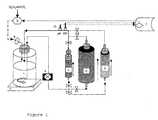
- the system shown in Figure 1consists basically of one or several cell adherent material containing tubes linked by a peristaltic pump (3) to a culture medium-containing vessel (1), preferably provided with a stirrer (2).
- the mediumis pushed through the tubes and can in this way provide for a suitable cell growth environment.
- Adherent cellsare first cultured on a scaffold to proliferate the cells to a certain required amount of cells. For cell culture expansion a large surface area in a small volume is important. This first stage is preferably carried out in a first stage cell culture cartridge (4).
- the proliferationwill take place (5) and subsequently in a last cartridge (6) tissue engineering of a scaffold will be done, it is however also possible to combine proliferation and tissue engineering in one cartridge.
- the culture expansion phasecan be performed in normal tissue culture flasks, e.g. in case no suitable scaffold might be available for a specific cell type.
- the cartridgesare preferably linked by silicone tubing, which can be closed by a valve (11), to ensure a closed sterile system.
- the cellsAfter first stage proliferation in a relative small cartridge (4) the cells are at one point (determination maybe by measuring O 2 uptake) trypsinized and pumped into a larger cartridge (5), were the cells can again be proliferated in a larger volume.
- the pH of the mediumcan be detected by pH sensors (10), which can also be monitored and regulated by addition of CO 2 by automated gas valves (8).
- the gasesare preferably introduced into the vessel (1) via a sterile gas filter inlet (9).
- Cell growthcan be followed based on the OUR (Oxygen Uptake Rate), which can be calculated from the control output of a DO-controller (Dissolved Oxygen).
- the oxygen concentrationis preferably kept at a constant level with the gasses (8) controlled by the controlling unit (7). This is important when cells start to proliferate and the cell density is increasing.
- the cellscan again be trypsinized in the cartridge and then be pumped into the last cartridge, in which a material is placed which, together with the cells, will eventually produce the end product.
- a closed cell culture systemcan provide for a solution regarding sterility, easy handling and standardized cell culture.
- the aimis to culture cells on a scaffold placed in a tube, through which cell culture medium is circulating.
- the device shown in Figure 1provides for the possibility to culture a large amount of cells on a material, with a high surface area, in a relatively small volume.
- the ideais to culture cells on increasing surfaces in small volumes in sequence; in order to culture expand cells. After culture expansion the cells can easily be harvested from the tubes to be brought into a tube containing a scaffold for tissue engineering.
- EXAMPLECulturing Human Bone Marrow Cells on hydroxyapatite in a closed circulation system.
- Porous CaP or hydroxyapatite particles of size 2 by 3.5 mmare used as a bone filler for culturing the released HBMC's on.
- harvested HBMC'sare seeded in a density of 100.000-200.000 cells/particle into the particles-containing cartridge and are let to attach.
- Approximately 25-50 E 6 cellsare needed to seed an amount of 10 cc of porous particles (40 cc corresponds to about 1600 particles having a diameter of 3.35 mm), indicating the difficulty of culturing cells on large amounts (40 cc) of porous particles.
- the cartridgeis then again aseptically linked to a medium stock vessel and a peristaltic pump.
- the cellsare cultured during one week using ⁇ -MEM containing 10%FBS, 0.2mM AsAP, 10 nM Dexamethason (Dex) and 10mM beta glycerophosphate ( ⁇ GP) before implantation to ensure extracellular matrix formation.
- the cartridgeensures sterile transportation to the clinic and facilitates easy handling of a large amount of tissue engineered bone filler.
- Human Bone Marrow Cells obtained from a biopsy of a iliac crest of a 17-year-old female patientwere seeded into tissue culture flasks at a density of 5E5 cells/cm 2 in ⁇ -MEM containing 10% FBS, 0.2 mM ASAP and 100U/ml penicillin and 100 ⁇ g/ml streptomycin (pen/strep) and 1% (50U/ml) heparin (added in primary cultures only). Before seeding the cells on hydroxyapatite they were cultured on normal tissue culture plastic in culture medium consisting of ⁇ -MEM containing 15% FBS, 0.2 mM ASAP and pen/strep, until 80% confluency.
- the cellswere detached by washing the cells with warm PBS ( ⁇ 37°C) and incubation for 15 min. with 0.25% Trypsin-EDTA The cells were then thoroughly resuspended and counted and reseeded in tissue culture flasks at a density of 5000 cells/cm 2 . In this way, cells were cultured until an amount of 100 E 6 cells of the third passage was obtained to seed on 20 cc of porous hydroxyapatite. After trypsinisation, before seeding, the cells were centrifuged at 300 g for 10 min at 4°C. Subsequently the supernatant was discarded and the cells were resuspended in 5 ml of culture medium.
- the cell suspensionwas then seeded into the cartridge containing 20 cc of porous hydroxyapatite and then totally filled with culture medium. After 4-6 hours of cell attachment the cartridge is connected to a stock vessel containing 300 ml of ⁇ -MEM containing 10% FBS, 0.2 mM ASAP, 10 nM Dexamethason (Dex) and 10mM beta glycerophosphate ( ⁇ GP) and pen/strep by silicone tubing. The medium is then recycled through the cartridge by a peristaltic tubing pump at low flow rate. The cells are then cultured in this system for 7 days, while continuously pumping.
- tissue-engineered hydroxyapatiteis fixated in 0.14 M cacodylate buffer/3.5% glutaraldehyde for at least 15 min., subsequently the samples were stained by methylene blue staining to check morphology. A few samples were also fixated in para formaldehyde for standard immunological staining. Control samples were cultured statically in a bacteriological graded plate, by placing a droplet of cell suspension containing 2E5 cells directly on a hydroxyapatite sample. After incubation for four hours 2 ml of culture medium was supplied to the particles, which was refreshed 3 times during 7 days of culturing.
- Human bone marrow cells of the third passage cultured for 7 days, in a perfusion systemwere also stained by a collagen type I immunological staining with peroxidase are shown in Figure 3. Positive staining indicating the presence of collagen type I is revealed by a red-brown coloration due to peroxidase activity. The distribution of collagen type I positive cells and structures showed that a considerable amount of collagen was formed after 7 days of tissue-engineering, indicating extracellular matrix formation.
Landscapes
- Health & Medical Sciences (AREA)
- Life Sciences & Earth Sciences (AREA)
- Engineering & Computer Science (AREA)
- Biomedical Technology (AREA)
- Chemical & Material Sciences (AREA)
- Wood Science & Technology (AREA)
- Organic Chemistry (AREA)
- Developmental Biology & Embryology (AREA)
- Biotechnology (AREA)
- Zoology (AREA)
- Bioinformatics & Cheminformatics (AREA)
- Genetics & Genomics (AREA)
- Cell Biology (AREA)
- Microbiology (AREA)
- Rheumatology (AREA)
- Hematology (AREA)
- Biochemistry (AREA)
- General Engineering & Computer Science (AREA)
- General Health & Medical Sciences (AREA)
- Immunology (AREA)
- Materials For Medical Uses (AREA)
- Micro-Organisms Or Cultivation Processes Thereof (AREA)
- Apparatus Associated With Microorganisms And Enzymes (AREA)
Abstract
Description
- The invention relates to the field of tissueengineering. More specifically, the invention relates to aprocess for thein vitro culturing of cells to produce tissueof a predetermined type.
- Over the past two decades, extensive research effortshave been committed to the field of tissue engineering.Numerous problems in the field of substitution medicinetriggered these efforts. Implants of various types, be itbone implants or organ transplants, that are used in currentmedical practice suffer from the great disadvantage that theyare of materials foreign to the receiving patient's body.
- For instance, hip prosthesis are often manufacturedof metals. In order to reduce rejection reactions in thepatient and to enhance attachment of the patient's cells,several complicated precautions are needed. One such, widelytaken precaution is the provision of a calcium phosphatecoating on the metal implant. Upon transplantation of organsobtained from a donor, such as kidneys or livers, extremecare must be taken to avoid rejection of the transplant dueto strong reactions of the immune system of the receivingpatient. Even though donors are found through a very thoroughselection process, strong immune suppressants are alwaysnecessary.
- Tissue engineering provides a more elegant approachto substitution medicine. Principally, it makes use of cellsof the patient himself. These cells are taken from thepatient's body in a biopsy, after which they are culturedinvitro to produce the tissue that the patient requires. Forinstance, a bone marrow biopsy might be taken from a patientin need of a hip prosthesis. The bone marrow cells might thenbe seeded onto a suitable scaffold. This is often a threedimensional structure of a biocompatible, biodegradablematerial. After seeding, the bone marrow cells are allowed togrow and proliferate. Depending on the circumstances, theymay also be allowed to differentiate to provide cells of a certain predetermined type. Once the objective tissue hasdeveloped to a sufficient extent, the prosthesis may beimplanted. The scaffold provides much of the coherency andmechanical strength of the prosthesis in the first stagesafter implantation. Eventually, the scaffold may degradeinvivo and be replaced by new bone tissue. As this approachinvolves the use of autologous cells only, problems due toimmune responses are avoided entirely.
- When producing medical implants by way of tissueengineering, it is of great importance to maintain sterileconditions. It will not need an elaborated discussion toillustrate the disadvantages and the dangers of microbialinfections of thein vitro produced autologous tissue beforeimplantation. Complete avoidance of microbial infections is,however, difficult to attain.
- Possibly partly due to the fact that the field oftissue engineering is still relatively young, no practicalsolution to this problem has yet been proposed in the art.
- The present invention seeks to provide a practicaland feasible approach to tissue engineering which obviates atleast partially most, if not all, of the problems ofmaintaining sterile conditions throughout the tissueengineering process. The objective approach shouldfurthermore enable a suitable upscaling of the process toallow for an efficient and economical scheme for carrying outthe production of several tissue samples, optionally ofdifferent types, for different patients in a parallel manner.
- In accordance with the invention, there is provided aprocess forin vitro producing tissue, wherein cells arecultured in a vessel provided with an inlet and an outlet forculture medium, which vessel is perfused with culture medium.
- A process according to the invention provides manyconvenient ways of manipulating the tissue production withoutaffecting the sterile conditions within the vessel. In thecontext of the invention, when something is kept under'sterile conditions' is intended to indicate that it is substantially prevented from exposure to microorganisms, suchas viruses, bacteria and fungi. Furthermore, it has beenfound that the dynamic conditions that arise from theperfusion of the culture medium lead to a more homogeneousdistribution and growth of the cells over the scaffold.
- Moreover, the perfusion of the culture medium resultsin optimal culturing conditions in the vessel. In addition,the invention allows for the possibility of obtaining largecell amounts in a small volume with a large surface. Further,the addition of certain additives to the culture medium canbe manipulated quickly and efficiently, because of thecontinuous medium flow around the cells. Moreover, many ofthe relevant parameters of the tissue engineering process,such as pH, oxygen level, the growth of the cells and thelike, can be monitored in an optimal manner. The vessel thatis used for the culturing can advantageously be used as atransport container, enabling transport of the engineeredproduct substantially without affecting sterility.
- For culturing of patient derived cells on scaffolds,the use of separate small bioreactors is preferred. It isfurther preferred that for each patient a separate bioreactoris used. In this way it is possible to avoid crosscontamination between patients. It is also possible that morethan one scaffold, intended for the same patient, are presentin one bioreactor. Instead of culturing cells on separatescaffolds, culturing on a large bulk of scaffold at the sametime means a reduction of the amount of procedures one needsto perform per patient. It is also advantageous thatculturing for different patients may be performed undersubstantially the same conditions to allow a standardizedprocess regarding quality. In a bioreactor, various crucialcell culture parameters can be registered, monitored andcontrolled. Adjustment of these parameters allows forcreating a perfect cell growth environment.
- It is preferred to use a bioreactor that can beclosed easily before transportation to the hospital and is configured to hold a large bulk of cell culture scaffold, onwhich cells can easily be cultured. In this way thebioreactor does not have to be opened before transportation.Also, the sample does not have to be put into another tube,thus preventing the product from getting infected. Therefore,a bioreactor of which, all tubes can be cut off easilywithout causing leakage of medium is preferred.
- The tissue that is produced according to theinvention may in principle be of any type. Preferably, thetissue will be human and may be one of bone, cartilage,tendon, ligament, muscle, skin, gland or organ tissue.Generally, the cells that are cultured to produce theobjective tissue will have been obtained from a biopsy from apatient for which the tissue is intended. These cells may beof any type that is capable of proliferating anddifferentiating to produce the objective tissue. Typicalexamples of cell types that may be employed includefibroblasts, chondrocytes, keratinocytes, muscle cells(myocytes), satellite cells, (bone) marrow cells, mesenchymalstem cells, mesenchymal stem cells, melanocytes, mesothelialcells, bone forming cells, hepatocytes, intestinal cells,kidney cells, fat tissue forming cells, hair follicle formingcells, blood vessel cells, nerve cells, and schwann cells.
- The cells may be brought in the vessel directly aftertaking the biopsy. Alternatively, the cells may be culturedon normal tissue culture plastic prior to introduction intothe vessel, in order to obtain a sufficient amount of cells.
- Preferably, they are seeded onto a scaffold that isalready present in the vessel. The scaffold may be ofmetallic, ceramic or polymeric material, or of a combinationof two or more of said materials. For instance, a polymericscaffold provided with a ceramic coating may be utilized.Preferably, the scaffold is of biodegradable andbiocompatible material. In the context of the presentapplication, the term biocompatible is intended to refer tomaterials which may be incorporated into a human or animal body substantially without unacceptable responses of thehuman or animal. The term biodegradable refers to materialswhich, after a certain period of time, are broken down in abiological environment. In certain preferred embodiments, therate of breakdown is chosen similar or close to the rate atwhich the body generates autogenous tissue to replace theimplant of which the biodegradable material is manufactured.
- The scaffold preferably provides the desired shape ofa medical implant. For skin tissue it may for example havethe form of a sheet. For other applications, its structurewill be more complicated and three dimensional. Furthermore,the scaffold may, depending on the objective tissue and theconditions under which the tissue is produced, be porous,dense, fibrous or a combination thereof.
- In order to culture the cells and to convert theminto the desired tissue, use is made of a culture medium. Itis an important aspect of the invention that the culturemedium is refreshed constantly during the culturing process.Accordingly, its composition may be adjusted to thetransitory phases of the tissue producing process.Preferably, the culture medium is oxygenated prior to entryof the vessel to allow for optimum conditions for theculturing process.
- The composition of the culture medium will be chosendependent on the nature of the cells that are being cultured,the nature of the objective tissue and the transitory phaseof the tissue producing process. The choice for the exactcomposition can be optimized by the skilled person, based onhis general knowledge of tissue engineering technology.Examples of suitable culture media, which may be used as suchor adjusted to the circumstances, are Dulbecco's ModifiedEagle Medium (DMEM), alpha Minimal Essential Medium (α-MEM),HAM-F12 (originally developed by Ham for CHO cells), McCoy'smedium (formulated by McCoy in 1959) and RPMI (developed byMoore et al. at the Roswell Park Emorial Institute).
- As said before, the culture medium is refreshedconstantly during the culturing process. The rate (flow) ofthe perfusion can conveniently be adapted to the otherparameters of the process by the skilled person, based on hisnormal knowledge of the art. The culture medium that has leftthe vessel may either be adjusted in composition and be reused,or it may be discarded, necessitating the constantavailability of fresh culture medium.
- The present process will now be further illustratewith reference to the attached Figure 1. It will be clearthat the invention is not restricted to the choices depictedin said figure, but that many variations and alterations arepossible without leaving the scope of the invention.
- The system shown in Figure 1 consists basically ofone or several cell adherent material containing tubes linkedby a peristaltic pump (3) to a culture medium-containingvessel (1), preferably provided with a stirrer (2). Themedium is pushed through the tubes and can in this wayprovide for a suitable cell growth environment.
- Adherent cells are first cultured on a scaffold toproliferate the cells to a certain required amount of cells.For cell culture expansion a large surface area in a smallvolume is important. This first stage is preferably carriedout in a first stage cell culture cartridge (4).
- In sequential cartridges the proliferation will takeplace (5) and subsequently in a last cartridge (6) tissueengineering of a scaffold will be done, it is however alsopossible to combine proliferation and tissue engineering inone cartridge. Optionally, the culture expansion phase can beperformed in normal tissue culture flasks, e.g. in case nosuitable scaffold might be available for a specific celltype.
- The cartridges are preferably linked by siliconetubing, which can be closed by a valve (11), to ensure aclosed sterile system.
- After first stage proliferation in a relative smallcartridge (4) the cells are at one point (determination maybeby measuring O2 uptake) trypsinized and pumped into a largercartridge (5), were the cells can again be proliferated in alarger volume.
- The pH of the medium can be detected by pH sensors(10), which can also be monitored and regulated by additionof CO2 by automated gas valves (8). In order to ensure themaintaining of sterile conditions, the gases are preferablyintroduced into the vessel (1) via a sterile gas filter inlet(9).
- Cell growth can be followed based on the OUR (OxygenUptake Rate), which can be calculated from the control outputof a DO-controller (Dissolved Oxygen). The oxygenconcentration is preferably kept at a constant level with thegasses (8) controlled by the controlling unit (7). This isimportant when cells start to proliferate and the celldensity is increasing.
- After proliferation the cells can again betrypsinized in the cartridge and then be pumped into the lastcartridge, in which a material is placed which, together withthe cells, will eventually produce the end product.
- Several important cell-culture parameters like oxygenuptake, pH, temperature, etc., can be monitored and regulatedby a series of sensors (10) and a biocontroller unit (7)during the culture period.
- A closed cell culture system can provide for asolution regarding sterility, easy handling and standardizedcell culture. The aim is to culture cells on a scaffoldplaced in a tube, through which cell culture medium iscirculating. The device shown in Figure 1 provides for thepossibility to culture a large amount of cells on a material,with a high surface area, in a relatively small volume. Theidea is to culture cells on increasing surfaces in smallvolumes in sequence; in order to culture expand cells. Afterculture expansion the cells can easily be harvested from the tubes to be brought into a tube containing a scaffold fortissue engineering.
- The invention will now be further elucidated by thefollowing, non-restrictive example.
- Porous CaP or hydroxyapatite particles of
size 2 by3.5 mm are used as a bone filler for culturing the releasedHBMC's on. In short harvested HBMC's are seeded in a densityof 100.000-200.000 cells/particle into the particles-containingcartridge and are let to attach. Approximately25-50E 6 cells are needed to seed an amount of 10 cc ofporous particles (40 cc corresponds to about 1600 particleshaving a diameter of 3.35 mm), indicating the difficulty ofculturing cells on large amounts (40 cc) of porous particles.The cartridge is then again aseptically linked to a mediumstock vessel and a peristaltic pump. The cells are culturedduring one week using α-MEM containing 10%FBS, 0.2mM AsAP,10 nM Dexamethason (Dex) and 10mM beta glycerophosphate (βGP)before implantation to ensure extracellular matrix formation.The cartridge ensures sterile transportation to the clinicand facilitates easy handling of a large amount of tissueengineered bone filler. - Human Bone Marrow Cells obtained from a biopsy of ailiac crest of a 17-year-old female patient were seeded intotissue culture flasks at a density of 5E5 cells/cm2 in α-MEMcontaining 10% FBS, 0.2 mM ASAP and 100U/ml penicillin and100 µg/ml streptomycin (pen/strep) and 1% (50U/ml) heparin(added in primary cultures only). Before seeding the cells onhydroxyapatite they were cultured on normal tissue cultureplastic in culture medium consisting of α-MEM containing 15%FBS, 0.2 mM ASAP and pen/strep, until 80% confluency. Thecells were detached by washing the cells with warm PBS (±37°C) and incubation for 15 min. with 0.25% Trypsin-EDTA Thecells were then thoroughly resuspended and counted andreseeded in tissue culture flasks at a density of 5000cells/cm2. In this way, cells were cultured until an amount of 100
E 6 cells of the third passage was obtained to seed on20 cc of porous hydroxyapatite. After trypsinisation, beforeseeding, the cells were centrifuged at 300 g for 10 min at4°C. Subsequently the supernatant was discarded and the cellswere resuspended in 5 ml of culture medium. The cellsuspension was then seeded into the cartridge containing20 cc of porous hydroxyapatite and then totally filled withculture medium. After 4-6 hours of cell attachment thecartridge is connected to a stock vessel containing 300 ml ofα-MEM containing 10% FBS, 0.2 mM ASAP, 10 nM Dexamethason(Dex) and 10mM beta glycerophosphate (βGP) and pen/strep bysilicone tubing. The medium is then recycled through thecartridge by a peristaltic tubing pump at low flow rate. Thecells are then cultured in this system for 7 days, whilecontinuously pumping. After 7 days the tissue-engineeredhydroxyapatite is fixated in 0.14 M cacodylate buffer/3.5%glutaraldehyde for at least 15 min., subsequently the sampleswere stained by methylene blue staining to check morphology.A few samples were also fixated in para formaldehyde forstandard immunological staining. Control samples werecultured statically in a bacteriological graded plate, byplacing a droplet of cell suspension containing 2E5 cellsdirectly on a hydroxyapatite sample. After incubation forfourhours 2 ml of culture medium was supplied to theparticles, which was refreshed 3 times during 7 days ofculturing. - Human bone marrow cells of the third passage culturedfor 7 days in a perfusion system (pictures taken bystereomicroscopy). The pictures are shown in Figures 2A, 2Band 2C.
- Observation by stereomicroscopy revealed a uniformcell layer (dark blue coloration) around the poroushydroxyapatite (white coloration), which could be observedthroughout the scaffold-containing cartridge. A more detailed close up of the porous samples revealed that cells also growinto the pores of the scaffold material. Single controlsamples (particles) seeded statically with 2E5 cells andcultured individually in a bacteriological graded plateshowed a less homogeneous appearance, indicating that therewas a difference regarding tissue engineering observed after7 days.
- Human bone marrow cells of the third passage culturedfor 7 days, in a perfusion system were also stained by acollagen type I immunological staining with peroxidase areshown in Figure 3. Positive staining indicating the presenceof collagen type I is revealed by a red-brown coloration dueto peroxidase activity. The distribution of collagen type Ipositive cells and structures showed that a considerableamount of collagen was formed after 7 days of tissue-engineering,indicating extracellular matrix formation.
- The above results indicate that culturing cells onlarge amounts of bone filler particles according to themethod described above is feasible in this manner.
Claims (11)
- A process forin vitro producing tissue, whereincells are cultured in a vessel provided with an inlet and anoutlet for culture medium, which vessel is perfused withculture medium.
- A process according to claim 1, wherein the culturemedium is oxygenated prior to entering the vessel.
- A process according to claim 1 or 2, wherein theculture medium is varied in composition to induceproliferation or differentiation of the cells.
- A process according to any of the preceding claims,wherein the vessel is provided with control means forcontrolling the flow and composition of the culture mediumand the conditions in the vessel.
- A process according to any of the preceding claims,wherein the culture medium is recycled.
- A process according to any of the preceding claims,wherein the tissue is human tissue.
- A process according to claim 6, wherein the tissue isbone, cartilage, tendon, ligament, muscle, skin, gland ororgan tissue.
- A process according to any of the preceding claims,wherein the cells are cultured on a scaffold.
- A process according to claim 8, wherein the scaffoldis of metallic, ceramic or polymeric material, or of acombination of two or more of said materials.
- A process according to any of the preceding claims,wherein the tissue is transported to a site of surgery insaid vessel.
- A process according to any of the preceding claims,wherein the cells and the tissue are kept under sterileconditions.
Priority Applications (1)
| Application Number | Priority Date | Filing Date | Title |
|---|---|---|---|
| EP00202190AEP1167517A1 (en) | 2000-06-22 | 2000-06-22 | Tissue engineering |
Applications Claiming Priority (1)
| Application Number | Priority Date | Filing Date | Title |
|---|---|---|---|
| EP00202190AEP1167517A1 (en) | 2000-06-22 | 2000-06-22 | Tissue engineering |
Publications (1)
| Publication Number | Publication Date |
|---|---|
| EP1167517A1true EP1167517A1 (en) | 2002-01-02 |
Family
ID=8171681
Family Applications (1)
| Application Number | Title | Priority Date | Filing Date |
|---|---|---|---|
| EP00202190AWithdrawnEP1167517A1 (en) | 2000-06-22 | 2000-06-22 | Tissue engineering |
Country Status (1)
| Country | Link |
|---|---|
| EP (1) | EP1167517A1 (en) |
Cited By (17)
| Publication number | Priority date | Publication date | Assignee | Title |
|---|---|---|---|---|
| EP1443114A4 (en)* | 2002-06-17 | 2004-11-17 | Olympus Corp | Method of cell culture |
| US6852330B2 (en) | 2000-12-21 | 2005-02-08 | Depuy Mitek, Inc. | Reinforced foam implants with enhanced integrity for soft tissue repair and regeneration |
| US6884428B2 (en) | 2000-12-21 | 2005-04-26 | Depuy Mitek, Inc. | Use of reinforced foam implants with enhanced integrity for soft tissue repair and regeneration |
| US7316822B2 (en) | 2003-11-26 | 2008-01-08 | Ethicon, Inc. | Conformable tissue repair implant capable of injection delivery |
| US7824701B2 (en) | 2002-10-18 | 2010-11-02 | Ethicon, Inc. | Biocompatible scaffold for ligament or tendon repair |
| US7901461B2 (en) | 2003-12-05 | 2011-03-08 | Ethicon, Inc. | Viable tissue repair implants and methods of use |
| CN101402917B (en)* | 2008-11-25 | 2011-07-06 | 中国人民解放军第三军医大学第三附属医院 | Bioreactor for producing tissue engineering products |
| US8016867B2 (en) | 1999-07-23 | 2011-09-13 | Depuy Mitek, Inc. | Graft fixation device and method |
| US8137686B2 (en) | 2004-04-20 | 2012-03-20 | Depuy Mitek, Inc. | Nonwoven tissue scaffold |
| US8221780B2 (en) | 2004-04-20 | 2012-07-17 | Depuy Mitek, Inc. | Nonwoven tissue scaffold |
| US8226715B2 (en) | 2003-06-30 | 2012-07-24 | Depuy Mitek, Inc. | Scaffold for connective tissue repair |
| US8449561B2 (en) | 1999-07-23 | 2013-05-28 | Depuy Mitek, Llc | Graft fixation device combination |
| US8657881B2 (en) | 2004-04-20 | 2014-02-25 | Depuy Mitek, Llc | Meniscal repair scaffold |
| US8895045B2 (en) | 2003-03-07 | 2014-11-25 | Depuy Mitek, Llc | Method of preparation of bioabsorbable porous reinforced tissue implants and implants thereof |
| US9511171B2 (en) | 2002-10-18 | 2016-12-06 | Depuy Mitek, Llc | Biocompatible scaffolds with tissue fragments |
| US10583220B2 (en) | 2003-08-11 | 2020-03-10 | DePuy Synthes Products, Inc. | Method and apparatus for resurfacing an articular surface |
| US11395865B2 (en) | 2004-02-09 | 2022-07-26 | DePuy Synthes Products, Inc. | Scaffolds with viable tissue |
Citations (3)
| Publication number | Priority date | Publication date | Assignee | Title |
|---|---|---|---|---|
| US3883393A (en)* | 1972-05-18 | 1975-05-13 | Us Health Education & Welfare | Cell culture on semi-permeable tubular membranes |
| WO1992011355A1 (en)* | 1990-12-17 | 1992-07-09 | Regents Of The University Of Michigan | Method for culturing and transforming human stem cell-containing compositions |
| WO1999033951A1 (en)* | 1997-12-31 | 1999-07-08 | Advanced Tissue Sciences, Inc. | Apparatus and method for simulating in vivo conditions while seeding and culturing three-dimensional tissue constructs |
- 2000
- 2000-06-22EPEP00202190Apatent/EP1167517A1/ennot_activeWithdrawn
Patent Citations (3)
| Publication number | Priority date | Publication date | Assignee | Title |
|---|---|---|---|---|
| US3883393A (en)* | 1972-05-18 | 1975-05-13 | Us Health Education & Welfare | Cell culture on semi-permeable tubular membranes |
| WO1992011355A1 (en)* | 1990-12-17 | 1992-07-09 | Regents Of The University Of Michigan | Method for culturing and transforming human stem cell-containing compositions |
| WO1999033951A1 (en)* | 1997-12-31 | 1999-07-08 | Advanced Tissue Sciences, Inc. | Apparatus and method for simulating in vivo conditions while seeding and culturing three-dimensional tissue constructs |
Non-Patent Citations (1)
| Title |
|---|
| MARTIN I: "PRODUCING PREFABRICATED TISSUES AND ORGANS VIA TISSUE ENGINEERING", IEEE ENGINEERING IN MEDICINE AND BIOLOGY MAGAZINE,US,IEEE INC. NEW YORK, vol. 16, no. 2, 1 March 1997 (1997-03-01), pages 73 - 80, XP000699151, ISSN: 0739-5175* |
Cited By (25)
| Publication number | Priority date | Publication date | Assignee | Title |
|---|---|---|---|---|
| US8016867B2 (en) | 1999-07-23 | 2011-09-13 | Depuy Mitek, Inc. | Graft fixation device and method |
| US8449561B2 (en) | 1999-07-23 | 2013-05-28 | Depuy Mitek, Llc | Graft fixation device combination |
| US6852330B2 (en) | 2000-12-21 | 2005-02-08 | Depuy Mitek, Inc. | Reinforced foam implants with enhanced integrity for soft tissue repair and regeneration |
| US6884428B2 (en) | 2000-12-21 | 2005-04-26 | Depuy Mitek, Inc. | Use of reinforced foam implants with enhanced integrity for soft tissue repair and regeneration |
| US8691259B2 (en) | 2000-12-21 | 2014-04-08 | Depuy Mitek, Llc | Reinforced foam implants with enhanced integrity for soft tissue repair and regeneration |
| EP1443114A4 (en)* | 2002-06-17 | 2004-11-17 | Olympus Corp | Method of cell culture |
| US10603408B2 (en) | 2002-10-18 | 2020-03-31 | DePuy Synthes Products, Inc. | Biocompatible scaffolds with tissue fragments |
| US7824701B2 (en) | 2002-10-18 | 2010-11-02 | Ethicon, Inc. | Biocompatible scaffold for ligament or tendon repair |
| US9511171B2 (en) | 2002-10-18 | 2016-12-06 | Depuy Mitek, Llc | Biocompatible scaffolds with tissue fragments |
| US8637066B2 (en) | 2002-10-18 | 2014-01-28 | Depuy Mitek, Llc | Biocompatible scaffold for ligament or tendon repair |
| US8895045B2 (en) | 2003-03-07 | 2014-11-25 | Depuy Mitek, Llc | Method of preparation of bioabsorbable porous reinforced tissue implants and implants thereof |
| US8226715B2 (en) | 2003-06-30 | 2012-07-24 | Depuy Mitek, Inc. | Scaffold for connective tissue repair |
| US9211362B2 (en) | 2003-06-30 | 2015-12-15 | Depuy Mitek, Llc | Scaffold for connective tissue repair |
| US10583220B2 (en) | 2003-08-11 | 2020-03-10 | DePuy Synthes Products, Inc. | Method and apparatus for resurfacing an articular surface |
| US7875296B2 (en) | 2003-11-26 | 2011-01-25 | Depuy Mitek, Inc. | Conformable tissue repair implant capable of injection delivery |
| US8137702B2 (en) | 2003-11-26 | 2012-03-20 | Depuy Mitek, Inc. | Conformable tissue repair implant capable of injection delivery |
| US8496970B2 (en) | 2003-11-26 | 2013-07-30 | Depuy Mitek, Llc | Conformable tissue repair implant capable of injection delivery |
| US7316822B2 (en) | 2003-11-26 | 2008-01-08 | Ethicon, Inc. | Conformable tissue repair implant capable of injection delivery |
| US8641775B2 (en) | 2003-12-05 | 2014-02-04 | Depuy Mitek, Llc | Viable tissue repair implants and methods of use |
| US7901461B2 (en) | 2003-12-05 | 2011-03-08 | Ethicon, Inc. | Viable tissue repair implants and methods of use |
| US11395865B2 (en) | 2004-02-09 | 2022-07-26 | DePuy Synthes Products, Inc. | Scaffolds with viable tissue |
| US8657881B2 (en) | 2004-04-20 | 2014-02-25 | Depuy Mitek, Llc | Meniscal repair scaffold |
| US8221780B2 (en) | 2004-04-20 | 2012-07-17 | Depuy Mitek, Inc. | Nonwoven tissue scaffold |
| US8137686B2 (en) | 2004-04-20 | 2012-03-20 | Depuy Mitek, Inc. | Nonwoven tissue scaffold |
| CN101402917B (en)* | 2008-11-25 | 2011-07-06 | 中国人民解放军第三军医大学第三附属医院 | Bioreactor for producing tissue engineering products |
Similar Documents
| Publication | Publication Date | Title |
|---|---|---|
| US11365395B2 (en) | In vitro growth of tissues suitable to the formation of bone and bone forming tissue formed thereby | |
| EP1167517A1 (en) | Tissue engineering | |
| US8507263B2 (en) | Rotating bioreactor | |
| Yoshikawa et al. | Human marrow cells‐derived cultured bone in porous ceramics | |
| Chu et al. | Mesenchymal stem cells and porous β-tricalcium phosphate composites prepared through stem cell screen-enrich-combine (− biomaterials) circulating system for the repair of critical size bone defects in goat tibia | |
| JP2001502561A (en) | Preparation method of composite bone graft | |
| Roh et al. | Construction of an autologous tissue-engineered venous conduit from bone marrow–derived vascular cells: optimization of cell harvest and seeding techniques | |
| US9265862B2 (en) | Three-dimensional bone implant and method for producing same | |
| Alfonso et al. | Glycosaminoglycan entrapment by fibrin in engineered heart valve tissues | |
| US8367059B2 (en) | Materials and methods for cryopreserved bone constructs | |
| RU2240135C1 (en) | Cell culture comprising precursor cells of osteogenesis, implant based on thereof and its applying for recovery bone integrity | |
| Herrera et al. | Osteogenic differentiation of adipose-derived canine mesenchymal stem cells seeded in porous calcium-phosphate scaffolds | |
| EP0049341B1 (en) | Process for conditioning alloplastic implantations and transplantations | |
| CN103874763A (en) | Preparation of parental cell bank from foetal tissue | |
| US20180256643A1 (en) | Method of ex vivo cellular growth | |
| Wang et al. | Research update on bioreactors used in tissue engineering | |
| US20100041149A1 (en) | Bioreactor and method for generating cartilage tissue constructs | |
| CN210932936U (en) | Tissue engineering bone | |
| RU2167662C1 (en) | Method and graft for restoring bone integrity | |
| RU2818176C1 (en) | Method for producing tissue-engineered periosteum from cell spheroids for repairing bone defects in patients | |
| CN100406071C (en) | Method for preparing HAP/beta-TCP structured tissue engineering bone | |
| CN101148657A (en) | Construction of Tissue Engineered Cartilage Modified by Transforming Growth Factor beta2 Gene | |
| RU2819284C2 (en) | Method of producing tissue-engineered periosteum from cell spheroids for repairing bone defects of subject | |
| Chailakhyan et al. | Transfer of bone-marrow microenvironment by clones of stromal mechanocytes | |
| US10016460B2 (en) | Method of inducing cellular growth and materials for use therewith |
Legal Events
| Date | Code | Title | Description |
|---|---|---|---|
| PUAI | Public reference made under article 153(3) epc to a published international application that has entered the european phase | Free format text:ORIGINAL CODE: 0009012 | |
| AK | Designated contracting states | Kind code of ref document:A1 Designated state(s):AT BE CH CY DE DK ES FI FR GB GR IE IT LI LU MC NL PT SE Kind code of ref document:A1 Designated state(s):DE | |
| AX | Request for extension of the european patent | Free format text:AL;LT;LV;MK;RO;SI | |
| AKX | Designation fees paid | Free format text:DE | |
| STAA | Information on the status of an ep patent application or granted ep patent | Free format text:STATUS: THE APPLICATION IS DEEMED TO BE WITHDRAWN | |
| 18D | Application deemed to be withdrawn | Effective date:20020703 |