CN88100540A - Method for recovering propane and heavy hydrocarbons from hydrocarbon gas - Google Patents
Method for recovering propane and heavy hydrocarbons from hydrocarbon gasDownload PDFInfo
- Publication number
- CN88100540A CN88100540ACN88100540.1ACN88100540ACN88100540ACN 88100540 ACN88100540 ACN 88100540ACN 88100540 ACN88100540 ACN 88100540ACN 88100540 ACN88100540 ACN 88100540A
- Authority
- CN
- China
- Prior art keywords
- vapor
- feed gas
- stream
- fractionation column
- vapor fraction
- Prior art date
- Legal status (The legal status is an assumption and is not a legal conclusion. Google has not performed a legal analysis and makes no representation as to the accuracy of the status listed.)
- Pending
Links
Images

Classifications
- F—MECHANICAL ENGINEERING; LIGHTING; HEATING; WEAPONS; BLASTING
- F25—REFRIGERATION OR COOLING; COMBINED HEATING AND REFRIGERATION SYSTEMS; HEAT PUMP SYSTEMS; MANUFACTURE OR STORAGE OF ICE; LIQUEFACTION SOLIDIFICATION OF GASES
- F25J—LIQUEFACTION, SOLIDIFICATION OR SEPARATION OF GASES OR GASEOUS OR LIQUEFIED GASEOUS MIXTURES BY PRESSURE AND COLD TREATMENT OR BY BRINGING THEM INTO THE SUPERCRITICAL STATE
- F25J3/00—Processes or apparatus for separating the constituents of gaseous or liquefied gaseous mixtures involving the use of liquefaction or solidification
- F25J3/02—Processes or apparatus for separating the constituents of gaseous or liquefied gaseous mixtures involving the use of liquefaction or solidification by rectification, i.e. by continuous interchange of heat and material between a vapour stream and a liquid stream
- F25J3/0204—Processes or apparatus for separating the constituents of gaseous or liquefied gaseous mixtures involving the use of liquefaction or solidification by rectification, i.e. by continuous interchange of heat and material between a vapour stream and a liquid stream characterised by the feed stream
- F25J3/0209—Natural gas or substitute natural gas
- C—CHEMISTRY; METALLURGY
- C07—ORGANIC CHEMISTRY
- C07C—ACYCLIC OR CARBOCYCLIC COMPOUNDS
- C07C7/00—Purification; Separation; Use of additives
- C07C7/005—Processes comprising at least two steps in series
- C—CHEMISTRY; METALLURGY
- C07—ORGANIC CHEMISTRY
- C07C—ACYCLIC OR CARBOCYCLIC COMPOUNDS
- C07C7/00—Purification; Separation; Use of additives
- C07C7/09—Purification; Separation; Use of additives by fractional condensation
- F—MECHANICAL ENGINEERING; LIGHTING; HEATING; WEAPONS; BLASTING
- F25—REFRIGERATION OR COOLING; COMBINED HEATING AND REFRIGERATION SYSTEMS; HEAT PUMP SYSTEMS; MANUFACTURE OR STORAGE OF ICE; LIQUEFACTION SOLIDIFICATION OF GASES
- F25J—LIQUEFACTION, SOLIDIFICATION OR SEPARATION OF GASES OR GASEOUS OR LIQUEFIED GASEOUS MIXTURES BY PRESSURE AND COLD TREATMENT OR BY BRINGING THEM INTO THE SUPERCRITICAL STATE
- F25J3/00—Processes or apparatus for separating the constituents of gaseous or liquefied gaseous mixtures involving the use of liquefaction or solidification
- F25J3/02—Processes or apparatus for separating the constituents of gaseous or liquefied gaseous mixtures involving the use of liquefaction or solidification by rectification, i.e. by continuous interchange of heat and material between a vapour stream and a liquid stream
- F25J3/0204—Processes or apparatus for separating the constituents of gaseous or liquefied gaseous mixtures involving the use of liquefaction or solidification by rectification, i.e. by continuous interchange of heat and material between a vapour stream and a liquid stream characterised by the feed stream
- F25J3/0219—Refinery gas, cracking gas, coke oven gas, gaseous mixtures containing aliphatic unsaturated CnHm or gaseous mixtures of undefined nature
- F—MECHANICAL ENGINEERING; LIGHTING; HEATING; WEAPONS; BLASTING
- F25—REFRIGERATION OR COOLING; COMBINED HEATING AND REFRIGERATION SYSTEMS; HEAT PUMP SYSTEMS; MANUFACTURE OR STORAGE OF ICE; LIQUEFACTION SOLIDIFICATION OF GASES
- F25J—LIQUEFACTION, SOLIDIFICATION OR SEPARATION OF GASES OR GASEOUS OR LIQUEFIED GASEOUS MIXTURES BY PRESSURE AND COLD TREATMENT OR BY BRINGING THEM INTO THE SUPERCRITICAL STATE
- F25J3/00—Processes or apparatus for separating the constituents of gaseous or liquefied gaseous mixtures involving the use of liquefaction or solidification
- F25J3/02—Processes or apparatus for separating the constituents of gaseous or liquefied gaseous mixtures involving the use of liquefaction or solidification by rectification, i.e. by continuous interchange of heat and material between a vapour stream and a liquid stream
- F25J3/0228—Processes or apparatus for separating the constituents of gaseous or liquefied gaseous mixtures involving the use of liquefaction or solidification by rectification, i.e. by continuous interchange of heat and material between a vapour stream and a liquid stream characterised by the separated product stream
- F25J3/0233—Processes or apparatus for separating the constituents of gaseous or liquefied gaseous mixtures involving the use of liquefaction or solidification by rectification, i.e. by continuous interchange of heat and material between a vapour stream and a liquid stream characterised by the separated product stream separation of CnHm with 1 carbon atom or more
- F—MECHANICAL ENGINEERING; LIGHTING; HEATING; WEAPONS; BLASTING
- F25—REFRIGERATION OR COOLING; COMBINED HEATING AND REFRIGERATION SYSTEMS; HEAT PUMP SYSTEMS; MANUFACTURE OR STORAGE OF ICE; LIQUEFACTION SOLIDIFICATION OF GASES
- F25J—LIQUEFACTION, SOLIDIFICATION OR SEPARATION OF GASES OR GASEOUS OR LIQUEFIED GASEOUS MIXTURES BY PRESSURE AND COLD TREATMENT OR BY BRINGING THEM INTO THE SUPERCRITICAL STATE
- F25J3/00—Processes or apparatus for separating the constituents of gaseous or liquefied gaseous mixtures involving the use of liquefaction or solidification
- F25J3/02—Processes or apparatus for separating the constituents of gaseous or liquefied gaseous mixtures involving the use of liquefaction or solidification by rectification, i.e. by continuous interchange of heat and material between a vapour stream and a liquid stream
- F25J3/0228—Processes or apparatus for separating the constituents of gaseous or liquefied gaseous mixtures involving the use of liquefaction or solidification by rectification, i.e. by continuous interchange of heat and material between a vapour stream and a liquid stream characterised by the separated product stream
- F25J3/0242—Processes or apparatus for separating the constituents of gaseous or liquefied gaseous mixtures involving the use of liquefaction or solidification by rectification, i.e. by continuous interchange of heat and material between a vapour stream and a liquid stream characterised by the separated product stream separation of CnHm with 3 carbon atoms or more
- F—MECHANICAL ENGINEERING; LIGHTING; HEATING; WEAPONS; BLASTING
- F25—REFRIGERATION OR COOLING; COMBINED HEATING AND REFRIGERATION SYSTEMS; HEAT PUMP SYSTEMS; MANUFACTURE OR STORAGE OF ICE; LIQUEFACTION SOLIDIFICATION OF GASES
- F25J—LIQUEFACTION, SOLIDIFICATION OR SEPARATION OF GASES OR GASEOUS OR LIQUEFIED GASEOUS MIXTURES BY PRESSURE AND COLD TREATMENT OR BY BRINGING THEM INTO THE SUPERCRITICAL STATE
- F25J2200/00—Processes or apparatus using separation by rectification
- F25J2200/02—Processes or apparatus using separation by rectification in a single pressure main column system
- F—MECHANICAL ENGINEERING; LIGHTING; HEATING; WEAPONS; BLASTING
- F25—REFRIGERATION OR COOLING; COMBINED HEATING AND REFRIGERATION SYSTEMS; HEAT PUMP SYSTEMS; MANUFACTURE OR STORAGE OF ICE; LIQUEFACTION SOLIDIFICATION OF GASES
- F25J—LIQUEFACTION, SOLIDIFICATION OR SEPARATION OF GASES OR GASEOUS OR LIQUEFIED GASEOUS MIXTURES BY PRESSURE AND COLD TREATMENT OR BY BRINGING THEM INTO THE SUPERCRITICAL STATE
- F25J2200/00—Processes or apparatus using separation by rectification
- F25J2200/70—Refluxing the column with a condensed part of the feed stream, i.e. fractionator top is stripped or self-rectified
- F—MECHANICAL ENGINEERING; LIGHTING; HEATING; WEAPONS; BLASTING
- F25—REFRIGERATION OR COOLING; COMBINED HEATING AND REFRIGERATION SYSTEMS; HEAT PUMP SYSTEMS; MANUFACTURE OR STORAGE OF ICE; LIQUEFACTION SOLIDIFICATION OF GASES
- F25J—LIQUEFACTION, SOLIDIFICATION OR SEPARATION OF GASES OR GASEOUS OR LIQUEFIED GASEOUS MIXTURES BY PRESSURE AND COLD TREATMENT OR BY BRINGING THEM INTO THE SUPERCRITICAL STATE
- F25J2205/00—Processes or apparatus using other separation and/or other processing means
- F25J2205/02—Processes or apparatus using other separation and/or other processing means using simple phase separation in a vessel or drum
- F25J2205/04—Processes or apparatus using other separation and/or other processing means using simple phase separation in a vessel or drum in the feed line, i.e. upstream of the fractionation step
- F—MECHANICAL ENGINEERING; LIGHTING; HEATING; WEAPONS; BLASTING
- F25—REFRIGERATION OR COOLING; COMBINED HEATING AND REFRIGERATION SYSTEMS; HEAT PUMP SYSTEMS; MANUFACTURE OR STORAGE OF ICE; LIQUEFACTION SOLIDIFICATION OF GASES
- F25J—LIQUEFACTION, SOLIDIFICATION OR SEPARATION OF GASES OR GASEOUS OR LIQUEFIED GASEOUS MIXTURES BY PRESSURE AND COLD TREATMENT OR BY BRINGING THEM INTO THE SUPERCRITICAL STATE
- F25J2210/00—Processes characterised by the type or other details of the feed stream
- F25J2210/12—Refinery or petrochemical off-gas
- F—MECHANICAL ENGINEERING; LIGHTING; HEATING; WEAPONS; BLASTING
- F25—REFRIGERATION OR COOLING; COMBINED HEATING AND REFRIGERATION SYSTEMS; HEAT PUMP SYSTEMS; MANUFACTURE OR STORAGE OF ICE; LIQUEFACTION SOLIDIFICATION OF GASES
- F25J—LIQUEFACTION, SOLIDIFICATION OR SEPARATION OF GASES OR GASEOUS OR LIQUEFIED GASEOUS MIXTURES BY PRESSURE AND COLD TREATMENT OR BY BRINGING THEM INTO THE SUPERCRITICAL STATE
- F25J2230/00—Processes or apparatus involving steps for increasing the pressure of gaseous process streams
- F25J2230/30—Compression of the feed stream
- F—MECHANICAL ENGINEERING; LIGHTING; HEATING; WEAPONS; BLASTING
- F25—REFRIGERATION OR COOLING; COMBINED HEATING AND REFRIGERATION SYSTEMS; HEAT PUMP SYSTEMS; MANUFACTURE OR STORAGE OF ICE; LIQUEFACTION SOLIDIFICATION OF GASES
- F25J—LIQUEFACTION, SOLIDIFICATION OR SEPARATION OF GASES OR GASEOUS OR LIQUEFIED GASEOUS MIXTURES BY PRESSURE AND COLD TREATMENT OR BY BRINGING THEM INTO THE SUPERCRITICAL STATE
- F25J2230/00—Processes or apparatus involving steps for increasing the pressure of gaseous process streams
- F25J2230/60—Processes or apparatus involving steps for increasing the pressure of gaseous process streams the fluid being hydrocarbons or a mixture of hydrocarbons
- F—MECHANICAL ENGINEERING; LIGHTING; HEATING; WEAPONS; BLASTING
- F25—REFRIGERATION OR COOLING; COMBINED HEATING AND REFRIGERATION SYSTEMS; HEAT PUMP SYSTEMS; MANUFACTURE OR STORAGE OF ICE; LIQUEFACTION SOLIDIFICATION OF GASES
- F25J—LIQUEFACTION, SOLIDIFICATION OR SEPARATION OF GASES OR GASEOUS OR LIQUEFIED GASEOUS MIXTURES BY PRESSURE AND COLD TREATMENT OR BY BRINGING THEM INTO THE SUPERCRITICAL STATE
- F25J2240/00—Processes or apparatus involving steps for expanding of process streams
- F25J2240/02—Expansion of a process fluid in a work-extracting turbine (i.e. isentropic expansion), e.g. of the feed stream
Landscapes
- Engineering & Computer Science (AREA)
- Chemical & Material Sciences (AREA)
- Organic Chemistry (AREA)
- Mechanical Engineering (AREA)
- Thermal Sciences (AREA)
- General Engineering & Computer Science (AREA)
- Physics & Mathematics (AREA)
- Oil, Petroleum & Natural Gas (AREA)
- Analytical Chemistry (AREA)
- Water Supply & Treatment (AREA)
- General Chemical & Material Sciences (AREA)
- Chemical Kinetics & Catalysis (AREA)
- Separation By Low-Temperature Treatments (AREA)
- Organic Low-Molecular-Weight Compounds And Preparation Thereof (AREA)
Abstract
Translated fromChineseDescription
This invention relates generally to processing hydrocarbon gas streams, such as natural gas or similar refinery gas or reaction gas streams, to recover therefrom a desired condensable portion, and more particularly to improving a gas cryogenic separation process to recover propane and heavy hydrocarbons from a hydrocarbon gas stream, such as natural gas or a similar refinery gas or reaction gas stream.
The recovery of these compounds from natural gas or similar refinery gases or reaction gas streams is always most economical due to market demand and price for propane and heavy hydrocarbon liquids. However, this is not the case and the demand and price fluctuations for ethane are so dramatic that it is economical to leave ethane in the combustible gas for a considerable period of time to recover only propane and heavier hydrocarbons, and also because of the location of some markets, the recovery of ethane is by no means an economic proposition. Accordingly, there is a need for a process for recovering propane and heavier hydrocarbons from a hydrocarbon gas stream while rejecting ethane and light components back to the residue or fuel gas.
U.S. patent nos. 4, 140, 504, 4, 157, 904 and 4, 278, 457 disclose several prior art cryogenic hydrocarbon separation processes. For example, in U.S. patent No. 4,157,904, a process for the cryogenic separation of a hydrocarbon gas stream to recover ethane and heavier hydrocarbons is disclosed, as described therein, with the gas to be separated being at about 900 pounds per inch gauge2Precooling at high pressure, partial condensation taking place and the condensate and vapour being separated. The first portion of the vapor is expanded to a low pressure and enters the demethanizer, and the second portion of the vapor is first cooled by heat exchange with the residue gas from the demethanizer and then enters the demethanizer either above or below the point of injection of the first portion of the expanded vapor by an expansion valve, depending on the exact temperature conditions. The cold humorous stream from the separator is further cooled and split into two streams, one stream being expanded to low pressure and forwarded to the lower section of the demethanizer, and the other stream being directed to the second stream from the previous separatorThe two portions of vapor are combined, re-cooled and expanded. Ethane recovery of 90% or more and propane recovery of 98% are described.
In most of the prior art processes described in the above patents, and particularly those designed primarily for high ethane recovery rather than ethane rejection from the processes described above, it can be seen that these prior art processes, without modification, are not suitable for the efficient recovery of propane and heavy hydrocarbons from mixed hydrocarbon gas streams while rejecting lighter hydrocarbon liquids, particularly ethane.
It is an object of the present invention to provide a cryogenic separation process for the recovery of propane and heavy hydrocarbons from a mixed hydrocarbon gas stream while rejecting light hydrocarbons, including ethane.
In the process of the invention, the feed gas is cooled to partial condensation by the residual gases, the condensate in the cooled feed gas is separated from the vapor and is expanded to a lower pressure by a valve and forwarded to the lower part of the column. The vapor is divided into two portions, the first portion of which is expanded to a low pressure by an expansion work machine and then fed to the column as an intermediate feed, the second portion of the vapor is further cooled by residual gas, so that part of the vapor is condensed, the vapor and liquid are separated from the cooled second portion of the vapor, the liquid is expanded through a valve to the intermediate portion of the low pressure feed column, and the remaining vapor is expanded to a low pressure by a second expansion work machine and forwarded to the top of the column as reflux. Partial condensation and separation of the vapor and liquid prior to the second expander produces a vapor containing a very small amount of propane, which is advantageously used as an overhead reflux feed. The power from the expansion work machine is used to compress the residue gas or feed gas to a high pressure.
The invention will be better understood from the following description of a preferred embodiment of the method according to the invention, with reference to the accompanying drawings, in which:
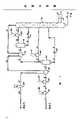
FIG. 1 is a schematic flow diagram of a process for carrying out the invention using two expansion work machines;
FIG. 2 shows the use of the present inventionOpen process, recovery efficiency and recompressor feet per million3Brake horsepower consumed per day (BHP/MMSCFD).
Referring to FIG. 1, the mixed hydrocarbon gas stream is at 485 lb/in2And 60 ° F into the flow. Feedgas stream 1 is pretreated as necessary to remove water and other compounds such as carbon dioxide or sulfur, andfeed gas stream 1 is compressed bycompressors 41 and 43 to provide a feed gas having 643 lbs/inch2A high pressurefeed gas stream 3 at a pressure and 105 DEG F,compressors 41 and 43 are connected to the shafts ofexpansion work machines expansion work machines compressors 41 and 43.
Thefractionation column 90 connected to thereboiler 91 comprises a deethanizer column. The hydrocarbon liquid collected at the bottom of thefractionation column 90 exits thecolumn 90 through thereboiler 91 as aliquid hydrocarbon product 15. The heating raises the temperature of the bottoms liquid flowing throughreboiler 91 to remove any remaining lower by evaporationA lighter boiling light hydrocarbon, including ethane, but a non-vaporizing higher boiling propane and heavy hydrocarbon formingproduct stream 15 exits the bottom of thefractionation column 90 at a temperature of 147 c and a pressure of 252 psig2。
Theresidue stream 14 from thefractionation column 90, which comprises residue gas, typically almost all of the methane produced by the separation, exits the top of thecolumn 90 at a temperature of-130F and a pressure of 249 lb/inch2. Theraffinate stream 14 is passed throughheat exchanger 26 to cool thevapor stream 8 leavingseparator 30, and throughheat exchanger 25 to cool thepressurized feed stream 3 supplied toseparator 30. During cooling ofvapor stream 8 andfeed gas stream 3,residue gas stream 14 is heated to a temperature of 100 ° F and a pressure of 239 lb/in2。
The heatedresidue gas stream 19 exitingdownstream heat exchanger 25 is passed through arecompressor 50 to provide a pressurizedresidue gas stream 20 at a pressure of 490 psig2The temperature was 231 ℃ F. Therecompressor 50 is used to increase the pressure of the residual gas stream, which constitutes the processgas feed stream 1 free of the recovered heavy hydrocarbonliquid product stream 15, back to the pressure level of the incomingfeed gas stream 1.
To calculate the propane recovery capacity of the process of the invention, a computer simulation of the cryogenic separation process was performed, in which computer simulation the thermodynamic data used were the Soave-Redlich-kwong (SRK) K value, the stewed and the entropy. The efficiency of each of theexpansion machines recompressor 50 is assumed to be 75%, and the loss of the expansion machines is assumed to be 4% of the total power. In addition, a minimum temperature of approximately 5 ° F was used in all heat exchangers to calculate heat transfer effectiveness.
In addition, thefractionation column 90 used in the computer simulation has 20 theoretical plates and the power supplied from theexpansion work machines feed gas compressors 41 and 43, rather than therecompressor 50. The residue gas stream was brought to its desired outlet pressure of 490 psig2. In the computer simulation, vapor stream 5 fromseparator 30 was separated intovapor stream 7 and a vapor streamProduct 8 to obtain optimum propane recovery, it has been determined that separation of vapor stream 5 fromseparator 30 is optimum whenvapor stream 7 contains about 40% to 60% vapor stream 5 and, in addition, the ethane content ofliquid product stream 15 is controlled to be 2 mole%.
Thefeed gas stream 1 used in the computer simulation had the following composition:
helium 0.10
Nitrogen 1.26
Carbon dioxide 0.32
Methane 90.56
Ethane 4.37
Propane 2.23
Isobutane 0.30
N-butane 0.57
Isopentane 0.12
N-pentane 0.11
Hexane 0.04
Heptane 0.02
FIG. 2 provides the performance calculations made from such computer simulations, namely propane recovery expressed as percent propane infeed gas stream 1 and recompressor brake horsepower per million standard feet3Dependence of day (BHP/MMSCFD). Consumed recompressor brake horsepower per million standard feet3Gas flow/day is the power required to measure the pressure of theresidue gas stream 20 back to the pressure of thefeed gas stream 1. Thus, a plot of propane recovery versus recompressor brake horsepower provides a measure of the economic benefit potential of the process. As shown in FIG. 2, the method of the present invention consumes as little as one million standard feet per day of power from the recompressor3A high recovery of at least 98% propane was obtained for 42 brake horsepower. The propane recovery of the process of the invention illustrated in FIG. 1 for the above-claimed conditions is that of feed gas stream 1The alkane content was 98.4%.
As shown, the compressedfeed gas stream 3 is passed in heat exchange relationship with aresidue gas stream 14 from afractionation column 90. And may enter theseparator 30 after cooling. This cooling is necessary in carrying out the process of the invention to condense part of the heavy hydrocarbons in the feed gas, as a result of which the feed gas is particularly rich in propane and heavy hydrocarbons, and it is most desirable to achieve an optimum low temperature of the compressedfeed gas stream 3 using auxiliary refrigeration in addition to cooling by the residual gas, which can be accomplished by separating the pressurizedfeed gas stream 3 into two portions, one of which is cooled by heat exchange with theresidual gas stream 14 and the other of which is cooled by auxiliary refrigeration.
The process of the present invention may also be modified to recover a portion of the ethane in the feed gas by changing the operating conditions ofreboiler 91 so that the bottoms liquid passing throughreboiler 91 is heated to a temperature less than the boiling point of ethane at the existing liquid pressure. In this way, the relatively volatile light hydrocarbons, such as methane, are removed from the liquid inreboiler 91 by evaporation to produce a product stream rich in propane and heavy hydrocarbons and also containing a portion of the ethane in the feed gas.
Those skilled in the art will recognize that the specific pressures and temperatures of the feed gas streams toseparators
Claims (5)
Translated fromChineseApplications Claiming Priority (2)
| Application Number | Priority Date | Filing Date | Title |
|---|---|---|---|
| US07/009,168US4752312A (en) | 1987-01-30 | 1987-01-30 | Hydrocarbon gas processing to recover propane and heavier hydrocarbons |
| US009,168 | 1987-01-30 |
Publications (2)
| Publication Number | Publication Date |
|---|---|
| CN88100540Atrue CN88100540A (en) | 1988-09-07 |
| CN1007244B CN1007244B (en) | 1990-03-21 |
Family
ID=21735989
Family Applications (1)
| Application Number | Title | Priority Date | Filing Date |
|---|---|---|---|
| CN88100540AExpiredCN1007244B (en) | 1987-01-30 | 1988-01-30 | From the hydrocarbon gas, reclaim the method for propane and heavy hydrocarbon |
Country Status (4)
| Country | Link |
|---|---|
| US (1) | US4752312A (en) |
| CN (1) | CN1007244B (en) |
| AU (1) | AU591447B2 (en) |
| CA (1) | CA1297913C (en) |
Cited By (8)
| Publication number | Priority date | Publication date | Assignee | Title |
|---|---|---|---|---|
| CN101479549B (en)* | 2006-06-27 | 2011-08-10 | 氟石科技公司 | Ethane Recovery Methods and Configurations |
| CN102351625A (en)* | 2011-08-19 | 2012-02-15 | 西安长庆科技工程有限责任公司 | Oil field associated gas ethane recovery system |
| CN101529188B (en)* | 2006-10-24 | 2012-06-13 | 国际壳牌研究有限公司 | Method and apparatus for treating a hydrocarbon stream |
| CN101652617B (en)* | 2007-02-12 | 2013-07-03 | 唐纳德·里欧·斯廷森 | Natural gas treatment system |
| CN104296499A (en)* | 2014-10-21 | 2015-01-21 | 杭州中泰深冷技术股份有限公司 | Double-turbine boosting expansion machine propane dehydrogenation cold box separation system and technique |
| CN105157350A (en)* | 2015-10-23 | 2015-12-16 | 重庆耐德工业股份有限公司 | Technology and system for removing heavy hydrocarbons in natural gas |
| CN111886464A (en)* | 2018-01-11 | 2020-11-03 | 1304338阿尔伯塔有限公司 | Method for recovering LPG and condensate from refinery fuel gas streams |
| CN112781320A (en)* | 2019-11-05 | 2021-05-11 | 东洋工程株式会社 | Method and apparatus for separating hydrocarbons |
Families Citing this family (20)
| Publication number | Priority date | Publication date | Assignee | Title |
|---|---|---|---|---|
| US5114451A (en)* | 1990-03-12 | 1992-05-19 | Elcor Corporation | Liquefied natural gas processing |
| US5152148A (en)* | 1991-06-14 | 1992-10-06 | Liquid Energy Corporation | Propane removal process |
| US5275005A (en)* | 1992-12-01 | 1994-01-04 | Elcor Corporation | Gas processing |
| US5596883A (en)* | 1995-10-03 | 1997-01-28 | Air Products And Chemicals, Inc. | Light component stripping in plate-fin heat exchangers |
| US6354105B1 (en) | 1999-12-03 | 2002-03-12 | Ipsi L.L.C. | Split feed compression process for high recovery of ethane and heavier components |
| US6244070B1 (en) | 1999-12-03 | 2001-06-12 | Ipsi, L.L.C. | Lean reflux process for high recovery of ethane and heavier components |
| US6266977B1 (en) | 2000-04-19 | 2001-07-31 | Air Products And Chemicals, Inc. | Nitrogen refrigerated process for the recovery of C2+ Hydrocarbons |
| JP4447639B2 (en)* | 2004-07-01 | 2010-04-07 | オートロフ・エンジニアーズ・リミテッド | Treatment of liquefied natural gas |
| NZ572587A (en)* | 2006-06-02 | 2011-11-25 | Ortloff Engineers Ltd | Method and apparatus for separating methane and heavier hydrocarbon components from liquefied natural gas |
| US9869510B2 (en)* | 2007-05-17 | 2018-01-16 | Ortloff Engineers, Ltd. | Liquefied natural gas processing |
| US20090282865A1 (en) | 2008-05-16 | 2009-11-19 | Ortloff Engineers, Ltd. | Liquefied Natural Gas and Hydrocarbon Gas Processing |
| EP2350546A1 (en)* | 2008-10-07 | 2011-08-03 | Exxonmobil Upstream Research Company | Helium recovery from natural gas integrated with ngl recovery |
| US20100287982A1 (en) | 2009-05-15 | 2010-11-18 | Ortloff Engineers, Ltd. | Liquefied Natural Gas and Hydrocarbon Gas Processing |
| US8434325B2 (en) | 2009-05-15 | 2013-05-07 | Ortloff Engineers, Ltd. | Liquefied natural gas and hydrocarbon gas processing |
| CN103055532B (en)* | 2012-12-06 | 2015-08-12 | 江苏三木集团有限公司 | Polyalcohol acrylate reclaims the device of cyclohexane in producing |
| US10533794B2 (en) | 2016-08-26 | 2020-01-14 | Ortloff Engineers, Ltd. | Hydrocarbon gas processing |
| US10551119B2 (en) | 2016-08-26 | 2020-02-04 | Ortloff Engineers, Ltd. | Hydrocarbon gas processing |
| US10551118B2 (en) | 2016-08-26 | 2020-02-04 | Ortloff Engineers, Ltd. | Hydrocarbon gas processing |
| US11428465B2 (en) | 2017-06-01 | 2022-08-30 | Uop Llc | Hydrocarbon gas processing |
| US11543180B2 (en) | 2017-06-01 | 2023-01-03 | Uop Llc | Hydrocarbon gas processing |
Family Cites Families (6)
| Publication number | Priority date | Publication date | Assignee | Title |
|---|---|---|---|---|
| GB1482196A (en)* | 1973-09-27 | 1977-08-10 | Petrocarbon Dev Ltd | Upgrading air-contaminated methane gas compositions |
| US4140504A (en)* | 1976-08-09 | 1979-02-20 | The Ortloff Corporation | Hydrocarbon gas processing |
| US4157904A (en)* | 1976-08-09 | 1979-06-12 | The Ortloff Corporation | Hydrocarbon gas processing |
| US4278457A (en)* | 1977-07-14 | 1981-07-14 | Ortloff Corporation | Hydrocarbon gas processing |
| IT1137281B (en)* | 1981-07-07 | 1986-09-03 | Snam Progetti | METHOD FOR THE RECOVERY OF CONDENSATES FROM NATURAL GAS |
| US4519824A (en)* | 1983-11-07 | 1985-05-28 | The Randall Corporation | Hydrocarbon gas separation |
- 1987
- 1987-01-30USUS07/009,168patent/US4752312A/ennot_activeExpired - Lifetime
- 1988
- 1988-01-29CACA000557654Apatent/CA1297913C/ennot_activeExpired - Fee Related
- 1988-01-29AUAU11101/88Apatent/AU591447B2/ennot_activeCeased
- 1988-01-30CNCN88100540Apatent/CN1007244B/ennot_activeExpired
Cited By (10)
| Publication number | Priority date | Publication date | Assignee | Title |
|---|---|---|---|---|
| CN101479549B (en)* | 2006-06-27 | 2011-08-10 | 氟石科技公司 | Ethane Recovery Methods and Configurations |
| CN101529188B (en)* | 2006-10-24 | 2012-06-13 | 国际壳牌研究有限公司 | Method and apparatus for treating a hydrocarbon stream |
| CN101652617B (en)* | 2007-02-12 | 2013-07-03 | 唐纳德·里欧·斯廷森 | Natural gas treatment system |
| CN102351625A (en)* | 2011-08-19 | 2012-02-15 | 西安长庆科技工程有限责任公司 | Oil field associated gas ethane recovery system |
| CN102351625B (en)* | 2011-08-19 | 2013-11-27 | 西安长庆科技工程有限责任公司 | Oil field associated gas ethane recovery system |
| CN104296499A (en)* | 2014-10-21 | 2015-01-21 | 杭州中泰深冷技术股份有限公司 | Double-turbine boosting expansion machine propane dehydrogenation cold box separation system and technique |
| CN104296499B (en)* | 2014-10-21 | 2016-03-23 | 杭州中泰深冷技术股份有限公司 | A kind of two turbine booster expansion machine dehydrogenating propane ice chest piece-rate system and technique thereof |
| CN105157350A (en)* | 2015-10-23 | 2015-12-16 | 重庆耐德工业股份有限公司 | Technology and system for removing heavy hydrocarbons in natural gas |
| CN111886464A (en)* | 2018-01-11 | 2020-11-03 | 1304338阿尔伯塔有限公司 | Method for recovering LPG and condensate from refinery fuel gas streams |
| CN112781320A (en)* | 2019-11-05 | 2021-05-11 | 东洋工程株式会社 | Method and apparatus for separating hydrocarbons |
Also Published As
| Publication number | Publication date |
|---|---|
| CN1007244B (en) | 1990-03-21 |
| AU591447B2 (en) | 1989-11-30 |
| AU1110188A (en) | 1988-08-04 |
| CA1297913C (en) | 1992-03-24 |
| US4752312A (en) | 1988-06-21 |
Similar Documents
| Publication | Publication Date | Title |
|---|---|---|
| CN88100540A (en) | Method for recovering propane and heavy hydrocarbons from hydrocarbon gas | |
| USRE33408E (en) | Process for LPG recovery | |
| US4507133A (en) | Process for LPG recovery | |
| JP4571934B2 (en) | Hydrocarbon gas treatment | |
| US5275005A (en) | Gas processing | |
| JP5793145B2 (en) | Hydrocarbon gas treatment | |
| US9534837B2 (en) | Nitrogen removal with ISO-pressure open refrigeration natural gas liquids recovery | |
| JP4634007B2 (en) | Low temperature method using high pressure absorption tower | |
| CA2562828C (en) | Hydrocarbon gas processing for rich gas streams | |
| AU2003297417B2 (en) | Lean reflux-high hydrocarbon recovery process | |
| CA2397307C (en) | Hydrocarbon gas processing | |
| US4519824A (en) | Hydrocarbon gas separation | |
| US6758060B2 (en) | Separating nitrogen from methane in the production of LNG | |
| US4203742A (en) | Process for the recovery of ethane and heavier hydrocarbon components from methane-rich gases | |
| US20060218968A1 (en) | High propane recovery process and configurations | |
| US7082787B2 (en) | Refrigeration system | |
| AU2002338248A1 (en) | Cryogenic process utilizing high pressure absorber column | |
| CA1245546A (en) | Separation of hydrocarbon mixtures | |
| NO158478B (en) | PROCEDURE FOR SEPARATING NITROGEN FROM NATURAL GAS. | |
| US20080302650A1 (en) | Process to recover low grade heat from a fractionation system | |
| JP2002005568A (en) | Method for separating raw material gas mixture |
Legal Events
| Date | Code | Title | Description |
|---|---|---|---|
| C06 | Publication | ||
| C10 | Entry into substantive examination | ||
| PB01 | Publication | ||
| SE01 | Entry into force of request for substantive examination | ||
| C13 | Decision | ||
| GR02 | Examined patent application | ||
| AD01 | Patent right deemed abandoned | ||
| C20 | Patent right or utility model deemed to be abandoned or is abandoned |