CN215799613U - Culture bottle cap - Google Patents
Culture bottle capDownload PDFInfo
- Publication number
- CN215799613U CN215799613UCN202121199640.1UCN202121199640UCN215799613UCN 215799613 UCN215799613 UCN 215799613UCN 202121199640 UCN202121199640 UCN 202121199640UCN 215799613 UCN215799613 UCN 215799613U
- Authority
- CN
- China
- Prior art keywords
- cap
- tube
- distal
- culture
- cover plate
- Prior art date
- Legal status (The legal status is an assumption and is not a legal conclusion. Google has not performed a legal analysis and makes no representation as to the accuracy of the status listed.)
- Active
Links
- 210000005087mononuclear cellAnatomy0.000claimsabstractdescription31
- 238000012258culturingMethods0.000claimsabstractdescription7
- 239000007788liquidSubstances0.000claimsdescription52
- 230000002209hydrophobic effectEffects0.000claimsdescription15
- 239000012528membraneSubstances0.000claimsdescription15
- 230000001681protective effectEffects0.000claimsdescription7
- 239000003292glueSubstances0.000claimsdescription2
- 238000003306harvestingMethods0.000description14
- 239000001963growth mediumSubstances0.000description9
- 239000012530fluidSubstances0.000description7
- 210000005259peripheral bloodAnatomy0.000description7
- 239000011886peripheral bloodSubstances0.000description7
- 210000004027cellAnatomy0.000description5
- 238000000034methodMethods0.000description5
- 230000001502supplementing effectEffects0.000description5
- 238000011109contaminationMethods0.000description4
- 210000003719b-lymphocyteAnatomy0.000description3
- 239000000356contaminantSubstances0.000description3
- 230000000670limiting effectEffects0.000description3
- 210000004698lymphocyteAnatomy0.000description3
- 210000001616monocyteAnatomy0.000description3
- 230000036961partial effectEffects0.000description3
- 210000001744T-lymphocyteAnatomy0.000description2
- 241000700605VirusesSpecies0.000description2
- 238000007792additionMethods0.000description2
- 230000001580bacterial effectEffects0.000description2
- 210000004369bloodAnatomy0.000description2
- 239000008280bloodSubstances0.000description2
- 238000004113cell cultureMethods0.000description2
- 238000002637fluid replacement therapyMethods0.000description2
- 230000004727humoral immunityEffects0.000description2
- 238000001802infusionMethods0.000description2
- 244000000010microbial pathogenSpecies0.000description2
- 244000005700microbiomeSpecies0.000description2
- 238000012986modificationMethods0.000description2
- 230000004048modificationEffects0.000description2
- 210000004180plasmocyteAnatomy0.000description2
- 230000008569processEffects0.000description2
- 238000000926separation methodMethods0.000description2
- 239000000126substanceSubstances0.000description2
- 206010027476MetastasesDiseases0.000description1
- 238000009825accumulationMethods0.000description1
- 230000009471actionEffects0.000description1
- 230000000259anti-tumor effectEffects0.000description1
- 239000000427antigenSubstances0.000description1
- 102000036639antigensHuman genes0.000description1
- 108091007433antigensProteins0.000description1
- 238000013459approachMethods0.000description1
- 230000015572biosynthetic processEffects0.000description1
- 210000002798bone marrow cellAnatomy0.000description1
- 201000011510cancerDiseases0.000description1
- 230000001413cellular effectEffects0.000description1
- 150000001875compoundsChemical class0.000description1
- 201000010099diseaseDiseases0.000description1
- 208000037265diseases, disorders, signs and symptomsDiseases0.000description1
- 230000003628erosive effectEffects0.000description1
- 238000012840feeding operationMethods0.000description1
- 230000036737immune functionEffects0.000description1
- 230000036039immunityEffects0.000description1
- 230000036512infertilityEffects0.000description1
- 238000011081inoculationMethods0.000description1
- 238000007689inspectionMethods0.000description1
- 238000002955isolationMethods0.000description1
- 238000005304joiningMethods0.000description1
- 210000000265leukocyteAnatomy0.000description1
- 238000004519manufacturing processMethods0.000description1
- 239000002609mediumSubstances0.000description1
- 230000009401metastasisEffects0.000description1
- 230000000877morphologic effectEffects0.000description1
- 210000003819peripheral blood mononuclear cellAnatomy0.000description1
- 230000002572peristaltic effectEffects0.000description1
- 230000035699permeabilityEffects0.000description1
- 210000001539phagocyteAnatomy0.000description1
- 238000004382pottingMethods0.000description1
- 230000035755proliferationEffects0.000description1
- 238000001959radiotherapyMethods0.000description1
- 230000002829reductive effectEffects0.000description1
- 230000002441reversible effectEffects0.000description1
- 230000003248secreting effectEffects0.000description1
- 230000000638stimulationEffects0.000description1
- 230000009469supplementationEffects0.000description1
- 230000009885systemic effectEffects0.000description1
- 210000001519tissueAnatomy0.000description1
- 238000003466weldingMethods0.000description1
Images

Landscapes
- Apparatus Associated With Microorganisms And Enzymes (AREA)
Abstract
Description
Technical Field
The utility model relates to the technical field of cell culture, in particular to a bottle cap of a culture bottle suitable for culturing peripheral blood mononuclear cells.
Background
Peripheral blood is blood other than bone marrow, and mononuclear cells in peripheral blood refer to cells having a single nucleus in peripheral blood, and the mononuclear cells include two types of cells, one type is lymphocytes and the other type is monocytes. Lymphocytes are further divided into two types, one being B lymphocytes and the other being T lymphocytes. B lymphocyte has humoral immunity function, under the stimulation of antigen, B lymphocyte morphological deformation can be converted into plasma cell, and the plasma cell can produce secretory antibody, thereby exerting humoral immunity function; t lymphocytes have strong cellular immune function, and can directly kill pathogenic microorganisms or aged cells entering human bodies. Monocytes are one type of human leukocytes, which escape from the blood to tissues and become phagocytic cells, which can phagocytose senescent cells and cell debris, as well as various pathogenic microorganisms that enter the body. Moreover, the mononuclear cells cultured by peripheral blood separation have the characteristics of high proliferation speed, safety, durability, adaptability, systematicness and the like, compared with the traditional methods such as radiotherapy and the like, the mononuclear cells can stimulate the systemic anti-tumor effect through active immunity, have wider action range and are particularly suitable for multiple focuses or malignant tumors with wide metastasis. Therefore, it is a trend in the medical field to culture mononuclear cells isolated from peripheral blood and to treat diseases using the cultured mononuclear cells. However, in the existing culture bottles for culturing the mononuclear cells, the bottle cap is required to be opened repeatedly or a tube is required to be inserted into the bottle repeatedly when the mononuclear cells are inoculated, the culture medium is supplemented, and the mononuclear cells are harvested, so that the operations of inoculation, solution supplementation and harvesting processes are complicated, and the risk of contamination of the mononuclear cells by external bacterial viruses is increased.
Therefore, there is a need in the art for a simple and convenient method for reducing the risk of contamination of mononuclear cells with external bacterial viruses.
SUMMERY OF THE UTILITY MODEL
In order to solve the above-mentioned problems in the prior art, the present invention provides a culture bottle cap for a culture bottle adapted to culture mononuclear cells, comprising:
a cap comprising a cover plate, a proximal tube and a distal tube projecting from the cover plate, and a flexible tube connected to the distal tube, wherein the distal tube is located axially on a side opposite the proximal tube and radially outside the proximal tube, and wherein the lumens of the proximal and distal tubes both extend through the cover plate to have an opening in the cover plate; and
a cover body, two ends of the cover body are respectively suitable for combining the cover plate and the bottle body of the culture bottle, wherein,
the cover surrounds the proximal tube, defining an annular cavity therebetween, the annular cavity communicating with the lumen of the distal tube, and the flexible tube having a closed free end.
According to an alternative embodiment of the utility model, the tube is inserted into the distal tube and the joint region of the tube and the distal tube is sealed by means of a potting compound.
According to an alternative embodiment of the utility model, the distal tube is inserted into the flexible tube and the flexible tube is provided with an elastic band on its outside.
According to an alternative embodiment of the utility model, the cap further comprises a hydrophobic, gas-permeable membrane secured to the cover plate and covering the opening of the lumen of the proximal tube in the cover plate.
According to an alternative embodiment of the utility model, the cap further comprises a protective cover fixed to the cover plate and covering the hydrophobic, breathable membrane, and provided with a vent hole.
According to an alternative embodiment of the utility model, the cap comprises two sets of distal tubes and hoses, one set for feeding liquid into the bottle and the other set for feeding liquid out of the bottle.
According to an alternative embodiment of the utility model, the outer surface of the cap body is formed with a flat surface for engaging a wrench.
According to an alternative embodiment of the utility model, the inner surface of the cap is formed with a stop adapted to abut the mouth of the bottle.
According to an alternative embodiment of the utility model, the stop is formed with an annular groove housing an O-ring adapted to be squeezed between the stop and the mouth of the bottle body.
According to an alternative embodiment of the present invention, the cap body has an internal thread formed on an inner surface thereof, the internal thread being adapted to screw-couple the cap body with the bottle body, and the stopper is located at an end of the internal thread.
The utility model may be embodied in the form of exemplary embodiments shown in the drawings. It is to be noted, however, that the drawings are designed solely for purposes of illustration and that any variations which come within the teachings of the utility model are intended to be included within the scope of the utility model.
Drawings
The drawings illustrate exemplary embodiments of the utility model. These drawings should not be construed as necessarily limiting the scope of the utility model, wherein:
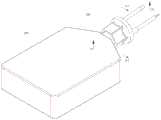
FIG. 1 is a perspective view of a culture bottle using a culture bottle cap according to an embodiment of the present invention;
FIG. 2 is an exploded view of the culture flask shown in FIG. 1;
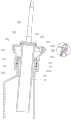
FIG. 3 is a partial cross-sectional view of the culture flask taken along line III-III in FIG. 1;
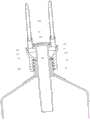
FIG. 4 is a partial cross-sectional view of the culture flask taken along line IV-IV in FIG. 1; and
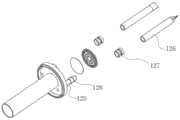
fig. 5 is an exploded view of a culture flask using a culture flask cap according to another embodiment of the present invention.
Detailed Description
Further features and advantages of the present invention will become apparent from the following description, which proceeds with reference to the accompanying drawings. Exemplary embodiments of the utility model are illustrated in the drawings and the various drawings are not necessarily drawn to scale. This invention may, however, be embodied in many different forms and should not be construed as necessarily limited to the exemplary embodiments set forth herein. Rather, these exemplary embodiments are provided only to illustrate the present invention and to convey the spirit and substance of the utility model to those skilled in the art.
The utility model aims to provide a bottle cap of a culture bottle suitable for culturing mononuclear cells (such as lymphocytes and monocytes) separated from peripheral blood, the culture bottle cap can be detachably or inseparably fixed on the bottle body of the culture bottle, and after being fixed on the bottle body, the culture bottle can be supplemented with culture medium required by the culture of the mononuclear cells through a liquid inlet pipe on the culture bottle cap (also referred to as a liquid supplementing operation in the text), and the cultured mononuclear cells are extracted from the culture flask through a liquid outlet pipe on the culture flask cover (also referred to as a harvesting operation in the text), but also does not need to take the culture bottle cap off the bottle body for the fluid infusion operation and the harvesting operation, thereby simplifying the operation process, but also can avoid the pollution to the cultured mononuclear cells in the process of taking off the culture bottle cap. In addition, when the operations of fluid infusion and harvesting are not performed, that is, during the culture of the mononuclear cells, the free ends of the fluid inlet and outlet pipes are closed, which reduces the risk of contaminants entering the culture flask through the fluid inlet and outlet pipes and thus contaminating the mononuclear cells. In addition, in order to avoid the pressure accumulation in the culture bottle during the liquid supplementing operation so as to prevent the culture medium from entering the culture bottle and to avoid the vacuum formation in the culture bottle during the harvesting operation so as to prevent the cultured mononuclear cells from leaving the culture bottle, the culture bottle cap can be also ventilated with the outside through a vent hole so as to balance the air pressure in the culture bottle and the outside air pressure, thereby enabling the liquid supplementing operation and the harvesting operation to be smoothly carried out. Further, the culture bottle cap is also provided with a proximal tube extending from the vent hole toward the bottle body, the proximal tube being capable of separating liquid (e.g., culture medium and mononuclear cells) entering and exiting the bottle cap from gas, thereby preventing the liquid from leaking to the outside of the culture bottle through the vent hole. In summary, with the culture bottle cap according to the present invention, the operations of culturing, replenishing and harvesting during the production of mononuclear cells can be performed easily and smoothly, and the risk of contamination of the mononuclear cells can be reduced, thereby producing high-quality mononuclear cells in a simple and reliable manner.
Various embodiments of the culture bottle cap according to the present invention will be described in detail below with reference to the accompanying drawings. In the following description, "axial" will be used in its ordinary meaning in the art to refer to the direction of the axis of the ring-shaped structure, while "radial" will be used in its ordinary meaning in the art to refer to the direction of the diameter or radius of a circle centered on the axis, whereas "proximal" will be used herein to refer to the side or end axially closer to the body, and "distal" will be used to refer to the side or end axially further from the body. It is to be understood, however, that these terms, which are indicative of relative orientations, are merely intended to more intuitively convey the concept and teaching of the present invention in connection with the drawings, and should not be construed as limiting the scope of the present invention in any way.
Referring to fig. 1-4, there are shown perspective, exploded and cross-sectional views of a culture bottle using aculture bottle cap 100 according to an embodiment of the present invention, theculture bottle cap 100 being detachably coupled (e.g., by threads, snap-fit structures, etc.) to aculture bottle body 200 adapted to store mononuclear cells and culture medium thereof. Of course, it is understood that theculture bottle cap 100 may also be attached to theculture bottle body 200 in an inseparable manner (e.g., by welding, bonding, etc.). For example, theculture bottle cap 100 may be coupled to theculture bottle body 200 after separating mononuclear cells from peripheral blood and inoculating the mononuclear cells in theculture bottle body 200, so as to prevent contaminants from entering the bottle through the mouth of theculture bottle body 200 and to prevent the culture medium and the mononuclear cells from leaking to the outside of theculture bottle body 200 through the mouth.
Referring to fig. 2 to 4, which show exploded and sectional views of a culture bottle using theculture bottle cap 100 according to the present invention, theculture bottle cap 100 mainly includes acap body 110 and acap 120.
Thecap body 110 is described in more detail below with reference to the drawings, and as shown in fig. 2 to 4, thecap body 110 has a generally annular structure including a proximalannular portion 111 and a distalannular portion 112 spaced apart in the axial direction, and an intermediateannular portion 113 connecting the proximalannular portion 111 to the distal annular portion 112 (more specifically, connecting the distal end of the proximalannular portion 111 to the proximal end of the distal annular portion 112), wherein the proximal end of the proximalannular portion 111 forms an opening 111o for receiving themouthpiece 210 of theculture bottle body 200, so that themouthpiece 210 can be inserted into the proximalannular portion 111 to be connected with the proximalannular portion 111, and the distal end of the distalannular portion 112 forms an opening 112o intended to be covered by thecap 120. In particular, as shown in fig. 2, the inner surface of the proximalannular portion 111 may be provided with an internal thread which may be matched with an external thread formed on themouth 210 so that theculture bottle cap 100 may be screwed to themouth 210, and the outer surface of the proximalannular portion 111 may be formed with a plurality of engagement planes which may be engaged with a torque wrench so that theculture bottle cap 100 may be screwed to themouth 210 by the torque wrench.
In particular, as shown in fig. 3 and 4, thecap body 110 may further comprise astopper 114 protruding radially inward from the inner surface of the proximalannular portion 111, for example at the distal end of the proximal annular portion 111 (i.e. at the end of the internal thread), which stopper 114 may abut themouthpiece 210, thereby preventing themouthpiece 210 from moving further towards thecap 120, that is, themouthpiece 210 from moving further towards the inside of theculture bottle cap 100. The above configuration is advantageous, and it should be noted that, firstly, the engagement area between thestopper 114 and themouth 210 is an area where there is a possibility of leakage, and the torque required to continue screwing theculture bottle cap 100 after thestopper 114 abuts against themouth 210 increases, so that by using a torque wrench, the torque required to screw theculture bottle cap 100 onto themouth 210 can be controlled, and by screwing theculture bottle cap 100 onto themouth 210 with a proper torque, a proper seal can be achieved between thestopper 114 and themouth 210, thereby preventing leakage from occurring through the engagement area between thestopper 114 and themouth 210, and also preventing theculture bottle cap 100 from being screwed onto themouth 210 with an excessive torque, thereby protecting theculture bottle cap 100 and themouth 210 from being damaged by an excessive torque. Specifically, a positioning mark may be provided on thecover body 110 or thecap 120 described later, and the positioning mark and theculture flask body 200 may assume a specific relative position after thecover body 110 is screwed to a proper torque, so that, at the time of a subsequent inspection, it is possible to judge whether thecover body 110 is screwed to a proper torque by the relative position of the positioning mark and theculture flask body 200, so as to determine whether a proper seal has been achieved between theculture flask cap 100 and themouth 210.
In particular, as shown in fig. 3 and 4, the side of thestopper 114 facing themouth 210 is formed with an annular groove that can receive the end of themouth 210 and can house an O-ring 115, which O-ring 115 is pressed by thestopper 114 and themouth 210 to be elastically deformed and thus seal the junction area between thestopper 114 and themouth 210. Due to the presence of the O-ring 115, leakage at the junction area between thestopper 114 and thespout 210 can be more reliably prevented.
In particular, as shown in fig. 2-4, the radial dimension (e.g., diameter or radius) of the proximalannular portion 111 is less than the radial dimension of the distalannular portion 112, which causes the intermediateannular portion 113 to have a funnel shape that extends radially inward or tapers as it approaches the proximalannular portion 111, that is, the intermediateannular portion 113 has a shape that tapers (in other words, tapers) from the distalannular portion 112 toward the proximalannular portion 111, which configuration is advantageous as described in further detail below in connection with thecap 120.
In particular, as shown in fig. 3 and 4, the distalannular portion 112 is formed from two radially spaced rings such that the distalannular portion 112 is an annular structure having a U-shaped cross-section, which configuration is also advantageous as described in further detail below in connection with thecap 120.
Thecap 120 is described in more detail below with reference to the drawings, and as shown in fig. 2 to 4, thecap 120 has a generally T-shaped structure including acover plate 121 for covering an opening 112o formed at a distal end of the distalannular portion 112 of thecap body 110 and aproximal tube 122 extending proximally from the cover plate 121 (that is, protruding from a proximal end surface of the cover plate 121), wherein thecover plate 121 may be, for example, heat-pressure welded, ultrasonically welded, or bonded to the distalannular portion 112 of thecap body 110. As shown in particular in fig. 2 to 4, and in particular in the partial enlargement in fig. 3, thecover plate 121 is provided along its periphery with an annular structure with an inverted U-shaped section cooperating, more particularly mutually embedded, with the distalannular portion 112 of U-shaped section, so as to form a zigzag joining region. This configuration is advantageous because the joint area of thecover plate 121 and the distalannular portion 112, at which leakage can be avoided more reliably, is an area that is likely to carry leakage, by arranging the joint area to have a meandering shape. The lumen of theproximal tube 122 forms a cylindrical passage GC, and the cylindrical passage GC extends through thecover plate 121. In this configuration, after theculture bottle cap 100 is fixed to themouth 210 of theculture bottle body 200, the inside of theculture bottle body 200 may communicate with the outside through the cylindrical passage GC, in other words, the inside of theculture bottle body 200 may be ventilated with the outside through the cylindrical passage GC, so as to prevent the inside of theculture bottle body 200 from accumulating pressure or generating vacuum. Therefore, the cylindrical passage GC may also be referred to as a gas passage GC.
In particular, as shown in fig. 2 and 3, thecap 120 may further include a hydrophobic gas-permeable membrane 123 covering the distal end of the gas channel GC, which hydrophobic gas-permeable membrane 123 may be, for example, heat-pressure welded, ultrasonically welded, or adhered to thecover plate 121. Since thishydrophobic vent membrane 123 can allow air to pass but not liquid to pass, it is possible to avoid the liquid inside theculture flask body 200 from leaking to the outside through theproximal tube 122, and more particularly, thehydrophobic vent membrane 123 can also prevent the passage of microorganisms, and thus, it is also possible to avoid the contamination of the culture inside theculture flask body 200 by the external microorganisms through theproximal tube 122. In particular, as shown in fig. 2-4, thecap 120 may further include aprotective cover 124 covering thehydrophobic vent membrane 123, theprotective cover 124 may be provided with a plurality of vent holes and may be fixed to thecover plate 121, for example, in a snap-fit manner (as shown in fig. 3 and 4), in this configuration, theprotective cover 124 may help to position thehydrophobic vent membrane 123 to prevent thehydrophobic vent membrane 123 from falling off accidentally, and may protect thehydrophobic vent membrane 123 from being accidentally damaged, and in addition, since theprotective cover 124 is provided with a plurality of vent holes, the air permeability of thehydrophobic vent membrane 123 may not be affected.
In particular, as shown in fig. 3 and 4, theproximal tube 122 extends from thecover plate 121 towards the proximal side so as to be inserted into thecover body 110 and thecover body 110 surrounds theproximal tube 122, so that an annular channel (also referred to as an annular cavity) LC is defined between theproximal tube 122 and thecover body 110, in other words, an annular channel LC surrounding theproximal tube 122 is formed within theculture bottle cap 100, as described in further detail below, for communicating the interior of theculture bottle body 200 with the exterior liquid, and therefore, the annular channel LC may also be referred to as a liquid channel LC, and as shown in the figure, theproximal tube 122 spaces the liquid channel LC from the gas channel GC, so that gas-liquid separation is achieved, that is, the liquid in the liquid channel LC does not flow into the gas channel GC, and the gas in the gas channel GC does not flow into the liquid channel LC. In particular, theproximal tube 122 extends proximally beyond the distal end of the proximal annular portion 111 (i.e. where thestop 114 is located), which is such that after fixing theculture bottle cap 100 to themouthpiece 210, theproximal tube 122, the gas channel GC and the liquid channel LC will all extend into themouthpiece 210. More particularly, theproximal tube 122 extends proximally beyond the proximal end of the proximal annular portion 111 (i.e., where the opening 111o is located), such that upon securing theculture bottle cap 100 to themouth 210, theproximal tube 122, the gas channel GC and the liquid channel LC will all extend into thebottle body 200. In this configuration, since the length of theproximal tube 122 is long, the gas channel GC can be more reliably isolated from the liquid channel LC.
As shown in fig. 2 and 4, thecap 120 may further include adistal tube 125 extending distally from the cover plate 121 (that is, protruding from a distal surface of the cover plate 121), a lumen of thedistal tube 125 forming a liquid passage LC ', and the liquid passage LC' extending through thecover plate 121. In addition, thedistal tube 125 is located radially outside theproximal tube 122, whereby the liquid channel LC' opens to the liquid channel LC after passing through thecover plate 121, not to the gas channel GC. In this configuration, the liquid channel LC can communicate with the outside through the liquid channel LC ', more specifically, after theculture bottle cap 100 is fixed to themouth 210 of theculture bottle body 200, a medium can be injected into the liquid channel LC through the liquid channel LC ' for a topping-up operation, and a culture can be taken out from theculture bottle body 200 through the liquid channel LC ' for a harvesting operation, and none of the above operations requires theculture bottle cap 100 to be removed from themouth 210.
As shown in fig. 2-4, thecap 120 may further include ahose 126 inserted into thedistal tube 125 from the distal end of thedistal tube 125, and in particular, a glue seal may be injected between thehose 126 and thedistal tube 125 to prevent leakage at the interface between thehose 126 and thedistal tube 125. The lumen of theflexible tube 126 communicates with the lumen of thedistal tube 125, i.e., the liquid channel LC ', so that, when a feeding operation is performed, a culture medium can be injected into theflexible tube 126, the culture medium will enter theculture flask body 200 along theflexible tube 126, the liquid channel LC ', and the liquid channel LC, and, when a harvesting operation is performed, the culture in theculture flask body 200 can leave theculture flask body 200 along the liquid channel LC, the liquid channel LC ', and theflexible tube 126. It is worth mentioning that both the topping up and harvesting operations are time consuming operations, i.e. the flask is mostly in the culture operation where the free end of thetube 126 is closed in order to prevent contaminants from entering theflask body 200 through thetube 126 and to prevent the liquid in theflask body 200 from leaking to the outside through thetube 126. That is, the free end of thetube 126 is closed during the culturing of the mononuclear cells, and thetube 126 may be connected to other tubes through an aseptic tube connector for supplementing the culture medium into theculture flask body 200 and removing the culture from theculture flask body 200 through thetube 126 using, for example, a peristaltic pump during the fluid supplementing operation and the harvesting operation. Under this configuration, the sterility requirements of the mononuclear cell culture can be met to the maximum extent and leakage is prevented. In particular, as shown in fig. 4, thecap 120 may include two sets ofdistal tubes 125 andhoses 126, wherein one set ofdistal tubes 125 andhoses 126 serves as a liquid inlet tube set, and the other set ofdistal tubes 125 andhoses 126 serves as a liquid outlet tube set, and more particularly, a mark such as "in" or "out" may be further provided on thecover plate 121 to help an operator distinguish the liquid inlet tube set from the liquid outlet tube set.
In particular, as shown in fig. 3 and 4, the radially inner end of thestopper 114 may radially space the O-ring 115 from the liquid passage LC, whereby the liquid in the liquid passage LC may be prevented from eroding the O-ring 115, thereby more reliably ensuring the seal between theculture bottle cap 100 and themouth 210.
In particular, as shown in fig. 4, the lumen of thedistal tube 125, i.e. the liquid channel LC', is axially aligned with the intermediateannular portion 113, and as mentioned above, the intermediateannular portion 113 has a funnel shape. In this configuration, at the time of the fluid replacement operation, the fluid from the fluid passage LC' will flow onto the intermediateannular portion 113 to cause a decrease in the flow rate thereof, and then directed by the intermediateannular portion 113 toward theproximal tube 122, whereupon the liquid will flow under inertia onto the outer surface of theproximal tube 122, and flows into theflask body 200 along the outer surface of theproximal tube 122, so that the arrangement makes it possible to more stably and uniformly flow the liquid into theflask body 200, while thecap 110 may be tilted downward during the harvesting operation, the liquid in theflask body 200 will flow along the liquid channel LC toward thedistal tube 125 instead of along the gas channel GC toward the hydrophobic gas-permeable membrane 123 due to the isolation of theproximal tube 122, that is, since the liquid flows along the reverse path to the fluid replacement operation during the harvesting operation, the above arrangement enables the liquid to flow out of theflask body 200 more stably and uniformly even during the harvesting operation.
Referring to fig. 5, which shows an exploded view of a culture bottle using aculture bottle cap 100 according to another embodiment of the present invention, the embodiment shown in fig. 5 has the same configuration as the embodiment shown in fig. 1-4 except that the connection of theflexible tube 126 to thedistal tube 125 is different. As shown in fig. 5, theflexible tube 126 may be sleeved outside thedistal tube 125, or thedistal tube 125 may be inserted into theflexible tube 126, and thecap 120 may further include anelastic band 127 sleeved outside theflexible tube 126 to bind theflexible tube 126 to thedistal tube 125. In particular, thedistal tube 125 may be provided with anannular protrusion 128 radially protruding from its outer surface. Theannular protrusion 128 may deform theflexible tube 126 to a greater extent than other portions of thedistal tube 125, thereby improving the seal at the interface between thedistal tube 125 and theflexible tube 126. More particularly, theelastic tie 127 may be radially aligned with theannular protrusion 128, which allows a greater degree of deformation of theelastic tie 127 to occur as well, further improving the seal of the engagement area between thedistal tube 125 and thehose 126.
Alternative but non-limiting embodiments of a closed culture flask cover according to the utility model are described in detail above with the aid of the accompanying drawings. Modifications and additions to the techniques and structures, as well as re-combinations of features in various embodiments, which do not depart from the spirit and substance of the disclosure, will be readily apparent to those of ordinary skill in the art as they are deemed to be within the scope of the utility model. Accordingly, such modifications and additions that can be envisaged within the teachings of the present invention are to be considered as part of the present invention. The scope of the present invention includes equivalents known at the time of filing and equivalents not yet foreseen.
Claims (10)
1. Culture flask lid (100) for a culture flask suitable for culturing mononuclear cells, comprising:
a cap (120), the cap (120) comprising a cover plate (121), a proximal tube (122) and a distal tube (125) protruding from the cover plate (121), and a hose (126) connected to the distal tube (125), wherein the distal tube (125) is located axially on the opposite side of the proximal tube (122) and radially outside the proximal tube (122), and wherein the lumens of the proximal tube (122) and the distal tube (125) both extend through the cover plate (121) so as to have an opening in the cover plate (121); and
a cover body (110), wherein two ends of the cover body (110) are respectively suitable for combining the cover plate (121) and the bottle body of the culture bottle,
the cap (110) surrounds the proximal tube (122) defining an annular cavity (LC) between the proximal tube (122) and the cap (110), the annular cavity (LC) communicating with the lumen of the distal tube (125), and the hose (126) having a closed free end.
2. Culture bottle cap (100) according to claim 1, wherein the hose (126) is inserted into the distal tube (125) and the joint area of the hose (126) and the distal tube (125) is sealed with glue.
3. Culture flask cap (100) according to claim 1, wherein the distal tube (125) is inserted into the flexible tube (126) and the flexible tube (126) is sheathed with an elastic tie (127) on the outside.
4. Culture bottle cap (100) according to any of claims 1-3, wherein the cap (120) further comprises a hydrophobic, gas permeable membrane (123), the hydrophobic, gas permeable membrane (123) being fixed to the cover plate (121) and covering the opening of the lumen of the proximal tube (122) on the cover plate (121).
5. The culture bottle cap (100) according to claim 4, wherein the cap (120) further comprises a protective cover (124), the protective cover (124) being fixed to the cover plate (121) and covering the hydrophobic gas permeable membrane (123) and being provided with a vent hole.
6. Culture bottle cap (100) according to any of claims 1-3, wherein the cap (120) comprises two sets of distal tubes (125) and hoses (126), wherein one set of distal tubes (125) and hoses (126) is used for feeding liquid into the bottle body and the other set of distal tubes (125) and hoses (126) is used for feeding liquid out of the bottle body.
7. Culture bottle cap (100) according to any of claims 1-3, wherein a flat surface for engaging a spanner is formed on the outer surface of the cap body (110).
8. The culture bottle cap (100) according to any of claims 1-3, wherein the inner surface of the cap (110) is formed with a stop (114) adapted to abut the mouth of the bottle body.
9. Culture flask cap (100) according to claim 8, wherein the stop (114) is formed with an annular groove housing an O-ring (115), the O-ring (115) being adapted to be squeezed between the stop (114) and the mouth of the flask.
10. The culture bottle cap (100) according to claim 8, wherein the inner surface of the cap body (110) is formed with an internal thread adapted to screw-connect the cap body (110) with the bottle body, and the stopper (114) is located at an end of the internal thread.
Priority Applications (1)
| Application Number | Priority Date | Filing Date | Title |
|---|---|---|---|
| CN202121199640.1UCN215799613U (en) | 2021-05-31 | 2021-05-31 | Culture bottle cap |
Applications Claiming Priority (1)
| Application Number | Priority Date | Filing Date | Title |
|---|---|---|---|
| CN202121199640.1UCN215799613U (en) | 2021-05-31 | 2021-05-31 | Culture bottle cap |
Publications (1)
| Publication Number | Publication Date |
|---|---|
| CN215799613Utrue CN215799613U (en) | 2022-02-11 |
Family
ID=80174491
Family Applications (1)
| Application Number | Title | Priority Date | Filing Date |
|---|---|---|---|
| CN202121199640.1UActiveCN215799613U (en) | 2021-05-31 | 2021-05-31 | Culture bottle cap |
Country Status (1)
| Country | Link |
|---|---|
| CN (1) | CN215799613U (en) |
Cited By (2)
| Publication number | Priority date | Publication date | Assignee | Title |
|---|---|---|---|---|
| CN115627227A (en)* | 2021-05-31 | 2023-01-20 | 北京永泰生物制品有限公司 | culture bottle cap |
| CN115627229A (en)* | 2021-05-31 | 2023-01-20 | 北京永泰生物制品有限公司 | Cell culture bottle |
- 2021
- 2021-05-31CNCN202121199640.1Upatent/CN215799613U/enactiveActive
Cited By (2)
| Publication number | Priority date | Publication date | Assignee | Title |
|---|---|---|---|---|
| CN115627227A (en)* | 2021-05-31 | 2023-01-20 | 北京永泰生物制品有限公司 | culture bottle cap |
| CN115627229A (en)* | 2021-05-31 | 2023-01-20 | 北京永泰生物制品有限公司 | Cell culture bottle |
Similar Documents
| Publication | Publication Date | Title |
|---|---|---|
| CN215799613U (en) | Culture bottle cap | |
| EP2858713B1 (en) | Novel tubing valve and uses thereof | |
| US8801684B2 (en) | Coupling part of a drainage tube unit | |
| CN102753220A (en) | Coupling part of a drainage tube unit | |
| EP3374282B1 (en) | Assembly for processing fluids | |
| US4410630A (en) | Lysis filtration culture chamber | |
| EP2583715A1 (en) | Infusion tube system and method for manufacture | |
| CA3080259A1 (en) | Breastpump | |
| RU2014153990A (en) | RADIO PHARMACEUTICAL PRODUCT SYSTEM AND TUBE MANAGEMENT | |
| CN206215245U (en) | A kind of closed body fluid indwelling device is with taking liquid part | |
| SE455165B (en) | CONTAINER AT CONTAINER | |
| CN104020012A (en) | Sampling filtering bag for cryptospsridium and giardia detection in water | |
| CN216141554U (en) | Cell culture bottle | |
| CN215799615U (en) | Liquid supplement bottle | |
| CN215799614U (en) | Liquid-supplementing bottle cap | |
| CN115627227A (en) | culture bottle cap | |
| CN215843617U (en) | Centrifugal cup | |
| MXPA04008956A (en) | Biological fluid sampling apparatus. | |
| CN210812904U (en) | A change and flow device for intestinal juice drainage | |
| CN115627229A (en) | Cell culture bottle | |
| CN211986524U (en) | Device for preventing liquid from flowing reversely and infusion apparatus comprising same | |
| CN115627231A (en) | Liquid-supplementing bottle cap | |
| CN205145310U (en) | Drip chamber of infusion set | |
| CN211383132U (en) | Novel self-exhaust type infusion apparatus | |
| CN221384381U (en) | Liquid medicine transfer device |
Legal Events
| Date | Code | Title | Description |
|---|---|---|---|
| GR01 | Patent grant | ||
| GR01 | Patent grant |