CN211674190U - Three-dimensional face tongue diagnosis equipment - Google Patents
Three-dimensional face tongue diagnosis equipmentDownload PDFInfo
- Publication number
- CN211674190U CN211674190UCN202020118578.8UCN202020118578UCN211674190UCN 211674190 UCN211674190 UCN 211674190UCN 202020118578 UCN202020118578 UCN 202020118578UCN 211674190 UCN211674190 UCN 211674190U
- Authority
- CN
- China
- Prior art keywords
- collection system
- tongue
- dimensional
- face
- texture
- Prior art date
- Legal status (The legal status is an assumption and is not a legal conclusion. Google has not performed a legal analysis and makes no representation as to the accuracy of the status listed.)
- Active
Links
Images
Landscapes
- Measurement Of The Respiration, Hearing Ability, Form, And Blood Characteristics Of Living Organisms (AREA)
Abstract
Description
Technical Field
The utility model relates to a three-dimensional scanning technical field especially relates to a three-dimensional face examines tongue and examines equipment.
Background
At present, the tongue diagnosis equipment on the market adopts a camera to collect a plane image, and the plane image characteristics are analyzed by a digital image processing technology. When the patient actually needs a doctor while looking for a doctor, the doctor can analyze and utilize three-dimensional characteristics of the face, particularly the tongue, besides referring to characteristics of the tongue of the face of the patient, such as color and the like. Therefore, none of the current facial and tongue diagnosis devices based on planar digital image processing can meet the actual requirements very well. In order to solve the contradiction, some three-dimensional surface tongue diagnosis devices have appeared in recent years, but the three-dimensional surface tongue diagnosis devices have the defects of long acquisition time, low precision, incompatibility with color textures and the like, and have poor practicability.
SUMMERY OF THE UTILITY MODEL
In view of the not enough of above-mentioned prior art, the utility model aims at providing a three-dimensional face is examined tongue and is examined diagnosis equipment aims at solving current three-dimensional face and examines tongue and diagnose equipment and adopt two sets of collection devices at most, and gathers the unable adjustment of position or collection angle, causes the scanning easily not comprehensive or needs scanning many times to model to influence the accuracy of model construction and the problem of definition.
The utility model provides a technical scheme that its technical problem adopted is: providing a three-dimensional surface tongue diagnosis device: including the casing that has the accommodation space, set up the collection system in the casing, the collection system periphery is provided with the light filling device, the casing with set up on the relative panel of collection system and survey the face window, wherein collection system includes texture collection system and structured light device.
Furthermore, a chin support part with adjustable height is arranged at the bottom of the measured face window.
Further, the structured light scanning device includes an industrial camera disposed above the texture capturing device and a projector disposed below.
Further, the texture acquisition device is a high-definition camera.
Has the advantages that: the utility model provides a three-dimensional face examines tongue and examines equipment, the utility model discloses a casing that has accommodation space sets up the collection system in the casing, the collection system periphery is provided with the light filling device, the casing with set up on the relative panel of collection system and survey the face window, wherein collection system includes texture collection system and structured light device. The face and the tongue of the patient are acquired based on the structured light and texture acquisition device, and corresponding high-precision three-dimensional data can be acquired while texture features are cleared. The acquisition time is short, the precision is high, and more reference information is provided for the diagnosis of doctors.
Drawings
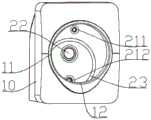
Fig. 1 is a schematic structural view of a preferred three-dimensional tongue diagnosis device of the present invention;
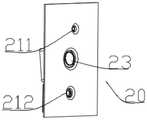
fig. 2 is a schematic structural view of another perspective of the preferred three-dimensional tongue diagnosis device of the present invention;
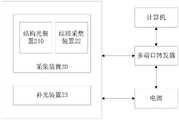
fig. 3 is a schematic view of the connection between the three-dimensional tongue diagnosis device and the multi-port adapter according to the present invention.
Description of reference numerals:
10. a housing; 11. measuring a face window; 12. a chin support portion; 20. a collection device; 210. a structured light device; 211. an industrial camera; 212. a projector; 22. a texture acquisition device; 23. a light supplement device.
Detailed Description
The utility model provides a three-dimensional face diagnosis tongue examination equipment, for making the utility model discloses a purpose, technical scheme and effect are clearer, more clear and definite, following right the utility model discloses further detailed description. It should be understood that the specific embodiments described herein are merely illustrative of the invention and are not intended to limit the invention.
The TCM focuses on the observation and the study, and the biological characteristics of the face and tongue are widely used in the method of TCM to distinguish the pathological changes of the five zang-organs and six fu-organs and the symptoms of the body functions. For a long time, the facial diagnosis and tongue diagnosis in traditional Chinese medicine are based on the subjective judgment of doctors, and there is no reference of objective standards. Therefore, with the modern development of traditional Chinese medicine, a facial tongue diagnosis instrument appears, facial tongue features of a patient are acquired and analyzed through a digital image processing technology, a standardized medical analysis method is assisted, the traditional Chinese medicine is developed towards standardization and automation, and meanwhile, the facial tongue diagnosis is better served for human beings.
Especially for the acquisition of three-dimensional data of the tongue, a similar solution is mainly used at present as follows
1. A three-dimensional tongue body reconstruction system based on multi-view images and a finite element method. Liu Zhi of Shandong university etc. uses a plurality of digital cameras, two gas discharge light sources that produce and be close to the sunlight spectrum, and a luminance adjustable laser etc. constitutes the system of rebuilding, can provide comparatively accurate tongue body three-dimensional model.
2. A three-dimensional holographic tongue picture acquisition method. The method is a method for the research of the assistant professor of the king scholars of Tianjin university, adopts a grating projection three-dimensional measurement technology, and provides a novel detection means and a novel detection device. The tongue texture analysis device comprises an integrating sphere uniform light source device, an industrial CCD camera, adigital projector 212, a computer and the like, and three-dimensional information and texture information of the tongue are respectively collected.
3. The tongue body three-dimensionalinformation acquisition device 20 based on the photometric stereo method. By adopting the method, three or more images are collected at the same angle, the normal direction of the surface of the object is calculated, and the morphological outline of the tongue body, the tongue crack and other texture information can be provided.
4. Tongue color three-dimensional reconstruction based on a binocular stereo vision method. Guodan, et al, university of tianjin, performs binocular-based color three-dimensional reconstruction of the tongue using two single-lens and one pico-projector 212.
In the method, the scanning time of the three-dimensional tongue body reconstruction system based on the multi-view image or the finite element method is long, and the color information of the tongue body surface cannot be completely acquired. The three-dimensional holographic tongue picture acquisition method has a certain distance away from the development of a tongue diagnosis instrument which is actually applied. The average error of the tongue body three-dimensionalinformation acquisition device 20 based on the photometric stereo method is up to 3.6mm, the reconstruction error of the tongue body boundary area is large, and the practicability is poor. The color information distortion of the three-dimensional point cloud data of the tongue body is serious by performing color three-dimensional reconstruction by using a binocular stereo vision method, and the texture features are difficult to distinguish. The purpose of the patent is to solve the above mentioned contradictions, so as to achieve the purposes of fast three-dimensional scanning speed, high precision of three-dimensional data and color texture, and strong experience.
Thus, this patent proposes a structured light-based three-dimensional facial tongue diagnosis device. The high-definition texture features of the patient can be acquired, and meanwhile, corresponding high-precision three-dimensional data can also be acquired. The acquisition time is short, the precision is high, and more reference information is provided for the diagnosis of doctors.
Referring to fig. 1-2, the three-dimensional tongue diagnosis device includes a housing 10 having a receiving space, and anacquisition device 20 disposed in the housing 10, wherein alight supplement device 23 is disposed on the periphery of theacquisition device 20, a face measurement window is disposed on a panel of the housing 10 opposite to theacquisition device 20, and theacquisition device 20 includes a texture acquisition device 2220 and a structured light device 210. Wherein the structured light scanning device comprises anindustrial camera 211 arranged above the texture collection device 2220 and aprojector 212 arranged below; the texture capture device 2220 is preferably a high definition camera. The high definition camera is provided with two cameras, the two cameras are respectively a black-and-white camera and a color camera, and the black-and-white camera and the color camera are respectively used for shooting black-and-white texture pictures and color pictures.
Specifically, the height of the face of the person to be measured is adjusted by arranging the height-adjustable lowerjaw supporting part 12 at the bottom of the face measuring window, so that the face and tongue information can be conveniently and accurately collected.
Specifically, theindustrial camera 211 is connected to aprojector 212, a control board is disposed in theprojector 212, and a trigger line of theindustrial camera 211 is connected to the control board. Be equipped with control module and storage module in the control panel, control module links to each other with storage module,industrial camera 211's trigger line is connected with control module, control module is connected with the DLP projection module in the projectingapparatus 212. The control module is one of FPGA, DSP, ARM, singlechip, and in this embodiment, the control module is the singlechip, and further go forward, the model of singlechip is STC89C52 singlechip, the P1 interface connection of storage module and STC89C52 singlechip, the P2 interface connection of DLP projection module STC89C52 singlechip in theprojector 212, the trigger line ofindustry camera 211 and the P3 interface connection of STC89C52 singlechip. The storage module is composed of at least three magnetic tracks, each magnetic track is provided with at least ten sectors, and each sector is used for storing a structured light image shot by theindustrial camera 211.
Referring to fig. 3, the connection relationship between the face three-dimensional scanning device and the multi-port transponder during operation is that a power supply and the multi-port transponder are arranged in the housing 10, thecollection device 20 and the multi-port transponder are both electrically connected to the power supply, and thecollection device 20 and the light supplement lamp are both connected to the multi-port transponder. The multi-port transponder is connected to an external computer.
Specifically, the data line and the power line of the high-definition camera are both connected with the multi-port transponder, and the high-definition camera is used for taking color pictures. The fill light position surrounds the periphery of thecollection device 20 to form a circle. The power cord of light filling lamp links to each other with HUB, gathers atcollection system 20 and is that the light filling lamp lights.
The working principle is as follows:
the user sits in front of the device, extends the face into theface detection window 11, naturally leans the chin against the lowerjaw supporting part 12, and adjusts the height of the lowerjaw supporting part 12 to accurately obtain the collected information of the face or the tongue. Theprojector 212 of theacquisition device 20 projects a grating image to the face or the tongue, the control module on the control board triggers theindustrial camera 211 to shoot the grating image on the face or the tongue through a trigger line of theindustrial camera 211 and stores the grating image in the storage module, meanwhile, the high-definition camera is controlled to shoot a picture through the return PC and the PC, the grating image stored in the storage module is decoded and operated, at the moment, a complete three-dimensional model is generated, texture mapping is carried out on the picture shot by the high-definition camera, and color texture information is given to the model.
The utility model realizes the scanning of the face or the tongue by arranging theacquisition device 20, so that the scanning precision is higher, the speed is faster, and the user experience is improved; the scanning device not only scans the face or tongue structure, but also collects the texture of the face or tongue, so that the double combination of the structure and the texture details is realized; and the scanning speed is high, the texture is clear, the user experience is improved, and the method has good market application value.
The above description is only for the specific embodiments of the present invention, but the protection scope of the present invention is not limited thereto, and any person skilled in the art can easily think of the changes or substitutions within the technical scope of the present invention, and all should be covered within the protection scope of the present invention. Therefore, the protection scope of the present invention shall be subject to the protection scope of the claims.
Claims (4)
1. The utility model provides a three-dimensional face examines tongue and examines equipment which characterized in that, is including the casing that has the accommodation space, sets up the collection system in the casing, the collection system periphery is provided with the light filling device, the casing with the face window has been seted up on the relative panel of collection system and has been surveyed, wherein collection system includes texture collection system and structured light device.
2. The three-dimensional facial tongue diagnosis device according to claim 1, wherein the bottom of the measured face window is provided with a height-adjustable chin support part.
3. The three-dimensional facial tongue diagnosis device according to claim 2, wherein the structured light scanning means comprises an industrial camera disposed above the texture acquisition means and a projector disposed below.
4. The three-dimensional facial tongue diagnosis device according to claim 1, wherein the texture acquisition device is a high definition camera.
Priority Applications (1)
| Application Number | Priority Date | Filing Date | Title |
|---|---|---|---|
| CN202020118578.8UCN211674190U (en) | 2020-01-18 | 2020-01-18 | Three-dimensional face tongue diagnosis equipment |
Applications Claiming Priority (1)
| Application Number | Priority Date | Filing Date | Title |
|---|---|---|---|
| CN202020118578.8UCN211674190U (en) | 2020-01-18 | 2020-01-18 | Three-dimensional face tongue diagnosis equipment |
Publications (1)
| Publication Number | Publication Date |
|---|---|
| CN211674190Utrue CN211674190U (en) | 2020-10-16 |
Family
ID=72773398
Family Applications (1)
| Application Number | Title | Priority Date | Filing Date |
|---|---|---|---|
| CN202020118578.8UActiveCN211674190U (en) | 2020-01-18 | 2020-01-18 | Three-dimensional face tongue diagnosis equipment |
Country Status (1)
| Country | Link |
|---|---|
| CN (1) | CN211674190U (en) |
Cited By (2)
| Publication number | Priority date | Publication date | Assignee | Title |
|---|---|---|---|---|
| CN113876298A (en)* | 2021-09-15 | 2022-01-04 | 北京航空航天大学 | A method for measuring and diagnosing three-dimensional morphology and fine structure of tongue coating |
| CN117649494A (en)* | 2024-01-29 | 2024-03-05 | 南京信息工程大学 | Reconstruction method and system of three-dimensional tongue body based on point cloud pixel matching |
- 2020
- 2020-01-18CNCN202020118578.8Upatent/CN211674190U/enactiveActive
Cited By (4)
| Publication number | Priority date | Publication date | Assignee | Title |
|---|---|---|---|---|
| CN113876298A (en)* | 2021-09-15 | 2022-01-04 | 北京航空航天大学 | A method for measuring and diagnosing three-dimensional morphology and fine structure of tongue coating |
| CN113876298B (en)* | 2021-09-15 | 2022-06-17 | 北京航空航天大学 | Method for measuring three-dimensional morphology and fine structure of tongue coating |
| CN117649494A (en)* | 2024-01-29 | 2024-03-05 | 南京信息工程大学 | Reconstruction method and system of three-dimensional tongue body based on point cloud pixel matching |
| CN117649494B (en)* | 2024-01-29 | 2024-04-19 | 南京信息工程大学 | A three-dimensional tongue reconstruction method and system based on point cloud pixel matching |
Similar Documents
| Publication | Publication Date | Title |
|---|---|---|
| CN103153167B (en) | Three-dimensional temporary storage optical color image shooting device | |
| CN106537225B (en) | Visualization device for interior of oral cavity of patient | |
| CN105996961B (en) | 3D three-dimensional imagings capsule endoscope system and method based on structure light | |
| CN108742519A (en) | Machine vision three-dimensional reconstruction technique skin ulcer surface of a wound intelligent auxiliary diagnosis system | |
| CN106780725A (en) | A kind of binocular three-dimensional reconstructing method and system | |
| CN104349710A (en) | Dental 3D Measuring Devices | |
| CN211674190U (en) | Three-dimensional face tongue diagnosis equipment | |
| CN109668509A (en) | Based on biprism single camera three-dimensional measurement industrial endoscope system and measurement method | |
| US20130163718A1 (en) | Dental x-ray device with imaging unit for surface detection and method for generating a radiograph of a patient | |
| CN102573497A (en) | Ocular Surface Interferometry (OSI) Devices, Systems, and Methods of Imaging, Processing, and/or Visualizing Eye Tear Films and/or Measuring Eye Tear Film Layer(s) Thickness(s) | |
| RU2726257C1 (en) | Apparatus for automatic measurement of plant parameters | |
| CN107221029A (en) | A 3D Image Reconstruction Method | |
| US6115449A (en) | Apparatus for quantitative stereoscopic radiography | |
| CN109091099A (en) | The high definition miniature electronic endoscopic system of binocular vision | |
| CN210130812U (en) | Eyeball protrusion measuring platform based on binocular stereo vision | |
| CN206073939U (en) | A kind of body surface area Fast measurement system device based on three-dimensional measurement technology | |
| CN109893092B (en) | Laparoscope external vision mirror device capable of scanning abdominal cavity | |
| CN103142202B (en) | Prism-based medical endoscope system with measurement function and method | |
| CN112790738B (en) | Device and method for analyzing traditional Chinese medicine tongue fur dryness moistening information based on polarized light | |
| CN214761056U (en) | Device for oral cavity scanning by using light field camera | |
| CN202681913U (en) | Synoptophore | |
| CN109900704B (en) | In situ 3D reconstruction method of micro-topography of gear wear surface | |
| CN203672334U (en) | Three-dimensional imaging and three-dimensional scanning microscope | |
| CN103591892B (en) | A kind of Portable multi-waveband light source three-dimensional reconnaissance at criminal scene forensics instrument and evidence collecting method | |
| CN106308835A (en) | Handheld optical and Gamma detector integrated image system and method |
Legal Events
| Date | Code | Title | Description |
|---|---|---|---|
| GR01 | Patent grant | ||
| GR01 | Patent grant |