CN116363304A - A hand-painted 3D reconstruction method based on multi-feature fusion - Google Patents
A hand-painted 3D reconstruction method based on multi-feature fusionDownload PDFInfo
- Publication number
- CN116363304A CN116363304ACN202310235367.0ACN202310235367ACN116363304ACN 116363304 ACN116363304 ACN 116363304ACN 202310235367 ACN202310235367 ACN 202310235367ACN 116363304 ACN116363304 ACN 116363304A
- Authority
- CN
- China
- Prior art keywords
- sketch
- module
- feature
- feature map
- level
- Prior art date
- Legal status (The legal status is an assumption and is not a legal conclusion. Google has not performed a legal analysis and makes no representation as to the accuracy of the status listed.)
- Pending
Links
Images


Classifications
- G—PHYSICS
- G06—COMPUTING OR CALCULATING; COUNTING
- G06T—IMAGE DATA PROCESSING OR GENERATION, IN GENERAL
- G06T17/00—Three dimensional [3D] modelling, e.g. data description of 3D objects
- G—PHYSICS
- G06—COMPUTING OR CALCULATING; COUNTING
- G06N—COMPUTING ARRANGEMENTS BASED ON SPECIFIC COMPUTATIONAL MODELS
- G06N3/00—Computing arrangements based on biological models
- G06N3/02—Neural networks
- G06N3/04—Architecture, e.g. interconnection topology
- G06N3/0464—Convolutional networks [CNN, ConvNet]
- G—PHYSICS
- G06—COMPUTING OR CALCULATING; COUNTING
- G06N—COMPUTING ARRANGEMENTS BASED ON SPECIFIC COMPUTATIONAL MODELS
- G06N3/00—Computing arrangements based on biological models
- G06N3/02—Neural networks
- G06N3/04—Architecture, e.g. interconnection topology
- G06N3/048—Activation functions
- G—PHYSICS
- G06—COMPUTING OR CALCULATING; COUNTING
- G06N—COMPUTING ARRANGEMENTS BASED ON SPECIFIC COMPUTATIONAL MODELS
- G06N3/00—Computing arrangements based on biological models
- G06N3/02—Neural networks
- G06N3/08—Learning methods
- G—PHYSICS
- G06—COMPUTING OR CALCULATING; COUNTING
- G06V—IMAGE OR VIDEO RECOGNITION OR UNDERSTANDING
- G06V10/00—Arrangements for image or video recognition or understanding
- G06V10/70—Arrangements for image or video recognition or understanding using pattern recognition or machine learning
- G06V10/77—Processing image or video features in feature spaces; using data integration or data reduction, e.g. principal component analysis [PCA] or independent component analysis [ICA] or self-organising maps [SOM]; Blind source separation
- G06V10/80—Fusion, i.e. combining data from various sources at the sensor level, preprocessing level, feature extraction level or classification level
- G06V10/806—Fusion, i.e. combining data from various sources at the sensor level, preprocessing level, feature extraction level or classification level of extracted features
- Y—GENERAL TAGGING OF NEW TECHNOLOGICAL DEVELOPMENTS; GENERAL TAGGING OF CROSS-SECTIONAL TECHNOLOGIES SPANNING OVER SEVERAL SECTIONS OF THE IPC; TECHNICAL SUBJECTS COVERED BY FORMER USPC CROSS-REFERENCE ART COLLECTIONS [XRACs] AND DIGESTS
- Y02—TECHNOLOGIES OR APPLICATIONS FOR MITIGATION OR ADAPTATION AGAINST CLIMATE CHANGE
- Y02T—CLIMATE CHANGE MITIGATION TECHNOLOGIES RELATED TO TRANSPORTATION
- Y02T10/00—Road transport of goods or passengers
- Y02T10/10—Internal combustion engine [ICE] based vehicles
- Y02T10/40—Engine management systems
Landscapes
- Engineering & Computer Science (AREA)
- Physics & Mathematics (AREA)
- Theoretical Computer Science (AREA)
- Software Systems (AREA)
- General Physics & Mathematics (AREA)
- Computing Systems (AREA)
- General Health & Medical Sciences (AREA)
- Health & Medical Sciences (AREA)
- Evolutionary Computation (AREA)
- Artificial Intelligence (AREA)
- Computational Linguistics (AREA)
- General Engineering & Computer Science (AREA)
- Biomedical Technology (AREA)
- Data Mining & Analysis (AREA)
- Life Sciences & Earth Sciences (AREA)
- Biophysics (AREA)
- Molecular Biology (AREA)
- Mathematical Physics (AREA)
- Computer Vision & Pattern Recognition (AREA)
- Computer Graphics (AREA)
- Geometry (AREA)
- Databases & Information Systems (AREA)
- Medical Informatics (AREA)
- Multimedia (AREA)
- Image Processing (AREA)
Abstract
Description
Translated fromChinese技术领域technical field
本发明涉及一种图像处理技术领域,尤其涉及一种基于多特征融合的手绘三维重建方法。The invention relates to the technical field of image processing, in particular to a hand-painted three-dimensional reconstruction method based on multi-feature fusion.
背景技术Background technique
作为计算机图形学和计算机视觉研究领域中最基础但又富有挑战性的任务之一,基于图像生成三维重建得到了国内外学者的广泛关注。早期的传统方法是通过二维图像的纹理、阴影或光照线索计算出表面朝向或深度信息,然后还原或重建三维模型。然而,从单幅图像中还原三维模型是个不适定问题——对于3D模型在2D平面上的投影,由于视角的不同带来巨大的差异,更有自我遮挡带来的挑战,存在多个可能的3D模型对应同一张图片。如何解决这些问题并实现准确、高效和可靠的3D重建,仍然是一个亟待解决的难题。As one of the most basic but challenging tasks in the field of computer graphics and computer vision research, image-based 3D reconstruction has attracted extensive attention from scholars at home and abroad. The early traditional method is to calculate the surface orientation or depth information through the texture, shadow or lighting clues of the 2D image, and then restore or reconstruct the 3D model. However, restoring a 3D model from a single image is an ill-posed problem—for the projection of a 3D model on a 2D plane, due to the huge difference caused by different viewing angles and the challenges brought about by self-occlusion, there are multiple possible The 3D model corresponds to the same picture. How to solve these problems and achieve accurate, efficient and reliable 3D reconstruction is still an urgent problem to be solved.
近年来,深度神经网络在基于图像的3D重建方面展现出新可能性。出现的以数据驱动的方法能直接从2D图像推断出对应的3D模型。得益于大规模3D模型数据集的发布,弥补了之前数据量不足的问题,先进的深度学习模型得以发挥优点,各种出色的3D重建网络相继被提出。例如,Fan等人提出了一个基于单张图像的点云生成网络,其通过估计可见部分的深度并猜测其余被覆盖部分,生成了多个相近的三维点云模型,来应对单视图的不确定性问题。Wu等人提出的3D-VAE-GAN将单视角图片作为输入,通过变分自动编码器(Variational AutoEncoder)输出表示向量,然后生成器(Generator)建立了从低维概率空间到三维物体空间的映射。同时,加入鉴别器(discriminator)后可以通过对抗训练,使生成器隐式捕获物体的结构并重建高质量的3D模型。3D-LMNet用于从单一图像中重建3D点云,并在网络中隐式嵌入一种匹配方式。然而,由于点与点之间的联系很松散,导致在点云表示中具有很大的自由度,重建准确率不高。Choy等人提出了一种称为3D-R2N2的网络结构,其中创新地嵌入长短期记忆(LSTM)模块。LSTM模块依次从不同视角图片中提取特征图,选择性地更新特征单元的状态,最终达到融合多视角图片的效果,有效地解决了单视图中自我遮挡的问题。随着更多角度图片的输入,带来了更明确的物体信息,因此重建的结果越接近真实三维模型。然而,网络要求按照统一的顺序输入多视角图片,否则重建结果相去甚远。Xie等人提出了一种基于单视角或多视角图片的三维重建网络,名为Pix2Vox。该网络引入了一个上下文感知融合模块,从多个粗糙的3D模型中挑选可信度高的重建部分,并最终融合成高质量的3D模型。In recent years, deep neural networks have opened up new possibilities in image-based 3D reconstruction. Emerging data-driven approaches can directly infer corresponding 3D models from 2D images. Thanks to the release of large-
与上述基于自然图像的方法不同,另一类研究试图从手绘草图中重建出3D模型。曾有一项开创性的研究将传统的草图三维建模技术分为启发式和重建式。启发式方法以模板原语为基础创建3D模型,或是从模型集合中检索出最匹配的对象并进一步变形,因此仅限定于生成某些形状或类型的模型。另一方面,重建式方法能直接从草图映射到模型,生成形状丰富的三维模型。相对地,缺乏先验知识,使重建式方法通常需要更繁复的工作来实现效果。Different from the aforementioned natural image-based methods, another class of research attempts to reconstruct 3D models from hand-drawn sketches. There was a pioneering study that divided
近来提出的很多方法,聚焦于以深度学习的手段从3D模型中获取先验知识,然后利用输入的准确线条草图重建3D模型。但只有少数专注于研究手绘草图。其中,Wang等人提出了检索和重建相结合的方法,首先将渲染图像和手绘草图嵌入到同一共享的潜在向量空间中,然后在所有的训练三维数据中,为每个草图检索最邻近的模型,作为三维重建的先验知识。考虑在特定角度上捕捉草图的特征,Han等人利用CGAN将草图转化为具备更多几何细节的衰减图像,以此来解析草图。并使用direct shape optimization的方式,从多个草图中重建3D模型。这种方案最大限度地减少了损失,使其与来自所有输入草图的视点的预测衰减图像相匹配,用以重建3D模型。此外,他们还提出了一种渐进式更新方法,来处理同一3D模型下的几个手绘草图之间的不一致。Zhang等人提出了一种视图感知的三维重建网络,该网络显式地限定给定草图的视角,以解决草图的模糊性问题。该方式提升了重建结果,且对最终输出的结果具有可控性。Wang等人提出了一种从单视角草图转变为3D模型的框架,其中的点云是根据手绘的草图生成的,并根据预测的视角将点云旋转至标准视图,方便与真实模型匹配。为了消除手绘草图风格的差异,提出了草图标准化模块,将网络输入转为标准化的草图。同时,为了解决数据量不足的问题,创新性地提出用生成对抗网络(GAN)合成的草图进行训练的方式。而收集到的合成草图数据集,也能有效地弥补之前缺乏足够训练数据的问题。Delanoy等人则提出了一种更新型CNN结构,它通过迭代更新以融合来自任意数量视角的信息,以此来矫正现有预测3D模型。尽管该网络的创新卓有成效,但其局限性在于需要从多个不同视角绘制的草图,且在处理具有微小抖动的草图时效果不佳。Many methods proposed recently focus on obtaining prior knowledge from 3D models by means of deep learning, and then use the input accurate line sketches to reconstruct 3D models. But only a few focus on the study of hand-drawn sketches. Among them, Wang et al. proposed a method combining retrieval and reconstruction, first embedding rendered images and hand-drawn sketches into the same shared latent vector space, and then retrieving the nearest neighbor model for each sketch in all
然而,由于草图的抽象性、多样性和歧义性所造成的困难,目前直接将2D草图转换为3D模型仍然是一项富有挑战性的任务。However, currently it is still a challenging task to directly convert 2D sketches to 3D models due to the difficulties caused by the abstractness, diversity and ambiguity of sketches.
不同于自然图像,草图通常由稀疏线条组成,勾勒出三维物体在特定视角下的投影轮廓。草图作为二元图像,缺乏纹理或颜色等视觉线索,细节不足给神经网络的语义理解带来困难。而现有的基于卷积的网络只捕获草图匮乏的像素级特征,忽略了整体线条隐含的几何结构特征。Unlike natural images, sketches are usually composed of sparse lines that outline the projected outline of a 3D object at a specific viewing angle. As a binary image, the sketch lacks visual cues such as texture or color, and the lack of details makes it difficult for neural networks to understand semantics. However, the existing convolution-based networks only capture the pixel-level features that are scarce in sketches, ignoring the geometric structure features implied by the overall line.
而且在绘制草图时,涉及多样性视角的选取,投影轮廓从俯视到侧视存在巨大的差异,导致相应的草图间也相去甚远,这也是目前的三维重建工作中函待解决的重点之一。Moreover, when drawing a sketch, it involves the selection of various perspectives, and there is a huge difference in the projection outline from the top view to the side view, which leads to a great difference between the corresponding sketches. This is also one of the key points to be solved in the current 3D reconstruction work. .
最后,手绘草图的风格受用户的影响,不可避免地出现形状扭曲或比例失调等技巧问题。因此,即便是要求用户从固定的角度绘制,同一物体的不同草图间也差异明显,导致网络参数在训练时难以收敛。Finally, the style of hand-drawn sketches is influenced by the user, and technical problems such as shape distortion or out-of-scale inevitably appear. Therefore, even if the user is required to draw from a fixed angle, there are significant differences between different sketches of the same object, making it difficult for the network parameters to converge during training.
发明内容Contents of the invention
本发明实施例所要解决的技术问题在于,提供一种基于多特征融合的手绘三维重建方法,使用添加点云处理模块的新型双通道3D重建框架,以此来促进对草图的理解,并最终提升3D重建的质量。The technical problem to be solved by the embodiments of the present invention is to provide a hand-painted 3D reconstruction method based on multi-feature fusion, using a new dual-
为了解决上述技术问题,本发明实施例提供了一种基于多特征融合的手绘三维重建方法,包括以下步骤:In order to solve the above technical problems, an embodiment of the present invention provides a hand-painted 3D reconstruction method based on multi-feature fusion, including the following steps:
S1:使用VGG-16网络,构建多层次卷积模块作为编码器,用于捕获二值草图的像素特征,并输出像素级特征图;S1: Use the VGG-16 network to build a multi-level convolution module as an encoder to capture the pixel features of the binary sketch and output the pixel-level feature map;
S2:添加2D点云处理模块,先从草图中抽样出2D点云,随后再提取出点级特征图;S2: Add a 2D point cloud processing module, first sample the 2D point cloud from the sketch, and then extract the point-level feature map;
S3:利用隐含草图语义信息和几何信息的像素级和点级特征图构建SAFusion模块,根据两种模态的特征图之间的依赖关系,捕获互补的语义线索,用于将两者整合为统一的特征形式;S3: The SAFusion module is constructed using the pixel-level and point-level feature maps that imply the semantic information and geometric information of the sketch, and capture complementary semantic clues according to the dependencies between the feature maps of the two modalities, which are used to integrate the two into one Uniform characteristic form;
S4:构建基于3D反卷积的解码模块,用于将2D特征图中的信息转换为3D体积形式;S4: Construct a decoding module based on 3D deconvolution, which is used to convert the information in the 2D feature map into a 3D volume form;
S5:采用3D形式的U-Net网络变型,保留3D模型中准确的局部区域,优化重建结果的细节。S5: U-Net network variant in 3D form is used to retain accurate local areas in the 3D model and optimize the details of the reconstruction results.
其中,所述S1还包括对草图进行预处理的方法,包括以下步骤:Wherein, said S1 also includes a method for preprocessing the sketch, including the following steps:
S11:沿着草图物体的包围框进行裁剪,并将留下的区域重新调整至分辨率为224x224像素,并使草图转换为二值图像;S11: Crop along the bounding box of the sketch object, readjust the remaining area to a resolution of 224x224 pixels, and convert the sketch into a binary image;
S12:二值图像将输入SktConv模块进行特征提取,同时以二值草图中的前景像素点作为2D点云,并从中采样出子集。S12: The binary image is input to the SktConv module for feature extraction, and the foreground pixels in the binary sketch are used as a 2D point cloud, and a subset is sampled from it.
其中,所述SktConv模块包括前四组卷积模块采用预定义模型,而后紧接着两组自定义的模型;对于前四组卷积模块,每组预定义模块都包含两个3x3的小尺度卷积层以及相应的批规范化层、Relu激活函数和最大池化层,每次经过池化层都将特征图的尺寸缩小至一半;首先从224x224x3的手绘草图中提取出28x28x512的中间特征图,将中间特征图输入两组自定义模块。两组自定义模块包含核大小为3x3的2D卷积层、批规范化层、Relu激活函数层,卷积层的输出通道数分别为512和256,经过最大池化层后特征图缩小至原来的1/3,并输出像素级特征图
其中,所述S2还包括步骤:Wherein, said S2 also includes the steps of:
将取样后的2D点集表示为

其中,所述S3还包括步骤:Wherein, said S3 also includes the steps of:
在融合多模态数据之前,先将提取的特征图都转变为相同的样式,将像素级特征图


其中,所述S4还包括步骤:Wherein, said S4 also includes the steps of:
将融合后的特征矩阵


实施本发明实施例,具有如下有益效果:本发明提出了一个新颖的双通道框架,通过提取点级和像素级特征作为互补的语义线索来促进草图理解和三维重建,引入了基于多头自注意机制的SAFusion模块,将像素特征和几何特征整合为统一的特征表示,用于三维重建,有效地促进了对草图的理解,并最终提升3D重建的质量。Implementing the embodiment of the present invention has the following beneficial effects: the present invention proposes a novel dual-channel framework, which promotes sketch understanding and 3D reconstruction by extracting point-level and pixel-level features as complementary semantic clues, and introduces a mechanism based on multi-head self-attention The SAFusion module integrates pixel features and geometric features into a unified feature representation for 3D reconstruction, which effectively promotes the understanding of sketches and ultimately improves the quality of 3D reconstruction.
附图说明Description of drawings
图1是本发明模型框架示意图;Fig. 1 is a schematic diagram of a model framework of the present invention;
图2是本发明的SAFusion 模型的结构示意图;Fig. 2 is the structural representation of SAFusion model of the present invention;
图3是SktConv、SktPoint和3D-Decoder-Refiner模块的详细结构;Figure 3 is the detailed structure of the SktConv, SktPoint and 3D-Decoder-Refiner modules;
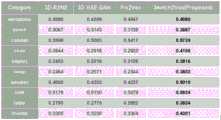
图4是草图数据集上各种基于单视图的3D重建模型的比较表;Figure 4 is a comparison table of various single-view based 3D reconstruction models on the sketch dataset;
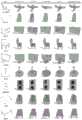
图5是不同3D重建方法的可视效果比较示意图;Fig. 5 is a schematic diagram of comparison of visual effects of different 3D reconstruction methods;
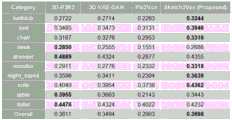
图6是各种基于单视图的3D重建网络的比较示意图。Fig. 6 is a comparative schematic diagram of various single-view based 3D reconstruction networks.
具体实施方式Detailed ways
为使本发明的目的、技术方案和优点更加清楚,下面将结合附图对本发明作进一步地详细描述。In order to make the object, technical solution and advantages of the present invention clearer, the present invention will be further described in detail below in conjunction with the accompanying drawings.
本发明实施例的一种基于多特征融合的手绘三维重建方法,如图1所示,主要分为六部分的步骤进行:首先基于手绘草图的特性,对输入草图进行预处理,以便后续操作并缩短运算时间;接着引入了SktConv模块和SktPoint模块,前者直接从草图图像中提取像素级特征图,后者则先从草图中抽样出2D点云,随后再提取出点级特征图。以上两种特征图将共同输入SAFusion融合模块,计算数据间的相互依赖以捕获关键信息,通过融合两种特征图的差异来增强包含的上下文信息。然后,3D-Decoder模块根据融合后的特征,生成初步的3D模型。最后,由3D-Refiner模块进一步优化细节,纠正重建差错的部分,由此获得精致的3D模型。A hand-drawn 3D reconstruction method based on multi-feature fusion in the embodiment of the present invention, as shown in Figure 1, is mainly divided into six steps: first, based on the characteristics of the hand-drawn sketch, the input sketch is preprocessed for subsequent operations and Shorten the calculation time; then introduce the SktConv module and the SktPoint module, the former directly extracts the pixel-level feature map from the sketch image, and the latter first samples the 2D point cloud from the sketch, and then extracts the point-level feature map. The above two feature maps will be jointly input into the SAFusion fusion module to calculate the interdependence between data to capture key information, and enhance the contained context information by fusing the differences between the two feature maps. Then, the 3D-Decoder module generates a preliminary 3D model based on the fused features. Finally, the 3D-Refiner module further optimizes the details and corrects the reconstruction errors, thereby obtaining an exquisite 3D model.
以下对各部分实施步骤进行详细说明。The implementation steps of each part are described in detail below.
S1:使用VGG-16网络,构建多层次卷积模块作为编码器,用于捕获二值草图的像素特征,并输出像素级特征图。S1: Using the VGG-16 network, construct a multi-level convolution module as an encoder to capture the pixel features of binary sketches and output pixel-level feature maps.
为了方便网络训练和推断,首先对草图进行预处理,获得的二值图像和2D点云,之后将用作特征提取。In order to facilitate network training and inference, the sketches are first preprocessed, and the obtained binary images and 2D point clouds will be used as feature extraction later.
考虑到草图可能以不同的尺寸,出现在画布的随意位置,为了排除无意义的缺省背景的干扰,本发明选择沿着草图物体的包围框进行裁剪,并将留下的区域重新调整至分辨率为224x224像素。模糊不清的线条会影响网络对草图的理解,预设固定的阈值,将草图中灰度低于50的像素看做前景,高于50则看做背景,分别将前景和背景的灰度调整至255和0,使草图转换为二值图像。随后,二值图像将输入SktConv模块进行特征提取。Considering that sketches may appear in random positions on the canvas in different sizes, in order to eliminate the interference of meaningless default backgrounds, the present invention chooses to crop along the bounding box of the sketch object, and readjusts the remaining area to the resolution The rate is 224x224 pixels. Fuzzy lines will affect the network's understanding of the sketch. A fixed threshold is preset, and pixels with a gray level below 50 in the sketch are regarded as the foreground, and pixels higher than 50 are regarded as the background, and the gray levels of the foreground and background are adjusted separately. to 255 and 0 to convert the sketch to a binary image. Subsequently, the binary image will be input into the SktConv module for feature extraction.
同时,框架中的SktPoint模块需要输入草图的代表性点云。为此,本发明以二值草图中的前景像素点作为2D点云,并从中采样出子集。相较于随机采样的方式,本发明采用的最远点采样法能更均匀地分布在草图上,最大限度地保留蕴含的形状特征。Meanwhile, the SktPoint module in the framework requires a representative point cloud of the input sketch. For this reason, the present invention uses the foreground pixel points in the binary sketch as a 2D point cloud, and samples a subset therefrom. Compared with the random sampling method, the farthest point sampling method adopted by the present invention can be more evenly distributed on the sketch, and the implied shape features can be preserved to the greatest extent.
多层次卷积模块,即SktConv模块,作为编码器,负责捕获二值草图的像素特征。图3展示了提出的SktConv模块所用的详细配置。The multi-level convolution module, namely the SktConv module, acts as an encoder and is responsible for capturing the pixel features of the binary sketch. Figure 3 shows the detailed configuration used by the proposed SktConv module.
SktConv模块的结构是基于VGG-16网络进行扩展,其前四组卷积模块采用预定义模型,而后紧接着两组自定义的模型,通过增加网络的深度来学习并提取层级特征。The structure of the SktConv module is extended based on the VGG-16 network. The first four sets of convolution modules use predefined models, followed by two sets of custom models to learn and extract hierarchical features by increasing the depth of the network.
本发明在初始化预定义模型时,保留VGG-16在ImageNet数据集上预训练后的模型参数,以此来加速其他参数收敛,缩减训练时间。对于前四组卷积模块,每组预定义模块都包含两个3x3的小尺度卷积层以及相应的批规范化层、Relu激活函数和最大池化层,每次经过池化层都将特征图的尺寸缩小至一半。本发明首先从224x224x3的手绘草图中提取出28x28x512的中间特征图。When initializing the predefined model, the present invention retains the model parameters pre-trained by VGG-16 on the ImageNet data set, so as to accelerate the convergence of other parameters and reduce the training time. For the first four sets of convolution modules, each set of predefined modules contains two 3x3 small-scale convolution layers and the corresponding batch normalization layer, Relu activation function and maximum pooling layer. is reduced to half the size. The present invention first extracts a 28x28x512 intermediate feature map from a 224x224x3 hand-drawn sketch.
紧接着,将中间特征图输入两组自定义模块。两组自定义模块包含核大小为3x3的2D卷积层、批规范化层、Relu激活函数层,卷积层的输出通道数分别为512和256。卷积计算量与输入草图的边长平方成正比,考虑高分辨率的特征图对算力和内存的负担,在整个模块最后,加入步长为3的最大池化层,凝聚关键特征的同时压缩后续计算量。经过最大池化层后特征图会缩小至原来的1/3,最终输出像素级特征图
而在解码阶段,这些像素特征图将会被用于融合并重建三维模型。In the decoding stage, these pixel feature maps will be used to fuse and reconstruct the 3D model.
S2:添加2D点云处理模块,先从草图中抽样出2D点云,随后再提取出点级特征图
本发明的2D点云处理模块,即SktPoint模块,从均匀取样的2D点集中捕获草图隐含的几何特征,更能反映目标模型的3D结构。The 2D point cloud processing module of the present invention, that is, the SktPoint module, captures the hidden geometric features of the sketch from the uniformly sampled 2D point set, and can better reflect the 3D structure of the target model.
草图的线条是由图像中一些连续的像素点构成,依据像素的位置,使用网格将草图像素点转变为坐标形式的草图点集


取样后的2D点集可表示为


S3:利用隐含草图语义信息和几何信息的像素级和点级特征图构建SAFusion模块,根据两种模态的特征图之间的依赖关系,捕获互补的语义线索,用于将两者整合为统一的特征形式。S3: The SAFusion module is constructed using the pixel-level and point-level feature maps that imply the semantic information and geometric information of the sketch, and capture complementary semantic clues according to the dependencies between the feature maps of the two modalities, which are used to integrate the two into one Uniform feature form.
利用隐含草图语义信息和几何信息的像素级和点级特征图,本实施例提出了一个特征融合模块,SAFusion。Using the pixel-level and point-level feature maps that imply semantic information and geometric information of sketches, this embodiment proposes a feature fusion module, SAFusion.
为此,本发明直接采用Transformer网络中的自注意机制。在融合多模态数据之前,需要先将提取的特征图都转变为相同的形式。将像素级特征图


如图2所示的SAFusion 模型的结构:由六个多头注意力模块组成(图中省略了其中四个),每个模块利用三个全连接层和Scaled Dot-Product Attention层计算输入向量之间的相关性。The structure of the SAFusion model shown in Figure 2: It consists of six multi-head attention modules (four of which are omitted in the figure), each module uses three fully connected layers and a Scaled Dot-Product Attention layer to calculate the relationship between input vectors relevance.
对于输出的特征矩阵


具体而言,首先将特征矩阵送入三个全连接层,分别转化为Query矩阵、Key矩阵和Value矩阵。为了加速计算,将Query、Key、Value矩阵中的每个向量分成


首先,本实施例使用行向量


随后,使用softmax函数进行归一化,得到权重系数

最后,加权累和所有的value值来生成相应的输出向量:Finally, all values are weighted and accumulated to generate the corresponding output vector:

在本实施例的应用中,SAFusion模块由六个相同的Multi-head Attention模块连续排列而成,如图2所示。每个Multi-head Attention模块由三个全连接层组成,将输入值线性映射到Query、Key和Value矩阵中,其中矩阵


S4:构建基于3D反卷积的解码模块,用于将2D特征图中的信息转换为3D体积形式。S4: Build a 3D deconvolution-based decoding module to convert information in the 2D feature map into a 3D volumetric form.
3D Transposed Convolutional Decoder模块(3D-Decoder)负责将2D特征图中的信息转换为3D体积形式,并将3D模型的体素分辨率逐步提高到
首先,融合后的特征矩阵


S5:采用3D形式的U-Net网络变型,保留3D模型中准确的局部区域,优化重建结果的细节。S5: U-Net network variant in 3D form is used to retain accurate local areas in the 3D model and optimize the details of the reconstruction results.
3D-Decoder模块通常生成的是粗粒度的3D体素表示。U-Net最初是为医学图像分割而设计的,受其启发,在本发明中使用了3D-Refiner,一个细化模块用以提高3D重建的质量。The 3D-Decoder module usually generates a coarse-grained 3D voxel representation. Inspired by U-Net originally designed for medical image segmentation, 3D-Refiner, a refinement module, is used in this invention to improve the quality of 3D reconstruction.
如图3所示,它遵循带有U-net连接的3D编码器-解码器的设计思路,可以保留生成3D模型中的局部结构。3D-Refiner模块中的编码器由三个3D卷积模块组成,核的大小为


3D-Refiner模块中的解码器采用对称结构,由三个3D反卷积模块组成。但是在最后一个反卷积层之后,只连接了一个sigmoid激活函数用于归一化体素的概率。编码器提取的语义信息与残差短接结构中保留的局部信息相结合。然后在解码阶段,3D反卷积层逐步扩大3D模型的尺寸,于是重建结果可以保留准确的局部区域。The decoder in the 3D-Refiner module adopts a symmetrical structure and consists of three 3D deconvolution modules. But after the last deconvolution layer, only a sigmoid activation function is connected to normalize the voxel probabilities. The semantic information extracted by the encoder is combined with the local information preserved in the residual short-circuit structure. Then in the decoding stage, the 3D deconvolution layer gradually expands the size of the 3D model, so that the reconstruction result can retain accurate local regions.
粗粒度的3D模型被导入到3D-Refiner模块中,用于优化细节,如物体表面的凹陷或偏离的异常值等。最终,重建出3D目标模型
在以往的重建网络中,习惯使用体素的二元交叉熵的平均值作为损失函数,来计算重建后的3D模型与真实3D模型之间的差异。但重建后物体的体素占整体空间中的的比例较低,而且大部分存在于内部。于是,使用二元交叉熵往往会低估重建概率。In the previous reconstruction network, it is customary to use the average value of the binary cross-entropy of voxels as the loss function to calculate the difference between the reconstructed 3D model and the real 3D model. However, the voxels of the reconstructed object account for a relatively low proportion of the overall space, and most of them exist in the interior. Thus, using binary cross-entropy tends to underestimate the reconstruction probability.
为了应对3D体积表示的稀疏性,本实施例采用了更适合于优化交并比(IoU)的Mean Squared 0 Cross-Entropy损失函数(MSFCEL)。损失的计算如下:将目标3D模型所在空间划分为填充体素Vp和未填充体素Vn这两类,假设对应的数量分别为


FPCE是定义在未填充体素上的错误预测的正例交叉熵,而FNCE是定义在填充体素上的假负例交叉熵。FPCE is the wrongly predicted positive cross-entropy defined on unfilled voxels, while FNCE is the false negative cross-entropy defined on filled voxels.

从公式中可以看出,MSFCEL由FPCE与FNCE间的最小和及最小差相加而成,将同时最小化填充体素的损失和未填充体素的损失,从而平衡它们的预测准确率。It can be seen from the formula that MSFCEL is formed by adding the minimum sum and minimum difference between FPCE and FNCE, which will minimize the loss of filled voxels and the loss of unfilled voxels at the same time, thus balancing their prediction accuracy.
本发明实施例通过以下方法进行评估指标:The embodiment of the present invention evaluates indicators by the following methods:
首先,设置一个阈值来将预测的3D模型中的体素分类为填充体素或未填充体素。First, a threshold is set to classify voxels in the predicted 3D model as filled or unfilled voxels.
然后将交并比(IoU)用作评估指标,其定义为:Then we use intersection-over-union (IoU) as the evaluation metric, which is defined as:

其中


IoU指标用于评估两个3D模型之间的相似性。 IoU 值越高,重建结果越好。The IoU metric is used to evaluate the similarity between two 3D models. The higher the IoU value, the better the reconstruction result.
为了评估所提出的Sketch2Vox的重建效果,本发明与多个最先进的3D重建网络进行了比较,包括3D-R2N2、3D-VAE-GAN和Pix2Vox。第一种3D-R2N2方法,嵌入LSTM模块,在解码前顺序更新特征单元的状态。第二种3D-VAE-GAN方法,采用对抗架构来生成可靠的结果。第三种Pix2Vox方法,其中添加了一个融合模块,可以在不同的粗糙3D模型中为每个部件选择高质量的重建。每个网络都使用相同的数据集和实验设置进行训练。本发明在两个数据集上逐一比较了这些方法的3D重建性能。To evaluate the reconstruction effect of the proposed Sketch2Vox, the present invention is compared with several state-of-the-
如图4所示的草图数据集上各种基于单视图的3D重建模型的比较表,本发明所提出的Sketch2Vox方法具有最佳的重建表现,并且在所有测试类别上都大大优于所有同类方法。具体来说,同类3D重建方法的IoU只在32.3%到33.05%之间,不如本发明的方法。正如表中所示,当面对包含细长结构的物体类别时,例如桌子、椅子、或是落地灯,本发明提出的方法所重建的结果显着提高,最多达13.5%。The comparison table of various single-view-based 3D reconstruction models on the sketch data set shown in Figure 4, the Sketch2Vox method proposed by the present invention has the best reconstruction performance, and is greatly superior to all similar methods in all test categories . Specifically, the IoU of similar 3D reconstruction methods is only between 32.3% and 33.05%, which is not as good as the method of the present invention. As shown in the table, when facing object categories containing slender structures, such as tables, chairs, or floor lamps, the reconstruction results of the proposed method in the present invention are significantly improved, up to 13.5%.
为了直观体现不同方法重建的3D模型,本发明在图5中展示了几个实例。如图中展示,同类方法的重建结果在细节方面不如所提出的方法。例如,第一排的飞机,第四排的椅子,或是最后一排的桌子,其他方法的结果表现出明显的部分结构缺失,而本发明的方法解决了上述缺陷。此外,与同类方法相比,本发明所提出的模型在处理物体的平坦区域时,展现了更好的重建效果。In order to visualize the 3D models reconstructed by different methods, the present invention shows several examples in FIG. 5 . As shown in the figure, the reconstruction results of similar methods are inferior to the proposed method in terms of details. For example, the first row of airplanes, the fourth row of chairs, or the last row of tables, the results of other methods show obvious partial structure missing, and the method of the present invention solves the above-mentioned defects. In addition, compared with similar methods, the proposed model in the present invention exhibits better reconstruction results when dealing with flat regions of objects.
图6中展示了在ModelNet数据集上的平均IoU。总体而言,本发明所提出的Sketch2Vox 方法优于其他最先进的方法,在IoU这一指标上有
以上所揭露的仅为本发明一种较佳实施例而已,当然不能以此来限定本发明之权利范围,因此依本发明权利要求所作的等同变化,仍属本发明所涵盖的范围。The above disclosure is only a preferred embodiment of the present invention, which certainly cannot limit the scope of rights of the present invention. Therefore, equivalent changes made according to the claims of the present invention still fall within the scope of the present invention.
Claims (6)
Translated fromChinese


Priority Applications (1)
| Application Number | Priority Date | Filing Date | Title |
|---|---|---|---|
| CN202310235367.0ACN116363304A (en) | 2023-03-13 | 2023-03-13 | A hand-painted 3D reconstruction method based on multi-feature fusion |
Applications Claiming Priority (1)
| Application Number | Priority Date | Filing Date | Title |
|---|---|---|---|
| CN202310235367.0ACN116363304A (en) | 2023-03-13 | 2023-03-13 | A hand-painted 3D reconstruction method based on multi-feature fusion |
Publications (1)
| Publication Number | Publication Date |
|---|---|
| CN116363304Atrue CN116363304A (en) | 2023-06-30 |
Family
ID=86934849
Family Applications (1)
| Application Number | Title | Priority Date | Filing Date |
|---|---|---|---|
| CN202310235367.0APendingCN116363304A (en) | 2023-03-13 | 2023-03-13 | A hand-painted 3D reconstruction method based on multi-feature fusion |
Country Status (1)
| Country | Link |
|---|---|
| CN (1) | CN116363304A (en) |
Cited By (4)
| Publication number | Priority date | Publication date | Assignee | Title |
|---|---|---|---|---|
| CN118262013A (en)* | 2024-03-20 | 2024-06-28 | 湖南芒果融创科技有限公司 | A method for generating cartoon images based on variational autoencoder and related equipment |
| CN118470072A (en)* | 2024-07-10 | 2024-08-09 | 合肥综合性国家科学中心人工智能研究院(安徽省人工智能实验室) | ViT-based electron microscope image registration method |
| CN118781298A (en)* | 2024-09-13 | 2024-10-15 | 江南大学 | Deep intelligent 3D reconstruction method based on multi-view sampling and progressive generation |
| CN119672219A (en)* | 2024-11-29 | 2025-03-21 | 华中科技大学 | A lunar lava tube three-dimensional modeling method and system |
- 2023
- 2023-03-13CNCN202310235367.0Apatent/CN116363304A/enactivePending
Cited By (5)
| Publication number | Priority date | Publication date | Assignee | Title |
|---|---|---|---|---|
| CN118262013A (en)* | 2024-03-20 | 2024-06-28 | 湖南芒果融创科技有限公司 | A method for generating cartoon images based on variational autoencoder and related equipment |
| CN118262013B (en)* | 2024-03-20 | 2025-08-12 | 湖南芒果融创科技有限公司 | Cartoon image generation method based on variation self-encoder and related equipment |
| CN118470072A (en)* | 2024-07-10 | 2024-08-09 | 合肥综合性国家科学中心人工智能研究院(安徽省人工智能实验室) | ViT-based electron microscope image registration method |
| CN118781298A (en)* | 2024-09-13 | 2024-10-15 | 江南大学 | Deep intelligent 3D reconstruction method based on multi-view sampling and progressive generation |
| CN119672219A (en)* | 2024-11-29 | 2025-03-21 | 华中科技大学 | A lunar lava tube three-dimensional modeling method and system |
Similar Documents
| Publication | Publication Date | Title |
|---|---|---|
| CN112396703B (en) | Reconstruction method of single-image three-dimensional point cloud model | |
| CN116363304A (en) | A hand-painted 3D reconstruction method based on multi-feature fusion | |
| CN110390638B (en) | High-resolution three-dimensional voxel model reconstruction method | |
| Fang et al. | Pyramid scene parsing network in 3D: Improving semantic segmentation of point clouds with multi-scale contextual information | |
| CN113822993B (en) | A digital twin method and system based on 3D model matching | |
| WO2024148732A1 (en) | Reconstruction method and apparatus for relightable implicit human body model | |
| CN110827295A (en) | 3D Semantic Segmentation Method Based on Coupling of Voxel Model and Color Information | |
| CN116958453B (en) | Three-dimensional model reconstruction method, device and medium based on nerve radiation field | |
| CN111583384A (en) | Hair reconstruction method based on adaptive octree hair convolutional neural network | |
| CN117115359A (en) | Multi-view power grid three-dimensional space data reconstruction method based on depth map fusion | |
| CN115131245A (en) | Point cloud completion method based on attention mechanism | |
| CN112819951A (en) | Three-dimensional human body reconstruction method with shielding function based on depth map restoration | |
| CN117994508A (en) | Method for reconstructing NeRF three-dimensional target object model based on semantic segmentation | |
| CN118570418B (en) | Three-dimensional consistency face generation method based on nerve symbol distance field | |
| CN112330825A (en) | Three-dimensional model retrieval method based on two-dimensional image information | |
| CN117372644A (en) | Three-dimensional content generation method based on period implicit representation | |
| CN103383778B (en) | A kind of three-dimensional cartoon human face generating method and system | |
| Jiang | A survey on text-to-3d contents generation in the wild | |
| CN114255328B (en) | A 3D reconstruction method of ancient artifacts based on single view and deep learning | |
| CN116188894A (en) | Neural rendering-based point cloud pre-training method, system, device and medium | |
| CN113808006B (en) | Method and device for reconstructing three-dimensional grid model based on two-dimensional image | |
| CN115018989A (en) | 3D dynamic reconstruction method, training device and electronic equipment based on RGB-D sequence | |
| CN115375839A (en) | A multi-view hair modeling method and system based on deep learning | |
| CN119000565A (en) | Spectral reflectivity image acquisition method and system based on eigen decomposition | |
| CN116883524A (en) | Image generation model training, image generation method and device and computer equipment |
Legal Events
| Date | Code | Title | Description |
|---|---|---|---|
| PB01 | Publication | ||
| PB01 | Publication | ||
| SE01 | Entry into force of request for substantive examination | ||
| SE01 | Entry into force of request for substantive examination |