CN116128811A - A prediction method for fundus atrophy arc area change based on recurrent neural network - Google Patents
A prediction method for fundus atrophy arc area change based on recurrent neural networkDownload PDFInfo
- Publication number
- CN116128811A CN116128811ACN202211621638.8ACN202211621638ACN116128811ACN 116128811 ACN116128811 ACN 116128811ACN 202211621638 ACN202211621638 ACN 202211621638ACN 116128811 ACN116128811 ACN 116128811A
- Authority
- CN
- China
- Prior art keywords
- atrophy
- arc
- output
- prediction
- input
- Prior art date
- Legal status (The legal status is an assumption and is not a legal conclusion. Google has not performed a legal analysis and makes no representation as to the accuracy of the status listed.)
- Pending
Links
Images


Classifications
- A—HUMAN NECESSITIES
- A61—MEDICAL OR VETERINARY SCIENCE; HYGIENE
- A61B—DIAGNOSIS; SURGERY; IDENTIFICATION
- A61B3/00—Apparatus for testing the eyes; Instruments for examining the eyes
- A61B3/10—Objective types, i.e. instruments for examining the eyes independent of the patients' perceptions or reactions
- A61B3/12—Objective types, i.e. instruments for examining the eyes independent of the patients' perceptions or reactions for looking at the eye fundus, e.g. ophthalmoscopes
- A—HUMAN NECESSITIES
- A61—MEDICAL OR VETERINARY SCIENCE; HYGIENE
- A61B—DIAGNOSIS; SURGERY; IDENTIFICATION
- A61B3/00—Apparatus for testing the eyes; Instruments for examining the eyes
- A61B3/10—Objective types, i.e. instruments for examining the eyes independent of the patients' perceptions or reactions
- A61B3/14—Arrangements specially adapted for eye photography
- G—PHYSICS
- G06—COMPUTING OR CALCULATING; COUNTING
- G06N—COMPUTING ARRANGEMENTS BASED ON SPECIFIC COMPUTATIONAL MODELS
- G06N3/00—Computing arrangements based on biological models
- G06N3/02—Neural networks
- G06N3/08—Learning methods
- G—PHYSICS
- G06—COMPUTING OR CALCULATING; COUNTING
- G06T—IMAGE DATA PROCESSING OR GENERATION, IN GENERAL
- G06T3/00—Geometric image transformations in the plane of the image
- G06T3/14—Transformations for image registration, e.g. adjusting or mapping for alignment of images
- G—PHYSICS
- G06—COMPUTING OR CALCULATING; COUNTING
- G06T—IMAGE DATA PROCESSING OR GENERATION, IN GENERAL
- G06T7/00—Image analysis
- G06T7/0002—Inspection of images, e.g. flaw detection
- G06T7/0012—Biomedical image inspection
- G—PHYSICS
- G06—COMPUTING OR CALCULATING; COUNTING
- G06T—IMAGE DATA PROCESSING OR GENERATION, IN GENERAL
- G06T7/00—Image analysis
- G06T7/10—Segmentation; Edge detection
- G06T7/11—Region-based segmentation
- G—PHYSICS
- G06—COMPUTING OR CALCULATING; COUNTING
- G06T—IMAGE DATA PROCESSING OR GENERATION, IN GENERAL
- G06T2207/00—Indexing scheme for image analysis or image enhancement
- G06T2207/20—Special algorithmic details
- G06T2207/20081—Training; Learning
- G—PHYSICS
- G06—COMPUTING OR CALCULATING; COUNTING
- G06T—IMAGE DATA PROCESSING OR GENERATION, IN GENERAL
- G06T2207/00—Indexing scheme for image analysis or image enhancement
- G06T2207/20—Special algorithmic details
- G06T2207/20084—Artificial neural networks [ANN]
- G—PHYSICS
- G06—COMPUTING OR CALCULATING; COUNTING
- G06T—IMAGE DATA PROCESSING OR GENERATION, IN GENERAL
- G06T2207/00—Indexing scheme for image analysis or image enhancement
- G06T2207/30—Subject of image; Context of image processing
- G06T2207/30004—Biomedical image processing
- G06T2207/30041—Eye; Retina; Ophthalmic
Landscapes
- Engineering & Computer Science (AREA)
- Health & Medical Sciences (AREA)
- Life Sciences & Earth Sciences (AREA)
- Physics & Mathematics (AREA)
- Theoretical Computer Science (AREA)
- General Health & Medical Sciences (AREA)
- General Physics & Mathematics (AREA)
- Biophysics (AREA)
- Biomedical Technology (AREA)
- Medical Informatics (AREA)
- Molecular Biology (AREA)
- Veterinary Medicine (AREA)
- Computer Vision & Pattern Recognition (AREA)
- Public Health (AREA)
- Surgery (AREA)
- Ophthalmology & Optometry (AREA)
- Animal Behavior & Ethology (AREA)
- Heart & Thoracic Surgery (AREA)
- Radiology & Medical Imaging (AREA)
- Quality & Reliability (AREA)
- Nuclear Medicine, Radiotherapy & Molecular Imaging (AREA)
- Artificial Intelligence (AREA)
- Computational Linguistics (AREA)
- Data Mining & Analysis (AREA)
- Evolutionary Computation (AREA)
- Computing Systems (AREA)
- General Engineering & Computer Science (AREA)
- Mathematical Physics (AREA)
- Software Systems (AREA)
- Rehabilitation Tools (AREA)
Abstract
Description
Translated fromChinese技术领域Technical Field
本发明涉及一种基于递归神经网络的眼底萎缩弧区域变化预测方法,属于图像处理技术领域。The invention relates to a method for predicting changes in fundus atrophy arc regions based on a recursive neural network, and belongs to the technical field of image processing.
背景技术Background Art
眼底视盘萎缩弧是一种反应视网膜层和视网膜色素上皮萎缩的临床发现,其与儿童青少年近视、青光眼视网膜脱落和密集型白内障高度相关,因此视盘萎缩弧可以作为上述眼病的生物标志物。根据世界卫生组织的研究报告显示,我国近视患者人数多达6亿,青少年近视率居世界第一,儿童青少年中高度近视比例呈上升趋势。目前已有研究表明,视盘萎缩弧的面积与近视程度呈现正相关,因此若能预测未来视盘萎缩弧的变化,则可以实施干预以防止近视的快速发展。The optic disc atrophy arc is a clinical finding that reflects the atrophy of the retinal layer and retinal pigment epithelium. It is highly correlated with myopia in children and adolescents, retinal detachment in glaucoma, and dense cataracts. Therefore, the optic disc atrophy arc can be used as a biomarker for the above eye diseases. According to a research report by the World Health Organization, there are as many as 600 million myopia patients in my country, and the myopia rate among adolescents ranks first in the world. The proportion of high myopia among children and adolescents is on the rise. Current studies have shown that the area of the optic disc atrophy arc is positively correlated with the degree of myopia. Therefore, if the changes in the optic disc atrophy arc can be predicted in the future, intervention can be implemented to prevent the rapid development of myopia.
现有针对于视盘萎缩弧预测的研究,主要是预测未来是否会出现视盘萎缩弧。而当前研究主要是进行分类操作,并不能细化到像素级别的预测。现有的预测方法主要利用前一时刻的特征来预测当前时刻的结果,对于历史时刻的特征并不能够充分的利用。若能充分利用历史检查的眼底图像预测出未来的视盘萎缩弧,并与已有眼底图像的萎缩弧分割结果对比,根据萎缩弧面积和宽度的变化能够做到早发现、早干预、早治疗,对于近视防控具有十分重要的意义。Existing research on the prediction of optic disc atrophy arc mainly focuses on predicting whether optic disc atrophy arc will occur in the future. However, current research mainly performs classification operations and cannot be refined to pixel-level predictions. Existing prediction methods mainly use the features of the previous moment to predict the results of the current moment, and cannot fully utilize the features of historical moments. If we can make full use of the fundus images of historical examinations to predict the future optic disc atrophy arc and compare it with the atrophy arc segmentation results of existing fundus images, early detection, early intervention, and early treatment can be achieved based on the changes in the area and width of the atrophy arc, which is of great significance for the prevention and control of myopia.
发明内容Summary of the invention
针对于现有视盘萎缩弧预测方法只进行分类而不能细化到像素级预测,且不能充分利用历史数据特征的问题,本发明的主要目的是通过提出一种基于递归神经网络的眼底萎缩弧区域变化预测方法,采用卷积长短期记忆递归神经网络,并在网络中加入了注意力机制,来提升对眼底萎缩弧区域变化的预测准确度,从而有针对性地辅助近视预测和防控。In view of the problems that the existing optic disc atrophy arc prediction methods only perform classification but cannot be refined to pixel level prediction and cannot make full use of historical data characteristics, the main purpose of the present invention is to propose a method for predicting changes in fundus atrophy arc areas based on recursive neural networks, adopt convolutional long short-term memory recursive neural networks, and add an attention mechanism to the network to improve the prediction accuracy of fundus atrophy arc area changes, thereby assisting myopia prediction and prevention in a targeted manner.
本发明的目的是通过以下技术方案实现的:The objective of the present invention is achieved through the following technical solutions:
本发明公开的一种基于递归神经网络的眼底萎缩弧区域变化预测方法,本方法在进行预测网络训练前进行配准操作,排除不同时刻图像采集角度和分辨率的影响,能够进行不同时刻萎缩弧面积的比较,提升预测的准确性;采用特征提取器输出的特征作为输入,网络训练时加入对于输入特征和输出特征的相似性约束,解决预测时序序列输入数据缺失的问题,降低数据带来的影响;通过在预测网络中加入注意力机制,充分利用历史输入特征,保持输入时间因果性,进一步提升网络预测性能;采用萎缩弧区域预测模型,实现萎缩弧未来区域像素级预测,提升对眼底萎缩弧区域变化的预测准确度,有针对性地辅助近视预测和防控。The present invention discloses a method for predicting changes in fundus atrophic arc areas based on a recursive neural network. The method performs a registration operation before training the prediction network to eliminate the influence of image acquisition angles and resolutions at different times, and can compare the areas of atrophic arcs at different times, thereby improving the accuracy of prediction. The features output by a feature extractor are used as input, and similarity constraints on input features and output features are added during network training to solve the problem of missing input data of a prediction time series and reduce the impact of data. An attention mechanism is added to the prediction network to fully utilize historical input features, maintain input time causality, and further improve network prediction performance. An atrophic arc area prediction model is used to achieve pixel-level prediction of future atrophic arc areas, thereby improving the prediction accuracy of changes in fundus atrophic arc areas and assisting in myopia prediction and prevention in a targeted manner.
本发明公开了一种基于递归神经网络的眼底萎缩弧区域变化预测方法,包括以下步骤:The present invention discloses a method for predicting changes in fundus atrophy arc regions based on a recurrent neural network, comprising the following steps:
步骤1:对历史图像进行配准操作,构建数据集并提取感兴趣区域;Step 1: Perform registration operations on historical images, build a dataset and extract the region of interest;
步骤1.1、对于同一病人同只眼睛历年拍摄的眼底图像,以初始检查图像为基准,进行配准操作,输出配准后的图像,保证同一病人同只眼睛历年眼底图像的视盘位置与血管分布逐像素对应。Step 1.1: For fundus images of the same patient and the same eye taken over the years, the initial examination image is used as a reference to perform a registration operation, and the registered image is output to ensure that the optic disc position and the blood vessel distribution of the fundus images of the same patient and the same eye taken over the years correspond pixel by pixel.
步骤1.2、构建训练集、验证集和测试集,其中数据集为多组病人单眼历年临床采集的视网膜眼底图像序列。对于训练集和验证集,除了包含临床图像还包括医生进行的视盘和萎缩弧的标注,测试集数据无需医生进行标注。Step 1.2: Construct training sets, validation sets, and test sets, where the data sets are retinal fundus image sequences collected from multiple groups of patients' eyes over the years. For the training set and validation set, in addition to clinical images, they also include the annotations of the optic disc and atrophic arc by doctors, while the test set data does not require annotation by doctors.
步骤1.3、截取以视盘为中心的感兴趣区域,具体步骤如下:Step 1.3: Cut out the region of interest centered on the optic disc. The specific steps are as follows:
步骤1.3.1、采用步骤1.2构建的训练集和验证集,以图片为单位进行视盘和萎缩弧区域分割模型的训练与验证,其中训练时只采用训练集,根据验证集上结果选取验证集上损失最小的模型作为最终采用的分割模型。Step 1.3.1: Use the training set and validation set constructed in step 1.2 to train and validate the optic disc and atrophic arc region segmentation model on a picture-by-picture basis. Only the training set is used during training, and the model with the smallest loss on the validation set is selected as the final segmentation model based on the results on the validation set.
步骤1.3.2、利用步骤1.3.1中得到的模型对于所有图像进行视盘和萎缩弧区域分割。Step 1.3.2: Use the model obtained in step 1.3.1 to segment the optic disc and atrophic arc regions for all images.
步骤1.3.3、以病人单眼为组,将分割的视盘结果取并集,计算最小外切圆,得到圆心和半径。Step 1.3.3: Take the patient's eyes as a group, take the union of the segmented optic disc results, calculate the minimum circumscribed circle, and obtain the center and radius.
步骤1.3.4、根据步骤1.3.3得到的圆心和半径截取感兴趣区域,其中感兴趣区域的中心为圆心,边长为P倍半径的矩形,若截取的区域超出图像尺寸则进行补零操作。Step 1.3.4: According to the center and radius obtained in step 1.3.3, the region of interest is intercepted, where the center of the region of interest is the center of the circle and the side length is a rectangle of P times the radius. If the intercepted area exceeds the image size, zero padding is performed.
步骤1.4、将截取的图像尺寸变换到指定大小,缩放后图片的大小为H1*W1,由于后续网络训练时需要输入图像大小相同,因此将图像进行缩放操作。Step 1.4: Change the size of the captured image to the specified size. The size of the scaled image is H1*W1. Since the input image size needs to be the same during subsequent network training, the image is scaled.
步骤1.5、对步骤1.4得到的图片按照步骤1.2的数据集分组对图像进行分组得到后续使用的数据集。Step 1.5: Group the images obtained in step 1.4 according to the data set grouping in step 1.2 to obtain the data set used subsequently.
步骤2:采用步骤1得到的训练集和验证集,以图片为单位进行视盘和萎缩弧区域分割模型的训练与验证,根据验证集上的结果,选取验证集上损失最低的模型作为最终采用的分割模型。Step 2: Use the training set and validation set obtained in
步骤3:根据步骤2得到的分割模型,构建萎缩弧区域预测模型,并采用步骤1的数据集进行训练;Step 3: Based on the segmentation model obtained in
步骤3.1、将步骤2得到的分割模型去除最后的卷积层作为特征提取器,特征提取器输入为图像。Step 3.1: Remove the last convolutional layer from the segmentation model obtained in
步骤3.2、构建时序预测网络中的基本模块;Step 3.2: Construct the basic modules in the time series prediction network;
基本模块结构为卷积长短期记忆递归单元,如(1)所示:The basic module structure is a convolutional long short-term memory recursive unit, as shown in (1):

t表示时刻;X为基本模块的输入;H为隐藏状态;C为记忆单元状态;tan()和σ()表示不同的激活函数;其中σ为sigmoid函数;*表示卷积操作;°表示哈达玛积;W为模型参数,通过网络学习得到。t represents the time; X represents the input of the basic module; H represents the hidden state; C represents the memory unit state; tan() and σ() represent different activation functions; σ represents the sigmoid function; * represents the convolution operation; ° represents the Hadamard product; W represents the model parameter, which is obtained through network learning.
步骤3.3、构建注意力模块,充分利用历史时刻的信息;Step 3.3: Build an attention module to make full use of the information of historical moments;
对于t=1时不进行任何处理。对于t≠1的时刻,将时刻t看作查询时刻,前t-1个时刻均为历史时刻。首先将查询的特征


步骤3.4、构建时序预测网络的模块组合;Step 3.4, construct a module combination of the time series prediction network;
模块组合由Q个基本模块,Q/2-1个下采样和Q/2-1个上采样层和一个注意力模块组成。其中前Q/2个模块间通过下采样层连接,后Q/2个模块间通过上采样层连接,第Q/2个模块的输出通过注意力模块处理后输出的结果再输入到第Q/2+1个模块。对于后Q/2个模块,其隐藏状态和记忆单元状态为上一时刻的状态和当前时刻前面对应模块输出的隐藏状态和记忆单元状态相加构成。其中Q为偶数。The module combination consists of Q basic modules, Q/2-1 downsampling and Q/2-1 upsampling layers, and an attention module. The first Q/2 modules are connected through a downsampling layer, and the last Q/2 modules are connected through an upsampling layer. The output of the Q/2 module is processed by the attention module and then input into the Q/2+1 module. For the last Q/2 modules, their hidden state and memory unit state are the sum of the state at the previous moment and the hidden state and memory unit state output by the previous corresponding module at the current moment. Q is an even number.
步骤3.5、构建空间时序预测模型;Step 3.5, construct a spatial time series prediction model;
空间时序预测模型由T个模块组合构成,其中T表示序列组中历史时刻数,T个模块组合中的参数共享。对于时刻1,前一时刻的隐藏状态和记忆单元状态均置为零。对于其他时刻,前一时刻的隐藏状态和记忆单元状态的输出为当前时刻的输入。对于第一层基本模块,输入为步骤3.1输出的特征。对于其他层模块,输入为前一层输出经过下采样或上采样或注意力模块输出的特征图。The spatial time series prediction model is composed of T modules, where T represents the number of historical moments in the sequence group and the parameters in the T modules are shared. For
步骤3.6、构建分割端口;Step 3.6, construct the split port;
分割端口由一个卷积层和一个softmax激活层组成。分割端口的输入包含步骤3.1的输出特征和步骤3.5中最后一层基本模块输出的隐藏状态,输出视盘和萎缩弧的分割结果。The segmentation port consists of a convolutional layer and a softmax activation layer. The input of the segmentation port contains the output features of step 3.1 and the hidden state of the last basic module output in step 3.5, and outputs the segmentation results of the optic disc and the atrophic arc.
步骤3.7、训练萎缩弧区域预测模型;Step 3.7, training the shrinkage arc area prediction model;
网络采用步骤1得到的数据集进行训练,使用的损失函数由交叉熵损失,前景的Dice损失和均方误差损失组成。The network is trained using the dataset obtained in
交叉熵损失表示为

此时
Dice损失表示为

此时y,
均方误差表示为


最终构建的损失函数如(5)所示:The final constructed loss function is shown in (5):

验证集上损失最小的模型选取为最终采用的预测模型。The model with the smallest loss on the validation set is selected as the final prediction model.
步骤4:应用步骤3得到的模型,对实际临床数据进行预测,提升对眼底萎缩弧区域未来变化的预测准确度,优化近视防控及治疗方案;Step 4: Apply the model obtained in
步骤4.1、将临床数据进行配准和提取感兴趣区域操作,临床数据可以存在输入数据某一时刻的缺失。Step 4.1: align the clinical data and extract the region of interest. The clinical data may be missing at a certain moment of the input data.
步骤4.2、将处理后的数据输入步骤3得到的预测模型,输出未来的预测结果和当前时刻的视盘和萎缩弧分割结果,计算各个时刻的萎缩弧面积。对于存在输入数据缺失的情况,缺失时刻采用上一时刻的输出特征作为缺失时刻的输入。Step 4.2: Input the processed data into the prediction model obtained in
步骤4.3、将预测出未来时刻的萎缩弧面积与历史时刻的萎缩弧分割面积变化按照时间顺序绘成折线图,有针对性地辅助近视预测和防控。Step 4.3: Plot the predicted atrophy arc area at future moments and the changes in the atrophy arc segmentation area at historical moments into a line graph in chronological order to assist in myopia prediction and prevention in a targeted manner.
有益效果:Beneficial effects:
一种基于递归神经网络的眼底萎缩弧区域变化预测方法,与现有眼底萎缩弧预测网络相比,具有如下有益效果:A method for predicting changes in fundus atrophy arc regions based on a recurrent neural network has the following beneficial effects compared with the existing fundus atrophy arc prediction network:
1、本发明公开的一种基于递归神经网络的眼底萎缩弧区域变化预测方法,采用特征提取器输出的特征作为输入,网络训练时加入对于输入特征和输出特征的相似性约束,能够解决预测时序序列输入数据缺失的问题,降低数据带来的影响。1. The present invention discloses a method for predicting changes in fundus atrophy arc area based on a recursive neural network. The method uses the features output by a feature extractor as input, and adds similarity constraints on input features and output features during network training. This can solve the problem of missing input data in predicting time series and reduce the impact of data.
2、本发明公开的一种基于递归神经网络的眼底萎缩弧区域变化预测方法,通过在预测网络中加入注意力机制,充分利用历史输入特征,保持输入时间因果性,进一步提升网络预测性能。2. The present invention discloses a method for predicting changes in fundus atrophy arc area based on a recursive neural network, which adds an attention mechanism to the prediction network, makes full use of historical input features, maintains input time causality, and further improves network prediction performance.
3、本发明公开的一种基于递归神经网络的眼底萎缩弧区域变化预测方法,在进行预测网络训练前进行配准操作,排除不同时刻图像采集角度和分辨率的影响,能够进行不同时刻萎缩弧面积的比较,提升对萎缩弧区域变化预测的准确性。3. The present invention discloses a method for predicting changes in fundus atrophic arc areas based on a recursive neural network. A registration operation is performed before training the prediction network to eliminate the influence of image acquisition angles and resolutions at different times. This allows comparison of atrophic arc areas at different times, thereby improving the accuracy of predicting changes in atrophic arc areas.
4、本发明公开的一种基于递归神经网络的眼底萎缩弧区域变化预测方法,采用萎缩弧区域预测模型,既能够预测出未来时刻的视盘和萎缩弧区域,也能够对历史各时刻的输入进行视盘和萎缩弧区域的分割,将历史时刻和未来时刻的萎缩弧面积预测结果绘制成折线图,更利于医生通过萎缩弧增长趋势,有针对性地辅助近视预测和防控。4. The present invention discloses a method for predicting changes in fundus atrophy arc areas based on a recursive neural network. The method adopts an atrophy arc area prediction model, which can not only predict the optic disc and atrophy arc areas at future moments, but also segment the optic disc and atrophy arc areas for inputs at various historical moments, and plot the atrophy arc area prediction results at historical moments and future moments into a line graph, which is more conducive to doctors to assist in myopia prediction and prevention in a targeted manner through the growth trend of the atrophy arc.
附图说明BRIEF DESCRIPTION OF THE DRAWINGS
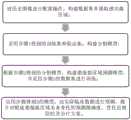
图1是本发明公开的一种基于递归神经网络的眼底萎缩弧区域变化预测方法的流程示意图;FIG1 is a flow chart of a method for predicting changes in fundus atrophy arc regions based on a recurrent neural network disclosed in the present invention;
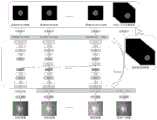
图2是本实施例中一种基于递归神经网络的眼底萎缩弧区域变化预测方法及实施例中视盘和萎缩弧分割模型的结构示意图;2 is a schematic diagram of the structure of a method for predicting changes in fundus atrophy arc regions based on a recursive neural network and a segmentation model for the optic disc and atrophy arc in the embodiment;
图3是本实施例中一种基于递归神经网络的眼底萎缩弧区域变化预测方法及实施例中视盘和萎缩弧区域未来预测模型的结构示意图;3 is a schematic diagram of a method for predicting changes in fundus atrophy arc regions based on a recursive neural network and a structural diagram of a future prediction model for the optic disc and atrophy arc regions in the embodiment;
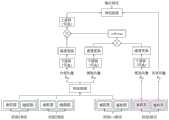
图4是本实施例中一种基于递归神经网络的眼底萎缩弧区域变化预测方法及实施例中视盘和萎缩弧区域未来预测模型中注意力模块的结构示意图;4 is a schematic diagram of the structure of an attention module in a future prediction model of the optic disc and atrophy arc area according to a method for predicting changes in the fundus atrophy arc area based on a recursive neural network in this embodiment;
图5是本实施例中一种基于递归神经网络的眼底萎缩弧区域变换预测方法及实施例中病人萎缩弧面积变化折线图。FIG. 5 is a method for predicting fundus atrophy arc area transformation based on a recursive neural network in this embodiment and a line graph of the change in atrophy arc area of a patient in the embodiment.
具体实施方式DETAILED DESCRIPTION
下面将结合附图和实施例对本发明加以详细说明。同时也叙述了本发明技术方案解决的技术问题及有益效果,需要指出的是,所描述的实施例仅旨在便于对本发明的理解,而对其不起任何限定作用。The present invention will be described in detail below with reference to the accompanying drawings and embodiments. The technical problems solved by the technical solution of the present invention and the beneficial effects are also described. It should be noted that the described embodiments are only intended to facilitate the understanding of the present invention and do not have any limiting effect on it.
本实施例阐述了本发明所述一种基于递归神经网络的眼底萎缩弧区域变化预测方法,采用一年级到五年级的眼底图像,预测第六年的视盘和萎缩弧区域,并根据变化曲线辅助医生优化近视防控及干预治疗方案。This embodiment describes a method for predicting changes in fundus atrophy arc areas based on a recursive neural network according to the present invention. Fundus images of students from grade one to grade five are used to predict the optic disc and atrophy arc areas of the sixth year, and doctors are assisted in optimizing myopia prevention and control and intervention treatment plans based on the change curves.
本实施例公开的一种基于递归神经网络的眼底萎缩弧区域变化预测方法,如图(1)所示,具体包括如下步骤The present embodiment discloses a method for predicting changes in fundus atrophy arc area based on a recurrent neural network, as shown in FIG. (1), which specifically includes the following steps:
步骤1:对历史图像进行配准操作,构建数据集并提取感兴趣区域;Step 1: Perform registration operations on historical images, build a dataset and extract the region of interest;
步骤1.1对于病人序列数据以初始检查眼底图像为基准进行配准操作,输出配准后的图像。采用基于Harris-PIIFD特征点的眼底图像配准方法。首先利用Harris检测器来检测图像的特征角点,并通过向中心缩进的方式剔除视网膜与黑色背景边界处的背景点。然后采用平均平方梯度的方法,为特征角点指派主方向。以特征角点为中心,提取该特征角点邻域内的PIIFD特征向量。接下来采用BBF算法,对序列数据组中不同特征角点提取的PIIFD特征向量进行匹配,非初始检查图像中的特征角点为基准点,初始检查图像对应的特征角点为匹配点。通过特征角点的主方向以及几何分布,对误匹配点剔除。对匹配点位置进行微调,搜索匹配点周围5*5像素范围内所有特征角点,比较基准点与匹配点的PIIFD特征向量,选取匹配点最高的点代替原匹配点。最后根据匹配点个数选择对非初始检查数据进行几何变换。至此,配准后的图像和基准图像的视盘以及血管在图像中的位置逐像素对应。Step 1.1 For the patient sequence data, the initial examination fundus image is used as the reference for registration operation, and the registered image is output. The fundus image registration method based on Harris-PIIFD feature points is adopted. First, the Harris detector is used to detect the feature corner points of the image, and the background points at the boundary between the retina and the black background are eliminated by indenting toward the center. Then, the main direction is assigned to the feature corner point by the average square gradient method. With the feature corner point as the center, the PIIFD feature vector in the neighborhood of the feature corner point is extracted. Next, the BBF algorithm is used to match the PIIFD feature vectors extracted from different feature corner points in the sequence data group. The feature corner points in the non-initial examination image are the reference points, and the feature corner points corresponding to the initial examination image are the matching points. The main direction and geometric distribution of the feature corner points are used to eliminate the mismatched points. The matching point position is fine-tuned, all feature corner points within the 5*5 pixel range around the matching point are searched, the PIIFD feature vectors of the reference point and the matching point are compared, and the point with the highest matching point is selected to replace the original matching point. Finally, the non-initial examination data is geometrically transformed according to the number of matching points. At this point, the positions of the optic disc and blood vessels in the registered image and the reference image correspond pixel by pixel.
步骤1.2构建训练集、验证集和测试集。临床收集的327组病人单眼一年级到六年级的所有临床检查的眼底图像为原始数据集,其中250组数据作为训练集,27组数据作为验证集,50组数据作为测试集。训练集和验证集包括医生对于采集图像标注的视盘和萎缩弧标签。Step 1.2: Construct training set, validation set, and test set. The original dataset is the fundus images of all clinical examinations of 327 patients from
步骤1.3截取以视盘为中心的感兴趣区域,具体步骤如下:Step 1.3: Cut out the region of interest centered on the optic disc. The specific steps are as follows:
步骤1.3.1采用步骤1.2中构建的训练集(1500张图像)和验证集(162张图像)以图片为单位进行视盘和萎缩弧区域分割模型的训练与验证。本实例中采用U-Net网络进行分割任务,U-Net结构如图2所示,由于分割网络的输入需要固定大小,因此将输入图像首先进行大小调整,将图像缩放到512*512*3,缩放时保持图像的长宽比不变,对于空白区域采取补零操作。网络共进行4次下采样操作和与之对应的4次上采样操作,网络中除去最后一个卷积操作中卷积核大小为1*1,其余的卷积核大小为3*3。网络的输入为配准后的图像,输出为分割的视盘和萎缩弧区域。其中训练时只采用训练集,根据验证集上结果选取验证集上损失最小的模型作为最终采用的分割模型。Step 1.3.1 uses the training set (1500 images) and validation set (162 images) constructed in step 1.2 to train and validate the optic disc and atrophic arc area segmentation model in units of pictures. In this example, the U-Net network is used for the segmentation task. The U-Net structure is shown in Figure 2. Since the input of the segmentation network needs to be of fixed size, the input image is first resized and scaled to 512*512*3. The aspect ratio of the image is kept unchanged during scaling, and zero padding is performed for blank areas. The network performs 4 downsampling operations and 4 corresponding upsampling operations. Except for the convolution kernel size of 1*1 in the last convolution operation in the network, the remaining convolution kernel sizes are 3*3. The input of the network is the registered image, and the output is the segmented optic disc and atrophic arc area. Only the training set is used for training, and the model with the smallest loss on the validation set is selected as the final segmentation model based on the results on the validation set.
步骤1.3.2利用步骤1.3.1中得到的模型对于所有图像,共1962张图像进行视盘和萎缩弧区域分割。Step 1.3.2 uses the model obtained in step 1.3.1 to segment the optic disc and atrophic arc area for all images, a total of 1962 images.
步骤1.3.3以病人单眼为组,将分割的视盘结果取并集,计算最小外切圆,得到圆心和半径。由于分割网络的输入进行了缩放操作,萎缩弧区域在原图上占比较小,缩放后会丢失信息,导致萎缩弧分割结果较差,但视盘分割结果较好,因此这里只采用视盘分割结果。Step 1.3.3: Take the patient's eyes as a group, take the union of the segmented optic disc results, calculate the minimum circumscribed circle, and obtain the center and radius. Since the input of the segmentation network is scaled, the atrophy arc area accounts for a small proportion of the original image, and information will be lost after scaling, resulting in poor atrophy arc segmentation results, but good optic disc segmentation results, so only the optic disc segmentation results are used here.
步骤1.3.4根据步骤1.3.3得到的圆心和半径截取感兴趣区域,感兴趣区域为正方形,其中感兴趣区域的中心为圆心,边长为5倍半径,若截取的区域超出图像尺寸则进行补零。Step 1.3.4 intercepts the region of interest according to the center and radius obtained in step 1.3.3. The region of interest is a square, where the center of the region of interest is the center of the circle and the side length is 5 times the radius. If the intercepted area exceeds the image size, zero padding is performed.
步骤1.4将截取的图像尺寸变换到指定大小,缩放后图片的大小为512*512,由于后续网络训练时需要输入图像大小相同,因此我们将图像进行缩放操作。Step 1.4 transforms the captured image size to the specified size. The size of the scaled image is 512*512. Since the input image size needs to be the same during subsequent network training, we scale the image.
步骤1.5:对步骤1.4得到的图片按照步骤1.2的数据集分组对图像进行分组得到后续使用的数据集。Step 1.5: Group the images obtained in step 1.4 according to the data set grouping in step 1.2 to obtain the data set used later.
步骤2:采用步骤1中训练集和验证集以图片为单位进行视盘和萎缩弧区域分割模型的训练与验证。这里分割模型与步骤1.3.1相同,均为U-Net结构,如图2所示。根据验证集上的结果,选取验证集上损失最小的模型作为最终采用的分割模型。Step 2: Use the training set and validation set in
步骤3:根据步骤2得到的分割模型,进行萎缩弧区域预测模型构建与训练。此模型采用一年级到五年级的眼底图像预测第六年的视盘和萎缩弧区域,并对前五年眼底图像进行视盘和萎缩弧分割,具体包含如下子步骤:Step 3: Based on the segmentation model obtained in
步骤3.1:将步骤2得到的分割模型去除最后的卷积层作为特征提取器,此部分参数在后续实验中固定。训练时将一年级到六年级眼底图像均经过此特征提取器,测试时只输入一年级到五年级眼底图像。Step 3.1: Remove the last convolutional layer from the segmentation model obtained in
步骤3.2:构建时序预测网络;如图3中虚线框所示结构,将特征提取器提取的特征(一年级到五年级提取的特征)按照时间顺序依次输入,每一时刻的特征均经过6个RNN模块,期间进行2次下采样,1次注意力操作和2次上采样操作。其中前3个模块间通过下采样层连接,后3个模块间通过上采样层连接,第3个模块的输出通过注意力模块处理后输出的结果再输入到第4个模块。对于后三个模块,其隐藏状态和记忆单元状态为上一时刻的状态和当前时刻前面对应模块输出的隐藏状态和记忆单元状态相加构成,对应模块连接如图3中曲线箭头所示。实例中优选的RNN模块为卷积长短期记忆递归单元(ConvLSTM),ConvLSTM具体公式如(1)所示:Step 3.2: Construct a time series prediction network; as shown in the dotted box in Figure 3, the features extracted by the feature extractor (features extracted from the first to fifth grades) are input in chronological order. The features at each moment pass through 6 RNN modules, during which 2 downsampling, 1 attention operation and 2 upsampling operations are performed. The first 3 modules are connected through a downsampling layer, and the last 3 modules are connected through an upsampling layer. The output of the third module is processed by the attention module and the output result is input to the fourth module. For the last three modules, their hidden state and memory unit state are the state of the previous moment and the hidden state and memory unit state output by the previous corresponding module at the current moment. The corresponding module connections are shown by the curved arrows in Figure 3. The preferred RNN module in the example is the convolutional long short-term memory recursive unit (ConvLSTM). The specific formula of ConvLSTM is shown in (1):

t表示时刻;X为基本模块的输入;H为隐藏状态;C为记忆单元状态;tan()和σ()表示不同的激活函数;其中σ为sigmoid函数;*表示卷积操作;°表示哈达玛积;W为模型参数,通过网络学习得到。t represents the time; X represents the input of the basic module; H represents the hidden state; C represents the memory unit state; tan() and σ() represent different activation functions; σ represents the sigmoid function; * represents the convolution operation; ° represents the Hadamard product; W represents the model parameter, which is obtained through network learning.
注意力模块中需要对于当前序列组输入的每一时刻特征进行记录,注意力模块的目的是对于当前时刻进行处理时,充分利用历史时刻的信息,具体操作如图4所示。对于t=1时不进行任何处理,对于t≠1的时刻,将时刻t看作查询时刻,前t-1个时刻均为历史时刻,首先将查询的特征


步骤3.3:构建分割端口;Step 3.3: Construct split ports;
分割端口由一个卷积层和一个softmax激活层组成。分割端口的输入为步骤2.1的输出特征(一年级到六年级编码后的特征)和步骤2.2中最后一层RNN模块输出的隐藏状态特征,输出视盘和萎缩弧的预测结果。The segmentation port consists of a convolutional layer and a softmax activation layer. The input of the segmentation port is the output features of step 2.1 (the features encoded from
步骤3.4:训练萎缩弧区域预测模型;Step 3.4: training the atrophy arc area prediction model;
网络使用的损失函数由交叉熵损失,前景的Dice损失和均方误差损失组成。The loss function used by the network consists of cross entropy loss, Dice loss for foreground, and mean squared error loss.
交叉熵损失表示为

此时
Dice损失表示为

此时y和
均方误差表示为


最终构建的损失函数如公式(5)所示:The final loss function is shown in formula (5):

取验证集上预测损失最小的模型为最终采用的预测模型。The model with the smallest prediction loss on the validation set is taken as the final prediction model.
步骤4:应用步骤3得到的模型,对实际临床数据进行预测,提升对眼底萎缩弧区域变化的预测精确度,有针对性地辅助近视预测和防控。具体操作如下:Step 4: Apply the model obtained in
步骤4.1将临床数据进行配准和提取感兴趣区域操作。Step 4.1: align clinical data and extract regions of interest.
步骤4.2将处理后的数据输入步骤3得到的预测模型,输出未来的预测结果和当前时刻的视盘和萎缩弧分割结果,计算各个时刻的萎缩弧面积。Step 4.2: Input the processed data into the prediction model obtained in
步骤4.3将预测出未来时刻的萎缩弧面积与历史时刻的萎缩弧分割面积变化绘成折线图,折线图如图5所示,根据变化曲线有针对性地辅助近视预测和防控。Step 4.3 plots the predicted atrophy arc area at future moments and the change in the atrophy arc segmentation area at historical moments into a line graph, as shown in FIG5 , which can be used to assist in myopia prediction and prevention in a targeted manner based on the change curve.
以上所述的具体描述,对发明的目的、技术方案和有益效果进行进一步详细说明,所应理解的是,以上所述仅为本发明的具体实施例而已,并不用于限定本发明的保护范围,凡在本发明的精神和原则之内,所做的任何修改、等同替换、改进等,均应包含在本发明的保护范围之内。The specific description above further illustrates the purpose, technical solutions and beneficial effects of the invention in detail. It should be understood that the above description is only a specific embodiment of the present invention and is not intended to limit the scope of protection of the present invention. Any modifications, equivalent substitutions, improvements, etc. made within the spirit and principles of the present invention should be included in the scope of protection of the present invention.
Claims (4)
Translated fromChinese


Priority Applications (1)
| Application Number | Priority Date | Filing Date | Title |
|---|---|---|---|
| CN202211621638.8ACN116128811A (en) | 2022-12-16 | 2022-12-16 | A prediction method for fundus atrophy arc area change based on recurrent neural network |
Applications Claiming Priority (1)
| Application Number | Priority Date | Filing Date | Title |
|---|---|---|---|
| CN202211621638.8ACN116128811A (en) | 2022-12-16 | 2022-12-16 | A prediction method for fundus atrophy arc area change based on recurrent neural network |
Publications (1)
| Publication Number | Publication Date |
|---|---|
| CN116128811Atrue CN116128811A (en) | 2023-05-16 |
Family
ID=86300036
Family Applications (1)
| Application Number | Title | Priority Date | Filing Date |
|---|---|---|---|
| CN202211621638.8APendingCN116128811A (en) | 2022-12-16 | 2022-12-16 | A prediction method for fundus atrophy arc area change based on recurrent neural network |
Country Status (1)
| Country | Link |
|---|---|
| CN (1) | CN116128811A (en) |
Cited By (1)
| Publication number | Priority date | Publication date | Assignee | Title |
|---|---|---|---|---|
| CN117437231A (en)* | 2023-12-21 | 2024-01-23 | 依未科技(北京)有限公司 | Positioning method and device for myopia fundus structure change and image processing method |
Citations (6)
| Publication number | Priority date | Publication date | Assignee | Title |
|---|---|---|---|---|
| CN109583444A (en)* | 2018-11-22 | 2019-04-05 | 博志生物科技有限公司 | Hole area positioning method and device and computer readable storage medium |
| WO2021189848A1 (en)* | 2020-09-22 | 2021-09-30 | 平安科技(深圳)有限公司 | Model training method and apparatus, cup-to-disc ratio determination method and apparatus, and device and storage medium |
| CN113838048A (en)* | 2021-10-12 | 2021-12-24 | 大连理工大学 | A method for locating the center of the anterior insertion point of cruciate ligament and calculating the length of the ligament |
| US20220165418A1 (en)* | 2019-03-29 | 2022-05-26 | Ai Technologies Inc. | Image-based detection of ophthalmic and systemic diseases |
| US20220164947A1 (en)* | 2020-11-26 | 2022-05-26 | Acer Incorporated | Image processing system and image processing method |
| CN114862800A (en)* | 2022-05-10 | 2022-08-05 | 浙江大学 | A Semi-Supervised Medical Image Segmentation Method Based on Geometric Consistency Constraints |
- 2022
- 2022-12-16CNCN202211621638.8Apatent/CN116128811A/enactivePending
Patent Citations (6)
| Publication number | Priority date | Publication date | Assignee | Title |
|---|---|---|---|---|
| CN109583444A (en)* | 2018-11-22 | 2019-04-05 | 博志生物科技有限公司 | Hole area positioning method and device and computer readable storage medium |
| US20220165418A1 (en)* | 2019-03-29 | 2022-05-26 | Ai Technologies Inc. | Image-based detection of ophthalmic and systemic diseases |
| WO2021189848A1 (en)* | 2020-09-22 | 2021-09-30 | 平安科技(深圳)有限公司 | Model training method and apparatus, cup-to-disc ratio determination method and apparatus, and device and storage medium |
| US20220164947A1 (en)* | 2020-11-26 | 2022-05-26 | Acer Incorporated | Image processing system and image processing method |
| CN113838048A (en)* | 2021-10-12 | 2021-12-24 | 大连理工大学 | A method for locating the center of the anterior insertion point of cruciate ligament and calculating the length of the ligament |
| CN114862800A (en)* | 2022-05-10 | 2022-08-05 | 浙江大学 | A Semi-Supervised Medical Image Segmentation Method Based on Geometric Consistency Constraints |
Non-Patent Citations (1)
| Title |
|---|
| 陈文兵;成海燕;陈允杰;徐钦;: "一种基于轮廓特征点的图像检索方法", 计算机工程, no. 12, 20 June 2012 (2012-06-20)* |
Cited By (2)
| Publication number | Priority date | Publication date | Assignee | Title |
|---|---|---|---|---|
| CN117437231A (en)* | 2023-12-21 | 2024-01-23 | 依未科技(北京)有限公司 | Positioning method and device for myopia fundus structure change and image processing method |
| CN117437231B (en)* | 2023-12-21 | 2024-04-26 | 依未科技(北京)有限公司 | Positioning method and device for myopia fundus structure change and image processing method |
Similar Documents
| Publication | Publication Date | Title |
|---|---|---|
| AbdelMaksoud et al. | A computer-aided diagnosis system for detecting various diabetic retinopathy grades based on a hybrid deep learning technique | |
| Li et al. | Computer‐assisted diagnosis for diabetic retinopathy based on fundus images using deep convolutional neural network | |
| CN111127447B (en) | Blood vessel segmentation network and method based on generative confrontation network | |
| CN108038519B (en) | A cervical image processing method and device based on dense feature pyramid network | |
| CN111938569A (en) | Detection method of fundus multi-disease classification based on deep learning | |
| Baby et al. | Automatic nerve segmentation of ultrasound images | |
| Jian et al. | Dual-branch-UNnet: A dual-branch convolutional neural network for medical image segmentation | |
| Lan et al. | FusionSegNet: Fusing global foot features and local wound features to diagnose diabetic foot | |
| CN112001928A (en) | Retinal blood vessel segmentation method and system | |
| Su et al. | Attention-guided cascaded network with pixel-importance-balance loss for retinal vessel segmentation | |
| Su et al. | A hierarchical full-resolution fusion network and topology-aware connectivity booster for retinal vessel segmentation | |
| CN116912154A (en) | Related method, device, equipment and storage medium of skin damage detection network | |
| Miao et al. | Classification of diabetic retinopathy based on multiscale hybrid attention mechanism and residual algorithm | |
| Wu et al. | Cascaded fully convolutional DenseNet for automatic kidney segmentation in ultrasound images | |
| Virbukaitė et al. | Glaucoma identification using convolutional neural networks ensemble for optic disc and cup segmentation | |
| Haider et al. | Modified anam-net based lightweight deep learning model for retinal vessel segmentation. | |
| CN117830325A (en) | Retinal vessel image segmentation method based on large-kernel convolution | |
| CN113516643A (en) | Detection of retinal blood vessel bifurcations and intersections in OCTA images | |
| CN119649038A (en) | Unsupervised domain adaptation medical image segmentation method and device based on multi-scale features | |
| Bansal et al. | Diabetic retinopathy detection through generative AI techniques: A review | |
| CN116128811A (en) | A prediction method for fundus atrophy arc area change based on recurrent neural network | |
| Wan et al. | A new segmentation algorithm for peripapillary atrophy and optic disk from ultra-widefield photographs | |
| Yu et al. | LC-MANet: Location-constrained joint optic disc and cup segmentation via multiplex aggregation network | |
| Dixit et al. | Performance analysis of deep learning models for accurate glaucoma detection | |
| Cai et al. | Progressive attention guidance for whole slide vulvovaginal candidiasis screening |
Legal Events
| Date | Code | Title | Description |
|---|---|---|---|
| PB01 | Publication | ||
| PB01 | Publication | ||
| SE01 | Entry into force of request for substantive examination | ||
| SE01 | Entry into force of request for substantive examination |