CN116075824A - Automatic window generation for process traces - Google Patents
Automatic window generation for process tracesDownload PDFInfo
- Publication number
- CN116075824A CN116075824ACN202180058613.9ACN202180058613ACN116075824ACN 116075824 ACN116075824 ACN 116075824ACN 202180058613 ACN202180058613 ACN 202180058613ACN 116075824 ACN116075824 ACN 116075824A
- Authority
- CN
- China
- Prior art keywords
- trace data
- change
- trace
- sensor
- rate
- Prior art date
- Legal status (The legal status is an assumption and is not a legal conclusion. Google has not performed a legal analysis and makes no representation as to the accuracy of the status listed.)
- Granted
Links
Images

Classifications
- G—PHYSICS
- G06—COMPUTING OR CALCULATING; COUNTING
- G06F—ELECTRIC DIGITAL DATA PROCESSING
- G06F11/00—Error detection; Error correction; Monitoring
- G06F11/30—Monitoring
- G06F11/34—Recording or statistical evaluation of computer activity, e.g. of down time, of input/output operation ; Recording or statistical evaluation of user activity, e.g. usability assessment
- G06F11/3466—Performance evaluation by tracing or monitoring
- G06F11/348—Circuit details, i.e. tracer hardware
- G—PHYSICS
- G06—COMPUTING OR CALCULATING; COUNTING
- G06F—ELECTRIC DIGITAL DATA PROCESSING
- G06F17/00—Digital computing or data processing equipment or methods, specially adapted for specific functions
- G06F17/40—Data acquisition and logging
- G—PHYSICS
- G05—CONTROLLING; REGULATING
- G05B—CONTROL OR REGULATING SYSTEMS IN GENERAL; FUNCTIONAL ELEMENTS OF SUCH SYSTEMS; MONITORING OR TESTING ARRANGEMENTS FOR SUCH SYSTEMS OR ELEMENTS
- G05B23/00—Testing or monitoring of control systems or parts thereof
- G05B23/02—Electric testing or monitoring
- G05B23/0205—Electric testing or monitoring by means of a monitoring system capable of detecting and responding to faults
- G05B23/0259—Electric testing or monitoring by means of a monitoring system capable of detecting and responding to faults characterized by the response to fault detection
- G05B23/0267—Fault communication, e.g. human machine interface [HMI]
- G05B23/0272—Presentation of monitored results, e.g. selection of status reports to be displayed; Filtering information to the user
- G—PHYSICS
- G06—COMPUTING OR CALCULATING; COUNTING
- G06F—ELECTRIC DIGITAL DATA PROCESSING
- G06F11/00—Error detection; Error correction; Monitoring
- G06F11/30—Monitoring
- G06F11/34—Recording or statistical evaluation of computer activity, e.g. of down time, of input/output operation ; Recording or statistical evaluation of user activity, e.g. usability assessment
- G06F11/3452—Performance evaluation by statistical analysis
- G—PHYSICS
- G06—COMPUTING OR CALCULATING; COUNTING
- G06F—ELECTRIC DIGITAL DATA PROCESSING
- G06F11/00—Error detection; Error correction; Monitoring
- G06F11/30—Monitoring
- G06F11/34—Recording or statistical evaluation of computer activity, e.g. of down time, of input/output operation ; Recording or statistical evaluation of user activity, e.g. usability assessment
- G06F11/3457—Performance evaluation by simulation
- G—PHYSICS
- G05—CONTROLLING; REGULATING
- G05B—CONTROL OR REGULATING SYSTEMS IN GENERAL; FUNCTIONAL ELEMENTS OF SUCH SYSTEMS; MONITORING OR TESTING ARRANGEMENTS FOR SUCH SYSTEMS OR ELEMENTS
- G05B19/00—Programme-control systems
- G05B19/02—Programme-control systems electric
- G05B19/04—Programme control other than numerical control, i.e. in sequence controllers or logic controllers
- G05B19/042—Programme control other than numerical control, i.e. in sequence controllers or logic controllers using digital processors
- G—PHYSICS
- G05—CONTROLLING; REGULATING
- G05B—CONTROL OR REGULATING SYSTEMS IN GENERAL; FUNCTIONAL ELEMENTS OF SUCH SYSTEMS; MONITORING OR TESTING ARRANGEMENTS FOR SUCH SYSTEMS OR ELEMENTS
- G05B2219/00—Program-control systems
- G05B2219/30—Nc systems
- G05B2219/45—Nc applications
- G05B2219/45031—Manufacturing semiconductor wafers
Landscapes
- Engineering & Computer Science (AREA)
- Theoretical Computer Science (AREA)
- General Engineering & Computer Science (AREA)
- Physics & Mathematics (AREA)
- General Physics & Mathematics (AREA)
- Computer Hardware Design (AREA)
- Quality & Reliability (AREA)
- Evolutionary Biology (AREA)
- Probability & Statistics with Applications (AREA)
- Life Sciences & Earth Sciences (AREA)
- Bioinformatics & Cheminformatics (AREA)
- Bioinformatics & Computational Biology (AREA)
- Databases & Information Systems (AREA)
- Mathematical Physics (AREA)
- Software Systems (AREA)
- Data Mining & Analysis (AREA)
- Automation & Control Theory (AREA)
- Human Computer Interaction (AREA)
- Testing Or Calibration Of Command Recording Devices (AREA)
- Complex Calculations (AREA)
- Testing Or Measuring Of Semiconductors Or The Like (AREA)
- Debugging And Monitoring (AREA)
- Testing And Monitoring For Control Systems (AREA)
- General Factory Administration (AREA)
Abstract
Translated fromChinese
Description
Translated fromChinese技术领域technical field
本申请涉及使用工艺踪迹分析来对半导体装备故障进行检测和分类,并且更确切来说涉及自动限定窗以进行工艺踪迹分析的基于机器的方法。The present application relates to the detection and classification of semiconductor equipment failures using process trace analysis, and more specifically to machine-based methods for automatically defining windows for process trace analysis.
背景技术Background technique
通过监测装备传感器的时间序列踪迹来检测装备故障在半导体制造中是经过长时间认证但非常困难的问题。通常,一种用于故障检测和分类(“FDC”)的方法首先是将复杂的踪迹分解到多个逻辑“窗”中,并且接着基于窗中的踪迹数据来计算统计资料(通常称为指标或关键数)。所述指标可使用统计过程控制(“SPC”)技术来监测以主要基于工程知识识别特征或异常并且可用作预测模型和根本原因分析的输入。然而,指标的品质决定了所有后续分析的价值:高品质的指标需要高品质的窗限定。Detecting equipment failures by monitoring time-series traces of equipment sensors is a long-proven but very difficult problem in semiconductor manufacturing. Typically, an approach to fault detection and classification ("FDC") begins by decomposing complex traces into logical "windows," and then computes statistics (often referred to as metrics) based on the trace data in the windows. or key number). The indicators can be monitored using statistical process control ("SPC") techniques to identify features or anomalies primarily based on engineering knowledge and can be used as input for predictive models and root cause analysis. However, the quality of indicators determines the value of all subsequent analysis: high-quality indicators require high-quality window definitions.
照惯例,窗限定在很大程度上是人工的并且是使用FDC技术时的关键限制和最大成本之一。此外,尽管已有自动开窗算法,但其通常需要大量的人工干预才能产生高品质的窗。因此,将期望找到在FDC分析方案中限定并使用踪迹窗的改进技术。Traditionally, window definition has been largely manual and is one of the key limitations and greatest costs when using FDC techniques. Furthermore, although automatic windowing algorithms exist, they often require extensive human intervention to produce high-quality windows. Therefore, it would be desirable to find improved techniques for defining and using trace windows in FDC analysis schemes.
附图说明Description of drawings
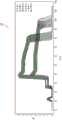
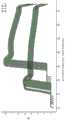
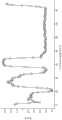
图1A是在半导体制造工艺的多个步骤的时间内获得的踪迹数据的图形显示。FIG. 1A is a graphical display of trace data obtained over time at various steps in a semiconductor manufacturing process.
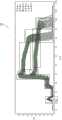
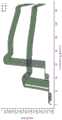
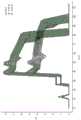
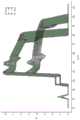
图1B是图1A的在踪迹数据上限定了窗的图形显示。FIG. 1B is a graphical display of FIG. 1A with windows defined on the trace data.
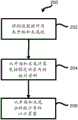
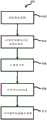
图2是图解说明自动限定窗的过程的流程图。FIG. 2 is a flow diagram illustrating the process of automatically defining windows.
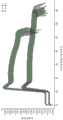
图3A是从与步骤IV的起点对准的图1A的步骤IV起的数据的图形显示。FIG. 3A is a graphical display of data from step IV of FIG. 1A aligned with the start of step IV.
图3B是从与步骤IV的末尾对准的图1A的步骤IV起的数据的图形显示。FIG. 3B is a graphical display of data from step IV of FIG. 1A aligned with the end of step IV.
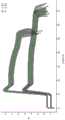
图4A是从图3A获取并且与步骤IV的起点对准的缩放数据的图形显示。Figure 4A is a graphical display of the scaled data taken from Figure 3A and aligned with the start of step IV.
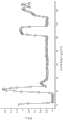
图4B是图4A中的每一个时间点处的传感器数据的改变率或稳定性的图形显示。4B is a graphical display of the rate of change or stability of sensor data at each point in time in FIG. 4A.
图5A是从图3B获取并且与步骤IV的末尾对准的缩放数据的图形显示。Figure 5A is a graphical display of the scaled data taken from Figure 3B and aligned with the end of step IV.
图5B是图5A中的每一个时间点处的传感器数据的改变率或稳定性的图形显示。Figure 5B is a graphical display of the rate of change or stability of sensor data at each point in time in Figure 5A.
图6是图解说明自动计算窗的过程的流程图。FIG. 6 is a flowchart illustrating the process of automatically calculating windows.
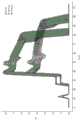
图7A是对来自图1A的踪迹数据执行图6的过程中的第一步骤的结果的图形显示。7A is a graphical display of the results of performing the first step in the process of FIG. 6 on the trace data from FIG. 1A.
图7B是对来自图7A的踪迹数据执行图6的过程中的第二步骤的结果的图形显示。Figure 7B is a graphical display of the results of performing the second step in the process of Figure 6 on the trace data from Figure 7A.
图7C是对来自图7B的踪迹数据执行图6的过程中的第三步骤的结果的图形显示。Figure 7C is a graphical display of the results of performing the third step in the process of Figure 6 on the trace data from Figure 7B.
图7D是对来自图7C的踪迹数据执行图6的过程中的第四步骤的结果的图形显示。Figure 7D is a graphical display of the results of performing the fourth step in the process of Figure 6 on the trace data from Figure 7C.
具体实施方式Detailed ways
如本文中所使用,术语“传感器踪迹”指代在装备运作期间周期性地测量重要物理量的时间序列数据,例如在每一个时间点处物理传感器的取样值。注意,取样率可变化并且样本之间的时间周期并不始终相同。术语“踪迹”或“装备踪迹”指代被识别为用于特定处理实例的所有重要传感器的一批传感器踪迹。术语“步骤”指代相异装置处理周期,例如工艺方案中的步骤中的一者。As used herein, the term "sensor trace" refers to time-series data that periodically measures important physical quantities during equipment operation, such as sampled values of physical sensors at each point in time. Note that the sampling rate can vary and the time period between samples is not always the same. The term "trace" or "equipment trace" refers to a collection of sensor traces identified as all significant sensors for a particular processing instance. The term "step" refers to a distinct device processing cycle, such as one of the steps in a process scheme.
参考图1A,呈现踪迹数据的图解说明性图表曲线100,所述图表曲线表示从400个别踪迹获取的数据,即在半导体制作工艺的六个相异步骤I到VI期间从个别传感器获取的时间序列值。传感器值描绘在y轴上,而以秒为单位的实际经过时间是从步骤I的起点开始测量在x轴上。工艺的每一个步骤在图1A中以唯一图标表示以更好地图解说明并且区分传感器行为,特别是在转变周期中的传感器行为。注意,虽然工艺步骤通常开始于特定时间点,但步骤的长度在工艺的不同轮次期间可以是可变的。Referring to FIG. 1A , there is presented an
依据对图1A中随时间推移而变化的传感器数据的简单目测,计算基本统计指标所存在的问题应显而易见,即仅统计测量无法提供传感器活动的全貌,特别是在踪迹值快速改变的情况下。举例来说,步骤IV中明显发生诸多活动,并且基本统计测量无法完全解释所述活动。The problem with computing basic statistical metrics should be apparent from a simple visual inspection of sensor data over time in Figure 1A, namely that statistical measurements alone cannot provide a full picture of sensor activity, especially when trace values change rapidly. For example, a lot of activity clearly occurs in Step IV and cannot be fully explained by basic statistical measures.
步骤I在标称传感器值下从t=0进行到大约t=10秒。步骤II从大约t=10进行到t=13,其中传感器值急剧上升接着急剧下降。步骤II I从大约t=13进行到t=25,其中传感器值起初下降并且最后传感器值上升,并且在大约t=17到t=22之间是稳定的标称传感器值周期。Step I is performed from t=0 to about t=10 seconds at nominal sensor values. Step II proceeds from about t=10 to t=13, where the sensor value rises sharply and then falls sharply. Step II proceeds from about t=13 to t=25, where the sensor value drops initially and finally the sensor value rises, and between about t=17 and t=22 is a period of steady nominal sensor value.
步骤IV在这些步骤中的任一者当中具有最长周期,从大约t=25延伸到t=100;但在此步骤的开端和末尾期间出现明显转变,一些传感器踪迹在约t=75时开始降低,传感器踪迹中的最后一个在t>100时降低,这表明随着传感器值由于步骤时间的变化而在时间上进一步分散开,在大约t=75与t=85之间下降的一组传感器踪迹与在大约t=90与t=100之间下降的第二组传感器踪迹之间存在明显的时间差。大约t=45到t=75之间也存在长稳定周期。Step IV has the longest period of any of these steps, extending from about t=25 to t=100; but there is a distinct transition during the beginning and end of this step, with some sensor traces starting at about t=75 Decrease, the last of the sensor traces decreases at t > 100, indicating a set of sensors falling between approximately t = 75 and t = 85 as sensor values spread out further in time due to step time changes There is a significant time difference between the trace and the second set of sensor traces that descend between about t=90 and t=100. There is also a long stable period between about t=45 and t=75.
在步骤V中,传感器踪迹在两个不同的时间组中转变到标称值,并且在步骤VI中,传感器踪迹在两个不同的时间组中稳定在标称值。In step V, the sensor trace transitions to the nominal value in two different time groups, and in step VI the sensor trace stabilizes at the nominal value in two different time groups.
在常规方式中,技术人员仅基于对图形结果的视觉检视来人工地建立窗,从而通常力图在(i)踪迹数据稳定并且(i i)改变率相同的情况下人工地限定窗。举例来说,鉴于这些目标,图IB图解说明人工地置于其中踪迹数据稳定或改变率相同的区上的示例性窗。In a conventional approach, the technician manually builds the window based only on visual inspection of the graphical results, usually trying to manually define the window when (i) the trace data is stable and (ii) the rate of change is the same. For example, in view of these goals, Figure IB illustrates exemplary windows artificially placed over regions where trace data is stable or has the same rate of change.
图2示出自动限定用于评估踪迹数据的窗的方法200的一个实施方案。在项202中,在第一情况下从工艺步骤的开端对准每一个工艺步骤的踪迹数据,并且在第二情况下从工艺步骤的末尾对准每一个工艺步骤的踪迹数据。为了将数据与工艺步骤的开端“对准”,从所述工艺步骤内的传感器踪迹的每一个值减去所述工艺步骤内的每一个传感器踪迹的最小时间。接着,将所有传感器踪迹的时间变量内插到恒定时间步骤,称此为“步骤时间。”为了将数据与工艺步骤的末尾“对准”,从每一个传感器踪迹的步骤时间的所有值减去所述传感器踪迹的步骤时间的最大值,并且称此为“剩余步骤时间”。FIG. 2 illustrates one embodiment of a
在项204中,从每一个工艺步骤的开端和末尾两者起计算统计资料。确切来说,所计算统计资料中包括稳定性的新定义。在项206中,通过分析从步骤的开端和末尾起的统计资料来计算窗。现在将更详细地描述方法200的每一个项。In
举例来说,图3A和图3B示出方法项202的结果。在图3A中,两个不同方案的步骤IV的传感器数据仍描绘在y轴上,但所有值在时间上与步骤的开端对准。类似地,在图3B中,来自步骤IV的传感器数据值在时间上从步骤的末尾对准。在观察对准数据时,从踪迹的开端和末尾分析窗的优点是显而易见的。由于步骤的处理时间或长度是可变的,因此从图3A和图3B的示例应明白,可最好从踪迹的开始计算踪迹的第一部分的统计资料,并且同样地可最好从踪迹的末尾计算踪迹的最后部分的统计资料。For example, FIGS. 3A and 3B illustrate the results of
有效自动窗限定的第二关键是,在项204中从步骤的开端和末尾两者针对每一个工艺步骤的每一个时间点计算统计资料。通过在两个方向上建立汇总统计资料,即使在不同踪迹之间步骤时间各有不同仍可识别最优窗。诸多统计资料可证明有用,包括但不限于中位数、平均数、标准偏差(包括稳健估计)和估计斜率。The second key to efficient automatic window definition is that statistics are calculated in
对于建立有效窗来说既关键又新颖的另外一个统计资料是对踪迹在每一个时间点处的改变率的估计。出于本公开的目的,对改变率的此估计在本文中将被称为“稳定性”并且是将转变窗与稳定窗区分开的最佳指标。举例来说,图4A图解说明被描绘为从步骤的开端对准的踪迹数据,与图3A类似,但在此y轴上的传感器值从0到1缩放并且相对于步骤时间或步骤的长度加以描绘以使得改变率(即,稳定性)能够在具有宽泛变化量值的传感器之间比较。接着,使用此缩放传感器值来计算所有统计资料以使得评估这些统计资料更容易,而无需考虑传感器的原始范围。基于图4A中的数据来估计每一个踪迹的改变率,并且图4B示出所估计稳定性在与步骤的开端对准的相同步骤对准时间帧内的对应曲线。类似地,图5A图解说明被描绘为从步骤的末尾对准的步骤IV的缩放踪迹数据,并且图5B示出在与步骤的末尾对准的相同步骤对准帧内的对应稳定性曲线。Another statistic that is both critical and novel for establishing the effective window is the estimate of the rate of change of the trace at each time point. For the purposes of this disclosure, this estimate of the rate of change will be referred to herein as "stability" and is the best metric to distinguish transition windows from stable windows. For example, FIG. 4A illustrates trace data depicted as being aligned from the beginning of a step, similar to FIG. 3A , but here the sensor values on the y-axis are scaled from 0 to 1 and scaled relative to the step time or length of the step. Profiled to enable rate of change (ie, stability) to be compared between sensors with a wide range of magnitudes of change. All statistics are then calculated using this scaled sensor value to make it easier to evaluate these statistics regardless of the sensor's original range. The rate of change for each trace was estimated based on the data in Figure 4A, and Figure 4B shows the corresponding plot of the estimated stability over the same step alignment time frame aligned with the beginning of the step. Similarly, FIG. 5A illustrates scaled trace data for Step IV depicted as being aligned from the end of the step, and FIG. 5B shows the corresponding stability curves within the same step alignment frame as aligned with the end of the step.
如果传感器踪迹平滑地变化,则改变率仅是当前时间值与先前和下一个值之间的缩放传感器值之差除以标准时间步骤的绝对值中的最大值。稳定性可以是改变率或改变率的某种单调变换。如果踪迹由于复制数据点或固有噪声而不平滑地变化,则改变率的计算可需要基于特定装备的更复杂算法。If the sensor trace changes smoothly, the rate of change is simply the maximum of the difference between the current time value and the scaled sensor value between the previous and next value divided by the absolute value of the standard time step. Stability can be the rate of change or some monotonic transformation of the rate of change. If the trace does not vary smoothly due to duplicate data points or inherent noise, the calculation of the rate of change may require more complex algorithms based on specific equipment.
从对稳定性曲线的观察可以看出,传感器读数在步骤(图4B)的开端处从约t=3到t=18并且从t=38到t=100看起来稳定(低值);然而,在从步骤的末尾查看数据时(图5B),传感器读数从约t=80到t=140看起来稳定。From observation of the stability curve, it can be seen that the sensor readings appear stable (low values) at the beginning of the step (FIG. 4B) from about t=3 to t=18 and from t=38 to t=100; When looking at the data from the end of the step (FIG. 5B), the sensor readings appear to be stable from about t=80 to t=140.
在项204中计算统计资料之后,在步骤206中通过从每一个步骤的开端和末尾两者分析统计资料来计算窗。图6图解说明使用统计资料来计算窗的一种方法600,并且图7A到图7D中绘示对应的图形结果。在图7A到图7D中,将示出异常行为的28个踪迹添加到图1A中所表示的数据,以说明能够进行自动开窗过程以应对训练数据集的异常踪迹。After the statistics are calculated in
在项602中,确定每一个步骤的开端和末尾处的转变周期,即踪迹迅速改变的区。此可通过分析在方法200的项204中计算的稳定性和中位数值来进行。图7A示出分析踪迹数据的统计资料的结果,其中转变区的五个窗通过正方形图标示出并且非转变区的六个窗通过圆形图标示出。In
接着,在项604中对转变周期之间的所有区进行聚类以将具有类似稳定性值的邻近点分组在一起。此项识别内部转变。举例来说,图7B示出基于类似稳定性值对邻近数据点进行聚类的结果。与图7A相比,此项形成另外的转变窗、和非转变窗的一些分区。Next, in
在理想情况下,转变窗应是在具有相对稳定的数据的窗之间的具有迅速改变的数据的窗。在项606中,例如通过包括改变率/稳定性因素的差很小的另外点来将转变窗扩展相对小的量以接近所述目标,如图7C中所示。Ideally, the transition windows should be windows with rapidly changing data between windows with relatively stable data. In
在项608中,将类似的窗和非常短的窗与相邻的窗合并以减小窗数,并且在项610中,基于在窗内的点的统计资料来估计最终窗数和类型。图7D中所示的结果是具有三个相异类型的11个窗:四个转变窗由正方形图标限定;三个稳定窗由圆形图标限定;并且四个一般窗(非稳定、非转变)由三角形图标限定。In
项610中指派的窗类型允许统计指标被自定义成将所计算指标的品质最大化并将所生成指标的数目最小化。The window type assigned in
并行处理架构的出现和机器学习算法的进步促进了踪迹窗的自动生成,所述机器学习算法允许用户对问题和改进前景进行建模并使用海量数据以使所述方式相关并可行的速度进行预测。机器学习是涉及建构并研究可从数据中学习的系统的人工智能的一个分支。这些类型的算法和并行处理能力允许处理更大数据集,并且确切来说更好地适合于多元分析。The advent of parallel processing architectures and advances in machine learning algorithms have facilitated the automatic generation of trace windows that allow users to model problems and improvement prospects and use massive amounts of data to make predictions at a rate that is relevant and feasible . Machine learning is a branch of artificial intelligence that involves building and studying systems that can learn from data. These types of algorithms and parallel processing capabilities allow processing of larger data sets and are indeed better suited for multivariate analysis.
为自动开窗创建和使用基于处理器的模型可以是基于桌面的(即独立的)或联网系统的一部分;但鉴于要处理并以一定的交互性显示大量信息,处理器能力(CPU、RAM等)应是目前最先进的以将有效性最大化。在半导体代工厂环境中,

前述描述仅出于图解说明目的而呈现,并不旨在是详尽的或将本公开限制于所述精确形式。鉴于以上教义,可做出很多修改和变化。The foregoing description has been presented for purposes of illustration only, and is not intended to be exhaustive or to limit the disclosure to the precise form described. Many modifications and variations are possible in light of the above teachings.
Claims (17)
Translated fromChineseApplications Claiming Priority (3)
| Application Number | Priority Date | Filing Date | Title |
|---|---|---|---|
| US202063055885P | 2020-07-23 | 2020-07-23 | |
| US63/055,885 | 2020-07-23 | ||
| PCT/US2021/042840WO2022020640A1 (en) | 2020-07-23 | 2021-07-22 | Automatic window generation for process trace |
Publications (2)
| Publication Number | Publication Date |
|---|---|
| CN116075824Atrue CN116075824A (en) | 2023-05-05 |
| CN116075824B CN116075824B (en) | 2024-09-06 |
Family
ID=79688241
Family Applications (1)
| Application Number | Title | Priority Date | Filing Date |
|---|---|---|---|
| CN202180058613.9AActiveCN116075824B (en) | 2020-07-23 | 2021-07-22 | Automatic window generation for process traces |
Country Status (7)
| Country | Link |
|---|---|
| US (1) | US11687439B2 (en) |
| EP (1) | EP4162396A4 (en) |
| JP (1) | JP7698034B2 (en) |
| KR (1) | KR20230042040A (en) |
| CN (1) | CN116075824B (en) |
| TW (1) | TW202221430A (en) |
| WO (1) | WO2022020640A1 (en) |
Citations (6)
| Publication number | Priority date | Publication date | Assignee | Title |
|---|---|---|---|---|
| US20030088542A1 (en)* | 2001-09-13 | 2003-05-08 | Altaworks Corporation | System and methods for display of time-series data distribution |
| CN1682165A (en)* | 2002-09-30 | 2005-10-12 | 东京毅力科创株式会社 | Method and apparatus for the monitoring and control of a semiconductor manufacturing process |
| CN106575118A (en)* | 2014-08-22 | 2017-04-19 | 西门子股份公司 | Detection of consistent steady-state behavior in process plants |
| CN109716303A (en)* | 2016-09-19 | 2019-05-03 | 应用材料公司 | Time series fault detection, fault classification and transition analysis using K-nearest neighbor and logistic regression methods |
| US20190340392A1 (en)* | 2018-05-04 | 2019-11-07 | New York University | Anomaly detection in real-time multi-threaded processes on embedded systems and devices using hardware performance counters and/or stack traces |
| US20200104639A1 (en)* | 2018-09-28 | 2020-04-02 | Applied Materials, Inc. | Long short-term memory anomaly detection for multi-sensor equipment monitoring |
Family Cites Families (9)
| Publication number | Priority date | Publication date | Assignee | Title |
|---|---|---|---|---|
| US5864773A (en)* | 1995-11-03 | 1999-01-26 | Texas Instruments Incorporated | Virtual sensor based monitoring and fault detection/classification system and method for semiconductor processing equipment |
| US7477960B2 (en)* | 2005-02-16 | 2009-01-13 | Tokyo Electron Limited | Fault detection and classification (FDC) using a run-to-run controller |
| TWI323016B (en)* | 2006-12-25 | 2010-04-01 | Ind Tech Res Inst | Real-time fault detection and classification system in use with a semiconductor fabrication process |
| US8196117B2 (en)* | 2007-01-03 | 2012-06-05 | Hewlett-Packard Development Company, L.P. | Merging sample based profiling data |
| US8490062B2 (en)* | 2009-08-17 | 2013-07-16 | Siemens Corporation | Automatic identification of execution phases in load tests |
| JP6643211B2 (en)* | 2016-09-14 | 2020-02-12 | 株式会社日立製作所 | Anomaly detection system and anomaly detection method |
| JP7017861B2 (en)* | 2017-03-23 | 2022-02-09 | 株式会社日立製作所 | Anomaly detection system and anomaly detection method |
| US10798026B2 (en)* | 2018-07-05 | 2020-10-06 | Citrix Systems, Inc. | Bufferbloat recovery and avoidance systems and methods |
| CN114764550B (en)* | 2021-01-12 | 2025-09-30 | 联华电子股份有限公司 | Operation method and operation device of failure detection and classification model |
- 2021
- 2021-07-22USUS17/383,325patent/US11687439B2/enactiveActive
- 2021-07-22JPJP2023504306Apatent/JP7698034B2/enactiveActive
- 2021-07-22KRKR1020237005034Apatent/KR20230042040A/enactivePending
- 2021-07-22EPEP21845275.3Apatent/EP4162396A4/enactivePending
- 2021-07-22WOPCT/US2021/042840patent/WO2022020640A1/ennot_activeCeased
- 2021-07-22CNCN202180058613.9Apatent/CN116075824B/enactiveActive
- 2021-07-23TWTW110127113Apatent/TW202221430A/enunknown
Patent Citations (6)
| Publication number | Priority date | Publication date | Assignee | Title |
|---|---|---|---|---|
| US20030088542A1 (en)* | 2001-09-13 | 2003-05-08 | Altaworks Corporation | System and methods for display of time-series data distribution |
| CN1682165A (en)* | 2002-09-30 | 2005-10-12 | 东京毅力科创株式会社 | Method and apparatus for the monitoring and control of a semiconductor manufacturing process |
| CN106575118A (en)* | 2014-08-22 | 2017-04-19 | 西门子股份公司 | Detection of consistent steady-state behavior in process plants |
| CN109716303A (en)* | 2016-09-19 | 2019-05-03 | 应用材料公司 | Time series fault detection, fault classification and transition analysis using K-nearest neighbor and logistic regression methods |
| US20190340392A1 (en)* | 2018-05-04 | 2019-11-07 | New York University | Anomaly detection in real-time multi-threaded processes on embedded systems and devices using hardware performance counters and/or stack traces |
| US20200104639A1 (en)* | 2018-09-28 | 2020-04-02 | Applied Materials, Inc. | Long short-term memory anomaly detection for multi-sensor equipment monitoring |
Also Published As
| Publication number | Publication date |
|---|---|
| US11687439B2 (en) | 2023-06-27 |
| KR20230042040A (en) | 2023-03-27 |
| JP7698034B2 (en) | 2025-06-24 |
| WO2022020640A1 (en) | 2022-01-27 |
| JP2023541512A (en) | 2023-10-03 |
| EP4162396A4 (en) | 2024-03-20 |
| CN116075824B (en) | 2024-09-06 |
| US20220027248A1 (en) | 2022-01-27 |
| EP4162396A1 (en) | 2023-04-12 |
| TW202221430A (en) | 2022-06-01 |
Similar Documents
| Publication | Publication Date | Title |
|---|---|---|
| JP6141235B2 (en) | How to detect anomalies in time series data | |
| JP7703011B2 (en) | Predicting Equipment Failure Modes from Process Tracing | |
| CN108763346B (en) | Abnormal point processing method for sliding window box type graph median filtering | |
| US20190261204A1 (en) | Method and system for abnormal value detection in lte network | |
| US20180225166A1 (en) | Abnormality detection apparatus, abnormality detection method, and non-transitory computer readable medium | |
| CN108319981A (en) | A kind of time series data method for detecting abnormality and device based on density | |
| CN108776694A (en) | A kind of time series abnormal point detecting method and device | |
| CN104280526A (en) | Method for analyzing and estimating measurement error of water quality automatic online monitoring equipment | |
| CN119204709B (en) | An AI-based intelligent risk assessment system and method for scientific and technological equipment | |
| JP2009110262A (en) | FILTER DEVICE, FILTER DEVICE FILTERING METHOD, AND FILTERING PROGRAM | |
| CN106125713A (en) | The assessment of reliability growth and Forecasting Methodology in the case of a kind of Interval censoring | |
| CN119293528A (en) | Abnormal monitoring method of building water supply and drainage flow rate based on Internet of Things technology | |
| CN109891454B (en) | Method and system for sensing small changes in process/equipment measurement data | |
| CN116075824A (en) | Automatic window generation for process traces | |
| US11449781B2 (en) | Plant abnormality prediction system and method | |
| US20240362106A1 (en) | Predicting Equipment Fail Mode from Process Trace | |
| CN118172580A (en) | A sintering endpoint soft measurement method, medium and device | |
| CN116194945A (en) | Information processing device, information processing method, and information processing program | |
| JP2020166442A (en) | Information processing equipment, calculation method and calculation program | |
| CN115618946A (en) | A Time Series Data Anomaly Detection Method Based on Multiple Constraints | |
| KR101615346B1 (en) | Method and apparatus for detecting fault in the semiconductor menufacturing process and recording medium thereof | |
| CN119720020B (en) | A NILM event detection method and system based on double sliding windows | |
| CN118398143B (en) | Steel structural member damage evaluation method and system | |
| JP2023009625A (en) | Information processing device, information processing method and information processing program | |
| Niu | Analyzing and Predicting Temperature Data in Baoji: A SARIMA Model Approach |
Legal Events
| Date | Code | Title | Description |
|---|---|---|---|
| PB01 | Publication | ||
| PB01 | Publication | ||
| SE01 | Entry into force of request for substantive examination | ||
| SE01 | Entry into force of request for substantive examination | ||
| GR01 | Patent grant | ||
| GR01 | Patent grant |