CN115299077A - Method for operating a hearing system and hearing system - Google Patents
Method for operating a hearing system and hearing systemDownload PDFInfo
- Publication number
- CN115299077A CN115299077ACN202080098691.7ACN202080098691ACN115299077ACN 115299077 ACN115299077 ACN 115299077ACN 202080098691 ACN202080098691 ACN 202080098691ACN 115299077 ACN115299077 ACN 115299077A
- Authority
- CN
- China
- Prior art keywords
- hearing
- data
- hearing aid
- motion
- hearing system
- Prior art date
- Legal status (The legal status is an assumption and is not a legal conclusion. Google has not performed a legal analysis and makes no representation as to the accuracy of the status listed.)
- Granted
Links
Images
Classifications
- H—ELECTRICITY
- H04—ELECTRIC COMMUNICATION TECHNIQUE
- H04R—LOUDSPEAKERS, MICROPHONES, GRAMOPHONE PICK-UPS OR LIKE ACOUSTIC ELECTROMECHANICAL TRANSDUCERS; DEAF-AID SETS; PUBLIC ADDRESS SYSTEMS
- H04R25/00—Deaf-aid sets, i.e. electro-acoustic or electro-mechanical hearing aids; Electric tinnitus maskers providing an auditory perception
- H04R25/50—Customised settings for obtaining desired overall acoustical characteristics
- H04R25/505—Customised settings for obtaining desired overall acoustical characteristics using digital signal processing
- A—HUMAN NECESSITIES
- A61—MEDICAL OR VETERINARY SCIENCE; HYGIENE
- A61B—DIAGNOSIS; SURGERY; IDENTIFICATION
- A61B5/00—Measuring for diagnostic purposes; Identification of persons
- A61B5/103—Measuring devices for testing the shape, pattern, colour, size or movement of the body or parts thereof, for diagnostic purposes
- A61B5/11—Measuring movement of the entire body or parts thereof, e.g. head or hand tremor or mobility of a limb
- A61B5/1116—Determining posture transitions
- A61B5/1117—Fall detection
- A—HUMAN NECESSITIES
- A61—MEDICAL OR VETERINARY SCIENCE; HYGIENE
- A61B—DIAGNOSIS; SURGERY; IDENTIFICATION
- A61B5/00—Measuring for diagnostic purposes; Identification of persons
- A61B5/103—Measuring devices for testing the shape, pattern, colour, size or movement of the body or parts thereof, for diagnostic purposes
- A61B5/11—Measuring movement of the entire body or parts thereof, e.g. head or hand tremor or mobility of a limb
- A61B5/1126—Measuring movement of the entire body or parts thereof, e.g. head or hand tremor or mobility of a limb using a particular sensing technique
- A—HUMAN NECESSITIES
- A61—MEDICAL OR VETERINARY SCIENCE; HYGIENE
- A61B—DIAGNOSIS; SURGERY; IDENTIFICATION
- A61B5/00—Measuring for diagnostic purposes; Identification of persons
- A61B5/68—Arrangements of detecting, measuring or recording means, e.g. sensors, in relation to patient
- A61B5/6801—Arrangements of detecting, measuring or recording means, e.g. sensors, in relation to patient specially adapted to be attached to or worn on the body surface
- A61B5/6802—Sensor mounted on worn items
- A61B5/6803—Head-worn items, e.g. helmets, masks, headphones or goggles
- A—HUMAN NECESSITIES
- A61—MEDICAL OR VETERINARY SCIENCE; HYGIENE
- A61B—DIAGNOSIS; SURGERY; IDENTIFICATION
- A61B5/00—Measuring for diagnostic purposes; Identification of persons
- A61B5/68—Arrangements of detecting, measuring or recording means, e.g. sensors, in relation to patient
- A61B5/6801—Arrangements of detecting, measuring or recording means, e.g. sensors, in relation to patient specially adapted to be attached to or worn on the body surface
- A61B5/6813—Specially adapted to be attached to a specific body part
- A61B5/6814—Head
- A61B5/6815—Ear
- A—HUMAN NECESSITIES
- A61—MEDICAL OR VETERINARY SCIENCE; HYGIENE
- A61B—DIAGNOSIS; SURGERY; IDENTIFICATION
- A61B5/00—Measuring for diagnostic purposes; Identification of persons
- A61B5/72—Signal processing specially adapted for physiological signals or for diagnostic purposes
- A61B5/7271—Specific aspects of physiological measurement analysis
- A61B5/7275—Determining trends in physiological measurement data; Predicting development of a medical condition based on physiological measurements, e.g. determining a risk factor
- G—PHYSICS
- G08—SIGNALLING
- G08B—SIGNALLING OR CALLING SYSTEMS; ORDER TELEGRAPHS; ALARM SYSTEMS
- G08B21/00—Alarms responsive to a single specified undesired or abnormal condition and not otherwise provided for
- G08B21/02—Alarms for ensuring the safety of persons
- G08B21/04—Alarms for ensuring the safety of persons responsive to non-activity, e.g. of elderly persons
- G08B21/0407—Alarms for ensuring the safety of persons responsive to non-activity, e.g. of elderly persons based on behaviour analysis
- G08B21/043—Alarms for ensuring the safety of persons responsive to non-activity, e.g. of elderly persons based on behaviour analysis detecting an emergency event, e.g. a fall
- G—PHYSICS
- G08—SIGNALLING
- G08B—SIGNALLING OR CALLING SYSTEMS; ORDER TELEGRAPHS; ALARM SYSTEMS
- G08B21/00—Alarms responsive to a single specified undesired or abnormal condition and not otherwise provided for
- G08B21/02—Alarms for ensuring the safety of persons
- G08B21/04—Alarms for ensuring the safety of persons responsive to non-activity, e.g. of elderly persons
- G08B21/0438—Sensor means for detecting
- G08B21/0446—Sensor means for detecting worn on the body to detect changes of posture, e.g. a fall, inclination, acceleration, gait
- G—PHYSICS
- G08—SIGNALLING
- G08B—SIGNALLING OR CALLING SYSTEMS; ORDER TELEGRAPHS; ALARM SYSTEMS
- G08B31/00—Predictive alarm systems characterised by extrapolation or other computation using updated historic data
- H—ELECTRICITY
- H04—ELECTRIC COMMUNICATION TECHNIQUE
- H04R—LOUDSPEAKERS, MICROPHONES, GRAMOPHONE PICK-UPS OR LIKE ACOUSTIC ELECTROMECHANICAL TRANSDUCERS; DEAF-AID SETS; PUBLIC ADDRESS SYSTEMS
- H04R25/00—Deaf-aid sets, i.e. electro-acoustic or electro-mechanical hearing aids; Electric tinnitus maskers providing an auditory perception
- H04R25/55—Deaf-aid sets, i.e. electro-acoustic or electro-mechanical hearing aids; Electric tinnitus maskers providing an auditory perception using an external connection, either wireless or wired
- H04R25/554—Deaf-aid sets, i.e. electro-acoustic or electro-mechanical hearing aids; Electric tinnitus maskers providing an auditory perception using an external connection, either wireless or wired using a wireless connection, e.g. between microphone and amplifier or using Tcoils
- G—PHYSICS
- G08—SIGNALLING
- G08B—SIGNALLING OR CALLING SYSTEMS; ORDER TELEGRAPHS; ALARM SYSTEMS
- G08B29/00—Checking or monitoring of signalling or alarm systems; Prevention or correction of operating errors, e.g. preventing unauthorised operation
- G08B29/18—Prevention or correction of operating errors
- G08B29/185—Signal analysis techniques for reducing or preventing false alarms or for enhancing the reliability of the system
- G08B29/188—Data fusion; cooperative systems, e.g. voting among different detectors
- H—ELECTRICITY
- H04—ELECTRIC COMMUNICATION TECHNIQUE
- H04R—LOUDSPEAKERS, MICROPHONES, GRAMOPHONE PICK-UPS OR LIKE ACOUSTIC ELECTROMECHANICAL TRANSDUCERS; DEAF-AID SETS; PUBLIC ADDRESS SYSTEMS
- H04R2225/00—Details of deaf aids covered by H04R25/00, not provided for in any of its subgroups
- H04R2225/39—Aspects relating to automatic logging of sound environment parameters and the performance of the hearing aid during use, e.g. histogram logging, or of user selected programs or settings in the hearing aid, e.g. usage logging
- H—ELECTRICITY
- H04—ELECTRIC COMMUNICATION TECHNIQUE
- H04R—LOUDSPEAKERS, MICROPHONES, GRAMOPHONE PICK-UPS OR LIKE ACOUSTIC ELECTROMECHANICAL TRANSDUCERS; DEAF-AID SETS; PUBLIC ADDRESS SYSTEMS
- H04R2225/00—Details of deaf aids covered by H04R25/00, not provided for in any of its subgroups
- H04R2225/55—Communication between hearing aids and external devices via a network for data exchange
- H—ELECTRICITY
- H04—ELECTRIC COMMUNICATION TECHNIQUE
- H04R—LOUDSPEAKERS, MICROPHONES, GRAMOPHONE PICK-UPS OR LIKE ACOUSTIC ELECTROMECHANICAL TRANSDUCERS; DEAF-AID SETS; PUBLIC ADDRESS SYSTEMS
- H04R25/00—Deaf-aid sets, i.e. electro-acoustic or electro-mechanical hearing aids; Electric tinnitus maskers providing an auditory perception
- H04R25/55—Deaf-aid sets, i.e. electro-acoustic or electro-mechanical hearing aids; Electric tinnitus maskers providing an auditory perception using an external connection, either wireless or wired
- H04R25/552—Binaural
Landscapes
- Health & Medical Sciences (AREA)
- Life Sciences & Earth Sciences (AREA)
- Engineering & Computer Science (AREA)
- Physics & Mathematics (AREA)
- General Health & Medical Sciences (AREA)
- Animal Behavior & Ethology (AREA)
- Surgery (AREA)
- Veterinary Medicine (AREA)
- Public Health (AREA)
- Biophysics (AREA)
- Pathology (AREA)
- Biomedical Technology (AREA)
- Heart & Thoracic Surgery (AREA)
- Medical Informatics (AREA)
- Molecular Biology (AREA)
- Business, Economics & Management (AREA)
- Emergency Management (AREA)
- General Physics & Mathematics (AREA)
- Otolaryngology (AREA)
- Physiology (AREA)
- Signal Processing (AREA)
- Gerontology & Geriatric Medicine (AREA)
- Computer Networks & Wireless Communication (AREA)
- Psychiatry (AREA)
- Neurosurgery (AREA)
- Acoustics & Sound (AREA)
- Dentistry (AREA)
- Oral & Maxillofacial Surgery (AREA)
- Computing Systems (AREA)
- Computer Vision & Pattern Recognition (AREA)
- Artificial Intelligence (AREA)
- Psychology (AREA)
- Social Psychology (AREA)
- Measurement Of The Respiration, Hearing Ability, Form, And Blood Characteristics Of Living Organisms (AREA)
Abstract
Translated fromChinese
Description
Translated fromChinese技术领域technical field
本发明涉及一种用于运行听力系统的方法,该听力系统具有助听器,该助听器具有至少一个麦克风并且具有听筒以及具有运动传感器。本发明还涉及一种用于执行该方法的听力系统、尤其是听力辅助设备。The invention relates to a method for operating a hearing system having a hearing aid having at least one microphone and having an earpiece and having a motion sensor. The invention also relates to a hearing system, in particular a hearing aid, for carrying out the method.
背景技术Background technique
听力辅助设备是一种便携式助听器,其用于照顾听力较差的人或听力受损的人。为了满足众多的个体需求,提供了不同结构形式的听力辅助设备,例如耳后助听器(HdO,Hinter-dem-Ohr)和具有外部听筒的助听器(RIC:Receiver in the Canal)以及耳内助听器(IdO,In-dem-Ohr),还例如外耳助听器或耳道助听器(耳内式助听器,ITE:in-the-ear;完全耳道式助听器,CIC:Completely-in-Channel;隐蔽式助听器,IIC:Invisible-in-the-Channel)。示例性列出的助听器佩戴在听力辅助设备用户的外耳上或耳道中。此外,市场上还提供骨传导助听器、植入式助听器或振动触觉助听器。在此,对受损的听觉器官的刺激机械地或电地进行。An assistive hearing device is a portable hearing aid that is used to care for the hard of hearing or the hearing impaired. In order to meet the needs of many individuals, hearing aids in different structural forms are provided, such as hearing aids behind the ear (HdO, Hinter-dem-Ohr) and hearing aids with external earpieces (RIC: Receiver in the Canal) and hearing aids in the ear (IdO , In-dem-Ohr), also such as external ear hearing aids or ear canal hearing aids (in-ear hearing aids, ITE: in-the-ear; complete ear canal hearing aids, CIC: Completely-in-Channel; concealed hearing aids, IIC: Invisible-in-the-Channel). The exemplary listed hearing aids are worn on the outer ear or in the ear canal of the hearing aid user. Additionally, bone conduction hearing aids, implantable hearing aids or vibrotactile hearing aids are also available on the market. In this case, the stimulation of the damaged auditory organ takes place mechanically or electrically.
这种助听器原则上具有输入转换器、放大器和输出转换器作为基本部件。输入转换器通常是声电转换器、例如麦克风,和/或电磁接收器、例如感应线圈或(射频,RF)天线。输出转换器通常被实现为电声转换器、例如微型扬声器(听筒),或者被实现为机电转换器、例如骨传导听筒。放大器通常被集成到信号处理装置中。能量供应通常通过电池或可充电的蓄电池进行。Such hearing aids basically have an input converter, an amplifier and an output converter as basic components. The input transducer is typically an acoustic-electric transducer, such as a microphone, and/or an electromagnetic receiver, such as an induction coil or a (radio frequency, RF) antenna. The output transducer is usually implemented as an electroacoustic transducer, such as a microspeaker (earpiece), or as an electromechanical transducer, such as a bone conduction earpiece. Amplifiers are usually integrated into signal processing devices. The energy supply usually takes place via batteries or rechargeable accumulators.
在所谓的双耳听力辅助设备中,由用户佩戴两个这样的助听器,其中,在助听器之间存在通信连接。在运行中,在此例如无线地在右耳和左耳上的助听器之间交换数据,必要时也交换大的数据量。所交换的数据和信息使得助听器能够特别有效地适应于相应的声学环境情况。特别地,由此对于用户能够实现特别真实的房间声音,并且即使在嘈杂的环境中也能改善语音理解。In so-called binaural hearing aids, two such hearing aids are worn by the user, wherein a communication link exists between the hearing aids. During operation, data, possibly also large data volumes, are exchanged, for example wirelessly, between the hearing aids on the right and left ear. The data and information exchanged enable a particularly effective adaptation of the hearing aid to the respective acoustic environment. In particular, a particularly realistic room sound can thus be achieved for the user and speech understanding can be improved even in noisy environments.
随着年龄的增长,人们患疾病或合并症的风险越来越大,特别是自主神经系统(ANS,autonomen Nervensystem)的疾病或合并症,例如听力损失、失智症或帕金森病。特别地,经常发生多种这样的疾病,使得患有失智症或帕金森病的人也经常表现出听力障碍或听力损失。As people age, people are at increasing risk of developing diseases or comorbidities, especially those of the autonomic nervous system (ANS, autonomen Nervensystem), such as hearing loss, dementia or Parkinson's disease. In particular, a number of such diseases frequently occur such that persons suffering from dementia or Parkinson's disease also frequently exhibit hearing impairment or hearing loss.
这些疾病和紊乱中的许多还导致更高的跌倒风险,并最终导致相关人员的跌倒事件,这可能导致严重伤害。在此,还应考虑跌倒事件的心理后果或影响,例如跌倒后的焦虑状态。因此,跌倒会导致生活质量下降和医疗保健费用增加。如果及早发现跌倒的风险,就可以防止大多数跌倒,从而保持高的生活质量,并降低医疗保健系统的成本。Many of these diseases and disorders also lead to a higher risk of falls and eventual falls for the person involved, which can lead to serious injury. Here, the psychological consequences or effects of the fall event, such as the state of anxiety following a fall, should also be considered. As a result, falls lead to reduced quality of life and increased healthcare costs. If the risk of falls is identified early, most falls can be prevented, maintaining a high quality of life and reducing costs to the healthcare system.
为了监测不同类型的ANS紊乱并且为了评估与之相关的跌倒风险,例如可以想到使用运动传感器或运动采集装置(动作捕捉,Motion-Capture),运动传感器或运动采集装置采集和评估相关人员的运动或运动紊乱。然而,在此,通常需要附加的硬件和/或专家,其确保传感器的可靠的放置。In order to monitor the different types of ANS disorders and to assess the risk of falls associated with them, it is conceivable, for example, to use motion sensors or motion-capture devices (Motion-Capture), which capture and evaluate the movements of the person concerned or Movement disorders. In this case, however, additional hardware and/or specialists are generally required which ensure reliable placement of the sensors.
然而,这种临床评估或静止运动采集系统在临床上具有许多缺点。However, such clinical assessment or stationary motion acquisition systems have a number of clinical disadvantages.
临床上常用的跌倒风险评估(英文:Fall Risk Assessment,FRA)方法对健康上的高功能的老年人具有较差至中等的诊断准确度或跌倒预测,并且取决于观察者的专业知识。The commonly used Fall Risk Assessment (FRA) method in clinical practice has poor to moderate diagnostic accuracy or fall prediction in healthy high-functioning older adults and depends on the expertise of the observer.
此外,由于实验室中的受控的步态测试和平衡测试中的观察者效应,监测的FRA测量可能不能反映人的自然行为和多任务行为。In addition, monitored FRA measurements may not reflect natural human behavior and multitasking behavior due to controlled gait tests in the laboratory and observer effects in balance tests.
(视觉)三维运动采集(动作捕捉)和仪表化的人行道是资源密集的,并且与专门的诊所/地点相关联,并且只可以实现预定的功能任务期间的快照。(Visual) 3D motion acquisition (motion capture) and instrumented walkways are resource-intensive and associated with specialized clinics/locations, and can only achieve predetermined functional snapshots during the mission.
同样可以想到例如使用环境传感器、特别是照相机来监视和采集人员运动。然而,这种环境传感器由于视觉遮挡以及在具有相似身体特征的多个人的房间中跟踪同一人而具有局限性。It is also conceivable, for example, to use environmental sensors, in particular cameras, to monitor and detect the movement of persons. However, such environmental sensors have limitations due to visual occlusion and tracking the same person in a room of multiple people with similar physical characteristics.
对于ANS疾病的诊断和监测,目前还没有一种易于运行的、客观且可靠的、易于自我管理的诊断/监测系统。即使受过良好教育/经验丰富的医学专家可以在实验室中评估ANS疾病的状况和进展,也缺乏适用于患者日常生活环境的解决方案。到目前为止,患有听力障碍和其他ANS紊乱的老年人需要许多独立的解决方案来单独解决每一种紊乱。For the diagnosis and monitoring of ANS disease, there is currently no easy-to-run, objective and reliable diagnosis/monitoring system that is easy to self-administer. Even though well-educated/experienced medical professionals can assess the status and progression of ANS disease in the laboratory, there is a lack of solutions applicable to patients' daily life environment. Until now, older adults with hearing impairment and other ANS disorders have required many individual solutions to address each disorder individually.
发明内容Contents of the invention
因此,本发明要解决的技术问题是,提供一种用于运行听力系统的特别合适的方法。特别地,应该实现对听力系统用户的跌倒风险的早期识别。优选地,听力障碍的治疗应与其他ANS疾病的监测相关联。此外,本发明要解决的技术问题是,提供一种用于执行该方法的特别合适的听力系统。The technical problem underlying the invention is therefore to provide a particularly suitable method for operating a hearing system. In particular, an early identification of the risk of falls for users of the hearing system should be achieved. Preferably, treatment of hearing impairment should be linked to monitoring of other ANS disorders. Furthermore, the technical problem underlying the invention is to provide a particularly suitable hearing system for carrying out the method.
在方法方面,上述技术问题根据本发明通过权利要求1的特征来解决,并且在听力系统方面,上述技术问题通过权利要求11的特征来解决。有利的设计方案和改进方案是从属权利要求的主题。On the method side, the above-mentioned technical problem is solved according to the invention by the features of
关于该方法提到的优点和设计方案也可以类似地转用到听力系统,反之亦然。如果以下描述了方法步骤,则听力系统的有利的设计方案尤其通过以下方式得到:听力系统被构造为执行这些方法步骤中的一个或多个。The advantages and configurations mentioned with respect to the method can be transferred analogously to the hearing system and vice versa. If the method steps are described below, an advantageous configuration of the hearing system results in particular in that the hearing system is designed to carry out one or more of these method steps.
根据本发明的方法被设置用于运行听力系统、尤其是听力辅助设备,并且适合于和被设计用于运行听力系统、尤其是听力辅助设备。听力系统具有助听器。The method according to the invention is provided for operating a hearing system, in particular a hearing aid, and is suitable and designed for operating a hearing system, in particular a hearing aid. The hearing system has hearing aids.
助听器尤其用于照顾听力受损的用户(听力系统用户)。助听器在此被构造用于接收来自周围环境的声音信号并且将其输出给助听器的用户。为此,助听器具有至少一个声电输入转换器、尤其是麦克风以及至少一个电声输出转换器、例如听筒。在助听器的运行中,输入转换器接收来自周围环境的声音信号(噪声、声音、语音等),并将其转换成电输入信号(声学数据)。通过在信号处理装置中修改输入信号,根据电输入信号产生电输出信号。信号处理装置例如是助听器的一部分。输入转换器和输出转换器以及必要时还有信号处理装置尤其安置在助听器的壳体中。壳体被构造为使得该壳体可以由用户佩戴在头部和耳朵附近,例如在耳朵中、在耳朵上或在耳朵后面。优选地,助听器被构造为BTE助听器、ITO助听器或RIC助听器。Hearing aids are used in particular to care for hearing-impaired users (audiometry users). The hearing aid is designed here to receive sound signals from the surrounding environment and output them to the user of the hearing aid. For this purpose, the hearing aid has at least one acoustic-electric input converter, in particular a microphone, and at least one electro-acoustic output converter, such as a receiver. In operation of the hearing aid, the input converter receives acoustic signals (noise, sound, speech, etc.) from the surrounding environment and converts them into electrical input signals (acoustic data). An electrical output signal is generated from the electrical input signal by modifying the input signal in the signal processing device. The signal processing device is, for example, part of a hearing aid. In particular, the input converter and output converter and possibly also the signal processing device are accommodated in the housing of the hearing aid. The housing is configured such that it can be worn by a user near the head and ears, for example in, on or behind the ears. Preferably, the hearing aid is designed as a BTE hearing aid, an ITO hearing aid or a RIC hearing aid.
助听器还具有用于采集听力系统用户的运动的运动传感器。运动传感器被设置和设计用于采集三维的(身体)运动或运动事件、特别是平移和/或旋转运动。运动传感器在此例如被构造为加速度计和/或被构造为陀螺仪,即被构造为陀螺仪(位置)传感器。替换地,运动传感器也可以是脉搏传感器、血压传感器或光传感器。加速度计和/或陀螺仪和/或脉搏传感器和/或血压传感器和/或光传感器的组合同样是可能的。运动传感器在此优选地集成在助听器中、尤其是集成在其壳体中。The hearing aid also has a motion sensor for picking up the motion of the hearing system user. Motion sensors are provided and designed to detect three-dimensional (body) movements or movement events, in particular translational and/or rotational movements. The movement sensor is here designed, for example, as an accelerometer and/or as a gyroscope, ie as a gyroscopic (position) sensor. Alternatively, the motion sensor can also be a pulse sensor, a blood pressure sensor or a light sensor. Combinations of accelerometers and/or gyroscopes and/or pulse sensors and/or blood pressure sensors and/or light sensors are likewise possible. The motion sensor is preferably integrated in the hearing aid, in particular in its housing.
连接词“和/或”在此和在下文中应被理解为,借助该连接词连接的特征既可以共同地构成,也可以作为彼此的替换方案构成。The conjunction "and/or" is understood here and in the following to mean that the features connected by means of this conjunction can be formed both jointly and as an alternative to one another.
在应用情况下,助听器佩戴在听力系统用户的头部上并且靠近听力系统用户的耳朵,使得借助运动传感器尤其能够采集听力系统用户的头部运动。因此,尤其也可通过助听器的运动传感器至少间接地采集行走运动或步态运动,即基于行走或跑步的身体运动。In the application case, the hearing aid is worn on the head of the hearing system user close to the ears of the hearing system user, so that in particular head movements of the hearing system user can be detected by means of the motion sensor. In particular, therefore, walking or gait movements, ie body movements based on walking or running, can also be detected at least indirectly via motion sensors of the hearing aid.
根据该方法,在听力系统的运行期间,听力系统用户的运动被采集为运动传感器的运动数据。运动数据在此尤其应被理解为与方向相关的加速度或旋转、尤其是由此导出的运动模式。因此,运动数据是对于由听力系统用户执行的身体运动、特别是对于行走运动的量度。According to the method, during operation of the hearing system, movements of the hearing system user are recorded as movement data of the motion sensor. Movement data are to be understood here in particular as direction-dependent accelerations or rotations, in particular movement patterns derived therefrom. The movement data are thus measures of body movements performed by the hearing system user, in particular of walking movements.
根据本发明,根据采集到的运动数据确定听力系统用户的未来的摔倒或跌倒事件的概率。换言之,在跌倒风险方面评估运动数据,尤其是根据运动数据来预测或估计跌倒风险,即摔倒或跌倒概率或其度量。听力系统用户的摔倒或跌倒事件在此被理解为佩戴助听器的人的摔倒或跌倒,即倒下或摔趴下或跌落。According to the invention, a future fall or probability of a fall event of a hearing system user is determined from the collected motion data. In other words, the movement data are evaluated with respect to the risk of falling, in particular the risk of falling, ie falling or the probability of falling or a measure thereof, is predicted or estimated from the movement data. A fall or fall event of a hearing system user is understood here to be a fall or fall of the person wearing the hearing aid, ie falling or slumping or falling down.
“预测(名词)”或“预测(动词)”在此和下文中尤其理解为预测性的估计,即预计
“估计(名词)”或“估计(动词)”在此和在下文中应被理解为通过评估运动数据,例如通过模式识别、预先表征的测量、存储的表格或特性曲线,或借助统计数学方法对跌倒概率进行近似确定。"Estimate (noun)" or "estimate (verb)" is to be understood here and hereinafter as the evaluation of motion data, for example by means of pattern recognition, pre-characterized measurements, stored tables or characteristic curves, or by means of statistical mathematical methods The probability of falling is determined approximately.
根据本发明,当概率或跌倒风险达到或超过所存储的阈值时,产生可感知的信号作为摔倒或跌倒警告(警告信号)。换言之,当存在足够高的跌倒风险时,产生针对听力系统用户的警告。在此,多大概率或跌倒风险被认为是足够的,以及具体的概率有多大,在此首先是次要的。这可以例如从过去的运动数据或从相应的试验或测试中确定。对于不同的人,由于不同的年龄、健康状况或身体尺寸,可能会产生不同的阈值。According to the invention, when the probability or the risk of falling reaches or exceeds a stored threshold value, a perceivable signal is generated as a fall or a fall warning (warning signal). In other words, a warning for the hearing system user is generated when there is a sufficiently high risk of falling. How much probability or risk of falling is considered to be sufficient here, and how concretely it is, is primarily of secondary importance here. This can be determined, for example, from past exercise data or from corresponding trials or tests. Different thresholds may arise for different people due to different age, health status or body size.
警告信号例如是光学的和/或声学的信号、例如发光的或闪烁的LED或警告声音或警告噪音,其由助听器或输出转换器产生。同样可以想到例如触觉振动信号,该触觉振动信号例如由在信号技术上与助听器耦合的附加设备、尤其是智能手机产生。附加地或替换地,还可以想到,警告信号通过与助听器耦合的应用、例如智能手机App输出给医生或护理人员。警告信号也可以是声学、光学和触觉信号的组合。The warning signal is, for example, an optical and/or acoustic signal, such as an illuminated or flashing LED, or a warning sound or warning noise, which is generated by the hearing aid or the output converter. Likewise conceivable is, for example, a haptic vibration signal which is generated, for example, by an additional device, in particular a smartphone, which is coupled in signal technology to the hearing aid. Additionally or alternatively, it is also conceivable for the warning signal to be output to the doctor or nursing staff via an app coupled to the hearing aid, for example a smartphone app. The warning signal can also be a combination of acoustic, optical and tactile signals.
通过警告信号,听力系统的用户在佩戴期间被告知跌倒的危险或风险。因此,向听力系统用户发信号通知:存在即将发生的跌倒事件的危险。因此有利地降低了跌倒或跌倒事件的危险。由此实现了用于运行听力系统的特别合适的方法。因此,通过根据本发明的方法提供了特别有利的摔倒或跌倒保护。By means of the warning signal, the user of the hearing system is informed of the danger or risk of falling while wearing it. Thus, the hearing system user is signaled that there is an imminent risk of a fall event. The risk of falls or fall events is thus advantageously reduced. A particularly suitable method for operating a hearing system is thus achieved. Thus, a particularly advantageous fall or fall protection is provided by the method according to the invention.
助听器(其被佩戴用于补偿听力损伤)中的运动传感器因此根据本发明用于监测助听器佩戴者的运动模式,并且由此确定跌倒风险。因此,本发明的核心思想尤其在于,借助助听器来采集听力系统用户的运动(例如步态,转动等),以及对采集到的运动进行分析并且在跌倒风险方面进行评估。Motion sensors in hearing aids which are worn to compensate for hearing impairment are thus used according to the invention to monitor the movement patterns of the hearing aid wearer and thereby determine the risk of falling. Therefore, the core idea of the present invention is, inter alia, to detect movements (eg gait, turns, etc.) of a hearing system user by means of a hearing aid and to analyze the recorded movements and evaluate them with regard to the risk of falling.
所分析或评估的运动数据例如能够实现对进展的ANS紊乱的表征。原则上,通过根据本发明的跌倒风险的确定,ANS紊乱的早期识别或诊断也是可能的。这意味着该方法可以在ANS紊乱的诊断或治疗的范围内使用。然而,ANS紊乱的诊断或治疗不是要求保护的发明的一部分。The analyzed or evaluated movement data enables, for example, the characterization of a progressive ANS disorder. In principle, an early recognition or diagnosis of ANS disorders is also possible by the determination of the fall risk according to the invention. This means that the method can be used in the context of diagnosis or treatment of ANS disorders. However, diagnosis or treatment of ANS disorders is not part of the claimed invention.
助听器例如具有存储器并且被构造为,用于在时间窗内将由运动传感器记录的运动数据存储在存储器中,并且在稍后的时间点关于跌倒风险进行评估(监测)。助听器因此例如被构造为,将运动传感器信号的时间限制的片段存储在存储器中,并且尤其为了确定跌倒概率而输出该片段。助听器因此具有针对运动数据的记录功能(Recording)。适宜地,所记录的运动数据也能够经由接口从存储器传输到外部数据源。时间窗例如具有至少1min(分钟)至1d(天)的长度、特别优选地1h(小时)至12h的范围内的长度。其他长度也是合适的。特别地,使用对应于助听器的佩戴持续时间的时间窗。这意味着,记录在戴上助听器时开始,并且在取下助听器时结束。For example, the hearing aid has a memory and is designed to store the motion data recorded by the motion sensor in the memory within a time window and to evaluate (monitor) the risk of falling at a later point in time. The hearing aid is thus designed, for example, to store a time-limited segment of the motion sensor signal in a memory and to output this segment, in particular for determining the probability of falling. The hearing aid therefore has a recording function (recording) for the motion data. Conveniently, the recorded athletic data can also be transferred from the memory to an external data source via the interface. The time window has, for example, a length of at least 1 min (minute) to 1 d (day), particularly preferably a length in the range of 1 h (hour) to 12 h. Other lengths are also suitable. In particular, a time window corresponding to the wearing duration of the hearing aid is used. This means that the recording starts when the hearing aid is put on and ends when the hearing aid is taken off.
同样可以想到例如基于事件的记录和评估,其中(运行)算法例如采集听力系统用户是否以及何时起动。如果没有采集到起动,则优选地进行简单且省电的模式,其中,在起动的情况下提高采样率并且基于传感器原始数据进行进一步的计算、分析和存储。这意味着,时间窗可以根据采集到的身体运动动态地调节/触发。由此能够实现更长的观察/评估窗,例如超过一天。An event-based recording and evaluation, for example, is also conceivable, in which (running) algorithms, for example, detect whether and when the hearing system user activates. If a start is not detected, a simple and power-saving mode preferably takes place, in which the sampling rate is increased in the event of a start and further calculations, analysis and storage are performed based on the raw sensor data. This means, the time window can be adjusted/triggered dynamically according to the collected body motion. Longer observation/evaluation windows, for example longer than one day, can thus be achieved.
此外,例如可以设置用于监测和评估的周期性或规律的时间窗,例如每天或每周仅记录最多一个周期,其中,算法例如每周仅采集一次例如10分钟的时间窗。Furthermore, for example periodic or regular time windows for monitoring and evaluation can be set, for example only recording a maximum of one period per day or per week, wherein the algorithm only collects a time window of
为了运动分析和风险预测,例如使用表征听力系统用户步态的宏观和微观事件,并且此外将其分类为运动之间的旋转和过渡。For motion analysis and risk prediction, macroscopic and microscopic events characterizing the gait of a hearing system user are used, for example, and are furthermore classified into rotations and transitions between movements.
“微观事件”在此和在下文中尤其被理解为运动的(运动)特征的表征,即运动过程或运动模式。“宏观事件”在此和下文中尤其应理解为在时间间隔内、例如在一天中的多个运动或运动组、即运动序列或运动系列。A “microevent” is understood here and below in particular to be a representation of a (movement) characteristic of a movement, ie a movement course or movement pattern. A “macroevent” is to be understood here and below in particular as a plurality of movements or sets of movements, ie a movement sequence or movement series, within a time interval, for example during a day.
宏观事件在此例如被理解为每个时间间隔的步数,即每天的步数或在用于表征强度(节奏,步频)的预定义测试的情况下的每个动作的数量。A macro event is here understood to be, for example, the number of steps per time interval, ie the number of steps per day or, in the case of a predefined test for characterizing intensity (cadence, pitch), the number of movements per movement.
此外,宏观事件应被理解为每个分类活动的绝对和相对的时间花费,即例如每天花费的行走时间、行走和不行走的百分比、最长散步的绝对持续时间等。这基于如下认识:与无跌倒危险的人相比,潜在跌倒危险的人的总行走时间通常减少。此外,用于所谓的久坐行为的总时间对于有跌倒危险的人来说通常更长。Furthermore, macro-events should be understood as the absolute and relative time spent per classified activity, ie eg time spent walking per day, percentage of walking and not walking, absolute duration of longest walk, etc. This is based on the recognition that total walking time is generally reduced in persons at potential fall risk compared to persons not at risk of falls. Furthermore, the total time spent on so-called sedentary behaviors is generally longer for people at risk of falls.
此外,宏观事件是较少运动的行为、如站立、坐着或躺着。这例如可以是例如每天分别针对这些行为方式花费的总时间方面。同样地,用于采取这些行为方式的持续时间,即用于坐下或站起的持续时间可以用于表征这些行为。在此,例如可以确定多个起立运动或坐下运动的平均值或最大值或百分位数、尤其是90%百分位数以用于鉴定。此外,可以想到每天中的时间和久坐行为的持续时间的变异性。In addition, macroscopic events are less motor behaviors such as standing, sitting or lying down. This can be, for example, an aspect of the total time spent on each of these behaviors, for example per day. Likewise, the duration for adopting these behavioral patterns, ie for sitting down or standing up, can be used to characterize these behaviors. In this case, for example, mean values or maximum values or percentiles, in particular 90% percentiles, of several standing or sitting movements can be determined for identification. Furthermore, variability in time of day and duration of sedentary behavior can be envisaged.
宏观事件例如也被理解为在时间段内从日/动作到日/动作的运动的改变,以便表征运动的质量。例如,失智症的进展以步态模式的日复一日变异性的增加为特征,由此可以推断出跌倒风险。A macro event is for example also understood as a change in movement from day/action to day/action within a time period in order to characterize the quality of the movement. For example, the progression of dementia is characterized by increased day-to-day variability in gait patterns, from which fall risk can be inferred.
在此,微观事件例如是运动的速率、即例如步速或“步态速度”,或走步-摆动时间变异性。潜在的跌倒者行走速度较慢,其中,如前所述,步态速度的变化可以表征失智症的进展。在此,步态速度可以以预定义的(时间)间隔进行分析,例如小于10s(秒)、10s至60s、60s至120s、长于120s。在此,速率的粗略估计就足够了,而不需要以米每秒(m/s)为单位的精确测量或速度的确定。为了确定速率或速度,运动数据可以作为原始值或以有效值的形式进行分析。In this case, the micro-event is, for example, the rate of movement, ie, for example, the pace or “gait speed”, or the walk-swing time variability. Potential falls have slower walking speeds, where, as noted previously, changes in gait speed can characterize the progression of dementia. Here, the gait speed can be analyzed at predefined (time) intervals, eg less than 10s (seconds), 10s to 60s, 60s to 120s, longer than 120s. Here, a rough estimate of the velocity is sufficient without a precise measurement in meters per second (m/s) or determination of the velocity. To determine velocity or speed, motion data can be analyzed as raw values or in the form of effective values.
微观事件例如也被理解为走步运动(Pace),即例如步长。步长可能随着失智症的进展而减小,从而可以根据步长的确定或估计来预测跌倒风险。例如在出版物AnalogDevices Application Note,AN-602,H.Weinberg的标题为“Using the ADXL202 inPedometer and Personal Navigation Applications”中描述了用于臀部或胸部佩戴的运动传感器的步长估计。A micro event is also understood to be, for example, a walking movement (Pace), ie, for example, a step length. Stride length may decrease as dementia progresses, allowing determination or estimation of step length to predict fall risk. Step size estimation for hip- or chest-worn motion sensors is described, for example, in the publication Analog Devices Application Note, AN-602, by H. Weinberg entitled "Using the ADXL202 in Pedometer and Personal Navigation Applications".
微观事件例如也被理解为运动的节奏,例如走步、摆动和静止时间,或者运动的不对称性,即例如走步、摆动和静止时间的变异性。在不对称的情况下,例如走步、摆动和静止时间的变异性可以作为参数表征被称为“步态平滑性”(英文:gait smoothness)的运动特征,即“一步一步的对称性”,行走稳定性或谐波比(英文:harmonic ratio,HR)。Microevents are also to be understood, for example, as rhythms of movement, such as walking, swinging and resting times, or asymmetries of movements, such as variability in walking, swinging and resting times. In the case of asymmetry, for example, the variability of walking, swinging and stationary time can be used as a parameter to characterize the motion characteristics called "gait smoothness" (English: gait smoothness), that is, "step-by-step symmetry", Walking stability or harmonic ratio (English: harmonic ratio, HR).
如果该方法例如在ANS紊乱的诊断或治疗的范围内使用,则可以与该方法并行地分开地分析听力系统用户的心率,例如根据行进方向分开地分析前后(AP)、中外侧(ML)和上下(V)。例如,在失智症的早期阶段心率降低,其中帕金森病的变化与患者的认知状态显著相关、即特别是在AP方向上的心率。If the method is used, for example, in the context of the diagnosis or treatment of ANS disorders, the heart rate of the hearing system user can be analyzed separately in parallel with the method, e.g. according to the direction of travel separately for the anterior-posterior (AP), mediolateral (ML) and up and down (V). For example, the heart rate decreases in the early stages of dementia, where the changes in Parkinson's disease correlate significantly with the patient's cognitive state, ie especially the heart rate in the AP direction.
用于监测听力系统用户的身体姿势的姿势控制也可以用作微观事件。例如,走步或步长不对称性被用于检查听力系统用户的姿势特征和/或(姿势/运动)稳定性。Gesture controls for monitoring the body posture of the hearing system user can also be used as micro-events. For example, walking or step length asymmetry is used to examine the postural characteristics and/or (postural/motion) stability of the hearing system user.
此外,微观事件例如是步长和/或步长速度在不同的运动模式之内和之间的变异性,例如在散步时。Furthermore, microscopic events are, for example, the variability of step length and/or step speed within and between different movement patterns, for example during walking.
此外,站立时间和/或走步时间的变异性被视为微观事件,该微观事件也可以在类似的动作或运动之间和之内发生。In addition, variability in standing time and/or walking time is considered a micro-event that can also occur between and within similar actions or movements.
微观事件也可以是步态模式的另外的变异性,其特征在于针对每个方向(即对应于行进方向的前后(AP)、中外侧(ML)和上下(V))在不同频带中的频谱-时间的(性能)分布模式或者在于主维度中的自相关。Microscopic events can also be additional variability in gait patterns, characterized by spectra in different frequency bands for each direction (i.e., anterior-posterior (AP), mediolateral (ML), and superior-inferior (V) corresponding to the direction of travel) - The (performance) distribution pattern of time or autocorrelation in the main dimension.
前面提到的“特征”或运动的用户典型的改变(步长和/或步长速度的变异性、站立时间和/或步长时间的变异性、步态模式的变异性)中的暂时变化可以表征听力系统用户的补偿性的平衡反应,该补偿性的平衡反应对于避免跌倒是必要的。这种补偿性的平衡反应例如可以被表征为“失足”跌倒、滑倒或跌倒,其中,例如在这种补偿性的平衡反应的频度增加时产生更高的跌倒风险。Temporary changes in the aforementioned "characteristics" or user-typical changes in movement (variability in step length and/or step speed, stance time and/or step duration variability, gait pattern variability) The compensatory balance response of the hearing system user, which is necessary to avoid falls, can be characterized. Such compensatory balancing reactions can be characterized, for example, as "stumbling" falls, slips or falls, wherein, for example, an increased frequency of such compensating balancing reactions results in a higher risk of falling.
在运动分析中,还评估听力系统用户的旋转或旋转行为。具有增加的跌倒风险的人在旋转运动中通常具有更长的旋转持续时间,此外,他们更少地进行旋转运动,并且在相同的运动中表现出具有大改变的不一致的旋转角度。增加的跌倒风险也可以表现为不仅在旋转/旋转运动的角度大小方面而且在几天内大旋转的时间点方面的一致性降低。In motion analysis, the rotational or rotational behavior of the hearing system user is also assessed. People with an increased risk of falling generally had longer rotation durations during rotational movements, in addition, they performed fewer rotational movements and exhibited inconsistent rotational angles with large changes within the same movement. Increased fall risk can also manifest as decreased consistency not only in the angular magnitude of the rotation/rotational motion but also in the timing of large rotations over several days.
为了分析或评估旋转行为,例如在运动数据中提取和/或分析以下特征:旋转持续时间、旋转速度峰值、旋转期间的步数、旋转角度的类别(四分之一旋转,一半旋转,全旋转;或类似类别的旋转角度)、每天每个上述类别的旋转运动的数量、连续几天内旋转的数量、角度和/或速度的改变。在双耳使用的助听器的情况下,从运动数据中提取的单个设备的特征可以彼此组合,以便更好地表征旋转。In order to analyze or evaluate rotation behavior, for example the following features are extracted and/or analyzed in the motion data: duration of rotation, peak rotation speed, number of steps during rotation, category of rotation angle (quarter rotation, half rotation, full rotation ; or similar categories of rotational angles), the number of rotational movements of each of the above categories per day, the number of rotations, changes in angle and/or speed over consecutive days. In the case of hearing aids for binaural use, features of individual devices extracted from motion data can be combined with each other to better characterize rotation.
在运动分析中,为了确定跌倒风险或跌倒概率,优选地也考虑运动之间的过渡和/或运动的组合。例如,分析不同运动活动的总分布、即宏观事件的分布。同样可以想到分析活动模式随时间的改变。此外,例如采集过渡的持续时间、即更长的坐着到坐着,或从行走到坐着的过渡,其中,过渡的变化或过渡的持续时间可能表明跌倒风险的增加。此外,也可以想到对例如在爬楼梯时的两个或更多个运动事件之间的时间间隔进行分析。运动数据也可以在运动事件之前和之后关于运动传感器的取向或定向进行评估。In the movement analysis, transitions between movements and/or combinations of movements are preferably also taken into account in order to determine the risk of falling or the probability of falling. For example, analyzing the total distribution of different motor activities, ie the distribution of macroscopic events. It is likewise conceivable to analyze changes in activity patterns over time. Furthermore, for example, the duration of transitions, ie longer transitions from sitting to sitting or from walking to sitting, is recorded, wherein a change in the transition or the duration of the transition may indicate an increased risk of falling. Furthermore, it is also conceivable to analyze the time interval between two or more movement events, for example when climbing stairs. Motion data can also be evaluated with respect to the orientation or orientation of the motion sensor before and after the motion event.
运动数据可以例如以离散的时间间隔来采集和评估。然而,优选地,在听力系统的运行期间、特别是在佩戴助听器期间或在时间窗期间,对运动数据进行基本上连续或无中断的采集和分析。在本文中,基本上连续或无中断尤其意味着准连续,即例如在数字采集和评估的情况下,运动传感器的测量频率/测量速度比待采集的身体运动的频率或速度高、尤其是高至少两倍。Motion data can be collected and evaluated, for example, at discrete time intervals. Preferably, however, the motion data is acquired and analyzed substantially continuously or without interruption during operation of the hearing system, in particular during wearing of the hearing aid or during time windows. In this context, essentially continuous or without interruption especially means quasi-continuous, i.e., for example in the case of digital acquisition and evaluation, the measurement frequency/measurement speed of the motion sensor is higher, in particular higher, than the frequency or speed of the body movement to be acquired at least twice.
(准)连续的运动监测/分析和跌倒风险的确定可以实现对ANS紊乱进行分析或诊断,其甚至可以由非专业人员(例如护士、理疗师、医生;而不仅仅是医学专家)在临床/门诊环境和非常生态的条件下在相对较短的时间内进行。这可以使医学专业人员能够制定个性化的康复策略,以确保更安全的导航并减少跌倒和相关成本。(Quasi)continuous movement monitoring/analysis and determination of fall risk can enable the analysis or diagnosis of ANS disorders, which can even be performed by laypersons (e.g. nurses, physiotherapists, doctors; not just medical specialists) in the clinical/ It is performed in a relatively short period of time in an outpatient setting and in very ecological conditions. This could enable medical professionals to develop individualized rehabilitation strategies to ensure safer navigation and reduce falls and associated costs.
当运动模式随时间变化(改善/恶化)时,运动数据的连续采集和评估也可以实现可靠的监测。因此,可以向听力系统用户提供直接和适当的反馈,使得听力系统用户能够及时作出反应。因此,不一定需要预约医生来监测或检查运动模式的变化,从而降低医疗保健系统的成本。Continuous acquisition and evaluation of exercise data also enables reliable monitoring when exercise patterns change (improvement/worsening) over time. Thus, direct and appropriate feedback can be provided to the hearing system user, enabling the hearing system user to react in a timely manner. As a result, doctor appointments are not necessarily required to monitor or examine changes in exercise patterns, reducing costs to the healthcare system.
在助听器中使用运动传感器信息的情况下的(连续的)评估相比于用于评估步态/旋转模式的其他方法具有对自然的或紊乱的行为的改善的诊断准确性。The (continuous) assessment using motion sensor information in hearing aids has an improved diagnostic accuracy for natural or disordered behavior compared to other methods for assessing gait/rotation patterns.
此外,根据本发明的方法是比较经济的,因为在设备中仅使用便携式的传感器,该设备本来被佩戴以补偿听力损失。因此,通过根据本发明的方法,除了用于照顾听力受损的用户之外,还实现了助听器的有利的功能扩展。Furthermore, the method according to the invention is relatively economical since only portable sensors are used in the device, which would otherwise be worn to compensate for hearing loss. Thus, by means of the method according to the invention, an advantageous functional expansion of the hearing aid is achieved in addition to the use for taking care of hearing-impaired users.
相比于安装在建筑物中的环境传感器,例如照相机,便携式助听器传感器的信息或运动数据具有超出生活空间的更大的效用、尤其不需要用户停留在被监测的环境中,因为用户随身携带传感器系统。Compared to environmental sensors installed in buildings, such as cameras, information or motion data from portable hearing aid sensors has greater utility beyond the living space, especially does not require the user to stay in the monitored environment, because the user carries the sensor with him system.
此外,通过根据本发明的方法,听力系统用户不必在ANS紊乱的情况下随身携带附加的设备。换言之,没有通过使用助听器以外的其他设备而产生额外的负荷。因此,这也有助于说服仅有轻微听力障碍的人使用助听器来改善生活质量、防止受伤和/或监测跌倒的风险。Furthermore, by means of the method according to the invention, the hearing system user does not have to carry additional equipment with him in the event of an ANS disorder. In other words, no additional load is created by using other equipment than hearing aids. Therefore, it can also help to persuade people with only mild hearing impairment to use hearing aids to improve quality of life, prevent injury and/or monitor the risk of falls.
借助根据本发明的方法的助听器支持的诊断也可以有利于根据临床日志评估紊乱,其中分析针对专用动作的时间和模式(用于诊断目的)。这种日志包括例如坐下、站起来(椅子-站起测试)、睁着眼睛和闭着眼睛保持站立,或者结构化的测试方法,如在所谓的Tinetti测试中(例如参见Tinetti ME,Performance-oriented assessment of mobilityproblems in elderly patients,J Am Geriatr Soc 1986;34:119-126)。Hearing aid-supported diagnosis by means of the method according to the invention can also facilitate assessment of disturbances from a clinical diary, wherein the time and pattern for dedicated movements are analyzed (for diagnostic purposes). Such diaries include, for example, sitting down, standing up (chair-stand-up test), standing with eyes open and eyes closed, or structured test methods, as in the so-called Tinetti test (see for example Tinetti ME, Performance- oriented assessment of mobility problems in elderly patients, J Am Geriatr Soc 1986; 34:119-126).
在该方法的有利的实施中,将听力系统用户的个人健康数据存储在听力系统的存储器中,其中根据所存储的健康数据确定跌倒概率。这意味着,在评估或分析运动数据以确定跌倒风险时附加地考虑所存储的健康数据。附加地或替换地,例如同样可以想到根据健康数据改变阈值。In an advantageous implementation of the method, personal health data of the hearing system user are stored in a memory of the hearing system, wherein the probability of falling is determined from the stored health data. This means that stored health data are additionally taken into account when evaluating or analyzing the movement data to determine the risk of falling. Additionally or alternatively, it is also conceivable, for example, to vary the threshold value as a function of health data.
该方法的该实施从如下认识出发:与年龄相关的紊乱或ANS紊乱改变步态图像的多个主要特征。由此可以实现特别可靠且安全地估计或确定跌倒风险,从而确保对听力系统用户的早期的和及时的警告。This implementation of the method proceeds from the recognition that age-related disorders or ANS disorders alter several key features of the gait image. A particularly reliable and safe estimation or determination of the risk of falls can thereby be achieved, thereby ensuring an early and timely warning of the hearing system user.
换言之,所记录的运动数据与关于用户的其他(可用的)信息(即认知、听觉、环境、心血管状态)一起被分析,以便能够实现特定于用户的表征。这种表征用于预测与特定紊乱相关的跌倒风险的变化,但也用于监测这些紊乱的进展。In other words, the recorded motion data is analyzed together with other (available) information about the user (ie cognitive, auditory, environmental, cardiovascular state) in order to enable a user-specific characterization. This characterization is used to predict changes in fall risk associated with specific disorders, but also to monitor the progression of these disorders.
在此,健康数据被理解为听力系统用户的特定于个人的信息、特别是听力系统用户的生理和医学/健康数据,例如年龄、身高、腿长/步长、体重、心血管状态、认知状态、听力、自己的声音活动、耳鸣。由此能够在运动数据的运动分析过程中可靠地确定微观事件和宏观事件。Health data is understood here to mean personally-specific information of the hearing system user, in particular physiological and medical/health data of the hearing system user, such as age, height, leg length/step length, weight, cardiovascular state, cognitive status, hearing, own voice activity, tinnitus. As a result, microscopic and macroscopic events can be reliably determined during the motion analysis of the motion data.
优选地,健康数据还包括关于听力系统用户的与健康相关的运动障碍的信息。“与健康相关的运动障碍”在此尤其被理解为听力系统用户的医学疾病、健康障碍或健康状态,其暂时妨碍或限制其运动,并且因此(暂时)引起跌倒风险的增加。这种疾病例如可以是需要使用行走支持或行走辅助的损伤。特别地,在此也可以理解为认知紊乱、特别是自主神经系统(ANS)的紊乱形式的疾病,例如听力损失、失智症、癫痫或帕金森病。Preferably, the health data also includes information about health-related movement disorders of the hearing system user. A "health-related movement disorder" is understood here to mean, in particular, a medical disease, health disorder or state of health of a hearing system user which temporarily impedes or limits his movements and thus (temporarily) causes an increased risk of falling. Such a disease may be, for example, an injury requiring the use of a walking support or walking aid. In particular, diseases in the form of cognitive disturbances, in particular disturbances of the autonomic nervous system (ANS), such as hearing loss, dementia, epilepsy or Parkinson's disease, are also to be understood here.
通过所存储的健康数据,例如可以执行关于失智症或眩晕的运动模式分析,并且因此可以实现更精确地确定跌倒风险。特别地,由此可以将警告信号作为反馈及时地输出给听力系统用户。By means of the stored health data, it is possible, for example, to carry out a movement pattern analysis with respect to dementia or vertigo and thus to achieve a more precise determination of the risk of falls. In particular, a warning signal can thereby be output in good time as feedback to the hearing system user.
所存储的健康数据为运动分析和风险确定提供了听力系统用户的更全面的图像,因为并非所有关于ANS紊乱的信息都位于其特定的步态图像中。此外,听力系统用户可能患有多于一种紊乱。因此,为了找到最佳的解决方案并避免错误的归因,有必要在确定风险时考虑尽可能多的现有的信息,甚至超出了步态模式及其变化的范围。此外,因此提高了预测的稳定性和可靠性,并且避免了在有噪声数据的情况下的错误分类。The stored health data provides a more comprehensive picture of the hearing system user for motion analysis and risk determination, since not all information about ANS disorders is located in their specific gait picture. Furthermore, hearing system users may suffer from more than one disorder. Therefore, in order to find the optimal solution and avoid false attributions, it is necessary to consider as much existing information as possible when determining risk, even beyond the scope of gait patterns and their variations. Furthermore, the stability and reliability of the predictions are thus increased and misclassifications in the case of noisy data are avoided.
如果可用,还可以考虑来自信号技术地耦合到听力系统的其他传感器的数据,例如光电体积描记(PPG)、脑电图(EEG)或肌电图(EMG)的数据,这些传感器例如提供关于心血管状态(即频率、心率变异性)或负荷测量的信息。If available, data from other sensors signal-technically coupled to the hearing system, such as photoplethysmography (PPG), electroencephalography (EEG) or electromyography (EMG), which provide information on cardiac Information on vascular status (i.e., frequency, heart rate variability) or stress measurements.
在优选的扩展中,依据所确定的概率调节助听器的助听器参数和/或助听器性能。这意味着,助听器的关于信号处理和环境信号的输出的设置在跌倒风险变化的情况下发生变化。特别地,在此对所述设置进行调节或改变,使得跌倒风险尽可能最小化。由此实现了特别安全和有效的防跌倒保护。In a preferred development, hearing aid parameters and/or hearing aid properties of the hearing aid are adjusted as a function of the determined probability. This means that the settings of the hearing aid with respect to signal processing and the output of ambient signals are changed when the risk of falls changes. In particular, the settings are adjusted or changed in such a way that the risk of falling is minimized as much as possible. A particularly safe and effective fall protection is thereby achieved.
附加地或替换地,依据所存储的健康数据调节助听器的助听器参数和/或助听器性能。在合适的扩展形式中,例如,根据用户画像(健康数据)来调整用于自动助听器程序的“分类”,这导致经调整的且合适的助听器输出。Additionally or alternatively, hearing aid parameters and/or hearing aid performance of the hearing aid are adjusted in dependence on the stored health data. In a suitable extended form, for example, the "category" for the automatic hearing aid program is adjusted according to the user profile (health data), which results in an adjusted and suitable hearing aid output.
例如,患有轻度认知障碍或失智症的人也患有注意力不集中,即难以保持注意力或容易分心。因此,如果由助听器执行的步态分析根据增加的跌倒风险确定轻度认知障碍或失智症的进展,则助听器性能可以被调整以在复杂的声学环境中更好地定向。For example, people with mild cognitive impairment or dementia also suffer from inattention, which is difficulty maintaining concentration or being easily distracted. Thus, if a gait analysis performed by a hearing aid identifies the progression of mild cognitive impairment or dementia based on an increased risk of falls, hearing aid performance can be adjusted for better orientation in complex acoustic environments.
例如,调节助听器的波束成形或波束成形模式。“波束成形”尤其被理解为助听器的方向特性,即实现方向听觉,使得来自特定方向的声源相对于其他方向被放大。为此,使用波束成形器,该波束成形器将特别是同一个单个助听器(单个设备)的多个不同的输入转换器(麦克风)的输入信号以合适的方式组合成输出信号。For example, adjust the beamforming or beamforming mode of your hearing aids. "Beamforming" is understood in particular as the directional characteristic of hearing aids, ie the realization of directional hearing such that sound sources coming from certain directions are amplified relative to other directions. For this purpose, a beamformer is used which combines the input signals of a plurality of different input converters (microphones), in particular of the same individual hearing aid (single device), into an output signal in a suitable manner.
为了补偿注意力不集中或可分心性,例如在信号处理时,针对大脑后半球可以通过降低第一膝点来调整压缩,并且提高压缩比。大脑前半球的压缩系统可以保持不变。附加地,可以将噪音减小参数化以获得更强的效果。助听器设置/参数的这种示例性设置可以实现更容易的聚焦和减少由于来自后方的声学输入而造成的注意力偏转。To compensate for inattention or distractibility, for example in signal processing, the compression can be adjusted for the posterior hemisphere by lowering the first knee point and increasing the compression ratio. The compression system in the anterior hemisphere of the brain can remain unchanged. Additionally, the noise reduction can be parameterized for stronger effects. This exemplary setting of hearing aid settings/parameters may allow for easier focusing and reduced distraction due to acoustic input from the rear.
在助听器领域中,压缩例如是将听力信号适配于听力受损者的受限的听力的可能性。听力受损者的听力具有受限的动态范围,因此小的输入电平必须被强烈放大。然而,对于大的输入电平,必须降低增益,因为以这种方式放大的听觉信号否则会被感知为令人不快的大声。音频信号的动态的压缩在此通过具有与电平相关的放大系数的放大来抵消。在此,在大多数情况下,压缩特性(其通过给出输入电平与输出电平的关系的特性曲线示出)具有直至输入电平的特定阈值的、恒定因子的线性增益,而对于超过阈值的输入电平,增益与电平相关地降低。如果输入电平和输出电平以分贝为单位相对于彼此绘制,则由此得到部分线性的曲线作为压缩特性,其中,特性曲线从用于输入电平的阈值起具有较小的斜率(膝点)。In the field of hearing aids, compression is, for example, the possibility of adapting the hearing signal to the limited hearing of a hearing-impaired person. The hearing of the hearing impaired has a limited dynamic range, so small input levels must be strongly amplified. However, for large input levels, the gain must be reduced, since audible signals amplified in this manner would otherwise be perceived as uncomfortably loud. The dynamic compression of the audio signal is counteracted by amplification with a level-dependent amplification factor. Here, in most cases, the compression characteristic (which is shown by a characteristic curve giving the relationship of input level to output level) has a linear gain of a constant factor up to a certain threshold value of the input level, while for more than The input level for the threshold, the gain is reduced level-dependently. If the input level and the output level are plotted against each other in decibels, this results in a partially linear curve as compression characteristic, wherein the characteristic curve has a small slope (knee point) from the threshold value for the input level .
因此,为了最佳地治疗听力损失和ANS紊乱,相应地调整影响助听器性能的听力系统参数。该分析还可以用于控制干预,所述干预通过在信号技术上耦合到助听器的附加设备、例如通过所连接的智能手机来控制,以便能够及时干预,并且以便易于实现听力系统用户的个人需求以及抵消与年龄相关的疾病的进展。Therefore, to optimally treat hearing loss and ANS disorders, the hearing system parameters affecting hearing aid performance are adjusted accordingly. This analysis can also be used to control interventions via an additional device coupled to the hearing aid in signal technology, for example via a connected smartphone, in order to be able to intervene in good time and to easily implement the individual needs of the hearing system user and Counteracts the progression of age-related diseases.
优选地,根据确定的跌倒风险来调整影响助听器性能的助听器参数。根据需要,调整后的助听器输出(输出信号)可以被视为对干预的贡献(例如,在失智症或其他疾病的情况下)。所形成的改变的输出信号例如可以实现更好的定向或减少分心/注意力不集中等。为此,在信号处理的范围内,例如改变多源压缩方案(CK、CR、增益、攻击和释放时间、噪声消除算法)以及单耳和/或双耳波束形成器模式。Preferably, hearing aid parameters influencing hearing aid performance are adjusted according to the determined risk of falling. If desired, the adjusted hearing aid output (output signal) can be considered as a contribution to the intervention (eg in the case of dementia or other diseases). The resulting altered output signal may for example enable better orientation or reduced distraction/inattention or the like. For this, within the scope of signal processing, for example, the multi-source compression scheme (CK, CR, gain, attack and release time, noise cancellation algorithm) and the monaural and/or binaural beamformer mode are varied.
在该方法的优选的设计方案中,根据输入转换器的声学数据(输入信号)来确定听力系统用户的环境情况。环境情况在此尤其被理解为声学环境情况或听力情况。环境情况在此例如借助助听器或信号处理器的情况识别和/或至少一个电平测量和/或至少一个算法来识别和描述。例如,根据特定标准对环境情况进行分类,并且助听器参数和/或助听器性能的特定设置与这些类别中的每一个相关联。In a preferred refinement of the method, the ambient situation of the hearing system user is determined on the basis of the acoustic data (input signal) input to the transducer. Ambient conditions are to be understood here in particular as acoustic ambient conditions or hearing conditions. The ambient situation is identified and described here, for example, by means of situation recognition and/or at least one level measurement and/or at least one algorithm of the hearing aid or the signal processor. For example, environmental situations are classified according to certain criteria, and specific settings for hearing aid parameters and/or hearing aid performance are associated with each of these categories.
在此,当前的环境情况与相应的当前的运动数据相关联并且存储在存储器中。这意味着,对于根据运动数据的评估或风险确定,也可以考虑听力系统用户的相应环境,使得能够更准确且更可靠地确定跌倒风险。优选地,声学环境情况的确定与运动数据的记录并行地进行。In this case, the current environmental situation is associated with corresponding current movement data and stored in the memory. This means that for the evaluation or risk determination based on the motion data, the corresponding surroundings of the hearing system user can also be taken into account, so that a more accurate and reliable determination of the risk of falls can be made. Preferably, the determination of the acoustic environment is carried out in parallel with the recording of the movement data.
在适宜的实施中,为了确定概率,将针对相应的环境情况的运动数据与所存储的运动数据和环境情况进行比较。换言之,在相似的和/或不同的听力情况下进行与先前的分析结果和运动模式的比较。由此,例如可以针对未来的听力情况考虑在较早的听力情况下的跌倒事件或近乎跌倒事件,从而在这种听力情况下存在提高的跌倒风险。In an expedient implementation, the movement data for the respective surrounding situation are compared with stored movement data and the surrounding situation in order to determine the probability. In other words, comparisons with previous analysis results and movement patterns are made under similar and/or different hearing situations. In this way, for example, falls or near-fall events in an earlier hearing situation can be taken into account for a future hearing situation, so that there is an increased risk of falling in this hearing situation.
附加地或替换地,例如可以与匿名地存储在“云”(Cloud)、远程服务器或数据存储装置中的类似的其他用户数据进行比较。Additionally or alternatively, a comparison can be made, for example, with similar other user data stored anonymously in the "cloud", remote server or data storage device.
在有利的设计中,根据所存储的运动数据和环境情况创建听力系统用户的用户画像。换言之,听力系统用户根据所存储的数据被“分类”为画像。这允许每天进行例行识别,以便将当前结果与先前结果进行比较,从而能够跟踪和采集变化。通过用户画像,可以实现改进的和更鲁棒的跌倒风险的确定。In an advantageous embodiment, a user profile of the hearing system user is created on the basis of the stored movement data and the environmental situation. In other words, hearing system users are "classified" into profiles according to the stored data. This allows for routine identification on a daily basis to compare current results with previous results, enabling changes to be tracked and captured. Through user profiling, an improved and more robust determination of the risk of falls can be achieved.
本发明的附加的或另外的方面规定,助听器被构造为双耳的,并且为此具有两个单个设备,所述单个设备分别具有至少一个输入转换器以及至少一个输出转换器,并且由此构造为,接收来自周围环境的声音信号并且将其输出给助听器的用户。附加地,每个单个设备具有运动传感器。在此,单个设备的运动数据被彼此分开地评估,并且随后被组合以用于确定概率。An additional or further aspect of the invention provides that the hearing aid is designed binaurally and for this purpose has two individual devices which each have at least one input converter and at least one output converter and are thus designed To receive sound signals from the surrounding environment and output them to the user of the hearing aid. Additionally, each individual device has a motion sensor. Here, the movement data of the individual devices are evaluated separately from one another and then combined for determining the probability.
例如,设置用于在两个单个设备之间进行数据交换的无线接口。无线接口例如是蓝牙接口或WLAN接口或MI接口(MI-Link,MI:Magnetic Induction,磁感应)。蓝牙接口例如是常规的或低能量(所谓的low-energy)蓝牙接口。For example, setting up a wireless interface for data exchange between two individual devices. The wireless interface is, for example, a Bluetooth interface or a WLAN interface or an MI interface (MI-Link, MI: Magnetic Induction, magnetic induction). The Bluetooth interface is, for example, a conventional or low-energy (so-called low-energy) Bluetooth interface.
然而,作为双耳助听器的替代方案,具有仅一个单个设备的单耳助听器也是合适的。关于单耳助听器的实施可以比照地转用到双耳助听器上,反之亦然。However, as an alternative to binaural hearing aids, single ear hearing aids with only one single device are also suitable. What has been said about the single-ear hearing aid can be transferred mutatis mutandis to the binaural hearing aid, and vice versa.
例如同样可以想到,针对单个设备的数据分别确定概率。然而,优选地,两个单个设备的运动传感器信息被分开地分析并且随后被“组合”,由此也能够识别或采集与进展的ANS紊乱相关联的复杂运动模式。由此,进一步改进了跌倒风险的确定。It is also conceivable, for example, to determine the probabilities separately for the data of the individual devices. Preferably, however, the motion sensor information of the two individual devices is analyzed separately and then "combined", whereby complex motion patterns associated with progressive ANS disorders can also be identified or captured. As a result, the determination of the risk of falling is further improved.
在双耳助听器中,两个单个设备由用户佩戴在头部的不同侧上,使得每个单个设备与一只耳朵相关联。由此,左和右运动传感器(3D加速度计)被布置成与身体中心相距一定距离,使得两者提供的信息可以被组合以表征指示旋转的切向力和径向力。由此例如可以节省位置传感器或陀螺仪。此外,两个独立的传感器输出可以实现提高的运动数据的可靠性。例如,仅当两个运动传感器示出相同的事件或相同变化时,才使用风险评估的信息。In a binaural hearing aid, two individual devices are worn by the user on different sides of the head such that each individual device is associated with one ear. Thereby, left and right motion sensors (3D accelerometers) are placed at a distance from the center of the body such that the information provided by both can be combined to characterize tangential and radial forces indicative of rotation. For example, position sensors or gyroscopes can thus be saved. Additionally, two independent sensor outputs allow for increased reliability of motion data. For example, the information of the risk assessment is only used when two motion sensors show the same event or the same change.
在合适的设计方案中,将运动数据和/或概率传输给在信号技术上与助听器耦合的附加设备。因此,例如可以在应用程序、网站或软件中显示所分析的行走的对称性或其他关键度量、以及状态和变化。In a suitable configuration, the motion data and/or the probability are transmitted to an additional device coupled to the hearing aid in signal technology. Thus, for example, the symmetry or other key measures, as well as the status and changes of the analyzed walk can be displayed in an application, website or software.
附加设备优选是移动操作和显示设备、例如移动电话、特别是具有计算机功能的移动电话或智能手机或平板电脑。附加设备适当地具有存储的应用软件(运行软件),当概率达到或超过阈值时,利用该应用软件例如产生警告信号。为此,应用软件(ApplicationSoftware)优选作为所谓的App或移动App(移动应用,智能手机App)可以安装或安装在操作和显示设备上。The additional device is preferably a mobile operating and display device, such as a mobile phone, in particular a mobile phone with computer functionality or a smartphone or tablet. The additional device expediently has stored application software (operating software) with which, for example, a warning signal is generated when the probability reaches or exceeds a threshold value. For this purpose, application software (Application Software) can be installed or installed on the operating and display device, preferably as a so-called App or mobile App (Mobile App, smartphone App).
在此,该扩展方案基于以下考虑:现代的操作和显示设备、例如尤其是智能手机或平板电脑在当今社会中被广泛地使用,并且对于用户来说通常随时可用和可访问。特别地,听力系统的用户在其家庭中基本上以很大的概率具有这种操作和显示设备。In this case, this expansion is based on the consideration that modern operating and display devices, such as in particular smartphones or tablet computers, are widely used in today's society and are generally available and accessible to users at all times. In particular, users of hearing systems basically have such an operating and display device in their household with a high probability.
现代的智能手机如今还按照标准配备有多个不同的近场和远场通信器件,由此原则上能够以简单的方式建立与助听器的通信连接或信号连接。在此,应用软件优选地也适合于并且被设置用于调节助听器的运行参数、例如音量。因此,用户不需要用于监测和调节听力系统的附加的、单独的操作系统,而是可以通过(随后)下载和/或安装应用软件来使用用户已经存在的智能手机来评估运动数据和确定跌倒风险。以这种方式有利地降低了用户侧的花费。在此例如可以想到的是,健康数据存储在附加设备或智能手机的存储器中。Modern smartphones are now also equipped as standard with a number of different near-field and far-field communication components, whereby in principle a communication or signal connection to a hearing aid can be established in a simple manner. In this case, the application software is preferably also suitable and provided for adjusting operating parameters of the hearing aid, for example the volume. Thus, the user does not need an additional, separate operating system for monitoring and adjusting the hearing system, but can use the user's already existing smartphone by (subsequently) downloading and/or installing an application software to evaluate motion data and determine falls risk. In this way, the outlay on the customer side is advantageously reduced. It is conceivable here, for example, that the health data are stored in the memory of the add-on device or smartphone.
此外,典型地被构造为触摸屏(显示器,显示屏)的智能手机或平板电脑的表面允许特别简单且直观地操作由此形成的附加设备的应用软件。因此,智能手机或平板电脑可以特别低成本地改装用于监测跌倒风险。Furthermore, the surface of a smartphone or tablet, which is typically configured as a touch screen (display, display screen), allows particularly simple and intuitive operation of the application software of the additional device thus formed. A smartphone or tablet can thus be retrofitted particularly cost-effectively for monitoring the risk of falls.
操作和显示设备包括内部控制器,该内部控制器至少在核心中由具有处理器和数据存储器的微控制器形成,在该微控制器中以应用软件形式在程序技术上实现用于执行该方法的功能性,从而在微控制器中执行应用软件时(必要时与用户交互)自动地执行该方法或跌倒风险的确定。The operating and display device comprises an internal controller, which is formed at least in the core by a microcontroller with a processor and a data memory, in which the program is implemented in the form of application software for carrying out the method functionality so that the method or the determination of the risk of falling is performed automatically when the application software is executed in the microcontroller (interaction with the user if necessary).
附加设备可以被构造为,将由外部数据源提供的数字助理的数据传输到助听器。数字助理尤其被理解为语音控制,该语音控制识别用户的语音指令并且根据语音指令能够执行并且也执行不同的功能或动作。换言之:数字助理尤其构造用于语音识别、用于语音分析、用于搜索信息或用于执行简单任务或其组合。数字助理尤其形成用户与其他设备、尤其是外部数据源之间的接口。特别地,数字助理输出针对用户确定的数据、尤其是以语音的形式。然后,这些数据、即数字助理的输出和特别是数字助理的语音输出经由附加设备传输到助听器,以输出到用户。以这种方式有利地可以实现从数字助理到用户的反馈和信息输出。外部数据源在此特别地、但也通常优选地是云端。The add-on device can be designed to transmit the data of the digital assistant provided by the external data source to the hearing aid. A digital assistant is understood in particular to be a voice control which recognizes voice commands of the user and can and also executes various functions or actions in response to the voice commands. In other words: the digital assistant is especially designed for speech recognition, for speech analysis, for searching for information or for performing simple tasks or a combination thereof. Digital assistants form inter alia an interface between the user and other devices, especially external data sources. In particular, the digital assistant outputs user-specific data, especially in the form of speech. These data, ie the output of the digital assistant and in particular the speech output of the digital assistant, are then transmitted via the additional device to the hearing aid for output to the user. Feedback and output of information from the digital assistant to the user can advantageously be achieved in this way. The external data source here is in particular, but also generally preferably the cloud.
因此,通过附加设备例如可以基于分析结果或风险结果请求用户反馈。在此,用户反馈一方面可以细化听力系统在不确定的分析结果的情况下所执行的动作,和/或另一方面可以实现运动分析的算法改进,方式是采集所记录的运动的标签。在此,听力系统“学习”,识别针对个体用户的特定的运动变化,或者基于用户反馈改进针对一般人群的运动分类。反馈可以通过应用程序、语音命令或与听力系统的其他交互来采集。Thus, user feedback can be requested via the additional device, for example based on analysis results or risk results. In this case, the user feedback can on the one hand refine the actions performed by the hearing system in the event of uncertain analysis results and/or on the other hand can enable an algorithmic improvement of the motion analysis by capturing tags of the recorded motions. Here, the hearing system "learns", identifying specific movement changes for individual users, or improving movement classification for the general population based on user feedback. Feedback can be collected through apps, voice commands, or other interactions with the hearing system.
分析结果也可以提供给医疗保健提供者和/或医学专家,以支持与年龄相关的紊乱的一次性诊断和持续监测,以及早期识别运动模式中的特定变化。Analysis results can also be provided to healthcare providers and/or medical professionals to support both one-time diagnosis and ongoing monitoring of age-related disorders, as well as early identification of specific changes in movement patterns.
运动数据的分析可以在助听器中和/或远程控制地在耦合到助听器上的附加设备或智能手机中执行。在后一种情况下,优选地将原始的或预处理的运动数据发送到所连接的智能手机。如果在智能手机上进行分析,则需要将跌倒风险结果返回给助听器。例如同样可能的是,阈值比较也由附加设备执行,其中,附加设备产生警告信号和/或将触发警告信号的信号传输给助听器。Analysis of the motion data can be performed in the hearing aid and/or remotely in an add-on device or smartphone coupled to the hearing aid. In the latter case, preferably raw or pre-processed motion data is sent to the connected smartphone. If the analysis is performed on a smartphone, fall risk results need to be returned to the hearing aid. It is also possible, for example, that the threshold value comparison is also performed by the add-on device, wherein the add-on device generates a warning signal and/or transmits a signal triggering the warning signal to the hearing aid.
换言之,用于执行该方法的一种可能性在于,在助听器中进行用于风险确定的运动数据的必要的处理和评估。另一种可能性在于,助听器仅收集相关的运动数据/声学数据,可选地将其存储在缓冲器中,并且将原始数据(或预处理的数据)传输到听力系统的(助听器)外部的附加设备或智能手机以进行最终分析。在此既可以利用智能手机的计算能力,也可以利用云服务。In other words, one possibility for carrying out the method consists in performing the necessary processing and evaluation of the motion data for risk determination in the hearing aid. Another possibility is that the hearing aid collects only the relevant kinematic/acoustic data, optionally stores it in a buffer, and transmits the raw data (or preprocessed data) to a device external to the hearing system (the hearing aid). Attach a device or smartphone for final analysis. Here, both the computing power of the smartphone and cloud services can be used.
由此尤其得到如下优点:减轻助听器的负荷,从而有利地降低对助听器中的信号处理或电子设备的要求。运动分析、尤其是风险确定的功能性因此可以完全或部分地传递给附加设备,从而助听器相应地节省能量。This results, inter alia, in the advantage that the hearing aid is less stressed and thus advantageously reduces the demands placed on the signal processing or the electronics in the hearing aid. The functionality of the motion analysis, in particular the risk determination, can thus be completely or partially passed on to the additional device, so that the hearing aid saves energy accordingly.
在该方法的可想到的实施中,在达到或超过阈值时,在附加设备上显示用于降低跌倒或摔倒风险的措施。换言之,在附加设备上为听力系统用户显示旨在减小跌倒风险的提示或建议。这些措施尤其也被称为指导或咨询。这里的基本思想是向用户提出提示和建议,这些提示和建议有助于进一步降低跌倒的风险,但这些提示和建议不在助听器的影响范围之内。In a conceivable implementation of the method, measures for reducing falls or the risk of falling are displayed on the additional device when a threshold value is reached or exceeded. In other words, tips or advice aimed at reducing the risk of falls are displayed on the add-on device for the hearing system user. These measures are also referred to in particular as guidance or counseling. The basic idea here is to present the user with tips and advice that help to further reduce the risk of falls, but which are outside the hearing aid's reach.
例如,运动数据(包括分析)被发送到附加设备或智能手机,以便提供由智能手机应用程序提供的处置和指点。基于步态分析/风险分析,智能手机建议如下行动:这些行动应该有助于支持体能的维持或增加以减小跌倒风险,或减缓认知衰退,或能够实现健康老龄化或良好的生活质量,或支持其他干预措施,例如药物干预措施的剂量。For example, athletic data (including analytics) is sent to an add-on device or a smartphone to provide disposition and direction provided by a smartphone app. Based on gait analysis/risk analysis, smartphone suggests actions that should help support maintenance or increase of physical fitness to reduce risk of falls, slow cognitive decline, or enable healthy aging or good quality of life, Or support other interventions, such as dosing of drug interventions.
此外,例如可以想到,听力系统用户通过其智能手机应用程序接收有关健康老龄化、烹饪食谱等的每日更新和指点。如果由助听器执行的步态分析的输出表明已知紊乱的恶化、运动模式的改变,其与虚弱的增加或跌倒风险的增加相关联,则智能手机应用程序的指点的内容可以进行调整,以保持或提高当前的生活质量的水平,从而可以实现尽可能终身的自主生活。在此例如,智能手机应用程序可以建议如下措施:这些措施有助于防止体弱进一步发展(即锻炼,散步等),改变饮食以避免副作用,或告知需要去看医生以调整药物等。通过这种方式,听力系统可以有助于避免医疗保健系统的高成本,方式是积极主动地帮助人们保持更健康、更活泼和更自主。Furthermore, it is conceivable, for example, that hearing system users receive daily updates and tips on healthy aging, cooking recipes, etc. via their smartphone app. If the output of the gait analysis performed by the hearing aid indicates worsening of known disturbances, changes in movement patterns, which are associated with increased frailty or increased risk of falls, the content of the smartphone app's pointing can be adjusted to maintain Or improve the current level of quality of life, so that life-long autonomous living can be achieved as much as possible. Here, for example, a smartphone app can suggest measures that help prevent further infirmity (i.e. exercise, walks, etc.), make dietary changes to avoid side effects, or inform the need to see a doctor to adjust medications, etc. In this way, the hearing system can help avoid the high costs of the healthcare system by proactively helping people stay healthier, more active and more autonomous.
在该方法的可想到的实施中,采集运动数据以确定听力系统用户的预定运动模式期间的(跌倒)概率。特别地,在采集期间由听力系统用户执行预定的运动日志。这种设计在临床、诊断或治疗应用领域中是特别有用的。特别地,因此可以与其他患者进行更好的比较,从而可以实现对跌倒风险确定的改进。In a conceivable implementation of the method, motion data are collected to determine a (fall) probability during a predetermined motion pattern of the hearing system user. In particular, a predetermined exercise log is performed by the hearing system user during the acquisition. This design is particularly useful in clinical, diagnostic or therapeutic applications. In particular, better comparisons with other patients can thus be made, so that an improved determination of the risk of falls can be achieved.
有利地,运动分析在此明确地由用户触发,此外,运动分析尤其在具有关于即将到来的运动的明确的期望范围的受控环境中进行。由此可以加强对运动模式的采样和处理,其中,随后即在锻炼之后使用正常的处理模式,以便降低电流消耗。换言之,在预定的运动模式期间,优选地以更高的分辨率或更高的测量速率采集运动数据,使得即使是小的偏差或紊乱也被可靠地识别。由此针对ANS紊乱的恶化改善了早期识别,从而能够实现特别可靠的跌倒保护。Advantageously, the motion analysis is here explicitly triggered by the user and, moreover, in particular takes place in a controlled environment with a clear desired range for the upcoming motion. As a result, the sampling and processing of the motion pattern can be intensified, wherein the normal processing pattern is then used immediately after exercise in order to reduce the current consumption. In other words, during a predetermined movement pattern, the movement data is preferably acquired with a higher resolution or a higher measurement rate, so that even small deviations or disturbances are reliably identified. This improves the early detection of exacerbations of ANS disturbances, so that particularly reliable fall protection can be achieved.
为了分析运动模式,在此例如涵盖多个运动类别。例如,可以由患者/用户单独或在护士或治疗师的监督下进行的“固定锻炼”理想地每天例行进行。这些锻炼可以是应用程序引导的,这意味着锻炼例如显示在附加设备上并且由听力系统用户执行。可能的锻炼(但不是完整的清单)包括:椅子-站起测试、振动分析、捡起物体、系鞋带、躺下/站起、翻身。For the analysis of the movement pattern, a plurality of movement categories are included here, for example. For example, "fixed exercises" that can be performed by the patient/user alone or under the supervision of a nurse or therapist ideally occur as a daily routine. These exercises may be app-guided, meaning that the exercises are for example displayed on the add-on device and performed by the hearing system user. Possible exercises (but not a complete list) include: chair-stand test, vibration analysis, picking up objects, shoelaces, lie down/stand up, roll over.
附加地或替换地,在预设的运动模式之外进行持续的、连续的监测,其中,持续地分析、评估和分类所有的运动模式。这对于创建用户画像和与运动相关的活动的总体分布是有利的。它需要较少的用户交互,但计算量相对较大。因此,也可以想到针对特定的时间间隔的连续监测,该监测例如可以通过重要事件基于时间地触发或者根据用户请求来触发。Additionally or alternatively, a continuous, continuous monitoring takes place outside the preset movement patterns, wherein all movement patterns are continuously analyzed, evaluated and classified. This is beneficial for creating user profiles and overall distribution of sports-related activities. It requires less user interaction, but is relatively computationally intensive. Continuous monitoring for specific time intervals is therefore also conceivable, which can be triggered, for example, on a time-based basis by important events or on user request.
优选地,对于基本运动、例如行走,连续地分析环境/运动模式。如果识别到行走,则激活下一个处理层级,该处理层级更精确地分析行走及其对称性。这可以持续特定的时间段,例如几分钟,或者直至行走结束。它可以被设计为,针对一天中的定义的或可预先给定的数量执行这种运动分析。Preferably, the environment/movement pattern is analyzed continuously for basic movements such as walking. If a walk is recognized, the next processing level is activated, which analyzes the walk and its symmetry more precisely. This can last for a specific period of time, such as a few minutes, or until the end of the walk. It can be designed to carry out such a motion analysis for a defined or predeterminable number of days.
根据本发明的听力系统尤其被实施为听力辅助设备并且具有助听器。助听器具有至少一个用于接收声学环境信号的输入转换器和用于输出声学信号的输出转换器,以及用于采集听力系统用户的身体运动的运动传感器。The hearing system according to the invention is embodied in particular as a hearing aid and has a hearing aid. The hearing aid has at least one input transducer for receiving acoustic ambient signals and an output transducer for outputting acoustic signals, as well as a motion sensor for detecting body movements of a hearing system user.
听力系统还包括控制器,即控制单元。控制器例如被集成在助听器中并且例如是信号处理的一部分。附加地或替换地,同样可以想到的是,控制器是在信号技术上与助听器耦合或可与助听器耦合的附加设备的一部分、尤其是智能手机的一部分。The hearing system also includes a controller, ie a control unit. The controller is for example integrated in the hearing aid and is for example part of the signal processing. Additionally or alternatively, it is also conceivable for the controller to be part of an add-on device, in particular a smartphone, which is coupled or couplable with the hearing aid in terms of signaling.
在此,控制器一般地(在程序技术上和/或在电路技术上)被设置用于执行上述根据本发明的方法。因此,控制器具体地设置用于分析或表征用户运动或运动事件,以便因此尤其分析与年龄相关的紊乱的进展和与此相关的跌倒风险的变化。In this case, the controller is generally (program-related and/or circuit-based) configured to carry out the method according to the invention described above. Thus, the controller is specifically arranged to analyze or characterize user movements or movement events, in order to thereby analyze in particular the progression of age-related disorders and changes in the risk of falls associated therewith.
在优选的实施方式中,控制器至少在核心中由具有处理器和数据存储器的微控制器形成,在微控制器中,用于执行根据本发明的方法的功能性以运行软件(固件)的形式在程序技术上实现,使得(必要时以与设备用户交互的方式)在微控制器中执行运行软件时自动地执行所述方法。然而,在本发明的范围内,控制器替换地也可以通过不可编程的电子构件,例如专用集成电路(ASIC)形成,在该不可编程的电子构件中,用于执行根据本发明的方法的功能性利用电路技术的器件来实现。In a preferred embodiment, the controller is formed, at least in the core, by a microcontroller with a processor and a data memory, in which the functionality of the method according to the invention for running the software (firmware) is implemented. The form is implemented programmatically in such a way that the method is carried out automatically (possibly in interaction with the device user) when the runtime software is executed in the microcontroller. However, within the scope of the invention, the controller can alternatively also be formed by non-programmable electronic components, such as application-specific integrated circuits (ASICs), in which non-programmable electronic components are used to carry out the functions of the method according to the invention It can be realized by devices of circuit technology.
附图说明Description of drawings
下面根据附图详细阐述本发明的实施例。在此以示意图和简化的图示中:Embodiments of the present invention will be described in detail below with reference to the accompanying drawings. Here in schematic and simplified illustration:
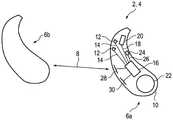
图1示出了具有双耳助听器的听力系统,Figure 1 shows a hearing system with binaural hearing aids,
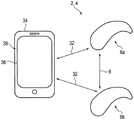
图2示出了根据图1的听力系统,其中助听器在信号技术上与移动附加设备耦合,以及FIG. 2 shows the hearing system according to FIG. 1, wherein the hearing aid is signal-technically coupled to the mobile add-on device, and
图3示出了用于运行听力系统的方法的流程图,Figure 3 shows a flow chart of a method for operating a hearing system,
图4示出了坐着-站起测试的两个时间-加速度图,Figure 4 shows two time-accelerograms for the sit-stand test,
图5示出了翻身测试的两个时间-加速度图,和Figure 5 shows two time-accelerograms for the rollover test, and
图6示出了静止测试的三个加速度-加速度图。Figure 6 shows three acceleration-acceleration plots for the static test.
在所有附图中,彼此对应的部分和参量总是具有相同的附图标记。In all figures, parts and quantities corresponding to each other always have the same reference signs.
具体实施方式Detailed ways
图1示出了根据本发明的听力系统2的原理结构。在该实施例中,听力系统2被实施为具有双耳助听器4的听力辅助设备,双耳助听器4具有两个在信号技术上耦合的助听器或单个设备6a、6b。单个设备6a、6b在此示例性地被设计为耳后助听器(HdO)。单个设备6a、6b借助无线通信连接8在信号技术上彼此耦合或可以彼此耦合。FIG. 1 shows the basic structure of a
通信连接8例如是单个设备6a和6b之间的感应耦合,替换地,通信连接8例如被实施为单个设备6a和6b之间的无线电连接、尤其是蓝牙或RFID连接。The
下面示例性地根据单个设备6a解释单个设备6a、6b的结构。如在图1中示意性示出的那样,单个设备6a包括设备壳体10,一个或多个麦克风(也被称为声电输入转换器12)被安装在该设备壳体中。通过输入转换器12,在听力系统2的周围环境中记录声音或声学信号,并且将其转换成电音频信号作为声学数据14。The structure of the
声学数据14由同样布置在设备壳体10中的信号处理装置16处理。根据音频信号14,信号处理装置16产生输出信号18,该输出信号被引导到扬声器或听筒20处。听筒20在此被实施为电声输出转换器20,该电声输出转换器将电输出信号18转换成声学信号并且输出。在HdO单个设备6a中,声学信号必要时经由未详细示出的声音软管或外部听筒传输至听力系统用户的耳膜,该声音软管或外部听筒具有位于耳道中的耳塑件。然而,例如也可以想到机电输出转换器作为听筒20,例如在骨传导听筒的情况下。
单个设备6a和尤其是信号处理装置16的能量供应借助容纳在设备壳体10中的电池22进行。The
信号处理装置16与单个设备6a的运动传感器24耦合。运动传感器24在运行中采集单个设备6a的加速度运动和/或旋转运动,并且在运行中将其作为运动数据26发送给信号处理装置16。运动传感器24例如被实施为3D加速度传感器。附加地或替换地,运动传感器例如被实施为位置传感器、尤其被实施为陀螺仪传感器。The
此外,信号处理装置16在信号技术上被引导到单个设备6a的第一收发器28和第二收发器30上。收发器28用于借助通信连接8发送和接收无线信号,并且收发器30用于借助通信连接32将无线信号发送到助听器外部的附加设备34和从其接收无线信号(图2)。例如同样可以想到,仅为两个通信连接8、32设置一个收发器。Furthermore, the
在图2的实施例中,附加设备34被实施为单独的移动的操作和显示设备,其借助通信连接32在信号技术上与助听器4耦合或可以与助听器4耦合。在图2中示意性示出的附加设备34尤其是智能手机。下面也被称为智能手机的附加设备34具有触敏的显示单元(显示屏)36,其在下面也被称为触摸屏。适宜地,智能手机34在此被带入到通信连接32的发送区域中。在智能手机32与单个设备6a和6b的收发器30之间的信号技术上的耦合在此通过智能手机32的相应的(未详细示出的)集成的收发器、例如无线电或射频天线来实现。In the exemplary embodiment of FIG. 2 , the
智能手机34具有集成的控制器,该控制器基本上由微控制器形成,该微控制器具有实现的应用软件38,其用于在程序技术上评估借助通信连接32传输的信号和数据。应用软件38优选地是存储在控制器的数据存储器中的移动应用程序或智能手机应用程序。控制器在运行中在被实施为触摸屏的显示单元36上显示应用软件38,其中,听力系统用户2可以借助显示单元36的触敏表面来操作应用软件38。
根据图3所示的流程图,下面更详细地解释根据本发明的用于运行听力系统2的方法40。The
该方法40尤其适合于并且被设置为用于保护或警告听力系统用户2以防即将发生的跌倒。在听力辅助装置2的正常运行中,助听器4的单个设备6a和6b被佩戴在听力系统用户的耳朵上。在此,单个设备6a和6b借助通信连接8耦合用于相互的信号传输。单个设备6a和6b在此还可选地借助通信连接32在信号技术上与智能手机34耦合。The
根据该方法,首先分析和/或表征听力系统用户2的运动或运动事件。根据评估或分析,为听力系统用户确定未来跌倒事件的概率、即跌倒风险。将该跌倒风险与存储的阈值进行比较,并且当达到或超过阈值时产生可感知的警告信号。警告信号例如是由助听器4和/或智能手机34产生的警告声音。附加地或替换地,警告信号例如被实施为智能手机34的推送通知和/或触觉振动信号。According to the method, first the movements or movement events of the
该方法优选至少部分地由控制器执行,其中,该方法例如在助听器4中和/或在智能手机34中执行。换言之,控制器例如是信号处理装置16或智能手机34的一部分。同样可以想到,例如该方法部分地在助听器4中并且部分地在智能手机34中实施,即助听器4和智能手机34都具有这样的控制器。为此,数据通过通信连接32从助听器4发送到智能手机34并且返回。The method is preferably carried out at least partially by the controller, wherein the method is carried out, for example, in the
运动的分析和评估例如可以在多个步骤中进行,使得能够特别安全且可靠地确定跌倒风险。图3在此示出了多个方法步骤的连续的顺序,其中,这些步骤在此例如可以至少部分地以不同的顺序和/或也可以至少部分地并行地实施。The analysis and evaluation of the movement can be carried out, for example, in several steps, so that the risk of falling can be determined particularly safely and reliably. FIG. 3 here shows a sequential sequence of a plurality of method steps, wherein these steps can be carried out, for example, at least partially in a different sequence and/or also at least partially in parallel.
例如,在方法步骤42中首先采集和评估运动数据26。这意味着,使用运动传感器24分析听力系统用户2在当前情况下的运动。分析或评估例如针对两个单个设备6a、6b分开地进行,或者组合地分析两个单个设备6a、6b的运动数据26。For example, in
在方法步骤44中,根据音频信号14分析当前的声学环境情况。该分析或评估优选与运动数据26的评估并行地进行。适当地,将相应当前的环境情况与当前的运动数据26相关联并且存储在未详细示出的存储器中。In
在方法步骤46中,将当前的运动数据26和环境情况例如与先前的或存储的、在相似的和不同的环境情况中的运动数据26进行比较,以便例如确定运动模式的偏差或异常。这种偏差或异常表明跌倒的风险增加。In
在可选的方法步骤48中,例如基于方法步骤44的结果请求用户反馈。这例如借助应用软件和/或借助语音命令进行。例如,当识别到未知的运动模式和/或未知的声学环境情况时,请求该反馈。In an
优选地,听力系统用户的个人健康数据存储在听力系统2的存储器中。在方法步骤50中,在运动模式分析中考虑这些健康数据。例如,在此进行关于失智症或眩晕的运动数据26的运动模式分析。Preferably, the hearing system user's personal health data is stored in a memory of the
在可选的方法步骤52中(如果可用的话),采集耦合到听力系统2的其他传感器的输入(Input),例如光电体积描记(PPG)、脑电图(EEG)、肌电图(EMG),其例如提供关于听力系统用户2的心血管状态(即频率、心率变异性)和/或负荷测量的信息。In an optional method step 52 (if available), the input (Input) of other sensors coupled to the
在同样可选的方法步骤54中,将当前的运动数据26与类似的其他用户数据进行比较,该其他用户数据匿名地、即不能与用户关联地存储在云中。方法步骤54在此例如对应于方法步骤46,其中,在此不涉及听力系统用户2自身的存储数据,而是涉及可在云中调用的其他用户的数据。因此,为了确定跌倒风险可以一起考虑其他用户的类似的数据,从而提供更鲁棒和更可靠的对跌倒概率的预测。In a likewise
在方法步骤56中,根据所存储的运动数据和环境情况创建听力系统用户的用户画像。换言之,听力系统用户根据存储的数据被“分类”为画像。这可以实现每天的例行识别,以便将当前结果与先前结果进行比较,从而能够跟踪和采集变化。通过用户画像能够实现改进的和更鲁棒的对跌倒风险的确定。In
在方法步骤58中,依据方法步骤46和/或54调整助听器设置,即助听器参数和/或助听器性能。调整后的助听器输出可以用作对跌倒干预或跌倒预防的贡献(例如,在失智症或其他紊乱的情况下)。助听器设置的改变可以有助于改善的定向和/或用于减少分心,并因此减小跌倒风险。例如,在方法步骤58中,将当前确定的跌倒风险与(第二)阈值进行比较,该(第二)阈值被设计得比用于触发警告信号的(第一)阈值小。如果达到或超过该(第二)阈值,则改变和调整助听器设置。由此,在输出警告信号之前首先实施用于减小跌倒风险的另外的预防措施。因此优选地,随着跌倒概率的增加实现助听器设置的相关的或逐渐的适配。In
在该方法的可想到的实施中,在达到或超过(第一或第二)阈值时,在附加设备上显示用于减小跌倒或摔倒风险的措施。为此,在方法步骤60中,依据运动数据26和/或跌倒风险向听力系统用户2提供处置或指点,所述处置或指点由智能手机34的应用软件38提供。例如,基于步态分析,在显示单元36上显示如下动作:这些动作有助于保持或提高体能以减小跌倒风险,或减缓认知衰退,或能够实现健康老龄化或良好的生活质量,或支持其他干预措施,例如药物干预的服用剂量。In a conceivable implementation of the method, when a (first or second) threshold value is reached or exceeded, measures for reducing falls or the risk of falling are displayed on the additional device. For this purpose, in a
在方法步骤62中,根据所评估的运动数据26在智能手机34的显示单元36上显示运动模式和/或跌倒风险的变化以及当前状态。由此,听力系统用户2可以自己监测其跌倒风险。当通过该方法监测听力系统用户2的进一步的ANS紊乱时,这是特别有利的,使得听力系统用户2也可以在没有医生访问的情况下监测其健康状态或疾病走向。In a
在方法步骤64中,根据用户画像来调整助听器的“分类”,由此为听力系统用户2提供改进的输出。这意味着,根据在方法步骤56中创建的用户画像,针对不同的环境情况调整助听器4的所存储的预设,以便在这些情况中保持跌倒风险尽可能低。相对于方法步骤58(其中调整当前的助听器设置),在方法步骤64中修改与不同的声学环境情况相关联的助听器设置。由此,在未来的环境变化中使用在跌倒风险方面已经改进的助听器设置。In
在可选的方法步骤66中,将运动分析和跌倒风险传送给保健服务的服务提供者、例如传送给医生或医疗专业人员。由此使得例如能够远程监测听力系统用户的ANS紊乱。优选地,该方法步骤66仅在听力系统用户已经给予相应的同意或允许时才被执行。In an
下面根据图4至图6示出用于不同运动事件的运动数据26。运动数据26在此利用双耳助听器4来采集,该双耳助听器配备有运动传感器24、尤其是3D加速度传感器。附图在此示出了用于“静止锻炼”的运动数据26。图4的运动数据26示出了从椅子上站起来、即从坐到站的运动过渡。在图5中示出了用于旋转测试的信号曲线或数据曲线,并且在图6中示出了静止-站立测试的运动数据26。Sports data 26 for different sports events are shown below with reference to FIGS. 4 to 6 . The motion data 26 are here acquired with the
图4包括两个竖直相叠地布置的区段68、70,所述区段分别示出时间-加速度曲线图。在区段68、70中水平地、即沿着横坐标轴(X轴)绘制例如以秒为单位的时间t,并且沿着竖直的纵坐标轴(Y轴)绘制加速度B。正加速度值对应于加速,负加速度值对应于制动。区段68、70在此示出了三轴加速度计(3D加速度传感器)的原始测量数据,其标准化为地球的重力加速度G(1G=9.81m/s2)。FIG. 4 includes two
在区段68、70中,分别根据三个曲线72、74、76示出运动数据26,其中,曲线72示出沿X方向的加速度B,并且曲线74示出沿Y方向的加速度B,并且曲线76示出沿Z方向的加速度B。In
在此,X、Y和Z方向例如涉及身体平面的三个主要群体,即横向平面(XY)、正面平面(YZ)和矢状平面(XZ)。横坐标轴(X轴,X方向)在此例如沿着矢状方向(前,后)定向,纵坐标轴(Y轴,Y方向)沿着横向方向(左,右)定向,以及竖坐标轴(Applikatenachse)(Z轴,Z方向)沿着纵向方向(上,下)定向。Here, the X, Y and Z directions relate, for example, to three main groups of body planes, namely the transverse plane (XY), the frontal plane (YZ) and the sagittal plane (XZ). The abscissa axis (X axis, X direction) is oriented here, for example, along the sagittal direction (front, back), the ordinate axis (Y axis, Y direction) is oriented along the transverse direction (left, right), and the vertical axis (Applikatenachse) (Z axis, Z direction) is oriented along the longitudinal direction (up, down).
在此,区段68、70示出了两种情况的运动数据26,其中仅示出了单个设备6a、6b中的一个的单耳运动数据,例如佩戴在左耳上的单个设备。Here,
区段68中的曲线72、74、76示出了听力系统用户连续两次以正常方式从椅子上站起来并且随后再次坐下的情况下的运动数据26。
在区段70中示出了两次站立和坐下的相同曲线,其中听力系统用户在此已经支撑在扶手上以模拟单侧残疾。The same curve is shown twice for standing and sitting down in
在区段68的正常情况下,沿Z和X方向的加速度是可见的。X分量归因于由身体向前倾斜引起的加速度,而Z分量描述的是由身体抬起或移动引起的加速度。在区段70的扶手支撑的情况下,X分量类似于第一情况。然而,Z分量要少得多。此外,还有Y分量,其表明有显著的侧向运动。总体而言,与正常情况(<1秒)相比,支持情况的序列的时间段持续的时间更长(1-2秒)。In the normal case of
因此,通过评估和分析运动数据26或曲线72、74、76,可以量化和区分配备有加速度计24的听力系统2的不同类型的站立/坐着。Thus, by evaluating and analyzing the motion data 26 or the
图5包括两个竖向相叠地布置的区段78、80,所述区段分别示出时间-加速度曲线图。在区段68、70中水平地、即沿着横坐标轴(X轴)绘制例如以秒为单位的时间t,并且沿着竖直的纵坐标轴(Y轴)绘制加速度差ΔB。加速度差ΔB是左侧和右侧的单个设备6a、6b的加速度之间的差,即双耳差,这意味着左侧设备的加速度减去右侧设备的加速度,其中加速度差ΔB被标准化到重力加速度G。FIG. 5 includes two
在区段78、80中,分别借助三个曲线82、84、86示出了运动数据26,其中,曲线82示出沿X方向的加速度差ΔB,并且曲线84示出沿Y方向的加速度差ΔB,并且曲线86示出沿Z方向的加速度差ΔB。In the
人的旋转行为与跌倒的风险有关。在此,区段78、80示出了利用双耳佩戴的加速度计数据测量大约90°的身体旋转的能力。在此,区段78、80示出针对旋转序列90°左、90°右、90°左、90°右的运动数据。Human spinning behavior is associated with risk of falls. Here,
区段78的曲线82、84、86示出了以正常速度旋转的运动数据,并且区段80的曲线82、84、86示出了以缓慢速度旋转的运动数据。
在区段78的正常速度情况下,在X和Y分量中可以看见明显的加速度峰值,其表示体旋转的切向力和径向力。在区段80的速度较慢的情况下,峰值不太明显或基本上不可感知。At the normal velocity of
图5示出了,当仅使用双耳结构和加速度计时,可以将正常速度的身体旋转与慢速的身体旋转区分开来。在以正常速度旋转身体的情况下,可靠且合格地识别机动性(速度、持续时间、旋转角度)。Figure 5 shows that when only the binaural structure and accelerometers are used, it is possible to distinguish normal speed body rotation from slow speed body rotation. Reliable and acceptable identification of maneuvers (speed, duration, angle of rotation) while rotating the body at normal speed.
图6具有三个水平并排布置的区段88、90、92,所述区段分别示出二维的加速度图。在区段88、90、92中,水平地、即沿着横坐标轴(X轴)绘制了沿X方向的加速度Bx,并且沿着垂直的纵坐标轴(Y轴)绘制了以重力加速度G为单位的沿Y方向的加速度By。FIG. 6 has three
区段88、90、92示出静止测试,其中听力系统用户在正常站立时平衡其身体。区段88、90、92示出了对于健康的测试者在大约一分钟(1min)的测量持续时间内的加速度的时间曲线94。区段88示出了正常的站立,其中区段90示出了测试者已经闭上眼睛的站立。区段92的运动数据示出了在睁开眼睛的情况下单腿站立,即用一条腿的站立。
区段88、90、92分别示出了针对单耳加速度测量的XY平面中的无平均值的加速度计数据。在原点(0,0)的点产生完美的平衡能力。曲线中的巨大波动表明更需要调节平衡。
区段88的运动数据示出了以原点为中心的簇,具有扁平的整体形状。运动数据在X分量中比在Y分量中具有更大的变化,这对应于主要的左/右波动和不太明显的前/后波动。The motion data for
区段88的运动数据示出了围绕原点分布布置的两个簇。由于闭着眼睛,缺少视觉参考点,仅通过平衡系统来维持平衡。这导致测试者进入半稳定状态,直到波动变得太大并稳定在另一个半稳定状态。The motion data for
区段90的运动数据示出了靠近原点的簇。与站立(区段88)相比,簇的整体形状更圆润,其中出现左/右和前/后波动,这表明更动态的肌肉调节以保持平衡。The motion data for
例如,可以想到在方法40的范围内每天至少执行正常的站立场景,其中,典型结果的偏差例如给出具有提高的跌倒风险的糟糕一天的指示。For example, it is conceivable within the scope of the
本发明不限于上述实施例。更确切地说,本领域技术人员也可以从中推导出本发明的其他变型方案,而不脱离本发明的主题。此外,尤其所有结合实施例描述的单个特征也能够以其它方式彼此组合,而不脱离本发明的主题。The present invention is not limited to the above-described embodiments. Rather, other variants of the invention can also be deduced therefrom by a person skilled in the art without departing from the subject matter of the invention. Furthermore, in particular all individual features described in connection with the exemplary embodiments can also be combined with one another in other ways without departing from the subject matter of the present invention.
附图标记列表List of reference signs
2 听力系统2 hearing system
4 助听器4 hearing aids
6a,6b 单个设备6a, 6b Single device
8 通信连接8 Communication connection
10 设备壳体10 Device housing
12 输入转换器12 input converter
14 声学数据/音频信号14 Acoustic data/audio signal
16 信号处理信号16 Signal Processing Signal
18 输出信号18 output signal
20 输出转换器20 output converter
22 电池22 batteries
24 运动传感器24 motion sensor
26 运动数据26 Sports data
28,30 收发器28, 30 transceivers
32 通信连接32 communication connection
34 附加设备/智能手机34 Additional Devices/Smartphones
36 显示单元36 display unit
38 应用软件38 application software
40 方法40 ways
42…66 方法步骤42...66 Method steps
68,70 区段
72,74,76 曲线72, 74, 76 curves
78,80 区段
82,84,86 曲线82, 84, 86 curves
88,90,92 区段88, 90, 92 sections
94 曲线94 curves
t 时间t time
B,Bx,By 加速度B, Bx, By Acceleration
ΔB 加速度差ΔB acceleration difference
Claims (11)
Translated fromChineseApplications Claiming Priority (1)
| Application Number | Priority Date | Filing Date | Title |
|---|---|---|---|
| PCT/EP2020/086518WO2022128082A1 (en) | 2020-12-16 | 2020-12-16 | Method for operating a hearing system, and hearing system |
Publications (2)
| Publication Number | Publication Date |
|---|---|
| CN115299077Atrue CN115299077A (en) | 2022-11-04 |
| CN115299077B CN115299077B (en) | 2025-09-16 |
Family
ID=74104094
Family Applications (1)
| Application Number | Title | Priority Date | Filing Date |
|---|---|---|---|
| CN202080098691.7AActiveCN115299077B (en) | 2020-12-16 | 2020-12-16 | Method for operating a hearing system and hearing system |
Country Status (4)
| Country | Link |
|---|---|
| US (1) | US11961382B2 (en) |
| EP (1) | EP4035422A1 (en) |
| CN (1) | CN115299077B (en) |
| WO (1) | WO2022128082A1 (en) |
Cited By (1)
| Publication number | Priority date | Publication date | Assignee | Title |
|---|---|---|---|---|
| CN119325057A (en)* | 2024-12-17 | 2025-01-17 | 深圳市智听科技有限公司 | Human body state detection method, hearing aid and warning system |
Families Citing this family (5)
| Publication number | Priority date | Publication date | Assignee | Title |
|---|---|---|---|---|
| US20230310933A1 (en)* | 2022-03-31 | 2023-10-05 | Sonova Ag | Hearing device with health function |
| WO2024150094A1 (en)* | 2023-01-12 | 2024-07-18 | Cochlear Limited | Monitoring speech-language milestones |
| CN116249062B (en)* | 2023-05-08 | 2023-07-25 | 深圳市英唐数码科技有限公司 | Hearing-aid equipment state intelligent quality inspection method, system and medium |
| DE102023204769A1 (en)* | 2023-05-23 | 2024-11-28 | Sivantos Pte. Ltd. | Hearing aid and method for operating a hearing aid |
| WO2025017998A1 (en)* | 2023-07-18 | 2025-01-23 | Necソリューションイノベータ株式会社 | Target monitoring device, target monitoring method, program, and recording medium |
Citations (5)
| Publication number | Priority date | Publication date | Assignee | Title |
|---|---|---|---|---|
| US20180228404A1 (en)* | 2017-02-13 | 2018-08-16 | Starkey Laboratories, Inc. | Fall prediction system and method of using same |
| CN110249639A (en)* | 2017-02-10 | 2019-09-17 | 霍尼韦尔国际公司 | Distributed network of communicatively coupled noise monitoring and mapping devices |
| WO2020124022A2 (en)* | 2018-12-15 | 2020-06-18 | Starkey Laboratories, Inc. | Hearing assistance system with enhanced fall detection features |
| US20200205746A1 (en)* | 2018-12-27 | 2020-07-02 | Starkey Laboratories, Inc. | Predictive fall event management system and method of using same |
| WO2020206155A1 (en)* | 2019-04-03 | 2020-10-08 | Starkey Laboratories, Inc. | Monitoring system and method of using same |
- 2020
- 2020-12-16CNCN202080098691.7Apatent/CN115299077B/enactiveActive
- 2020-12-16WOPCT/EP2020/086518patent/WO2022128082A1/ennot_activeCeased
- 2020-12-16EPEP20830158.0Apatent/EP4035422A1/enactivePending
- 2021
- 2021-11-08USUS17/520,900patent/US11961382B2/enactiveActive
Patent Citations (5)
| Publication number | Priority date | Publication date | Assignee | Title |
|---|---|---|---|---|
| CN110249639A (en)* | 2017-02-10 | 2019-09-17 | 霍尼韦尔国际公司 | Distributed network of communicatively coupled noise monitoring and mapping devices |
| US20180228404A1 (en)* | 2017-02-13 | 2018-08-16 | Starkey Laboratories, Inc. | Fall prediction system and method of using same |
| WO2020124022A2 (en)* | 2018-12-15 | 2020-06-18 | Starkey Laboratories, Inc. | Hearing assistance system with enhanced fall detection features |
| US20200205746A1 (en)* | 2018-12-27 | 2020-07-02 | Starkey Laboratories, Inc. | Predictive fall event management system and method of using same |
| WO2020206155A1 (en)* | 2019-04-03 | 2020-10-08 | Starkey Laboratories, Inc. | Monitoring system and method of using same |
Cited By (1)
| Publication number | Priority date | Publication date | Assignee | Title |
|---|---|---|---|---|
| CN119325057A (en)* | 2024-12-17 | 2025-01-17 | 深圳市智听科技有限公司 | Human body state detection method, hearing aid and warning system |
Also Published As
| Publication number | Publication date |
|---|---|
| CN115299077B (en) | 2025-09-16 |
| EP4035422A1 (en) | 2022-08-03 |
| US11961382B2 (en) | 2024-04-16 |
| US20220189278A1 (en) | 2022-06-16 |
| WO2022128082A1 (en) | 2022-06-23 |
Similar Documents
| Publication | Publication Date | Title |
|---|---|---|
| CN115299077B (en) | Method for operating a hearing system and hearing system | |
| EP3903290B1 (en) | Predictive fall event management system and method of using same | |
| US12310716B2 (en) | Fall prediction system including an accessory and method of using same | |
| US20210185458A1 (en) | Health monitoring with ear-wearable devices and accessory devices | |
| US20200268265A1 (en) | Integration of sensor-based cardiovascular measures into physical benefit measure related to hearing instrument use | |
| JP6330199B2 (en) | Body position optimization and biological signal feedback of smart wearable device | |
| WO2020206155A1 (en) | Monitoring system and method of using same | |
| US20220361787A1 (en) | Ear-worn device based measurement of reaction or reflex speed | |
| US20230390608A1 (en) | Systems and methods including ear-worn devices for vestibular rehabilitation exercises | |
| KR101910282B1 (en) | Apparatus for health care used bone conduction hearing aid | |
| US12374335B2 (en) | Local artificial intelligence assistant system with ear-wearable device | |
| EP4002882A1 (en) | Customer sleep mode of a hearing device | |
| US20230181869A1 (en) | Multi-sensory ear-wearable devices for stress related condition detection and therapy | |
| US20240090808A1 (en) | Multi-sensory ear-worn devices for stress and anxiety detection and alleviation | |
| US20250134472A1 (en) | Ear-wearable devices and systems with orthostatic intolerance condition screening features | |
| US20220157434A1 (en) | Ear-wearable device systems and methods for monitoring emotional state | |
| WO2022128083A1 (en) | Method for determining the hearing effort of a hearing aid wearer and corresponding adjustment of hearing aid parameters | |
| US20240122500A1 (en) | Ear-wearable devices for gait and impact tracking of knee and hip replacements | |
| WO2025169092A1 (en) | Systems and methods for identifying sleep states of a patient based on middle ear muscle activation | |
| CN119454001A (en) | Method for creating a frailty index value for a person using a hearing device |
Legal Events
| Date | Code | Title | Description |
|---|---|---|---|
| PB01 | Publication | ||
| PB01 | Publication | ||
| SE01 | Entry into force of request for substantive examination | ||
| SE01 | Entry into force of request for substantive examination | ||
| GR01 | Patent grant | ||
| GR01 | Patent grant |