Movatterモバイル変換


[0]ホーム

URL:


CN115249072A - A Reinforcement Learning Path Planning Method Based on Generative Adversarial User Model - Google Patents

A Reinforcement Learning Path Planning Method Based on Generative Adversarial User Model
Download PDF

Info

Publication number
CN115249072A
CN115249072ACN202210528946.XACN202210528946ACN115249072ACN 115249072 ACN115249072 ACN 115249072ACN 202210528946 ACN202210528946 ACN 202210528946ACN 115249072 ACN115249072 ACN 115249072A
Authority
CN
China
Prior art keywords
learning
user
path planning
resource
learner
Prior art date
Legal status (The legal status is an assumption and is not a legal conclusion. Google has not performed a legal analysis and makes no representation as to the accuracy of the status listed.)
Granted
Application number
CN202210528946.XA
Other languages
Chinese (zh)
Other versions
CN115249072B (en
Inventor
田锋
朱海萍
马黛露丝
廖思霁
刘启东
陈妍
郑庆华
王茜莺
武亚强
Current Assignee (The listed assignees may be inaccurate. Google has not performed a legal analysis and makes no representation or warranty as to the accuracy of the list.)
Xian Jiaotong University
Original Assignee
Xian Jiaotong University
Priority date (The priority date is an assumption and is not a legal conclusion. Google has not performed a legal analysis and makes no representation as to the accuracy of the date listed.)
Filing date
Publication date
Application filed by Xian Jiaotong UniversityfiledCriticalXian Jiaotong University
Priority to CN202210528946.XApriorityCriticalpatent/CN115249072B/en
Publication of CN115249072ApublicationCriticalpatent/CN115249072A/en
Application grantedgrantedCritical
Publication of CN115249072BpublicationCriticalpatent/CN115249072B/en
Activelegal-statusCriticalCurrent
Anticipated expirationlegal-statusCritical

Links

Images

Classifications

Landscapes

Abstract

Translated fromChinese

本发明公开了一种基于生成对抗用户模型的强化学习路径规划方法,属于学习资源路径规划领域。一种基于生成对抗用户模型的强化学习路径规划方法,包括以下步骤:1)大数据驱动的用户群与训练数据集划分;2)基于分层奖励函数强化学习的路径规划模型Planerui离线训练;3)基于级联DQN算法完成路径规划。本发明提供的学习资源路径能够在完成至目标知识点的学习目标的同时,应对用户每一步学习中兴趣的变化。本发明能够为用户自适应地推荐路径上的学习资源,该路径规划方法考虑了用户学习过程中对学习资源的反馈以及学习资源本身的知识结构关系,实现学习资源路径规划。

Figure 202210528946

The invention discloses a reinforcement learning path planning method based on a generative confrontation user model, which belongs to the field of learning resource path planning. A reinforcement learning path planning method based on a generative confrontation user model, comprising the following steps: 1) division of user groups and training data sets driven by big data; 2) offline training of the path planning model Planerui based on hierarchical reward function reinforcement learning; 3) Complete path planning based on cascaded DQN algorithm. The learning resource path provided by the present invention can cope with the change of the user's interest in each step of learning while completing the learning goal to the target knowledge point. The present invention can adaptively recommend the learning resources on the path for the user, and the path planning method takes into account the user's feedback on the learning resources in the learning process and the knowledge structure relationship of the learning resources themselves, so as to realize the path planning of the learning resources.

Figure 202210528946

Description

Translated fromChinese
一种基于生成对抗用户模型的强化学习路径规划方法A Reinforcement Learning Path Planning Method Based on Generative Adversarial User Model

技术领域technical field

本发明涉及一种学习资源路径规划方法,具体涉及一种基于生成对抗用户模型的强化学习路径规划方法。The invention relates to a learning resource path planning method, in particular to a reinforcement learning path planning method based on a generated confrontation user model.

背景技术Background technique

现有的学习路径推荐算法可分为路径生成和路径序列两类。路径生成类算法在确定用户的特征和要求后,在单次推荐中生成整个学习路径,在完成了整个路径后才进行学习评估。Kardan提出了一种两阶段路径生成方法,第一阶段,使用K-means算法根据预测试的结果对用户进行分组。第二阶段,使用蚁群优化方法为每组生成一条路径;Zhan Li基于图搜索算法,根据给定的用户输入约束如学习目标、起点和对输出路径的首选排名等生成截止日期驱动型路径、目标驱动型路径、排序路径(考虑用户的排序偏好)三种类型的学习路径;Adorni和Koceva应用教育概念图(Educational Concept Map,ECM)来生成路径,用户通过从ECM中选择一组主题来确定知识背景、起点和终点,使用ENCODE生成路径。路径序列算法则根据用户在学习路径中的进展一步一步地推荐学习路径。Govindarajan应用并行粒子群优化算法预测用户的动态路径;Yarandi提出了一个基于本体论知识的模型,该模型接受用户的能力、知识背景、学习风格和偏好作为输入并推荐路径;Salahli使用项目反应理论估计用户对知识的理解程度,以此进行路径的规划。Existing learning path recommendation algorithms can be divided into two categories: path generation and path sequence. After the path generation algorithm determines the user's characteristics and requirements, it generates the entire learning path in a single recommendation, and the learning evaluation is performed after the entire path is completed. Kardan proposes a two-stage route generation method. In the first stage, the K-means algorithm is used to group users according to the results of the pre-test. In the second stage, an ant colony optimization method is used to generate a path for each group; Zhan Li is based on a graph search algorithm to generate deadline-driven paths according to given user input constraints such as learning objectives, starting points, and preferred rankings for output paths, etc. Three types of learning paths: goal-driven paths, ranked paths (considering the user's ranking preferences); Adorni and Koceva applied an Educational Concept Map (ECM) to generate paths, and users determined by selecting a set of topics from the ECM Knowledge background, start point and end point, use ENCODE to generate paths. The Path Sequence Algorithm recommends a learning path step by step based on the user's progress in the learning path. Govindarajan applied the parallel particle swarm optimization algorithm to predict the user's dynamic path; Yarandi proposed a model based on ontological knowledge, which accepts the user's ability, knowledge background, learning style, and preference as input and recommends the path; Salahli used item response theory to estimate The user's understanding of knowledge is used to plan the path.

从上述文献可以看出,在学习路径推荐中,对用户本身进行精准的画像是一个重要的方面,往往需要结合用户的静态和动态特征以建立最佳的用户模型。尤其随着时间的推移,用户的偏好、学习能力等特征会发生变化,推荐的学习路径也应随之动态变化。如何在用户偏好等特征快速变化时,对用户进行精准建模是自适应路径推荐的难点。现有的路径规划方法,路径序列算法往往需要借助知识追踪的结果进行认知诊断,常用于习题推荐,而不适用于课程学习;而路径生成算法大多忽略了用户表现和学习过程中发生的变化,可能导致用户状态改变后的错误推荐,且搜索速度较慢。因此如何结合用户建模结果,自适应地调整路径,为学习者实时推荐适合其学习偏好、学习进度的学习路径,是一个亟待解决的问题。It can be seen from the above literature that in the learning path recommendation, accurate portrait of the user itself is an important aspect, and it is often necessary to combine the static and dynamic characteristics of the user to establish the best user model. Especially as time goes by, user preferences, learning abilities and other characteristics will change, and the recommended learning path should also change dynamically accordingly. How to accurately model users when user preferences and other characteristics change rapidly is the difficulty of adaptive path recommendation. Existing path planning methods, path sequence algorithms often need to rely on the results of knowledge tracking for cognitive diagnosis, and are often used for exercise recommendation, but not for course learning; while path generation algorithms mostly ignore changes in user performance and learning processes , may lead to incorrect recommendations after user status changes, and the search speed is slow. Therefore, how to adjust the path adaptively based on the user modeling results, and recommend learning paths for learners in real time that suit their learning preferences and learning progress is an urgent problem to be solved.

发明内容SUMMARY OF THE INVENTION

本发明的目的在于克服上述现有技术的缺点,提供一种基于生成对抗用户模型的强化学习路径规划方法。The purpose of the present invention is to overcome the above-mentioned shortcomings of the prior art, and provide a reinforcement learning path planning method based on a generated confrontational user model.

为达到上述目的,本发明采用以下技术方案予以实现:In order to achieve the above object, the present invention adopts the following technical solutions to achieve:

一种基于生成对抗用户模型的强化学习路径规划方法,包括以下步骤:A reinforcement learning path planning method based on generating an adversarial user model, comprising the following steps:

1)根据用户学习日志获取构建学习者相似度矩阵W,利用谱聚类方法在学习者相似度矩阵W上完成用户学习行为类型聚类,得到N类用户学习行为类型{Clusterui|ui=1,…,N},根据用户学习行为类型可划分得到每一种学习行为类型对应的训练数据集Dui1) Construct learner similarity matrix W based on user learning logs, use spectral clustering method to complete user learning behavior type clustering on learner similarity matrix W, and get N types of user learning behavior {Clusterui |ui=1 ,...,N}, according to the type of user learning behavior, the training data set Dui corresponding to each type of learning behavior can be obtained;

2)结合知识森林,构建基于分层奖励函数强化学习的路径规划模型,所述基于分层奖励函数强化学习的路径规划模型中的奖励函数为序列决策奖励和知识点规划奖励构成的两层级的奖励函数,并将用户行为模型用作强化学习的环境,利用生成对抗训练的形式训练路径规划模型;2) Combining the knowledge forest, constructing a path planning model based on hierarchical reward function reinforcement learning, the reward function in the path planning model based on hierarchical reward function reinforcement learning is a two-level structure consisting of sequence decision reward and knowledge point planning reward Reward function, and use the user behavior model as an environment for reinforcement learning, and use the form of generative confrontation training to train the path planning model;

3)以用户学习行为类型、用户历史学习序列、目标知识点、学习资源集合及课程知识森林作为输入,基于级联DQN算法完成至目标知识点的学习资源路径规划,输出规划路径。3) Taking the user learning behavior type, user historical learning sequence, target knowledge point, learning resource collection and course knowledge forest as input, complete the learning resource path planning to the target knowledge point based on the cascaded DQN algorithm, and output the planned path.

进一步的,步骤1)中构建学习者相似度矩阵W的具体操作为:获取每一个学习者的课程学习状态stateui,course、已完成知识点平均耗时比

Figure BDA0003645762350000031
已完成知识点平均中心度
Figure BDA0003645762350000032
已完成关键知识点个数
Figure BDA0003645762350000033
及目标知识点的学习状态stateui,target,构建学习者评分向量Ui:Further, the specific operation of constructing the learner similarity matrix W in step 1) is: obtaining each learner's course learning status stateui, course , and the average time-consuming ratio of completed knowledge points
Figure BDA0003645762350000031
Average centrality of completed knowledge points
Figure BDA0003645762350000032
The number of key knowledge points completed
Figure BDA0003645762350000033
And the learning state stateui, target of the target knowledge point, construct the learner scoring vector Ui :

Figure BDA0003645762350000034

计算归一化后的学习者评分向量间的余弦相似度,构建学习者相似度矩阵W:Calculate the cosine similarity between the normalized learner rating vectors and construct the learner similarity matrix W:

Figure BDA0003645762350000035

3、根据权利要求2所述的基于生成对抗用户模型的强化学习路径规划方法,其特征在于,步骤1)中利用谱聚类方法结合相似度矩阵W完成N种用户学习行为类型聚类及数据集划分的具体过程为:3. The reinforcement learning path planning method based on generating an adversarial user model according to claim 2, wherein in step 1), the spectral clustering method is utilized in conjunction with the similarity matrix W to complete N kinds of user learning behavior type clustering and data The specific process of set division is as follows:

分别构建度矩阵D和拉普拉斯矩阵L:Construct degree matrix D and Laplacian matrix L respectively:

Figure BDA0003645762350000036

L=D-W (6)L=D-W (6)

利用

Figure BDA0003645762350000037
对L进行标准化,随后计算前N个最小特征值的特征向量,将N个特征向量组成M*N维的矩阵,按行进行标准化得到矩阵F,对矩阵F中的每一行作为一个N维样本,共M个样本,用k-means进行聚类得出最终N类分类结果,将学习者划分为N种不同学习行为类型{Clusterui|ui=1,...,N},据此划分用户日志,得到每一种学习行为类型对应的训练数据集Dui。use
Figure BDA0003645762350000037
Standardize L, then calculate the eigenvectors of the first N smallest eigenvalues, form the N eigenvectors into an M*N-dimensional matrix, standardize by row to obtain a matrix F, and use each row in the matrix F as an N-dimensional sample , with a total of M samples, clustering with k-means to get the final classification results of N categories, and divide the learners into N different learning behavior types {Clusterui |ui=1,...,N}, according to which The user logs are used to obtain the training data set Dui corresponding to each type of learning behavior.

进一步的,步骤2)构建基于分层奖励函数强化学习的路径规划模型中,强化学习对应的马尔科夫决策过程的五元组M=(st,At,P(·|st,At),r(st,at),γ);Further, in step 2) constructing a path planning model based on hierarchical reward function reinforcement learning, the five-tuple M=(st , At , P(·|st , At ), r(st , at ), γ);

其中,学习者作为环境,状态st表示学习者t时刻前的历史学习资源序列,动作at表示t时刻从所述时刻候选学习资源集合Lt中选择一个学习资源推荐给学习者,动作集At则表示t时刻为学习者推荐的长度为k的学习资源路径所对应的k个动作集合;状态转移概率P(·|st,At)则对应在给定状态st和动作集At时转移到下一个状态st+1的概率,同时作为用户动作的同等分布

Figure BDA0003645762350000041
奖励函数r(st,at)以及折扣因子γ。Among them, the learner is used as the environment, the state st represents the historical learning resource sequence of the learner before time t, the action at represents selecting a learning resource from the candidate learning resource set Lt at the time t to recommend to the learner, and the action set At represents the k action sets corresponding to the learning resource path of length k recommended by the learner at time t; the state transition probability P(·|st , At ) corresponds to the given state st and action set The probability of transitioning to the next state st+1 at time At , while being an equal distribution of user actions
Figure BDA0003645762350000041
Reward function r(st , at ) and discount factor γ.

进一步的,将奖励函数r(st,at)分解为序列决策奖励rseq和知识点规划决策奖励rc,即r=rseq+rcFurther, the reward function r(st , at ) is decomposed into sequence decision reward rseq and knowledge point planning decision reward rc , namely r=rseq +rc ;

在计算序列决策奖励rseq时,计算推荐子序列和实际交互子序列的序列层级准确度,如式(8):When calculating the sequence decision reward rseq , the sequence-level accuracy of the recommended subsequence and the actual interaction subsequence is calculated, as shown in formula (8):

Figure BDA0003645762350000042

式(8)中,precm代表序列决策精度,it:t+k为实际交互子序列,

Figure BDA0003645762350000043
为推荐的子序列,pm为子序列it:t+k的一个长度为m的子序列,M代表所使用的长度为m的子序列的个数;In formula (8), precm represents the sequence decision accuracy, itt: t+k is the actual interaction subsequence,
Figure BDA0003645762350000043
is a recommended subsequence, pm is a subsequence of subsequence it:t+k with a length of m, and M represents the number of subsequences with a length of m used;

在计算知识点规划决策奖励函数rc时,考虑到所推荐学习资源与实际点击的学习资源难度是否匹配,利用学习时长估计学习资源难度,如下所示:When calculating the knowledge point planning decision-making reward functionrc , considering whether the recommended learning resources match the difficulty of the actually clicked learning resources, the learning time is used to estimate the difficulty of the learning resources, as shown below:

Figure BDA0003645762350000044

式(9)中,用户实际学习子序列为it:t+k,预测用户学习序列为

Figure BDA0003645762350000045
ct:t+k为用于表示用户实际学习序列的表示向量,
Figure BDA0003645762350000051
为用于表示预测的用户学习序列的表示向量,序列表示向量ct:t+k通过对序列中每个学习资源的特征向量取均值计算得到,ct+i
Figure BDA0003645762350000052
分别用于表示实际和预测的用户学习资源学习序列中第i个学习资源的特征向量;vt+i表示第i个学习资源的特征向量,durtotal表示该学习资源的默认学习时长,durwatch表示用户在该学习资源上的学习时长。In formula (9), the user's actual learning subsequence is itt:t+k , and the predicted user learning sequence is
Figure BDA0003645762350000045
ct: t+k is the representation vector used to represent the user's actual learning sequence,
Figure BDA0003645762350000051
is the representation vector used to represent the predicted user learning sequence, the sequence representation vector ct:t+k is calculated by taking the mean value of the feature vector of each learning resource in the sequence, ct+i and
Figure BDA0003645762350000052
are respectively used to represent the feature vector of the i-th learning resource in the actual and predicted user learning resource learning sequences; vt+i represents the feature vector of the i-th learning resource, durtotal represents the default learning duration of the learning resource, and durwatch Indicates the learning time of the user on this learning resource.

进一步的,步骤2)构建用户行为模型及联合训练的方式为:Further, step 2) builds the user behavior model and the way of joint training is:

针对每一个Clusterui,设计用户行为模型

Figure BDA0003645762350000053
学到的策略
Figure BDA0003645762350000054
作为在动作集合At={a1,a2,...,an}上的概率分布,在计算奖励函数时,将当前的动作at和用户的状态st都作为奖励函数r(st,at)的输入,用户所采取的策略
Figure BDA0003645762350000055
将最大化预期奖励r(st,at),在求解时看作策略
Figure BDA0003645762350000056
在其概率分布空间Δk-1上的最优化问题进行求解;Design user behavior model for each Clusterui
Figure BDA0003645762350000053
learned strategy
Figure BDA0003645762350000054
As a probability distribution on the action set At = {a1 , a2 ,..., an }, when calculating the reward function, both the current action at and the user's statest are used as the reward functionr ( st , at ), the strategy adopted by the user
Figure BDA0003645762350000055
Consider maximizing the expected reward r(st , at ) as a strategy when solving
Figure BDA0003645762350000056
Solve the optimization problem on its probability distribution space Δk-1 ;

在每一类学习行为类型对应的数据集Dui上,以生成对抗训练的形式,将用户行为模型

Figure BDA0003645762350000057
看作生成器,奖励函数rui看作判别器,完成路径规划模型Planerui的参数学习,得到N个Planerui用于仿真模拟。On the dataset Dui corresponding to each type of learning behavior, in the form of generative adversarial training, the user behavior model
Figure BDA0003645762350000057
As a generator, the reward function rui is regarded as a discriminator, completes the parameter learning of the path planning model Planerui , and obtains N Planerui for simulation.

进一步的,最优化问题求解如下:Further, the optimization problem is solved as follows:

Figure BDA0003645762350000058

其中,正则化项采用负香农熵,使用参数η控制正则化的强度。Among them, the regularization term adopts negative Shannon entropy, and the parameter η is used to control the strength of regularization.

进一步的,实现生成对抗训练时极大极小化函数的计算方式为:Further, the calculation method of the maximization and minimization function during generative adversarial training is:

根据历史行为中的T个用户动作序列

Figure BDA0003645762350000059
和对应的点击课程资源的特征
Figure BDA00036457623500000510
计算状态
Figure BDA00036457623500000511
联合学习用户行为模型
Figure BDA00036457623500000512
和奖励函数r,见式(11):According to the T user action sequences in the historical behavior
Figure BDA0003645762350000059
and the corresponding click on the characteristics of the course resource
Figure BDA00036457623500000510
Calculation status
Figure BDA00036457623500000511
Federated Learning User Behavior Model
Figure BDA00036457623500000512
and reward function r, see formula (11):

Figure BDA00036457623500000513

式(11)中,α代表模型

Figure BDA0003645762350000061
中使用到的所有参数,θ代表中奖励函数r中使用到的所有参数。In formula (11), α represents the model
Figure BDA0003645762350000061
All the parameters used in , θ represents all the parameters used in the reward function r.

进一步的,步骤3)中利用级联DQN算法生成推荐学习资源路径的具体方式为:对于目标知识点ktarget,学习资源集合为

Figure BDA0003645762350000062
根据每一步学习资源推荐均使当前Q函数值最大的动作决策策略,利用级联的方式,寻找使每一级Q函数最大的最优动作,逐级迭代,直到找到包含目标知识点的学习资源,输出规划路径。Further, in step 3), the specific method of using the cascaded DQN algorithm to generate the recommended learning resource path is as follows: for the target knowledge point ktarget , the learning resource set is
Figure BDA0003645762350000062
According to the action decision-making strategy that maximizes the current Q-function value in each step of learning resource recommendation, use cascading methods to find the optimal action that maximizes the Q-function at each level, and iterate level by level until the learning resource that contains the target knowledge point is found. , output the planned path.

进一步的,步骤3)还包括:若所述学习者useri没有学习记录,则基于行为克隆的思想,基于同课程下历史同专业或同年级的相似用户完成学习资源路径规划,具体为:Further, step 3) also includes: if the learner useri has no learning record, then based on the idea of behavior cloning, based on similar users with the same major or the same grade in the same course to complete the learning resource path planning, specifically:

已知目标知识点ktarget,根据学习者年级、学校及专业信息,在已有学习历史的用户中进行基于相似度匹配,寻找历史记录中同课程下的历史同专业或同年级用户,利用所述相似用户的学习历史为无学习历史的用户生成至目标知识点的路径。Knowing the target knowledge point ktarget , according to the learner’s grade, school and major information, perform similarity-based matching among users with existing learning history, find users of the same major or grade in the same course in the historical records, and use all The learning history of similar users is used to generate a path to the target knowledge point for users without learning history.

与现有技术相比,本发明具有以下有益效果:Compared with the prior art, the present invention has the following beneficial effects:

本发明的基于生成对抗用户模型的强化学习路径规划方法,相较于现有的路径规划方法,本发明的基于强化学习的路径规划方法,能够在考虑到学习资源固有的知识结构的同时,考虑到用户的长期学习兴趣和当前学习兴趣,结合用户反馈,为用户提供至目标知识点的学习资源路径;本发明所提模型能够应对在线学习者的反馈实时变化的情况,采用用户行为模型与强化学习路径规划模型结合的形式,为学习者提供实时的路径规划结果;本发明提出的强化学习路径规划方法属于基于模型的强化学习方法,能够在用户交互较少的情况下学到好的推荐策略,并且能够快速学习新的用户动态;本发明在强化学习模型中使用的级联DQN算法用于获得组合推荐策略,能够从大量候选中找到最佳学习资源子集,该算法的时间复杂度仅与候选对象数量呈线性关系,能够极大程度提高模型计算效率。Compared with the existing path planning method, the reinforcement learning path planning method based on the generated confrontation user model of the present invention, the path planning method based on reinforcement learning of the present invention can take into account the inherent knowledge structure of the learning resources while taking into account According to the user's long-term learning interest and current learning interest, combined with user feedback, the user is provided with a learning resource path to the target knowledge point; the model proposed in the present invention can cope with the real-time changes in the feedback of online learners, and adopts the user behavior model and enhanced The combination of learning path planning models provides real-time path planning results for learners; the reinforcement learning path planning method proposed in the present invention belongs to the model-based reinforcement learning method, which can learn good recommendation strategies with less user interaction , and can quickly learn new user dynamics; the cascaded DQN algorithm used in the reinforcement learning model of the present invention is used to obtain a combined recommendation strategy, and can find the best learning resource subset from a large number of candidates, and the time complexity of the algorithm is only It has a linear relationship with the number of candidate objects, which can greatly improve the computational efficiency of the model.

附图说明Description of drawings

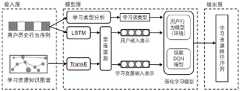
图1为本发明的学习资源路径规划流程图;Fig. 1 is the flow chart of learning resource path planning of the present invention;

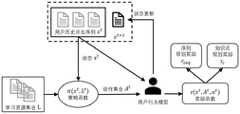
图2为使用的结合用户生成模型的强化学习模型框架示意图;Figure 2 is a schematic diagram of the framework of the reinforcement learning model combined with the user-generated model used;

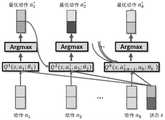
图3为级联DQN算法模型框架图。Figure 3 is a frame diagram of the cascaded DQN algorithm model.

具体实施方式Detailed ways

为了使本技术领域的人员更好地理解本发明方案,下面将结合本发明实施例中的附图,对本发明实施例中的技术方案进行清楚、完整地描述,显然,所描述的实施例仅仅是本发明一部分的实施例,而不是全部的实施例。基于本发明中的实施例,本领域普通技术人员在没有做出创造性劳动前提下所获得的所有其他实施例,都应当属于本发明保护的范围。In order to make those skilled in the art better understand the solutions of the present invention, the technical solutions in the embodiments of the present invention will be clearly and completely described below with reference to the accompanying drawings in the embodiments of the present invention. Obviously, the described embodiments are only Embodiments are part of the present invention, but not all embodiments. Based on the embodiments of the present invention, all other embodiments obtained by persons of ordinary skill in the art without creative efforts shall fall within the protection scope of the present invention.

需要说明的是,本发明的说明书和权利要求书及上述附图中的术语“第一”、“第二”等是用于区别类似的对象,而不必用于描述特定的顺序或先后次序。应该理解这样使用的数据在适当情况下可以互换,以便这里描述的本发明的实施例能够以除了在这里图示或描述的那些以外的顺序实施。此外,术语“包括”和“具有”以及他们的任何变形,意图在于覆盖不排他的包含,例如,包含了一系列步骤或单元的过程、方法、系统、产品或设备不必限于清楚地列出的那些步骤或单元,而是可包括没有清楚地列出的或对于这些过程、方法、产品或设备固有的其它步骤或单元。It should be noted that the terms "first", "second" and the like in the description and claims of the present invention and the above drawings are used to distinguish similar objects, and are not necessarily used to describe a specific sequence or sequence. It is to be understood that the data so used may be interchanged under appropriate circumstances such that the embodiments of the invention described herein can be practiced in sequences other than those illustrated or described herein. Furthermore, the terms "comprising" and "having" and any variations thereof, are intended to cover non-exclusive inclusion, for example, a process, method, system, product or device comprising a series of steps or units is not necessarily limited to those expressly listed Rather, those steps or units may include other steps or units not expressly listed or inherent to these processes, methods, products or devices.

区别于主流的学习资源推荐主要是基于资源热度、专业类别、用户相似度等的点级资源推荐。本发明中,学习路径是由一个学习资源序列组成,学习路径规划适应于许多场景,如新学某一门课程时,需要规划一个课程知识的学习路径;又如,自学某一新知识点时,需要规划一条从当前已学最新知识点到目标知识点的学习路径,这些场景需要根据用户的学习目标、学习偏好等对学习资源序列进行路径级别上的规划,即推荐个性化的学习路径。The learning resource recommendation that is different from the mainstream is mainly point-level resource recommendation based on resource popularity, professional category, user similarity, etc. In the present invention, the learning path is composed of a learning resource sequence, and the learning path planning is suitable for many scenarios. For example, when learning a new course, it is necessary to plan a learning path for course knowledge; , it is necessary to plan a learning path from the latest knowledge points currently learned to the target knowledge points. In these scenarios, it is necessary to plan the learning resource sequence at the path level according to the user's learning goals and learning preferences, that is, to recommend a personalized learning path.

下面结合附图对本发明做进一步详细描述:The present invention is described in further detail below in conjunction with accompanying drawing:

参见图1,图1为本发明的流程图,本发明的基于强化学习的学习资源路径规划方法包括以下步骤:Referring to Fig. 1, Fig. 1 is a flowchart of the present invention, and the learning resource path planning method based on reinforcement learning of the present invention comprises the following steps:

步骤一:大数据驱动的用户群与训练数据集划分Step 1: Big data-driven user group and training data set division

获取每一个学习者的课程学习状态stateui,course、已完成知识点平均耗时比

Figure BDA0003645762350000081
已完成知识点平均中心度
Figure BDA0003645762350000082
已完成关键知识点个数
Figure BDA0003645762350000083
及目标知识点的学习状态stateui,target,根据以上指标计算学习者的相似度矩阵W,利用谱聚类方法,在相似度矩阵W上完成用户学习行为类型聚类,可得到N类用户学习行为类型{Clusterui|ui=1,...,N},据此获得每一种学习行为类型对应的训练数据集Dui,具体为:Obtain each learner's course learning status stateui, course , and the average time-consuming ratio of completed knowledge points
Figure BDA0003645762350000081
Average centrality of completed knowledge points
Figure BDA0003645762350000082
The number of key knowledge points completed
Figure BDA0003645762350000083
and the learning state stateui, target of the target knowledge point, calculate the similarity matrix W of the learner according to the above indicators, use the spectral clustering method to complete the user learning behavior type clustering on the similarity matrix W, and get N types of user learning Behavior type {Clusterui |ui=1,...,N}, according to which the training data set Dui corresponding to each learning behavior type is obtained, specifically:

101)对学习者学习日志进行分析,对于每个学习者useri获取其课程状态stateui,course、已完成知识点平均耗时比

Figure BDA0003645762350000084
已完成知识点平均中心度
Figure BDA0003645762350000085
已完成关键知识点个数numui以及目标知识点的学习状态stateui,tarqet;其中,对于课程学习状态stateui,course,已完成课程状态记作0,未完成课程状态记作1;对于已完成知识点平均耗时比
Figure BDA0003645762350000086
的计算,知识点耗时比为平均学习时长与本身原始时长的比值,如式(1)所示,式(1)中dursum代表知识点i的总学习时长,frequencysum代表知识点i的总学习频率,duri代表知识点i的原始时长;知识点中心度degreei定义为节点的度中心性,度越大di的知识点重要性越高,计算式(2)所示,式(2)中ni表示节点的度,n表示图中节点个数;已完成关键知识点个数numui为学习者useri历史学习的知识点中心度大于0.2的知识点个数;若学习者未给定目标知识点,则将该门课程的最后一个知识点看作目标知识点,目标知识点的学习状态stateui,target表示为:未完成表示为0,完成表示为1。101) Analyze the learner's learning log, and for each learner useri , obtain its course status stateui, course , and the average time-consuming ratio of completed knowledge points
Figure BDA0003645762350000084
Average centrality of completed knowledge points
Figure BDA0003645762350000085
The number of completed key knowledge points numui and the learning status stateui, tarqet of the target knowledge points; among them, for the course learning status stateui, course , the status of the completed course is recorded as 0, and the status of the unfinished course is recorded as 1; The average time-consuming ratio of completing knowledge points
Figure BDA0003645762350000086
The time-consuming ratio of a knowledge point is the ratio of the average learning time to its own original time, as shown in formula (1), in which dursum represents the total learning time of knowledge point i, and frequencysum represents the total learning time of knowledge point i The total learning frequency, duri represents the original duration of the knowledge point i; the knowledge point centrality degreei is defined as the degree centrality of the node, the greater the degree di is, the higher the importance of the knowledge point is, as shown in the calculation formula (2), the formula In (2), ni represents the degree of the node, and n represents the number of nodes in the graph; the number of key knowledge points numui that has been completed is the number of knowledge points whose centrality is greater than 0.2 in the history of learner useri ; if learning If the target knowledge point is not given, the last knowledge point of the course is regarded as the target knowledge point, and the learning status stateui of the target knowledge point is expressed as: 0 for unfinished, 1 for completed.

Figure BDA0003645762350000091

Figure BDA0003645762350000092

102)利用谱聚类划分不同学习者类型102) Using spectral clustering to classify different learner types

根据学习者的课程状态stateui,course、已完成知识点平均耗时比

Figure BDA0003645762350000093
已完成知识点平均中心度
Figure BDA0003645762350000094
已完成关键知识点个数num′ui和目标知识点的学习状态stateui,target,构建学习者评分向量Ui:According to the stateui of the learner's course status, the average time-consuming ratio of course and completed knowledge points
Figure BDA0003645762350000093
Average centrality of completed knowledge points
Figure BDA0003645762350000094
The number of key knowledge points num′ui and the learning status stateui, target of the target knowledge points have been completed, and the learner scoring vector Ui is constructed:

Figure BDA0003645762350000095

计算归一化后的学习者评分向量间的余弦相似度,构建学习者相似度矩阵W:Calculate the cosine similarity between the normalized learner rating vectors and construct the learner similarity matrix W:

Figure BDA0003645762350000096

根据学习者相似度矩阵W依次构建对角阵D和拉普拉斯矩阵L:Construct a diagonal matrix D and a Laplacian matrix L sequentially according to the learner similarity matrix W:

Figure BDA0003645762350000097

L=D-W (6)L=D-W (6)

对拉普拉斯矩阵L进行标准化,即

Figure BDA0003645762350000098
,得到
Figure BDA0003645762350000099
随后计算
Figure BDA00036457623500000910
的矩阵特征值,按照求解的特征值的数值从小到大排序,求得前N个最小特征值的特征向量,将N个特征向量组成M*N维的矩阵,按行进行标准化得到矩阵F,对矩阵F中的每一行作为一个N维样本,共M个样本,用k-means进行聚类得出最终N类分类结果,将学习者划分为N种不同学习行为类型。Normalize the Laplacian matrix L, that is
Figure BDA0003645762350000098
,get
Figure BDA0003645762350000099
Then calculate
Figure BDA00036457623500000910
The eigenvalues of the matrix are sorted from small to large according to the values of the solved eigenvalues, and the eigenvectors of the first N smallest eigenvalues are obtained, and the N eigenvectors are formed into an M*N-dimensional matrix, and the matrix F is obtained by standardizing by row. Each row in the matrix F is regarded as an N-dimensional sample, with a total of M samples, and k-means is used to cluster to obtain the final N-category classification results, and the learners are divided into N different types of learning behaviors.

步骤二:基于分层奖励函数强化学习的路径规划模型Planerui离线训练Step 2: Offline training of the path planning model Planerui based on hierarchical reward function reinforcement learning

结合知识森林,构建用于学习资源路径规划的强化学习框架:Combined with the knowledge forest, a reinforcement learning framework for path planning of learning resources is constructed:

201)构建强化学习框架的主要思路是将其看作马尔可夫决策过程,如图2所示,该过程对应的五元组M=(st,At,P(·|st,At),r(st,at),γ)定义为:将学习者看作环境E,状态st定义为学习者t时刻前的历史学习资源序列,动作at定义为t时刻从该时刻候选学习资源集合Lt中选择一个学习资源推荐给学习者,动作集At则表示t时刻为学习者推荐的长度为k的学习资源路径所对应的k个动作集合,状态转移概率P(·|st,At)则对应在给定状态st和动作集At时转移到下一个状态st+1的概率,可看作用户动作的同等分布

Figure BDA0003645762350000101
推荐策略即对应t时刻动作集的选择,At~π(st,Lt),表示择学习资源得到动作集At的概为处于状态st的用户,从候选学习资源集合Lt中选率,奖励函数记作r(st,at),奖励函数的设计既考虑到路径规划得到的整体路径的序列层级特征,又考虑到单个学习资源的知识点层级特征,将奖励函数分解为序列决策奖励rseq和知识点规划决策奖励rc,即r=rseq+rc,,以及折扣因子表示为γ。201) The main idea of building a reinforcement learning framework is to regard it as a Markov decision process, as shown in Figure 2, the five-tuple M=(st , At , P(·|st , At ), r(st , at ), γ) are defined as: the learner is regarded as the environment E, the state st is defined as the sequence of historical learning resources of the learner before the moment t, and the action at is defined as the Select a learning resource from the candidate learning resource set Lt at time to recommend to the learner, and the action set At represents the k action set corresponding to the learning resource path of length k recommended for the learner at time t, and the state transition probability P( ·|st , At ) corresponds to the probability of transitioning to the next statest+1 when the state st and the action set At are given, which can be regarded as the same distribution of user actions
Figure BDA0003645762350000101
The recommendation strategy is the selection of the action set corresponding to time t, At ~ π(stt , Lt ), which means that the user who is in the state st is likely to get the action set At by selecting a learning resource, and choose from the candidate learning resource set Lt The reward function is denoted as r(st , at ). The design of the reward function not only considers the sequence level characteristics of the overall path obtained by path planning, but also considers the knowledge point level characteristics of a single learning resource. The reward function is decomposed into Sequence decision reward rseq and knowledge point planning decision reward rc , that is, r=rseq +rc , and the discount factor is expressed as γ.

202)计算学习资源特征向量:根据课程对应知识森林KG,利用TransE模型,计算学习资源集合

Figure BDA0003645762350000102
中的每一个学习资源的特征向量vt,使用的目标函数设计如下:202) Calculate learning resource feature vector: According to the knowledge forest KG corresponding to the course, use the TransE model to calculate the learning resource set
Figure BDA0003645762350000102
The feature vector vt of each learning resource in , the objective function used is designed as follows:

min∑(h,r,t)∈KG(h′,r′,t′)∈KG,[dis+distance(h+r,t),-distance(h′+r′,t′)]+(7)min∑(h, r, t)∈KG(h′, r′, t′)∈KG , [dis+distance(h+r, t), -distance(h′+r′, t′)]+ (7)

式(7)中,h表示知识图谱KG中头实体的向量,t表示知识图谱KG中尾实体的向量,r表示知识图谱KG中关系的向量,(h,r,t)表示知识图谱KG中表示正确的三元组,(h′,r′,t′)表示错误的三元组,dis表示正样本和负样本的间距,为一个常数,[x]+表示取max(0,x),distance计算方式采用欧式距离。In formula (7), h represents the vector of the head entity in the knowledge graph KG, t represents the vector of the tail entity in the knowledge graph KG, r represents the vector of the relationship in the knowledge graph KG, (h, r, t) represents the representation in the knowledge graph KG The correct triplet, (h', r', t') represents the wrong triplet, dis represents the distance between positive samples and negative samples, which is a constant, [x]+ represents max(0, x), The distance calculation method adopts the Euclidean distance.

得到的学习资源特征向量将用于用户状态表示向量st的计算,以及奖励函数r(st,at)的计算。The obtained learning resource feature vector will be used for the calculation of the user state representation vector st and the calculation of the reward functionr (st , at ).

203)计算用户状态表示st及动作表示at:用户在第t次点击之前的所有点击历史记作st,st:=h(F1:t-1:=[f1,...,ft-1]),其中,ft代表每次点击学习资源的特征向量,h(·)函数用于计算得到的包含(t-1)个历史点击特征的序列F1:t-1的嵌入表示,利用LSTM网络实现此序列嵌入表示的计算。203) Calculate user state representationst and action representation at : all click history of the user before the tth click is denoted as st , st :=h(F1:t-1 :=[f1 , .. ., ft-1 ]), where, ft represents the feature vector of each click on the learning resource, and the h( ) function is used to calculate the sequence F1 containing (t-1) historical click features: t- The embedded representation of1 , using the LSTM network to realize the calculation of the embedded representation of this sequence.

204)实现序列决策奖励函数:借鉴机器学习中BLEU度量序列相似度的方法,计算序列层级准确度作为序列决策奖励,具体公式如下:204) Realize the sequence decision reward function: learn from the BLEU method of measuring sequence similarity in machine learning, and calculate the sequence level accuracy as the sequence decision reward. The specific formula is as follows:

Figure BDA0003645762350000111

式(8)中,precm代表序列决策精度,it:t+k为实际交互子序列,

Figure BDA0003645762350000112
为推荐的子序列,pm为子序列it:t+k的一个长度为m的子序列,M代表所使用的长度为m的子序列的个数;可以看出奖励函数的计算方式让生成的推荐序列向包含更多一致的子序列的方向收敛,即在生成序列时,不仅考虑到每一步的表现,还考虑到序列整体的表现是否最佳。In formula (8), precm represents the sequence decision accuracy, itt: t+k is the actual interaction subsequence,
Figure BDA0003645762350000112
is the recommended subsequence, pm is a subsequence of subsequence it:t+k with a length of m, and M represents the number of subsequences with a length of m used; it can be seen that the calculation method of the reward function makes The generated recommendation sequence converges towards the direction of including more consistent subsequences, that is, when generating the sequence, not only the performance of each step is considered, but also whether the overall performance of the sequence is the best.

205)实现知识点规划决策奖励函数:不仅关注到所推荐的具体的学习资源与用户真实点击的学习资源是否匹配,同时考虑到学习资源包含的知识点的难度、学习时长及资源类型是否一致;故,计算知识点规划决策奖励函数rc时,考虑到所推荐学习资源与实际点击的学习资源难度是否匹配,利用学习时长估计学习资源难度,其中,先使用上述根据TransE模型在课程知识森林KG上计算出学习资源的特征向量vt,再结合利用学习时长等属性计算出的学习资源难度权重,得到难度加权后的学习资源表示;知识点规划决策奖励函数通过计算实际与预测的学习序列的向量表示的余弦相似度实现,计算公式如下所示:205) Realize the knowledge point planning decision-making reward function: not only pay attention to whether the recommended specific learning resources match the learning resources actually clicked by the user, but also consider whether the difficulty of the knowledge points included in the learning resources, learning time and resource types are consistent; Therefore, when calculating the knowledge point planning decision-making reward function rc , consider whether the recommended learning resources match the difficulty of the actually clicked learning resources, and use the learning time to estimate the difficulty of learning resources. The characteristic vector vt of learning resources is calculated on the above, and combined with the difficulty weight of learning resources calculated by using attributes such as learning duration, the representation of learning resources weighted by difficulty is obtained; the knowledge point planning decision reward function is calculated by calculating the actual and predicted The cosine similarity of vector representation is realized, and the calculation formula is as follows:

Figure BDA0003645762350000121

式(9)中,用户实际学习子序列为it:t+k,预测用户学习序列为

Figure BDA0003645762350000122
ct:t+k为用于表示用户实际学习序列的表示向量,
Figure BDA0003645762350000123
为用于表示预测的用户学习序列的表示向量,序列表示向量ct:t+k通过对序列中每个学习资源的特征向量取均值计算得到,ct+i
Figure BDA0003645762350000124
分别用于表示实际和预测的用户学习资源学习序列中第i个学习资源的特征向量;vt+i表示第i个学习资源的特征向量,durtotal表示该学习资源的默认学习时长,durwatch表示用户在该学习资源上的学习时长。In formula (9), the user's actual learning subsequence is itt:t+k , and the predicted user learning sequence is
Figure BDA0003645762350000122
ct: t+k is the representation vector used to represent the user's actual learning sequence,
Figure BDA0003645762350000123
is the representation vector used to represent the predicted user learning sequence, the sequence representation vector ct:t+k is calculated by taking the mean value of the feature vector of each learning resource in the sequence, ct+i and
Figure BDA0003645762350000124
are respectively used to represent the feature vector of the i-th learning resource in the actual and predicted user learning resource learning sequences; vt+i represents the feature vector of the i-th learning resource, durtotal represents the default learning duration of the learning resource, and durwatch Indicates the learning time of the user on this learning resource.

206)对于每一个Clusterui,利用该学习行为类型数据集Dui训练得到的用户行为模型

Figure BDA0003645762350000125
作为Planerui中强化学习的模拟环境,针对用useri,此Clusterui的用户行为模型用于利用用户类型的相似性,模拟探索适合useri的推荐策略:对于每一个Clusterui构建用户行为模型
Figure BDA0003645762350000126
作为强化学习的模拟环境,针对用户useri,此Clusterui的用户行为模型用于利用用户类型的相似性,模拟探索适合useri的推荐策略,能够模拟学习者在课程学习过程中对学习资源的顺序决策,给出学习者某一t时刻状态及动作(st,at),其中,某一t时刻的状态st与学习者t时刻前的历史学习资源序列st:=h(F1:t-1:=[f1,...,ft-1])相对应,某一t时刻的动作at表示学习某一学习资源。206) For each Clusterui , use the user behavior model trained by the learning behavior type data set Dui
Figure BDA0003645762350000125
As a simulation environment for reinforcement learning in Planerui , for useri , the user behavior model of this Clusterui is used to utilize the similarity of user types to simulate and explore a recommendation strategy suitable for useri : build a user behavior model for each Clusterui
Figure BDA0003645762350000126
As a simulation environment for reinforcement learning, for user useri , the user behavior model of Clusterui is used to exploit the similarity of user types to simulate and explore the recommendation strategy suitable for useri , which can simulate learners' learning resources in the course learning process Sequential decision-making, given the state and action (st , at ) of the learner at a certain time t, where the state st at a certain time t and the historical learning resource sequence s t of the learner before the timet :=h(F1: t−1: =[f1 , .

使用生成对抗学习公式来模拟学习者的行为动态,在既考虑到用户点击的学习资源at(即用户的动作),又考虑到用户的历史点击序列st(即用户的状态)的同时,使奖励函数r(st,at)最大化,模仿用户在所推荐的长度为k的学习资源路径中挑选时,总会学习使自身获益最大的学习资源的过程,考虑到不同用户对学习资源的评价会根据个人经历而有所不同,模型认为此处的奖励不仅与用户当前的选择有关,还与用户的学习历史相关;学到的策略

Figure BDA0003645762350000131
可看作在动作集合At={a1,a2,...,an}上的概率分布,在计算奖励函数时,将当前的动作at和用户的状态st都作为奖励函数r(st,at)的输入,用户所采取的策略
Figure BDA0003645762350000132
将最大化预期奖励r(st,at),因此求解时可看作策略
Figure BDA0003645762350000133
在概率单纯形Δk-1上的最优化问题,具体公式如下,其中正则化项采用负香农熵,使用参数η控制正则化的强度。Using the generative adversarial learning formula to simulate the learner’s behavior dynamics, while considering both the learning resource at clicked by the user (that is, the user’s action) and the user’s historical click sequencest (that is, the user’s state), Maximize the reward function r(st , att ), and imitate the process that users will always learn the learning resources that benefit the most when they choose among the recommended learning resource paths of length k. The evaluation of learning resources will vary according to personal experience. The model believes that the reward here is not only related to the user's current choice, but also related to the user's learning history; the learned strategy
Figure BDA0003645762350000131
It can be regarded as the probability distribution on the action set At = {a1 , a2 ,..., an }, when calculating the reward function, both the current action at and the user's state stare used as the reward function The input of r(st , at ), the strategy adopted by the user
Figure BDA0003645762350000132
Will maximize the expected reward r(st , at ), so it can be regarded as a strategy when solving
Figure BDA0003645762350000133
The optimization problem on the probability simplex Δk-1 , the specific formula is as follows, where the regularization term adopts negative Shannon entropy, and the parameter η is used to control the strength of regularization.

Figure BDA0003645762350000134

207)以生成对抗训练的形式,利用对应学习行为的训练数据集Dui,将对应学习行为类型的用户行为模型

Figure BDA0003645762350000135
看作生成器,奖励函数rui看作判别器,完成模型参数训练和参数学习,得到N个Planerui用于仿真模拟。根据得到的用户行为模型为
Figure BDA0003645762350000136
和得到的奖励函数为r(st,at),用户行为模型
Figure BDA0003645762350000137
用于模拟能够使奖励函数r(st,at)最大的用户真实行为序列,该用户采取行动以最大化奖励函数r(st,at),类似于生成对抗网络的思路,因此模型的训练和学习过程可以类比作生成对抗网络GAN,使
Figure BDA0003645762350000138
作为基于用户历史生成用户下一个动作的生成器,r作为区分用户真实动作
Figure BDA0003645762350000139
和用户模型生成的动作at的判别器。利用极小极大化函数,根据历史行为中的T个用户动作序列
Figure BDA00036457623500001310
和对应的点击课程资源的特征
Figure BDA00036457623500001311
计算状态
Figure BDA00036457623500001312
联合学习用户行为模型
Figure BDA00036457623500001313
和奖励函数r,如下公式所示。式(11)中,α代表模型
Figure BDA00036457623500001314
中使用到的所有参数,θ代表中奖励函数r中使用到的所有参数。207) In the form of generative confrontation training, using the training data set Dui corresponding to the learning behavior, the user behavior model corresponding to the learning behavior type
Figure BDA0003645762350000135
As a generator, the reward function rui is regarded as a discriminator, which completes model parameter training and parameter learning, and obtains N Planerui for simulation. According to the obtained user behavior model as
Figure BDA0003645762350000136
And the reward function obtained is r(st , at ), the user behavior model
Figure BDA0003645762350000137
It is used to simulate the user's real behavior sequence that can maximize the reward function r(s t, att ). The training and learning process can be compared to the generation confrontation network GAN, so that
Figure BDA0003645762350000138
As a generator to generate the user's next action based on the user history, r is used to distinguish the user's real action
Figure BDA0003645762350000139
and the discriminator for actions att generated by the user model. Using the minimax function, according to the T user action sequences in the historical behavior
Figure BDA00036457623500001310
and the corresponding click on the characteristics of the course resource
Figure BDA00036457623500001311
Calculation status
Figure BDA00036457623500001312
Federated Learning User Behavior Model
Figure BDA00036457623500001313
and the reward function r, as shown in the following formula. In formula (11), α represents the model
Figure BDA00036457623500001314
All the parameters used in , θ represents all the parameters used in the reward function r.

Figure BDA00036457623500001315

步骤三:基于级联DQN算法完成路径规划Step 3: Complete path planning based on the cascaded DQN algorithm

针对每个学习者useri,若该学习者useri已有学习历史,利用其学习历史计算该学习者所属学习行为类型

Figure BDA0003645762350000141
从而调用对应学习类型的路径规划模型,利用级联DQN算法,为其完成学习资源路径规划:对于目标知识点ktarget,学习资源集合为
Figure BDA0003645762350000147
,根据每一步学习资源推荐都要使当前Q函数值最大的动作决策策略,利用级联的方式,寻找使每一级Q函数最大的最优动作,逐级迭代,直到找到包含目标知识点的学习资源,输出规划路径;若该学习者useri没有学习记录,则基于行为克隆的思想,基于同课程下历史同专业/同年级的相似用户完成学习资源路径规划。For each learner useri , if the learner useri has a learning history, use its learning history to calculate the learning behavior type of the learner
Figure BDA0003645762350000141
Thus, the path planning model corresponding to the learning type is invoked, and the cascaded DQN algorithm is used to complete the path planning of learning resources for it: for the target knowledge point ktarget , the learning resource set is
Figure BDA0003645762350000147
, according to the action decision-making strategy that maximizes the current Q-function value in each step of learning resource recommendation, use the cascading method to find the optimal action that maximizes the Q-function at each level, and iterate level by level until the target knowledge point is found. Learning resources, output planning path; if the learner useri has no learning record, based on the idea of behavior cloning, the learning resource path planning is completed based on similar users of the same course and history with the same major/same grade.

301)实现级联DQN算法:级联DQN算法的实现框架如图3所示,使用Q函数在搜索空间中寻找每一步的最优动作,学到的最优的动作-值函数Q*(st,At)满足条件

Figure BDA0003645762350000142
at∈At;学到动作-值函数Q*(st,At)后,推荐策略函数π*(st,Lt)可通过
Figure BDA0003645762350000143
得到,其中,
Figure BDA0003645762350000144
表示在t时刻用于推荐的学习资源候选集合。利用级联Q函数网络求解路径上每一步的最优动作策略,计算方法如下所示。301) Realize the cascaded DQN algorithm: the implementation framework of the cascaded DQN algorithm is shown in Figure 3, use the Q function to find the optimal action for each step in the search space, and learn the optimal action-value function Q* (st , At ) satisfy the condition
Figure BDA0003645762350000142
at ∈ At ; after learning the action-value function Q* (st , At ), the recommended policy function π* (st , Lt ) can be passed
Figure BDA0003645762350000143
get, among them,
Figure BDA0003645762350000144
Indicates the learning resource candidate set used for recommendation at time t. The cascaded Q-function network is used to solve the optimal action strategy for each step on the path, and the calculation method is as follows.

Figure BDA0003645762350000145

302)中的根据DQN算法学到的策略函数推荐学习资源路径:对于目标知识点ktarget,学习资源集合为

Figure BDA0003645762350000146
利用表1算法,根据Q函数,寻找利用每一级Q函数推荐的学习资源,逐级迭代,直到找到包含目标知识点的学习资源,得到学习资源路径:302) in the recommended learning resource path based on the policy function learned by the DQN algorithm: for the target knowledge point ktarget , the learning resource set is
Figure BDA0003645762350000146
Using the algorithm in Table 1, according to the Q function, find the learning resources recommended by the Q function at each level, and iterate level by level until the learning resources containing the target knowledge points are found, and the learning resource path is obtained:

表1利用级联Q函数生成推荐学习资源路径的算法Table 1 Algorithm for generating recommended learning resource paths using cascaded Q-functions

Figure BDA0003645762350000151

303)步骤3)中基于行为克隆的思想,基于同课程下历史同专业/同年级的相似用户完成没有学习历史的用户的学习资源路径规划的具体操作为:已知目标知识点ktarget,根据学习者年级、学校、专业信息,在已有学习历史的用户中进行基于相似度匹配,寻找历史记录中同课程下的历史同专业/同年级用户,利用这些相似用户的学习历史为无学习历史的用户生成至目标知识点的路径。303) In step 3), based on the idea of behavior cloning, based on similar users with the same major/same grade under the same course, the specific operation of completing the learning resource path planning for users without learning history is: the target knowledge point ktarget is known, according to The learner's grade, school, and major information are matched based on similarity among users with existing learning history, and users with the same major/grade in the same course in the history record are found, and the learning history of these similar users is used as no learning history The user generates the path to the target knowledge point.

实施例Example

本发明所提方法在头歌实践教学平台的数据结构与算法课程的在线学习日志数据上进行了实验,该数据集包含18093个用户的61506条交互记录。实验对比了本发明所提方法和经典的序列推荐方法包括GRU4Rec、SHAN、NARM、STAMP、SASRec的推荐效果,采用评价指标为MRR@10和NDCG@10,如表2所示,可以看出本发明所提的方法能够达成最优的推荐结果。The method proposed in the present invention is tested on the online learning log data of the data structure and algorithm course of the Touge practical teaching platform. The data set contains 61,506 interaction records of 18,093 users. The experiment compares the recommendation effect of the method proposed in the present invention and the classic sequence recommendation methods including GRU4Rec, SHAN, NARM, STAMP, SASRec, and the evaluation indicators are MRR@10 and NDCG@10, as shown in Table 2, it can be seen that this The method proposed by the invention can achieve the optimal recommendation result.

表2实施例的评价指标The evaluation index of table 2 embodiment

Figure BDA0003645762350000152

Figure BDA0003645762350000161

以上内容仅为说明本发明的技术思想,不能以此限定本发明的保护范围,凡是按照本发明提出的技术思想,在技术方案基础上所做的任何改动,均落入本发明权利要求书的保护范围之内。The above content is only to illustrate the technical ideas of the present invention, and cannot limit the protection scope of the present invention. Any changes made on the basis of the technical solutions according to the technical ideas proposed in the present invention shall fall within the scope of the claims of the present invention. within the scope of protection.

Claims (10)

Translated fromChinese
1.一种基于生成对抗用户模型的强化学习路径规划方法,其特征在于,包括以下步骤:1. A method of reinforcement learning path planning based on generating an adversarial user model, characterized in that, comprising the following steps:1)根据用户学习日志获取构建学习者相似度矩阵W,利用谱聚类方法在学习者相似度矩阵W上完成用户学习行为类型聚类,得到N类用户学习行为类型{Clusterui|ui=1,…,N},根据用户学习行为类型可划分得到每一种学习行为类型对应的训练数据集Dui1) Construct learner similarity matrix W based on user learning logs, use spectral clustering method to complete user learning behavior type clustering on learner similarity matrix W, and get N types of user learning behavior {Clusterui |ui=1 ,...,N}, according to the type of user learning behavior, the training data set Dui corresponding to each type of learning behavior can be obtained;2)结合知识森林,构建基于分层奖励函数强化学习的路径规划模型,所述基于分层奖励函数强化学习的路径规划模型中的奖励函数为序列决策奖励和知识点规划奖励构成的两层级的奖励函数,并将用户行为模型用作强化学习的环境,利用生成对抗训练的形式训练路径规划模型;2) Combining the knowledge forest, constructing a path planning model based on hierarchical reward function reinforcement learning, the reward function in the path planning model based on hierarchical reward function reinforcement learning is a two-level structure consisting of sequence decision reward and knowledge point planning reward Reward function, and use the user behavior model as an environment for reinforcement learning, and use the form of generative confrontation training to train the path planning model;3)以用户学习行为类型、用户历史学习序列、目标知识点、学习资源集合及课程知识森林作为输入,基于级联DQN算法完成至目标知识点的学习资源路径规划,输出规划路径。3) Taking the user learning behavior type, user historical learning sequence, target knowledge point, learning resource collection and course knowledge forest as input, complete the learning resource path planning to the target knowledge point based on the cascaded DQN algorithm, and output the planned path.2.根据权利要求1所述的基于生成对抗用户模型的强化学习路径规划方法,其特征在于,步骤1)中构建学习者相似度矩阵W的具体操作为:获取每一个学习者的课程学习状态stateui,course、已完成知识点平均耗时比
Figure FDA0003645762340000011
已完成知识点平均中心度
Figure FDA0003645762340000012
已完成关键知识点个数
Figure FDA0003645762340000013
及目标知识点的学习状态stateui,target,构建学习者评分向量Ui:2. The reinforcement learning path planning method based on generating an adversarial user model according to claim 1, wherein the specific operation of constructing the learner similarity matrix W in step 1) is: obtaining the course learning status of each learner stateui, course , average time-consuming ratio of completed knowledge points
Figure FDA0003645762340000011
Average centrality of completed knowledge points
Figure FDA0003645762340000012
The number of key knowledge points completed
Figure FDA0003645762340000013
and the learning state stateui,target of the target knowledge point, construct the learner scoring vector Ui :
Figure FDA0003645762340000014
计算归一化后的学习者评分向量间的余弦相似度,构建学习者相似度矩阵W:Calculate the cosine similarity between the normalized learner rating vectors and construct the learner similarity matrix W:
Figure FDA0003645762340000015
3.根据权利要求2所述的基于生成对抗用户模型的强化学习路径规划方法,其特征在于,步骤1)中利用谱聚类方法结合相似度矩阵W完成N种用户学习行为类型聚类及数据集划分的具体过程为:3. the reinforcement learning path planning method based on generation confrontational user model according to claim 2, it is characterized in that, in step 1), utilize spectral clustering method in conjunction with similarity matrix W to complete N kinds of user learning behavior type clustering and data The specific process of set division is as follows:分别构建度矩阵D和拉普拉斯矩阵L:Construct degree matrix D and Laplacian matrix L respectively:
Figure FDA0003645762340000021
L=D-W (6)L=D-W (6)利用
Figure FDA0003645762340000022
对L进行标准化,随后计算前N个最小特征值的特征向量,将N个特征向量组成M*N维的矩阵,按行进行标准化得到矩阵F,对矩阵F中的每一行作为一个N维样本,共M个样本,用k-means进行聚类得出最终N类分类结果,将学习者划分为N种不同学习行为类型{Clusterui|ui=1,…,N},据此划分用户日志,得到每一种学习行为类型对应的训练数据集Dui
use
Figure FDA0003645762340000022
Standardize L, then calculate the eigenvectors of the first N smallest eigenvalues, form the N eigenvectors into an M*N-dimensional matrix, standardize by row to obtain a matrix F, and use each row in the matrix F as an N-dimensional sample , a total of M samples, clustering with k-means to get the final classification results of N categories, divide learners into N different learning behavior types {Clusterui |ui=1,...,N}, and divide user logs accordingly , to obtain the training data set Dui corresponding to each learning behavior type.
4.根据权利要求1所述的基于生成对抗用户模型的强化学习路径规划方法,其特征在于,步骤2)构建基于分层奖励函数强化学习的路径规划模型中,强化学习对应的马尔科夫决策过程的五元组M=(st,At,P(·|st,At),r(st,at),γ);4. The reinforcement learning path planning method based on generating an adversarial user model according to claim 1, characterized in that, step 2) constructs a Markov decision corresponding to reinforcement learning in the path planning model based on layered reward function reinforcement learning Process five-tuple M=(st ,At ,P(·|st ,At ),r(st ,at ),γ);其中,学习者作为环境,状态st表示学习者t时刻前的历史学习资源序列,动作at表示t时刻从所述时刻候选学习资源集合Lt中选择一个学习资源推荐给学习者,动作集At则表示t时刻为学习者推荐的长度为k的学习资源路径所对应的k个动作集合;状态转移概率P(·|st,At)则对应在给定状态st和动作集At时转移到下一个状态st+1的概率,同时作为用户动作的同等分布
Figure FDA0003645762340000023
奖励函数r(st,at)以及折扣因子γ。
Among them, the learner is used as the environment, the state st represents the historical learning resource sequence of the learner before time t, the action at represents selecting a learning resource from the candidate learning resource set Lt at the time t to recommend to the learner, and the action set At represents the k action sets corresponding to the learning resource path of length k recommended by the learner at time t; the state transition probability P(·|st , At ) corresponds to the given state st and action set The probability of transitioning to the next state st+1 at time At , while being an equal distribution of user actions
Figure FDA0003645762340000023
Reward function r(st , at ) and discount factor γ.
5.根据权利要求4所述的基于生成对抗用户模型的强化学习路径规划方法,其特征在于,将奖励函数r(st,at)分解为序列决策奖励rseq和知识点规划决策奖励rc,即r=rseq+rc5. The reinforcement learning path planning method based on generating an adversarial user model according to claim 4, wherein the reward functionr (st , at ) is decomposed into sequence decision reward rseq and knowledge point planning decision reward rc , namely r=rseq +rc ;在计算序列决策奖励rseq时,计算推荐子序列和实际交互子序列的序列层级准确度,如式(8):When calculating the sequence decision reward rseq , the sequence-level accuracy of the recommended subsequence and the actual interaction subsequence is calculated, as shown in formula (8):
Figure FDA0003645762340000031
式(8)中,precm代表序列决策精度,it:t+k为实际交互子序列,
Figure FDA0003645762340000038
为推荐的子序列,pm为子序列it:t+k的一个长度为m的子序列,M代表所使用的长度为m的子序列的个数;
In formula (8), precm represents the sequence decision accuracy, it:t+k is the actual interaction subsequence,
Figure FDA0003645762340000038
is a recommended subsequence, pm is a subsequence of length m of subsequence it:t+k , and M represents the number of subsequences of length m used;
在计算知识点规划决策奖励函数rc时,考虑到所推荐学习资源与实际点击的学习资源难度是否匹配,利用学习时长估计学习资源难度,如下所示:When calculating the knowledge point planning decision-making reward functionrc , considering whether the recommended learning resources match the difficulty of the actually clicked learning resources, the learning time is used to estimate the difficulty of the learning resources, as shown below:
Figure FDA0003645762340000032
式(9)中,用户实际学习子序列为it:t+k,预测用户学习序列为
Figure FDA0003645762340000033
ct:t+k为用于表示用户实际学习序列的表示向量,
Figure FDA0003645762340000034
为用于表示预测的用户学习序列的表示向量,序列表示向量ct:t+k通过对序列中每个学习资源的特征向量取均值计算得到,ct+i
Figure FDA0003645762340000035
分别用于表示实际和预测的用户学习资源学习序列中第i个学习资源的特征向量;vt+i表示第i个学习资源的特征向量,durtotal表示该学习资源的默认学习时长,durwatch表示用户在该学习资源上的学习时长。
In formula (9), the actual learning subsequence of the user is it: t+k , and the predicted learning sequence of the user is
Figure FDA0003645762340000033
ct:t+k is the representation vector used to represent the user's actual learning sequence,
Figure FDA0003645762340000034
is the representation vector used to represent the predicted user learning sequence, the sequence representation vector ct:t+k is calculated by taking the mean value of the feature vector of each learning resource in the sequence, ct+i and
Figure FDA0003645762340000035
are respectively used to represent the feature vector of the i-th learning resource in the actual and predicted user learning resource learning sequences; vt+i represents the feature vector of the i-th learning resource, durtotal represents the default learning duration of the learning resource, and durwatch Indicates the learning time of the user on this learning resource.
6.根据权利要求4所述的基于生成对抗用户模型的强化学习路径规划方法,其特征在于,步骤2)构建用户行为模型及联合训练的方式为:6. The reinforcement learning path planning method based on generating an adversarial user model according to claim 4, wherein step 2) constructs a user behavior model and joint training as follows:针对每一个Clusterui,设计用户行为模型
Figure FDA0003645762340000036
学到的策略
Figure FDA0003645762340000037
作为在动作集合At={a1,a2,…,an}上的概率分布,在计算奖励函数时,将当前的动作at和用户的状态st都作为奖励函数r(st,at)的输入,用户所采取的策略
Figure FDA0003645762340000041
将最大化预期奖励r(st,at),在求解时看作策略
Figure FDA0003645762340000042
在其概率分布空间Δk-1上的最优化问题进行求解;
Design user behavior model for each Clusterui
Figure FDA0003645762340000036
learned strategy
Figure FDA0003645762340000037
As a probability distribution on the action set At ={a1 ,a2 ,…,an }, when calculating the reward function, both the current action at and the user’s statest are used as the reward function r(st ,at ), the strategy adopted by the user
Figure FDA0003645762340000041
Maximizing the expected reward r(st , at ) is regarded as a strategy when solving
Figure FDA0003645762340000042
Solve the optimization problem on its probability distribution space Δk-1 ;
在每一类学习行为类型对应的数据集Dui上,以生成对抗训练的形式,将用户行为模型
Figure FDA0003645762340000043
看作生成器,奖励函数rui看作判别器,完成路径规划模型Planerui的参数学习,得到N个Planerui用于仿真模拟。
On the dataset Dui corresponding to each type of learning behavior, in the form of generative adversarial training, the user behavior model
Figure FDA0003645762340000043
As a generator, the reward function rui is regarded as a discriminator, completes the parameter learning of the path planning model Planerui , and obtains N Planerui for simulation.
7.根据权利要求6所述的基于生成对抗用户模型的强化学习路径规划方法,其特征在于,最优化问题求解如下:7. The reinforcement learning path planning method based on generating an adversarial user model according to claim 6, wherein the optimization problem is solved as follows:
Figure FDA0003645762340000044
其中,正则化项采用负香农熵,使用参数η控制正则化的强度。Among them, the regularization term adopts negative Shannon entropy, and the parameter η is used to control the strength of regularization.
8.根据权利要求6所述的基于生成对抗用户模型的强化学习路径规划方法,其特征在于,实现生成对抗训练时极大极小化函数的计算方式为:8. The reinforcement learning path planning method based on generating confrontational user model according to claim 6, characterized in that, the calculation method of maximizing and minimizing function when realizing generating confrontational training is:根据历史行为中的T个用户动作序列
Figure FDA0003645762340000045
和对应的点击课程资源的特征
Figure FDA0003645762340000046
计算状态
Figure FDA0003645762340000047
联合学习用户行为模型
Figure FDA00036457623400000410
和奖励函数r,见式(11):
According to the T user action sequences in the historical behavior
Figure FDA0003645762340000045
and the corresponding click on the characteristics of the course resource
Figure FDA0003645762340000046
Calculation status
Figure FDA0003645762340000047
Federated Learning User Behavior Model
Figure FDA00036457623400000410
and reward function r, see formula (11):
Figure FDA0003645762340000048
式(11)中,α代表模型
Figure FDA00036457623400000411
中使用到的所有参数,θ代表中奖励函数r中使用到的所有参数。
In formula (11), α represents the model
Figure FDA00036457623400000411
All the parameters used in , θ represents all the parameters used in the reward function r.
9.根据权利要求1所述的基于生成对抗用户模型的强化学习路径规划方法,其特征在于,步骤3)中利用级联DQN算法生成推荐学习资源路径的具体方式为:对于目标知识点ktarget,学习资源集合为
Figure FDA0003645762340000049
根据每一步学习资源推荐均使当前Q函数值最大的动作决策策略,利用级联的方式,寻找使每一级Q函数最大的最优动作,逐级迭代,直到找到包含目标知识点的学习资源,输出规划路径。
9. The reinforcement learning path planning method based on generating an adversarial user model according to claim 1, characterized in that, in step 3), the method of generating a recommended learning resource path using a cascaded DQN algorithm is: for the target knowledge point ktarget , the collection of learning resources is
Figure FDA0003645762340000049
According to the action decision-making strategy that maximizes the current Q-function value in each step of learning resource recommendation, use cascading methods to find the optimal action that maximizes the Q-function at each level, and iterate level by level until the learning resource that contains the target knowledge point is found. , output the planned path.
10.根据权利要求1所述的基于生成对抗用户模型的强化学习路径规划方法,其特征在于,步骤3)还包括:若所述学习者useri没有学习记录,则基于行为克隆的思想,基于同课程下历史同专业或同年级的相似用户完成学习资源路径规划,具体为:10. The reinforcement learning path planning method based on generating an adversarial user model according to claim 1, wherein step 3) further comprises: if the learner useri has no learning record, based on the idea of behavior cloning, based on Similar users with the same major or the same grade under the same course complete the learning resource path planning, specifically:已知目标知识点ktarget,根据学习者年级、学校及专业信息,在已有学习历史的用户中进行基于相似度匹配,寻找历史记录中同课程下的历史同专业或同年级用户,利用所述相似用户的学习历史为无学习历史的用户生成至目标知识点的路径。Knowing the target knowledge point ktarget , according to the learner’s grade, school and major information, perform similarity-based matching among users with existing learning history, find users of the same major or grade in the same course in the historical records, and use all The learning history of similar users is used to generate a path to the target knowledge point for users without learning history.
CN202210528946.XA2022-05-162022-05-16 A reinforcement learning path planning method based on generative adversarial user modelActiveCN115249072B (en)

Priority Applications (1)

Application NumberPriority DateFiling DateTitle
CN202210528946.XACN115249072B (en)2022-05-162022-05-16 A reinforcement learning path planning method based on generative adversarial user model

Applications Claiming Priority (1)

Application NumberPriority DateFiling DateTitle
CN202210528946.XACN115249072B (en)2022-05-162022-05-16 A reinforcement learning path planning method based on generative adversarial user model

Publications (2)

Publication NumberPublication Date
CN115249072Atrue CN115249072A (en)2022-10-28
CN115249072B CN115249072B (en)2025-05-30

Family

ID=83699108

Family Applications (1)

Application NumberTitlePriority DateFiling Date
CN202210528946.XAActiveCN115249072B (en)2022-05-162022-05-16 A reinforcement learning path planning method based on generative adversarial user model

Country Status (1)

CountryLink
CN (1)CN115249072B (en)

Cited By (2)

* Cited by examiner, † Cited by third party
Publication numberPriority datePublication dateAssigneeTitle
CN116720007A (en)*2023-08-112023-09-08河北工业大学Online learning resource recommendation method based on multidimensional learner state and joint rewards
CN116796041A (en)*2023-05-152023-09-22华南师范大学 Learning path recommendation methods, systems, devices and media based on knowledge tracking

Citations (4)

* Cited by examiner, † Cited by third party
Publication numberPriority datePublication dateAssigneeTitle
US20190340945A1 (en)*2018-05-032019-11-07Microsoft Technology Licensing, LlcAutomatic generation and personalization of learning paths
CN110569443A (en)*2019-03-112019-12-13北京航空航天大学 An Adaptive Learning Path Planning System Based on Reinforcement Learning
EP3591586A1 (en)*2018-07-062020-01-08Capital One Services, LLCData model generation using generative adversarial networks and fully automated machine learning system which generates and optimizes solutions given a dataset and a desired outcome
CN113434563A (en)*2021-07-122021-09-24北京高思博乐教育科技股份有限公司Reinforced learning method and system in adaptive learning path recommendation

Patent Citations (4)

* Cited by examiner, † Cited by third party
Publication numberPriority datePublication dateAssigneeTitle
US20190340945A1 (en)*2018-05-032019-11-07Microsoft Technology Licensing, LlcAutomatic generation and personalization of learning paths
EP3591586A1 (en)*2018-07-062020-01-08Capital One Services, LLCData model generation using generative adversarial networks and fully automated machine learning system which generates and optimizes solutions given a dataset and a desired outcome
CN110569443A (en)*2019-03-112019-12-13北京航空航天大学 An Adaptive Learning Path Planning System Based on Reinforcement Learning
CN113434563A (en)*2021-07-122021-09-24北京高思博乐教育科技股份有限公司Reinforced learning method and system in adaptive learning path recommendation

Non-Patent Citations (2)

* Cited by examiner, † Cited by third party
Title
师亚飞;彭红超;童名文;: "基于学习画像的精准个性化学习路径生成性推荐策略研究", 中国电化教育, no. 05, 9 May 2019 (2019-05-09), pages 90 - 97*
马戴露丝等: "一种权衡性能与隐私保护的推荐算法", 《西安交通大学学报》, 10 March 2021 (2021-03-10), pages 117 - 123*

Cited By (4)

* Cited by examiner, † Cited by third party
Publication numberPriority datePublication dateAssigneeTitle
CN116796041A (en)*2023-05-152023-09-22华南师范大学 Learning path recommendation methods, systems, devices and media based on knowledge tracking
CN116796041B (en)*2023-05-152024-04-02华南师范大学 Learning path recommendation methods, systems, devices and media based on knowledge tracking
CN116720007A (en)*2023-08-112023-09-08河北工业大学Online learning resource recommendation method based on multidimensional learner state and joint rewards
CN116720007B (en)*2023-08-112023-11-28河北工业大学Online learning resource recommendation method based on multidimensional learner state and joint rewards

Also Published As

Publication numberPublication date
CN115249072B (en)2025-05-30

Similar Documents

PublicationPublication DateTitle
CN111797321B (en) A method and system for personalized knowledge recommendation for different scenarios
CN113344053B (en) A Knowledge Tracking Method Based on Heterogeneous Graph Representation of Test Questions and Learner Embedding
CN113255822B (en)Double knowledge distillation method for image retrieval
CN113239209A (en)Knowledge graph personalized learning path recommendation method based on RankNet-transformer
Muhammad et al.GRL-LS: A learning style detection in online education using graph representation learning
CN115249072B (en) A reinforcement learning path planning method based on generative adversarial user model
CN114240539A (en)Commodity recommendation method based on Tucker decomposition and knowledge graph
CN114567815A (en)Pre-training-based admiration class self-adaptive learning system construction method and device
CN116361697A (en)Learner learning state prediction method based on heterogeneous graph neural network model
Mustapha et al.Towards an adaptive e-learning system based on deep learner profile, machine learning approach, and reinforcement learning
CN118822804A (en) Cloud-based teaching quality evaluation method and system based on multi-behavioral data
CN118608334A (en) An educational course recommendation system, method and application based on big data in the education industry
Unger et al.Bridging Listeners with Artists: Deep Multi-Objective Multi-Stakeholder Music Recommendations
Li et al.Learning Path Recommendation Based on Reinforcement Learning.
Yadav et al.Career prediction system using ANN MLP classifier
CN112818196B (en)Data processing method, equipment, electronic device and storage medium based on electronic learning platform
Peng et al.Quality Evaluation of Ideological and Political Education for College Students based on Artificial Neural Networks
Hao et al.Hybrid graph neural networks with LSTM attention mechanism for recommendation systems in MOOCs
Yang et al.Improving Effectiveness of Teaching Quality in Ideological and Political Courses Using K-Means Clustering Analysis
Nikiforos et al.Enhancing collaborative filtering recommendations for web-based learning platforms with genetic algorithms
FengResearch on the Design of Recommendation System for Learning Methods Based on Bayesian Networks
Zheng et al.Application of Bayesian Network in effectiveness evaluation of high level construction of specialized group
Shou et al.All Element Selection Method in Classroom Social Networks and Analysis of Structural Characteristics.
SunEducational Technology Based on Data Mining: Mining Student Behavior Patterns to Optimize Teaching Strategies
He et al.Student's Information Management System using Levy Flight with K-Means Clustering Algorithm

Legal Events

DateCodeTitleDescription
PB01Publication
PB01Publication
SE01Entry into force of request for substantive examination
GR01Patent grant
GR01Patent grant

[8]ページ先頭

©2009-2025 Movatter.jp