CN114642496A - Radio frequency ablation device - Google Patents
Radio frequency ablation deviceDownload PDFInfo
- Publication number
- CN114642496A CN114642496ACN202011501204.5ACN202011501204ACN114642496ACN 114642496 ACN114642496 ACN 114642496ACN 202011501204 ACN202011501204 ACN 202011501204ACN 114642496 ACN114642496 ACN 114642496A
- Authority
- CN
- China
- Prior art keywords
- radio frequency
- ablation
- control unit
- control
- heart rate
- Prior art date
- Legal status (The legal status is an assumption and is not a legal conclusion. Google has not performed a legal analysis and makes no representation as to the accuracy of the status listed.)
- Granted
Links
Images
Classifications
- A—HUMAN NECESSITIES
- A61—MEDICAL OR VETERINARY SCIENCE; HYGIENE
- A61B—DIAGNOSIS; SURGERY; IDENTIFICATION
- A61B18/00—Surgical instruments, devices or methods for transferring non-mechanical forms of energy to or from the body
- A61B18/04—Surgical instruments, devices or methods for transferring non-mechanical forms of energy to or from the body by heating
- A61B18/12—Surgical instruments, devices or methods for transferring non-mechanical forms of energy to or from the body by heating by passing a current through the tissue to be heated, e.g. high-frequency current
- A61B18/14—Probes or electrodes therefor
- A61B18/1492—Probes or electrodes therefor having a flexible, catheter-like structure, e.g. for heart ablation
- A—HUMAN NECESSITIES
- A61—MEDICAL OR VETERINARY SCIENCE; HYGIENE
- A61B—DIAGNOSIS; SURGERY; IDENTIFICATION
- A61B18/00—Surgical instruments, devices or methods for transferring non-mechanical forms of energy to or from the body
- A61B18/04—Surgical instruments, devices or methods for transferring non-mechanical forms of energy to or from the body by heating
- A61B18/12—Surgical instruments, devices or methods for transferring non-mechanical forms of energy to or from the body by heating by passing a current through the tissue to be heated, e.g. high-frequency current
- A—HUMAN NECESSITIES
- A61—MEDICAL OR VETERINARY SCIENCE; HYGIENE
- A61B—DIAGNOSIS; SURGERY; IDENTIFICATION
- A61B18/00—Surgical instruments, devices or methods for transferring non-mechanical forms of energy to or from the body
- A61B18/04—Surgical instruments, devices or methods for transferring non-mechanical forms of energy to or from the body by heating
- A61B18/12—Surgical instruments, devices or methods for transferring non-mechanical forms of energy to or from the body by heating by passing a current through the tissue to be heated, e.g. high-frequency current
- A61B18/1206—Generators therefor
- A—HUMAN NECESSITIES
- A61—MEDICAL OR VETERINARY SCIENCE; HYGIENE
- A61B—DIAGNOSIS; SURGERY; IDENTIFICATION
- A61B18/00—Surgical instruments, devices or methods for transferring non-mechanical forms of energy to or from the body
- A61B18/04—Surgical instruments, devices or methods for transferring non-mechanical forms of energy to or from the body by heating
- A61B18/12—Surgical instruments, devices or methods for transferring non-mechanical forms of energy to or from the body by heating by passing a current through the tissue to be heated, e.g. high-frequency current
- A61B18/14—Probes or electrodes therefor
- A—HUMAN NECESSITIES
- A61—MEDICAL OR VETERINARY SCIENCE; HYGIENE
- A61B—DIAGNOSIS; SURGERY; IDENTIFICATION
- A61B5/00—Measuring for diagnostic purposes; Identification of persons
- A61B5/02—Detecting, measuring or recording for evaluating the cardiovascular system, e.g. pulse, heart rate, blood pressure or blood flow
- A61B5/024—Measuring pulse rate or heart rate
- A61B5/0245—Measuring pulse rate or heart rate by using sensing means generating electric signals, i.e. ECG signals
- A—HUMAN NECESSITIES
- A61—MEDICAL OR VETERINARY SCIENCE; HYGIENE
- A61B—DIAGNOSIS; SURGERY; IDENTIFICATION
- A61B5/00—Measuring for diagnostic purposes; Identification of persons
- A61B5/24—Detecting, measuring or recording bioelectric or biomagnetic signals of the body or parts thereof
- A61B5/316—Modalities, i.e. specific diagnostic methods
- A61B5/318—Heart-related electrical modalities, e.g. electrocardiography [ECG]
- A—HUMAN NECESSITIES
- A61—MEDICAL OR VETERINARY SCIENCE; HYGIENE
- A61B—DIAGNOSIS; SURGERY; IDENTIFICATION
- A61B5/00—Measuring for diagnostic purposes; Identification of persons
- A61B5/24—Detecting, measuring or recording bioelectric or biomagnetic signals of the body or parts thereof
- A61B5/316—Modalities, i.e. specific diagnostic methods
- A61B5/318—Heart-related electrical modalities, e.g. electrocardiography [ECG]
- A61B5/346—Analysis of electrocardiograms
- A61B5/349—Detecting specific parameters of the electrocardiograph cycle
- A61B5/358—Detecting ST segments
- A—HUMAN NECESSITIES
- A61—MEDICAL OR VETERINARY SCIENCE; HYGIENE
- A61B—DIAGNOSIS; SURGERY; IDENTIFICATION
- A61B5/00—Measuring for diagnostic purposes; Identification of persons
- A61B5/48—Other medical applications
- A61B5/4836—Diagnosis combined with treatment in closed-loop systems or methods
- A—HUMAN NECESSITIES
- A61—MEDICAL OR VETERINARY SCIENCE; HYGIENE
- A61B—DIAGNOSIS; SURGERY; IDENTIFICATION
- A61B18/00—Surgical instruments, devices or methods for transferring non-mechanical forms of energy to or from the body
- A61B2018/00315—Surgical instruments, devices or methods for transferring non-mechanical forms of energy to or from the body for treatment of particular body parts
- A61B2018/00345—Vascular system
- A61B2018/00351—Heart
- A—HUMAN NECESSITIES
- A61—MEDICAL OR VETERINARY SCIENCE; HYGIENE
- A61B—DIAGNOSIS; SURGERY; IDENTIFICATION
- A61B18/00—Surgical instruments, devices or methods for transferring non-mechanical forms of energy to or from the body
- A61B2018/00315—Surgical instruments, devices or methods for transferring non-mechanical forms of energy to or from the body for treatment of particular body parts
- A61B2018/00345—Vascular system
- A61B2018/00351—Heart
- A61B2018/00357—Endocardium
- A—HUMAN NECESSITIES
- A61—MEDICAL OR VETERINARY SCIENCE; HYGIENE
- A61B—DIAGNOSIS; SURGERY; IDENTIFICATION
- A61B18/00—Surgical instruments, devices or methods for transferring non-mechanical forms of energy to or from the body
- A61B2018/00571—Surgical instruments, devices or methods for transferring non-mechanical forms of energy to or from the body for achieving a particular surgical effect
- A61B2018/00577—Ablation
- A—HUMAN NECESSITIES
- A61—MEDICAL OR VETERINARY SCIENCE; HYGIENE
- A61B—DIAGNOSIS; SURGERY; IDENTIFICATION
- A61B18/00—Surgical instruments, devices or methods for transferring non-mechanical forms of energy to or from the body
- A61B2018/00636—Sensing and controlling the application of energy
- A61B2018/00642—Sensing and controlling the application of energy with feedback, i.e. closed loop control
- A—HUMAN NECESSITIES
- A61—MEDICAL OR VETERINARY SCIENCE; HYGIENE
- A61B—DIAGNOSIS; SURGERY; IDENTIFICATION
- A61B18/00—Surgical instruments, devices or methods for transferring non-mechanical forms of energy to or from the body
- A61B2018/00636—Sensing and controlling the application of energy
- A61B2018/00666—Sensing and controlling the application of energy using a threshold value
- A—HUMAN NECESSITIES
- A61—MEDICAL OR VETERINARY SCIENCE; HYGIENE
- A61B—DIAGNOSIS; SURGERY; IDENTIFICATION
- A61B18/00—Surgical instruments, devices or methods for transferring non-mechanical forms of energy to or from the body
- A61B2018/00636—Sensing and controlling the application of energy
- A61B2018/00696—Controlled or regulated parameters
- A61B2018/00702—Power or energy
- A—HUMAN NECESSITIES
- A61—MEDICAL OR VETERINARY SCIENCE; HYGIENE
- A61B—DIAGNOSIS; SURGERY; IDENTIFICATION
- A61B18/00—Surgical instruments, devices or methods for transferring non-mechanical forms of energy to or from the body
- A61B2018/00636—Sensing and controlling the application of energy
- A61B2018/00696—Controlled or regulated parameters
- A61B2018/00702—Power or energy
- A61B2018/00708—Power or energy switching the power on or off
- A—HUMAN NECESSITIES
- A61—MEDICAL OR VETERINARY SCIENCE; HYGIENE
- A61B—DIAGNOSIS; SURGERY; IDENTIFICATION
- A61B18/00—Surgical instruments, devices or methods for transferring non-mechanical forms of energy to or from the body
- A61B2018/00636—Sensing and controlling the application of energy
- A61B2018/00773—Sensed parameters
- A61B2018/00791—Temperature
- A—HUMAN NECESSITIES
- A61—MEDICAL OR VETERINARY SCIENCE; HYGIENE
- A61B—DIAGNOSIS; SURGERY; IDENTIFICATION
- A61B18/00—Surgical instruments, devices or methods for transferring non-mechanical forms of energy to or from the body
- A61B2018/00636—Sensing and controlling the application of energy
- A61B2018/00773—Sensed parameters
- A61B2018/00839—Bioelectrical parameters, e.g. ECG, EEG
- A—HUMAN NECESSITIES
- A61—MEDICAL OR VETERINARY SCIENCE; HYGIENE
- A61B—DIAGNOSIS; SURGERY; IDENTIFICATION
- A61B18/00—Surgical instruments, devices or methods for transferring non-mechanical forms of energy to or from the body
- A61B2018/00636—Sensing and controlling the application of energy
- A61B2018/00773—Sensed parameters
- A61B2018/00875—Resistance or impedance
Landscapes
- Health & Medical Sciences (AREA)
- Life Sciences & Earth Sciences (AREA)
- Engineering & Computer Science (AREA)
- Surgery (AREA)
- Veterinary Medicine (AREA)
- General Health & Medical Sciences (AREA)
- Physics & Mathematics (AREA)
- Public Health (AREA)
- Biomedical Technology (AREA)
- Heart & Thoracic Surgery (AREA)
- Medical Informatics (AREA)
- Molecular Biology (AREA)
- Animal Behavior & Ethology (AREA)
- Cardiology (AREA)
- Otolaryngology (AREA)
- Plasma & Fusion (AREA)
- Nuclear Medicine, Radiotherapy & Molecular Imaging (AREA)
- Biophysics (AREA)
- Pathology (AREA)
- Signal Processing (AREA)
- Physiology (AREA)
- Surgical Instruments (AREA)
Abstract
Description
Technical Field
The application relates to the technical field of active medical instruments, in particular to a radio frequency ablation device.
Background
Hypertrophic cardiomyopathy is a common chromosome dominant hereditary cardiovascular disease, and is clinically manifested by dyspnea, precordial pain, hypodynamia, dizziness, fainting, palpitation and heart failure, and is mainly manifested by hypertrophy of the left ventricle at one or more stages, and the thickness is generally greater than or equal to 15mm according to the standard of diagnosis. The treatment strategy for hypertrophic cardiomyopathy is to enlarge left ventricular outflow tract to reduce pressure difference and relieve obstruction, and the method mainly comprises drug treatment, rotary-cut ventricular septum operation and alcohol ablation ventricular septum operation. There are some patients with poor or intolerant drug treatment. There is a certain risk in the ventricular septal atherectomy and the patient is more painful to recover after the operation. Ventricular septal alcohol ablation presents a risk of myocardial infarction caused by alcohol passing through the branch vessels.
In recent years, the hypertrophic cardiomyopathy is treated by percutaneous trans-intercostal epicardial radio frequency ablation, ions in hypertrophic myocardial tissue cells are caused to generate heat effect through high-frequency electric waves, the local temperature is as high as 90-100 ℃, so that the hypertrophic myocardial cell is subjected to dehydration necrosis, and meanwhile, the effect of blocking blood supply of the hypertrophic myocardial tissue can be achieved, so that the treatment purpose is achieved. Monitoring of patient physiological signals and control of rf energy is important to ensure the safety of the ablation process and achieve the desired therapeutic effect. However, the existing rf ablation devices generally control the output rf energy by monitoring ablation parameters in the ablation region during the ablation process, but the influence of the ablation procedure on the blood supply of other parts of the heart cannot be known. For example: when the ablation point is located at a higher position, whether the blood supply to the lower wall and the electric signal conduction are affected cannot be reflected, and excessive ablation or insufficient ablation on the myocardial tissue can still be caused, so that the safety and the effectiveness are lower.
Disclosure of Invention
The application provides a radio frequency ablation device, adopts the body surface to lead and gathers ECG signal, can survey the vector information of heart all directions, can know according to ECG signal that the operation of ablating leads to the influence that each position blood supply of heart caused to can adjust the output of radio frequency power better, ensure the security of melting process and can obtain anticipated treatment.
The application provides a radio frequency ablation device, radio frequency ablation device includes radio frequency energy generation unit, melts part, signal acquisition unit and the control unit. The radio frequency energy generating unit is used for generating and outputting radio frequency power required by radio frequency ablation. The ablation component is electrically connected with the radio frequency energy generation unit and is used for transmitting the radio frequency power output by the radio frequency energy generation unit to an ablation part of the heart so as to perform radio frequency ablation on the ablation part. The signal acquisition unit at least comprises an ECG signal acquisition unit, the ECG signal acquisition unit comprises a plurality of electrodes, and the electrodes are used for contacting with a plurality of different body surface parts of a patient so as to acquire multi-lead ECG signals expressed by the action of the heart electrophysiological activity on the body surface in the radio frequency ablation process. The control unit is electrically connected with the ECG signal acquisition unit and the radio frequency energy generation unit, and is used for receiving the multi-lead ECG signal and controlling the radio frequency power output by the radio frequency energy generation unit according to the multi-lead ECG signal.
The application provides radio frequency ablation device adopts the real-time collection of body surface multiple lead in radio frequency ablation in-process the multiple lead ECG signal can record the vector information of heart all directions to can be according to gathering the influence that radio frequency ablation supplies blood to each position of heart is known to the multiple lead ECG signal, with real-time analysis and control patient's cardiac function, and can realize right according to the analysis result radio frequency power's automatic control avoids excessively melting or melts not in place, in order to ensure to melt the security of operation and can obtain anticipated treatment.
Drawings
In order to more clearly illustrate the embodiments of the present application or the technical solutions in the prior art, the drawings needed to be used in the description of the embodiments or the prior art will be briefly described below, it is obvious that the drawings in the following description are only some embodiments of the present application, and other drawings can be obtained by those skilled in the art without creative efforts.
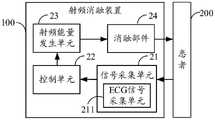
Fig. 1 is a functional module schematic view of a radio frequency ablation device according to an embodiment of the present application.
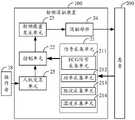
Fig. 2 is a functional block diagram of another rf ablation device according to an embodiment of the present application.
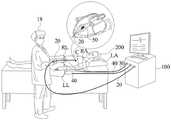
Fig. 3 is a schematic view of an application of a radio frequency ablation device according to an embodiment of the present application.
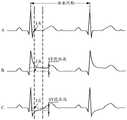
FIG. 4 is a graphical representation of an ECG signal provided by an embodiment of the present application.
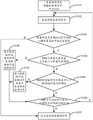
Fig. 5 is a flowchart of a radio frequency power control method according to an embodiment of the present application.
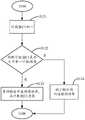
Fig. 6 is a detailed flowchart ofstep 3108 in fig. 5.
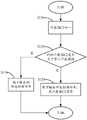
Fig. 7 is a detailed flowchart ofstep 3109 in fig. 5.
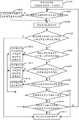
Fig. 8 is a flowchart of another rf power control method according to an embodiment of the present application.
Description of the main elements
Radiofrequency ablation needle 20
ECGsignal acquisition unit 211
Radio frequencyenergy generating unit 23
Human-computer interaction unit 25
Electrodes RA, LA, LL, RL, C
Step 3101-
The following detailed description will further illustrate the present application in conjunction with the above-described figures.
Detailed Description
The technical solutions in the embodiments of the present application will be clearly and completely described below with reference to the drawings in the embodiments of the present application. The drawings are for illustration purposes only and are merely schematic representations, not intended to limit the present application. It is to be understood that the embodiments described are only a few examples of the present application and not all examples. All other embodiments obtained by a person of ordinary skill in the art without any inventive work based on the embodiments in the present application are within the scope of protection of the present application.
Unless defined otherwise, all technical and scientific terms used herein have the same meaning as commonly understood by one of ordinary skill in the art to which this invention belongs. The terminology used in the description of the present application is for the purpose of describing particular embodiments only and is not intended to be limiting of the application. In the following description, suffixes such as "module", "component", or "unit" used to denote elements are used only for the convenience of description of the present application, and have no specific meaning by themselves. Thus, "module", "component" or "unit" may be used mixedly.
Fig. 1 is a block diagram of a radio frequency ablation device according to an embodiment of the present disclosure. As shown in fig. 1, theradiofrequency ablation device 100 includes asignal acquisition unit 21, acontrol unit 22, a radiofrequencyenergy generation unit 23, and anablation member 24.
Wherein, the radio frequencyenergy generating unit 23 is used for generating the radio frequency power required by the radio frequency ablation. Theablation component 24 is electrically connected to the rfenergy generating unit 23, and theablation component 24 is configured to transmit the rf power output by the rfenergy generating unit 23 to an ablation site of the heart of thepatient 200, so as to perform rf ablation on the ablation site. Thecontrol unit 22 is electrically connected to thesignal acquisition unit 21 and the rfenergy generation unit 23, respectively. Thesignal acquisition unit 21 is used for acquiring a physiological signal of the body of thepatient 200 and transmitting the physiological signal to thecontrol unit 22. Thecontrol unit 22 is configured to receive the physiological signal acquired by thesignal acquisition unit 21, analyze the physiological signal, and control the radio frequency power output by the radio frequencyenergy generation unit 23 according to an analysis result. The radio frequency power is the radio frequency energy output by the radio frequencyenergy generating unit 23 in unit time. Theablation part 24 transmits the rf power output by the rfenergy generating unit 23 to the ablation site, i.e., transmits the rf energy to the ablation site.
In this embodiment, thesignal acquiring unit 21 at least comprises an ECGsignal acquiring unit 211, and the ECGsignal acquiring unit 211 comprises a plurality of electrodes, and the plurality of electrodes are used for contacting with a plurality of different body surface regions of thepatient 200 so as to acquire multi-lead ECG signals expressed by the action of the electrophysiological activity of the heart on the body surface during the rf ablation. Thecontrol unit 22 is configured to receive the multi-lead ECG signal and control the radio frequency power output by the radio frequencyenergy generation unit 23 according to the multi-lead ECG signal. It will be appreciated that which body surface sites the ECG electrodes are in contact with depends on whether the ECGsignal acquisition unit 211 employs three, five or twelve leads.
The application provides radiofrequency ablation device 100 adopts the real-time collection of body surface multiple lead in radio frequency ablation process the multiple lead ECG signal can record the vector information of heart all directions to can be according to gathering the influence that radio frequency ablation supplies blood to each position of heart is known to the multiple lead ECG signal, with real-time analysis andcontrol patient 200's cardiac function, and can realize right according to the analysis result radio frequency power's automatic control avoids excessively melting or melts not in place, with the security of ensureing to melt the operation and can obtain anticipated treatment.
Further, referring to fig. 2, thesignal collecting unit 21 further includes apower collecting unit 212, animpedance collecting unit 213 and/or atemperature collecting unit 214 electrically connected to thecontrol unit 22. Thepower collecting unit 212 is configured to collect an actual power signal of the rfenergy generating unit 23 acting on the ablation site, and transmit the actual power signal to thecontrol unit 22 as basic data for thecontrol unit 22 to adjust the rf power, where thecontrol unit 22 is configured to control the rf power output by the rfenergy generating unit 23 according to the actual power signal.
Theimpedance collecting unit 213 is configured to collect an impedance signal of the ablation site, and transmit the impedance signal to thecontrol unit 22 as basic data for thecontrol unit 22 to adjust the radio frequency power, and thecontrol unit 22 is configured to control the radio frequency power output by the radio frequencyenergy generating unit 23 according to the impedance signal.
Thetemperature acquisition unit 214 is configured to acquire a temperature signal of the ablation site, and transmit the temperature signal to thecontrol unit 22 as basic data for thecontrol unit 22 to adjust the radio frequency power, and thecontrol unit 22 is configured to control the radio frequency power output by the radio frequencyenergy generation unit 23 according to the temperature signal.
Referring to fig. 3, which is a schematic diagram illustrating an application of therf ablation device 100 according to an embodiment of the present application, theablation part 24 may include, but is not limited to, an rf ablation catheter and an rf ablation needle. When theablation member 24 comprises a radiofrequency ablation needle, it can be used for the ablation of ventricular hypertrophy; when theablation member 24 comprises a radio frequency ablation catheter, it may be used for ablation of the inner wall of the myocardium. Theradiofrequency ablation device 100 is described herein with theablation member 24 including aradiofrequency ablation needle 20 as an example. Specifically, the radiofrequency ablation needle 20 enters a target tissue region 50 (i.e., the ablation part) through intercostal epicardial puncture under ultrasound guidance, thecontrol unit 22 controls the radio frequencyenergy generation unit 23 to output the radio frequency power, the radiofrequency ablation needle 20 acts on thetarget tissue region 50, an ablation region is formed on a space around an exposed non-insulating region of the radiofrequency ablation needle 20, after ablation, cellular tissues in the ablation region are dehydrated and necrotic, and finally, cardiac muscles become thin, so that a treatment effect is achieved.
Further, thetemperature acquisition unit 214, such as a thermocouple, is located at the tip of therf ablation needle 20 to acquire the temperature of thetarget tissue region 50 in real time. Theradiofrequency ablation device 100 supports electrocardiographic ECG three-lead connections, five-lead connections, twelve-lead connections, and the like, and is not particularly limited herein. In the present embodiment, therf ablation device 100 is described by taking an ECG five-lead connection as an example, as shown in fig. 3, theECG electrode bundle 30 includes 5 electrode wires: electrode RA is placed on the upper right, specifically, in the first intercostal position of the median clavicular line on the right edge of the sternum; electrode LA is placed on the upper left, specifically, in the first intercostal position of the midline of the clavicle at the left margin of the sternum; the electrode LL is placed at the lower left, specifically, at the level of the xiphoid process of the midline of the left clavicle; the electrode RL is placed at the lower right, specifically, at the level of the xiphoid process in the midline of the right clavicle; electrode C is placed medially, specifically, in the fourth intercostal position at the left edge of the sternum or in a corresponding position as desired, which can be placed in any of positions C1-C6 as desired byoperator 18. The electrode RA, the electrode LA, the electrode LL, the electrode RL and the electrode C constitute the ECGsignal acquisition unit 211, which is used for acquiring and monitoring the multi-lead ECG signal in real time. Thecommon electrode 40 is connected to a suitable location on the body surface of thepatient 200, such as the thigh of thepatient 200, using a negative plate connection, and thecommon electrode 40 serves as both the negative electrode of the rf ablation circuit and the common electrode of the ECG electrode.
In this embodiment, the physiological signals at least include the multi-lead ECG signals, and thecontrol unit 22 analyzes the cardiac electrophysiological activity according to the received multi-lead ECG signals and controls the rf power output by the rfenergy generating unit 23 according to the analysis result.
It will be appreciated that monitoring ECG signals during rf ablation is a different mode of monitoring than in ward monitoring or physical examination, and that real-time heart rate and real-time ST-segment amplitude are of greater concern during ablation. Thus, in radio frequency ablation, monitoring of cardiac electrophysiological activity comprises monitoring at least one of the real-time heart rate and the real-time ST-segment amplitude.
Fig. 4 shows a graphical representation of an ECG signal provided by an embodiment of the present application. In this embodiment, thecontrol unit 22 is further configured to analyze at least one of the real-time heart rate and the real-time ST-segment amplitude of the multi-lead ECG signal.
In particular, thecontrol unit 22 is configured to calculate a real-time heart rate hr _ x (heart rate units bpm: beat per minute, number of beats per minute of the heart) of the patient 200 from the multi-lead ECG signal. Wherein, according to the calculation formula of the heart rate: hr-60/tR-RThe heart rate value can be calculated, wherein tR-RRepresents the time interval in seconds between the peaks of two adjacent R-waves in the R-R interval.
Thecontrol unit 22 is also configured to monitor the real-time ST segment amplitude ST _ x (ST amplitude in mV) from the multi-lead ECG signal. The ST segment is indicative of the state of ventricular activity, and is susceptible to hyperacute phase or acute phase myocardial infarction when elevated, and myocardial ischemia when depressed.
In this embodiment, thecontrol unit 22 is further configured to determine a risk level of arrhythmia according to an analysis result of the real-time heart rate hr _ x and/or the real-time ST segment amplitude ST _ x, and issue a command to stop outputting the rf power when the risk level of arrhythmia is higher, so as to control the rfenergy generating unit 23 to stop outputting the rf power.
Specifically, thecontrol unit 22 is configured to calculate the real-time heart rate hr _ x of thepatient 200 during the ablation process according to the multi-lead ECG signal, and determine whether the real-time heart rate hr _ x does not fall within a heart rate threshold range, where the heart rate threshold range includes an upper heart rate limit hr _ max and a lower heart rate limit hr _ min, and the upper heart rate limit hr _ max and the lower heart rate limit hr _ min may be set or preset by theoperator 18 and stored in thecontrol unit 22.
Thecontrol unit 22 is further configured to determine that the risk level of arrhythmia is higher when it is determined that the real-time heart rate hr _ x does not fall within the heart rate threshold value range, that is, hr _ x is greater than or equal to hr _ max or hr _ x is less than or equal to hr _ min, and control the radio frequencyenergy generating unit 23 to stop outputting the radio frequency power.
Optionally, thecontrol unit 22 is further configured to calculate a heart rate change rate hr _ rate from the multi-lead ECG signal, and determine whether the heart rate change rate hr _ rate is greater than a first heart rate change rate threshold, which may be set by theoperator 18 or preset and stored in thecontrol unit 22, for example, may be set to 50%. Specifically, the heart rate change rate hr _ rate is a change rate of the real-time heart rate hr _ x relative to the initial heart rate hr _ init, and is calculated by:
hr _ rate (| hr _ x-hr _ init |)/hr _ init, wherein hr _ init is the initial heart rate and can be obtained according to the multi-lead ECG signals obtained before radio frequency ablation, and hr _ x is the heart rate monitored in real time during the radio frequency ablation.
Thecontrol unit 22 is further configured to determine that the risk level of arrhythmia is high when it is determined that the heart rate change rate hr _ rate is greater than the first heart rate change rate threshold, for example, hr _ rate > 50%, and control the rfenergy generation unit 23 to stop outputting the rf power.
Optionally, thecontrol unit 22 is further configured to calculate a heart rate change rate hr _ fd according to the multi-lead ECG signal, and determine whether an absolute value of the heart rate change rate hr _ fd is not less than a heart rate change rate threshold value hr _ v. In particular, the heart rate of change hr _ fd is the rate of change of the real-time heart rate hr _ x relative to the initial heart rate hr _ init, the value of which is derived by first-order derivation of the monitored real-time heart rate hr _ x. The heart rate change rate threshold value hr _ v may be set by theoperator 18 or stored in thecontrol unit 22 at a predetermined setting.
Thecontrol unit 22 is further configured to determine that the risk level of arrhythmia is higher when it is determined that the absolute value of the heart rate change rate hr _ fd is not less than the heart rate change rate threshold value hr _ v, that is, | hr _ fd | > hr _ v, and control the radio frequencyenergy generation unit 23 to stop outputting the radio frequency power.
Optionally, thecontrol unit 22 is further configured to obtain the real-time ST-segment amplitude ST _ x according to the multi-lead ECG signal, calculate an ST-segment amplitude offset ST _ sft, and determine whether the ST-segment amplitude offset ST _ sft is not smaller than an ST-segment amplitude offset threshold, where the ST-segment amplitude offset threshold may be set by theoperator 18 or stored in thecontrol unit 22 in a preset manner, for example, may be set to 0.1 mV. Specifically, the ST-segment amplitude offset ST _ sft is an offset of the real-time ST-segment amplitude ST _ x with respect to the initial ST-segment amplitude ST _ init, and is calculated by:
and ST _ sft ═ ST _ x-ST _ init |, wherein ST _ init is the initial ST segment amplitude and can be obtained according to a multi-lead ECG signal obtained before radio frequency ablation, and ST _ x is the real-time ST segment amplitude. Of course, the ST-segment amplitude offset ST _ sft may be calculated in the following manner: and after filtering the baseline drift, the amplitude difference of the ST segment relative to the J point in the same waveform period is obtained, and the amplitude of the J point is equal to the amplitude of the initial ST segment. As shown in fig. 4, the waveform B has ST-segment elevation relative to the point J, and the waveform C has ST-segment depression relative to the point J. Where baseline drift refers to the floating of the waveform relative to the horizontal baseline during signal measurement.
Thecontrol unit 22 is further configured to determine that the risk level of arrhythmia is higher when it is determined that the ST-segment amplitude offset ST _ sft is not smaller than the ST-segment amplitude offset threshold, for example, ST _ sft is greater than or equal to 0.1mV, and control the radio frequencyenergy generation unit 23 to stop outputting the radio frequency power.
Optionally, thecontrol unit 22 is further configured to calculate an ST-segment amplitude change rate ST _ fd according to the multi-lead ECG signal, and determine whether an absolute value of the ST-segment amplitude change rate ST _ fd is not less than an ST-segment amplitude change rate threshold ST _ v. Specifically, the ST-segment amplitude change rate ST _ fd is a change rate of the real-time ST-segment amplitude ST _ x relative to the initial ST-segment amplitude ST _ init, and a value of the change rate is obtained by performing a first-order derivation on the monitored real-time ST-segment amplitude ST _ x. The ST-segment amplitude-change-rate threshold ST _ v may be set by theoperator 18 or stored in thecontrol unit 22 in a predetermined setting.
Thecontrol unit 22 is further configured to determine that the risk level of arrhythmia is higher when it is determined that the absolute value of the ST-segment amplitude change rate ST _ fd is not less than the ST-segment amplitude change rate threshold ST _ v, that is, | ST _ fd | ≧ ST _ v, and control the radio frequencyenergy generation unit 23 to stop outputting the radio frequency power.
It will be appreciated that thecontrol unit 22 determines that the risk level of arrhythmia is high based on the above analysis of the real-time heart rate hr _ x and the real-time ST-segment amplitude ST _ x, otherwise the risk level of arrhythmia is not high.
Optionally, when it is determined that the risk level of arrhythmia is not high according to the analysis result of the real-time heart rate hr _ x and/or the real-time ST segment amplitude ST _ x, thecontrol unit 22 is further configured to determine whether the heart rate change rate hr _ rate is greater than a second heart rate change rate threshold, and control the rfenergy generation unit 23 to suspend outputting the rf power or reduce the output rf power when the heart rate change rate hr _ rate is greater than the second heart rate change rate threshold. Wherein the second heart rate change rate threshold is smaller than the first heart rate change rate threshold, and the second heart rate change rate threshold may be set by theoperator 18 or stored in thecontrol unit 22 in advance, for example, may be set to 20%.
Optionally, when it is determined from the analysis of the real-time heart rate hr _ x and/or the real-time ST-segment amplitude value ST _ x that the risk level of arrhythmia is not high and the heart rate change rate hr _ rate is not greater than the second heart rate change rate threshold, thecontrol unit 22 is further configured to calculate an ST-segment amplitude change rate ST _ rate from the multi-lead ECG signals and determine whether the ST-segment amplitude change rate ST _ rate is greater than an ST-segment amplitude change rate threshold ST _ d, which may be set by theoperator 18 or pre-set and stored in thecontrol unit 22. Specifically, the ST-segment amplitude change rate ST _ rate is a change rate of the real-time ST-segment amplitude ST _ x relative to the initial ST-segment amplitude ST _ init, and a calculation formula thereof is as follows:
the method includes the steps of (i) ST _ rate (| ST _ x-ST _ init |)/ST _ init, wherein ST _ x is the real-time ST segment amplitude, and ST _ init is the initial ST segment amplitude.
Thecontrol unit 22 is further configured to control the rfenergy generating unit 23 to suspend outputting the rf power or reduce the output rf power when the ST-segment amplitude change rate ST _ rate is greater than the ST-segment amplitude change rate threshold ST _ d, i.e. ST _ rate > ST _ d.
In this embodiment, the ECGsignal acquiring unit 211 acquires the multi-lead ECG signal once per measurement cycle, for example, 1 second, that is, the ECGsignal acquiring unit 211 acquires the multi-lead ECG signal once per 1 second, so that thecontrol unit 22 analyzes the real-time heart rate hr _ x and/or the real-time ST-segment amplitude ST _ x according to each multi-lead ECG signal.
Further, therf ablation device 100 further includes a first counting module (not shown) and a second counting module (not shown) electrically connected to thecontrol unit 22. The first counting module is to count a number of times the heart rate change rate hr _ rate is continuously greater than the second heart rate change rate threshold. The second counting module is configured to count the number of times that the ST-segment amplitude change rate ST _ rate is continuously greater than the ST-segment amplitude change rate threshold ST _ d. And the initial count values of the first counting module and the second counting module are all zero.
Thecontrol unit 22 is further configured to control the count value of the first counting module to be incremented by one when the heart rate change rate hr _ rate is greater than the second heart rate change rate threshold, and determine whether the count value of the first counting module is greater than the first counting threshold. The first count threshold may be set by theoperator 18 or stored in thecontrol unit 22 in advance, and may be set to 1, for example.
Thecontrol unit 22 is further configured to send a command of suspending outputting the radio frequency power when the count value of the first counting module is greater than the first counting threshold, so as to control the radio frequencyenergy generating unit 23 to suspend outputting the radio frequency power, and control the first counting module to be cleared.
Thecontrol unit 22 is further configured to issue a radio frequency power reduction instruction when the count value of the first counting module is not greater than the first counting threshold, so as to control the radio frequencyenergy generation unit 23 to reduce the output radio frequency power.
Optionally, thecontrol unit 22 is further configured to control the count value of the second counting module to be increased by one when the ST-segment amplitude change rate ST _ rate is greater than the ST-segment amplitude change rate threshold ST _ d, and determine whether the count value of the second counting module is greater than a second counting threshold. The second count threshold may be set by theoperator 18 or stored in thecontrol unit 22 in advance, and for example, the second count threshold may be set to 1.
Thecontrol unit 22 is further configured to, when the count value of the second counting module is greater than the second counting threshold, send the instruction of suspending outputting the radio frequency power, so as to control the radio frequencyenergy generating unit 23 to suspend outputting the radio frequency power, and control the second counting module to be cleared.
Thecontrol unit 22 is further configured to issue the rf power decreasing instruction to control the rfenergy generating unit 23 to decrease the output rf power when the count value of the second counting module is not greater than the second counting threshold.
It should be noted that the stopping of outputting the radio frequency power means that the radio frequencyenergy generation unit 23 stops outputting the radio frequency power, and the radio frequency ablation is not continued. The suspending of outputting the radio frequency power means that the radio frequencyenergy generating unit 23 suspends outputting the radio frequency power, after a period of time, theoperator 18 manually controls thecontrol unit 22 to send a start instruction to control the radio frequencyenergy generating unit 23 to start and continue outputting the radio frequency power, or by setting a suspension time threshold, when the suspension time reaches the suspension time threshold, thecontrol unit 22 automatically sends a start instruction to control the radio frequencyenergy generating unit 23 to start and continue outputting the radio frequency power, and the radio frequency power which continues to be output can be consistent with the radio frequency power which is output before suspending. The reducing the output radio frequency power means that the radio frequencyenergy generation unit 23 outputs a radio frequency power smaller than the original radio frequency power and larger than zero according to a preset reduction rule, for example, the reduced radio frequency power is half of the original radio frequency power.
In this embodiment, the rfenergy generating unit 23 is further configured to receive a control instruction sent by thecontrol unit 22, adjust the output rf power, and transmit the adjusted rf power to theablation component 24. Theablation component 24 is configured to apply the received rf power to thepatient 200 for ablation therapy.
In this embodiment, the radiofrequency ablation apparatus 100 monitors the multi-lead ECG signal expressed by thepatient 200 acting on the body surface during the heart electrophysiology activity in the operation through thesignal acquisition unit 21, and thecontrol unit 22 analyzes and processes the multi-lead ECG signal to control the radio frequency power output by the radio frequencyenergy generation unit 23, so as to more comprehensively analyze the states of different parts of the heart of thepatient 200 during the operation, and further perform corresponding control, thereby ensuring the safety of the ablation operation and obtaining the expected treatment effect.
Optionally, thecontrol unit 22 is further configured to obtain an impedance signal of the ablation site, and issue the instruction of suspending outputting the radio frequency power when the impedance value R of the impedance signal satisfies any one of a first preset condition and a second preset condition, so as to control the radio frequencyenergy generation unit 23 to suspend outputting the radio frequency power. Specifically, the first preset condition is as follows: r > K1 XRmin 1, the second preset condition is: r > K2 XRmin 2. Wherein K1, K2 are proportionality coefficients, and K1< K2, Rmin1 is the lowest impedance monitored in a preset time period within the period of recording the ablation time, the preset time period is the time period nearest to the current time and having a preset time length, and Rmin2 is the lowest impedance monitored within the period of recording the ablation time.
For example, if the preset time length is 20s, timing is performed from the time when ablation starts, and if the currently recorded ablation time is 10s, both Rmin1 and Rmin2 are the lowest monitored impedances within 0-10 s. If the currently recorded ablation time is 35s, Rmin1 is the lowest impedance monitored within 15-35 s, and Rmin2 is the lowest impedance monitored within 0-35 s. It should be noted that the ablation time in this embodiment does not include the time when the rfenergy generation unit 23 suspends outputting the rf power.
Optionally, thecontrol unit 22 is further configured to obtain a temperature signal of the ablation portion, and send the instruction to stop outputting the radio frequency power when a temperature value of the temperature signal is greater than a temperature upper limit value, so as to control the radio frequencyenergy generation unit 23 to stop outputting the radio frequency power.
Optionally, thecontrol unit 22 is further configured to acquire an actual power signal acting on the ablation site, and control the radio frequencyenergy generation unit 23 to adjust the output radio frequency power to a set power value when the power value of the actual power signal does not match the set power value.
In some embodiments, thesignal collecting unit 21 may include at least one of thepower collecting unit 212, theimpedance collecting unit 213 and thetemperature collecting unit 214, which is not limited herein.
Referring to fig. 2 again, therf ablation device 100 further includes a human-computer interaction unit 25 electrically connected to thecontrol unit 22, and the human-computer interaction unit 25 may be provided with an input unit and a display unit. The input unit may be a mechanical button, a mechanical knob, a touch button, or a touch display screen capable of displaying a virtual button, and the like, and is configured to acquire the ablation parameters set by theoperator 18 and transmit the set ablation parameters to thecontrol unit 22. Thecontrol unit 22 is further configured to control the rf power output by the rfenergy generating unit 23 according to the set ablation parameter. Specifically, the ablation parameters include parameters such as initial rf power determined by theoperator 18 before surgery, based on factors such as the size of the region of the ablation site, time of ablation, and expected rf power adjusted by theoperator 18 during surgery based on the state of thepatient 200.
In some embodiments, the input unit may further include a start key, a pause key, and a stop key. Further, thecontrol unit 22 is further configured to issue a start instruction when the start key receives a pressing operation, issue the pause rf power output instruction when the pause key receives a pressing operation, and issue the stop rf power output instruction when the stop key receives a pressing operation. It is understood that the start key and the pause key may be the same key, and thecontrol unit 22 alternately issues the start command and the pause output rf power command when receiving a pressing operation.
The Display unit may be a Liquid Crystal Display (LCD), an Organic Light-Emitting Diode (OLED), and the like, and is configured to Display the ablation parameters (e.g., ablation time, initial radio frequency power), real-time signal values (e.g., real-time radio frequency power value, real-time impedance value, ablation duration) and signal waveforms (e.g., multi-lead ECG signal waveforms) acquired by thesignal acquisition unit 21 during the operation, so as to Display a real-time ablation state. In this way, theoperator 18 can understand the condition of the ablation procedure by observing various data displayed on the display unit and adjust the output of the radio frequency power by operating the input unit, thereby ensuring the safety of the ablation procedure and obtaining the desired therapeutic effect.
In this embodiment, therf ablation apparatus 100 not only analyzes the multi-lead ECG signal and controls the rf power according to the analysis result, but also adds thetemperature acquisition unit 214 and theimpedance acquisition unit 213, and thecontrol unit 22 is further configured to determine whether the temperature signal and the impedance signal acquired by thetemperature acquisition unit 214 and theimpedance acquisition unit 213 satisfy the corresponding preset conditions, so as to control the rf power output by the rfenergy generation unit 23. Due to the addition of monitoring temperature and impedance, the physical state of thepatient 200 in the operation can be more comprehensively mastered, and then corresponding control is carried out, so that the safety of the ablation operation can be ensured, and the expected treatment effect can be obtained.
The present application also provides a method of radio frequency power control based on multi-lead ECG signals, which is implemented by the radiofrequency ablation device 100 described above. Fig. 5 is a flowchart of a method for controlling rf power according to an embodiment of the present disclosure, and it should be noted that the method for controlling rf power according to the embodiment of the present disclosure is not limited to the steps and the sequence in the flowchart shown in fig. 5. Steps in the illustrated flowcharts may be added, removed, or changed in order according to various needs. As shown in fig. 5, the radio frequency power control method based on multi-lead ECG signals includes the following steps.
In this embodiment, the ablation parameters at least include ablation time and initial rf power. After the parameters are set, therf ablation device 100 outputs the rf power according to the ablation parameters, enters an ablation process, and counts the actual ablation time.
Wherein the signals comprise at least a multi-lead ECG signal. In particular, the multi-lead ECG signal may be a three-lead, five-lead or twelve-lead ECG signal, which is not limited herein.
If the arrhythmia risk level is high,step 3107 is performed. Otherwise,step 3104 is performed.
Specifically, when the comprehensive judgment is carried out according to the multi-lead ECG signal and the preset condition is met, the arrhythmia risk level is judged to be high, and when the preset condition is not met, the arrhythmia risk level is judged to be not high. Further, the preset condition may be at least one of the following.
The real-time heart rate hr _ x does not fall within a heart rate threshold range, which includes a heart rate upper limit hr _ max and a heart rate lower limit hr _ min, i.e., hr _ x is greater than or equal to hr _ max or hr _ x is less than or equal to hr _ min.
The heart rate change rate hr _ rate is greater than the first heart rate change rate threshold.
The absolute value of the rate of change of heart rate hr _ fd is not less than the rate of change of heart rate threshold hr _ v.
The ST-segment magnitude offset ST _ sft is not less than the ST-segment magnitude offset threshold.
The absolute value of the ST-segment amplitude change rate ST _ fd is not less than the ST-segment amplitude change rate threshold ST _ v.
It should be noted that the real-time heart rate hr _ x is the real-time heart rate of thepatient 200 during the ablation procedure calculated from the multi-lead ECG signals (heart rate units bpm: beat per minute, number of beats per minute of heart). Wherein, according to the calculation formula of the heart rate: hr-60/tR-RA heart rate value can be calculated, wherein tR-RRepresents the time interval of the peaks of two adjacent R waves in the R-R interval, and the unit is second.
The heart rate change rate hr _ rate is a change rate of the real-time heart rate hr _ x relative to the initial heart rate hr _ init, and is calculated by:
hr _ rate (| hr _ x-hr _ init |)/hr _ init, wherein hr _ init is the initial heart rate and can be obtained according to the multi-lead ECG signals obtained before radio frequency ablation, and hr _ x is the heart rate monitored in real time during the radio frequency ablation.
The rate of change of heart rate hr _ fd is the rate of change of the real-time heart rate hr _ x relative to the initial heart rate hr _ init, the value of which is derived by first-order derivation of the monitored real-time heart rate hr _ x.
The ST-segment amplitude offset ST _ sft is an offset of the real-time ST-segment amplitude ST _ x relative to the initial ST-segment amplitude ST _ init, and is calculated in the following manner:
and ST _ sft ═ ST _ x-ST _ init |, wherein ST _ init is the initial ST segment amplitude and can be obtained according to a multi-lead ECG signal obtained before radio frequency ablation, and ST _ x is the real-time ST segment amplitude. Of course, the ST-segment amplitude offset ST _ sft may be calculated in the following manner: and after filtering the baseline drift, the amplitude difference of the ST segment relative to the J point in the same waveform period is obtained, and the amplitude of the J point is equal to the amplitude of the initial ST segment. As shown in fig. 4, waveform B shows ST-segment elevation relative to point J, and waveform C shows ST-segment depression relative to point J. Where baseline drift refers to the floating of the waveform relative to the horizontal baseline during signal measurement.
The ST-segment amplitude change rate ST _ fd is a change rate of the real-time ST-segment amplitude ST _ x relative to the initial ST-segment amplitude ST _ init, and is derived by first-order derivation of the monitored real-time ST-segment amplitude ST _ x.
Atstep 3104, it is determined whether the rate of change of heart rate is greater than a second rate of change threshold.
If the heart rate change rate is greater than the second heart rate change rate threshold, then step 3108 is performed. Otherwise,step 3105 is performed.
Atstep 3105, it is determined whether the ST-segment amplitude change rate is greater than the ST-segment amplitude change rate threshold.
If the ST segment amplitude change rate is greater than the ST segment amplitude change rate threshold, then step 3109 is performed. Otherwise,step 3106 is performed.
Atstep 3106, it is determined whether the actual ablation time has reached the set ablation time.
If the actual ablation time has reached the set ablation time, then step 3107 is performed. Otherwise, returning to step 3102, ablation continues.
Atstep 3107, the output of the radio frequency power is stopped.
Atstep 3108, the output rf power is reduced or suspended.
Atstep 3109, the output rf power is reduced or suspended.
Referring to fig. 6, fig. 6 is a detailed flowchart of thestep 3108, which is used to describe the above embodiment in more detail.
As shown in fig. 6, after determining atstep 3104 that the rate of change of heart rate is greater than the second rate of change of heart rate threshold,step 3121 is performed.
Atstep 3121, the count value C1 is incremented. Understandably, the initial value of the count value C1 of the first counting module is zero.
Atstep 3122, it is determined whether the count value C1 is greater than a first count threshold. If the count value C1 is greater than the first count threshold, then step 3123 is performed. Otherwise,step 3124 is performed.
And 3123, suspending outputting the radio frequency power, and clearing the count value C1. Optionally, when the outputting of the radio frequency power is suspended, the suspending time is recorded and the actual ablation time is recorded simultaneously. And if the pause time reaches a pause time threshold, continuing to output the radio frequency power and continuing to record the actual ablation time. Wherein a pause time threshold may be set by theoperator 18. Optionally, after the ablation is suspended for a period of time, theoperator 18 may also manually control thecontrol unit 22 to issue an activation instruction to control the rfenergy generation unit 23 to activate to continue outputting the rf power. The rf power outputted continuously may be identical to the rf power outputted before the pause.Step 3106 is performed afterstep 3123 is performed.
And 3124, reducing the output radio frequency power.Step 3106 is performed afterstep 3124 is performed.
Referring to FIG. 7, FIG. 7 is a flowchart illustrating a detailed process ofstep 3109, for describing the above embodiments in more detail.
As shown in FIG. 7, after determining atstep 3105 that the ST-segment rate of amplitude change is greater than the ST-segment rate of amplitude change threshold,step 3131 is performed.
Atstep 3131, count value C2 is incremented. Understandably, the initial value of the count value C2 of the second counting module is zero.
Atstep 3132, it is determined whether the count value C2 is greater than a second count threshold. If the count value C2 is greater than the second count threshold,step 3133 is performed. Otherwise,step 3134 is performed.
Instep 3133, the output of the rf power is suspended, and the count value C2 is cleared. Optionally, when the outputting of the radio frequency power is suspended, the suspending time is recorded and the actual ablation time is recorded simultaneously. And if the pause time reaches a pause time threshold, continuing to output the radio frequency power and continuing to record the actual ablation time. Wherein a pause time threshold may be set by theoperator 18. Optionally, after the ablation is suspended for a period of time, theoperator 18 may also manually control thecontrol unit 22 to issue an activation instruction to control the rfenergy generation unit 23 to activate to continue outputting the rf power. The rf power output continuously may be the same as the rf power output before the pause.Step 3106 is performed afterstep 3133 is performed.
The heart rate threshold, the first heart rate change rate threshold, the second heart rate change rate threshold, the ST segment amplitude offset threshold, the ST segment amplitude change rate threshold, the first count threshold, the second count threshold, and the ST segment amplitude change rate threshold are not specifically limited in this application, and it can be understood that theoperator 18 can preset reasonable thresholds according to actual surgical experience, for example, the first heart rate change rate threshold can be set to 50%, and the ST segment amplitude offset threshold can be set to 0.1 mV.
The radio frequency power control method analyzes the real-time heart rate hr _ x and the real-time ST segment amplitude ST _ x according to the collected multi-lead ECG signal, and automatically controls the radio frequencyenergy generating unit 23 to correspondingly reduce the output radio frequency power or pause or stop outputting the radio frequency power when the two information quantities meet corresponding preset conditions so as to achieve the purpose of real-time control of the radio frequency power, and has the advantages of high response speed, more accurate control precision, capability of ensuring the safety of an ablation operation and obtaining an expected treatment effect.
Referring to fig. 8, the present application also provides another multi-lead ECG signal based rf power control method implemented by therf ablation device 100 described above. Fig. 8 is a flowchart of a method for controlling rf power according to an embodiment of the present disclosure, and it should be noted that the method for controlling rf power according to the embodiment of the present disclosure is not limited to the steps and the sequence in the flowchart shown in fig. 8. Steps in the illustrated flowcharts may be added, removed, or changed in order according to various needs. As shown in fig. 8, the radio frequency power control method based on multi-lead ECG signals includes the following steps.
In this embodiment, the ablation parameters at least include parameters such as ablation time, preset impedance conditions, upper temperature limit, and initial rf power. After the parameters are set, therf ablation device 100 outputs the rf power according to the ablation parameters to start ablation, and times the actual ablation time.
And whether the radio frequency power is adjusted by manual intervention is judged by monitoring the human-computer interaction unit 25 in real time. If so,step 4103 is performed. Otherwise,step 4104 is performed.
The human-computer interaction unit 25 transmits the obtained target power value to thecontrol unit 22, and thecontrol unit 22 controls the radio frequencyenergy generation unit 23 to output the radio frequency power with the target power value.
Wherein the signals comprise at least a multi-lead ECG signal, a temperature signal, an impedance signal. In particular, the multi-lead ECG signal may be a three-lead, five-lead or twelve-lead ECG signal, which is not limited herein; the temperature signal refers to a temperature signal of the ablation part; the impedance signal refers to an impedance signal of the ablation site.
If the risk level of arrhythmia is higher, go tostep 4111. Otherwise,step 4106 is performed.
If the heart rate change rate is greater than the second heart rate change rate threshold, executestep 4112. Otherwise,step 4107 is performed.
If the ST segment amplitude change rate is greater than the ST segment amplitude change rate threshold, executestep 4113. Otherwise,step 4108 is performed.
If the impedance meets the preset impedance condition, executestep 4114. Otherwise,step 4109 is performed.
Specifically, the impedance is obtained from the impedance signal, and when the impedance value R satisfies any one of a first preset condition and a second preset condition, it is determined that the impedance satisfies the preset impedance condition. Wherein the first preset condition is as follows: r > K1 XRmin 1, the second preset condition is: r > K2 × Rmin 2. Wherein K1, K2 are proportionality coefficients, and K1< K2, Rmin1 is the lowest impedance monitored in a preset time period within the period of recording the ablation time, the preset time period is the time period nearest to the current time and having a preset time length, and Rmin2 is the lowest impedance monitored within the period of recording the ablation time.
For example, if the preset time length is 20s, timing is performed from the time when ablation starts, and if the currently recorded ablation time is 10s, the minimum impedance monitored in 0-10 s is both Rmin1 and Rmin 2. If the currently recorded ablation time is 35s, Rmin1 is the lowest impedance monitored within 15-35 s, and Rmin2 is the lowest impedance monitored within 0-35 s. It should be noted that the ablation period of the present embodiment does not include a period in which the rfenergy generation unit 23 suspends the output of the rf power.
If the temperature is greater than the upper temperature limit, executestep 4111. Otherwise,step 4110 is performed, specifically, the temperature is obtained from the temperature signal.
If the actual ablation time reaches the set ablation time, executestep 4111. Otherwise, go back tostep 4102.
For specific technical details ofsteps 4101, 4104-.
The radio frequency power control method of this embodiment not only performs comprehensive analysis on the real-time heart rate hr _ x and the real-time ST-segment amplitude ST _ x according to the collected multi-lead ECG signal, but also performs analysis on the collected temperature signal and impedance signal, and automatically controls the radio frequencyenergy generation unit 23 to correspondingly reduce the output radio frequency energy or to suspend or stop outputting the radio frequency energy when the real-time heart rate hr _ x, the real-time ST-segment amplitude ST _ x, the temperature and the impedance satisfy corresponding preset conditions, so as to achieve the purpose of real-time control of the radio frequency power. On the basis of the multi-lead ECG signal, the temperature and impedance monitoring is newly added, so that the physical state of thepatient 200 in the operation can be more comprehensively mastered, the accuracy and timeliness of power control are further improved, the safety is further improved, and the expected treatment effect of the ablation operation can be ensured.
It will be evident to those skilled in the art that the present application is not limited to the details of the foregoing illustrative embodiments, and that the present application may be embodied in other specific forms without departing from the spirit or essential attributes thereof. The present embodiments are therefore to be considered in all respects as illustrative and not restrictive, the scope of the application being indicated by the appended claims rather than by the foregoing description, and all changes which come within the meaning and range of equivalency of the claims are therefore intended to be embraced therein. Any reference sign in a claim should not be construed as limiting the claim concerned. Furthermore, it is obvious that the word "comprising" does not exclude other elements or steps, and the singular does not exclude the plural.
Finally, it should be noted that the above embodiments are only for illustrating the technical solutions of the present application and not for limiting, and although the present application is described in detail with reference to the above preferred embodiments, it should be understood by those skilled in the art that modifications or equivalent substitutions may be made to the technical solutions of the present application without departing from the spirit and scope of the technical solutions of the present application.
Claims (13)
1. A radio frequency ablation device, comprising:
the radio frequency energy generating unit is used for generating and outputting radio frequency power required by radio frequency ablation;
the ablation component is electrically connected with the radio frequency energy generation unit and is used for transmitting the radio frequency power output by the radio frequency energy generation unit to an ablation part of the heart so as to perform radio frequency ablation on the ablation part;
the signal acquisition unit at least comprises an ECG signal acquisition unit, the ECG signal acquisition unit comprises a plurality of electrodes, and the electrodes are used for being contacted with a plurality of different body surface parts of a patient so as to acquire multi-lead ECG signals expressed by the action of the heart electrophysiological activity on the body surface in the radio frequency ablation process; and
the control unit is electrically connected with the ECG signal acquisition unit and the radio frequency energy generation unit respectively, and is used for receiving the multi-lead ECG signal and controlling the radio frequency power output by the radio frequency energy generation unit according to the multi-lead ECG signal.
2. The radio frequency ablation device according to claim 1, wherein the control unit, when controlling the radio frequency power output by the radio frequency energy generation unit according to the multi-lead ECG signal, is specifically configured to analyze a real-time heart rate according to the multi-lead ECG signal and to control the radio frequency power output by the radio frequency energy generation unit according to the analysis result.
3. The rf ablation device of claim 2, wherein the control unit is further configured to control the rf energy generation unit to stop outputting the rf power if the real-time heart rate does not fall within a heart rate threshold;
the control unit is further configured to control the radio frequency energy generation unit to stop outputting the radio frequency power when a heart rate change rate is greater than a first heart rate change rate threshold, where the heart rate change rate is a change rate of the real-time heart rate relative to an initial heart rate;
the control unit is further configured to control the radio frequency energy generation unit to stop outputting the radio frequency power when an absolute value of a heart rate change rate is not less than a heart rate change rate threshold, where the heart rate change rate is a change rate of the real-time heart rate relative to the initial heart rate.
4. The radiofrequency ablation device of claim 3, further comprising a first counting module electrically connected to the control unit, the first counting module configured to count a number of times the rate of heart rate change is continuously greater than a second rate of heart rate change threshold, wherein the second rate of heart rate change threshold is less than the first rate of heart rate change threshold;
the control unit is further configured to control the count value of the first counting module to be increased by one when the heart rate change rate is greater than the second heart rate change rate threshold, and determine whether the count value of the first counting module is greater than a first counting threshold;
the control unit is further configured to control the radio frequency energy generation unit to suspend outputting the radio frequency power and control the first counting module to zero when the count value of the first counting module is greater than the first counting threshold.
5. The radiofrequency ablation device of claim 4, wherein the control unit is further configured to control the radiofrequency energy generation unit to reduce the output radiofrequency power when the count value of the first count module is not greater than the first count threshold.
6. The radio frequency ablation device according to claim 1 or 2 wherein the control unit, when controlling the radio frequency power output by the radio frequency energy generation unit according to the multi-lead ECG signal, is further configured to analyze a real-time ST-segment amplitude according to the multi-lead ECG signal and control the radio frequency power output by the radio frequency energy generation unit according to the analysis result.
7. The rf ablation device of claim 6, wherein the control unit is further configured to control the rf energy generation unit to stop outputting the rf power when an ST-segment amplitude offset is not less than an ST-segment amplitude offset threshold, the ST-segment amplitude offset being an offset of the real-time ST-segment amplitude relative to an initial ST-segment amplitude;
the control unit is further configured to control the radio frequency energy generation unit to stop outputting the radio frequency power when an absolute value of an ST-segment amplitude change rate is not less than an ST-segment amplitude change rate threshold, where the ST-segment amplitude change rate is a change rate of the real-time ST-segment amplitude relative to the initial ST-segment amplitude.
8. The rf ablation device of claim 6 further comprising a second counting module electrically connected to the control unit, the second counting module for counting a number of times that a rate of change of ST-segment amplitude is continuously greater than a threshold ST-segment amplitude change rate, the rate of change of ST-segment amplitude being a rate of change of the real-time ST-segment amplitude relative to an initial ST-segment amplitude;
the control unit is further configured to control the count value of the second counting module to be incremented by one when the ST-segment amplitude change rate is greater than the ST-segment amplitude change rate threshold, and determine whether the count value of the second counting module is greater than a second counting threshold;
the control unit is further configured to control the radio frequency energy generation unit to suspend outputting the radio frequency power and control the second counting module to zero when the count value of the second counting module is greater than the second counting threshold.
9. The rf ablation device of claim 8, wherein the control unit is further configured to control the rf energy generation unit to reduce the rf power output when the count value of the second counting module is not greater than the second count threshold.
10. The rf ablation device of claim 1, further comprising a human-machine interaction unit electrically connected to the control unit, the human-machine interaction unit configured to receive ablation parameters set by an operator and transmit the set ablation parameters to the control unit;
the control unit is further configured to control the radio frequency power output by the radio frequency energy generation unit according to the set ablation parameters, where the set ablation parameters include ablation time and initial radio frequency power.
11. The radiofrequency ablation device of claim 1, wherein the signal acquisition unit further comprises a power acquisition unit electrically connected to the control unit, the power acquisition unit being configured to acquire an actual power signal of the radiofrequency energy generation unit acting on the ablation site and transmit the actual power signal to the control unit;
the control unit is further configured to control the radio frequency power output by the radio frequency energy generation unit according to the actual power signal.
12. The radiofrequency ablation device of claim 1, wherein the signal acquisition unit further comprises an impedance acquisition unit electrically connected to the control unit, the impedance acquisition unit configured to acquire an impedance signal at the ablation site and transmit the impedance signal to the control unit;
the control unit is further configured to control the rf power output by the rf energy generation unit according to the impedance signal.
13. The radiofrequency ablation device of claim 1, wherein the signal acquisition unit further comprises a temperature acquisition unit electrically connected to the control unit, the temperature acquisition unit being configured to acquire a temperature signal of the ablation site and transmit the temperature signal to the control unit;
the control unit is further configured to control the radio frequency power output by the radio frequency energy generation unit according to the temperature signal.
Priority Applications (4)
| Application Number | Priority Date | Filing Date | Title |
|---|---|---|---|
| CN202011501204.5ACN114642496B (en) | 2020-12-17 | 2020-12-17 | radiofrequency ablation device |
| EP21905620.7AEP4265208A4 (en) | 2020-12-17 | 2021-12-09 | HIGH FREQUENCY ABLATION DEVICE |
| PCT/CN2021/136923WO2022127691A1 (en) | 2020-12-17 | 2021-12-09 | Radio frequency ablation apparatus |
| US18/335,030US20230320781A1 (en) | 2020-12-17 | 2023-06-14 | Radio frequency ablation apparatus |
Applications Claiming Priority (1)
| Application Number | Priority Date | Filing Date | Title |
|---|---|---|---|
| CN202011501204.5ACN114642496B (en) | 2020-12-17 | 2020-12-17 | radiofrequency ablation device |
Publications (2)
| Publication Number | Publication Date |
|---|---|
| CN114642496Atrue CN114642496A (en) | 2022-06-21 |
| CN114642496B CN114642496B (en) | 2024-03-26 |
Family
ID=81989669
Family Applications (1)
| Application Number | Title | Priority Date | Filing Date |
|---|---|---|---|
| CN202011501204.5AActiveCN114642496B (en) | 2020-12-17 | 2020-12-17 | radiofrequency ablation device |
Country Status (4)
| Country | Link |
|---|---|
| US (1) | US20230320781A1 (en) |
| EP (1) | EP4265208A4 (en) |
| CN (1) | CN114642496B (en) |
| WO (1) | WO2022127691A1 (en) |
Families Citing this family (1)
| Publication number | Priority date | Publication date | Assignee | Title |
|---|---|---|---|---|
| CN111214288B (en)* | 2019-12-24 | 2025-06-17 | 杭州诺诚医疗器械有限公司 | Radiofrequency ablation power output control method and device, and radiofrequency ablation system |
Citations (6)
| Publication number | Priority date | Publication date | Assignee | Title |
|---|---|---|---|---|
| CN103371817A (en)* | 2013-07-08 | 2013-10-30 | 江苏华阳电器有限公司 | Novel household heart rhythm monitoring and analyzing instrument |
| WO2016177804A1 (en)* | 2015-05-06 | 2016-11-10 | Cardiomed Consulting Ltd | System for automated rhythm-based control of cardiac ablation close to the atrioventricular node |
| US20160331262A1 (en)* | 2015-05-13 | 2016-11-17 | Ep Solutions Sa | Combined Electrophysiological Mapping and Cardiac Ablation Methods, Systems, Components and Devices |
| CN109512504A (en)* | 2017-09-20 | 2019-03-26 | 四川锦江电子科技有限公司 | A kind of single bipolar radio frequency ablation system for providing stimulation |
| CN109589169A (en)* | 2017-09-30 | 2019-04-09 | 上海微创电生理医疗科技股份有限公司 | RF ablation device |
| CN111214288A (en)* | 2019-12-24 | 2020-06-02 | 杭州诺诚医疗器械有限公司 | Output control method and device for radio frequency ablation power, and radio frequency ablation system |
Family Cites Families (4)
| Publication number | Priority date | Publication date | Assignee | Title |
|---|---|---|---|---|
| US9554847B2 (en)* | 2012-07-02 | 2017-01-31 | Biosense Webster (Israel) Ltd. | Real time assessment of ablation from electrocardiogram signals |
| CN104783894A (en)* | 2015-04-22 | 2015-07-22 | 杭州睿笛生物科技有限公司 | Electrocardiogram monitoring and automatic protection device for electrical ablation of tumors |
| EP3318210A1 (en)* | 2016-11-08 | 2018-05-09 | Cardiomed Consulting Ltd | A monitoring system for ablation of cardiac tissue in close proximity to the av node of the heart and for generating a sensorial alert |
| CN109820592B (en)* | 2018-12-31 | 2021-01-22 | 杭州睿笛生物科技有限公司 | Self-adaptive pulse ablation instrument based on electrocardiographic waveform |
- 2020
- 2020-12-17CNCN202011501204.5Apatent/CN114642496B/enactiveActive
- 2021
- 2021-12-09EPEP21905620.7Apatent/EP4265208A4/enactivePending
- 2021-12-09WOPCT/CN2021/136923patent/WO2022127691A1/ennot_activeCeased
- 2023
- 2023-06-14USUS18/335,030patent/US20230320781A1/enactivePending
Patent Citations (6)
| Publication number | Priority date | Publication date | Assignee | Title |
|---|---|---|---|---|
| CN103371817A (en)* | 2013-07-08 | 2013-10-30 | 江苏华阳电器有限公司 | Novel household heart rhythm monitoring and analyzing instrument |
| WO2016177804A1 (en)* | 2015-05-06 | 2016-11-10 | Cardiomed Consulting Ltd | System for automated rhythm-based control of cardiac ablation close to the atrioventricular node |
| US20160331262A1 (en)* | 2015-05-13 | 2016-11-17 | Ep Solutions Sa | Combined Electrophysiological Mapping and Cardiac Ablation Methods, Systems, Components and Devices |
| CN109512504A (en)* | 2017-09-20 | 2019-03-26 | 四川锦江电子科技有限公司 | A kind of single bipolar radio frequency ablation system for providing stimulation |
| CN109589169A (en)* | 2017-09-30 | 2019-04-09 | 上海微创电生理医疗科技股份有限公司 | RF ablation device |
| CN111214288A (en)* | 2019-12-24 | 2020-06-02 | 杭州诺诚医疗器械有限公司 | Output control method and device for radio frequency ablation power, and radio frequency ablation system |
Also Published As
| Publication number | Publication date |
|---|---|
| CN114642496B (en) | 2024-03-26 |
| US20230320781A1 (en) | 2023-10-12 |
| EP4265208A1 (en) | 2023-10-25 |
| EP4265208A4 (en) | 2024-11-20 |
| WO2022127691A1 (en) | 2022-06-23 |
Similar Documents
| Publication | Publication Date | Title |
|---|---|---|
| US7123954B2 (en) | Method for classifying and localizing heart arrhythmias | |
| JP6272388B2 (en) | System for detection, diagnosis, and treatment of biological rhythm disorders | |
| CN103718191B (en) | Systems and methods for targeting cardiac rhythm disorders using shaping ablation | |
| Shah et al. | Validation of novel 3-dimensional electrocardiographic mapping of atrial tachycardias by invasive mapping and ablation: a multicenter study | |
| US5694943A (en) | Method and apparatus for automatic, adaptive, active facilitation to assess myocardial electrical instability | |
| JP2024015384A (en) | Systems, devices, and methods for detecting ectopic electrocardiogram signals during pulsed electric field ablation | |
| RU2529383C2 (en) | Device and method for automatic identification of locations of sources of biological rhythm disturbances | |
| KR20200118472A (en) | Systems and methods for mapping and controlling repolarization | |
| CN102579034B (en) | Positioning device for atrioventricular accessory pathway and atrial arrhythmia | |
| CN114642496A (en) | Radio frequency ablation device | |
| WO2014070497A1 (en) | Apparatus for placement of lead for cardiac resynchronization therapy | |
| Zhang et al. | Atrial fibrillation prediction based on the rhythm analysis of body surface potential mapping signals | |
| De Sisti et al. | Electrophysiologic characteristics of the atrium in sinus node dysfunction: atrial refractoriness and conduction | |
| WO2022134713A1 (en) | Pulse ablation apparatus and system, control method, and readable storage medium | |
| CA3026961C (en) | Apparatus for determining abnormal electric potentials in ventricular myocardium | |
| CN208464251U (en) | Laparoscope removes arteria renalis sympathetic nerve art radio frequency ablation device | |
| Kataoka et al. | Unipolar morphology–guided critical isthmus emphasis in a patient with scar-related ventricular tachycardia | |
| CN115024817A (en) | Control method of pulse ablation equipment with double MCU control systems | |
| US11779770B2 (en) | Universal pacing of a catheter | |
| CN114767263A (en) | Renal artery ablation system | |
| CN118766578A (en) | A catheter based on pulsed field ablation | |
| Roberto et al. | Use of Atrial Fibrillation Organization to Evaluate the Efficacy of Guided Ablation | |
| WO2024170972A1 (en) | Control of pacing pulses provided to a patient | |
| CN118647328A (en) | EGM frequency analysis for damage assessment | |
| JP2022097454A (en) | Automatic postpacing interval measurement and display |
Legal Events
| Date | Code | Title | Description |
|---|---|---|---|
| PB01 | Publication | ||
| PB01 | Publication | ||
| SE01 | Entry into force of request for substantive examination | ||
| SE01 | Entry into force of request for substantive examination | ||
| GR01 | Patent grant | ||
| GR01 | Patent grant |