CN114269601A - Method for transferring loads from a load receptacle of a vehicle and vehicle for carrying out the method - Google Patents
Method for transferring loads from a load receptacle of a vehicle and vehicle for carrying out the methodDownload PDFInfo
- Publication number
- CN114269601A CN114269601ACN202080057908.XACN202080057908ACN114269601ACN 114269601 ACN114269601 ACN 114269601ACN 202080057908 ACN202080057908 ACN 202080057908ACN 114269601 ACN114269601 ACN 114269601A
- Authority
- CN
- China
- Prior art keywords
- vehicle
- load
- receiving station
- load receiving
- control device
- Prior art date
- Legal status (The legal status is an assumption and is not a legal conclusion. Google has not performed a legal analysis and makes no representation as to the accuracy of the status listed.)
- Pending
Links
Images

Classifications
- B—PERFORMING OPERATIONS; TRANSPORTING
- B65—CONVEYING; PACKING; STORING; HANDLING THIN OR FILAMENTARY MATERIAL
- B65G—TRANSPORT OR STORAGE DEVICES, e.g. CONVEYORS FOR LOADING OR TIPPING, SHOP CONVEYOR SYSTEMS OR PNEUMATIC TUBE CONVEYORS
- B65G67/00—Loading or unloading vehicles
- B65G67/02—Loading or unloading land vehicles
- B65G67/24—Unloading land vehicles
- B—PERFORMING OPERATIONS; TRANSPORTING
- B60—VEHICLES IN GENERAL
- B60P—VEHICLES ADAPTED FOR LOAD TRANSPORTATION OR TO TRANSPORT, TO CARRY, OR TO COMPRISE SPECIAL LOADS OR OBJECTS
- B60P1/00—Vehicles predominantly for transporting loads and modified to facilitate loading, consolidating the load, or unloading
- B60P1/04—Vehicles predominantly for transporting loads and modified to facilitate loading, consolidating the load, or unloading with a tipping movement of load-transporting element
- B—PERFORMING OPERATIONS; TRANSPORTING
- B60—VEHICLES IN GENERAL
- B60P—VEHICLES ADAPTED FOR LOAD TRANSPORTATION OR TO TRANSPORT, TO CARRY, OR TO COMPRISE SPECIAL LOADS OR OBJECTS
- B60P1/00—Vehicles predominantly for transporting loads and modified to facilitate loading, consolidating the load, or unloading
- B60P1/52—Vehicles predominantly for transporting loads and modified to facilitate loading, consolidating the load, or unloading using rollers in the load-transporting element
- B—PERFORMING OPERATIONS; TRANSPORTING
- B60—VEHICLES IN GENERAL
- B60P—VEHICLES ADAPTED FOR LOAD TRANSPORTATION OR TO TRANSPORT, TO CARRY, OR TO COMPRISE SPECIAL LOADS OR OBJECTS
- B60P9/00—Other vehicles predominantly for carrying loads, e.g. load carrying vehicles convertible for an intended purpose
- G—PHYSICS
- G05—CONTROLLING; REGULATING
- G05D—SYSTEMS FOR CONTROLLING OR REGULATING NON-ELECTRIC VARIABLES
- G05D1/00—Control of position, course, altitude or attitude of land, water, air or space vehicles, e.g. using automatic pilots
- G05D1/02—Control of position or course in two dimensions
- G05D1/021—Control of position or course in two dimensions specially adapted to land vehicles
- G05D1/0212—Control of position or course in two dimensions specially adapted to land vehicles with means for defining a desired trajectory
- G05D1/0225—Control of position or course in two dimensions specially adapted to land vehicles with means for defining a desired trajectory involving docking at a fixed facility, e.g. base station or loading bay
- B—PERFORMING OPERATIONS; TRANSPORTING
- B60—VEHICLES IN GENERAL
- B60P—VEHICLES ADAPTED FOR LOAD TRANSPORTATION OR TO TRANSPORT, TO CARRY, OR TO COMPRISE SPECIAL LOADS OR OBJECTS
- B60P7/00—Securing or covering of load on vehicles
- B60P7/06—Securing of load
- B60P7/08—Securing to the vehicle floor or sides
- B60P7/0892—Securing to the vehicle floor or sides by preventing lateral movement of the load, e.g. using stop blocks
- B—PERFORMING OPERATIONS; TRANSPORTING
- B65—CONVEYING; PACKING; STORING; HANDLING THIN OR FILAMENTARY MATERIAL
- B65G—TRANSPORT OR STORAGE DEVICES, e.g. CONVEYORS FOR LOADING OR TIPPING, SHOP CONVEYOR SYSTEMS OR PNEUMATIC TUBE CONVEYORS
- B65G69/00—Auxiliary measures taken, or devices used, in connection with loading or unloading
- B65G69/006—Centring or aligning a vehicle at a loading station using means not being part of the vehicle
Landscapes
- Engineering & Computer Science (AREA)
- Mechanical Engineering (AREA)
- Transportation (AREA)
- Aviation & Aerospace Engineering (AREA)
- Physics & Mathematics (AREA)
- Remote Sensing (AREA)
- Radar, Positioning & Navigation (AREA)
- General Physics & Mathematics (AREA)
- Automation & Control Theory (AREA)
- Loading Or Unloading Of Vehicles (AREA)
- Intermediate Stations On Conveyors (AREA)
- Discharge Of Articles From Conveyors (AREA)
- Vehicle Body Suspensions (AREA)
Abstract
Translated fromChinese
Description
Technical Field
The invention relates to a method for transferring a load from a load receiver of a vehicle to a load receiving station.
The invention further relates to a vehicle for carrying out the method, having a load receiver arranged on a chassis, which load receiver is open or openable at least at one side edge.
Background
In a transport system, in particular in a sorting system, loads are transported from at least one consignment station to at least one load receiving station and sorted. In high-throughput, highly dynamic sorting systems formed from individual vehicles, it is necessary to transfer the load from the vehicle to the load receiving station (end station) with high throughput, i.e. as quickly as possible. For cost reasons, the load transfer is ideally triggered entirely by the vehicle itself and no active drive elements at the load receiving station are required, and for cost reasons it is also to be avoided as far as possible that are only active elements on the vehicle that are required for the transfer.
In the prior art, various transfer principles are known for driverless transport vehicles and from the conventional sorting technology. Unmanned transport vehicles typically have active load receiving devices (typically capable of horizontal and/or partial vertical movement).
The device comprises a roller way, a belt conveyor, fork teeth, a lifting platform, a joint robot, a special gripping apparatus, a tipping bucket and the like. Such driverless transport vehicles are therefore very complex.
Unmanned transport vehicles sometimes have passive platforms from which, for example, a person or a stationary active technical device can remove the object.
Two further solutions are known, in which the respective driverless transport vehicle and the load receiving station are both passive. DE 102008039764B 4 discloses a device for comb-like pushing down of transported goods when an unmanned transport vehicle is driven through a station, wherein the load is caught on a static stop of the station. But this approach may result in load damage at higher speeds.
An unmanned transport system in warehousing and order picking facilities is known from DE 102015114370B 4, in which a plurality of transported goods which are output one after the other cannot be collected without prior active intervention (by a person or by means of an active station).
DE 69404649T 2 discloses a tilting device for a vehicle with a loading compartment. The vehicle is driven on the platform of the dumping device and stopped. The platform is then tilted. To release the load so that the other slides into the pit, the platform on which the vehicle is positioned is shaken (horizontally reciprocated) in the tilted position. That is, in order to transfer the load to the pit, a dumping device equipped with a complicated shaking device is required at the load receiving station.
DE 102015118313 Al discloses an unloading device for a vehicle having a loading surface, which can be arranged on the vehicle having the loading surface after the vehicle has stopped. The device has a frame surrounding a load on a loading surface, the frame being connected to a support. Next, the vehicle is driven onto the passage projection, whereby the loading surface under the frame is pulled away and the load is unloaded. That is, the load delivery can only be achieved at the load-receiving station with an additional, partially manually operated unloading device.
Disclosure of Invention
The object of the invention is to provide a solution with an unmanned vehicle, in which the load transfer is triggered by the vehicle itself, without the need for actively driven elements at the load-receiving station and at the vehicle.
In a method of the aforementioned type, the object is achieved according to the invention in that the vehicle is controlled by a vehicle control device in such a way that the speed vector of the vehicle is changed immediately before or upon arrival at the load receiving station, and in that the vehicle is oriented by the vehicle control device and/or by at least one guide device arranged in the region of the load receiving station before arrival at the load receiving station in such a way that the movement path of the load moved out of the load receiver as a result of the change in the speed vector ends up in the receiving region of the load receiving station.
Thus, according to the invention, the transfer of the load from the vehicle to the load receiving station does not require additional elements, but is effected only by the inertia of the load. Here, the speed vector of the vehicle is changed immediately before or upon arrival at the load receiving station, that is, the speed value itself is greatly reduced and/or the direction of the speed is changed by braking or the like, so that the load itself continues to move with the original speed vector (reduced by frictional deceleration) due to its inertia and enters the load transfer station from the load accommodating portion. For this purpose, the vehicle is oriented beforehand by the vehicle control device and/or by at least one guide device arranged in the region of the load-receiving station in such a way that it is ensured that the load reaches the receiving region of the load-receiving station.
In this case, according to a first embodiment, it can be provided that the vehicle is braked by the vehicle control device when the load receiving station is reached. By suitable braking, the speed difference between the original speed and the reduced speed of the vehicle can be of such a magnitude that the load moves onto the load transfer station due to its inertia.
In addition, it can be provided that the vehicle control device drives the vehicle to the load receiving station, i.e. thus collides with the load transfer station. Here, the load-receiving station can be equipped with a shock absorber and/or a spring element (damper) in order to dampen the crash process and, if necessary, to output the absorbed kinetic energy onto the vehicle, which is then propelled with high acceleration in the other direction.
Alternatively, it may be provided that the vehicle control device drives the vehicle without braking toward the load receiving station.
In both embodiments, the vehicle can be driven into the other direction with a high acceleration after contact with the load-receiving station, so that the dwell time of the vehicle on the load-receiving station is very short. This makes it possible to deliver a large number of loads in a shorter sequence and shorten the stop time of the vehicle.
Furthermore, it is expedient for the vehicle control device to drive the vehicle at an acute angle to the load receiving station.
It is advantageously provided that the coefficient of friction of the surface of the load receiver is reduced before reaching the load receiving station. For load transfer, the coefficient of friction can be reduced, while during driving, the coefficient of friction is increased, which ensures that the load cannot leave the load receiver accidentally.
The invention also provides a vehicle for carrying out the method described above, which vehicle is characterized in that the surface of the load receiver is configured such that the coefficient of friction of the surface on the contact surface with the load is variable.
At this point, immediately before the load-receiving station is reached, the vehicle is oriented in such a way that the load receiver is open on the side edge facing the load-receiving station, so that the load can reach the load-receiving station by changing the speed vector of the vehicle. In this way, during normal driving of the vehicle, the contact surface is adjusted such that the load is reliably left on the load receiving portion. Before the load is transferred, the coefficient of friction is reduced, so that the load can more easily leave the load receiver due to its inertia.
According to a first embodiment, it can be provided that the control device is configured such that it generates a control signal for reducing the coefficient of friction in order to transmit the load.
Alternatively, it can also be provided that, in order to reduce the coefficient of friction of the contact surface, at least one mechanical triggering element, for example a lever, is provided, which can be actuated by contact with the load-receiving station. When the triggering element is forcibly mechanically operated due to the contact of the vehicle with the load-receiving station, the contact surface is then changed via a mechanical lever mechanism or the like.
In order to vary the coefficient of friction of the contact surfaces, it can advantageously be provided that the load receiver has at least one bearing surface with a plurality of openings, and that a bearing element is provided in the region of the openings, which bearing surface is configured to be relatively displaceable relative to the bearing element at least in the vertical direction.
According to a first embodiment, the bearing element is configured as a rotatably mounted roller or ball bearing.
Alternatively, the support element is configured in the form of a knot or a strip.
If the bearing elements are configured as rotatably mounted rollers or balls, they preferably have a different coefficient of friction relative to the bearing surface, but this is not absolutely necessary.
Finally, it can be provided that the load receiver has an edge-defining structure on at least one side edge, the upper edge of which can be positioned on or below the level of the surface of the load receiver by relative movement with respect to the surface of the load receiver. To this end, the edge-defining structure may be configured to be, for example, swingable or vertically movable.
Drawings
The present invention is described in detail below by way of example with reference to the accompanying drawings. The invention is shown in perspective view:
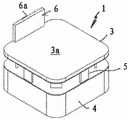
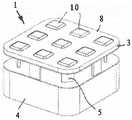
figure 1 is a schematic view of a vehicle suitable for carrying out the method according to a first design,
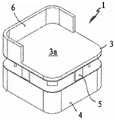
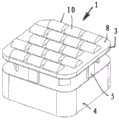
figure 2 is a schematic view of a vehicle according to a second design,
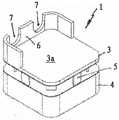
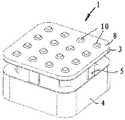
figure 3 is a schematic view of a vehicle according to a third design,
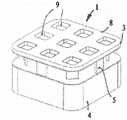
figure 4 is a schematic view of a vehicle according to a fourth design,
figure 5 shows the vehicle according to figure 4 in another position of the load receiver,
fig 6 is a schematic view of a vehicle according to a fifth design,
fig 7 is a schematic view of a vehicle according to a sixth design,
fig 8 is a schematic view of a vehicle according to a seventh design,
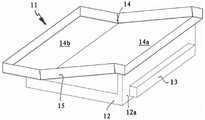
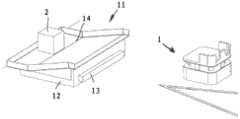
figure 9 is a schematic diagram of a load receiving station according to a first design,
figure 10 is a schematic diagram of a load receiving station according to a second design,
figure 11 is a vehicle according to figure 3 before the load reaches the load-receiving station,
figure 12 is a vehicle just prior to reaching a load receiving station,
FIG. 13 is a vehicle during load transfer, an
Fig. 14 shows a vehicle having a load to be transferred when the vehicle is driven away.
Detailed Description
A vehicle suitable for carrying out the method described below with reference to figures 11 to 14 is indicated generally by 1 in the figures. For transporting and forwarding or transporting theload 2, such a preferablyunmanned vehicle 1 has in the exemplary embodiment according to fig. 1 a planarload receiving part 3, on which theload 2 is arranged for transport. Theload receiver 3 is made of metal or plastic, for example, and in this embodiment, itssurface 3a is flat. Thevehicle 1 also has a chassis, generally designated 4, on the underside of which running casters or running wheels, not shown, are arranged.
In the exemplary embodiment shown, theload receiver 3 is not arranged directly on thechassis 4, but rather anintermediate body 5 is arranged between the upper side of thechassis 4 and the lower side of theload receiver 3. In order to fix theload 1 to theload receiver 3 during transport, an edge-definingstructure 6 is provided which extends only over a partial region of the periphery of theload receiver 3, so that thevehicle 1 is completely open on one side edge.
In the exemplary embodiment according to fig. 1, theedge delimiting structure 6 is designed as a strip in cross section and extends only on one side of theload receiver 3.
Alternatively, it can also be provided according to fig. 2 that the edge-defining structure, likewise designated 6, is C-shaped in cross section, i.e. in relation to the holdingelement 6 according to fig. 1, it is extended in the corner region in an arc-shaped or angle-shaped manner and thus extends locally into the side edge which theload receiver 3 adjoins.
In the embodiment shown in fig. 3, theedge delimiting structure 6 is likewise C-shaped in cross section, but has twolateral recesses 7. Therecess 7 makes it possible to access theload receiver 3 also from the side on which the edge-delimitingstructure 6 is located.
Theupper edge 6a of theedge delimiting structure 6 is configured to be positioned by relative movement with respect to thesurface 3a of theload receiver 3 at the level of thesurface 3a of theload receiver 3 or below the level of thesurface 3a of theload receiver 3. For this purpose, theedge delimiting structure 6 can be arranged on theload receiver 3 so as to be pivotable, alternatively an adjustment in the vertical direction can also be provided.
Fig. 4 and 5 show avehicle 1 in which theload receiver 3 has at least onebearing surface 8 with a plurality of openings 9, in the region of which openings 9bearing elements 10 are arranged. In the exemplary embodiment according to fig. 4 and 5, the supportingelements 10 are of a nodular design and are made of rubber, for example. In this embodiment, the friction coefficient of the bearing element is higher than the surface of the bearingsurface 8. The bearingsurface 8 is designed to be movable at least in the vertical direction relative to thenodular bearing element 10. Starting from the position shown in fig. 4 in which thenodular support elements 10 are located below the level of the surface of thesupport surface 8, thenodular support elements 10 are thus brought into a position above the level of the surface of thesupport surface 8 by a relative movement in the vertical direction, so that theload 2 is no longer supported on thesupport surface 8, but rather on thenodular support elements 10.
That is, in the position shown in fig. 4, thesupport element 10 is located below the level of the surface of thesupport surface 8, that is to say the support element is not active. Thevehicle 1 is in this position during load transfer.
In contrast, fig. 5 shows the transport position of thevehicle 1. In this position, thenodular support elements 10 pass upwards through the openings 9, so that thenodular support elements 10 are located above the level of the surface of thesupport surface 8 and are active. In this position, the surface of theload receiver 3 has a higher coefficient of friction than the position shown in fig. 4.
Alternatively, thenodular bearing elements 10 can also have a lower coefficient of friction than the surface of the bearingsurface 8. In this case, fig. 4 shows the transport position, while fig. 5 shows the load transfer position.
In fig. 6, a vehicle is shown, wherein thesupport element 10 is configured as an elongated roller. Thesupport surface 8 is in turn configured to be movable relative to thesupport element 10 at least in the vertical direction. In the position shown in fig. 6, the bearingelements 10 embodied as rollers thus project upward beyond the surface of the bearingsurface 8, from which position the bearingelements 10 are brought by a relative movement in the vertical direction below the level of the surface of the bearingsurface 8, so that theload 2 is now no longer supported on thebearing elements 10, but rather on thebearing surface 8.
If the surface of thesupport surface 8 and the surface of thesupport element 10 have different coefficients of friction, the coefficient of friction of the surface of theload receiver 3 can be varied depending on whether theload 2 is to be transported or delivered. The coefficient of friction of the surface can however also be the same as the coefficient of friction of the bearingelement 10 configured as a roller. If thesupport element 10 is raised to a level above the surface of thesupport surface 8 for the delivery or transfer of the load and thevehicle 1 is oriented such that the path of movement of theload 2 coincides with the rolling direction of thesupport element 10, which is designed as a roller, the load transfer is facilitated, since only rolling friction is effective.
Alternatively, the roller-shapedbearing element 10 can also be braked and the braking action can be deactivated in order to carry out the load transfer.
Fig. 7 shows avehicle 1 which approximately corresponds to fig. 6, with the only difference that the bearingelement 10 is not configured as a rotatably mounted elongate roller, but as a rotatably mounted roller section.
Fig. 8 shows avehicle 1 which corresponds approximately to fig. 6, with the only difference that the bearingelement 10 is not configured as a rotatably mounted elongate roller, but as a rotatably mounted ball.
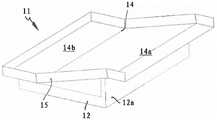
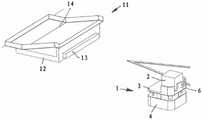
Fig. 9 shows a first embodiment of theload receiving station 11. Theload receiving station 11 has a base 12 with afront side 12a on which preferably shock absorbers and/or spring elements 13 (dampers) are arranged.
On thebase 12 of the load-receivingstation 11, which base is formed by an angled profile, a receivingregion 14 is provided, which is open on thefront side 12a of thebase 12 and otherwise preferably has side edges 15. In the exemplary embodiment shown, the bottom of the receivingregion 14 is first inclined downward, this region being designated by 14a, the latter region being horizontal for example and being designated by 14 b.
In fig. 10, an alternativeload receiving station 11 is shown, which differs from the load receiving station according to fig. 9 in that no damper and/orspring element 13 is provided.
Fig. 11 to 14 show exemplary method sequences according to the invention:
fig. 11 shows aload receiving station 11, in which no load is present. Instead, theload 2 is arranged on avehicle 1 which is in normal driving and which is to deliver theload 2 to theload receiving station 11. Here, thevehicle 1 has been oriented such that theedge delimiting structure 6 is located at the rear, viewed in the direction of travel, so that theload receiver 3 is open at the front, viewed in the direction of travel, and theload 2 can be delivered forward accordingly.
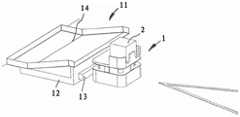
Fig. 12 shows thevehicle 1 in a state in which it is not far in front of theload receiving station 11. The velocity vector of thevehicle 1 can already be changed by causing thevehicle 1 to change its direction and/or by braking the vehicle by means of the vehicle control device. Thevehicle 1 may also be driven at a constant speed. Theload 2 is still on thevehicle 1.
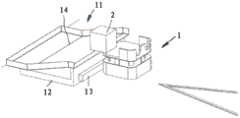
Fig. 13 shows the position in which, after thevehicle 1 has reached theload receiving station 11, theload 2 is moved from thevehicle 1 or theload receiver 3 onto theload receiving station 11, in which case the vehicle travels without braking or at a reduced speed toward the shock absorber and/or thespring element 13. Due to the change in the speed vector of thevehicle 1, theload 2 moves in the original direction from theload receiver 3 into the receivingregion 14 of theload receiving station 11 due to its inertia.
If thevehicle 1 is designed such that the coefficient of friction of thesurface 3a of theload receiver 3 can be reduced (in accordance with the embodiments of fig. 4 to 8), a corresponding reduction of the coefficient of friction is possible in order to facilitate the delivery of theload 2, which can be achieved by the control signals of the vehicle control or alternatively also by a triggering element on thevehicle 1, which can be operated in the event of a crash at theload receiving station 11 and which can be varied by a kinematic structure (lever mechanism or the like).
The end positions are shown in fig. 14. Theload 2 is located in the load-receivingstation 11, thevehicle 1 has moved away from the load-receivingstation 11, and there is no load on the load-receivingpart 3 of the vehicle. Thevehicle 1 can be accelerated again by a collision at the shock absorber and/or thespring element 13, or the vehicle can additionally or alternatively be moved at an elevated speed by the vehicle control device in order to continue driving.
Of course, the invention is not limited to the embodiments shown. Other designs may also be used without departing from the basic concept. In this way, at least one guide device can be provided in the region of the load-receivingstation 11, by means of which guide device, before reaching the load-receiving station, thevehicle 1 is oriented in such a way that the movement path of theload 2, which is remote from theload receiver 3 as a result of the change in the speed vector, ends up in thecontainer region 14 of the load-receivingstation 11.
The above-described solution can also be implemented in that theload receiving station 11 has a ramp on which the vehicle travels upwards before the load is transferred. At the end of the ramp, the load is transported by changing the velocity vector and flies in an arc, as it were, to thecontainer region 14 of theload receiving station 11. Here, in order to reduce the force which is forced on, a further ramp can be provided, for example, in the landing zone. Theload 2 now lands softly and slides down a path into the collection area of the load-receiving station 11 (similar to the flight path of a ski jump). Alternatively, an inclined approach portion to the slope may be provided.
List of reference numerals
1 vehicle
2 load object
3 load receiving part
3a surface
4 running mechanism
5 intermediates
6 edge definition structure
6a upper edge
7 concave part
8 bearing surface
9 opening
10 support element
11 load receiving station
12 base
12a front side
13 shock absorber and/or spring element
14 receiving area
Claims (14)
Translated fromChineseApplications Claiming Priority (3)
| Application Number | Priority Date | Filing Date | Title |
|---|---|---|---|
| DE102019122055.6 | 2019-08-16 | ||
| DE102019122055.6ADE102019122055B4 (en) | 2019-08-16 | 2019-08-16 | Method for the transfer of cargo from a cargo receptacle of a vehicle and vehicle for carrying out the method |
| PCT/EP2020/072260WO2021032508A1 (en) | 2019-08-16 | 2020-08-07 | Method for transferring cargo from a cargo receiving portion of a vehicle, and vehicle for carrying out said method |
Publications (1)
| Publication Number | Publication Date |
|---|---|
| CN114269601Atrue CN114269601A (en) | 2022-04-01 |
Family
ID=72039595
Family Applications (1)
| Application Number | Title | Priority Date | Filing Date |
|---|---|---|---|
| CN202080057908.XAPendingCN114269601A (en) | 2019-08-16 | 2020-08-07 | Method for transferring loads from a load receptacle of a vehicle and vehicle for carrying out the method |
Country Status (10)
| Country | Link |
|---|---|
| US (1) | US11858762B2 (en) |
| EP (1) | EP4013645B1 (en) |
| JP (1) | JP7623355B2 (en) |
| KR (1) | KR102837856B1 (en) |
| CN (1) | CN114269601A (en) |
| AU (1) | AU2020331664B2 (en) |
| CA (1) | CA3148935A1 (en) |
| DE (1) | DE102019122055B4 (en) |
| MX (1) | MX2022001978A (en) |
| WO (1) | WO2021032508A1 (en) |
Families Citing this family (10)
| Publication number | Priority date | Publication date | Assignee | Title |
|---|---|---|---|---|
| DE102019122052B4 (en) | 2019-08-16 | 2021-03-04 | Fraunhofer-Gesellschaft zur Förderung der angewandten Forschung e.V. | Vehicle for transporting cargo |
| DE102019122055B4 (en)* | 2019-08-16 | 2021-08-26 | Fraunhofer-Gesellschaft zur Förderung der angewandten Forschung e.V. | Method for the transfer of cargo from a cargo receptacle of a vehicle and vehicle for carrying out the method |
| DE102020121883A1 (en) | 2020-08-20 | 2022-02-24 | Fraunhofer-Gesellschaft zur Förderung der angewandten Forschung eingetragener Verein | Vehicle with cargo pick-up |
| DE102020129383B3 (en) | 2020-11-08 | 2021-11-04 | Fraunhofer-Gesellschaft zur Förderung der angewandten Forschung eingetragener Verein | Vehicle and method for conveying cargo units onto the vehicle |
| DE102020130439B3 (en)* | 2020-11-18 | 2022-01-05 | Fraunhofer-Gesellschaft zur Förderung der angewandten Forschung eingetragener Verein | Method for changing the position of a load located on a load receptacle of an automated guided vehicle |
| DE102021200339A1 (en) | 2021-01-15 | 2022-07-21 | Fraunhofer-Gesellschaft zur Förderung der angewandten Forschung eingetragener Verein | Sorting system and method for controlling a sorting system |
| DE102021103623B4 (en) | 2021-02-16 | 2022-12-29 | Fraunhofer-Gesellschaft zur Förderung der angewandten Forschung eingetragener Verein | Vehicle, logistics system and procedure for handing over a loading unit |
| DE102021105650B4 (en) | 2021-03-09 | 2025-07-31 | Dematic Gmbh | Driverless transport vehicle for individual goods |
| DE102021110926B3 (en) | 2021-04-28 | 2022-05-05 | Dematic Gmbh | Method and arrangement for loading a driverless transport vehicle for individual goods |
| DE102021118923B4 (en) | 2021-07-21 | 2023-06-07 | Ssi Schäfer Automation Gmbh (At) | Goods transfer from inertia-based delivery vehicle to continuous conveyor |
Citations (7)
| Publication number | Priority date | Publication date | Assignee | Title |
|---|---|---|---|---|
| DE102005049159A1 (en)* | 2004-10-21 | 2006-05-24 | Sick Ag | Monitoring method for vehicle surroundings, involves calculating occurrence of collision between vehicle and object, and transmitting to vehicle for adjusting at least one of its speed and its driving direction to prevent collision |
| CN102077150A (en)* | 2008-06-27 | 2011-05-25 | 西门子公司 | Control for an autonomous conveyer vehicle and method for operating an autonomous conveyer vehicle |
| CN105538326A (en)* | 2016-01-04 | 2016-05-04 | 杭州亚美利嘉科技有限公司 | Robot operation setting method and server |
| CN205708582U (en)* | 2016-06-16 | 2016-11-23 | 南京青龙线缆材料有限公司 | A kind of bucket elevator |
| CN107738604A (en)* | 2017-10-26 | 2018-02-27 | 潍坊红石星机械加工有限公司 | It is easy to the electrocar of handling |
| CN108176620A (en)* | 2017-01-16 | 2018-06-19 | 浙江国自机器人技术有限公司 | A kind of non-stop formula sorting machine people sorting equipment and method for sorting |
| WO2019007215A1 (en)* | 2017-07-03 | 2019-01-10 | 北京京东尚科信息技术有限公司 | Distribution station for serving unmanned logistics distribution vehicles and distribution method |
Family Cites Families (16)
| Publication number | Priority date | Publication date | Assignee | Title |
|---|---|---|---|---|
| CH680507A5 (en)* | 1990-04-20 | 1992-09-15 | Frech Ag Geb | |
| US5360308A (en)* | 1993-05-28 | 1994-11-01 | Hansen Lyle A | Vehicle dumping apparatus with pulsating platform and movable hinge |
| ATE545076T1 (en) | 2008-02-25 | 2012-02-15 | Tuenkers Maschinenbau Gmbh | ROTARY TABLE WITH AN ASSOCIATED CONTROL OR REGULATION |
| DE102008039764B4 (en)* | 2008-08-26 | 2010-11-04 | Fraunhofer-Gesellschaft zur Förderung der angewandten Forschung e.V. | Device for picking up and delivering general cargo to a driverless transport vehicle |
| US9090415B2 (en) | 2012-09-05 | 2015-07-28 | General Electric Company | System and method for rolling a vehicle to unload cargo |
| DE202012010247U1 (en) | 2012-10-26 | 2013-10-02 | Kustech Systeme Gmbh | Variable message signs |
| DE102013003849A1 (en)* | 2013-03-06 | 2014-09-25 | Airbus Operations Gmbh | System for moving loads |
| CN204324434U (en)* | 2014-11-28 | 2015-05-13 | 嘉善龙翔人造毛绒有限公司 | A kind of feeder |
| US11407588B2 (en)* | 2015-06-24 | 2022-08-09 | Hds Mercury, Inc. | Multiple degree of freedom mobile robot loader-unloader system and method |
| DE102015114370B4 (en)* | 2015-08-28 | 2018-03-15 | Ssi Schäfer Automation Gmbh | Driverless transport system in a storage and picking system |
| DE102015118313B4 (en)* | 2015-10-27 | 2019-10-02 | Andreas Port | Discharge device for a vehicle with a loading area |
| ES2765954T3 (en)* | 2017-03-24 | 2020-06-11 | Airbus Defence & Space Gmbh | Air delivery lock for cargo located on an aircraft and a restraint system |
| CN108297781B (en) | 2018-01-26 | 2021-04-30 | 山东金光复合材料股份有限公司 | Commodity circulation transport vechicle antiskid floor |
| DE102019122055B4 (en)* | 2019-08-16 | 2021-08-26 | Fraunhofer-Gesellschaft zur Förderung der angewandten Forschung e.V. | Method for the transfer of cargo from a cargo receptacle of a vehicle and vehicle for carrying out the method |
| US20210247774A1 (en)* | 2020-02-10 | 2021-08-12 | Shuhei Hotta | Transport system and transport method |
| DE102020129383B3 (en)* | 2020-11-08 | 2021-11-04 | Fraunhofer-Gesellschaft zur Förderung der angewandten Forschung eingetragener Verein | Vehicle and method for conveying cargo units onto the vehicle |
- 2019
- 2019-08-16DEDE102019122055.6Apatent/DE102019122055B4/enactiveActive
- 2020
- 2020-08-07AUAU2020331664Apatent/AU2020331664B2/enactiveActive
- 2020-08-07USUS17/635,056patent/US11858762B2/enactiveActive
- 2020-08-07CACA3148935Apatent/CA3148935A1/enactivePending
- 2020-08-07EPEP20753930.5Apatent/EP4013645B1/enactiveActive
- 2020-08-07MXMX2022001978Apatent/MX2022001978A/enunknown
- 2020-08-07KRKR1020227007514Apatent/KR102837856B1/enactiveActive
- 2020-08-07CNCN202080057908.XApatent/CN114269601A/enactivePending
- 2020-08-07WOPCT/EP2020/072260patent/WO2021032508A1/ennot_activeCeased
- 2020-08-07JPJP2022509672Apatent/JP7623355B2/enactiveActive
Patent Citations (7)
| Publication number | Priority date | Publication date | Assignee | Title |
|---|---|---|---|---|
| DE102005049159A1 (en)* | 2004-10-21 | 2006-05-24 | Sick Ag | Monitoring method for vehicle surroundings, involves calculating occurrence of collision between vehicle and object, and transmitting to vehicle for adjusting at least one of its speed and its driving direction to prevent collision |
| CN102077150A (en)* | 2008-06-27 | 2011-05-25 | 西门子公司 | Control for an autonomous conveyer vehicle and method for operating an autonomous conveyer vehicle |
| CN105538326A (en)* | 2016-01-04 | 2016-05-04 | 杭州亚美利嘉科技有限公司 | Robot operation setting method and server |
| CN205708582U (en)* | 2016-06-16 | 2016-11-23 | 南京青龙线缆材料有限公司 | A kind of bucket elevator |
| CN108176620A (en)* | 2017-01-16 | 2018-06-19 | 浙江国自机器人技术有限公司 | A kind of non-stop formula sorting machine people sorting equipment and method for sorting |
| WO2019007215A1 (en)* | 2017-07-03 | 2019-01-10 | 北京京东尚科信息技术有限公司 | Distribution station for serving unmanned logistics distribution vehicles and distribution method |
| CN107738604A (en)* | 2017-10-26 | 2018-02-27 | 潍坊红石星机械加工有限公司 | It is easy to the electrocar of handling |
Also Published As
| Publication number | Publication date |
|---|---|
| AU2020331664B2 (en) | 2025-06-26 |
| CA3148935A1 (en) | 2021-02-25 |
| KR20220046607A (en) | 2022-04-14 |
| US20220289505A1 (en) | 2022-09-15 |
| MX2022001978A (en) | 2022-03-11 |
| AU2020331664A1 (en) | 2022-03-17 |
| KR102837856B1 (en) | 2025-07-23 |
| WO2021032508A1 (en) | 2021-02-25 |
| EP4013645A1 (en) | 2022-06-22 |
| JP2022544794A (en) | 2022-10-21 |
| JP7623355B2 (en) | 2025-01-28 |
| US11858762B2 (en) | 2024-01-02 |
| DE102019122055A1 (en) | 2021-02-18 |
| EP4013645B1 (en) | 2024-05-01 |
| EP4013645C0 (en) | 2024-05-01 |
| DE102019122055B4 (en) | 2021-08-26 |
Similar Documents
| Publication | Publication Date | Title |
|---|---|---|
| CN114269601A (en) | Method for transferring loads from a load receptacle of a vehicle and vehicle for carrying out the method | |
| JP4978052B2 (en) | Work conveying apparatus and work conveying method | |
| US4089404A (en) | Tilting tray apparatus | |
| US7077615B2 (en) | Apparatus for loading and unloading a cargo compartment of an aircraft | |
| CN111661540B (en) | Storage goods transfer car (buggy) and unmanned warehouse system | |
| CN115989159A (en) | Vehicle with load compartment | |
| KR102380698B1 (en) | Exchange method and apparatus for exchanging a load unit | |
| CN111315671B (en) | Braking device for a conveyor system | |
| KR19990083122A (en) | Method and Apparatus For High Speed Article Processing | |
| CN113306950B (en) | Baggage conveying chutes and baggage conveying systems | |
| JPH0543025A (en) | Chute for sorter | |
| CN119947969A (en) | Cross belt sorter | |
| JP2000510802A (en) | Conveyor for shelf channel of shelf storage system | |
| CN116812400A (en) | High-density inclined rail type storage equipment | |
| JP3129724B2 (en) | Loading device for automatic guided vehicles | |
| US4023501A (en) | Speed control device | |
| CN222974295U (en) | Sorting machine with double-layer turner | |
| DE102021110926B3 (en) | Method and arrangement for loading a driverless transport vehicle for individual goods | |
| CN220148270U (en) | High-density inclined rail type storage equipment | |
| JPH0784255B2 (en) | Picking device | |
| JPH0911824A (en) | Bumper device for carrier truck | |
| JPS6216462Y2 (en) | ||
| JPH05178409A (en) | Travel braking method for stacker crane | |
| JPH08310611A (en) | Running stopping method of stacker crane for automated warehouse | |
| JPS6150746B2 (en) |
Legal Events
| Date | Code | Title | Description |
|---|---|---|---|
| PB01 | Publication | ||
| PB01 | Publication | ||
| SE01 | Entry into force of request for substantive examination | ||
| SE01 | Entry into force of request for substantive examination |